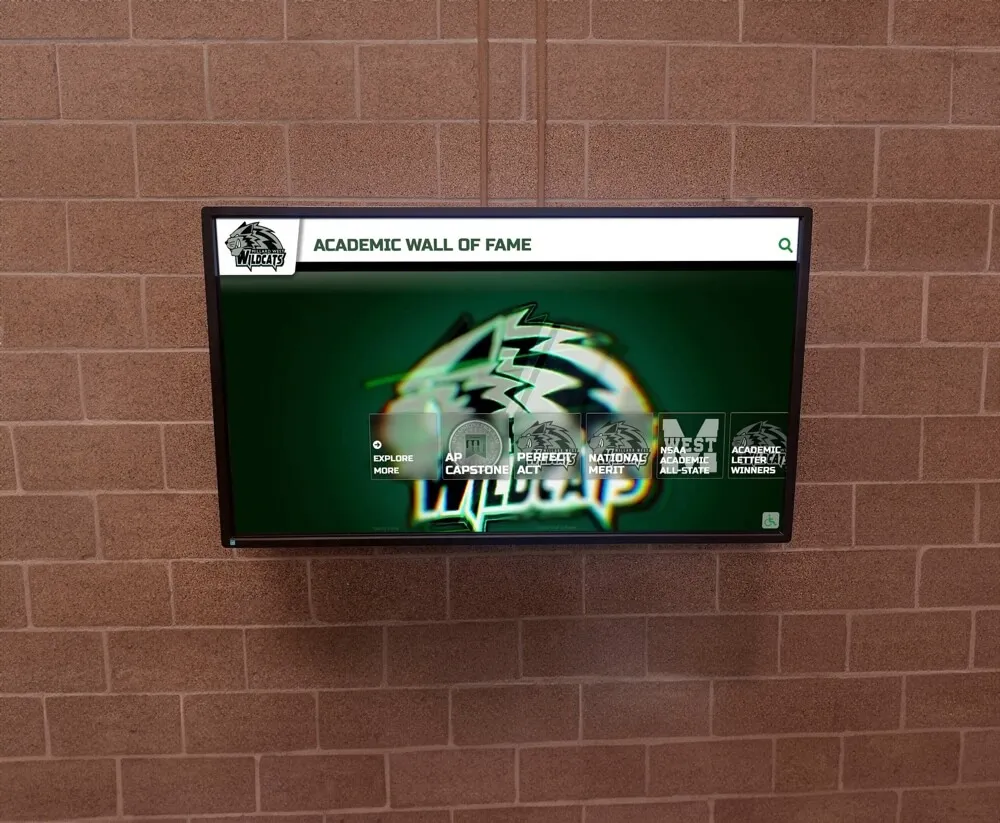




Academic All-Americans recognition represents the pinnacle of collegiate scholar-athlete achievement—honoring students who demonstrate exceptional excellence in both competitive athletics and rigorous academics. Earning Academic All-America designation from organizations like the College Sports Information Directors of America (CoSIDA) requires sustaining varsity athletic performance while maintaining cumulative GPAs of 3.5 or higher, a standard fewer than 2% of NCAA student-athletes achieve according to NCAA research data.
Yet many institutions struggle to give these remarkable dual achievers the visibility their accomplishments deserve. Recognition often defaults to brief mentions in athletics newsletters, static plaques tucked in administrative corridors, or digital lists buried on department websites—approaches that fail to capture the compelling stories behind these exceptional students who excel simultaneously in classroom and competition. Meanwhile, prospective student-athletes touring facilities see minimal evidence of institutional commitment to academic excellence alongside athletic success, and current students lack inspiring role models demonstrating that rigorous academics and competitive athletics can coexist successfully.
This comprehensive design guide explores how universities and colleges can transform Academic All-Americans recognition through purpose-built digital display experiences—particularly interactive touchscreen installations—that celebrate dual achievement with the sophistication and engagement these elite scholar-athletes deserve while inspiring future generations toward similar excellence.
Academic All-Americans recognition serves critical institutional purposes beyond simple acknowledgment. It provides prospective student-athletes concrete evidence that your institution values academic achievement equally alongside athletic success, creates visible role models demonstrating that competitive athletics and rigorous academics complement rather than conflict with each other, strengthens institutional reputation by showcasing the caliber of students you attract and develop, motivates current student-athletes by celebrating peers who excel across both domains, and preserves institutional traditions connecting current scholars to distinguished alumni who achieved similar dual excellence.

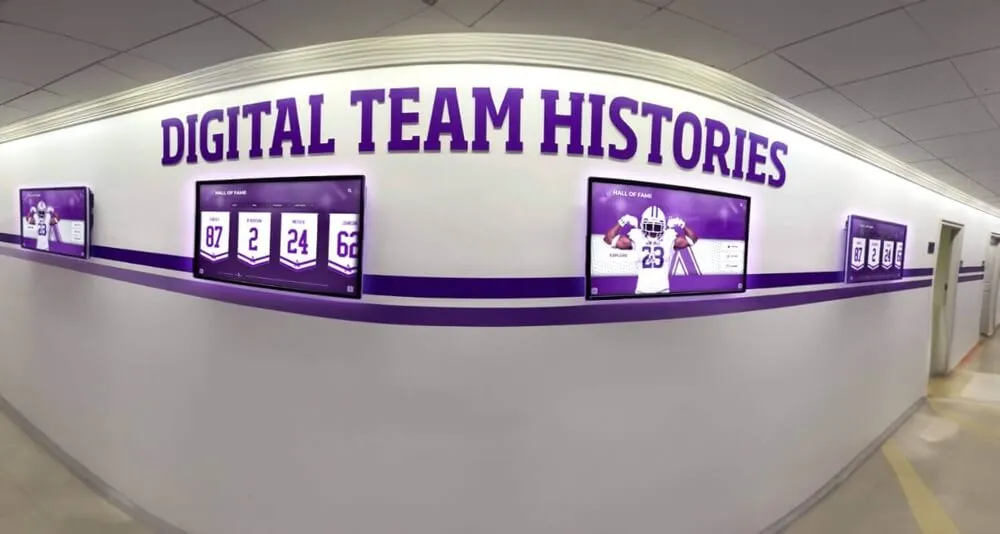
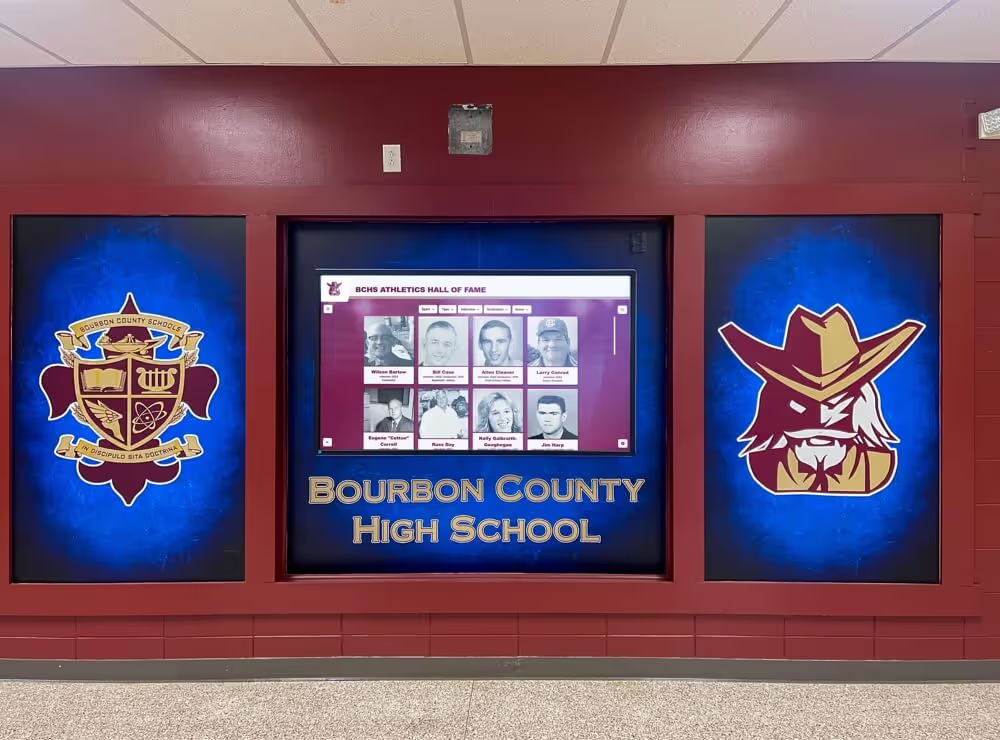
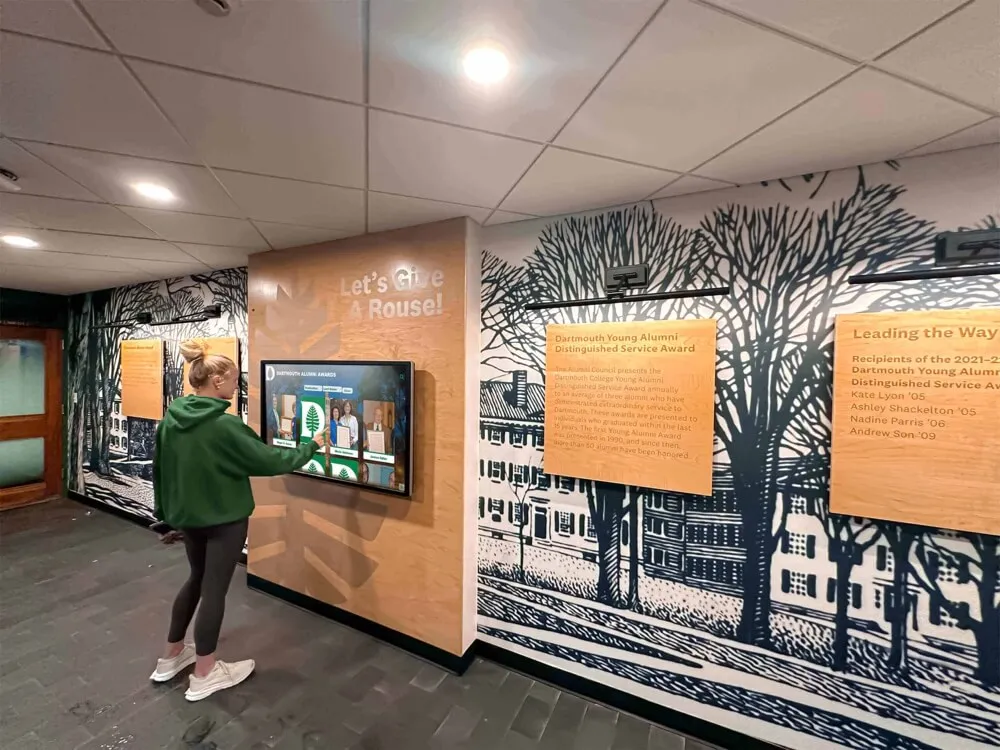
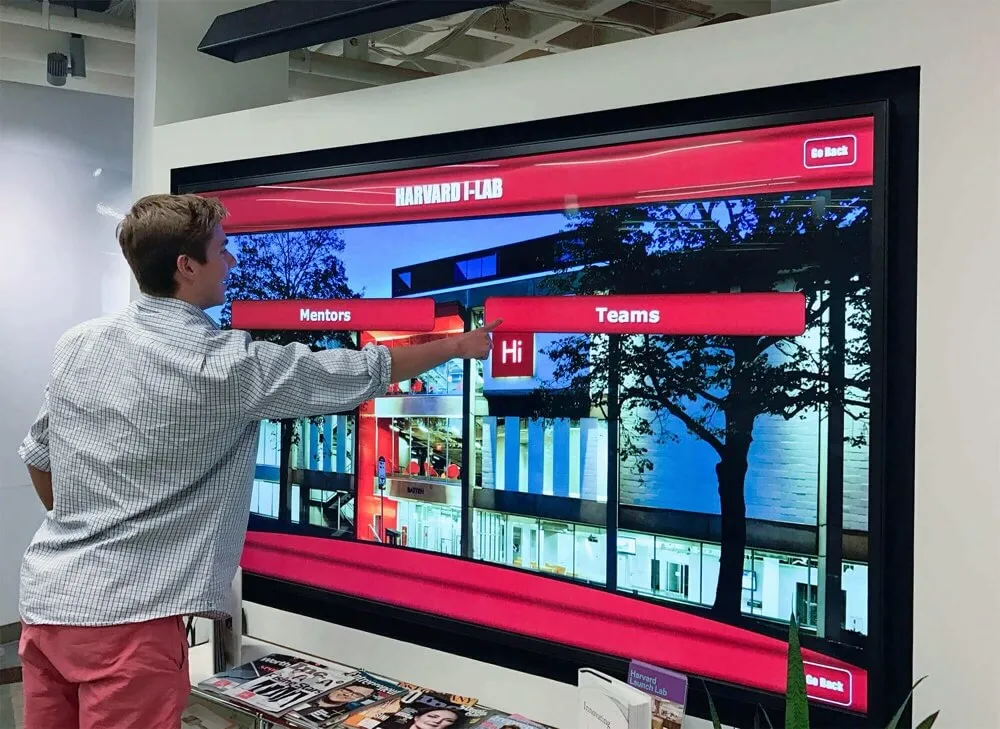
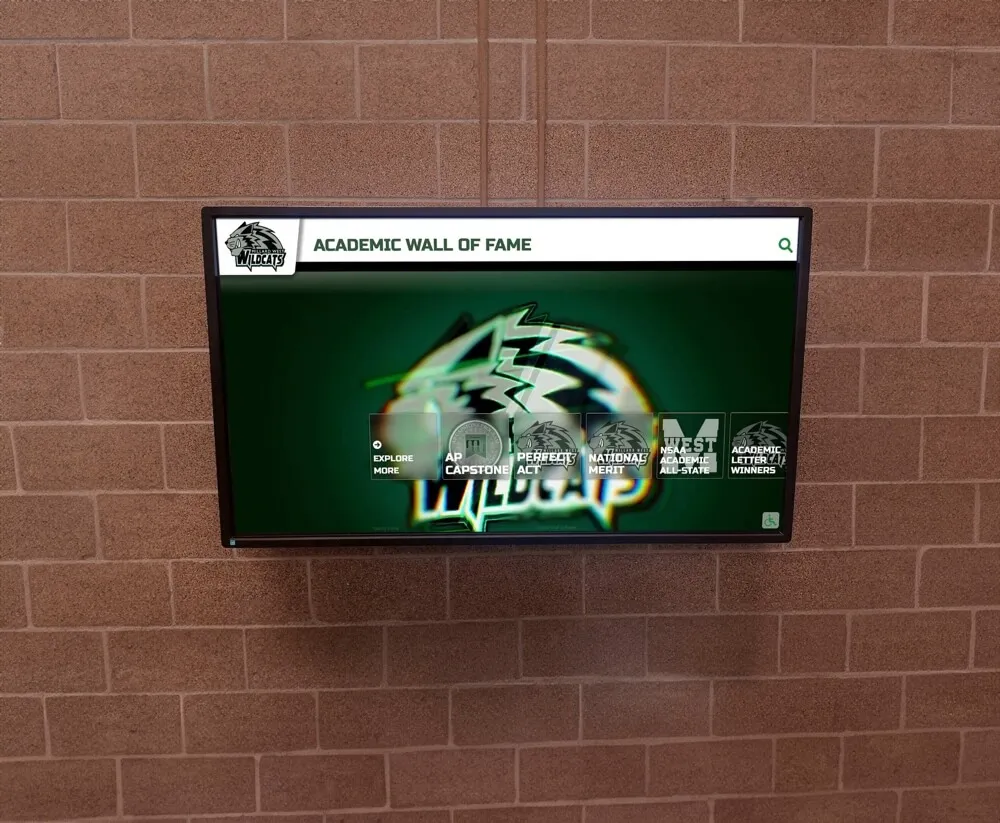
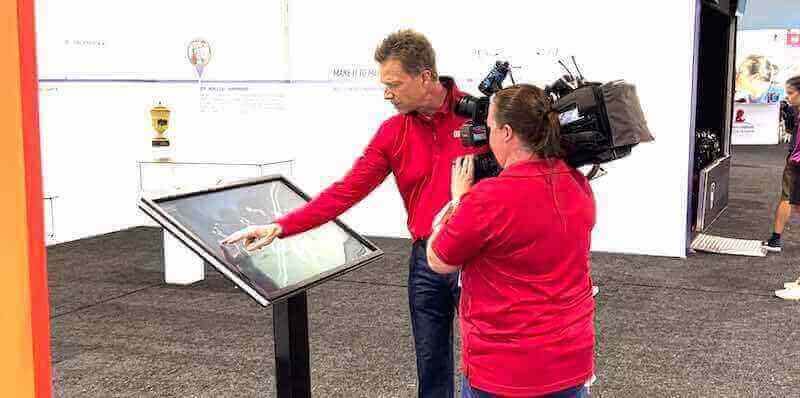
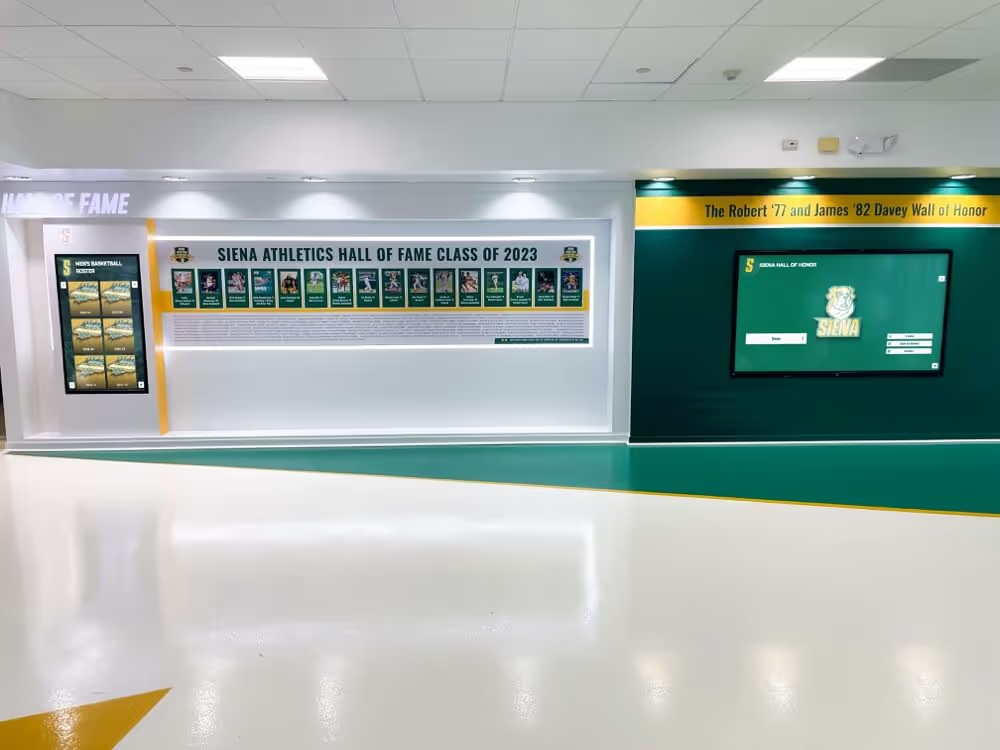
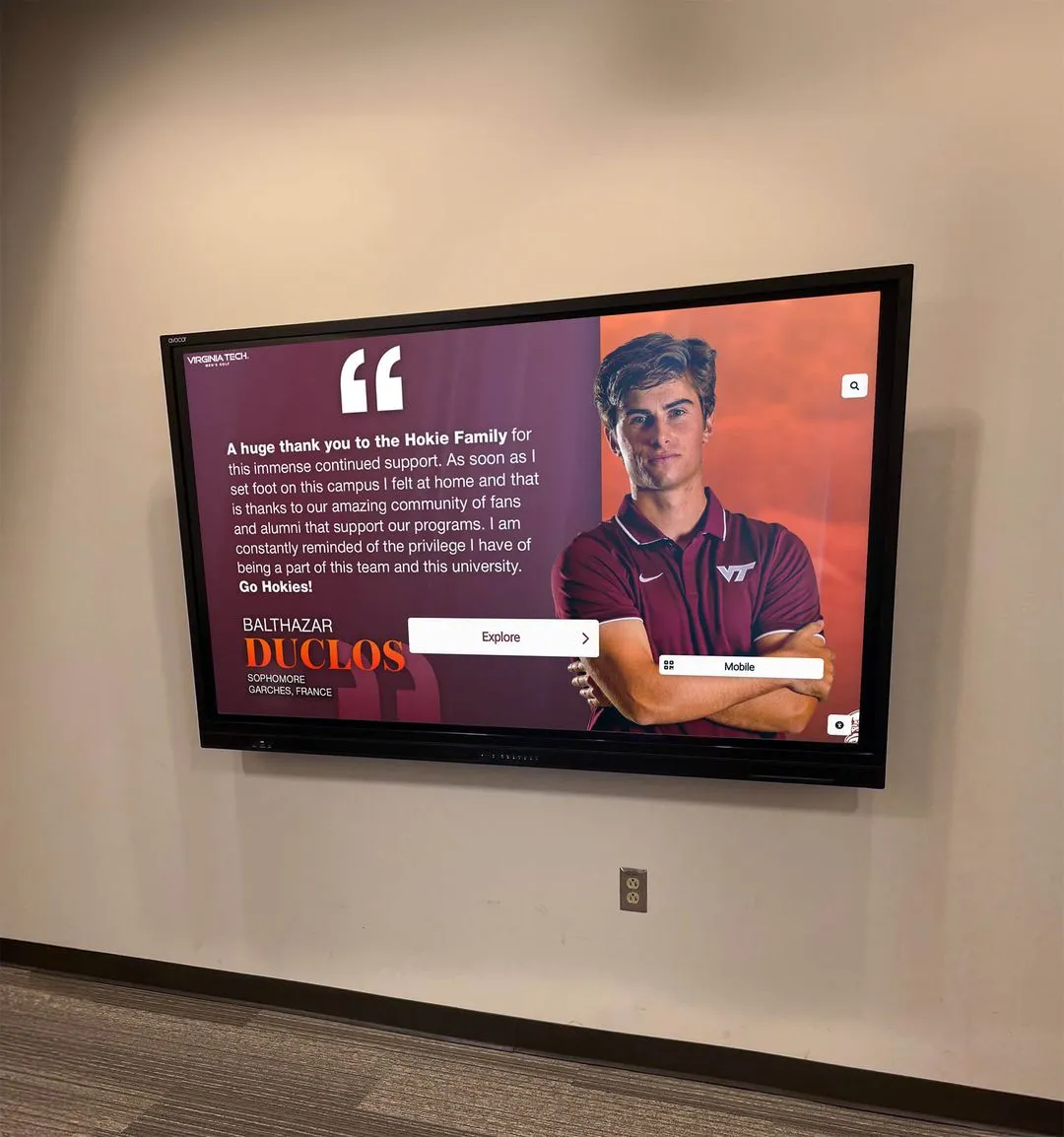
Contemporary digital displays transform Academic All-Americans recognition from administrative acknowledgment into inspiring visual celebrations of dual excellence
Understanding Academic All-Americans Designations and Recognition Frameworks
Before designing recognition displays, institutions benefit from understanding what Academic All-Americans designations represent, the specific criteria governing these prestigious honors, and how recognition design can effectively communicate the exceptional nature of dual achievement to diverse audiences including prospective recruits, current students, alumni, donors, and community members.
CoSIDA Academic All-America® Program Standards
The College Sports Information Directors of America (CoSIDA) administers the most prestigious Academic All-America program recognizing excellence across NCAA Divisions I, II, and III, NAIA, and two-year colleges. According to CoSIDA Academic All-America program requirements, student-athletes must meet rigorous combined standards demonstrating sustained excellence across both athletic performance and academic achievement.
Academic All-America Eligibility Requirements:
- Maintain minimum cumulative GPA of 3.50 on 4.00 scale (or equivalent)
- Complete at least one full academic year at nominating institution
- Participate as varsity starter or key reserve for NCAA championship-eligible teams
- Demonstrate exemplary conduct and sportsmanship on and off competition fields
- Achieve sophomore athletic eligibility minimum (varies by division and sport)
Recognition Tiers Demonstrating Achievement Levels:
Recognition structures across three distinct tiers acknowledge varying levels of exceptional achievement, creating hierarchies that effective displays should communicate visually through design emphasis, spatial hierarchy, and content depth allocation.
First Team Academic All-America® The highest honor recognizing supreme dual excellence—typically 11-15 student-athletes per sport nationally who demonstrate the absolute pinnacle of combined academic and athletic achievement. Display design should emphasize these elite achievers through prominent placement, enhanced profile depth, and visual distinction signaling exceptional status.
Second Team Academic All-America® Outstanding recognition for student-athletes demonstrating exceptional achievement approaching but not quite reaching first-team thresholds. These remarkable students deserve comprehensive celebration acknowledging substantial accomplishment while maintaining visual hierarchy distinguishing achievement tiers.
Third Team Academic All-America® Significant national recognition honoring student-athletes exceeding demanding standards that fewer than 2% of collegiate athletes achieve. Recognition displays should celebrate third-team honorees prominently while maintaining tiered visual language communicating relative achievement levels within elite populations.
Conference Academic All-Americans and Institutional Recognition Programs
Beyond national CoSIDA designations, conferences and institutions administer complementary recognition programs creating comprehensive frameworks celebrating academic excellence across multiple achievement levels and competitive contexts.
Conference-Level Recognition Programs:
- Conference Academic All-Star teams recognizing top academic achievers within competitive conferences
- Commissioner’s Honor Roll designations celebrating GPAs typically 3.0+ across entire student-athlete populations
- Conference Scholar-Athlete of the Year awards for peak individual achievement within conferences
- Sport-specific academic excellence awards recognizing team-level academic performance
- Academic Progress Rate (APR) recognition celebrating program-level institutional commitment
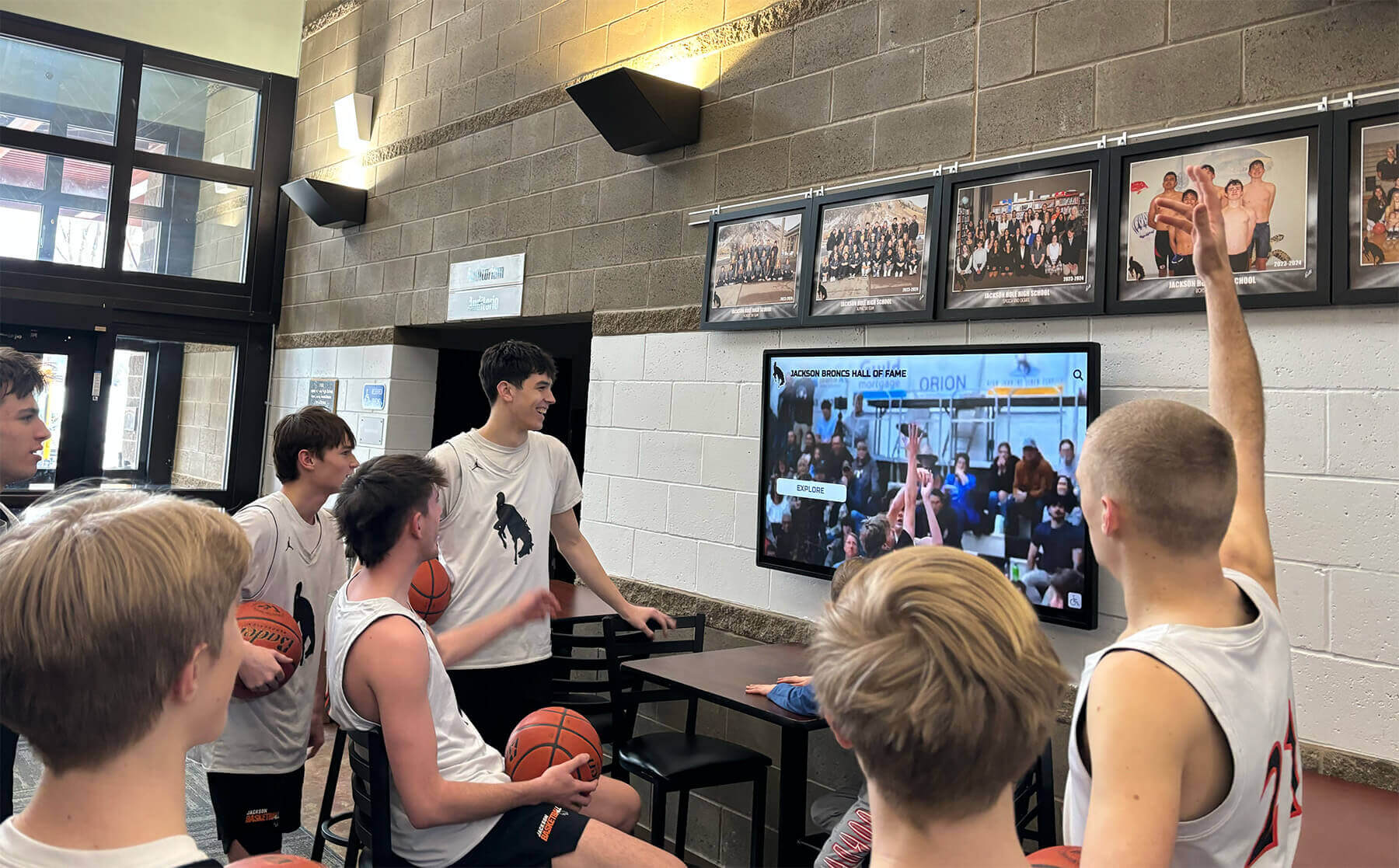
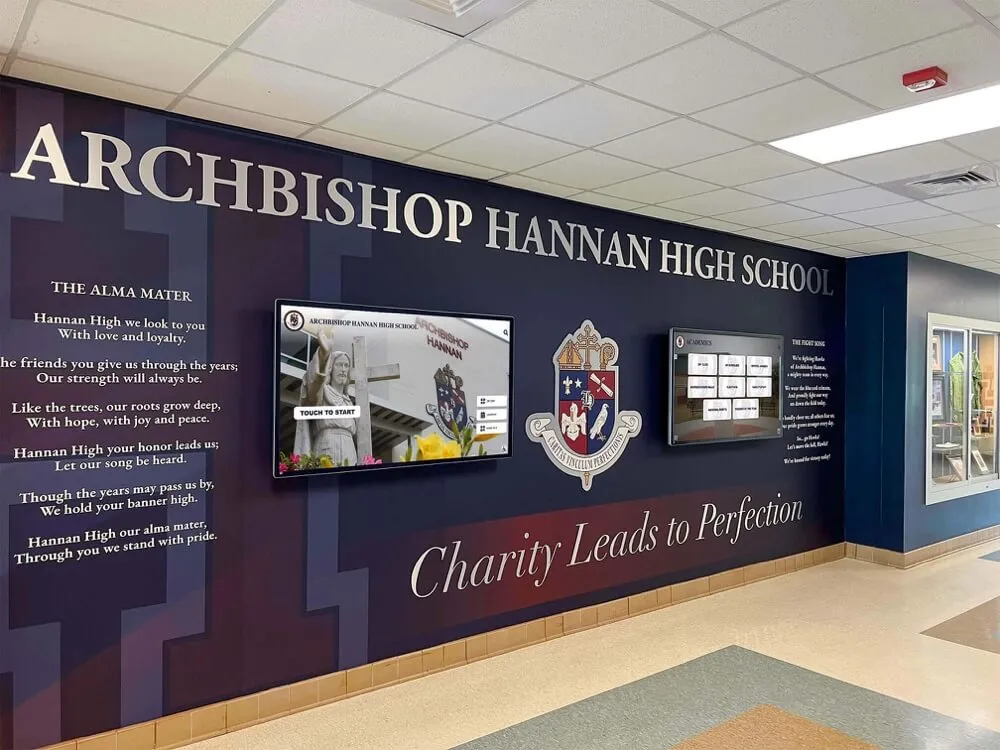
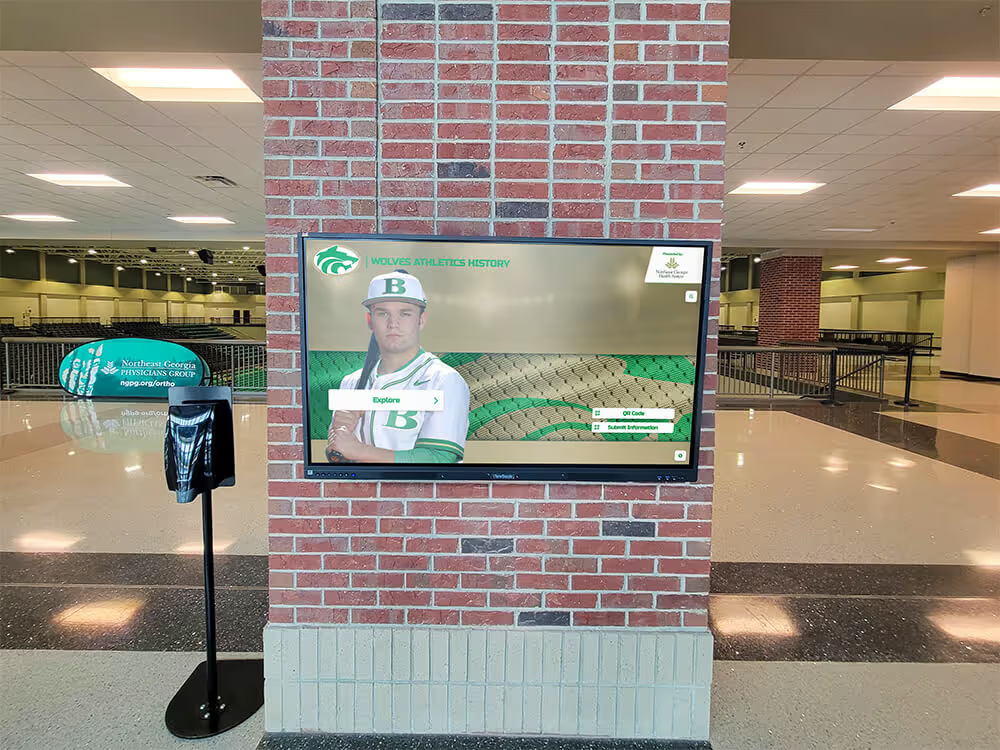
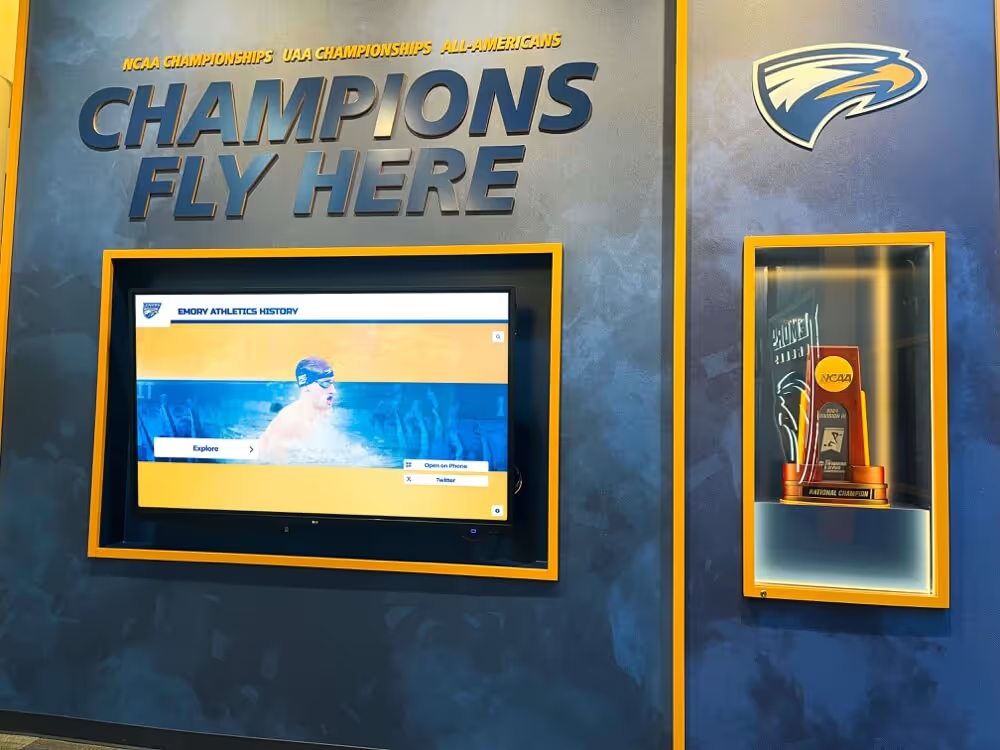
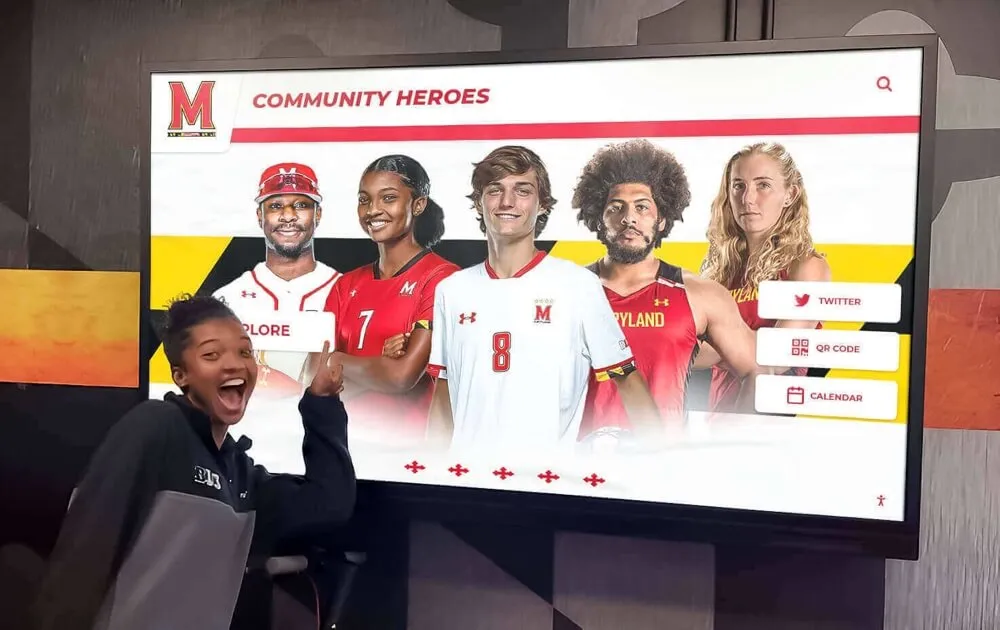
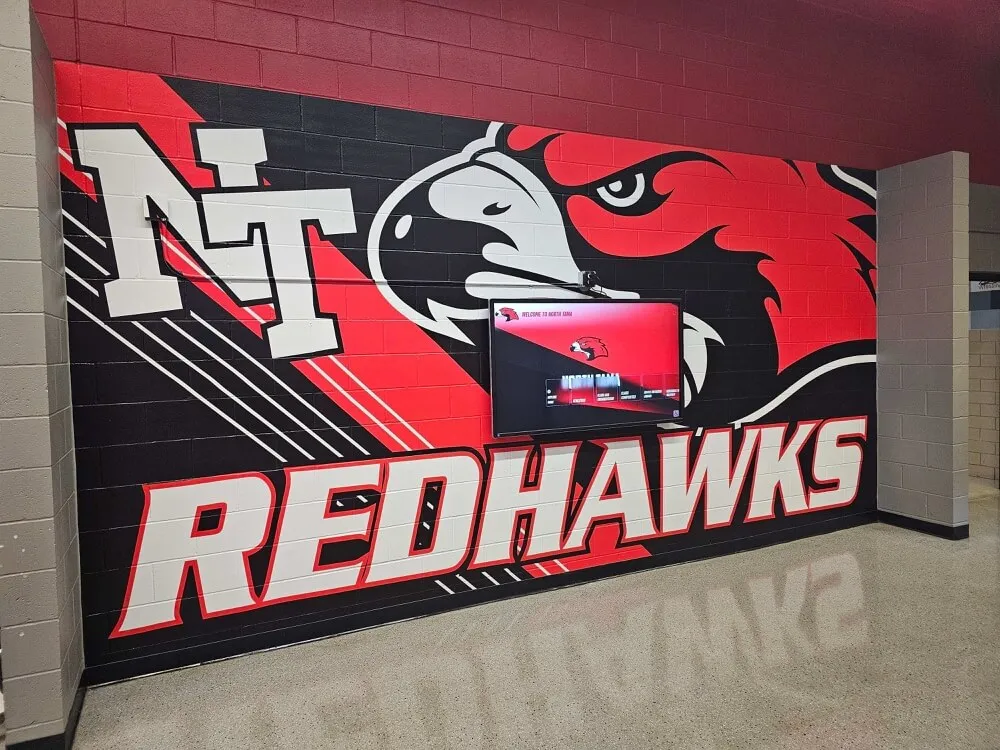
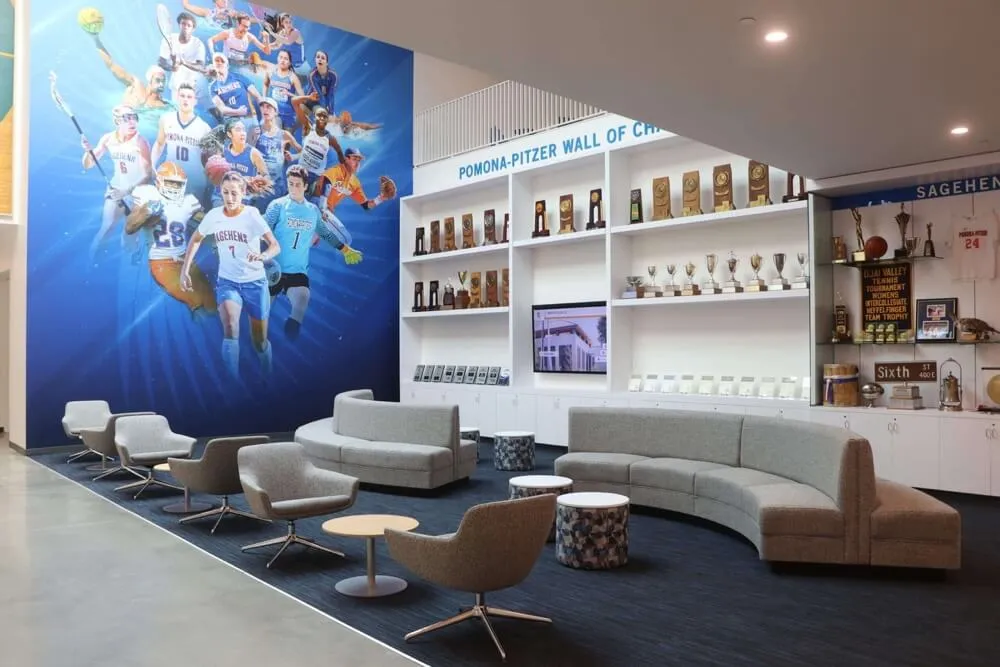
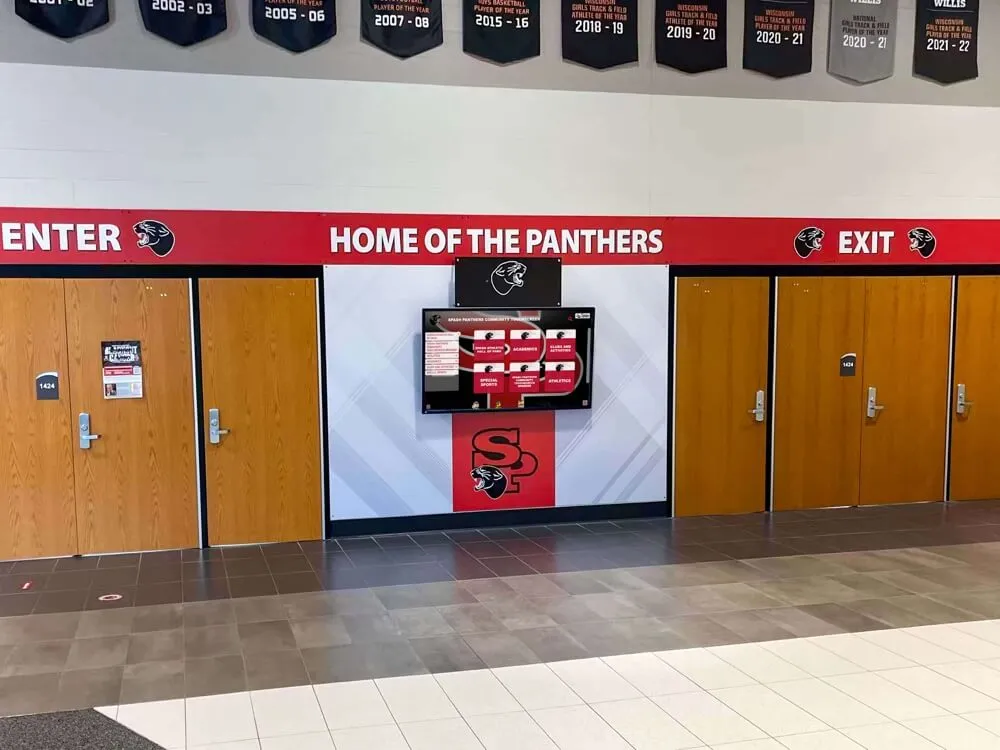
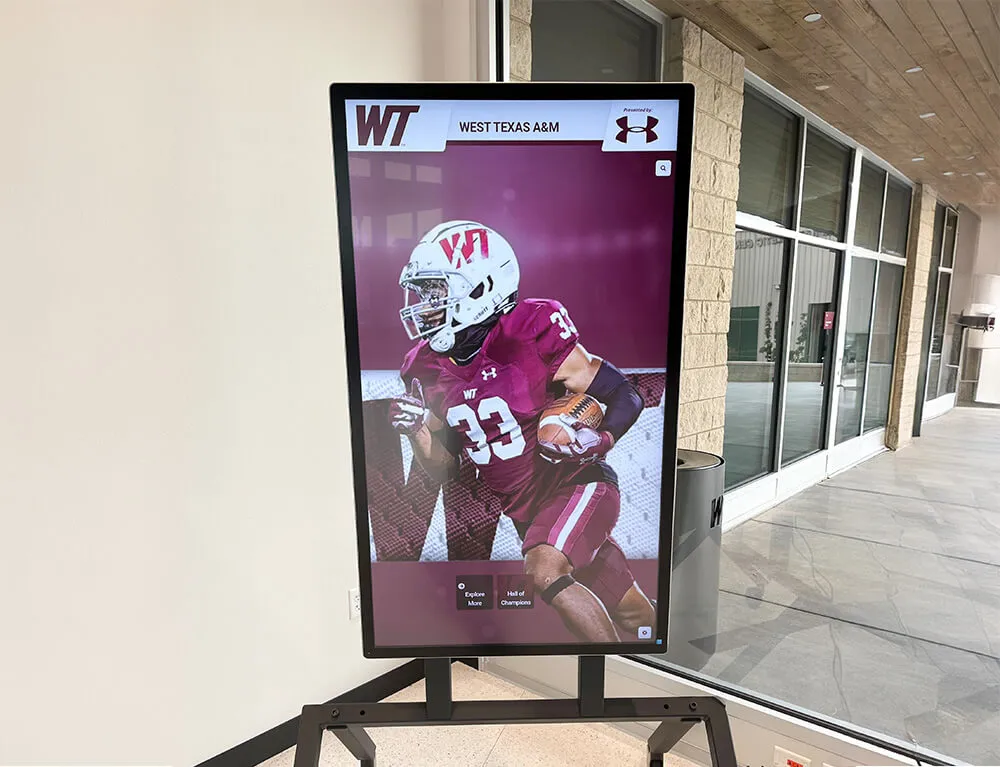
Interactive displays create natural gathering spaces where student-athletes explore academic achievements and connect with institutional excellence traditions
Institutional Scholar-Athlete Recognition Programs: Universities supplement national and conference recognition with internal programs creating comprehensive frameworks ensuring all academic achievement receives appropriate acknowledgment regardless of external selection committee decisions that inherently involve competitive limitations and subjective elements beyond institutional control.
Display designs should integrate these multiple recognition layers—national, conference, and institutional—within cohesive visual frameworks that communicate relationships between programs while maintaining clear hierarchies preventing confusion about relative prestige and achievement thresholds across different designations.
Learn more about comprehensive approaches in academic recognition programs that celebrate diverse student achievement across multiple dimensions while maintaining meaningful distinction between exceptional accomplishment levels.
Experience Design Principles for Academic All-Americans Digital Displays
Effective Academic All-Americans recognition displays transcend simple information presentation to create immersive experiences that honor individual achievement comprehensively while inspiring viewers through compelling visual storytelling, intuitive interactive exploration, and meaningful contextual information communicating the exceptional nature of dual academic-athletic excellence.
Layout Architecture: Balancing Information Density with Visual Impact
Academic All-Americans displays require sophisticated information architecture balancing comprehensive data presentation with visual clarity—celebrating individual stories without overwhelming viewers through excessive density while providing sufficient depth to honor achievements appropriately and differentiate between recognition tiers meaningfully.
Hero Zone Design Strategy:
The primary visual anchor should immediately communicate program prestige and institutional pride through compelling imagery and clear hierarchy establishing recognition frameworks visitors will explore.
┌────────────────────────────────────────────────────────┐
│  HERO ZONE (Full Width, 25% Vertical)                 │
│  ┌──────────────────────────────────────────────────┐ │
│  │ Academic All-Americans                           │ │
│  │ [Institutional Crest/Athletic Logo Integration]  │ │
│  │ "Excellence in Competition and Classroom"        │ │
│  │ [Background: Subtle athletic action + academic   │ │
│  │  imagery composite]                              │ │
│  └──────────────────────────────────────────────────┘ │
└────────────────────────────────────────────────────────┘
Design elements balancing athletic and academic visual language create coherent brand expressions honoring both domains equally rather than privileging athletics through dominant sports imagery that inadvertently suggests academic achievement holds secondary status despite equivalent recognition criteria standards.
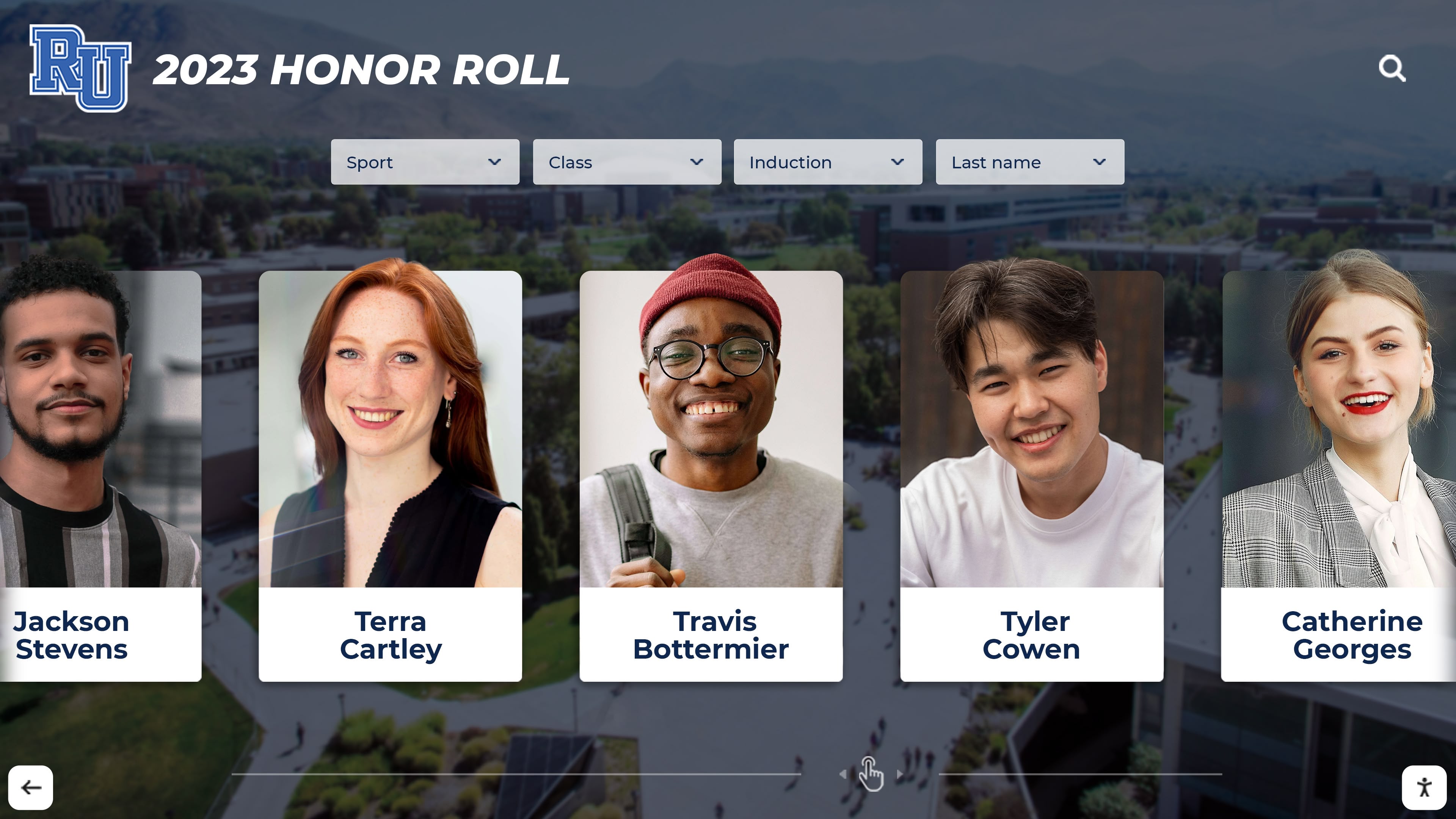
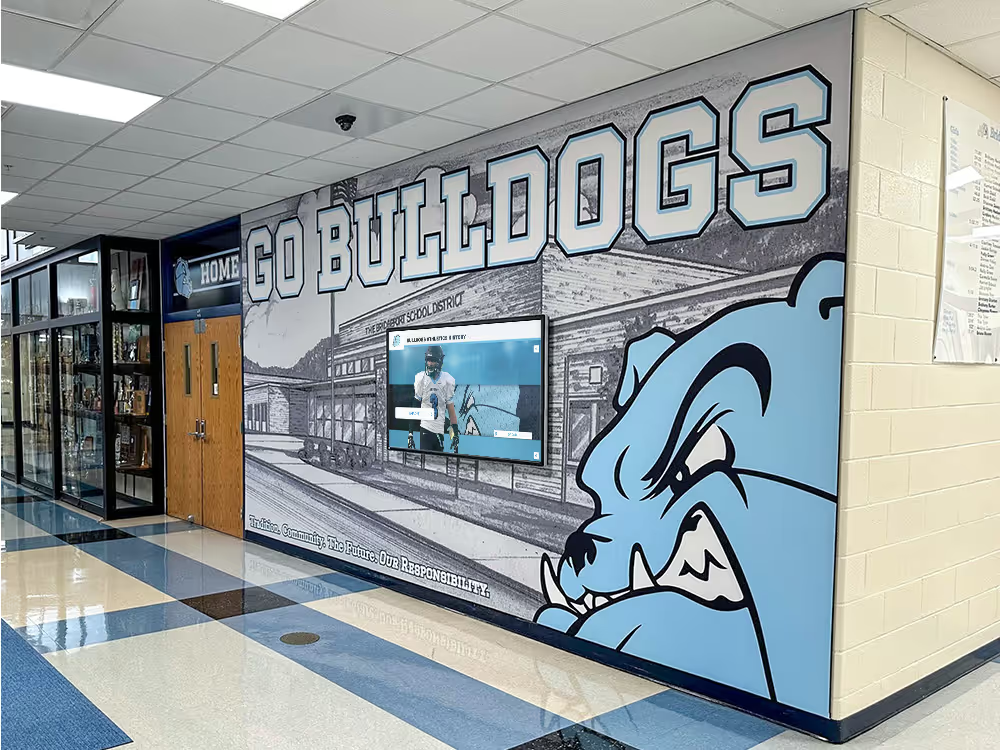
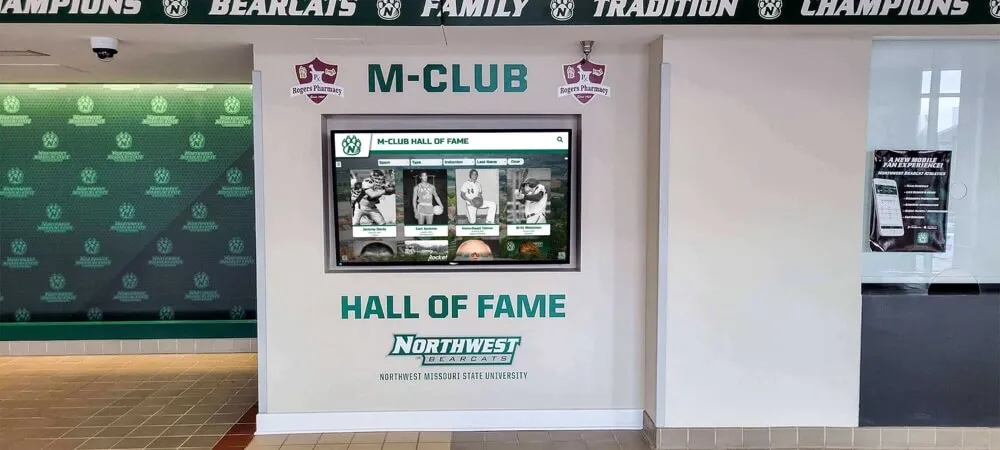
Card-based layouts enable comprehensive individual profiles while maintaining scannable organization across large honoree populations
Content Grid Organization:
Beyond hero zones, content grids organize individual scholar-athlete profiles enabling efficient visual scanning while accommodating comprehensive information and maintaining clear hierarchies across achievement tiers.
┌────────────────────────────────────────────────────────┐
│  NAVIGATION BAR (Filter by: Sport | Year | Team)      │
├────────────────────────────────────────────────────────┤
│  ┌───────┐  ┌───────┐  ┌───────┐  ┌───────┐         │
│  │FIRST  │  │FIRST  │  │FIRST  │  │FIRST  │         │
│  │TEAM   │  │TEAM   │  │TEAM   │  │TEAM   │         │
│  │Photo  │  │Photo  │  │Photo  │  │Photo  │         │
│  │Name   │  │Name   │  │Name   │  │Name   │         │
│  │Sport  │  │Sport  │  │Sport  │  │Sport  │         │
│  │GPA    │  │GPA    │  │GPA    │  │GPA    │         │
│  └───────┘  └───────┘  └───────┘  └───────┘         │
│  [Gold accent border - First Team distinction]        │
├────────────────────────────────────────────────────────┤
│  ┌───────┐  ┌───────┐  ┌───────┐  ┌───────┐         │
│  │SECOND │  │SECOND │  │SECOND │  │SECOND │         │
│  │TEAM   │  │TEAM   │  │TEAM   │  │TEAM   │         │
│  [Silver accent - Second Team distinction]            │
└────────────────────────────────────────────────────────┘
Visual hierarchies through subtle but consistent design elements—border treatments, background color values, card elevation effects—communicate achievement tiers immediately without requiring text labels while maintaining cohesive aesthetics preventing designs from appearing fragmented through excessive visual variation.
Interactive Navigation Patterns Enabling Exploration
Static displays force linear consumption limiting viewer autonomy and preventing personalized exploration patterns matching diverse audience interests and information priorities. Interactive touchscreen capabilities transform recognition from passive viewing into active discovery enabling visitors to pursue information pathways aligned with individual curiosity and connection points.
Multi-Dimensional Filtering Systems:
Comprehensive filtering enables visitors to explore scholar-athlete populations through multiple relevant dimensions reflecting how different audiences naturally conceptualize and seek information about academic athletic excellence.
Primary filter categories should include:
- Sport/Team: Enabling fans of specific sports to find relevant athletes quickly
- Academic Year: Supporting chronological exploration and reunion-year connections
- Recognition Tier: Allowing focused viewing of first, second, or third team honorees
- Academic Major/College: Connecting academic program affiliations for departmental pride
- Hometown/State: Creating geographic connection points for regional audiences
- Graduation Class: Facilitating alumni reconnection with contemporaneous cohorts
Interface design should present filtering options intuitively without overwhelming initial impressions—collapsible filter panels, progressive disclosure patterns, and clear visual feedback confirming active filters prevent confusion while maintaining clean aesthetics during idle attraction states.
Explore comprehensive digital recognition display strategies that maximize student engagement through intuitive navigation interfaces and compelling content organization.
Search Functionality and Direct Access:
Beyond categorical filtering, robust search capabilities enable visitors to locate specific individuals directly—particularly valuable for alumni seeking their own historical records, family members finding relatives, or prospective recruits researching specific role models mentioned during recruitment conversations.
Search implementations should accommodate:
- Full name searches with autocomplete suggestions preventing frustration from spelling variations
- Partial name matching supporting “first name only” or “last name only” queries
- Year-range searches finding all honorees within specific graduation cohorts
- Multi-field combined searches enabling complex queries across multiple dimensions simultaneously
Search interfaces should provide immediate visual feedback confirming queries, display results instantly without frustrating delays, and gracefully handle zero-result scenarios with suggestions for modified searches or related content rather than presenting empty screens that terminate exploration sessions abruptly.
Content Modules and Motion Design Creating Engaging Experiences
Beyond static information presentation, dynamic content modules and subtle motion design transform recognition displays from digital bulletin boards into sophisticated experiences maintaining viewer attention while communicating information effectively through strategic animation, transition effects, and time-based content rotation.
Individual Scholar-Athlete Profile Design
When visitors select specific honorees for detailed exploration, profile modules should present comprehensive information honoring individual achievement appropriately while maintaining visual coherence with overall display aesthetics and information hierarchy.
Essential Profile Content Elements:
Primary Information Panel:
- High-resolution professional portrait photography (minimum 1200x1600px) ensuring clarity on large displays
- Full name with proper formatting, preferred names, and phonetic guides when applicable
- Sport/team designation with visual iconography reinforcing athletic identity
- Academic major, minor, and college/school affiliation connecting academic dimensions
- Graduation year and current post-graduation status when available for context
- Cumulative GPA displayed prominently as core achievement metric
- Recognition tier clearly indicated (First/Second/Third Team Academic All-America)
- Recognition year(s) accommodating multiple-year honorees appropriately
Achievement Narrative Content:
Compelling written narratives transform statistical accomplishments into inspiring stories communicating the remarkable nature of dual excellence while providing specific details that generic acknowledgment cannot capture.
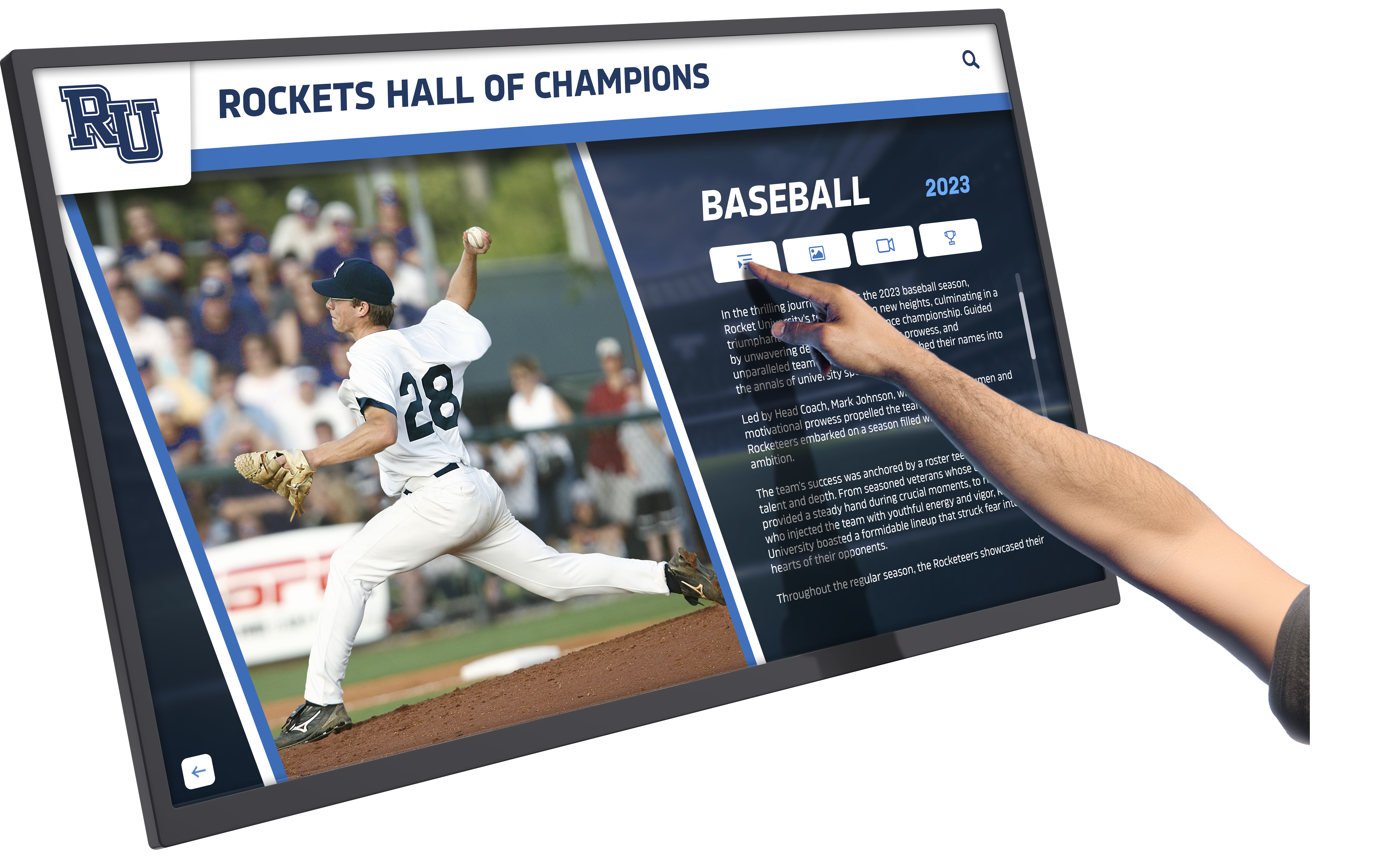
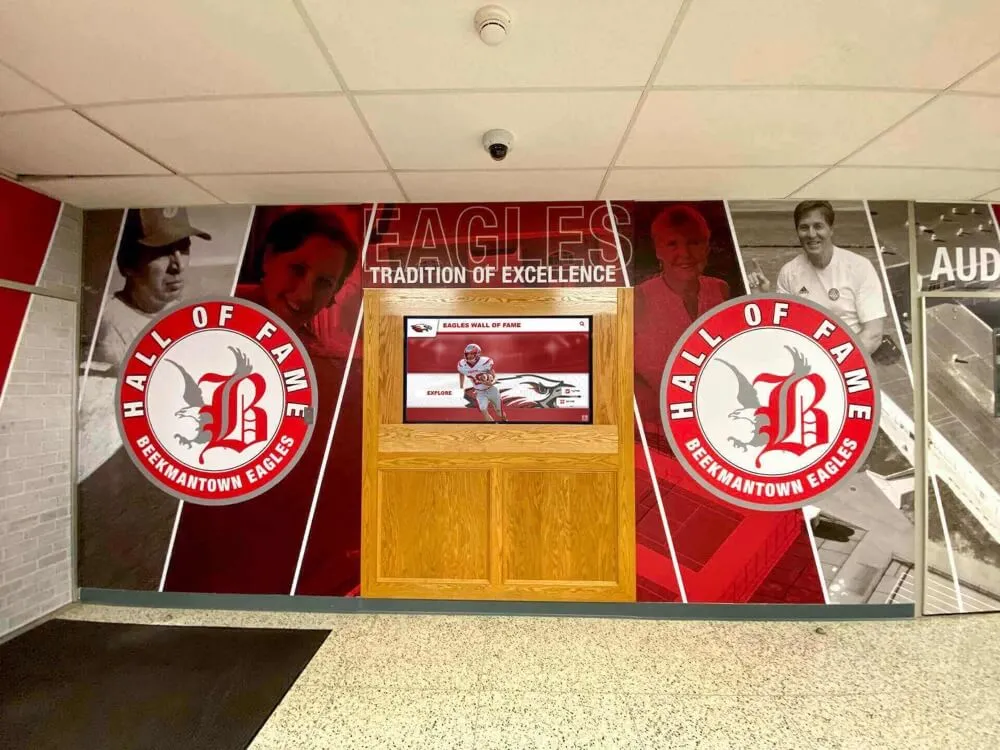
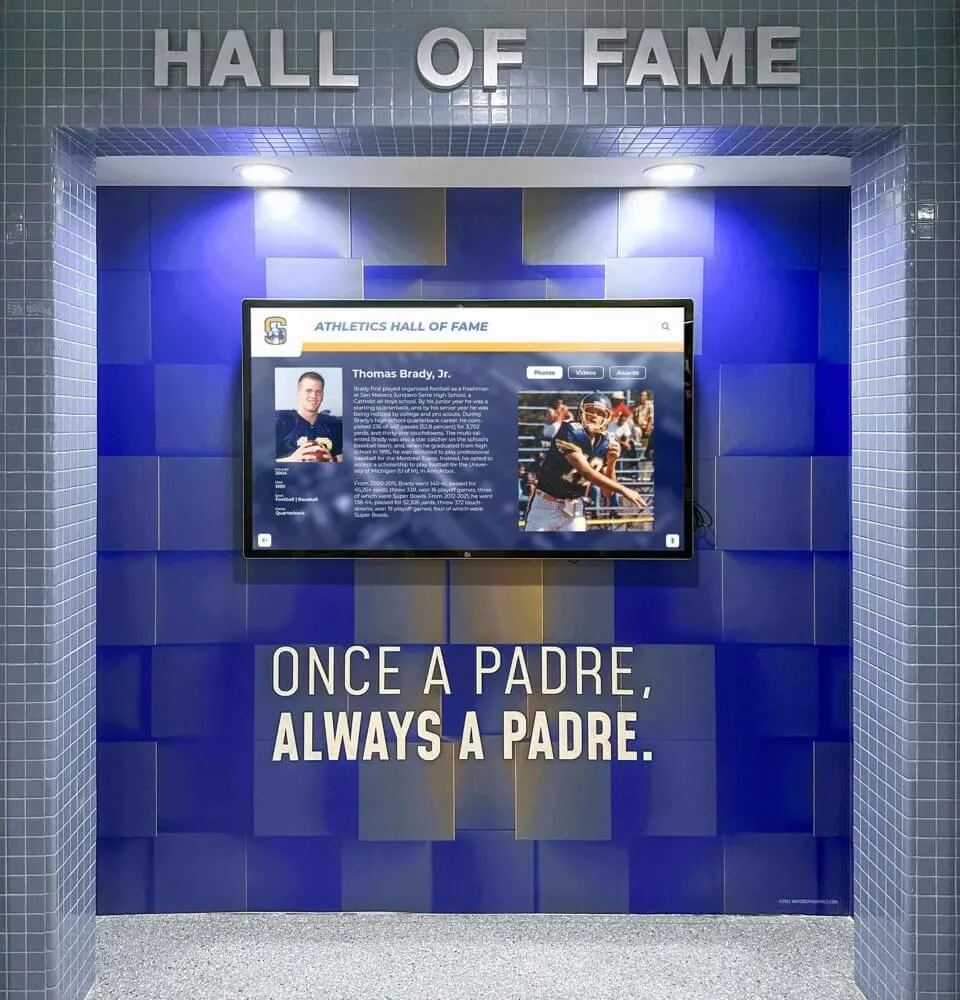
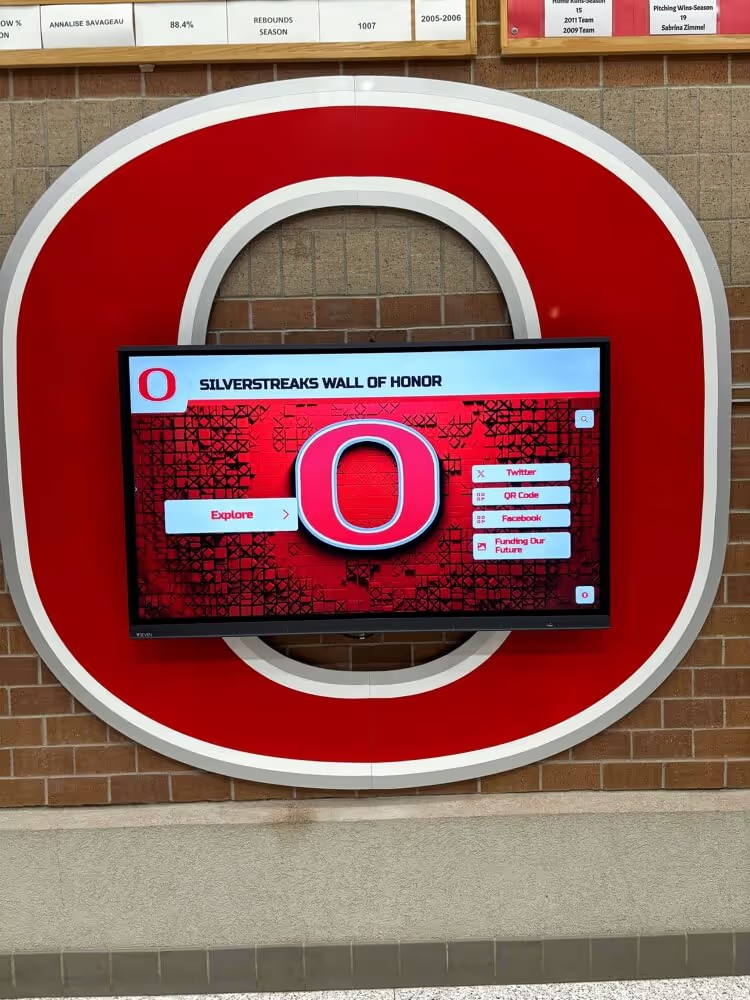
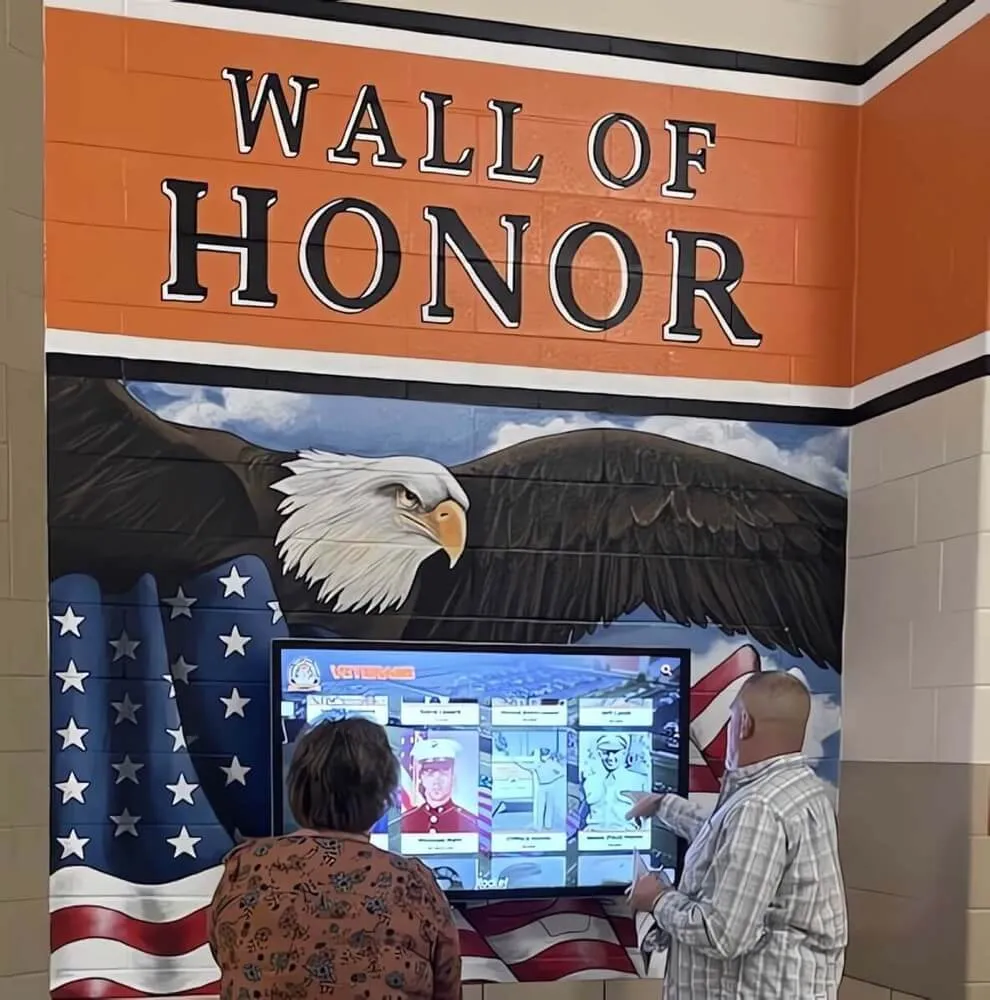
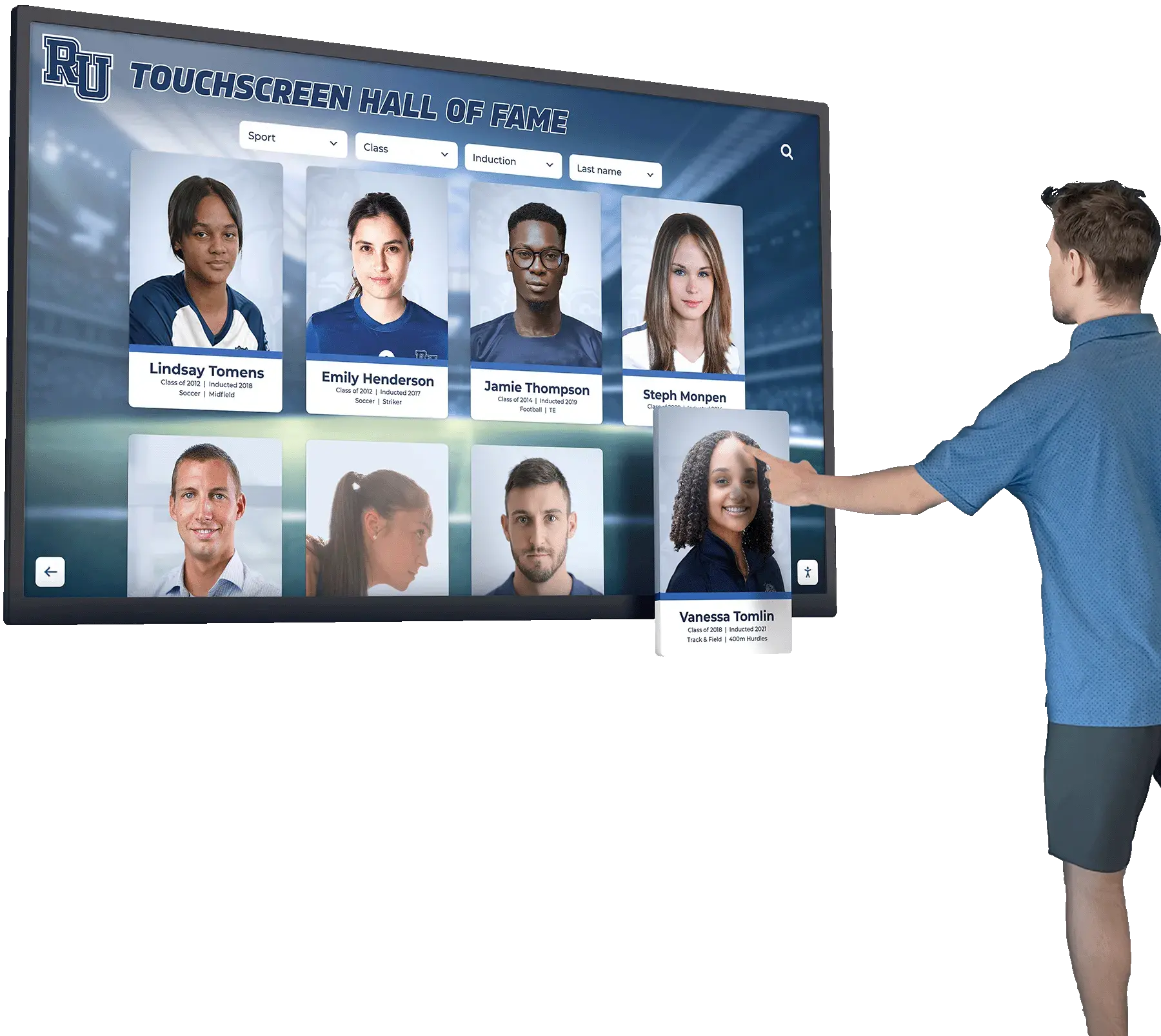
Touchscreen interfaces enable intuitive exploration of detailed scholar-athlete profiles celebrating both athletic and academic dimensions comprehensively
Achievement Context Blocks:
Rather than listing accomplishments without context, effective profiles integrate meaningful contextual information helping viewers understand achievement magnitude:
- Athletic Achievement Context: Career statistics, championship participations, conference honors, and team contributions demonstrating competitive excellence
- Academic Achievement Context: Challenging course loads, honors thesis participation, research presentations, academic competition participation, and honor society memberships
- Leadership and Service: Team captaincies, student-athlete advisory committee roles, community service initiatives, and peer mentorship demonstrating character beyond statistics
- Post-Graduation Success: Graduate school placements, professional achievements, continued athletic participation, and career trajectories demonstrating long-term impact of dual excellence foundation
Multimedia Integration Opportunities:
Static profiles miss opportunities to convey personality and achievement depth through richer media formats that text and photos alone cannot provide:
- Video Interview Clips: 30-60 second segments where honorees discuss balancing athletics and academics, advice for current student-athletes, memorable moments, and influential mentors
- Action Photography Galleries: Curated collections showcasing competitive moments capturing athletic excellence visually alongside academic recognition ceremony photos
- Coach and Faculty Testimonials: Brief video or text testimonials from coaches and faculty members providing external perspectives on honorees’ exceptional qualities and achievements
- Achievement Timeline Visualizations: Graphical representations showing academic and athletic milestone progressions across college careers
Learn about digital storytelling for athletic programs that brings scholar-athlete achievements to life through compelling multimedia narratives.
Motion Design and Transition Effects Maintaining Engagement
Strategic animation and motion design maintain viewer interest during idle states between interactions while guiding attention toward key information and creating polished professional experiences reflecting well on institutional brand quality and attention to detail.
Attraction Loop Design:
When displays remain idle between user interactions, carefully designed attraction loops cycle through content drawing attention while previewing interactive capabilities and information depth encouraging engagement initiation.
Effective attraction loop patterns include:
- Rotating Featured Scholar-Athletes: 10-15 second segments highlighting individual honorees with key achievements and compelling photography creating human connection points
- Achievement Statistics Counters: Animated number counters tallying total Academic All-Americans by sport, cumulative GPAs across populations, or other impressive aggregated metrics
- Timeline Visualizations: Historical progression graphics showing program growth over decades with milestone markers highlighting particularly distinguished years or breakthrough achievements
- Video Montages: Compiled highlights showing athletic competition footage intercut with academic ceremony moments reinforcing dual excellence narrative visually
Attraction loops should refresh approximately every 60-90 seconds maintaining visual interest while avoiding excessive movement that becomes distracting or detracts from surrounding environmental aesthetics in hallways or lobbies where displays reside.
Transition Effects and Micro-Interactions:
When users navigate between views or select content, transition effects provide visual continuity preventing jarring jumps while communicating relationships between content states and providing satisfying feedback confirming input recognition.
Strategic transition effects include:
- Fade Transitions: Gentle cross-fades between profile cards maintaining spatial relationships while updating content
- Slide Animations: Directional movements reinforcing hierarchical relationships as users drill from overview grids into detailed profiles
- Scale Transformations: Selected cards smoothly expanding into full profiles creating clear visual connection between list and detail states
- Parallax Depth Effects: Subtle layered movement creating depth perception and visual sophistication without excessive distraction
- Loading State Micro-Animations: Brief engaging animations during content loading preventing perceived lag and maintaining polish
Motion design should enhance rather than dominate experiences—subtle, purposeful, and aligned with overall aesthetic direction rather than gratuitous effects that call attention to themselves at the expense of content primacy and information hierarchy.
Accessibility and UX Considerations Ensuring Inclusive Excellence
Academic All-Americans recognition displays should celebrate achievement inclusively by ensuring all community members can access content effectively regardless of physical abilities, technical literacy, or other potential barriers limiting engagement with poorly designed systems lacking appropriate accommodation and thoughtful inclusive design consideration.
ADA Compliance and Physical Accessibility Standards
Digital displays must meet Americans with Disabilities Act requirements ensuring individuals with disabilities can access recognition content independently with dignity through appropriate physical installation and interface design accommodating diverse ability profiles.
Physical Installation Requirements:
According to ADA accessibility guidelines for interactive displays, mounting and placement must accommodate wheelchair users and individuals with limited reach or mobility:
- Display Height: Touchscreen active areas should fall between 15 inches minimum and 48 inches maximum from floor level for forward approach, or 54 inches maximum for parallel approach scenarios
- Clear Floor Space: Minimum 30x48 inch clear floor space positioned for either forward or parallel approach without obstructions preventing wheelchair positioning
- Knee and Toe Clearance: Displays requiring close approach should provide appropriate clearance beneath preventing barriers for wheelchair users approaching displays directly
- Protruding Objects: Wall-mounted displays should not protrude beyond allowable limits creating hazards for individuals with visual impairments navigating spaces using canes or guide dogs
Learn about comprehensive accessibility considerations for digital walls of fame ensuring inclusive recognition experiences.
Interface Design Supporting Diverse User Needs
Beyond physical accessibility, interface design should accommodate diverse technical literacy levels, visual capabilities, and interaction preferences ensuring all visitors can explore content effectively regardless of prior touchscreen experience or specific accessibility needs.
Visual Design Accessibility:
- High Contrast Modes: Alternative color schemes meeting WCAG 2.1 AA standards (minimum 4.5:1 contrast ratios for normal text, 3:1 for large text)
- Scalable Text Options: User-controlled text sizing enabling vision-impaired users to increase font sizes without breaking layouts
- Color-Independent Information: Never relying solely on color to communicate critical information given colorblind users cannot distinguish certain color combinations
- Clear Typography: Highly legible sans-serif typefaces at generous sizes ensuring readability from typical viewing distances
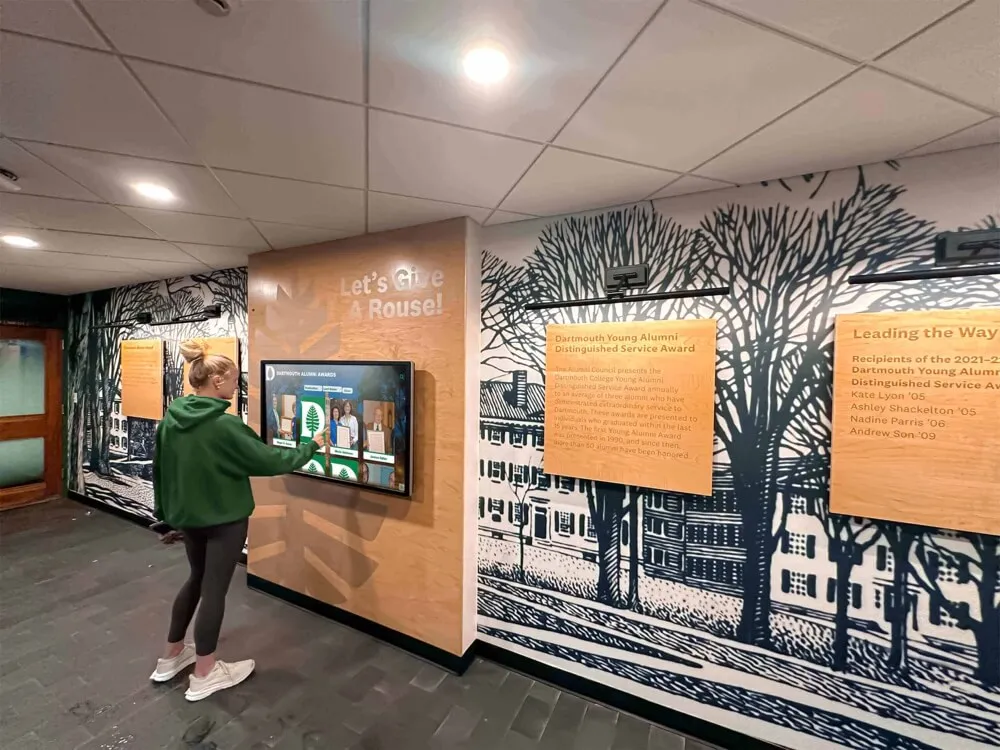
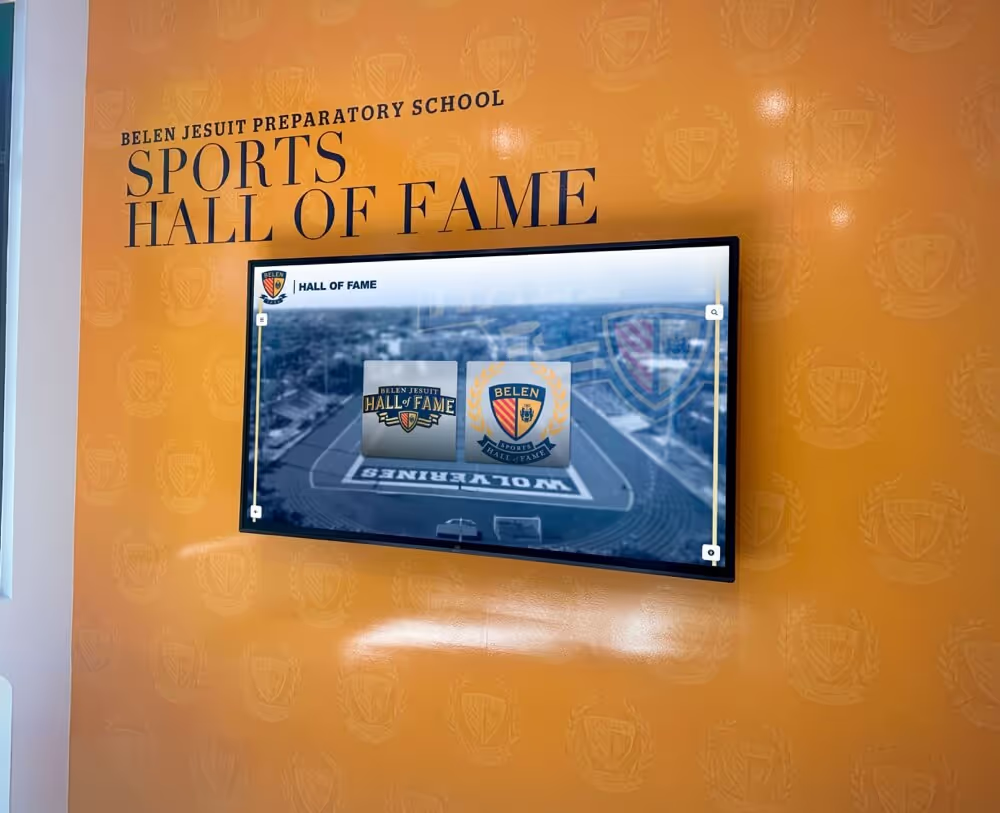
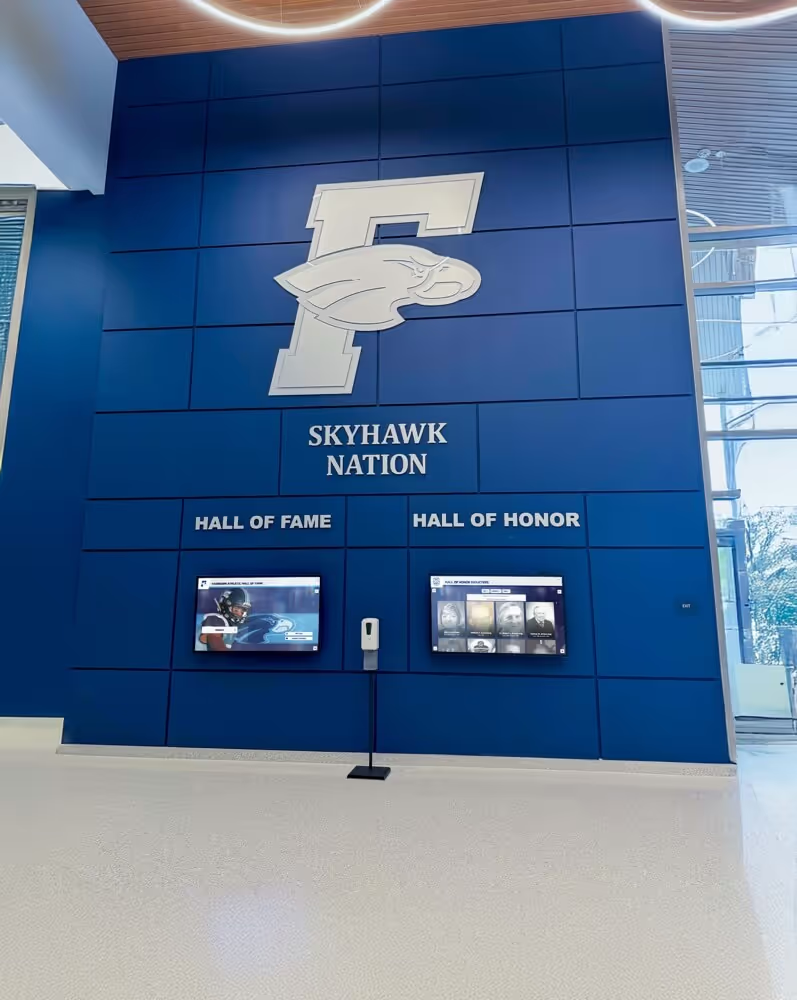
Strategic placement and thoughtful interface design ensure recognition displays remain accessible to all community members
Interaction Design Accommodations:
- Generous Touch Targets: Minimum 44x44 pixel interactive elements preventing frustration from missed touches on small buttons or links
- Timeout Extensions: Sufficiently long idle timeouts before resetting to attraction state preventing premature session termination for users requiring more time
- Audio Feedback Options: Audible confirmation of touch inputs supporting users with visual impairments or those desiring multi-sensory confirmation
- Simplified Navigation: Clear breadcrumb trails and persistent “home” buttons preventing users from becoming lost in deep navigation hierarchies
- Alternative Input Methods: QR codes linking to mobile-accessible web versions enabling users unable to interact with touchscreens comfortably to access identical content via personal devices
Mobile and Web Extensions Expanding Access
Physical touchscreen displays should integrate with complementary web and mobile platforms extending recognition beyond campus boundaries while providing alternative access methods for users preferring personal device interactions over public touchscreen engagement.
Web Platform Capabilities:
Purpose-built recognition platforms like Rocket Alumni Solutions provide comprehensive web experiences enabling:
- Global access from any internet-connected device enabling alumni and family worldwide to explore recognition
- Mobile-responsive designs ensuring quality experiences across smartphones, tablets, and desktop computers automatically
- Permanent archives surviving facility renovations or display hardware refresh cycles
- Social sharing capabilities enabling honorees to share achievements through personal networks
- Search engine visibility potentially attracting prospective student-athletes researching institutional academic culture
- Analytics demonstrating community engagement and program value through measurable usage data
QR Code Integration Strategies:
Prominently displayed QR codes on or adjacent to touchscreen displays create seamless transitions enabling visitors to:
- Transfer current touchscreen sessions to personal devices for continued exploration
- Share specific scholar-athlete profiles directly via personal social media accounts
- Save information for later reference without interrupting on-site navigation
- Access additional content not available on touchscreen displays due to space constraints
- Provide feedback or submit updated information through convenient mobile-optimized forms
This multi-platform approach ensures recognition accessibility across diverse user preferences, abilities, and contexts while amplifying program visibility far beyond physical campus boundaries into global communities.
Activation Planning and Content Refresh Strategies
Effective Academic All-Americans recognition displays require thoughtful launch planning and systematic content maintenance strategies ensuring displays remain current, relevant, and engaging across years of operation rather than becoming outdated artifacts reflecting only historical programs lacking contemporary relevance or institutional investment.
Launch Strategy and Initial Content Development
Successful recognition display implementations require comprehensive planning addressing technology installation, initial content development, stakeholder communication, and ceremonial activation creating memorable launches establishing displays as valued institutional traditions from inception.
Pre-Launch Content Development Timeline:
Months 4-6 Before Launch:
- Identify and prioritize historical honorees for inclusion ensuring comprehensive coverage across program history
- Develop standardized information collection forms and photography protocols ensuring consistency
- Assign staff responsibilities for content creation, quality control, and platform management
- Create style guides defining writing standards, image specifications, and naming conventions
- Begin collecting historical records, achievement narratives, and archival photography
Months 2-3 Before Launch:
- Complete photography sessions for current honorees requiring new professional portraits
- Develop compelling written narratives for featured scholar-athletes balancing detail with accessibility
- Conduct user acceptance testing with actual student-athletes and staff ensuring intuitive navigation
- Train content managers on platform administration enabling confident independent operation
- Develop communication materials announcing display launch and explaining interactive features
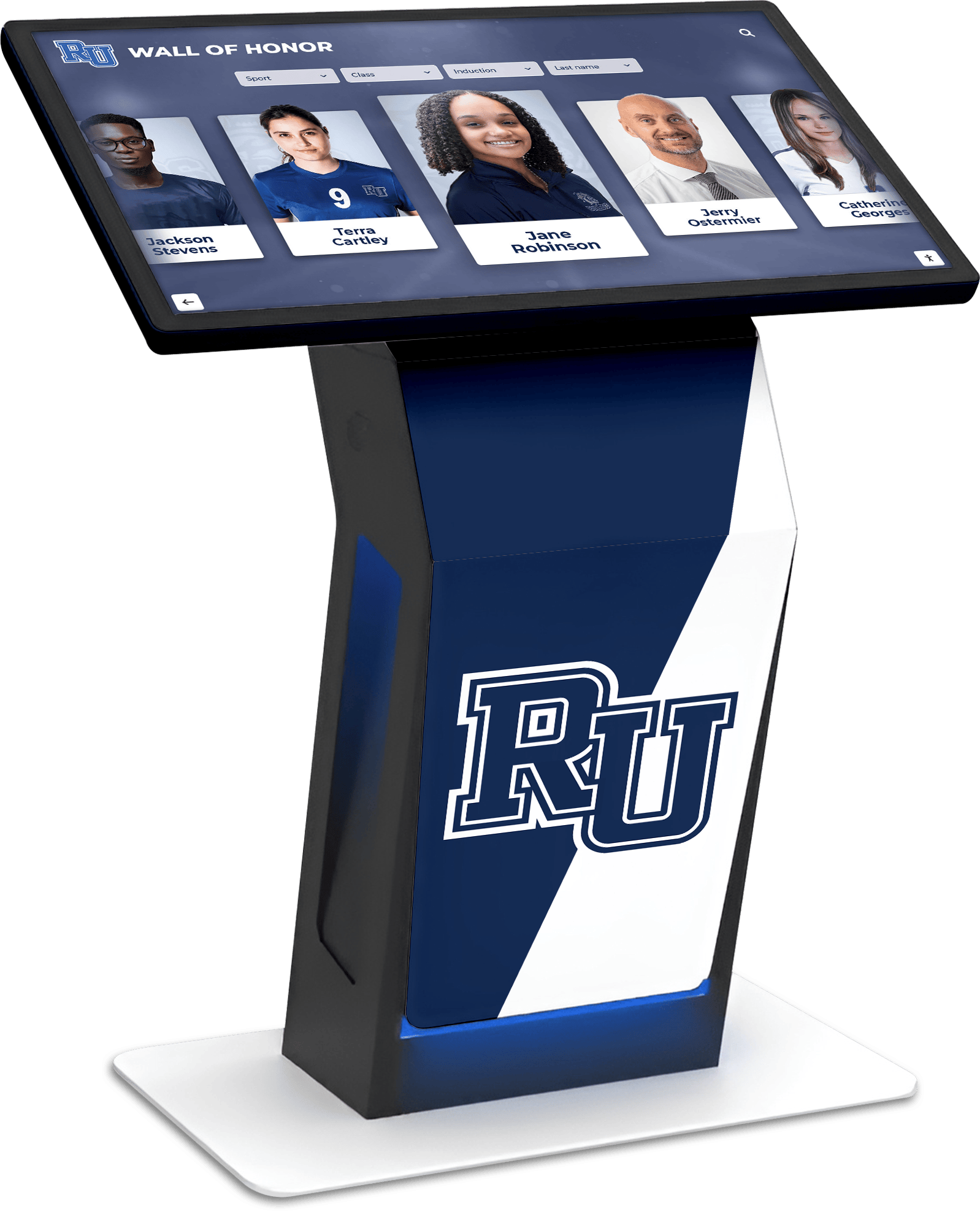
Modern recognition systems integrate sophisticated touchscreen hardware with cloud-based content management enabling comprehensive profile development and easy ongoing updates
Launch Month Activities:
- Schedule formal dedication ceremony inviting honorees, athletics leadership, academic administration, and media
- Coordinate promotional campaigns across athletics communications, student media, and institutional channels
- Create orientation materials for coaches explaining how to promote display to recruits during facility tours
- Develop usage guidelines for student-athletes explaining how to share their profiles via social media
- Establish feedback mechanisms enabling continuous improvement based on user experience observations
Explore comprehensive digital recognition display implementation strategies ensuring successful launches and sustainable long-term operation.
Ongoing Content Refresh and Program Sustainability
Recognition displays lose impact rapidly without consistent content updates maintaining currency and demonstrating ongoing institutional investment in academic excellence celebration rather than one-time projects lacking sustained commitment.
Annual Update Requirements:
Each academic year’s cycle should include systematic processes ensuring timely recognition of new honorees while maintaining historical content accuracy and relevance:
May-June (Post-Season):
- Identify new Academic All-Americans as national and conference selection committees announce honorees
- Collect achievement information, athletic statistics, and academic records for new inductees
- Schedule professional photography sessions with graduating and returning honorees
- Develop compelling narrative content celebrating individual achievement stories
- Update aggregate statistics and achievement counters reflecting current program totals
July-August (Pre-Season):
- Publish new honoree profiles coordinating timing with other athletics communications and recognition events
- Update team rosters and coaching staff information ensuring accuracy throughout displays
- Refresh attraction loop content preventing staleness from identical imagery cycling for full years
- Review historical content identifying outdated information requiring correction or enhancement
- Analyze usage analytics identifying popular content and underutilized features informing design improvements
Academic Year (Ongoing):
- Monitor content accuracy addressing corrections promptly as errors are identified
- Collect user feedback through informal observations and formal feedback mechanisms
- Update post-graduation information for alumni as career achievements and graduate school placements become known
- Refresh seasonal imagery and thematic elements aligning displays with institutional campaigns or special events
- Document lessons learned and improvement opportunities informing subsequent annual cycles
Multi-Year Enhancement Opportunities:
Beyond annual honoree additions, recognition displays should evolve across multi-year cycles through strategic enhancements maintaining contemporary relevance:
- Expanded multimedia integration as video collection processes mature and content libraries grow
- Enhanced filtering and search capabilities responding to user behavior patterns and expressed needs
- Integration with other athletics recognition systems creating comprehensive platforms celebrating diverse achievements
- Sponsorship recognition opportunities connecting academic excellence celebration with donor stewardship
- Alumni testimonial programs featuring career success stories demonstrating long-term value of dual excellence foundation
Learn about comprehensive student recognition approaches ensuring sustainable programs maintaining impact across years of operation and institutional leadership transitions.
Technical Implementation Considerations and Platform Selection
Selecting appropriate recognition display technology and content management platforms determines program sustainability, content quality potential, ease of ongoing management, and ultimate effectiveness in achieving goals for scholar-athlete celebration and community inspiration across years of operation.
Hardware Selection and Installation Planning
Recognition display hardware forms the foundation for all subsequent design and content decisions—selecting appropriate display technology, mounting configurations, and environmental considerations ensuring reliable long-term operation.
Commercial Display Technology:
Academic All-Americans installations typically employ 43-75 inch commercial-grade touchscreen displays optimized for continuous operation in public environments:
- Commercial Durability Ratings: Displays rated for minimum 16 hours daily operation (50,000+ hour lifespans) ensuring reliable performance throughout 5-7 year useful life cycles
- Optical Bonding Technology: Edge-to-edge bonded glass eliminating air gaps between touchscreen and display panel improving image clarity, reducing glare, and increasing durability
- 10-Point Multi-Touch Capabilities: Supporting sophisticated gestures enabling intuitive navigation patterns familiar from consumer mobile device experiences
- Anti-Glare Coatings: Surface treatments reducing reflection and improving readability in environments with challenging lighting including large windows or overhead fixtures
- Landscape or Portrait Orientation: Selecting appropriate orientation based on available wall space and content layout requirements
Installation Environment Considerations:
Display placement significantly affects visibility, engagement, and technical performance requiring careful site selection:
- High-Traffic Location Selection: Positioning displays in natural gathering spaces, building entrances, athletics facility corridors, or adjacent to competition venues maximizing exposure
- Appropriate Viewing Distances: Ensuring adequate space for comfortable viewing at 4-8 foot distances without creating congestion or circulation conflicts
- Environmental Controls: Climate-controlled interior spaces protecting displays from temperature extremes, humidity, and direct sunlight affecting performance and lifespan
- Network Connectivity: Reliable high-bandwidth wired ethernet connections (strongly preferred over WiFi) ensuring dependable content updates and platform communication
- Electrical Infrastructure: Dedicated circuits with surge protection safeguarding substantial hardware investments from power quality issues
Mounting Systems and Safety:
Professional installation employing appropriate mounting systems ensures safety and proper positioning:
- Commercial-Grade Wall Mounts: Heavy-duty mounting systems engineered for display weights with appropriate safety factors and earthquake resistance where applicable
- ADA-Compliant Positioning: Mounting heights and angles ensuring accessibility while preventing protruding object hazards
- Cable Management: Concealed wiring maintaining professional aesthetics while protecting connections from tampering or accidental damage
- Anti-Theft Security: Locking mechanisms or tamper-resistant fasteners protecting substantial hardware investments in public spaces
Content Management Platform Selection
Display hardware represents only half of recognition system technology—content management platforms determine ease of ongoing operation, content quality potential, and long-term program sustainability as staff transitions occur and program needs evolve.
Purpose-Built Recognition Platforms vs. Generic Digital Signage:
Institutions should evaluate whether purpose-built recognition platforms or adapted generic digital signage systems better serve specific program needs and institutional capabilities.
Purpose-Built Recognition Solutions:
Platforms like Rocket Alumni Solutions designed specifically for academic and athletic recognition typically provide substantial operational advantages:
- Templates optimized specifically for scholar-athlete profiles requiring minimal design expertise
- Organizational structures naturally matching educational recognition program workflows and hierarchies
- Built-in search, filtering, and navigation patterns proven effective for academic recognition contexts
- Integrated web and mobile platforms ensuring consistent experiences across touchscreen, desktop, and mobile devices
- Specialized support teams understanding athletics and academics recognition contexts and common challenges
- Ongoing platform development adding features addressing evolving institutional needs without custom development costs
- Analytics tools measuring community engagement demonstrating program value through quantifiable usage data
Generic Digital Signage Adaptation:
Institutions may consider adapting general-purpose digital signage platforms for recognition purposes, though this approach typically involves tradeoffs:
Advantages include potentially lower initial licensing costs for institutions already operating signage platforms institution-wide, and familiar interfaces when IT staff already support existing signage systems.
However, disadvantages include requiring significant custom development creating recognition-specific templates and interfaces, lacking built-in features specifically supporting academic recognition workflows, necessitating ongoing technical resources for maintenance and enhancements as needs evolve, and typically providing inferior user experiences compared to purpose-built alternatives designed specifically for recognition contexts.
For most institutions, purpose-built recognition platforms provide superior long-term value despite potentially higher initial investments through dramatically easier ongoing management, better user experiences driving higher engagement, and platform evolution tracking best practices without requiring expensive custom development.
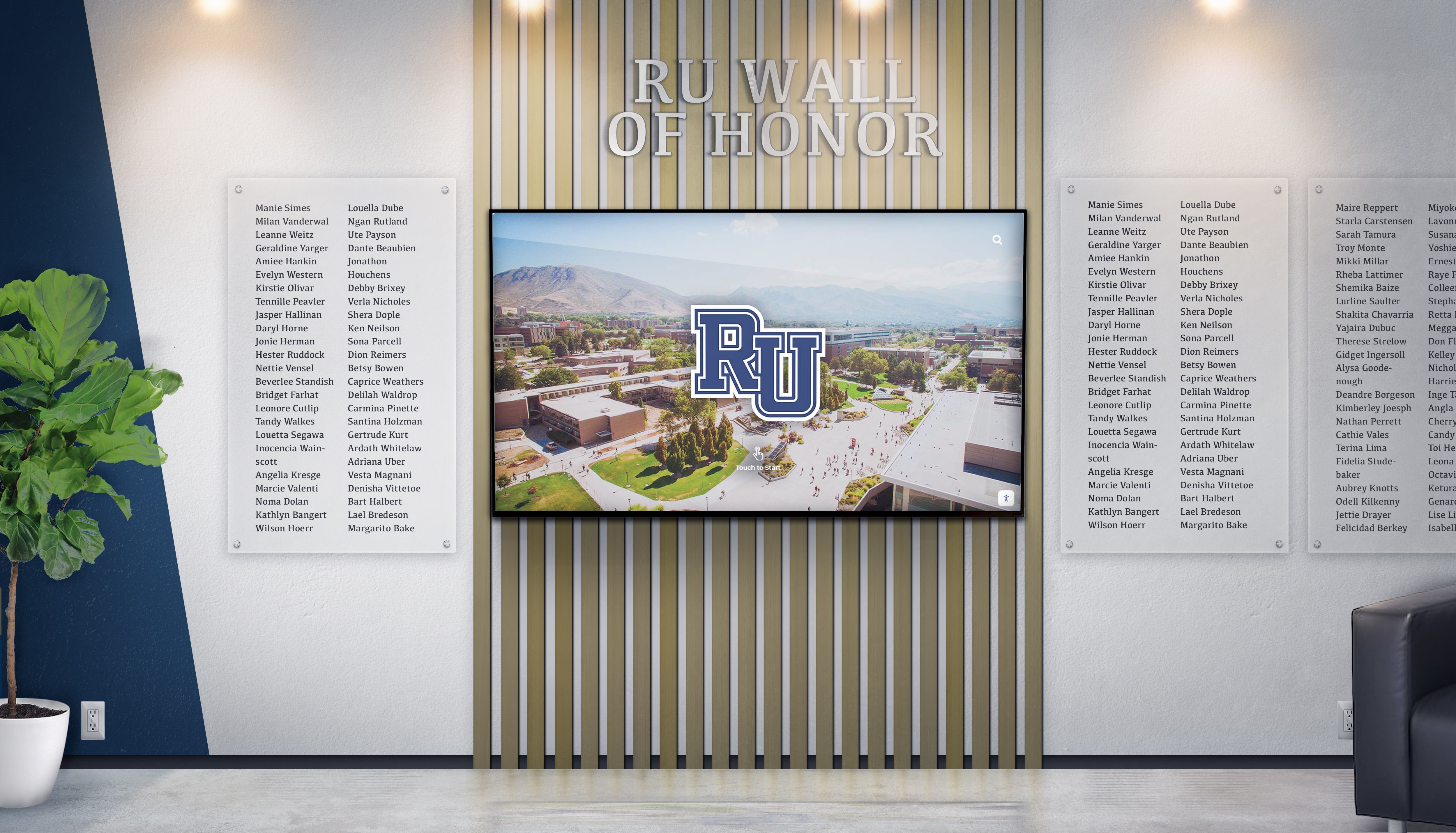
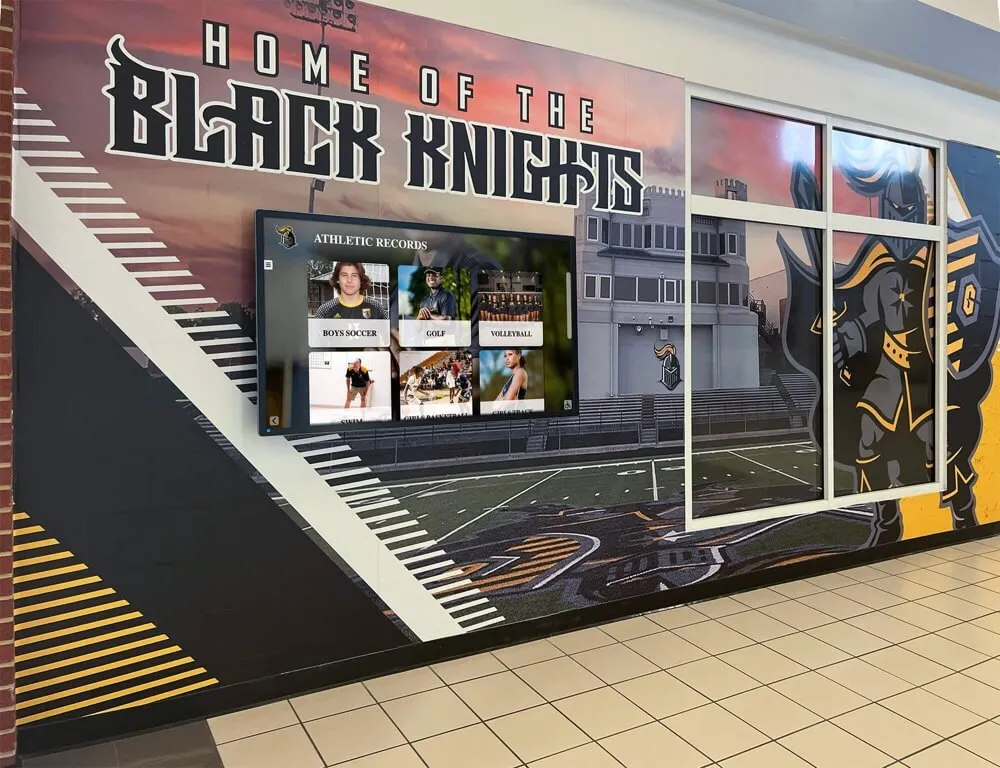
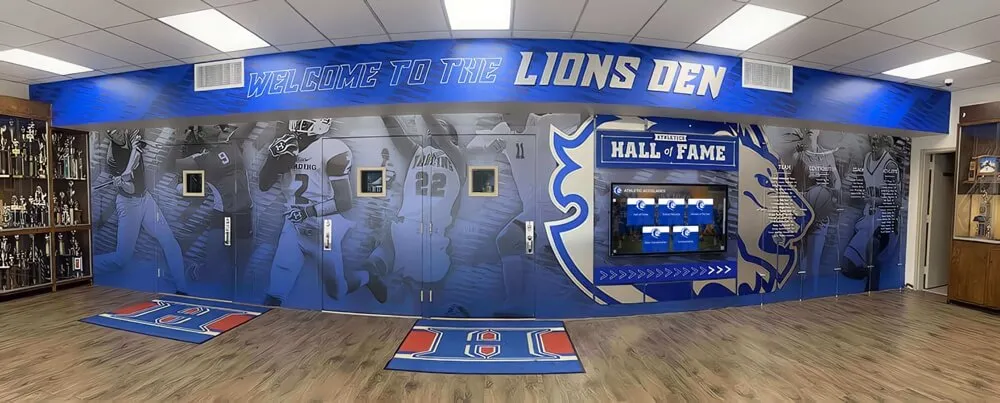
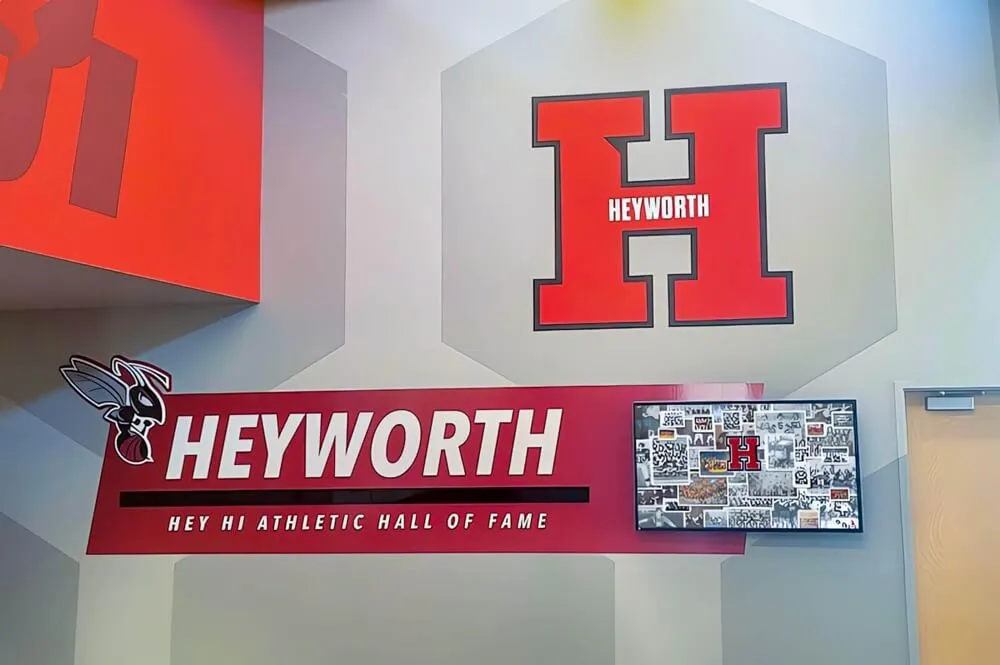
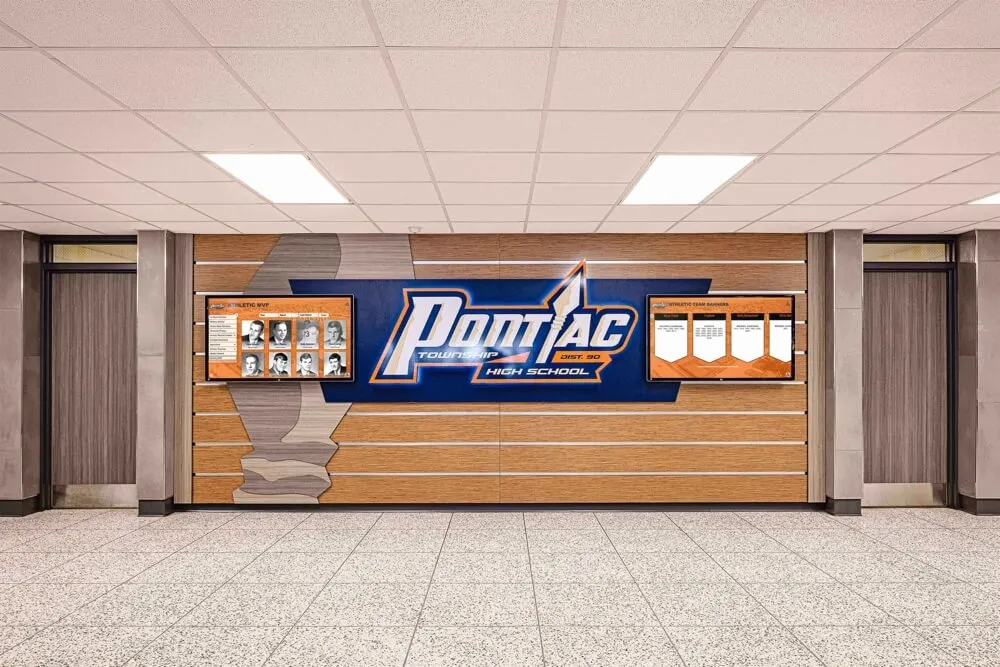
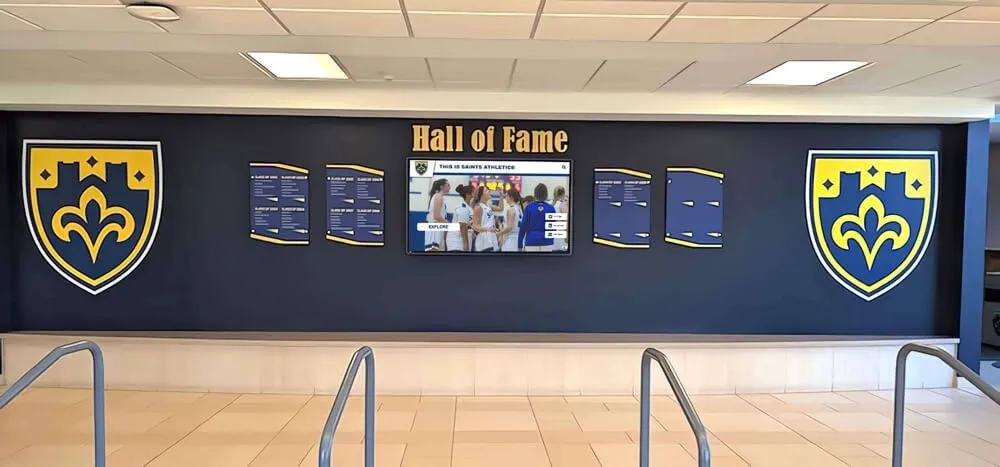
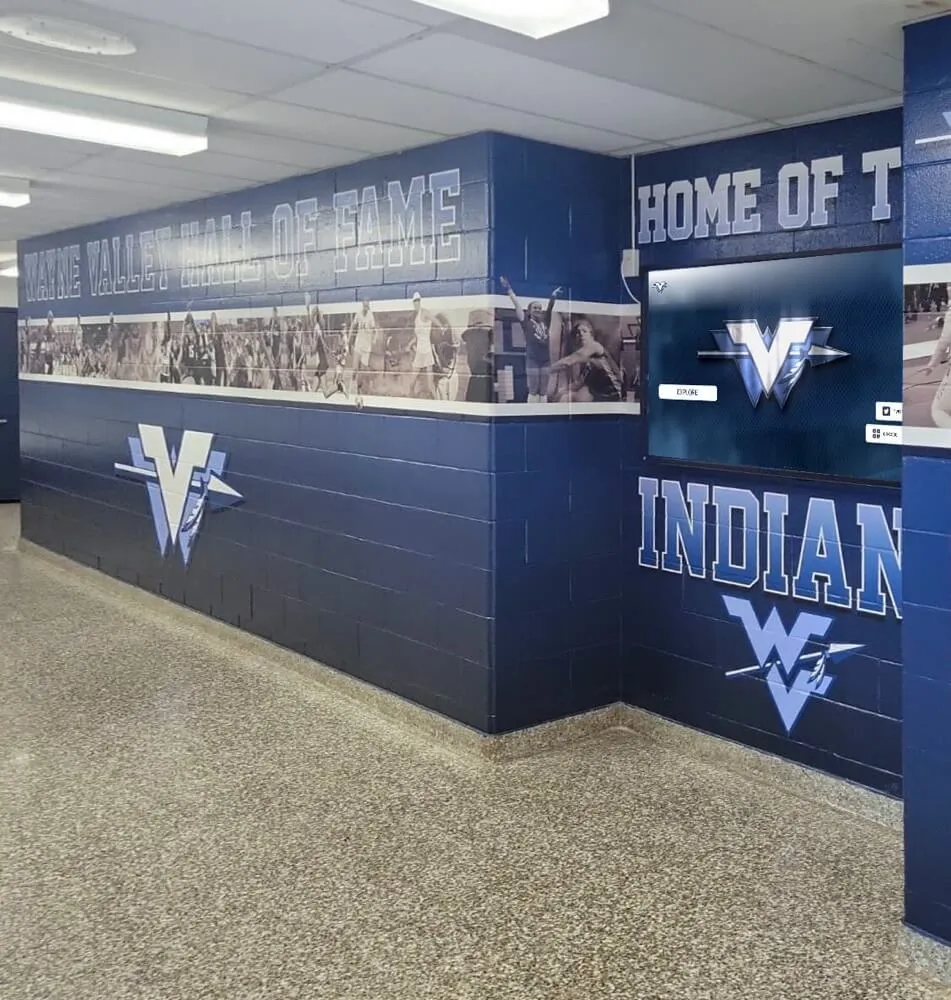
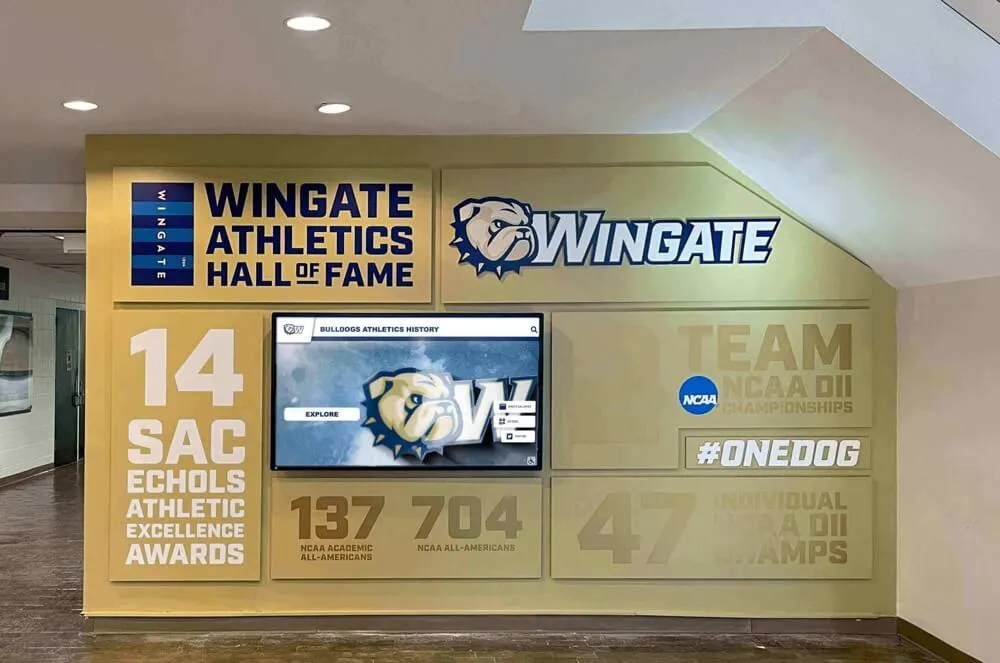
Sophisticated recognition systems can integrate digital touchscreens with complementary traditional elements creating comprehensive celebration environments
Cloud-Based Management and Collaborative Workflows
Modern recognition platforms employ cloud-based architectures enabling remote content management, collaborative workflows across multiple staff members, and reliable automated backups protecting content investments from data loss through hardware failures or facility incidents.
Cloud Platform Advantages:
- Remote Management Capabilities: Content updates from any internet-connected device eliminating requirements to access display hardware directly for routine maintenance
- Role-Based Permissions: Granular access controls enabling appropriate staff members to update relevant content sections without unrestricted system access risking accidental damage
- Collaborative Editing Workflows: Multiple users simultaneously developing content with version control preventing conflicting edits or lost work
- Automatic Content Backups: Regular automated backups protecting substantial content investments from data loss through hardware failures or operational errors
- Scheduled Publishing: Automated content publication at specific dates and times enabling advance preparation while ensuring timely visibility
- Multi-Display Management: Centralized administration across multiple displays throughout campuses ensuring consistency while enabling location-specific customization
Content Development Workflow Optimization:
Efficient recognition programs establish clear workflows distributing responsibilities appropriately across athletics communications staff, academic affairs offices, and IT support teams:
- Athletics Communications: Primary content development for athletic achievement narratives, coordination with coaches, photo collection and editing, and honoreee communication
- Academic Affairs/Registrar: Official academic record verification, degree conferral confirmation, major/college information, and GPA validation
- IT/Media Services: Platform administration, technical support, display maintenance, and analytics reporting
- Collaborative Review Cycles: Structured approval workflows ensuring accuracy and quality before publication
Explore best touchscreen software approaches comparing web-based versus native applications for recognition display management.
Brand Integration and Institutional Identity Expression
Academic All-Americans recognition displays represent public institutional brand expressions requiring thoughtful integration with broader athletics and university identity systems creating cohesive experiences reinforcing brand recognition while celebrating individual achievement authentically within established visual frameworks.
Athletic Identity and Academic Integration
Scholar-athlete recognition requires balancing athletic program identity with academic dimension acknowledgment—avoiding designs that feel exclusively “athletics” oriented while ensuring displays visibly connect to teams and competitive programs honorees represent.
Color System Application:
Primary and secondary institutional athletics colors should provide foundational visual identity while incorporating academic college colors or neutral tones acknowledging dual achievement dimensions:
- Athletics Primary Colors: Dominant usage in hero zones, navigation elements, and team/sport identification creating clear athletics identity connection
- Academic Accent Colors: Secondary color applications in academic achievement sections, GPA displays, or major/college identifiers acknowledging academic dimensions
- Neutral Foundations: Substantial white, light gray, or other neutral backgrounds ensuring readability while preventing overwhelming color saturation
- Contrast Requirements: Maintaining WCAG 2.1 AA contrast standards ensuring accessibility while expressing brand identity
Typography Hierarchy:
Type systems should balance athletics energy and dynamism with academic credibility and sophistication:
- Display Typography: Bold condensed sans-serif typefaces common in athletics communications for headlines and large text maintaining energy and visual impact
- Body Typography: Highly legible humanist sans-serif typefaces for extended text ensuring comfortable reading while maintaining contemporary aesthetics
- Size Relationships: Clear hierarchies distinguishing headlines, subheads, body text, and captions preventing visual confusion
- Line Length Optimization: Comfortable 50-75 character line lengths for extended text blocks supporting efficient reading
Logo and Mascot Integration:
Institutional athletics marks should appear strategically without dominating individual achievement celebration:
- Header Placement: Primary athletics wordmarks or combination marks positioned prominently in hero zones establishing clear institutional identity
- Subtle Background Treatments: Large-scale low-opacity mascot silhouettes or athletics marks creating branded depth without competing with foreground content
- Sport-Specific Iconography: Simple sport icons supporting filtering and navigation without requiring literal photographic representations
Discover comprehensive digital display design strategies balancing brand expression with user experience optimization.
Sponsor Recognition and Revenue Opportunities
Academic All-Americans displays may incorporate sponsor recognition creating revenue opportunities supporting program costs while acknowledging corporate or donor partners investing in scholar-athlete success and institutional academic excellence initiatives.
Tasteful Sponsor Integration:
Sponsor acknowledgment should enhance rather than detract from scholar-athlete celebration through appropriate integration:
- Presenting Sponsor Recognition: “The [Company Name] Academic All-Americans Hall of Honor” or similar titling acknowledging primary sponsors prominently without overwhelming individual achievements
- Rotating Sponsor Displays: Periodic sponsor logo rotations in corner placements or footer areas during attraction loops
- Profile Page Integration: Discrete sponsor acknowledgment on scholar-athlete profile templates as “Recognition made possible by [Sponsor]”
- Complementary Wall Signage: Permanent sponsor recognition on adjacent wall plaques coordinate with but separate from primary touchscreen content
Donor Stewardship Opportunities:
Academic excellence endowments and scholarship funds benefit from recognition program integration:
- Scholarship Connection: Linking Academic All-Americans who receive specific named scholarships to donor profiles celebrating the generosity enabling academic athletic excellence
- Donor Wall Integration: Coordinating Academic All-Americans touchscreens with adjacent donor recognition installations creating comprehensive advancement recognition zones
- Impact Storytelling: Scholar-athlete profiles explaining how scholarship support enabled them to pursue demanding academic programs while competing athletically
Learn about capital campaign donor recognition approaches integrating athletic achievement celebration with advancement stewardship.
Measuring Success and Demonstrating Program Value
Systematic assessment ensures Academic All-Americans recognition displays achieve intended goals while identifying improvement opportunities based on evidence rather than assumptions about community perception, student motivation, or institutional reputation impact.
Quantitative Engagement Metrics
Digital platforms provide objective usage data demonstrating community engagement and program reach:
Direct Interaction Measurements:
- Daily touchscreen interaction counts showing frequency of active engagement
- Average session duration indicating depth of content exploration beyond superficial glances
- Popular content identification revealing which scholar-athletes, sports, or content types attract greatest interest
- Navigation pattern analysis showing how users move through content and where drop-off occurs
- Search query analysis revealing what information visitors seek most frequently
- Time-of-day patterns informing optimal content scheduling for attraction loops
Web Platform Analytics:
- Website visitor counts showing online recognition platform reach beyond physical campus
- Geographic distribution revealing where online visitors access content globally
- Device type analysis showing mobile versus desktop usage patterns
- Referral sources identifying how visitors discover online recognition platforms
- Social sharing frequency demonstrating organic content promotion through personal networks
- Return visitor rates indicating sustained engagement versus one-time curiosity
Academic All-Americans Program Metrics:
- Total honoree counts tracked over time showing program growth and participation trends
- Sport representation analysis ensuring equitable recognition across men’s and women’s programs
- Academic major diversity demonstrating breadth across colleges and departments
- GPA distributions showing sustained high achievement standards over time
- Multi-year honoree identification celebrating exceptional sustained excellence
Qualitative Assessment and Cultural Indicators
Beyond quantitative data, qualitative assessment provides nuanced understanding of recognition program impact on institutional culture, student motivation, and community perception:
Stakeholder Feedback Collection:
Regular feedback gathering from diverse constituencies provides essential improvement insights:
- Student-Athlete Surveys: Current and former student-athletes sharing perceptions about recognition program meaningfulness and impact on motivation
- Coaching Staff Input: Head coaches and assistant coaches assessing program value for recruiting and team culture development
- Prospective Student-Athlete Reactions: Recruitment visit feedback noting whether facilities tour recognition displays influenced institutional perception positively
- Alumni Reflections: Former Academic All-Americans describing how recognition affected their student experience and institutional connection
- Family Member Testimonials: Parents and relatives sharing appreciation for visible celebration of students’ academic athletic achievements
Recruitment Impact Assessment:
While difficult to isolate specific factors, athletics departments should monitor whether recognition programs contribute to recruiting success:
- Anecdotal feedback from recruits mentioning Academic All-Americans displays during decision-making
- Increased interest among academically high-achieving recruits seeking institutions valuing academics equally with athletics
- Improved yield rates converting admitted student-athletes into enrolled athletes as academic culture attracts students
- Enhanced institutional reputation among high school counselors and club coaches advising college-bound student-athletes
Institutional Perception Indicators:
Recognition programs should strengthen overall institutional reputation and academic culture:
- Media coverage highlighting Academic All-Americans programs demonstrating athletics commitment to academics
- Peer institution benchmarking showing competitive recognition programs relative to conference and national peers
- Faculty perceptions noting whether recognition increases academic respect for athletics programs
- Administrative support evidenced through funding commitments and promotional emphasis on dual excellence narratives
Learn about comprehensive academic excellence recognition measurement approaches ensuring programs demonstrate value through systematic assessment.
Conclusion: Designing Recognition Worthy of Dual Excellence
Academic All-Americans represent the absolute pinnacle of collegiate dual achievement—student-athletes who refuse to compromise between competitive athletic excellence and rigorous academic achievement, instead pursuing both dimensions with exceptional dedication producing remarkable results fewer than 2% of NCAA student-athletes ever achieve. These elite scholar-athletes deserve recognition matching their accomplishment magnitude through displays that honor their complete achievements comprehensively rather than reducing them to brief mentions or simple name lists failing to communicate the exceptional nature of simultaneous excellence across athletics and academics.
Traditional recognition approaches—static plaques with engraved names, brief newsletter mentions, or generic digital lists—fundamentally cannot provide the engagement, storytelling depth, and inspirational impact contemporary institutions need for building cultures where academic excellence receives celebration equal to athletic success. Modern interactive digital display solutions transform Academic All-Americans recognition from administrative acknowledgment into compelling experiences celebrating individual stories while inspiring current student-athletes toward similar dual excellence through accessible role models and clear achievement pathways.
Transform Your Scholar-Athlete Recognition
Discover how purpose-built digital recognition solutions can help you celebrate Academic All-Americans achievements with the sophistication and engagement these elite dual achievers deserve while inspiring future scholar-athlete excellence.
Explore Recognition SolutionsEffective Academic All-Americans display design requires balancing comprehensive information presentation with intuitive navigation enabling diverse audiences to explore content according to personal interests and connection points rather than forcing linear consumption. Strategic visual hierarchies communicate achievement tiers meaningfully while maintaining cohesive aesthetics preventing excessive fragmentation. Interactive filtering and search capabilities transform passive viewing into active discovery. Multimedia integration through photography, video, and compelling written narratives honors individual achievement comprehensively while inspiring peers through specific rather than generic examples.
Successful implementations demand systematic planning addressing technology selection, initial content development, stakeholder communication, launch ceremonies, and ongoing maintenance establishing displays as valued institutional traditions receiving continuous investment rather than static one-time projects losing relevance rapidly. Cloud-based content management platforms dramatically simplify ongoing operation enabling remote updates, collaborative workflows, and reliable backups protecting content investments. Purpose-built recognition platforms typically provide superior long-term value compared to adapted generic solutions through specialized features, intuitive interfaces, and ongoing development tracking best practices.
Whether implementing new Academic All-Americans recognition programs or enhancing existing approaches, combining thoughtful experience design with appropriate technology platforms creates acknowledgment systems that genuinely celebrate scholar-athlete achievement, strengthen institutional cultures valuing academics alongside athletics, demonstrate compelling institutional commitments to prospective student-athletes and their families, and preserve remarkable dual excellence traditions connecting current honorees to generations of distinguished alumni who pursued rigorous academics and competitive athletics simultaneously.
Your Academic All-Americans invested extraordinary effort mastering their sports while excelling academically at levels fewer than 2% of collegiate student-athletes achieve—balancing demanding practice schedules, travel commitments, and competitive pressures with rigorous coursework, study requirements, and intellectual challenges. They deserve recognition honoring their complete achievements through engaging displays that inspire daily, preserve their dual excellence within proud institutional traditions, and create lasting legacies celebrating the pursuit of excellence across all dimensions that defines your institution’s educational mission and commitment to developing exceptional graduates prepared for meaningful contributions to society.
Ready to transform your Academic All-Americans recognition? Explore National Honor Society digital recognition approaches celebrating academic achievement comprehensively, discover student athlete recognition strategies honoring dual excellence, or learn about honor roll recognition board solutions creating engaging systems that inspire future excellence across your educational community.