



Academic scholarship requirements determine which students receive funding to pursue higher education based on measurable achievements like grade point average, standardized test scores, class rank, and academic honors. Understanding these specific thresholds—which range from 3.0 GPAs for entry-level merit awards to 4.0+ requirements for full-ride scholarships at elite institutions—helps students target appropriate opportunities while motivating consistent academic performance throughout high school.
Yet navigating the scholarship landscape often feels overwhelming for families. Requirements vary dramatically across scholarship programs, application processes demand extensive documentation, and understanding how GPA calculations, test score superscoring, and weighted grades factor into eligibility requires careful research. Meanwhile, schools struggle to effectively showcase scholarship recipients in ways that inspire younger students to pursue similar academic excellence and demonstrate institutional commitment to college preparation.
This comprehensive guide breaks down the specific academic requirements for various scholarship levels, explains how different criteria work together in selection processes, and explores how schools can celebrate scholarship achievements to motivate future applicants.
Academic scholarships represent merit-based financial aid awarded for demonstrated academic excellence rather than financial need. These awards range from modest one-time grants to full-ride packages covering tuition, fees, room, and board at prestigious universities. Understanding precise requirements helps students build competitive applications while maintaining realistic expectations about scholarship prospects.

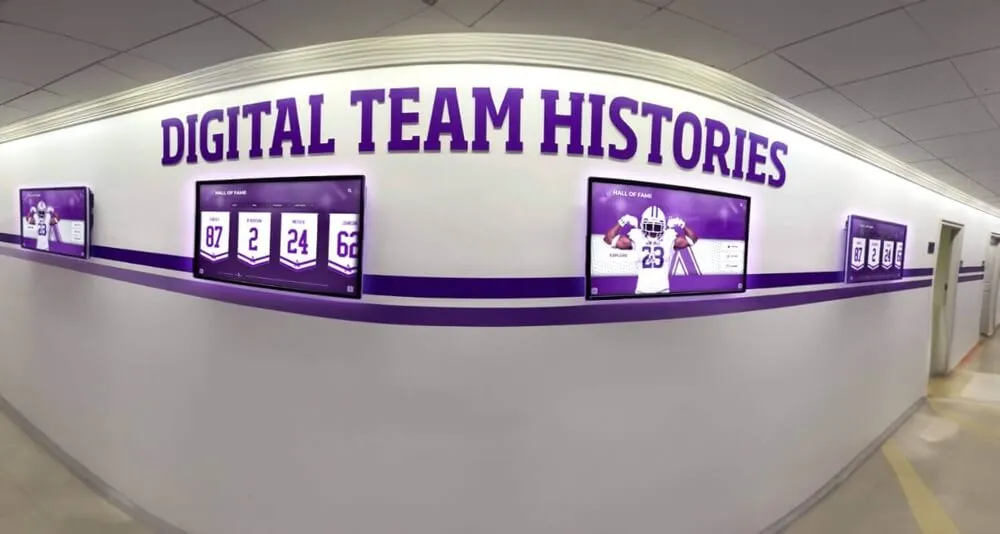
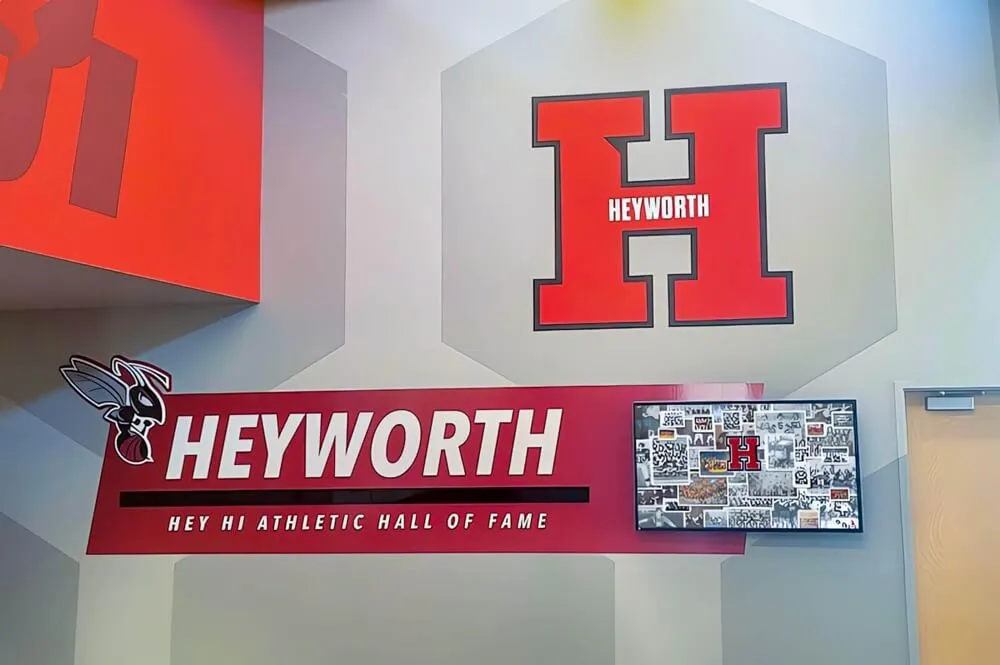
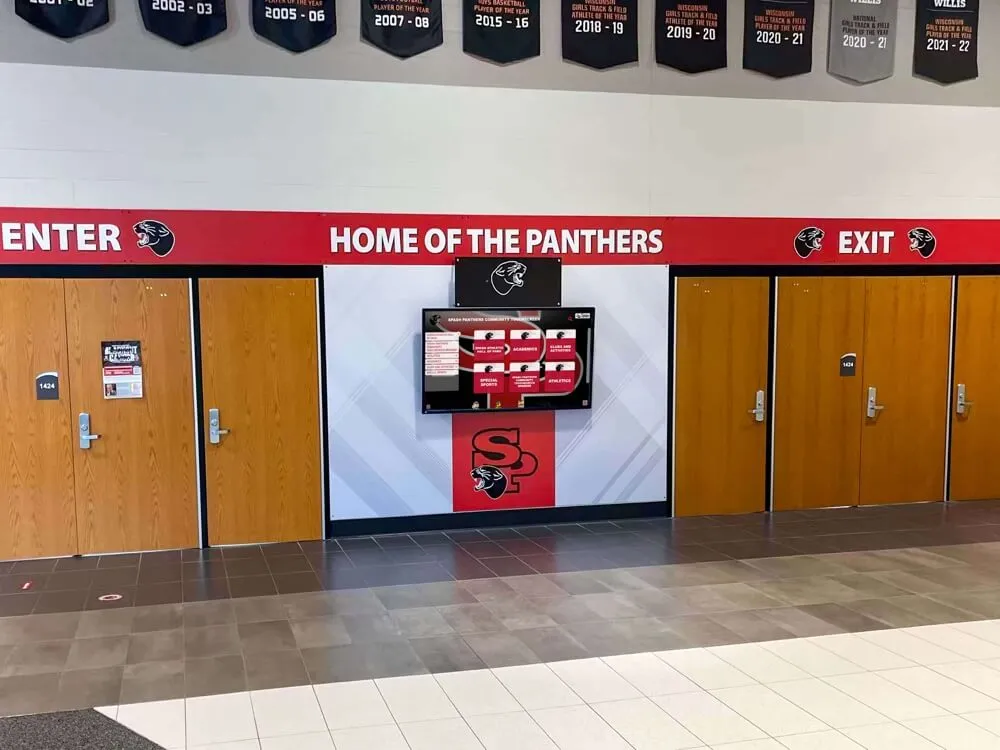
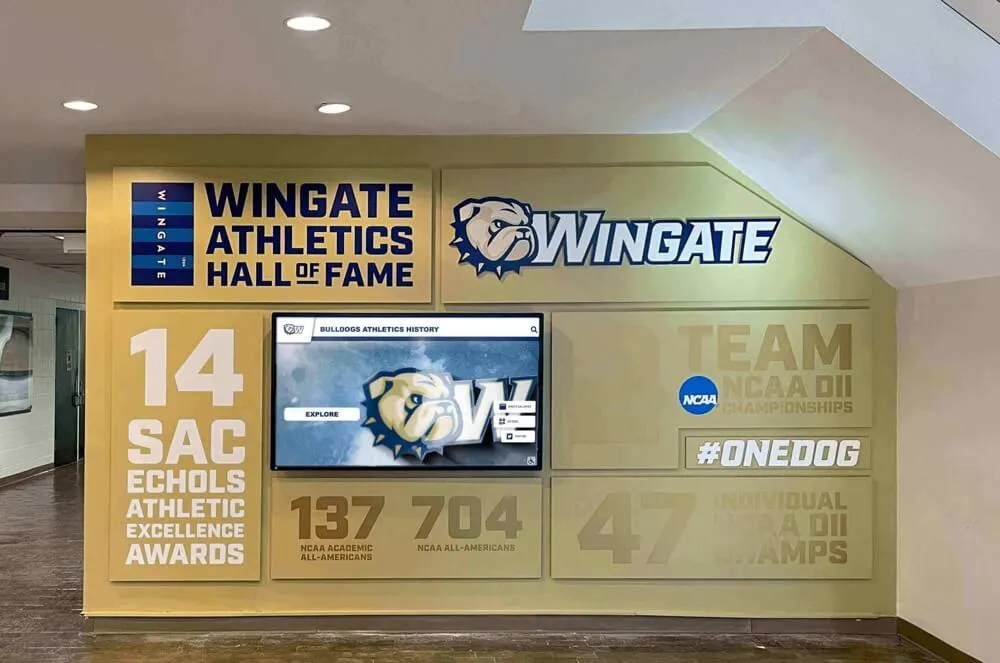
Modern digital displays help students explore scholarship opportunities and learn from successful recipients
Understanding GPA Requirements for Academic Scholarships
Grade point average serves as the primary filter for most academic scholarships, with specific thresholds determining eligibility at different funding levels.
Minimum GPA Thresholds by Scholarship Type
Entry-Level Merit Scholarships Most college institutional scholarships require minimum GPAs between 3.0-3.5:
- 3.0 GPA - Baseline for many state university merit programs
- 3.3 GPA - Typical threshold for mid-tier institutional awards
- 3.5 GPA - Common requirement for competitive regional scholarships
- 3.7 GPA - Entry point for selective private college merit aid
These represent unweighted GPAs on the traditional 4.0 scale. Students should verify whether specific programs consider weighted or unweighted calculations, as this significantly impacts eligibility.
Competitive National Scholarships Major national scholarship programs require substantially higher academic credentials:
- National Merit Scholarship - Semifinalists typically need 3.5+ GPA combined with qualifying PSAT scores
- Coca-Cola Scholars Program - Expects minimum 3.0 unweighted GPA at application, though competitive applicants average 3.9+
- Elks Most Valuable Student - Requires demonstrated academic achievement typically translating to 3.5+ GPA
- Horatio Alger Association - Considers students with strong academic records despite facing adversity
Weighted vs. Unweighted GPA Considerations
Understanding GPA calculation methods proves critical:
Unweighted GPA (4.0 Scale)
- Standard grading where A=4.0, B=3.0, C=2.0
- Does not account for course difficulty
- Most commonly cited in scholarship requirements
- Typically required for initial eligibility screening
Weighted GPA (5.0+ Scale)
- Adds bonus points for honors, AP, IB coursework
- Rewards challenging course selection
- Can exceed 4.0 maximum
- Often considered in competitive scholarship evaluation

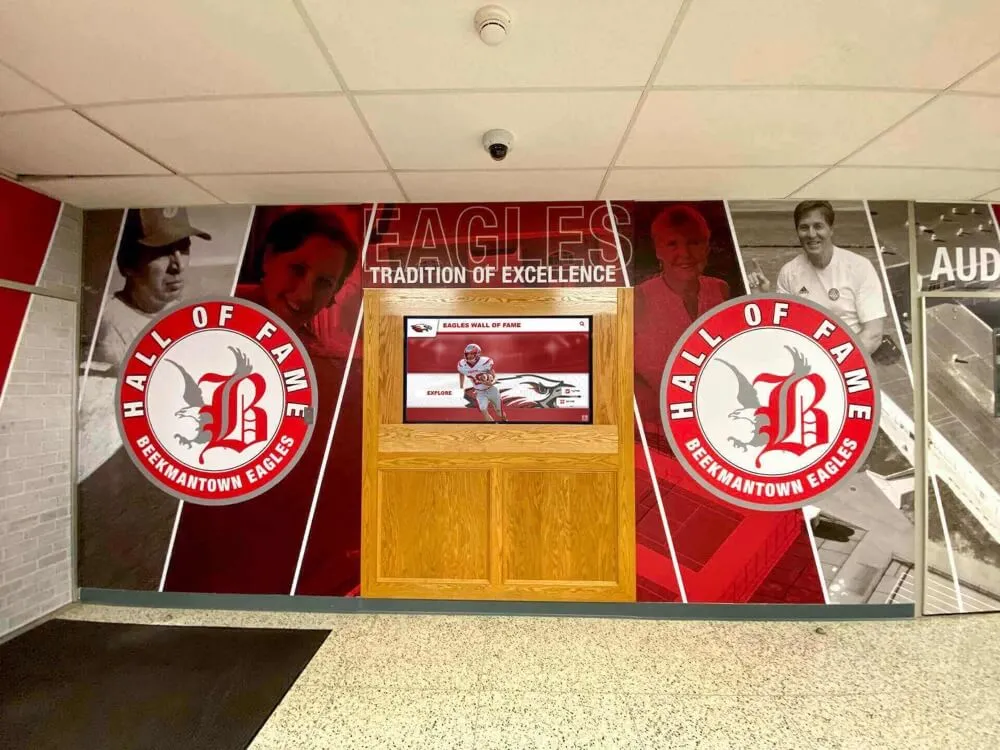
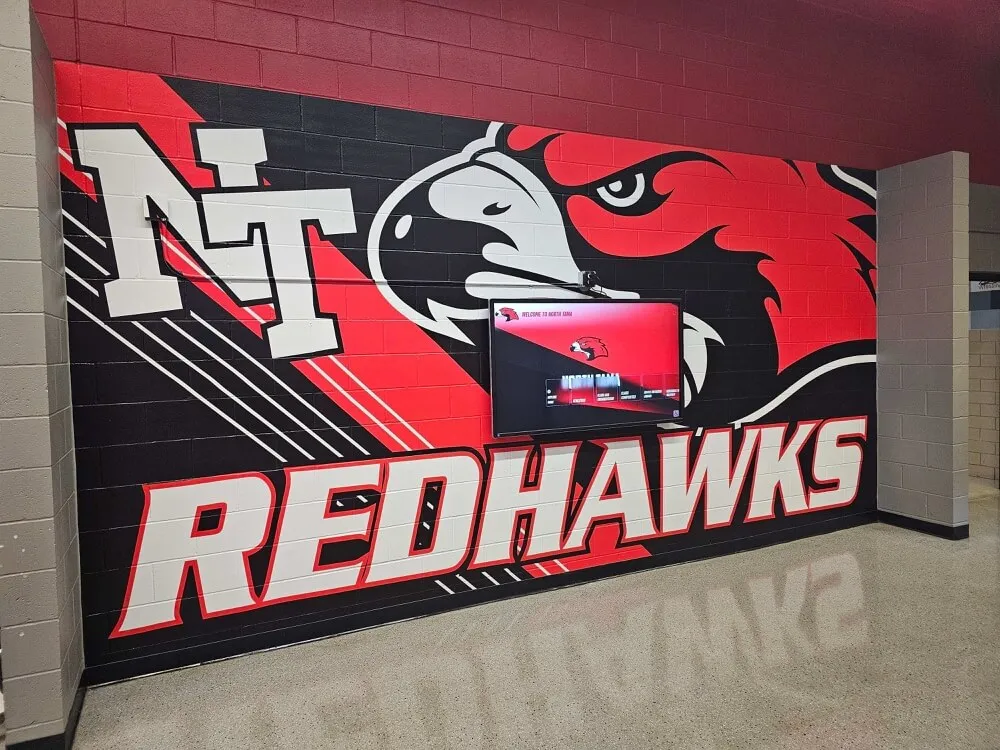
Schools celebrate scholarship achievements to inspire younger students and demonstrate college readiness commitment
Many selective scholarships review transcripts holistically, considering both weighted and unweighted GPAs alongside course rigor. Taking advanced coursework with slightly lower grades often strengthens applications more than maintaining perfect grades in standard classes.
GPA Maintenance Requirements
Scholarship retention typically requires maintaining minimum GPAs throughout college:
- Full-ride scholarships - Usually require 3.5+ GPA each semester
- Partial tuition awards - Commonly require 3.0-3.3 GPA maintenance
- Departmental scholarships - Often require 3.0+ in major coursework
- Renewal conditions - Most scholarships include specific credit hour and GPA requirements
Students should carefully review renewal criteria before accepting scholarship offers, as losing funding due to GPA requirements can create unexpected financial burden.
Standardized Test Score Requirements
SAT and ACT scores serve as secondary academic qualifications for most merit scholarships, with specific thresholds varying by institution and program.
SAT Score Benchmarks for Scholarships
Institutional Merit Scholarship SAT Ranges (2024 Scale):
- 1000-1100 - Entry-level merit consideration at many state universities
- 1150-1250 - Competitive for mid-tier institutional scholarships ($5,000-$15,000 annual awards)
- 1300-1400 - Strong candidacy for selective private college merit aid ($15,000-$30,000 annual awards)
- 1450-1600 - Full-tuition and full-ride scholarship consideration at top institutions
Section Score Importance: Some STEM-focused scholarships weight Math section scores more heavily, while humanities scholarships may prioritize Evidence-Based Reading and Writing scores. Students should research program-specific preferences when deciding whether to retake exams.
ACT Score Requirements
ACT Composite Score Scholarship Thresholds:
- 24-26 - Minimum for many automatic state university scholarships
- 27-29 - Competitive range for institutional merit awards
- 30-32 - Strong consideration for significant merit scholarships
- 33-36 - Elite scholarship candidacy, full-ride possibility
Schools that celebrate high-achieving students often create recognition programs for accomplishments like varsity academic letter requirements that include standardized test milestones.

Touchscreen technology enables students to explore detailed scholarship recipient stories and requirements
Test-Optional Policies and Scholarship Impact
Following widespread adoption of test-optional admissions policies, scholarship implications vary:
Test-Optional Scholarship Considerations:
- Some institutions automatically consider students for scholarships without test scores
- Other colleges require scores specifically for merit scholarship eligibility
- Highest award levels often still require standardized test submissions
- Students should submit strong scores even at test-optional schools if targeting significant merit aid
Research from the National Association for College Admission Counseling indicates that submitting competitive test scores continues to strengthen scholarship applications even at test-optional institutions, particularly for awards exceeding $20,000 annually.
Superscoring and Multiple Test Attempts
Most colleges superscore standardized tests for scholarship consideration:
SAT Superscoring:
- Combines highest section scores across all test dates
- Benefits students who improve Math or Reading/Writing across attempts
- Typical applicants take SAT 2-3 times for optimization
ACT Superscoring:
- Increasingly common at scholarship-granting institutions
- Combines highest subject scores from multiple test dates
- Creates higher composite score for scholarship evaluation
Students should verify specific program policies, as some scholarships consider only single sitting scores while others accept superscores.
Class Rank and Percentile Requirements
Class rank provides context for GPA achievement and factors into many competitive scholarships.
Understanding Class Rank Thresholds
Automatic Scholarship Programs Based on Rank:
- Top 10% - Qualifies for automatic admission and merit aid at many flagship state universities
- Top 25% - Minimum consideration for institutional merit scholarships at selective colleges
- Top 5% - Strong positioning for competitive regional and national scholarships
- Valedictorian/Salutatorian - Unlocks top-tier institutional awards at many universities
Texas public universities guarantee admission to students graduating in the top 6-10% depending on specific institution, with automatic scholarship consideration at many campuses.
Schools Without Class Rank
Approximately 50% of high schools no longer report class rank, creating alternative evaluation methods:
Rank Alternatives:
- Schools provide percentile ranges rather than specific rankings
- Colleges evaluate GPA within school context
- Course rigor and transcript evaluation gain importance
- School profiles explaining grading policies and achievement distributions
Students from non-ranking schools should request detailed school profiles explaining academic context when applying for rank-dependent scholarships.
Weighted Rank Considerations
Schools using weighted ranking systems create advantages for students in advanced coursework:
Weighted Rank Benefits:
- Rewards AP, IB, and honors course selection
- Reduces penalization for lower grades in challenging classes
- Better represents college readiness
- Aligns with scholarship committee priorities

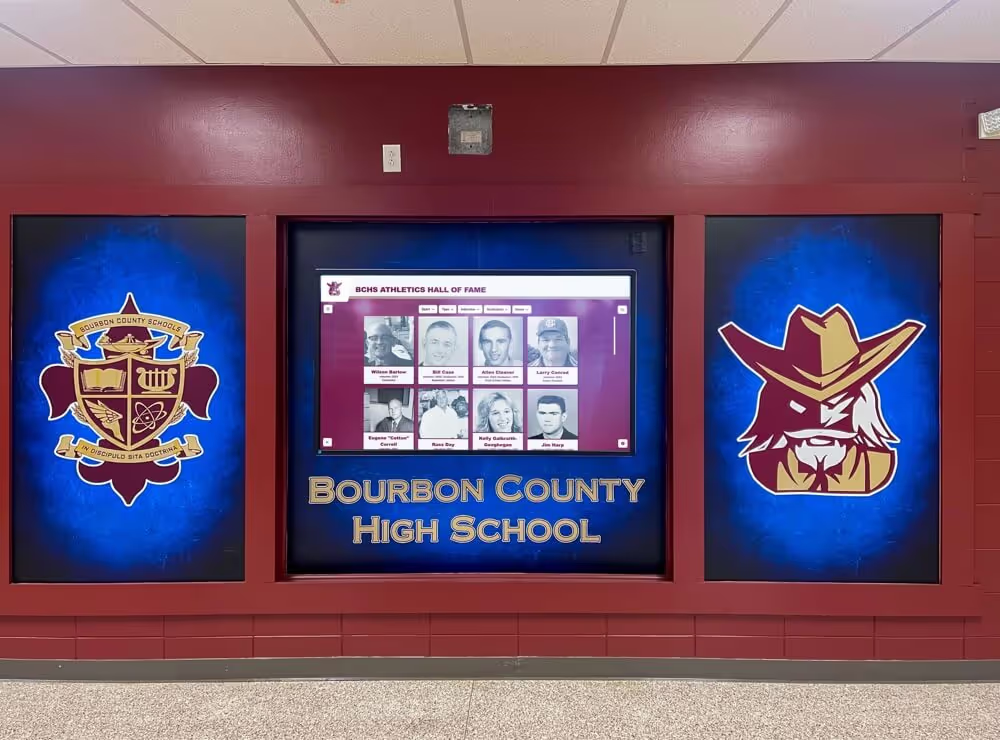
Universities create visible recognition for scholarship recipients to celebrate achievement and attract prospective students
Scholarship applications typically request highest available rank (weighted when offered), providing competitive advantage for students challenging themselves academically.
Additional Academic Qualifications Beyond Numbers
Competitive scholarships evaluate factors beyond GPA and test scores, requiring comprehensive demonstration of academic excellence.
Advanced Coursework and Rigor
AP and IB Performance:
- Number of advanced courses completed
- AP exam scores (3+ considered passing, 4-5 most competitive)
- IB diploma completion with strong extended essay
- Dual enrollment college credits earned during high school
The College Board’s National Recognition Programs honor students demonstrating strong academic achievement, including those earning qualifying AP exam scores. Schools increasingly showcase these honorees through graduation recognition programs that highlight college readiness indicators.
Academic Honors and Awards
Recognition Strengthening Applications:
- Honor society memberships (National Honor Society, subject-specific honor societies)
- Academic competition achievements (Science Olympiad, Math League, debate tournaments)
- Subject-specific awards and departmental recognition
- School-level academic honors and achievement acknowledgments
- State and national competition participation
Schools that systematically celebrate these achievements create cultures of academic excellence. Many institutions implement recognition programs showcasing successful scholarship recipients to motivate current students.
Academic Essays and Portfolios
Most competitive scholarships require written components:
Essay Requirements:
- Personal statements explaining academic interests and goals
- Supplemental essays addressing specific prompts
- Academic writing samples demonstrating analytical ability
- Research abstracts or project descriptions for STEM scholarships
Strong essays articulate specific academic passions, connect achievements to future goals, and demonstrate intellectual curiosity beyond classroom requirements.
Subject-Specific and Departmental Scholarships
Many substantial scholarships target students pursuing specific academic fields.
STEM Scholarship Requirements
Science, technology, engineering, and mathematics scholarships typically require:
Academic Qualifications:
- Strong math and science GPAs (often 3.5+ in STEM courses)
- High SAT Math or ACT Math/Science scores
- AP Calculus, AP Physics, AP Chemistry, or AP Biology completion
- STEM competition participation or science fair achievement
- Demonstrated interest through internships or research experiences
Major STEM Scholarship Programs:
- Barry Goldwater Scholarship - Requires exceptional research potential, typically 3.8+ GPA in STEM coursework
- Science Olympiad Foundation Scholarships - Based on competition performance and academic record
- Society of Women Engineers Scholarships - Requires 3.5+ GPA and declared engineering major
- American Chemical Society Scholars - Needs strong chemistry performance and career commitment
Schools supporting STEM achievement often create dedicated recognition for students pursuing these competitive opportunities, similar to approaches used in comprehensive academic recognition programs.

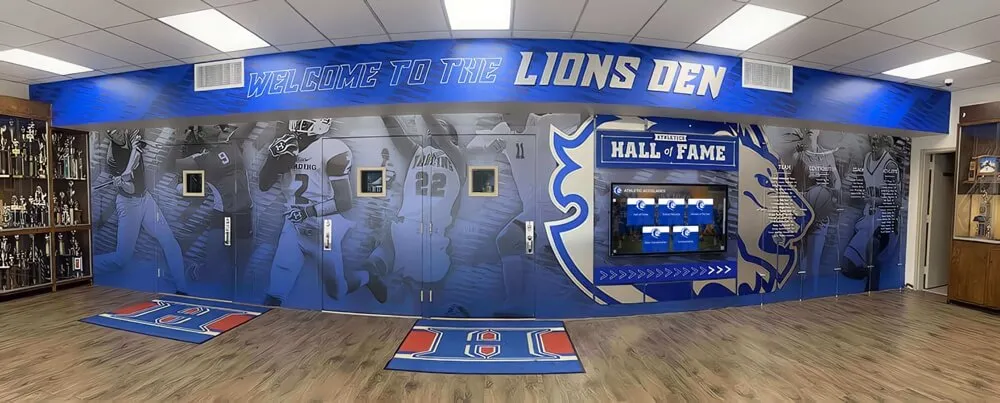
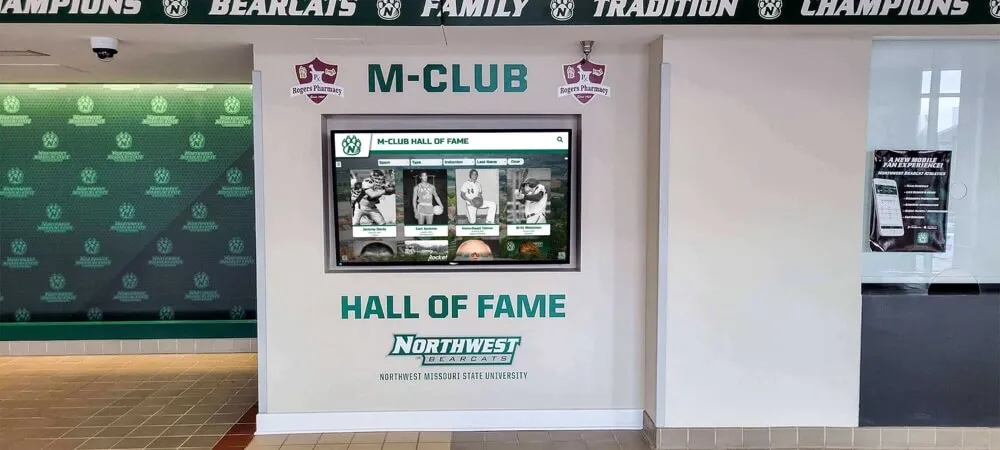
Major universities prominently display scholarship achievements to build institutional pride and student aspiration
Humanities and Social Sciences Scholarships
Liberal arts scholarships emphasize different qualifications:
Academic Requirements:
- Exceptional writing ability demonstrated through essays and recommendations
- Strong performance in English, history, foreign language, and social sciences
- High Evidence-Based Reading and Writing SAT scores or ACT English/Reading scores
- Competition success in debate, speech, writing contests, or Model UN
- Published work in school literary magazines or external publications
Notable Humanities Scholarships:
- National History Day Scholarships - Based on competition performance and historical research quality
- NCTE Achievement Awards in Writing - Requires nominated writing portfolio demonstrating exceptional ability
- Daughters of the American Revolution Scholarships - Considers history and government coursework excellence
- Foreign Language Honor Society Scholarships - Requires demonstrated proficiency and cultural engagement
Business and Economics Scholarships
Business-focused scholarships combine academic achievement with demonstrated interest:
Typical Requirements:
- 3.3+ GPA with strong math and analytical coursework
- Economics, business, or accounting course completion when available
- Leadership in business-related clubs (DECA, FBLA, Junior Achievement)
- Competition participation demonstrating business acumen
- Clear articulation of business career goals
Major programs include the DECA scholarship program, Future Business Leaders of America awards, and institution-specific business school merit scholarships requiring both academic credentials and demonstrated business interest.
State-Specific Scholarship Programs and Requirements
Most states offer merit scholarship programs with varying qualification criteria.
Automatic Academic Scholarship Programs
Several states provide guaranteed scholarships based purely on academic metrics:
State Program Examples:
- Florida Bright Futures - Requires minimum 3.0-3.5 GPA (depending on award level) plus qualifying SAT/ACT scores; highest level requires 1330 SAT or 29 ACT with 3.5 weighted GPA
- Oklahoma’s Promise - Guarantees tuition coverage for students meeting 2.5+ GPA requirement who apply during 8th-10th grade
- South Carolina LIFE Scholarship - Requires 3.0 GPA and 1100 SAT or 24 ACT
- Georgia HOPE Scholarship - Originally required 3.0 GPA; maintains funding for students keeping 3.0 at designated institutions
- Louisiana TOPS - Multiple tiers ranging from 2.5 GPA with 20 ACT to 3.5 GPA with 27 ACT for highest awards
These programs provide predictable pathways to college funding, making GPA maintenance throughout high school critically important.
Competitive State Scholarship Programs
Other states fund competitive scholarships requiring applications beyond meeting minimum thresholds:
Selection-Based Programs:
- Texas Competitive Scholarship Waiver Program - Limited awards for top academic achievers
- New York Excelsior Scholarship - Income-limited but requires completion of prior semester credits with satisfactory progress
- California Cal Grant Program - Combines academic achievement (3.0+ GPA) with financial need
- Illinois Monetary Award Program - Considers both academic factors and financial circumstances
Students should research home state programs early in high school to understand specific requirements and application deadlines, which often differ from college application timelines.
How Schools Celebrate and Showcase Scholarship Recipients
Effective recognition of scholarship recipients serves multiple purposes: honoring student achievement, inspiring younger students to pursue similar goals, and demonstrating institutional commitment to college preparation.
Building Scholarship Recognition Programs
Schools create systematic approaches to celebrating scholarship success:
Recognition Components:
- Announcement systems sharing scholarship awards as students receive them
- End-of-year ceremonies honoring all scholarship recipients
- Visible displays showcasing recipients and award amounts
- Historical tracking of scholarship totals and trends
- Integration with senior recognition and graduation programming
These approaches mirror successful strategies used in comprehensive digital recognition systems that maximize student engagement.
Digital Recognition Displays for Scholarship Achievement
Modern schools implement interactive displays that overcome limitations of traditional recognition:
Digital Display Advantages:
- Unlimited capacity showcasing all scholarship recipients without space constraints
- Searchable interfaces enabling students to explore by scholarship type, amount, or university
- Historical archives preserving scholarship legacy across decades
- Regular updates adding new recipients without physical modifications
- Integration with college guidance programming supporting application processes
Similar to approaches used for donor recognition programs, scholarship displays create inspiring focal points in guidance offices, libraries, and main hallways.

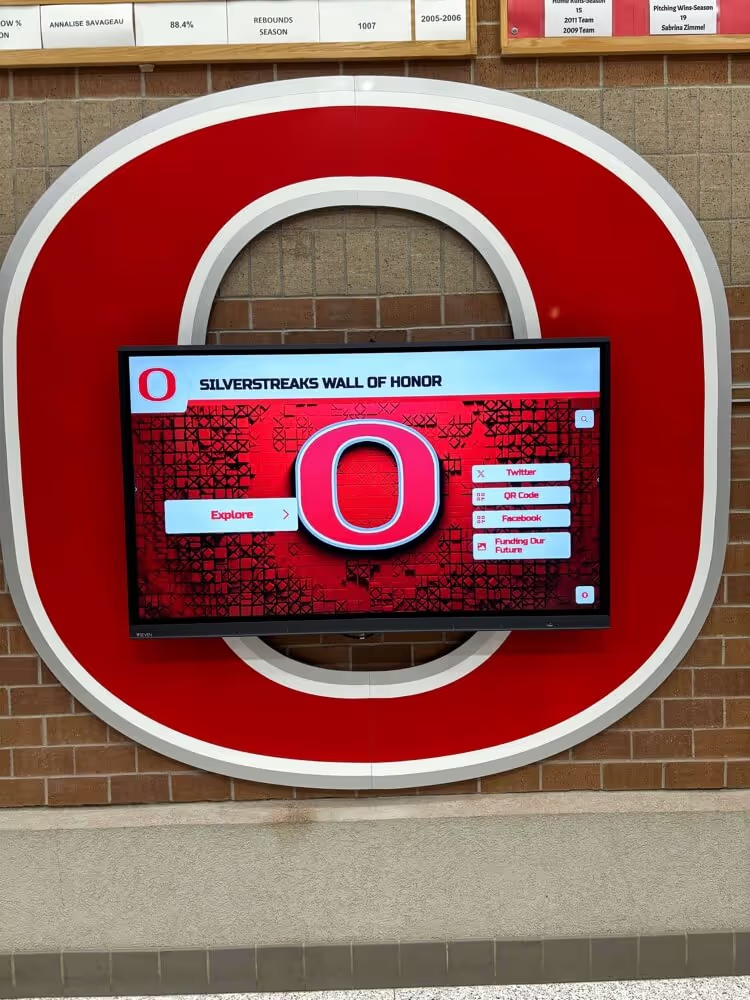
Interactive displays enable underclassmen to learn about scholarship opportunities from successful recipients
Creating Scholarship Cultures in Schools
Beyond individual recognition, successful programs build institution-wide awareness:
Cultural Development Strategies:
- Scholarship information sessions beginning in freshman year
- Peer mentoring connecting scholarship recipients with underclassmen
- Visible tracking of total scholarship dollars earned by graduating classes
- Integration of scholarship planning into academic advising
- Celebration comparable to athletic signing days for major scholarship recipients
Schools implementing these approaches report increased scholarship application rates, higher average awards per student, and improved college-going cultures. The visibility created through systematic recognition motivates students who might not otherwise consider themselves scholarship candidates.
Timeline for Scholarship Qualification and Application
Understanding when to focus on various requirements helps students build competitive profiles systematically.
Freshman and Sophomore Years: Building Foundation
Academic Focus:
- Establish strong GPA baseline through consistent performance
- Challenge yourself with honors coursework as appropriate
- Take PSAT for early score baseline and skill assessment
- Join academic clubs and competition teams
- Begin accumulating honors and recognition
Early achievement sets trajectories for scholarship eligibility. Students should understand that freshman grades factor into cumulative GPA used for most scholarship applications.
Junior Year: Peak Preparation
Critical Activities:
- Take SAT and/or ACT with time for retakes if needed
- Complete PSAT in fall for National Merit qualification
- Maintain or improve GPA while taking most rigorous coursework available
- Accumulate significant academic honors, competition achievements, and leadership positions
- Begin researching specific scholarship opportunities and requirements
Junior year academic performance often weighs most heavily in scholarship consideration, as it represents recent achievement while demonstrating sustained excellence.
Senior Year: Application and Qualification
Timeline Activities:
Fall:
- Retake SAT/ACT if targeting higher scholarship thresholds
- Complete college applications with scholarship consideration
- Submit institutional scholarship applications and honors college applications
- Apply for early-deadline external scholarships
- Request recommendations from teachers familiar with your academic strengths
Winter/Spring:
- Continue applying for scholarships with later deadlines
- Maintain GPA to preserve scholarship eligibility
- Complete financial aid forms (FAFSA, CSS Profile) even for merit scholarships
- Review scholarship offers carefully including renewal requirements
- Make enrollment decision considering total four-year scholarship value
Many competitive scholarships have deadlines between December and February of senior year, requiring careful planning and time management alongside college applications.
Common Scholarship Application Mistakes to Avoid
Understanding frequent pitfalls helps students maximize scholarship success:
Academic Record Mistakes
GPA Miscalculations:
- Reporting weighted GPA when unweighted requested
- Including non-academic courses inappropriately
- Misunderstanding cumulative vs. academic core GPA
- Forgetting to update transcripts showing recent grade improvements
Students should carefully verify which GPA type each scholarship requires and ensure transcript submissions match reported information.
Test Score Errors:
- Submitting subscores when composite scores requested
- Failing to utilize superscoring when available
- Not sending official scores when required
- Missing scholarship-specific test code requirements
Application Process Mistakes
Deadline Confusion: Many students miss scholarship opportunities through deadline errors:
- Applying to college but missing separate scholarship application deadlines
- Confusing priority deadlines with final deadlines
- Not accounting for recommendation request time requirements
- Missing renewal applications in subsequent years
Successful applicants create comprehensive deadline tracking systems covering all scholarship components.
Essay Quality Issues:
- Generic essays lacking specific connection to scholarship mission
- Failing to address all essay prompts thoroughly
- Grammatical errors suggesting lack of care
- Not demonstrating genuine passion for academic interests
Competitive scholarships receive hundreds or thousands of applications. Essays must demonstrate authentic engagement and careful attention to requirements.
Strategies for Students Not Meeting Traditional Requirements
Students with GPAs or test scores below typical thresholds still have scholarship pathways through alternative approaches.
Alternative Academic Scholarships
Options Beyond Traditional Metrics:
- Community service scholarships - Emphasize volunteer impact over pure academics
- Leadership scholarships - Focus on demonstrated leadership with minimum academic thresholds
- Overcoming adversity scholarships - Consider academic achievement in context of challenges faced
- First-generation student scholarships - Support students whose parents didn’t complete college
- Career-specific scholarships - Target students pursuing particular fields regardless of perfect credentials
Programs like the Horatio Alger Scholarship specifically seek students who have faced and overcome significant obstacles while maintaining solid (though not necessarily exceptional) academic records.
Demonstrating Upward Trends
Scholarship committees often consider academic trajectories:
Emphasizing Improvement:
- Clear upward GPA trends demonstrate growth and determination
- Improvement in challenging coursework shows college readiness
- Explanation of early struggles provides context
- Recent strong performance predicts college success
Students should address academic improvements in application essays and ensure recommendations acknowledge growth patterns.
Building Alternative Strengths
When academic metrics prove challenging, strengthening other factors creates competitiveness:
Compensating Strategies:
- Exceptional leadership positions and impact
- Significant community service with measurable outcomes
- Unique talents or experiences adding diversity to scholarship programs
- Compelling personal narratives demonstrating character
- Strong recommendations emphasizing qualities beyond grades
Holistic scholarship programs consider complete profiles rather than filtering purely by numbers. Many institutional scholarships use academic metrics for initial screening but make final selections based on comprehensive evaluation.
Maximizing Institutional Scholarships During College Selection
Strategic college selection dramatically impacts scholarship potential for students across academic profiles.
Targeting Schools Where You’re a Top Applicant
Strategic Positioning: Students whose credentials place them in the top 10-25% of a college’s admitted student profile typically receive strongest merit scholarship offers. This creates strategic advantages for applying to institutions where your academic metrics exceed typical admitted students rather than reaching exclusively for most selective options.
Research Strategies:
- Review Common Data Set Section C for colleges showing admitted student academic profiles
- Compare your GPA and test scores to 75th percentile of admitted students
- Target institutions where you significantly exceed median metrics
- Balance reach schools with strategic scholarship-likely options
Understanding Institutional Scholarship Policies
Colleges vary dramatically in scholarship availability:
Institutional Categories:
- Merit scholarship leaders - Private colleges offering substantial merit aid to 30-50% of students
- Limited merit aid institutions - Highly selective colleges offering minimal merit scholarships
- Automatic scholarship programs - Public universities with guaranteed awards for meeting specific criteria
- Competitive processes - Schools requiring separate scholarship applications and interviews
Schools should help students navigate these differences, potentially through resources similar to comprehensive information displays explaining scholarship landscapes.
Negotiation and Appeal Possibilities
Some situations allow scholarship negotiation:
When Appeals May Work:
- Competing offers from peer institutions
- Updated academic achievements after initial offer
- Changed family financial circumstances
- Clarification of achievements not fully considered
Students should approach appeals professionally, expressing genuine interest in attendance while providing concrete reasons supporting reconsideration. Success rates vary by institution, but some schools adjust offers when presented with competing awards from comparable institutions.
Resources for Scholarship Search and Application
Strategic use of scholarship search tools increases application efficiency:
Major Scholarship Databases
Free Search Platforms:
- Fastweb - Matches students with scholarships based on detailed profiles
- Scholarships.com - Database of thousands of scholarships with filtering capabilities
- College Board Scholarship Search - Integrated with BigFuture college planning tools
- Cappex - Combines college search with scholarship matching
- Going Merry - Streamlines applications for multiple scholarships simultaneously
Students should create detailed profiles highlighting all relevant characteristics, as specialized scholarships often have less competition than major national programs.
High School Counseling Office Resources
Local Opportunities: Schools maintain information about:
- Community organization scholarships (Rotary, Lions Club, professional associations)
- Local business scholarships for community members
- School-specific awards from alumni donors
- Regional programs students might not find in national databases
These local scholarships often have less competition and better odds than national programs. Students should regularly check with counseling offices for new opportunities.
Professional Association Scholarships
Career-Connected Programs: Many professional organizations offer scholarships to students entering their fields:
- Medical and nursing association scholarships for health career students
- Engineering society awards for students pursuing technical degrees
- Education association scholarships for future teachers
- Trade association programs supporting career-specific education
These typically require demonstrated interest in the field through coursework, activities, or career statements alongside academic credentials.
Conclusion: Building a Strategic Path to Scholarship Success
Academic scholarship qualification requires understanding specific requirements across GPA thresholds, standardized test scores, class rank, and additional factors while strategically positioning applications to maximize award potential. Students beginning scholarship planning early in high school—maintaining strong grades, pursuing rigorous coursework, preparing thoroughly for standardized tests, and accumulating meaningful honors—create foundations for competitive applications to programs ranging from institutional merit aid to prestigious national scholarships.
The strategies explored in this guide provide comprehensive frameworks for meeting requirements at various scholarship levels while avoiding common pitfalls that undermine otherwise strong applications. From understanding that building lasting connections with teachers yields stronger recommendations to recognizing how strategic college selection impacts merit aid potential, successful scholarship pursuit combines academic excellence with informed planning.
Schools play vital roles in scholarship success through systematic information sharing, celebration of scholarship achievement, and recognition programs that inspire younger students. When institutions showcase scholarship recipients through visible displays—whether traditional bulletin boards or modern interactive systems—they create cultures where pursuing competitive academic opportunities becomes normalized and celebrated, similar to how schools recognize athletic achievement or campus engagement accomplishments.
Celebrate Your Scholarship Recipients with Lasting Recognition
Discover how modern digital recognition solutions can help your school showcase scholarship achievements, inspire future applicants, and build a culture of academic excellence that leads to increased scholarship success.
Explore Recognition SolutionsFor students currently navigating scholarship applications, focus on controllable factors: maintaining the highest GPA achievable in rigorous coursework, preparing thoroughly for standardized tests with time for retakes, pursuing meaningful academic activities demonstrating genuine interests, and applying strategically to scholarships matching your profile. Track deadlines meticulously, invest time in thoughtful essay responses, and don’t limit applications to only the most prestigious programs—many substantial scholarships receive fewer applications than expected.
Remember that scholarship qualification represents more than meeting minimum requirements. Competitive applicants combine strong metrics with compelling narratives about their academic journeys, clear articulation of future goals, and demonstrated commitment to intellectual growth. Whether pursuing full-ride opportunities at elite institutions or modest awards making local colleges affordable, understanding specific requirements and building comprehensive applications positions students for maximum scholarship success.
Your academic achievements deserve celebration and can open doors to educational opportunities that might otherwise remain financially out of reach. Start early, stay informed about requirements, apply strategically, and don’t hesitate to seek guidance from counselors, teachers, and scholarship recipients who’ve successfully navigated the process before you. Learn more about supporting student success through comprehensive recognition programs that motivate achievement.