



Intent: Demonstrate how to design and implement stunning ACT 30+ Club digital showcase boards that inspire future scholars while honoring exceptional academic achievement through engaging interactive experiences.
The ACT 30+ Club represents an elite tier of academic excellence—students who score 30 or higher on the ACT college entrance exam, placing them in the top 7% of all test-takers nationwide. These exceptional scholars demonstrate not just strong test performance but sustained intellectual capability, disciplined preparation, and college readiness that predicts undergraduate success and opens doors to selective institutions and competitive scholarships.
Yet many schools struggle to give ACT 30+ achievers the prominent recognition their accomplishment deserves. Traditional approaches—brief announcements at awards ceremonies, certificates filed away, or cramped bulletin board listings—fail to capture the significance of this elite achievement or inspire younger students to pursue similar excellence. Meanwhile, prospective families touring campuses see little evidence of academic rigor, and even recognized scholars themselves feel their remarkable accomplishment quickly fades from community awareness.
This comprehensive design guide explores how to create digital showcase boards specifically for ACT 30+ Club recognition—covering experience layouts, content module strategies, interactive navigation patterns, accessibility considerations, and brand integration approaches that transform academic achievement recognition from perfunctory acknowledgment into inspiring celebration that motivates entire school communities toward intellectual excellence.
Schools implementing well-designed ACT 30+ Club digital showcase boards report transformative impacts on academic culture. Students spend 3-5 times longer exploring interactive recognition compared to static plaques, younger students demonstrate increased interest in rigorous coursework, and families visiting campuses cite academic excellence displays as compelling evidence of institutional commitment to intellectual achievement alongside athletic and extracurricular programs.

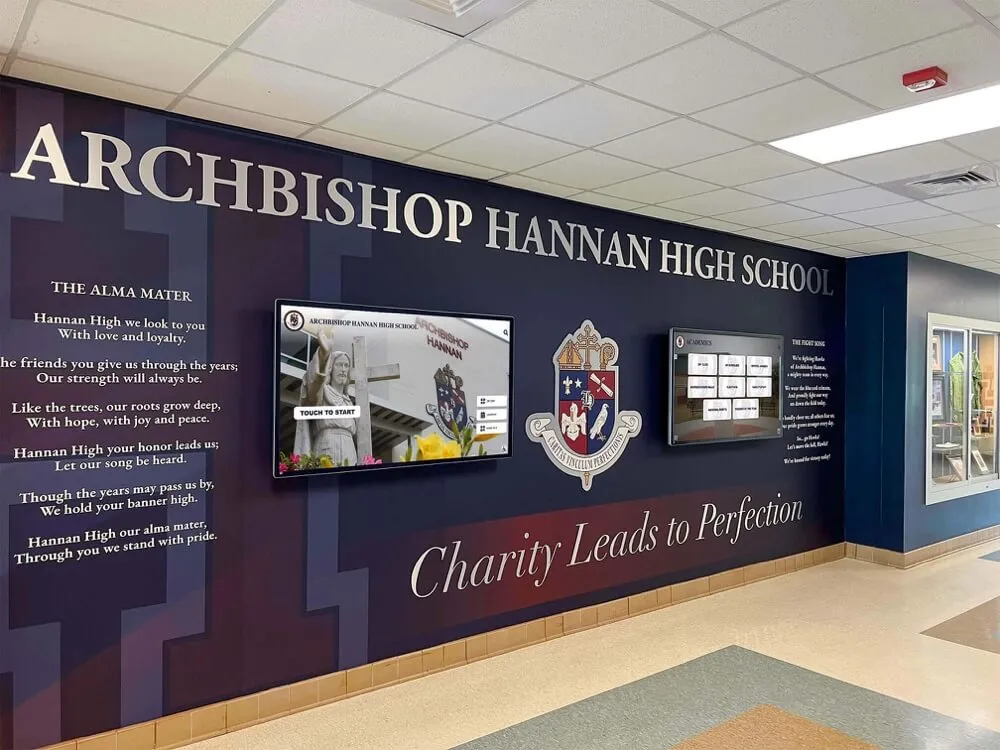
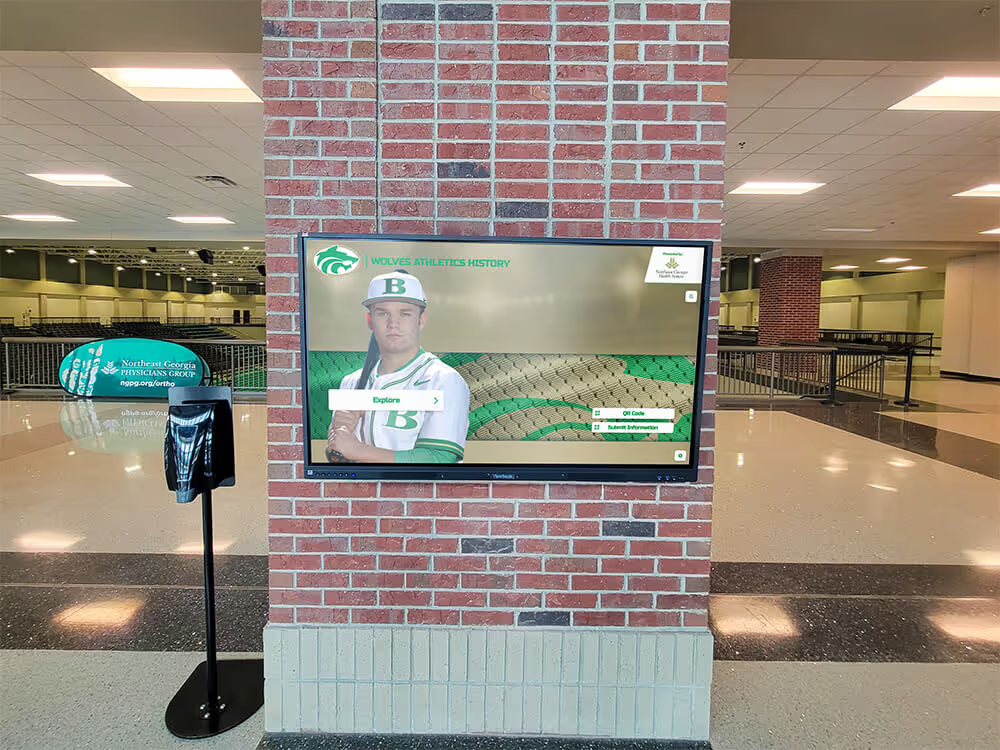
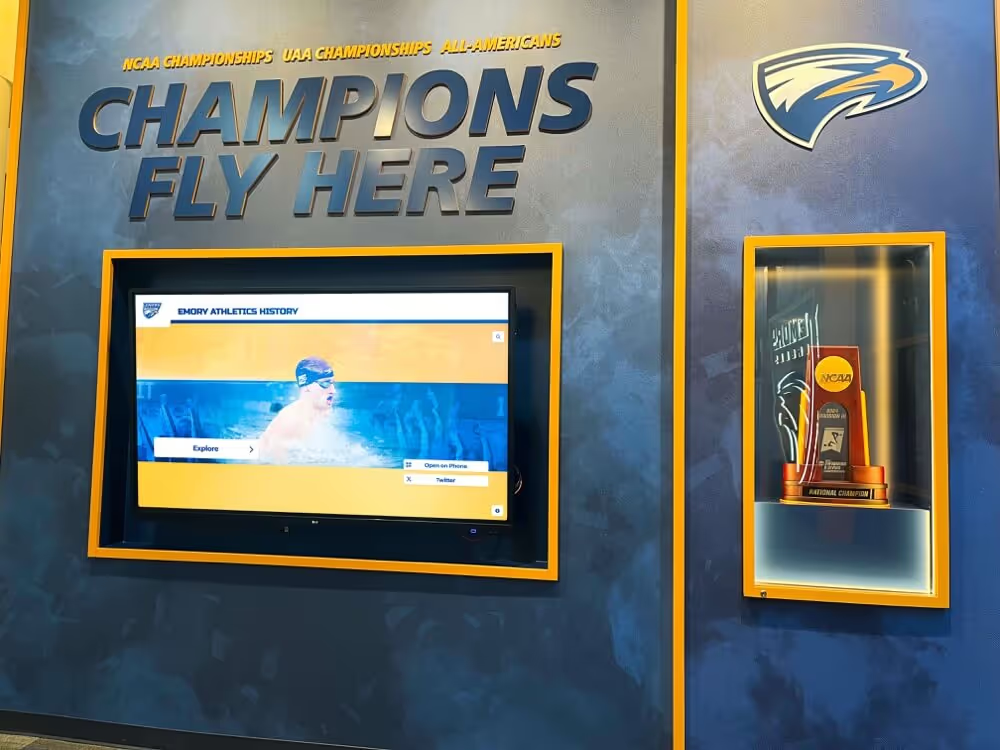
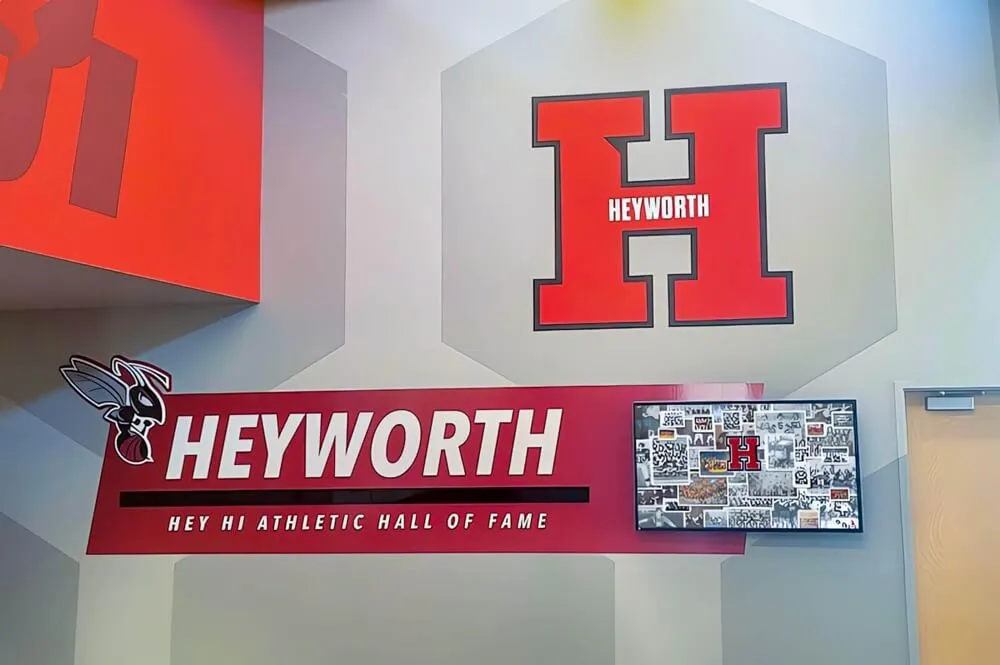
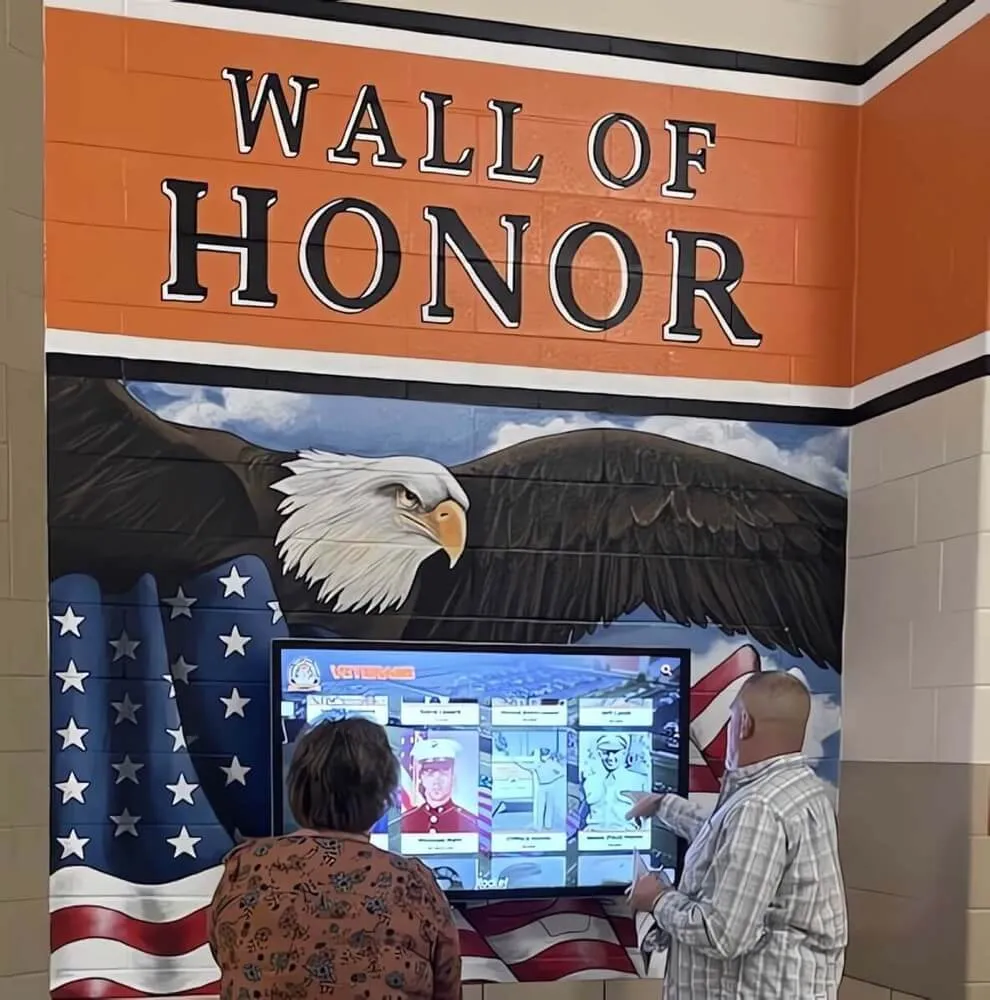
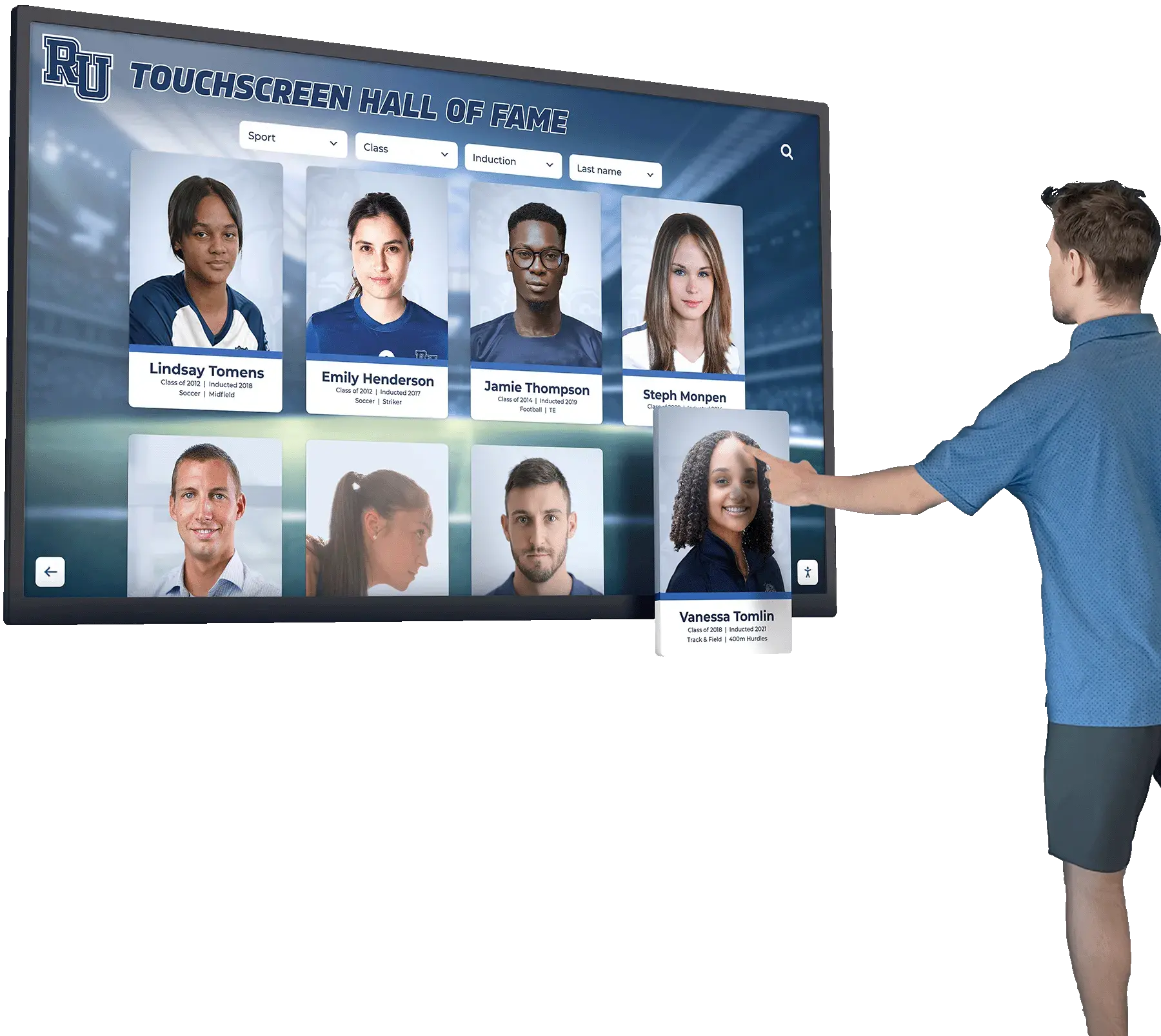
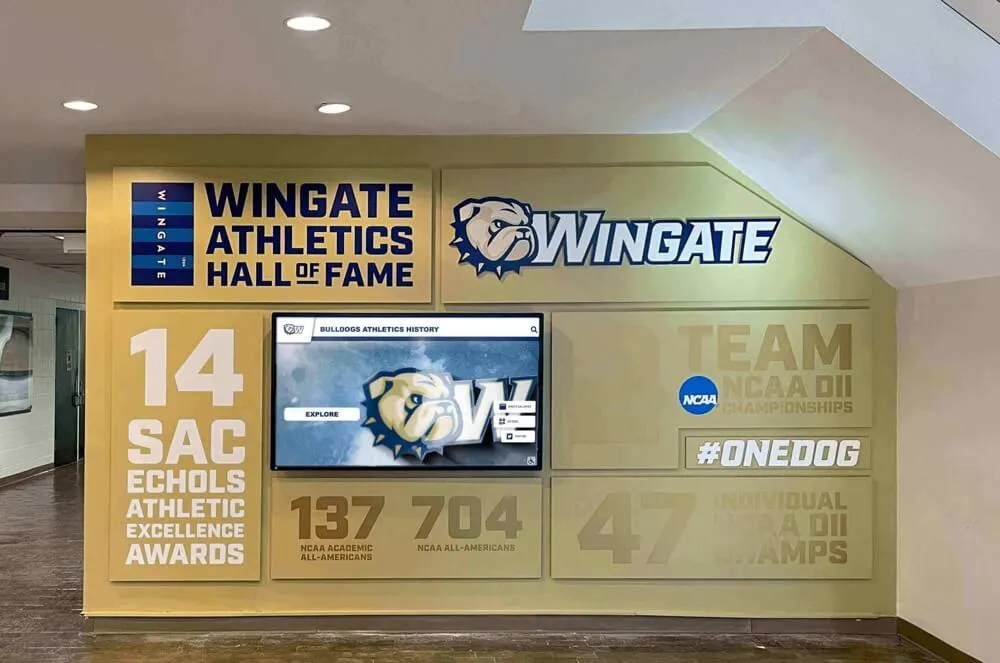
Prominent exterior installations communicate academic excellence values to entire communities visiting school facilities
Understanding ACT 30+ Club Achievement Significance
Before designing recognition experiences, understanding what ACT 30+ scores represent provides essential context for creating displays that appropriately honor this elite accomplishment while educating audiences about its significance.
The Elite Nature of ACT 30+ Performance
According to the ACT testing organization, composite scores of 30 or higher place students in approximately the 93rd percentile nationally—meaning only 7% of the roughly 1.4 million test-takers annually achieve this distinction. This statistical rarity alone warrants prominent recognition, but the achievement’s significance extends far beyond percentile rankings.
What ACT 30+ Scores Demonstrate:
ACT composite scores result from performance across four subject areas—English, Mathematics, Reading, and Science—each testing distinct skill sets ranging from grammar and rhetorical analysis through algebraic reasoning and scientific interpretation. Achieving 30+ composite requires not just strength in single subjects but sustained excellence across all domains, demonstrating:
- Broad intellectual capability spanning verbal and quantitative reasoning
- Sustained preparation requiring months of disciplined study and practice
- Test-taking sophistication managing time pressure and strategic question approaches
- College readiness predicting success in rigorous undergraduate coursework
- Competitive positioning for selective college admissions and merit scholarships
Research consistently demonstrates that ACT scores correlate strongly with first-year college GPA and long-term undergraduate success. Students scoring 30+ typically thrive in demanding academic environments, persist through challenging coursework, and graduate at higher rates than peers with lower scores—making this achievement a validated predictor of future excellence deserving substantial recognition.
Why Prominent Recognition Matters for ACT Excellence
Visible ACT 30+ Club recognition serves multiple strategic purposes beyond simply honoring individual achievement:
Motivational Impact on Current Students
Younger students exploring campus see concrete examples of academic excellence that peers achieved through effort and preparation. Rather than viewing 30+ scores as mysterious achievements requiring innate genius, prominently displayed recognition with scholar profiles demonstrates clear pathways showing how specific preparation strategies, study approaches, and support resources enabled success—making the achievement feel accessible rather than unattainable.
Academic Culture Transformation
Schools where athletic accomplishments receive prominent stadium display while academic achievements remain hidden in counseling offices communicate implicit value hierarchies. Equally prominent academic recognition—digital displays in main hallways, entrance lobbies, and high-traffic areas—signals that intellectual achievement matters as much as other accomplishments, fostering cultures where students feel pride rather than embarrassment about academic excellence.
Recruitment and Institutional Reputation
Prospective families evaluating schools seek evidence of academic rigor and college preparation effectiveness. ACT 30+ Club showcase boards provide concrete, quantifiable proof of instructional quality and student capability. These visible displays differentiate schools in competitive enrollment markets, attracting families who prioritize academic excellence and strengthening institutional reputations as centers of intellectual achievement.

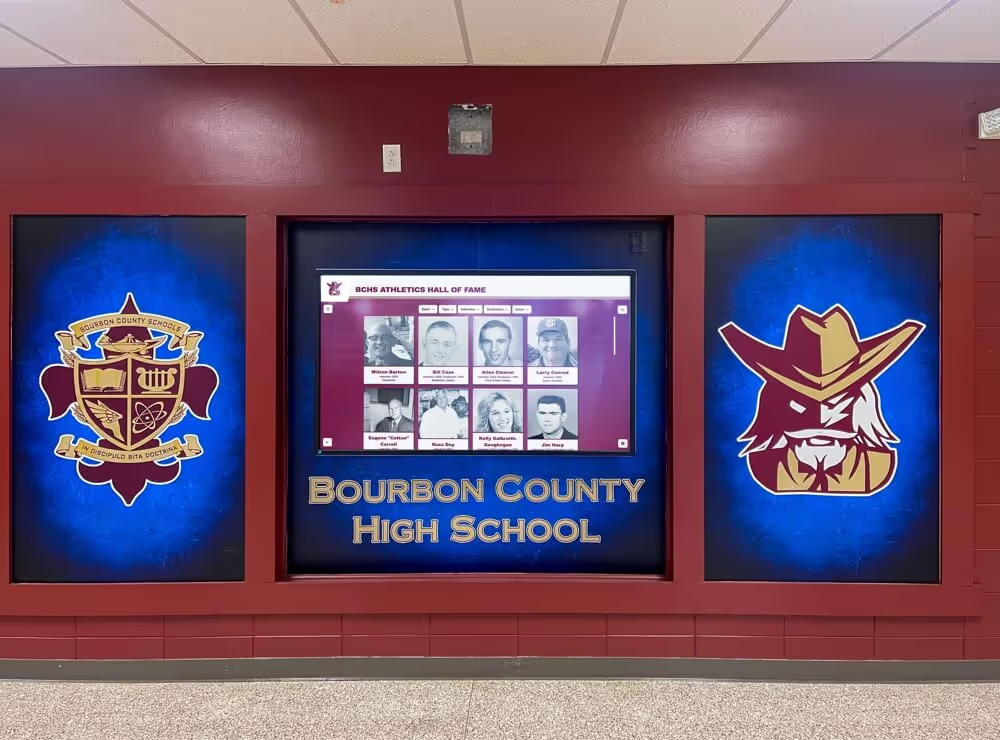
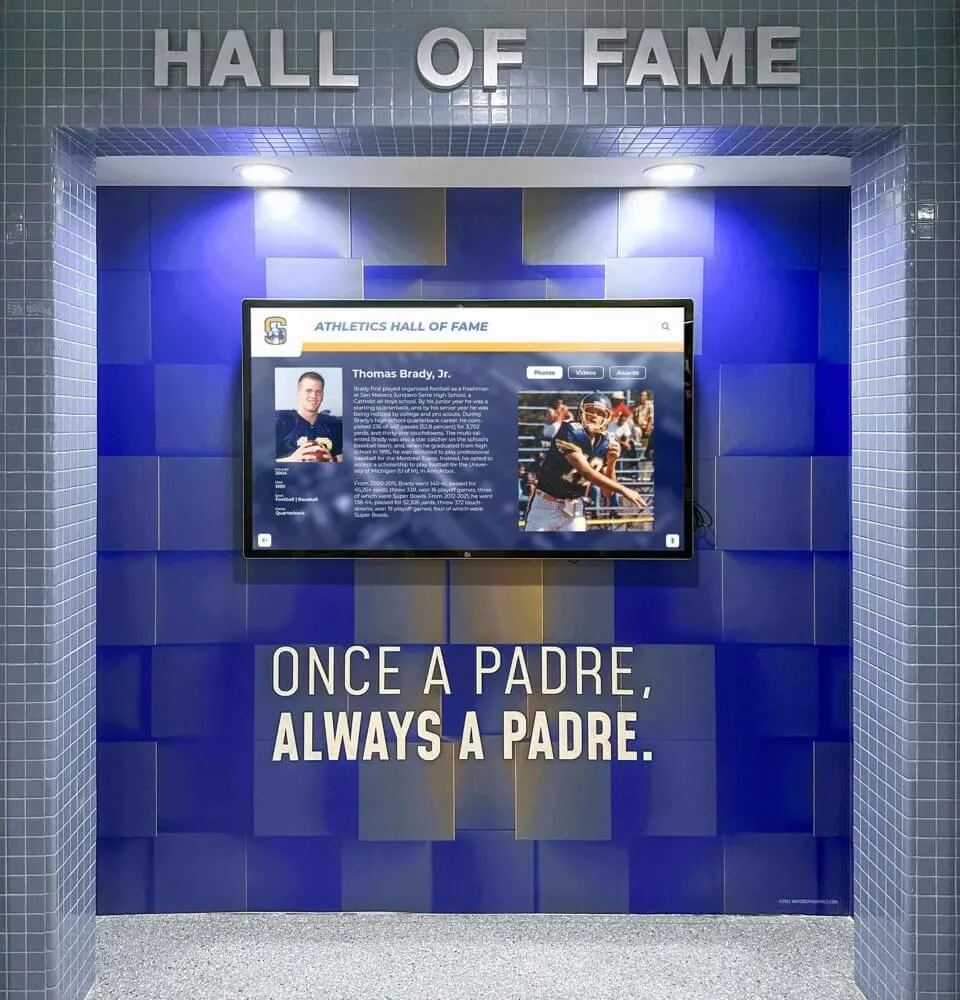
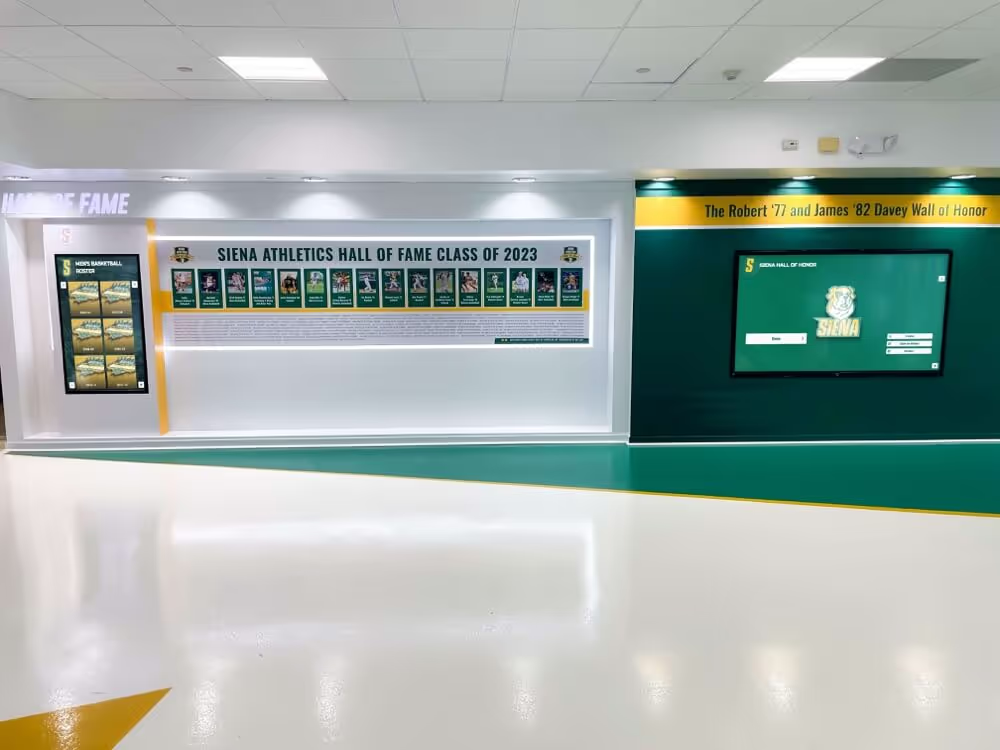
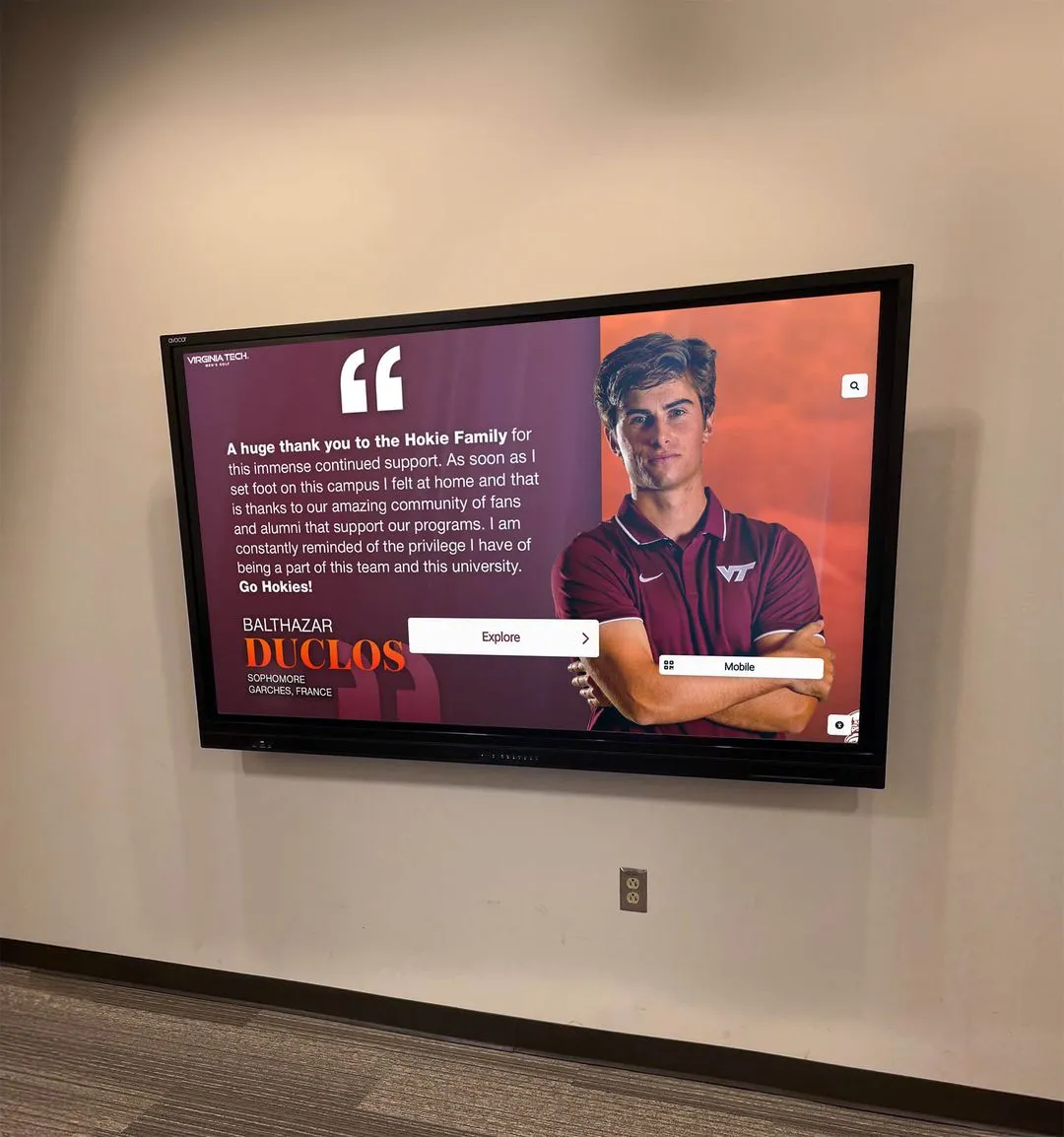
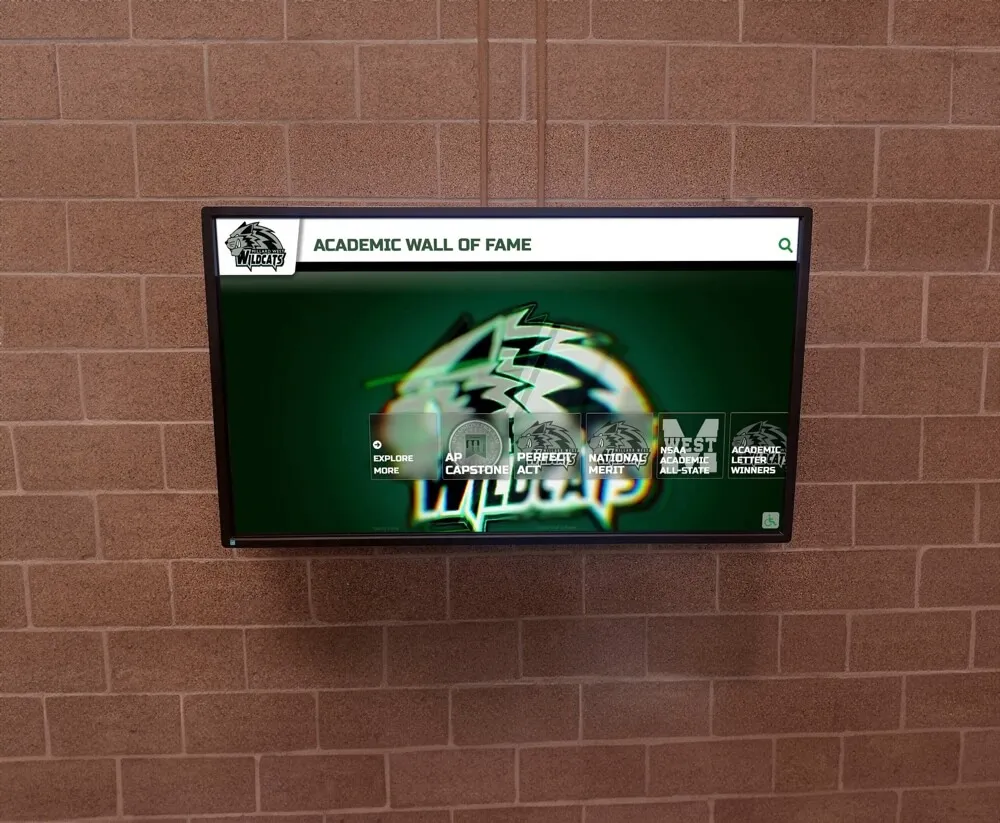
Individual scholar profiles create personal connections through photography and achievement narratives beyond raw score documentation
Experience Layout Blueprint for ACT 30+ Showcase Boards
Effective ACT recognition displays require systematic layout strategies balancing aesthetic appeal with functional usability across diverse audiences from current students through visiting families.
Zone Architecture and Screen Real Estate
Well-designed ACT 30+ showcase experiences organize touchscreen interfaces into functional zones serving specific user needs:
Hero Zone (Top 20%)
The masthead area establishes immediate context and institutional identity. Essential elements include:
- School branding with logos and colors creating visual continuity with broader campus identity
- “ACT 30+ Club” or “Perfect Score Achievers” title immediately identifying display purpose
- Current academic year or multi-year span showing recognition scope
- Optional featured scholar rotating spotlight highlighting recent or notable inductees
- Subtle animated background treatments suggesting excellence without distracting from content
Primary Navigation Bar (15%)
Navigation controls enable content discovery through intuitive categories:
- “View All Scholars” button accessing complete alphabetical directory
- “Browse by Year” enabling chronological exploration showing program growth over time
- “Search by Name” providing instant location of specific individuals
- “Preparation Resources” linking to study strategies and support programs
- “About ACT 30+ Club” explaining achievement significance for uninformed audiences
Navigation should use large touch-friendly buttons (minimum 80 pixels) with clear labels and iconography instantly communicating function without requiring careful reading or interpretation.
Content Display Area (Center 50%)
The main content zone presents scholar profiles, directories, or galleries:
- Grid-based card layouts displaying multiple scholars simultaneously with photos and key details
- List views providing scrollable directories with filtering and sorting options
- Expanded profile views showing complete achievement narratives with multimedia content
- Statistics dashboards visualizing program trends, subject score distributions, and demographic data
- Timeline views organizing scholars chronologically demonstrating sustained excellence across years
Footer Action Area (Bottom 15%)
Footer zones provide secondary functionality and recognition:
- QR codes linking to mobile-accessible web versions enabling exploration beyond physical displays
- Social sharing buttons allowing scholars to distribute their recognition through personal networks
- Sponsor acknowledgment when applicable (tutoring centers, scholarship programs funding displays)
- “Return Home” buttons enabling easy navigation reset from any interface state
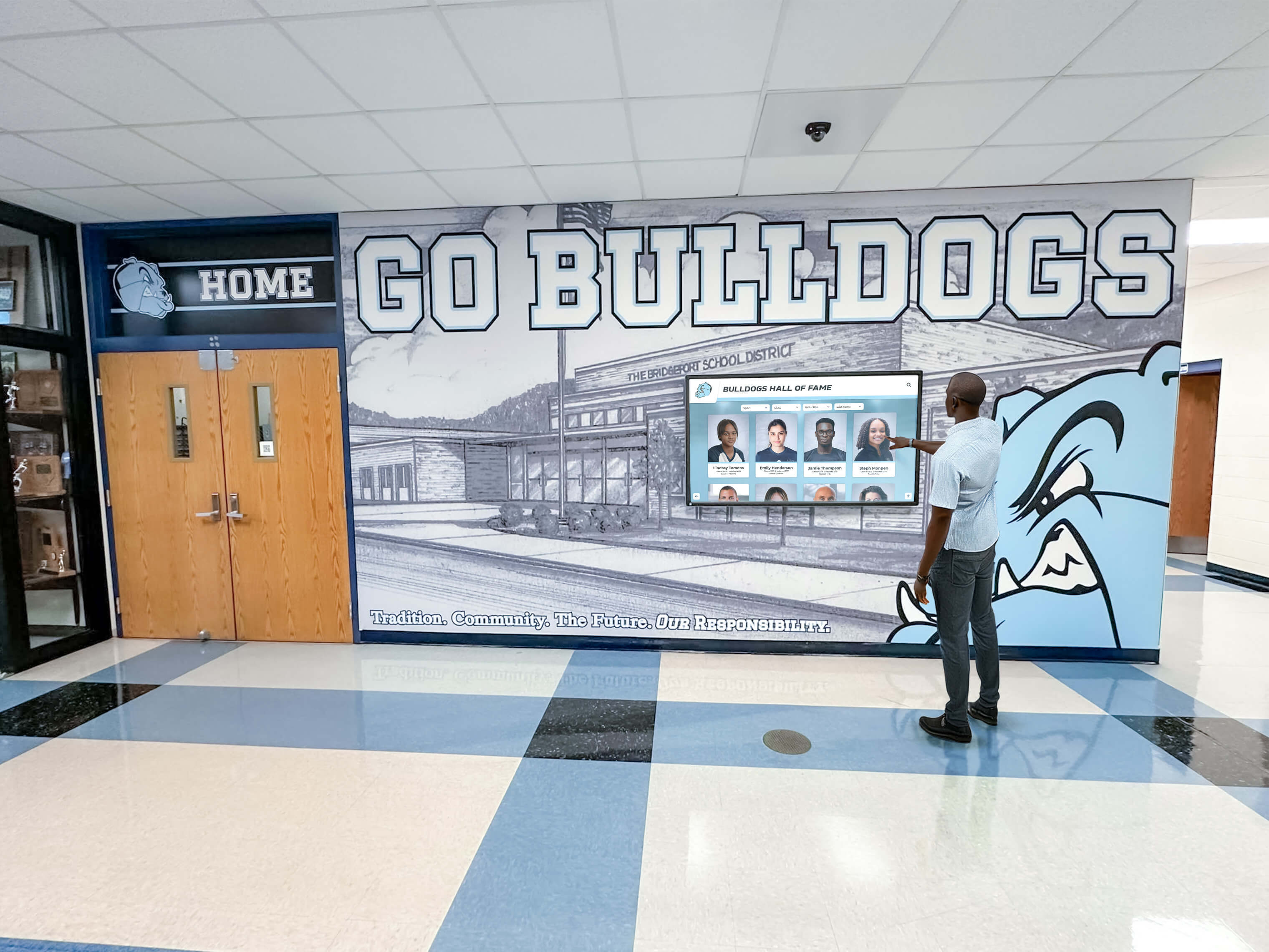
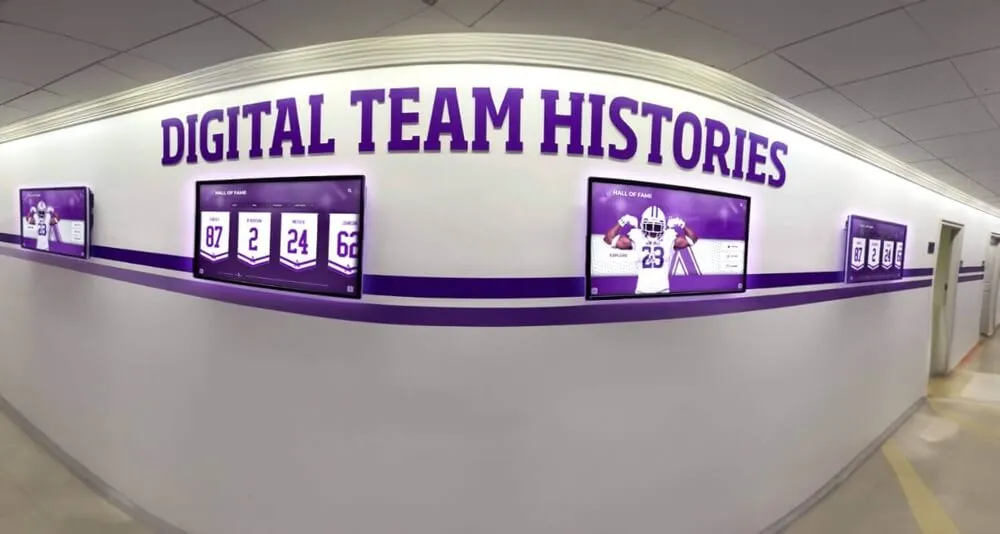
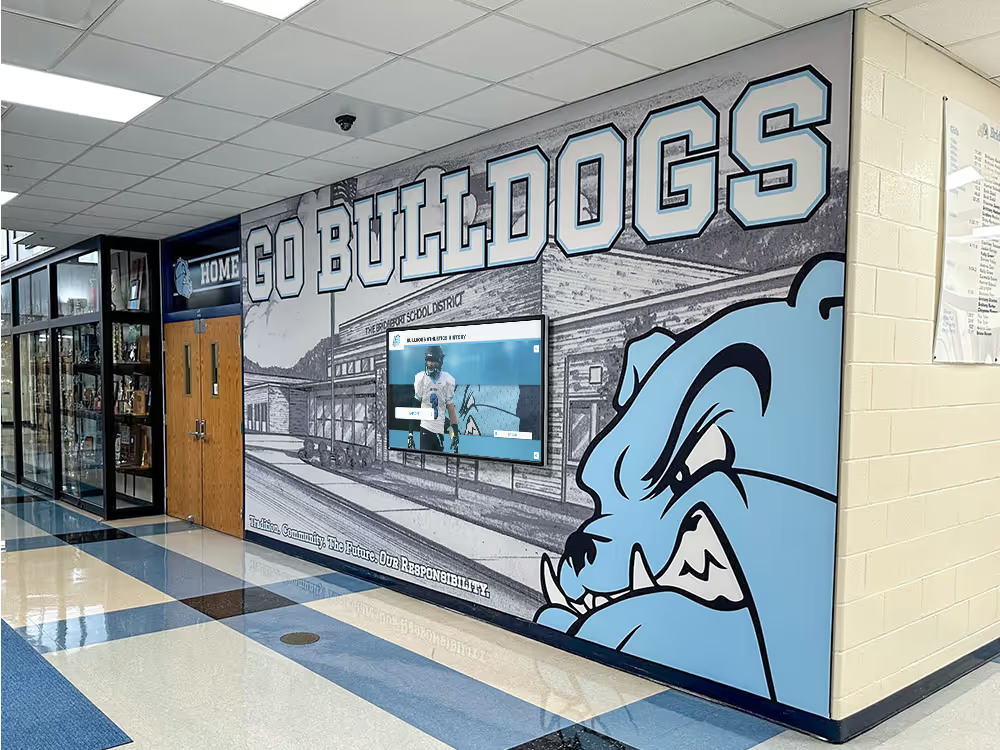
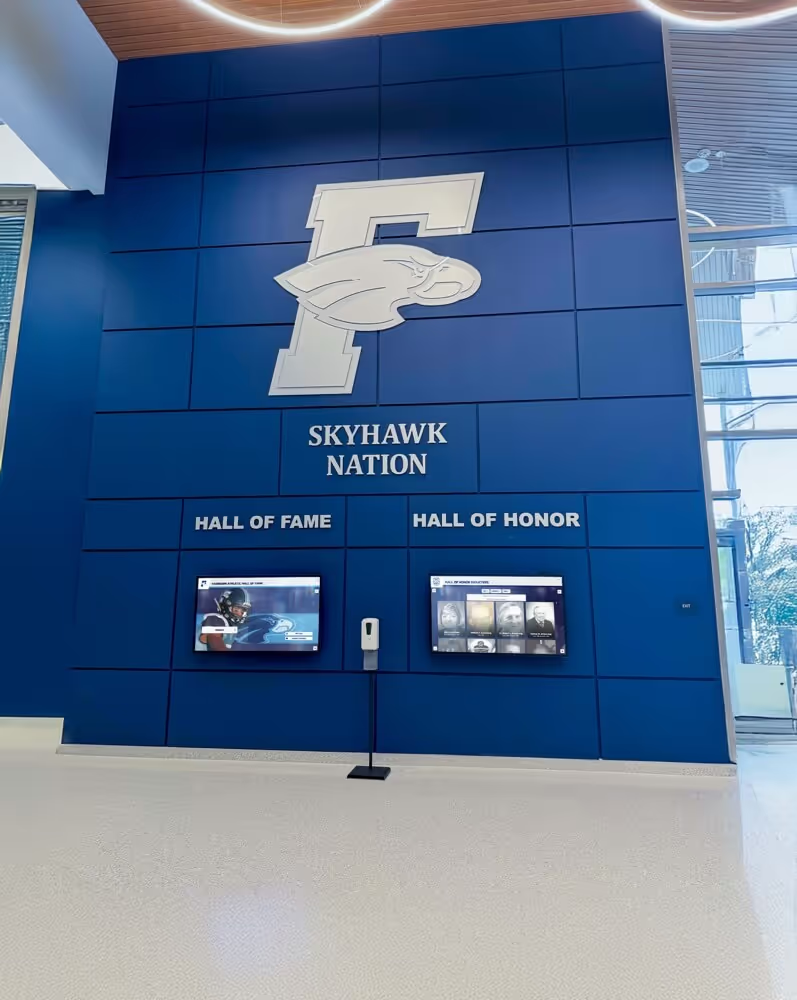
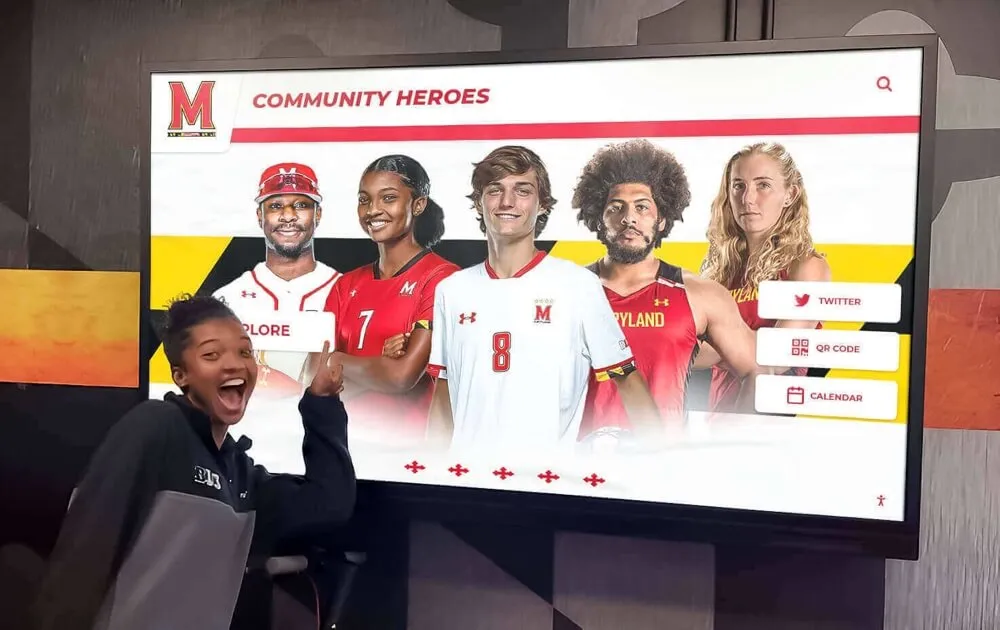
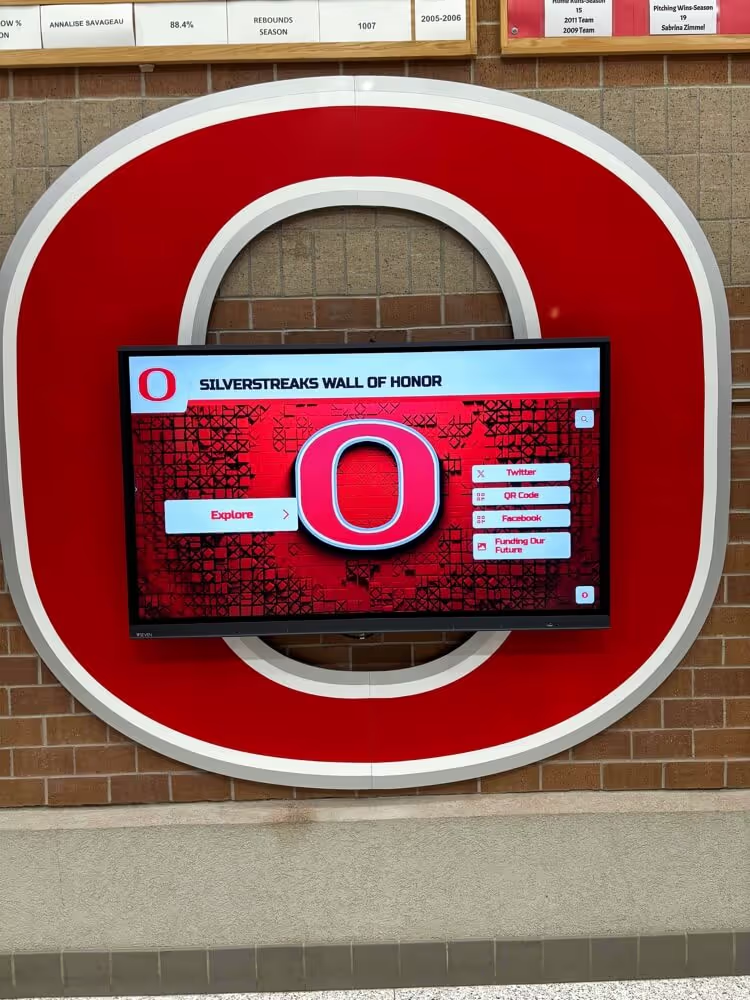
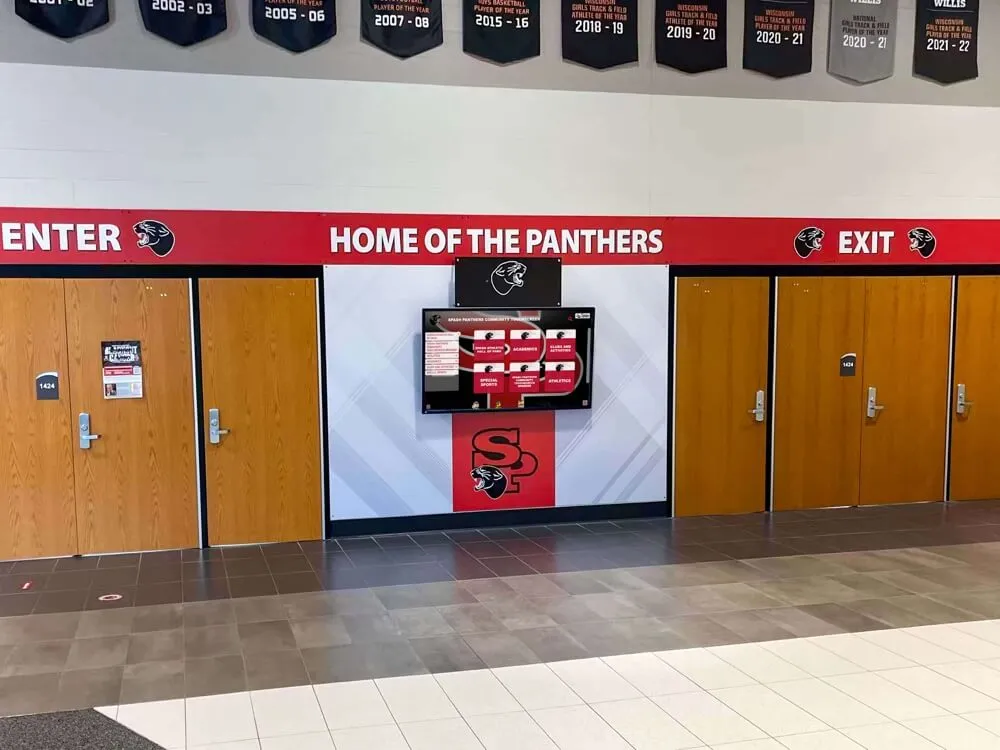
Strategic hallway placements ensure daily exposure creating sustained motivational impact on student populations
Content Blocks and Motion: Building Engaging Modules
Beyond static layout structure, dynamic content modules and motion design create experiences that capture attention and sustain engagement throughout exploration.
Scholar Profile Card Design
Individual scholar cards serve as primary content building blocks appearing in grid views, search results, and featured sections:
Essential Card Elements:
- High-quality professional or yearbook photography (minimum 800x1000 pixels) showing authentic student personality
- Scholar name prominently displayed in large, readable typography (24-32pt minimum)
- Graduation year and testing date providing temporal context
- Composite score (30-36) prominently featured as primary achievement metric
- Subject area breakdown (English, Math, Reading, Science scores) showing strength distribution
- Optional “View Profile” call-to-action indicating expandability for deeper content
Interactive Card Behaviors:
Cards should respond to touch interaction through:
- Subtle scale animation (1.05x) and shadow deepening on hover/touch indicating interactivity
- Smooth expansion transitions revealing full profiles when tapped
- Return to grid view through clear “back” buttons or edge-swipe gestures
- Bookmarking functionality enabling users to save scholars for later exploration
Expanded Profile Experience Layout
When users tap individual scholars, expanded profiles provide comprehensive achievement narratives:
Hero Section:
- Large format professional portrait photography establishing personal presence
- Scholar name and graduation year in prominent typography
- Complete score breakdown (composite plus all subject areas) with visual progress bars
- Testing date and number of attempts (celebrating both first-time success and persistent improvement)
- Optional video message from scholar discussing preparation journey and advice for peers
Achievement Narrative Block:
Rich biographical content contextualizing accomplishment beyond raw scores:
“Marcus Chen achieved a 34 composite on his first ACT attempt in October 2024, placing him in the 99th percentile nationally. His consistent excellence across all sections—English 35, Mathematics 35, Reading 33, Science 34—demonstrates remarkable breadth alongside depth. Marcus credits his success to daily 30-minute targeted practice sessions beginning sophomore year, strong foundational teaching in honors courses, and collaborative study groups that maintained accountability while making preparation engaging rather than tedious. His ACT performance contributed to acceptance at MIT with substantial merit scholarship, where he plans to study Computer Science.”
This narrative approach transforms statistics into inspiring stories showing pathways and acknowledging support systems beyond individual effort alone.
Preparation Pathway Section:
Actionable guidance helping younger students understand how scholars achieved success:
- Recommended timeline (when to begin preparation, testing schedule strategy)
- Effective study resources utilized (specific books, online courses, tutoring programs)
- Time investment (hours per week, total preparation duration)
- Subject-specific strategies for areas requiring extra attention
- Mental preparation and test-day approaches managing anxiety and time pressure
College Outcomes Display:
Demonstrating tangible benefits of ACT excellence:
- University acceptances listing (selective institutions where ACT scores proved decisive)
- Merit scholarship amounts awarded based on ACT achievement
- Academic program acceptance (honors colleges, specialized programs with score requirements)
- Undergraduate achievements and progression showing continued excellence trajectory
This outcomes documentation helps younger students understand concrete value propositions motivating sustained preparation effort through demonstrable return on investment.
Statistics and Trends Dashboard
Interactive data visualizations demonstrate program excellence and growth over time:
Program Statistics Module:
- Total ACT 30+ Club members across all years showing cumulative institutional excellence
- Year-over-year growth trends demonstrating improving academic preparation
- Average composite scores among 30+ achievers showing concentration of elite performance
- Subject area strength analysis revealing curricular excellence domains
- Demographic representation ensuring equitable access to rigorous preparation
- College destination patterns showing where scholars matriculate
Comparative Context Graphics:
- School average ACT compared to state/national means demonstrating institutional strength
- Percentile explanations helping audiences understand score significance
- Scholarship value calculations showing financial benefits of score achievement
- Acceptance rate correlations demonstrating admissions advantages at selective institutions
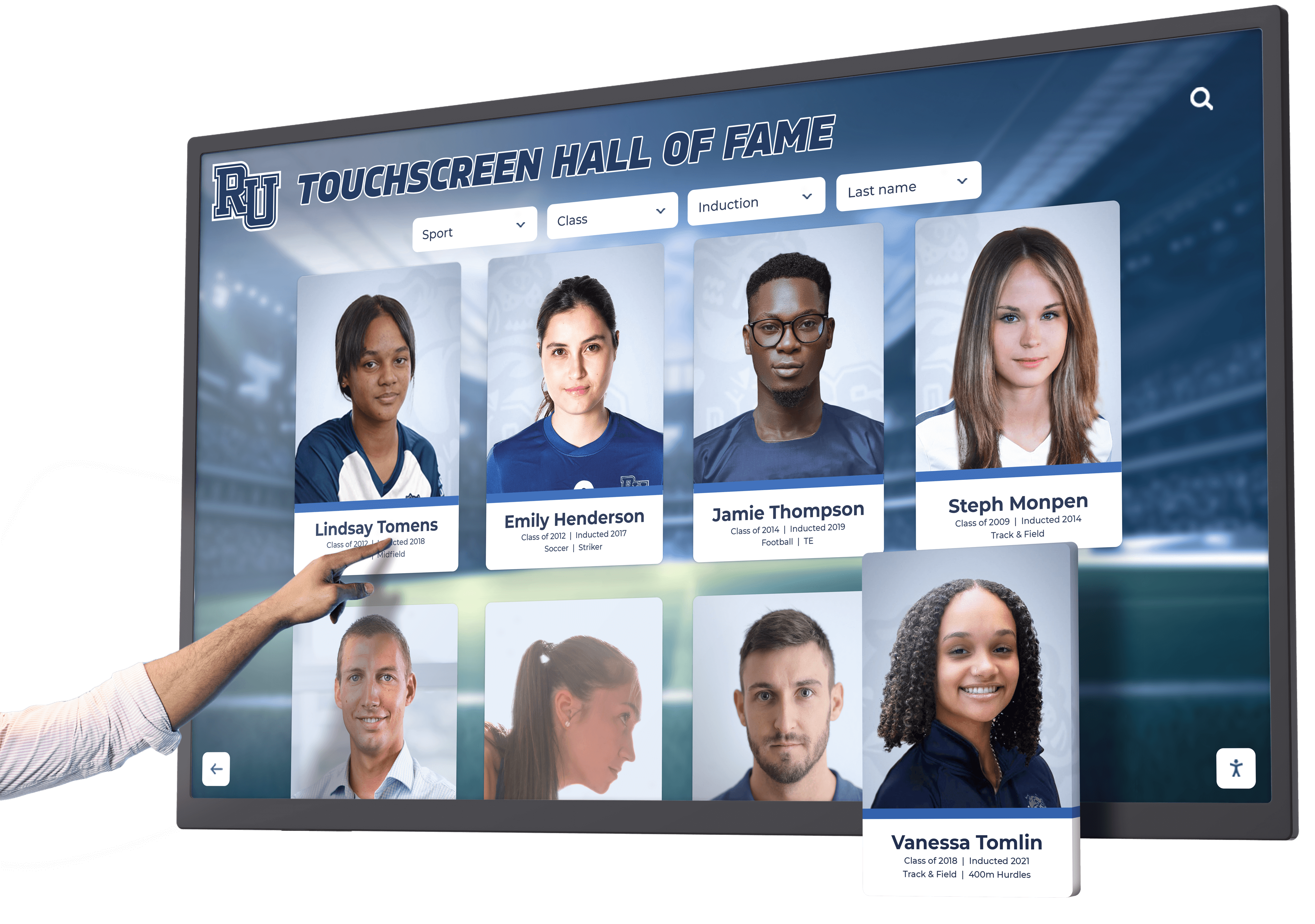
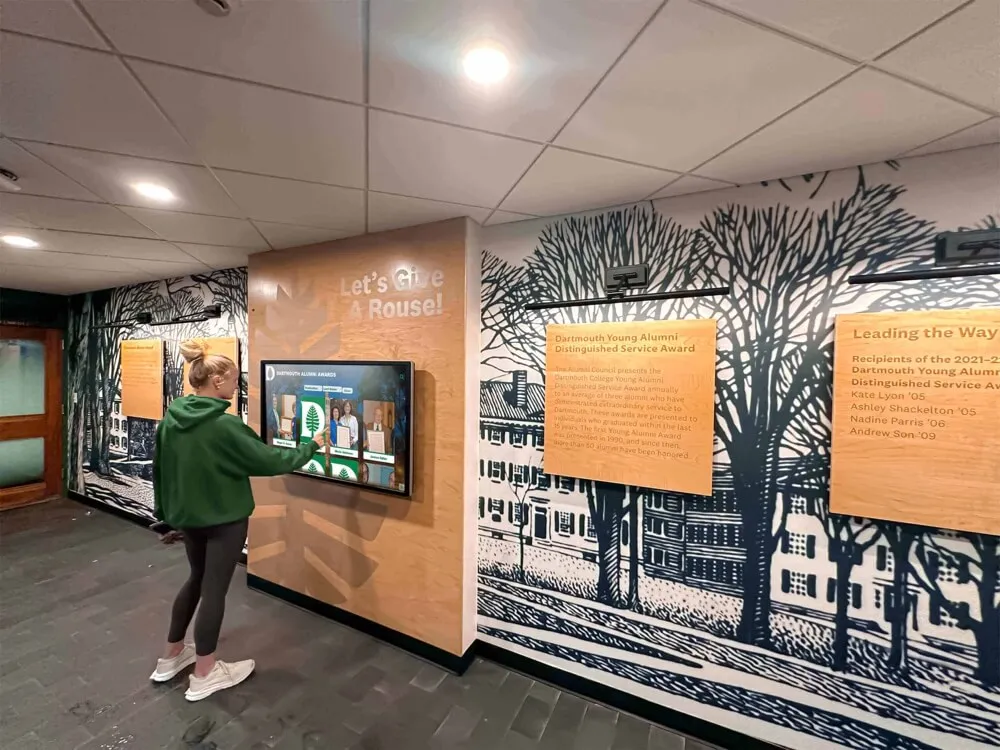
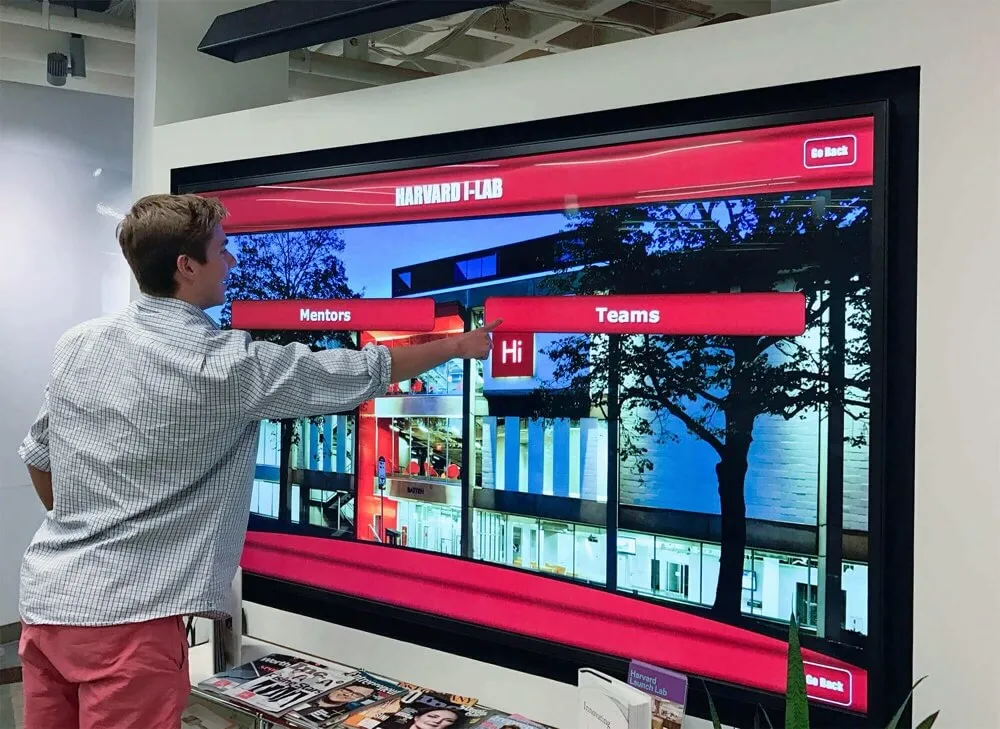
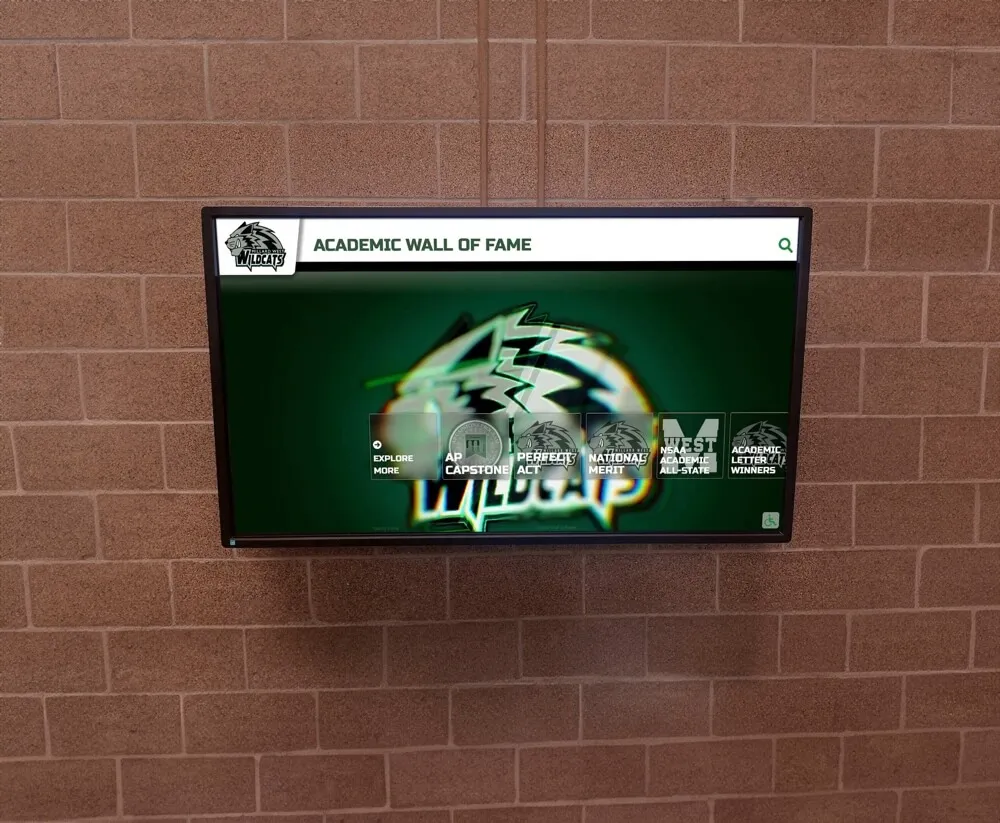
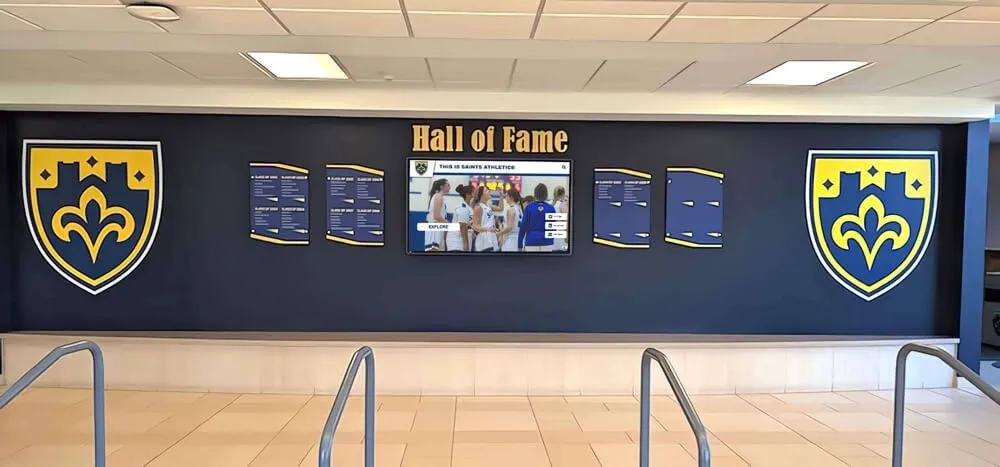
Touch-responsive card interfaces enable natural exploration through intuitive tap interactions familiar from smartphone experiences
Attraction Loop Content (Idle State)
When displays sit unused, attraction loops draw attention and demonstrate interactivity:
Rotating Scholar Spotlights:
Automatically cycling featured profiles showing:
- Large-format portrait photography capturing attention from distance
- Scholar names and composite scores immediately visible
- Brief achievement highlights (30-40 words) providing context at glance
- “Touch to explore” prompts with animated touch point indicators demonstrating interactivity
- Smooth fade transitions every 8-10 seconds maintaining visual interest without jarring cuts
Program Statistics Animations:
Dynamic data visualizations showcasing excellence:
- Animated counters scrolling to total scholar count creating visual movement
- Subject score distribution charts revealing through smooth fill animations
- Timeline graphics showing program growth trajectory year-over-year
- Achievement milestone callouts (first 30+ scorer, highest composite, most scholars single year)
Testimonial Rotations:
Brief video clips or quote cards from scholars:
- 15-20 second video excerpts showing scholars discussing achievement significance
- Animated quote cards with powerful statements about preparation journeys and outcomes
- Mixed testimonials from recent graduates and current college students showing sustained impact
- Strategic variety maintaining engagement for repeated viewers over extended periods
This attraction content serves dual purposes—drawing initial attention from passersby while also providing engaging content for observers waiting while others interact, creating social proof that encourages additional exploration.
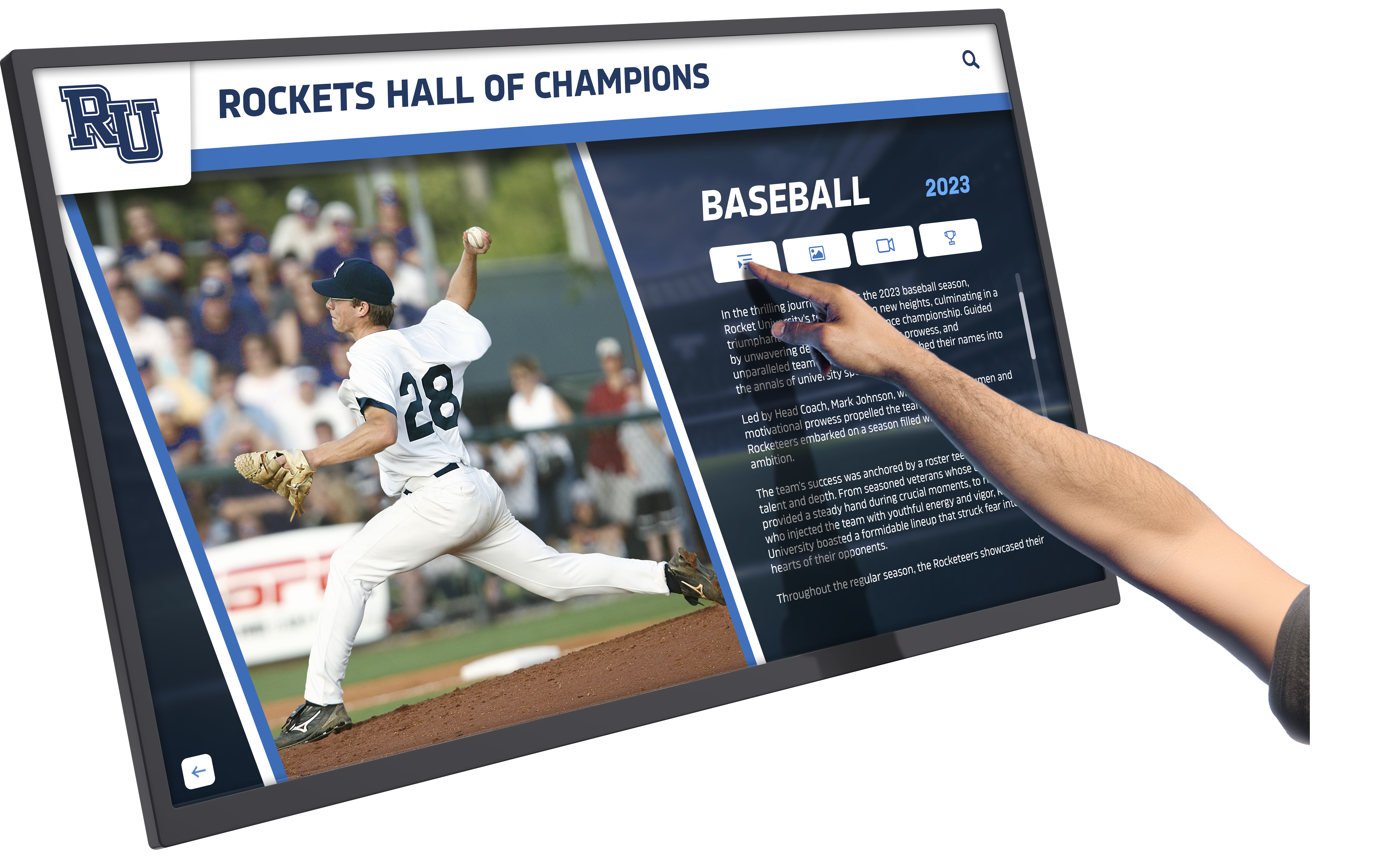
Rich multimedia profiles balance comprehensive achievement documentation with scannable formatting enabling quick orientation followed by optional depth
Accessibility and UX Checklist for ACT Recognition Displays
Creating inclusive recognition experiences requires deliberate attention to accessibility standards ensuring all community members can explore and engage regardless of abilities, technology familiarity, or interaction preferences.
Physical Accessibility Compliance
ADA Height and Reach Requirements:
ACT 30+ showcase boards must comply with Americans with Disabilities Act guidelines:
- Primary interactive elements positioned 15-48 inches above floor for wheelchair accessibility
- Display mounting height placing screen center at 48-54 inches serving both standing and seated users
- Forward reach depth not exceeding 25 inches when approach obstructed by display depth
- Adequate clearance (minimum 30x48 inches) enabling wheelchair approach and maneuvering
- Kiosk installations providing knee and toe clearance when free-standing configurations used
Touch Target Sizing for Motor Diversity:
Users with varying fine motor control capabilities require generous interactive elements:
- Minimum 80-pixel touch targets (ideally 100+ pixels) for all primary navigation buttons
- 12-16 pixel spacing between adjacent targets preventing mis-tap frustration
- Hit areas exceeding visible button boundaries by 8-10 pixels providing forgiveness margins
- No precision gestures (pinch-zoom, long-press) required for core functionality
- Single-tap activation for all standard interactions avoiding multi-touch complexity
Visual and Cognitive Accessibility
WCAG 2.1 AA Contrast Compliance:
Text and interactive elements must provide adequate contrast for visual impairment:
- Minimum 7:1 contrast ratio for body text ensuring readability in bright ambient lighting
- Minimum 4.5:1 contrast for large text (18pt+) and graphical interface elements
- Adjustable text sizing supporting enlargement to 200% without horizontal scrolling
- High-contrast alternative color modes for users with specific visual impairments
- Consistent color usage avoiding color-only information encoding
Cognitive Load Reduction:
Interface simplicity supports users with cognitive disabilities and limited technology experience:
- Clear, consistent navigation patterns throughout entire experience
- Obvious “Home” buttons visible on every screen providing psychological escape route safety
- Minimal steps required for common tasks (finding specific scholar, browsing by year)
- Progressive disclosure hiding complexity until needed rather than overwhelming initially
- Plain language avoiding educational jargon or assuming ACT familiarity
Alternative Content Access:
Multiple representation modes serve diverse learning preferences:
- Text descriptions accompanying all visual content supporting screen reader compatibility
- Video content including captions for sound-off viewing and hearing impairment
- Audio narration options for text-heavy content when technically feasible
- Downloadable PDF resources for users preferring offline content review
Organizations can reference comprehensive academic recognition board accessibility standards ensuring inclusive design serving all community members equally regardless of abilities.
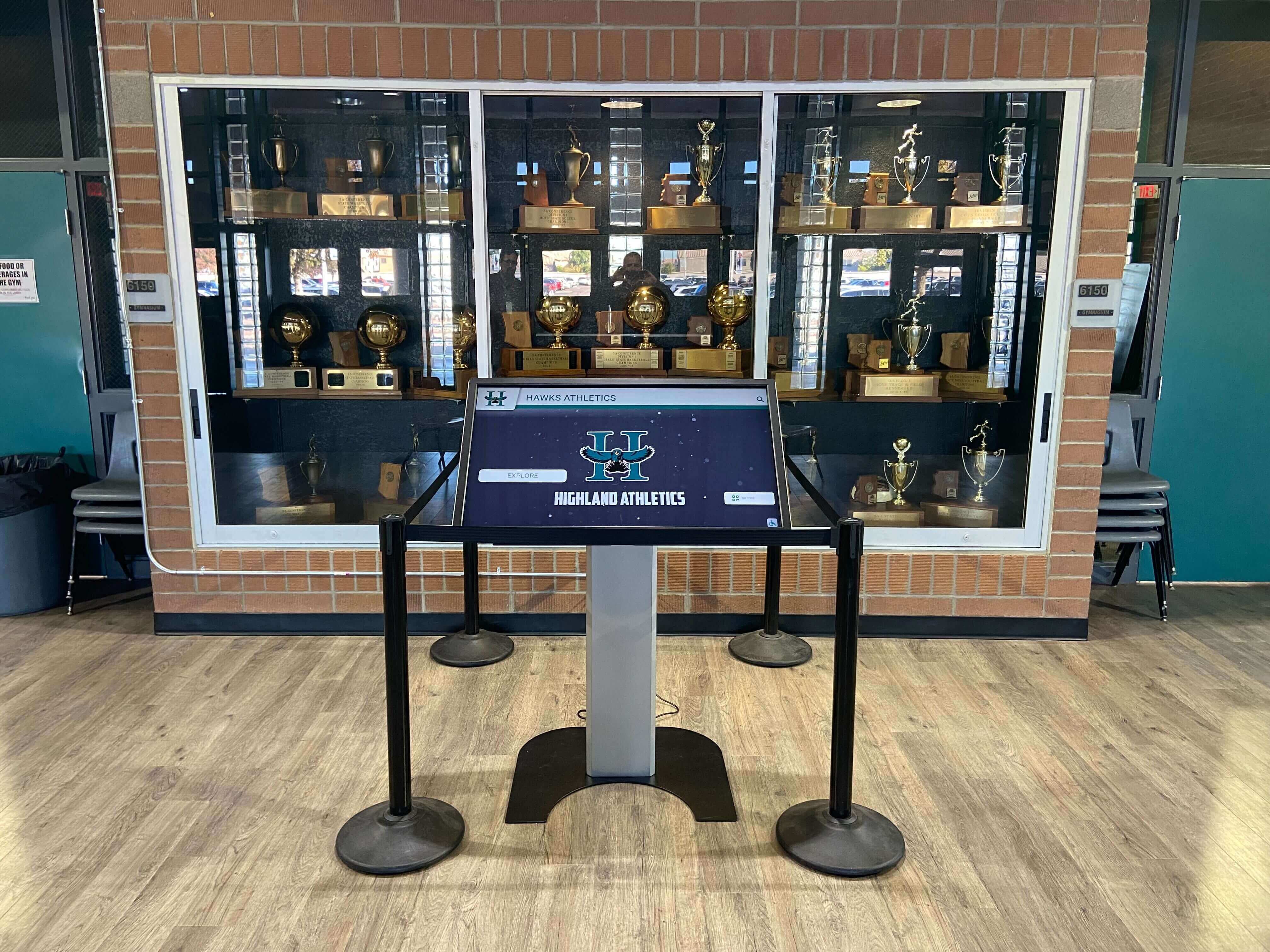
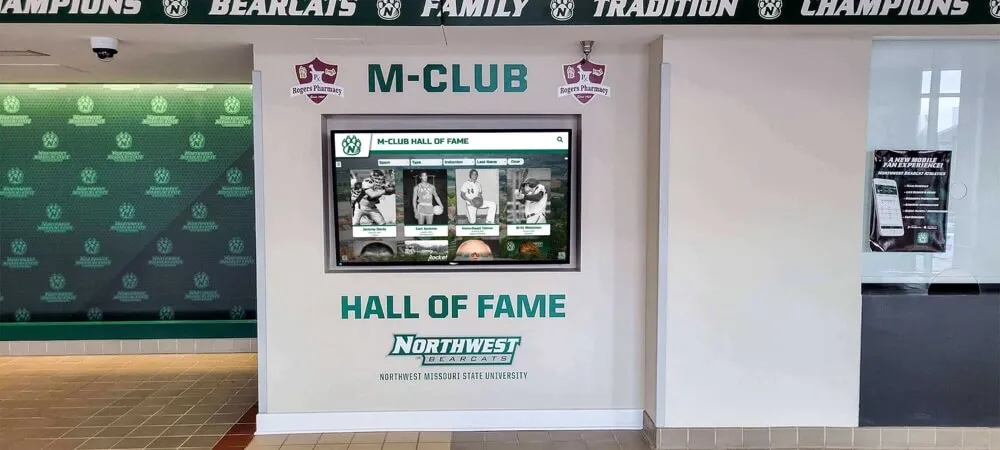
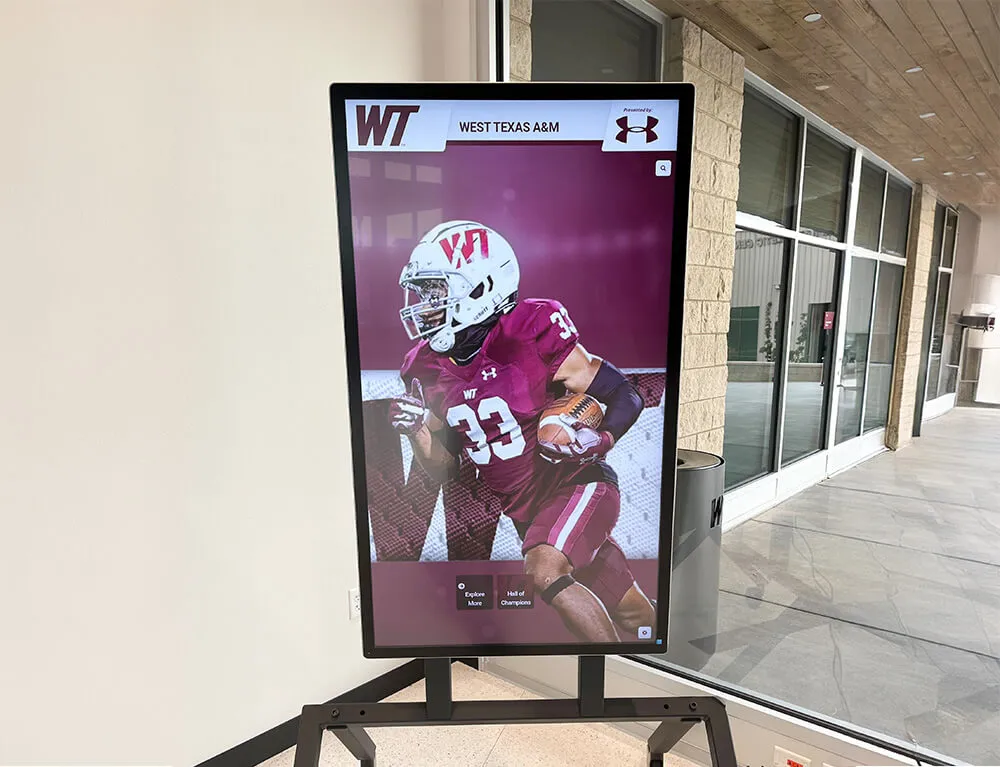
Kiosk-style installations combine traditional trophy displays with unlimited digital recognition capacity and interactive exploration
Brand Integration Strategy for ACT Showcase Boards
Digital ACT 30+ recognition displays should reflect institutional identity while maintaining professional aesthetics that honor scholar achievement appropriately.
Visual Identity Implementation
School Color Systems:
Apply institutional brand colors systematically creating visual continuity:
- Primary brand colors for hero masthead backgrounds and navigation button fills
- Secondary colors for content card backgrounds and divider elements
- Accent colors for interactive states (hover, active) and call-to-action buttons
- Neutral grays and whites for content areas ensuring text readability
- Avoid excessive color application that creates visual chaos or reduces legibility
Typography Hierarchy:
Establish clear type systems supporting both brand personality and functional readability:
- Institutional headline fonts for titles and featured text maintaining brand consistency
- Highly legible sans-serif fonts for body content optimizing readability at distance
- Size scales creating obvious hierarchy from headlines (48-72pt) through captions (16-18pt)
- Weight variations (light, regular, medium, bold) providing emphasis without color dependency
- Adequate line-height (1.4-1.6) preventing cramped appearance and improving scanability
Logo and Marks Integration:
Incorporate school identity marks appropriately:
- Primary institutional logos in hero masthead maintaining required clear space per brand guidelines
- Academic department marks (if ACT recognition managed by specific academic programs)
- Mascot integration creating visual interest when appropriate for institutional culture
- State testing organization marks when partnerships exist with education departments
- Optional sponsor logos for tutoring centers or programs funding recognition displays
Custom Backgrounds and Environmental Imagery
Campus Photography Integration:
Location-specific imagery creates authentic connection to place and community:
- Exterior campus architecture shots establishing institutional physical context
- Classroom and library interiors suggesting academic rigor and learning environment
- Student life photography showing engaged learners in authentic academic settings
- Historic building imagery connecting current achievement to institutional heritage
- Seasonal variation rotating backgrounds maintaining freshness across year
Abstract Pattern Libraries:
Subtle background treatments add visual interest without competing with content:
- Geometric patterns derived from school logos or architectural details
- Light texture overlays (paper, fabric) suggesting quality and permanence
- Gradient treatments creating depth while maintaining content focus
- Motion graphics providing subtle movement in attraction loops without distraction
- Transparency and opacity variations layering elements creating sophisticated composition
Video Background Loops:
Dynamic background content creates engaging idle states:
- Campus life footage showing students studying, collaborating, achieving
- Time-lapse sequences of campus scenes creating visual interest through movement
- Abstract academic imagery (books, formulas, graduation ceremonies) establishing context
- Success montages showing scholars at college acceptances and scholarship awards
- Achievement compilations celebrating broader school excellence across domains
Resources on designing effective touchscreen experiences provide detailed frameworks for creating visually compelling interfaces that engage users while honoring recognized individuals appropriately.
Sponsorship and Partner Recognition
Many schools fund ACT 30+ recognition displays through partnerships with tutoring centers, scholarship programs, or community organizations requiring tasteful acknowledgment:
Sponsor Placement Approaches:
- Footer logo ribbons acknowledging multiple supporters through rotation or simultaneous display
- Dedicated “Recognition Powered By” screens acknowledging major funding partners
- Program sponsor mentions within preparation resources sections providing value to funders
- Named displays (“Presented by Smith Family Foundation”) when major donors fund installations
Balancing Recognition and Experience:
Maintain user-focused design despite sponsor requirements:
- Limit sponsor content to maximum 10-15% of screen real estate preventing commercialization
- Visual separation between sponsor acknowledgment and scholar recognition maintaining focus
- Quality standards for sponsor materials matching overall display professionalism
- Regular updates ensuring sponsor content remains current reflecting active partnerships
- Clear value propositions for sponsors (exposure metrics, community goodwill) justifying tasteful integration
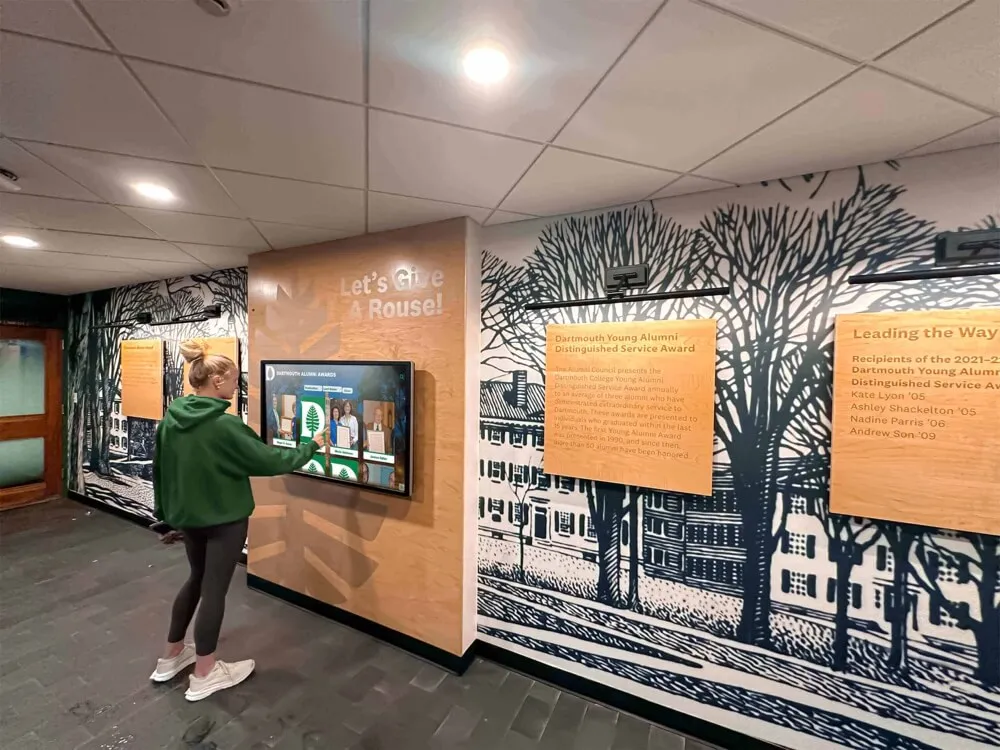
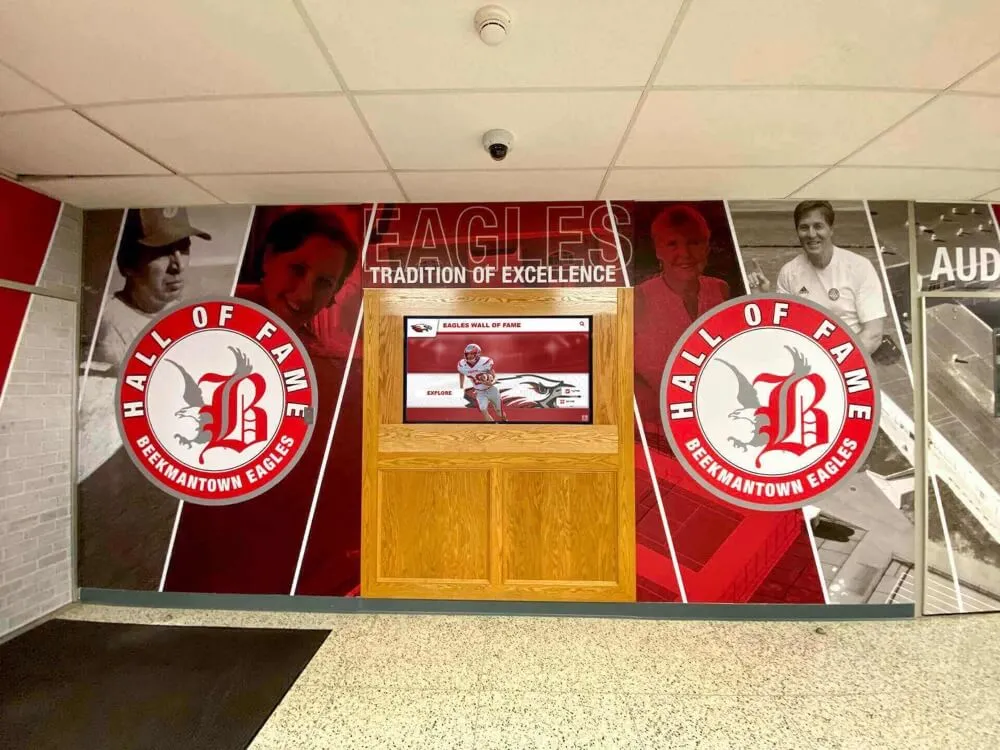
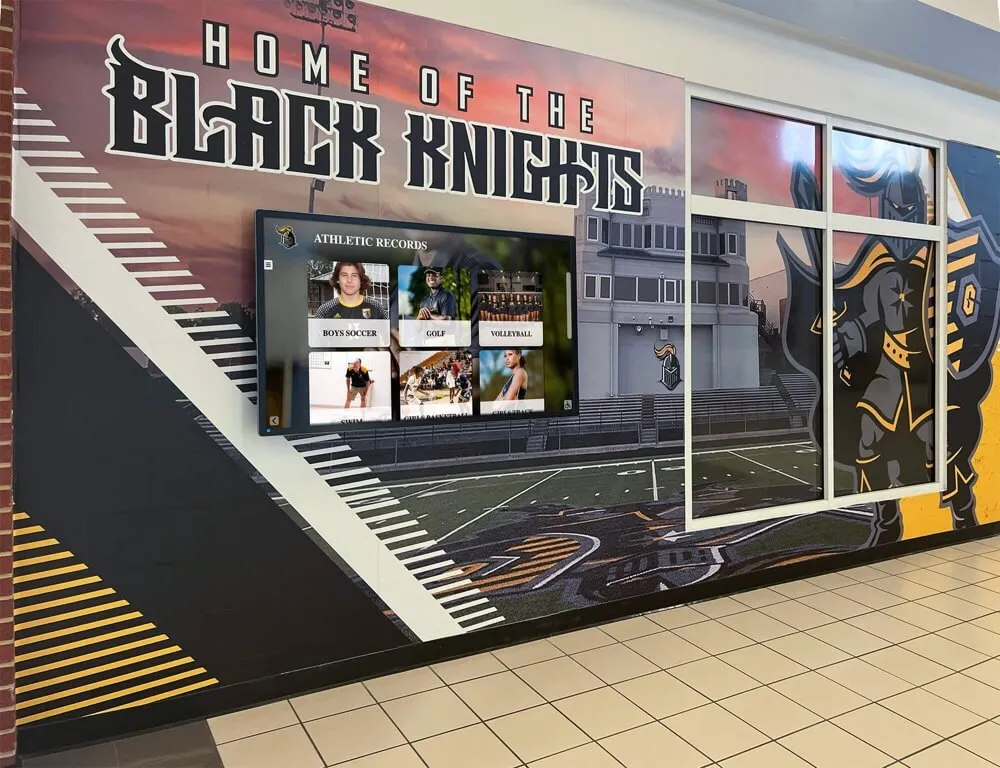
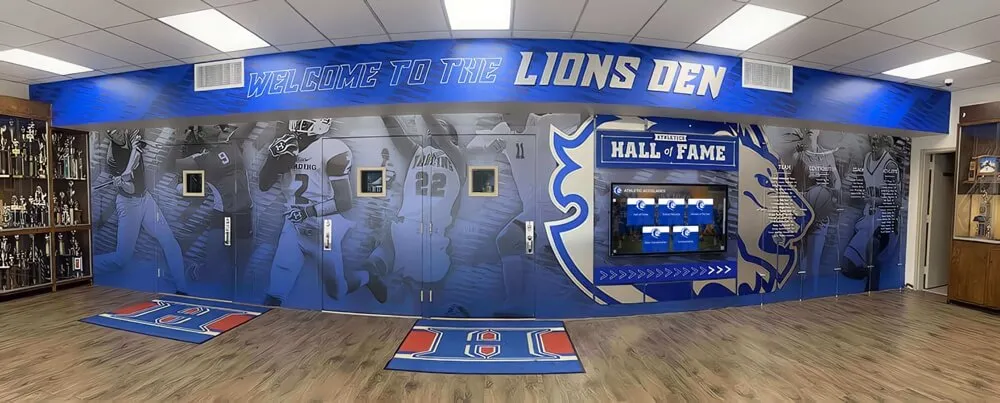
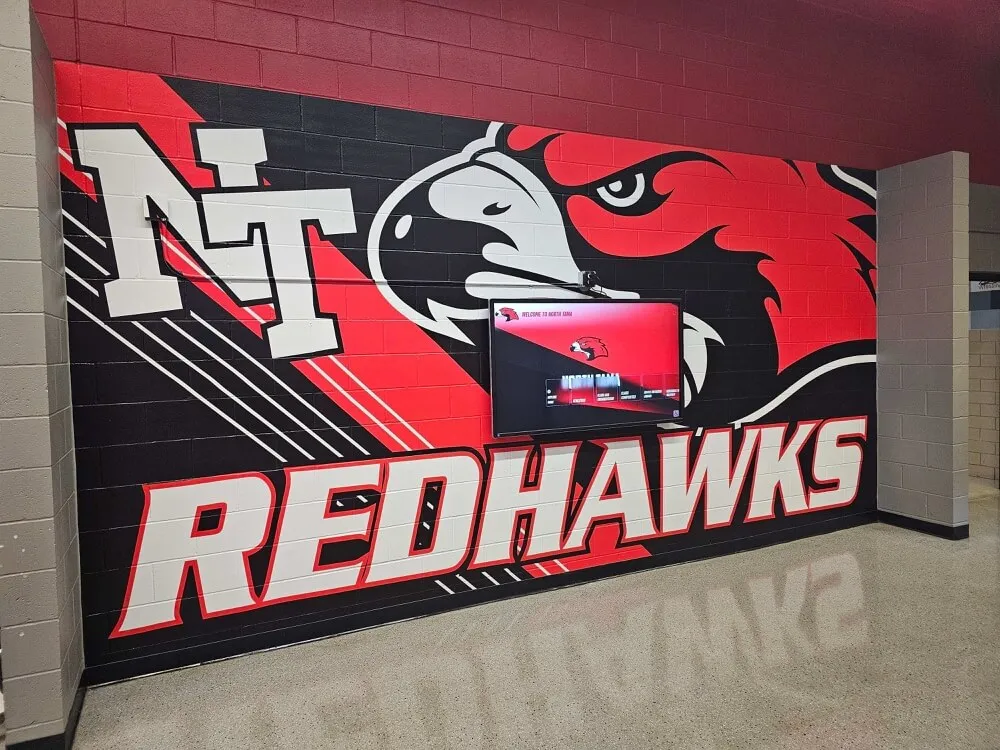
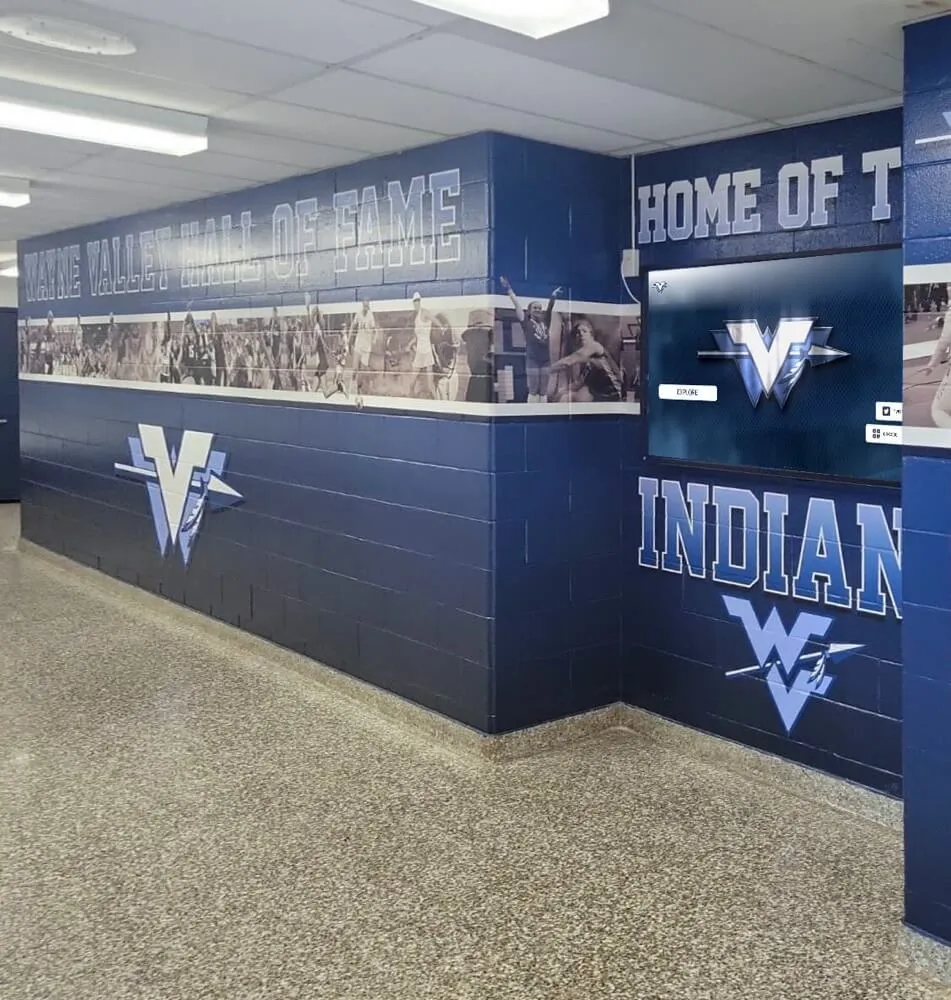
Integrated installations combining digital displays with traditional murals create comprehensive recognition environments celebrating multiple achievement dimensions
Activation Plan: Launching Your ACT 30+ Showcase Board
Successful implementation requires systematic planning from technology selection through content development, strategic placement, and ongoing refresh strategies maintaining community engagement.
Technology Platform Selection
Hardware Requirements:
Commercial-grade touchscreen displays provide reliability and longevity essential for institutional installations:
- 55-65 inch diagonal screens for main lobby or hallway installations providing adequate viewing from distance
- 43-49 inch displays for office areas or smaller spaces with closer typical viewing distances
- Capacitive touch technology supporting multi-touch gestures and responsive interaction
- Commercial durability ratings (50,000+ hours continuous operation) ensuring 5-7 year lifespan
- High brightness (500+ nits) maintaining visibility in bright ambient lighting conditions
- Mounting options (wall-mount, kiosk enclosures) appropriate for installation environments
Software Platform Capabilities:
Purpose-built academic recognition platforms provide features specifically optimized for student achievement display:
- Intuitive content management requiring no technical expertise for routine profile updates
- Professional templates for scholar entries ensuring consistent formatting and presentation
- Advanced search and filtering enabling instant scholar location by name, year, or score
- Analytics tracking demonstrating community engagement and program impact quantitatively
- Web portal integration extending recognition accessibility beyond physical displays
- Mobile-responsive design enabling exploration from smartphones and tablets
- Cloud-based management supporting secure remote updates from any authorized device
Solutions like Rocket Alumni Solutions provide comprehensive platforms specifically designed for academic recognition programs including ACT excellence, National Merit scholars, valedictorians, and other achievement categories requiring sophisticated recognition beyond simple digital signage capabilities.
Strategic Placement and Installation
Display effectiveness depends significantly on location selection and installation quality:
Optimal Installation Locations:
- Main entrance lobbies welcoming all visitors immediately upon campus arrival
- Academic office areas where families meet counselors during tours and enrollment
- Testing center corridors where students take ACT and other standardized exams
- Libraries and academic resource centers surrounding students with achievement examples
- Cafeterias and common areas ensuring daily exposure to entire student population
- Hallway junctions connecting high-traffic areas capturing movement and pause points
Installation Best Practices:
- Professional mounting with adequate structural support for display weight (40-80 lbs typical)
- Appropriate viewing height (screen center 50-56 inches) serving standing and wheelchair users
- Cable management concealing power and network connections maintaining clean aesthetics
- Adequate ambient lighting avoiding glare and washout while maintaining visibility
- Physical security measures (tamper-resistant mounts, protective enclosures) in public areas
- Network infrastructure ensuring reliable wired ethernet connectivity for content updates
Phased Deployment Strategy:
Budget-conscious schools often implement recognition in phases:
- Phase 1: Flagship ACT 30+ display in highest-visibility main lobby establishing program
- Phase 2: Complementary displays in academic offices and testing centers expanding exposure
- Phase 3: Comprehensive academic achievement network adding National Merit, AP Scholars, honors
- Phase 4: Web and mobile platform extensions enabling worldwide access beyond campus
Phased approaches enable budget spreading while demonstrating value through initial installations, building stakeholder support for expansion investment through concrete engagement metrics and community response.
Content Development and Scholar Profile Creation
Quality recognition depends entirely on comprehensive, accurate, engaging content honoring scholars appropriately:
Information Gathering Workflows:
Systematic data collection ensures complete, accurate recognition:
- Standardized scholar information forms collecting essential biographical details
- Testing score documentation verifying achievement through official score reports
- Professional photography sessions capturing high-quality portraits for display
- Scholar interviews gathering preparation narratives and advice for peers
- College outcome tracking documenting acceptances, scholarships, and undergraduate progression
- Parent and teacher testimonials providing external perspective on achievement significance
Profile Development Standards:
Consistent quality ensures all scholars receive equivalent recognition respect:
- Minimum 200-300 word biographical narratives providing substantive achievement context
- High-resolution photography (minimum 1920x1080 pixels) ensuring quality display presentation
- Complete score documentation (composite plus all subject areas) providing comprehensive achievement picture
- Preparation pathway descriptions offering actionable guidance for aspiring scholars
- College outcomes when available demonstrating tangible benefits motivating younger students
- Multimedia integration (video interviews, audio messages) when resources and scholars permit
Content Approval and Publishing Workflows:
Quality control prevents errors while maintaining manageable workload:
- Scholar review and approval of biographical content ensuring accuracy and comfort with sharing
- Administrative oversight verifying achievement claims against official documentation
- Editorial review maintaining consistent voice, grammar, and presentation quality
- Scheduled publishing coordinated with awards ceremonies and school communications
- Systematic archiving of source materials supporting future updates and corrections
Organizations should reference digital recognition content development strategies ensuring comprehensive, engaging profiles that honor achievement meaningfully rather than perfunctory documentation meeting minimum requirements.
Refresh Cadence and Ongoing Content Maintenance
Displays require regular attention maintaining community engagement and current content:
Regular Update Schedule:
- Annual additions after ACT score releases (July for spring/summer testing, December for fall testing)
- Quarterly content reviews updating college outcomes and adding scholar progression updates
- Monthly featured scholar rotations highlighting different individuals in attraction loops
- Event-coordinated updates during homecoming, graduation, college signing days
- Responsive updates when scholars achieve additional milestones (scholarship awards, college achievements)
Content Governance:
Clear responsibility prevents neglect and quality erosion:
- Designated staff ownership (counseling department, academic dean, communications) for content
- Multi-person training preventing single-point dependencies during staff transitions
- Documentation of content standards, approval workflows, and technical procedures
- Budget allocation for ongoing photography, video production, and content development
- Advisory committee input from teachers, counselors, parents maintaining diverse perspectives
Technical Maintenance:
Reliable operation requires attention beyond content:
- Remote monitoring through display management software detecting connectivity or hardware issues
- Regular software updates maintaining security patches and feature improvements
- Periodic screen cleaning and hardware inspection ensuring professional appearance
- Network connectivity verification preventing content synchronization failures
- Hardware warranty tracking and support contact documentation enabling rapid issue resolution
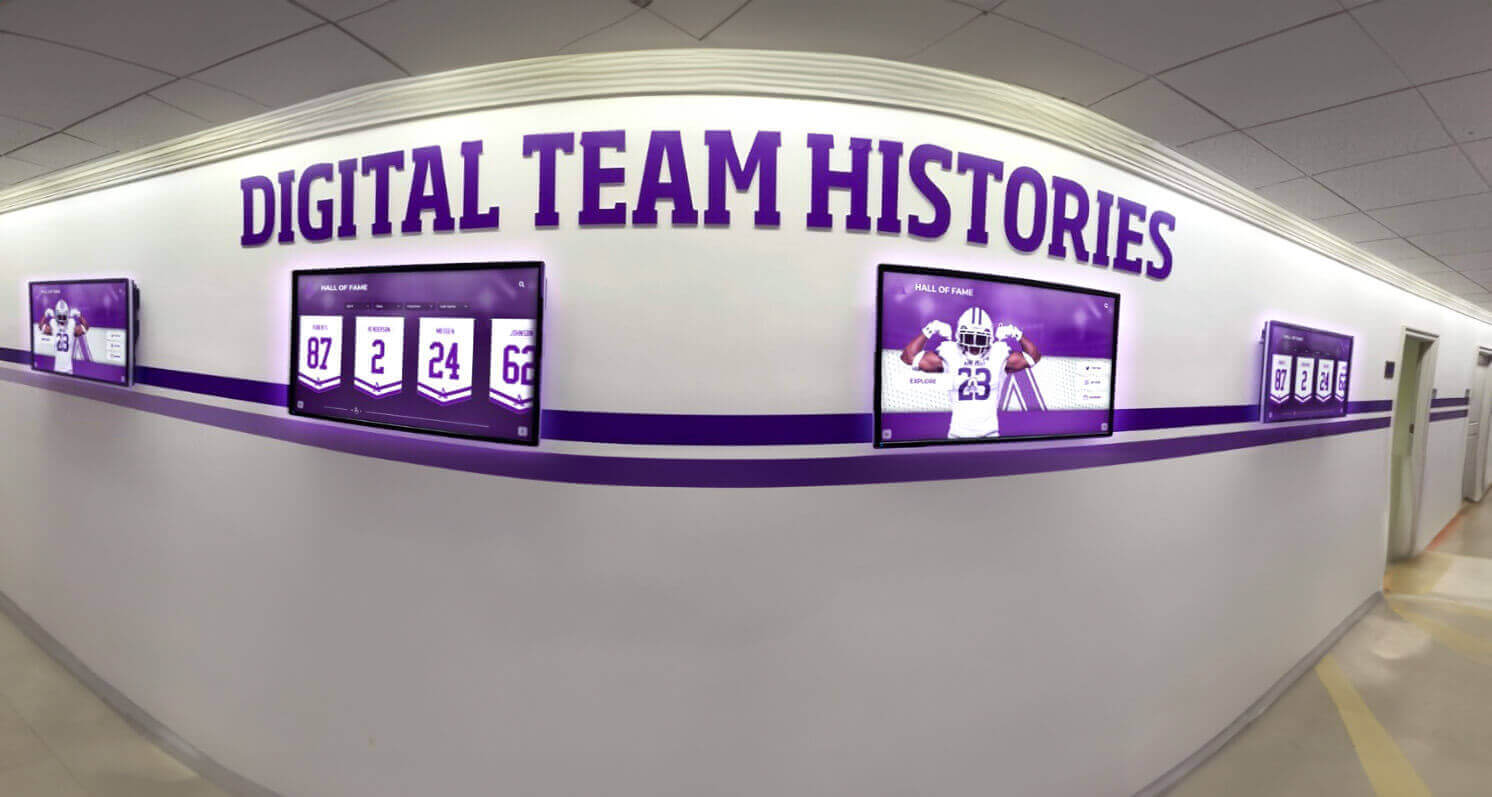
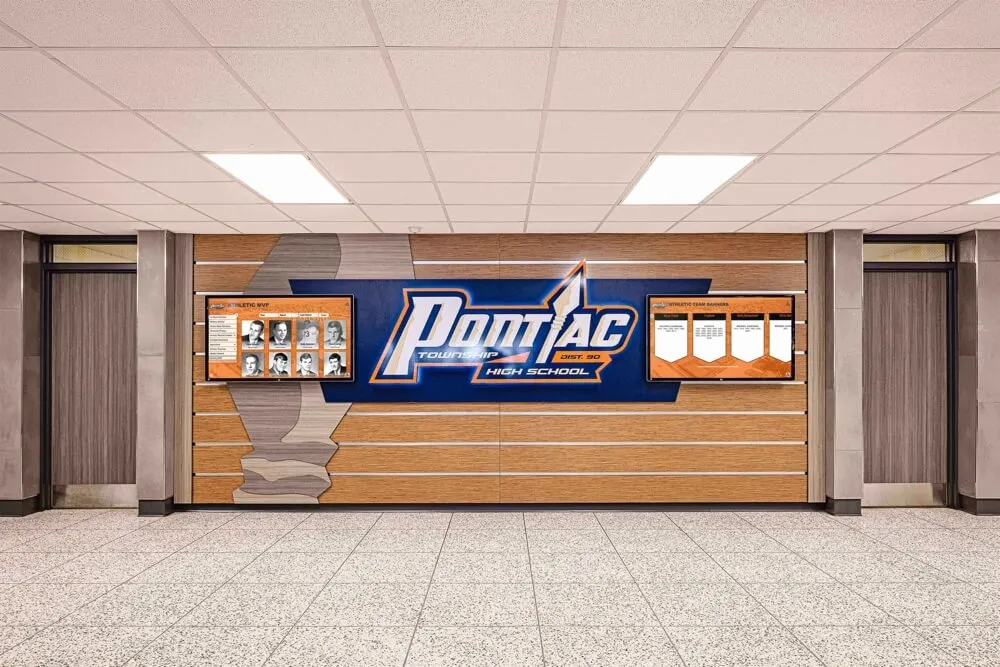
Coordinated multi-display installations create comprehensive recognition networks celebrating excellence across multiple achievement categories
Measuring Impact and Demonstrating ROI
Systematic assessment ensures ACT 30+ showcase board investments deliver intended value while identifying improvement opportunities based on actual community engagement rather than assumptions.
Engagement Analytics and Usage Tracking
Quality recognition platforms provide comprehensive metrics revealing how communities interact with displays:
Quantitative Engagement Metrics:
- Total interaction sessions showing frequency of display use and community interest levels
- Average session duration indicating depth of engagement and content effectiveness
- Most-viewed scholars revealing which profiles attract greatest attention and why
- Search query patterns demonstrating what information visitors most frequently seek
- Peak usage times informing optimal content update and feature announcement strategies
- Return visitor rates showing sustained interest versus one-time curiosity
- Social share frequency demonstrating organic content distribution beyond physical displays
Behavioral Analysis:
Usage patterns reveal optimization opportunities:
- Navigation paths showing how visitors naturally explore content and discover scholars
- Drop-off points identifying confusing interfaces or disappointing content areas
- Search success rates measuring findability and information architecture effectiveness
- Video completion rates revealing which multimedia content maintains attention
- Feature utilization tracking which capabilities get used versus ignored
- Time-of-day patterns enabling attraction loop optimization for different audiences
Academic Culture Impact Assessment
Beyond direct engagement metrics, broader institutional impacts demonstrate program value:
Student Motivation and Academic Planning:
- ACT course enrollment trends following showcase board installation
- Test registration rates among juniors and seniors showing increased participation
- Average school ACT scores tracking overall performance improvement
- Counseling office inquiries about ACT preparation resources and strategies
- Student survey data about awareness of ACT 30+ achievement and pathways
- College application patterns showing applications to selective institutions
Institutional Reputation and Recruitment:
- Prospective family feedback during campus tours mentioning academic recognition
- Admission application rates from academically-focused prospective students
- Media coverage highlighting school academic excellence and recognition programs
- Alumni engagement with recognition content demonstrating community pride
- Community perception surveys tracking awareness of school academic strength
- Competitive positioning relative to peer schools in academic reputation metrics
Stakeholder Satisfaction:
Direct feedback from key constituencies provides qualitative insights:
- Recognized scholar satisfaction with recognition quality, visibility, and meaningfulness
- Parent perspectives on academic culture and institutional priorities
- Teacher assessment of student motivation and academic culture shifts
- Administrator evaluation of recognition program contribution to strategic goals
- Counselor observations about student academic planning and aspiration changes
Resources on measuring digital recognition program success provide comprehensive frameworks for systematic assessment demonstrating value to stakeholders while identifying improvement opportunities based on concrete evidence rather than intuition.
Continuous Improvement and Iteration
Use assessment insights to refine recognition experiences systematically:
Content Enhancement:
- Add missing scholar categories or years revealed through community requests
- Enrich existing profiles with additional multimedia based on engagement data
- Develop new content modules (preparation resource libraries, college outcome tracking) addressing user needs
- Update navigation structures based on observed search patterns and usage behaviors
- Expand statistical dashboards showing trends and patterns community finds compelling
Design Refinement:
- Simplify confusing navigation based on usability observations and drop-off analysis
- Adjust visual hierarchy emphasizing high-value content and de-emphasizing less relevant elements
- Optimize touch targets and spacing based on interaction success rates and error patterns
- Refine color contrast and typography responding to visibility feedback
- Update attraction loops maintaining freshness and incorporating newly recognized scholars
Technical Optimization:
- Improve loading performance ensuring smooth, responsive interaction meeting user expectations
- Fix bugs or interface inconsistencies discovered through usage monitoring
- Enhance search algorithms based on query patterns and success rates
- Optimize bandwidth usage reducing network dependencies and enabling offline operation
- Implement new features responding to user requests and emerging best practices
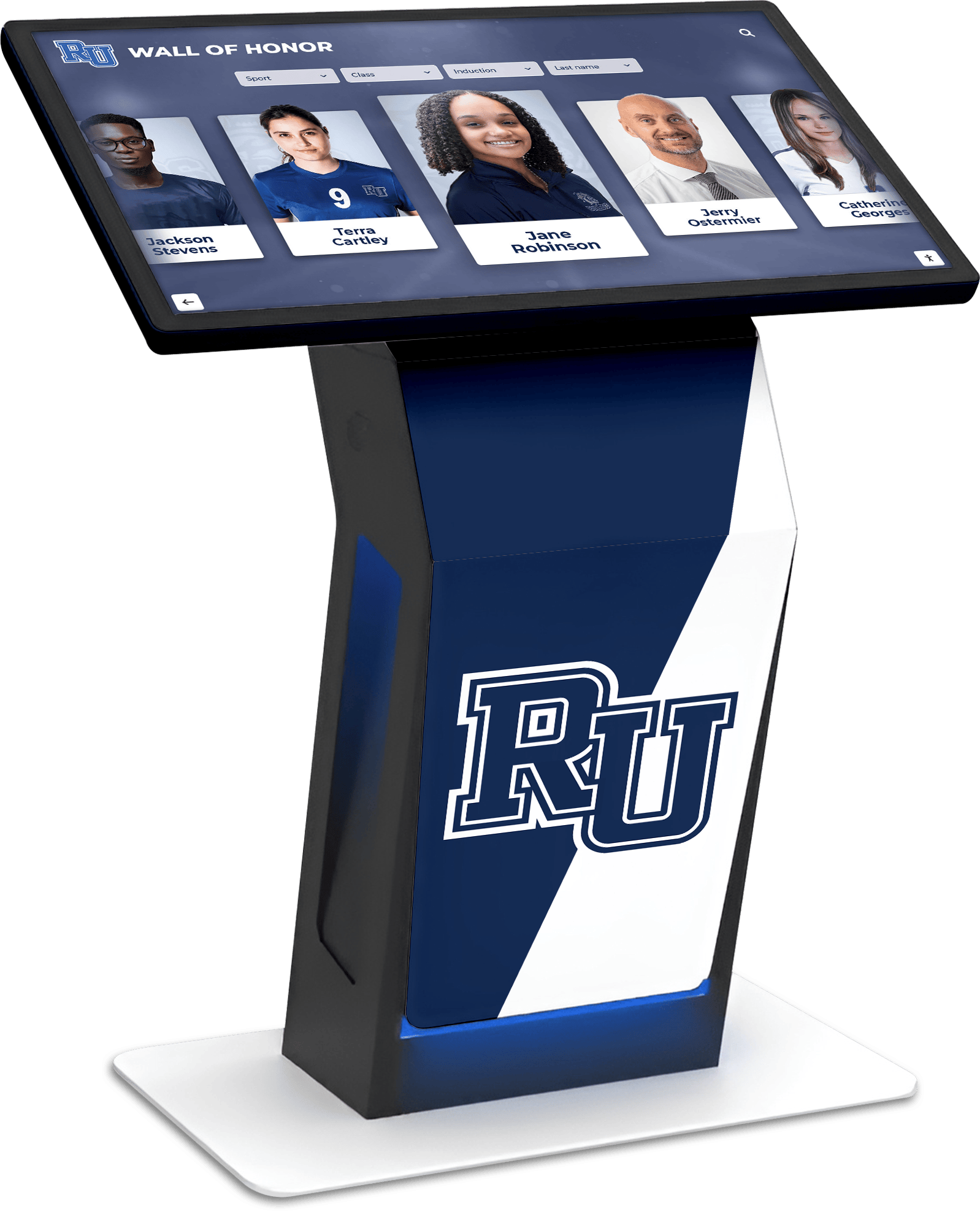
Purpose-built recognition platforms provide professional interfaces optimized specifically for celebrating student achievement rather than generic digital signage
Beyond Recognition: Supporting ACT Excellence Systematically
Effective ACT 30+ showcase boards extend beyond passive celebration to actively support current students pursuing similar excellence through integrated resources, preparation guidance, and clear pathway articulation.
Embedded Preparation Resources and Guidance
Recognition displays should help younger students understand specifically how to achieve ACT 30+ status themselves:
Study Strategy Libraries:
- Recommended preparation timelines starting sophomore or junior year
- Effective study resource reviews (books, online courses, tutoring programs) with honest assessments
- Subject-specific strategy guides for English, Math, Reading, Science sections
- Time management approaches balancing ACT preparation with other academic and extracurricular commitments
- Practice test scheduling recommendations and score improvement tracking strategies
- Test-day preparation covering logistics, anxiety management, and strategic question approaches
Scholar Success Stories and Advice:
Video interviews or text narratives from current 30+ Club members:
- Preparation journey descriptions showing realistic time investment and challenge navigation
- Subject area improvement strategies that worked when initial practice scores disappointed
- Resource recommendations based on actual scholar experience rather than generic advice
- Motivation maintenance approaches sustaining effort through lengthy preparation periods
- Test anxiety management techniques helping students perform under pressure
- Perspective on whether scores accurately reflected knowledge or required significant test-taking skill development
Support Program Integration:
Direct connections to school support systems:
- Links to school or district ACT preparation courses and workshops
- Tutoring program information with registration details and scheduling
- Counseling office ACT planning resources and individual consultation scheduling
- Community partnership programs offering free or reduced-cost preparation
- Peer tutoring or study group matching connecting students with similar goals
- Financial assistance information for students facing barriers to preparation resources
College Planning and Scholarship Opportunity Education
Help scholars and aspiring scholars understand how to leverage ACT excellence effectively:
Admissions Strategy Content:
- Institutional profiles of colleges where ACT 30+ provides significant admissions advantages
- Acceptance rate data showing how ACT scores correlate with admission probability
- Application strategies highlighting ACT achievement appropriately without appearing boastful
- Supplemental essay opportunities discussing test preparation journey meaningfully
- Interview talking points leveraging ACT success as evidence of capability and dedication
Scholarship Opportunity Database:
- University automatic merit scholarships based on ACT achievement with value amounts
- External scholarship programs specifically seeking high ACT scorers
- Local community scholarships where ACT distinction provides competitive advantage
- Application deadline calendars ensuring students capture all available opportunities
- Previous winner profiles showing actual scholarship amounts scholars received
Long-Term Outcome Demonstration:
Recognition of scholar alumni showing achievement trajectories:
- Undergraduate academic honors and achievement building on ACT foundation
- Graduate school acceptances revealing continued academic excellence patterns
- Career outcomes showing professional success across diverse fields
- Alumni testimonials explaining how ACT preparation skills transferred to broader contexts
- Return visits from alumni studying at selective institutions providing inspiration and advice
This forward-looking integration transforms recognition boards from backward-looking celebration into forward-facing tools actively supporting student development and college preparation—maximizing program value while demonstrating institutional commitment to comprehensive student success beyond simple acknowledgment.
Conclusion: Creating Recognition That Inspires Excellence
ACT 30+ Club achievement represents genuine elite academic accomplishment placing students in the top 7% of all test-takers nationally. These exceptional scholars demonstrated sustained intellectual capability, disciplined preparation, and college readiness deserving recognition matching their achievement magnitude through prominent, engaging, lasting displays that honor individual excellence while inspiring younger students to pursue similar distinction.
Traditional recognition approaches—brief ceremony mentions, certificates in folders, cramped bulletin boards—fail to provide the sustained visibility and meaningful engagement contemporary educational communities need for building strong academic cultures where intellectual achievement receives celebration equal to athletic and other visible accomplishments. These inadequate approaches leave remarkable students feeling undervalued while failing to inspire peers or communicate institutional excellence to prospective families.
Design Your ACT 30+ Club Showcase Board
Discover how custom-designed digital recognition displays can transform ACT excellence celebration through engaging touchscreen experiences that inspire students, strengthen academic culture, and demonstrate institutional commitment to intellectual achievement.
Schedule Your Design ConsultationDigital showcase boards specifically designed for ACT 30+ recognition transform how schools celebrate academic excellence by eliminating physical space constraints, enabling rich multimedia scholar profiles telling complete achievement stories, providing instant updates adding new scholars immediately when recognition feels most meaningful, creating interactive touchscreen experiences engaging digital-native students effectively, and extending recognition globally through integrated web platforms.
The most successful ACT 30+ showcase board implementations start with clear recognition goals, thoughtful experience layout balancing aesthetics with functional usability, comprehensive content strategy honoring scholars meaningfully, strategic placement maximizing community exposure, and sustainable maintenance workflows ensuring ongoing relevance. Whether implementing standalone ACT recognition or integrating within broader academic excellence programs celebrating National Merit scholars, AP achievement, and other distinctions, digital touchscreen technology provides proven solutions strengthening academic culture while giving every deserving scholar the permanent recognition their accomplishments merit.
Organizations investing in well-designed ACT recognition demonstrate commitment to celebrating intellectual achievement comprehensively rather than limiting acknowledgment to perfunctory certificates or temporary announcements. This visible commitment communicates institutional values while building cultures where academic excellence receives systematic celebration creating motivation, pride, and lasting connection to educational communities.
Ready to transform your ACT recognition? Explore perfect ACT score recognition strategies, discover comprehensive academic achievement display approaches, learn about digital signage software platforms supporting academic recognition, and understand how to create engaging touchscreen experiences that celebrate excellence through modern interactive technology purpose-built for inspiring future achievement while honoring present accomplishment.