



Most athletic director evaluation forms are built around win-loss records, budget compliance, and scheduling accuracy. Those are reasonable starting points—but they miss the criteria that actually define long-term program health: whether the school’s recognition infrastructure honors athletes appropriately, whether records are documented and displayed publicly, whether sponsors and donors receive meaningful visibility, and whether the athletic program generates genuine community engagement year-round. This guide walks through the specific criteria, form sections, and weighted metrics that make an athletic director evaluation form genuinely useful for school boards, principals, and administrators who care about athletic program legacy—not just this season’s standings.
The athletic director’s role extends far beyond game-day logistics. The most effective ADs build institutional infrastructure that outlasts any single season: halls of fame that preserve program history, record boards that motivate current athletes by making achievement visible, donor displays that sustain fundraising relationships, and community events that broaden the program’s reach. An evaluation form that ignores these dimensions evaluates only half the job.

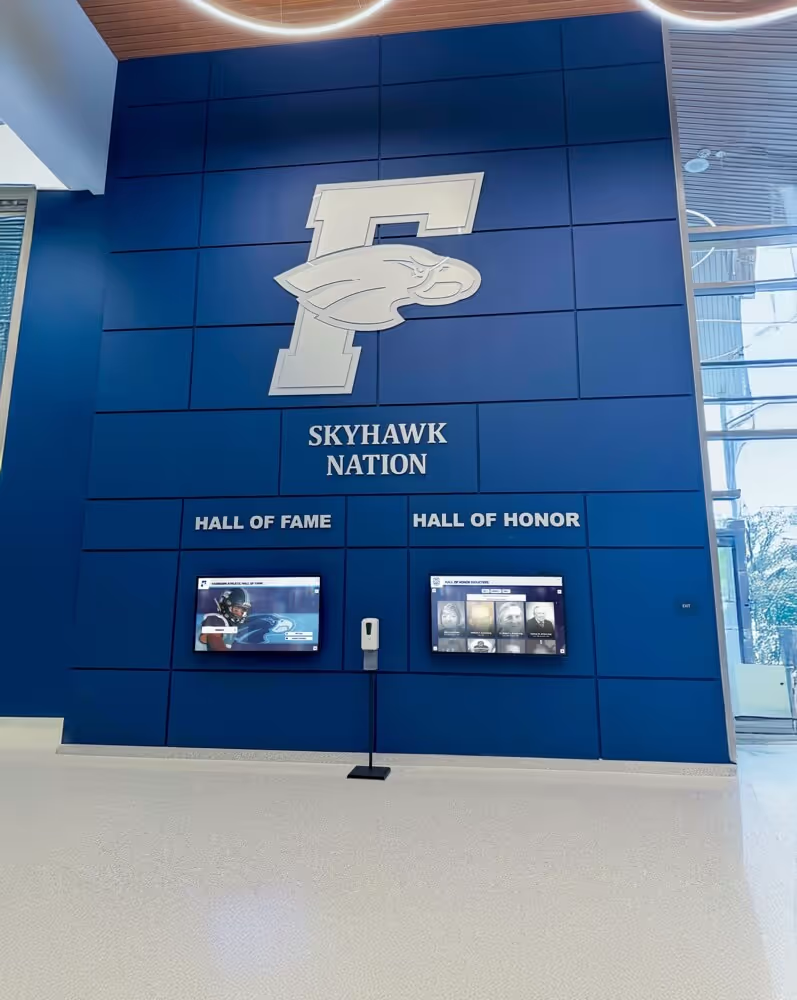
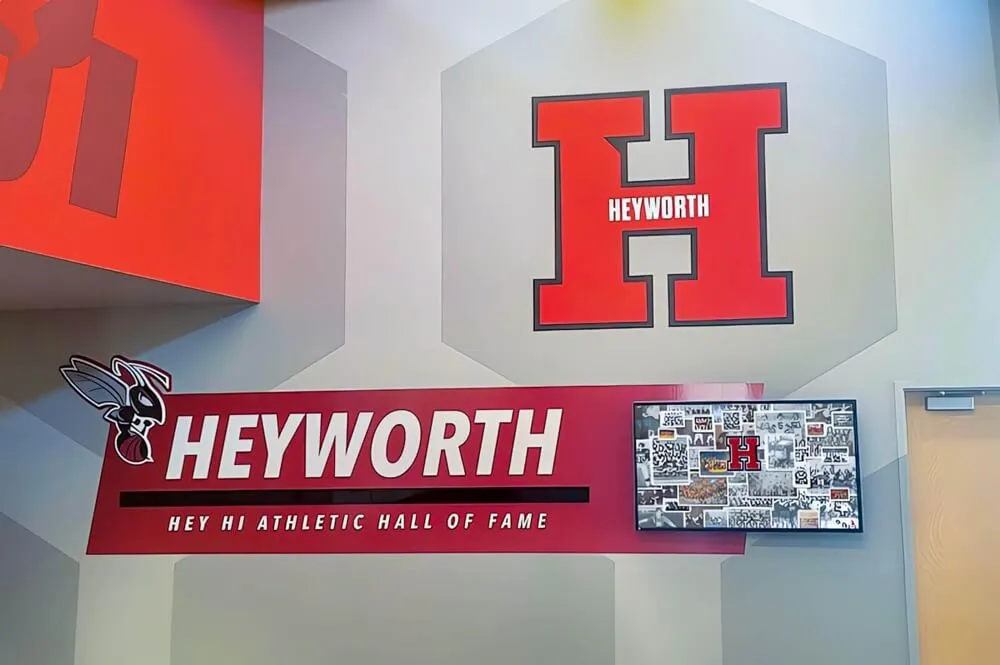
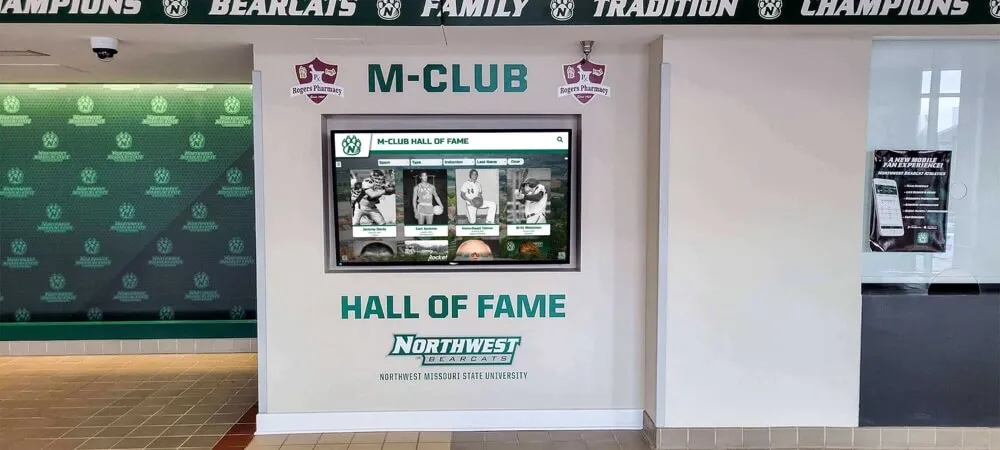
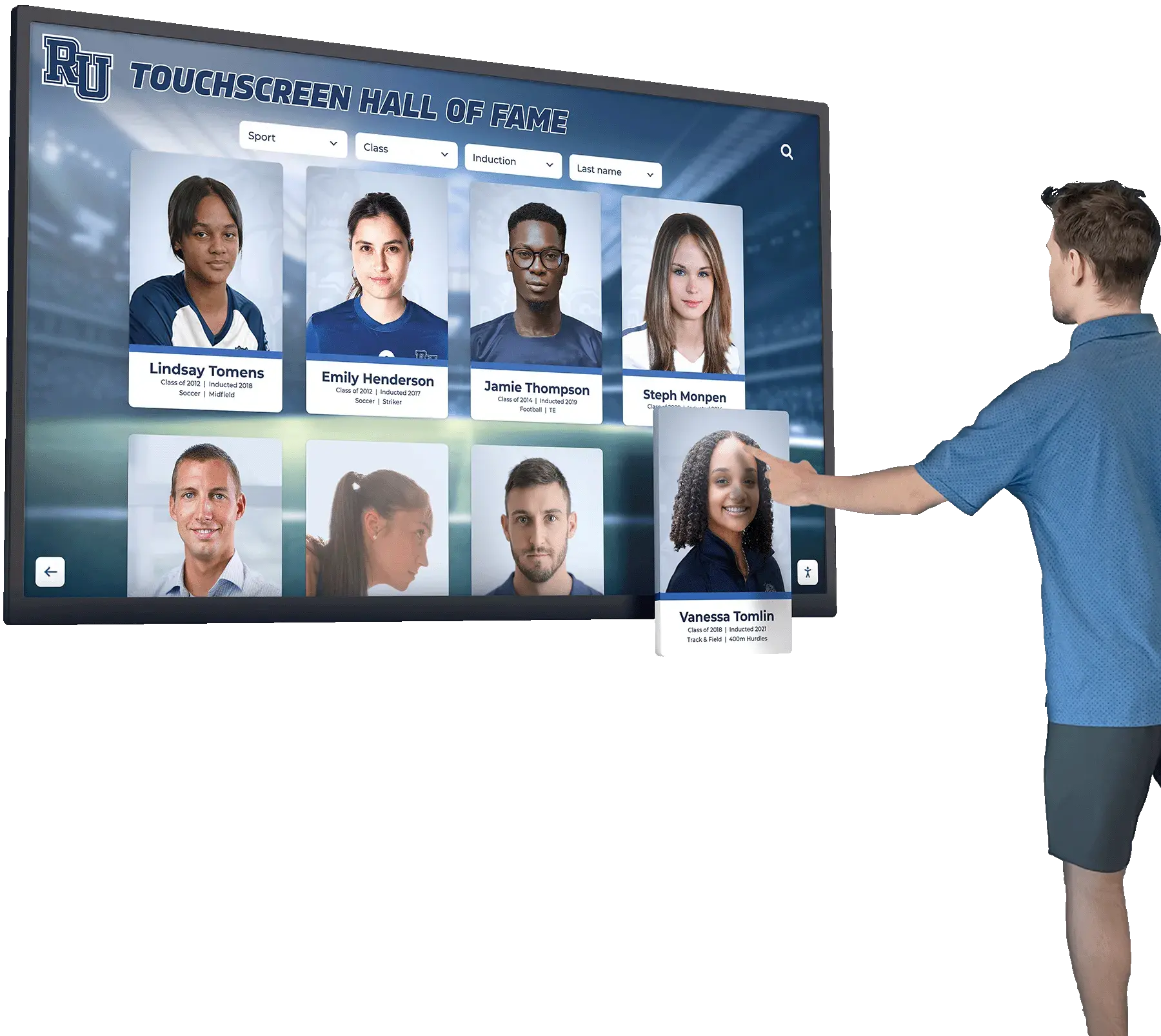
Recognition infrastructure—like a hall of fame display in a high-traffic corridor—represents one of the most visible outcomes of effective athletic leadership
How to Structure an Athletic Director Evaluation Form
An effective evaluation form divides the athletic director’s responsibilities into distinct domains, then scores each on observable outcomes rather than subjective impressions. The table below outlines the six core sections recommended for forms that prioritize recognition, records, and community outcomes.
| Form Section | Focus Area | Suggested Weight |
|---|---|---|
| Recognition Programs | Hall of fame, awards ceremonies, inductee criteria | 20% |
| Athletic Records & Documentation | Record board accuracy, historical archives, stat verification | 15% |
| Sponsor & Donor Visibility | Display placement, contract fulfillment, renewal rates | 15% |
| Community Engagement | Fan attendance, alumni events, social media reach | 20% |
| Operational Management | Scheduling, compliance, budget, staff supervision | 20% |
| Technology & Display Infrastructure | Digital kiosks, content freshness, accessibility | 10% |
The weights above are a starting point. Schools with active fundraising campaigns may increase the sponsor visibility section; programs undergoing transition may weight operational management higher. The point is to make weighting explicit so evaluations are consistent across years and across evaluators.
Resources on athletic director transition planning demonstrate how documenting these program dimensions helps incoming leaders understand what was built and what still needs attention—another reason evaluation criteria matter beyond the individual performance review.
Section 1: Recognition Program Criteria
Recognition is one of the most visible products of athletic leadership. The evaluation form should assess whether the AD has built and maintained systems that honor past and present athletes in ways that are accurate, accessible, and lasting.
Hall of Fame Program Management
- Does a formal hall of fame exist, with documented nomination and selection criteria?
- Are induction criteria applied consistently across sports and genders?
- Has the AD led or supported at least one induction ceremony in the past 12 months?
- Are inductee profiles—photos, statistics, biographical narratives—publicly accessible (on-site display, school website, or both)?
- Is there a defined waiting period and committee governance structure in writing?
Awards Ceremonies and End-of-Season Recognition
- Does the AD coordinate annual awards ceremonies for all sports, not only revenue programs?
- Are award categories documented, and are winners archived for future reference?
- Do letter awards, all-conference selections, and scholar-athlete honors appear in permanent displays or digital platforms?

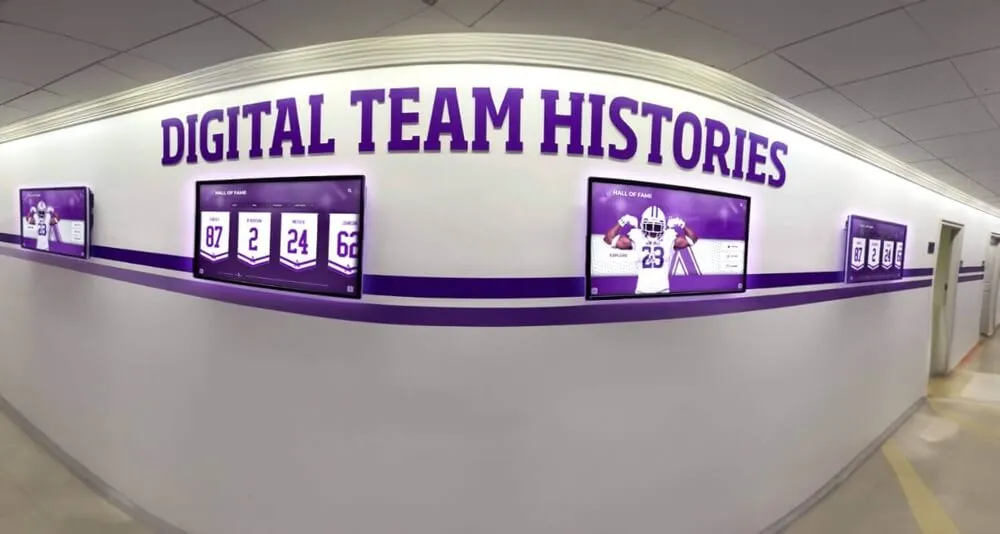
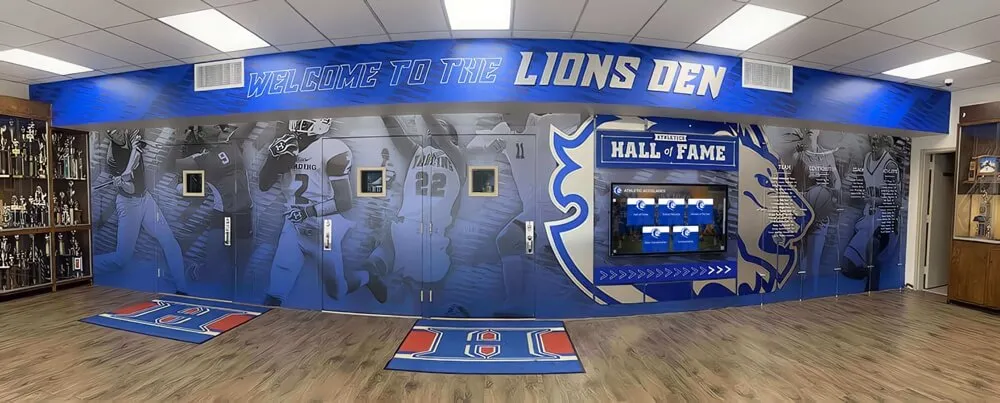
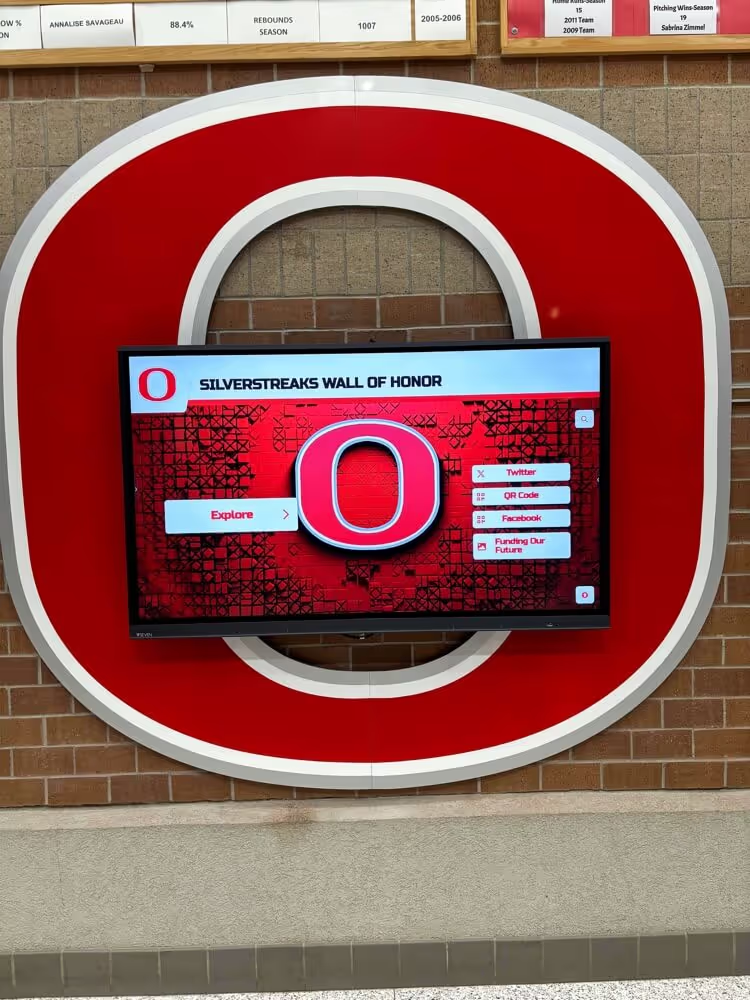
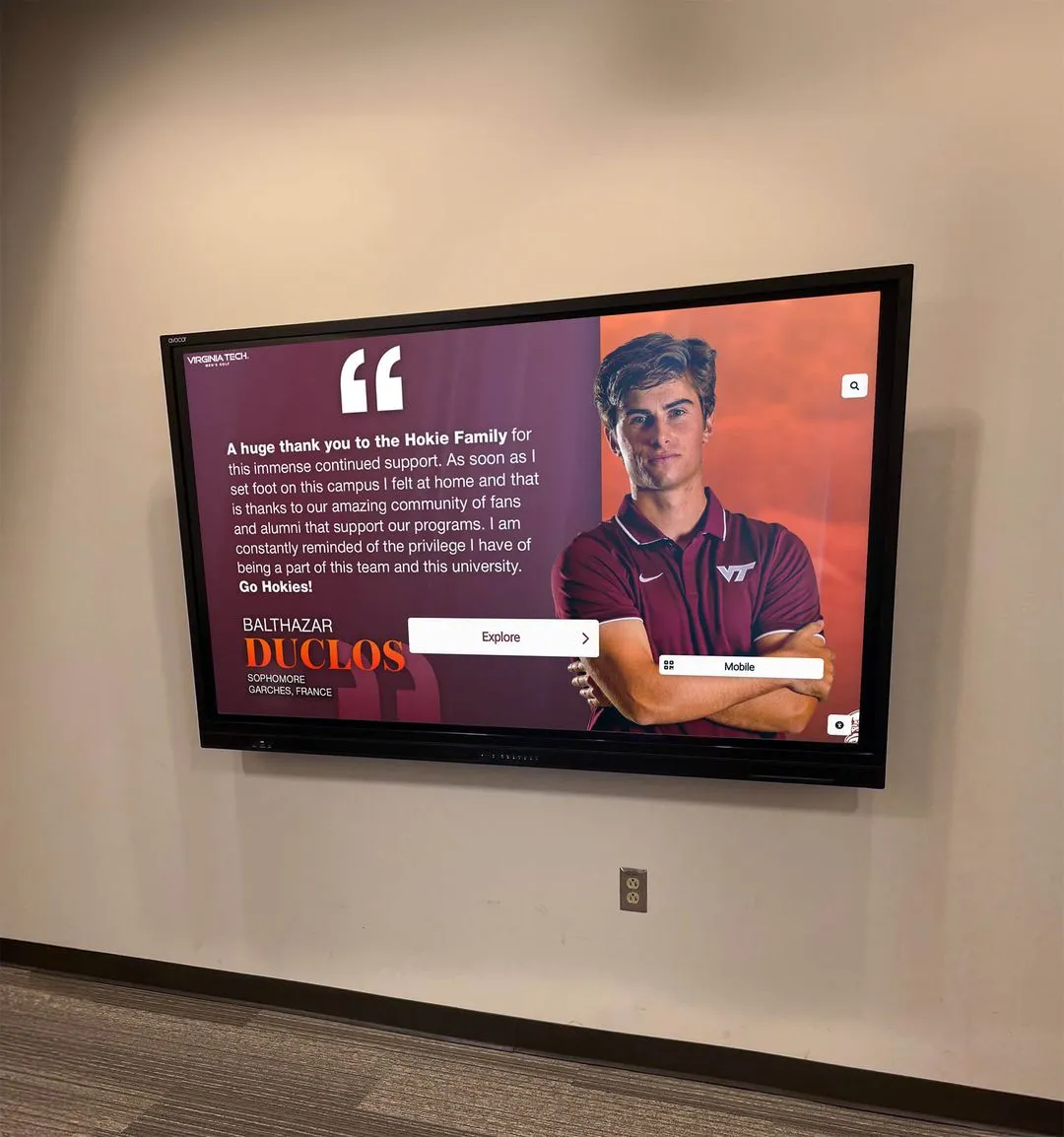
Hybrid displays that combine traditional shields with digital screens give evaluators a concrete, observable indicator of recognition infrastructure quality
Evaluation Scoring Rubric: Recognition Programs
| Score | Descriptor |
|---|---|
| 4 — Exemplary | Hall of fame active with documented criteria, multi-sport induction, and publicly accessible profiles on a digital display or school site |
| 3 — Proficient | Hall of fame exists; at least one induction ceremony conducted annually; most inductee information documented |
| 2 — Developing | Informal recognition without documented criteria or permanent display infrastructure |
| 1 — Needs Improvement | No hall of fame program; recognition limited to verbal announcements or temporary signage |
For context on how peer schools define and display academic and athletic honors, see how schools define and display student honors.
Section 2: Athletic Records and Documentation Criteria
A program’s record book is both a motivational tool for current athletes and a historical document for the institution. The evaluation form should assess whether the AD maintains accurate, visible, and updated records across all programs.
Record Board Accuracy and Visibility
- Are all-time and season records posted publicly—either on a physical record board, digital display, or dedicated page on the athletic website?
- Have records been verified against official game documentation within the past year?
- Do records include context (year set, athlete name, opponent or meet) rather than just the mark?
- Are records available for all sports—not only football and basketball?
Historical Archive Management
- Does the school maintain a searchable archive of past rosters, statistics, and championship results?
- Are physical archives (yearbooks, programs, press clippings) organized and accessible to staff and alumni?
- When records are broken or corrected, is the update process documented?
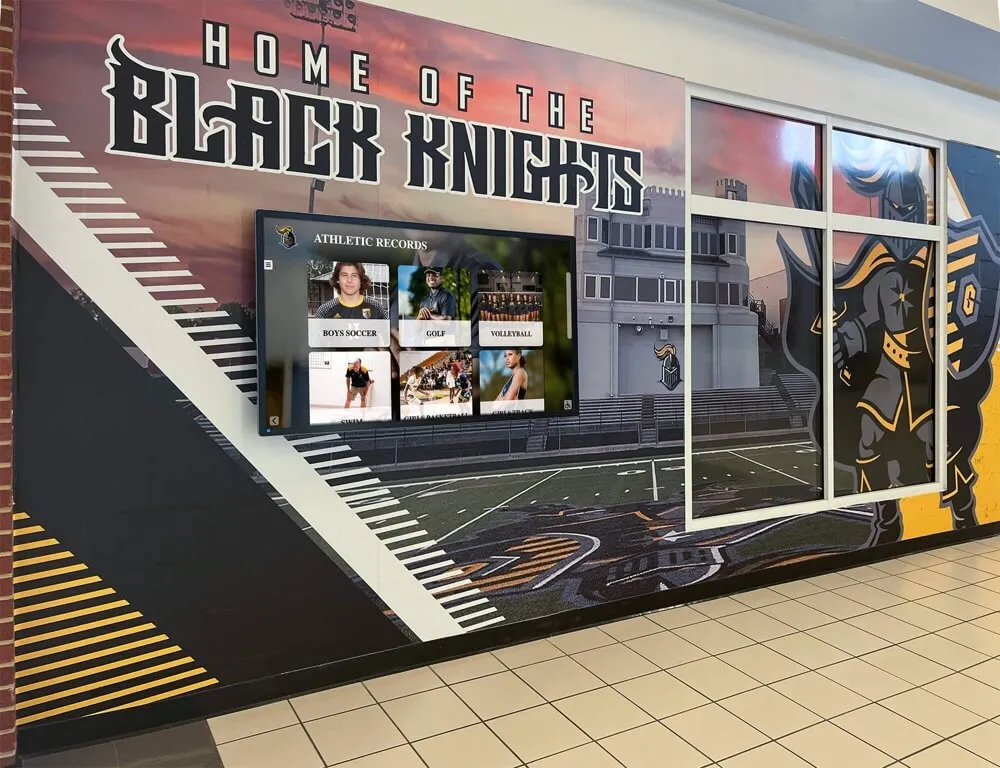
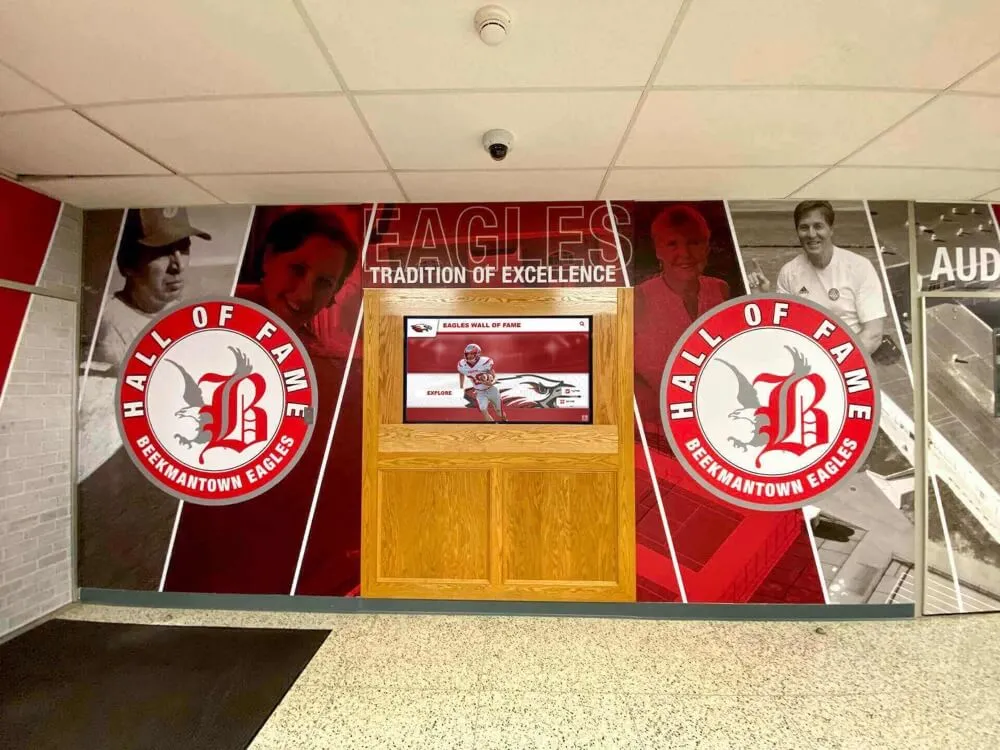
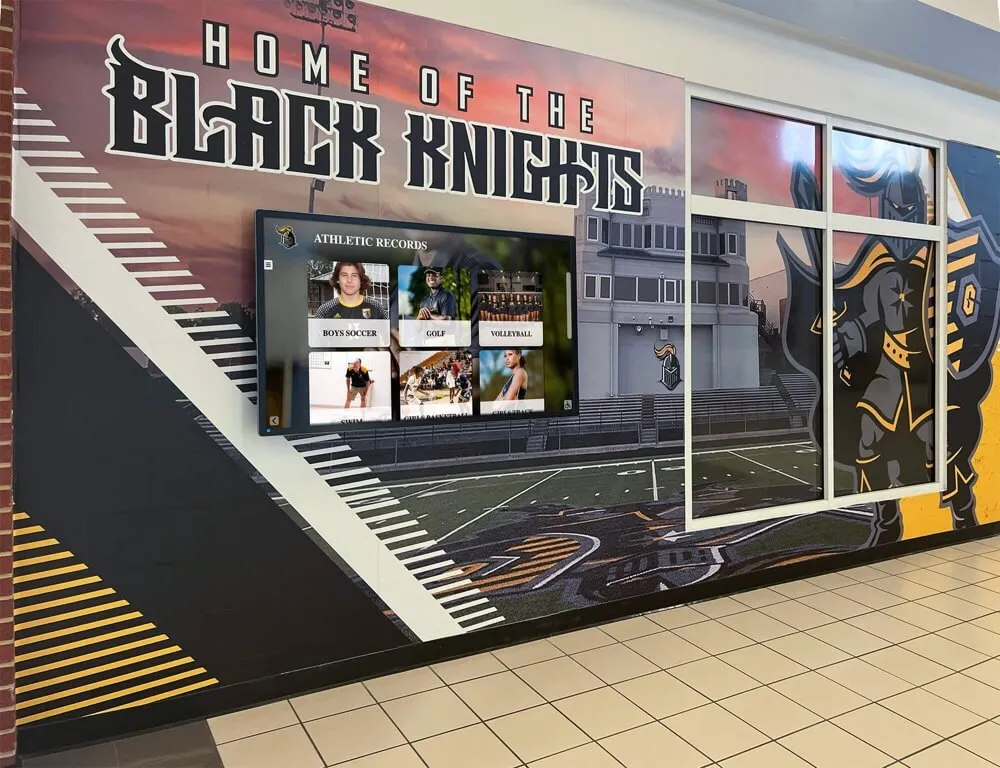
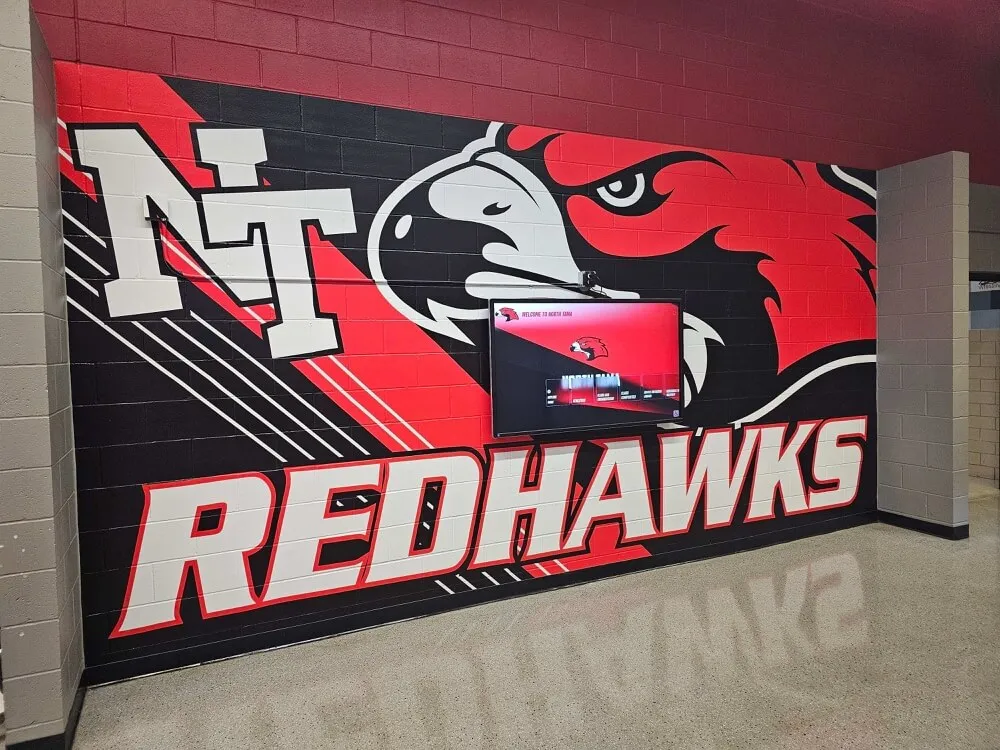
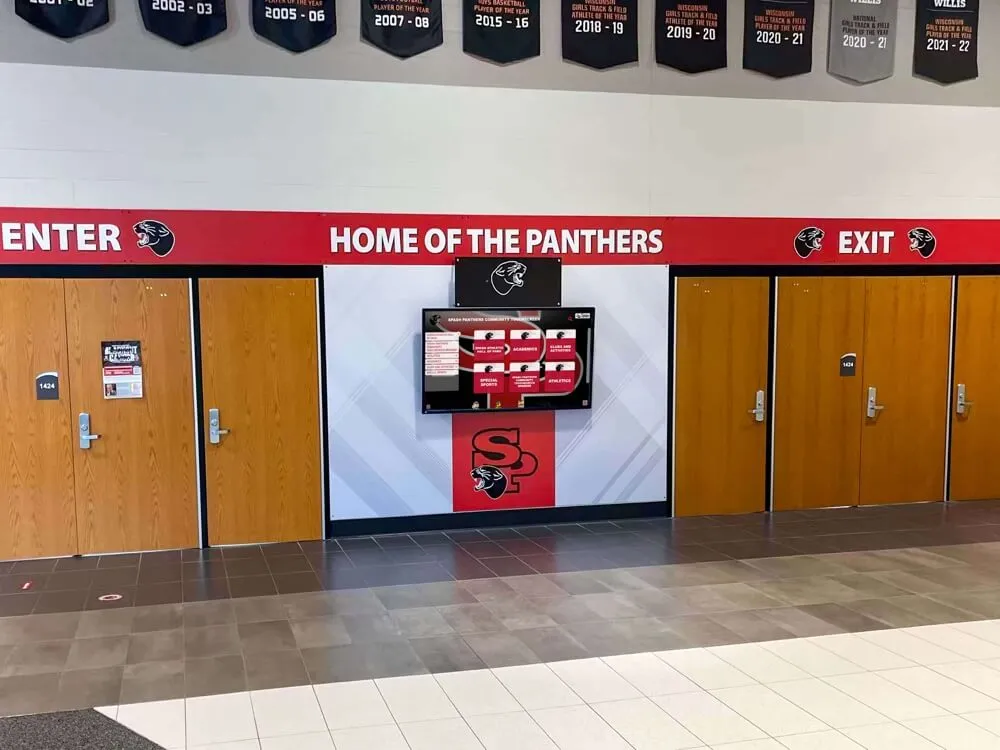
Record boards integrated into hallway murals make program history visible to every student, coach, and visitor who passes through—a concrete outcome to include on any evaluation form
Evaluation Scoring Rubric: Athletic Records
| Score | Descriptor |
|---|---|
| 4 — Exemplary | All-sport record boards updated within current season; historical archive organized and accessible; records include full context |
| 3 — Proficient | Record boards exist for major sports; updates occur at least annually; most records include athlete name and year |
| 2 — Developing | Record boards present but inconsistently updated; limited documentation for non-revenue sports |
| 1 — Needs Improvement | No formal record board or archive; records maintained only in informal spreadsheets or coaches’ memory |
Tools designed specifically for this purpose—such as those covered in best hall of fame tools for athletics, donors, and institutional history—make record board management sustainable without requiring dedicated staff time for every update.
Section 3: Sponsor and Donor Visibility Criteria
Athletic programs depend on sponsor revenue and donor relationships. The evaluation form should assess whether the AD has created and maintained visible, meaningful recognition for the supporters who fund facilities, equipment, and programming.
Sponsor Recognition on Displays and Signage
- Do sponsor logos appear on scoreboard signage, digital displays, printed programs, or facility murals?
- Are sponsor recognition commitments documented in signed agreements specifying placement, size, and duration?
- Is there a designated contact responsible for ensuring sponsor deliverables are fulfilled on schedule?
Donor Recognition Infrastructure
- Are major donors recognized in permanent displays—naming rights, donor walls, or digital recognition screens?
- Are donor records maintained in a database that supports reporting on giving history and recognition status?
- Has the AD collaborated with the development office or booster club to align recognition with fundraising asks?
Sponsor Renewal and Relationship Health
- What percentage of sponsors renewed their agreements from the prior year?
- Has the AD proactively communicated sponsorship impact data (attendance figures, display impressions, event reach) to current sponsors?
- Are there documented examples of sponsor recognition leading to renewed or upgraded commitments?
The criteria for academic achievement awards and recognition at the high school level illustrate how recognition specificity—not just generic acknowledgment—drives donor and sponsor engagement across program types.
Section 4: Community Engagement Criteria
Athletic programs that engage their broader communities generate more alumni giving, stronger fan attendance, and deeper institutional loyalty. This section of the evaluation form measures observable outcomes—not effort or intention.
Fan and Family Attendance
- Has average home game attendance increased, held steady, or declined across the past two seasons?
- Are attendance figures tracked systematically (not estimated) across sports?
- Have specific engagement initiatives—theme nights, alumni games, community recognition events—been implemented and documented?
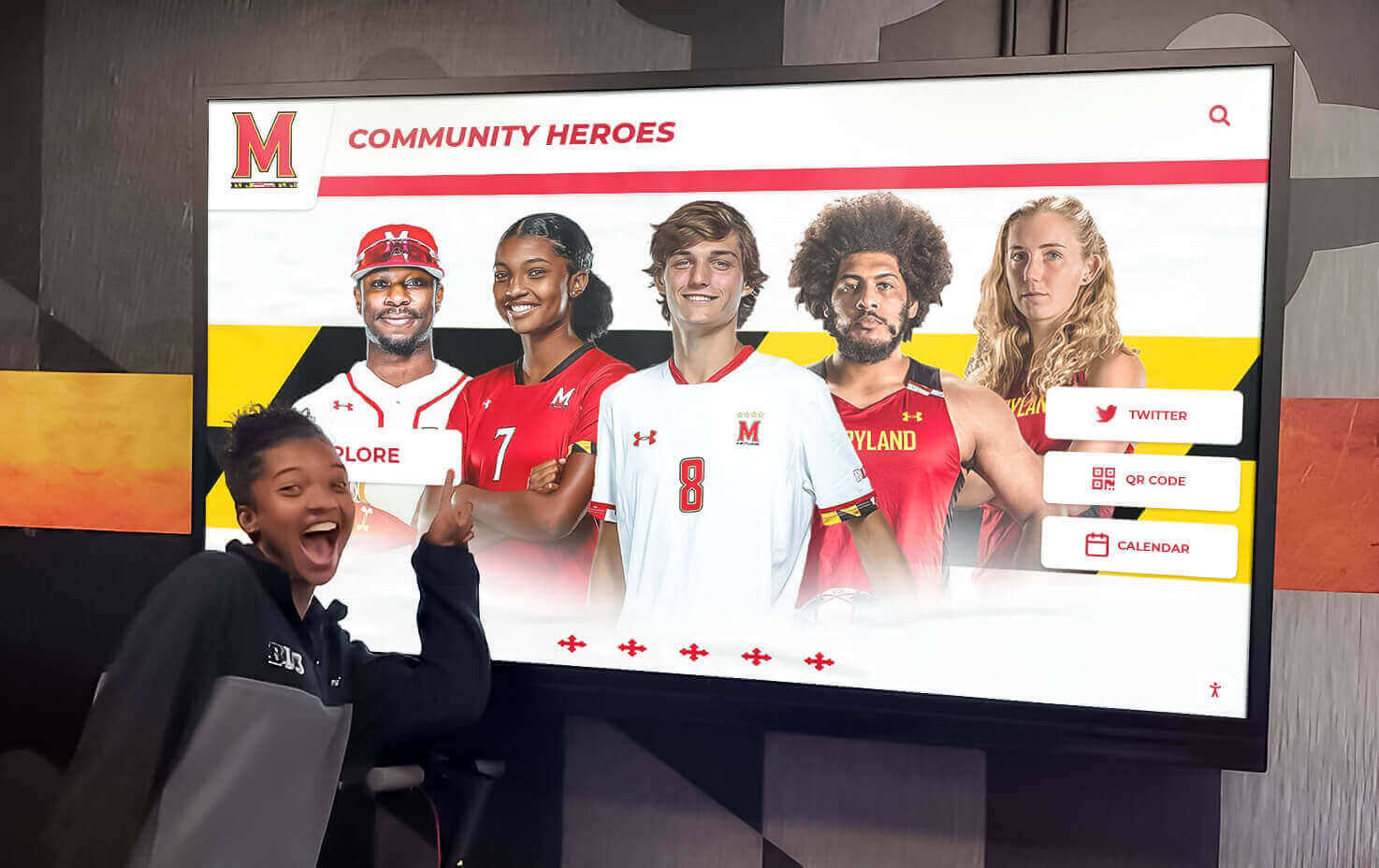
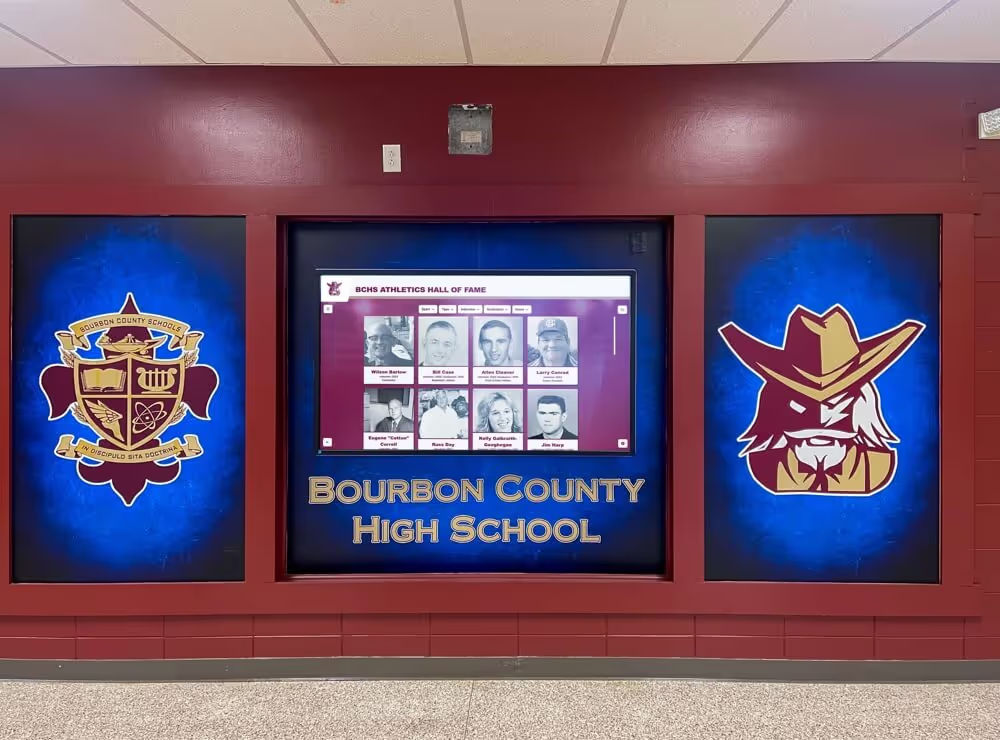
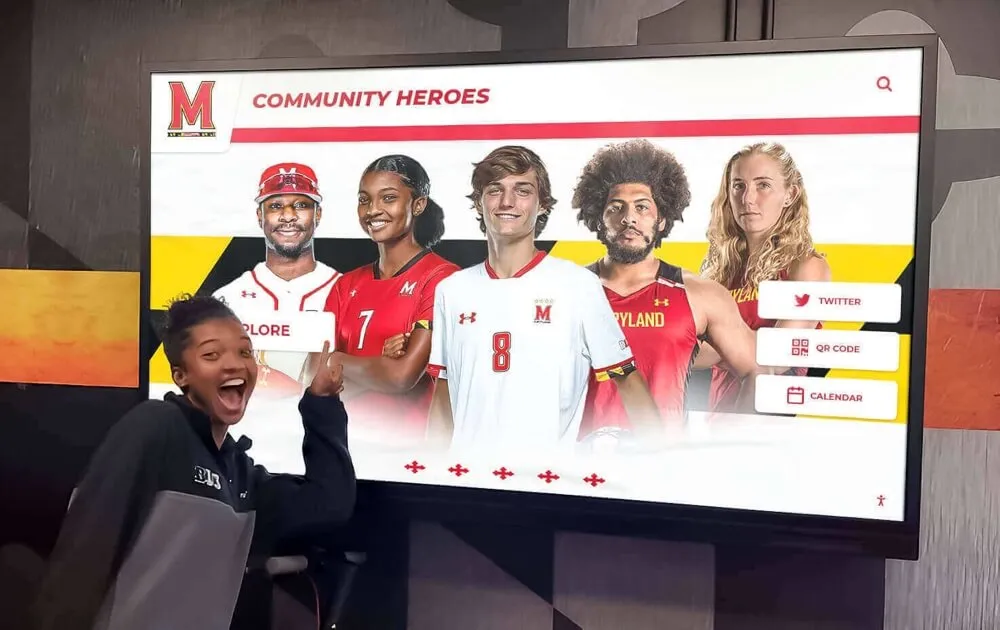
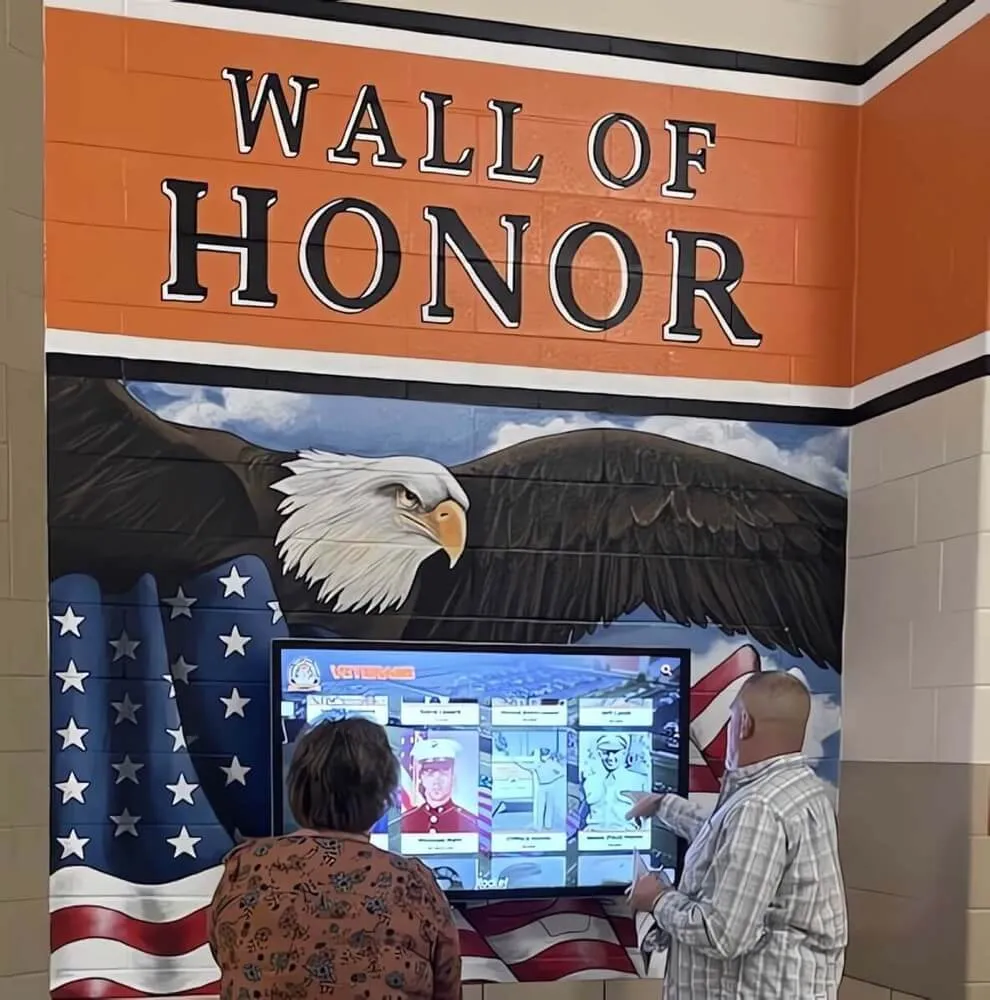
Community recognition displays that celebrate local heroes alongside athletes broaden the program's appeal and create engagement opportunities beyond game nights
Alumni Engagement Programs
- Does the athletic department maintain an active alumni contact list used for event invitations and newsletters?
- Have alumni been invited to participate in any recognition events (induction ceremonies, hall of fame celebrations, reunion activities) in the past year?
- Is alumni social media engagement tracked for athletic department posts?
For perspective on how peer programs approach alumni recognition across milestone events, see how schools recognize and showcase top scholar and athlete teams.
Community Outreach and Social Media
- Does the athletic department maintain active, updated social media channels (not just a team app)?
- Has the AD or communications staff published content highlighting recognition programs, record-breakers, and inductees—not only game scores?
- Are youth sports programs, community clinics, or partnership events part of the athletic department calendar?
Evaluation Scoring Rubric: Community Engagement
| Score | Descriptor |
|---|---|
| 4 — Exemplary | Documented attendance growth; active alumni program with tracked engagement; social media highlights recognition and program history, not just scores |
| 3 — Proficient | Engagement initiatives exist; alumni invited to at least one annual event; social media active with varied content |
| 2 — Developing | Engagement is reactive rather than planned; alumni contact list exists but rarely used; social media primarily game-day scores |
| 1 — Needs Improvement | No community engagement plan; alumni outreach absent; social media inactive or managed inconsistently |
Section 5: Technology and Display Infrastructure Criteria
Modern athletic programs use digital display technology to make recognition, records, and sponsor acknowledgment visible, updatable, and engaging. The evaluation form should assess whether the AD has deployed and maintained this infrastructure effectively.
Digital Display Deployment and Condition
- Are interactive or digital displays installed in high-traffic areas (lobbies, corridors, gymnasiums)?
- Are displays operational, current, and content-fresh—or showing outdated information?
- Has the AD developed a refresh cadence (weekly, monthly, seasonal) for display content?
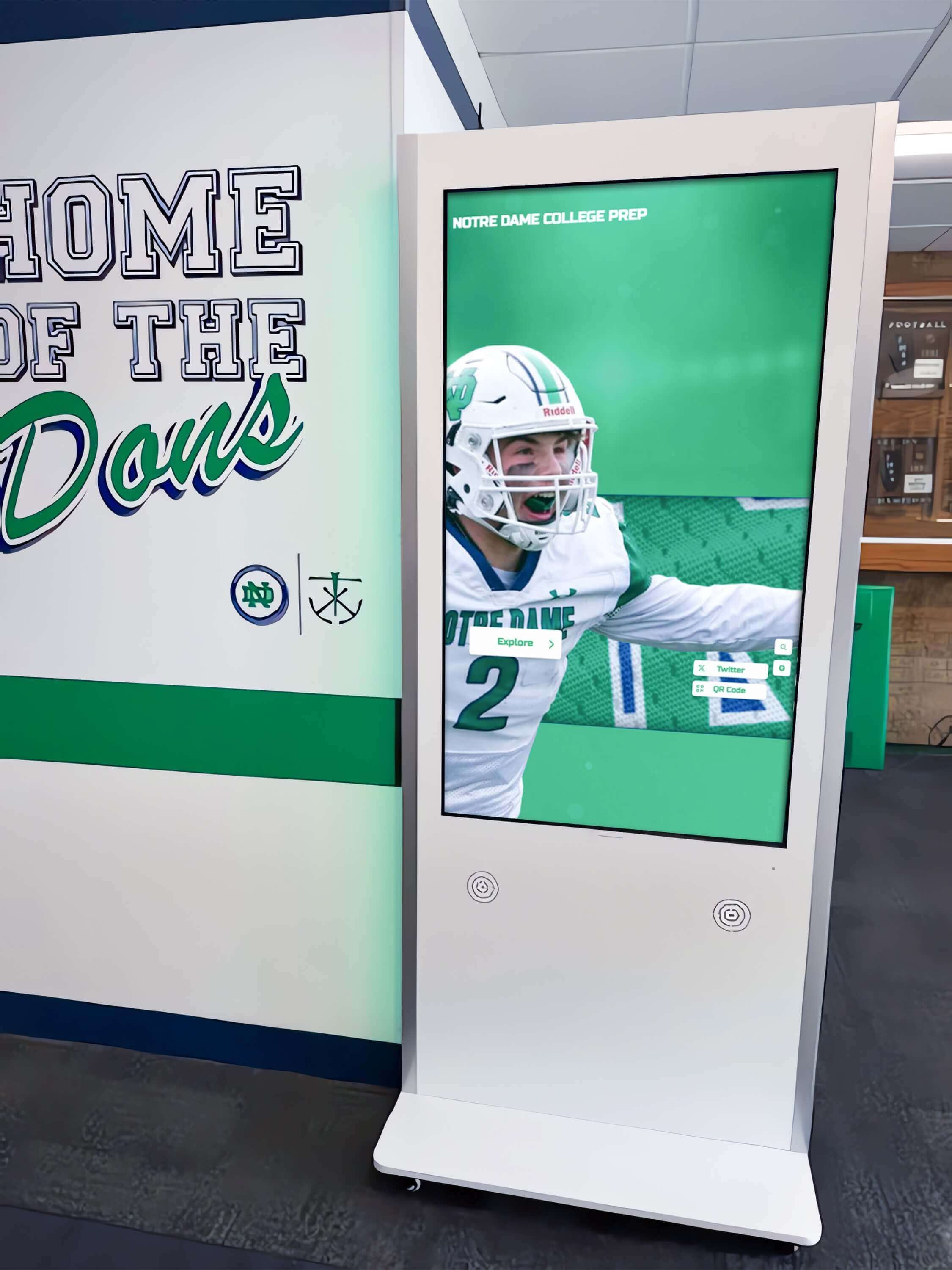
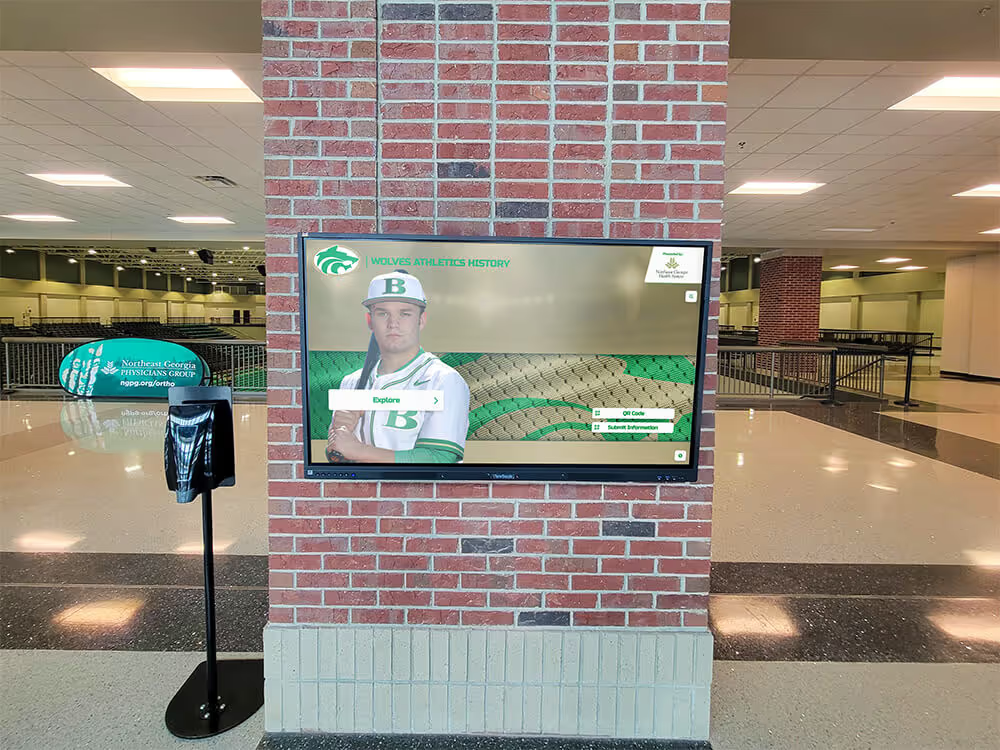
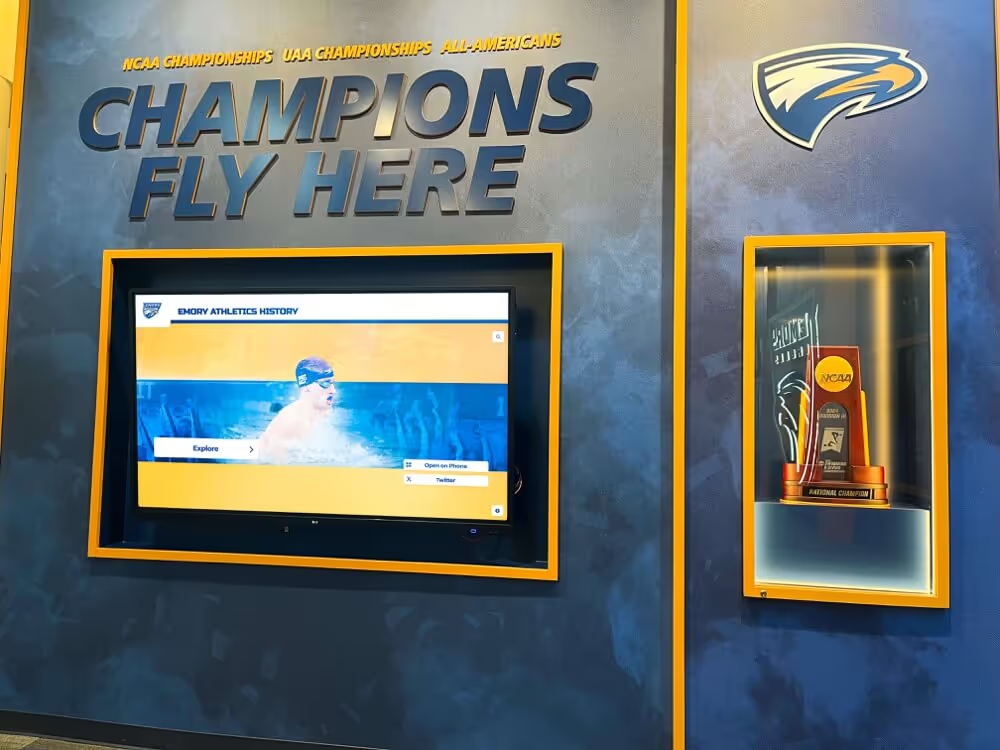
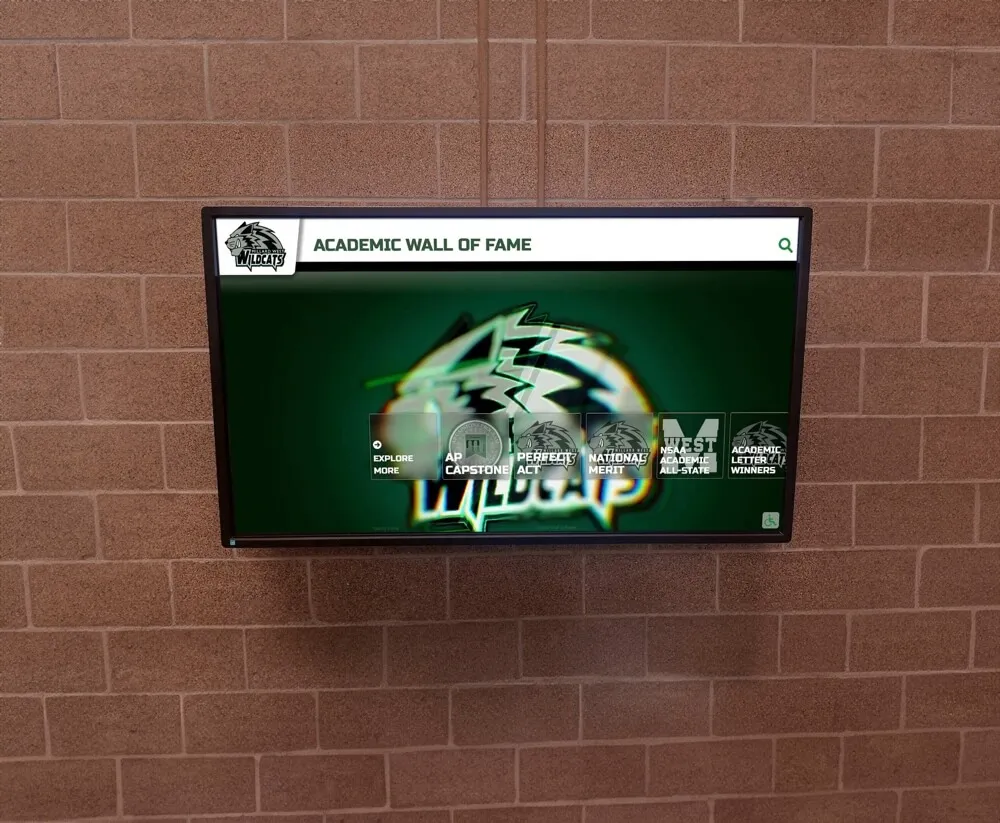
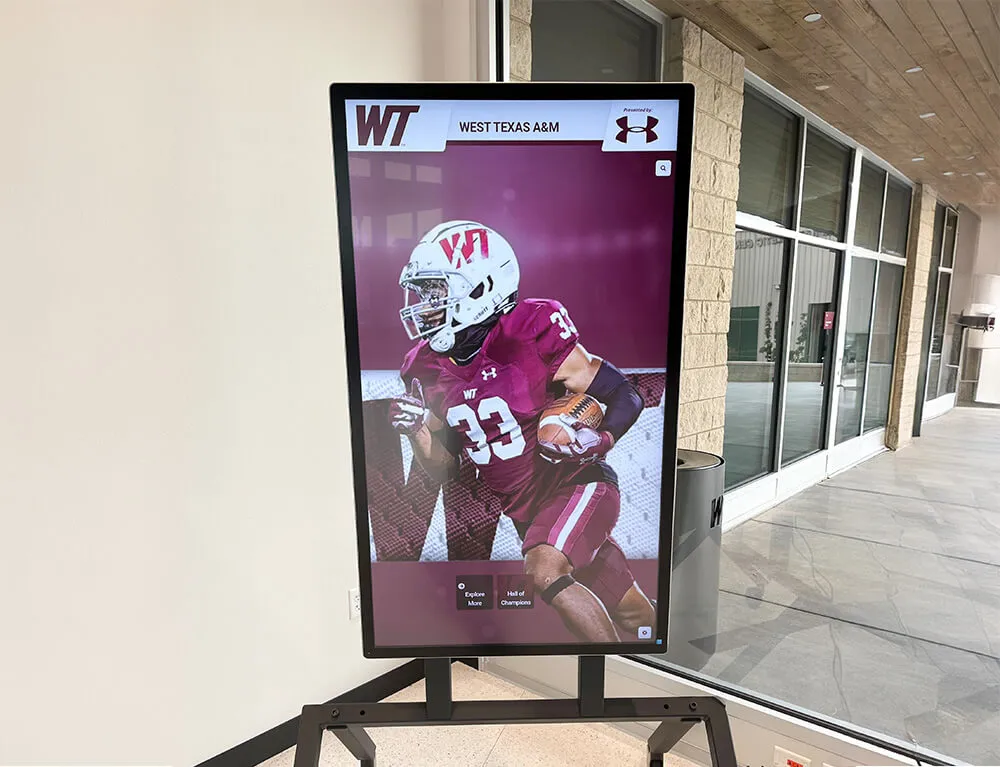
Interactive kiosks bring recognition content to life in a way static displays cannot—a distinguishing feature for programs that take long-term legacy seriously
Content Accuracy and Accessibility
- Are inductee profiles, records, and sponsor recognition content accurate and complete on all displays?
- Do displays meet ADA/WCAG 2.1 AA accessibility standards (contrast ratios, touch target sizes, wheelchair-accessible mounting heights)?
- Can content be updated remotely by administrative staff, or does every change require a vendor service call?
To understand what a typical day managing school digital displays looks like operationally, see a day in the life of school digital displays. The specifics help evaluators understand what “well-managed” looks like in practice.
Integration with Recognition and Records Systems
- Does the digital display platform pull from or integrate with the school’s recognition database, record book, or hall of fame nomination system?
- Are display updates tied to a documented workflow—so that new inductees, broken records, and new sponsors appear in displays within a defined timeframe?
For an overview of the tools available across these categories, the digital record board and hall of fame tool comparison covers a range of platforms at different price points and capability levels.
Complete Evaluation Criteria Checklist
Use this checklist during annual reviews or mid-year check-ins. Each item should be marked Completed, In Progress, or Not Started.
Recognition Programs
- Hall of fame nomination process documented in writing
- Induction ceremony conducted within the past 12 months
- Inductee profiles include photo, career stats, and biographical narrative
- Recognition available for all sports, both genders
- Awards ceremony records archived for future reference
Athletic Records and Documentation
- All-sport record boards updated within the current season
- Records include athlete name, year, and opponent or competition context
- Historical archive organized and accessible to staff
- Record correction process documented
- Non-revenue sport records given equal treatment
Sponsor and Donor Visibility
- Sponsor agreements on file with specific recognition deliverables listed
- Sponsor logos appearing correctly on all committed placements
- Donor recognition updated following major gift or naming commitment
- Sponsor renewal rate tracked and reported to administration
- Impact report or recap delivered to sponsors annually
Community Engagement
- Attendance data collected and tracked across sports
- At least one alumni engagement event per year
- Social media content includes recognition, records, and heritage (not only scores)
- Community outreach or clinic activity documented
- Youth partnership or pipeline program active
Technology and Display Infrastructure
- Digital displays operational and content-current
- Displays accessible per ADA standards
- Content refresh schedule in place
- New inductees and records appear on displays within defined timeframe
- Vendor or platform contact identified for support issues
How to Weight and Calibrate the Form for Your School
A standard 4-point rubric (Exemplary / Proficient / Developing / Needs Improvement) works well for most sections. Convert scores to percentages when combining sections with different weights.
For schools where fundraising is a strategic priority, increase the Sponsor & Donor Visibility section to 20% and reduce operational management to 15%. For programs focused on rebuilding alumni engagement, the Community Engagement section may warrant 25%.
Whatever the weights, document them in the form header before distributing to evaluators. Consistency across evaluators and across years is what makes the form useful as a longitudinal tool—not just an annual snapshot.
The youth sports awards and recognition ideas resource offers additional context on how recognition outcomes fit into broader program calendars, which can inform how administrators set annual benchmarks for these criteria.
Conclusion: Recognition, Records, and Engagement Are Measurable
The best athletic directors don’t just win games—they build programs. An athletic director evaluation form that measures recognition infrastructure, record book quality, sponsor visibility, and community engagement captures this dimension of the role in a way that win-loss records alone never can.
Structured evaluation criteria also make conversations easier. When recognition program scores are documented, administrators can point to specific gaps (“hall of fame profiles are incomplete for non-revenue sports”) rather than vague concerns about “culture” or “visibility.” That specificity benefits both the evaluator and the person being evaluated.
See How Recognition Technology Supports Athletic Director Evaluation Goals
Rocket Alumni Solutions helps schools build the recognition infrastructure that high-performing evaluation criteria actually measure—halls of fame, record boards, sponsor displays, and community-facing digital experiences, all manageable without specialized technical staff.
Book a DemoIf your current evaluation form doesn’t address whether your athletic director has built visible, accurate, and sustainable recognition programs—it may be measuring operational compliance while leaving program legacy entirely off the scorecard. Adding the criteria outlined here brings legacy into the conversation where it belongs.