



Every high school athletic program generates records that matter—the 100-meter dash time from 1987 that still stands, the single-season scoring mark set by a player who went on to a college scholarship, the softball pitcher whose strikeout record survived fifteen seasons of challengers. These numbers tell a school’s competitive history as clearly as any trophy or banner. But the athletic record book where those numbers live is often a three-ring binder in a filing cabinet, a PDF no one remembers to update, or a painted board in the gymnasium that shows its age every time someone adds a new name with a different marker.
Athletic directors across the country are rethinking how records should be kept, displayed, and shared. The answer isn’t simply switching from paper to spreadsheets—it’s building a living, searchable, visually engaging digital record system that serves athletes, coaches, alumni, and the broader school community for decades. This guide walks through why the traditional athletic record book falls short, what a modern digital record system should contain, and how purpose-built display technology transforms a static list of names and numbers into a source of genuine school pride.
Maintaining all-time athletic records is one of the most historically significant responsibilities an athletic director carries. When done well, the record book connects a sophomore sprinter setting her sights on a school record with the 1994 senior who first set it—creating continuity across generations that no season schedule or trophy case can replicate.

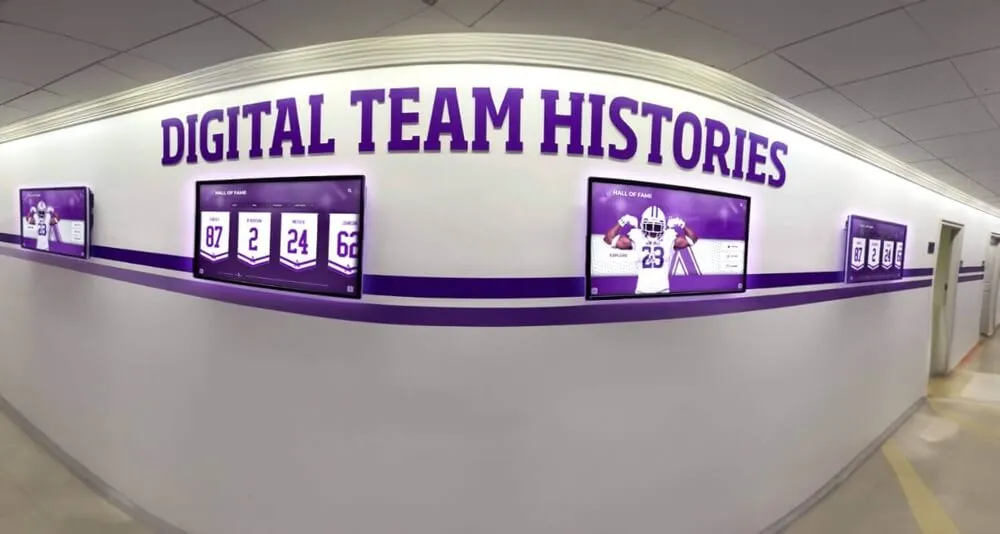
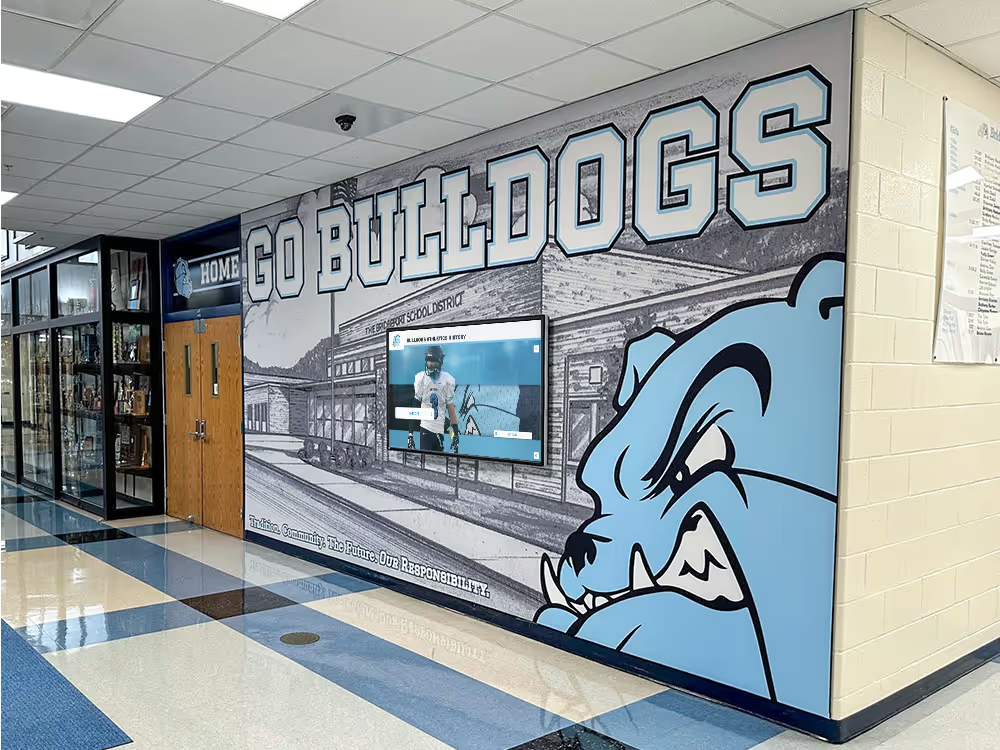
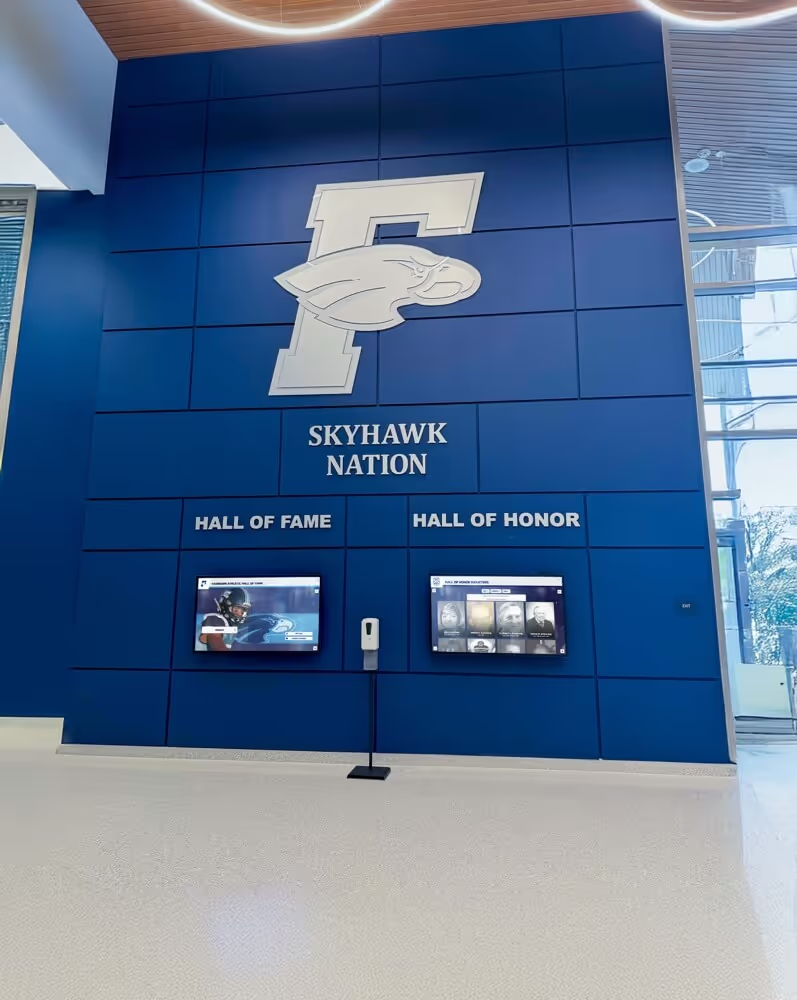
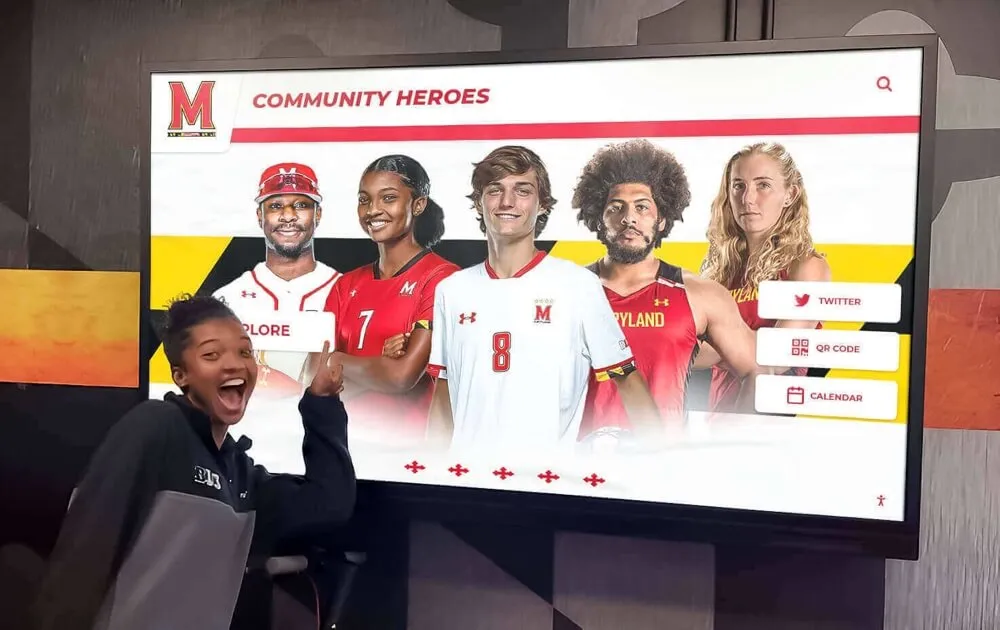
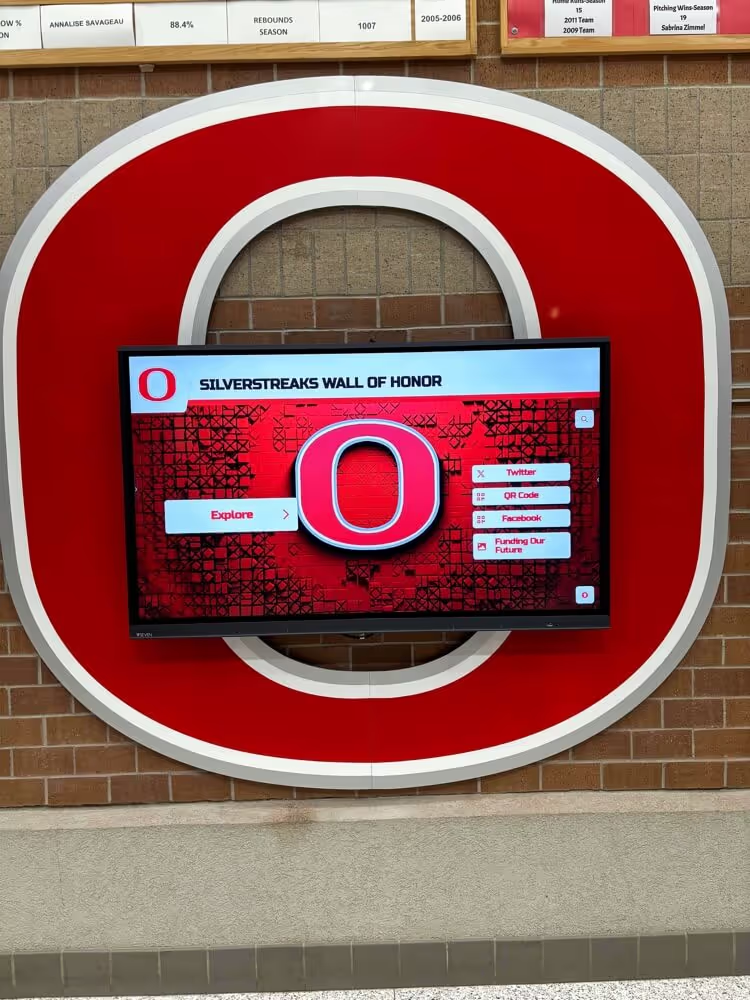
A well-maintained athletic honor wall in a school hallway anchors program history and gives current athletes visible goals to pursue
What an Athletic Record Book Represents for Your School
The athletic record book is more than a statistics archive—it is institutional memory encoded in performance. Records communicate what this program has achieved across its entire history, signaling to recruits that standards exist, to current athletes that benchmarks are real and beatable, and to alumni that what they accomplished still matters.
The Competitive and Cultural Value of All-Time Records
Schools with well-maintained record books enjoy several advantages over programs where records exist only in memory or incomplete files:
Aspirational Benchmarks for Current Athletes
When athletes can see exactly what they need to achieve to enter the record book, training goals become concrete. A sophomore wrestler who discovers that the school’s 152-pound pin record is reachable sets that target early. A distance runner preparing for cross-country season looks up the all-time top-ten times and adjusts her training paces accordingly. Visible, accurate records create a culture of aspiration that generic motivation posters never can.
Historical Continuity Across Coaching Changes
Athletic programs change coaches regularly. When records live only in a departing coach’s memory or on a hard drive that leaves with them, institutional continuity breaks. A properly maintained record book preserves program history regardless of staff transitions, ensuring new coaches arrive with context rather than starting from zero.
Recruiting and Community Visibility
Prospective athletes and their families research programs before committing. A school that can point to a living digital record book—searchable by sport, gender, and era—signals organizational sophistication and genuine respect for competitive achievement. Understanding how athletic hall of fame nomination criteria shapes these evaluation standards helps athletic directors align record-keeping with the criteria colleges and selection committees actually use.
What Belongs in a High School Athletic Record Book
Before any digitization effort can succeed, athletic directors need consensus on what the record book should contain. Most comprehensive programs track:
- Individual performance records by sport and event: fastest times, farthest throws, highest scores, most career points
- Season records: single-season scoring leaders, batting averages, shooting percentages
- Career records: multi-year totals across all competitive seasons
- Team records: best season records, longest winning streaks, lowest points allowed
- Milestone achievements: 1,000-point scorers, all-state selections, district and regional champions
- Championship history: conference titles, district banners, state playoff appearances
The scope should be decided before implementation so the system is built to hold everything from day one rather than requiring constant structural revision.
The Hidden Costs of Traditional Print Record Books
Most high schools still manage athletic records through one of three legacy methods: printed binders updated manually, painted gymnasium boards, or static PDFs maintained by the athletic department. Each approach carries costs that accumulate invisibly over years.

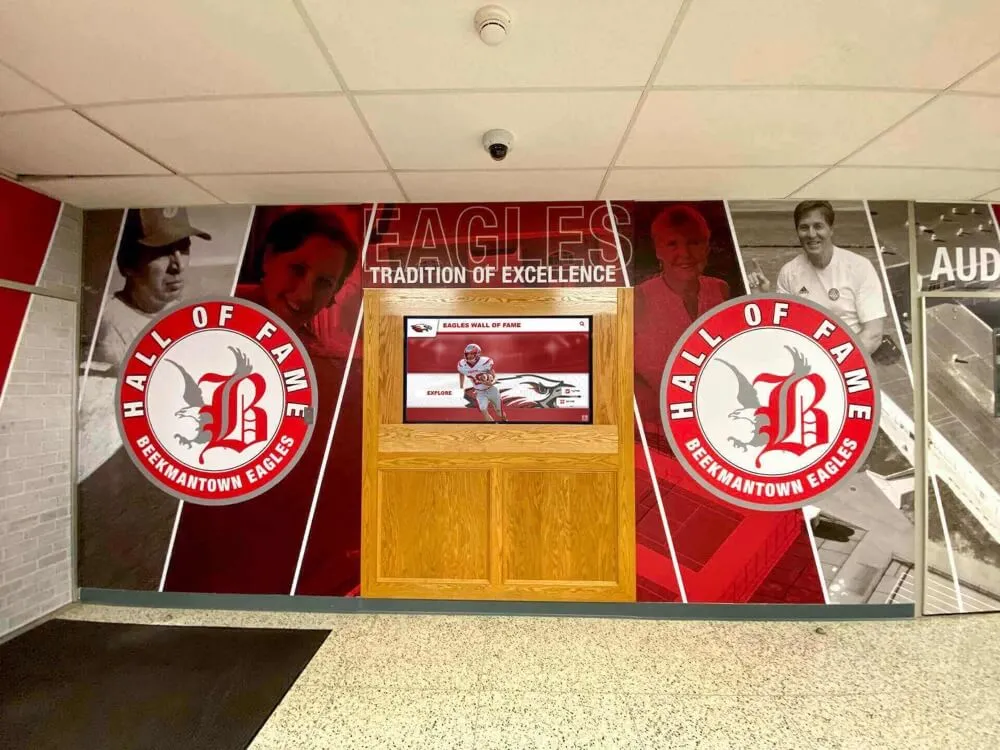
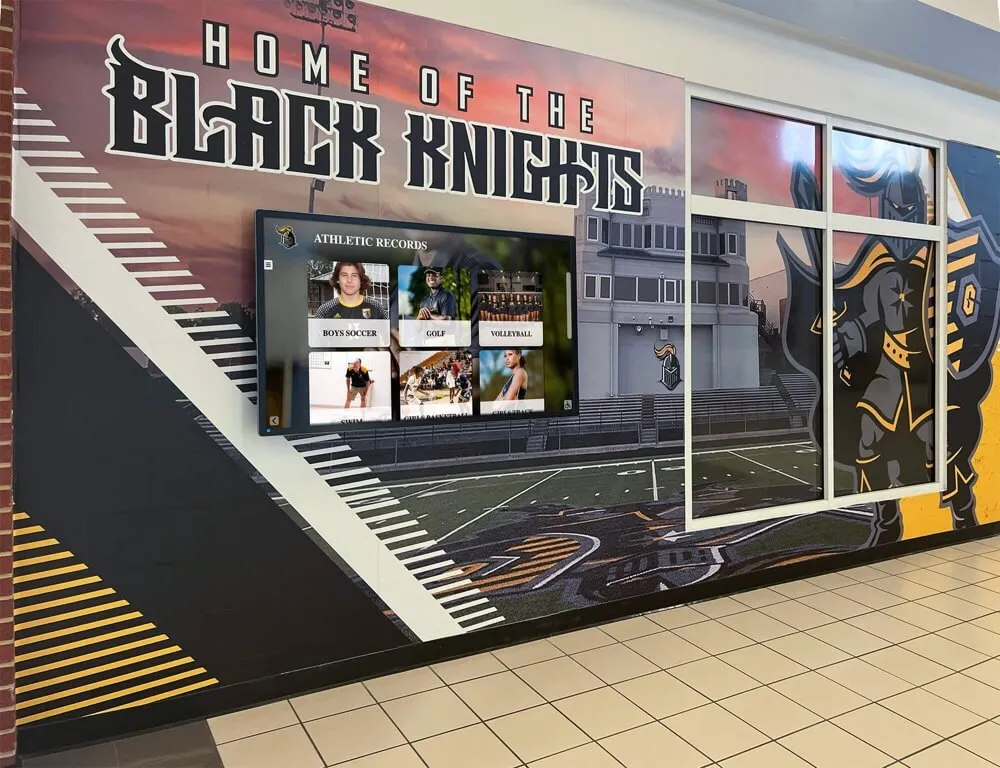
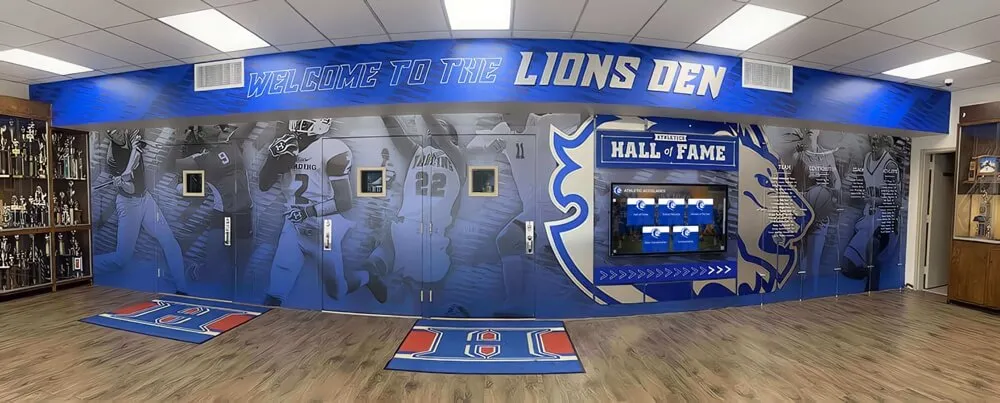
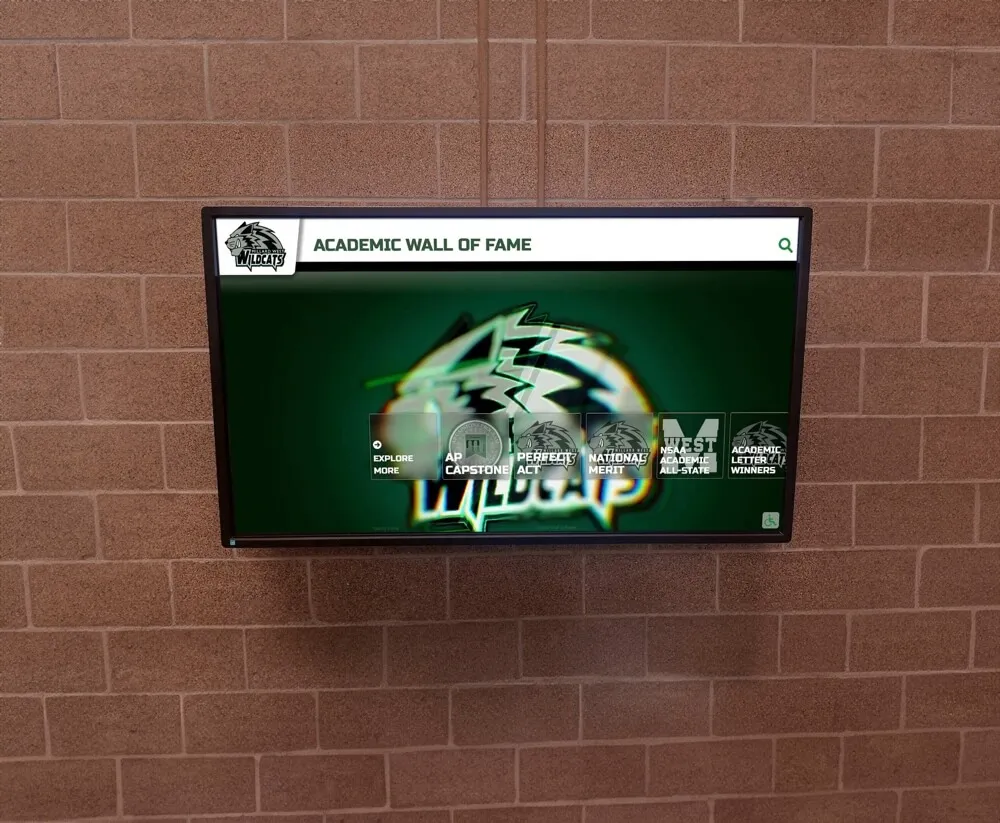
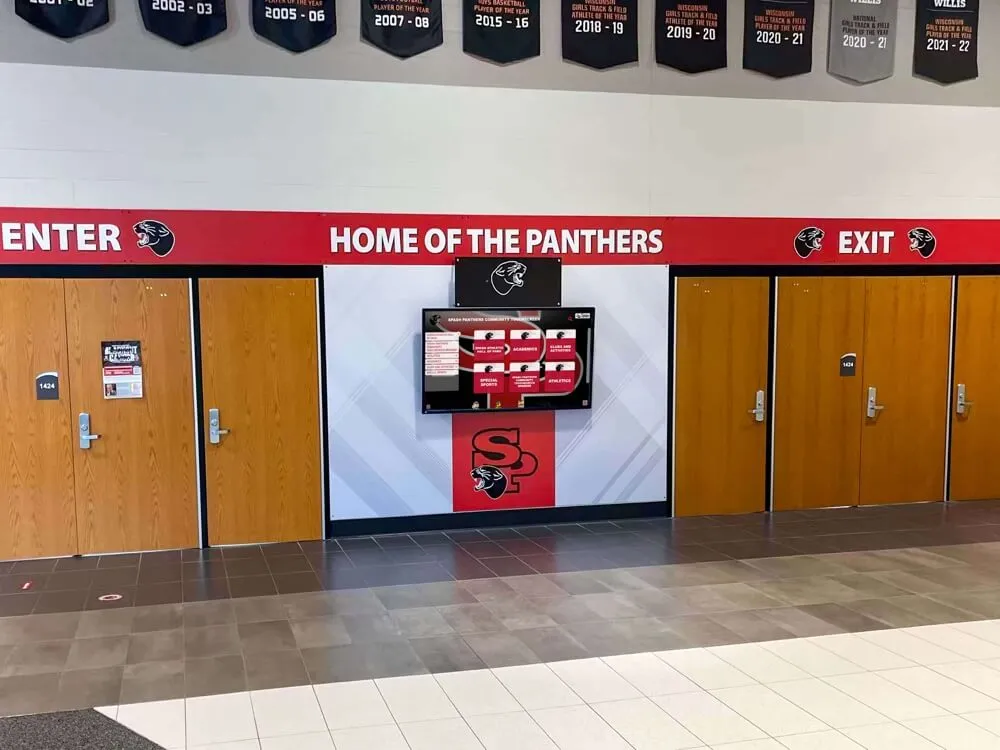
Digital record displays integrated into school hallways give all-time stats constant visibility alongside program identity
The Update Problem
Print record books require someone to take action every time a record falls. During a busy competitive season, that action often gets deferred—which means the record book quietly becomes inaccurate. When the spring track season produces four new school records, updating a painted gymnasium board requires scheduling a painter, matching paint colors, and hoping no one notices the weeks-long gap. Updating a printed binder requires locating the master document, making the change, reprinting affected pages, and filing them.
The result is record books that are consistently behind reality, which erodes trust in the data. Athletes who suspect the records aren’t current stop caring about them.
The Discoverability Problem
A record book in a filing cabinet serves no one. A PDF on a shared drive is accessible only to people who know it exists and have permission to open it. Painted boards in one gymnasium are invisible to athletes who train in other facilities, to alumni who never return to campus, and to parents following their student’s progress from home.
Print records are institutionally siloed. Only people physically present can access them, which dramatically limits their motivational and cultural impact.
The Completeness Problem
When records live across multiple formats—some in binders, some on painted boards, some in coaches’ spreadsheets, some in athletic office filing cabinets—gaps are inevitable. Women’s sports records from the 1970s and 1980s are disproportionately underrepresented in most school archives simply because systematic tracking didn’t exist. Coaching transitions create discontinuities. Technology upgrades cause data to be abandoned in obsolete formats.
A fragmented record book is not just incomplete—it actively misrepresents program history by amplifying whichever era happened to keep better records.
The Engagement Problem
Traditional record books are passive. They display information but create no experience around it. A student walking past a painted gymnasium board absorbs numbers without context: who was the person who set that record, what season did it happen, what did the team accomplish that year? Print formats cannot answer those questions, which means they fail to convert data into stories that generate pride and motivation.
Common Signs a Record Book System Needs Modernization
- Records haven’t been updated in more than one season
- Athletic director cannot confirm whether current records are accurate
- No digital backup exists for painted or printed records
- Records from women’s or minority sports are sparse or missing
- Alumni regularly contact the school to correct their records
- New athletes cannot find or access records without staff assistance
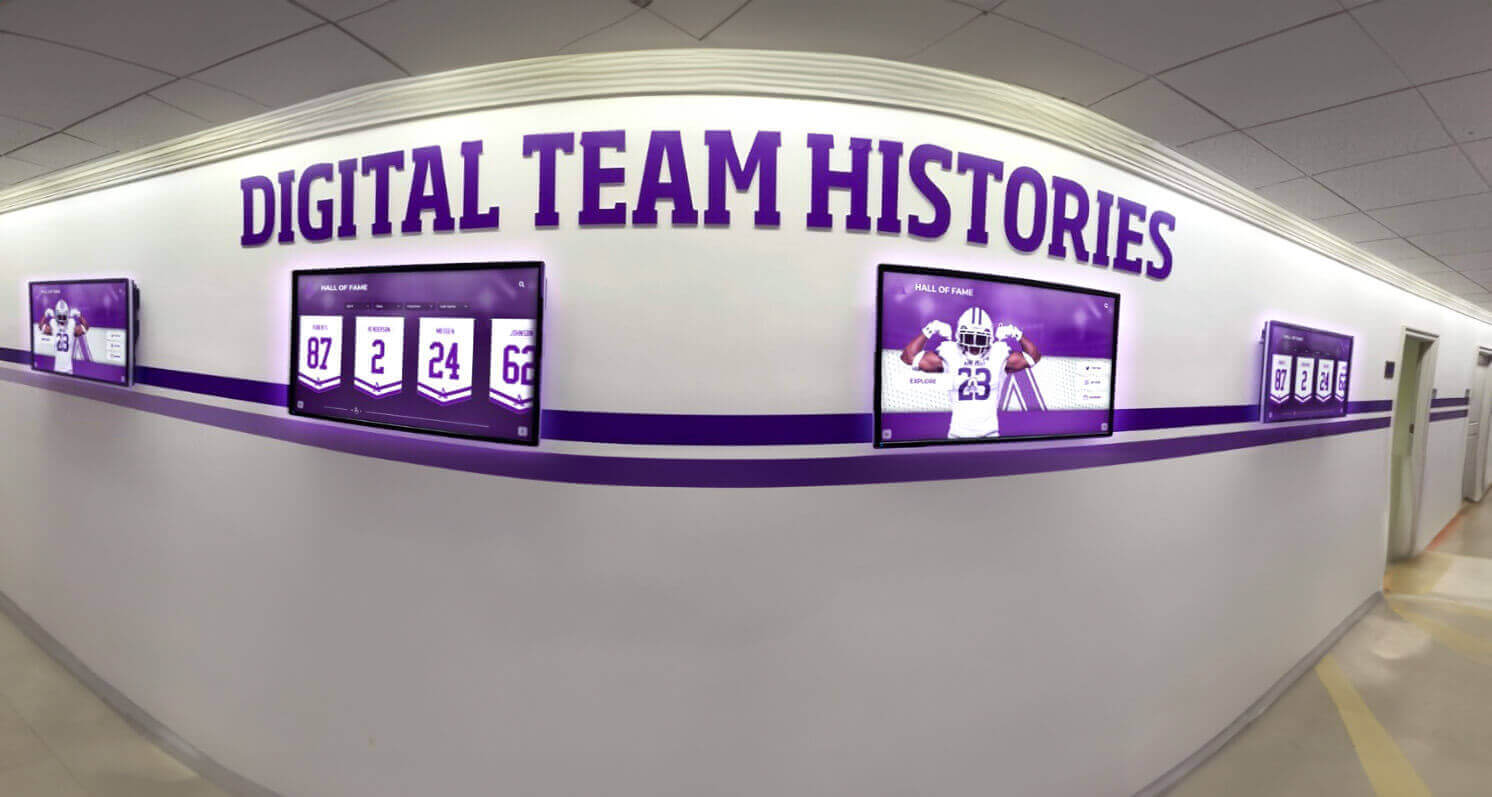
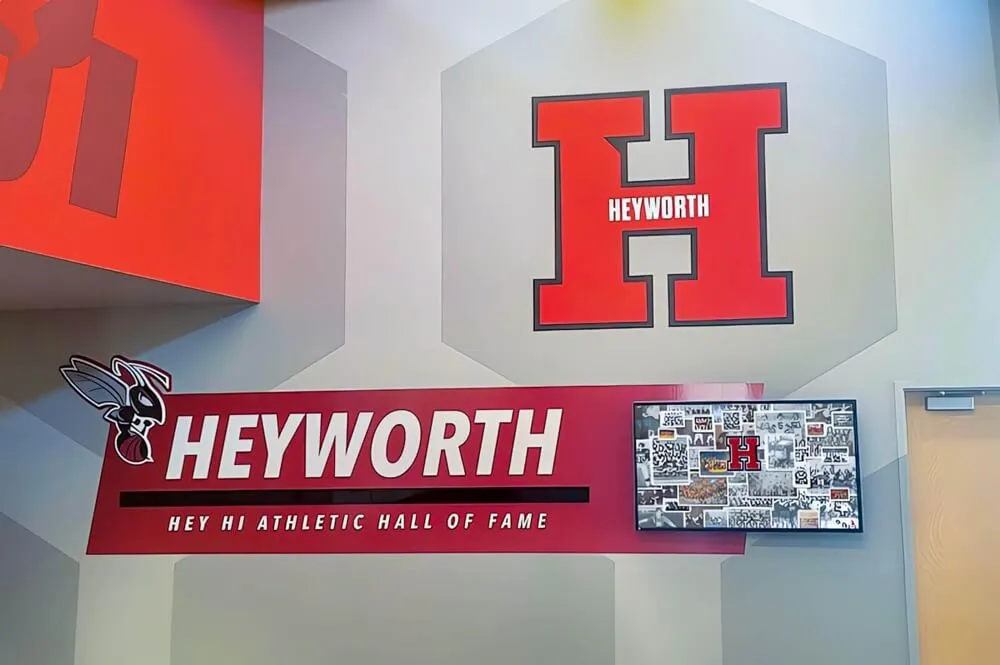
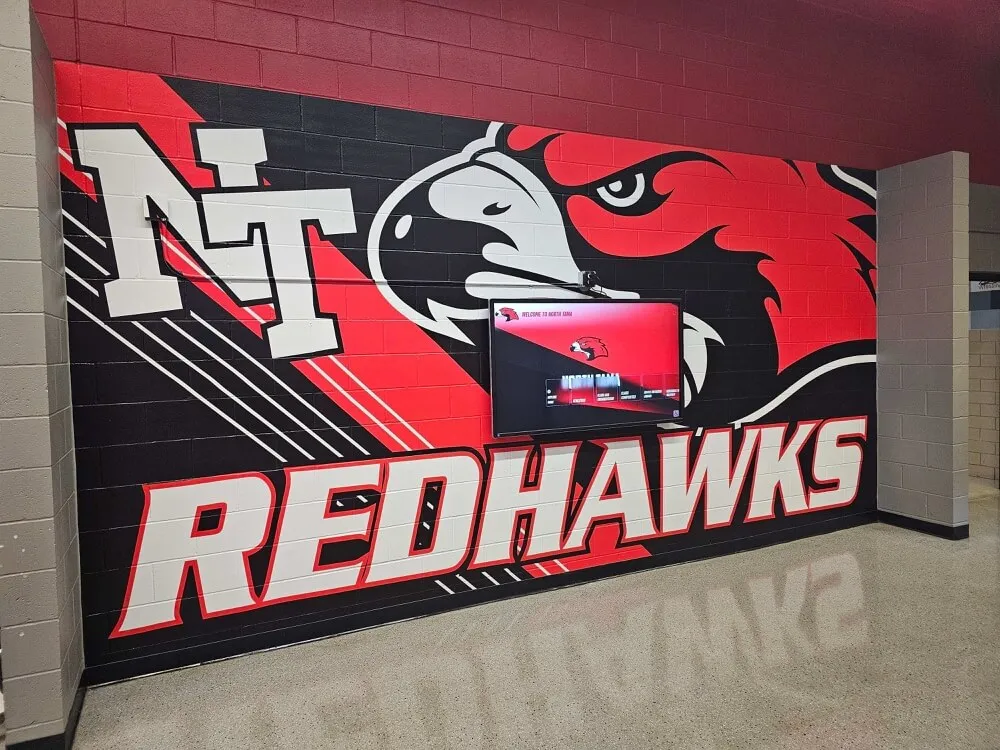
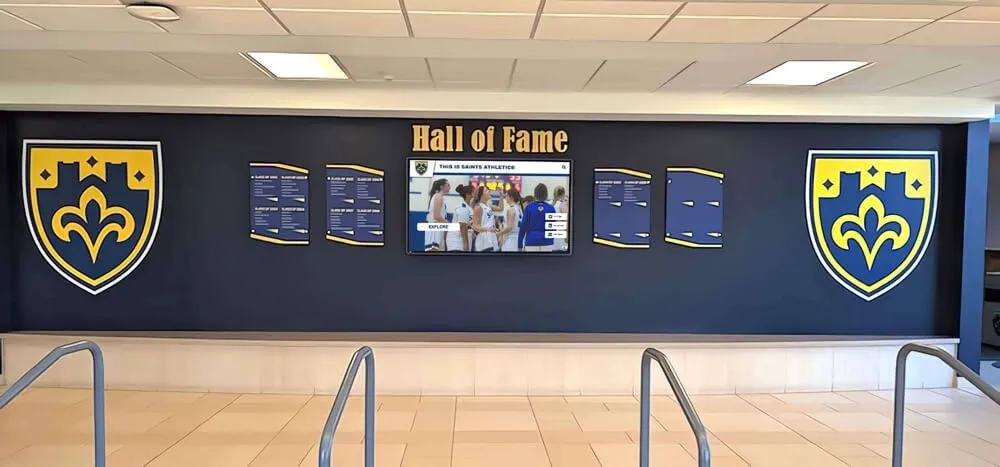
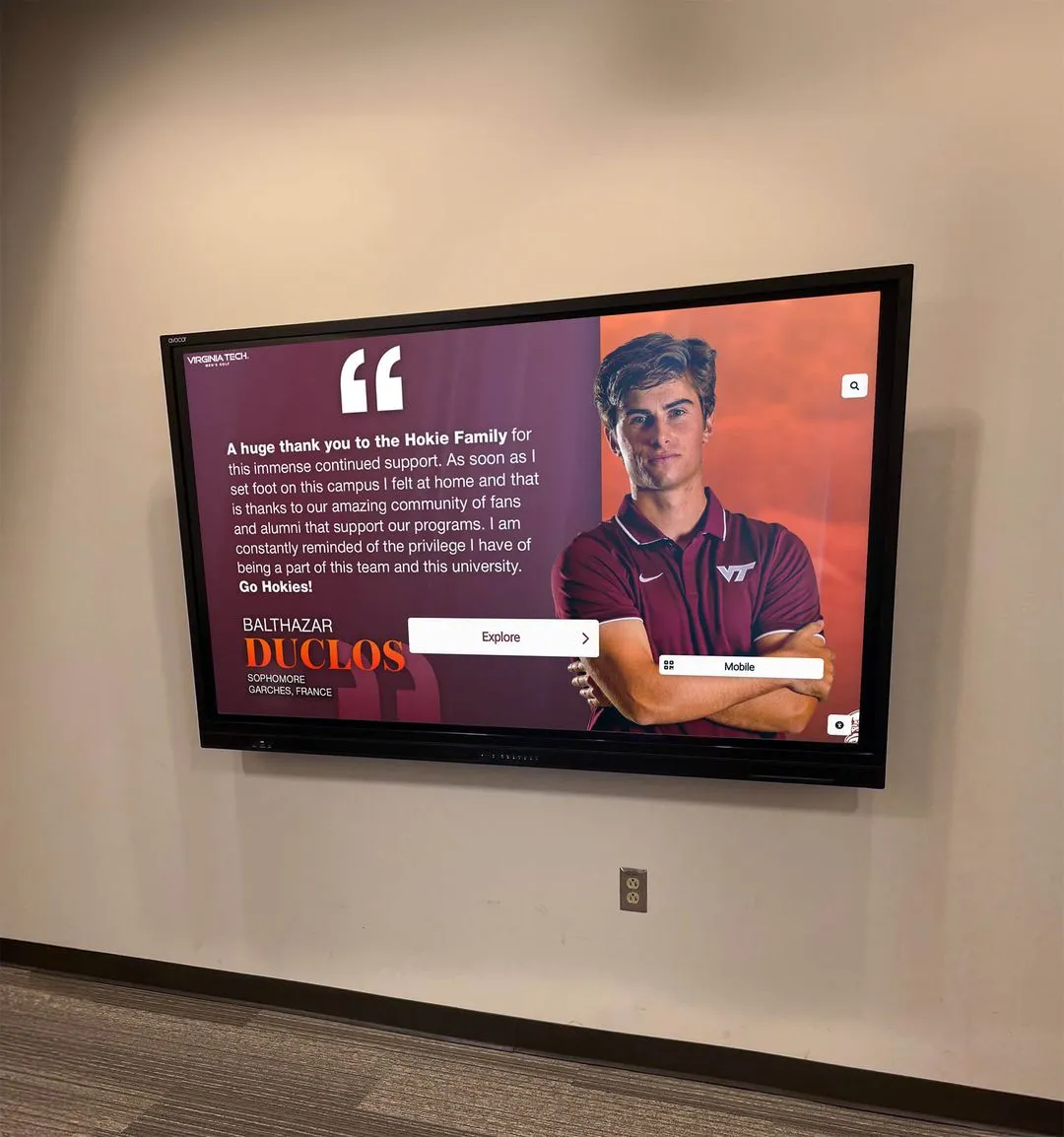
Digital displays bring team histories to life with photos, records, and context that paint-on-wall boards cannot replicate
Building a Digital Athletic Record Book: Core Categories
A well-designed digital record system organizes information into clear, searchable categories. This structure makes updates simple, ensures nothing gets lost, and allows athletes and visitors to explore the record book intuitively.
Individual Performance Records by Sport
Individual records are the backbone of the athletic record book. For each sport, the system should maintain:
Track and Field / Cross Country Event-specific records for every distance and field event, separated by gender. Include athlete name, class year, performance date, and the meet where the record was set. Time-stamped records allow the system to calculate how long each record has stood—a detail that adds meaningful context for current athletes considering whether a challenge is realistic.
Swimming and Diving Individual event records for all competitive strokes and distances. Pool records differ from school records when programs compete in multiple facilities, so the system should allow for that distinction.
Team Sports Career and season records for position-specific statistics: points per game, career assists, batting average, fielding percentage, goals against average. Career records require the system to aggregate statistics across multiple seasons, which is why spreadsheets often fail—manual aggregation introduces errors that compound over time.
Strength and Power Sports Wrestling, powerlifting, and gymnastics require weight-class or event-specific records that don’t translate into simple individual leaderboards. A good digital system handles this complexity natively rather than requiring workarounds.
Team Achievement Records
Beyond individual performance, the record book should document team-level milestones:
- All-time season records (wins/losses/ties) by sport
- Consecutive game winning streaks
- Points scored in a single game
- Championships and tournament placements by year
- Conference records going back to the school’s founding
The sport end-of-year awards guide demonstrates how schools connect end-of-season recognition with permanent record documentation, ensuring awards reflect record-book accuracy rather than informal recollection.
Historical Milestone Sections
Certain achievements deserve dedicated sections beyond raw statistics:
1,000-Point Club and Similar Milestones Career scoring milestones in basketball, soccer, lacrosse, and other counting-stat sports create natural membership clubs that generate excitement when athletes approach thresholds. A digital record book can flag athletes who are close to milestones, creating anticipation for both the athlete and the school community.
All-State and All-Conference Honorees Yearly lists of athletes who received post-season recognition from state athletic associations and conference bodies. These lists are often the most searched sections of an athletic record book by alumni and recruiters.
College Signees Annual tracking of athletes who signed National Letters of Intent or committed to college programs. This section demonstrates the recruiting pipeline a program has historically produced—valuable for prospective athletes evaluating the program’s ability to develop college-level talent. Schools researching recruitment outcomes find that tracking Division 2 athletic scholarships alongside program records gives recruits a clearer picture of the development trajectory a school offers.
Key Features of Modern Digital Record-Tracking Systems
Not all digital solutions are created equal. Athletic directors evaluating platforms should look for specific capabilities that determine whether the system will actually work in practice over the long term.
Real-Time Update Infrastructure
The most critical feature is the ability to update records immediately after they are broken. Systems that require IT involvement or multi-step approval workflows will fall behind during competitive seasons when records fall frequently. Look for:
- Web-based content management accessible from any browser
- Role-based permissions allowing coaches to submit record updates that an administrator approves before publishing
- Bulk import capability for loading historical data from spreadsheets
- Automated notifications when a record is broken based on submitted performance data
Search and Filter Functionality
A digital record book should be searchable by athlete name, sport, year, gender, and event. The ability to filter by decade allows alumni to find their era without scrolling through decades of data. Search functionality transforms the record book from a display into a resource.
Media Attachment Support
Every record entry should support photo attachment—a headshot of the record holder, an action photo from the performance, or a team photo from the championship season. Video clip attachment capabilities allow schools to link game footage to significant records, creating storytelling that raw statistics cannot achieve alone. The principles behind digital interactive museum displays apply directly to athletic record books—when historical data includes multimedia context, viewer engagement increases significantly.
Export and Reporting Tools
Athletic directors need to generate reports for annual publications, board meetings, award ceremonies, and media guides. Export capability to PDF, CSV, and print-ready formats means the digital record book becomes the master source of truth rather than one of several competing data sources.
Multi-Device Accessibility
Records should be accessible from gymnasium displays, office computers, athlete smartphones, and alumni laptops equally. Responsive design ensures the record book works on any screen size without a separate mobile version that gets out of sync with the primary database.
How Touchscreen Displays Transform Athletic Record Books
A digital database solves the accuracy and completeness problems of print record books. But touchscreen displays solve the engagement and visibility problems—bringing the record book out of the filing cabinet and into the physical environment where athletes, fans, and visitors actually spend time.

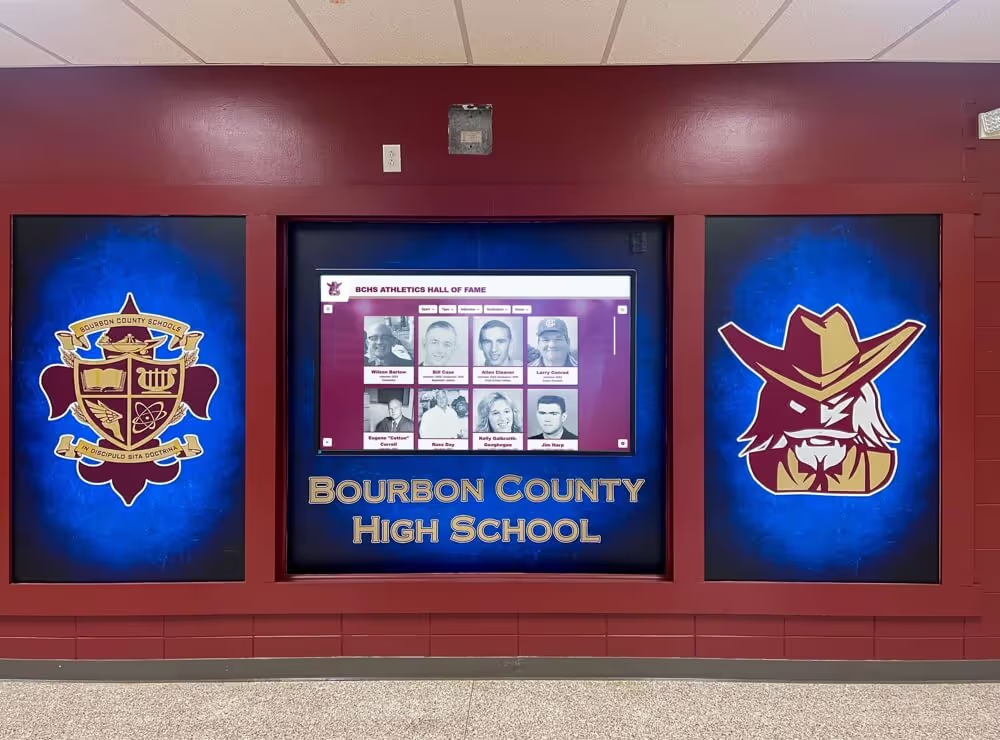
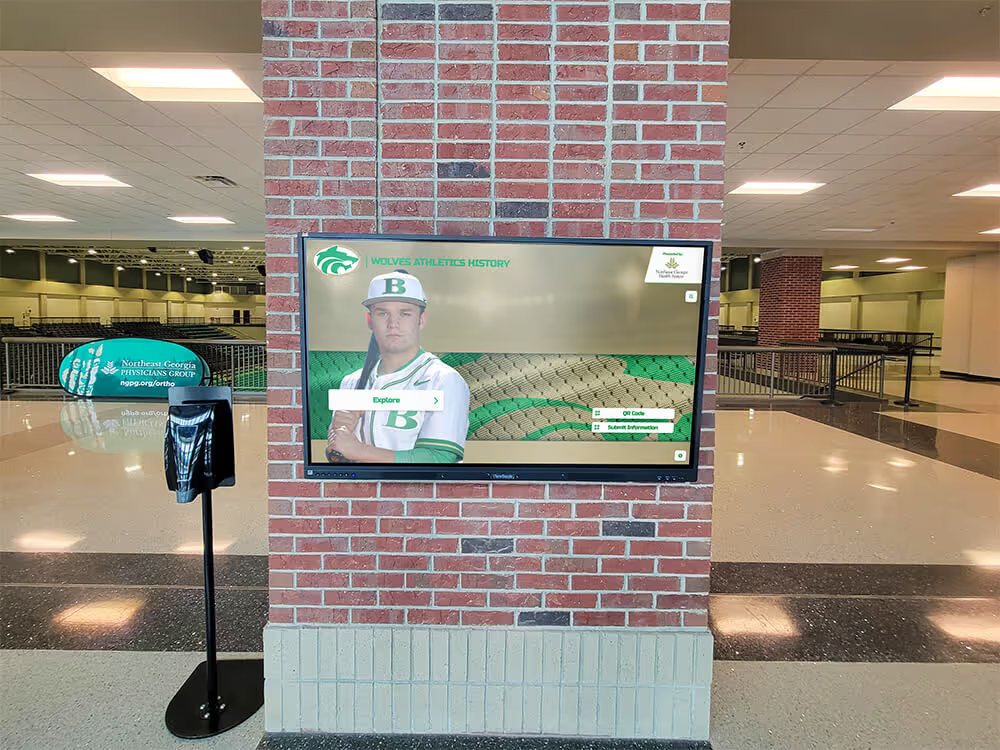
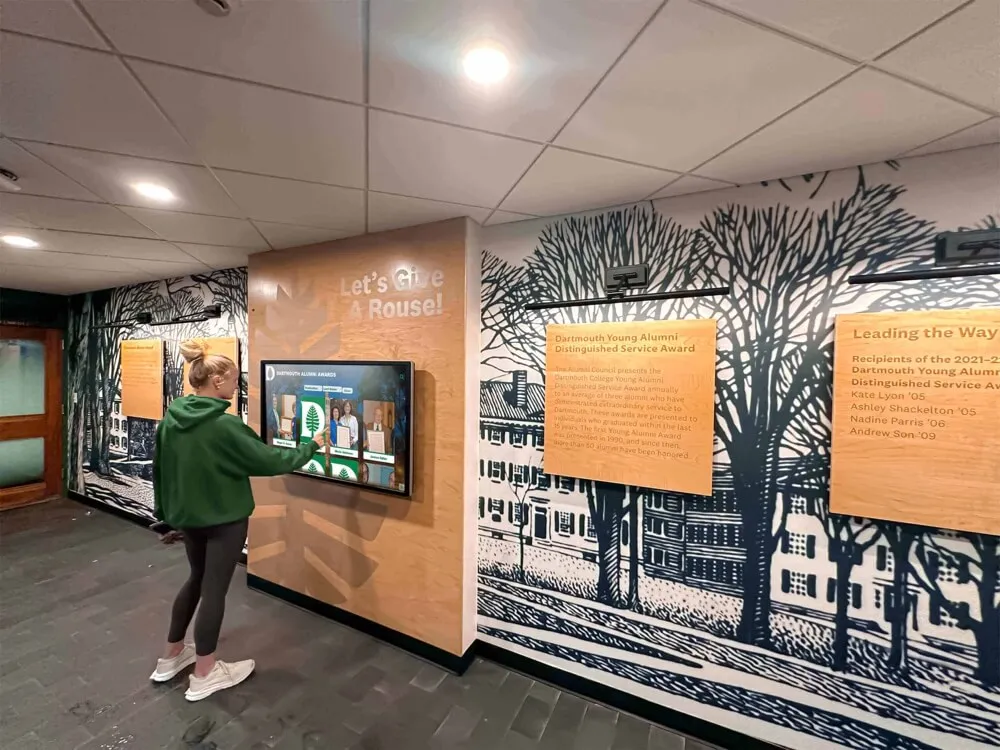
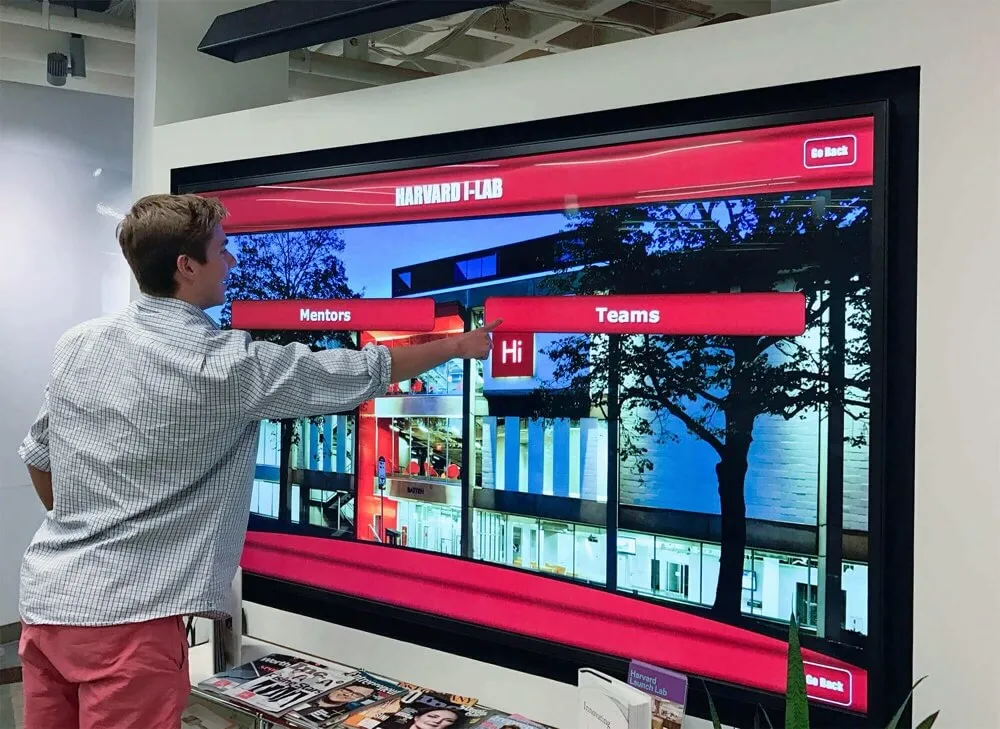
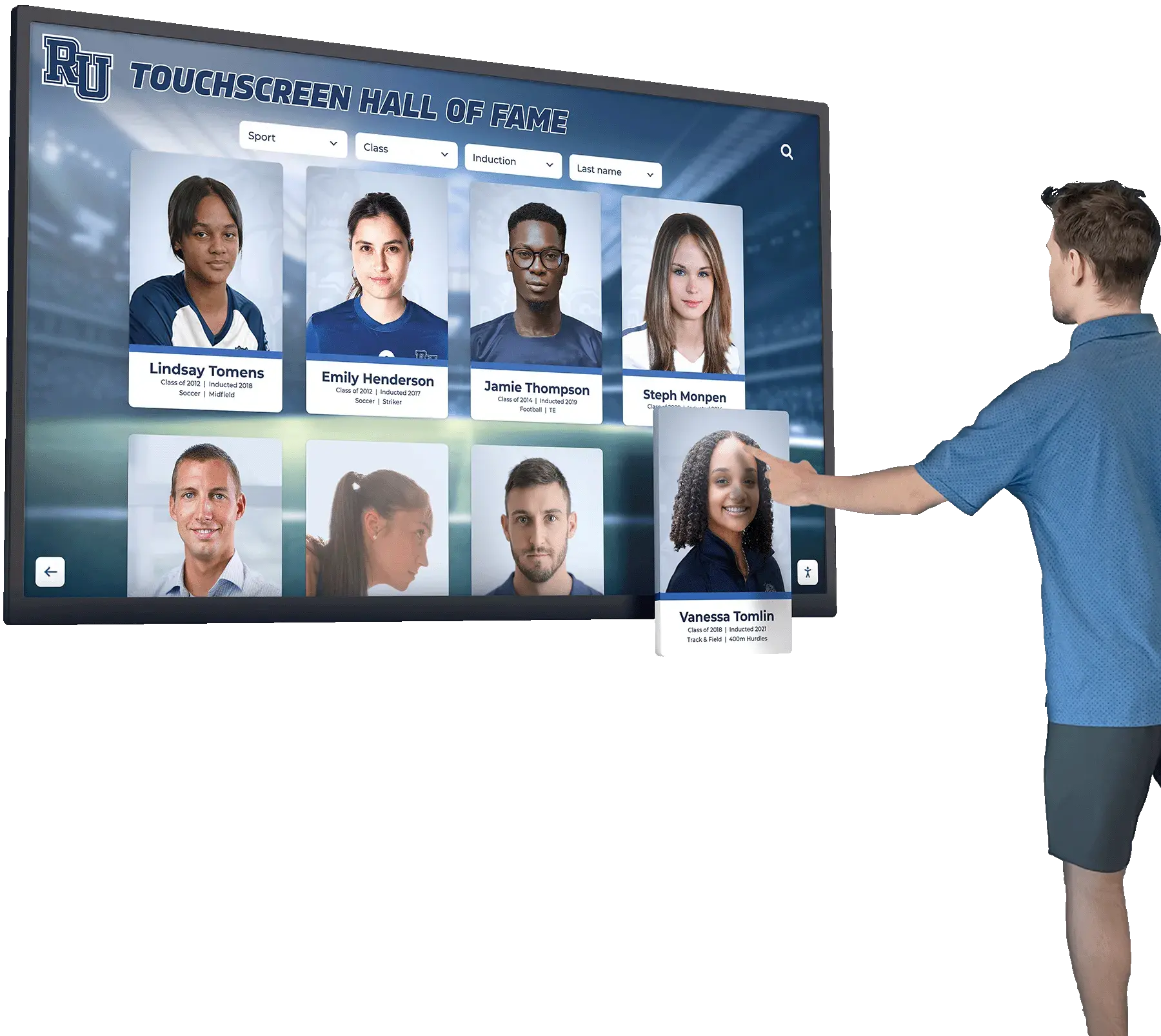
Interactive touchscreen navigation lets visitors explore records, photos, and athletic history at their own pace in seconds
The Physical Display as Cultural Infrastructure
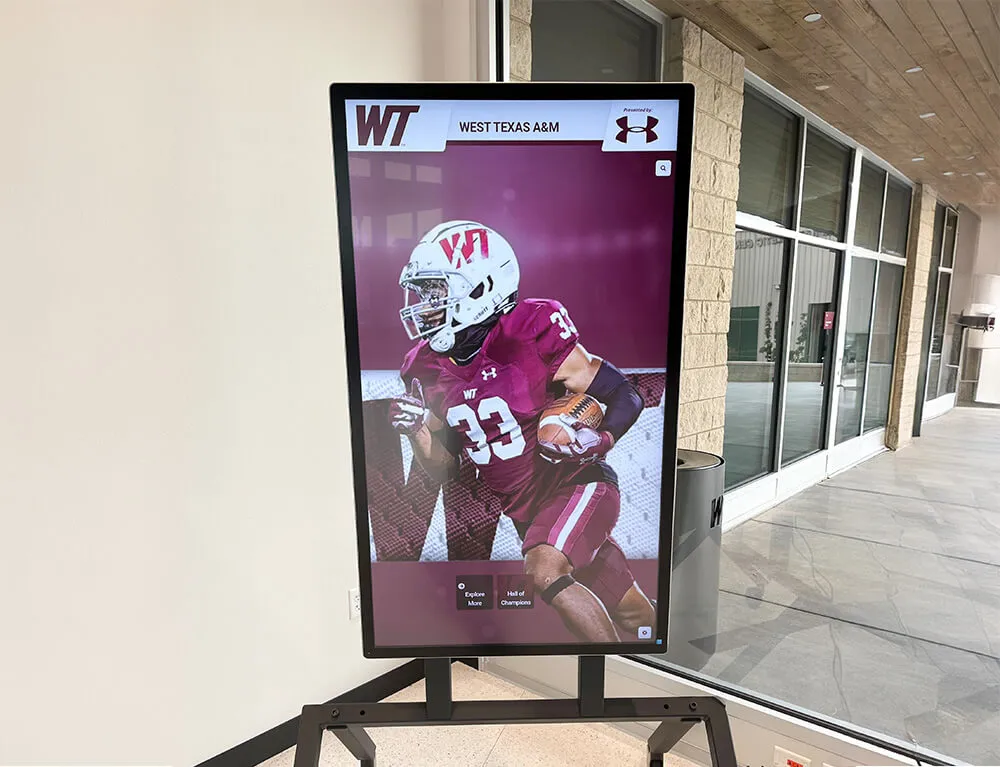
When the athletic record book exists only on a server, it functions as a utility—useful when needed, invisible otherwise. When it lives on a large-format touchscreen display in the gymnasium lobby, main athletic corridor, or field house entrance, it becomes part of the school’s physical environment. Every person who passes through those spaces encounters the record book whether they sought it out or not.
This passive exposure is how recognition becomes culture. Athletes walking to practice every day past a display showing the school’s all-time scoring leaders absorb those standards without deliberately studying them. The record book stops being a reference tool and becomes ambient motivation.
Interactive Exploration vs. Passive Display
Touchscreen implementations offer a fundamental UX advantage over static boards: visitors can explore at their own pace and depth. A casual visitor might scan the top-ten career points leaders and move on. A serious competitor might spend ten minutes reviewing every individual record in her event, comparing margin of improvement across the record book’s history to identify realistic targets.
The same display serves both interactions without requiring separate products. The Boston Celtics all-franchise team approach to historical recognition demonstrates how layered interactive content—a quick-browse surface view with deep-dive detail available on demand—maximizes engagement across different visitor types and intentions.
Connecting Records to Broader Athletic History
Touchscreen record book displays work most powerfully when integrated with the school’s broader athletic recognition system. A school record entry that links to the athlete’s hall of fame profile, career statistics, and post-graduation accomplishments creates a richer experience than a standalone list of numbers. Integration allows the record book to answer the question behind every record: who was this person, and what did this achievement mean?
Schools increasingly recognize that touchscreen athletic recognition platforms serve multiple functions simultaneously—record book, hall of fame, team history archive, and visual identity display—without requiring separate systems for each function.
Connecting the Record Book to Broader Athletic Recognition
The athletic record book doesn’t stand alone—it connects to every other form of athletic recognition the school maintains. Understanding these connections helps athletic directors build integrated recognition ecosystems rather than isolated silos.
Record Books and Hall of Fame Programs
Many of the athletes in a school’s hall of fame are there precisely because they hold records. A digital record book that links to the hall of fame nomination database makes it straightforward to identify record-holders who haven’t yet been nominated, ensuring no deserving athlete is overlooked simply because their records and their hall of fame status are tracked in separate systems.
Record Books and Annual Awards Programs
End-of-season awards ceremonies gain credibility when the record book provides accurate context. Announcing “Sarah broke the school’s 200-meter freestyle record that has stood since 1998” carries more weight than a generic statement of achievement. Connecting award nominations to record-book entries ensures accuracy while providing the historical context that makes achievements feel significant rather than merely current.
Record Books and School Sports Banners
Many schools display high school sports banners recognizing championship seasons and individual achievement milestones. When banner content is connected to the record book database, updating one updates the other—eliminating the discrepancy that occurs when banners are hung but the underlying records are never entered into the tracking system.
Record Books and Alumni Engagement
Alumni who set records decades ago care deeply about whether those records still stand. A school record book that’s publicly accessible online—either through a dedicated platform or a web-based component of the school’s athletic website—becomes a reason for alumni to stay connected. Notifying former record-holders when their records are challenged generates genuine engagement that generic alumni outreach rarely achieves. Comprehensive alumni engagement strategies consistently identify record-based connection as one of the most authentic touchpoints between schools and their athletic alumni.
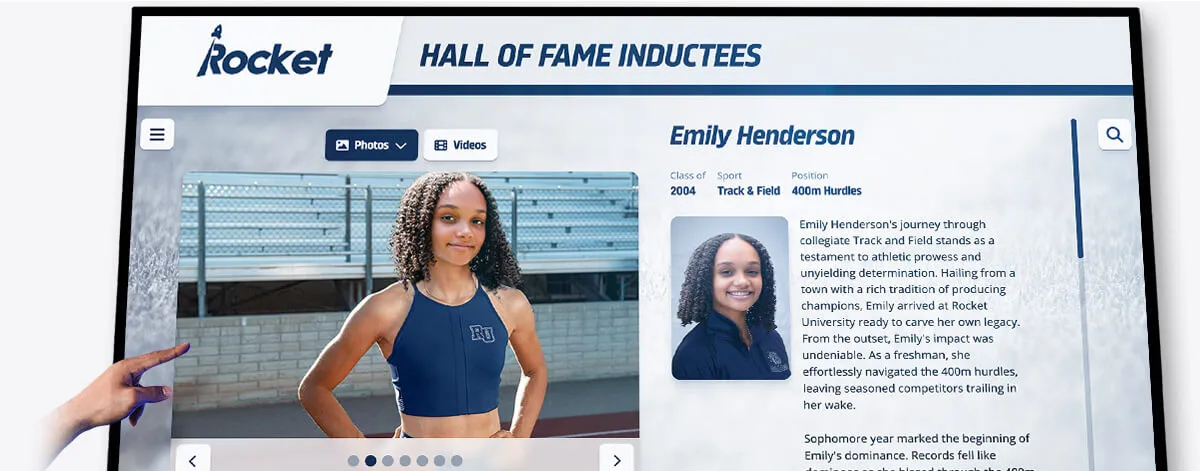
Individual athlete record entries can display photos, event details, and performance history—far beyond what a painted board can communicate
Honoring Record-Holders at Ceremonies
When a record is broken, the moment deserves acknowledgment beyond a database update. Schools that treat record-breaking as a recognized milestone—announcing it at the next home game, displaying it on lobby screens, adding the athlete to a “new record” highlight reel—create a feedback loop where athletic achievement produces visible social recognition that motivates further achievement.
Ceremonies that honor legendary athletes at career milestones often incorporate record-book moments as anchors for the recognition narrative—connecting the current ceremony to the program history that gives it meaning.
Implementation Roadmap for Athletic Directors
Transitioning from a traditional record book to a digital system is a multi-phase process. Athletic directors who treat it as a one-time technology purchase typically struggle with adoption and maintenance. Those who approach it as a program infrastructure initiative succeed.
Phase 1: Audit and Organize Existing Records
Before any technology is selected, collect and consolidate all existing records from every format they currently exist in: printed binders, painted boards, coaches’ spreadsheets, archived programs, old yearbooks, and staff memory. This audit phase typically reveals:
- Gaps in women’s sports records from pre-Title IX eras
- Missing data from coaching transitions
- Inconsistent formatting that requires standardization
- Records that can’t be verified and need to be flagged as unconfirmed
Document what you have, what’s missing, and what would require historical research to fill. This assessment defines the scope of data migration work before system selection.
Phase 2: Define Record Categories and Standards
Establish standardized categories for every sport your school offers. Decide:
- How many positions will be tracked per category (top 10, top 25, all-time list)
- Whether freshman records will be tracked separately from varsity records
- How records from sports that have been discontinued will be treated
- What documentation is required to certify a new record (official meet results, verified timing, referee confirmation)
- How ties will be handled
Written standards prevent disputes and make the record book credible. Without them, coaches and athletes will challenge entries based on inconsistent recollections.
Phase 3: Select and Implement the Digital System
Evaluate platforms based on the features described above. Prioritize systems that offer:
- Dedicated athletic record management rather than generic database tools
- Integration with display hardware for physical lobby and corridor installations
- Web portal access for alumni and community members
- Content management that non-technical staff can use without IT support
The hardware setup and complete service approach that purpose-built providers offer—combining software, display hardware, and implementation support—typically produces better long-term results than schools assembling solutions from separate vendors and managing integrations independently.
Phase 4: Migrate Historical Data
Enter historical records systematically, prioritizing current and recent records first, then working backward through history. Attach photos and media assets where available. Flag records that couldn’t be verified with a notation system that maintains their place in the record book while being transparent about documentation limitations.
Plan for this phase to take several months of part-time work. It is almost always longer than expected because historical athletic archives are more fragmented than administrators anticipate.
Phase 5: Train Staff and Establish Update Workflows
Define who is responsible for updating records after each competitive season. Create simple workflows for coaches to submit new records immediately after performances, specifying what documentation is required and how submissions are reviewed before publication. A workflow that requires two steps and takes ten minutes will actually be followed. A workflow that requires five steps and twenty minutes will be deferred indefinitely.
Phase 6: Launch Display Infrastructure
Coordinate display hardware installation with a moment of public recognition: an unveiling event during a home athletic competition, a ceremony recognizing current record-holders, or a community event inviting alumni to see their names in the new system. A launch event creates awareness, generates buzz, and signals to the school community that the administration takes athletic history seriously.
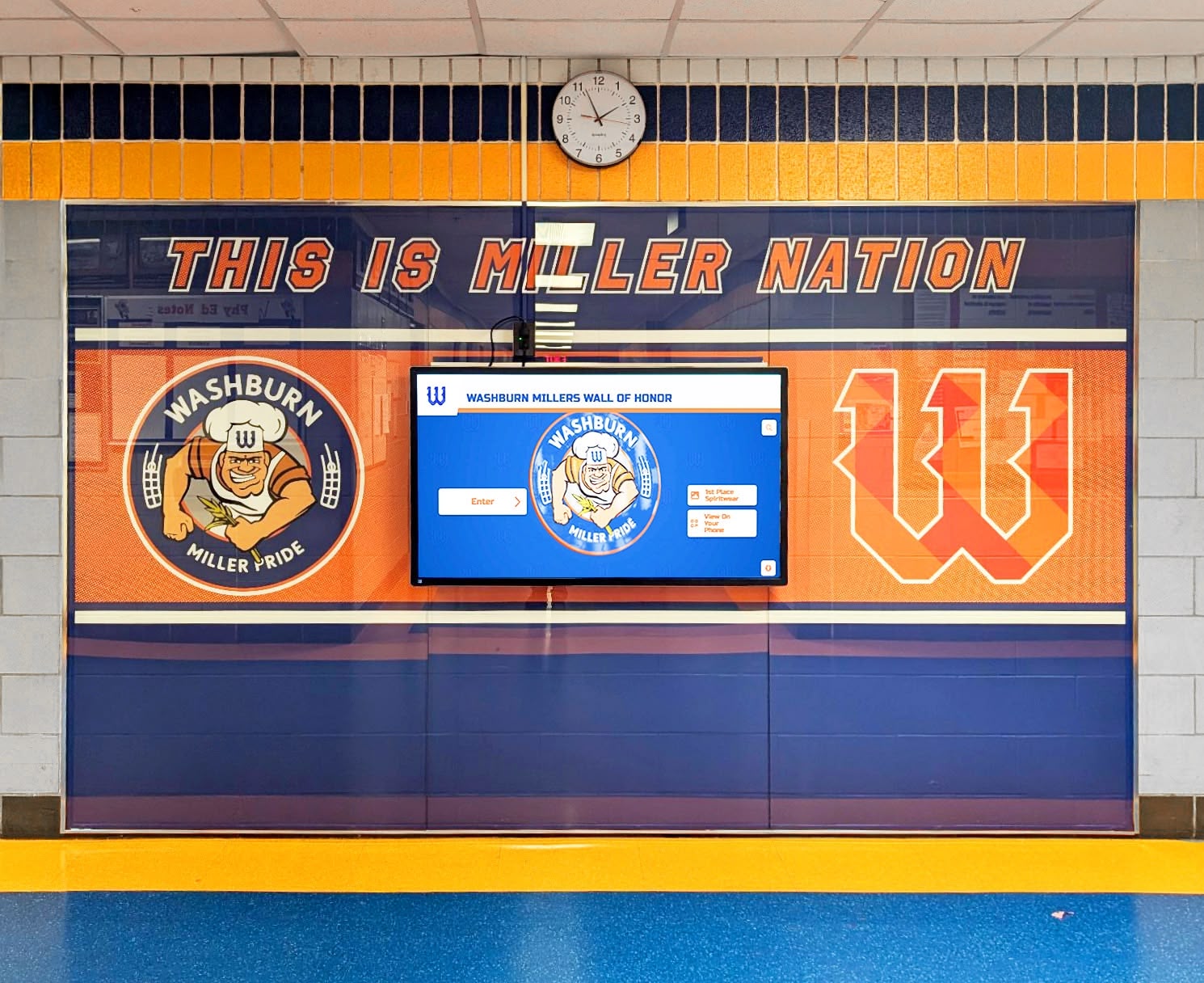
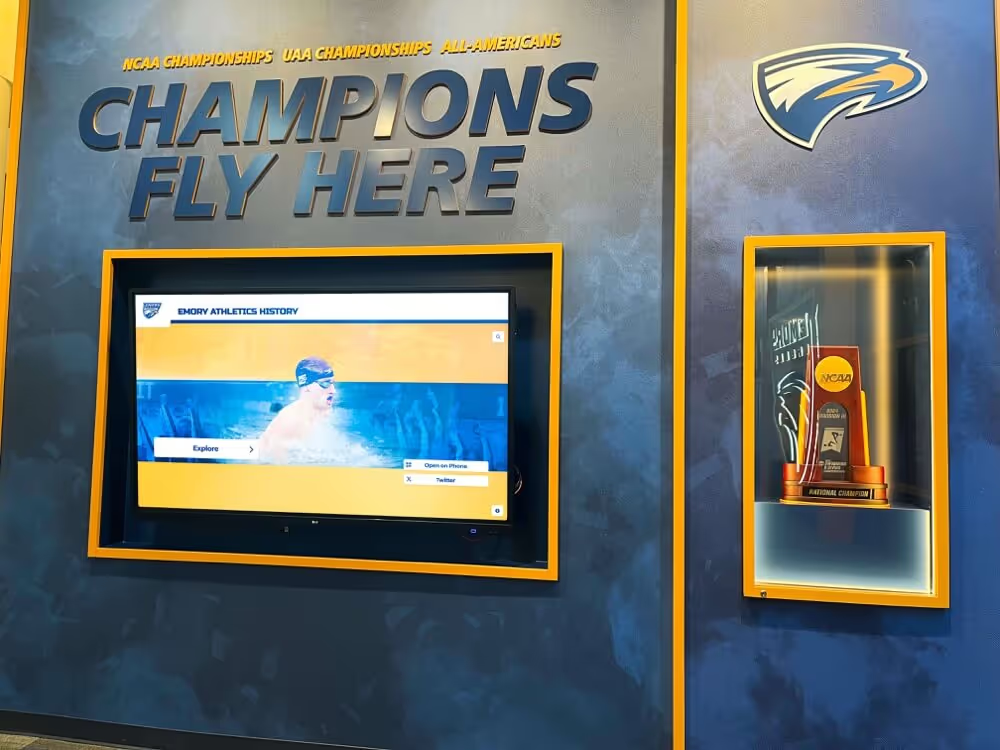
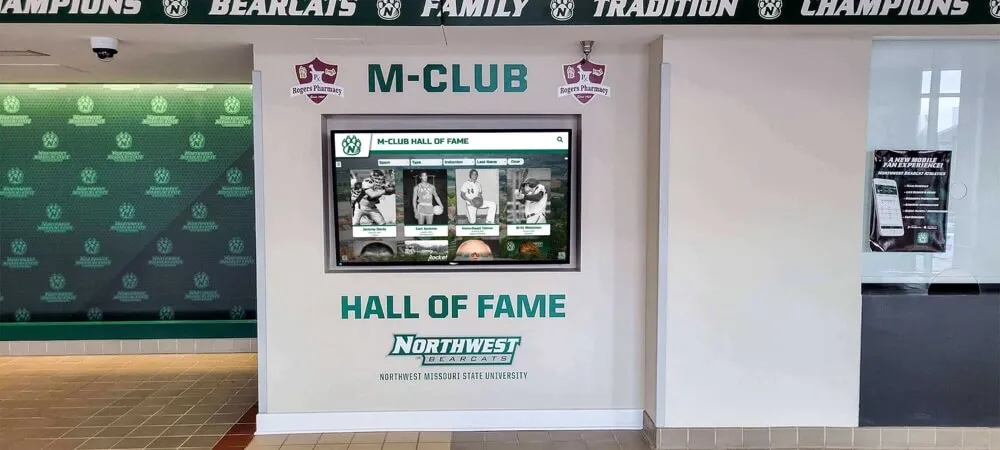
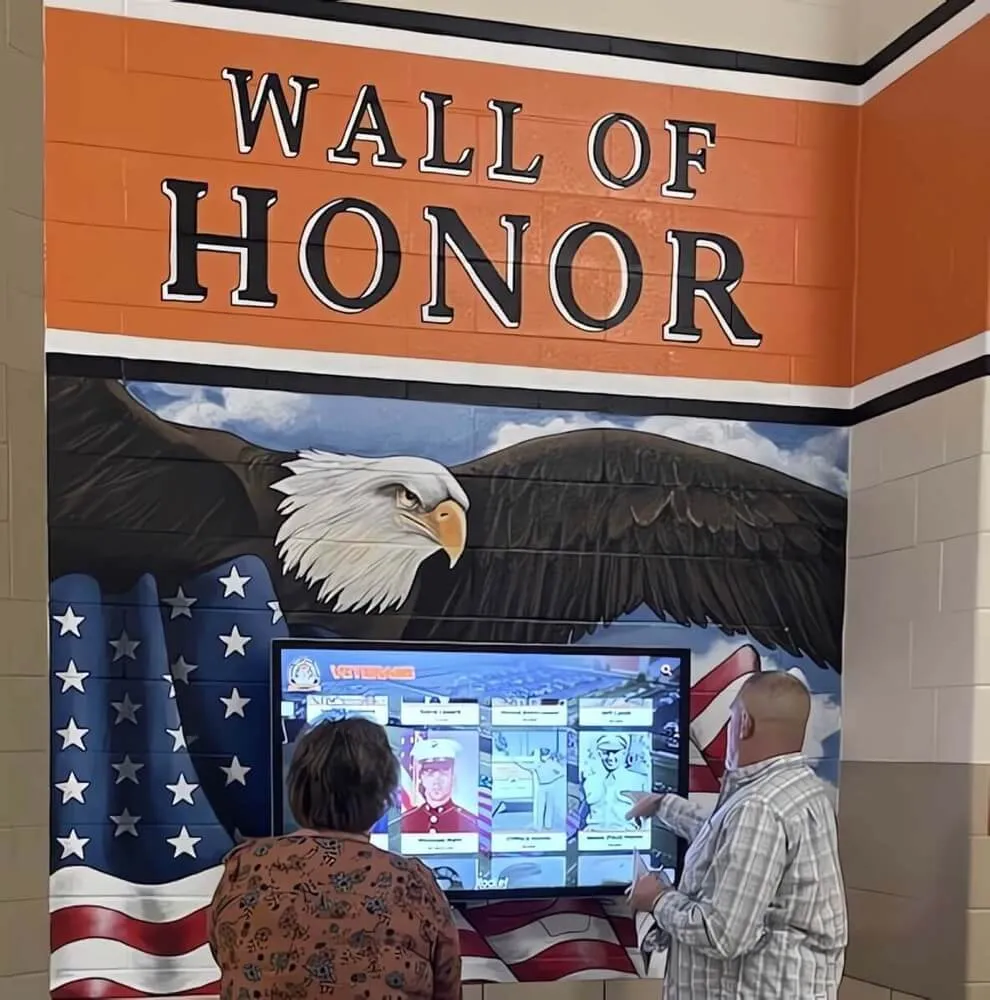
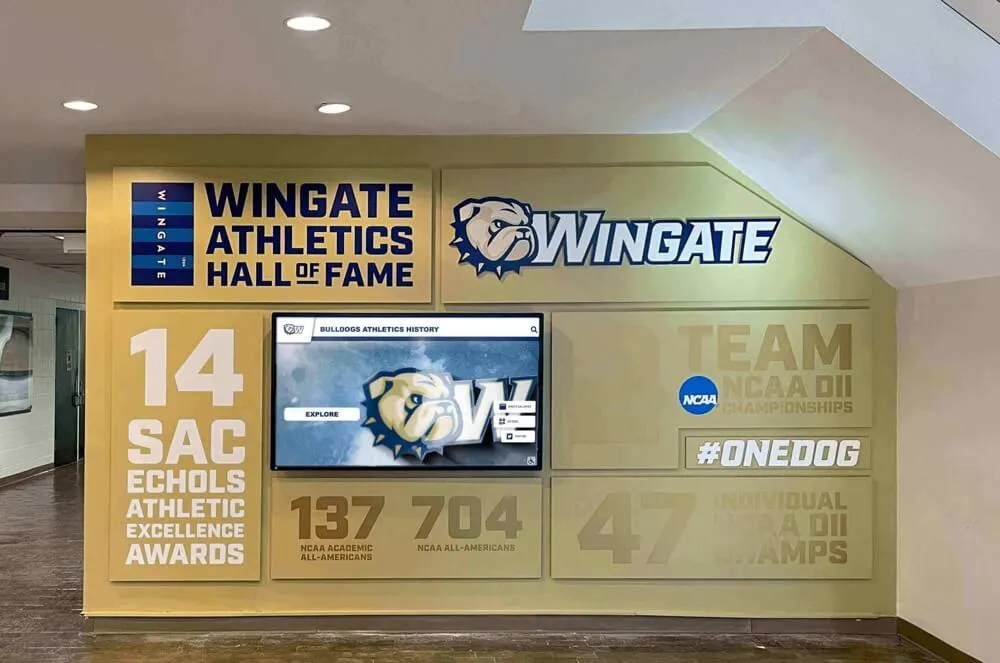
Wall-of-honor displays with integrated digital screens bring program history and real-time records together in a single physical installation
Choosing the Right Digital Solution
The market for athletic recognition software has expanded significantly, with solutions ranging from general-purpose digital signage platforms to purpose-built athletic recognition systems. Athletic directors evaluating options should ask several clarifying questions.
Purpose-Built vs. General-Purpose Platforms
General-purpose digital signage software can display any content, including athletic records—but it requires significant configuration and custom development to function as a record book. Purpose-built athletic recognition platforms arrive with record book templates, sport-specific data structures, and athlete profile frameworks already built.
The comprehensive 2026 comparison guide for interactive touchscreen kiosk software provides a useful framework for evaluating platforms across functionality, pricing, and implementation requirements—helping athletic directors make informed comparisons rather than relying on vendor marketing alone.
Ongoing Management Requirements
Ask every vendor: what happens when a record needs to be updated at 6 PM on a Friday after an away meet? The answer reveals whether the content management system is genuinely designed for athletic department workflows or for full-time IT staff with regular business hours.
Scalability and Future Expansion
Schools that implement strong record systems often expand them over time—adding sports, adding historical depth, integrating alumni profiles, and linking to hall of fame programs. Choose a platform that can grow without requiring a complete system replacement.
Homecoming and Event Integration
Record displays perform particularly well during high-traffic events: homecoming weekends, alumni reunions, athletic banquets, and spring sports awards nights. Platforms that support homecoming awards and touchscreen displays natively—showing records alongside current award nominees or this year’s achievements—maximize the impact of existing display infrastructure.
How Rocket Alumni Solutions Addresses the Athletic Record Book Challenge
Rocket Alumni Solutions builds touchscreen recognition platforms specifically for educational institutions. Their systems address every limitation of traditional print record books while creating physical display experiences that engage athletes, alumni, and visitors.
The platform allows athletic directors to maintain comprehensive all-time record databases with sport-specific categories, photo and video attachment, search functionality, and real-time update capability from any web browser. Large-format touchscreen displays installed in gymnasium lobbies, athletic corridors, and field house entrances bring those records into the physical environment—creating the ambient motivation that only visible, permanent recognition can generate.
Content management is designed for non-technical staff, allowing athletic department employees to update records immediately after competitive performances without involving IT. Role-based permissions ensure coaches can submit record updates while administrators control final publication, maintaining accuracy without creating bottlenecks.
Integration across recognition functions means the same platform can manage the record book, the hall of fame, team history archives, and annual award documentation—eliminating the fragmented systems that cause records to fall out of sync with other recognition programs.
For schools exploring athletic record book modernization, Rocket Alumni Solutions offers a combination of software, hardware, installation support, and ongoing service that purpose-built vendors in this category are uniquely positioned to provide.
Conclusion
The athletic record book is one of the most enduring artifacts a high school athletic program creates. Every time an athlete breaks a school record, they join a lineage that stretches back to the program’s founding—connecting their achievement to the achievements of every competitor who held that standard before them. That lineage deserves better than a fading painted board or an outdated binder.
Digital record-keeping solves the accuracy, completeness, and maintenance problems that make traditional formats unreliable. Touchscreen display technology solves the visibility and engagement problems that make those formats culturally inert. Together, they transform the athletic record book from a back-office reference document into a living institution—one that motivates current athletes, connects alumni to their competitive past, and signals to the entire school community that athletic achievement here is taken seriously, preserved carefully, and celebrated permanently.
Athletic directors who invest in modern record-tracking infrastructure aren’t just solving an administrative problem. They’re building the foundation for a recognition culture that pays dividends in athlete motivation, alumni engagement, and program identity for years to come.
Ready to Modernize Your Athletic Record Book?
Discover how Rocket Alumni Solutions' touchscreen platforms help high schools build digital athletic record systems that engage athletes, connect alumni, and preserve program history permanently.
Learn More About Digital Record Displays