



Intent: Inspire athletic directors and school administrators to create engaging, interactive championship bracket displays that celebrate tournament excellence through modern touchscreen design.
High school state championship tournaments represent the pinnacle of athletic achievement—months of preparation, intense competition, and unforgettable moments that define school pride and athletic legacy. Yet many schools struggle to showcase these championship journeys effectively, limiting bracket displays to temporary paper postings in hallways or static prints that fail to capture the drama, progression, and ultimate triumph of tournament success.
The challenge involves presenting complex tournament information—multi-round brackets with dozens of teams, score progressions, upset victories, and championship paths—in formats that engage students, celebrate participants, and preserve these defining moments for future generations. Traditional poster boards fade and disappear after seasons end, taking tournament stories with them. Static wall displays lack the dynamic capacity to show bracket progression, highlight key matchups, or provide the rich context that makes championship runs truly memorable.
This comprehensive guide explores display solutions for high school state championship brackets—covering interactive touchscreen layouts, bracket visualization strategies, content architecture, and design frameworks that transform tournament recognition from temporary postings into permanent, engaging celebrations of athletic excellence and school tradition.
State championship tournaments create defining moments for student-athletes and communities. Schools that implement thoughtful bracket display solutions—combining interactive navigation, rich multimedia context, and accessible design—build powerful athletic traditions while giving tournament participants the lasting recognition their extraordinary achievements deserve.

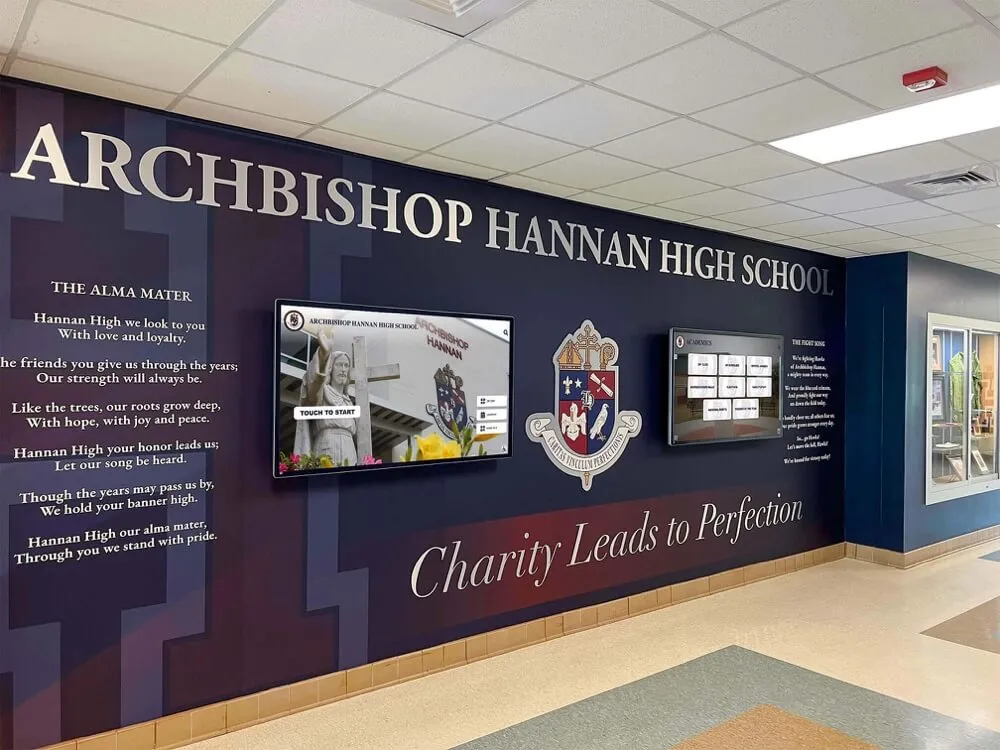
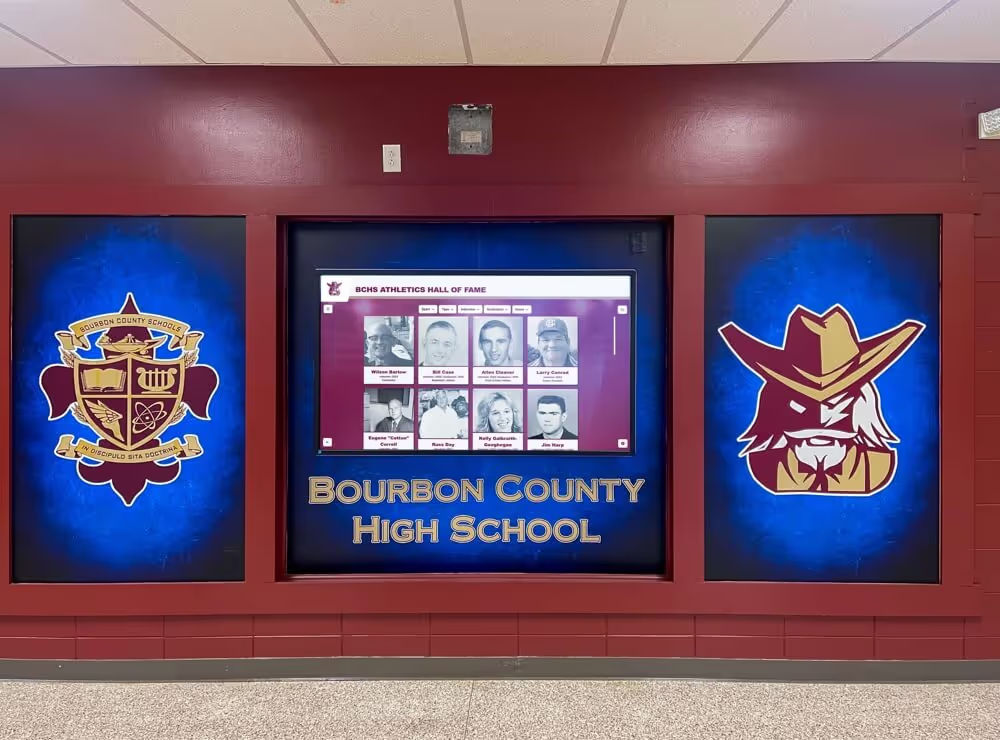
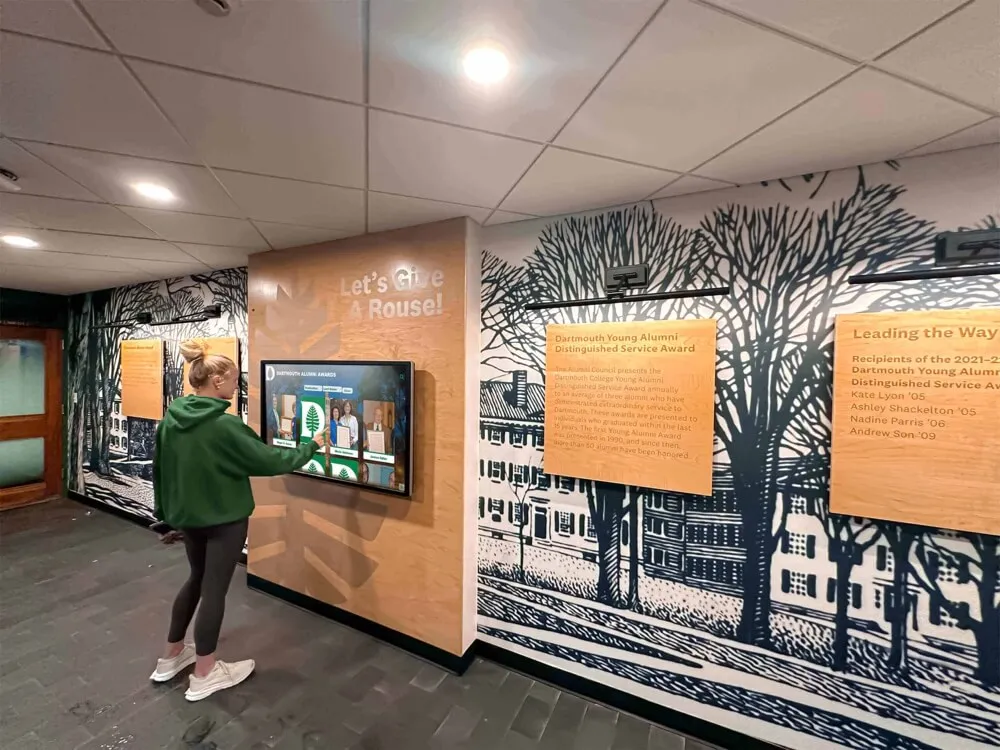
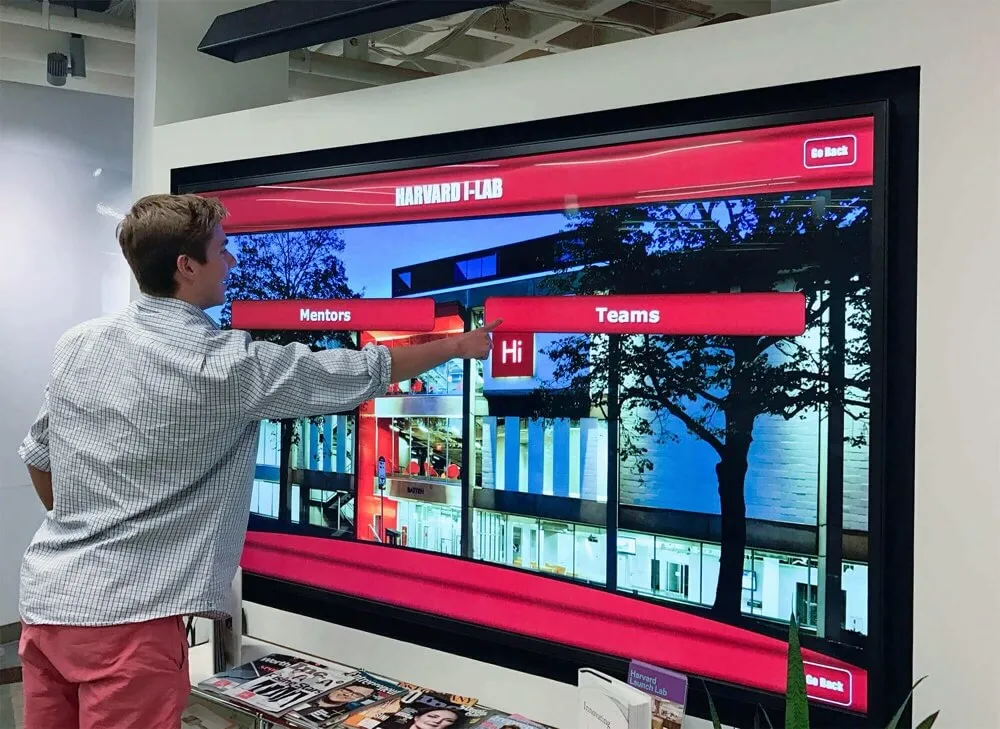
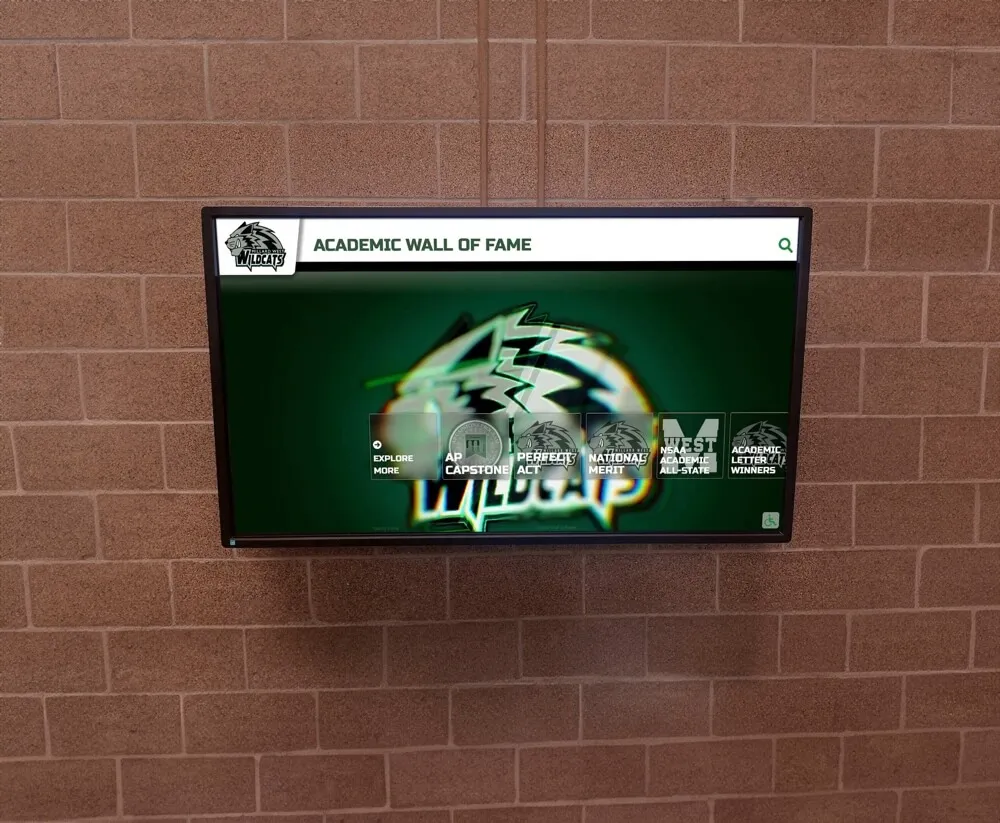
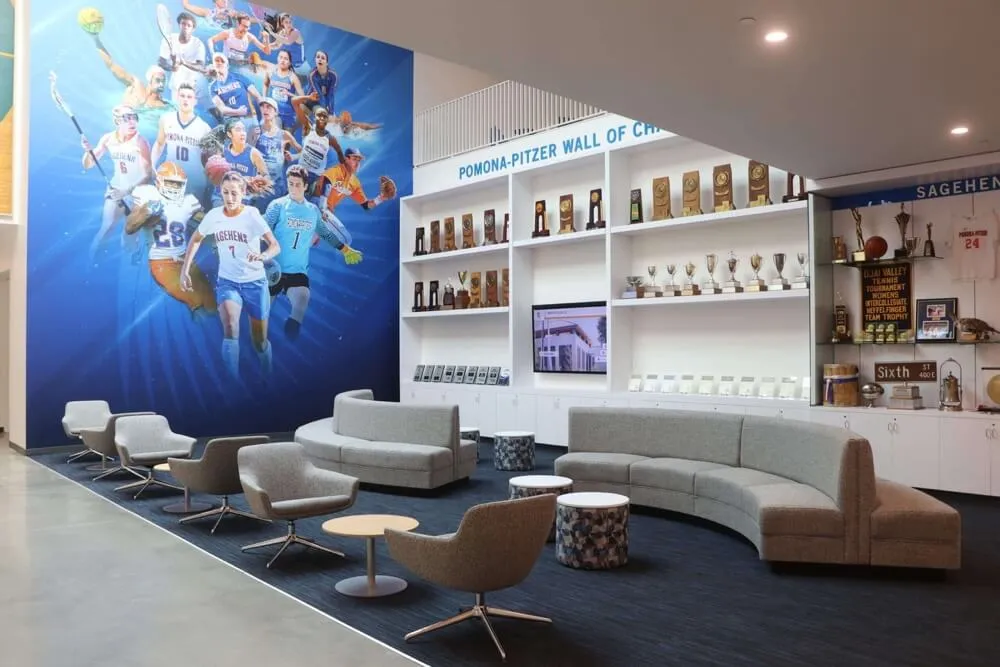
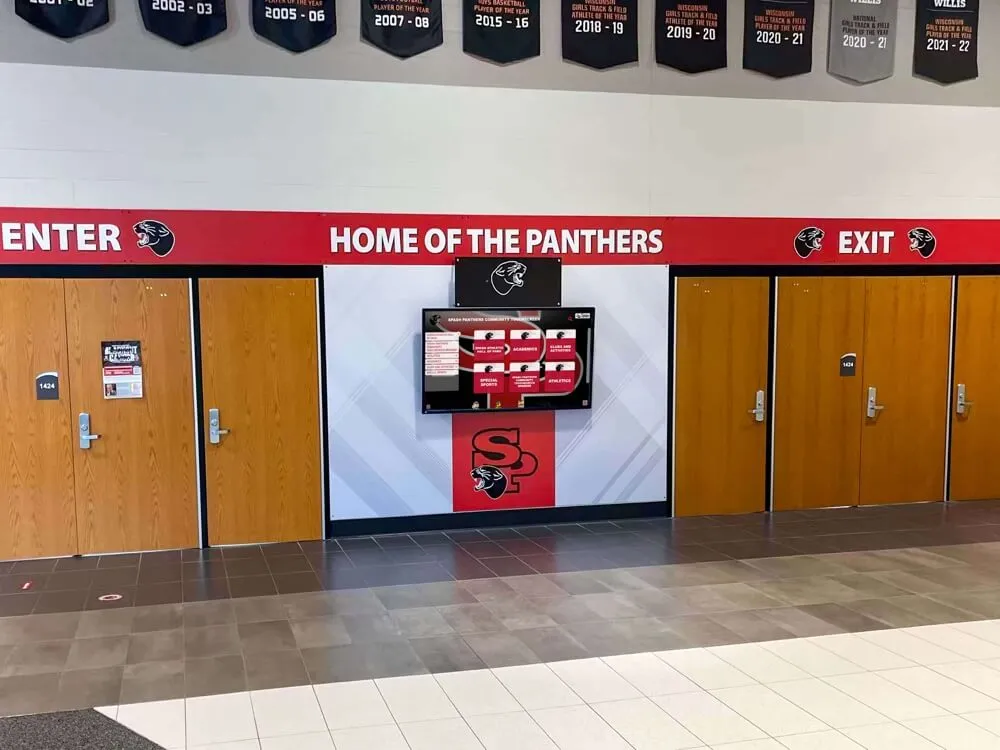
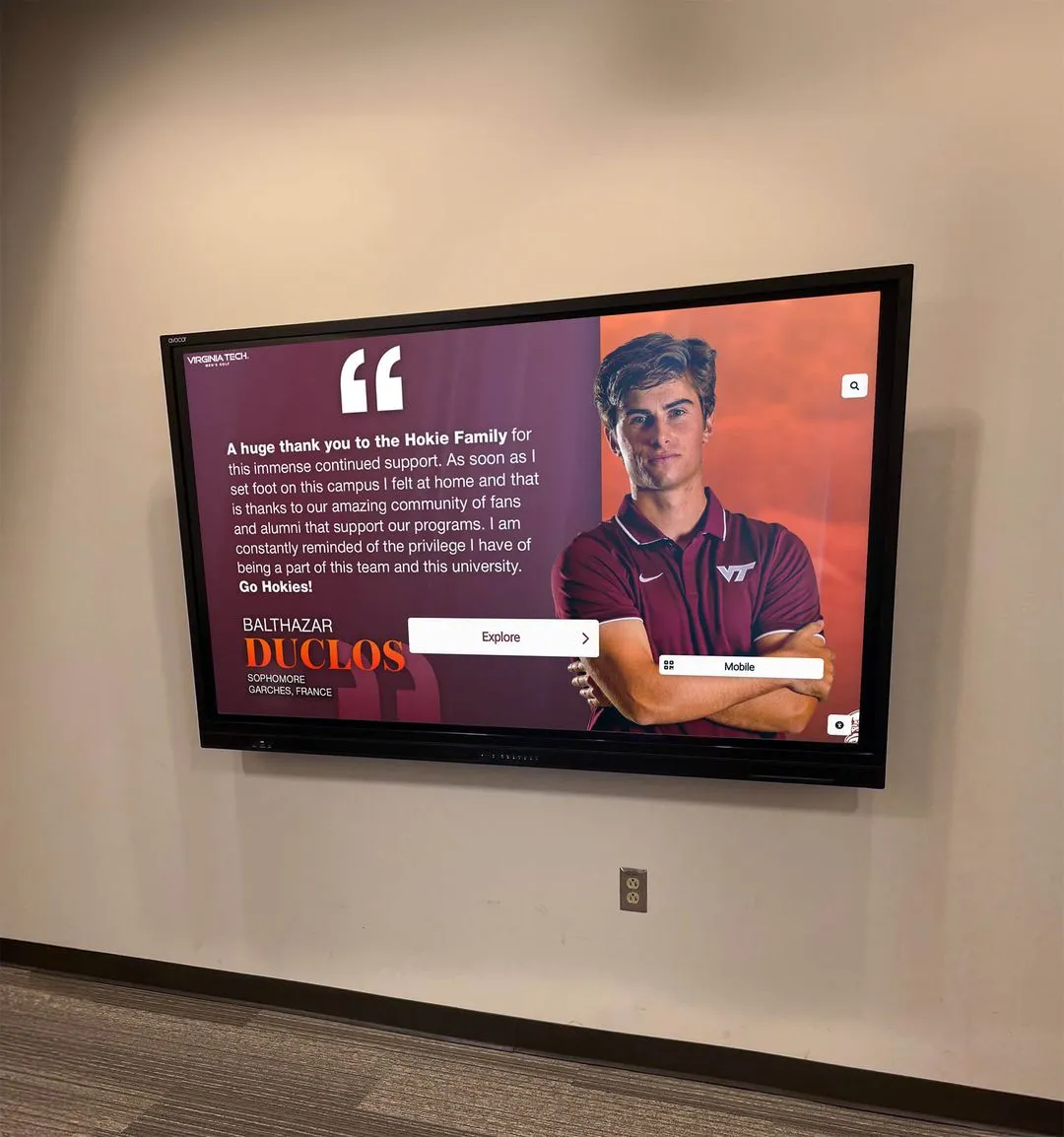
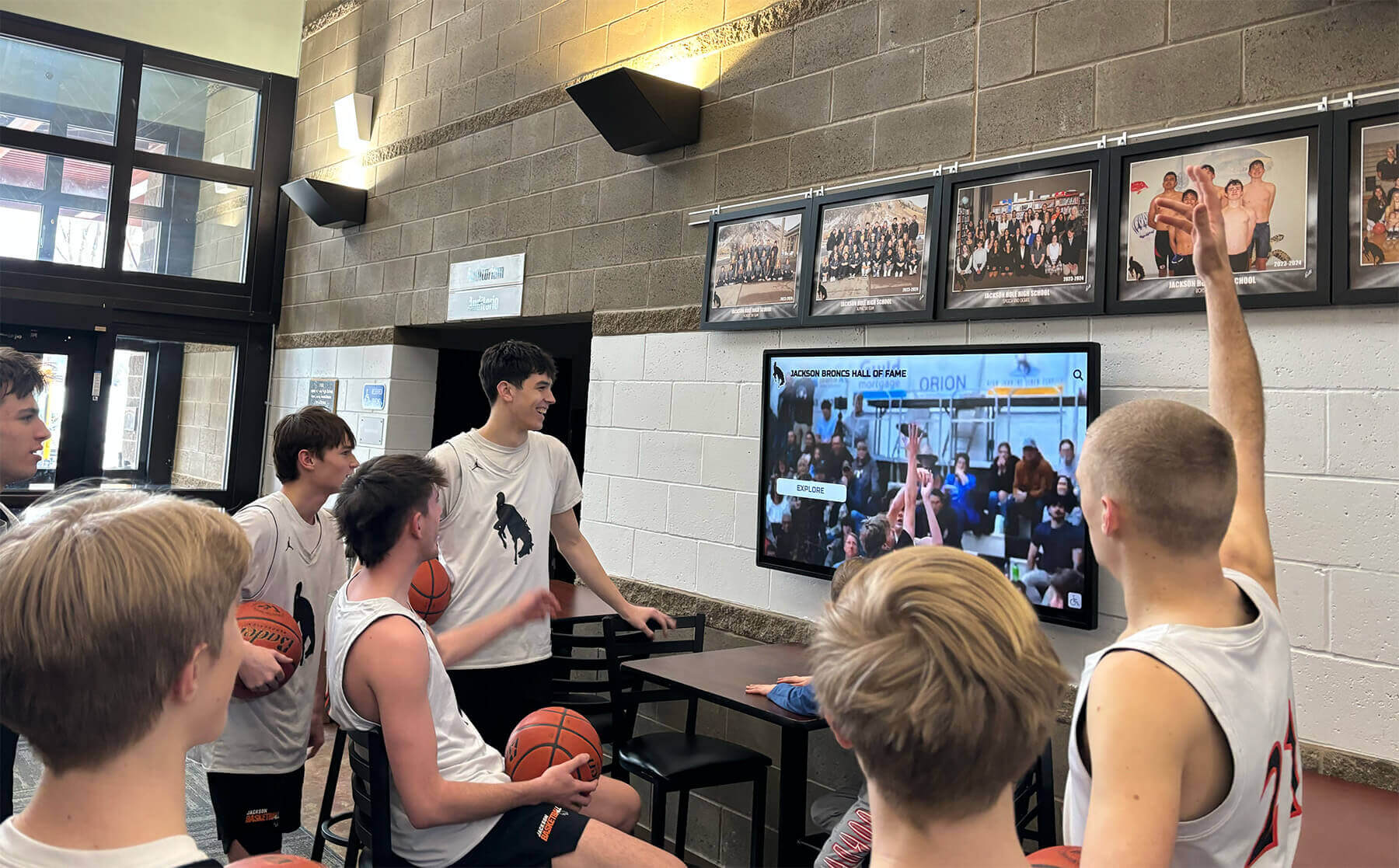
Interactive lobby displays engage students with tournament content while celebrating championship journeys that define school athletic programs
Understanding State Championship Bracket Display Needs
Before designing specific bracket displays, understanding the unique requirements of tournament recognition helps create solutions that genuinely serve athletes, students, and communities.
The Tournament Storytelling Challenge
State championship brackets tell complex, multi-layered stories requiring thoughtful presentation:
Bracket Structure Complexity
Championship tournaments typically feature single-elimination or double-elimination formats with 8, 16, or 32 teams advancing through multiple rounds. Each game represents critical advancement points, with winning teams progressing toward finals while eliminated teams conclude their seasons. This branching structure requires visual organization that enables viewers to trace individual team journeys from opening rounds through championship games while understanding overall tournament flow.
Multiple Information Layers
Effective bracket displays need to present several content types simultaneously: team names and seedings showing competitive positioning, game scores documenting match results, game dates and locations providing temporal context, and player highlights celebrating individual performances. Static displays struggle to accommodate this information density without becoming cluttered and overwhelming.
Time-Based Progression
Tournaments unfold over days or weeks, with brackets filling progressively as games conclude. Display solutions must accommodate this time-based revelation, showing completed games definitively while indicating future matchups that will determine bracket advancement. This temporal progression adds complexity beyond static information presentation.
What Makes Championship Bracket Displays Effective
Quality tournament displays share common characteristics that elevate them beyond basic information posting:
Clear Visual Hierarchy
The best bracket displays establish immediate visual clarity through structured organization. Championship paths should be obvious at a glance, with winning teams clearly advancing through bracket levels. Color coding, connector lines, and spatial arrangement guide eyes naturally from opening rounds through finals, making tournament structure instantly comprehensible even to viewers unfamiliar with specific sports.
Scalability Across Tournament Formats
Championship brackets vary by sport and division—basketball might feature 16-team single elimination, while wrestling uses complex double-elimination formats with consolation brackets. Effective display solutions adapt to different tournament structures without requiring complete redesign, maintaining consistent visual language across varying bracket configurations.
Celebration of Achievement at Every Level
While ultimate champions deserve prominent recognition, comprehensive bracket displays celebrate achievement at every tournament level. Teams reaching semifinals, quarterfinals, or even qualifying for state tournaments have accomplished extraordinary goals worthy of documentation and visibility. Thoughtful displays acknowledge these achievements while maintaining championship focus.
Understanding state championship recognition strategies provides frameworks for comprehensive tournament celebration that honors all participants appropriately.

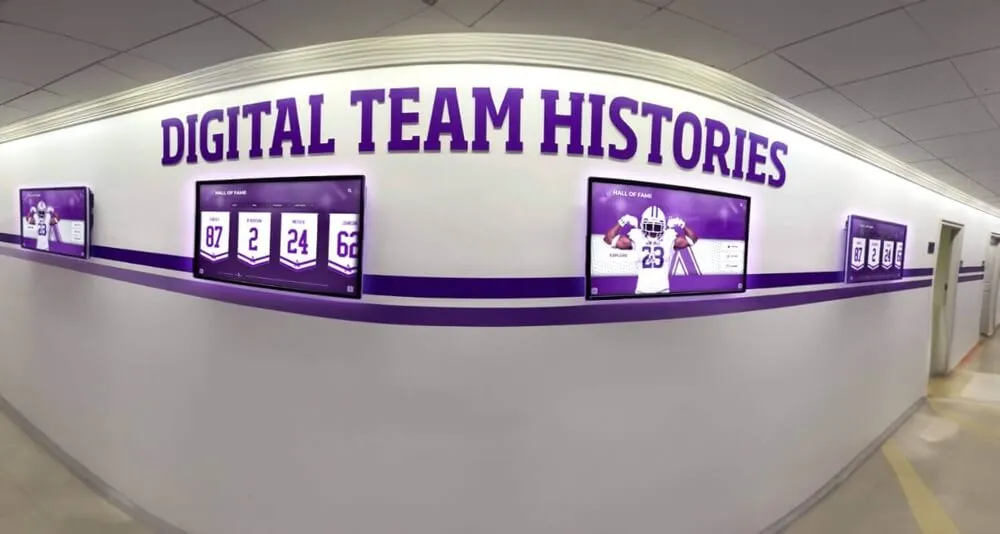
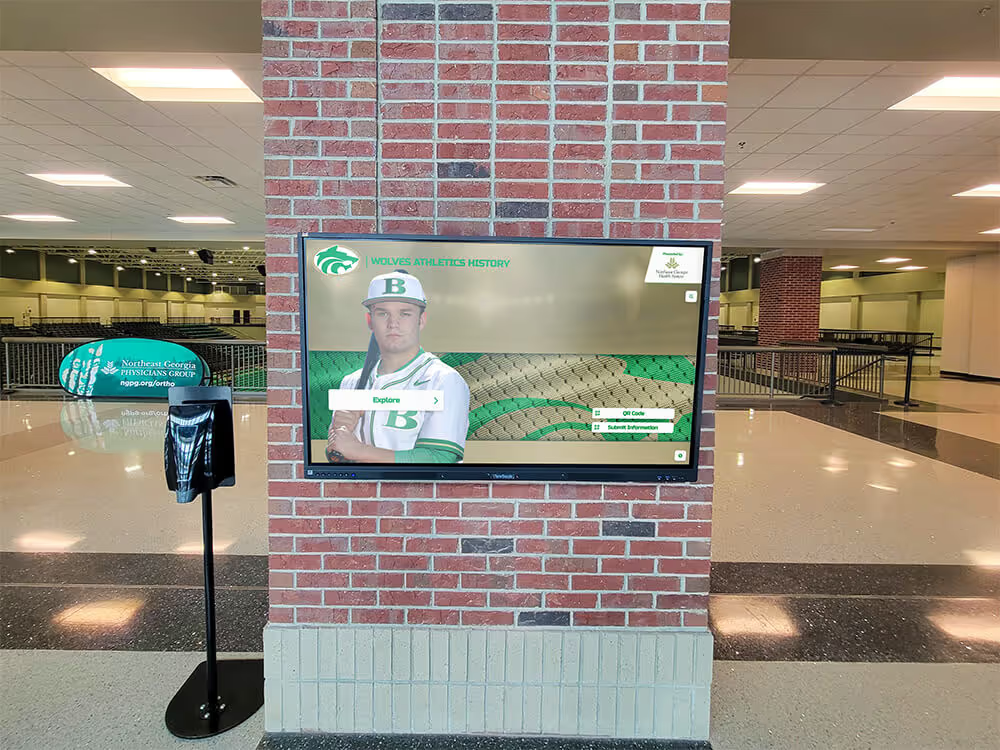
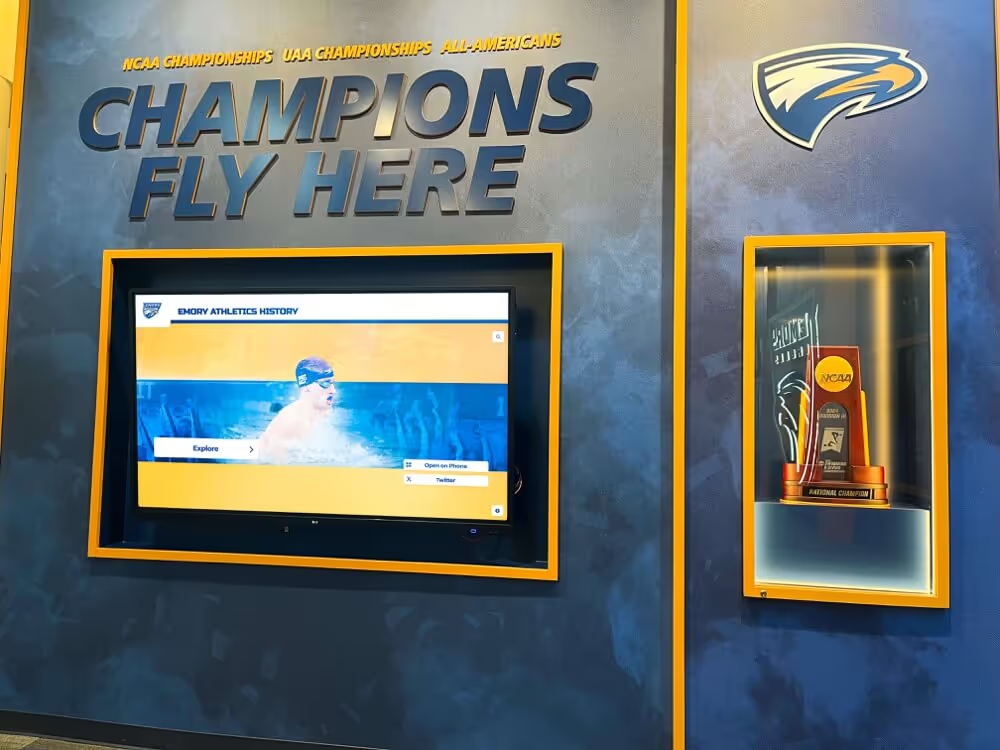
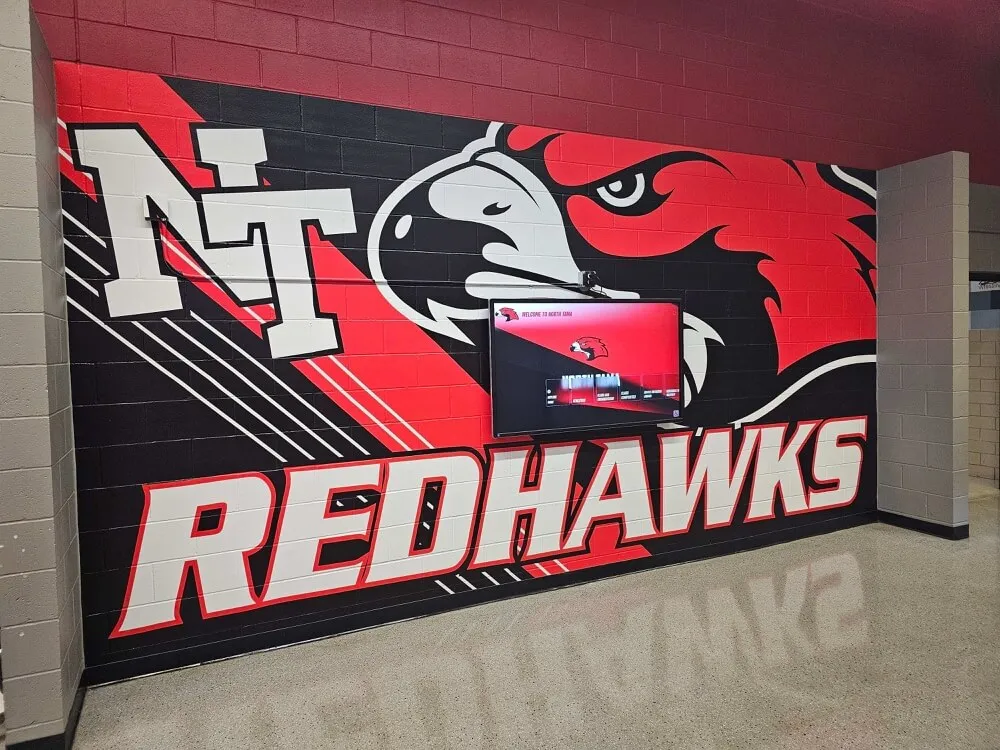
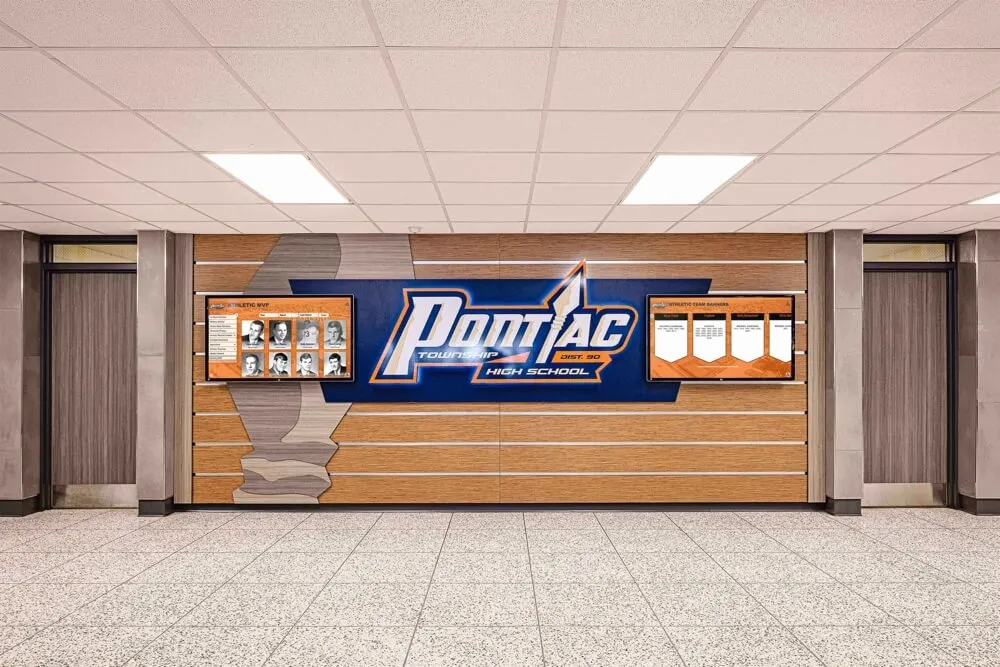
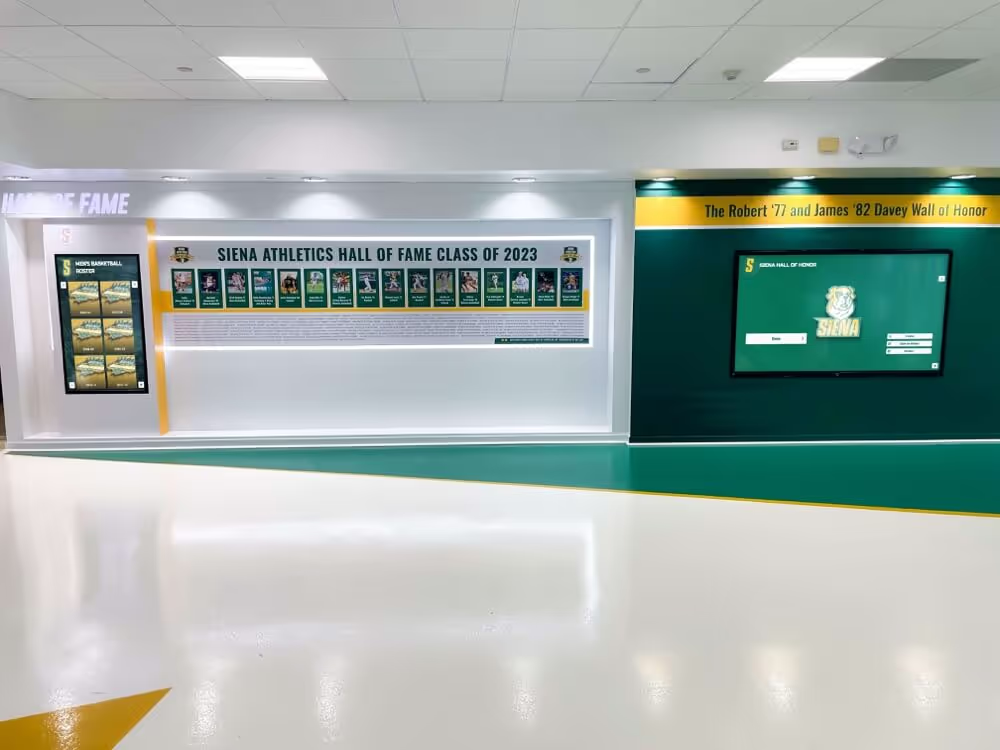
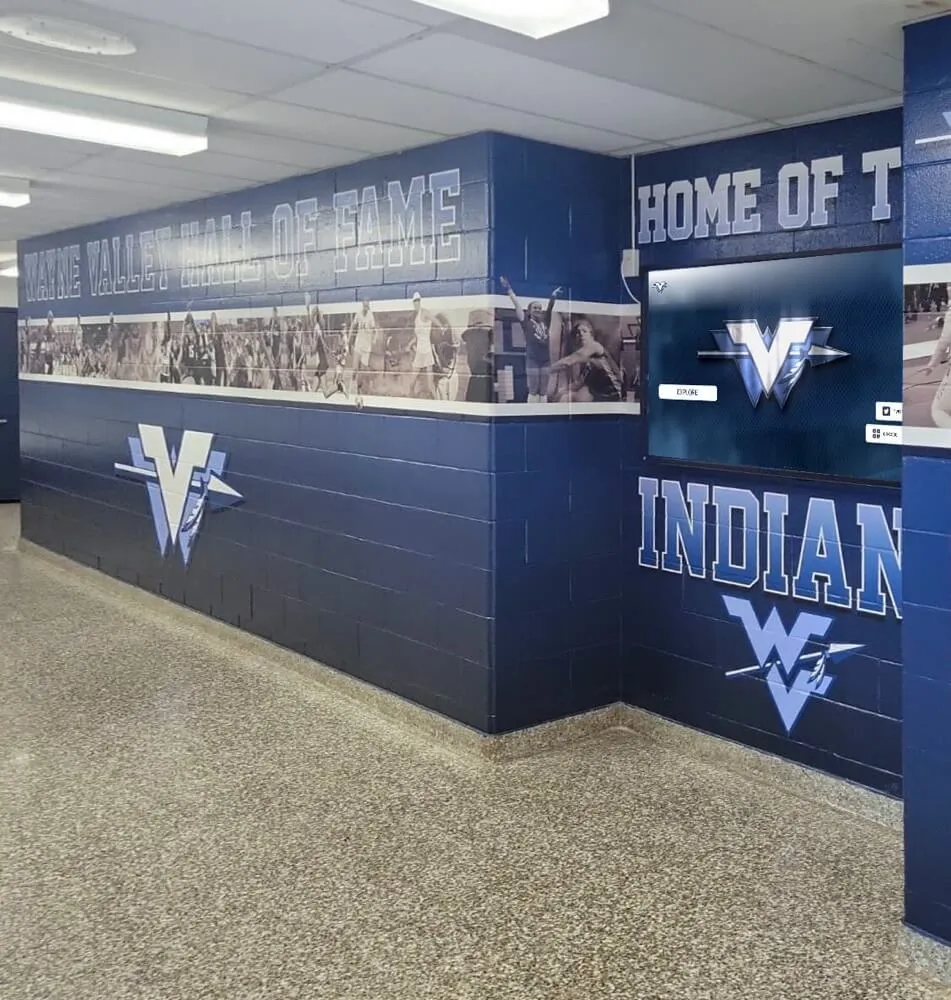
Hallway installations position championship recognition where students encounter athletic tradition daily, building program pride and motivation
Experience Layout: Designing Interactive Bracket Displays
Creating engaging tournament bracket interfaces requires systematic design approaches balancing information density with visual clarity and interactive functionality.
Layout Blueprint for Championship Bracket Interfaces
Effective bracket displays organize screen space into functional zones serving specific user needs:
Zone 1: Tournament Header (Top 15%)
The header establishes immediate context and brand presence. Essential elements include sport and division identification (e.g., “Boys Basketball Division 2 State Championship”), tournament year providing temporal context, school branding with colors and logos creating institutional connection, and championship celebration prominently featuring ultimate tournament winners.
For championship teams, the header becomes a celebration zone showcasing final game scores, team photos, and championship trophy imagery. This prominent placement ensures championship recognition receives appropriate visibility while orienting all viewers to specific tournament context.
Zone 2: Bracket Navigation & Filtering (Below Header, 12%)
Interactive bracket displays benefit from navigation controls enabling content discovery:
- Round-by-round viewing options (Quarterfinals, Semifinals, Finals)
- Team filtering allowing instant location of specific schools
- Date-based navigation showing tournament progression chronologically
- View toggles switching between bracket overview and detailed matchup exploration
- Historical tournament access enabling year-by-year browsing
These navigation elements transform static brackets into explorable tournament archives where users control information discovery based on their specific interests.
Zone 3: Primary Bracket Display (Center, 60%)
The main content area presents tournament brackets using proven visual patterns:
Traditional bracket layouts position teams hierarchically with connector lines showing advancement paths. Opening round matchups appear at left (or top, depending on orientation), with subsequent rounds progressing toward championship finals positioned prominently at right or bottom. Visual connectors clearly link winning teams to next-round positions, making tournament progression immediately apparent.
For digital displays, interactive bracket cards enable deeper exploration—touching specific matchups reveals detailed game information including full box scores, player statistics, game highlights, and contextual notes about significant performances or upset victories.
Zone 4: Featured Content Sidebar (15-20%)
Side panels provide supplementary tournament content enriching basic bracket information:
- Game highlight videos from critical matchups
- Player spotlight profiles featuring tournament standout performances
- Historical context comparing current tournament to past championships
- Upcoming game schedules for in-progress tournaments
- Statistical leaders showing top performers across tournament games
This supplementary content transforms brackets from pure information displays into comprehensive tournament storytelling platforms.
Zone 5: Footer Recognition (Bottom 8-10%)
Footer zones acknowledge tournament achievement and provide sharing capabilities:
- “Congratulations to all tournament participants” messaging celebrating all teams
- Social sharing options allowing bracket distribution
- Sponsor acknowledgments when corporate support funded tournament or display
- QR codes linking to mobile-accessible bracket content
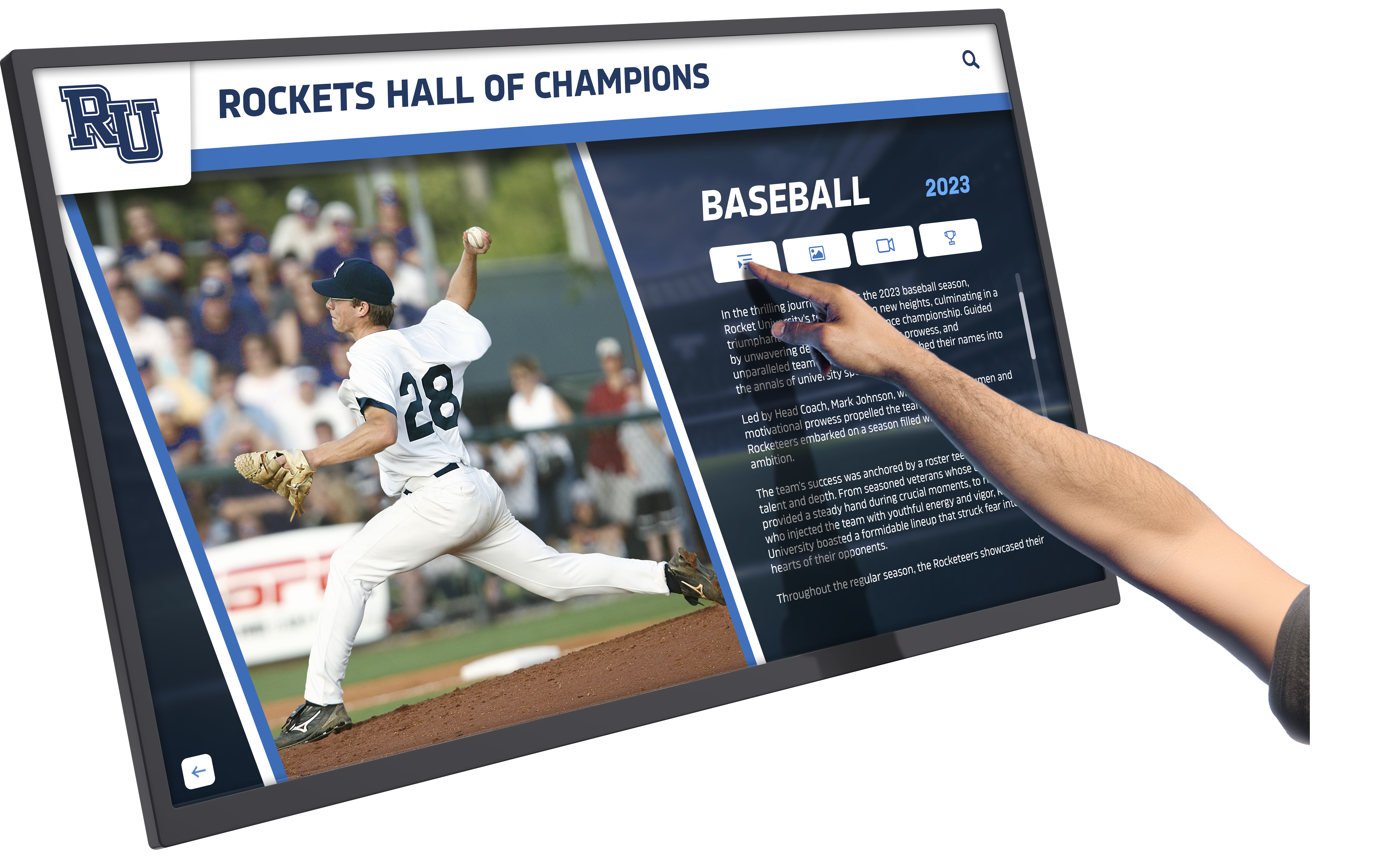
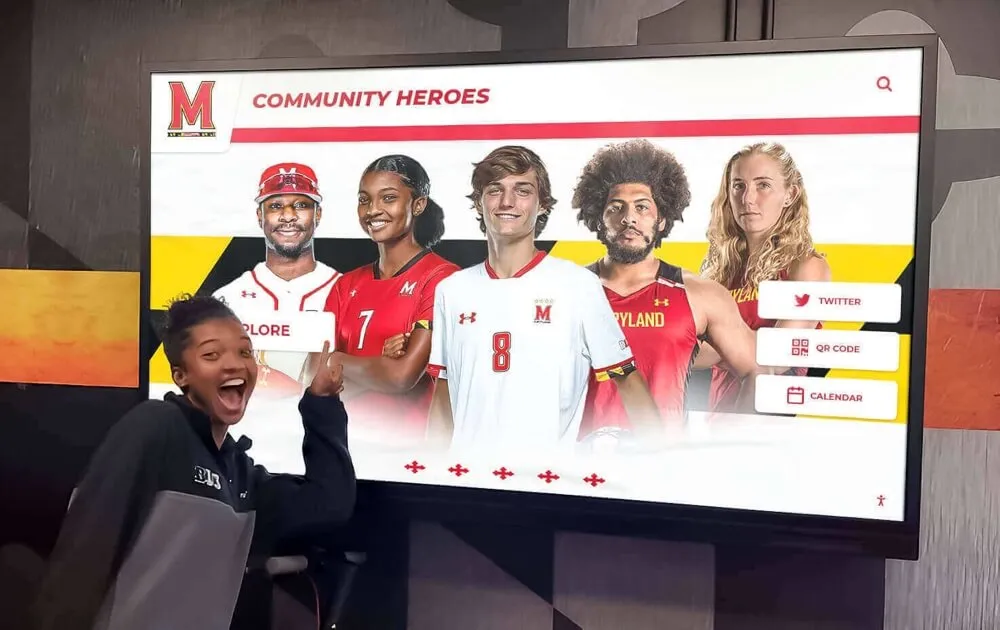
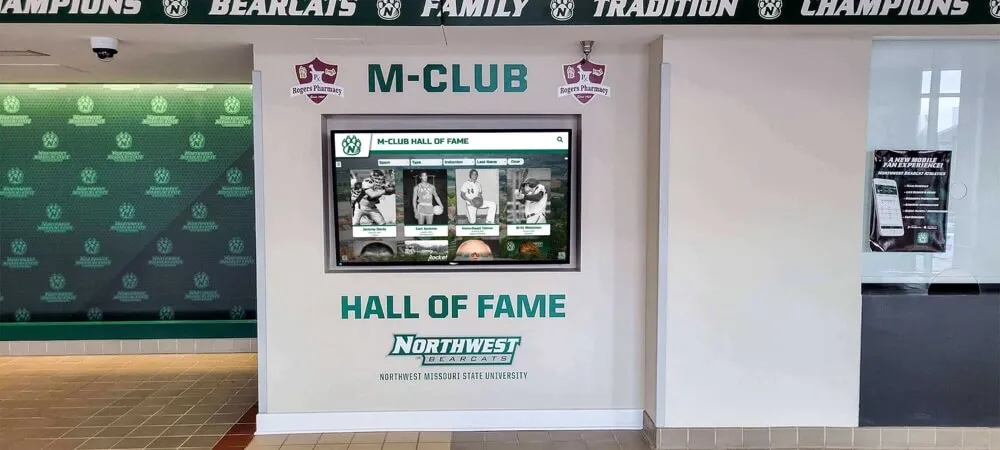
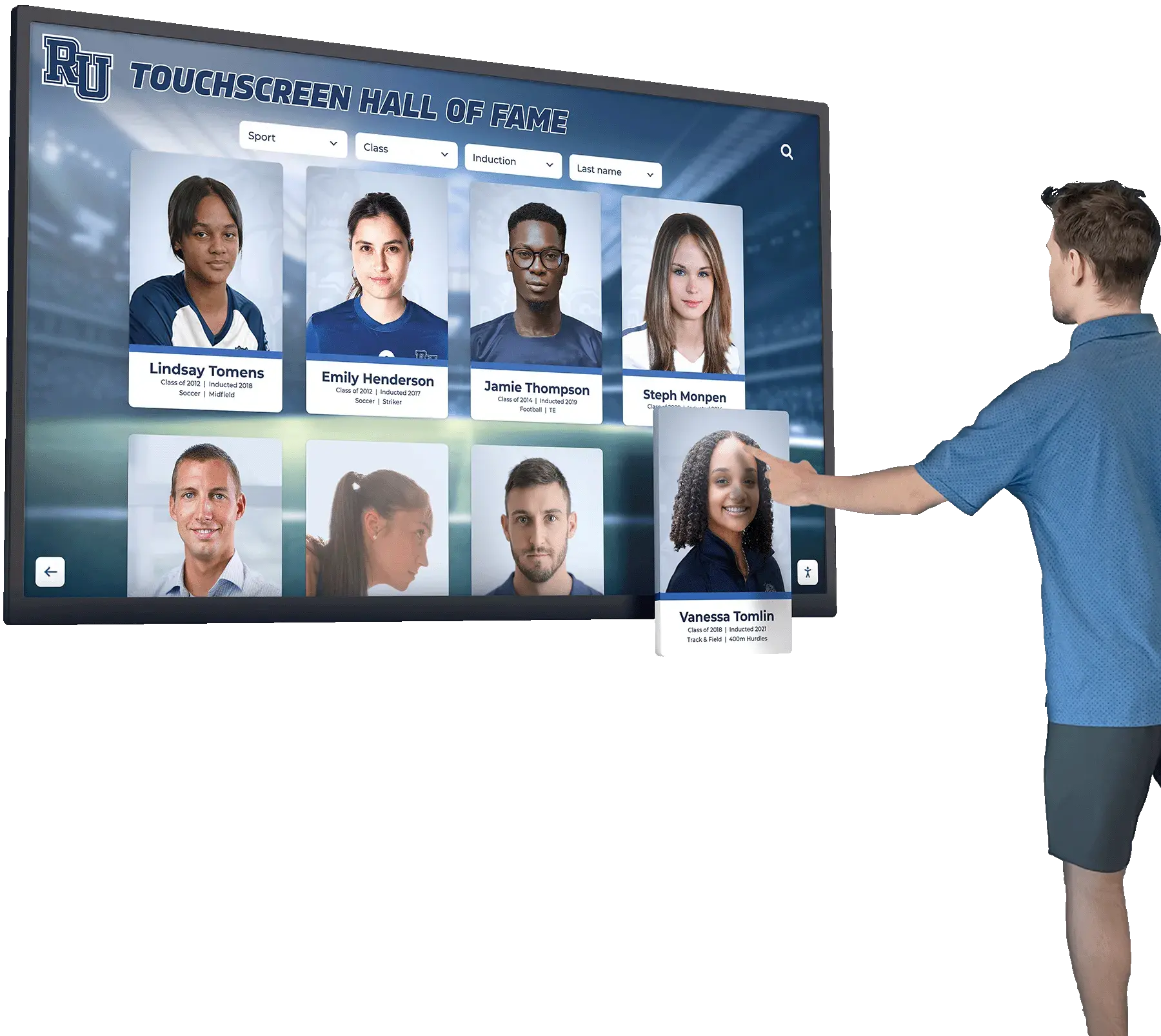
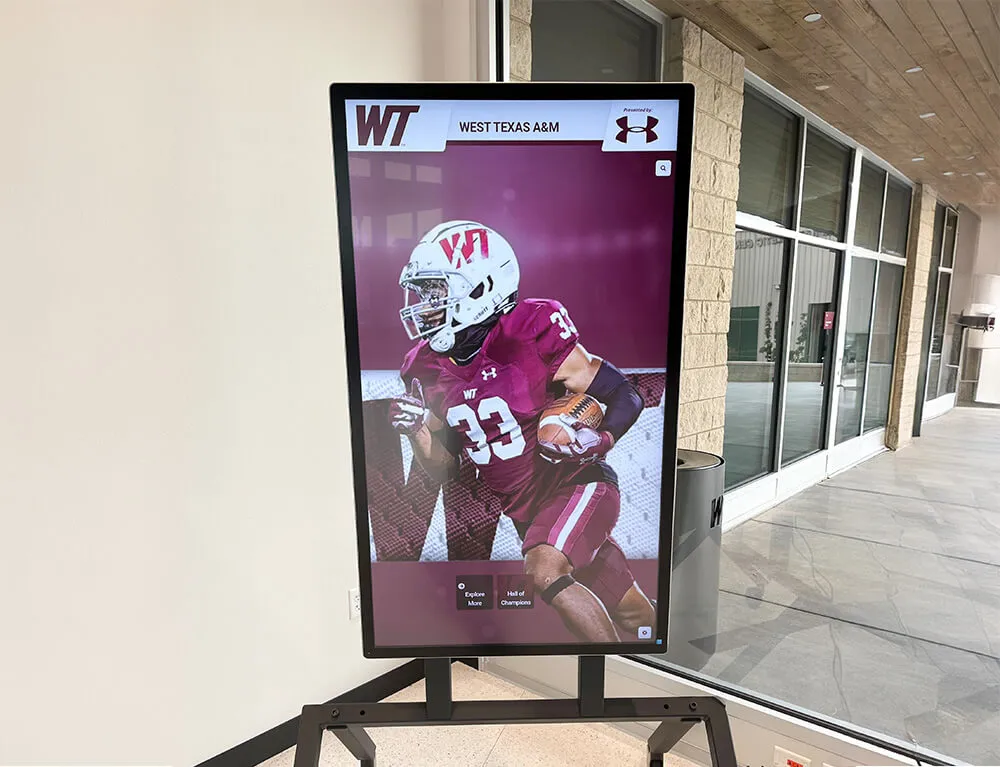
Card-based interfaces with clear touch targets enable intuitive exploration of tournament participants and game details
Content Blocks and Motion Design for Bracket Displays
Beyond static layout, animation and motion enhance bracket usability while celebrating tournament progression:
Attraction Loop (Idle State)
When not actively used, championship displays should run attraction sequences drawing attention and demonstrating interactivity:
- Animated bracket fill showing tournament progression from opening rounds through championship
- Highlight reels featuring exciting moments from critical tournament games
- Championship celebration sequences spotlighting ultimate winners with trophy presentations
- Historical tournament montages showing program championship tradition
- “Touch to Explore” prompts with visual indicators demonstrating interaction
These attraction loops serve dual purposes—engaging passersby while educating viewers about interactive capabilities they might not otherwise discover.
Progressive Bracket Revelation
For in-progress tournaments, animated bracket updates create excitement:
As games conclude and winners advance, winning teams should animate smoothly into next-round positions while eliminated teams fade or gray out. This motion-based progression creates dynamic tournament storytelling where displays reflect real-time competitive advancement, building anticipation for upcoming matchups as brackets narrow toward championship finals.
Interactive Feedback and Transitions
Touch interactions require clear visual response confirming user actions:
- Card press states showing selected matchups before detail views open
- Smooth zoom transitions when moving from bracket overview to game details
- Slide animations indicating directional navigation through tournament rounds
- Loading indicators when retrieving detailed game statistics or video content
These micro-interactions create responsive, polished experiences that feel professional and intentional rather than static and sluggish.
Matchup Reveal Patterns
When exploring specific games, progressive disclosure manages information density:
- Summary cards show teams, final scores, and game dates at a glance
- Expand actions reveal period-by-period scoring, key plays, and turning points
- Full detail views display complete box scores, individual statistics, and highlight video
- Related content links connect to player profiles, season records, or historical context
This layered approach prevents overwhelming users while enabling deep exploration for those seeking comprehensive tournament information.
Accessibility and UX Checklist for Tournament Displays
Creating inclusive bracket experiences requires deliberate accessibility consideration:
Visual Accessibility
- High contrast between bracket elements ensuring visibility (minimum 4.5:1 text contrast)
- Color coding supplemented with patterns, icons, or text labels (never color alone)
- Large, legible text sizing (minimum 18pt for team names, 24pt+ for headers)
- Touch targets minimum 44x44 pixels with adequate spacing preventing mis-touches
- Alternative high-contrast modes for users with visual impairments
Cognitive Accessibility
- Clear, consistent bracket layouts using familiar tournament visualization patterns
- Minimal steps to accomplish common tasks (finding specific teams, viewing game results)
- Obvious navigation controls with standard icons (arrows, home, back)
- Legends explaining bracket structure for viewers unfamiliar with tournament formats
- Optional simplified views reducing information density for easier comprehension
Physical Accessibility
- Mounting heights placing primary controls within wheelchair user reach (15-48 inches)
- Kiosk installations providing adequate approach clearance
- Volume controls for video content respecting quiet environments
- Alternative mobile/web access for users unable to physically reach displays
Understanding accessibility requirements for digital recognition ensures tournament displays serve all community members effectively.
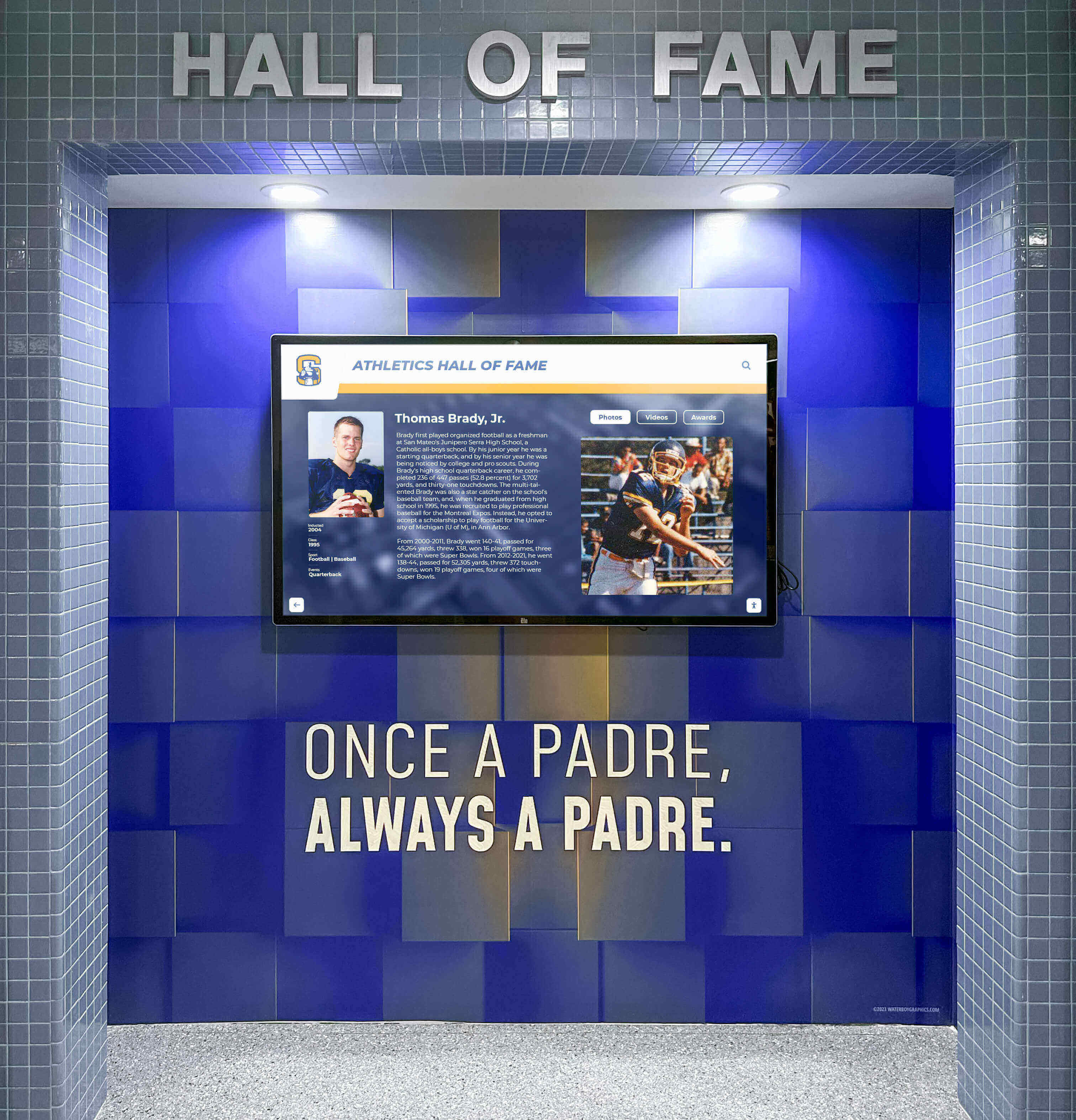
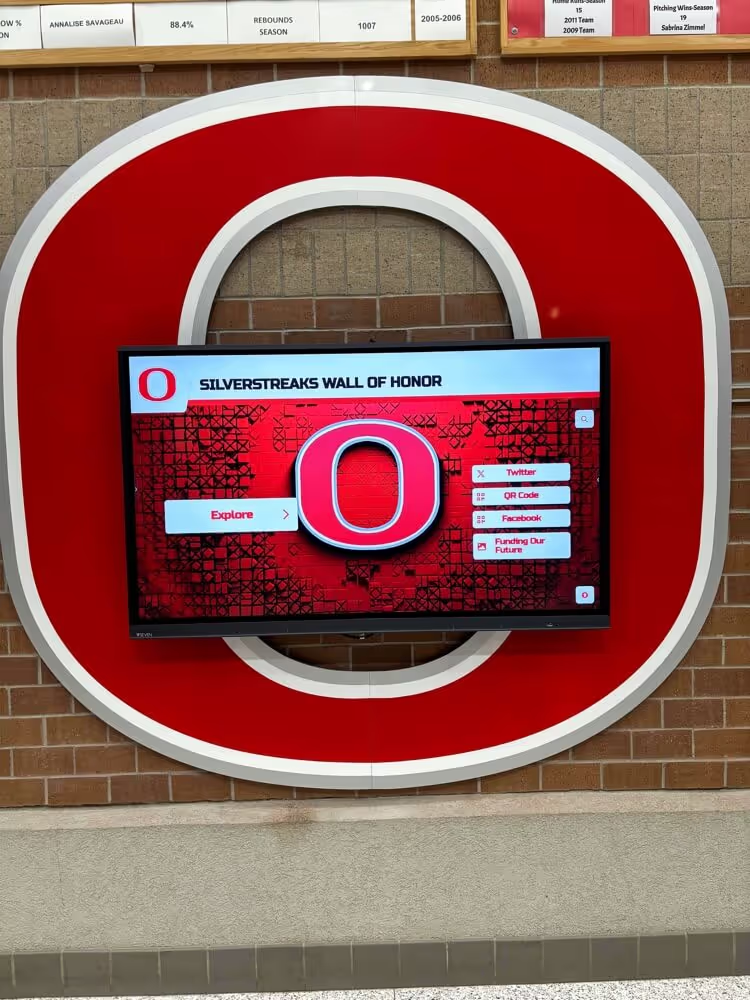
Commercial-grade touchscreens rated for continuous operation provide reliable platforms for permanent athletic recognition installations
Brand Integration Checklist for Championship Displays
Tournament bracket displays should reflect school identity while maintaining professional presentation and clear information hierarchy.
Visual Identity Implementation
School Color Systems
Apply institutional colors systematically throughout bracket displays:
- Primary school colors for championship path highlighting and winning team emphasis
- Secondary colors for bracket structural elements like connector lines and dividers
- Neutral backgrounds ensuring text legibility and preventing visual fatigue
- Accent colors for interactive elements like touch buttons and navigation controls
Avoid excessive color application that creates visual chaos—purposeful, strategic color use creates brand connection while maintaining professional clarity.
Typography Hierarchy and Readability
Establish clear type systems supporting both brand personality and functional legibility:
- Bold headline fonts for tournament titles and championship celebration
- Clean, highly legible body fonts for team names, scores, and game information
- Size progression creating obvious information hierarchy from headers through details
- Adequate spacing and leading preventing visual crowding
Typography must prioritize readability at viewing distances (often 6-10 feet for hallway displays), requiring larger sizing than typical digital content.
Logo and Mascot Integration
Incorporate school marks strategically:
- Primary school logos in header areas maintaining required clear space
- Mascot graphics as background elements or watermarks (subtle, not distracting)
- Championship trophy imagery when celebrating tournament victories
- State association or conference logos acknowledging tournament organizers
Balance pride and promotion with information clarity—overly branded displays compromise usability when logos and graphics compete with tournament content for attention.
Custom Backgrounds and Imagery
School-Specific Photography
Incorporate location-specific imagery creating immediate recognition:
- Gymnasium interiors showing home court where teams practice and compete
- Team huddle photos capturing competitive intensity and team unity
- Celebration imagery from past championships establishing tradition
- Facility exteriors connecting digital displays to physical spaces
These environmental connections ground digital displays in school-specific context, making tournament celebration feel authentic and personal rather than generic.
Motion Graphics and Video Backgrounds
Dynamic backgrounds add visual interest for attraction modes:
- Subtle motion graphics using school colors and geometric patterns
- Slow-motion game action from tournament play or season highlights
- Championship celebration footage showing trophy presentations and team reactions
- Time-lapse sequences of gymnasium filling with crowds for big games
Motion backgrounds work best when subtle—excessive movement distracts from bracket information and creates visual fatigue.
Resources on digital storytelling in athletic programs provide frameworks for effective multimedia integration that enhances rather than overwhelms tournament recognition.
Sponsorship Zones and Recognition Balance
Schools often fund championship displays through corporate sponsorships requiring tasteful integration:
Sponsor Placement Strategies
- Footer logos acknowledging businesses supporting athletic programs
- Named displays crediting major donors (“Championship Display sponsored by…”)
- Rotating sponsor content in sidebar areas during attraction loops
- Splash screens before main content showing primary funding partners
Maintaining Content Priority
Avoid excessive commercialization degrading user experience:
- Limit sponsor content to maximum 10-12% of screen space
- Ensure sponsor materials match overall design quality and professionalism
- Maintain clear visual separation between tournament content and sponsor recognition
- Update sponsor content regularly reflecting current partnership status
The priority remains tournament celebration—sponsor acknowledgment should feel like grateful appreciation rather than advertising intrusion.
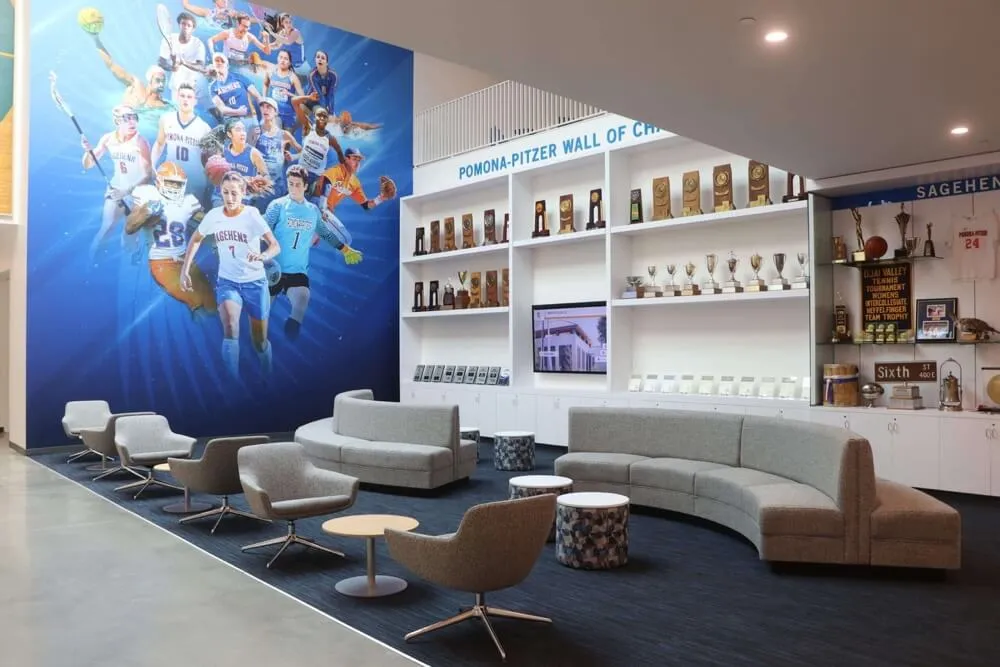
Creating comfortable viewing environments encourages extended engagement with championship content and team accomplishment exploration
Content Development Strategy for Tournament Displays
Bracket display value depends entirely on comprehensive, accurate content celebrating tournament participation and achievement.
Gathering Tournament Content Systematically
Essential Tournament Data
Compile complete tournament information from multiple sources:
- Official bracket sheets from state athletic associations showing seedings and matchups
- Game results including final scores, leading scorers, and significant statistics
- Tournament schedules documenting game dates, times, and locations
- Team rosters identifying all participants deserving recognition
- Coaching staff information acknowledging preparation and leadership
State athletic association websites typically maintain official tournament records—these authoritative sources ensure accuracy while providing standardized formatting for consistent data presentation.
Multimedia Asset Collection
Rich media transforms brackets from information displays into engaging storytelling:
- Game photography capturing action, emotion, and pivotal moments
- Video highlights preserving exciting plays, game-winning shots, and championship celebrations
- Team photos documenting squads that represented schools in tournament competition
- Trophy and medal imagery celebrating ultimate achievement
- Facility photography showing venues where championship games occurred
Systematic multimedia collection during tournaments prevents lost opportunities—capturing content in real-time proves far easier than reconstructing tournament stories months or years later.
Historical Tournament Archives
Comprehensive recognition extends beyond current seasons:
- Previous championship brackets showing program tournament tradition
- Decade-by-decade tournament participation documenting sustained excellence
- Historical photos and newspaper clippings providing era context
- Comparative statistics showing how current tournaments relate to past achievements
This historical depth demonstrates that current tournament success builds on established tradition while inspiring future teams to add their chapters to ongoing program narratives.
Writing Compelling Tournament Narratives
Game Story Development
Transform scores into engaging narratives:
Rather than simply stating “Central defeated North 65-62,” write “Central overcame 10-point halftime deficit with fourth-quarter surge, Johnson’s three-pointer with 12 seconds remaining providing dramatic game-winning margin in semifinal thriller that advanced Eagles to championship game.”
This narrative approach captures drama, context, and emotional resonance that raw statistics cannot convey alone.
Player Recognition Frameworks
Celebrate individual tournament performances:
- Tournament MVP and all-tournament team selections
- Statistical leaders (scoring, rebounds, assists, goals, etc.)
- Clutch performance recognition for game-winning plays
- Underdog and breakthrough performances exceeding expectations
Individual recognition within team context motivates athletes while providing personal connection points for families and community members exploring tournament content.
Coaching and Team Recognition
Acknowledge preparation and collective achievement:
- Coaching strategy and adjustments that enabled tournament success
- Team chemistry and unity that carried squads through difficult moments
- Program development showing tournament appearance within larger building process
- Community support recognizing families, boosters, and fans who sustained teams
This comprehensive recognition demonstrates that tournament success involves entire programs, not just athletes on courts or fields.
Understanding championship recognition best practices helps schools create tournament displays that appropriately celebrate achievement at every level.
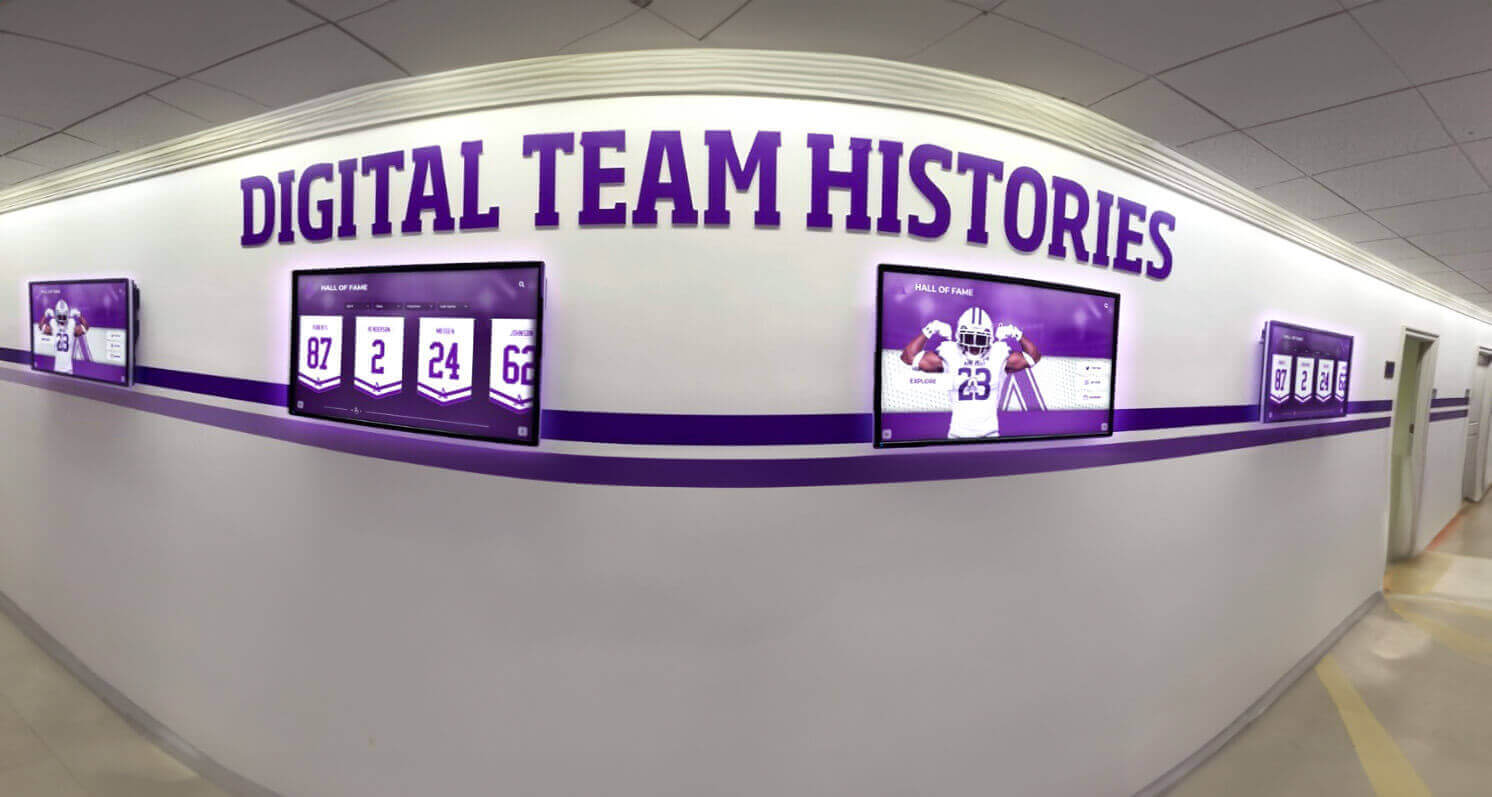
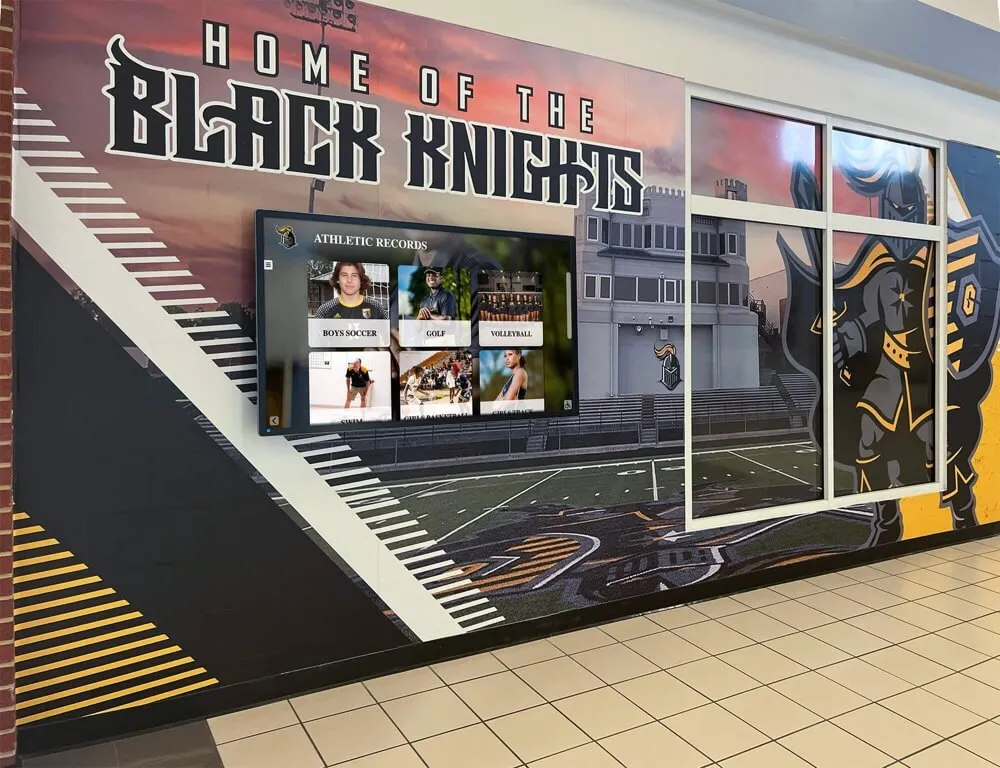
Multi-display installations enable comprehensive tournament storytelling across different sports and seasons while maintaining consistent visual systems
Implementation and Activation Plan
Successful championship bracket display launch requires strategic planning across technology selection, content development, and community engagement.
Technology Selection for Tournament Displays
Display Hardware Considerations
Choose display solutions aligned with tournament content requirements:
Screen Size and Viewing Distance
Tournament brackets contain substantial information density requiring adequate screen real estate:
- 43-50 inch displays work for close viewing (3-6 feet) in smaller spaces
- 55-65 inch screens suit hallway installations with 6-10 foot viewing distances
- 70-75 inch displays accommodate larger lobbies where viewers stand further back
Bracket legibility at intended viewing distances should drive sizing decisions—inadequately sized displays force viewers to approach uncomfortably close to read team names and scores.
Touch vs. Non-Touch Displays
Interactive touchscreens enable exploration but increase complexity and cost:
Touchscreen Advantages:
- User-controlled navigation allowing personalized content discovery
- Deep dive capability into game details, player stats, and highlight video
- Engagement through interaction rather than passive viewing
- Accessibility through direct manipulation matching smartphone patterns
Non-Touch Digital Signage Advantages:
- Lower cost reducing initial investment requirements
- Simpler content management without interactive programming
- Reduced maintenance without touch calibration or screen cleaning needs
- Effective for predominantly informational bracket presentation
Many schools implement hybrid approaches—prominent touchscreen displays in high-traffic lobbies providing interactive exploration, supplemented by non-touch displays in gyms and hallways showing rotating bracket content.
Commercial vs. Consumer Displays
Tournament displays running continuously require commercial-grade hardware:
Consumer televisions designed for residential use (8-10 hours daily) fail rapidly under continuous operation. Commercial displays rated for 16-24 hour daily operation provide necessary reliability for permanent installations while offering superior warranty coverage, integrated content players, and professional features like portrait orientation support.
The modest price premium (typically 20-30% over consumer equivalents) proves worthwhile when avoiding frequent replacement and maintenance issues.
Software Platform Requirements
Purpose-Built Recognition vs. Digital Signage
Tournament bracket displays can utilize different software approaches:
Digital Signage Platforms:
Generic digital signage software enables tournament bracket display through custom graphic creation. Schools design bracket layouts in graphics programs, export as images, and schedule display through signage platforms. This approach offers flexibility but requires significant design work for each tournament update.
Interactive Recognition Platforms:
Specialized recognition software like Rocket Alumni Solutions provides purpose-built tournament features including bracket templates accommodating different tournament formats, automated bracket population from game results, interactive navigation enabling user-controlled exploration, and integrated multimedia supporting photos, videos, and rich profiles.
Purpose-built platforms reduce ongoing content management effort while enabling interactive features difficult to achieve with traditional signage software.
Cloud-Based vs. Local Management
Cloud-based content management enables remote updates from any internet-connected device—athletic directors can update tournament brackets from offices, homes, or even tournament venues using smartphones or tablets. This accessibility proves invaluable during active tournaments when timely updates maintain community engagement.
Local content management requires physical access to display computers, limiting update flexibility and creating dependencies on specific staff members being physically present.
Strategic Placement and Installation
Optimal Tournament Display Locations
Display effectiveness depends significantly on strategic positioning:
Primary Location: Main Entrance Lobbies
Championship displays positioned in main school entrances welcome visitors with immediate athletic pride demonstration. These high-visibility locations ensure tournament achievement receives prominent community awareness while creating powerful first impressions for prospective families and recruits visiting schools.
Secondary Locations: Athletic Facilities
Gym lobbies and field houses provide natural contexts for tournament recognition. Current athletes encounter championship tradition daily in their training environments, creating motivation through visible connection to program excellence. These installations inspire continued pursuit of tournament qualification and championship goals.
Supporting Locations: Common Areas
Cafeterias, student centers, and major hallway intersections capture broad student body attention. Tournament displays in these social spaces ensure recognition reaches beyond athletics programs to entire school communities, building widespread pride and awareness.
Understanding effective hallway display strategies helps schools position championship recognition for maximum visibility and community impact.
Installation Best Practices
- Professional mounting ensuring weight support and vandalism resistance
- Appropriate viewing height (screen center 50-60 inches for standing adults)
- Lighting consideration avoiding glare and washout
- Cable management concealing power and network connections
- Protective surrounds when in high-traffic or impact-risk areas
Quality installation matters—poorly positioned or inadequately secured displays compromise effectiveness regardless of content quality.
Refresh Cadence and Content Maintenance
Tournament Season Updates
During active championship seasons:
- Real-time bracket updates as games conclude and teams advance
- Daily highlights and recaps during tournament weekends
- Social media integration sharing bracket progression with wider communities
- Mobile notifications alerting community members to display updates
This real-time currency creates excitement and engagement impossible with static traditional displays that require manual updates.
Off-Season Content Strategy
Between championship seasons:
- Historical tournament displays showing past championship runs
- “On This Day” content highlighting memorable tournament moments from history
- Statistical comparisons examining how past and present teams achieved success
- Pre-tournament preview content building anticipation for upcoming championships
Year-round relevant content prevents displays from becoming stale seasonal installations that lose attention when not immediately timely.
Multi-Year Tournament Archives
Comprehensive programs systematically document tournament history:
- Decade-by-decade tournament participation showing program consistency
- Championship collection displaying all tournament titles across sports
- Near-miss recognition celebrating teams that reached finals or semifinals
- Qualification celebration honoring all teams earning tournament berths
This archival depth transforms displays from current-season reporting into institutional memory preservation that honors complete program traditions.

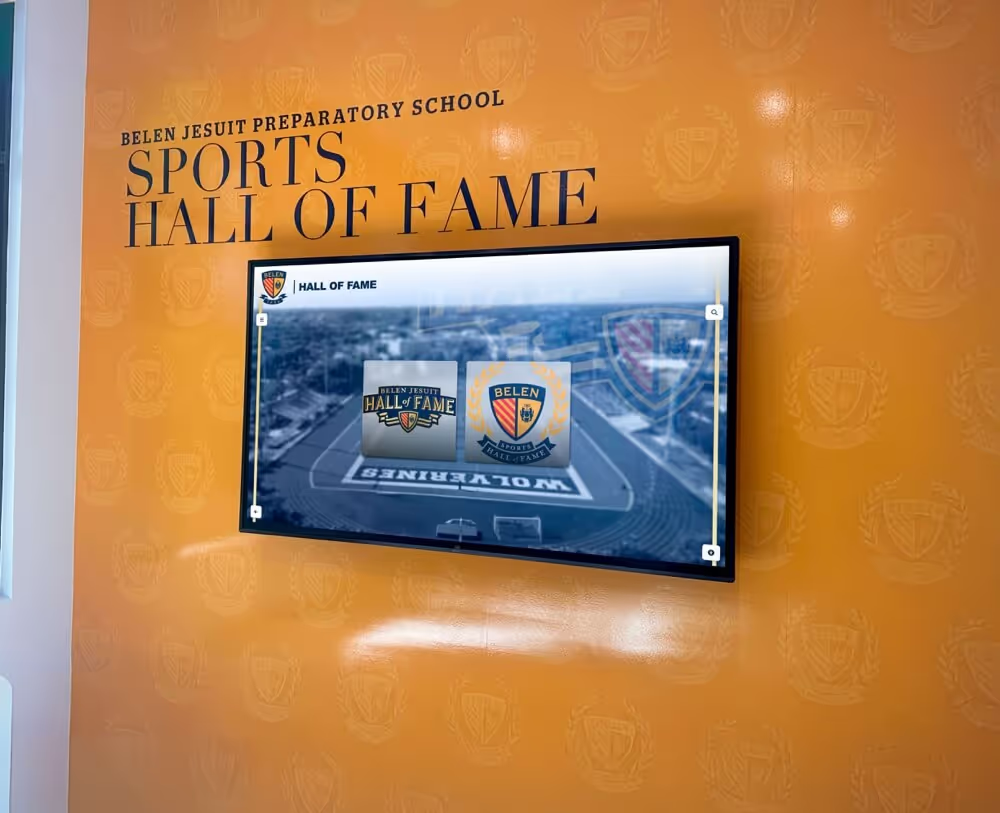
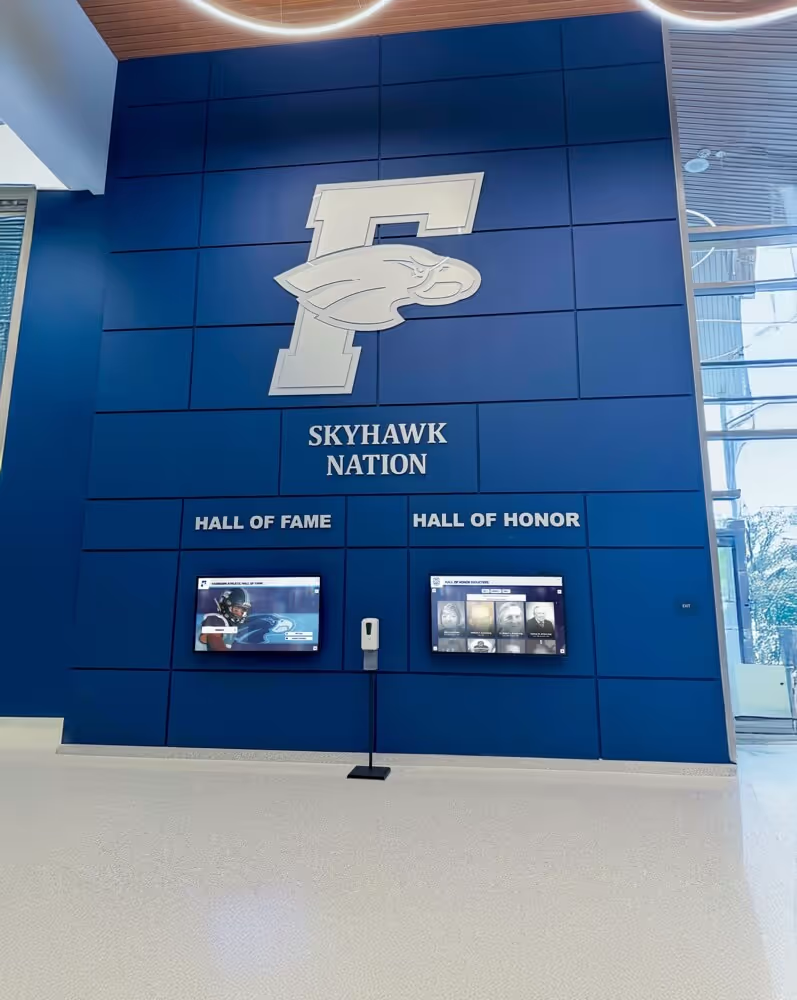
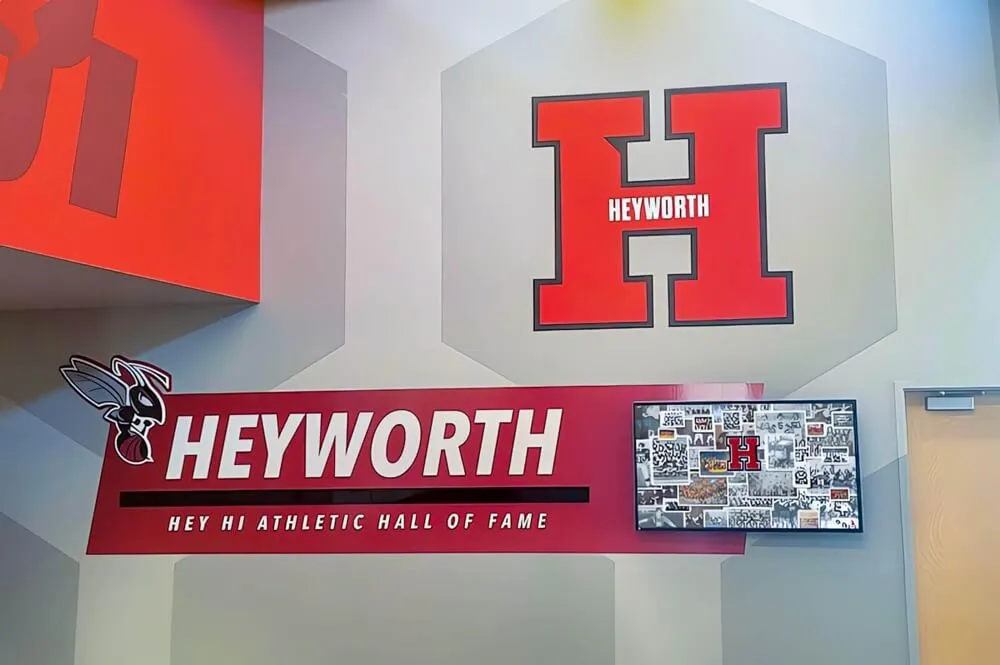
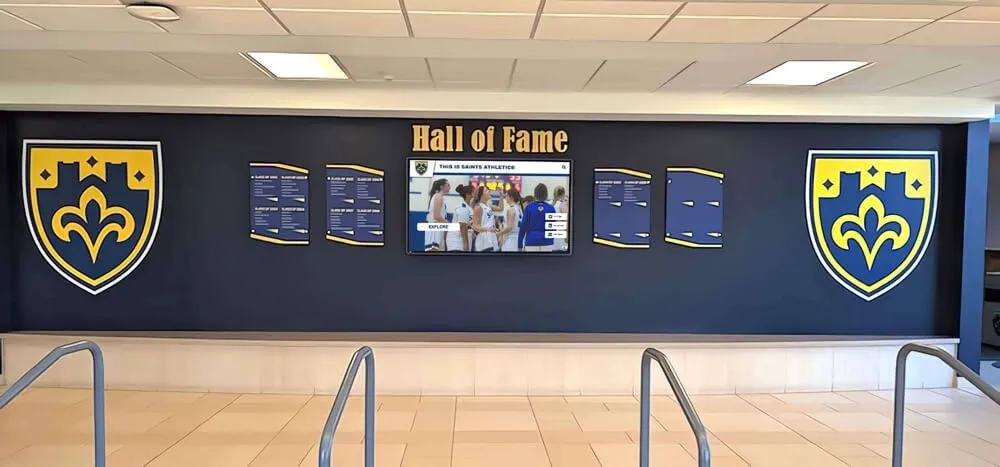
Branded installations integrate institutional identity with tournament recognition creating cohesive athletic program storytelling
Measuring Success and Optimizing Engagement
Data-driven evaluation ensures championship display investments deliver value while identifying continuous improvement opportunities.
Engagement Metrics for Tournament Displays
Quality interactive platforms provide comprehensive usage analytics:
Quantitative Engagement Metrics
- Total interaction sessions showing display usage frequency
- Average session duration indicating content engagement depth
- Most-viewed tournaments revealing high-interest content
- Search patterns demonstrating how users locate specific teams
- Peak usage times informing optimal content launch scheduling
- Return visitor rates showing sustained community interest
These metrics demonstrate display value to administrators while providing objective evidence of community engagement with tournament recognition.
Behavioral Analysis Patterns
Usage analytics reveal optimization opportunities:
- Navigation paths showing whether users browse chronologically or seek specific content
- Drop-off points identifying confusing interfaces or problematic navigation
- Feature utilization rates indicating which capabilities users discover and value
- Mobile vs. display access patterns showing how communities engage across platforms
Understanding actual usage patterns enables evidence-based design refinement rather than assumption-based optimization.
Qualitative Assessment and Community Feedback
Beyond quantitative analytics, gather qualitative insights:
Direct Feedback Collection
- Surveys assessing awareness and satisfaction with tournament displays
- Comment opportunities near displays capturing spontaneous reactions
- Focus groups with athletes, families, and students exploring detailed perspectives
- Social media monitoring documenting organic sharing and commentary
Qualitative feedback often reveals emotional impact and community value that metrics cannot capture—understanding what truly resonates guides strategic program development.
Stakeholder Input
Regularly gather feedback from key constituencies:
- Athlete reactions to their own tournament recognition
- Family perspectives on championship celebration appropriateness
- Alumni engagement with historical tournament content
- Administrative assessment of program value and community impact
- Donor and sponsor satisfaction when funding supported displays
This comprehensive stakeholder feedback ensures displays serve diverse community needs rather than narrow organizational perspectives.
Continuous Improvement Strategies
Use insights to refine tournament displays over time:
Content Enhancement
- Add missing tournaments or games revealed through community requests
- Enrich existing brackets with additional photos, stats, or context
- Create featured collections highlighting compelling championship stories
- Expand historical coverage documenting complete program tournament tradition
Design Refinement
- Simplify confusing navigation based on observed usage patterns
- Enhance visual clarity responding to feedback about information findability
- Adjust interactive elements improving touch responsiveness and feedback
- Optimize information density balancing comprehensiveness with clarity
Technical Optimization
- Improve loading speed and responsiveness
- Fix bugs or errors discovered through usage
- Enhance search algorithms based on query patterns
- Update software maintaining security and capability
Understanding digital recognition display maintenance ensures long-term program sustainability and continued effectiveness.
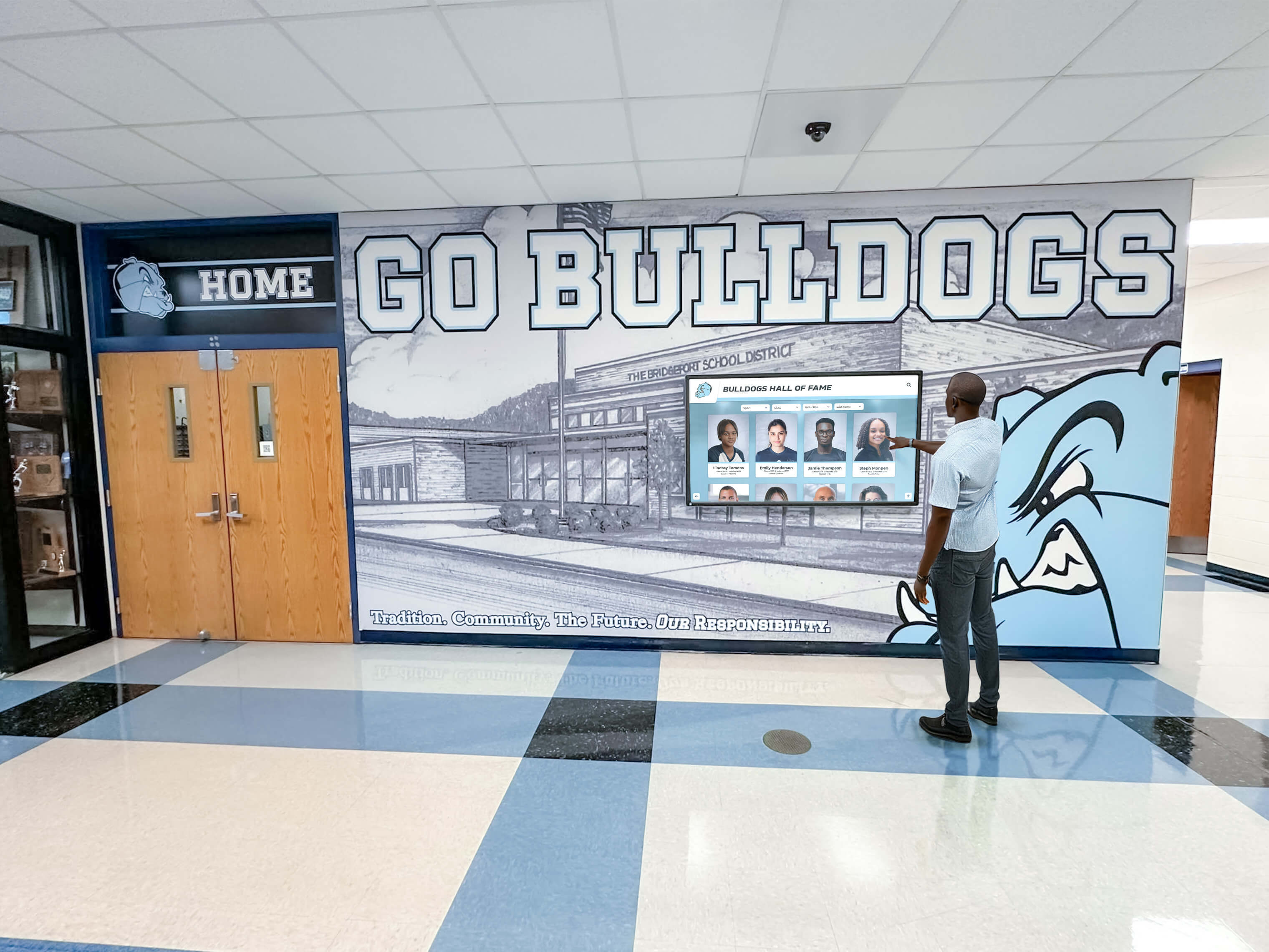
Intuitive interfaces enable users of all ages to explore tournament history and team achievements independently
Multi-Sport Tournament Display Strategies
Comprehensive athletic programs feature championships across numerous sports requiring coordinated recognition approaches.
Sport-Specific Bracket Considerations
Different sports present unique display challenges:
Basketball and Volleyball Tournaments
Single-elimination brackets with clear advancement paths and relatively few games create straightforward bracket visualization. Focus on game highlights, clutch performances, and championship game drama through photos and video.
Wrestling Tournaments
Complex double-elimination formats with consolation brackets require sophisticated visualization. Interactive displays prove particularly valuable, allowing users to trace individual wrestler paths through championship and consolation sides while understanding placement at various levels.
Resources on wrestling state tournament recognition provide detailed frameworks for presenting complex bracket structures effectively.
Baseball and Softball Tournaments
Regional and state tournament formats often feature pool play followed by brackets. Display solutions must accommodate preliminary round-robin results before showing bracket progression, requiring flexible content architectures.
Track and Field Championships
Individual and relay event championships don’t follow traditional bracket formats but still warrant celebration. Medal results, record performances, and individual/team scoring displays require different visualization approaches while maintaining consistent recognition frameworks.
Multi-Display Networks for Comprehensive Coverage
Schools with extensive championship traditions benefit from coordinated display networks:
Category-Specific Installations
- Main lobby display featuring current championship and recent tournament success
- Gymnasium displays showing basketball, volleyball, and wrestling tournaments
- Baseball/softball field displays celebrating diamond sport championships
- Track and field facility recognition highlighting individual and relay champions
This distributed approach positions championship recognition in relevant contexts where sport-specific communities encounter tradition naturally.
Coordinated Content Management
Multi-display networks require efficient management preventing duplicated effort:
- Centralized content databases feeding all displays from single sources
- Template systems maintaining visual consistency across installations
- Role-based permissions enabling sport-specific updates by relevant staff
- Automated content distribution synchronizing updates across network
Cloud-based platforms simplify network management, enabling coordinated updates across facilities from single interfaces.
Understanding multi-sport recognition strategies helps schools create equitable championship celebration ensuring all programs receive appropriate visibility.
Seasonal Rotation and Year-Round Relevance
Maintain display relevance throughout school years:
Winter Sports (November-March)
Feature basketball, wrestling, gymnastics, and swimming tournament brackets during competitive seasons. Highlight upcoming state tournaments, qualification progress, and historical winter championship success.
Spring Sports (March-June)
Transition to baseball, softball, track and field, lacrosse, and tennis championships. Document regional and state tournament progression while celebrating senior athletes completing final high school seasons.
Fall Sports (August-November)
Showcase football playoffs, cross country championships, volleyball tournaments, and soccer postseason success. Set stage for upcoming winter season while maintaining recent championship visibility.
Summer Maintenance (June-August)
Rotate historical content, all-time championship collections, and upcoming season previews. Use off-season periods for display maintenance, software updates, and content development preparing for new athletic years.
This seasonal rotation prevents displays from becoming stale while ensuring year-round athletic program visibility and community engagement.
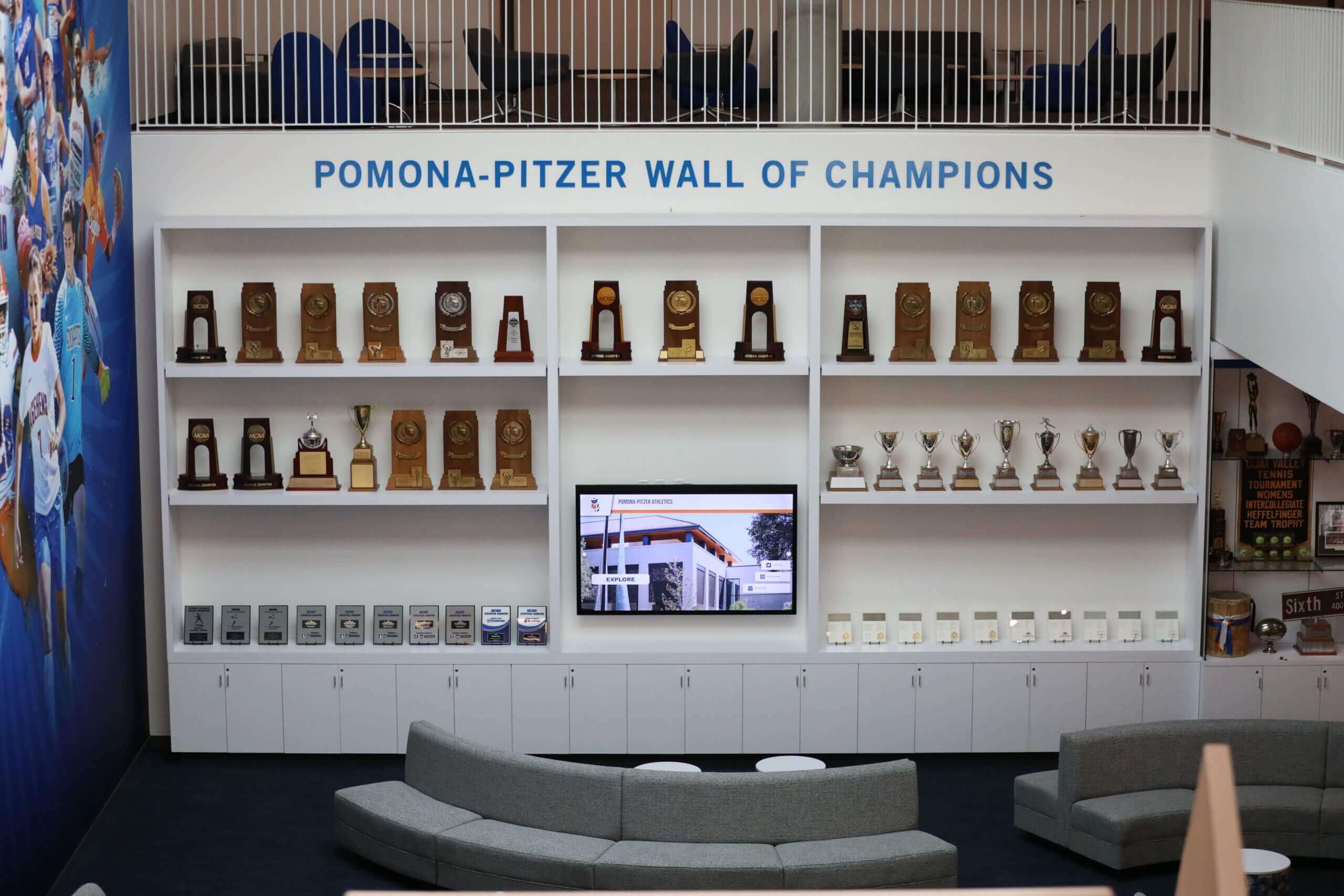
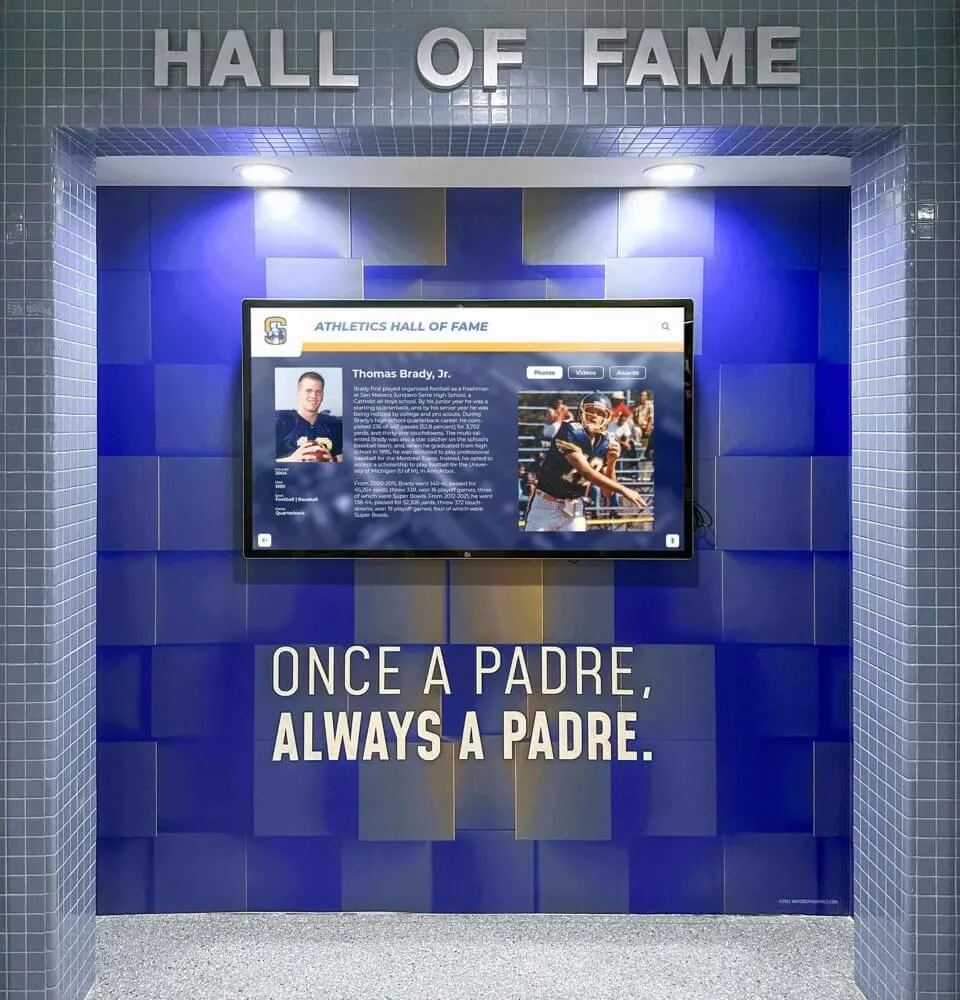
Creating dedicated championship spaces with seating and multiple displays encourages extended exploration of tournament traditions
Budget Considerations and Funding Strategies
Tournament display implementation requires strategic investment planning and creative funding approaches.
Investment Requirements and Options
Budget Tiers for Tournament Displays
Entry Level ($3,000-5,000):
- 43-50 inch non-touch commercial display
- Basic digital signage software with annual subscription
- Simple bracket graphics updated manually
- Single installation in main location
Mid-Range ($8,000-12,000):
- 55-65 inch touchscreen commercial display
- Purpose-built recognition software with cloud management
- Interactive bracket navigation with multimedia integration
- Professional installation with cable management
Premium ($15,000-25,000):
- 70-75 inch premium touchscreen with ultra-responsive technology
- Comprehensive recognition platform with mobile/web integration
- Custom design and content development services
- Multiple displays creating coordinated network
- Ongoing content management and support services
Investment Payback Considerations
While displays represent significant investments, consider long-term value:
- Longevity: Commercial displays typically last 7-10 years with proper maintenance
- Versatility: Platforms serve multiple recognition needs beyond tournament brackets
- Engagement: Interactive displays increase community connection and program pride
- Recruitment: Championship displays demonstrate program excellence to prospective athletes
Dividing total investment by expected lifespan yields annual costs often less than traditional banner printing, especially when considering comprehensive recognition capabilities beyond single-purpose applications.
Alternative Funding Strategies
Booster Club and Parent Organization Support
Athletic boosters and parent-teacher organizations often fund recognition projects:
- Present displays as lasting legacy projects benefiting future students
- Demonstrate engagement analytics from similar installations
- Offer naming opportunities recognizing major donors
- Create fundraising campaigns specifically targeting display projects
Corporate and Business Sponsorships
Local businesses frequently support school athletic programs:
- Offer sponsor recognition on displays acknowledging funding support
- Create multi-year partnerships providing ongoing support and updates
- Target businesses with school connections (alumni-owned, local employers)
- Emphasize community visibility and positive brand association
Memorial and Tribute Giving
Displays dedicated in memory of community members create meaningful tributes:
- Families often donate memorial gifts for projects providing lasting impact
- Coaches, athletes, or community supporters make appropriate dedicatees
- Memorial plaques or digital acknowledgments recognize tribute gifts
- Combining multiple smaller memorial gifts can fund complete installations
Grant Opportunities
Educational and community foundations sometimes support technology projects:
- Technology enhancement grants for innovative educational applications
- Athletic program development grants supporting participation and pride
- Community building grants emphasizing school-community connection
- Facility improvement grants within broader renovation projects
Understanding championship display alternatives helps schools evaluate options at different investment levels.
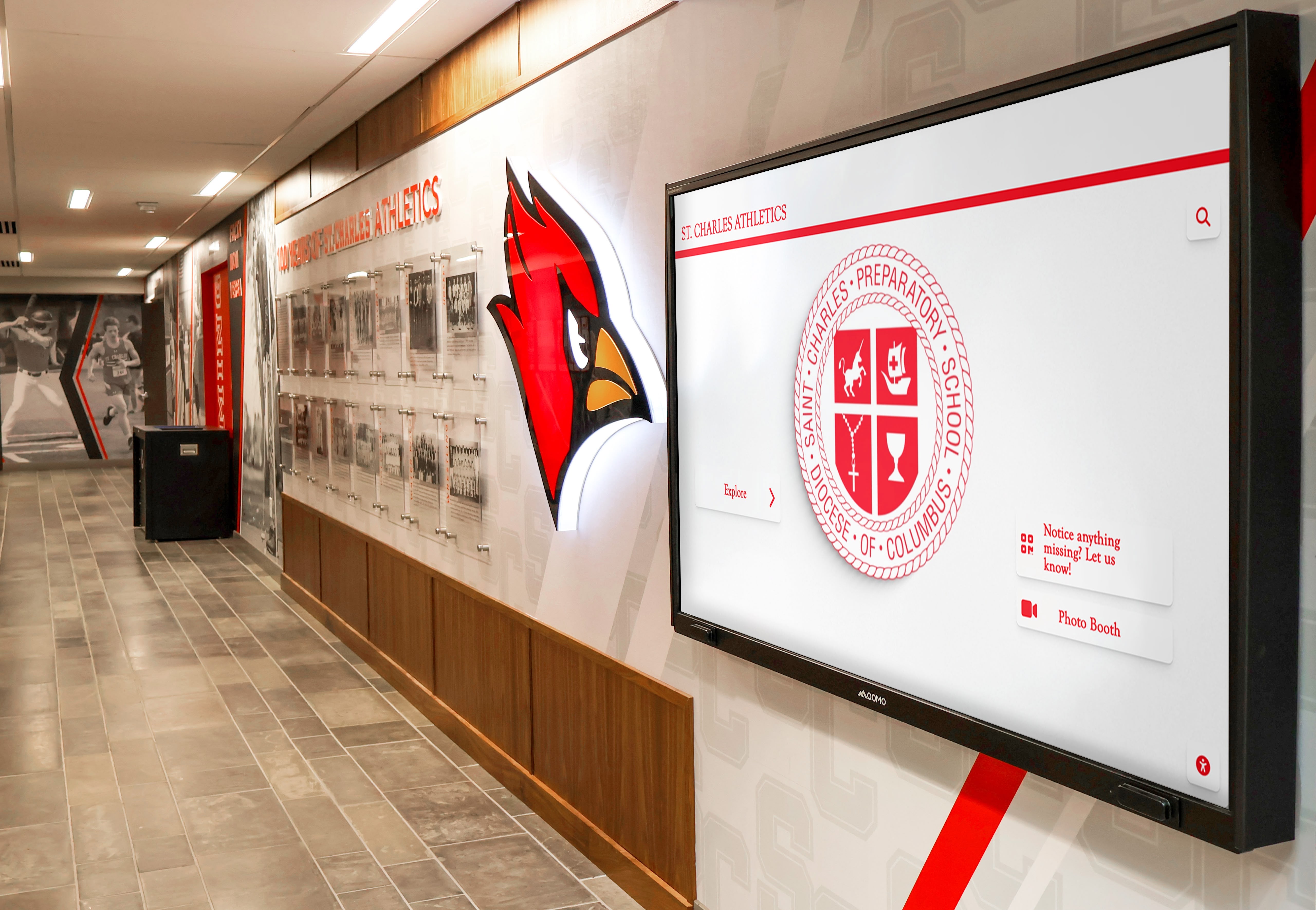
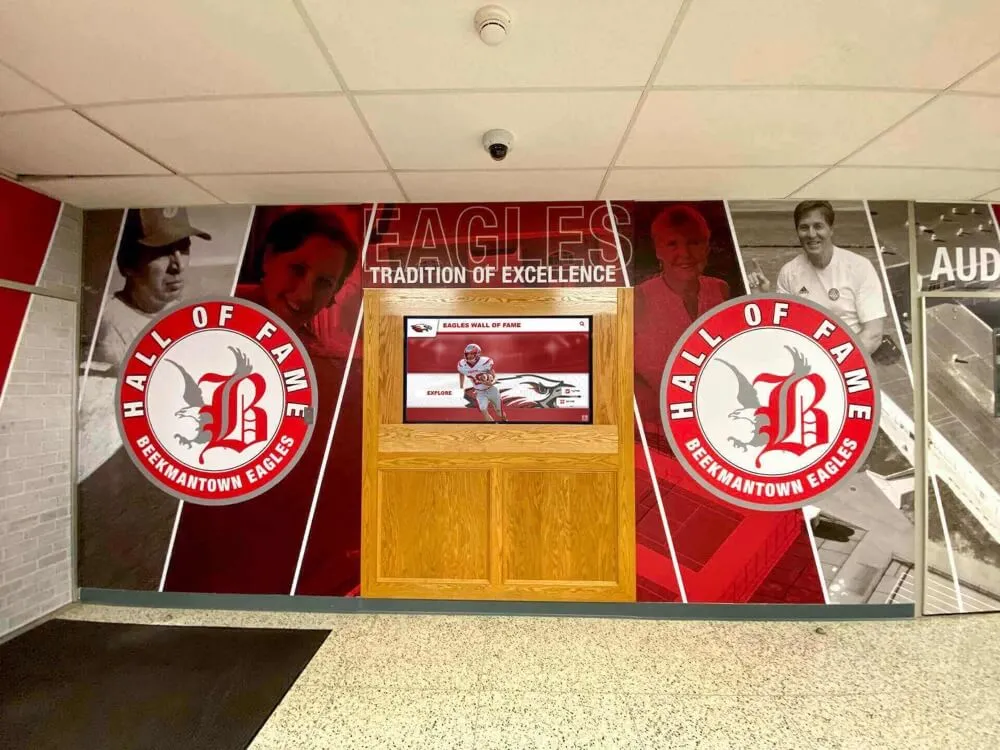
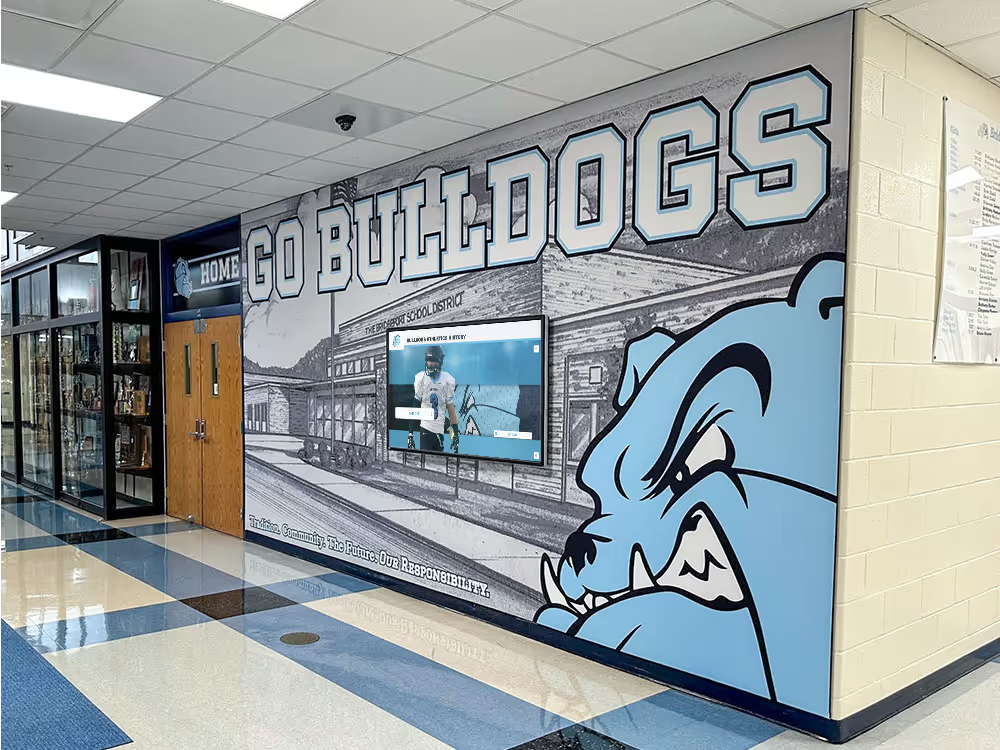
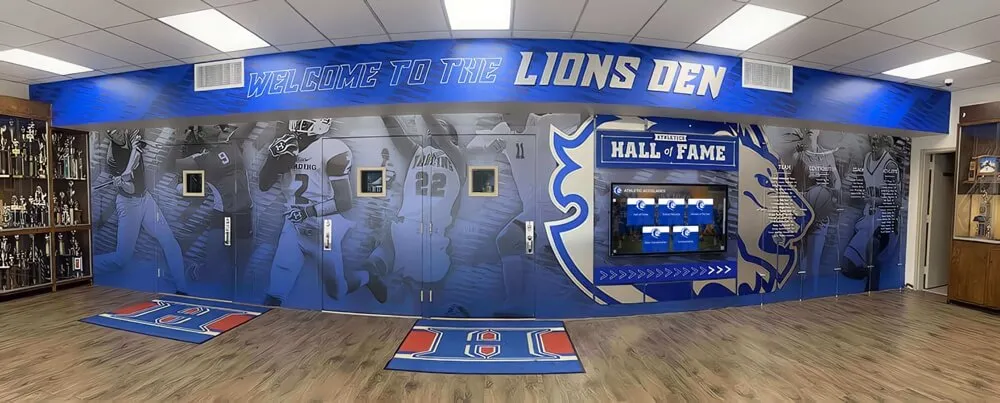
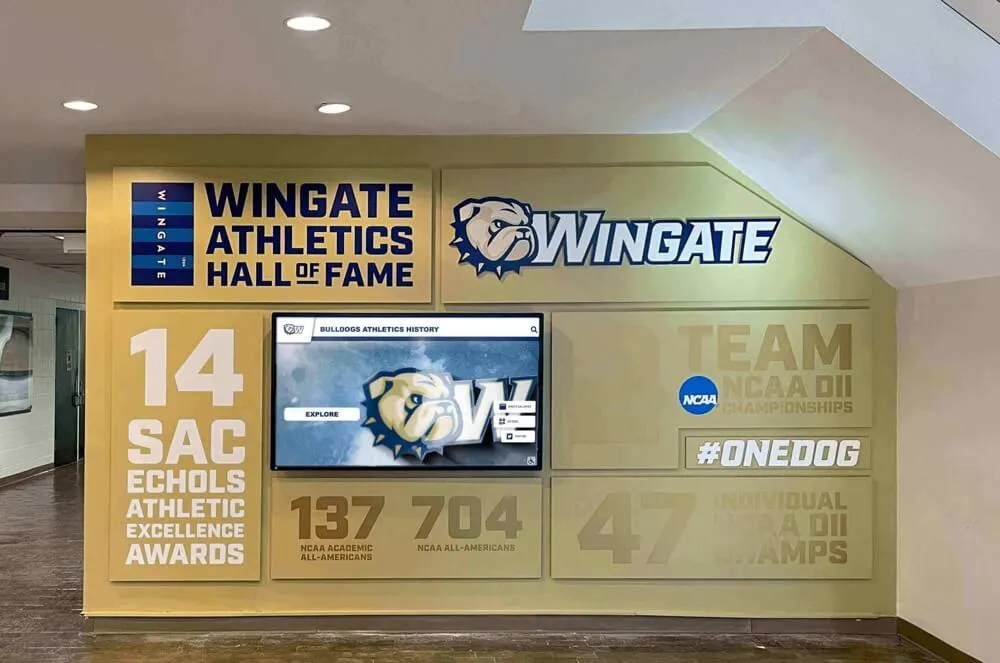
Themed installations integrating mascot imagery and school colors create immersive championship celebration environments
Best Practices for Long-Term Success
Learn from schools achieving sustained championship recognition program success:
Start with Clear Strategy and Goals
Successful displays begin with fundamental questions:
- Which championship tournaments deserve priority recognition?
- Who are primary audiences (current students, alumni, recruits, community)?
- What outcomes should displays achieve (motivation, pride, recruitment)?
- How will we measure success and justify continued investment?
- What resources can we sustainably commit to content management?
Strategic foundations prevent tactical implementations lacking coherence or failing to serve genuine organizational needs.
Prioritize Content Quality Over Feature Complexity
Better to present three tournaments comprehensively with rich multimedia than fifteen tournaments with basic information only. Complete game results, player recognition, photos, and context create engagement while minimal listings provide limited value beyond documentation.
Start focused on recent championships, then systematically expand historical coverage as capacity allows rather than pursuing immediate comprehensive breadth at expense of storytelling quality.
Design for Multiple Audiences and Use Cases
Effective tournament displays serve diverse constituencies:
- Current athletes exploring role models and program tradition
- Prospective athletes evaluating program competitiveness during recruitment
- Families celebrating their students’ tournament participation
- Alumni reconnecting with their own championship experiences
- Community members building pride in local athletic excellence
Navigation and content should support all these usage patterns rather than optimizing for single primary audience.
Plan for Sustainability and Evolution
Championship displays require sustained commitment:
- Budget ongoing software subscriptions and support contracts
- Assign permanent staff responsibility with documented procedures
- Integrate bracket updates with tournament schedules and athletic calendars
- Schedule seasonal content rotations maintaining year-round relevance
- Plan technology refresh cycles anticipating 7-10 year hardware replacement
Programs treated as projects rather than permanent initiatives often deteriorate within 2-3 years as initial enthusiasm fades and champion staff members transition.
Integrate Recognition with Broader Athletic Culture
Tournament displays work most effectively when integrated with comprehensive recognition strategies:
- Coordinate display updates with championship ceremonies and celebrations
- Leverage tournament content for social media engagement and communications
- Connect displays with recruitment activities and facility tours
- Integrate recognition with fundraising demonstrating investment impact
- Link displays to sports information efforts and media relations
This integration maximizes recognition value while distributing effort across teams rather than burdening single individuals.
Understanding comprehensive athletic recognition approaches helps schools create coordinated systems where championship displays function as components of broader athletic program celebration.
Conclusion: Celebrating Championship Excellence Through Thoughtful Design
High school state championship tournaments represent extraordinary achievement—months of preparation, intense competition, and defining moments that create lasting memories for student-athletes and communities. These tournament journeys deserve recognition matching their significance: engaging, accessible, permanent displays that celebrate participation and achievement at every bracket level while inspiring future teams to pursue their own championship dreams.
Get Your Touchscreen Mock-Up
Discover how custom-designed championship bracket displays can transform tournament recognition for your athletic program. Rocket Alumni Solutions creates interactive touchscreen experiences that celebrate athletic excellence through purposeful, engaging design.
Schedule Your Design ConsultationThe most effective championship bracket displays combine clear visual hierarchy making tournament structure immediately comprehensible, interactive navigation enabling user-controlled content exploration, rich multimedia storytelling celebrating achievement beyond raw statistics, and thoughtful accessibility ensuring all community members can engage with tournament recognition regardless of physical or cognitive abilities.
Whether showcasing single-sport championships or coordinating multi-sport tournament networks, digital touchscreen technology provides proven solutions for engaging championship recognition that static posters and traditional banners cannot match. Unlimited recognition capacity accommodates tournament expansion without physical space constraints, immediate content updates maintain currency during active tournaments, multimedia integration preserves video highlights and photos capturing tournament emotion, and interactive exploration enables personalized discovery where users control their engagement with tournament history.
Schools implementing thoughtful championship bracket displays demonstrate commitment to celebrating achievement comprehensively—honoring not just ultimate champions but all participants who earned tournament qualification through excellence and dedication. This comprehensive recognition approach communicates institutional values while building athletic cultures where tournament success receives systematic celebration creating motivation, pride, and lasting tradition.
Ready to explore championship display options for your athletic program? Learn more about state championship recognition strategies, discover interactive tournament display applications, explore comprehensive athletic recognition approaches, and understand digital trophy case alternatives that honor championship achievement through modern interactive technology purpose-built for celebrating excellence and preserving athletic tradition for generations to come.