



Intent: Demonstrate the essential features, design considerations, and implementation strategies that define the best touchscreen hall of fame solutions in 2026, helping institutions select recognition technology that creates engaging, accessible, and memorable experiences.
Modern institutions face mounting recognition needs that traditional plaques and trophy cases cannot accommodate. As athletic programs expand, donor communities grow, academic achievements multiply, and historical archives deepen, physical space constraints force difficult decisions about whom to recognize and how to honor expanding legacies within finite hallway real estate. Simultaneously, digital-first audiences expect interactive experiences matching smartphone sophistication rather than static displays requiring physical presence during limited facility hours.
The best touchscreen hall of fame solutions in 2026 address these challenges through purpose-built recognition platforms combining commercial-grade hardware, specialized software, intuitive design frameworks, and comprehensive content management—creating interactive experiences that eliminate space constraints while dramatically increasing engagement compared to traditional recognition methods. Unlike generic digital signage adapted for recognition purposes, specialized touchscreen systems understand unique institutional needs including privacy controls, accessibility requirements, brand integration flexibility, and social sharing capabilities that transform passive observation into active exploration and celebration.
This comprehensive guide examines what defines the best touchscreen hall of fame displays in 2026, covering essential technology features, design and UX considerations, accessibility standards, content management capabilities, and implementation best practices. Whether planning your first digital recognition installation or evaluating upgrades to existing systems, you’ll discover actionable criteria for selecting solutions that effectively honor achievement while creating experiences visitors genuinely value and remember.
Institutions implementing well-designed touchscreen recognition systems report three to five times longer visitor engagement compared to traditional static displays, with interactive exploration patterns demonstrating genuine interest rather than cursory glances. This increased engagement translates to stronger community connections, enhanced institutional pride, and recognition programs that truly celebrate excellence rather than simply documenting names and dates.

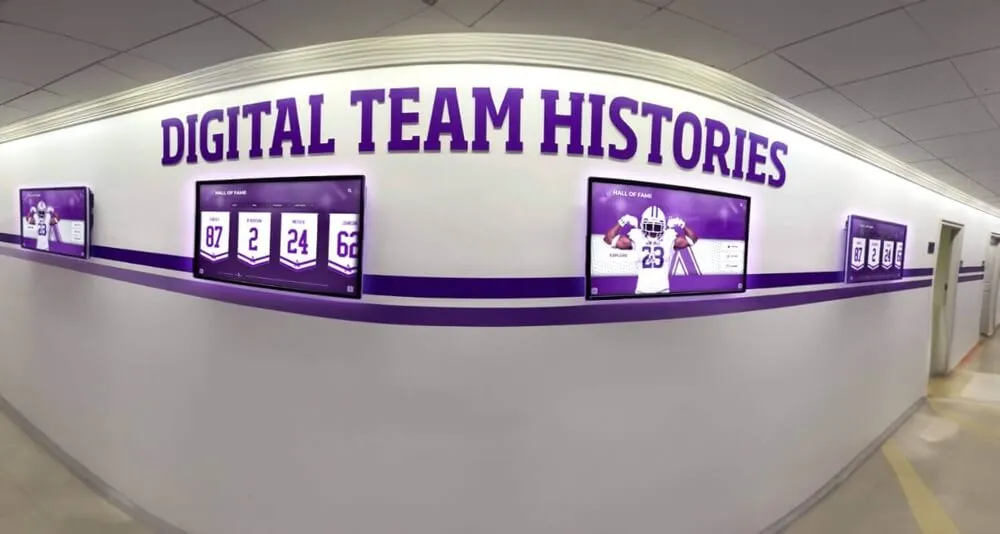
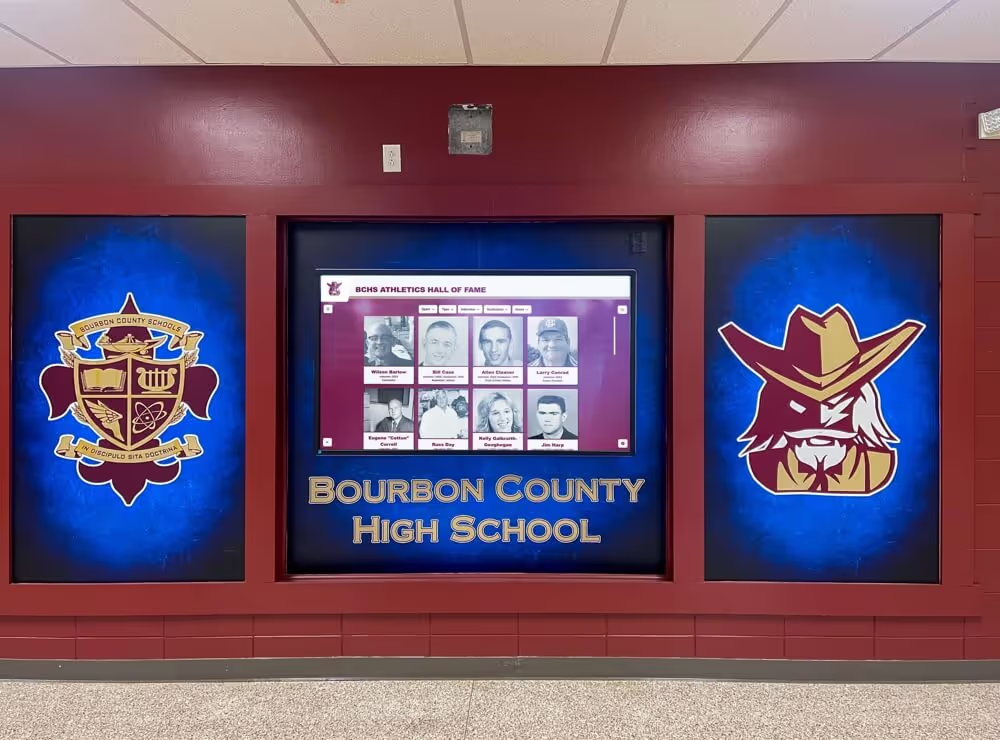
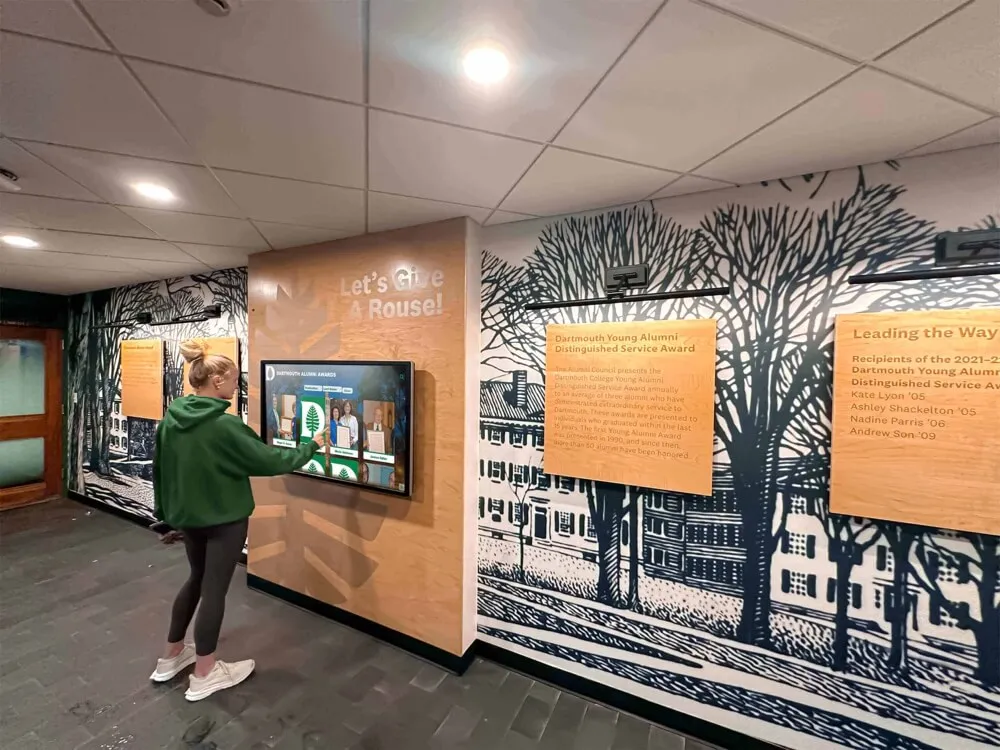
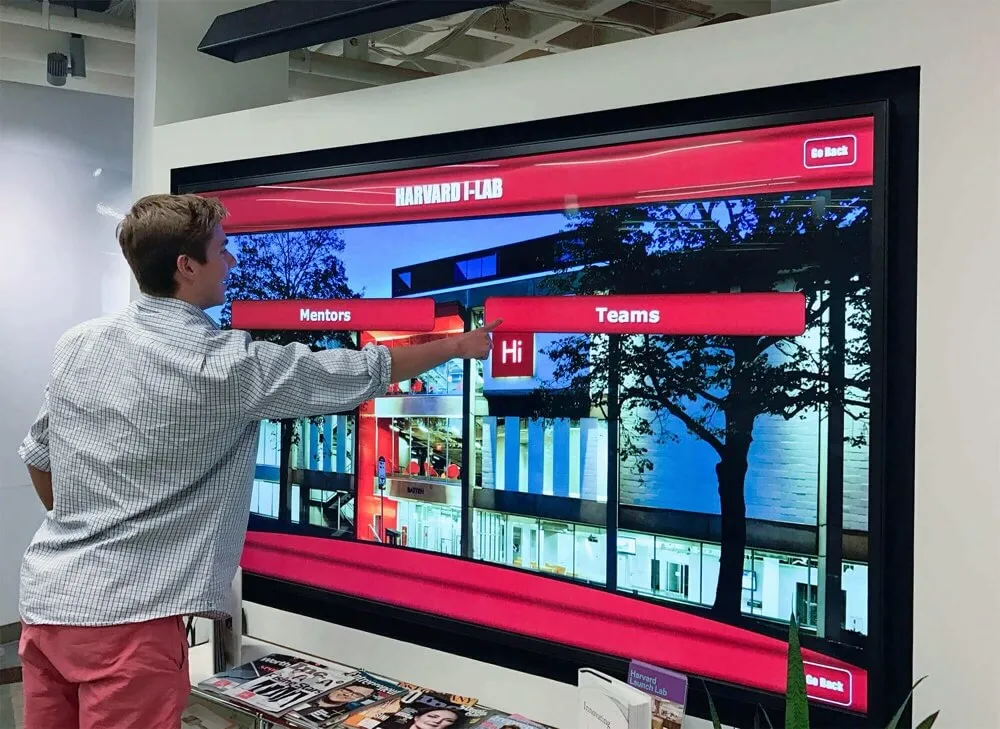
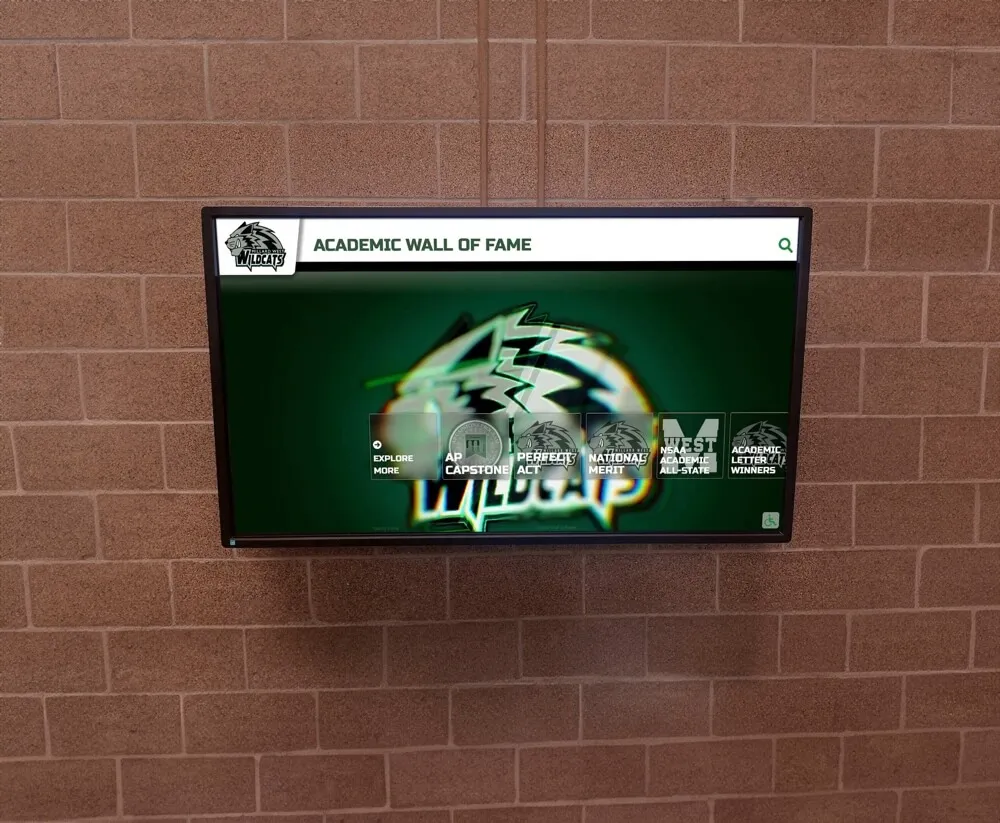
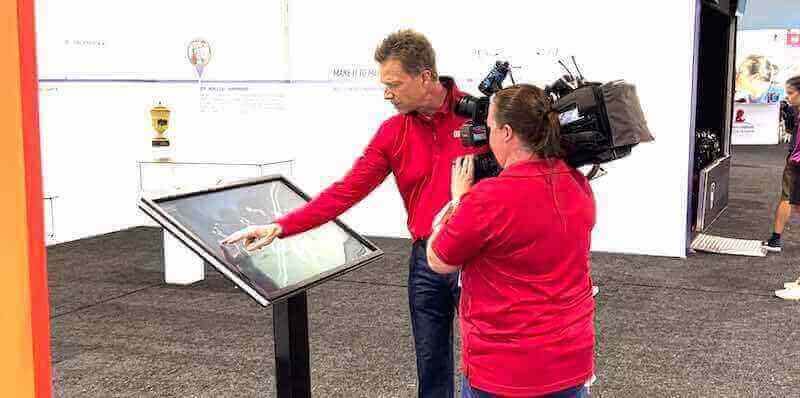
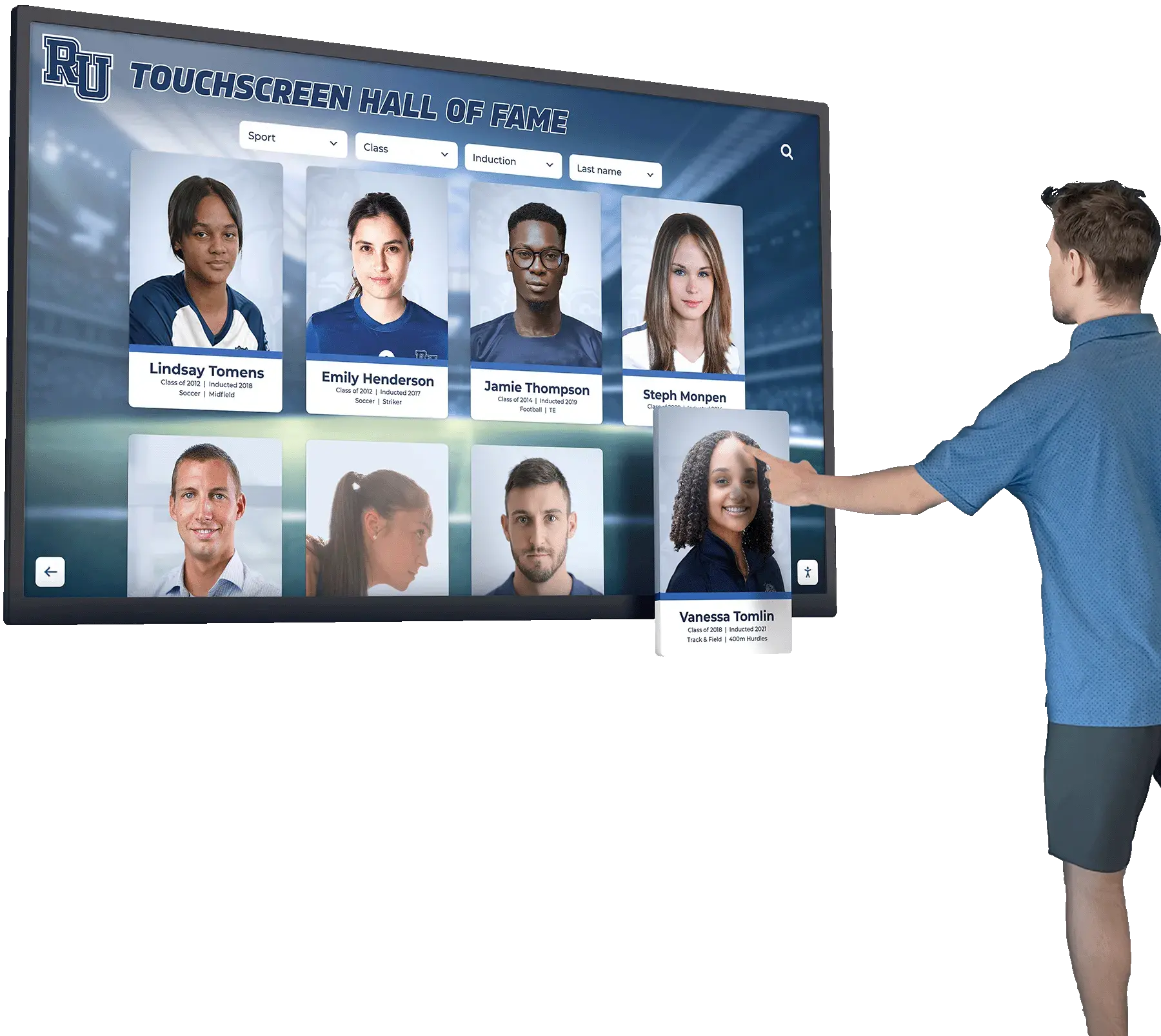
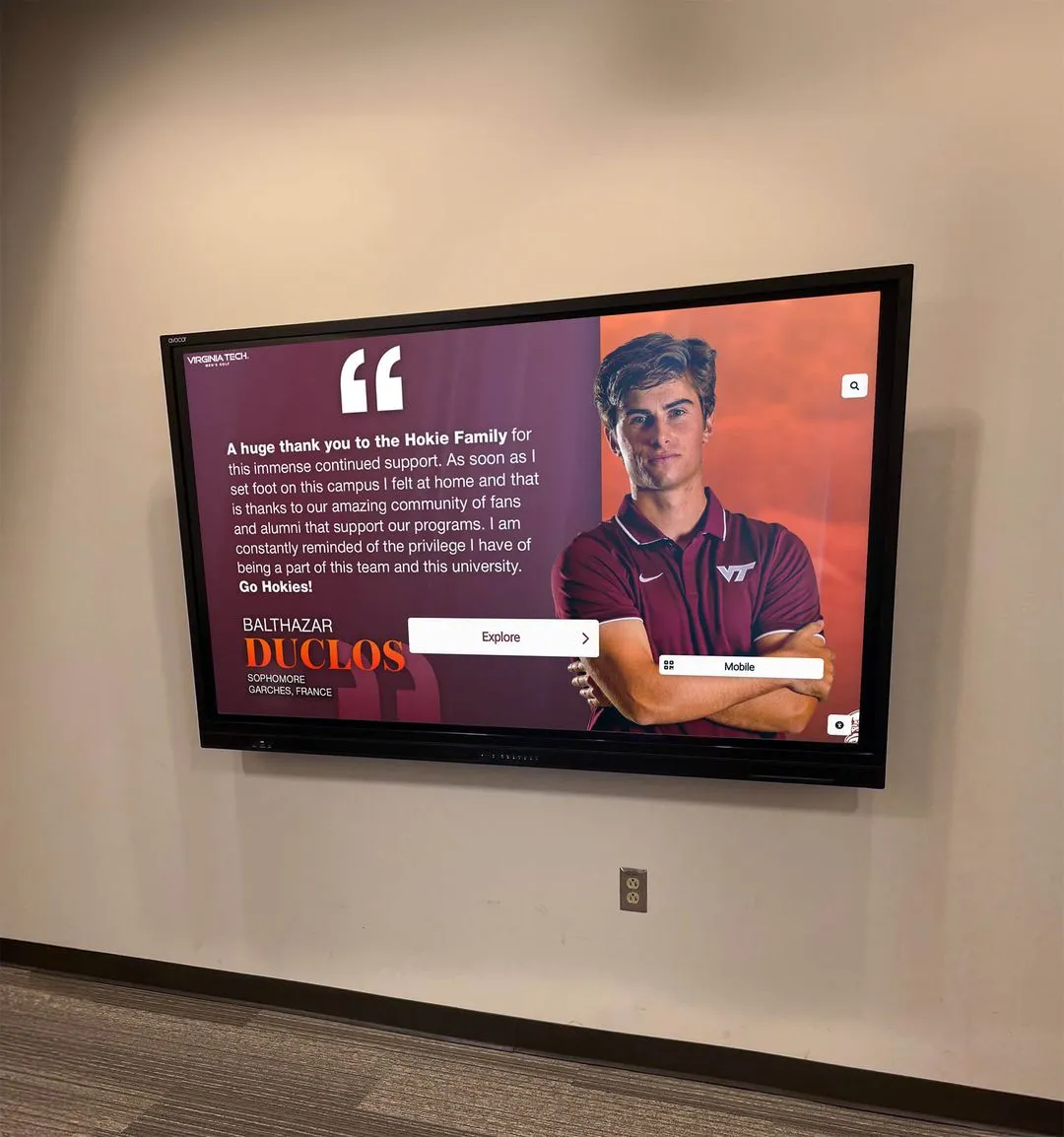
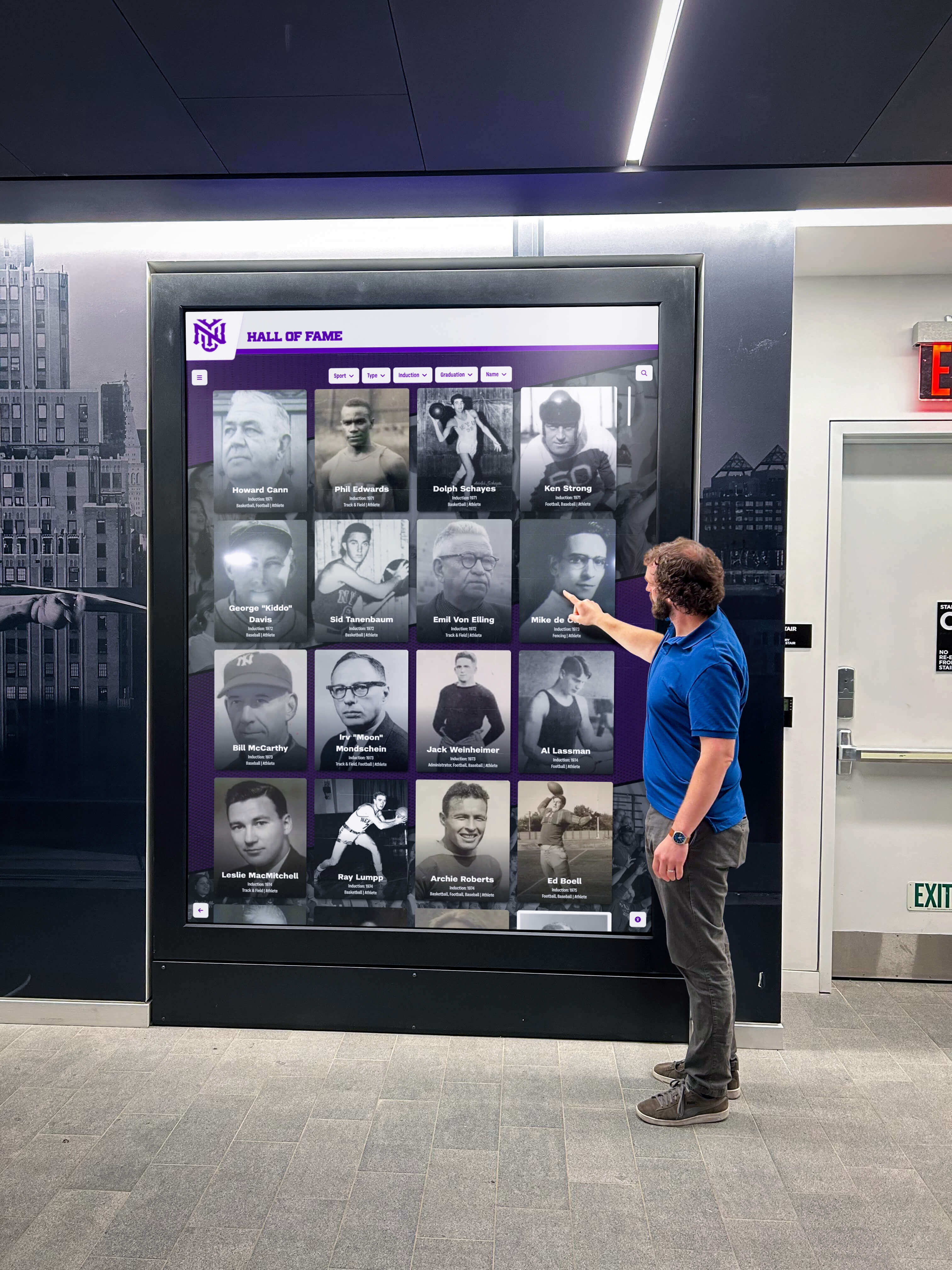
Interactive touchscreen displays enable hands-on exploration where visitors control content discovery, dramatically increasing engagement compared to passive recognition
Essential Technology Features for Hall of Fame Touchscreens
Before evaluating specific design approaches, understanding core technology requirements ensures your recognition system delivers reliable performance and comprehensive capabilities.
Commercial-Grade Hardware Requirements
Consumer electronics cannot withstand public installation demands. The best touchscreen hall of fame solutions specify commercial-grade components designed for continuous operation in institutional environments.
Display Panel Specifications
Commercial touchscreens rated for 24/7 operation provide reliability consumer displays lack. Critical specifications include brightness levels between 350-500 nits ensuring visibility across varying lighting conditions, anti-glare coatings reducing reflections in windowed locations, capacitive touch technology delivering smartphone-like responsiveness, tempered glass protection preventing damage from repeated public interaction, and operating temperature ranges accommodating climate variations in facilities without perfect climate control.
Screen size selection depends on viewing distances and content density. Schools typically install 43-55 inch displays in hallways with 6-10 foot viewing distances, while lobbies and gathering spaces accommodate 65-75 inch installations viewable from 15-20 feet. Portrait orientation suits individual profile browsing while landscape orientations work well for team photos and timeline displays.
Touch Technology Considerations
Capacitive touchscreens provide precise, responsive interaction matching mobile device expectations. Unlike resistive touch requiring pressure, capacitive systems detect light touches and support multi-touch gestures including pinch-to-zoom and swipe navigation. Commercial capacitive displays maintain accuracy through thousands of daily interactions while consumer models degrade within months of public use.
Mounting and Installation Flexibility
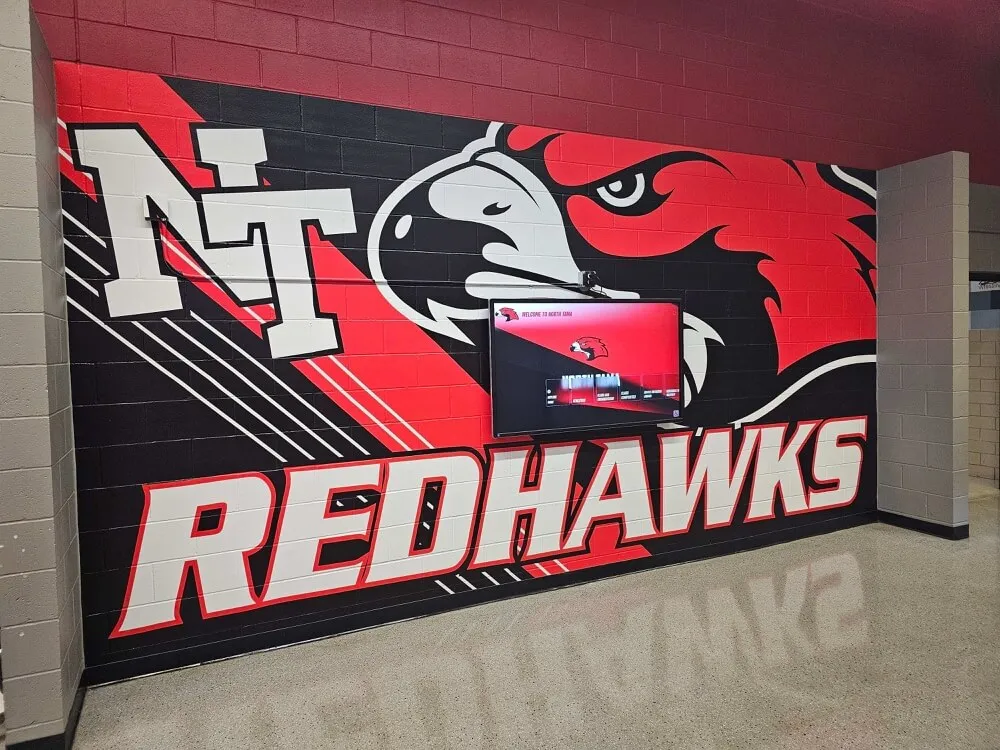
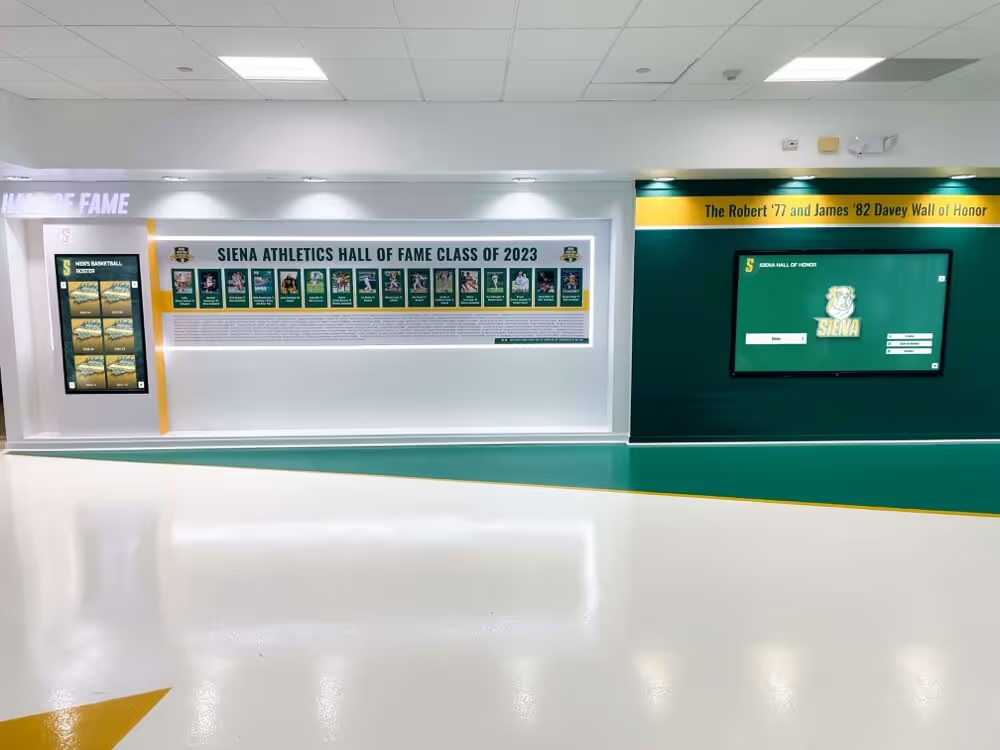
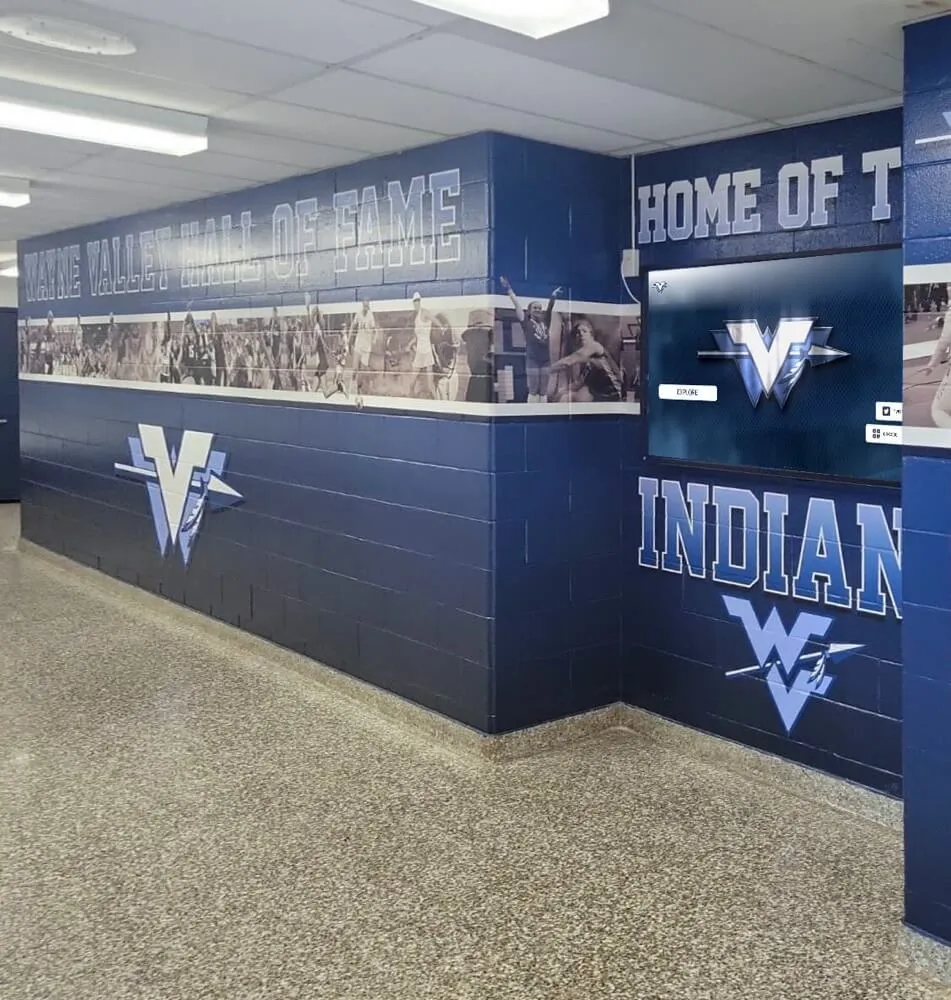
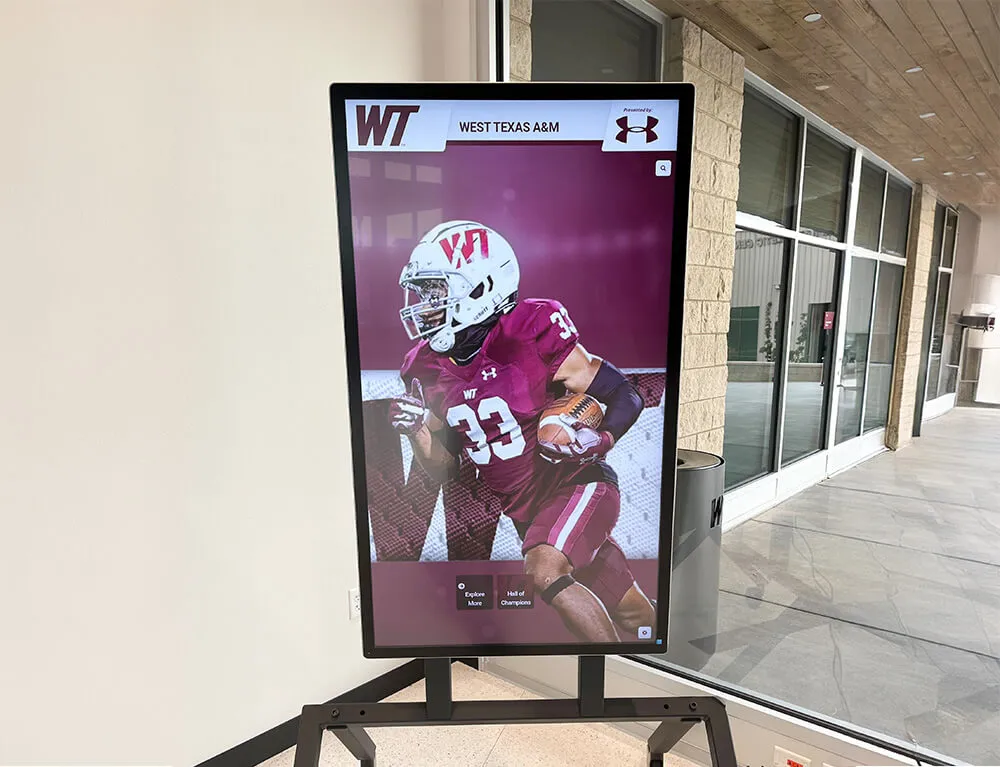
The best systems support multiple mounting approaches matching various architectural contexts. Wall-mount installations create clean, integrated looks in finished hallways. Freestanding kiosks provide flexible positioning without permanent modification and work beautifully in lobbies or open areas where wall mounting isn’t feasible. Custom installations incorporate touchscreens into architectural features including columns, donor recognition walls, or branded monuments.
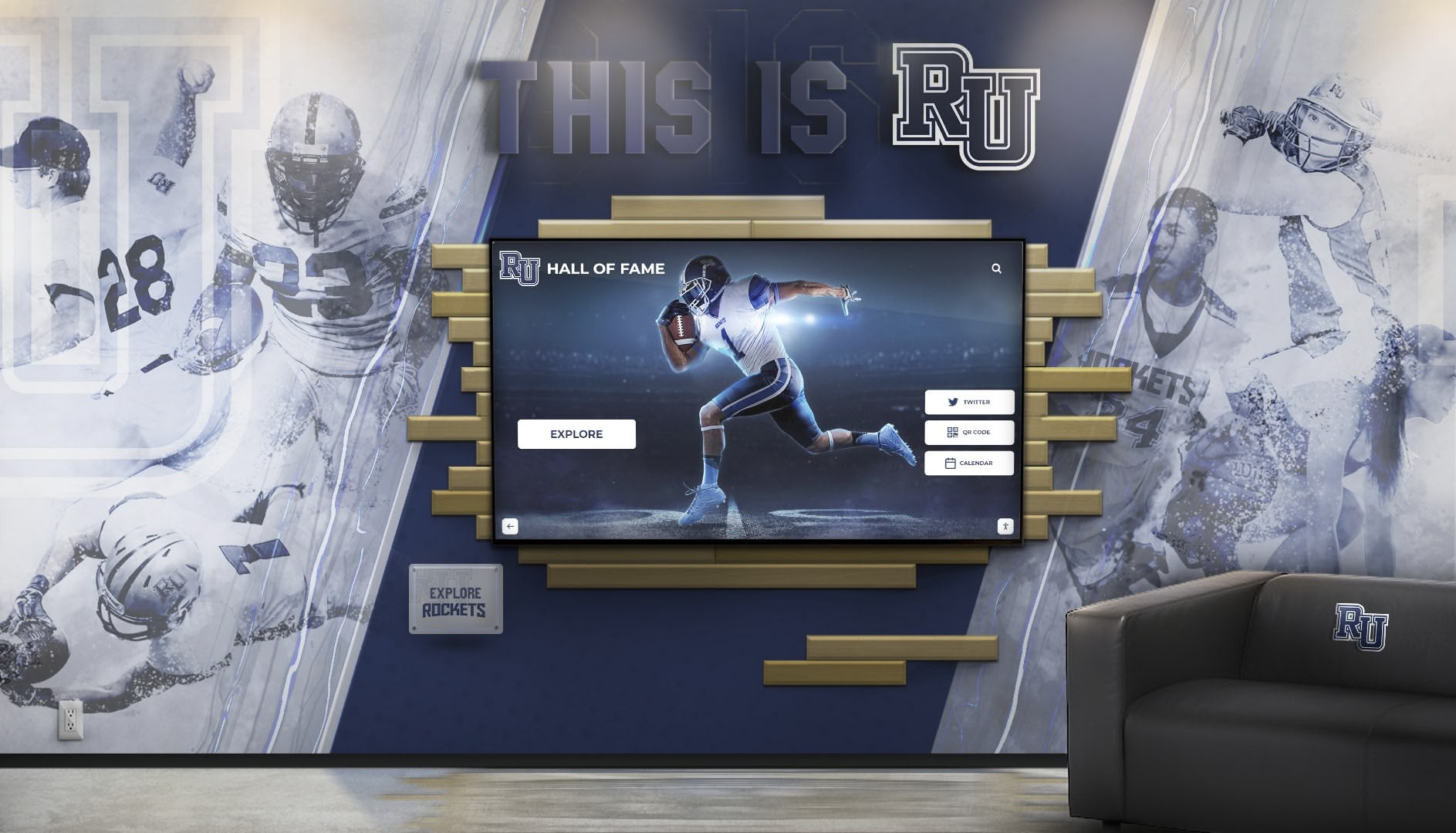
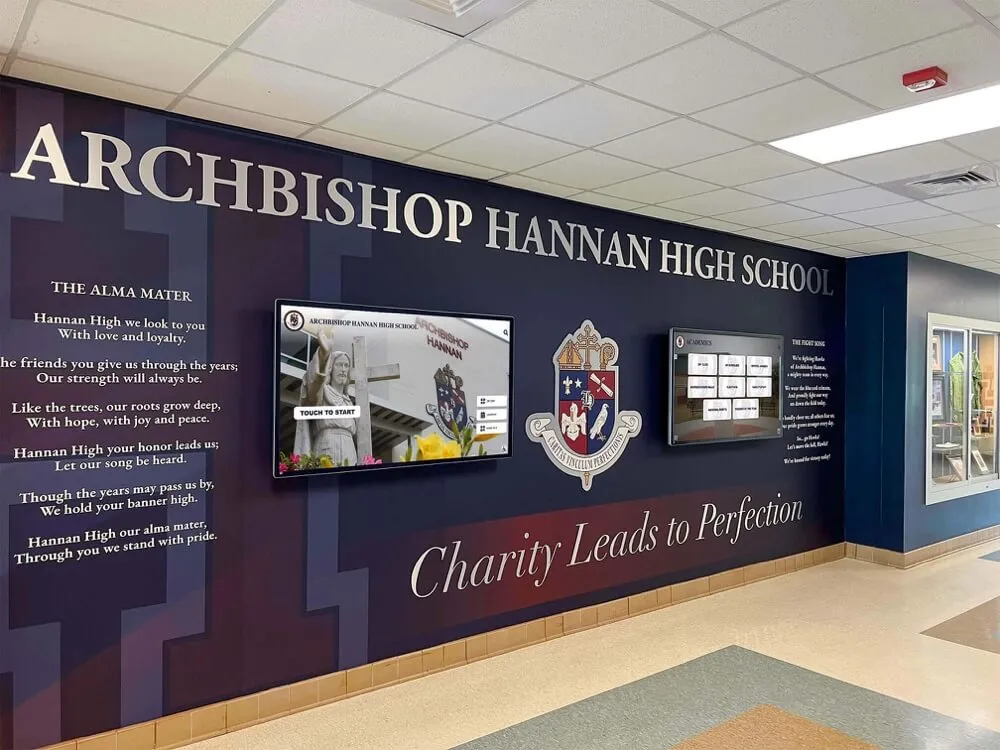
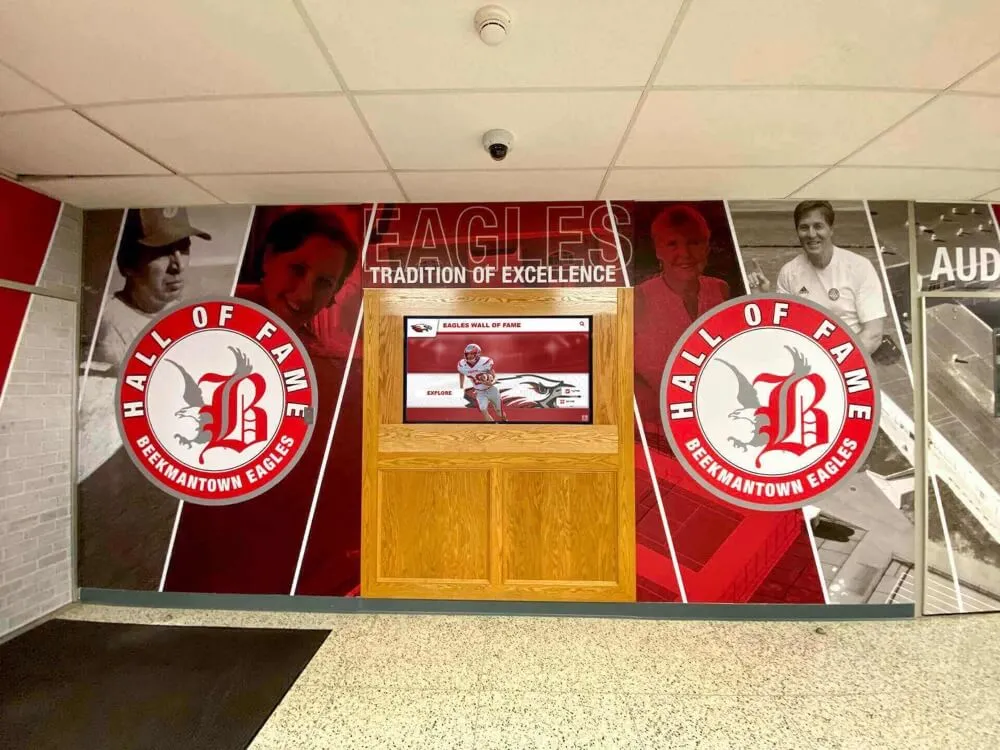
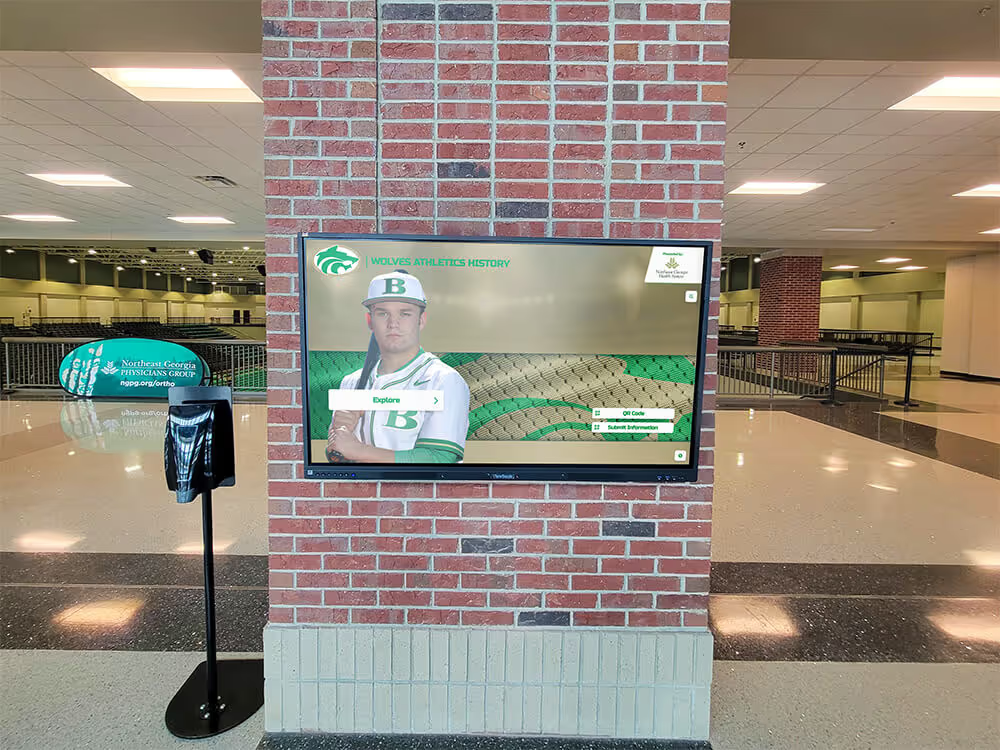
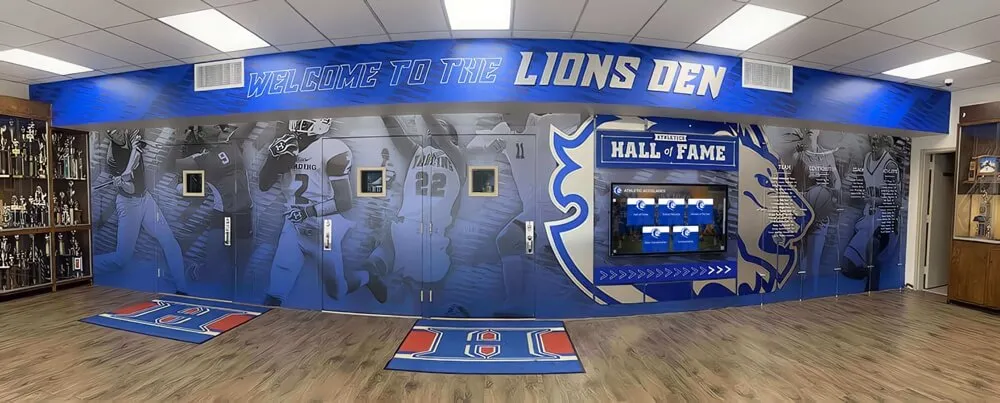
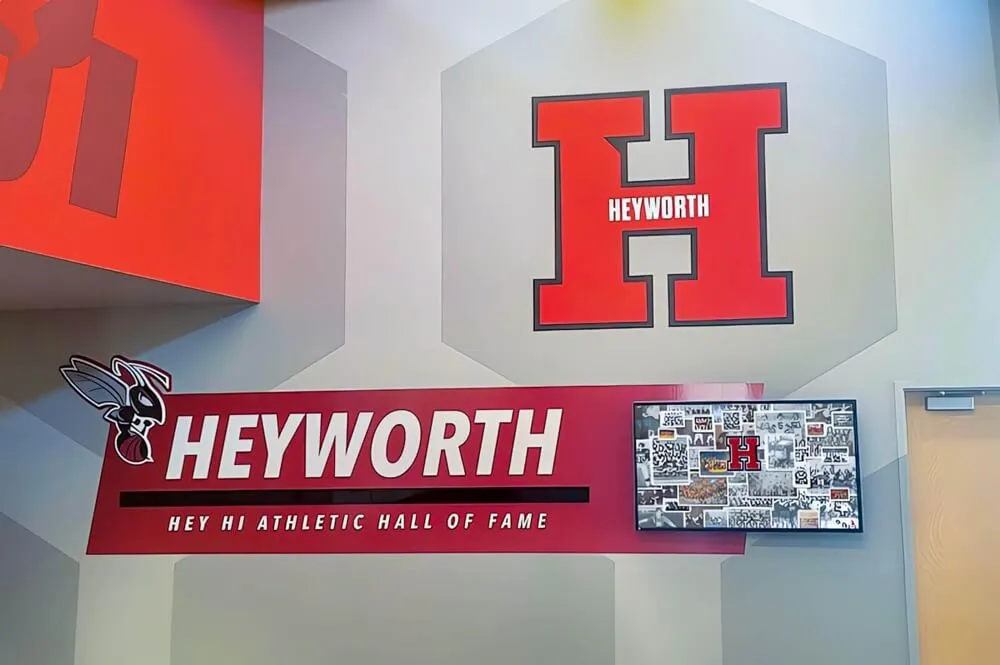
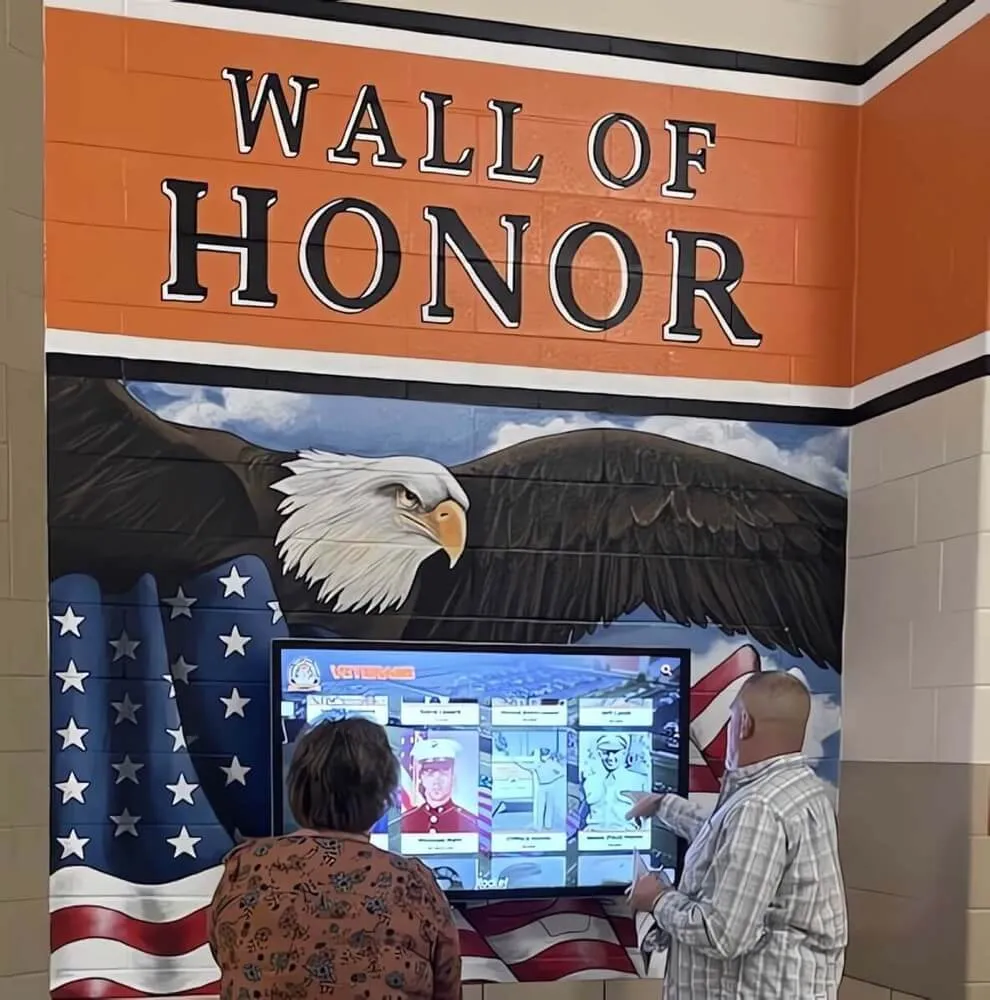
Custom installations integrate touchscreens with architectural features and branded murals, creating cohesive recognition environments beyond standalone displays
Purpose-Built Recognition Software Capabilities
Generic digital signage software lacks recognition-specific features that purpose-built platforms provide. When evaluating touchscreen hall of fame solutions, essential software capabilities include:
Individual Profile Management
Effective recognition requires comprehensive individual profiles beyond simple name listings. The best systems support rich multimedia profiles including multiple photos documenting achievements and moments, video content featuring highlight reels or induction speeches, biographical narratives telling complete stories, achievement documentation listing awards and accomplishments, social media integration displaying current connections, and custom fields accommodating sport-specific statistics, donor giving levels, or program-specific recognition criteria.
Solutions like Rocket Alumni Solutions provide profile structures specifically designed for recognition use cases, understanding workflows that generic content management systems cannot accommodate effectively. This includes donor recognition applications requiring giving level differentiation and privacy controls, athletic recognition tracking career statistics and championship participation, and academic honors documenting scholarly achievements across multiple categories.
Powerful Search and Filtering
Interactive exploration depends on intuitive discovery mechanisms. Essential search capabilities include instant name search with auto-complete suggestions, year-based filtering showing inductees by specific years or eras, category organization grouping honorees by sport, department, or achievement type, achievement-based search locating individuals meeting specific criteria, and advanced filtering combining multiple parameters for precise discovery.
Analytics tracking search patterns reveal which honorees generate most interest, informing content development priorities and featured content selections.
Content Management Systems
The best touchscreen recognition platforms provide cloud-based content management enabling updates from any device without specialized software or technical expertise. Critical CMS features include intuitive profile creation forms requiring no coding knowledge, bulk upload capabilities for large initial populations, scheduled publishing for automated induction date reveals, collaborative workflows supporting multiple administrators, and mobile-responsive interfaces enabling updates from tablets and smartphones.
Content management accessibility determines whether your institution can maintain current, engaging recognition or whether displays languish with outdated information due to update friction.
Social Sharing Integration
Modern recognition extends beyond physical displays to digital networks. The best systems integrate social sharing enabling visitors to share individual profiles on Facebook, Twitter, LinkedIn, and Instagram, generating QR codes linking to mobile-optimized web profiles, creating shareable highlight videos combining photos and achievements, and tracking social engagement demonstrating recognition reach beyond physical installations.
This extended reach transforms single displays into comprehensive recognition programs connecting worldwide alumni and supporter communities rather than limiting visibility to physical location visitors.
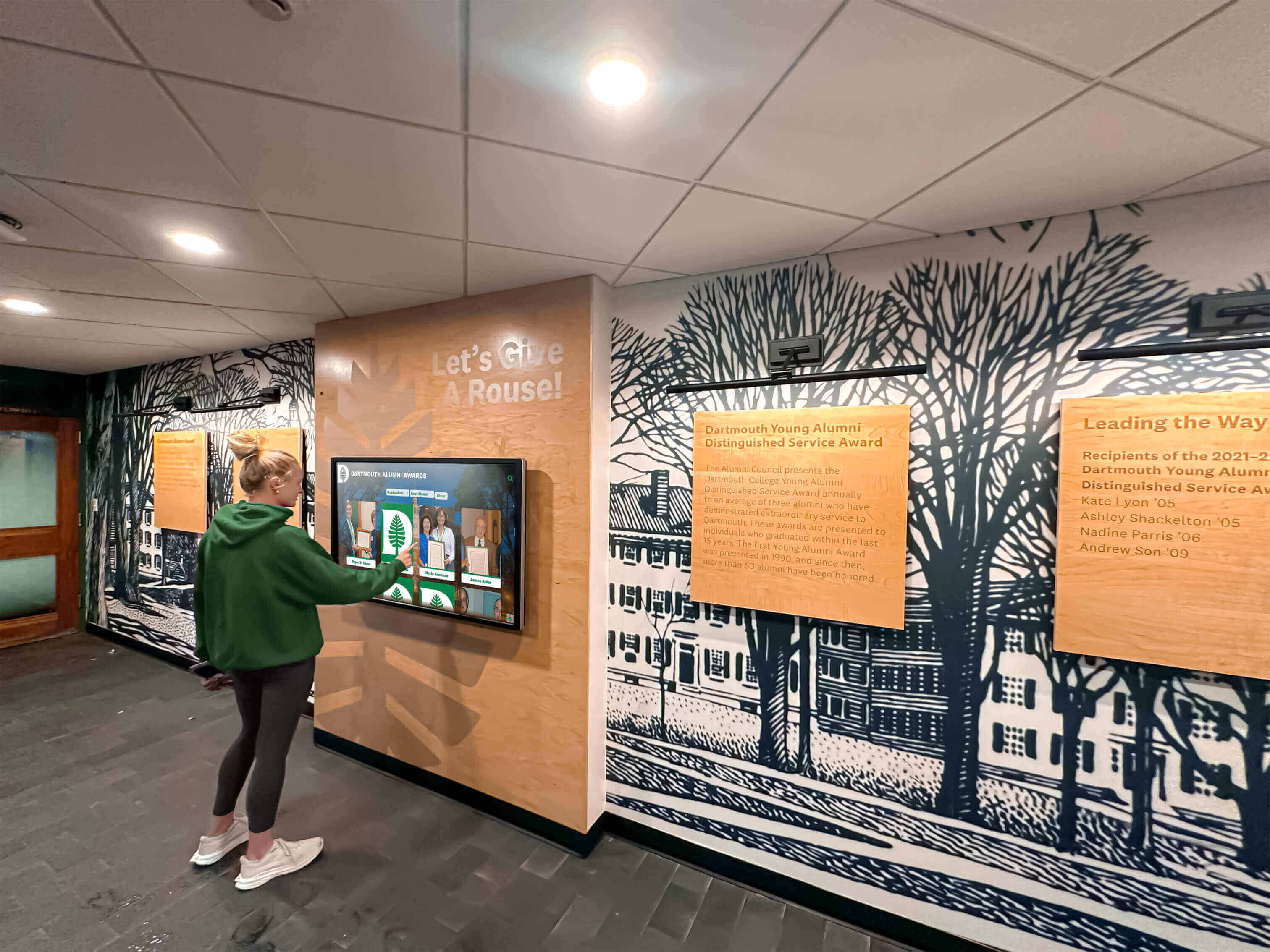
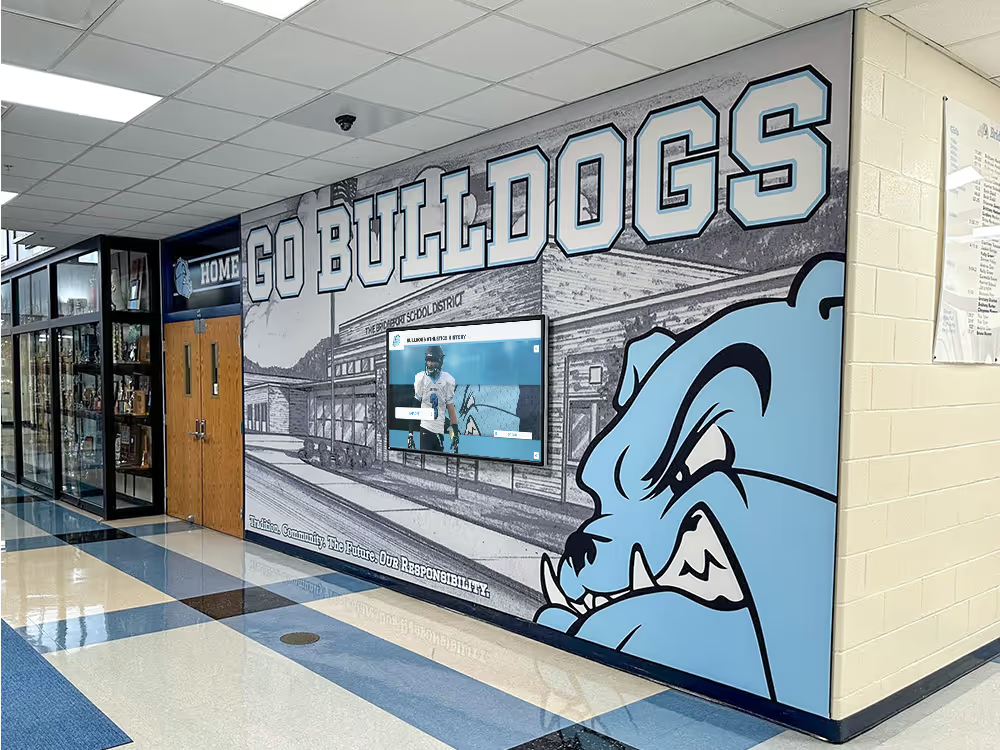
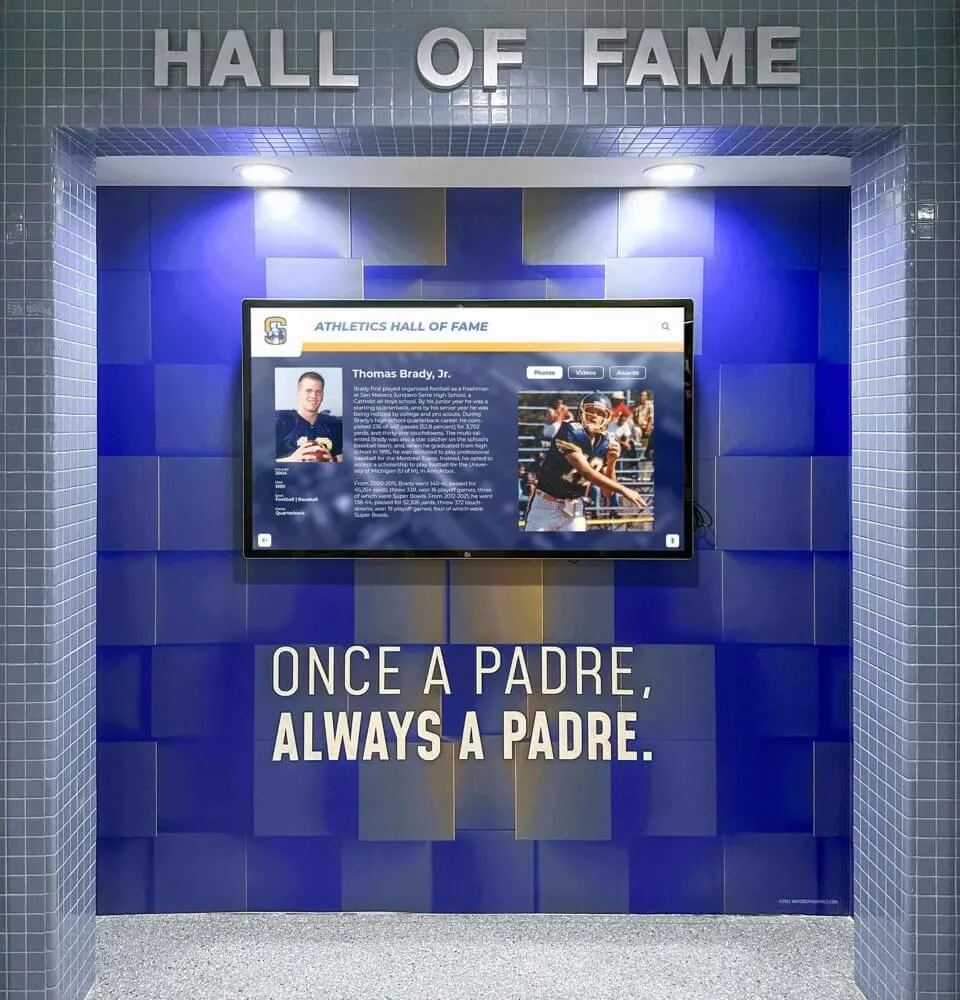
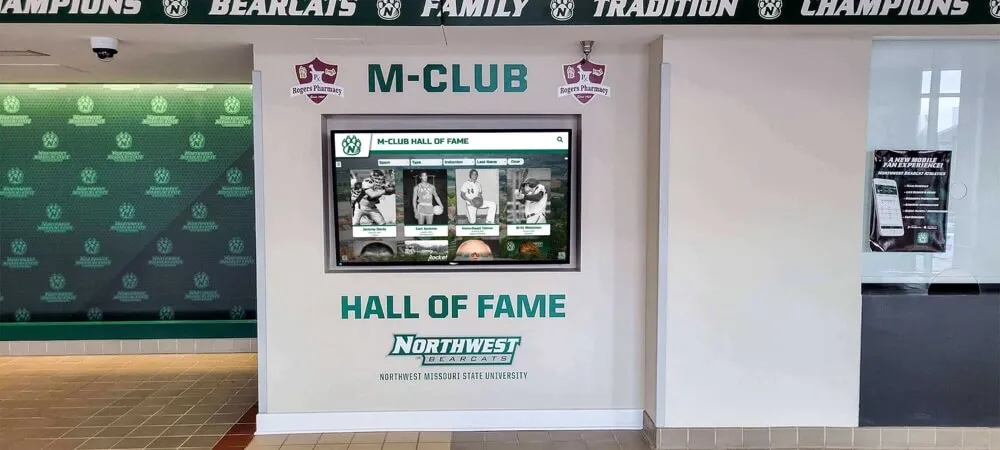
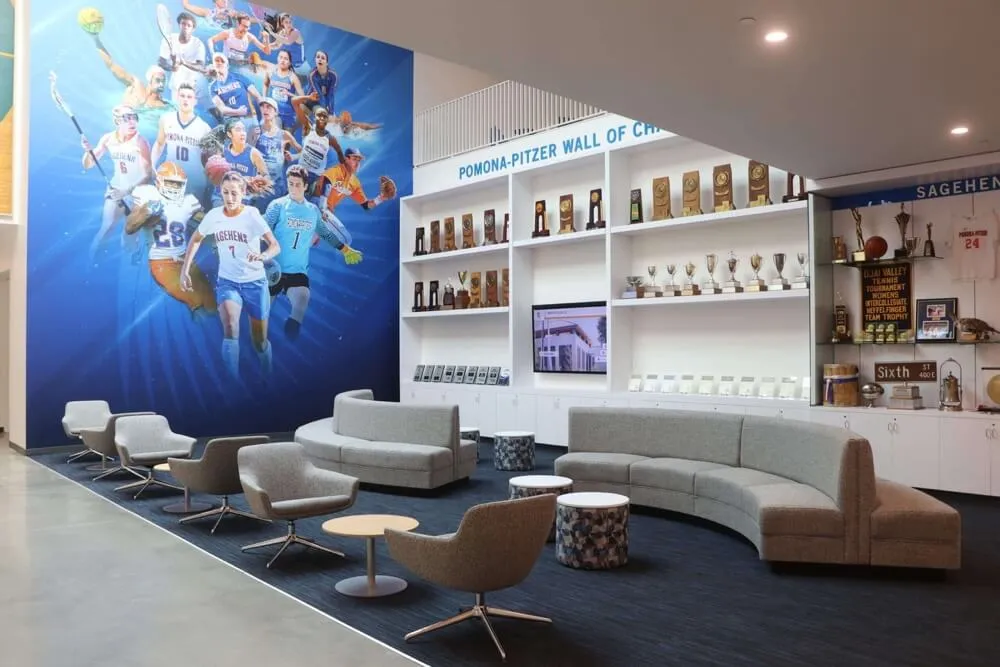
Accessible positioning enables spontaneous engagement throughout facility hours, integrating recognition into daily institutional experiences rather than limiting access to scheduled events
Design and User Experience Excellence
Technology alone doesn’t create engaging recognition. The best touchscreen hall of fame solutions incorporate thoughtful design frameworks ensuring intuitive navigation and compelling visual presentation.
Layout Architecture and Navigation Design
Well-designed interfaces balance aesthetic appeal with functional usability across diverse user groups ranging from tech-savvy teens to elderly community members unfamiliar with touchscreen interaction.
Zone-Based Layout Framework
Professional recognition interfaces organize screen real estate into functional zones serving specific purposes:
The hero/masthead zone (top 15-20% of screen) establishes immediate context through institutional branding, display purpose identification, and featured content highlighting compelling honorees or recent inductees. This area creates visual anchor points orienting visitors while reinforcing institutional identity through colors, logos, and typography matching broader branding systems.
The navigation bar (10-15% below hero) enables primary content discovery. Effective navigation provides large, touch-friendly buttons organized around intuitive categories: browse by year, browse by category, search by name, view featured collections, and access additional recognition programs. Button sizing follows accessibility guidelines with minimum 44x44 pixel targets and adequate spacing preventing mis-taps.
The content display area (center 50-60%) presents honoree information through multiple view types. Grid-based card layouts show multiple individuals simultaneously with photos and key information creating visual browsing experiences. List views provide scrollable directories with sorting options for systematic exploration. Detail views display complete individual profiles with comprehensive multimedia content. Gallery modes showcase photo and video collections with minimal text overlay.
The footer/action zone (bottom 10-15%) houses secondary functions including social sharing controls, QR code access to mobile experiences, sponsor acknowledgment when appropriate, navigation breadcrumbs showing current location, and home buttons enabling easy return to main screens.
Attraction Loop Design
When not actively used, displays should run compelling attraction content demonstrating interactivity and drawing attention. Effective attraction loops feature highlight reels combining compelling photos and videos, featured inductee spotlights rotating through recent additions, achievement statistics demonstrating program excellence, and clear touch prompts inviting interaction with simple instructions like “Touch anywhere to explore.”
Attraction loops should cycle at 15-20 second intervals, providing enough time for visual absorption without appearing static while maintaining motion drawing attention in peripheral vision.
Progressive Disclosure Patterns
Information density requires careful management preventing overwhelming experiences. Progressive disclosure presents information hierarchically: summary cards show essential information at glance including photos, names, and primary achievements. Touch interaction reveals additional detail without leaving current context. Dedicated detail views display comprehensive content including full biographies, complete achievement lists, and multimedia galleries.
This layered approach accommodates both quick browsing and deep exploration within single interfaces without forcing users to wade through extensive content when seeking basic information.
Visual Design and Brand Integration
Generic templates fail to create recognition experiences feeling authentically institutional. The best touchscreen systems provide comprehensive brand customization capabilities.
Unlimited Layout Flexibility
Purpose-built recognition platforms offer unlimited custom layouts matching institutional aesthetics rather than forcing conformity to rigid templates. Design flexibility includes custom color schemes incorporating exact institutional brand colors, typography selections matching existing brand guidelines, background options including solid colors, gradients, photos, or video loops, and layout variations creating distinct experiences for different recognition categories—athletic halls of fame appear athletically branded while donor recognition adopts elegant, refined aesthetics.
Solutions like Rocket Alumni Solutions provide design consistency tools while preserving creative freedom, enabling institutions to create cohesive recognition networks across multiple displays and categories while allowing appropriate aesthetic variation.
Motion Design and Transitions
Subtle animation enhances perceived quality and guides user attention. Professional implementations include smooth fade transitions for content swaps, directional slide animations indicating navigation relationships, zoom effects when moving between list and detail views, and interactive feedback confirming touch interactions through button press states and loading indicators.
Motion should enhance rather than distract, with transitions completing within 300-500 milliseconds—fast enough to feel responsive but slow enough to appear smooth rather than jarring.
Sponsor and Partner Integration
Many recognition programs include sponsor acknowledgment. The best systems provide dedicated sponsor zones maintaining visual separation from primary recognition content, rotation capabilities cycling through multiple sponsors at appropriate intervals, and sponsorship tier differentiation providing varied prominence matching contribution levels.
Sponsor integration should enhance rather than dominate recognition experiences, supporting program sustainability without diminishing focus on individuals being honored.
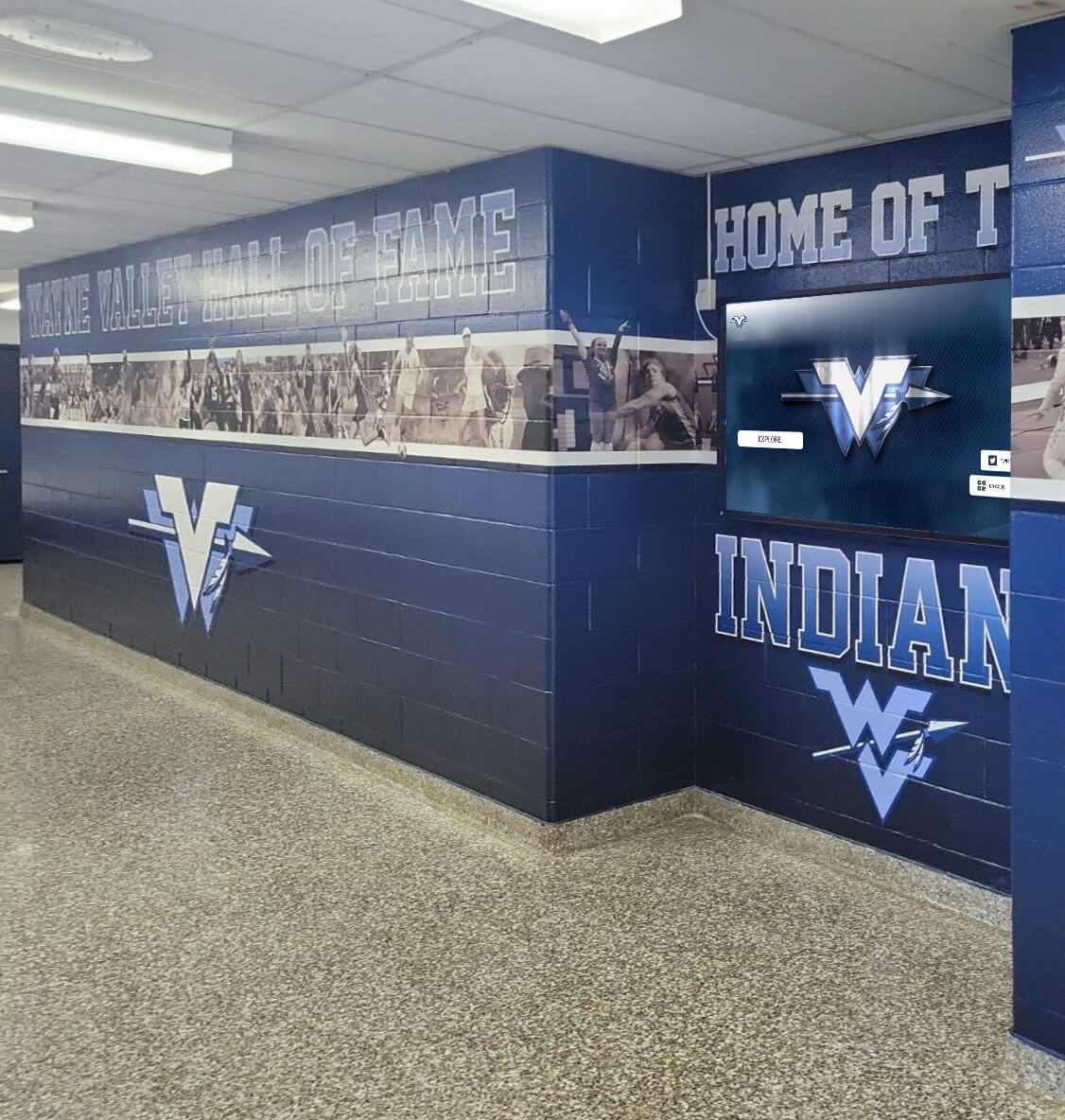
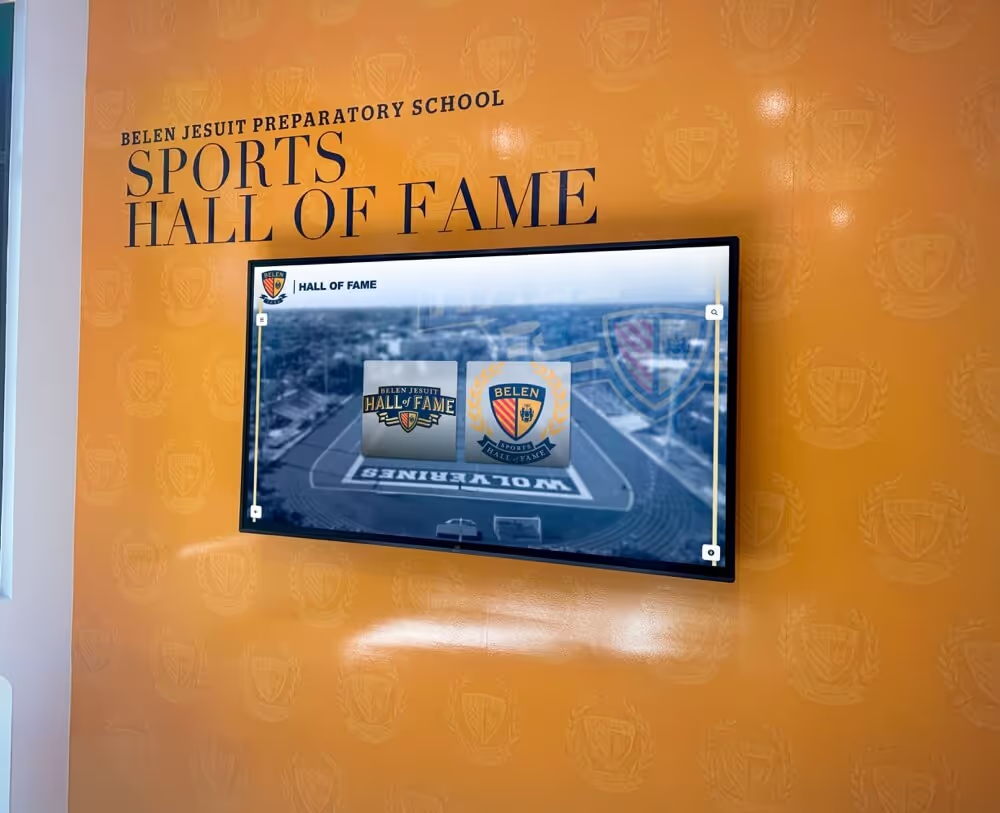
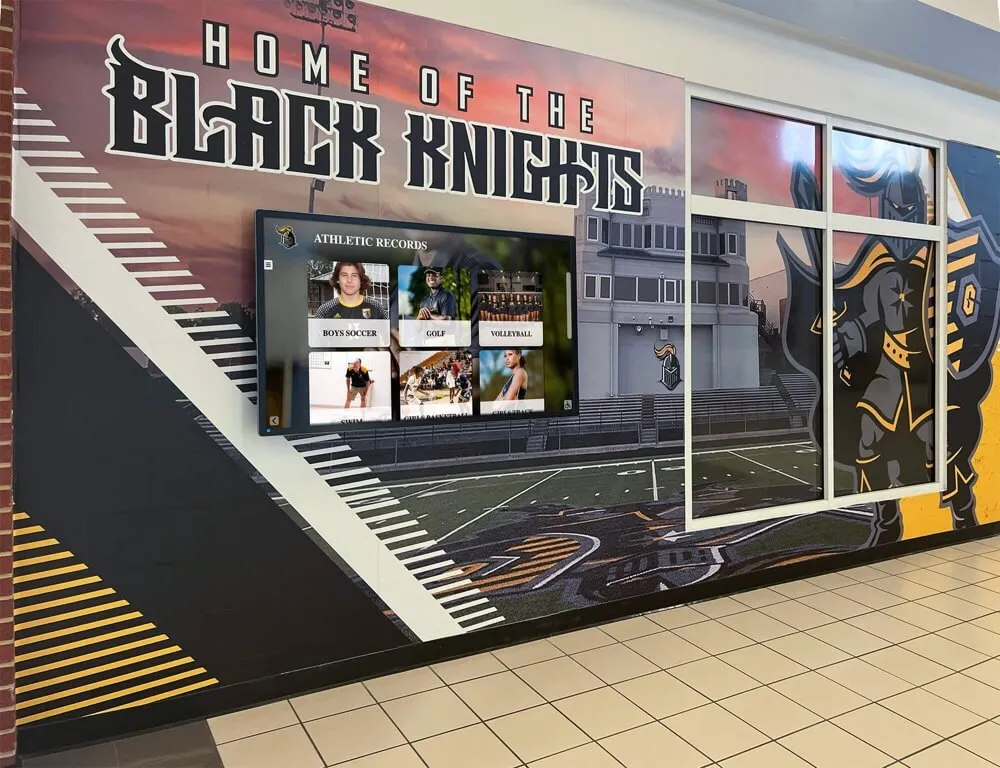
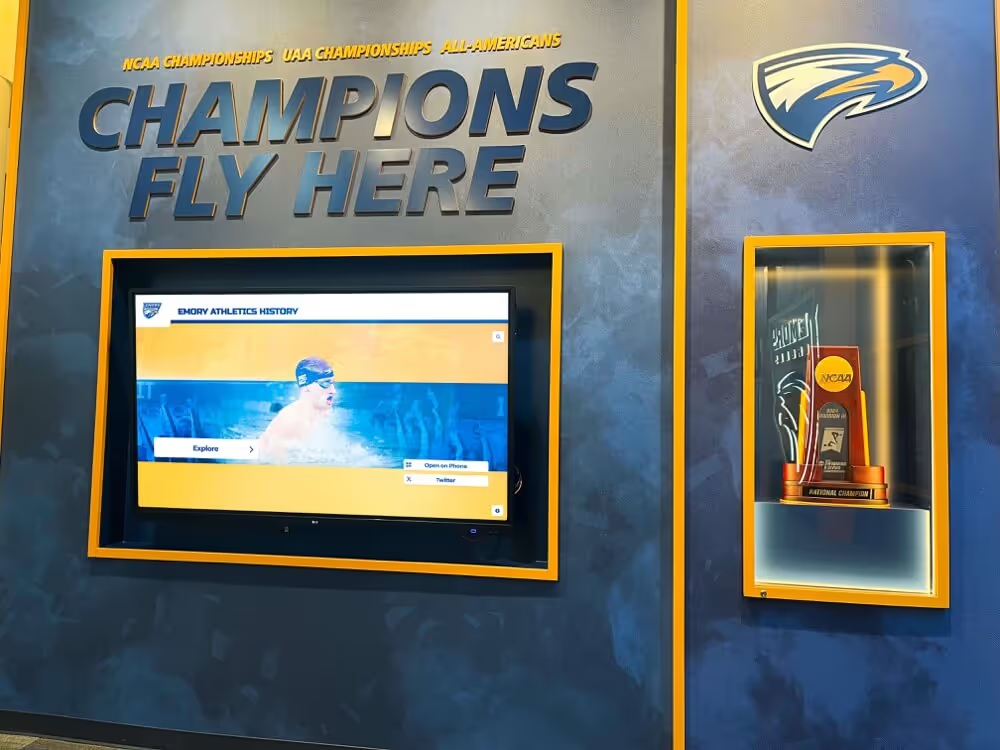
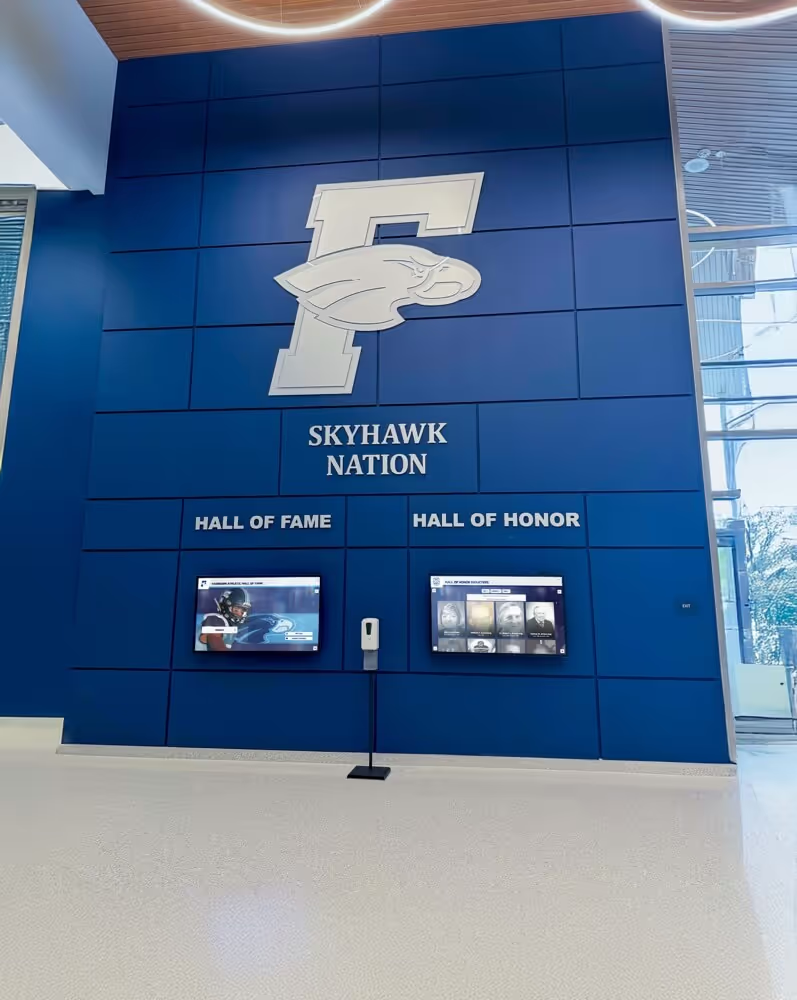
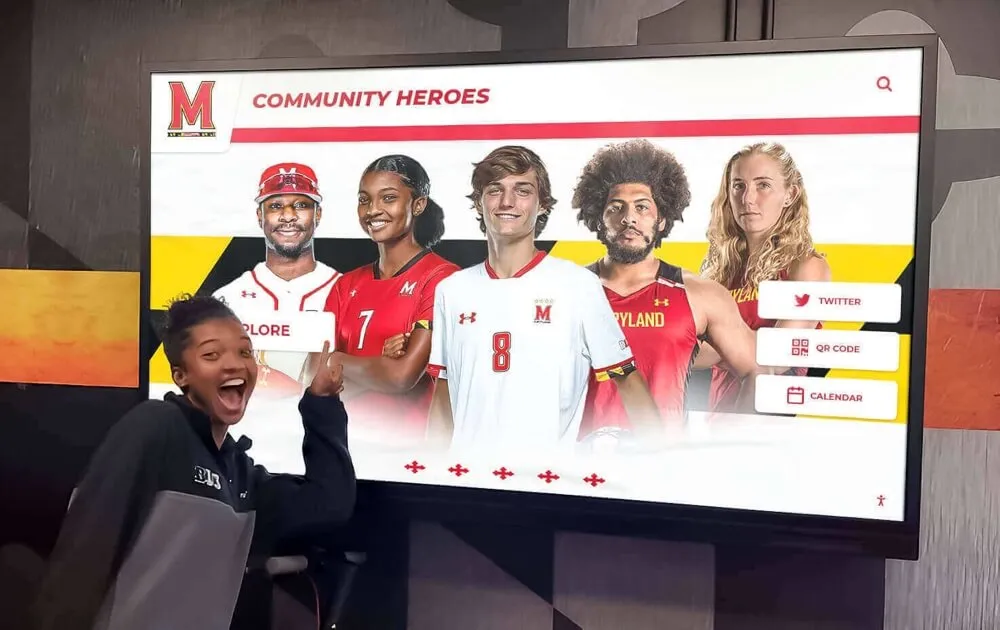
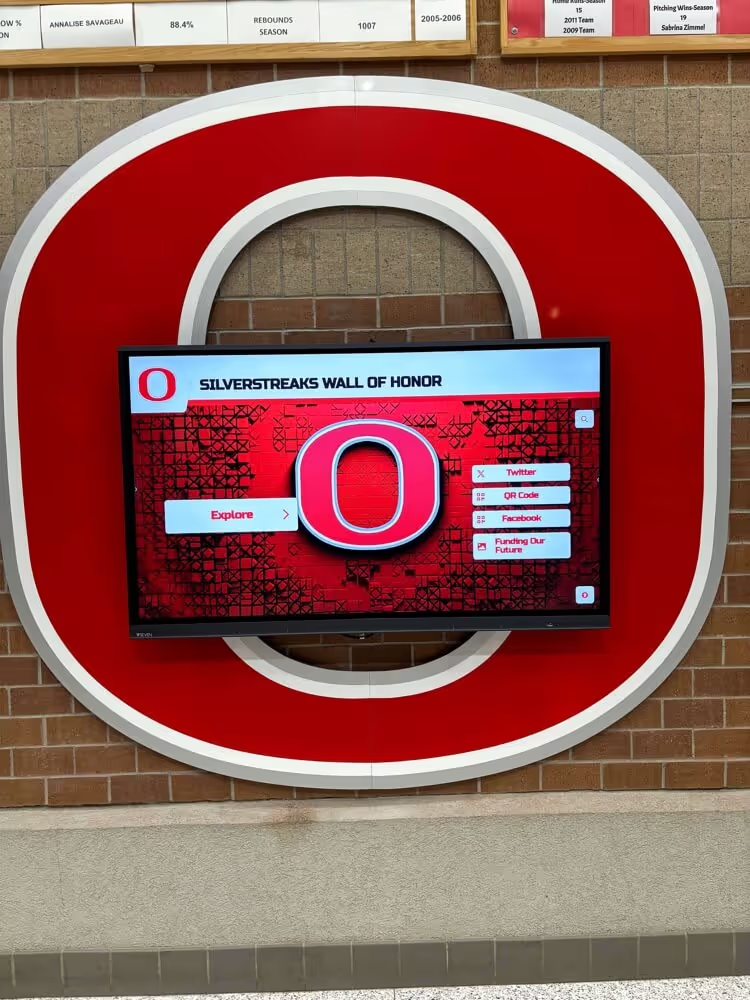
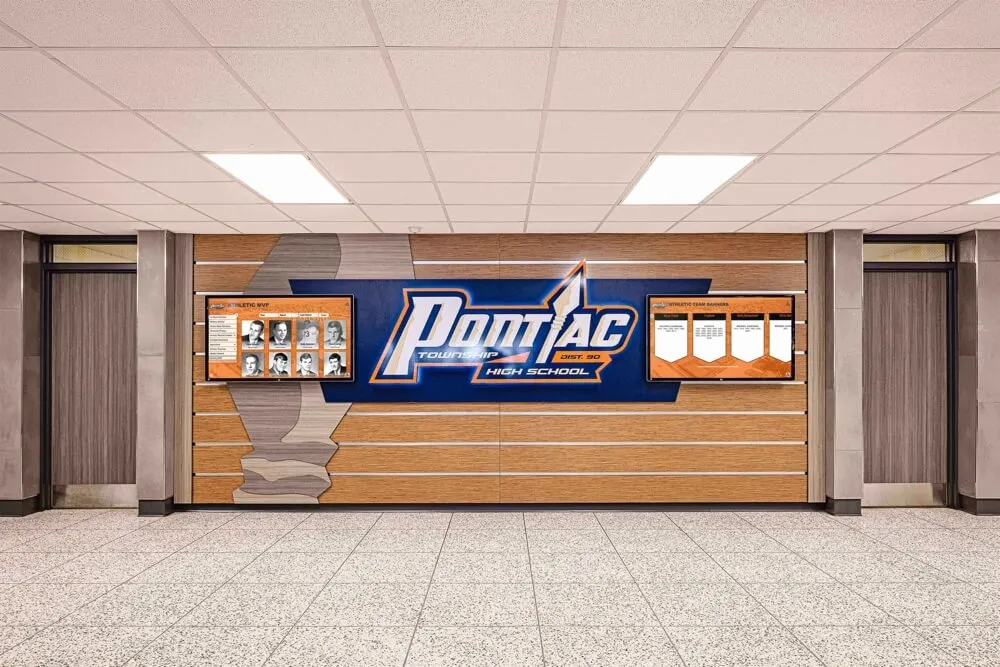
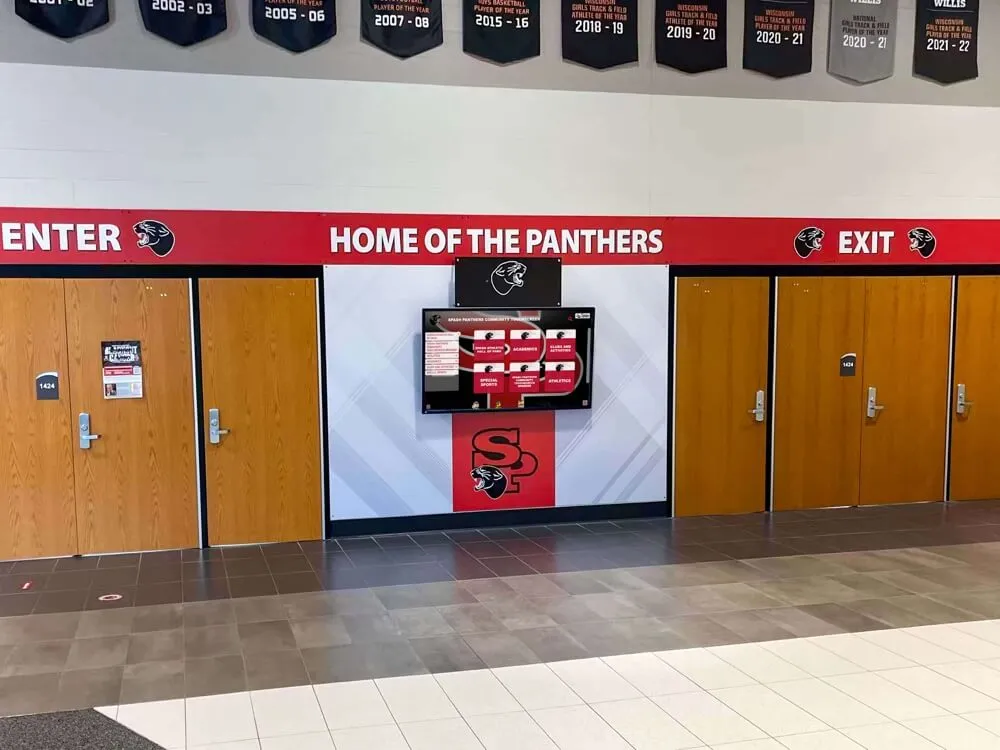
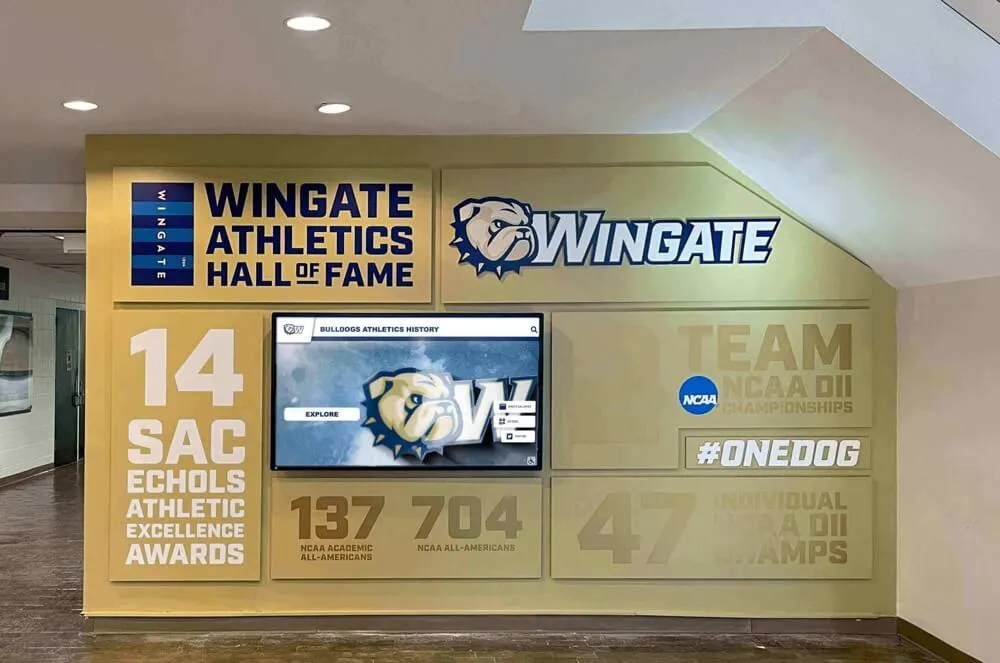
Multiple coordinated displays create comprehensive recognition networks where different screens serve specific categories while maintaining cohesive visual identity
Accessibility and Inclusive Design Standards
The best touchscreen hall of fame solutions prioritize accessible design ensuring recognition reaches all community members regardless of physical abilities or technical familiarity.
ADA Compliance and WCAG 2.1 AA Standards
Legal compliance and inclusive design overlap significantly. Purpose-built recognition systems address accessibility requirements through multiple mechanisms.
Visual Accessibility Standards
Text contrast ratios meeting WCAG 2.1 AA standards ensure readability for users with visual impairments: minimum 4.5:1 contrast for normal text and 3:1 for large text (18pt+). The best systems provide contrast checking tools during design preventing inadvertent violations when selecting colors and backgrounds.
Text scaling capabilities enable enlargement up to 200% without horizontal scrolling or content loss, accommodating users requiring larger text for comfortable reading. Font selections favor highly legible typefaces rather than decorative options that sacrifice readability for aesthetic considerations.
Physical Accessibility Considerations
Mounting height and reach ranges determine whether wheelchair users can effectively interact with displays. ADA guidelines specify accessible mounting heights placing primary controls between 15-48 inches above floor, with forward reach depth not exceeding 25 inches for wall-mounted installations.
Freestanding kiosks require knee and toe clearance beneath displays allowing wheelchair users to position close enough for comfortable reach. Volume controls for audio content should provide adjustment without requiring assistance while respecting quiet institutional environments.
Cognitive Accessibility and Usability
Clear, simple language avoiding jargon ensures comprehension across education levels and technical familiarity. Consistent navigation patterns throughout experiences eliminate learning curves requiring reorientation with each screen. Minimal required steps for common tasks reduce friction and frustration—locating specific individuals should require no more than 2-3 interactions from home screen to profile view.
Intuitive iconography supplements text labels, particularly for users with reading challenges or limited English proficiency. Touch targets maintain generous sizing and spacing preventing mis-taps that frustrate users and erode confidence in interacting with displays.
Multi-Modal Access and Extended Reach
Physical touchscreen interaction represents just one access method. The best recognition systems provide multiple interaction modes accommodating diverse needs and preferences.
Mobile and Web Access
Cloud-based recognition platforms extend access beyond physical displays through responsive web interfaces accessible from smartphones, tablets, and desktop computers. QR codes positioned near physical displays enable instant transition to mobile experiences where users can continue exploration using personal devices with familiar interfaces and accessibility features already configured to individual needs.
Web access reaches worldwide audiences—alumni, family members, and supporters unable to visit physical locations can explore recognition programs remotely, dramatically expanding program reach and impact. This extended access provides particular value for alumni engagement initiatives connecting distributed communities.
Alternative Input Methods
Voice search capabilities benefit users with mobility limitations or those preferring verbal interaction. Screen reader compatibility provides alternative content access for visually impaired users when displays include accessible modes. Keyboard navigation support enables interaction through external devices when touch interaction proves challenging.

Freestanding kiosk installations provide flexible positioning while maintaining accessible approach spaces and reach ranges for all users
Content Strategy and Management Excellence
Technology and design create frameworks, but content quality determines whether recognition feels meaningful or perfunctory. The best touchscreen hall of fame implementations incorporate strategic content approaches.
Profile Content Best Practices
Individual profiles transform names into stories. Compelling profile content includes:
Rich Biographical Narratives
Moving beyond bullet-point lists to tell complete stories creates emotional connections. Effective biographical content describes honorees’ journeys including challenges overcome and defining moments, highlights personality characteristics making individuals memorable, explains impact on programs and communities, and includes personal reflections or quotes when possible.
Well-written biographies transform recognition from documentation into celebration, helping audiences understand why honorees deserve recognition rather than simply accepting that they do.
Strategic Photography Selection
Photos carry enormous emotional weight in recognition contexts. The best programs include multiple images showing honorees in action during competitive or professional moments, candid shots capturing personality and character, current photos maintaining contemporary connections, and historical images providing nostalgic context and documenting change across eras.
Photo quality matters significantly—grainy, poorly lit, or low-resolution images diminish perceived recognition value regardless of how accomplished honorees are. Institutions should invest in photo restoration and scanning for historical content while maintaining photography standards for current inductees.
Achievement Documentation and Context
Listing achievements without context fails to communicate significance. Effective achievement documentation provides statistical context demonstrating excellence (“rushed for 2,847 career yards, third-highest in school history”), comparison points showing relative performance, championship and team success connections situating individual achievement within collective accomplishment, and post-graduation outcomes showing lasting impact for alumni recognition programs.
Video Content Integration
Video brings recognition to life through motion and sound. Valuable video content includes highlight reels showing honorees’ finest moments, induction ceremony speeches, personal reflection interviews, and historical footage preserving institutional memory. Video content requires significant production effort but creates engagement levels static content cannot match.
Update Processes and Content Refresh
Stale content undermines recognition value. The best touchscreen systems support sustainable update workflows ensuring displays remain current and engaging.
Annual Induction Integration
New inductees require smooth integration into existing recognition. Streamlined processes include profile template forms standardizing content collection, photography specifications ensuring consistent quality, scheduled publication dates automatically revealing new inductees on induction ceremony dates, and archive migration moving previous year’s featured inductees into broader collections.
Cloud-based content management enables authorized users to prepare induction content months in advance, scheduling publication for precise timing without requiring day-of coordination with technical personnel.
Ongoing Content Enhancement
Recognition shouldn’t remain static after initial induction. The best programs continuously enhance content through updated photography capturing honorees at reunions and events, expanded biographies incorporating new achievements, video capture at anniversary celebrations, and user-generated content submitted by community members.
These ongoing enhancements communicate that recognition represents living programs actively celebrating excellence rather than archived documentation receiving no attention after induction.
Featured Content Rotation
Highlighting different honorees at regular intervals maintains fresh experiences encouraging repeat engagement. Rotation strategies include seasonal spotlights featuring athletes from sports currently in season, anniversary recognition highlighting milestone induction anniversaries, current events connections featuring honorees related to current institutional happenings, and random discovery surfacing lesser-known individuals preventing same prominent figures from dominating featured positions.
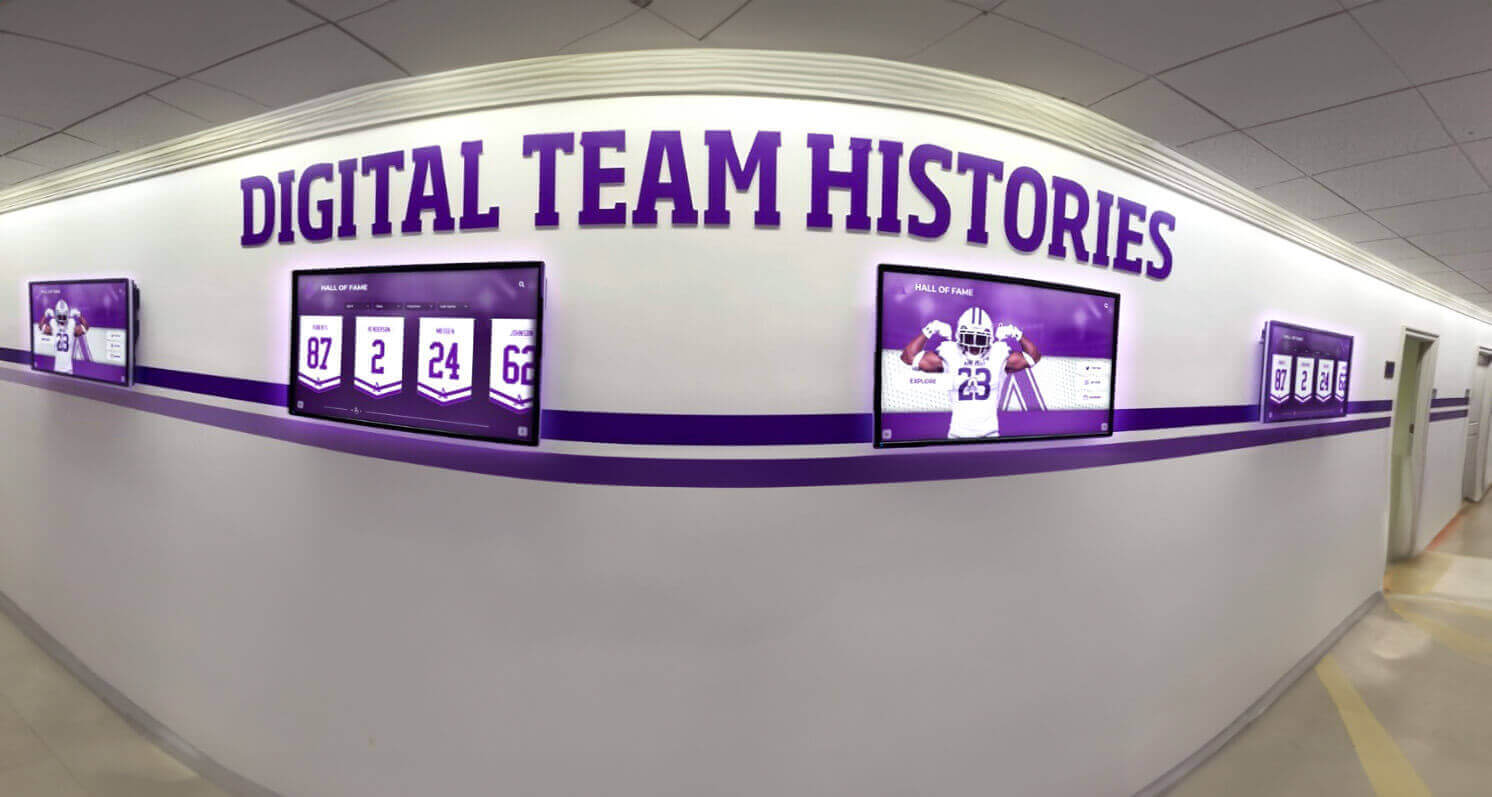
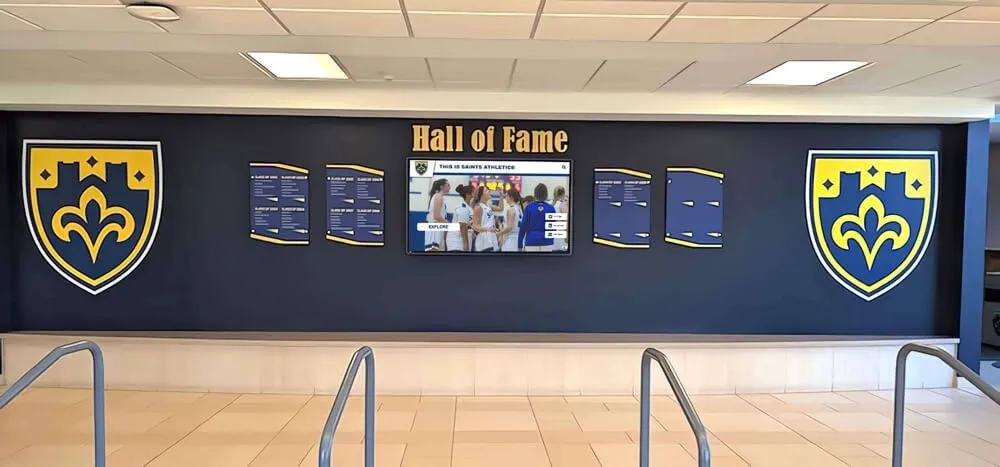
Coordinated multi-display systems enable content specialization where different screens serve specific audiences or categories while maintaining visual consistency
Implementation Planning and Best Practices
Selecting technology represents just the beginning. Successful touchscreen hall of fame implementations require strategic planning addressing multiple practical considerations.
Location and Positioning Strategy
Display effectiveness depends heavily on placement. Optimal locations balance visibility, accessibility, and contextual appropriateness.
High-Traffic Location Selection
Recognition displays create maximum impact in locations where community members naturally congregate or pass frequently. Prime locations include main entrances and lobbies where all visitors pass, athletic facility entrances contextually connecting recognition with current competition, cafeterias and common areas where people spend time, and hallway intersections with high foot traffic from multiple directions.
Locations receiving thousands of daily impressions create exponentially more engagement than tucked-away positions requiring deliberate seeking. When selecting installation locations, observe traffic patterns during various times—morning arrival, class changes, lunch periods, after-school activities, and event attendance—ensuring selected locations maintain consistent traffic rather than brief daily peaks.
Viewing Distance and Ergonomic Considerations
Display size and mounting height must match viewing distances and user ergonomics. Wall-mounted displays in hallways with 6-10 foot viewing distances work well at 43-55 inches with bottom edges 30-36 inches above floor. Lobby installations viewable from 15-20 feet require 65-75 inch displays mounted higher for sightline clearance across crowds.
Freestanding kiosks provide flexible positioning while naturally establishing appropriate viewing distances through base depths preventing users from standing too close or too far for comfortable interaction.
Contextual Appropriateness
Recognition placement should feel contextually natural rather than arbitrary. Athletic hall of fame displays belong in gymnasiums and athletic facilities. Donor recognition fits development office areas, event spaces, or building entrances. Academic honor rolls suit academic building lobbies or libraries. Arts recognition belongs in performing arts centers or gallery spaces.
Contextual placement creates authentic connections between recognition and spaces where recognized achievements originally occurred, enhancing emotional resonance and storytelling coherence.
Launch Planning and Community Engagement
Technical installation represents just one aspect of successful launches. The best implementations incorporate comprehensive activation strategies generating awareness and initial engagement.
Ceremony and Celebration
Formal unveiling ceremonies create memorable moments establishing recognition programs’ significance. Effective launch events include ceremonial ribbon-cutting or cover removal, initial inductee recognition with speeches or presentations, demonstration of interactive features showing community members how to explore content, photography documenting the occasion for archival purposes, and media coverage generating broader awareness.
Launch ceremonies communicate institutional commitment to recognition while creating shareable moments that generate social media attention and community conversation.
Educational Promotion
Many community members won’t intuitively understand how to interact with touchscreens, particularly older individuals less familiar with touch interfaces. Proactive education includes instructional signage near displays demonstrating basic interaction, video tutorials accessible via QR codes, staff and volunteer ambassadors demonstrating features during high-traffic periods, and social media content showing interaction examples.
Reducing friction in initial interactions ensures broader adoption rather than limiting usage to tech-comfortable community members already familiar with touchscreen interaction patterns.
Content Marketing and Social Media Integration
Launch campaigns should extend beyond physical installations. Multi-channel promotion includes featured honoree profiles published on institutional social media, email newsletters announcing launches and highlighting notable inductees, website integration featuring recognition programs on institutional websites, and digital signage integration displaying recognition highlights on additional screens throughout facilities.
Multi-channel promotion reaches audiences through various touchpoints, dramatically increasing awareness and engagement compared to single-location installations without broader marketing support.
Measurement and Program Optimization
The best touchscreen recognition programs incorporate ongoing measurement informing continuous improvement rather than treating installations as static implementations requiring no optimization.
Analytics and Engagement Tracking
Purpose-built recognition platforms provide comprehensive analytics revealing usage patterns and content performance. Valuable metrics include total interactions measuring overall engagement, session duration indicating depth of exploration, popular searches revealing community interests, most-viewed profiles identifying compelling content, and time-of-day patterns informing optimal content refresh timing.
Analytics transform subjective impressions into objective data supporting evidence-based optimization decisions. Discover which honorees generate most interest, which navigation paths users prefer, when engagement peaks occur, and which featured content drives exploration.
Community Feedback Integration
Formal and informal feedback mechanisms reveal improvement opportunities analytics alone miss. Feedback approaches include QR-linked surveys soliciting user experience impressions, comment stations near displays capturing immediate reactions, periodic focus groups exploring recognition program perceptions, and social media monitoring tracking public conversation about recognition initiatives.
User feedback often reveals unanticipated challenges or opportunities that program administrators wouldn’t independently identify, providing invaluable insight for enhancement planning.
Content Performance Analysis
Not all content performs equally. Analyzing which profiles generate engagement reveals optimization opportunities including photography standards when high-engagement profiles feature excellent photos, biographical depth preferences showing whether users engage with lengthy narratives or prefer concise summaries, video content impact demonstrating whether multimedia investment drives commensurate engagement increases, and category interest patterns revealing which recognition types resonate most strongly.
Performance analysis guides resource allocation, ensuring investment flows toward high-impact content types and categories generating strongest community engagement.
Selecting the Best Touchscreen Hall of Fame Solution for Your Institution
With understanding of essential features, design principles, accessibility standards, and implementation best practices, selecting the optimal solution requires systematic evaluation matching specific institutional needs.
Key Selection Criteria
When comparing touchscreen recognition options, prioritize these critical factors:
Purpose-Built Recognition Focus
Solutions designed specifically for hall of fame recognition understand unique institutional needs that generic digital signage cannot adequately address. Purpose-built platforms provide profile structures optimized for celebrating individuals, search and filtering capabilities essential for exploration, privacy controls managing sensitive information, and giving level differentiation for donor recognition applications.
Rocket Alumni Solutions exemplifies purpose-built recognition platforms, providing comprehensive capabilities specifically designed for celebrating achievement across athletic, academic, donor, and community recognition applications rather than adapting signage solutions designed for announcements and advertising.
Comprehensive Content Management
Technology meaningless without sustainable content management. Evaluate CMS capabilities including update ease for non-technical administrators, collaborative workflows supporting multiple content contributors, mobile access enabling updates from any device, bulk operations for efficient large-scale management, and scheduling capabilities automating time-based publication.
Friction in content management directly correlates with display staleness—intuitive systems receive regular updates while complex platforms languish with outdated information despite good intentions.
Brand Customization Flexibility
Generic templates create generic recognition. Evaluate customization capabilities including unlimited layout variations, exact color matching for institutional brand colors, custom typography selections, background flexibility supporting solid colors, gradients, photos, or video, and category-specific aesthetics enabling different recognition programs to maintain appropriate visual character.
Brand integration transforms external technology into authentically institutional recognition feeling native to your community rather than obviously vendor-provided.
Accessibility Commitment
Recognition should reach all community members. Verify accessibility features including WCAG 2.1 AA compliance, ADA mounting and reach range specifications, alternative access modes through mobile and web platforms, screen reader compatibility when needed, and ongoing accessibility testing in product development cycles.
Vendor accessibility commitment becomes clear through explicit documentation and testing processes rather than vague claims about accessibility consideration.
Support and Service Quality
Technology requires ongoing support. Evaluate vendor support models including implementation assistance with design, installation, and launch planning, training for administrators and stakeholders, technical support responsiveness and availability, content services if your institution lacks internal capacity, and software updates maintaining current capabilities and security.
Strong vendor partnerships ensure successful long-term recognition programs rather than challenging installations that struggle after initial deployment.
Total Cost of Ownership Considerations
Upfront costs represent just one aspect of recognition system economics. Comprehensive cost analysis includes initial hardware costs for displays, mounts, and media players, software licensing for recognition platforms and content management, installation expenses including electrical work and mounting, content creation covering photography, writing, and video production, ongoing support and maintenance fees, and content management labor whether internal or outsourced.
Compare total multi-year costs rather than initial purchases alone, recognizing that inexpensive systems often carry higher ongoing costs while premium solutions may provide stronger long-term value through comprehensive capabilities and superior support.
Implementation Timeline Planning
Realistic timeline expectations prevent rushed installations compromising quality. Typical touchscreen hall of fame implementation timelines include planning and selection phases spanning 4-8 weeks, content preparation requiring 6-12 weeks depending on initial population size, hardware procurement and delivery taking 3-6 weeks, installation and configuration requiring 1-2 weeks, testing and refinement spanning 1-2 weeks, and launch and promotion occurring 1-2 weeks before official unveiling.
Complete implementations typically require 4-6 months from initial planning through ceremonial launch, with larger or more complex installations extending to 6-9 months. Starting early ensures quality outcomes rather than rushed compromises forced by arbitrary deadlines.
Creating Recognition Experiences That Matter
The best touchscreen hall of fame solutions combine sophisticated technology, thoughtful design, accessible implementation, strategic content, and comprehensive planning into recognition experiences that genuinely honor achievement while engaging modern audiences through interactive exploration and storytelling.
Moving from traditional plaques to digital recognition isn’t simply about modernization—it’s about transforming institutional recognition from space-constrained documentation into unlimited celebration reaching worldwide communities through multiple access modes while creating engaging experiences that inspire current students, athletes, donors, and community members through connection with excellence and achievement.
As recognition needs continue growing while physical spaces remain constrained, purpose-built touchscreen solutions provide scalable frameworks accommodating expansion without facility renovation while maintaining fresh, engaging displays through cloud-based management and regular content enhancement. The best implementations in 2026 demonstrate that technology, when thoughtfully applied with strong design principles and accessibility commitment, creates recognition experiences dramatically more engaging and meaningful than traditional approaches while honoring the past and inspiring future excellence.
Ready to explore how touchscreen recognition can transform your institution’s hall of fame? Schedule a custom design consultation to see how interactive displays can celebrate your community’s achievements through engaging, accessible experiences that honor excellence while inspiring future generations.