



A booster club data privacy policy defines what personal information the organization collects from members, donors, and participants; how that information is stored and who may access it; and what consent is required before publishing names, photos, or contribution amounts in public-facing recognition displays. Booster clubs collect more sensitive data than most volunteer leaders realize—membership rosters, donor histories, athlete photographs, and sponsor agreements all carry obligations to the people who shared that information.
Most booster organizations operate on informal practices. Names get added to donor walls because “we always list contributors.” Photos are pulled from game-day galleries because “they were already public.” Member contact lists are emailed to incoming board members without considering what happens to outdated copies. None of these habits are malicious, but all of them create gaps that surface when a parent requests removal from a public display, when a graduated athlete asks that their photo come down, or when a leadership transition leaves no record of what data the organization holds.
This guide helps booster club leaders build a practical privacy framework for four categories of data that require specific attention: member lists, donor records, athlete and student photos, and recognition display content. It covers what consent to gather, how to document it, and how privacy decisions connect directly to digital hall of fame archives, interactive donor walls, trophy case displays, and touchscreen recognition kiosks. Legal requirements vary significantly by state, school district policy, and organizational structure. This guide provides a practical starting point; consult your school’s legal counsel or district privacy officer for guidance specific to your situation.
Building a booster club data privacy policy does not require a lawyer or a full compliance team. It requires clear decisions about what data you collect, documented consent for how you use it, and a process for honoring requests to update or remove information. The athletes, families, donors, and community members whose information appears in your recognition programs trusted your organization with it—a privacy policy is how you honor that trust responsibly.

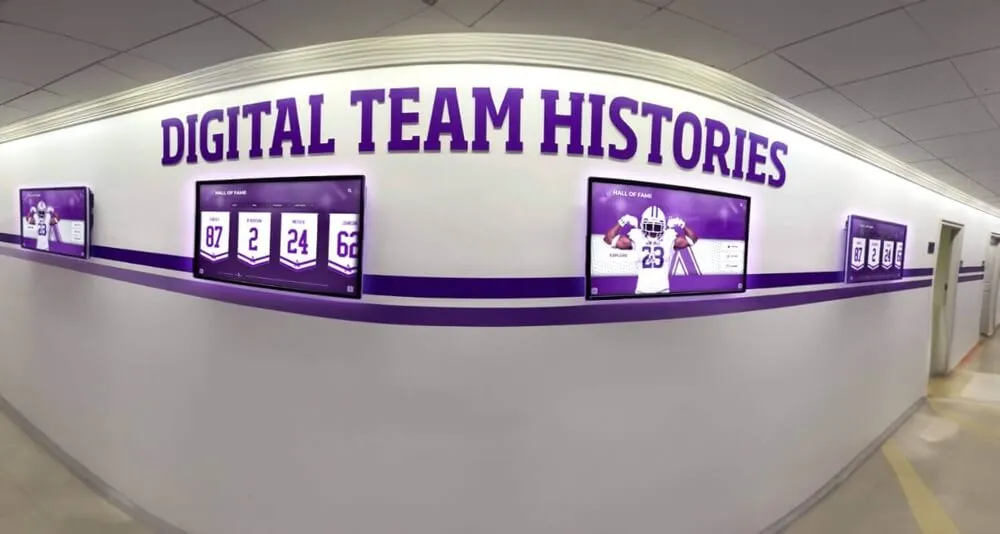
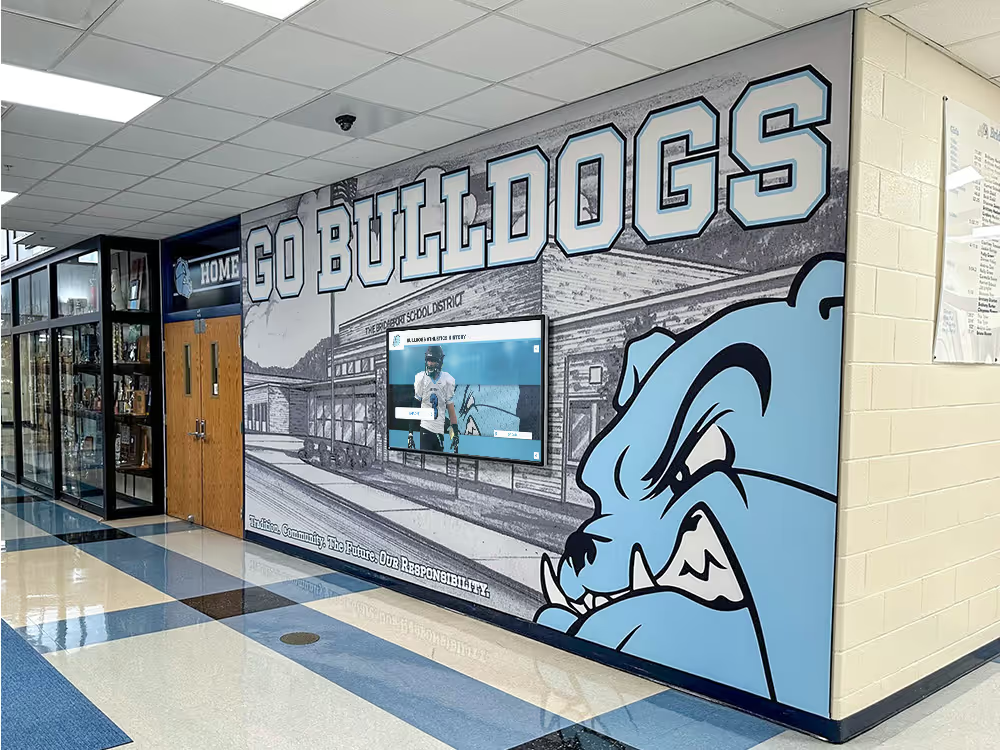
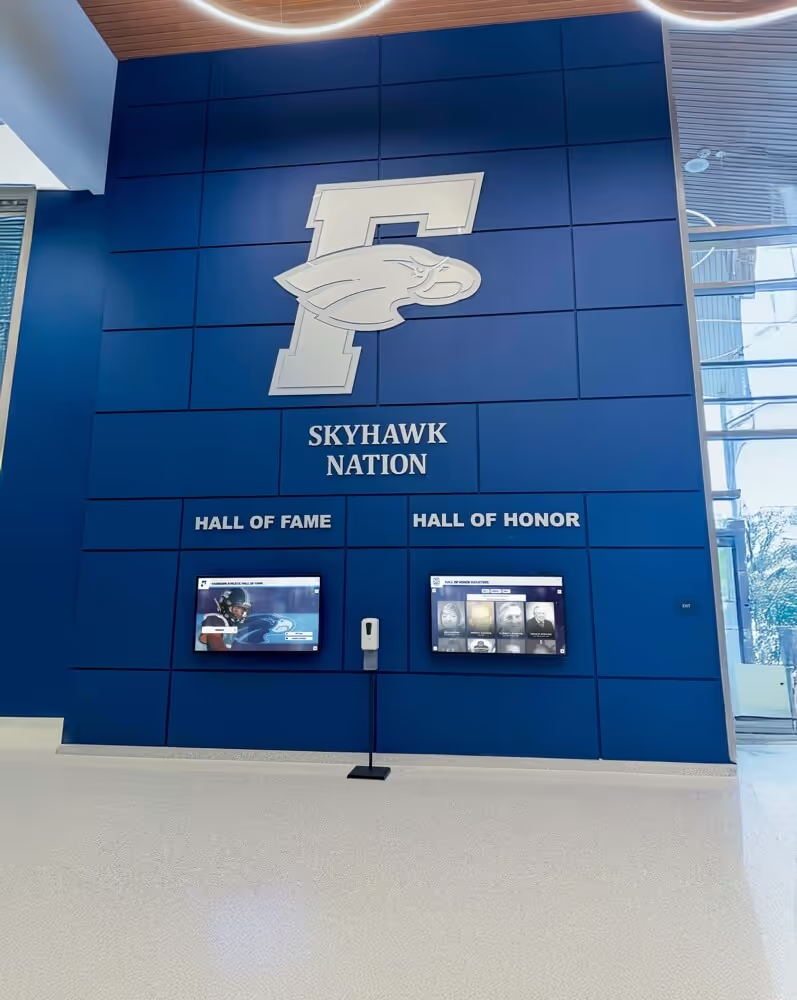
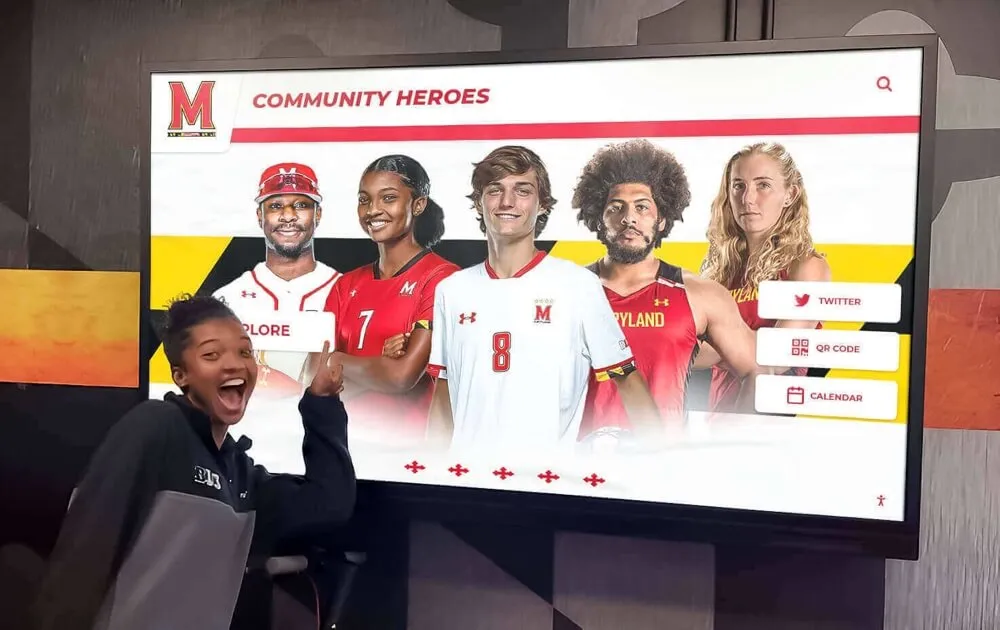
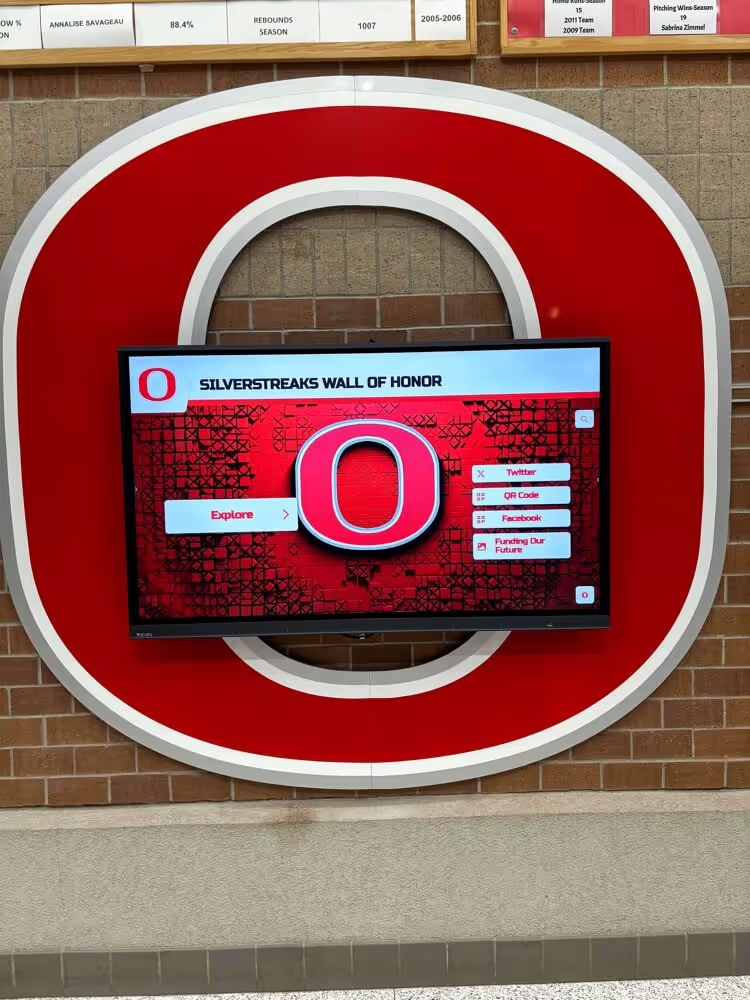
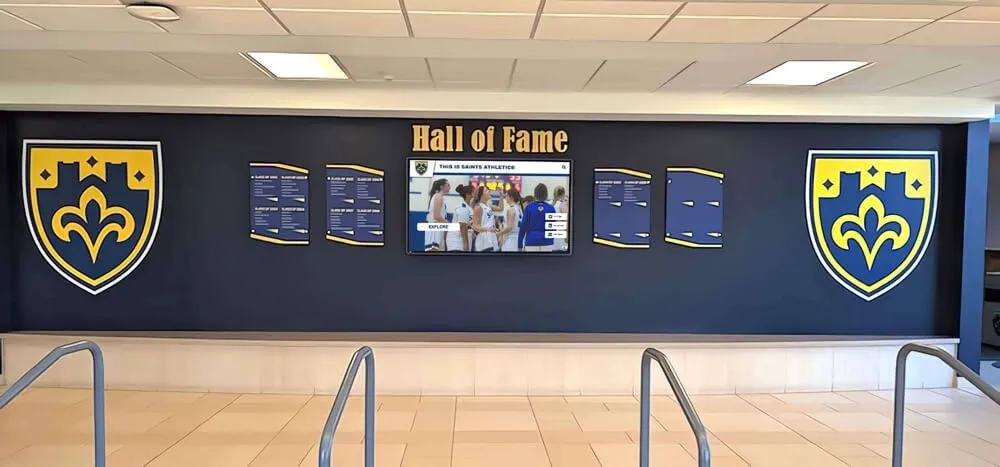
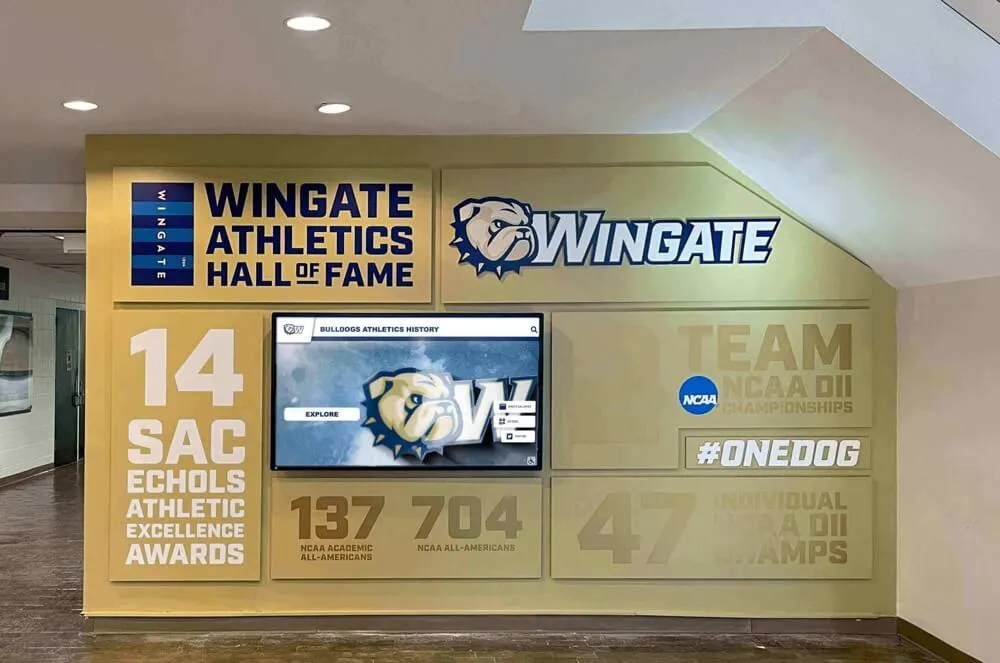
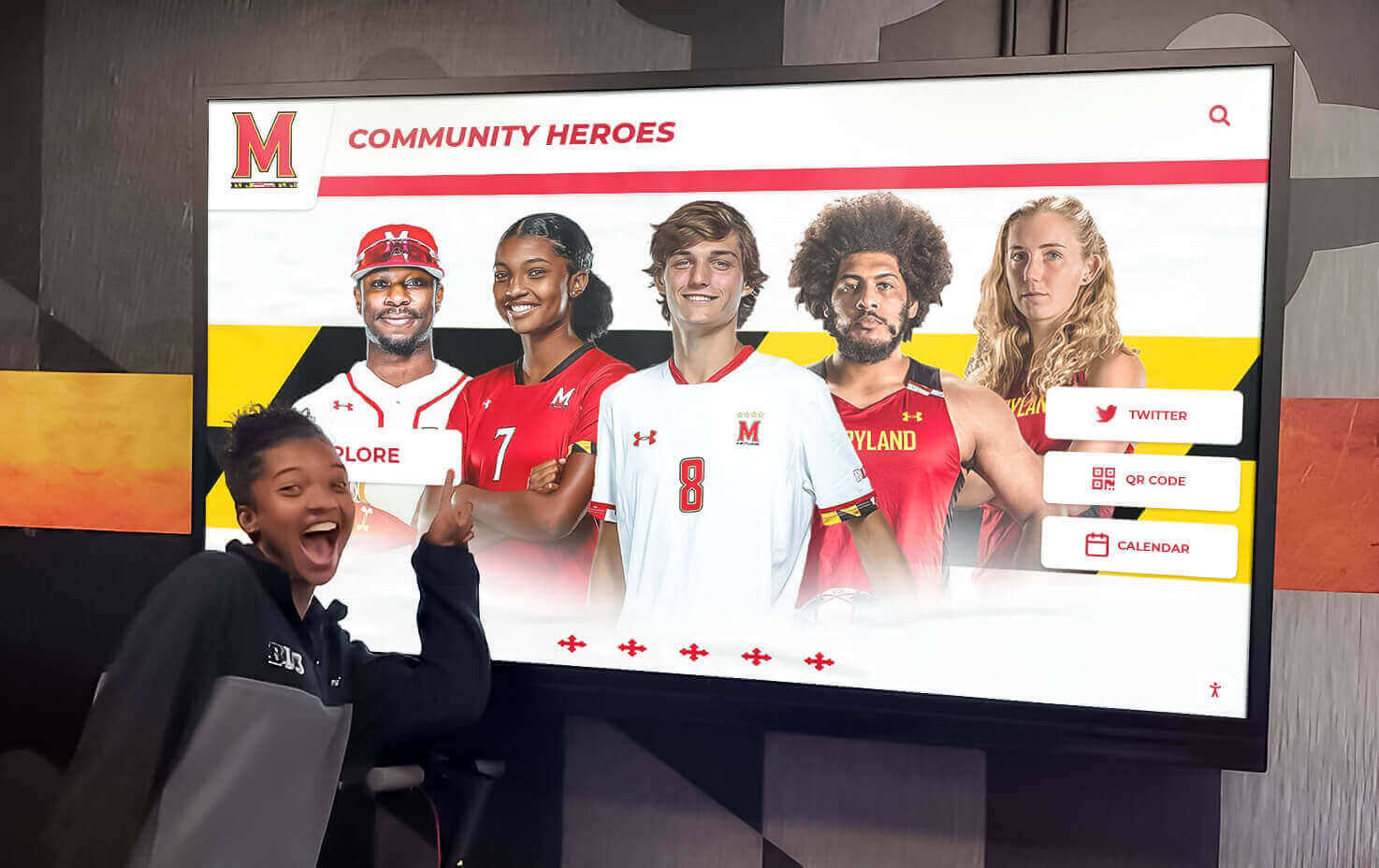
Recognition displays that include athlete names, photos, and donor information require clear privacy policies and documented consent before any information is published publicly
What a Booster Club Data Privacy Policy Actually Covers
A privacy policy for a booster club is not the same as a school district privacy policy or a website cookie notice, though it may overlap with both. It is the organization’s internal commitment—and external communication to members and donors—about how personal information is handled at every stage.
Core Definitions
Personal information in a booster club context includes any data that identifies or could identify a specific individual: full names, contact information, financial contribution amounts, photographs, academic affiliations, graduation years, jersey numbers tied to named athletes, and family relationships.
Sensitive personal information includes financial data such as exact donation amounts, identifying information about minors including photos and records of students under 18, medical or eligibility information, and any data that could expose family circumstances. These categories warrant heightened protection regardless of whether your state’s privacy laws specifically require it.
Public recognition data is personal information that a donor or participant has explicitly agreed to have displayed publicly—a name on a donor wall, a photo in a digital hall of fame, a record on a championship board. Consent for public recognition is distinct from consent to collect information for internal operational purposes.
Data controller in a booster club context is the organization—or more practically, the board—responsible for deciding what data is collected and how it is used. Individual board members act as processors when they access or manage data on behalf of the organization.
What a Privacy Policy Must Address
A complete booster club privacy policy should address each major data category the organization handles. The table below provides a starting framework:
| Data Category | Collection Purpose | Consent Type Needed | Public Display Risk |
|---|---|---|---|
| Member contact information | Communications, coordination | Implicit in membership; explicit for any public listing | Medium — rosters should never be publicly posted |
| Donor names and contribution amounts | Recognition, tax records | Explicit written consent for any public display | High — amounts are personal financial data |
| Athlete and student photos | Recognition, historical archive | Written consent; parental for minors | High — minors are involved |
| Sponsor and business information | Recognition, agreement terms | Per sponsorship agreement | Low — typically expected by businesses |
| Volunteer records | Recognition, coordination | Implicit with verification | Low |
| Nomination and committee records | Governance | Internal only | Not applicable — retain internally |
Your organization’s specific activities may add categories—merchandise purchase histories, event registration data, scholarship applicant records—that warrant their own handling guidelines.
Member Lists: Privacy Considerations for Rosters and Contact Data
Booster club member lists are the most commonly mishandled category of personal information in athletic support organizations. They accumulate across years, exist in multiple versions on multiple devices, and are shared without much thought about who receives them or what they do with them afterward.
What Member Data Typically Exists
Booster membership rosters commonly include full names, email addresses, phone numbers, mailing addresses, family affiliations (children’s names, sports, graduation years), and payment or membership tier information. In organizations with formal dues structures, financial records may also be attached to member profiles.
Each field carries a different level of privacy sensitivity. An email address used solely for board communications presents relatively low risk. A home address combined with family composition details and a record of when children practice creates a more sensitive profile—particularly when rosters are shared widely or stored in unsecured locations.
Common Roster Sharing Risks
Email forwards and CC chains. When rosters are shared by email, every recipient’s inbox becomes a copy. Boards that rotate annually may accumulate email threads containing current member data in the inboxes of people who left the organization years ago. Those distributed copies become impossible to control.
Cloud storage with broad link permissions. Shared folders configured with “anyone with the link can view” permissions and then referenced in newsletters create situations where the roster is effectively public.
Printed copies at events. Sign-in sheets, printed rosters at games or meetings, and check-in lists left on tables after events all create physical copies that may not be collected and destroyed after use.
Outgoing board member access. When board members change roles, access to shared drives and databases should be updated. In practice, many organizations never revoke access, meaning former members retain the ability to view current information indefinitely.
Building Responsible Member List Practices
A booster club privacy policy for member lists should specify:
A single authoritative roster location. Designate one system—a password-protected spreadsheet, a membership management platform, or a purpose-built database—as the official member list. All other copies are treated as temporary and deleted after their immediate use.
Role-based access. Not every board member needs every field. Structure access to match actual needs: coaches coordinating schedules need family contact information; the treasurer needs financial records; the communications chair needs email addresses.
Retention and deletion schedules. Former members’ contact information should be retained only as long as necessary for tax, audit, or legal purposes, then deleted or anonymized. Three years of retention after last membership is a commonly used benchmark for many volunteer organizations, but verify what applies in your jurisdiction.
No public posting. Member rosters in any form should not appear on publicly accessible websites, social media pages, or physical bulletin boards. Recognition of members can be accomplished by name without publishing contact details.
New member consent language. Membership forms should clearly explain how contact information will be used, who will have access, and whether the member’s name will appear in any public recognition materials.
Donor Records: Handling Financial Information and Recognition
Donor records present a specific challenge for booster clubs: donors typically expect recognition, but the appropriate scope varies widely. Some donors want their names prominently displayed; others gave anonymously and expect to stay that way. Some donors are comfortable with tiered recognition; others consider any financial information strictly private.
Categories of Donor Privacy Sensitivity
Exact contribution amounts are among the most sensitive fields in a donor record. While booster clubs often display tiered recognition (Platinum Sponsor, Gold Member, Champion Level), publishing precise dollar amounts is generally inappropriate without explicit consent. Even within tiered systems, donors should understand what range their tier represents before agreeing to any recognition.
Cumulative vs. single-gift records. A donor who gave annually for many years has a cumulative relationship with the program. Whether that cumulative total is disclosed—and how—should be a documented consent decision, not an assumption.
Anonymous donations. Any donation made with a request for anonymity must be treated as a binding commitment. Recognition displays, newsletters, and public acknowledgments should never include names that donors designated as anonymous, regardless of when the gift was made or how significant it was.
Business vs. individual donors. Corporate sponsors typically expect public recognition as part of their contribution agreement—visibility is often part of the value they receive. Individual donors have different expectations. These two categories should be handled separately within your privacy framework.
Donor Recognition Consent: A Practical Workflow
Before any donor’s name, affiliation, or contribution information appears in a public display, program, or announcement, the organization should have documented consent. A practical workflow:
Step 1: Capture consent at the point of giving. Donation forms—paper, online, or verbal—should include a recognition preferences field. Options might include: recognize me by name in public displays; list my name only without amount or tier; keep my gift anonymous; or contact me to discuss recognition options.
Step 2: Record the consent decision with the donation record. Consent is not useful if it lives only on a paper form that is discarded after data entry. The donor’s preference should be a field in whatever system stores contribution records, retained as long as the donor record exists.
Step 3: Confirm before first public display. For significant donors or named recognition—plaques, featured profiles, digital hall of fame entries—send a confirmation before publishing that shows exactly what will appear and invites corrections. This prevents errors and creates a second documented consent touchpoint.
Step 4: Provide an easy update process. Circumstances change. A donor who consented to recognition in one year may want to update preferences later. Your policy should specify who handles update requests, the turnaround time for removing or updating displayed information, and where that request should be directed.
Step 5: Audit displays annually. Before each recognition cycle, review all publicly displayed donor information against current records. Confirm that every displayed individual or organization has a current consent record and that no preferences have lapsed or changed.
Thoughtful donor wall designs that inspire giving depend on accurate, consented recognition—donors who feel their preferences were respected give again; those who feel their information was handled carelessly often do not.
Tax Receipt and Record Retention
Donor financial records have specific retention requirements separate from recognition preferences. Most advisors recommend retaining contribution records for multiple years to support tax compliance and potential audits. Consult your organization’s accountant or legal advisor for guidance aligned with your state’s requirements and your organization’s tax-exempt status.
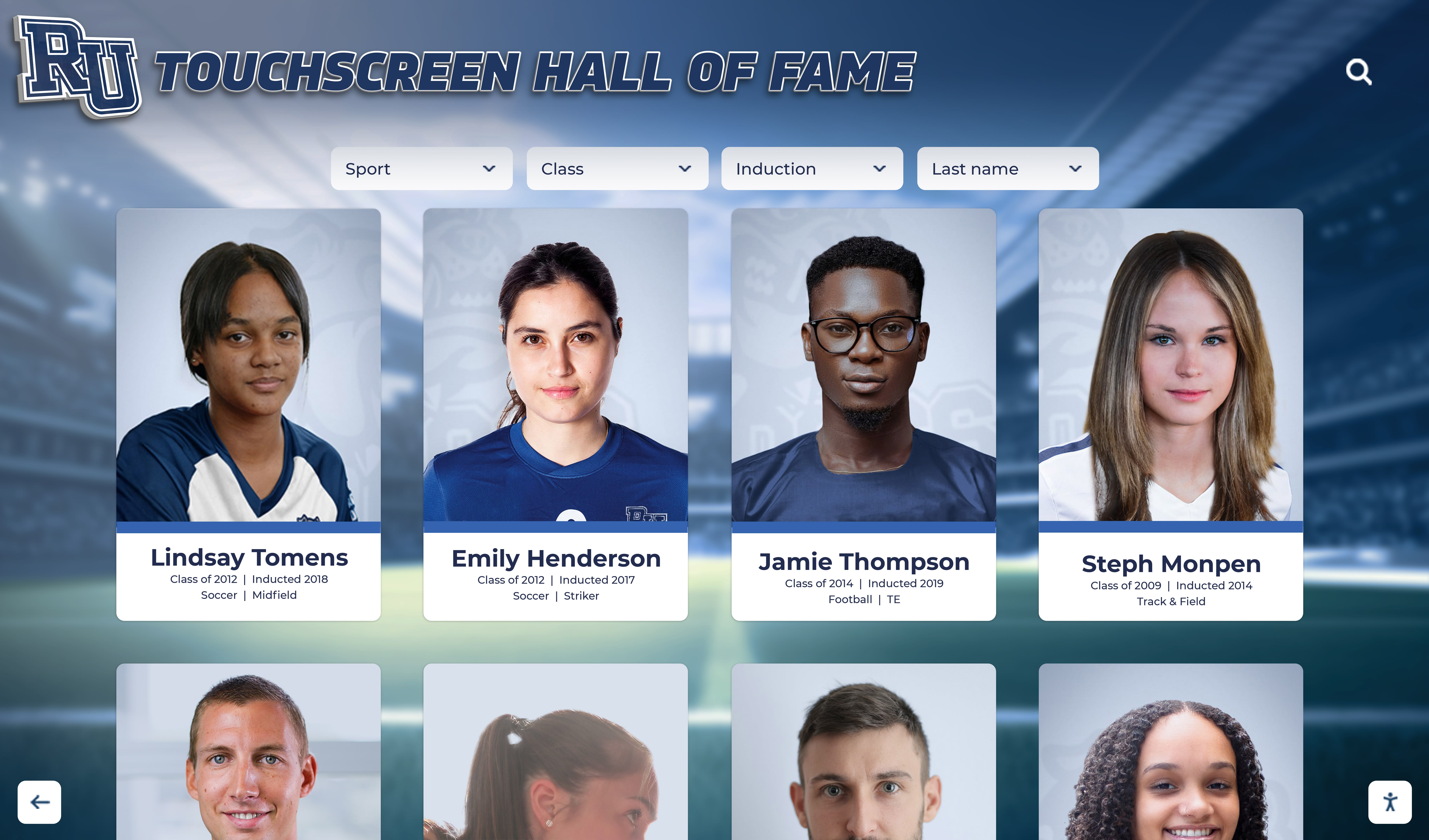
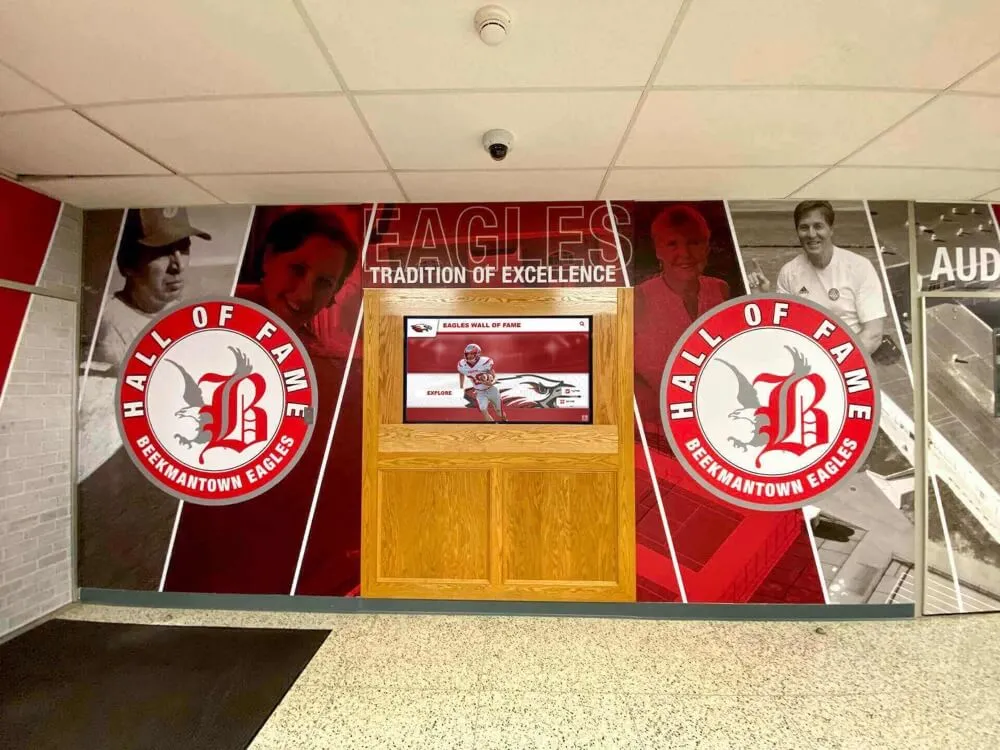
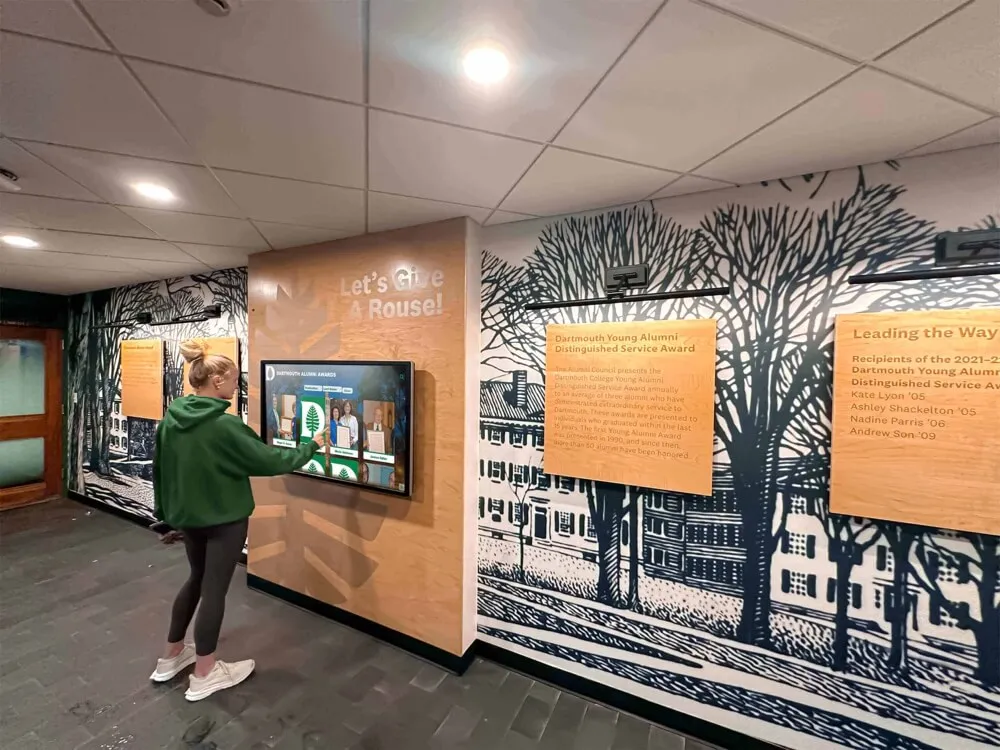
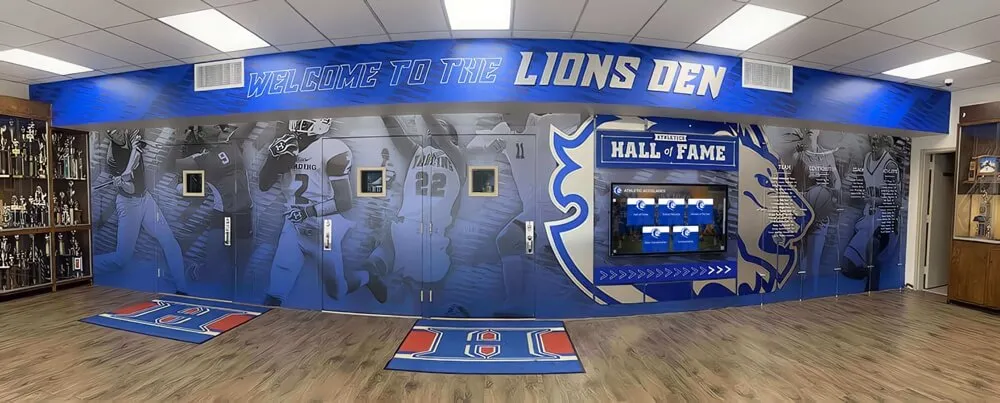
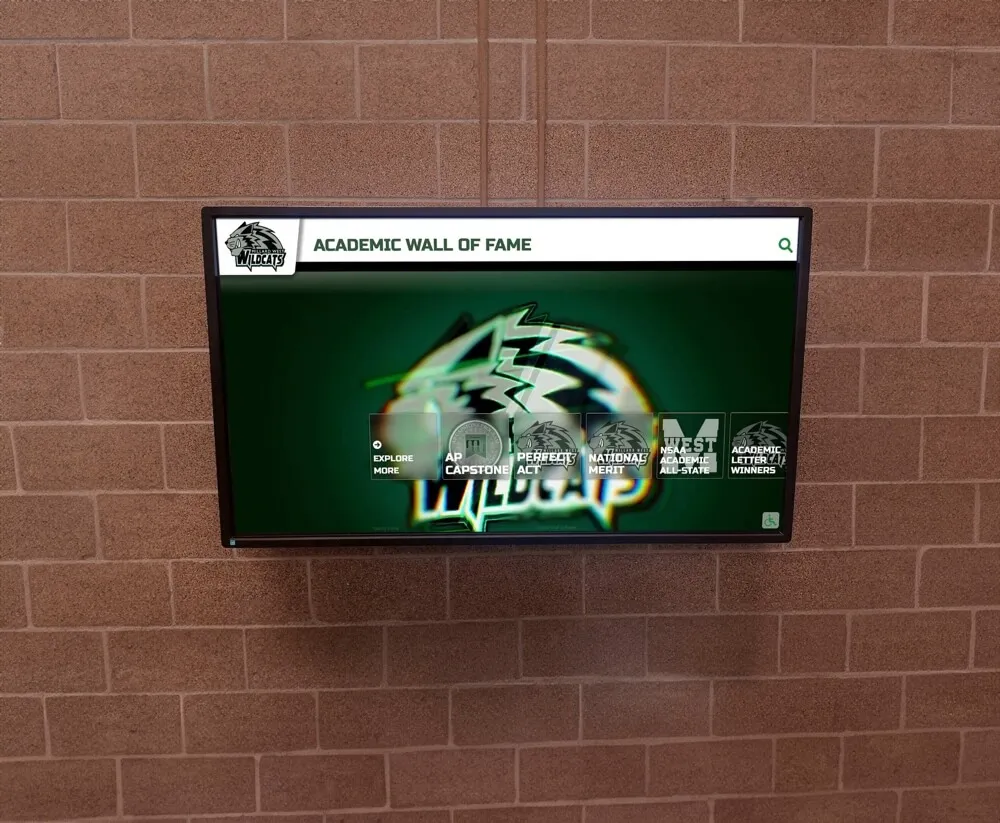
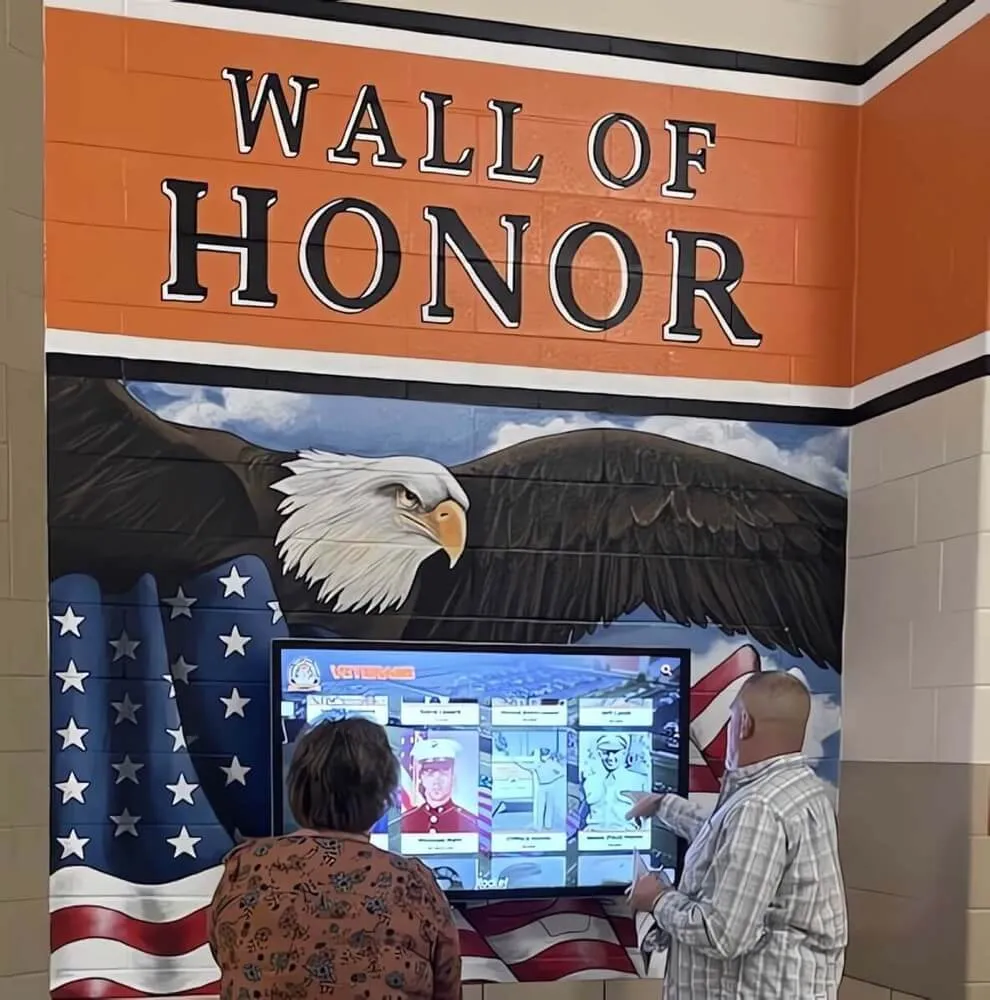
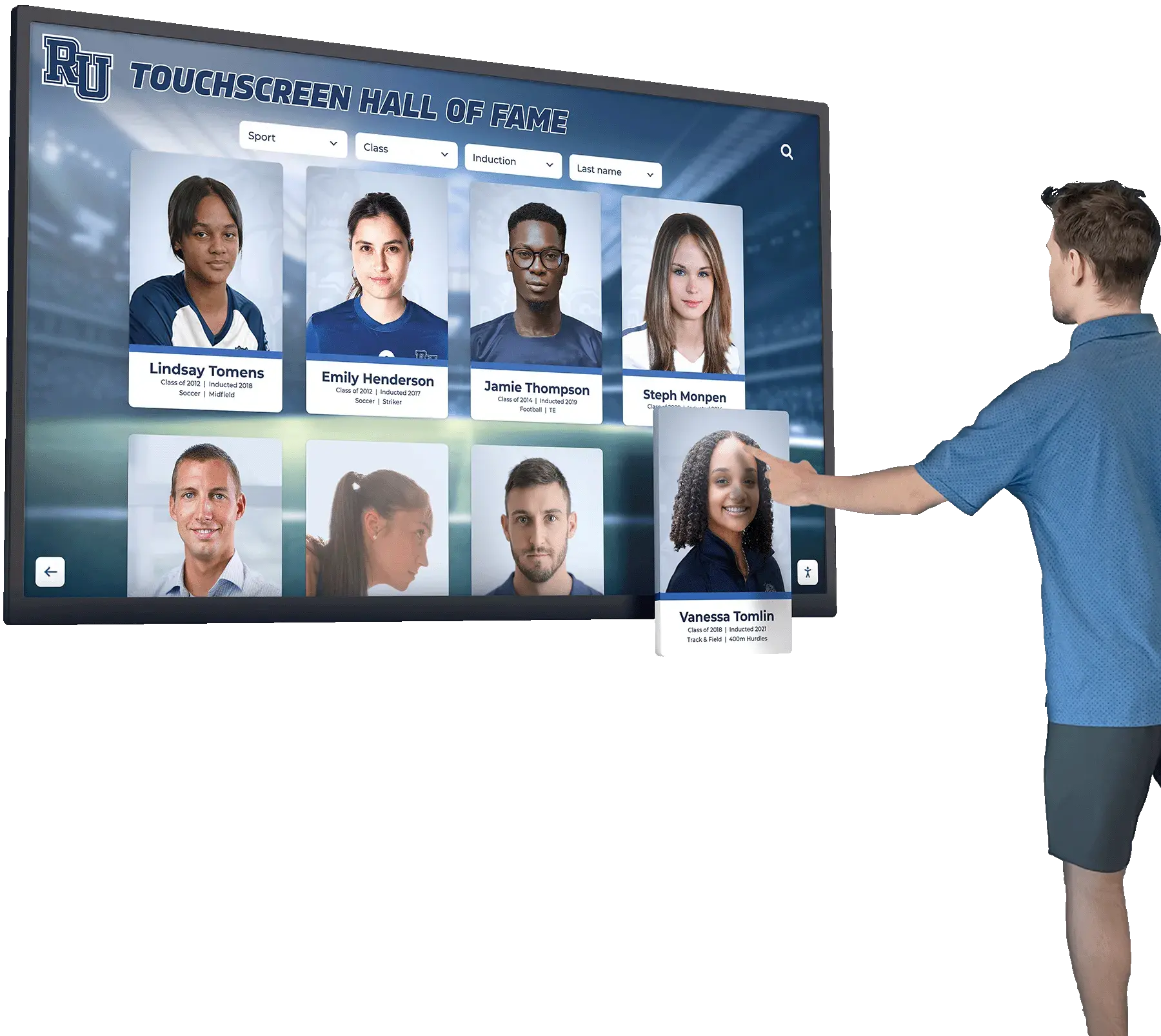
Digital recognition systems that display athlete profiles and achievement cards require documented consent frameworks, especially for student athletes under the age of 18
Athlete and Student Photos: Consent, Minors, and Display
Photos of student athletes are among the most visible elements of booster club recognition programs—and among the most legally sensitive. Most student athletes are minors, and photographs of minors carry heightened protection requirements under federal law, state statutes, and school district policies that vary considerably by location.
The Distinction Between School-Owned and Booster-Taken Photos
Many booster clubs use photos taken by school photographers, yearbook staff, or team photographers operating under school district contracts. Those photos typically come with their own consent frameworks—parents signing media release forms during school enrollment covers many standard uses. However, those releases do not automatically extend to all booster club uses, particularly for external-facing recognition platforms, websites, or digital displays accessible to the general public.
Photos taken independently by booster volunteers—parents photographing games, volunteers capturing team celebrations, board members photographing banquets—exist outside the school’s consent framework entirely. These photos require separate, specific consent before being used in any recognition display.
Photo Consent: What to Collect
A photo consent form for booster club recognition programs should address:
- Who is being photographed: Named individual consent, not just blanket event consent
- Specific uses authorized: Internal communications, public recognition displays, website and social media, third-party platforms including digital hall of fame systems and interactive recognition kiosks
- Duration: Whether consent applies indefinitely or for a defined period, and what happens when a student graduates
- Revocation process: How a parent, guardian, or student upon reaching majority can request photo removal and within what timeframe
- Parental or guardian signature for minors: Written consent from a parent or guardian is standard practice for any student under 18
The specificity matters. “We may use your photo for program purposes” does not clearly authorize displaying a student’s image on a publicly accessible digital hall of fame kiosk that any visitor can interact with in the school lobby. Clear, specific consent language protects both the student and the organization.
Navigating Photo Requests After Graduation
When athletes graduate, they become adults with full control over their own information and likeness. Alumni can update or revoke previously given consents. A privacy policy should include a documented process for:
- Alumni requests to update photos in digital archives and recognition displays
- Requests to remove content entirely from public-facing systems
- Requests to change how names appear, including legal name changes after graduation
- Requests related to photos in alumni recognition walls that former students may not have specifically consented to as minors
For programs building robust alumni engagement—including alumni spotlight recognition that profiles where athletes are now—establishing a direct request channel ensures graduates can manage how their information appears in school-affiliated recognition programs.
Photos of Non-Athlete Community Members
Booster club recognition often extends beyond athletes to coaches, parents, volunteers, and community donors. Photos of these adults require the same consent rigor as athlete photos, without the minor-specific statutory protections. Donor wall portraits, volunteer appreciation photos, and sponsor team photos all require documented consent before being incorporated into permanent displays or digital archives.

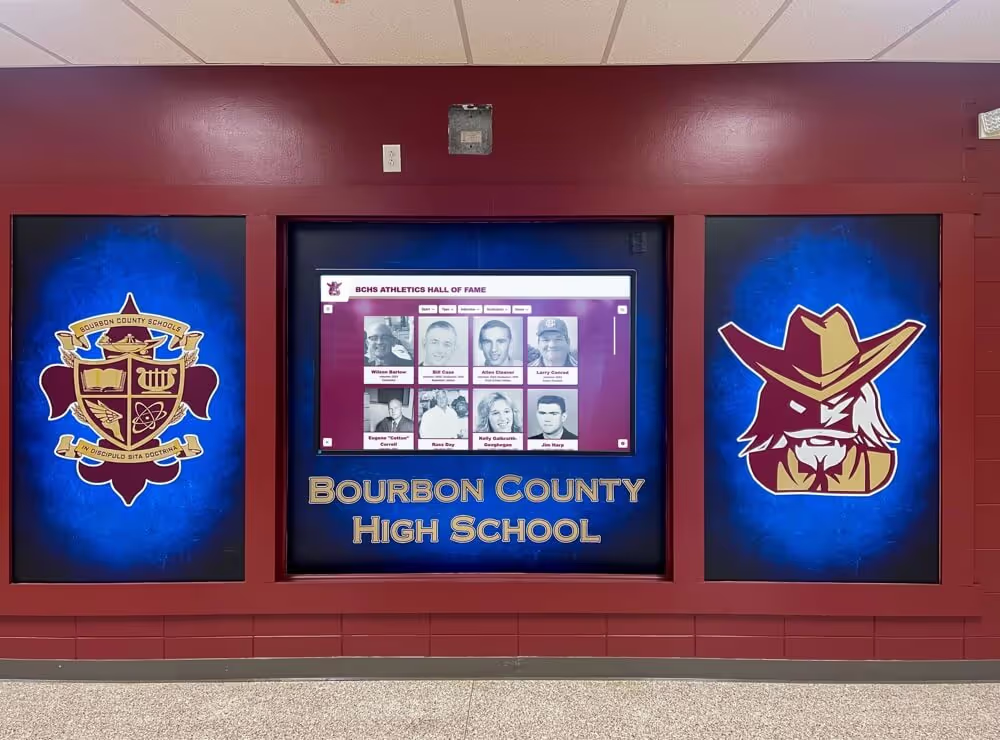
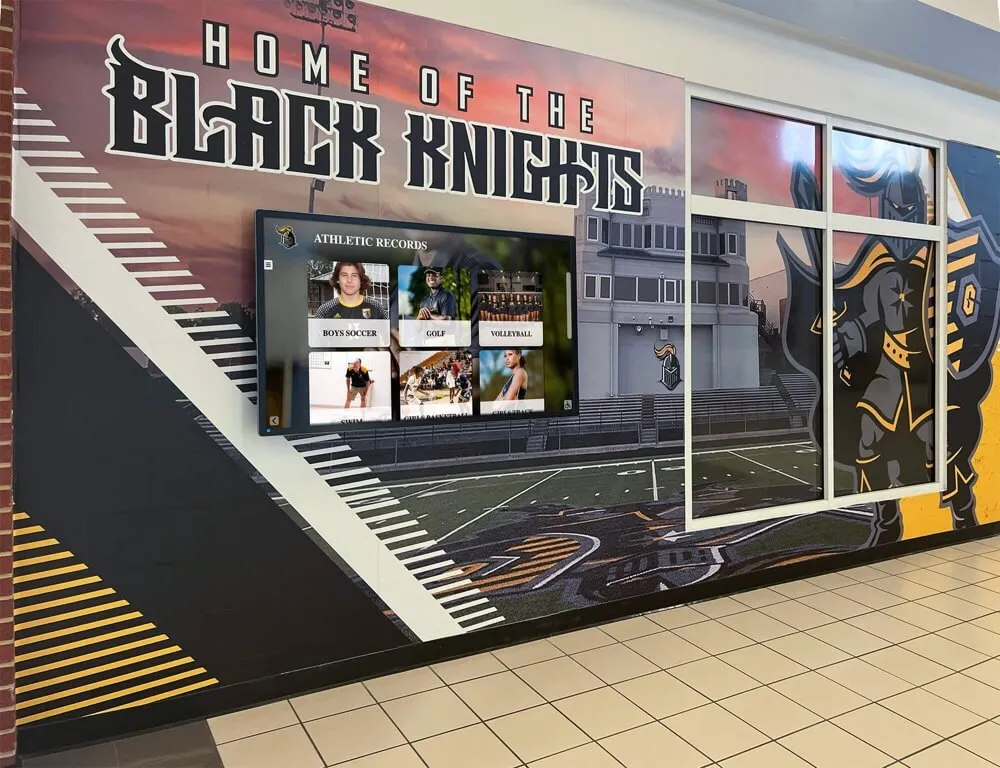
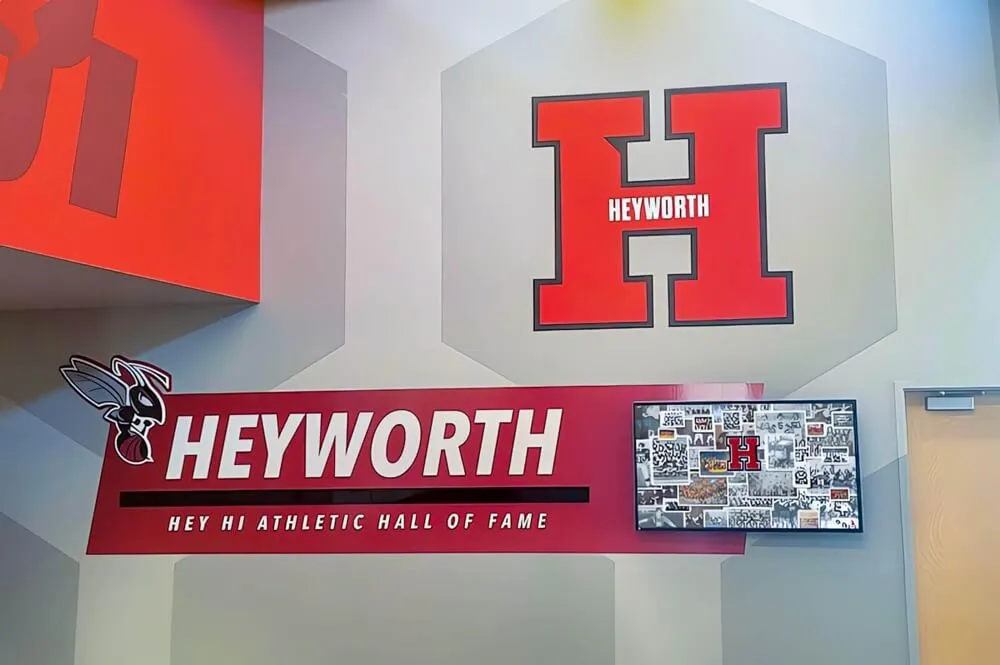
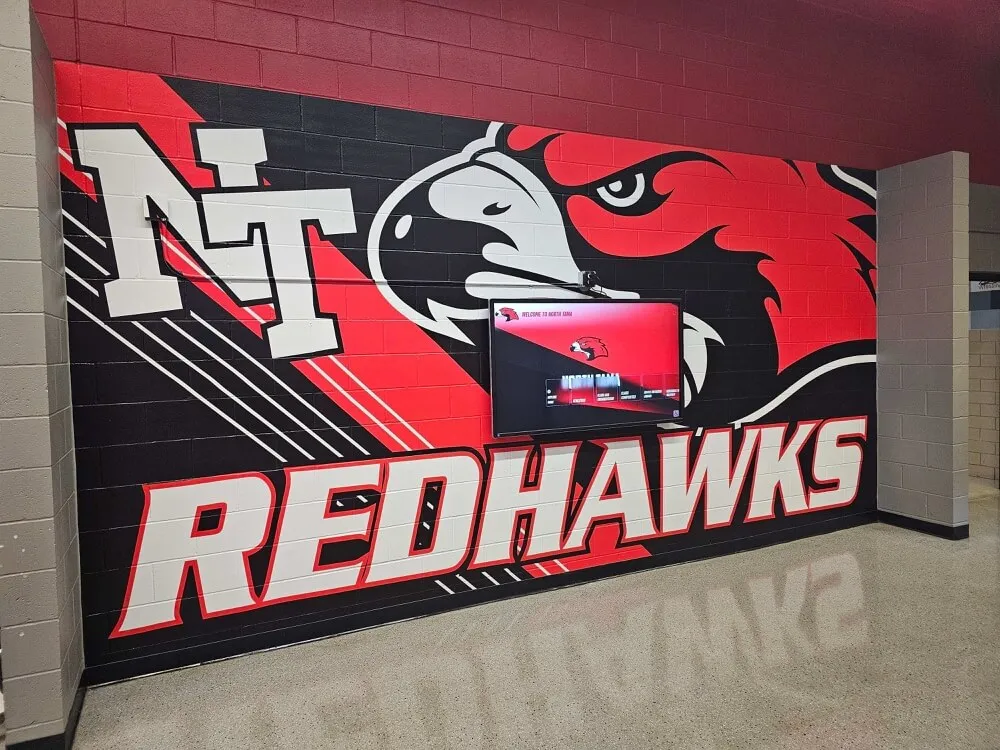
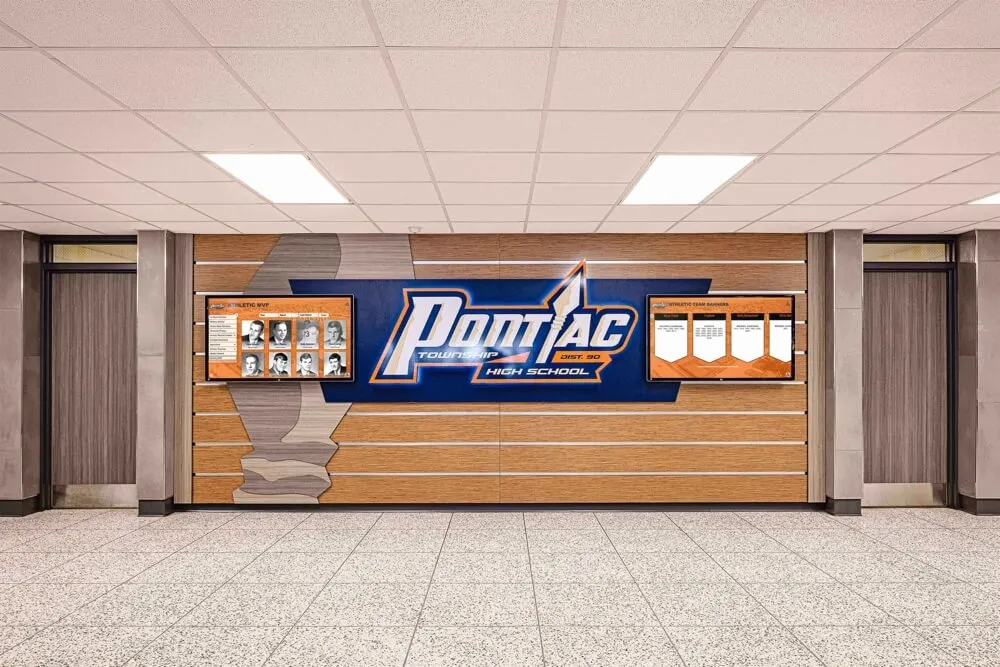
Athletic record displays in school hallways are highly visible and permanent—every name and photo that appears in these spaces should have documented consent from the individual or their family
Recognition Displays: What to Publish and What to Protect
Booster club recognition displays—whether physical plaques, digital screens, interactive touchscreen kiosks, or online portals—take personal data and make it permanently visible to broad audiences. The privacy decisions made when building recognition content determine what families, visitors, opposing teams, and the general public can see about your members, donors, and athletes for years to come.
A Framework for Recognition Display Privacy
Not every field in your database belongs on your display. Use this framework to evaluate what appears publicly:
| Information Type | Appropriate for Public Display | Notes |
|---|---|---|
| Inductee or honoree name | Yes, with consent | Confirm current preference at or before induction |
| Sport and position | Yes, with consent | Standard for athletic recognition |
| Graduation year | Yes, with consent | Helps identify specific individuals by era |
| Achievement records and statistics | Yes, with consent | Verify athlete prefers their records displayed |
| Photo | Yes, with explicit written consent | Separate from general recognition consent |
| Home address | Never | No legitimate recognition purpose |
| Exact donation amount | Only with explicit donor consent | Default to tier label or “Generous Supporter” |
| Personal contact information | Never | No public display purpose |
| Children’s names or family composition | With caution | Avoid identifying minors not separately consented |
| Scholarship recipient personal details | With caution | Recipients have independent consent rights |
Applying this framework before building display content catches most common privacy mistakes before they become embedded in permanent installations.
Digital Displays and Interactive Kiosks
Interactive recognition kiosks in schools and universities add capabilities that physical plaques do not have—search functions, multimedia content, linked profiles, and internet connectivity. Each capability introduces privacy considerations that static displays do not.
Search functions make it easy for anyone to find specific individuals. A parent browsing donor profiles is different from a member of the general public searching for a named student’s photo and record. Consider whether your display’s search should be limited to categories rather than individual names, or whether name search should be restricted to closed-network access within the school facility.
Multimedia content such as video interviews, audio testimonials, and extended biographical profiles contains more personal information than a name and photo alone. Consent forms for multimedia content should specifically enumerate what types of content will be collected and where they will appear, including any third-party platforms hosting the content.
Internet-accessible displays mean that content viewable in the school lobby may also be accessible remotely. If your hall of fame platform or donor recognition system is web-accessible, privacy decisions made for in-lobby displays apply to a much broader audience. Your policy should reflect this broader reach.
Digital lobby displays that rotate through recognition content face a particular challenge: donors or athletes whose information appears may not have anticipated exactly how and when it would be shown. Recognition preferences gathered at point of contribution should specify whether rotating digital display is included within the scope of consent.
Records, Archives, and Historical Content
Athletic records—fastest times, highest-scoring seasons, career statistics—are often considered inherently public because they were set in public competition. However, the way those records are displayed connects them to identified individuals in ways that may require consent.
A record that reads “School Record: 47.3 seconds, 400m hurdles” is a statistic. A record that reads “Emily Henderson, Class of 2019: School Record, 47.3 seconds, 400m hurdles” connects that statistic to an identified person. For current students, this is generally handled through school athletic department consent processes. For alumni who set records years or decades ago, best practice is to notify them that their records appear in the archive and offer an opportunity to update their listed information.
Schools investing in comprehensive athletic archives—including records displayed in renovated gym spaces and interactive trophy case installations—benefit from establishing a records notification process that keeps former record-holders informed about how their achievements are publicly displayed.
Building Your Consent Workflow: Seven Practical Steps
A consent workflow is the operational procedure that ensures privacy decisions are captured, recorded, and acted upon at every point where personal information is collected or displayed. The following seven-step framework can be adapted for organizations of any size.
Step 1: Map every data collection touchpoint. Identify every form, registration page, donation interface, sign-in sheet, and photo opportunity where personal information is collected. Each touchpoint needs consent language appropriate to how that data will be used.
Step 2: Write consent language that matches actual use. For each touchpoint, draft language that accurately describes how information will be used. If a donation form consent says “your name may appear in recognition materials” and you later add it to a publicly searchable digital kiosk, the original consent may not cover that use. Specificity protects everyone.
Step 3: Store consent records tied to individual records. Every consent decision should be stored with the associated individual’s record—not in a separate spreadsheet or filing cabinet. When someone asks whether consent was given, the answer should be retrievable in seconds.
Step 4: Establish a named privacy contact by role. Designate a specific board position—not an individual name, since roles persist through leadership transitions—as the privacy contact. This person receives consent update requests, removal requests, and questions about how information is used. Make this contact information available to members, donors, and athletes.
Step 5: Build a removal and update protocol. When someone requests removal from a display, newsletter, or database, the policy should specify a response timeline (14 days is a reasonable standard for volunteer organizations) and the steps required to complete the removal. Partial removals—updating a name but keeping a photo, or removing a photo but keeping a name—should be explicitly addressed.
Step 6: Conduct an annual consent audit. Once per year, review all publicly displayed information against current consent records. Flag any displayed individuals for whom consent records are missing, expired, or unclear. Resolve flags before the next recognition season begins.
Step 7: Train incoming board members. Privacy practices are only as durable as the people executing them. Every leadership transition should include a privacy onboarding session covering the policy, the consent workflow, the location of consent records, and how to handle requests from members and alumni.
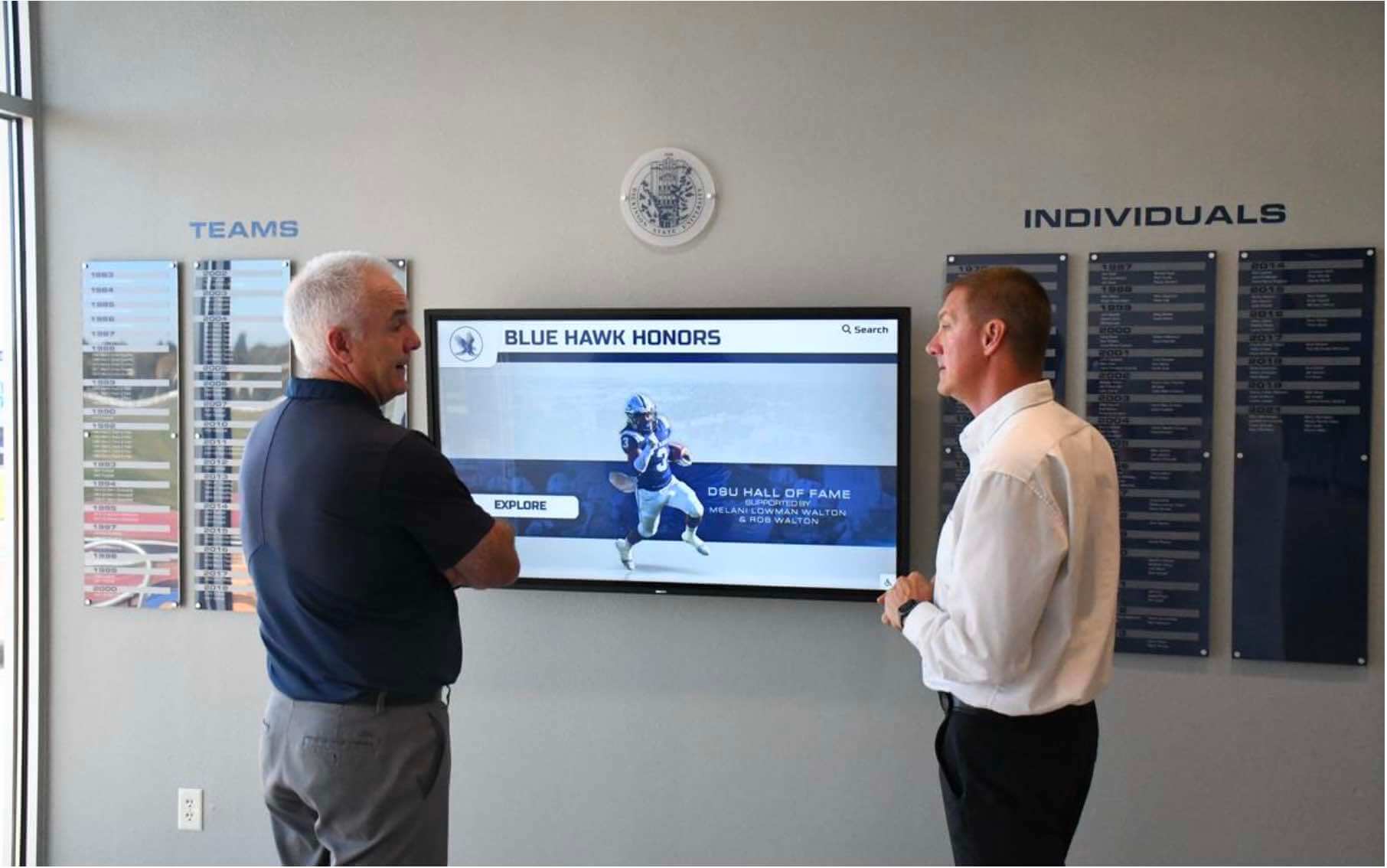
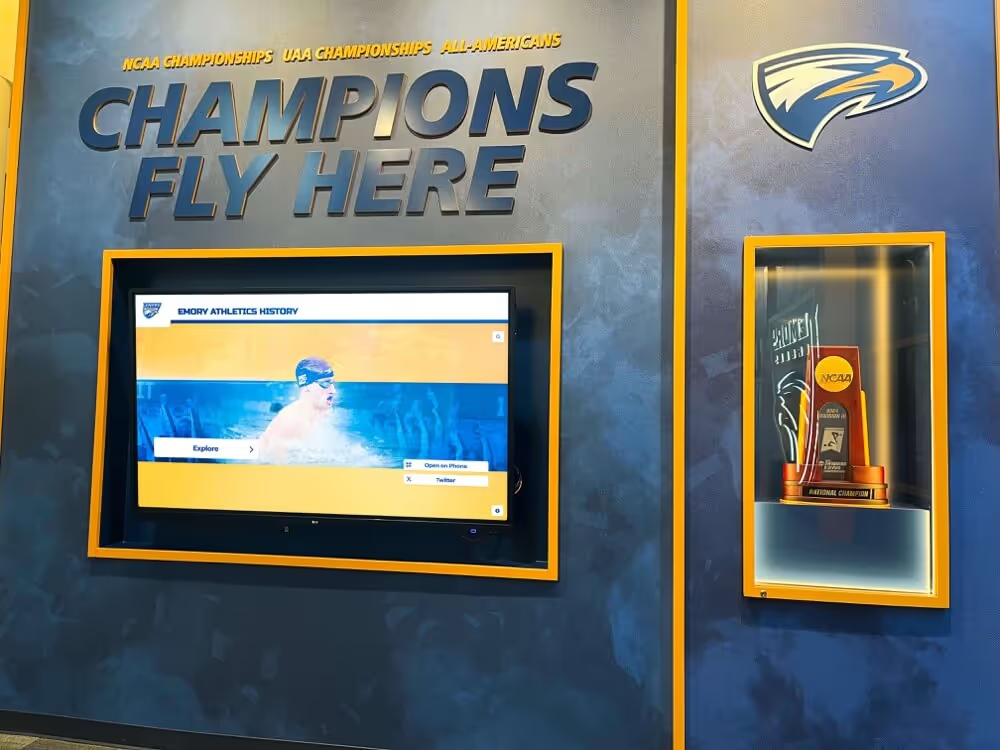
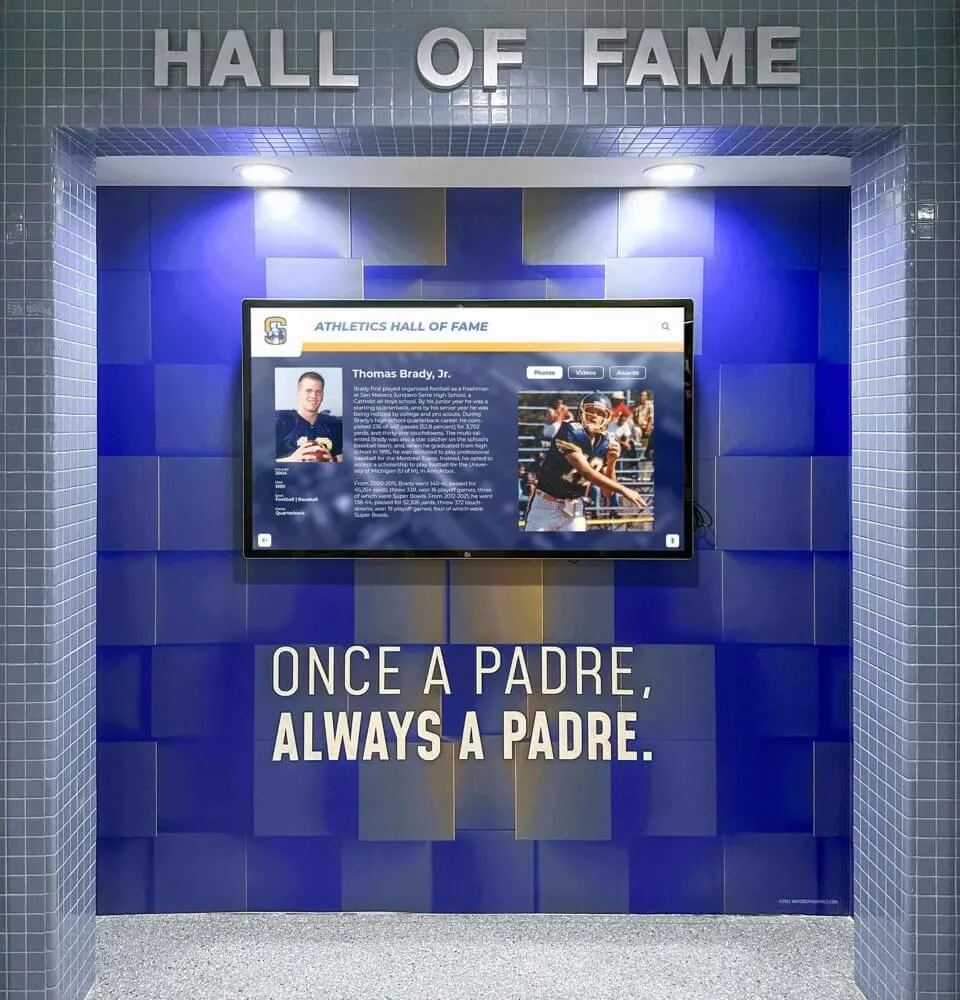
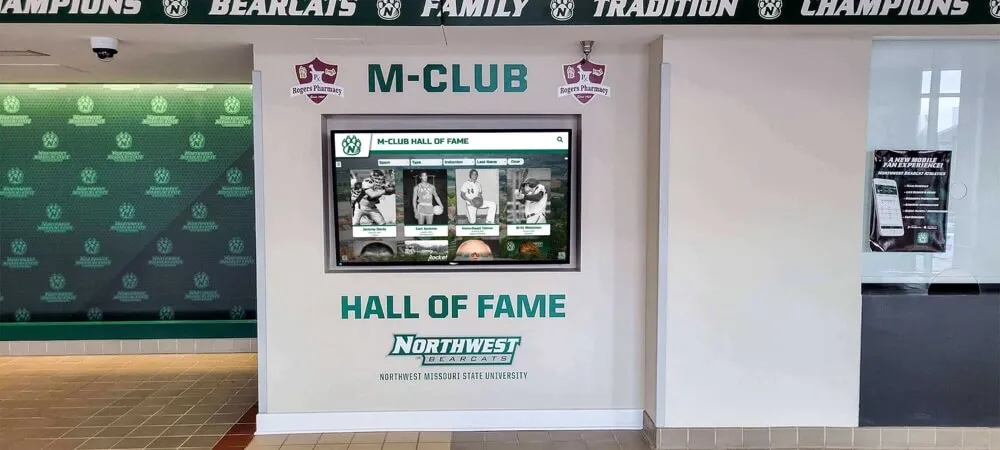
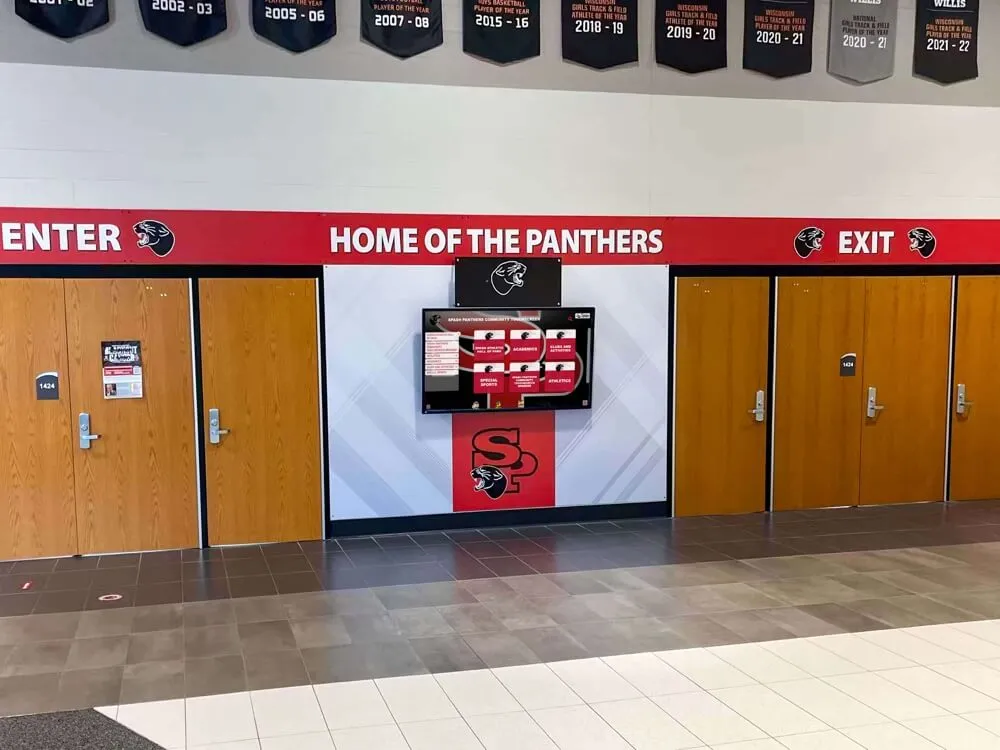
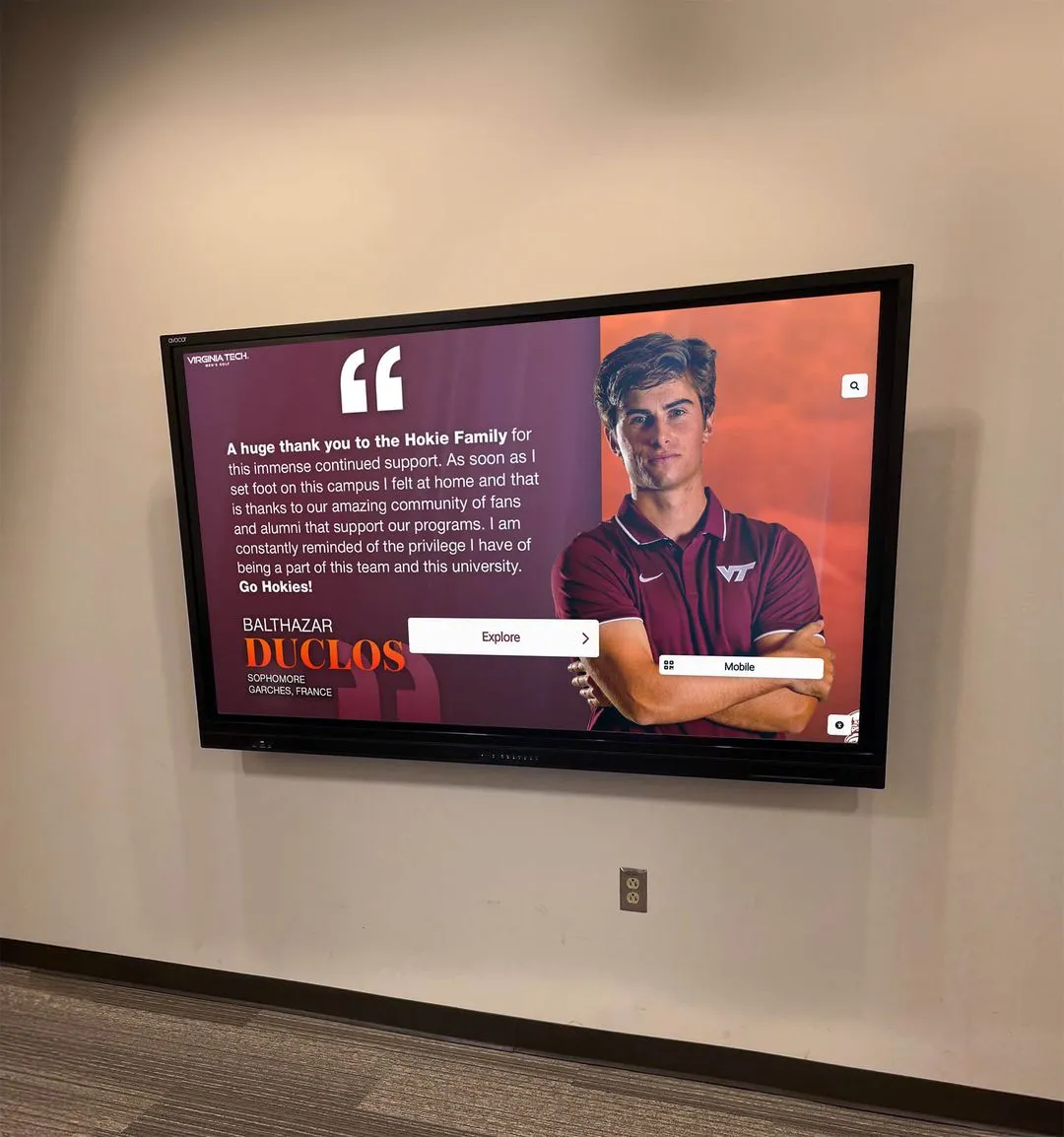
Recognition systems designed for public interaction require clear privacy frameworks governing what personal information appears, how consent is documented, and how individuals can request updates or removals
Sponsor and Business Data: A Different Privacy Calculus
Corporate and business sponsors occupy a different privacy position than individual donors and student athlete honorees. Businesses that provide financial support typically expect and value public recognition—visibility is often part of the reason they contribute. But sponsor recognition still carries considerations worth addressing in your privacy policy.
Business contact information vs. personal contact information. When a local business sponsors a booster club, the relationship is with the business—but your records likely include the personal contact information of the individual who arranged the sponsorship. That person’s phone number and email address are personal data even if provided in a business context.
Logo and branding usage. Displaying a sponsor’s logo in a recognition display requires rights to use that logo. Most sponsorship agreements include explicit terms about how logos may be displayed, in what formats, and alongside which other brands. Your privacy policy should reference the need for written sponsorship agreements before any logo or brand asset appears in displays, websites, or printed materials.
Multi-year agreements and changing business relationships. Businesses change ownership, rebrand, or close. Recognition displays that include former sponsors’ logos or names from outdated agreements may inaccurately imply active relationships. A review process for sponsor recognition should align with current, active agreements.
Events that bring together sponsors, donors, and alumni often mix business and personal recognition in ways that deserve advance planning. Alumni networking and reunion events that feature sponsor recognition should apply the same consent principles as static displays—particularly if those events are photographed or recorded for subsequent use in recognition materials.
Q&A: Common Booster Club Privacy Questions
Q: Do we need a formal written privacy policy if we are a small volunteer organization?
A written policy is valuable regardless of organization size. A one-page document that defines what data you collect, how you use it, and how people can request changes is sufficient for most small booster clubs. What matters is that the policy exists, is accessible to members, and is actually followed. An informal approach fails the moment a leadership transition happens or a question arises about a specific decision made years earlier.
Q: Can we use photos taken at public school athletic events without individual consent?
Photography at public events involves complex legal questions that vary by jurisdiction and by the specific use of the photos. Many schools hold that photos taken at public athletic events can be used for certain school purposes. However, uses covered by a school district’s media release forms may not automatically extend to booster club platforms, external websites, or third-party recognition systems. When in doubt, obtain specific consent rather than relying on assumed coverage from another organization’s consent framework.
Q: What happens if a donor asks to be removed from our display?
Honor the request promptly and completely. Your policy should specify a removal timeline and procedure. For digital displays, removal can typically be completed within hours of a decision. For physical plaques or printed materials, the timeline may be longer—acknowledge the request immediately, confirm the timeline, and follow through. Document the request and the completion date.
Q: How long do we need to keep consent records?
Consent records should be retained for as long as the consented content is displayed, plus a reasonable period after removal to support any subsequent questions. For permanent recognition such as hall of fame inductees, indefinite retention of consent records is appropriate. For time-limited recognition such as seasonal donor lists or annual reports, retaining consent records for three to five years after publication is typically sufficient.
Q: Can we post photos of students from our booster club’s social media account without separate consent?
Social media publication is a use case that should be specifically named in consent forms. A student whose photo appears in a game-day gallery may not have consented to that photo appearing in your organization’s social media feed, where it may be shared further outside the school community. Social media consent should be explicit and separate from general program recognition consent.
Q: What should we do about historical records where we have no documented consent?
For records that predate current consent practices—inductees from decades ago, donors from the program’s early years, alumni whose records exist only in paper archives—a practical approach is to implement a notification process before any historical content appears in a new digital format. Before a historical name or photo is added to a searchable kiosk, web portal, or new digital wall, attempt to contact the individual or their family to confirm current preferences. Document the outreach attempt even if no response is received.
Q: Does FERPA apply to booster club records?
The Family Educational Rights and Privacy Act (FERPA) applies to education records maintained by schools and school districts that receive federal funding. Booster clubs that are independent organizations are generally not directly bound by FERPA. However, if a booster club operates under a school’s umbrella or handles data that originates from school records, FERPA implications may arise. This is a question for your school district’s legal counsel rather than a determination booster club volunteers should make independently.
Privacy and Recognition Vendors: What to Ask Before Signing
Most booster clubs that invest in digital recognition systems work with third-party vendors who host platforms, manage software, and store data. Vendor selection and contract terms have direct privacy implications that are worth addressing before signing.
Questions to Ask Potential Vendors
- Who owns the data stored in your system—our organization or yours?
- Can we export our complete data—inductee records, media files, and configuration—in a portable format at any time?
- What personal data do you collect directly from display visitors or kiosk users?
- Do you share or use our data for any purposes outside of providing our contracted service?
- What are your data retention and deletion practices when a contract ends?
- What security certifications or compliance frameworks do you maintain?
Vendors with strong data stewardship practices answer these questions clearly. Evasive or incomplete answers to data portability questions are meaningful signals about how the vendor treats customer data.
Platform Transitions and Data Migration
Schools and booster clubs that transition between recognition platforms face a specific privacy risk: the window between exporting data from the old system and successfully importing it into the new one. Before terminating any vendor contract, confirm that you have received and verified a complete data export in a usable format and that all media files associated with donor and athlete profiles have transferred correctly.
For programs with large libraries of historical content, platform migration without thorough data verification creates the risk of discovering gaps after the old system is decommissioned and the data it held is no longer accessible.
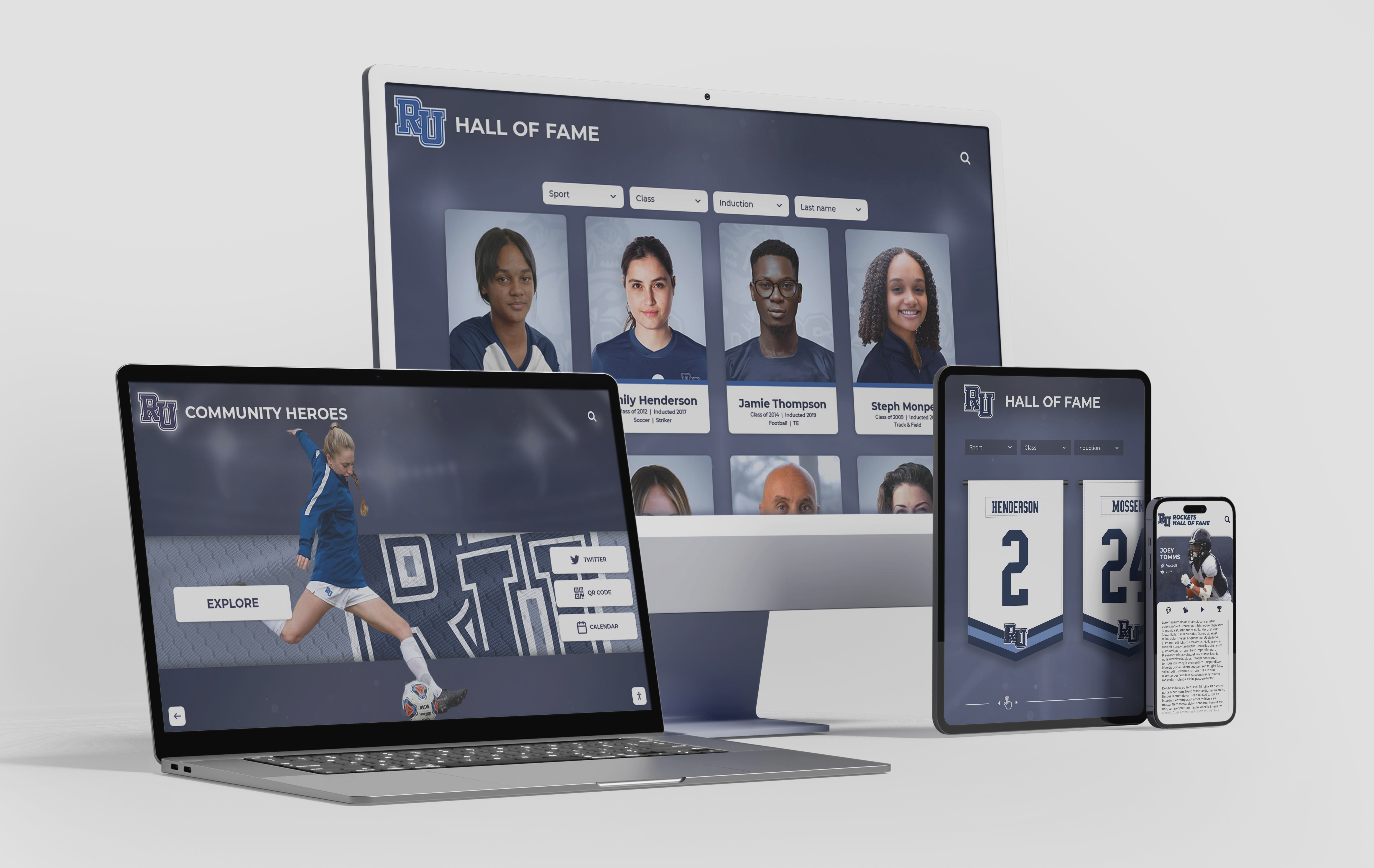
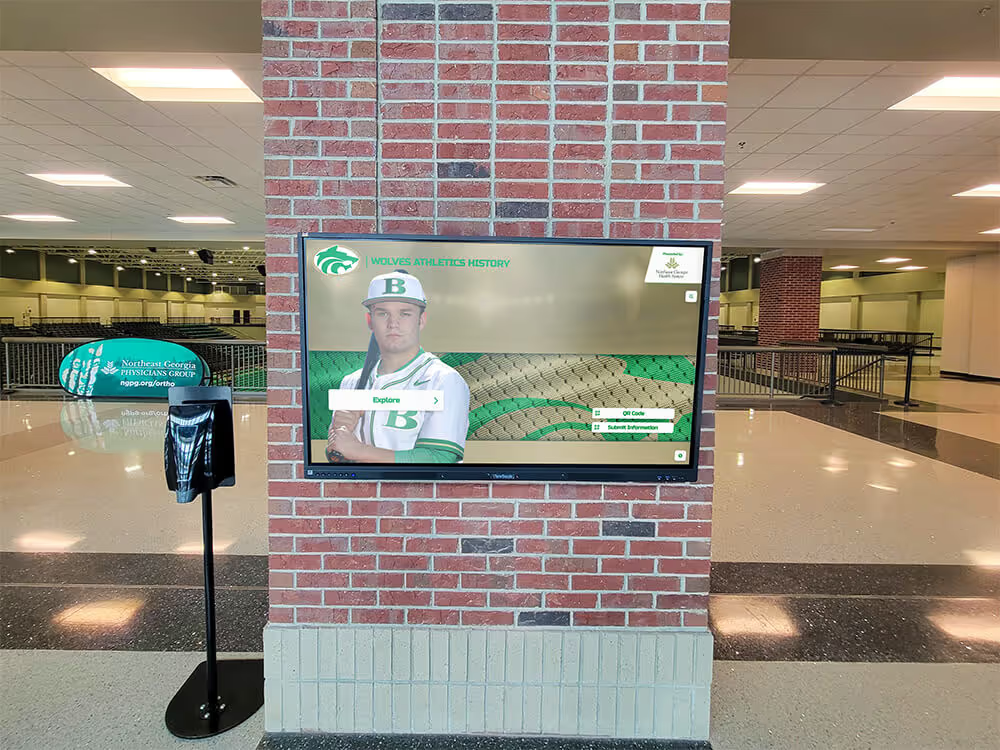
Web-accessible recognition platforms extend hall of fame content beyond physical displays—but also extend privacy obligations to every person whose information appears in publicly accessible digital systems
Writing and Maintaining Your Privacy Policy Document
A booster club data privacy policy should be a real document that lives somewhere accessible and is actually referenced when decisions are made. It does not need to be long, but it does need to be complete and current.
What the Document Should Include
A clear statement of what data you collect. List the categories explicitly: member contact information, donor records, athlete photographs, sponsor logos and contacts, volunteer records.
A statement of how each category is used. Be specific. Member contact information is used for organizational communications. Donor records are used for tax receipts and recognition displays with documented consent. Athlete photographs are used in recognition displays and historical archives with written consent from the athlete or their parent or guardian.
A description of your consent process. Explain when and how consent is obtained, what choices individuals have, and how consent records are maintained and accessed.
A description of data security practices. How is data stored? Who has access? What happens when a device containing booster data is lost or a board member transitions out of their role?
A process for privacy requests. How can members, donors, and athletes request to see, update, or remove their information? Who receives those requests, and what response time should they expect?
A statement that the policy will be reviewed regularly. Annual review is a reasonable standard. Note who is responsible for the review and how updates will be communicated to members.
A disclaimer that this policy does not constitute legal advice. This is especially important for any policy that touches topics such as COPPA (Children’s Online Privacy Protection Act), FERPA, or state-specific student data privacy statutes. Individuals with specific legal questions should consult qualified legal counsel.
Where to Publish the Policy
A privacy policy that no one can find provides no protection. Publish it in membership registration forms and portals, in the organization’s bylaws or operating documents, on your website if you have one, and as a reference document accessible to all board members. If your recognition program includes a public-facing web component, publishing a version of the privacy policy on that website is appropriate and builds trust with donors and alumni who engage with the program online.
Annual Policy Review
Review your privacy policy at minimum once per year. Ask:
- Have we added any new data collection activities that are not covered?
- Have board member changes left roles without clear privacy owners?
- Have we received any privacy requests that revealed gaps in our process?
- Have any vendors or platforms we use changed their terms of service or data practices?
- Have any relevant laws, school district policies, or guidance from your organization’s legal advisors changed?
Document the review even if no changes result. A log showing annual reviews provides evidence that privacy practices are maintained intentionally, not assumed to be someone else’s responsibility.
Connecting Privacy to Recognition Excellence
A thoughtful privacy policy does not limit what your recognition programs can accomplish—it makes them more trustworthy and sustainable. Donors who understand exactly how their information will be used are more likely to consent to meaningful recognition. Athletes who know their photos will be handled responsibly are more likely to participate in biographical content development for hall of fame archives. Alumni who can easily update their display information are more likely to remain engaged with the program over time.
The booster clubs with the most compelling recognition programs treat every inductee, donor, volunteer, and sponsor as someone whose trust must be earned and maintained. Privacy practices are a direct expression of that commitment.
Recognition initiatives built on that foundation—including programs that thoughtfully surface alumni spotlights and where-are-they-now recognition—earn the kind of engagement that generic displays cannot. Donors and alumni participate more actively in programs that treat their information with care, and that active participation produces richer content for every future recognition cycle.
As schools invest in enhanced athletic facilities and new recognition spaces, the digital recognition components installed in those spaces carry the same privacy obligations as any other system that holds personal information. Planning installations with privacy in mind from the start is far less disruptive than retrofitting consent processes after displays are already operational and community members have begun interacting with them.
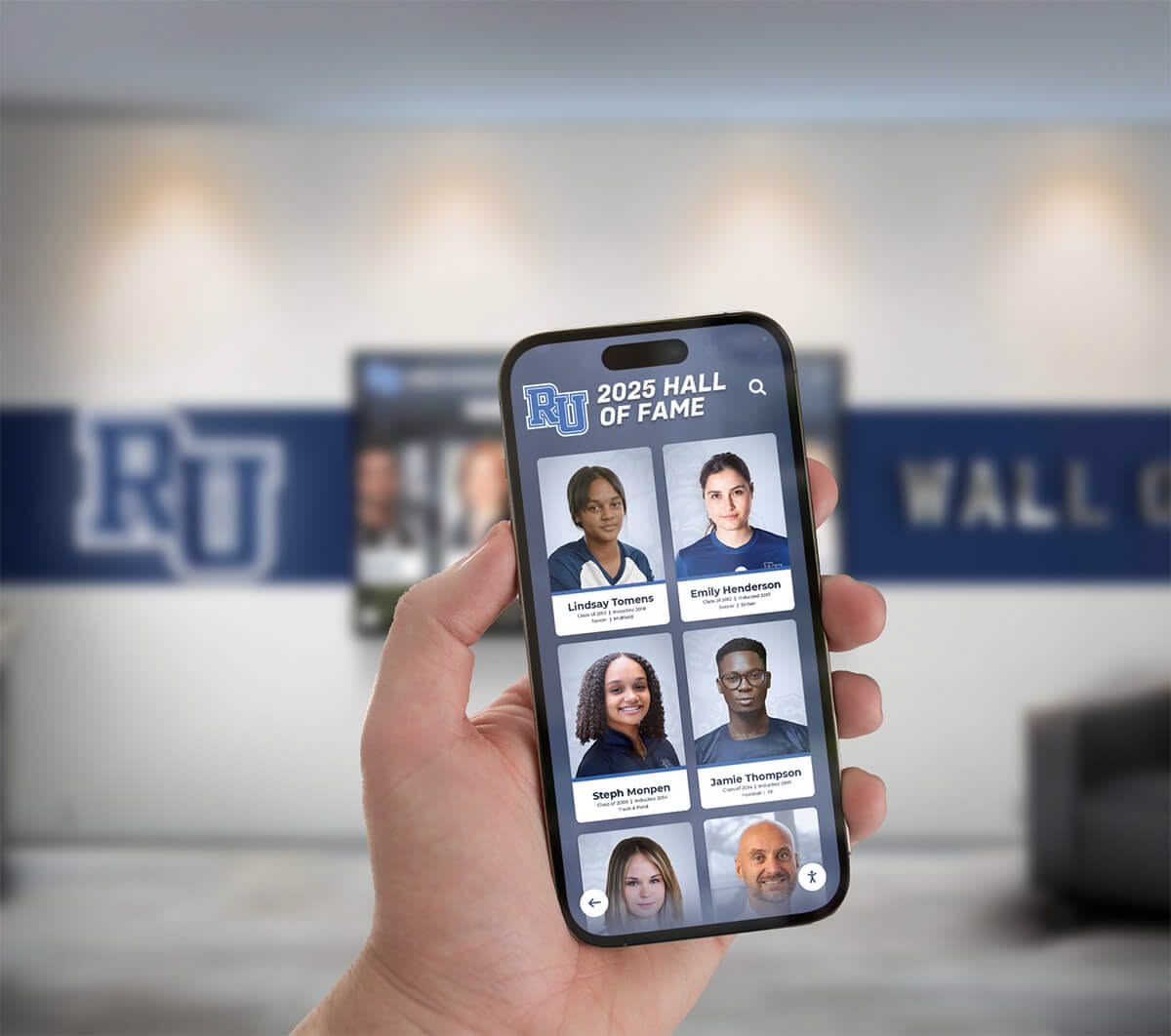
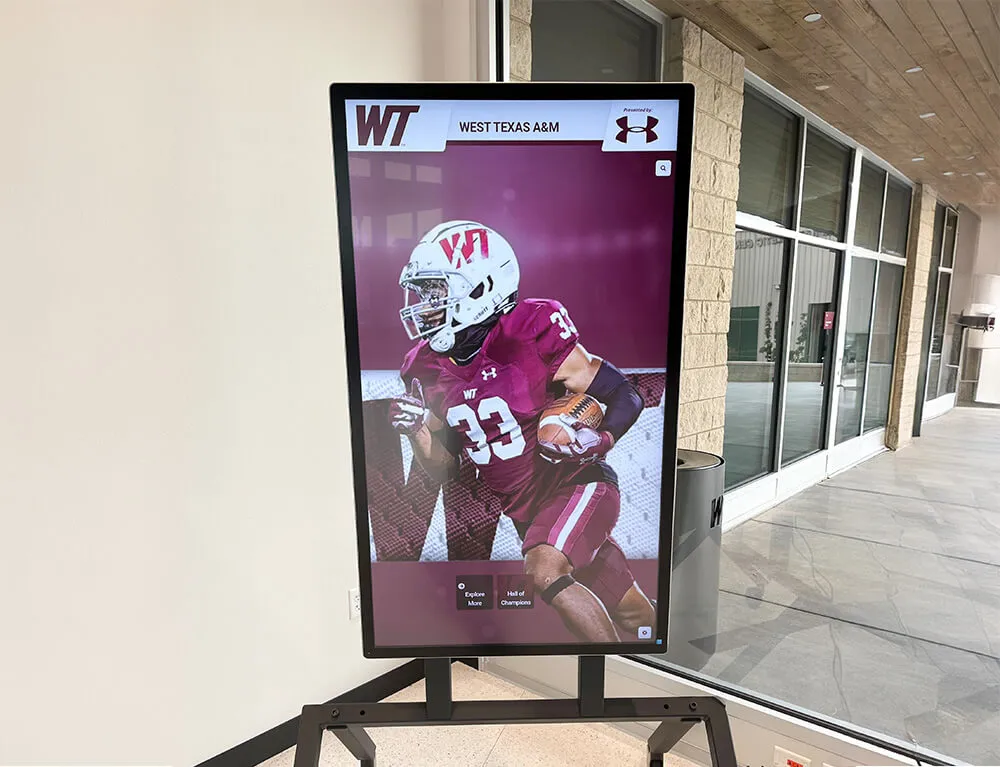
Mobile-accessible recognition platforms require privacy policies that address web and app use alongside in-person display access—consent frameworks must account for all the ways information can be accessed and shared
Summary: Your Booster Club Privacy Policy Checklist
Use the following checklist to assess your current program and identify gaps before building or expanding recognition displays.
Data inventory:
- All data categories are explicitly named in the policy
- The location of every data category—platform, local device, personal accounts—is documented
- Historical content held outside current systems has been inventoried
Consent:
- Consent is obtained at every data collection touchpoint
- Consent language matches actual uses, including digital displays and web portals
- Consent records are stored with individual records, not separately
- Anonymous donation requests are flagged and honored in all recognition materials
- Photo consent is separate from general recognition consent and addresses minors specifically
Roles and process:
- A privacy contact role is designated by position, not personal name
- A removal and update protocol exists with defined response timelines
- Annual consent audits are scheduled and documented
Vendor and platform:
- Vendor data ownership and portability terms are documented
- A complete data export has been received from recognition platform vendors
- Platform privacy practices are reviewed when contracts renew
Policy maintenance:
- Annual review is scheduled with a designated reviewer
- The policy is accessible to all board members and published for members
- A legal disclaimer clarifies that the policy does not constitute legal advice
Booster clubs that work through this checklist are doing more than most volunteer organizations accomplish—and they are doing it for content that represents years of irreplaceable relationship-building with their communities. The athletes whose profiles appear on touchscreen hall of fame displays, the donors whose names appear on interactive walls, and the alumni whose records fill championship archives all trusted your organization with something valuable. A clearly written, consistently executed data privacy policy is how you show that trust was well placed.
Build Recognition Programs That Earn Community Trust
Rocket Alumni Solutions works with schools and booster organizations to build digital hall of fame and recognition systems designed with data governance in mind—including tools for managing recognition content, updating displayed information, and exporting your data in formats your organization controls. Request a demo to see how a purpose-built recognition platform supports responsible information management.
Request a DemoFor programs looking to understand how recognition content intersects with broader alumni and community engagement, exploring how alumni donors and supporters respond to recognition events and how schools present digital recognition in welcoming entrance and lobby spaces offers useful context for building programs that earn long-term community confidence.