



Athletic booster clubs carry the weight of an entire sports program: fundraising for equipment, organizing banquets, coordinating travel, and ensuring the community knows who deserves recognition after every season. But when it comes to the club’s own online presence, many booster organizations make do with a single Facebook page, a Google Doc roster, and a sponsor list buried in a PDF no one can find. That mismatch — high effort, low visibility — costs clubs membership sign-ups, sponsorship renewals, and the trust of the community they serve.
A purpose-built booster club website changes the equation. It gives sponsors a professional showcase worth paying for, gives families a single reliable source for schedules and news, and gives athletes a permanent record of what they achieved. The challenge is knowing which pages to build, what to put on each one, and how to design them so visitors can actually find what they need.
This guide walks through every essential page in a booster club website template, explains what belongs on each one, and shows how recognition-focused pages — done well — become powerful tools for retaining sponsors, inspiring athletes, and archiving the achievements that make your program worth celebrating.
A well-structured booster club website is not a luxury upgrade. It is the operational backbone that makes sponsors want to return, families want to volunteer, and athletes understand that the community is paying attention to what they accomplish.

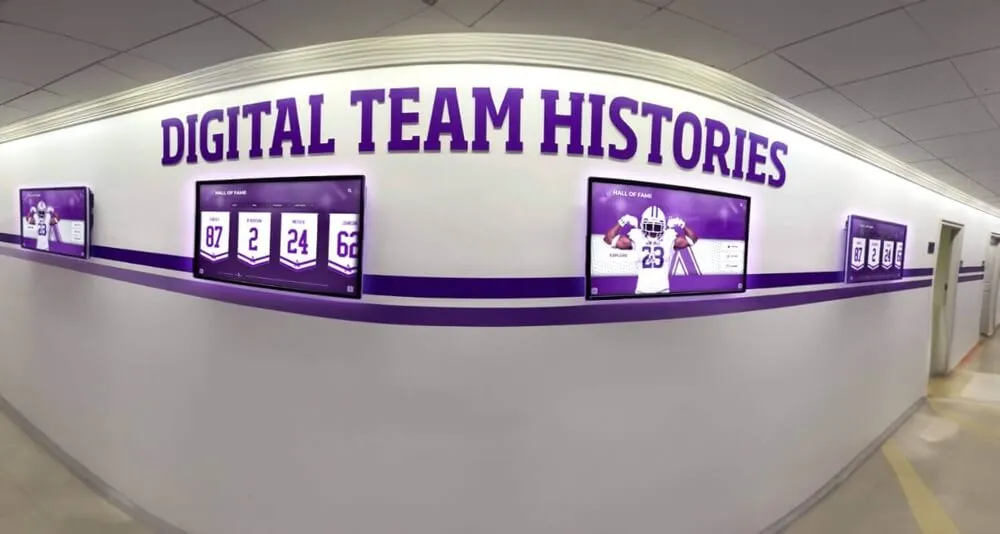
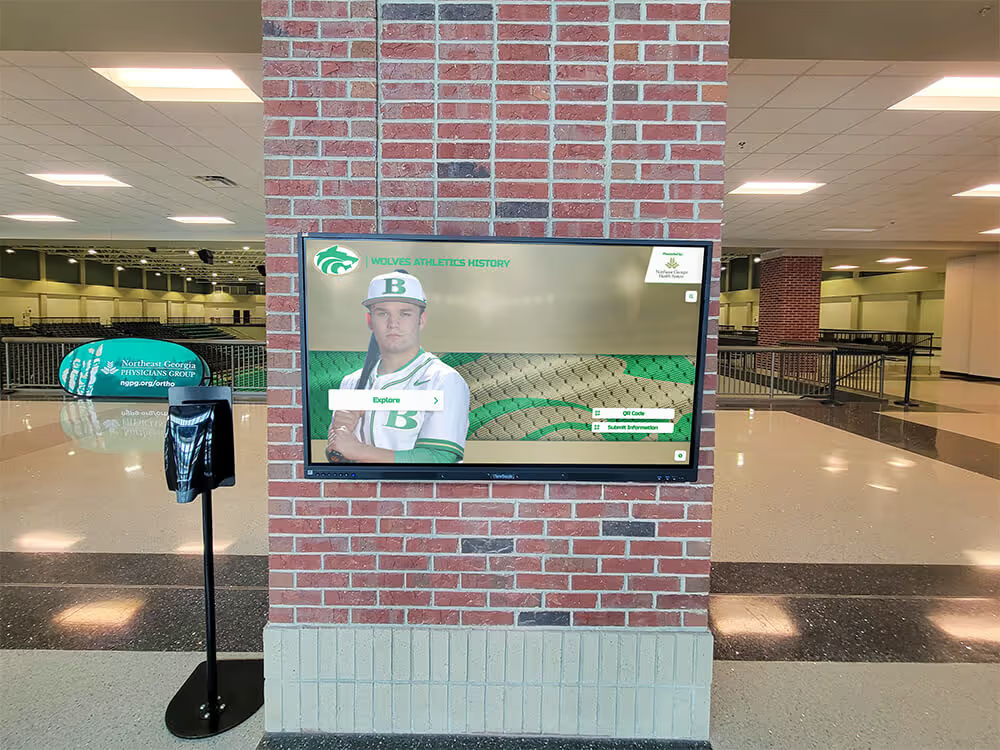
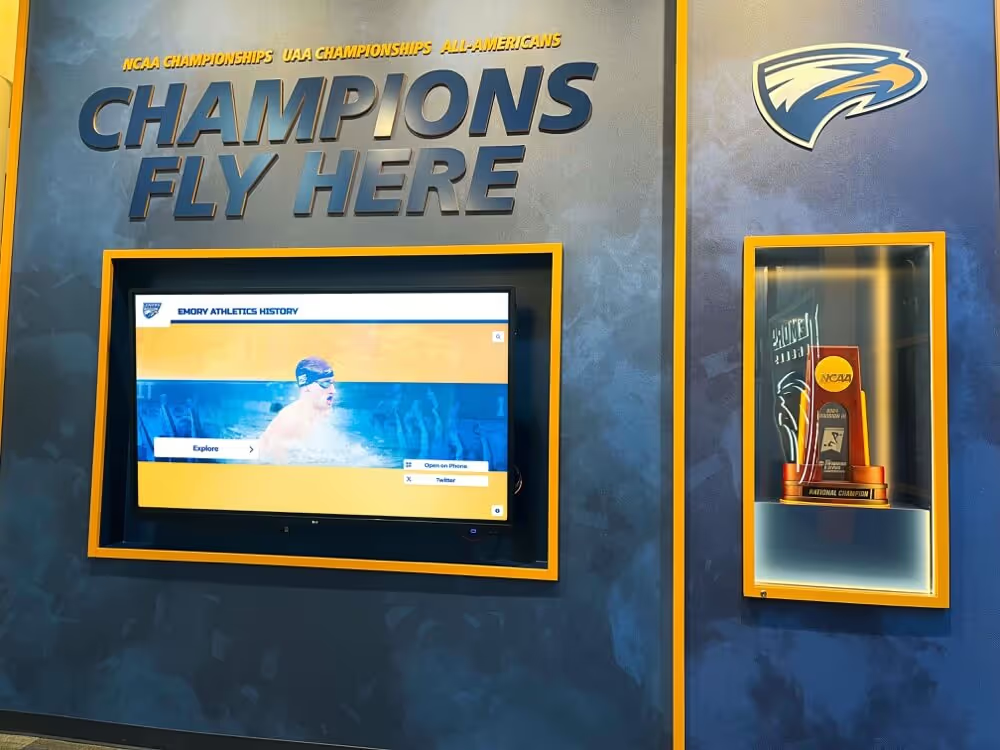
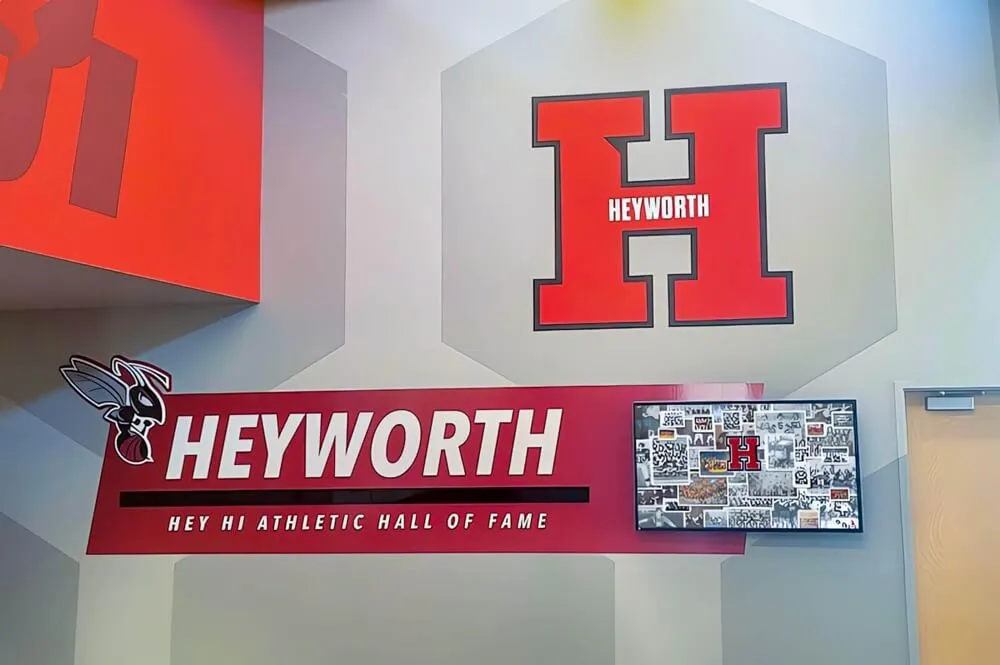
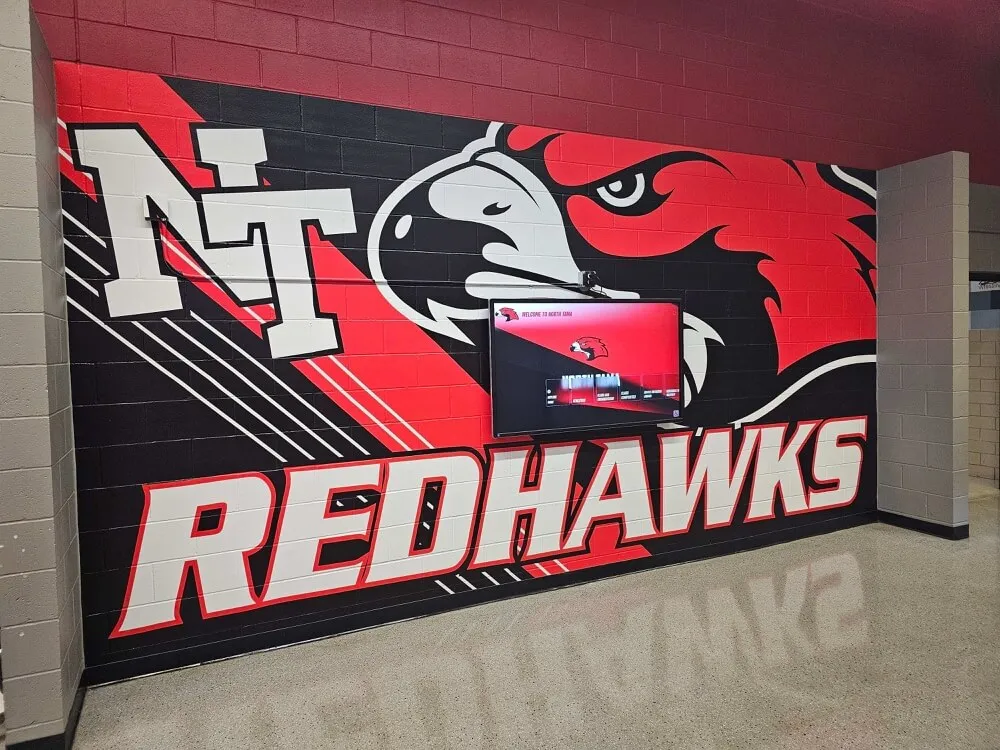
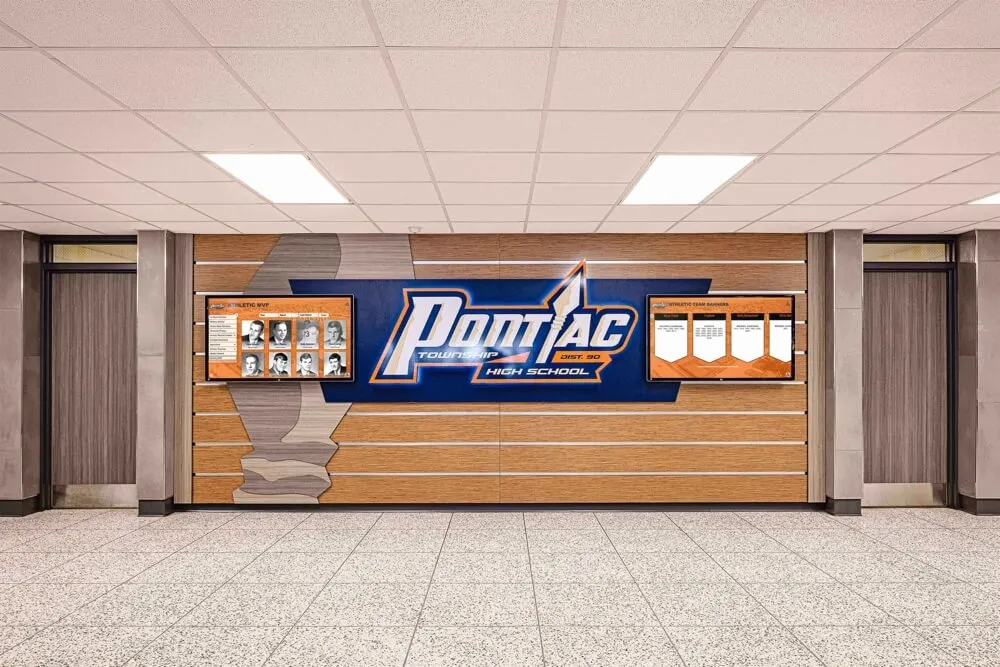
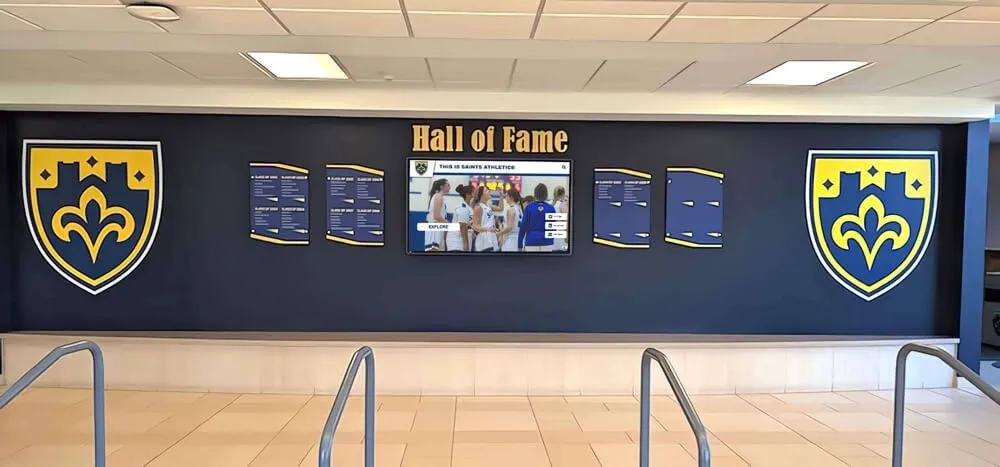
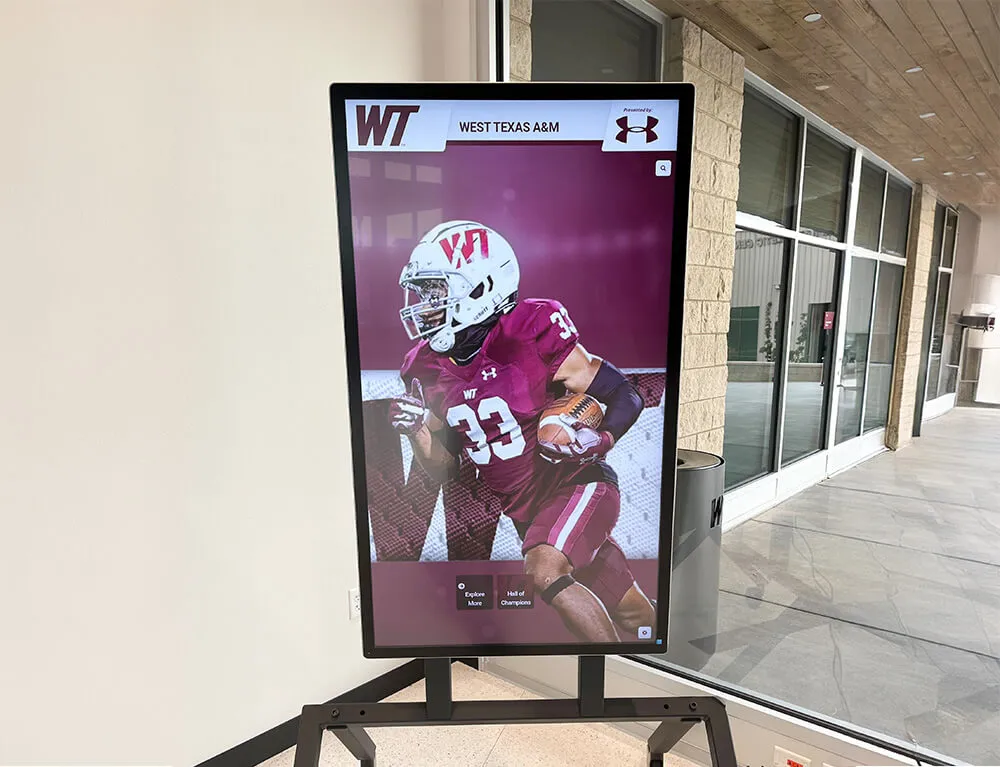
Recognition-forward design in athletic spaces signals to sponsors and students alike that achievements here are taken seriously and displayed with pride
Why Booster Club Website Templates Matter
Most booster clubs are run by volunteers with full-time jobs elsewhere. A website template gives those volunteers a starting framework — clear sections, defined purposes, predictable navigation — so they spend time on content rather than reinventing information architecture every season.
More importantly, a template built around the right pages creates a machine that works between seasons. Your sponsor page collects leads when no one is actively selling. Your recognition archive answers alumni inquiries without requiring anyone to dig through filing cabinets. Your membership form processes new sign-ups overnight.
The pages covered in this guide reflect the most common needs of K-12 athletic booster clubs. Each section includes what content belongs there, design notes, and where digital recognition technology can amplify the impact of what you build.
Essential Booster Club Website Pages: Template Checklist
The table below summarizes every page a complete booster club website should include. Use it as a planning checklist before your next season.
| Page | Primary Purpose | Key Content Elements |
|---|---|---|
| Home | First impression, quick navigation | Hero image, mission statement, latest news, quick links to join/donate/sponsor |
| About | Build credibility | Club history, board members, mission, bylaws summary |
| Teams | Connect families to programs | Roster links, coach bios, season records, sport-specific pages |
| Sponsor Showcase | Retain and attract sponsors | Logo grid, giving tiers, sponsor benefits, renewal CTA |
| Recognition / Hall of Fame | Honor athletes and contributors | Award winners, records, annual honorees, multimedia profiles |
| Membership | Drive club sign-ups | Membership form, dues tiers, member benefits, FAQ |
| Events & Calendar | Coordinate community participation | Upcoming events, registration links, fundraiser details |
| News & Updates | Stay top-of-mind | Game recaps, announcements, social feed integration |
| Donate | Accept one-time gifts | Donation form, fund descriptions, donor acknowledgment |
| Contact | Reduce friction | Board contact info, form, meeting schedule |
Each of these pages serves a specific audience — some primarily serve sponsors, some primarily serve families, and some serve the athletes themselves. The recognition page, notably, serves all three.
The Home Page: First Impression and Navigation Hub
Your home page has one job: help every visitor immediately understand what your booster club does and where to go next. A cluttered home page with outdated news from three seasons ago defeats that purpose.
What to include on a booster club home page:
- A full-width hero image featuring athletes, team photos, or your school’s facility
- A one-sentence mission statement (“The [School Name] Athletic Booster Club supports student-athletes through fundraising, recognition, and community”)
- Three or four quick-action buttons: Join, Donate, Sponsor, and View Recognition
- A news or announcements section limited to the three most recent items
- A sponsor logo strip showing current backers — this reassures sponsors their logo is visible and signals to prospective sponsors that the club is active
Keep the navigation simple. Visitors arriving from a Google search for your school’s booster club should be able to find the membership form, the sponsor page, or the recognition archive within one click from the home page.
The About Page: Building Institutional Trust
Many booster clubs skip the about page or treat it as an afterthought. That is a missed opportunity. Sponsors evaluating whether to write a check want to know who is running the organization. New families want to understand how the club is structured. Alumni want to trace the club’s history.
Core content for the about page:
- A brief history of the booster club (founding year, milestones, growth)
- Board member names, titles, and optional photos
- A clear statement of how funds are used (equipment, travel, banquets, recognition)
- Link to bylaws or a nonprofit registration number if applicable
Board member photos with short bios create personal accountability that generic organizational text cannot match. When a sponsor sees a name and a face they recognize from the community, trust increases significantly.
Team Pages: Connecting Families to Every Program
Team pages are among the most frequently visited sections of any booster club website, particularly during the season. Parents check rosters, coaches reference schedules, and recruiters look for statistics.
Template for an individual sport/team page:
- Sport name and season overview
- Head coach bio with photo and contact information
- Current roster (or link to athletic department roster)
- Season record and schedule
- Historical records: all-time records, seasonal milestones
- Recognition: most recent award winners, all-conference selections, hall of fame inductees from this sport
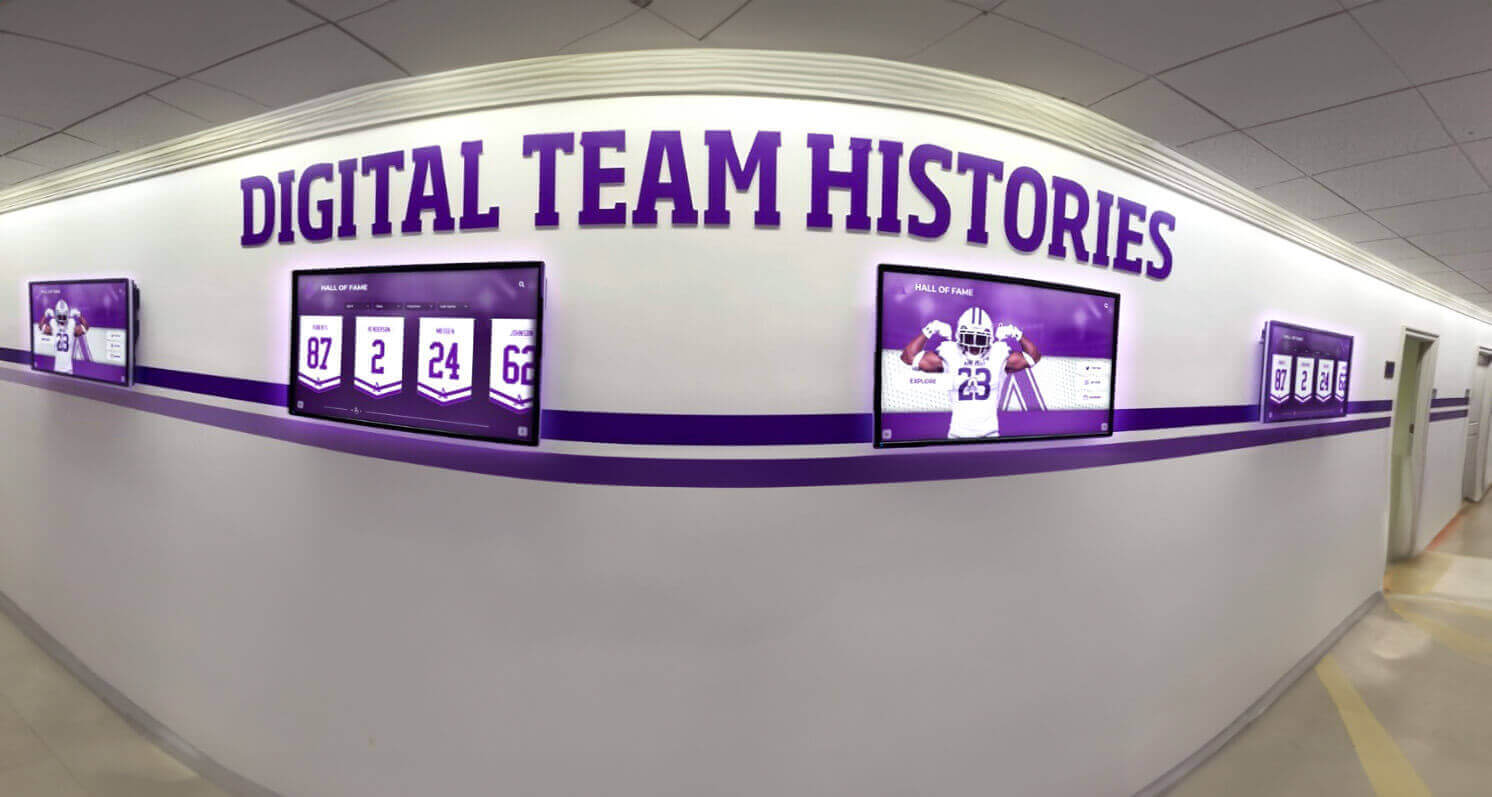
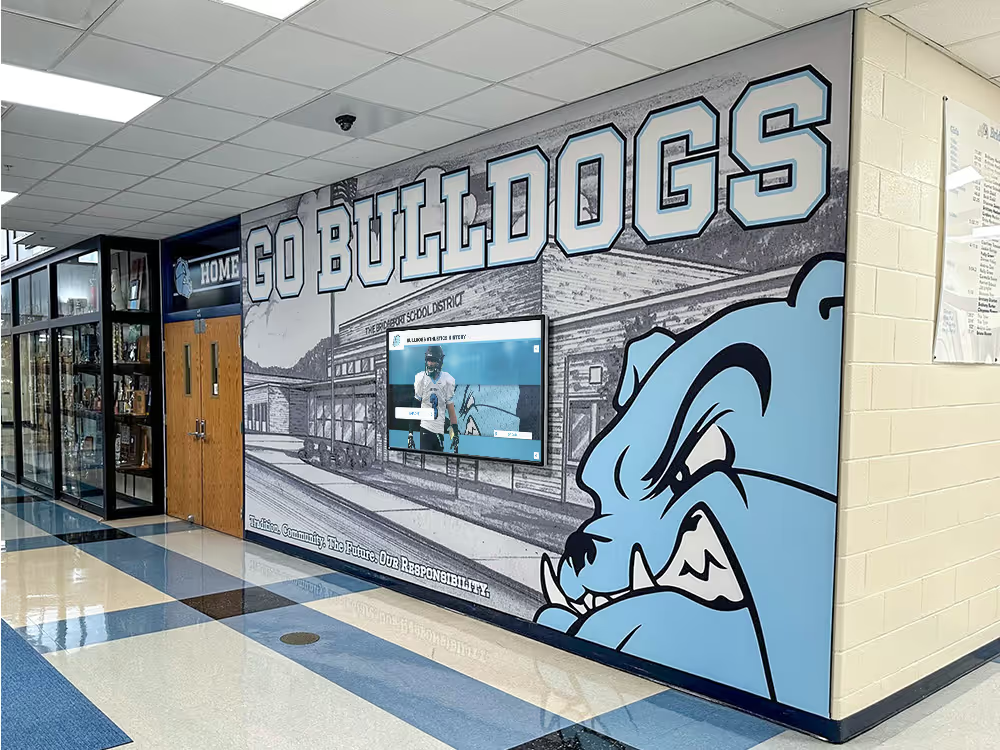
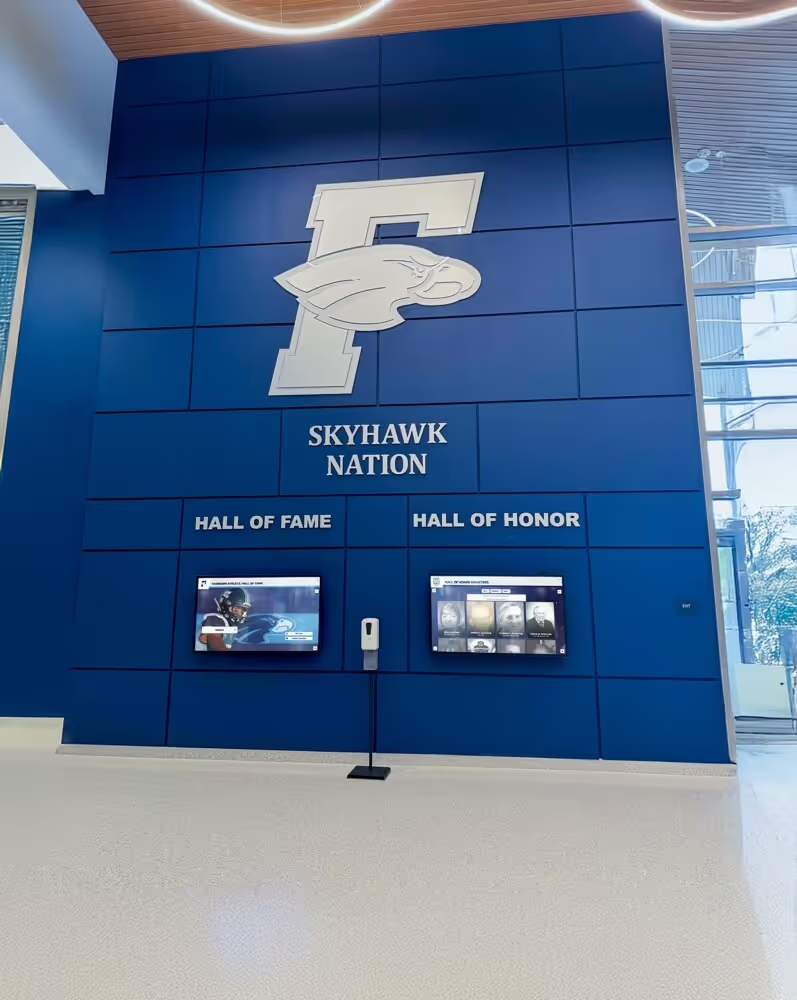
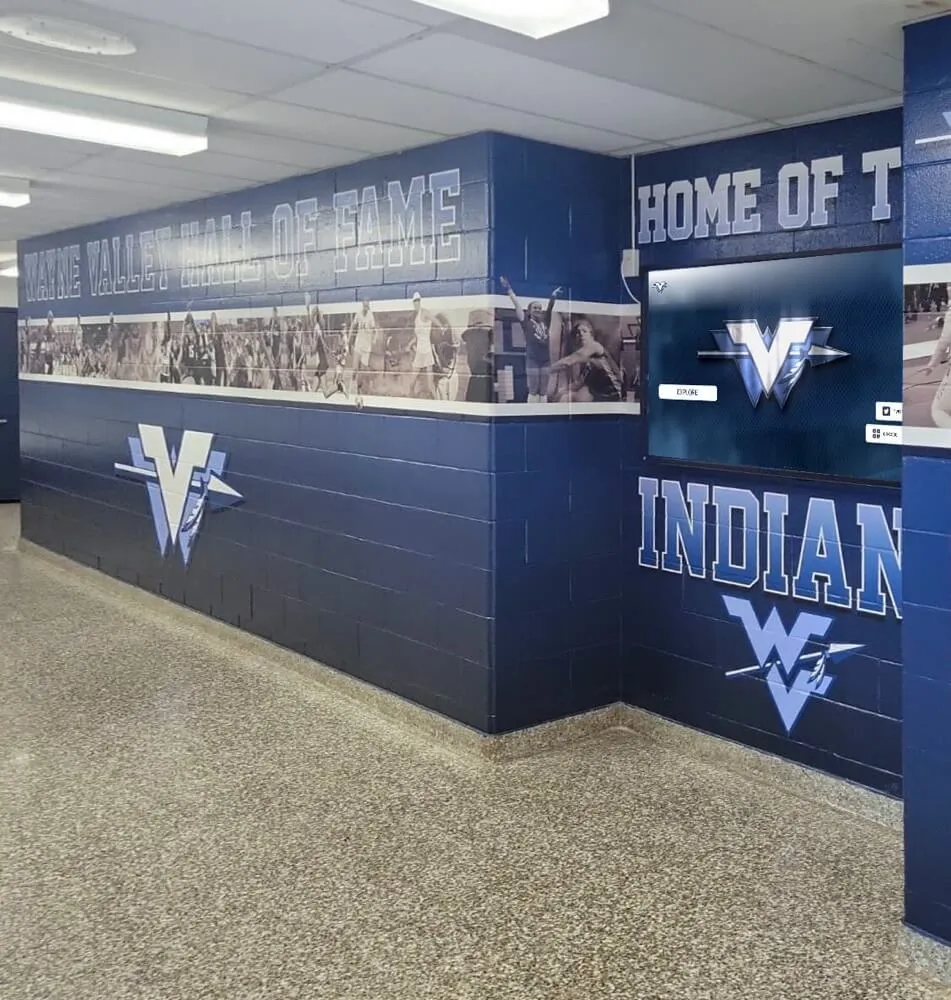
Team history displays create a continuous visual narrative that connects current athletes to the generations who built the program's tradition
The historical records section deserves particular attention. Many booster club websites document the current season only, leaving decades of athletic history undiscovered. Linking to your school’s broader academic recognition programs alongside athletic records creates a richer picture of what your school values.
Sport-specific pages also benefit from rich media. Season highlight reels, team photo galleries, and postgame recap videos increase time-on-page and give athletes something to share on social media — which organically extends your booster club’s reach with every share.
The Sponsor Showcase Page: Your Most Important Revenue Asset
A sponsor page that lists company names in a plain text block is not a showcase — it is a receipt. Sponsors investing several hundred to several thousand dollars in your program expect visibility that justifies renewal. A professionally designed sponsor page delivers that visibility and makes the renewal conversation easier.
What a high-performing sponsor page includes:
- Tiered giving levels with distinct display treatment for each tier (Platinum, Gold, Silver, Bronze is a common structure)
- Logo display with links to each sponsor’s website — logos should be large, high-resolution, and updated immediately when a new sponsor signs on
- Sponsor benefits summary for each tier: logo on website, banner at home games, mention in announcements, recognition at the year-end banquet
- A sponsor application or inquiry form so new prospects can express interest without having to track down a board member
The sponsor page is also where the conversation about digital recognition begins. Many sponsors now expect their name to appear not just on a website, but on displays inside your athletic facility. A sponsor showcase that mentions in-venue digital recognition — whether on video boards, lobby displays, or digital donor walls — creates a more compelling package that justifies higher investment.
For schools building out physical donor and sponsor recognition alongside the website, designing a digital donor wall offers a practical framework for organizing giving tiers into display-ready formats that translate seamlessly from website to lobby installation.

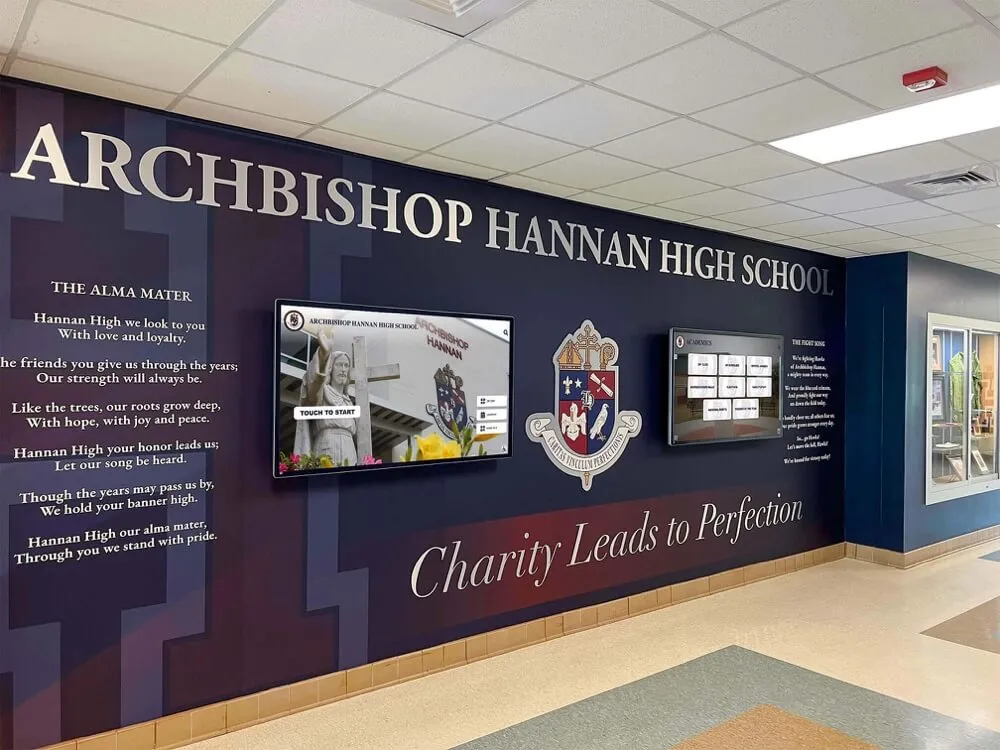
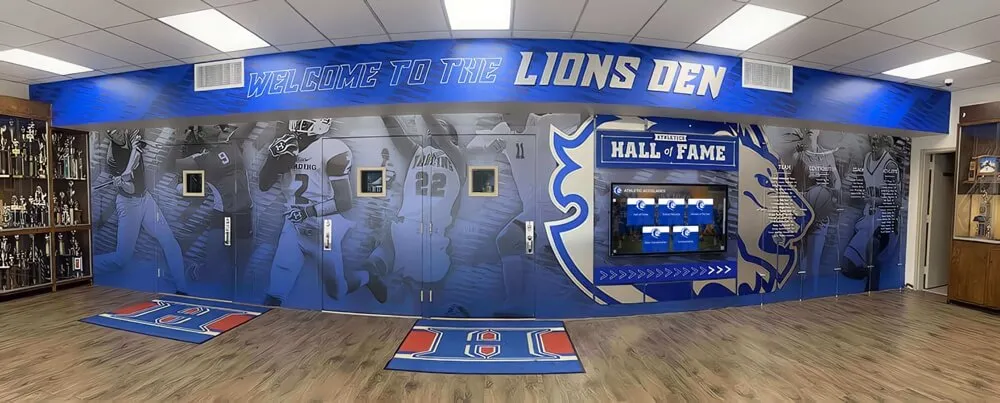
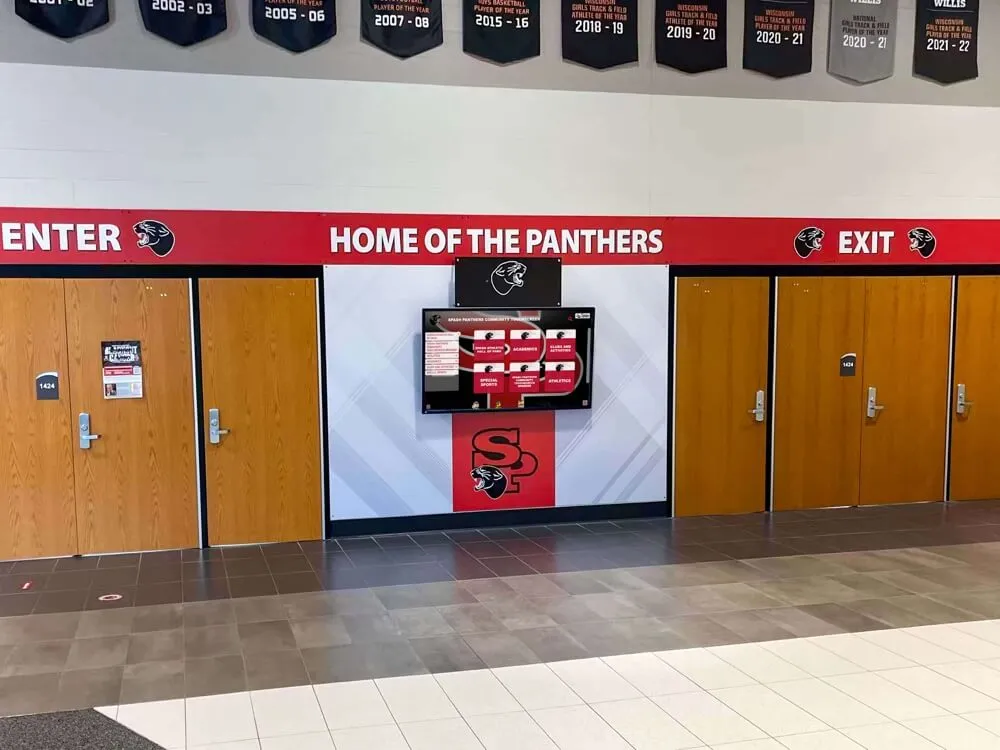
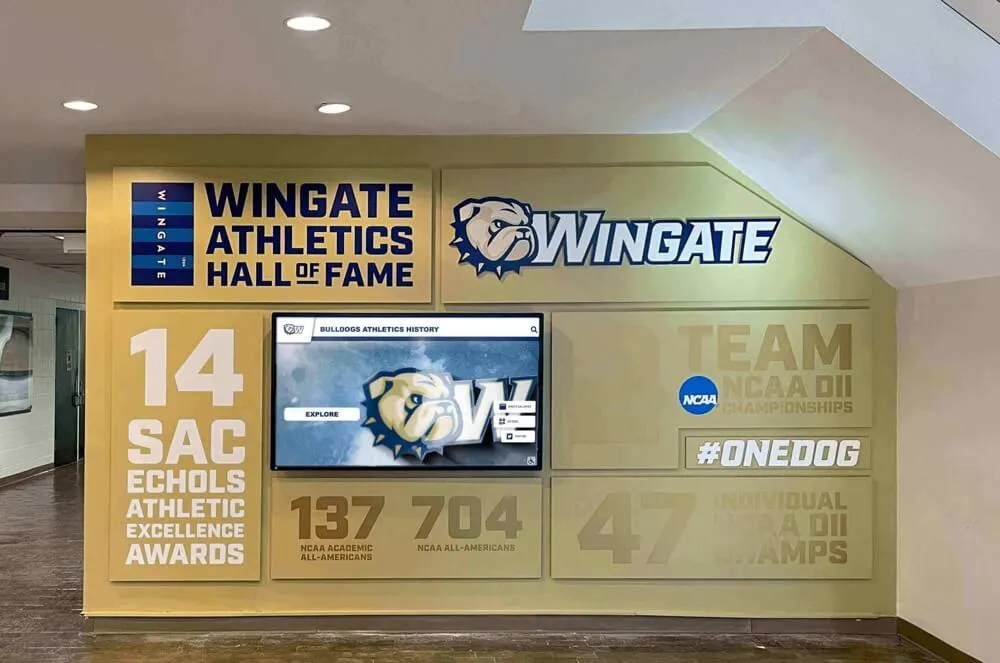
Physical and digital donor recognition working in parallel reinforces sponsor value and makes the decision to invest in your program feel permanent and prestigious
The Recognition and Hall of Fame Page: Your Most Powerful Page
The recognition page is where your booster club website becomes something more than a logistics tool — it becomes a living archive of everything your athletic program has accomplished. Done well, this page drives more emotional engagement than any other section of the site.
What to include on an athletic recognition page:
- Annual award winners for each sport: MVP, most improved, coaches award, senior recognition
- All-time records for each sport with the athlete’s name, year, and mark
- All-conference and all-state selections organized by sport and year
- Hall of fame inductees with photos and brief profiles
- National signing day profiles — students who committed to college programs deserve highlighted recognition
The recognition page is where families spend the most time. It is also the page that athletes return to long after graduation, bringing spouses, children, and friends back to your club’s website to show them where they were recognized.
For schools serious about recognition, the website page is just the beginning. Many athletic programs supplement their recognition website section with letterman traditions and hall of fame walls that give in-school recognition the physical permanence a web page alone cannot provide.
The most forward-thinking booster clubs are also using their recognition page as a gateway to a broader conversation about national signing day celebrations and how digital displays inside the school building can extend the reach of what the website communicates online.
What Makes Recognition Content Work
Recognition content needs to be specific, not generic. “Outstanding athlete of the year” tells no one anything. “Javonte Williams, varsity basketball, averaged 22.4 points per game and led the district in assists while maintaining a 3.8 GPA” tells a story someone will read twice.
Each honoree entry should include:
- Full name and graduation year
- Sport and position
- Key achievement statistics or accomplishments
- A photo if available
- Any post-secondary recognition (college scholarship, professional development, career achievements for alumni inductees)
Organizing recognition content by both sport and year allows visitors to browse the way they think: “Show me all the basketball honorees” or “Show me everything from 2019.”
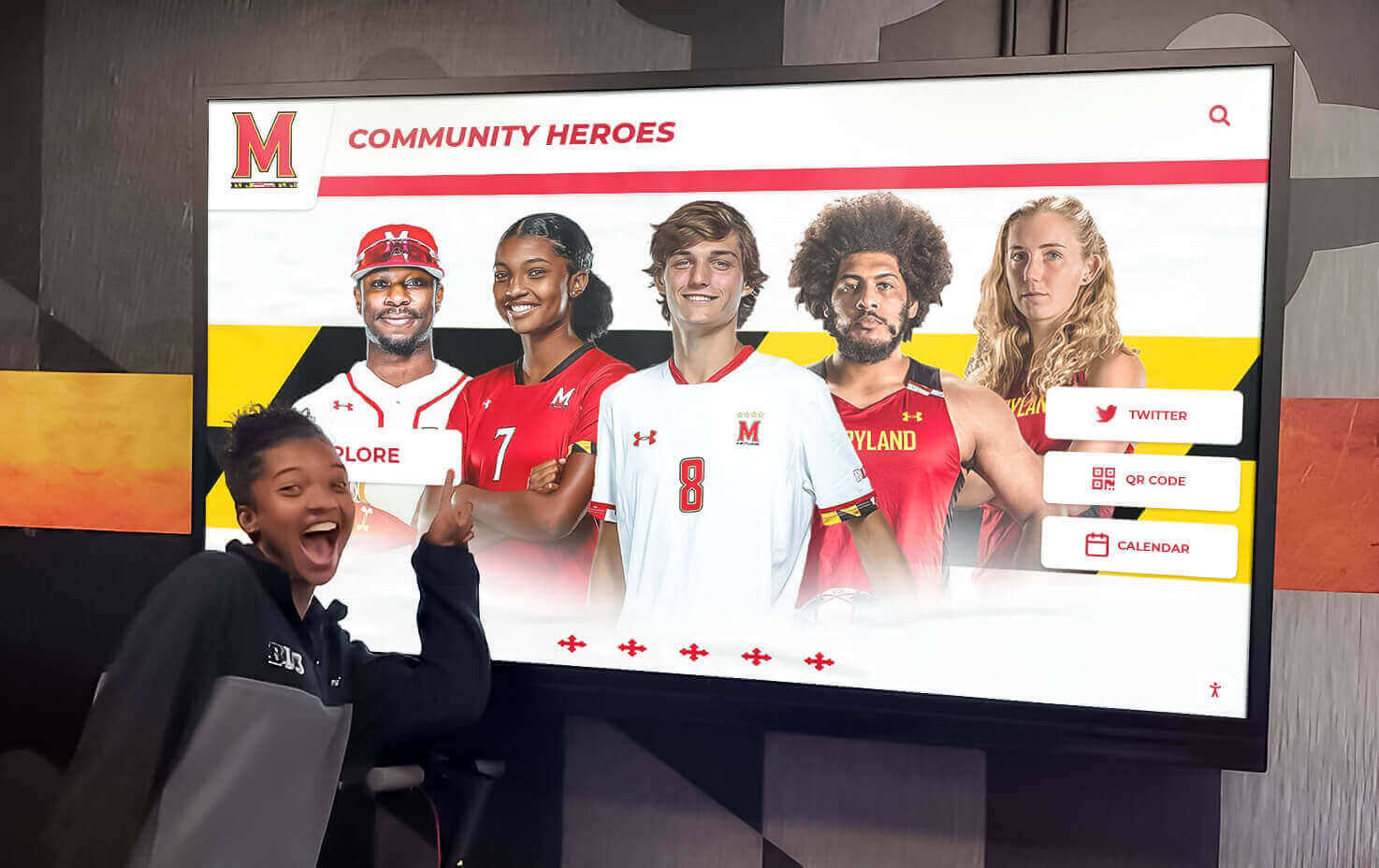
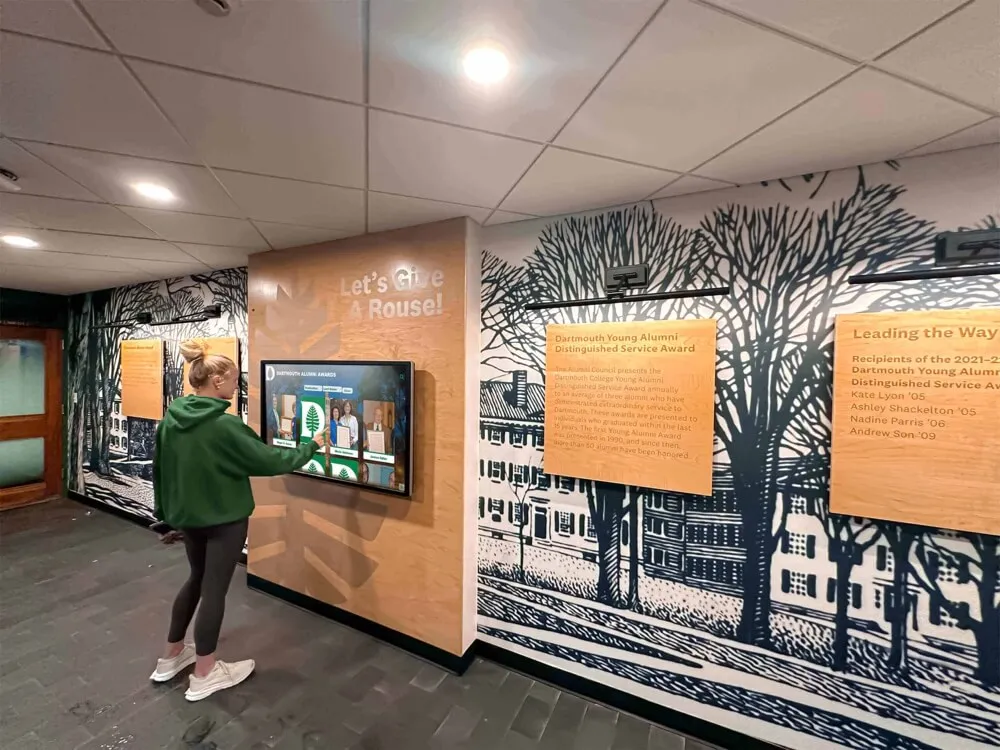
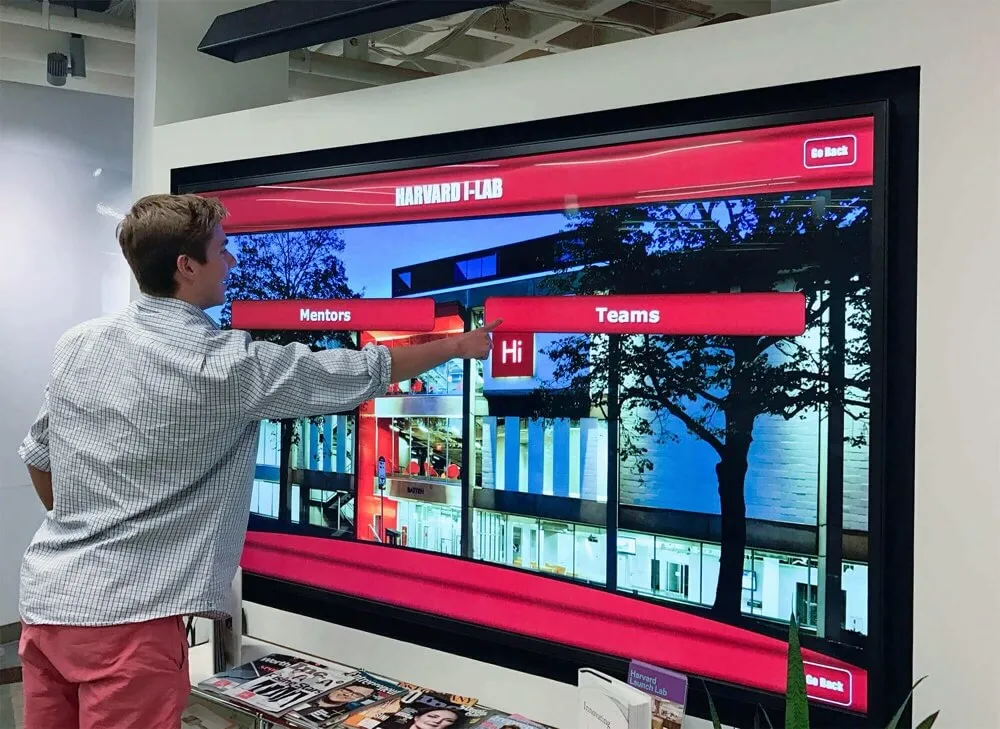
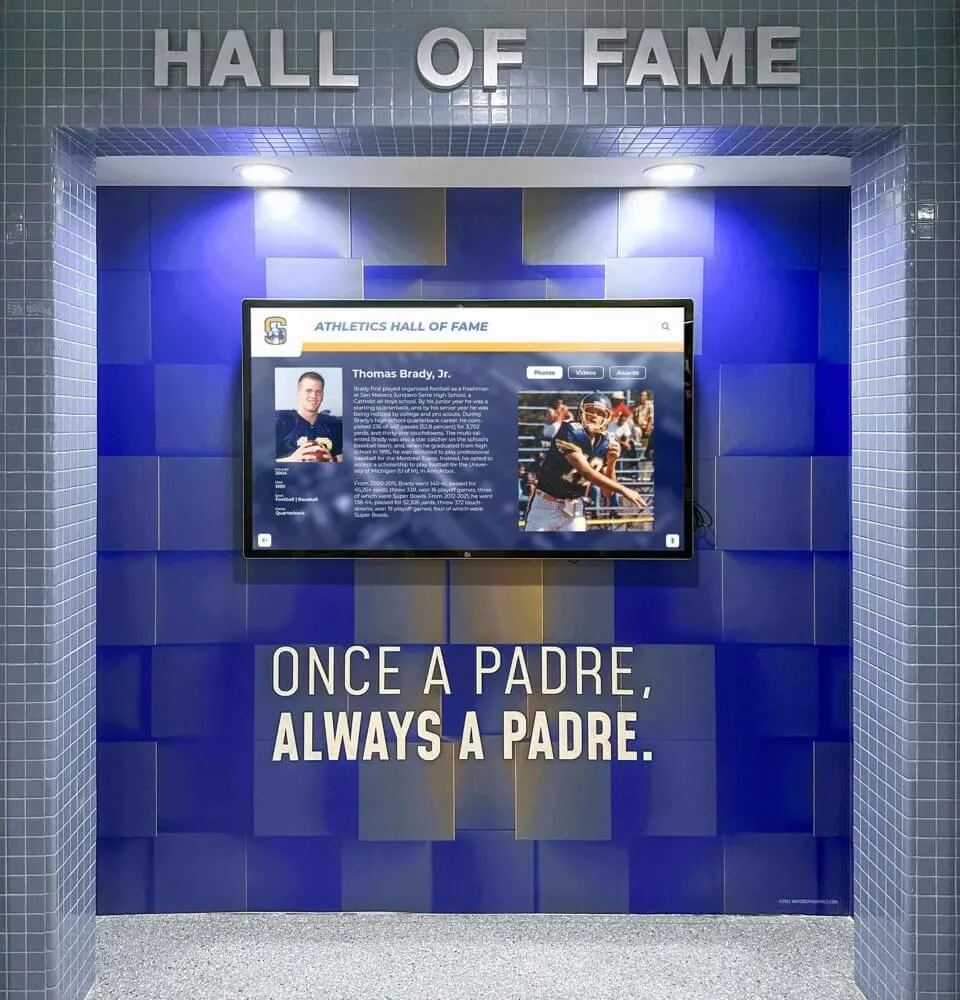
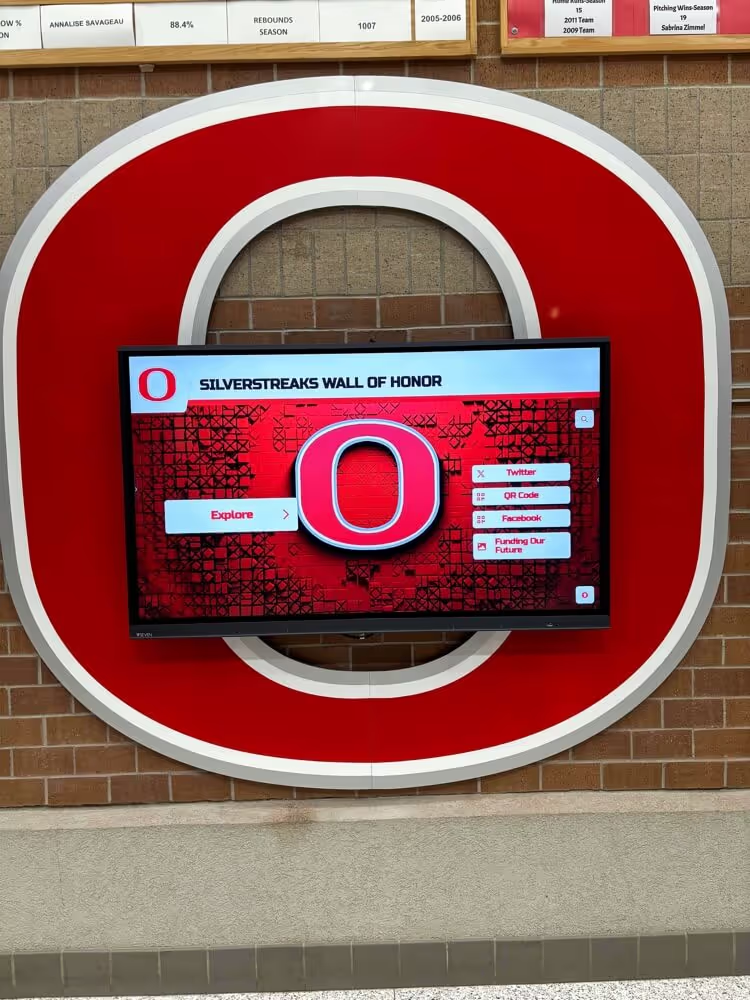
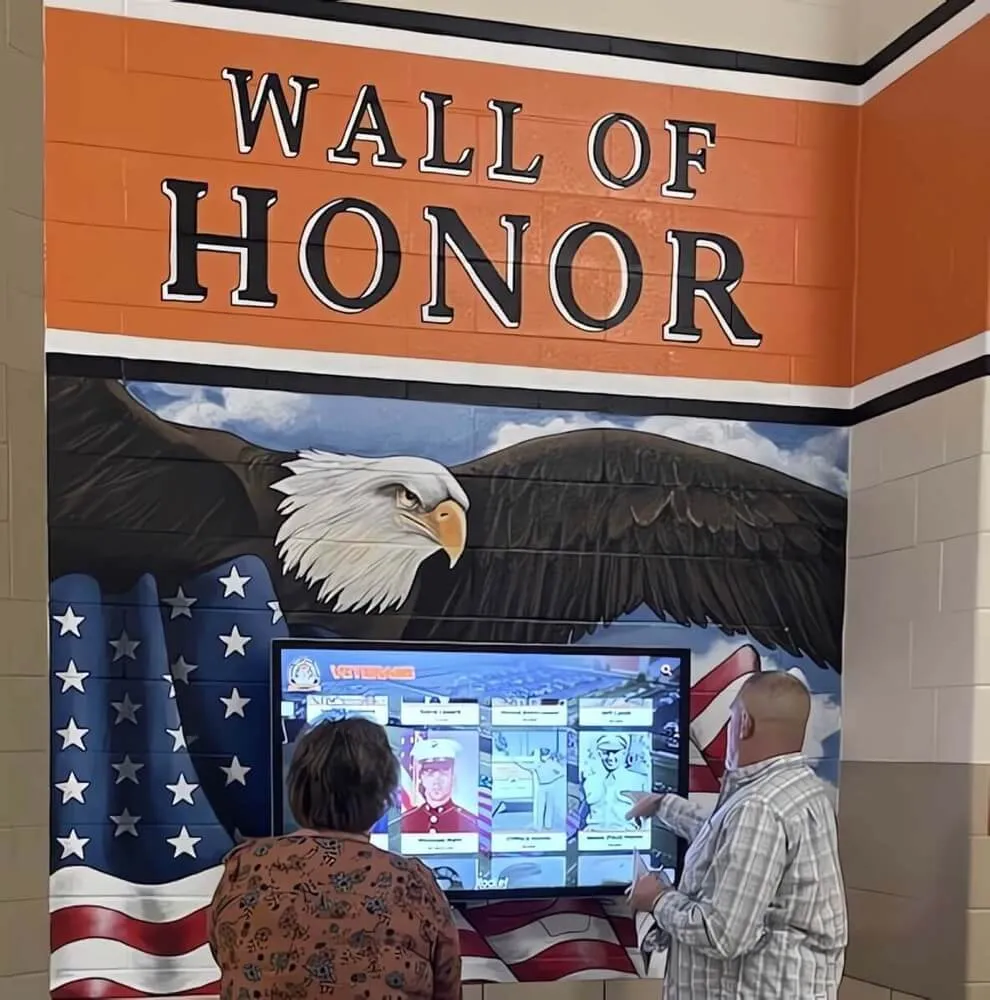
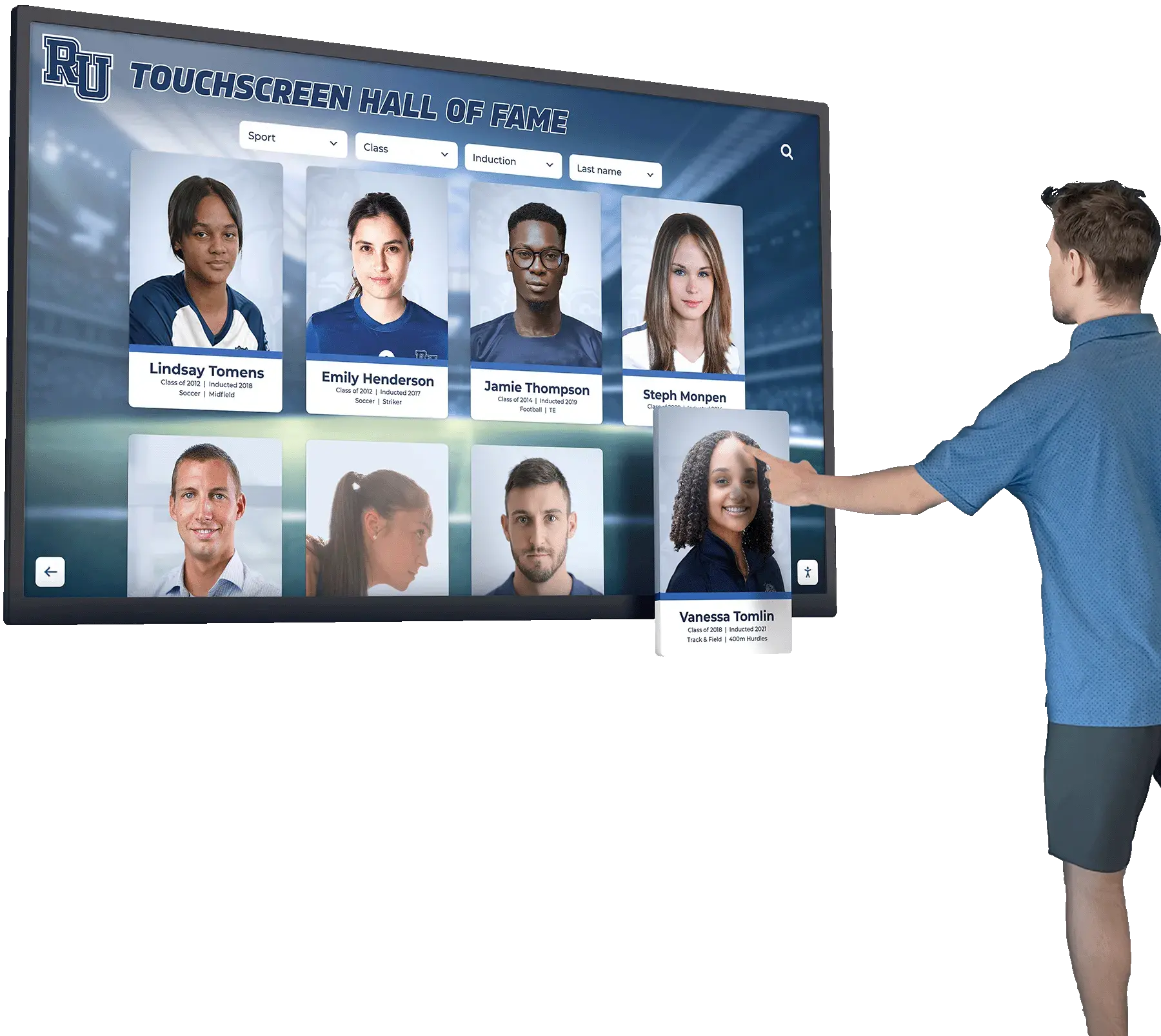
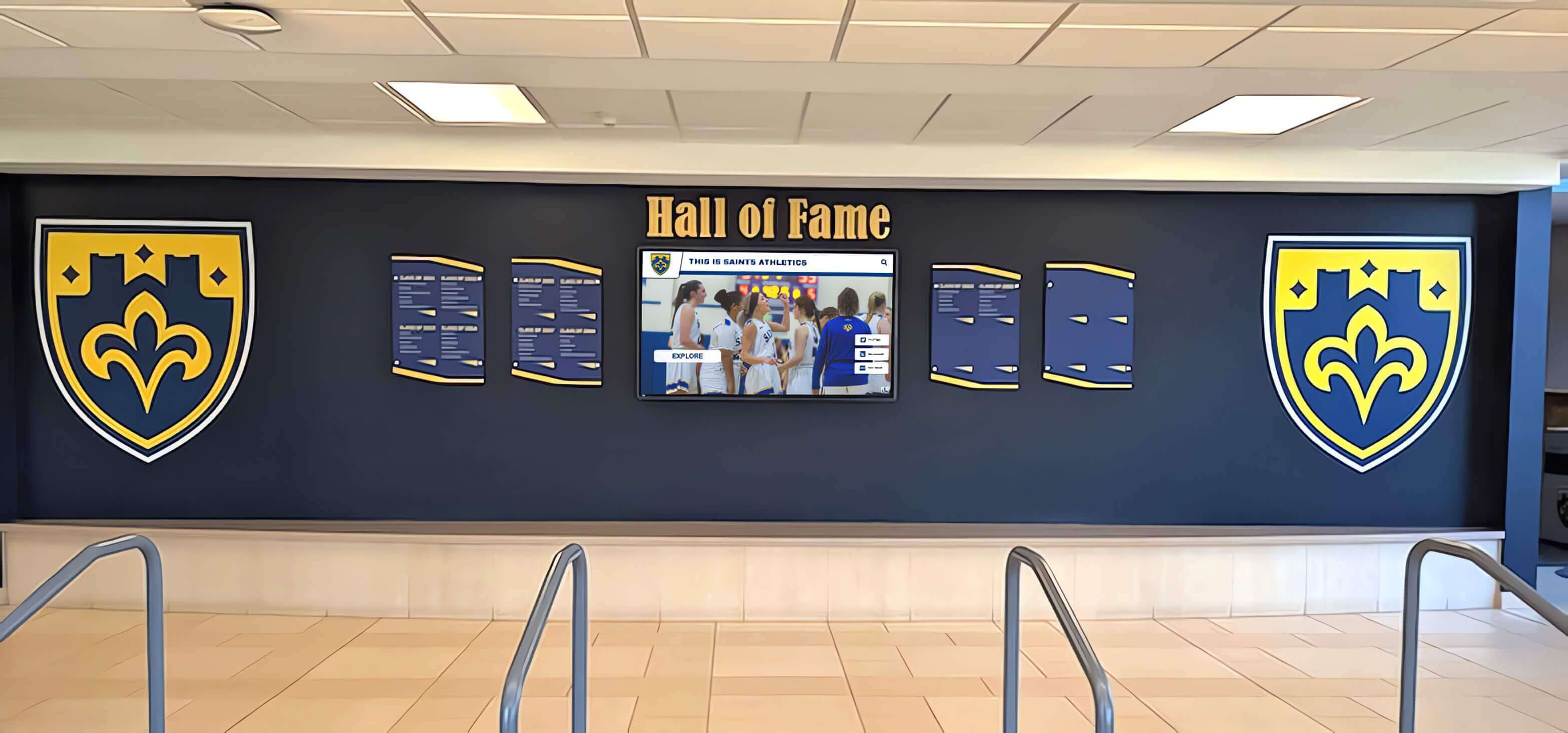
Interactive recognition displays alongside a digital archive website create multiple touchpoints where the community can engage with athletic achievement
The Membership Page: Converting Interest Into Commitment
Membership drives are only as effective as the friction between “interested” and “signed up.” A membership page that requires visitors to download a PDF, print a form, and mail a check will produce fewer members than a page with a digital form and an online payment option — not because families are less committed, but because time is limited and convenience wins.
Booster club membership form template elements:
- Member name, email, phone, and mailing address
- Membership tier selection (individual, family, patron)
- Payment method (online preferred; check option acceptable)
- Optional volunteer interest areas: concessions, game-day setup, banquet committee, website/communications
- Agreement to receive club communications
Beyond the form itself, the membership page should answer the questions that prevent people from completing the form:
- What does my membership fund?
- How will I know my dues are being used well?
- What do I get as a member?
- Is this tax-deductible?
A clear FAQ block at the bottom of the membership page handles objections before they require a follow-up phone call.
Events and Calendar Page: Coordination Made Visible
Athletic booster clubs run a calendar that would exhaust most event coordinators: home game concession coverage, annual golf outings, banquets, back-to-school nights, silent auctions. An events page centralizes that calendar so no volunteer misses a shift and no family misses a fundraiser.
Effective events page elements:
- Embedded calendar (Google Calendar integration works well for volunteer-managed sites)
- Featured event spotlights for the highest-priority upcoming events
- Registration or RSVP links for events requiring headcounts
- Post-event photo galleries that document what the club accomplishes each season
The year-end banquet deserves its own event page entry with details on the recognition awards being presented, who is eligible, and how past honorees have been recognized. This sets expectations and generates attendance from families who want to see their students honored in front of the community.
Booster clubs that document their events well — photos, results, attendance numbers — build a cumulative evidence base that makes the sponsor conversation easier each year. “Here is what we did last season, and here is where your logo appeared” is a more compelling renewal argument than any sales pitch.
The Donate Page: Accepting One-Time Gifts With Context
Not every supporter wants to join the booster club formally. Some alumni want to make a one-time gift in honor of a coach who influenced them. Some community members want to fund a specific piece of equipment. A dedicated donate page captures those gifts that would otherwise go elsewhere.
Donate page best practices:
- Name specific funds if possible: “Equipment Fund,” “Banquet and Recognition Fund,” “Scholarship Fund”
- Explain impact for each giving level: “$50 covers one athlete’s game-day meal budget; $500 covers a custom award trophy for the end-of-year banquet”
- Show recognition for donors — even modest donors deserve acknowledgment, and showing how previous donors are recognized motivates new gifts
For clubs with significant alumni donor audiences, connecting the donate page to a broader alumni spotlight program creates a cyclical recognition model: former athletes who are recognized inspire current families to give, who fund the program that produces the next generation of athletes worth recognizing.
News and Updates: Staying Top-of-Mind Between Seasons
The news page keeps your club’s website alive between fundraising cycles. A site that hasn’t been updated since last spring’s banquet tells sponsors that no one is minding the store. Regular news posts — even brief game recaps, volunteer call-outs, or equipment updates — demonstrate active stewardship.
What works for booster club news content:
- Brief game recaps with standout athlete mentions (keep them short — two or three paragraphs)
- Volunteer appreciation spotlights
- Fundraiser progress updates with specific dollar amounts raised
- New sponsor announcements
- Recognition nominations for upcoming awards
Social media integration on the news page — an embedded Twitter/X or Instagram feed showing posts from your school’s athletics account — keeps the page fresh without requiring manual updates every week.
Building Your Site: Platform Considerations for Booster Clubs
Booster club websites need to balance capability with volunteer-manageability. A platform requiring a developer to update the sponsor list will have an outdated sponsor list by spring. The right platform lets a parent volunteer with no technical background update the recognition page in fifteen minutes.
Common platform options for booster clubs:
- Squarespace or Wix: Fast to build, visually clean, requires no coding. Good for clubs without IT support. Limited custom functionality but adequate for most use cases.
- WordPress with a theme: More flexible and extensible. Requires slightly more maintenance. Good for clubs that want donation integrations, membership forms, or event registration plugins.
- Sports-specific platforms (SportsEngine, LeagueApps): Built specifically for youth and school sports with roster management, registration, and scheduling built in. Higher cost but reduces custom development.
- SchoolBlocks or school district CMS: Some schools provide booster clubs access to district web tools. Ensures brand consistency with school site but may have limited customization.
Whichever platform you choose, prioritize the membership form and sponsor page as your two most important technical investments. Both should work on mobile — the majority of parents who click through from a text or social post to your site will be on a phone.
Going Beyond the Website: Digital Recognition Displays for Booster Clubs
A booster club website is where the community finds information. A physical recognition display inside your athletic facility is where athletes experience recognition in a way that stays with them.
The most successful athletic programs run recognition in both spaces simultaneously. The website captures the record and makes it searchable globally. The in-school display makes the recognition visible every day, in the place where athletes train and compete.
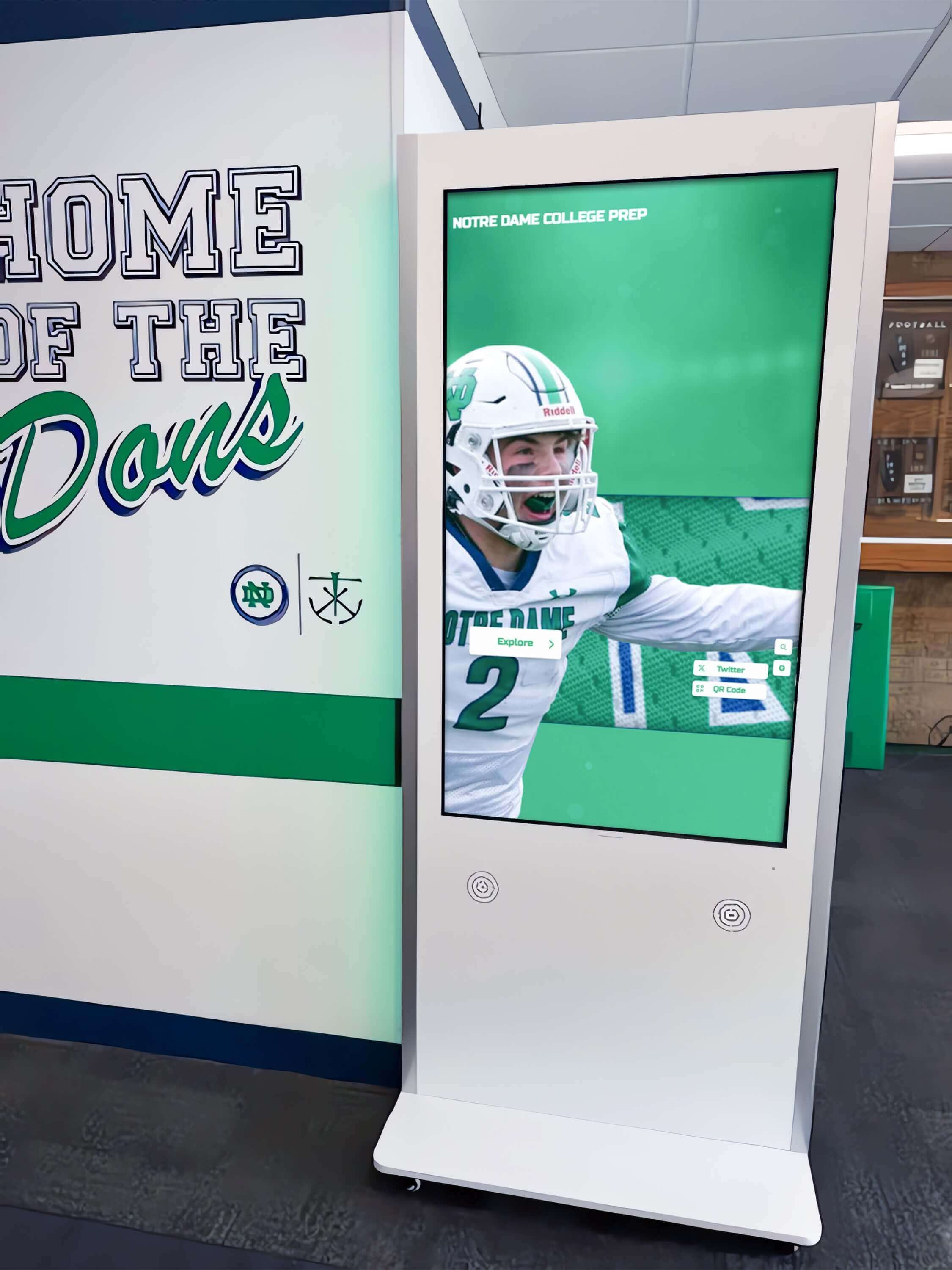
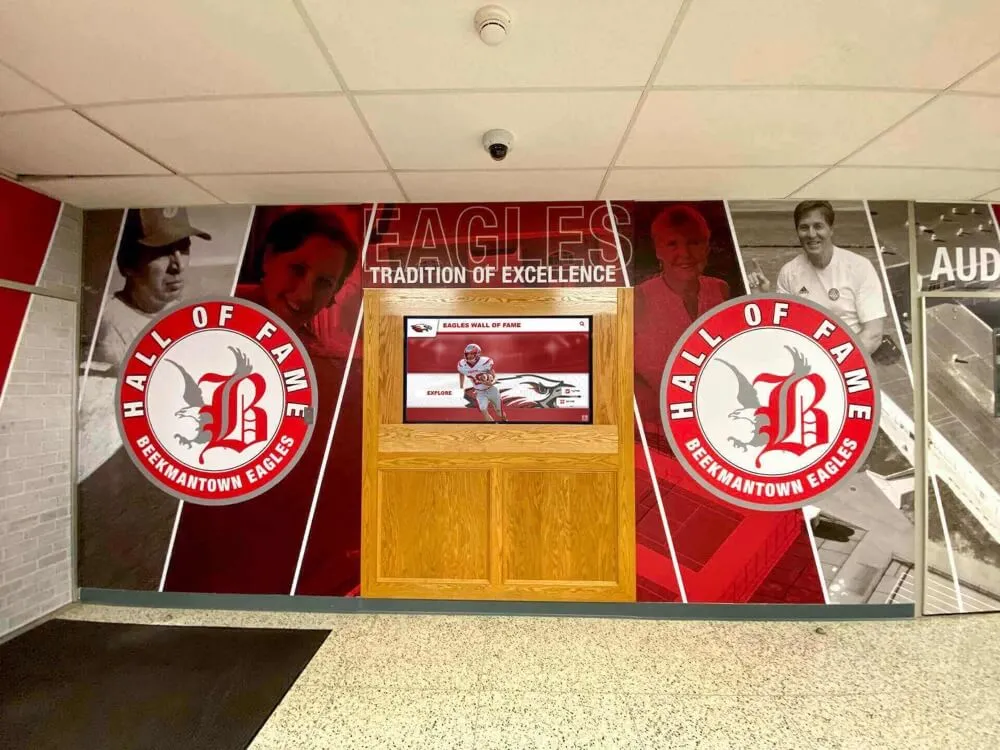
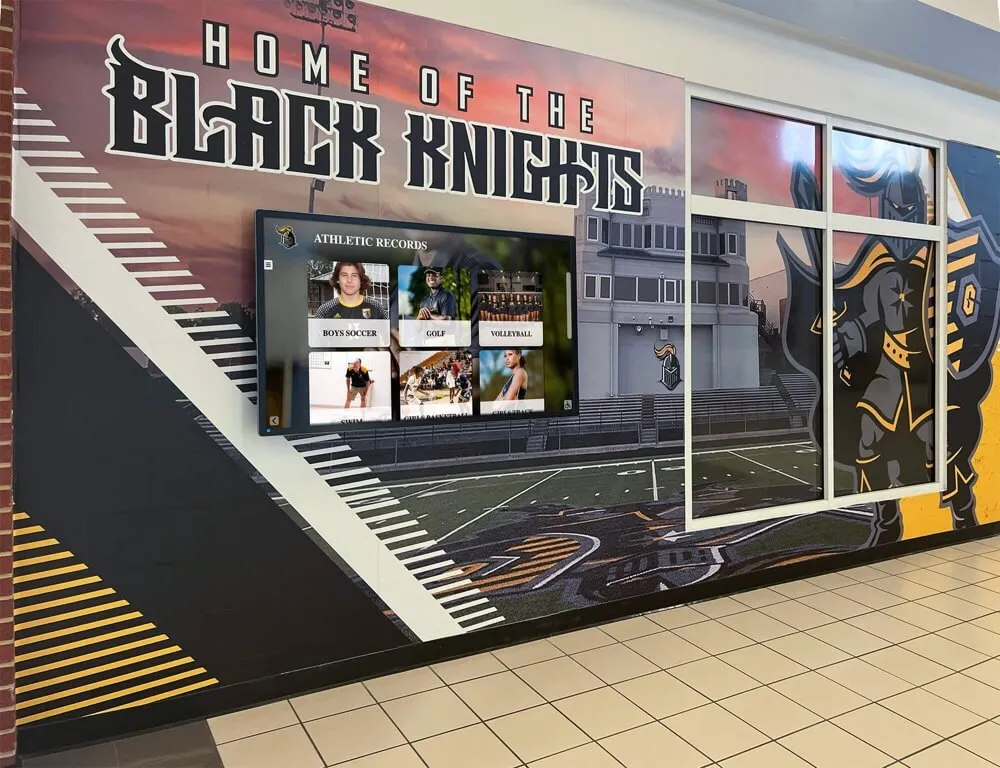
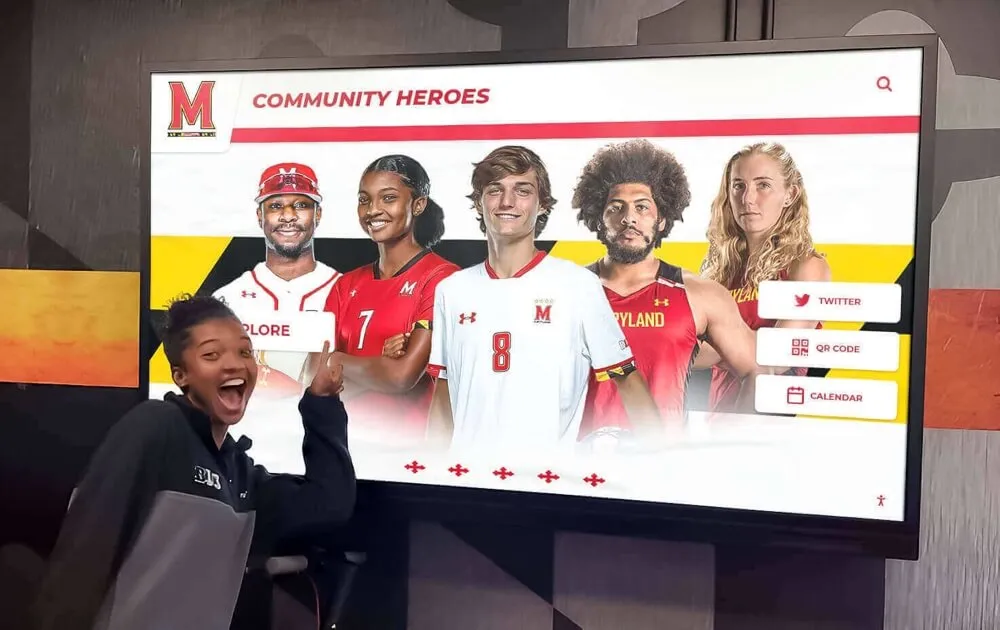
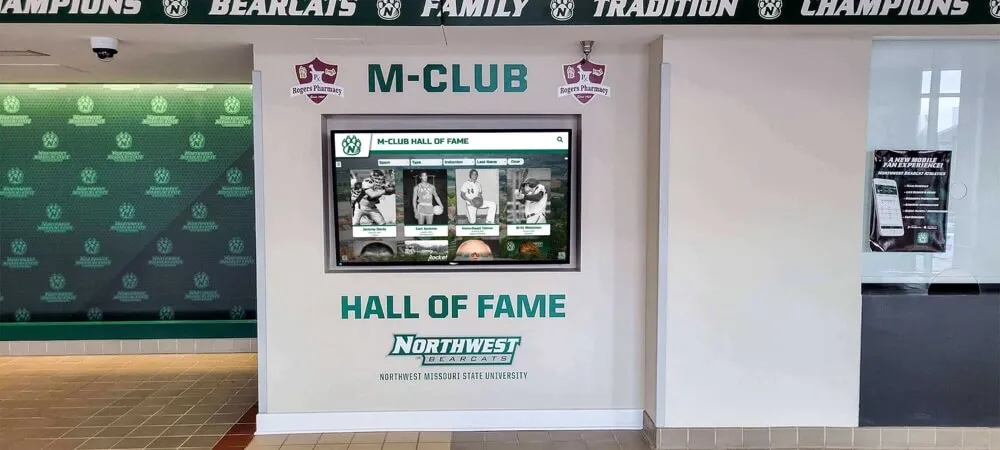
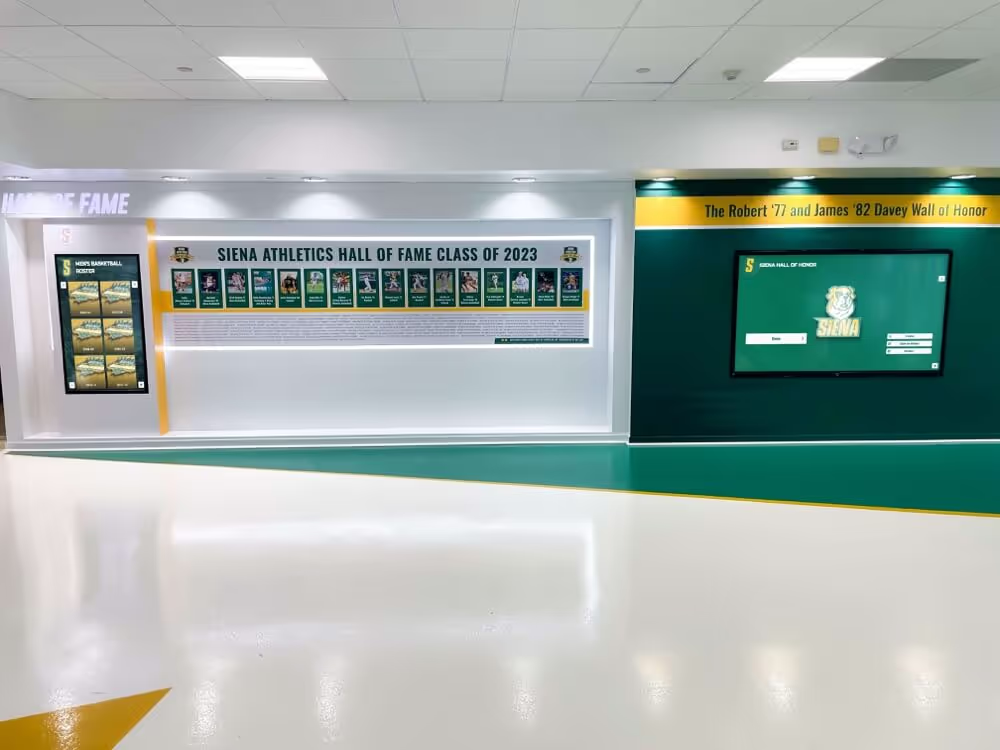
Interactive touchscreen displays positioned in athletic hallways bring the recognition archive off the website and into the space where athletes and families experience it daily
Touchscreen recognition systems from providers like Rocket Alumni Solutions allow booster clubs and athletic departments to build digital halls of fame, sponsor recognition walls, and trophy archives that live in the school building year-round. Unlike static plaques that fill up physical space, digital systems can hold every honoree from every year in every sport — with photos, video highlights, and statistical records — without requiring a single additional square foot of wall space.
These systems also create compelling sponsor value that a website alone cannot. A sponsor logo that rotates on a lobby touchscreen display during school hours reaches students, parents, teachers, and visitors in a premium context. For sponsors comparing return on investment across different school partnerships, a physical digital display is a differentiated asset worth paying more to be part of.
The creative trophy case display ideas that work best combine traditional physical awards — championship trophies, letter plaques, framed photographs — with digital systems that present the context and story behind each achievement. That combination gives donors and sponsors something to look at and something to explore, which translates directly into more engagement and more visibility for every name on the wall.
For schools looking at how broader recognition culture connects the booster club’s work to academic and community achievement, resources on academic recognition programs offer a framework for expanding recognition beyond athletics into the full picture of what students accomplish.
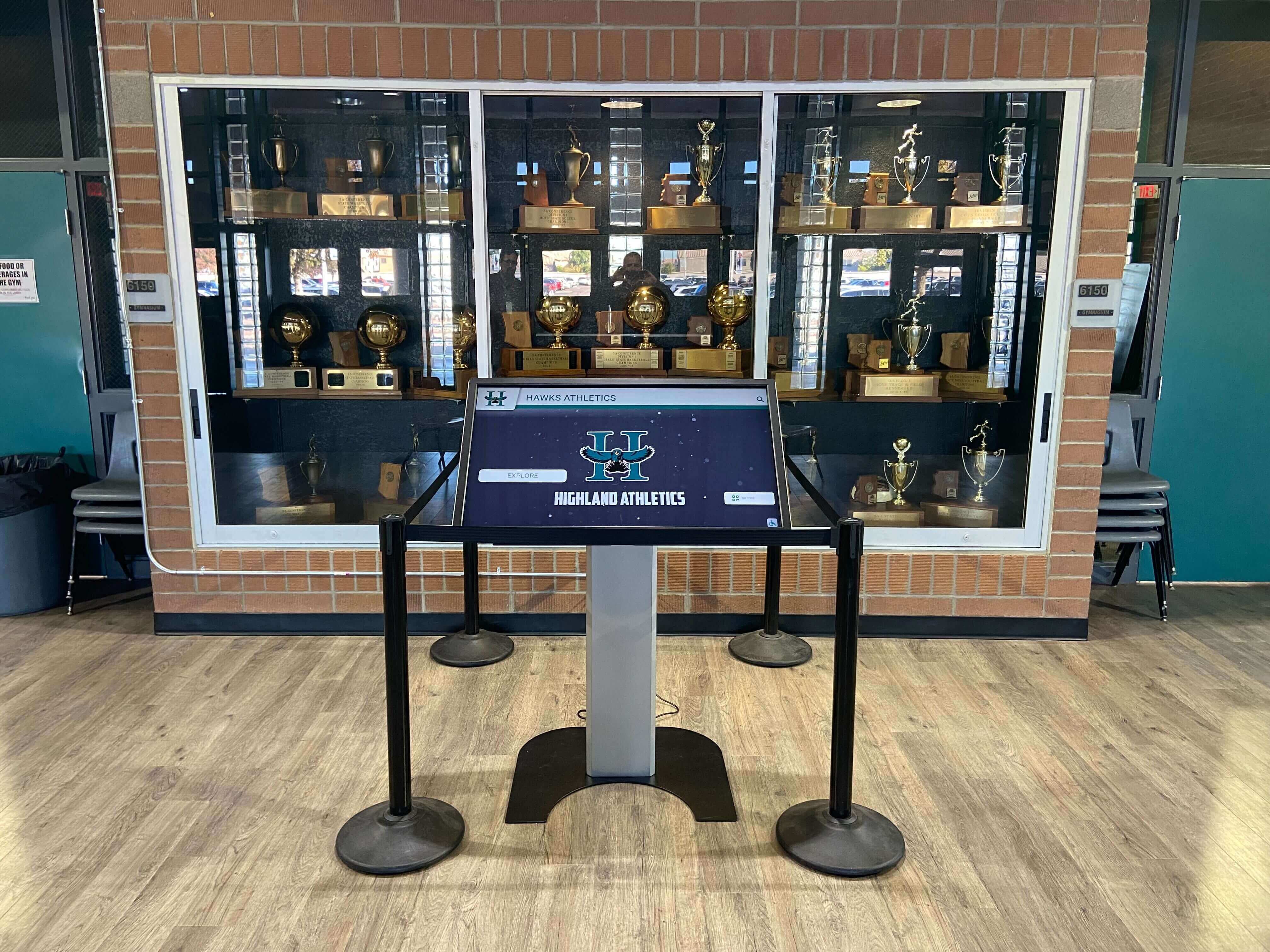
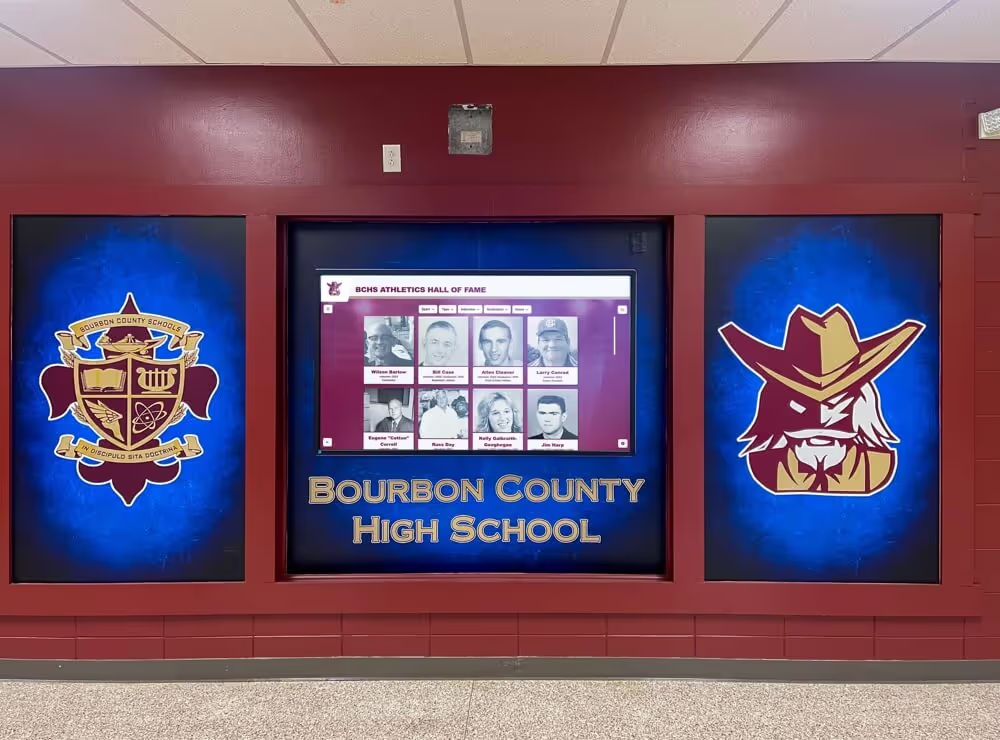
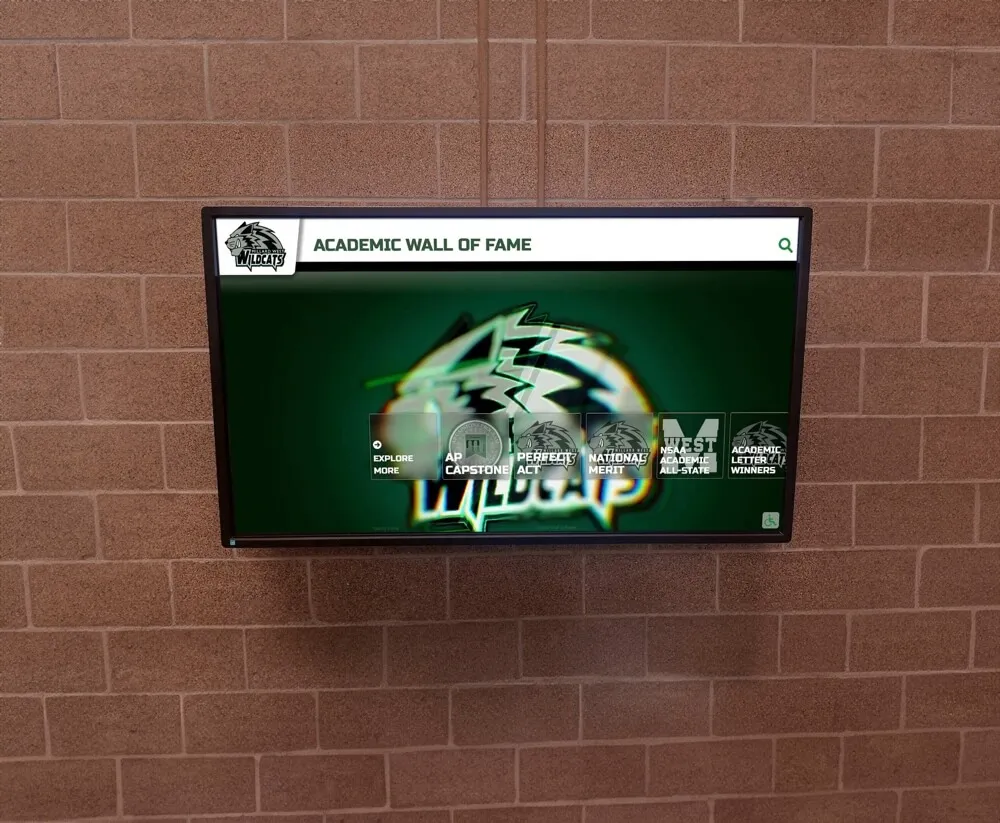
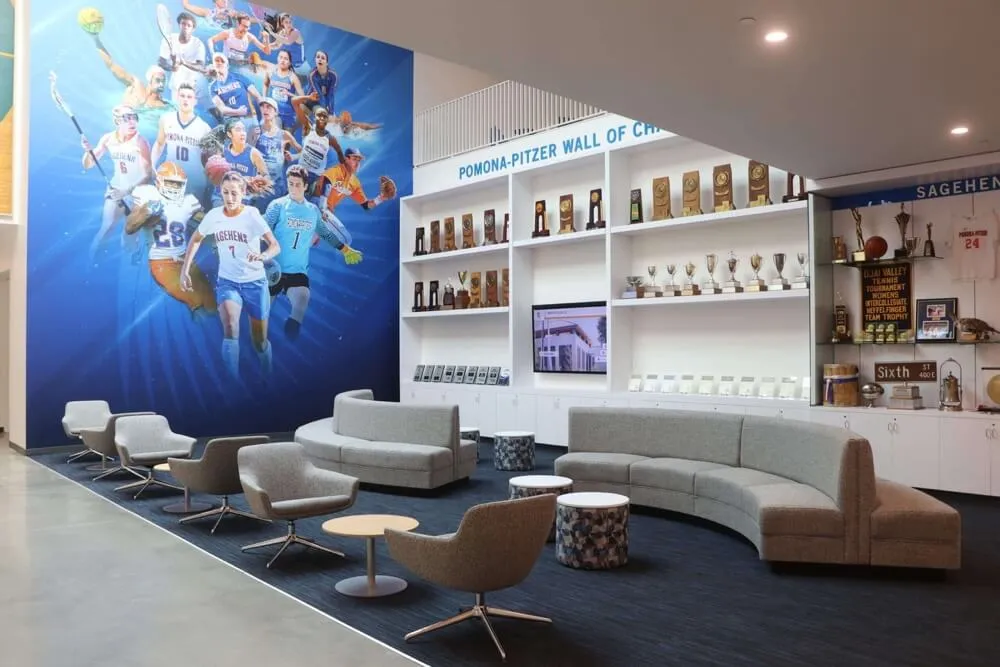
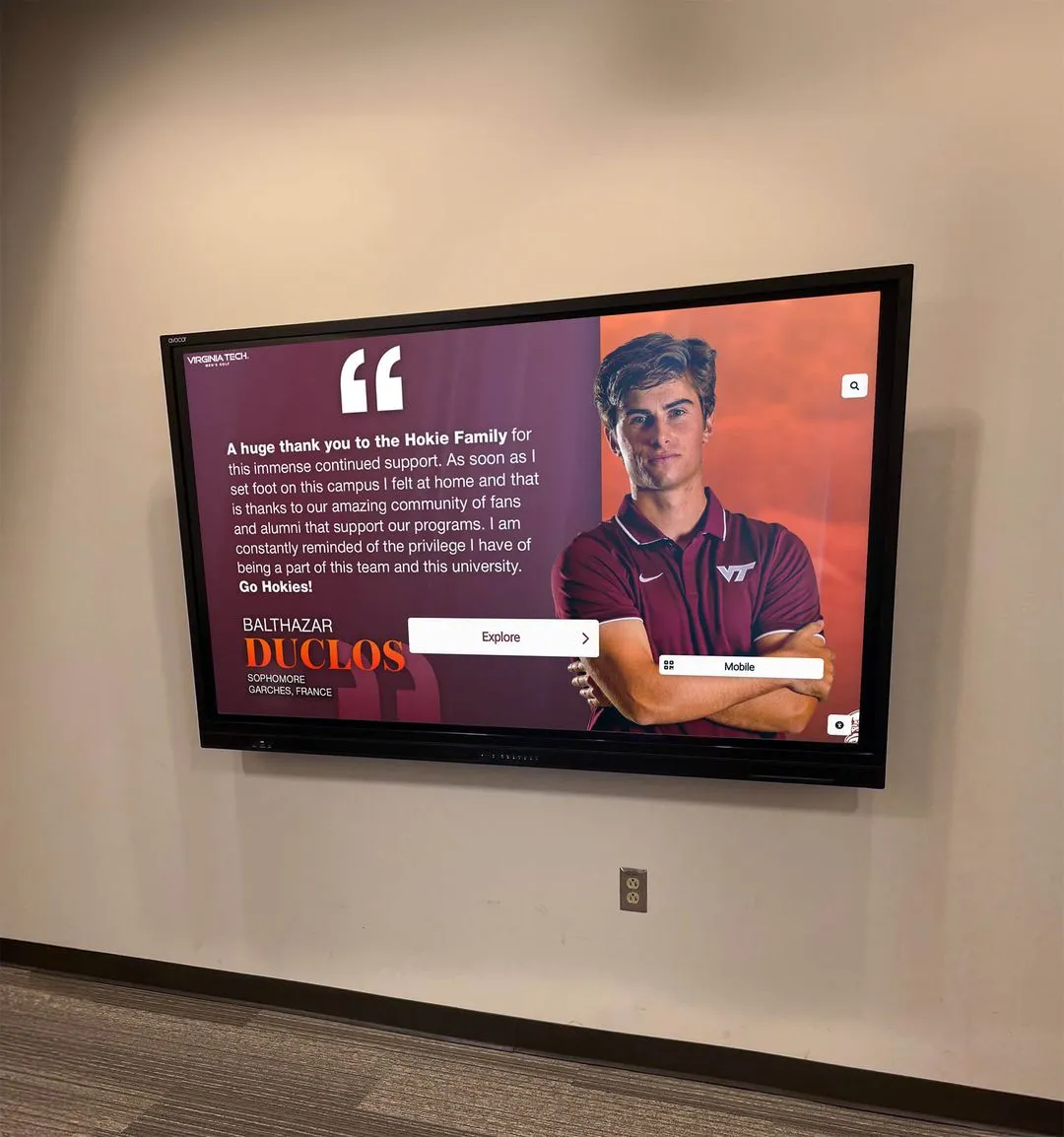
Integrating touchscreen kiosks with existing trophy cases creates a recognition environment that combines physical and digital acknowledgment in a single visual statement
Sponsor Recognition on Physical Displays
One of the strongest arguments for investing in a digital recognition display — from the booster club’s perspective — is the sponsorship revenue potential it unlocks. Sponsors who fund the display installation itself can be recognized as founding partners. Sponsors who maintain annual giving can have their logos displayed at the appropriate tier on the physical screen alongside athlete recognition.
This creates a package that booster clubs can sell to local businesses with specific deliverables:
- Logo on the booster club website sponsor page (digital, global reach)
- Logo on the in-school digital recognition display (physical, in-person reach)
- Name read at home games and banquets (event-based reach)
- Recognition in the year-end program booklet (print reach)
A four-channel sponsor package like this justifies significantly higher investment than a website logo alone, and it gives the booster club infrastructure that pays dividends across many seasons.
For athletic programs interested in expanding recognition to include community contributors — not just athletes — cheer and team recognition ideas provide additional formats for displaying support staff, spirit squads, and volunteer contributors alongside varsity athletes.
Booster Club Website Template FAQ
What pages should every booster club website have?
At minimum: a home page, about page, team pages (one per sport or a sport directory), sponsor showcase, membership form, events calendar, and contact page. A recognition or hall of fame page is strongly recommended for clubs that want to maximize engagement and alumni giving. A donate page adds a low-friction giving channel that captures one-time contributors who are not ready for formal membership.
How do I build a booster club membership form?
Use your website platform’s built-in form builder (Squarespace, Wix, and WordPress all offer this) or embed a Google Form as a starting point. The form should collect name, email, phone, address, membership tier selection, and volunteer interest areas. For payment processing, tools like PayPal, Stripe, or Square can be embedded directly into most website platforms to handle dues online.
What is the best way to showcase sponsors on a booster club website?
Create a dedicated sponsor page organized by giving tier. Display sponsor logos prominently with links to their websites, and clearly list the benefits each tier receives. Update logos immediately when new sponsors join and when sponsors renew — nothing signals inactivity like outdated logos. Consider a brief sponsor spotlight in your news section each month to give individual sponsors additional visibility beyond the static logo page.
How should a booster club recognize athletes on its website?
Organize recognition by sport and year. For each honoree, include their full name, graduation year, achievement description, and a photo if available. Separate sections for all-time records, annual award winners, all-conference/all-state selections, and college signings helps visitors navigate to what they are looking for. Archive past seasons so the recognition database grows more valuable over time rather than being replaced each year.
Can a booster club website integrate with a digital hall of fame display?
Yes — and they work best as a complementary pair. The website handles the searchable, shareable, globally accessible archive. The physical display handles the in-school, always-visible, emotionally resonant recognition experience. Schools using platforms like Rocket Alumni Solutions can manage recognition content in one system that updates both the digital display and a companion web portal, keeping the physical and digital recognition in sync without double-entry.
How often should a booster club update its website?
During the season: at least weekly — game recaps, schedule updates, and volunteer calls should appear regularly. Off-season: monthly — end-of-year recognition, scholarship announcements, summer fundraisers. The sponsor page and membership form should be verified accurate before every school year begins. Recognition pages should be updated immediately following annual awards ceremonies so honorees can share their recognition while the moment is fresh.
What makes a booster club website look professional?
High-quality photography of athletes and facilities, a consistent color scheme matching your school colors, a working mobile layout, up-to-date sponsor logos at high resolution, and fast page load times. Nothing undermines a sponsor’s confidence in your club faster than a broken link on the sponsor page or a roster that still shows last year’s graduates.
Do booster clubs need a separate website from the school’s athletics site?
It depends on your relationship with the athletic department and your school’s web infrastructure. If the school’s athletic site cannot accommodate a membership form, donation processing, or a sponsor showcase, a separate booster club site makes sense. If the school’s site can support those features and the athletic director is willing to give the booster club a dedicated section, a unified site reduces maintenance burden and keeps families in one place.
Take Your Athletic Recognition Off the Website and Into the Building
A booster club website captures recognition in a searchable archive. A touchscreen hall of fame display makes that recognition visible every day in the place where athletes train and compete. Discover how Rocket Alumni Solutions helps schools and booster clubs build recognition experiences that honor athletes, engage sponsors, and archive achievement for generations.
See a live demoBuilding a complete booster club website takes time, but the pages covered in this guide give you a framework that serves every audience your club needs to reach: sponsors looking for visibility, families looking for information, athletes looking for recognition, and alumni looking for connection. Start with the pages that drive immediate revenue — sponsors and membership — then build out your recognition archive as a long-term investment in the culture of your program. The website and the in-school display working together create a recognition ecosystem that elevates your entire athletic community.