



Intramural sports programs at Power 4 universities serve tens of thousands of students annually, creating vibrant recreational communities where students compete, connect, and build lifelong friendships beyond the classroom. These programs encompass everything from flag football and basketball leagues to niche sports like pickleball and esports, providing inclusive competitive opportunities for students at all skill levels who want athletic experiences without the time commitment or pressure of varsity competition.
Yet despite serving massive student populations—Texas A&M’s intramural program engages over 14,000 students annually—these programs often struggle with visibility, recognition, and engagement challenges that limit their impact. Championship teams receive t-shirts but no lasting recognition. Prospective students touring campus never see the thriving recreational culture. Alumni forget their intramural achievements because no permanent record exists. Information about tryouts, signups, schedules, and deadlines gets buried in email or requires navigating complex recreation department websites.
This comprehensive guide explores how Power 4 universities leverage digital recognition displays to transform intramural sports programs—creating engaging touchscreen systems that celebrate championship teams, showcase program participation, share essential information about signups and schedules, and even serve as donation portals raising funds for expanded programming. Whether your recreation department seeks to enhance existing intramural recognition or build comprehensive digital engagement systems from scratch, you’ll discover practical strategies for using interactive technology that matches the energy and community your students create through recreational sports.
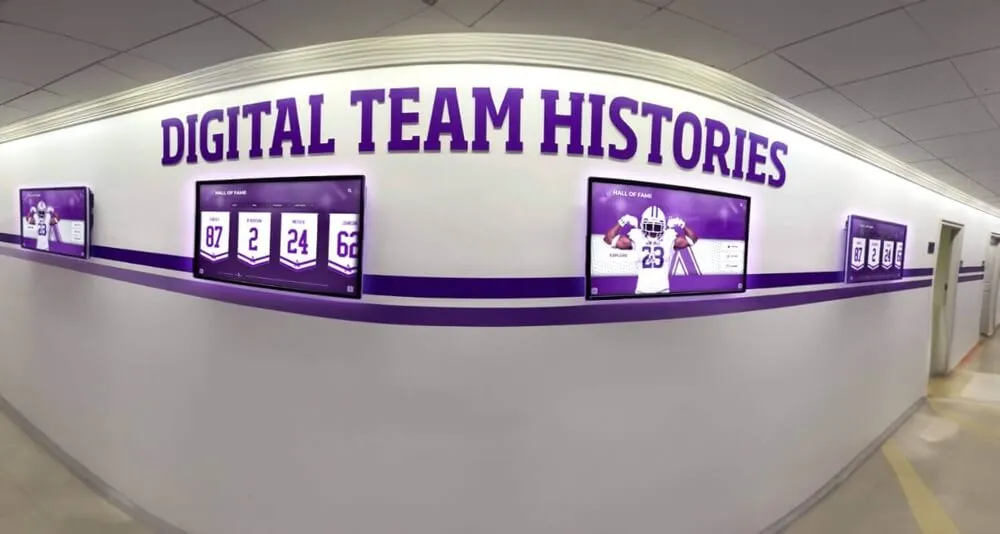
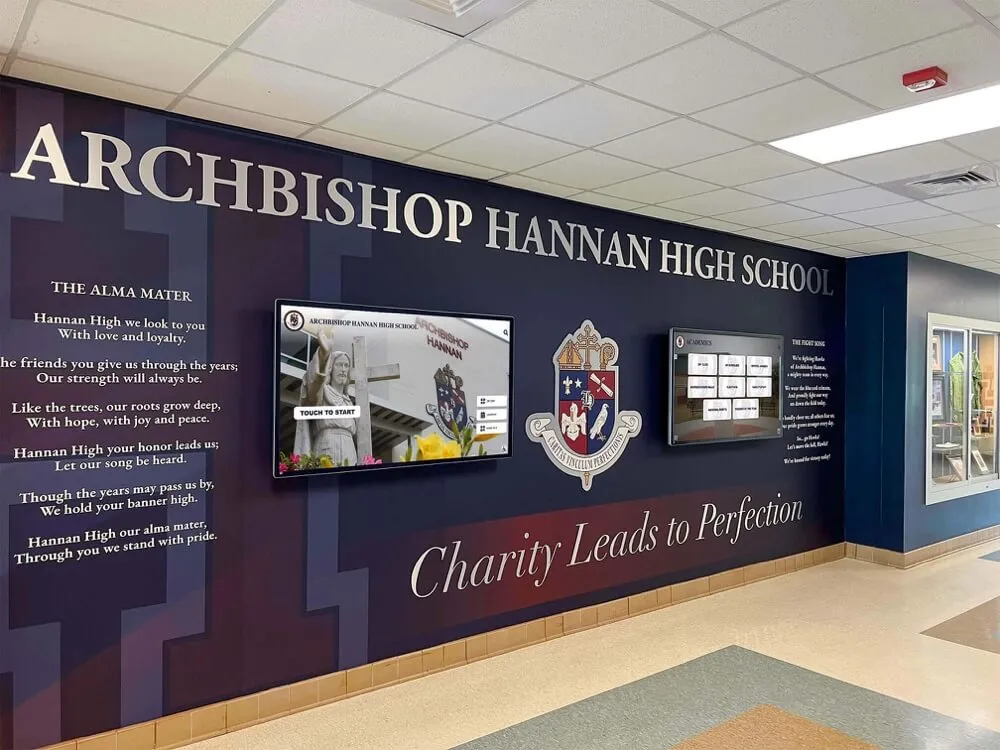
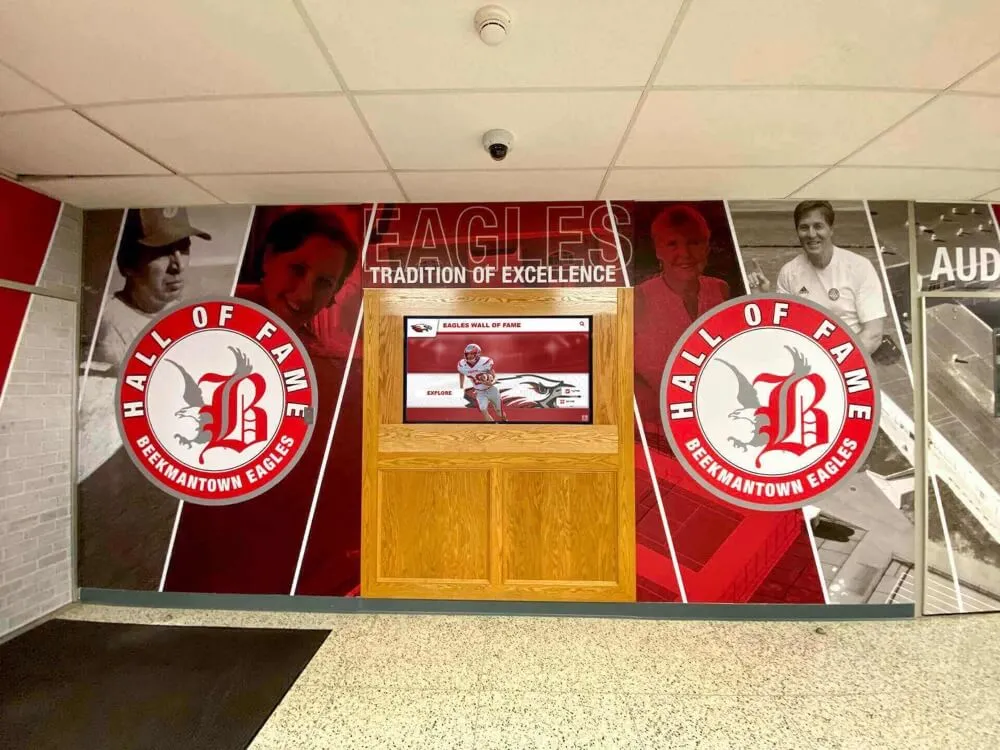
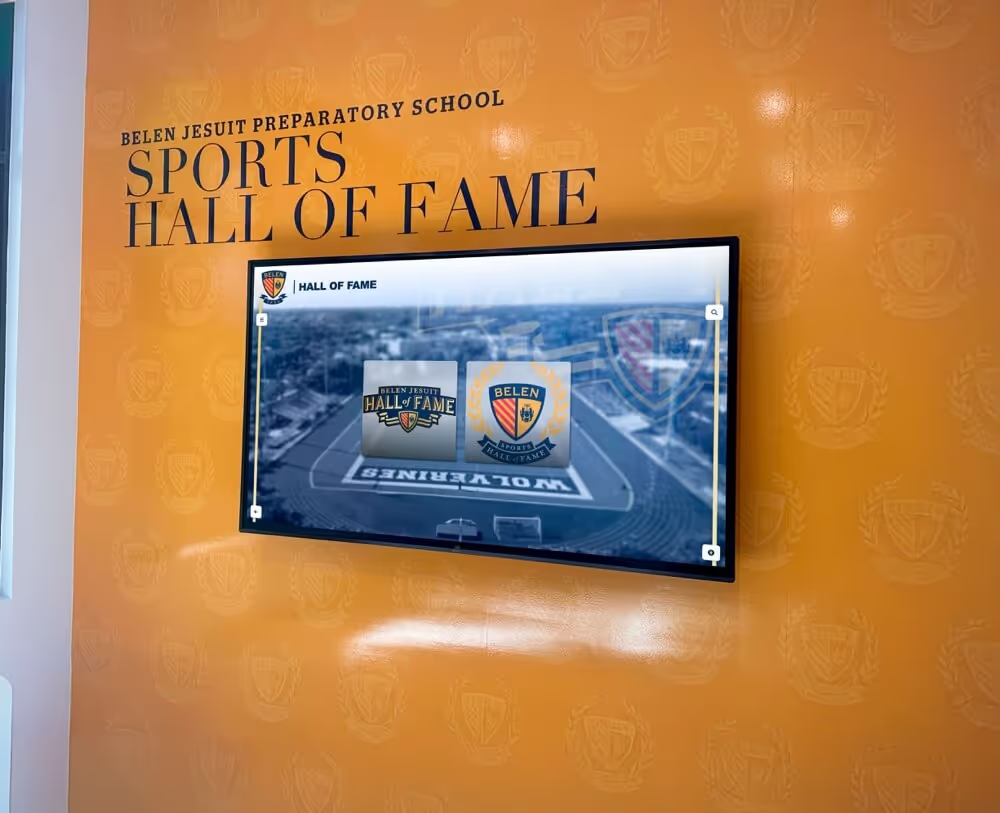
Modern digital displays enable university recreation departments to provide professional recognition for intramural programs while solving practical operational challenges. These cloud-based platforms overcome space limitations in recreation centers, simplify content updates for busy staff, and create unlimited capacity for celebrating every championship team and participant across decades of program history—all while serving as dynamic communication tools that keep students informed and engaged throughout academic years.

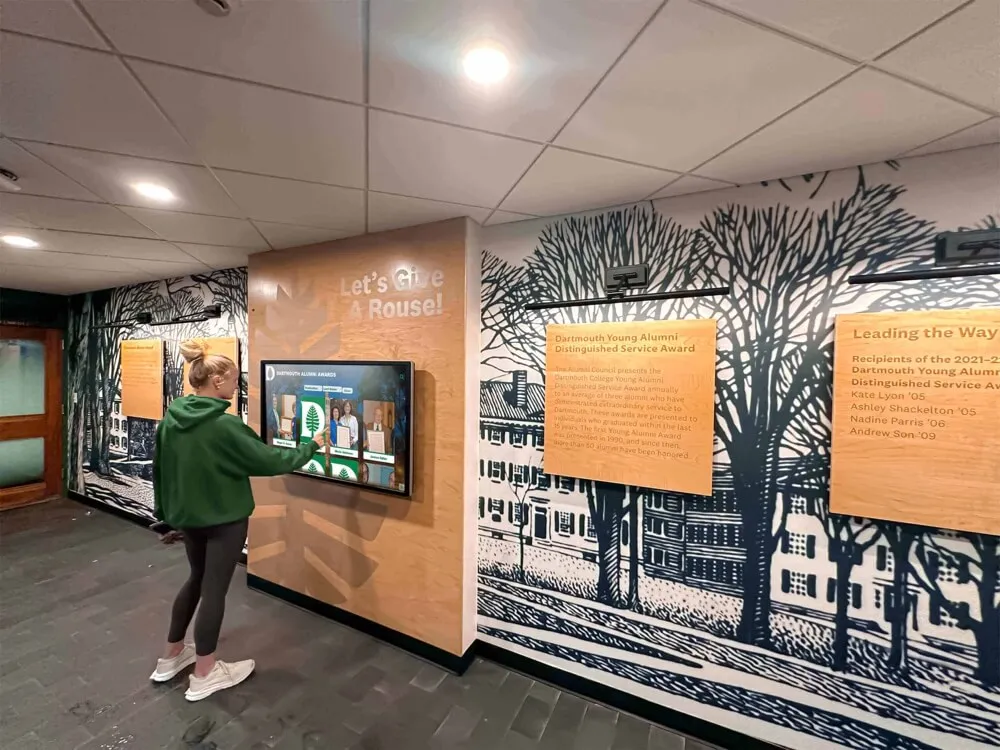
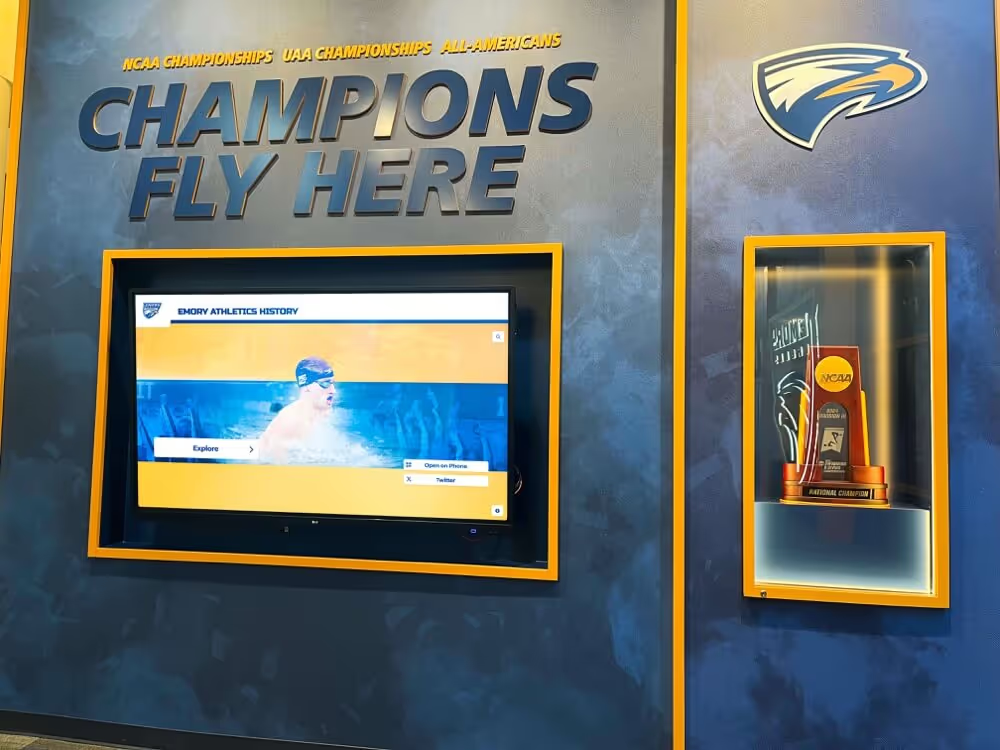
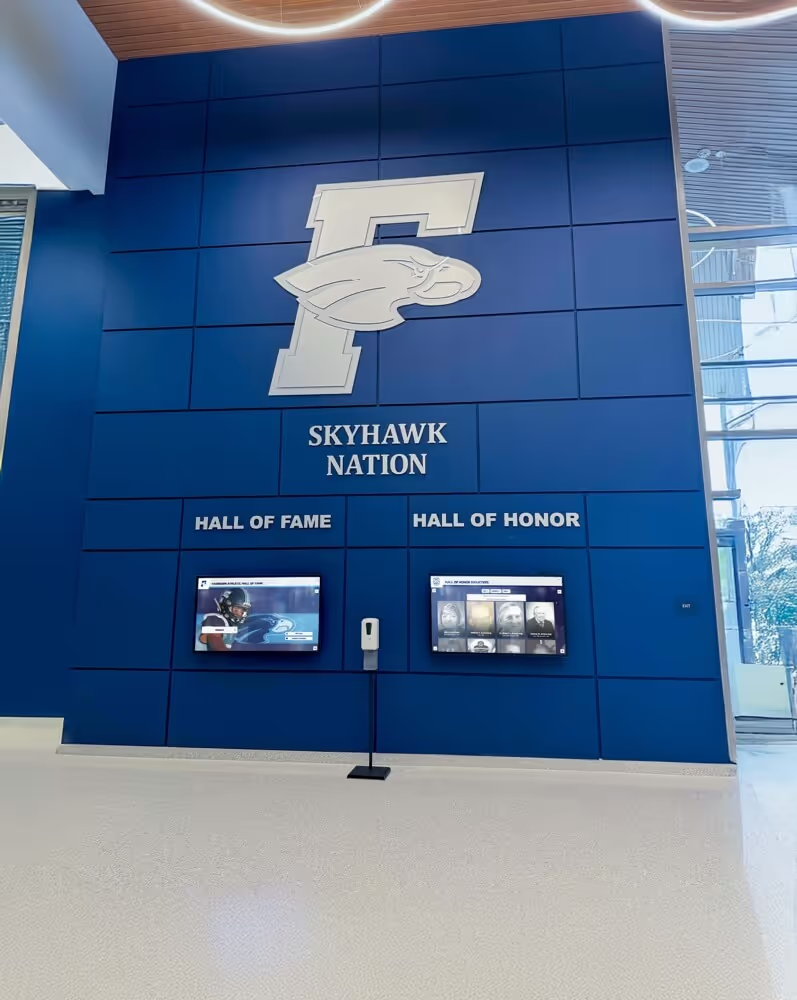
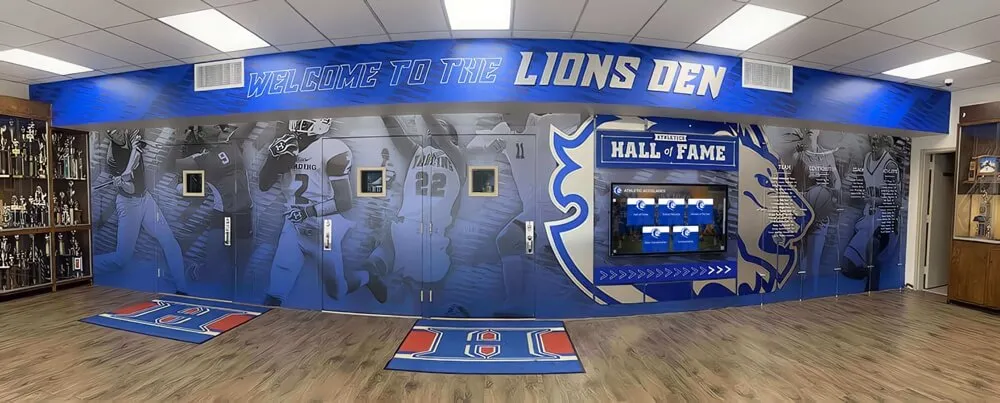
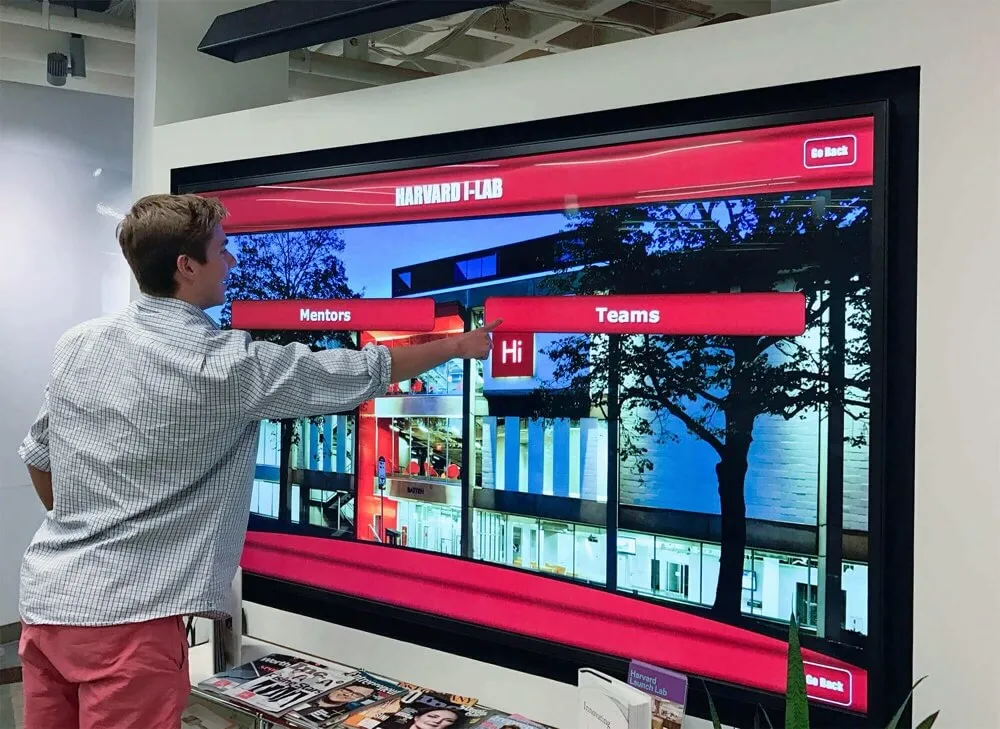
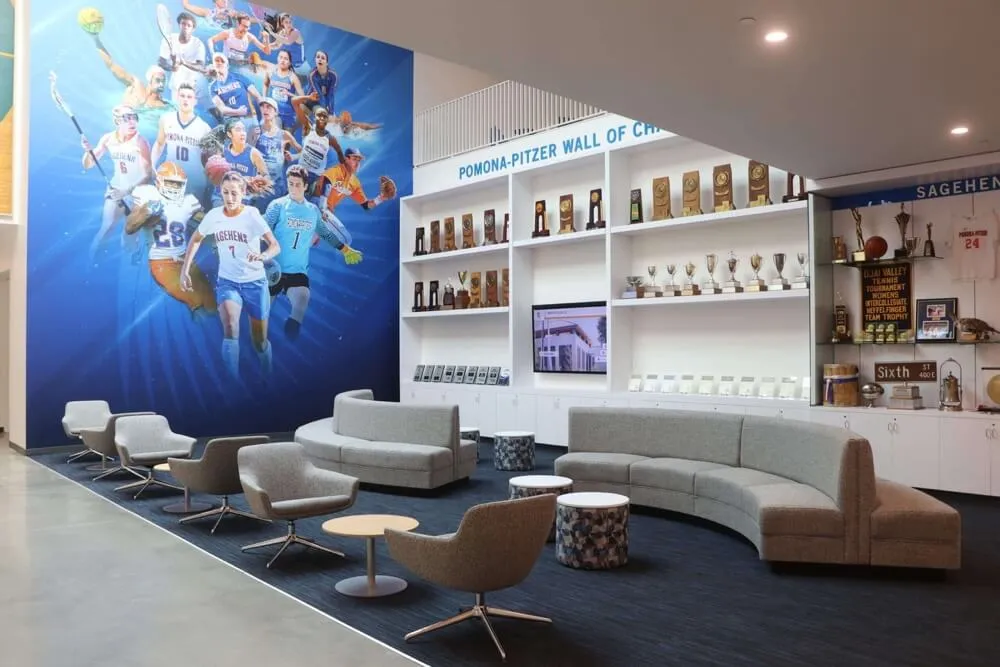
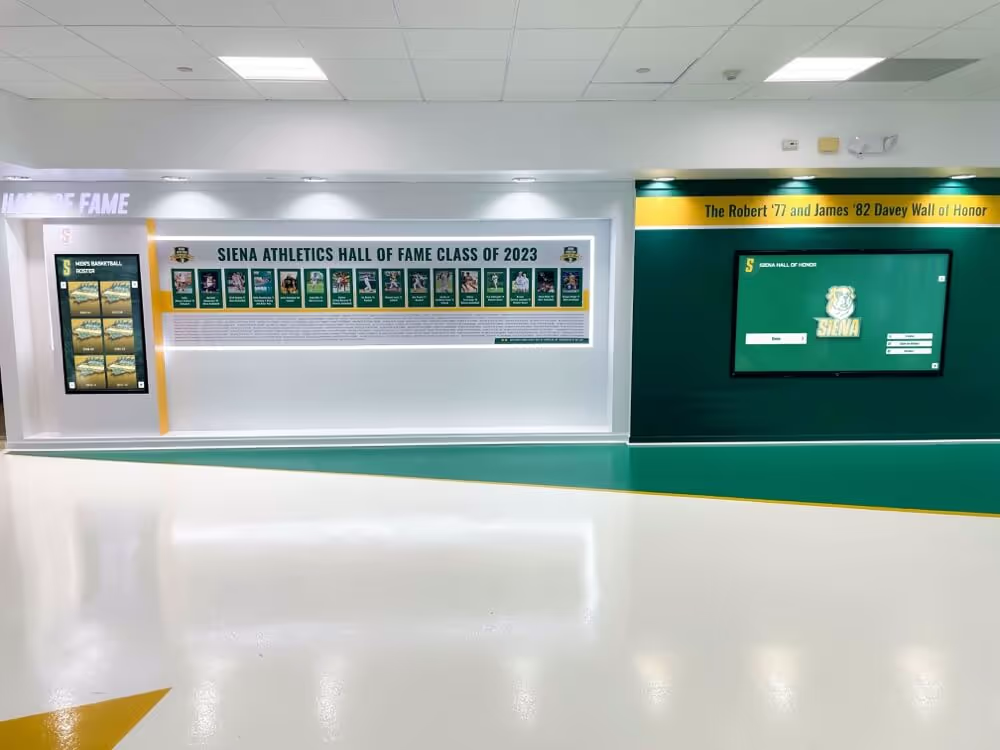
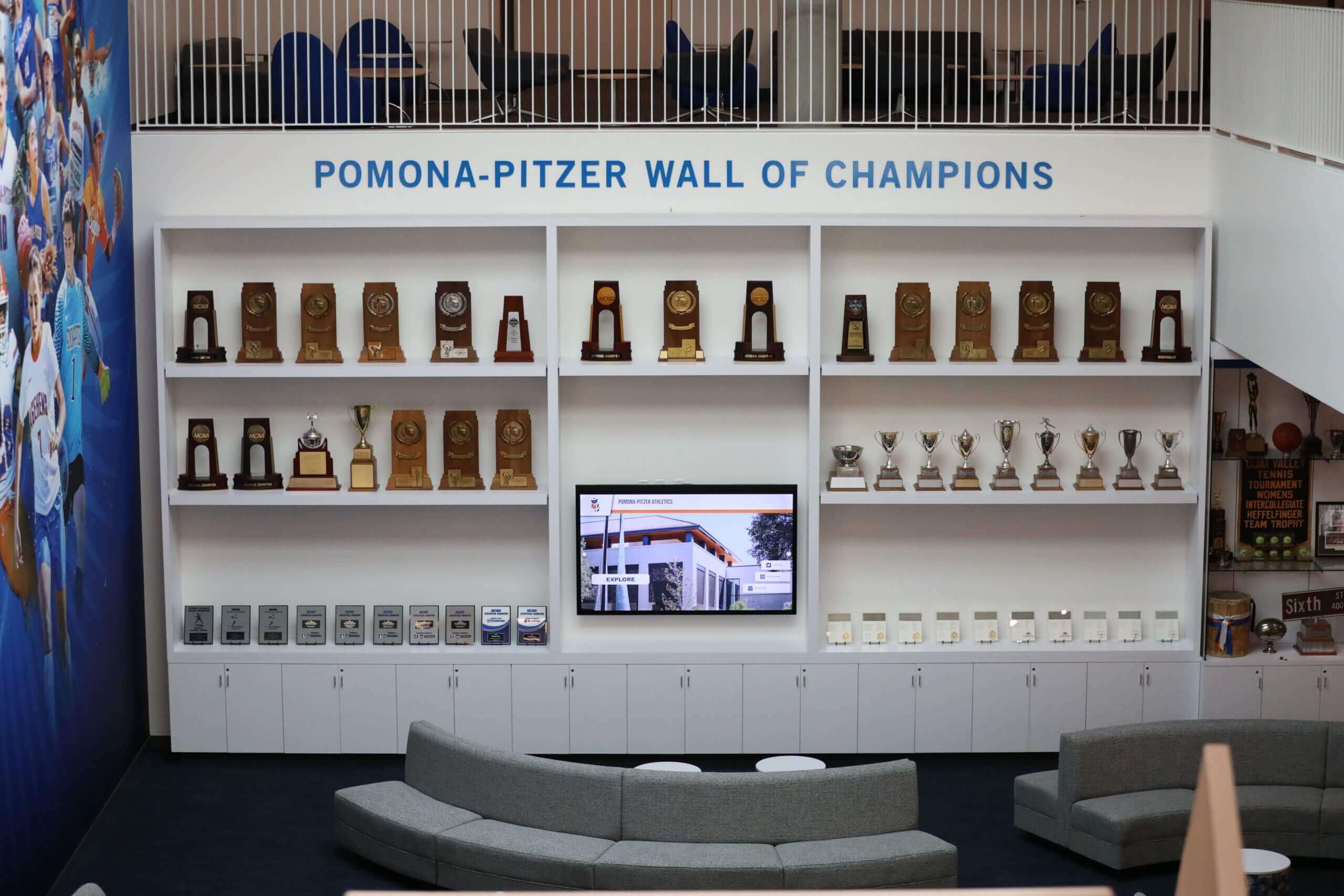
Modern university recreation centers combine traditional trophy displays with interactive digital systems creating comprehensive intramural recognition experiences
The Intramural Sports Landscape at Power 4 Universities
Understanding the unique scale, diversity, and operational realities of intramural programs at major universities provides essential context for implementing effective digital recognition systems.
Scale of Power 4 Intramural Participation
Power 4 universities—institutions competing in the Atlantic Coast Conference (ACC), Big Ten Conference, Big 12 Conference, and Southeastern Conference (SEC)—operate intramural sports programs at unprecedented scale compared to smaller colleges or universities in less prominent conferences.
According to industry data, large university intramural programs commonly serve 8,000-15,000 participants annually across 30-50 different sport offerings. Texas A&M University reports approximately 14,000 students participating in intramurals each year, while programs at Michigan, Ohio State, Penn State, and other flagship institutions document similar participation levels representing 20-40% of entire undergraduate populations.
This massive scale creates both opportunities and challenges for recognition. When hundreds of teams compete across dozens of sports each semester, traditional approaches to celebration—custom t-shirts, trophy presentations, or physical plaques—become logistically complex and expensive. A single semester might crown 100+ championship teams across various sports and competitive divisions. Over a decade, this accumulates to thousands of championship teams and tens of thousands of participants deserving recognition for their contributions to campus recreational culture.
The Diversity of Intramural Sport Offerings
Power 4 intramural programs extend far beyond traditional sports, offering diverse activities appealing to varied student interests and athletic backgrounds.
Traditional Team Sports
Most programs offer multiple divisions of basketball, flag football, soccer, softball, and volleyball—sports with broad appeal and established competitive structures. These traditional offerings typically generate highest participation numbers and most intense competition, with championship games drawing spectator crowds and campus-wide attention.
Emerging and Niche Sports
Forward-thinking programs incorporate trending activities including pickleball tournaments, esports competitions, spikeball leagues, ultimate frisbee championships, and cornhole tournaments. These emerging sports attract students who might not participate in traditional athletics, expanding program reach and campus engagement.
According to an article from U.S. News highlighting lesser-known intramural sports, universities offer increasingly diverse options including dodgeball, racquetball, inner tube water polo, and even quidditch—demonstrating how intramural programs evolve to match student interests.
Individual and Dual Sports
Beyond team competitions, many programs coordinate tennis tournaments, racquetball ladders, golf outings, swimming meets, and track events providing opportunities for students without full team commitments.

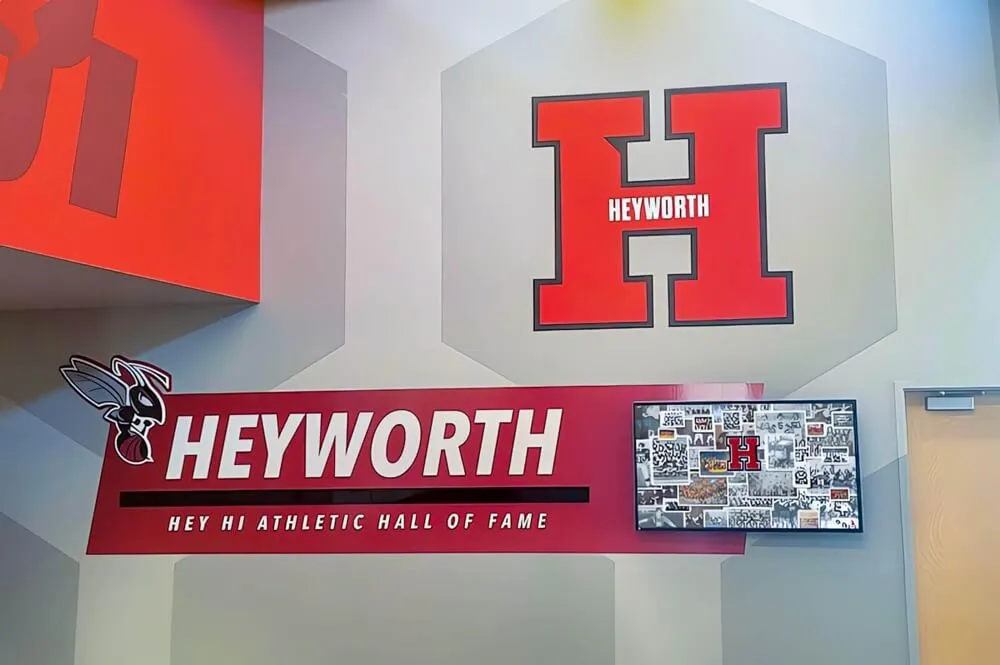
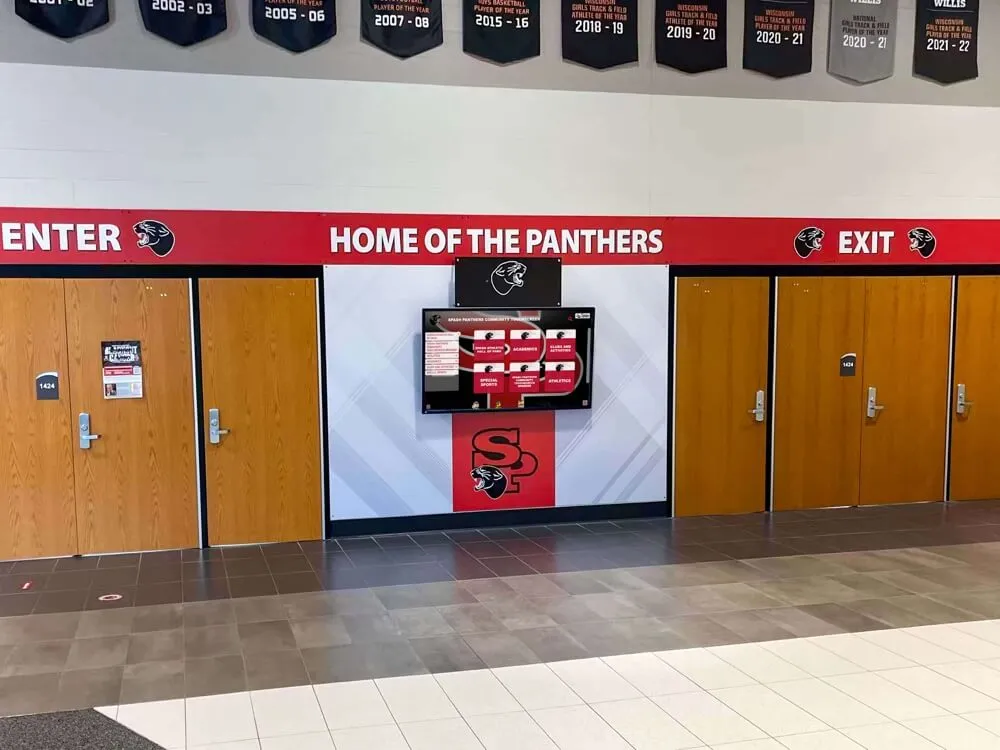
Digital displays integrated with recreational facility design create permanent recognition infrastructure celebrating student achievement
Special Events and Tournaments
Single-day tournaments and special events supplement league play including homecoming tournaments, March Madness bracket challenges, charity events supporting causes, outdoor adventure races, and end-of-semester championship showcases bringing together winners across multiple sports.
This diversity means effective recognition systems must accommodate vastly different sport types, competitive formats, and achievement categories—requiring flexible digital platforms rather than rigid traditional displays designed for single sport contexts.
Intramural Programs vs. Varsity Athletics: The Recognition Gap
Despite serving dramatically larger student populations than varsity athletics, intramural programs typically receive minimal recognition infrastructure compared to the elaborate halls of fame, trophy rooms, and digital displays celebrating varsity teams.
Varsity Athletic Recognition Investment
Power 4 athletic departments commonly invest $50,000-$500,000+ in comprehensive digital hall of fame systems celebrating athletes, championships, and program heritage. These installations feature multiple large-format displays, sophisticated content databases documenting decades of achievement, multimedia galleries preserving memorable moments, and web-based platforms extending recognition beyond physical campus.
Intramural Recognition Reality
In contrast, most intramural programs provide only basic recognition including championship t-shirts costing $5-15 per participant, printed certificates or paper awards, temporary digital signage showing current champions, email announcements with minimal visibility, and social media posts quickly buried in feeds.
When championship recognition disappears after a semester or gets relegated to a filing cabinet, students miss opportunities to celebrate achievements, recreation departments struggle to demonstrate program value to university administrators, and prospective students touring campus never discover the vibrant intramural culture that might influence enrollment decisions.
This recognition gap represents both challenge and opportunity. Digital displays designed specifically for intramural contexts enable recreation departments to provide professional recognition at affordable price points—celebrating thousands of participants and hundreds of teams without requiring varsity athletics-level budgets.
How Digital Displays Transform Intramural Sports Recognition
Interactive touchscreen systems address specific challenges facing university recreation departments while creating engaging celebration environments that serve multiple stakeholder needs simultaneously.
Comprehensive Championship Recognition
The most immediate application involves celebrating intramural championship teams with appropriate prominence and permanence.
Unlimited Recognition Capacity
Traditional trophy cases in recreation centers accommodate 50-100 items before filling completely, forcing difficult decisions about which championships receive visibility. Digital platforms provide functionally unlimited capacity—single 55-inch displays can showcase hundreds of championship teams, thousands of participant photos, and complete achievement documentation across entire program histories without space constraints.
This unlimited capacity enables truly comprehensive recognition where every champion receives equal celebration including A-league competitive divisions and recreational C-league teams, men’s, women’s, and co-rec divisions across all sports, fall semester championships alongside spring champions, traditional sports and emerging activities like esports, and historical champions from past decades still discoverable alongside current winners.
When students see their co-rec volleyball championship recognized with same professional quality as competitive basketball champions, they understand that the recreation department values all participation equally—reinforcing inclusive cultures where everyone belongs regardless of athletic background or competitive intensity preferences.
Rich Team Profiles and Storytelling
Beyond simple name lists, digital recognition incorporates content impossible with traditional plaques including complete team rosters with individual photos when available, championship game highlights and memorable moments, season records and playoff progression, participant testimonials about memorable experiences, connected content linking teammates across multiple sports, and historical context about longstanding rivalries or program traditions.
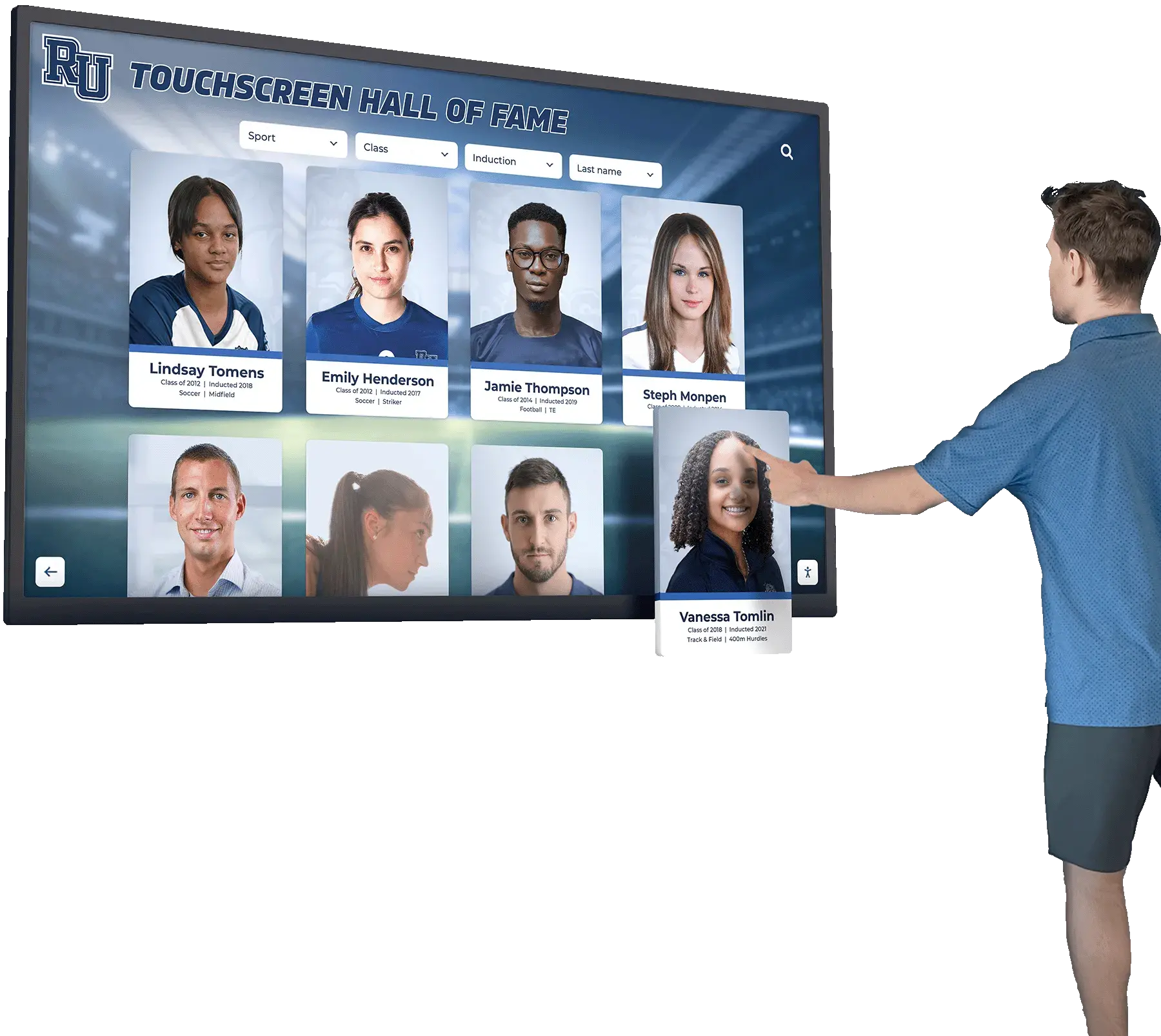
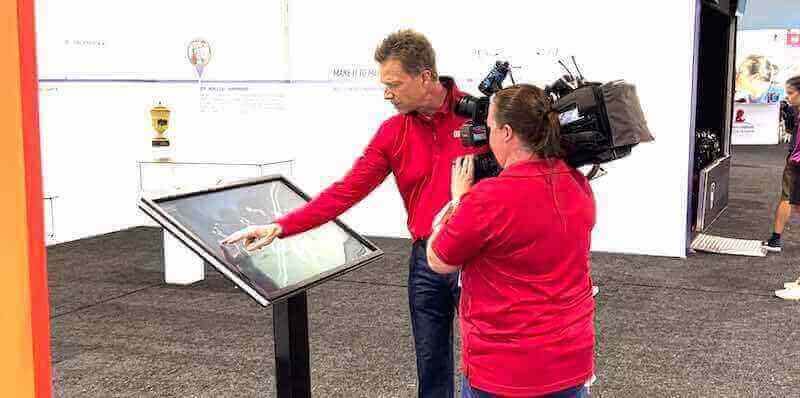
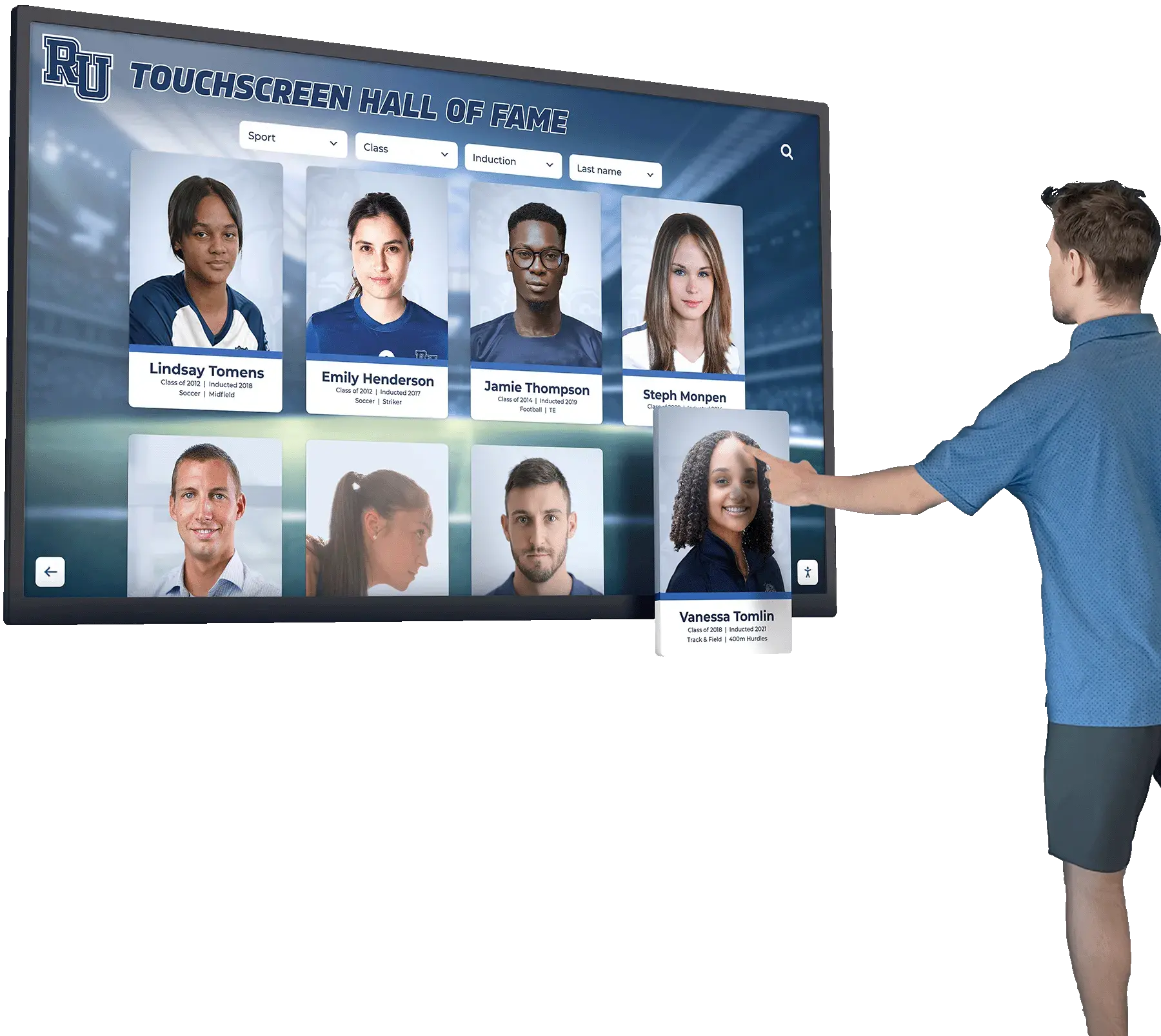
User-friendly interfaces enable students of all technical backgrounds to explore intramural recognition content independently
This storytelling depth creates emotional engagement with intramural heritage—helping current students understand program traditions they’re joining while preserving memories that championship teams cherish for decades after graduation.
Year-Round Visibility and Accessibility
Physical trophy presentations at end-of-season events provide momentary recognition that disappears after brief ceremonies. Digital displays create permanent, accessible celebration including lobby installations where students encounter recognition daily during facility visits, web-based platforms enabling worldwide access from any device, mobile-optimized interfaces functioning on smartphones during campus tours, and social sharing features allowing students to distribute their championship recognition across personal networks.
A student who won an intramural basketball championship as a freshman can still find their team profile as a senior, share it with family during graduation weekend, and revisit the achievement decades later as an alumnus remembering their college experience—creating lasting connections to recreational communities that shaped their university years.
Dynamic Information Hub for Program Communication
Beyond recognition, touchscreen displays serve as powerful communication tools addressing operational challenges facing recreation departments managing complex program logistics.
Signup and Registration Information
Digital displays prominently feature essential program information including upcoming sport leagues and registration deadlines, participation requirements and eligibility details, team size specifications and roster limits, registration fee information and payment instructions, and direct links or QR codes connecting students to registration portals.
When students visiting recreation centers encounter current signup information on prominent displays, registration increases because information reaches them during moments when they’re already thinking about recreational participation—converting casual interest into concrete registration actions more effectively than email announcements buried in crowded inboxes.
Tryout and Captain’s Meeting Details
For sports requiring tryouts or mandatory captain’s meetings, displays communicate critical information including tryout dates, times, and locations, skills or experience requirements when applicable, captain’s meeting schedules and attendance expectations, rule explanation sessions and referee clinics, and important policy updates or format changes.
This real-time information sharing reduces missed deadlines, improves program organization, and ensures participants have information needed for successful experiences—decreasing administrative burden on recreation staff who spend less time answering basic questions already displayed prominently on facility screens.
Live Schedules and Standings
During active seasons, displays showcase dynamic content including daily game schedules with field or court assignments, current league standings and playoff positioning, rainout or cancellation announcements, referee assignments and officiating resources, and countdown timers to championship tournaments.
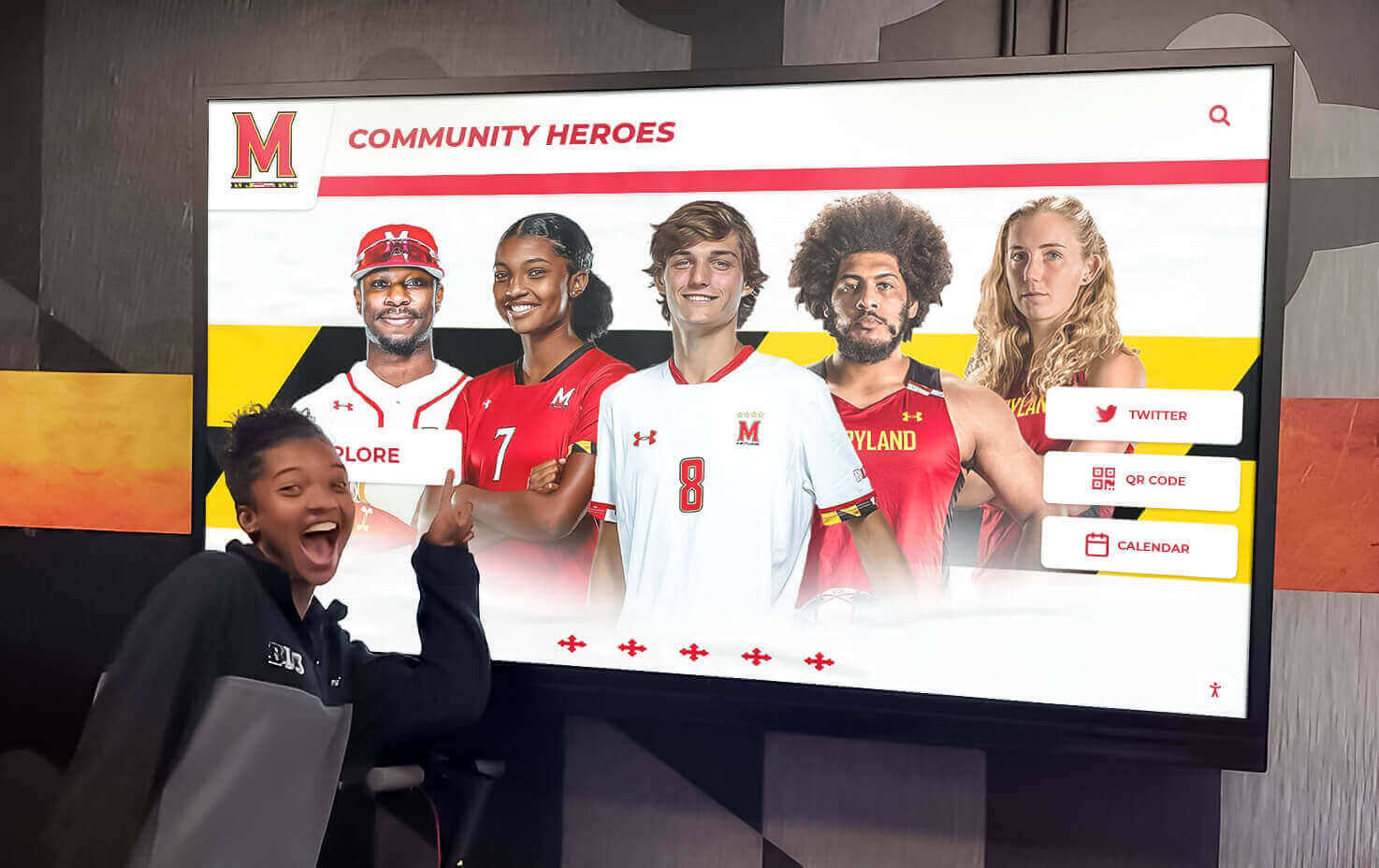
Strategic placement in high-traffic areas ensures information reaches students during daily activities rather than requiring website visits
This operational information solves practical problems—teams know exactly where to go for games, students check standings to see if they made playoffs, and everyone stays informed about schedule changes affecting their participation.
Building Community and Program Culture
Effective digital recognition systems contribute to broader community building goals that extend beyond simple information sharing or achievement celebration.
Showcasing Participation Scale and Diversity
Displays can highlight program statistics demonstrating impact including total annual participation numbers, number of sports offered and teams competing, demographic diversity across participant populations, returning participant rates showing student satisfaction, and year-over-year growth trends demonstrating program success.
When prospective students touring campus see that 12,000 students participate in intramurals annually, they immediately understand that recreational sports represent significant campus culture—making them more likely to envision their own participation and feel excited about the social opportunities recreation provides.
Connecting Students Through Shared Experiences
Digital systems can incorporate interactive features enabling students to discover connections including team alumni features showing where former members are now, multi-sport athlete recognition celebrating students competing across various activities, participation milestone celebrations honoring students reaching significant achievement levels, and interactive maps showing participant hometowns or residence halls creating community connections.
These connection features transform intramural participation from isolated seasonal activities into sustained community engagement—helping students build social networks and sense of belonging that improve retention and overall university satisfaction.
Supporting Broader University Recreation Goals
Recognition displays advance comprehensive recreation department objectives including demonstrating program value to university administrators considering budget allocations, supporting recreation center fundraising campaigns by showcasing program impact, recruiting student employees and officials by highlighting employment opportunities, promoting wellness initiatives and healthy lifestyle programs, and building relationships with campus partners like student affairs, athletics, and development offices.
When recreation directors can point to comprehensive digital recognition systems demonstrating thousands of engaged students, they build compelling cases for continued investment, facility improvements, and expanded programming that benefits entire campus communities.
Approaches to student recognition that build engagement provide frameworks applicable to intramural contexts where systematic celebration strengthens community and participation.
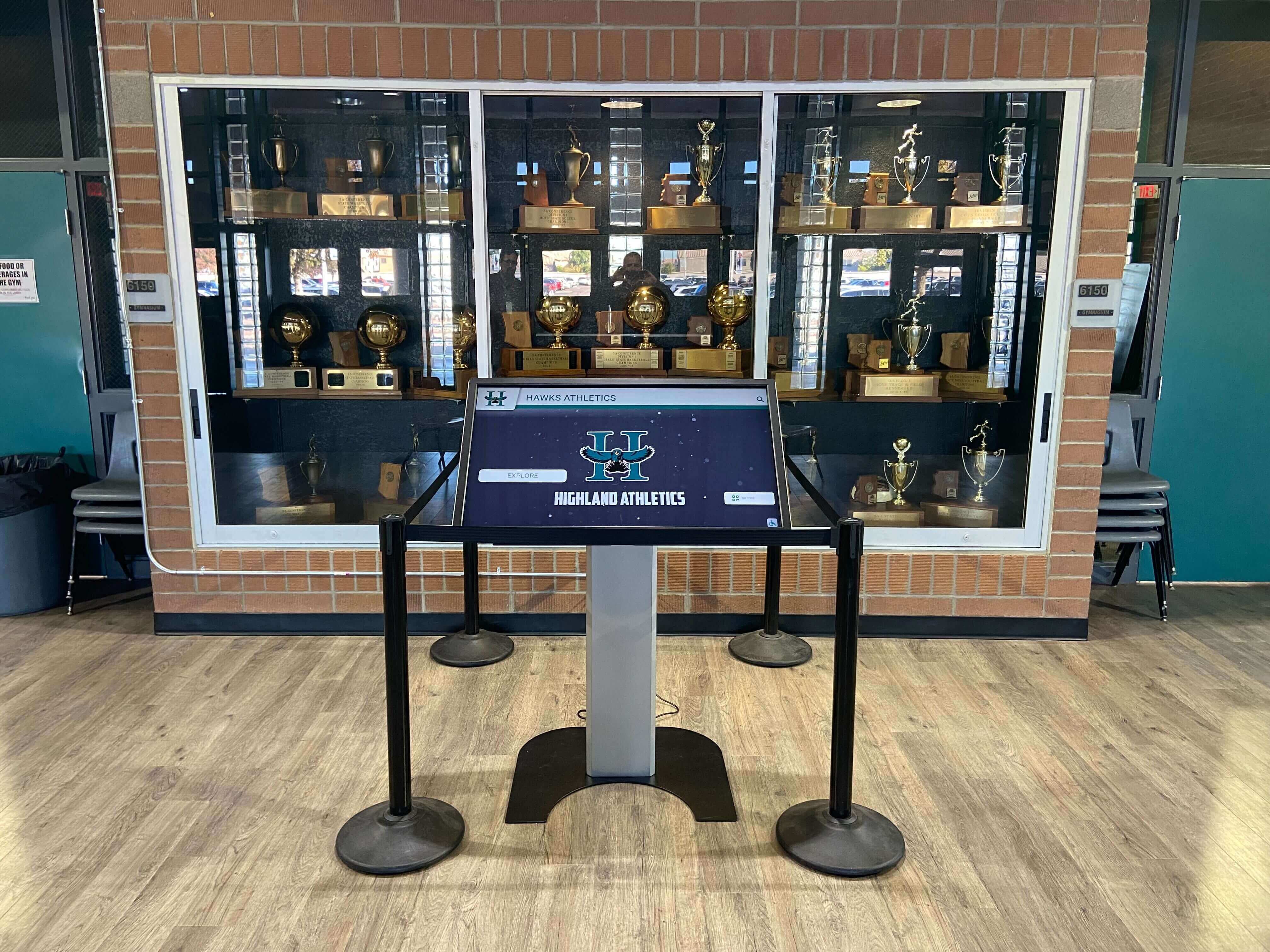
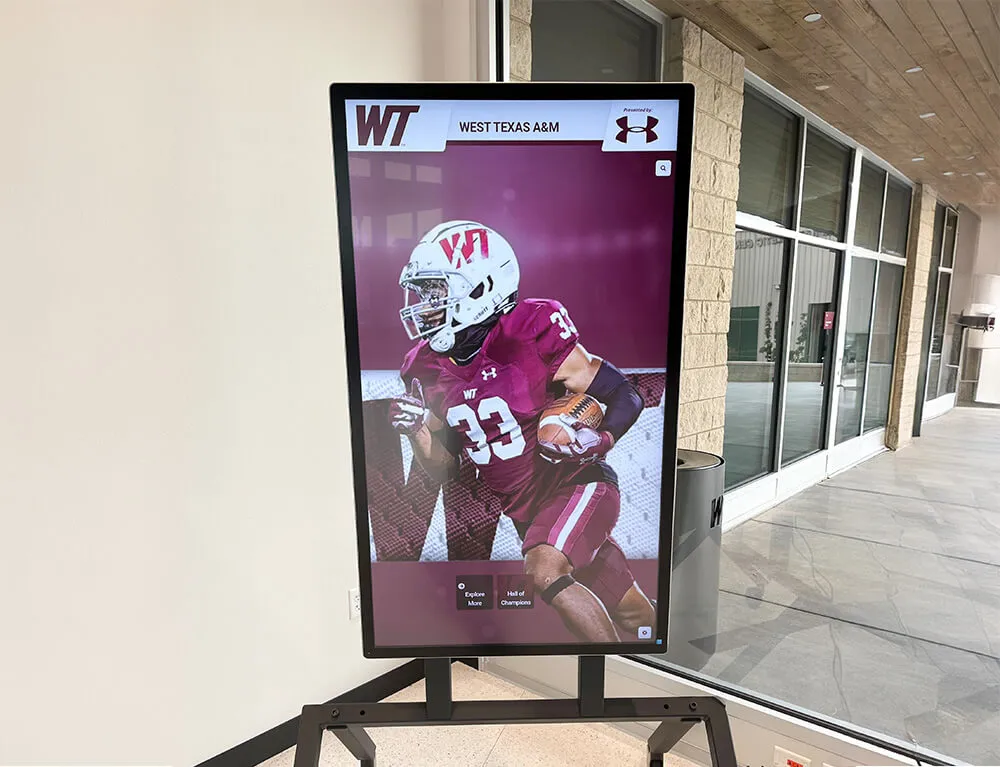
Freestanding kiosks provide flexible installation options for recreation centers sharing facilities or lacking available wall space
Creating Donation Portals for Intramural Sports Fundraising
One of the most innovative applications of digital recognition displays involves integrating fundraising capabilities that enable students, alumni, and supporters to contribute financially to intramural programs—expanding budgets and program offerings beyond base university funding.
The Funding Challenge for University Recreation
Most intramural programs operate on constrained budgets limiting program expansion, equipment purchases, facility improvements, and participation subsidies that would increase accessibility.
Typical Intramural Budget Sources
University recreation departments commonly fund intramural programs through student recreation fees built into tuition or mandatory fees, participant registration fees for individual sports, facility rental income from external groups, and limited university general fund allocations.
These traditional revenue sources cover basic operations but leave little flexibility for innovation, expanded offerings, or reducing financial barriers for low-income students. When recreation departments want to add new sports, improve equipment quality, expand championship events, or provide fee waivers for students facing financial hardship, they need additional revenue beyond standard budget allocations.
The Opportunity for Philanthropic Support
University development offices increasingly recognize that recreation programs generate passionate alumni connections potentially translating into philanthropic support. Students who met their closest college friends through intramural sports, found community through recreational participation, or simply cherish memories of campus recreation often welcome opportunities to support current programs—yet most universities lack convenient giving mechanisms specifically designated for intramural sports.
Digital recognition displays can incorporate fundraising features that solve this problem, making it easy for supporters to contribute while directly connecting donations to visible program improvements and student experiences.
Integrating Donation Capabilities into Recognition Displays
Modern touchscreen platforms enable seamless fundraising integration without compromising primary recognition and information functions.
On-Screen Donation Prompts and QR Codes
Displays can feature strategic fundraising elements including prominent donation calls-to-action on home screens, QR codes linking to mobile-optimized giving pages, specific campaign information about funding goals and intended uses, impact stories showing how previous donations improved programs, and donor recognition features celebrating supporters who contribute.
When students, parents, alumni, or visitors explore intramural recognition content on lobby displays, they encounter convenient opportunities to support programs—capturing giving impulses during moments of positive emotional connection with content rather than requiring them to remember and act later.
Designated Giving Campaigns for Specific Needs
Digital platforms enable targeted campaigns around concrete program needs including equipment funds for new sports or updated gear, championship event sponsorships funding enhanced end-of-season tournaments, scholarship or fee waiver funds increasing accessibility for financial need students, facility improvement campaigns for field lights or court resurfacing, and new program development supporting emerging sport offerings.
Specific campaign goals with clear purposes generate higher response rates than generic “support intramurals” requests because donors see exactly how their contributions create tangible program improvements benefiting current students.
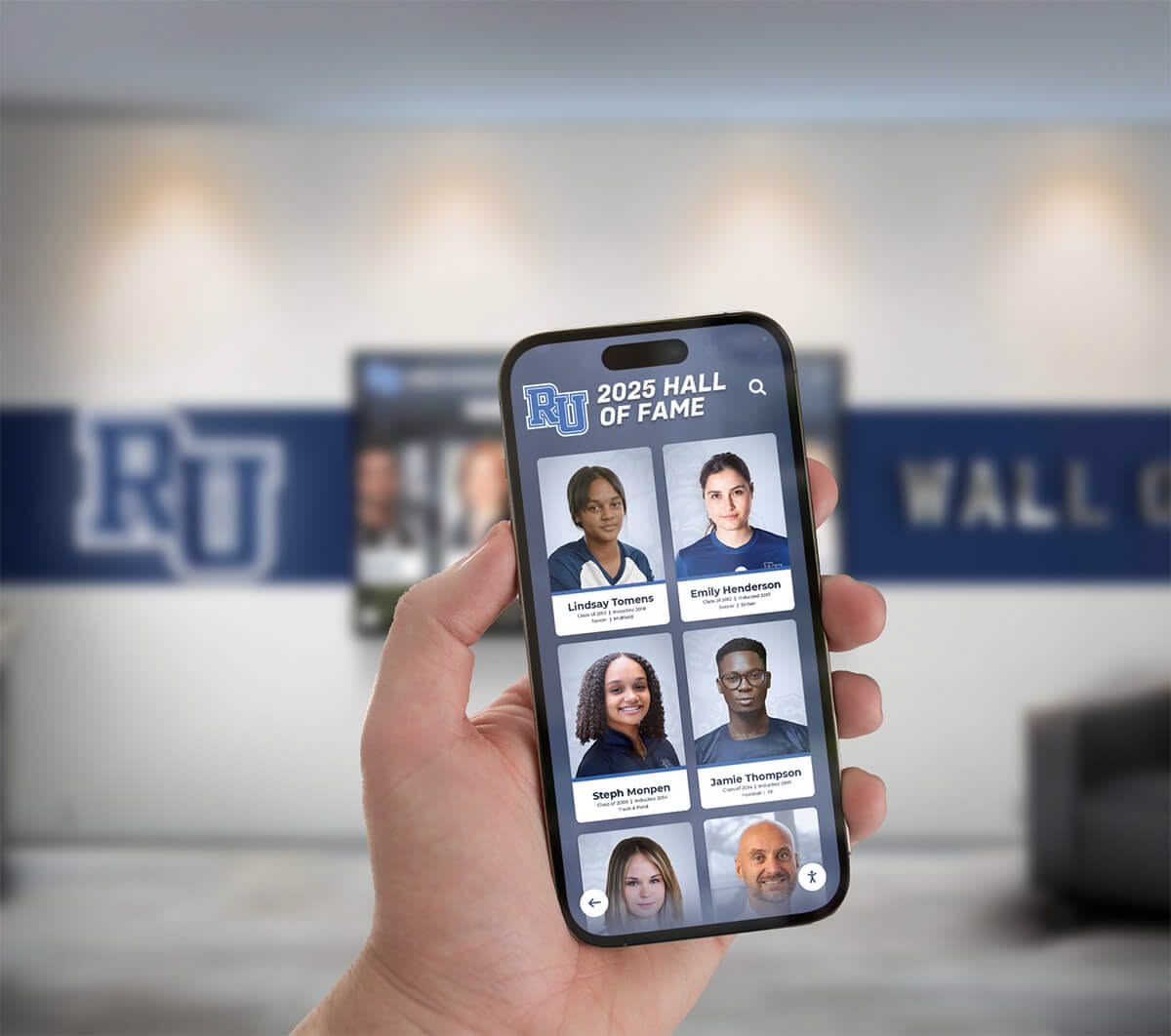
Mobile-optimized donation portals enable giving from any device, extending fundraising reach beyond physical display locations
Donor Recognition and Stewardship
When supporters contribute through digital giving portals, recognition systems can acknowledge their generosity through digital donor walls listing contributors at various giving levels, named sponsorships for specific sports or events, legacy profiles celebrating major donors, impact reports showing cumulative giving effects, and personalized thank-you messages from students benefiting from support.
This recognition demonstrates stewardship of philanthropic contributions while encouraging additional giving from donors who see their support publicly acknowledged and clearly connected to program outcomes.
Fundraising Campaign Strategies for Intramural Programs
Successful campaigns require strategic planning beyond simply adding donation buttons to displays.
Alumni Engagement Through Intramural Nostalgia
Target alumni who participated in intramurals during their undergraduate years through email campaigns featuring their specific championship teams, homecoming weekend giving challenges during reunion visits, matching gift opportunities from major donors or university leaders, crowdfunding campaigns with visible progress toward specific goals, and storytelling content connecting historical program moments to current student experiences.
Alumni who receive communications featuring their own intramural championship photos from displays respond with higher engagement and giving rates than generic recreation appeals—demonstrating the value of comprehensive historical content that creates emotional connections decades after graduation.
Parent and Family Giving
Parents of current students represent another promising donor constituency including family weekend giving campaigns when parents visit campus, parent communication featuring their student’s participation or achievements, matching opportunities timed to encourage participation, specific appeals for accessibility funds helping all students participate, and thank-you events recognizing parent supporters during campus visits.
When parents see their children actively participating in intramurals, they understand program value and often welcome opportunities to support expanded offerings, improved facilities, or scholarships helping students who couldn’t otherwise afford participation fees.
Corporate and Community Partnership Development
Local businesses and corporate partners may support intramural programs through sport-specific sponsorships with naming rights and logo placement, equipment donations supplying balls, jerseys, or gear, facility improvement partnerships funding capital projects, championship event sponsorships providing enhanced end-of-season experiences, and employee matching gift programs amplifying individual contributions.
Corporate partners receive visibility through display recognition, marketing to valuable college student demographics, and positive community relationships—creating mutually beneficial arrangements supporting program growth while providing sponsors with meaningful campus connections.
Resources on digital donor recognition strategies provide comprehensive frameworks applicable to university recreation fundraising contexts.
Implementation Strategies for Power 4 Universities
Successful digital recognition projects require strategic planning addressing technical, organizational, and content development dimensions specific to large university contexts.
Needs Assessment and Goal Definition
Begin with systematic evaluation of current intramural recognition and communication practices identifying specific problems digital displays should solve.
Stakeholder Input Gathering
Survey diverse constituencies about recognition needs and priorities including current intramural participants about desired recognition and information, recreation department staff about operational communication challenges, university administrators about program visibility and value demonstration, alumni about their interest in staying connected to intramural programs, and prospective students about information they seek during campus tours.
This input ensures digital systems address actual stakeholder needs rather than implementing technology without clear purpose or audience understanding.
Objective Prioritization
Clarify what recognition systems should primarily accomplish including celebrating championship teams and participants comprehensively, communicating program information reducing administrative burden, building intramural community and campus culture, supporting recreation center fundraising campaigns, demonstrating program value to university leadership, or enhancing recruiting by showcasing recreational opportunities.
Clear objectives guide feature prioritization, content development focus, and success measurement—ensuring investments deliver outcomes justifying costs rather than deploying impressive technology without measurable institutional benefit.
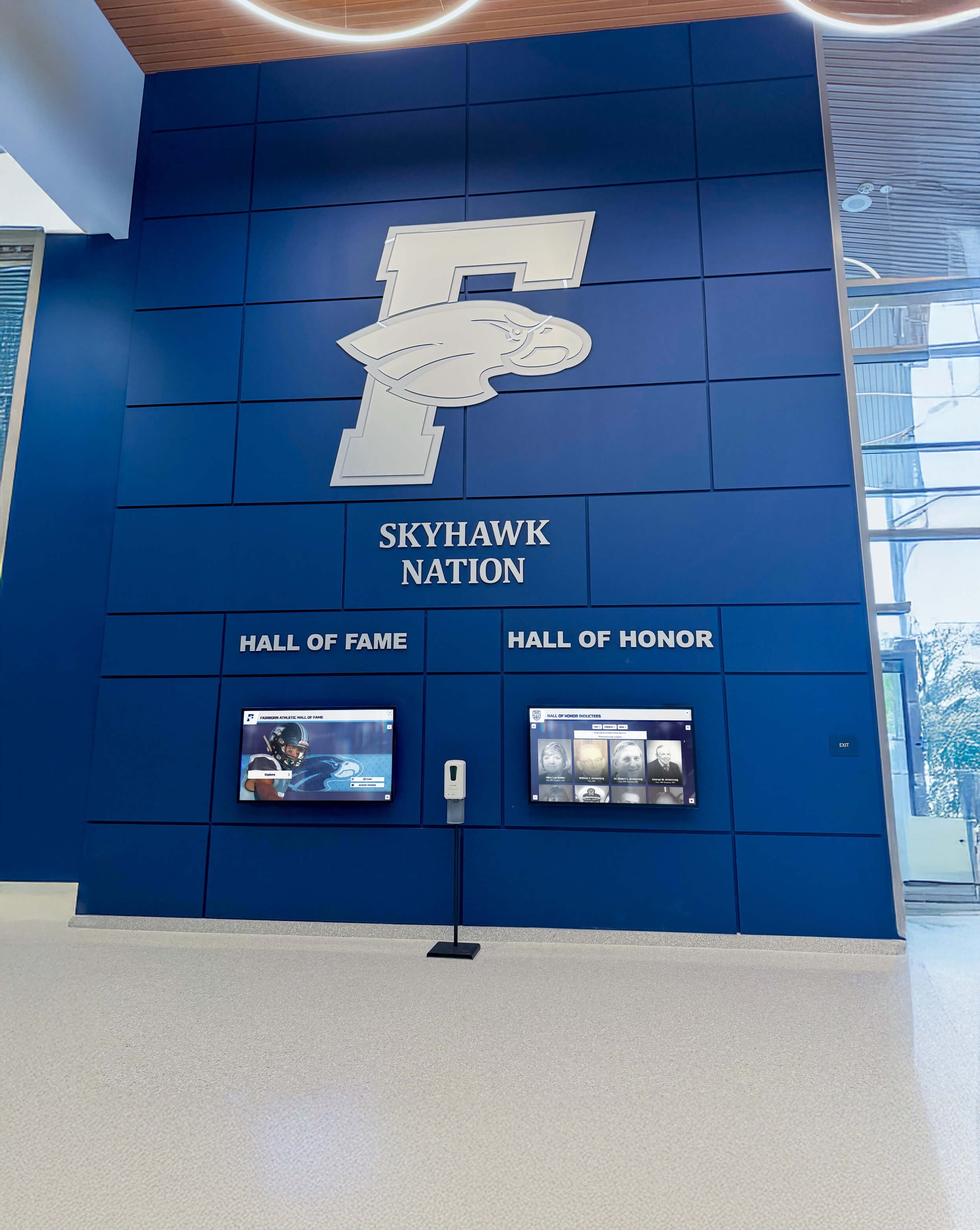
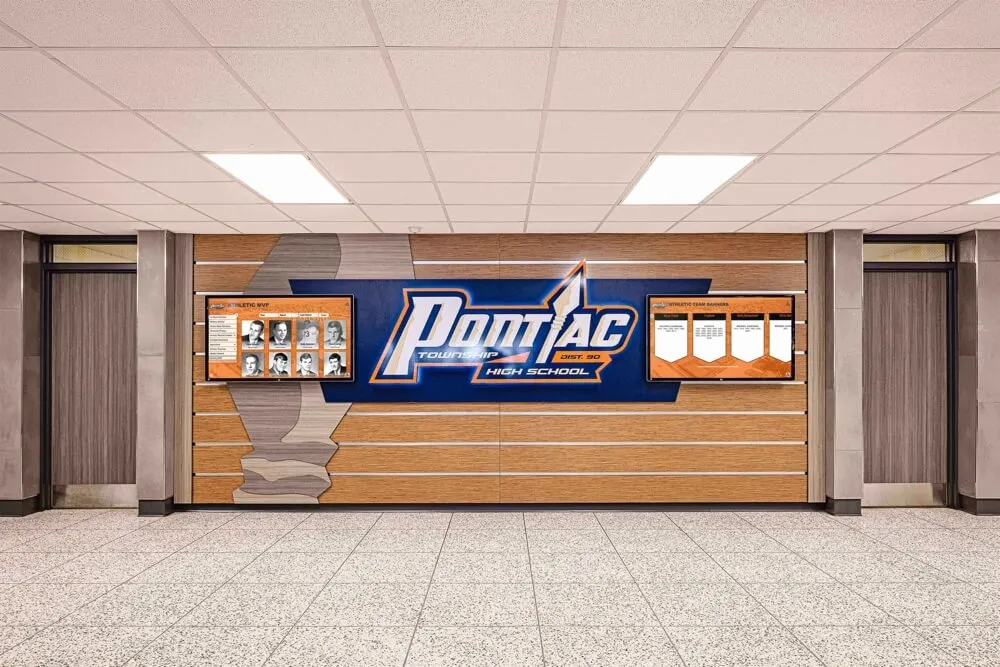
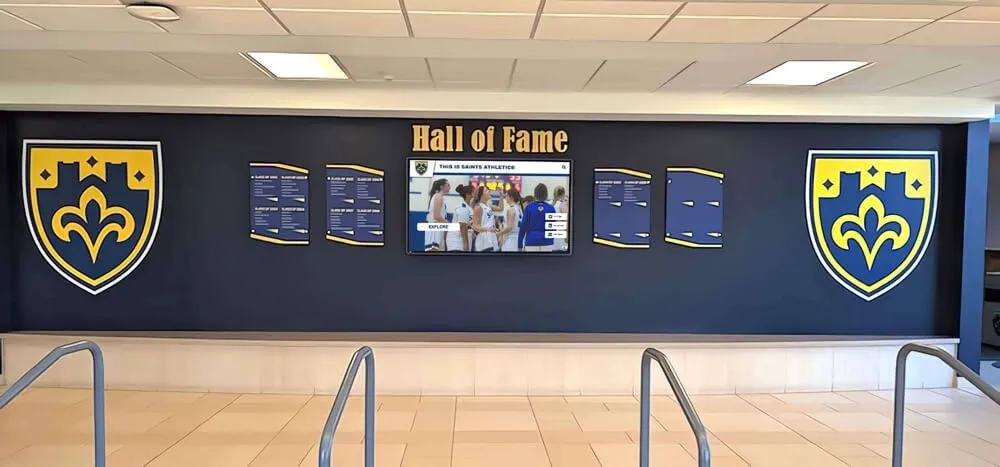
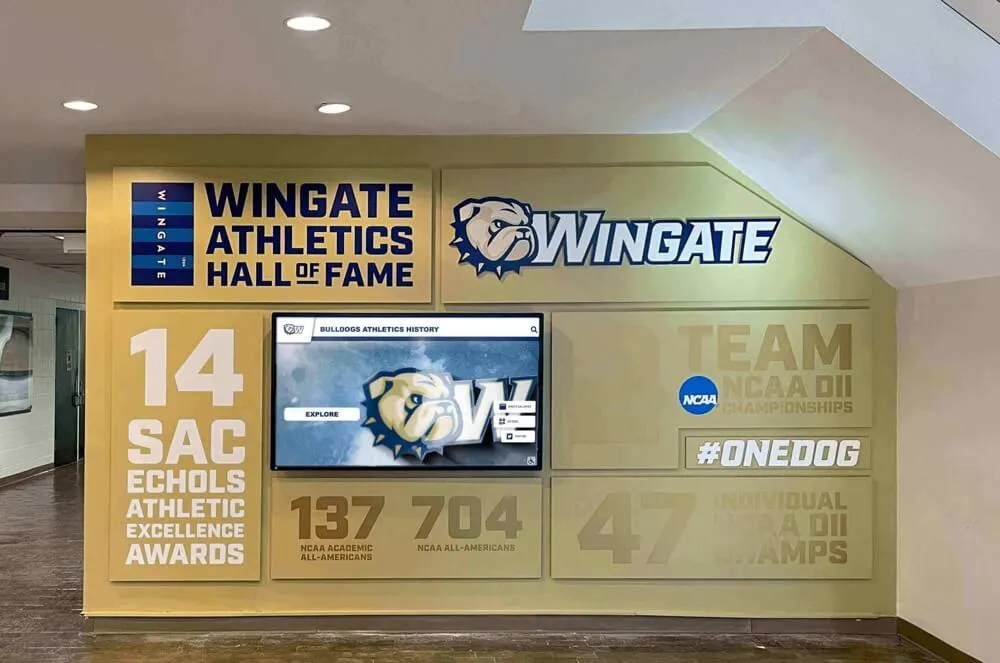
Branded installations reflecting university colors and identity create professional recognition environments appropriate for celebrating student achievement
Budget Planning and Funding Approaches
Power 4 recreation departments should plan comprehensive budgets while exploring creative funding that aligns with university financial processes.
Total Cost Understanding
Complete digital recognition implementation typically includes initial platform setup and customization at $3,000-8,000, commercial-grade touchscreen displays at $4,000-10,000 per location, professional installation and mounting at $1,000-2,500 per display, historical content development at $3,000-10,000 depending on depth, and annual platform licensing at $1,500-4,000 for ongoing access and support.
Total initial investments commonly range $15,000-40,000 for comprehensive installations, with ongoing annual costs of $2,000-5,000 for platform operation and content updates.
University Funding Mechanisms
Power 4 institutions typically fund recreation technology through student recreation fee allocations approved through shared governance, recreation center capital improvement budgets, technology infrastructure funds from IT partnerships, fundraising campaigns through recreation foundations or departments, and phased implementation spreading costs across multiple fiscal years.
When proposing investments, demonstrate return on investment through increased student engagement, operational efficiency improvements, fundraising potential, and enhanced university recruiting and retention outcomes.
Platform Selection and Vendor Evaluation
Not all digital recognition vendors understand unique requirements of university recreation contexts—evaluate carefully using criteria specific to intramural applications.
Critical Platform Capabilities
Prioritize systems offering unlimited content capacity accommodating thousands of participants, simple content management accessible to recreation staff without technical backgrounds, flexible organizational structures accommodating diverse sports and divisions, real-time schedule and information integration, mobile-responsive web access extending reach beyond physical displays, analytics demonstrating engagement and value, fundraising integration capabilities when desired, and proven experience with university recreation departments at comparable scale.
Vendor Evaluation Process
Thorough selection typically includes requesting demonstrations with actual intramural content, speaking with reference universities about implementation experiences, reviewing total cost including all initial and recurring fees, piloting systems before full commitment when possible, and confirming data security and accessibility compliance.
Quality vendors like Rocket Alumni Solutions understand university recreation departments need reliable, sustainable solutions—providing comprehensive support ensuring recognition enhances programs without creating ongoing operational burdens or requiring specialized technical expertise for daily content management.
Content Development and Historical Recovery
Recognition platform value depends on comprehensive, engaging content celebrating complete intramural program heritage.
Current Content Collection
Begin by systematically documenting recent championships including team rosters with participant names, championship photos and celebration images, season records and playoff results, participant testimonials when available, and statistical information when tracked.
Starting with 2-3 most recent academic years provides immediate value while historical expansion continues at manageable pace.
Historical Research Projects
For programs wanting comprehensive historical content, systematic research includes reviewing recreation department archives and championship records, digitizing printed schedules and results from past decades, searching university newspaper archives for intramural coverage, conducting oral history interviews with longtime staff and participants, and collecting photos from institutional archives and personal collections.
Many universities discover that historical intramural content creates valuable connections with alumni who participated decades ago but feel forgotten because no record of their participation survived—making historical recovery worthwhile investments in community building and potential fundraising audiences.
Ongoing Content Management
Sustainable recognition requires assigning clear responsibilities including designated staff members managing championship updates after each season, student employees assisting with photo collection and data entry, sport supervisors providing team information and rosters, and content review processes ensuring accuracy and appropriate privacy protections.
When content management becomes integrated into regular operational workflows rather than requiring separate projects, recognition remains current and comprehensive across academic years.
Understanding digital sports record management provides frameworks applicable to university intramural contexts requiring systematic content organization and preservation.
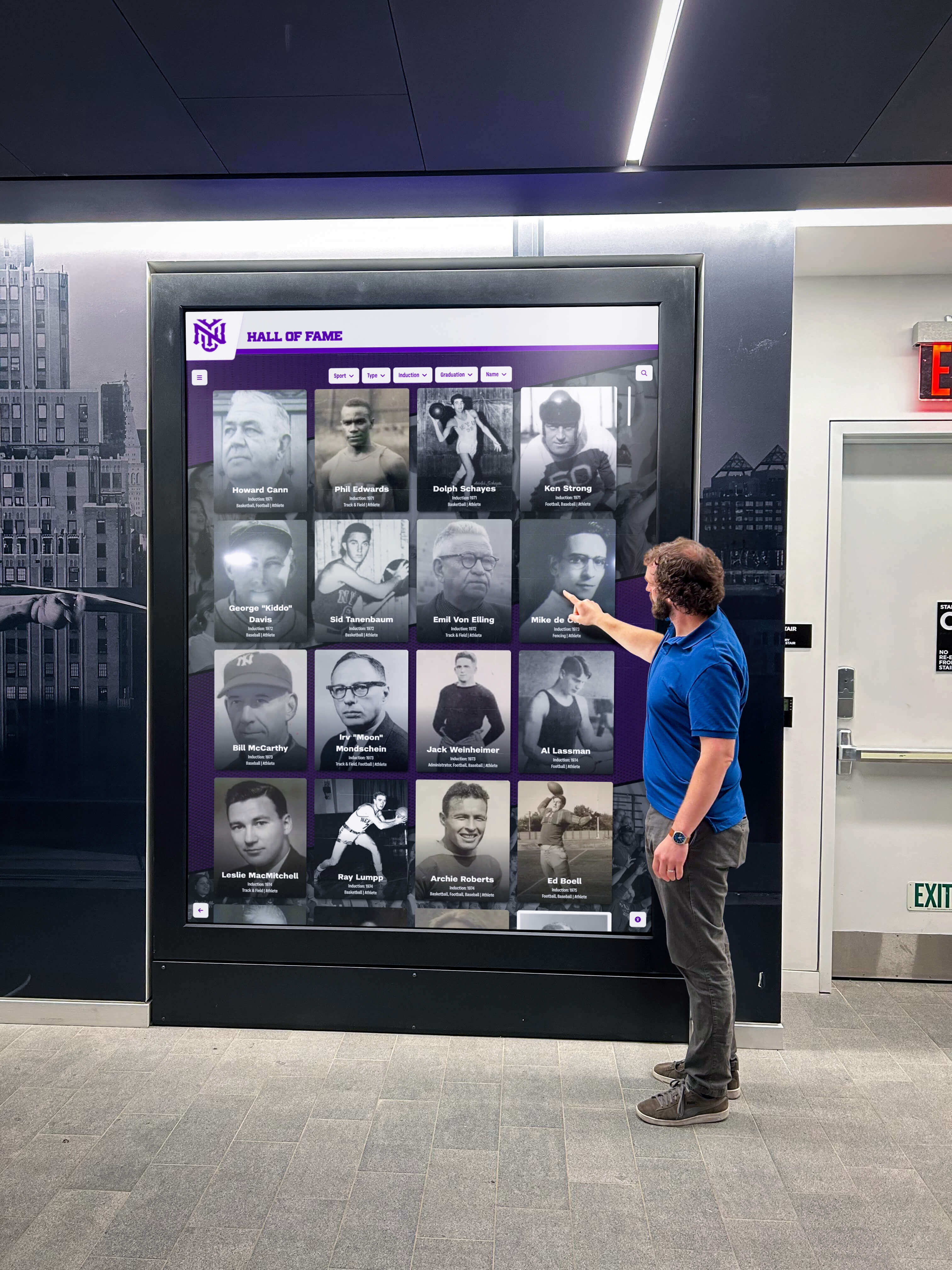
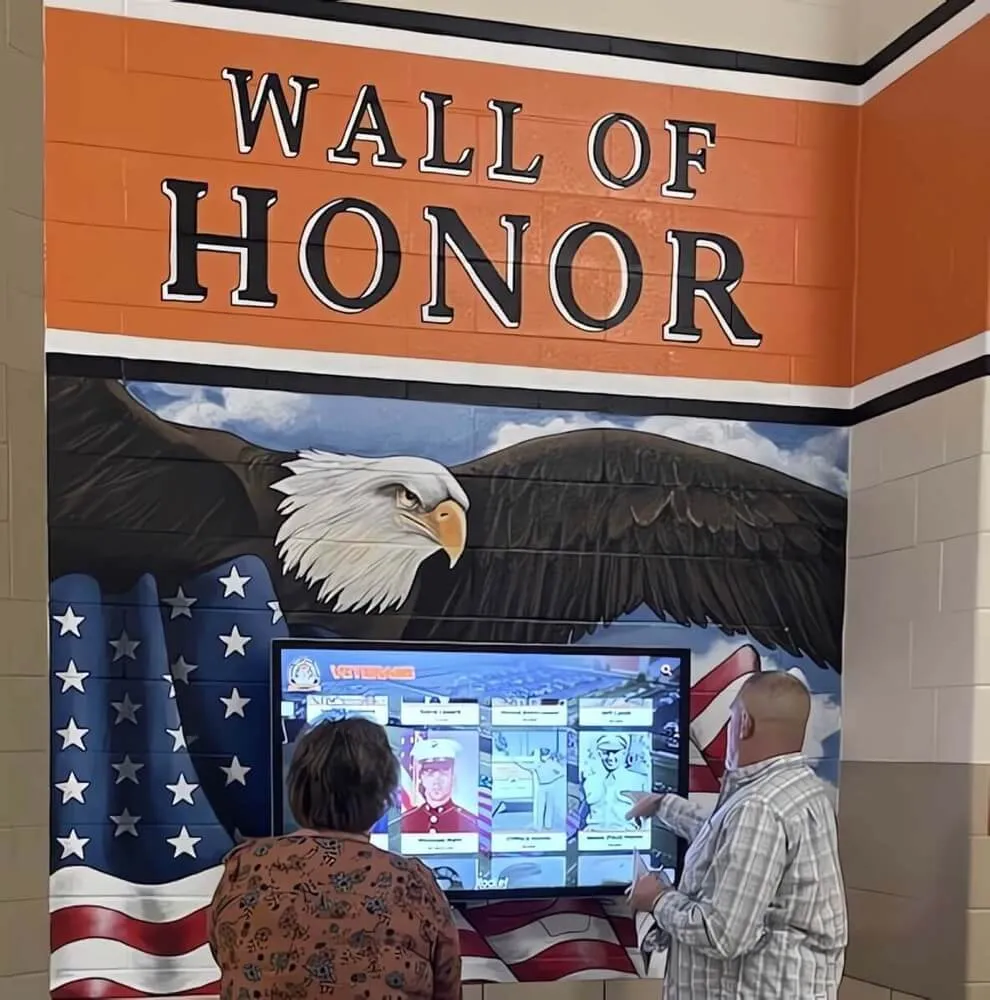
Intuitive touch interfaces encourage exploration by students, parents, and visitors of all ages and technical abilities
Showcasing Information Beyond Recognition: Operational Content Strategies
While championship celebration provides primary value, maximizing display utility requires incorporating operational information serving practical student and staff needs.
Sport-Specific Pages and Program Details
Organize content around individual sports providing comprehensive information students need for participation decisions.
Sport Overview Pages
Each intramural offering should have dedicated content including sport rules and format explanations, team size requirements and roster specifications, competitive divisions available (A/B/C leagues, co-rec options), typical season length and time commitment expectations, registration fees and deadline information, and skill level descriptions helping students choose appropriate divisions.
When students considering joining basketball intramurals can explore complete information on recognition displays, they make more informed participation decisions—reducing mismatched skill level placements and improving overall satisfaction with intramural experiences.
Registration and Eligibility Information
Display essential participation requirements including student enrollment requirements and eligibility verification, team formation guidelines and free agent options, registration process walkthroughs with step-by-step instructions, payment information and fee waiver application processes, important deadlines and penalty policies for late registration, and participation limits if students can’t play multiple sports simultaneously.
This information accessibility reduces repetitive staff questions while ensuring students understand requirements—decreasing confusion and improving program organization.
Live Schedule Integration and Game Information
During active seasons, displays should showcase real-time schedule information keeping participants informed.
Daily Game Schedules
Feature current day schedules including all games organized by time slot, facility locations with field or court assignments, team matchups and division information, referee assignments when applicable, and weather status or cancellation notifications.
When teams can check displays before games confirming locations and times, they arrive prepared—reducing forfeits from confusion and improving overall participant satisfaction with program organization.
League Standings and Playoff Information
Throughout seasons, showcase competitive standings including current win-loss records for all teams, playoff positioning and qualification status, tiebreaker information when relevant, upcoming playoff schedules as determined, and championship event details and registration.
Students check standings regularly to track team progress—making displays valuable engagement tools that keep participants connected to competitions throughout seasons rather than only during their own games.
Safety, Wellness, and Sportsmanship Content
Use displays to communicate important program values and participant expectations beyond pure competition.
Sportsmanship Expectations and Recognition
Highlight positive behavior standards including code of conduct expectations for participants and spectators, sportsmanship recognition programs celebrating positive behavior, disciplinary information and ejection policies, respectful competition messaging and anti-harassment policies, and testimonials from participants about positive experiences and inclusive community.
Prominent sportsmanship messaging creates cultures where students understand that intramural participation emphasizes community building and personal development alongside competition—reducing conflicts while reinforcing recreation department values.
Injury Prevention and Wellness Resources
Feature health and safety information including proper warm-up and stretching recommendations, common injury prevention strategies for specific sports, recreation center athletic training services and hours, campus health center resources and contact information, and broader wellness programs available through recreation departments.
This wellness content demonstrates comprehensive student support extending beyond simple sport coordination—positioning recreation departments as partners in holistic student health and development.
Approaches to student recognition building community provide frameworks applicable to intramural contexts where systematic celebration and communication strengthen participation and culture.
Measuring Success and Demonstrating Value
Regular assessment ensures digital recognition delivers intended benefits while providing data justifying continued investment and potential expansion.
Quantitative Engagement Metrics
Digital platforms provide analytics revealing how students and visitors interact with intramural content.
Usage Statistics and Patterns
Track recognition engagement through total interactions and viewing sessions, average time spent exploring content, most-viewed pages revealing popular sports or content types, search patterns showing what information students seek, peak usage times informing content update strategies, and return visitor rates indicating ongoing engagement.
These insights demonstrate platform value to university administrators while informing continuous improvement based on actual usage rather than assumptions about student preferences.

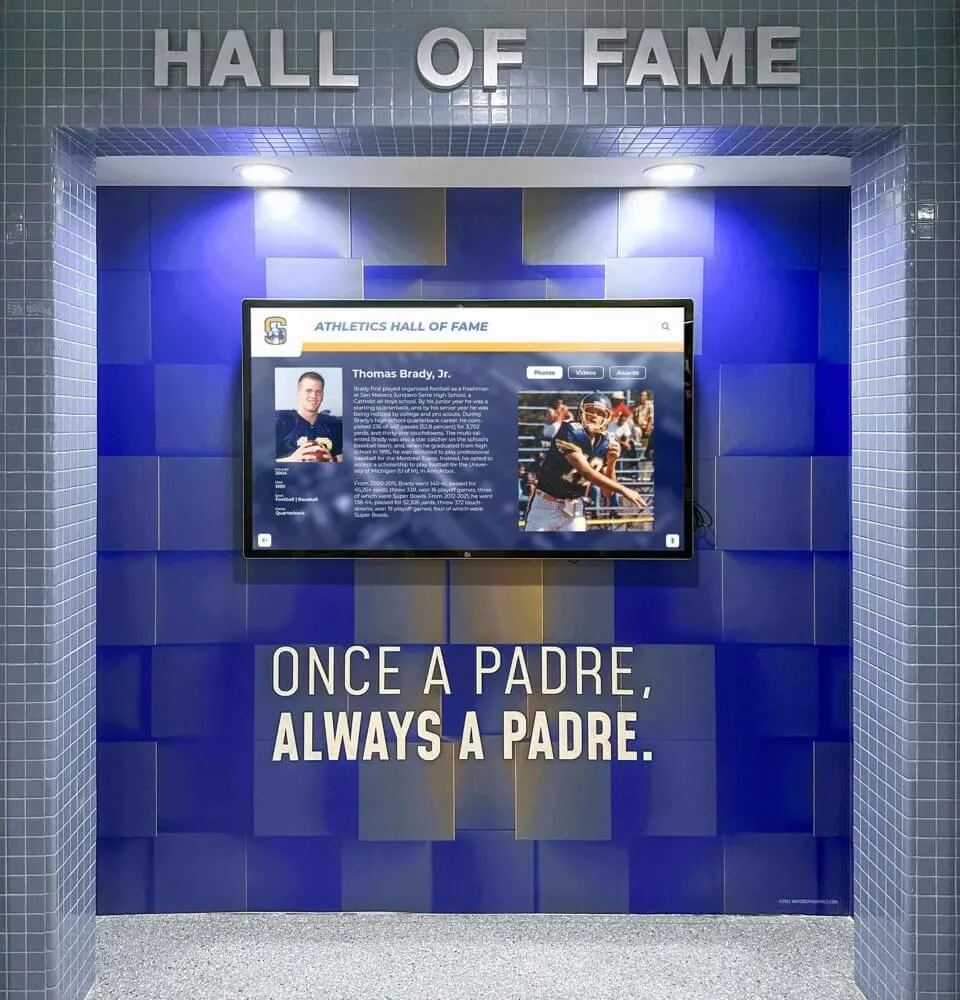
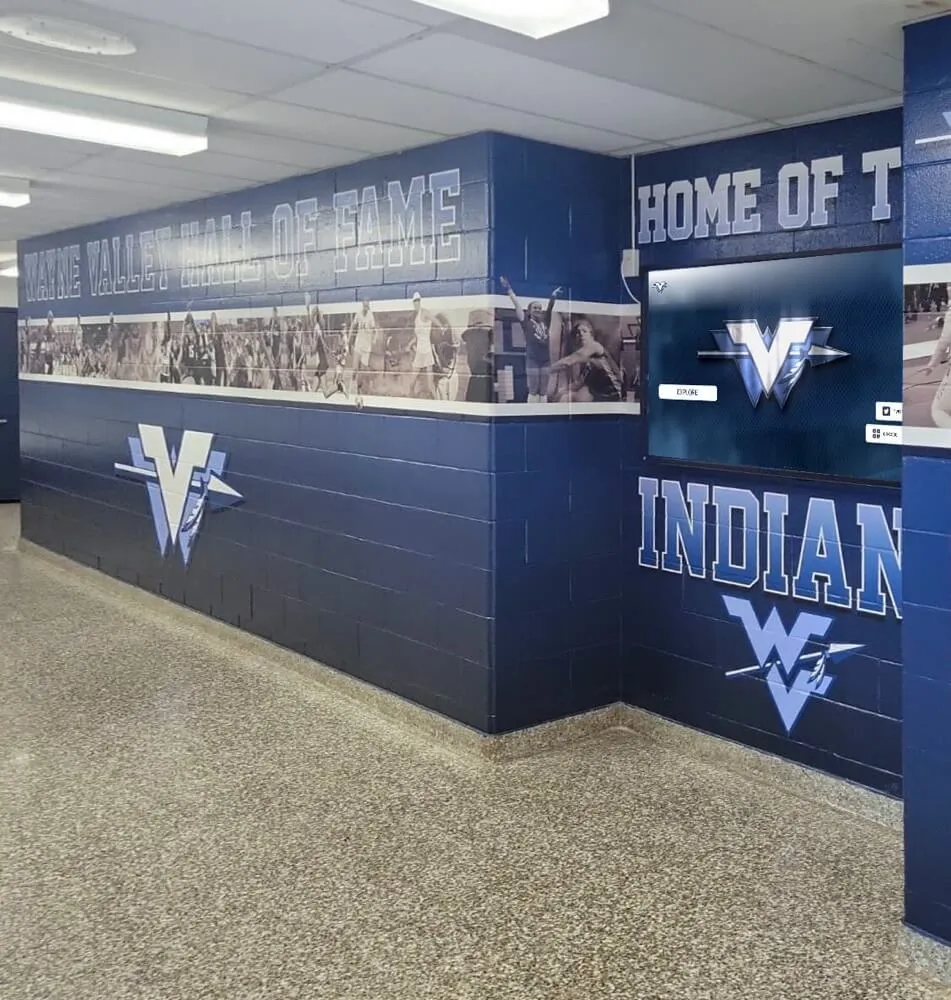
Comprehensive installations combining murals and digital displays create impressive spaces celebrating complete intramural program heritage
Information Effectiveness Assessment
Evaluate whether operational content serves intended purposes including registration deadline awareness measured through signup timing, schedule access reducing staff questions about game times and locations, standings check frequency during playoff seasons, donation portal conversion rates for fundraising applications, and QR code scan rates connecting displays to detailed online resources.
When data shows students actively use operational information, recreation departments justify display investments through demonstrated utility beyond simple recognition—showing systems deliver practical value addressing real student and staff needs.
Qualitative Success Indicators
Beyond quantitative metrics, gather stakeholder feedback revealing impact that numbers cannot fully capture.
Participant Satisfaction Surveys
Regularly survey intramural participants about recognition satisfaction including perceived comprehensiveness and fairness, emotional impact and meaning of championship celebration, ease of finding schedule and registration information, suggestions for improvements and additional features, and overall contribution to sense of community and belonging.
Direct feedback ensures recognition serves actual student needs rather than simply implementing technology without ongoing assessment of effectiveness and community impact.
Operational Impact Assessment
Evaluate whether displays support broader recreation goals including increased intramural registration and participation rates, improved information accessibility reducing staff administrative burden, enhanced university recruiting when showcased during campus tours, stronger alumni engagement and connection to programs, successful fundraising campaigns when donation integration exists, and elevated perception of recreation department professionalism and program quality.
These outcome assessments demonstrate recognition value beyond simple celebration—showing how displays advance comprehensive departmental objectives worthy of continued investment and potential expansion to additional facility locations.
Case Study: Texas A&M Digital Wall of Champions
While we avoid invented case studies, examining documented implementations demonstrates real-world applications and outcomes.
Implementation Overview
According to Texas A&M Rec Sports, the university launched a digital “Wall of Champions” in their Recreation Center lobby and online platform. The system displays intramural championships and sport club achievements, allowing visitors to scroll through photos, highlights, and memories from winning teams and successful sport clubs.
Key Features and Functionality
The Texas A&M implementation includes physical lobby installations providing prominent visibility in high-traffic recreation center areas, online access extending recognition beyond campus to worldwide audiences, photo galleries preserving championship moments and team celebrations, champion team rosters documenting participant names and achievements, sport club integration celebrating both intramural and club sport successes, and student upload capabilities enabling participants to contribute their own photos and memories.
Community Impact
The Wall of Champions creates lasting recognition for intramural participants who previously received only temporary celebration, provides prospective students with tangible evidence of vibrant recreational culture during campus tours, enables alumni to revisit their championship teams and recreational memories, demonstrates recreation department professionalism and commitment to student experience, and preserves institutional heritage documenting decades of intramural traditions.
This documented example demonstrates that comprehensive digital recognition represents achievable reality for Power 4 universities rather than theoretical possibility—showing how programs serving tens of thousands of students implement practical systems celebrating achievement while serving operational needs.
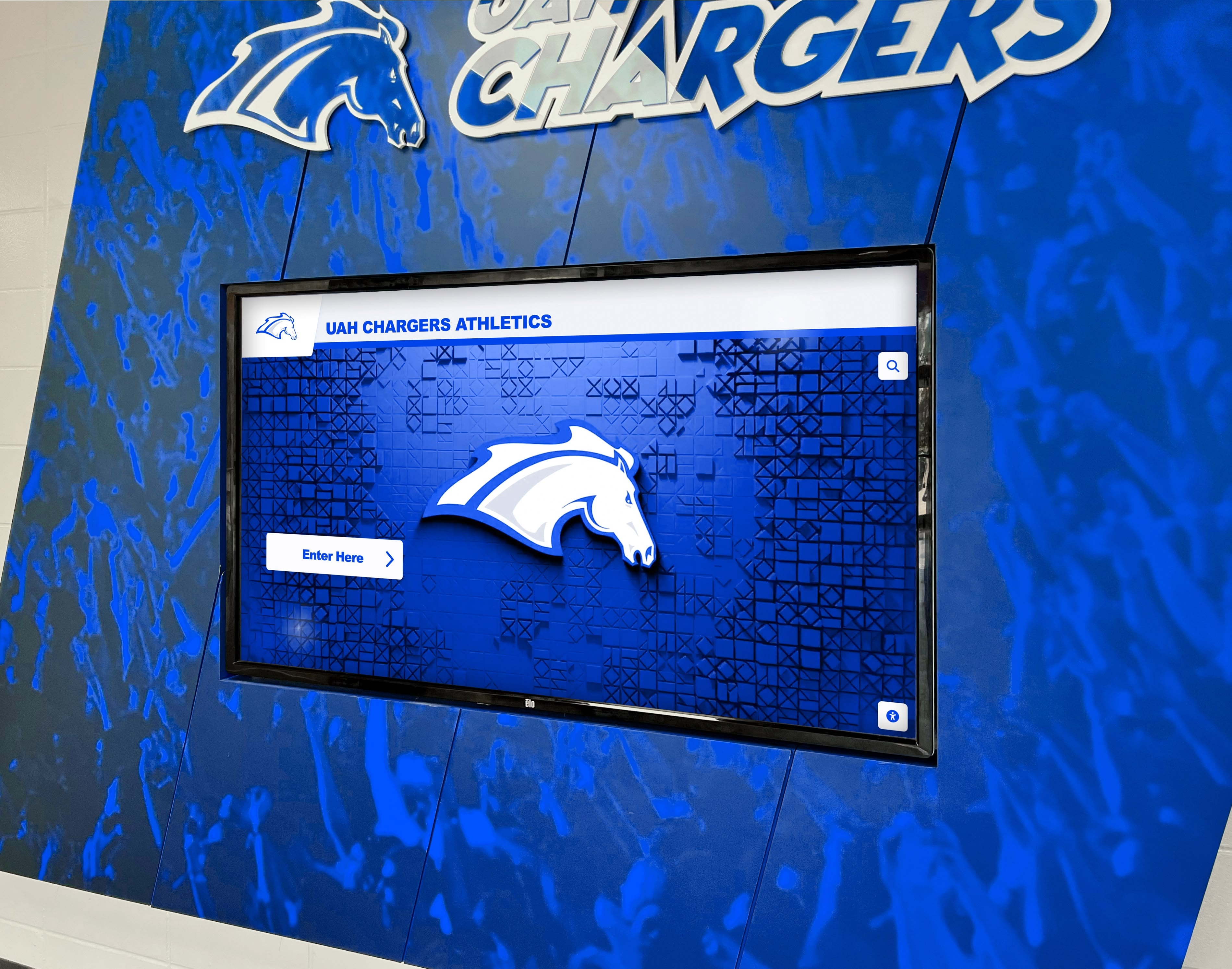
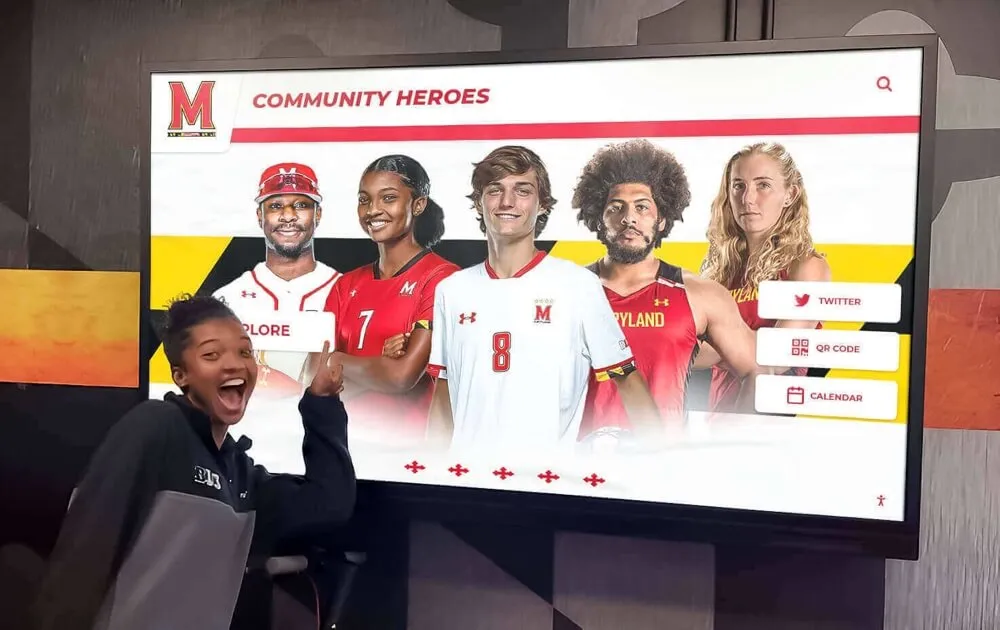
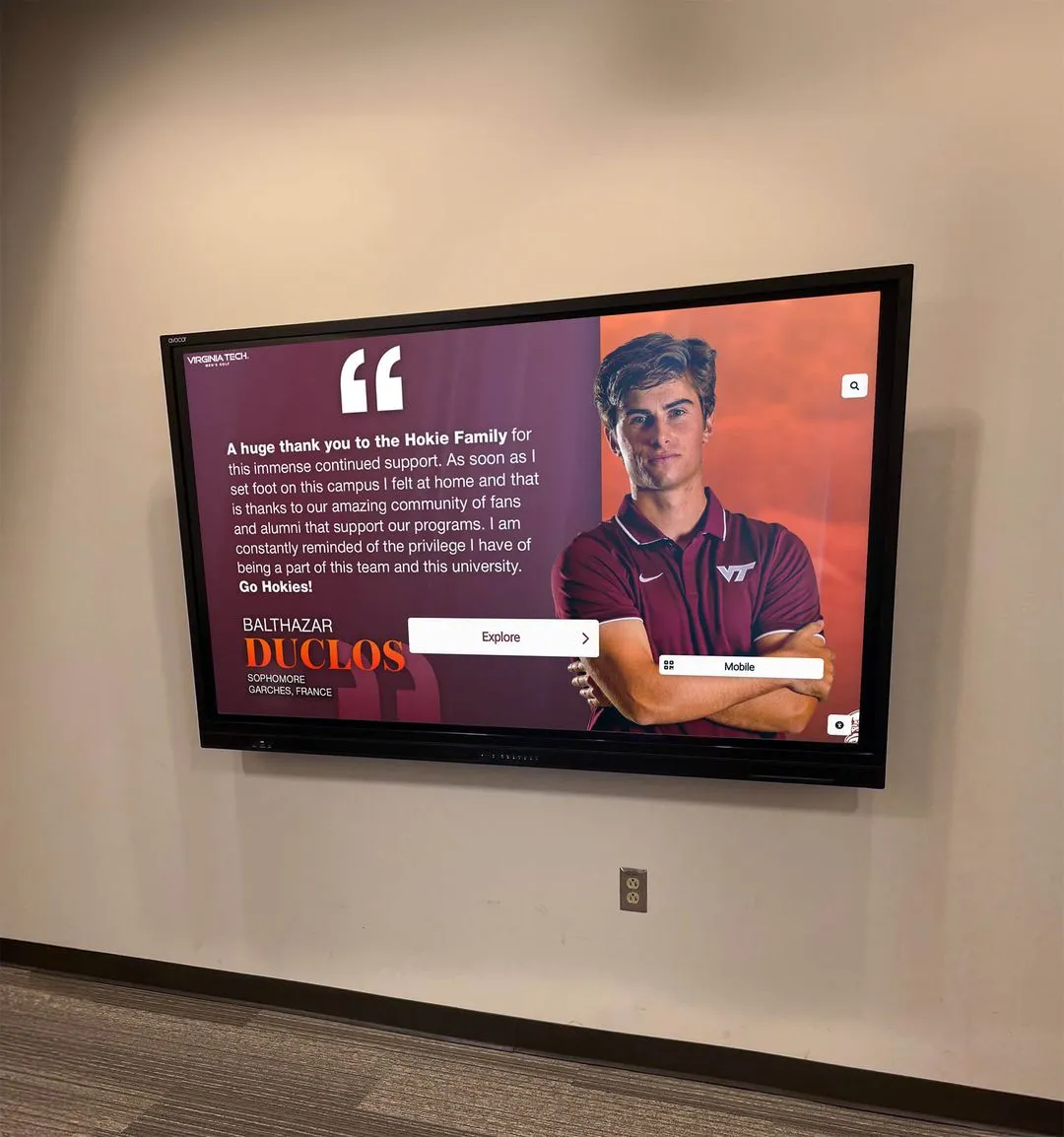
University-branded displays create cohesive visual environments that reinforce institutional identity while celebrating student achievement
Future Trends in University Recreation Recognition Technology
Emerging capabilities will create new opportunities for enhanced intramural celebration and program management.
Enhanced Multimedia and Interactive Features
Next-generation platforms will incorporate video integration showing championship game highlights and memorable plays, livestream connections linking current games to historical context, social media feed integration displaying real-time participant posts, gamification elements rewarding exploration and engagement, and augmented reality features overlaying digital information during facility tours.
These multimedia enhancements create richer, more engaging experiences helping students connect with intramural culture more deeply than traditional static displays allow.
Artificial Intelligence Applications
AI capabilities promise significant operational improvements including automated content generation creating team profiles from roster data, intelligent search providing conversational interfaces for information discovery, personalized recommendations suggesting sports based on interests and schedules, automatic photo tagging and organization reducing manual content work, and predictive analytics identifying participation trends and program opportunities.
These AI features reduce staff administrative burden while improving student experiences—making comprehensive recognition sustainable even for massive programs serving 10,000+ participants annually.
Mobile-First Experiences and Campus Integration
Recognition increasingly extends beyond fixed displays to mobile-centric experiences including dedicated recreation apps providing portable access to all intramural content, push notifications celebrating achievements and sharing important deadlines, QR code integration linking physical spaces to digital content, campus-wide display networks showing intramural content across multiple locations, and integration with university student information systems enabling personalized experiences.
Mobile integration ensures recognition and information reach students wherever they are rather than requiring recreation center visits to experience intramural celebration and access essential program details.
Resources on emerging trends in digital recognition provide comprehensive exploration of technologies shaping next-generation university recreation systems.
Conclusion: Transforming Power 4 Intramural Recognition Through Digital Innovation
Power 4 university intramural programs serve thousands of students annually, creating vibrant recreational communities where students build friendships, develop leadership skills, and find belonging beyond academic pressures. When these large-scale programs implement sophisticated digital recognition systems specifically designed for their operational realities, they honor student participation through comprehensive celebration while solving practical communication challenges, creating fundraising opportunities, and demonstrating program value that advances recreation department goals campus-wide.
Transform Your Intramural Sports Recognition
Discover how purpose-built digital recognition platforms enable comprehensive celebration of intramural championships while sharing schedules, managing signups, and creating donation portals. Rocket Alumni Solutions offers systems designed specifically for university recreation departments at Power 4 scale.
Explore University Recreation SolutionsThe evolution from temporary t-shirt recognition and buried email announcements to comprehensive digital recognition represents more than technological advancement—it reflects renewed commitment to honoring every student who participates in intramural sports, regardless of competitive division, athletic ability, or championship success. These systems celebrate inclusive recreational communities while providing practical information tools, fundraising capabilities, and demonstration of program value that recreation departments need to secure continued institutional investment in student wellness and engagement.
Modern recognition platforms provide Power 4 recreation departments with capabilities previously available only through expensive custom development including unlimited recognition capacity celebrating thousands of participants, operational information integration reducing administrative burden, fundraising portals supporting program expansion, web accessibility extending reach beyond campus, and professional presentation quality appropriate for celebrating student achievement. Whether your program serves 5,000 or 15,000 participants annually, fundamental principles remain consistent—every championship team deserves appropriate celebration, recognition strengthens community when implemented thoughtfully, and systematic approaches focusing on comprehensive content and accessible platforms deliver superior results to fragmented traditional methods.
The student discovering their championship team profile when showing parents around campus during family weekend feels pride and connection. The alumnus exploring their intramural achievements decades after graduation maintains emotional bond to university experience. The prospective student touring recreation facilities sees evidence of vibrant campus culture influencing enrollment decisions. And recreation departments implementing sophisticated recognition systems demonstrate tangible commitment to student experience that elevates programs—advancing participation, strengthening community, supporting fundraising, and building institutional recognition of recreational sports as essential components of comprehensive university student life.
Ready to explore recognition solutions for your Power 4 intramural program? Learn about comprehensive university recreation approaches, discover student athlete recognition systems applicable to intramural contexts, and understand interactive celebration strategies that transform recognition from forgotten achievements into permanent celebration connecting generations through shared recreational experiences and campus community building.
Your intramural participants dedicate time to training, competition, and team commitment—often balancing recreational sports with demanding academic schedules and other campus involvements. They deserve recognition celebrating their championships and contributions comprehensively while benefiting from information systems that make participation easier and more rewarding. Digital recognition platforms make this comprehensive celebration achievable, affordable, and sustainable for university recreation departments ready to honor their communities appropriately while advancing operational efficiency and fundraising capabilities that expand program opportunities for all students.