



Pickleball has exploded from niche backyard pastime to America’s fastest-growing sport, with participation surging 158.6% over the past three years according to the Sports & Fitness Industry Association. Schools, community centers, and recreation departments scramble to add courts to meet overwhelming demand—yet many new players and program coordinators struggle with the sport’s unique rule structure that blends elements from tennis, badminton, and table tennis into something distinctly different from all three.
Understanding pickleball rules thoroughly transforms casual recreational play into competitive matches governed by consistent standards, enables schools to launch instructional programs and intramural leagues with confidence, and helps athletic directors structure tournaments that run smoothly without constant referee interventions. The challenge lies not in rule complexity—pickleball scoring and fault regulations prove simpler than tennis once understood—but in the counterintuitive elements that trip up beginners and even experienced racket sport athletes transitioning from other games.
This comprehensive guide breaks down pickleball rules systematically, covering scoring procedures that confuse newcomers, the notorious “kitchen rule” and non-volley zone restrictions, serve mechanics and fault regulations, doubles positioning strategies, and common rule misconceptions that create confusion on courts nationwide. Whether you’re launching a middle school pickleball club, managing a community recreation program, or simply want to play confidently at your local courts, mastering these fundamentals ensures games proceed smoothly and fairly.
The Sports & Fitness Industry Association reports that 8.9 million Americans played pickleball in 2023, with the sport appearing in 44% more U.S. locations than the previous year. Schools successfully implementing pickleball programs report participation rates 30-40% higher than traditional tennis programs due to the sport’s accessibility, shorter learning curve, and social appeal across age groups and athletic abilities.

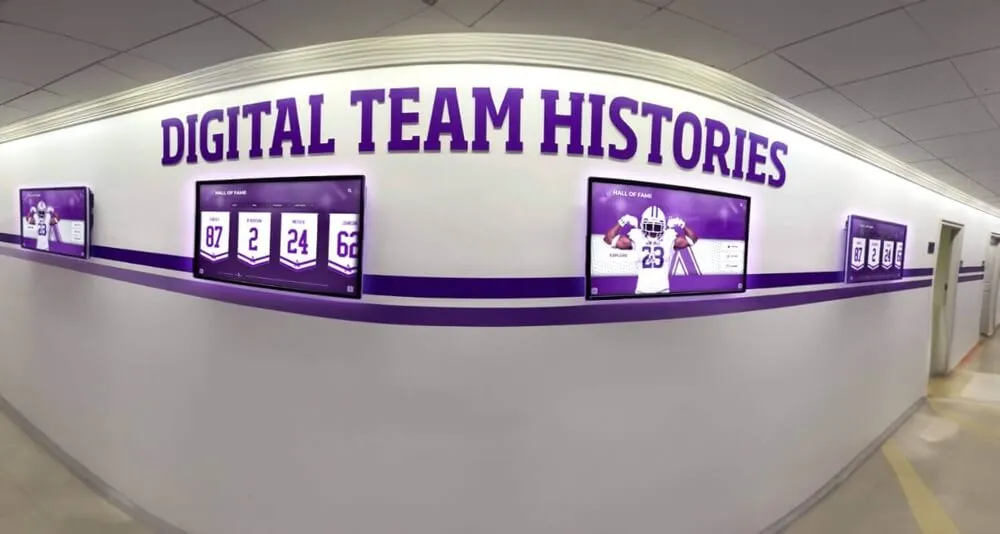
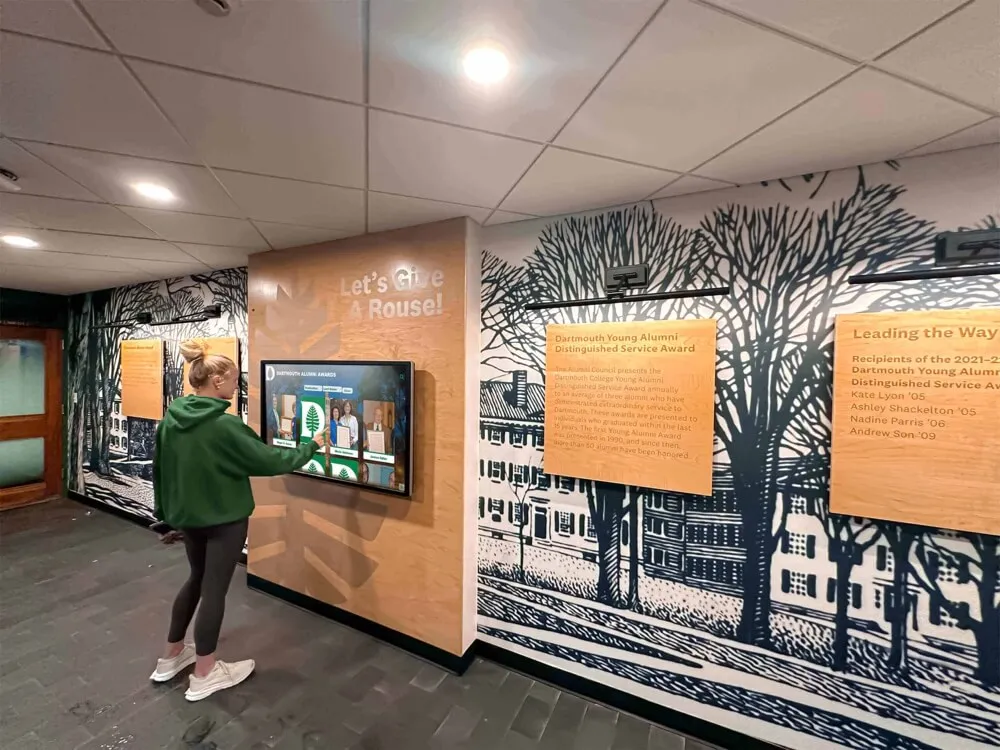
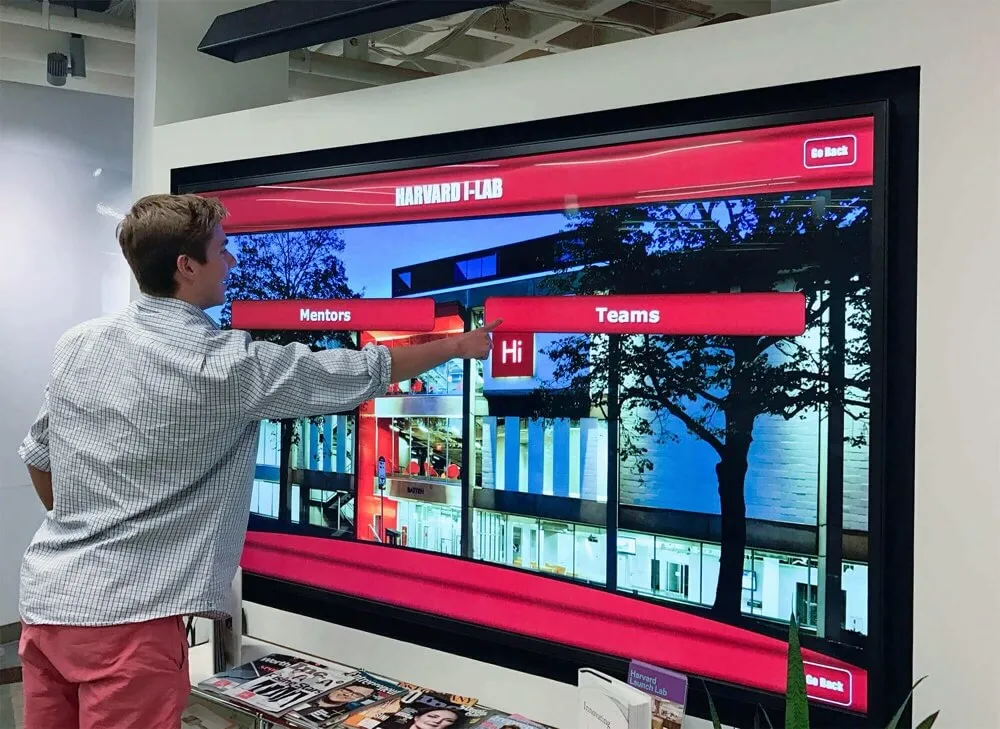
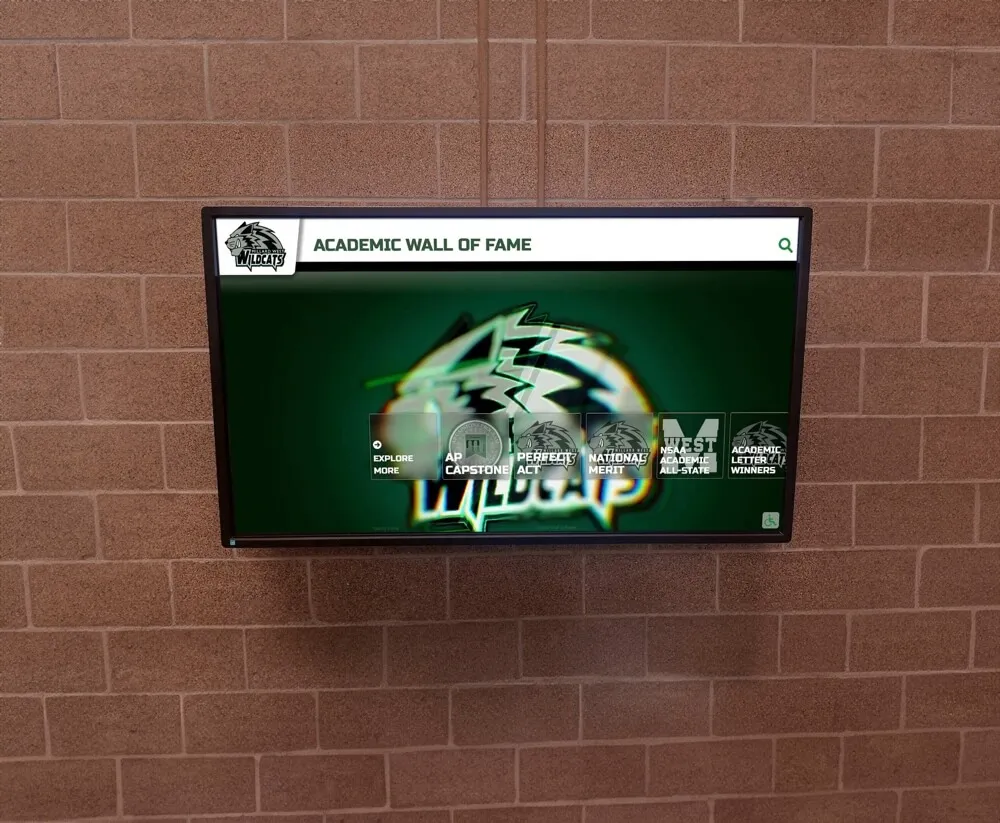
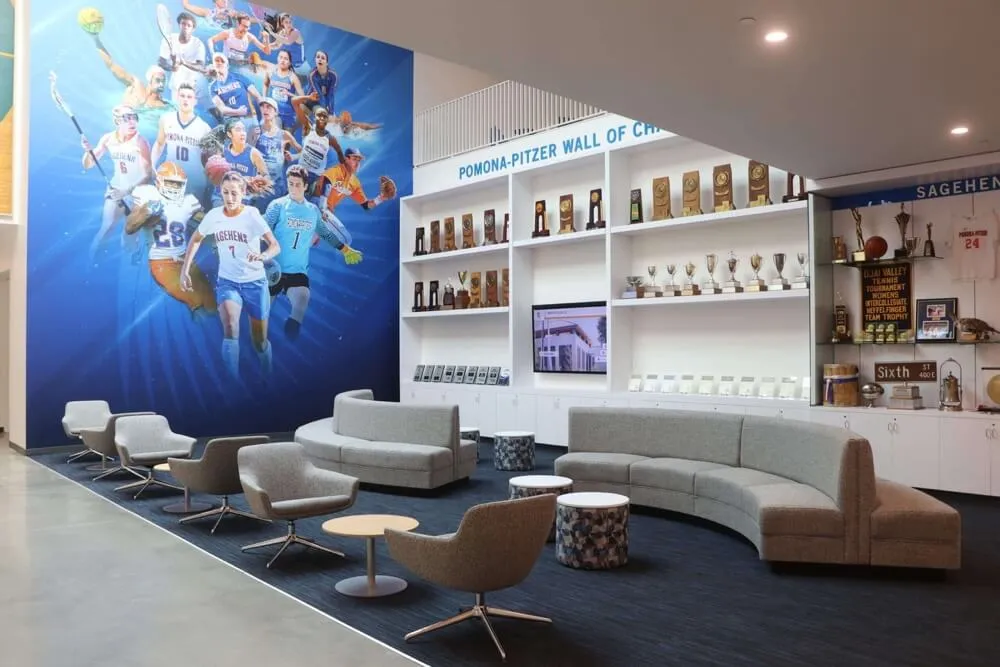
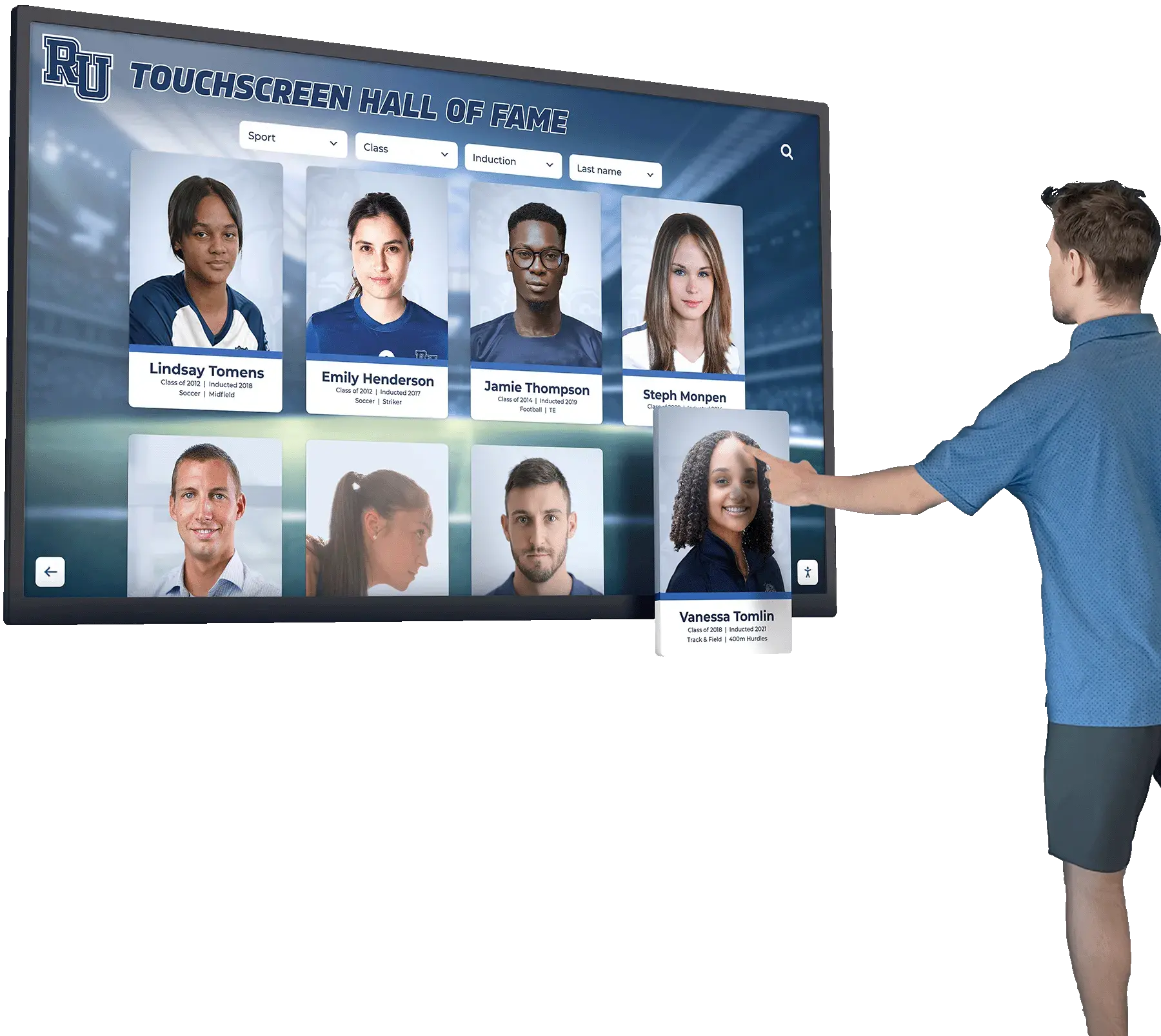
Modern athletic programs use interactive displays to track emerging sports like pickleball alongside traditional athletics, celebrating diverse competitive achievements
Understanding Pickleball Scoring: The Foundation of Gameplay
Pickleball scoring represents the most frequently misunderstood element of the game, creating confusion for beginners and even players with hundreds of games under their belts who occasionally forget whose serve it is or what the current score means.
Basic Scoring Structure and Winning Conditions
Games typically play to 11 points, though tournament formats sometimes extend to 15 or 21 points for championship matches. The winning team must achieve a two-point margin—meaning games tied 10-10 continue until one side gains that critical two-point advantage, occasionally extending well beyond the nominal 11-point target.
Only the serving team can score points. This fundamental rule creates the strategic push-and-pull that defines pickleball gameplay—teams must win rallies while serving to accumulate points, while receiving teams fight to earn the serve back without conceding scoring opportunities. Unlike volleyball (which adopted rally scoring), pickleball maintains traditional side-out scoring that rewards consistent serve-holding and creates different tactical priorities depending on whether your team currently serves.
Rally Scoring vs. Side-Out Scoring
Traditional pickleball uses side-out scoring exclusively, where only serving teams score regardless of rally outcomes. Some recreational programs experiment with rally scoring (where every rally awards a point to the winner regardless of serve status) to speed up games and simplify scoring for beginners, but all official tournament play maintains side-out rules.
Schools implementing pickleball as part of comprehensive athletic recognition programs often appreciate side-out scoring’s self-regulating pace—games last 12-20 minutes typically, providing predictable scheduling for tournament brackets and ladder competitions without requiring strict time limits that cut off exciting matches.
The Three-Number Score System in Doubles
Calling the score in doubles pickleball requires announcing three numbers in specific order: serving team’s score – receiving team’s score – server number (1 or 2).
For example, “7-5-2” means the serving team has 7 points, the receiving team has 5 points, and the second server is currently serving. This third number creates the confusion—beginners frequently forget to announce it or lose track of whether they’re the first or second server on their side.
Why Server Number Matters
In doubles, each team gets two service turns (one for each partner) before losing the serve to opponents, with one critical exception: at game start, the initial serving team receives only one service turn to prevent unfair advantage from winning the opening coin toss.
When the first server commits a fault, the serve passes to their partner who becomes the second server. When the second server faults, the serve passes to the opposing team, where the sequence resets with their first server. Tracking server number determines whether faults end your team’s entire service turn or simply pass the serve to your partner, fundamentally shaping rally tactics and risk calculations.

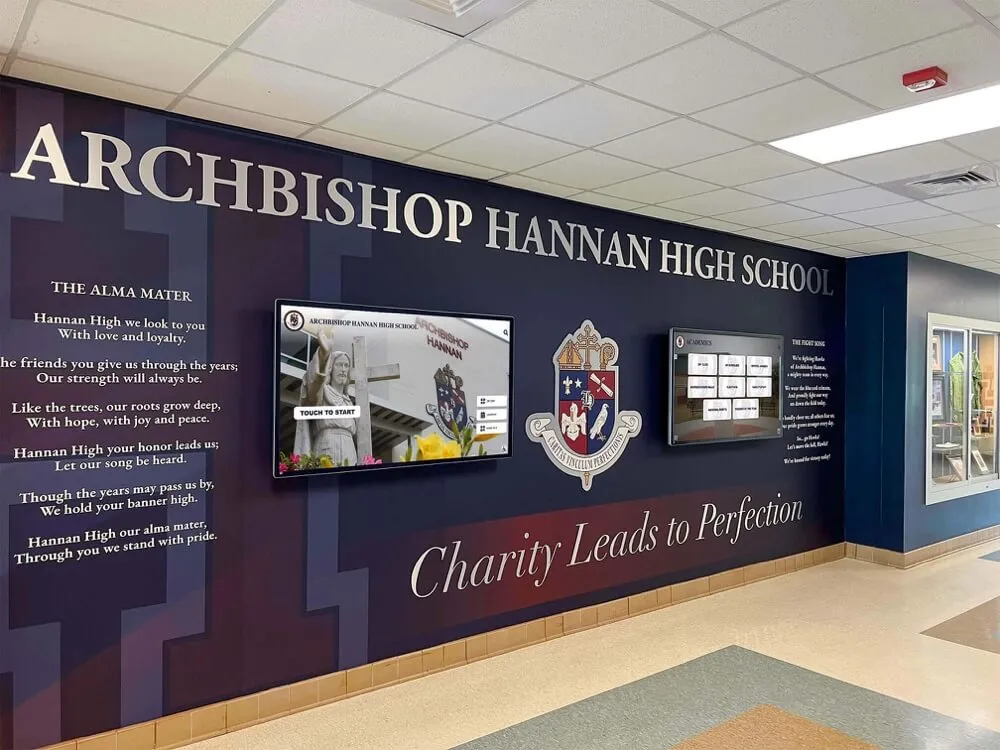
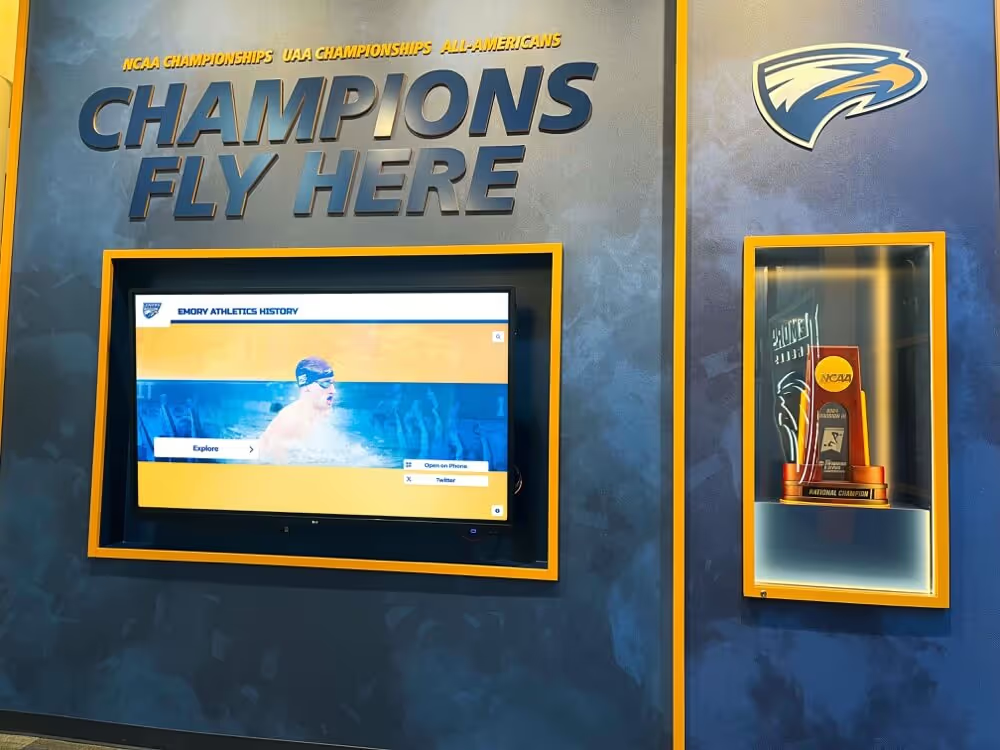
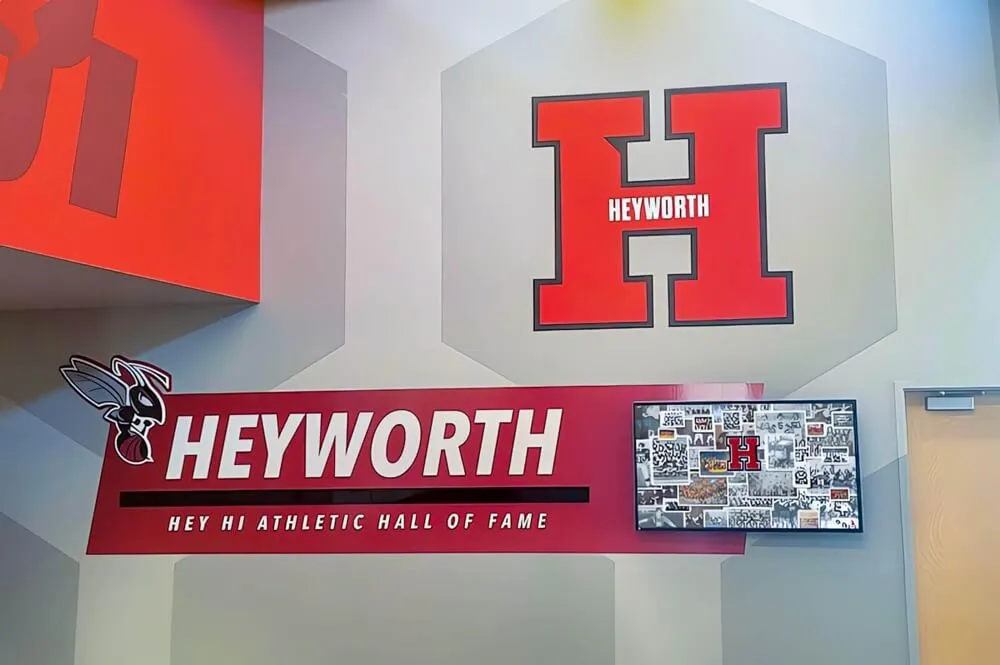
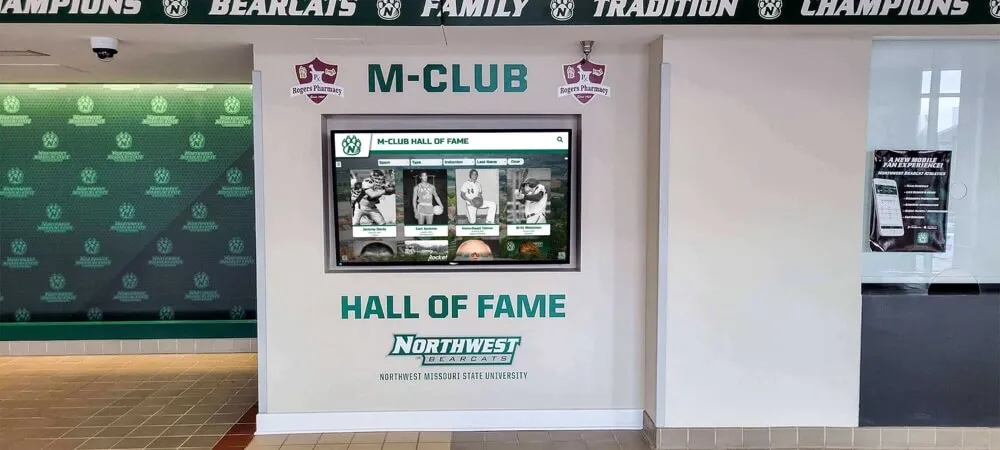
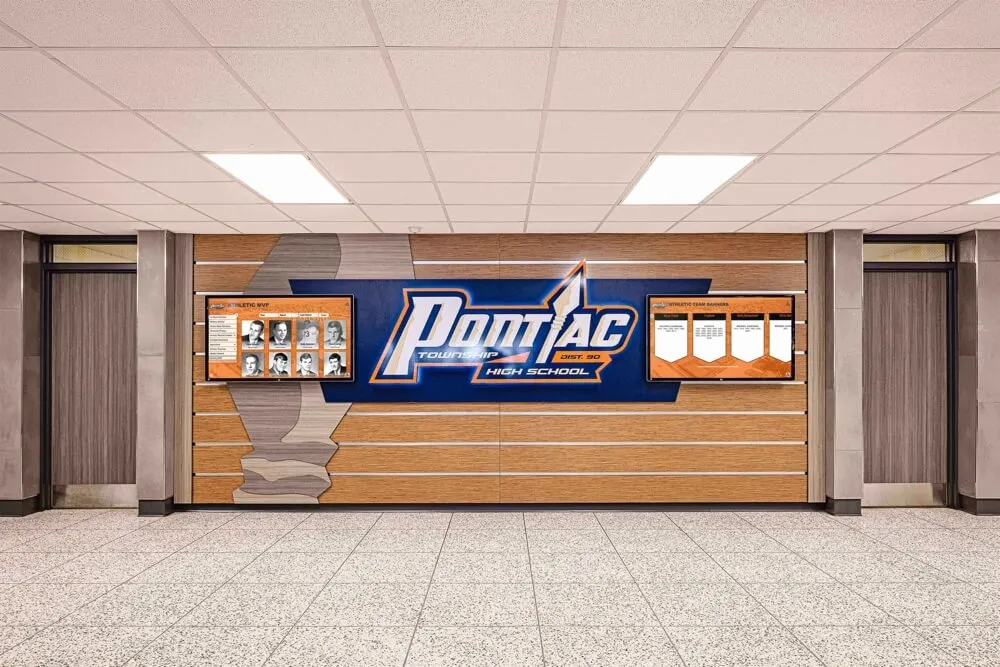
Athletic displays tracking diverse sports achievements help schools showcase the full range of competitive programs from traditional team sports to emerging activities
Singles Scoring Modifications
Singles scoring simplifies the doubles system while maintaining core principles. Score announcements include only two numbers: server’s score followed by receiver’s score. There’s no server number since only one player serves per side.
Serving and receiving sides still matter strategically—servers always serve from the right (even) court when their score is even (0, 2, 4, 6, etc.) and from the left (odd) court when their score is odd (1, 3, 5, 7, etc.). This consistent pattern helps players and spectators track scoring even mid-rally without needing verbal score announcements.
Tracking Score Through Court Position
Experienced players use court positioning as a scoring memory aid. If you’re serving from the right side, your score must be even. Serving from the left means an odd score. This visual cue prevents the common beginner mistake of losing track of the score after intense rallies where focus narrowed to shot execution rather than scorekeeping.
Schools developing student athlete recognition programs for emerging sports like pickleball find that tracking individual and doubles accomplishments requires different display structures than traditional team sports—ladder rankings, tournament bracket progressions, and seasonal win-loss records provide meaningful recognition frameworks.
The Kitchen Rule: Non-Volley Zone Regulations Explained
The “kitchen” (officially the non-volley zone) represents pickleball’s most distinctive rule, preventing players from executing volleyball-style spikes at the net that would eliminate the sport’s strategic rallying in favor of pure power plays.
Defining the Non-Volley Zone
The non-volley zone extends seven feet from the net on both sides of the court, marked by a clear line parallel to the net. This zone includes all court space within that seven-foot boundary plus the line itself—any contact with the line counts as being “in the kitchen” for rule enforcement purposes.
The critical restriction: players cannot volley the ball (hit it in the air without a bounce) while standing inside the non-volley zone or touching the non-volley zone line. This seemingly simple rule contains nuances that confuse beginners and occasionally catch even tournament players in violations.
Legal vs. Illegal Kitchen Plays
You MAY stand in the kitchen and hit balls that have already bounced—the zone restricts volleys only, not groundstrokes. You MAY volley from outside the kitchen, then step into the zone after contact. You MAY NOT hit a volley while any part of your body touches the kitchen surface or line, including your momentum carrying you into the zone after contact even if the ball already crossed the net.
The momentum rule catches players frequently. If you volley from legal position just behind the line but your follow-through momentum carries you forward into the kitchen afterward, the volley counts as a fault even though contact occurred outside the zone. Your motion must be fully controlled—capable of stopping without kitchen contact—or the volley becomes illegal.
Equipment and Partner Considerations
Kitchen violations extend beyond just feet. If your paddle, hat, clothing, or any item you’re wearing or holding touches the kitchen surface or line while volleying, the play counts as a fault. Perhaps most surprisingly, if your partner touches the kitchen surface during your volley, some interpretations consider this a fault—though most recreational play doesn’t enforce this strict partner-momentum rule.
Recreation programs serving diverse participants appreciate the kitchen rule’s equalizing effect—physically dominant players cannot simply overpower opponents with net positioning and aggressive volleys but must develop strategic shot placement and patience to succeed, making pickleball genuinely accessible across age groups and athletic backgrounds.
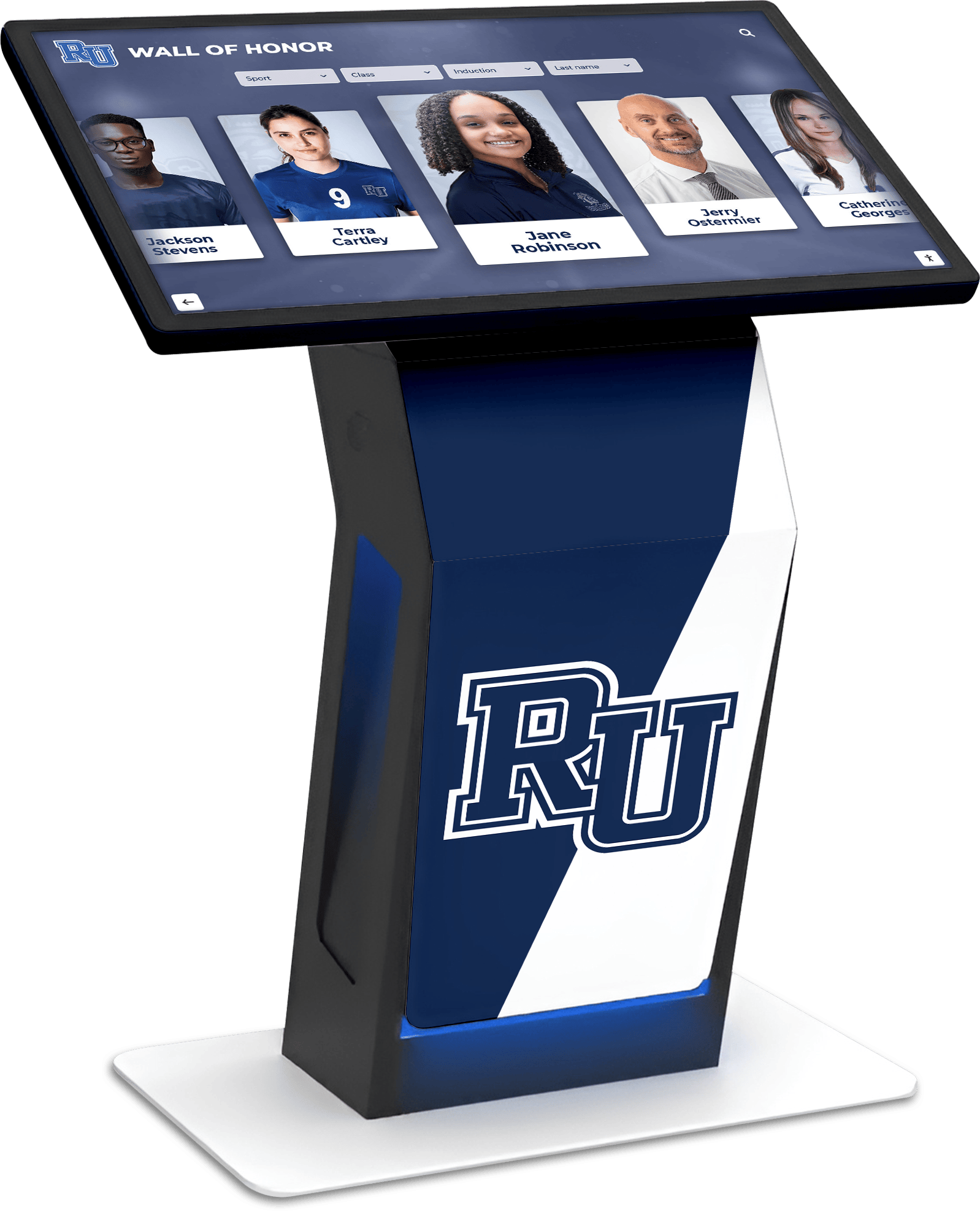
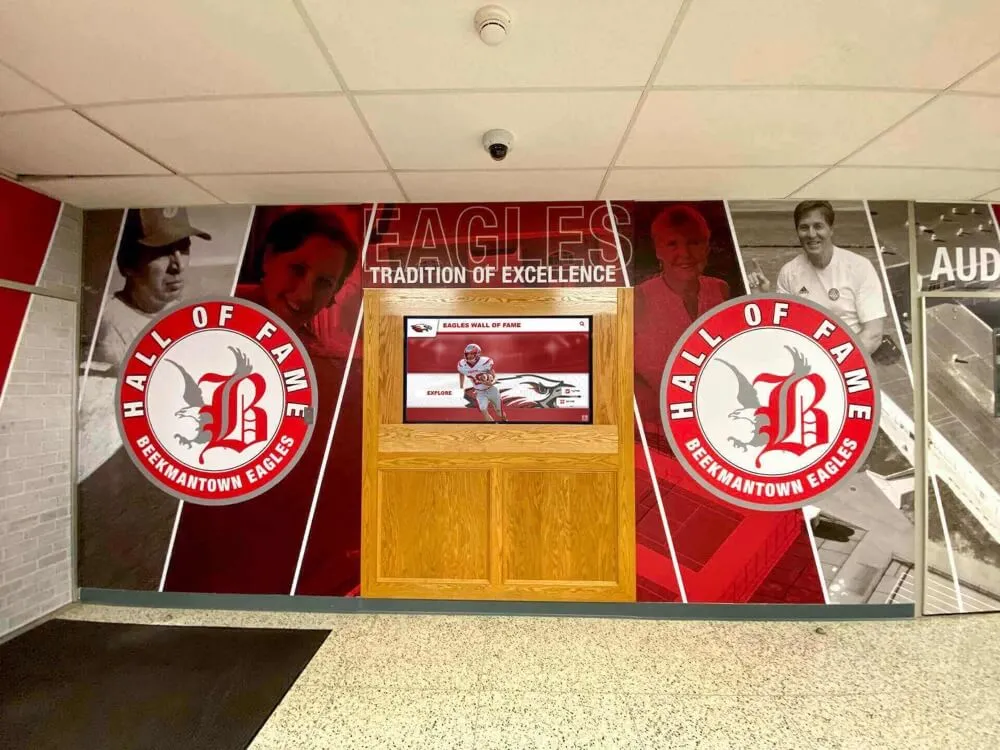
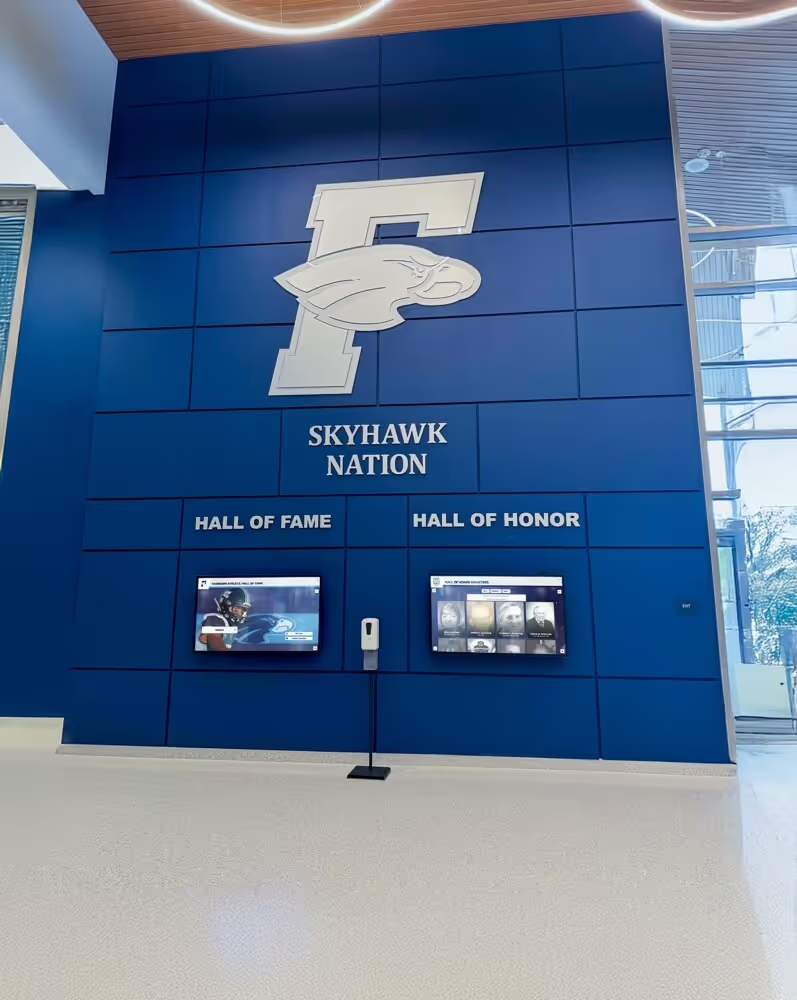
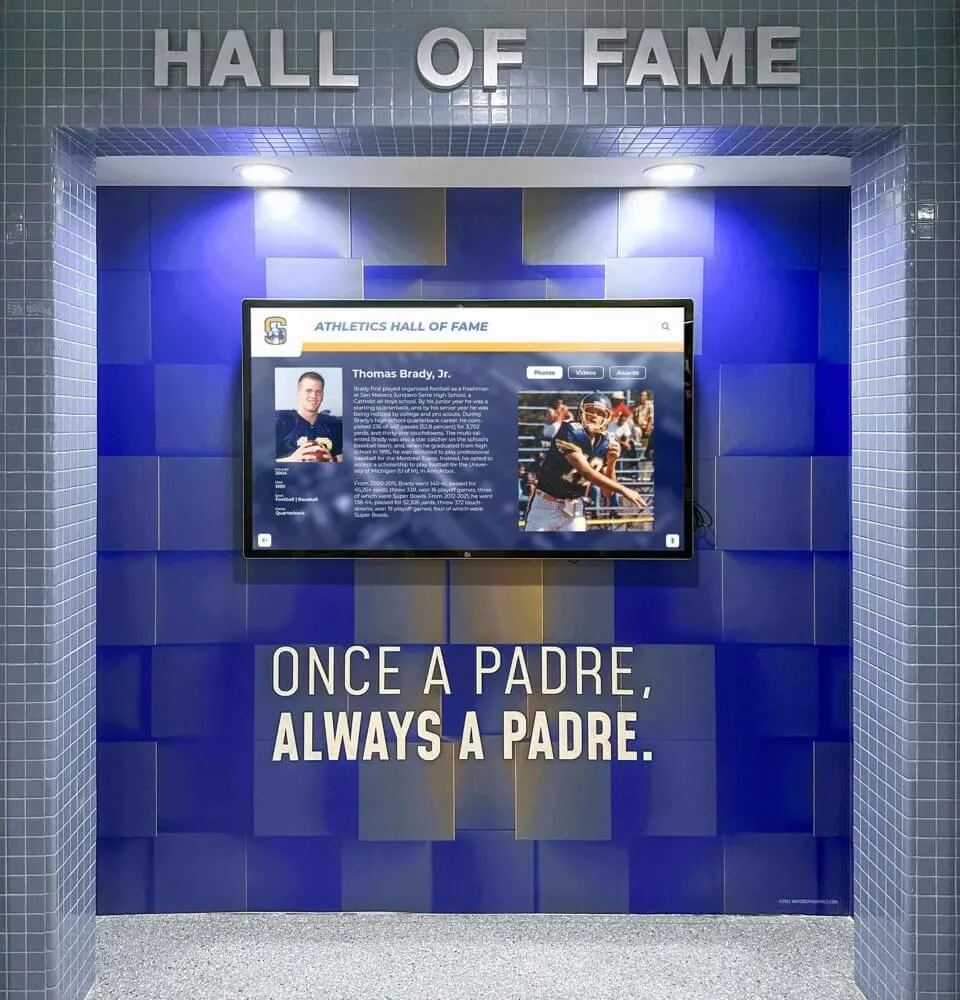
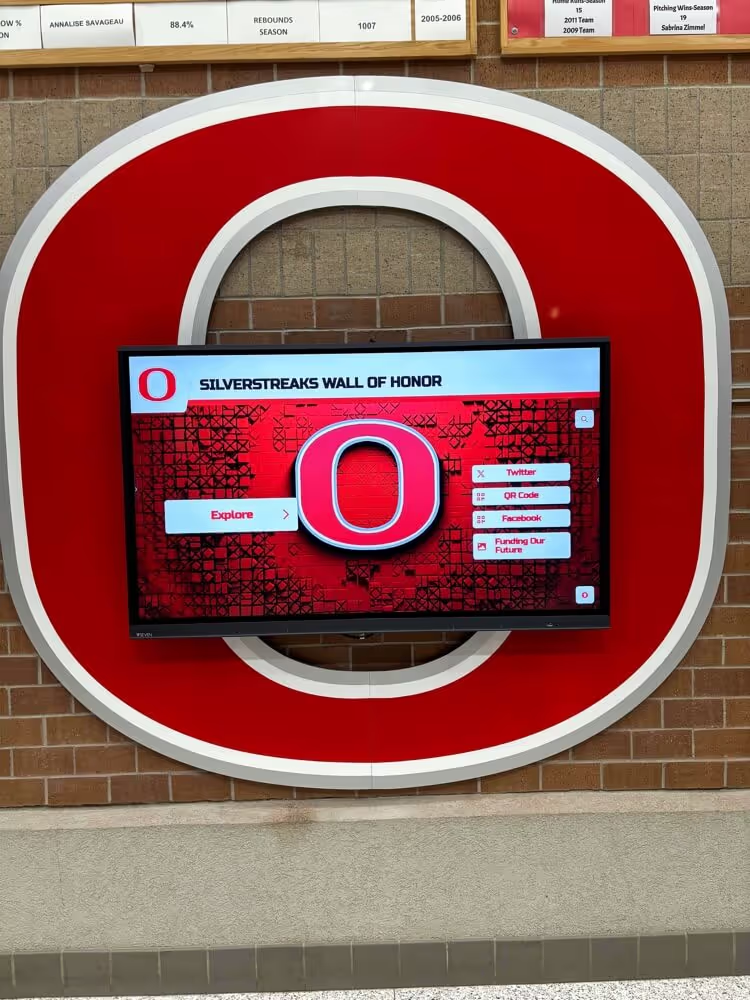
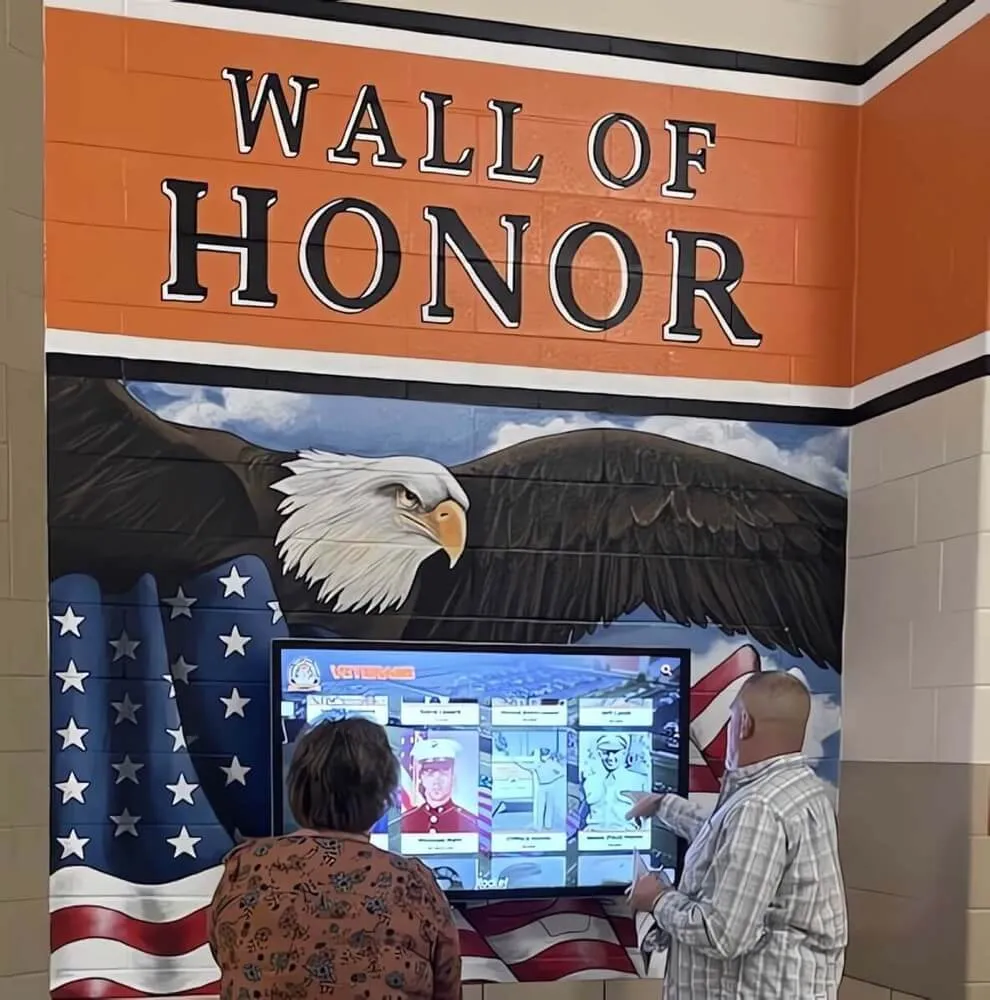
Interactive recognition systems enable schools to showcase competitive results from club sports and recreational programs alongside varsity athletics
Pickleball Serve Rules and Common Service Faults
Service mechanics in pickleball follow specific regulations designed to prevent tennis-style power serves from dominating play and maintain the sport’s emphasis on strategic rallies over pure serving advantage.
Fundamental Service Requirements
All serves must be executed underhand with paddle contact occurring below the server’s waist level. The paddle head must be below the wrist at the moment of contact—both vertical positioning requirements working together to prevent overhand or sidearm serves that would travel with excessive power and pace.
Servers must stand behind the baseline without touching the court or baseline with either foot at the moment of paddle-ball contact. Unlike tennis where foot faults require both feet to cross the plane, pickleball requires complete clearance—any baseline touch at contact creates a fault, though stepping forward after contact causes no violation.
Diagonal Service Zones and Target Requirements
Serves must travel cross-court diagonally, landing in the opposite service court (the rectangular area bounded by the sideline, centerline, non-volley zone line, and baseline on the diagonal side). Serves landing in the non-volley zone—even touching its boundary line—count as faults. Serves landing on any other line (sideline, centerline, or baseline) within the correct service area are legal and in play.
This diagonal requirement means servers standing in the right court serve to their opponent’s right receiving area, while servers in the left court target the left receiving area. The pattern matches tennis doubles service except for the critical underhand-below-waist requirement.
The Drop Serve Alternative
Traditional pickleball serving required releasing the ball and striking it before it bounced, with the underhand-below-waist restrictions applied. USA Pickleball recently approved an alternative drop serve method that simplifies service mechanics while maintaining fairness.
For drop serves, players may release the ball and allow it to bounce before striking it. The ball must drop from the hand naturally without additional downward force, spinning, or throwing momentum. Players using drop serves face no restrictions on paddle position or contact point height—the natural bounce height of a dropped ball provides sufficient limitation without requiring the below-waist rule.
Drop serves help players with shoulder mobility limitations, hand-eye coordination challenges, or simply those who find traditional serve mechanics counterintuitive. Schools implementing inclusive pickleball programs appreciate having this alternative that maintains competitive fairness while accommodating participants across different physical capabilities.
Let Serves and Service Continuation
Unlike tennis where net serves (balls touching the net during legal serves) require replaying, pickleball allows serves touching the net to continue as legal plays if they otherwise land correctly in the diagonal service area. This “let serve” elimination speeds play and removes the judgment calls around whether balls actually touched the net on serves.
Serves hitting the net and landing in the non-volley zone remain faults—the net-touching allowance applies only to serves that would be legal except for net contact. Servers get only one attempt per service turn rather than the two-attempt system in tennis, making service accuracy more critical since faults immediately end that server’s turn.
Programs building comprehensive athletic banquet recognition around emerging sports often celebrate service consistency statistics, tournament bracket achievements, and seasonal ladder rankings as meaningful accomplishments parallel to traditional varsity sport awards.
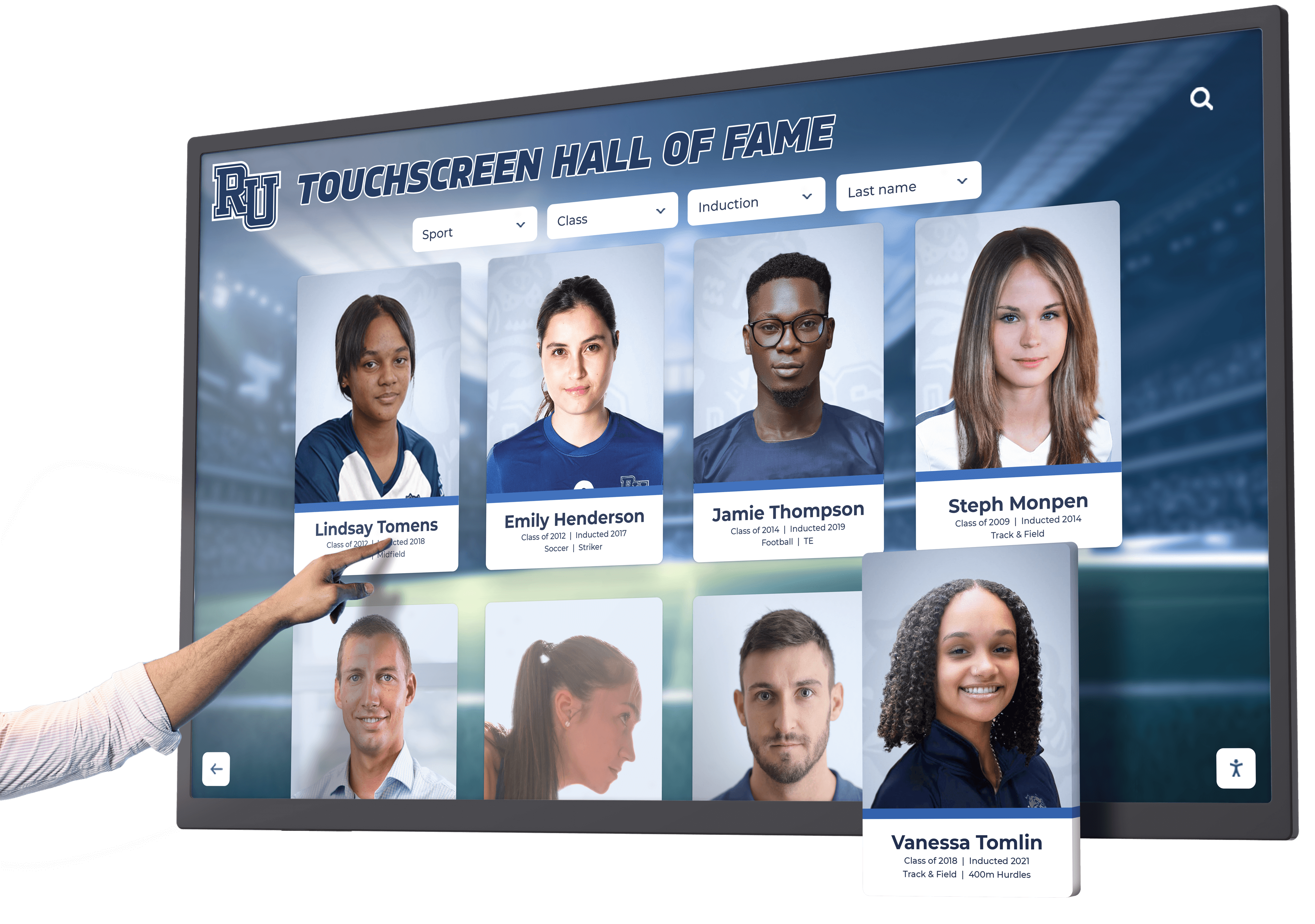
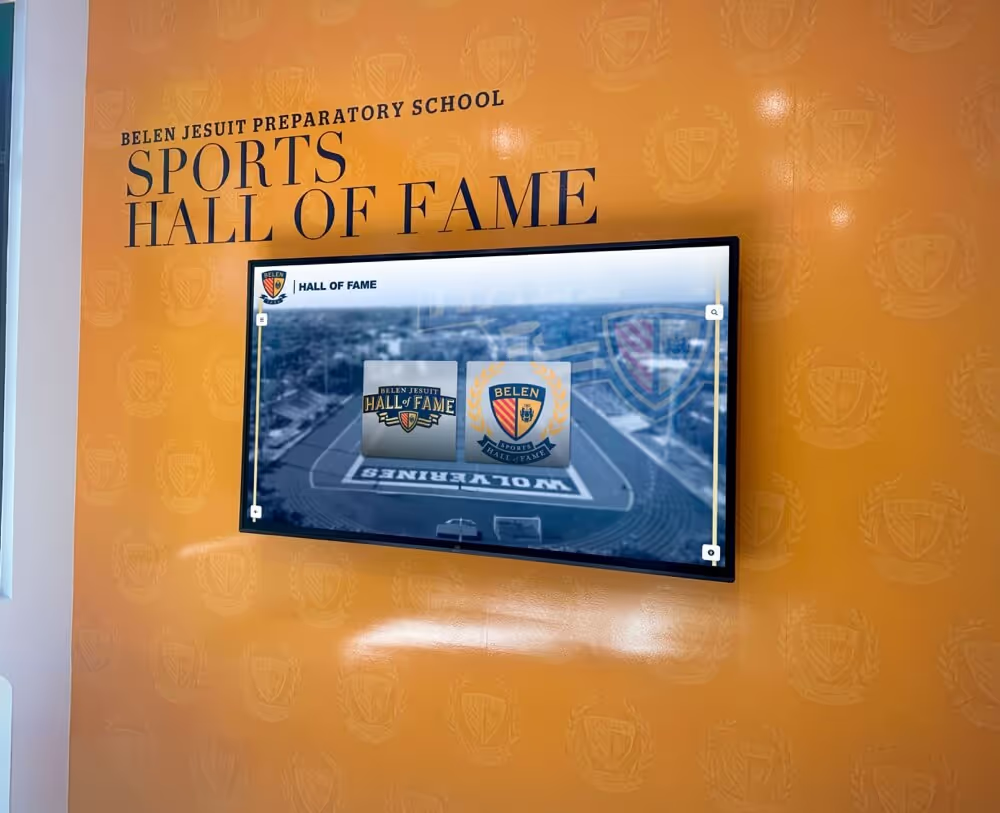
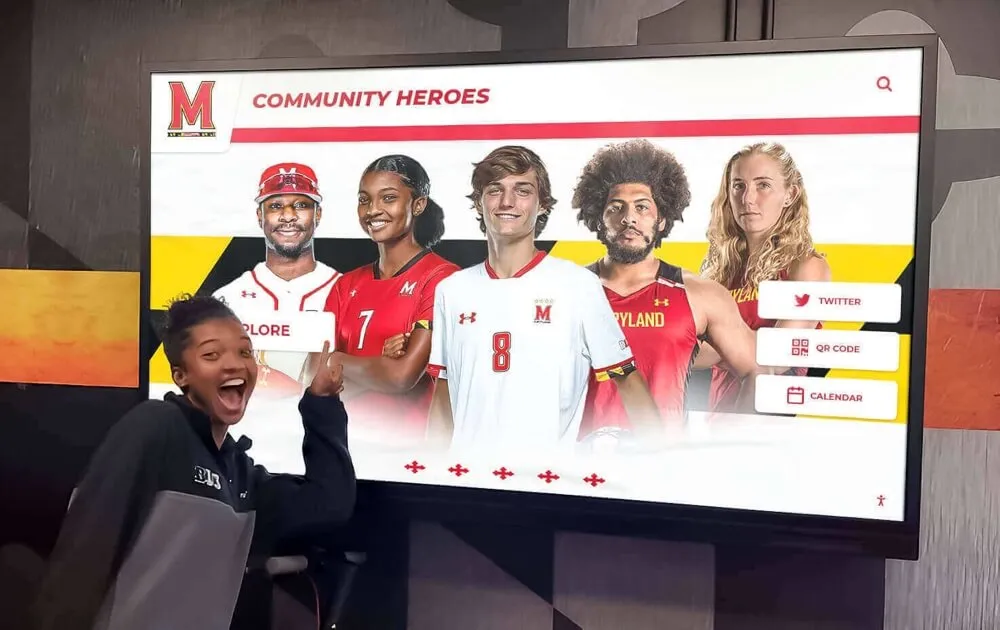
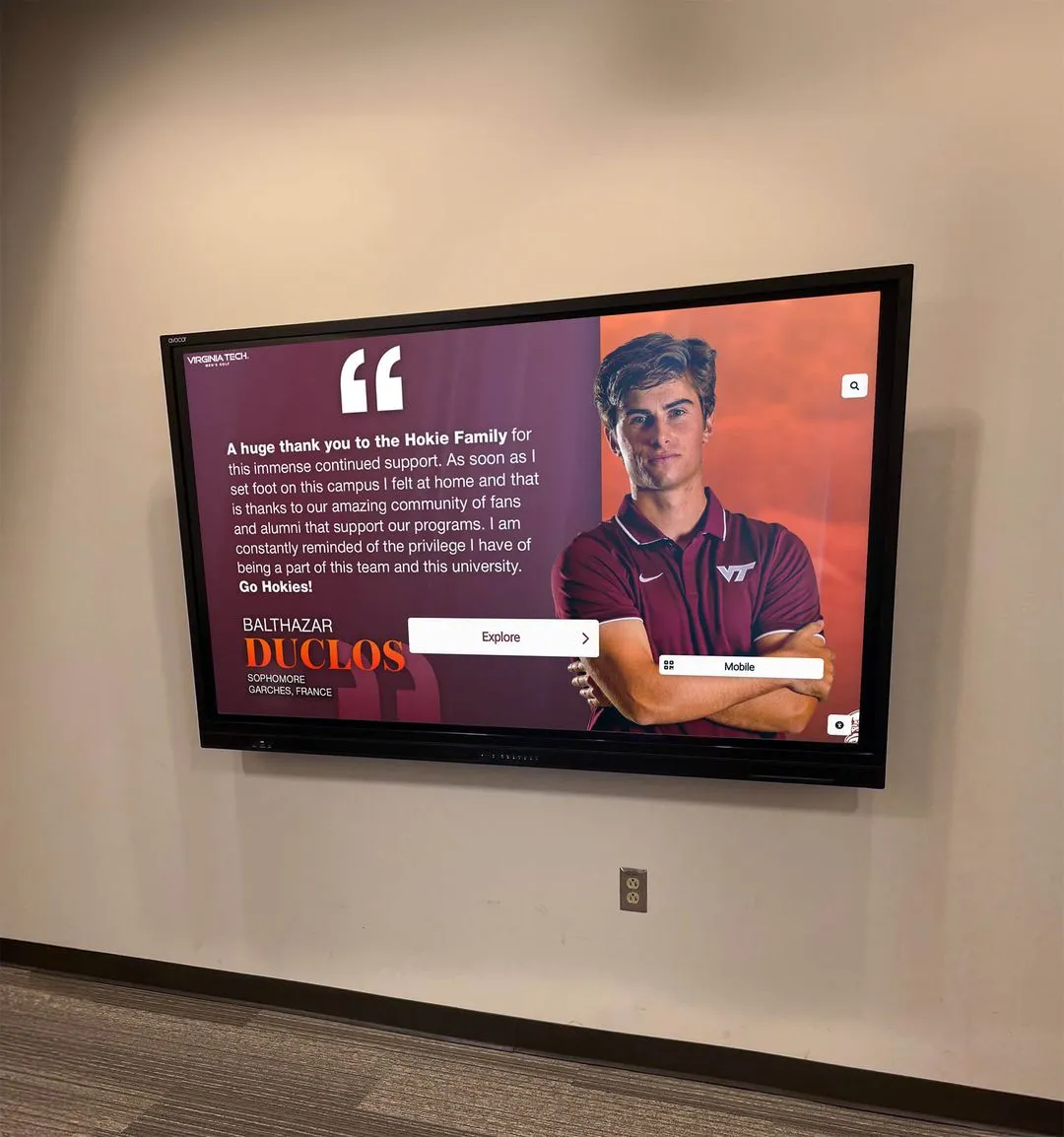
Touchscreen displays enable detailed statistical tracking and achievement recognition for club sports and recreational competitions
Common Pickleball Faults and Rule Violations
Beyond service faults and kitchen violations, several other infractions can end rallies and award points or serve changes.
Ball Contact and Trajectory Faults
Players commit faults when hitting balls out of bounds (beyond boundary lines without touching them first), hitting the ball into the net, hitting the ball before it crosses to their side of the net, or allowing the ball to bounce twice on their side before returning it.
Double Hit Faults and Exceptions
Unintentional double hits where the ball contacts a player’s paddle twice during one continuous swinging motion are legal as long as the motion is continuous and unintentional. Deliberately hitting the ball twice or pausing mid-swing and contacting again creates a fault.
Similarly, both players on a doubles team cannot hit the ball successively—after one partner strikes, the ball must cross to the opponents’ side before the other partner may contact it. Tennis-style “poaching” where partners both attempt shots is permissible, but only the first to contact the ball may actually strike it during that return.
Player Position and Contact Faults
Players fault when touching the net, net posts, or net system with paddle, body, or clothing while the ball remains in play. The ball is considered “in play” from the moment of legal serve until the rally-ending fault or point conclusion, meaning even after your shot crosses successfully, touching the net before the rally officially ends creates a fault.
Dead Ball Situations
Balls contacting permanent objects (overhead structures, lighting, ceiling in indoor facilities) before bouncing create faults charged to the striker. In outdoor play, wind carrying balls that would land out of bounds causes no fault if opponents allow them to land—attempting to play wind-affected balls places responsibility on the attempting player.
Distractions and interference occasionally impact recreational play. While official rules provide for replaying rallies when genuine external interference affects play, recreational games often benefit from establishing local court courtesy rules covering ball retrieval from adjacent courts, spectator movement near playing areas, and noise considerations.
Schools managing high school athletic equity programs appreciate pickleball’s minimal equipment costs, smaller facility requirements compared to tennis, and accessibility across physical capabilities—factors that make the sport particularly valuable for expanding competitive opportunities without major capital investments.
Doubles Positioning, Strategy, and Partner Communication
While understanding individual rules enables legal play, competitive doubles success requires coordinated positioning and strategic decision-making between partners.
Starting Positions and the Two-Bounce Rule
At service, the serving team must position with one partner behind the baseline in the appropriate service court (right side for first server, alternating with score). The serving partner stands anywhere on their side but typically near the baseline as well.
The receiving team must position with the receiver behind the baseline in the diagonal receiving court, while their partner may stand anywhere including up at the kitchen line ready to advance.
The two-bounce rule (also called the double-bounce rule) requires that serves must bounce before receivers hit them, and service returns must bounce before serving teams hit them. Only after these two mandatory bounces may players begin volleying. This rule prevents serving teams from rushing the net immediately and volleying weak service returns for easy points, ensuring rallies develop beyond the serve-return exchange.
Transitioning from Baseline to Kitchen Line
Competitive doubles strategy revolves around which team controls the kitchen line—the advantageous forward position enabling angled put-aways and aggressive shot-making while forcing opponents into defensive positioning.
Serving teams typically rush forward after their third shot (the first shot after the mandatory two bounces) to join partners at the kitchen line. The service return bouncing to the serving team provides the opportunity—they execute a soft “drop shot” landing in opponents’ kitchen area that cannot be attacked, using the resulting neutral exchange to advance forward together.
Teams controlling the kitchen line together hold significant advantage, creating pressure downward at opponents’ feet while defending against attacks with strong positioning. Singles positioning and strategy differs somewhat, but the kitchen line advantage principle remains constant.
Partner Communication and Court Coverage
Successful doubles teams develop communication systems identifying who takes middle balls, handling lob situations, and switching positions when necessary. Common strategies include:
Straight-Ahead Responsibility: Each player primarily handles balls directly in front of them, with the partner on the forehand side of middle balls taking those shots when both players could reach them.
Calling Shots Early: Partners verbally claim balls with “Mine!” or “Yours!” early enough that the other player can react without hesitation or collision risk.
Stacking Formations: Advanced teams sometimes “stack” by positioning both players on the same side before serves, then switching to preferred positions after legal service requirements are met. This strategy allows left-handed/right-handed partner combinations to keep forehands toward the middle or places stronger players in preferred positions.
Recreation programs establishing intramural sports ladders and tournaments for pickleball benefit from the sport’s doubles-focused nature—participants who never develop tennis-level individual skills can still enjoy competitive success through effective partnership and strategic positioning.

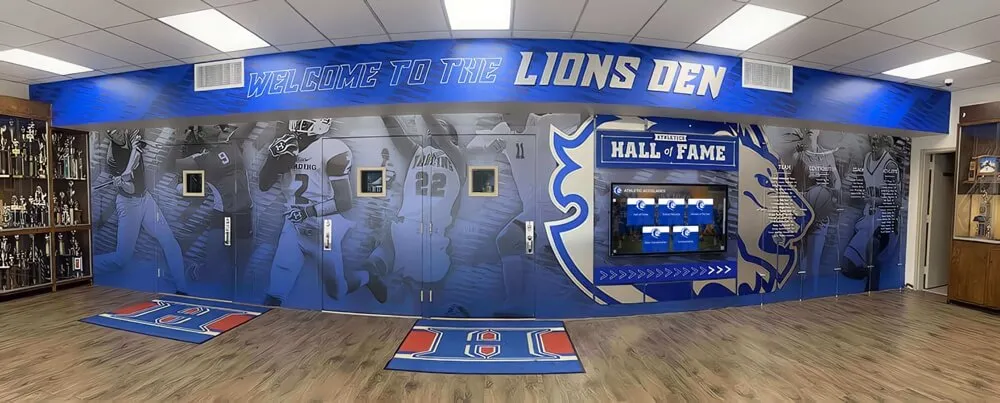
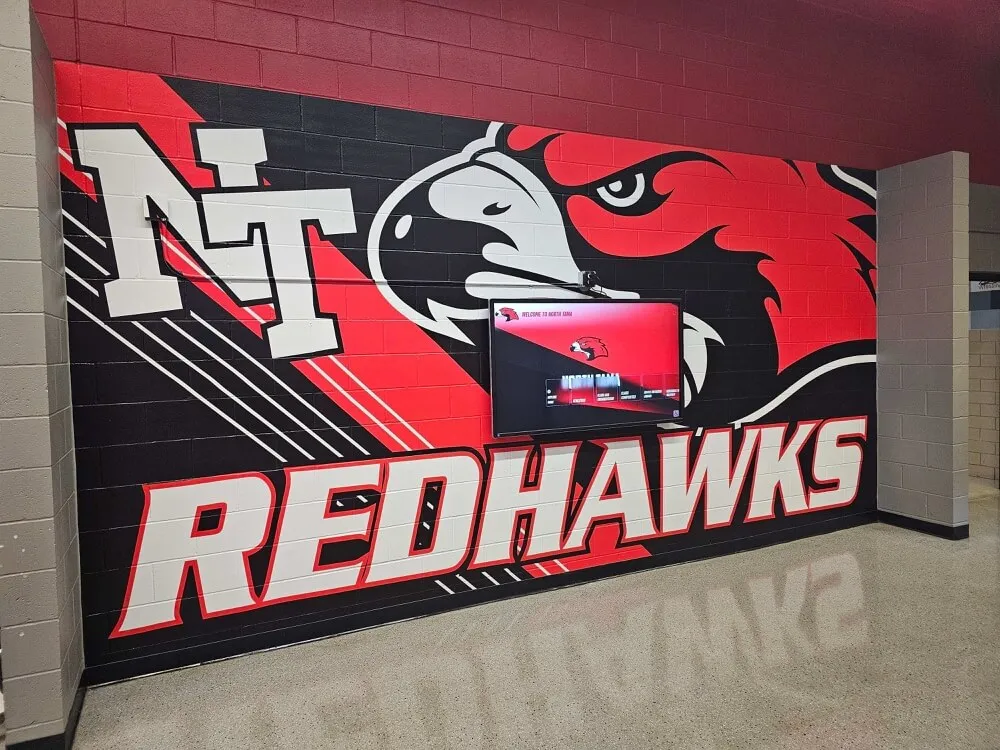
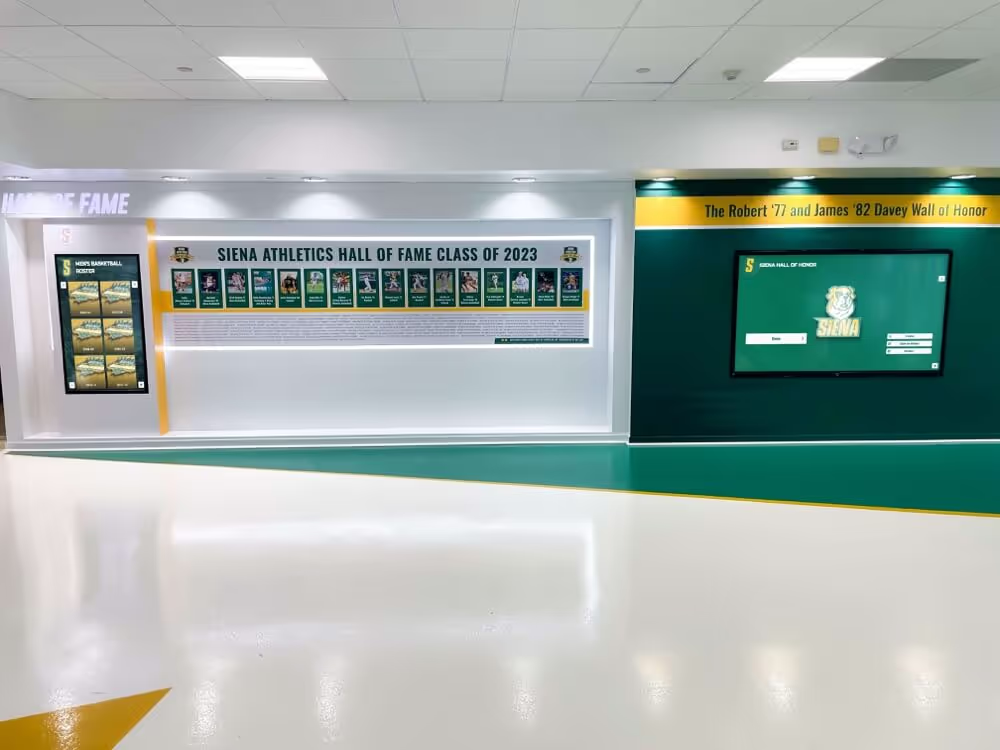
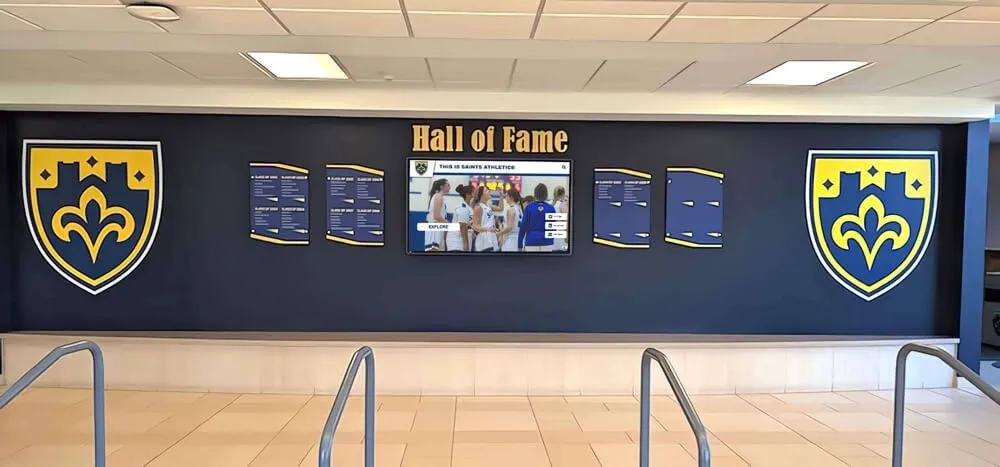
Athletic facilities incorporating digital displays alongside traditional murals create dynamic recognition spaces celebrating both historic achievements and current competitive results
Rule Variations for Tournament vs. Recreational Play
While USA Pickleball establishes official rules governing sanctioned tournament play, recreational games often adopt modified regulations that prioritize fun, inclusivity, and pace over strict competitive standards.
Common Recreational Modifications
Many community programs and school clubs implement adjusted rules to improve new player experiences and accommodate diverse skill levels sharing courts:
Friendly Kitchen Rules: Some recreational groups allow “do-overs” for marginal kitchen line violations when players clearly didn’t gain advantage, particularly for beginners still developing spatial awareness around the non-volley zone.
Relaxed Service Requirements: Recreational play sometimes forgives borderline below-waist service contacts or allows beginners to serve from closer positions (inside the baseline) until they develop consistent serving mechanics, then gradually transition to standard rules.
Time-Limited Games: Rather than playing to 11 points with win-by-two requirements, recreation programs sometimes use time limits (20-minute games, for example) to ensure fair court rotation and predictable scheduling, with highest score at time expiration winning.
Rally Scoring for Beginners: Absolute beginners sometimes play with rally scoring (point awarded on every rally regardless of serving status) to speed learning and reduce scoring confusion, transitioning to traditional side-out scoring as understanding develops.
Tournament Rule Strictness and Referee Calls
Sanctioned tournament play enforces all rules precisely with certified referees making official calls. Players cannot override referee decisions, though formal appeal processes exist for rules interpretations (not judgment calls on line calls or fault determinations).
Line Calling Responsibilities
In recreational play without referees, the team on the side where the ball lands makes line call decisions for balls near their boundary lines, with an honor system assumption that players call honestly even when calls work against their interests. The kitchen line non-volley zone faults are called by the offending player—players are expected to call their own kitchen violations rather than opponents needing to identify them.
Tournament play with referees centralizes these decisions, removing the honor-system dependencies and potential conflicts when calls favor the calling team. Line judges supplement referees in major tournaments, providing specialized focus on boundary determinations.
Schools developing student council athletic oversight for emerging sports programs sometimes train student referees through pickleball’s relatively simple rule structure before progressing to more complex officiating for traditional sports, building leadership skills through athletic administration.
Pickleball Court Dimensions and Equipment Standards
Understanding playing surface specifications and equipment regulations ensures proper facility setup and legal competitive play.
Official Court Measurements
Pickleball courts measure 20 feet wide by 44 feet long for both singles and doubles play—identical dimensions rather than tennis’s different widths for singles versus doubles. The non-volley zone extends 7 feet from the net on both sides, while service courts measure 10 feet deep (from non-volley zone line to baseline) by 10 feet wide (from centerline to sideline).
Net height measures 36 inches at the sidelines and 34 inches at the center, creating slight center sag similar to tennis nets. The lower net height compared to tennis (which hangs 36 inches at center) reflects pickleball’s underhand serving and strategic placement emphasis over power.
Surface Requirements and Line Specifications
Courts may be constructed on any hard surface—concrete, asphalt, or specialized sport court materials. Lines must be 2 inches wide, with the non-volley zone lines parallel to and 7 feet from the net on each side. All lines except the non-volley zone line and the centerline (for serving purposes) are considered in-bounds—balls landing on boundary lines are legal and in play.
Many recreation departments convert existing tennis courts into temporary or permanent pickleball facilities by overlaying pickleball lines. A single tennis court accommodates four pickleball courts arranged perpendicular to the tennis net, dramatically increasing player capacity and program accessibility for schools without dedicated pickleball facilities.
Paddle and Ball Specifications
USA Pickleball maintains approved paddle and ball lists ensuring equipment meets competitive standards. Legal paddles may not exceed specified size dimensions and must meet surface texture restrictions preventing excessive spin generation through specialized materials.
Balls must be specific perforated plastic pickleballs (similar to wiffleball construction) meeting durability and bounce specifications. Indoor balls typically feature 26 larger holes and play softer with less aggressive bounce, while outdoor balls use 40 smaller holes and harder plastic to withstand wind and outdoor surface impacts.
Equipment Accessibility and Program Costs
Quality recreational paddles range from $25-75, while competitive tournament paddles extend $100-200. Balls cost $2-5 each and last 5-10 hours of play depending on surface and usage intensity. These dramatically lower equipment costs compared to tennis rackets and court maintenance make pickleball particularly attractive for schools and recreation departments serving participants across economic circumstances.
Programs implementing athletic director budget planning often highlight pickleball’s exceptional cost-per-participant efficiency when advocating for program expansion or new sport introductions—court conversion from underutilized tennis facilities requires minimal investment while generating substantially increased participation rates.
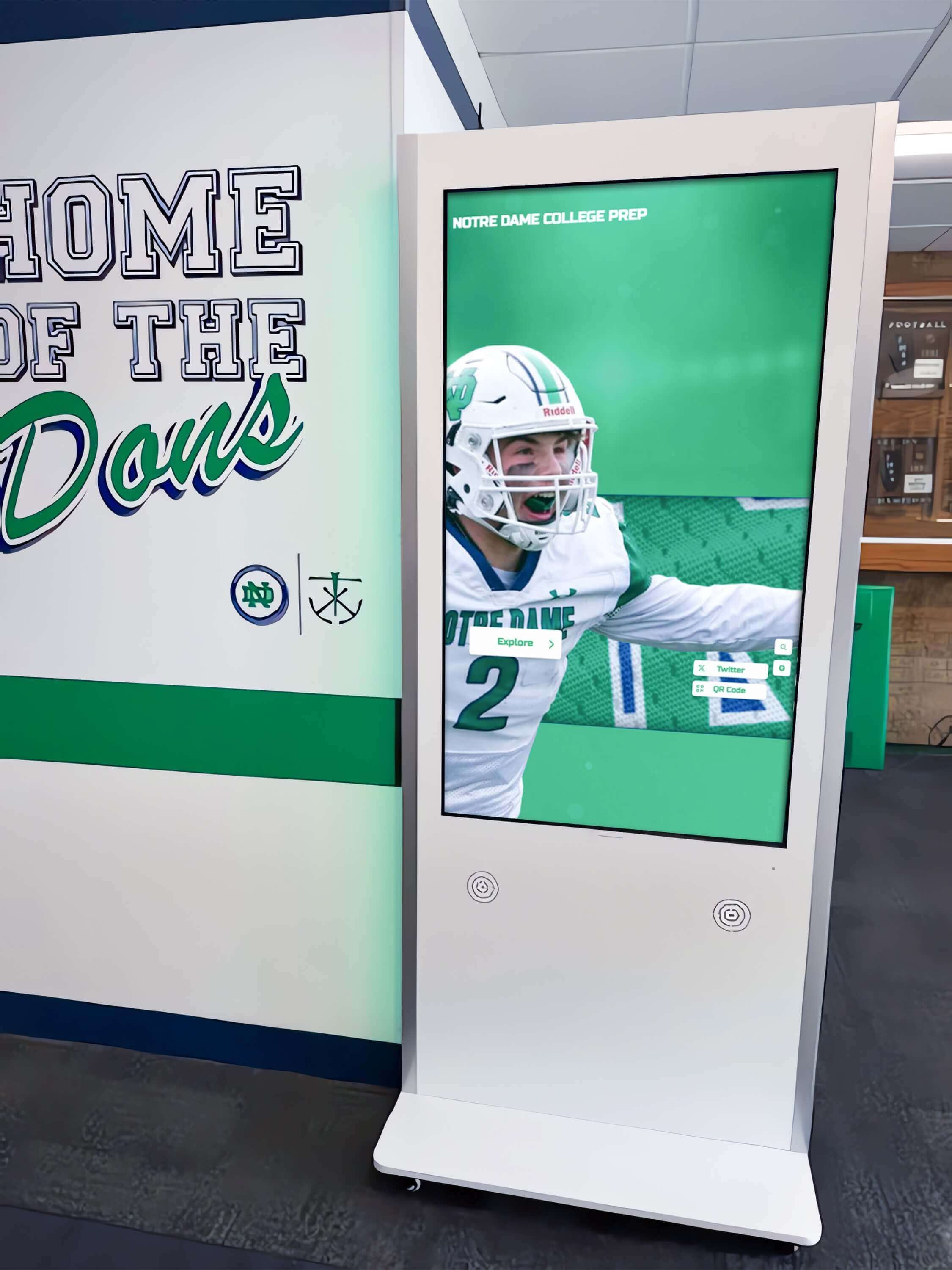
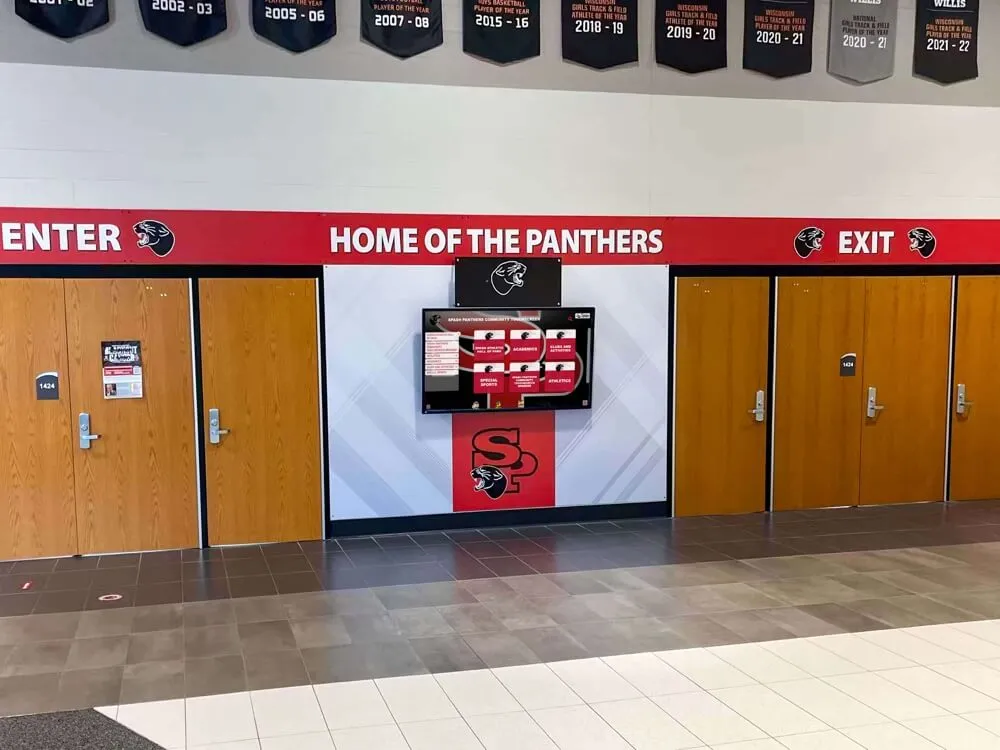
Schools install interactive displays in high-traffic areas to showcase diverse athletic programs and create engaging recognition experiences for students, alumni, and visitors
Building School Pickleball Programs and Recognition Systems
Educational institutions implementing pickleball initiatives face unique considerations around program structure, competitive frameworks, and participant recognition.
Program Development Frameworks
Successful school pickleball programs typically progress through structured development stages rather than launching fully competitive leagues immediately.
Instructional Foundation Phase
Initial programs emphasize skill development through physical education curriculum integration, after-school club participation, and beginner clinics teaching fundamental rules, service mechanics, and basic strategy. This foundation phase builds participant base and develops core players before introducing competitive elements.
Schools may partner with local pickleball clubs or recreation departments for instruction expertise, equipment loans, and facility sharing arrangements that reduce startup costs while connecting students to broader community playing opportunities.
Competitive Structure Development
After establishing participant base and basic skills, programs can introduce competitive elements through internal ladder rankings where players challenge others within specific ranking bands, rotating round-robin tournaments ensuring everyone competes regularly, skills competitions testing serving accuracy and shot placement, and doubles tournaments emphasizing partnership and strategic thinking.
These structured competitive formats provide achievement milestones and recognition opportunities that maintain engagement beyond purely recreational play, creating pathways for serious competitors while keeping recreational participants involved through inclusive tournament structures with multiple skill divisions.
Recognition and Achievement Tracking
Unlike varsity sports with established recognition frameworks (all-conference selections, championship trophies, record boards), emerging programs require creating meaningful achievement systems that celebrate participation milestones and competitive accomplishments.
Digital Recognition Solutions
Modern athletic departments increasingly use interactive displays to showcase accomplishments across diverse sports including emerging programs like pickleball. These systems enable tracking ladder rankings that display current competitive standings, tournament bracket progressions documenting seasonal competitions, historical achievement records celebrating program milestones, and individual accomplishment profiles recognizing skill development and participation longevity.
Digital platforms prove particularly valuable for club sports and recreational programs that lack the traditional trophy cases and static recognition infrastructure reserved for varsity athletics, ensuring participants receive meaningful acknowledgment regardless of program competitive tier.
Schools implementing touchscreen athletic recognition systems can showcase pickleball alongside traditional sports, creating inclusive athletic culture that values diverse competitive interests and celebrates achievement across the full spectrum of school programming.
Program Growth and Community Building
Pickleball’s social nature and multi-generational appeal create unique opportunities for community engagement beyond typical school athletics. Programs successfully integrate parent-student tournaments, alumni participation events, and faculty-student competitions that build school community while providing differentiated competitive experiences.
These expanded program elements require flexible recognition systems accommodating various participant categories, seasonal rotations, and informal competitive structures that traditional static trophy displays cannot easily support. Digital solutions provide the necessary adaptability while maintaining professional presentation quality that honors participant achievements appropriately.
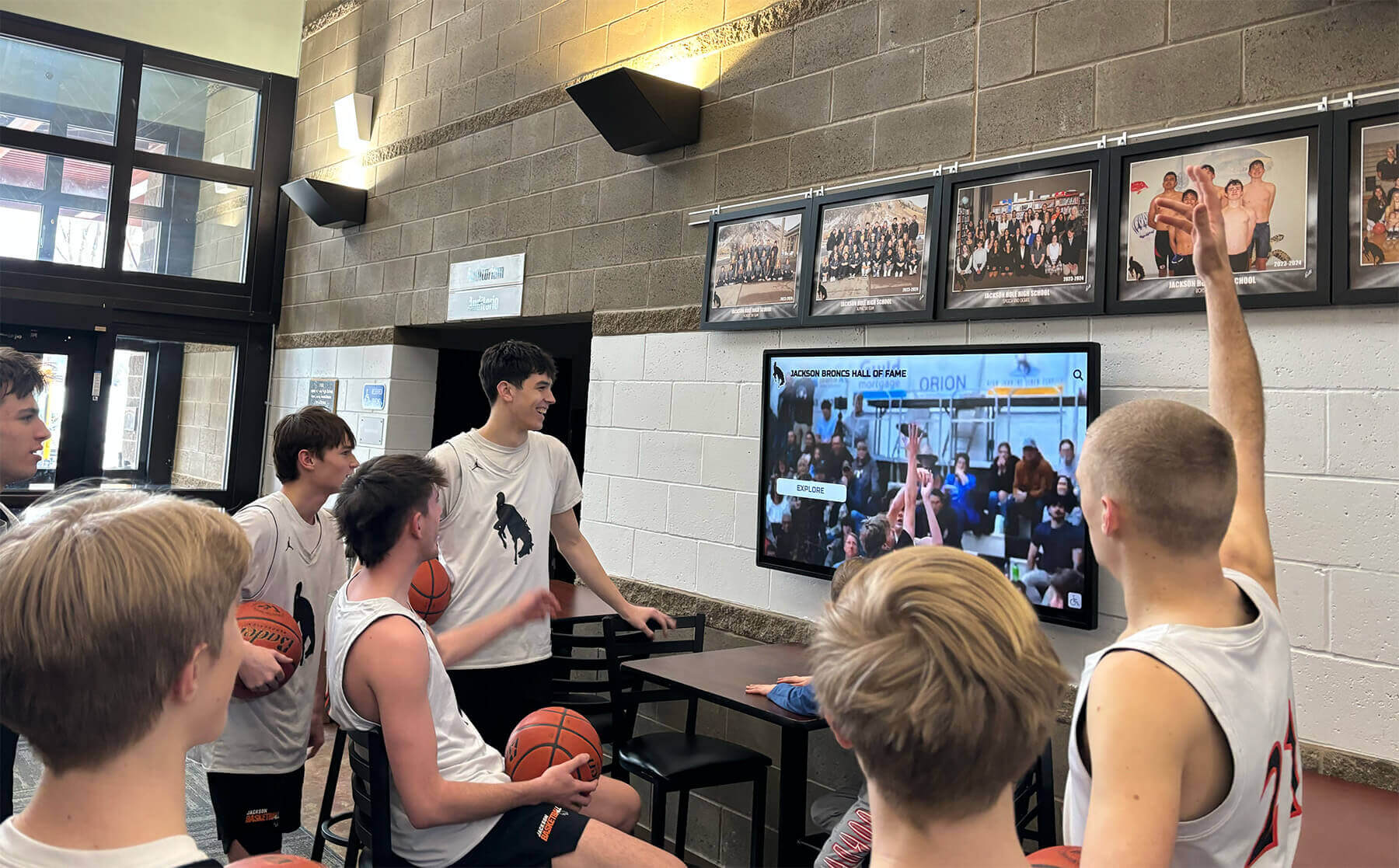
Interactive displays in athletic facilities enable schools to share highlights, statistics, and competitive results across all sports programs including club and recreational offerings
Conclusion: From Understanding Rules to Building Competitive Programs
Mastering pickleball rules transforms the sport from confusing to accessible, enabling players to focus on strategic development and competitive improvement rather than constant rule clarifications. The three-number scoring system, kitchen restrictions, service requirements, and fault regulations create a unique gameplay experience that emphasizes strategic shot placement, partner coordination, and tactical patience over pure physical dominance.
Schools and recreation departments benefit tremendously from pickleball’s exceptional accessibility—minimal equipment costs, simple court conversion from existing tennis facilities, fast learning curve enabling new players to enjoy competitive rallies within hours rather than months, and genuine multi-generational appeal serving elementary students through senior adults equally. These characteristics make pickleball ideal for expanding athletic participation beyond traditional team sports that require specialized facilities, expensive equipment, and season-long skill development before competitive play becomes enjoyable.
Understanding official rule structures while maintaining flexibility for recreational modifications allows programs to serve diverse populations appropriately. Strict tournament enforcement ensures fair competitive play for serious athletes, while relaxed recreational interpretations welcome absolute beginners and casual participants whose primary goal centers on enjoyable activity rather than technical mastery.
As pickleball participation continues its remarkable growth trajectory, schools implementing programs now position themselves ahead of inevitable future demand while establishing recognition systems that celebrate this emerging sport alongside traditional athletics. Creating comprehensive achievement tracking, competitive frameworks, and community engagement initiatives ensures programs develop sustainably rather than experiencing initial enthusiasm spikes followed by participant drop-off when novelty fades and organizational structure proves inadequate for sustained engagement.
Whether launching an introductory club program, establishing competitive intramural leagues, or integrating pickleball into physical education curriculum, understanding these fundamental rules and program development principles provides the foundation for successful implementation that serves participants across skill levels while building lasting athletic community around America’s fastest-growing sport.
Ready to showcase your school’s pickleball achievements and athletic program diversity through modern recognition technology that celebrates competitive accomplishments across all sports? Explore how interactive touchscreen displays create engaging recognition experiences that honor student athletes while inspiring continued participation and program growth.