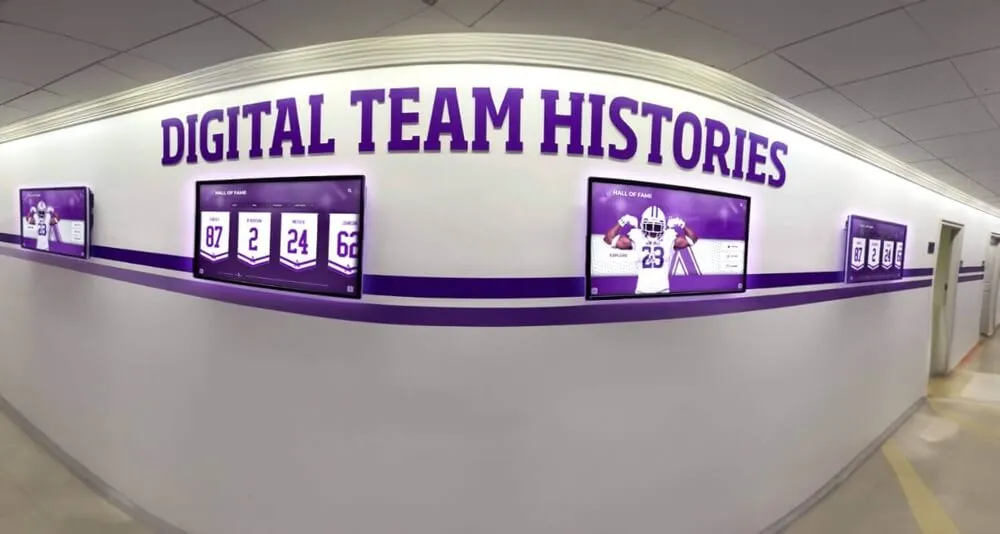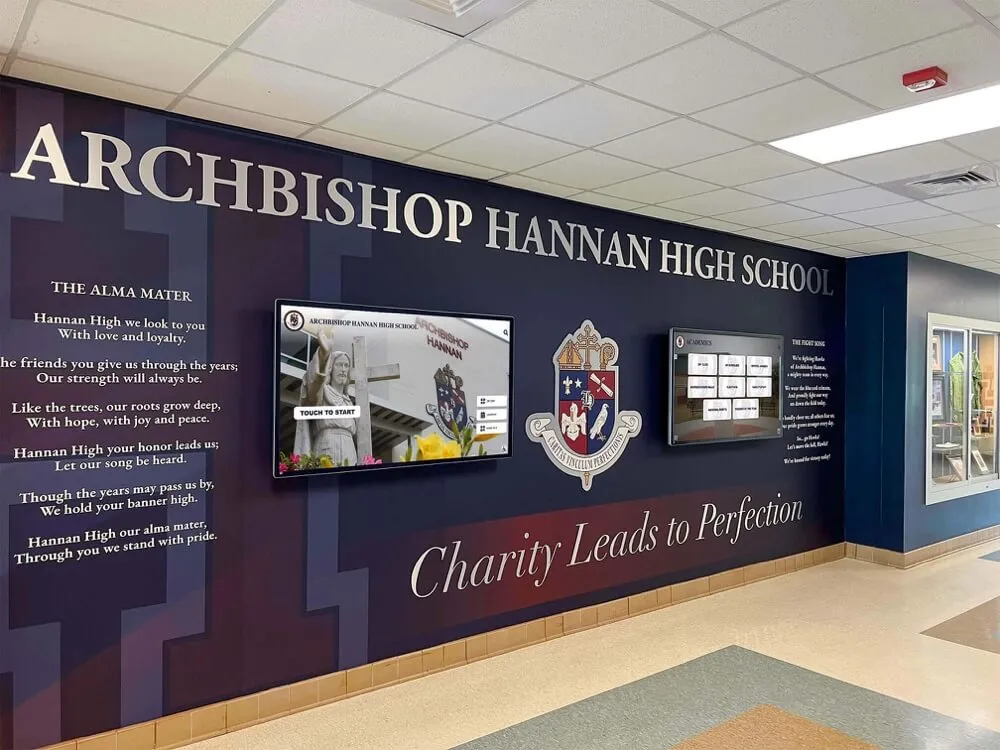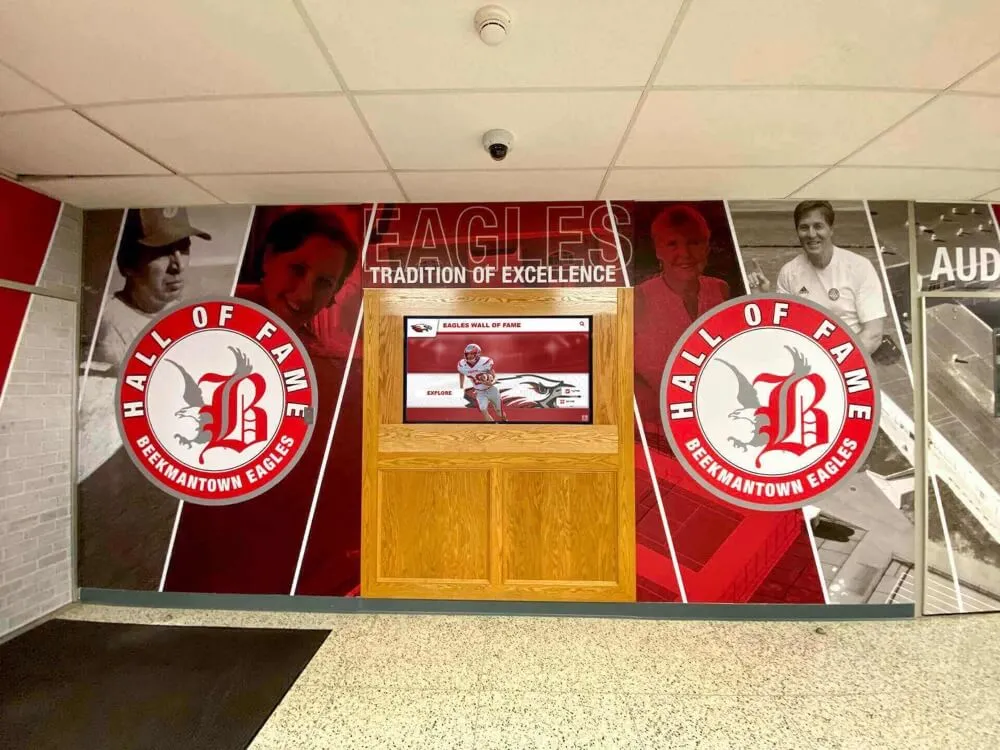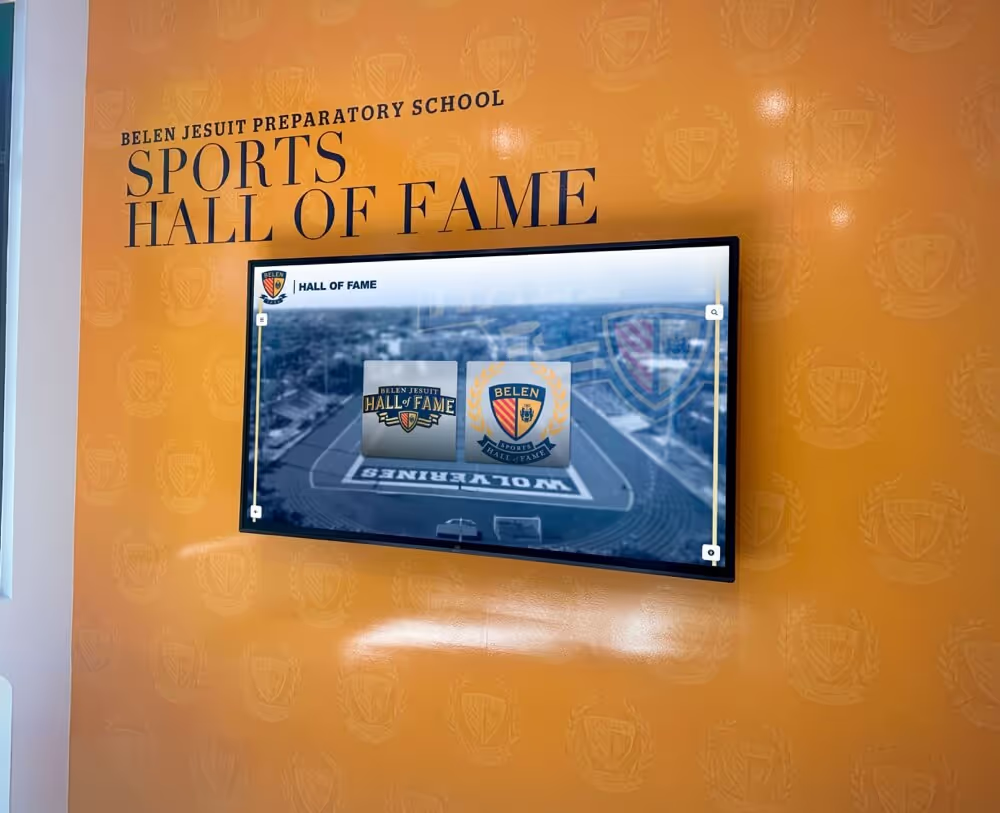




Distinguished country clubs cultivate traditions spanning generations—championship victories earned through competitive excellence, member achievements reflecting dedication and skill, historical milestones defining institutional character, and community connections strengthening club culture. Modern touchscreen recognition displays provide elegant frameworks for celebrating these legacies while creating engaging experiences that inspire current members, impress prospective members, and preserve institutional history for future generations.
Traditional recognition approaches—static plaques, trophy cases, framed photographs—serve important purposes yet face inherent limitations. Physical space constraints restrict what can be displayed, updates require costly fabrication and installation, storytelling depth remains limited to brief text, and accessibility challenges prevent many members from engaging fully with club history. Touchscreen recognition transcends these constraints through unlimited digital capacity, instant content updates, rich multimedia storytelling, and intuitive interfaces enabling discovery and exploration.
This comprehensive guide explores how distinguished country clubs implement touchscreen recognition displays that honor tradition while embracing contemporary presentation excellence. You’ll discover layout strategies balancing elegance with engagement, content approaches celebrating championships and member achievements, design principles ensuring accessibility and sophistication, and technical considerations delivering reliable performance in demanding club environments.
Understanding Country Club Recognition Design Requirements
Before exploring specific layout solutions and technical implementations, examining what makes country club recognition uniquely challenging helps designers create displays authentically reflecting institutional values while serving diverse member constituencies effectively.
Balancing Tradition with Technology
Country clubs maintain deep traditions establishing institutional identity and member pride. Recognition displays must honor these traditions while leveraging technology capabilities that enhance rather than diminish classical elegance and timeless sophistication.
Aesthetic Expectations and Design Sensibility
Distinguished clubs cultivate refined environments where every detail reflects quality, taste, and permanence. Recognition displays become extensions of this aesthetic philosophy through sophisticated color palettes favoring neutrals, subtle brand accents, and timeless combinations avoiding trendy treatments, classical typography employing serif typefaces for formal contexts and elegant sans-serifs for contemporary clarity, premium materials and finishes including hardwood enclosures, bronze or brushed metal accents, and architectural integration, and restrained animation using subtle transitions and dignified motion patterns rather than flashy effects that feel inappropriate for institutional contexts.
Solutions like Rocket Alumni Solutions understand these aesthetic requirements, providing platforms enabling complete customization while maintaining design sophistication appropriate for distinguished private clubs and institutional settings.
Honoring Historical Legacy While Enabling Modern Engagement
Effective displays bridge past and present through archival photography treatment applying consistent restoration and presentation standards that honor historical authenticity, traditional narrative voice maintaining formal yet accessible language befitting institutional communications, hierarchical information architecture respecting achievement significance and historical importance, and contemporary interaction patterns enabling intuitive exploration through gestures and navigation conventions members understand from smartphone and tablet experiences.
This balance ensures technology serves tradition rather than competing with or overwhelming the heritage it celebrates.

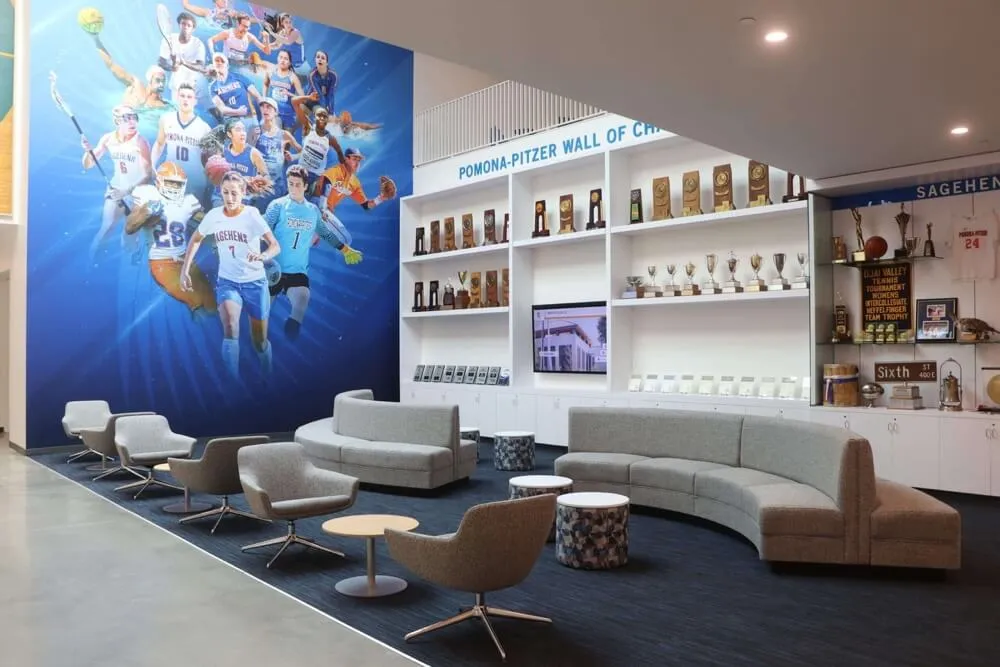
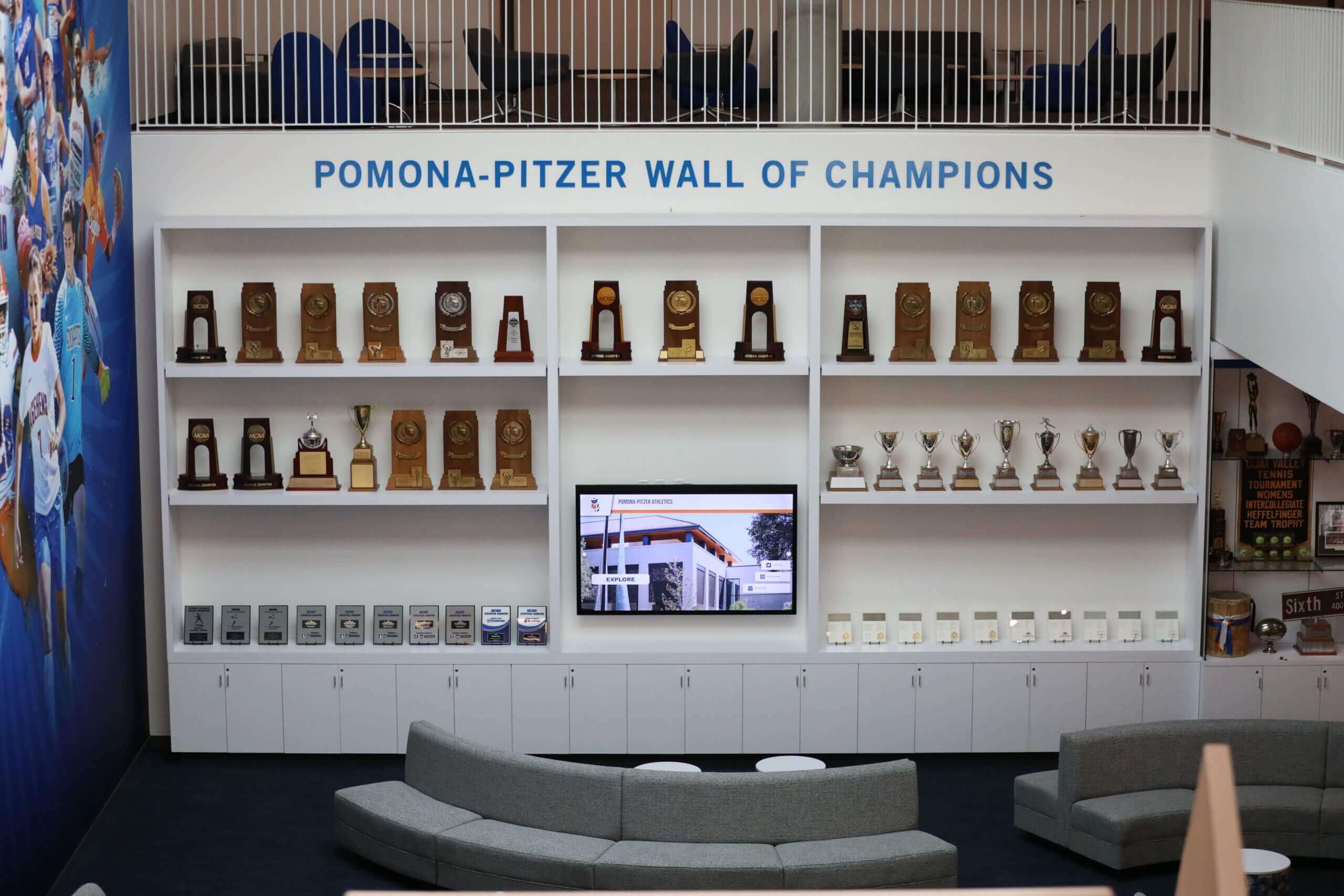
Sophisticated lounge environments integrate touchscreen recognition with traditional trophy displays, creating cohesive experiences honoring achievement through complementary presentation modes
Celebrating Diverse Achievement Categories
Country club recognition encompasses varied accomplishment types requiring systematic organization enabling members to discover content relevant to personal interests and institutional connections.
Championship Recognition and Tournament History
Golf championships represent club identity cornerstones deserving comprehensive celebration through club championship winners with complete historical records spanning establishment through present, member tournament victories including state, regional, and national amateur competitions, team event achievements in interclub matches and league competitions, course records and notable performances establishing competitive benchmarks, and championship flight winners across age divisions and skill categories ensuring broad participation recognition.
Member Milestone Achievements
Beyond competitive excellence, recognize member dedication and service through tenure milestones celebrating longtime members contributing to club culture, leadership service acknowledging board presidents, committee chairs, and volunteer contributors, hole-in-one recognition documenting memorable on-course moments, significant donations supporting capital campaigns and club enhancements, and multi-generational family legacies connecting club history across decades.
Facility and Historical Milestones
Institutional storytelling contextualizes member achievements through founding history explaining club establishment and early development, facility evolution documenting course renovations, clubhouse expansions, and amenity additions, significant events hosting professional tournaments, charitable fundraisers, or celebrity exhibitions, architectural heritage preserving stories about course designers, builders, and visionaries, and community impact highlighting charitable contributions and civic engagement.
These diverse categories require flexible organization systems enabling intuitive navigation while maintaining clear hierarchies reflecting relative importance and member interest.
Understanding comprehensive donor recognition design approaches provides transferable frameworks applicable to country club contexts where member contributions and achievements deserve systematic celebration.
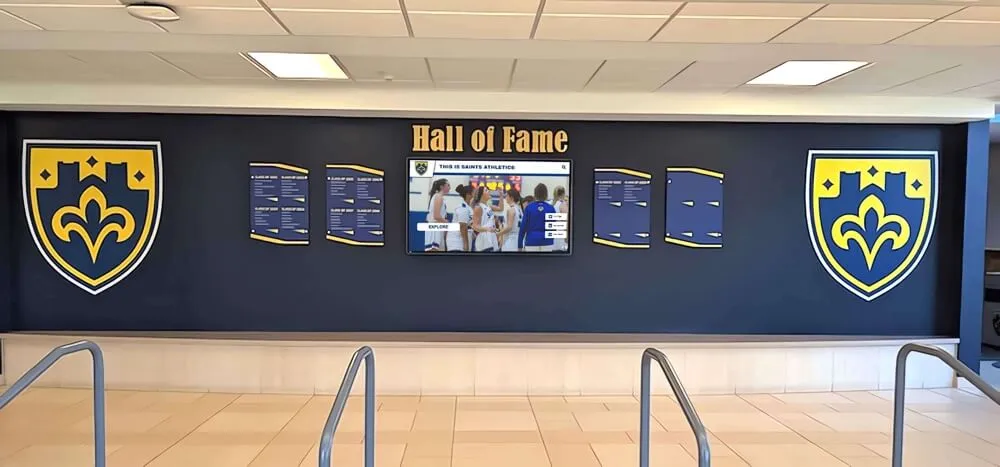
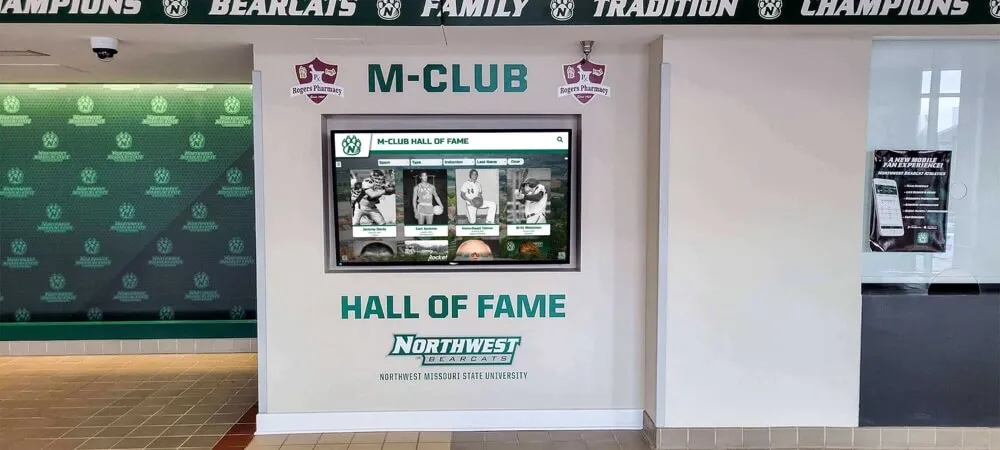
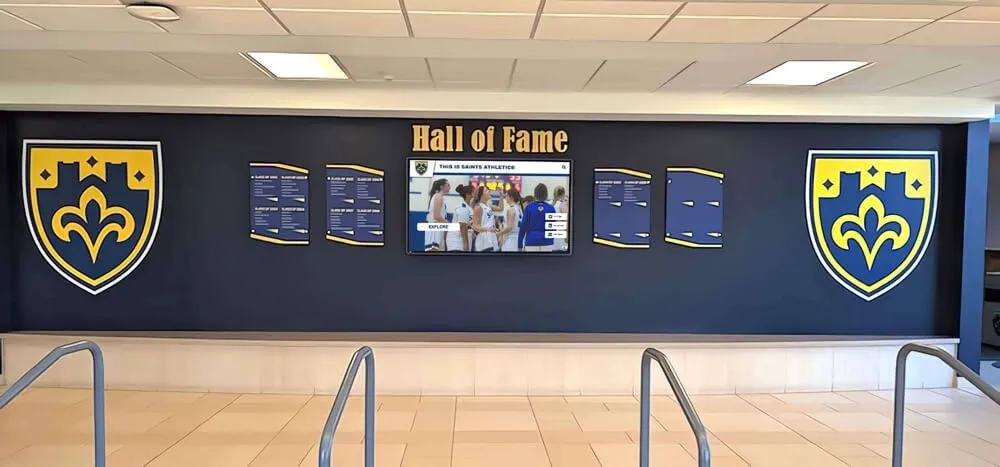
Classical design vocabularies—shields, crests, architectural elements—integrate seamlessly with modern touchscreen displays when approached thoughtfully
Recognition Display Layout Strategies
Sophisticated layouts guide visitors through content intuitively while maintaining visual elegance befitting distinguished club environments and member expectations for quality presentation.
Hero Section and Entry Experience Design
Initial screens establish tone while providing clear pathways toward deeper exploration. Entry experiences must immediately communicate institutional prestige while inviting engagement without requiring instruction or explanation.
Visual Hierarchy and Opening Elements
Structure hero sections through prominent club branding and architectural imagery establishing visual identity, welcoming message inviting exploration and discovery, featured content rotation spotlighting championships, notable members, or historical milestones, and clear navigation options presenting organized pathways toward specific content categories.
Typography should emphasize elegance through generous whitespace preventing crowded appearance, classical typeface pairings balancing formality with readability, hierarchical sizing directing attention toward most important elements first, and subtle color treatments favoring neutrals with strategic accent application maintaining sophistication.
Attraction Loop for Passive Display Mode
When displays sit idle between member interactions, attraction loops maintain visual interest through slow-paced championship photography rotation showcasing historical victories and memorable moments, elegant typography animations presenting notable quotes, facts, or achievements, subtle motion design using parallax effects or gentle transitions, and periodic call-to-action prompts inviting passing members to touch and explore.
These passive modes should feel appropriate as ambient club artwork rather than aggressive digital signage demanding attention—refined and understated rather than flashy or commercial.
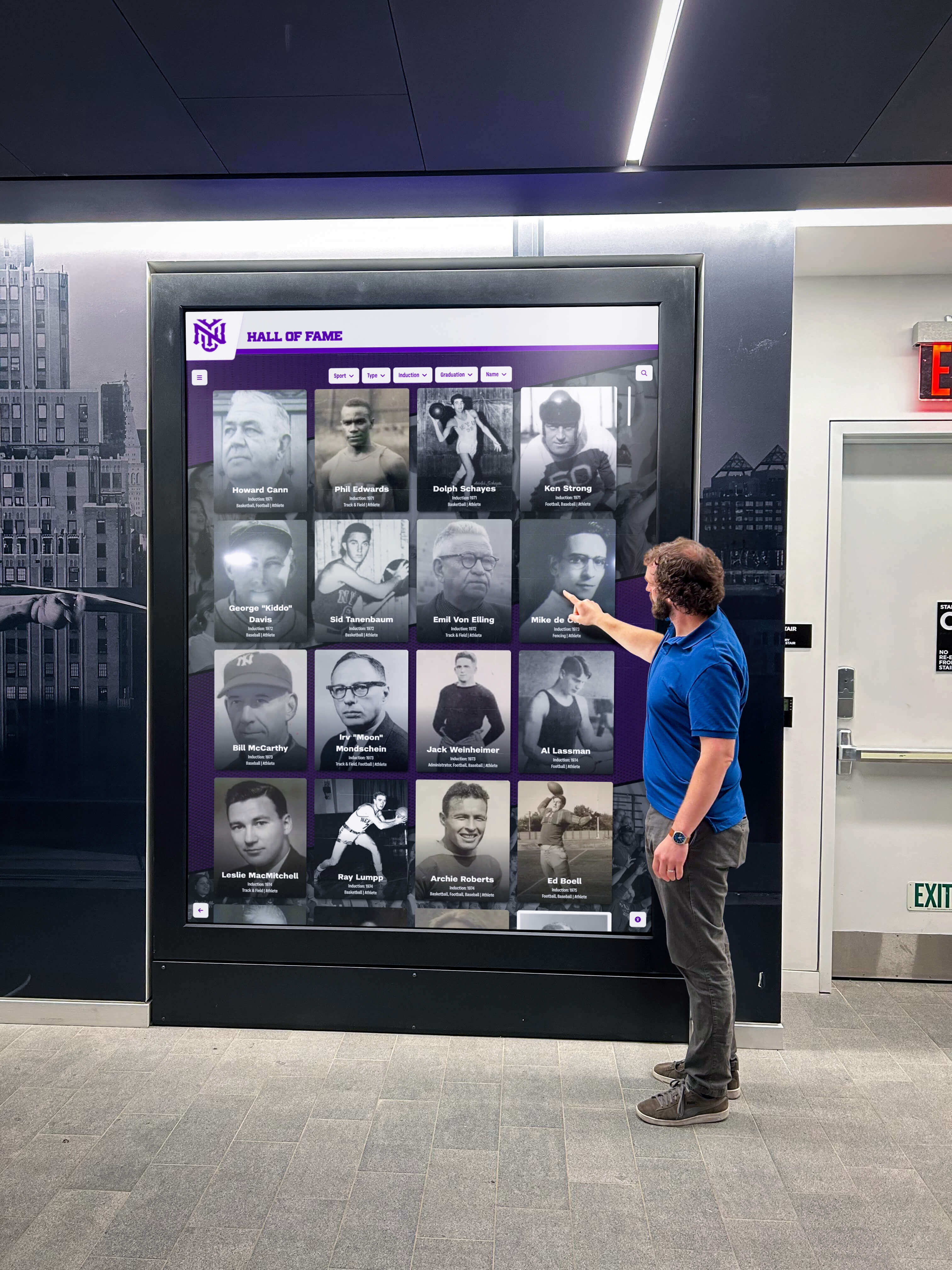
Strategic corridor placement near dining rooms, locker rooms, or gathering spaces ensures maximum visibility while creating natural discovery moments during routine club access
Championship and Tournament Display Modules
Golf championship recognition requires organized presentation celebrating competitive achievement while providing historical context and statistical depth appealing to members invested in club competitive traditions.
Championship Winner Grid Layouts
Present multi-decade championship records through consistent card modules showing year, winner name, flight or division, and optional score or margin of victory, color-coded categories distinguishing club championship, senior championship, women’s championship, and other competitive divisions, decade-based organization enabling chronological browsing and era exploration, and touch-to-expand functionality revealing detailed tournament information, runner-up acknowledgment, and memorable moments.
Grid layouts balance information density with comfortable touch target sizing—typically 280×320 pixel cards with 20-24 pixel gutters ensuring adequate separation while maximizing entries per screen.
Individual Championship Profile Depth
When members select specific championship years, detailed screens should provide tournament context including field size, weather conditions, and competitive circumstances, round-by-round scoring when available, notable performances by other competitors, photography from awards ceremonies or competition moments, and connections to broader club history or member legacies.
This depth transforms simple winner lists into compelling storytelling that engages members emotionally while documenting institutional excellence comprehensively.
Tournament Leaderboard Formats
For prestigious club events, historical leaderboards present complete final standings through structured table layouts showing finishing position, competitor name, total score, and margin from winner, filterable views enabling exploration by decade, division, or specific years, and comparative analysis tools highlighting record performances or notable competitive progressions.
Leaderboard presentations particularly engage competitive members who appreciate statistical detail and historical comparison revealing how their performances measure against club legends and contemporary competitors.
Exploring golf team recognition design strategies offers additional frameworks applicable to country club championship celebration and competitive achievement display.
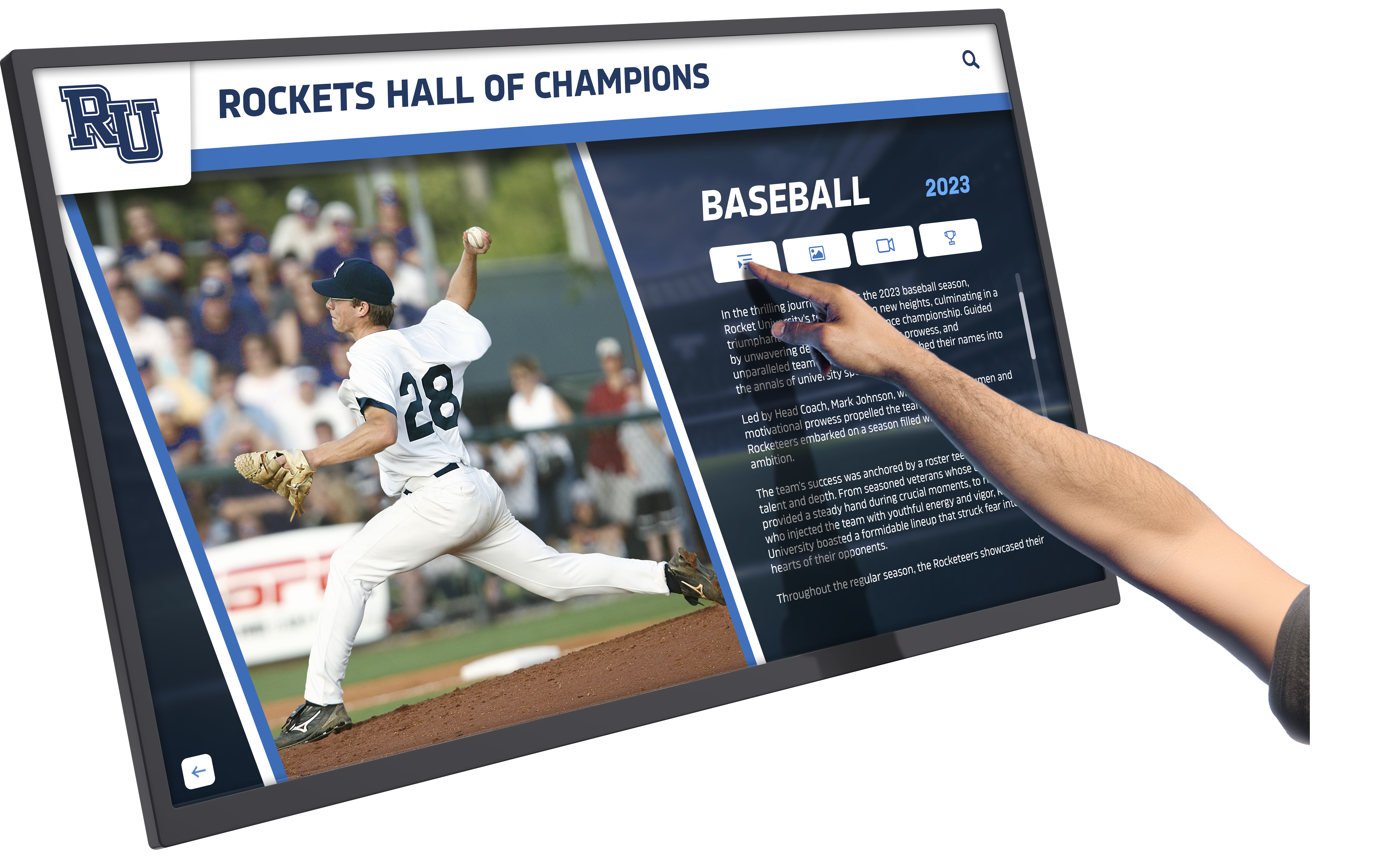
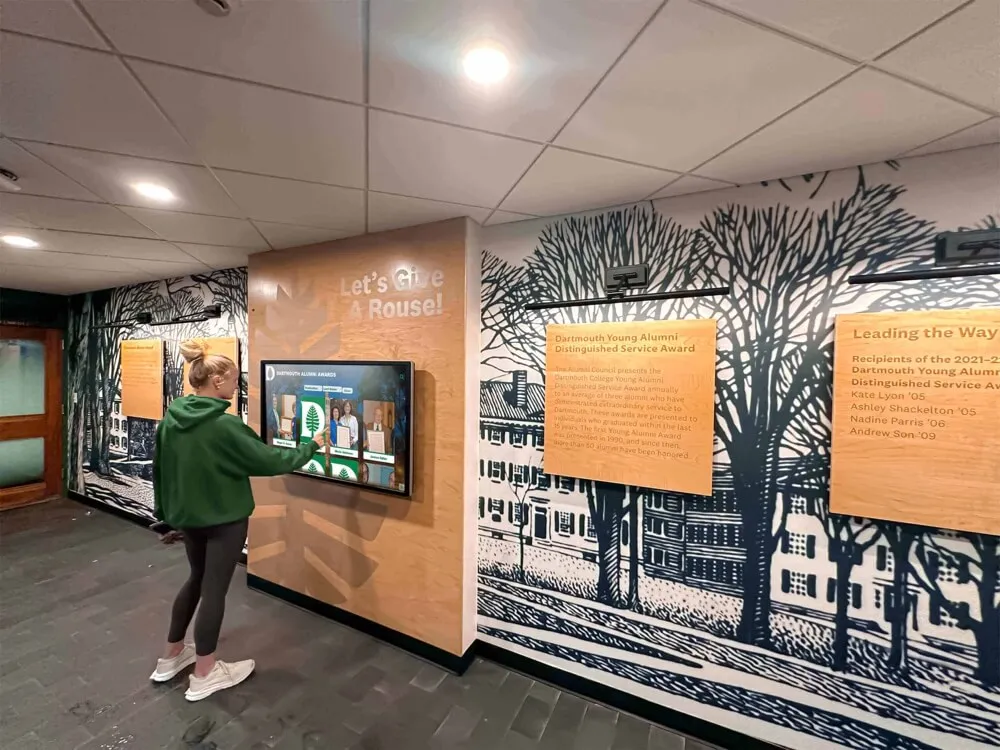
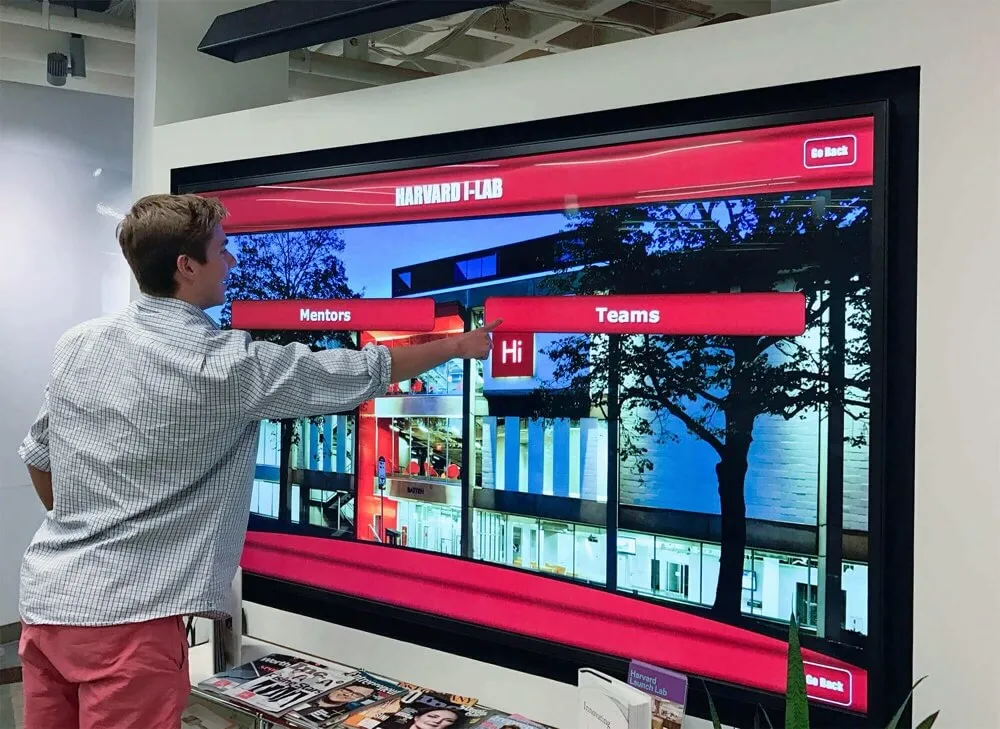
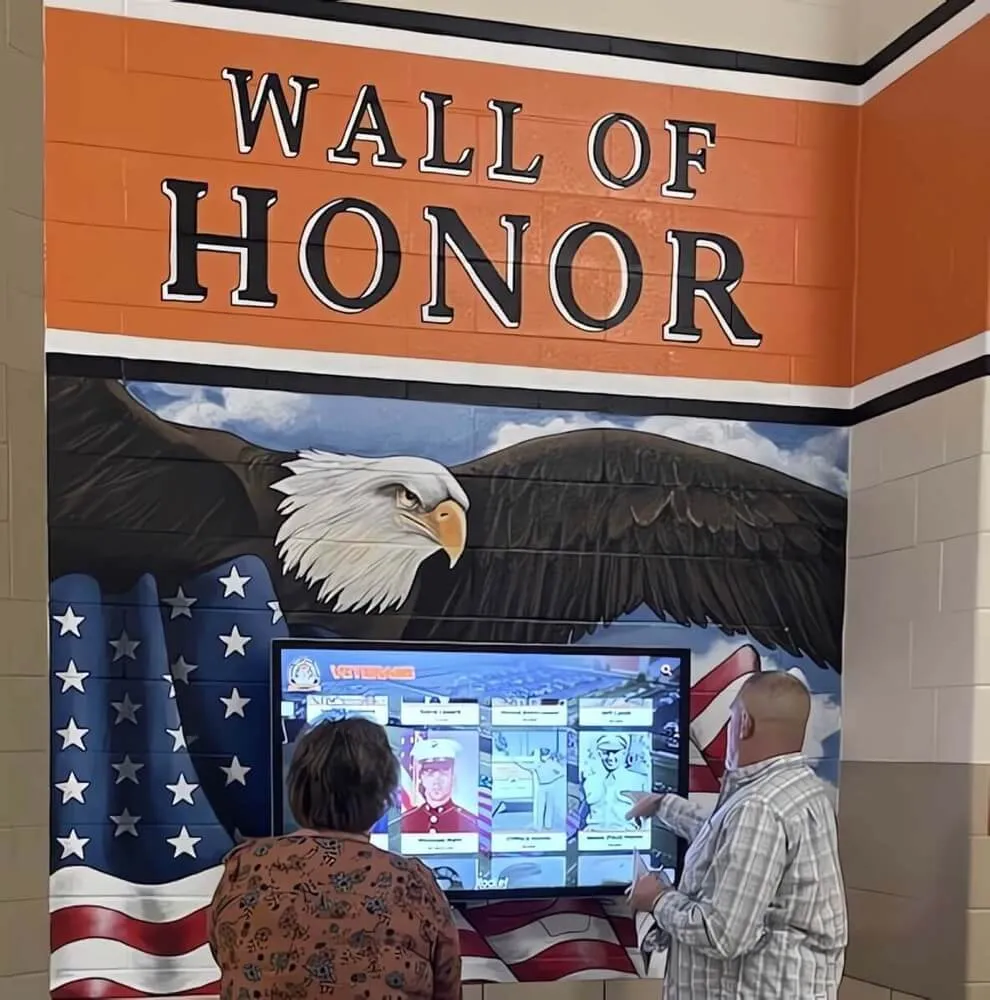
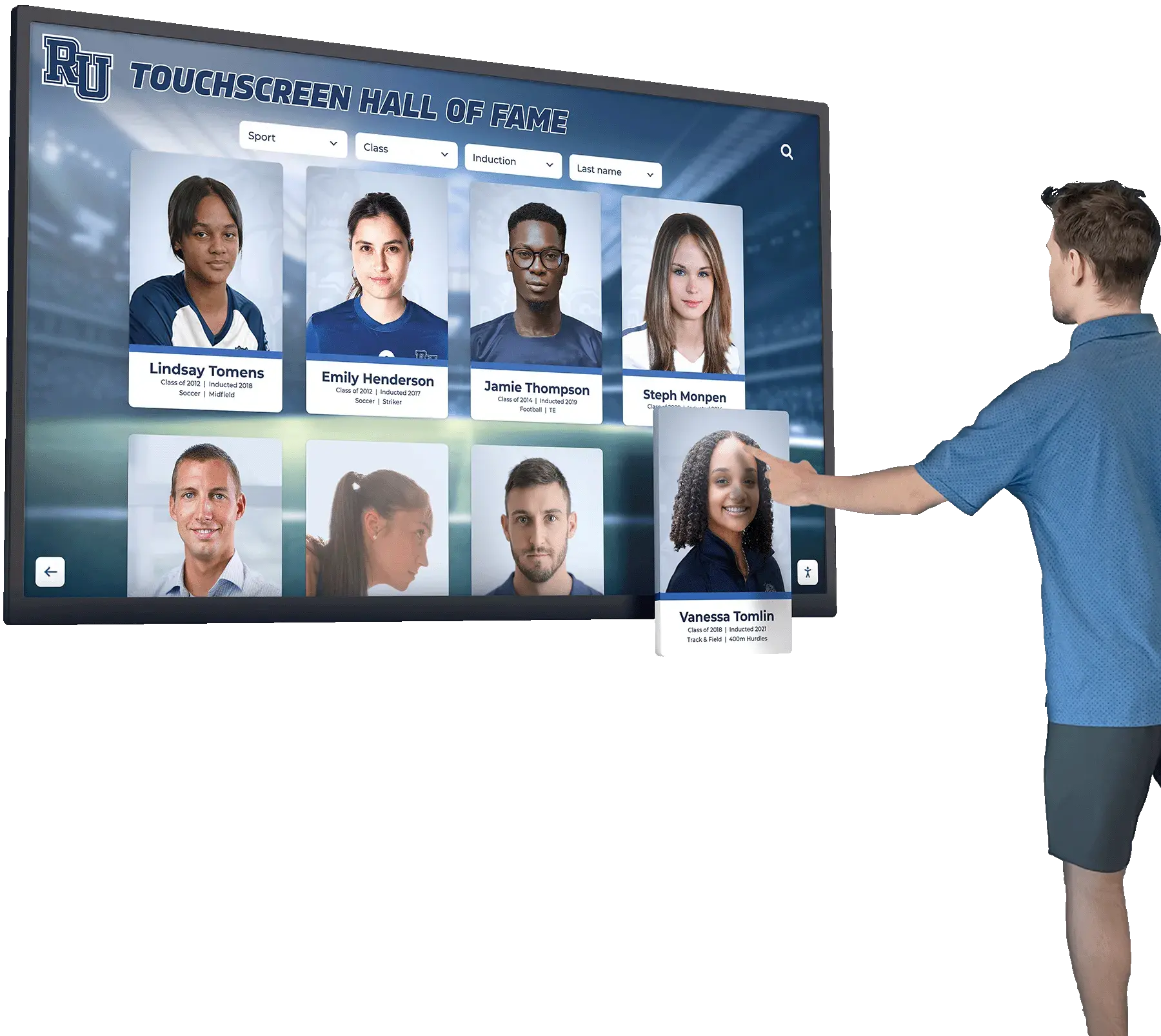
Intuitive touch interactions enable members to explore championship details, view photographs, and discover connections at their own pace without staff assistance
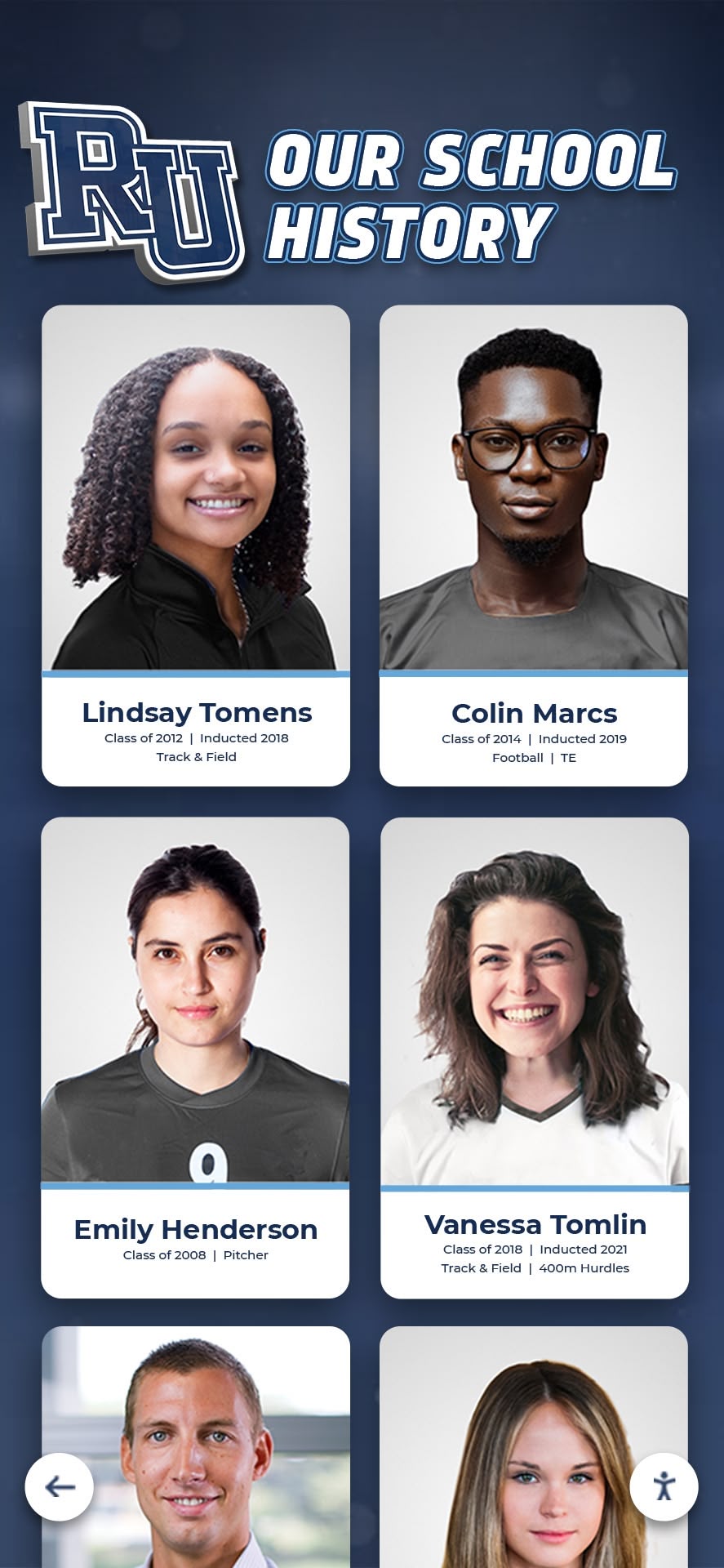
Card-based layouts present multiple honorees simultaneously while maintaining individual recognition dignity and enabling efficient browsing
Member Achievement and Milestone Recognition
Beyond championship victories, clubs recognize varied member contributions and accomplishments deserving systematic celebration and accessible presentation.
Tenure and Long-Service Recognition
Honor member dedication through milestone member directories organized by membership duration (25, 40, 50+ years), profile cards including joining year, family connections, and notable club service, generational family recognition celebrating multi-decade member legacies, and memorial sections acknowledging deceased members who shaped club character and culture.
These recognition modules strengthen institutional continuity while helping newer members appreciate the depth of community and tradition they join.
Leadership and Service Acknowledgment
Celebrate volunteer contributions through board president timelines presenting chronological leadership succession with term highlights, committee leadership recognition organized by function (greens, membership, social, finance), capital campaign donor acknowledgment honoring members funding facility improvements, and special achievement awards including member-of-the-year, distinguished service, or other institutional honors.
Service recognition demonstrates that club excellence requires more than competitive skill—governance, stewardship, and community building prove equally vital to institutional health and member satisfaction.
Hole-in-One Registry and Memorable Shots
Golf’s magical moments deserve dedicated celebration through comprehensive hole-in-one registry documenting date, hole number, yardage, club used, and witnesses, photography of members with scorecards or certificates, statistical analysis showing frequency by hole, seasonal patterns, or historical trends, and optional video submissions when members capture achievement moments.
These lighter recognition elements create conversation starters while documenting memorable experiences that become permanent parts of personal golf legacies.
Understanding athletic recognition program design provides systematic approaches applicable across competitive and service recognition contexts in private club environments.
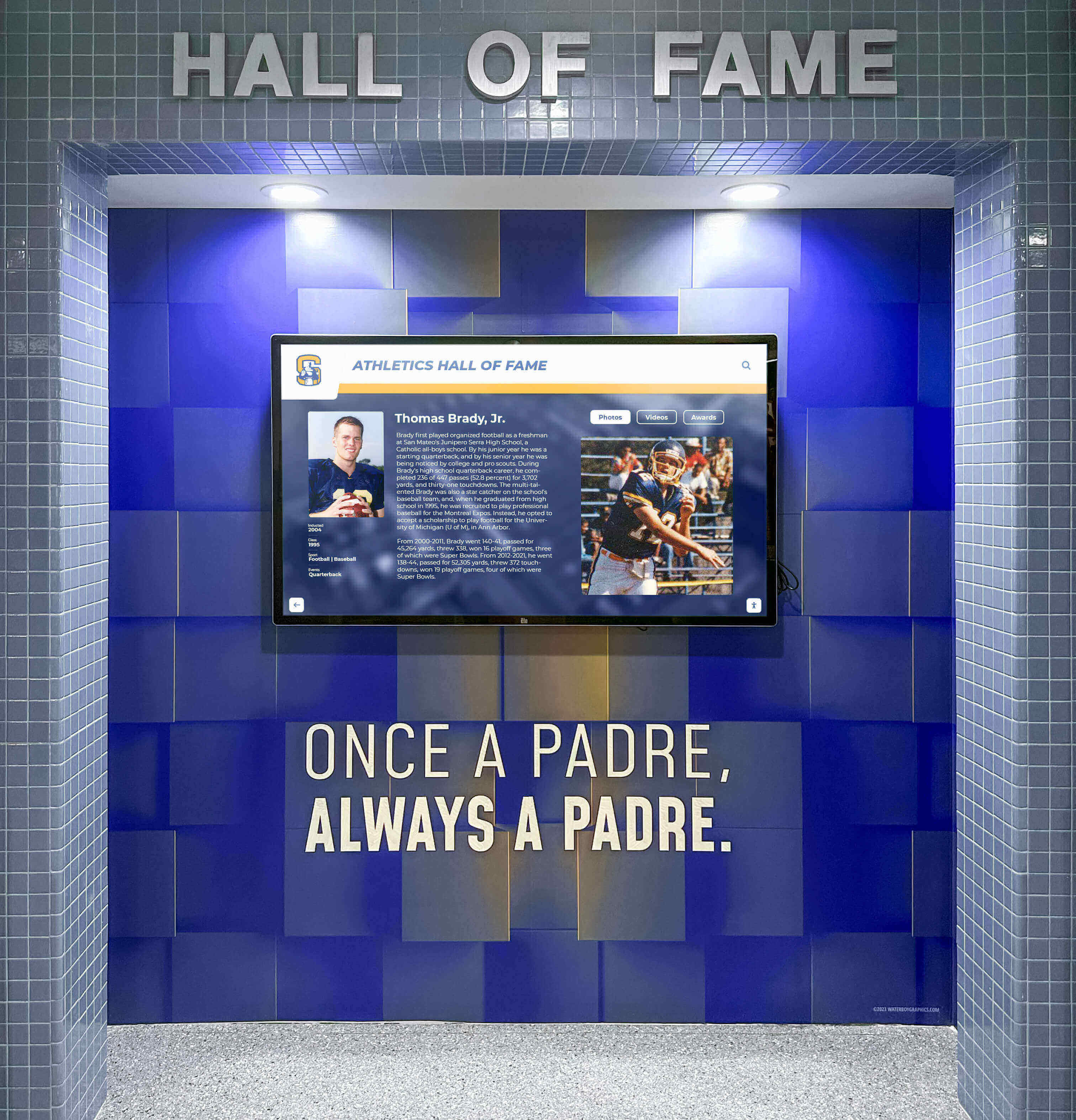
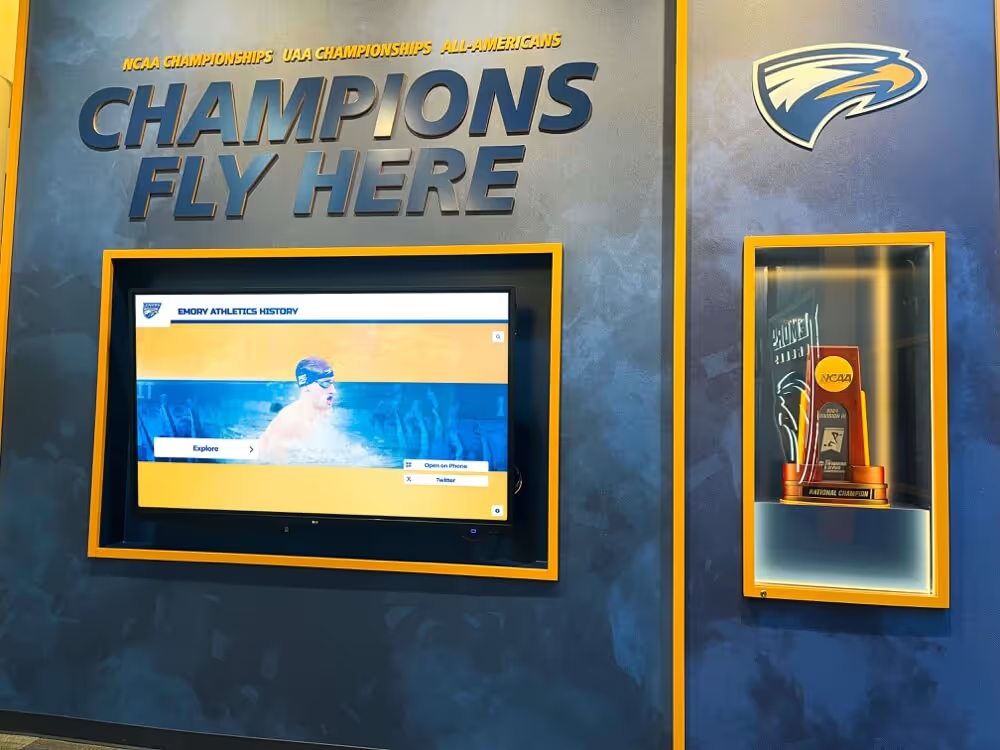
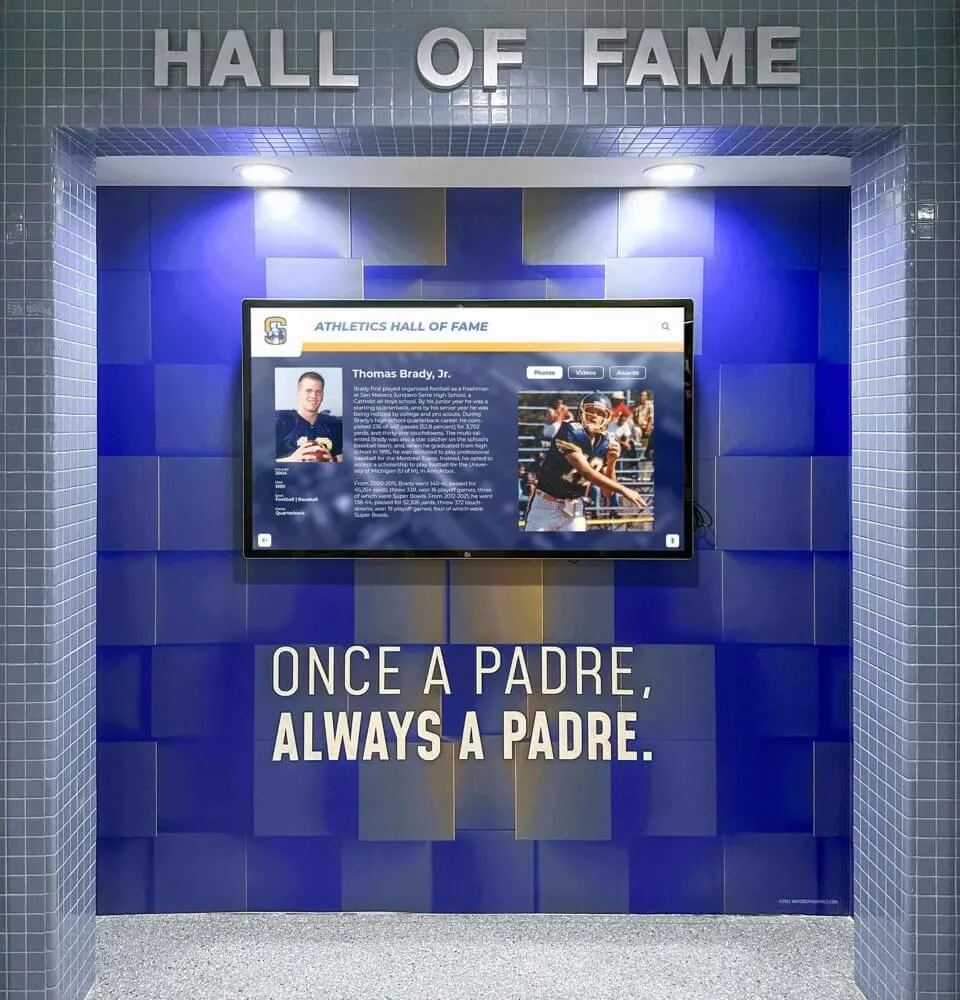
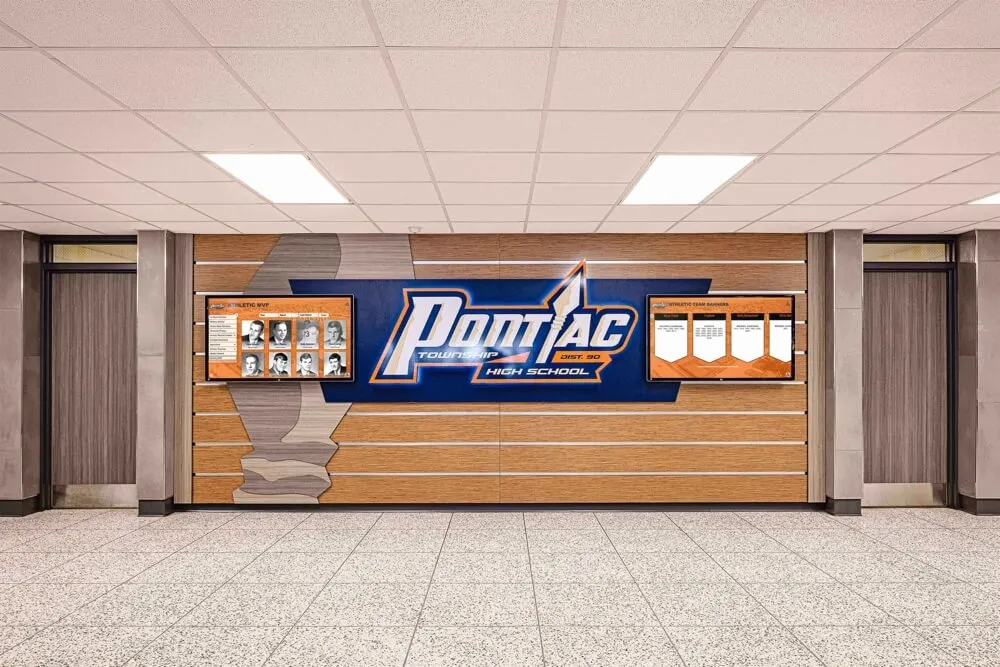
Architectural integration through thoughtful mounting, complementary finishes, and strategic placement ensures recognition displays feel permanent rather than temporary technology installations
Content Development and Historical Storytelling
Compelling content transforms technology platforms into meaningful experiences celebrating institutional legacy while engaging members emotionally through narratives connecting past excellence to present community and future tradition.
Photography Standards and Historical Archive Curation
High-quality visual content elevates recognition from basic information documentation to compelling celebration of club heritage and member achievement.
Contemporary Photography Specifications
Maintain professional standards through formal portrait photography using consistent lighting, backgrounds, and composition, candid competition moments capturing authentic emotion and concentration during tournament play, awards ceremony documentation preserving recognition moments and celebratory traditions, facility photography showcasing course beauty, clubhouse elegance, and architectural distinction, and event coverage documenting galas, member celebrations, and community gatherings.
Professional photography requires investment yet dramatically enhances recognition impact—members respond to visual quality reflecting the institutional excellence and sophistication they associate with distinguished club membership.
Historical Archive Digitization and Restoration
Preserve irreplaceable club history through systematic photograph scanning at 600 dpi minimum ensuring detail preservation, professional restoration addressing tears, fading, stains, or damage, consistent color correction maintaining period authenticity while improving presentation, metadata documentation capturing dates, subjects, events, and contextual information, and organized digital asset management enabling efficient retrieval and display presentation.
Historical materials often exist only as fragile prints in storage boxes—digitization protects institutional memory while making history accessible for recognition displays, publications, and member engagement initiatives.
Video Content and Oral History Integration
When budget permits, video enhances storytelling through member interviews capturing personal reflections on club history, memorable experiences, and meaningful relationships, course flyovers and facility tours providing comprehensive visual documentation, tournament coverage showing competitive excellence and club event atmosphere, and anniversary celebrations preserving milestone moments and community gatherings.
Video particularly resonates with younger members while creating emotional connections impossible through static content alone.
Comprehensive digital hall of fame design approaches demonstrate how systematic content development creates engaging recognition experiences across varied institutional contexts.
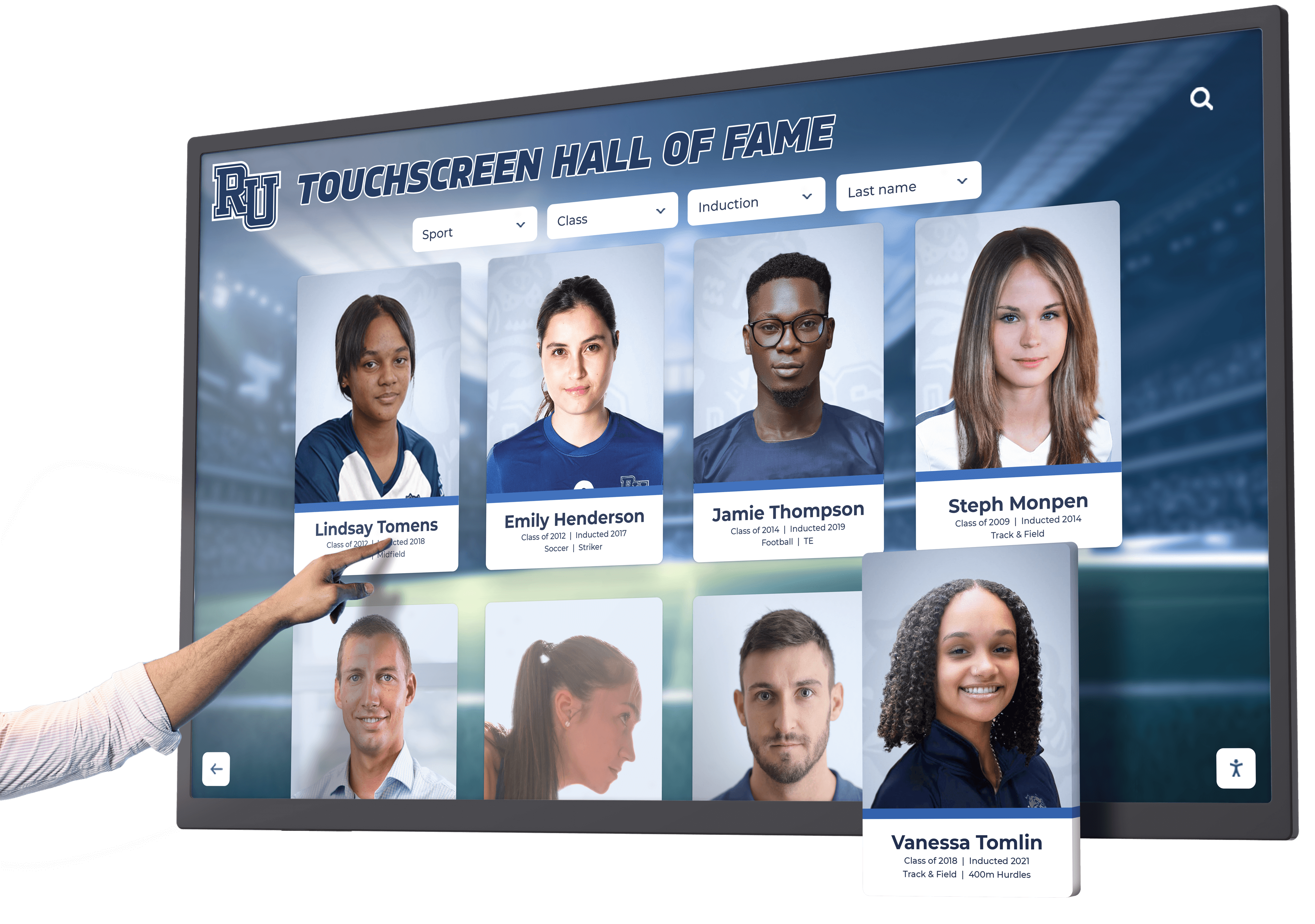
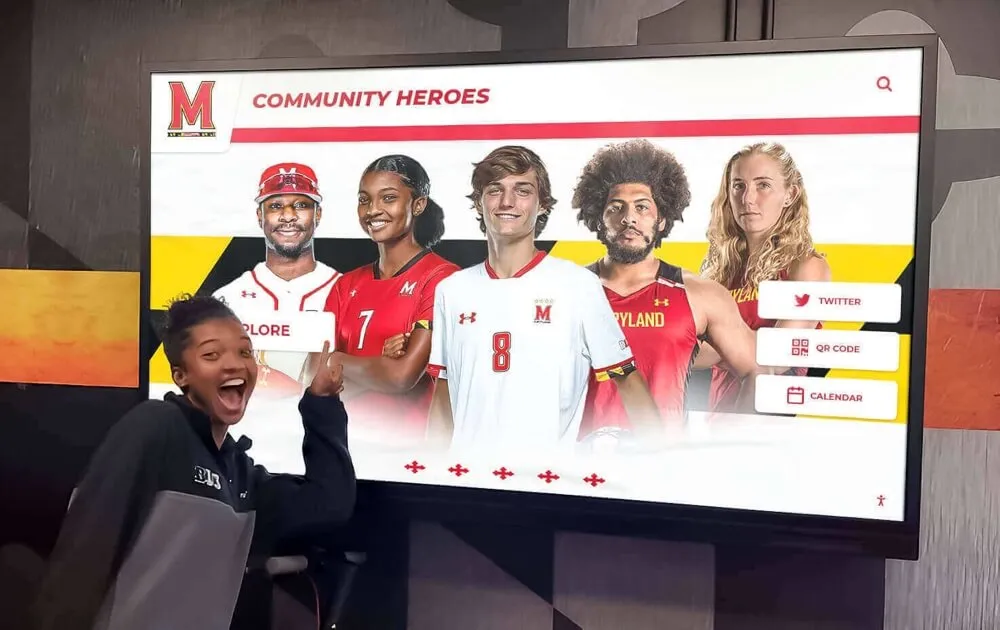
Portrait-based navigation enables quick visual scanning while maintaining recognition dignity appropriate for distinguished member celebration

Dedicated recognition spaces with comfortable seating encourage extended visits and group exploration, deepening member engagement with institutional excellence
Writing Member Profiles and Achievement Narratives
Thoughtful writing transforms recognition from simple name listings into compelling storytelling that honors achievements comprehensively while engaging readers emotionally and intellectually.
Profile Content Components
Comprehensive member profiles should include essential biographical information covering full name, membership start date, family connections, and professional background, competitive achievement documentation listing championships won, significant tournament performances, and notable scores or records, service and leadership contributions highlighting board service, committee leadership, or volunteer dedication, personal reflections or quotes explaining what club membership means and favorite memories, and post-competitive involvement describing continued engagement as senior member, mentor, or club ambassador.
Profile depth should scale appropriately—championship winners and long-tenured leaders deserve more extensive treatment than newer members or single achievement recognition.
Institutional Voice and Tone Guidelines
Maintain consistency through formal yet warm voice balancing dignity with approachability, third-person narrative for objective achievement documentation, first-person quotes adding personal authenticity and emotional resonance, precise language avoiding clichés while describing accomplishments specifically, and reverent tone when discussing deceased members or historical figures deserving memorial respect.
Voice consistency reinforces institutional brand while ensuring recognition feels cohesive rather than haphazardly assembled from varied writing styles and quality levels.
Historical Context and Era Narratives
Help members appreciate achievement within period context through competitive landscape description explaining championship difficulty or field strength, facility evolution notes describing course conditions during historical eras, cultural context addressing how golf, club culture, or societal factors influenced competition, and comparative perspective showing how performances measured against contemporaries and subsequent generations.
Context prevents modern members from underestimating historical achievement or assuming current competitive standards apply across all eras—recognizing that golf, equipment, and competitive circumstances evolved substantially across decades.
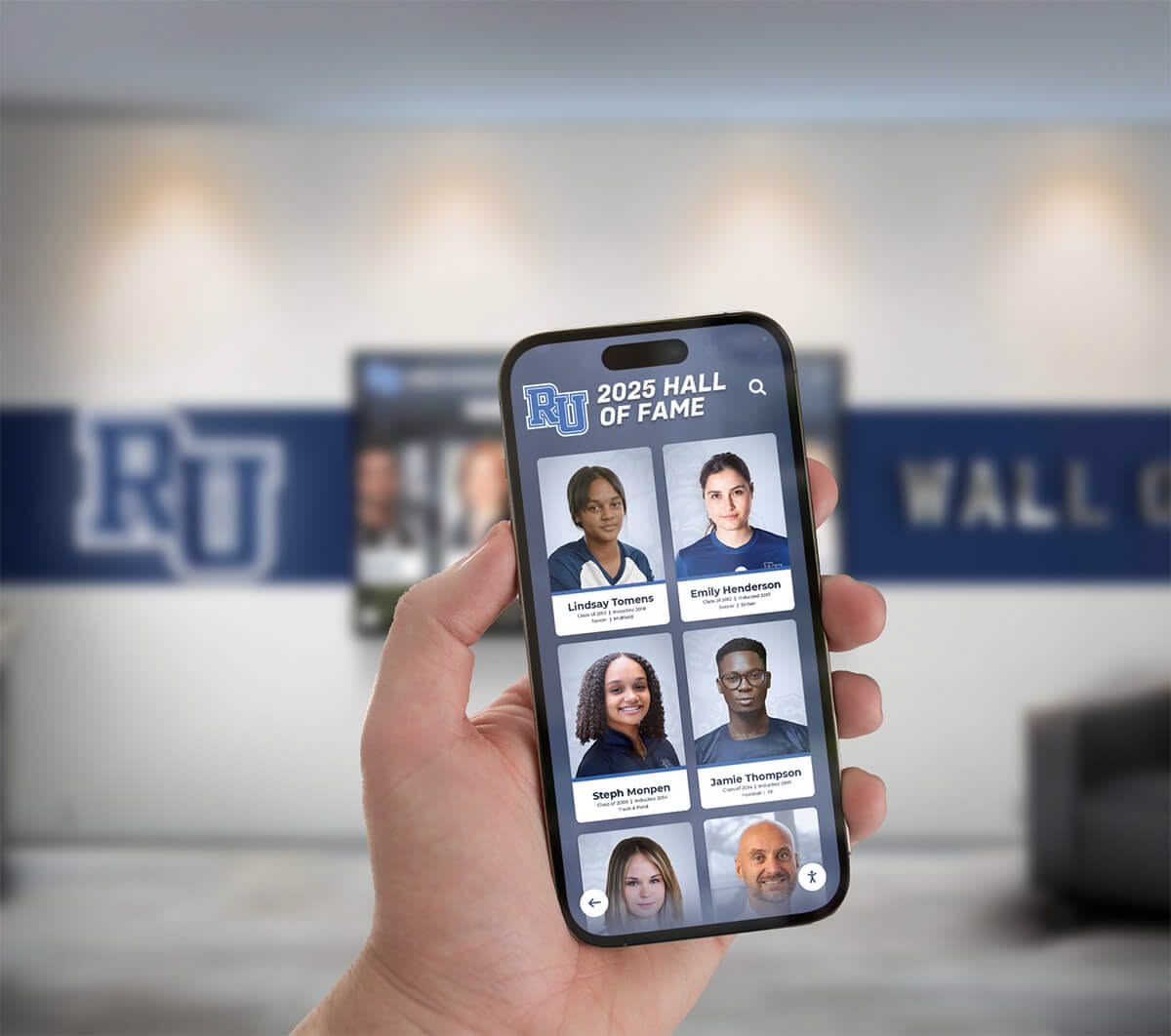
Cloud-based platforms enable consistent experiences across touchscreen kiosks, mobile devices, and web browsers, allowing members to explore club history anywhere
User Experience and Interaction Design Considerations
Sophisticated UX ensures recognition displays remain intuitive and engaging while respecting member preferences for elegant simplicity over complexity or unnecessary features that complicate rather than enhance experiences.
Navigation Architecture and Information Hierarchy
Organize content through clear structures enabling efficient discovery while accommodating varied member interests and exploration preferences.
Primary Navigation Patterns
Provide multiple discovery pathways through prominent search functionality enabling direct name lookup for members seeking specific individuals, category browsing organized by achievement type (championships, service, milestones), chronological exploration filtering by decade or specific years, and featured content rotation highlighting notable members, recent achievements, or historical anniversaries.
Multiple pathways accommodate different member behaviors—some know exactly who they’re seeking while others prefer browsing and serendipitous discovery.
Hierarchical Content Organization
Structure information through top-level categories representing major recognition areas (Championships, Leadership, History), secondary divisions breaking categories into specific types (Club Championship, Senior Championship, Women’s Championship), tertiary filters enabling refinement by decade, flight, or other criteria, and individual profile depth providing comprehensive information about specific achievements or members.
Clear hierarchy prevents overwhelming members with flat, disorganized lists while maintaining intuitive relationships between content at different organizational levels.
Persistent Navigation Elements
Maintain orientation throughout exploration through home button returning to entry screen, search icon providing constant access to direct lookup, breadcrumb trails showing current location within content hierarchy, and back/forward navigation enabling intuitive movement between related profiles or categories.
Persistent elements prevent members from feeling lost within complex content structures while reducing cognitive load required to understand navigation options.
Exploring touchscreen user experience design principles reveals research-backed approaches maximizing engagement while maintaining accessibility and satisfaction across diverse user populations.

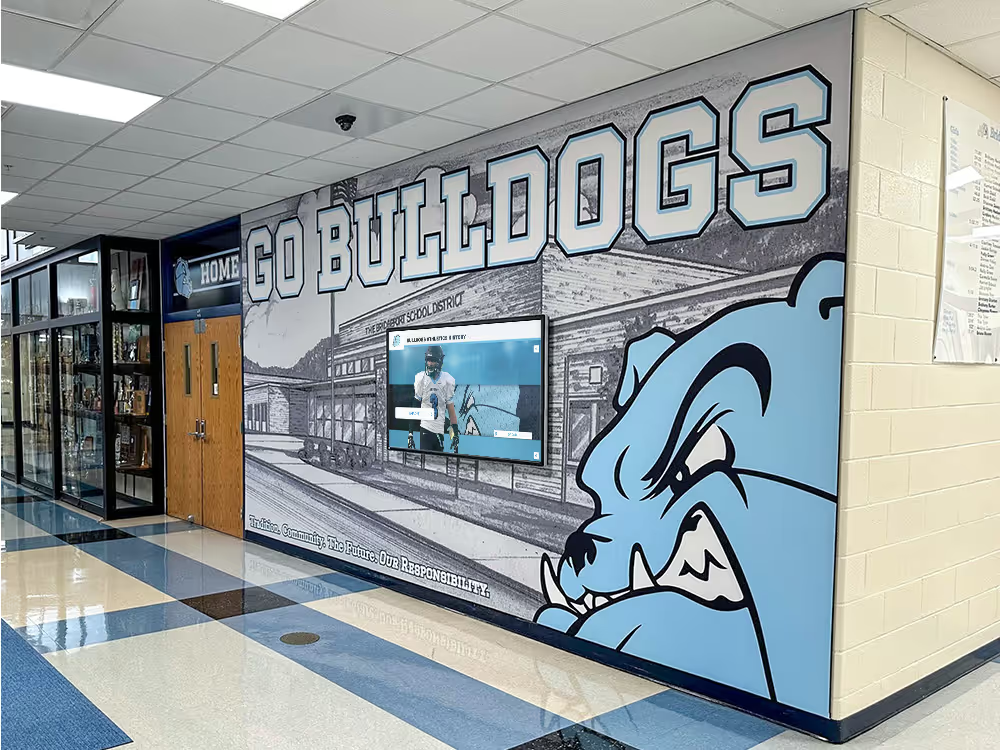
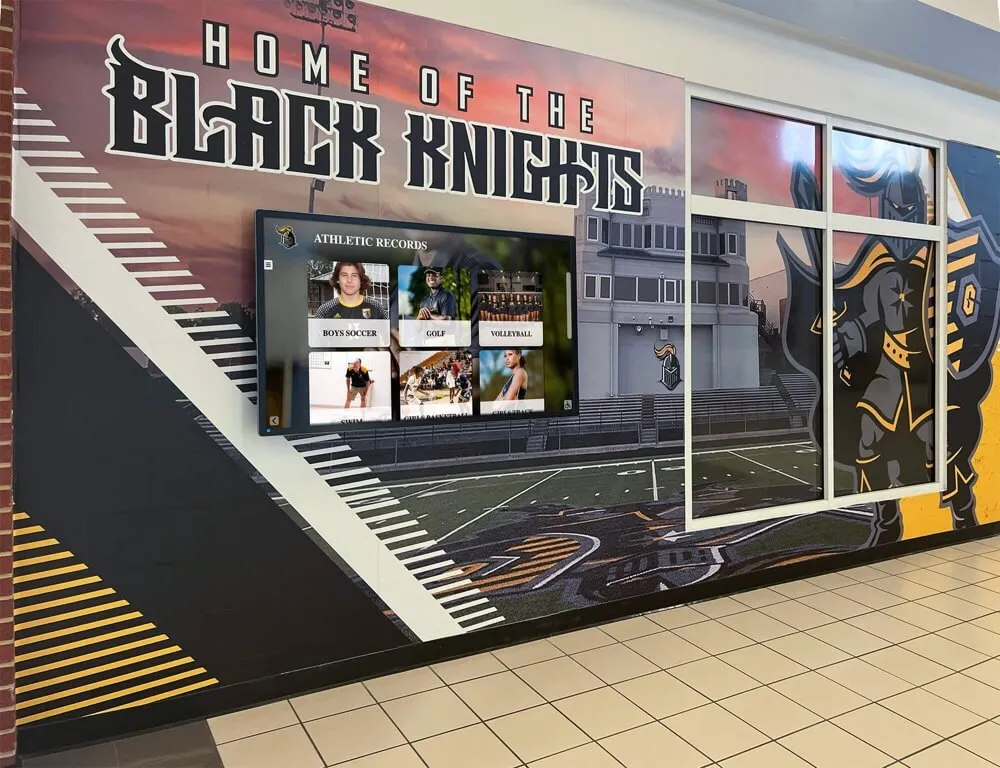
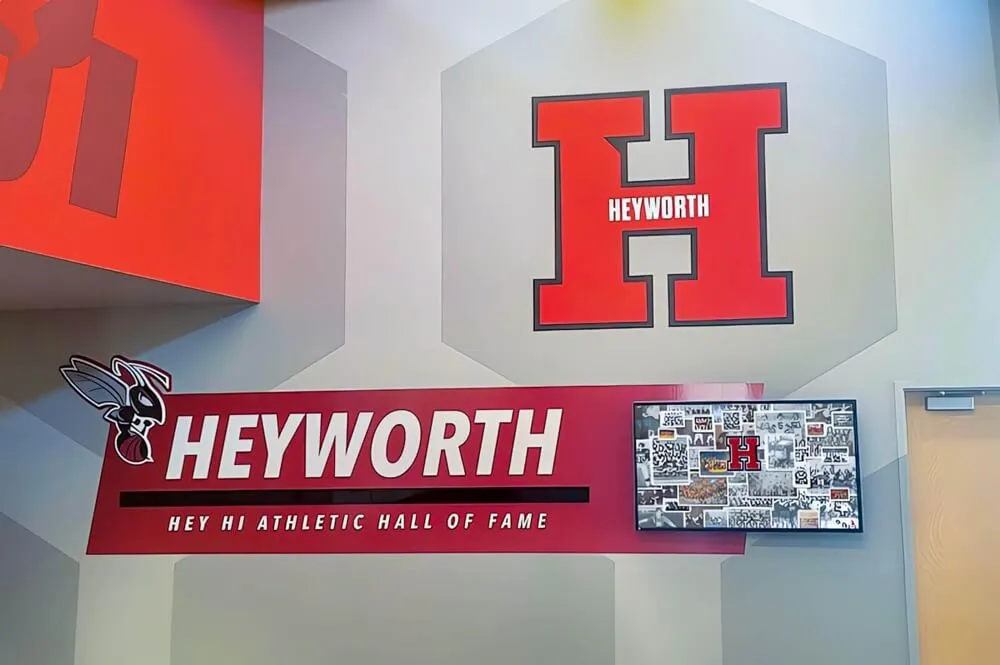
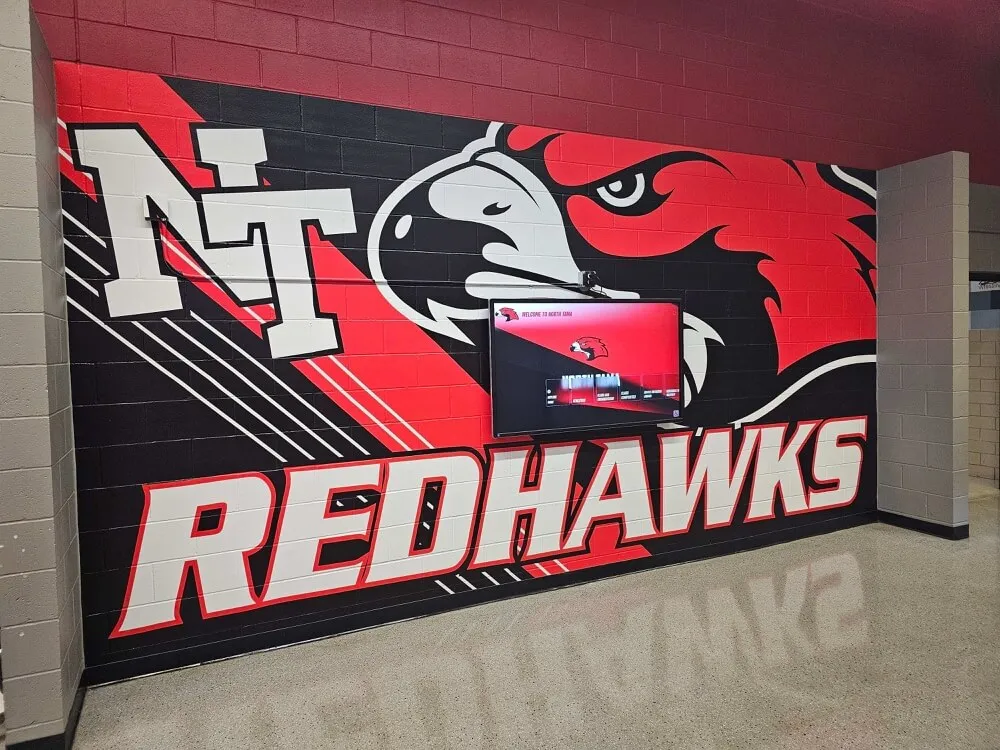
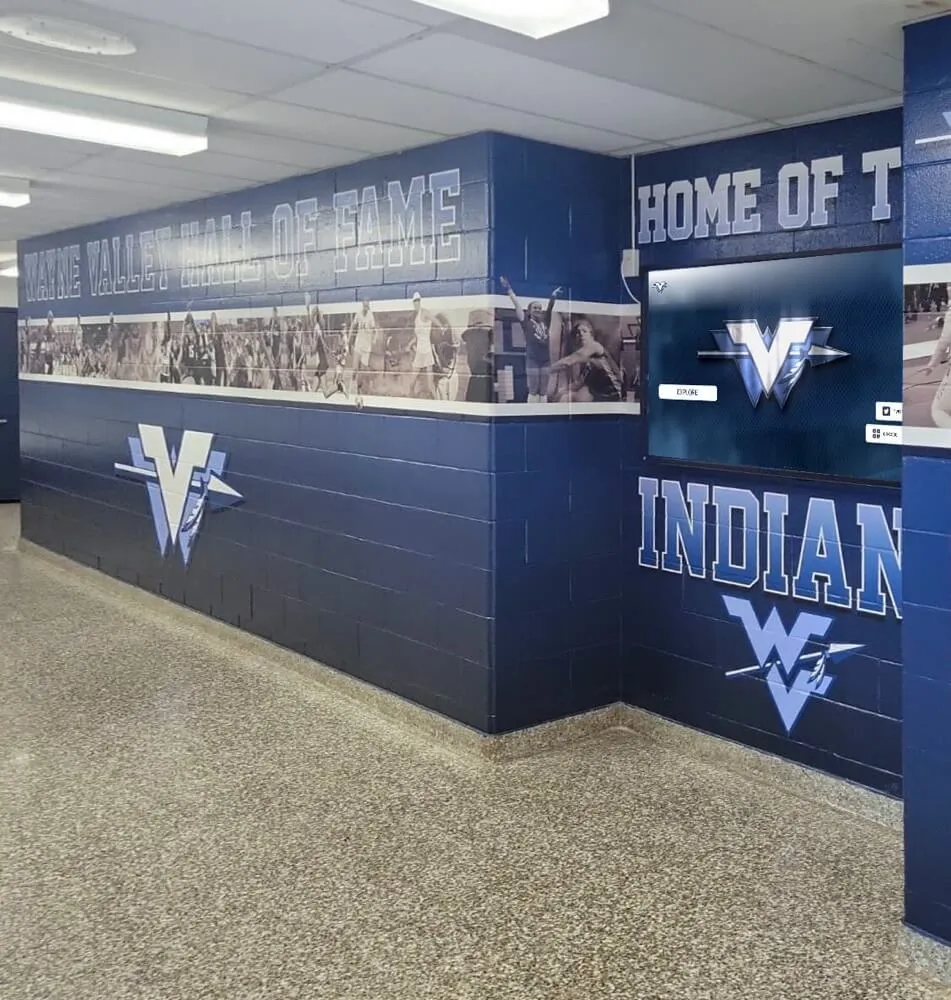
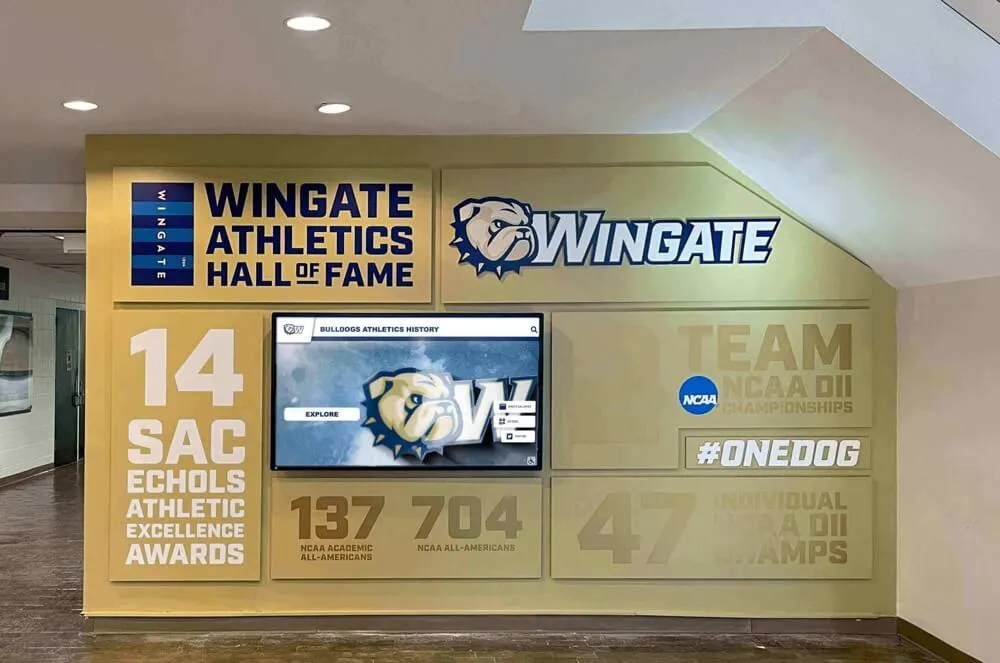
Coordinated design between touchscreen displays and surrounding environmental graphics creates cohesive experiences reinforcing brand identity and institutional pride
Accessibility and Inclusive Design Standards
Effective recognition serves all members regardless of physical abilities, ensuring ADA compliance and universal design principles shape every layout and interaction decision.
Physical Accessibility Requirements
Touchscreen installations must accommodate wheelchair access through appropriate mounting heights (center screen 48 inches from floor maximum), adequate clear floor space (30x48 inches minimum) for wheelchair approach, reach zone compliance ensuring controls fall within accessible ranges, and approach angles allowing comfortable screen viewing and touch interaction from seated positions.
Physical accessibility isn’t optional—it’s ethical imperative and legal requirement that thoughtful installation planning addresses proactively rather than retrofitting after complaints or citations.
Visual Accessibility Standards
Design interfaces supporting varied visual abilities through high contrast ratios (4.5:1 minimum for body text, 3:1 for large text) meeting WCAG 2.1 AA standards, generous text sizing (28-32 point minimum) enabling comfortable reading from standing distance, clear typography using highly-legible typefaces avoiding decorative treatments that reduce readability, and optional text scaling allowing members to increase sizes when needed.
Cognitive Accessibility Considerations
Support intuitive understanding through consistent layouts maintaining predictable information placement across screens, clear labeling using straightforward language avoiding institutional jargon, obvious interactive elements distinguishing touchable areas from static content, and simple navigation patterns following conventions members understand from smartphone and tablet experiences.
Cognitive accessibility benefits everyone—intuitive interfaces require less mental effort regardless of ability, creating more satisfying experiences that encourage extended engagement.
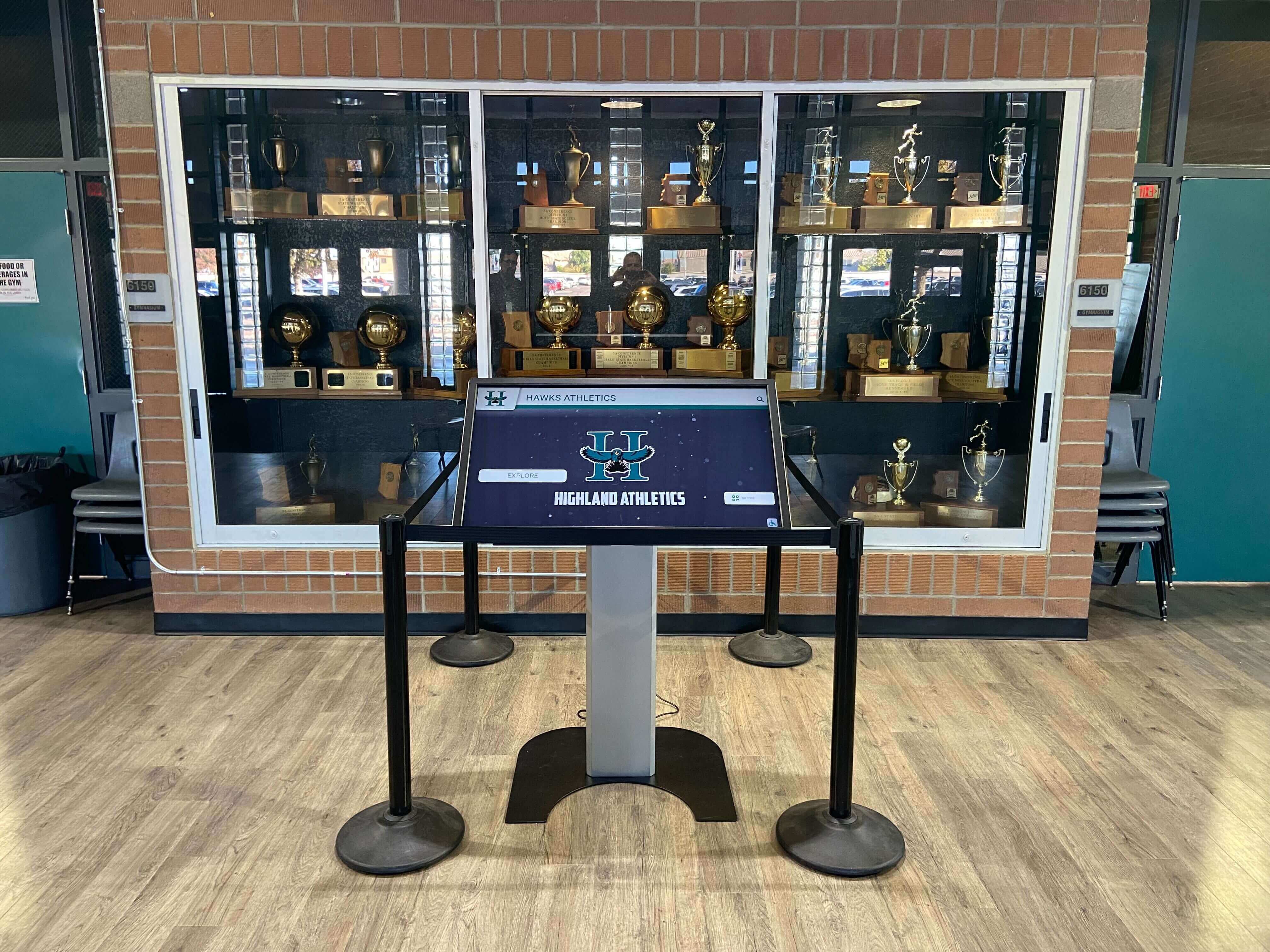
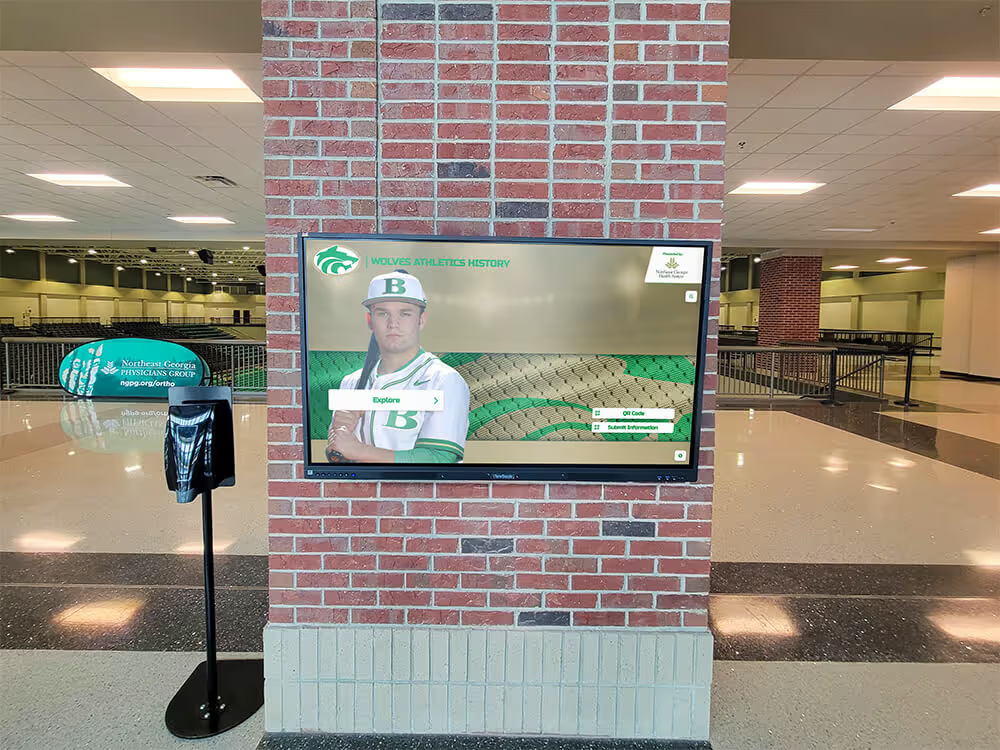
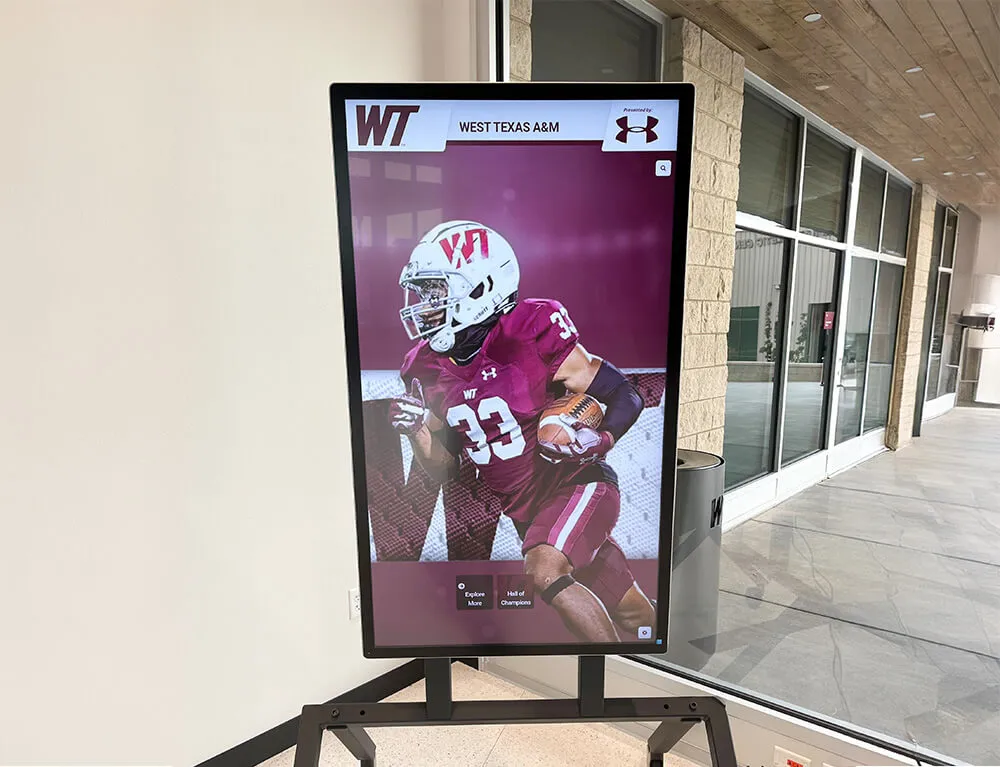
Free-standing kiosk installations provide placement flexibility while maintaining professional presentation through commercial enclosures and thoughtful positioning
Technology Implementation and Hardware Selection
Reliable recognition displays require commercial-grade equipment and thoughtful technical planning ensuring consistent operation in demanding country club environments where downtime damages institutional reputation and member satisfaction.
Commercial Display Hardware Specifications
Consumer equipment fails under continuous institutional usage—specify purpose-built commercial solutions designed for public space deployment and extended operational requirements.
Touchscreen Display Requirements
Professional installations demand commercial-grade panels rated 16-24 hours daily operation supporting continuous institutional usage, screen sizes between 43-55 inches providing comfortable viewing in lobby and corridor environments, 4K resolution (3840x2160) ensuring crisp text and photograph presentation, brightness levels of 350-450 nits maintaining visibility under varied lighting conditions, capacitive multi-touch technology (10+ simultaneous points) enabling gesture support, and hardened glass surfaces resisting scratches and impacts common in high-traffic areas.
Commercial displays typically cost 2-3× consumer equivalents yet deliver dramatically longer operational lifespans—50,000-70,000 hours versus 20,000-30,000 hours for consumer panels—making them more economical long-term investments despite higher initial costs.
Mounting and Installation Considerations
Professional presentation requires low-profile wall mounts positioning screens at optimal heights (42-48 inches from floor to center), commercial-grade enclosures for free-standing installations providing security and professional appearance, cable management systems eliminating visible wiring, and security features including anti-theft mounting hardware and tamper-resistant fasteners.
Computing and Network Infrastructure
Adequate processing ensures smooth, responsive experiences through Intel i5 or AMD Ryzen 5 processors minimum (i7/Ryzen 7 preferred for 4K content), 8-16GB RAM supporting multimedia content and responsive interfaces, 256GB+ solid-state drives enabling fast content loading, dedicated graphics processing for 4K displays and video playback, and gigabit ethernet connectivity strongly preferred over WiFi for reliability and security.
Network connectivity proves critical—displays requiring constant internet access for content updates and remote management benefit from wired connections eliminating WiFi reliability concerns that create frustrating member experiences.
Understanding digital signage software platform options helps clubs evaluate technology solutions appropriate for recognition display applications and institutional requirements.
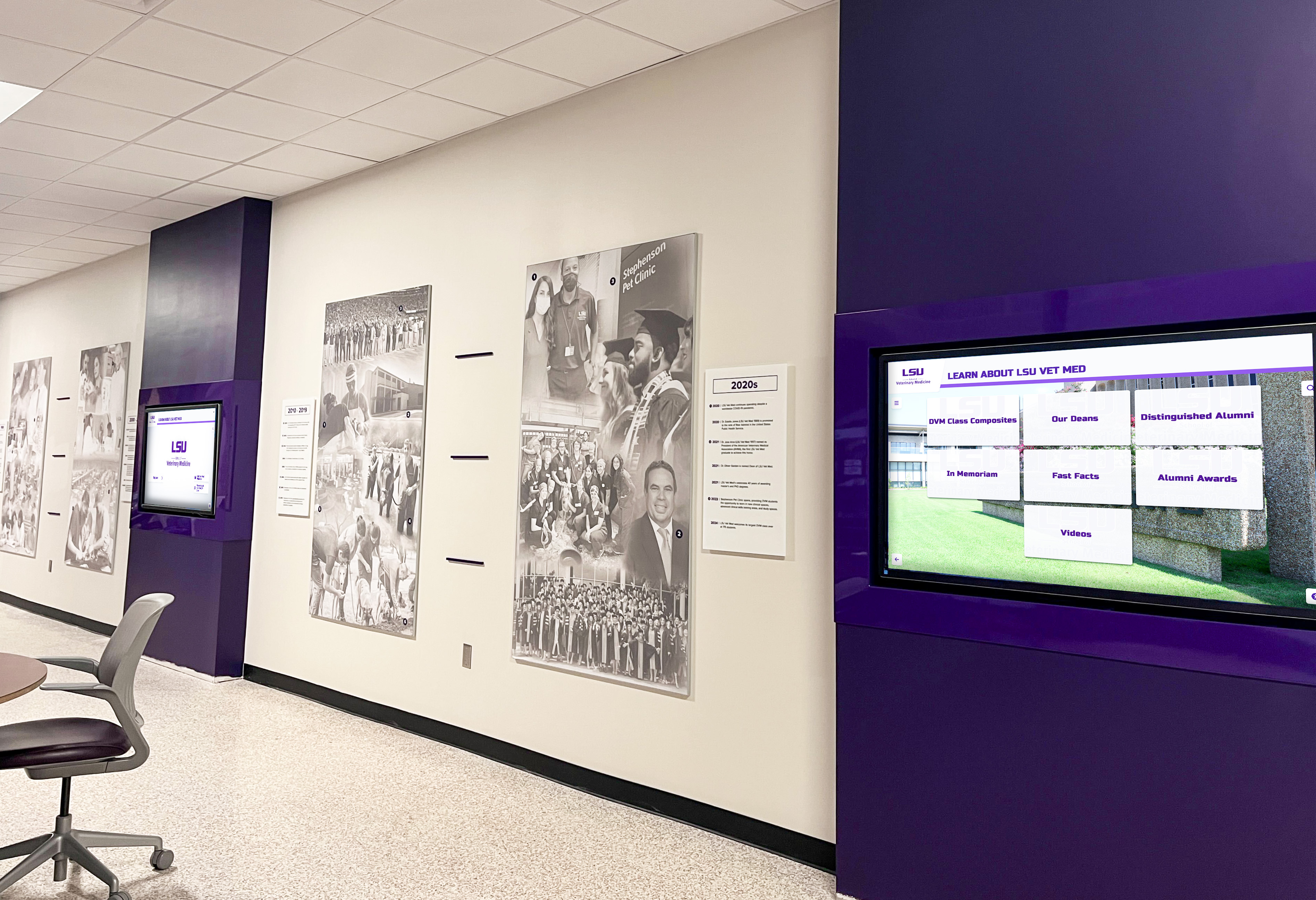
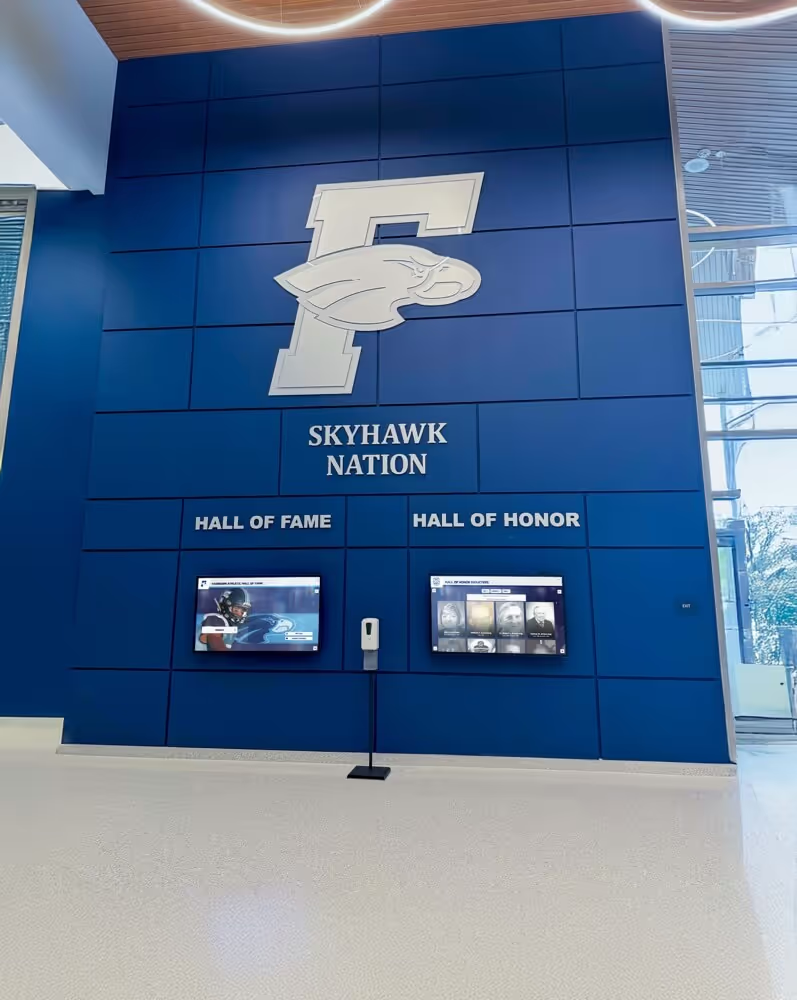
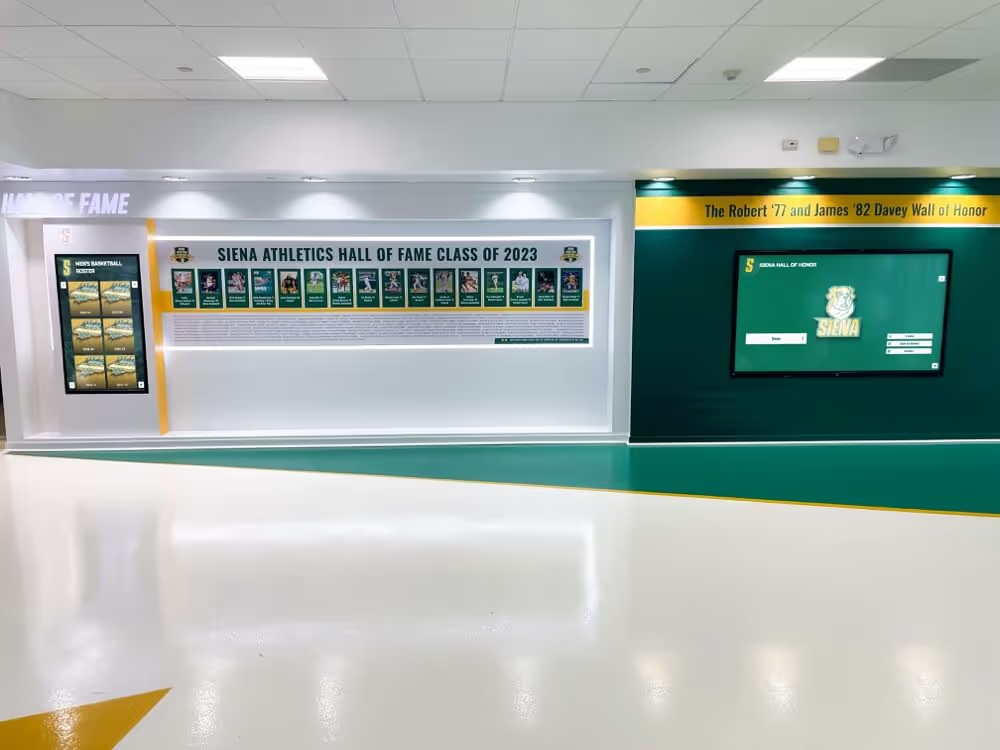
Large facilities often implement multiple coordinated displays ensuring recognition reaches members throughout clubhouse, pro shop, locker rooms, and dining areas
Recognition Software Platform Capabilities
Platform selection fundamentally determines long-term value, usability, and member satisfaction—invest time evaluating purpose-built recognition solutions rather than adapting generic digital signage systems lacking essential functionality.
Content Management System Requirements
Club staff need intuitive interfaces enabling ongoing maintenance through web-based CMS requiring no coding or technical expertise, drag-and-drop media upload simplifying photograph and video management, template-based profile creation ensuring consistent presentation quality, bulk import tools handling hundreds of historical records efficiently, user permission controls managing who can edit, approve, and publish content, and scheduled publishing coordinating content updates with championship dates or special events.
Intuitive management proves critical—platforms requiring IT expertise or vendor assistance for routine updates create unsustainable cost structures and frustrating delays when clubs want to recognize recent championship winners promptly.
Interactive Experience Features
Purpose-built recognition platforms should provide responsive touch interfaces with smooth animations and immediate feedback, comprehensive search with auto-suggest and fuzzy matching accommodating name variations, advanced filtering enabling discovery by championship type, decade, or achievement category, multimedia support for photographs, videos, documents, and audio content, and analytics dashboards tracking member engagement, popular content, and usage patterns informing future development.
Multi-Format Display Flexibility
Content should flow seamlessly across touchscreen kiosks in club facilities, mobile-responsive web profiles accessible from personal devices, digital signage displays throughout clubhouse and grounds, and print materials for ceremonies, directories, or special publications.
Multi-format flexibility maximizes content investment value while enabling clubs to reach members through their preferred consumption modes and contexts.
Solutions like Rocket Alumni Solutions provide specialized platforms designed specifically for institutional recognition rather than generic digital signage, delivering superior functionality addressing unique country club requirements and aesthetic expectations.
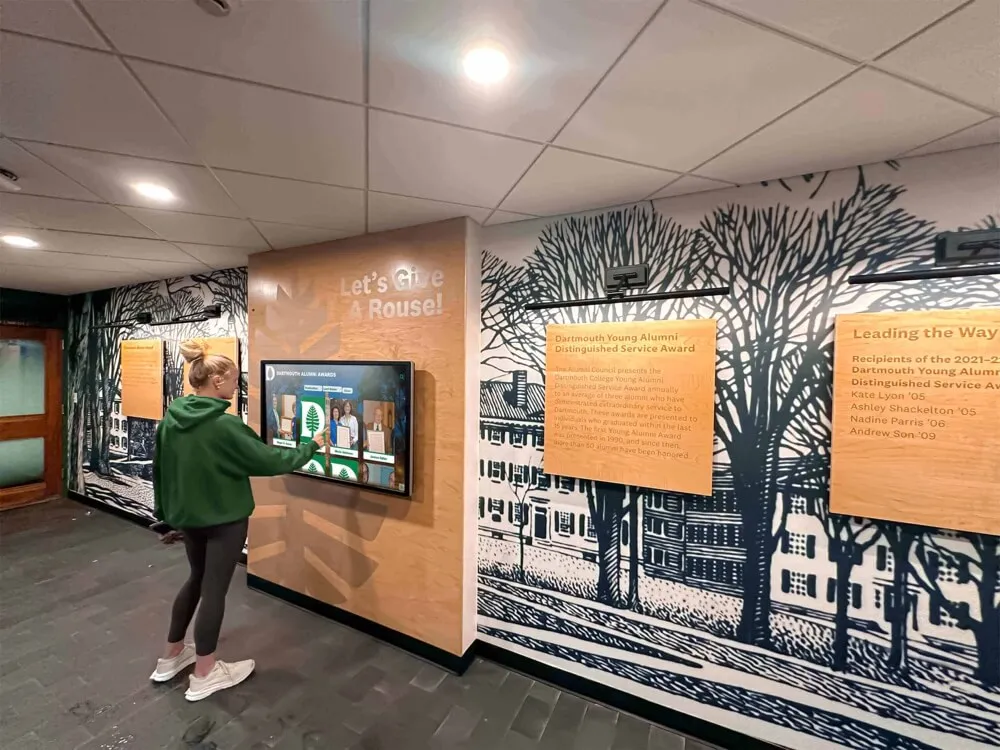
Strategic placement near gathering spaces, dining rooms, or locker room corridors ensures recognition visibility while creating natural stopping points during routine club activities
Implementation Planning and Operational Considerations
Successful recognition requires systematic planning addressing stakeholder alignment, content preparation, installation coordination, and ongoing maintenance ensuring displays deliver sustained value rather than becoming neglected technology installations.
Pre-Launch Planning and Stakeholder Engagement
Thorough preparation prevents costly post-deployment corrections and ensures recognition reflects institutional values while serving member interests effectively.
Internal Alignment Process
Secure institutional consensus through board approval confirming budget allocation, design direction, and content philosophy, committee engagement involving history, membership, and communications groups in planning, staff coordination ensuring golf professionals, clubhouse managers, and maintenance teams understand responsibilities, and member communication preview introducing recognition initiative and soliciting participation.
Early stakeholder involvement builds ownership while preventing last-minute objections derailing implementation or creating expensive redesign requirements.
Content Preparation Workflows
Gather materials systematically before launch through archival research compiling championship records, historical photographs, and institutional documents, member outreach requesting biographical information, achievement details, and personal photographs, professional photography sessions capturing contemporary member portraits and facility documentation, writing and editing developing consistent profiles meeting quality and voice standards, and quality assurance proofreading all content and verifying accuracy before publication.
Launching with incomplete content creates poor first impressions—invest adequately in preparation ensuring professional presentation from opening day rather than gradually filling gaps over subsequent months while early member visitors encounter sparse, unfinished recognition.
Technical Infrastructure Coordination
Prepare facilities through electrical installation ensuring adequate power at display locations, network connectivity providing reliable ethernet or WiFi access, mounting preparation including wall reinforcement or floor mounting hardware installation, and security provisions protecting equipment in areas with public access or after-hours accessibility.
Coordinate installation during low-traffic periods minimizing member disruption while ensuring adequate time for testing and refinement before high-visibility launch events or seasonal peak usage periods.
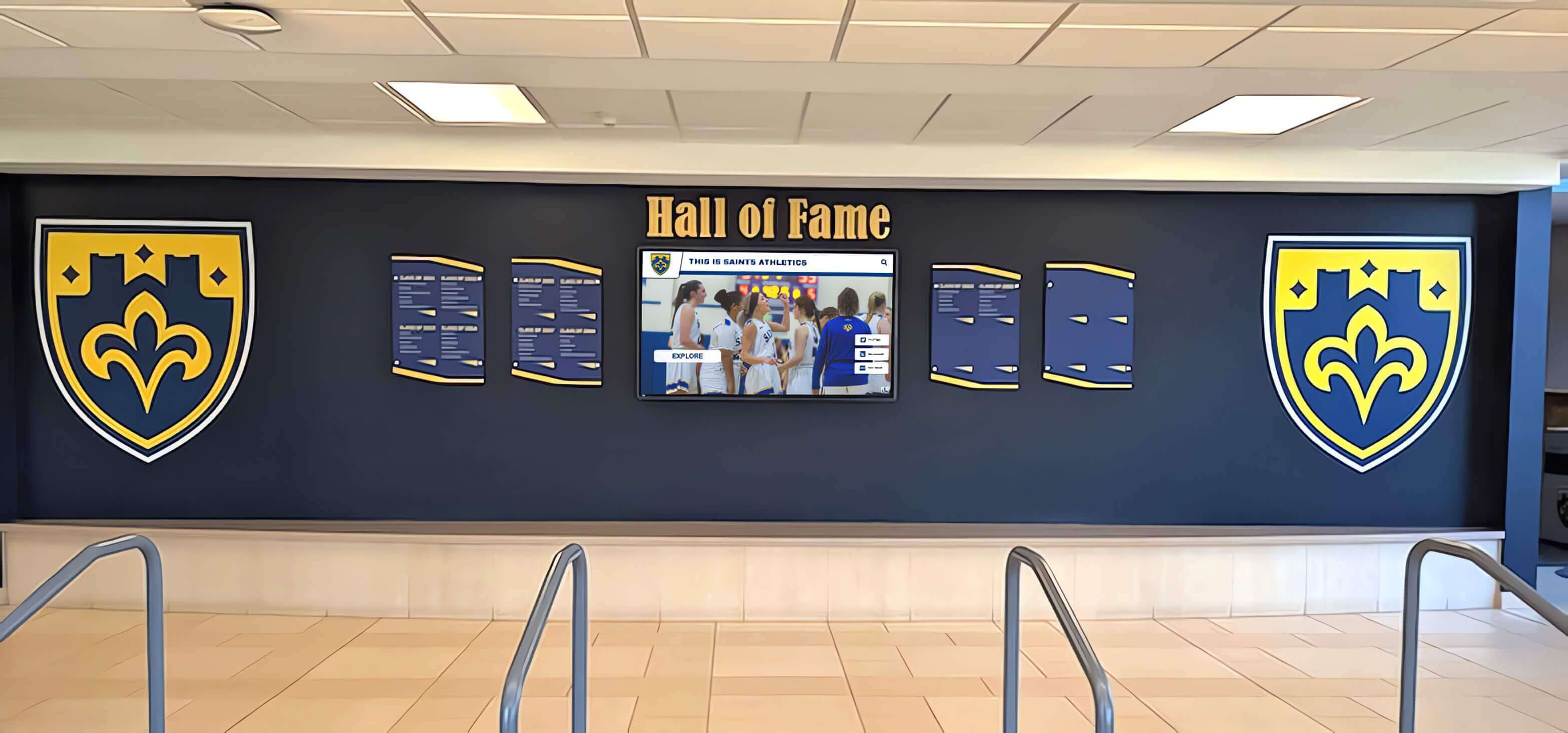
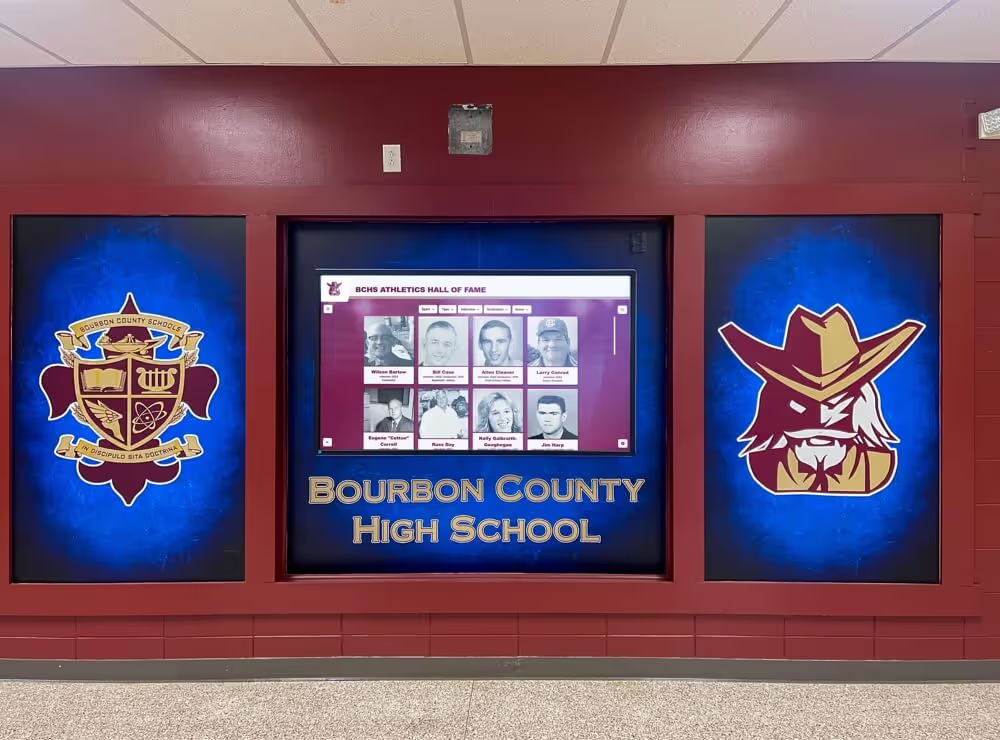
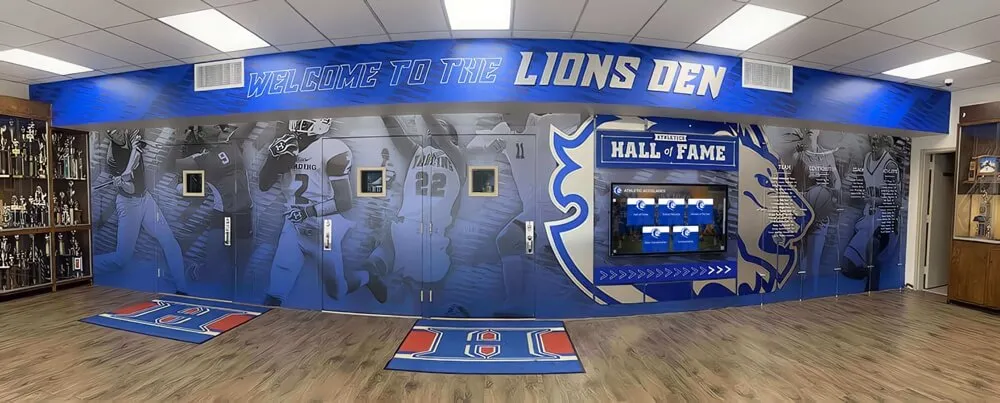
Traditional design elements—shields, plaques, architectural details—complement rather than compete with touchscreen displays when approached thoughtfully through coordinated design
Launch Strategies and Member Engagement
Maximize recognition visibility and member adoption through systematic promotion and engagement initiatives.
Soft Launch and Preview Periods
Reduce risk through phased deployment including internal preview enabling staff familiarization and content refinement, board and leadership preview allowing key stakeholders first access before broad announcement, and soft launch period providing two-week window for feedback collection and rapid iteration before major promotional push.
Promotional Campaign Integration
Drive awareness and usage through new member orientation incorporating recognition exploration into onboarding programs, tournament and event promotion highlighting championship history during competitive seasons, newsletter features spotlighting compelling member stories and historical milestones, social media content sharing recognition highlights and encouraging members to explore displays, and signage and wayfinding directing members to recognition locations throughout facilities.
Sustained promotion maintains visibility rather than limiting awareness to brief launch periods that fail to reach all member constituencies.
Special Event Coordination
Create recognition-focused programming through championship commemoration events celebrating milestone anniversaries of notable victories, historical presentation evenings featuring member storytelling and archival materials, new inductee celebrations when adding recent champions or honorees, and member-guest tournaments incorporating recognition displays into event promotion and facility tours.
Events create engagement opportunities while demonstrating institutional commitment to celebration and stewardship of club legacy.
Understanding annual golf event management approaches provides frameworks for integrating recognition into broader member programming and engagement initiatives.
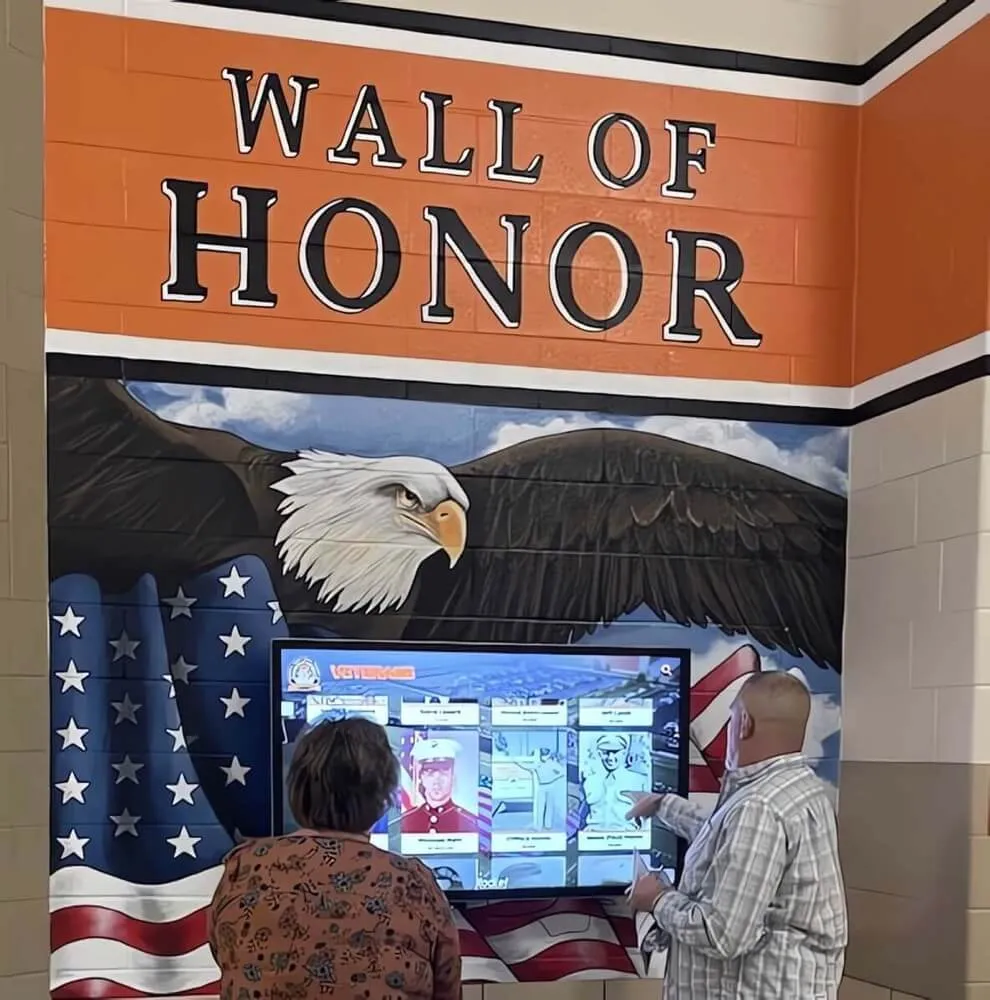
Recognition installations should create destinations encouraging group exploration and conversation rather than isolated technology that members engage individually
Ongoing Maintenance and Content Refresh
Recognition requires continuous attention maintaining relevance, accuracy, and technical reliability across years of operational service.
Regular Update Cadence
Establish systematic refresh schedules through monthly championship updates adding recent tournament winners promptly after competitions, quarterly content enhancements incorporating new member profiles, expanded historical research, or improved photography, annual comprehensive reviews auditing all content for accuracy, updating member information, and retiring outdated materials, and special commemorations marking historical anniversaries, facility milestones, or member achievements.
Technical Maintenance Requirements
Protect hardware investments through daily cleaning gently removing fingerprints and smudges from touchscreen surfaces, weekly inspections checking display operation, software functionality, and network connectivity, monthly maintenance including screen calibration, performance optimization, and backup verification, and annual professional service conducting comprehensive hardware inspection, component testing, and preventive maintenance.
Clubs implementing systematic maintenance report 85-90% uptime rates compared to 60-70% for reactive-only approaches—demonstrating that proactive care dramatically improves member experience while reducing total ownership costs through early problem detection preventing major failures.
Content Governance and Quality Standards
Maintain excellence through editorial guidelines ensuring consistent voice, formatting, and quality across all profiles, approval workflows requiring review before publication of member-submitted content or sensitive materials, accuracy verification processes confirming championship records, dates, and biographical details, and photography standards maintaining consistent quality, composition, and presentation specifications.
Quality governance prevents recognition from deteriorating through inconsistent standards or inadequate oversight as content expands and multiple contributors participate in development.
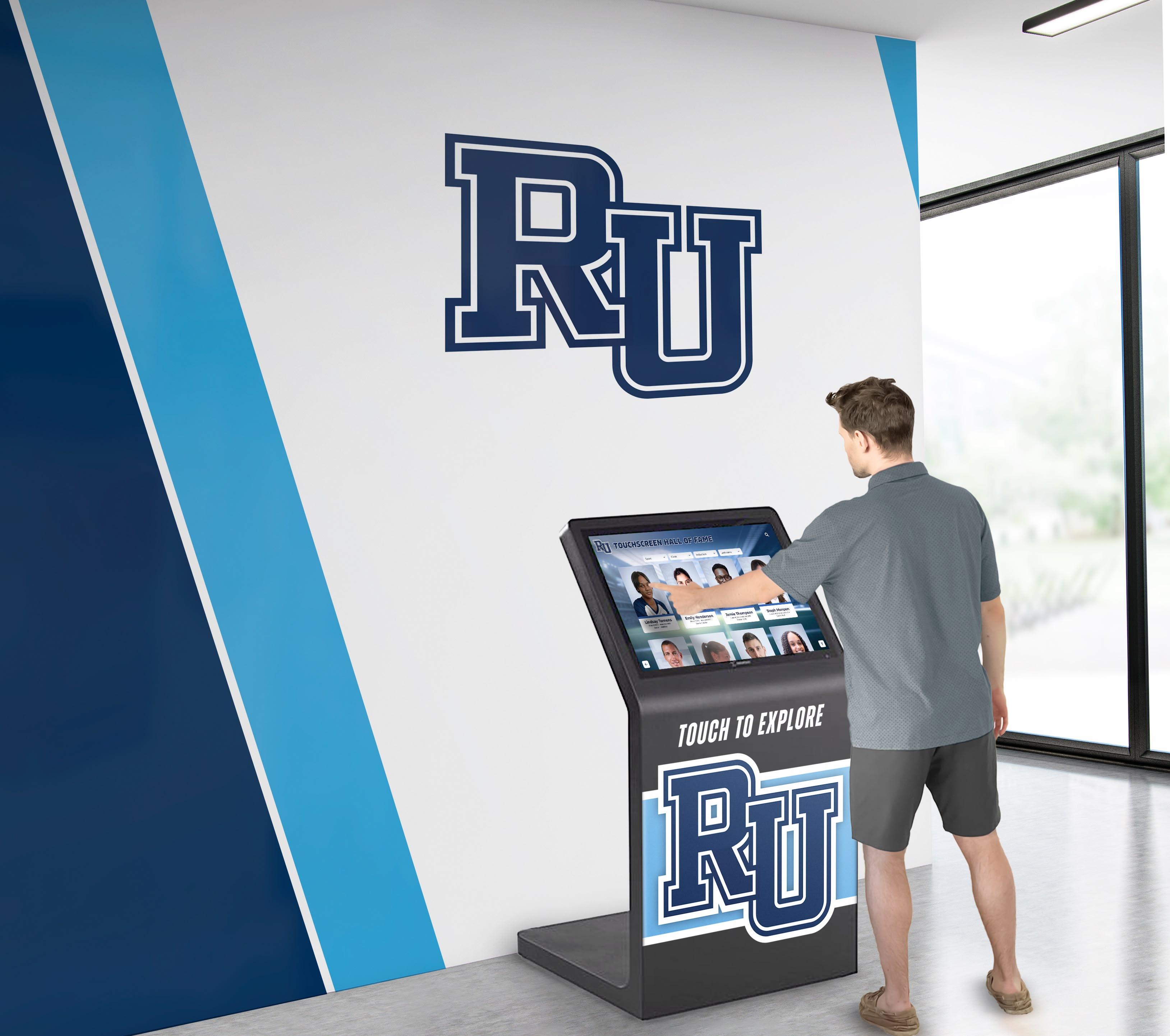
Free-standing kiosks provide maximum placement flexibility while maintaining professional presentation appropriate for distinguished club environments
Measuring Impact and Demonstrating Value
Comprehensive assessment ensures recognition delivers intended benefits while providing evidence justifying continued investment and program enhancement.
Engagement Metrics and Usage Analytics
Digital platforms enable measurement revealing actual member interaction rather than relying on assumptions about display effectiveness.
Quantitative Engagement Indicators
Track measurable patterns including total interactions and unique users over time periods, average engagement duration showing depth of member interest, profile views by individual member or championship year, most-accessed content categories revealing member interests, navigation patterns demonstrating how members explore content, and seasonal variations correlating with tournament seasons, holiday periods, or weather patterns affecting facility usage.
Analytics provide objective evidence about what content resonates most powerfully, informing future development priorities and content emphasis decisions.
Member Satisfaction and Feedback
Gather qualitative perspectives through informal conversations during facility visits noting spontaneous member comments and reactions, formal surveys assessing recognition value and satisfaction levels, board and committee feedback from governance groups evaluating institutional benefit, and staff observations from employees witnessing daily member interactions with displays.
Combined quantitative and qualitative assessment reveals whether recognition achieves cultural and relationship objectives beyond mere existence as technology installations.
Return on Investment Considerations
While recognition value extends beyond pure financial metrics, clubs should consider tangible and intangible returns including member satisfaction improvements strengthening retention and referrals, prospective member recruitment support showcasing tradition and excellence during facility tours, event programming enhancement providing content for tournaments, celebrations, and gatherings, archival preservation protecting institutional history while making it accessible, and community pride strengthening member connections to club legacy and tradition.
These benefits justify recognition investment while demonstrating institutional commitment to stewardship, member engagement, and tradition preservation—values central to distinguished country club identity and long-term sustainability.
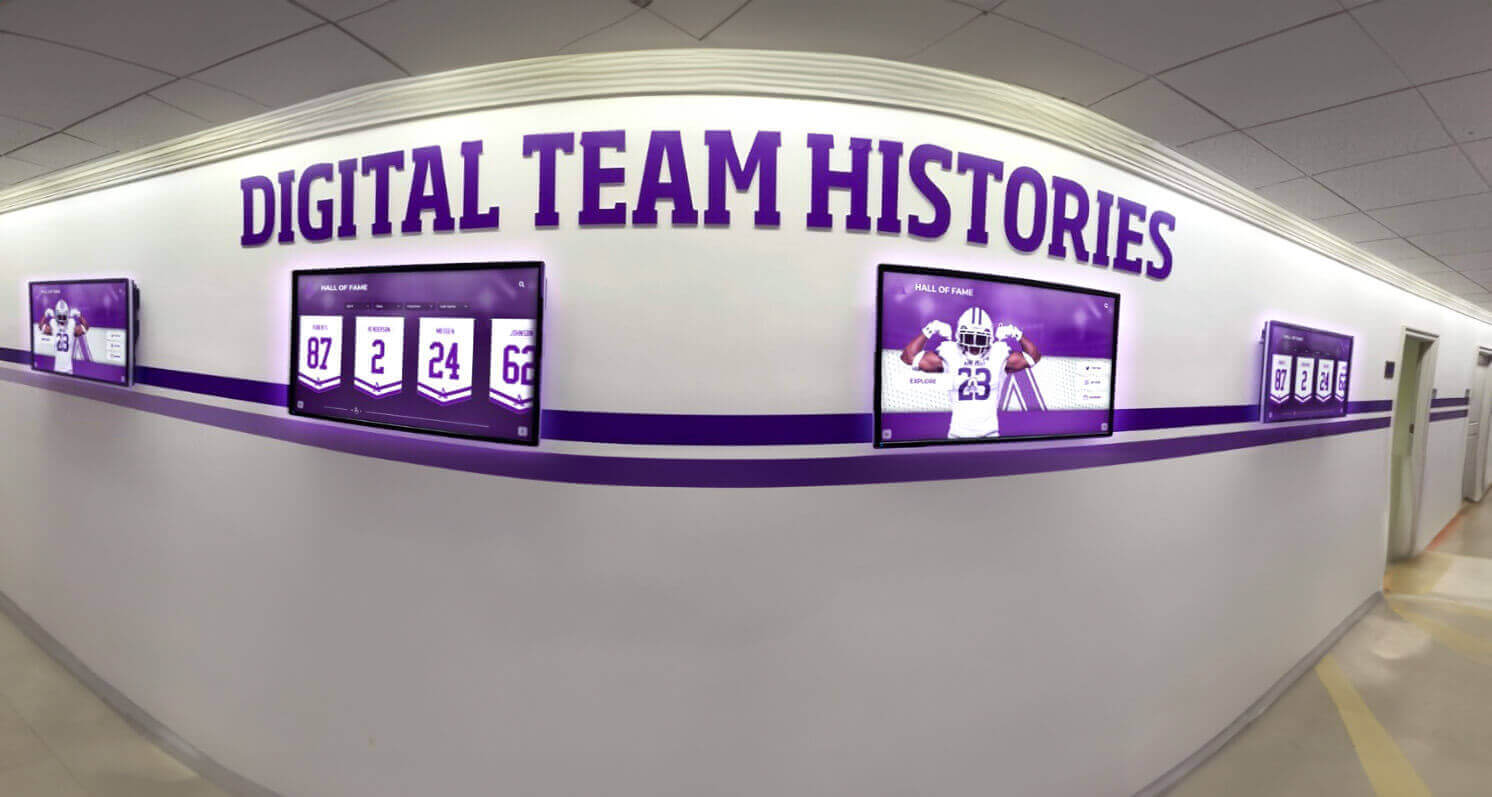
Coordinated display networks throughout facilities ensure recognition reaches members wherever they gather while maintaining consistent presentation quality and cohesive storytelling
Conclusion: Creating Recognition Experiences Worthy of Distinguished Traditions
Country clubs maintain legacies spanning generations—championship traditions forged through competitive excellence, member achievements reflecting dedication and skill, historical milestones defining institutional character, and community connections strengthening club culture. These legacies deserve recognition honoring tradition while embracing contemporary presentation capabilities that engage members, preserve history, and inspire continued excellence.
Modern touchscreen recognition transcends limitations inherent in traditional static approaches through unlimited digital capacity accommodating comprehensive historical records, instant content updates celebrating recent championships promptly, rich multimedia storytelling bringing history to life through photographs, videos, and narratives, and intuitive interfaces enabling discovery and exploration according to individual interests and connections.
The most successful country club recognition displays share common characteristics: sophisticated design aesthetics befitting institutional prestige and member expectations, comprehensive content celebrating diverse achievement categories and institutional milestones, intuitive navigation requiring no instruction or staff assistance, accessible experiences serving all members regardless of physical abilities, reliable commercial-grade hardware supporting continuous operation, systematic maintenance ensuring recognition remains current and functional, and integrated promotion driving awareness and ongoing engagement.
Transform Your Club Recognition Experience
Discover how distinguished country clubs create elegant touchscreen recognition displays that celebrate championship history, member achievements, and institutional excellence through sophisticated design and engaging interactive storytelling.
Get Your Touchscreen Mock-UpOrganizations implementing comprehensive recognition following these design principles consistently achieve remarkable outcomes: engagement durations of 6-10 minutes versus brief glances at static plaques, member satisfaction improvements reflecting appreciation for systematic celebration, prospective member recruitment support showcasing tradition and prestige, and community pride strengthening connections to institutional legacy and shared competitive traditions.
The frameworks, content strategies, and technical approaches explored in this guide provide actionable roadmaps for country clubs seeking to implement or enhance recognition displays. Whether launching recognition for the first time, modernizing outdated static installations, or expanding existing digital systems with deeper content and better design, the principles outlined here support successful implementation regardless of club size, budget, or technical expertise.
Your club’s championships, member achievements, and institutional history deserve recognition that honors excellence comprehensively while creating engaging experiences that inspire current members, impress prospective members, and preserve traditions for generations. Solutions like Rocket Alumni Solutions provide purpose-built platforms specifically designed for institutional recognition, offering intuitive content management, elegant customization, multi-format display flexibility, and continuous update capabilities that make sustainable programs achievable for clubs regardless of staff technical capacity.
Start by inventorying current recognition assets and opportunities, identifying championships and achievements deserving systematic celebration, evaluating display locations maximizing visibility and member engagement, and developing sustainable workflows enabling continuous program growth without overwhelming available resources. The recognition you create today establishes traditions that will celebrate tomorrow’s champions while honoring yesterday’s competitors who built the legacies current members inherit and extend.
For additional insights into recognition design excellence, explore how digital displays inspire community engagement, discover athletic hall of fame implementation strategies, learn about developing institutional history timelines, understand interactive recognition display design principles, and see how modern recognition approaches replace traditional static methods while enhancing storytelling depth and member engagement across distinguished private clubs and institutional environments.