



Dance team captains carry responsibilities that most school recognition systems were never designed to document. They lead rehearsals when the coach is occupied, navigate team dynamics that never surface in public, translate choreographic vision into physical execution, and sustain program culture across the transitions that define each academic year. Yet when it comes to formal recognition, most captains receive a brief acknowledgment at the banquet and a generic award that looks the same whether they led a championship squad or held a program together through a difficult season.
This guide addresses that gap. Dance team captain recognition — done well — captures the specific nature of a captain’s contribution, gives outgoing seniors a send-off proportional to their service, and builds the kind of permanent historical record that honors leaders for years after graduation. From award structures and senior tribute formats to hall of fame walls and interactive touchscreen systems, the framework here is practical, specific, and built for programs that want to treat leadership the way it deserves to be treated.
Dance team captains are the connective tissue of a performing arts program. When a captain’s name appears on a hallway recognition wall for the first time — alongside past captains, alongside athletes from other programs — the message sent to every current and future dancer is clear: leadership in this program matters, gets documented, and gets remembered.

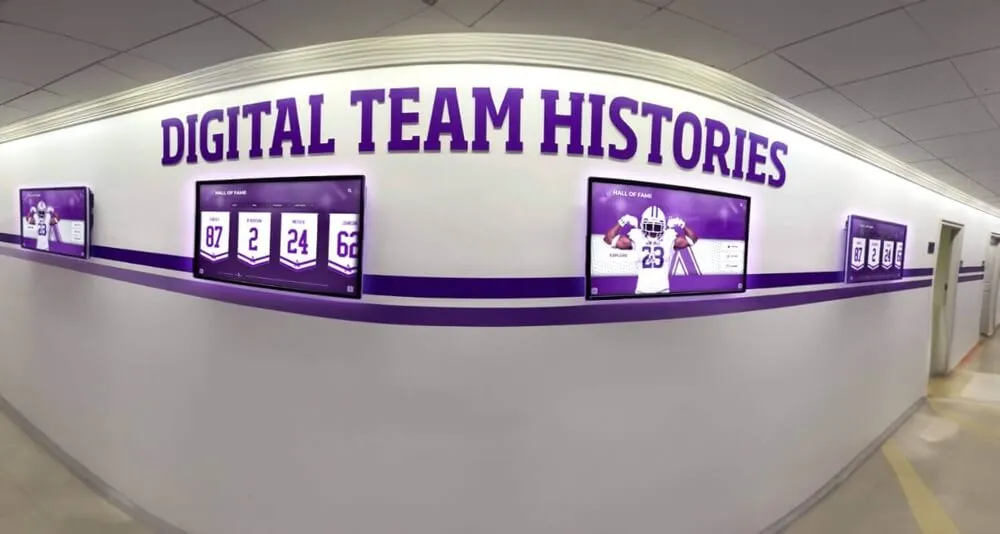
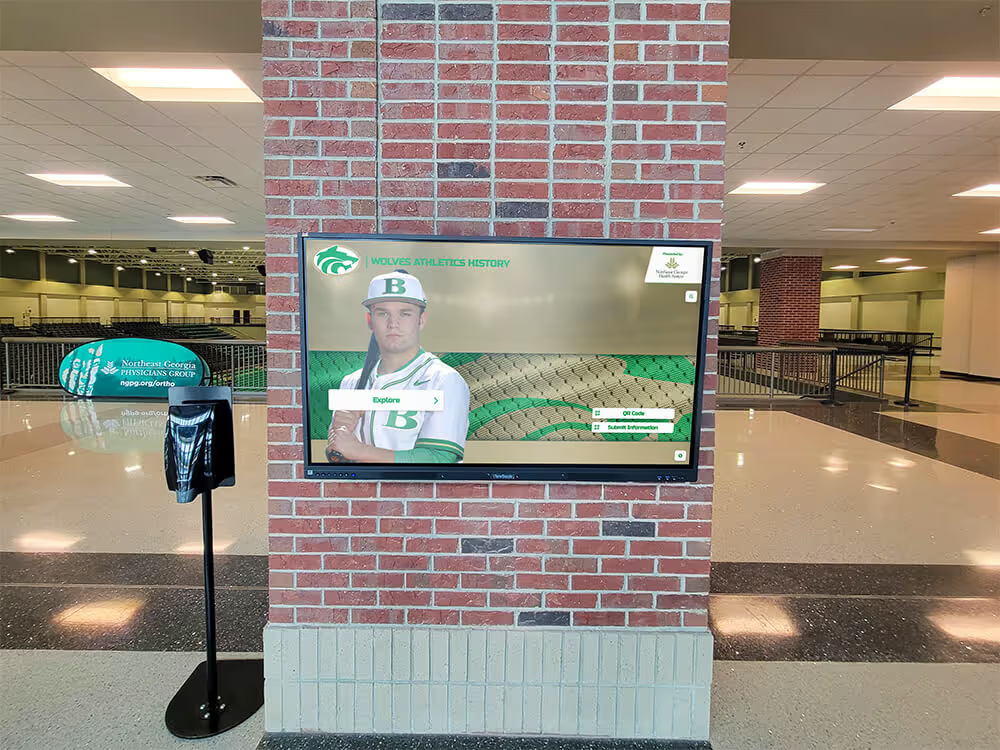
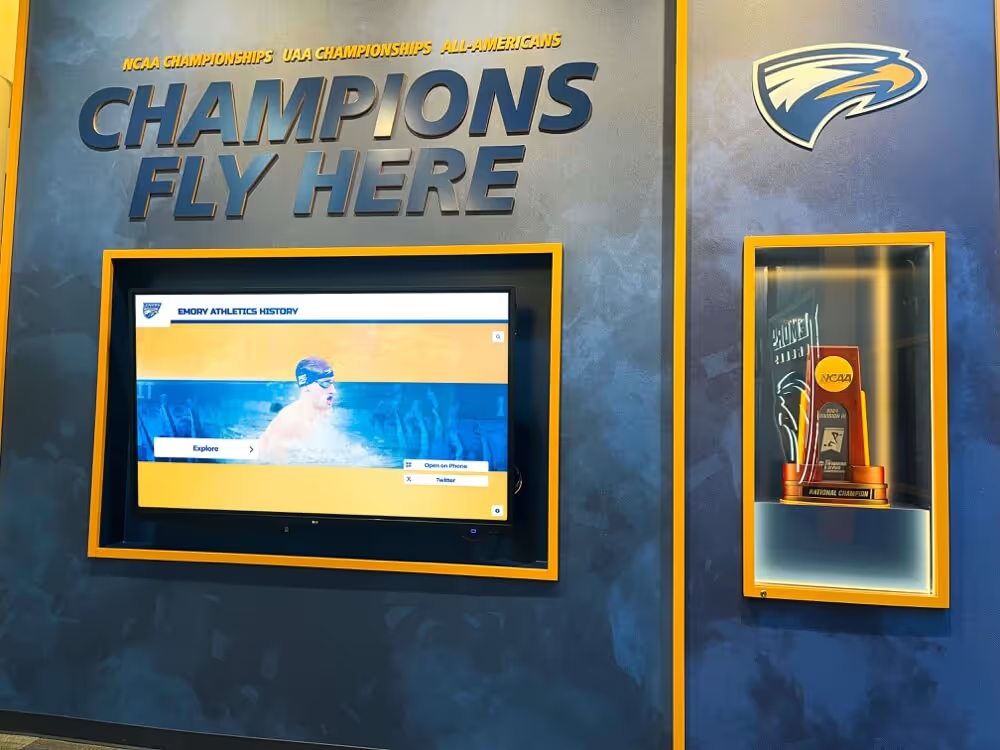
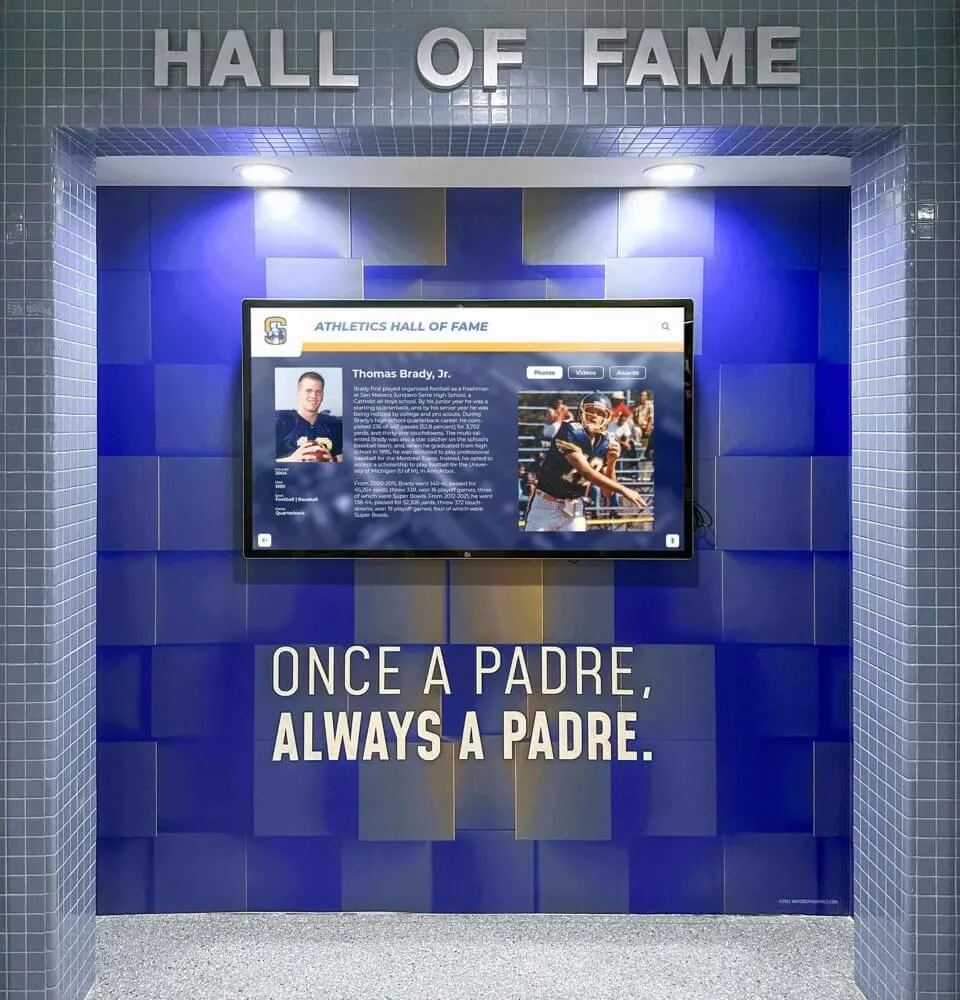
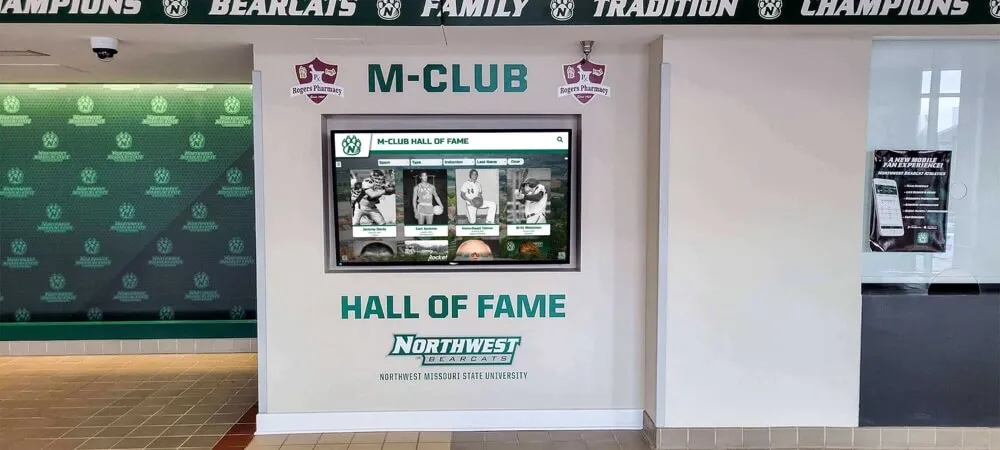
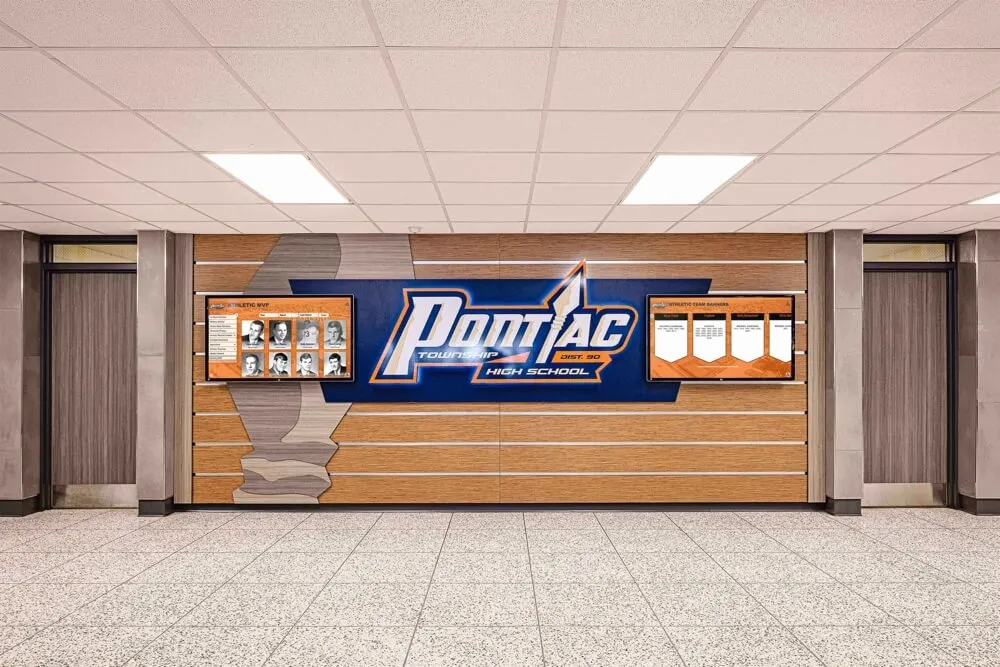
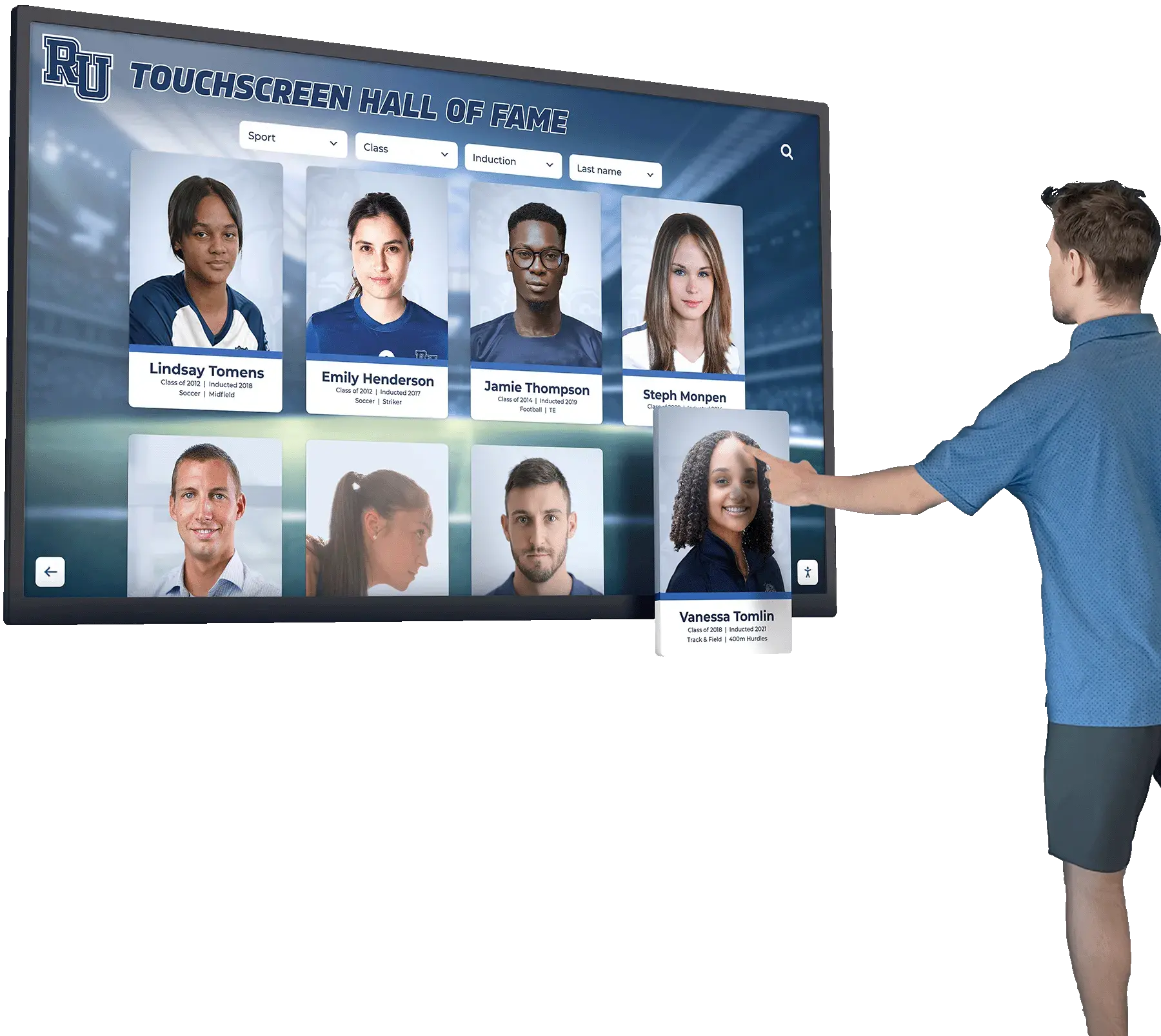
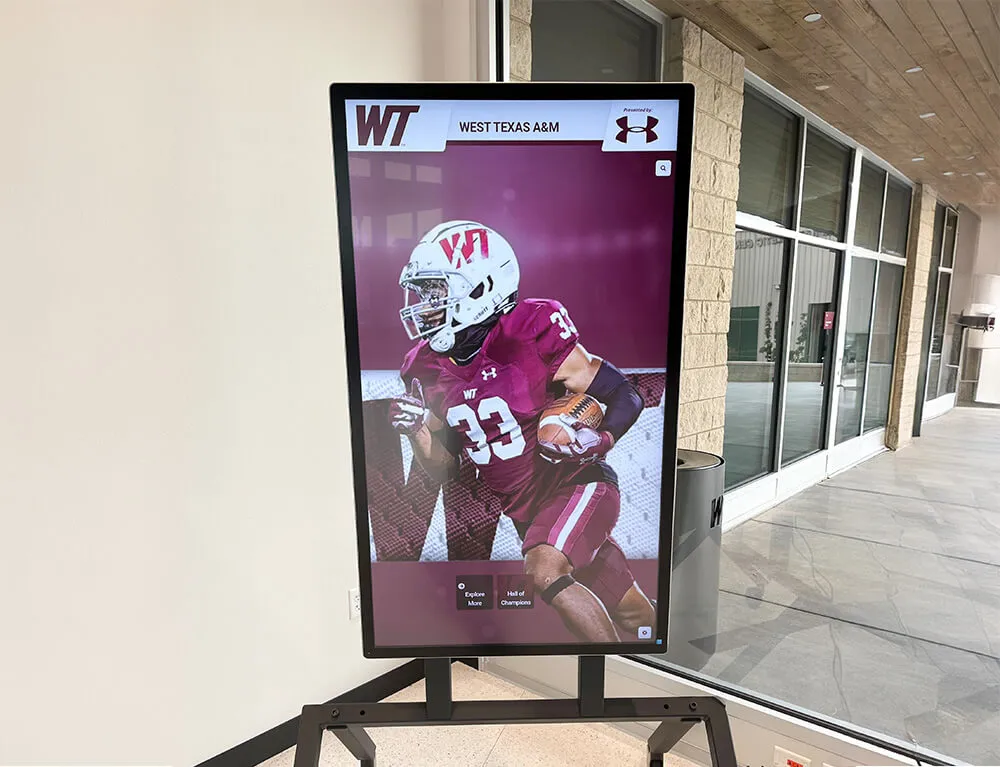
Individual captain profiles on interactive recognition systems give dance team leaders the same detailed, permanent documentation that athletic hall of fame honorees receive — searchable, updatable, and visible to everyone who walks through the building
Why Dance Team Captain Recognition Needs Its Own Framework
Most schools that recognize dance teams tend to fold captain acknowledgment into the broader end-of-season awards ceremony — a quick mention, a specialty plaque or sash distributed alongside MVP and most-improved awards. That approach undersells what the captain role actually involves.
A dance team captain typically leads warm-up and rehearsal structure in the coach’s absence, manages interpersonal dynamics within a competitive team environment, communicates program culture to new members who arrive without context, represents the team at events outside competition settings, provides direct feedback to coaches about team morale, and sets the physical and attitudinal standard that the rest of the squad calibrates to.
This is a genuine leadership résumé item. A dance captain who served for two years across junior and senior year has logged real organizational, communication, and management experience. Recognition that reflects that scope — rather than a generic captain award — serves both the captain’s sense of accomplishment and the program’s long-term culture.
Frameworks for inclusive digital recognition programs offer useful models for expanding recognition beyond athletic MVP categories to include leadership, service, and program-building contributions that traditional award structures routinely miss.
Award Ideas for Dance Team Captains
Performance-Based Leadership Awards
The most meaningful captain recognition connects to observable outcomes. Was the program stronger under this captain’s leadership — in rehearsal efficiency, competition results, team cohesion, member retention? Awards that speak to specific outcomes feel earned rather than ceremonial.
Award concepts tied to performance leadership:
- The Program Builder Award — for captains whose tenure coincided with measurable program growth: increased roster size, improved competition placements, successful addition of a showcase or community performance
- Excellence in Choreographic Leadership — for captains who took active creative roles, contributing to competitive routines beyond executing them
- Coach’s Leadership Award — a coach-nominated recognition for the captain who most effectively translated the coaching staff’s vision into team-wide execution
- Squad Culture Award — recognizing captains known for exceptional mentorship, conflict resolution, and sustained team morale through difficult stretches of a season
These awards benefit from specificity. A plaque or certificate that includes not just the captain’s name and year but a brief description of what made this particular tenure notable transforms a generic acknowledgment into a genuine historical marker. That specificity is what separates meaningful recognition from a participation ribbon with a fancier frame.
School achievement recognition strategy guides cover how to design award categories that connect individual milestones to institutional history — framing that makes recognition feel historically anchored rather than year-to-year and isolated.
Tenure Milestone Awards
For programs with established histories, tenure milestones provide natural recognition anchors that position individual captains within the program’s larger narrative:
- First captain of a newly established varsity program
- Longest-serving captain in program history
- First co-captain arrangement and the story of how it worked
- Captains who returned to leadership roles after injury, program disruption, or other adversity
Milestone framing creates recognition that is both personal and institutional: not just “this person was captain” but “this person was captain during this specific moment in the program’s history, and here is what that moment meant.”
Annual Captain Recognition Structures
Rather than waiting for exceptional circumstances, annual recognition structures treat every captain’s service as inherently worth formal documentation:
The Captain’s Portrait: a formal photo session for each year’s captain or co-captains, with consistent framing and backdrop, stored in a permanent program archive. Schools that maintain 10–20 years of consistent captain portraits possess a visual history of their program that no competition trophy or banquet program can replicate.
Captain Induction Ceremony: a brief, formalized moment each year where outgoing captains are recognized as having completed their service — distinct from the general team banquet, with specific language and a physical marker that belongs to the captain permanently.
Captain Name Boards: a studio or hallway display listing every captain since the program’s founding, updated annually. These boards require no digital infrastructure and minimal budget, but they create a visible record that every dancer in the program walks past regularly — a reminder that the role they aspire to or currently hold has a history worth joining.
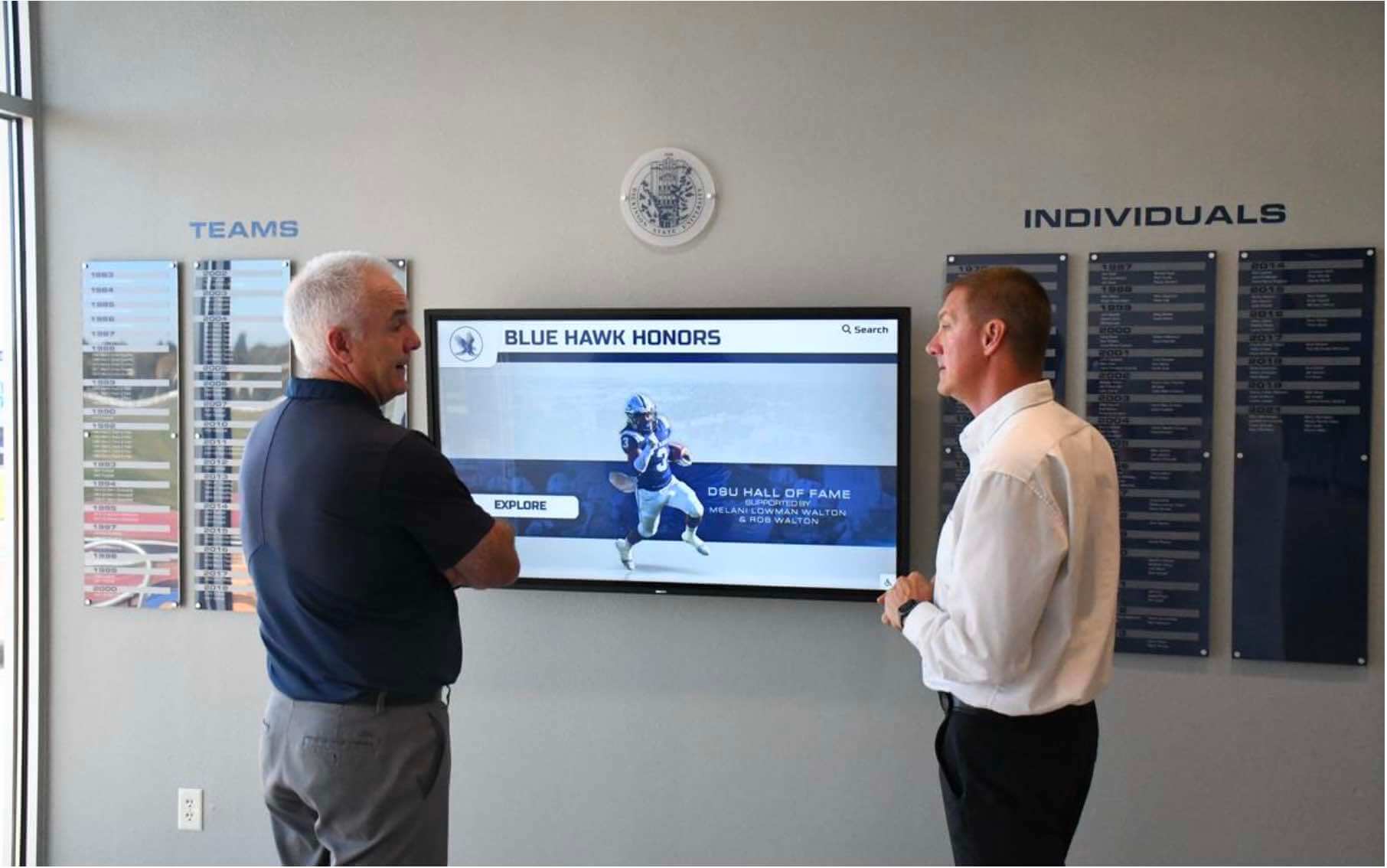
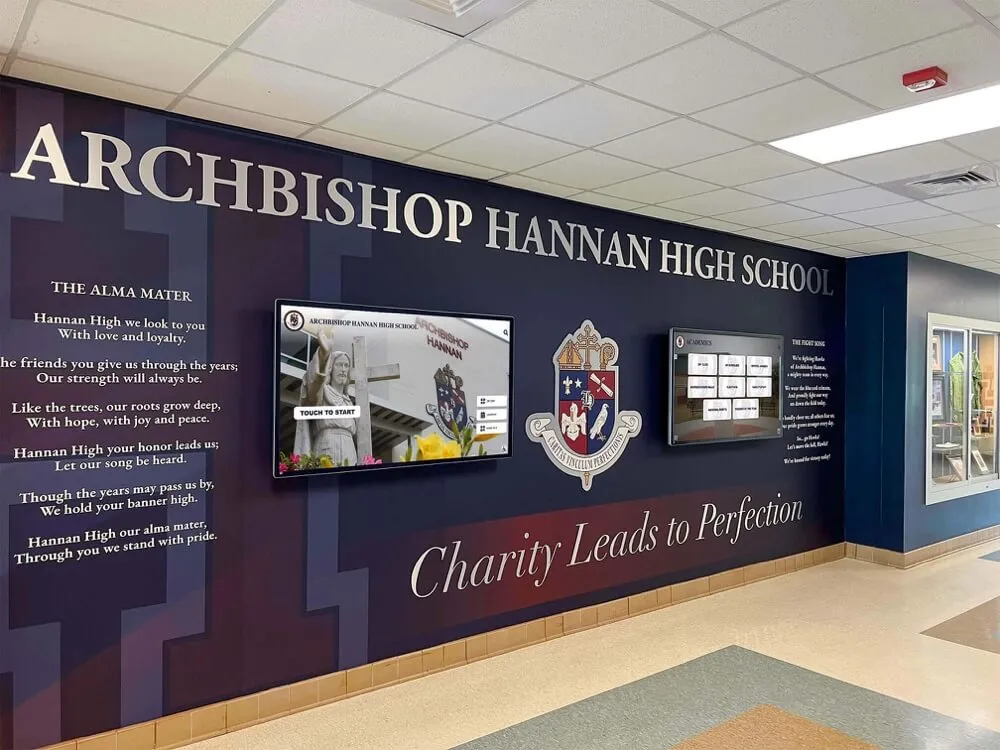
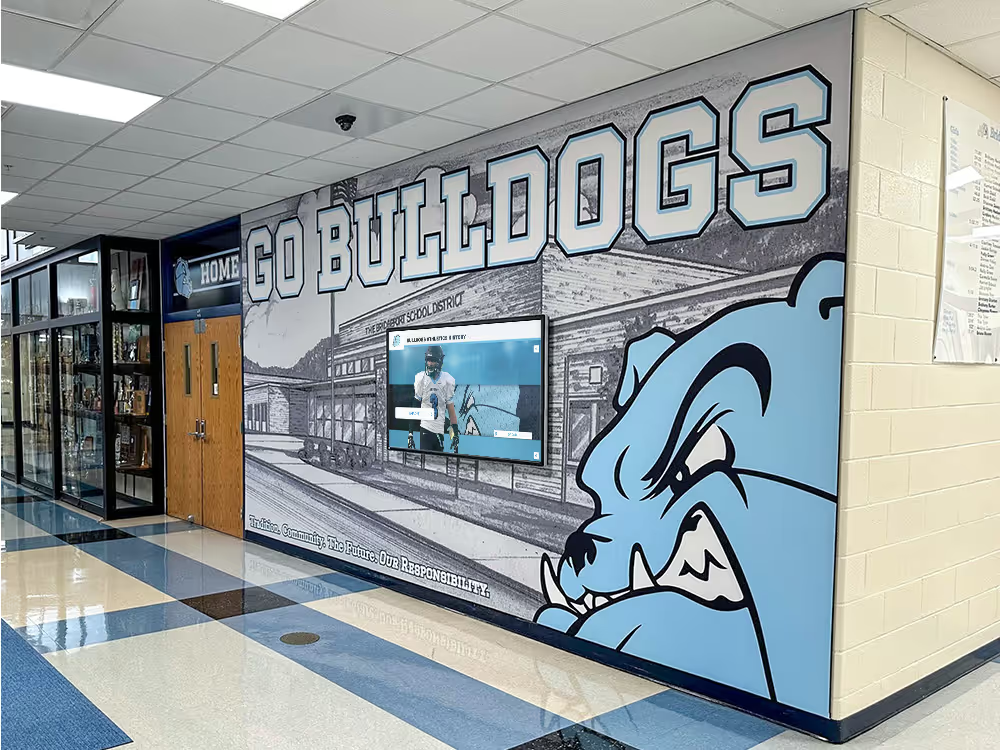
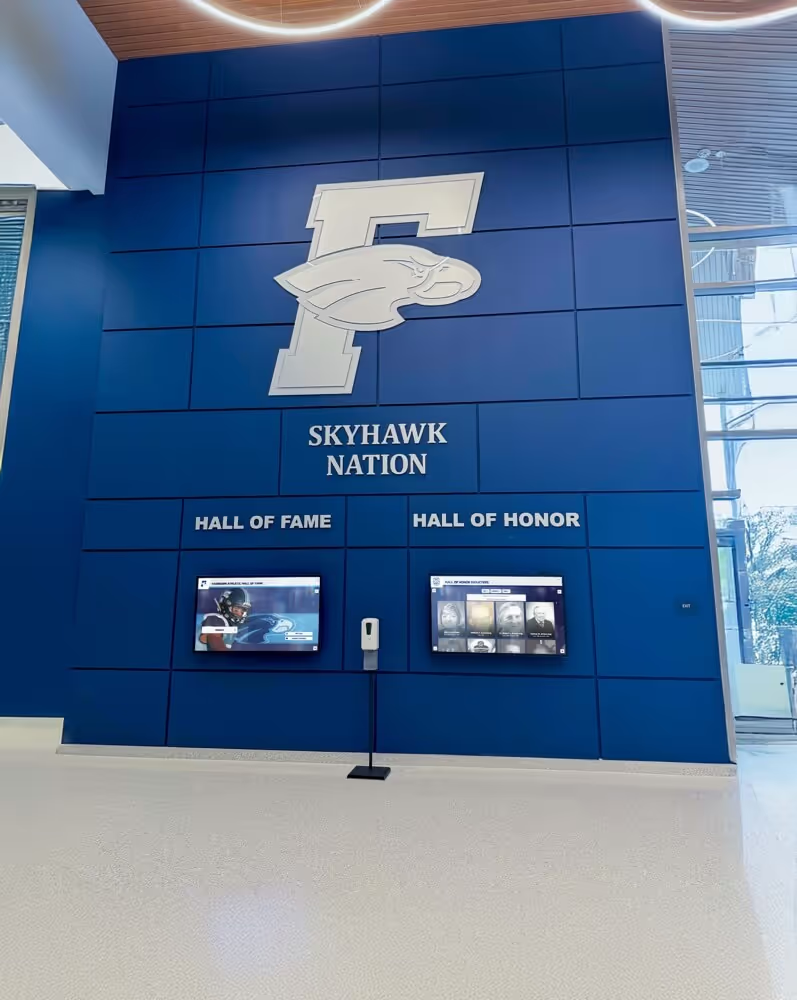
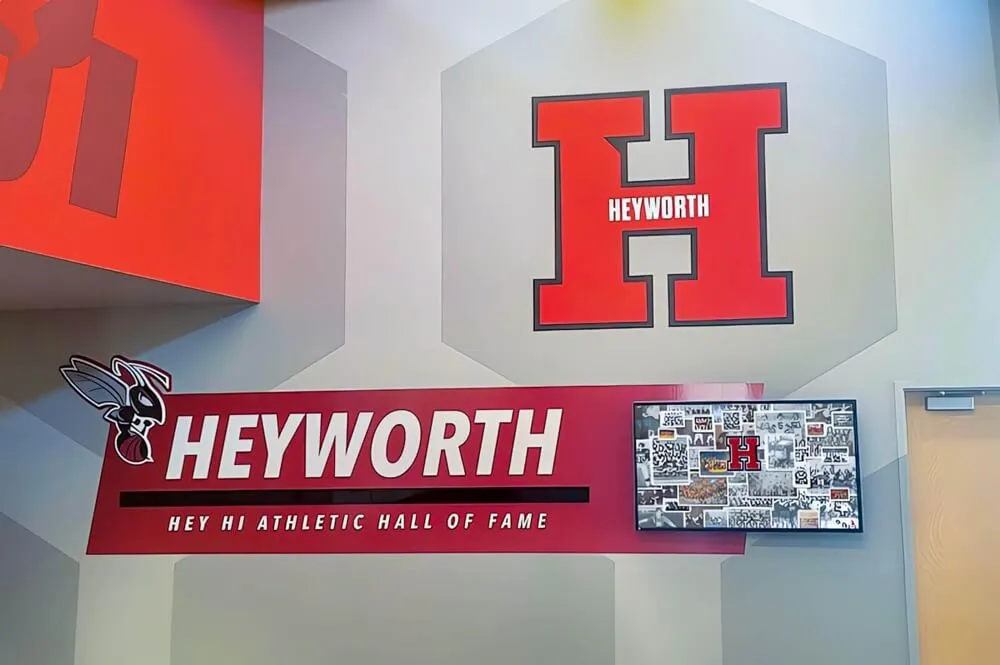
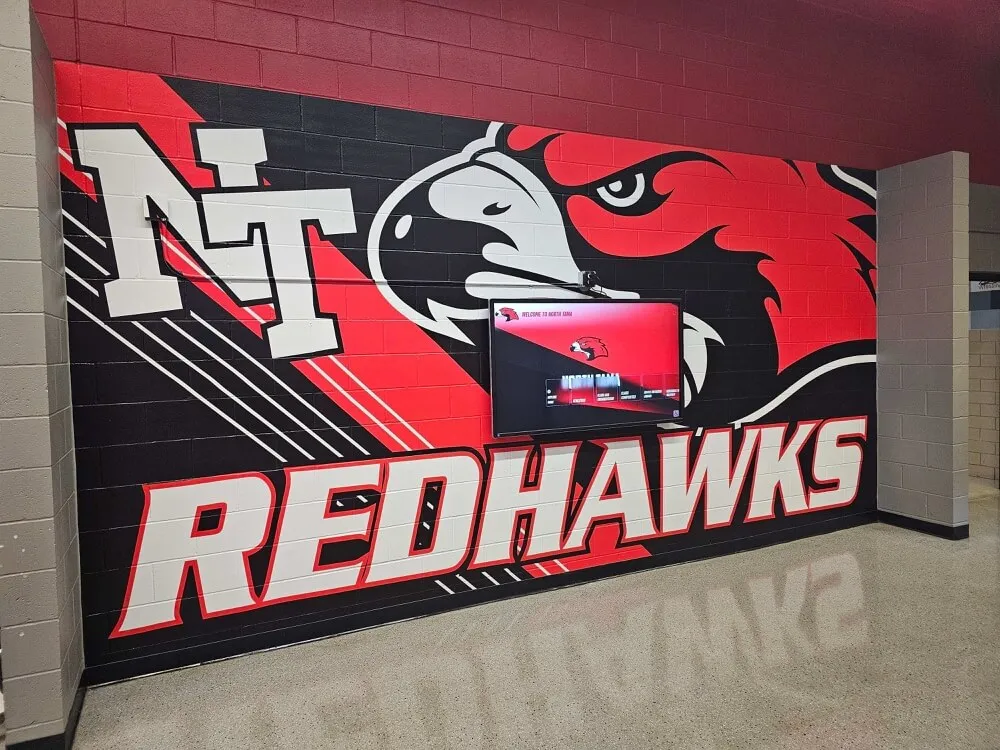
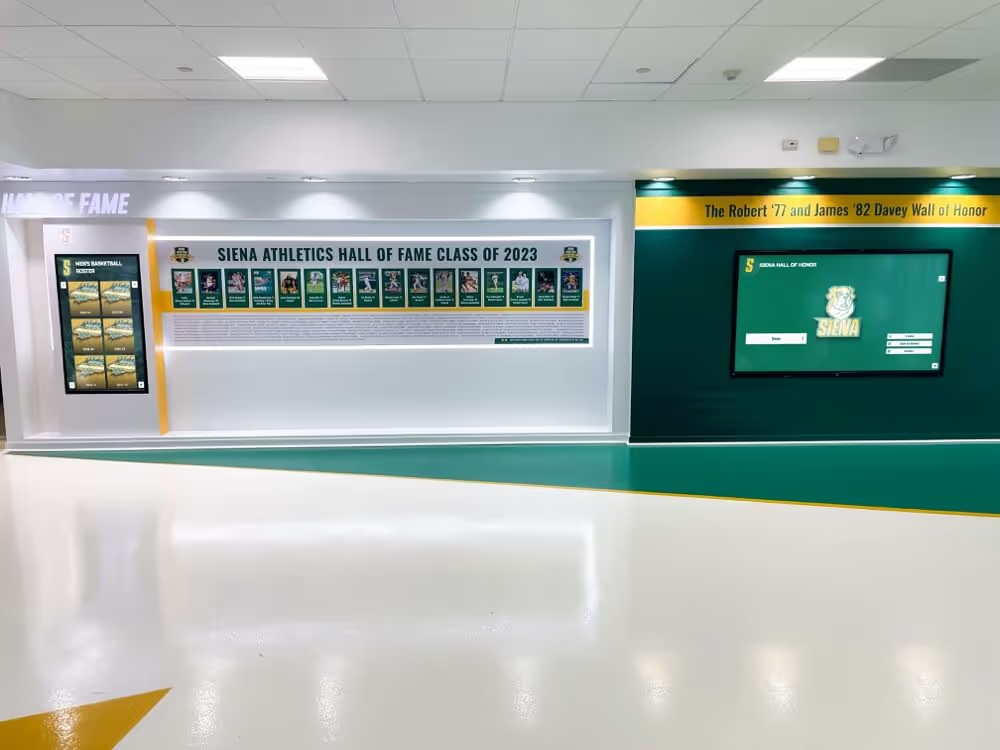
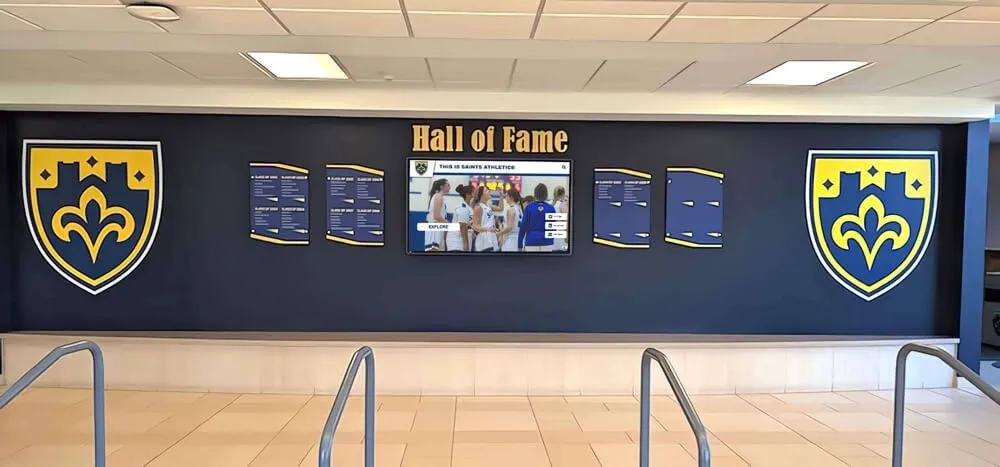
Hall of fame displays that invite exploration rather than passive reading become gathering points where students, families, and alumni engage with program history across generations of leadership
Senior Tributes for Outgoing Captains
Senior recognition for dance team captains operates on two timescales simultaneously: the immediate celebration of the person leaving, and the permanent record being created for the program. Getting both right requires more intentionality than most end-of-year ceremonies typically apply.
Senior Night Captain Moments
Most dance programs with established senior night traditions have components that can be adapted specifically for captains:
The Leadership Baton Moment: a formalized public hand-off ceremony where outgoing captains introduce or acknowledge their successors. This can take place during a home performance, at the banquet, or as a standalone ceremony. The image of an outgoing captain publicly passing leadership to the incoming captain — with both visible to the team and to attending families — creates a moment that photographs well and establishes the new captain’s legitimacy in front of everyone who matters.
Extended Senior Bios for Captains: while all seniors might receive a standard senior night program entry, captains can receive extended biographies that document their leadership contributions specifically. These extended entries serve double duty as source material for permanent displays — the work of writing them well the first time pays forward indefinitely.
Family Recognition for Captain Seniors: captain service demands more than standard athletic participation. Captains often arrive earlier, leave later, carry more stress, and sacrifice more visible time with family. A public acknowledgment of their families — beyond the standard senior night parent walk — reflects that reality in a way families notice and remember.
Guides to senior class awards displays cover frameworks for comprehensive senior recognition that translate directly to the performing arts and team leadership context.
Legacy Gifts and Commemorative Items
The physical object a captain receives at the end of senior year should reflect the weight of their service, not just the category of their award:
Personalized captaincy log: a keepsake book documenting the captain’s tenure — competition results, team photos, quotes from teammates and coaches. Budget-intensive but creates something that outlasts any plaque.
Custom framed captain portrait: the formal annual captain portrait, professionally framed, with the program name, years of service, and team results from the captain’s tenure as a border or mat element.
Legacy letter from the coach: a personal letter from the program director documenting specifically what this captain contributed — not a form letter with the name filled in, but an actual account of the leadership and impact. This item has zero production cost and often means more to the captain than any physical award.
Team message book: a journal collected throughout the season where teammates, coaches, and parents write directly to the outgoing captain. Organized by a designated team member during the year so it’s ready for senior night rather than assembled hastily the week before.
What Senior Tributes Should Document
Beyond the ceremony itself, senior tributes for captains generate source material for permanent recognition. The documentation produced during the tribute process — bios, photos, quotes — should be preserved in a format that remains accessible years later.
Key documentation to capture each year:
- Official captain portrait photograph
- Dates of service and seasons served
- Major competition results during tenure
- Leadership initiatives or program changes associated with this captain
- Coach’s written assessment
- Selected teammate reflections and quotes
- Post-graduation plans and contact preferences for alumni engagement
This documentation is easier to collect while the season is still fresh and the captain is still present. Programs that defer this collection until after graduation routinely find that some of it is never recovered.
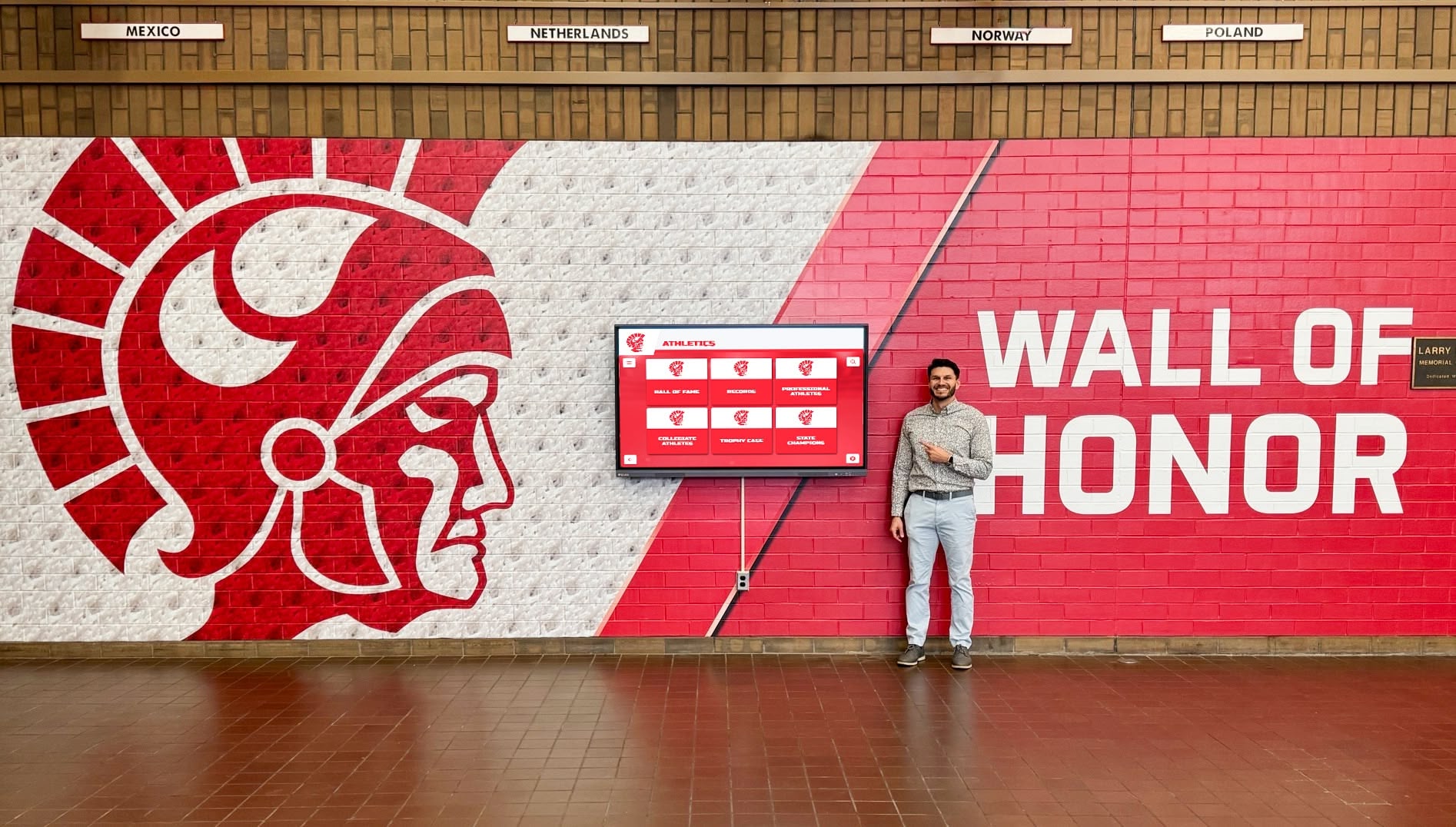
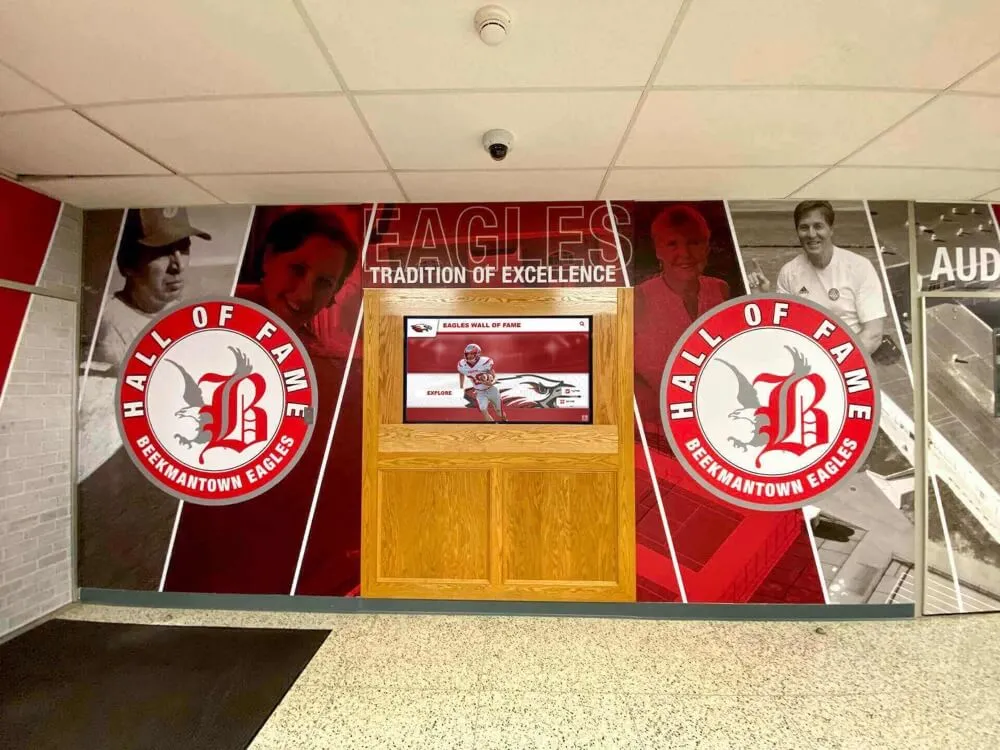
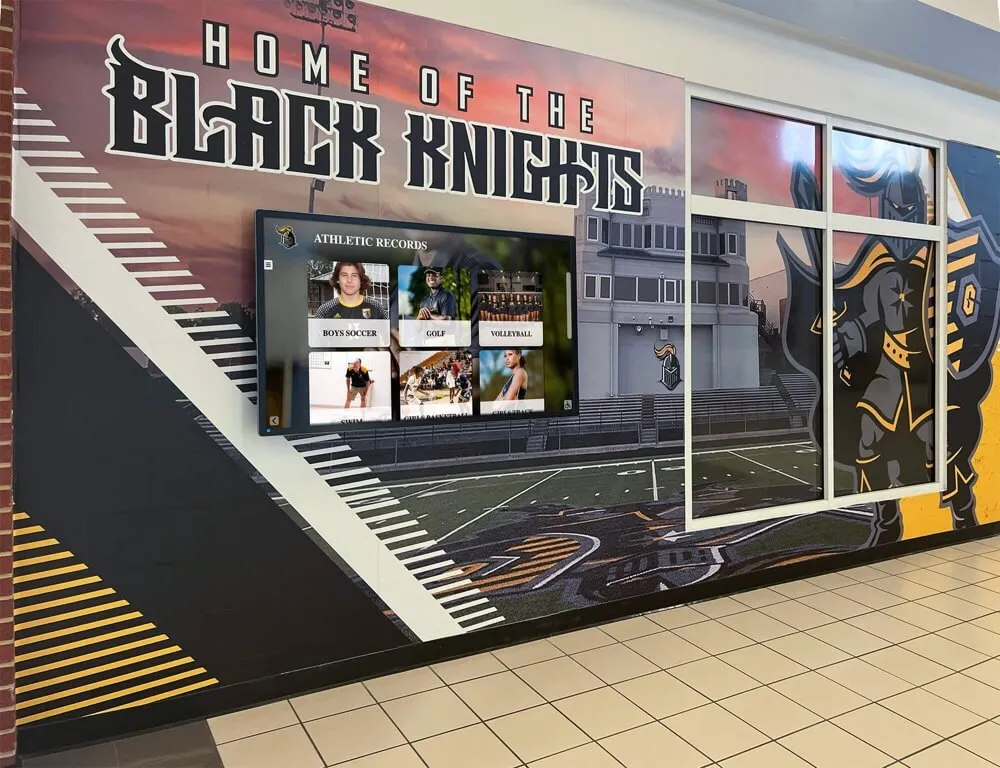
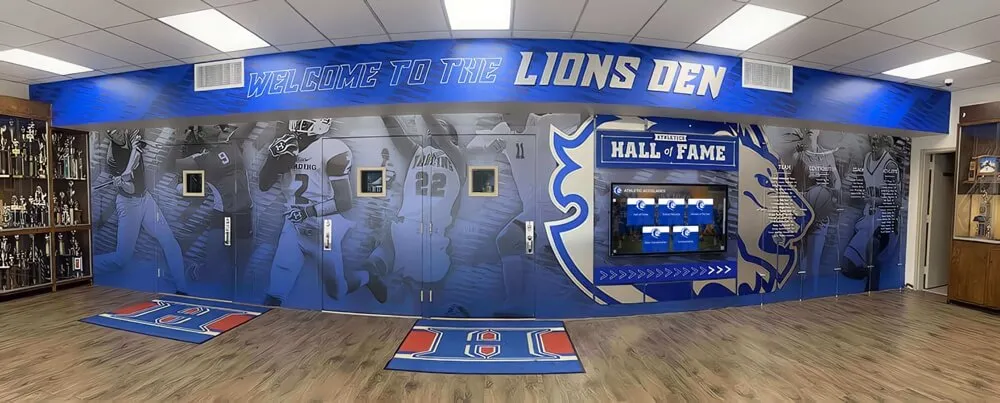
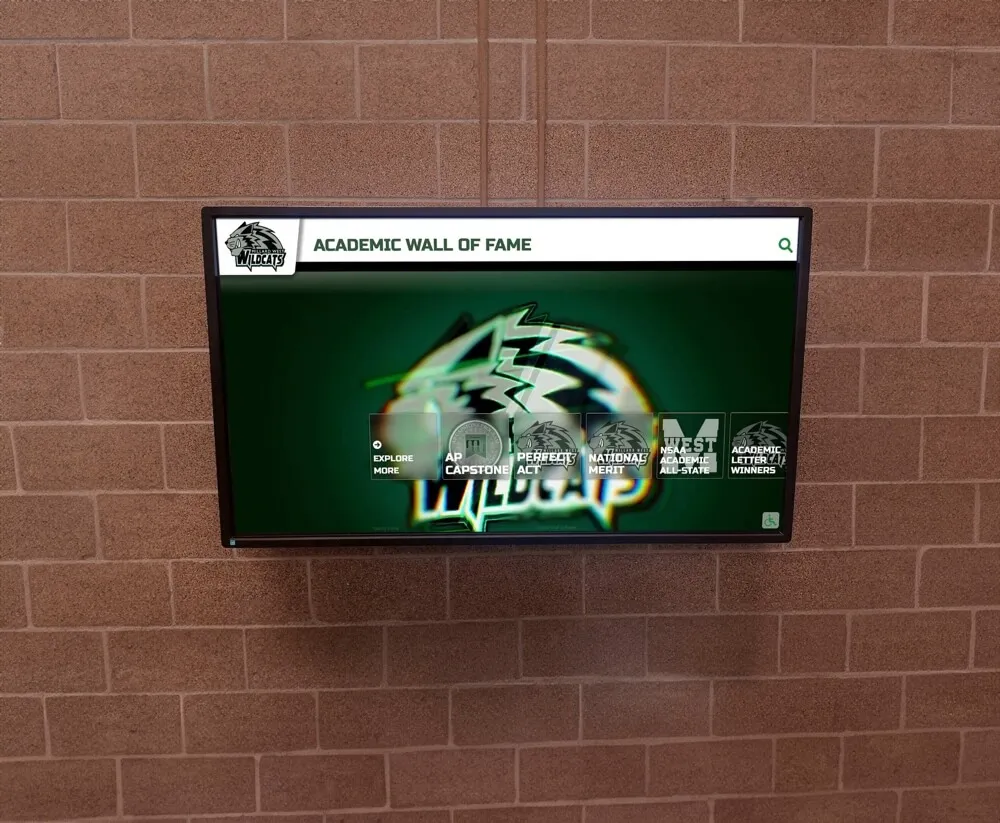
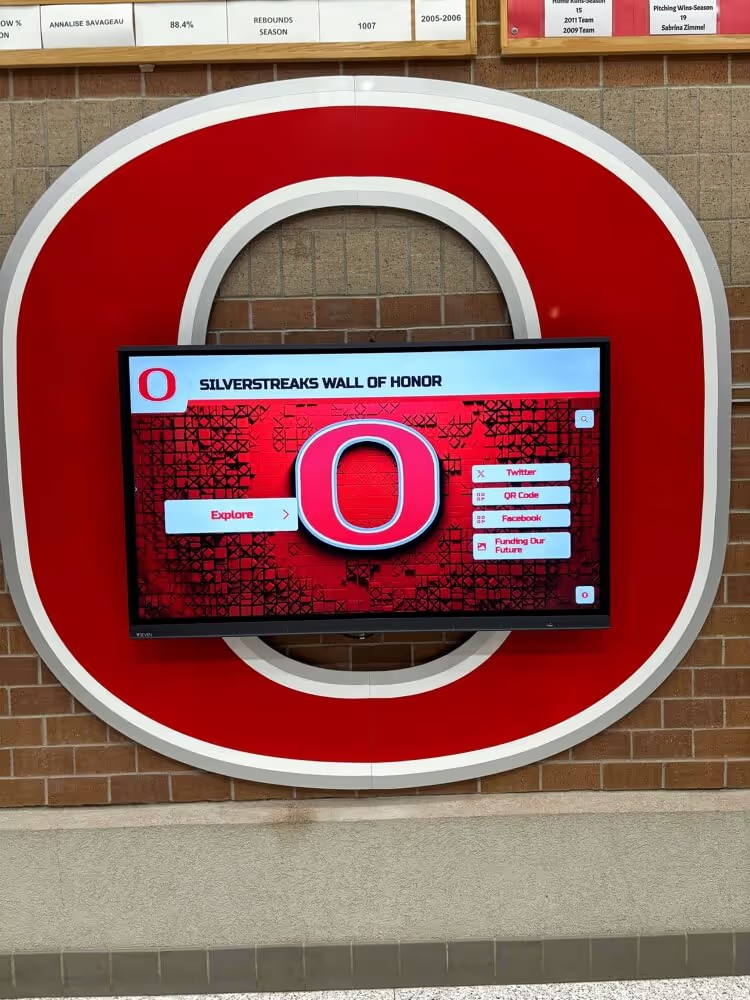
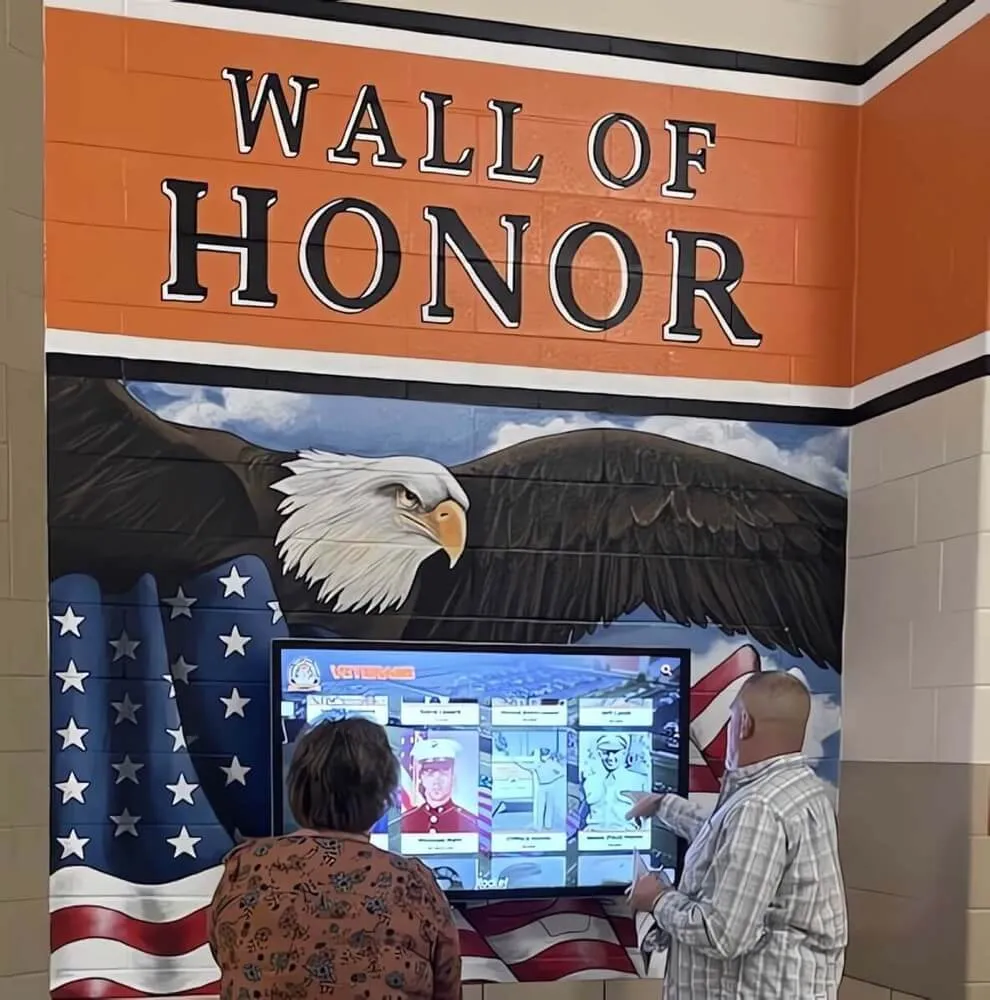
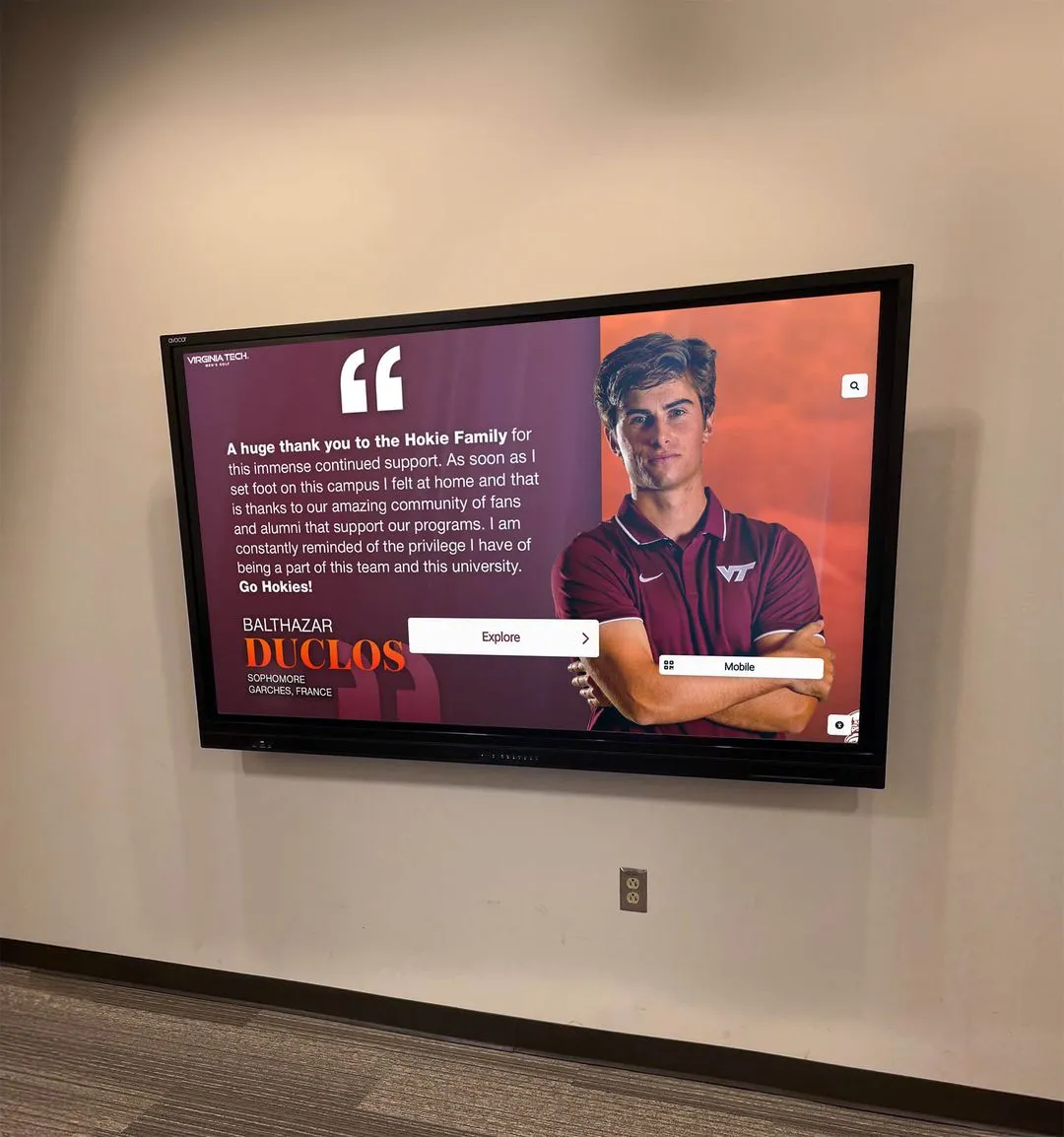
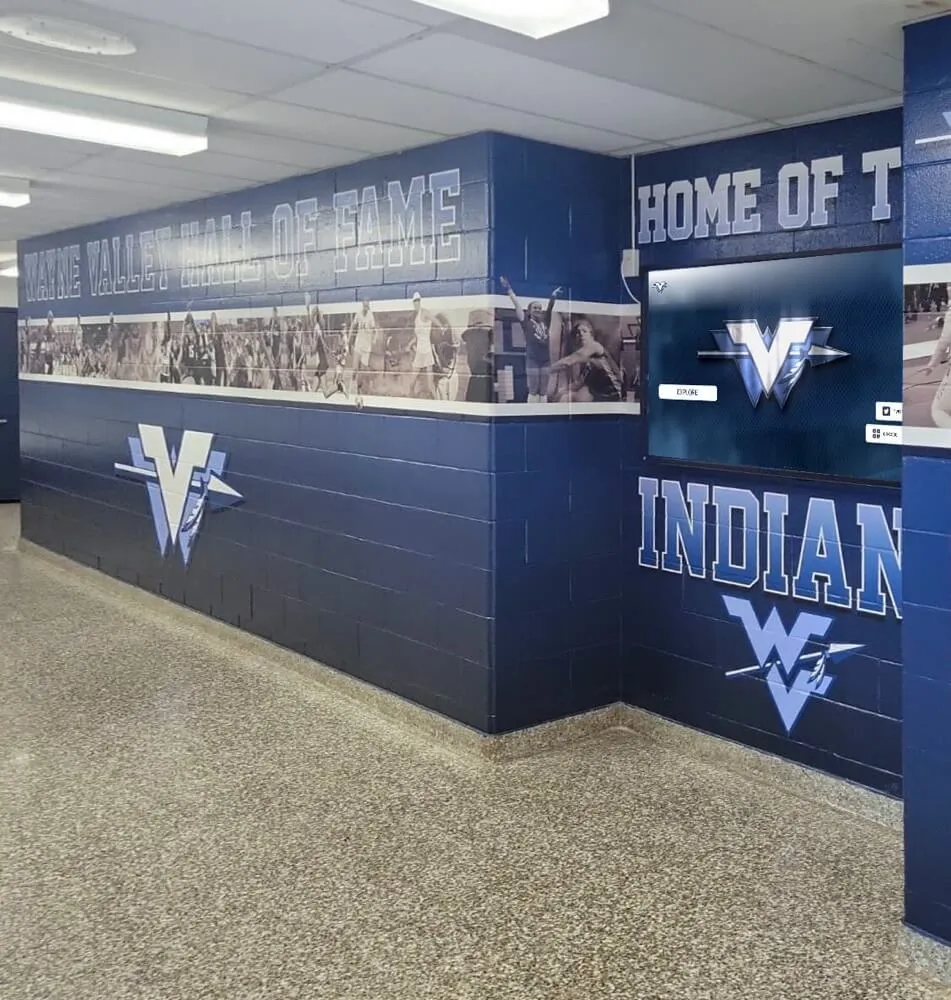
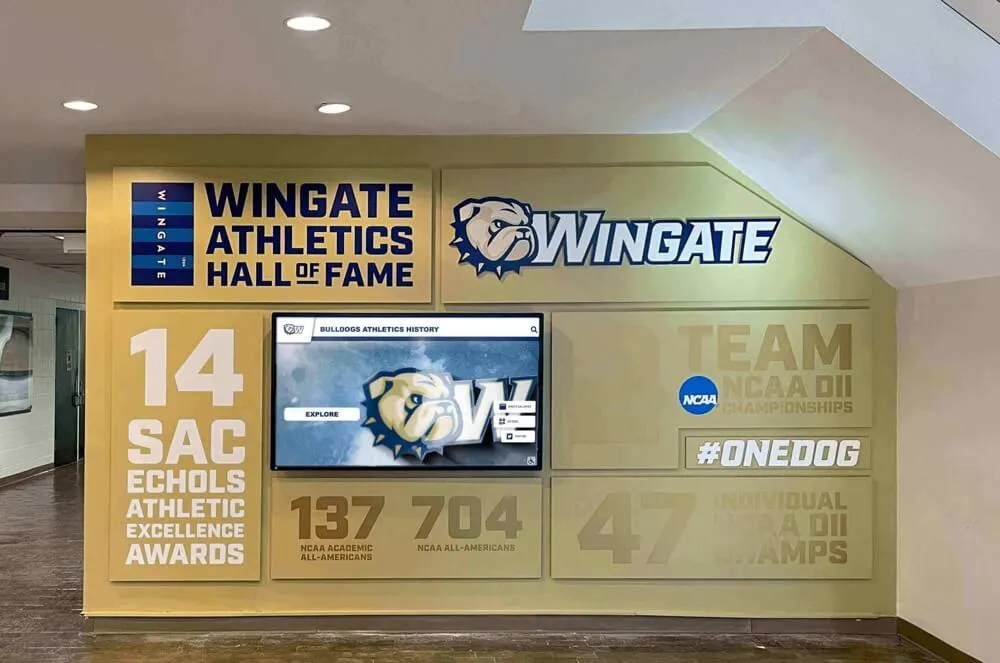
Wall of honor displays in school hallways create permanent, visible records of student leaders — placing captain recognition in the same institutional context as athletic and academic achievement
Building a Dance Team Captain Hall of Fame Wall
The hall of fame wall transforms individual recognition into program legacy. A well-designed captain wall creates a visual record of leadership succession that educates current dancers, honors past leaders, and signals to prospective members what kind of program they are considering joining.
Physical Hall of Fame Wall Options
The portrait gallery: uniform framed photos of every captain, arranged chronologically, hung in the dance studio, a hallway outside the gym, or a lobby display area. Visual consistency — same frame style, same basic composition — signals institutional seriousness even when individual photo quality varies across years.
The plaque roster: a mounted panel listing all captains by name and year, formatted consistently. Less visually dramatic than a portrait gallery but more space-efficient and easier to maintain annually. Works especially well integrated into a larger athletic recognition wall that includes captains from multiple programs across the school.
The mixed-media installation: combining portrait photos with brief text descriptions, competition ribbons or photos, and year-specific mementos into a curated installation. Creates the most visual impact but requires ongoing design judgment to maintain consistency as entries are added each year.
Exploring wall of honor designs for schools and organizations reveals the range of approaches institutions use to balance visual impact, maintenance requirements, and long-term budget across different installation formats.
Location Strategy for Maximum Impact
Where a captain recognition display lives determines who actually sees it. A display that no one walks past accomplishes less than a simpler one in the right location:
Dance studio or team room: maximum visibility for current team members; lower visibility for the general school community and visiting families. Appropriate for recognition that is primarily internal to the program.
Main athletic hallway: visible to athletes across all programs and to families attending games. Works well for a captain display integrated into a broader athletic recognition corridor.
School lobby or entrance: highest general visibility; appropriate for recognition the school wants prospective families, recruits, and community visitors to encounter during building tours.
Performing arts wing: visibility specifically to the performing arts community — students in other performance programs, families attending concerts, fine arts faculty. Appropriate for programs that identify more with the arts than with traditional athletics.
Programs that have implemented hall of fame recognition walls for student leaders typically find that lobby or main-corridor placement drives the most sustained engagement from people outside the immediate team community — the visitors and prospective families who have the greatest potential to become future supporters.
The Annual Update Process
A captain wall only functions as a living record if it is updated consistently. Programs that install physical captain displays and then fall behind on annual additions end up with displays that communicate neglect rather than institutional pride.
The simplest sustainable update process:
- Designate responsibility (coach, team manager, or a rotating outgoing captain duty) for collecting annual documentation before the captain graduates
- Photograph in a consistent format — same background, same framing, same time of year
- Add entries at the end of each season while materials are still accessible and the captain is still reachable
- Store originals and digital copies in a protected archive so a single display damage does not destroy the historical record
Physical displays require consistent attention but create permanent, tangible artifacts. For programs whose documentation and update needs outgrow what physical installations can handle sustainably, digital systems address the maintenance challenge at scale.
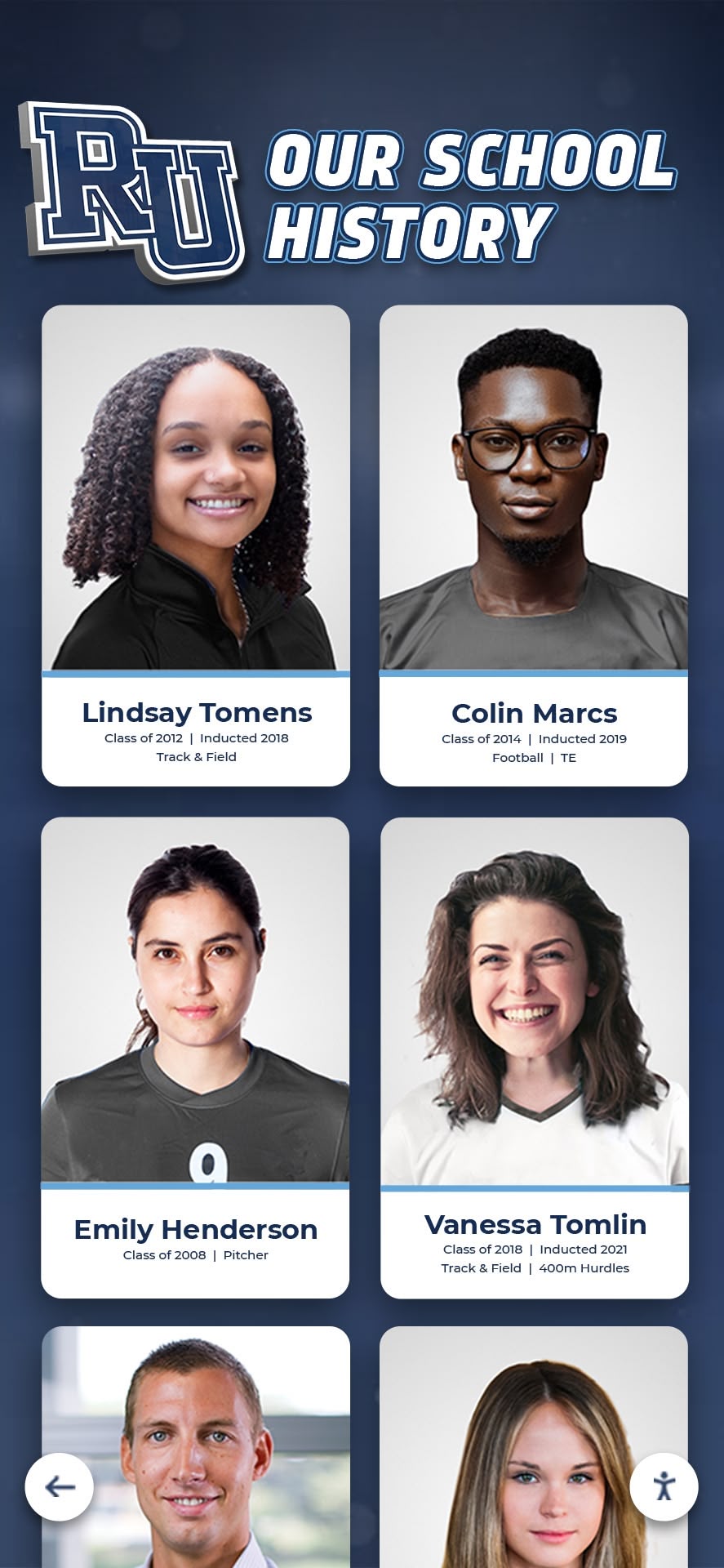
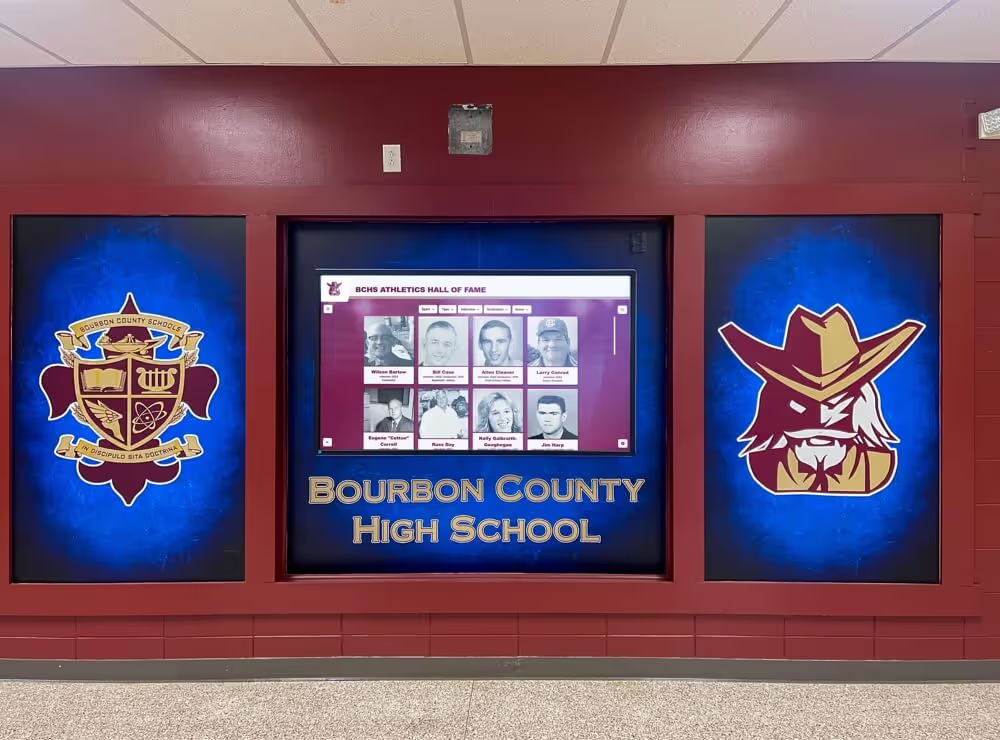
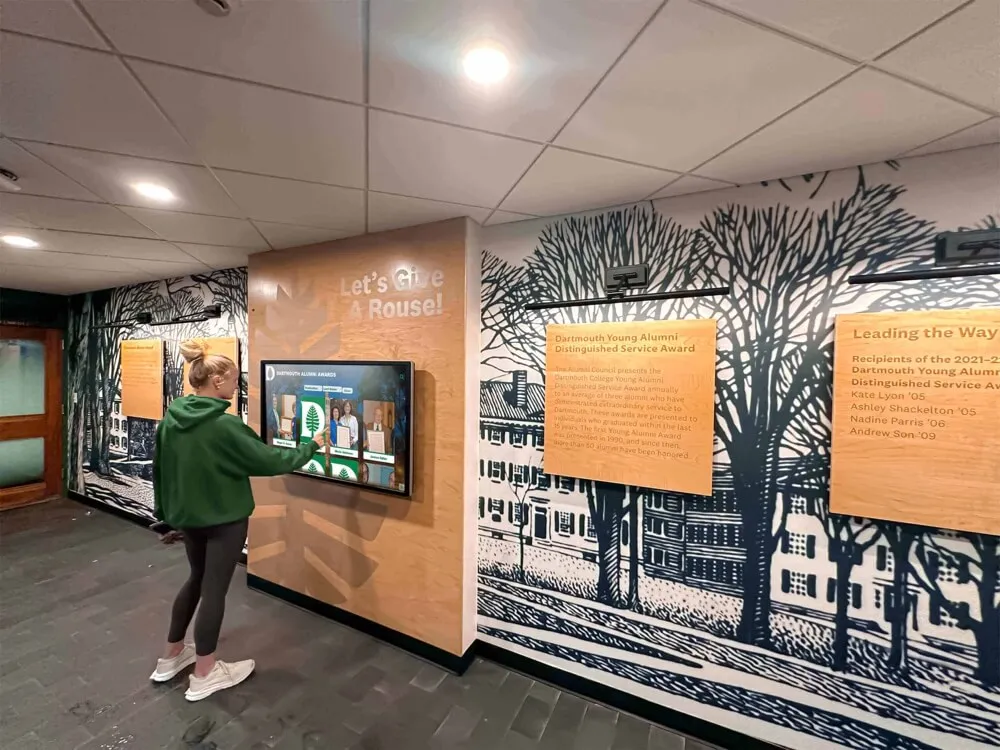
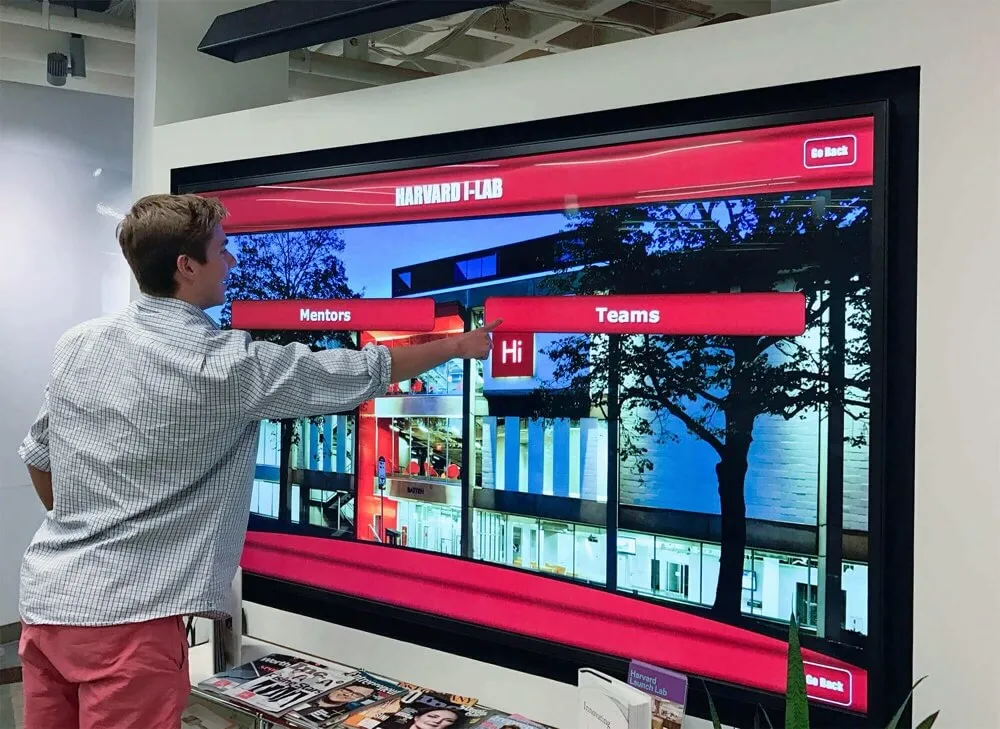
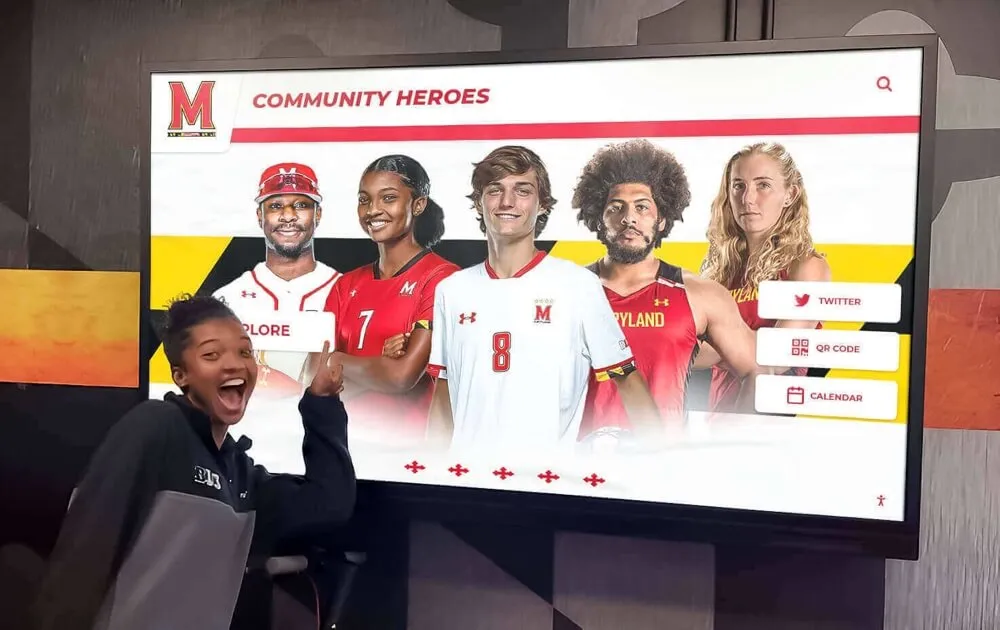
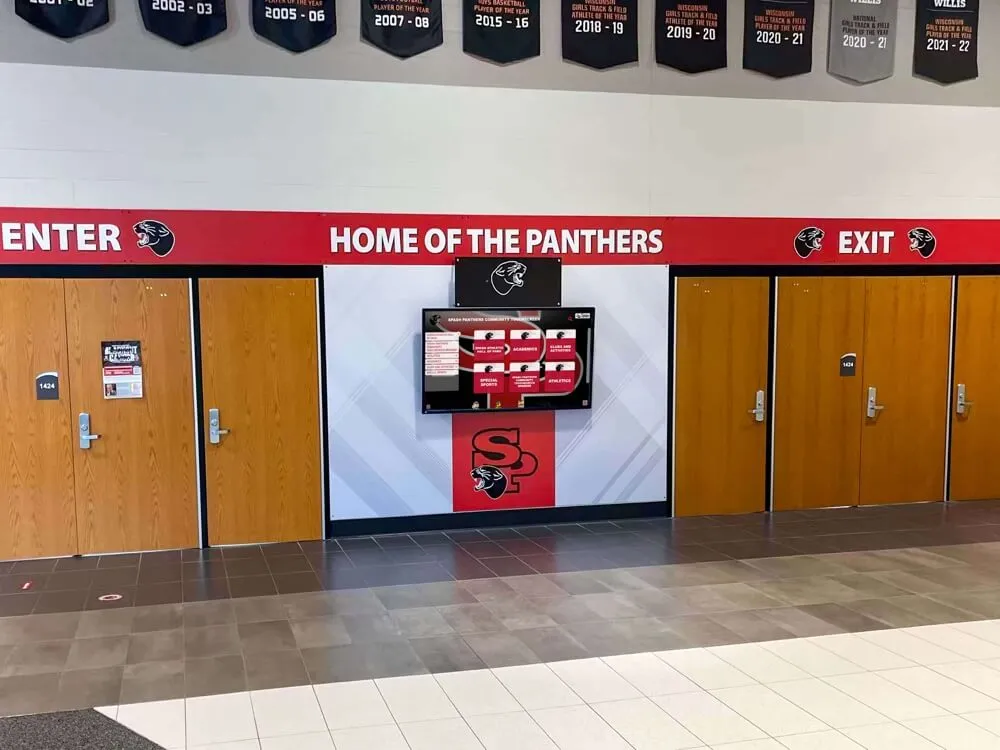
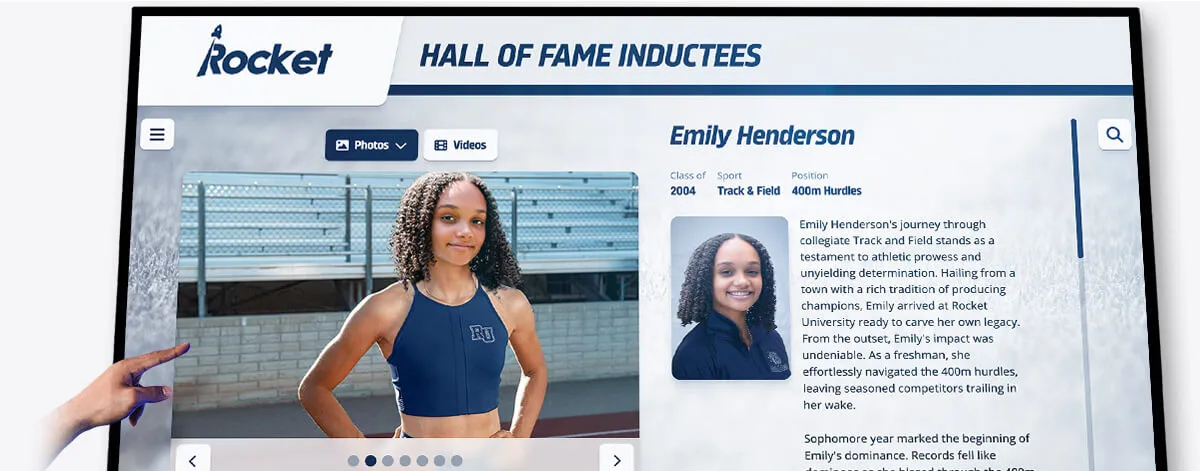
Portrait card systems that document individual leaders in consistent format create searchable visual archives — future captains can explore program history through the people who shaped it, season by season
Digital Recognition Systems for Captain Histories
Physical walls have real limits: they fill up, they are expensive to maintain at high quality over time, and they exist in only one location. Digital recognition systems address all three limitations while adding capabilities that physical installations cannot replicate.
What a Digital Captain Profile Contains
A dedicated captain profile on a digital recognition system is meaningfully richer than a plaque or photo panel. Well-documented profiles typically include:
- Full captain portrait and action photos from the tenure year
- Seasons and years served as captain
- Competition results and team achievements during the captain’s tenure
- Coach-authored narrative describing leadership style and specific contributions
- Teammate quotes, moderated and curated
- Academic achievements and broader extracurricular context
- Post-graduation update: college attended, continued dance or performing arts involvement, career direction
This depth of documentation creates something genuinely useful for the captain herself — a credential she can share with college admissions offices, scholarship committees, and future employers — while building a program archive that coaches and administrators can draw on for any number of program history purposes.
Give Your Dance Team Captains a Recognition System That Lasts
Rocket Alumni Solutions builds interactive touchscreen recognition walls that document every captain, every season, and every leadership contribution — permanently searchable, visually compelling, and accessible to alumni and visitors from anywhere.
Explore Captain Recognition SolutionsComprehensive guides to designing engaging touchscreen recognition experiences cover how the content architecture of individual profiles affects how visitors navigate and engage with recognition content — structure choices that matter as much as the content itself.
Touchscreen Walls That Include Dance Captains
Schools with interactive touchscreen recognition systems — the kind that display searchable profiles of athletes, scholars, and student leaders — can include dance team captain histories in the same platform that houses football captains, valedictorians, and student government presidents.
The integration matters for two reasons.
Institutional legitimacy: a dance team captain whose profile appears alongside a football team captain’s profile in the same system receives an implicit institutional endorsement — her leadership role is treated as formally equivalent in the school’s recognition infrastructure.
Sustainable updating: a digital system already maintained for other programs requires only a content addition to incorporate dance captain records. The infrastructure investment is shared across the whole school; the incremental cost of adding dance is low.
Digital hall of fame touchscreen implementation guides cover the practical considerations for schools evaluating touchscreen recognition systems at different budget levels and installation scales.
Building the Archive Retroactively
One practical challenge for programs looking to establish digital captain recognition: what about captains who served five, ten, or twenty years ago?
Retroactive archiving is more achievable than it appears:
Sources for historical captain documentation:
- Program photo archives — coaches often hold extensive informal archives they do not think to offer until asked directly
- School yearbooks — consistent annual coverage for programs that received yearbook space before budget cuts reduced performing arts coverage
- Local newspaper competition coverage — team captains are frequently named in competition stories
- Alumni social networks — former captains contacted directly are often willing to share photos and documents when they understand the purpose
- Coach oral histories — a single recorded interview with a long-tenured coach can recover years of institutional memory that exists nowhere else in written form
Schools that have built retroactive captain archives consistently describe the process as unexpectedly rewarding — the documentation that surfaces during archiving provides material for storytelling, fundraising, and alumni engagement projects well beyond the captain wall itself.
The approach to athletic season recap displays and archive building outlines systematic methods for recovering and organizing historical records that apply directly to performing arts program histories.
Connecting Captain Recognition to Broader Program Culture
Captain recognition does not exist in isolation. Its impact depends on how it connects to the program culture the school is actively building.
Recognition That Recruits
A dance captain wall visible to middle schoolers touring the high school on transition day is a recruiting tool. A prospective dancer who sees that this program formally documents its captains — that the names are preserved on the wall, that the history is maintained and updated — receives a signal about what kind of program she would be joining. Ambitious students want programs that take their history seriously.
Programs that invest in school spirit activities and community-building initiatives consistently find that recognition infrastructure and spirit culture reinforce each other — when leadership is visibly honored, more students aspire to the organization doing the honoring.
Recognition That Retains Alumni
Former dance captains who feel genuinely recognized maintain connections to their programs in ways that pay dividends across years and decades. They attend alumni events, mentor current captains, respond when fundraising campaigns launch, and speak about the program to prospective students they encounter in their college and professional lives.
The mechanism that converts former captains into engaged alumni is not complicated: make them feel that their service was remembered. A digital recognition profile they can revisit and share is a more durable connection mechanism than a physical plaque that may eventually be lost in a studio reorganization or a renovation.
Approaches to community service awards and long-term student recognition programs provide frameworks for maintaining alumni connection through ongoing acknowledgment rather than single-event ceremonies — a model directly applicable to programs building captain alumni communities.
Recognition That Elevates the Whole Program
When dance captains are recognized through the same infrastructure that celebrates football captains and student government presidents, the effect extends beyond the individual honoree. Every dancer on the current roster understands that leadership in this program is treated with the same institutional seriousness as leadership anywhere else in the school. That signal shapes who aspires to captain, how captains lead, and how coaches identify and develop their future leaders.
Schools building comprehensive recognition that covers dance alongside traditional athletics demonstrate, at the institutional level, that performing arts leadership is valued. That demonstration matters more than any single award.
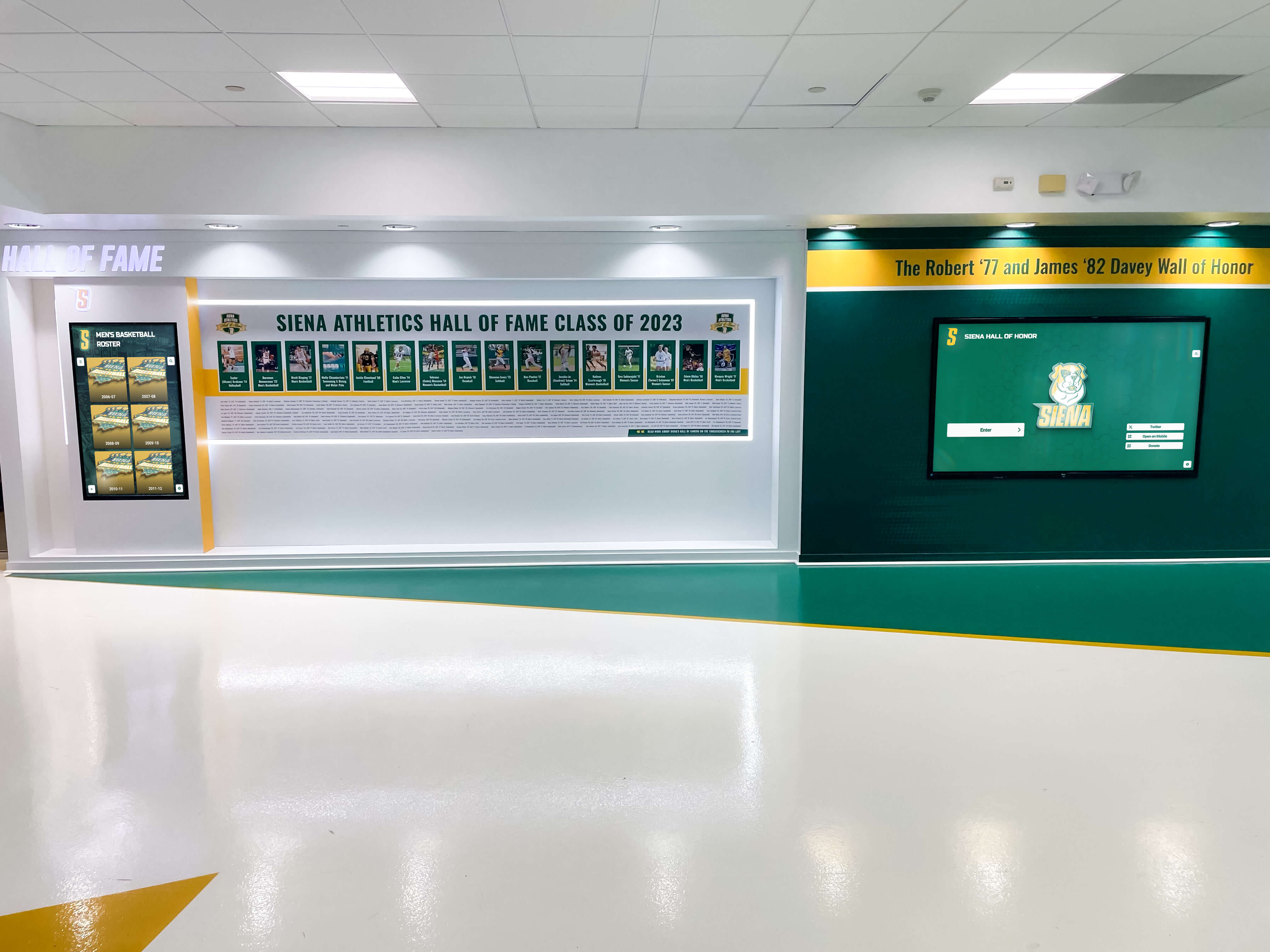
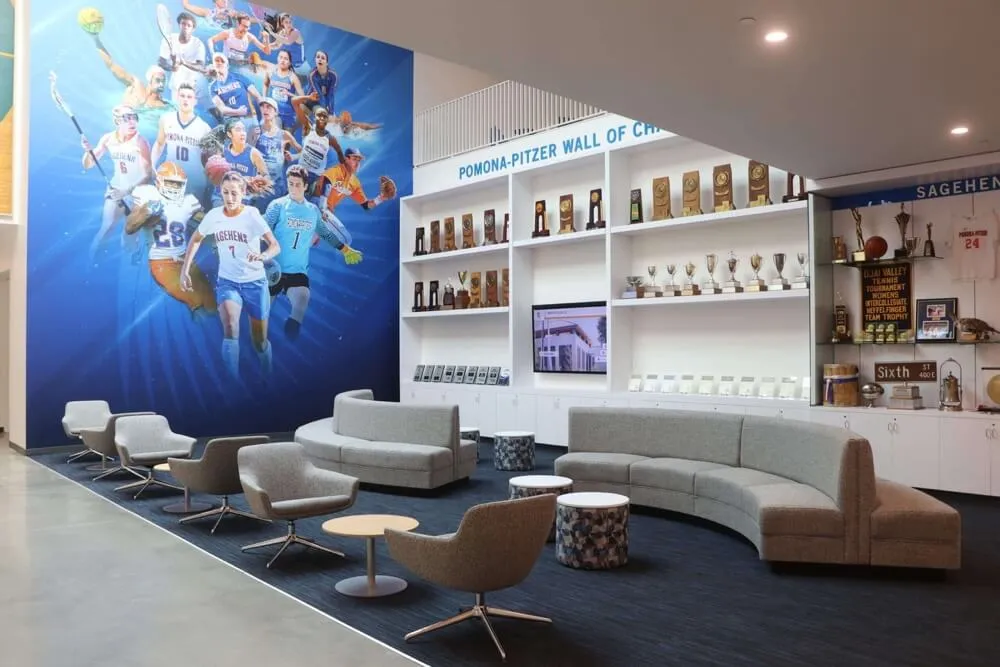
Comprehensive hall of fame wall installations that include performing arts captains alongside athletic leaders communicate, visually and institutionally, that all forms of leadership receive equal recognition
Designing Athletic Team Rooms That Feature Captain Recognition
Beyond hallway displays, the team room or studio environment where dancers rehearse daily is a prime location for captain recognition that shapes team culture from the inside:
Captain honor boards in the rehearsal space: a roster of past captains displayed where current dancers see it every practice sends a consistent message about the program’s values and history. Unlike hallway displays that visitors encounter passingly, a studio-facing display is seen daily by the people most likely to aspire to the role.
Record and milestone boards adjacent to captain lists: pairing the captain roster with competition records, performance milestones, and program achievements creates a historical context that makes the captain role feel consequential rather than ceremonial. Current captains can see the legacy they are adding to; current dancers can see the tradition they are part of.
Coach quotes and program values statements: integrating the coach’s stated philosophy alongside captain recognition reinforces the connection between individual leadership and program identity. Resources on athletic team room design for recognition and recruiting cover layout strategies for spaces that need to function as both practice environments and recognition installations.
Frequently Asked Questions About Dance Team Captain Recognition
How often should captain recognition displays be updated?
Physical displays should be updated at the end of each season before outgoing captains graduate — while documentation is fresh and the captain is still accessible for photos and information. Digital systems can be updated on the same schedule, but the lower friction of digital updates means there is less justification for delays. Programs that fall behind on updates by two or more years should prioritize retroactive documentation before launching new recognition projects.
What if the program is new and has only one or two years of captain history?
Start the record-keeping now, and make the founding captain’s recognition reflect that historical significance. Being the first or second documented captain of a program is itself a meaningful distinction. Frame early recognition explicitly within the program’s founding story — the display or profile can note that this captain helped establish what the program would become.
Should co-captains receive separate or combined recognition?
Both approaches work, and the choice should reflect the actual structure of the co-captaincy. If co-captains shared equal roles and co-led the team jointly, a combined entry that names both in the same year makes historical sense. If roles were divided (one captain for competition, one for community events, for example), separate entries that note the division of responsibility are more accurate and more useful historically.
How do we handle captains who left the program under difficult circumstances?
Recognize the role and the service, not the circumstances of departure. A captain who served for two seasons and then left under difficult circumstances still contributed leadership during that time. Recognition systems focused on service dates and program contributions rather than personal narratives handle this naturally — the record reflects what was accomplished without requiring editorial judgment about how it ended.
What is the best way to get alumni captains involved in current captain recognition?
Direct outreach works. Former captains contacted personally — not through mass alumni emails — respond at much higher rates to requests for participation in recognition events, mentorship opportunities, or documentation projects. Starting an alumni captain network, even informally, provides a resource that benefits both the program and the former captains who maintain connection through it.
Conclusion: Recognition That Matches the Role
Dance team captains are among the most demanding leadership roles in a school’s performing arts ecosystem. They are selected because of their skill, their reliability, and their capacity to lead — and then they spend a season or more doing the invisible work of holding a team together while also performing at the highest level expected of any individual member.
Recognition that reflects that scope is not complicated to build. It requires a commitment to documentation — annual, consistent, specific — and an institutional decision to treat performing arts leadership the way traditional athletic leadership has been treated for generations.
Physical captain walls, digital recognition profiles, senior tributes that go beyond the generic, and award categories that capture what captains actually do: these are the components. Schools that build this infrastructure report a consistent downstream effect — programs attract more capable leaders, alumni stay connected longer, and the culture that captains are asked to lead becomes one they are proud to have been part of.
For programs ready to build recognition infrastructure that covers dance captains alongside every other form of school leadership, Rocket Alumni Solutions provides interactive touchscreen systems designed specifically for educational institutions — searchable, visually compelling, updateable without reinstallation, and built to preserve program history across decades of leadership transitions.
Build a Recognition System Your Dance Captains Will Remember
Rocket Alumni Solutions designs interactive touchscreen walls that document every captain, every season, and every leadership contribution — permanently. From a single program to a full school-wide recognition system, we build displays that honor the people who do the work.
Request a Custom Recognition Preview