



Intent: Demonstrate how interactive touchscreen displays transform everyday school life documentation—from photo galleries of annual events to comprehensive institutional timeline layouts and engaging About Us profiles—into compelling storytelling experiences that commemorate heritage while serving as powerful recruitment and marketing tools for prospective students and families.
Schools accumulate thousands of photographs each academic year capturing homecoming festivities, athletic championships, theatrical performances, academic competitions, community service projects, and countless other moments defining institutional character. Yet most of these images remain trapped in yearbooks collecting dust, buried in digital archives nobody accesses, or scattered across staff computers and personal devices—failing to serve their potential as powerful testimonials to vibrant school culture and rich traditions that prospective families seek when evaluating educational options.
This comprehensive guide explores how interactive touchscreen technology enables schools to present living documentation of school life through searchable photo gallery displays organizing events across years, interactive timeline layouts mapping institutional history from founding to present, and compelling About Us profile sections introducing faculty, programs, and community values—creating immersive experiences that honor legacy while functioning as authentic marketing tools far more persuasive than traditional brochures or static website content.
Schools implementing comprehensive event documentation through interactive displays report stronger community engagement, enhanced recruitment effectiveness with prospective families spending 8-12 minutes exploring authentic school life representations, improved alumni connections to current programs, and measurable increases in institutional pride among current students discovering the broader heritage they’re contributing to.

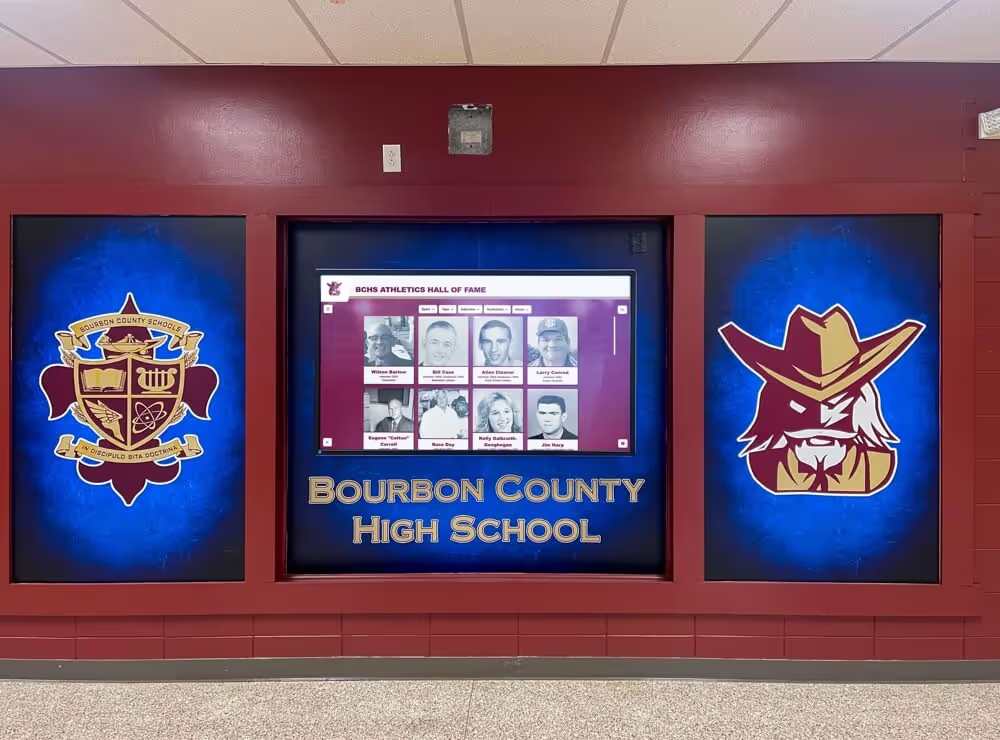
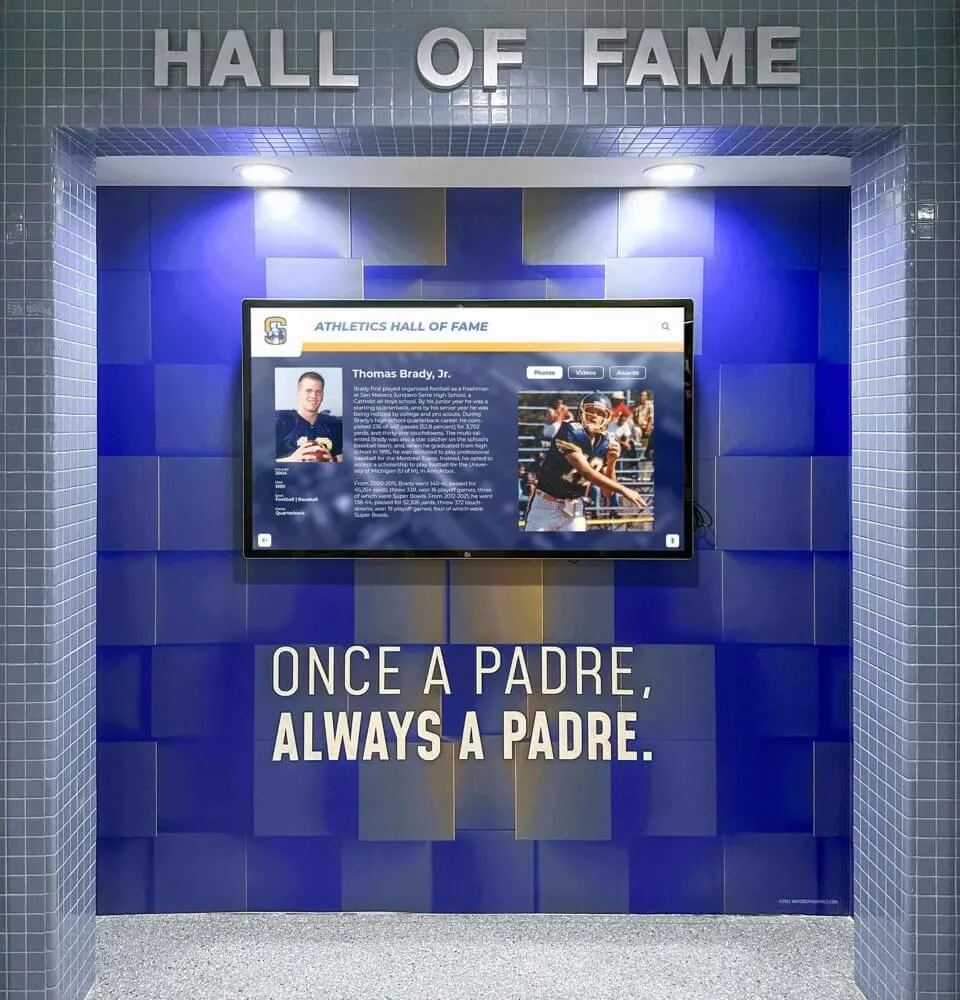
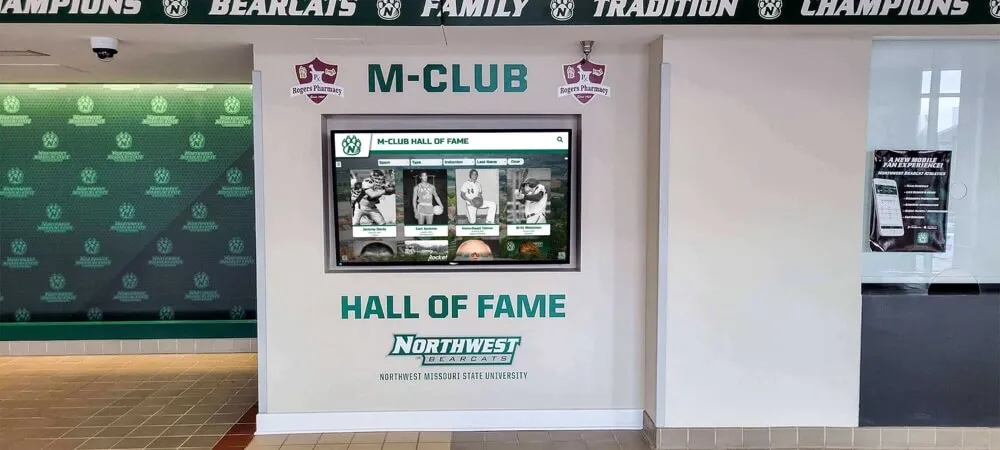
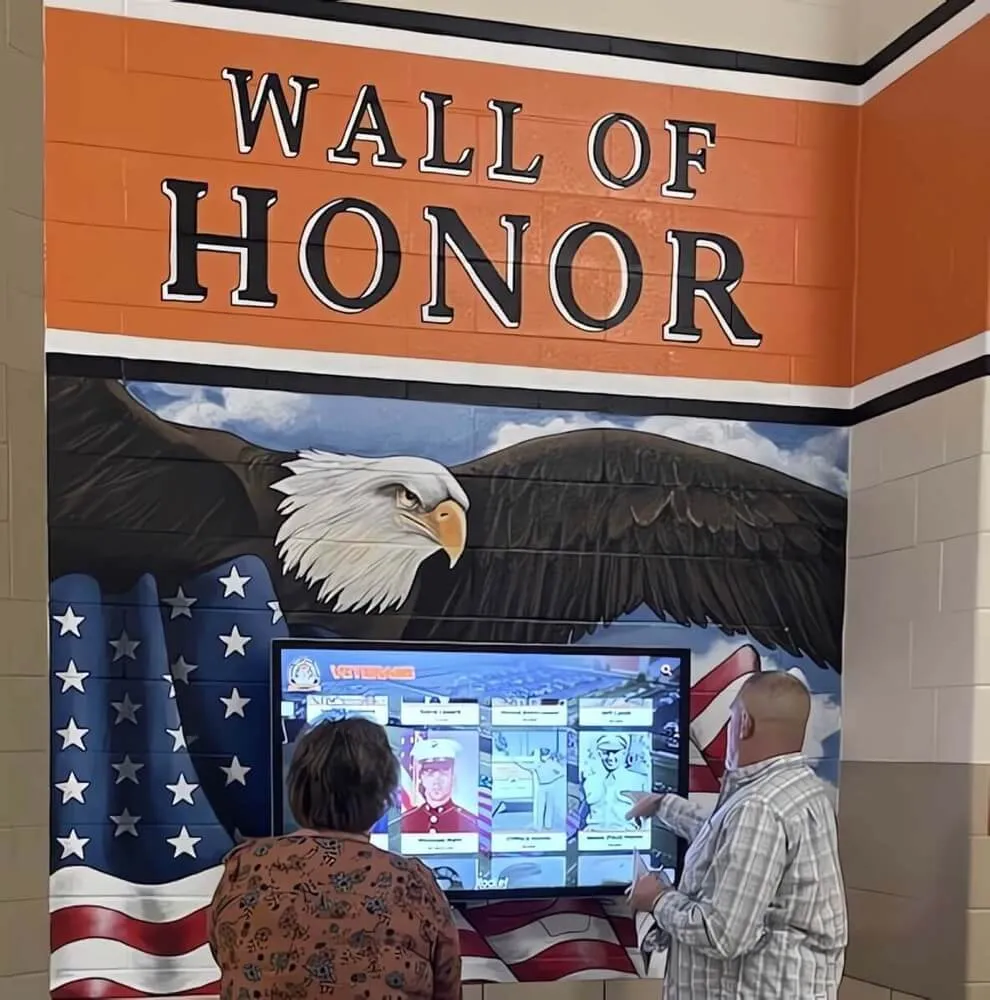
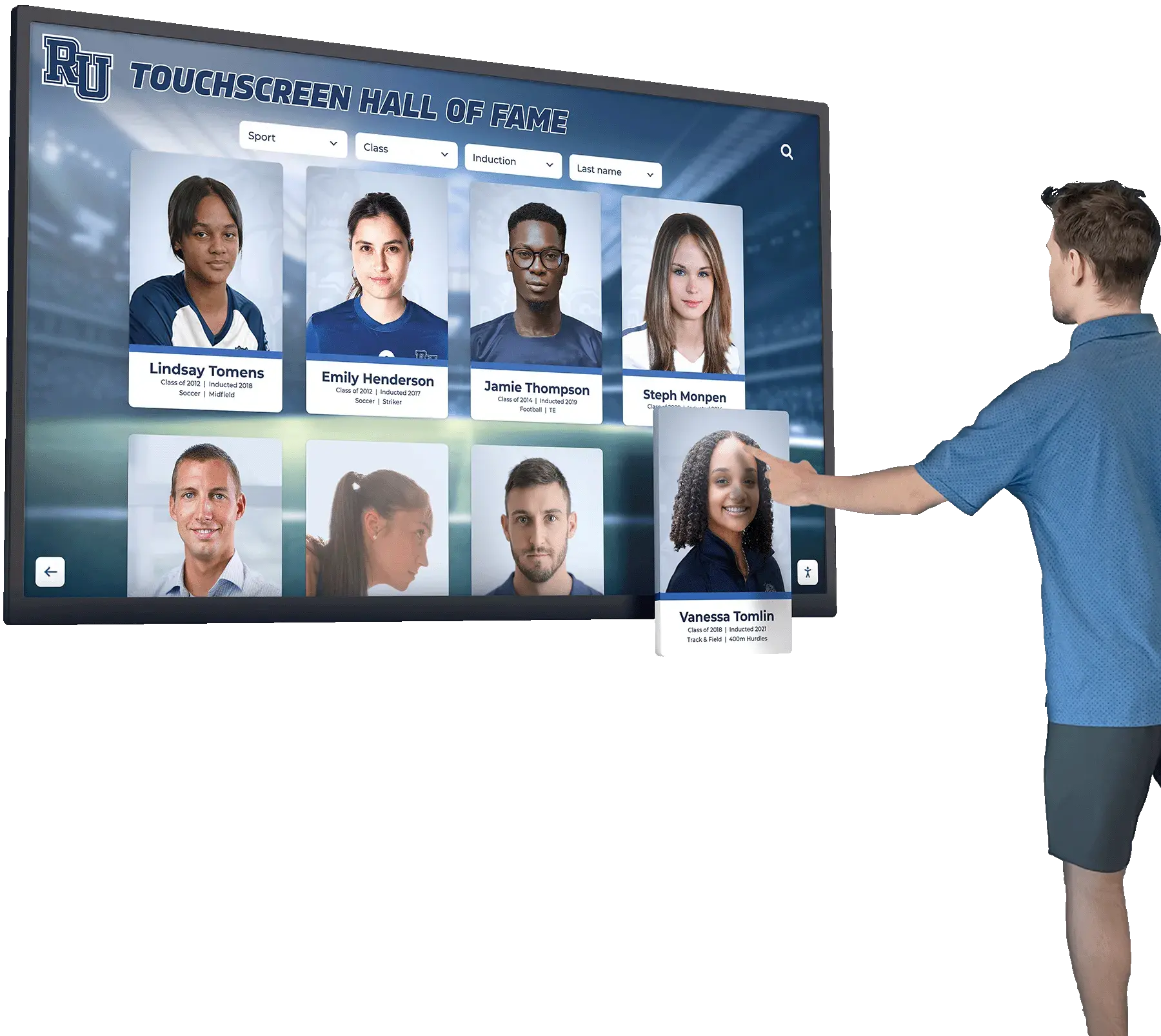
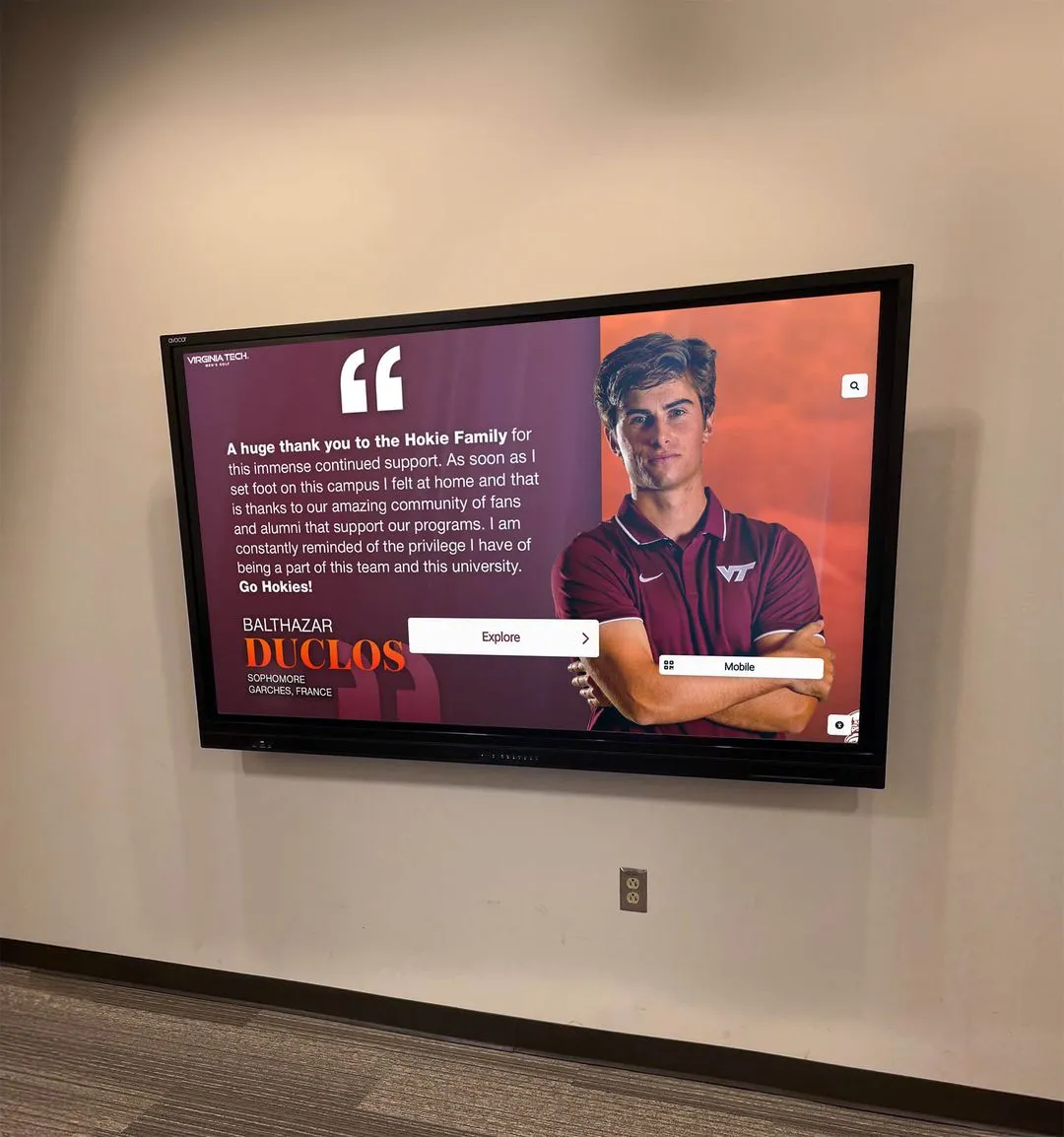
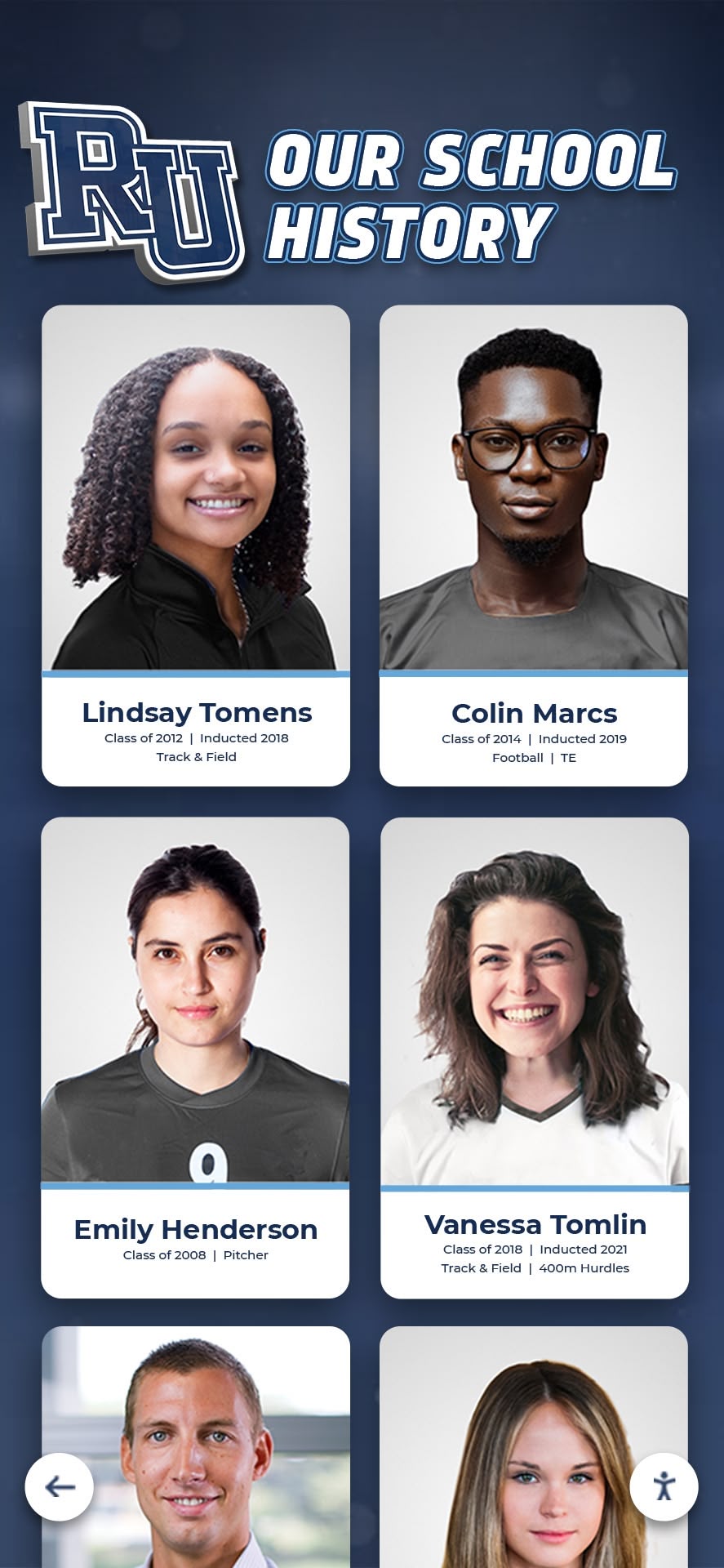
Card-based gallery interfaces enable intuitive exploration of school history through organized collections of student, athlete, and alumni portraits spanning decades
The Challenge of Documenting Living School History
Before exploring specific implementation approaches, understanding why schools struggle with event documentation and history preservation reveals the strategic value interactive technology delivers.
Mountains of Photos, Minimal Accessibility
Every school year generates massive photograph collections capturing countless memorable moments—spirit week activities, championship games, musical performances, science fairs, graduation ceremonies, field trips, club meetings, and daily classroom interactions. Professional photographers, staff members, parent volunteers, and students themselves contribute thousands of images annually.
Yet despite this abundance, most schools fail to make event photography genuinely accessible to communities. Images appear briefly in weekly newsletters or social media posts, then disappear into folders on servers. Yearbooks provide annual compilations, but only those purchasing copies access content, and yearbooks capture tiny fractions of total images shot throughout years.
This inaccessibility means that prospective families touring schools see beautiful facilities but struggle to envision actual student life experiences. Alumni visiting campuses cannot easily reconnect with their own era’s traditions. Current students rarely discover that homecoming traditions they’re experiencing today trace back decades, connecting them to broader institutional narratives.
History Preserved But Not Presented
Similarly, most schools possess rich institutional histories worthy of celebration—founding stories explaining how communities came together to establish education, evolution narratives documenting facility expansions and program additions, championship achievements highlighting decades of athletic excellence, distinguished alumni demonstrating educational value through graduate success, and community partnerships revealing deep local connections.
This historical information typically exists in scattered formats including archives with documents and artifacts few people access, website “about us” pages with dense text nobody reads thoroughly, trophy cases showing hardware without context explaining significance, and plaques commemorating milestones with minimal storytelling detail.
The result? Schools sit on goldmines of compelling narrative content that could strengthen recruitment, inspire current students, engage alumni, and build community pride—but fail to present these assets in formats that actually connect with modern audiences expecting visual, interactive, and easily accessible experiences.
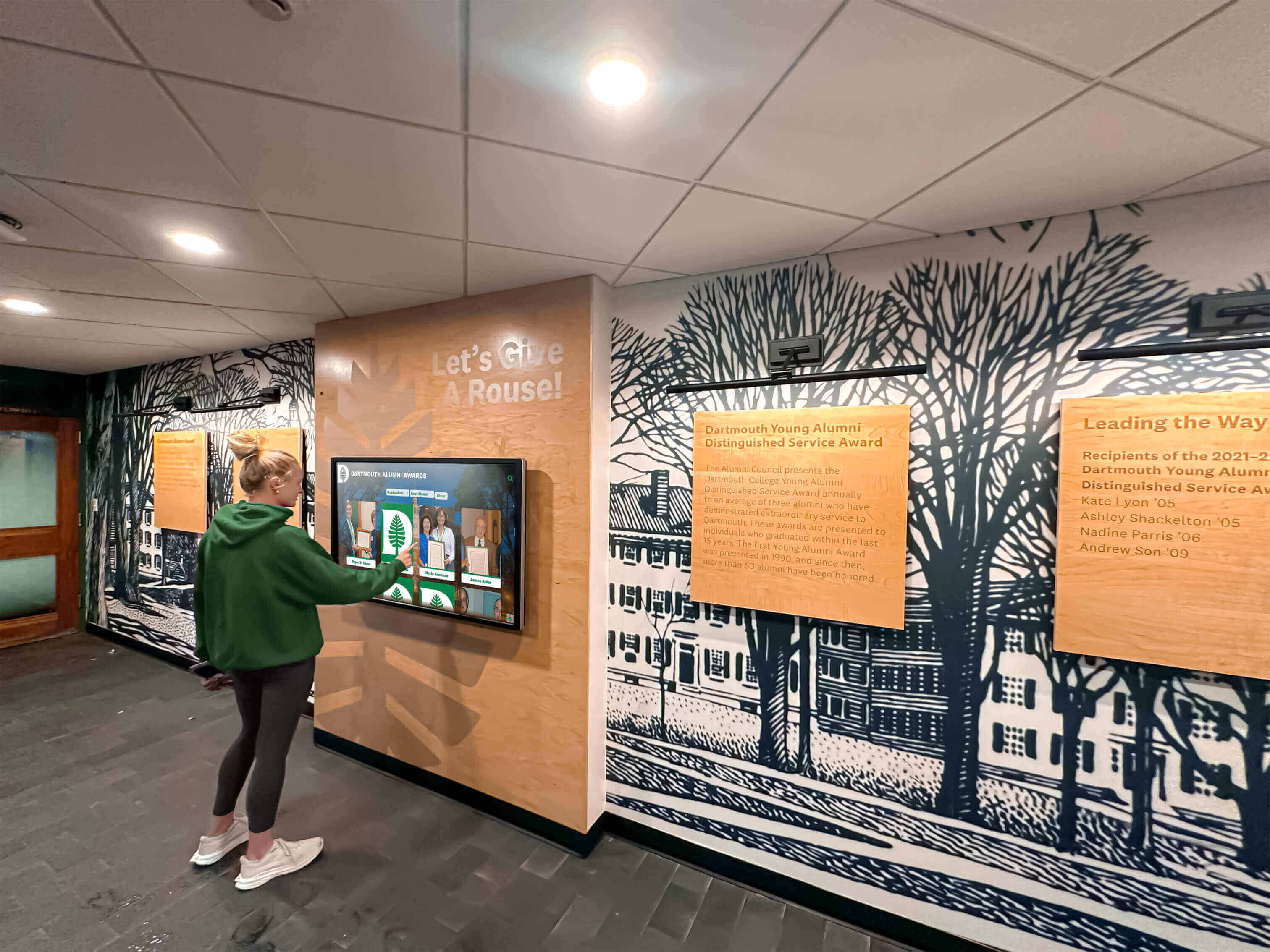
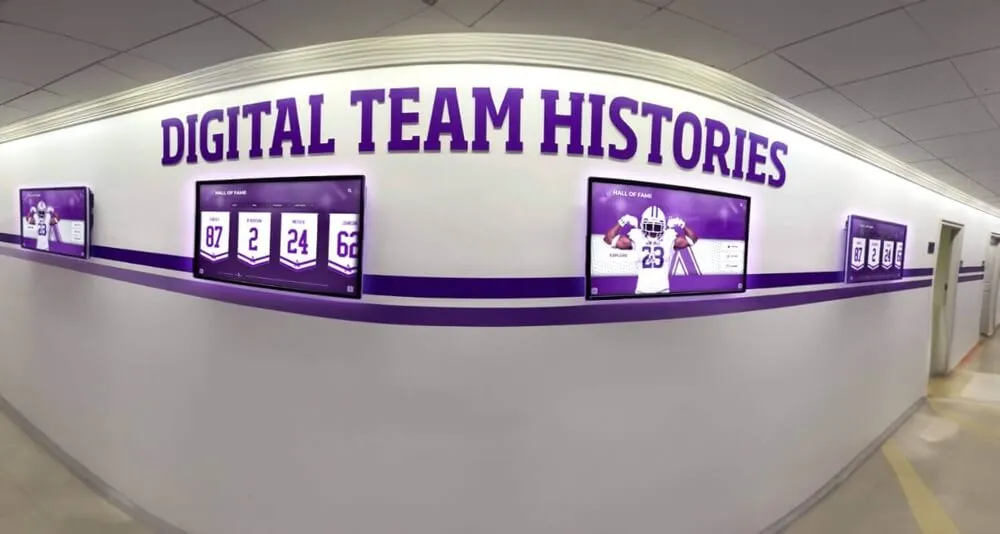
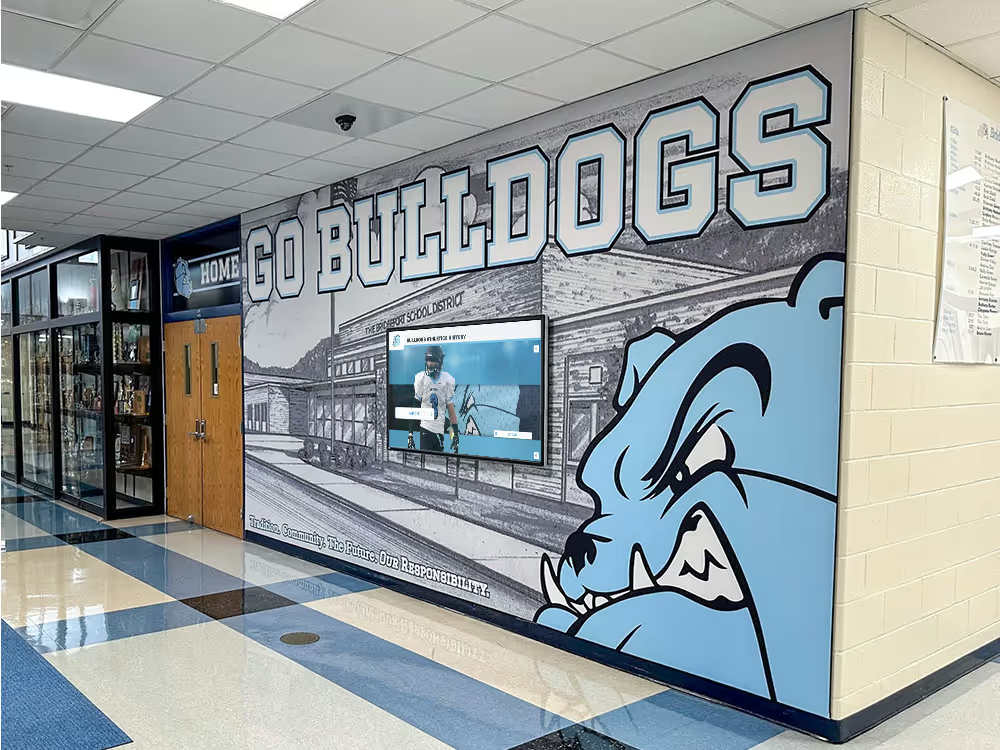
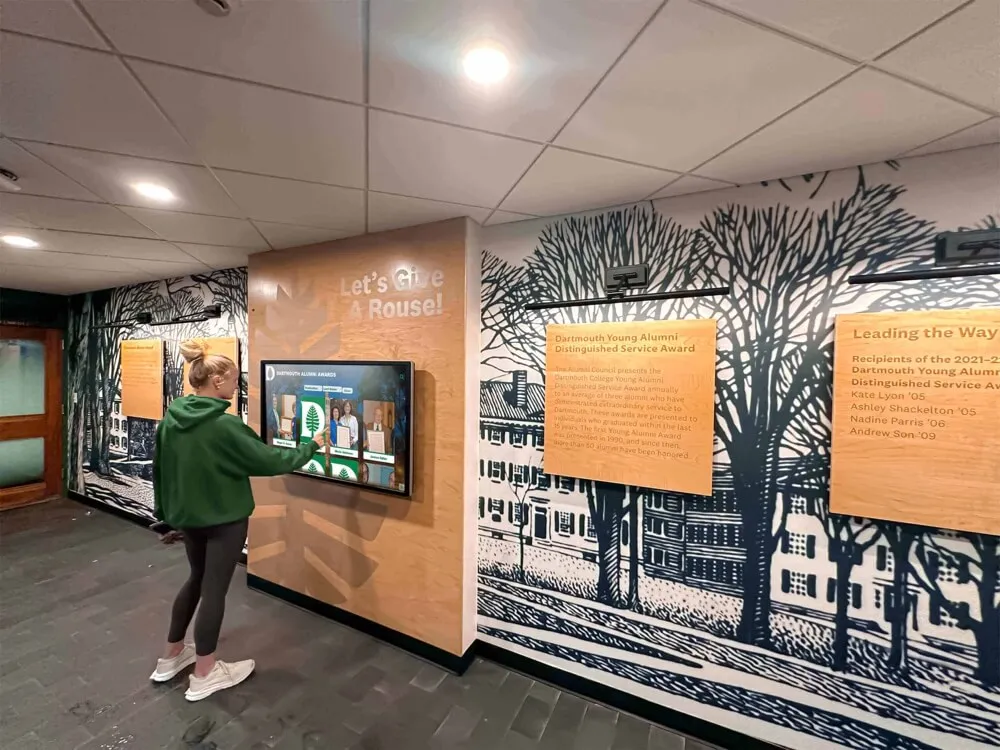
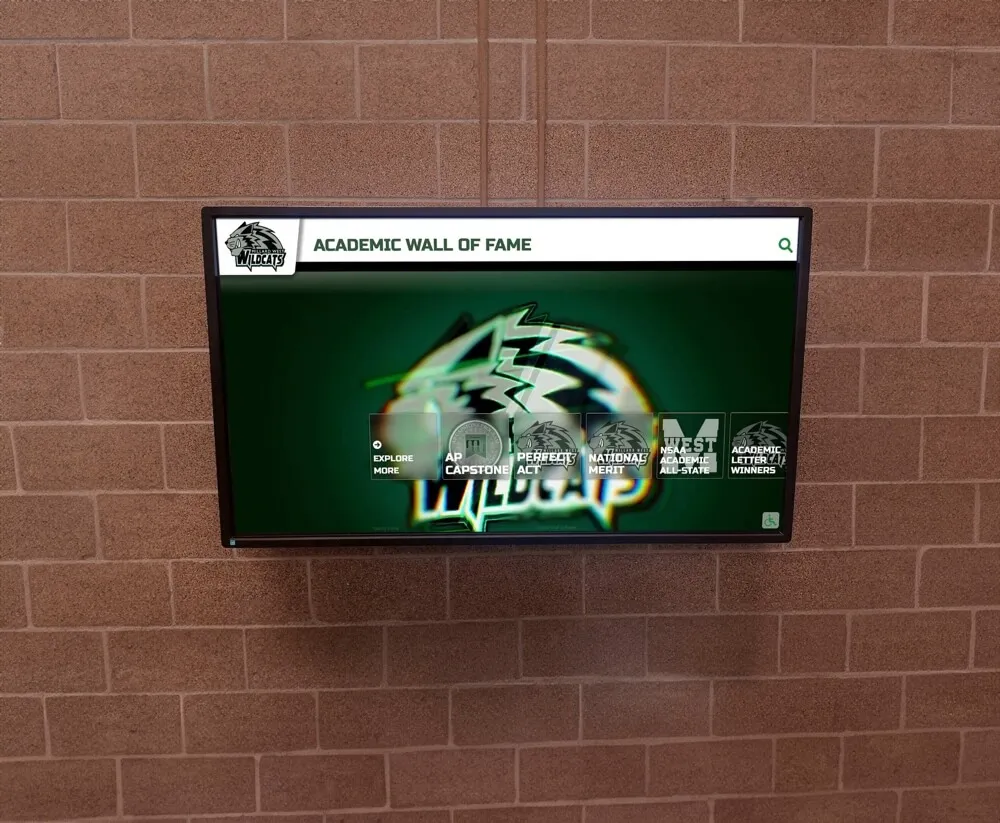
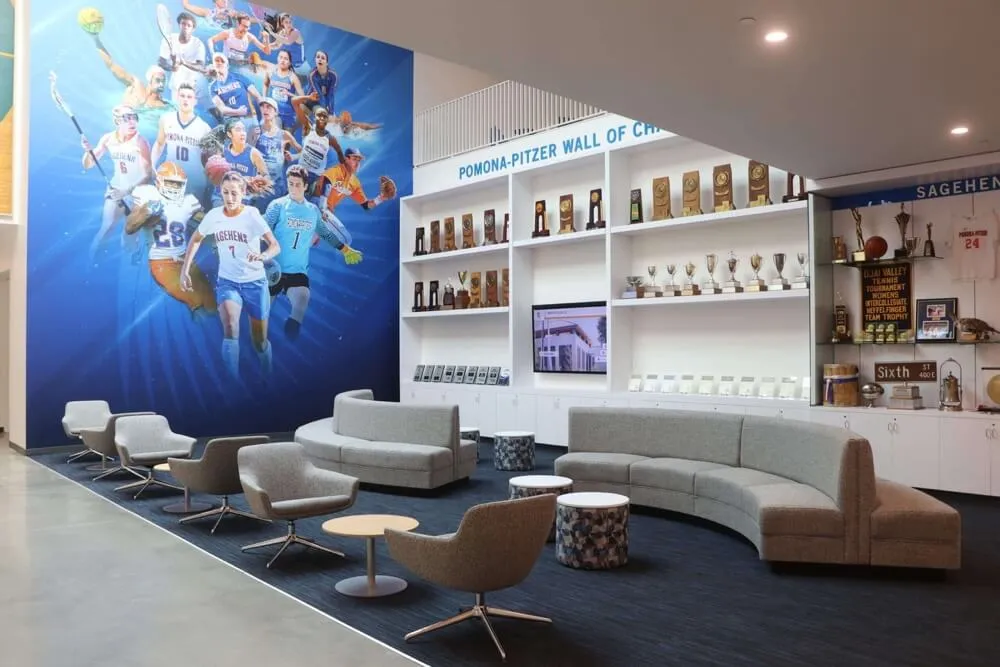
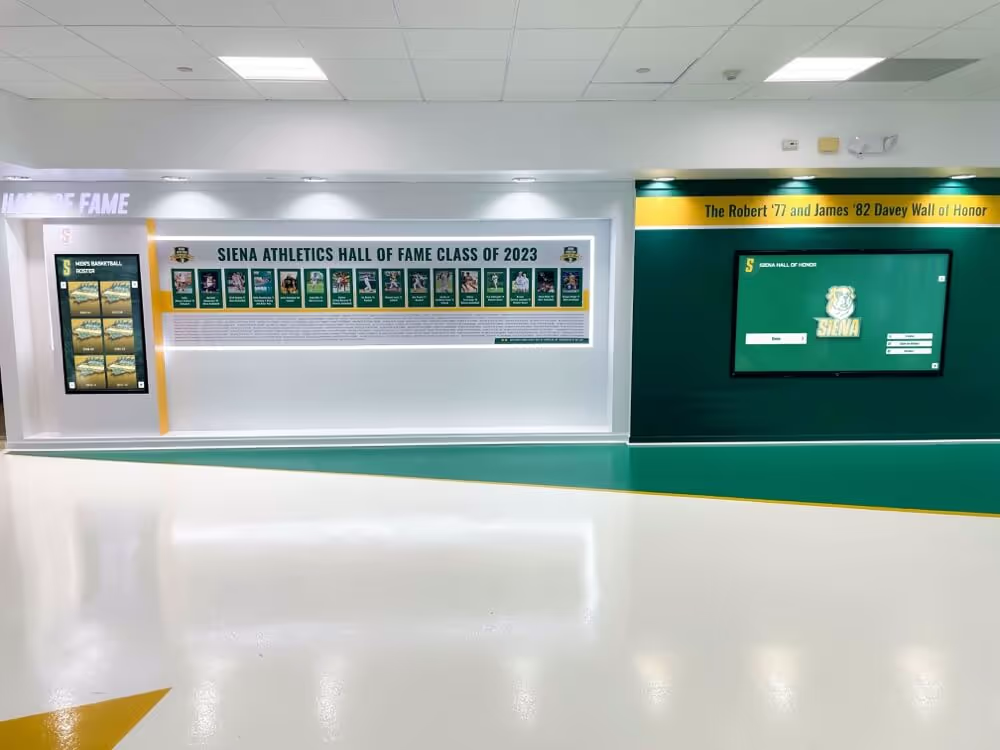
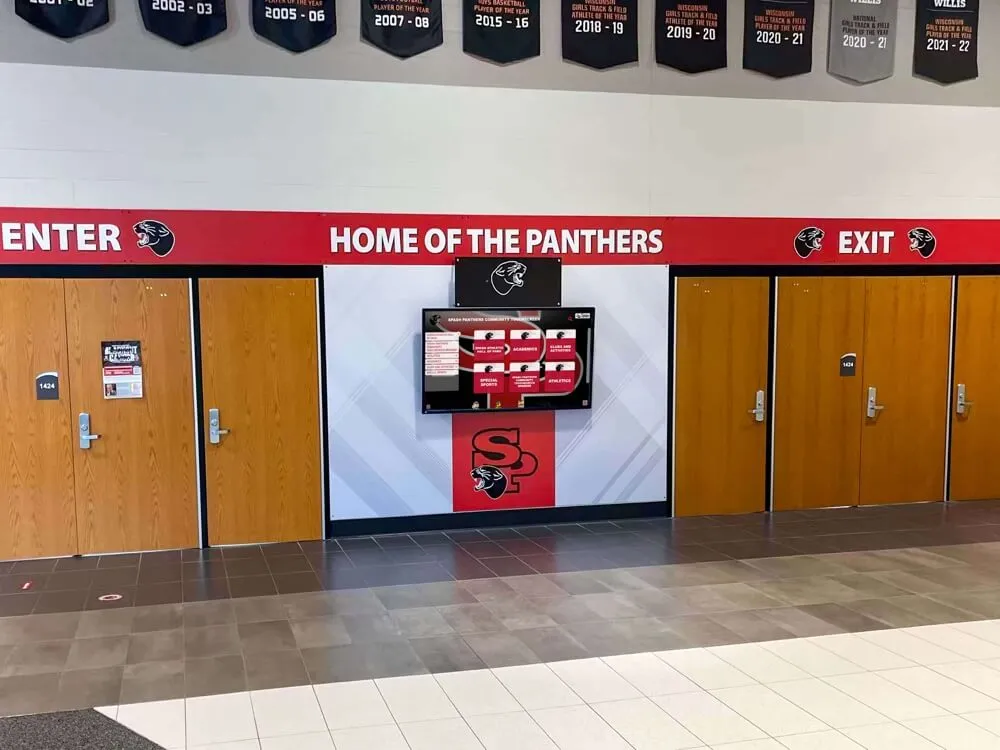
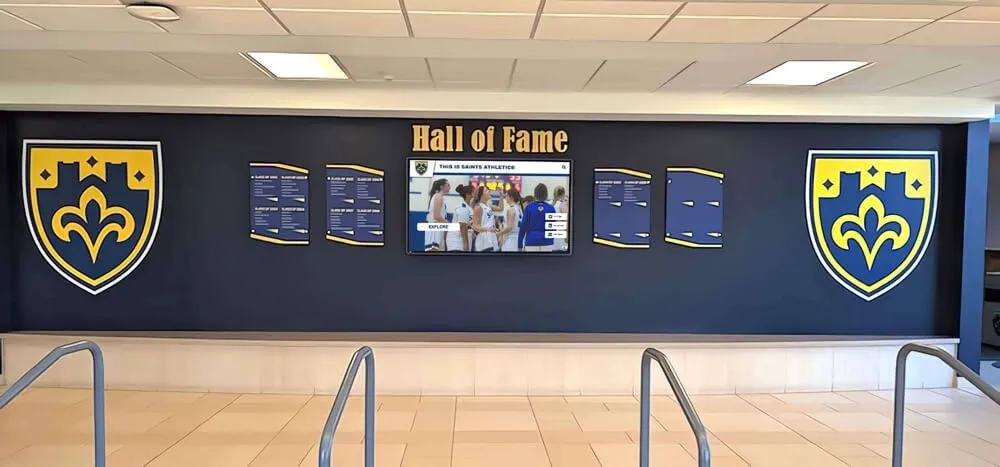
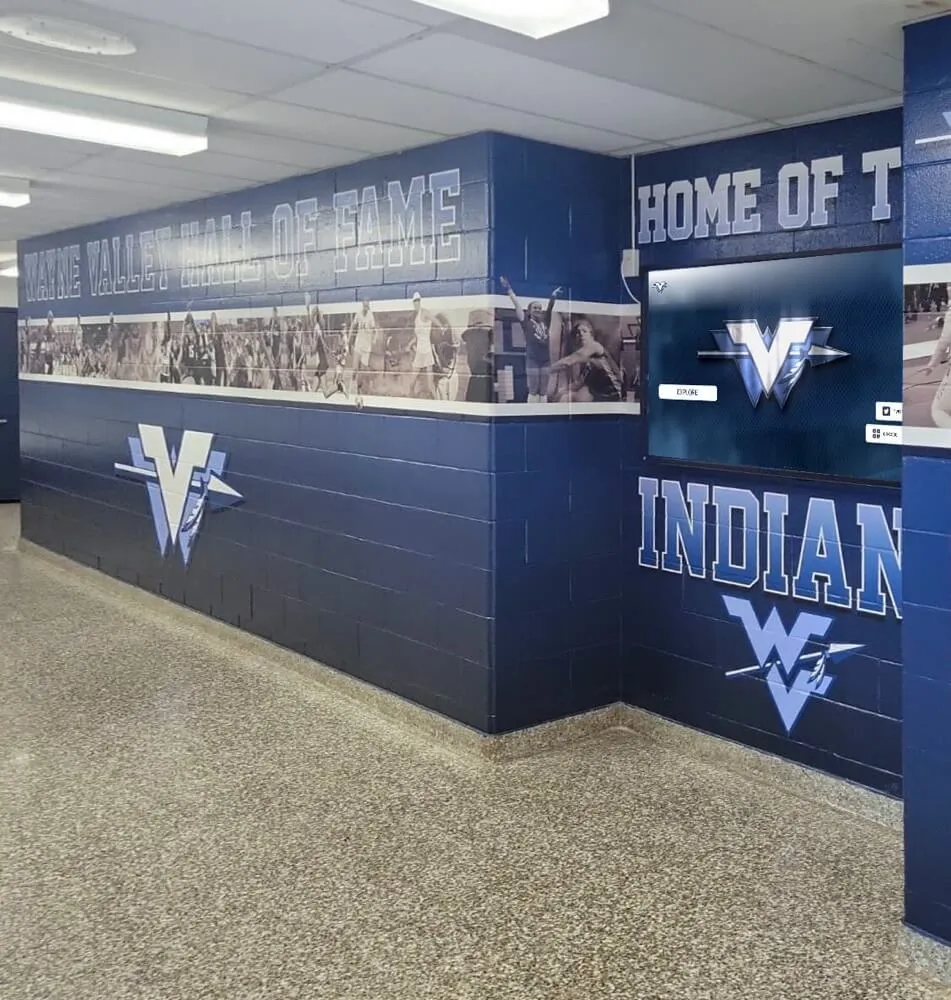
Strategic hallway placements ensure students encounter school history daily during normal circulation—creating passive exposure that builds institutional knowledge and pride
Photo Gallery Displays: Bringing Annual Events to Life
Interactive touchscreen displays transform scattered event photography into searchable, explorable galleries that capture the authentic energy of school life across years.
Organizing Photo Collections by Event Type
Rather than chronologically dumping images, effective gallery systems organize content around recognizable event categories that make intuitive sense to visitors exploring school traditions.
Annual Signature Events: Homecoming weeks with spirit days, pep rallies, parades, and dances create major school culture touchpoints deserving comprehensive documentation. Comprehensive galleries show costume contests, hallway decorations, float building, football games, and celebration aftermath—capturing the complete experience rather than just formal dance photos. Prospective families exploring homecoming galleries immediately understand school spirit levels and community engagement that abstract descriptions cannot convey.
Athletic Event Coverage: Championships deserve celebration beyond basic team photos. Complete galleries document playoff runs including regular season preparation, sectional competitions, state tournament participation, championship game action, and victory celebrations—telling complete stories of achievement rather than showing only final trophies. Record-breaking performances, senior nights, rivalry games, and youth sports camps further demonstrate comprehensive athletic program vibrancy.
Performing Arts Productions: Theater performances, musical concerts, art exhibitions, and talent shows represent major creative expression opportunities. Photo galleries capturing rehearsal processes, backstage preparation, performance highlights, and audience reactions document commitment and quality that program descriptions alone cannot demonstrate. Prospective students with arts interests discover concrete evidence of opportunities awaiting them rather than generic claims about “strong arts programs.”
Academic Competitions and STEM Events: Science fairs, robotics competitions, debate tournaments, academic bowls, and Model UN conferences showcase intellectual engagement beyond classroom instruction. Photo documentation validates that schools prioritize comprehensive student development rather than limiting focus to athletics or traditional academics exclusively.
Community Service and Partnerships: Food drives, community cleanup projects, nursing home visits, fundraising events, and local business partnerships demonstrate institutional values and community connections. Visual documentation of service learning makes values tangible rather than abstract, showing prospective families that ethical development receives genuine attention rather than existing only in mission statements.
Schools implementing comprehensive event documentation strategies report that authentic visual storytelling resonates far more powerfully than polished marketing materials with staged photographs.
Design Patterns for Photo Gallery Navigation
User experience determines whether communities actually explore photo galleries or briefly glance before moving on. Several proven interface patterns maximize engagement.
Grid-Based Thumbnail Browsing: Card layouts displaying 12-20 event thumbnail images per screen enable visitors to quickly scan collections and select interesting moments for full-screen viewing. Visual browsing proves far more engaging than text lists, allowing pattern recognition and serendipitous discovery rather than requiring prior knowledge of specific event names or dates.
Filter and Search Functionality: Year filters enable visitors to narrow to specific graduating class eras, finding events from their own school experience or comparing traditions across decades. Event type filters help parents interested in specific programs—athletic families can focus exclusively on sports coverage, while arts-focused students explore performing arts galleries comprehensively. Search capability supporting event names, dates, or even participant names enables targeted discovery when visitors seek specific content.
Full-Screen Slideshow Modes: After selecting interesting events, automatic slideshow modes enable passive viewing of complete galleries with 5-7 second intervals—perfect for visitors who want to experience events comprehensively without manually advancing through hundreds of images. Manual navigation options maintain control for those preferring to pace their own exploration or focus on particular photos.
Social Sharing Integration: Allow visitors to share favorite photos through social media, email, or text messaging—extending gallery reach beyond physical display locations while creating authentic testimonials as families share exciting moments with extended networks. Digital photo gallery systems enable individual image linking rather than forcing people to share entire gallery collections.
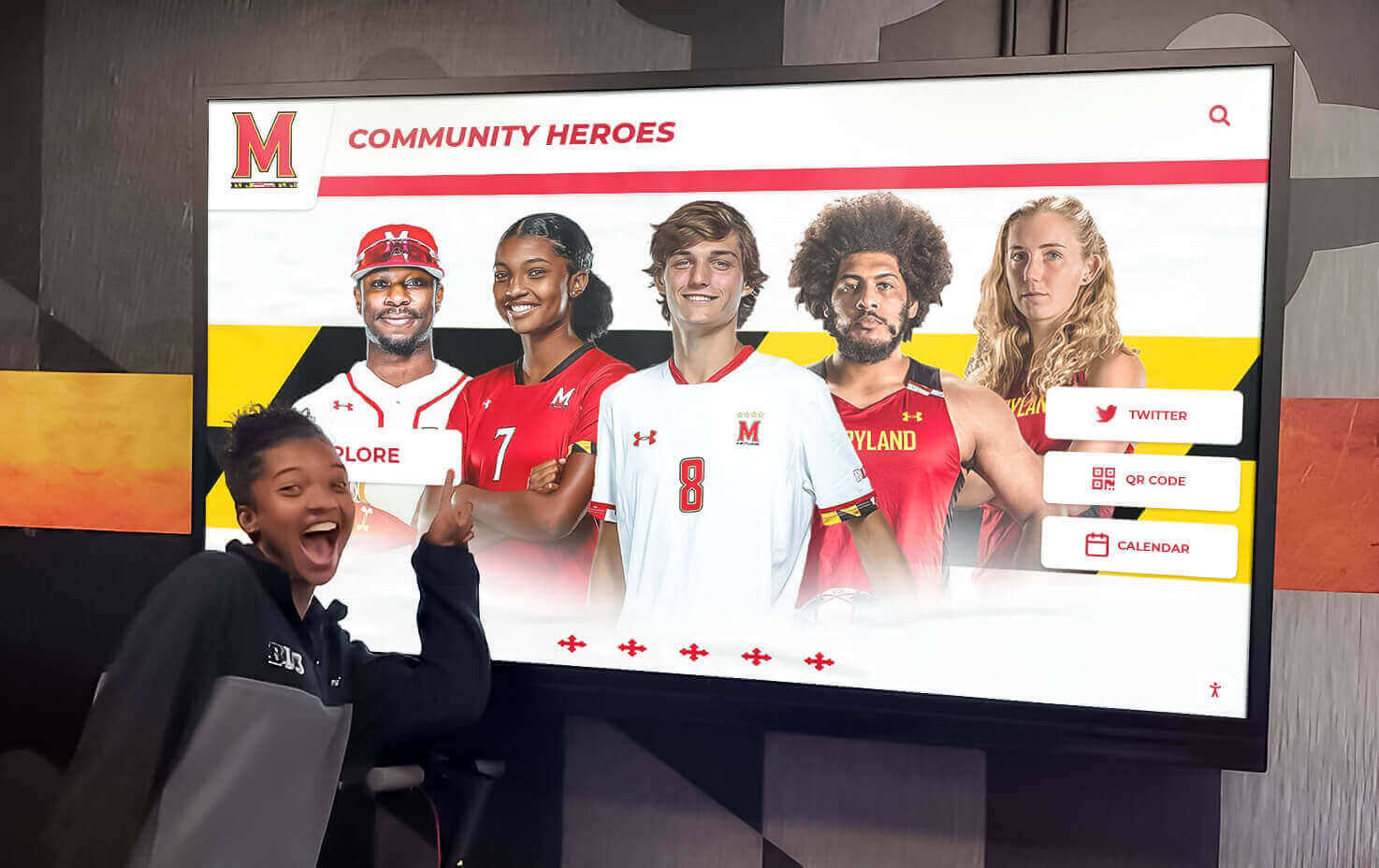
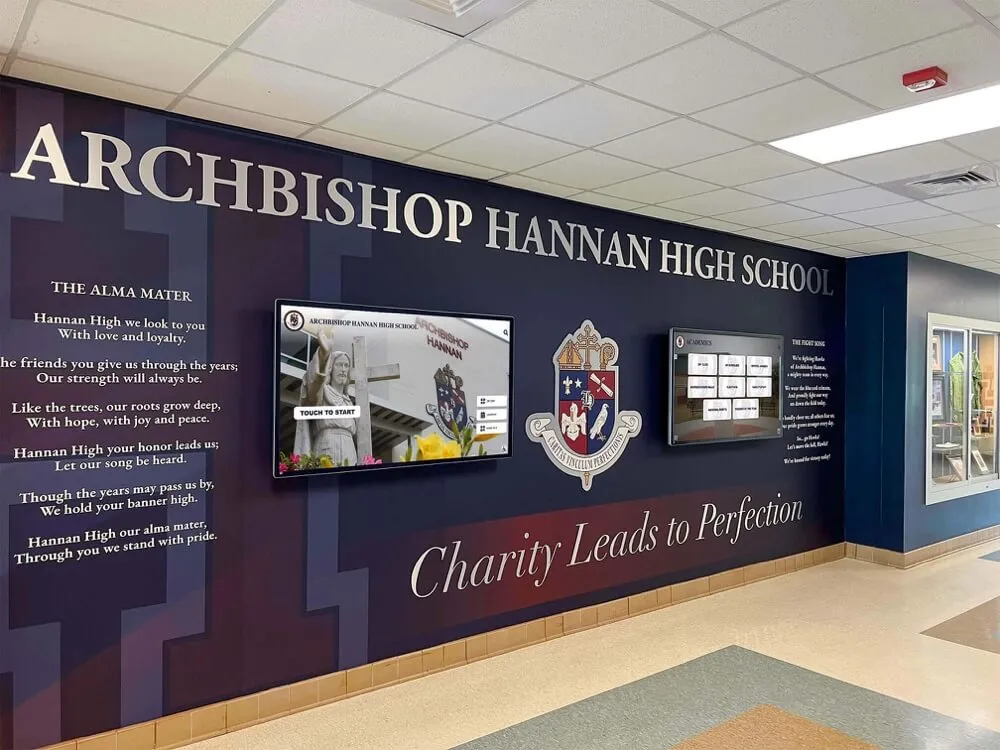
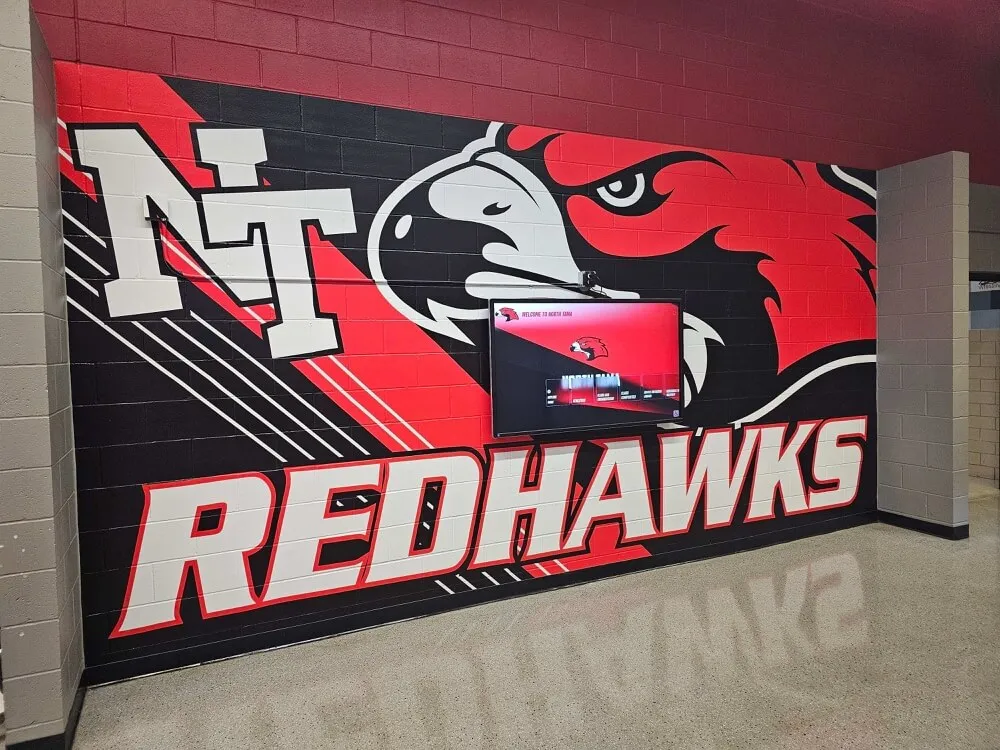
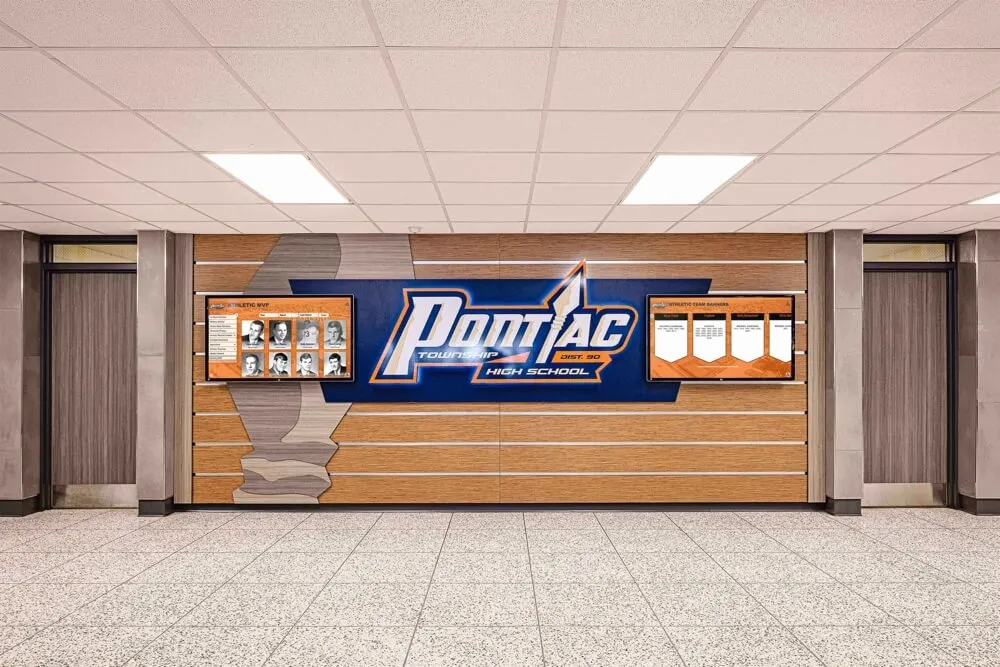
Eye-level mounting ensures displays remain accessible to students of all ages while encouraging natural interaction during daily school activities
Timeline Layouts: Mapping Institutional Evolution
School history timelines transform abstract heritage into visual narratives showing how institutions evolved from founding to present—creating context that helps current students understand they’re contributing to ongoing stories rather than experiencing isolated moments.
Timeline Content Categories
Comprehensive school history timelines integrate multiple narrative threads showing how programs, facilities, achievements, and community evolved together.
Founding and Establishment: Document how schools came into existence including founding dates and original locations, community needs that prompted establishment, founding leadership and their visions, initial student populations and programs offered, and early challenges overcome during establishment. This foundation context helps communities appreciate institutional longevity and original purposes that may still influence contemporary character.
Facility Evolution and Expansion: Physical spaces tell stories about institutional growth and community investment. Timeline entries documenting original buildings and their architectural styles, major renovations and modernization projects, significant additions including wings, gyms, or specialized spaces, technology infrastructure upgrades reflecting changing educational approaches, and environmental sustainability improvements demonstrate ongoing commitment to providing quality learning environments.
Program Development and Curriculum Evolution: Academic offerings change dramatically over decades as society evolves and educational philosophies shift. Timeline documentation captures new program launches including STEM initiatives, foreign language additions, or career pathways, curricular innovations such as project-based learning or technology integration, specialized academic tracks serving diverse student needs, and partnership developments with colleges, businesses, or community organizations expanding learning opportunities.
Athletic Championship History: For schools where sports play significant roles in culture, comprehensive championship documentation creates powerful tradition narratives. Timeline entries capture sport program foundings, championship titles by year and sport, record-setting performances, coaching milestones, facility improvements, and conference membership changes—showing how athletic programs developed into current forms.
Notable Alumni Achievements: Distinguished graduate accomplishments validate educational value while inspiring current students through concrete examples of possibilities. Timeline entries highlighting alumni who achieved professional success, founded important organizations, made scientific or creative contributions, or provided significant community service demonstrate that school experiences launch meaningful careers and lives of impact.
Community Milestones and Partnerships: Schools exist within broader community contexts. Timeline entries documenting significant community events schools participated in, partnerships with local organizations, responses to community needs or crises, and collaborative achievements with neighboring institutions reveal institutional roles beyond education alone.
Effective school history preservation through interactive timelines creates shared community knowledge that strengthens institutional identity and connection.
Timeline Design and Visual Storytelling
How timeline content appears significantly affects engagement and comprehension. Several design approaches effectively communicate historical narratives.
Horizontal Scrolling Layouts: Timeline presentations flowing left to right mirror natural reading patterns while creating journey metaphors as visitors progress from founding to present. This approach works especially well for touchscreen interfaces where horizontal swiping feels natural and intuitive—mirroring smartphone photo browsing gestures users already know.
Decade-Based Organization: Grouping timeline entries by decade creates natural breaking points helping visitors navigate long histories spanning 50-100+ years. Decade introduction screens featuring representative images, major themes, and key statistics provide context before visitors explore specific entries within periods. This chunking prevents cognitive overload while supporting both comprehensive exploration and targeted discovery for visitors interested in particular eras.
Multimedia Integration: Rich timeline entries incorporate multiple content types including historical photographs showing facilities, people, and events, video interviews with longtime staff, alumni, or community members, audio recordings of important speeches, performances, or ceremonies, digitized documents such as newspaper articles, programs, or official records, and interactive elements like zoomable historical maps showing facility layouts or service areas over time.
Parallel Timeline Tracks: Advanced implementations show multiple simultaneous narratives including academic development, athletic achievement, facility evolution, and community context—enabling visitors to explore how different institutional dimensions progressed together. This approach reveals connections between developments—for example, showing how new facility construction enabled program expansions that led to competitive success.
Era Comparison Features: Interactive elements allowing visitors to compare specific years or decades reveal changes in remarkable ways. Side-by-side images of facilities in 1975 versus 2025, student demographic shifts across decades, technology evolution from typewriters to laptops, or curricular changes show transformation that simple chronological presentation may not make obvious.
Schools implementing comprehensive digital timeline displays report that visual historical narratives create significantly stronger emotional connections to institutional identity compared to text-based history summaries.

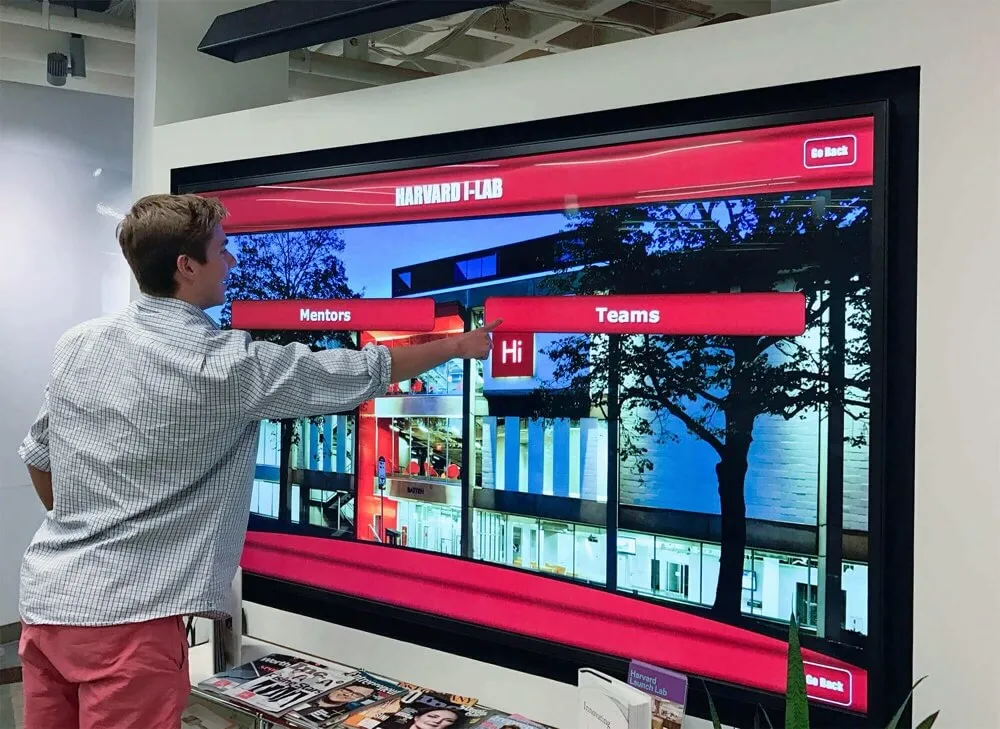
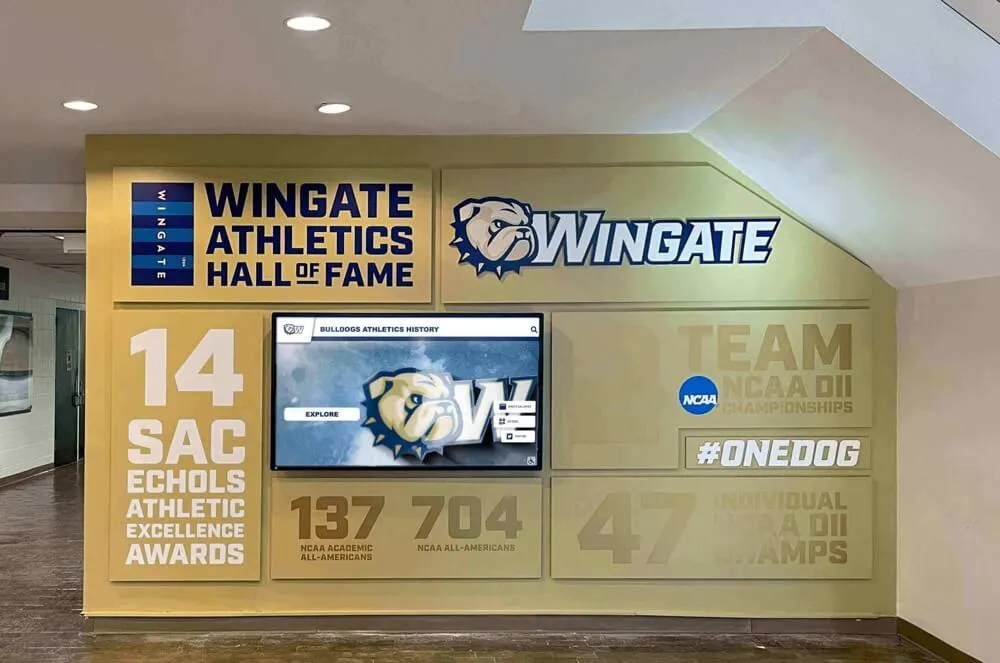
Layered design approaches combine campus photography backgrounds with overlaid content cards—creating visual depth while maintaining brand identity and location context
About Us Profiles: Introducing School Character
Beyond event documentation and historical timelines, effective school storytelling requires introducing the people, programs, and values that define contemporary institutional character.
Faculty and Staff Profiles
Teachers and staff make schools function—personal introductions humanize institutions while highlighting expertise and commitment that distinguish quality education.
Comprehensive Educator Profiles: Individual faculty entries should include professional background summarizing education, certifications, and career progression, teaching philosophy explaining pedagogical approaches and student engagement strategies, subject expertise highlighting advanced training or specialized knowledge, extracurricular involvement documenting coaching, club advising, or community service, and personal touches sharing hobbies, family, or interesting life experiences that help students connect with educators as whole people rather than just instructional delivery systems.
Staff Recognition Beyond Teachers: Administrators, counselors, librarians, nurses, support staff, maintenance personnel, and cafeteria workers all contribute to school communities. Comprehensive About Us sections recognize all community members, demonstrating institutional values that everyone deserves acknowledgment regardless of role visibility.
Video Introductions: Short 30-60 second video clips where educators introduce themselves, explain what they teach, and share what they love about working at schools create genuine connection impossible through text and photos alone. Prospective families exploring these introductions during decision processes develop comfort and trust far exceeding what traditional tours deliver in limited timeframes.
Program and Department Presentations
Academic departments, athletic programs, performing arts, and extracurricular activities each deserve dedicated presentations explaining opportunities, achievements, and distinctive characteristics.
Academic Department Overviews: Science, mathematics, English, social studies, foreign languages, and other departments should each have dedicated sections explaining curricular approaches and unique program elements, AP or honors offerings for advanced students, hands-on or experiential learning opportunities, college partnerships or dual enrollment options, competition participation and achievements, and recent graduate pathways showing how departmental study launched college majors or careers.
Athletic Program Presentations: Sport-by-sport overviews should document program history and tradition, coaching staff backgrounds and accomplishments, recent season results and championship history, facility and equipment quality, athlete development approaches, and college placement track records demonstrating competitive preparation quality. These comprehensive presentations help prospective athletes evaluate whether programs match their competitive ambitions and development needs.
Arts and Extracurricular Activity Coverage: Theater programs, musical groups, visual arts courses, debate teams, robotics clubs, service organizations, student government, and other co-curricular activities deserve equal presentation alongside athletics and academics. Comprehensive activity documentation demonstrates that schools offer diverse engagement pathways serving varied student interests and talents rather than prioritizing narrow achievement dimensions.
Schools implementing detailed program showcase strategies report improved recruitment outcomes as prospective families discover concrete evidence of opportunities rather than relying on generic claims.
Values and Mission in Action
Every school articulates mission statements and core values—but words alone rarely create meaningful understanding or differentiation. Interactive displays enable schools to demonstrate values through concrete examples.
Mission Statement Contextualization: Rather than simply displaying mission text, effective presentations break statements into component values, then provide specific program examples or community stories demonstrating each value in practice. For example, if missions emphasize “global citizenship,” profile international exchange programs, community service partnerships, or multicultural celebrations showing concrete implementation rather than abstract aspiration.
Community Partnership Documentation: Schools serve and connect with broader communities in countless ways including business partnerships providing internships or mentorships, nonprofit collaborations delivering service learning, senior center relationships connecting students with elderly neighbors, environmental initiatives improving local ecosystems, and cultural institution partnerships enriching curriculum through museum, theater, or library programs. Documenting these partnerships demonstrates institutional commitment to community engagement beyond classroom walls.
Diversity, Equity, and Inclusion Initiatives: Prospective families increasingly evaluate how schools cultivate inclusive environments. Transparent documentation of demographic diversity, affinity groups and support resources, curriculum inclusivity efforts, accessibility accommodations, and celebration of heritage months demonstrates genuine commitment rather than performative statements.
Sustainability and Innovation Examples: Schools implementing environmental sustainability programs, cutting-edge technology integration, innovative teaching approaches, or experimental learning models should showcase these initiatives prominently—demonstrating forward-thinking character that appeals to families seeking progressive educational environments.
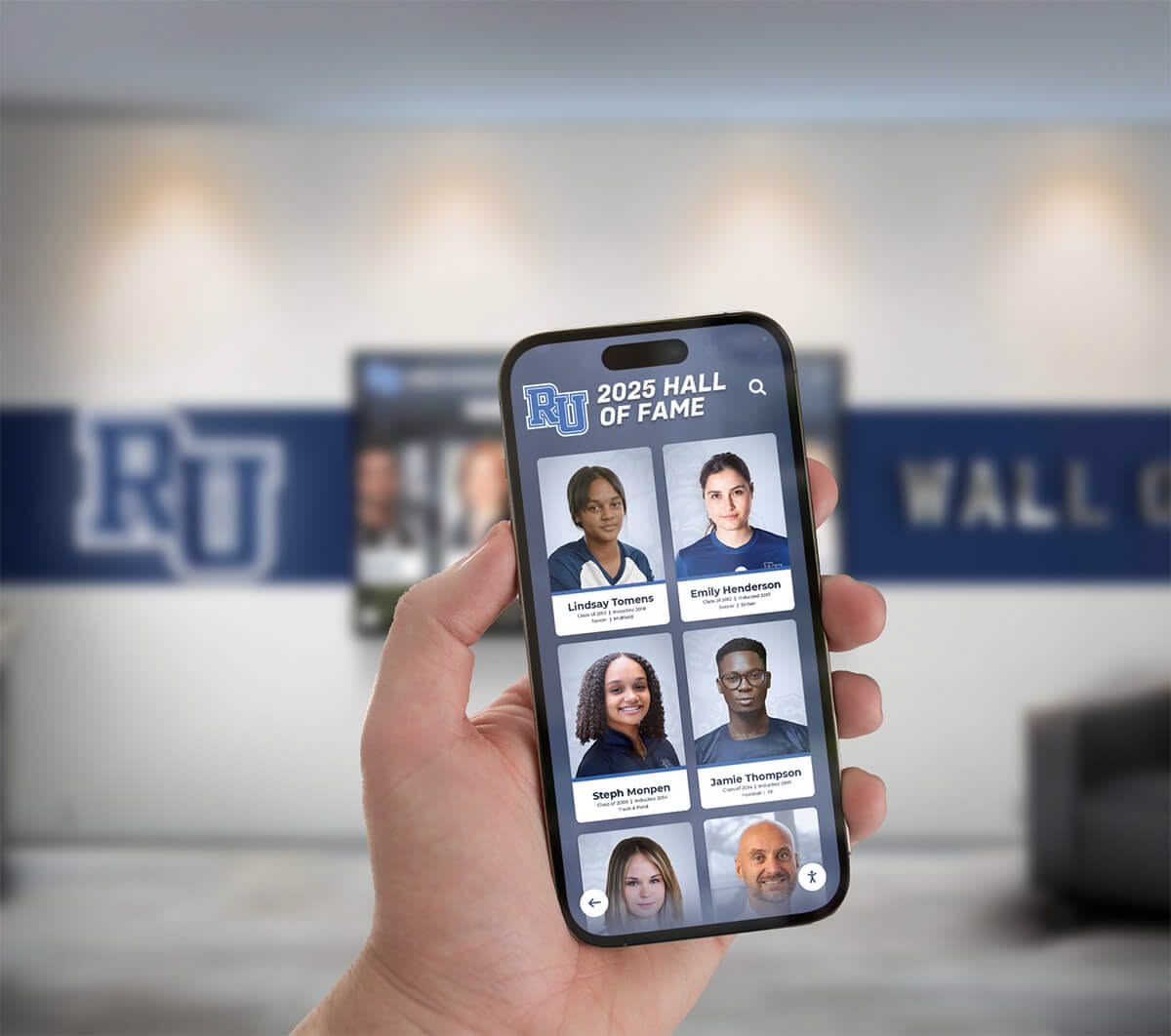
Mobile web accessibility extends content beyond physical displays—enabling prospective families to explore school history, events, and programs from home during decision-making processes
Strategic Implementation for Recruitment and Marketing
While event galleries, historical timelines, and About Us profiles serve important community-building functions, they also function as powerful recruitment and marketing tools when strategically implemented.
Positioning Displays in High-Impact Locations
Effective storytelling requires reaching target audiences when they’re most receptive to messaging.
Admissions Office and Tour Route Placement: Interactive displays positioned in admissions reception areas provide engaging content for waiting families, giving prospective students activities while parents complete paperwork. Strategic placements along standard tour routes ensure every visiting family encounters comprehensive school life documentation—complementing tour guide narratives with visual evidence and deeper exploration opportunities that time-limited tours cannot provide.
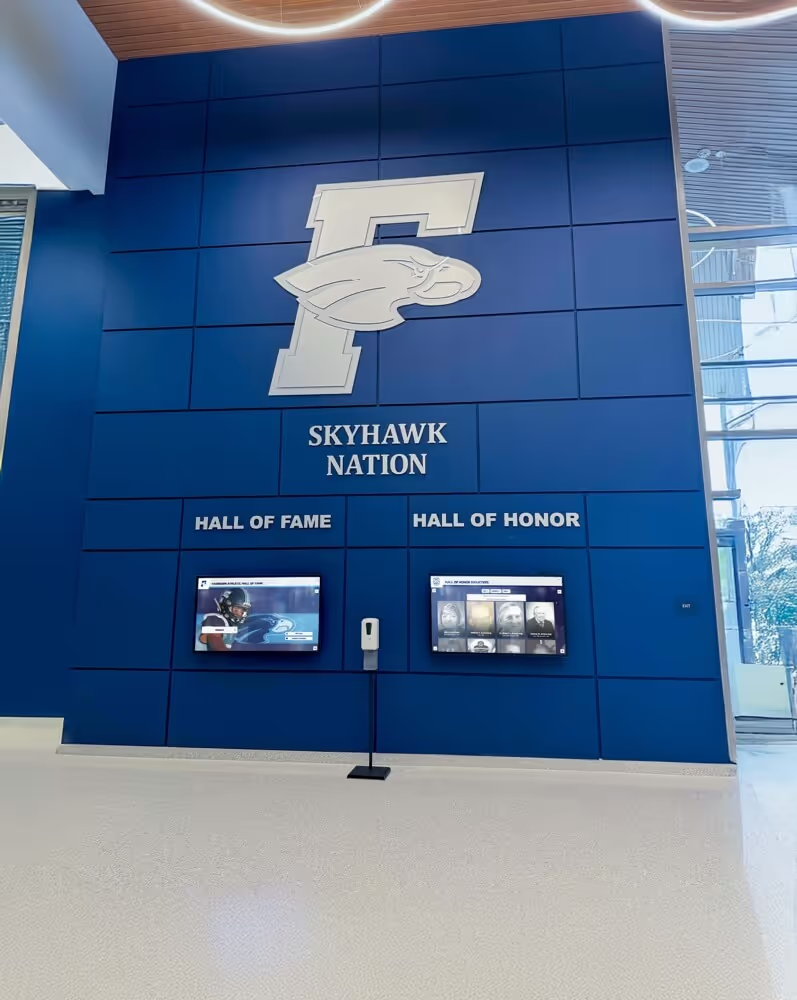
Main Entrance Lobbies: First impressions matter significantly. Impressive interactive displays in main entrances immediately signal institutional investment in community celebration and modern technology—creating positive initial impressions before families progress to specific program areas. Lobby locations also capture maximum daily traffic from current students, staff, and community visitors—maximizing ongoing engagement beyond recruitment-specific audiences.
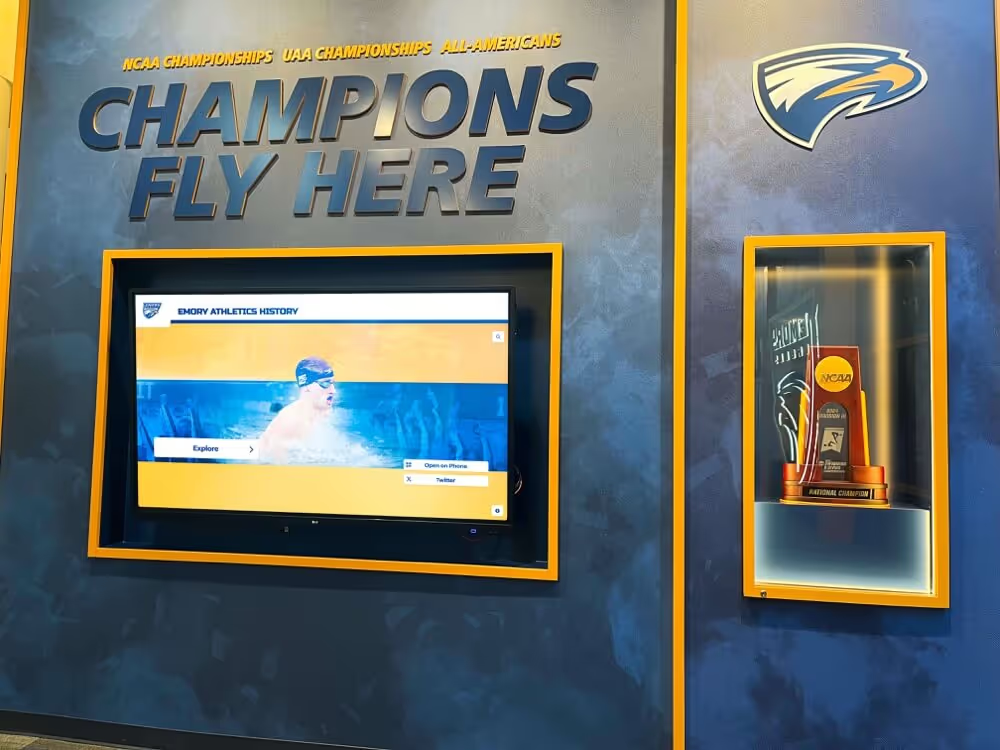
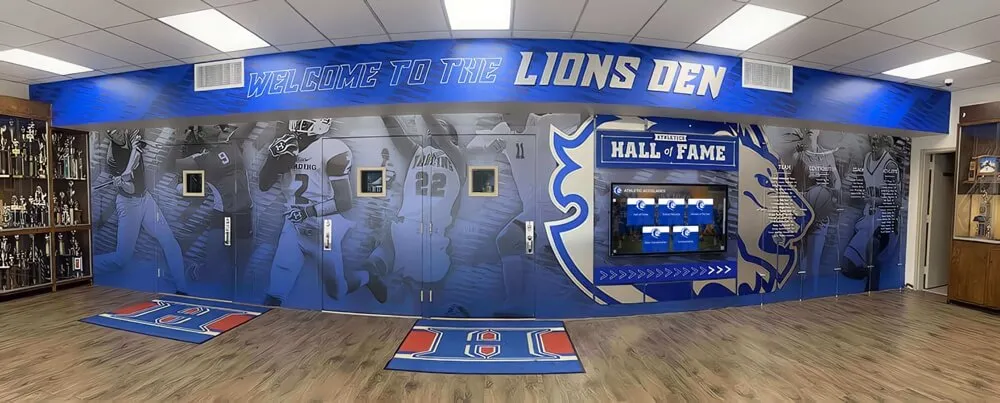
Athletic Facility Entrances: Prospective athletes and their families often visit separately from general admissions tours, specifically evaluating competitive programs and facilities. Dedicated displays documenting athletic tradition, championship history, athlete profiles, and program development provide targeted content that resonates with this important recruitment demographic. Game day placement also means displays reach opposing team communities, potential transfer students, and broader audiences evaluating school athletic culture.
Library and Academic Centers: For academically-focused families, displays in libraries or academic resource centers showcasing scholar achievement, academic competition success, college placement outcomes, and curriculum innovations demonstrate institutional commitment to intellectual excellence—countering potential perceptions that schools prioritize athletics over academics.
Content Strategy for Recruitment Effectiveness
What content displays feature significantly affects recruitment impact and brand perception.
Balance Historical Legacy with Current Excellence: Prospective families need to see both institutional stability through long tradition AND contemporary relevance through current programming and achievement. Timelines documenting century-long histories demonstrate permanence and community roots, while recent event galleries showing this year’s activities prove ongoing vibrancy. This balance reassures families that schools offer both proven track records and continued evolution meeting modern educational needs.
Showcase Diversity and Inclusion Authentically: Event photography naturally documents demographic diversity, activity participation breadth, and inclusive community culture more credibly than marketing claims. Galleries showing students of varied backgrounds participating fully across programs, celebrations honoring diverse cultural traditions, and accessibility accommodations supporting all learners demonstrate genuine inclusion rather than tokenistic diversity statements.
Emphasize Student Joy and Engagement: The most powerful recruitment content shows students genuinely enjoying school experiences—laughing during spirit week, concentrating during competitions, celebrating victories, supporting teammates, creating art, conducting experiments, or performing music. These authentic moments communicate school culture and student experience quality that facility tours and program descriptions alone cannot convey.
Quantify Achievement and Outcomes: While avoiding overwhelming statistical presentations, strategic data integration strengthens credibility including number of AP courses offered or scholars achieving distinction, championship titles across sports programs, percentage of graduates attending four-year colleges, average scholarship dollars awarded to graduating classes, and community service hours contributed annually. These metrics provide concrete evidence supporting qualitative narratives about program quality and student outcomes.
Institutions implementing comprehensive recruitment-focused storytelling through interactive displays report improved enrollment conversion rates as prospective families develop authentic understanding of school experiences rather than relying on abstract descriptions.
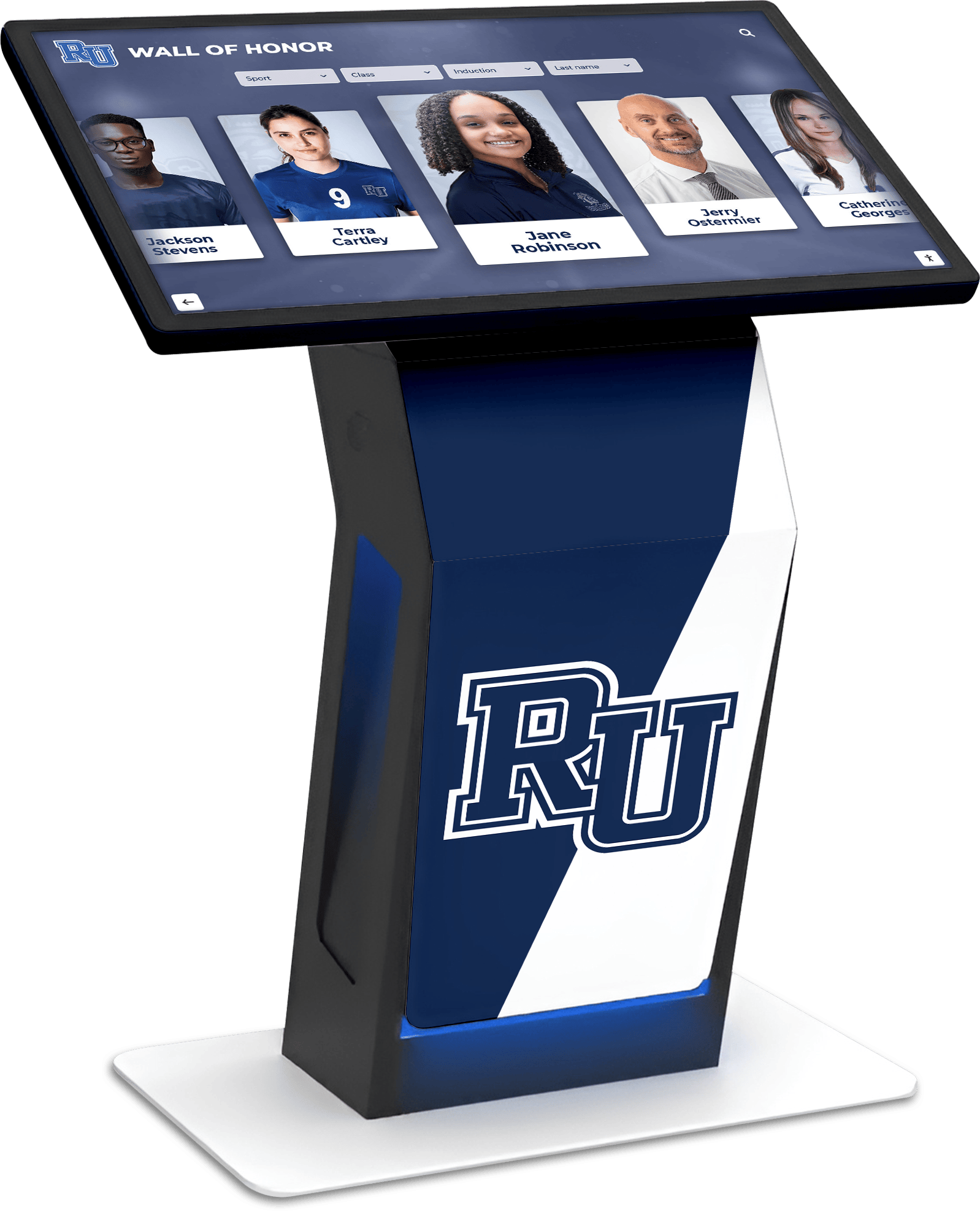
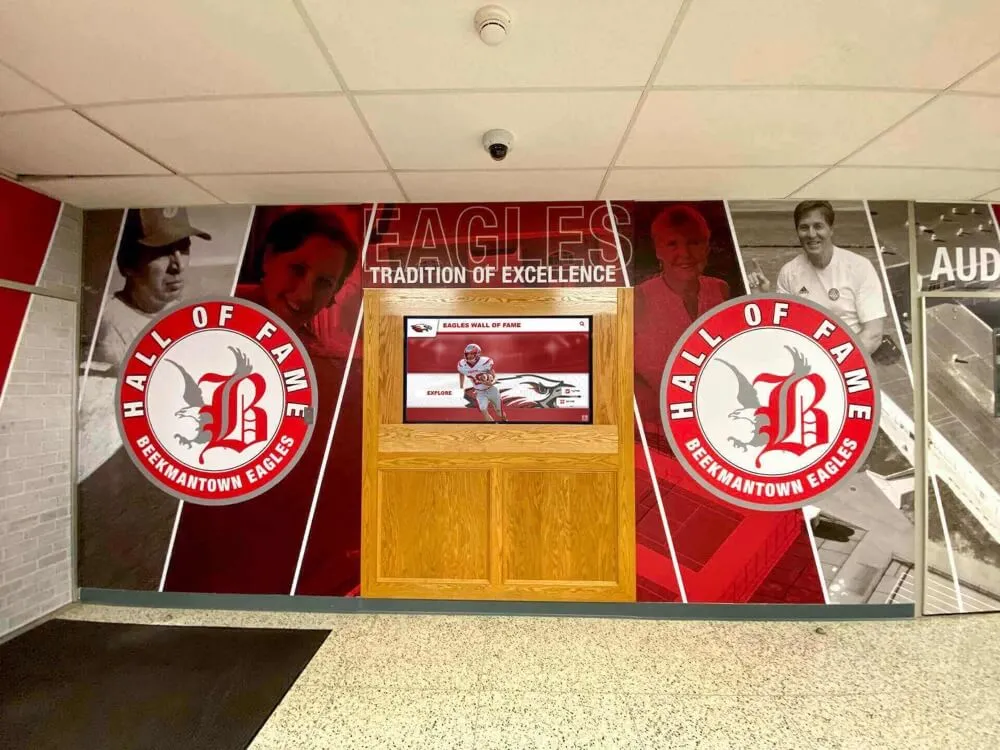
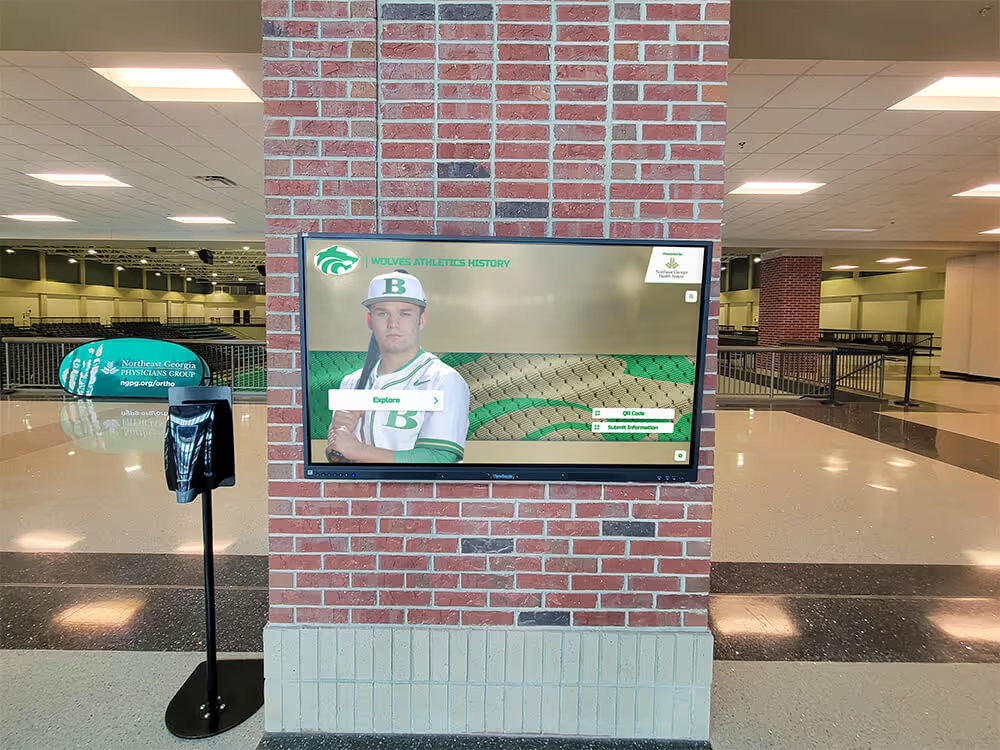
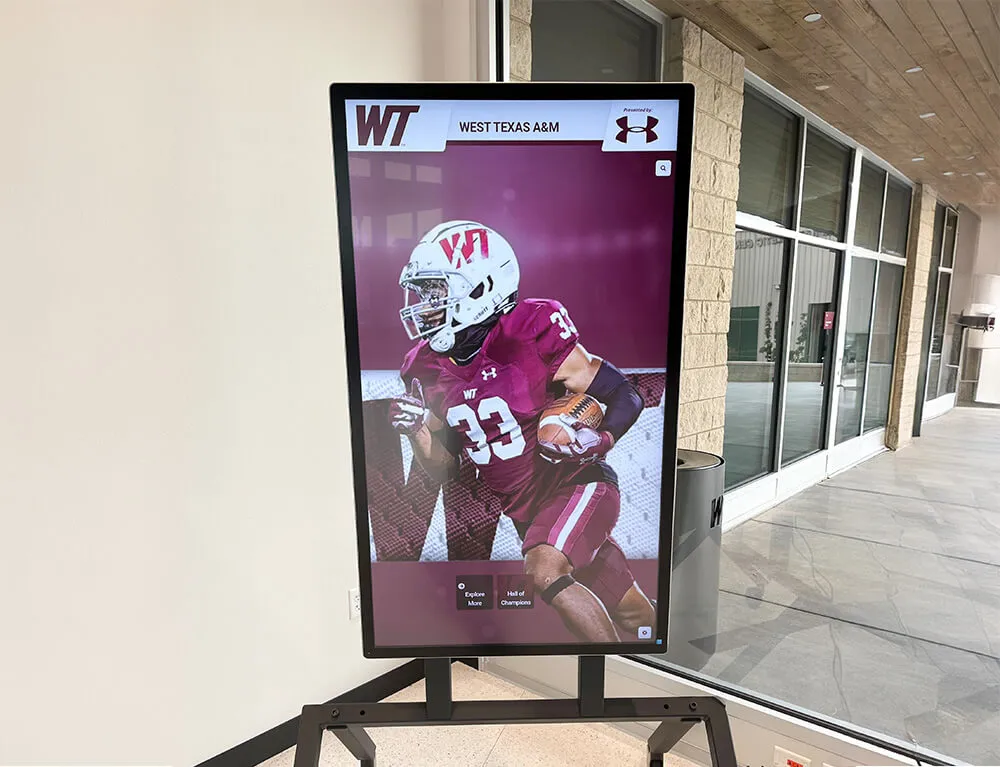
Freestanding kiosk installations provide professional appearance with integrated computers, security features, and cable management—ideal for lobby placements requiring maximum visual impact
Technical Implementation and Content Management
Creating effective event galleries, timeline displays, and About Us sections requires both appropriate technology infrastructure and sustainable content management workflows.
Display Hardware and Software Selection
Not all digital display solutions deliver equal results for comprehensive school storytelling applications.
Screen Size and Placement Considerations: Photo galleries and timelines work best on larger displays enabling comfortable viewing of multiple images or detailed content. Standard configurations include 55-inch displays for small lobby spaces or intimate viewing scenarios, 65-inch displays for typical admissions offices and main entrances serving medium traffic, and 75+ inch displays for large gathering spaces or locations where viewing distances exceed 10-12 feet. Touchscreen capability enables interactive exploration rather than passive viewing—creating engagement that static slideshow displays cannot match.
Purpose-Built Recognition Platforms vs. Generic Digital Signage: Schools often consider repurposing generic digital signage systems for recognition and storytelling applications. However, purpose-built platforms designed specifically for institutional storytelling deliver superior functionality including unlimited content capacity accommodating comprehensive photo collections, intuitive search and filtering supporting discovery across years and categories, individual profile capabilities enabling detailed person or event documentation, approval workflows respecting administrative oversight requirements, and web portal integration extending access beyond physical displays.
Solutions like Rocket Alumni Solutions provide integrated systems purpose-built for institutional storytelling rather than requiring creative repurposing of tools designed for advertising or announcements—delivering user experiences and content management efficiency that generic platforms cannot match.
Commercial-Grade Hardware Reliability: Consumer televisions lack durability for continuous public operation. Commercial displays rated for 16-24 hour daily use provide necessary reliability, typically include extended warranties (3-5 years versus 1 year consumer), feature anti-glare coatings improving visibility in bright lobby environments, and support remote management enabling troubleshooting without physical access. This reliability prevents embarrassing dark screens during prospective family tours or community events.
Content Collection and Organization Workflows
Display technology means nothing without compelling content—systematic collection and organization workflows enable sustainable programs.
Photo Collection Systems: Establish clear processes for gathering event photography including designated photographers for major events ensuring quality coverage, cloud storage repositories where contributors upload images, naming conventions enabling automated organization (Event-Name_Date_Photographer format), and quality standards ensuring adequate resolution and composition for large-format display viewing.
Metadata and Tagging Strategies: Comprehensive tagging enables effective search and filtering including event type categories (athletic, academic, arts, community service, social), date information enabling chronological browsing and year filtering, participant tagging allowing individuals to find photos featuring themselves, location tags if campuses span multiple buildings, and photographer credits acknowledging contributors while supporting quality tracking.
Historical Content Digitization: For timeline and heritage sections, digitizing existing print photographs, documents, and artifacts requires systematic approaches including prioritization of most significant historical materials, scanning at adequate resolution (300-600 DPI for print originals), metadata documentation explaining context and significance, oral history collection capturing memories from longtime staff or alumni, and physical archive preservation ensuring originals remain protected while digital copies enable sharing.
Ongoing Update and Maintenance: Permanent programs require sustainable maintenance including weekly or monthly content additions after major events, quarterly reviews ensuring accuracy and removing outdated content, annual comprehensive audits verifying completeness across all programs and activities, and documentation supporting continuity during staff transitions. Schools treating displays as projects rather than permanent programs often experience deterioration within 2-3 years as initial enthusiasm fades and champions move on.
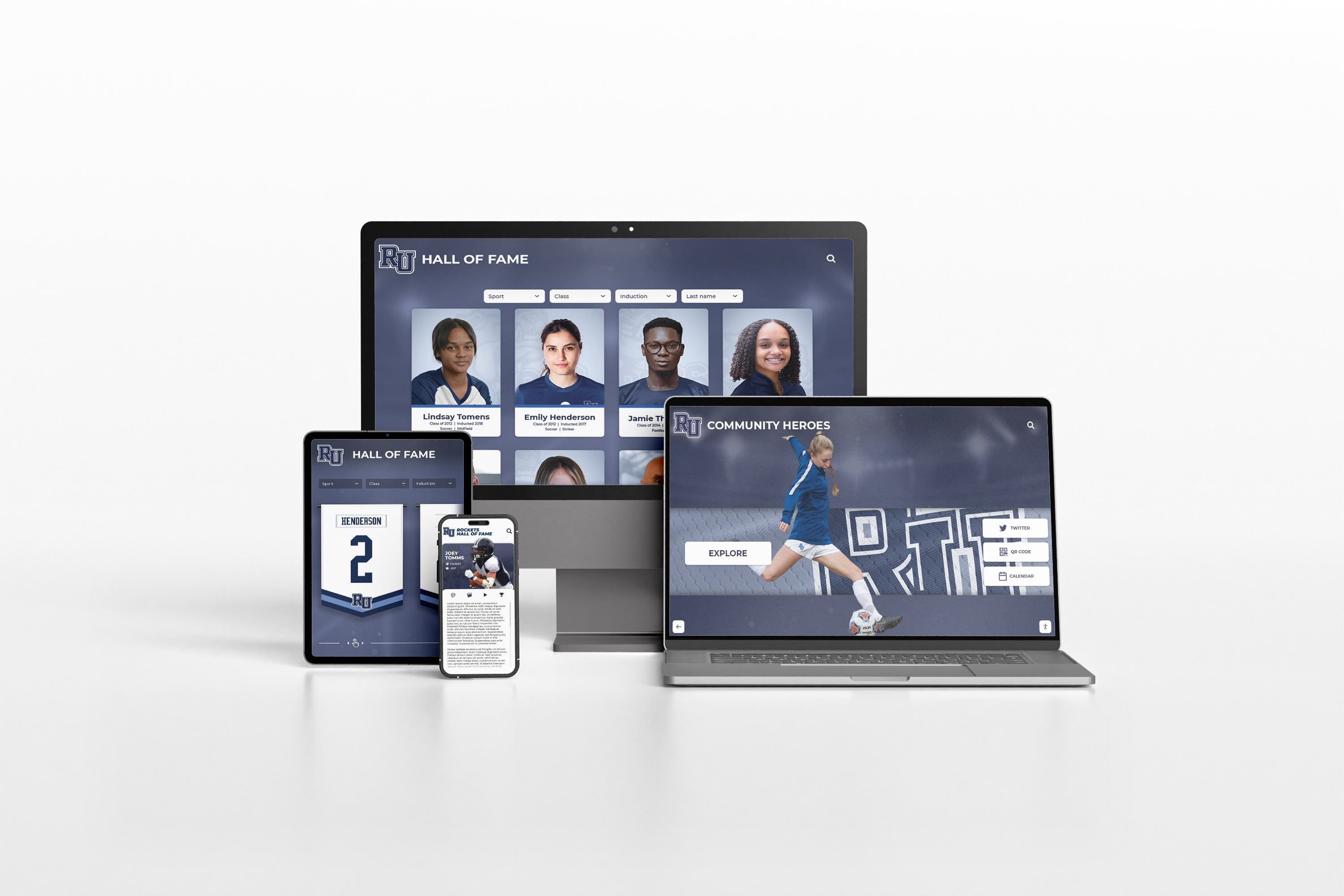
Multi-device accessibility ensures prospective families can thoroughly explore school history, programs, and recent events from home during extended decision-making processes—not just during brief campus tours
Alumni Engagement Through School Life Documentation
Beyond recruitment applications, comprehensive event and history documentation strengthens alumni engagement and long-term community connections.
Creating Alumni Connection Points
Interactive displays documenting school life enable alumni to reconnect with their own eras while discovering how traditions evolved.
Era-Specific Content Discovery: Alumni visiting campuses decades after graduation can use year filters to instantly access content from their attendance periods—finding photos from their own homecoming dances, championship teams they played on, theatrical performances they participated in, or academic competitions they attended. This targeted discovery creates powerful nostalgia while demonstrating that institutions value all eras equally rather than only celebrating recent history.
Then and Now Comparisons: Interactive features allowing alumni to compare their era’s traditions with current implementations reveal both continuity and evolution. Side-by-side homecoming photos from 1985 and 2025 show costume contest evolution, technological changes, and facility improvements—creating appreciation for both heritage preservation and progressive adaptation. These comparisons generate conversation during reunions and alumni events, strengthening community bonds through shared exploration of institutional evolution.
Alumni Achievement Integration: Connecting historical timelines and event documentation with distinguished alumni profiles demonstrates how school experiences launched successful careers and meaningful lives. For example, athletic championship team rosters can link to individual alumni profiles showing post-graduation achievements—validating that competitive excellence fostered broader life success rather than representing isolated accomplishments.
Reunion and Legacy Class Features: Schools can create dedicated gallery sections for milestone reunion classes or legacy family documentation—celebrating multi-generational connections and creating special recognition for sustained family commitment. These targeted features provide reunion talking points while honoring families with deep institutional histories.
Schools implementing comprehensive alumni engagement strategies through interactive storytelling report improved attendance at reunion events, enhanced annual fund participation, and stronger volunteer recruitment.
Social Sharing and Digital Word-of-Mouth
When alumni can easily share school content through their personal networks, they become authentic ambassadors extending institutional reach far beyond formal marketing.
Individual Content Sharing: Enable alumni to share specific photos, timeline entries, or profile pages through social media, email, or text messaging. When alumni share homecoming photos from their own high school years with former classmates, post championship retrospectives during reunion planning, or introduce families to faculty profiles while discussing school recommendations, they create authentic testimonials that carry far more weight than institutional marketing messages.
Anniversary and Milestone Content: Create shareable content around significant anniversaries including founding commemorations, facility milestones, or program anniversaries. Alumni naturally share content connected to their own attendance eras when schools make this easy—generating organic visibility and engagement without paid promotion.
Event-Triggered Sharing: After major contemporary events like championship wins, significant community recognition, or program achievements, create easily shareable content packages featuring highlights and achievements. Alumni proud of ongoing school excellence readily distribute success stories through their networks—generating awareness among prospective families who trust personal connections over institutional advertising.
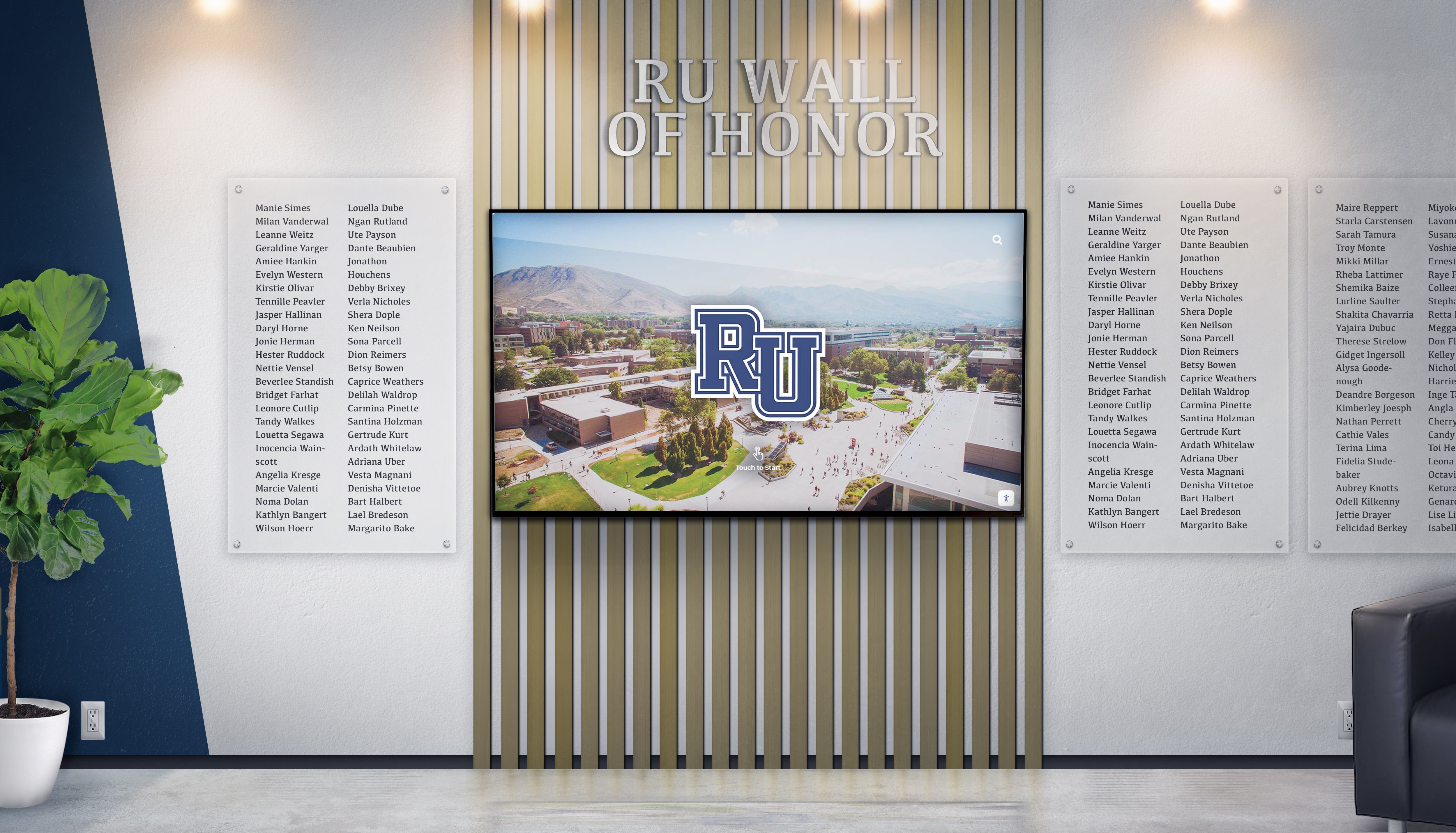
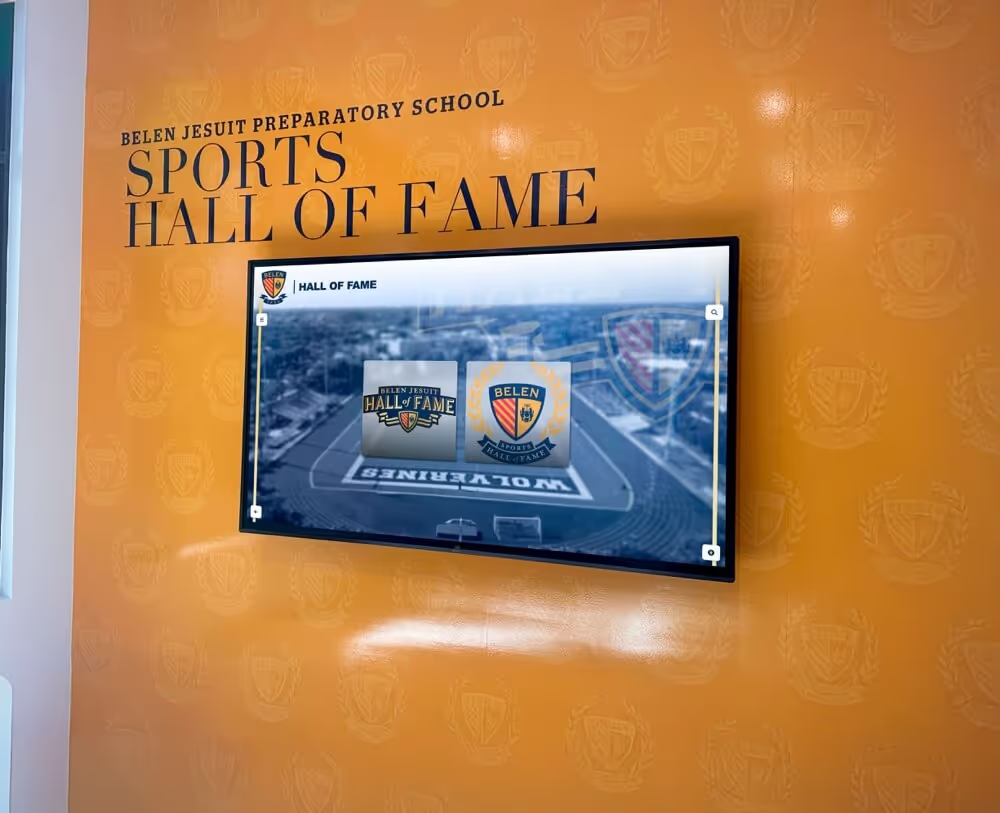
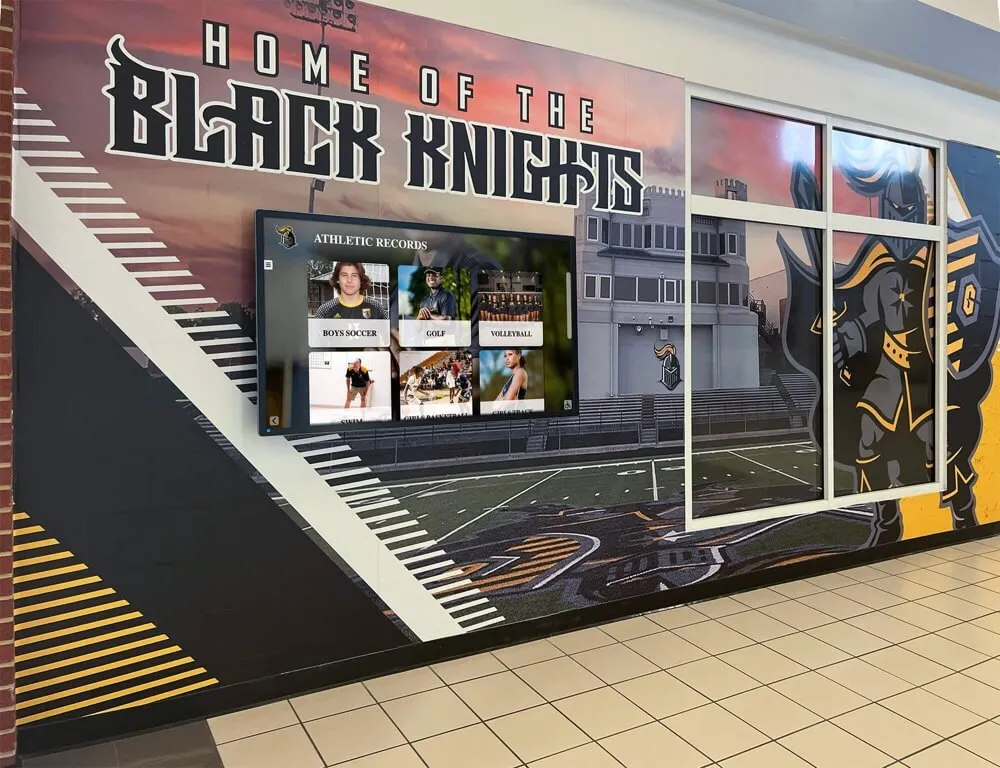
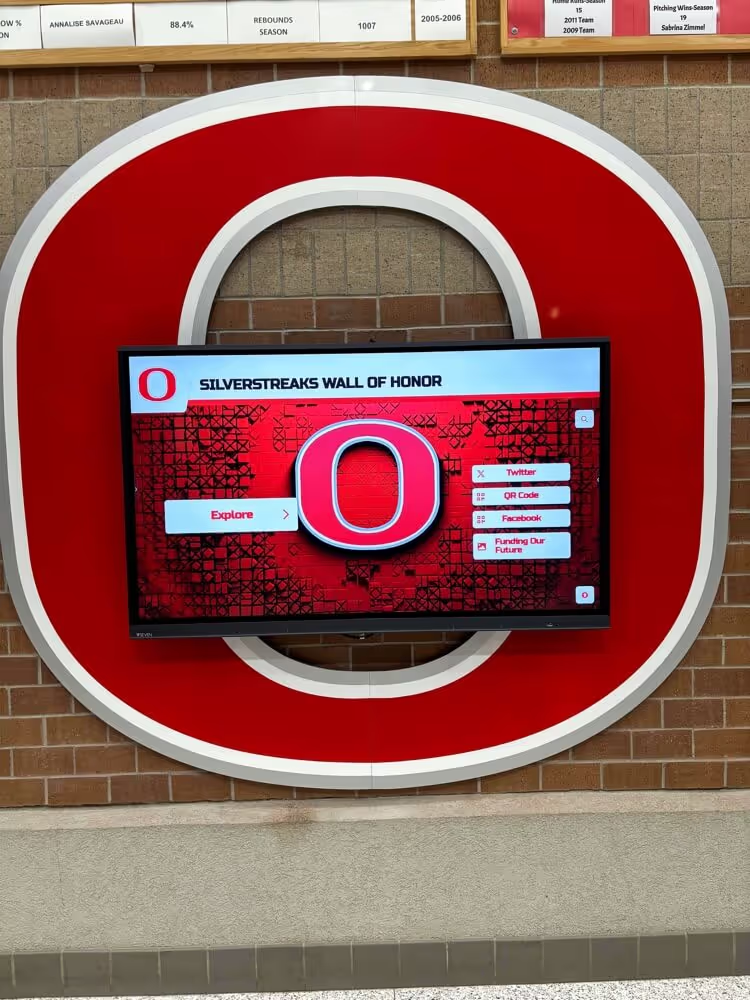
Background campus imagery creates location context and visual appeal while overlaid content maintains focus on recognition subjects—balancing aesthetic quality with functional information delivery
Content Quality and Storytelling Excellence
Technology and implementation strategy matter significantly—but content quality ultimately determines whether displays engage audiences or get ignored.
Photography Standards and Visual Excellence
Poor quality photography undermines professional presentation regardless of hardware quality or software sophistication.
Technical Quality Requirements: Establish minimum standards including resolution of 1920x1080 or higher for display presentation, proper exposure avoiding overly dark or blown-out bright images, sharp focus with minimal motion blur, and composition following basic photographic principles—rule of thirds, clear subjects, uncluttered backgrounds. While schools shouldn’t require professional photographer quality for every image, maintaining baseline technical standards ensures viewing comfort rather than creating distracting amateur appearance.
Diverse Perspective and Representation: Event photography should capture comprehensive experiences including wide establishing shots showing venues and crowds, medium shots documenting group activities and interactions, close-up portraits highlighting individual expressions and emotions, behind-the-scenes preparation and setup activity, and audience reactions and community engagement. This variety creates complete narrative rather than redundant repetition of similar angles or moments.
Inclusive Documentation Across All Programs: Ensure event photography allocates attention equitably across academic programs, all athletic teams regardless of visibility or competitive success, performing arts activities, clubs and extracurricular activities, community service projects, and daily school life rather than limiting documentation to highest-profile programs alone. Comprehensive coverage demonstrates institutional values that all students and programs deserve celebration regardless of traditional status hierarchies.
Narrative Writing and Historical Documentation
Visual content proves essential, but accompanying text provides context and deepens understanding.
Concise Event Descriptions: Gallery introductions should provide brief 50-100 word summaries explaining what events were, when they occurred, their significance in school calendars, and notable highlights worth discovering in photos. This orientation helps visitors understand context rather than leaving them guessing about unfamiliar traditions or activities.
Historical Timeline Narratives: Timeline entries require more substantial text explaining not just what happened but why events mattered including 150-300 word descriptions providing historical context, explanation of decisions and their motivations, impact on institutional development, connections to broader community or educational trends, and legacy effects still visible in current programs. This depth transforms timelines from lists of dates into compelling stories showing how schools evolved into contemporary forms.
Profile Biography Quality: Individual profiles for faculty, staff, distinguished alumni, or program leaders should follow compelling narrative structure including opening hooks capturing distinctive characteristics or memorable achievements, background context explaining journeys to schools, detailed accomplishment documentation, personal touches revealing character and values, and current engagement demonstrating ongoing connections. Quality profiles honor subjects appropriately while engaging readers through storytelling rather than resume listing.
Schools implementing comprehensive storytelling strategies report significantly stronger emotional response and community engagement compared to basic documentation approaches.
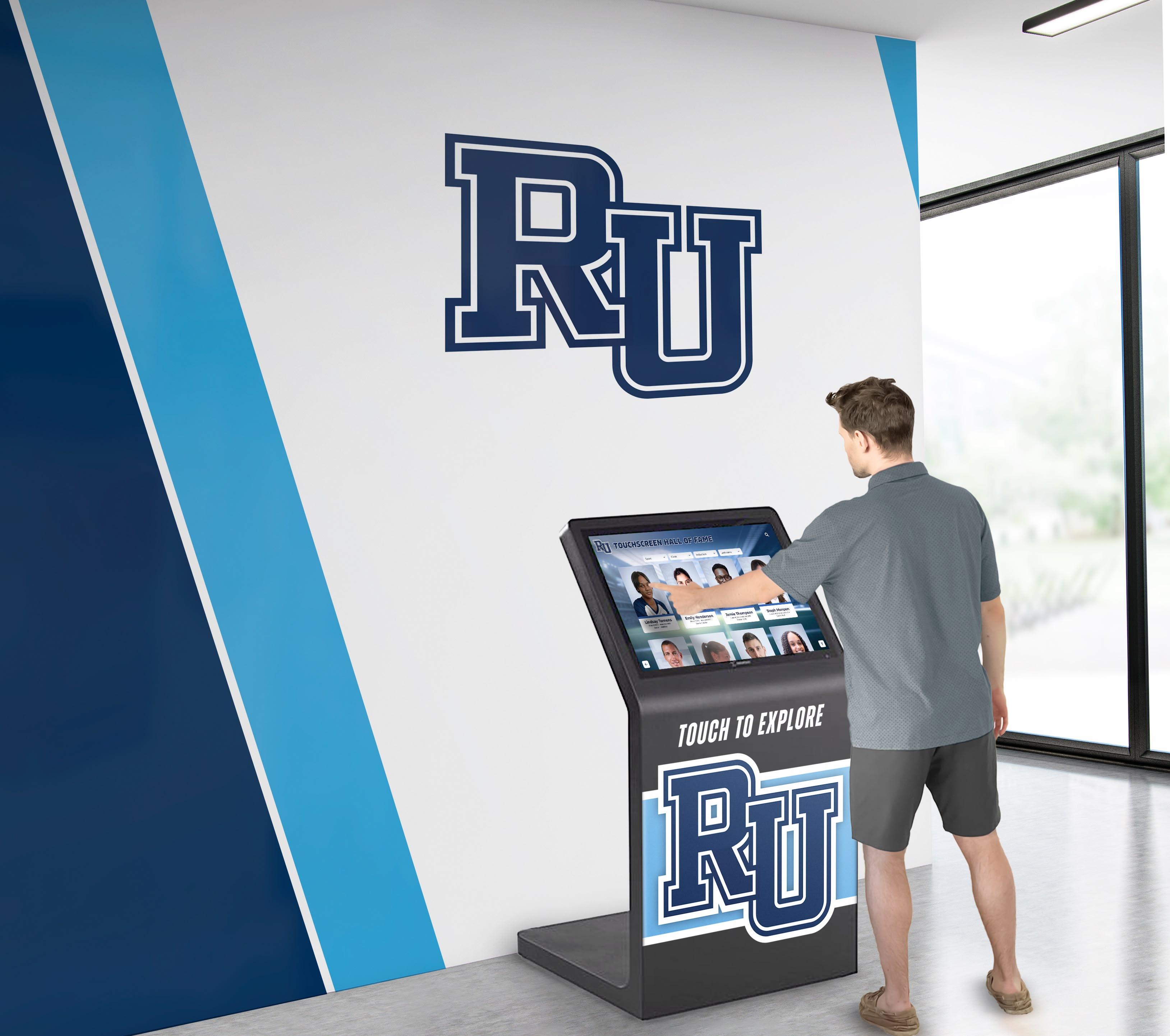
Professional kiosk installations in main lobbies create welcoming first impressions while providing prospective families engaging activities during wait times or self-guided exploration
Measuring Impact and Demonstrating Value
Data-driven evaluation ensures storytelling investments deliver value while identifying improvement opportunities.
Engagement Analytics and Usage Tracking
For interactive displays, comprehensive platforms provide usage tracking revealing program effectiveness.
Quantitative Engagement Metrics: Track total interaction sessions showing how many visitors engage displays, average session duration revealing content depth exploration, most-viewed content identifying particularly compelling stories or popular topics, search patterns showing what visitors seek, and peak usage times informing optimal content refresh scheduling and maintenance windows.
Content Performance Analysis: Compare engagement across different content types—are event galleries more popular than timeline history? Do specific sports or activities generate disproportionate interest? Which historical periods attract most exploration? These insights inform content development priorities, ensuring effort focuses on areas generating strongest community response.
Recruitment Impact Measurement: For schools implementing displays primarily for recruitment, track correlation between display deployment and admission metrics including enrollment conversion rates among toured families, time prospective families spend in buildings with displays, admission inquiry increases following display installations, and qualitative feedback from families about information sources influencing decisions.
Qualitative Feedback Collection
Beyond quantitative analytics, gather qualitative feedback revealing impact metrics cannot capture.
Stakeholder Surveys: Periodically survey current students, parents, faculty, staff, and alumni about display effectiveness including content relevance and interest level, navigation ease and search functionality, new discoveries made through exploration, emotional response to heritage documentation, and suggestions for content additions or improvements.
Prospective Family Feedback: During admission processes, ask touring families about display impact including whether displays influenced institutional perception, what content proved most valuable or interesting, how displays compared to other schools’ presentations, and whether displays answered questions or generated additional inquiries.
Staff and Volunteer Input: Those managing displays often develop insights through daily observation including which content generates most questions or conversation, common navigation difficulties requiring interface improvements, frequently requested content not currently available, and technical issues affecting user experience.
Return on Investment Demonstration
Justify ongoing investment by demonstrating value across multiple dimensions.
Recruitment Cost Effectiveness: Calculate recruitment return on investment by comparing display costs against traditional marketing expenses including reduced printed materials needs, fewer customized tour presentations required, increased admission yield reducing need for larger prospect pools, and enhanced word-of-mouth reducing paid advertising requirements. Organizations often discover interactive displays deliver superior recruitment value per dollar compared to traditional marketing approaches.
Alumni Engagement Impact: Measure alumni engagement improvements following display implementation including increased reunion attendance, improved annual fund participation rates, volunteer recruitment success, social media engagement with shared content, and qualitative reports of stronger connection to institutions.
Community Pride and Culture: While harder to quantify, observe cultural impact indicators including student knowledge about institutional history improving, staff pride in school heritage strengthening, community conversations about displays and content, media coverage mentioning displays as distinctive features, and peer institutions inquiring about implementation approaches—all suggesting meaningful community impact beyond purely utilitarian metrics.
Transform Your School's Story Into an Interactive Experience
Discover how purpose-built interactive displays can showcase your school's events, history, and community character through engaging photo galleries, compelling timelines, and authentic About Us profiles. Rocket Alumni Solutions specializes in creating touchscreen experiences that preserve legacy while inspiring prospective families and strengthening community connections.
Explore Rocket SolutionsConclusion: From Archives to Living Stories
Schools generate incredible content every academic year—thousands of photographs capturing memorable moments, significant achievements worthy of celebration, and ongoing traditions connecting generations. Yet most of this content remains trapped in static archives, scattered across devices, or buried in yearbooks that few access—failing to serve its potential as powerful testimony to vibrant school culture and rich heritage.
Interactive touchscreen technology transforms this latent content into living storytelling experiences through searchable photo gallery displays organizing events across years and enabling discovery, interactive timeline layouts mapping institutional evolution from founding to present, and compelling About Us profile sections introducing faculty, programs, and community values to prospective families—creating immersive documentation that honors legacy while functioning as authentic marketing tools far more persuasive than traditional promotional materials.
The most effective implementations begin with clear strategic goals understanding what stories need telling and what audiences require reaching. Select purpose-built platforms designed specifically for institutional storytelling rather than generic digital signage repurposed for applications they weren’t designed to serve. Develop systematic content collection workflows ensuring sustainable documentation rather than relying on unsustainable volunteer enthusiasm. Position displays strategically where they reach both internal community audiences and prospective families during critical decision processes. And commit to permanent programs receiving ongoing maintenance rather than treating displays as projects that launch then stagnate.
When schools approach interactive storytelling systematically through strategic planning, appropriate technology selection, quality content development, and sustainable maintenance workflows, they create experiences delivering lasting value across recruitment effectiveness, alumni engagement, community pride, and heritage preservation—demonstrating that documentation investments deliver returns far exceeding costs through multiple simultaneous benefits serving institutional missions comprehensively.
Your school’s story deserves telling completely and compellingly. Every homecoming celebration, championship season, theatrical performance, academic competition, community service project, and distinguished graduate represents another chapter in ongoing narratives defining who you are and what you value. These stories inspire current students, reassure prospective families, reconnect alumni, and build community pride—when presented accessibly through technology matching how modern audiences expect to discover and explore compelling content.
Ready to transform scattered documentation into cohesive storytelling experiences? Discover comprehensive digital display implementation strategies that showcase institutional character authentically. Explore photo gallery and yearbook digitization approaches that unlock archival content value. Learn about interactive campus directory integration combining storytelling with wayfinding functionality. And understand comprehensive recognition platform capabilities that celebrate achievement while documenting heritage—creating unified technology investments serving multiple institutional priorities simultaneously while strengthening culture and connection across entire school communities.