



Organizations seeking maximum return from recognition investments increasingly ask whether a single display can honor multiple constituencies simultaneously. Can the same touchscreen celebrate athletic achievement while acknowledging donors? Does combining recognition types dilute impact or multiply value? How do successful installations handle sponsor visibility without compromising honoree prominence?
A dual-purpose digital recognition display addresses space constraints, budget limitations, and competing recognition priorities through unified platforms that celebrate athletic accomplishment, donor generosity, and sponsor support within cohesive experiences. Rather than installing separate systems for each recognition category—consuming valuable wall space, duplicating technology costs, and fragmenting visitor attention—combined displays provide comprehensive acknowledgment through sophisticated content organization and strategic design architecture.
This comprehensive guide explores how digital hall of fame displays function as donor walls, examines sponsor recognition strategies that maintain appropriate balance, and provides actionable frameworks for designing dual-purpose installations that honor all constituencies effectively while maintaining dignified presentation appropriate for institutional environments.
Organizations implementing well-designed dual-purpose displays report 40-60% cost savings compared to separate recognition systems while simultaneously increasing engagement as visitors discover connections between athletic achievement, philanthropic support, and sponsor partnerships that collectively advance institutional missions.

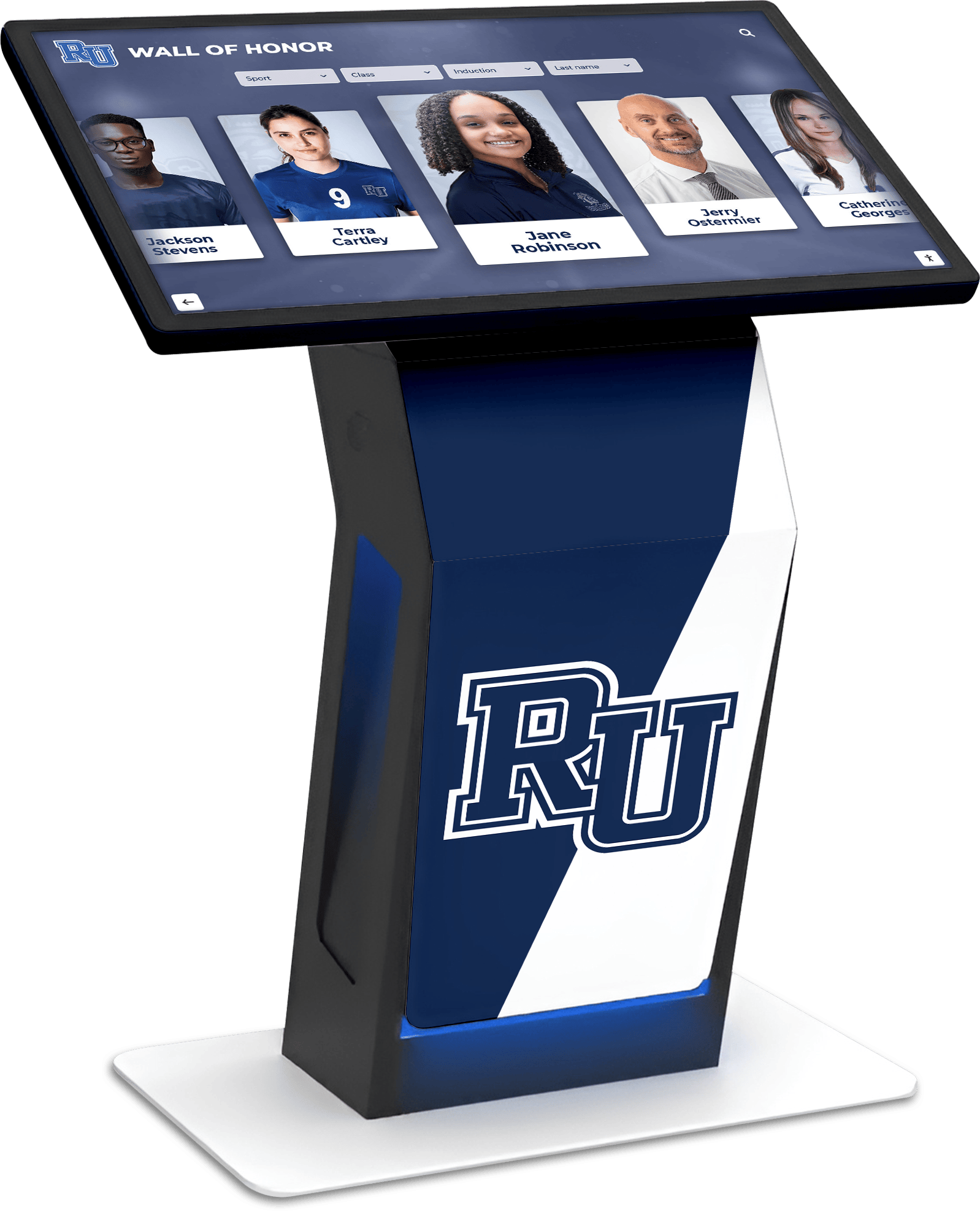
Purpose-built recognition displays combine hall of fame, donor acknowledgment, and sponsor visibility within unified experiences accessible through easy-to-use touchscreen interfaces
Why Organizations Combine Recognition Functions
Before examining implementation strategies, understanding the practical and strategic motivations for dual-purpose displays helps administrators evaluate whether combined approaches serve their specific institutional needs.
The Traditional Recognition Challenge
Most organizations face similar recognition dilemmas driven by competing demands and limited resources.
Space Constraints in High-Visibility Locations
Prime lobby areas, main entrances, and athletic facilities offer limited wall space for recognition installations. Installing separate displays for athletes, donors, and sponsors quickly exhausts available locations—forcing difficult choices about which constituencies receive visibility in optimal spaces while relegating others to secondary hallways with minimal traffic.
Organizations with 50-100 inductees, 200-300 donors across multiple giving levels, and 10-20 sponsors easily require 100-200 square feet of recognition space when using traditional approaches. Few facilities can dedicate such extensive areas exclusively to acknowledgment without compromising other functional priorities.
Budget Reality and Technology Costs
Commercial-grade touchscreen displays suitable for institutional environments cost $3,000-8,000 depending on size and specifications. Content management platforms add $1,500-3,500 annually. Installation expenses including mounting, electrical work, and network connectivity contribute another $1,500-3,000 per location.
Separate recognition systems for athletes, donors, and sponsors can easily total $15,000-30,000 in initial costs plus $4,500-10,500 annual software fees—often exceeding available budgets and making comprehensive recognition financially impractical.
Content Management Efficiency
Multiple independent recognition systems demand parallel maintenance workflows. Staff update athlete profiles in one system, donor acknowledgments in another, and sponsor content in a third—tripling administrative burden while creating consistency challenges as design standards, photo treatments, and presentation styles diverge across platforms.
Combined systems consolidate content management, allowing single update workflows, unified design templates, and consistent experiences that reduce administrative overhead by 60-70% compared to separate platforms.
Schools exploring comprehensive recognition should review digital trophy case implementation for foundational display concepts applicable to dual-purpose applications.
Strategic Benefits of Unified Recognition
Beyond addressing constraints, combined displays create unique advantages impossible with separate systems.
Connection Storytelling and Relationship Visualization
Unified platforms reveal meaningful connections between constituencies. Displays show which donors funded facility improvements that enabled championship seasons, feature sponsors whose support provides equipment and travel funding, and connect alumni athletes who return as major donors supporting current programs.
This connection storytelling strengthens stakeholder relationships by demonstrating how diverse supporters collectively advance shared missions. Donors see tangible outcomes their philanthropy enables. Sponsors understand community impact beyond brand visibility. Athletes recognize the foundation of support making their achievements possible.
Comprehensive Institutional Narrative
Separate recognition systems present fragmented stories—athletic excellence here, donor generosity there, sponsor support elsewhere. Unified displays weave these threads into cohesive institutional narratives demonstrating how achievement, philanthropy, and partnerships combine to fulfill missions and sustain programs across generations.
This comprehensive storytelling creates deeper emotional engagement. Visitors spend 7-12 minutes exploring combined displays compared to 2-3 minutes with single-purpose installations, as richer content and revealed connections encourage extended discovery.
Flexible Content Emphasis by Audience
Well-designed dual-purpose displays allow content emphasis to shift based on context and audience. During athletic events, the interface foregrounds hall of fame inductees while maintaining donor and sponsor visibility. At fundraising functions, donor profiles receive prominent positioning while athletic achievement provides supporting context. For sponsor activation events, brand recognition moves to featured positions.
This flexibility ensures all constituencies receive appropriate acknowledgment while optimizing presentations for specific occasions—multiplying recognition value through flexible experiences impossible with fixed traditional installations.
Organizations planning combined displays should explore donor recognition examples demonstrating effective acknowledgment approaches applicable to combined platforms.

Strategic placement in athletic corridors ensures recognition reaches student-athletes, visiting teams, and community members while celebrating program history and support
Content Organization Architecture: Balancing Multiple Recognition Types
Effective dual-purpose displays require thoughtful content architecture preventing any constituency from overwhelming others while ensuring all receive dignified acknowledgment.
Zone-Based Layout Structure
Successful combined displays organize content through clearly defined zones maintaining visual hierarchy and clear navigation.
Hero Zone: Institutional Identity and Primary Purpose (15-20%)
The hero area establishes institutional brand identity and primary display function through prominent logos, institutional colors, and clear purpose statements. For athletic-focused installations, hero zones might feature “Hall of Champions” with athletic branding while incorporating “Proudly Supported By” taglines acknowledging donors and sponsors. Development-focused installations reverse this emphasis, leading with “Wall of Honor” donor recognition while including “Celebrating Athletic Excellence” as supporting context.
This hierarchical approach establishes primary purpose without excluding secondary functions, setting clear expectations about content organization while signaling comprehensive acknowledgment.
Primary Navigation: Clear Category Separation (10-15%)
Navigation structures provide clear pathways to distinct recognition categories through clearly labeled sections. Effective navigation patterns include tabbed interfaces with prominent category buttons—“Hall of Fame,” “Donor Recognition,” “Our Sponsors”—enabling one-touch access to specific content areas. Icon-based navigation supplements text labels, using trophy icons for athletic recognition, heart or handshake symbols for donors, and partnership iconography for sponsors.
Implement visual feedback showing active categories through color changes, underlines, or elevation effects ensuring visitors understand current location within information architecture. Always include home buttons enabling instant return to starting experiences.
Content Display Area: Category-Specific Presentations (50-60%)
The main content zone adapts presentation style to category type while maintaining design consistency. Athletic hall of fame content emphasizes achievement through statistics, career highlights, team photos, and competitive accomplishments. Donor recognition focuses on philanthropic impact through giving stories, campaign connections, and outcome narratives demonstrating what contributions enable. Sponsor content highlights partnership value through program support, community engagement, and brand presence appropriate for institutional contexts.
Within each category, implement familiar presentation patterns—grid views for browsing multiple profiles, list views for comprehensive directories, detail views for individual deep-dives, and gallery modes emphasizing visual content over text.
Footer Zone: Cross-Category Navigation and Secondary Actions (10-15%)
Footer areas provide persistent secondary navigation, related content suggestions, and utility functions supporting exploration. “Related Recognition” features suggest connections—showing donor profiles funding facilities where hall of fame inductees competed, highlighting alumni athletes who returned as sponsors, or connecting championship teams to donors whose support enabled competitive success.
Social sharing buttons allow visitors to capture and distribute recognition content. QR codes link physical displays to mobile experiences enabling continued exploration on personal devices. Breadcrumb trails show navigation depth within complex information architectures.
Nonprofits planning dual-purpose installations should review nonprofit digital displays for guidance on acknowledgment approaches balancing multiple constituencies.
Content Hierarchy and Prominence Decisions
While zone structure organizes categories, hierarchy decisions determine relative prominence within combined experiences.
Primary vs. Secondary Recognition Functions
Organizations must establish clear hierarchy determining which recognition function receives primary emphasis. Athletic-focused institutions might allocate 60% of content to hall of fame, 30% to donors, and 10% to sponsors. Development-focused organizations reverse priorities, dedicating 60% to donors, 30% to athletic recognition, and 10% to sponsors.
This hierarchy appears through multiple design elements including navigation order placing primary categories first, featured content rotations emphasizing primary recognition types, default landing experiences opening to primary categories, and visual prominence giving larger touch targets and more prominent positioning to primary functions.
Occasion-Based Content Emphasis
Advanced platforms enable flexible hierarchy adjustments based on context. During homecoming events, athletic content moves to foreground while maintaining donor and sponsor visibility. At major gift cultivation events, donor recognition receives primary positioning. For sponsor activation occasions, partnership content gains featured status.
This contextual adaptation ensures appropriate emphasis for specific audiences while preserving comprehensive acknowledgment—maximizing recognition value through flexible presentations impossible with static traditional installations.
Equal Partnership Approaches
Some organizations pursue balanced approaches giving equal prominence to all constituencies. These implementations typically feature rotating hero content cycling through athlete spotlights, donor stories, and sponsor features at equal intervals. Navigation presents categories in neutral alphabetical order or uses circular patterns avoiding hierarchical implications. Content allocation provides equivalent profile counts and detail depth across categories.
Equal approaches work well when institutions cannot politically prioritize any constituency or when recognition serves audience development purposes requiring comprehensive engagement with all stakeholder types.
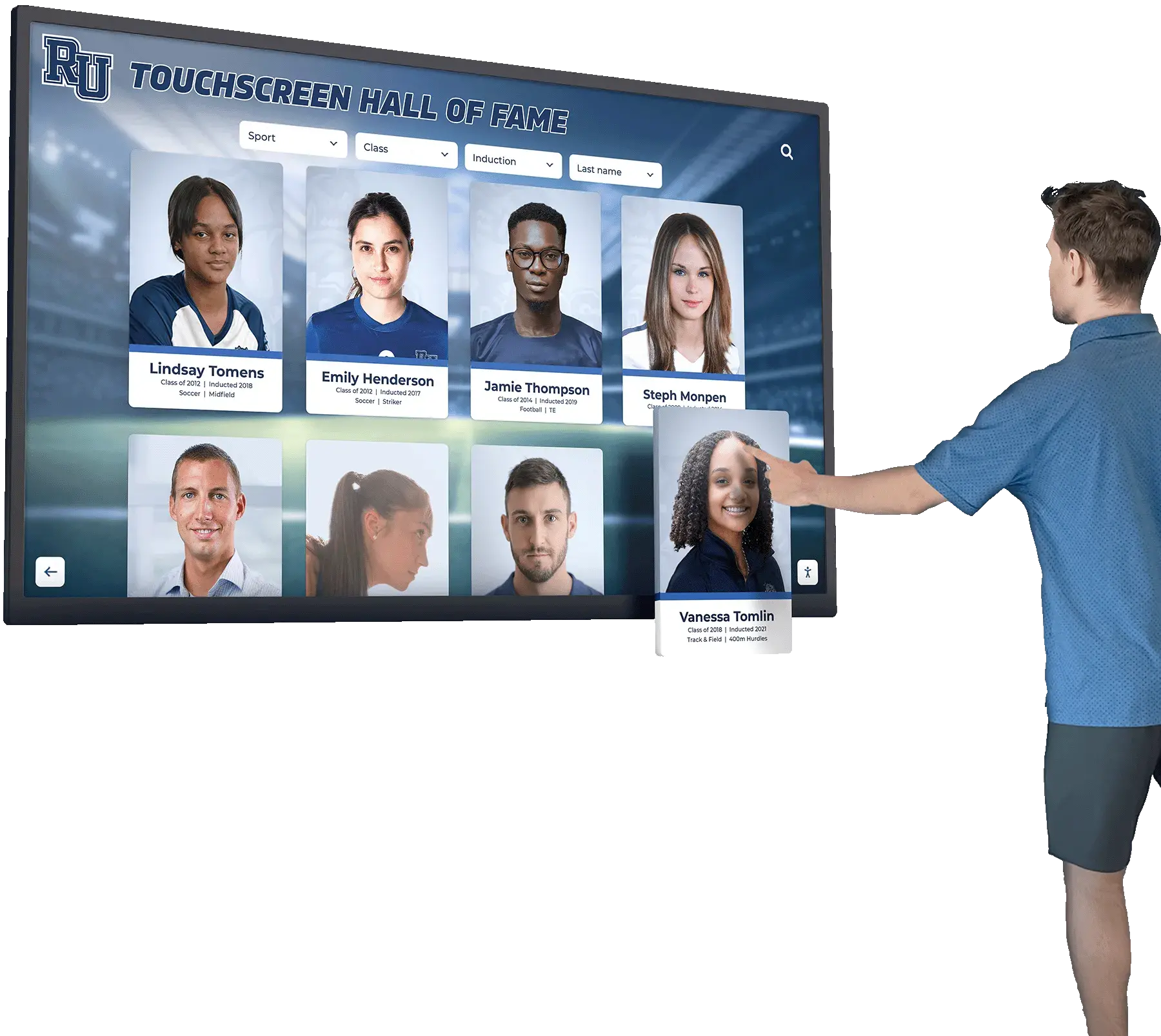
Well-designed interfaces encourage extended exploration across athletic achievement, donor generosity, and sponsor partnership through straightforward category navigation and compelling multimedia content
Sponsor Recognition Strategies: Appropriate Acknowledgment Without Commercial Dominance
Sponsor integration demands careful balance—providing meaningful visibility that justifies partnership investment while maintaining dignified institutional character appropriate for recognition contexts.
Sponsor Visibility Zone Options
Multiple placement strategies accommodate sponsor recognition within dual-purpose displays at varying prominence levels.
Persistent Footer Ribbons (Recommended Approach)
The most common and effective sponsor strategy implements persistent footer ribbons displaying rotating sponsor logos throughout the experience regardless of active content category. Footer ribbons typically occupy 8-12% of vertical screen space, running full width across display bottoms.
Sponsor logos rotate every 5-8 seconds, giving each partner equivalent visibility time. Implement smooth crossfade transitions between logos avoiding jarring changes. Include sponsor names alongside logos ensuring recognition for text-based brands. Apply consistent sizing and spacing across all sponsor graphics maintaining professional presentation.
Footer ribbons provide continuous sponsor visibility without competing with primary recognition content. Visitors see partner acknowledgment throughout browsing sessions while main content areas remain dedicated to honoree profiles.
Sidebar Sponsor Zones (Large Display Option)
Displays 55+ inches can implement dedicated sidebar zones showing persistent sponsor information alongside main content. Sidebars typically occupy 15-20% of horizontal width, running full height along display edges.
Sponsor sidebars can display multiple partner logos simultaneously in vertical arrangements, show rotating featured sponsor spotlights with enhanced content, incorporate sponsor-supported program information connecting partnerships to specific outcomes, or present partnership appreciation messaging thanking sponsors for program support.
Sidebar approaches work well on large horizontal displays where substantial central content areas remain after allocating sidebar space. Avoid sidebars on smaller displays where they excessively reduce main content visibility.
Dedicated Sponsor Category (Comprehensive Option)
Some installations create dedicated “Our Sponsors” categories accessible through primary navigation alongside athletic and donor sections. Sponsor categories provide enhanced partner profiles including company background and mission alignment, program-specific support details, community engagement activities, representative contact information, and multimedia content including photos and videos.
This approach accommodates sponsor relationship depth impossible through footer ribbons or sidebars while maintaining clear separation from athletic and donor recognition. Sponsors receive comprehensive acknowledgment justified by substantial partnership investments while preserving appropriate content hierarchy.
Home Screen Featured Placement (Premium Option)
Organizations can offer premium sponsor recognition through featured placement on default home screens. Featured sponsors appear in dedicated zones within hero areas or prominent content sections when displays return to attract loops between interaction sessions.
Featured placements typically rotate among multiple premium sponsors at 20-30 second intervals, giving each partner proportional exposure. This premium positioning commands higher sponsorship levels justified by maximum visibility to all visitors regardless of whether they interact with displays.
Schools implementing sponsor recognition should explore athletic recognition programs for comprehensive approaches to celebrating support alongside achievement.
Sponsor Content Guidelines and Brand Integration
While placement determines sponsor visibility, content guidelines ensure appropriate presentation maintaining institutional dignity.
Logo Treatment and Brand Standards
Establish clear specifications for sponsor logo submissions including file format requirements (vector formats preferred—SVG, EPS, or AI), resolution minimums (minimum 300 DPI for raster formats), color variations (provide full color, white, and single-color versions), and clear space requirements maintaining logo legibility.
Create sponsor brand guidelines document sharing display background colors, typical logo sizing, and placement contexts helping sponsors provide optimized graphics. Review submitted logos ensuring appropriate quality and making necessary adjustments before implementation.
Messaging Tone and Institutional Fit
Sponsor messaging must match institutional voice and recognition context. Avoid purely commercial language emphasizing product sales or service promotion. Instead, frame sponsor content around community support—“Proud Supporter of [Institution] Athletics,” “Partnering to Build Champion Programs,” or “Investing in Student Success.”
For sponsors receiving detailed profiles within dedicated categories, focus on mission alignment and community engagement over commercial offerings. Explain why sponsors value institutional partnerships, identify employee connections to organizations, and demonstrate community investment beyond financial contributions.
Tiered Sponsor Recognition Levels
Most organizations implement tiered sponsorship structures offering differentiated recognition corresponding to investment levels:
Presenting Sponsor ($15,000-25,000 annually) - Featured hero zone placement, dedicated profile in sponsor category, logo in footer ribbon, inclusion in all promotional materials, and verbal recognition at events.
Championship Sponsor ($7,500-15,000 annually) - Sidebar or prominent content zone placement, profile in sponsor category, logo in footer ribbon, and inclusion in select promotional materials.
Program Sponsor ($3,000-7,500 annually) - Footer ribbon logo placement, listing in sponsor category, and acknowledgment in event programs.
Supporting Sponsor ($1,000-3,000 annually) - Footer ribbon placement and listing in sponsor directory.
Tiered structures provide clear value propositions justifying varying investment levels while maintaining appropriate sponsor acknowledgment proportional to support.
Update Frequency and Content Refresh
Establish sponsor content update cadences in partnership agreements. Annual updates allow sponsors to refresh messaging, update logos following rebrands, and modify featured content. Quarterly review cycles ensure sponsor content remains current while preventing excessive update demands.
For sponsored content tied to specific programs or seasons, implement automatic archiving moving past-season sponsors to historical directories while featuring current partners. This approach maintains recognition for historical support while emphasizing active partnerships.
Universities implementing comprehensive recognition should explore recognition program best practices for guidance on balancing multiple stakeholder acknowledgment.
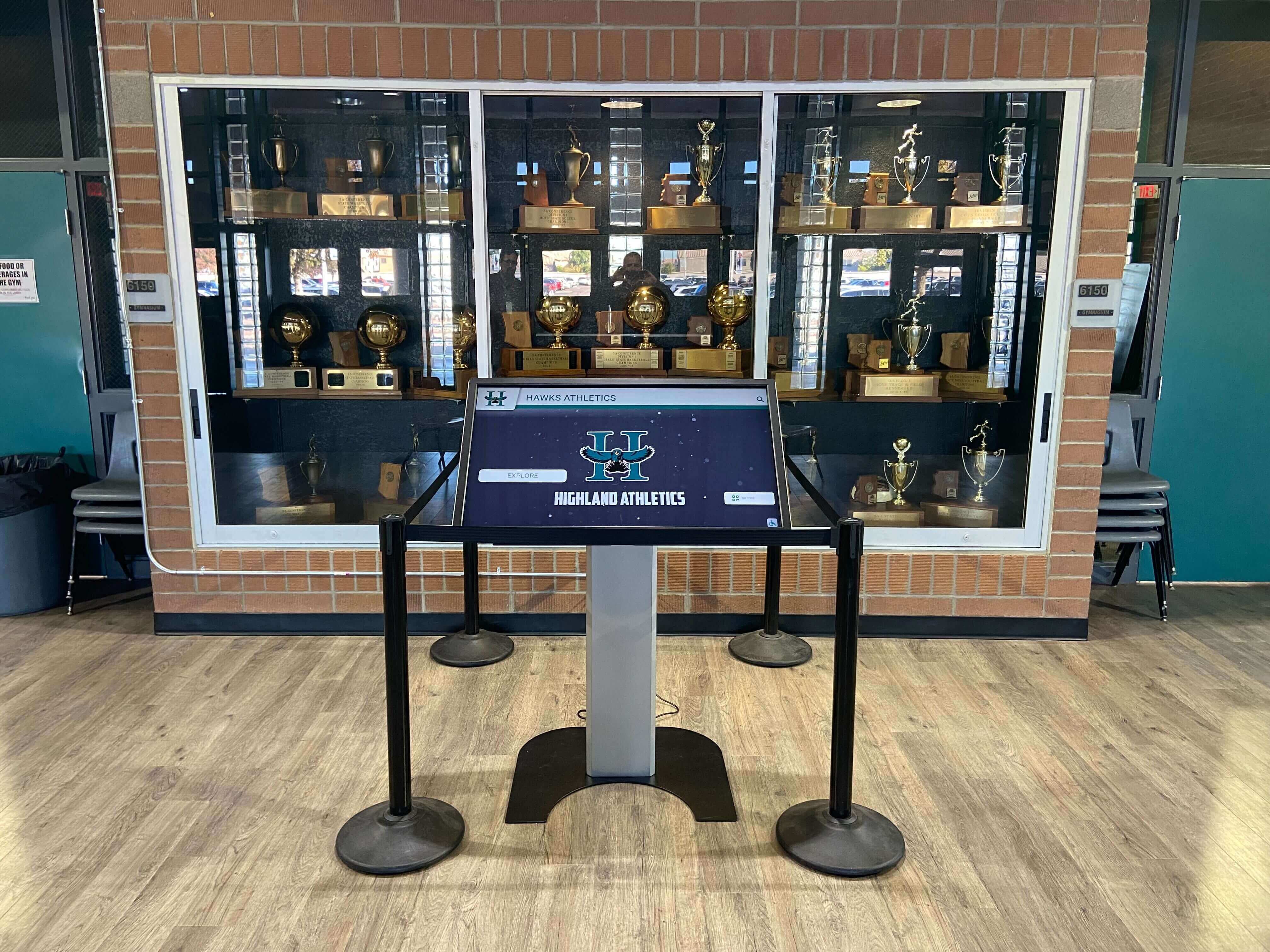
Strategic integration within existing trophy case areas combines traditional physical awards with digital recognition providing unlimited capacity for athletes, donors, and sponsors
Technical Implementation: Platform Requirements for Dual-Purpose Recognition
Not all recognition platforms effectively support combined athlete-donor-sponsor displays. Specific capabilities determine implementation success.
Essential Software Platform Features
Purpose-built recognition platforms must provide specialized functionality supporting complex dual-purpose content.
Multi-Category Content Management
Platforms must accommodate distinct content types with category-specific fields. Athlete profiles require statistics, positions, years, teams, and competitive achievements. Donor profiles need giving levels, recognition societies, years of support, designations, and impact stories. Sponsor profiles demand company information, partnership levels, support areas, and representative contacts.
Generic digital signage platforms adapted for recognition typically force all content into uniform templates, preventing appropriate customization for each constituency. Purpose-built recognition software provides flexible category-specific templates while maintaining design consistency.
Flexible Navigation Configuration
Administrators must configure navigation architecture matching institutional priorities including category ordering reflecting recognition hierarchy, custom category naming aligning with institutional terminology, optional category visibility enabling seasonal activation, and navigation style selection between tabs, dropdowns, icons, or hybrid approaches.
This configuration flexibility ensures display organization reflects unique institutional recognition strategies rather than forcing predetermined structures.
Granular Sponsor Control Options
Sponsor management requires specialized capabilities including multiple simultaneous sponsor support, tiered recognition level assignment, placement location configuration, visibility duration controls, date-based activation enabling seasonal campaigns, and rotation sequence management ensuring equitable exposure.
Advanced platforms provide sponsor analytics tracking logo display frequency, category-specific visibility, total impression counts, and visitor engagement with enhanced sponsor content. These metrics demonstrate partnership value justifying continued investment and supporting renewal conversations.
Content Relationship Features
The most powerful platforms support relationship mapping connecting related recognition entries. Link donors to specific facility projects or programs they funded. Connect sponsors to teams or athletes they support. Associate alumni hall of fame inductees with current donor profiles when individuals appear in multiple categories.
These relationships enable “related recognition” features suggesting relevant content as visitors explore displays—revealing connections that deepen engagement and demonstrate collaborative support advancing institutional missions.
Hardware Considerations for Dual-Purpose Displays
Dual-purpose recognition demands appropriate hardware supporting rich content and extended interaction.
Screen Size and Resolution Requirements
Minimum 43-inch displays provide adequate content area for dual-purpose applications, with 49-55 inches preferred for optimal experience. Larger screens accommodate sidebar sponsor zones without excessively reducing main content areas.
Resolution minimum 1080p (1920x1080) ensures text readability and photo clarity, with 4K (3840x2160) preferred for displays 55+ inches. Higher resolution prevents pixelation when visitors approach displays closely or view detail-rich athlete statistics and donor narratives.
Commercial-Grade Durability
Dual-purpose displays in high-traffic athletic facilities or institutional lobbies require commercial-grade hardware rated for continuous operation. Look for displays certified 16-24 hours daily use, temperature tolerance 32-104°F accommodating varied environmental conditions, brightness levels 350-450 nits ensuring visibility in typical institutional lighting, and minimum 3-year commercial warranties providing long-term protection.
Consumer displays designed for residential use fail within 12-24 months under institutional usage patterns, making commercial-grade equipment essential despite higher initial costs.
Touch Technology and Interaction
Capacitive touchscreens provide responsive interaction supporting multi-touch gestures including pinch-to-zoom, swipe navigation, and two-handed operations. Projected capacitive touch works through thin protective overlays enabling vandal-resistant installations.
Infrared touch technology offers alternative for larger displays or outdoor applications where capacitive touch proves impractical. Infrared systems detect finger position through invisible light beams without requiring physical screen contact—reducing maintenance needs and supporting operation with gloves.
Organizations planning installations should review digital hall of fame implementation for comprehensive hardware and software selection guidance.
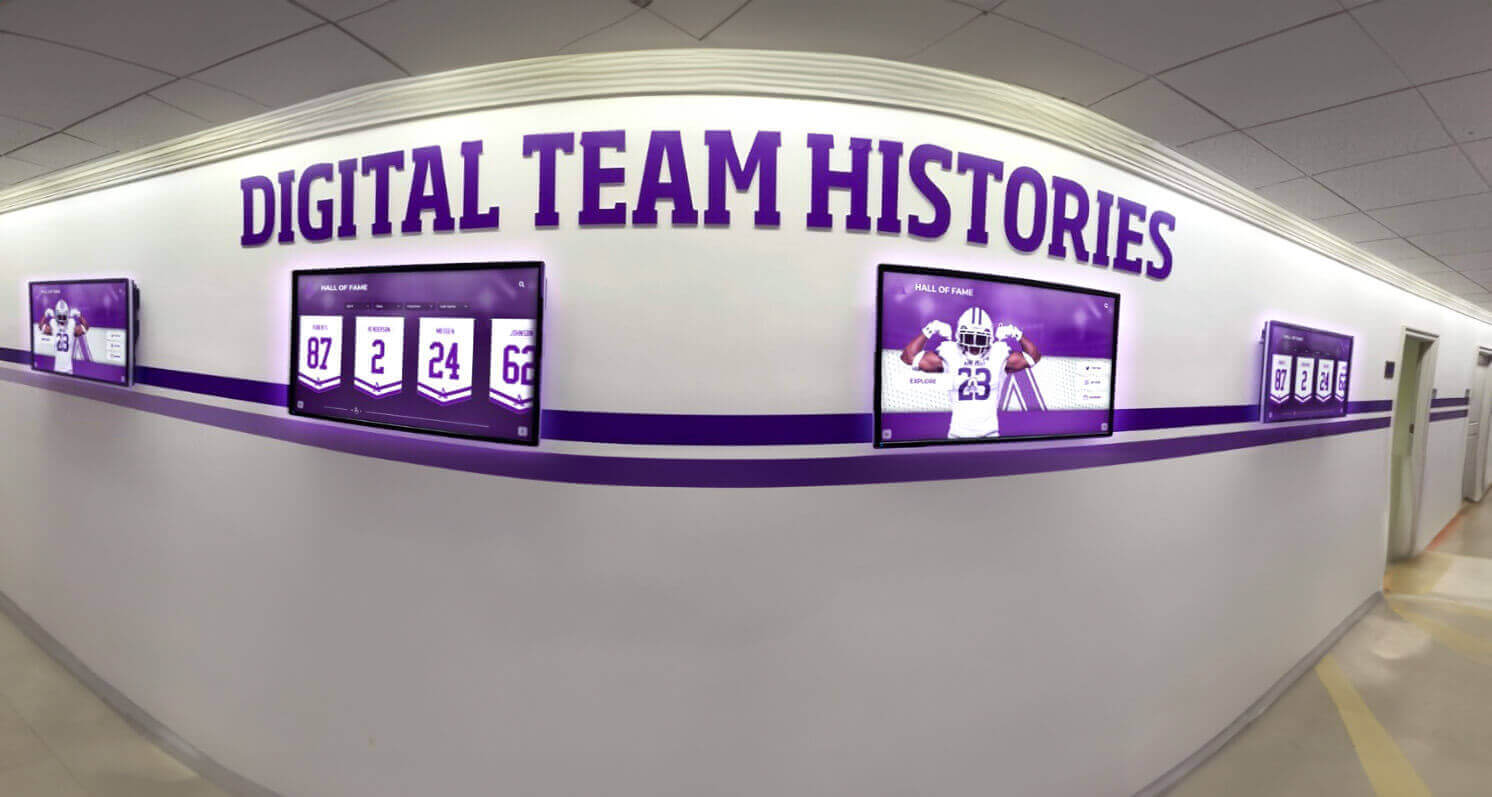
Large programs often implement multiple coordinated displays across facilities ensuring recognition reaches diverse audiences throughout campuses while maintaining design consistency
Content Development Workflows: Populating Dual-Purpose Displays
Well-designed systems remain ineffective without compelling content. Systematic development workflows ensure comprehensive recognition across all constituencies.
Initial Content Population Strategies
Launch planning should establish realistic timelines for content development across athlete, donor, and sponsor categories.
Phased Implementation Approach
Rather than attempting simultaneous population of all recognition categories, implement phased rollouts focusing on one constituency at a time. Phase 1 might concentrate on hall of fame athletes with basic name-photo-achievement profiles. Phase 2 adds major donor recognition at leadership giving levels. Phase 3 introduces sponsor acknowledgment. Phase 4 enhances all categories with rich multimedia content.
Phased approaches prevent staff overwhelm while ensuring displays launch with meaningful content rather than waiting months or years to complete comprehensive population. Set realistic timelines—2-3 months per major phase—with formal launch celebrations as each constituency joins the display.
Data Import and Migration Options
Most organizations possess donor and athlete information in existing databases. Modern recognition platforms provide import capabilities uploading bulk records through CSV files, direct database connections, or API integrations.
Data mapping associates database fields with recognition profile elements—donor database “gift amount” fields map to “recognition level” profile fields, athletic record systems “graduation year” data becomes “class year” recognition attributes, and sponsor CRM “partnership level” designations translate to display sponsor tiers.
Import capabilities significantly speed up initial population, creating baseline profiles across hundreds of individuals within hours rather than manual entry requiring weeks or months. Post-import enhancement adds photos, detailed narratives, and multimedia content systematically.
Content Collection Workflows
For constituencies requiring detailed profiles beyond database imports, establish systematic collection workflows:
Athlete Content - Request career statistics from athletic departments, collect team photos from archives, conduct brief interviews capturing memorable moments, and solicit personal photos showing life beyond competition.
Donor Content - Send profile questionnaires capturing philanthropic motivations, request professional or personal photos, interview donors or families about institutional connections, and gather impact stories from program beneficiaries.
Sponsor Content - Request high-resolution logos in multiple color variations, collect company background and mission statements, photograph sponsor representatives at institutional events, and document specific program support sponsors enable.
Create content collection templates standardizing information requests across all profiles. Provide photo submission guidelines ensuring appropriate image quality. Establish review and approval workflows allowing honorees to verify accuracy before publication.
Ongoing Content Maintenance Requirements
Dual-purpose displays demand sustained content maintenance preserving accuracy and sustaining engagement.
Regular Update Cadences
Establish maintenance schedules ensuring timely content updates:
Weekly: Add new major donors within 48-72 hours of gift processing, update campaign progress metrics, activate seasonal sponsor campaigns, and correct any errors reported by visitors.
Monthly: Refresh featured content rotations, add recent athletic achievements, update sponsor messaging, and review analytics identifying popular content and underutilized categories.
Quarterly: Conduct comprehensive content audits verifying accuracy, add accumulated donor upgrades crossing recognition thresholds, archive expired sponsor campaigns, and improve select profiles with new multimedia content.
Annually: Major content refresh including photo updates, biographical narrative enhancements, comprehensive accuracy verification, and recognition tier rebalancing as donor communities grow.
Content Enhancement Priorities
Within resource constraints, prioritize enhancement efforts toward highest-impact profiles. Focus on recent inductees and major donors whose recognition matters most to current institutional priorities, profiles receiving frequent visitor engagement according to analytics, constituencies with upcoming events or celebrations where recognition visibility matters, and honorees with compelling untold stories meriting deeper exploration.
This strategic enhancement approach ensures available resources produce maximum recognition value rather than spreading efforts too thin attempting equal attention across all profiles.
Staff Responsibility Assignment
Clarify maintenance responsibilities preventing displays from languishing. Designate specific staff owning athlete content updates—typically athletic directors or communications coordinators. Assign donor recognition maintenance to development staff familiar with gift processing workflows. Appoint sponsor relationship managers to coordinate partner content.
Establish shared administrative credentials enabling designated staff to manage their content categories independently without technical dependencies. Provide training ensuring staff comfort with content management interfaces.
Organizations establishing workflows should explore donor recognition displays for schools for practical management guidance applicable to combined platforms.
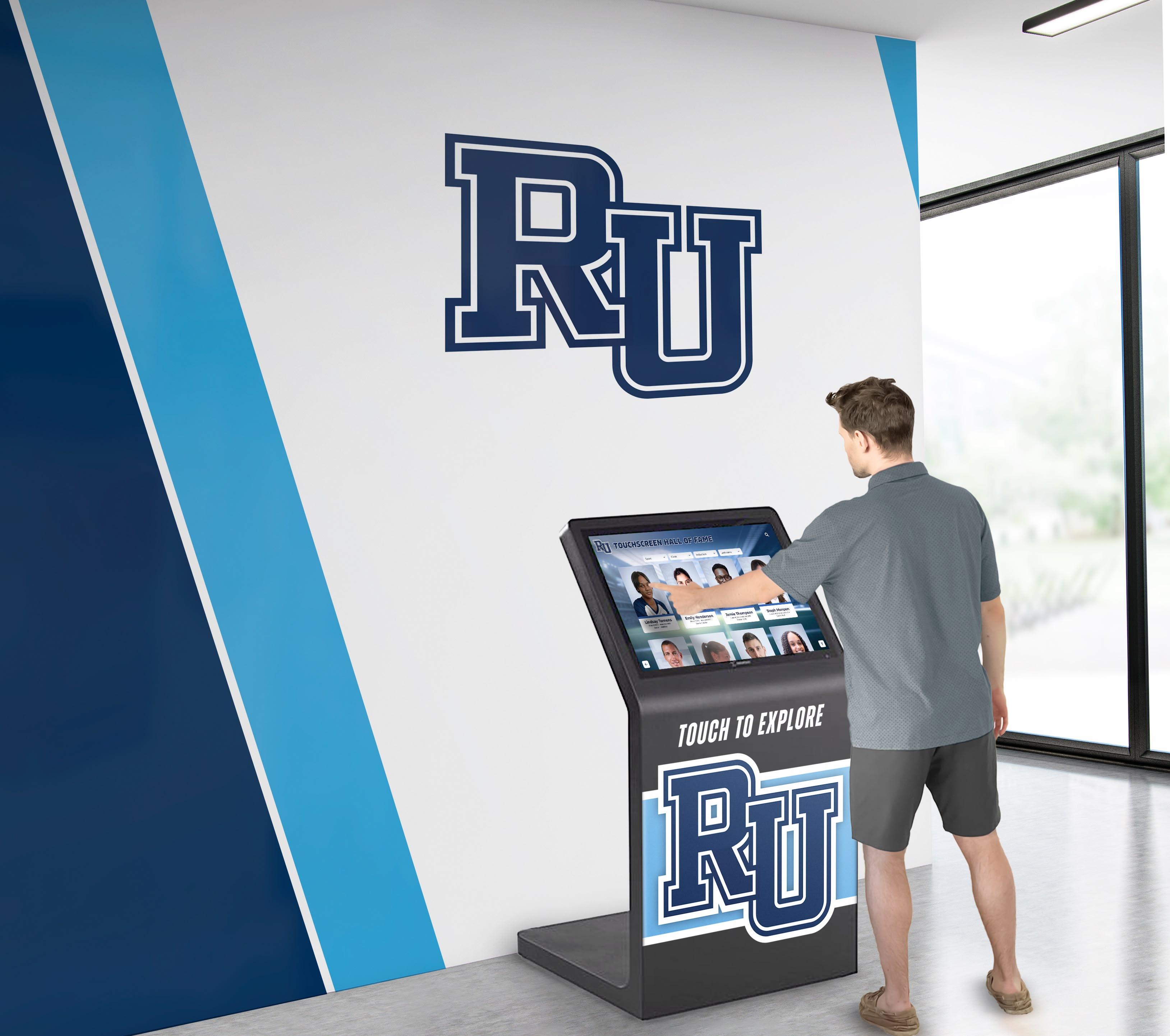
Strategic lobby placement ensures maximum visibility for all recognition categories while providing accessible interaction for visitors exploring athletic achievement, donor generosity, and sponsor partnerships
Design Best Practices: Creating Cohesive Experiences Across Recognition Types
Visual consistency maintains professional presentation while category-specific design elements provide appropriate context for each recognition type.
Unified Design System with Category Variation
Effective dual-purpose displays balance consistency with appropriate differentiation.
Core Design Elements (Consistent Across All Categories)
Maintain unified design foundations including institutional color palette applied throughout all categories, typography system using consistent font families and sizing hierarchies, layout grid structures maintaining spatial consistency, photo treatment applying uniform filters or borders, and interaction patterns using consistent button styles and transition animations.
This design consistency ensures displays feel professionally cohesive rather than appearing as disconnected systems awkwardly combined. Visitors experience familiar navigation and presentation patterns as they explore different recognition categories.
Category-Specific Accents (Differentiation Within Unity)
Within consistent foundations, introduce subtle category-specific variations providing visual context. Athletic sections might feature team colors through accent elements, header backgrounds, or category icons. Donor recognition uses sophisticated neutrals or institutional accent colors suggesting philanthropy and gravitas. Sponsor areas incorporate partnership-oriented color treatments signaling collaboration.
Icon systems provide immediate category identification—trophy or medal icons for athletic recognition, heart or handshake symbols for donors, and partnership or collaboration iconography for sponsors. These visual cues help visitors orient within information architecture while maintaining overall design harmony.
Content Formatting Appropriate to Type
While maintaining design system consistency, format content appropriately for each recognition category. Athletic profiles focus on achievement through statistics, records, championships, and competitive accomplishments presented in tabular formats or highlighted callouts. Donor profiles focus on philanthropic narratives, giving timelines, impact stories, and outcome connections presented through flowing prose and pull quotes. Sponsor content highlights partnership value, program support, and community engagement through bullet lists and feature blocks.
These formatting differences respect each constituency’s recognition priorities while remaining visually cohesive through shared design foundations.
Accessibility Considerations for Complex Content
Dual-purpose displays with multiple navigation layers and content categories demand extra attention to accessibility ensuring all visitors navigate successfully.
Clear Category Identification
Use multiple simultaneous cues identifying active categories—color coding applying distinct accent colors to active category buttons, iconography supplementing text labels, breadcrumb trails showing current location, and visual hierarchy adjusting header styles based on category.
These redundant identification methods ensure visitors with varying abilities understand current context and can orient within complex information architectures.
Simplified Navigation Options
Provide navigation mode alternatives accommodating different user preferences and abilities. Offer “quick browse” modes presenting simplified category overviews for visitors wanting basic information without deep exploration. Implement voice search enabling hands-free navigation for visitors with mobility limitations. Supply QR codes linking to mobile-optimized experiences allowing continued exploration on personal devices with familiar navigation patterns.
Timeout and Session Management
Complex dual-purpose displays require longer interaction sessions than single-purpose installations. Extend inactivity timeouts to 120-180 seconds before returning to attract loops, with 20-second warnings and extend options. Never timeout during active content consumption—pause timers while videos play or while visitors scroll through detailed profiles.
Provide clear “start over” buttons enabling visitors to reset navigation without waiting for automatic timeouts when they finish exploring specific categories and want to begin fresh discovery pathways.
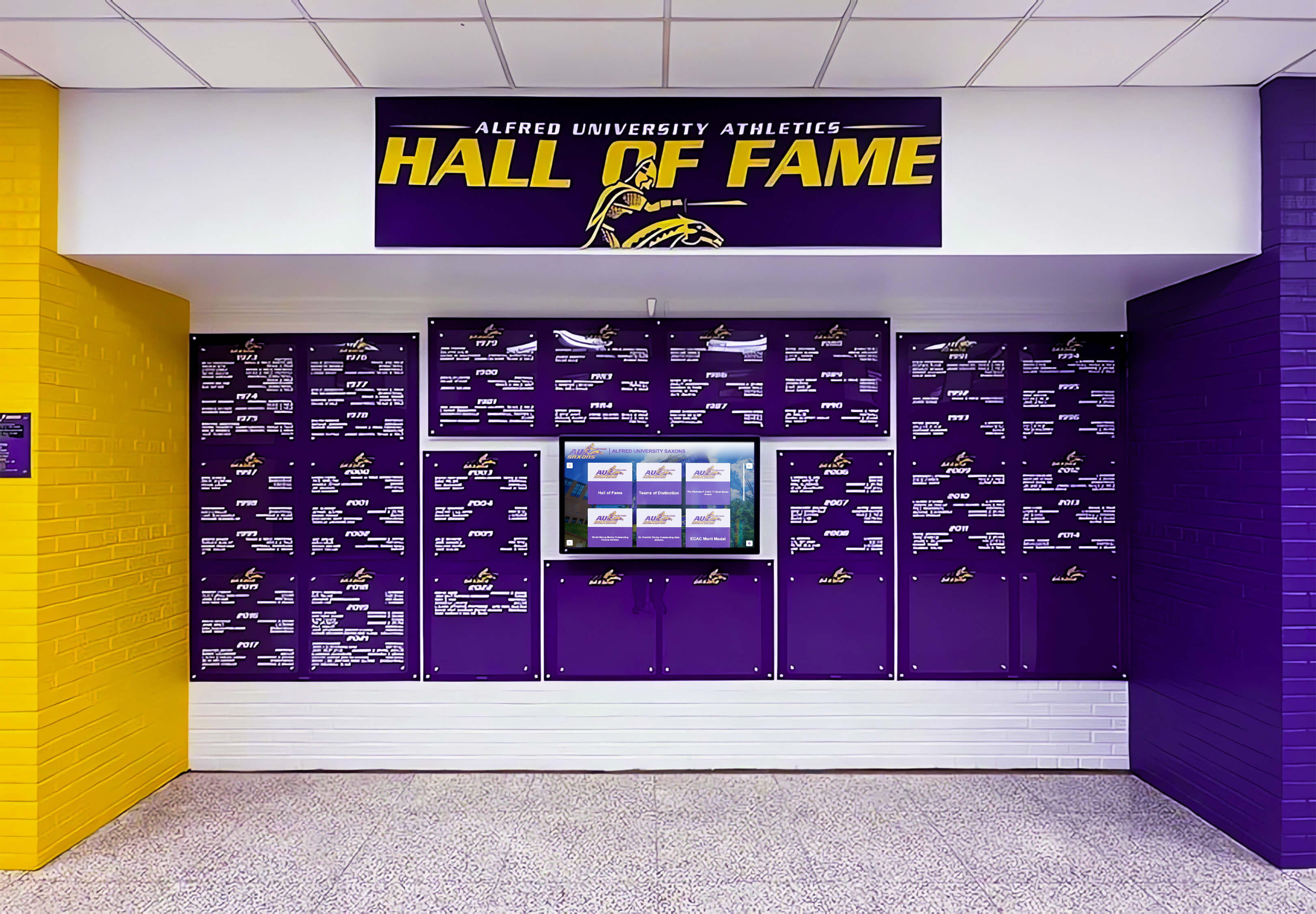
College and university installations feature comprehensive recognition programs celebrating athletic tradition while acknowledging philanthropic and partnership support supporting competitive excellence
Measuring Success: Analytics for Dual-Purpose Recognition
Analytics-informed optimization ensures all recognition categories receive appropriate visitor engagement while identifying opportunities for improvement.
Category-Specific Engagement Metrics
Track usage patterns across recognition categories revealing visitor interests and content performance.
Category Traffic Distribution
Monitor time spent and interactions within each recognition category—hall of fame, donors, sponsors. Healthy distributions typically show 50-60% of interaction time in primary categories with 30-40% in secondary categories and 10-20% in tertiary categories, reflecting established content hierarchies.
Significant deviations suggest possible issues. If donor categories receive only 5-10% of engagement despite being designated secondary priority, investigate whether navigation clarity issues prevent discovery, evaluate whether donor content lacks compelling narratives encouraging exploration, or assess whether placement decisions insufficiently feature this constituency.
Individual Profile Performance
Identify most-viewed profiles within each category revealing which honorees generate strongest interest. Top-performing athlete profiles typically feature championship team members, record holders, or individuals with compelling personal narratives. Popular donor profiles often include major benefactors funding visible facilities, alumni with distinguished careers, or multi-generational families demonstrating legacy giving patterns.
Use these insights to inform featured content rotation decisions, prioritize enhancement efforts toward high-interest profiles, and identify storytelling approaches resonating with visitors for application across additional profiles.
Cross-Category Navigation Patterns
Track how visitors move between recognition categories revealing whether displays successfully encourage comprehensive exploration or whether most sessions remain confined to single categories. Strong combined experiences show 40-60% of visitors exploring multiple categories during single sessions, demonstrating successful connection storytelling encouraging discovery across constituencies.
Low cross-category navigation suggests opportunities for improvement through enhanced relationship features, improved related recognition suggestions, or adjusted navigation prominence making category transitions easier to use.
Sponsor Value Demonstration Metrics
Sponsor partners justifiably expect visibility data demonstrating recognition value and supporting renewal decisions.
Logo Impression Tracking
Document total sponsor logo impressions—displays of sponsor graphics to visitors regardless of interaction. For footer ribbons, calculate total display sessions multiplied by average session duration, divided by logo rotation interval. This provides aggregate impression counts demonstrating sponsor visibility volume.
For sponsors receiving detailed profiles within dedicated categories, track profile views, time spent on sponsor pages, and interactions with sponsor content including video views, link clicks, or photo gallery engagement.
Comparative Visibility Reports
Generate sponsor-specific reports showing their visibility metrics relative to recognition tier commitments. Presenting sponsors should receive approximately 30-40% of total sponsor impressions. Championship sponsors earn 20-25%. Program sponsors receive 15-20%. Supporting sponsors share remaining 15-25%.
These reports demonstrate equitable exposure aligned with sponsorship levels while identifying any distribution imbalances requiring rotation adjustments.
Engagement Quality Indicators
Beyond impression volume, track engagement quality through metrics including time spent viewing sponsor content, interaction rates with enhanced sponsor profiles, related content exploration showing visitors discovering sponsored programs, and external link clicks when sponsor profiles include website or contact information.
Quality engagement metrics demonstrate whether sponsor recognition generates meaningful awareness and interest beyond passive logo visibility—supporting conversations about partnership value extending beyond simple impression counts.
Organizations measuring recognition program performance should explore digital recognition analytics for comprehensive tracking frameworks applicable to combined displays.
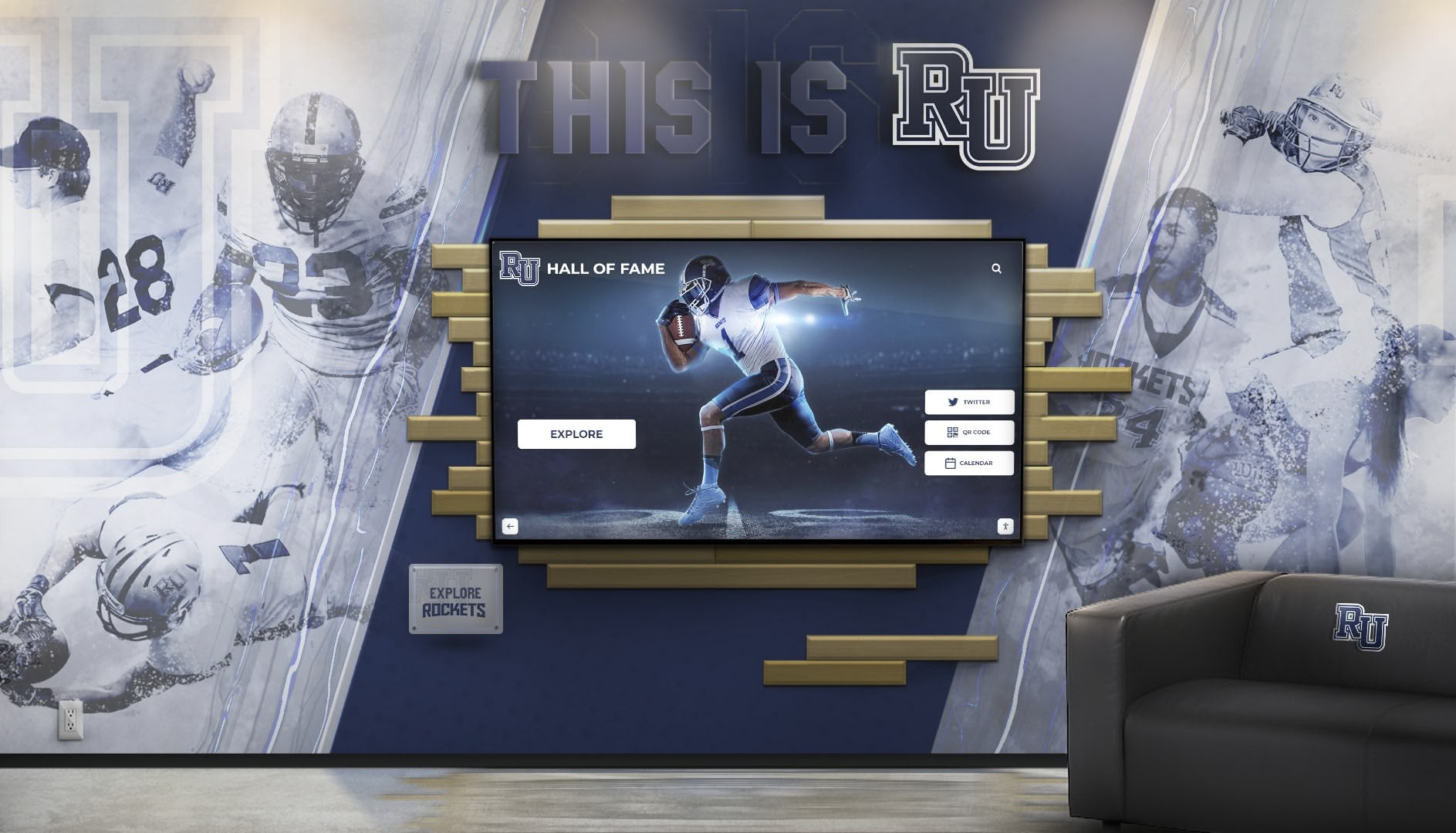
Thoughtful design integration celebrates athletic excellence while appropriately acknowledging sponsor partnerships supporting competitive programs through footer ribbons and dedicated sponsor categories
Platform Selection: Evaluating Recognition Systems for Dual-Purpose Applications
Not all recognition platforms effectively support complex combined displays. Specific evaluation criteria help organizations select appropriate systems.
Required Platform Capabilities
Prioritize platforms providing essential features for dual-purpose recognition:
Native Multi-Category Support - Platform architectures specifically designed for multiple recognition types with category-specific templates, fields, and presentation formats rather than generic content management adapted for recognition purposes.
Flexible Content Relationships - Ability to create connections between profiles across categories enabling “related recognition” features revealing connections between athletes, donors, and sponsors.
Granular Permission Management - Administrative access controls allowing different staff members to manage specific recognition categories independently without interfering with other content areas.
Sponsor Management Tools - Specialized sponsor capabilities including tiered recognition levels, placement controls, rotation management, date-based activation, and visibility analytics.
Flexible Content Emphasis - Configuration options enabling content hierarchy adjustments based on context, occasions, or audiences without requiring technical interventions.
Comprehensive Analytics - Category-specific engagement tracking, individual profile performance metrics, cross-category navigation analysis, and sponsor impression reporting.
Implementation and Support Considerations
Technical capabilities alone prove insufficient without appropriate implementation support and ongoing platform maintenance.
Professional Design Services
Look for providers offering professional design services creating custom branded experiences reflecting institutional identity. Template-based approaches limit visual differentiation and prevent recognition displays from truly embodying organizational character.
Custom design services should include unlimited layout variations, custom color scheme implementation, institutional photography integration, branded typography application, and bespoke navigation design matching institutional preferences.
Content Development Assistance
Some providers offer content development support helping organizations populate initial recognition profiles. Services range from data import and migration assistance to complete profile creation including biographical writing, photo editing, and multimedia production.
Content services significantly speed up launch timelines while ensuring professional presentation quality—particularly valuable for organizations with limited marketing and communications staff capacity.
Ongoing Platform Evolution
Recognition technology continues advancing rapidly. Prioritize platforms demonstrating consistent feature development, regular enhancement releases, and long-term product roadmaps. Avoid platforms that haven’t released significant updates in 12+ months, signaling limited ongoing investment.
Strong technology partners regularly introduce new capabilities including emerging interaction patterns, enhanced accessibility features, advanced analytics, and improved administrative workflows—ensuring recognition systems remain modern as expectations evolve.
Dedicated Support Resources
Complex dual-purpose installations benefit from responsive support when questions arise or issues occur. Evaluate provider support models including response time commitments (4-hour or same-business-day responses for critical issues), support channels available (email, phone, chat, ticket systems), comprehensive knowledge bases and documentation, and staff training programs ensuring smooth administrative operations.
Solutions like Rocket Alumni Solutions provide purpose-built recognition platforms specifically designed for institutional hall of fame, donor acknowledgment, and sponsor integration rather than adapting generic digital signage systems—delivering specialized capabilities supporting complex dual-purpose recognition requirements.
Conclusion: Maximizing Recognition Value Through Strategic Integration
Dual-purpose recognition displays represent far more than cost-saving compromises—they embody strategic approaches honoring multiple constituencies through unified platforms that reveal meaningful connections, tell comprehensive institutional stories, and maximize recognition value within real-world space and budget constraints.
The limitations organizations face—constrained facility space forcing difficult prioritization choices, budget realities preventing multiple independent systems, administrative capacity restricting content maintenance, and institutional politics demanding equitable acknowledgment—all dissolve when thoughtful design, appropriate technology, and strategic content organization combine to create dual-purpose recognition experiences serving all stakeholder constituencies effectively.
Organizations implementing well-designed dual-purpose displays consistently report remarkable outcomes including 40-60% cost savings compared to separate recognition systems, 50-80% reduced administrative burden through consolidated content management, 300-400% engagement improvements as visitors discover connections between athletes, donors, and sponsors, and strengthened stakeholder relationships as constituencies understand collaborative support advancing shared missions.
The architectural frameworks, sponsor integration strategies, content organization approaches, and implementation guidance explored throughout this guide provide actionable starting points for creating dual-purpose recognition displays that honor athletic achievement, celebrate donor generosity, and acknowledge sponsor partnerships within cohesive experiences appropriate for institutional environments.
By combining thoughtful experience design with purpose-built recognition technology, strategic content development, and sustained commitment to maintenance and optimization, organizations create unified recognition platforms multiple constituencies genuinely value—displays demonstrating how diverse support combines to sustain programs, advance missions, and create lasting legacies benefiting communities for generations.
Design Your Dual-Purpose Recognition Experience
Ready to create a dual-purpose display celebrating athletes, donors, and sponsors through unified touchscreen experiences? Discover how purpose-built recognition platforms can help you honor all constituencies effectively while maximizing space efficiency and budget value.
Explore the PlatformYour athletes, donors, and sponsors deserve thoughtful recognition honoring their distinct contributions while revealing meaningful connections advancing your institutional mission. With strategic planning, appropriate technology selection, compelling content development, and sustained maintenance, you can create dual-purpose recognition systems that celebrate all constituencies effectively—transforming acknowledgment from competing obligations into comprehensive experiences stakeholders genuinely value and your institution proudly maintains for generations.































