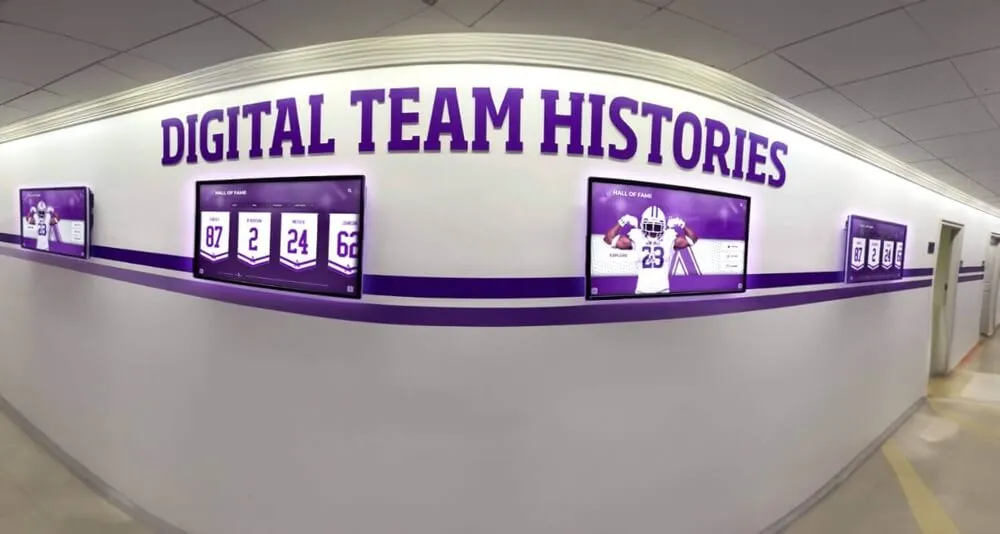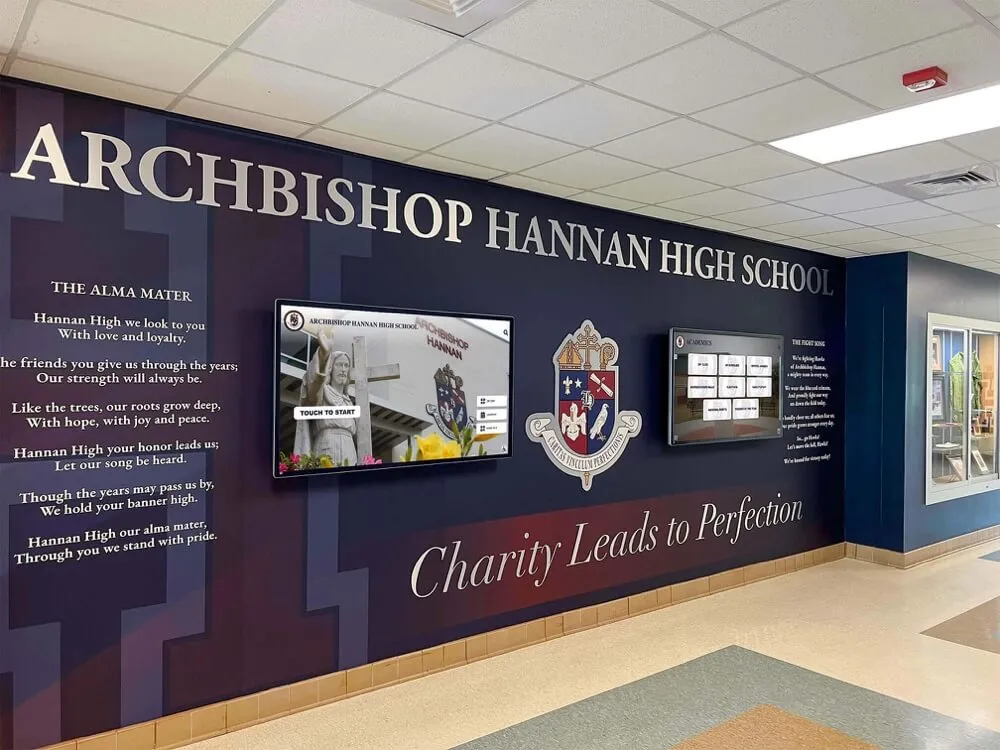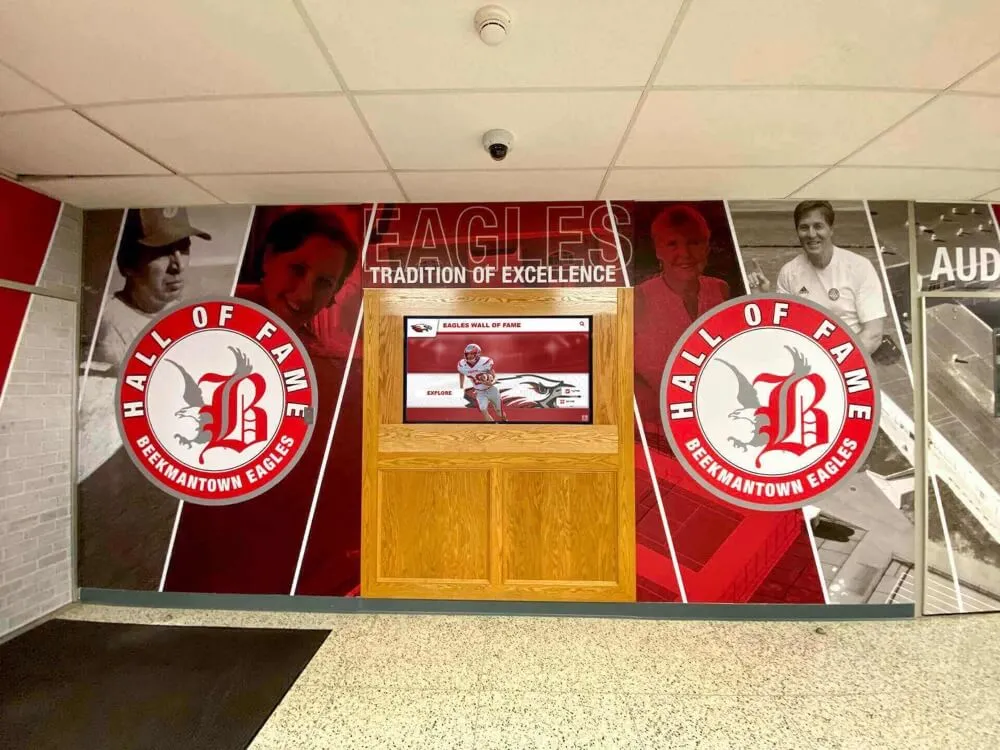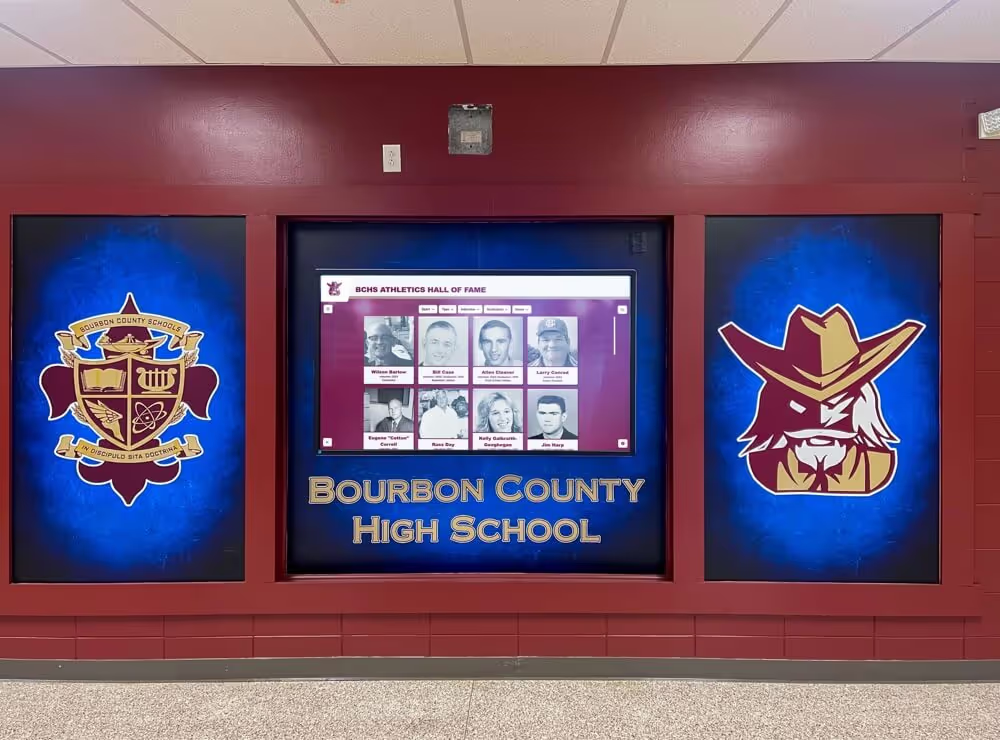




A digital hall of fame outage communication plan is the documented procedure a school, athletic department, or recognition committee follows when its touchscreen display, web portal, or interactive recognition kiosk becomes unavailable—whether for an hour, a day, or longer. These systems hold decades of irreplaceable athletic history, donor relationships, and institutional memory. When they go offline without a communication plan in place, visitors encounter blank screens, administrators receive frustrated calls from donors and alumni, and the staff responsible for recognition programs must improvise under pressure.
Most recognition programs have excellent plans for what to display when everything works. Far fewer have written down who calls whom, what message goes to which audience, and what fallback content keeps inductees and donors honored while the primary system is restored. This guide fills that gap. It provides a practical framework for defining outage ownership, classifying outage types, selecting fallback content, and communicating recovery—so that a technology interruption becomes a managed situation rather than a recognition program failure.
No digital system operates without interruption indefinitely. Power fluctuations, network outages, software updates that stall, hardware failures, and vendor maintenance windows all create periods when an otherwise reliable hall of fame display goes dark. The question is not whether your system will experience downtime—it is whether your organization has decided in advance how to respond. A digital hall of fame outage communication plan answers that question before the outage happens, when there is time to think carefully instead of reacting under pressure.

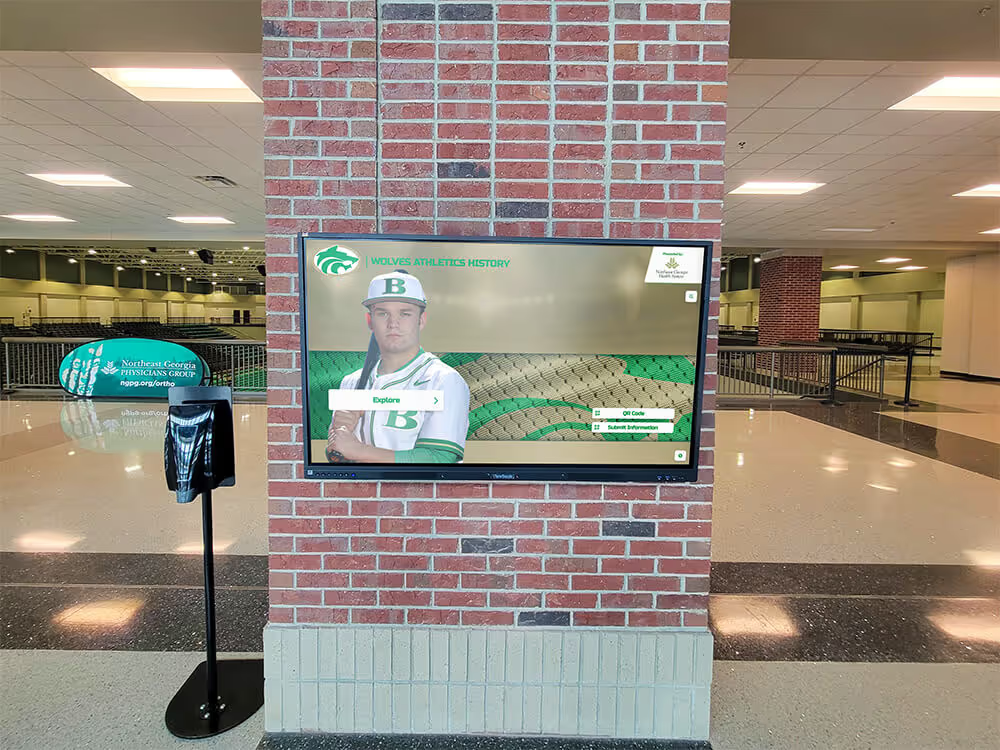
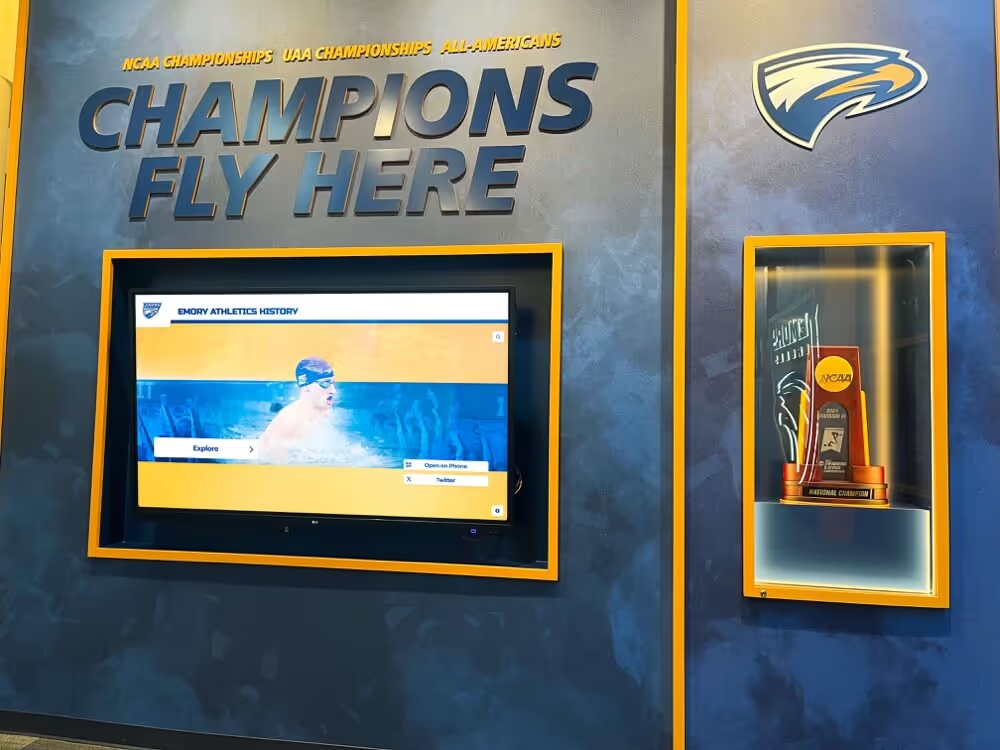
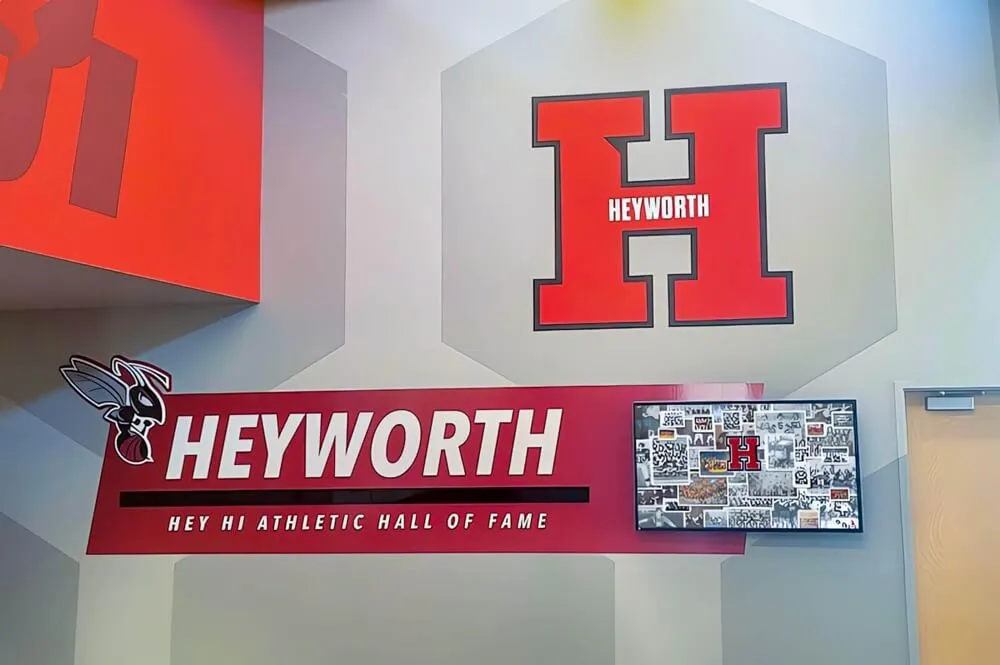
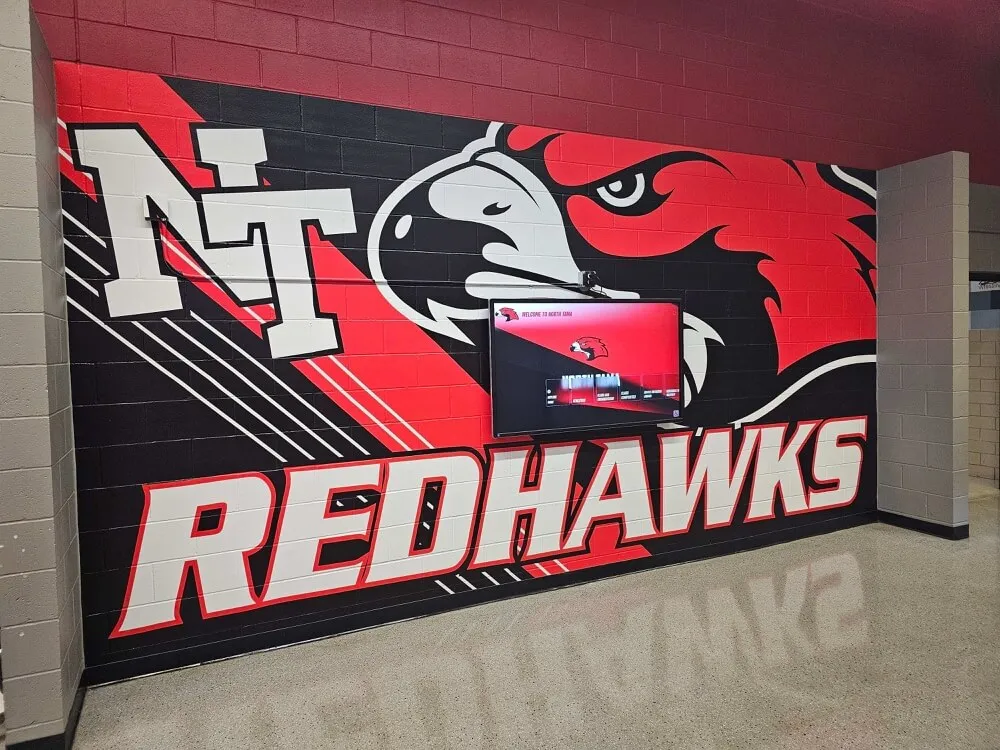
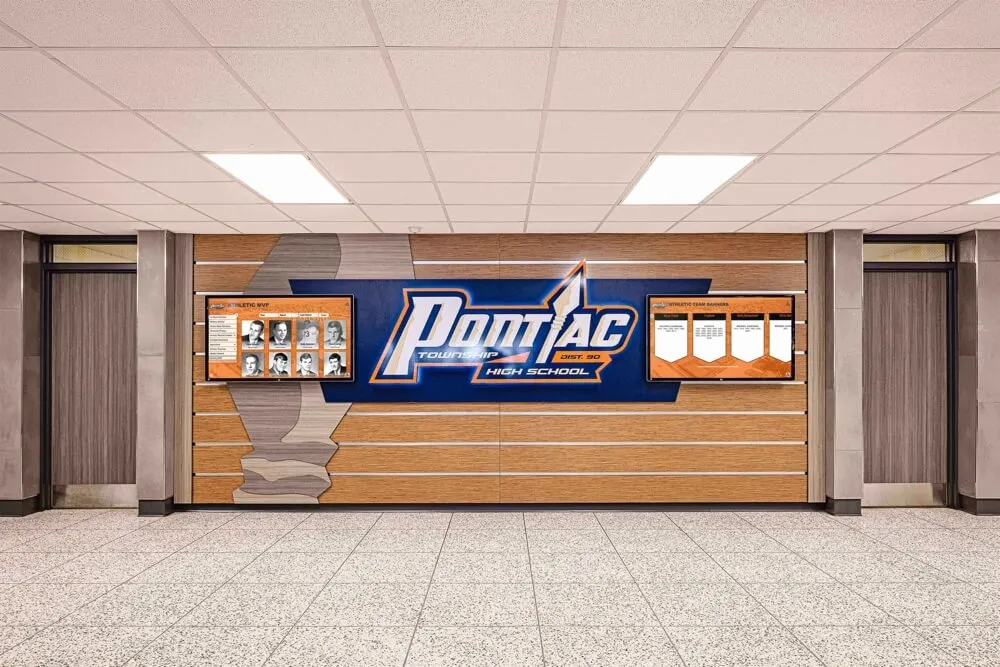
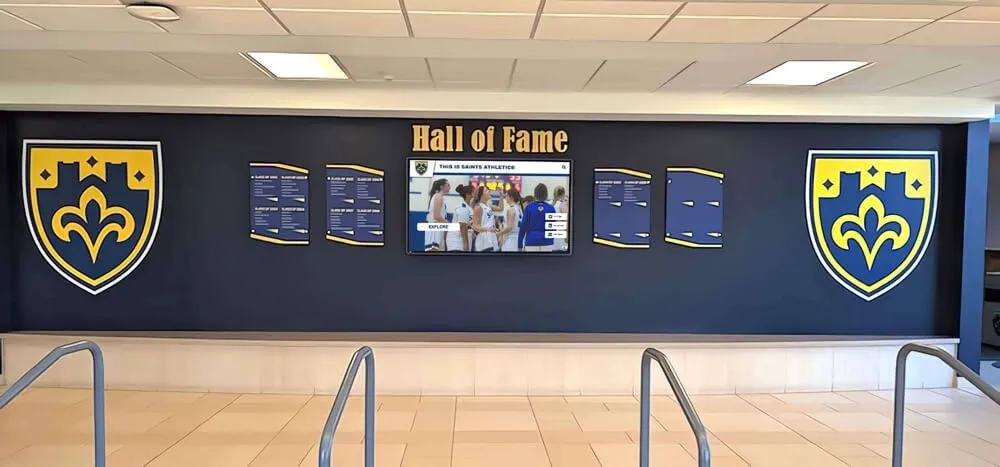
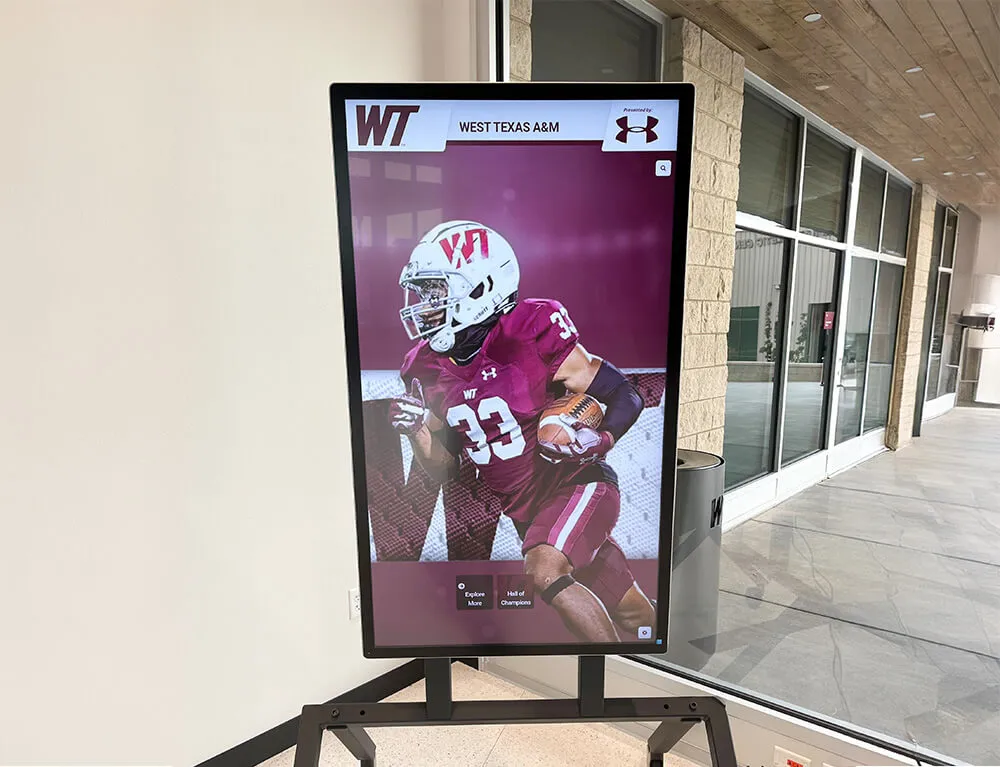
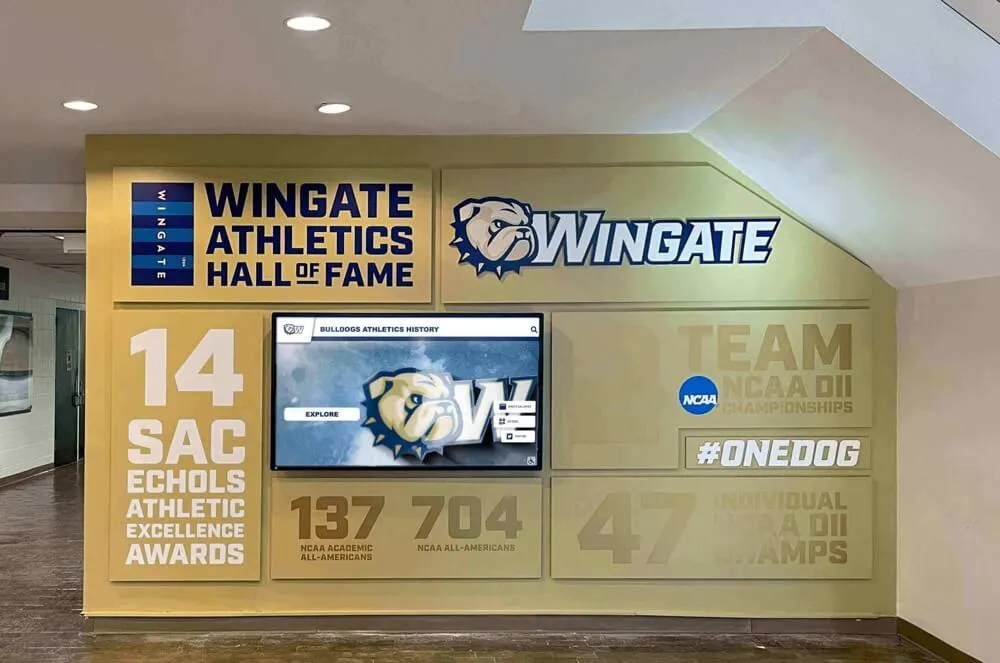
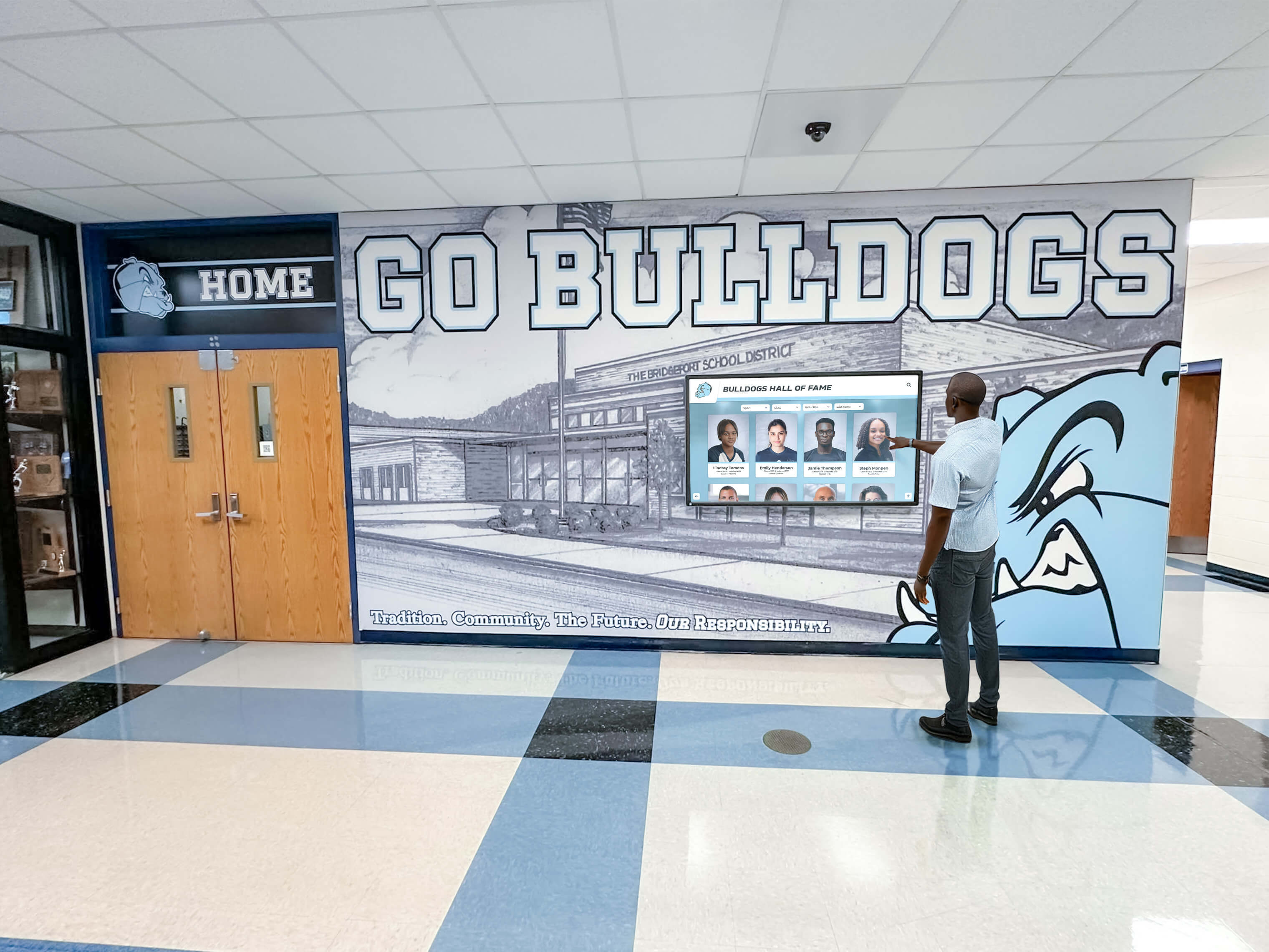
Interactive hall of fame displays serve as a daily touchpoint for students, staff, and visitors — an outage communication plan ensures that touchpoint is managed, not abandoned, when technology interruptions occur
Why Recognition Programs Need an Outage Plan Specifically
A hall of fame display is not the same as a standard digital sign. When a scoreboard or cafeteria menu screen goes dark, visitors are inconvenienced. When a hall of fame display goes dark during a reunion weekend, an induction ceremony, or a facility tour for a prospective major donor, the stakes are meaningfully different.
Recognition programs carry weight because they represent people — the athletes, coaches, and contributors whose names and photographs are on those screens. Stakeholders who notice an outage often interpret it through the lens of institutional priority: if the hall of fame is down and no one seems to know why, some will wonder whether the program is still being maintained. Donors who gave specifically to fund recognition installations may worry about whether their investment is being honored.
A communication plan does not merely manage technology. It manages the perception and relationship dimensions of a recognition program during a period when the primary experience is unavailable. That distinction is what makes a hall of fame outage plan different from a general IT incident response procedure, even though both may be needed.
Step 1: Define an Outage Owner Before Any Outage Occurs
The most common failure mode in any unplanned event is an ownership gap: multiple people assume someone else is handling it, or no one is certain who has authority to make decisions. For a digital hall of fame outage, the ownership structure should be established in writing and reviewed annually.
The Outage Owner Role
The outage owner is the person—identified by role, not personal name, since roles persist through staff transitions—who:
- Is the first point of contact when an outage is detected
- Has authority to declare the outage level and initiate communication
- Coordinates with the technology vendor or IT department on restoration timeline
- Approves outbound communications to stakeholders
- Declares the outage resolved and initiates recovery communications
For most schools, this role naturally belongs to the athletic director, the director of alumni relations, or the hall of fame committee chair, depending on which office administers the recognition program. In schools where a dedicated communications staff person exists, that person may handle outbound messaging while the program owner makes decisions about fallback content.
Backup Contacts
For any planned event with significant recognition program traffic—homecoming, induction weekend, donor appreciation events, facility tours—the outage plan should designate a backup contact who can fulfill the outage owner role if the primary contact is unreachable. That backup contact should have access to:
- The technology vendor’s support contact information
- The school’s IT help desk escalation contact
- Login credentials for the content management system (stored securely, shared according to school policy)
- A copy of the outage communication plan itself
Vendor Support Information
Before needing it under pressure, locate and document your vendor’s support structure: the support phone number or ticket portal, the contracted service level agreement response time, after-hours escalation procedures if applicable, and whether your contract includes priority support for planned events. This information belongs in the outage plan itself, not only in an email thread that may be difficult to locate during an event.
Step 2: Classify Outage Types to Match Response Level
Not every outage deserves the same response. Treating a two-minute network blip with the same urgency as a full-day display failure wastes staff energy and can alarm stakeholders unnecessarily. A tiered classification system calibrates the response to the actual situation.
Tier 1: Brief Interruption (Under 30 Minutes)
Definition: System unavailable but expected to self-resolve or restore quickly with minimal intervention. Common causes include brief network connectivity loss, routine software update restart, or power fluctuation.
Communication scope: Internal only. Outage owner is notified and monitors. No stakeholder communication unless the interruption extends past the tier threshold.
Appropriate response: Monitor the system. If the display is in a high-traffic area during an active event, consider posting a staff member nearby to answer visitor questions informally while restoration is in progress.
Tier 2: Extended Outage (30 Minutes to 4 Hours)
Definition: System unavailable for a meaningful period during operating hours. Likely requires vendor involvement or IT support to restore.
Communication scope: Internal notification to affected program staff. External notification to any groups with scheduled visits or events during the affected window. Active event attendees receive an on-site communication.
Appropriate response: Activate fallback content (see Step 4). Notify the vendor. Post an informational message at or near the display location. Contact any groups scheduled for recognition-program-related events during the outage window.
Tier 3: Major Outage (More Than 4 Hours or During Signature Event)
Definition: System unavailable for an extended period, or a shorter outage that overlaps with a significant institutional event such as an induction ceremony, reunion weekend, homecoming, or major donor tour.
Communication scope: Broad stakeholder notification including the administration contact, event organizers, affected donors or honorees if applicable, and relevant alumni or booster groups. Internal IT escalation and vendor escalation both active.
Appropriate response: Full fallback content deployed. Written or digital communications issued to affected stakeholders. Recognition program leadership personally contacts any honorees or major donors expected to interact with the display. A public-facing holding message is posted if the system has a web component.
Tier 4: Prolonged or Hardware-Related Outage (Multi-Day)
Definition: System requires replacement hardware, vendor dispatch, or complex software restoration that will take more than one business day to complete.
Communication scope: Full stakeholder communication with timeline expectations. Administrative leadership is briefed. Interim recognition alternatives are activated for any events scheduled during the restoration period.
Appropriate response: Temporary recognition alternatives sourced and deployed. Donor and alumni outreach conducted if the program has scheduled events. Vendor written confirmation of restoration timeline obtained and documented.
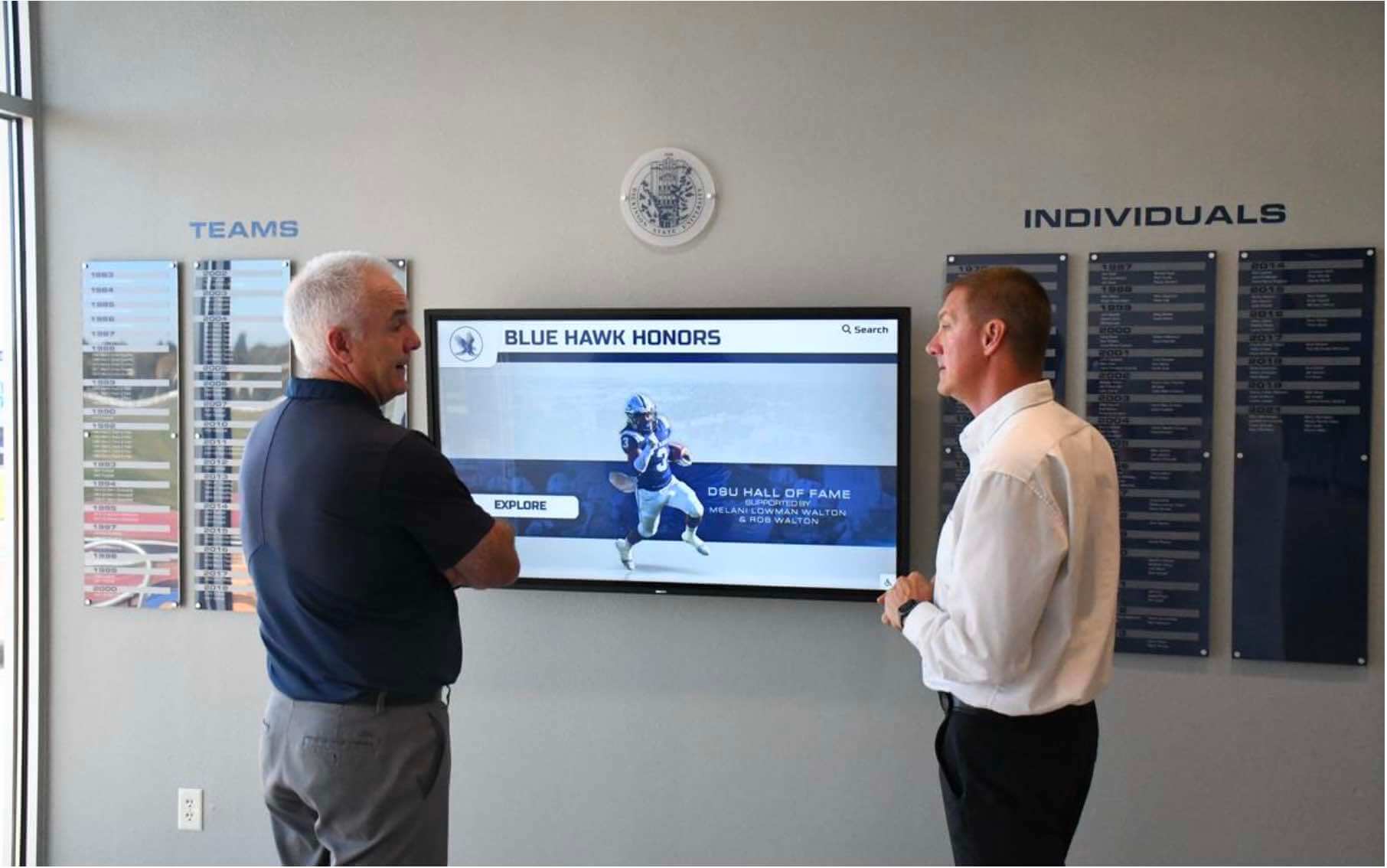
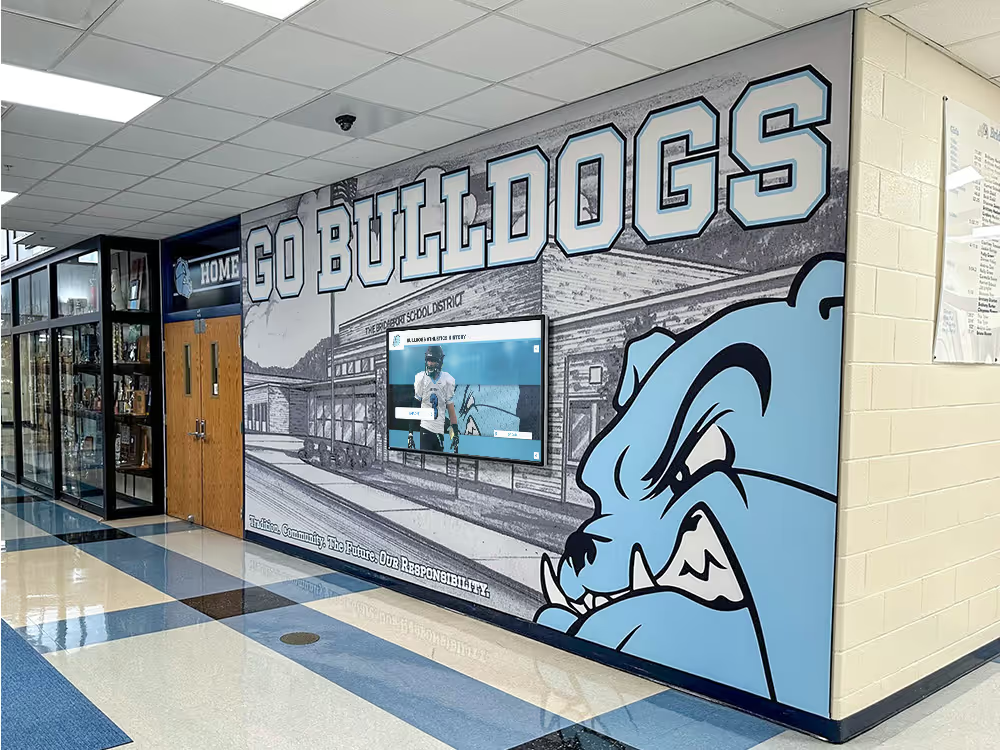
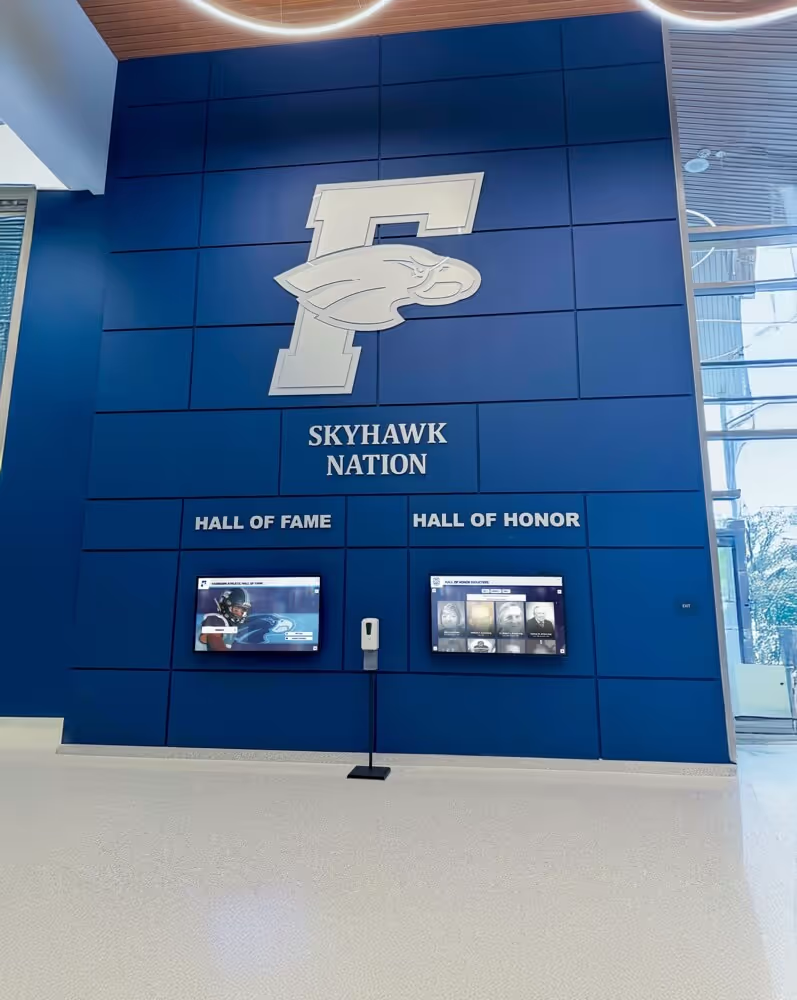
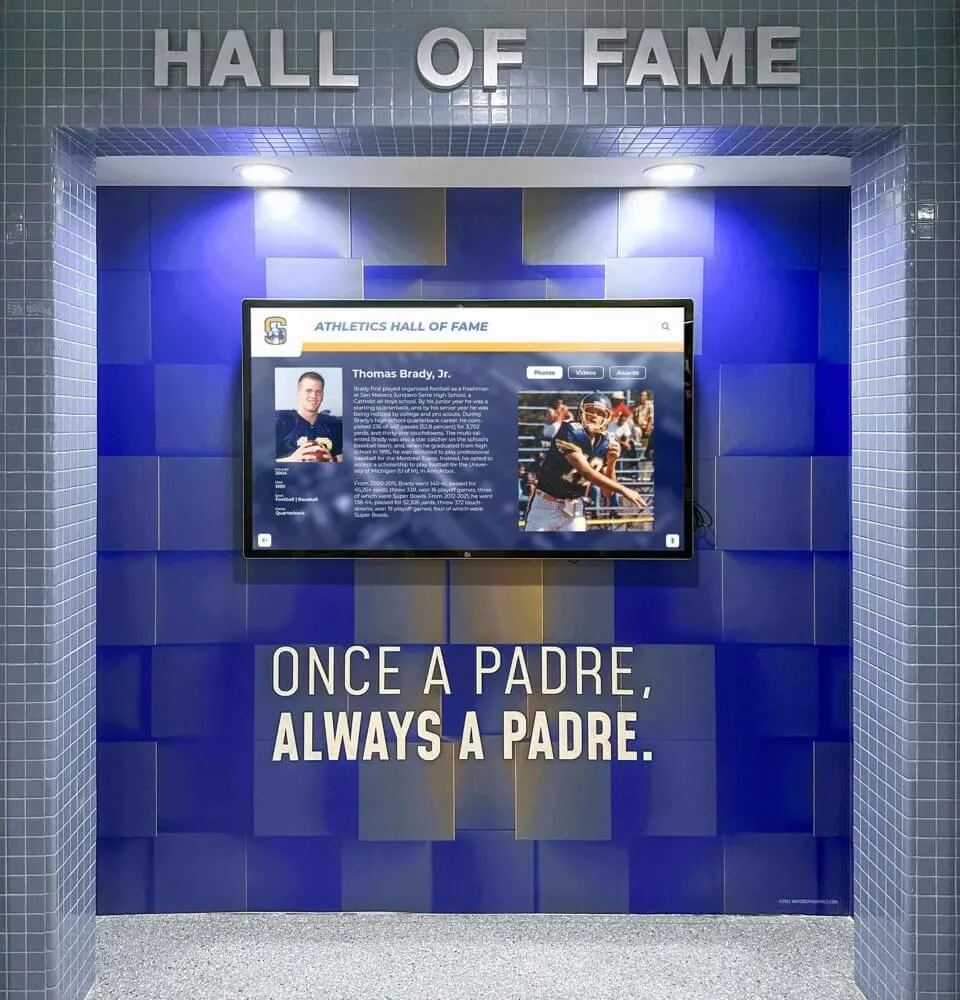
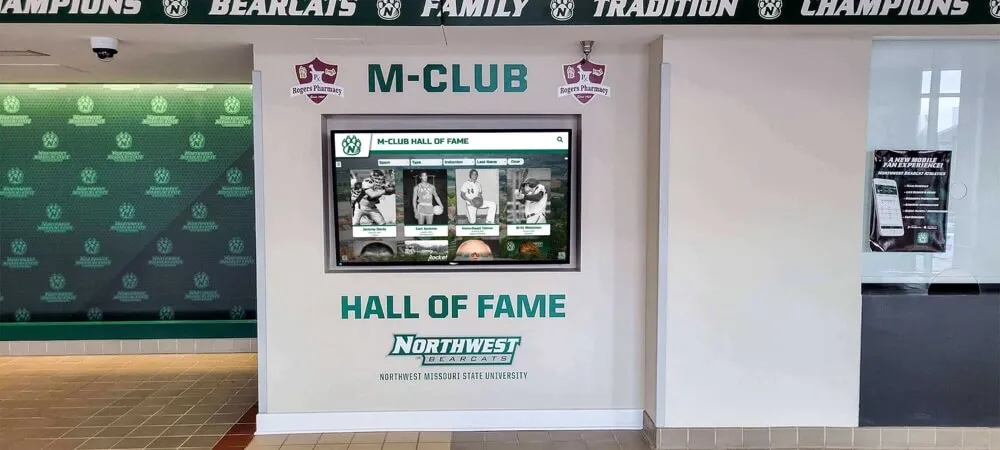
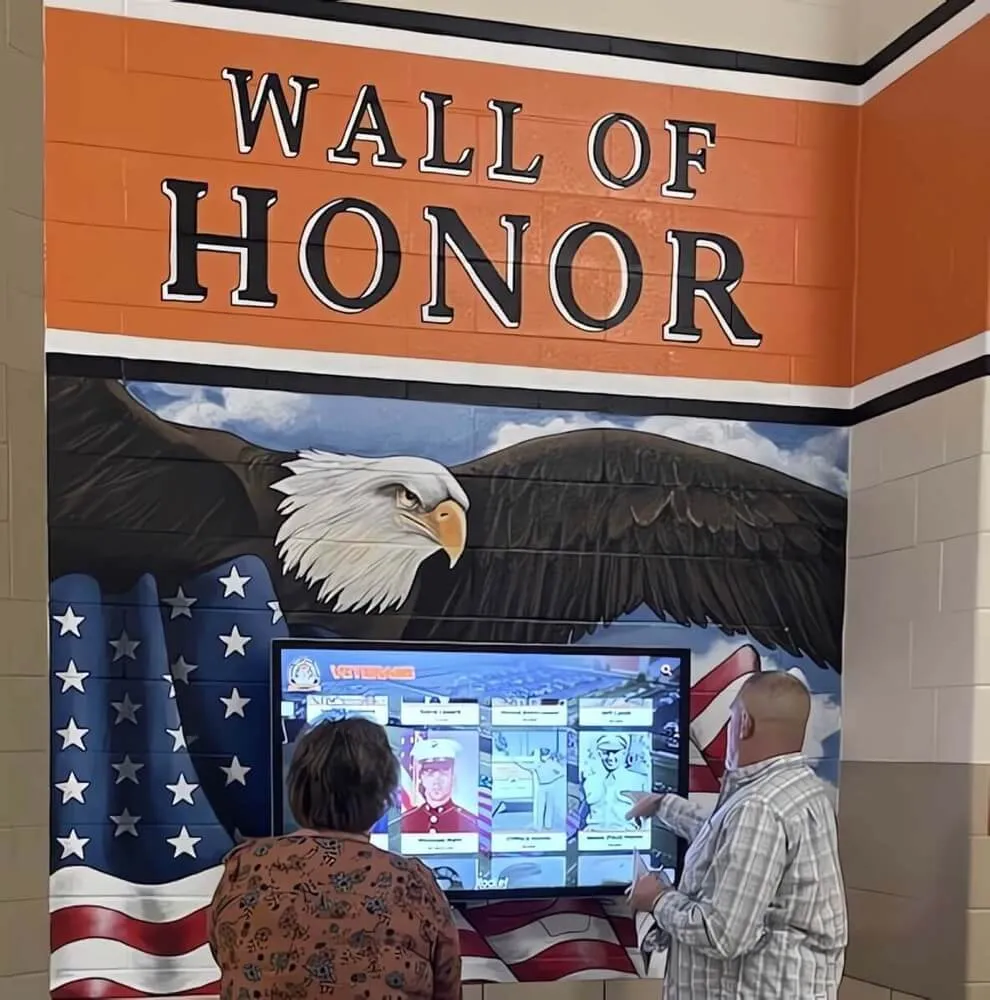
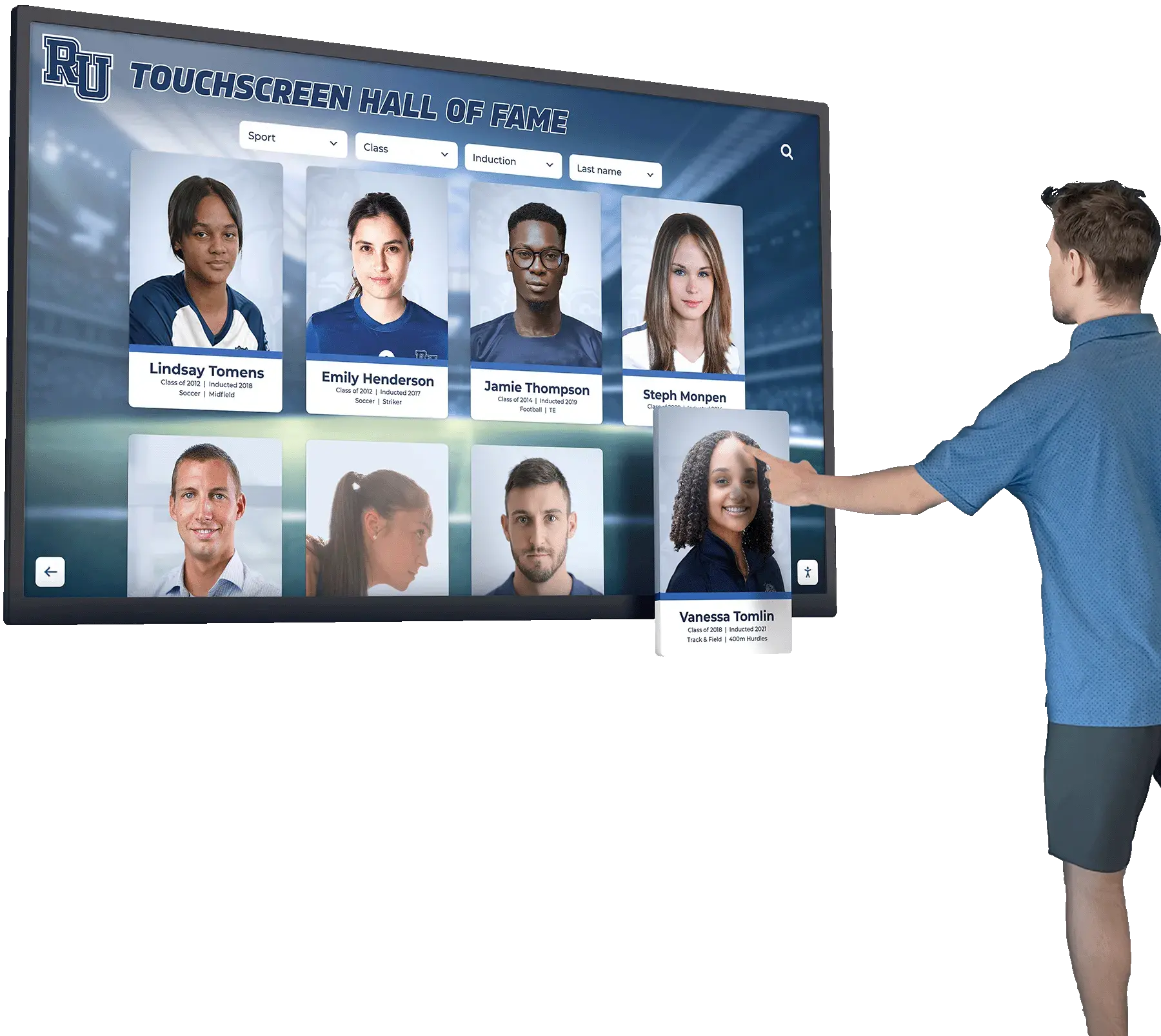
Visitors who come specifically to experience a recognition program deserve a managed, informed response when the primary display is unavailable — not a blank screen and no explanation
Step 3: Build Message Templates for Each Stakeholder Group
One of the highest-value elements of any outage communication plan is pre-written message templates. When a Tier 3 outage begins thirty minutes before a donor tour, the outage owner should be making calls and coordinating restoration — not writing emails from scratch. Templates drafted in advance, reviewed for tone and accuracy, and stored in an accessible location enable fast, consistent, and appropriate communication under pressure.
The following templates are starting points. Adapt them to your school’s voice, your program’s name, and your specific stakeholder relationships.
Template: Internal Staff Notification
Subject: Hall of Fame Display — Outage Alert [Date, Time]
Our digital hall of fame system is currently experiencing an interruption. [Brief description of what is affected — single display, web portal, full system.] We have [contacted the vendor / submitted a support ticket / engaged IT] and expect [restoration within X hours / to have an update by TIME]. Please direct any visitor questions about the display to [NAME/ROLE] for the duration of the outage. Fallback [printed materials / backup display / staff briefing] has been activated. Updates will follow as available.
Template: Visitor or Event Attendee On-Site Notice
A printed or posted card placed at or near the display:
Our recognition display is temporarily unavailable.
We are working to restore it as quickly as possible. Our [Athletic Director / Alumni Office / Hall of Fame Committee] is available to answer questions about our inductees and recognition program. We apologize for the inconvenience and appreciate your understanding.
Template: Donor or Major Stakeholder Personal Outreach
For Tier 2 or Tier 3 outages affecting specific individuals who have significant relationships with the program:
Dear [Name],
I want to let you know in advance that our digital hall of fame display is currently undergoing an unplanned service interruption. We expect the system to be restored by [date/time], but wanted to be certain you were aware before [your visit / this weekend’s event / the induction ceremony].
We have [describe fallback: printed program materials available / alternative display in place / staff available to walk through the archive with guests]. We do not want this interruption to diminish the recognition this program provides to our honorees and our community, and we are committed to making your experience meaningful regardless.
Please do not hesitate to reach out if you have questions. I am reachable at [contact information].
Template: Alumni or General Community Update
For use in an email newsletter, social channel, or website notice during a Tier 3 or Tier 4 outage:
A Note About Our Recognition Display
Our digital hall of fame is currently experiencing a technical interruption that we are actively working to resolve. Our archive of inductees, records, and program history remains intact — the display is temporarily offline, not our commitment to the people it honors.
We expect restoration by [date/time] and will share an update when the system is back online. If you have questions about a specific inductee, record, or program milestone, please contact [office/contact information] and a member of our team will be glad to help.
Template: Recovery Announcement
When the system is restored:
Hall of Fame Display Restored
Our digital hall of fame system is back online following [brief, plain-language description of the issue]. We appreciate the patience of everyone who visited during the interruption. [If relevant: A summary of inductees and program history is available at [web link] for anyone who prefers to explore the archive remotely.] Thank you for your continued support of our recognition program.
Step 4: Activate Fallback Content During Downtime
Communication manages expectations. Fallback content delivers an actual recognition experience in the absence of the primary system. Every hall of fame outage plan should identify at least two fallback mechanisms that can be activated within the first hour of a Tier 2 or higher outage.
Printed Program Materials
A standing stock of printed recognition materials—inductee biographies, record board summaries, or a condensed program booklet—can be made available to visitors during an outage. These do not need to be elaborate. A well-organized, cleanly printed document that covers current inductees, key records, and historical highlights serves the core recognition function adequately for most visit contexts.
The practical challenge with printed materials is currency: a booklet printed two years ago will be missing recent inductees. Build a simple schedule for updating the print-ready master document whenever new inductees are added or records change, so the fallback materials are never more than one class behind.
Programs that already invest in comprehensive alumni portrait archives and class composite digitization typically have well-organized source content that can serve double duty as printed fallback material with minimal additional preparation.
Secondary or Backup Display
Some facilities have secondary display screens—lobby TVs, hallway monitors, or classroom-adjacent digital signs—that are not part of the primary hall of fame system. An outage plan can designate one of these as a fallback display for recognition content, with a pre-configured content package ready to deploy. This requires coordination with whoever manages those secondary screens, and a dedicated USB drive or network folder containing the fallback content package stored in a known location.
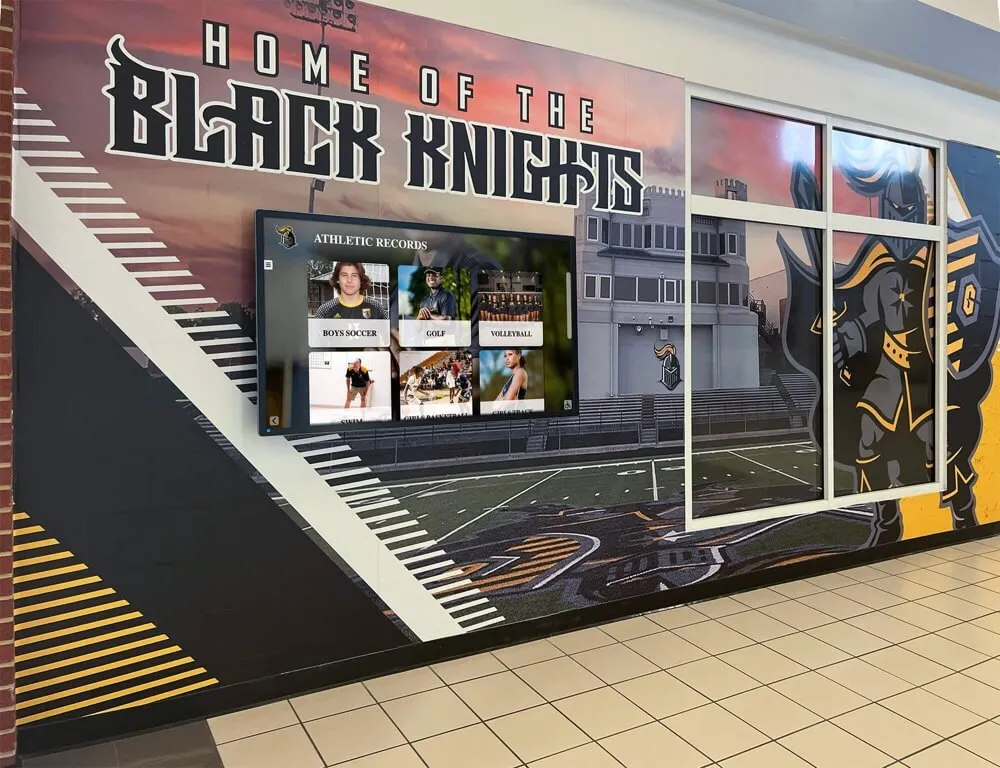
Digital record boards and recognition displays that extend recognition content to multiple surfaces in a facility create natural redundancy: when the primary interactive kiosk is offline, wall-mounted record boards and hallway-mounted honor displays continue to provide recognition context to anyone walking through the building.
Web Portal or Mobile-Accessible Archive
If your recognition program has a web component—an online hall of fame portal, an alumni-facing website with inductee profiles, or a mobile app—this becomes an immediately available fallback reference during a physical display outage. During a Tier 2 or higher outage, the recovery template above can direct visitors and stakeholders to the web portal, extending the recognition experience beyond the physical space.
Programs without a current web portal may consider this outage experience as useful evidence for the case to develop one. A searchable online archive provides resilience during hardware or network outages and extends access to alumni, donors, and community members who never visit the physical space.
End-of-semester digital honor roll displays demonstrate how recognition content that lives in multiple formats—in-facility displays, web portals, and printed materials—builds a more durable recognition experience than any single channel alone.
Staff-Guided Walk-Through
For small events or high-value visits—a prospective donor, a returning inductee, a journalist covering the program—a trained staff member who can walk a visitor through the recognition program’s history in person replaces what the display would have provided and adds a human dimension that screens cannot offer. This option requires that at least one person in the program has deep enough familiarity with the archive to speak knowledgeably without relying on the system. Consider including a brief “guided tour script” in the outage plan for use in exactly this situation.
Step 5: Coordinate With Your Technology Vendor
The outage communication plan intersects directly with your vendor relationship. What your vendor has committed to provide—and how quickly—shapes the realistic options available to you at each tier of outage severity.
Contractual Baselines to Know Before an Outage
Before an outage occurs, document the following from your vendor contract or service agreement:
- Response time commitment: How quickly is the vendor contractually obligated to respond to a support request, and does that timeframe differ for business hours versus evenings and weekends?
- Resolution time commitment: Is there a committed resolution timeframe, or only a response commitment?
- Planned maintenance notification: Are you entitled to advance notice of scheduled maintenance windows, and how much notice?
- Data availability guarantee: Is your archive data backed up and accessible even when the display system is offline?
- Hardware replacement timeline: If the outage involves hardware failure, what is the expected timeline for repair or replacement?
Recognition display systems designed with consistent branding and technical standards tend to have more predictable maintenance and support structures than patchwork solutions assembled from multiple vendors, because a single responsible party owns the full stack.
What to Communicate to Your Vendor During an Outage
When you contact the vendor, provide:
- A clear description of the symptoms (blank screen, partial display, network error message, hardware not powering on)
- When the outage was first observed and any changes that immediately preceded it
- Whether there is a scheduled event that makes restoration time-sensitive
- Your preferred communication channel for status updates
Request a written confirmation of the estimated restoration timeline. During a Tier 3 or Tier 4 outage affecting a significant event, ask the vendor to assign a named technical contact so you are not navigating a new support representative with each call.
Step 6: Manage the Physical Environment During an Outage
The space where the hall of fame display lives continues to receive visitors during an outage. Managing that space well — not just the communications — is part of the plan.
On-Site Signage and Wayfinding
A blank or error-displaying screen with no explanation reads as neglect. A brief, clear posted notice — even a printed card in a stand — communicates that the organization is aware of the situation and is working to resolve it. The posted notice should include:
- A brief acknowledgment that the display is temporarily unavailable
- An indication that the underlying archive and recognition program are fully intact
- A contact or resource for visitors who want to access recognition content in another form
- An honest expectation for when the system will return, if that is known
Do not post an optimistic restoration estimate you are not confident in. “We expect the display to be available by this afternoon” followed by a two-day wait undermines trust more than acknowledging uncertainty while the vendor diagnosis is underway.
Staff Presence and Briefing
Front-desk staff, hallway monitors, or facility aides who work near the display location should be briefed on the outage and equipped with basic information: what is being done, when to expect resolution, and who visitors should contact with questions. Staff members should not be expected to diagnose the problem, but they should know enough to provide a reassuring, accurate answer rather than a shrug.
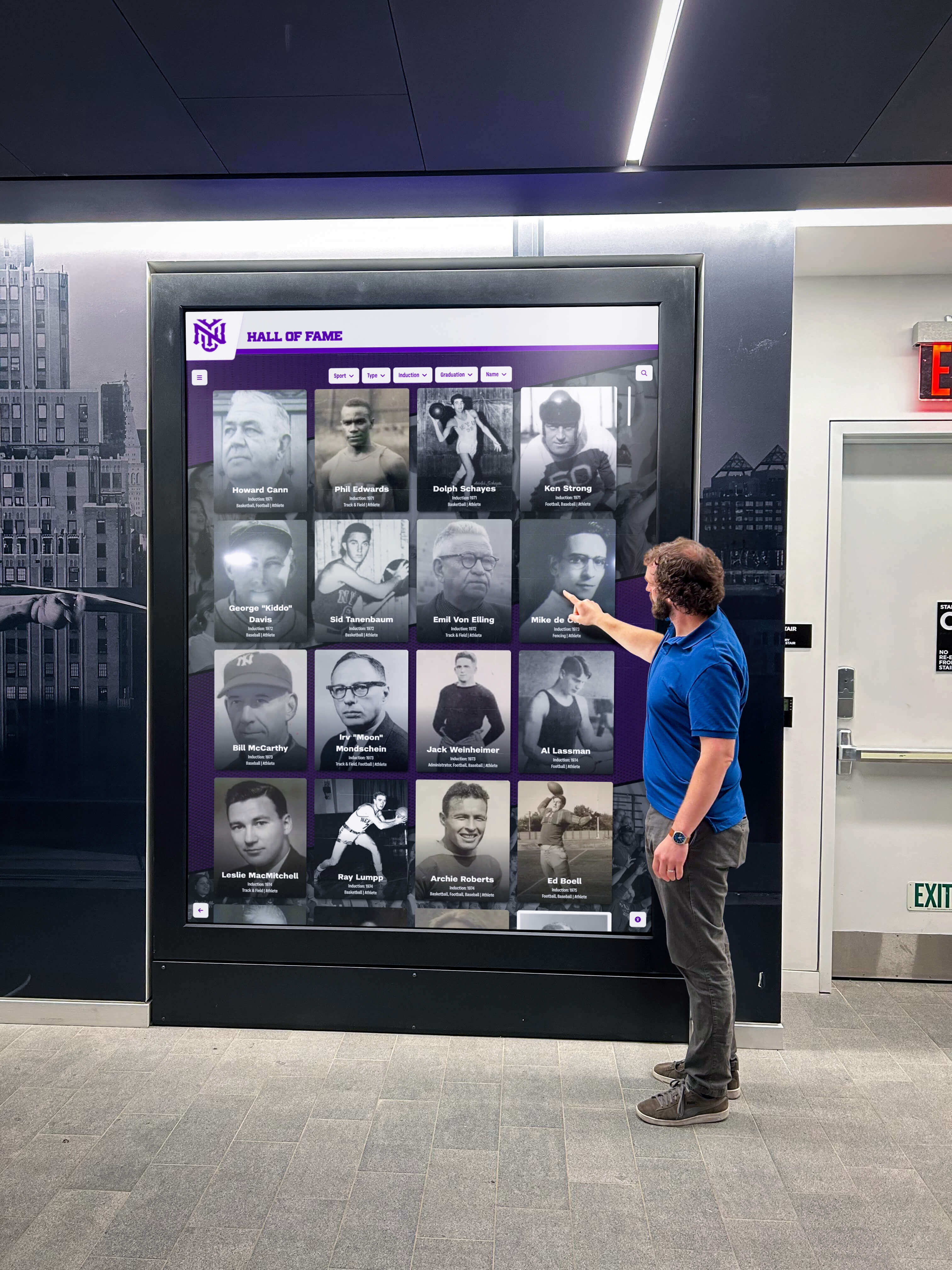
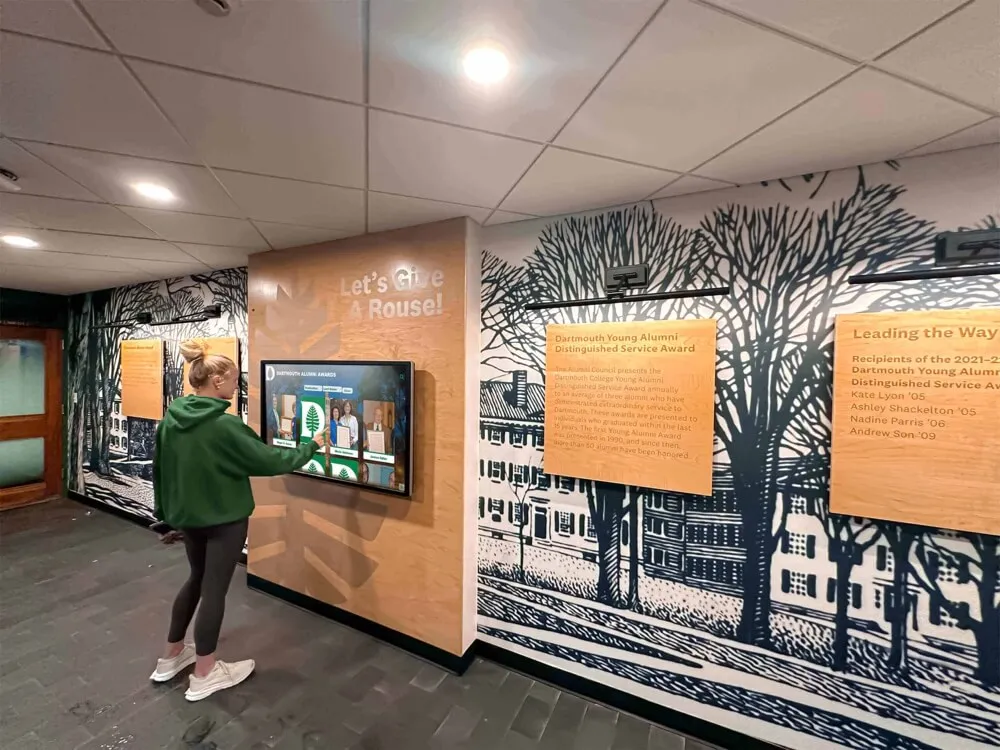
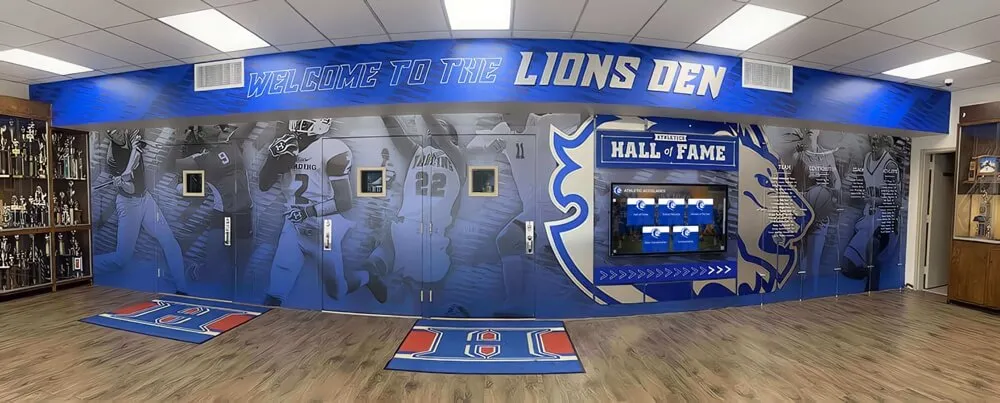
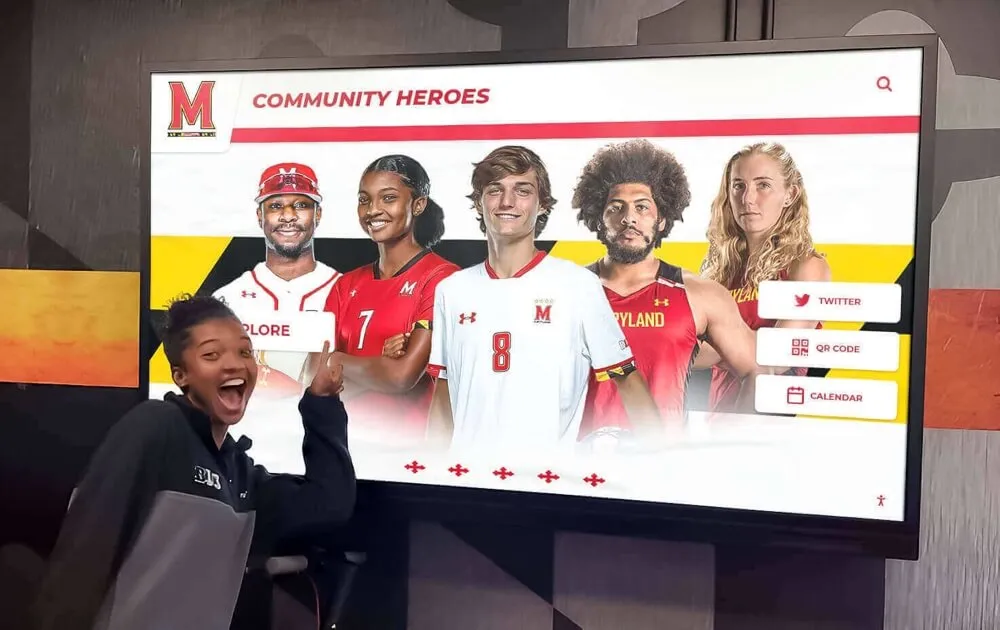
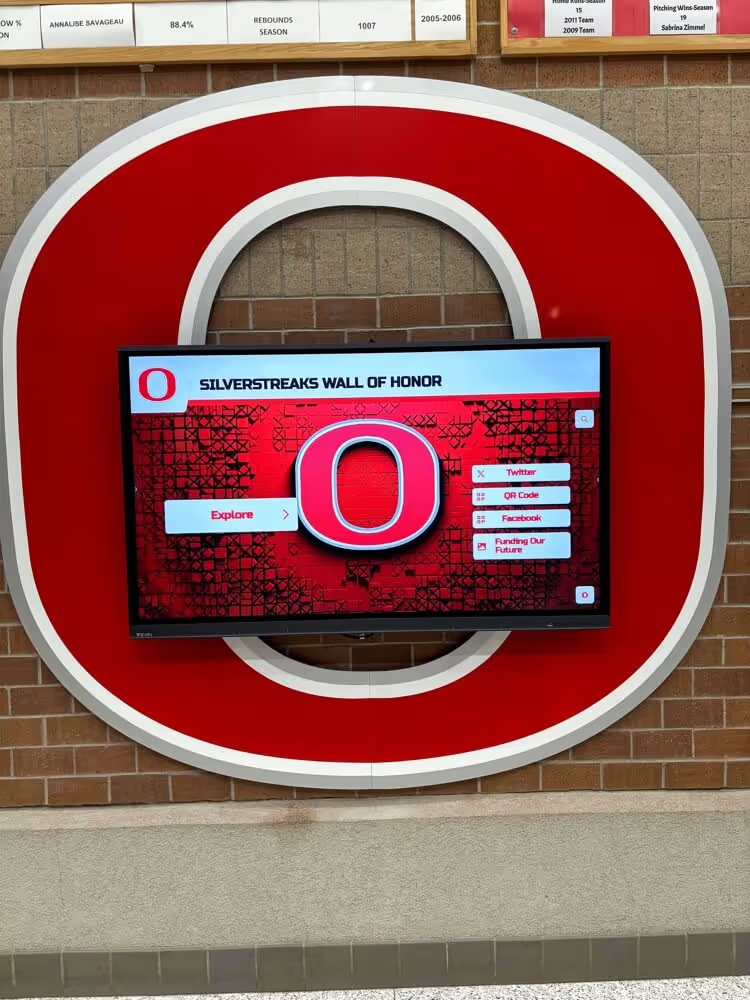
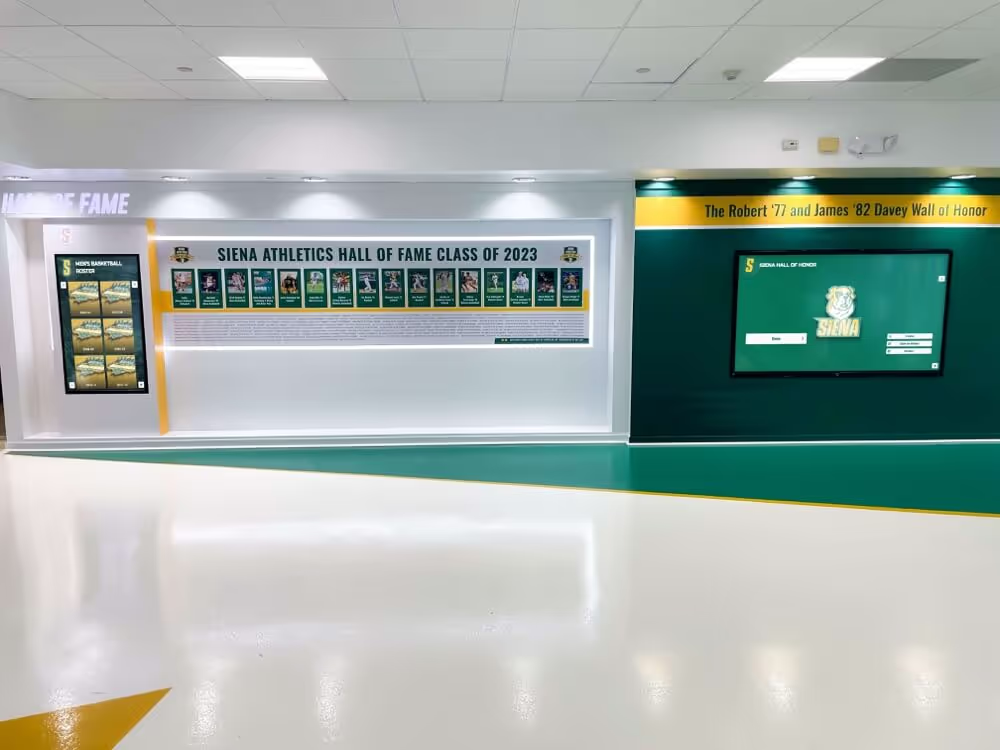
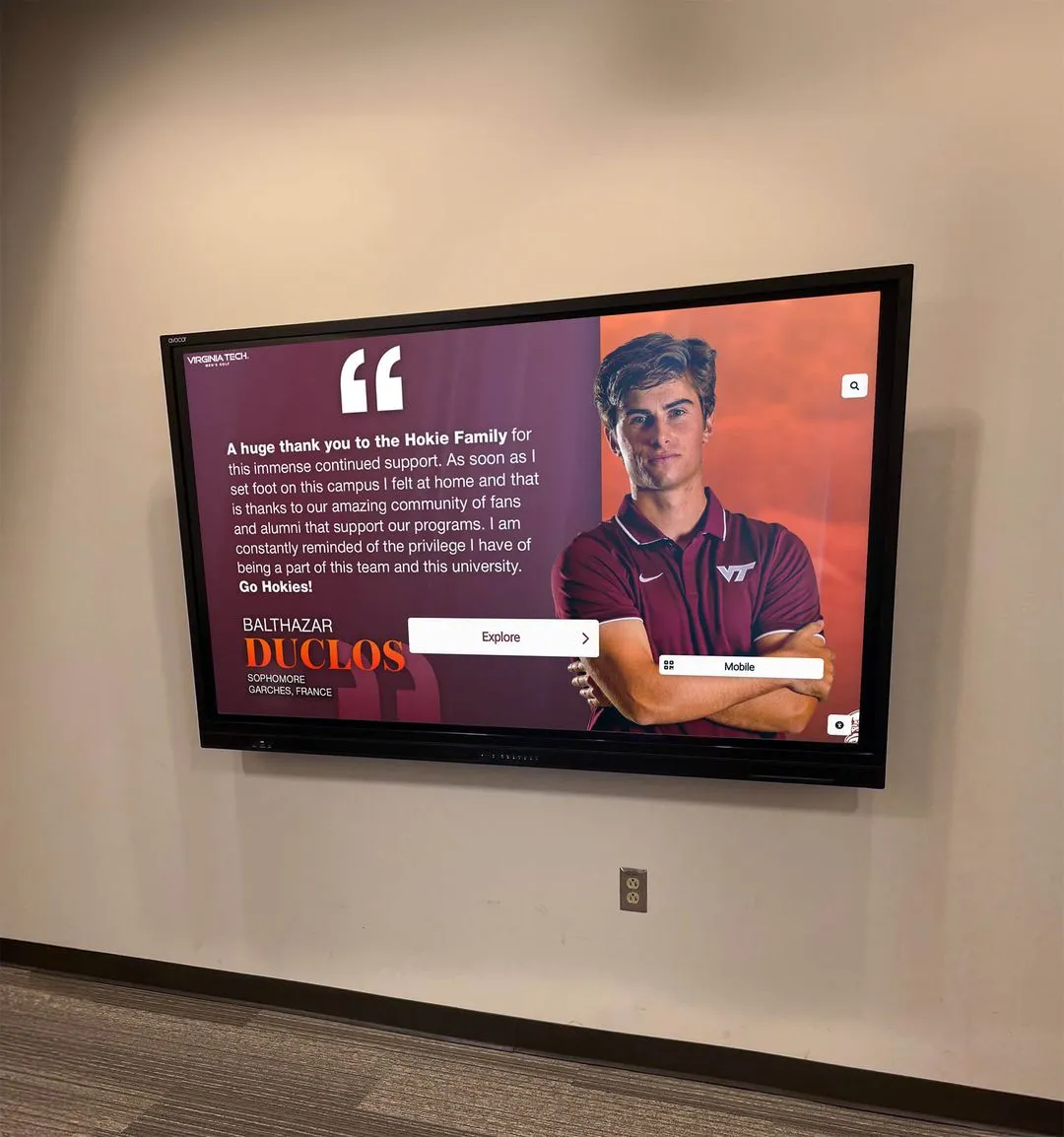
The physical environment around a hall of fame display continues to receive visitors during outages — posted notices and briefed staff members maintain the recognition experience even when the technology is temporarily unavailable
Special Consideration: Planned Induction Ceremonies and Events
If a Tier 3 or Tier 4 outage coincides with a planned induction ceremony, the program must provide a recognition experience that honors the inductees without the primary system. Options depend on lead time:
- Printed induction programs with full inductee biographies and records (most accessible with 24+ hours of lead time)
- Projected slideshow using standard presentation software on a portable display or projector (deployable within hours)
- Narrated ceremony format where the emcee or committee chair verbally presents each inductee’s biography and record in full — converting an interruption into a more personal, relationship-centered ceremony format
Frame the alternative format as a feature of the evening’s program rather than an apology for the technology. Inductees being honored in front of their families and peers are unlikely to care primarily about the screen. What they remember is whether they felt genuinely celebrated.
Step 7: Document Recovery and Conduct a Post-Outage Review
When the system is restored, three activities complete the outage cycle: communicating the restoration, updating affected stakeholders, and conducting a brief internal review.
Recovery Communication
Issue the recovery announcement using the template from Step 3. For a Tier 1 or brief Tier 2 outage with no external communication, an internal-only confirmation to affected staff is sufficient. For any outage where external stakeholders were notified, a corresponding recovery notice should reach the same audience through the same channels.
The recovery message should be brief, factual, and forward-looking. It should acknowledge the interruption without excessive apology, confirm the system is restored, and — if appropriate — acknowledge the specific issue that caused the outage in plain, non-technical language. Stakeholders who received honest communication during the outage deserve an equally honest and timely notice that it is resolved.
Post-Outage Review
Within one week of a Tier 2 or higher outage, the outage owner should convene a brief review with the relevant internal contacts. The review should examine:
- Root cause: Was this a preventable outage? Is there a maintenance practice, infrastructure improvement, or vendor discussion that would reduce future risk?
- Response effectiveness: Was the outage identified quickly? Did communication reach the right people at the right time? Were fallback options adequate?
- Plan gaps: Did any part of the plan fail to address a real situation encountered during the outage? What would be added or changed?
- Vendor performance: Did the vendor meet contractual response and resolution commitments? Are there contractual or relationship changes warranted?
Document the review findings and update the outage communication plan to incorporate any changes. This is how the plan improves over time rather than remaining a document written once and forgotten.
Integrating the Outage Plan Into Your Recognition Program Governance
An outage communication plan is most useful when it is treated as a standing program document rather than a one-time exercise. The following practices keep the plan current and actionable.
Annual Plan Review
Schedule a review of the outage communication plan at the same time as other annual recognition program reviews — before the school year begins, before induction season, or at the start of the calendar year. The review should verify:
- All contact information in the plan is current for the current staff in each role
- Vendor support contacts and contract terms are still accurate
- Fallback materials (printed programs, backup content packages) are updated to reflect the current inductee class and record board
- The plan’s tier definitions and communication templates reflect current program scope and stakeholder relationships
New Staff Onboarding
When the outage owner role changes — when an athletic director transitions, when a new hall of fame committee chair takes office, when alumni relations staff turns over — the outage plan should be part of the role handoff. The incoming staff member should know the plan exists, where it is stored, what their responsibilities are, and who to contact if they need to activate it.
Recognition programs that build organizational knowledge into documents rather than relying on individual institutional memory are more resilient across leadership transitions. The same principle that applies to designing recognition displays with consistent standards applies to operating documentation: consistency depends on systems, not on any one person’s memory.
Event-Specific Pre-Checks
Before any high-stakes event that features the hall of fame as a guest experience — induction ceremonies, homecoming reunions, donor appreciation events, facility tours for prospective major contributors — the outage plan should trigger a brief pre-check:
- Is the system currently operating normally?
- Are vendor support contacts current and accessible?
- Are fallback materials current and accessible?
- Is the designated backup contact available and briefed?
This pre-event review takes fifteen minutes and dramatically reduces the likelihood that an outage during an important event is managed reactively rather than from a prepared position.
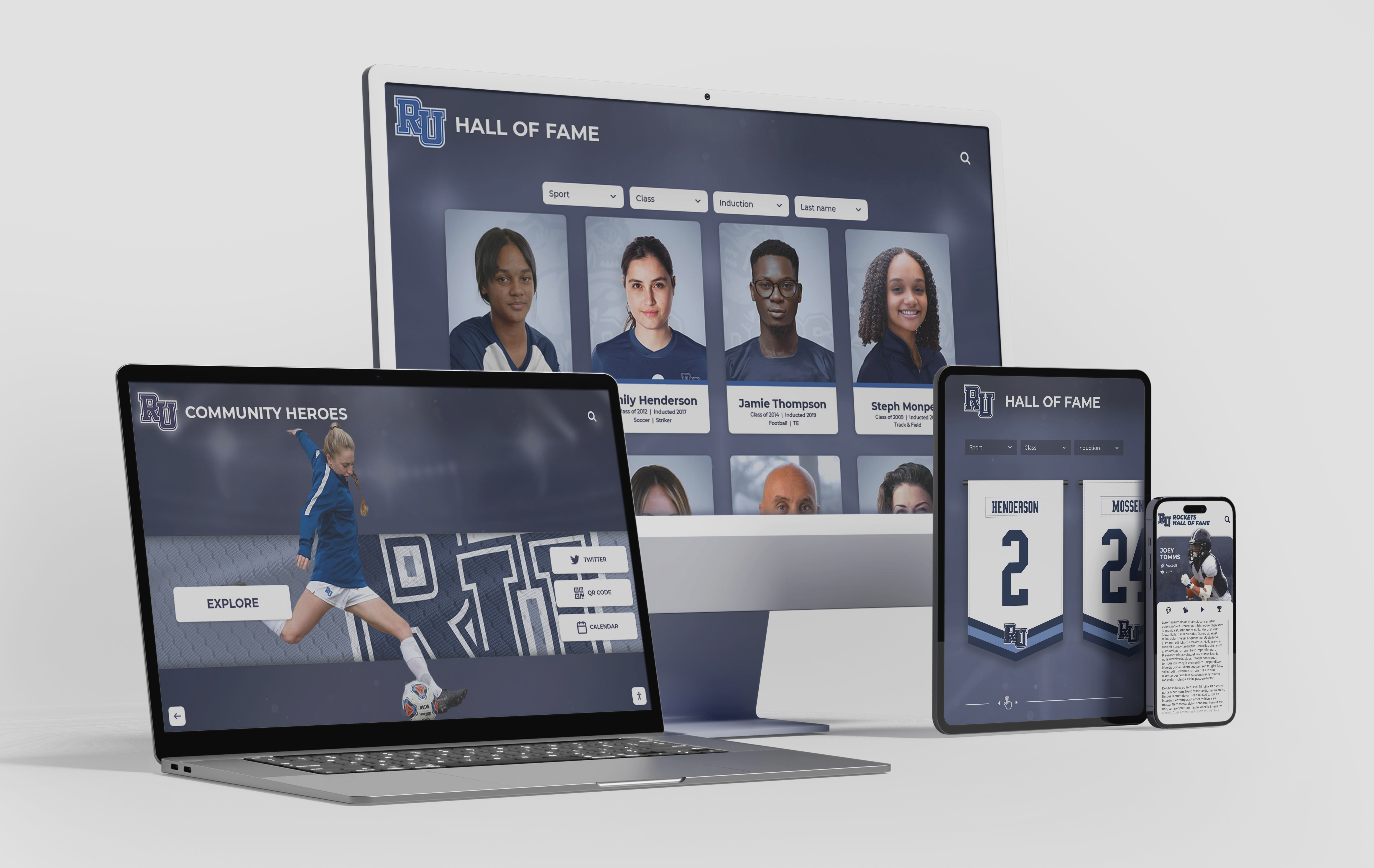
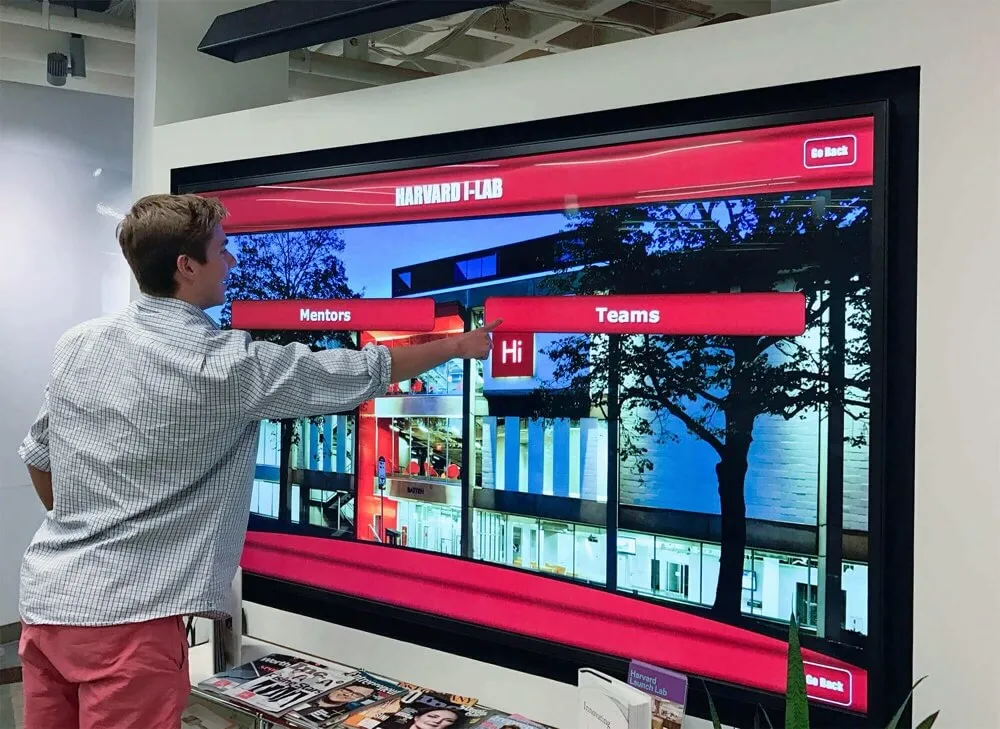
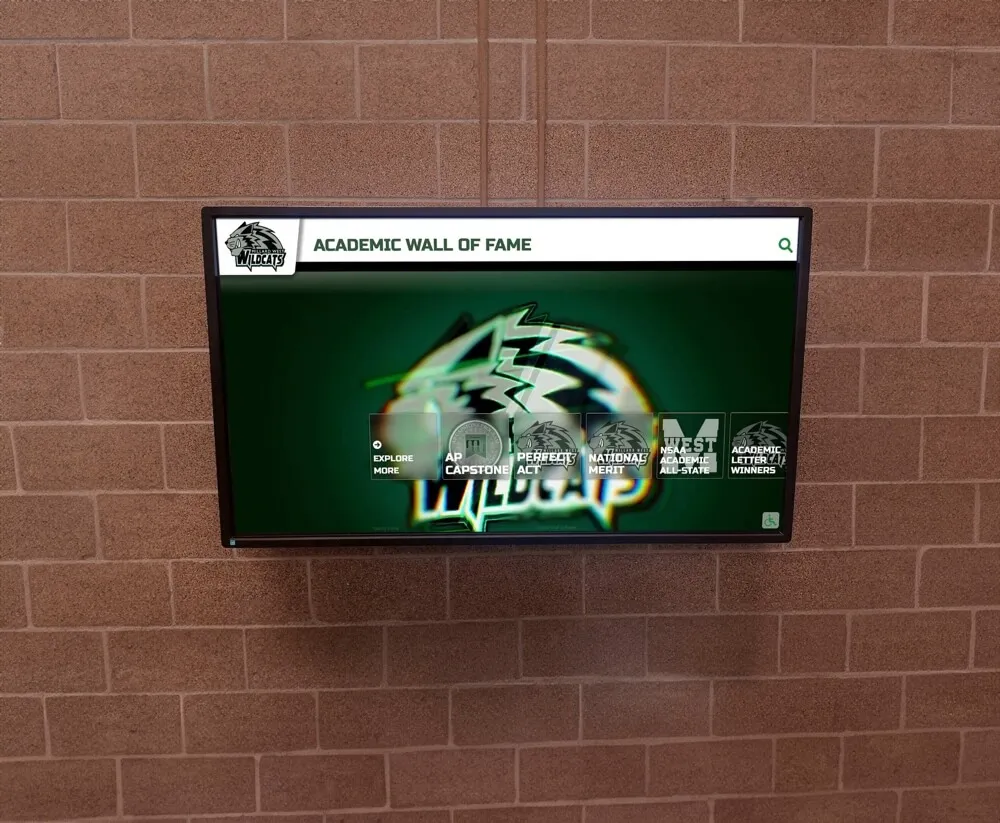
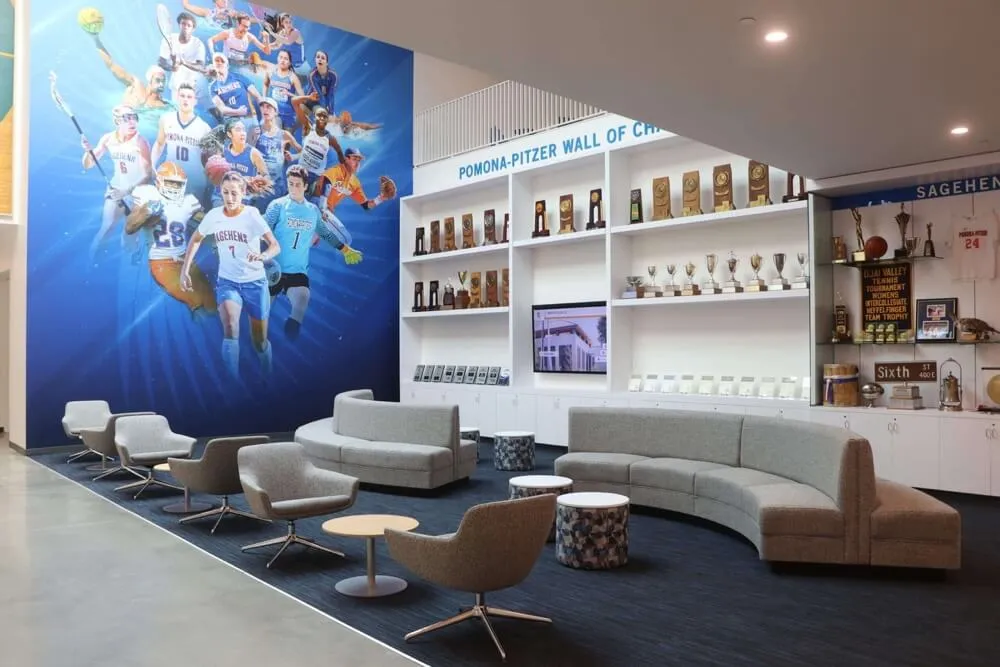
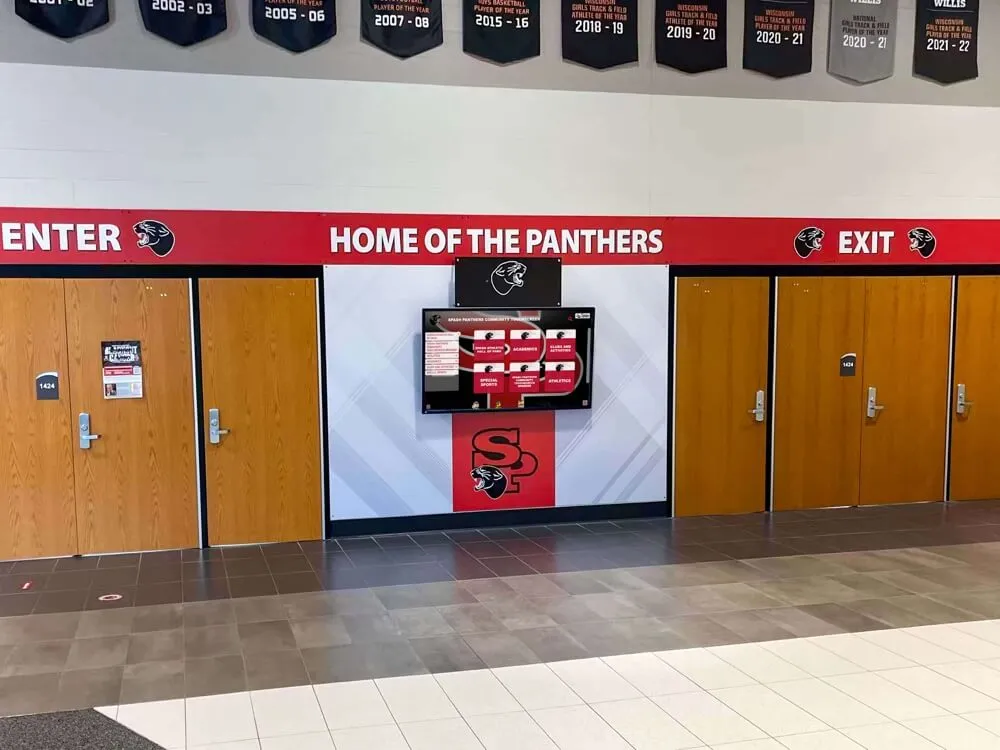
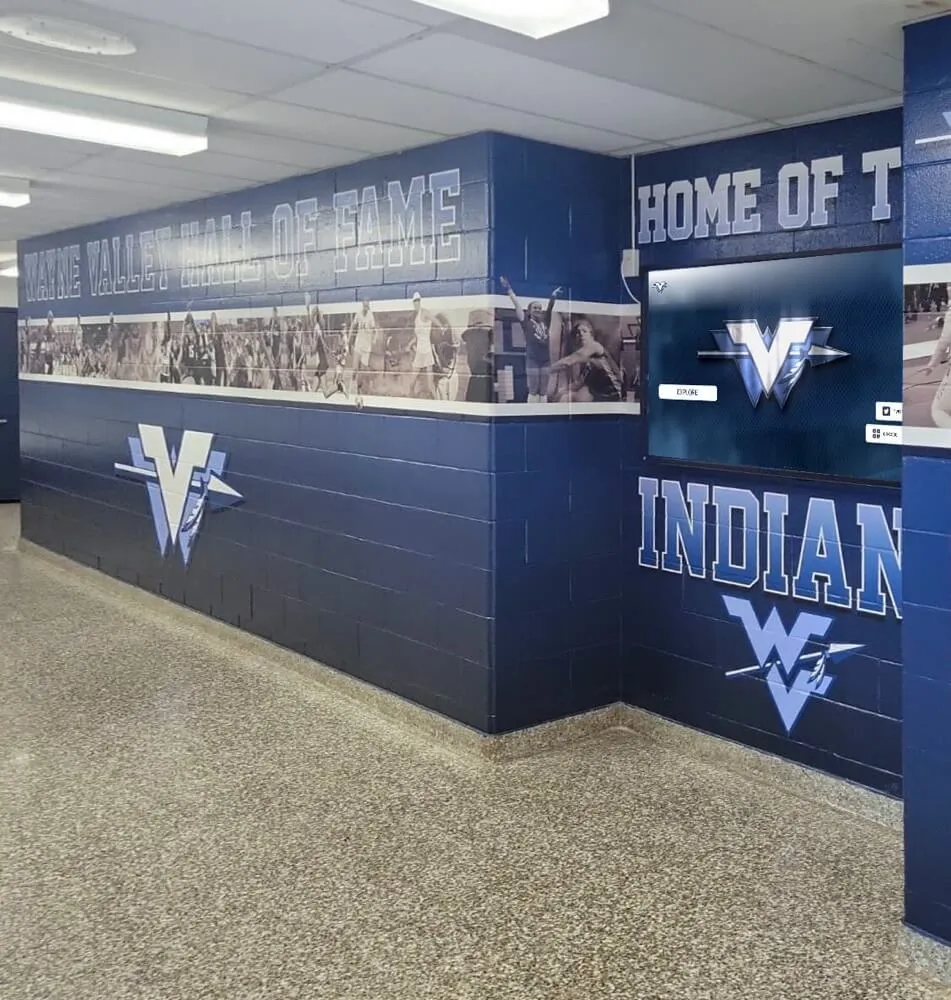
Recognition programs with web-accessible archives provide built-in fallback options during physical display outages — content remains available to donors and alumni regardless of in-facility system status
Building Stakeholder Trust Through Consistent Communication
The most important long-term outcome of a well-executed outage communication plan is not the smooth management of any individual interruption — it is the trust that consistent, honest communication builds with donors, alumni, and institutional supporters over time.
Recognition programs depend on community investment. Donors contribute to hall of fame installations because they trust the institution to maintain the recognition they helped fund. Alumni engage with inductee archives because they trust the program to be there when they visit, share a link with their families, or return for a reunion. That trust is built over years and is sensitive to signals that suggest carelessness or neglect.
A hall of fame display that goes dark without explanation — or with a generic IT error message and no staff awareness — sends a signal. So does a blank screen during a ceremony that was supposed to feature the display as a centerpiece. The outage is not, in itself, a trust problem. How the organization responds to it determines whether it becomes one.
Programs that maintain rich, searchable recognition content across multiple formats — physical displays, web portals, printed materials, and staff knowledge — have inherently more resilient recognition experiences. Employee recognition board approaches that combine physical and digital formats illustrate how recognition systems designed with redundancy from the start provide natural fallback options when any single format is temporarily unavailable.
Organizations that are thoughtful about recognition from the beginning — including programs that invest in high-quality school poster and communications design standards that reflect institutional pride and consistency — tend to have the internal communications discipline that an outage plan requires to actually work.
Q&A: Common Questions About Hall of Fame Outage Planning
Q: How often should we expect our digital hall of fame system to have unplanned outages?
Hardware and software reliability varies significantly by vendor, installation age, and network infrastructure. A general expectation for enterprise-grade digital recognition systems is that unplanned outages should be relatively rare — a few per year at most — when installations are properly maintained and vendor relationships include responsive support agreements. Outages that happen frequently suggest either an infrastructure issue worth investigating or a vendor relationship worth reconsidering.
Q: Does the outage plan need to be a formal written document?
A written plan provides a durable reference that survives staff transitions, makes responsibilities clear to everyone involved, and can be reviewed and updated systematically. An informal understanding that “someone will figure it out if something goes wrong” puts unnecessary pressure on individuals under stress and produces inconsistent outcomes. Even a one-page document that covers the outage owner, the contact list, the tier definitions, and the message templates is far more reliable than no plan at all.
Q: What if the outage is caused by something our school’s IT department controls, not the vendor?
The communication and fallback principles in this plan apply regardless of root cause. Whether the outage is caused by a vendor software failure, a school network issue, a power disruption, or a hardware problem within the school’s physical control, the stakeholder communication approach is similar: acknowledge the issue, activate fallback options, provide honest timeline information, and confirm restoration when it occurs. Internally, the outage review should identify which part of the infrastructure was the root cause so that responsibility for prevention can be assigned to the right party.
Q: Should honorees and donors be personally notified if the system is down when they visit?
For any inductee or major donor who is visiting specifically for a scheduled event that includes the recognition program as a planned element, yes — personal notification before they arrive, if time permits, shows respect for their time and relationship with the program. The personal outreach template in Step 3 is designed for exactly this purpose. For casual visitors who happen to visit on a day with an active outage, the on-site signage and staff briefing approach is typically sufficient.
Q: How do we handle alumni who contact us asking about the archive when the system is down?
The alumni outreach template in Step 3 covers proactive communication. For inbound inquiries from alumni during an outage, the response should acknowledge the interruption, confirm the archive is intact, and offer a specific alternative resource — a staff contact, a web portal link, or an offer to email specific inductee or record information from the internal archive. A prompt, personal response to an alumni inquiry during an outage can reinforce rather than undermine the relationship if handled with care.
Summary: Your Digital Hall of Fame Outage Communication Plan Checklist
Use this checklist to build and maintain your outage communication plan.
Ownership:
- Outage owner is defined by role in writing
- Backup contact for events is designated and briefed
- Vendor support contacts are documented and current
- IT escalation contacts are documented and current
Tier classification:
- Outage tiers are defined with clear thresholds
- Each tier has a corresponding communication scope and response action defined
Message templates:
- Internal staff notification template drafted and stored
- On-site visitor notice template drafted and available for printing
- Donor or major stakeholder personal outreach template drafted
- Alumni or community update template drafted
- Recovery announcement template drafted
Fallback content:
- Printed recognition materials are current (updated after each induction class)
- Secondary display option is identified, tested, and documented
- Web portal or mobile archive is accessible and link is included in plan
- Staff-guided tour script is available for high-value visit situations
Event preparedness:
- Pre-event check protocol is part of event planning process
- Backup contact availability is confirmed before signature events
- Ceremony-specific fallback (projected slideshow, printed program) is prepared for induction events
Review and maintenance:
- Annual plan review is scheduled
- New staff onboarding includes plan orientation
- Post-outage review findings are documented and incorporated
A digital hall of fame outage communication plan is a form of respect for the people the recognition program honors. Inductees, donors, and alumni who have invested in your institution’s legacy deserve to know that the organization maintaining their recognition is organized, communicative, and prepared. Technology will occasionally fail. A written, practiced, and regularly updated outage communication plan ensures that the failure of a system never becomes a failure of recognition.
Build a Recognition Program That Stays Strong Through Every Interruption
Rocket Alumni Solutions designs digital hall of fame and recognition systems with the operational reliability that school athletic programs and alumni offices depend on — including software that keeps your archive accessible, content management tools your staff can actually use, and support structures built for the schools we serve. Request a demo to see how a purpose-built recognition platform supports your program through every season and every situation.
Request a Demo