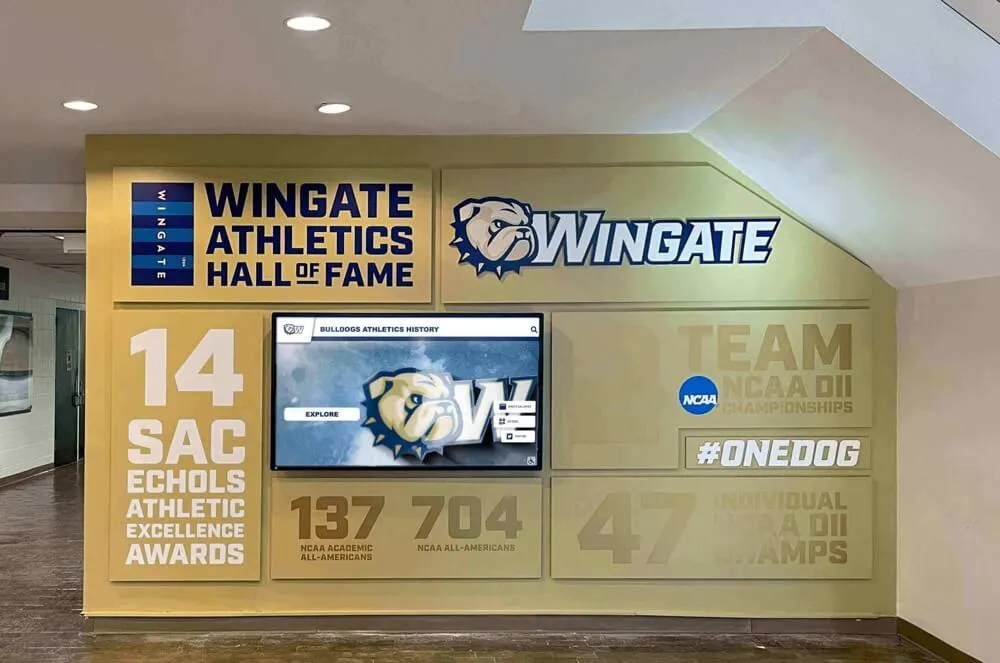




High school yearbooks have long served as treasured time capsules capturing student memories, achievements, and milestones. Yet traditional print yearbooks face mounting challenges in today’s digital age: escalating production costs straining school budgets, distribution difficulties reaching all students and families, limited space constraining comprehensive coverage of activities and students, rapid obsolescence as printed volumes gather dust on shelves, and accessibility barriers preventing easy sharing and viewing across distances.
A digital high school yearbook platform offers transformative solutions addressing these limitations while introducing capabilities impossible with print: unlimited storage capacity documenting every student and activity, interactive features enabling searchable content and multimedia integration, cost-effective scalability eliminating per-copy printing expenses, perpetual accessibility through cloud-based platforms reachable from anywhere, and dynamic updating allowing continuous additions throughout school years rather than single annual publications.
This comprehensive guide explores the evolution of digital yearbook platforms, implementation strategies for schools considering transitions from or supplements to traditional print, platform features and selection criteria, and proven approaches for creating engaging digital memory systems that students, families, and alumni cherish for decades.
The shift from print to digital yearbooks represents more than simple format change—it fundamentally reimagines how schools document student experiences, preserve institutional memories, and foster lasting connections between students, families, and school communities that extend far beyond graduation day.

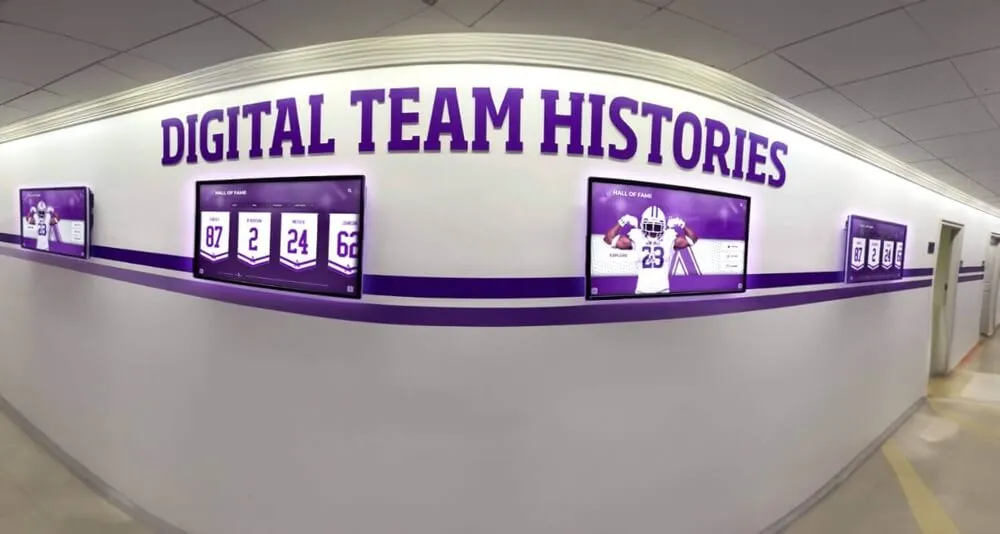
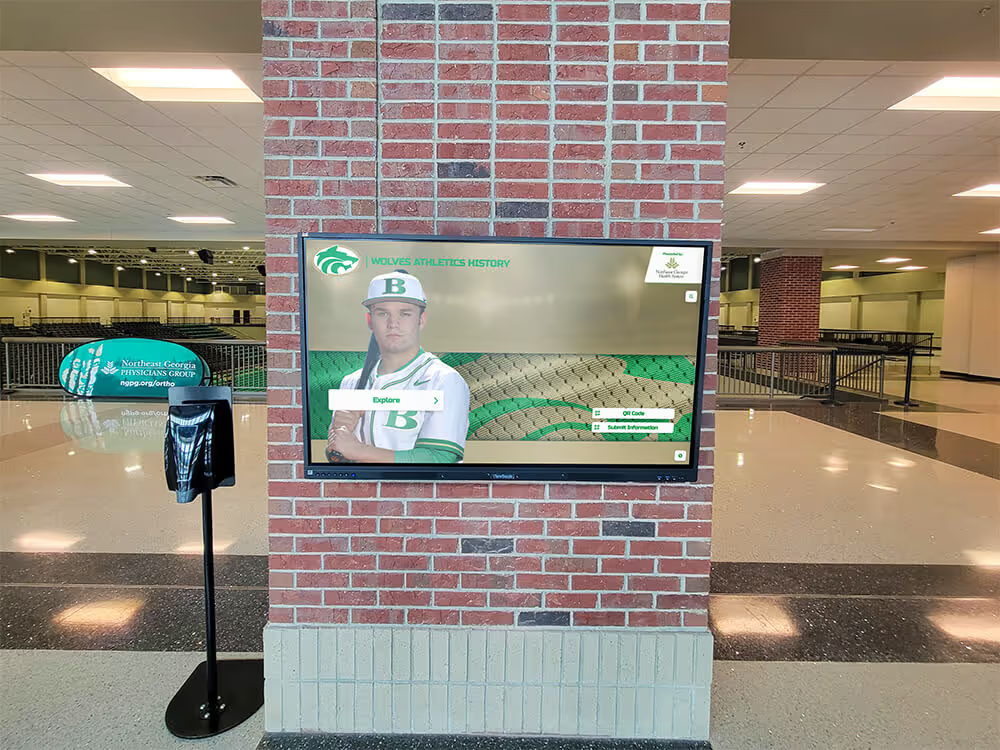
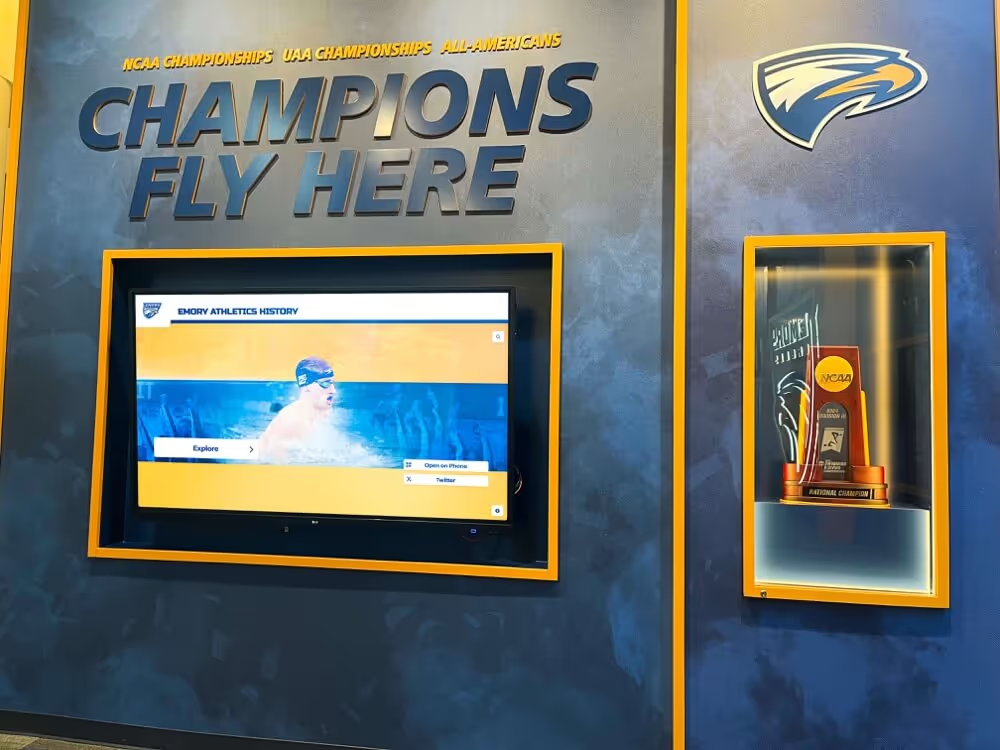
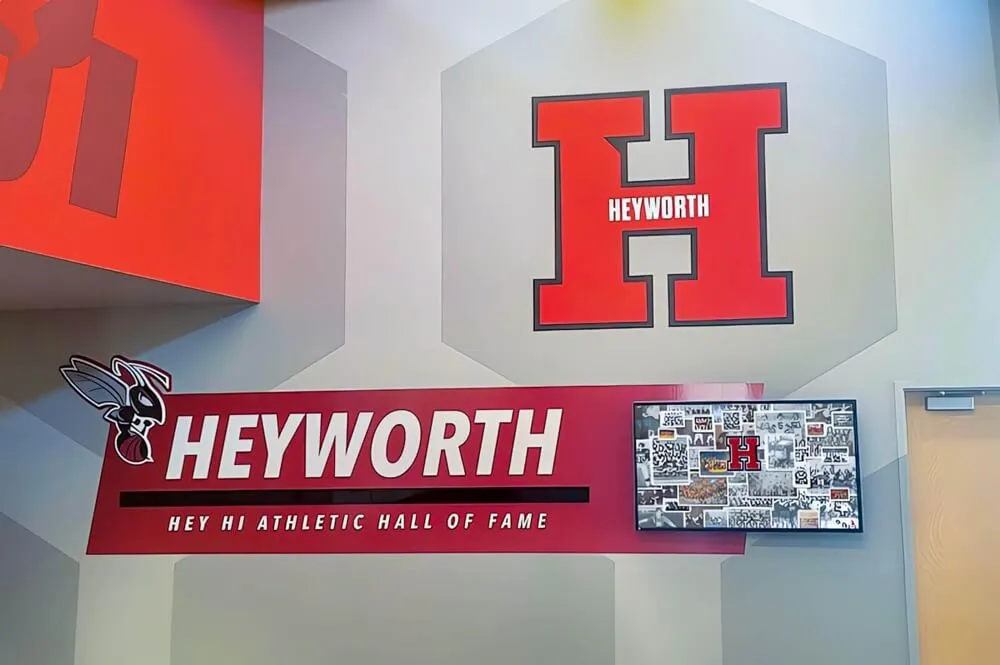
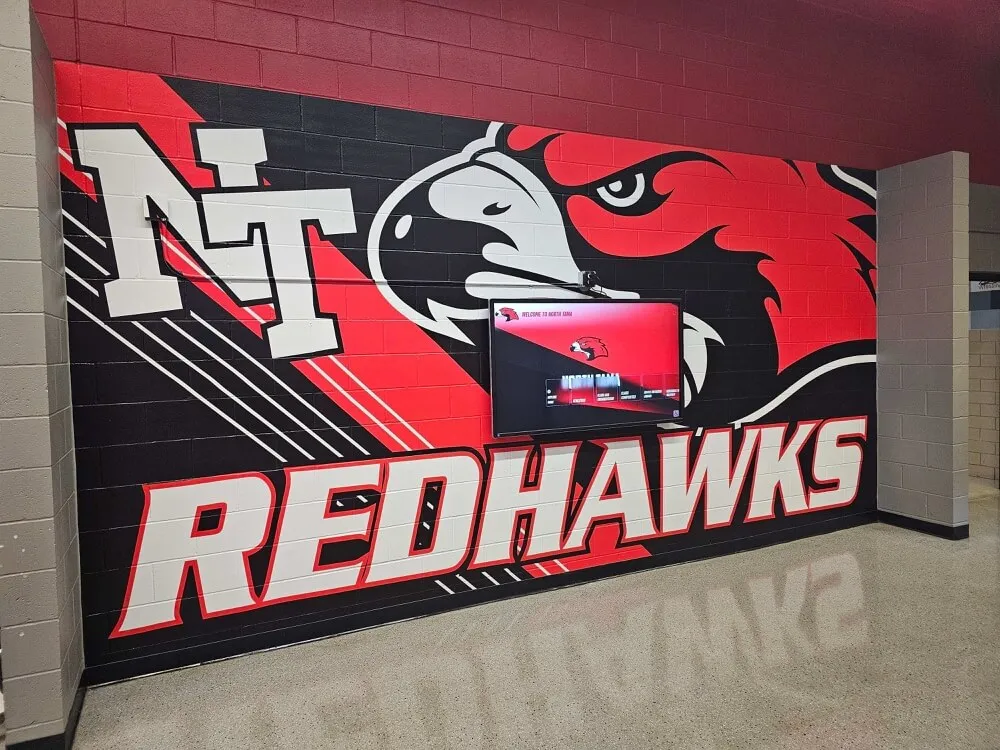
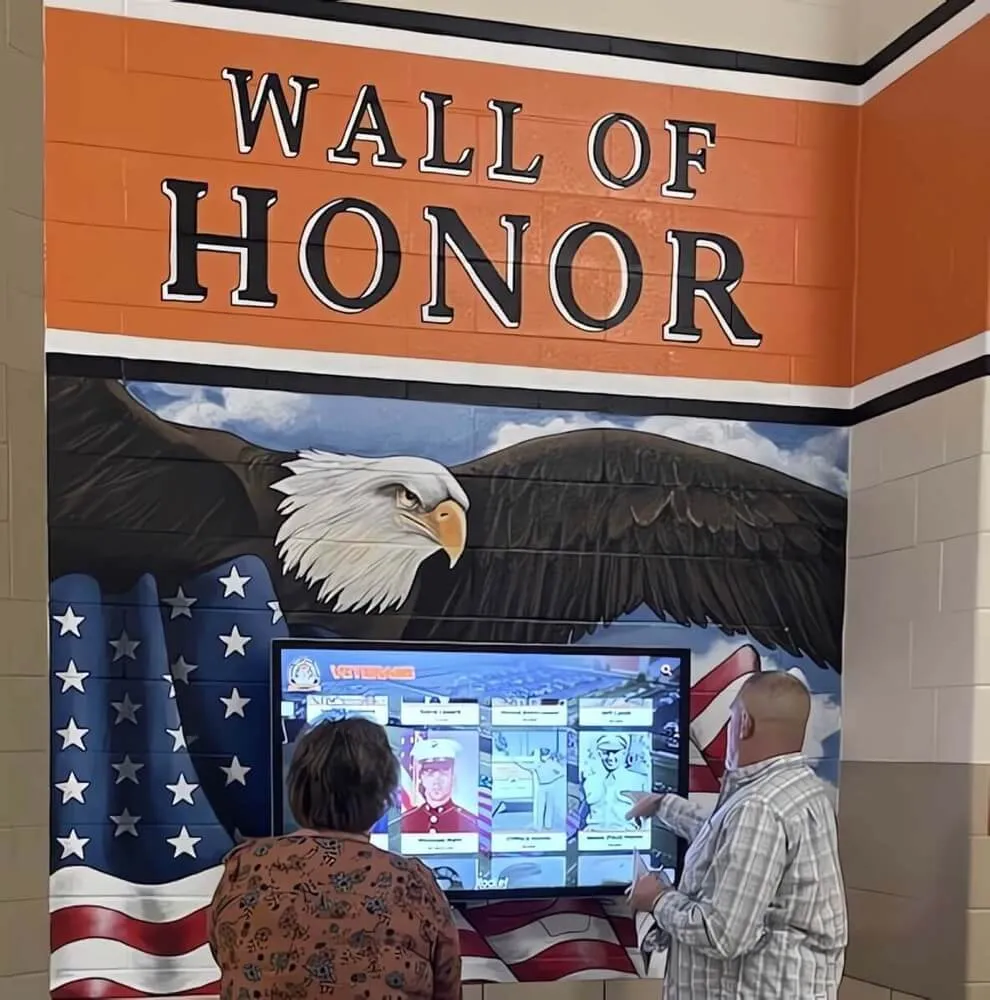
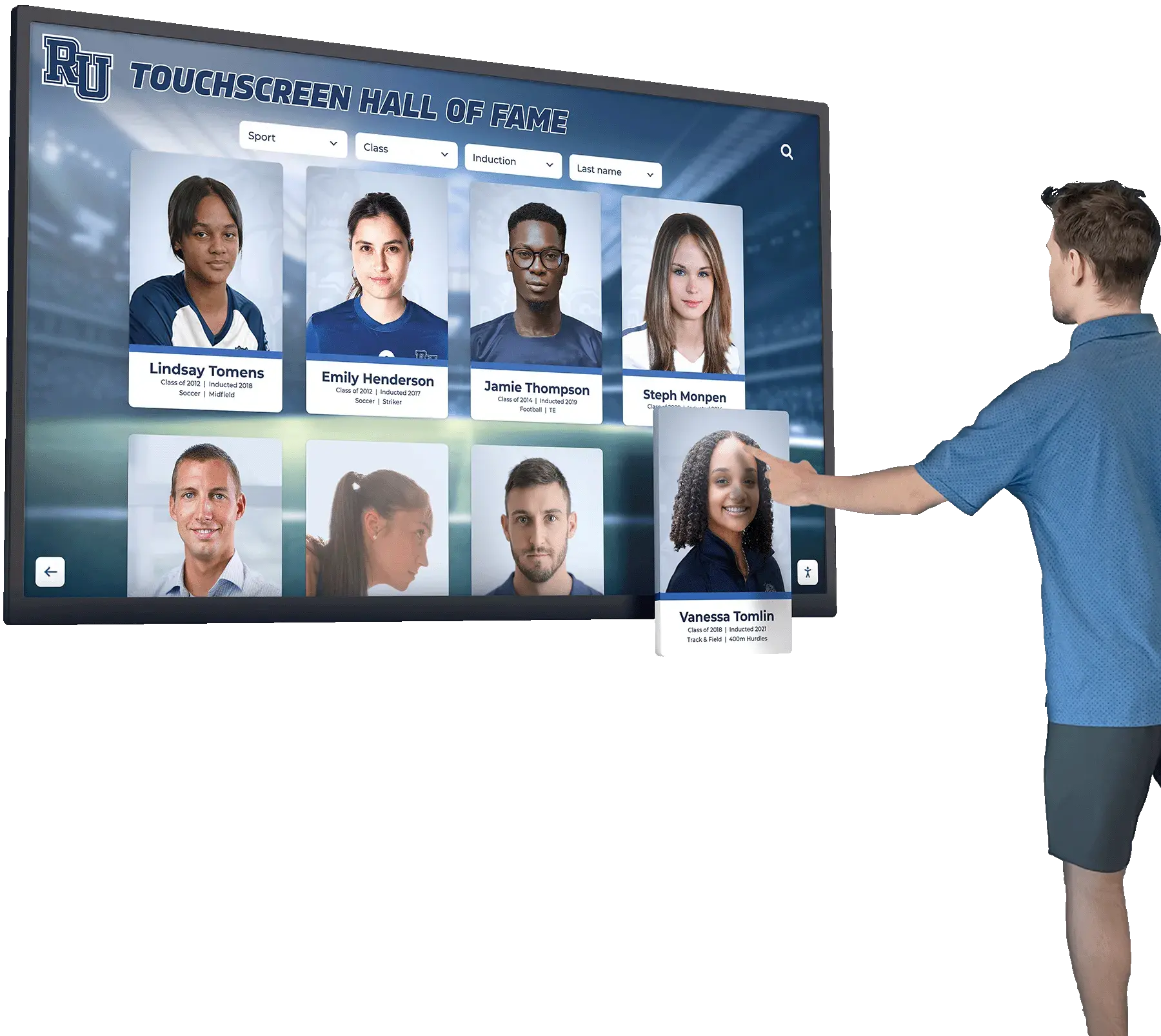
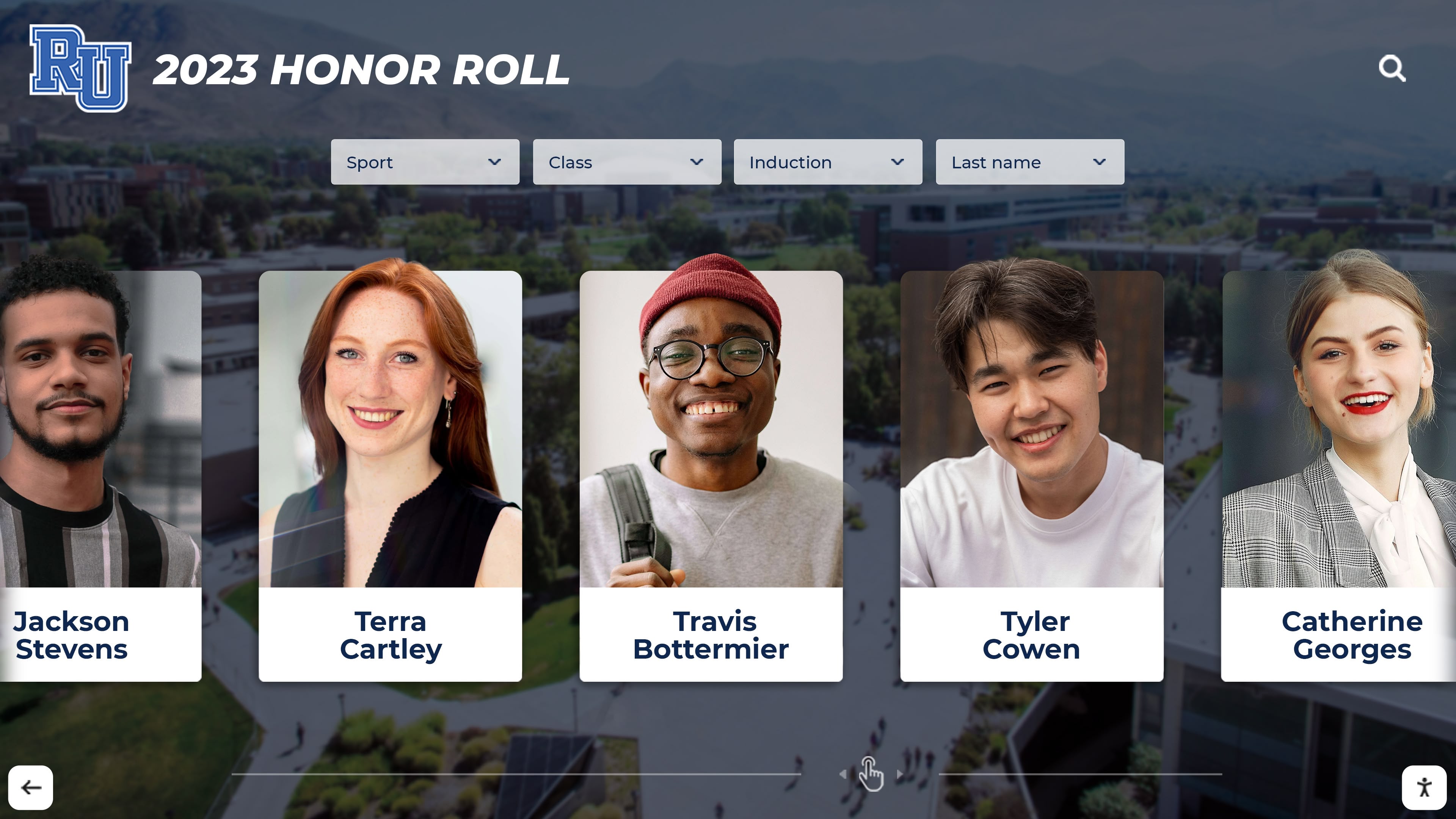
Modern digital platforms showcase student portraits and achievements through interactive displays accessible year-round
Understanding the Evolution of Digital High School Yearbooks
The transition from traditional print yearbooks to digital platforms reflects broader technological shifts transforming educational institutions and student expectations shaped by ubiquitous digital media consumption.
The Limitations of Traditional Print Yearbooks
While beloved traditions, print yearbooks increasingly struggle meeting modern needs and budget realities facing school administrators.
Escalating Production Costs
Traditional yearbook production involves substantial expenses that strain school budgets, particularly for smaller institutions or those serving economically disadvantaged communities. Professional photography services, page layout and design software requiring specialized training, printing costs scaling directly with student population and page count, and binding and distribution logistics all contribute to per-copy costs frequently exceeding $60-$100 for quality publications.
Many schools pass these costs to families through yearbook sales, creating equity barriers where some students cannot afford purchasing copies of publications featuring their own participation. Fundraising efforts and advertising sales help offset costs but require significant volunteer coordination and often prove insufficient covering full production expenses.
Space and Coverage Limitations
Physical page constraints force difficult editorial decisions about coverage allocation and student representation. Limited pages mean many students receive minimal presence beyond directory portraits, clubs and activities with smaller participation face exclusion or reduced coverage, candid photography capturing authentic school life moments gets severely limited, and comprehensive documentation of academic achievements, community service, and co-curricular activities becomes impossible.
Yearbook committees struggle balancing space allocation fairly while maintaining publication affordability, frequently leaving students, families, and activity advisors disappointed with insufficient coverage reflecting their contributions and experiences.
Distribution and Access Challenges
Print distribution creates logistical challenges affecting accessibility and long-term preservation. Absent students miss distribution events, transferred or withdrawn students often go unreached, families moving between distribution and pickup lose access, and physical volumes face damage, loss, or deterioration over time.
Alumni seeking access to yearbooks years later find copies unavailable, libraries maintaining comprehensive collections face space constraints, and digital reproduction for archival purposes requires expensive scanning projects often falling to historical societies or volunteer efforts.
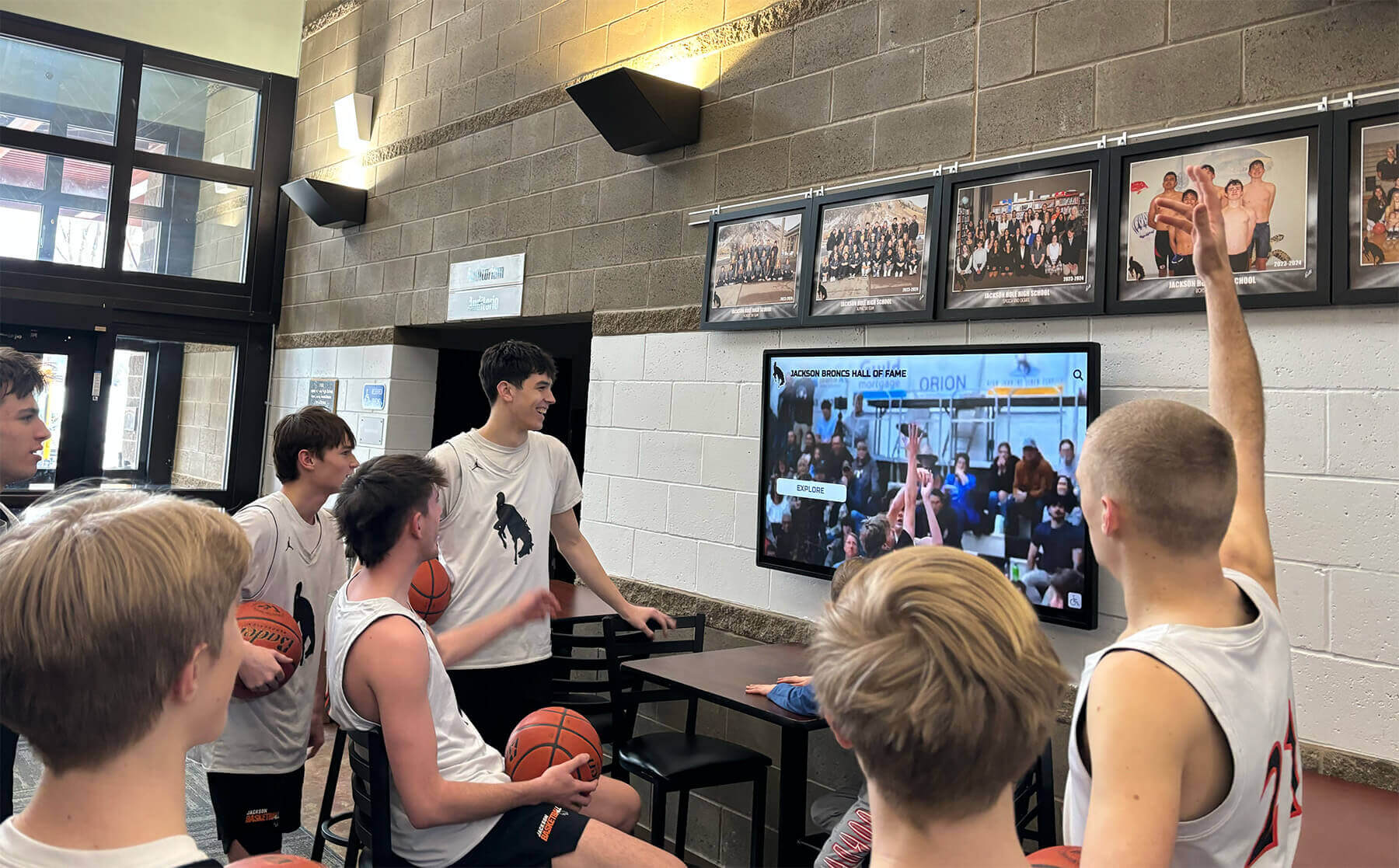
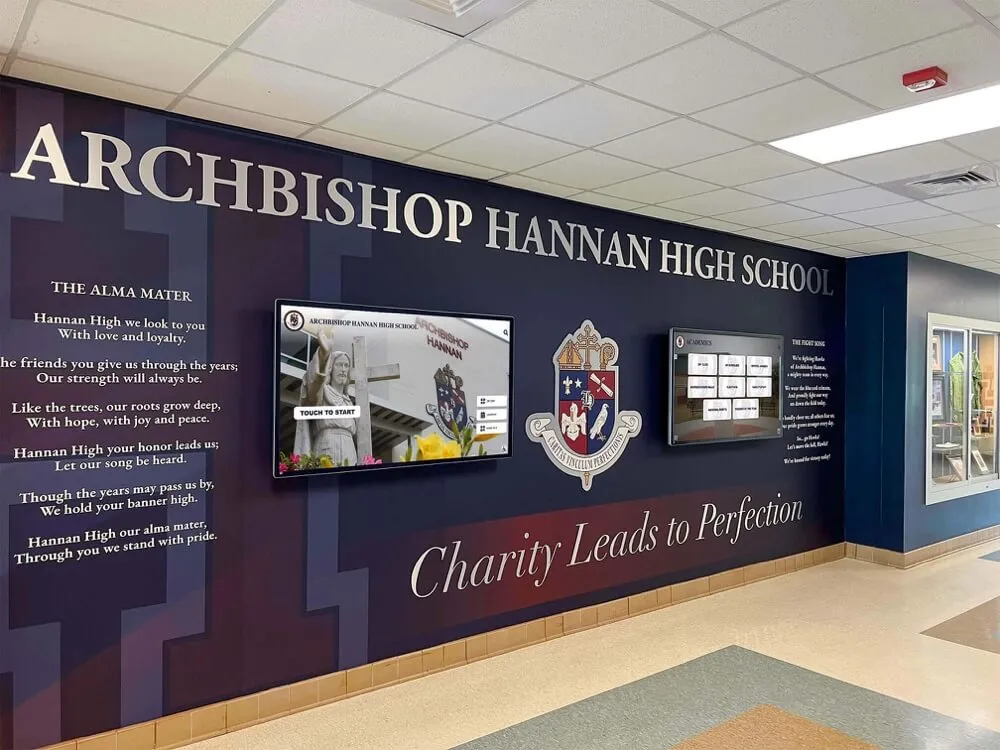
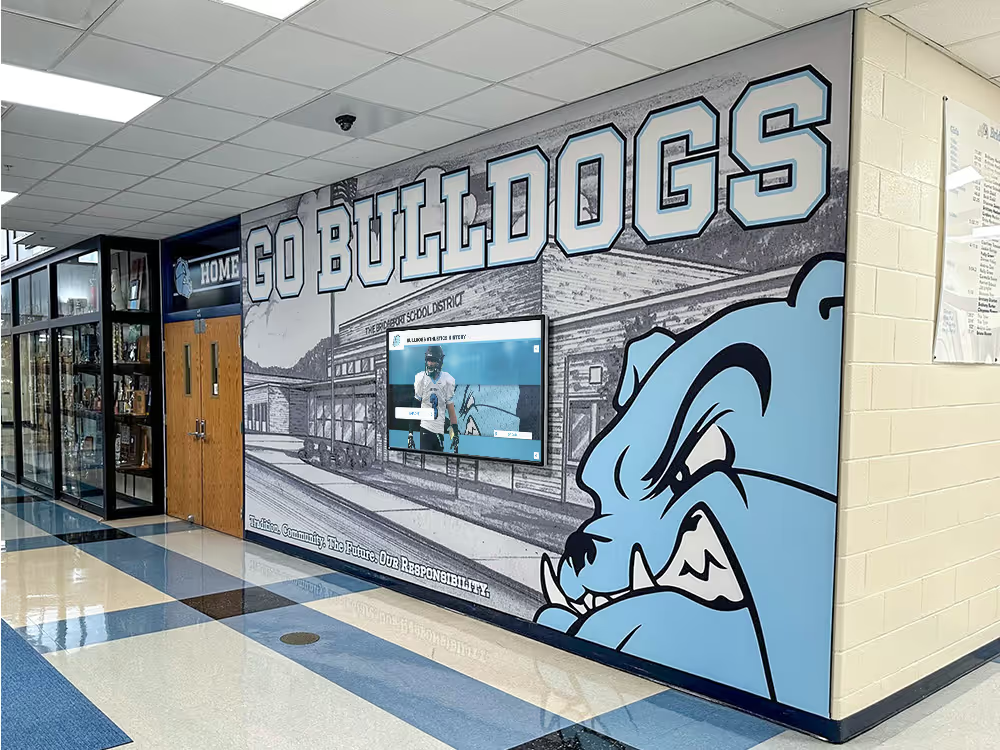
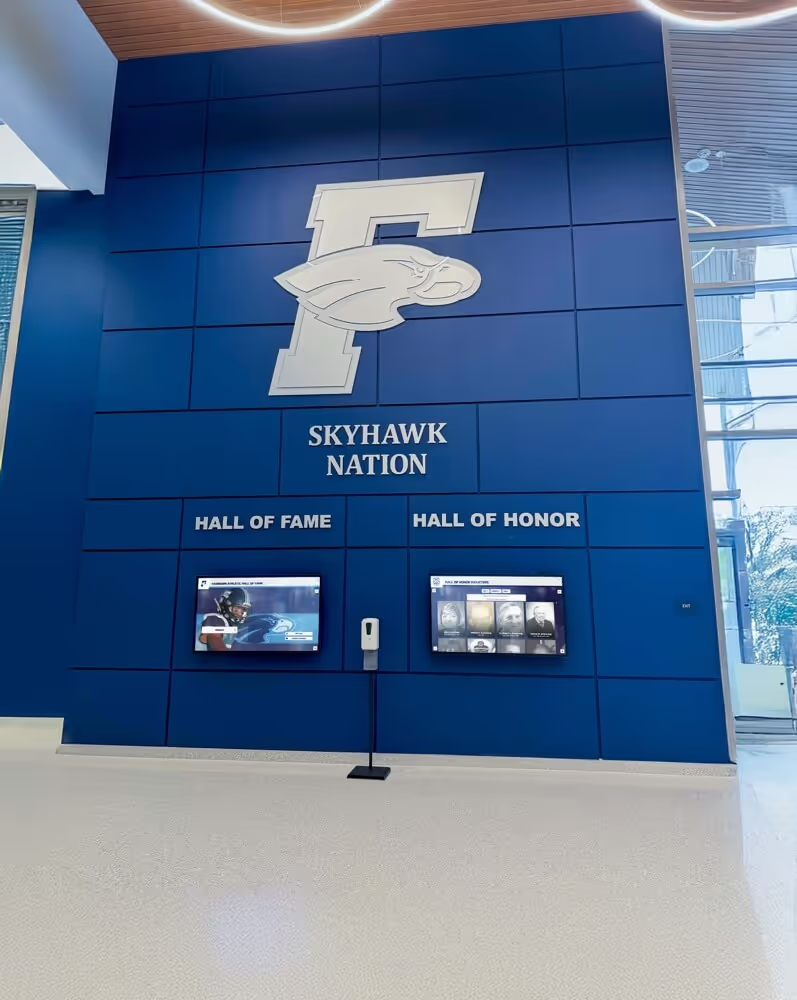
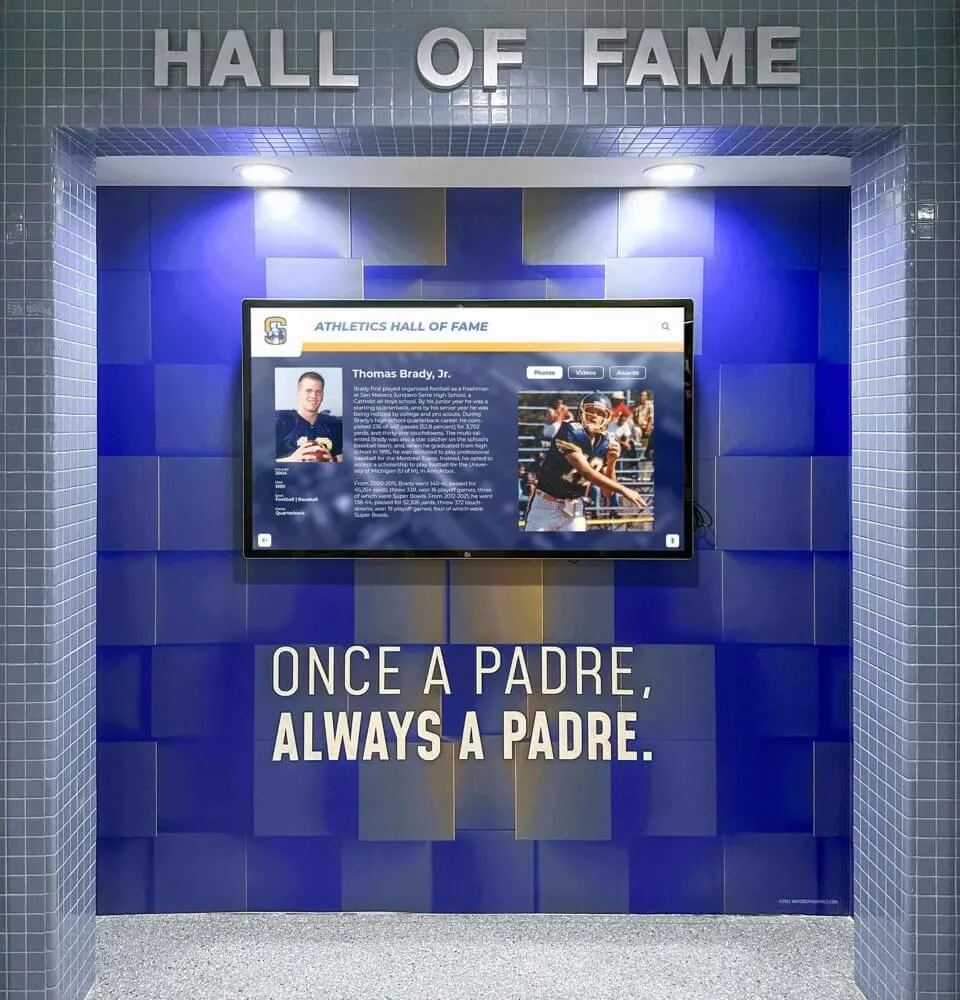
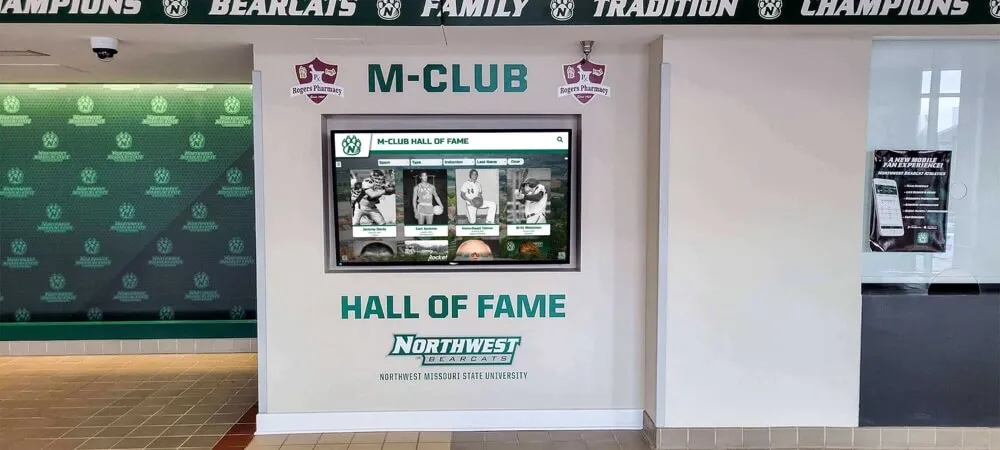
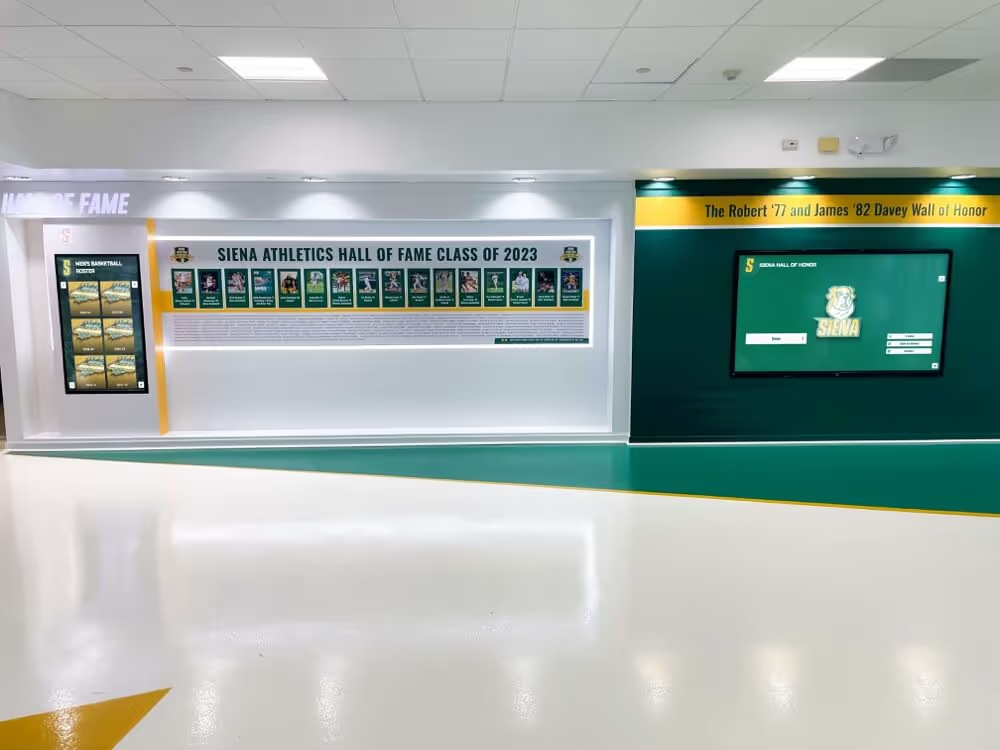
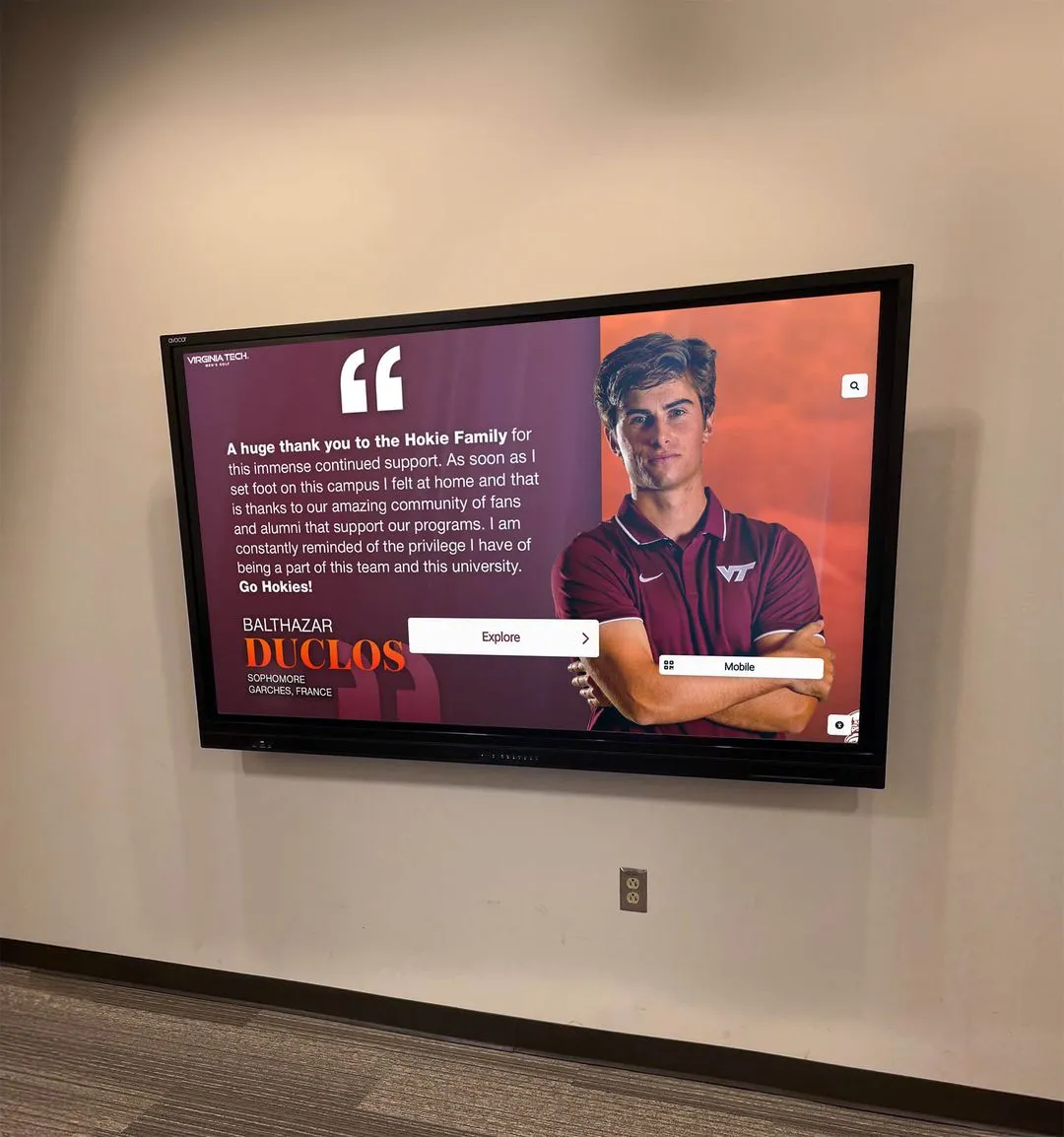
Interactive digital displays engage students daily with dynamic content including achievements, memories, and school history
The Digital Yearbook Advantage
Digital platforms address print limitations while introducing entirely new capabilities transforming memory preservation and student engagement.
Unlimited Space and Comprehensive Coverage
Digital platforms eliminate physical page constraints, enabling comprehensive documentation impossible with print. Schools can include unlimited photos capturing daily school life authenticity, comprehensive rosters and portraits for every student organization and activity, full documentation of academic achievements from honor roll recognition to specialized awards, video content documenting performances, athletic competitions, and special events, and multimedia elements including audio recordings, interviews, and interactive features.
This comprehensive documentation ensures every student receives meaningful representation reflecting their full high school experience rather than token inclusion constrained by page budgets.
Cost Reduction and Accessibility
Digital platforms dramatically reduce per-student costs while improving accessibility. Elimination of printing, binding, and physical distribution expenses cuts production costs, unlimited digital copies distribute to all students regardless of ability to pay, cloud-based access enables viewing from any device anywhere perpetually, and easy sharing allows extended family viewing worldwide without purchasing multiple copies.
Some schools transition to digital-first approaches with optional print-on-demand services for families desiring physical copies, combining digital benefits with traditional format availability for those preferring tangible volumes.
Searchability and Interactive Features
Digital yearbooks introduce functionality impossible with print, transforming passive memory books into interactive exploration experiences. Name-based searching instantly locates any student’s appearances throughout content, tag-based organization groups photos by activity, event, or theme, clickable links connect to full team rosters, activity pages, and related content, multimedia integration embeds videos, audio clips, and linked external content, and social features enable commenting, tagging, and memory sharing among students and alumni.
These interactive elements create living memory platforms that students actively engage with throughout school years and return to repeatedly across decades, rather than volumes that gather dust after initial viewing.
Continuous Updates and Real-Time Publishing
Unlike print yearbooks capturing only activities through specific production deadlines, digital platforms support continuous updates documenting full school years. Photos and content from spring activities and events get included immediately rather than waiting until the following year’s publication, late-breaking achievements and awards receive immediate documentation, graduation photos and final senior content get added promptly, and historical archives grow continuously as schools digitize older print yearbooks and historical materials.
Schools implementing digital class composite displays report increased student engagement with yearbook content throughout school years rather than single-event annual publications.
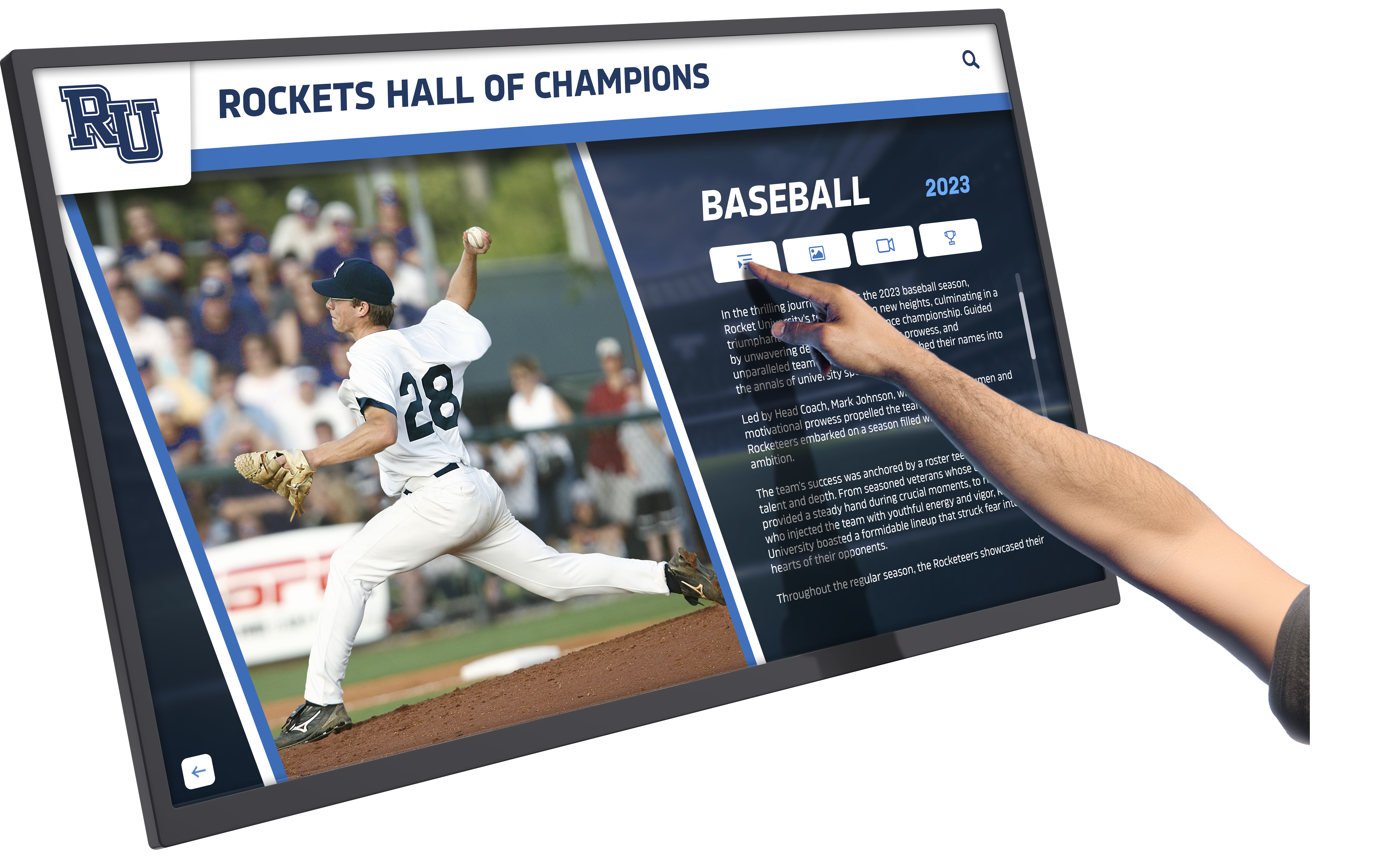
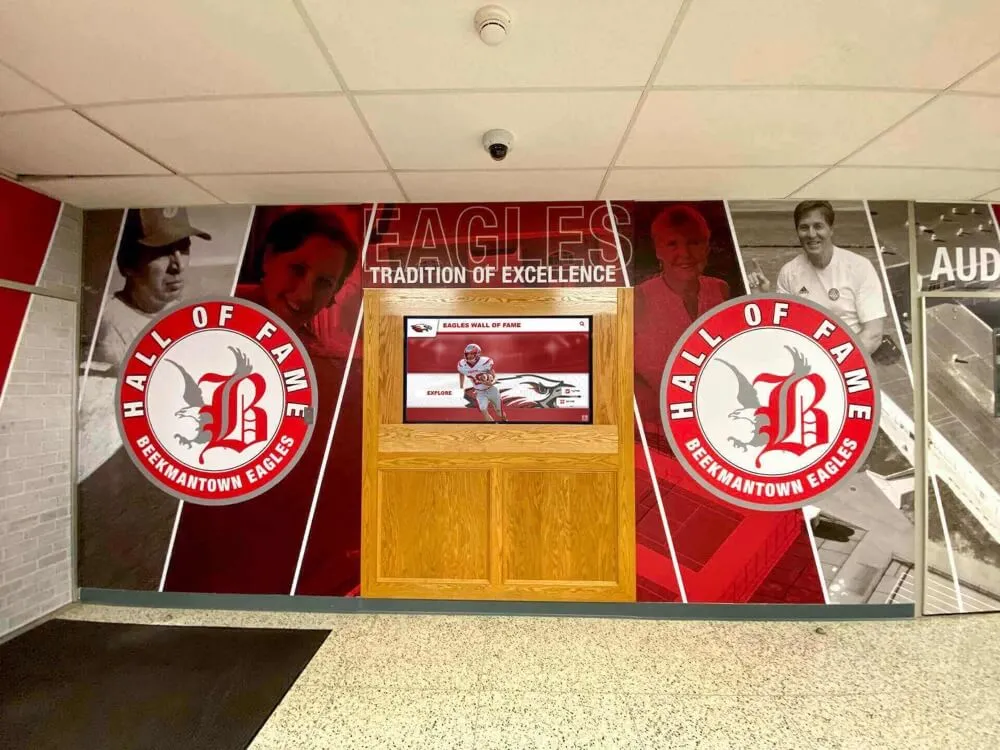
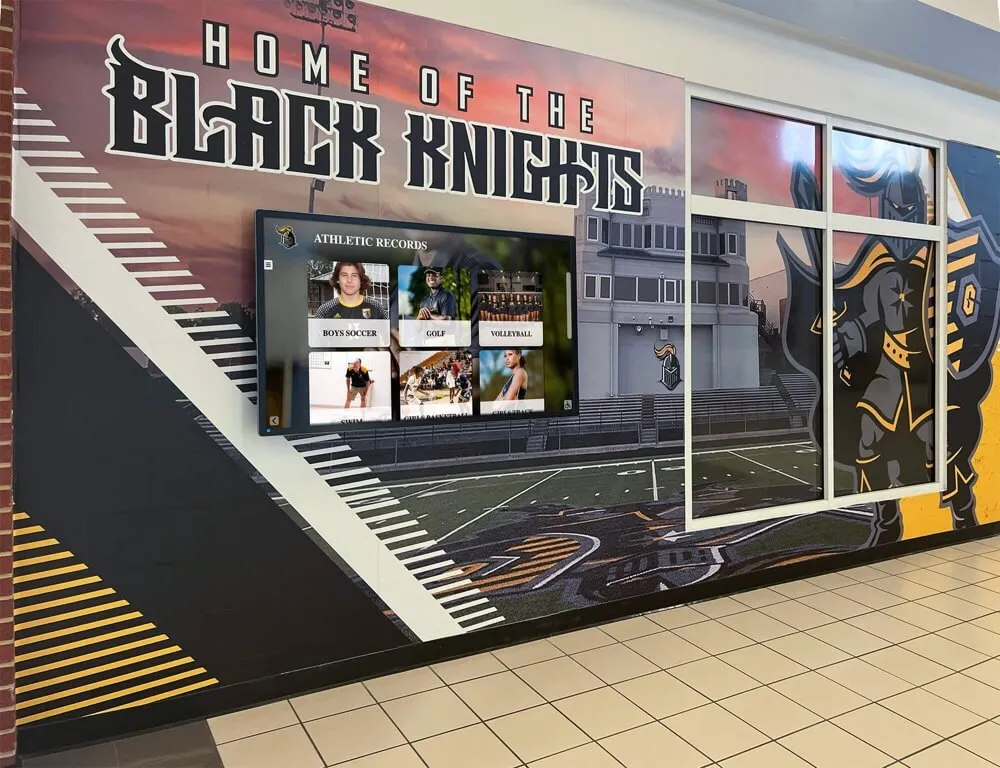
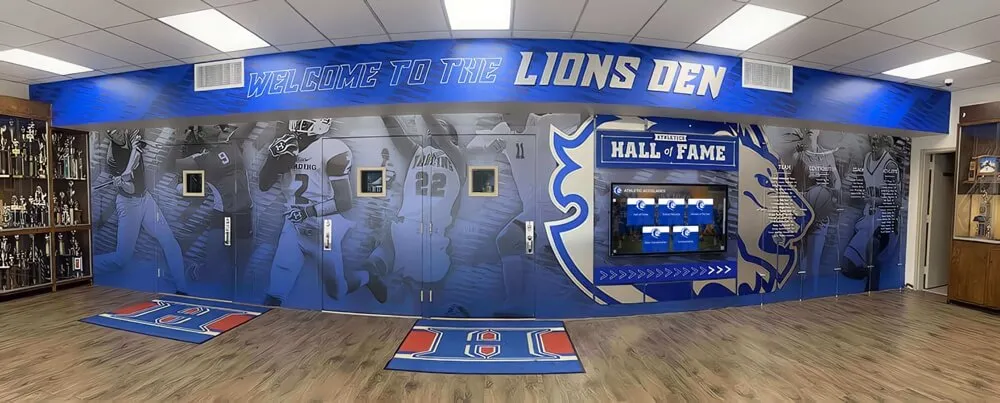
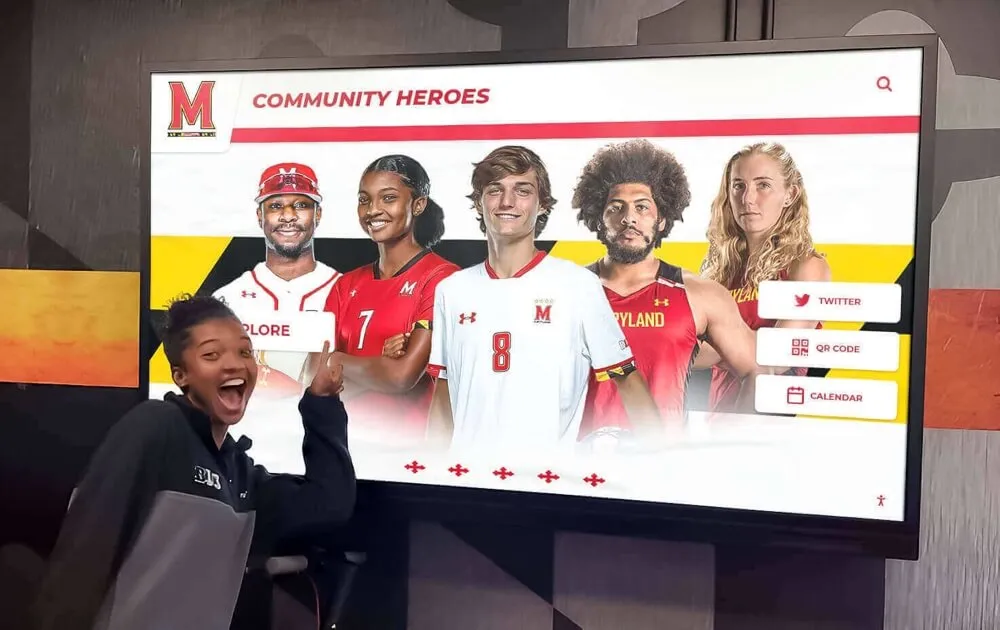
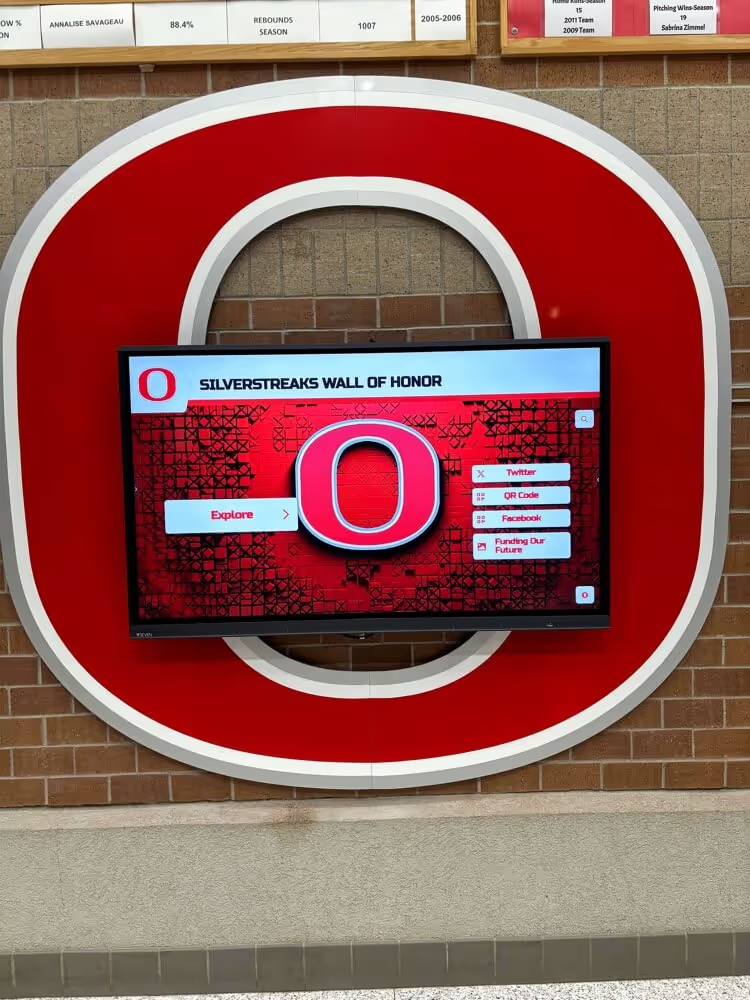
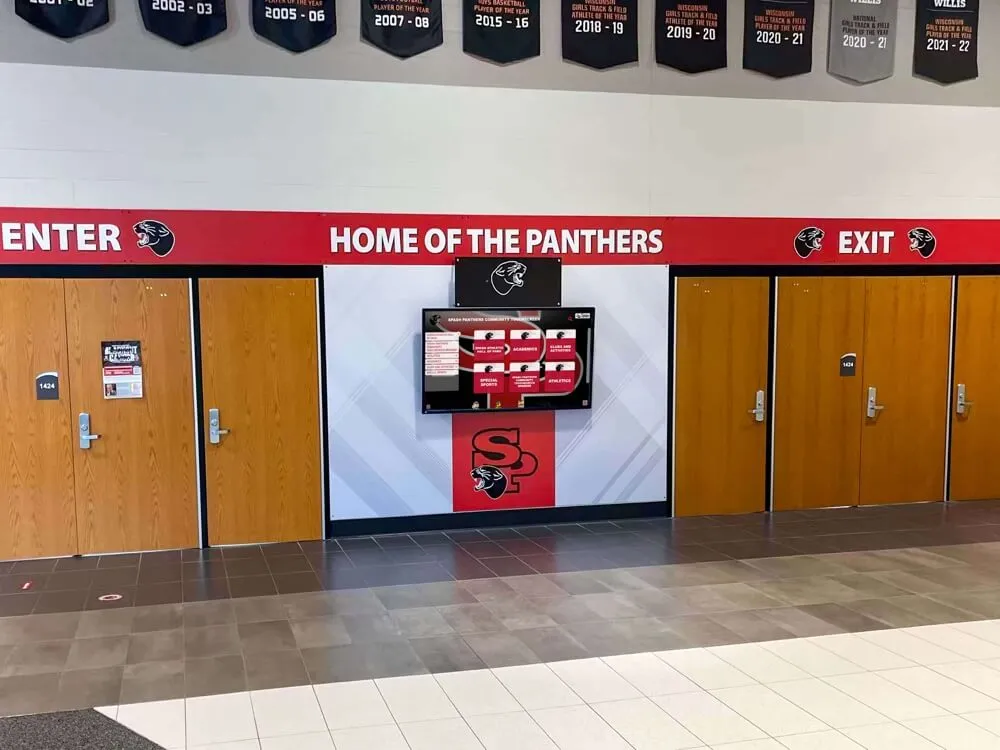
Touchscreen interfaces enable intuitive browsing through student photos, achievements, and memories with engaging interactivity
Types of Digital High School Yearbook Solutions
Schools implementing digital yearbook strategies can choose from several platform approaches based on specific needs, technical capabilities, and desired features.
Cloud-Based Yearbook Platforms
Dedicated online yearbook platforms provide comprehensive digital solutions specifically designed for school memory preservation and student engagement.
Subscription-Based Yearbook Services
Several companies offer cloud-based yearbook platforms providing infrastructure, hosting, and tools for creating, managing, and distributing digital yearbooks. These platforms typically include features like web-based content management systems for uploading photos and creating layouts, collaborative editing tools allowing multiple yearbook staff members simultaneous work, student directory integration connecting to school information systems, privacy controls managing content visibility and access permissions, and mobile apps enabling smartphone and tablet access.
Schools pay annual subscription fees typically based on student enrollment numbers, with pricing often more affordable than traditional print production costs, especially for larger schools. Platform selection should evaluate user interface intuitiveness for student staff with varying technical skills, customization options matching school branding and aesthetic preferences, data privacy policies protecting student information appropriately, and technical support availability assisting implementation and troubleshooting.
Social Media-Inspired Platforms
Some newer digital yearbook platforms adopt social media conventions familiar to students, incorporating features like timeline-based organization presenting content chronologically, tagging and mentions enabling students to identify themselves and friends, commenting and reactions facilitating social interaction around memories, and sharing capabilities allowing content distribution across networks.
These social approaches increase student engagement through familiar interfaces while raising privacy considerations requiring careful management, particularly regarding content sharing permissions and comment moderation preventing inappropriate interactions.
Interactive Touchscreen Yearbook Displays
Physical interactive displays installed in school common areas provide engaging yearbook experiences combining digital flexibility with prominent visibility in school spaces.
Lobby and Hallway Installations
Interactive touchscreen kiosks positioned in high-traffic school locations create year-round yearbook engagement rather than occasional online access. Students, staff, and visitors browse current and historical yearbook content during passing periods, lunch breaks, and community events, search for specific students or activities, explore photo galleries and multimedia content, and experience school history through archived yearbooks and historical photos.
Interactive touchscreen kiosk software designed specifically for educational institutions combines intuitive navigation with durable hardware withstanding daily student interaction in school environments.

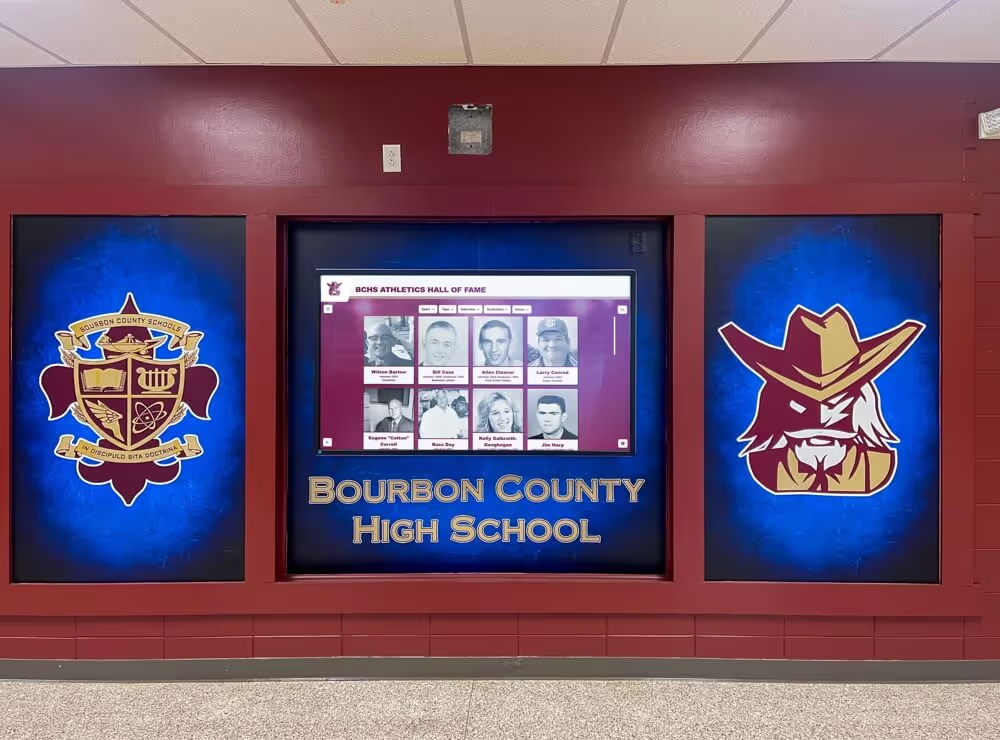
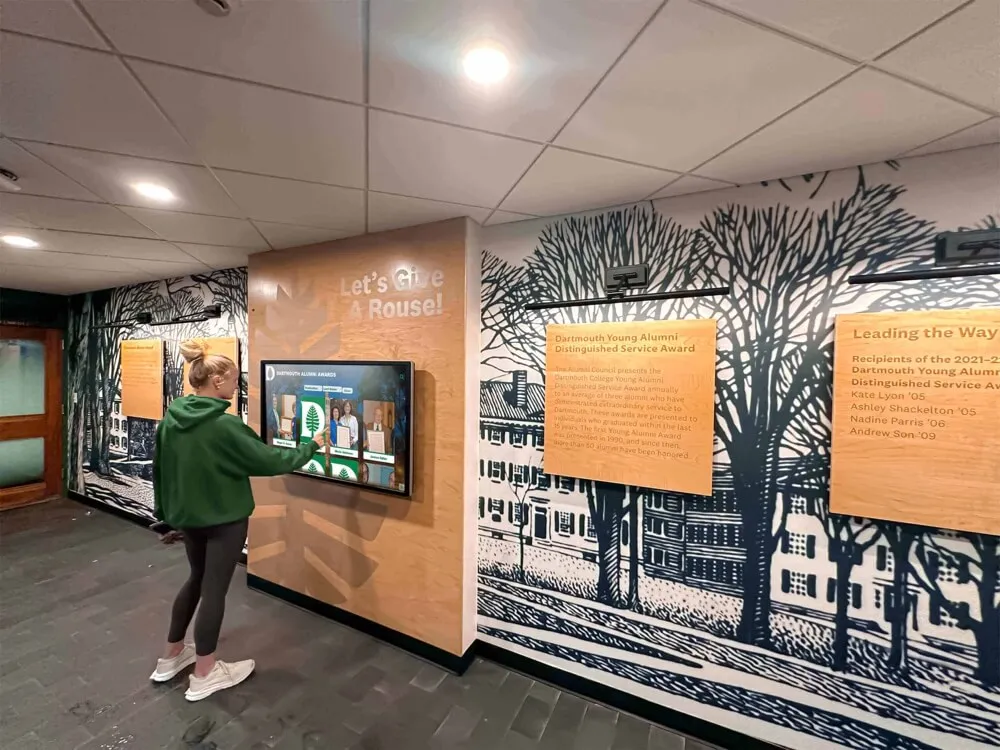
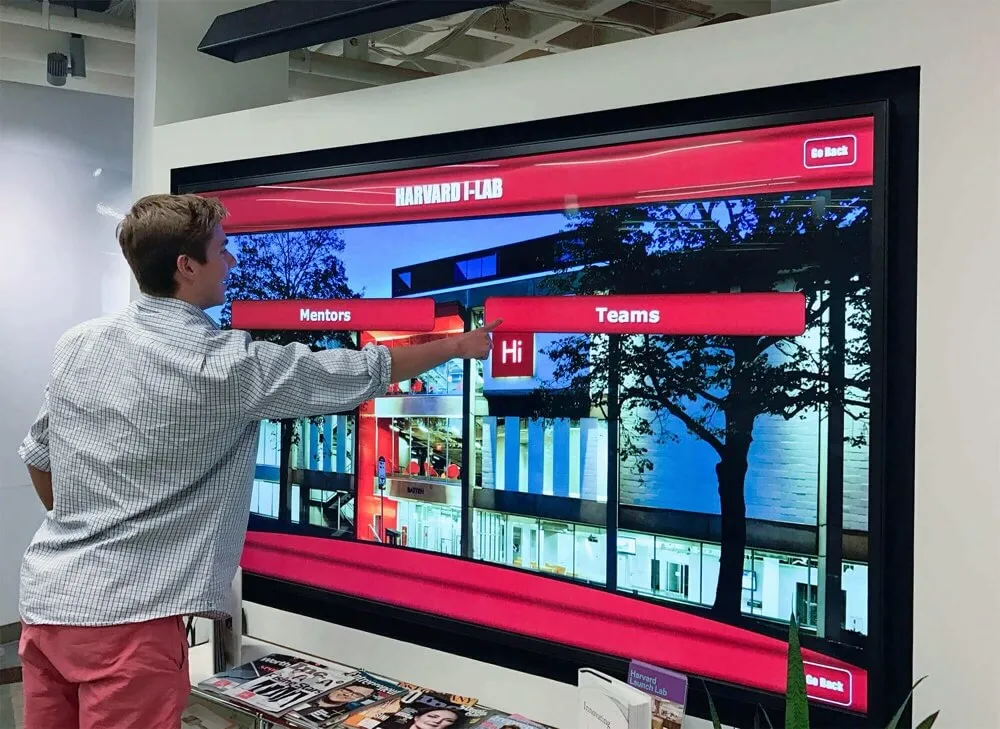
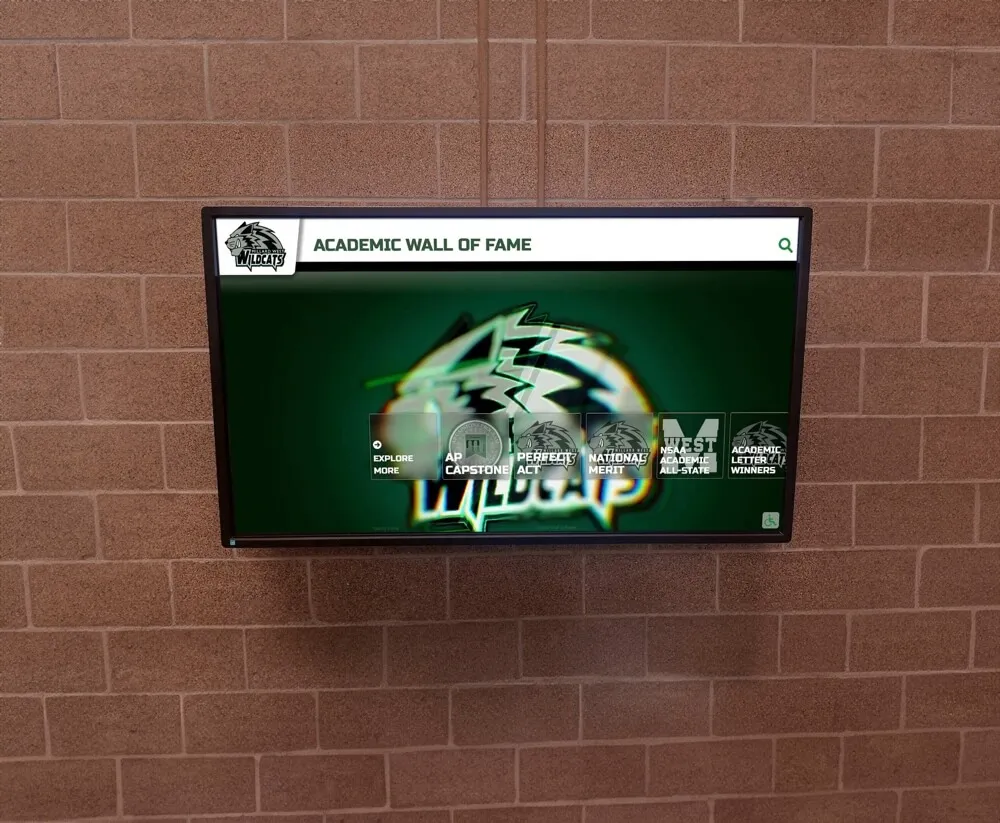
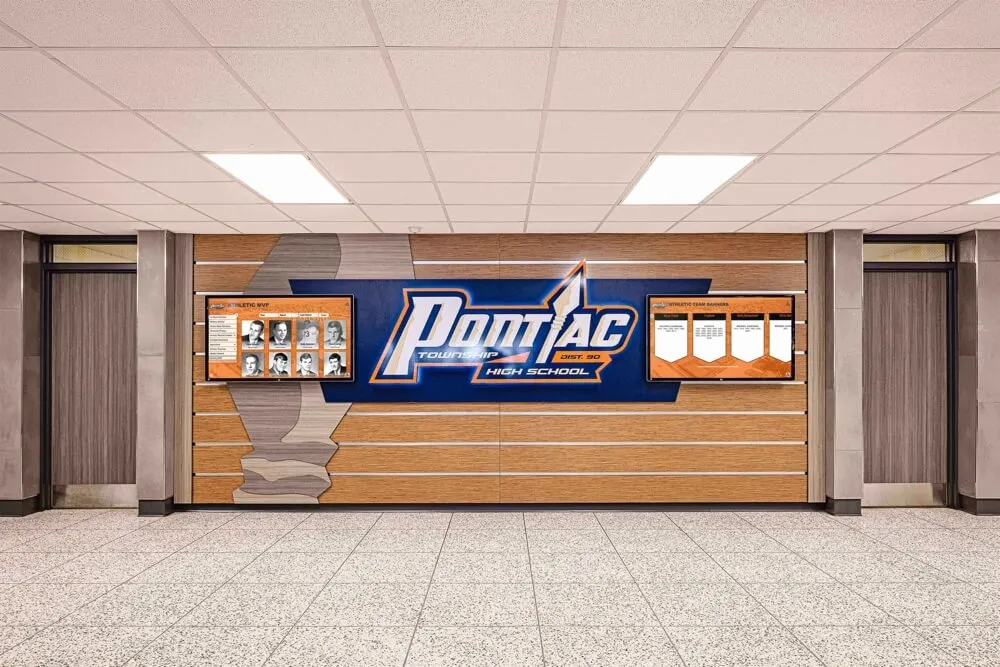
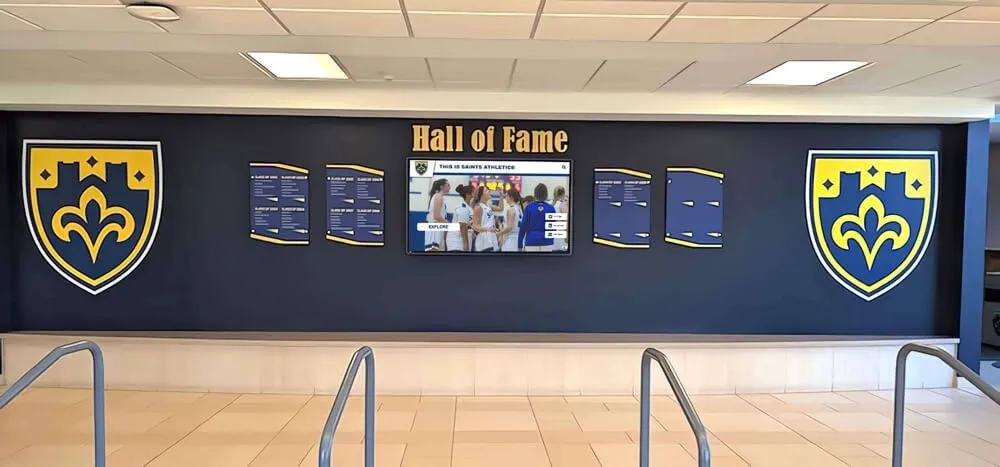
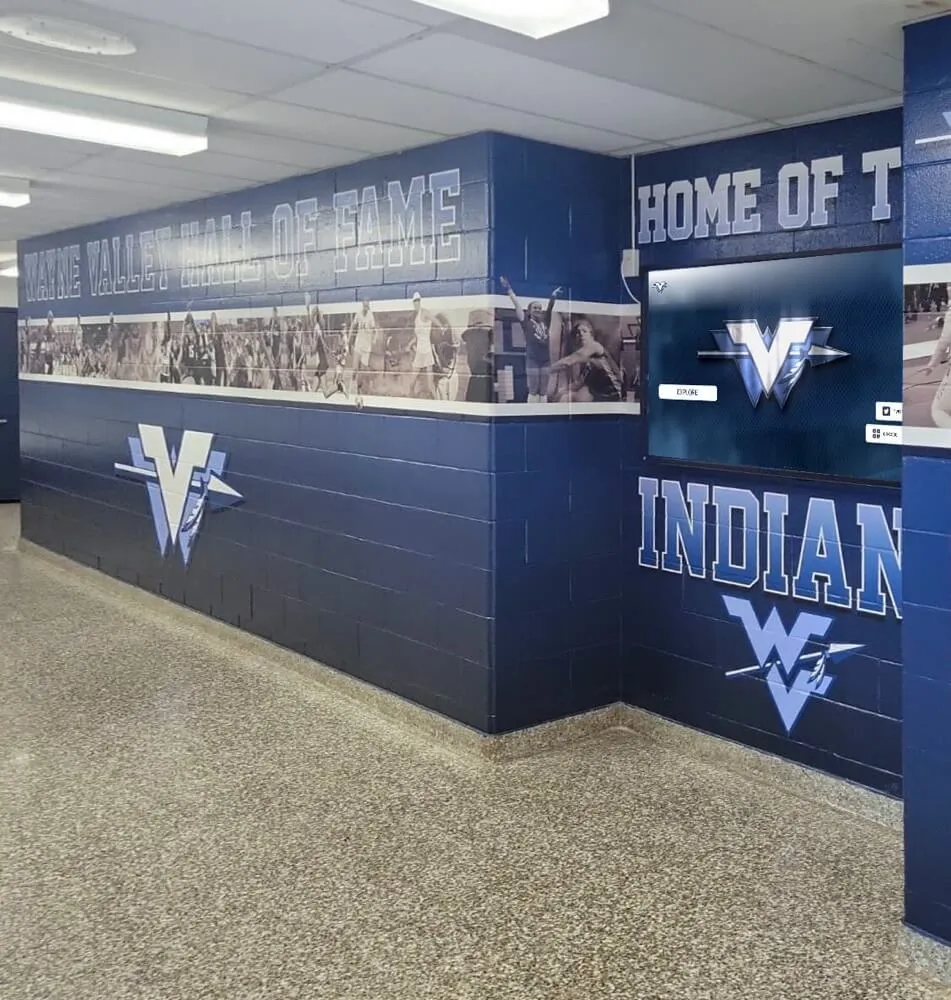
Hallway installations make yearbook content visible daily, celebrating current students while preserving school history
Integration with Recognition Displays
Many schools combine yearbook functionality with broader recognition systems celebrating student achievements, athletic accomplishments, and school traditions. These integrated platforms present senior portraits and class composites alongside current honor roll listings, athletic records, and championship teams, historical yearbook archives connecting to hall of fame profiles and alumni achievements, and multimedia content documenting performing arts, academic competitions, and community service.
Schools implementing comprehensive digital recognition find senior class awards displays naturally extend to broader yearbook functionality, creating centralized memory and achievement platforms serving multiple recognition needs.
Hybrid Print and Digital Approaches
Rather than complete transitions, many schools implement hybrid strategies combining print and digital advantages while managing change gradually.
Digital-First with Print-on-Demand
This approach prioritizes comprehensive digital yearbook creation while offering optional print copies for families preferring physical volumes. All students receive full digital access regardless of payment, printed copies available for purchase by families wanting traditional formats, print-on-demand eliminates inventory risks and upfront printing costs, and digital serves as permanent archive while printed copies supplement based on demand.
Schools implementing this model often find 40-60% of families purchase print copies, generating revenue offsetting digital platform costs while ensuring equitable access for all students regardless of economic circumstances.
Print Yearbook with Digital Supplements
Some schools maintain traditional print yearbooks while adding digital platforms providing supplemental content impossible to include in physical publications. Print yearbooks maintain traditional format and distribution, digital platforms host unlimited additional photos from all activities and events, video content documents performances, games, and special programs, and continuous updates add content throughout entire school years including post-deadline activities.
This approach satisfies tradition-minded stakeholders while introducing digital benefits gradually, potentially transitioning toward digital-primary models as communities grow comfortable with technology platforms.
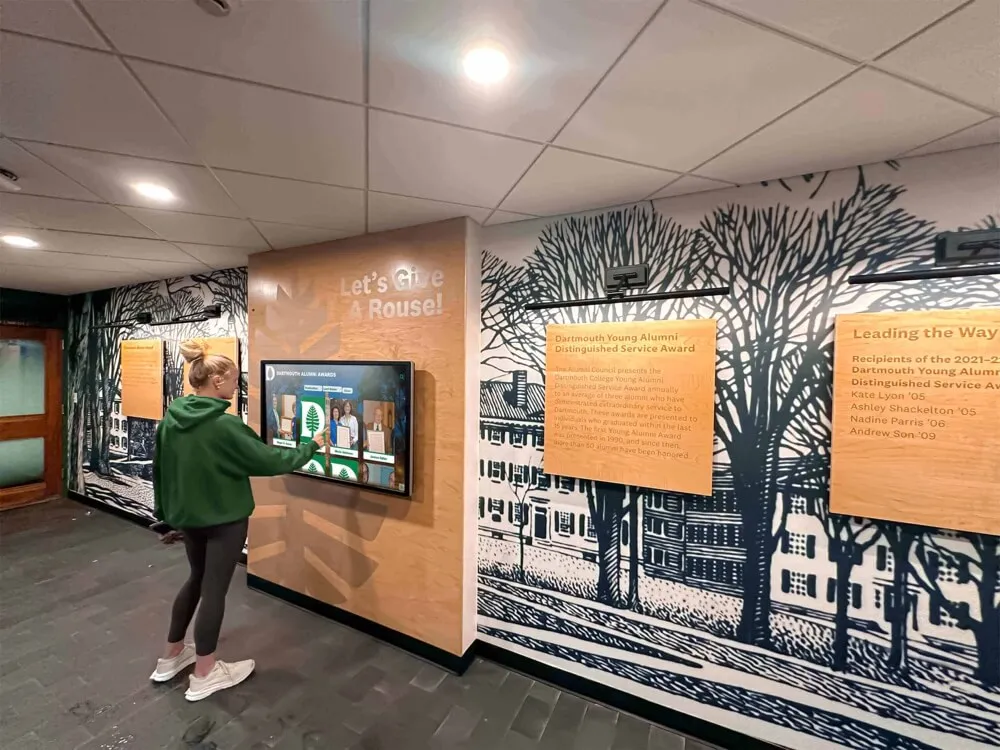
Alumni returning to schools engage with digital yearbook systems browsing their own school years and connecting with memories
Implementing Digital Yearbook Platforms Successfully
Successful digital yearbook transitions require careful planning addressing technical, organizational, and cultural factors affecting adoption and long-term sustainability.
Building Staff and Student Buy-In
Change management proves crucial for successful implementation, particularly when transitioning from beloved traditional print formats to digital alternatives.
Addressing Stakeholder Concerns
Different school community stakeholders often raise specific concerns requiring thoughtful responses. Parents may worry about losing tangible keepsakes they can display and physically hand down to future generations, requiring education about digital permanence, print-on-demand options, and enhanced content impossible with print-only approaches. Yearbook advisors and student staff invested in traditional production processes need training on new platforms and reassurance about creative control and editorial roles continuing in digital formats.
Alumni and community members attached to tradition benefit from understanding that digital platforms preserve and extend yearbook traditions rather than eliminating them, often making historical yearbooks more accessible than ever through digitization projects.
Involving Yearbook Staff Early
Student yearbook staff members serve as crucial ambassadors for digital platforms when involved early in selection and implementation. Include yearbook editors and key staff in platform evaluation and selection, provide comprehensive training on digital tools and workflows, empower students to design user experiences and interface elements, and celebrate digital capabilities enabling more creative expression than print constraints allowed.
When student staff embrace digital platforms enthusiastically, their excitement spreads throughout student body increasing engagement and adoption. Schools should highlight how digital yearbooks enable more students to participate in yearbook creation through distributed photography, content submission, and collaborative editing impossible with traditional production workflows.
Technical Implementation Considerations
Successful digital yearbook deployment requires addressing infrastructure, security, and accessibility factors affecting platform performance and user experience.
Infrastructure Requirements
Different platform types involve varying technical requirements schools must assess against current capabilities. Cloud-based yearbook services primarily require reliable internet connectivity for content access, sufficient bandwidth supporting simultaneous multi-user access during peak times, and device availability ensuring students can access platforms through school computers, personal devices, or mobile apps.
Interactive touchscreen displays involve additional considerations including physical installation requiring appropriate wall space in high-traffic areas, electrical infrastructure supporting display power and connectivity, network connectivity enabling content updates and cloud synchronization, and hardware durability withstanding constant student interaction in school environments.
Privacy and Access Controls
Student privacy protection requires careful attention to access permissions, content moderation, and data security. Schools must implement student directory information policies controlling what content becomes publicly viewable, authentication systems verifying authorized access to yearbook platforms, graduated access levels distinguishing between current students, alumni, staff, and public users, parental opt-out provisions respecting families not wanting student photos publicly shared, and content moderation processes preventing inappropriate submissions or comments.
Many schools restrict full yearbook access to authenticated students, families, and alumni while providing limited public previews showcasing platform capabilities without compromising student privacy. Schools implementing digital trophy case solutions integrate yearbook content within broader recognition systems governed by consistent privacy frameworks.
Long-Term Sustainability Planning
Digital platforms require ongoing maintenance and content management beyond initial implementation. Schools should establish clear responsibility for platform administration and content updates, budget recurring subscription or maintenance costs in long-term technology plans, develop succession planning ensuring knowledge transfer when yearbook advisors or IT staff transition, and create content archival strategies preserving digital yearbooks perpetually even if specific platforms change.
Some schools maintain platform independence by periodically exporting yearbook content into standard formats (PDF, image archives) ensuring accessibility regardless of specific vendor platform longevity.
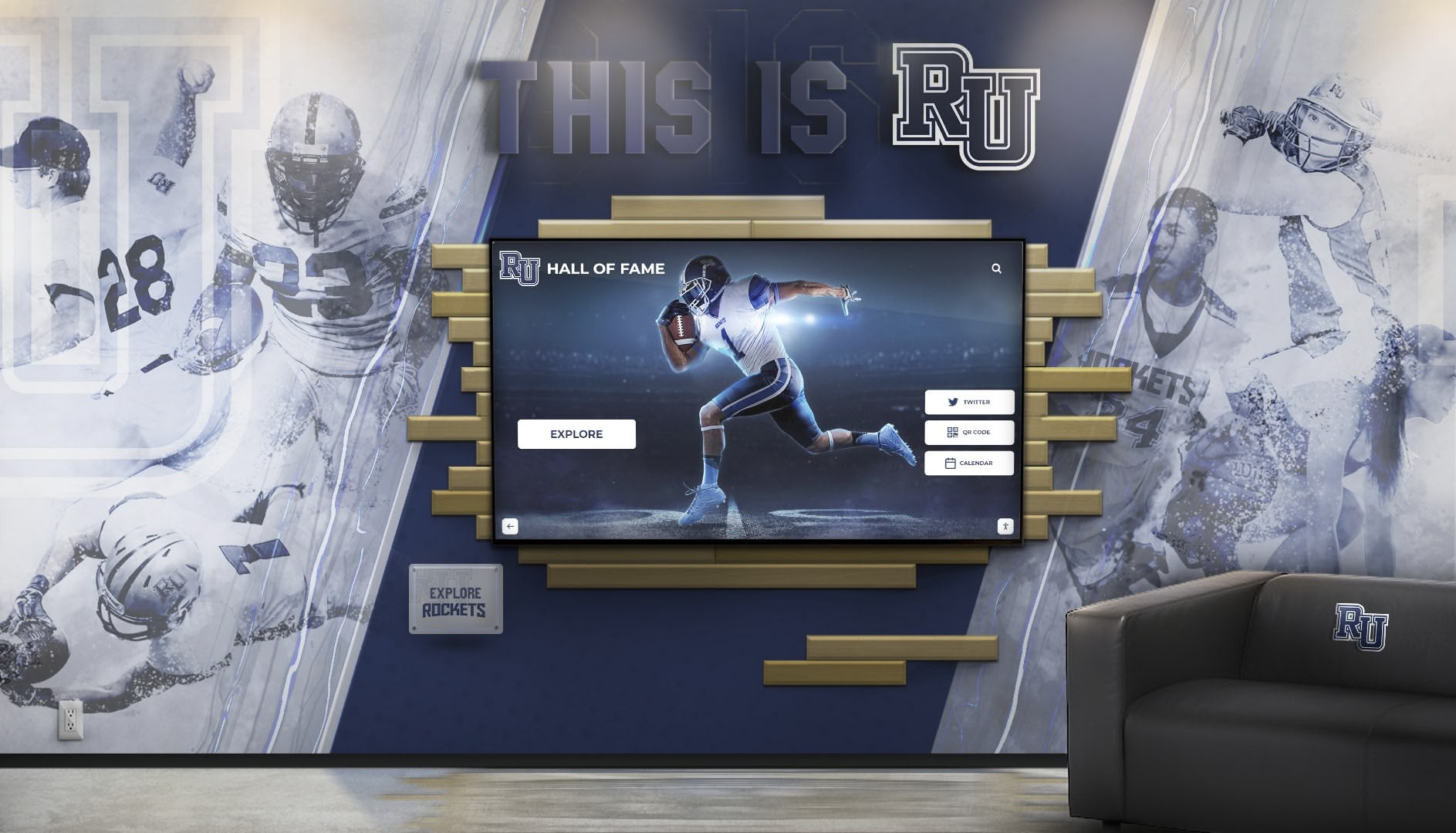
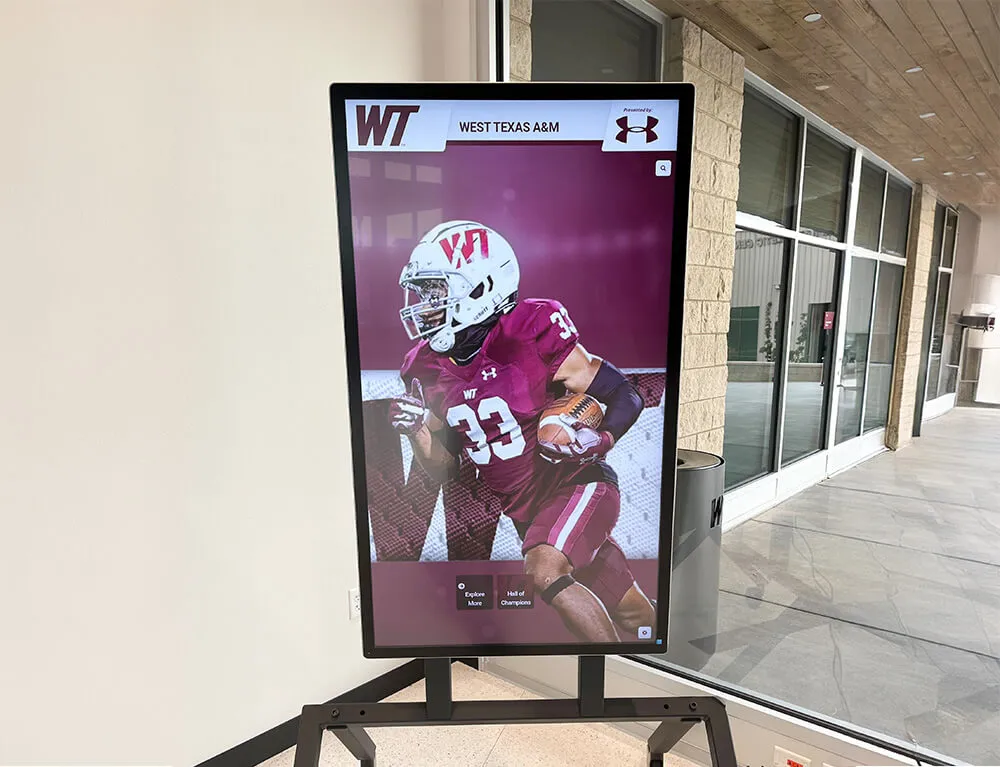
Lobby installations create welcoming first impressions showcasing student achievements and school pride to visitors and community members
Content Strategy for Engaging Digital Yearbooks
Platform technology alone doesn’t ensure compelling digital yearbooks—thoughtful content strategy creates engaging experiences students, families, and alumni value and return to repeatedly.
Comprehensive Coverage Beyond Traditional Yearbooks
Digital platforms enable documentation depth impossible with print, but only when schools develop content strategies taking advantage of unlimited space and multimedia capabilities.
Documenting Every Student Meaningfully
Traditional yearbooks often reduce many students to directory portraits with minimal additional coverage. Digital platforms enable comprehensive documentation including multiple candid photos beyond formal portraits for every student, documentation of all activities, clubs, and organizations students participate in, coverage of classroom learning, projects, and academic achievements, inclusion of student artwork, writing, and creative projects, and video clips capturing student personalities and authentic moments.
This comprehensive approach ensures every student feels meaningfully represented regardless of involvement in traditional high-visibility activities like athletics or student government.
Capturing Daily School Life Authenticity
The most treasured yearbook memories often come from candid moments capturing authentic daily school experiences rather than formal portraits or posed group photos. Digital platforms support including extensive candid photography from hallways, lunch periods, and informal gatherings, classroom learning moments and student engagement, behind-the-scenes preparation for performances, competitions, and events, community service projects and real-world learning experiences, and unexpected moments of humor, emotion, and authentic student life.
Distributed photography programs where students submit photos throughout school years build extensive content libraries impossible for small yearbook staff teams to capture alone, creating truly comprehensive documentation reflecting diverse student perspectives and experiences.
Multimedia Integration and Interactive Features
Digital yearbooks should leverage multimedia capabilities that differentiate them from print predecessors and increase engagement through interactive experiences.
Video Content Integration
Video documenting provides context and emotion impossible to convey through still images alone. Schools can include performance documentation from theater productions, concerts, and talent shows, athletic game highlights and championship moments, student video projects and documentary work, interview segments with graduating seniors sharing memories and advice, and time-lapse or montage videos documenting school year progressions.
Video content requires additional production effort but creates extraordinarily engaging yearbook experiences students share widely and return to repeatedly across years.
Audio and Oral History Elements
Audio content adds another dimension to memory preservation particularly valuable for music programs and oral history preservation. Schools might include audio recordings from vocal and instrumental music performances, podcast-style interviews with students, teachers, and community members, audio clips from school assemblies, announcements, and traditions, student-read poetry and creative writing, and oral history interviews with senior alumni sharing school history perspectives.
These audio elements create accessibility for vision-impaired users while adding richness to yearbook experiences for all users.
Interactive Timelines and Galleries
Rather than static page-by-page presentation, digital yearbooks can organize content through interactive navigation including chronological timelines documenting school years month-by-month or semester-by-semester, theme-based organization grouping content by activities, events, or concepts, student-centric views aggregating all content featuring specific students, and geolocation features documenting where school activities occurred including field trips and community service.
These organizational structures transform yearbooks from linear narratives into exploratory experiences where users discover content through multiple pathways based on personal interests and connections.
Alumni Engagement and Historical Archives
Digital platforms enable long-term value extending far beyond current students to alumni communities and historical preservation.
Digitizing Historical Yearbooks
Many schools undertake projects digitizing decades of print yearbooks, creating searchable digital archives accessible to alumni and researchers. These digitization efforts preserve deteriorating print volumes, make historical content searchable and discoverable, enable alumni to reconnect with classmates and memories, and create comprehensive school history resources for research and celebration.
Schools celebrating anniversaries or hall of fame inductions find digital yearbook archives invaluable for researching honoree backgrounds and documenting alumni achievements.
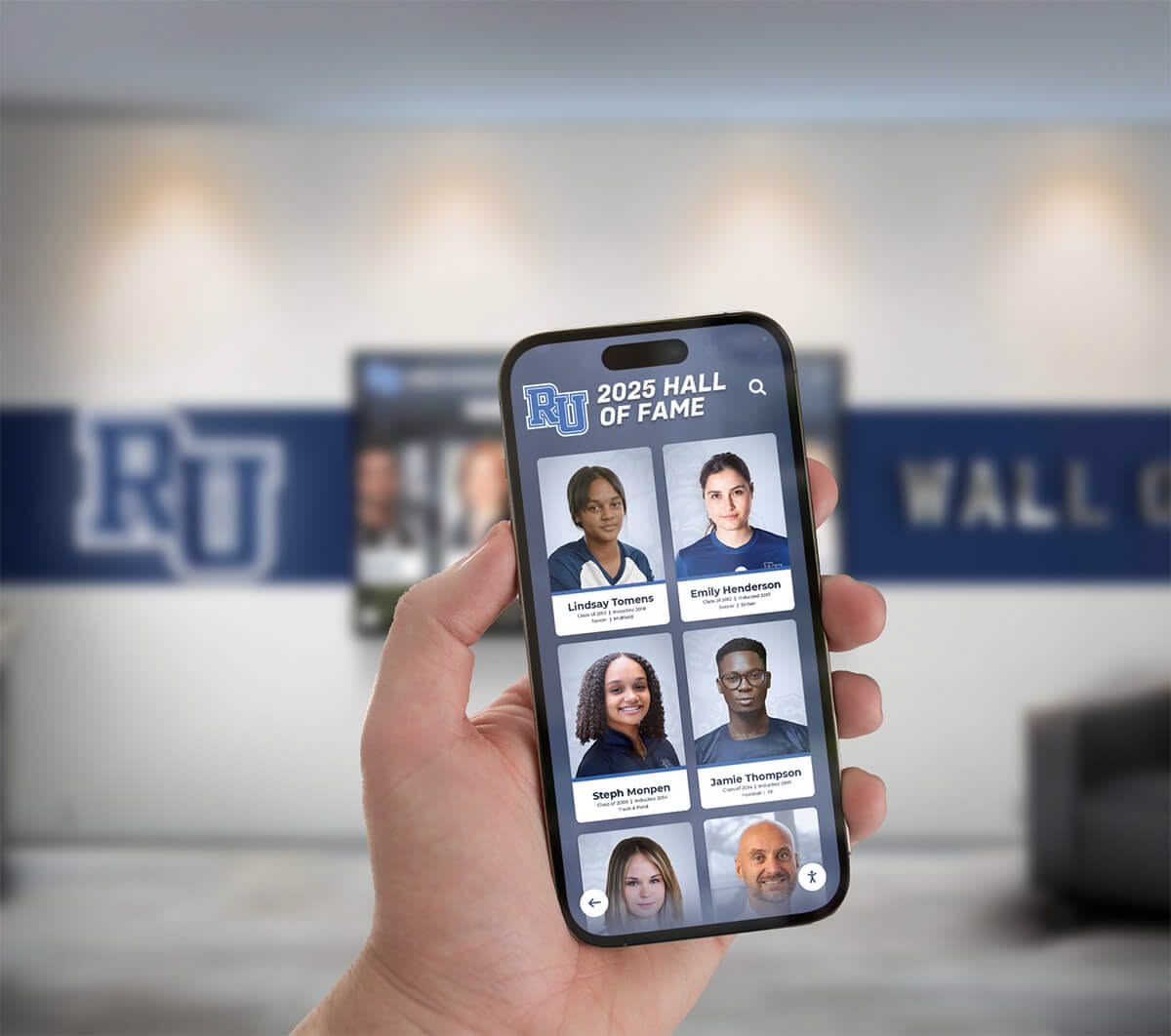
Mobile integration enables alumni to explore yearbook content and school history from anywhere, strengthening lifelong connections
Creating Alumni Contribution Opportunities
Digital platforms enable ongoing alumni engagement impossible with static print yearbooks. Alumni can submit “where are they now” updates and professional achievements, contribute photos and memories from their own school years, participate in reunion planning and coordination, provide mentoring and career guidance to current students, and support fundraising initiatives through engaged alumni networks.
This ongoing engagement transforms yearbooks from graduation endpoints into lifelong connection tools benefiting both alumni maintaining school connections and current students accessing mentorship and support from broader school communities.
Selecting the Right Digital Yearbook Platform
Schools evaluating digital yearbook solutions should assess platforms against specific criteria aligned with institutional needs, technical capabilities, and budget realities.
Essential Platform Features
Certain core capabilities separate effective digital yearbook platforms from basic photo-sharing sites lacking specialized school needs support.
User-Friendly Content Management
Yearbook staff often include students with varying technical skills, requiring intuitive platforms supporting successful content creation without extensive training. Important features include drag-and-drop interfaces for uploading and organizing photos, template-based layouts simplifying design consistency, batch processing tools for efficiently handling hundreds of photos, collaborative editing allowing multiple simultaneous users, and preview capabilities showing how content appears to end users.
Platforms requiring extensive technical knowledge or professional design skills create barriers preventing successful implementation, particularly at smaller schools with limited resources.
Robust Search and Navigation
The value of comprehensive digital content depends on users easily finding relevant information and memories. Essential search and navigation features include name-based searching finding all appearances of specific students, tag-based organization grouping content by activity, event, or theme, filter capabilities narrowing content by year, semester, or category, related content suggestions connecting associated photos and information, and mobile-optimized interfaces supporting smartphone and tablet access.
Without effective search and navigation, comprehensive content becomes overwhelming rather than valuable, reducing engagement and satisfaction.
Privacy and Permissions Management
School environments require sophisticated privacy controls protecting student information while enabling appropriate access. Necessary privacy features include role-based access control distinguishing students, parents, staff, and public users, graduated visibility settings controlling what content different user groups can access, opt-out capabilities respecting families not wanting student photos shared, content moderation tools reviewing submissions before publication, and audit trails documenting who accessed what information.
Privacy considerations prove especially important given evolving regulations like FERPA and state-specific student privacy laws requiring careful data handling.
Budget and Cost Considerations
Digital yearbook costs vary substantially across platform types and implementation approaches, requiring careful evaluation of both initial and ongoing expenses.
Platform Subscription Costs
Cloud-based yearbook services typically charge annual subscription fees based on student enrollment tiers. Small schools (under 500 students) might pay $1,000-$3,000 annually, mid-sized schools (500-1,500 students) typically see costs of $3,000-$7,000 annually, and large schools (over 1,500 students) may invest $7,000-$15,000 or more depending on features and services.
When comparing to print yearbook costs often exceeding $50-$100 per copy for 500+ page volumes, digital platforms frequently prove more cost-effective, especially when eliminating per-copy expenses enables providing access to all students regardless of ability to pay.
Interactive Display Hardware Costs
Schools implementing physical touchscreen displays face additional hardware investments. Professional-grade interactive touchscreen displays suitable for high-traffic school environments typically range from $8,000-$25,000 depending on screen size, touch technology, and durability features. Installation costs including mounting, electrical work, and network connectivity might add $1,000-$5,000 depending on location and infrastructure requirements. Annual software licensing or content management platform fees often range from $1,000-$5,000 for yearbook-specific display software.
Many schools implement interactive displays serving multiple purposes beyond yearbooks—including daily announcements, event calendars, lunch menus, and recognition programs—allowing costs to be shared across multiple budgets and stakeholder groups. Schools exploring small to medium-sized school digital solutions find interactive yearbook displays often justify investments through multi-year value and broad community impact.
Hidden Costs and Savings
Beyond obvious platform costs, schools should consider total implementation expenses and offsetting savings. Additional costs might include staff training time and potential consulting support, content digitization for historical yearbook archives, ongoing content management and administrative time, and bandwidth and infrastructure upgrades if necessary.
Offsetting savings include eliminated printing, binding, and physical distribution costs, reduced storage space needs for physical yearbook inventory, decreased advisor stipends and student staff time on production logistics, and potential revenue from print-on-demand sales to families wanting physical copies.
Comprehensive cost-benefit analysis over multi-year timeframes usually demonstrates favorable economics for digital implementations, particularly at larger schools where per-student print costs prove substantial.
Touchscreen Solutions for Physical Yearbook Displays
While cloud-based platforms provide accessible anywhere digital yearbooks, interactive touchscreen displays installed in school facilities create engaging physical yearbook experiences complementing online access.
The Value of Physical Yearbook Displays
Interactive displays in school common areas provide unique benefits beyond web-based yearbook access alone.
Daily Visibility and Engagement
Prominent lobby or hallway installations ensure yearbook content remains visible and accessible daily rather than requiring intentional online access students might forget. Students browse content during passing periods naturally encountering yearbook displays in their daily routines, visitors and prospective families touring schools experience student achievement and school culture immediately, alumni returning for events reconnect with memories and explore current student experiences, and community members attending school events engage with content before performances or competitions.
This ambient accessibility creates far higher engagement than online platforms students must intentionally visit, making yearbook content an active part of daily school culture rather than archived memories accessed only occasionally.
Celebration of Current Students
Physical displays prominently celebrate current students in school spaces creating visible recognition and school pride. High school reunion display boards often incorporate yearbook content enabling alumni to reconnect with classmates during reunion events, creating intergenerational connections between current students and returning graduates.
Interactive displays can feature rotating highlights of recent achievements, upcoming events, and milestone celebrations ensuring content feels fresh and relevant rather than static historical archives.
Technical Considerations for Yearbook Display Installations
Successful interactive yearbook displays require careful attention to hardware selection, software integration, and physical installation factors.
Hardware Selection
Yearbook displays face high usage in school environments requiring durable, reliable hardware. Important specifications include commercial-grade touchscreens designed for continuous operation rather than consumer displays, multi-touch capabilities supporting intuitive gestures like pinch-zoom and swipe navigation, screen sizes adequate for group viewing (typically 55-75 inches for lobby installations), and anti-glare coatings reducing reflection interference in naturally-lit spaces.
Hardware should withstand daily student interaction including cleaning protocols required in school environments, with protective bezels guarding against impact damage and sealed components preventing dust or liquid infiltration.
Software and Content Management
Effective yearbook display software should provide intuitive navigation requiring no instruction, automatic content updates synchronizing with cloud-based yearbook platforms, screensaver modes showcasing highlights when displays are idle, and administrative controls managing content, permissions, and display settings remotely.
Integration with existing school systems including student information systems for automatic roster updates, digital signage platforms for unified campus communication, and security systems managing after-hours display behavior creates cohesive technology ecosystems rather than isolated standalone systems.
Physical Installation Best Practices
Strategic placement and professional installation maximize display effectiveness and longevity. Prime locations include main lobbies and entrance areas where visitors and students naturally gather, high-traffic hallways connecting academic and common areas, media centers or libraries serving as information hubs, and athletic facilities near trophy cases or hall of fame displays.
Professional installation ensures secure mounting preventing tip-over risks, proper electrical and network connections supporting reliable operation, comfortable viewing heights accommodating diverse user ages and abilities, and ADA compliance providing accessible interaction for users with disabilities.
Schools can explore yearbook senior page design ideas that translate effectively to interactive touchscreen formats, creating engaging senior recognition experiences extending beyond traditional print layouts.
Case Study Insights: Schools Successfully Implementing Digital Yearbooks
While avoiding specific institutional names or fabricated quotes, examining common patterns from schools successfully implementing digital yearbook platforms provides valuable implementation guidance.
Implementation Patterns from Early Adopters
Schools pioneering digital yearbook transitions report several consistent success factors emerging across diverse contexts and community types.
Phased Rollout Approaches
The most successful implementations typically avoid abrupt complete transitions, instead introducing digital capabilities gradually while maintaining traditional elements during transition periods. Common phased approaches include pilot year maintaining print yearbooks while introducing supplemental digital platforms, gathering feedback and refining processes before broader rollout, optional print-on-demand in year two once digital platforms prove reliable, and fully digital by year three with historical yearbook digitization projects ongoing.
This gradual transition gives school communities time to adapt while demonstrating digital platform value before eliminating beloved traditional formats, building support through experience rather than requiring faith in untested systems.
Student Leadership Empowerment
Schools where student yearbook staff receive extensive platform training and creative control report higher quality content and greater student body engagement than implementations driven primarily by adult administrators. Successful approaches include student committees leading platform selection and customization decisions, peer training programs where experienced students mentor new yearbook staff, student-led promotional campaigns building excitement throughout school communities, and authentic creative authority where students make editorial decisions within established guidelines.
When students own digital yearbook platforms as their projects rather than passive tools imposed by administrators, content quality and engagement improve substantially while preparing students for digital media careers and leadership development.
Common Challenges and Solutions
Even successful implementations encounter obstacles requiring thoughtful problem-solving and adaptation.
Initial Content Volume Concerns
Schools transitioning to digital platforms initially worry about filling unlimited space with quality content rather than sufficient photos to populate pages. Successful solutions include distributed photography programs where students submit photos continuously throughout school years, dedicated photography teams assigned to specific activities ensuring comprehensive coverage, parent volunteers and activity advisors contributing photos from their perspectives, and planned candid photography days capturing daily school life authenticity.
After initial adjustment periods, most schools report overwhelming content volume requiring curation rather than struggling to fill space, representing positive problems reflecting comprehensive documentation.
Alumni Access and Historical Content
Providing alumni access to their own yearbooks while protecting current student privacy requires careful policy development. Common approaches include graduated access where recent alumni (0-5 years) receive full platform access while older alumni see limited public content, reunion-based access providing full temporary access during reunion years, and digitization projects creating historical archives separate from current student systems with appropriate privacy controls.
Some schools partner with alumni associations managing separate historical archives while current student platforms remain under direct school control with stricter privacy protections.
Sustaining Engagement Beyond Launch
Initial digital yearbook launches often generate excitement that wanes without active engagement strategies. Successful long-term engagement tactics include regular content additions throughout school years rather than single annual publications, featured content highlighting specific students, activities, or memories on rotating schedules, interactive challenges encouraging students to find themselves in photos or submit content, integration with school traditions like spirit week activities documented comprehensively, and alumni features connecting current students with graduated classes.
Yearbooks that evolve into living platforms students engage with regularly throughout school years create far more value than annual publications accessed once at distribution then forgotten.
Beyond Yearbooks: Comprehensive Digital Recognition Systems
Forward-thinking schools recognize digital yearbooks as components within broader comprehensive recognition ecosystems celebrating student achievement, preserving institutional history, and fostering school community connections.
Integrated Recognition Platforms
Rather than isolated yearbook systems, comprehensive platforms combine multiple recognition functions sharing infrastructure, content, and interfaces.
Unified Achievement Documentation
Integrated platforms document the full spectrum of student accomplishment across academic, athletic, artistic, and service domains. These systems can present academic excellence recognition including honor rolls, AP scholars, and department awards, athletic achievements from individual records to team championships, performing arts participation and competition results, leadership roles in student government and clubs, community service hours and project documentation, and special awards and scholarships earned.
When all recognition flows through unified platforms, students and families access comprehensive achievement portfolios rather than scattered recognition across disconnected systems. Schools implementing awards ceremony planning programs find digital platforms enable sophisticated recognition celebration and ongoing visibility beyond single-event ceremonies.
Alumni and Historical Archives
Yearbook systems naturally extend to comprehensive historical archives documenting decades or centuries of school history. Integrated platforms can include digitized historical yearbooks from founding through present, alumni profiles documenting post-graduation achievements and career paths, historical photographs and memorabilia collections, institutional milestone documentation of building constructions, program launches, and anniversaries, and oral history collections preserving community memories and perspectives.
These comprehensive archives serve educational curriculum purposes, community identity building, and alumni engagement far beyond traditional yearbook functions.
Multi-Purpose Display Infrastructure
Physical interactive displays serving yearbook functions can simultaneously present daily announcements and schedules, cafeteria menus and nutritional information, wayfinding for visitors navigating campuses, emergency notifications and safety information, and promotional content for upcoming events and activities.
This multi-purpose functionality justifies investments by serving diverse stakeholder needs rather than single-purpose yearbook presentations, while creating cohesive information ecosystems rather than competing communication channels throughout school facilities.
Rocket Alumni Solutions: Comprehensive Digital Recognition Platforms
Rocket Alumni Solutions provides integrated touchscreen platforms combining digital yearbook functionality with comprehensive recognition capabilities specifically designed for educational institutions navigating transitions from traditional formats to modern interactive systems.
The platform supports unlimited photo and content storage enabling comprehensive documentation of all students and activities, interactive touchscreen displays suitable for lobby installations and high-traffic areas, mobile-responsive interfaces accessible from any device, integrated content management supporting yearbook staff workflows, and scalable solutions appropriate for schools of all sizes from small rural districts to large comprehensive high schools.
Beyond basic yearbook functions, Rocket platforms integrate broader recognition including athletic record displays and championship documentation, academic honor rolls and scholarship awards, hall of fame profiles for distinguished alumni, performing arts performance archives, and historical content from digitized yearbook collections.
Schools implementing Rocket systems report significant increases in student engagement with yearbook and recognition content, improved community pride through prominent achievement celebration, enhanced alumni connections through accessible historical content, and cost savings compared to traditional print yearbook and static trophy case alternatives.
The platform’s intuitive interface requires minimal technical expertise enabling student yearbook staff to manage content independently while administrative controls ensure appropriate privacy protection and content moderation.
For schools exploring comprehensive digital recognition systems extending beyond traditional yearbook functions to create engaging, sustainable platforms celebrating student achievement and preserving institutional history, Rocket Alumni Solutions offers yearbook-integrated recognition platforms combining interactive touchscreen displays with cloud-based content management supporting desktop and mobile access.
Future Trends in Digital Yearbook Technology
Digital yearbook platforms continue evolving with emerging technologies introducing new capabilities and engagement opportunities for schools and students.
Artificial Intelligence and Automated Features
AI technologies increasingly support yearbook creation through automation reducing staff workload and improving content quality.
Automated Photo Organization
Machine learning algorithms can automatically tag photos identifying students, activities, and events, suggest photos for specific yearbook sections based on content analysis, detect and flag low-quality images requiring replacement, group similar photos helping editors select best shots, and identify students receiving insufficient coverage requiring additional photos.
These automation capabilities enable yearbook staff to focus on creative decisions and storytelling rather than tedious organization and tagging tasks, particularly valuable for smaller schools with limited staff resources.
Smart Content Recommendations
AI systems can analyze user engagement patterns suggesting content users might find interesting, recommend historical yearbook pages related to current content, identify gaps in coverage requiring additional photos or information, and personalize navigation highlighting content featuring specific students or activities.
As these recommendation systems mature, digital yearbooks become increasingly personalized experiences rather than one-size-fits-all publications, increasing engagement through relevance.
Augmented Reality and Immersive Experiences
Emerging AR technologies promise to enhance digital yearbooks with immersive, interactive elements transcending traditional photo and video content.
AR-Enhanced Print Integration
Hybrid approaches can integrate AR functionality into print yearbooks where smartphone apps reveal additional digital content when pointed at physical pages. Photos might trigger video clips or audio recordings, printed QR codes link to comprehensive digital galleries, and 3D models bring static images to life through AR visualization.
This approach combines traditional print permanence with digital enhancement, potentially offering compelling middle ground for schools and communities reluctant to fully abandon physical yearbooks.
Virtual Reality Yearbook Experiences
VR technology could enable immersive yearbook experiences including virtual school tours documenting facilities and spaces, 360-degree event documentation placing users inside performances and competitions, and immersive historical experiences comparing school environments across decades.
While current VR accessibility limitations constrain widespread adoption, as VR hardware becomes commonplace in schools and homes, yearbook applications may drive new engagement forms impossible with traditional media.
Blockchain and Digital Preservation
Blockchain technologies offer potential solutions for long-term digital yearbook preservation and authenticity verification.
Permanent Digital Archives
Blockchain-based storage systems promise truly permanent digital archives immune to platform changes, corporate closures, or data migration challenges potentially affecting cloud-based platforms. Yearbook content cryptographically secured on blockchain networks would remain accessible perpetually regardless of specific platform or vendor longevity, ensuring today’s digital yearbooks remain accessible to future generations as reliably as surviving print volumes from decades past.
Authenticated Memories
Blockchain verification could ensure yearbook content authenticity preventing unauthorized alterations or falsification of historical records. This authentication proves particularly valuable for official records, award documentation, and historical preservation where content integrity matters legally and historically.
While blockchain applications remain largely theoretical for yearbook contexts currently, long-term digital preservation challenges may drive adoption as institutions seek permanent solutions ensuring today’s memories remain accessible across centuries.
Conclusion: Embracing Digital Yearbook Transformation
The transition from traditional print yearbooks to digital platforms represents more than technology adoption—it fundamentally reimagines how schools document student experiences, celebrate achievement, preserve institutional history, and foster lasting community connections extending from current students to alumni spanning decades.
Digital high school yearbooks overcome the inherent limitations of print formats—space constraints forcing difficult coverage choices, escalating costs creating equity barriers, and static content restricting engagement to single annual publications—while introducing capabilities impossible with physical media: unlimited comprehensive documentation, interactive exploration and searchability, continuous updates throughout school years, perpetual accessibility across distances and decades, and multimedia richness capturing authentic school experiences.
Successful implementation requires thoughtful planning addressing technical infrastructure, privacy protections, and change management building support among students, families, and staff who may harbor deep attachments to traditional formats. Phased rollout approaches, student leadership empowerment, and hybrid models maintaining print options during transitions help schools navigate change while demonstrating digital platform value through experience rather than requiring faith alone.
The most effective digital yearbook strategies extend beyond simply replicating print formats online to embrace comprehensive recognition ecosystems celebrating diverse student achievements, preserving rich historical archives, and creating living platforms students and alumni engage with throughout lifetimes. These integrated systems transform yearbooks from graduation endpoints into ongoing community connection tools fostering school pride and identity across generations.
As technology continues advancing with artificial intelligence, augmented reality, and blockchain innovation, digital yearbook capabilities will expand further, introducing engagement forms and preservation techniques currently impossible to imagine. Schools embracing digital transformation today position themselves at the forefront of memory preservation and student celebration reimagined for modern expectations and future possibilities.
For schools ready to explore how comprehensive digital recognition platforms can transform yearbook traditions while celebrating student achievement through engaging interactive experiences, discover how Rocket Alumni Solutions creates integrated yearbook and recognition systems combining touchscreen displays with cloud-based platforms serving students, families, and alumni communities.