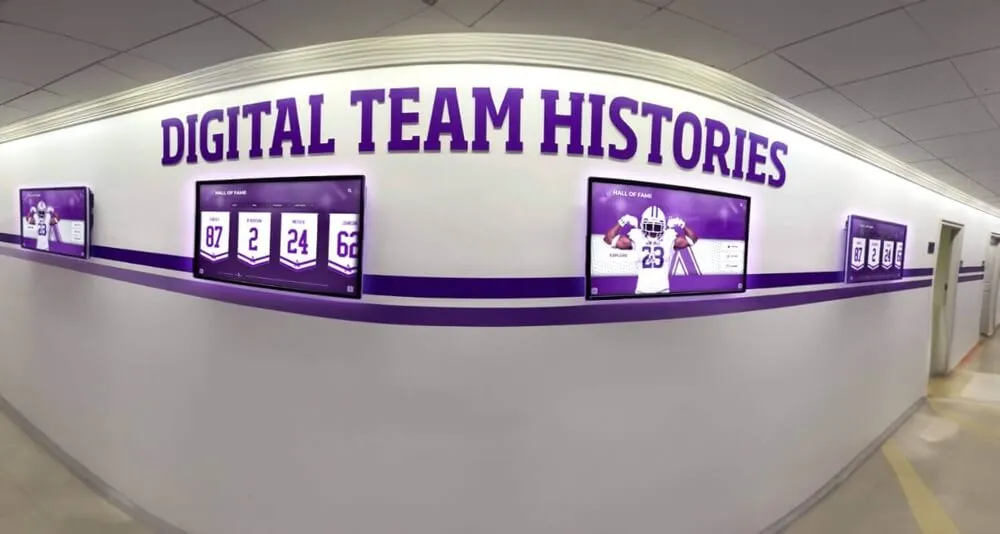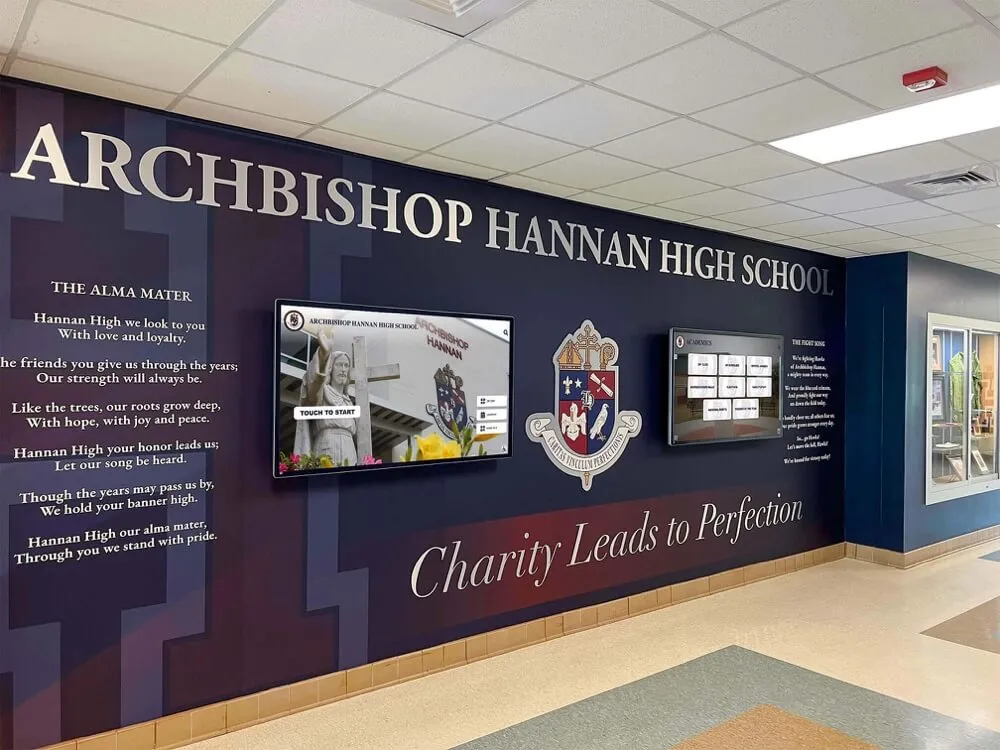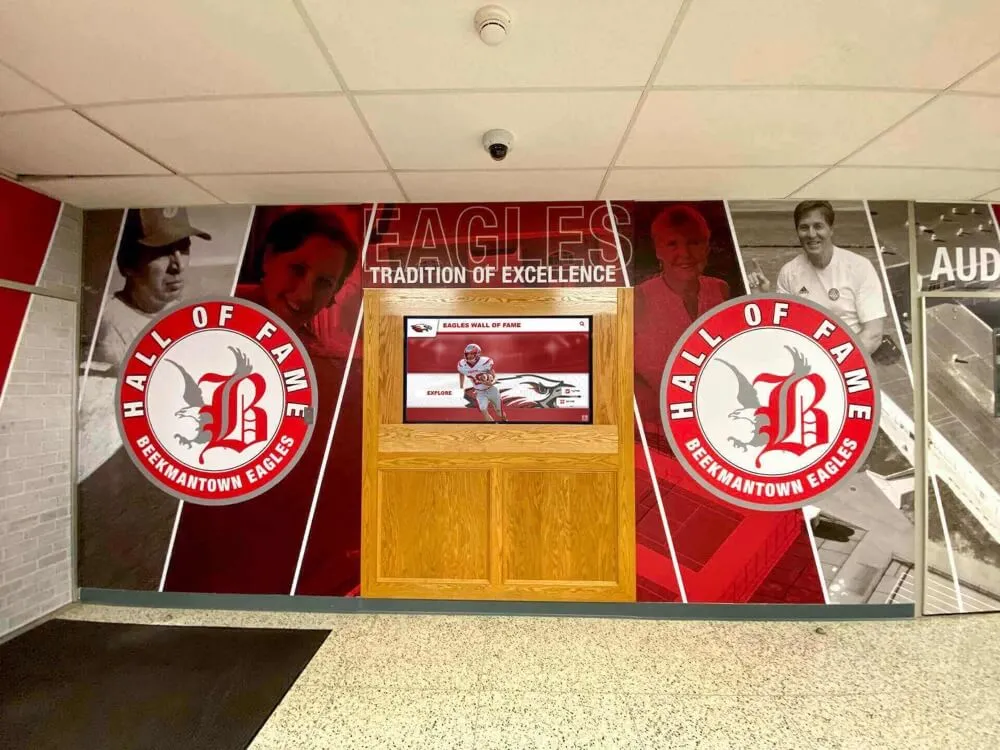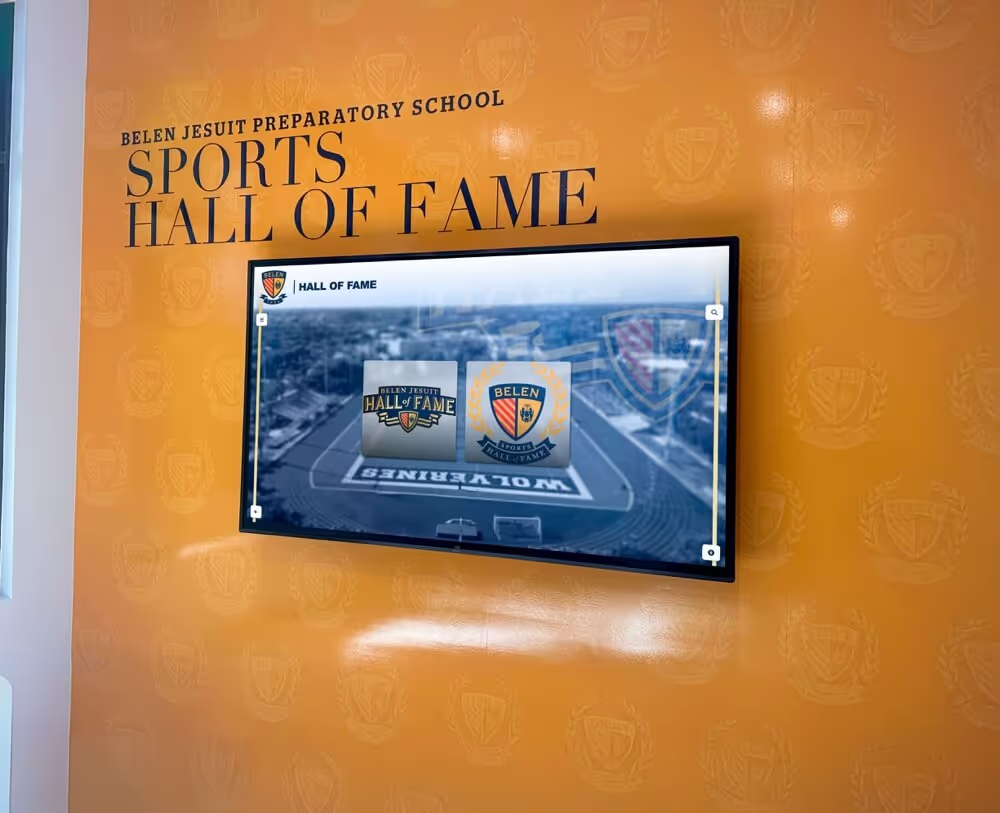




Athletic programs accumulate decades of trophies, championship banners, and individual honors that traditional glass display cases simply cannot accommodate. As collections grow, administrators face impossible choices: which achievements deserve prime visibility, and which must be relegated to storage where they’re forgotten rather than celebrated. Physical trophy cases create inherent limits that undermine comprehensive recognition, forcing schools to prioritize recent victories while historical excellence disappears from view.
A digital trophy case eliminates space constraints entirely while transforming recognition from static documentation into multimedia storytelling. Interactive touchscreen displays accommodate unlimited trophies spanning centuries of tradition. Cloud-based platforms enable instant updates without engraving delays or installation scheduling. Multimedia profiles tell complete championship stories through photos, videos, and rich narratives. And web-based extensions make recognition accessible to alumni, families, and communities worldwide—not just those visiting physical facilities during limited hours.
This comprehensive design guide explores how to create exceptional digital trophy case experiences that honor every achievement appropriately. From understanding layout blueprints and UX patterns through content strategies, accessibility considerations, and brand integration, you’ll discover actionable frameworks for leveraging touchscreen technology to celebrate athletic excellence while building culture, inspiring current competitors, and strengthening community connections across generations.
Schools implementing thoughtfully designed digital trophy case experiences report 4-7 minute average engagement times compared to 30-60 seconds with traditional displays—representing transformational improvement through interactive exploration enabling self-directed discovery of institutional heritage and competitive tradition.

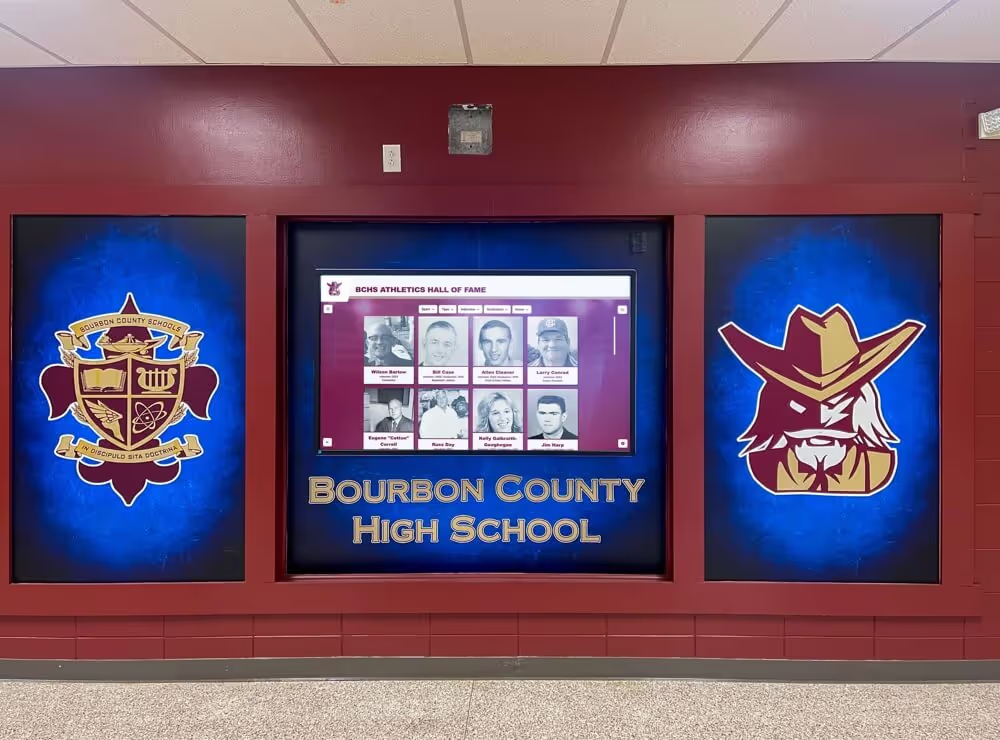
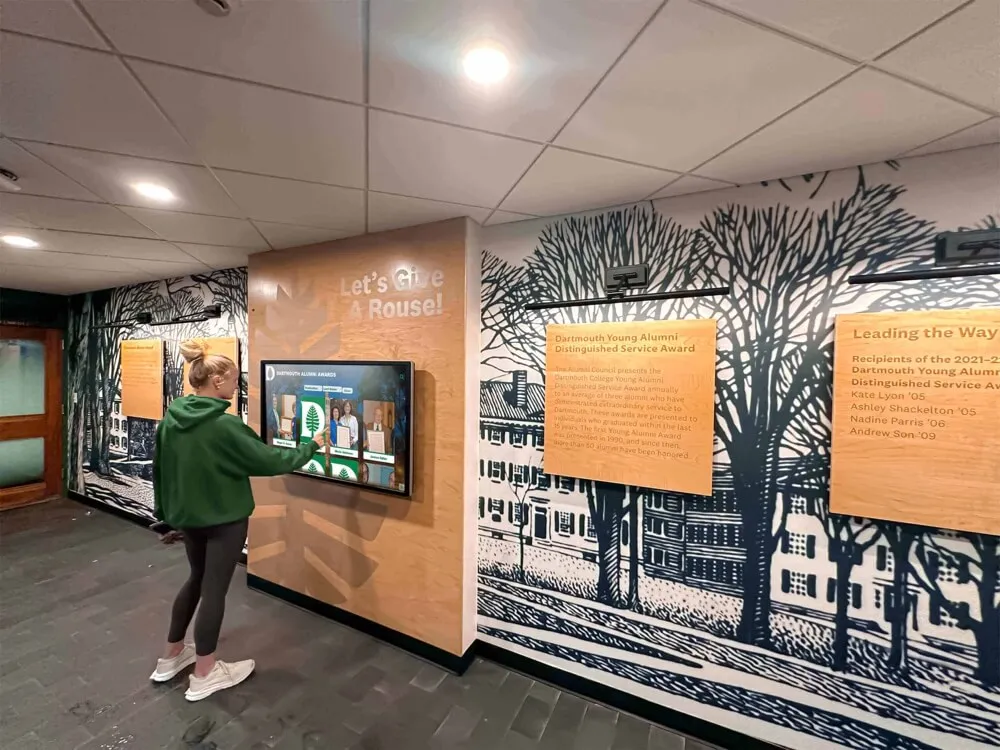
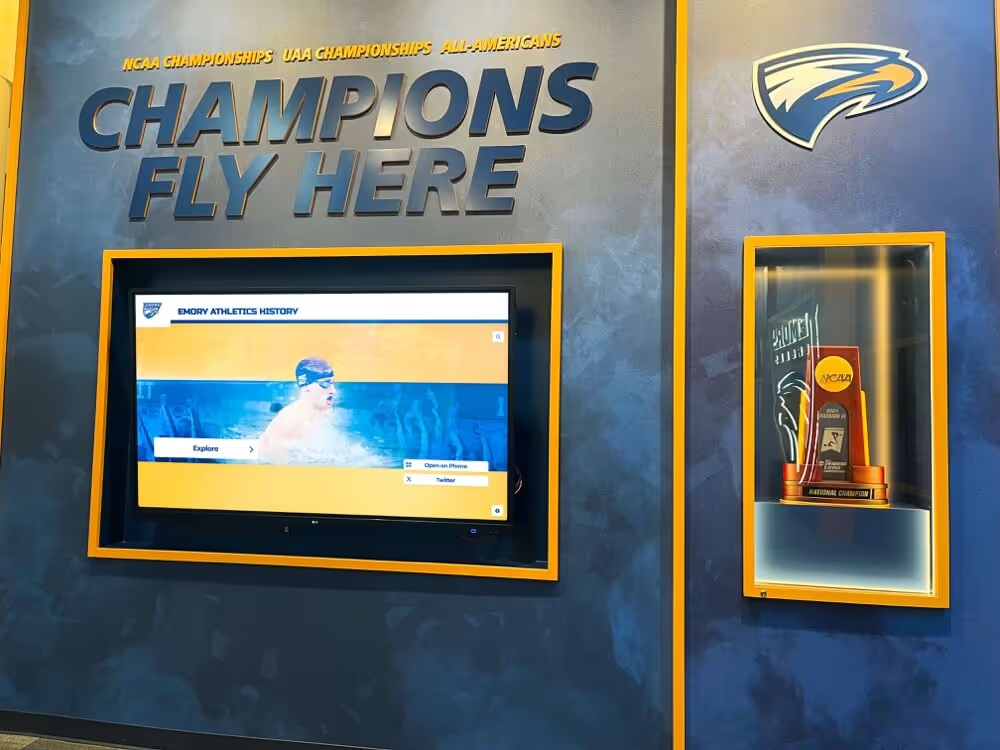
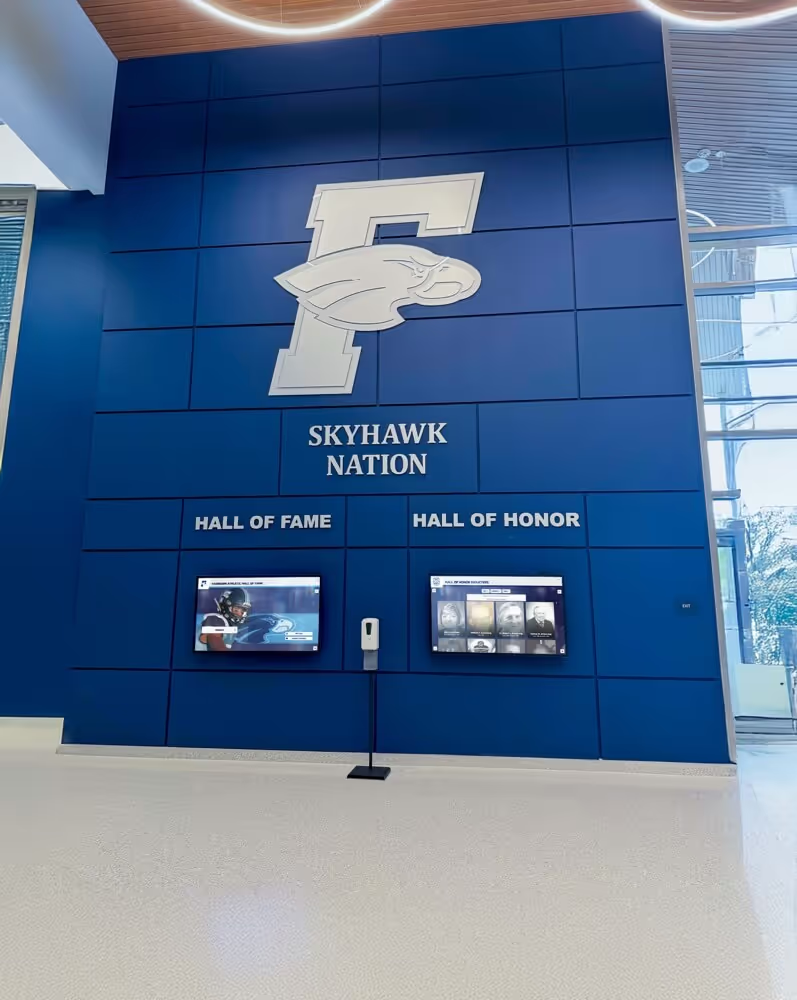
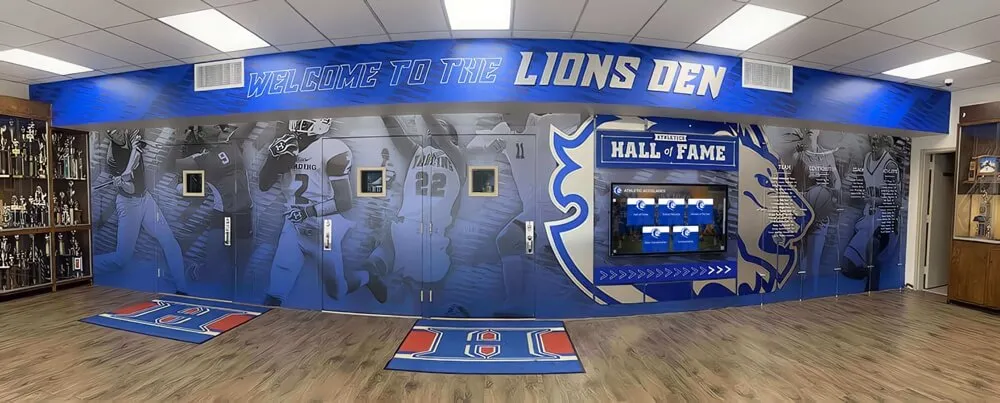
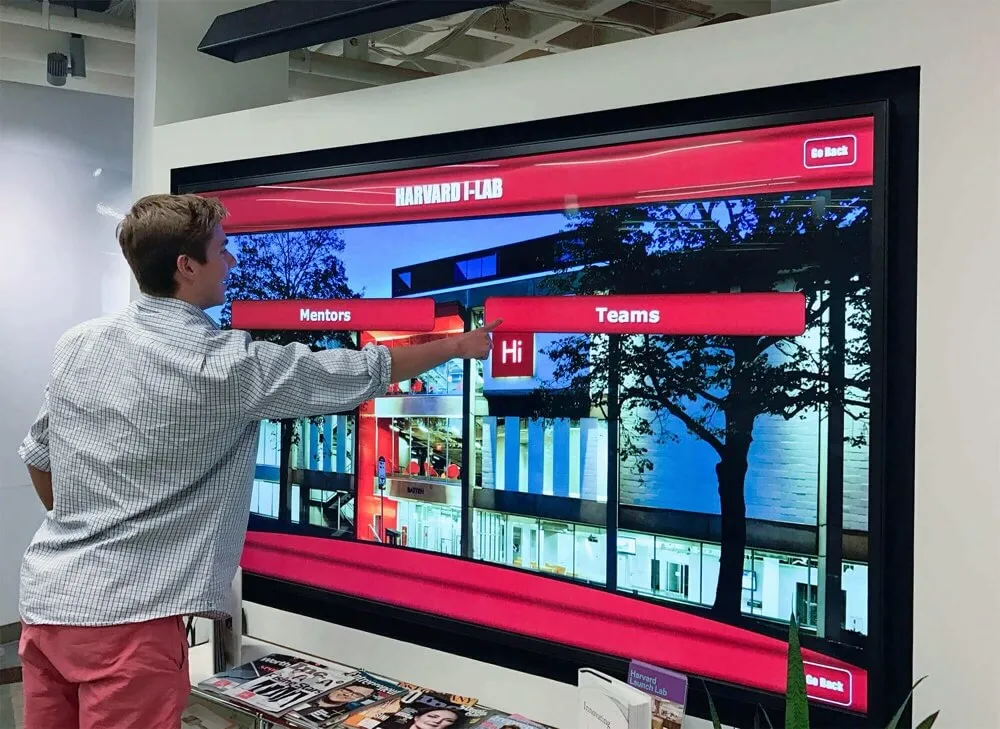
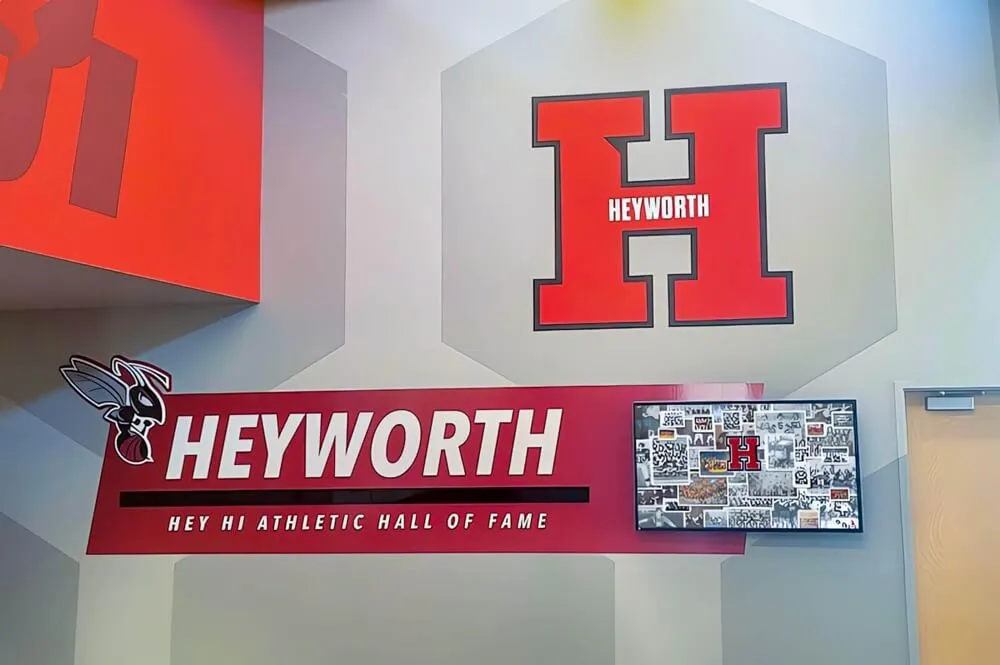
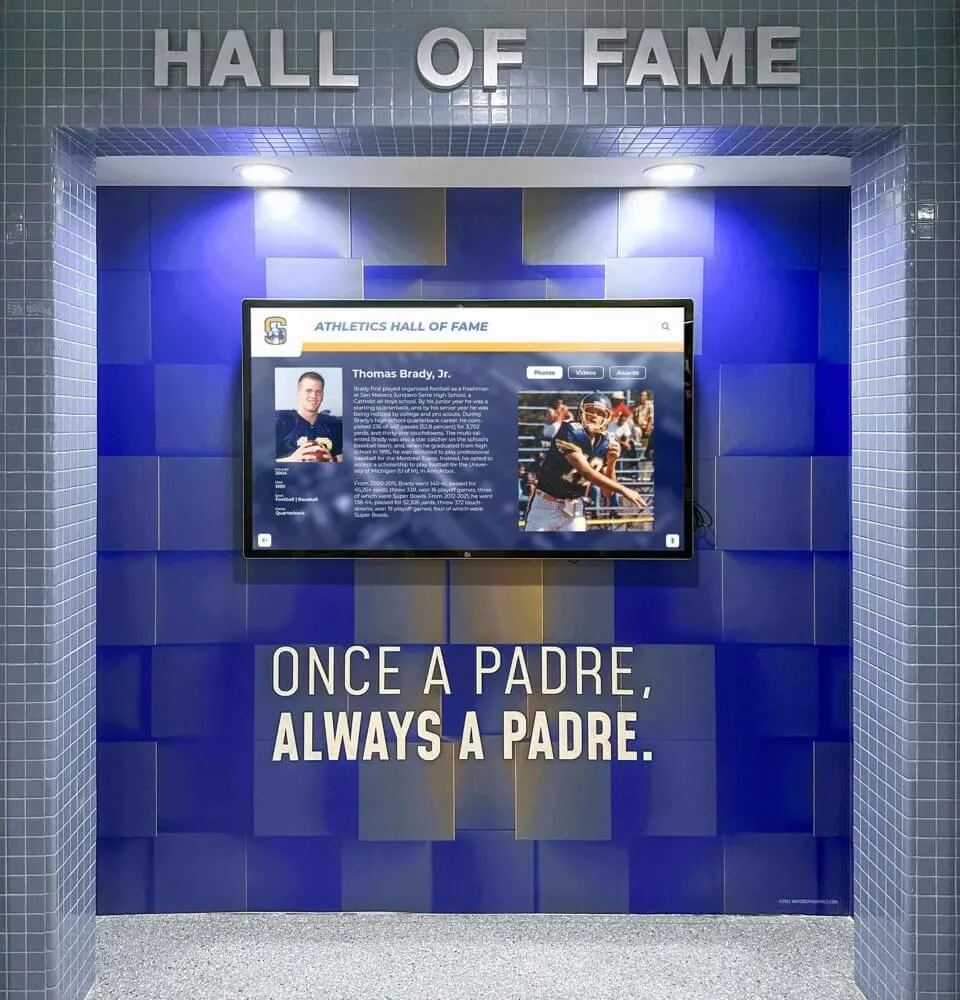
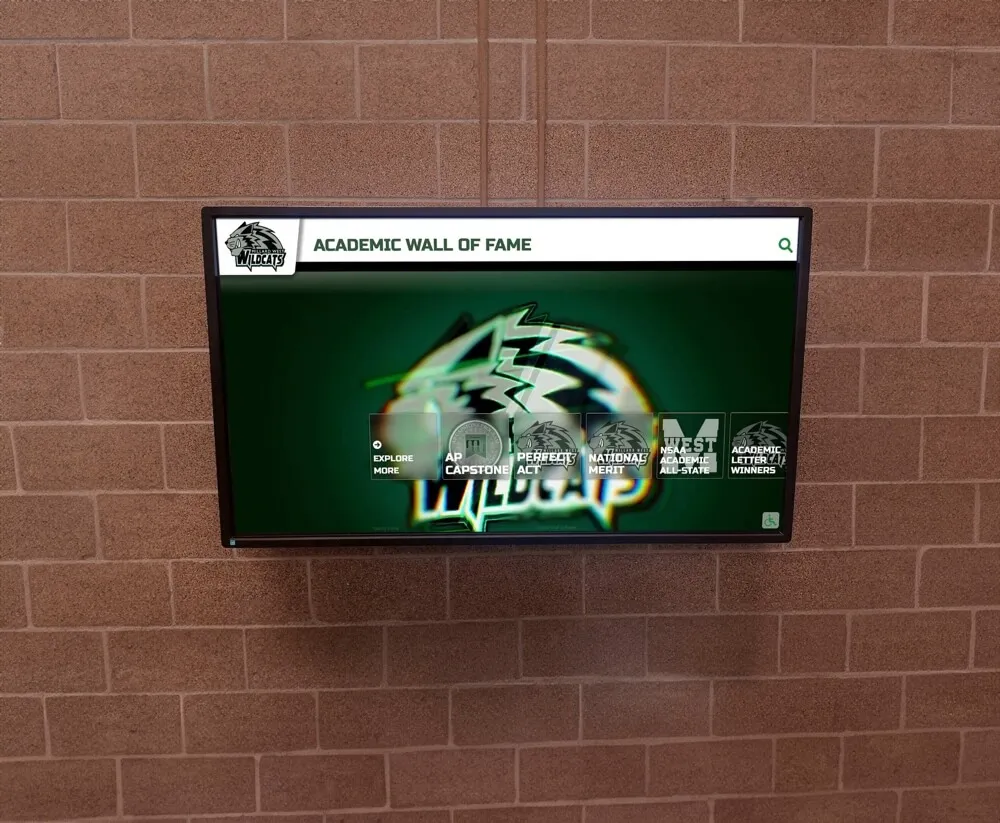
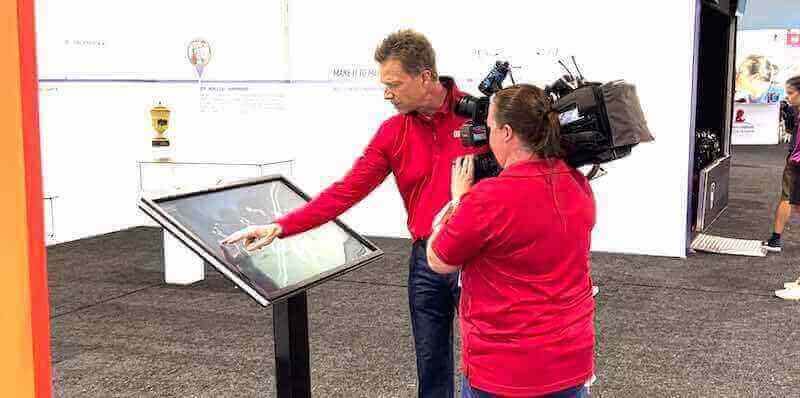
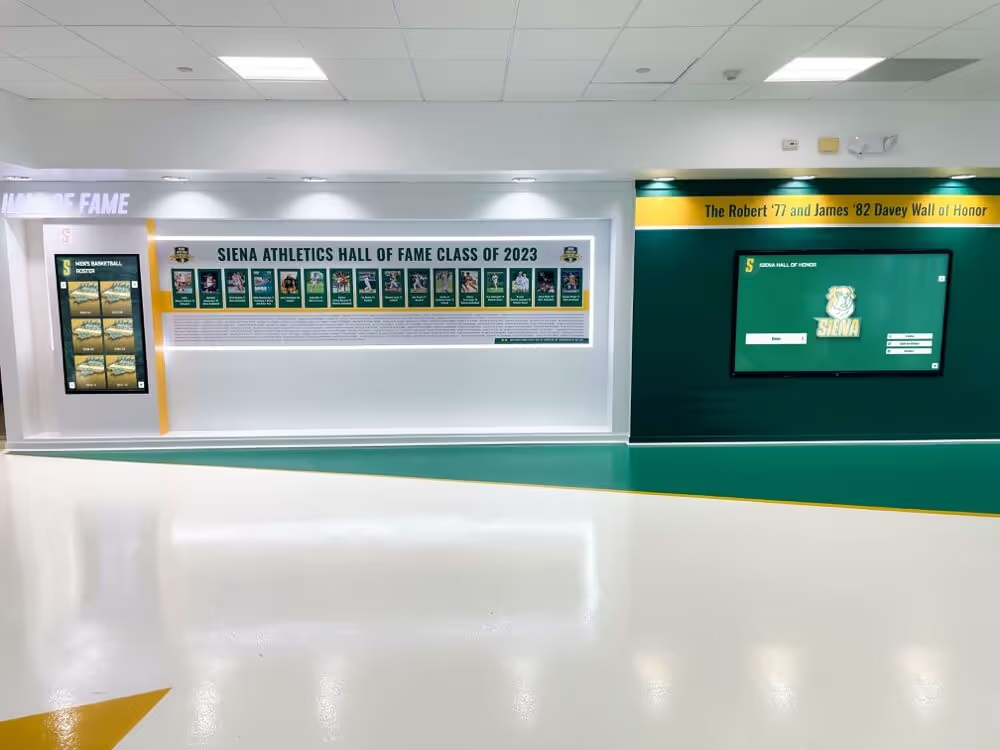
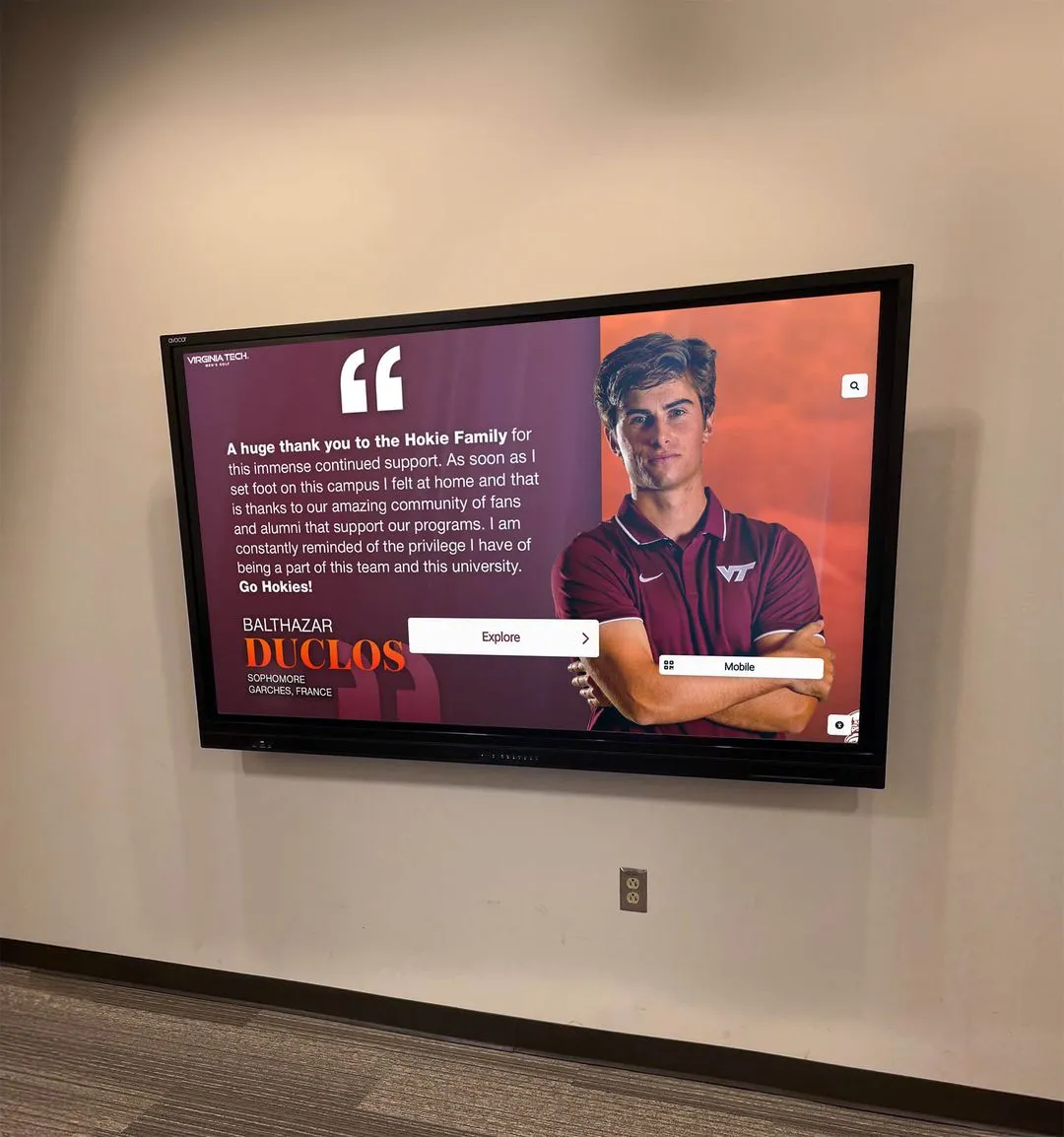
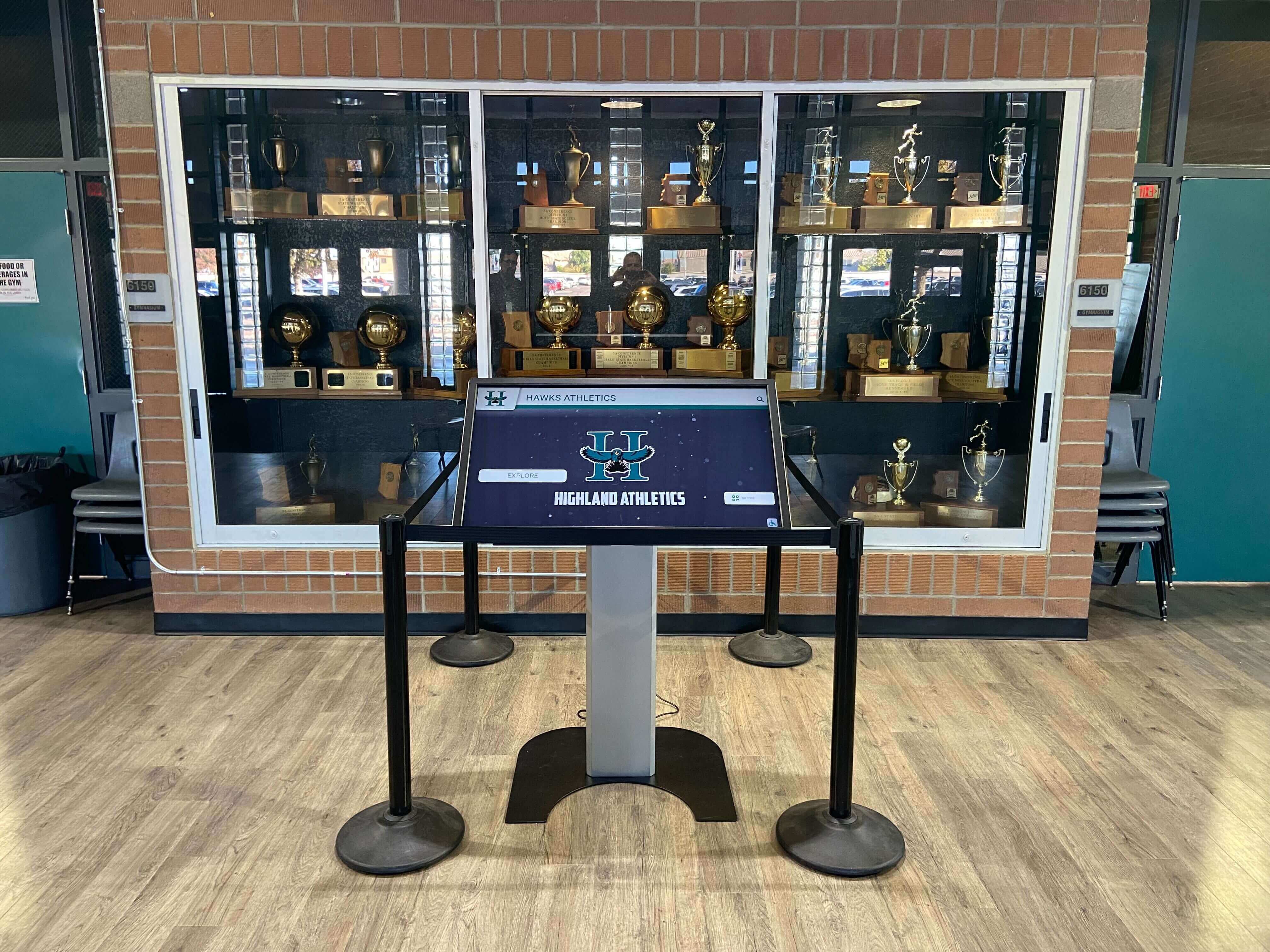
Modern digital trophy cases integrate seamlessly with traditional displays while providing unlimited recognition capacity and engaging interactive experiences
Experience Goal: What Digital Trophy Cases Solve
Before exploring design specifics, understanding fundamental challenges digital trophy case experiences address ensures alignment between implementation and institutional needs.
The Recognition Capacity Crisis
Successful athletic programs accumulate substantial trophy volumes that traditional cases cannot accommodate sustainably:
Annual Trophy Accumulation Patterns
A comprehensive high school athletic program fielding 15-20 sports generates significant recognition requirements:
- Conference championships across fall, winter, and spring seasons (8-15 trophies annually)
- State and regional tournament awards including participation and placement recognition (5-10 trophies annually)
- Individual athlete awards and all-conference selections (10-20 pieces annually)
- Coach recognition and milestone achievements
- Special awards including sportsmanship, leadership, and character recognition
Successful programs accumulate 25-40 major trophies and awards annually. Over 20 years—a typical athletic director tenure—that represents 500-800 pieces requiring display space. Traditional trophy cases hold approximately 25-40 trophies each, meaning comprehensive display theoretically requires 15-25 large cases consuming impossible wall space commitments for most school buildings.
The Hidden Cost of Storage
When trophy cases fill, schools face difficult choices about which achievements receive ongoing visibility. Moving championship trophies to storage closets sends implicit messages undermining athletic culture:
- Current athletes see that accomplishments matter temporarily but not permanently
- Alumni returning to campus find their achievements no longer displayed
- Prospective athletes touring facilities see thin recent recognition suggesting limited tradition
- Families expect lasting institutional acknowledgment that storage contradicts
Digital trophy case technology eliminates these messaging problems entirely by accommodating unlimited recognition without ever requiring removal as collections grow, ensuring every achievement receives permanent celebration regardless of when it occurred or which sport earned it.
Traditional Trophy Case Limitations
Physical trophy displays face fundamental constraints that digital solutions address comprehensively:
Space Constraints
Traditional cases exhaust available wall space within years, requiring either expensive physical expansion consuming funds better directed toward programs and equipment, or difficult prioritization decisions about which achievements deserve display and which must be stored away from visibility.
Update Delays and Complexity
Each trophy added to traditional cases requires engraved plaques ($50-200 per trophy), professional engraving services with 3-6 week turnaround times, installation labor arranging cases to accommodate new pieces, and periodic reorganization as collections grow. These processes delay recognition impact while creating administrative burdens and recurring expenses.
Information Density Limitations
Trophy case plaques provide minimal information—typically championship year, sport, and basic details. This limited density fails to tell complete stories about championship journeys, team members who earned recognition, or context explaining significance within program tradition.
Accessibility Restrictions
Traditional trophy cases serve only people physically present in specific buildings during operating hours. Alumni living elsewhere, families researching programs, and prospective athletes exploring traditions cannot access recognition unless they visit campus at convenient times.
Digital trophy case experiences eliminate all these constraints through unlimited digital capacity, instant cloud-based updates, rich multimedia storytelling, and universal web-based access extending recognition beyond physical facilities to worldwide audiences maintaining ongoing connection with institutional heritage.
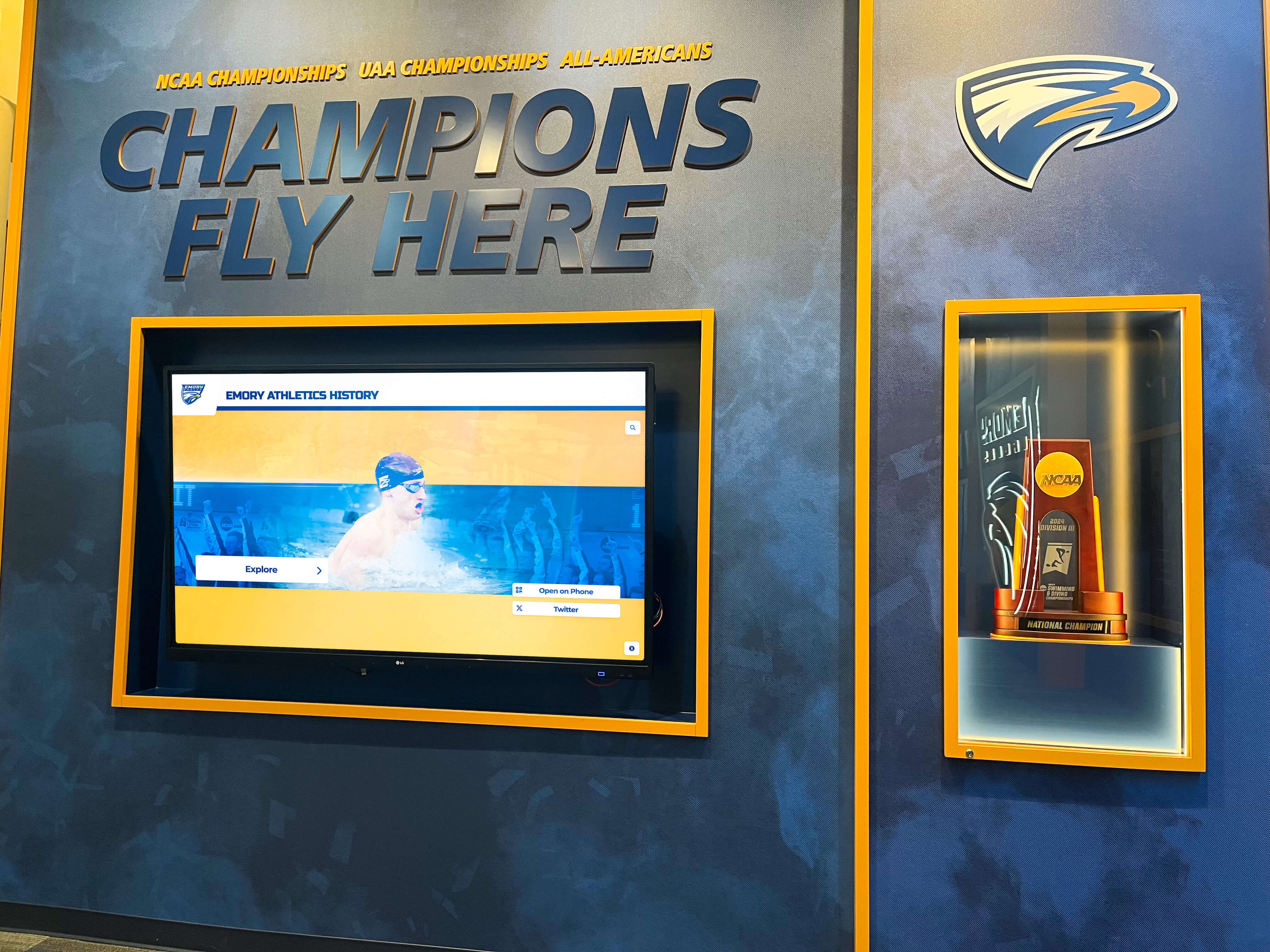
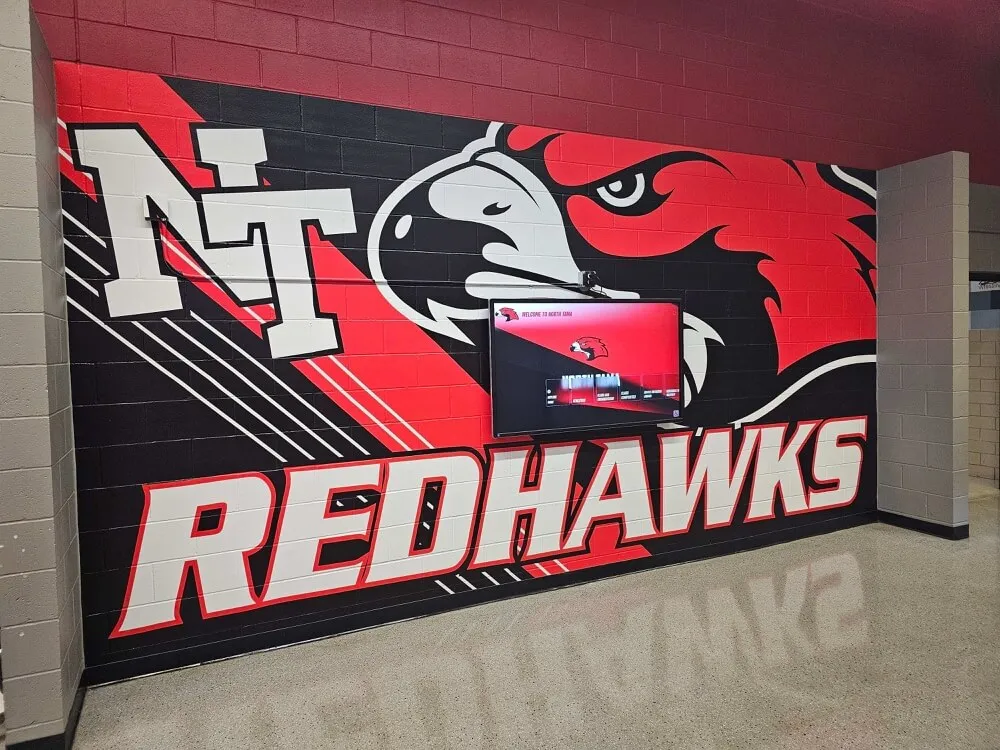
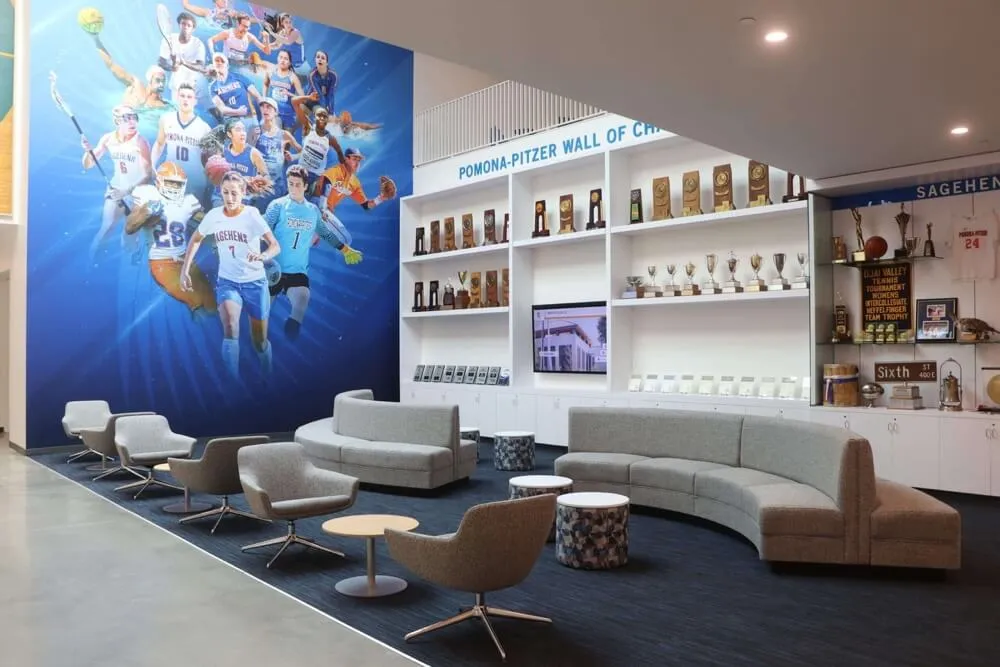
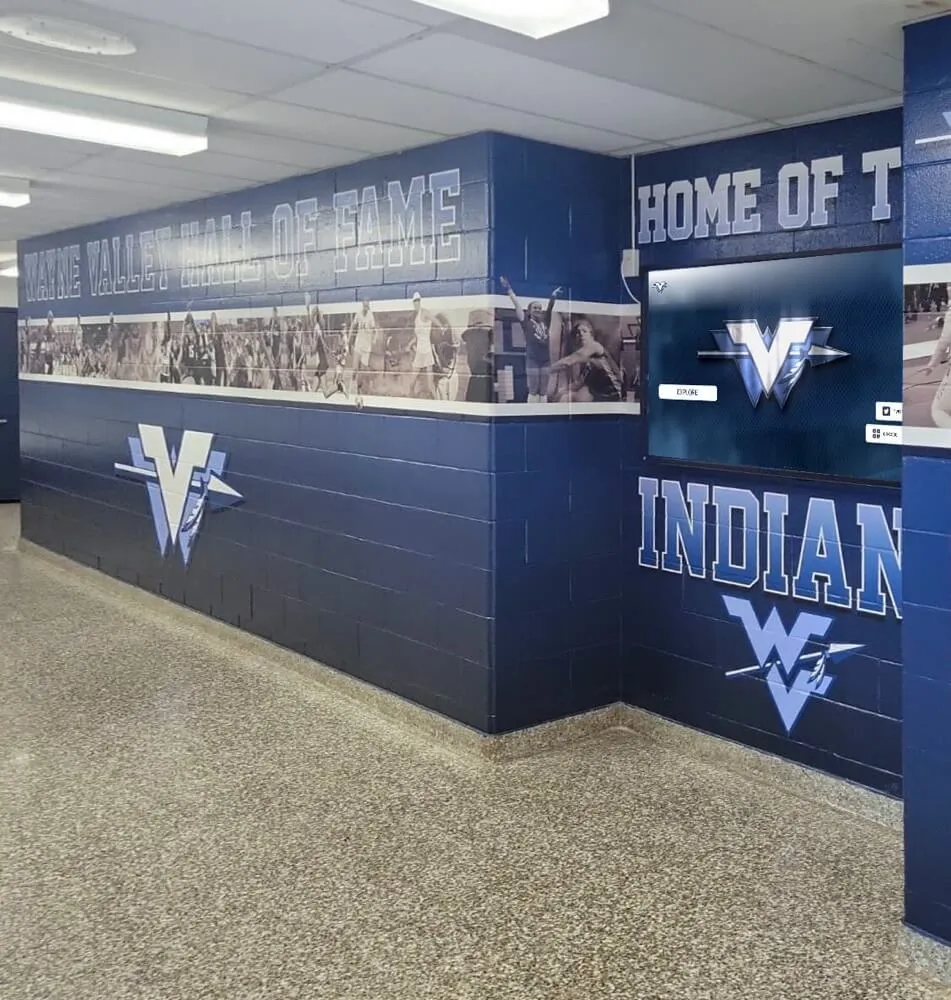
Hybrid approaches combine selective physical trophy displays with comprehensive digital systems serving diverse stakeholder preferences
Layout Blueprint: Designing Intuitive Trophy Recognition Interfaces
Effective digital trophy case design requires systematic approaches balancing aesthetic appeal with functional usability across diverse user groups including current athletes, alumni, families, prospective students, and casual visitors.
Zone Architecture and Screen Organization
Well-designed recognition experiences organize screen real estate into functional zones serving specific purposes while maintaining visual cohesion and clear navigation patterns:
Zone 1: Hero/Masthead Area (Top 15-20%)
The hero zone provides immediate context and brand presence establishing institutional identity while orienting visitors to display purpose:
- Institutional branding with prominent logos and school colors creating instant recognition
- Experience title clearly identifying display purpose (“Athletic Hall of Champions,” “Trophy Recognition,” “Wall of Excellence”)
- Featured content rotation spotlighting recent championships or historic milestone achievements
- Current date/time orienting visitors temporally while providing screen activity confirmation
- Background imagery incorporating campus facilities, team action shots, or school-branded motion graphics
Hero zones should use high-quality visual design communicating that trophy recognition receives appropriate institutional investment and priority—honoring achievements through presentation quality matching their significance rather than utilitarian displays suggesting afterthought.
Zone 2: Primary Navigation Bar (Below Hero, 10-15%)
Navigation enables content discovery through large, touch-friendly buttons with clear labels and recognizable iconography:
- Browse by Sport organizing trophies logically according to athletic programs (football championships separate from basketball, soccer, or swimming recognition)
- Browse by Year enabling chronological exploration helping visitors find specific eras or trace program evolution over time
- Championship Level filtering separating state titles from conference championships and tournament recognition
- Search by Name allowing direct discovery when visitors seek specific teams, athletes, or achievements
- Featured Collections highlighting special recognition like state championships, record holders, or hall of fame inductees
Touch targets must meet minimum 44x44 pixel sizing with adequate spacing preventing accidental selections. Navigation labels should use plain language avoiding jargon, ensuring visitors of all ages understand options immediately without requiring instructions.
Zone 3: Content Display Area (Center, 50-60%)
The main content zone presents trophy profiles, lists, and galleries using layouts optimized for different exploration patterns:
Grid-Based Card Layouts for Overview Browsing
Card interfaces display multiple trophies simultaneously showing:
- Trophy photographs with consistent sizing and cropping maintaining visual harmony
- Championship title, year, and sport identification
- Brief achievement descriptions highlighting significance
- Visual indicators like championship level badges or status icons
- Touch targets leading to detailed profile views
Grid layouts enable efficient scanning while maintaining visual appeal and clear information hierarchy. Cards should incorporate consistent design patterns—same size, shape, and information arrangement—preventing visual chaos while enabling instant recognition of content type and organization.
Detailed Trophy Profile Views
When visitors select specific trophies for detailed exploration, full-screen profiles showcase:
- Large trophy photographs from multiple angles showing detail and craftsmanship
- Complete achievement information including championship details and significance
- Team rosters with links to individual athlete profiles when available
- Embedded video highlights showing championship games and memorable moments
- Statistical context and performance data demonstrating excellence
- Historical context explaining significance within program tradition
- Related trophy suggestions connecting championships across years or within programs
- Social sharing options enabling profile distribution to personal networks
Profile pages balance comprehensive information with accessible presentation—providing depth for interested visitors while maintaining visual clarity preventing overwhelming density.
List and Timeline Views for Alternative Organization
Beyond card grids, effective trophy case interfaces provide:
- Scrollable lists with sorting options organizing chronologically or by achievement level
- Timeline visualizations showing championship progression over decades
- Comparison views showing trophy counts across sports or eras
- Statistical dashboards quantifying program excellence across multiple dimensions
These alternative views serve different visitor intentions—some seeking specific championships, others exploring general program tradition, and others analyzing comparative excellence requiring different presentation approaches.
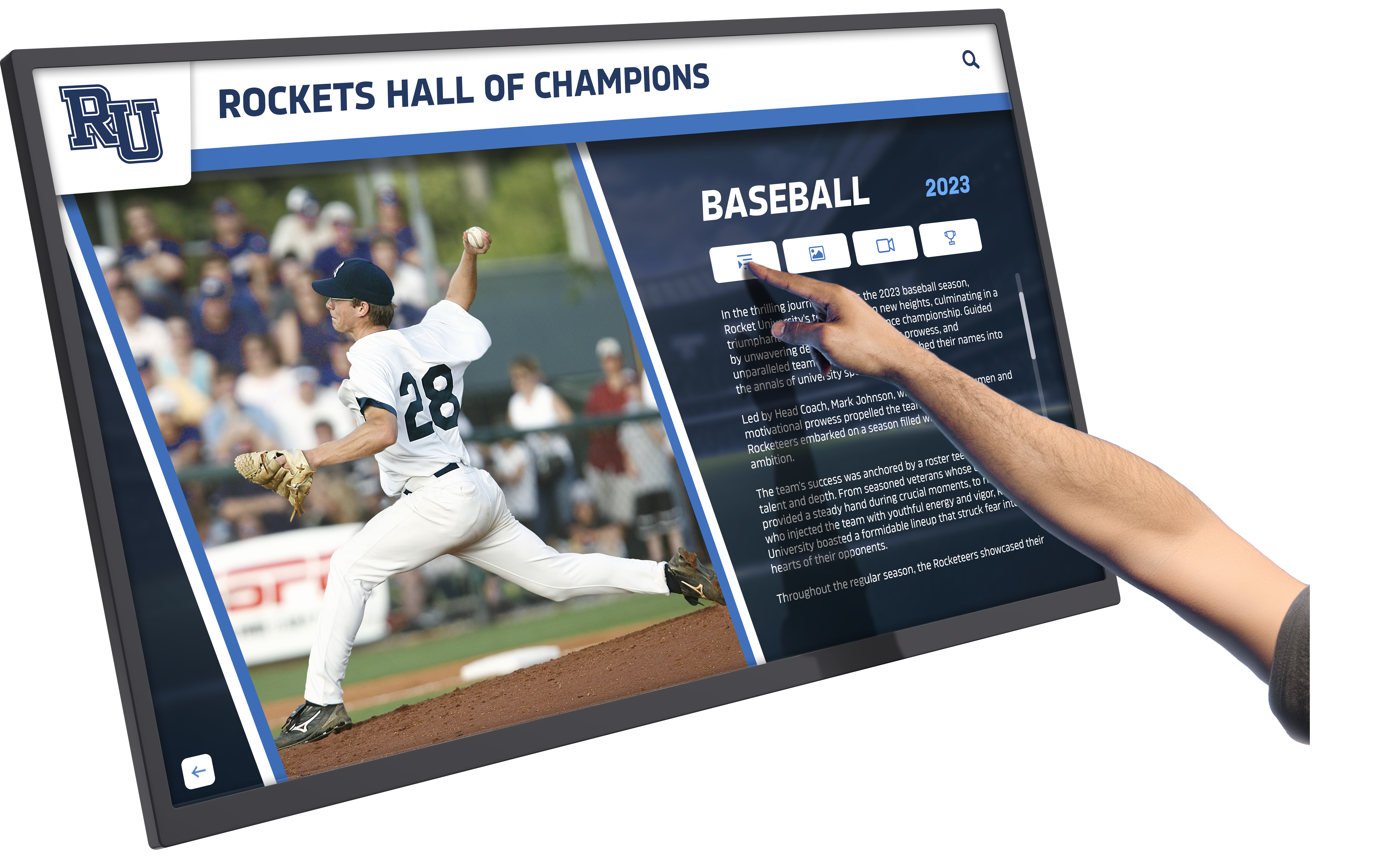
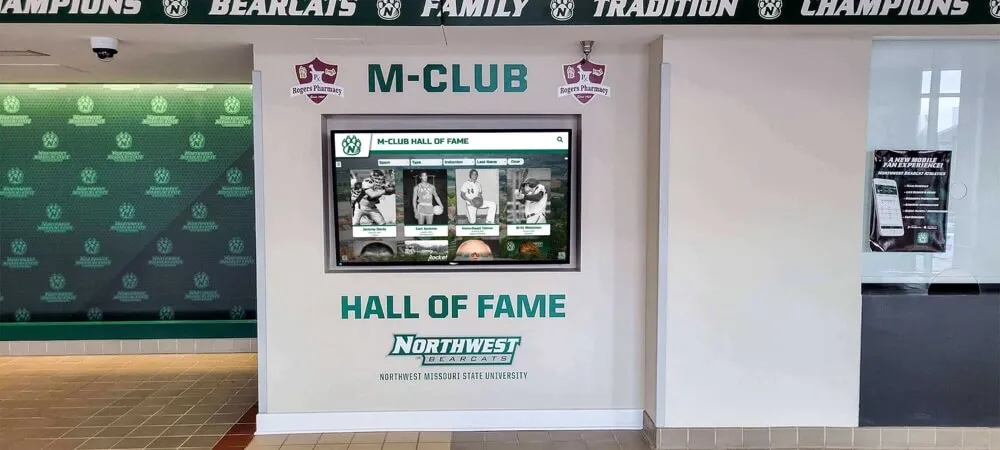
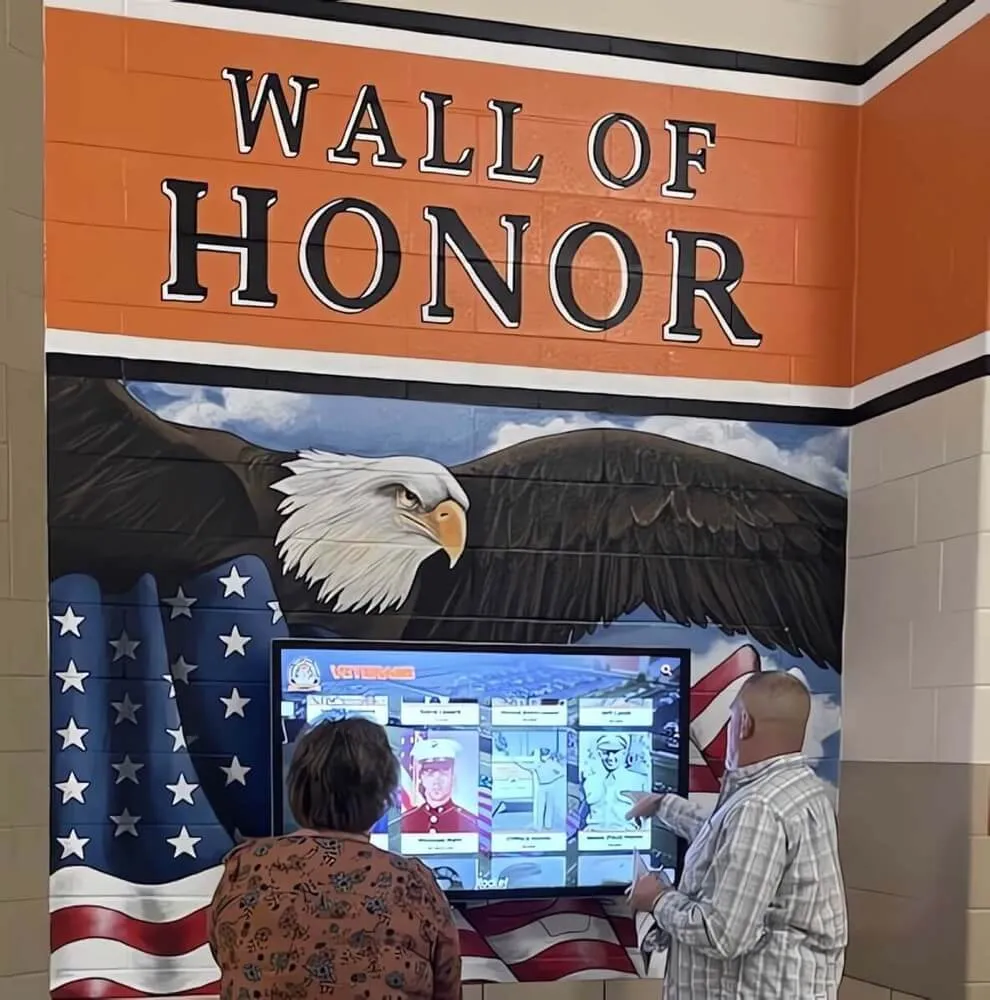
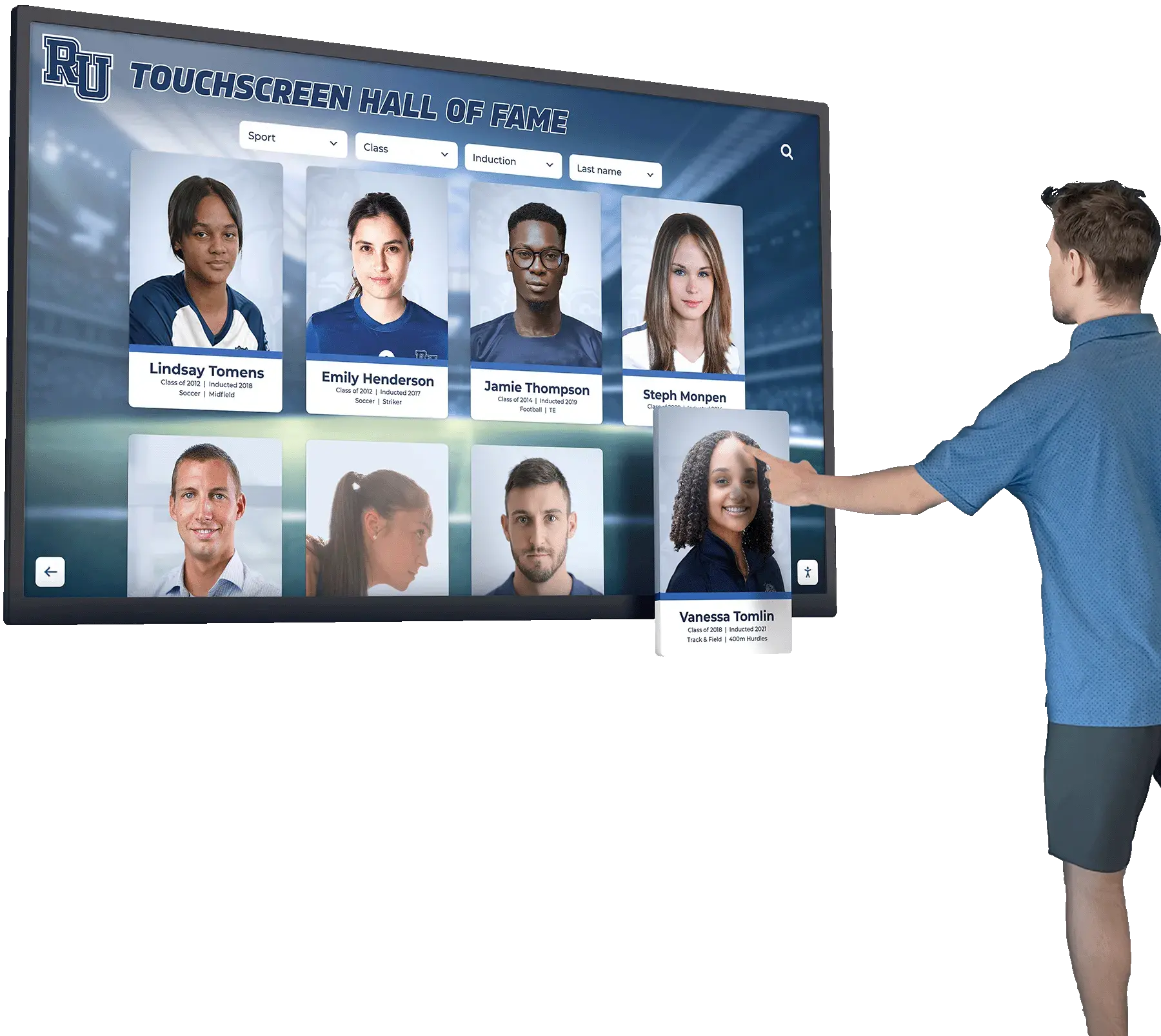
Touch interfaces enable natural exploration with instant access to unlimited trophy recognition and detailed achievement profiles
Zone 4: Footer/Action Area (Bottom 10-15%)
Footer zones provide secondary actions and information including:
- Social media sharing options enabling visitors to distribute trophy profiles
- QR codes linking to mobile experiences allowing continued exploration on personal devices
- Sponsor acknowledgment when funding partnerships justify inclusion
- Navigation breadcrumbs showing current location within content hierarchy
- Home/back buttons enabling easy navigation return and error recovery
Footer design should maintain visual separation from primary content while providing clear access to supporting functions without cluttering main recognition displays.
Zone 5: Side Panels (Optional, 15-20% vertical space)
Some layouts incorporate side panels for:
- Persistent navigation enabling quick category switching without returning to home screens
- Filtering controls allowing dynamic content refinement
- Featured content callouts spotlighting special recognition
- Sponsor content separate from primary display areas when funding sources require visibility
Side panels work best on larger displays (65+ inches) where horizontal space accommodates additional zones without crowding primary recognition content.
Content Blocks and Motion Design
Beyond static layout, animation and motion improve usability and engagement while guiding user attention through experiences:
Attraction Loop (Idle State)
When not actively used, displays should run attraction loops drawing attention and demonstrating interactivity rather than displaying static welcome screens suggesting broken equipment:
Effective attraction content includes:
- Highlight reels showing compelling trophy photos, championship videos, and team imagery cycling through featured recognition
- Featured inductee spotlights rotating through recent championship teams with achievement summaries
- Achievement statistics demonstrating program excellence through trophy counts, state championships, and competitive records
- Clear touch prompts inviting interaction through visible “Touch to Explore” calls-to-action
Attraction loops should cycle every 15-20 seconds maintaining movement and interest while providing sufficient viewing time for each featured trophy or achievement before transitioning.
Transition Animations
Smooth transitions between screens improve perceived quality while guiding user attention:
- Fade transitions for content swaps within same layout maintaining spatial orientation
- Slide animations indicating directional navigation (left/right for categories, up/down for chronology)
- Zoom effects when moving between list and detail views showing relationship between overview and detail
- Loading indicators appearing during content loads confirming system responsiveness
Transition timing should feel responsive—typically 200-400 milliseconds providing smooth motion without feeling sluggish or creating delays frustrating impatient users.
Interactive Feedback
Visual feedback confirms touch interactions building user confidence:
- Button press states showing clear visual response through color shifts or scale changes
- Hover effects on card elements indicating interactive regions before touch
- Loading indicators appearing when content loads confirming system responsiveness
- Success confirmations acknowledging actions like social shares or favorites
Lack of immediate feedback creates uncertainty about whether touches registered properly, undermining user confidence and creating frustration with interfaces.
Content Reveal Patterns
Progressive disclosure manages information density enabling comprehensive content without overwhelming initial presentations:
- Summary cards showing essential information at glance with clear visual hierarchy
- Expansion reveals providing additional detail on touch through dropdown panels or overlay cards
- Full profiles displaying comprehensive content in dedicated views supporting deep exploration
This layered approach serves different engagement levels—casual browsers can scan summaries quickly while interested visitors can dive deep into complete championship stories without forcing excessive information on all users.
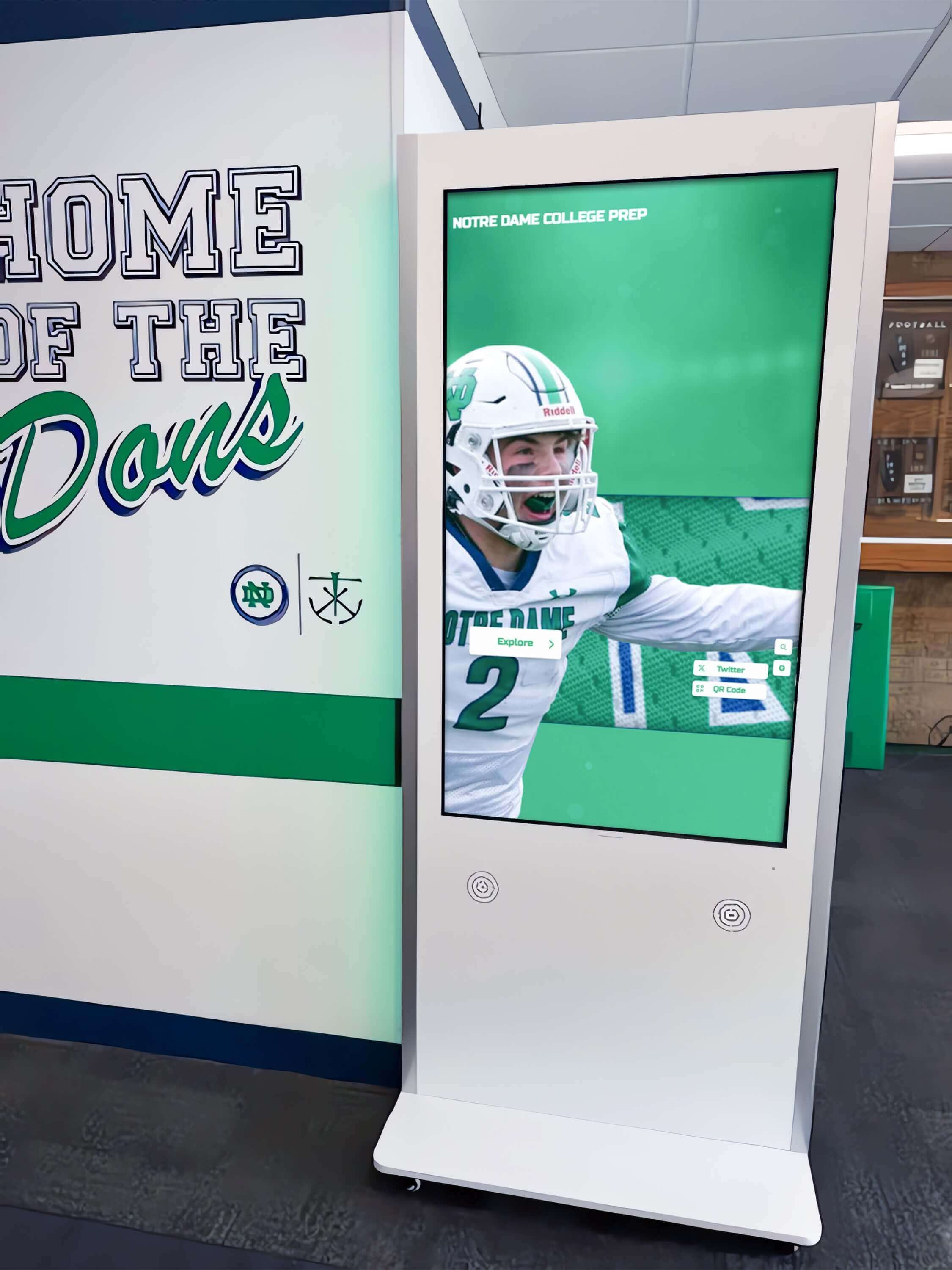
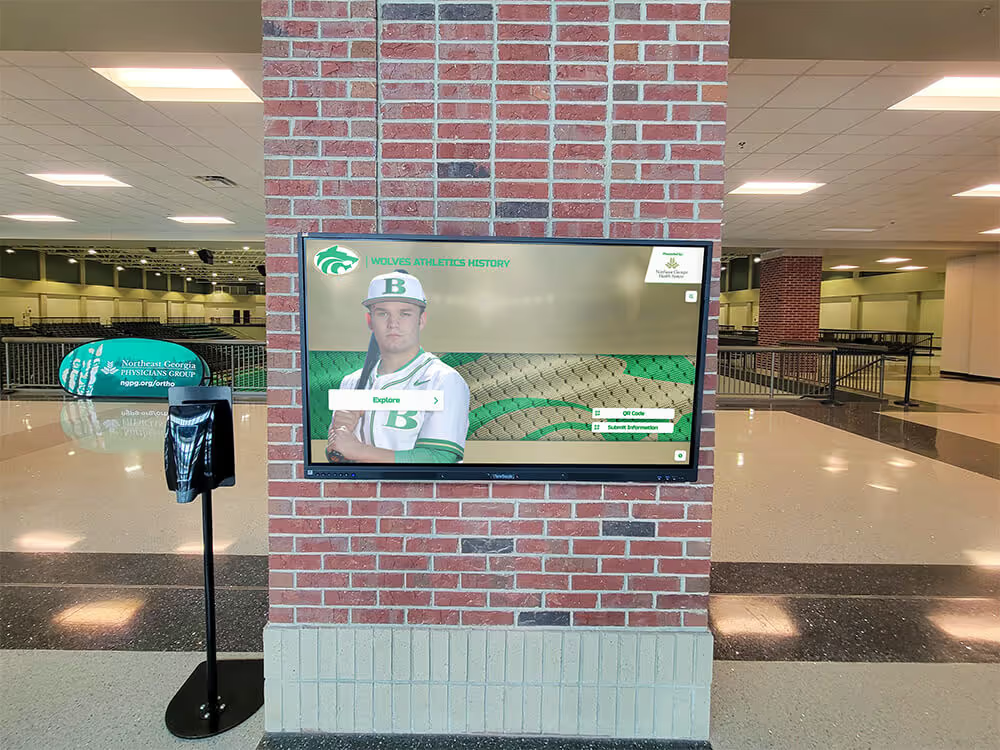
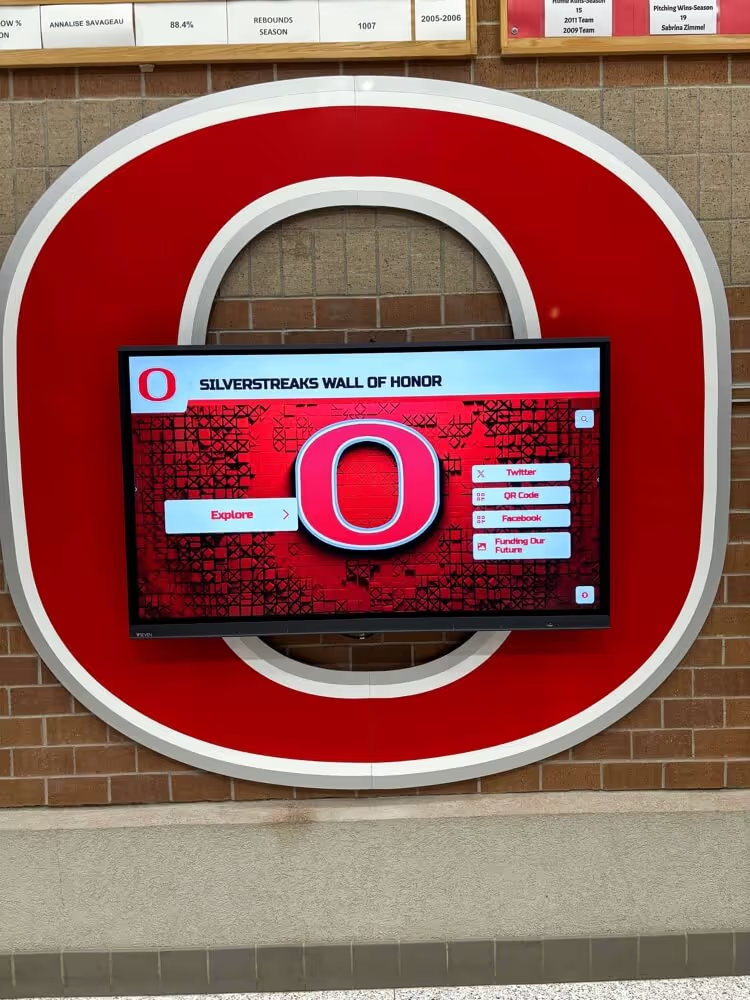
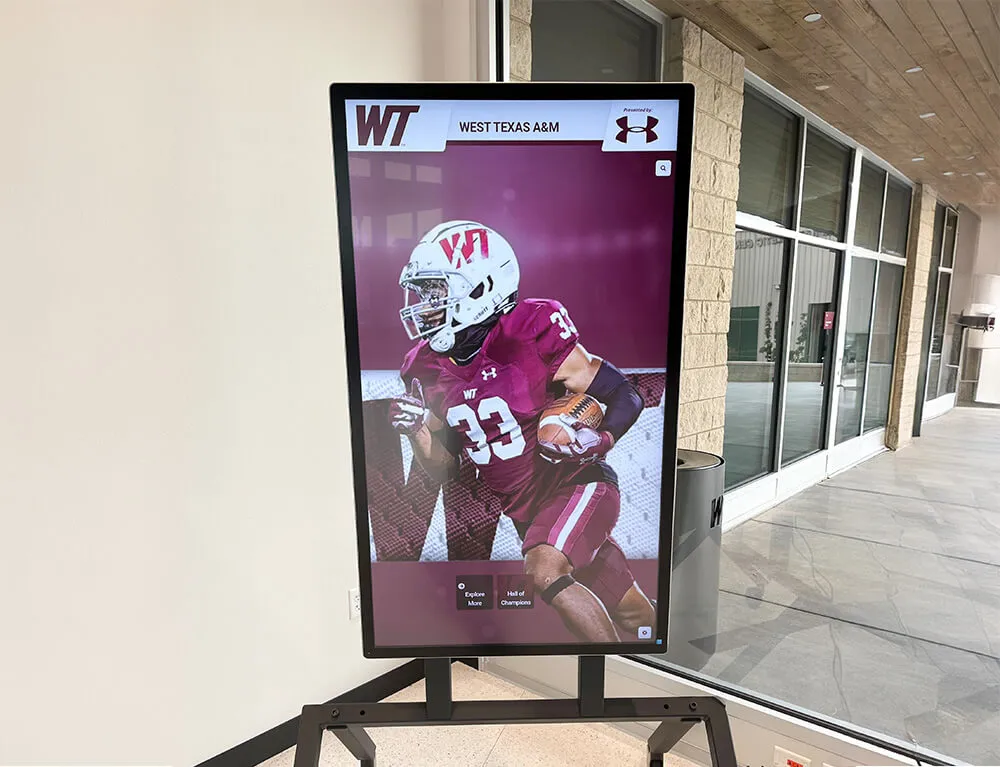
Free-standing digital trophy case kiosks provide flexible placement options enabling recognition throughout athletic and academic facilities
Accessibility and UX Checklist
Creating inclusive recognition experiences requires deliberate accessibility consideration ensuring digital trophy cases serve all community members regardless of physical ability, age, or technical comfort.
ADA WCAG 2.1 AA Compliance
Digital trophy case interfaces must meet established accessibility standards ensuring equitable access:
Visual Accessibility Requirements
- Text contrast ratios minimum 4.5:1 for normal text, 3:1 for large text (18pt+) ensuring readability for vision-impaired visitors
- Touch targets minimum 44x44 pixels with adequate spacing preventing accidental selections and supporting users with limited dexterity
- Text scaling supporting enlargement to 200% without horizontal scrolling requirements
- Color independence ensuring information conveyed through color also uses icons, labels, or patterns preventing exclusion of colorblind users
- Alternative text for images supporting screen readers when accessible modes enabled
Multimedia Accessibility
- Captions for video content supporting deaf and hard-of-hearing community members
- Audio descriptions for visual content when appropriate
- Volume controls respecting quiet environments while providing audio options
- Text transcripts for audio content enabling text-based access
Physical Accessibility
Display mounting and installation must accommodate diverse physical capabilities:
Mounting Height and Reach Considerations
- Primary controls placed 15-48 inches above floor enabling wheelchair accessibility while keeping displays visible to standing viewers
- Forward reach depth not exceeding 25 inches ensuring access from seated positions
- Knee and toe clearance for free-standing kiosks enabling wheelchair approach (27" minimum knee clearance, 9" toe clearance)
- Parallel approach space providing 30x48 inches minimum clear floor space for wheelchair positioning
Environmental Accessibility
- Adequate lighting avoiding glare and washout while ensuring visibility for vision-impaired visitors
- Acoustic design minimizing background noise enabling audio content comprehension
- Physical surrounds preventing protrusion hazards for visually impaired visitors using mobility aids
- Quiet operation respecting building environments while providing audio feedback when appropriate
Cognitive Accessibility
Interface design should support users with varying cognitive abilities and technical comfort:
Navigation Clarity
- Consistent patterns throughout experience preventing confusion through predictable interaction models
- Clear visual hierarchy using size, color, and position to indicate importance and organization
- Obvious home/back options enabling navigation error recovery without requiring technical expertise
- Minimal required steps for common tasks reducing cognitive load and memory requirements
Content Clarity
- Plain language avoiding jargon, technical terminology, or complex sentence structures
- Concise labels using familiar words rather than clever or ambiguous phrasing
- Visual reinforcement combining text with icons improving recognition and comprehension
- Progressive disclosure preventing information overload through layered content reveals
Error Prevention and Recovery
- Confirmation dialogs for destructive or irreversible actions (though rare in recognition displays)
- Clear error messages explaining problems and suggesting solutions using plain language
- Easy undo options enabling mistake correction without frustration
- Session persistence maintaining navigation state when users temporarily navigate away
Schools should verify accessibility compliance through diverse user testing including wheelchair users, older adults, people with visual impairments, and users unfamiliar with touchscreen technology before finalizing designs. Interactive display technology guidelines provide detailed accessibility implementation frameworks ensuring inclusive recognition serving all constituencies equitably.
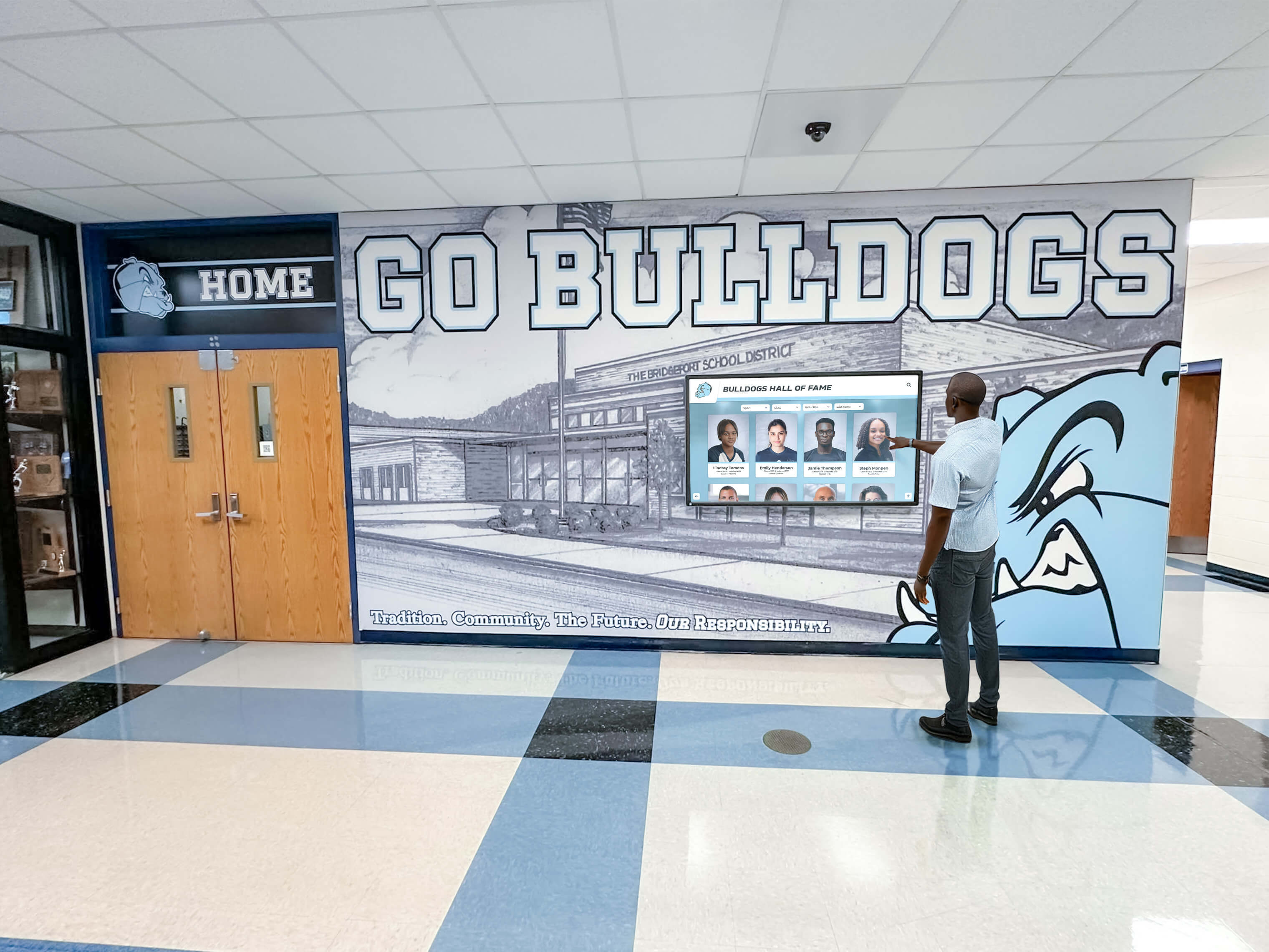
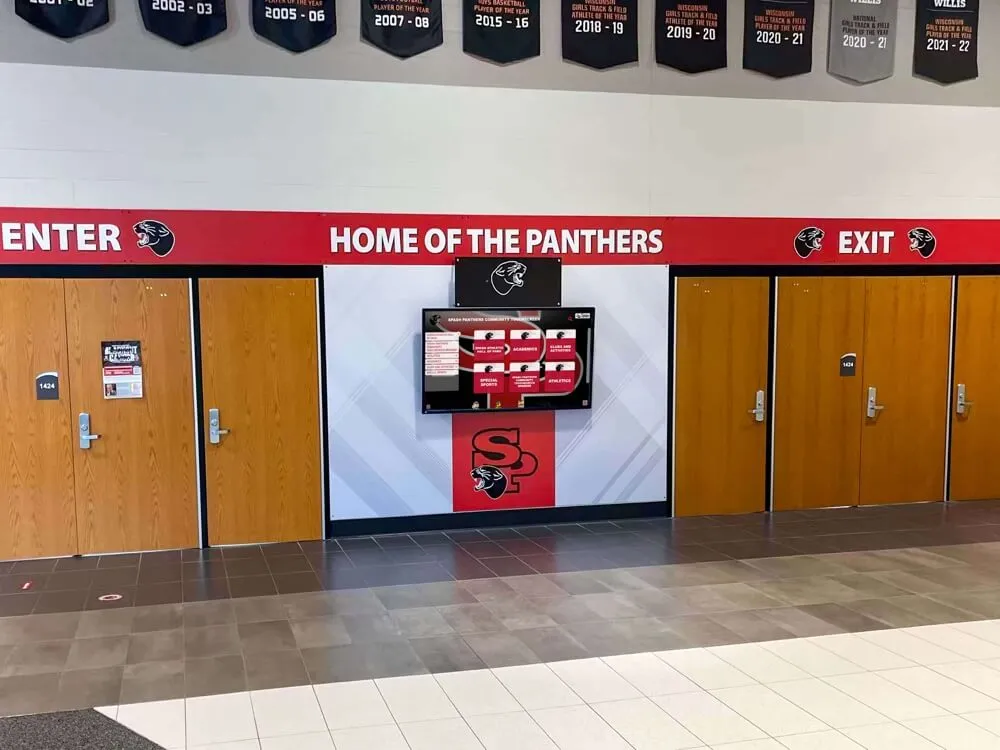
Strategic placement in high-traffic corridors ensures trophy recognition reaches students, staff, visitors, and community members throughout daily activities
Brand Integration Checklist
Digital trophy cases should reflect institutional identity while providing professional, engaging experiences worthy of championship achievement celebration.
Visual Identity Implementation
Color Systems
Apply institutional colors systematically throughout experiences creating immediate brand connection:
- Primary brand colors for hero areas, navigation elements, and key UI components
- Secondary colors for backgrounds, dividers, and supporting elements
- Accent colors for interactive elements, highlights, and calls-to-action
- Neutral colors for text and content areas ensuring readability
Color application should maintain sufficient contrast ratios meeting accessibility requirements while reinforcing institutional identity. Avoid excessive color variation preventing visual chaos—typically 3-4 colors maximum creates cohesion while providing adequate visual differentiation.
Typography Hierarchy
Establish clear type systems supporting both brand personality and functional readability:
- Headline fonts reflecting brand personality for titles and featured text
- Body fonts optimizing legibility for biographical content and descriptions at display viewing distances
- Size scales creating clear information hierarchy from titles through captions (typically 72pt+ for primary headings, 48pt for secondary, 36pt for body on large displays)
- Weight variations emphasizing key information without excessive styling
Typography choices dramatically affect legibility from typical viewing distances (3-8 feet for trophy case displays). Test font selections at actual viewing distances rather than on computer screens where smaller text remains legible but becomes unreadable on large displays viewed from distance.
Logo and Marks
Integrate institutional marks appropriately maintaining brand standards:
- Primary logos in hero areas maintaining required clear space per brand guidelines
- Secondary marks as watermarks or footer elements providing persistent identification
- Mascot integration when appropriate for athletic recognition creating emotional connection
- Athletic department marks when programs maintain distinct identity within broader institutions
- Sponsor logos when funding partnerships justify inclusion with clear visual separation from institutional marks
Logo placement should balance prominence with appropriate hierarchy—institutional logos deserve primary position while sponsor marks receive secondary placement when applicable.
Custom Backgrounds and Imagery
Environmental Photography
Incorporate location-specific imagery creating connection to place while reinforcing institutional identity:
- Campus or facility exteriors establishing institutional context and physical place
- Interior architectural details (hallways, gyms, stadiums) providing familiarity to regular visitors
- Playing field imagery showing competition venues where championships were earned
- Historical photos blending heritage with modern presentation connecting past and present
Environmental imagery should support rather than compete with primary recognition content—subtle opacity adjustments (30-50% transparency) or blur effects maintain visual interest without overwhelming trophy information.
Pattern and Texture Libraries
Subtle background treatments add visual interest without competing with content:
- Geometric patterns derived from architectural elements, floor designs, or logo shapes
- Texture overlays suggesting materials (brick, wood, metal) connecting to physical spaces
- Gradient treatments creating depth and dimensionality through color progression
- Motion graphics providing subtle animated movement in attraction loops
Background treatments should remain subtle—typically requiring 20-30% opacity preventing excessive competition with foreground trophy content requiring primary attention.
Video Backgrounds
Looping video backgrounds create engaging, motion-rich experiences particularly effective for attraction loops:
- Campus life footage showing students, activities, and community establishing context
- Athletic action highlights celebrating sports excellence through competition imagery
- Time-lapse sequences demonstrating facility evolution and campus development
- Abstract motion graphics supporting brand through school colors and shapes without distraction
Video backgrounds must be carefully balanced—too prominent and they compete with trophy content, too subtle and they provide minimal benefit. Typically 40-60% opacity with subtle motion works best for background video integration.
Digital signage services and design approaches provide detailed visual identity implementation frameworks ensuring brand consistency while maintaining functional clarity.
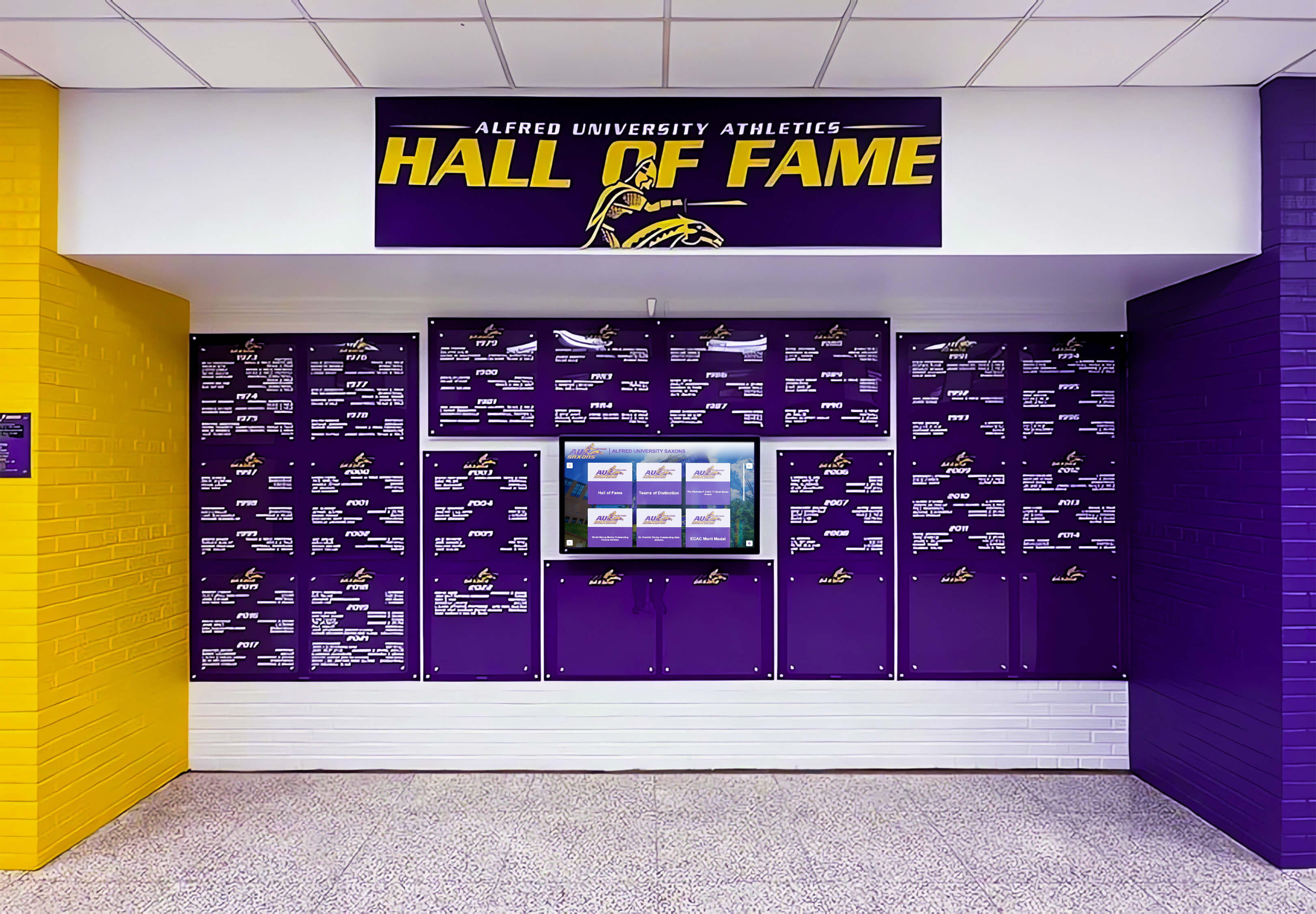
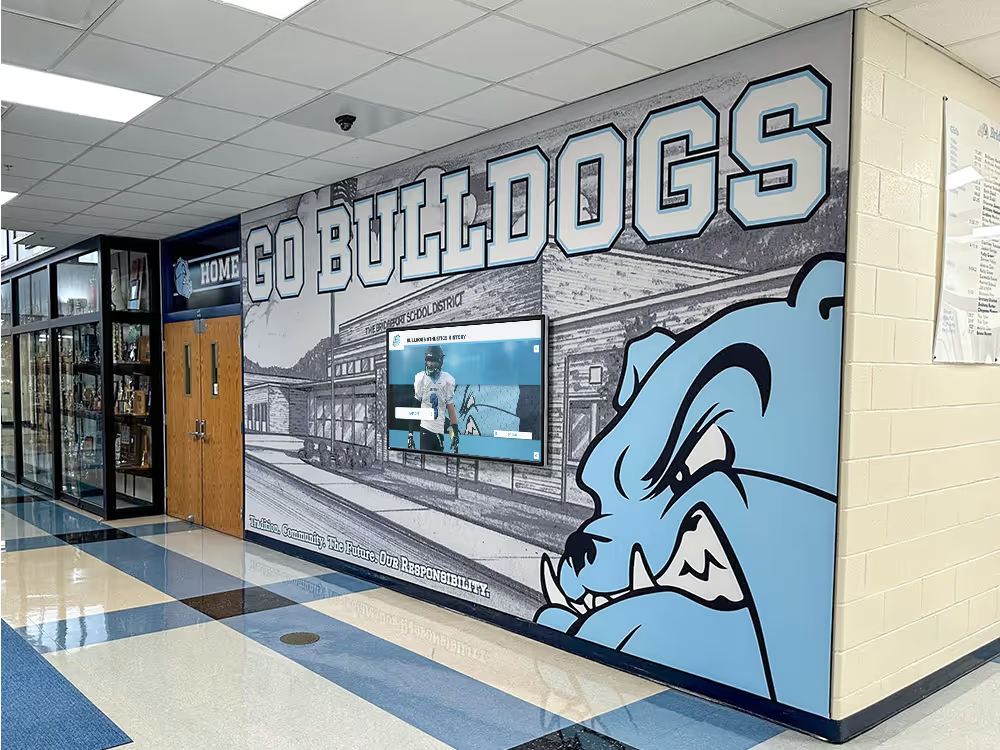
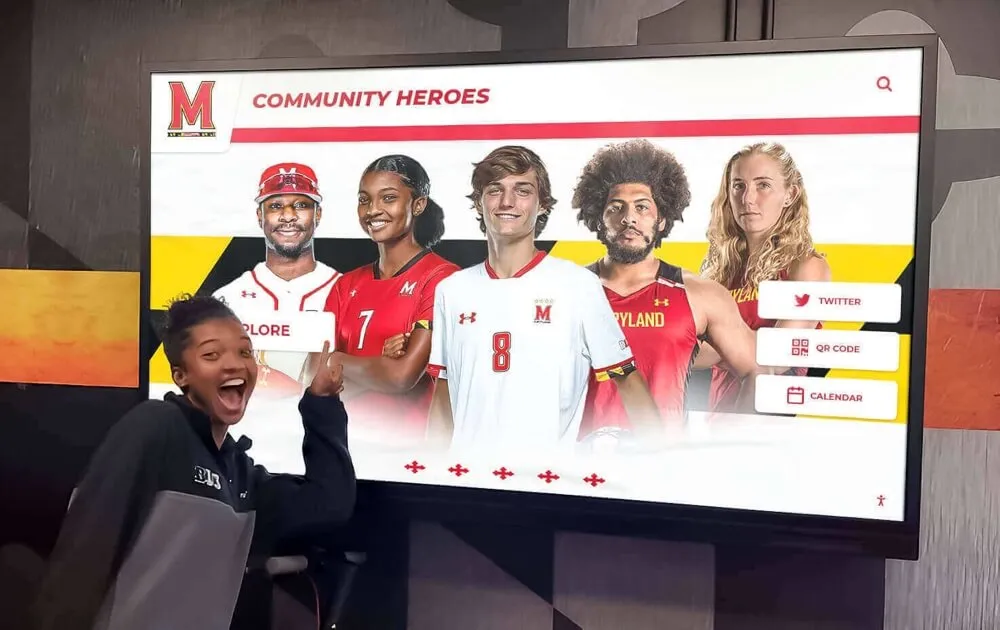
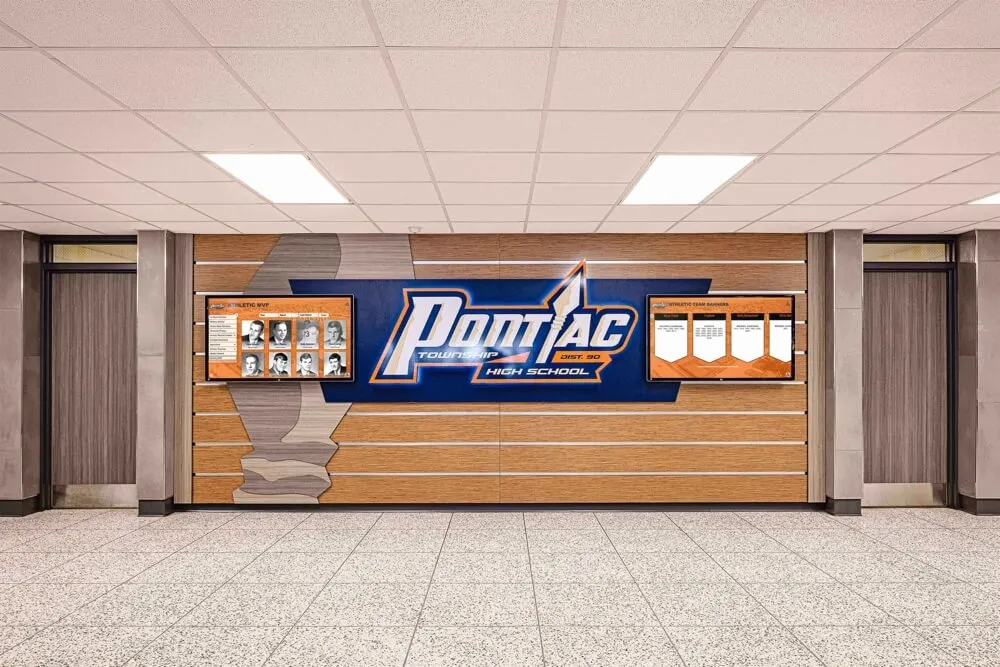
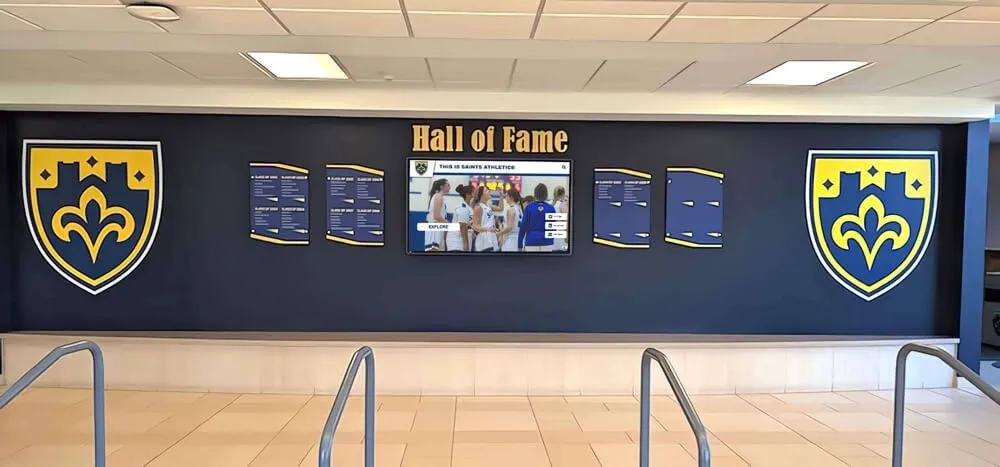
Brand-integrated displays incorporate institutional colors, logos, and design elements creating cohesive recognition experiences reflecting school identity
Sponsorship Zones and Donor Recognition
Many institutions fund digital trophy case investments through sponsorships requiring tasteful integration balancing recognition obligations with user experience quality:
Sponsor Placement Strategies
- Footer areas with rotation for multiple supporters when applicable
- Splash screens acknowledging major funders before experience begins (dismissible after 3-5 seconds)
- Named displays crediting donors funding specific installations through permanent attribution
- Attraction loop integration including sponsor mentions during idle state cycling
- Profile page acknowledgment when sponsors fund specific trophy recognition or sport programs
Balancing Recognition and Experience
Avoid excessive commercialization degrading user experience and undermining recognition quality:
- Limit sponsor content to 10-15% of screen real estate maximum preventing commercial feeling
- Maintain clear visual separation between sponsor and trophy content using borders, color, or spatial zones
- Ensure sponsor materials match overall design quality preventing jarring transitions or degraded aesthetics
- Update sponsor content regularly maintaining current relationships while removing outdated recognition
- Prioritize user experience over sponsor requests when conflicts arise preserving recognition quality
Well-executed sponsorship integration enables digital trophy case funding while maintaining professional experiences honoring achievements appropriately. Poor integration creates commercial feeling undermining recognition significance and reducing community respect for displays.
Content Blocks and Trophy Documentation
Digital trophy case value depends entirely on quality content celebrating achievements comprehensively through multimedia storytelling beyond basic documentation.
Trophy Photography Standards
Quality visual documentation brings trophy recognition to life through compelling imagery:
Professional Photography Setup
- Neutral backgrounds eliminating distracting elements competing with recognition subject
- Proper lighting showing trophy detail and avoiding glare on reflective metal surfaces
- Multiple angles capturing trophy dimensions, design, and craftsmanship completely
- Close-ups of engraved plaques and award details showing names, dates, and specific recognition
- Consistent sizing across collections maintaining visual harmony in grid displays
- High resolution minimum 1920x1080 pixels ensuring quality display on large touchscreens
For trophies currently in display cases, photograph in place documenting context but also remove for clean individual photography when possible enabling flexible presentation options. For trophies in storage, create consistent staging areas with appropriate backgrounds and lighting maintaining professional appearance throughout collections.
Supplementary Visual Content
Beyond trophy photographs, compile:
- Team photos showing championship squads and individual athletes in uniform
- Action shots from championship games and competitions showing athletes in competition
- Award ceremonies capturing presentation moments and celebration
- Historical context imagery showing facilities, uniforms, and environments from achievement eras
- Newspaper clippings preserving contemporaneous media coverage and documentation
This supplementary content transforms basic trophy documentation into compelling storytelling creating emotional engagement with achievements that simple trophy photos alone cannot generate.
Achievement Information Architecture
Structure trophy content systematically supporting multiple display contexts and exploration patterns:
Essential Trophy Profile Elements
Complete trophy profiles should include:
- Achievement specifics including championship level, year, sport, and opponents
- Team or individual athlete identification with complete rosters where applicable
- Championship game details including scores, locations, and memorable moments
- Season records and statistical highlights demonstrating excellence throughout campaigns
- Coaching staff recognition acknowledging leadership contributions to championships
- Historical context explaining significance within program tradition and competitive landscape
- Related achievements connecting trophies across years showing program evolution
Narrative Development Beyond Facts
Compelling trophy recognition tells stories beyond basic information:
- Championship journeys showing path from preseason through final victories
- Adversity overcome including injuries, losing streaks, or external challenges faced during seasons
- Key moments and turning points defining seasons and championships
- Lasting impact on program culture, recruitment, and subsequent competitive excellence
- Connections to other achievements showing championship progression and tradition building
- Personal reflections from coaches and athletes sharing experiences and memories
This narrative depth helps current students connect emotionally with historical achievements while building appreciation for institutional heritage that dry facts alone cannot create. When visitors understand complete stories behind trophies—not just that teams won championships but how victories happened and what they meant—recognition becomes meaningful rather than perfunctory documentation.
Trophy display case design ideas provide comprehensive frameworks for content development across recognition categories ensuring systematic achievement documentation.

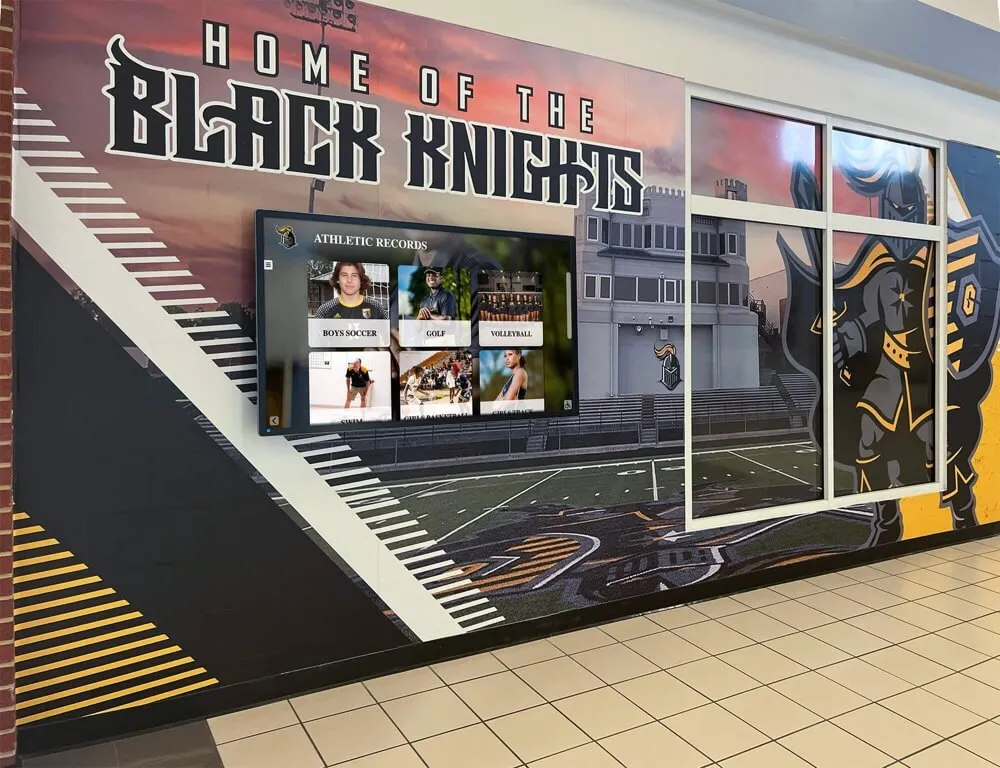
Sport-specific displays celebrate individual athlete excellence through dynamic imagery and branded presentation integrating institutional identity
Video Content Integration
Rich multimedia transforms recognition from documentation to immersive storytelling:
Video Content Types
- Championship game highlights showing memorable moments and game-winning performances
- Interview videos capturing coaches’ and athletes’ personal reflections years after achievements
- Season recap reels combining photos, clips, and narration telling complete championship stories
- Documentary-style profiles exploring championship significance within broader program contexts
- Ceremony footage preserving trophy presentations and recognition celebrations
Video Production Standards
- Duration typically 2-4 minutes respecting attention spans while providing substantive content
- Captions supporting accessibility and sound-off viewing in public environments
- Quality minimum 1080p resolution ensuring excellent display quality on large screens
- File optimization balancing quality with file sizes supporting reliable streaming on display hardware
- Consistent branding incorporating institutional design elements throughout video content
Video content dramatically increases engagement—trophy profiles including video typically generate 3-5x longer viewing sessions compared to photo-only profiles as visitors watch complete championship stories unfold.
Phased Content Development Strategies
Rather than attempting complete historical documentation immediately, successful implementations start focused then expand systematically:
Phase 1: Recent Recognition (Months 1-2)
Begin with content providing immediate relevance and demonstrating value quickly:
- Current academic year trophies and awards
- 3-5 years of recent history building comprehensive recent coverage
- Major championships and milestone achievements from any era highlighting program tradition
- Featured content spotlighting institutional heritage and competitive excellence
This achievable initial scope launches displays with meaningful content while historical documentation develops in parallel.
Phase 2: Decade Expansion (Months 3-12)
After launching with recent recognition, expand historical coverage systematically:
- Add 2010s content first, then 2000s, 1990s, and earlier as resources allow
- Prioritize championship trophies and major achievements over routine awards when capacity constraints exist
- Engage alumni assistance gathering information and photos from their eras through organized outreach
- Utilize student volunteers particularly in journalism, digital media, and history programs
Phase 3: Deep Historical Archives (Year 2+)
Continue building comprehensive recognition over time:
- Systematically add remaining decades working backward chronologically
- Enhance existing profiles with additional multimedia as materials become available
- Create themed collections highlighting special recognition and historical milestones
- Maintain ongoing updates for new championships as they’re earned
This phased approach maintains momentum while building comprehensive trophy recognition over time rather than delaying launch indefinitely until complete historical documentation finishes—a timeline often stretching years causing projects to stall before delivering any value.
Activation Plan: Implementing Trophy Recognition Displays
Successful digital trophy case launch requires strategic planning across technology selection, installation, content development, and ongoing maintenance.
Technology Platform Selection
Choose solutions aligned with institutional needs and long-term sustainability:
Purpose-Built Recognition Platforms vs. Generic Digital Signage
Specialized recognition software designed specifically for trophy and achievement celebration provides:
- Intuitive interfaces requiring no instructions for visitor interaction
- Content management systems enabling non-technical administrators to maintain displays confidently
- Unlimited recognition capacity accommodating comprehensive achievement documentation
- Powerful search and filtering helping visitors find specific content instantly
- Responsive web extensions making recognition accessible beyond physical displays
- Analytics tracking engagement demonstrating program value and informing improvement
Solutions like Rocket Alumni Solutions offer comprehensive platforms purpose-built for institutional trophy recognition, providing superior functionality compared to generic digital signage systems adapted for recognition purposes after initial design for advertising, announcements, and commercial messaging lacking recognition-specific architecture and workflows.
Vendor Evaluation Questions
Ask specific, probing questions revealing true capabilities:
- How many schools have implemented trophy case systems with your platform?
- Can you provide references from athletic directors at similar institutions?
- What trophy-specific features distinguish your platform from generic digital signage?
- How frequently do you release platform updates and what’s on your development roadmap?
- What training and implementation support do you provide?
- What are guaranteed response times for technical issues?
- What is total first-year cost and what are ongoing annual fees?
Vendors lacking specific trophy case experience often underestimate implementation complexity, leading to delays, unexpected requirements, and disappointing results failing to meet recognition needs effectively.
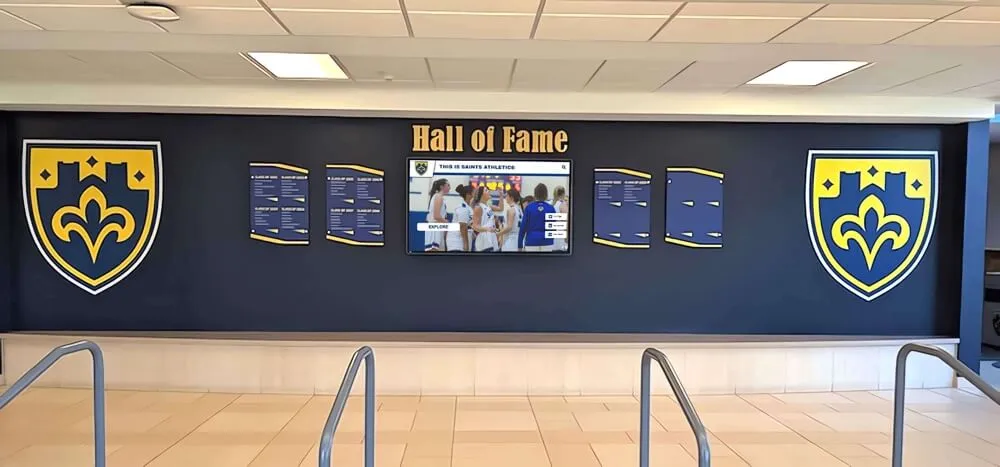
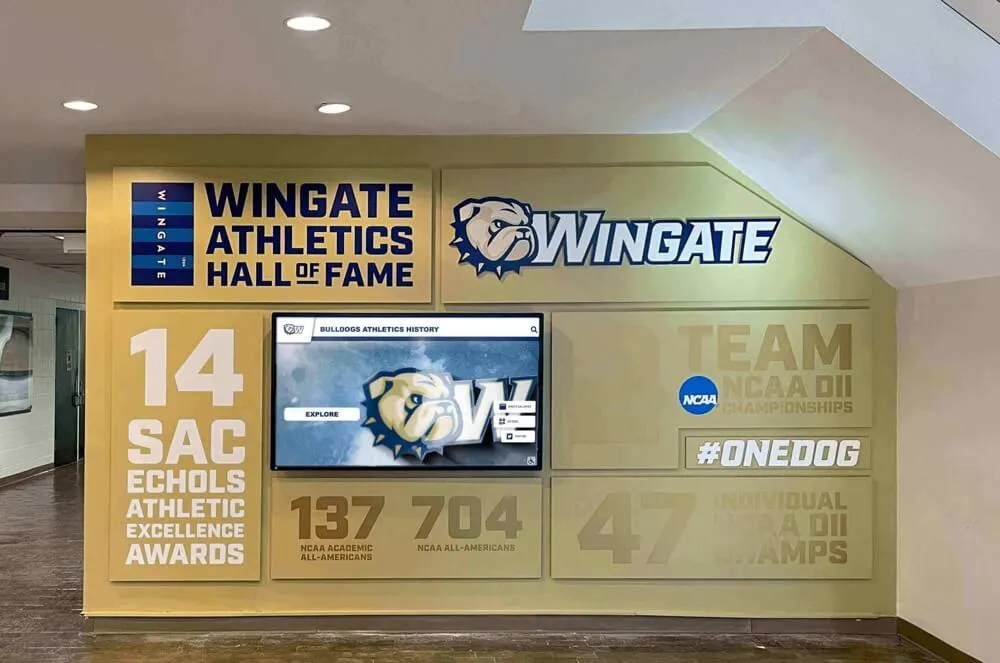
Hybrid installations preserve traditional design elements while adding modern interactive capacity satisfying constituencies valuing both heritage and innovation
Strategic Installation Planning
Location Selection for Maximum Impact
Display effectiveness depends significantly on strategic placement:
High-Traffic Athletic Facility Locations
- Main gymnasium entrance lobbies where all visitors naturally pass
- Athletic department corridors and administrative areas ensuring daily visibility for athletes and staff
- Training facility entrances viewed by current athletes during regular practice attendance
- Field house and stadium concourses serving competition attendees
- Athletic wing commons areas where students gather socially
Cross-Campus Visibility Beyond Athletic Facilities
- Main entrance lobbies ensuring whole-community visibility beyond athletic program participants
- Cafeteria and commons areas where all students gather daily
- Library and academic wings connecting athletic achievement with broader institutional excellence
- Alumni centers serving graduate engagement and fundraising cultivation
Cross-campus installations communicate that athletic achievement matters to entire school communities rather than representing isolated program concerns relevant only to athletes and sports enthusiasts.
Physical Installation Requirements
Proper installation ensures safety, accessibility, and professional appearance:
Wall Mounting Considerations
- Appropriate wall structure supporting 50-150 pound displays safely
- Mounting heights placing screen centers 48-60 inches from floor for comfortable viewing while maintaining accessibility
- Dedicated electrical circuits with surge protection preventing damage
- Professional cable management maintaining clean aesthetics without exposed wiring
Wall mounting typically costs $500-1,500 depending on wall construction, electrical availability, and complexity.
Free-Standing Kiosk Options
- No wall penetration required eliminating structural concerns
- Flexible positioning enabling placement adjustments
- Integrated enclosures housing computers and components professionally
- Optional branding incorporating school colors, logos, and design elements
Quality kiosks cost $1,500-5,000 depending on size, materials, customization, and integrated technology. While more expensive than wall mounting, kiosks provide professional all-in-one solutions especially valuable when wall mounting presents structural challenges.
Network Connectivity
Digital trophy cases require internet connectivity for cloud-based content management:
- Hardwired Ethernet provides superior reliability compared to WiFi for permanent installations
- Minimum 10 Mbps download speeds accommodate typical content requirements
- IT department involvement early ensures network access, security protocols, and firewall configurations support platform requirements
Confirm network infrastructure adequacy before finalizing installation locations avoiding costly remediation after displays are purchased.
Interactive kiosk solutions for schools provide detailed technical specifications and facility preparation checklists ensuring successful professional implementations.
Refresh Cadence and Content Maintenance
Establish sustainable update workflows maintaining current, engaging content:
Content Update Schedule
- Championship recognition added within 24-48 hours of trophy presentations
- Quarterly reviews verifying accuracy and updating evolving information
- Annual archives systematically expanding historical content coverage
- Special events creating featured collections for homecoming, reunions, anniversaries
Content Governance
- Assign clear responsibility for different recognition areas preventing gaps
- Implement approval processes ensuring accuracy before publication
- Document content standards and guidelines for consistency
- Train multiple staff members preventing single-person dependencies
- Archive source materials supporting future updates and corrections
Technical Maintenance
- Monitor display operation through remote management tools
- Schedule regular software updates maintaining security and functionality
- Clean screens and hardware protecting appearance and functionality
- Verify network connectivity and content synchronization
- Document hardware warranties and support contacts
Systematic maintenance ensures digital trophy cases remain current, accurate, and engaging rather than becoming outdated displays undermining recognition quality and community respect.
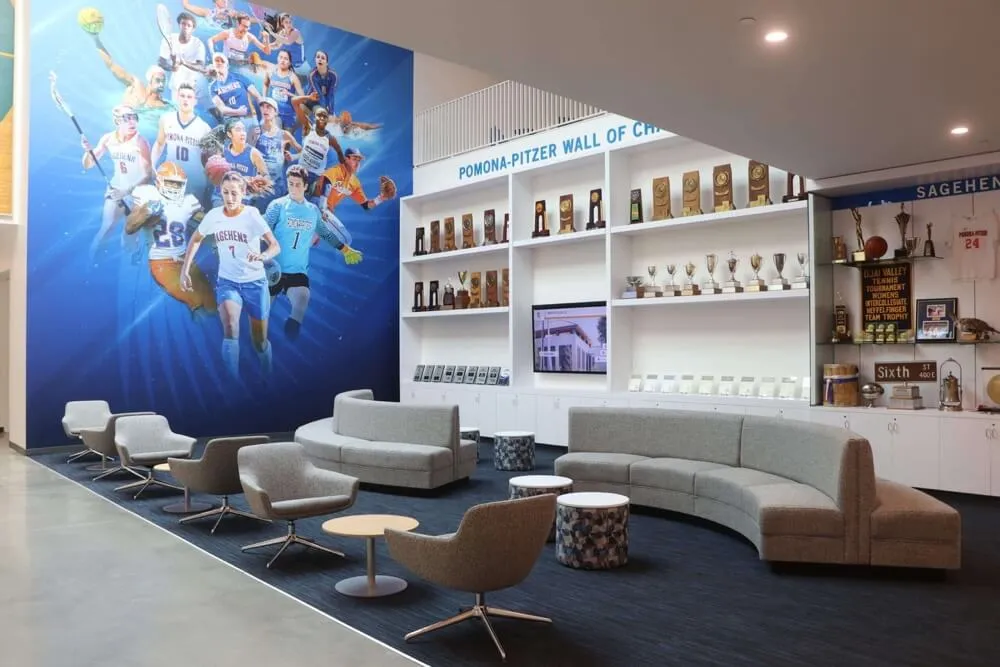
Creating comfortable viewing environments with seating encourages extended engagement and group exploration of trophy recognition
Measuring Success and Optimizing Engagement
Data-driven evaluation ensures recognition investments deliver value while identifying improvement opportunities.
Engagement Analytics
Quality recognition platforms provide comprehensive usage tracking:
Quantitative Metrics to Monitor
- Total interaction sessions showing frequency of display use
- Average session duration indicating depth of content engagement (targeting 4-8 minutes)
- Most-viewed profiles revealing popular content and community interests
- Search terms demonstrating what visitors seek
- Peak usage times informing content launch strategies
- Return visitor rates showing sustained interest rather than one-time curiosity
Analytics reveal patterns informing optimization including which trophy categories generate most engagement, what additional content visitors seek through search patterns, peak traffic periods for special content promotion, and opportunities to enhance underperforming recognition areas.
Qualitative Community Feedback
Beyond quantitative analytics, gather qualitative insights revealing impact metrics cannot capture:
Feedback Collection Methods
- Surveys assessing recognition program awareness and satisfaction among athletes, families, alumni, and staff
- Comment cards or digital feedback forms near displays
- Staff observations documenting visitor engagement patterns
- Focus groups exploring detailed perspectives
- Social media monitoring capturing organic comments and shares
Observable Impact Indicators
- Students expressing pride finding themselves recognized digitally
- Alumni showing families their historic championship trophies via web access
- Prospective students impressed by comprehensive achievement celebration during recruiting visits
- Families appreciating that all achievements receive recognition rather than only highest accomplishments
- Current athletes motivated by visible championship standards and program expectations
This qualitative feedback often reveals meaningful impact that metrics cannot capture—understanding what truly resonates and what improvements would enhance recognition program effectiveness.
Continuous Improvement Iteration
Use insights to refine recognition experiences over time:
Content Enhancement
- Add missing profiles or categories revealed through search failures
- Enrich existing profiles responding to visitor interest patterns
- Create featured collections highlighting compelling themes
- Update navigation based on observed usage patterns
- Expand multimedia content in high-engagement profiles
Design Refinement
- Simplify confusing navigation based on usability observations
- Adjust color contrast responding to visibility issues
- Resize touch targets if interaction difficulties observed
- Refine information density balancing comprehensiveness with clarity
- Update attraction loops maintaining freshness and interest
Technical Optimization
- Improve loading speed for smoother experiences
- Fix bugs or errors discovered through usage
- Enhance search algorithms based on query patterns
- Update software maintaining security and capabilities
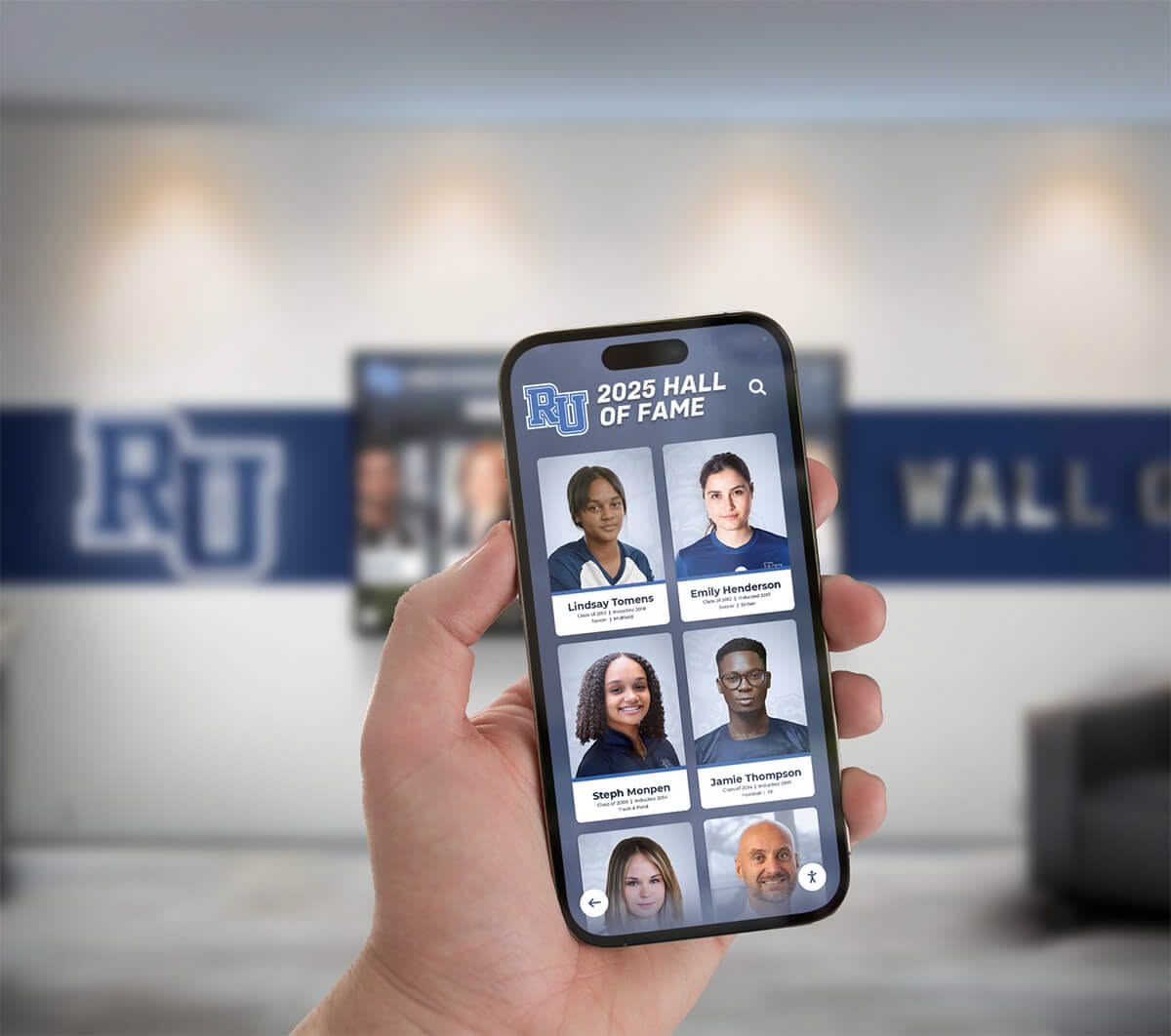
Mobile and web access extends trophy recognition beyond physical displays enabling exploration from any device anywhere
Special Design Considerations for Trophy Recognition
Digital trophy cases present unique design challenges requiring thoughtful solutions balancing comprehensiveness with usability.
Multi-Sport Navigation Design
Athletic programs fielding 15-20+ sports require navigation accommodating diverse programs without overwhelming interfaces:
Sport Organization Strategies
- Seasonal grouping organizing by fall, winter, spring sports providing natural categories
- Alphabetical listing with visual icons enabling quick scanning and recognition
- Trophy count badges showing achievement volume per sport helping visitors discover prolific programs
- Featured sport rotation spotlighting different programs periodically ensuring visibility for all
- Quick filters enabling instant refinement by championship level, year range, or achievement type
Effective multi-sport navigation ensures visibility for all programs—Olympic sports receive equal accessibility alongside high-profile football and basketball preventing marginalization of less-prominent athletics.
Historical Era Design Consistency
Trophy collections spanning decades or centuries present visual design challenges as photography quality, uniform styles, and documentation varies dramatically across eras:
Historical Content Treatment
- Consistent framing applying uniform borders and treatments normalizing varying photo quality
- Restoration digitally improving historical photographs while preserving authentic character
- Supplementary content using facility photos, uniforms, and era context compensating for limited trophy documentation
- Timeline design organizing chronologically while maintaining visual cohesion across disparate eras
- Documentation notes acknowledging information gaps with transparent explanations rather than fabricating details
Historical trophy recognition requires balancing authentic preservation with visual consistency enabling cohesive experiences spanning multiple decades of varying documentation quality.
Championship Level Differentiation
Trophy collections include varying achievement levels from league championships through state titles requiring clear visual differentiation:
Visual Hierarchy Strategies
- Badge systems using visual indicators showing championship level at glance (state gold, conference silver, tournament bronze)
- Color coding applying subtle tint variations distinguishing achievement categories
- Typography hierarchy sizing championship titles proportional to significance
- Featured placement giving state championships prominent positions in grid layouts
- Filtering options enabling visitors to view specific achievement levels exclusively when desired
Clear championship level differentiation prevents overwhelming undifferentiated trophy lists while maintaining appropriate celebration of all achievements regardless of competitive level.
Athletic hall of fame design guides provide detailed frameworks for navigating these complex design challenges while maintaining usable, engaging experiences.
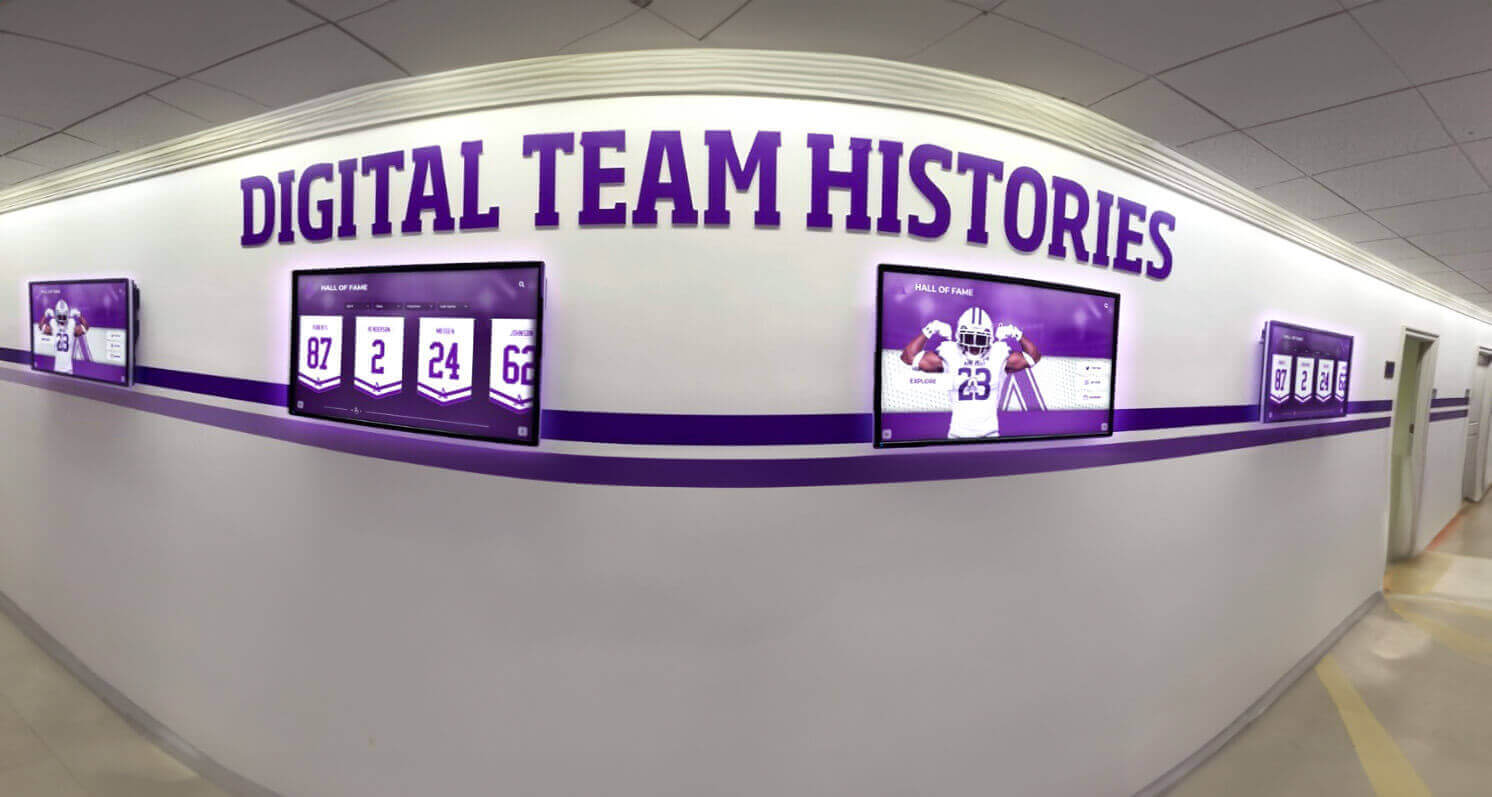
Multiple coordinated displays create comprehensive recognition networks serving different content categories while maintaining visual consistency throughout facilities
Conclusion: Creating Trophy Recognition Worthy of Championship Achievement
Digital trophy case experiences represent fundamental advancement in celebrating athletic excellence, preserving competitive heritage, and building program culture inspiring continued achievement. By eliminating space constraints limiting traditional cases to selective rather than comprehensive recognition, enabling immediate updates maintaining current and relevant celebration, creating engaging interactive experiences connecting current athletes with institutional tradition, incorporating rich multimedia storytelling impossible with engraved plaques, and extending accessibility beyond physical facilities to worldwide alumni and supporter communities, digital trophy case technology delivers comprehensive solutions that physical glass cabinets simply cannot match.
Get Your Touchscreen Mock-Up
Discover how custom-designed digital trophy case experiences can transform athletic recognition for your school. Rocket Alumni Solutions creates interactive displays purpose-built for educational environments, combining professional design with intuitive administration that makes celebrating achievement effortless while honoring every trophy appropriately.
Book a demoThe most successful digital trophy case implementations share common characteristics: they start with clear recognition goals understanding what achievement celebration should accomplish, select purpose-built platforms designed specifically for trophy recognition rather than generic signage, develop thoughtful content strategies honoring achievements comprehensively through quality multimedia documentation, position displays strategically in high-traffic locations where communities naturally encounter recognition, and establish sustainable maintenance workflows keeping content current and engaging over time.
Whether implementing comprehensive athletic trophy recognition preserving championship heritage while inspiring current teams, creating hybrid systems combining selective physical displays with unlimited digital capacity, or developing multi-sport recognition ensuring equitable celebration across all programs regardless of visibility or trophy volume, modern digital trophy case technology provides proven design frameworks strengthening school culture while giving every achievement the permanent recognition it deserves.
Schools investing in well-designed digital trophy case recognition demonstrate commitment to celebrating all achievements rather than limiting acknowledgment to highest accomplishments or most visible programs that physical display space can accommodate. This comprehensive approach communicates institutional values while building cultures where achievement across all dimensions receives systematic celebration creating motivation, pride, and lasting connection between community members and their schools across generations of athletic tradition and competitive excellence.
Ready to explore digital trophy case design for your school? Learn more about sports banquet planning ideas incorporating digital recognition, discover end-of-year awards assembly concepts, explore football awards ideas celebrated through interactive displays, understand senior night celebration approaches integrating trophy recognition, and review design consistency frameworks that balance brand identity with creative flexibility while celebrating championships through purpose-built interactive technology designed specifically for honoring athletic achievement comprehensively.