



Schools face a growing recognition challenge that traditional trophy cases simply cannot solve. Athletic programs accumulating decades of championships, tournament victories, and individual honors inevitably exhaust available display space. Wall-mounted cases fill within years, forcing administrators into impossible decisions about which achievements deserve visibility and which must be relegated to storage closets where they’re forgotten rather than celebrated.
A digital trophy case eliminates these space constraints entirely while transforming how schools recognize athletic excellence. Single touchscreen displays accommodate unlimited trophies and achievements spanning centuries of tradition. Cloud-based content management enables instant updates without engraving delays or installation scheduling. Rich multimedia profiles tell complete championship stories through photos, videos, statistics, and narratives. And web-based extensions make recognition accessible to alumni, families, and communities worldwide—not just those visiting physical facilities during limited hours.
This comprehensive guide explores how schools are modernizing athletic recognition through digital trophy case technology. From understanding core capabilities and design principles through implementation strategies, content development, and measuring success, you’ll discover proven frameworks for creating recognition systems that honor every achievement appropriately while building culture, inspiring excellence, and strengthening community connections across generations.
Digital trophy cases represent more than space-saving alternatives to traditional glass cabinets—they fundamentally transform recognition from static documentation into engaging interactive experiences that connect current athletes with institutional heritage while celebrating excellence comprehensively rather than selectively based on physical display limitations.

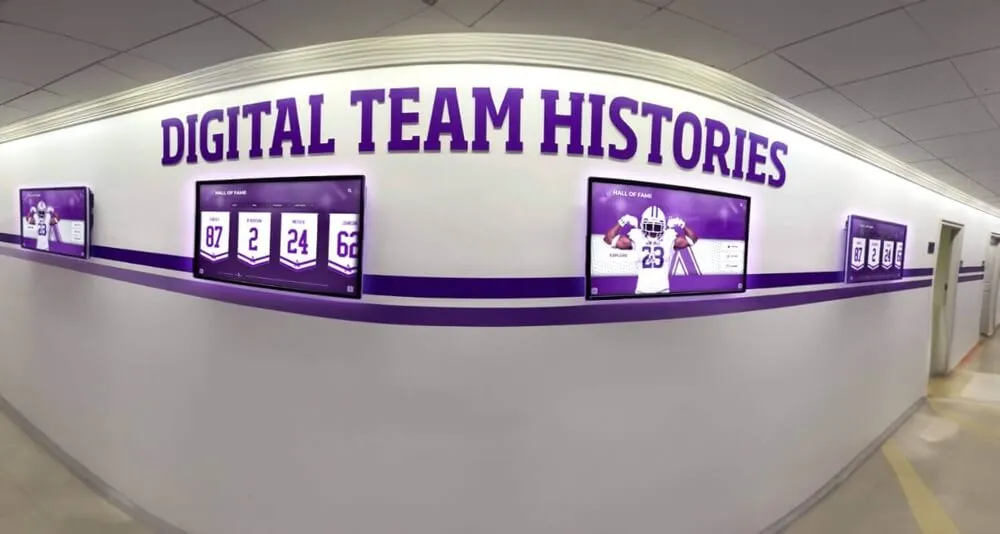
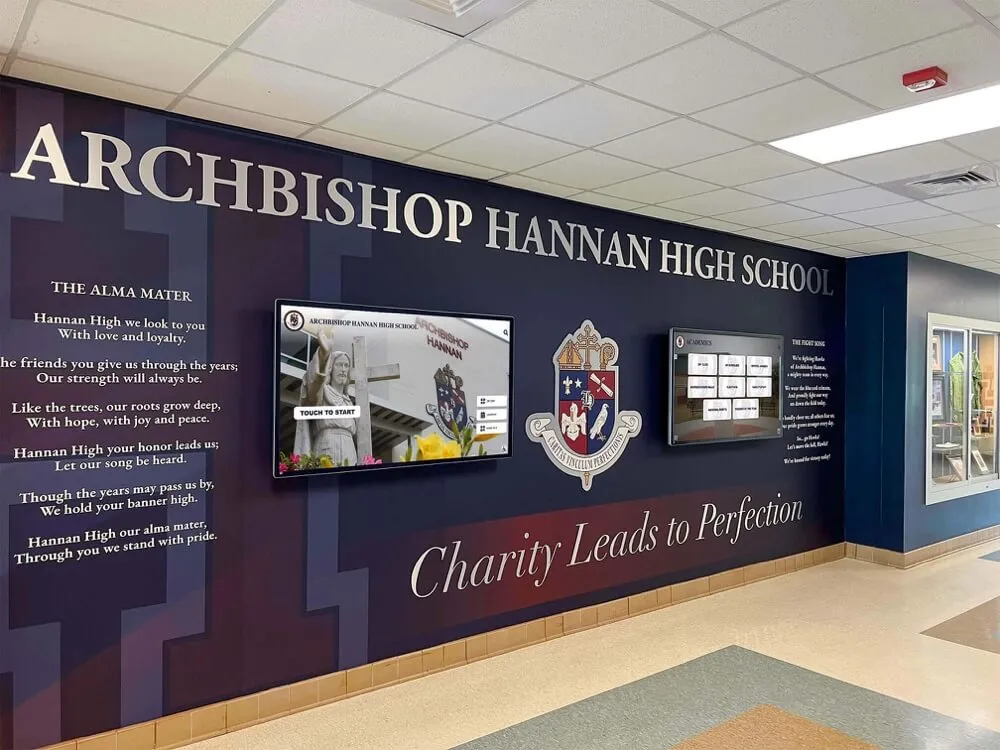
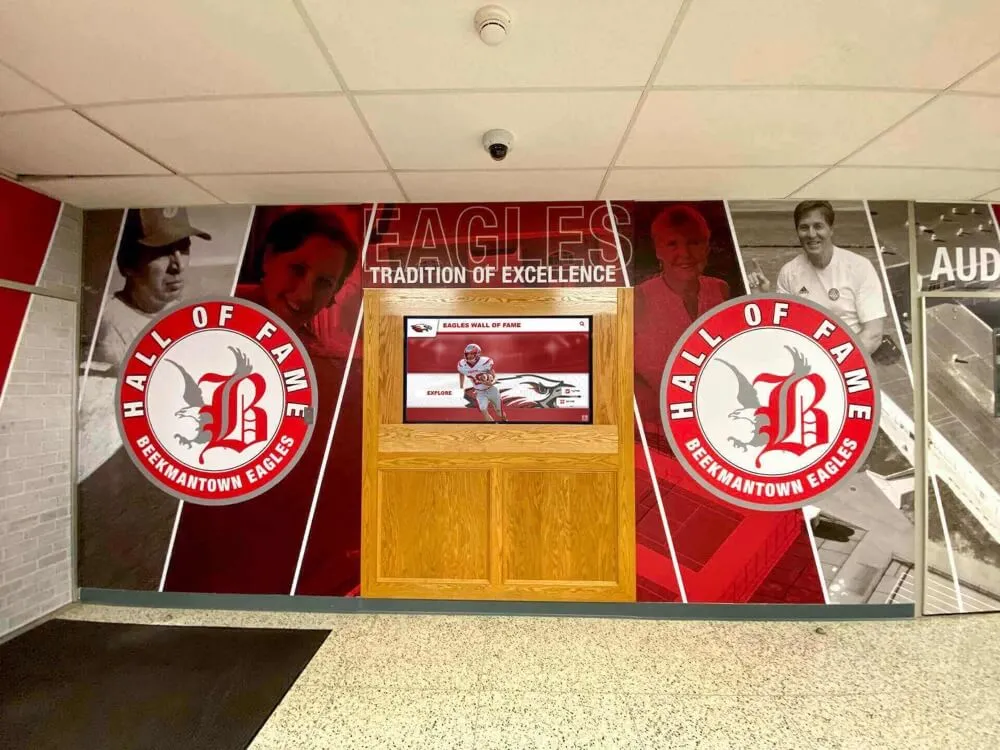
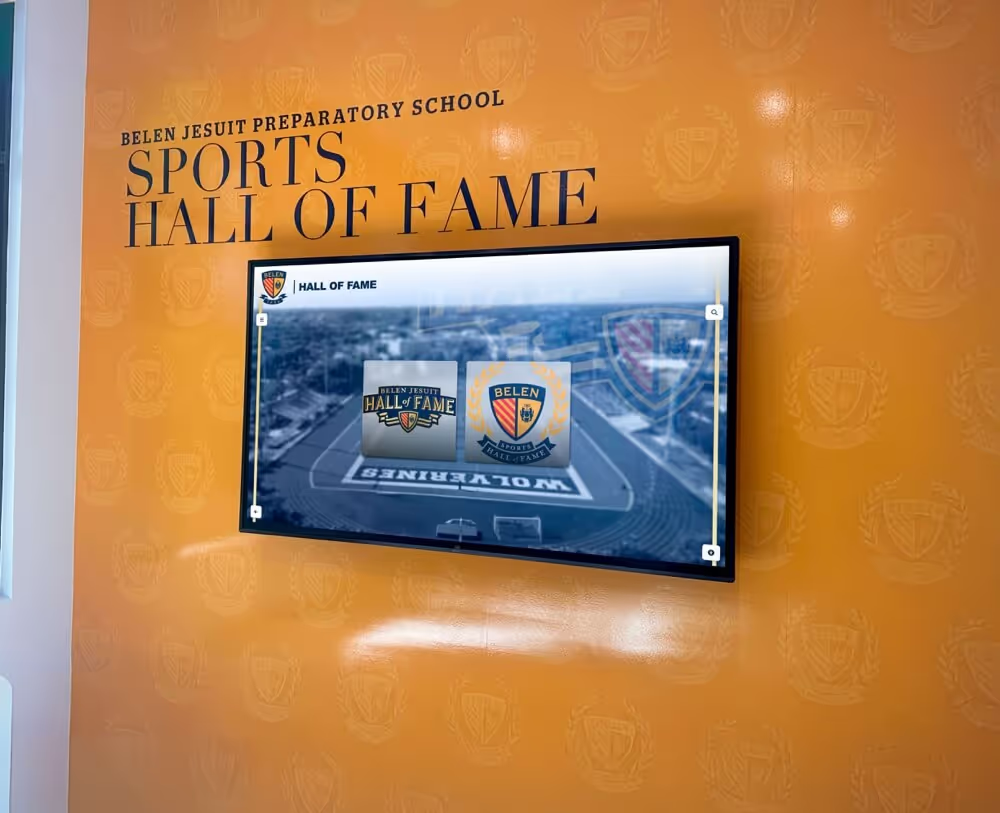
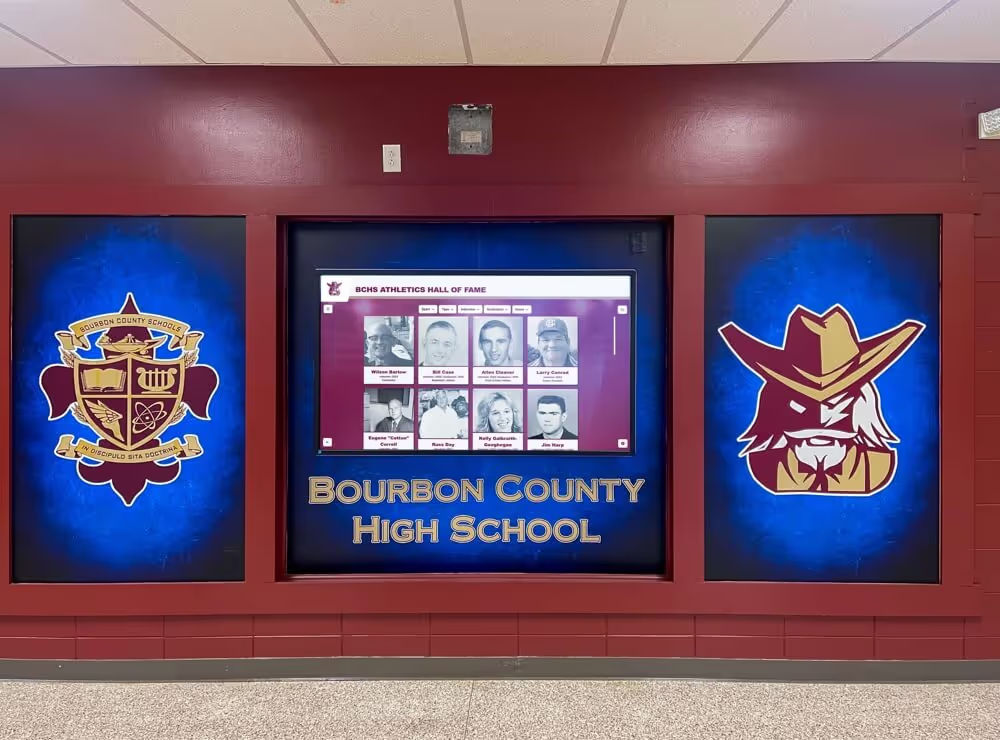
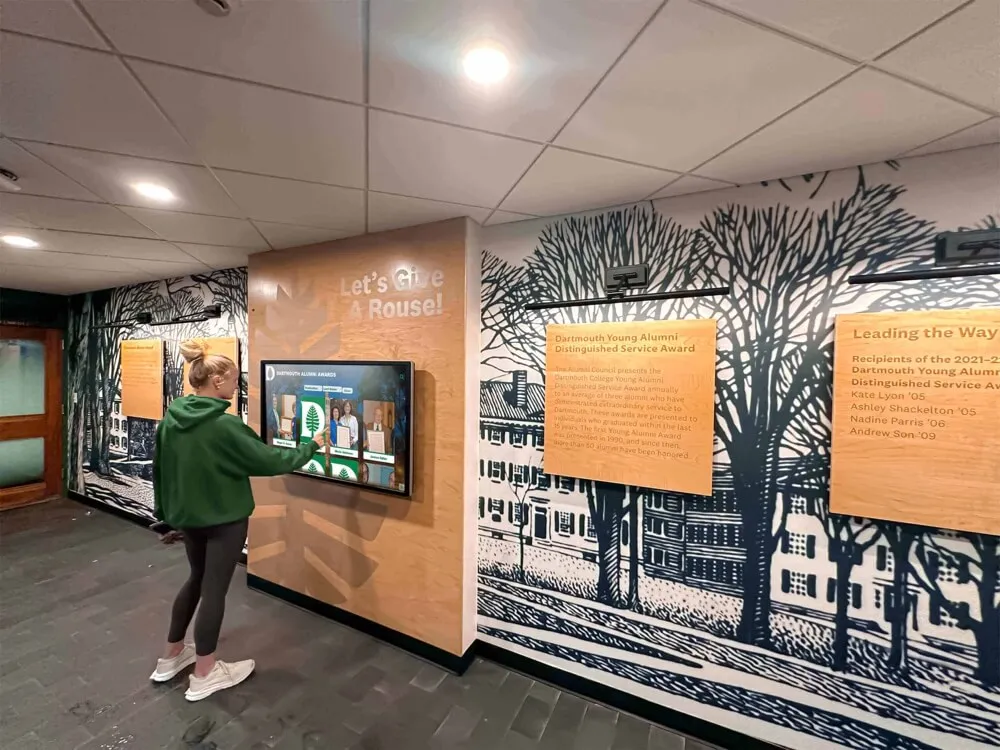
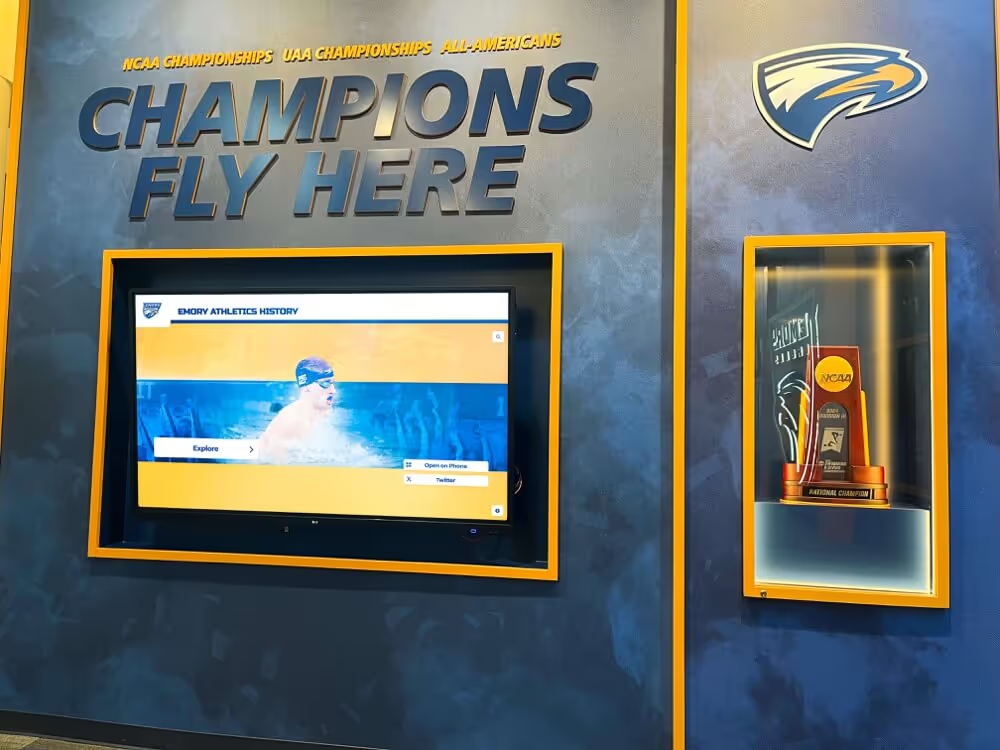
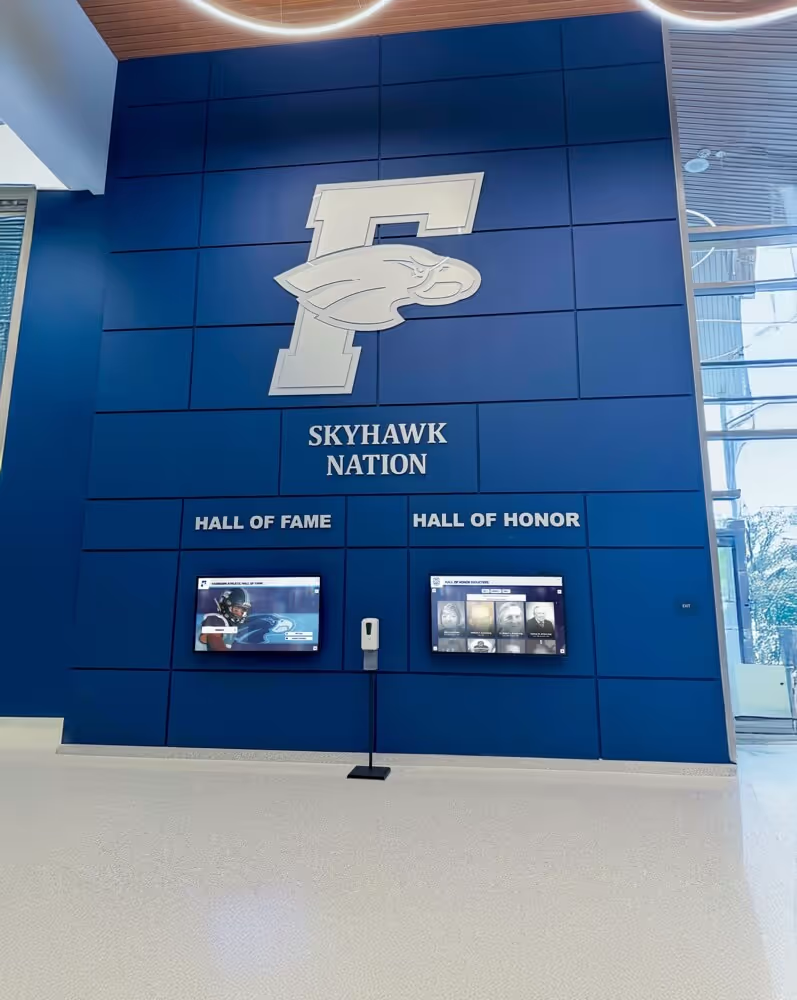
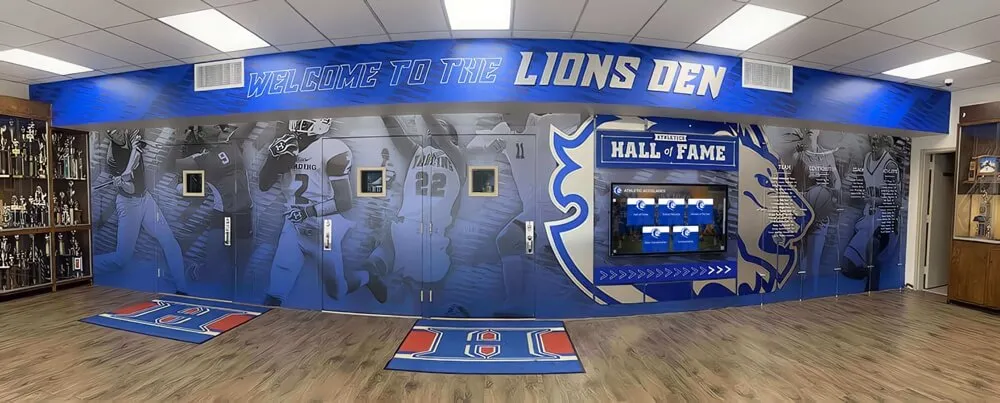
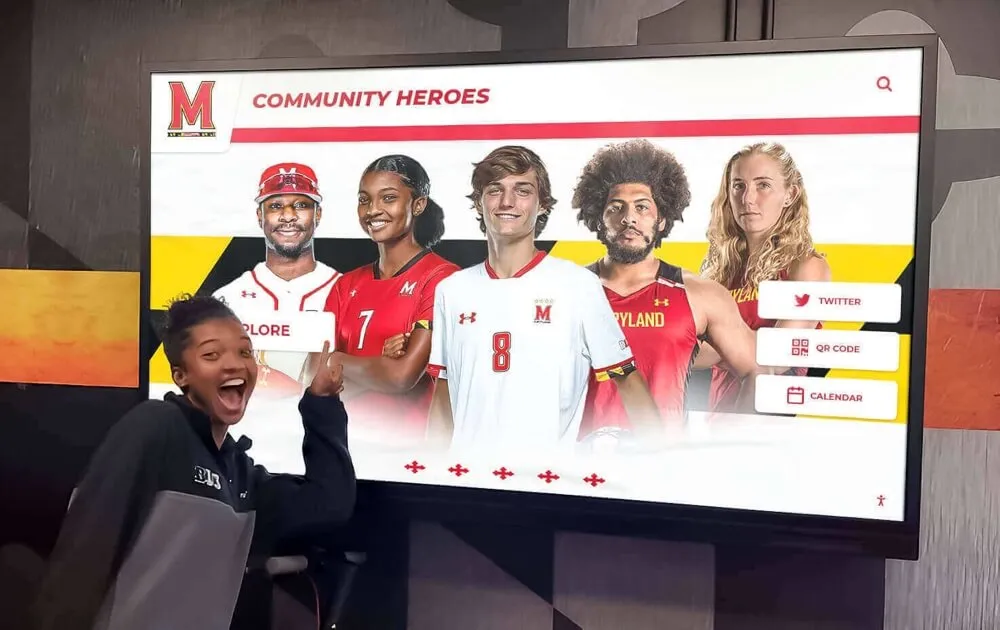
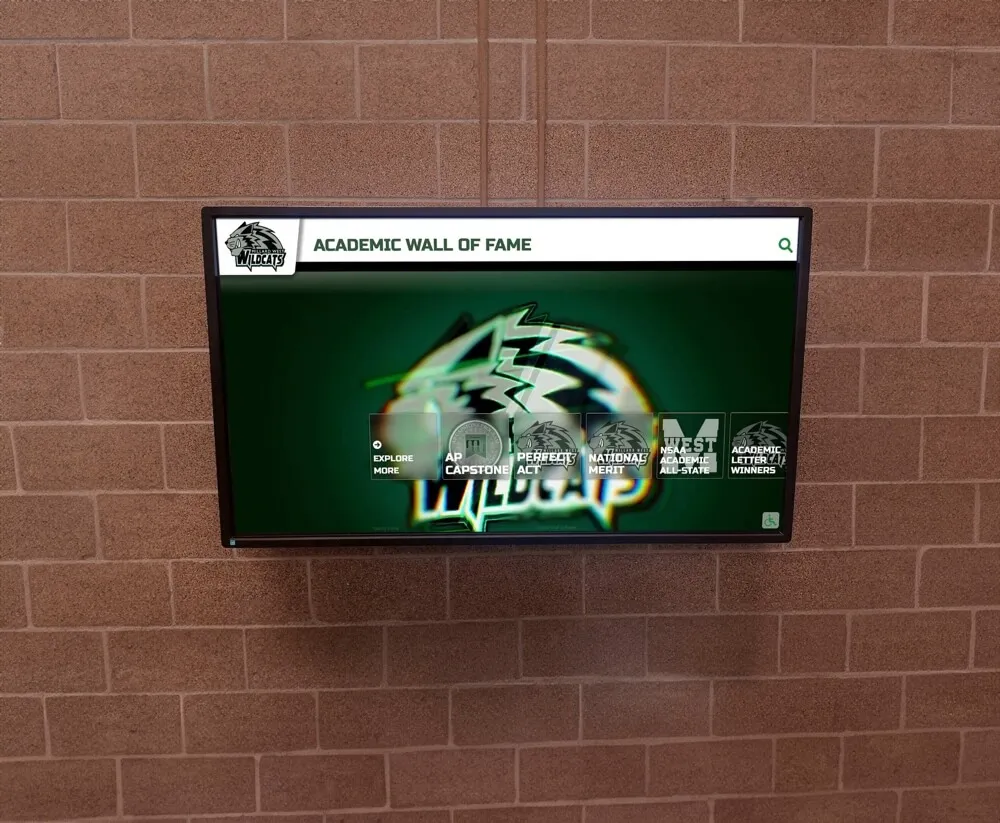
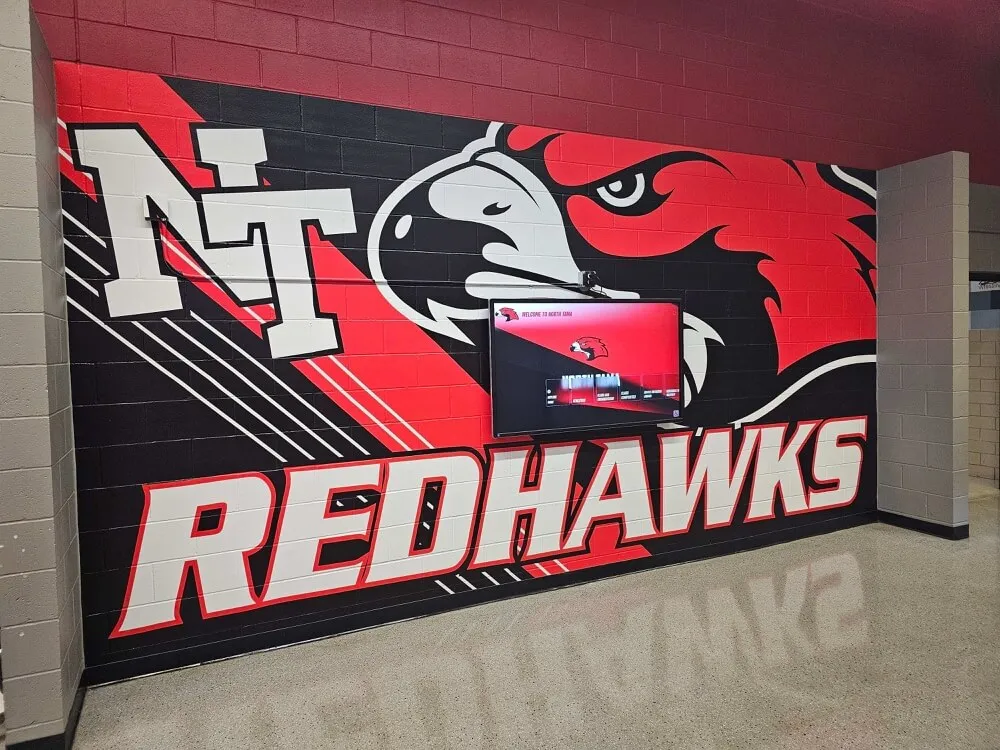
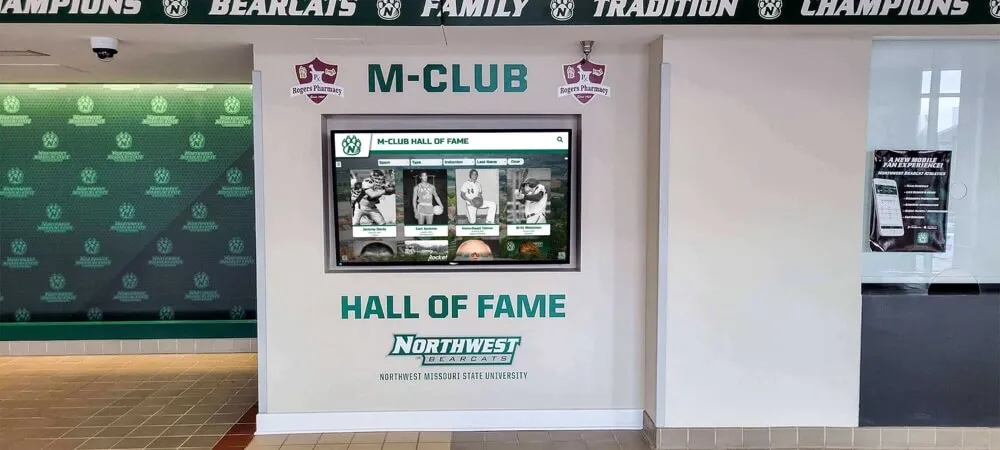
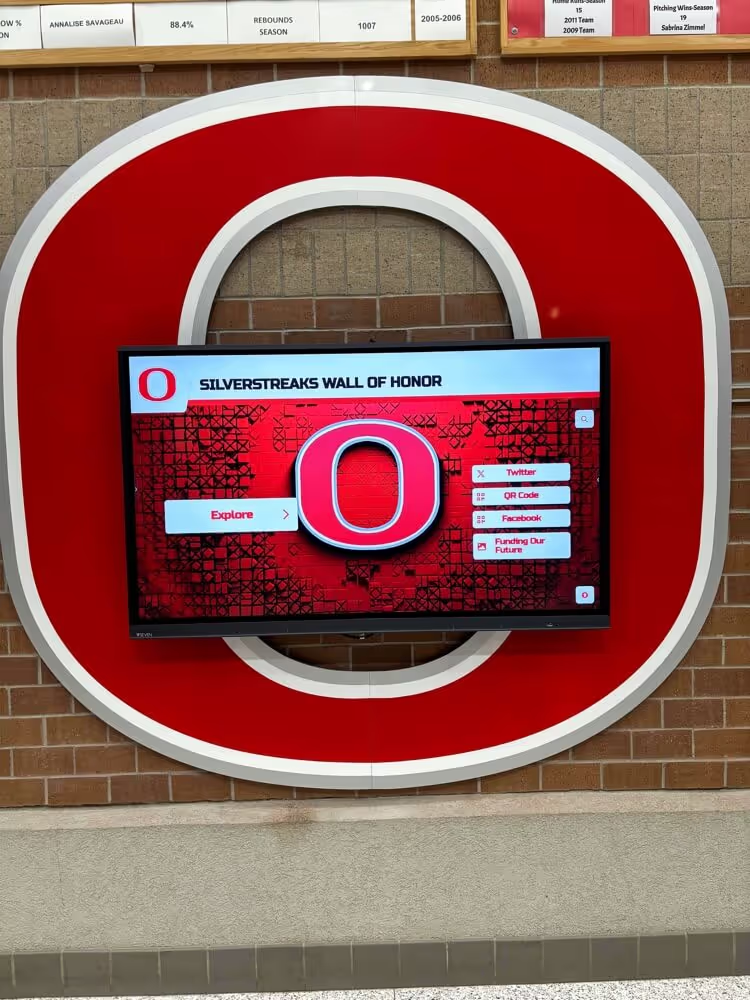
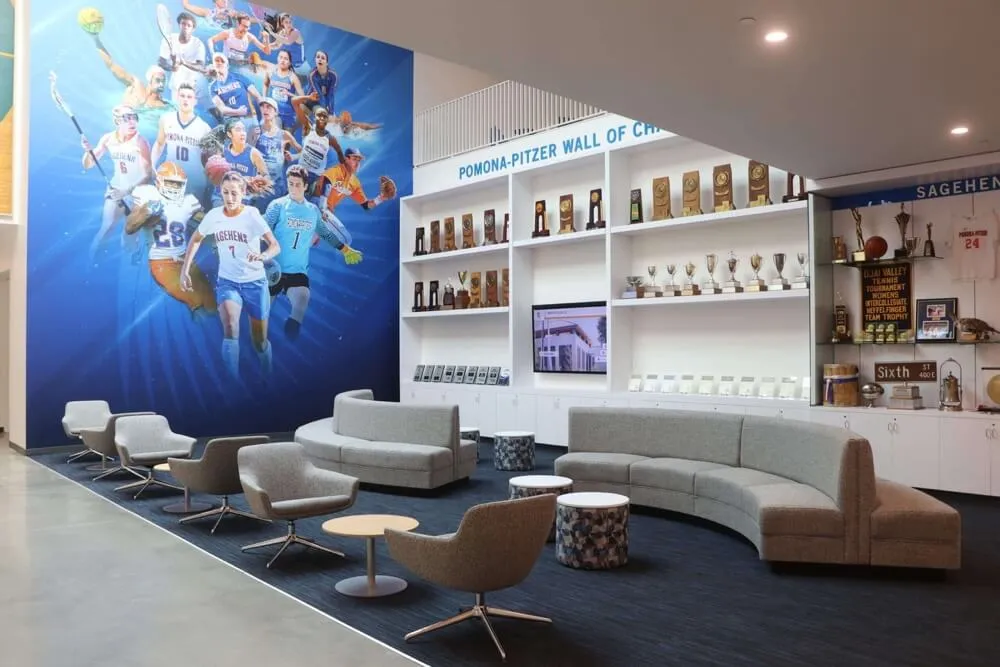
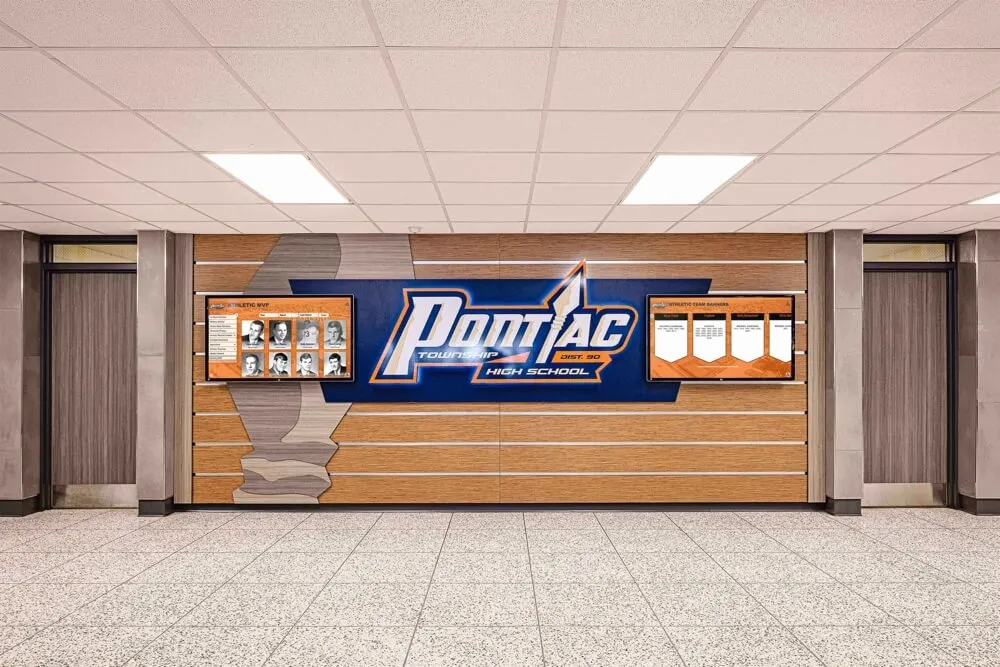
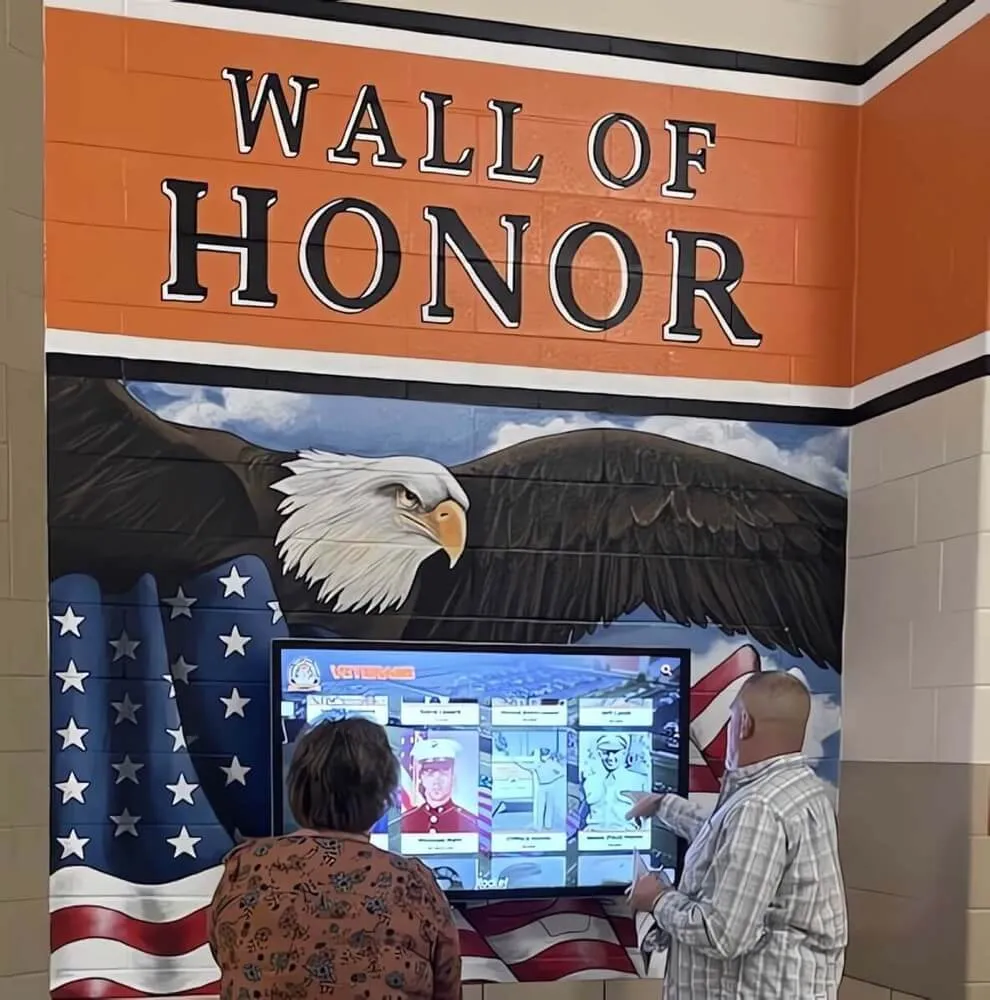
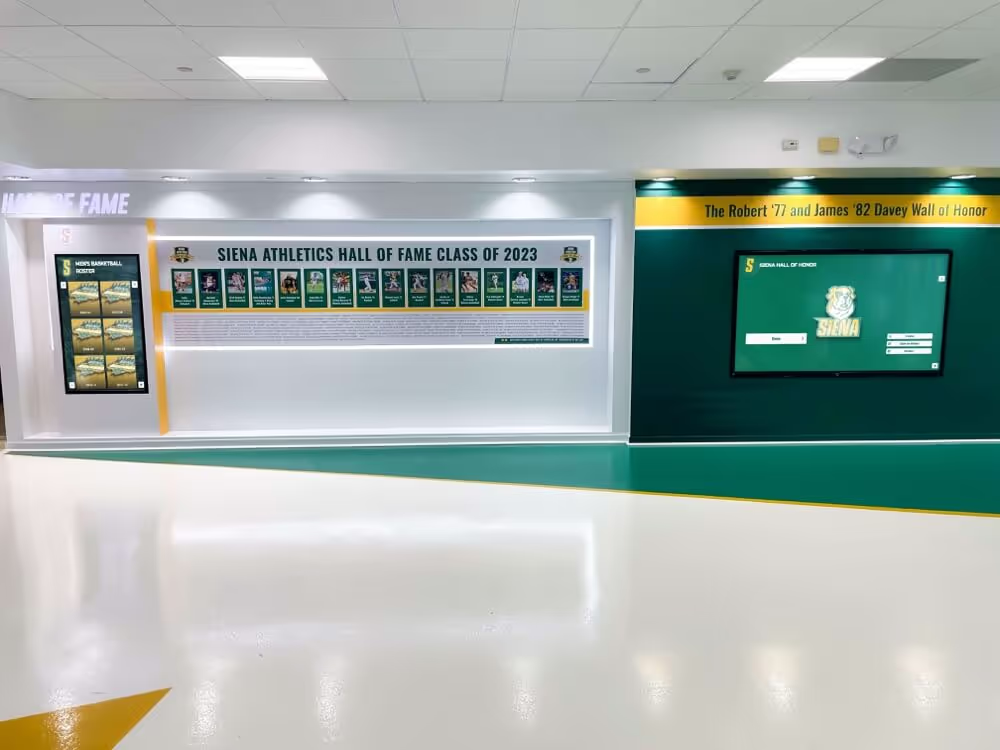
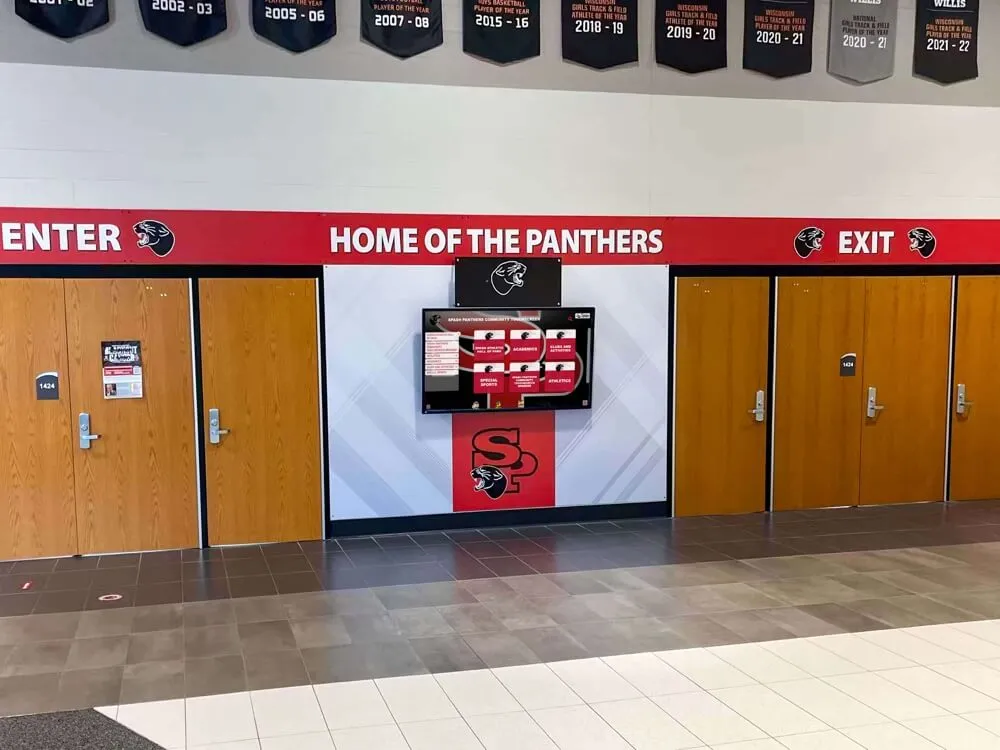
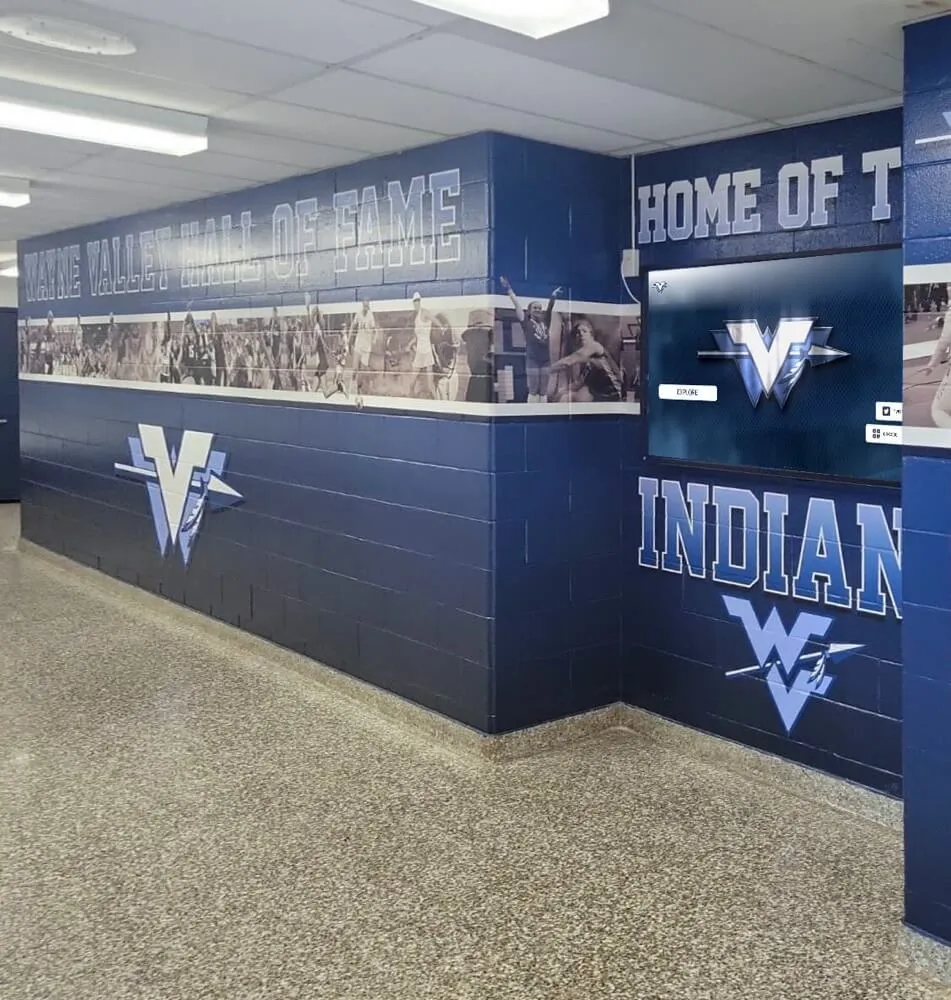
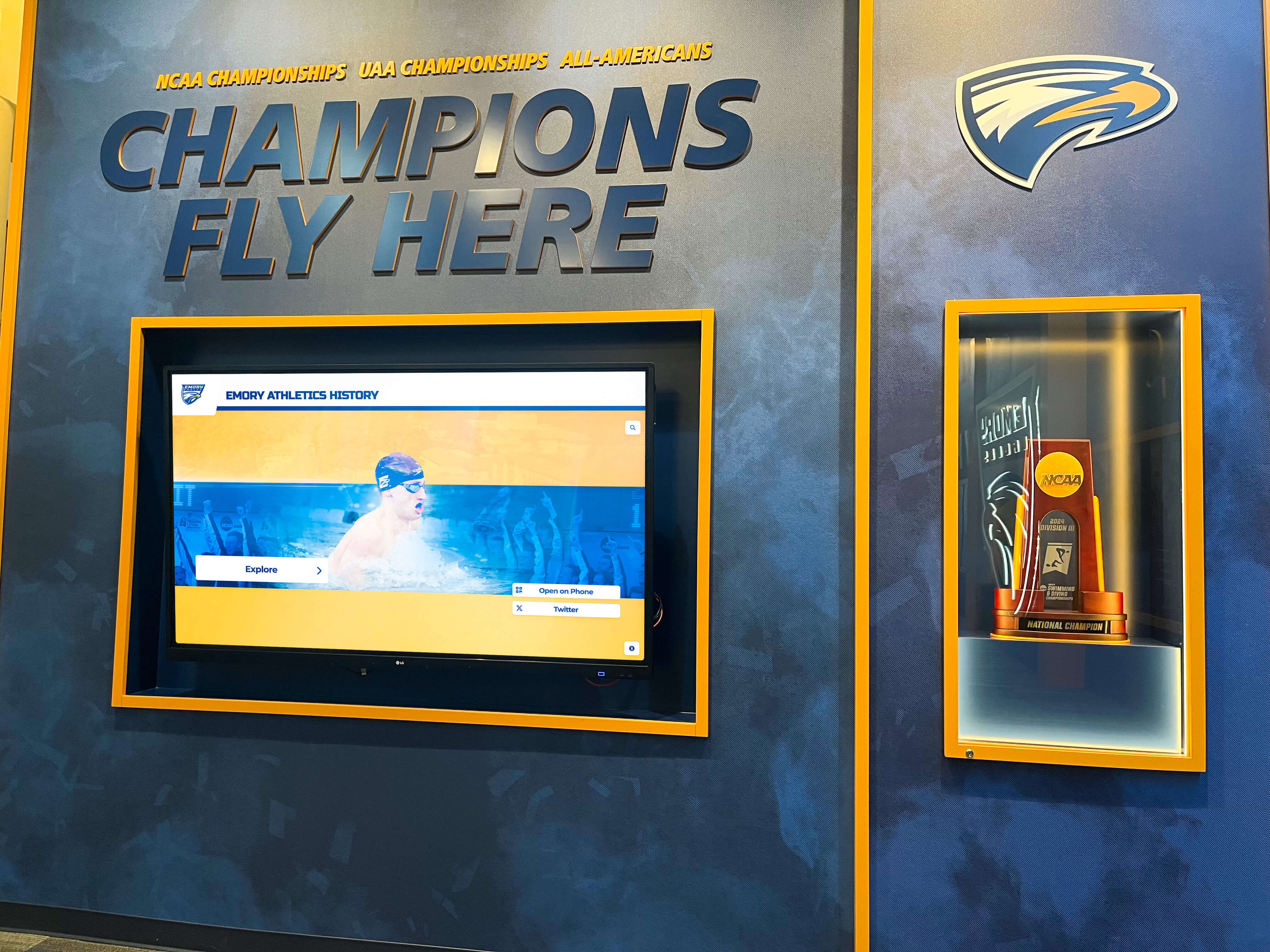
Modern digital trophy cases integrate seamlessly with traditional athletic displays while providing unlimited recognition capacity
The Trophy Case Capacity Crisis in Successful Athletic Programs
Schools with strong competitive traditions face inevitable trophy accumulation that traditional display cases cannot accommodate sustainably.
Understanding Trophy Volume in Comprehensive Athletic Programs
A typical high school fielding 15-20 sports generates substantial annual trophy volume:
Conference and League Recognition
Regular season excellence produces conference championship trophies across fall, winter, and spring sports, division titles when leagues organize by competitive level, tournament championships for sports emphasizing postseason competition, and runner-up recognition acknowledging second-place finishes and competitive excellence.
Most competitive programs earning regular conference recognition accumulate 8-15 conference-level trophies annually across all sports and seasons.
State and Regional Tournament Awards
Championship tournaments generate additional trophy volume through district or sectional qualifying trophies, regional championship recognition, state semifinal and quarterfinal participation awards, runner-up trophies from championship game losses, and state championship trophies representing highest achievement levels.
Schools reaching state tournament competitions regularly can expect 5-10 additional trophies annually from postseason participation across multiple sports.
Individual Athlete and Coach Recognition
Beyond team trophies, comprehensive recognition includes all-conference individual athlete selections, all-state team recognition and honors, player of the year awards across sports, sportsmanship and character awards, coach of the year recognition, milestone achievement acknowledgments, and individual statistical leadership awards.
These individual honors frequently manifest as plaques, trophies, or certificates requiring display space alongside team achievements—adding another 10-20 pieces annually requiring recognition infrastructure.
Schools maintaining comprehensive athletic recognition programs typically accumulate 25-40 trophies and major awards annually. Over 20 years—a typical athletic director tenure—that represents 500-800 pieces requiring display space. Traditional trophy cases hold approximately 25-40 trophies each depending on size and arrangement, meaning comprehensive display theoretically requires 15-25 large cases—an impossible space commitment for most school buildings.
Resources on athletic hall of fame development demonstrate how successful programs face inevitable capacity challenges requiring systematic planning and modern solutions addressing physical space limitations.
Successful athletic programs accumulate more trophies than traditional cases can display, requiring strategic capacity planning
The Hidden Costs of Traditional Trophy Case Expansion
When schools exhaust existing trophy case capacity, traditional expansion approaches carry substantial financial and logistical burdens:
Physical Case Addition Expenses
New trophy case installation requires custom fabrication ranging from $2,000-8,000 per case depending on size, materials, and design specifications, professional installation including mounting, electrical, and lighting at $500-2,000 per case, building modifications when wall structure requires reinforcement or modification, and architectural planning ensuring new cases integrate aesthetically with existing facilities.
Schools adding 3-5 trophy cases over a decade to accommodate growing collections often invest $10,000-40,000 in physical expansion alone—substantial funds competing with equipment, facilities, and program development priorities.
Ongoing Recognition Maintenance Costs
Each trophy added to traditional cases incurs incremental expenses including engraved plaques at $50-200 per trophy depending on size and complexity, professional engraving services with 3-6 week turnaround times, installation labor arranging cases to accommodate new pieces, and periodic reorganization as collections grow and priorities shift.
Athletic programs adding 25-40 trophies annually spend $1,250-8,000 yearly on traditional recognition maintenance—recurring costs that accumulate significantly across decades.
Space Opportunity Costs
Trophy cases consume valuable wall and floor space that could serve other purposes. Linear feet dedicated to trophy recognition often displaces donor recognition opportunities that could strengthen fundraising, informational displays supporting athletic programs and schedules, motivational content inspiring current athletes, or simply leaving walls uncluttered for architectural impact and natural light.
These space opportunity costs rarely appear in budget analyses but nonetheless represent real limitations on how schools utilize facility infrastructure.
Comprehensive analysis of digital recognition display investments demonstrates how modern alternatives address traditional limitations while providing superior long-term value relative to recurring physical case expansion expenses.
The Message Storage Sends to Stakeholders
When championship trophies and significant awards move to storage closets rather than remaining displayed, schools send implicit messages undermining athletic culture:
For Current Athletes
Storage suggests achievements matter temporarily but not permanently, that some accomplishments deserve lasting recognition while others don’t, that space limitations override honoring excellence, and that past success becomes irrelevant as new achievements accumulate.
Student-athletes whose older siblings or family members won championships no longer displayed understandably feel those achievements diminished regardless of administrative explanations about space constraints.
For Alumni and Families
Graduates returning to campus naturally seek trophies they earned. When those achievements sit in storage rather than receiving ongoing public display, alumni experience subtle devaluation of their contributions to program tradition. Families who supported athletes through years of competition expect lasting institutional acknowledgment that storage inherently contradicts.
For Prospective Athletes and Families
Recruiting effectiveness depends partly on demonstrating program tradition and competitive excellence. When trophy cases show only recent achievements because space limitations force removal of historical trophies, programs inadvertently communicate thin tradition lacking depth and sustained excellence across generations.
Digital trophy case technology eliminates these messaging problems entirely by accommodating unlimited recognition without ever requiring removal or storage as collections grow.
Core Capabilities of Digital Trophy Case Systems
Understanding what modern digital trophy cases provide helps schools evaluate whether technology investments address their specific recognition challenges effectively.
Unlimited Recognition Capacity Eliminating Space Constraints
The most transformative digital trophy case capability involves eliminating physical space limitations that force traditional cases to prioritize and exclude:
Comprehensive Achievement Documentation
Digital trophy cases can showcase every state championship trophy regardless of sport or era, every conference title across all competitive levels, every tournament victory and playoff appearance, every significant team accomplishment deserving recognition, every individual athlete major award and honor, every coach milestone and achievement, and every contribution to program tradition spanning decades or centuries.
A single 55-inch touchscreen display can host detailed profiles for 500-1,000+ trophies, teams, and achievements without ever approaching capacity limits or requiring physical expansion. Schools never face choices about which trophies deserve display and which must be stored when space fills.
Equitable Recognition Across All Programs
Unlimited capacity enables true equity in athletic recognition. Olympic sports receive equal visibility alongside football and basketball. Girls’ athletics showcase comprehensive trophy collections matching boys’ sports. Emerging programs receive appropriate recognition even when lacking decades of established tradition.
This comprehensive approach communicates that achievement matters across all dimensions rather than limiting celebration to highest accomplishments or most visible programs—strengthening culture across entire athletic departments while ensuring Title IX compliance in recognition systems.
Historical Preservation and Institutional Memory
Digital trophy cases preserve complete institutional athletic histories including championship trophies from founding eras forward, documentation of program evolution and competitive development, recognition of athletes who established traditions and competitive excellence, preservation of coaching legacies and leadership contributions, and institutional memory that survives staff turnover and administrative transitions.
This historical preservation serves educational purposes helping current athletes understand program tradition while connecting communities with shared heritage that builds pride and cultural continuity across generations.
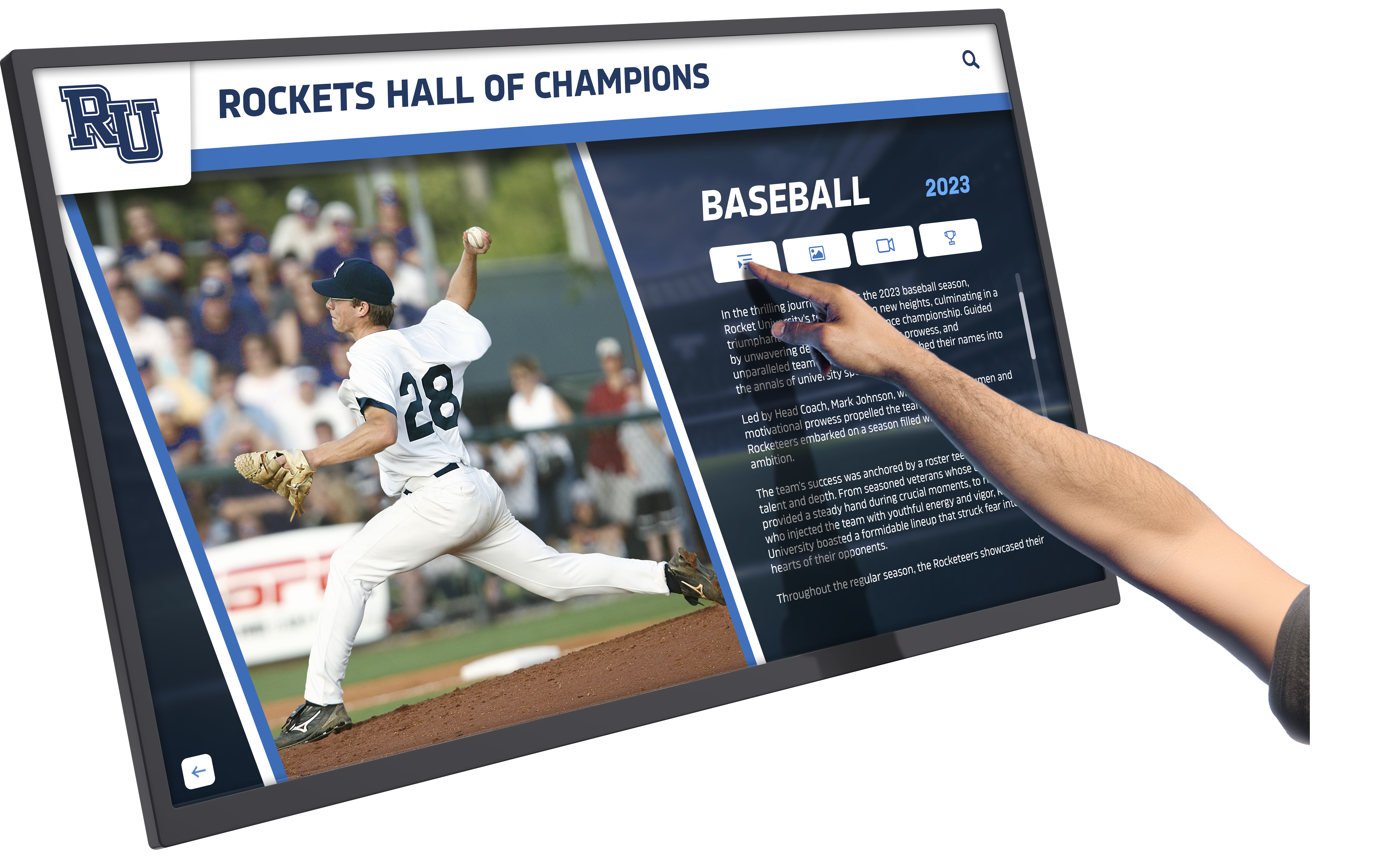
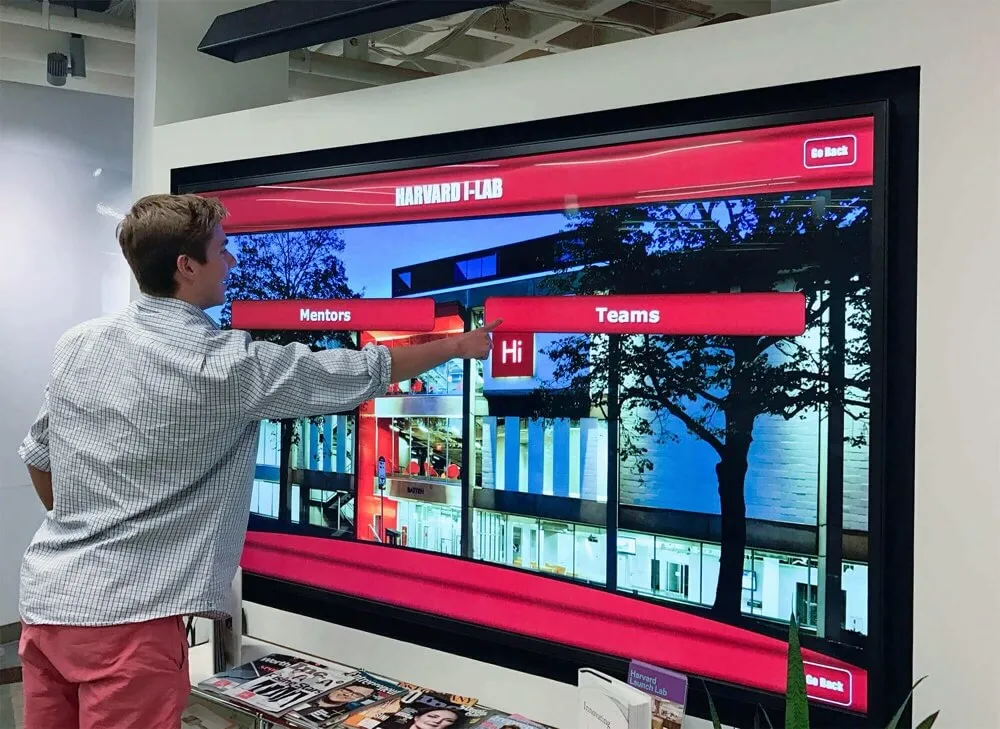
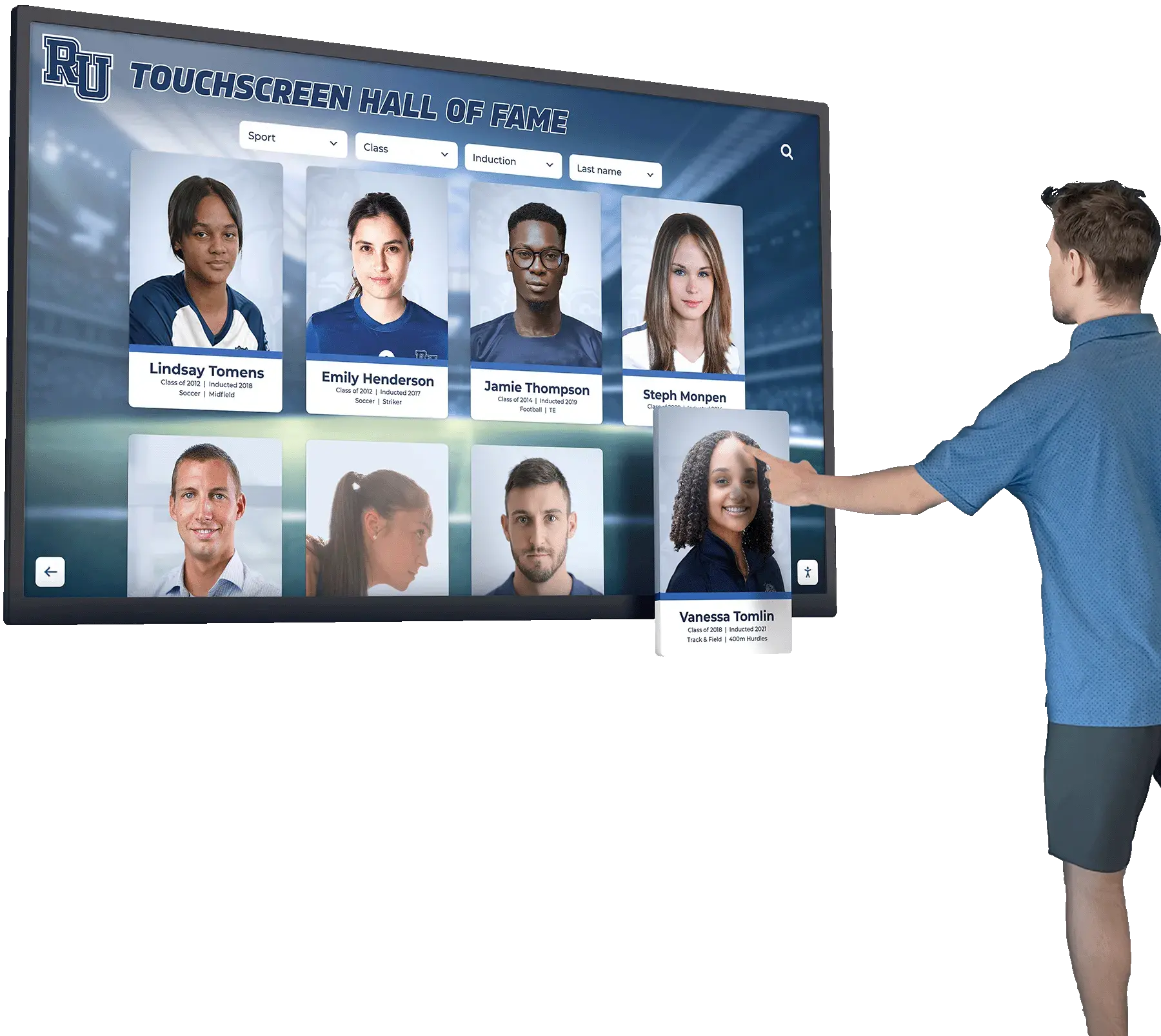
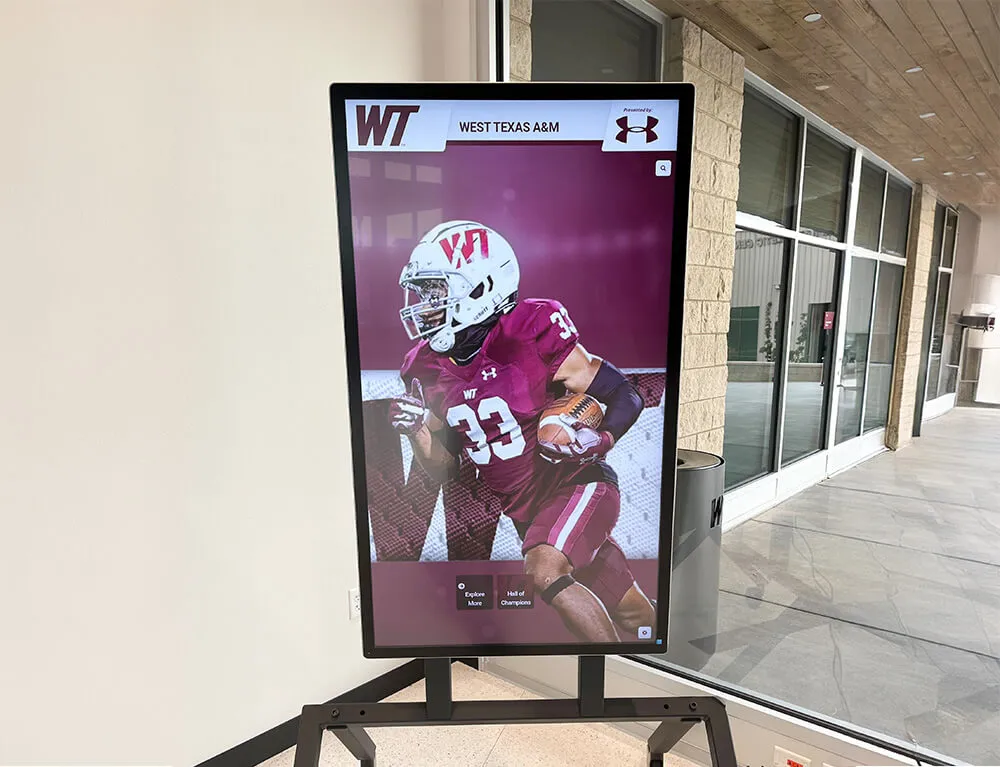
Intuitive touch interfaces enable natural exploration with instant access to unlimited trophy recognition and detailed achievement profiles
Instant Updates Without Physical Modification Delays
Traditional trophy case updates require coordination with engravers, manufacturers, and installers creating delays that undermine recognition impact. Digital trophy cases eliminate these bottlenecks through immediate cloud-based content management:
Real-Time Championship Recognition
When teams win championships on Saturday nights, athletic directors can publish digital trophy case recognition by Monday morning. Championship celebrations can include unveiling new digital trophy profiles. And communities see achievements acknowledged while excitement remains high rather than months later when seasons have ended and attention has moved elsewhere.
This immediacy demonstrates institutional responsiveness while maximizing psychological impact of recognition during periods when it matters most to athletes, families, and supporters.
Simplified Administrative Workflows
Cloud-based content management systems enable non-technical staff to update trophy recognition through simple web forms without IT department intervention, upload trophy photos directly from smartphones or computers, schedule content publication for specific dates and times coordinating with ceremonies, and make corrections or additions instantly without requiring physical modification.
Schools report 80-90% reduction in administrative time spent maintaining trophy recognition compared to traditional approaches requiring coordination with external vendors and contractors for each update.
Cost Elimination for Recurring Recognition Updates
Every trophy added to traditional cases incurs $50-200 in engraving, plaques, and installation labor. Digital trophy cases eliminate these recurring costs entirely—new trophies cost nothing beyond administrative time uploading photos and information already available.
Over 10-15 year timeframes, schools adding 250-600 trophies save $12,500-120,000 in avoided engraving and installation expenses through digital approaches—substantial funds redirected to programs, equipment, and athlete development.
Frameworks for academic recognition program management provide detailed operational workflows demonstrating administrative efficiency enabled by cloud-based digital recognition platforms.
Rich Multimedia Storytelling Beyond Static Documentation
Traditional trophy cases document achievements efficiently through engraved plaques providing basic facts—championship years, opponents, scores. Digital trophy cases transform recognition from documentation to storytelling through rich multimedia content:
Comprehensive Championship Narratives
Digital trophy profiles can include high-resolution trophy photographs showing detail and craftsmanship, complete team rosters with individual athlete profiles and statistics, season highlight videos showing championship games and memorable moments, coaching staff recognition and career accomplishments, statistical leaders and performance data demonstrating excellence, tournament progression showing path to championship victories, newspaper coverage and contemporary documentation providing historical context, and personal reflections from coaches and athletes sharing experiences and memories.
This depth creates emotional engagement that engraved plaques cannot match, helping current students connect with institutional heritage while building genuine pride in tradition and achievement culture.
Visual Design Excellence and Branded Experiences
Purpose-built digital trophy case platforms provide professional design incorporating school colors creating instant institutional connection, logo and mascot integration reinforcing brand identity, custom backgrounds featuring campus imagery and facilities, motion graphics and animation adding polish and engagement, and typography hierarchy ensuring readability and visual appeal.
This design quality communicates that trophy recognition receives appropriate investment and institutional priority—honoring achievements through presentation quality matching their significance rather than utilitarian displays suggesting afterthought rather than celebration.
Interactive Exploration and Self-Directed Discovery
Digital trophy cases enable visitors to control their experience through powerful search finding specific athletes, teams, or championships instantly, filtering by sport, year, or achievement category organizing content logically, featured collections highlighting special recognition like state championships or record holders, and related profile suggestions connecting teammates, eras, or programs.
This interactivity generates 4-7 minutes average engagement compared to 30-60 seconds glancing at traditional trophy cases—representing 10x improvement through active exploration versus passive viewing.
Approaches to digital athletic hall of fame design demonstrate how multimedia storytelling transforms recognition from simple documentation into compelling narratives that preserve institutional memory and inspire continued excellence.
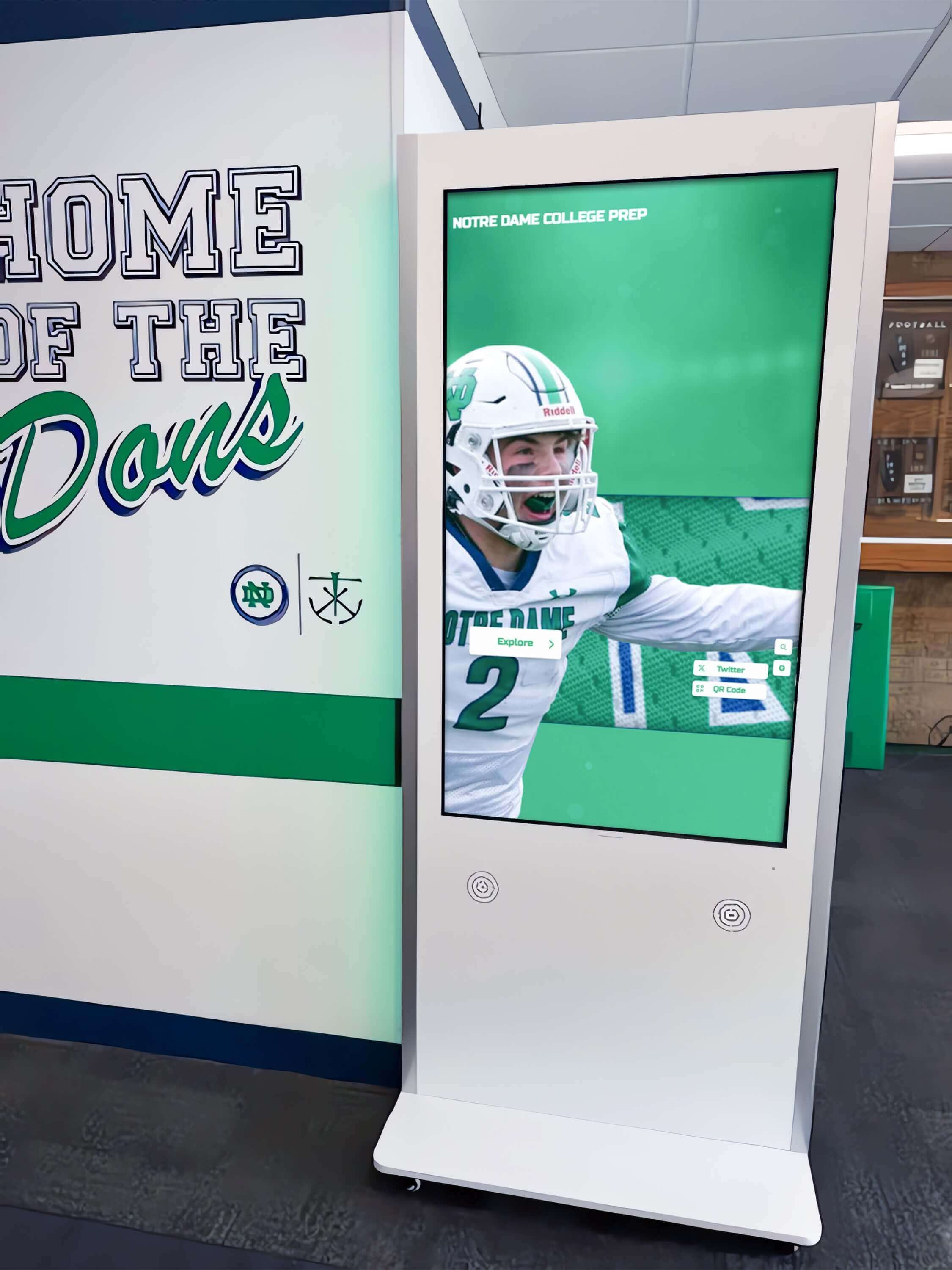
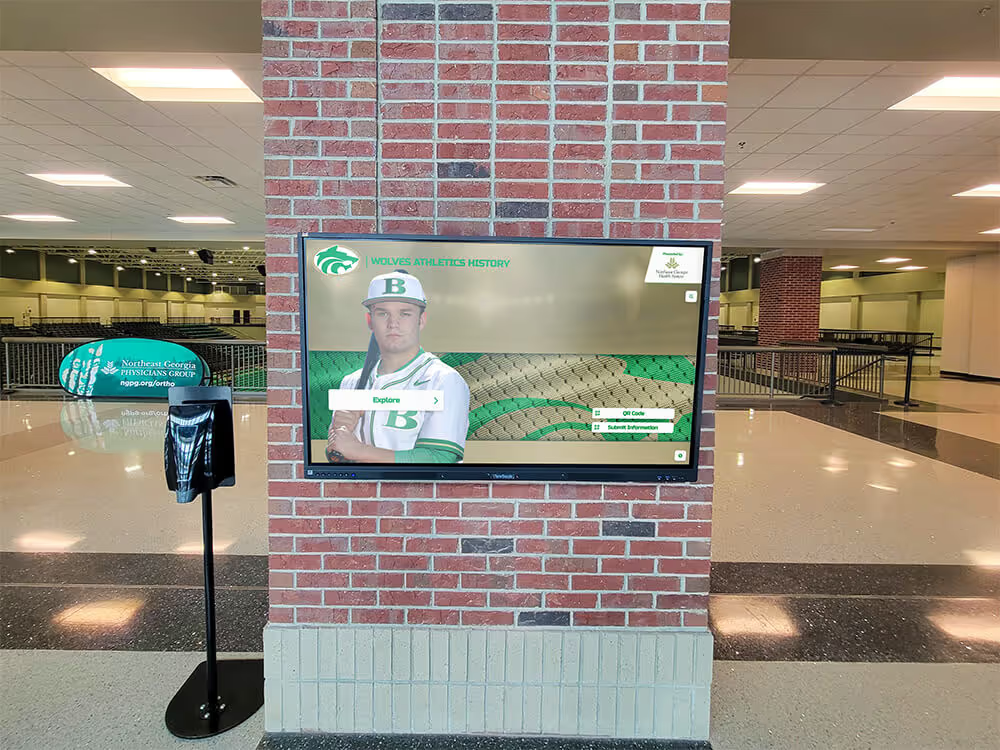
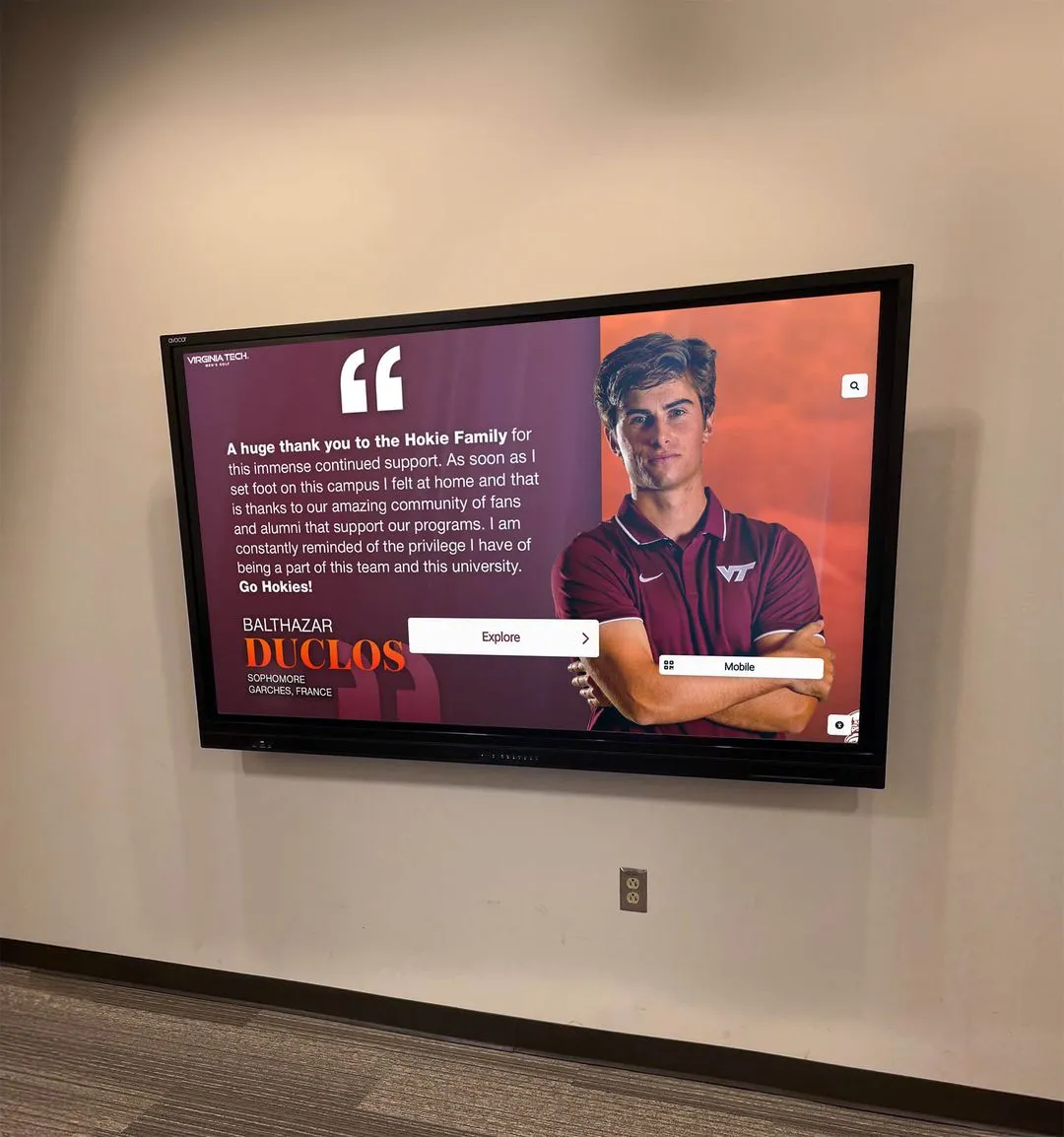
Free-standing digital trophy case kiosks provide flexible placement options enabling recognition throughout athletic and academic facilities
Universal Web-Based Accessibility Beyond Physical Locations
Traditional trophy cases serve only people physically present in specific buildings during operating hours. Digital trophy case platforms extend recognition universally through responsive web-based access:
Alumni Engagement and Community Connection
Graduates anywhere in the world can revisit championships they earned during athletic careers, explore how programs have evolved since their graduation, discover former teammates and coaches through connected profiles, share trophy recognition with families through social media integration, and maintain ongoing connection with alma maters through celebration of shared tradition.
This universal accessibility dramatically expands recognition reach and impact. Alumni engagement increases when graduates can access their achievements anytime from anywhere, creating ongoing institutional connection rather than limiting recognition to occasional campus visits.
Prospective Student-Athlete Recruitment
Families researching schools during recruiting processes thoroughly explore athletic tradition and program history through digital trophy cases accessible during school selection research. Prospective athletes investigate championship traditions and program competitive excellence. And families evaluate whether schools appropriately celebrate achievement and honor student-athlete contributions.
Comprehensive digital trophy recognition demonstrates institutional commitment to celebrating excellence—differentiating programs from competitors lacking similar infrastructure and communicating sustained success across generations rather than recent isolated achievement.
Mobile-Optimized Access Patterns
Modern digital trophy case platforms provide responsive design ensuring excellent experiences on smartphones and tablets, native mobile applications with offline access capabilities, QR code integration allowing visitors to continue exploration on personal devices, and push notifications for new championship recognition and program updates.
These mobile capabilities meet users where they naturally consume content—on personal devices throughout daily activities rather than requiring dedicated visits to specific campus locations for recognition access.
Resources on student recognition and digital engagement provide frameworks for maximizing reach and impact through universal web-based access extending beyond physical installation locations.
Experience Layout and Design Principles for Effective Trophy Recognition
Digital trophy case effectiveness depends heavily on thoughtful design creating intuitive navigation, visual appeal, and engaging experiences worthy of championship achievement celebration.
Hero Zone and Institutional Identity
The top 15-20% of screen real estate establishes context and brand presence creating immediate institutional connection:
Essential Hero Elements
School logos and colors should appear prominently creating instant recognition and brand reinforcement. Display titles clearly identify the recognition purpose—“Athletic Hall of Fame,” “Championship Trophy Collection,” “Wall of Champions.” Optional rotating featured content can spotlight recent championships or historic achievements drawing attention to compelling stories. And clean, uncluttered design communicates professionalism and institutional pride.
The hero zone serves as visual anchor orienting visitors immediately while setting aesthetic tone for the entire trophy recognition experience.
Background Imagery and Environmental Connection
Custom backgrounds incorporating facility photographs showing athletic venues and campus architecture, team action imagery celebrating athletic excellence and competition, abstract motion graphics using school colors and design elements, and historical photography blending heritage with modern presentation create visual interest while reinforcing institutional identity.
Background imagery should enhance rather than distract from primary recognition content—providing context and aesthetic appeal without competing for attention with trophy information visitors seek.
Primary Navigation Architecture Enabling Discovery
Navigation occupying 10-15% of screen height enables content discovery through clear, touch-friendly interfaces:
Essential Navigation Options
Browse by sport organizes trophies logically according to athletic programs—football championships separate from basketball, soccer, or swimming recognition. Browse by year enables chronological exploration helping visitors find specific eras or trace program evolution over time. Championship level filtering separates state titles from conference championships and tournament recognition. And powerful search functionality allows direct name-based discovery when visitors seek specific teams or achievements.
Touch targets must be large (minimum 44x44 pixels) with adequate spacing preventing accidental selections. Navigation labels should use plain language rather than jargon, ensuring visitors of all ages understand options immediately without requiring instructions or explanations.
Intuitive Visual Hierarchy
Primary navigation for major discovery paths should receive prominent visual treatment through size, color, or position. Secondary options supporting specialized exploration can appear in less prominent locations. And consistent patterns throughout the interface enable visitors to predict what interactions will accomplish, reducing confusion and building confidence exploring recognition content independently.
The most effective digital trophy case interfaces require zero instructions—visitors naturally understand what to do through clear visual design and intuitive navigation patterns matching smartphone interaction models they use daily.
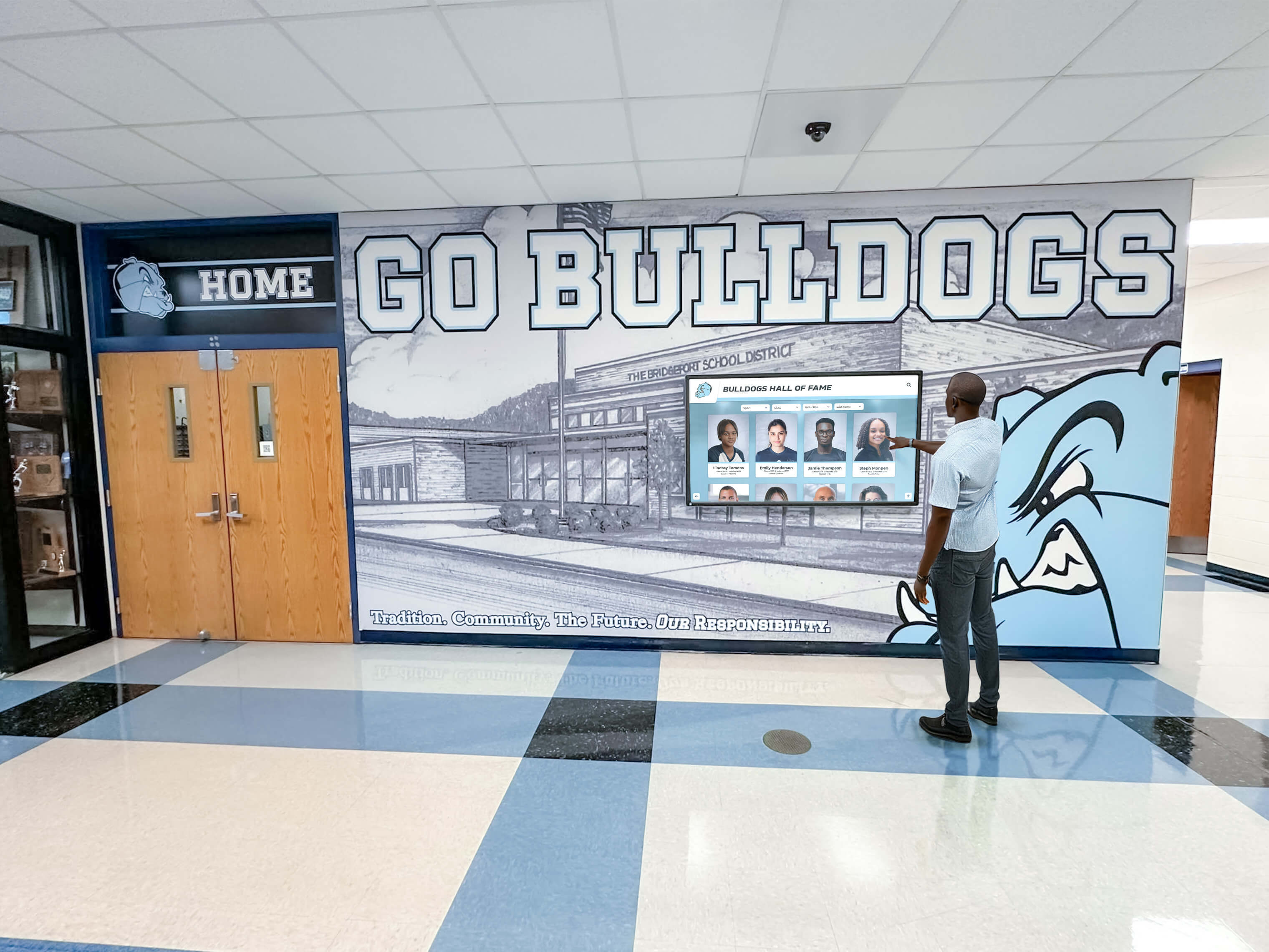
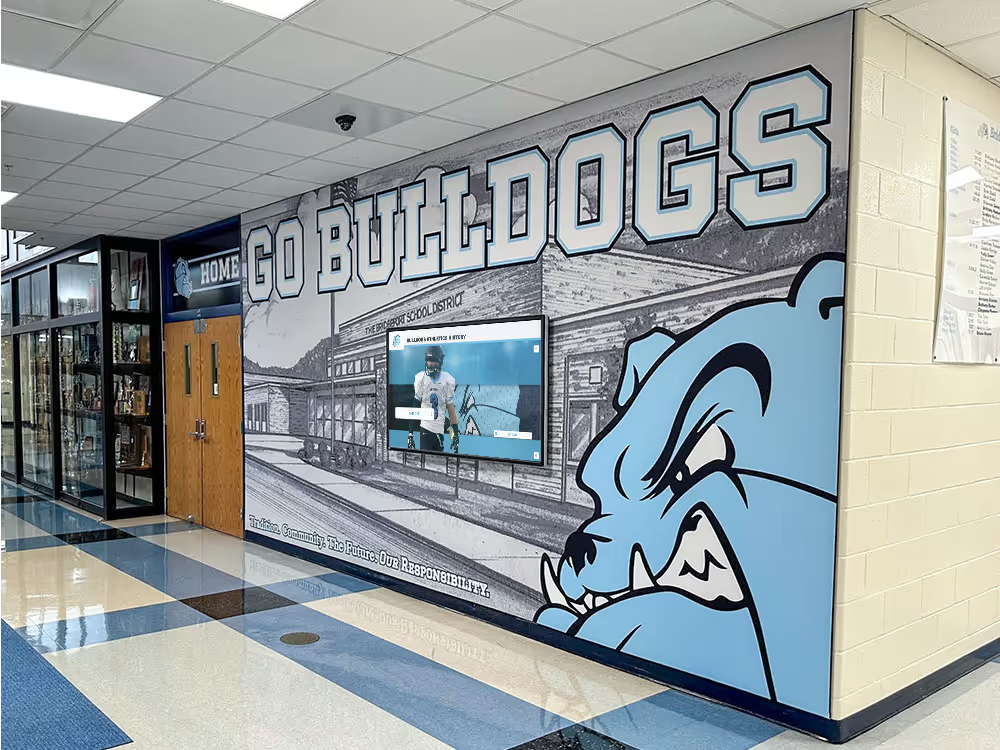
Strategic placement in high-traffic corridors ensures trophy recognition reaches students, staff, visitors, and community members throughout daily activities
Content Display Zone and Information Architecture
The central 50-60% of screen space presents trophy profiles, lists, and galleries:
Grid-Based Card Layouts for Overview Browsing
Card interfaces display multiple trophies simultaneously showing trophy photographs with title and year, brief achievement descriptions, sport and level identifiers, and visual indicators like championship badges or status icons. Grid layouts enable efficient scanning while maintaining visual appeal and clear information hierarchy.
Cards should incorporate consistent design patterns—same size, shape, and information arrangement—preventing visual chaos while enabling instant recognition of content type and organization.
Detailed Trophy Profile Views
When visitors select specific trophies for detailed exploration, full-screen profiles should showcase large trophy photographs from multiple angles showing detail and craftsmanship, complete achievement information including championship details and significance, team rosters with links to individual athlete profiles, embedded video highlights when available, statistical context and performance data, and related trophy suggestions connecting championships across years or within programs.
Profile pages balance comprehensive information with accessible presentation—providing depth for interested visitors while maintaining visual clarity preventing overwhelming density or cognitive overload.
List and Timeline Views for Alternative Organization
Beyond card grids, digital trophy cases can present scrollable lists with sorting options organizing chronologically or by achievement level, timeline visualizations showing championship progression over decades, comparison views showing trophy counts across sports or eras, and statistical dashboards quantifying program excellence across multiple dimensions.
These alternative views serve different visitor intentions—some seeking specific championships, others exploring general program tradition, and others analyzing comparative excellence across categories requiring different presentation approaches.
Accessibility and Inclusive Design Requirements
Digital trophy case recognition must serve all community members regardless of physical ability or technical comfort:
ADA WCAG 2.1 AA Compliance Standards
Text contrast ratios must meet minimum 4.5:1 for body text and 3:1 for large headings ensuring readability for vision-impaired visitors. Touch targets require adequate sizing (44x44 pixel minimum) with sufficient spacing preventing mis-touches. Text scaling must support enlargement without horizontal scrolling requirements. And video captions support deaf and hard-of-hearing community members accessing multimedia content.
Physical Accessibility Considerations
Display mounting heights should place primary controls 15-48 inches from floor enabling wheelchair accessibility while keeping displays visible to standing viewers. Forward reach depth cannot exceed 25 inches ensuring access from seated positions. Free-standing kiosks require adequate knee and toe clearance for wheelchair approach. And volume controls respect quiet building environments while providing audio options when appropriate.
Cognitive Accessibility Design
Clear, simple navigation with consistent patterns throughout experiences prevents confusion. Plain language avoids technical jargon or complex terminology. Minimal steps for common tasks—finding specific championships or browsing sport categories—reduce friction. And obvious home/back buttons enable navigation error recovery preventing visitors from becoming lost within interfaces.
Schools must verify accessibility compliance before finalizing purchases, ensuring recognition systems genuinely serve all constituencies equitably. Resources on high school end-of-year awards programs provide detailed implementation checklists ensuring inclusive recognition serving diverse community members.
Content Development Strategies for Comprehensive Trophy Recognition
Digital trophy case platforms provide unlimited capacity, but effective recognition requires systematic content development honoring achievements comprehensively through quality multimedia documentation.
Starting Point and Scope Decisions
Rather than attempting complete historical documentation immediately, successful implementations start focused then expand systematically:
Initial Content Scope for Meaningful Launch
Begin with current academic year trophies and awards providing immediate relevance, 3-5 years of recent history building comprehensive recent coverage, major championships and milestone achievements from any era highlighting program tradition, and featured content spotlighting institutional heritage and competitive excellence.
This achievable initial scope demonstrates value quickly while historical content develops in parallel over subsequent months and years. A digital trophy case recognizing the past three years of achievement delivers immediate impact while comprehensive historical trophy documentation continues as capacity allows.
Phased Historical Expansion Timeline
After launching with recent recognition, expand historical coverage systematically by decade—adding 2010s content first, then 2000s, 1990s, and earlier as resources allow. Prioritize championship trophies and major achievements over routine awards when capacity constraints exist. Engage alumni assistance gathering information and photos from their eras through organized outreach campaigns. And utilize student volunteers particularly in journalism, digital media, and history programs seeking authentic project-based learning opportunities.
This phased approach maintains momentum while building comprehensive trophy recognition over time rather than delaying launch indefinitely until complete historical documentation finishes—a timeline often stretching years and causing projects to stall before delivering any value.
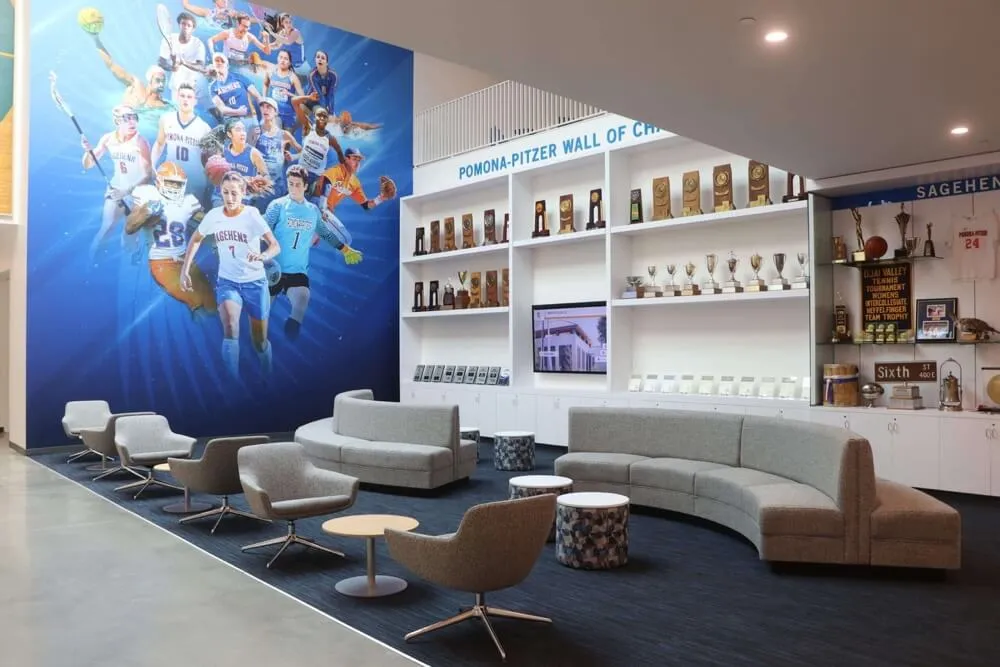
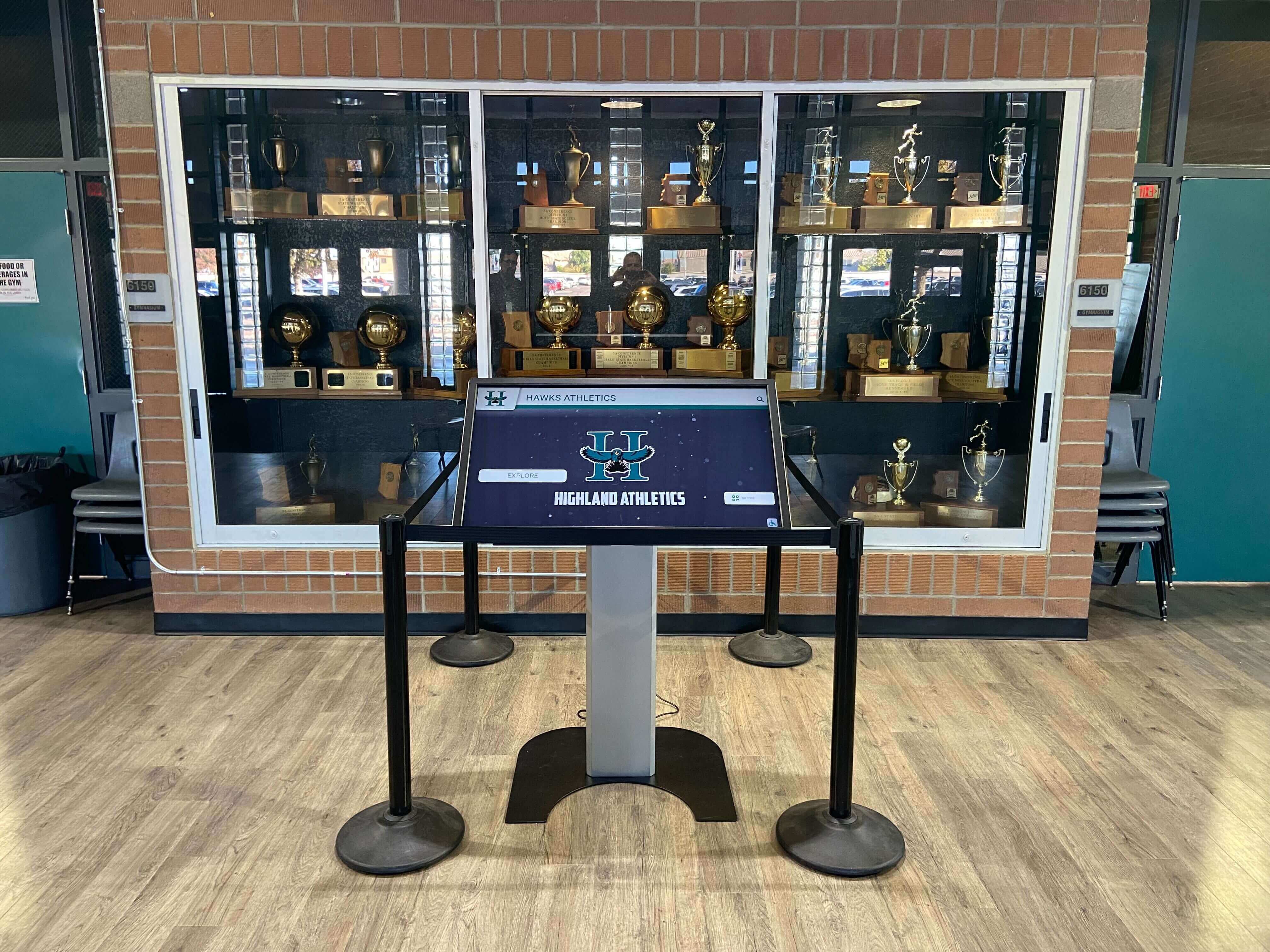
Many schools implement hybrid approaches maintaining selective physical trophy displays supplemented by comprehensive digital recognition systems
Trophy Photography and Visual Documentation
Quality visual documentation brings trophy recognition to life through compelling imagery:
Professional Trophy Photography Standards
Photograph trophies against neutral backgrounds eliminating distracting elements that compete with recognition subject. Use proper lighting showing trophy detail and avoiding glare on reflective metal surfaces. Capture multiple angles showing trophy dimensions, design, and craftsmanship. Include close-ups of engraved plaques and award details. Photograph trophies at consistent sizes across collections maintaining visual consistency. And maintain high resolution—minimum 1920x1080 pixels—ensuring quality display on large touchscreens.
For trophies in current display cases, photograph in place documenting context but also remove for clean individual photography when possible. For trophies in storage, create consistent staging areas with appropriate backgrounds and lighting maintaining professional appearance throughout trophy collection.
Supplementary Multimedia Content Gathering
Beyond trophy photographs, collect team photos showing championship squads and individual athletes, video highlights from championship games and memorable moments when available, newspaper clippings and media coverage from achievement eras, statistical records and season documentation providing context, and coach and athlete reflections captured through interviews or written statements.
This supplementary content transforms basic trophy documentation into compelling storytelling creating emotional engagement with achievements. Comprehensive approaches to sports award recognition demonstrate how multimedia integration enhances celebration beyond simple visual documentation.
Writing Trophy Descriptions and Achievement Narratives
Text content provides context and storytelling depth that images alone cannot convey:
Essential Information Elements
Complete trophy profiles should include achievement specifics—championship level, year, and sport. Team or individual athlete identification with complete rosters where applicable. Scores and opponents for championship games and tournaments. Season records and statistical highlights demonstrating excellence. Coaching staff recognition acknowledging leadership. And historical context explaining significance within program tradition and competitive landscape.
Storytelling and Narrative Development
Beyond facts, compelling trophy recognition tells stories about championship journeys showing path from preseason through final victories, adversity overcome including injuries, losing streaks, or external challenges faced, key moments and turning points that defined seasons, lasting impact on program culture and tradition, and connections to other achievements showing championship progression and program evolution over time.
This narrative depth helps current students connect emotionally with historical achievements while building appreciation for institutional heritage that dry facts alone cannot create. When visitors understand complete stories behind trophies—not just that teams won championships but how victories happened and what they meant—recognition becomes meaningful rather than perfunctory documentation.
Technology Platform Selection and Vendor Evaluation
Digital trophy case success depends critically on selecting appropriate technology platforms and vendor partners committed to long-term educational recognition excellence.
Purpose-Built Recognition Platforms vs. Generic Digital Signage
Not all touchscreen software delivers equal results for trophy recognition applications:
Specialized Recognition Platform Advantages
Purpose-built athletic recognition software provides intuitive interfaces requiring no instructions for visitor interaction, content management systems enabling non-technical administrators to maintain displays confidently, unlimited recognition capacity accommodating comprehensive achievement documentation, powerful search and filtering helping visitors find specific content instantly, responsive web extensions making recognition accessible beyond physical displays, and analytics tracking engagement demonstrating program value and informing continuous improvement.
Solutions like Rocket Alumni Solutions offer comprehensive platforms designed specifically for institutional trophy and achievement recognition, providing superior functionality compared to generic digital signage systems adapted for recognition purposes after initial design for advertising, announcements, and commercial messaging.
Generic Digital Signage Limitations
Standard digital signage platforms designed for rotating announcements fundamentally differ from recognition systems requiring sophisticated content organization and user-directed exploration. Generic platforms typically lack individual profile architecture organizing content around people, teams, and achievements, sophisticated search functionality enabling quick content discovery, recognition-specific workflows matching athletic department processes and terminology, web-based extensions providing universal access beyond physical displays, and specialized support understanding institutional recognition needs and best practices.
Schools attempting to adapt commercial signage software for trophy recognition often encounter disappointing results—systems that look impressive in sales demonstrations but prove frustrating in daily operation and maintenance.
Frameworks for choosing digital hall of fame providers provide detailed vendor evaluation criteria ensuring successful platform selection aligned with institutional needs and constraints.
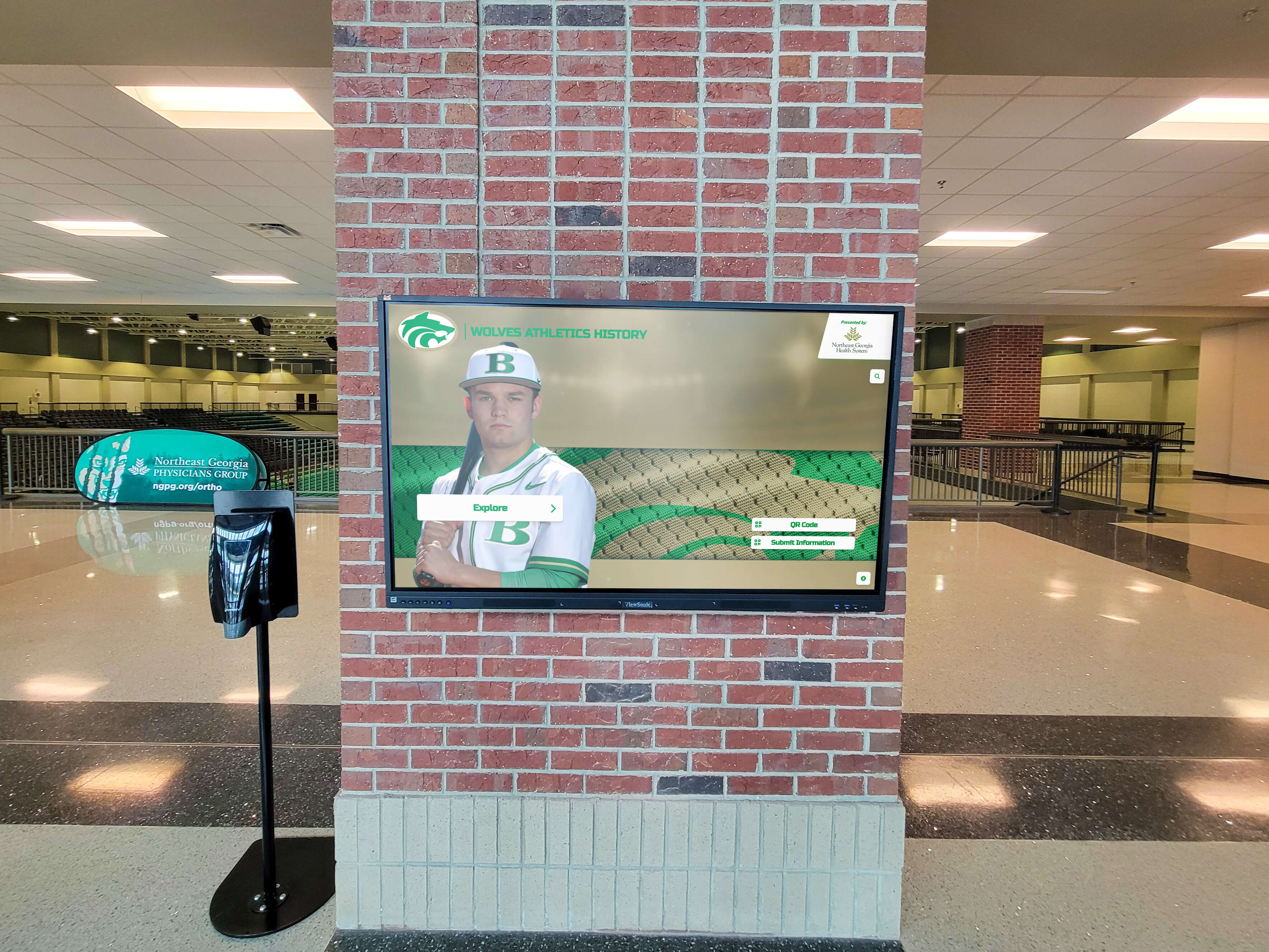
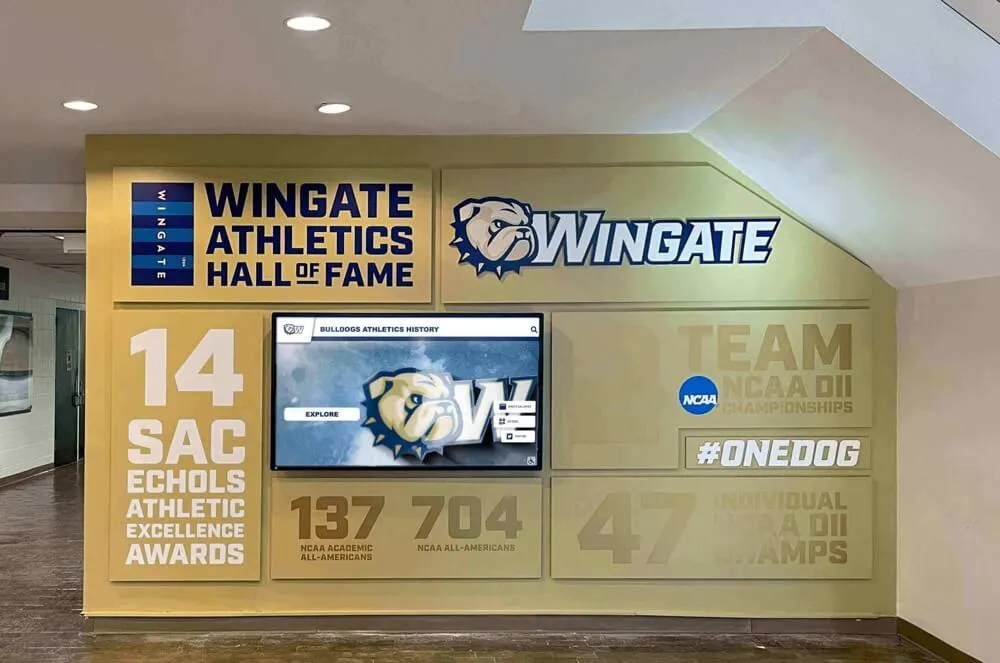
Professional installations integrate digital trophy recognition with facility architecture creating impressive focal points in athletic venues
Essential Vendor Qualification Questions
Thorough vendor evaluation requires asking specific, probing questions revealing true capabilities and commitment:
About Trophy Recognition Experience
How many schools have you implemented digital trophy case systems for? Can you provide references from athletic directors at schools similar to ours? What trophy-specific features distinguish your platform from generic digital signage? Do you offer pre-built templates specifically for athletic championship recognition? And how do you help schools with trophy photography and historical content development?
Vendors lacking specific trophy case experience often underestimate implementation complexity, leading to delays, unexpected requirements, and disappointing results failing to meet recognition needs effectively.
About Platform Evolution and Longevity
How frequently do you release platform updates? What new features have you added in the past year? How do you gather and incorporate customer feedback? What’s on your product development roadmap? And will updates be automatically available or require additional purchases?
Platforms that haven’t evolved in 2-3 years likely represent technology purchases rather than ongoing service commitments—concerning for relationships spanning decades as digital trophy cases become permanent institutional infrastructure.
About Implementation Support and Ongoing Service
What is your typical implementation timeline from purchase to launch? What training do our staff receive on content management? What’s included in standard support versus available as paid add-ons? What are your guaranteed response times for technical issues? And do you offer direct phone support or only email/ticket-based assistance?
Support quality matters tremendously. If you can’t count on help when problems arise, even excellent technology becomes administrative burden rather than recognition asset.
About Total Cost Structure and Long-Term Investment
What is the total first-year cost including hardware, software, installation, and services? What are the ongoing annual costs for software, hosting, support, and any other recurring fees? Are there additional costs for content storage, user accounts, or feature access? What would expanding to additional displays cost in future years? And what costs might we encounter that aren’t included in standard pricing?
Vendors should provide clear, detailed cost breakdowns. Vague pricing often indicates hidden fees or unclear offerings that surprise schools after commitment.
Pricing Models and Total Cost of Ownership Analysis
Digital trophy case investments typically range from $8,000-20,000 per display depending on screen size, hardware specifications, software platform, and installation complexity. Understanding pricing structures helps schools evaluate true long-term costs:
One-Time Purchase Models
Some vendors offer single payment options with no ongoing fees beyond optional support contracts. These provide predictable total costs appealing to capital budget structures but may involve limited platform evolution and minimal vendor incentive to improve systems after purchase. Support often comes as expensive add-ons rather than included services.
Annual Subscription Models
Modern cloud-based platforms typically operate on recurring subscription pricing. These incentivize vendors to maintain excellent platforms retaining customers while providing continuous feature improvements and platform evolution included in subscriptions. Comprehensive support typically comes standard within subscription fees. However, annual commitments require ongoing budget approval processes potentially complicating multi-year planning.
Hybrid Models
Some vendors separate hardware purchases from software subscriptions—one-time hardware investment with annual software fees. This provides flexibility upgrading hardware independently of software while enabling clearer cost allocation between capital and operating budgets.
Over 10-15 year timeframes typical for recognition system lifecycles, schools should calculate true total cost of ownership including hardware, software, support, content development assistance, training, maintenance, and eventual hardware replacement—enabling apple-to-apple comparisons across different vendor pricing structures and approaches.
Installation Planning and Facility Integration
Successful digital trophy case deployment requires systematic planning across physical installation, network infrastructure, and environmental considerations.
Strategic Location Selection for Maximum Impact
Display placement significantly affects engagement and recognition effectiveness:
High-Traffic Athletic Facility Locations
Optimal installation locations include main gymnasium entrance lobbies where all visitors naturally pass, athletic department corridors and administrative areas ensuring daily visibility for athletes and staff, training facility entrances viewed by current athletes during regular practice attendance, field house and stadium concourses serving competition attendees, and athletic wing commons areas where students gather socially between classes and activities.
Consider both traffic volume and audience composition—locations with modest total visitors but high athlete and family concentration often outperform higher-traffic areas where few viewers have athletic program connections justifying extended engagement with trophy recognition content.
Cross-Campus Visibility Beyond Athletic Facilities
Schools maximizing recognition impact also install digital trophy cases in main entrance lobbies ensuring whole-community visibility beyond just athletic program participants, cafeteria and commons areas where all students gather daily, library and academic wings connecting athletic achievement with broader institutional excellence, and alumni center locations dedicated to graduate engagement and fundraising cultivation.
These cross-campus installations communicate that athletic achievement matters to entire school communities rather than representing isolated program concerns relevant only to athletes and sports enthusiasts.

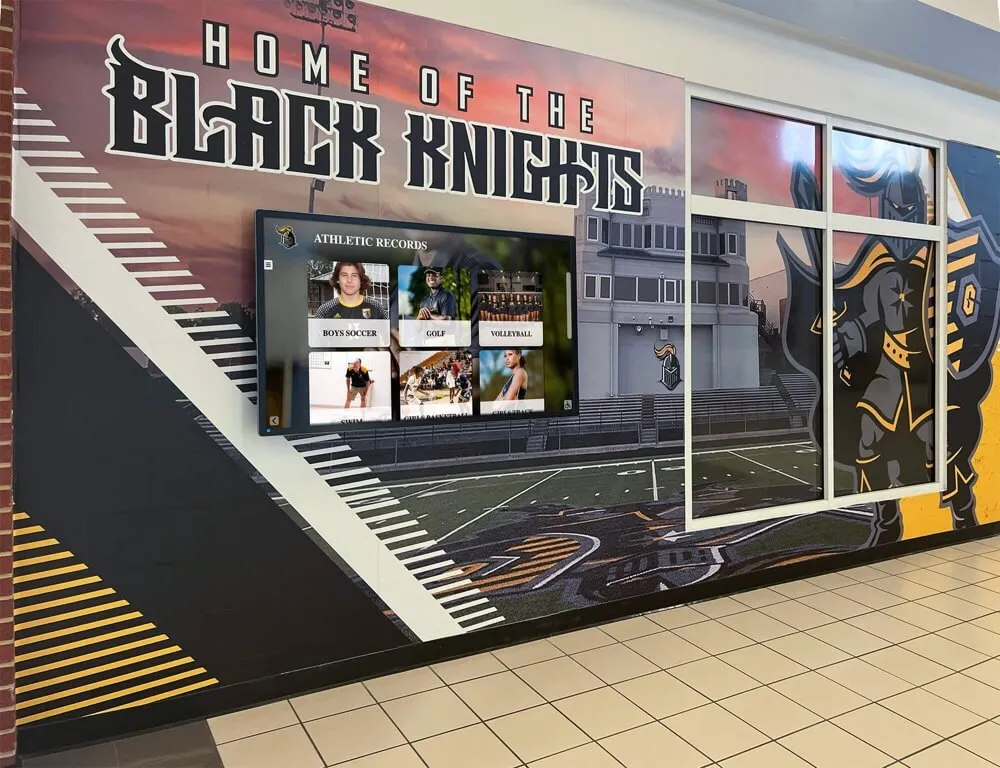
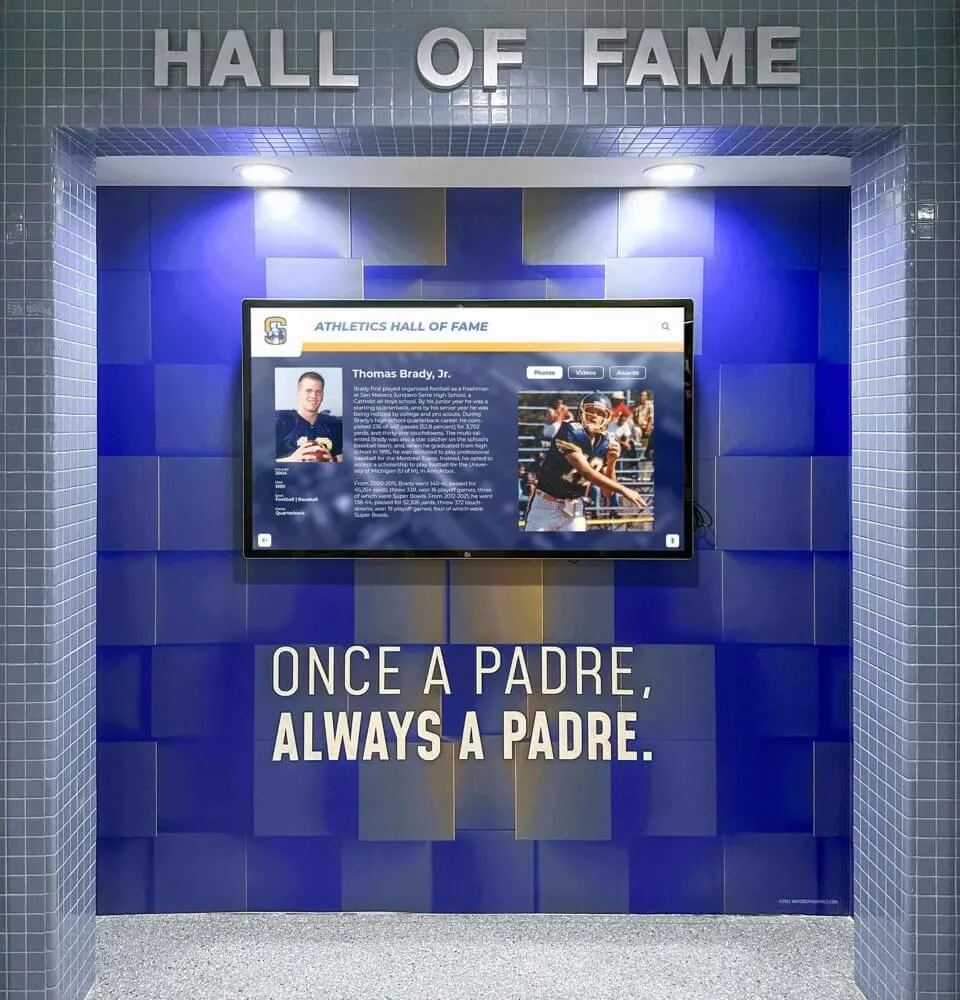
Thoughtful installations integrate digital trophy cases with existing architectural features and traditional school design elements
Physical Installation Requirements and Professional Mounting
Proper installation ensures safety, accessibility, and professional appearance:
Wall Mounting Considerations
Wall mounting provides clean installations in hallways and lobbies but requires appropriate wall structure supporting 50-150 pound displays safely. Mounting heights should place screen centers 48-60 inches from floor for comfortable standing adult viewing while maintaining accessibility compliance. Dedicated electrical circuits with surge protection prevent damage from power fluctuations. And professional cable management maintains clean aesthetics without exposed wiring detracting from recognition presentation.
Wall mounting typically costs $500-1,500 depending on wall construction, electrical availability, and mounting complexity.
Free-Standing Kiosk Options
Floor-standing kiosks offer installation advantages including no wall penetration required eliminating structural concerns, flexible positioning enabling placement adjustments, integrated enclosures housing computers and components professionally, and optional branding incorporating school colors, logos, and design elements.
Quality kiosks cost $1,500-5,000 depending on size, materials, customization, and integrated technology. While more expensive than simple wall mounting, kiosks provide professional all-in-one solutions especially valuable when wall mounting presents structural challenges or architectural restrictions.
Network Connectivity and IT Infrastructure
Digital trophy cases require internet connectivity for cloud-based content management and remote updates. Hardwired Ethernet connections provide superior reliability compared to WiFi for permanent installations. Minimum 10 Mbps download speeds accommodate typical content and video requirements adequately. And IT department involvement early in planning processes ensures network access, security protocols, and firewall configurations support recognition platform connectivity requirements.
Schools should confirm network infrastructure adequacy before finalizing installation locations—avoiding costly remediation after displays are purchased and delivery dates are scheduled.
Resources on touchscreen display installation provide detailed technical specifications and facility preparation checklists ensuring successful professional implementations.
Measuring Digital Trophy Case Success and Impact
Understanding how visitors interact with digital trophy cases helps schools demonstrate value, justify investment, and continuously improve recognition programs serving community needs effectively.
Engagement Analytics and Usage Metrics
Quality digital trophy case platforms provide comprehensive analytics revealing usage patterns and engagement levels:
Valuable Metrics to Monitor
Track total interaction sessions showing how frequently visitors use displays. Monitor average session duration indicating depth of engagement with content—targeting 4-8 minutes for comprehensive exploration. Identify most-viewed profiles revealing popular content and community interests. Analyze search terms demonstrating what visitors seek. Document peak usage times informing content update strategies and special promotion opportunities. And measure return visitor rates showing sustained interest rather than one-time curiosity.
Schools can use these insights to identify which trophy categories and sports generate most engagement, determine what additional content visitors seek through search patterns, understand peak traffic periods for special content promotion and featured championship highlighting, demonstrate trophy case value to stakeholders and budget authorities through objective usage data, and optimize content strategies based on actual visitor behavior rather than assumptions about what might interest communities.
Analytics commonly reveal surprising patterns—championship teams from decades ago viewed repeatedly by current students discovering program heritage, specific sports generating unexpectedly high engagement suggesting opportunities for enhanced recognition, or search patterns revealing content gaps where visitors seek information not currently available requiring content development attention.
Qualitative Feedback and Community Impact Assessment
Beyond quantitative analytics, schools should gather qualitative feedback revealing impact that metrics cannot capture:
Stakeholder Feedback Collection Methods
Conduct surveys about recognition program awareness and impact among athletes, families, alumni, and staff. Observe visitor comments during campus tours and athletic events. Collect staff observations about community engagement with displays during daily activities. Document alumni reactions when returning for reunions and homecoming gatherings. And solicit athlete feedback about seeing their achievements recognized alongside program heritage and tradition.
This qualitative feedback often reveals meaningful impact including students expressing pride when finding themselves recognized digitally, alumni showing families their historic championship trophies from anywhere via web access, prospective students impressed by comprehensive achievement celebration during recruiting visits, families appreciating that all achievements receive recognition rather than only highest accomplishments, and current athletes motivated by visible championship standards and program expectations.
Regular feedback collection enables continuous improvement addressing content gaps, navigation confusion, and opportunities to enhance recognition programs serving community needs more effectively.
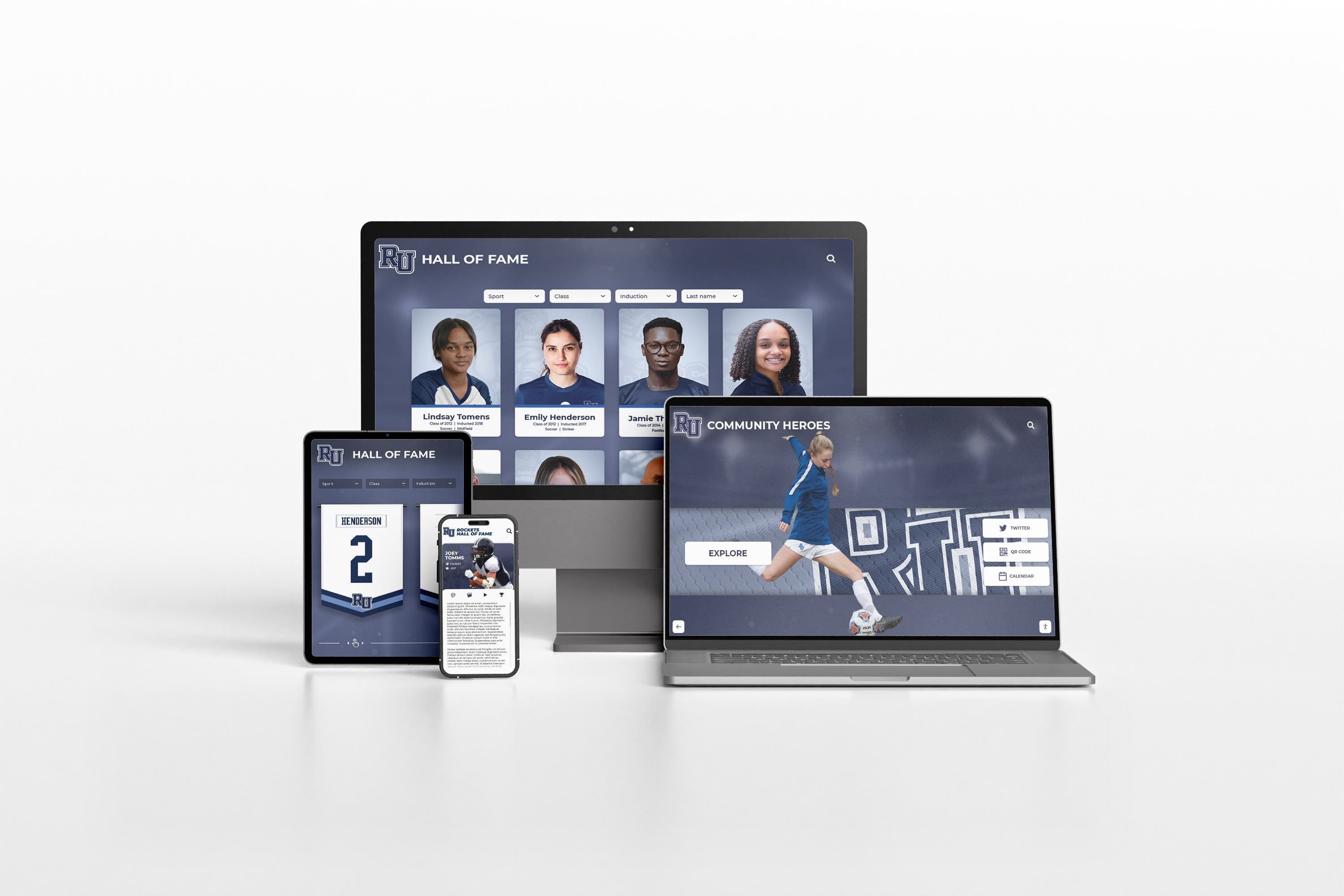
Web-based access extends trophy recognition beyond physical displays enabling alumni, families, and communities to explore achievements from any device anywhere
Cultural Impact and Long-Term Benefits
The most significant digital trophy case benefits often emerge over time as recognition becomes embedded in school culture:
Observable Cultural Changes
Schools implementing comprehensive digital trophy case systems typically report increased student identification with institutional community and competitive tradition, enhanced alumni engagement and connection with alma maters through ongoing recognition access, improved recruitment effectiveness with prospective student-athletes and families researching programs, stronger culture of achievement across athletic and academic programs inspired by visible excellence standards, modernized institutional image demonstrating innovation and community-centered priorities, and equitable recognition practices ensuring all sports and athletes receive appropriate celebration regardless of program size or visibility.
These cultural shifts justify digital trophy case investment beyond immediate recognition value—strengthening schools across multiple dimensions including enrollment, fundraising, community support, program competitiveness, and overall stakeholder experience quality.
When trophy recognition becomes systematic and comprehensive rather than limited and inconsistent due to space constraints, schools communicate clear values about what matters and who deserves celebration—building cultures where achievement across all dimensions receives acknowledgment inspiring continued excellence.
Hybrid Approaches Combining Physical and Digital Recognition
Many schools find that combining selective physical trophy displays with comprehensive digital systems creates optimal recognition serving diverse stakeholder preferences while maximizing both impact and functionality.
Selective Physical Trophy Prominence
Maintain traditional trophy cases displaying most prestigious trophies including state championships and highest-level competitive achievements commanding ceremonial significance, historic trophies with exceptional aesthetic or symbolic value representing institutional heritage, recent championship trophies while excitement and visibility remain highest during immediate post-championship periods, and trophies specifically donated or commemorated with donor expectations of physical display requiring tangible presence.
These physical trophy displays preserve ceremonial significance and tangible presence that creates powerful focal points commanding immediate attention and respect. Many stakeholders, particularly older alumni and major booster contributors, specifically value seeing actual championship hardware rather than digital representations alone—maintaining traditional physical displays honors these preferences while respecting long-standing recognition traditions.
Digital Depth Providing Comprehensive Documentation
Supplement selective physical trophy displays with comprehensive digital systems documenting complete trophy history including all championships, tournament victories, and significant awards regardless of display capacity limitations, all team rosters and individual athlete recognition ensuring comprehensive rather than selective acknowledgment, complete trophy photo archives showing pieces even when not physically displayed enabling virtual access to entire collections, searchable databases enabling instant information access about any trophy or achievement across program history, and multimedia content telling complete stories through video, statistics, and narratives impossible with physical case placards.
Digital platforms provide unlimited capacity enabling truly comprehensive trophy recognition without physical space limitations forcing difficult choices about which achievements receive visibility and which must be stored away from public view.
The combination honors tradition through continued physical trophy presence satisfying constituencies valuing tangible recognition while leveraging digital technology for comprehensive capacity, instant updates, rich multimedia storytelling, and universal web-based accessibility that traditional cases alone cannot provide regardless of budget or physical expansion.
Comprehensive guides on best hall of fame tools demonstrate how institutions successfully combine traditional and modern trophy recognition approaches creating systems serving all stakeholder preferences while maximizing recognition effectiveness across multiple dimensions.
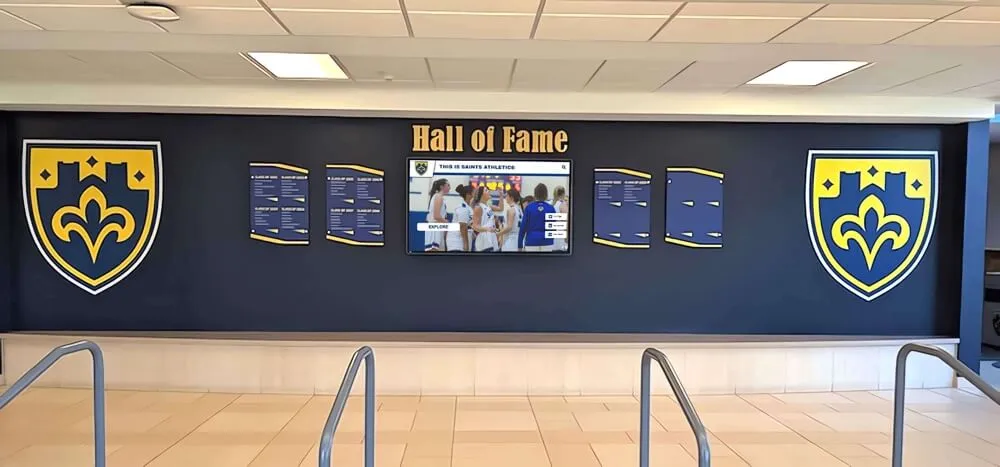
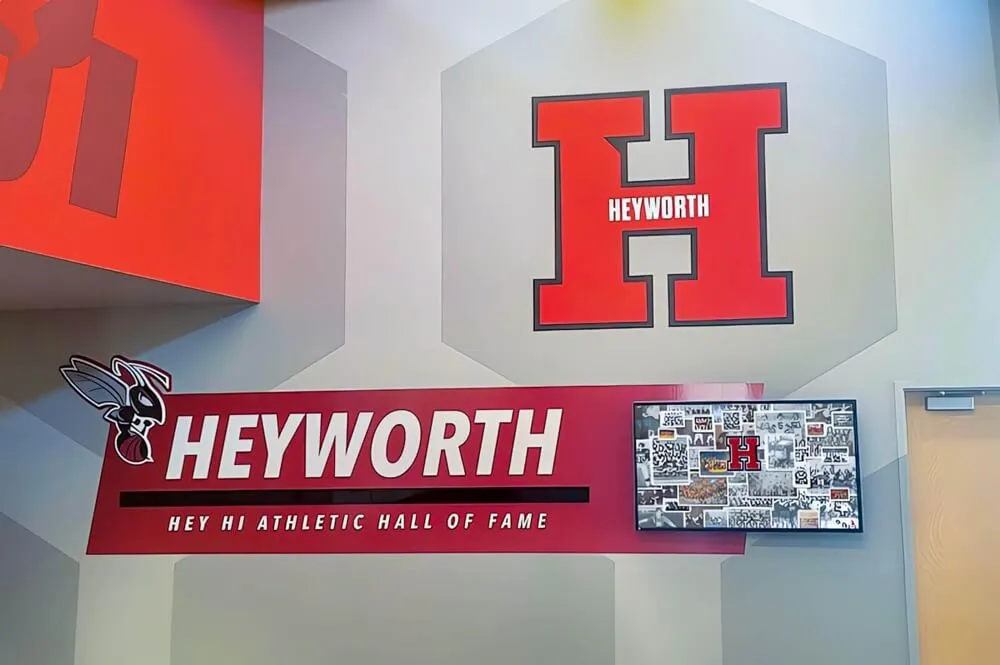
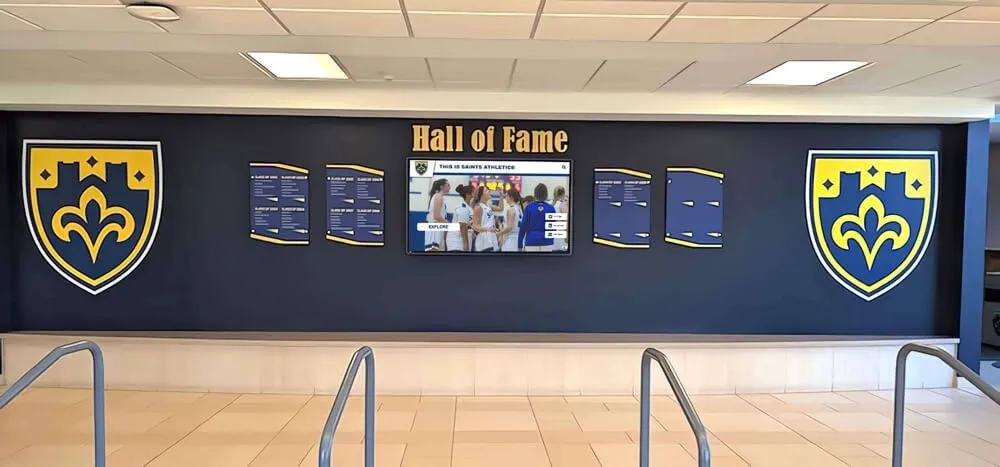
Hybrid installations preserve traditional design elements while adding modern interactive capacity satisfying constituencies valuing both heritage and innovation
Conclusion: Transforming Trophy Recognition for the Digital Age
Digital trophy cases represent fundamental advancement in how schools celebrate athletic achievement, preserve competitive heritage, and build program culture inspiring continued excellence. By eliminating space constraints that limit traditional trophy cases to selective rather than comprehensive recognition, enabling immediate updates maintaining current and relevant celebration without engraving delays or installation scheduling, creating engaging interactive experiences connecting current athletes with institutional tradition, and extending recognition accessibility beyond physical buildings to worldwide alumni and supporter communities, digital trophy case technology delivers comprehensive solutions addressing recognition challenges that physical glass cabinets simply cannot solve effectively.
Get Your Touchscreen Mock-Up
Discover how custom-designed digital trophy case experiences can transform athletic recognition for your school. Rocket Alumni Solutions creates interactive displays purpose-built for educational environments, combining professional design with intuitive administration that makes celebrating achievement effortless while honoring every trophy appropriately.
Schedule Your Design ConsultationThe most successful digital trophy case implementations share common characteristics: they start with clear recognition goals understanding what achievement celebration should accomplish and which stakeholder needs matter most, select purpose-built platforms designed specifically for trophy recognition rather than generic signage repurposed after initial design for commercial messaging, develop thoughtful content strategies honoring achievements comprehensively across all sports and eras rather than limiting recognition to highest accomplishments alone, and position displays strategically in high-traffic locations where communities naturally encounter recognition throughout daily activities rather than isolated installations serving limited audiences.
Whether implementing athletic trophy recognition that preserves championship heritage while inspiring current teams toward excellence, creating comprehensive systems documenting complete institutional athletic histories spanning decades or centuries of tradition, or developing hybrid approaches combining selective physical trophy displays with unlimited digital documentation capacity, modern digital trophy case technology provides proven solutions strengthening school culture while giving every achievement the permanent recognition it deserves regardless of physical space limitations or traditional display constraints.
Schools investing in digital trophy case recognition demonstrate commitment to celebrating all achievements rather than limiting acknowledgment to highest accomplishments or most visible programs that physical trophy case space can accommodate. This comprehensive approach communicates institutional values while building cultures where achievement across all dimensions—major and minor, historical and contemporary, high-profile and emerging programs—receives systematic celebration creating motivation, pride, and lasting connection between community members and their schools across generations of athletic tradition and competitive excellence.
Ready to explore digital trophy case options for your school? Learn more about athletic hall of fame implementation, discover senior night celebration ideas incorporating digital recognition, explore digital hall of fame complete guides demonstrating comprehensive recognition strategies, and understand booster club fundraising approaches that can fund digital trophy case investments transforming athletic recognition while celebrating championship traditions inspiring future excellence through purpose-built interactive technology designed specifically for preserving institutional memory and honoring achievement comprehensively across all programs, eras, and competitive levels.