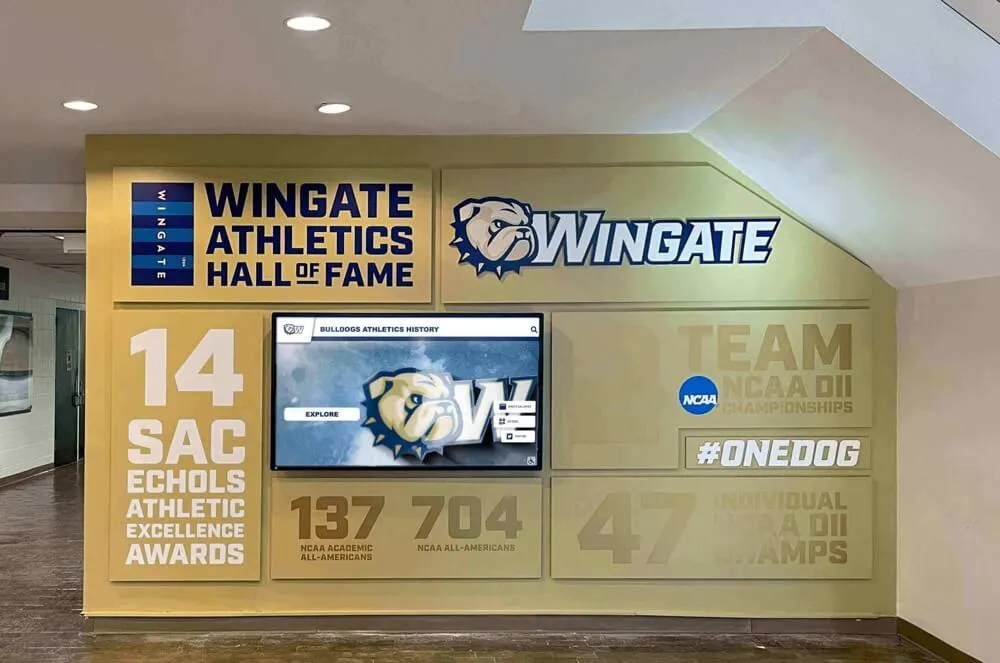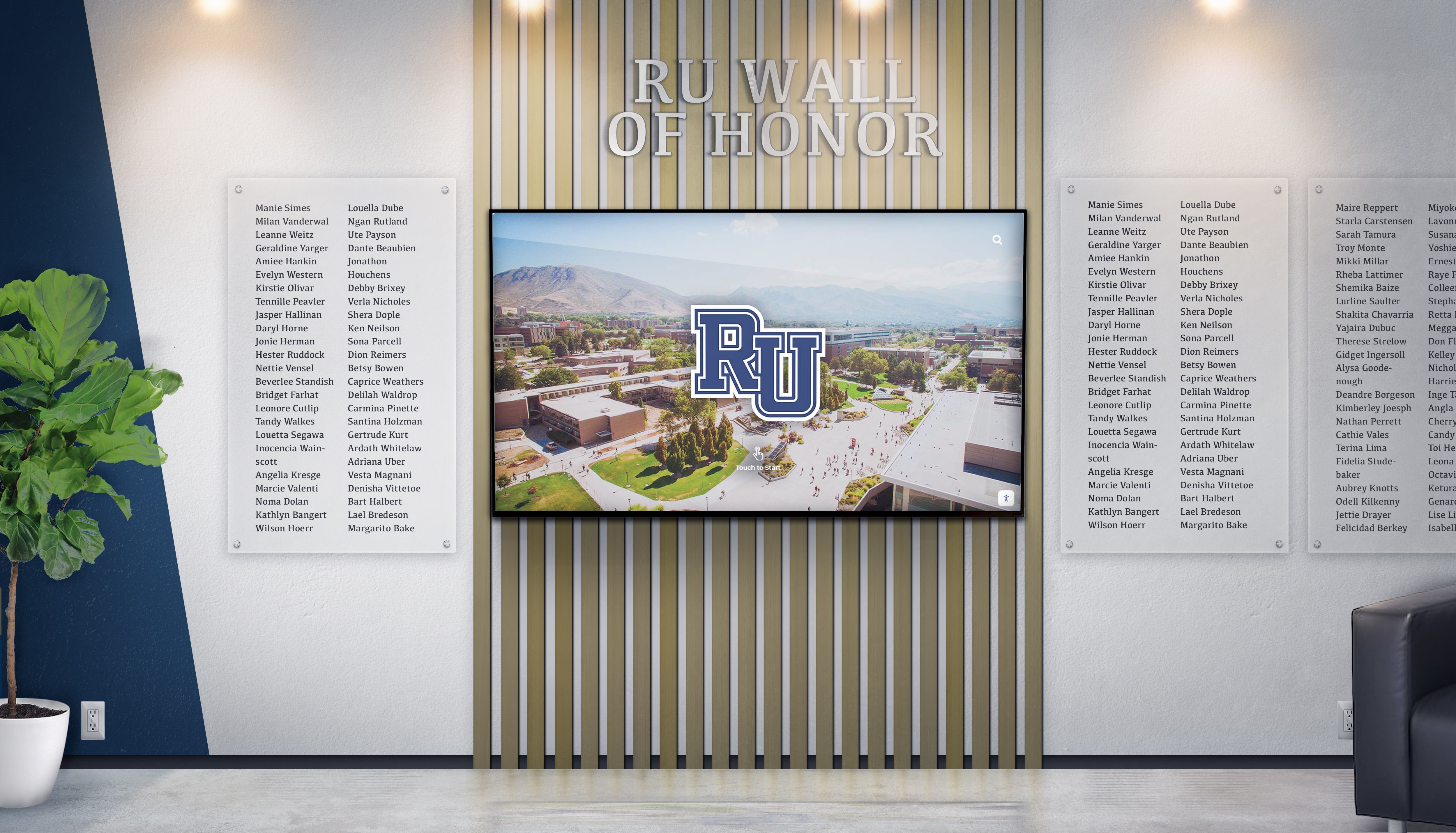




Digital wall of honor plaques represent the evolution of traditional recognition, combining the reverence and permanence of classic honor walls with the flexibility and engagement of modern interactive technology. Organizations ranging from schools honoring distinguished students and alumni to military installations celebrating service members to community centers recognizing volunteers face a common challenge: how to honor everyone deserving recognition within limited physical space while creating meaningful experiences that truly celebrate achievement.
Traditional wall of honor plaques have served institutions faithfully for generations, providing tangible recognition through engraved names on bronze, brass, or aluminum plates mounted on hallway walls. Yet as organizations accumulate decades of honorees, wall space becomes exhausted, forcing difficult decisions about whose recognition remains visible and whose gets removed or relegated to storage. Update cycles measured in months make adding new honorees logistically complex and expensive. And static engravings provide minimal context about why individuals earned recognition or what their achievements meant to communities they served.
This comprehensive guide explores digital wall of honor plaques—what they are, how they work, what benefits they deliver compared to traditional approaches, and practical strategies for implementation. Whether planning your first recognition installation or seeking to enhance existing honor walls that have exhausted available space, you’ll discover proven frameworks for creating recognition experiences that honor achievement while engaging modern audiences through interactive technology designed specifically for celebrating service, excellence, and community contribution.
Organizations implementing digital wall of honor solutions report transformative results: recognition capacity increasing five to ten times over traditional plaques, visitor engagement duration extending three to five times longer than passive viewing of static displays, and administrative time for managing recognition programs decreasing by 80-90 percent through simplified content management systems. More importantly, communities express deeper satisfaction knowing that everyone deserving recognition receives equal, permanent honor rather than facing removal when physical space fills.

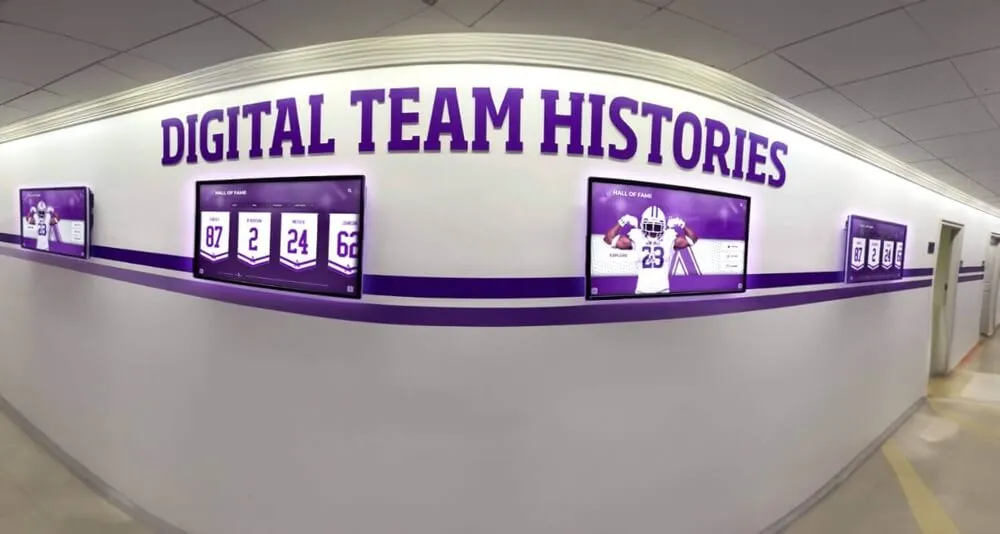
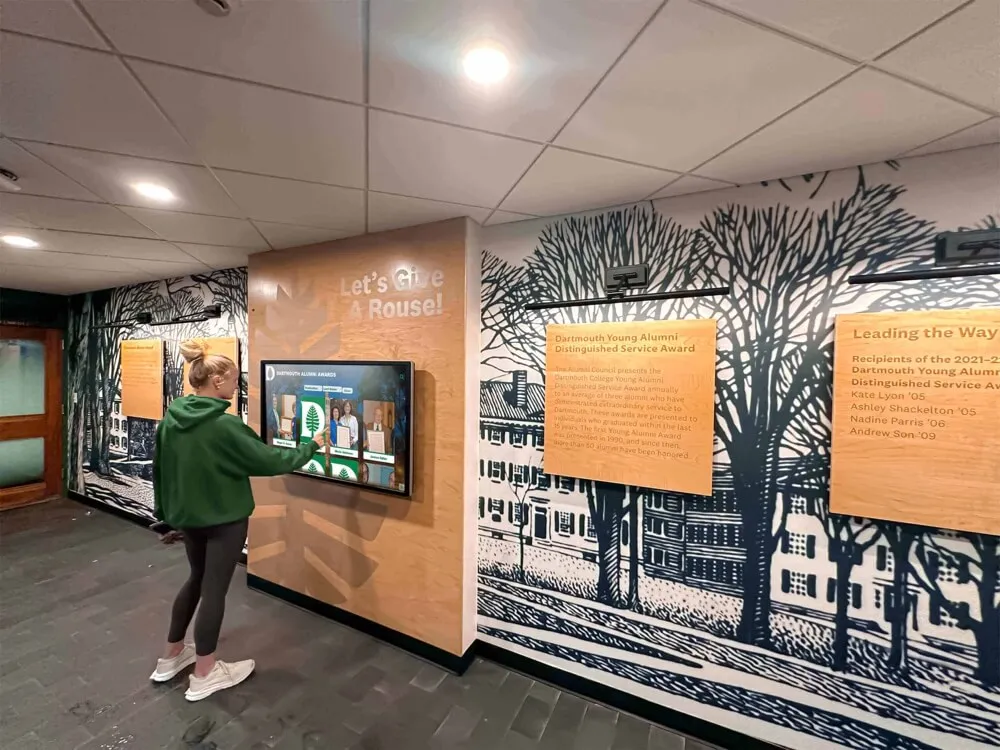
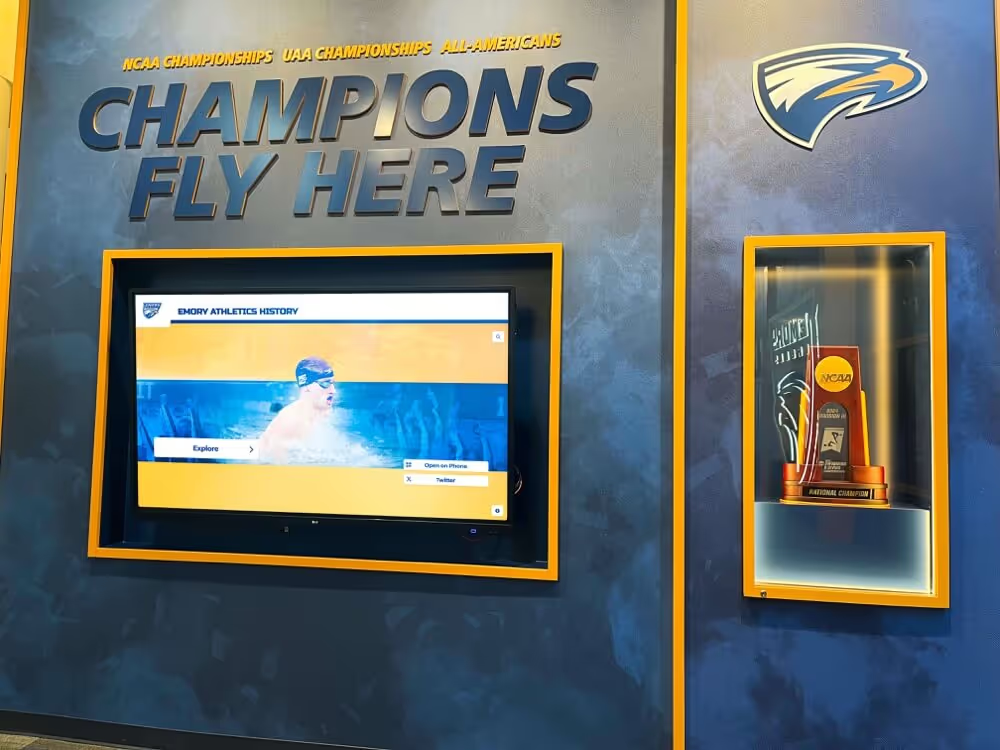
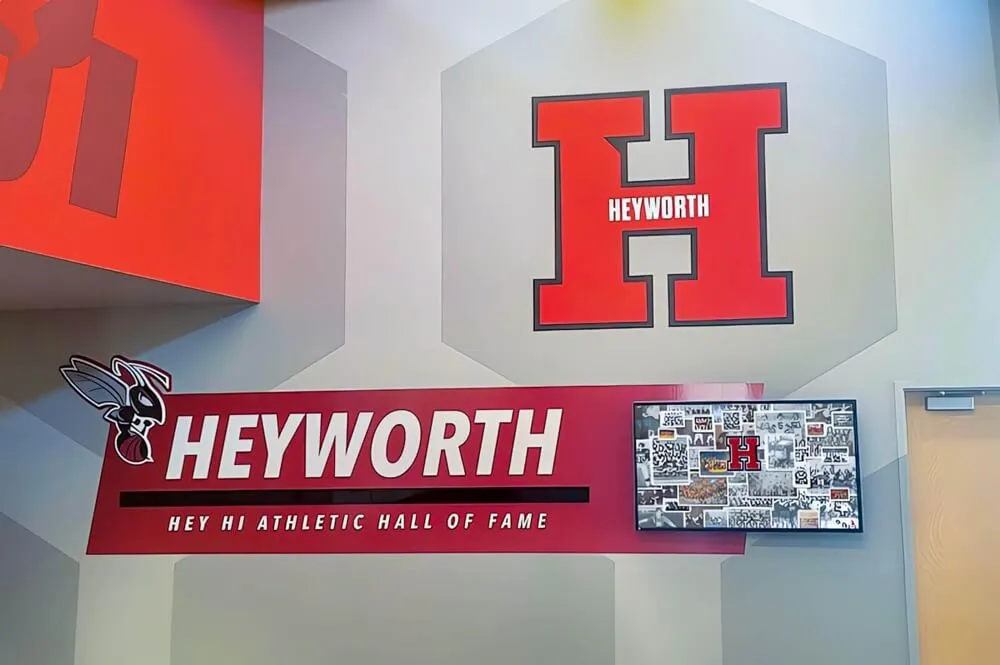
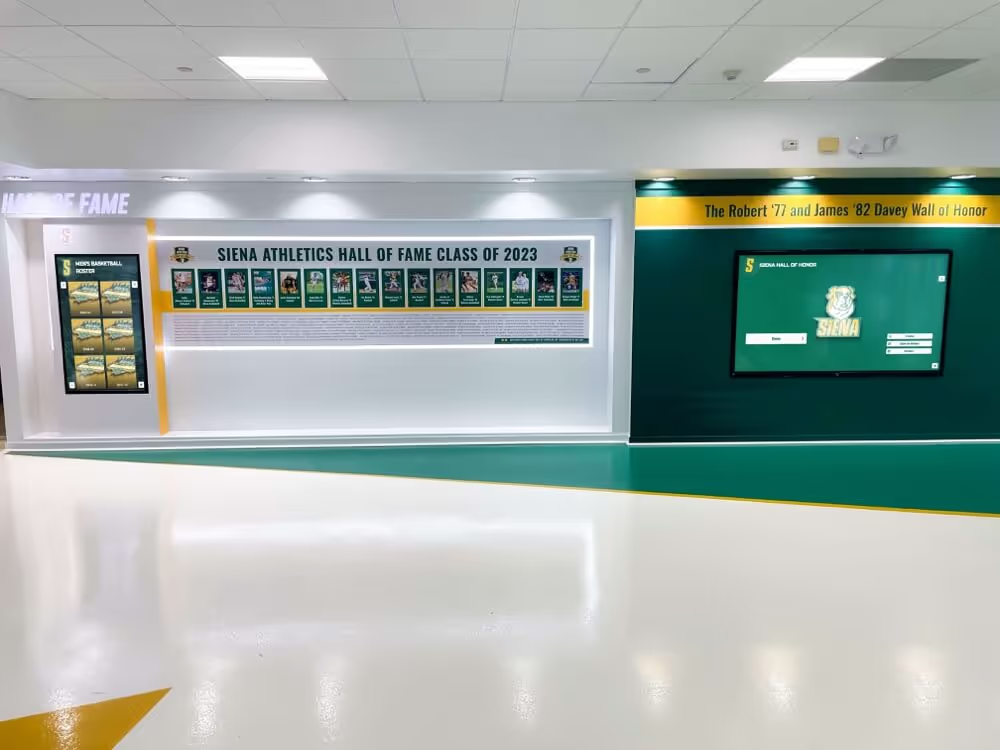
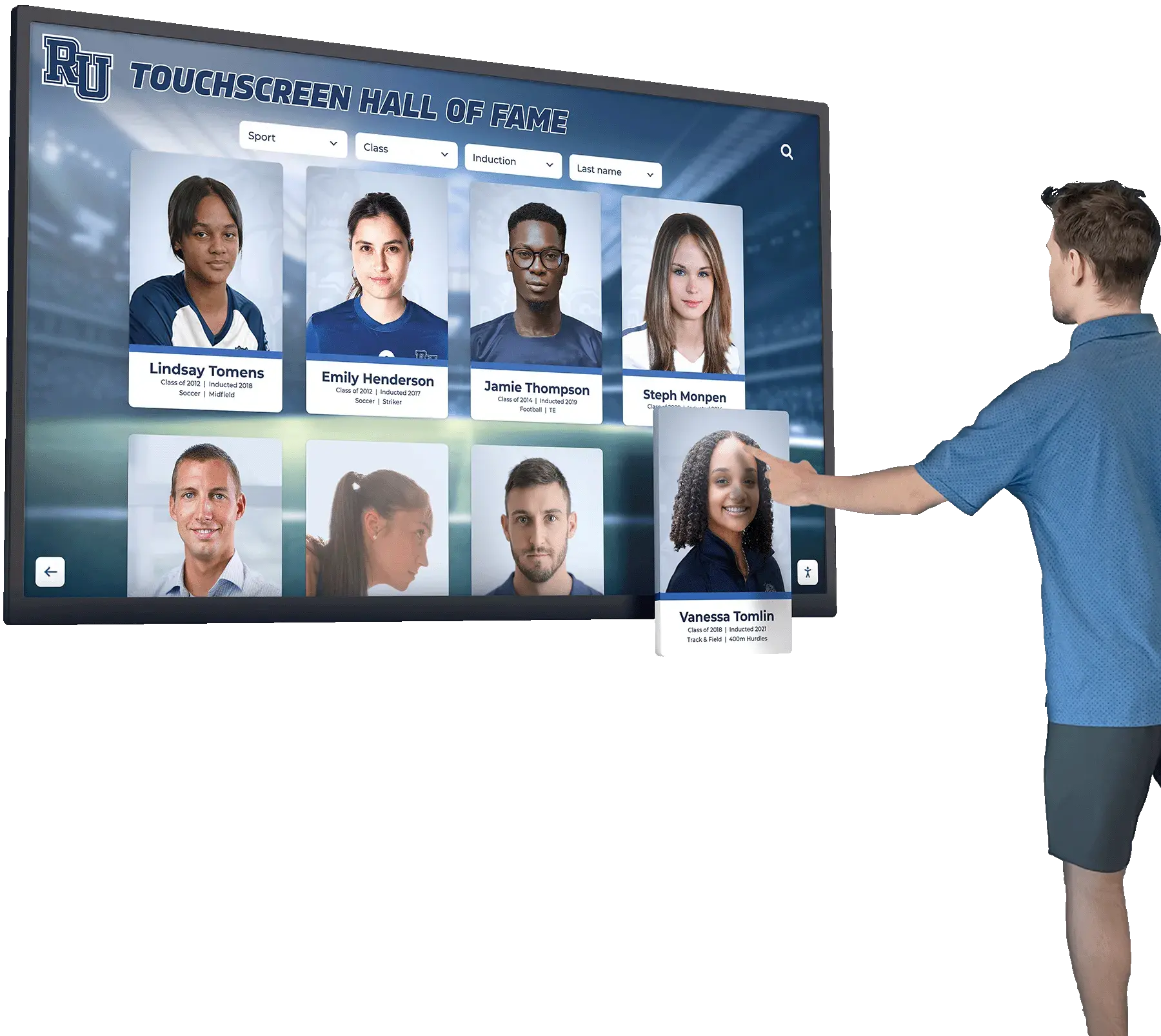
Digital walls of honor combine the visual dignity of traditional plaques with interactive technology enabling comprehensive recognition
Understanding Digital Wall of Honor Plaques
Before exploring specific benefits and implementation strategies, understanding exactly what digital wall of honor plaques are and how they differ from both traditional physical plaques and generic digital signage provides essential context for informed decision-making.
What Is a Digital Wall of Honor?
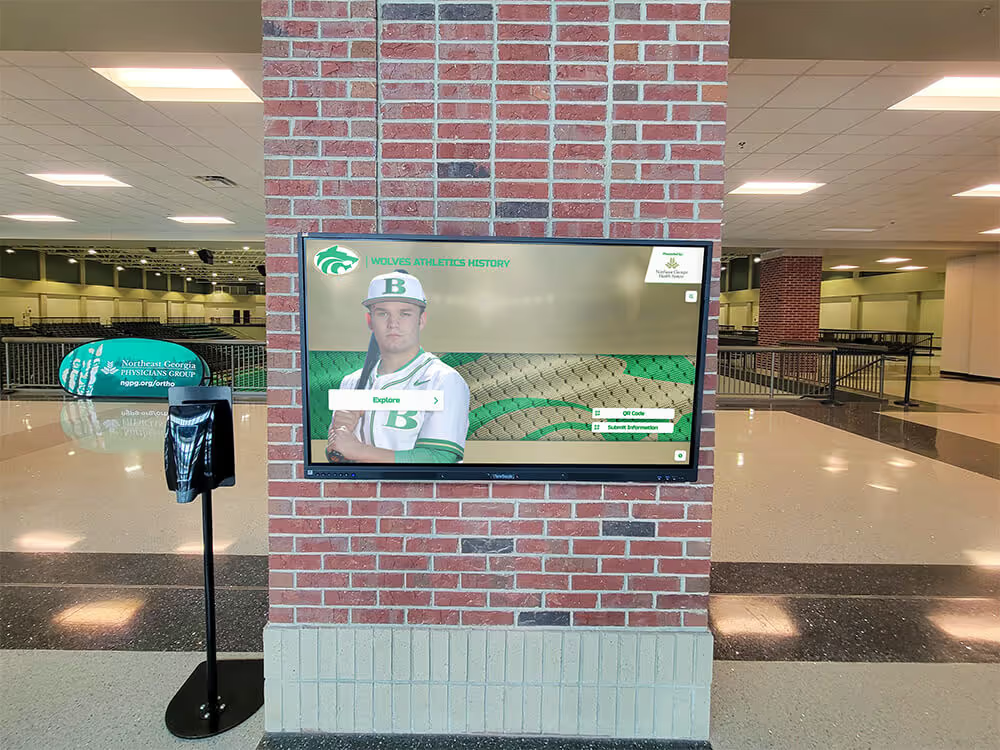
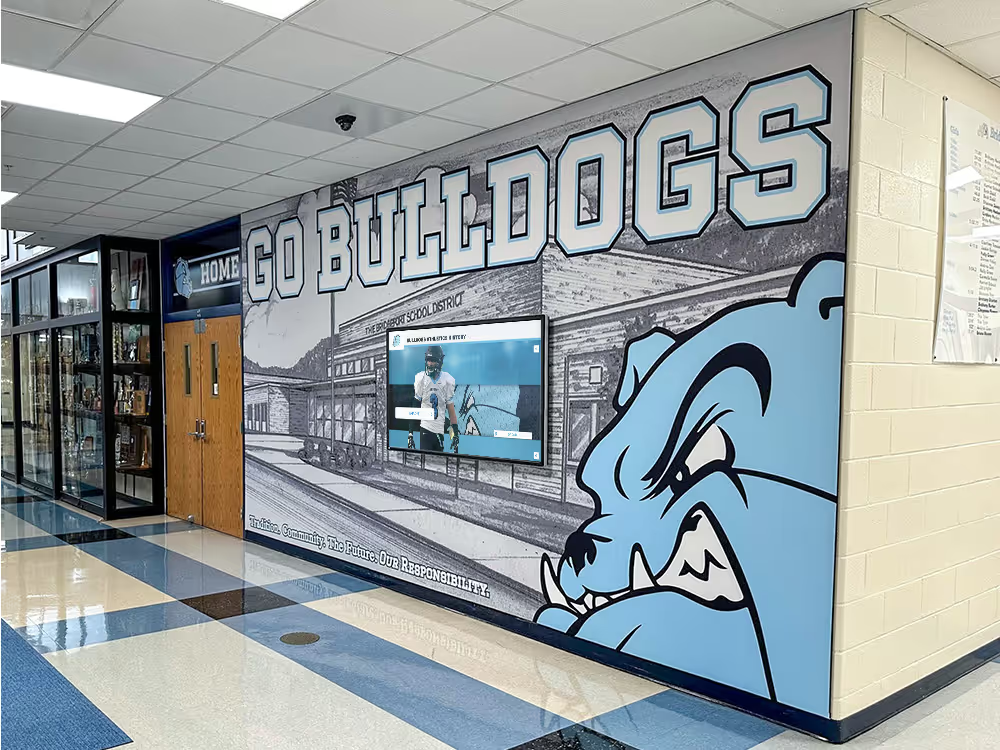
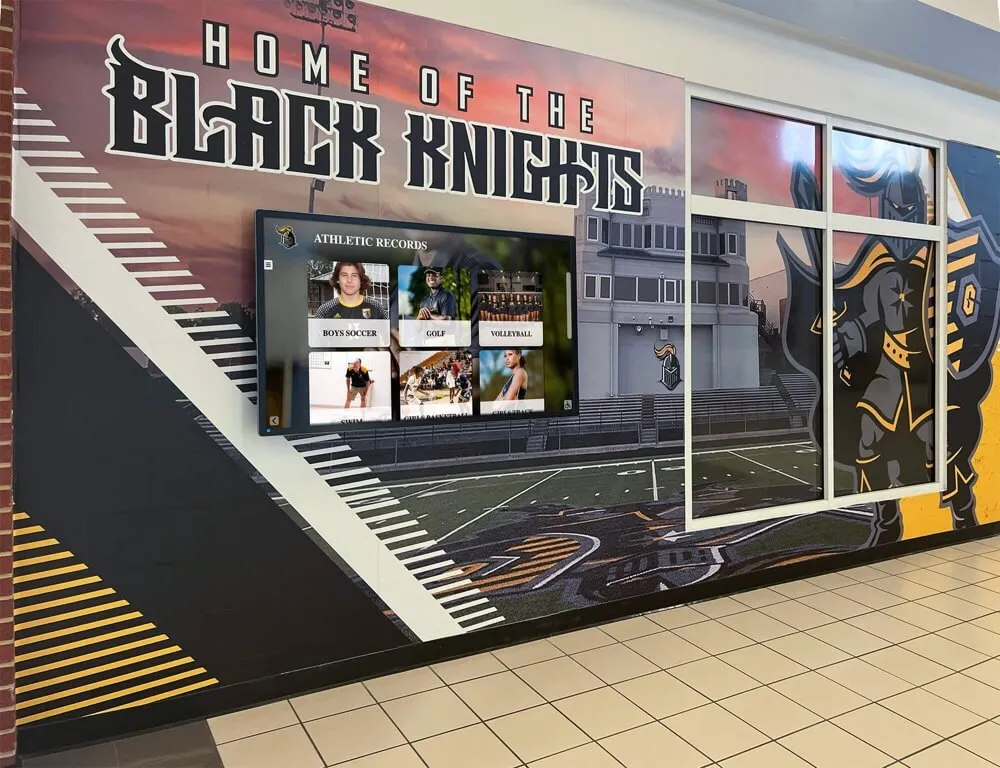
A digital wall of honor consists of large-format commercial-grade touchscreen displays—typically ranging from 43 to 75 inches diagonal—running specialized recognition software designed specifically for honoring individuals and celebrating achievement. Unlike generic digital signage that cycles through announcements or advertisements, digital walls of honor provide interactive experiences where visitors actively control what content they view, search for specific individuals, and explore detailed recognition profiles at their own pace.
The technology integrates several components creating complete recognition solutions. Commercial touchscreen displays rated for continuous operation in public environments provide the hardware foundation, typically featuring anti-glare coatings that maintain visibility under various lighting conditions and vandal-resistant construction protecting against damage. Behind the physical display, cloud-based content management systems enable administrators to update recognition content from any internet-connected device without requiring programming expertise or on-site access. Specialized recognition software organizes content around individual honoree profiles rather than generic slideshows, providing search functionality, filtering options, and multimedia integration. Web-based extensions make recognition accessible beyond physical locations, allowing family members worldwide to access honor wall content online.
Core Components of Digital Honor Wall Systems
Modern digital wall of honor installations combine multiple elements working seamlessly together to deliver comprehensive recognition experiences:
Hardware Infrastructure
The touchscreen display provides the public-facing interface where visitors interact with recognition content. Commercial-grade displays designed for continuous operation typically include optical bonding that enhances screen durability and visibility, high brightness ratings (400-700 nits) ensuring visibility in bright environments, responsive touch technology supporting intuitive navigation, and mounting systems enabling wall mounting or freestanding kiosk installation depending on facility requirements.
Recognition Software Platform
Purpose-built software designed specifically for celebrating people and achievements provides functionality that generic digital signage cannot match. Essential capabilities include robust search enabling visitors to find specific individuals by name instantly, sophisticated filtering organizing honorees by year, military branch, achievement type, or recognition category, multimedia integration supporting photos, videos, biographical narratives, and scanned historical documents, organizational structures accommodating various recognition hierarchies and groupings, and analytics tracking engagement patterns demonstrating program value to stakeholders and leadership.
Content Management System
Cloud-based management platforms enable non-technical administrators to maintain recognition displays through simple web interfaces. Key features include drag-and-drop photo upload eliminating complex file management, form-based profile creation requiring no technical knowledge, scheduling capabilities planning content publication for specific ceremony dates, approval workflows ensuring accuracy before publication, and multi-location management maintaining multiple display installations from a single dashboard.
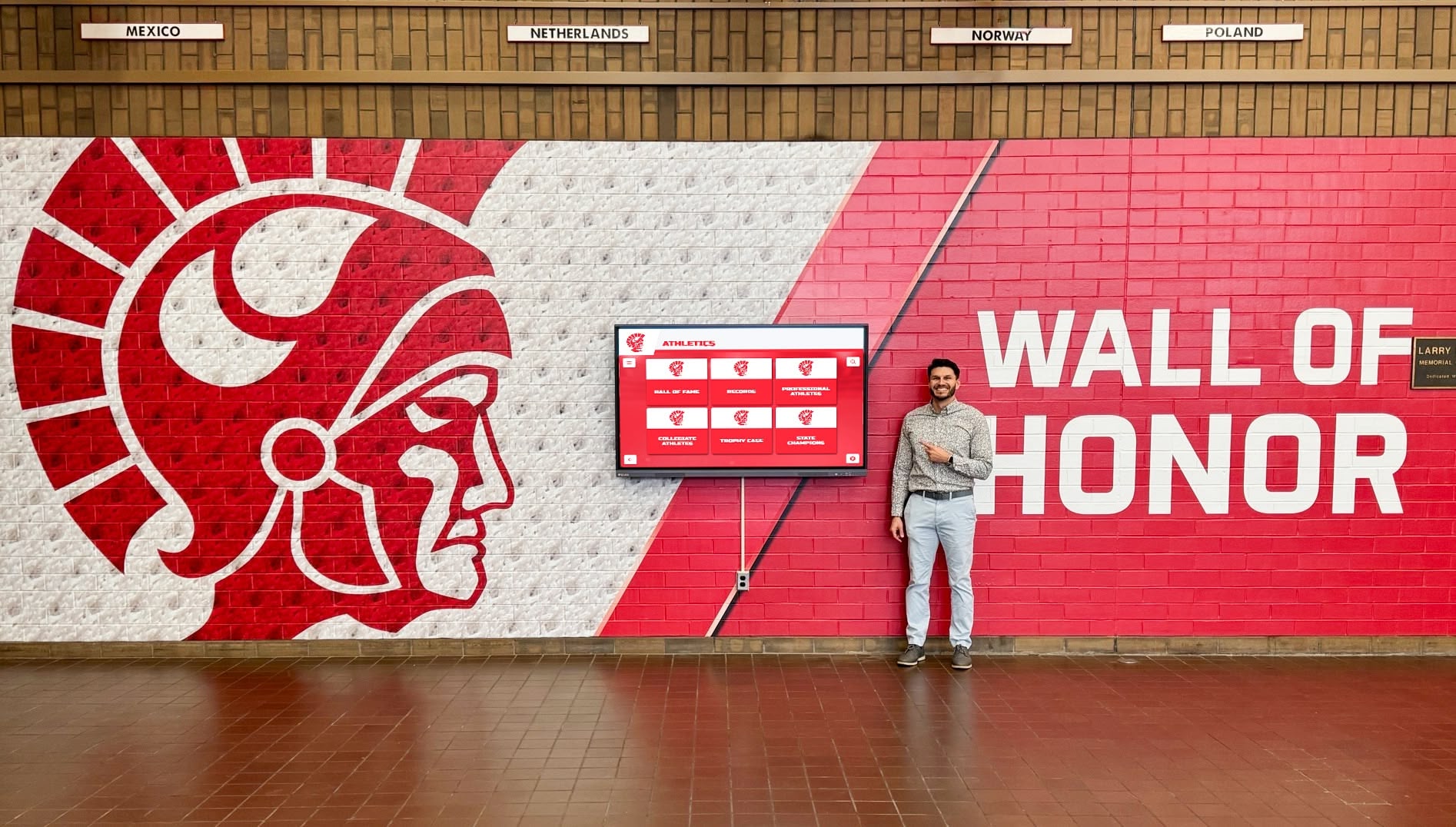
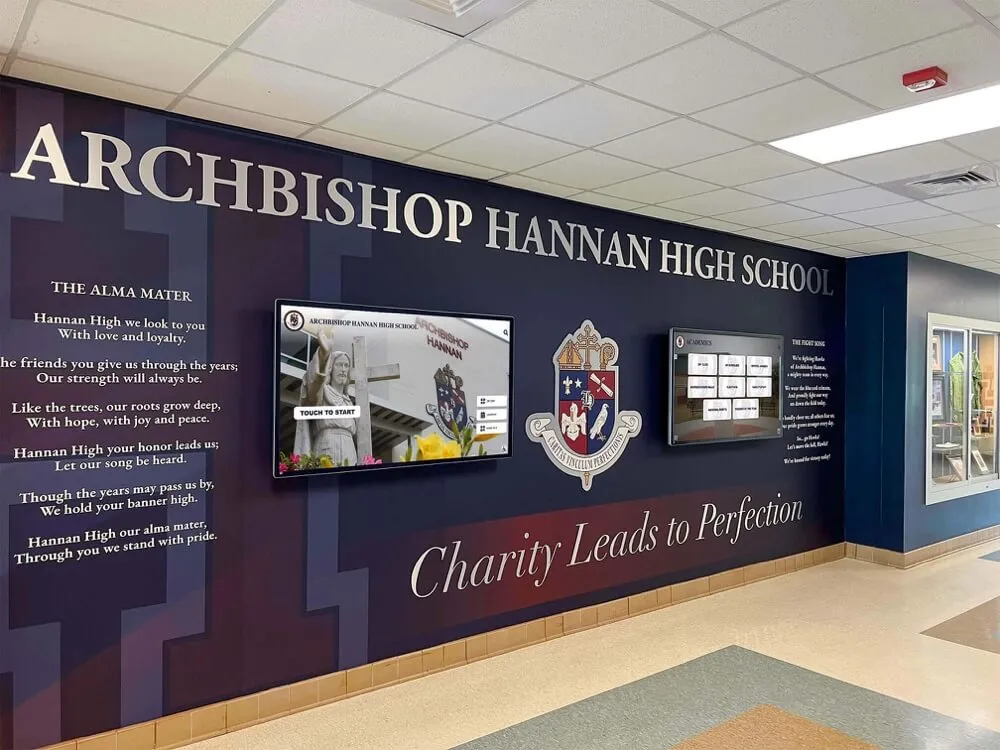
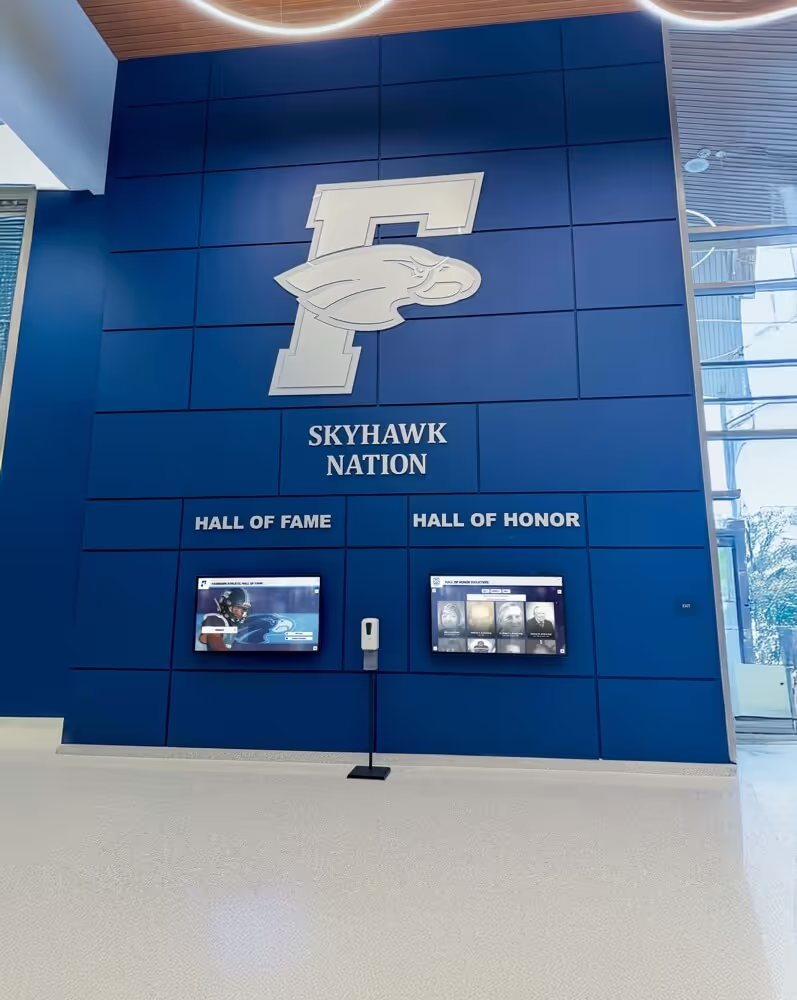
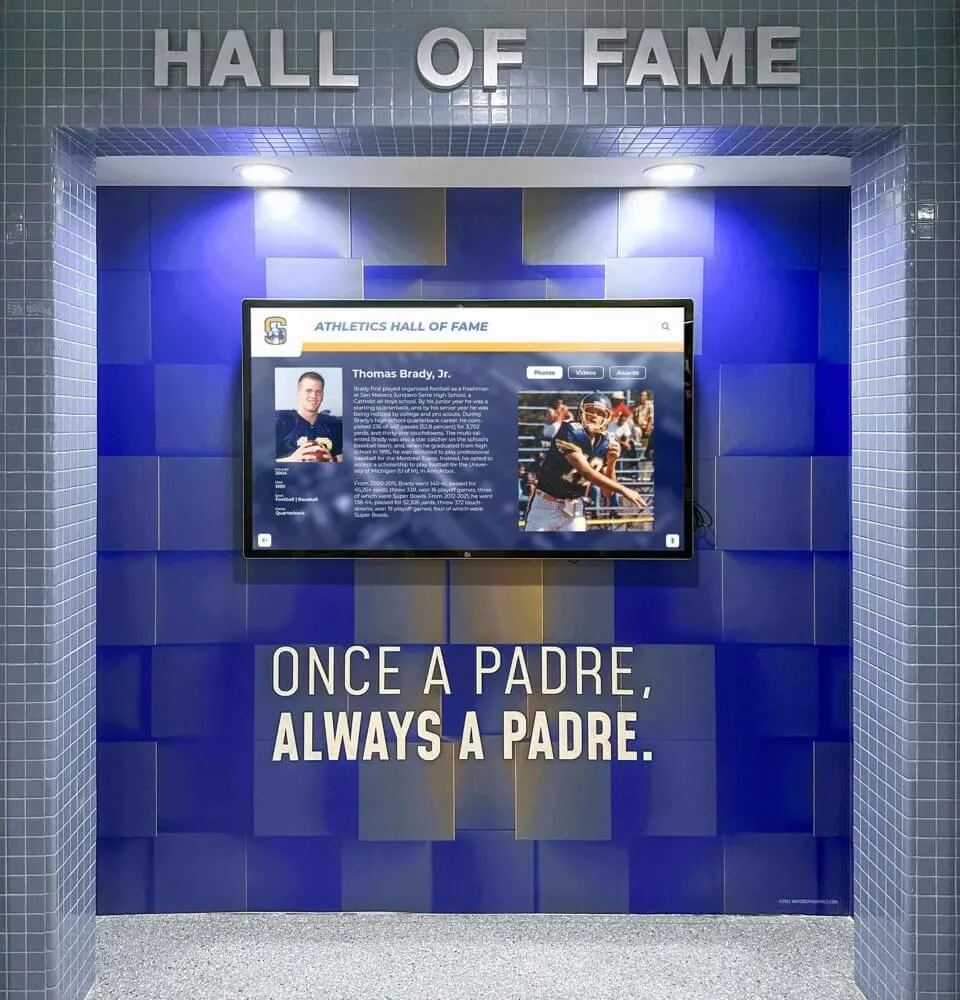
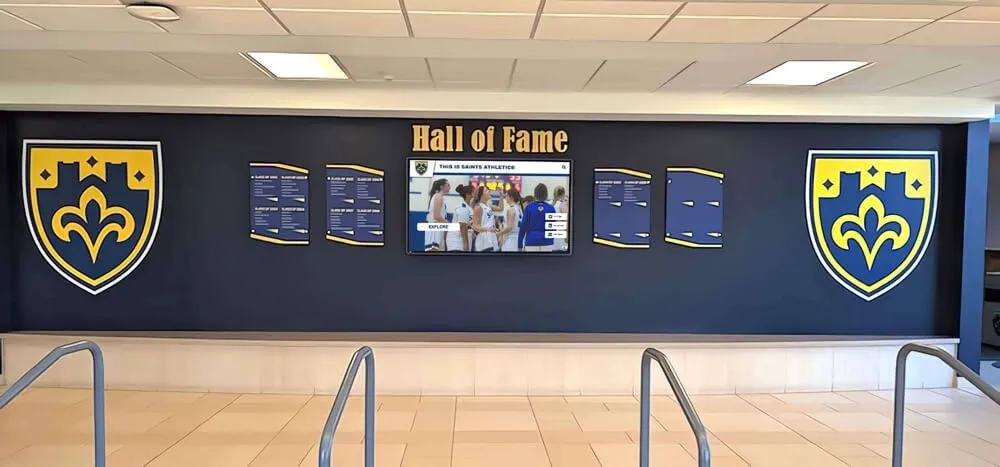
Interactive exploration enables visitors to discover detailed information about honored individuals rather than simply reading engraved names
How Digital Honor Walls Differ from Traditional Plaques
Traditional wall of honor plaques have served organizations for generations through engraved metal plates mounted on hallway walls or display boards. While these approaches maintain important ceremonial significance and provide tangible physical presence, they face inherent limitations that digital technology directly addresses.
Physical Space Constraints
Traditional plaques require physical wall space for each honoree, typically occupying 6 x 8 inches to 12 x 15 inches per individual plaque. Organizations honoring individuals over decades eventually exhaust available wall space, forcing difficult decisions about continuing recognition programs, removing earlier honorees, or pursuing expensive construction projects adding dedicated recognition wall space.
A military installation honoring 50 years of distinguished service members at 10 honorees per year accumulates 500 individuals deserving recognition. If each traditional plaque occupies 8 x 10 inches, those 500 honorees require approximately 280 square feet of wall space—equivalent to a 28-foot long by 10-foot high wall section. Few facilities allocate this much contiguous wall space for recognition alone, creating the painful reality where significant service sits in storage rather than receiving public honor.
Digital wall of honor systems eliminate this mathematical impossibility. A single 55-inch touchscreen can showcase hundreds or thousands of honorees without ever running out of space, ensuring recognition remains truly permanent rather than temporary pending space exhaustion.
Update Complexity and Expense
Traditional plaques require significant time and expense to update. Adding new honorees means commissioning new plaques from manufacturers at $150-400 per plaque, waiting for production and shipping taking weeks or months, coordinating installation requiring contractor services or facility staff time, and often physically reorganizing entire displays to accommodate additions while maintaining aesthetic consistency.
These logistical barriers create delays between earning recognition and actual display visibility. Organizations commonly conduct annual recognition ceremonies then wait months for physical plaques to be manufactured, shipped, and installed—diminishing the psychological impact of immediate recognition while creating periods where honor walls remain incomplete.
Digital systems eliminate update delays and recurring costs. When new honorees earn recognition, administrators publish profiles within minutes through content management systems accessible from any internet-connected device. No manufacturing, no shipping, no physical installation—new honorees appear immediately rather than waiting months for traditional plaque production. After initial system investment, ongoing costs typically involve only annual software licensing fees of $1,200-2,400 rather than $150-400 per honoree for physical plaques.
Limited Information and Storytelling
Engraved plaques document recognition efficiently—name, rank or title, years of service or dates of achievement—but provide minimal context about why individuals earned recognition, what they accomplished specifically, or how their service impacted communities and organizations. An 8 x 10 inch plaque accommodates perhaps 50-75 words of biographical information at most. Visitors read basic facts, acknowledge the recognition, then move to the next plaque without developing meaningful understanding of honored individuals or their contributions.
Digital platforms transform recognition from documentation to storytelling through comprehensive multimedia profiles. Individual recognition can include high-resolution photo galleries showing honorees throughout their service or involvement, detailed biographical narratives explaining background, achievements, and impact in 300-500 words, video interviews capturing personal reflections, memories, and perspectives, service records or achievement documentation providing complete context, connections to related honorees, units, or organizations, and news articles or historical documents from original achievement timeframes.
This depth creates emotional engagement and meaningful understanding that simple engraved names cannot match. Visitors spend significantly more time exploring digital profiles compared to reading traditional plaques, developing authentic appreciation for honored individuals rather than simply acknowledging documentation.
The Recognition Space Challenge Facing Modern Organizations
Understanding the specific limitations driving organizations toward digital wall of honor solutions helps institutions appreciate the value these systems deliver across multiple dimensions.
Military and Veterans Recognition Requirements
Military installations, veterans organizations, and community groups honoring service members face unique recognition challenges requiring comprehensive, permanent solutions:
Honoring Decades of Service Members
Organizations with long military traditions accumulate extensive rosters of individuals deserving recognition. Posts honoring distinguished service across 50-100 years may have thousands of veterans earning recognition through combat service, valor awards, career achievement, or post-service community contribution. Traditional plaque walls exhausts physical space within years, forcing choices about whose service receives visibility and whose gets relegated to storage or databases.
Programs focusing on veterans recognition demonstrate the importance of comprehensive approaches that honor all deserving service members rather than limiting recognition to space-constrained selections. Digital walls of honor enable organizations to finally achieve this goal through unlimited recognition capacity.
Multiple Recognition Categories and Criteria
Military recognition commonly spans multiple categories requiring organized presentation. Organizations may recognize Medal of Honor recipients and valor award honorees, distinguished career service members reaching milestone ranks, killed in action service members deserving perpetual remembrance, post-service community leaders continuing service to veterans and communities, and unit citations honoring collective achievement and sacrifice.
Traditional walls struggle to organize multiple recognition categories coherently within limited space. Digital platforms provide sophisticated filtering enabling visitors to explore specific recognition categories while maintaining comprehensive visibility for all honorees regardless of category.
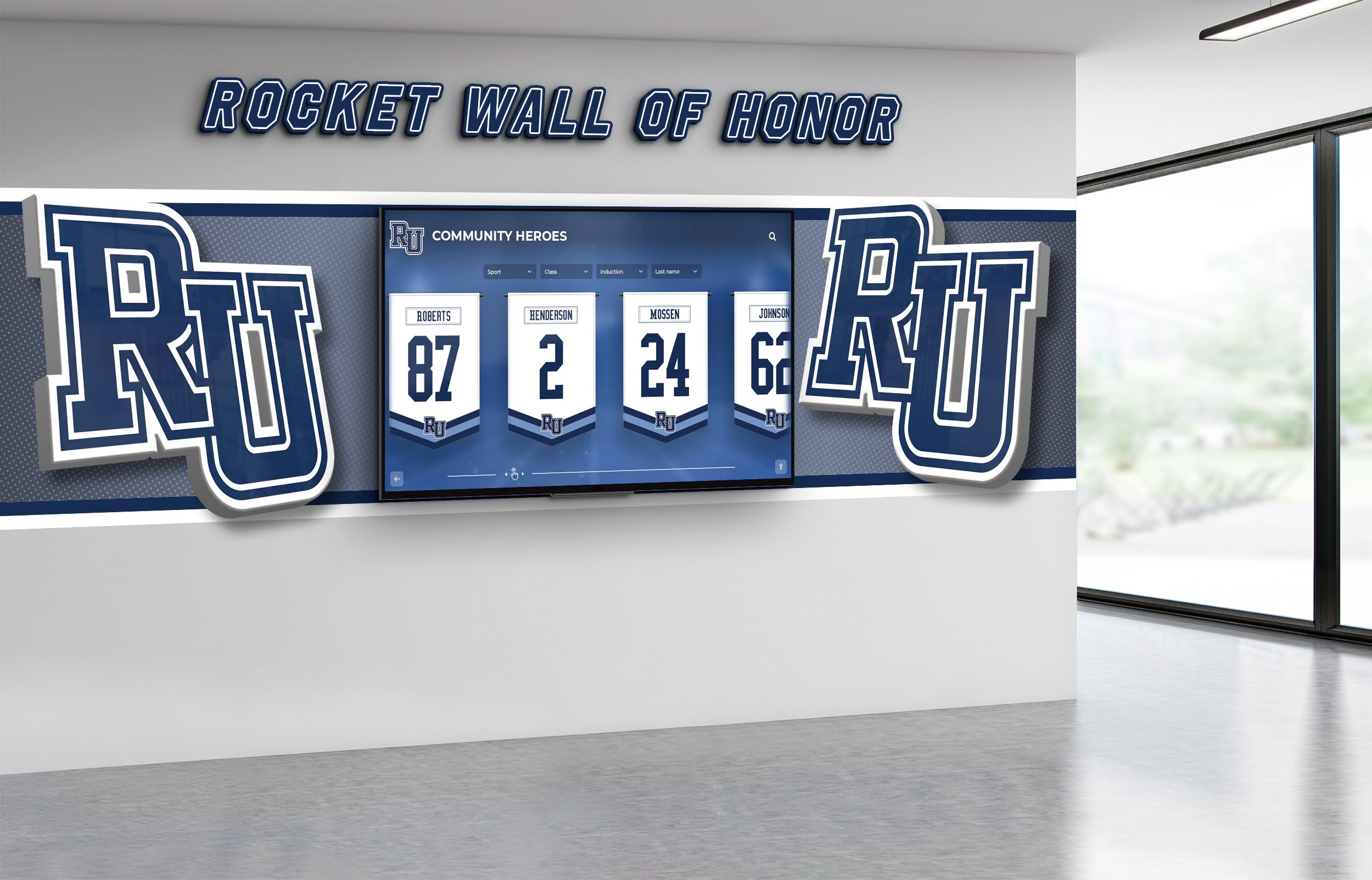
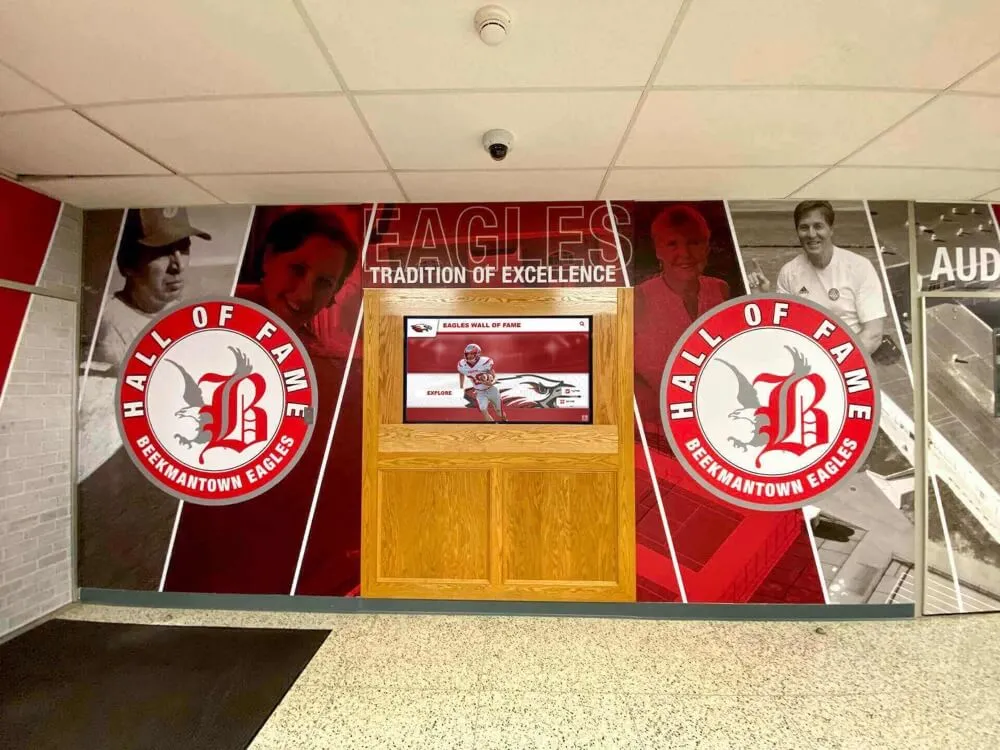
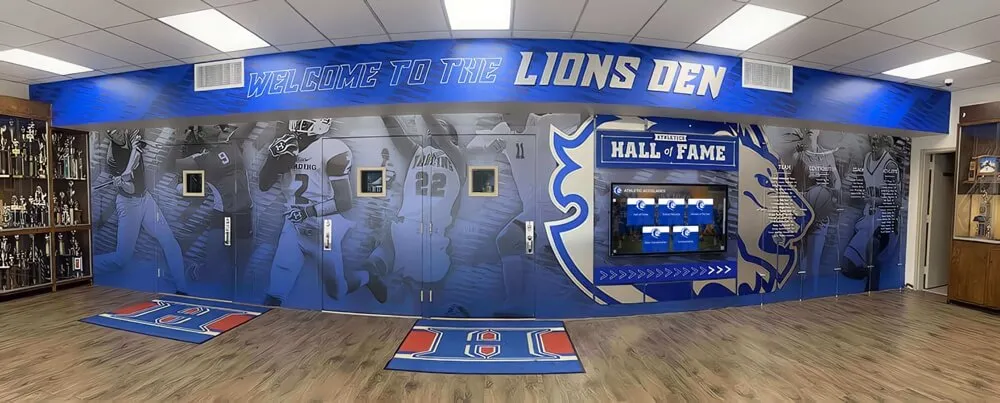
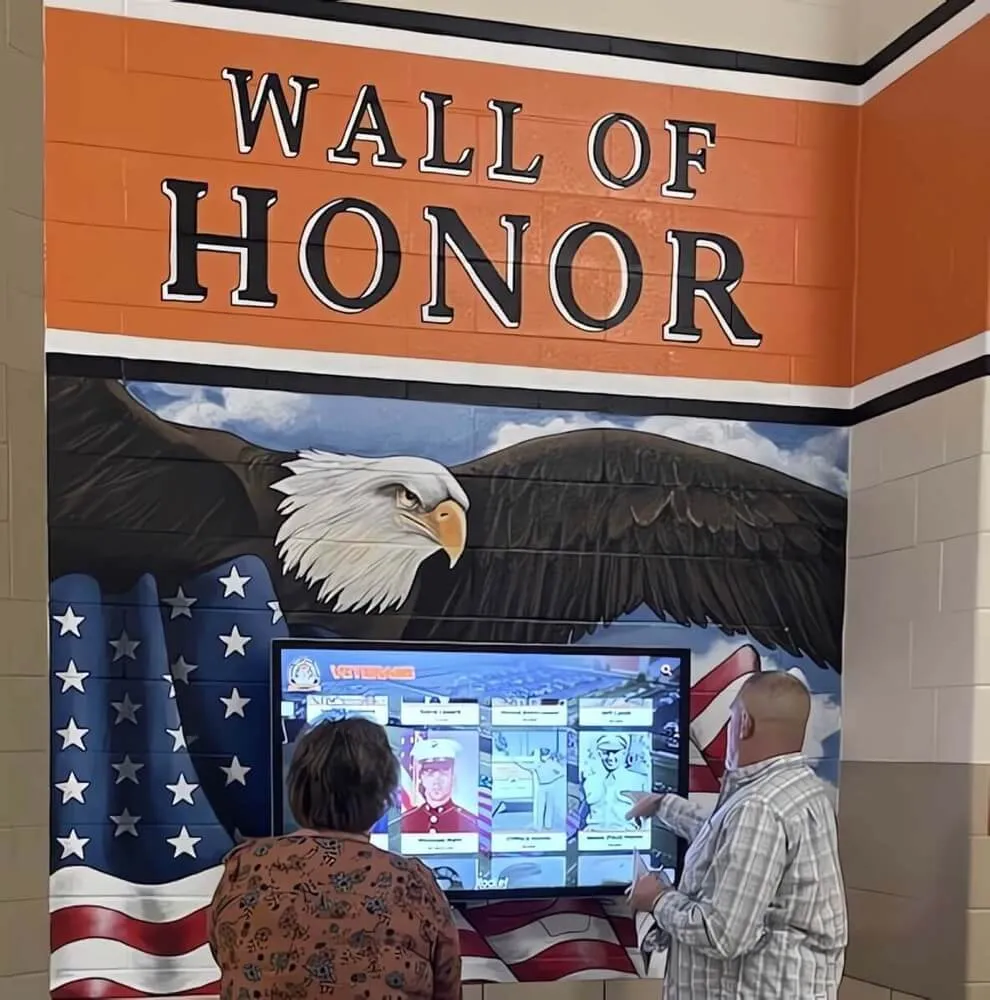
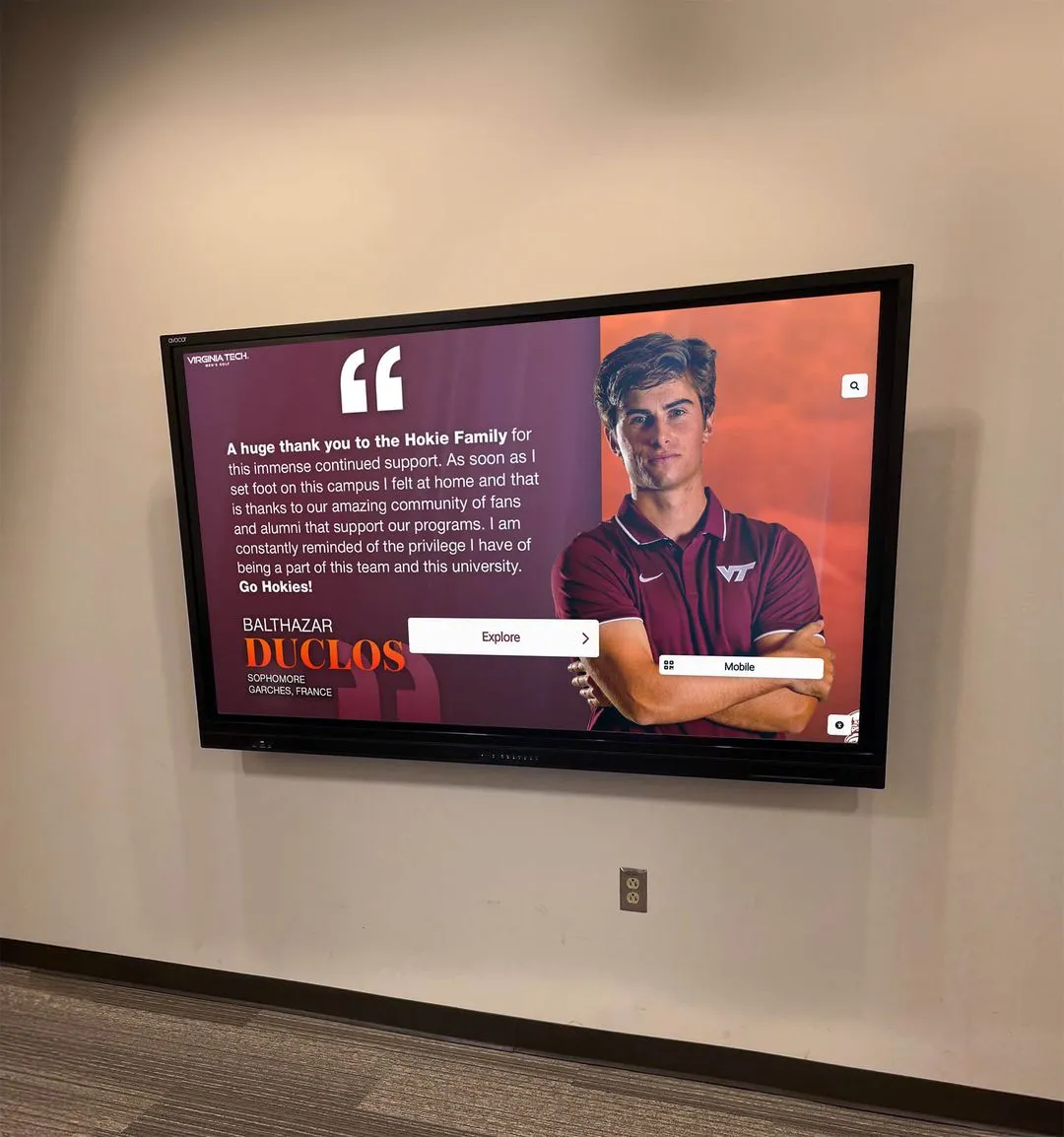
Military installations use digital walls of honor to comprehensively recognize service across multiple branches and decades
School and University Recognition Programs
Educational institutions honoring students, alumni, faculty, and staff face similar space constraints with additional engagement requirements for younger, technology-oriented audiences:
Student Achievement Recognition
Schools implement wall of honor programs recognizing academic excellence, athletic achievement, artistic accomplishment, community service leadership, and character or citizenship awards. Comprehensive programs honoring deserving students across all categories quickly exhaust available hallway wall space, forcing schools to limit recognition arbitrarily or remove earlier honorees to accommodate current students—both sending problematic messages about recognition permanence and organizational values.
Digital recognition enables comprehensive celebration across all achievement categories without space constraints. Schools can honor all valedictorians across decades, recognize every National Merit Scholar, celebrate athletic hall of fame inductees across all sports, acknowledge distinguished artists and performers, and recognize service leaders—all within single touchscreen installations that never run out of capacity.
Alumni Wall of Honor Installations
Alumni recognition programs celebrating distinguished graduates face unique challenges as organizations accumulate decades or centuries of notable alumni deserving honor. A school founded in 1900 potentially has thousands of distinguished alumni across 120+ graduating classes. Traditional plaques cannot accommodate this recognition scale, forcing alumni associations to severely limit who receives recognition based on arbitrary achievement thresholds or institutional contribution rather than honoring everyone deserving celebration.
Digital systems eliminate these forced limitations, enabling comprehensive alumni recognition that honors professional achievement, community service, athletic excellence, artistic accomplishment, and philanthropic contribution without space-constrained prioritization.
Faculty and Staff Honor Walls
Educators, coaches, and staff who shape institutions across decades deserve recognition matching their impact. Faculty honor walls commonly celebrate teaching excellence award recipients, long-serving educators reaching career milestones, distinguished researchers or practitioners achieving field prominence, beloved educators remembered by generations of students, and administrators who led significant institutional development.
Traditional plaques accumulate steadily as each year adds new honorees. Digital platforms accommodate continuous recognition growth while providing the comprehensive biographical content that enables current community members to understand why honored educators earned distinction and how they shaped institutional character.
Corporate and Community Organization Recognition
Businesses, nonprofits, and community groups implementing wall of honor programs face recognition challenges spanning employee service, volunteer contribution, donor recognition, and community impact celebration:
Employee Recognition and Service Milestones
Organizations honoring employees reaching service milestones—10, 20, 30, 40+ year anniversaries—accumulate extensive recognition rosters as long-serving staff contribute to organizational success across decades. Traditional plaque walls fill within years for organizations with strong retention cultures and multi-generational employee families.
Digital employee recognition walls enable comprehensive celebration of long service while incorporating additional recognition categories like excellence awards, safety achievements, innovation contributions, and leadership development. Integration with broader employee recognition programs strengthens organizational culture while ensuring everyone receives appropriate celebration.
Volunteer and Donor Honor Walls
Nonprofits and community organizations implementing recognition programs for volunteers and financial supporters face unique challenges balancing gratitude expression with ongoing recognition needs. Volunteer walls of honor may recognize thousands of individuals contributing service hours across years or decades. Donor recognition walls celebrate contributions across multiple giving levels requiring organized presentation.
Digital solutions enable sophisticated recognition structures accommodating unlimited honorees across multiple categories, giving levels, or service tiers. Organizations can honor all volunteers contributing specific hour thresholds, recognize donors at various giving levels, and update recognition as volunteers accumulate additional service or donors increase support—all through simple content management rather than commissioning new physical plaques for each recognition change.

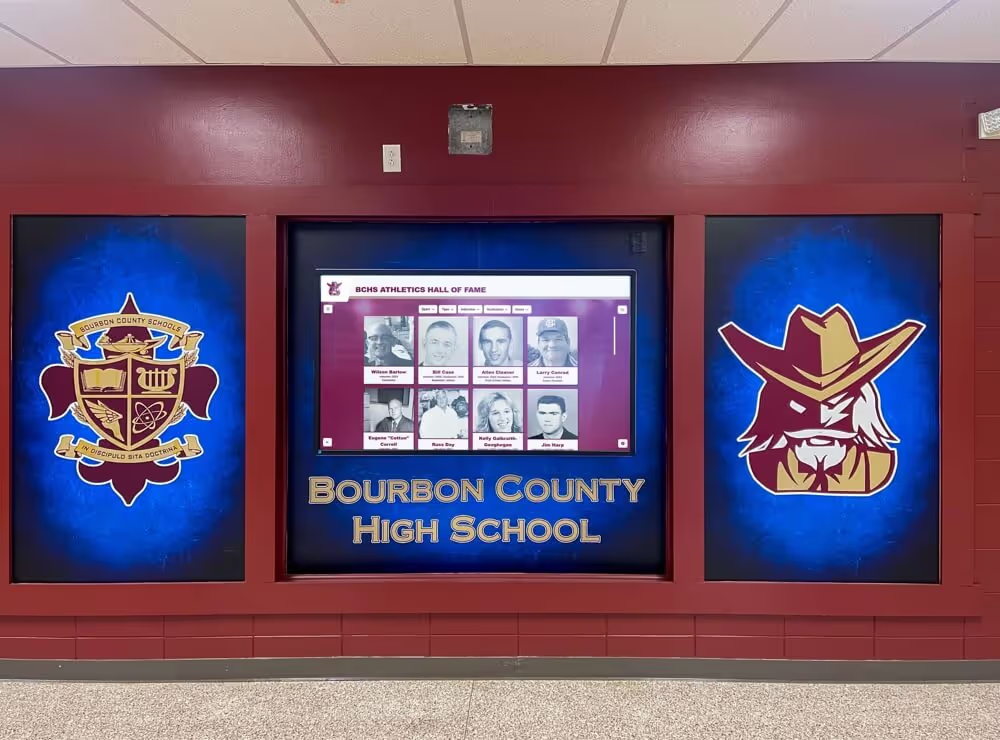
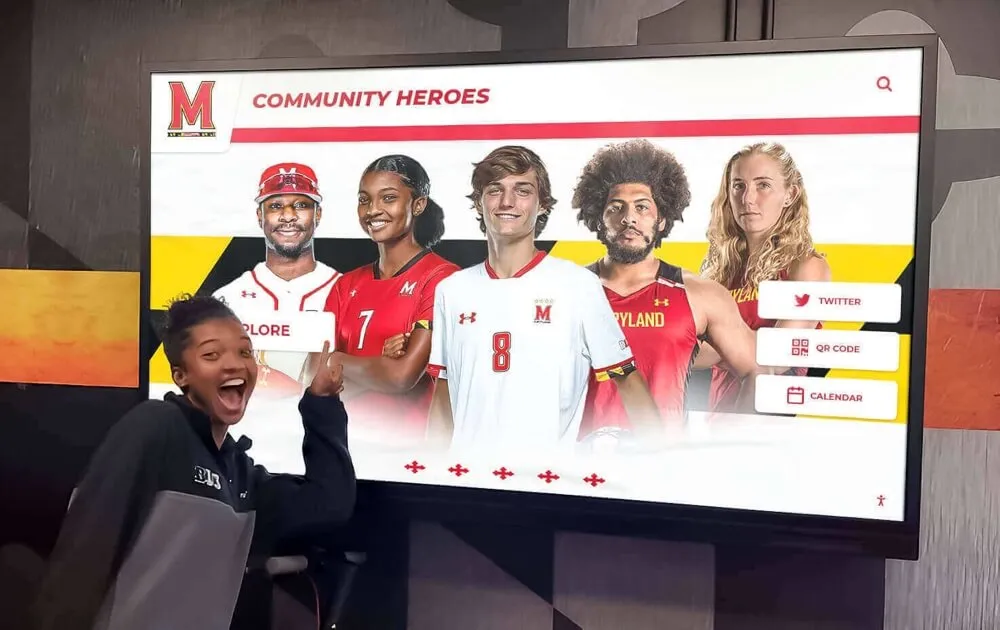
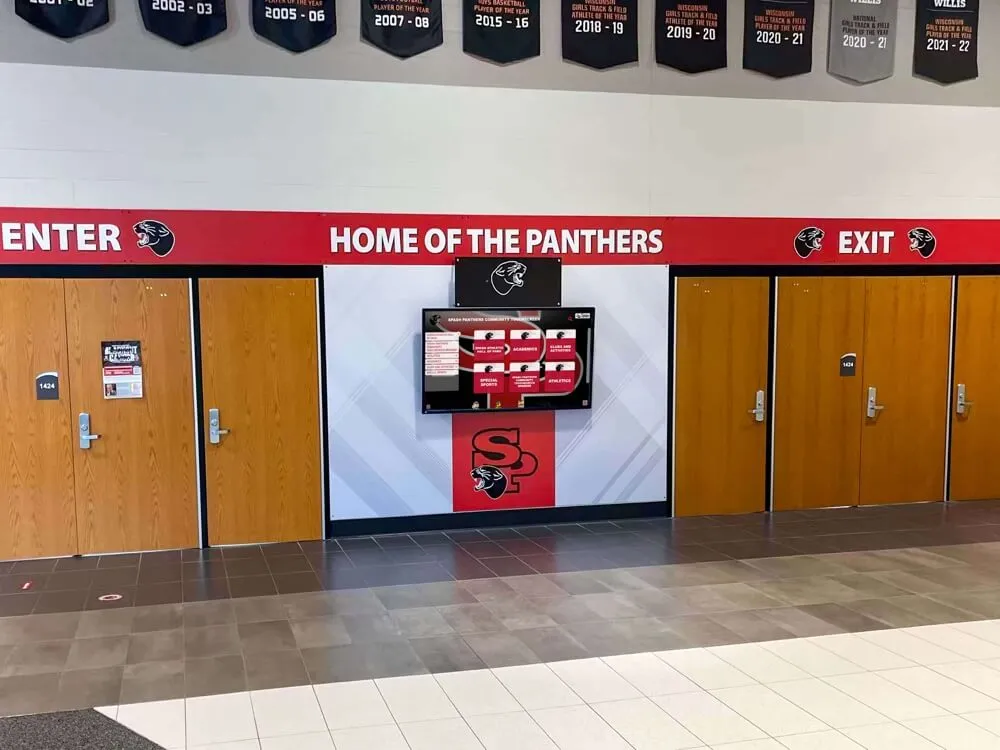
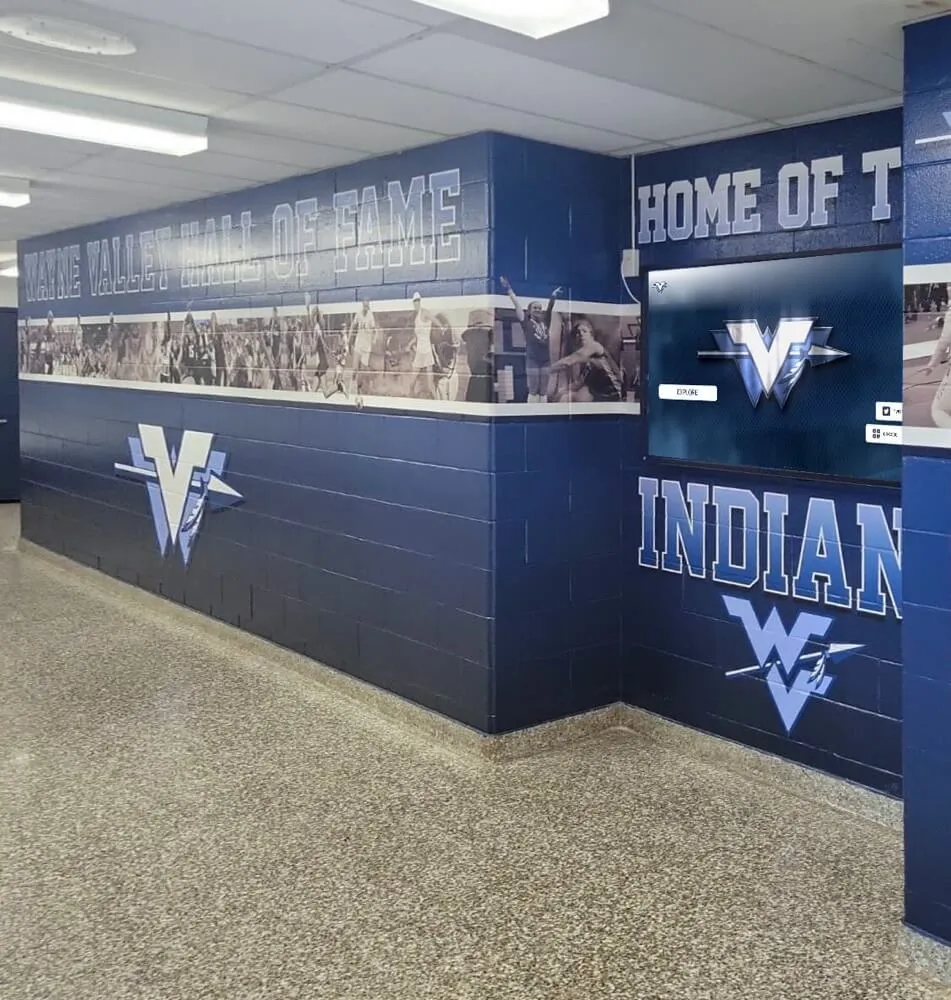
Community organizations use digital walls of honor to celebrate volunteers, donors, and community leaders comprehensively
Core Benefits of Digital Wall of Honor Systems
Digital wall of honor technology delivers interconnected benefits strengthening organizations across recognition, engagement, operational, and strategic dimensions.
Unlimited Recognition Capacity Ensuring True Permanence
The most immediate and compelling benefit involves eliminating space constraints that force painful decisions about whose recognition remains visible and whose gets removed when traditional walls fill:
Comprehensive Recognition Without Forced Prioritization
Organizations implementing digital walls of honor can finally honor everyone deserving recognition regardless of physical space limitations. Military installations can recognize all distinguished service members across decades of history without choosing which eras or conflicts receive representation. Schools can celebrate every academic honor recipient, athletic achievement, and distinguished alumnus across all graduating classes. Community organizations can recognize every volunteer reaching service thresholds and every donor at various giving levels. And corporations can showcase employee milestones comprehensively across entire organizational histories.
This comprehensive capacity communicates that recognition remains truly permanent rather than temporary pending space exhaustion. Once individuals earn honor wall recognition, they receive perpetual celebration accessible anytime rather than facing potential removal to accommodate future honorees—making recognition commitments authentic and meaningful rather than conditional on space availability.
Avoiding Painful Removal Decisions
Traditional walls reaching capacity force organizations into uncomfortable situations. Do you remove earlier honorees to accommodate recent recipients? Do you create hierarchies determining which achievements deserve permanent visibility? Do you stop recognizing excellence when physical space fills? Each option sends problematic messages about whose achievements matter and whether recognition truly remains permanent.
Organizations transitioning to digital solutions often describe relief at finally resolving these dilemmas. Long-serving administrators recall painful decisions about which honorees to remove from overcrowded physical walls or uncomfortable conversations explaining to family members why recognition got relocated to less visible locations. Digital platforms eliminate these situations entirely through unlimited capacity ensuring everyone honored receives equal, permanent recognition without forced hierarchies or removal when space fills.
Enhanced Visitor Engagement Through Interactive Experience
Touchscreen technology creates active engagement that passive plaque viewing cannot match. Visitors don’t simply walk past digital walls of honor—they stop, touch screens, search for specific individuals, explore detailed profiles, discover unexpected connections, and spend meaningful time immersed in organizational heritage and achievement celebration:
Active Participation Creates Stronger Connection
Research on educational technology and museum exhibits consistently demonstrates that active engagement produces superior outcomes compared to passive observation. When visitors physically interact with content, make choices about what to explore, and control their own discovery journey, they develop stronger memory formation and emotional connection compared to passive viewing.
Digital walls of honor leverage this principle by enabling visitors to search for themselves, family members, or friends by name, browse specific time periods or recognition categories matching their interests, explore detailed multimedia profiles revealing complete achievement stories, discover connections between honorees through linked profiles or shared units and teams, and share specific profiles via social media extending recognition reach beyond physical locations.
Organizations report visitors spending three to five times longer engaging with interactive digital walls of honor compared to time spent passively viewing traditional plaque displays. This extended engagement creates deeper appreciation for honored individuals while strengthening emotional connection to organizations and communities these recognition programs celebrate.
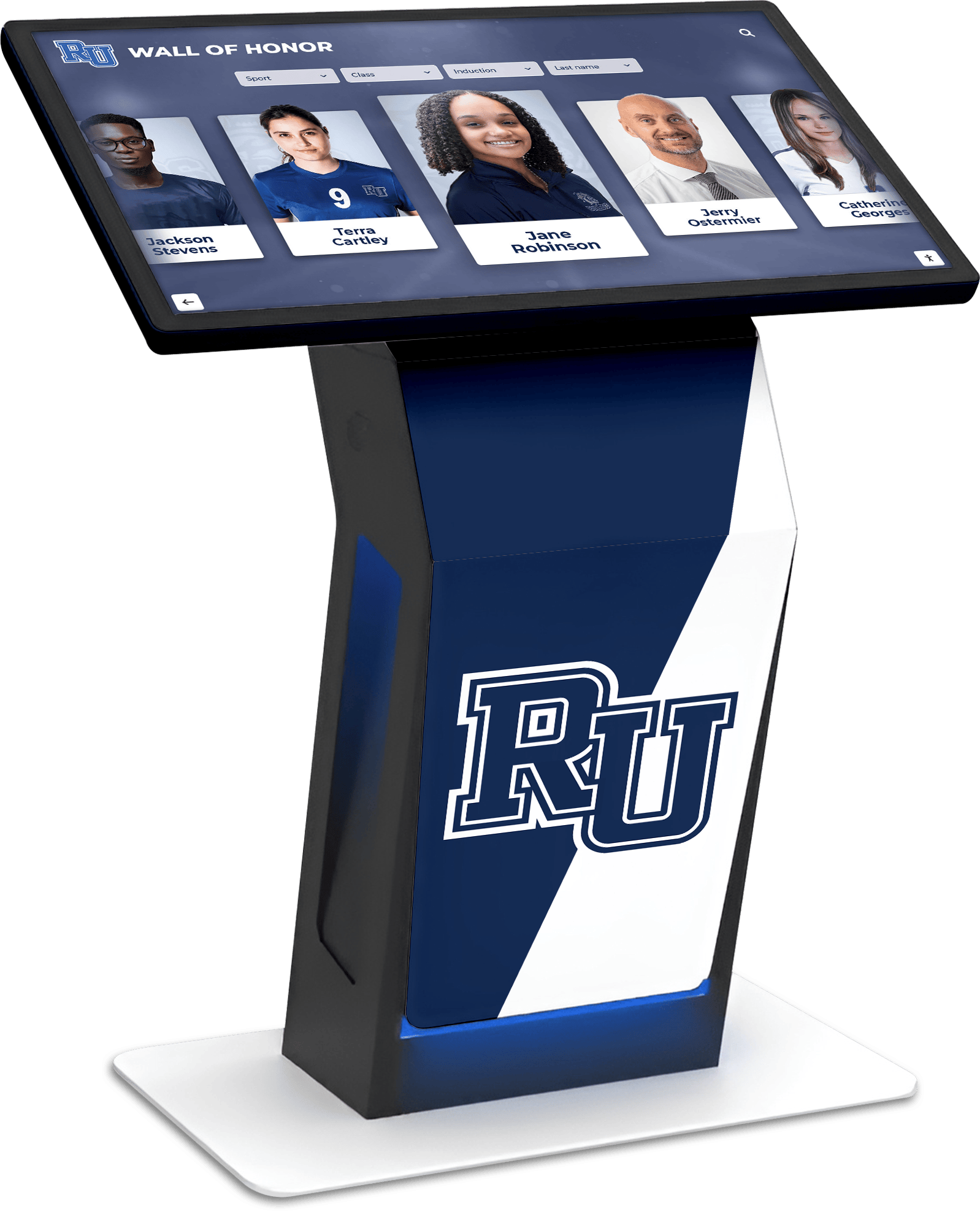
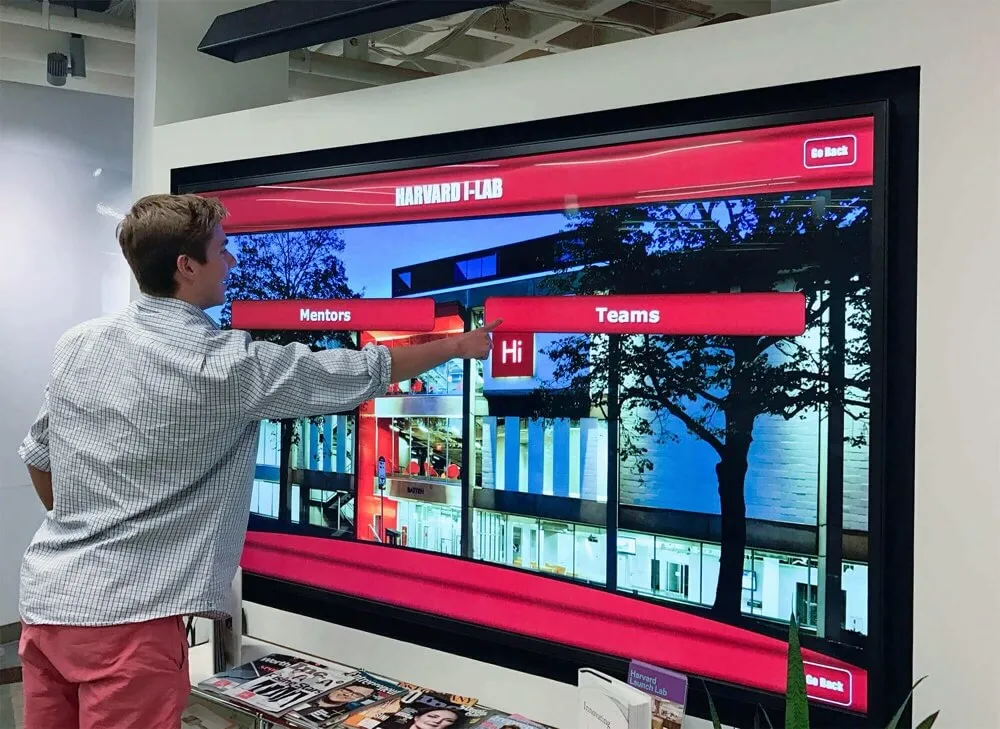
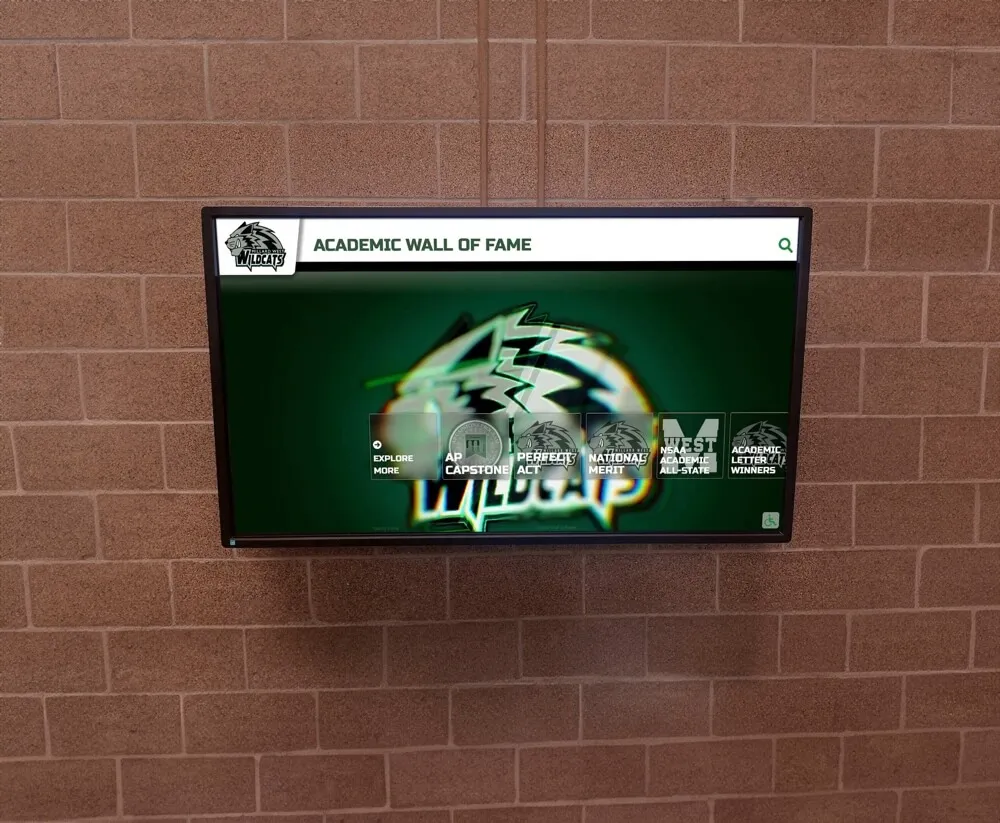
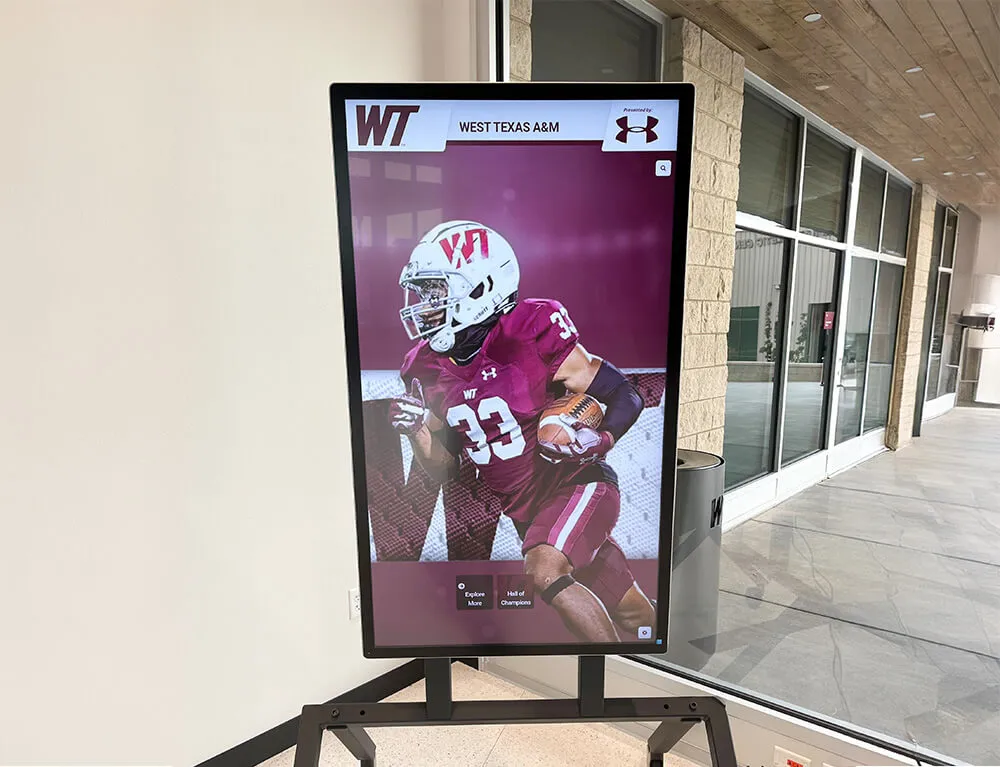
Intuitive touchscreen interfaces enable visitors of all ages to explore recognition content without instructions
Creating Natural Gathering Points and Conversation Starters
Well-placed digital walls of honor become focal points where groups naturally congregate during events, prospective members explore organizational heritage, alumni reunite around shared memories and experiences, families show children their own recognition or relatives’ service, and visitors learn about institutional history and community contribution.
During open houses, veterans events, reunion gatherings, or recruitment visits, these displays create conversation opportunities encouraging storytelling, memory sharing, and community connection around shared excellence, sacrifice, and service. Organizations report significant social media activity as visitors photograph themselves with their own recognition or share interesting discoveries about honored individuals, extending recognition reach far beyond physical display locations to online networks and communities.
Administrative Efficiency and Long-Term Cost Effectiveness
While digital wall of honor systems require higher initial investment compared to first-generation traditional plaques, they deliver significant administrative efficiency and long-term financial advantages often resulting in complete return on investment within three to five years:
Simplified Content Management
Cloud-based management systems enable non-technical staff to maintain recognition displays within minutes rather than hours or days required for traditional updates. Administrators upload honoree photos and information through intuitive web forms similar to social media profile creation, schedule content publication for specific ceremony dates, manage entire recognition programs without IT department assistance or specialized technical knowledge, and make corrections or enhancements instantly when information updates or errors are discovered.
Schools and organizations report 80-90 percent reduction in administrative time spent maintaining recognition compared to traditional approaches requiring ongoing coordination with plaque manufacturers, graphic designers, and installation contractors for each recognition cycle.
Cumulative Cost Advantages Over Time
Digital systems involve higher upfront investment—typically $8,000-15,000 per touchscreen display including hardware, software, and professional installation—but eliminate recurring costs that make traditional recognition expensive long-term:
Traditional Plaque Wall Costs (10-Year Period)
For organization recognizing 20 honorees annually:
- 200 individual plaques at $200 average = $40,000
- Installation labor at $75 per plaque = $15,000
- Display reorganization (5 times) = $3,000
- Facility modifications adding space = $8,000
- Total 10-Year Cost: $66,000
Digital Wall of Honor Costs (10-Year Period)
For same organization with digital system:
- Initial hardware and software = $12,000
- Professional installation = $2,000
- Annual software licensing ($1,800 x 10) = $18,000
- No per-person costs
- Total 10-Year Cost: $32,000
This analysis becomes more favorable for organizations with extensive recognition traditions requiring continuous expansion. Over 20-30 year timeframes, traditional approaches cost $100,000-200,000+ while digital systems incur only annual licensing after initial investment, creating substantial cumulative savings funding other organizational priorities.
Universal Accessibility Beyond Physical Locations
Traditional walls of honor serve only people physically present at specific locations during facility operating hours. Service members living across the country cannot revisit their recognition. Prospective members evaluating organizations during decision processes may never encounter recognition displays. And families cannot easily share honored members’ achievements with distant relatives unable to travel for ceremonies.
Digital platforms address these accessibility limitations through web-based extensions making recognition universally available. Solutions like Rocket Alumni Solutions provide online portals where visitors anywhere worldwide can search for individuals by name, browse recognition by category or induction year, explore complete organizational achievement histories, share specific profiles via email and social media, and access content from smartphones, tablets, and computers without requiring physical facility visits.
This universal accessibility dramatically expands recognition reach and impact. Alumni engagement increases when graduates can revisit their recognition anytime from anywhere. Service members show families their honor wall profiles during video calls rather than waiting for next base visits. Prospective members thoroughly research organizational traditions during decision processes. And researchers or genealogists access historical recognition for documentation and family history projects.
Exploring comprehensive digital recognition approaches demonstrates how accessibility enhancements strengthen community connections while extending recognition influence beyond physical display locations.
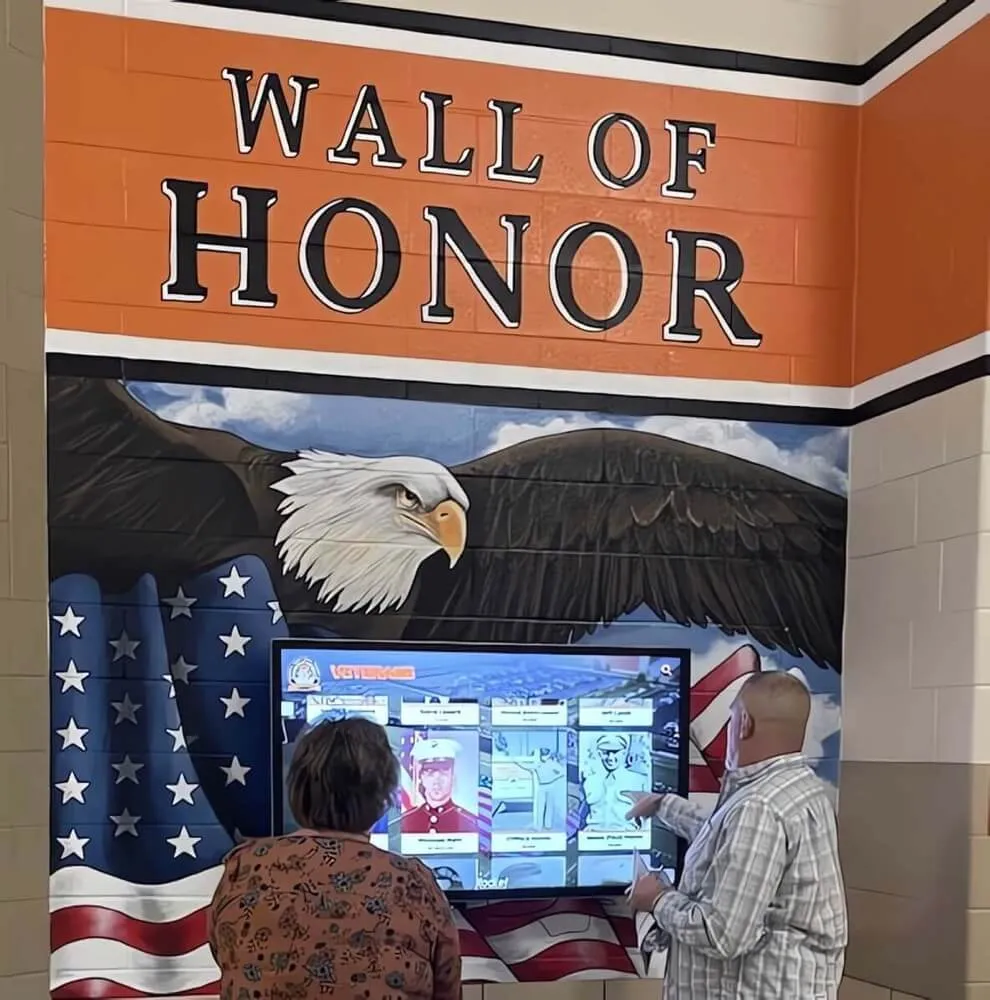
Web extensions enable families worldwide to access honor wall recognition without requiring physical location visits
Implementing Digital Wall of Honor Systems Successfully
Successful digital wall of honor implementation requires thoughtful planning across technology selection, content development, physical installation, and organizational adoption.
Planning and Needs Assessment
Before purchasing technology, organizations should carefully assess recognition needs and goals through systematic evaluation:
Defining Recognition Scope and Categories
Key planning questions include what achievement categories require recognition (military service, academic excellence, athletic achievement, community service, donor contribution, employee service, volunteer participation), what current recognition gaps and limitations exist with traditional approaches, who are primary users and stakeholders (veterans, students, alumni, employees, donors, community members), what budgets exist for initial investment and ongoing operation, and what existing infrastructure including network connectivity, electrical power, and physical space is available.
Stakeholder Engagement and Support Building
Involving stakeholders early builds organizational support and ensures solutions meet actual needs rather than imposing technology without clear purpose. Planning committees should include administrators responsible for recognition programs, representatives from recognized groups (alumni associations, veterans organizations, employee councils), facility managers who understand space and infrastructure requirements, IT staff who will support technical implementation when needed, and community members who can provide external perspectives on recognition priorities and presentation.
Organizations report that systematic stakeholder engagement during planning significantly reduces implementation resistance while surfacing valuable requirements and use cases that technology selection and content strategy should address.
Technology Selection and Platform Evaluation
Not all digital wall of honor solutions deliver equal results for organizational recognition applications. Organizations should evaluate purpose-built recognition platforms designed specifically for celebrating achievements, commercial-grade touchscreen hardware rated for continuous operation in public environments, cloud-based content management systems enabling non-technical staff to maintain displays independently, comprehensive support including training and ongoing technical assistance, and demonstrated experience with similar organizational types and recognition applications.
Critical Evaluation Criteria
When assessing potential digital wall of honor vendors, organizations should prioritize ease of content management for administrators without technical backgrounds, intuitive user interfaces requiring no instructions for visitor interaction, unlimited recognition capacity accommodating comprehensive achievement celebration, web-based access extending recognition beyond physical displays, robust search and filtering enabling efficient content discovery, multimedia support for photos, videos, and biographical narratives, analytics tracking engagement demonstrating program value, and reasonable total cost of ownership including initial investment and recurring fees.
Organizations should request live demonstrations with actual recognition content rather than generic examples, speak with reference institutions about their implementation experiences and satisfaction, pilot systems in representative locations before broader deployment when possible, and verify complete total cost of ownership including often-hidden fees for realistic budget planning.
Content Development Strategy and Historical Research
Digital wall of honor value depends entirely on quality content celebrating achievements comprehensively. Organizations should develop systematic content strategies addressing what historical recognition already exists through traditional plaques or documentation, what information exists about honored individuals in organizational records and archives, what resources (staff time, volunteer assistance, budget) are available for content development, and what timeline is realistic for launching initial recognition and expanding coverage over time.
Systematic Content Gathering
Content development commonly involves gathering photos from archives, historical records, and personal collections, collecting achievement information from service records, personnel files, or institutional documentation, conducting research filling information gaps about earlier honorees, interviewing honored individuals or family members gathering biographical information and memories when possible, and organizing content logically by year, category, or achievement type.
Organizations should establish reasonable initial scope rather than attempting comprehensive coverage immediately. Common approaches include starting with current honorees and recent years for immediate relevance, expanding systematically backward through recent decades, then adding historical recognition gradually as research capacity allows. A digital wall of honor recognizing the past 10-20 years delivers immediate community engagement value while historical content develops systematically over subsequent months and years.
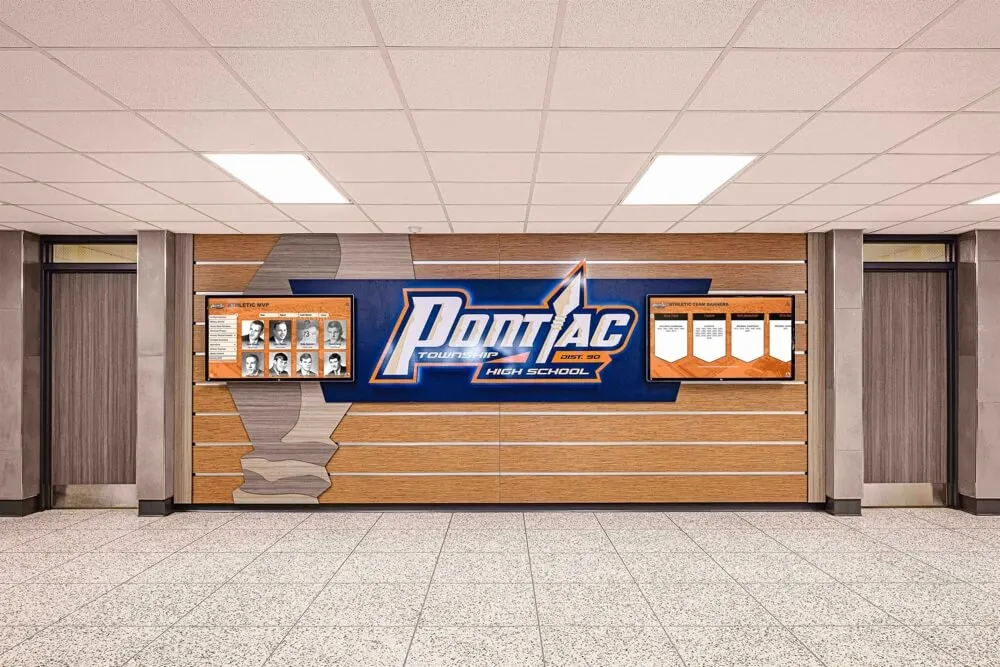
Comprehensive content development requires systematic research gathering information, photos, and biographical details about honored individuals
Creating Compelling Honor Profiles
Effective individual recognition profiles balance comprehensive information with accessible presentation. Essential profile elements include high-quality photographs showing honorees during their service or involvement period and currently when available, biographical narratives explaining background, service or achievement, and impact in 200-400 words, specific accomplishments and honors earned with dates and context, service details including units, ranks, tours, or achievement specifics when relevant to recognition category, connections to related honorees providing contextual relationships, and multimedia enhancements like video interviews, scanned historical documents, or news articles when available.
Profile narratives should emphasize achievement significance and impact rather than simply listing facts. Instead of stating “Served 1968-1972, Vietnam veteran,” comprehensive narratives might explain “Enlisted 1968 following high school graduation, serving with distinction as infantry specialist during two tours in Vietnam 1969-1971. Awarded Bronze Star for valor during combat operations near Da Nang, demonstrating leadership that saved unit members under enemy fire. Returned stateside 1971, continuing service at Fort Bragg until honorable discharge 1972. Later became active veterans advocate and VFW post commander, mentoring younger veterans and preserving service member recognition for 40+ years.”
This storytelling approach creates emotional engagement and contextual understanding that transforms recognition from documentation into compelling celebration preserving individual stories and institutional memory.
Physical Installation and Strategic Placement
Digital wall of honor effectiveness depends significantly on strategic placement in locations where target audiences naturally encounter displays:
Optimal Installation Locations
Prime placement locations vary by organizational type but commonly include main entrance lobbies welcoming all visitors immediately upon arrival, common areas where people gather during events or daily activities, hallways connecting high-traffic areas capturing movement throughout facilities, specialized spaces like military unit areas for service-specific recognition, and administrative areas where prospective members visit during recruitment or orientation processes.
Organizations should consider visibility from multiple angles ensuring displays remain noticeable, adequate clearance for groups gathering during events or ceremonies, comfortable viewing height for standing interaction typically 48-54 inches from floor to screen center, environmental factors including lighting that could create screen glare and temperature extremes affecting equipment, and accessibility ensuring individuals with mobility limitations can interact comfortably.
Professional Installation Requirements
Quality installation ensures proper mounting supporting display weight safely with commercial-grade brackets or freestanding kiosks, adequate electrical power with dedicated circuits when possible avoiding nuisance tripping, reliable network connectivity through ethernet preferred over WiFi for mission-critical displays, appropriate height and positioning for accessibility and comfortable viewing, and clean cable management maintaining professional appearance and preventing trip hazards.
Installation costs typically range from $1,000-3,000 depending on mounting approach, electrical work requirements, network infrastructure needs, and facility access considerations. Organizations should budget appropriately for professional installation rather than attempting cost-cutting through inadequate mounting or amateur work that could damage expensive displays or create safety issues.
Many successful institutions deploy digital walls of honor in phases—beginning with flagship installation in primary lobby, adding recognition in specialized areas like unit spaces or administrative buildings, then completing comprehensive networks covering all recognition categories and major gathering spaces as budgets allow and initial installations demonstrate value to stakeholders and leadership.
Measuring Success and Demonstrating Value
Understanding how visitors interact with digital walls of honor helps organizations demonstrate value, justify investment, and continuously improve recognition programs based on actual usage rather than assumptions:
Engagement Metrics and Analytics
Quality digital wall of honor platforms provide comprehensive analytics tracking usage patterns and engagement levels:
Quantitative Performance Indicators
Valuable metrics include total interaction sessions showing how frequently visitors use displays daily, weekly, and monthly, average session duration indicating depth of engagement with content, most-viewed profiles revealing popular content and community interests, search terms demonstrating what visitors seek when using name search functionality, peak usage times informing content update and promotion strategies, and return visitor rates showing sustained interest when technically trackable through anonymous analytics.
Organizations can use these insights to identify which recognition categories generate most engagement suggesting priorities for content expansion, determine what additional biographical information visitors seek informing profile enhancement, understand optimal times for new content launches or promotional efforts around ceremonies and events, demonstrate platform value to budget authorities and leadership through concrete usage data, and optimize content strategies based on actual behavior rather than assumptions about community preferences.
Analytics commonly reveal surprising patterns—historical figures searched decades after their recognition indicating long-term family interest, specific achievement categories generating unexpectedly high engagement suggesting opportunities for expanded recognition, and search behaviors demonstrating how different audience segments explore honor wall content differently. These insights inform ongoing content development and recognition strategy refinement maximizing value to communities served.
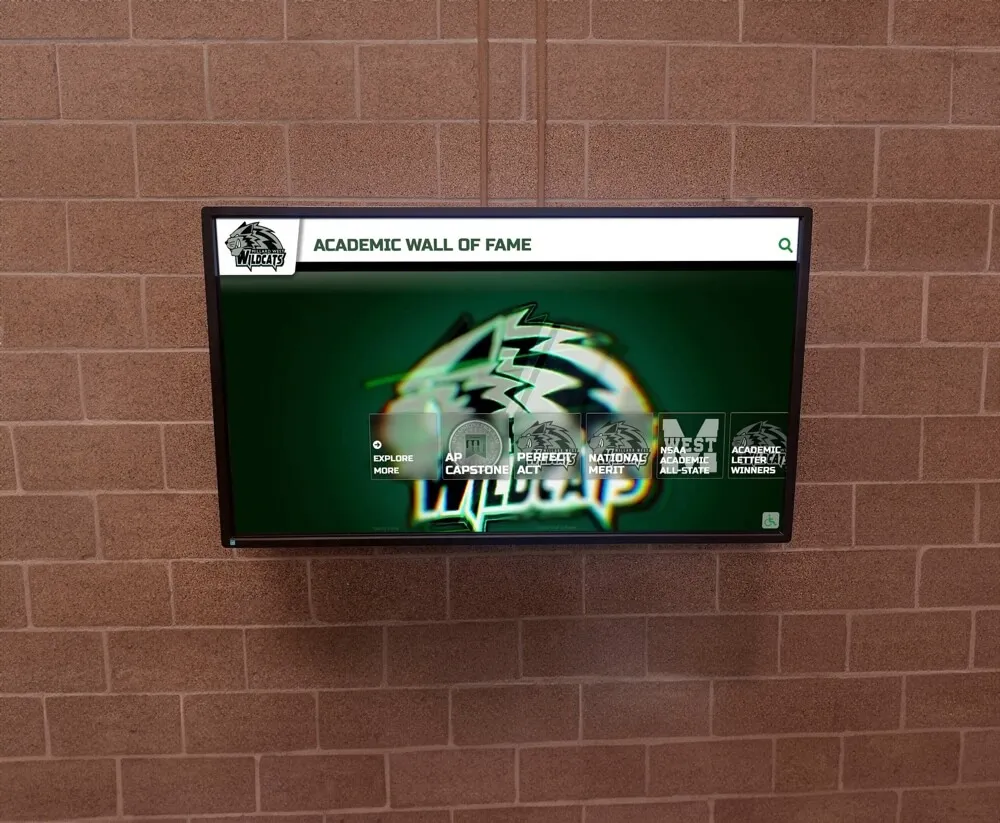
Analytics help organizations understand which content engages visitors most and how recognition programs deliver value
Qualitative Assessment and Community Feedback
Beyond quantitative analytics, organizations should gather qualitative feedback through surveys about recognition program awareness and satisfaction, feedback forms collected during events and facility visits, staff observations about visitor engagement patterns and reactions, honoree reactions when seeing themselves or family members recognized, and stakeholder comments during meetings and community gatherings.
This qualitative feedback often reveals impact that metrics cannot capture—family members expressing emotion when discovering ancestors’ recognition online, veterans appreciating comprehensive service celebration that traditional plaques could never accommodate, prospective members impressed by organizational heritage and recognition culture influencing membership decisions, and community members strengthening identification with organizations through accessible heritage exploration.
Regular feedback collection enables continuous improvement addressing content gaps, navigation confusion, and opportunities to enhance recognition programs serving community needs more effectively. Systematic approaches to maintaining recognition displays ensure programs remain current, accurate, and engaging over years and decades.
Overcoming Common Implementation Challenges
While digital walls of honor deliver significant benefits, organizations should anticipate and proactively address common implementation challenges that can derail projects or limit effectiveness:
Budget Constraints and Funding Strategies
Digital wall of honor investment requires initial capital typically ranging from $8,000-15,000 per display depending on screen size, mounting approach, and software platform selection. Organizations facing budget constraints can pursue several funding strategies:
Creative Funding Approaches
Successful organizations commonly leverage phased implementation starting with single displays in highest-impact locations, capital campaigns incorporating technology as specific funding objectives with named giving opportunities, memorial giving programs where donors fund recognition displays honoring deceased community members or loved ones, corporate sponsorship particularly for school or military recognition applications where businesses support community institutions, and grant opportunities through foundations supporting educational technology, veterans services, or community development.
Some institutions incorporate digital wall of honor displays into facility renovation projects, treating recognition infrastructure as permanent investment deserving capital funding rather than limiting consideration to annual operating budgets. Others generate sponsor support from local businesses receiving recognition for contributions, particularly for military or school displays where business supporters naturally align with organizational missions.
Understanding comprehensive donor recognition strategies helps organizations position wall of honor projects within broader fundraising and capital improvement initiatives.
Content Development Capacity and Historical Research
Comprehensive digital wall of honor content requires significant initial development effort gathering historical achievement information, collecting photos spanning decades, conducting research documenting incomplete records, and creating hundreds or thousands of individual recognition profiles. Organizations with limited staff capacity can address content challenges:
Practical Content Development Solutions
Organizations successfully managing content development commonly start focused on recent years before expanding historical coverage gradually, engage volunteers particularly veterans, alumni, or retirees passionate about preserving heritage, solicit community assistance gathering information and photos from different eras through organized campaigns, and consider professional content development services for large-scale historical digitization projects when budgets allow.
The key involves launching with achievable content scope demonstrating value immediately, then systematically expanding coverage as capacity and resources allow. A digital wall of honor recognizing the past 10-20 years delivers immediate engagement value while historical content develops in parallel over subsequent months and years through ongoing research and community contribution.
Technical Support and Organizational Adoption
Organizations without significant in-house technical expertise sometimes worry about supporting digital technology long-term:
Ensuring Sustainable Long-Term Management
These concerns can be addressed by selecting platforms with comprehensive vendor support including technical assistance and training, prioritizing cloud-based systems requiring minimal local IT infrastructure or specialized technical knowledge, choosing commercial-grade hardware with extended warranties and support contracts providing service protection, establishing clear vendor relationships with response time guarantees for service issues, and training multiple staff members on basic operation preventing single-person dependencies that create vulnerability.
Quality vendors understand that schools, nonprofits, military installations, and community organizations need reliable, low-maintenance solutions rather than complex systems requiring constant technical intervention. Proper vendor selection ensures digital walls of honor enhance recognition without creating ongoing technical burdens for already-stretched staff.
Conclusion: Honoring Achievement Through Modern Recognition Technology
Digital wall of honor plaques represent fundamental advancement in how organizations celebrate achievement, preserve heritage, and build community pride. By eliminating space constraints that force painful choices about whose recognition remains visible, enabling immediate updates maintaining current and relevant content, creating engaging interactive experiences connecting audiences with honored individuals and organizational tradition, incorporating rich multimedia storytelling impossible with engraved metal plaques, and extending recognition accessibility beyond physical locations to worldwide audiences, digital technology delivers comprehensive solutions addressing recognition challenges that traditional approaches cannot solve effectively.
Transform Your Wall of Honor with Interactive Technology
Discover how purpose-built digital wall of honor platforms deliver superior recognition experiences that honor achievement while engaging modern audiences. Rocket Alumni Solutions offers comprehensive systems designed specifically for military installations, schools, and organizations.
Explore Digital Wall of Honor SolutionsThe most successful digital wall of honor implementations start with clear recognition goals understanding what achievement deserves celebration and what stories matter most to communities. They select purpose-built platforms designed specifically for recognition rather than generic digital signage repurposed inadequately for honor wall applications. They develop thoughtful content strategies honoring individuals through comprehensive profiles rather than minimal documentation. And they position displays strategically in locations where target audiences naturally encounter recognition throughout daily activities, special events, and facility visits.
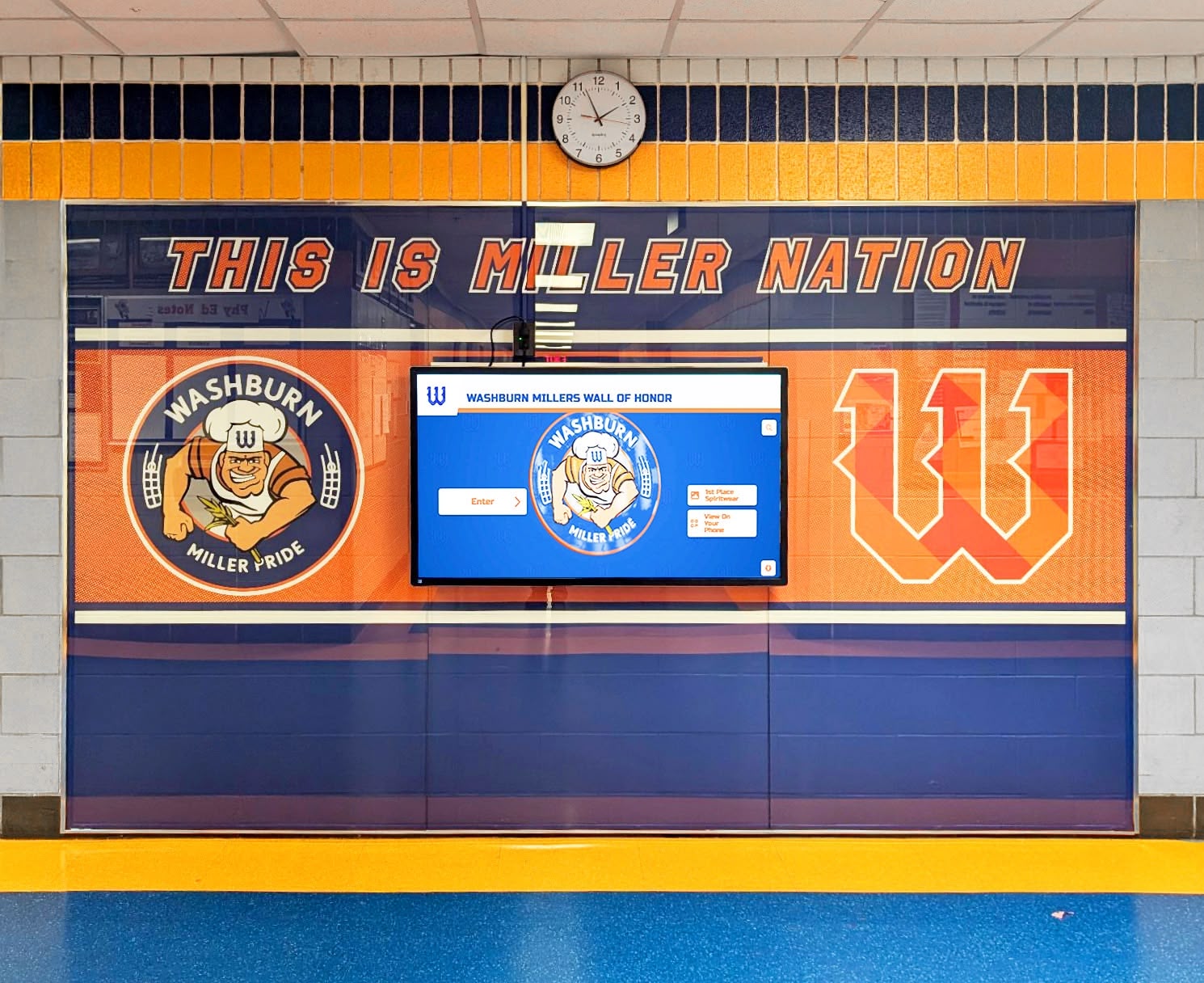
Comprehensive digital walls of honor become cherished institutional assets connecting community members across generations
Whether implementing military recognition that honors service members comprehensively across decades and conflicts, school honor walls celebrating academic achievement, athletic excellence, and distinguished alumni, employee recognition systems that strengthen organizational culture through service celebration, or community walls of honor recognizing volunteers, donors, and civic leaders, digital touchscreen technology provides proven solutions that strengthen community culture while giving every deserving individual the permanent recognition their accomplishments, service, and sacrifice merit.
Organizations investing in digital walls of honor demonstrate commitment to celebrating all deserving individuals rather than limiting acknowledgment to those who fit within arbitrary physical space constraints. This comprehensive approach communicates institutional values while building cultures where achievement, service, and contribution across all dimensions receive systematic celebration creating motivation, pride, and lasting connection between individuals and the organizations that shaped their development, valued their service, and continue honoring their legacy for generations.
Ready to explore digital wall of honor options for your institution or organization? Discover comprehensive veteran recognition approaches that honor military service appropriately. Learn about interactive displays for schools celebrating diverse achievement. Explore donor recognition strategies that strengthen philanthropic culture. And consider specialized solutions from Rocket Alumni Solutions designed specifically for creating engaging, accessible, permanent recognition experiences through modern interactive technology built for celebrating achievement and preserving organizational heritage.