



Schools and universities depend on philanthropic support to fund scholarships, facilities, programs, and initiatives that transform student experiences. Yet consistent giving requires more than compelling appeals—donors who feel genuinely appreciated give again, increase contributions over time, and inspire others through their example. Strategic donor recognition creates this appreciation cycle, converting one-time supporters into sustained mission partners.
Donor recognition ideas that resonate with modern supporters extend far beyond traditional brass plaques on lobby walls. Today’s most effective school advancement teams implement diverse acknowledgment approaches tailored to different giving levels, donor preferences, and institutional cultures. These strategies range from immediate personal touches thanking annual fund supporters to sophisticated recognition experiences honoring transformational gifts that define institutional legacies.
The challenge many schools face centers not on whether to recognize donors, but how to acknowledge diverse supporters meaningfully within budget constraints, space limitations, and administrative capacity realities. Annual giving programs may cultivate thousands of donors contributing $25 to $500, while major gift efforts focus on fewer supporters making five-, six-, or seven-figure commitments—each group deserves appropriate recognition that reflects contribution significance without overwhelming advancement office resources.
This comprehensive guide presents thirty proven donor recognition ideas organized by giving level and recognition category. Whether stewarding annual fund supporters, acknowledging leadership gift donors, or celebrating transformational philanthropy, advancement teams will discover practical approaches that strengthen relationships, demonstrate genuine appreciation, and inspire continued generosity across donor communities.

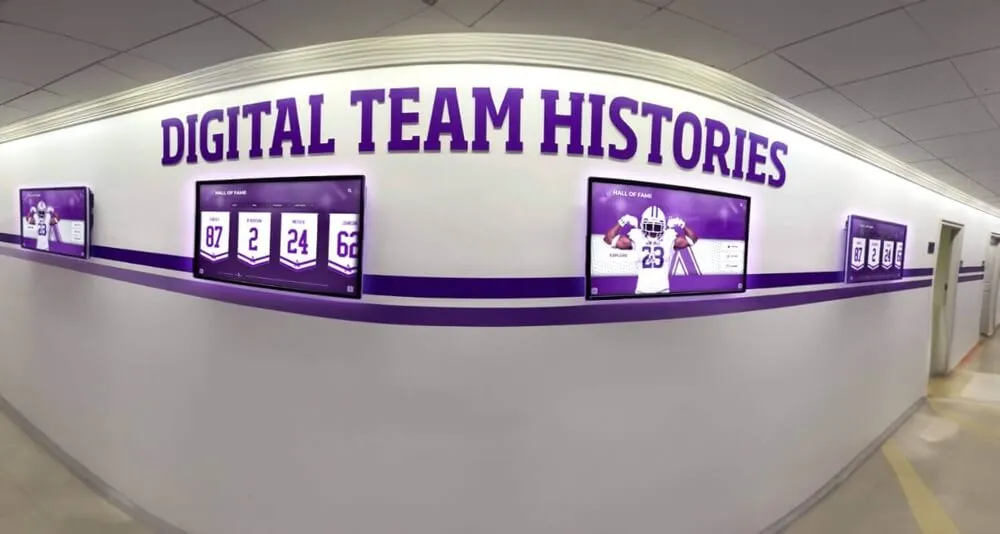
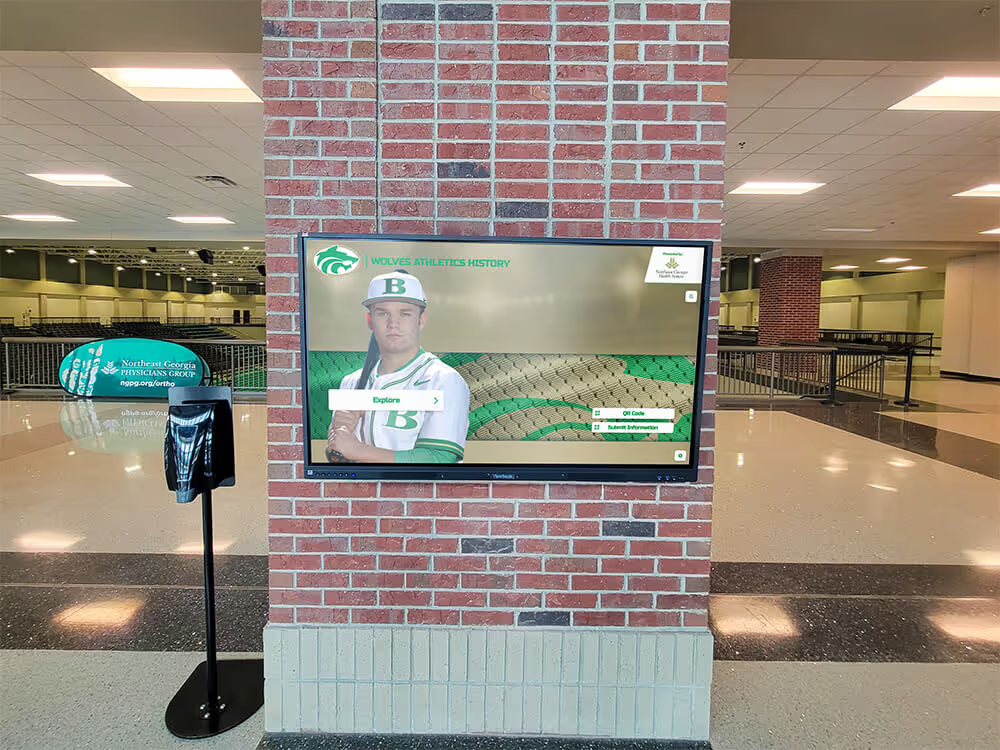
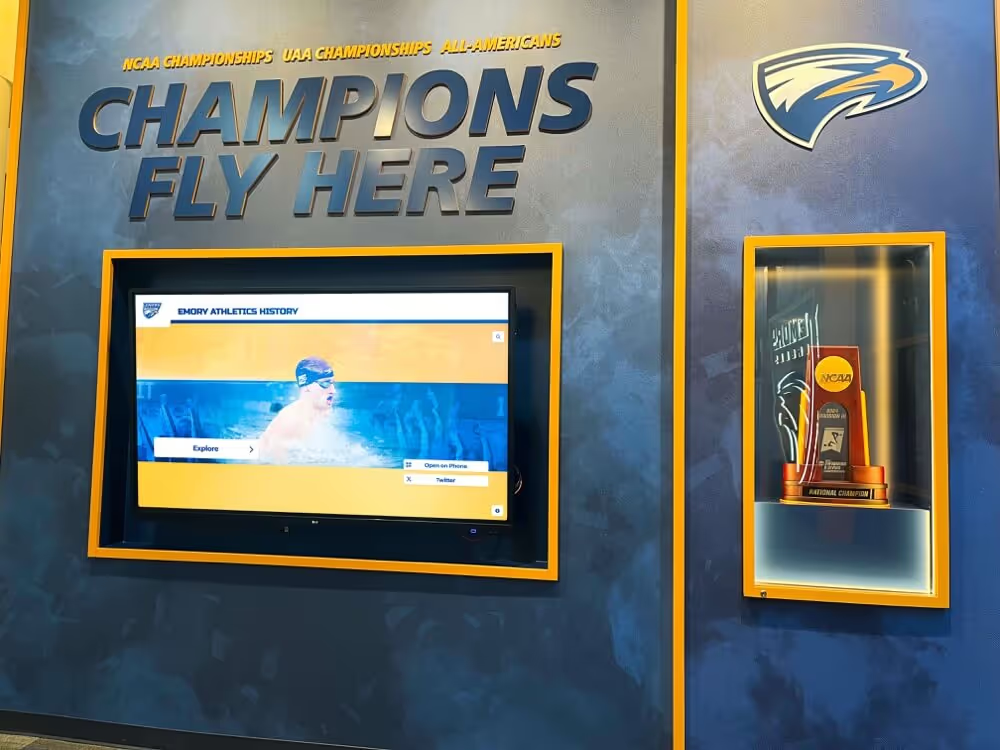
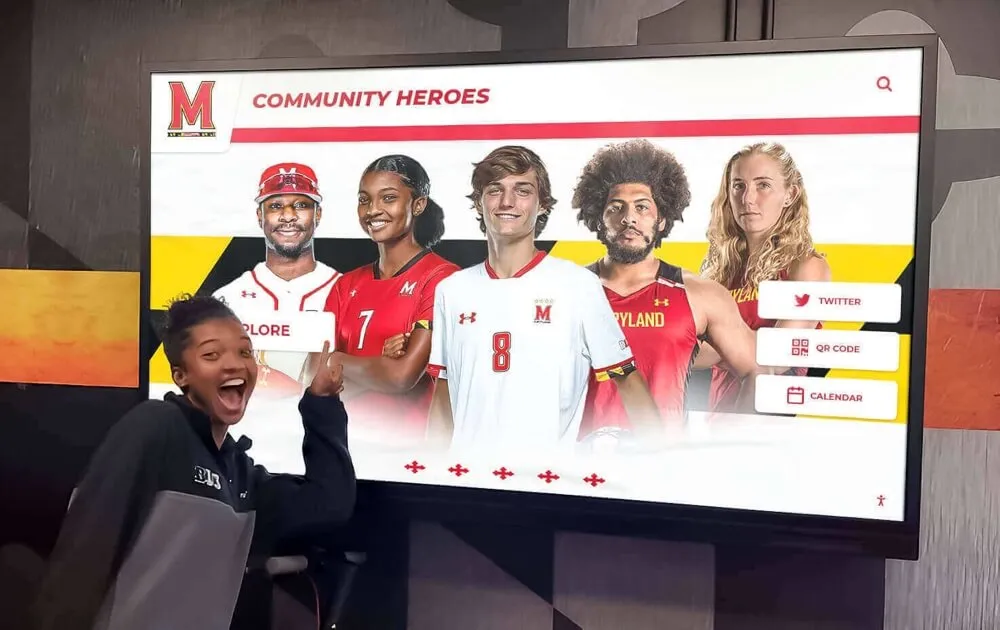
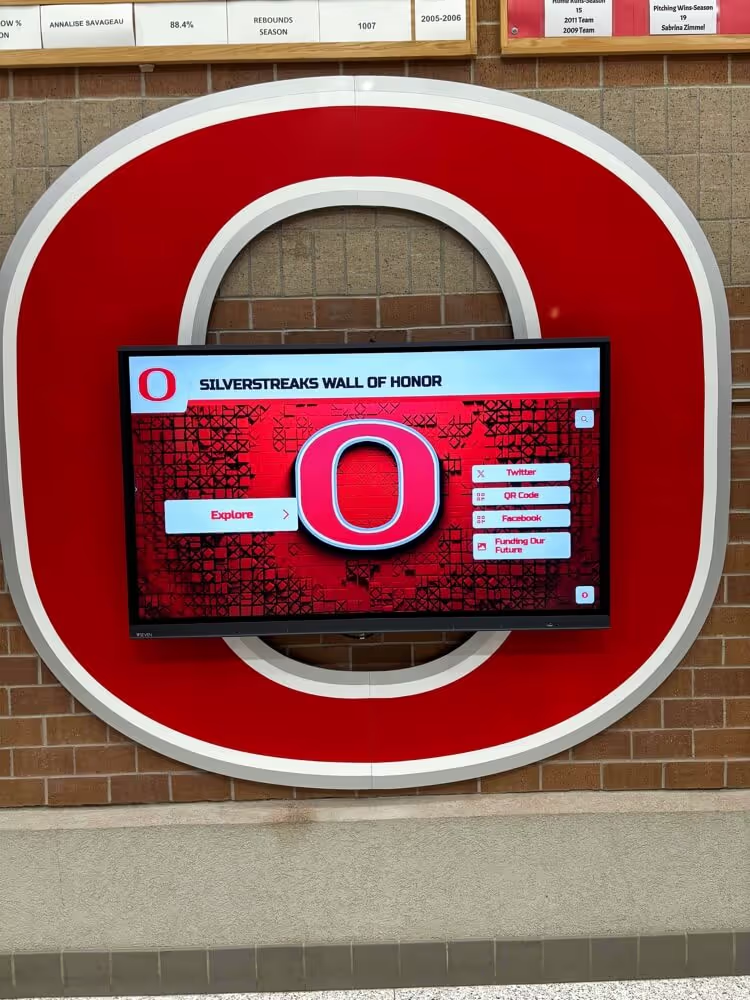
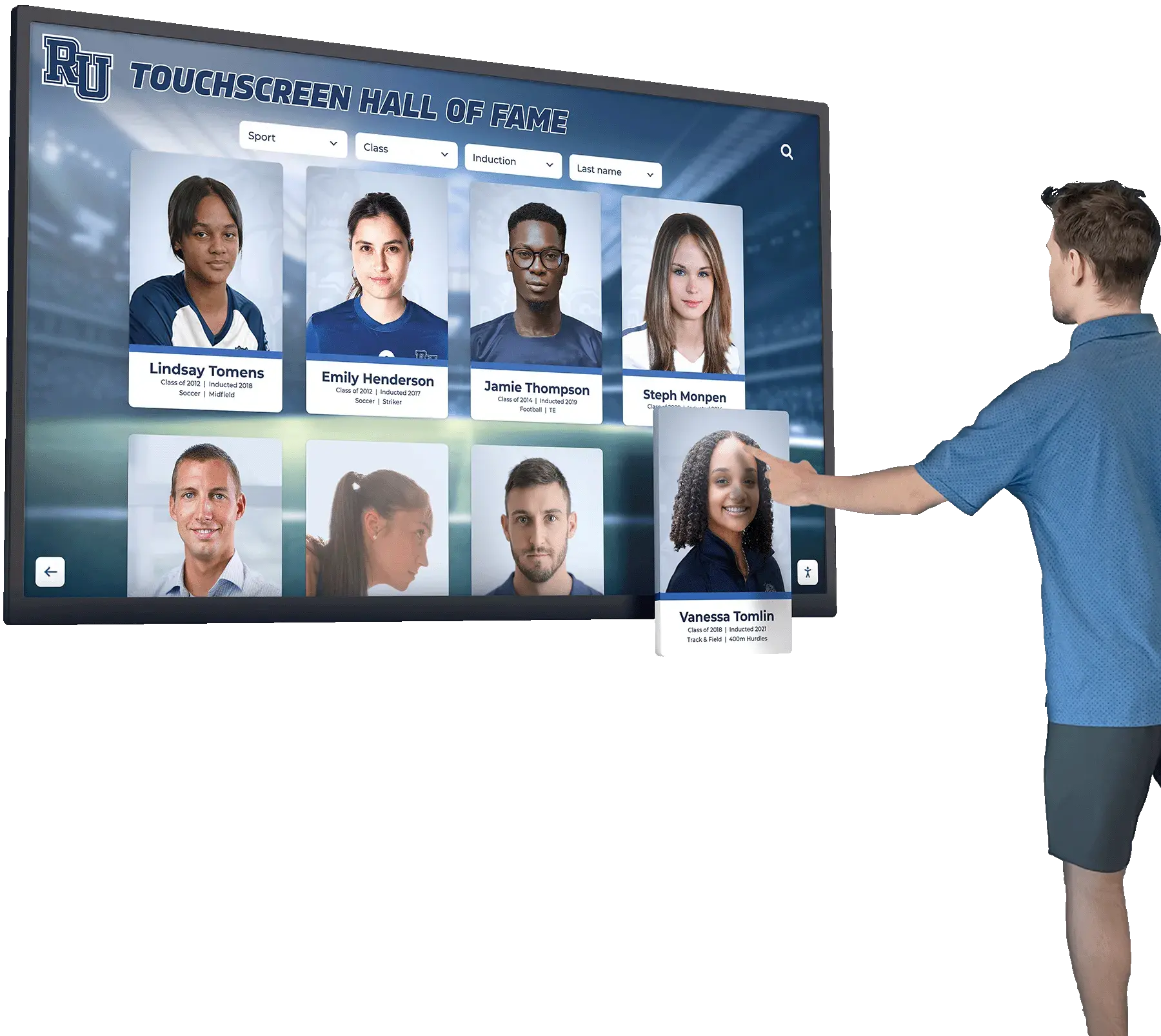
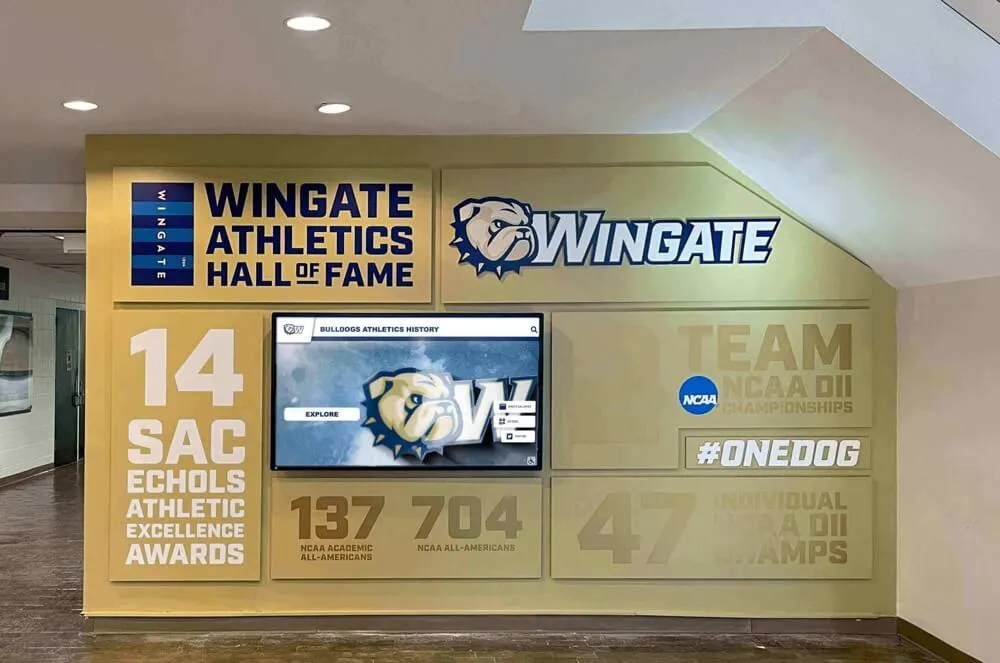
Modern donor recognition combines traditional dignity with interactive storytelling that engages visitors while honoring supporter generosity
Understanding Effective Donor Recognition Principles
Before implementing specific recognition tactics, advancement teams benefit from understanding fundamental principles that distinguish meaningful acknowledgment from perfunctory gestures.
Recognition Timing Creates Impact
Research in donor psychology consistently demonstrates that recognition delivered promptly creates stronger emotional reinforcement than delayed acknowledgment. Supporters who discover their names on donor walls within weeks of contributing experience tangible evidence that organizations value their generosity and operate efficiently—both factors correlating with repeat giving likelihood.
Conversely, recognition appearing months after gifts diminishes psychological impact as donor enthusiasm fades. The emotional connection felt during contribution decisions weakens over time, making timely acknowledgment critical for maximizing stewardship effectiveness.
Schools implementing recognition programs should establish target timelines: immediate email acknowledgment within 24-48 hours, personalized written thanks within one week, and visible recognition (digital or traditional) within 30 days whenever possible. These timelines demonstrate operational competence while capturing donors during peak appreciation receptivity.
Personalization Matters More Than Scale
Grand recognition displays fail to engage supporters when acknowledgment feels generic or impersonal. Donors consistently report that personalized touches—references to specific motivations, acknowledgment of previous support, connections to institutional history, or understanding of family legacy—create more meaningful experiences than elaborate but impersonal recognition programs.
This personalization principle applies across giving levels. Annual fund donors appreciate thank-you calls from students their gifts support, while major donors value comprehensive recognition profiles sharing their stories, motivations, and connections to institutional missions. The common thread involves demonstrating genuine understanding of individual supporters rather than treating entire donor communities as undifferentiated groups.
Multiple Recognition Touchpoints Build Relationships
Single recognition moments—even substantial ones like naming opportunities or dedicated plaques—represent isolated events in ongoing stewardship relationships. The most effective recognition strategies create multiple touchpoints over time: immediate acknowledgment following gifts, periodic updates sharing impact stories, invitations to special events, annual recognition celebrations, and ongoing visibility through permanent displays or digital platforms.
These layered recognition experiences maintain donor engagement between asks, strengthen emotional connections to institutions, and demonstrate sustained appreciation rather than transactional acknowledgment tied exclusively to contribution timing.
Schools should view recognition as continuous relationship-building rather than one-time acknowledgment tasks completed after gift processing. This mindset shift fundamentally changes how advancement teams approach stewardship program design and resource allocation.
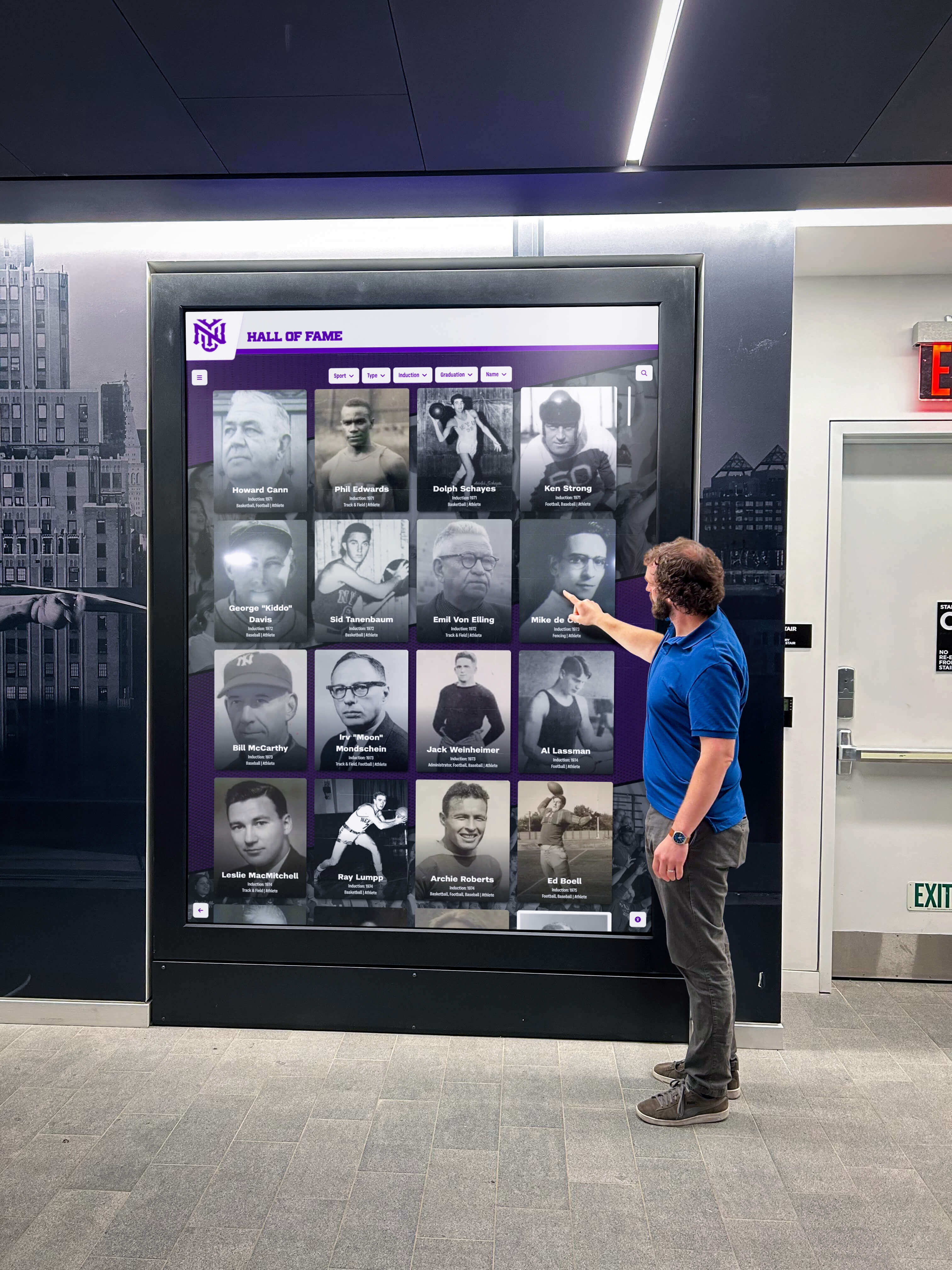
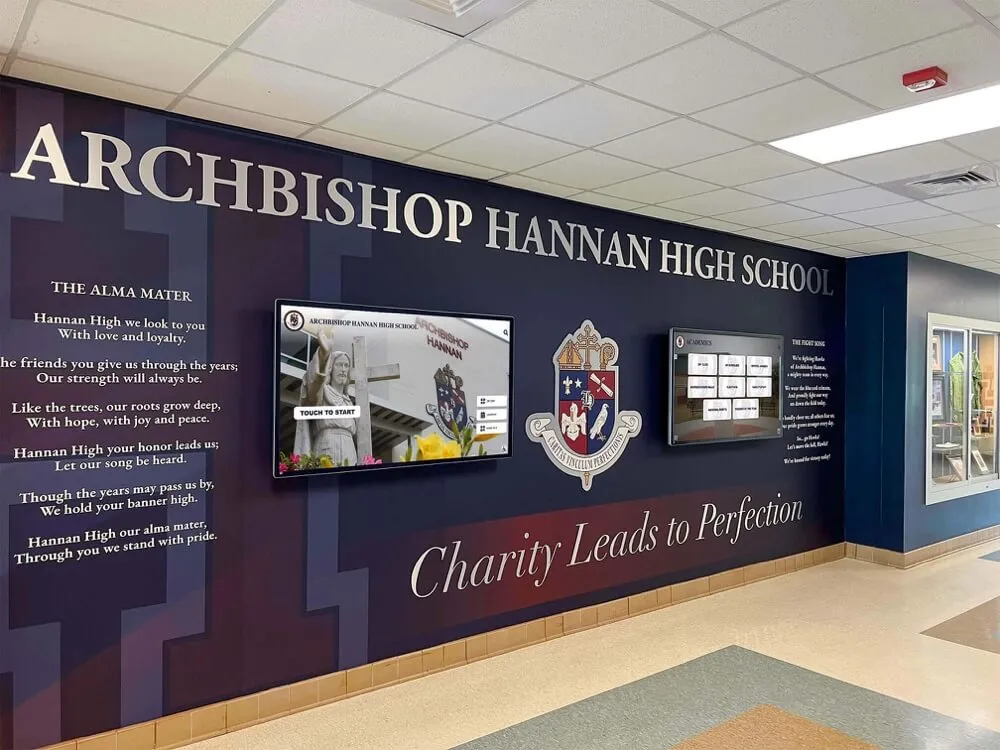
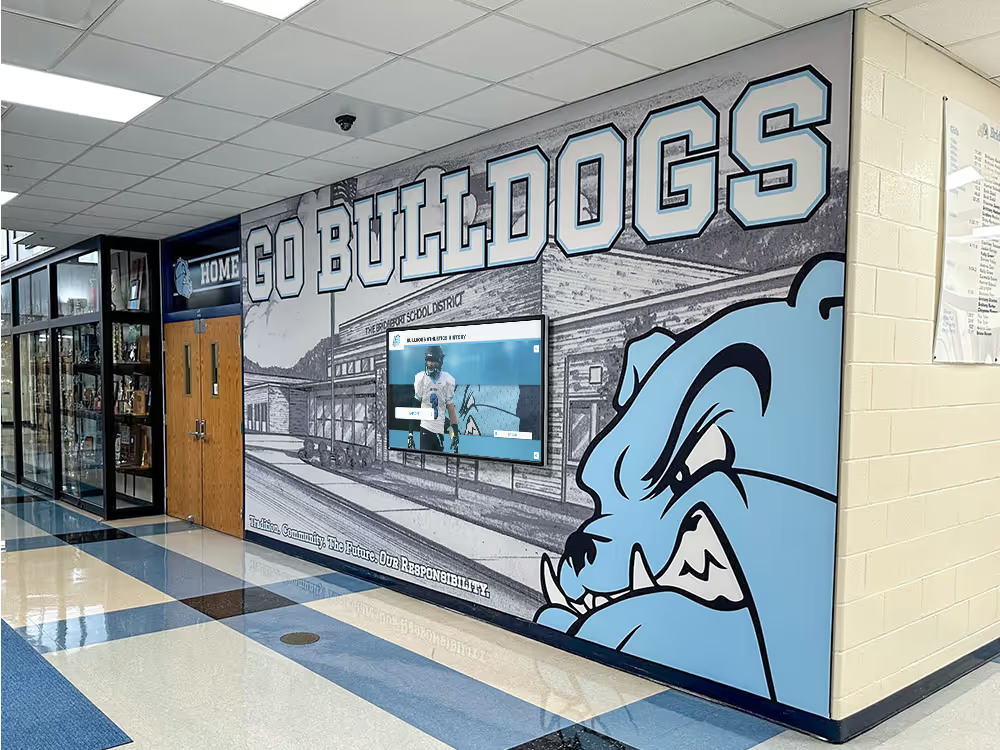
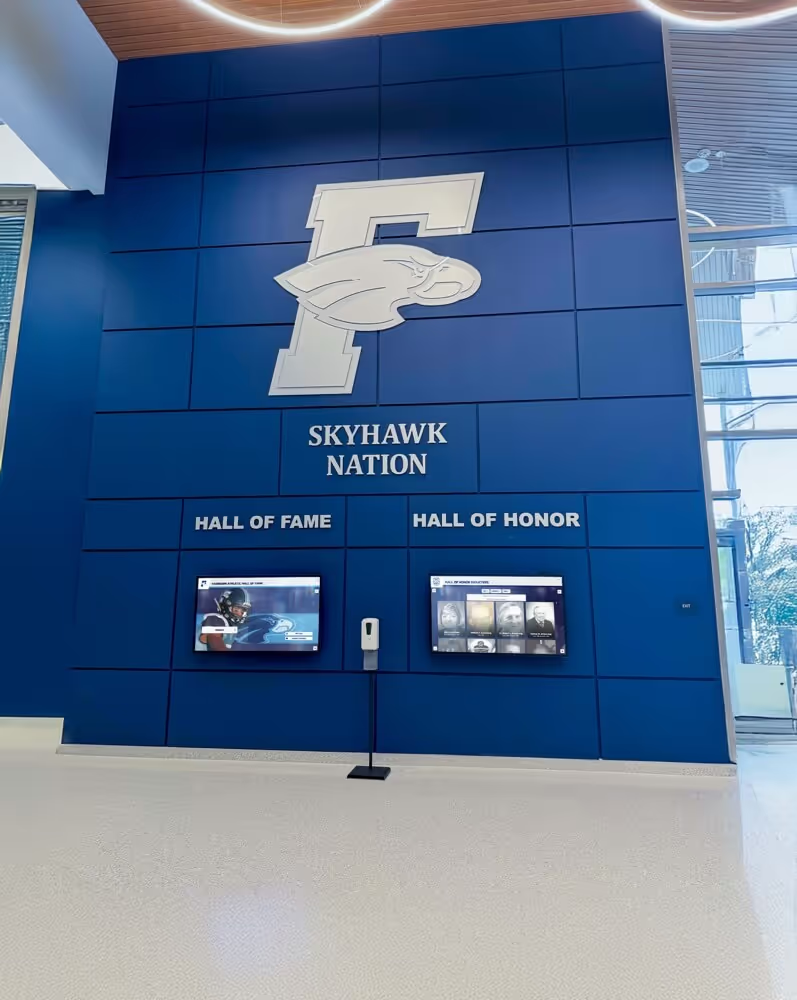
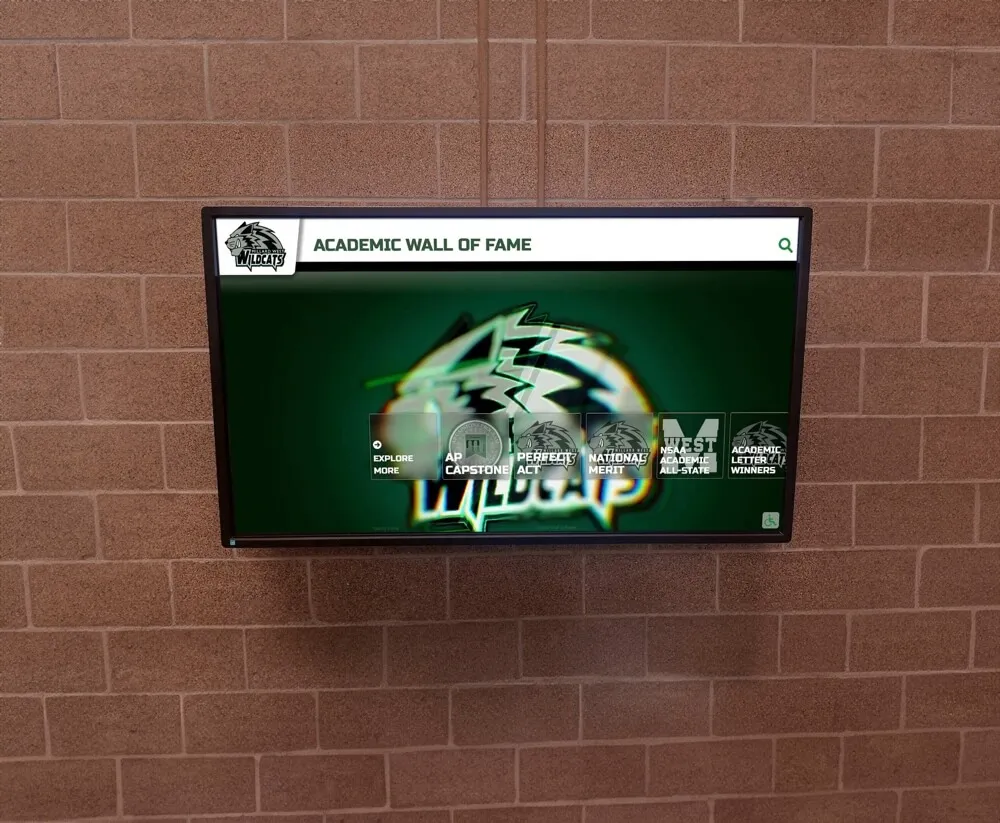
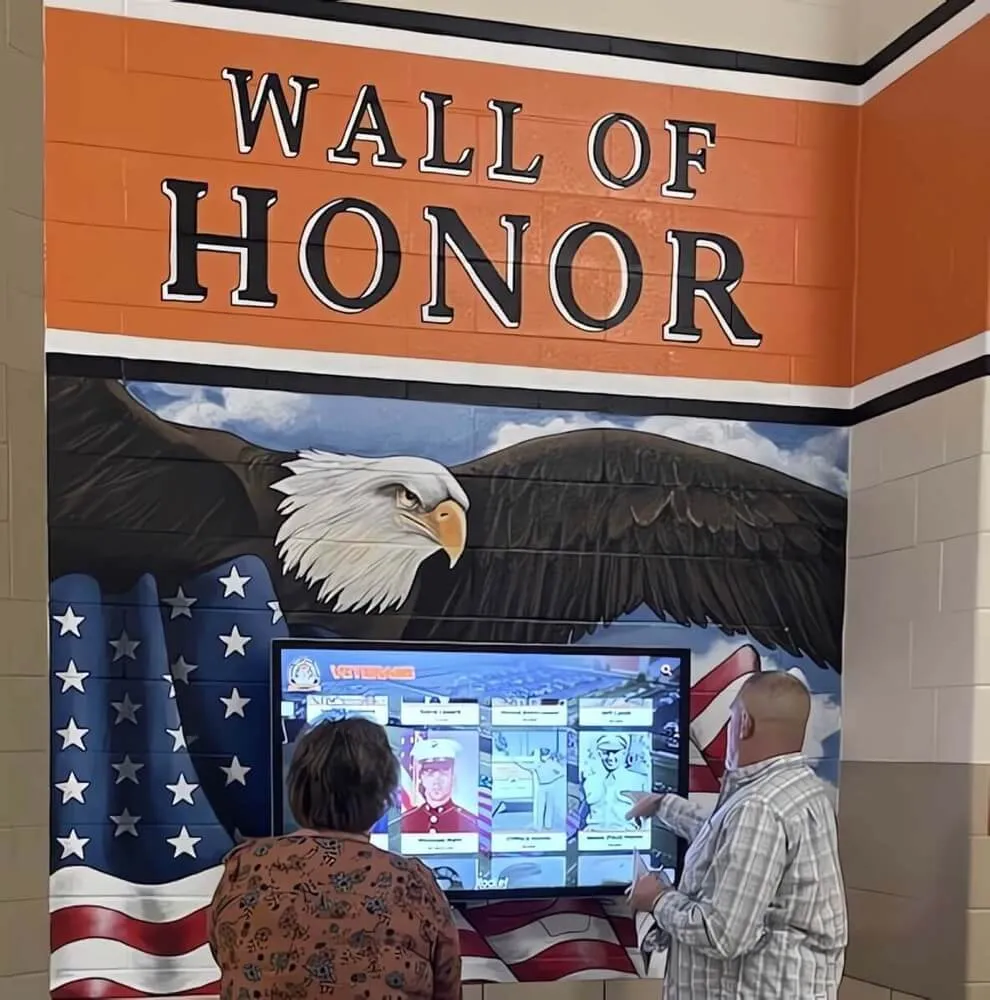
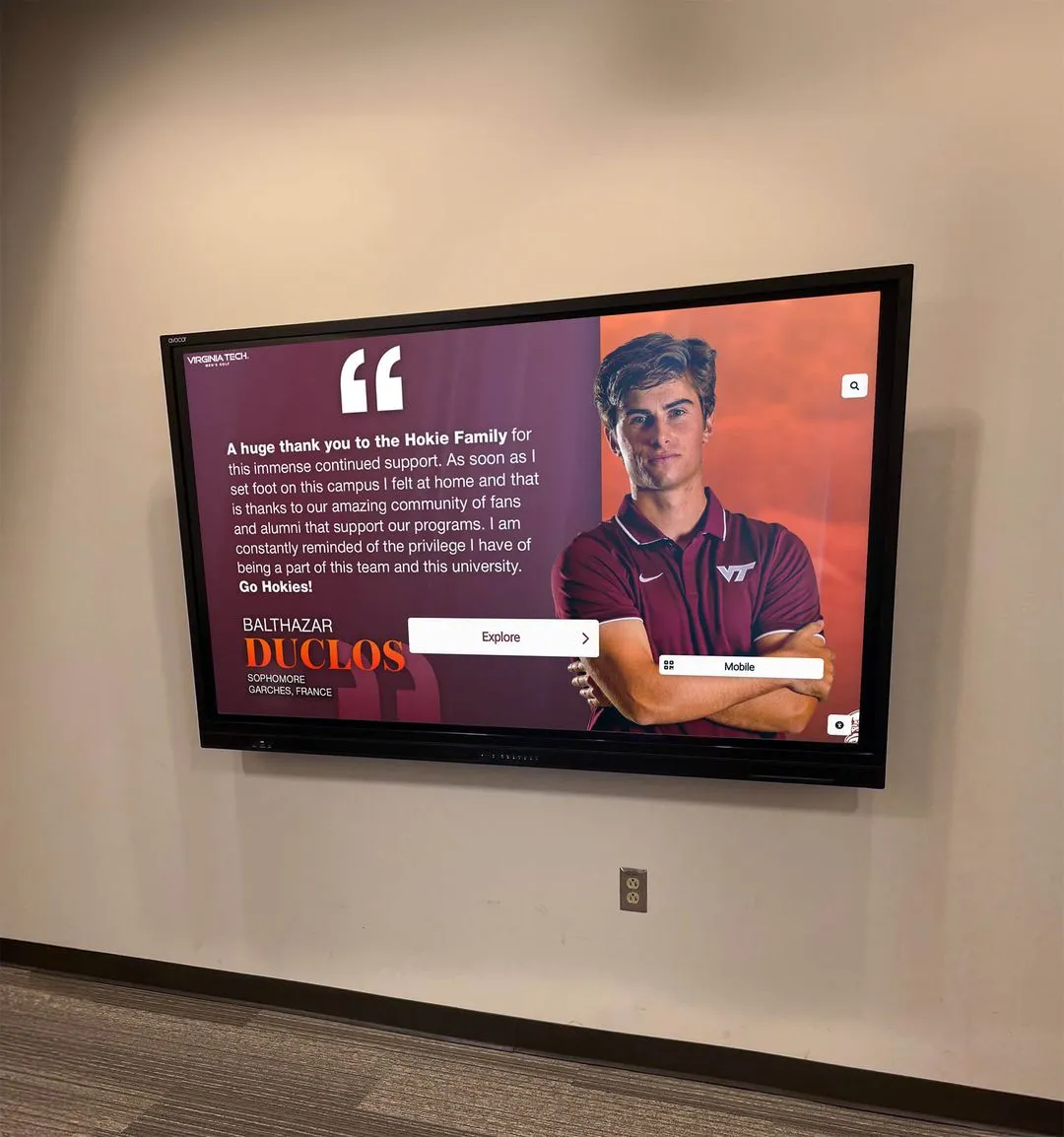
Interactive recognition platforms encourage active exploration, creating deeper engagement with donor stories than traditional plaques
Annual Fund Donor Recognition Ideas (Gifts Under $1,000)
Annual giving programs typically cultivate large donor communities contributing modest amounts—yet these supporters form the foundation for sustained institutional support and future major gift prospects. Effective annual fund recognition balances meaningful acknowledgment with practical scalability.
1. Student Thank-You Call Programs
Personal phone calls from students benefiting directly from annual fund support create powerful emotional connections between donors and mission impact. These conversations humanize philanthropy beyond abstract institutional advancement, enabling supporters to hear authentic gratitude from young people whose educational experiences improve through donor generosity.
Successful programs brief students on talking points—genuine thanks, specific scholarship or program benefits, brief personal stories—while encouraging natural conversation rather than scripted recitation. Calls typically last 3-5 minutes, creating manageable time commitments that schools can scale across large donor communities through organized calling events.
Annual fund donors consistently report student calls as among the most memorable and meaningful recognition they receive, despite minimal program costs beyond student coordination time.
2. President or Principal Video Messages
Personalized video messages from institutional leaders acknowledging donor support create scalable recognition that feels personal despite reaching hundreds or thousands of supporters simultaneously. Modern video platforms enable mail-merge-style personalization inserting individual donor names and gift details into otherwise standardized messages.
These 60-90 second videos communicate leadership appreciation, share current institutional priorities, and explain how annual giving enables strategic initiatives. Delivered via email within days of contributions, video messages provide timely acknowledgment that written letters struggle to match for emotional impact.
Production involves recording several message variations to maintain freshness across giving cycles, with minimal editing required once initial templates exist. The approach scales effectively while maintaining personal touches that donors value.
3. Donor Recognition Newsletter Features
Quarterly or annual donor newsletters highlighting supporter profiles create recognition while demonstrating impact transparency. Featured donors share motivations, explain connections to institutions, and describe what inspired their giving—stories that inspire peers while acknowledging individual generosity.
This recognition approach particularly appeals to donors who value mission visibility over personal prominence, as profiles emphasize institutional impact and community building rather than purely celebrating individual contributions. Schools rotate features across giving levels and donor demographics, ensuring diverse representation that encourages broad community participation.
Newsletter recognition costs minimal resources beyond existing communications efforts while providing content that engages entire donor communities, not just featured individuals.
4. Annual Donor Honor Roll Publications
Comprehensive donor listings published annually in institutional magazines, websites, or dedicated publications provide enduring acknowledgment accessible to donor networks beyond immediate institutional communities. These honor rolls typically categorize supporters by giving levels using named societies or contribution tiers.
Effective honor roll presentations balance inclusivity with appropriate recognition differentiation—listing all donors while designating leadership giving levels, consecutive giving streaks, or special designations that acknowledge varying commitment levels. This approach ensures every supporter receives acknowledgment while appropriately highlighting sustained or increased generosity.
Many schools publish digital versions with search functionality enabling easy discovery, supplementing or replacing expensive printed publications while improving accessibility and reducing environmental impact.
5. Social Media Appreciation Posts
Targeted social media acknowledgment—with donor permission—amplifies recognition through personal networks while inspiring peer giving. Posts might feature donor quotes about giving motivations, share impact stories connected to specific contributions, or highlight giving day participation and community achievement.
This recognition strategy particularly resonates with younger donors who actively engage social platforms and appreciate public acknowledgment within their networks. Schools must carefully navigate privacy preferences, securing explicit permission before publicly recognizing donors and offering opt-out options for supporters preferring private acknowledgment.
Social recognition creates viral potential as donors share posts through personal networks, extending institutional reach while celebrating philanthropic culture within broader communities.
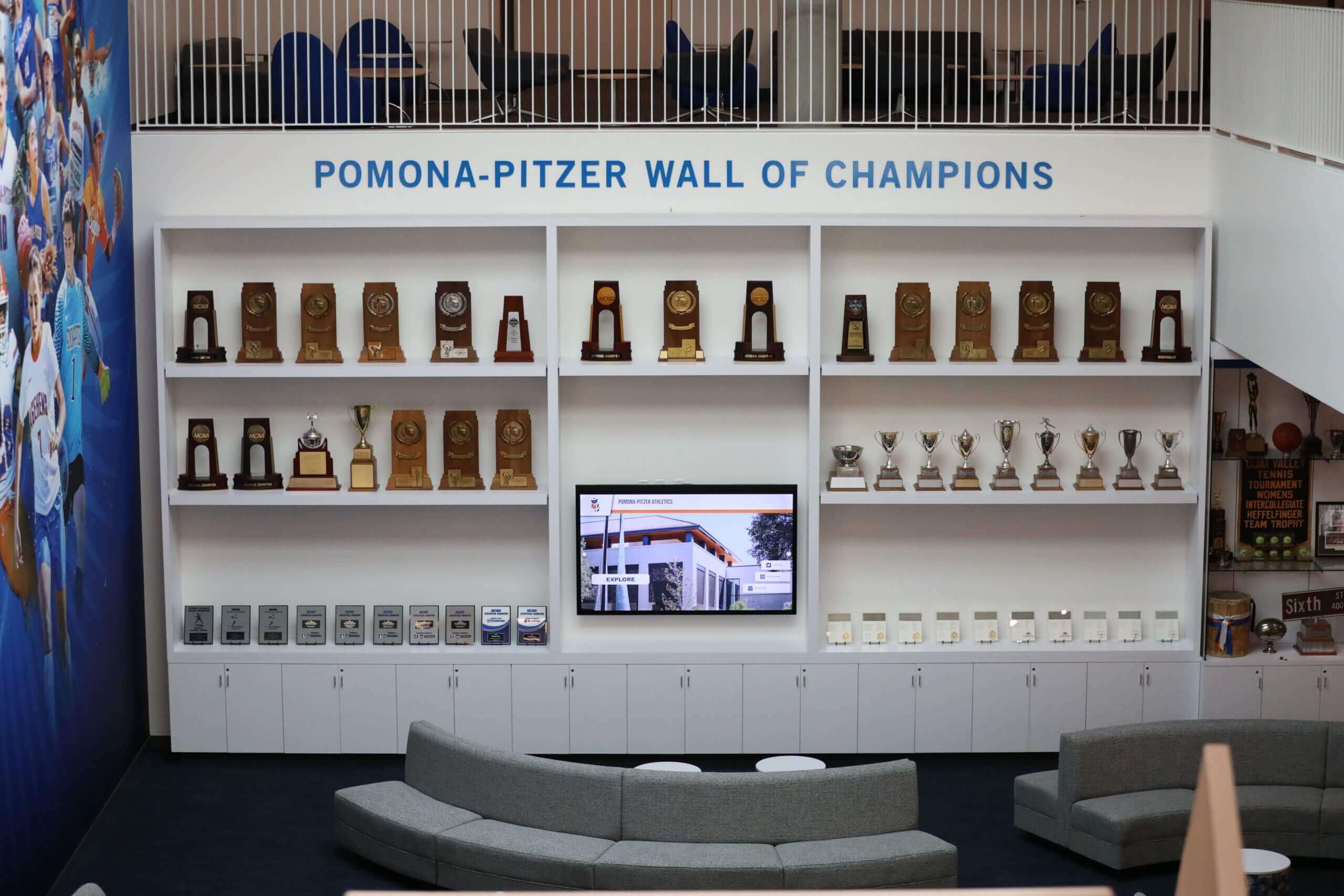
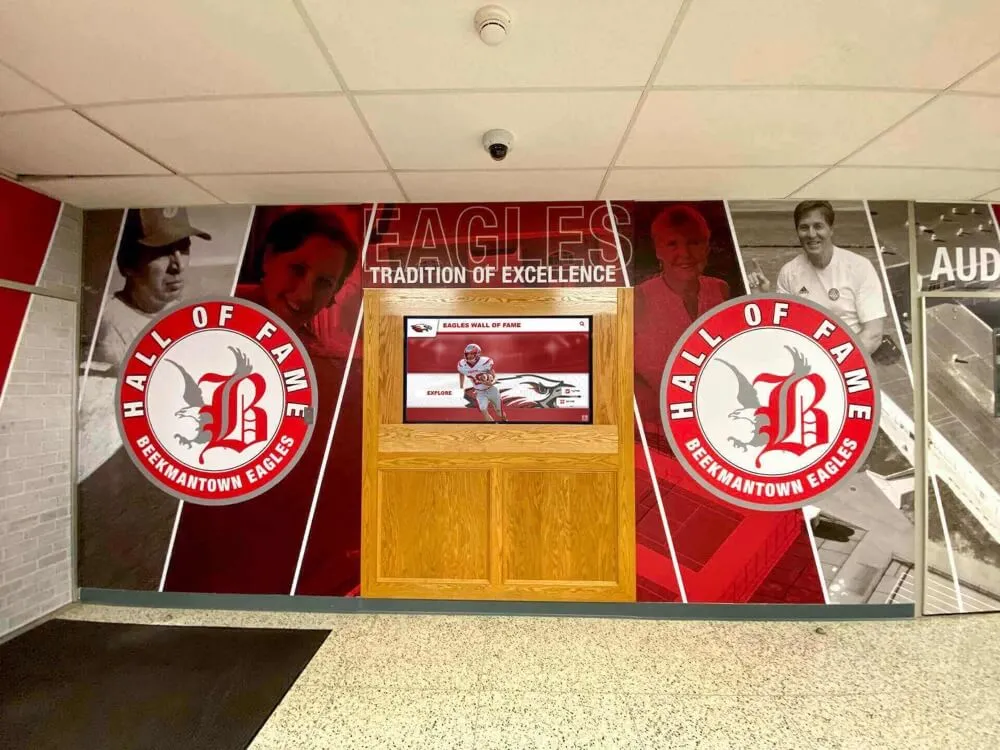
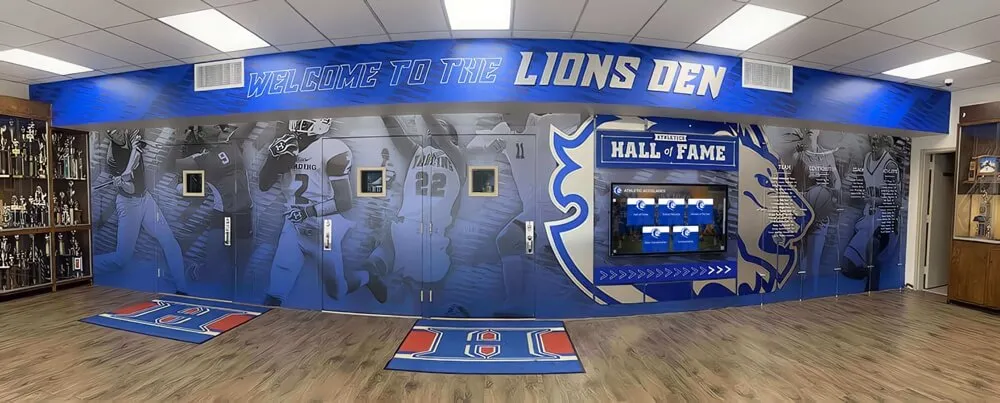
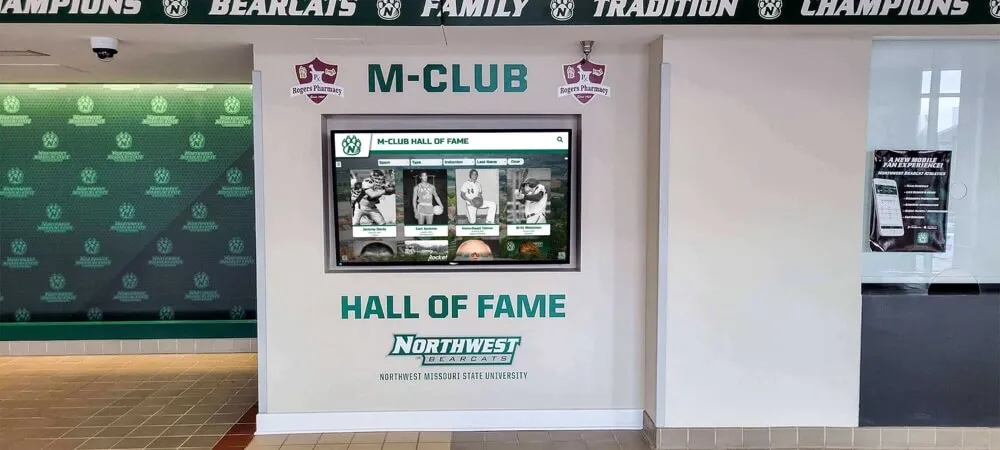
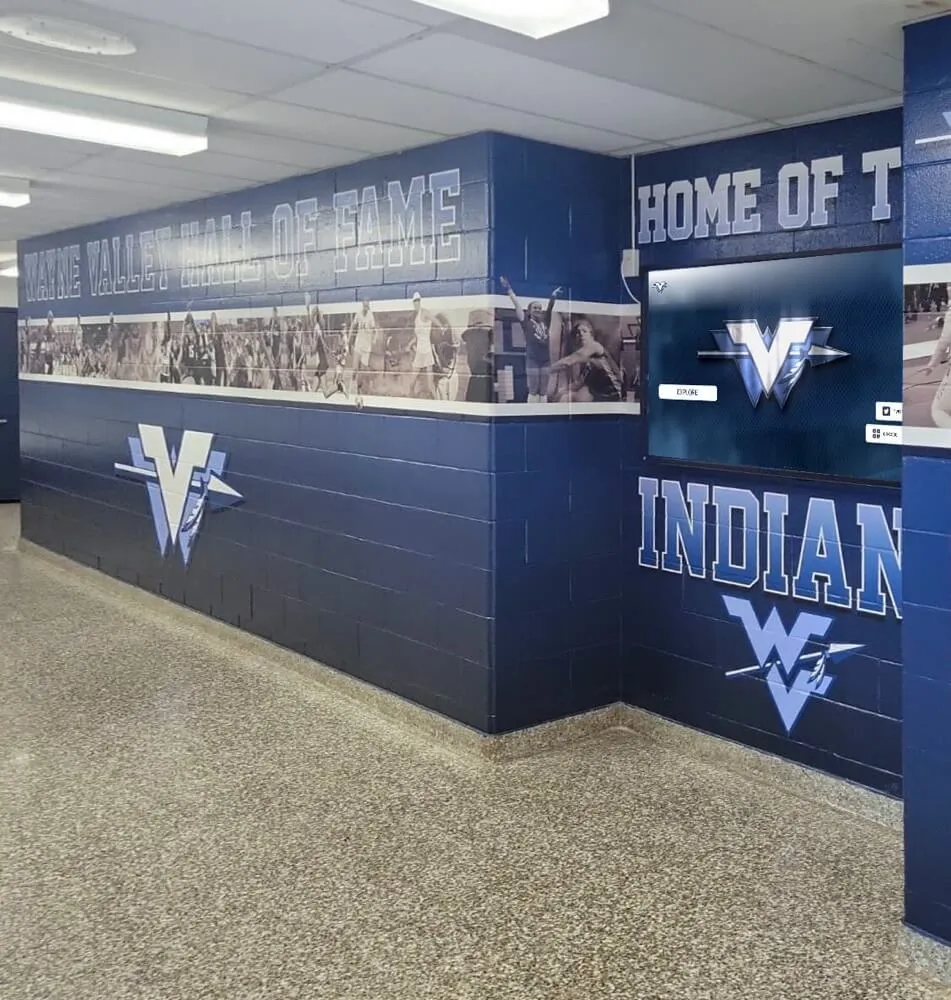
Purpose-designed recognition spaces create destinations that encourage extended engagement with donor stories and institutional history
6. Exclusive Donor Events and Receptions
Special appreciation events exclusively for annual fund supporters create recognition through access and community connection rather than material acknowledgment. These gatherings might include behind-the-scenes campus tours, informal conversations with leadership, early access to facility previews, or small-group discussions about institutional priorities.
Event-based recognition simultaneously thanks supporters and provides cultivation opportunities for future increased giving. The intimate setting enables relationship building impossible in large public events while demonstrating that institutions value donor partnership beyond purely financial contributions.
Schools often tier events by giving level—ensuring appropriate recognition matching contribution significance while creating aspirational appeal that encourages increased giving to access enhanced stewardship experiences.
7. Named Giving Societies with Member Benefits
Organized donor societies at specific giving thresholds (e.g., “$500 Club,” “Director’s Circle,” “Founder’s Society”) create recognition through membership status while providing tiered benefits reflecting contribution levels. Benefits might include reserved event seating, exclusive communications, recognition wall listings, special event invitations, or small branded gifts.
Society structures serve dual purposes: acknowledging current donors appropriately while creating clear upgrade pathways encouraging increased contributions. Donors understand exactly what additional benefits accompany higher giving levels, creating transparent advancement opportunities that feel aspirational rather than arbitrary.
Effective society programs limit tiers to 3-5 levels avoiding excessive complexity while providing meaningful differentiation. Clear naming conventions and benefit structures enable supporters to understand recognition systems without confusion or perceived favoritism.
8. Handwritten Thank-You Notes from Leadership
Personal handwritten notes from heads of school, presidents, or board members create intimate recognition that digital communications cannot replicate. The physical artifact communicates that someone invested personal time acknowledging specific contributions—a gesture particularly meaningful for donors who value traditional communication and personal attention.
While time-intensive compared to digital acknowledgment, handwritten notes deliver disproportionate impact relative to effort, especially for annual donors accustomed to form letter thanks. Many advancement leaders reserve handwritten notes for first-time donors, consecutive giving milestones, or increased contribution levels—occasions where personal touches create maximum psychological reinforcement.
Notes need not extend beyond 3-5 sentences to prove effective; authenticity and personal attention matter more than length or elaborate prose.
9. Impact Reporting with Personalized Elements
Detailed reports showing exactly how contributions supported specific programs, scholarships, or initiatives transform abstract philanthropy into concrete outcomes. Effective impact reports include student testimonials, program statistics, before-and-after comparisons, and forward-looking plans for continued mission advancement.
Personalization elevates generic reporting through references to donors’ specific designations, previous giving history, or expressed interests during cultivation conversations. For example, athletic supporters receive detailed sports program updates, while arts donors learn about performance season outcomes their gifts enabled.
This recognition approach demonstrates stewardship accountability while reinforcing that institutions use contributions wisely—both factors correlating with donor retention and increased future support. Schools often integrate impact reporting into regular communications rather than creating standalone publications, reducing costs while improving information accessibility.
10. Digital Donor Recognition Walls
Comprehensive digital recognition platforms acknowledge entire annual giving communities through interactive touchscreen displays featuring unlimited supporter profiles. Unlike traditional plaques limited by wall space, digital systems scale to honor thousands of donors regardless of contribution amounts.
Modern digital recognition enables schools to include annual giving recognition alongside major gift acknowledgment, creating inclusive stewardship cultures that celebrate all support rather than solely highlighting largest gifts. Platforms provide search functionality, giving level filters, and consecutive giving designations—enabling easy discovery while appropriately differentiating recognition tiers.
Digital walls update instantly as new gifts process, ensuring timely acknowledgment that strengthens emotional reinforcement. The approach proves particularly effective for schools with growing donor communities where traditional recognition space limitations create exclusion decisions undermining inclusive stewardship philosophies.
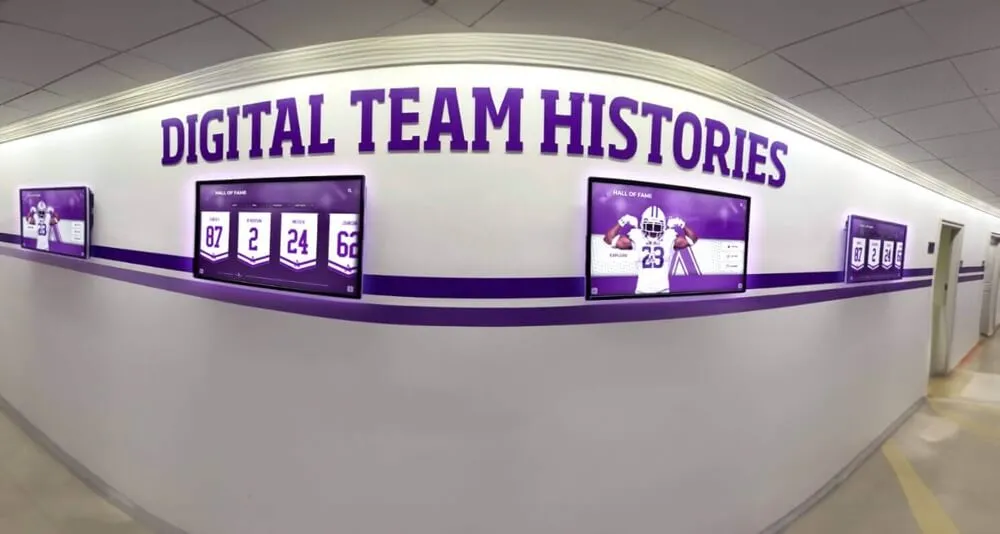
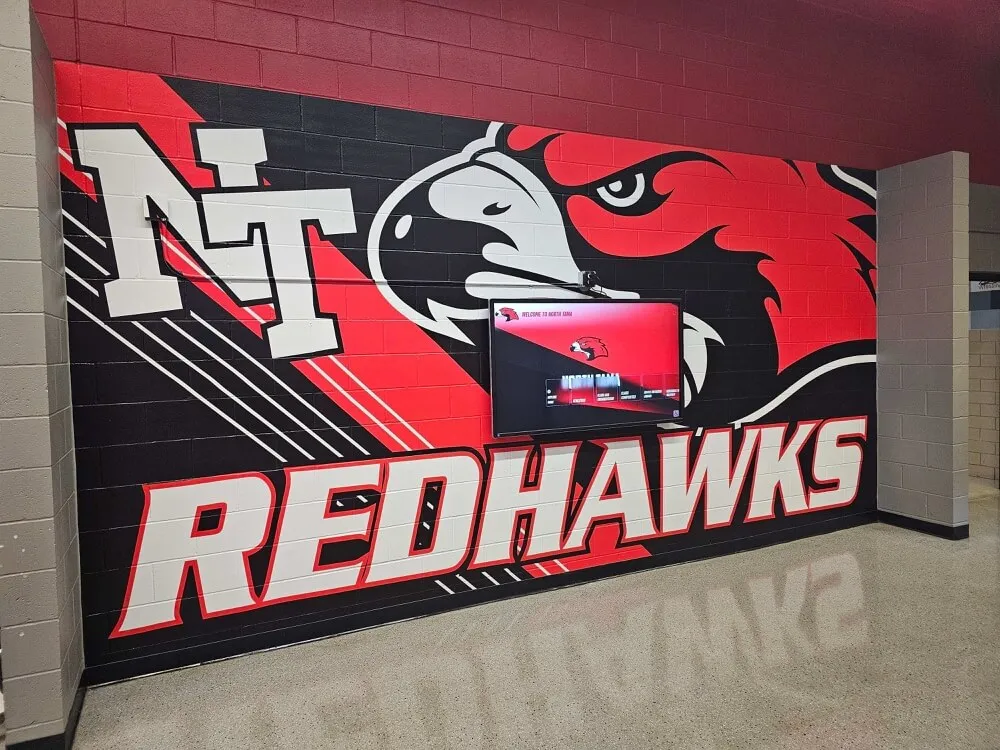
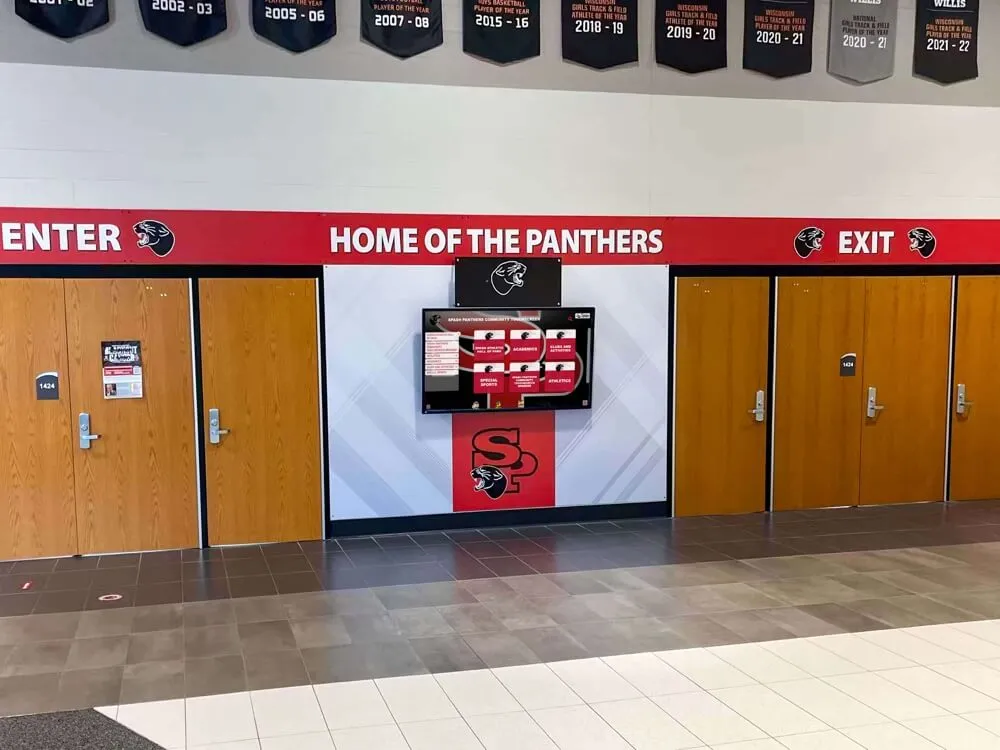
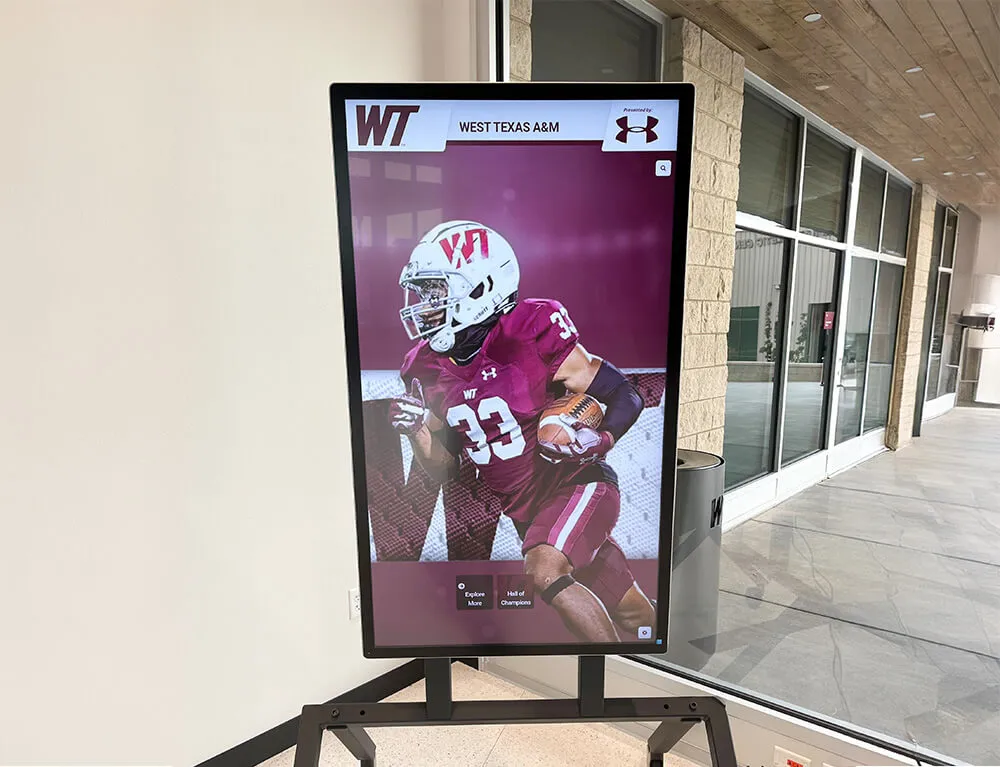
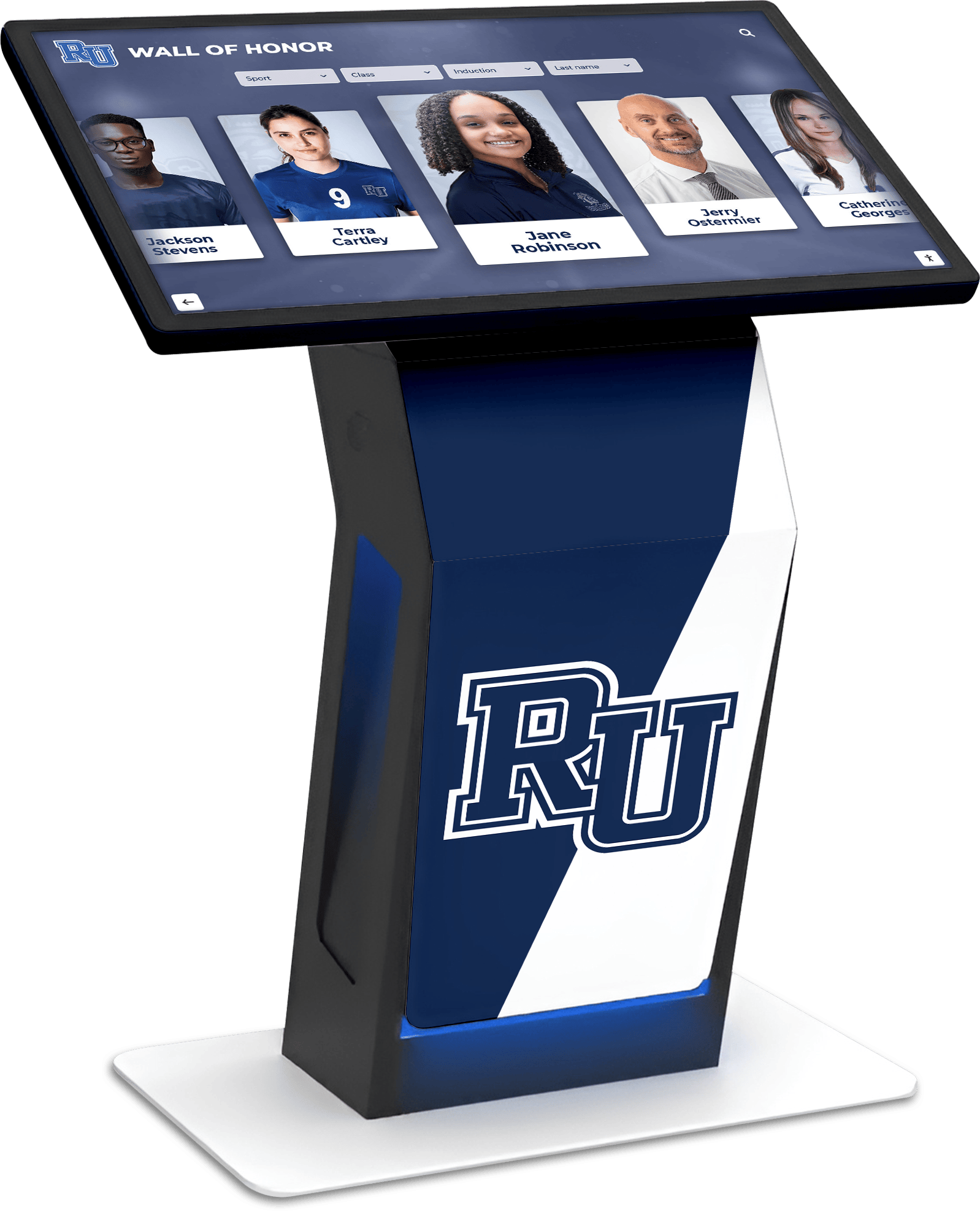
Multi-display recognition strategies provide visibility across campus while maintaining centralized content management
Leadership Gift Donor Recognition Ideas ($1,000-$24,999)
Leadership annual giving and entry-level major gifts occupy the critical transition zone between broad-based support and transformational philanthropy. Recognition at this level should acknowledge increased commitment while cultivating relationships that may lead to even larger future contributions.
11. Named Recognition Spaces
Smaller campus spaces—classrooms, faculty offices, study rooms, practice facilities—provide meaningful naming opportunities at contribution levels accessible to broader donor communities than major building gifts require. These named spaces create lasting visibility while connecting supporters directly to facilities students use daily.
Effective named space programs establish clear giving minimums for different facility types (e.g., $5,000 for classrooms, $10,000 for labs, $15,000 for specialized spaces) with physical recognition through attractive permanent plaques identifying donors. The tangible nature of walking past “Smith Family Chemistry Lab” creates ongoing acknowledgment that purely database recognition cannot match.
Schools should carefully consider naming duration—permanent recognition versus term-limited acknowledgment (e.g., 5-10 years)—based on contribution size and facility renovation cycles. Clear policies prevent future complications when spaces require renaming due to construction changes or updated donor recognition.
12. Donor Walls with Enhanced Profiles
Traditional donor wall inclusion for leadership giving communities, but with enhanced presentation differentiating these supporters from standard annual fund listings. Enhanced profiles might include larger plaque sizes, premium materials like bronze versus aluminum, or special designation areas separating leadership donors from broader recognition.
This tiered visual treatment acknowledges increased commitment appropriately while maintaining inclusive recognition philosophies that honor all supporters. Clear giving level labels (e.g., “Leadership Circle - $10,000+”) help visitors understand contribution significance without appearing ostentatious or inappropriately celebrating wealth over mission commitment.
Many schools combine traditional donor walls with digital recognition platforms that provide unlimited capacity alongside traditional high-visibility acknowledgment for top giving tiers.
13. Personalized Campus Tours
Private campus tours led by heads of school, principals, or senior administrators create recognition through exclusive access and leadership time investment. These tours showcase facilities, introduce key faculty, and provide behind-the-scenes insights impossible during public events.
Tour-based recognition proves particularly effective for prospective major donors in cultivation phases, as personalized experiences build relationships while demonstrating institutional appreciation for past support. The intimate setting enables advancement staff to understand donor motivations, answer questions, and explore additional engagement opportunities organically through conversation.
Many schools conclude tours with private lunches or meetings, extending recognition time while creating comfortable environments for discussing increased giving or planned gift opportunities.
14. Commemorative Gifts and Branded Items
Thoughtful commemorative items—artistic campus renderings, historical photographs, custom-designed recognition pieces, or branded institutional artifacts—provide physical acknowledgment donors display in homes or offices. These gifts serve dual purposes: thanking supporters while maintaining institutional visibility in personal spaces donors inhabit daily.
Effective recognition gifts balance quality with appropriate scale—items should feel substantial without appearing lavish or suggesting inefficient resource use. Many schools commission local artists for unique pieces creating memorable acknowledgment while supporting community partnerships.
Presentation matters significantly; hand-delivered gifts during personal meetings create more impact than mailed packages, though personalized notes can enhance shipped items when personal delivery proves impractical.
15. Invitation to Strategic Planning Sessions
Including leadership donors in strategic planning conversations, facility design discussions, or program development sessions recognizes contributions while leveraging supporter expertise. This involvement-based acknowledgment appeals particularly to donors who value partnership over passive philanthropy, wanting active roles shaping institutions they support.
Participation opportunities must balance genuine influence with appropriate institutional governance—donors should feel heard and valued without creating uncomfortable dynamics where contributions inappropriately influence academic or operational decisions. Careful facilitation ensures productive engagement that benefits institutions while appropriately acknowledging donor commitment.
This recognition approach simultaneously stewards current supporters and identifies prospects for increased future giving as donors develop deeper institutional understanding and emotional investment through active participation.
16. Annual Recognition Dinner with Special Acknowledgment
Dedicated appreciation dinners celebrating leadership giving communities create recognition through exclusive gathering status while building peer relationships that strengthen overall donor culture. Programs typically include brief acknowledgment moments—leadership remarks, honoree introductions, impact presentations—balanced with social connection time.
Effective recognition dinners avoid lengthy formal programs that feel more obligatory than celebratory. The goal centers on genuine appreciation and community building rather than extended solicitation presentations or excessive formality that diminishes enjoyment.
Many schools present small commemorative items, share video impact stories, or feature scholarship recipients during dinners—personalizing experiences while demonstrating concrete outcomes donor support enables.
17. Priority Access to Campus Events
Reserved seating at athletics competitions, performing arts productions, or special campus events provides ongoing recognition beyond single acknowledgment moments. This access-based stewardship maintains donor engagement throughout academic years while demonstrating that institutions value supporter presence and participation.
Priority access works particularly well when combined with pre-event receptions creating intimate gatherings before public programs. These smaller settings enable relationship building while providing recognition through exclusive experiences unavailable to general attendees.
Schools should clearly communicate access policies ensuring donors understand benefits while avoiding perceptions of excessive privilege that might alienate broader communities or create uncomfortable dynamics during campus events.
18. Endowed Fund Naming Opportunities
Endowment contributions at leadership giving levels enable named scholarship funds, program support endowments, or faculty position endowments creating permanent institutional legacies. Unlike annual operating gifts consumed during budget cycles, endowed funds generate perpetual income supporting designated purposes indefinitely.
Named endowment recognition acknowledges transformational commitment while aligning with many donors’ desires to create lasting impact beyond their lifetimes. Annual reports to endowment donors sharing recipient information, program outcomes, or supported initiatives provide ongoing stewardship maintaining engagement long after initial contributions.
Effective endowment programs establish clear minimums for various naming opportunities (e.g., $25,000 for partial scholarships, $50,000 for full scholarships, $100,000+ for endowed positions) with transparent policies about fund management, spending policies, and donor involvement in selection processes when appropriate.
19. Donor Spotlights in Institutional Publications
Featured donor profiles in school magazines, annual reports, or digital media outlets share supporter stories with broad institutional audiences while celebrating individual generosity. These narrative acknowledgments explore giving motivations, family connections, career achievements, and philanthropic philosophies—humanizing donors while inspiring others through authentic examples.
Publication spotlights prove particularly effective for donors comfortable with public recognition who may inspire peer giving through visible example. Schools should always secure permission before featuring donors, offering story approval to ensure comfort with public acknowledgment scope and messaging.
Well-crafted profiles balance individual celebration with mission focus—highlighting how donor support advances institutional priorities rather than purely featuring supporter biographies divorced from institutional context.
20. Brick or Paver Engraving Programs
Engraved bricks creating recognition walkways, courtyards, or plazas offer accessible naming opportunities at leadership giving levels while creating collective acknowledgment displays. Individual bricks enable personal messages, family names, memorial dedications, or inspirational phrases—providing creative flexibility traditional plaques limit.
Brick programs work particularly well for capital campaigns where dozens or hundreds of supporters contribute at similar levels, as collective displays create visual impact that scattered individual plaques cannot achieve. The physical permanence appeals to donors seeking tangible lasting acknowledgment while costing substantially less than building naming opportunities.
Schools should carefully design brick installations ensuring professional appearance, readable engraving, durable materials, and appropriate maintenance preventing deteriorated recognition that inadvertently disrespects donor contributions through neglected upkeep.

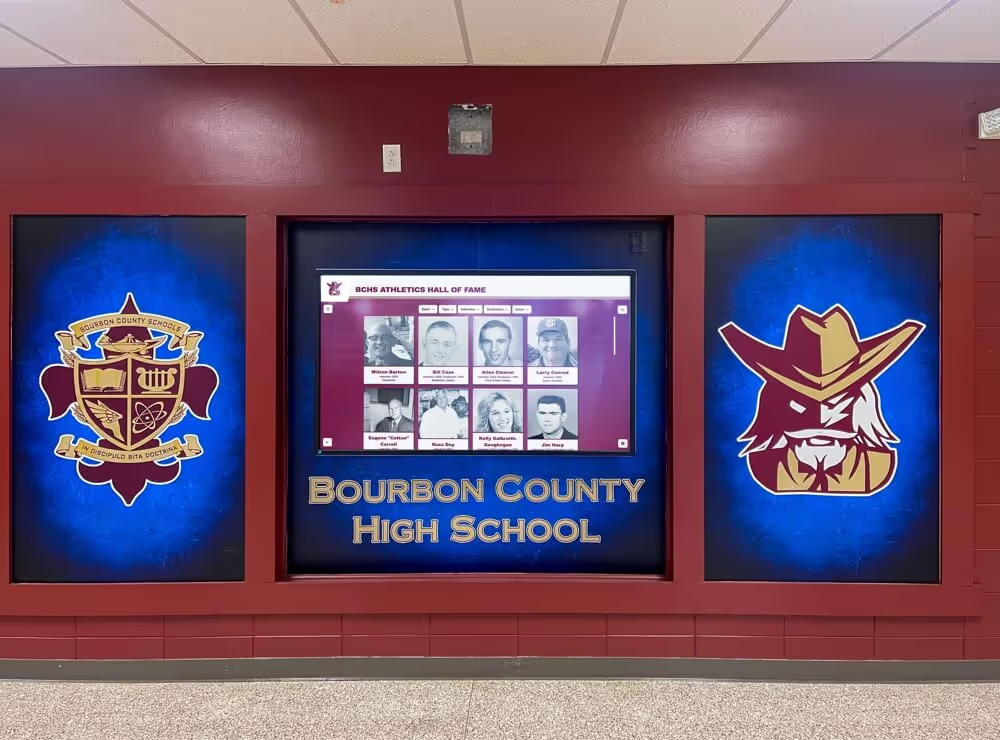
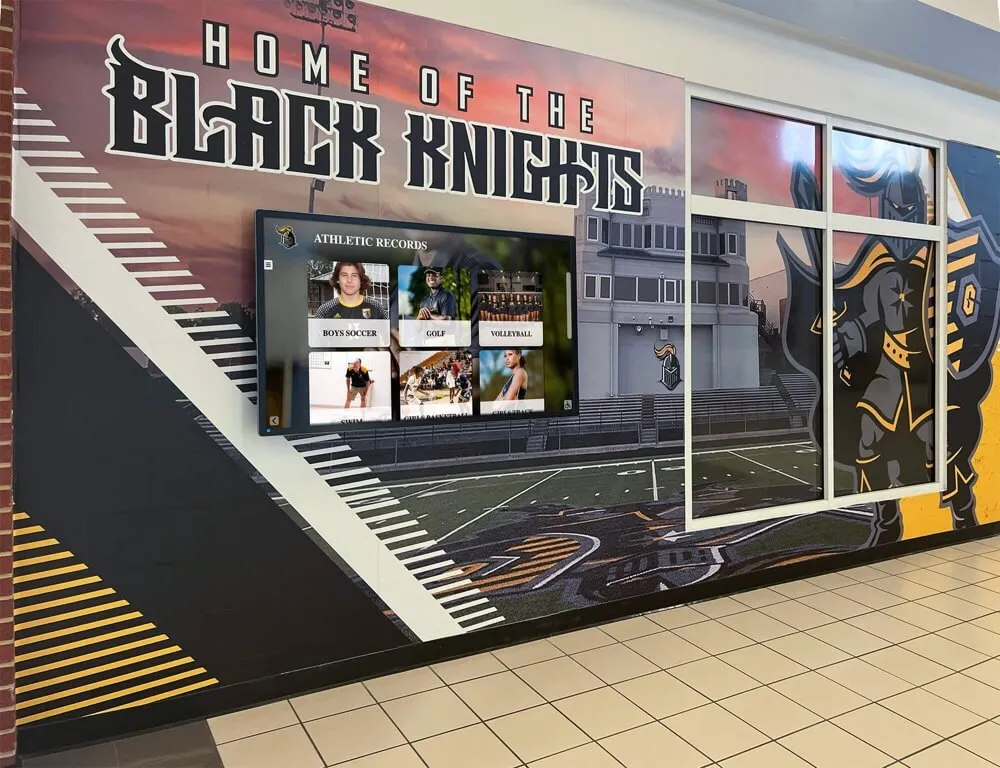
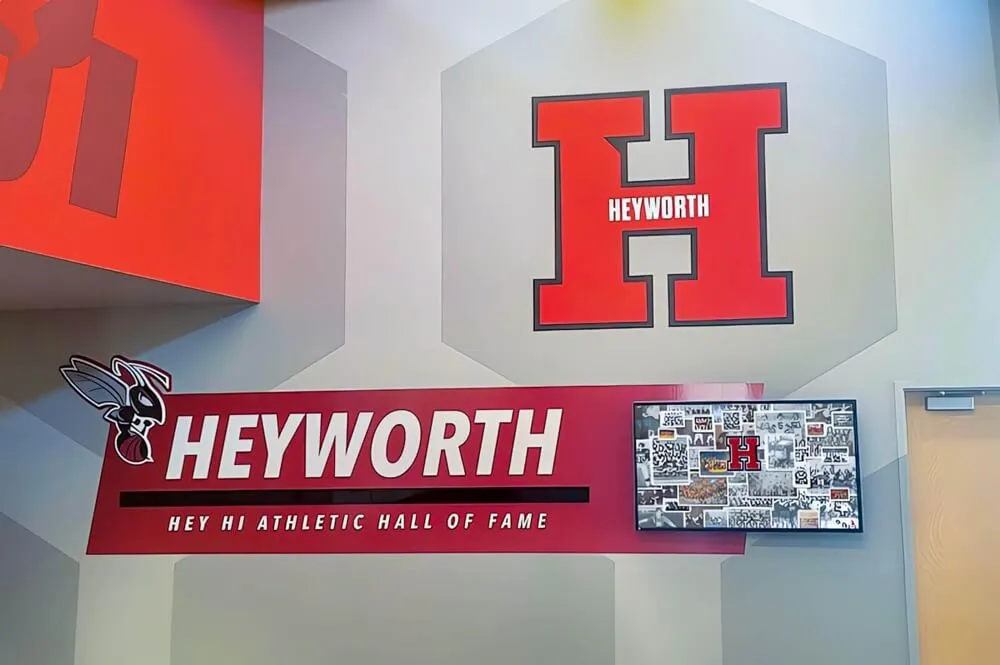
Multi-purpose recognition spaces honor donors alongside athletic achievements, creating comprehensive institutional storytelling
Major Gift Donor Recognition Ideas ($25,000+)
Transformational philanthropy enabling facilities construction, endowment establishment, or program launches requires sophisticated recognition matching contribution significance while celebrating partnerships that fundamentally advance institutional missions.
21. Building and Facility Naming Rights
Major buildings, athletic facilities, performance spaces, or campus landmarks named for transformational donors create highly visible permanent recognition communicating institutional gratitude across generations. These naming opportunities represent schools’ most prestigious acknowledgment, typically reserved for six- and seven-figure contributions defining institutional capabilities.
Effective building naming programs establish clear policies about contribution minimums, naming duration (permanent versus term-limited), donor involvement in design or programming, and succession plans if named donors request future name changes or families seek updated dedications.
Physical recognition typically includes prominent building signage, interior dedication plaques sharing donor stories and gift purposes, and ongoing references in campus materials, maps, and communications ensuring sustained visibility beyond initial dedication ceremonies.
22. Endowed Chair or Professorship Positions
Endowed faculty positions named for major donors create academic legacies while directly supporting educational excellence through enhanced faculty compensation, research support, or teaching innovation resources. These opportunities appeal particularly to donors valuing educational quality and intellectual advancement over physical infrastructure.
Chair endowments typically require $1-5 million contributions depending on institutional scale and competitive faculty markets. Annual reporting keeps donors informed about chair holder activities, research accomplishments, teaching innovations, or student impact—maintaining engagement through ongoing relationship touchpoints.
Many schools involve donors in chair holder selection when appropriate, creating partnership dynamics that deepen institutional connections while appropriately acknowledging transformational support enabling permanent academic enhancements.
23. Dedication Ceremonies and Permanent Plaques
Formal dedication events celebrating major gifts provide recognition moments honoring donors publicly while engaging broader communities in appreciating philanthropic support. These ceremonies typically include remarks from institutional leaders, donor speeches when comfortable with public speaking, facility tours or program demonstrations, and unveiling of permanent recognition plaques.
Effective dedication events balance appropriate celebration with mission focus—highlighting how gifts advance institutional purposes rather than purely celebrating donor wealth or prominence. Thoughtful planning ensures donors feel honored without uncomfortable dynamics that might discourage future support or create awkward public moments.
Permanent dedication plaques should include compelling narratives beyond basic naming—explaining gift purposes, sharing donor motivations, or describing program impacts contributions enable. These contextual elements transform simple acknowledgment into meaningful storytelling that engages all viewers, not just donors and immediate families.
24. Legacy Society Membership
Planned giving programs recognizing donors who include schools in estate plans create acknowledgment for commitments that may not materialize for years or decades. Legacy society membership provides immediate recognition for future gifts, maintaining engagement during donors’ lifetimes while securing transformational support that often exceeds lifetime giving capacity.
Recognition typically includes special events, publications featuring legacy society members, permanent displays acknowledging planned gift commitments, and periodic communications sharing institutional progress toward long-term strategic priorities these future gifts will support.
Many schools implement tiered legacy recognition based on commitment levels—creating differentiation between various planned gift types and sizes while honoring all planned giving participation appropriately. This structured approach enables sophisticated stewardship matching diverse planned gift circumstances.
25. Board or Committee Appointment Invitations
Invitation to serve on institutional boards, advisory committees, or campaign leadership roles provides recognition through partnership status and meaningful governance involvement. These appointments acknowledge major donor commitment while leveraging supporter expertise, networks, and continued philanthropic capacity.
Service-based recognition must carefully balance genuine influence with appropriate institutional autonomy—board members should feel valued and heard while understanding that fiduciary responsibilities transcend individual donor interests. Clear role descriptions, term limits, and expectations prevent uncomfortable dynamics while ensuring productive governance.
Many donors view board service as prestigious recognition reflecting institutional confidence in their judgment and commitment, making these appointments powerful stewardship tools when offered thoughtfully and managed effectively.
26. Comprehensive Multimedia Recognition Profiles
Sophisticated digital donor profiles featuring professional photography, video testimonials, detailed biographical narratives, impact stories, and family legacy information create rich acknowledgment impossible with traditional plaques. These comprehensive profiles might appear on prominent digital displays, institutional websites, or mobile applications—providing multi-channel recognition extending beyond single-location visibility.
Effective multimedia recognition tells compelling stories explaining why donors give, what motivates their philanthropy, how contributions connect to personal values or experiences, and what outcomes they hope their generosity enables. This narrative approach creates emotional engagement while inspiring others through authentic examples of mission-driven giving.
Schools implementing digital recognition should explore platforms like Rocket Alumni Solutions that provide unlimited capacity, instant content updates, and professional presentation quality appropriate for major gift acknowledgment.
27. Personalized Stewardship Portfolios
Customized annual stewardship portfolios compiled specifically for major donors provide comprehensive recognition through detailed impact reporting, program updates, financial transparency, and forward-looking plans. These professional presentations might include:
- Detailed financial accounting showing exactly how gifts were used
- Student testimonials from scholarship recipients or program participants
- Faculty reports from endowed position holders
- Facility usage statistics for named buildings or spaces
- Upcoming initiatives that may interest donors for future support
Portfolio-based recognition demonstrates sophisticated stewardship commitment while maintaining donor engagement through substantive communications that transcend generic institutional updates. The personalized nature signals that advancement teams genuinely understand individual donor interests and actively monitor outcomes donors care about most.
28. Private Scholar or Program Participant Meetings
Arranging personal meetings between major donors and scholarship recipients, program participants, or faculty members supported by gifts creates powerful emotional connections humanizing philanthropic impact. These intimate gatherings enable donors to see firsthand how contributions transform individual lives—experiences that strengthen commitment while providing meaningful recognition through authentic relationship building.
Effective scholar meetings require careful preparation ensuring students understand donor backgrounds, feel comfortable in potentially unfamiliar settings, and can articulate genuinely how support affected their educational experiences. The goal involves creating natural conversations rather than performative gratitude demonstrations that might feel uncomfortable for students or donors.
Many donors report scholar meetings as among the most meaningful stewardship experiences they receive—validating that personal connections with mission beneficiaries create more powerful recognition than elaborate impersonal acknowledgment regardless of production quality.
29. Campaign Leadership Recognition
Major donors who provide early campaign commitments enabling public launches receive special acknowledgment as campaign chairs, lead donors, or founding supporters. These leadership designations communicate that gifts didn’t simply participate in successful campaigns but actually made campaigns possible through courageous early commitments inspiring others.
Leadership recognition might include prominent placement in campaign materials, special designation on donor walls (e.g., “Campaign Founding Donor”), exclusive leadership events throughout campaign durations, and detailed involvement in campaign strategy development and execution.
This recognition approach particularly resonates with donors who view themselves as institutional partners rather than passive supporters—individuals who want active roles advancing missions they deeply value beyond purely financial contributions.
30. Permanent Digital Recognition with Annual Updates
Combining permanent digital recognition platforms with annual profile updates creates dynamic acknowledgment that evolves over time rather than becoming static historical artifacts. Updated content might include recent gift additions, current involvement activities, family milestone celebrations, or career achievement recognition—maintaining contemporary relevance while preserving historical contributions.
This evergreen recognition approach prevents donor profiles from feeling dated or forgotten, instead communicating ongoing institutional appreciation and attention. Annual updates provide natural stewardship touchpoints for advancement teams to reconnect with major donors, share institutional progress, and explore potential increased engagement.
Digital platforms make profile evolution practical through simple content management systems requiring minimal technical expertise—unlike traditional recognition where any changes require expensive manufacturing and professional installation creating prohibitive update barriers.
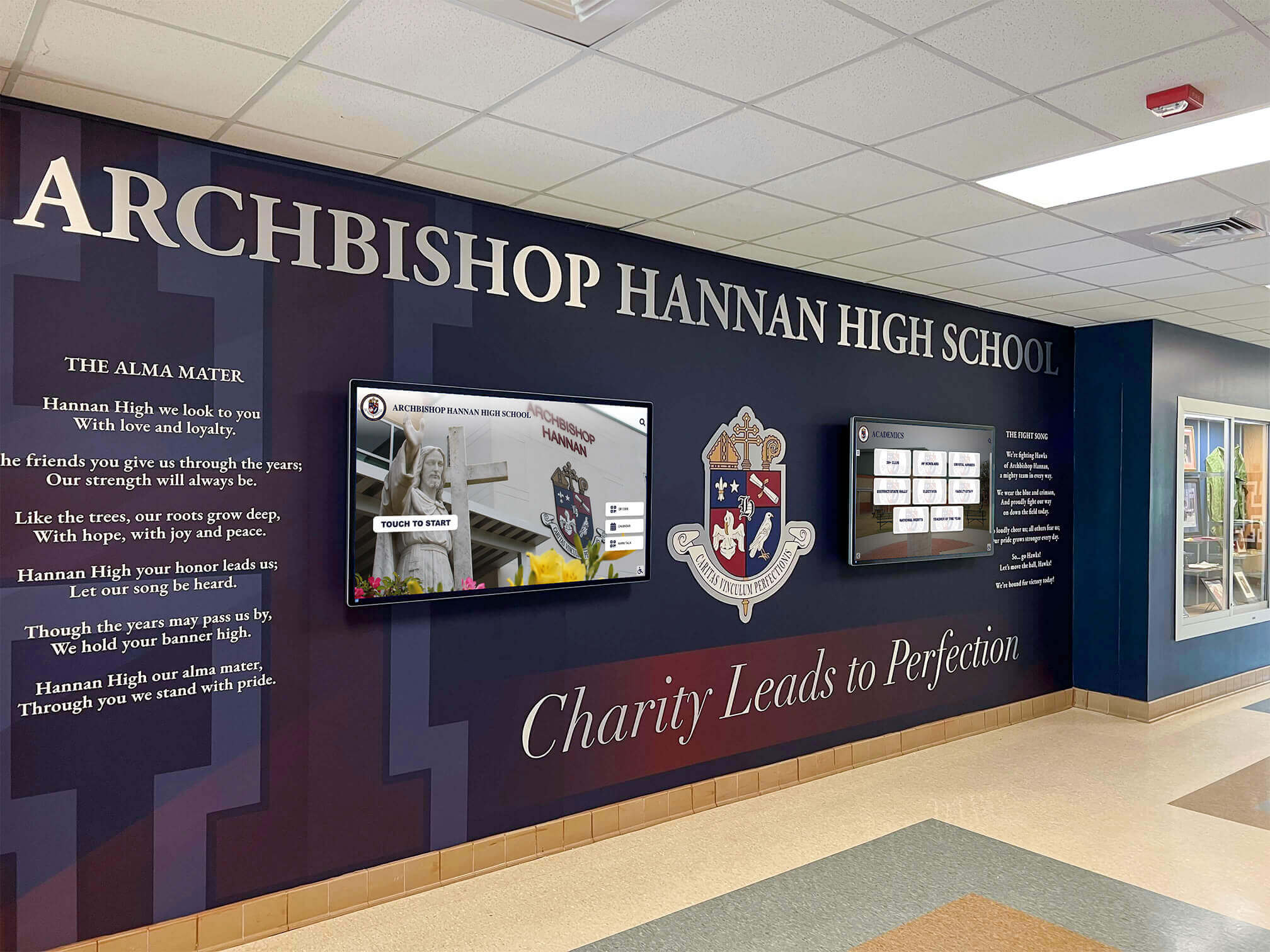
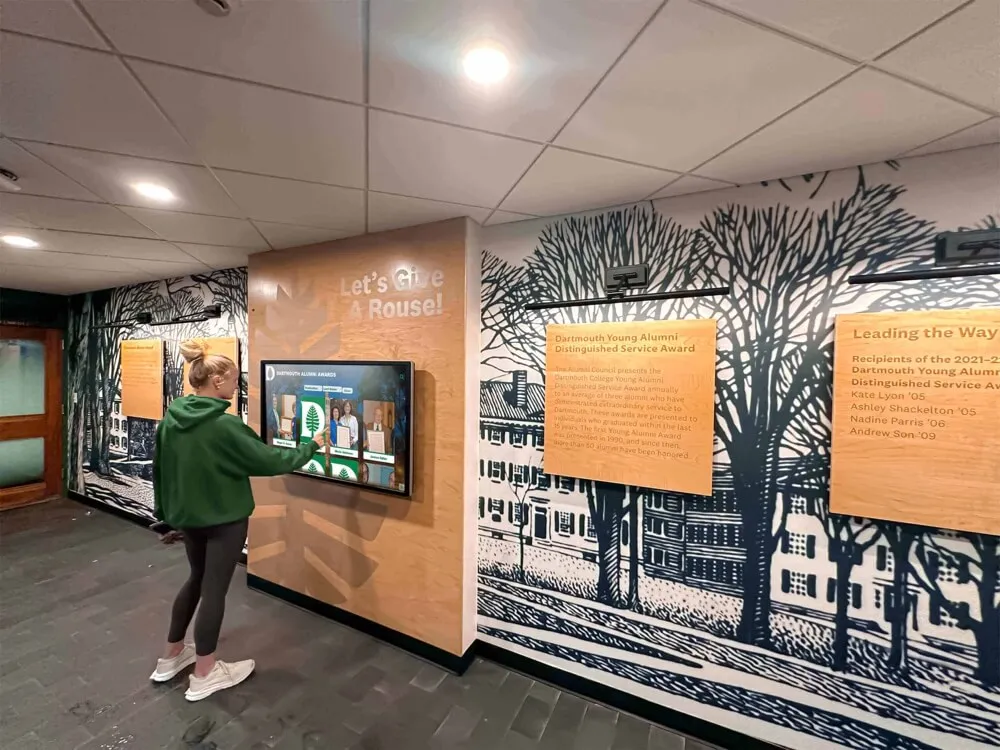
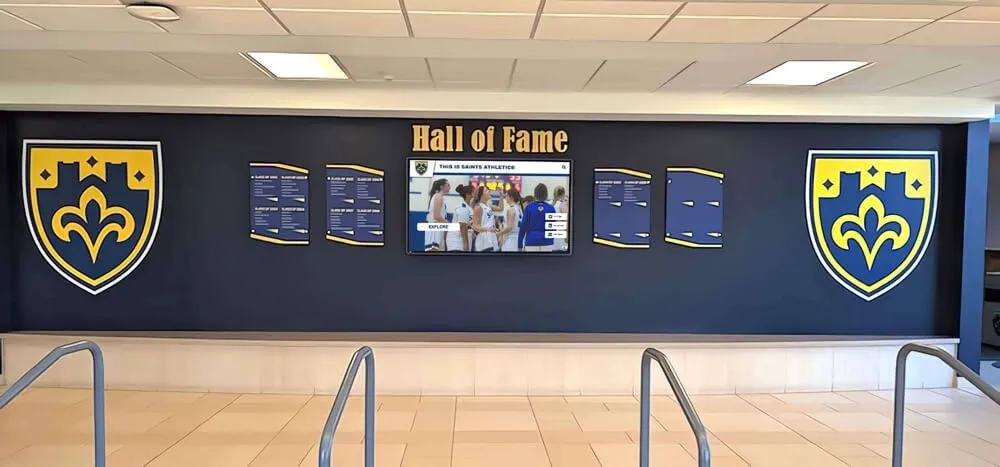
Integrated recognition installations blend seamlessly with existing architecture while providing modern acknowledgment capabilities
Implementing Comprehensive Donor Recognition Programs
Selecting specific recognition tactics matters less than implementing coherent stewardship strategies that authentically appreciate supporters while advancing institutional relationships and fundraising effectiveness.
Matching Recognition to Donor Preferences
Not all donors value identical acknowledgment approaches—some prefer public visibility while others seek private gratitude, some appreciate traditional permanence while others embrace modern digital experiences, and some want partnership involvement while others prefer supporting from comfortable distances.
Effective recognition programs accommodate diverse preferences through:
- Privacy options allowing supporters to remain anonymous or control public acknowledgment scope
- Recognition choice offering alternatives at equivalent giving levels (e.g., named space versus enhanced donor wall profile)
- Involvement flexibility providing governance opportunities for interested donors while avoiding obligatory participation requirements
- Communication preferences respecting desires for detailed reporting versus brief updates, digital versus print delivery, or frequent versus periodic contact
Understanding individual donor preferences requires intentional discovery during cultivation conversations, gift discussions, and ongoing stewardship interactions. Advancement teams should systematically document preferences ensuring consistent recognition that donors genuinely value rather than generic approaches that may inadvertently disappoint supporters expecting different acknowledgment.
Creating Recognition Policies and Guidelines
Comprehensive recognition policies establish clear expectations that prevent inconsistent treatment, ensure sustainable programs, and maintain institutional dignity while appropriately celebrating philanthropic support. Effective policies address:
Giving Level Thresholds
- Minimum contributions qualifying for various recognition tiers
- Cumulative lifetime giving versus single-gift recognition approaches
- Pledge fulfillment requirements before permanent recognition installation
- Planned gift recognition policies acknowledging future commitments
Naming Opportunity Guidelines
- Building, facility, and space naming minimums and duration policies
- Approval processes for proposed names ensuring appropriateness
- Succession planning for named spaces requiring future updates
- Corporate versus individual naming considerations
Recognition Timeline Standards
- Target timelines for various acknowledgment types (immediate, short-term, permanent)
- Approval workflows balancing quality control with prompt implementation
- Update schedules for annual recognition publications or digital content refreshes
Donor Privacy and Consent
- Permission requirements for public recognition, photography, or video usage
- Anonymous giving options respecting privacy preferences
- Social media acknowledgment policies requiring explicit consent
- Family member inclusion guidelines for memorial or tribute gifts
Written policies should balance clear guidance with appropriate flexibility accommodating exceptional circumstances without creating unsustainable precedents that complicate future recognition decisions.
Budgeting for Recognition Programs
Recognition represents stewardship investment that typically pays fundraising returns through improved donor retention and increased giving—yet many schools underbudget acknowledgment programs relative to cultivation and solicitation expenses. Sustainable recognition requires dedicated funding covering:
Capital Recognition Costs
- Physical donor wall construction and installation ($20,000-100,000+ depending on scale)
- Digital recognition platform acquisition and setup ($25,000-70,000 per display)
- Named space signage and permanent plaques ($500-5,000 per space)
- Building naming signage and dedication materials ($5,000-50,000+)
Operating Recognition Expenses
- Annual plaque additions for traditional walls ($3,000-20,000 annually)
- Digital platform subscriptions and content management ($3,000-8,000 annually)
- Donor event programming and hospitality ($5,000-30,000 annually depending on donor community size)
- Recognition publications and printed materials ($2,000-15,000 annually)
- Commemorative gift purchases for leadership donors ($1,000-10,000 annually)
Many advancement offices allocate 3-8% of annual fundraising budgets to recognition and stewardship activities—a modest investment considering research showing recognized donors give 2-4x more over time compared to unacknowledged supporters.
Schools should view recognition as essential fundraising infrastructure rather than optional niceties, funding acknowledgment programs adequately while seeking cost-effective approaches that maximize impact relative to investment.
Measuring Recognition Effectiveness
Sophisticated advancement programs measure recognition impact through donor behavior analysis rather than assuming acknowledgment effectiveness without evidence. Key performance indicators include:
Donor Retention Metrics
- Year-over-year retention rates comparing recognized versus unrecognized donor cohorts
- Multi-year giving streak patterns correlating with recognition program participation
- Lapsed donor reactivation success following enhanced recognition implementation
Gift Progression Analysis
- Average time from first gift to second gift comparing recognition approaches
- Giving level increase frequency among donors receiving various acknowledgment types
- Major gift conversion rates from annual fund donors experiencing different recognition intensities
Engagement Indicators
- Recognition event attendance rates and demographic participation patterns
- Digital recognition platform interaction analytics (session duration, profile views, search usage)
- Donor communication response rates to recognition-related outreach
Qualitative Feedback
- Donor survey responses about recognition satisfaction and preferences
- Unsolicited comments referencing appreciation experiences
- Exit interview insights from donors who discontinue support
Tracking these metrics enables evidence-based recognition program refinement—doubling down on high-impact approaches while adjusting acknowledgment strategies that fail to move donor behavior measurably despite resource investment.
Integrating Recognition Across Fundraising Efforts
Recognition functions most effectively when integrated comprehensively across annual giving, major gifts, planned giving, and campaign efforts rather than operating as isolated activities disconnected from broader advancement strategies.
Annual Giving Integration
- Immediate acknowledgment processes triggered automatically at gift processing
- Recognition society membership as explicit annual fund campaign messaging
- Donor wall updates coinciding with fiscal year-end giving pushes
- Impact reporting schedules aligned with renewal solicitation timing
Major Gift Integration
- Recognition discussions incorporated into proposal development and gift negotiations
- Donor preference discovery during cultivation relationship building
- Recognition unveiling events creating stewardship moments enabling continued cultivation
- Permanent acknowledgment serving as conversation starters for increased future support
Planned Giving Integration
- Legacy society recognition as planned giving program marketing
- Estate gift acknowledgment policies as bequest solicitation tools
- Multigenerational family recognition encouraging planned gift conversations with adult children
- Recognition perpetuity as planned gift value proposition for legacy-minded donors
Campaign Integration
- Campaign leadership recognition as early-gift solicitation incentives
- Recognition program design as campaign planning element establishing acknowledgment expectations
- Phased recognition implementation coordinated with campaign gift timelines
- Post-campaign recognition completion as campaign success celebration and closure
Advancement teams should map recognition touchpoints across entire donor lifecycles—from acquisition through retention, upgrading, major gift conversion, and ultimately planned giving—ensuring acknowledgment supports each advancement stage strategically rather than occurring randomly based purely on administrative convenience.
Schools interested in comprehensive recognition strategy development should explore annual fundraising recognition program examples demonstrating integrated approaches across diverse institutional contexts and donor community characteristics.
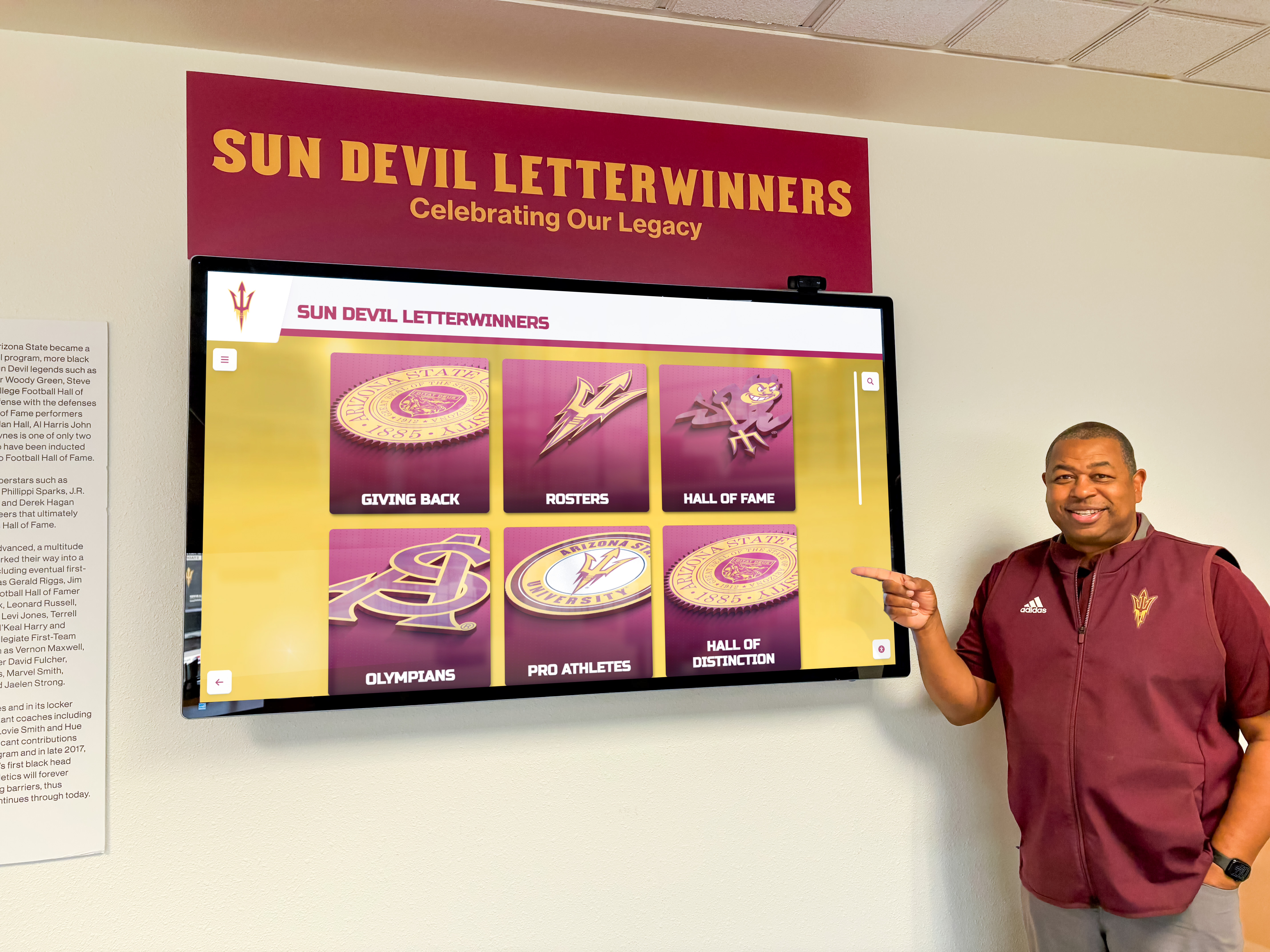
Professional recognition installations create pride among institutional communities while honoring supporter generosity appropriately
Digital Recognition: The Modern Solution for Comprehensive Donor Acknowledgment
While traditional brass plaques have served schools for generations, modern digital recognition platforms address fundamental limitations that constrain conventional approaches—particularly for institutions with growing donor communities, limited wall space, or commitment to inclusive acknowledgment honoring all supporters regardless of gift size.
Unlimited Capacity Eliminates Exclusion Decisions
Traditional donor walls accommodate perhaps 100-300 supporters before exhausting available space—forcing difficult decisions about which donors receive visibility and which remain unacknowledged despite meaningful contributions. Digital recognition platforms eliminate these capacity constraints entirely, accommodating unlimited donor profiles without space limitations.
This unlimited capacity transforms recognition philosophy from scarcity (“which donors can we fit?”) to abundance (“how do we celebrate everyone appropriately?")—fundamentally healthier approaches aligned with inclusive stewardship principles that value all support rather than exclusively highlighting largest gifts.
Schools implementing comprehensive digital recognition honor entire annual giving communities alongside major donors, creating cohesive donor cultures that celebrate philanthropy at every level rather than inadvertently communicating that only substantial contributions merit acknowledgment.
Instant Updates Enable Timely Acknowledgment
Traditional plaque manufacturing requires 8-16 weeks from gift processing to visible recognition—diminishing psychological reinforcement as donor enthusiasm fades during extended delays. Digital platforms enable recognition updates within hours through cloud-based content management accessible from any internet-connected device.
This immediacy ensures donors discover acknowledgment during subsequent campus visits days or weeks after contributing—experiencing tangible evidence that schools value support and operate efficiently while emotions remain elevated. The timely recognition strengthens giving behavior reinforcement significantly compared to delayed traditional acknowledgment appearing months after initial contribution excitement subsides.
Advancement teams add new donor profiles, correct information errors, or update giving levels as cumulative support crosses recognition thresholds—all without manufacturing delays, shipping coordination, or professional installation scheduling that make traditional recognition updates administratively burdensome and expensive.
Rich Storytelling Creates Emotional Engagement
Traditional plaques communicate minimal information—donor names, possibly giving levels, occasionally brief inscriptions. Digital recognition platforms enable comprehensive profiles including biographical narratives, professional photography, impact stories, video testimonials, and family legacy information that humanize supporters while explaining philanthropic motivations.
This storytelling capability creates emotional engagement that traditional name lists cannot match. Visitors exploring detailed donor profiles develop deeper connections with both supporters and institutional missions—understanding not just who gives, but why they give and what transformational impact their generosity creates.
Analytics consistently show visitors spend 5-10 minutes actively exploring digital recognition compared to 15-30 seconds glancing at traditional donor walls—demonstrating dramatically enhanced engagement that serves stewardship purposes while potentially inspiring additional giving from viewers who may become future donors themselves.
Multi-Channel Accessibility Extends Recognition Reach
Modern digital recognition extends beyond physical lobby displays through web-accessible platforms enabling worldwide donor community engagement, mobile applications extending experiences to personal devices, social sharing capabilities amplifying acknowledgment through donor networks, and QR code integration connecting physical and digital recognition seamlessly.
This multi-channel approach maintains recognition visibility far beyond single-location traditional plaques, creating ongoing stewardship touchpoints rather than one-time acknowledgment at dedication ceremonies. Donors share profiles with family members across geographic distances, alumni explore recognition remotely from anywhere worldwide, and prospective supporters discover philanthropic cultures that may inspire their own giving.
Accessibility features including adjustable text sizing, high-contrast display modes, and screen reader compatibility ensure all visitors can engage with recognition regardless of vision abilities—addressing fundamental limitations traditional plaques create for visitors with disabilities.
Cost-Effectiveness Over Time
While digital recognition requires higher initial investment ($25,000-70,000 per display) compared to traditional donor walls, long-term economics often favor digital approaches—particularly for schools with growing donor communities requiring sustained recognition additions.
Traditional walls incur ongoing expenses of $5,000-20,000+ annually for plaque manufacturing and installation, plus periodic expansion costs of $10,000-40,000 as capacity fills. Over 10-20 year periods, these recurring expenses often exceed digital platform subscriptions ($3,000-8,000 annually) while providing dramatically inferior capacity, update flexibility, and engagement quality.
Schools should evaluate total cost of ownership rather than focusing exclusively on initial investment—recognition programs serve institutions for decades, making long-term economics critical to sustainable decisions that balance stewardship effectiveness with fiscal responsibility.
Organizations implementing modern donor acknowledgment should explore how digital donor recognition walls combine traditional dignity with interactive capabilities that enhance rather than replace time-honored recognition principles.
Conclusion: Building Recognition Programs That Strengthen Donor Relationships
Effective donor recognition extends far beyond fulfilling acknowledgment obligations or creating attractive lobby displays—strategic recognition strengthens relationships that inspire sustained giving, converts annual supporters into major donors, and builds philanthropic cultures where generosity becomes institutional tradition passed across generations.
The thirty donor recognition ideas presented throughout this guide represent proven approaches schools successfully implement across diverse contexts, donor communities, and budget realities. Yet no single recognition strategy serves all institutions optimally—the most effective programs thoughtfully combine multiple approaches creating layered stewardship experiences that acknowledge different donor segments appropriately while reflecting unique institutional cultures and advancement priorities.
Annual fund donors contributing modest amounts deserve genuine appreciation communicated through timely personal touches—student thank-you calls, president video messages, honor roll listings, and inclusive digital recognition celebrating all support regardless of amount. These relatively low-cost acknowledgment strategies create meaningful connections while identifying prospects for future increased giving as relationships deepen over time.
Leadership gift donors making substantial contributions merit enhanced recognition reflecting increased commitment—named spaces, donor wall prominence, exclusive events, and personalized stewardship portfolios that demonstrate sophisticated appreciation matching gift significance. This differentiated acknowledgment appropriately honors larger contributions while avoiding ostentatious displays that might feel uncomfortable or inappropriate in educational settings.
Major gift donors enabling transformational institutional advancement through six- and seven-figure contributions deserve the most sophisticated recognition programs can offer—building naming opportunities, endowment establishment, formal dedication events, comprehensive multimedia profiles, and ongoing partnership involvement that transcends transactional acknowledgment. These deep relationships built through sustained stewardship attention often yield additional transformational support over donor lifetimes and ultimately planned gifts creating permanent institutional legacies.
Transform Your Donor Recognition Strategy
Discover how modern digital recognition platforms can help you honor every supporter with unlimited capacity, instant updates, and compelling storytelling that strengthens relationships and inspires continued generosity across your entire donor community.
Explore Recognition SolutionsImplementing comprehensive recognition programs requires institutional commitment extending beyond advancement offices to include leadership support, budget allocation, clear policies, and sustained attention ensuring acknowledgment maintains excellence across staff transitions and strategic priority shifts. Schools treating recognition as essential fundraising infrastructure rather than optional amenities position themselves for advancement success built on donor relationship foundations that compound over time.
Modern digital recognition platforms address fundamental traditional limitations—space constraints forcing exclusion decisions, update delays diminishing acknowledgment impact, minimal storytelling reducing engagement, and accessibility barriers preventing universal participation. These technologies don’t replace recognition principles developed over generations but instead enable schools to honor those principles more comprehensively, efficiently, and effectively than ever before possible.
Your donors make everything your institution accomplishes possible—from scholarship access enabling deserving students to attend, to facility improvements creating inspiring learning environments, to program enhancements advancing educational excellence. They deserve recognition that genuinely celebrates their generosity while deepening connections to missions they support. By implementing thoughtful donor acknowledgment strategies combining proven recognition ideas with modern technology capabilities, you create stewardship experiences that convert one-time supporters into lifelong mission champions whose sustained philanthropy advances your school’s purpose for generations to come.