



The Gatorade Player of the Year award represents one of the most prestigious honors a high school athlete can receive. Since 1986, this national recognition program has celebrated exceptional student-athletes who demonstrate excellence in athletics, academics, and character. Recipients join an elite legacy that includes Peyton Manning, LeBron James, Abby Wambach, and Derek Jeter—athletes who became household names after earning this distinction during their high school careers.
Yet many schools face a common dilemma: how do you properly honor these extraordinary achievements without cluttering gymnasium walls with endless banners? Years after students graduate, their Gatorade Player of the Year banners compete for limited wall space with state championship flags, retired jerseys, and conference titles. Eventually, schools must make difficult decisions about which recognitions stay visible and which get rolled up and stored in closets or discarded entirely.
This comprehensive guide explores how modern digital recognition displays solve this challenge by preserving Gatorade Player of the Year legacies permanently while reclaiming valuable physical space. You’ll discover design strategies for archiving athletic excellence, creating engaging touchscreen experiences that celebrate student achievements, and implementing systems that ensure no award—no matter how many years ago it was earned—ever gets forgotten or thrown away.
Schools implementing digital recognition for Gatorade awards report multiple benefits: reclaimed wall space in gymnasiums and athletic facilities, enhanced recruitment appeal as prospective students see comprehensive achievement history, stronger alumni engagement when graduates can revisit their awards years later, and cost savings from eliminating ongoing banner production and physical storage management.

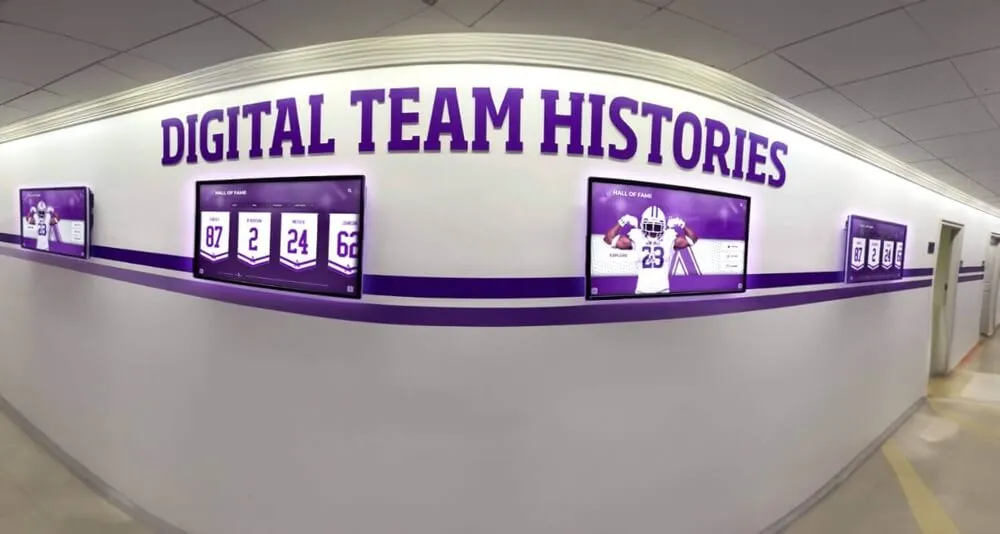
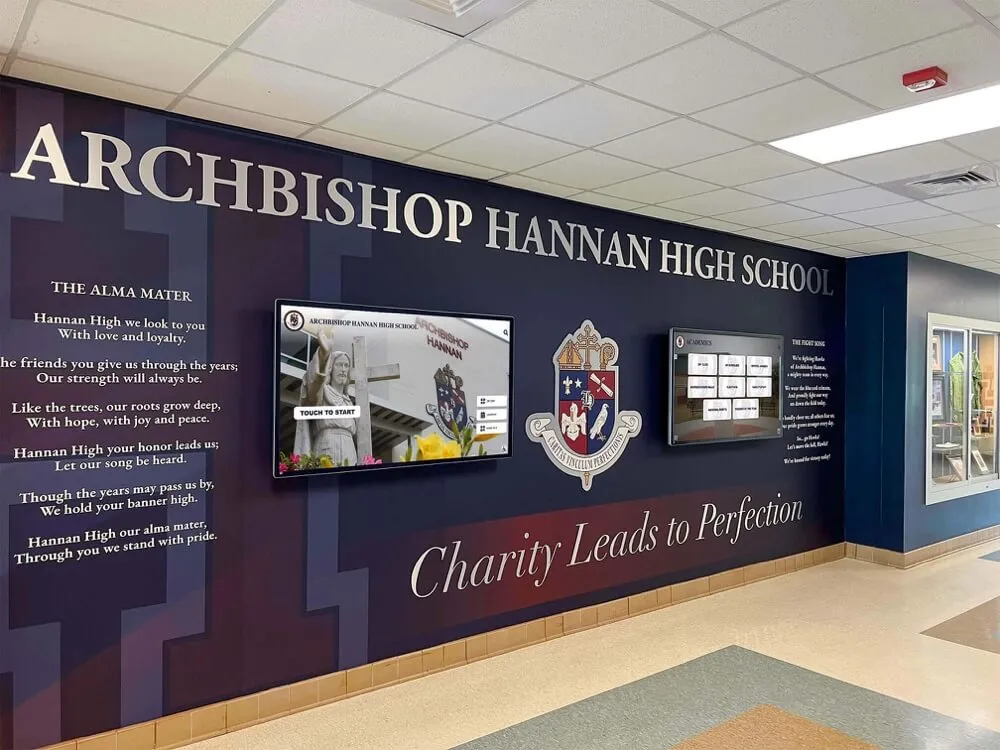
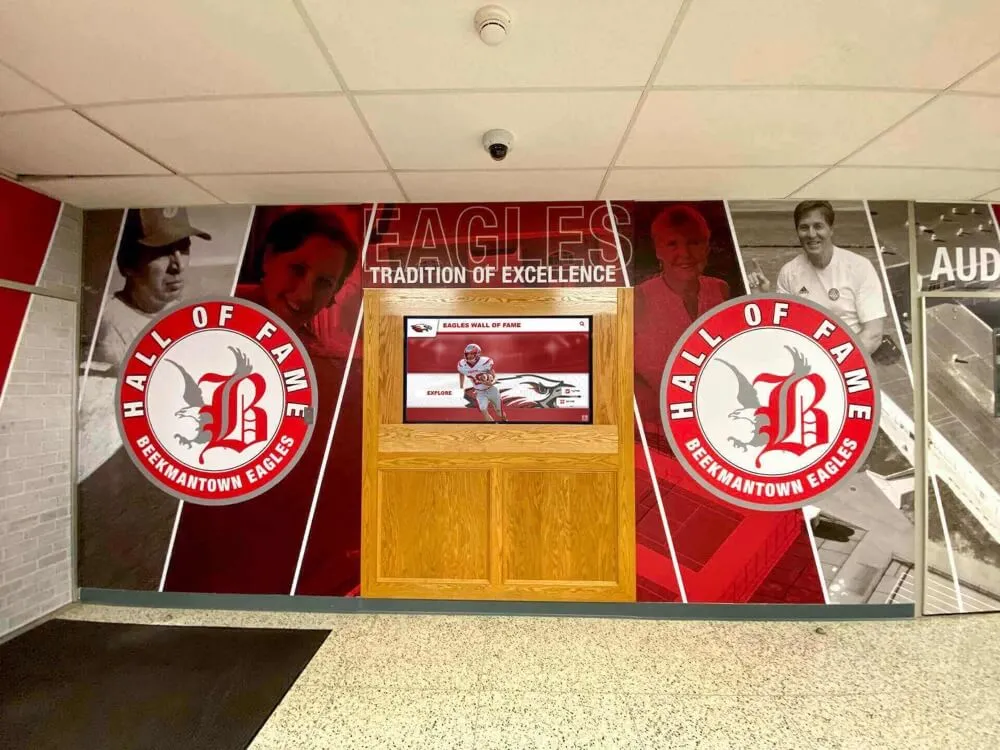
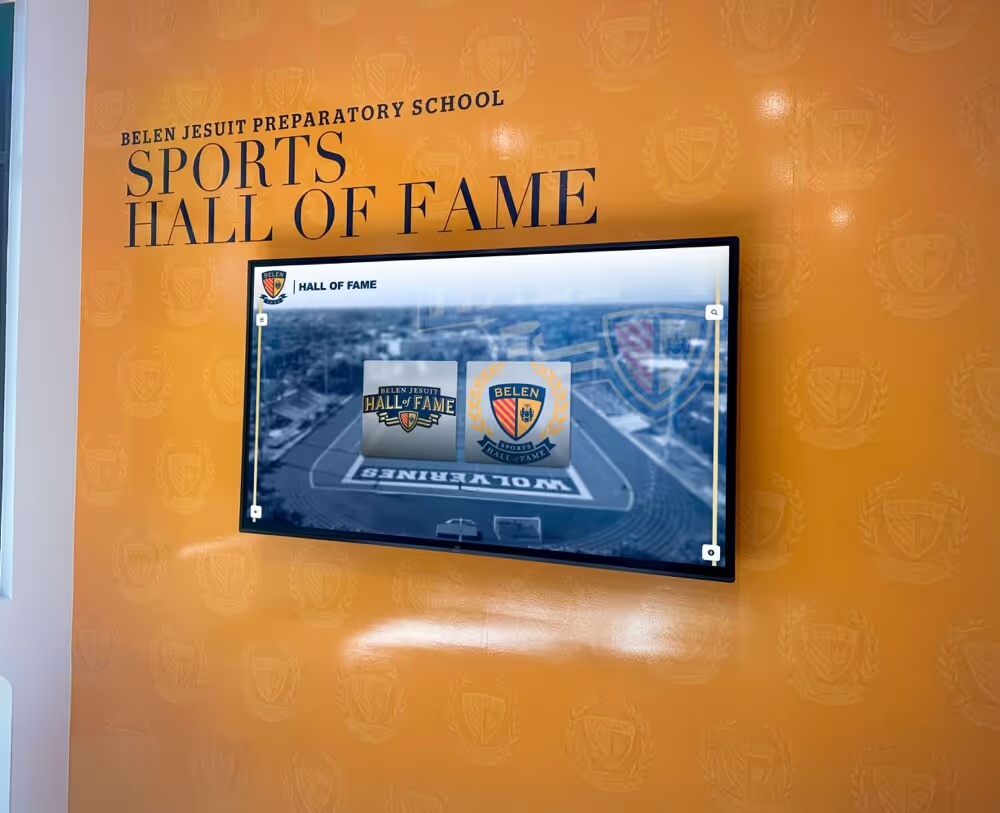
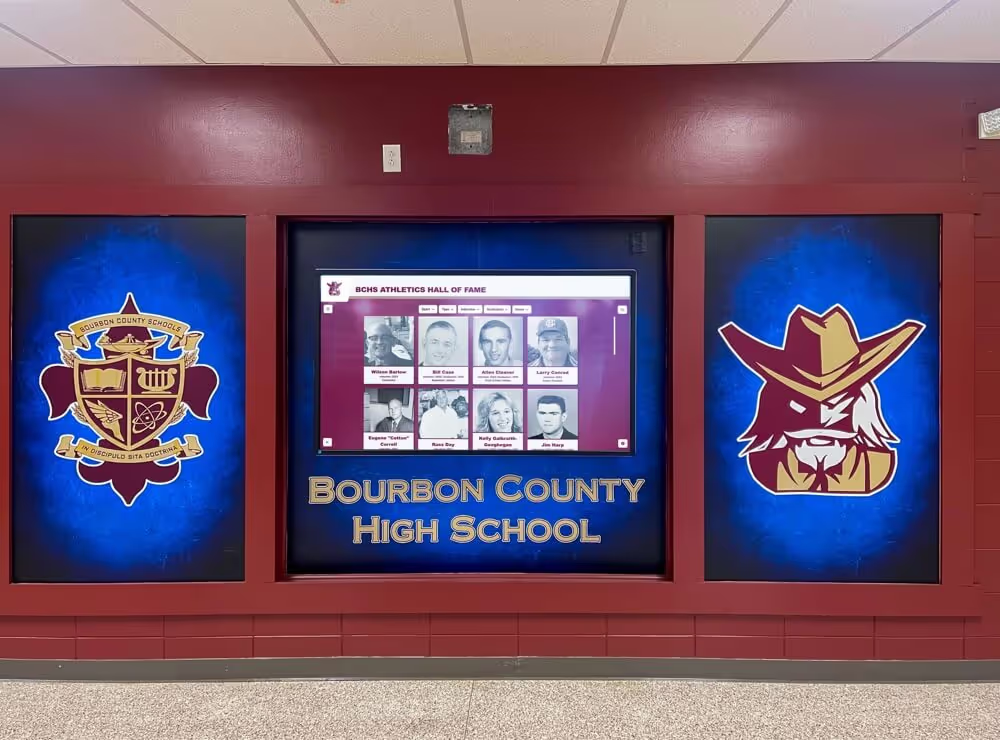
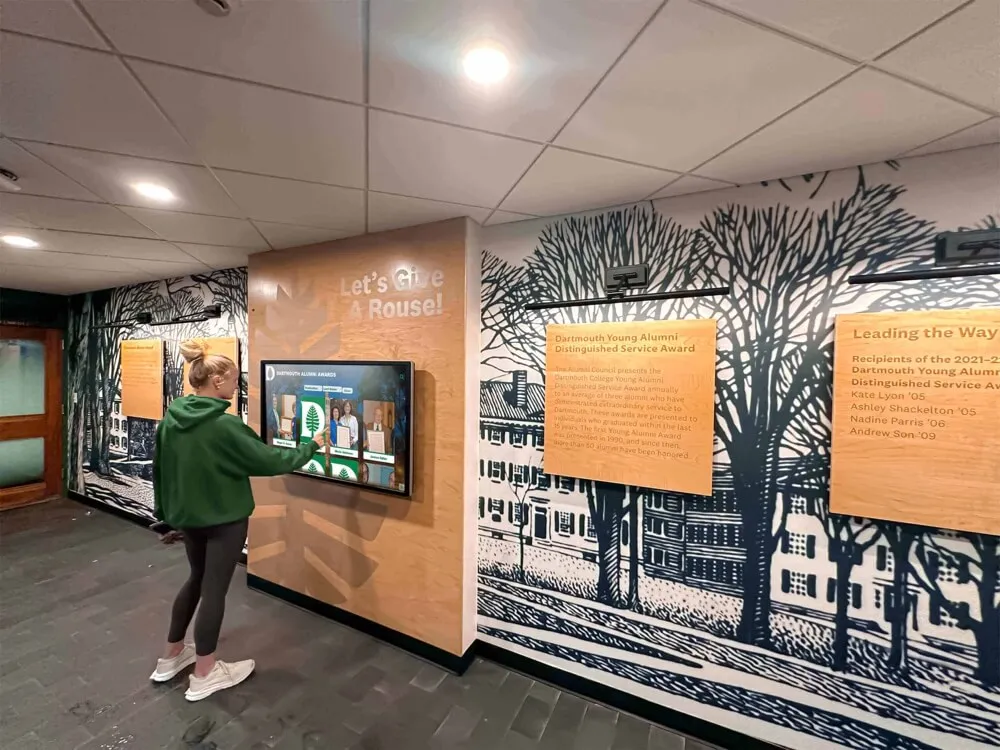
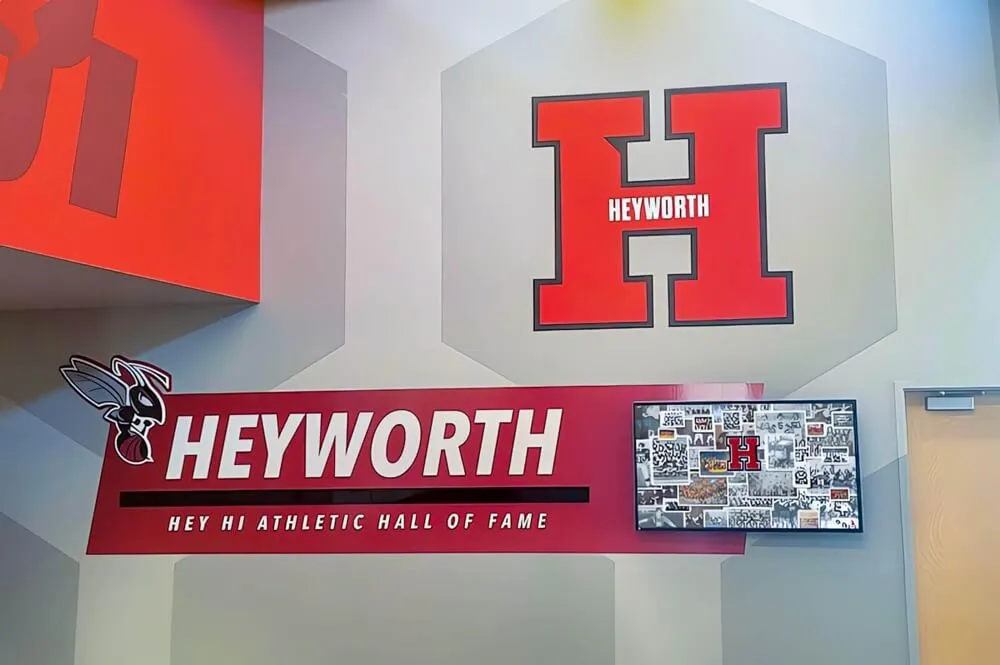
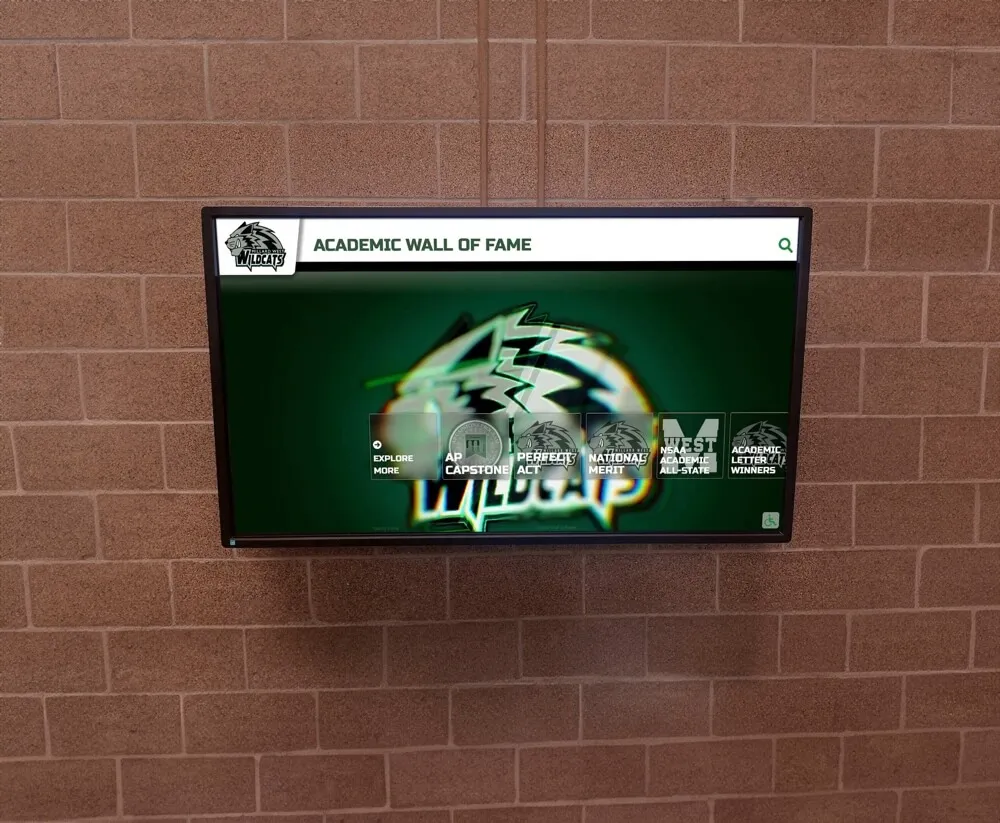
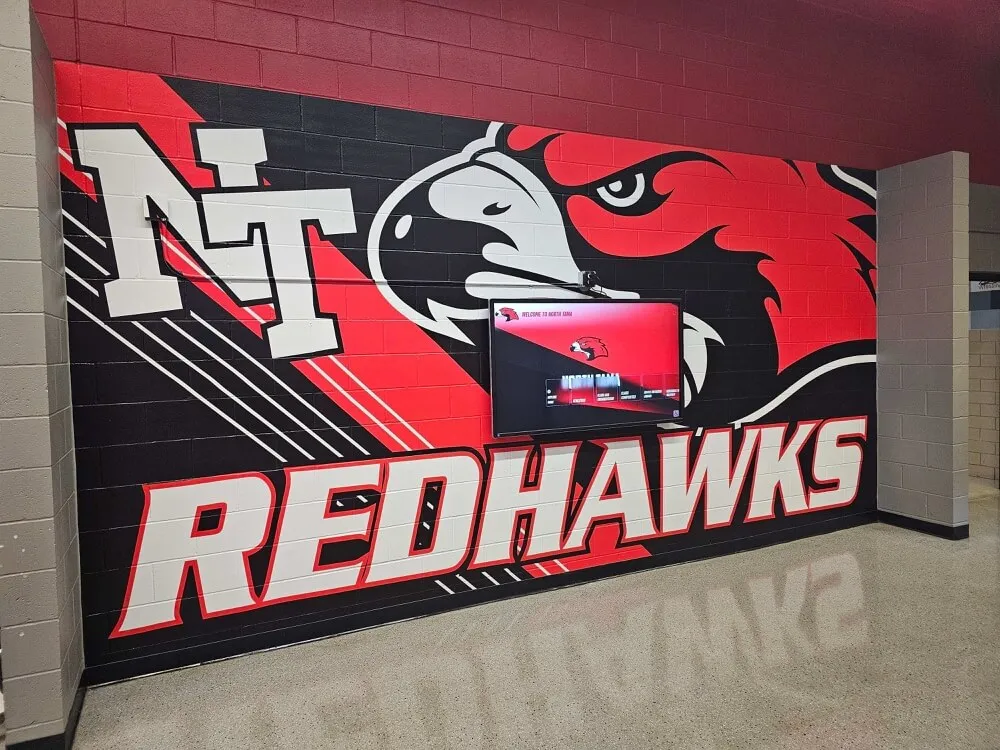
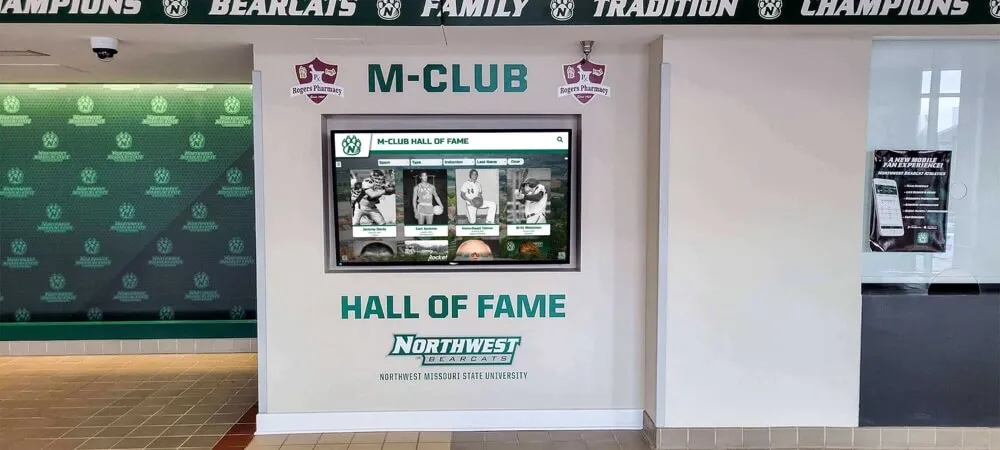
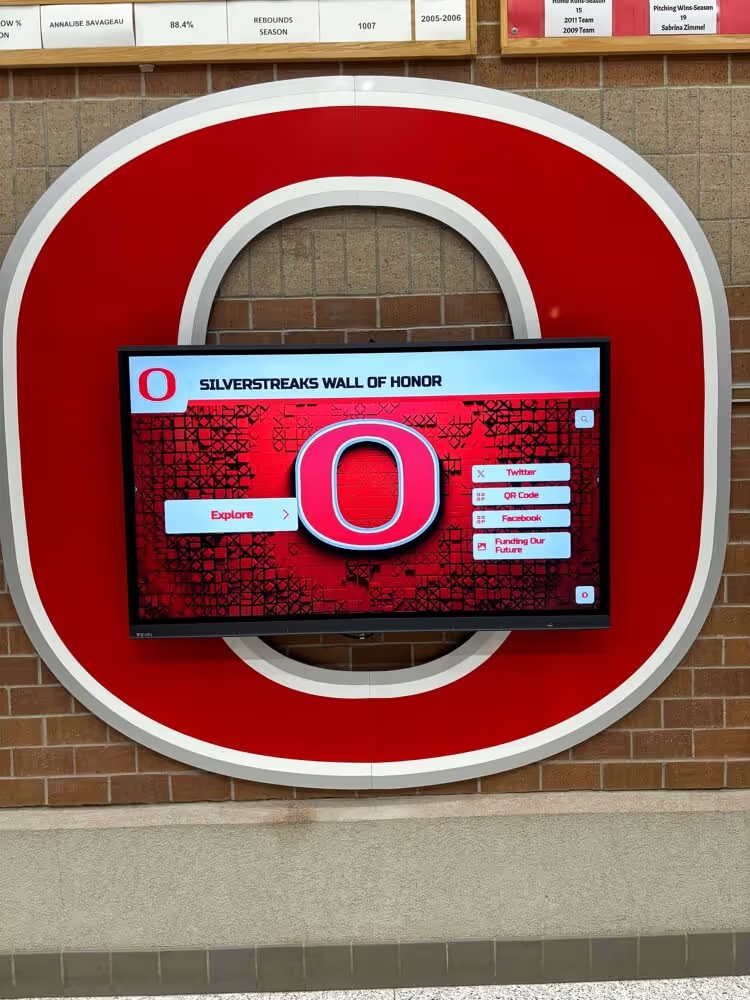
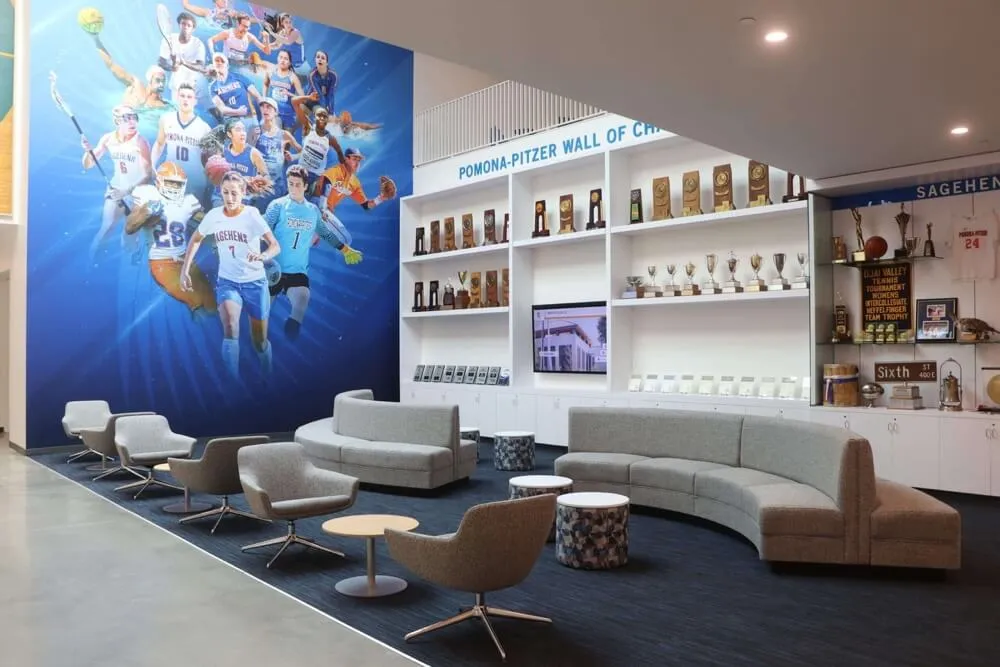
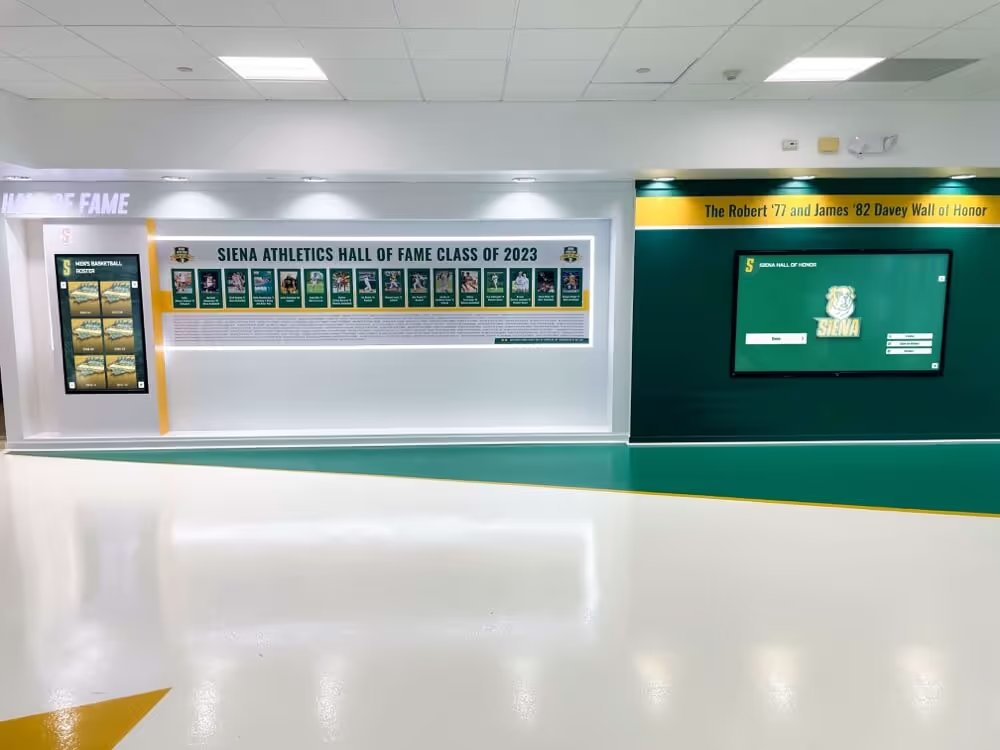
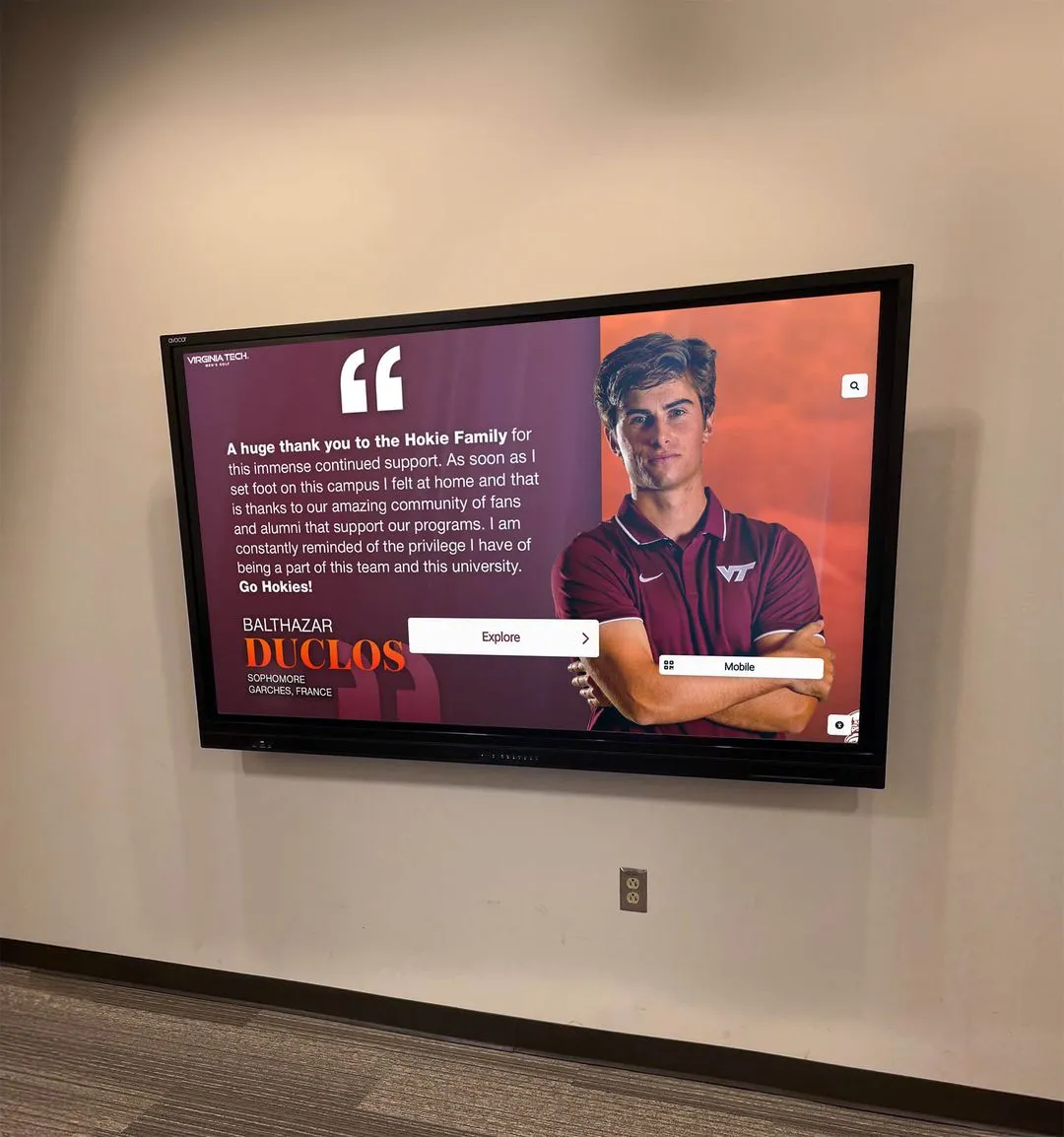
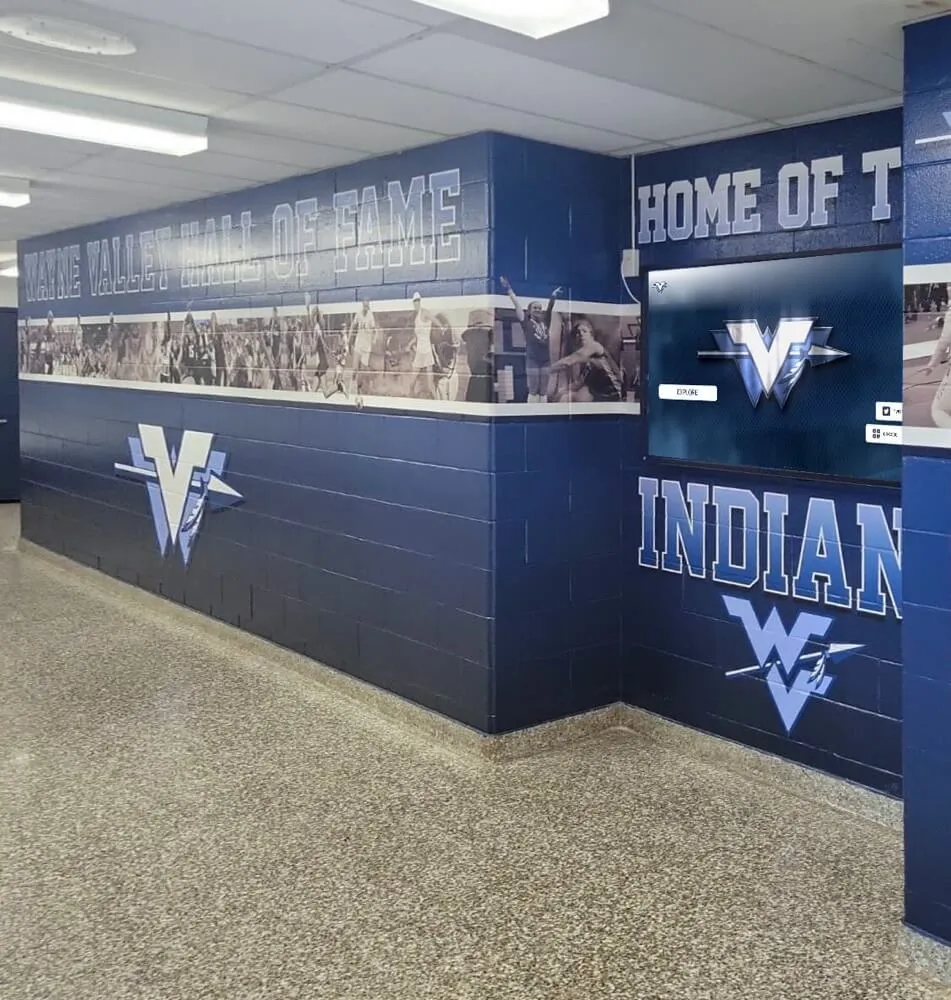
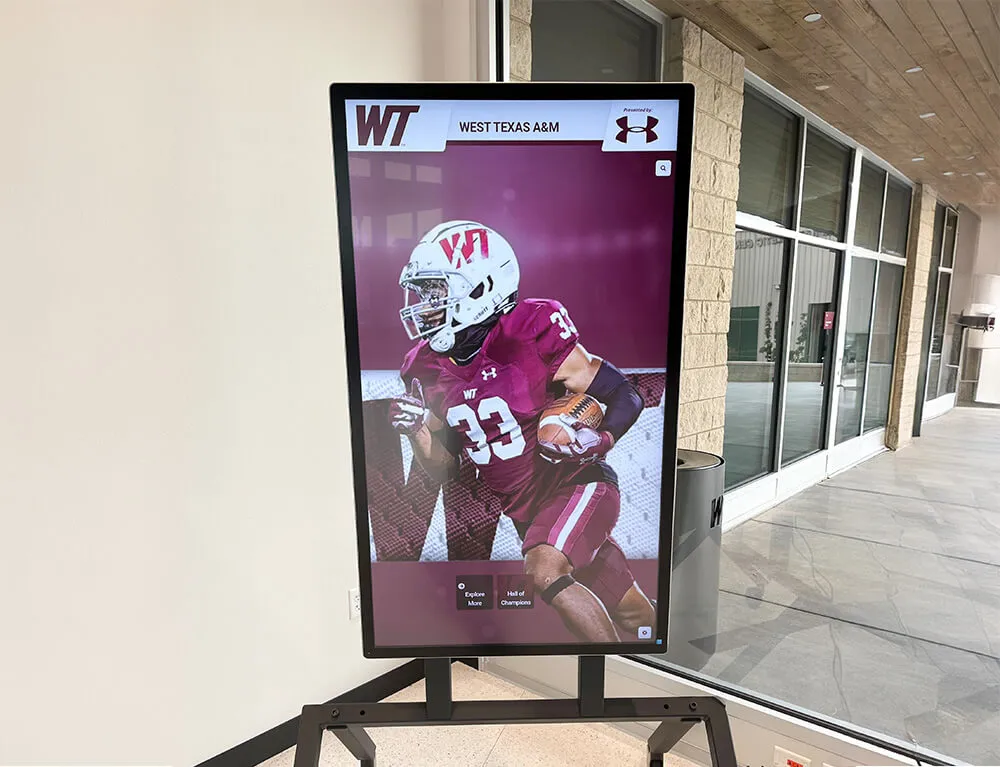
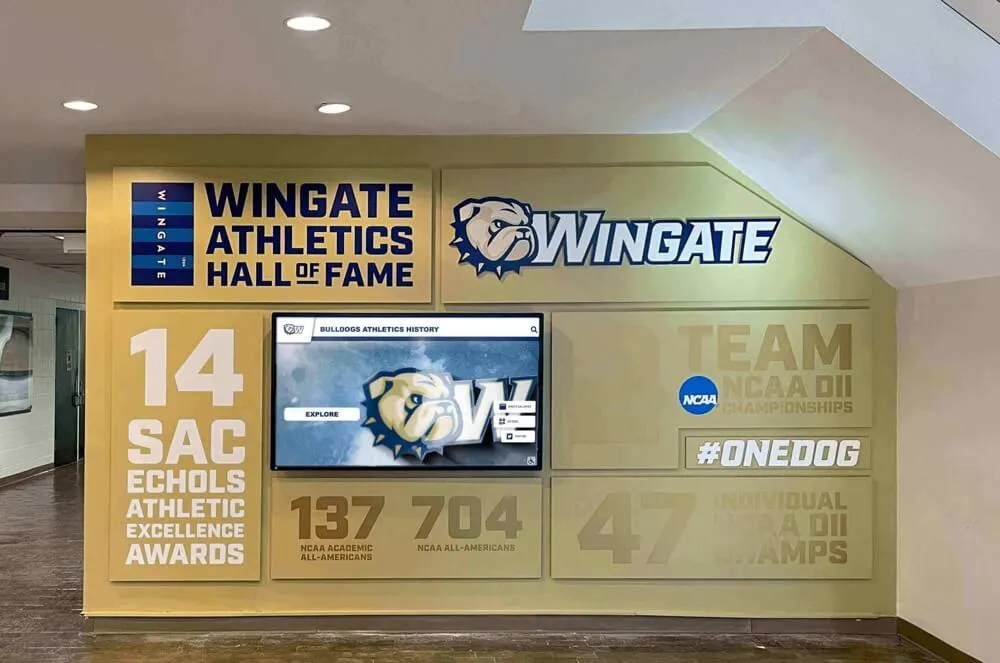
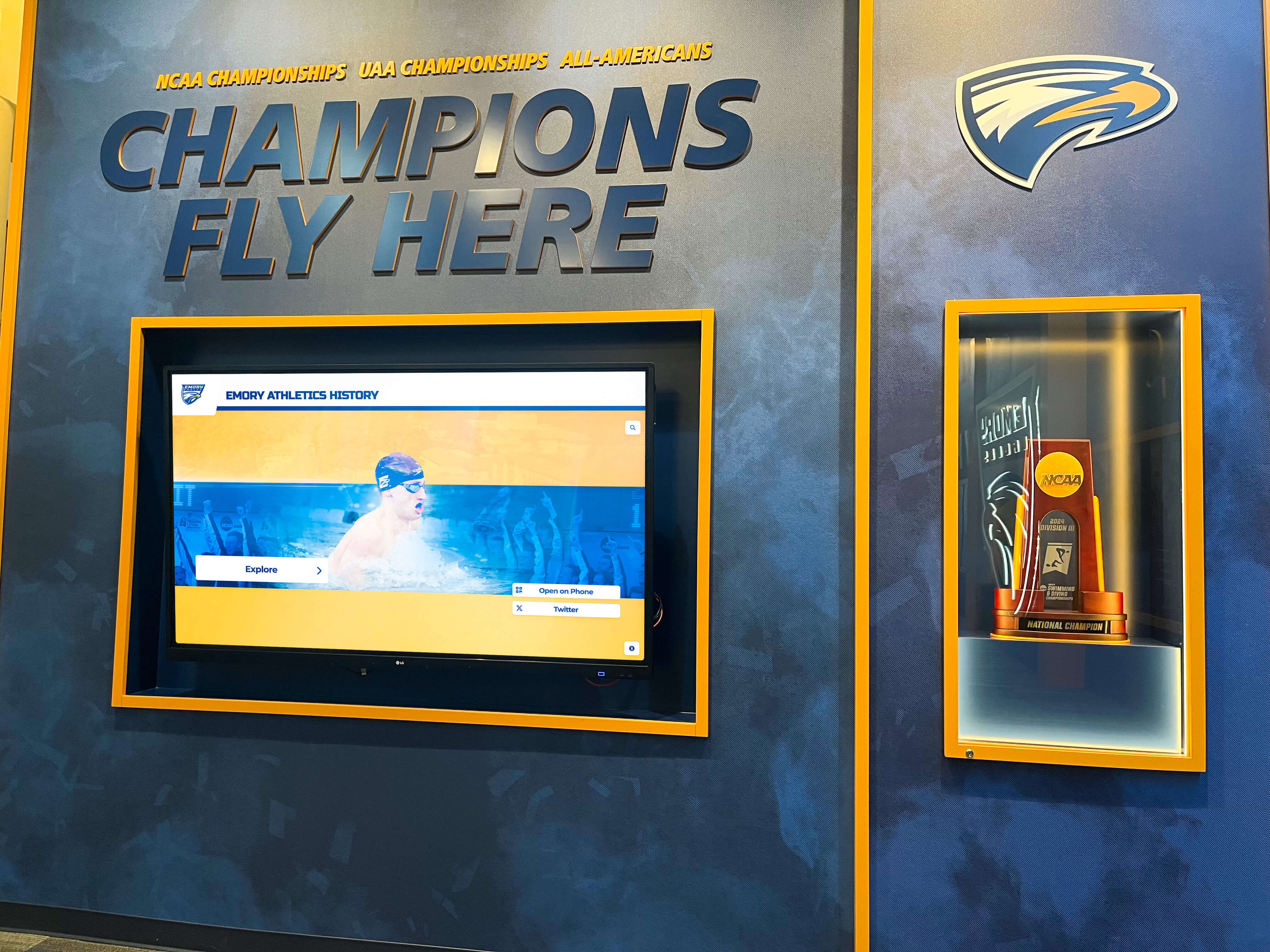
Modern recognition installations combine traditional trophies with digital displays to celebrate prestigious awards like Gatorade Player of the Year
Understanding the Gatorade Player of the Year Award
Before implementing recognition systems, understanding what makes the Gatorade Player of the Year award special helps schools design appropriate celebration that matches the honor’s significance.
The Prestige Behind the Recognition
The Gatorade Player of the Year program recognizes outstanding high school athletes in 12 sports annually. Selection committees evaluate candidates across three critical dimensions: athletic excellence at the highest competitive levels, academic achievement demonstrating strong performance in the classroom, and exemplary character shown through leadership and community service.
Each state awards one Gatorade State Player of the Year per sport, with 12 national winners selected from this pool. This selective process means approximately 610 state-level recipients and just 12 national recipients receive recognition annually across all 50 states and Washington, D.C.
What Sets Gatorade Awards Apart
Unlike purely athletic honors, Gatorade recognition requires comprehensive excellence. Recipients must excel on the field, in the classroom, and in their communities simultaneously. This holistic evaluation creates role models who demonstrate that athletic success and academic achievement can coexist through discipline, time management, and character.
The award’s history includes legendary athletes who earned Gatorade recognition before achieving professional and Olympic success. When schools properly celebrate these achievements, they connect current students to this legacy of comprehensive excellence that extends far beyond high school athletics.
The Space Challenge: Banners and Trophies
Schools with successful athletic programs accumulate recognition materials rapidly. A single Gatorade State Player of the Year receives a trophy, certificate, and often a commemorative banner hung in the gymnasium. Over decades, these banners multiply as different sports produce exceptional athletes.
The Traditional Recognition Cycle
Most schools follow a predictable pattern. When students earn Gatorade recognition, schools order custom banners featuring the athlete’s name, sport, and year. These banners get hung prominently in gymnasiums during celebration ceremonies. For several years, the banners remain visible and appreciated. Eventually, as new achievements accumulate and wall space fills, older banners create visual clutter. Schools face decisions about removing banners to make room for new recognition. Banners moved to storage often deteriorate or get misplaced during facility renovations. Some schools ultimately discard banners when storage space becomes unmanageable.
This cycle means student achievements—representing years of dedication—disappear from institutional memory despite their significance. Solutions like digital recognition displays from Rocket Alumni Solutions address this challenge by preserving every award permanently without consuming physical space.
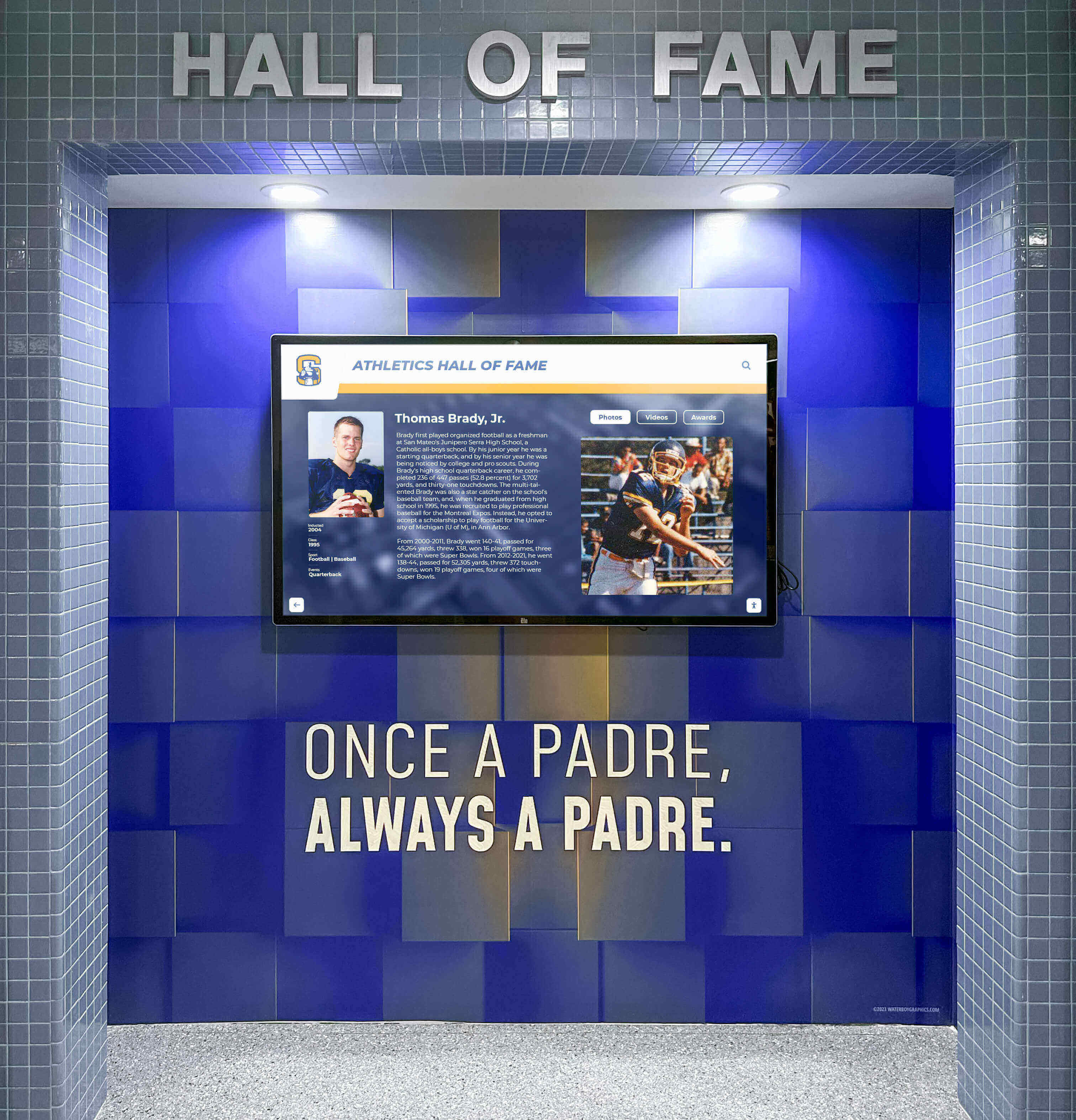
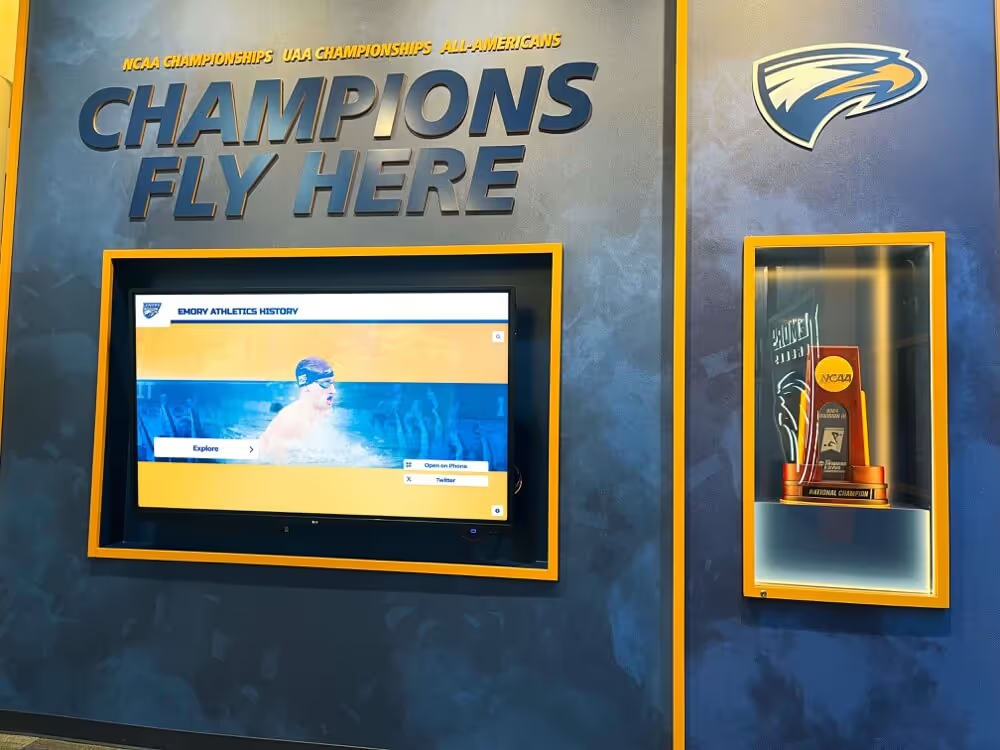
Digital displays provide unlimited capacity for recognizing athletic achievements including Gatorade Player of the Year awards
Experience Layout: Designing Gatorade Recognition Displays
Effective digital recognition for Gatorade awards requires thoughtful design that celebrates achievements comprehensively while providing intuitive navigation for visitors exploring athletic history.
Hero Zone: Featuring Current and Recent Awards
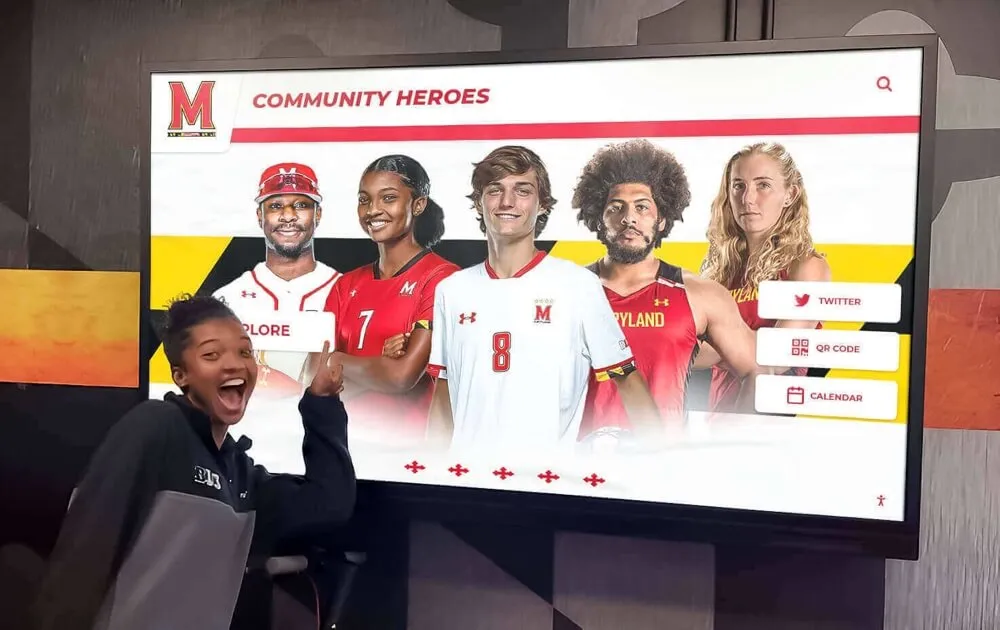
The primary display area should spotlight recent Gatorade recipients, creating immediate visual impact when visitors approach the screen. This hero zone typically occupies the top third of the display interface and includes high-resolution athlete photographs showing recipients in competitive action or formal portrait settings, award details including sport, year, and recognition level, brief achievement summaries highlighting athletic statistics and accomplishments, and automatic rotation cycling through recent recipients every 10-15 seconds.
Visual Hierarchy and Attention
Design the hero zone to draw visitors from across rooms or hallways. Use school colors and athletic branding to create cohesive visual identity that reinforces institutional pride. Feature the Gatorade logo appropriately to acknowledge the award’s prestige while maintaining primary focus on student athletes and their achievements.
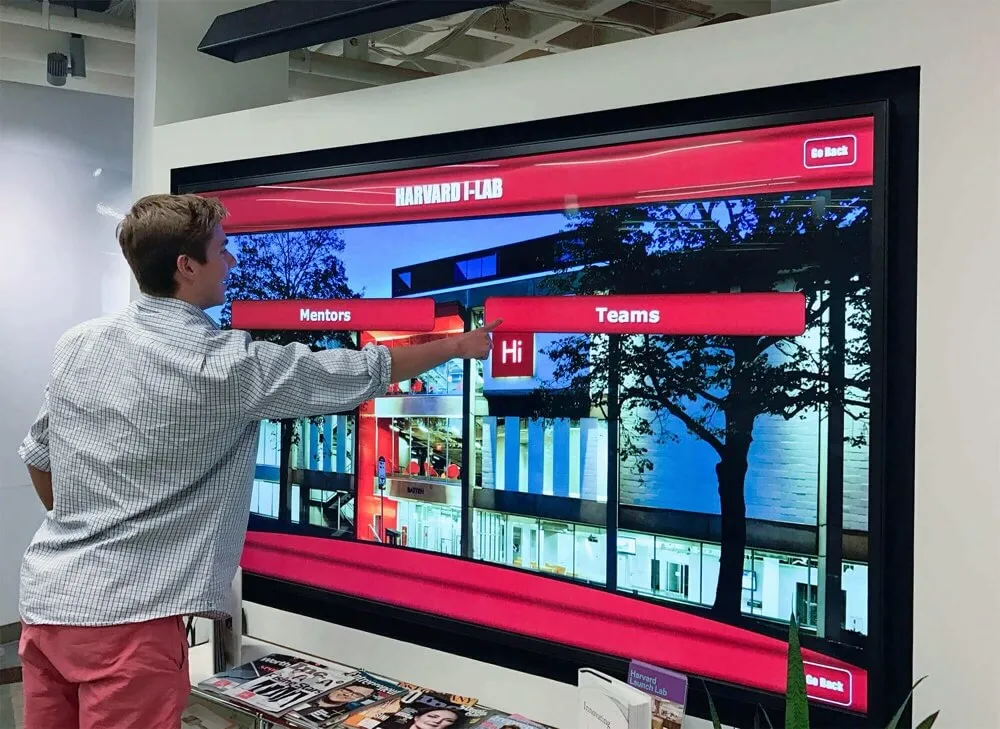
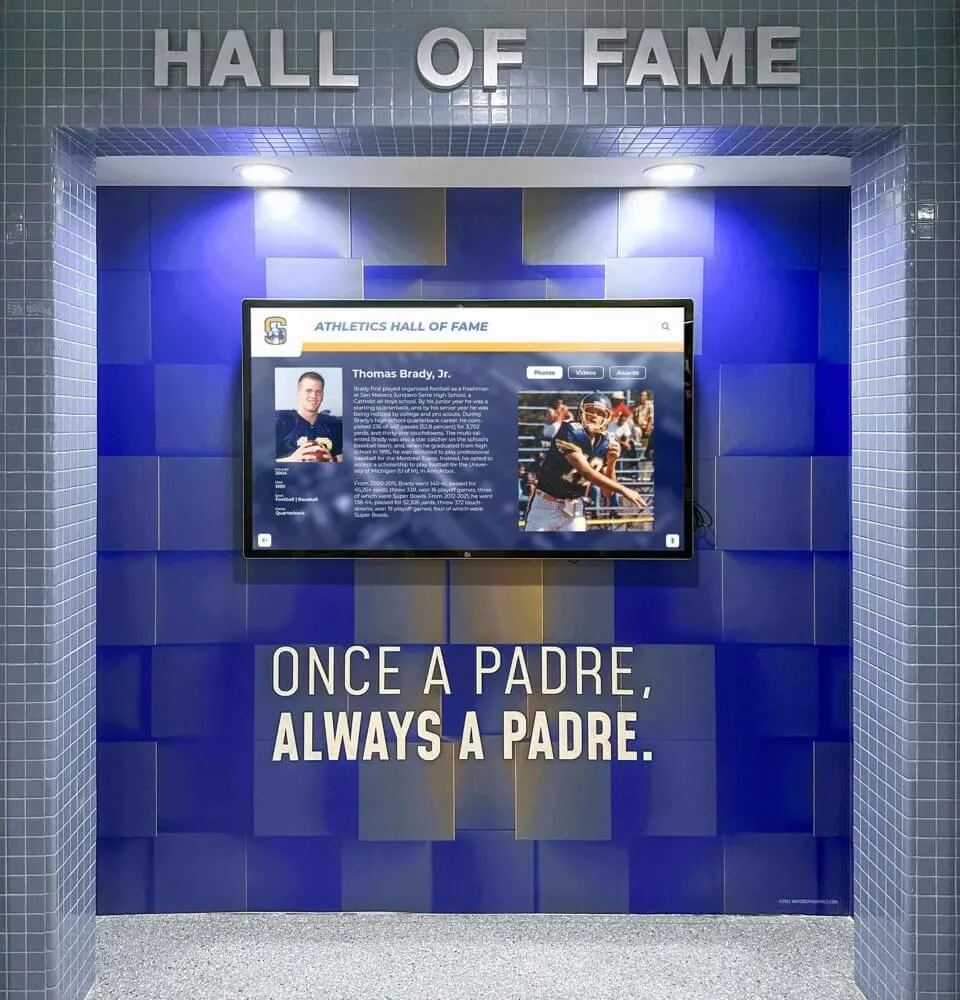
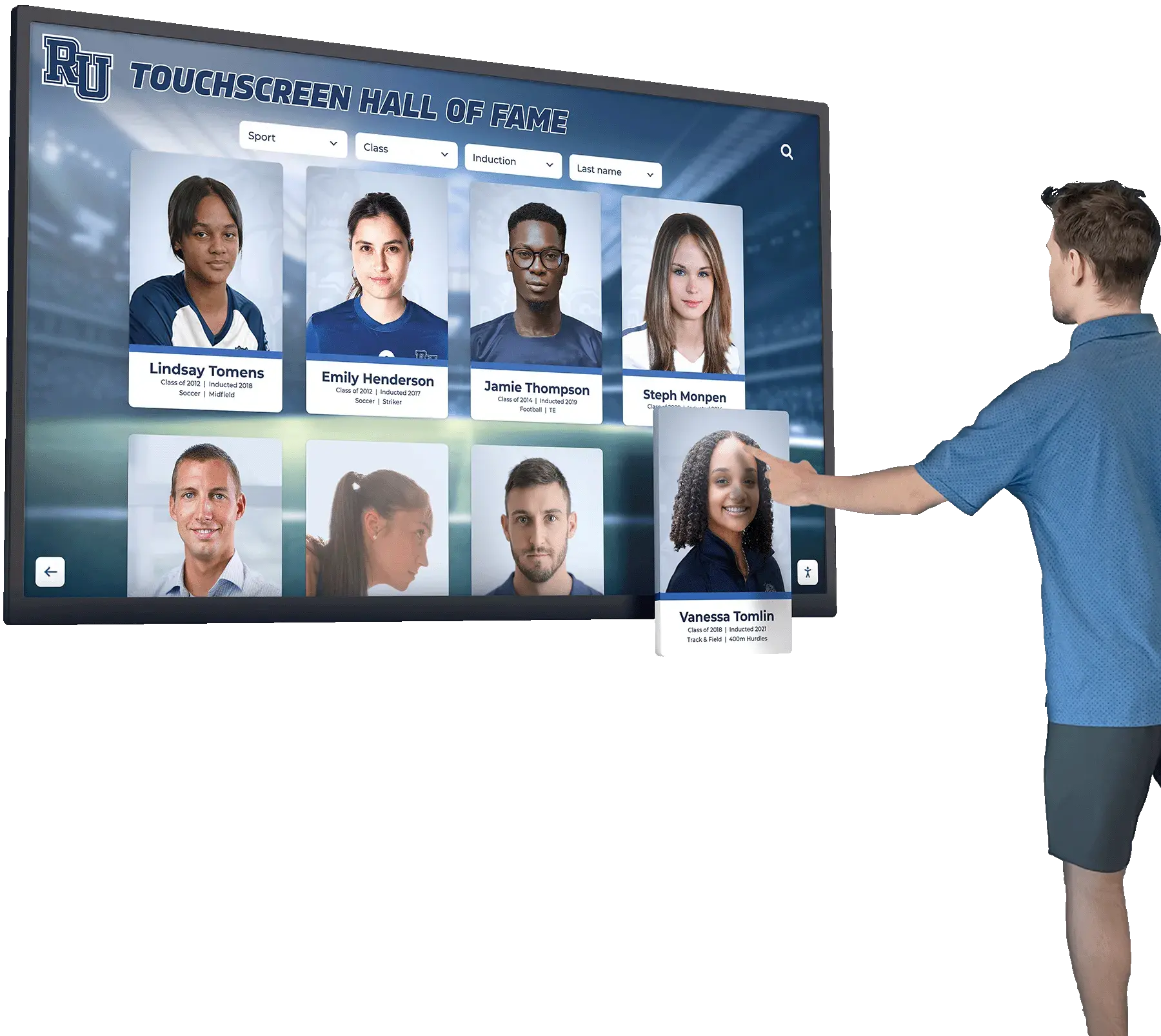
The hero zone serves as visual hook capturing attention and inviting deeper exploration through touchscreen interaction. Once engaged, visitors can tap any featured athlete to access complete profile information including detailed athletic statistics, academic achievements and honors, leadership roles and community service, quotes from coaches about athlete development, college athletic continuation information, and photo galleries spanning the athlete’s high school career.
Content Modules: Organizing Athletic Excellence
Beyond the hero zone, organize Gatorade recognition into logical content modules enabling efficient discovery and exploration.
Sport-Based Navigation
Create dedicated sections for each sport offering Gatorade recognition. Visitors can tap sport icons or names to view all recipients in that category chronologically. This organization helps parents, coaches, and students interested in specific sports quickly locate relevant achievements.
Sports covered by Gatorade Player of the Year awards include baseball (boys), basketball (boys and girls), cross country (boys and girls), football (boys), soccer (boys and girls), softball (girls), track and field (boys and girls), and volleyball (girls). Organizing by sport creates clear pathways through potentially decades of achievement history.
Chronological Archives
Complement sport-based navigation with chronological organization allowing visitors to explore achievements by decade or specific years. This timeline approach appeals to alumni returning for reunions who want to revisit their era, current students researching program history, and community members interested in tracking program development over time.
Search and Filter Functionality
Implement robust search capabilities enabling visitors to find specific athletes by name, locate recipients from particular graduation years, filter by state versus national recognition level, and discover multiple-award recipients who earned Gatorade honors in different years or sports.
Search functionality proves particularly valuable during events when parents and visitors want to quickly locate their children or specific athletes without scrolling through entire archives.
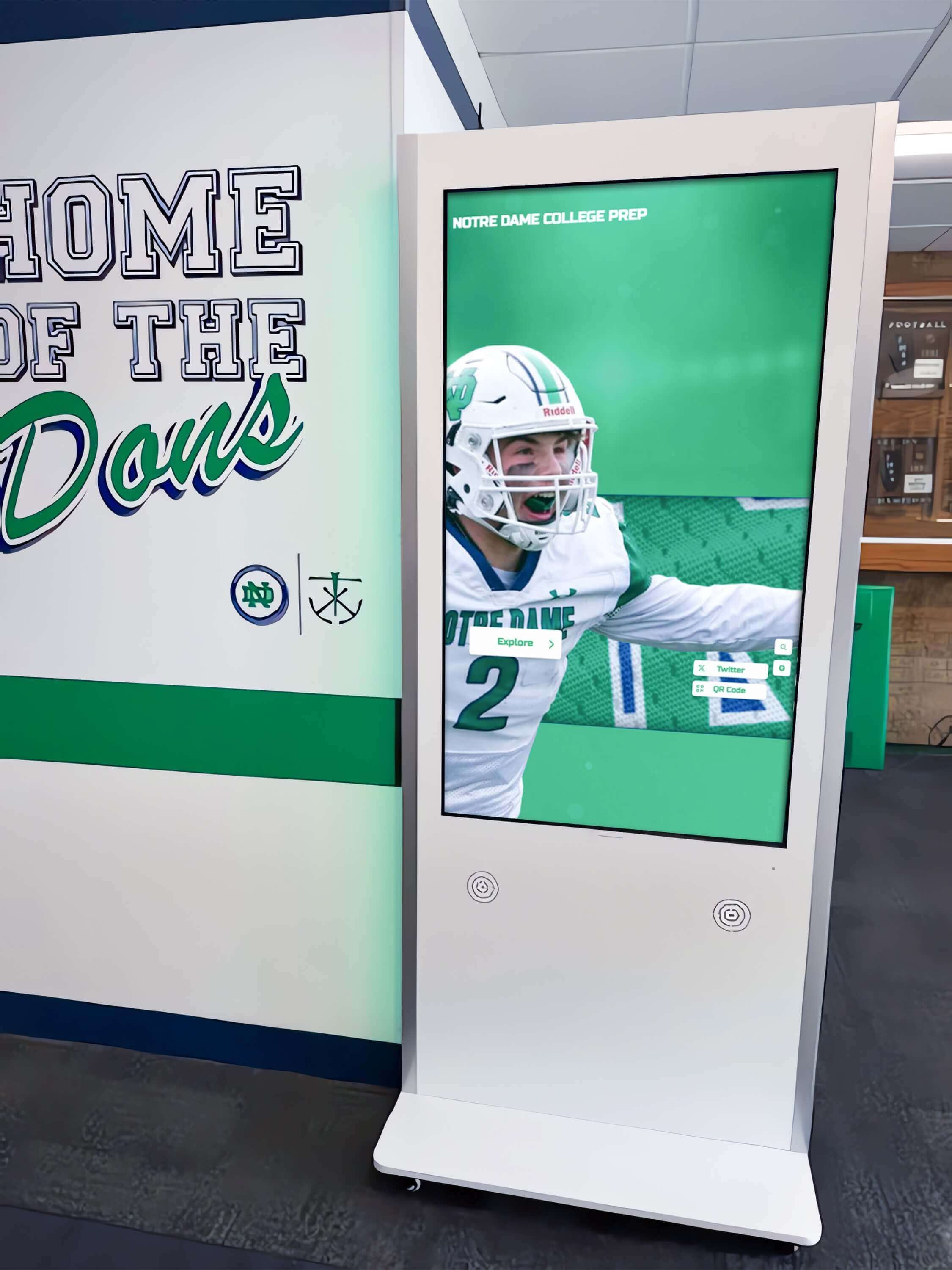
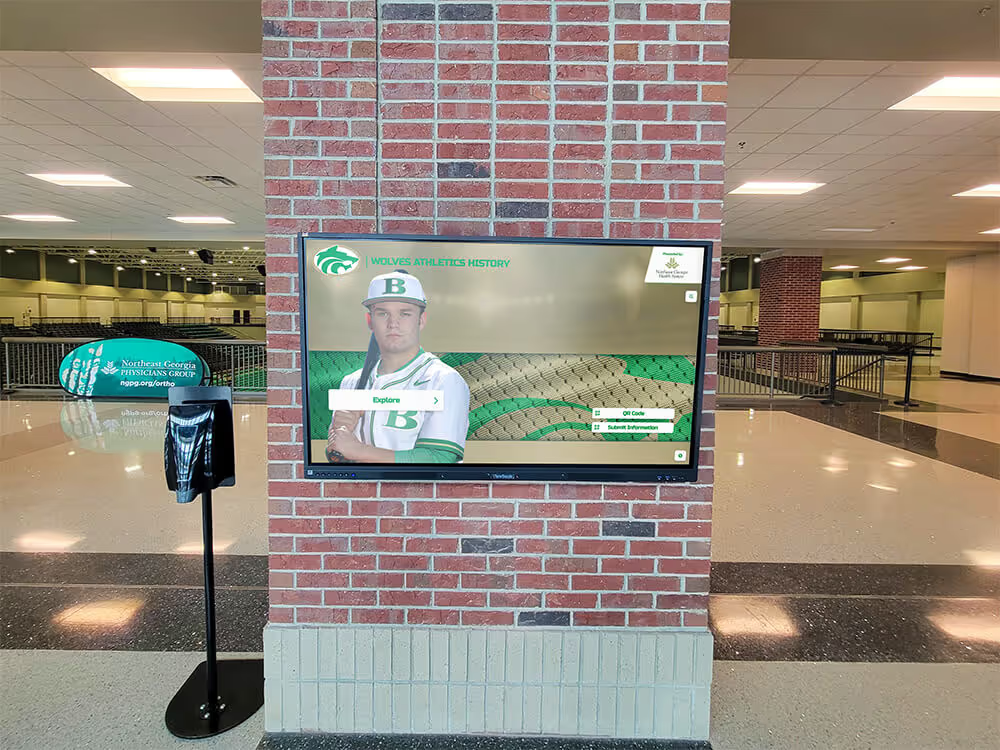
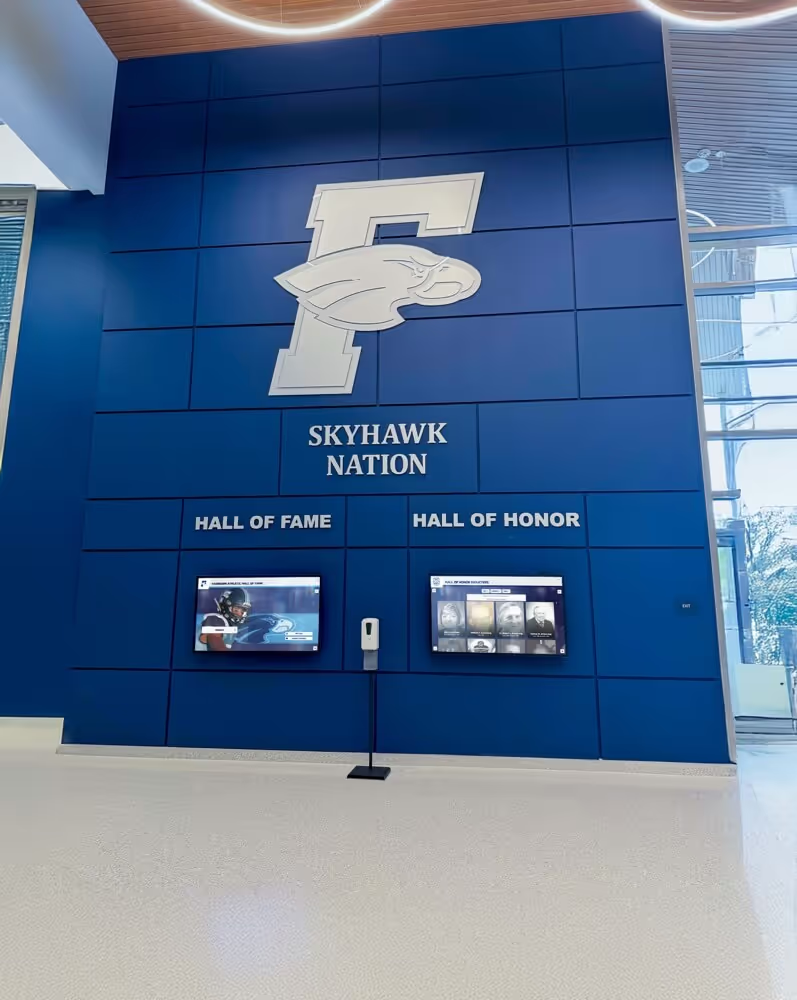
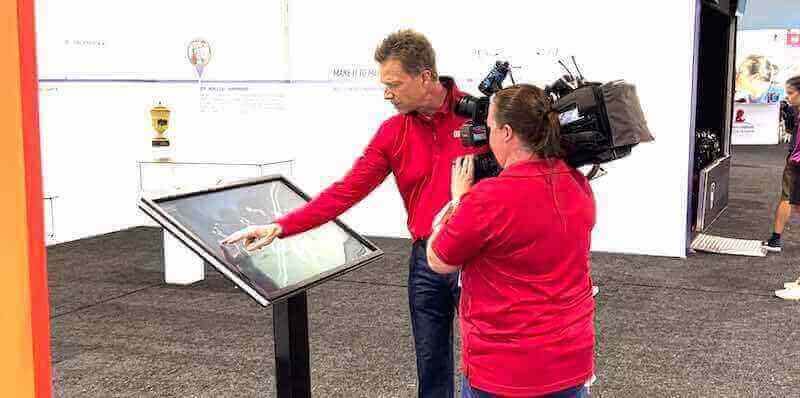
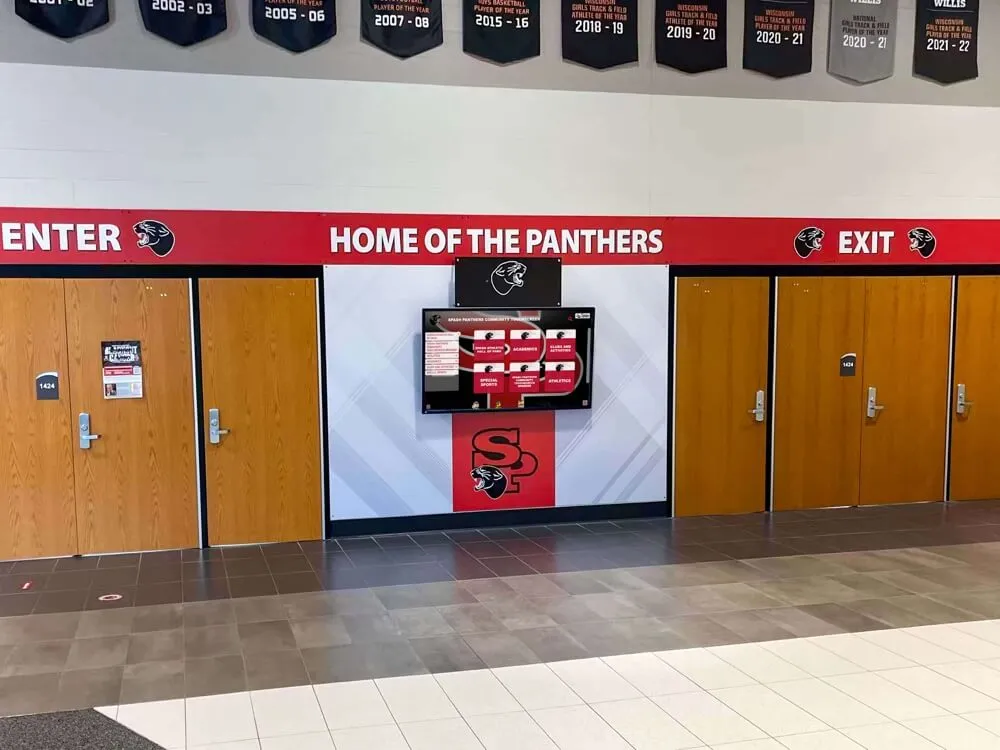
Freestanding kiosks positioned in high-traffic hallways ensure maximum visibility for athletic recognition
Understanding state championship display strategies provides frameworks for organizing athletic achievements that apply equally to individual honors like Gatorade awards.
Content Blocks and Motion: Bringing Recognition to Life
Static information fails to engage digital-native students and visitors accustomed to dynamic, interactive content. Effective Gatorade recognition displays incorporate multimedia elements and subtle motion that create compelling experiences without overwhelming users.
Photography Standards for Athletic Profiles
Quality visual content determines recognition impact more than any other factor. Invest in professional photography that captures athletes authentically and inspirationally.
Action Photography
Feature images showing recipients competing in their sports at peak moments demonstrating athletic excellence. Action shots communicate athletic ability viscerally in ways statistics alone cannot. Capture variety including offensive and defensive plays for team sports, individual performance moments for track, cross country, and golf, championship game situations showing athletes under competitive pressure, and celebratory moments after victories and achievements.
Maintain high resolution (minimum 1920×1080 pixels) ensuring clarity on large displays. Shoot in good lighting conditions avoiding grainy, poorly exposed images that detract from professional presentation. Ensure backgrounds remain clean or appropriately blurred keeping focus on athletes rather than distracting environmental elements.
Portrait Photography
Complement action shots with formal portraits providing clear athlete identification. These images work well for profile headers, search results, and situations where formal presentation proves more appropriate than action photography.
Schedule portrait sessions during pre-season or specific photo days ensuring consistent lighting, backgrounds, and composition across all athletes. This consistency creates visual cohesion throughout recognition displays maintaining professional aesthetic quality.
Video Integration and Highlight Reels
Video content creates emotional engagement that static images cannot match. Integrate video strategically enhancing rather than overwhelming recognition displays.
Championship Moments and Game Highlights
Include video clips showing Gatorade recipients during significant competitive moments. These might feature game-winning plays from championship matches, dominant performances demonstrating exceptional skill, athletic plays that received regional or national attention, and team celebrations after major victories.
Keep individual clips concise—15 to 45 seconds typically proves optimal. Longer videos risk losing visitor attention, while shorter clips provide satisfying glimpses of athletic excellence without requiring extended viewing commitment.
Interview Segments and Personal Reflection
Record brief interviews with Gatorade recipients discussing their athletic journeys, sharing advice for younger athletes, reflecting on what the award means personally, acknowledging coaches, teammates, and families, and discussing how athletic participation shaped character and life skills.
These personal narratives transform recognition from documentation to storytelling, helping current students connect emotionally with past recipients and understand pathways to similar achievement. Programs should explore digital storytelling approaches that effectively communicate athletic excellence through multimedia content.
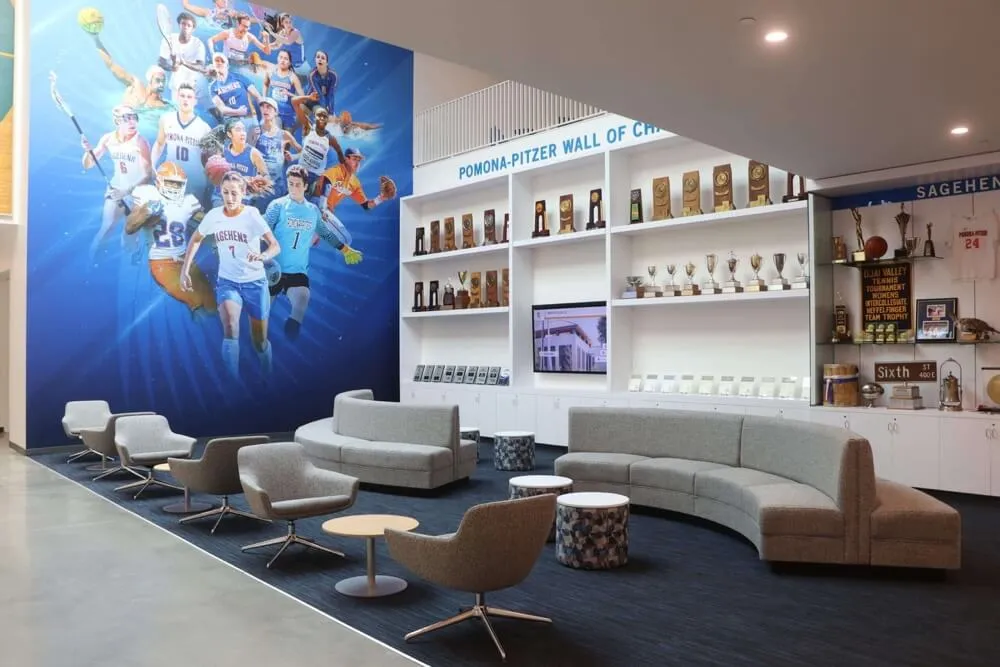
Creating comfortable viewing environments encourages extended engagement with athletic recognition content
Animation and Micro-Interactions
Subtle motion and animation guide user attention and provide feedback during interaction without creating distracting visual noise.
Entrance Animations
When athletes or content sections appear on screen, use smooth fade-in or slide transitions rather than abrupt appearance. These subtle animations feel natural and polished while maintaining user focus on content rather than flashy effects.
Touch Feedback
Provide immediate visual response when visitors tap interactive elements. Buttons and cards should show slight scale changes, color shifts, or shadow adjustments confirming interaction registration. This feedback prevents confusion and repeated tapping that can frustrate users when response remains unclear.
Background Elements
Consider subtle background motion like slowly panning across game day photographs, gently floating school logos or mascot imagery, or gradual color gradient shifts through school color palette. These background elements create visual interest during idle states without competing with primary content for attention.
Avoid aggressive animations, rapid motion, or distracting visual effects that make content difficult to read or create overstimulating environments. Recognition displays should feel engaging yet dignified, matching the significance of achievements being celebrated.
Accessibility and UX Considerations
Inclusive design ensures all community members can access and enjoy Gatorade recognition regardless of physical abilities or technical familiarity.
Physical Accessibility Requirements
Position displays at heights accommodating wheelchair users and visitors of varying heights. ADA guidelines recommend interactive elements between 15 and 48 inches from the floor for forward approach, or higher when side approach is possible.
Mounting Height and Angle
Wall-mounted displays should position touchscreens with lower edges approximately 36-40 inches above the floor, allowing interaction from wheelchair height while remaining visible to standing users. Slight forward tilt (5-10 degrees) improves viewing angles and reduces glare from overhead lighting.
Freestanding kiosks offer flexibility positioning displays at optimal heights while providing stability. When selecting or designing kiosks, ensure bases don’t protrude excessively creating tripping hazards while maintaining structural stability preventing tip-over risks from vigorous interaction.
Clear Space and Navigation
Maintain clear floor space (minimum 30×48 inches) in front of displays enabling wheelchair users to approach without obstacles. Ensure surrounding furniture, trash receptacles, or equipment don’t block access or create crowded conditions making comfortable interaction difficult.
In high-traffic locations like athletic facility lobbies or main hallways, position displays slightly recessed or to the side preventing interference with primary circulation paths while maintaining visibility from passing traffic.
Text Legibility and Contrast
Ensure all text remains readable from typical viewing distances (3-6 feet) and under various lighting conditions found in athletic facilities.
Font Selection and Sizing
Use clean, professional sans-serif fonts (like Arial, Helvetica, or custom school fonts) for optimal screen readability. Minimum text sizes should include 32-40 point for body text, 48-60 point for athlete names and headings, and 24-28 point for supporting information and captions.
Avoid decorative fonts for body text, though stylized typography can work effectively for headers and brief accent elements when readability remains strong.
Color Contrast and Visual Hierarchy
Maintain high contrast ratios between text and backgrounds. Dark text on light backgrounds or light text on dark backgrounds proves most effective. WCAG AA standards require contrast ratios of at least 4.5:1 for body text and 3:1 for large text.
School colors don’t always provide optimal contrast. When incorporating brand colors, test readability carefully and adjust saturation, brightness, or add backgrounds ensuring text remains easily readable. Accessibility benefits everyone, not just visitors with vision impairments—high contrast content reads more easily for all users under varying lighting conditions.
Resources on digital hall of fame design demonstrate how schools create recognition systems that balance aesthetic appeal with accessibility requirements.
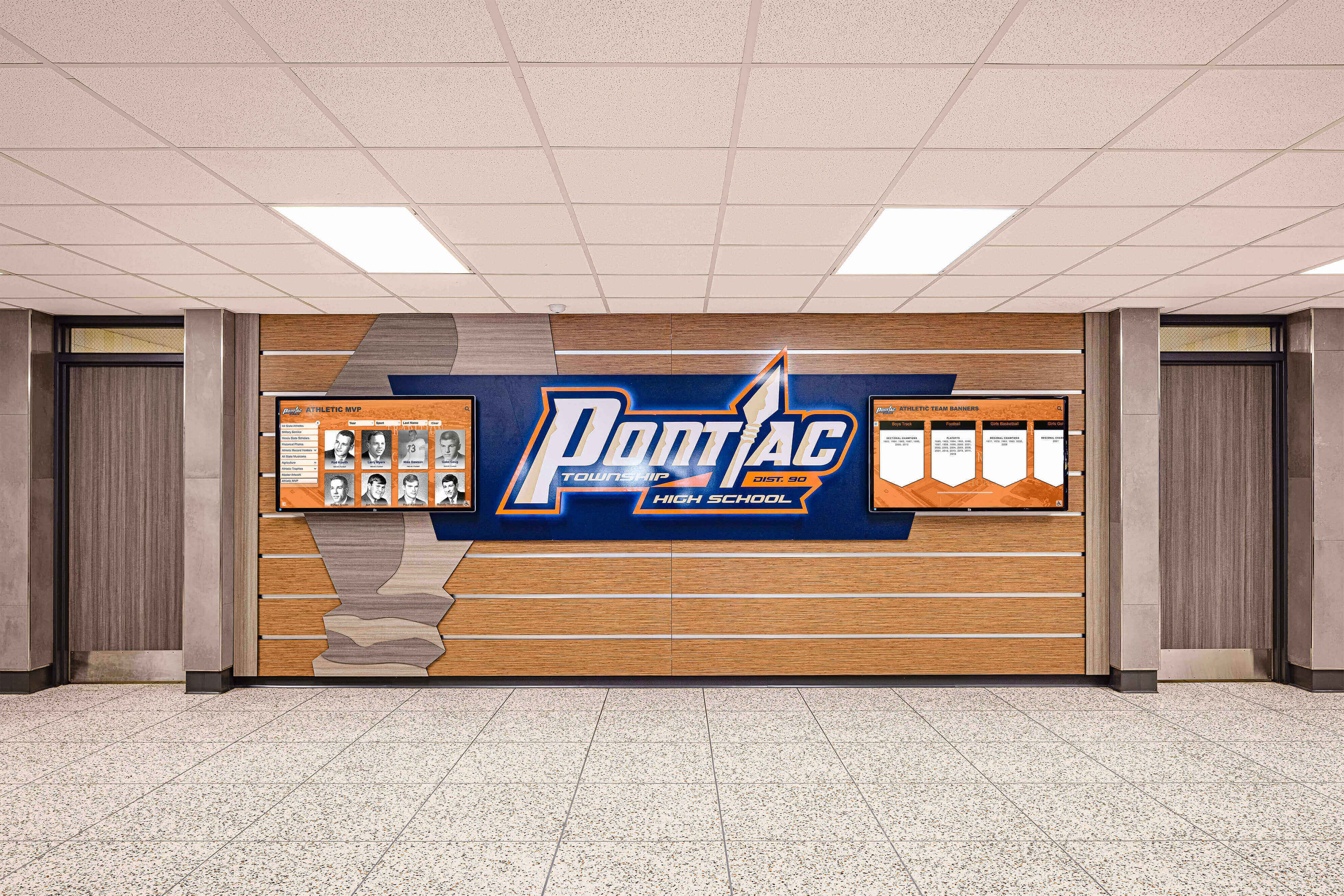
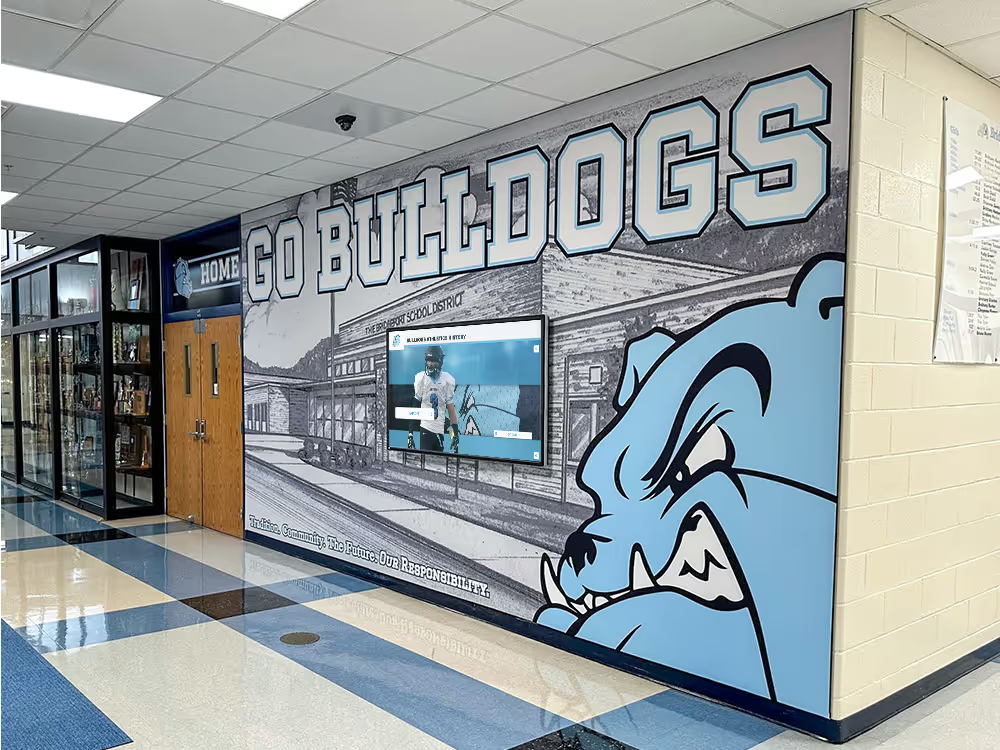
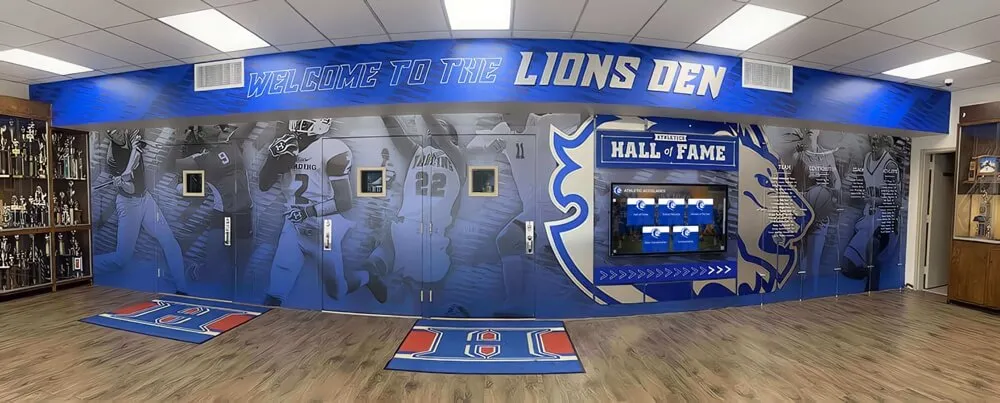
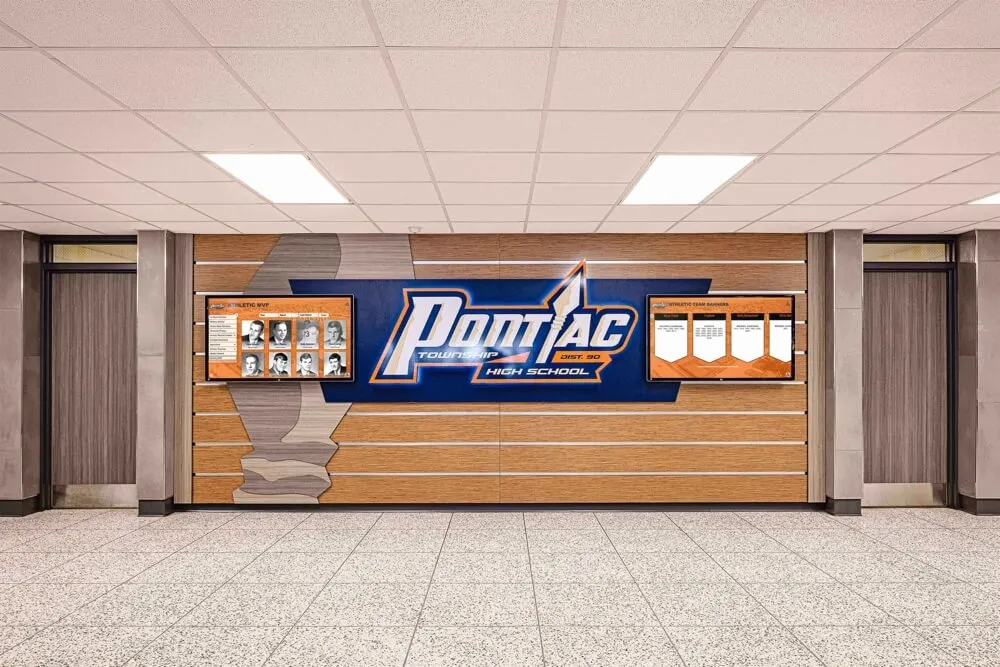
Hallway installations bring athletic recognition into daily student experiences rather than limiting visibility to gymnasium-only access
QR Codes and Mobile Access
Extend recognition accessibility beyond physical displays through QR code integration and mobile-responsive web platforms.
Physical Display QR Codes
Include prominent QR codes on or near recognition displays enabling visitors to instantly access mobile-friendly versions of content on personal smartphones. This approach offers several advantages including allowing visitors to explore content privately without waiting for display availability, enabling easy sharing with family members unable to visit in person, providing accessible alternatives for visitors who find touchscreen interaction difficult, and extending engagement beyond brief display visits as visitors continue exploring from home.
Generate dynamic QR codes linking to athlete-specific profiles or sport-specific sections rather than generic landing pages. This targeted approach delivers immediate value rather than requiring additional navigation after scanning.
Mobile-Responsive Web Platforms
Ensure recognition content displays properly on smartphones and tablets. Mobile access proves particularly valuable for alumni revisiting their achievements years after graduation, parents sharing their children’s recognition with relatives, prospective student-athletes researching program histories during recruitment, and community members wanting to explore achievements without campus visits.
Solutions like Rocket Alumni Solutions provide integrated platforms where content managed once publishes automatically to physical displays, web portals, and mobile interfaces—ensuring consistent recognition everywhere without maintaining separate systems.
Brand Integration: Institutional Identity and Visual Cohesion
Gatorade Player of the Year recognition displays should reflect institutional branding while celebrating partnership with Gatorade’s prestigious program.
School Color Palette and Design Language
Incorporate school colors systematically throughout recognition interfaces creating cohesive visual identity that reinforces institutional pride and belonging.
Primary and Accent Colors
Use school primary colors for major interface elements including navigation bars and section headers, background colors and card elements, and heading text and emphasis elements. Apply accent colors for interactive elements like buttons and links, highlighting active selections and current navigation location, and decorative elements and visual separators.
Maintain color balance avoiding overwhelming monochromatic presentations. Even schools with bold single-color branding (red, blue, green) benefit from incorporating neutral tones (white, black, gray) that provide visual relief and enhance readability.
Logo and Mascot Integration
Feature school logos and mascot imagery appropriately throughout recognition displays. Logos work effectively in interface headers establishing consistent institutional identity across all screens, profile backgrounds as subtle watermarks reinforcing school affiliation, and loading screens or transitions maintaining branded experience during content changes.
Avoid excessive logo repetition that creates cluttered, busy interfaces. Strategic placement communicates institutional identity without overwhelming primary content celebrating student achievements.
Gatorade Award Partnership Recognition
While celebrating students represents the primary focus, appropriate acknowledgment of the Gatorade award program itself reinforces recognition prestige.
Gatorade Branding Guidelines
Include the official Gatorade Player of the Year logo on award recipient profiles, display introductory content explaining award significance and selection criteria, and maintain appropriate branding following any guidelines provided by Gatorade’s recognition program.
This partnership acknowledgment educates viewers about award prestige while honoring Gatorade’s role in supporting high school athletics and comprehensive student-athlete development.
Custom Backgrounds and Environmental Imagery
Location-specific imagery creates authentic connections between recognition displays and institutional environments.
Facility Photography
Incorporate photographs of actual athletic facilities where recipients competed including gymnasium interiors during competitions, stadium and field photography showing game day atmosphere, and facility exterior shots connecting recognition to specific campus locations.
This environmental imagery grounds recognition in authentic institutional settings rather than generic stock photography that could represent any school anywhere. Visitors should immediately recognize locations and feel connected to shared spaces where celebrated achievements occurred.
Action Photography from Actual Events
Prioritize photographs captured during real games and competitions over staged or practice session imagery whenever possible. Authentic game day photography captures genuine emotion, competitive intensity, and memorable moments that staged photos cannot replicate convincingly.
Build relationships with local sports photographers, parent volunteers, and student media programs to ensure consistent coverage generating content for future recognition displays. Proactive content collection prevents retroactive scrambling for quality imagery when creating athlete profiles.
Understanding athletic facility digital displays provides frameworks for creating cohesive recognition environments that reinforce institutional identity throughout athletic spaces.
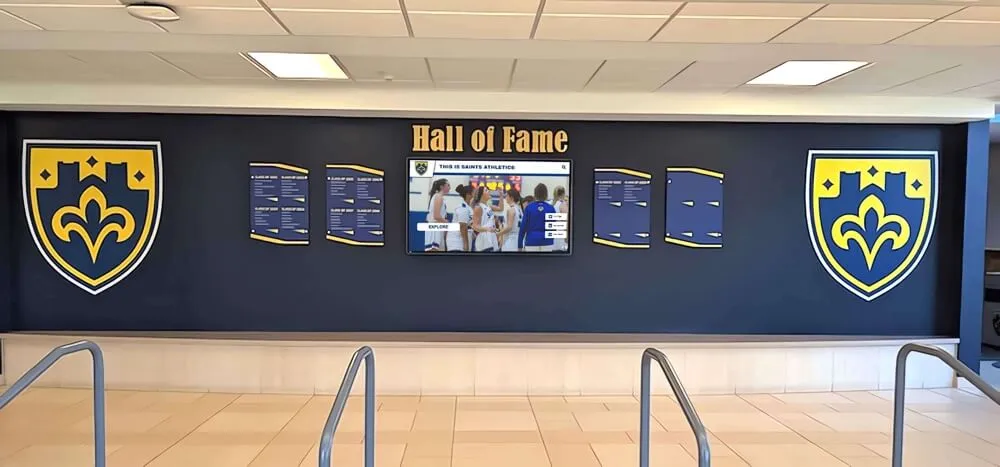
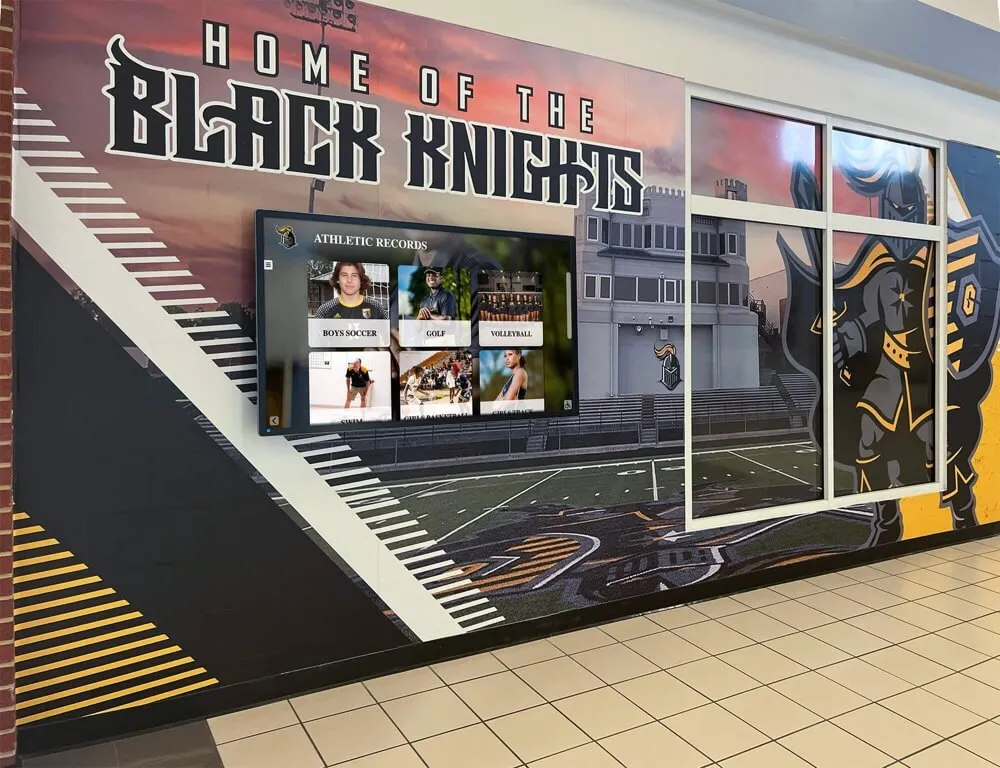
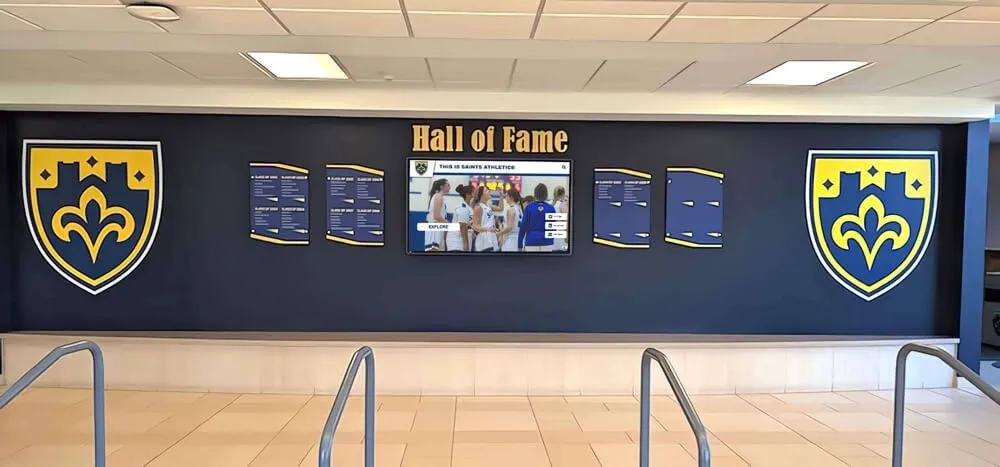
Hybrid approaches combine traditional recognition elements with digital displays creating comprehensive systems serving diverse stakeholder preferences
Activation Plan: Implementing Gatorade Recognition Systems
Successful implementation requires systematic planning addressing content development, technology selection, installation coordination, and ongoing maintenance.
Content Development and Information Gathering
Quality recognition depends on comprehensive, accurate information about Gatorade recipients spanning program history.
Historical Award Documentation
Begin by identifying all Gatorade Players of the Year from your institution’s history. Sources for this research include athletic department archives and records, yearbooks from years when awards were earned, alumni association files and institutional histories, local newspaper coverage and sports reporting, and direct outreach to former coaches and athletic directors who remember recipients.
For each identified recipient, gather essential information including full name and graduation year, sport and position played, year the Gatorade award was received, state versus national recognition level, season statistics and athletic achievements, academic honors and GPA, community service and leadership activities, and college athletic continuation and subsequent career information.
Photography and Multimedia Collection
Comprehensive visual documentation brings recognition to life. Collect action photographs from games and competitions, formal portrait photos from school directories or yearbooks, team photographs showing full rosters and coaching staff, video footage from games if available, newspaper clippings and media coverage, and award ceremony documentation showing trophy presentations.
For recent recipients, professional photography sessions can fill gaps. For historical recipients, work with alumni and families who may possess personal photograph collections willing to share for institutional recognition purposes.
Programs should reference academic history archiving approaches that apply equally to athletic achievement documentation requiring systematic information gathering and preservation.
Technology Selection and Vendor Evaluation
Digital recognition displays require appropriate hardware and software working together seamlessly.
Display Hardware Considerations
Commercial-grade touchscreen displays rated for continuous operation prove essential for public installations operating daily for years. Key specifications include display size (43-55 inches for hallways, 55-65 inches for lobbies, 65-75+ inches for large gathering spaces), brightness levels (minimum 350 cd/m² for indoor installations, higher for locations with significant natural light), touch technology (infrared or capacitive touch providing responsive, durable interaction), and commercial-grade ratings ensuring 16-24 hour daily operation capabilities.
Consumer televisions designed for residential use typically fail within months when installed in demanding public environments. The additional investment in commercial hardware pays dividends through reliability and longevity.
Recognition Software Platforms
Purpose-built recognition platforms designed specifically for celebrating achievements deliver superior results compared to generic digital signage software adapted for trophy displays. Essential capabilities include intuitive content management requiring no technical expertise, dedicated profile architecture organizing content around individuals and achievements, powerful search and filtering enabling quick content discovery, multimedia support for photographs, videos, and rich text, and analytics tracking engagement demonstrating program value.
Solutions like Rocket Alumni Solutions provide comprehensive systems designed specifically for institutional recognition in educational environments. When evaluating software options, request demonstrations with sample content similar to your intended use case rather than relying on generic presentations showing capabilities you may not need.
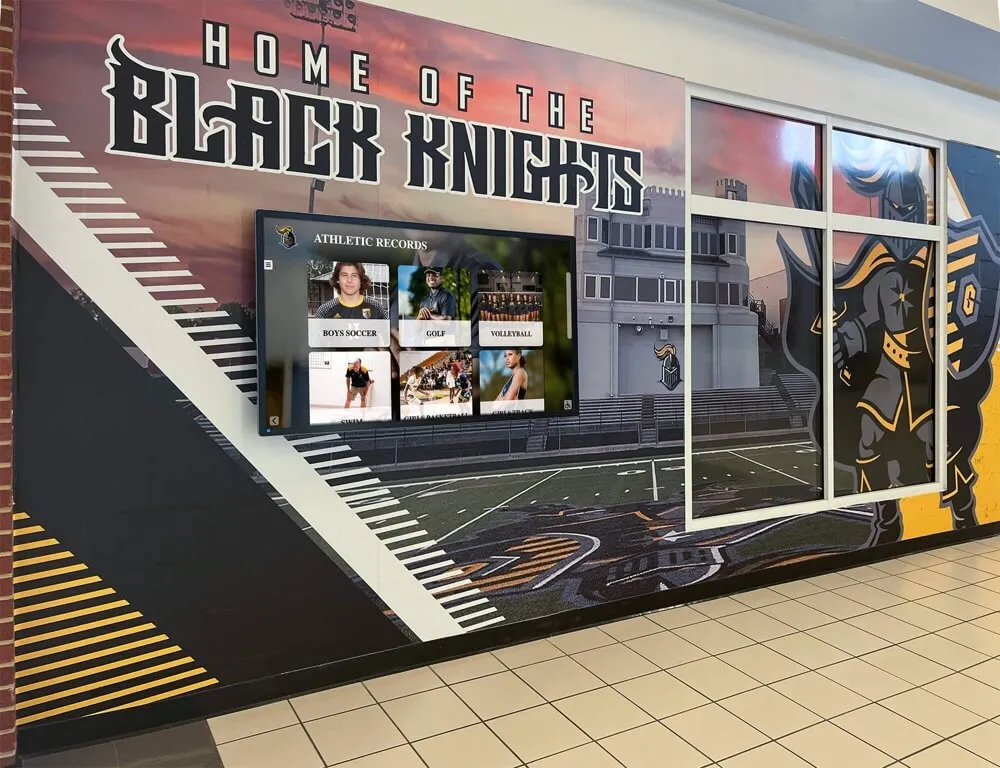
Comprehensive installations celebrate multiple achievement categories including individual honors and team records
Installation Location Strategy
Physical placement dramatically influences recognition visibility and community engagement.
High-Traffic Athletic Facility Locations
Position recognition displays where athletes, families, and visitors naturally congregate including main gymnasium lobbies and entrance areas, athletic facility hallways connecting locker rooms and gyms, stadium or arena concourses and gathering spaces, training facility waiting areas and family viewing zones, and athletic department offices where recruits and families visit.
These athletic-focused placements ensure recognition reaches audiences most interested in athletic achievement while creating inspiring environments for current athletes who benefit from regular exposure to program excellence tradition.
Whole-School Integration and Visibility
Consider additional installations extending recognition beyond athletic facilities including main school entrance lobbies welcoming all visitors, commons areas and cafeterias where students gather daily, library spaces attracting academic-focused students, and administration hallways where community members conduct business.
This whole-school approach communicates that athletic achievement matters to entire institutions rather than existing as separate athletic department concern. It also ensures athletes competing in all sports receive recognition throughout campus rather than limiting visibility to audiences already engaged with athletics.
Content Refresh and Update Cadence
Recognition displays require ongoing content management maintaining current, accurate information.
Immediate Updates for New Recipients
When students earn Gatorade Player of the Year recognition, add their profiles to digital displays within 2-3 days maximizing impact and institutional responsiveness. This immediate acknowledgment demonstrates that schools value achievements highly and want to celebrate them while excitement remains fresh.
Prepare standard workflows for capturing information and creating content quickly including photography session scheduling within days of award announcements, information collection forms completed by athletes and families, and template-based profile creation enabling rapid publication without extensive custom design work.
Seasonal Content Features
Highlight relevant achievements seasonally. During fall, feature football, soccer, and cross country recipients. Winter showcases basketball and swimming. Spring emphasizes baseball, softball, track and field, and volleyball. This seasonal rotation keeps content feeling fresh and immediately relevant while ensuring all sports receive featured visibility throughout year.
Annual Historical Content Expansion
Dedicate time annually to expanding historical content depth. Each year, target a specific decade or era researching additional recipients, enhancing existing profiles with newly discovered content, or filling information gaps identified through ongoing development.
This systematic approach builds comprehensive recognition over time rather than attempting impossible complete documentation immediately. Schools implementing digital record boards for athletic achievements report that ongoing development creates sustainable workflows preventing recognition programs from becoming outdated or abandoned.
Don’t Throw Out Their Legacy: Preserving Achievements Permanently
The core message driving digital recognition adoption centers on preservation—ensuring that student achievements remain visible and celebrated decades after graduation rather than disappearing when space constraints force difficult decisions.
The Storage Problem and Its Hidden Costs
Traditional banner and trophy storage seems like compromise preserving physical items while freeing display space. However, storage creates multiple problems undermining recognition value.
Physical Deterioration in Storage
Banners rolled and stored in closets, basements, or storage rooms face environmental challenges including moisture damage causing mildew, deterioration, and discoloration, rodent and insect damage particularly in older facilities, and physical damage from compression, improper handling, or contact with other stored items.
Schools rediscovering stored banners years later frequently find them damaged beyond display use. The preservation storage supposedly provided proves illusory as items deteriorate in suboptimal conditions.
Institutional Memory Loss
More significantly, storage removes achievements from institutional memory. Current students never see achievements that occurred before their time. Alumni lose connection to accomplishments that shaped their high school experiences. And prospective families evaluating programs miss evidence of sustained athletic excellence tradition.
Recognition stored becomes recognition forgotten. After several years, even athletic directors and coaches may not remember what banners and trophies sit in storage, making informed decisions about display rotation or archive management impossible.
Space and Resource Consumption
Storage isn’t free. Space used for banner and trophy storage could serve alternative functions. Time spent managing stored items—moving boxes during renovations, searching for specific pieces, or conducting periodic inventories—represents administrative burden producing no value for current students or programs.
Eventually, storage accumulation leads to purging decisions where achievements get discarded during facility renovations or when storage areas must be repurposed. Students who earned prestigious recognition discover years later that their banners were thrown away—understandably causing hurt and frustration that institutions treated their accomplishments as disposable.
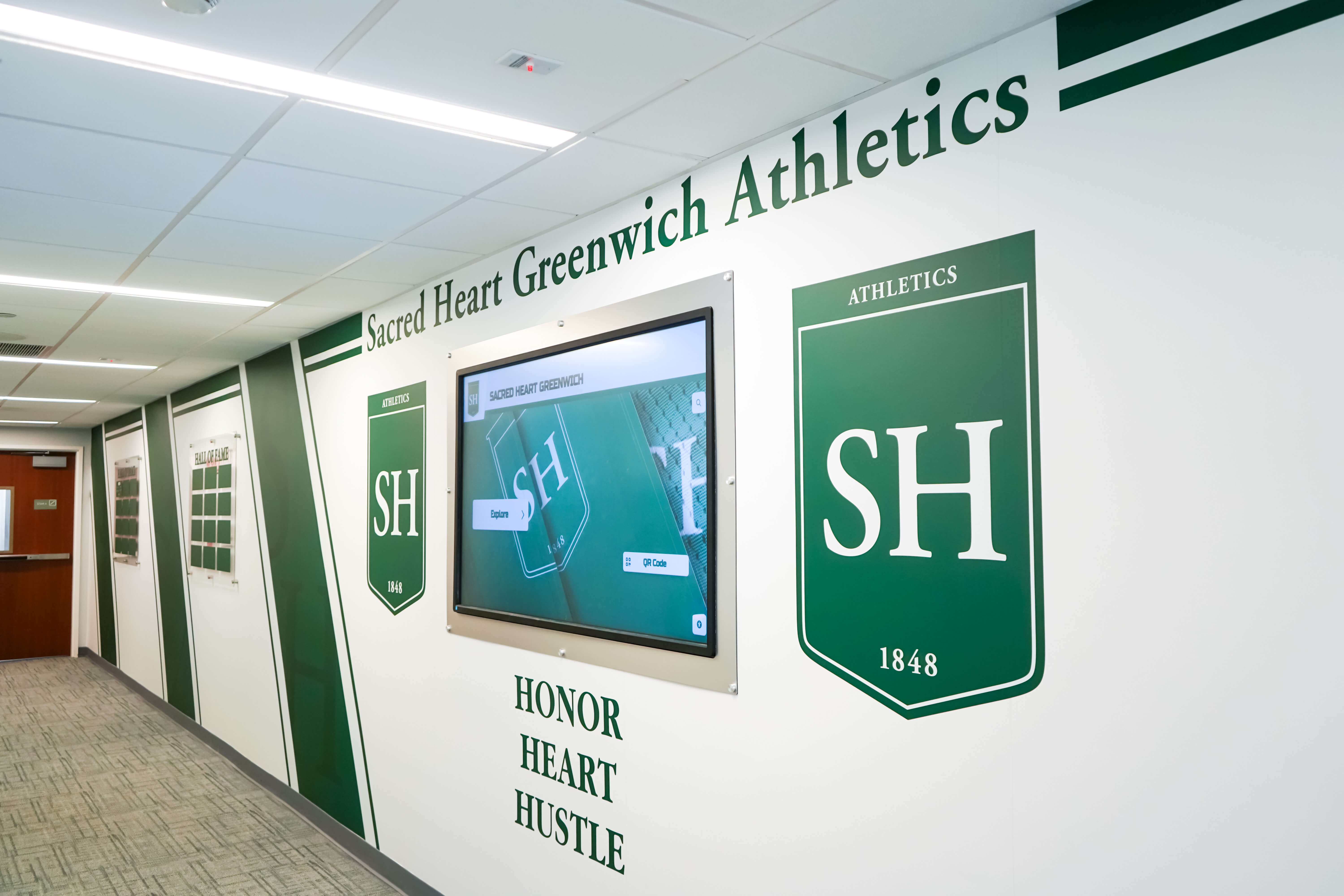
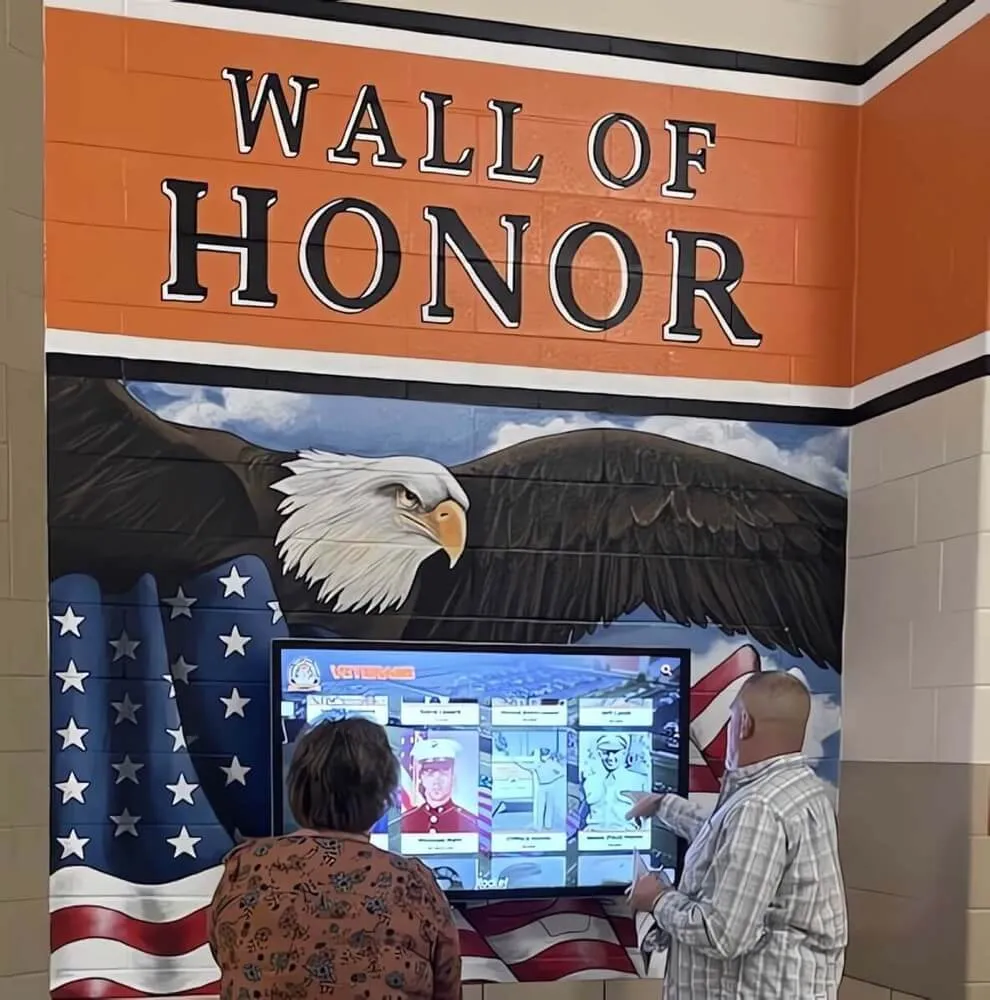
Permanent installations ensure achievements remain visible for current students while honoring past excellence
Digital Archiving as Permanent Solution
Digital recognition platforms eliminate storage entirely while preserving achievements indefinitely through unlimited capacity accommodating every award without space constraints, centralized management preventing loss during facility changes, accessible archives enabling alumni to revisit achievements anytime, and permanent preservation immune to physical deterioration affecting stored banners.
This permanent digital archiving transforms recognition from zero-sum competition for limited space into unlimited celebration of all achievements. Schools never again face decisions about which awards remain visible and which get relegated to storage or disposal.
Future-Proof Recognition
Digital platforms evolve with technology rather than becoming obsolete. As display hardware advances, content migrates to new systems maintaining accessibility. When facility renovations occur, recognition moves easily without physical item transport. And as alumni networks grow, web-based access expands recognition reach to graduates worldwide regardless of location.
This future-proof approach means investments in digital recognition today serve institutions for decades—unlike physical banners requiring replacement, re-hanging, or eventual disposal as facilities and programs evolve.
Comprehensive approaches to athletic recognition programs demonstrate how schools create sustainable systems celebrating achievements comprehensively without space limitations undermining recognition effectiveness over time.
Measuring Success and Program Impact
Systematic assessment demonstrates recognition program value while identifying opportunities for continuous improvement.
Engagement Analytics and Usage Metrics
Quality recognition platforms provide analytics tracking how visitors interact with content including total sessions showing display usage frequency, average session duration indicating engagement depth, most-viewed profiles revealing which athletes and sports generate highest interest, search patterns demonstrating how visitors navigate content, and peak usage times informing optimal update scheduling.
These metrics help schools understand recognition program value and visitor interests. High engagement validates investment while low interaction suggests placement, content, or marketing opportunities requiring attention.
Interpreting Analytics Patterns
Look for trends indicating program health. Steady or increasing usage over time demonstrates sustained community interest. Engagement spikes during sporting events, reunions, or athletic ceremonies show that displays successfully enhance events. Deep exploration (longer session durations, multiple profile views per session) suggests compelling content encouraging extended engagement.
Conversely, declining usage may indicate stale content requiring updates, technical problems affecting user experience, or competing displays or programming drawing visitor attention elsewhere.
Qualitative Feedback Collection
Beyond quantitative metrics, gather qualitative feedback through brief visitor surveys near displays, social media monitoring for posts mentioning recognition, alumni comments during reunions and events, and athlete reactions when seeing their profiles for first time.
This qualitative feedback reveals impact that numbers cannot capture. Alumni expressing gratitude that their achievements remain visible decades later, current students discovering inspiration from past recipients’ stories, and prospective families noting recognition quality during campus tours all demonstrate value justifying recognition program investment.
Cultural Shifts and Long-Term Benefits
The most significant recognition program benefits often emerge gradually as digital systems become embedded in institutional culture including enhanced student pride as achievement celebration becomes systematic, improved recruitment outcomes as comprehensive recognition demonstrates program quality, strengthened alumni engagement through accessible achievement archives, and elevated institutional reputation as modern recognition approaches demonstrate innovation and student-centered priorities.
While directly attributing these outcomes to recognition systems proves challenging, schools consistently report cultural improvements following implementation of comprehensive digital recognition platforms celebrating students systematically rather than selectively based on space availability.
Budget Considerations and Cost-Benefit Analysis
Understanding financial aspects helps schools plan digital recognition implementation realistically while building compelling cases for investment.
Initial Investment Components
Typical digital recognition display systems include hardware costs including commercial-grade touchscreen display ($2,000-$6,000 depending on size), mounting hardware and installation labor ($500-$2,500), and network infrastructure upgrades if necessary ($500-$2,000). Software and content development including recognition platform licensing (varies by vendor and features), initial content development and historical research ($2,000-$8,000 depending on scope), and professional content services if outsourcing ($3,000-$10,000 for comprehensive development).
Total initial investment typically ranges from $8,000-$25,000 per display depending on size, installation complexity, content scope, and vendor selection. This represents significant investment requiring budget planning and possibly fundraising support.
Ongoing Operating Costs
After initial implementation, ongoing costs remain manageable including annual software licensing or subscription fees ($800-$2,500 annually), periodic content updates and maintenance (time-based cost depending on internal capacity), and occasional hardware maintenance or component replacement (minimal for commercial-grade equipment).
These ongoing costs prove substantially lower than continued physical banner production, storage management, and periodic trophy case expansion required to accommodate growing achievement collections using traditional recognition approaches.
Long-Term Financial Advantages
Over 10-15 year periods, digital recognition systems deliver compelling value including elimination of recurring banner production costs ($200-$500 per banner), avoided trophy case expansion expenses ($3,000-$10,000 per additional case), reclaimed space potentially enabling other revenue-generating or educational uses, and reduced administrative time managing physical recognition systems.
Schools with substantial athletic traditions report cumulative savings of $20,000-$50,000 over decades by transitioning to digital recognition—while simultaneously improving recognition quality, capacity, and accessibility beyond what traditional approaches could achieve regardless of budget.
Funding Strategies and Alternative Approaches
Schools facing budget constraints can pursue several strategies including phased implementation starting with single displays in highest-impact locations, booster club or athletic fundraising campaigns, alumni giving campaigns emphasizing achievement preservation, grant opportunities through educational technology programs, and corporate sponsorships where local businesses support recognition displays receiving appropriate acknowledgment.
Memorial giving programs offer another approach where donors fund recognition displays honoring deceased community members while simultaneously benefiting all students through improved recognition infrastructure.
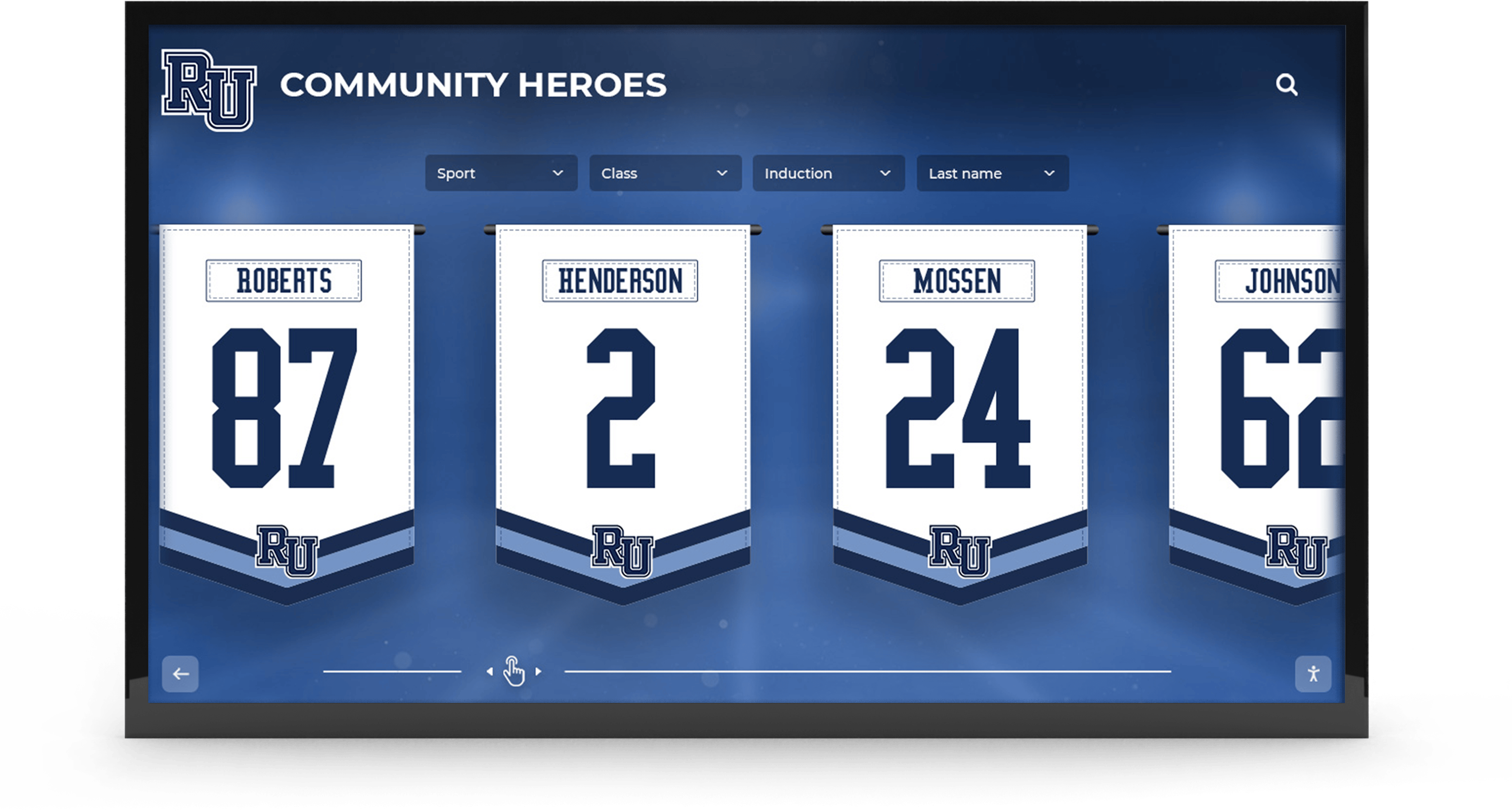
Digital displays enable dynamic recognition showcasing multiple athletes simultaneously without physical space consumption
Conclusion: Preserving Excellence for Generations
Gatorade Player of the Year awards represent exceptional student-athlete achievement—recognition earned through years of dedication demonstrating athletic excellence, academic success, and exemplary character. Students who earn these honors join an elite group that includes future professional athletes, Olympic champions, and leaders across diverse fields who attribute their success partially to lessons learned through athletic participation.
These extraordinary achievements deserve recognition matching their significance—permanent, accessible celebration that inspires current students while honoring past excellence. Traditional approaches using physical banners and trophies inevitably face space constraints forcing schools into impossible decisions about which achievements remain visible and which disappear into storage or disposal. This compromise fails students whose accomplishments deserve permanent institutional recognition.
Archive Your Athletic Excellence Forever
Don't let another Gatorade Player of the Year banner go into storage and be forgotten. Discover how Rocket Alumni Solutions can help you preserve every student achievement digitally while reclaiming valuable wall space in your athletic facilities.
Book a DemoDigital recognition displays solve this challenge comprehensively by providing unlimited capacity ensuring every award receives permanent visibility regardless of how many years ago it was earned, enabling immediate updates celebrating new recipients while recognition feels most meaningful, creating engaging interactive experiences connecting current students with athletic heritage and tradition, and extending accessibility through web and mobile platforms enabling alumni worldwide to revisit achievements.
Schools implementing digital recognition for Gatorade Player of the Year awards report remarkable benefits including reclaimed gymnasium space previously consumed by aging banners, enhanced recruitment appeal as prospective athletes see comprehensive achievement celebration, strengthened alumni engagement when graduates discover their awards remain prominent decades later, and improved institutional reputation through modern recognition approaches demonstrating innovation and student-centered priorities.
Whether your school has one Gatorade recipient from years past whose banner sits in storage or dozens of recipients across multiple sports and decades, digital recognition platforms enable comprehensive celebration honoring every achievement appropriately. No student ever again needs to discover that their prestigious accomplishment got thrown away because your school ran out of space or underwent facility renovations.
Ready to preserve your athletic legacy? Explore how comprehensive athletic hall of fame systems celebrate diverse achievements, discover interactive display design strategies creating engaging experiences, learn about student achievement recognition programs honoring excellence across all dimensions, and see how Rocket Alumni Solutions helps schools preserve student legacies for years to come.
Your Gatorade Players of the Year dedicated countless hours pursuing athletic excellence while maintaining academic achievement and demonstrating character. Their accomplishments deserve permanent recognition honoring their comprehensive dedication. With modern digital recognition platforms, you can ensure no achievement—no matter how many years ago it was earned—ever gets rolled up, stored in a closet, or thrown away when you run out of space. Archive athletic excellence properly, and inspire future generations by showing them that achievements at your institution receive the lasting celebration they truly deserve.