



Walk into any successful high school gymnasium and your eyes immediately travel upward—drawn to the colorful championship banners hanging from the rafters, each one marking a moment when dedication, teamwork, and athletic excellence culminated in victory. These banners tell your school’s story through championships won, records broken, and moments that define generations of athletes who wore your colors with pride.
Championship banners represent far more than decorated fabric suspended from ceiling beams. They create visual legacies that inspire current athletes, impress visiting teams and college recruiters, honor coaches who built winning programs, and remind entire communities of what’s possible when talent meets determination. Yet designing and displaying championship banners effectively involves navigating complex decisions about materials, placement, design consistency, space limitations, and how to honor both historic achievements and future victories.
This comprehensive guide explores everything athletic directors, coaches, and school administrators need to know about creating championship banner programs that properly celebrate your school’s greatest athletic moments while building the winning culture that generates future championships worth celebrating.
High schools with thoughtfully designed championship recognition systems discover that effective banner displays accomplish multiple goals simultaneously—motivating athletes who practice beneath visible excellence, building school spirit that extends beyond the team to the entire student body, creating recruiting advantages that attract talented athletes, and preserving institutional history that connects current students to decades of achievement.

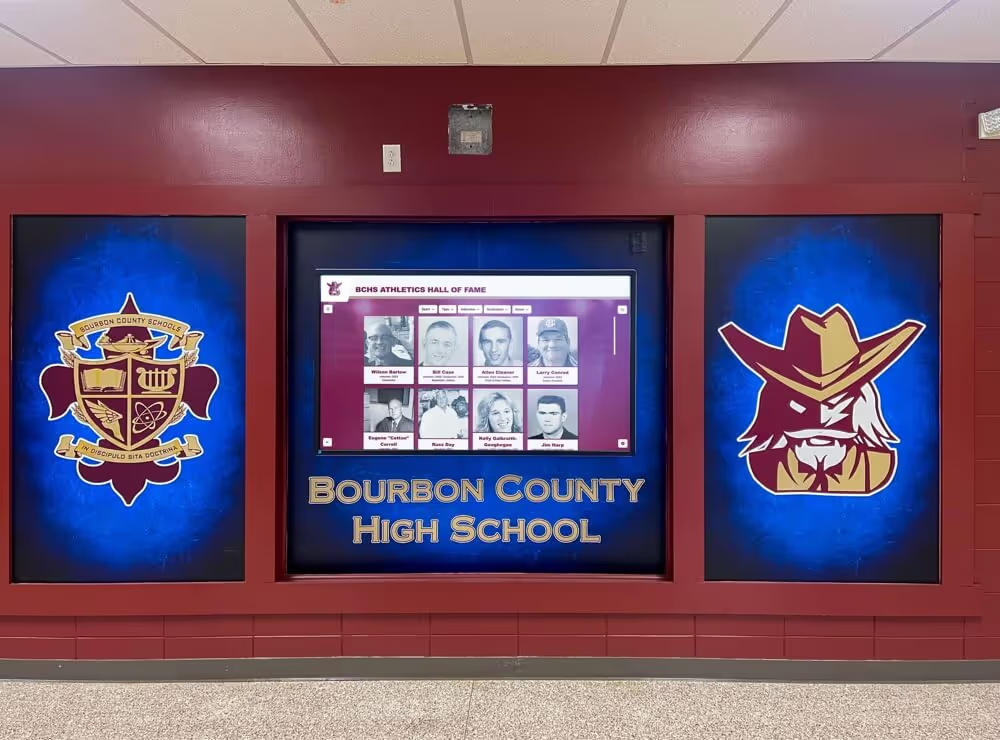
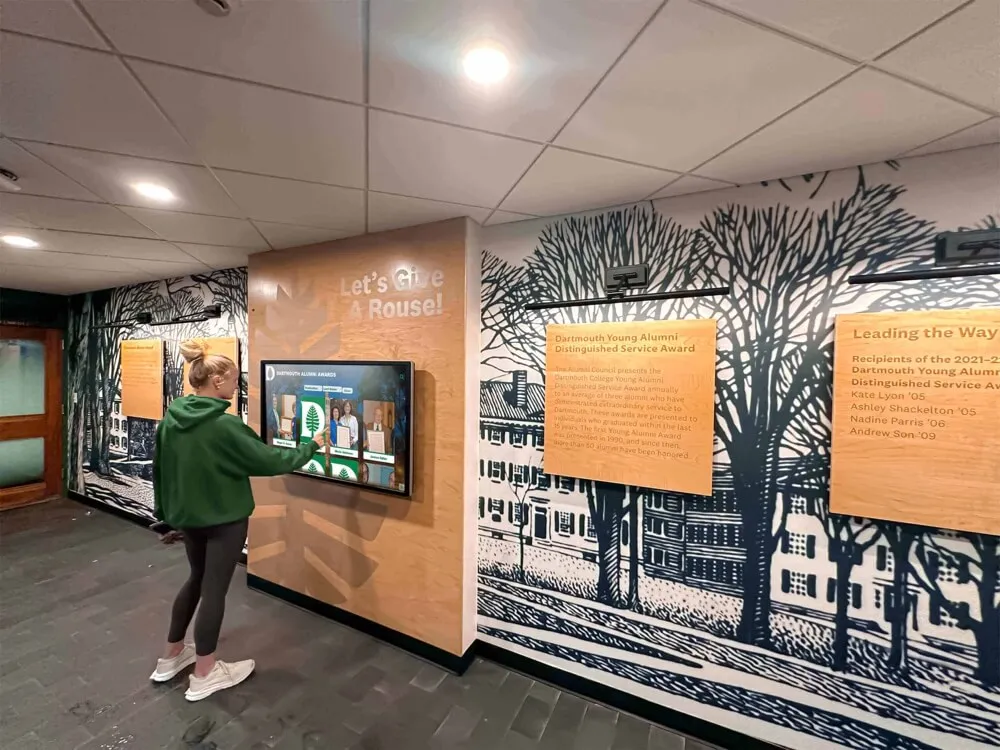
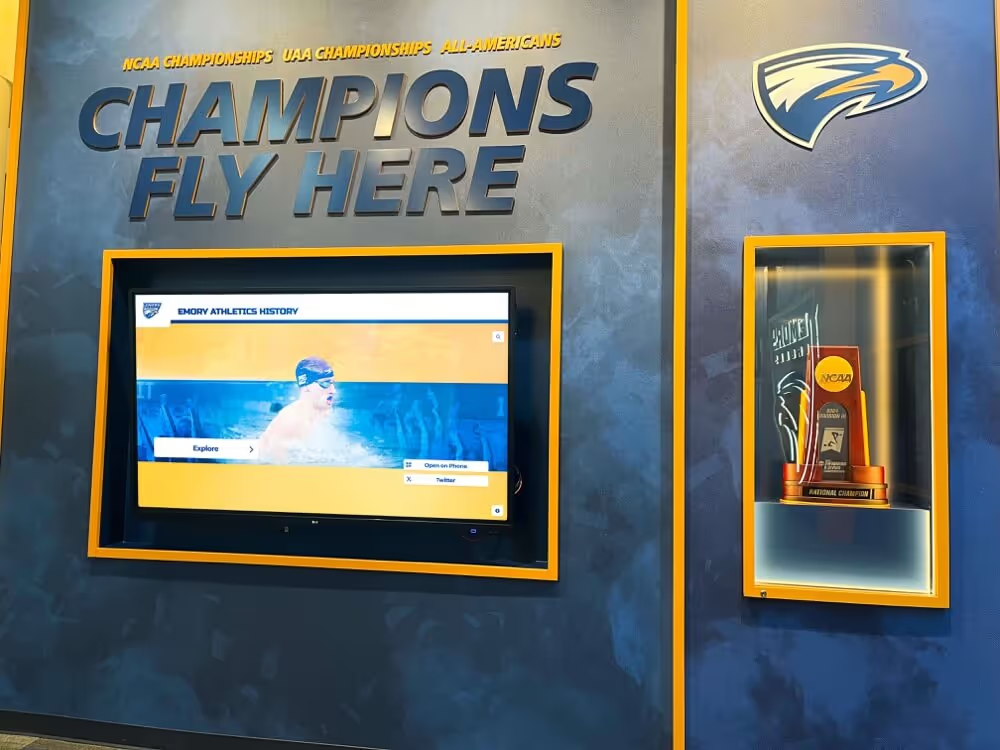
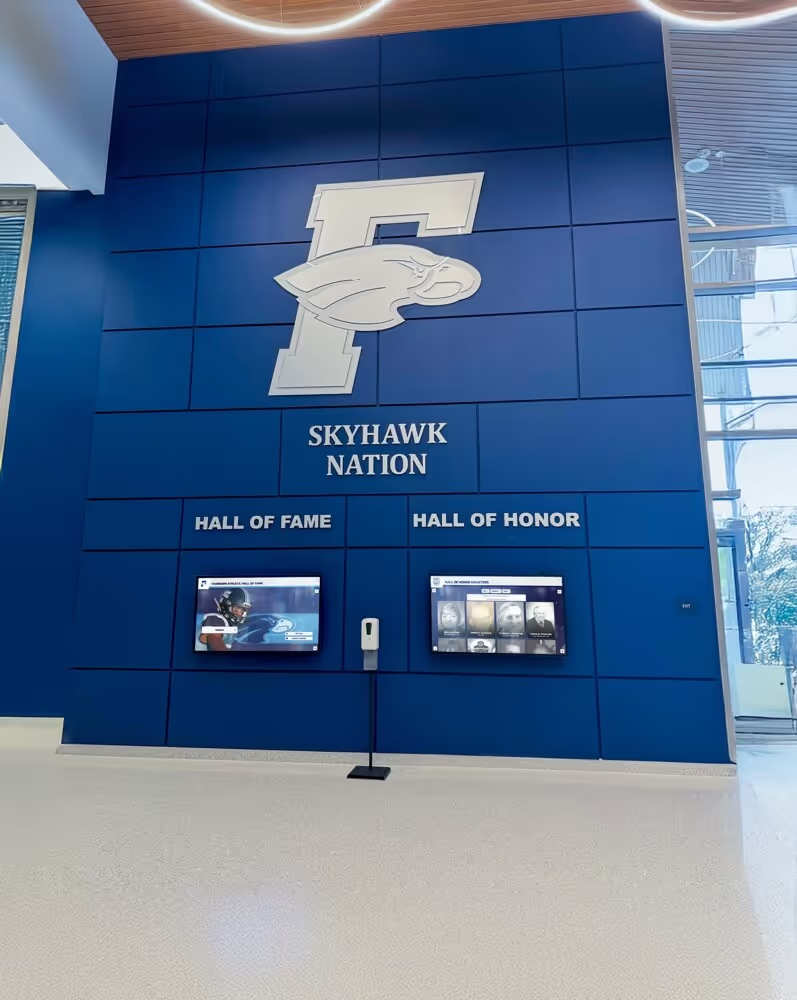
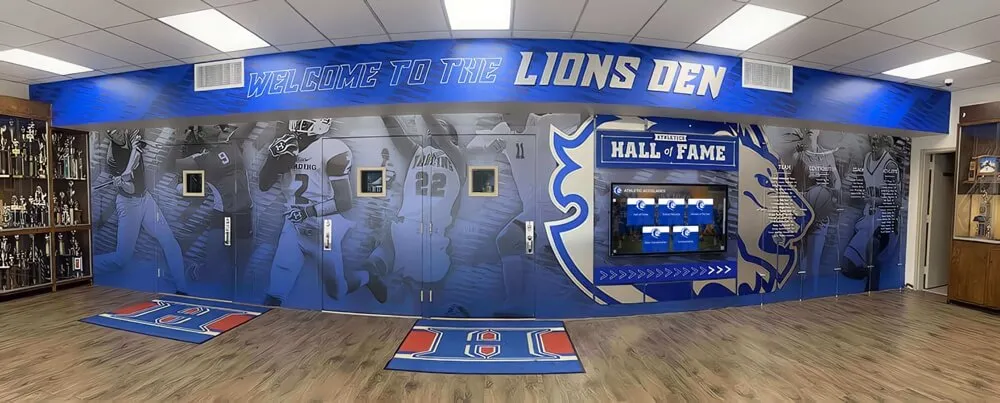
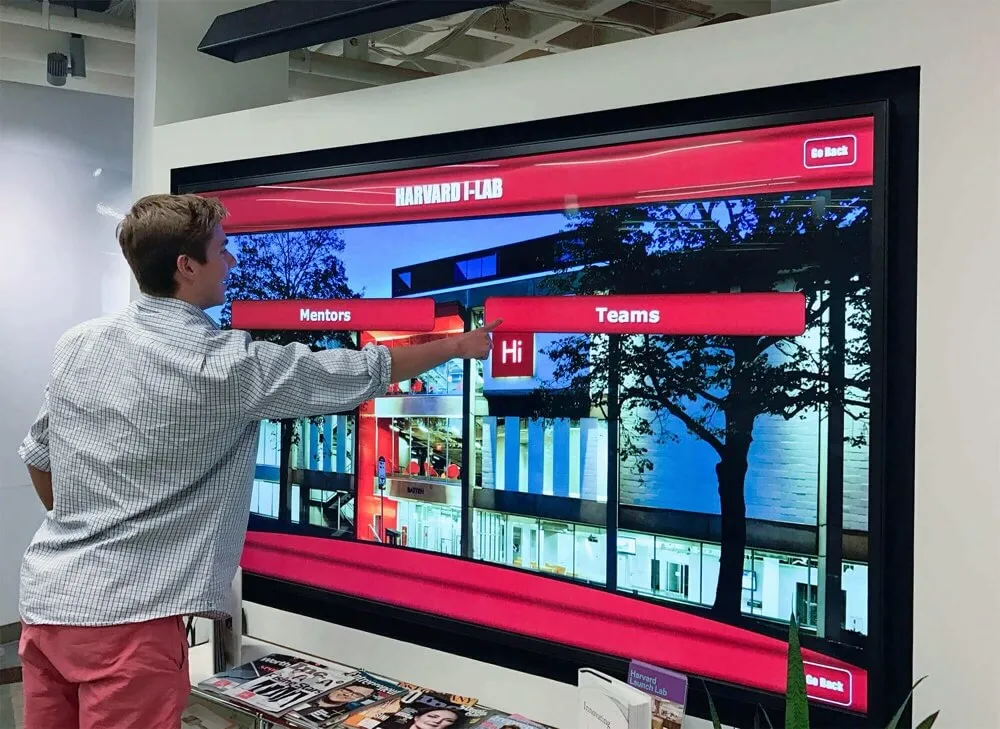
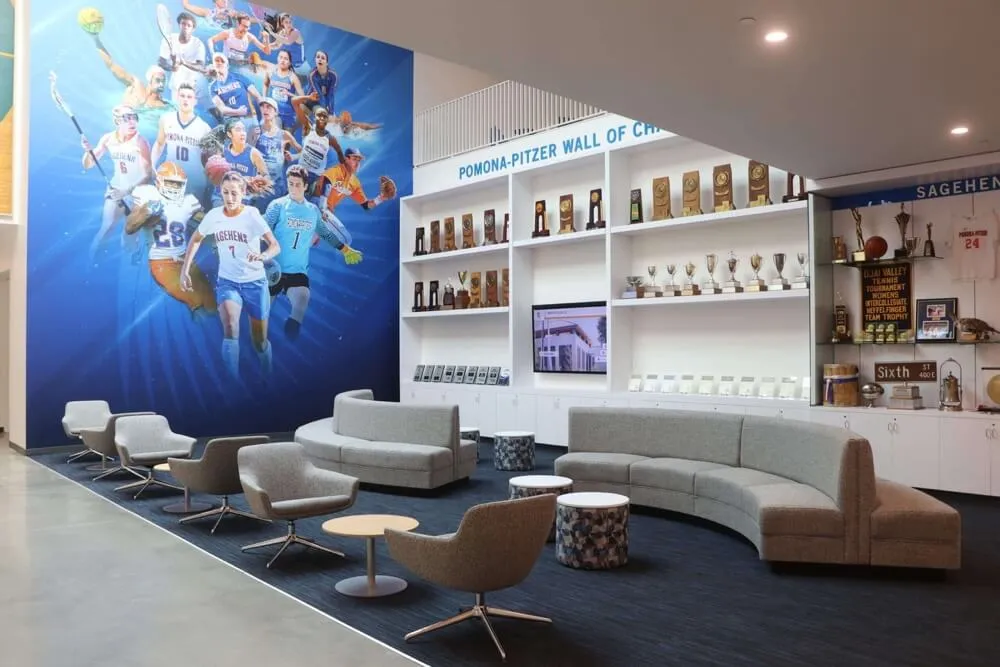
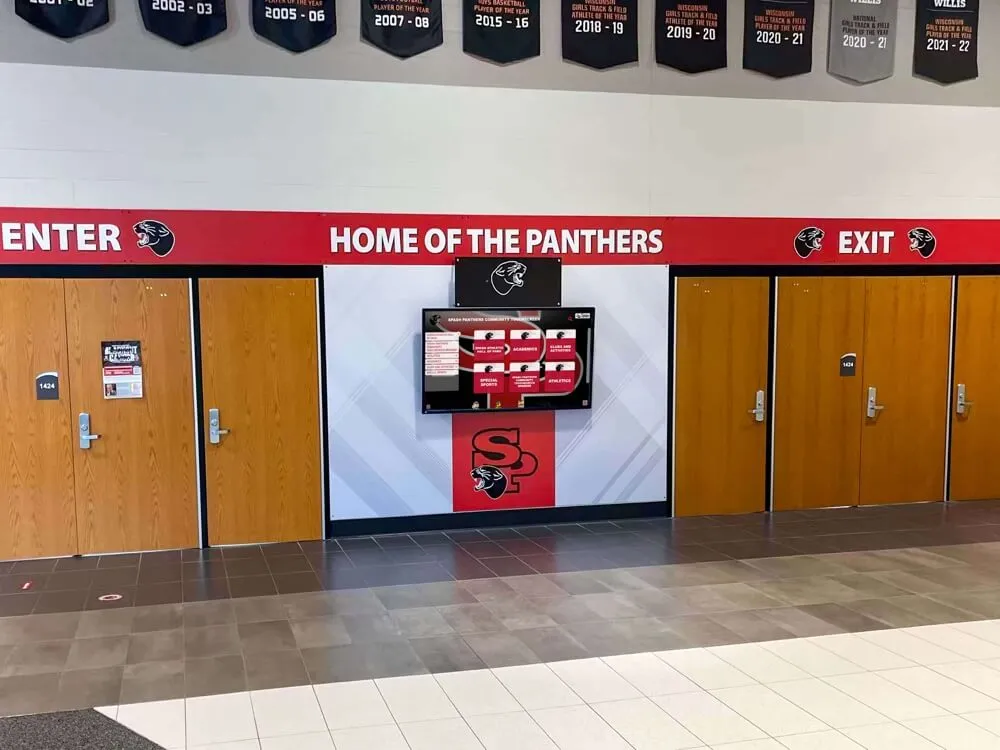
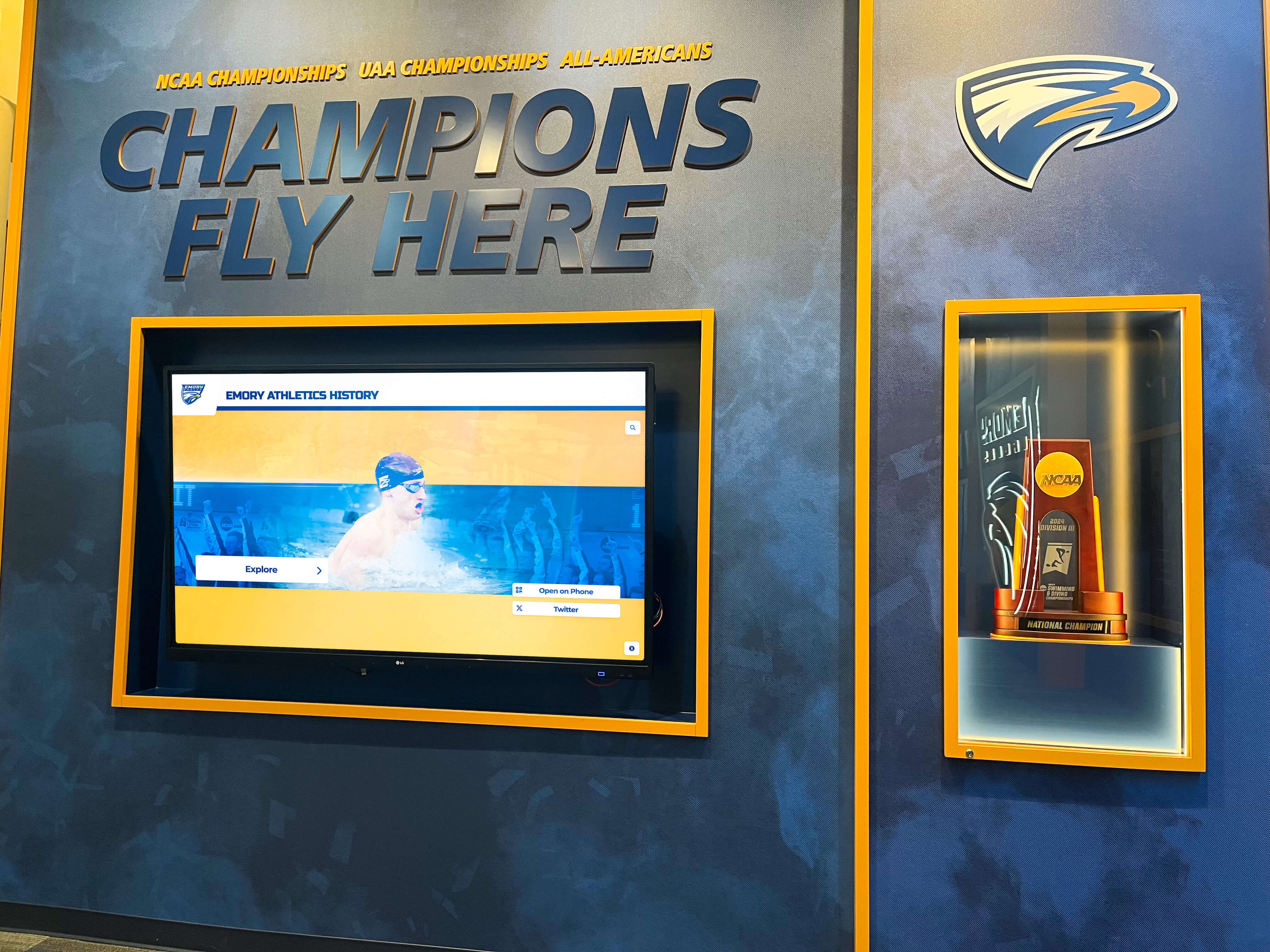
Effective championship displays combine traditional banners with complementary recognition elements to celebrate athletic excellence
Why Championship Banners Matter in High School Athletics
Before diving into design specifics, understanding the deeper purpose behind championship recognition helps schools create displays that accomplish meaningful objectives beyond simple decoration.
Building Championship Culture Through Visible Excellence
Championship banners serve as constant visual reminders of what’s possible:
Daily Motivation for Current Athletes
- Athletes train and compete surrounded by visible proof that championships are achievable
- Standards of excellence established through displayed historical achievement
- Inspiration drawn from knowing their names could join those honored above
- Practice facility transformation from ordinary gym to championship venue
- Team culture reinforcement around championship expectations
Recruiting and Competitive Advantage
- Immediate visual impact when recruits visit your facilities
- Tangible evidence of coaching excellence and program development
- Differentiation from schools lacking comparable championship tradition
- Family impressions formed through visible success indicators
- College coach recognition when evaluating athletes from winning programs
Community Pride and School Spirit
- Visible celebration connecting community members to school success
- Alumni engagement through recognition of their championship contributions
- Student body pride extending beyond athletes to entire school
- Local media coverage opportunities celebrating championship displays
- Fundraising momentum built on visible athletic program excellence
Schools implementing comprehensive championship recognition often report increased student participation in athletics, improved fundraising results from boosters and alumni, and measurable recruiting advantages when competing for talented athletes choosing between multiple programs.
What Championships Deserve Banner Recognition?
Establishing clear criteria prevents inconsistency and stakeholder conflicts:
Common Recognition Thresholds
- Conference or league championships (regular season and tournament)
- District, sectional, or regional championships
- State championship appearances and victories
- National tournament qualifications or championships
- Perfect or undefeated seasons regardless of playoff results
- Milestone achievements like consecutive championships
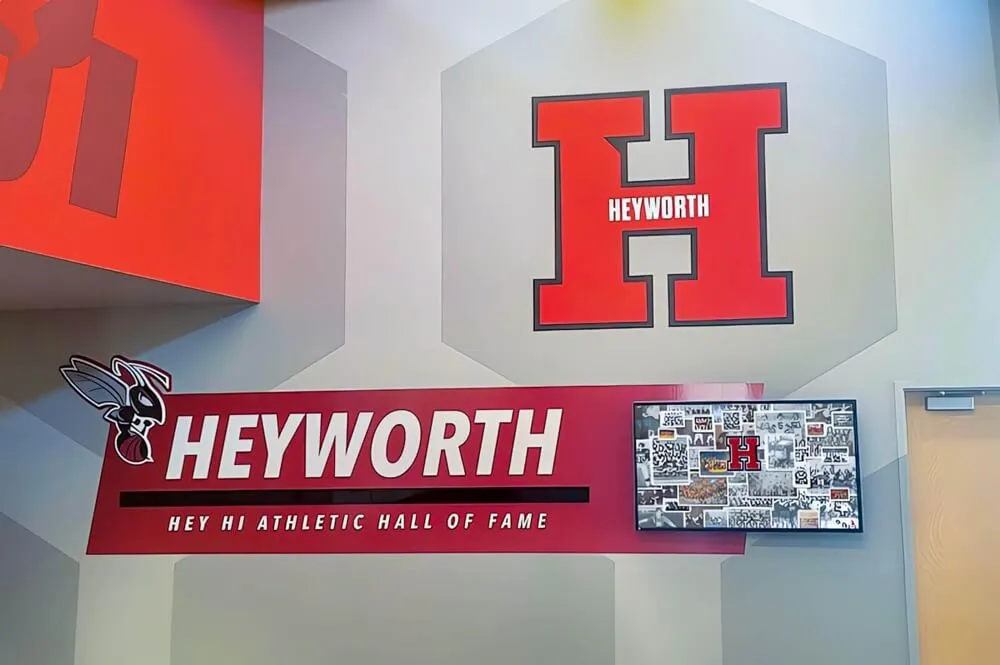
Clear recognition criteria ensure consistent celebration across all sports programs
Determining Your School’s Standards
- Survey peer schools in your conference or classification
- Consider budget implications of recognizing all achievement levels
- Balance inclusivity across all sports versus selective recognition
- Address space constraints affecting total banner capacity
- Establish written policies preventing future disputes
Many schools adopt tiered approaches—reserving traditional hanging banners for state championships while using alternative recognition methods for conference and district achievements. This preserves the special significance of premier accomplishments while still celebrating important victories.
Traditional Championship Banner Design Principles
Creating banners that look professional and stand the test of time requires attention to specific design elements and quality standards.
Essential Banner Design Elements
Effective championship banners communicate key information clearly while creating visual impact:
Critical Information Components
- Sport name clearly identified
- Championship level and type (State Champions, Conference Champions, etc.)
- Year or season of championship
- School name and mascot
- Final record or tournament result when relevant
- Coach names when tradition dictates
Visual Design Considerations
- School colors for immediate institutional identification
- Logo placement following brand guidelines
- Readable typography visible from gymnasium floor and bleachers
- Balanced composition creating professional appearance
- Governing body logos (state association, conference) when appropriate
- Decorative elements enhancing without overwhelming message
Size and Format Standards
- Typical sizes ranging from 2’ x 4’ to 4’ x 8’ depending on facility scale
- Vertical orientation most common for rafters and ceiling displays
- Horizontal formats sometimes used for wall-mounted applications
- Consistent sizing across all banners creating visual harmony
- Proportions appropriate for viewing distances in your facility
Similar to how schools approach alumni event recognition, championship displays should balance formality with celebration, creating dignity while expressing excitement about achievement.
Material Selection for Durability and Appearance
Championship banners remain displayed for years or decades, making material quality critical:
Vinyl Banner Materials
- Durable, weather-resistant material suitable for various conditions
- Digital printing enabling unlimited colors and complex graphics
- Moderate cost making replacement affordable when needed
- Professional appearance when properly designed
- Easy cleaning and maintenance extending lifespan
- Typical longevity of 5-10 years with proper care
Fabric Banner Options
- Traditional textile appearance preferred by many schools
- Dye-sublimation printing creating vibrant, long-lasting colors
- Various fabric types from polyester to nylon to felt
- More premium aesthetic than vinyl
- Higher cost but enhanced visual quality
- May require more careful handling and cleaning
Production Quality Standards
- Commercial-grade printing ensuring crisp, clear text and graphics
- Color accuracy matching school branding standards
- Heavy-duty grommets or pole pockets supporting weight
- Reinforced edges preventing fraying and extending lifespan
- UV-resistant inks preventing premature fading
- Professional finishing creating polished final product
Investing in quality materials and production ensures championship recognition honors achievements appropriately rather than becoming embarrassing eyesores as banners age poorly.
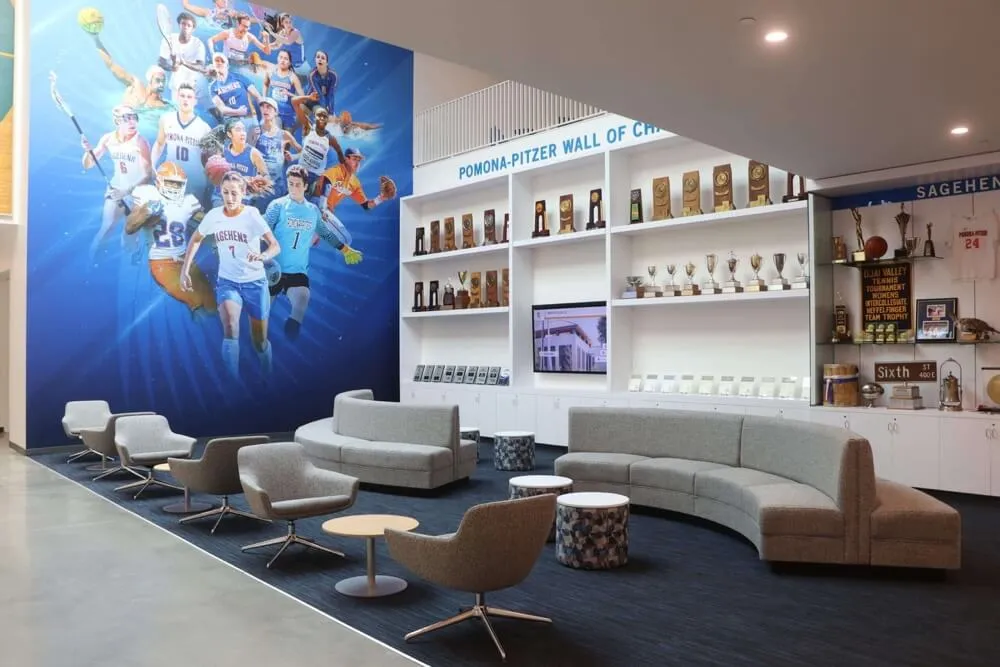
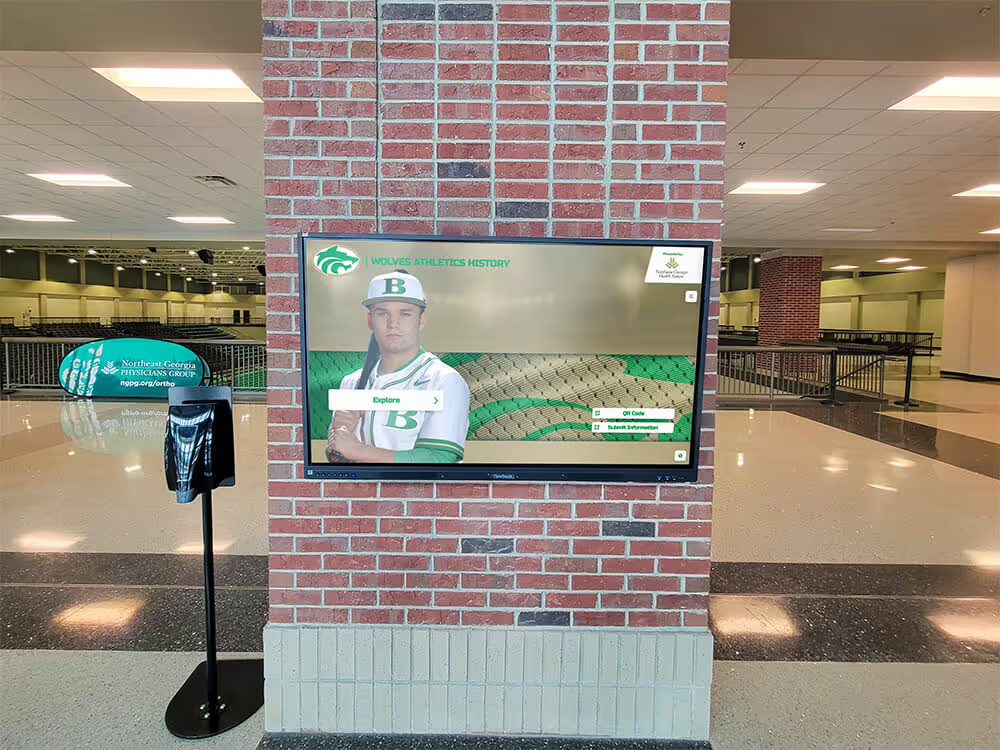
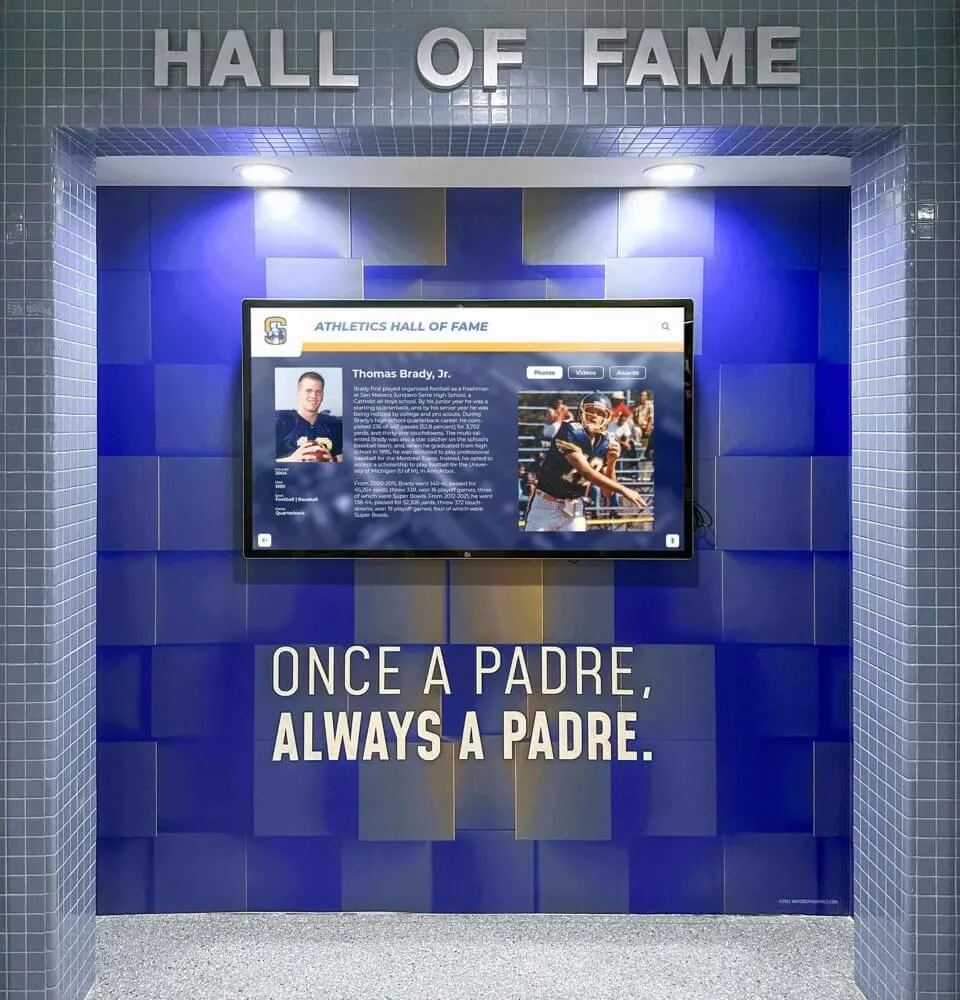
Quality materials and professional design create championship displays that remain impressive for years
Strategic Placement and Display Strategies
Even beautifully designed banners fail to achieve their purpose without strategic placement creating maximum visibility and impact.
Gymnasium and Arena Placement Options
Different facilities require adapted banner display approaches:
Ceiling and Rafter Mounting
- Traditional approach suspending banners above playing surfaces
- Maximum visibility from all areas of gymnasium
- Creates impressive visual impact when entering facilities
- Requires adequate ceiling height (typically 20+ feet ideal)
- Installation complexity and cost considerations
- Safety regulations preventing placement over competition areas in some cases
Wall-Mounted Displays
- Effective when ceiling heights prevent hanging displays
- End wall positioning creating focal points at facility entrances
- Sideline placement ensuring visibility from spectator seating
- Protects banners from damage compared to floor-level displays
- Easier installation and maintenance access
- May offer better lighting control than ceiling displays
Facility-Specific Considerations
- Multi-purpose gymnasiums hosting various sports and events
- Fieldhouses with concourse spaces ideal for recognition displays
- Competition-specific venues like natatoriums or ice arenas
- Auxiliary gym spaces where teams practice daily
- Lobbies and hallways leading to athletic facilities
Schools often discover that distributing recognition across multiple locations—premier championships in main gymnasium, comprehensive recognition in hallways and lobbies—creates more effective programs than attempting to squeeze everything into limited rafter space.
Creating Visual Impact Through Organization
Thoughtful arrangement transforms individual banners into cohesive recognition systems:
Organizational Approaches
- Chronological arrangement showing championship progression
- Sport-specific grouping dedicating sections to each program
- Championship level hierarchy (state, conference, district)
- Symmetrical layouts creating visual balance
- Color coordination using sport-specific accent colors

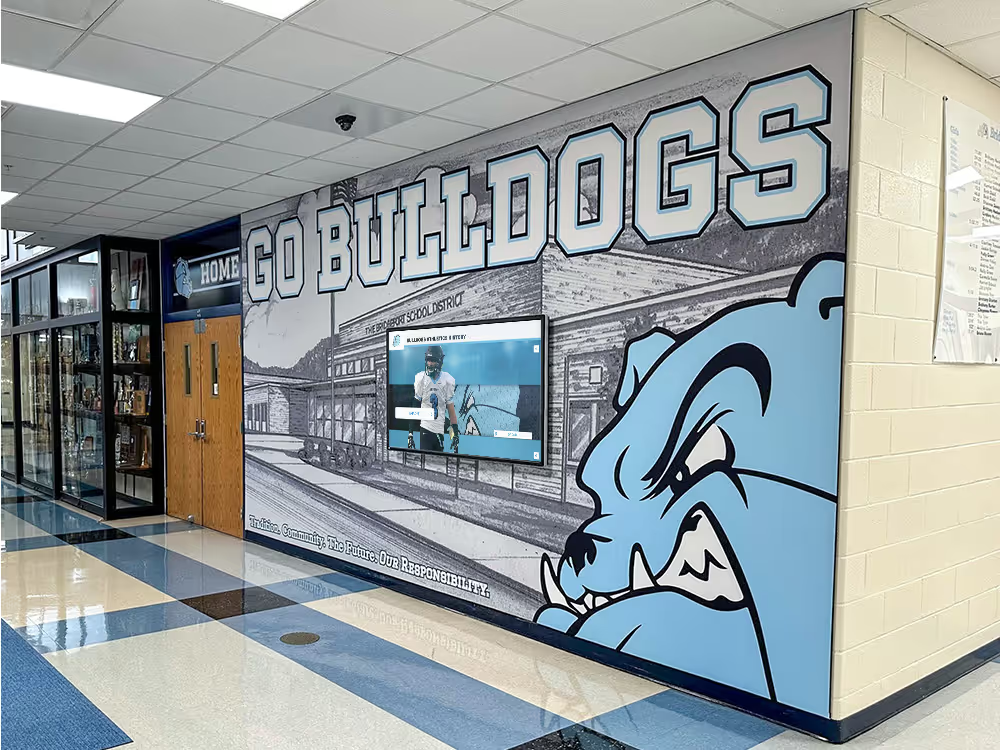
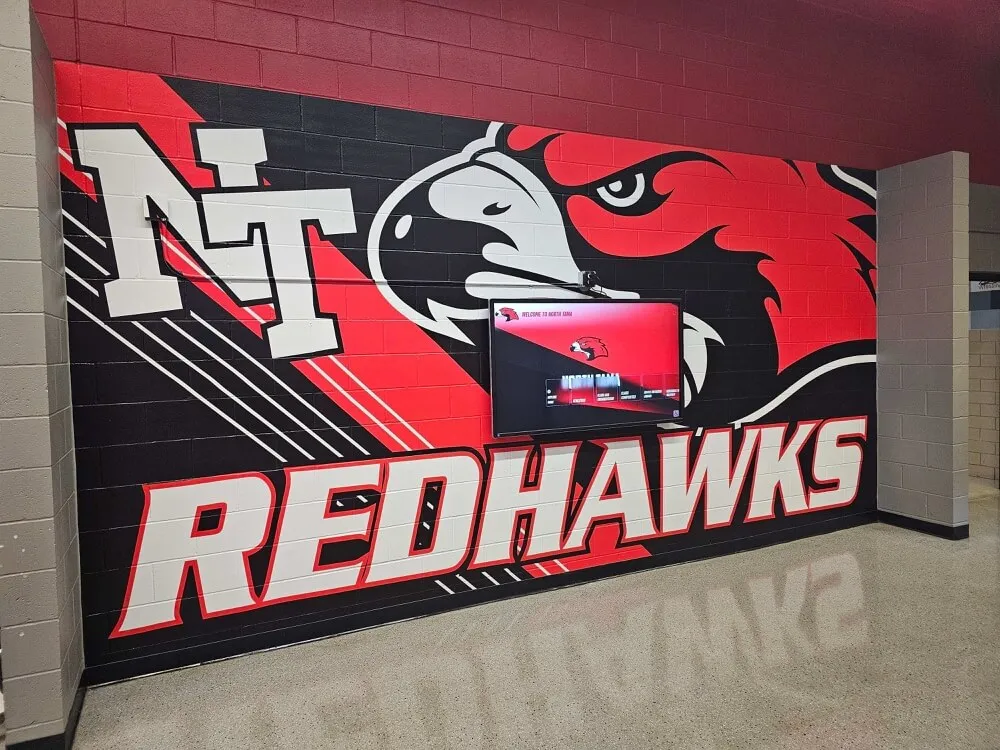
Strategic placement in high-traffic hallways extends championship recognition beyond the gymnasium
Design Consistency Standards
- Standardized banner sizes across all sports
- Unified color schemes and typography
- Consistent information hierarchy and layout
- Coordinated hanging systems and hardware
- Visual templates ensuring future additions match existing displays
Lighting for Maximum Visibility
- Dedicated banner spotlighting creating dramatic effect
- Uplighting emphasizing suspended banners
- Ambient facility lighting ensuring consistent visibility
- Avoiding glare and reflection that obscures banners
- LED solutions offering energy efficiency and focused illumination
Professional appearance depends heavily on organized presentation—randomly scattered banners in varied sizes and inconsistent designs diminish rather than enhance championship celebration.
Space Limitations and Modern Recognition Solutions
Even the most successful athletic programs eventually face an inevitable challenge: running out of space for championship banners.
The Space Capacity Challenge
High schools with strong athletic traditions accumulate championships faster than facility space expands:
Common Space Constraints
- Finite ceiling, rafter, and wall space in existing facilities
- Architectural limitations preventing banner placement in certain areas
- Safety regulations restricting displays in competition zones
- Aesthetic concerns when banner density creates cluttered appearance
- Competing demands for recognition space across multiple sports
Difficult Recognition Decisions
- Selecting which championships merit permanent banner recognition
- Removing older banners to accommodate new achievements
- Balancing recognition equity across different sports
- Managing coach and community expectations around display
- Preserving historical championships while celebrating current success
These challenges intensify for schools with multiple successful programs, long athletic traditions, or facilities built before championship banner programs became standard practice.
Hybrid Recognition Approaches
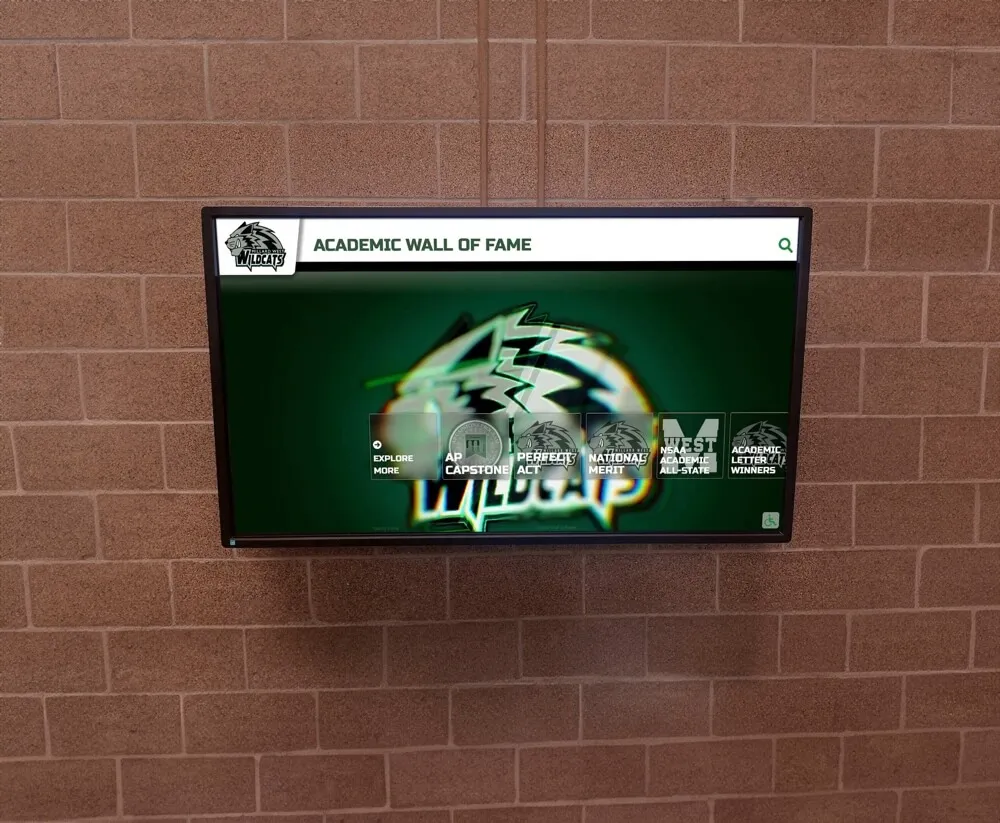
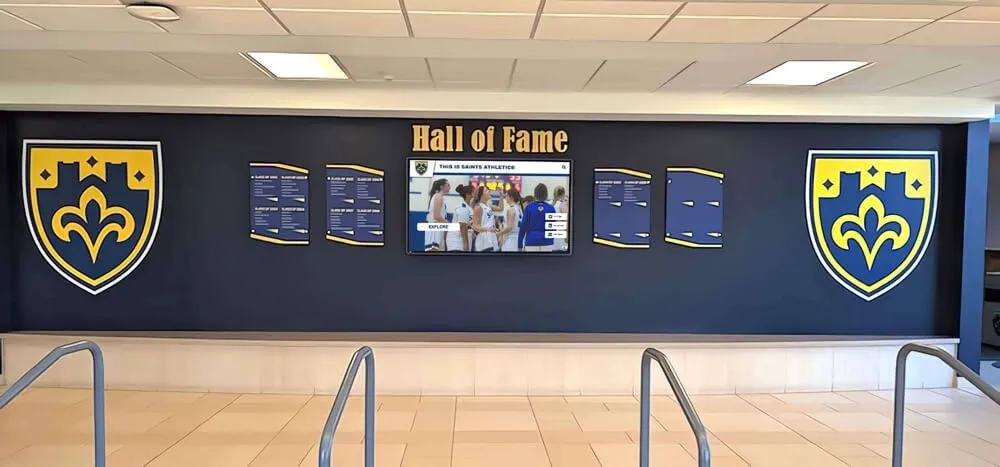
Many schools discover that combining traditional banners with modern digital displays solves space constraints while enhancing recognition programs:
Strategic Banner Prioritization
- Reserve traditional hanging banners for state championships
- Use wall displays for conference and district championships
- Implement digital displays for comprehensive championship documentation
- Maintain ceremonial banner unveilings for premier achievements
- Create visual hierarchy reinforcing championship significance
Digital Display Advantages
- Unlimited capacity accommodating all championships regardless of space
- Rich multimedia storytelling including photos, videos, and detailed narratives
- Easy content updates adding new championships immediately
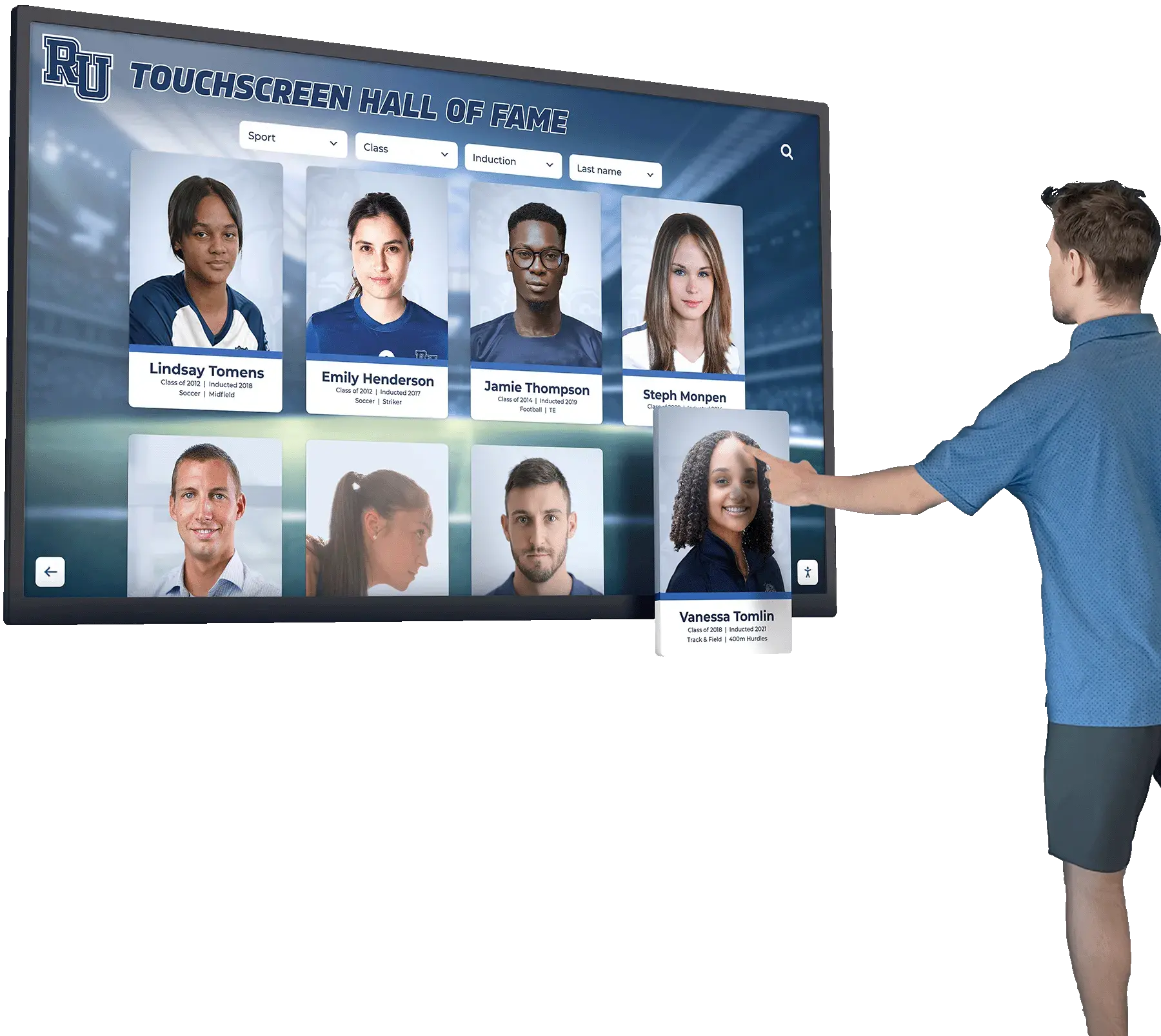
- Search and filter capabilities enabling exploration by sport, year, or athlete
- Historical preservation impossible with physical banners alone
Much like how schools implement comprehensive digital hall of fame programs, modern championship recognition can expand celebration capacity while preserving traditional elements that stakeholders value.
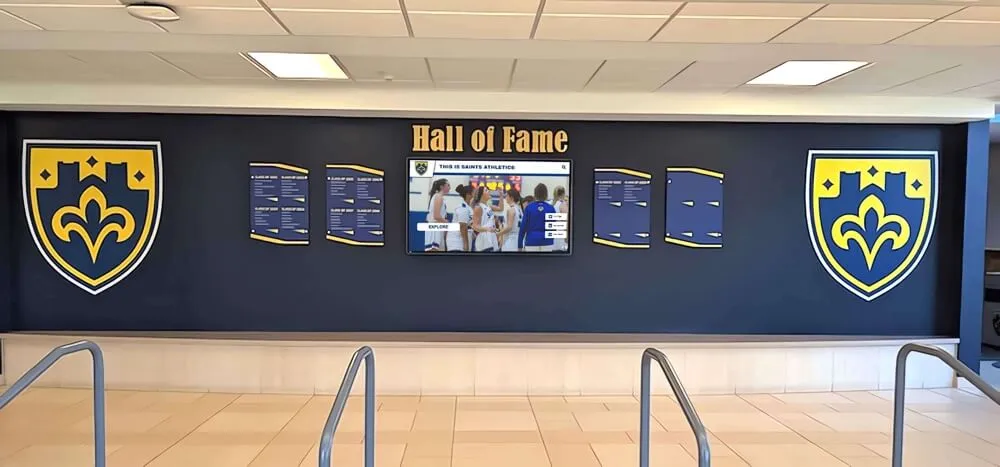
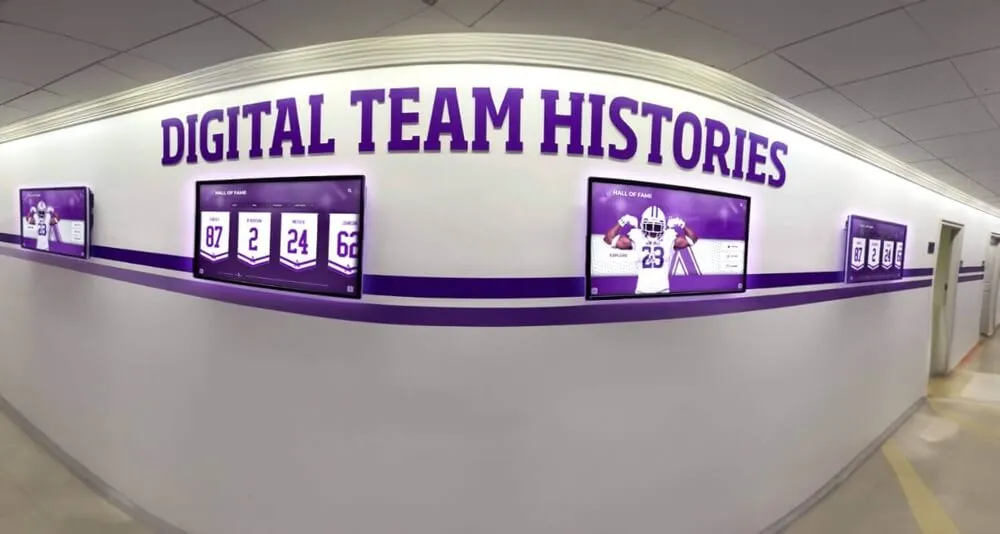
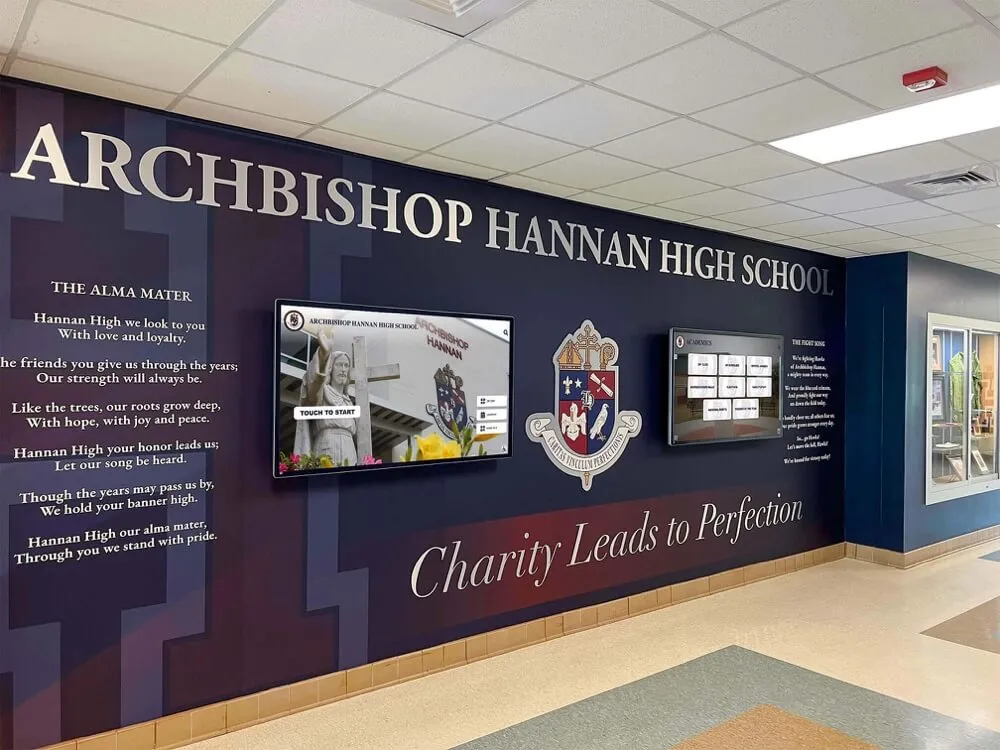
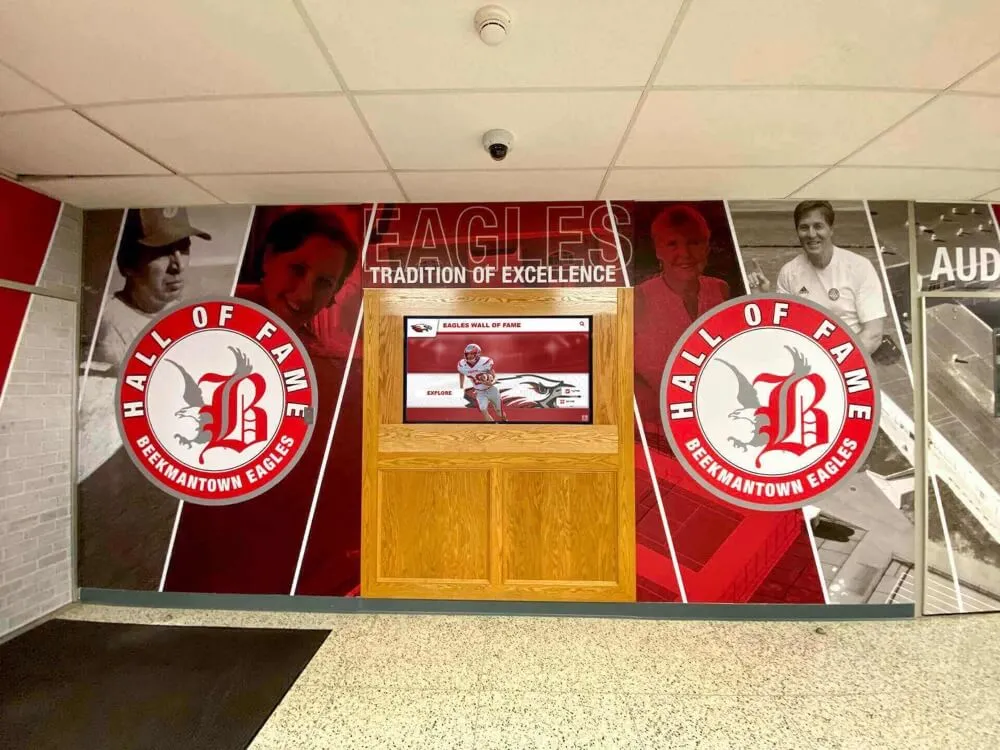
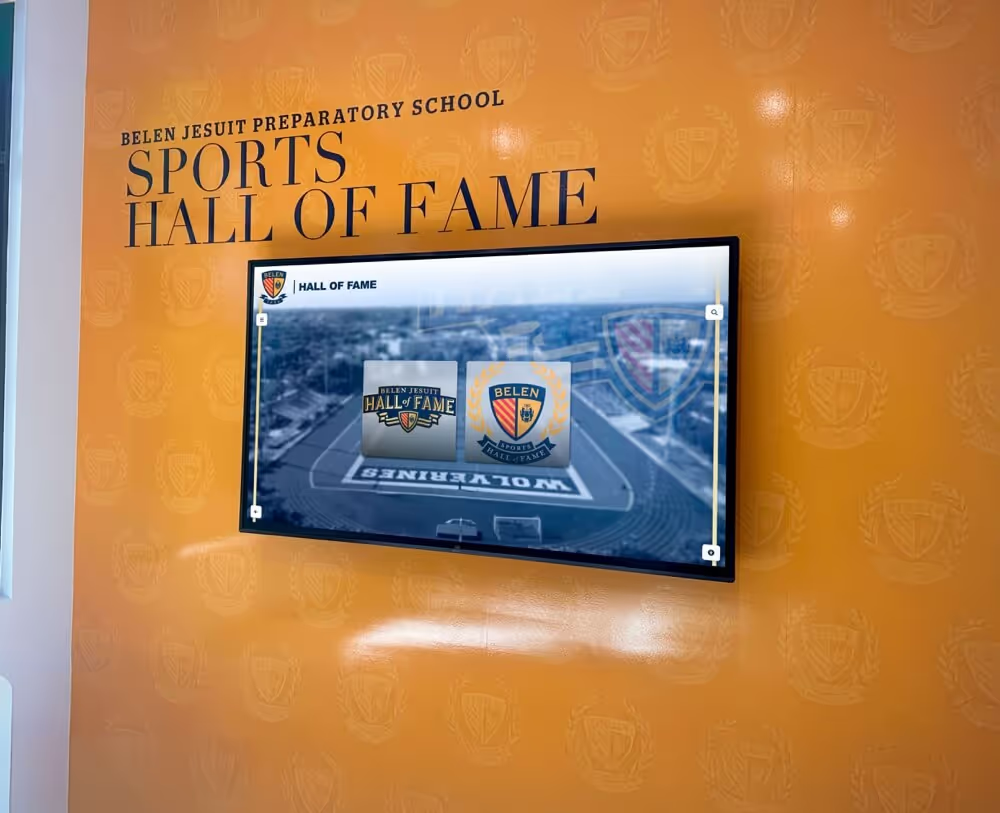
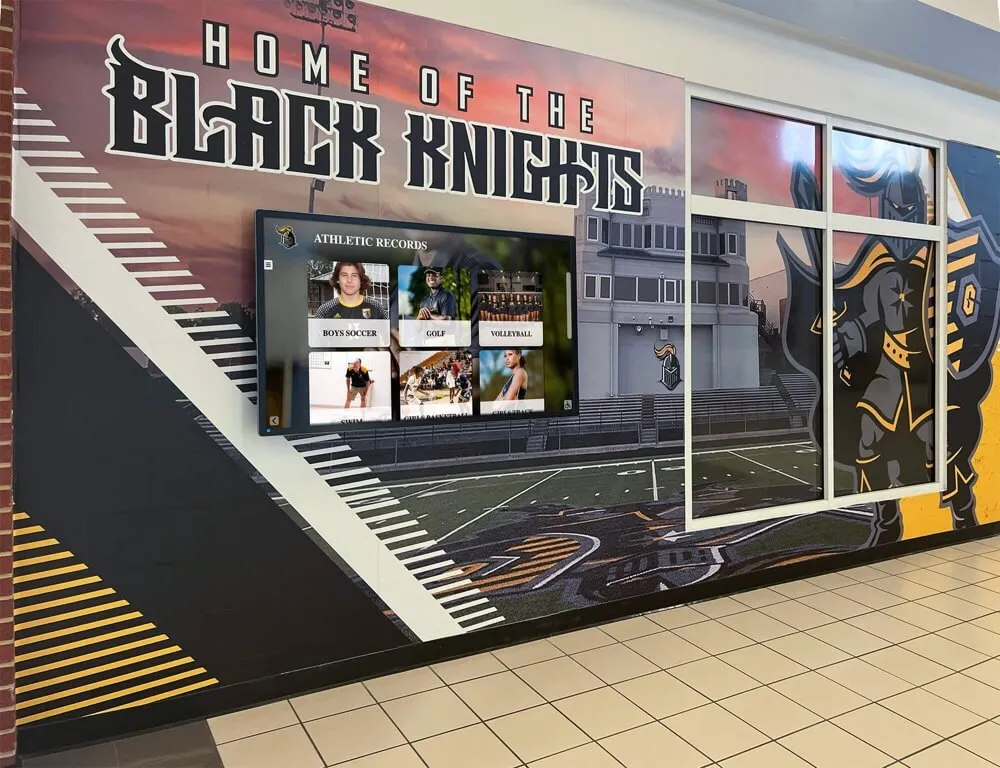
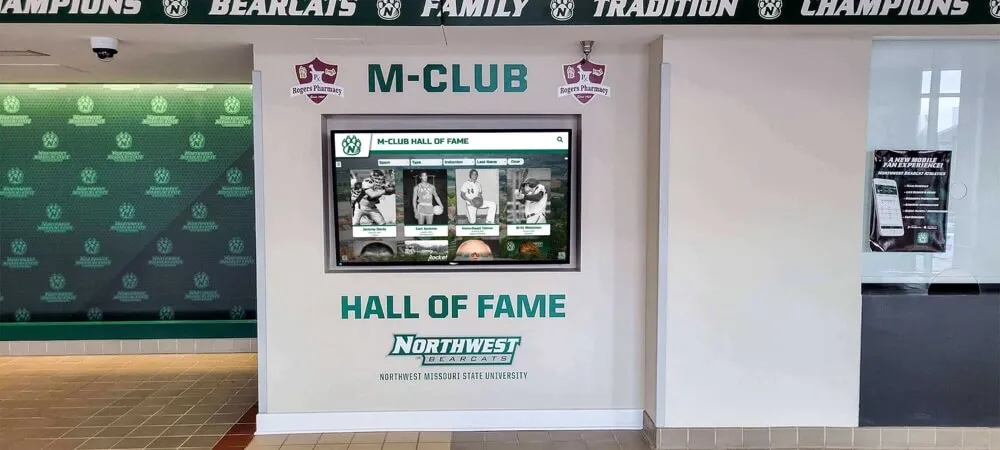
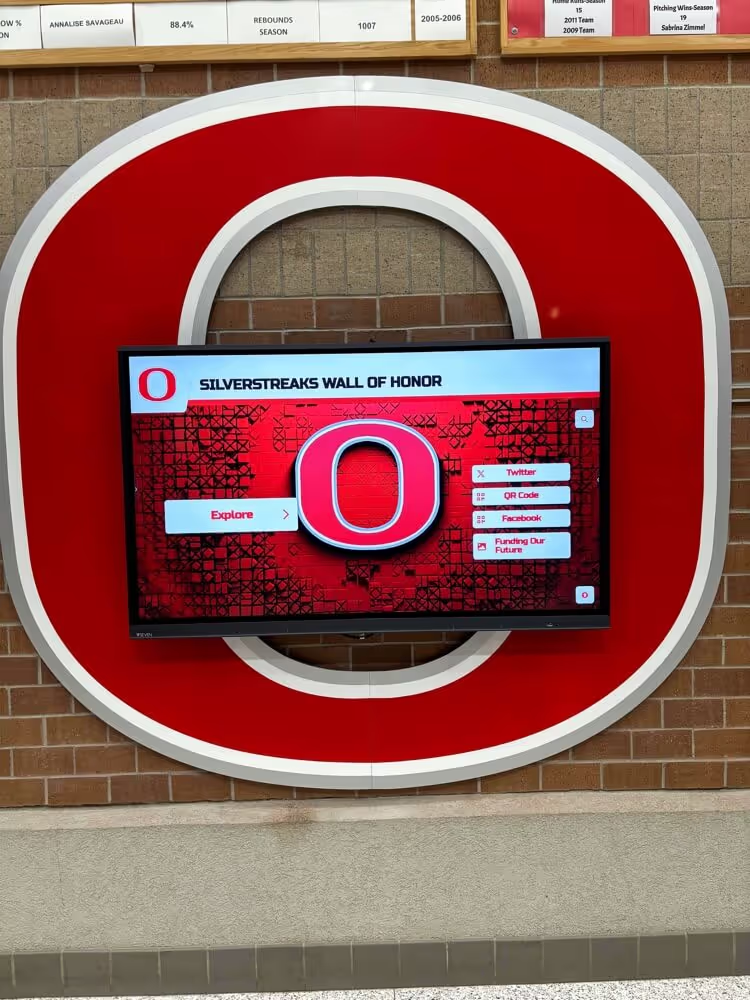
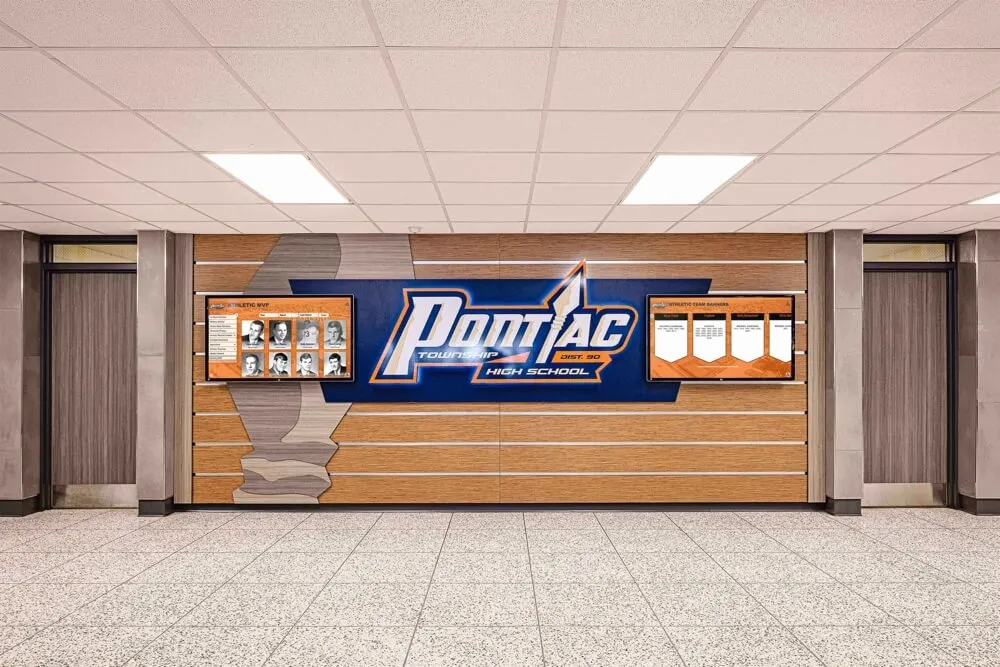
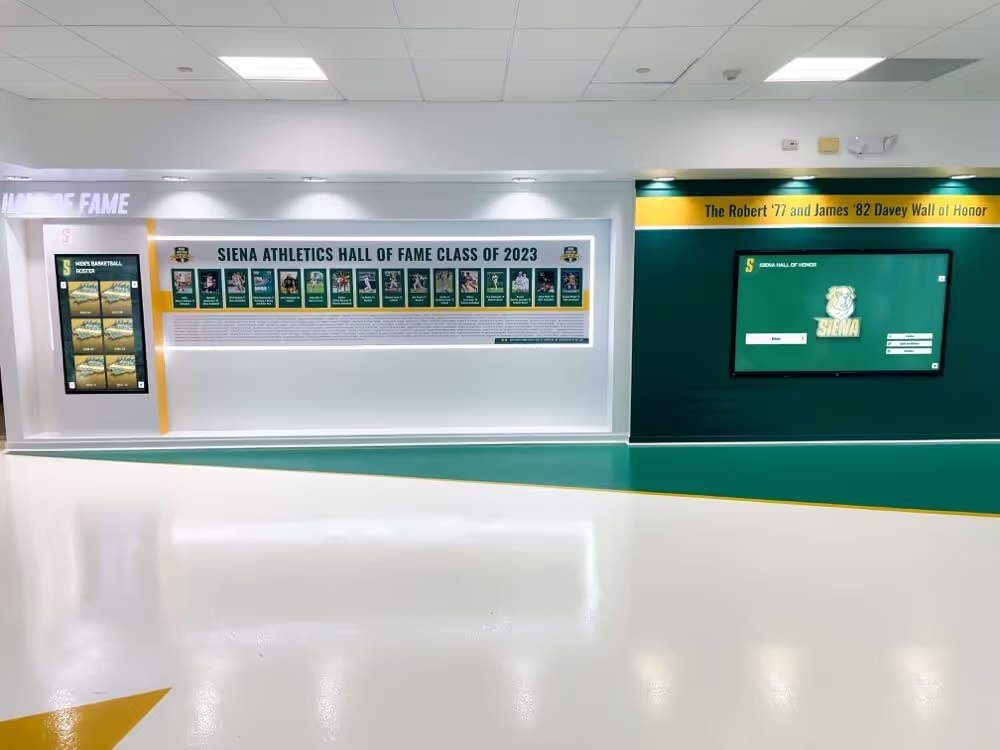
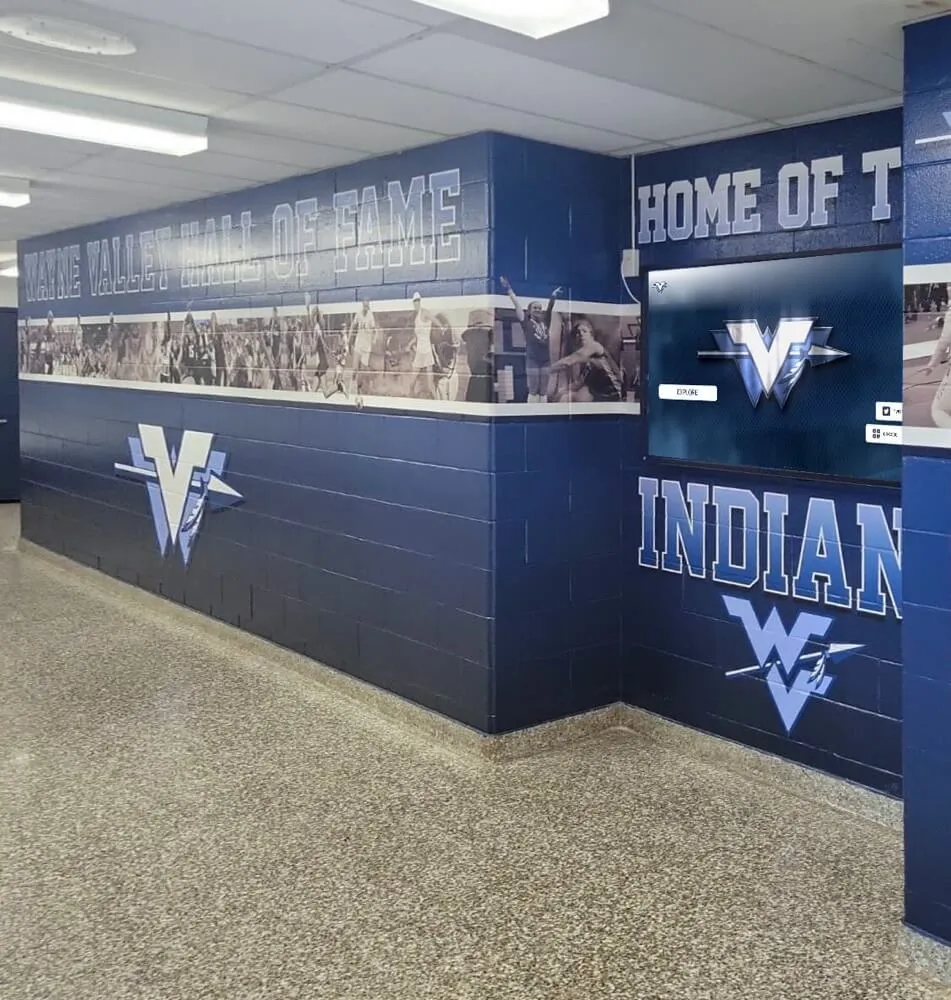
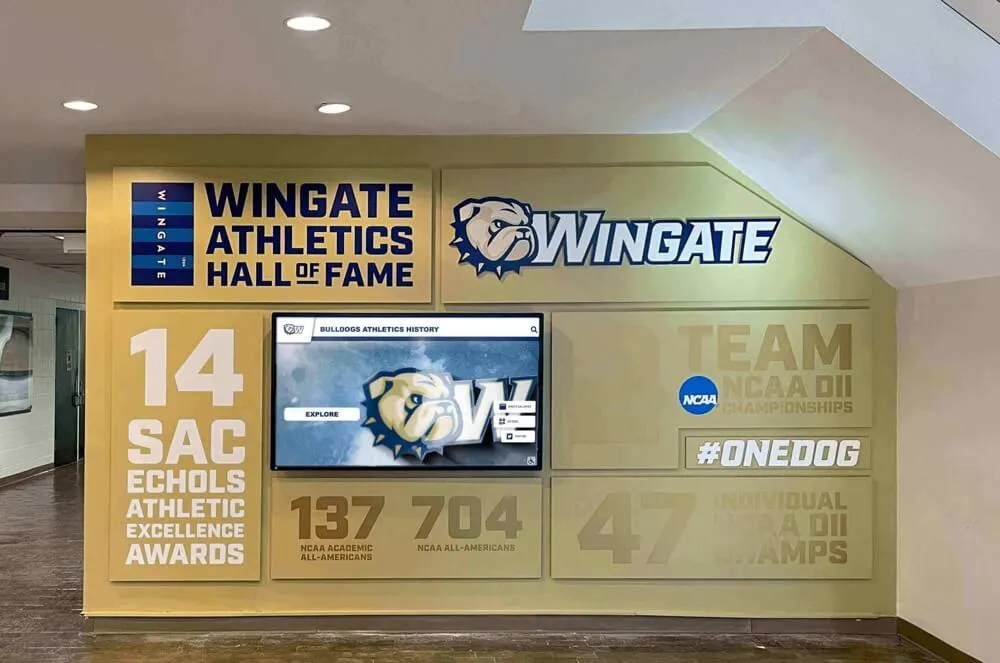
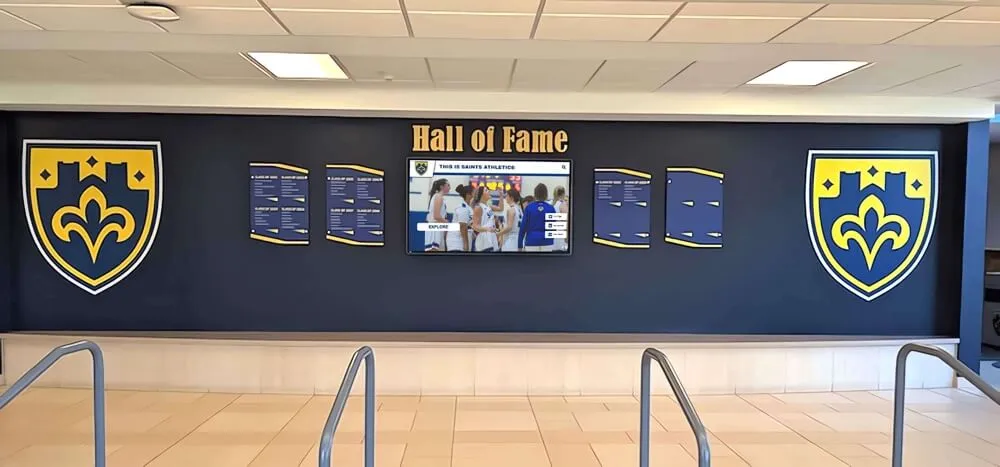
Hybrid displays combine traditional banner aesthetics with digital capacity for comprehensive recognition
Complementary Display Integration
- Position digital displays near traditional banner areas
- Use consistent branding and color schemes across physical and digital
- Design digital interfaces that complement rather than compete with banners
- Enable digital exploration of championship stories behind physical banners
- Create thematic connections between display types
This balanced approach satisfies traditionalists who value physical banners while providing comprehensive recognition capacity that honors every championship appropriately—regardless of how many future victories your programs achieve.
Creating Effective Championship Banner Programs
Successful championship recognition requires systematic planning beyond simply ordering banners when teams win titles.
Establishing Recognition Standards and Procedures
Written policies prevent inconsistency and stakeholder conflicts:
Championship Qualification Criteria
- Define which championship levels merit banner recognition
- Establish whether all sports receive equal treatment
- Address tournament versus regular season championships
- Determine criteria for non-traditional or emerging sports
- Document approval process for special recognition cases
Design and Production Standards
- Create templates ensuring visual consistency
- Specify required information and optional elements
- Establish quality standards for materials and production
- Define approval workflow before production begins
- Document preferred vendors and production timelines
Installation and Unveiling Procedures
- Schedule ceremonial unveilings maximizing community engagement
- Coordinate installation during off-season or facility closures
- Plan celebration events honoring championship teams
- Integrate unveilings with homecoming or alumni events
- Document ceremonies preserving institutional memory
Many athletic directors discover that establishing clear written procedures—even simple one-page documents—prevents confusion and ensures consistent recognition as personnel change over years.
Budget Planning and Funding Strategies
Championship recognition requires financial commitment:
Typical Banner Program Costs
- Individual banner production: $150-$500 depending on size and materials
- Installation hardware and professional labor
- Annual budget allocation for new championships
- Periodic replacement of faded or damaged banners
- Ceremony and unveiling event expenses
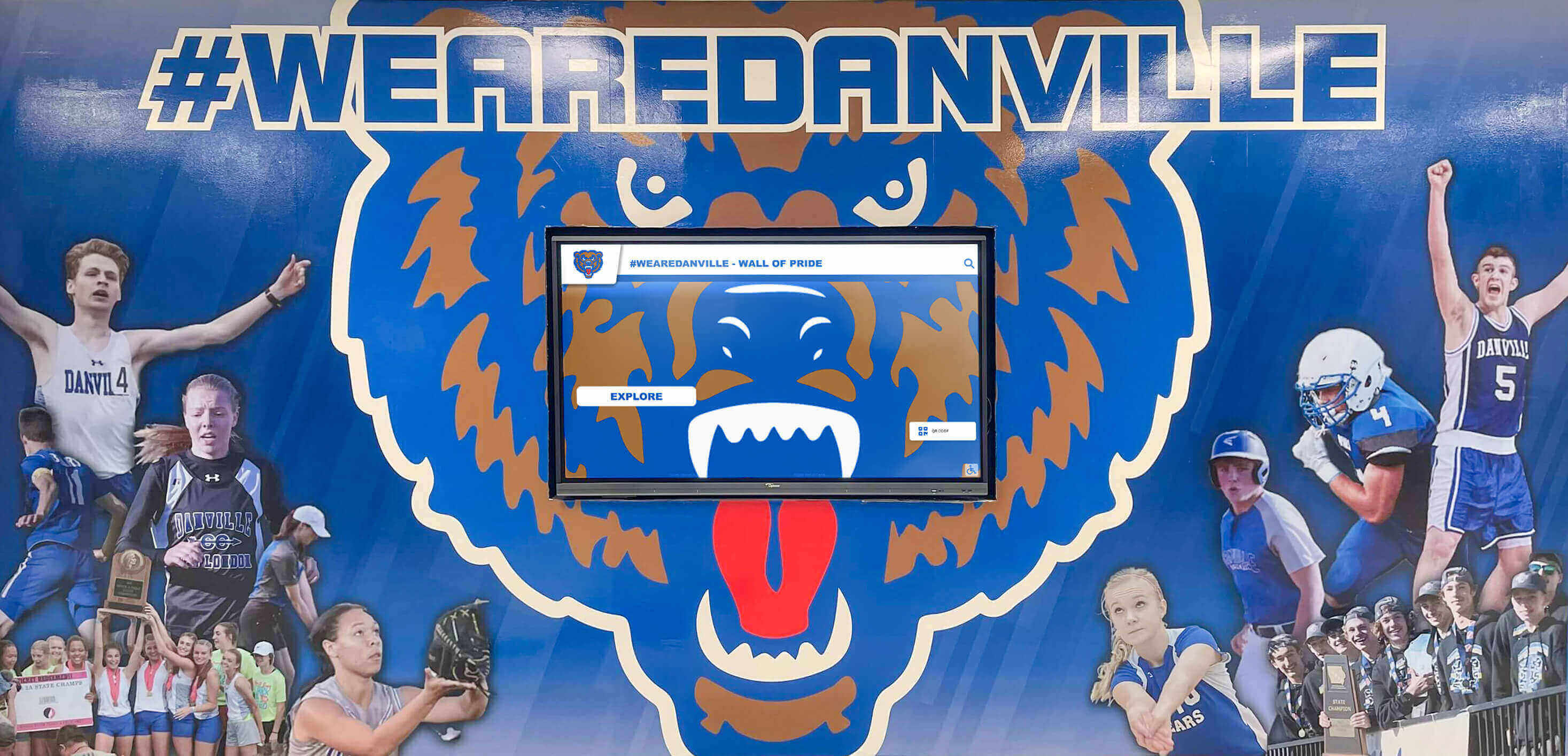
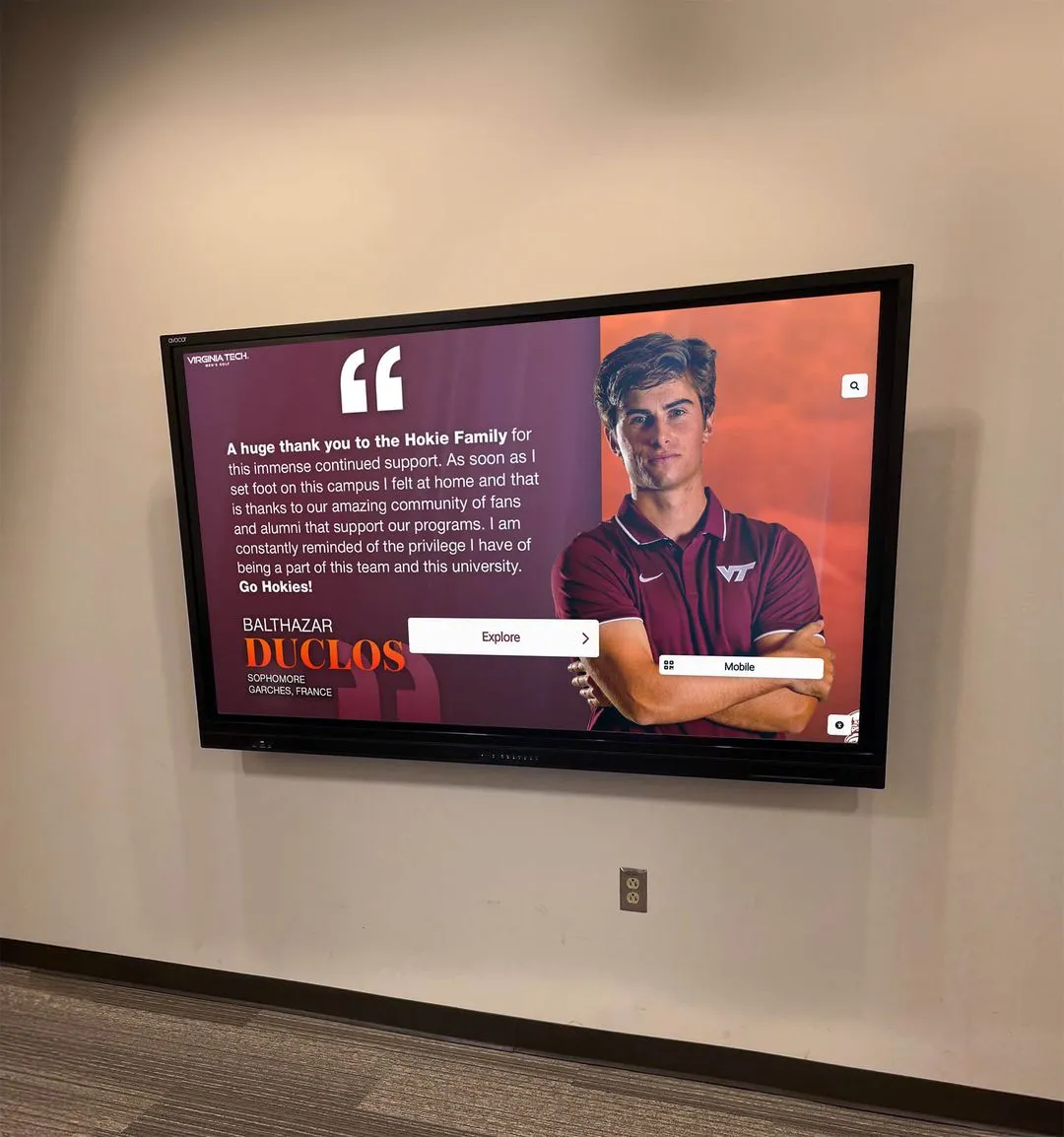
Integrated recognition systems maximize impact while managing budget constraints
Sustainable Funding Approaches
- Athletic department operational budget allocations
- Booster club support specifically for championship recognition
- Alumni donations funding recognition programs
- Corporate sponsorships underwriting display systems
- Championship celebration fundraising events
- Memorial giving opportunities honoring individuals through recognition support
Digital Display Investment Considerations
- Initial hardware costs for commercial-grade displays
- Recognition software platforms and licensing
- Professional installation and integration
- Content development and ongoing management
- Long-term cost comparison versus ongoing banner production
Schools discover that while digital systems require higher initial investment, they often cost less over decades by eliminating ongoing banner production expenses while providing dramatically expanded recognition capacity.
Maintenance and Long-Term Sustainability
Effective recognition programs require ongoing attention:
Physical Banner Care
- Periodic cleaning removing dust and maintaining appearance
- Inspection for damage, fading, or hardware issues
- Climate control when possible extending banner lifespan
- Prompt replacement when banners deteriorate beyond acceptable condition
- Documentation of installation specifications for future reference
Program Management Responsibilities
- Clear assignment of recognition program oversight
- Cross-training ensuring continuity during personnel changes
- Regular review of recognition criteria and standards
- Stakeholder communication managing expectations
- Integration with broader athletic program goals
Schools approaching championship recognition as permanent institutional commitment rather than one-time project achieve lasting success while appropriately honoring athletic achievement across generations.
Celebrating Individual and Team Achievements
Championship banners typically focus on team victories, but comprehensive recognition systems also celebrate individual excellence:
Expanding Recognition Beyond Team Championships
Complete athletic recognition programs honor diverse achievements:
Individual Championship Recognition
- State champion wrestlers, track athletes, swimmers
- National qualifiers and medalists in individual sports
- Record-breaking performances and milestone achievements
- All-state, all-conference, and all-American honors
- Academic all-state and scholar-athlete recognition
Schools often create separate recognition areas for individual achievements, similar to approaches used in honor society recognition programs that celebrate academic excellence alongside athletic achievement.
Coaching Milestone Recognition
- Career victory milestones
- Coach of the year honors
- Hall of fame inductions
- Championship coaching records
- Program building achievements
Similar to comprehensive coach appreciation programs, effective recognition celebrates the leadership that builds championship cultures.
Program Milestone Celebrations
- 100th program victory markers
- Program founding anniversaries
- Facility dedication recognition
- Historic achievement anniversaries
- Rivalry game records and traditions
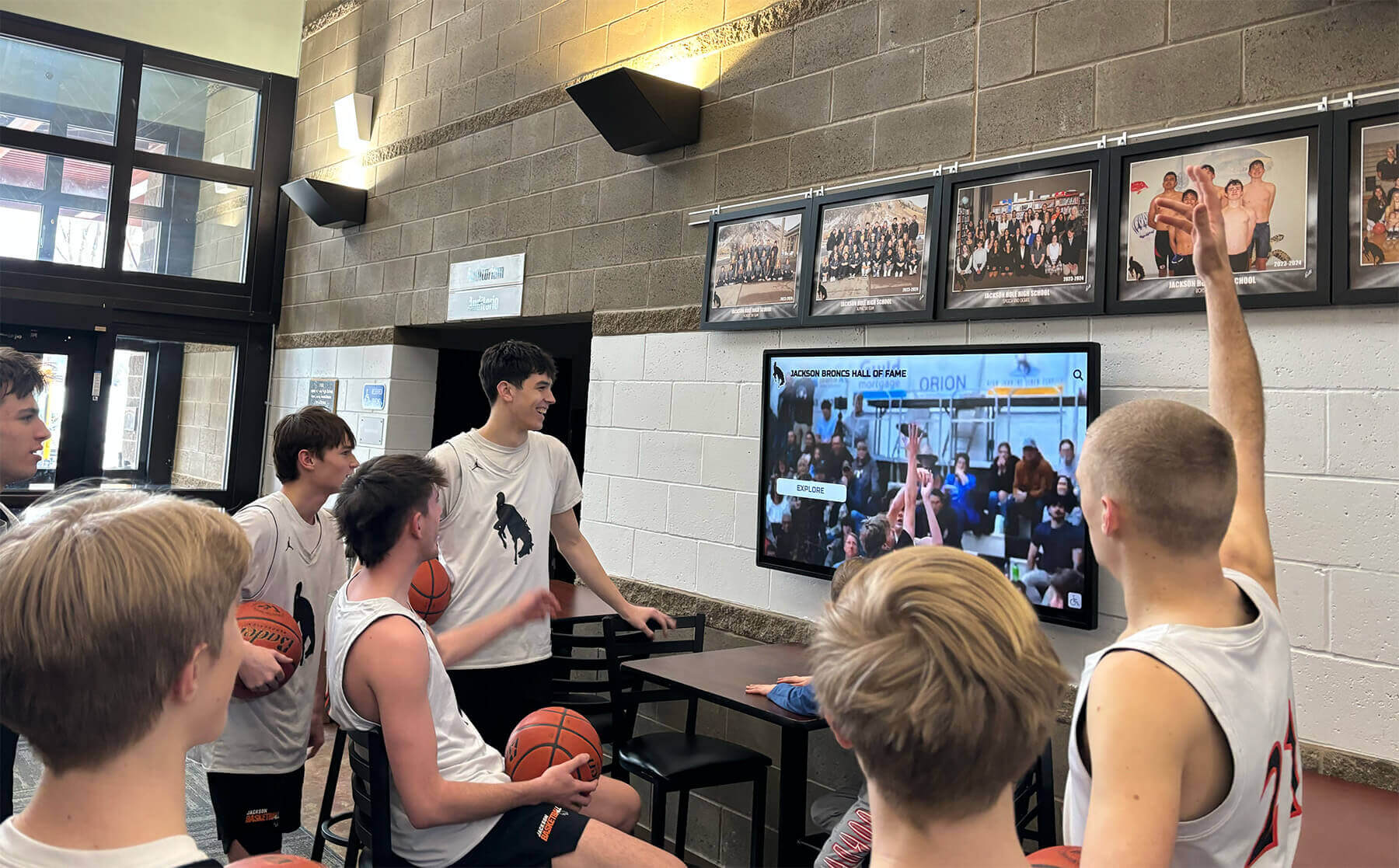
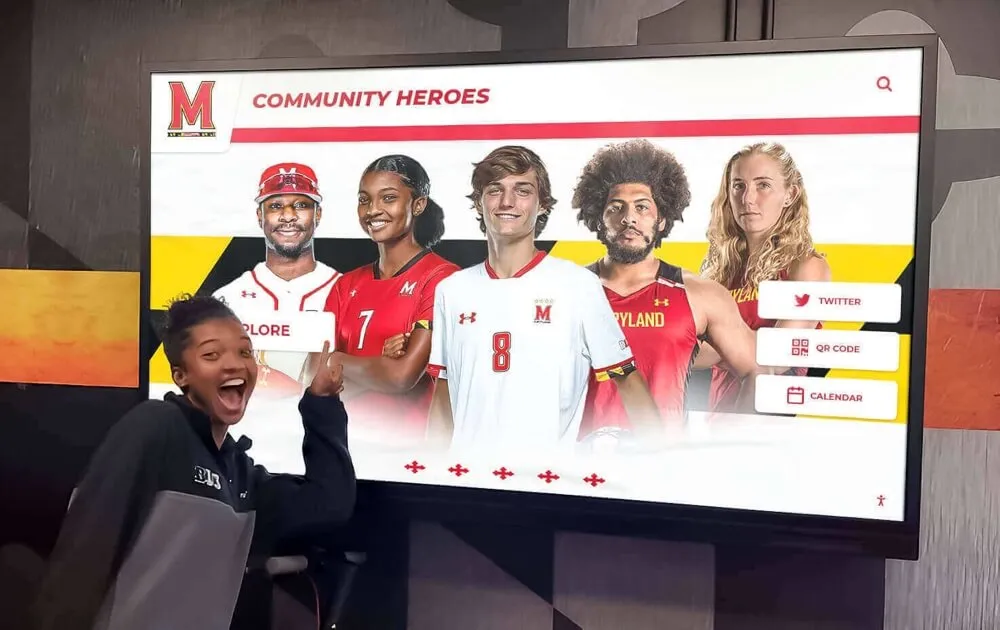
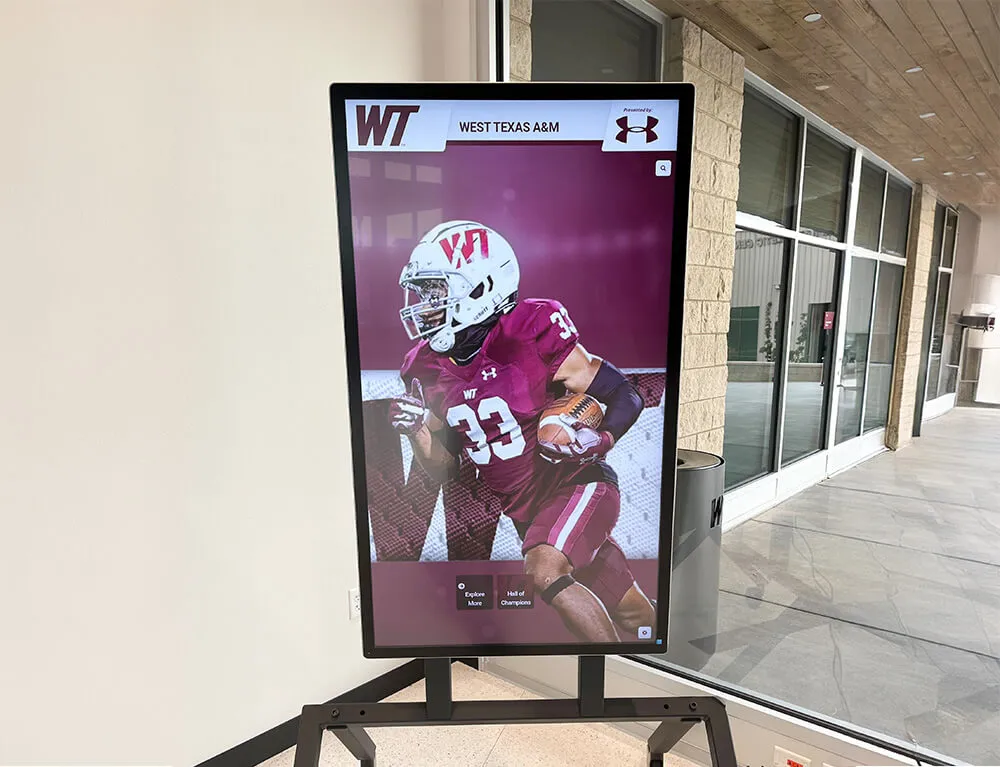
Modern recognition systems engage current athletes with championship highlights and program history
Creating Connections Between Past and Present
Effective championship recognition bridges historical achievement with current programs:
Building Championship Traditions
- Ceremonial team walks past championship displays before games
- Pre-season team meetings studying championship precedents
- Alumni speakers from championship teams addressing current athletes
- Championship anniversary celebrations bringing back winning teams
- Coaching emphasis on championship standards during daily practice
Motivational Environment Design
- Locker room championship displays creating daily inspiration
- Practice facility recognition reminding athletes of goals
- Weight room displays connecting training to championship success
- Team meeting spaces featuring championship imagery and quotes
- Digital displays showing championship highlights during practice
Recruitment Enhancement
- Facility tours emphasizing championship tradition
- Digital access enabling remote exploration by recruits and families
- Social media content showcasing championship recognition
- Comparative advantages over programs lacking championship tradition
- Excellence communication through comprehensive achievement celebration
Programs effectively connecting championship recognition to daily athletic culture gain maximum value from recognition investments while building self-reinforcing excellence environments.
Modern Alternatives to Traditional Banners
While traditional fabric banners suspended from rafters remain popular, schools increasingly explore alternatives addressing space, cost, and engagement limitations.
Digital Championship Recognition Systems
Technology-enabled recognition offers compelling advantages:
Unlimited Recognition Capacity
- No physical space constraints limiting championship quantity
- Accommodation of all sports and achievement levels
- Historical championship preservation spanning decades
- Individual athlete recognition alongside team championships
- Comprehensive achievement documentation impossible with physical banners
Engaging Multimedia Storytelling
- Championship game footage and highlight videos
- Celebration photographs from championship moments
- Coach and athlete interviews reflecting on victories
- Statistical documentation and performance records
- Historical context explaining championship significance
Dynamic Content Management
- Immediate updates adding new championships without production delays
- Easy corrections and information updates
- Seasonal highlighting of anniversary championships
- Featured content rotation keeping displays fresh
- Integration with school websites and social media
Much like emerging esports championship recognition, digital platforms accommodate new competitive formats while maintaining traditional sport celebration.
Interactive Exploration Features
- Search championships by sport, year, or athlete
- Filter displays showing specific eras or coaches
- Browse complete program championship histories
- Access detailed game summaries and statistics
- Connect related achievements and championship progressions
Digital recognition particularly resonates with current students who expect interactive experiences while preserving championship celebration traditions that connect generations of athletes and fans.
Integrated Recognition Walls and Displays
Comprehensive recognition systems combine multiple elements:
Physical and Digital Integration
- Traditional banners for premier championships
- Digital displays providing comprehensive documentation
- Trophy cases showcasing physical awards
- Wall graphics and murals creating visual impact
- Coordinated design creating unified recognition environment
Multi-Purpose Recognition Spaces
- Lobby displays welcoming visitors with championship celebration
- Hallway installations extending recognition beyond gymnasium
- Concourse areas in larger facilities
- Athletic department offices and conference rooms
- Training facility spaces where athletes spend daily time
Similar to comprehensive building dedication approaches, effective championship recognition thoughtfully integrates with facility design rather than appearing as afterthought additions.
Community Access and Engagement
- Online galleries enabling remote championship exploration
- Social sharing amplifying championship celebration
- Alumni contributions submitting memories and photographs
- Historical documentation preserving institutional memory
- Fundraising integration connecting donors to championship support
These comprehensive approaches maximize recognition effectiveness while addressing the space, engagement, and preservation challenges that traditional banner programs face.
Special Considerations for Multi-Sport Programs
High schools with successful programs across multiple sports face unique championship recognition challenges requiring careful planning.
Balancing Recognition Equity Across Sports
Creating fair recognition systems prevents perceptions of favoritism:
Consistent Recognition Standards
- Apply identical championship criteria across all sports
- Provide equivalent visibility for all program championships
- Allocate recognition space proportionally or equally
- Avoid favoring “major” sports over “minor” sports
- Celebrate championship achievement regardless of sport size or popularity
Sport-Specific Recognition Adaptations
- Acknowledge individual versus team championship differences
- Address seasonal sport groupings (fall, winter, spring)
- Recognize both boys and girls programs equally
- Celebrate emerging and non-traditional sports appropriately
- Account for cooperative programs shared with other schools
Schools implementing comprehensive recognition often discover that celebrating success across all programs builds school-wide athletic culture stronger than narrowly focused recognition favoring select sports.
Managing Recognition as Programs Grow
Championship accumulation over time requires sustainable approaches:
Scaling Recognition Systems
- Plan for growth when implementing new recognition programs
- Choose systems accommodating expansion without major renovations
- Budget for ongoing recognition as programs continue winning
- Design spaces with future capacity in mind
- Document procedures ensuring consistency across years
Preservation and Legacy Planning
- Digitize historical championship information before it’s lost
- Interview championship coaches and athletes documenting stories
- Collect photographs and memorabilia while accessible
- Create archives preserving institutional athletic history
- Establish traditions connecting current athletes to historical excellence
Approaches similar to retired coach recognition programs ensure that today’s championships remain celebrated decades into the future as new achievements accumulate.
Ceremonial Traditions
- Establish consistent unveiling ceremonies for new championships
- Create special recognition for milestone championships
- Honor championship anniversaries with reunions
- Integrate championship celebration with homecoming events
- Develop traditions unique to your school’s championship culture
These considerations transform championship recognition from simple banner hanging into comprehensive programs that build athletic excellence cultures while honoring achievement appropriately across all sports.
Creating Inclusive Recognition Programs
Championship recognition should celebrate excellence while remaining accessible and inspiring to all students.
Beyond Win-Loss: Recognizing Excellence Broadly
Comprehensive athletic recognition extends past championship banners:
Character and Leadership Recognition
- Sportsmanship award winners and character exemplars
- Team captain selections and leadership honors
- Community service contributions by athletes and teams
- Academic achievement by student-athletes
- Overcoming adversity and inspirational achievement stories
Much like inclusive recognition programs that celebrate diverse achievements, effective athletic recognition honors various forms of excellence beyond purely competitive success.
Participation and Improvement Celebration
- Most improved athlete recognition
- Dedication and effort acknowledgment
- Perfect attendance and commitment awards
- Junior varsity and freshman team achievements
- Participation milestones and career recognition
Program Builder Recognition
- Athletes in inaugural seasons of new sports
- Pioneers breaking barriers and establishing traditions
- Captains rebuilding struggling programs
- Multi-sport athletes contributing across programs
- Student-athletes balancing athletics with other commitments
These broader recognition approaches ensure that championship celebration motivates rather than discourages students, creating inclusive athletic cultures where everyone finds pathways to recognition while championships remain premier achievements worth pursuing.
Implementation Planning and Best Practices
Successfully implementing or upgrading championship banner programs requires systematic planning.
Stakeholder Engagement and Input
Effective recognition programs reflect broad community perspectives:
Essential Stakeholder Groups
- Athletic directors and school administrators
- Current and former coaches with program history knowledge
- Athletes from championship teams
- Parent and booster organization leadership
- Alumni particularly from championship eras
- Facilities management responsible for installation
Input and Planning Process
- Survey stakeholders about recognition priorities
- Review existing recognition identifying gaps and opportunities
- Research peer schools for best practice examples
- Establish budget parameters and funding commitments
- Create implementation timeline with clear milestones
Building Buy-In and Support
- Present proposals showing how recognition benefits programs
- Address concerns about costs, maintenance, and fairness
- Demonstrate commitment to honoring all sports appropriately
- Explain long-term vision for recognition program evolution
- Secure financial commitments before beginning implementation
Schools achieving broad stakeholder buy-in create sustainable recognition programs that endure through personnel changes and budget pressures.
Phased Implementation Approaches
Comprehensive recognition often develops progressively:
Phase 1: Foundation (Year 1)
- Establish recognition criteria and design standards
- Create or update most recent championship banners
- Install primary display in main gymnasium
- Develop procedures for ongoing recognition
- Celebrate implementation with unveiling ceremony
Phase 2: Expansion (Years 2-3)
- Add historical championship banners filling gaps
- Implement secondary displays in hallways or lobbies
- Introduce digital elements complementing physical banners
- Expand recognition to individual achievements
- Develop coaching and milestone recognition components
Phase 3: Enhancement (Years 3-5)
- Implement comprehensive digital recognition systems
- Create interactive championship exploration features
- Develop online access extending reach beyond campus
- Establish sustainability procedures and funding
- Build traditions around recognition and celebration
Ongoing: Maintenance and Evolution
- Regular content updates and banner additions
- Periodic design refreshes maintaining contemporary appearance
- Technology upgrades as capabilities improve
- Continuous stakeholder feedback integration
- Documentation ensuring program continuity
Phased approaches distribute costs while enabling learning and adjustment—reducing risk while building organizational capacity for effective recognition management.
Measuring Recognition Program Success
Evaluating championship recognition effectiveness guides ongoing improvements:
Quantitative Success Indicators
- Student athlete participation rates and retention
- Athletic program fundraising and booster engagement
- Facility tour feedback from recruits and families
- Social media engagement with championship content
- Alumni participation in championship events
Qualitative Impact Assessment
- Athlete testimonials about recognition motivation
- Coach feedback on recruiting advantages
- Community pride indicators and media coverage
- School culture observations related to athletic achievement
- Stakeholder satisfaction surveys
Continuous Improvement Process
- Regular recognition program reviews
- Stakeholder feedback collection
- Benchmark comparisons with peer schools
- Technology and design trend monitoring
- Budget analysis and funding sustainability assessment
Schools treating championship recognition as evolving programs rather than static installations achieve lasting impact while continuously improving effectiveness.
Conclusion: Building Legacy Through Championship Recognition
Championship banners represent far more than gymnasium decorations—they embody your school’s commitment to athletic excellence, preserve program history connecting generations of athletes, and create environments where championship pursuit becomes tradition rather than aspiration. Whether pursuing traditional fabric banners suspended from facility rafters, modern digital recognition systems providing unlimited capacity and rich storytelling, or hybrid approaches balancing tradition with innovation, effective championship recognition requires thoughtful design, strategic implementation, and sustained commitment.
The most successful championship recognition systems share fundamental characteristics: they celebrate achievement comprehensively across all sports and achievement levels, they maintain professional quality reflecting the significance of championships, they integrate strategically within facilities creating maximum visibility and impact, they tell compelling stories transforming statistics into inspiring narratives, and they evolve sustainably through organizational changes and accumulating championships.
Your championship banners—whether traditional fabric, digital displays, or innovative hybrids—tell your program’s story. Every banner represents countless hours of practice, moments of adversity overcome, teamwork exemplified, and ultimately the sweet victory of championship achievement. Athletes who dedicated themselves to excellence deserve recognition that matches their accomplishment. Schools honoring championships appropriately communicate institutional values, build positive athletic cultures, and create environments where excellence becomes expectation.
Transform Your Championship Recognition
Discover how modern digital recognition solutions can honor every championship achievement while preserving the traditional aesthetic that makes banner displays so compelling. Create engaging, comprehensive celebration systems that inspire athletes, build school pride, and preserve your program's legacy for generations.
Explore Recognition SolutionsWhether your program displays dozens of championship banners accumulated over generations or pursues your first championship worthy of celebration, thoughtful recognition systems ensure achievement receives appropriate honor while inspiring current and future athletes to build upon championship traditions. The legacy you’re celebrating didn’t happen by accident—it resulted from dedication, excellence, and commitment deserving recognition systems designed with equal care and attention.
Traditional championship banners will always hold special significance—their physical presence, ceremonial installation, and permanent visibility create tangible connections between current athletes and program legacy. Yet modern alternatives offer compelling advantages overcoming space constraints, enabling multimedia storytelling impossible on fabric, and providing engagement features that resonate with contemporary audiences. Schools creating the most effective recognition often combine both approaches, preserving tradition while embracing innovation in service of comprehensive championship celebration.
Your championships define your program. Your recognition system should honor them appropriately while inspiring the next generation of athletes who’ll add their own victories to your school’s proud tradition. Learn more about creating comprehensive athletic recognition through thoughtful design approaches and sustainable program implementation that celebrate achievement for generations to come.