



High school spirit weeks represent more than coordinated dress-up days—they create shared experiences uniting diverse student populations around school pride, energize campus culture during academic stretches, and establish traditions connecting current students with institutional legacy. When planned thoughtfully, spirit week activities transform routine school weeks into memorable celebrations strengthening community bonds while making school attendance genuinely exciting.
Yet many schools struggle with spirit week planning, facing declining participation from older students who dismiss activities as childish, repetitive themes that feel stale after freshman year, limited engagement outside core friend groups or athletic teams, and minimal lasting impact beyond the week itself. The difference between lackluster spirit weeks and transformative school-wide celebrations lies in strategic planning that balances tradition with innovation, creates inclusive activities engaging all student subcultures, incorporates meaningful recognition reinforcing participation value, and establishes sustainable systems making spirit week integral to annual school culture rather than isolated events.
This comprehensive guide explores high school spirit week ideas covering planning frameworks, daily theme strategies, engaging activity formats, participation tracking approaches, and recognition systems that celebrate school spirit while building lasting traditions. Whether revitalizing tired spirit week programs, launching new traditions, or seeking fresh ideas energizing existing celebrations, you’ll discover practical frameworks creating spirit weeks that genuinely strengthen school community.
Schools implementing strategic spirit week programs report measurably higher student engagement, stronger school pride, improved attendance during spirit week, and enhanced student council participation—demonstrating that well-executed spirit weeks deliver genuine educational value beyond simple entertainment.

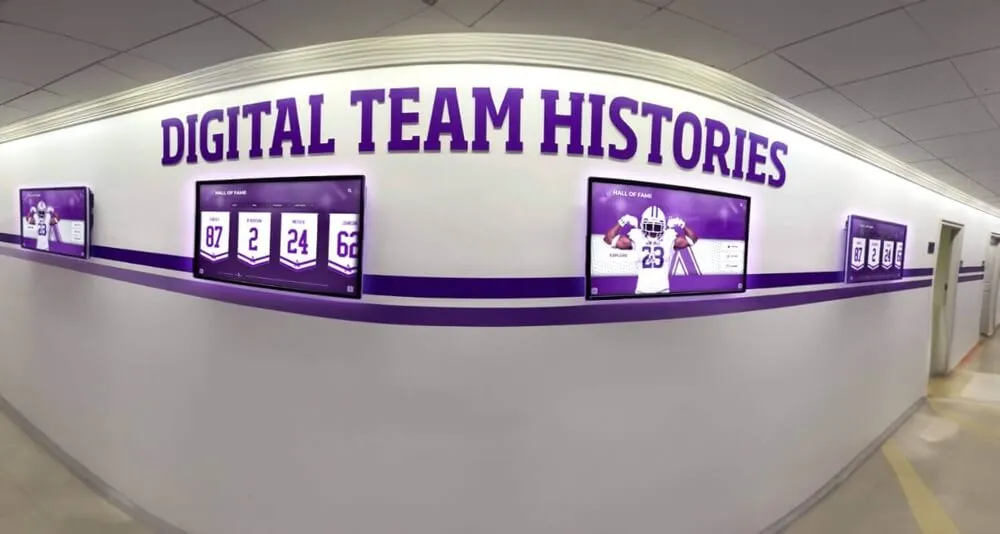
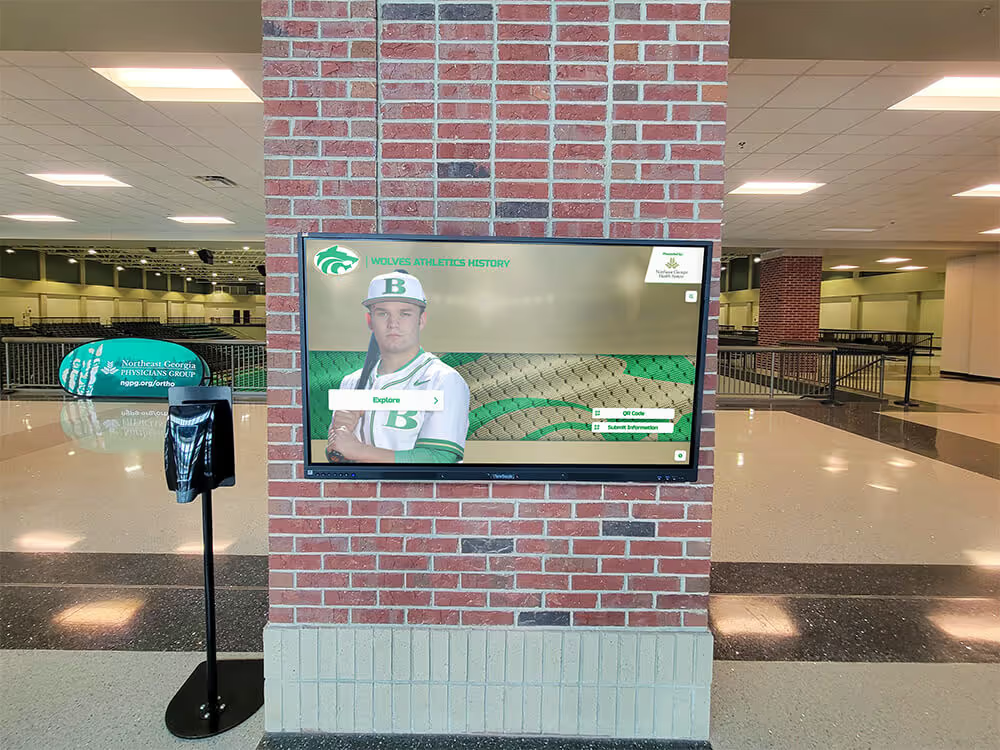
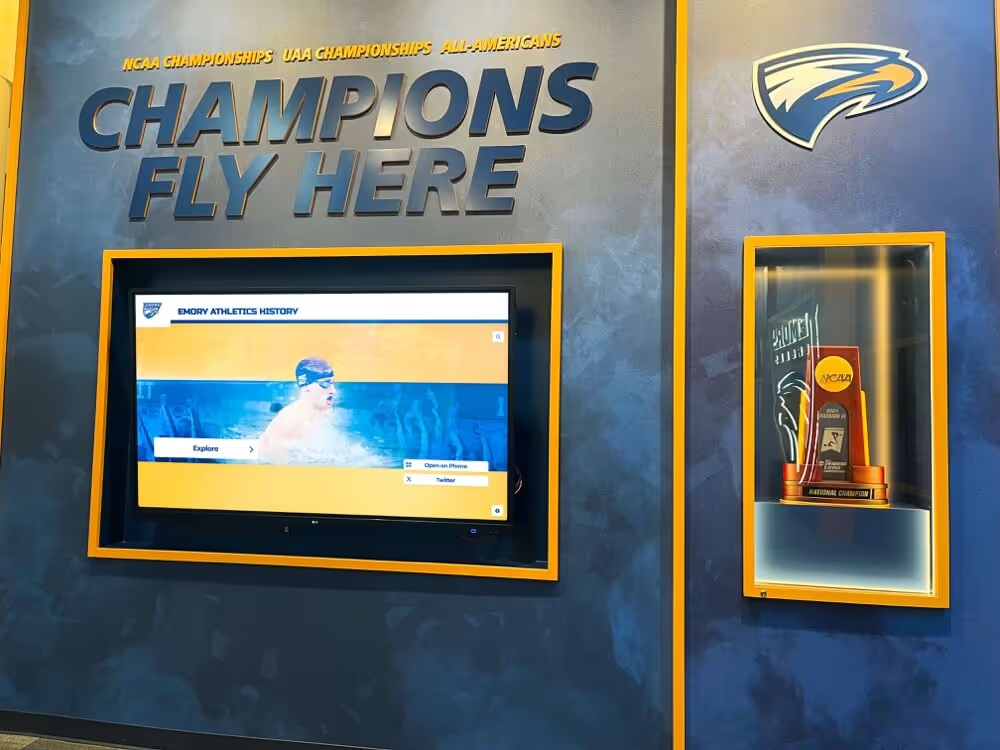
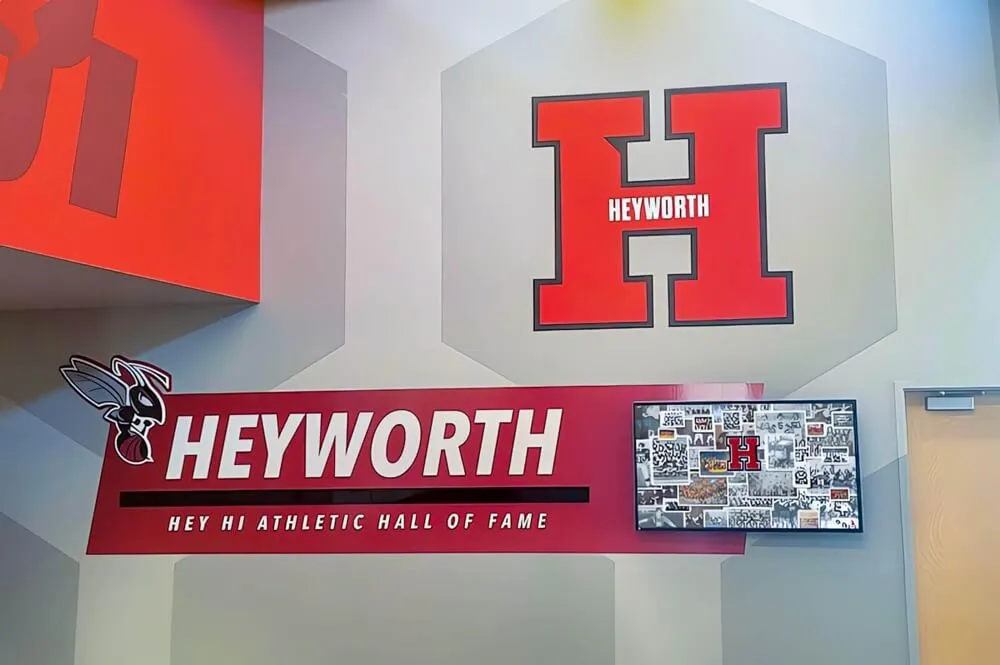
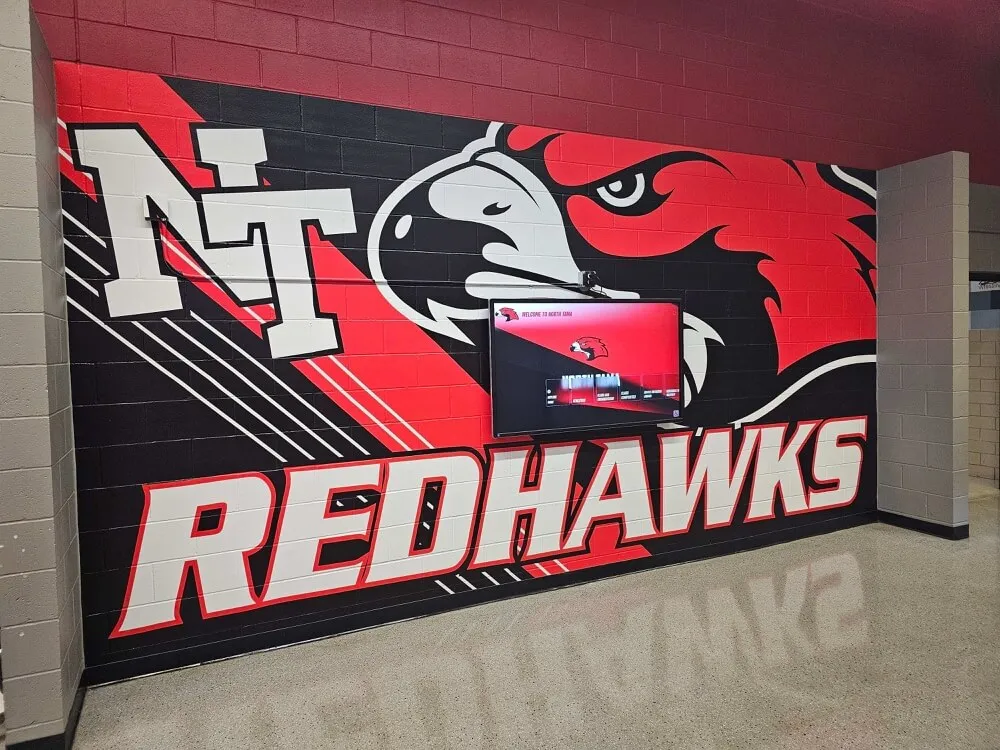
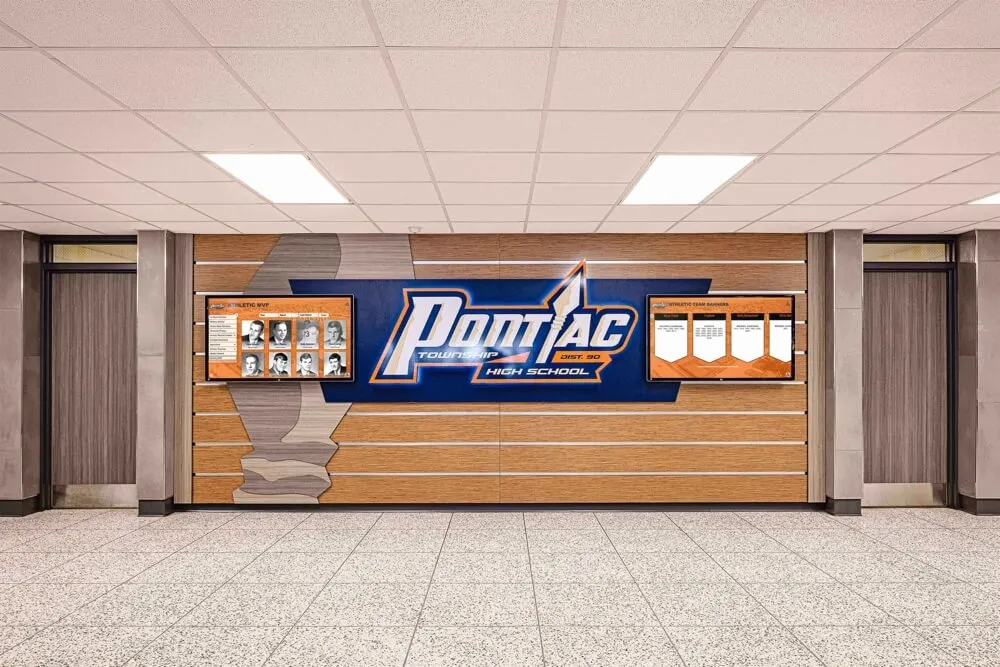
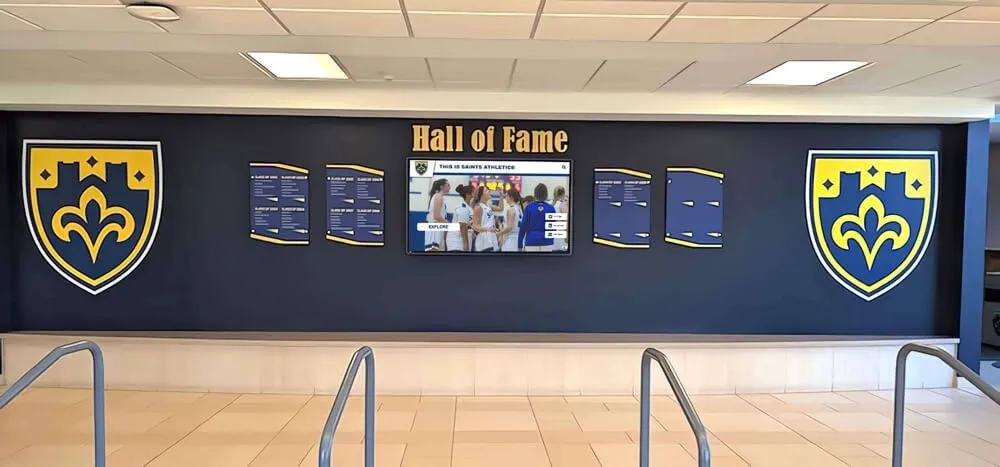
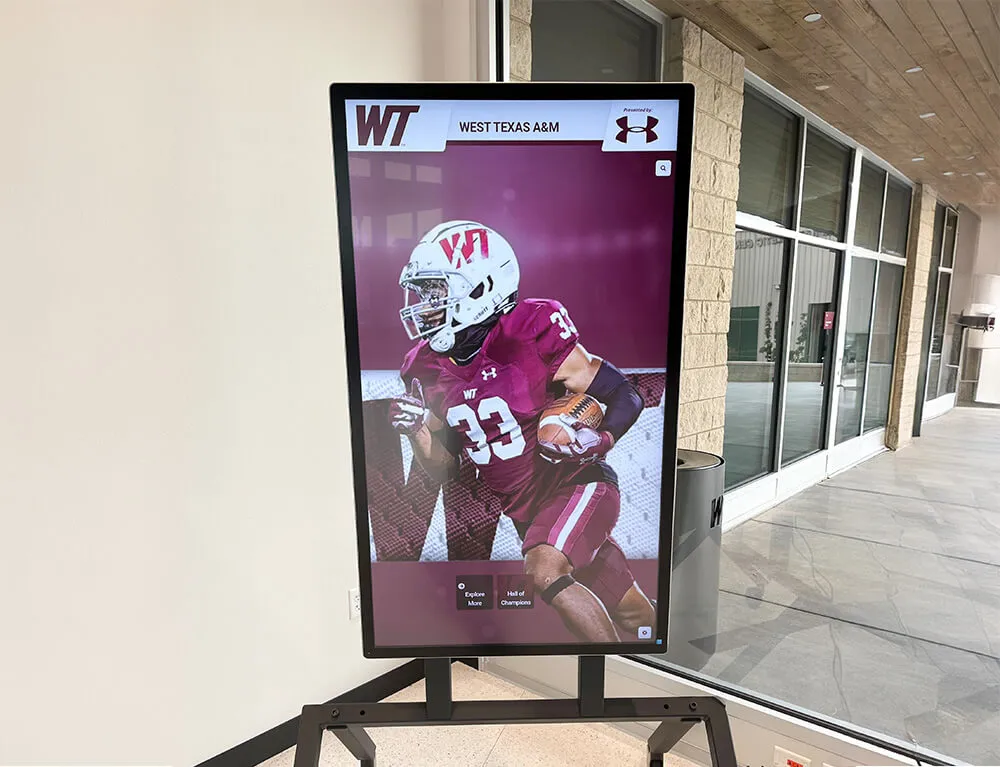
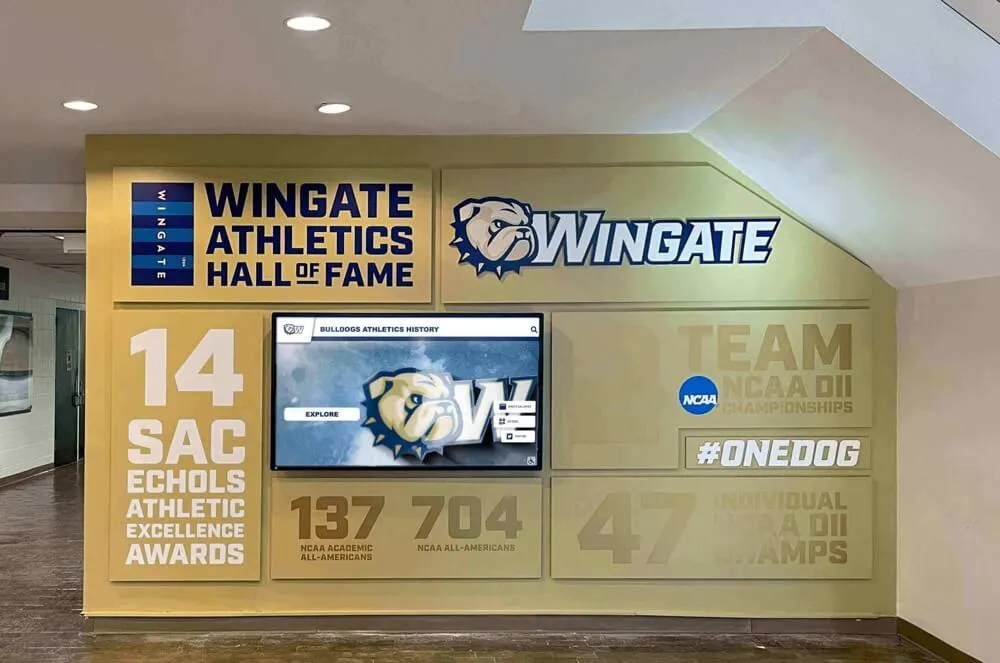
Visible school branding and recognition displays create environments reinforcing school pride and celebrating community traditions year-round
Understanding Spirit Week Purpose and Goals
Before diving into specific activity ideas, establishing clear objectives ensures spirit week serves meaningful purposes beyond simple fun.
Core Spirit Week Objectives
Effective spirit weeks balance multiple complementary goals:
Building School-Wide Community
Spirit weeks create rare opportunities for comprehensive student interaction across typical social boundaries. Well-designed activities unite seniors with freshmen, athletes with artists, honors students with struggling learners, and diverse cultural groups within single shared experiences—breaking down social silos that often fragment high school populations into disconnected subcultures.
This community-building proves particularly valuable in large high schools where students might otherwise navigate four years never meaningfully interacting with peers outside their immediate friend groups, classes, or extracurricular activities. Shared spirit week experiences create common reference points and memories transcending typical social divisions.
Strengthening School Pride and Identity
Spirit celebrations reinforce institutional identity and pride through visual demonstrations of school color unity, school chant and tradition participation, mascot celebration and recognition, historical tradition connection, and competitive pride against rival schools. These collective expressions of school affiliation strengthen emotional connection between students and institutions—fostering loyalty, engagement, and positive association lasting beyond high school years.
Schools with strong spirit week traditions create recognizable institutional identities students proudly claim as part of personal identity rather than treating school as merely transactional educational setting attended by obligation.
Creating Memorable Shared Experiences
The teenage years remain formative periods where significant memories and friendships develop. Spirit weeks intentionally create positive shared experiences students remember across entire lives—often with greater clarity than specific academic lessons. These memories contribute to positive high school experience perception influencing emotional wellbeing, school connectedness, and eventual alumni engagement.
Motivating Positive Behavior and Attendance
Engaging spirit weeks create natural incentives for school attendance and positive behavior. Students don’t want to miss exciting activities, creating attendance improvements during traditionally challenging periods like late fall or early spring when academic fatigue sets in. Additionally, behavioral consequences potentially excluding students from spirit week participation provide natural motivation for meeting behavioral expectations.
Providing Leadership Opportunities
Spirit week planning and execution offers authentic student leadership development through student council planning committees, peer promotion and communication roles, activity facilitation and organization, and creative problem-solving addressing participation challenges. These experiences build practical skills while empowering student voice in shaping school culture.
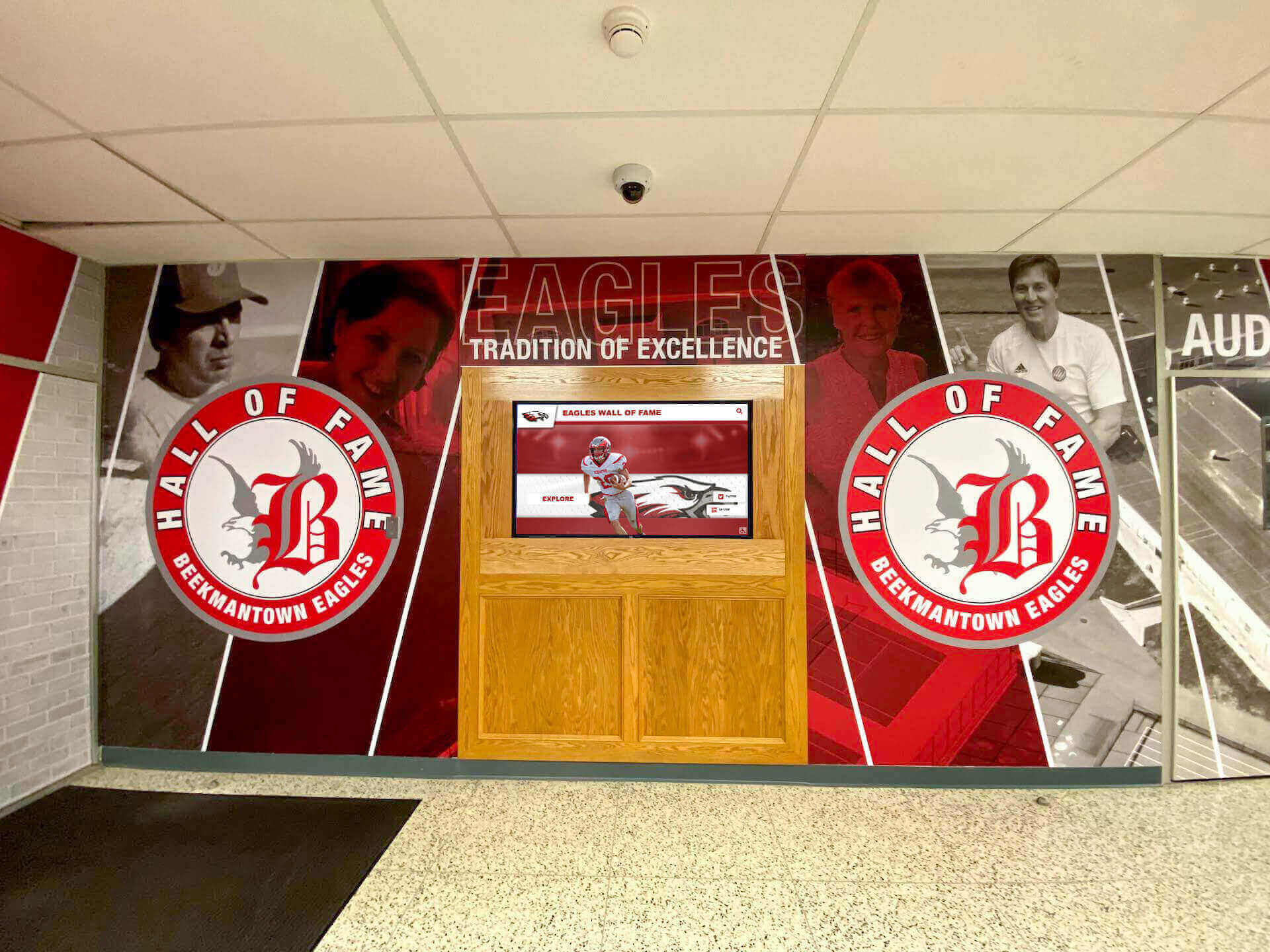
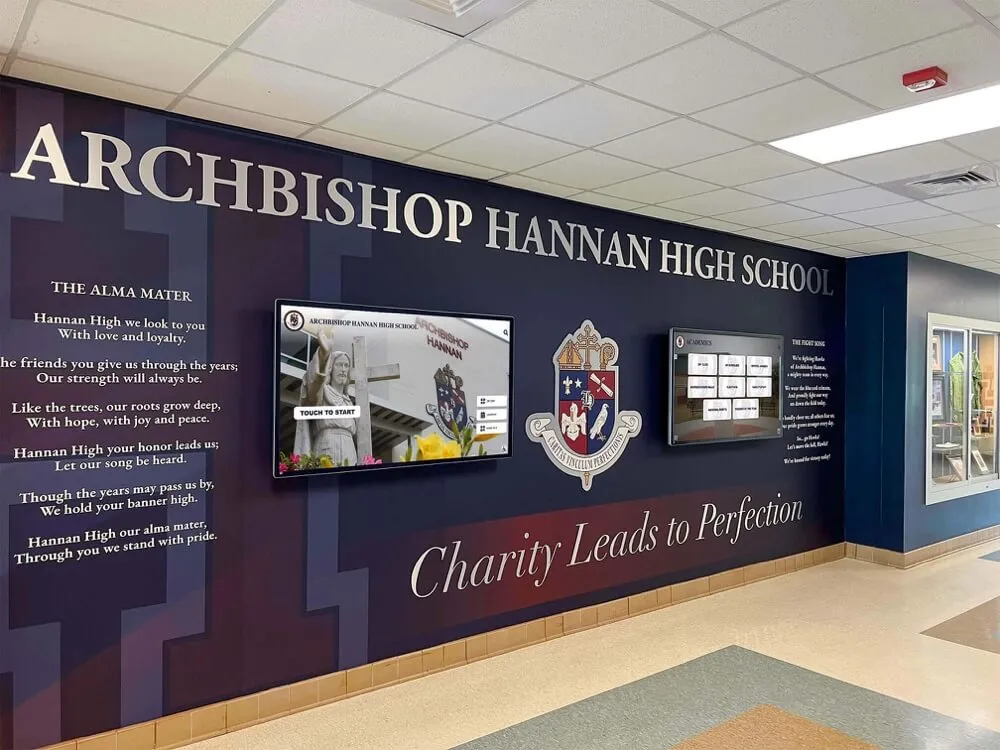
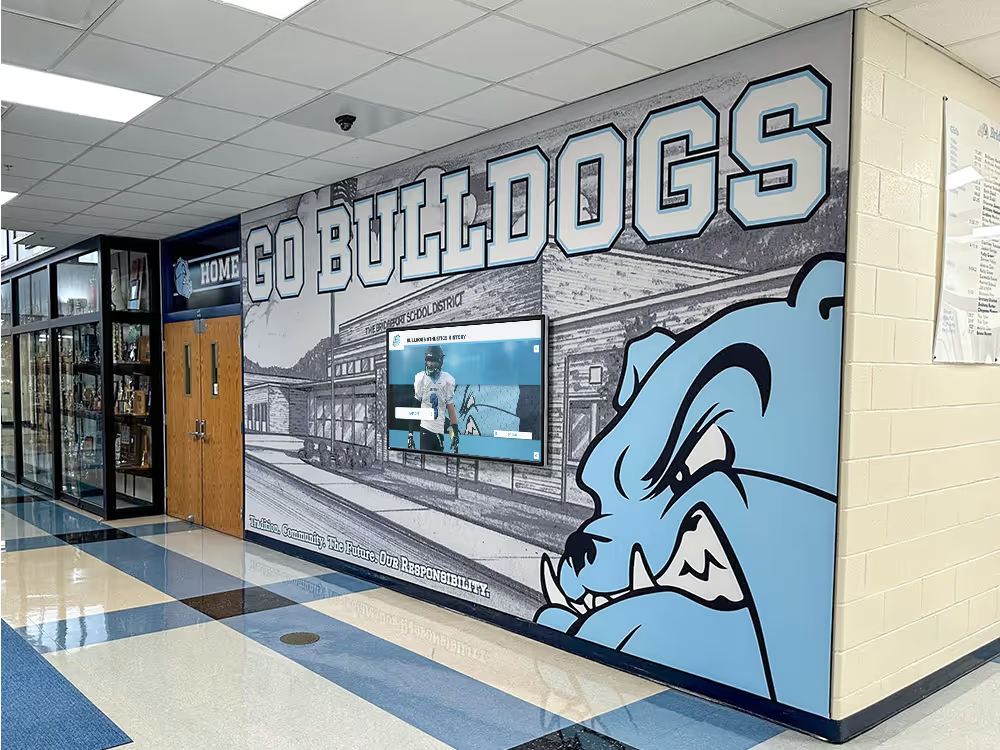
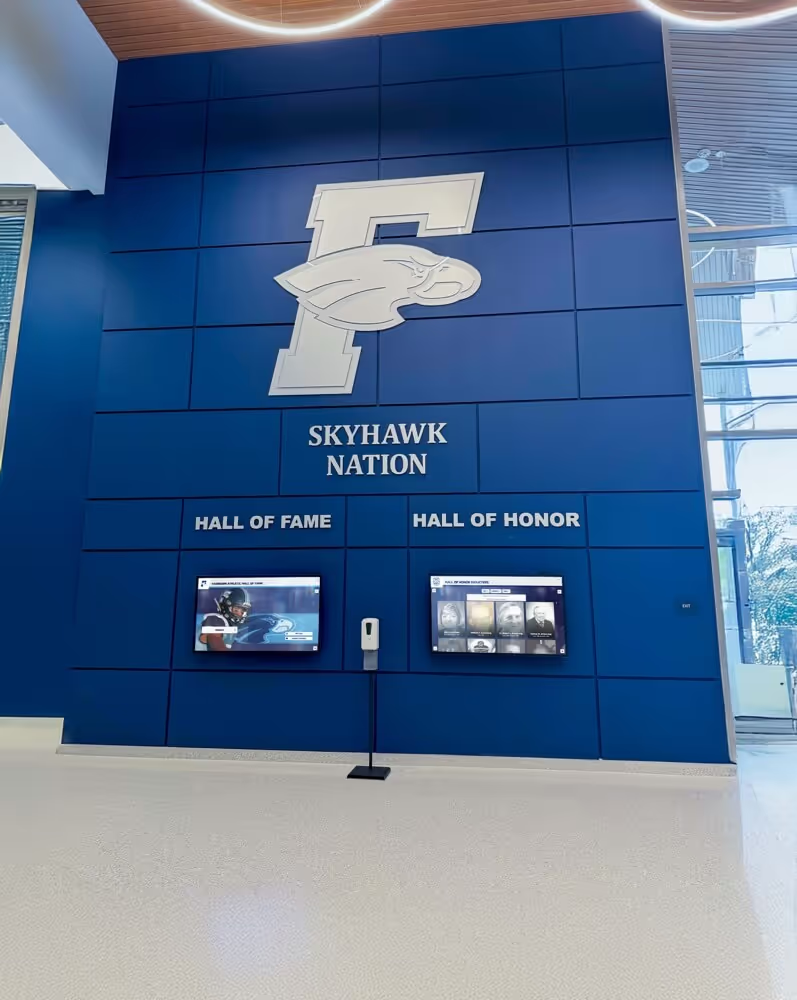
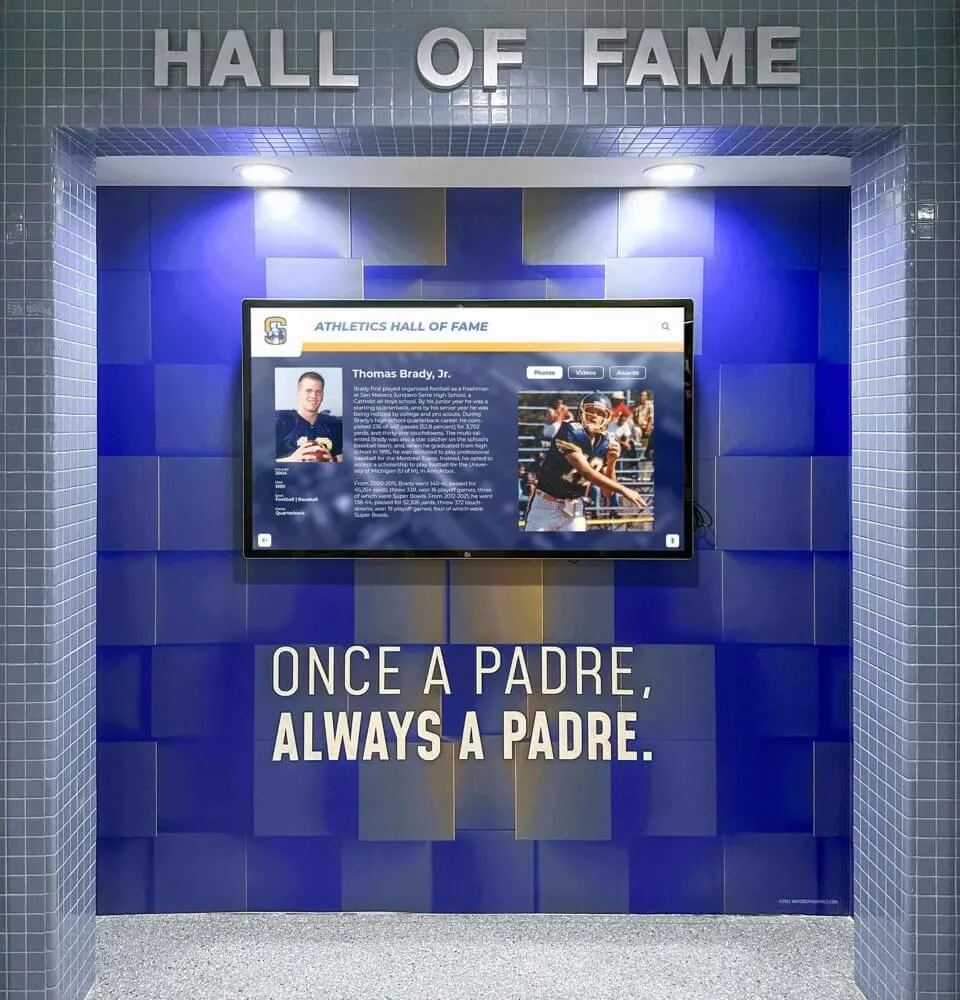
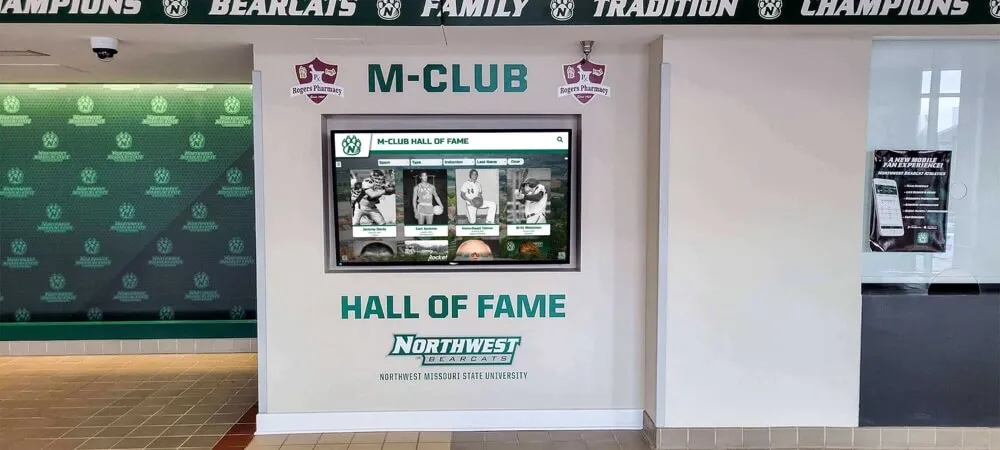
Prominent school identity displays in main entrances establish pride and tradition from first impression through graduation
Timing and Scheduling Considerations
Strategic timing maximizes spirit week impact and participation:
Optimal Calendar Placement
Most successful spirit weeks align with natural school calendar moments including homecoming weeks tied to football traditions and alumni return, winter spirit weeks combating mid-year academic fatigue, spring celebration weeks before testing seasons or year-end countdown, pep rally preparation weeks building toward major athletic competitions, and rivalry week celebrations preceding competitions against traditional school rivals.
Avoid scheduling spirit weeks immediately before major academic events like final exams, during standardized testing periods requiring serious classroom focus, or when significant portions of student population will be absent for field trips, athletic tournaments, or academic competitions.
Duration and Intensity Balance
Traditional Monday-Friday spirit weeks work well for most schools, providing sufficient duration for momentum building while avoiding fatigue that might occur during longer celebrations. Some schools implement successful variations including extended two-week programs with alternating high-energy and lower-key days, compressed three-day intensive spirit celebrations, or monthly mini-spirit events maintaining engagement throughout the year rather than concentrating celebration into single weeks.
Integration with Other School Events
Spirit weeks achieve maximum impact when coordinated with broader school programming through athletic event integration with game-day spirit activities, assembly or rally incorporation providing public celebration forums, fundraising connection where spirit participation supports charitable causes, and community event coordination extending spirit week beyond campus through service projects or local business partnerships.
This integration positions spirit week as central to comprehensive school culture rather than isolated student council novelty—elevating significance and institutional support.
Core Spirit Week Daily Theme Strategies
Daily themes provide structure organizing spirit week while creating anticipation and variety maintaining engagement across entire week.
Classic Daily Theme Frameworks
Certain theme patterns prove consistently popular across diverse high school contexts:
Color and Clothing-Based Themes
Simple dress-up themes enable broad participation with minimal preparation or cost including class color days where each grade level wears designated color competing for visual dominance, school color days uniting entire campus in shared school palette, decades days celebrating fashion from different historical eras, character days enabling costumes representing fictional or historical figures, and pattern days like pajama day, twin day, or mismatched clothing day requiring minimal costume investment.
Clothing themes work well because they require minimal planning from students, enable creative interpretation across comfort levels, create visual unity throughout campus, and generally avoid academic disruption compared to more complex activities.
Cultural and Heritage Celebration
Inclusive spirit weeks celebrate student diversity through cultural heritage days inviting students to wear traditional dress or colors representing family background, language celebration days honoring multilingual campus populations, arts and music culture days celebrating creative expression traditions, and career day variations celebrating family occupations or cultural professions.
Cultural themes should be designed carefully ensuring inclusive framing that celebrates rather than appropriates, avoids stereotypical costumes potentially crossing into offensive caricature, provides clear guidance distinguishing celebration from mockery, and includes diverse planning committee input preventing unintentional cultural insensitivity.
Academic and Career Connection
Spirit themes can reinforce educational mission through STEM day celebrating science and technology interests, literacy celebration days honoring reading and writing, college pride days where students wear apparel from colleges they hope to attend, and career exploration days introducing various professional paths. These academically-connected themes satisfy administrative preferences for educational substance while maintaining spirit week fun and engagement.
School History and Tradition Themes
Connecting spirit week to institutional heritage strengthens tradition and alumni connection through throwback days celebrating previous decades of school history, alumni recognition days honoring distinguished graduates, founding celebration days marking school establishment anniversaries, and rivalry tradition days celebrating historic athletic or academic competitions. Schools can showcase historical school traditions through visual displays and digital recognition during these themed celebrations.
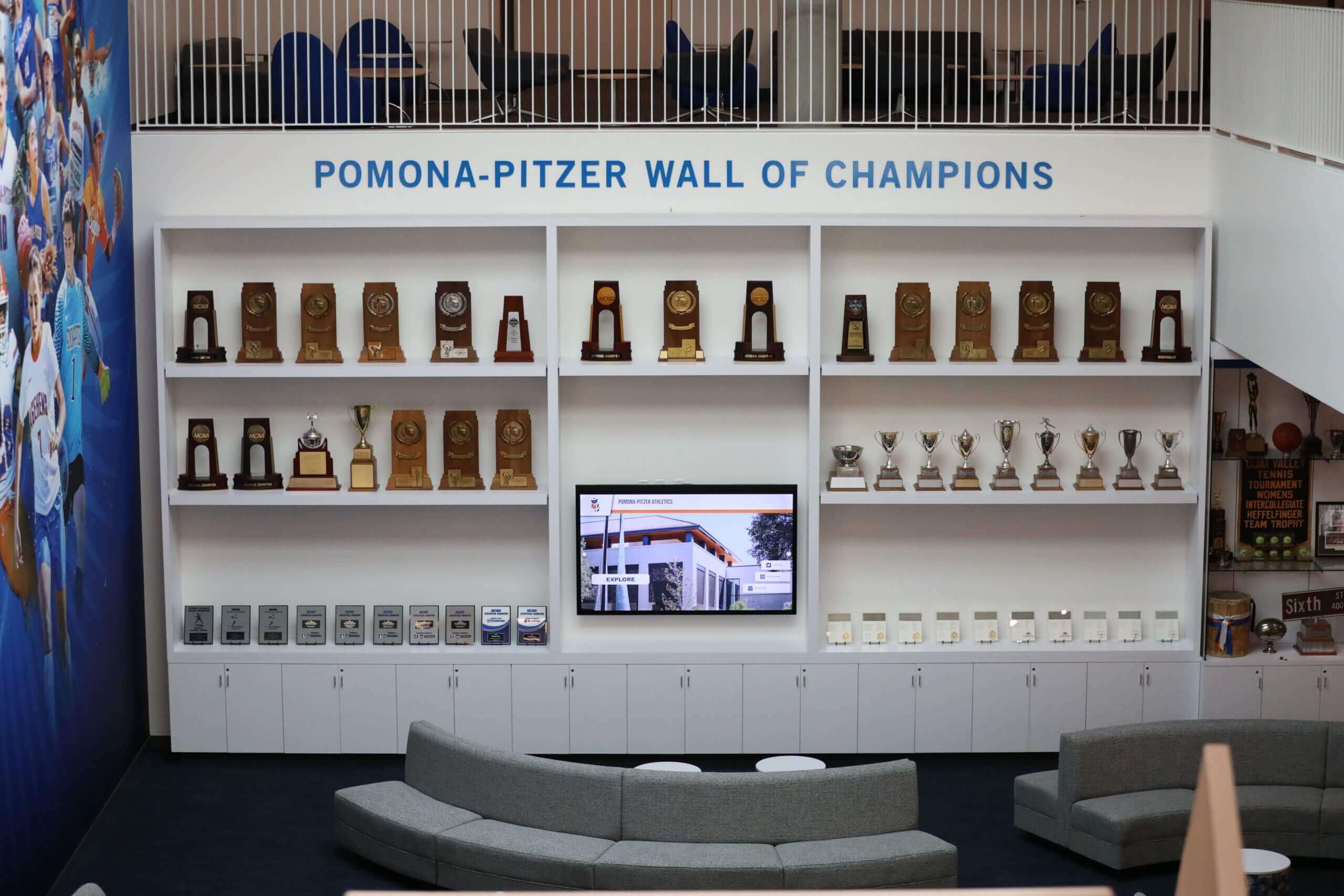
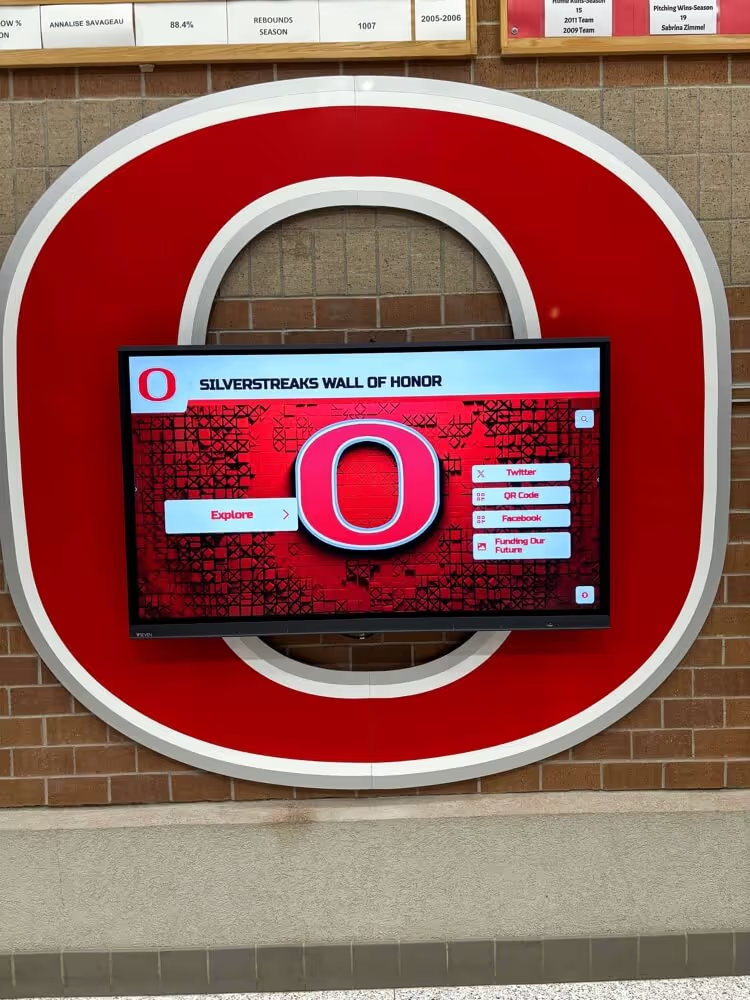
Creating comfortable gathering spaces around recognition displays encourages student engagement with school achievement and tradition
Innovative Theme Variations
Beyond traditional approaches, creative themes generate fresh excitement:
Social Media and Digital Culture Themes
Engaging tech-savvy generations through meme day celebrating internet culture (with appropriate content guidelines), app-inspired days like “TikTok Tuesday” or “Instagram Influencer Day”, hashtag challenges creating digital participation alongside physical presence, and video challenge days where students create spirit content for social media sharing.
Digital integration extends spirit week beyond campus hours through online participation enabling evening engagement, absent student inclusion through remote participation, and parent/community visibility when students share spirit activities publicly.
Interdisciplinary Academic Competitions
Spirit weeks can incorporate academic dimensions through trivia competitions testing school history knowledge, department challenge days where English, Math, Science, Social Studies, and Arts departments host themed activities, creative challenge competitions requiring artistic or problem-solving skills, and subject area dress-up connecting academic content to costume (scientists, historical figures, literary characters).
Academic integration satisfies administrative goals while demonstrating that school pride encompasses intellectual achievement alongside athletic and social dimensions.
Service and Philanthropy Focus
Purpose-driven spirit weeks connect celebration to community impact through charity day competitions where classes compete in donation collection, volunteer challenge days tracking community service hours, awareness campaign themes supporting causes like mental health, environmental protection, or social justice, and giving back days partnering with local nonprofits or community organizations.
Service integration appeals to students seeking meaningful engagement beyond surface-level fun while building positive school reputation within broader community.
Collaborative Inter-Grade Competitions
Rather than purely competitive grade-level rivalry, collaborative themes build cross-grade connections through buddy system pairings where seniors mentor freshmen, cross-grade team competitions mixing grades rather than separating, mentor-mentee recognition days celebrating student leader programs, and collaborative art or performance projects requiring multi-grade cooperation.
Collaborative structures combat problematic upperclassman dominance or underclassman exclusion that can make spirit week alienating rather than unifying.
Engaging Daily Activity Formats
Beyond costume themes, structured activities amplify participation and create memorable experiences:
Lunchtime and Common Period Activities
Centralizing activities during natural gathering times maximizes visibility and participation:
Performance and Talent Showcases
Brief lunchtime entertainment creates gathering focal points through student band or music performances, dance crew demonstrations, talent show mini-acts sampling diverse student abilities, teacher talent surprises revealing unexpected staff skills, and class cheer or chant competitions building grade-level pride.
Performances should be brief (5-10 minutes) respecting limited lunch periods while creating memorable moments students discuss throughout afternoons.
Interactive Game Competitions
Large-group participation games engage audiences beyond performer-spectator dynamics through minute-to-win-it style challenges accessible to varied skill levels, teacher versus student competitions creating entertaining role reversals, relay races or physical challenges between grade levels, trivia or academic bowl quick-rounds, and improvisation or comedy games encouraging creative performance.
Interactive formats prevent passive spectatorship where only small groups participate while masses watch disengaged.
Food and Eating Contests
Food-based competitions generate entertaining spectacles (with appropriate safety precautions and dignity maintenance) through eating speed challenges, cooking or food art competitions judged by staff or peers, recipe contests celebrating cultural diversity or school traditions, and themed food truck or vendor events when possible within school policies.
Food activities should be managed carefully ensuring allergy awareness, dignified competition avoiding humiliation or waste, and cleanup logistics preventing mess disrupting afternoon classes.
Outdoor Activities and Recreation
Weather permitting, outdoor spirit activities energize student bodies through field day style competitions with various athletic challenges, outdoor concert or assembly events in larger gathering spaces, photo opportunity stations with props and backdrops for social sharing, and campus beautification projects combining service with celebration.
Outdoor activities provide welcome breaks from standard classroom routines while enabling larger-scale gatherings than typical indoor facilities permit.

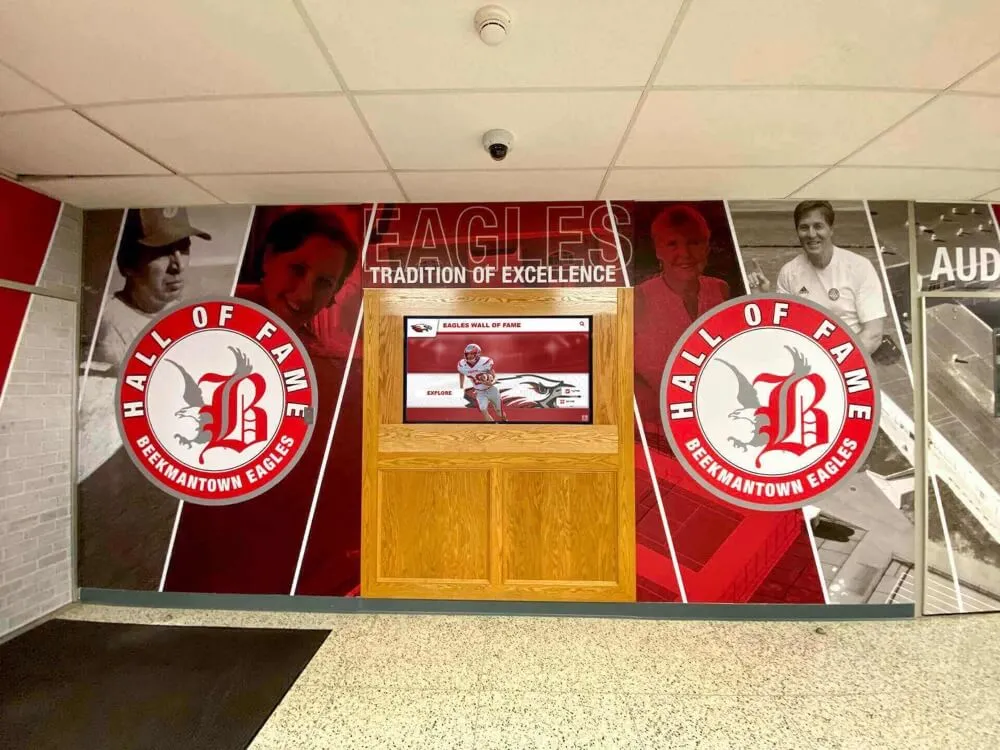
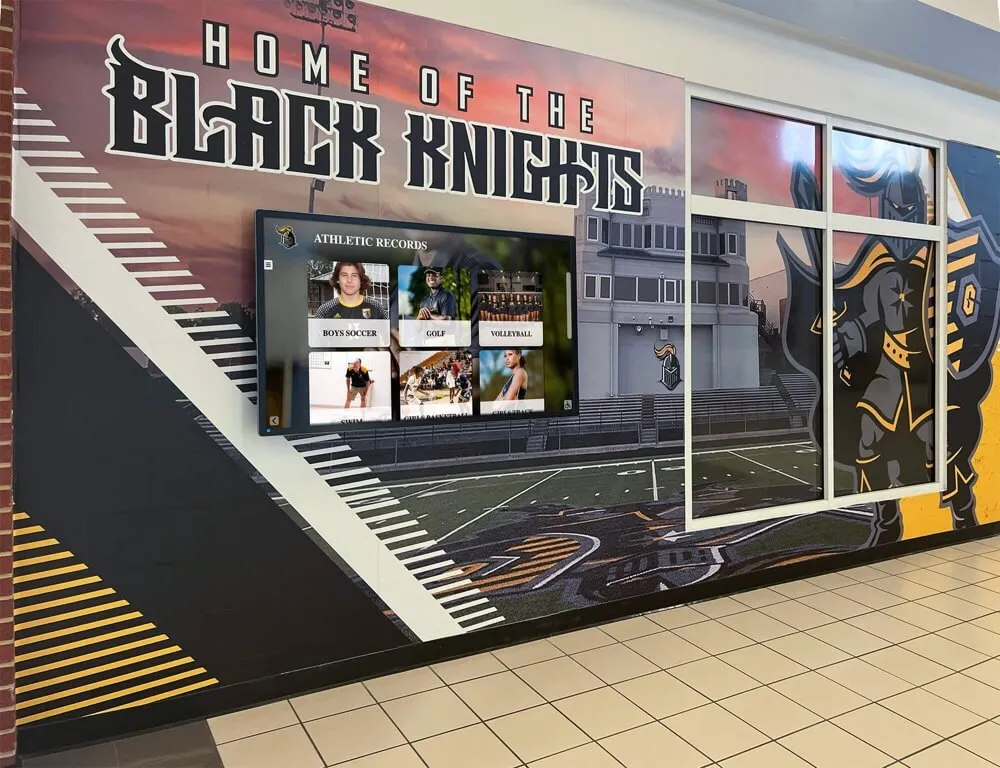
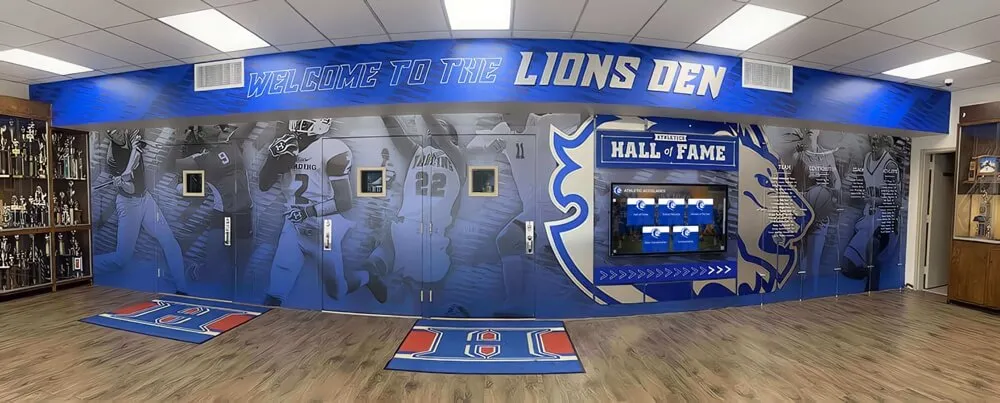
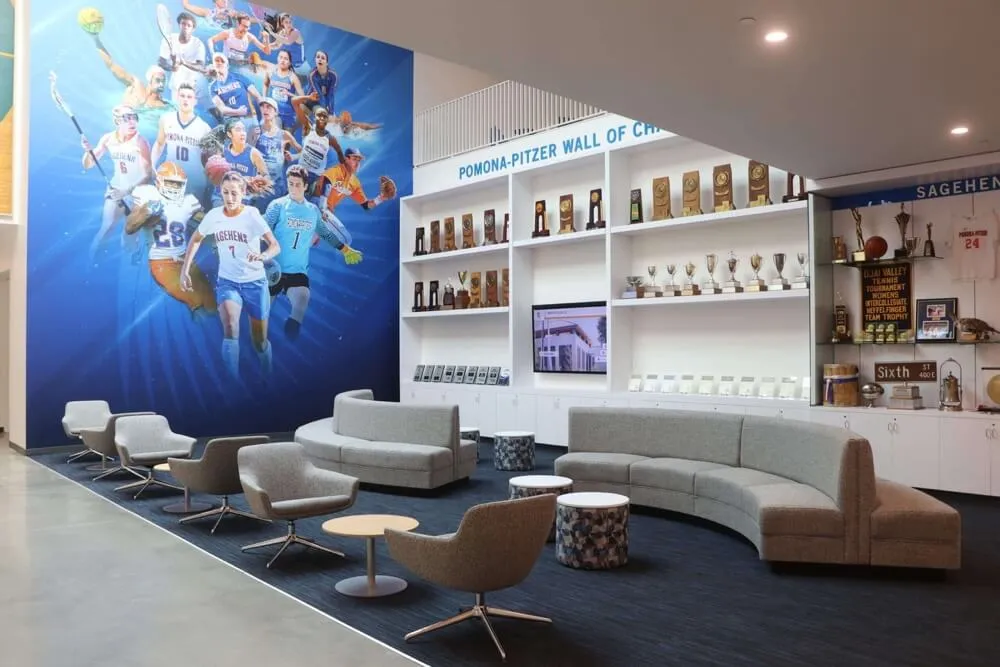
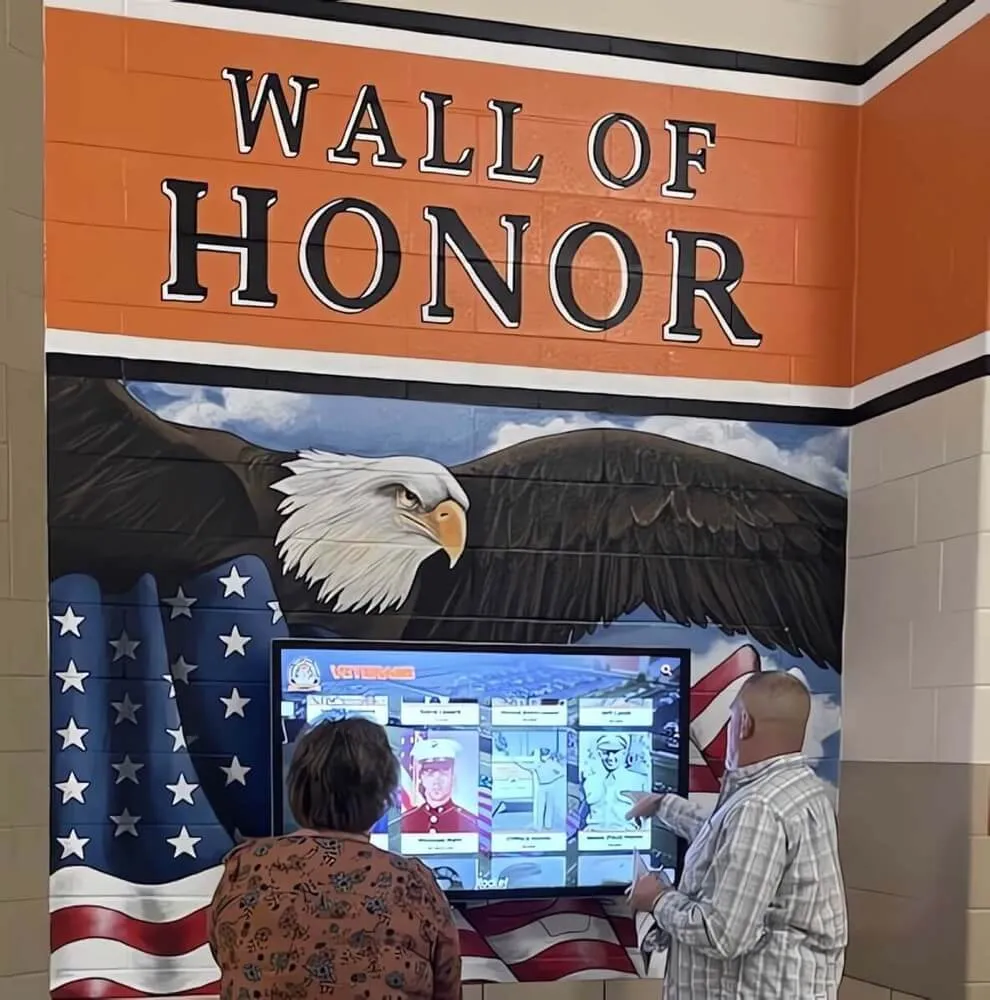
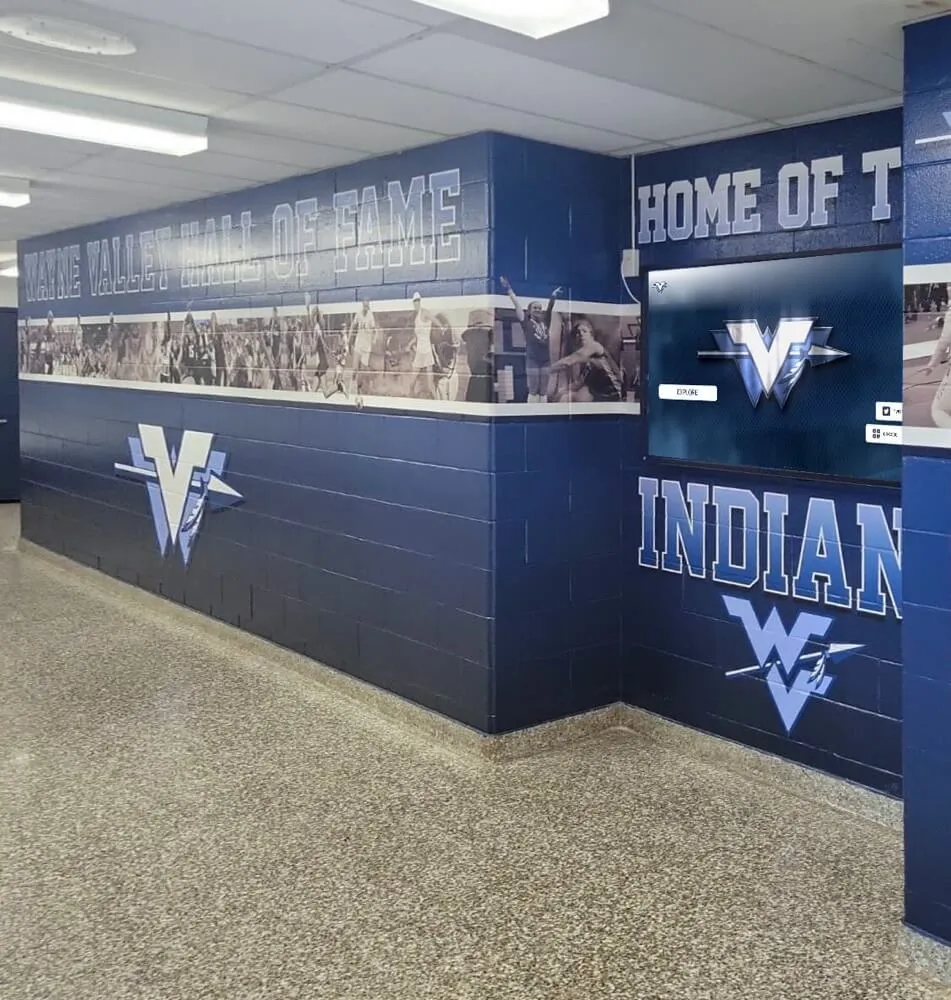
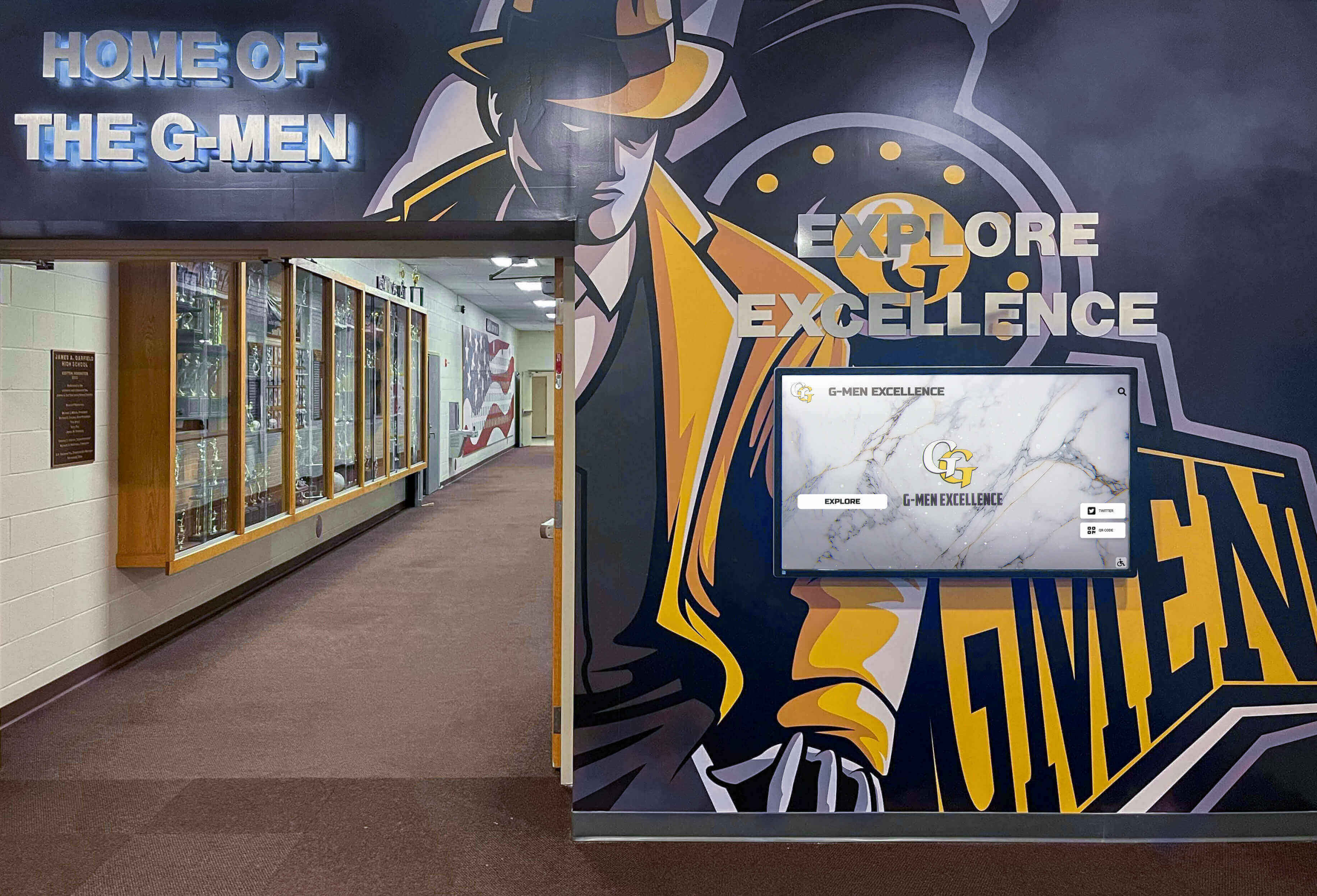
Branded hallways combining murals with digital displays create immersive environments celebrating school identity and achievements
Classroom-Based Integration
Connecting spirit week to instructional time gains teacher buy-in while extending engagement:
Subject Area Spirit Competitions
Encouraging departmental creativity through subject-themed door decoration competitions, academic challenge questions connecting course content to school history, subject-specific dress-up participation by teachers, and class-led mini-lessons connecting curriculum to spirit themes demonstrates that spirit enhances rather than interrupts learning.
Teachers more readily support spirit weeks integrated with educational mission rather than purely disruptive entertainment conflicting with instructional goals.
Advisory or Homeroom Competitions
Utilizing existing advisory periods for spirit activities through homeroom decoration contests, class poster or banner creation, grade-level practice for competitions or performances, and Spirit tracking where advisories monitor participation rates provides structured time for spirit preparation without creating new scheduling demands.
Morning Announcement Integration
Daily announcement periods become spirit week focal points through video countdown timers building anticipation, spirit week trivia with prizes for correct responses, shout-outs recognizing high-participation classes or individuals, and recap videos from previous day’s events maintaining momentum.
Consistent daily reinforcement through announcements prevents spirit week from feeling like disconnected events—creating narrative arc across entire week.
Digital Classroom Engagement
Technology-enhanced participation through online spirit polls or voting, classroom spirit screens displaying participation standings, digital photo submissions documenting spirit participation, and virtual spirit activities for remote learning situations ensures that evolving educational technology contexts support rather than complicate spirit week execution.
Tracking Participation and Building Competition
Visible tracking systems motivate participation while creating friendly competition:
Point System Strategies
Quantifying spirit participation creates motivation and recognition framework:
Daily Points Allocation
Systematic scoring assigns points for various participation categories including costume or theme participation points, attendance at spirit events, competitive event performance, creative contribution quality, and sportsmanship and positive behavior bonus points.
Clear point systems should be transparent with announced criteria, flexible enabling teacher discretion while preventing gaming, balanced so no single category dominates total scoring, and inclusive rewarding participation rather than purely performance outcomes.
Class Competition Tracking
Grade-level rivalry proves powerful motivator through cumulative class point totals displayed publicly, daily announcements of standings creating ongoing competition, comeback potential where any class can surge through strong participation, and final winner recognition providing culminating celebration moment.
Visible tracking maintains engagement beyond individual participation by creating team investment in collective success.
Individual Recognition Within Class Context
Balancing collective competition with individual acknowledgment through high-participation individual recognition within grade levels, creative costume or contribution awards, most improved participation rewards, and leadership or Spirit Champion titles celebrating exceptional individuals.
Individual recognition motivates students who might not be driven by class competition while preventing complete submersion of personal contribution within group dynamics.
Digital Tracking and Display Solutions
Modern technology enhances participation visibility and recognition:
Real-Time Digital Leaderboards
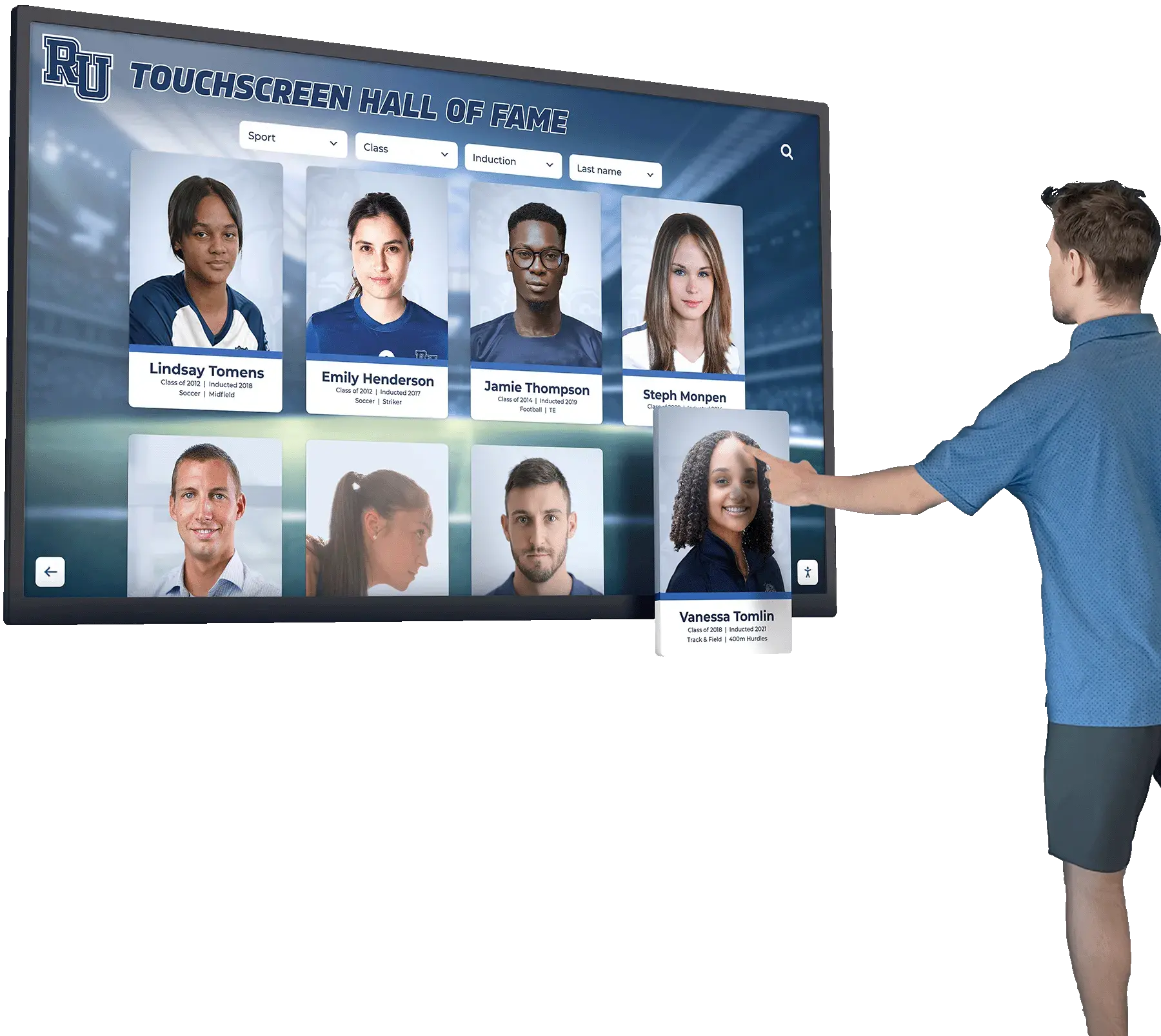
Digital display systems provide dynamic tracking through interactive touchscreen displays showing live competition standings, photo galleries documenting daily spirit participation, social media feed integration displaying student-generated content, and multimedia documentation preserving spirit week memories.
Digital systems enable instant updates maintaining competition freshness rather than static poster boards updated sporadically becoming outdated. Solutions like Rocket Alumni Solutions provide purpose-built platforms for tracking participation and showcasing winning classes through engaging visual displays that celebrate school spirit year after year.
Social Media Participation Tracking
Extending competition to digital spaces through hashtag campaigns tracking spirit week posts, student-generated content contests, video submission competitions, and online voting for best costumes or creative contributions creates continuous engagement beyond school hours while building public visibility.
Social integration particularly engages students for whom digital identity holds significant importance—meeting students in their preferred communication spaces.
Historical Archive Development
Documenting spirit week across years builds tradition through yearbook-style digital galleries, winning class recognition across multiple years, evolution documentation showing costume or theme trends, and alumni connection enabling graduated students to revisit memories and compare spirit week experiences.
Historical documentation transforms spirit week from temporary annual events into institutional traditions students understand as part of larger ongoing legacy.
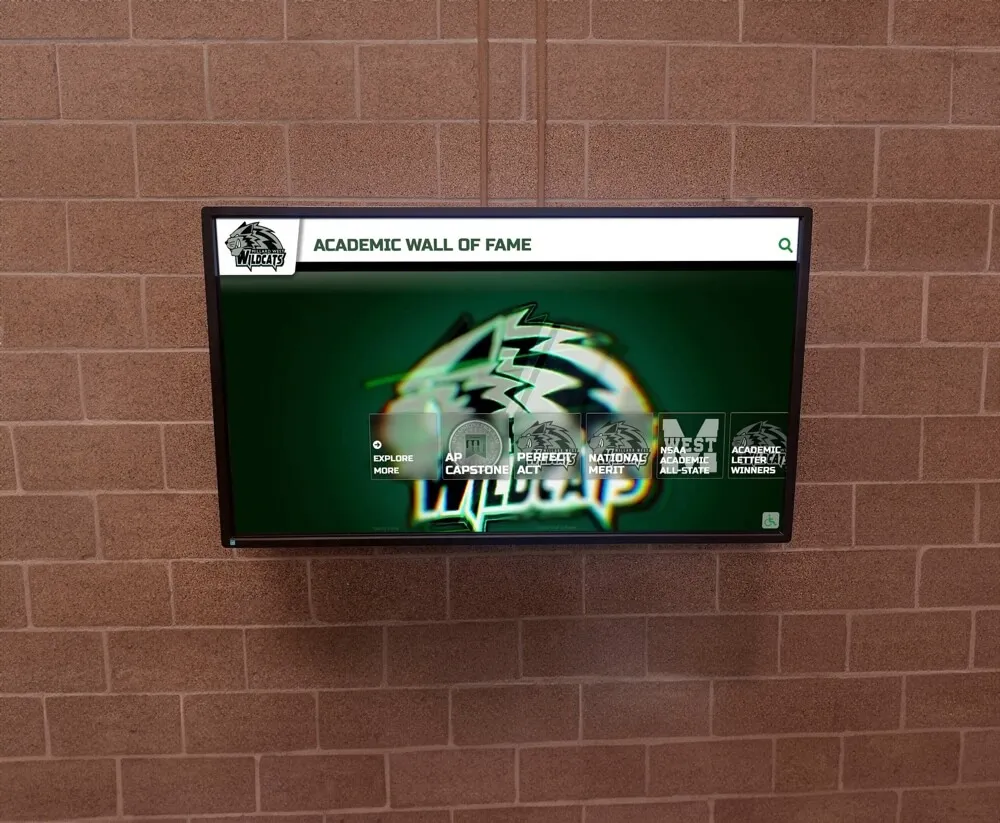
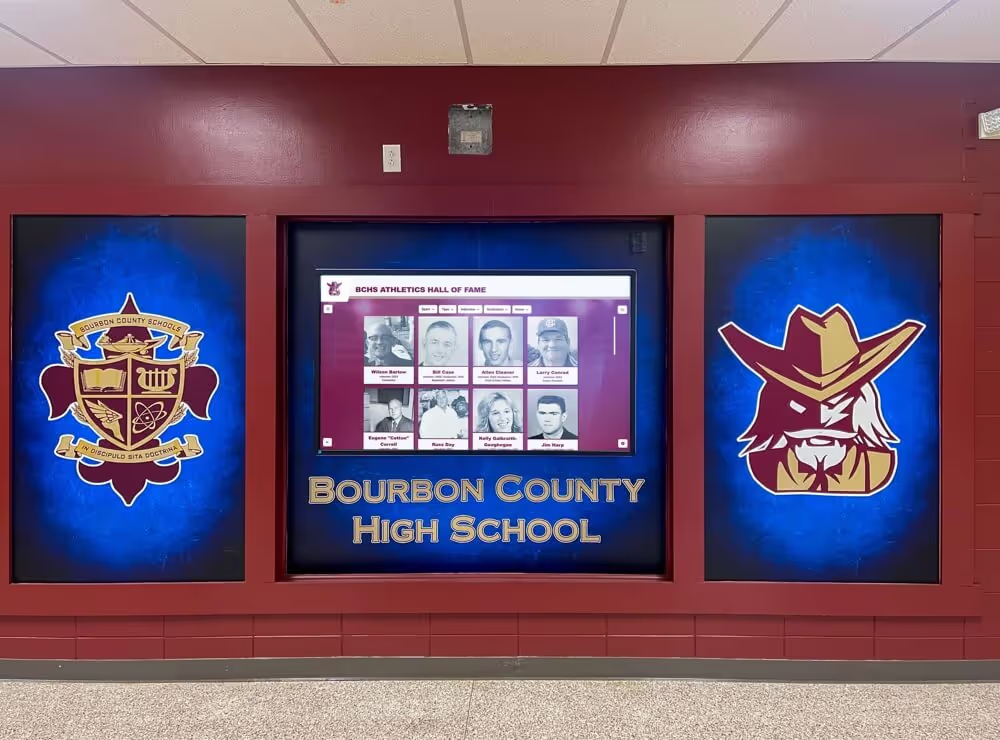
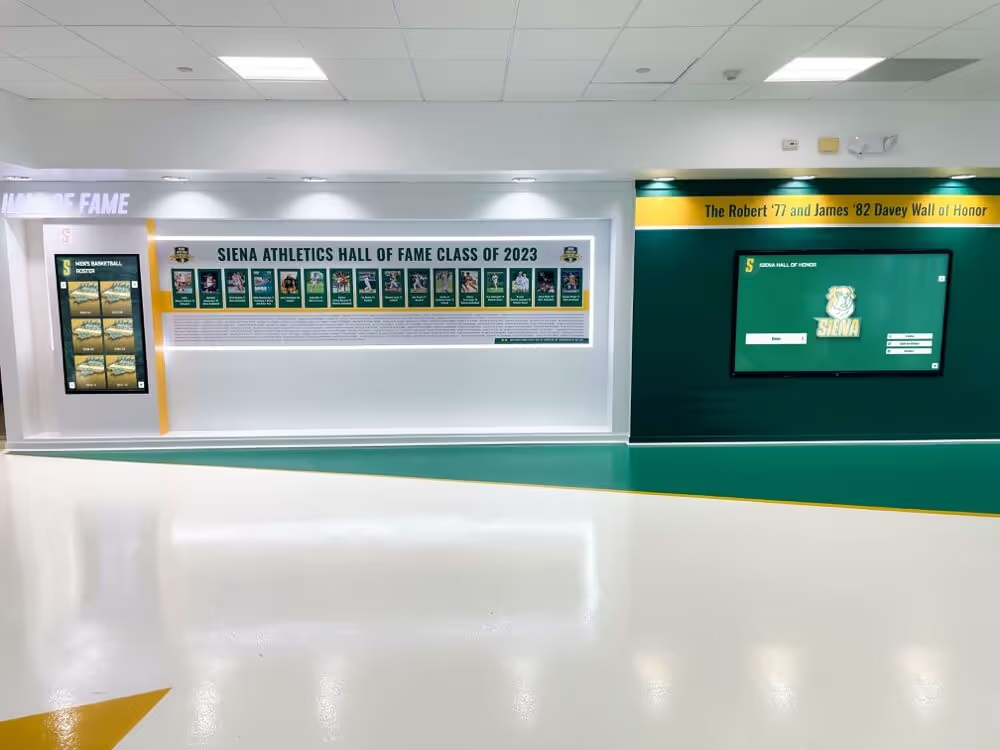
Digital recognition displays enable flexible content celebrating both academic achievement and school spirit activities without space constraints
Creating Inclusive Spirit Week Experiences
Thoughtful planning ensures spirit week engages entire student population rather than exclusive groups:
Addressing Diverse Participation Barriers
Recognizing and removing obstacles enables comprehensive engagement:
Financial Accessibility
Spirit participation shouldn’t require significant expense through costume themes using everyday clothing rather than purchased items, school-provided materials for decoration or competition activities, clothing swap programs enabling costume sharing, and alternative participation options requiring zero cost.
Economic diversity within student populations means cost-based participation barriers exclude students whose families cannot afford special clothing or supplies—directly contradicting spirit week’s community-building purpose.
Cultural Sensitivity and Inclusion
Spirit themes should celebrate rather than tokenize diversity through inclusive planning committees representing diverse student voices, cultural consultation preventing appropriation or stereotyping, alternative participation options for students whose cultural or religious practices limit certain costumes, and explicit messaging distinguishing celebration from mockery.
Well-intentioned cultural themes can inadvertently create exclusion or offense without diverse input guiding appropriate implementation.
Varied Interest and Social Group Appeal
Avoiding exclusively athletic or popularity-focused activities through academic competition options, creative and artistic expression opportunities, service and community engagement pathways, technology and gaming-related activities, and quiet or low-profile participation options for students uncomfortable with public attention.
Schools contain diverse student subcultures—effective spirit weeks provide multiple participation pathways enabling all groups to engage according to their interests and comfort levels.
Accommodations for Diverse Abilities
Ensuring activities include students with various physical, cognitive, or social-emotional needs through modified competition formats enabling full participation, alternative recognition for students unable to participate in certain activities, sensory-friendly options for students with autism or sensory processing differences, and visible messaging that all participation levels merit celebration.
Inclusive planning communicates that spirit week celebrates entire school community rather than privileging already advantaged or popular student groups.
Building Cross-Social-Group Connections
Strategic design breaks down rather than reinforces social divisions:
Mixed-Group Team Competitions
Rather than friend-group based participation, structured mixing through randomized team assignments, cross-grade partnerships, interest-based rather than popularity-based groupings, and rotation systems ensuring varied partner interactions across different activities prevents spirit week from simply reinforcing existing social structures.
Leadership Distribution
Avoiding concentration of planning and visible roles within single student groups through distributed student council responsibilities, peer nomination processes for activity leaders, rotating spokesperson opportunities, and explicit recruitment from diverse social circles and demographic groups ensures spirit week represents comprehensive student body rather than narrow student government populations.
Multiple Participation Pathways
Recognizing varied comfort levels with visibility through behind-the-scenes contribution opportunities, individual versus group participation options, public performance versus creative submission alternatives, and online versus in-person engagement enables introverted, anxious, or socially marginalized students to participate authentically rather than forcing participation styles causing discomfort.
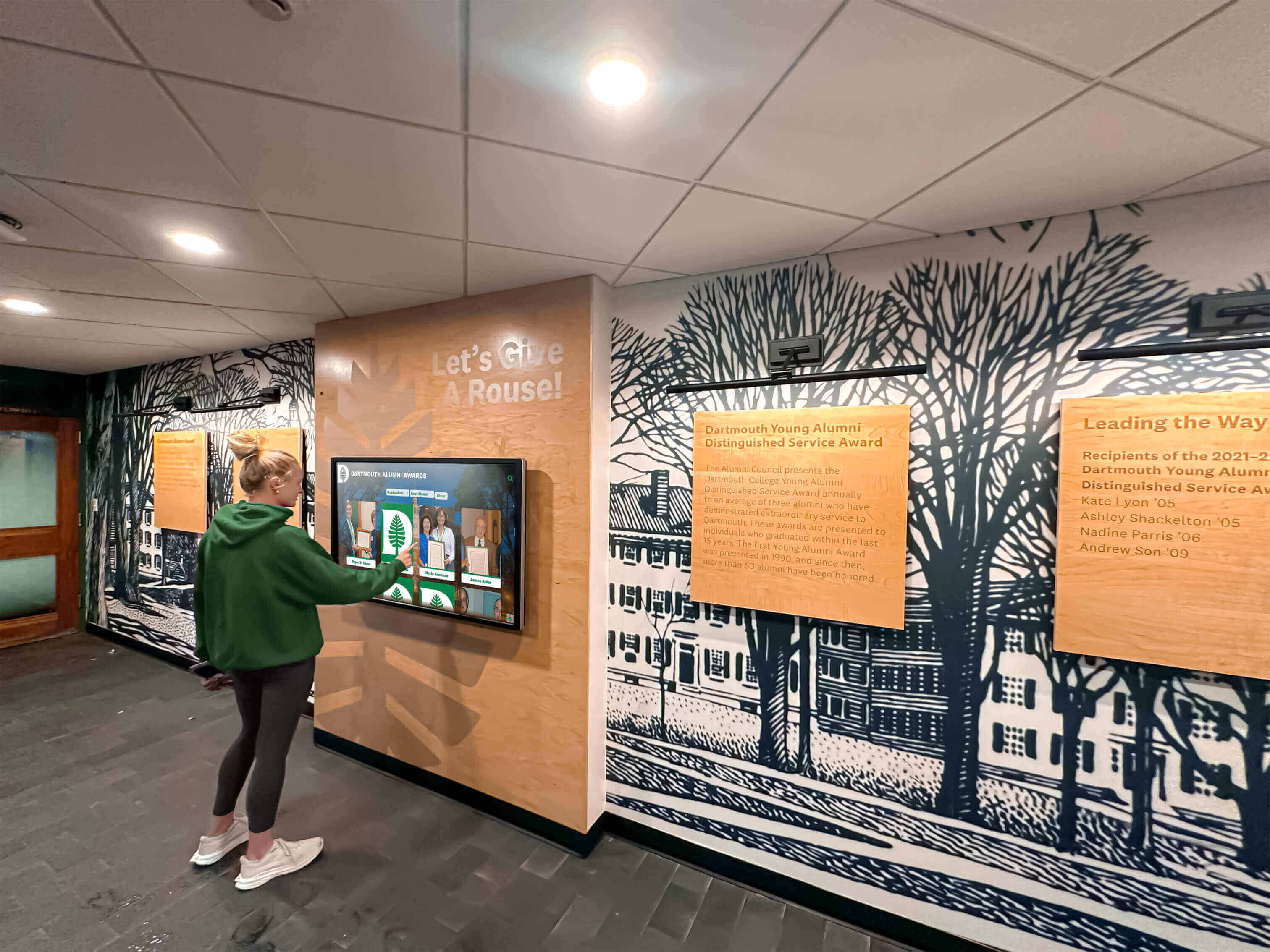
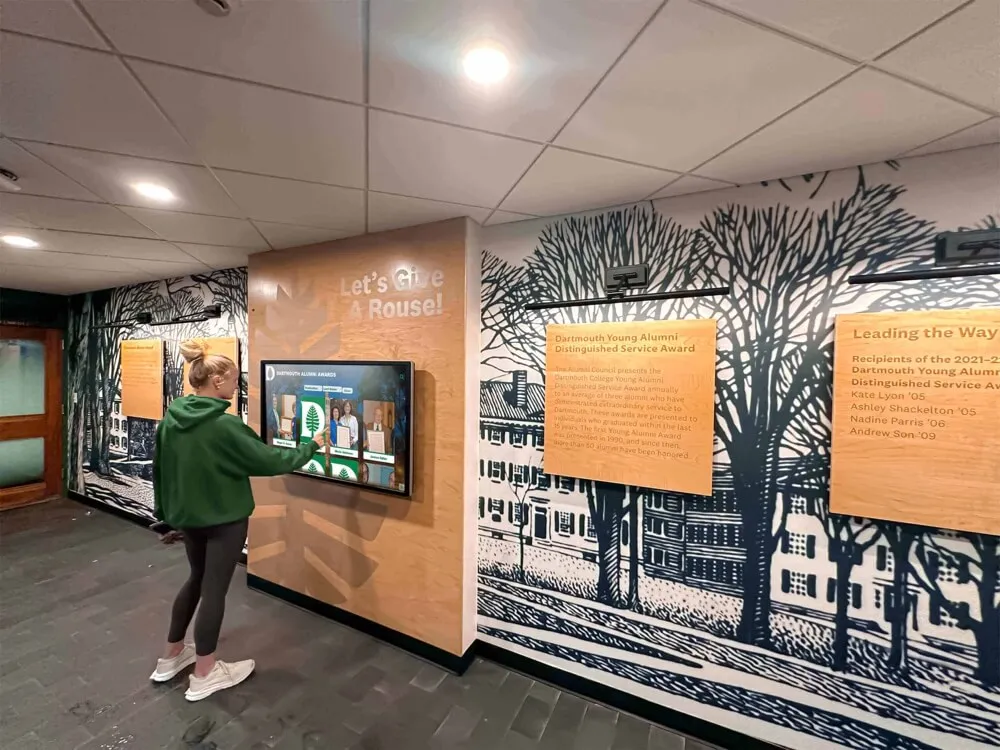
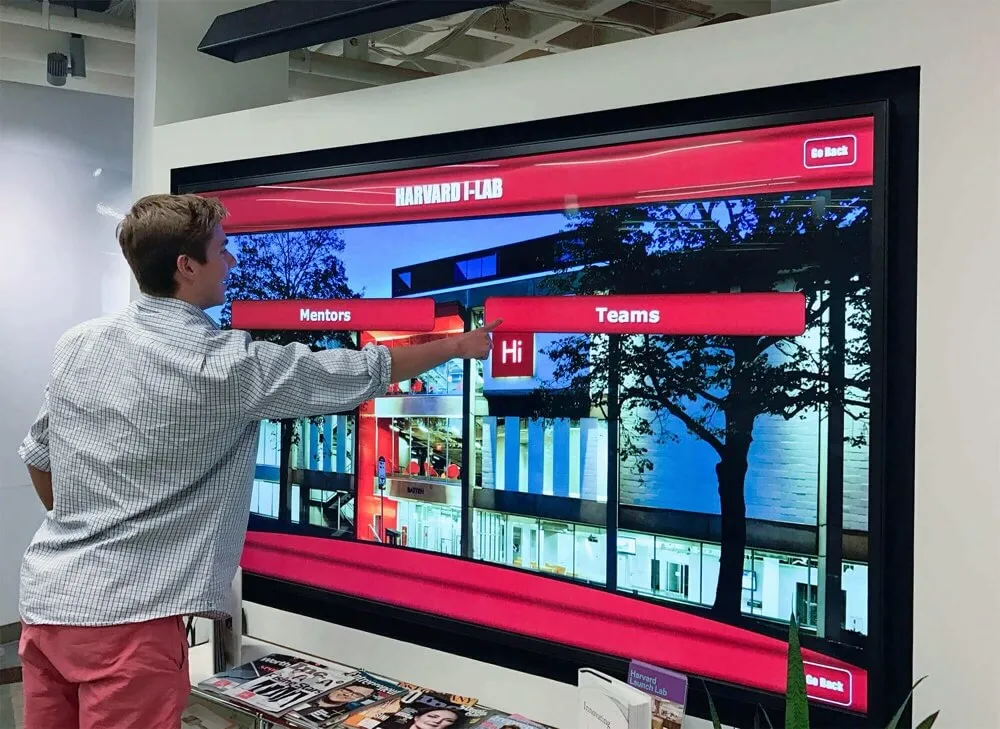
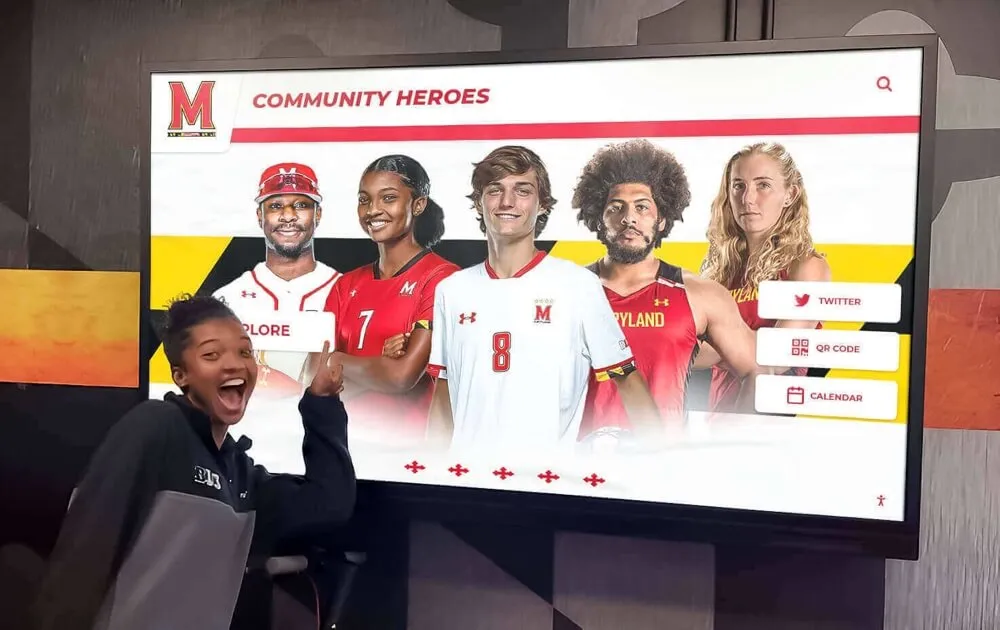
Interactive displays engage students naturally as they move through campus, creating ongoing connection with school history and achievements
Spirit Week Recognition and Awards
Culminating celebration and recognition validates participation while building tradition:
Competition Winner Recognition
Celebrating victorious classes or individuals provides satisfying conclusion:
Final Assembly or Rally Celebration
Spirit week culminates most effectively with school-wide gathering including final point announcement and winner declaration, trophy or banner presentation to winning class, highlight video or photo montage reviewing week’s memorable moments, thank you acknowledgment for organizers and participants, and forward-looking messaging connecting spirit week to ongoing school pride.
Final assemblies create ceremonial closure transforming spirit week from disconnected daily events into cohesive celebratory narrative arc.
Permanent Winner Documentation
Lasting recognition of spirit week success through trophy display cases showcasing perpetual trophies, digital recognition displays documenting winners across multiple years, banner displays in prominent locations celebrating recent victors, and yearbook documentation preserving spirit week memories.
Permanent documentation elevates spirit week from temporary fun to institutional tradition students remember and alumni reference when returning to campus.
Tangible Rewards and Incentives
Beyond ceremonial recognition, concrete privileges or rewards including homework pass privileges for winning classes, lunch or recess extensions, preferred parking spots for senior class winners, spirit week champion t-shirts or merchandise, and prize drawings for participating students creates motivation through practical benefits complementing pride and bragging rights.
Individual Participant Awards
Recognizing exceptional individual contribution through Spirit Champion titles for highest-participating students, creative costume or contribution awards, sportsmanship and positive attitude recognition, leadership acknowledgment for planning and coordination, and participation certificates for all involved students.
Individual recognition prevents complete subsumption within class-level competition while honoring students making exceptional contributions.
Building Year-Round Spirit Culture
Extending spirit week impact beyond single week:
Ongoing Spirit Activities
Maintaining momentum through monthly mini-spirit events, spirit Fridays or weekly tradition days, themed athletic event celebrations, and seasonal celebration days prevents spirit week from feeling like isolated annual event disconnected from ongoing school culture.
Spirit Week Alumni Connection
Engaging graduates through social media campaigns inviting alumni spirit week memory sharing, homecoming week alumni participation encouraging return visits, historical documentation showing spirit evolution across decades, and alumni committee involvement in planning bringing institutional memory to contemporary celebrations.
Alumni engagement positions spirit week as multi-generational tradition rather than temporary current student phenomenon.
Student Council Spirit Committee
Establishing dedicated leadership structure through year-round spirit planning committee, regular evaluation and improvement cycles, peer promotion and communication teams, and mentorship systems where upperclassmen train underclassmen ensures sustainable program continuity across student leadership transitions.
Digital Recognition Platform Integration
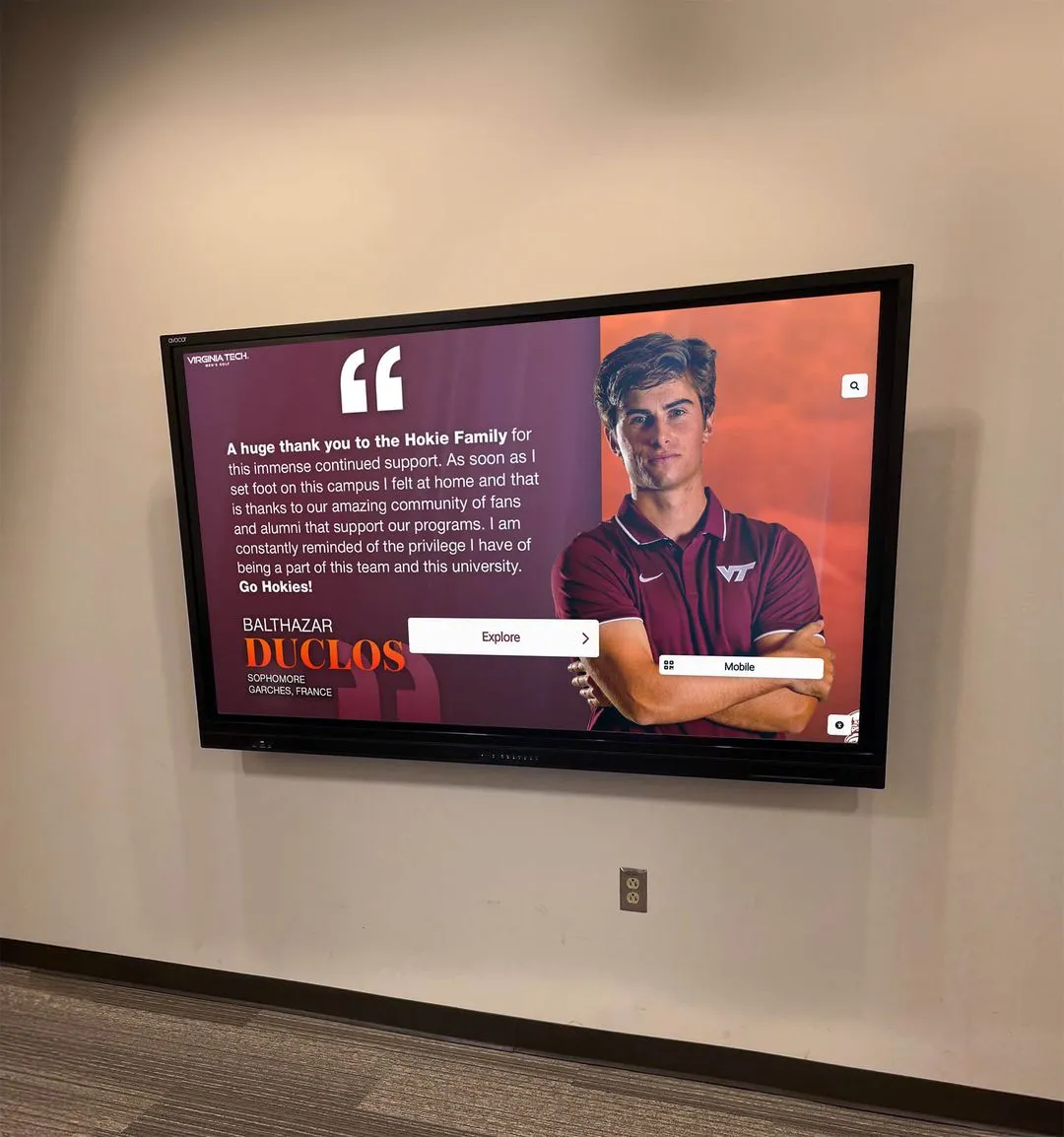
Modern schools increasingly leverage technology for lasting spirit celebration through interactive touchscreen displays documenting spirit week winners and memorable moments, web-based galleries enabling remote exploration by families and alumni, social media content archives preserving spirit week memories, and comprehensive recognition systems celebrating achievement across academic, athletic, and cultural dimensions including spirit participation.
Digital platforms enable unlimited documentation capacity impossible with traditional trophy cases or physical displays—ensuring every participating student receives lasting recognition celebrating their contribution to school community.
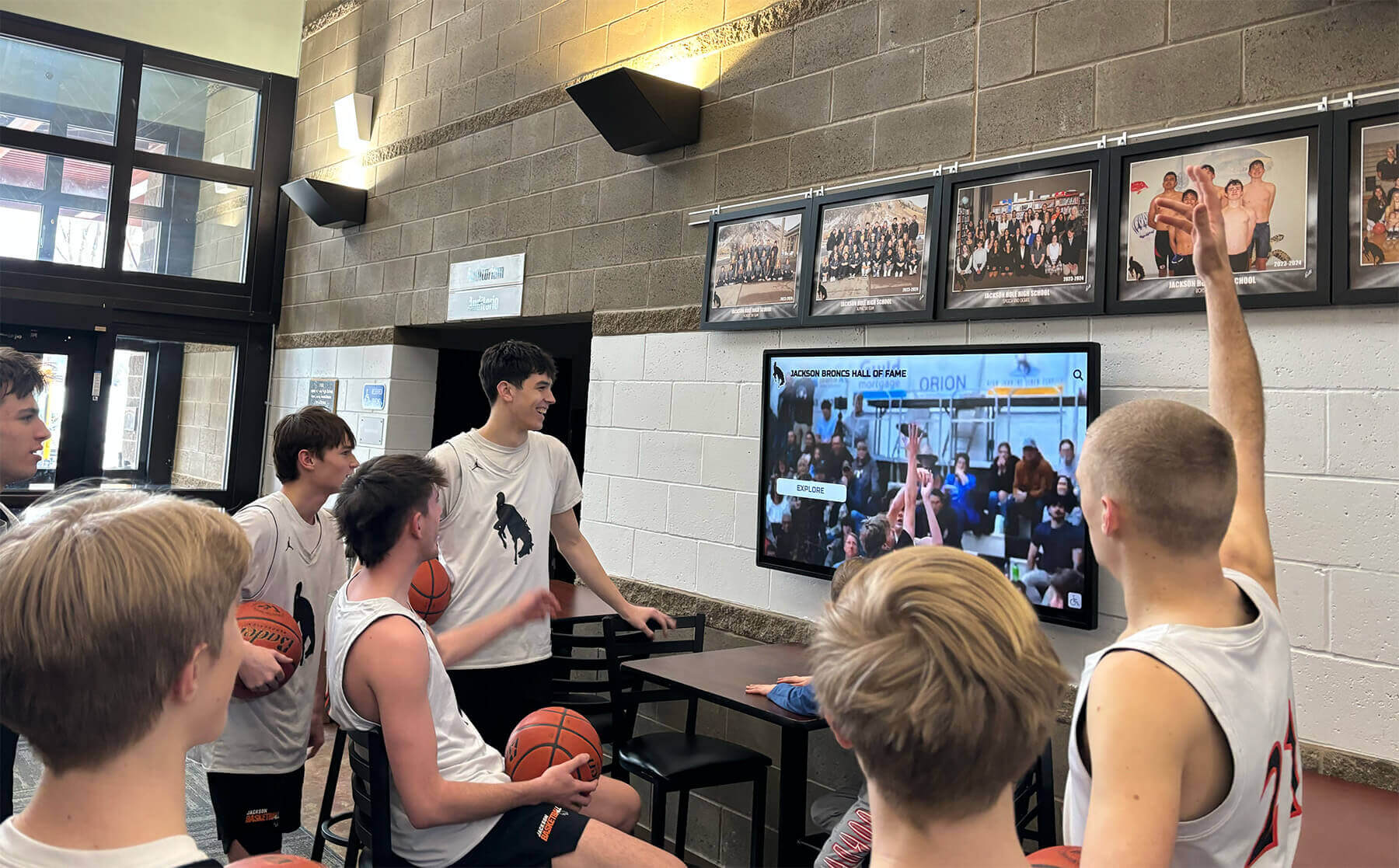
Large-format displays create gathering points where students naturally congregate to celebrate achievements and school traditions
Planning and Logistics Framework
Successful spirit week requires systematic planning beyond creative idea generation:
Timeline and Planning Committee Structure
Strategic preparation prevents last-minute chaos:
8-12 Weeks Before: Initial Planning Phase
Early preparation includes establishing student council planning committee, identifying faculty advisors and administrative liaisons, selecting spirit week dates avoiding conflicts, determining preliminary theme and activity concepts, and establishing preliminary budget and resource needs.
Early planning provides adequate time for proposal refinement, administrative approval securing, promotional material creation, and logistical coordination.
6-8 Weeks Before: Design and Approval
Mid-range planning phase involves finalizing daily themes and activity schedules, creating detailed point systems and competition rules, developing comprehensive activity logistics including supervision and safety protocols, submitting proposals for administrative approval, and beginning promotional campaign planning.
This period transforms preliminary concepts into concrete actionable plans with clear implementation frameworks.
4-6 Weeks Before: Promotion and Preparation
Late planning emphasizes visibility and preparation including launching promotional campaigns across multiple channels, recruiting activity volunteers and student leaders, ordering necessary supplies and materials, coordinating with facility managers and custodial staff, and training student leaders on competition rules and activity facilitation.
2-4 Weeks Before: Final Coordination
Immediate pre-week activities include distributing final schedules to students and staff, confirming all volunteer and supervision assignments, preparing scoring materials and tracking systems, creating physical decorations or signage, and conducting walkthrough rehearsals for complex activities.
During Spirit Week: Daily Management
Active management throughout week through morning coordination meetings addressing previous day’s issues, real-time point tracking and communication, social media content management and promotion, and daily adjustment responding to participation patterns or emerging challenges.
Post-Spirit Week: Evaluation and Documentation
Systematic review after conclusion including formal evaluation meetings gathering student and staff feedback, photo and video archive organization, financial reconciliation and budget review, winner recognition and award distribution, and documentation for future planning committee reference.
Securing Administrative Support and Faculty Buy-In
Spirit week success requires comprehensive institutional backing:
Addressing Common Administrative Concerns
Proactively managing typical objections including academic disruption minimization through contained activity periods, safety and supervision plan documentation, behavioral expectation clarity and consequence frameworks, inclusive participation evidence preventing exclusion claims, and educational value articulation connecting spirit to school mission.
Anticipating and addressing concerns within initial proposals increases approval likelihood while demonstrating planning committee maturity and responsibility.
Engaging Faculty as Partners
Converting potential teacher resistance into active support through teacher competition categories including costume participation, classroom door decorations, or advisory challenges, flexible participation options respecting teachers with different comfort levels, clear communication about scheduling impacts and expectations, recognition for supportive teachers demonstrating appreciation, and classroom integration suggestions connecting spirit to instructional content.
Teacher engagement transforms spirit week from student council imposition disrupting instruction into school-wide celebration enjoying comprehensive community support.
Resource and Budget Planning
Sustainable spirit week requires realistic financial planning through supply and material cost estimation, fundraising strategies when school budgets cannot fully cover expenses, donation solicitation from local businesses or parent organizations, low-cost or no-cost alternative identification reducing financial barriers, and multi-year budget cycles enabling larger investments amortized across multiple years.
Clear budget documentation demonstrates fiscal responsibility while enabling ambitious programming impossible within minimal resource constraints.
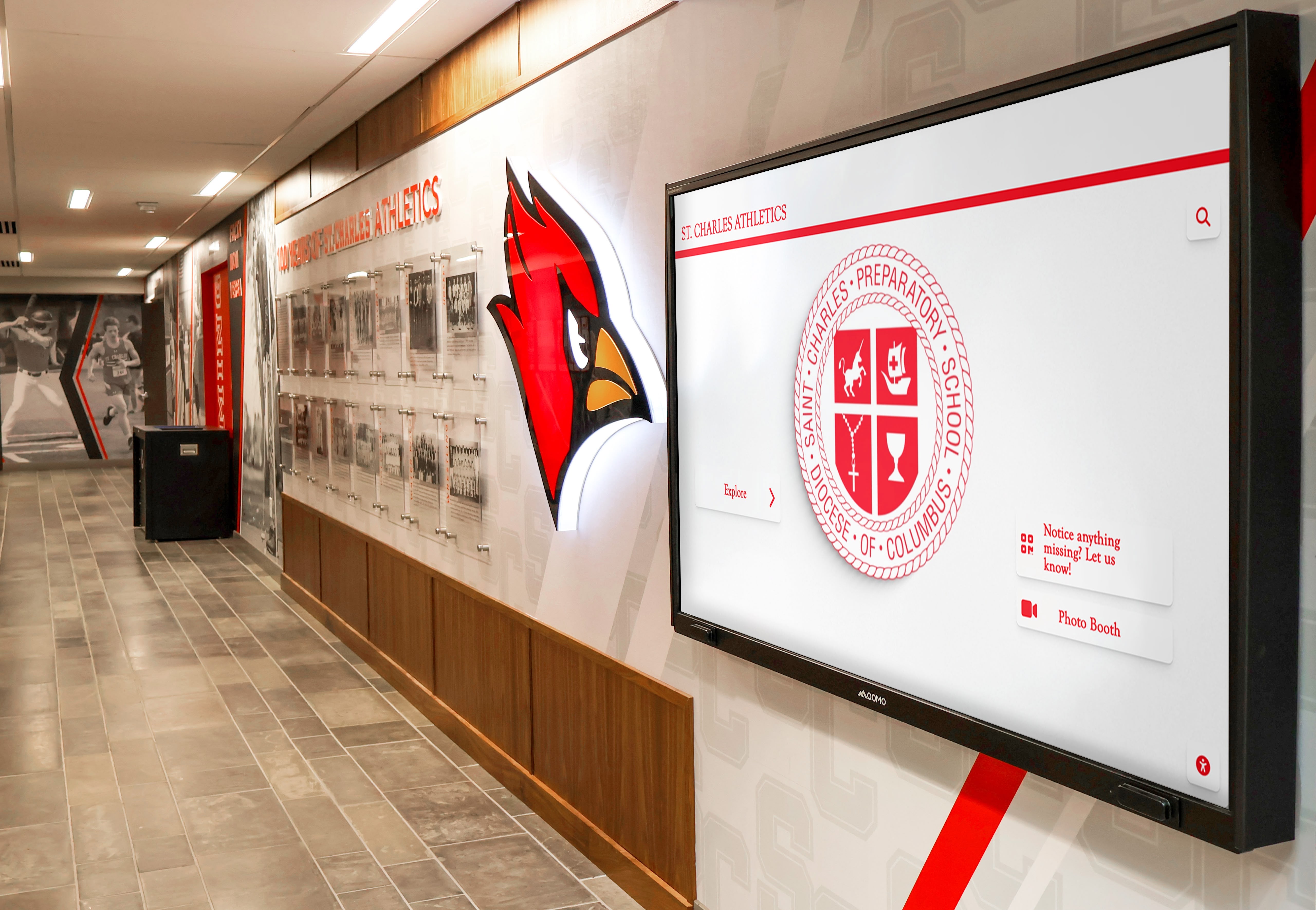
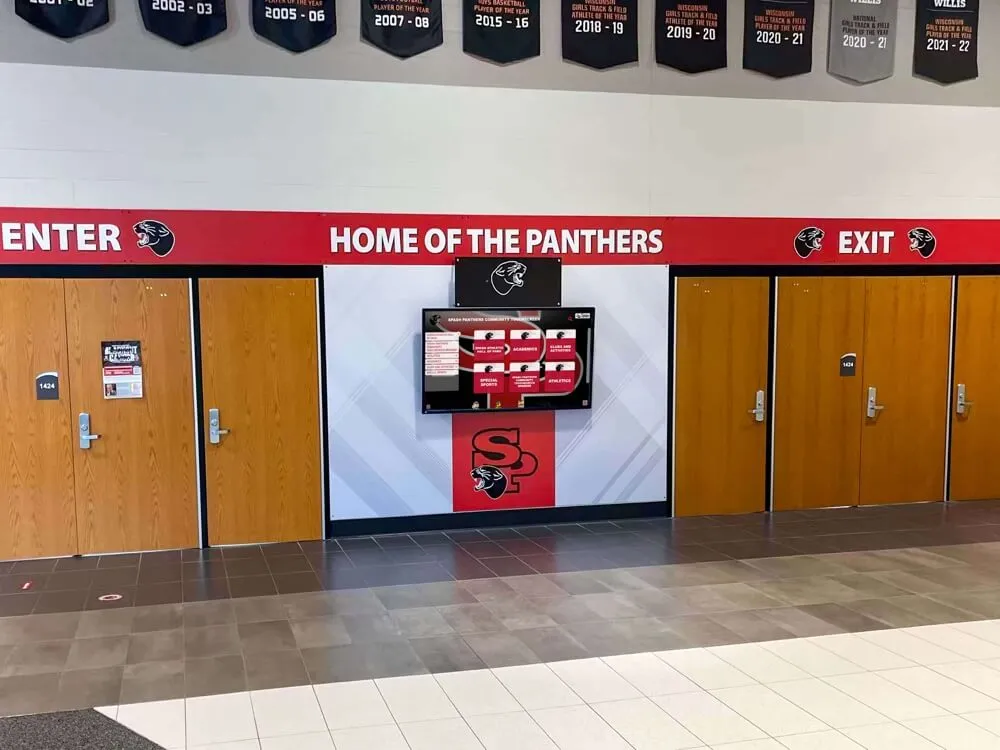
Strategic display placement in high-traffic areas maximizes visibility and creates consistent touchpoints reinforcing school identity
Measuring Spirit Week Success and Continuous Improvement
Data-driven evaluation enables program enhancement across years:
Quantitative Success Metrics
Objective measures demonstrate spirit week impact:
Participation Rate Tracking
Systematic participation monitoring including daily costume/theme participation percentage by grade level, spirit event attendance numbers, competition entry rates, and comparative analysis across multiple years measuring program growth or decline.
Quantitative participation data demonstrates program effectiveness to administrators while identifying specific activities or grade levels requiring targeted improvement.
Academic and Behavioral Impact Assessment
Spirit week should enhance rather than undermine educational mission through attendance rate analysis during spirit week versus typical weeks, disciplinary incident tracking comparing spirit week periods, academic engagement indicators from teacher feedback, and post-spirit week momentum assessment measuring sustained positive effects.
Demonstrating positive or neutral academic impact addresses administrator concerns while justifying continued spirit week investment.
Financial Performance Review
Budget accountability and efficiency assessment through cost-per-student participation analysis, fundraising success evaluation, resource efficiency assessment identifying cost-effective activities generating high engagement, and return on investment comparison weighing spirit week costs against demonstrated community and engagement benefits.
Financial analysis supports appropriate budget requests while identifying opportunities for cost reduction or efficiency improvement.
Qualitative Feedback Collection
Beyond numbers, narrative feedback reveals spirit week quality:
Student Satisfaction Assessment
Systematic feedback gathering through post-spirit week surveys measuring enjoyment and engagement perceptions, focus group discussions with diverse student representatives, social media sentiment analysis reviewing online spirit week commentary, and suggestion solicitation for future improvements.
Student voice should directly inform planning ensuring spirit week serves student interests rather than perpetuating activities that planning committees assume work but students find disappointing.
Faculty and Staff Perspectives
Teacher and administrator feedback regarding disruption levels and classroom impact, activity management and logistics effectiveness, student behavior and engagement observations, and suggestions for improvement from professional educator perspectives.
Staff perspectives identify operational improvements and potential concerns requiring attention preventing future problems.
Alumni and Community Reception
External stakeholder response including alumni social media engagement and nostalgic commentary, parent feedback and satisfaction with student experience, local media coverage and community visibility, and comparative reputation assessment regarding school spirit culture relative to peer institutions.
External perspectives reveal how spirit week contributes to broader institutional reputation and community connection.
Implementing Continuous Improvement Cycles
Systematic enhancement based on evaluation findings:
Annual Planning Committee Transition
Ensuring institutional knowledge preservation through comprehensive documentation of activities, schedules, and logistics, direct mentorship where experienced members train incoming leaders, evaluation report review by new planning committees, and experimentation framework encouraging innovation while maintaining successful core traditions.
Rotating Innovation While Preserving Tradition
Balancing consistency and novelty through core activity preservation maintaining beloved traditions, experimental activity rotation introducing fresh elements, student input systems enabling ongoing suggestion incorporation, and multi-year theme cycles preventing excessive repetition while enabling occasional beloved theme repetition.
Building Spirit Week Into Broader School Culture
Strategic integration positioning spirit as ongoing value including recognition programs celebrating achievement year-round, facility branding creating visible school pride, tradition documentation preserving institutional memory, and leadership development using spirit week as practical training opportunity.
Conclusion: Building Lasting Traditions Through Strategic Spirit Celebration
High school spirit weeks represent far more than temporary entertainment breaking up academic monotony—when designed and implemented thoughtfully, these celebrations create powerful shared experiences uniting diverse student populations, strengthen institutional pride connecting current students with school legacy, provide authentic leadership development opportunities, and establish traditions remembered across entire lifetimes. The difference between perfunctory spirit week observances and transformative school culture moments lies in strategic planning that balances tradition with innovation, inclusive design ensuring comprehensive participation, meaningful recognition validating contribution, and systematic documentation preserving memories while building institutional tradition.
Schools investing in well-designed spirit week programs discover measurable returns through enhanced student engagement and school connectedness, improved attendance and behavioral outcomes, stronger school reputation within broader community, increased student leadership capacity, and lasting alumni connection as graduates remember positive high school experiences. These benefits justify spirit week investment while demonstrating that celebration serves educational mission by building community and strengthening culture supporting academic success.
Celebrate School Spirit Year-Round
Discover how digital recognition displays extend spirit week impact throughout the year by showcasing winning classes, participation achievements, and school traditions. Rocket Alumni Solutions provides purpose-built platforms enabling schools to celebrate spirit and achievement through engaging interactive displays that strengthen school culture.
Explore Recognition SolutionsWhether revitalizing tired spirit week programs feeling stale after years of repetition, launching new traditions in schools lacking strong spirit culture, or seeking fresh ideas energizing already successful celebrations, the frameworks explored throughout this guide provide actionable strategies creating spirit weeks that genuinely strengthen school community while establishing traditions connecting generations of students. Your students deserve engaging experiences making school more than academic obligation—spirit weeks done well create those transformative moments turning schools into communities students proudly claim as formative parts of their identities.
Ready to build stronger school spirit programs? Explore teacher appreciation week ideas extending celebration beyond students, discover pep rally game ideas for engaging activities, learn about school field day planning for additional community-building events, explore homecoming recognition approaches, and understand comprehensive award ceremony planning that celebrates achievement across all student activities strengthening the vibrant school culture spirit weeks aim to build.