



Planning athletic recognition programs requires understanding the complete competitive calendar. High school sports by season determines when athletes achieve milestones, when teams celebrate championships, and when recognition displays need updating to honor current accomplishments. Yet many athletic directors and administrators operate with incomplete knowledge of seasonal sport schedules beyond their primary programs.
A comprehensive understanding of which sports compete during fall, winter, spring, and summer seasons enables strategic planning for recognition timing, display content updates, ceremony scheduling, and year-round celebration that honors all athletic programs equitably. Whether launching new digital recognition systems, planning athletic award ceremonies, or coordinating facility displays that acknowledge diverse sports throughout the calendar year, understanding seasonal sport distribution proves essential for comprehensive athletic program management.
This complete guide walks through the entire high school athletic calendar—detailing which sports compete during each season, explaining schedule variations across states and competitive divisions, and demonstrating how modern recognition technology enables year-round celebration of athletic excellence across all programs regardless of competitive timing.
Athletic directors managing comprehensive sports programs typically oversee 15-25 different sports competing across four distinct seasons, with approximately 850,000 students participating in high school athletics during each season nationwide. Understanding seasonal distribution enables equitable recognition ensuring all sports receive appropriate celebration regardless of traditional visibility differences.

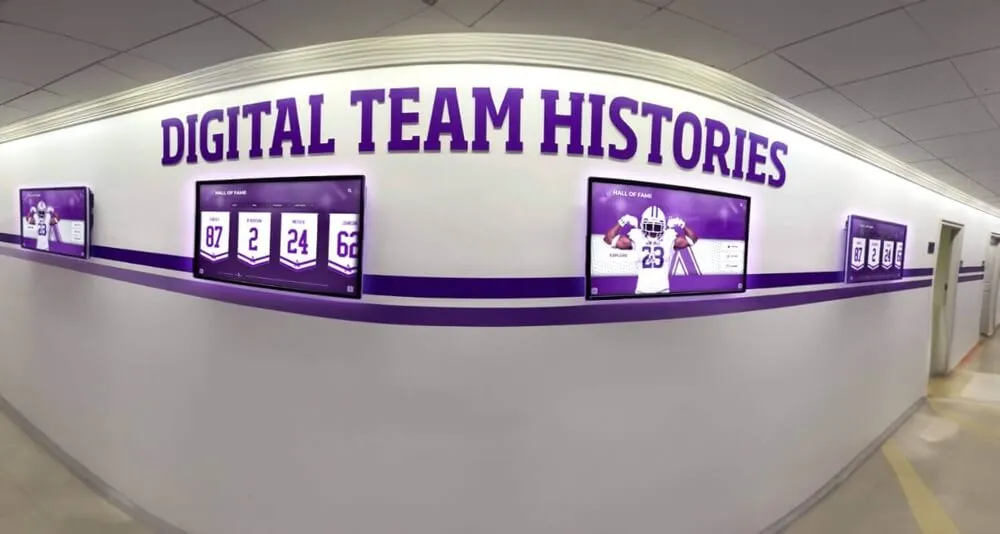
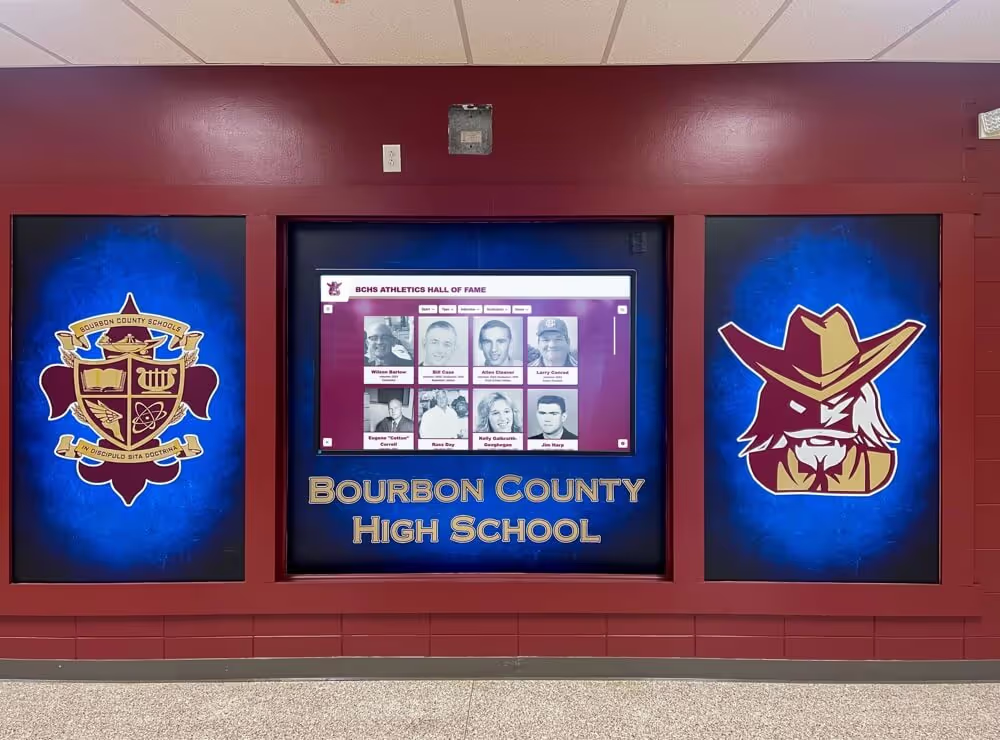
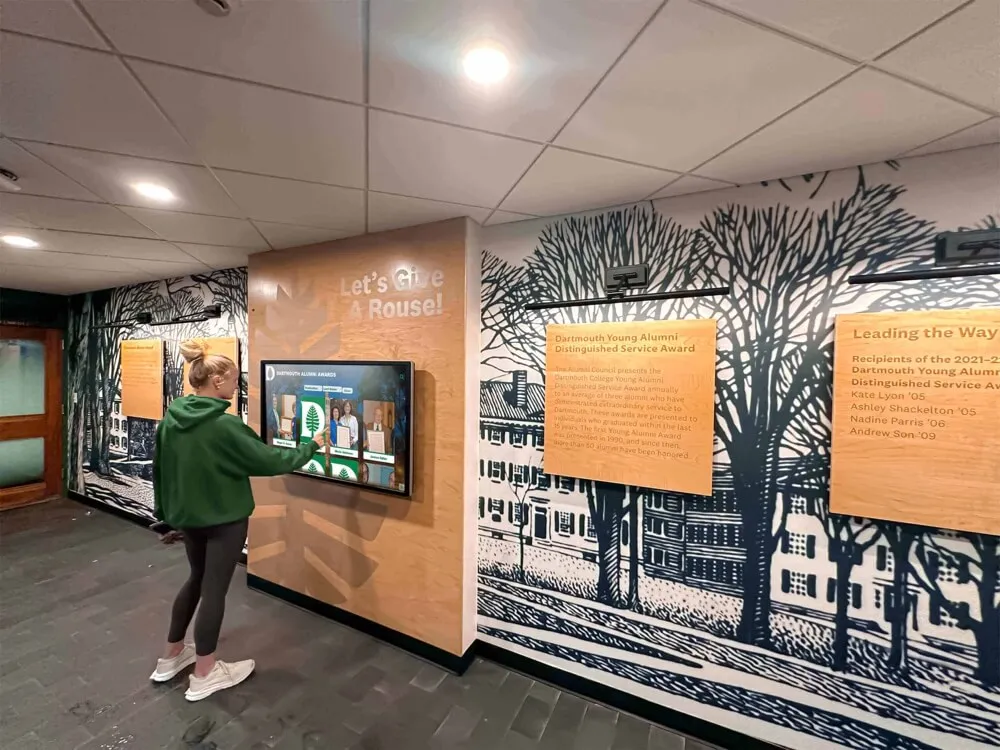
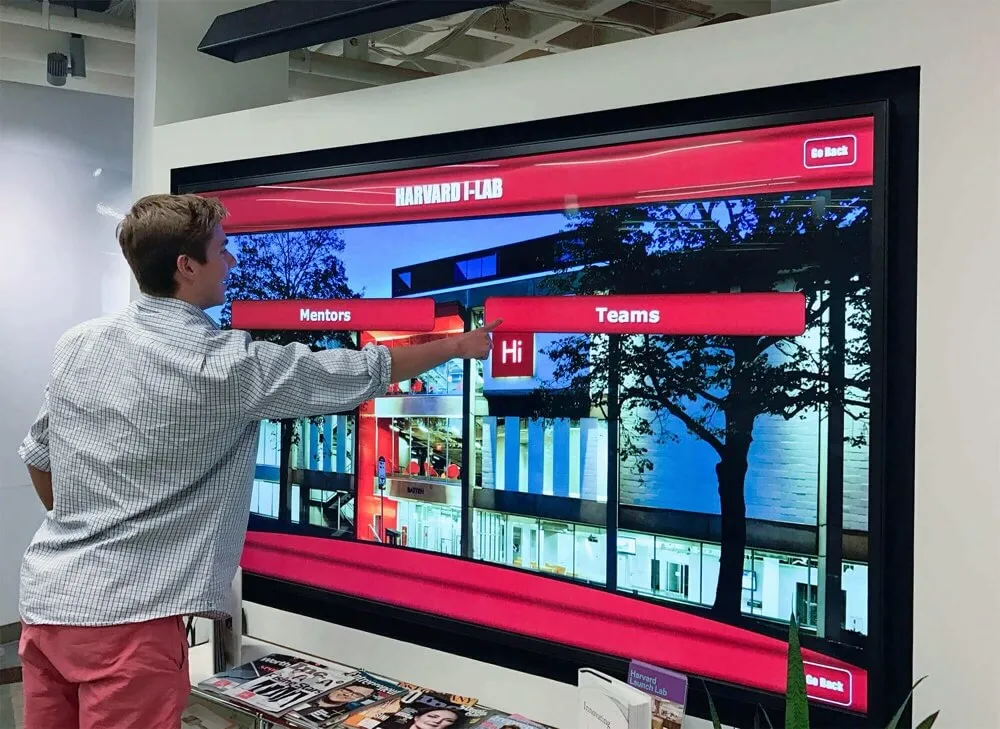
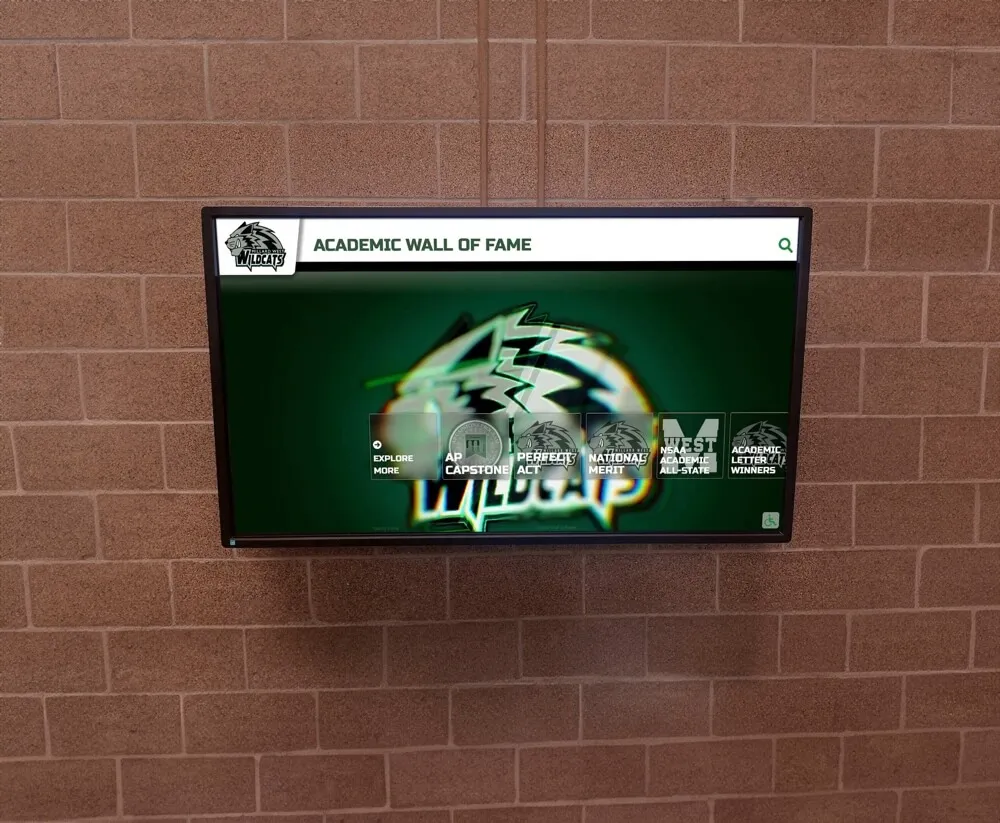
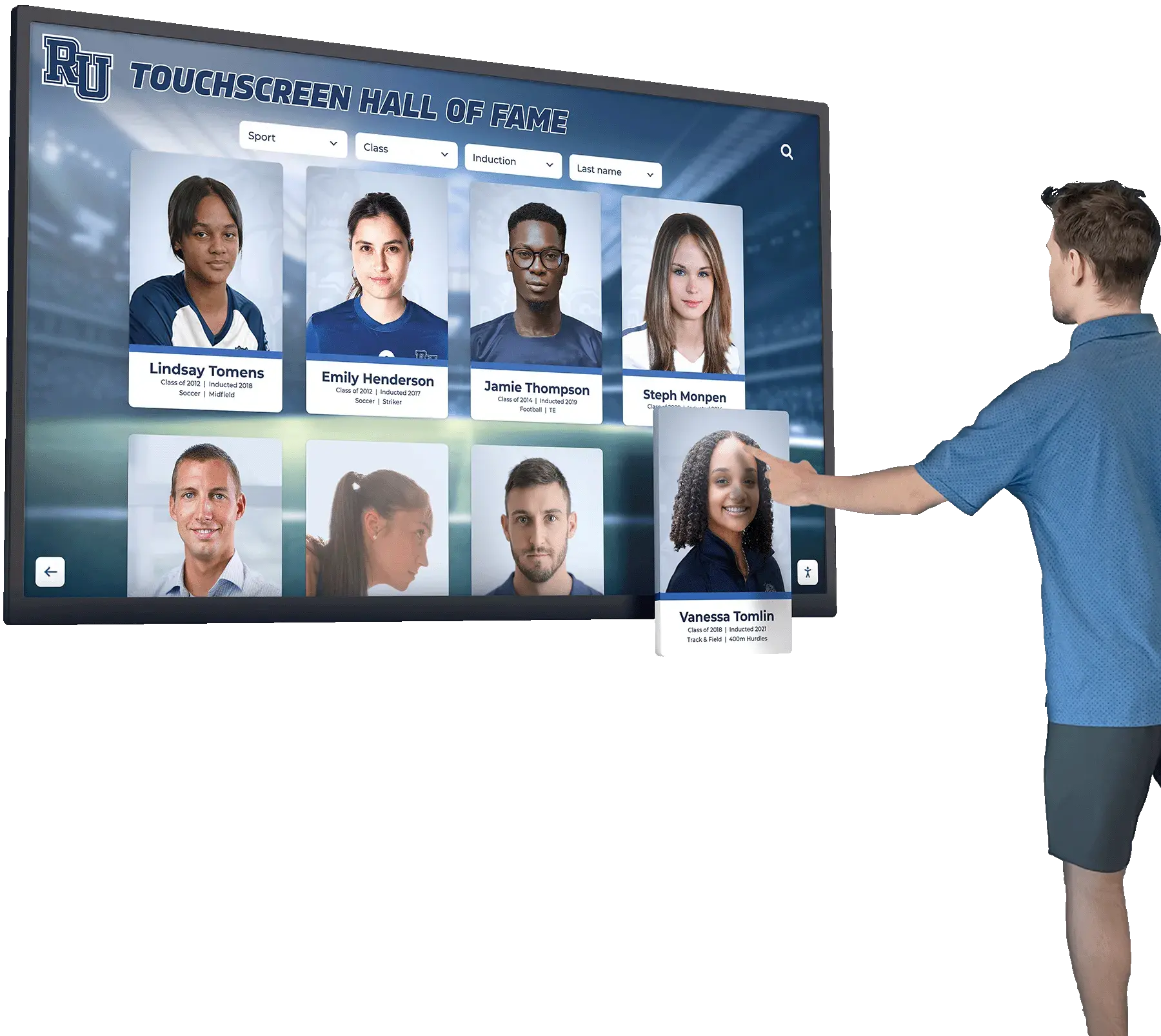
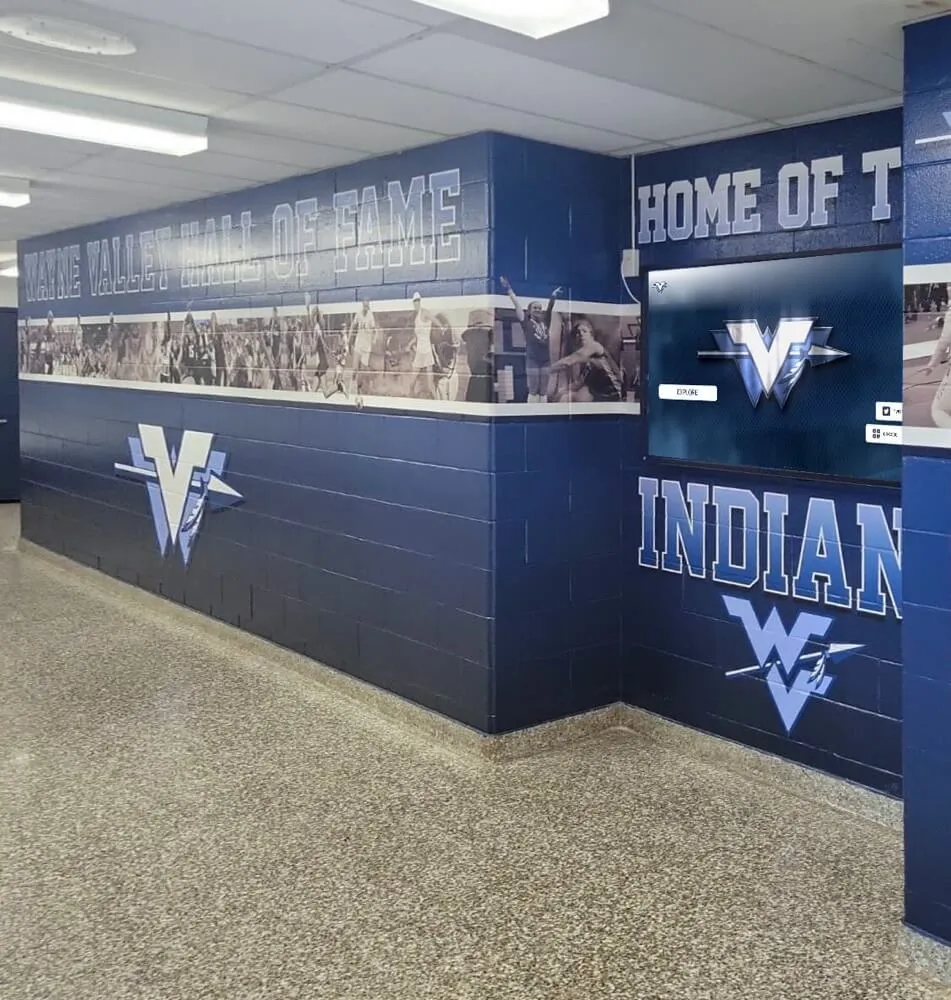
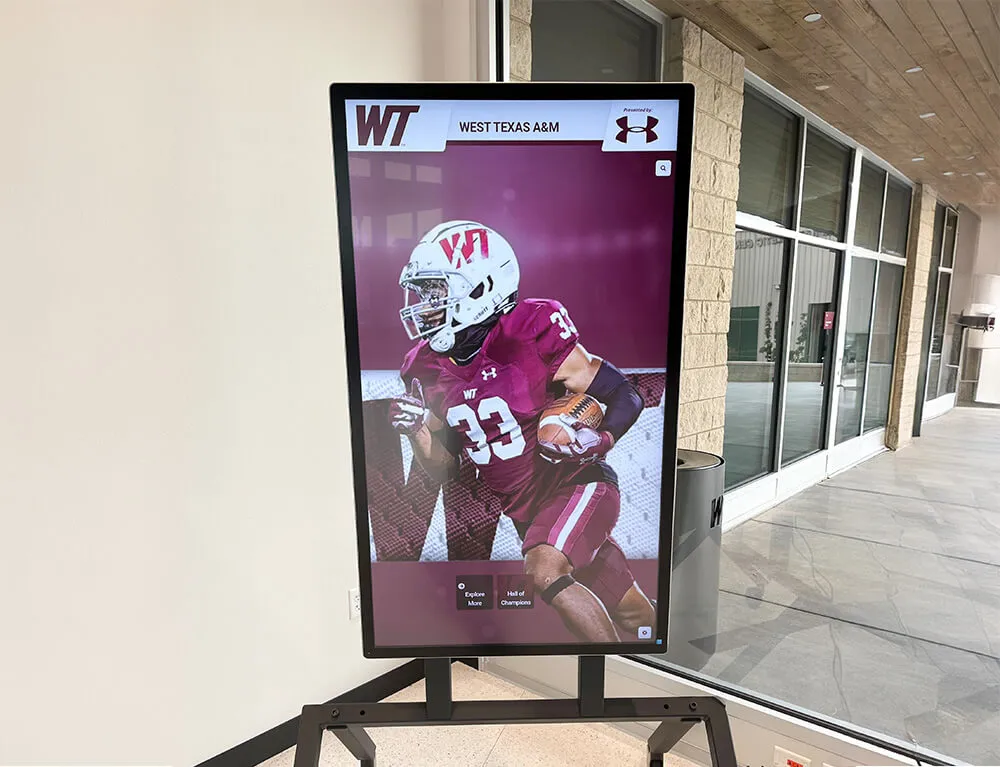
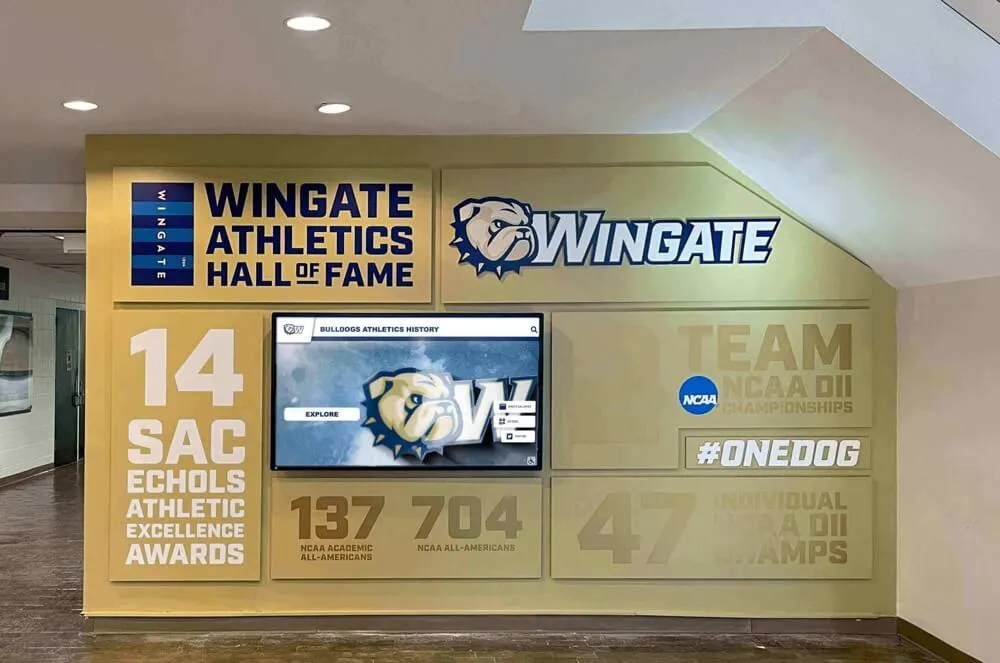
Year-round digital recognition systems accommodate all seasonal sports without space constraints or update delays
Understanding High School Athletic Season Structure
Before exploring individual sports, understanding the framework organizing competitive seasons provides essential context for recognition planning.
The Four-Season Athletic Calendar
Most states organize high school athletics into four distinct competitive seasons:
Traditional Three-Season Framework
The standard model divides the school year into three primary seasons:
- Fall season typically running August through November capturing autumn athletic competition
- Winter season spanning November through March covering cold-weather and indoor sports
- Spring season extending March through June featuring outdoor sports returning after winter
This three-season structure dominated high school athletics for decades, organizing competition around academic calendars and weather patterns determining facility availability.
Emerging Four-Season Model
Increasingly, athletic directors and state associations recognize a fourth competitive period:
- Summer season covering June through August accommodating sports requiring warm weather or extended practice periods not fitting traditional school-year calendars
Summer athletics includes sports like 7-on-7 football, summer basketball leagues, volleyball tournaments, and conditioning programs maintaining athlete development between traditional competitive seasons.
State-by-State Variations
No universal national calendar governs all high school athletics. State athletic associations establish specific season dates, determining sport classifications, managing scheduling requirements, and coordinating championship timing. This decentralized structure creates substantial variation—sports considered fall activities in northern states may shift to spring in southern regions based on weather patterns and traditional local practice.
Athletic directors operating near state borders or managing transfer students must navigate these differences when coordinating eligibility, recognition timing, and cross-state competitive opportunities.
Competitive Level Variations
Season timing also varies by competitive tier:
Varsity, Junior Varsity, and Freshman Levels
Most sports field multiple competitive levels with identical seasonal timing. Varsity teams compete for league and state championships while JV and freshman programs develop younger athletes within the same seasonal windows. Recognition systems should acknowledge achievement across all competitive levels rather than focusing exclusively on varsity accomplishment.
Club and Intramural Programs
Beyond traditional school-sponsored athletics, many institutions support club sports and intramural leagues operating outside standard seasonal structures. These programs may compete year-round, during off-seasons, or in flexible schedules accommodating student interest without formal league obligations. Comprehensive recognition includes these participation pathways demonstrating institutional commitment to athletic development beyond elite competitive teams.
Understanding approaches to athletic equity in schools ensures recognition systems celebrate diverse athletic participation regardless of competitive classification or seasonal timing.
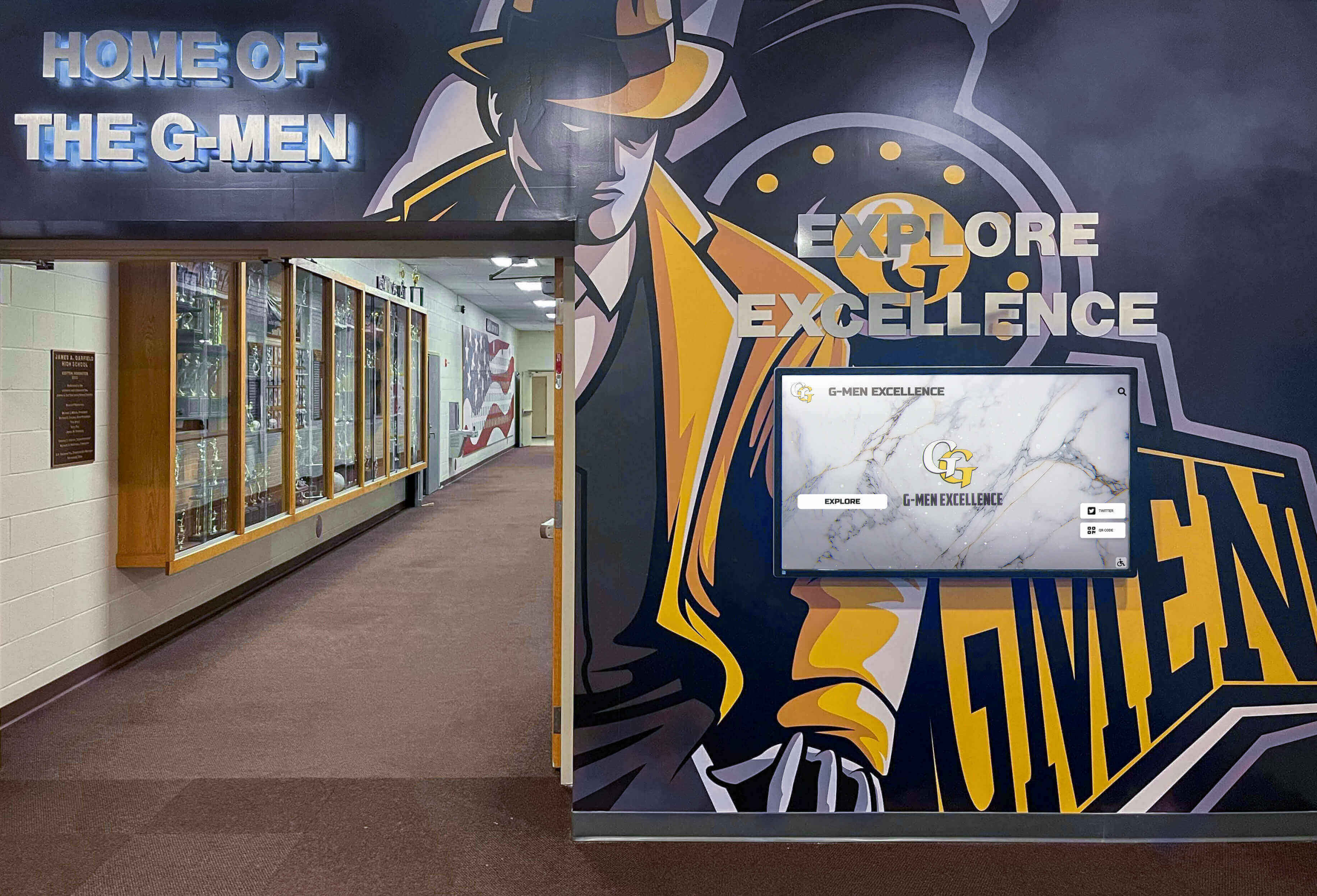
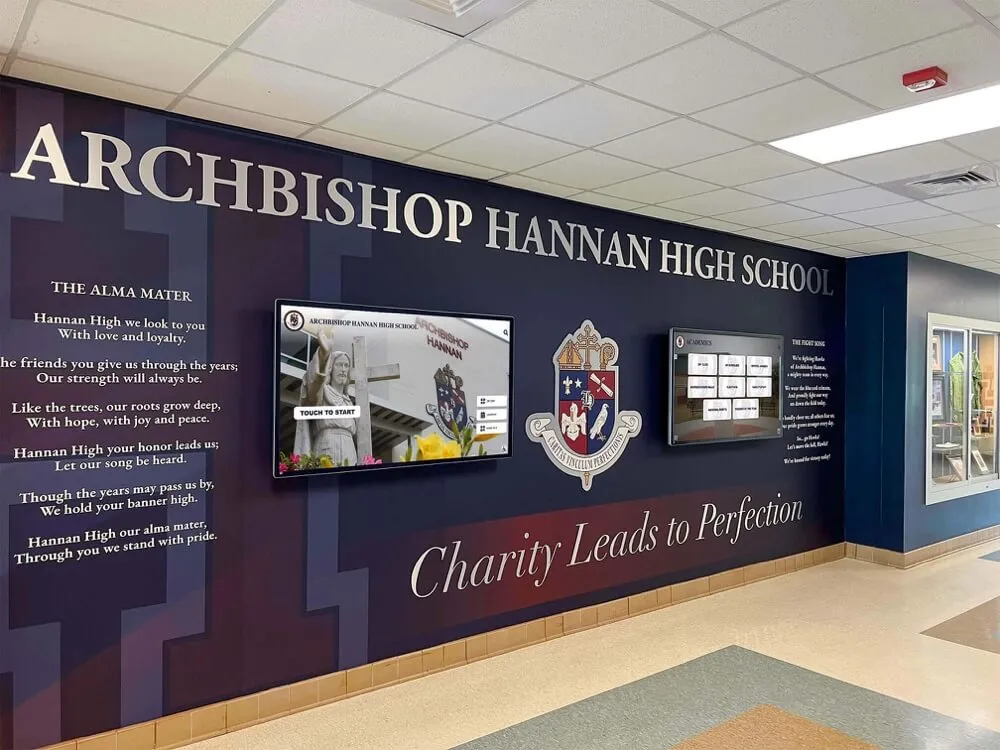
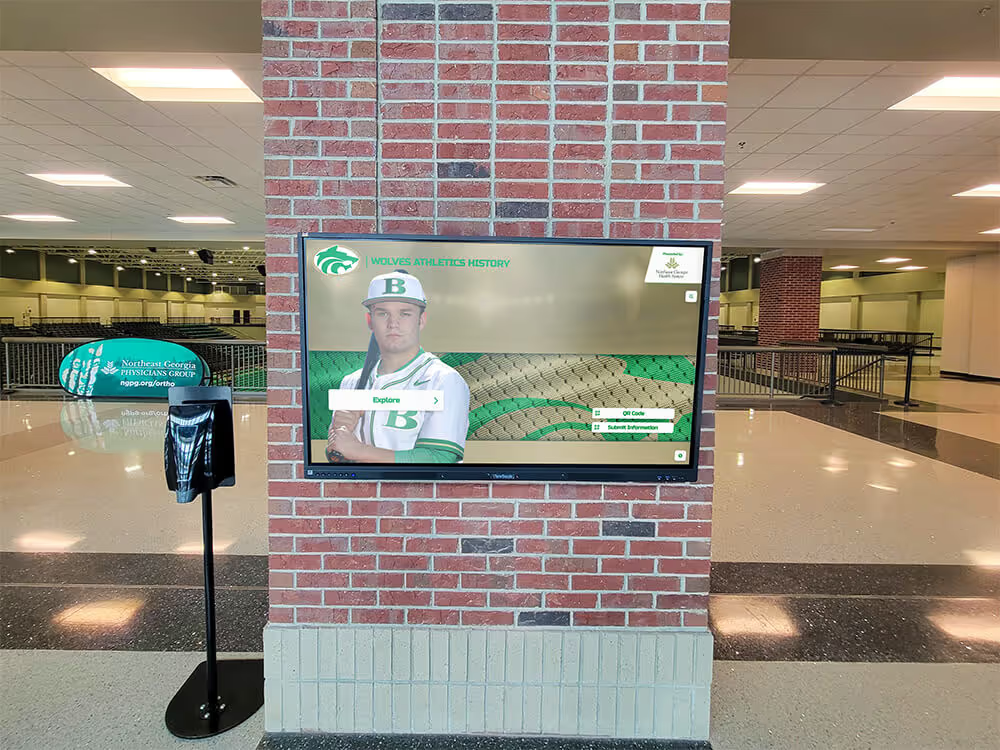
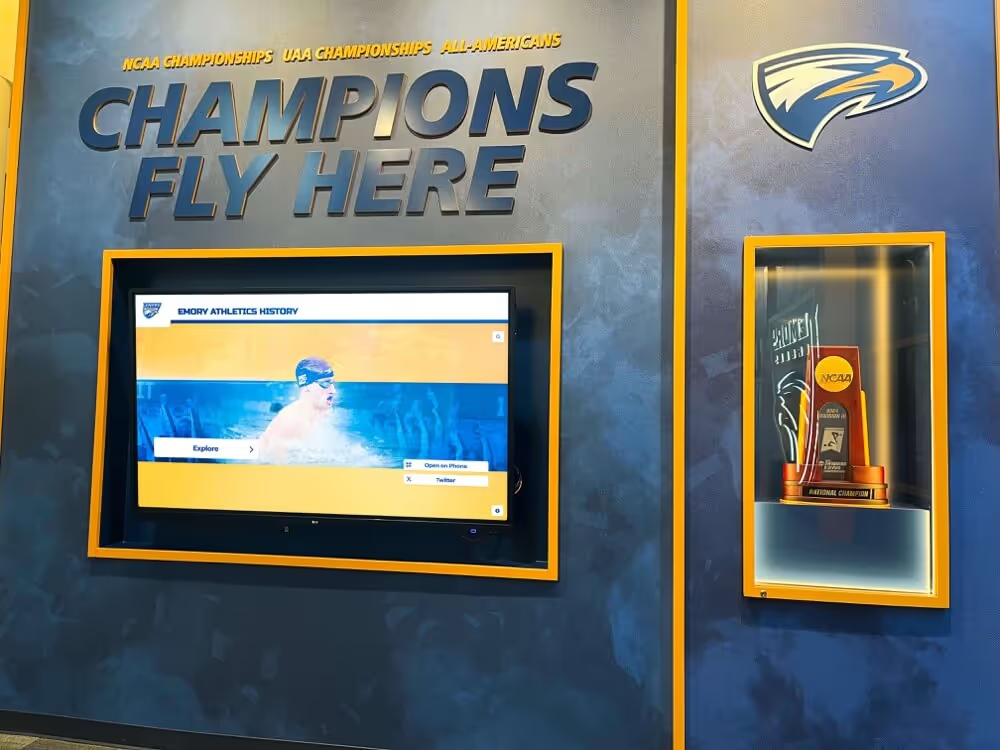
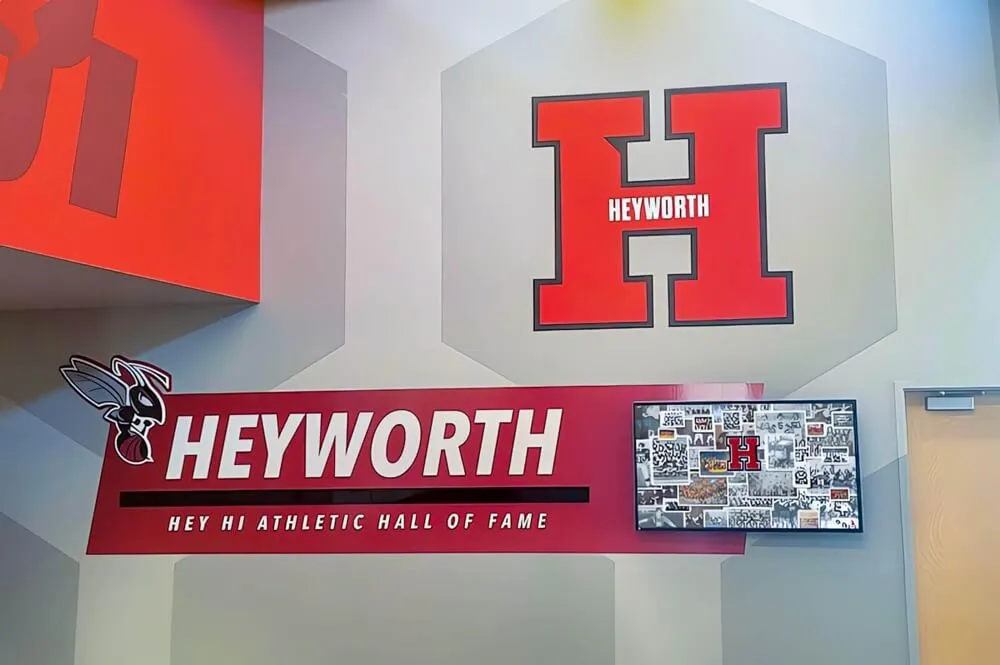
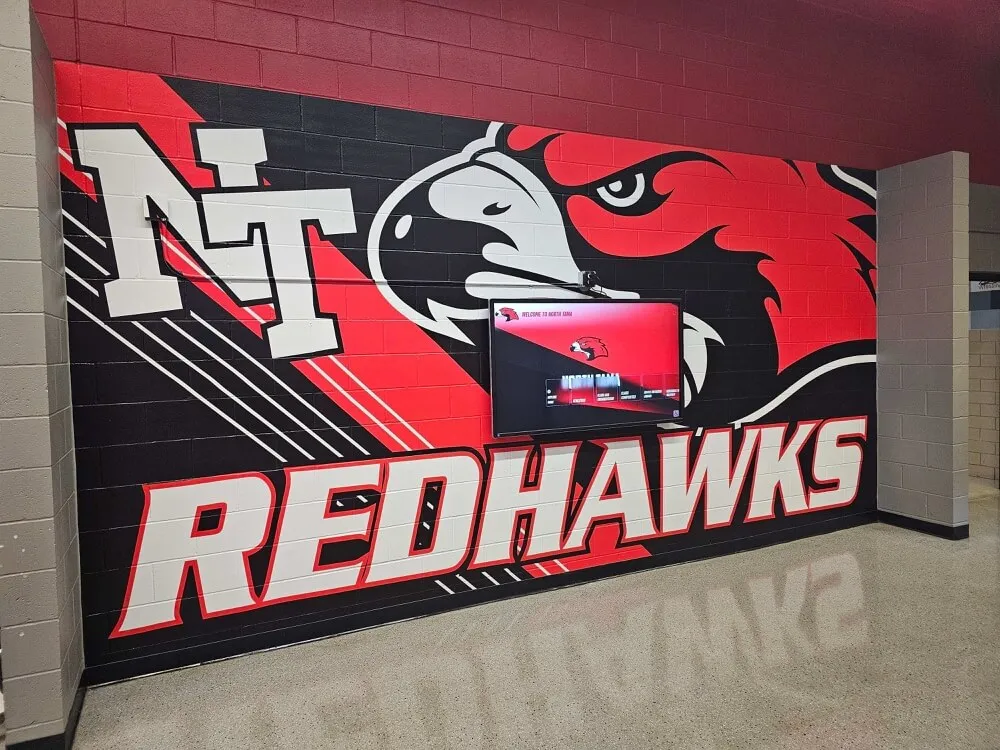
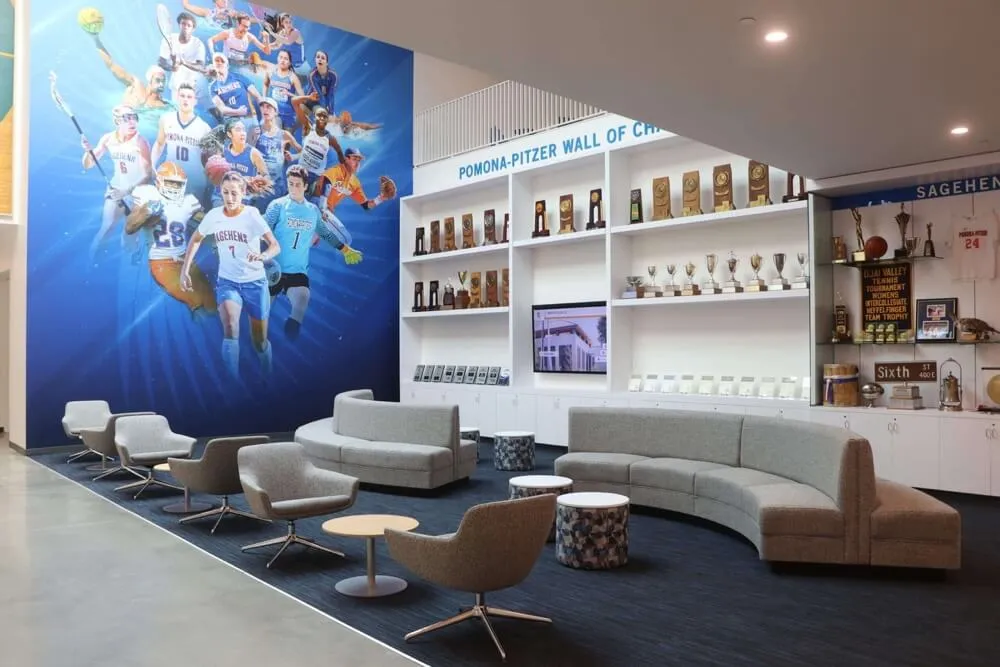
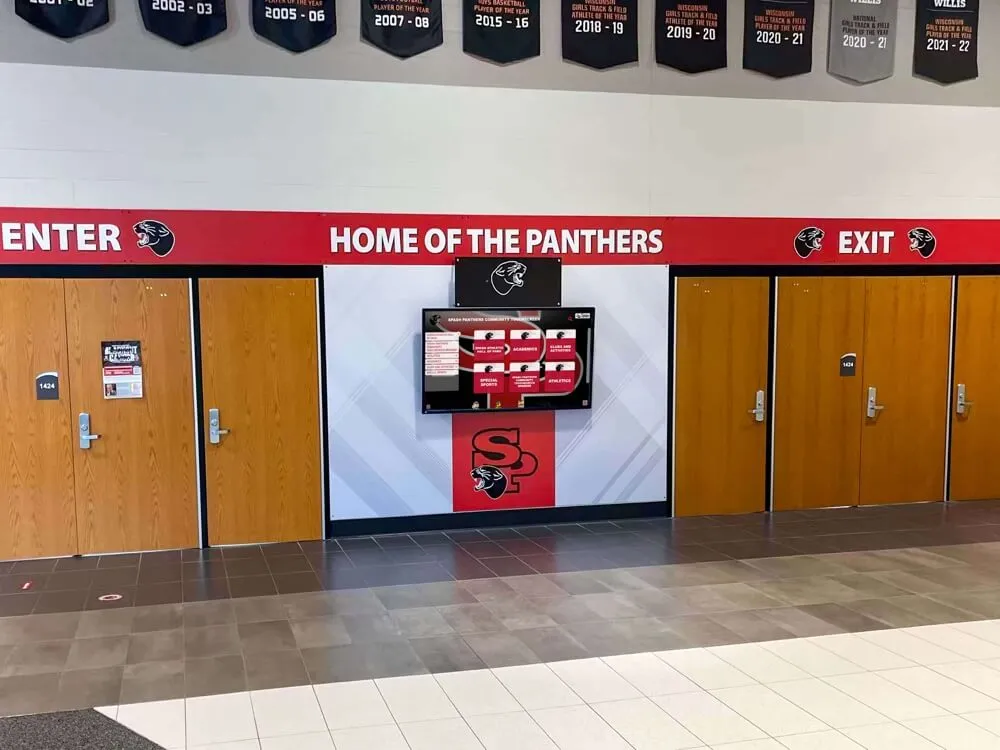
Comprehensive athletic facilities incorporate recognition for all sports across multiple seasons and competitive levels
Fall High School Sports: August Through November
Fall athletics launches the school year with outdoor sports capitalizing on warm early-autumn weather before transitioning to winter conditions.
Major Fall Sports
The fall season typically includes the highest number of participants and spectators:
Football
Football dominates fall athletics at most schools:
- Varsity football programs typically begin practice in early August with games starting late August through early September
- Regular seasons span 8-10 games followed by playoff structures in competitive divisions
- State championship games typically conclude in late November or early December
- Junior varsity and freshman programs mirror varsity schedules with modified game lengths
- 7-on-7 competitions and spring football create year-round involvement in many programs
Football recognition opportunities include senior night celebrations, playoff advancement acknowledgment, individual awards, and comprehensive season documentation through digital platforms capturing complete team histories.
Cross Country
Cross country running provides inclusive participation opportunities:
- Teams typically include both boys and girls programs competing separately
- Season structure features weekly invitationals building toward conference and regional championships
- State championship meets typically occur in late October or early November
- Top individual runners earn all-conference, all-region, and all-state recognition
- Team championships acknowledge collective performance alongside individual excellence
Cross country often receives less visibility than field sports despite significant participation, making systematic recognition particularly important for honoring dedicated distance runners.
Volleyball
Girls volleyball ranks among the most popular fall sports nationally:
- Most programs compete in fall season though some states schedule volleyball during spring
- Match formats typically include best-of-five sets with regular season running late August through October
- Conference tournaments and state playoffs extend seasons into November
- Recognition opportunities include statistical leaders in kills, assists, blocks, and digs
- Team awards celebrate playoff advancement, championship success, and program milestones
Some states offer boys volleyball during spring season, creating year-round volleyball recognition opportunities for comprehensive programs supporting both genders.
Soccer
Soccer programs continue expanding across American high schools:
- Both boys and girls programs compete though timing varies by state (some schedule girls in spring)
- Regular seasons span 12-18 games depending on state association rules and league size
- Playoffs and state tournaments extend competitive windows into November
- Individual recognition includes scoring leaders, goalkeepers, and all-conference selections
- Team achievements focus on tournament advancement and championship success
Soccer’s growing popularity internationally creates particular interest in international recruitment recognition as more high school players pursue collegiate and professional opportunities.
Additional Fall Sports
Many schools offer diverse fall athletic opportunities beyond major programs:
Golf
Fall golf provides competitive opportunities during optimal weather:
- Boys and girls programs may compete during fall or spring depending on state scheduling
- Match play and stroke play formats determine individual and team champions
- State qualifying tournaments typically occur in October
- Individual medalists and low-average recognition celebrate statistical excellence
- Course records and tournament victories provide specific achievement documentation
Tennis
Tennis programs operate similarly to golf with seasonal flexibility:
- Singles and doubles competitions create multiple recognition categories
- Conference tournaments determine league champions before state playoff qualification
- Individual state champions in various brackets earn distinction
- Team state championships represent ultimate program achievement
- Career records and winning percentages document sustained excellence
Field Hockey
Predominantly offered in northeastern and mid-Atlantic states:
- Girls field hockey provides fall competitive opportunities in supporting regions
- League and conference structures vary substantially by geographic area
- State tournaments culminate seasons typically in November
- Specialized positions create diverse recognition opportunities
- Growing programs in non-traditional regions deserve acknowledgment for building participation
Competitive Cheer and Dance
Athletic cheerleading and dance teams increasingly compete as sports:
- Fall season supports football and other autumn sports
- Competition seasons feature regional and national championship events
- UCA, NCA, and other organization championships provide recognition milestones
- Routine difficulty, execution scores, and championship placement create achievement metrics
- Team-oriented nature emphasizes collective accomplishment alongside individual skill recognition
Planning Fall Recognition Strategies
Athletic directors should coordinate fall recognition timing around season conclusions:
- Update digital displays immediately following season completion
- Schedule fall athletic awards ceremonies in late November or early December
- Coordinate championship banner displays acknowledging state tournament success
- Document individual statistical leaders and award winners
- Capture senior athlete profiles before graduates lose connection to programs
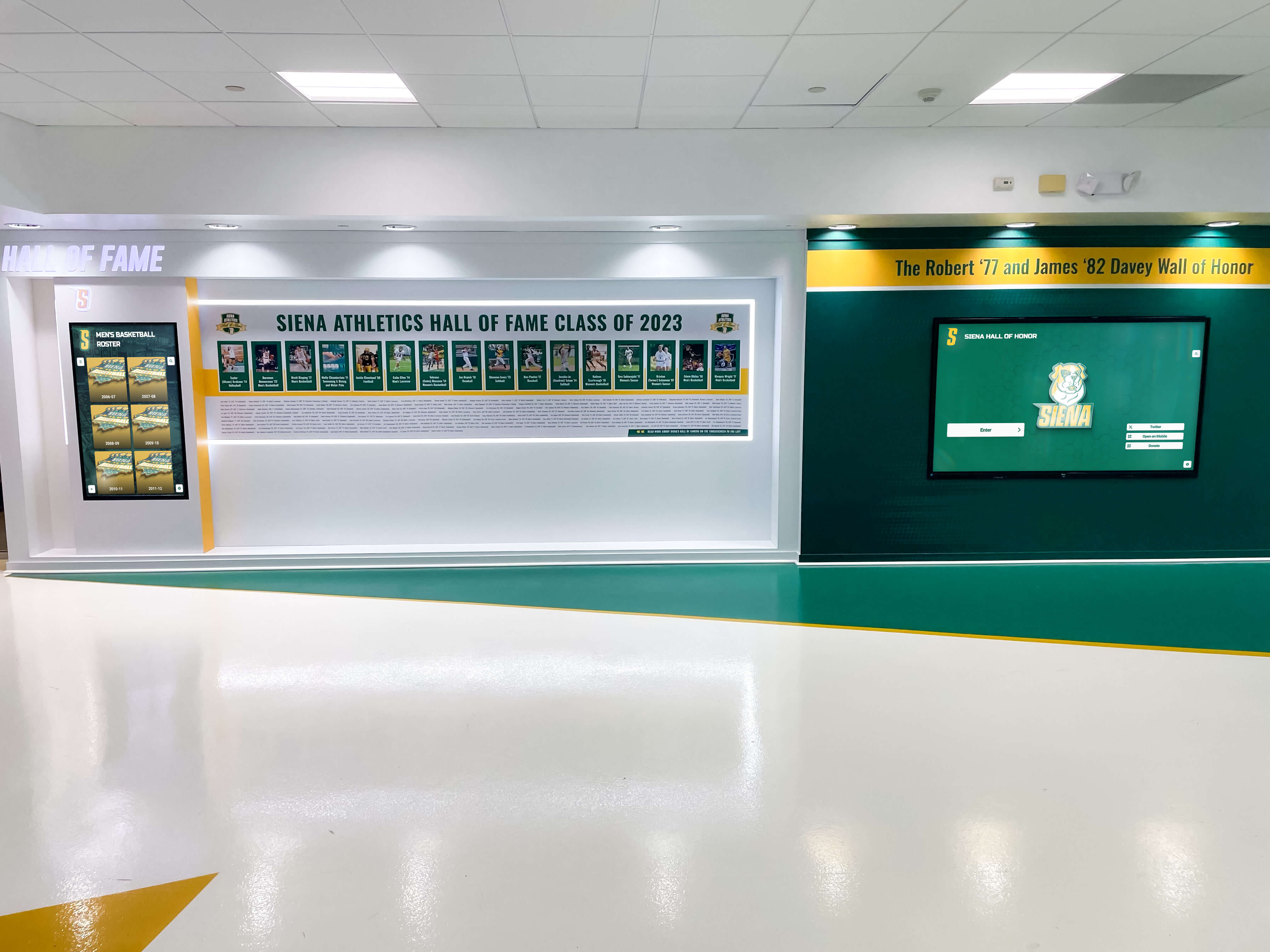
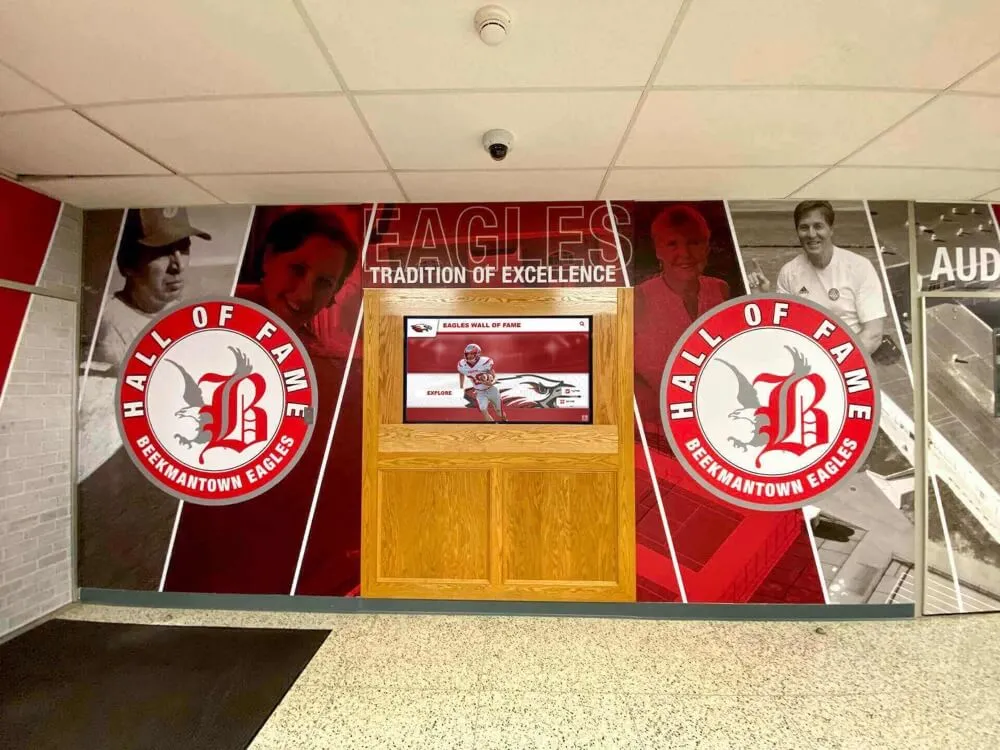
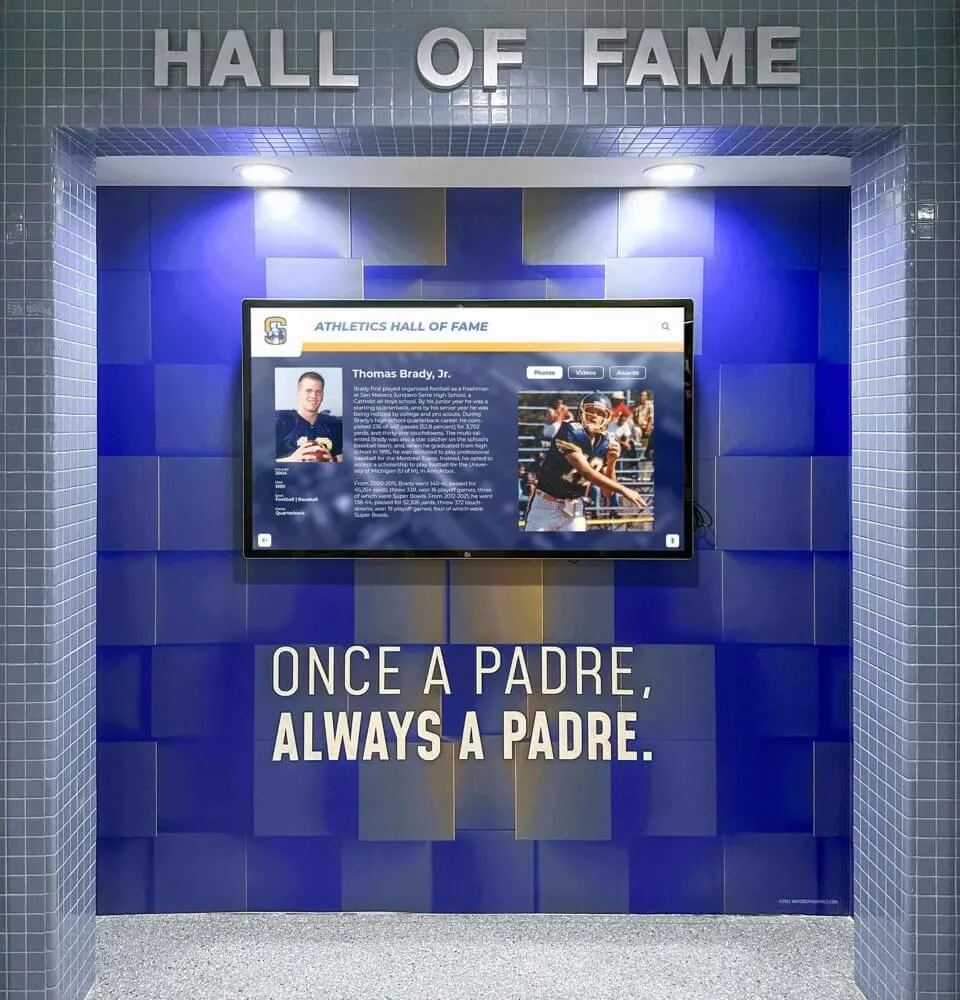
Prominent display placement ensures fall sport achievements receive appropriate visibility as seasons conclude
Winter High School Sports: November Through March
Winter athletics features primarily indoor sports competing in gymnasiums, arenas, and specialized facilities protecting athletes from cold weather conditions.
Premier Winter Sports
Winter season includes some of the most popular and visible high school sports:
Basketball
Basketball dominates winter athletics participation and spectator interest:
- Both boys and girls programs compete with girls seasons sometimes starting earlier than boys
- Regular seasons typically feature 20-25 games from late November through February
- Conference tournaments in late February followed by state playoff brackets
- March state championship games represent season culmination in most states
- Individual recognition includes scoring leaders, rebounders, assist leaders, and defensive specialists
- Career milestone achievements like 1,000-point scorers deserve special celebration
Basketball’s high visibility creates natural recognition opportunities, though comprehensive systems ensure less prominent sports receive equivalent acknowledgment. Resources on 1,000-point scorer recognition demonstrate effective celebration approaches for significant individual milestones.
Wrestling
Wrestling provides intense individual competition within team frameworks:
- Season structure includes dual meets, tournaments, and championship qualifying events
- Weight class organization creates multiple individual competition categories
- Conference championships in late January or February determine league winners
- State qualifying tournaments advance top wrestlers to state championship events
- Individual recognition honors weight class champions, place finishers, and career record holders
- Pin records, winning streaks, and multiple-year champions earn special distinction
Wrestling’s individual nature combined with team scoring creates rich recognition opportunities across diverse achievement categories. Understanding wrestling recognition approaches ensures comprehensive honor for this demanding winter sport.
Swimming and Diving
Aquatic sports require specialized facilities and create precise performance measurement:
- Boys and girls swim teams may compete in separate seasons or combined depending on facility availability
- Dual meets throughout season build toward conference and sectional championships
- State championship meets determine individual event winners and team champions
- Time standards and qualifying marks provide objective achievement thresholds
- Relay teams, individual champions, and school record holders deserve recognition
- Diving competitions operate alongside swimming with separate scoring and championships
Ice Hockey
Hockey thrives in northern states and regions with ice facility access:
- Primarily boys programs with growing girls hockey participation
- Extended seasons from November through March accommodate playoff structures
- State tournaments featuring multiple divisions based on school size
- Scoring leaders, goaltenders, and career statistics document individual excellence
- State championship teams and deep playoff runs represent premier program achievements
Gymnastics
Gymnastics programs operate where facility access and coaching expertise exist:
- Girls gymnastics dominates participation though boys programs exist in some states
- Competitive formats include all-around competition and individual apparatus events
- Scoring system emphasizes difficulty and execution creating detailed performance metrics
- State championship meets determine individual and team champions
- All-state recognition honors top performers across competitive divisions
Secondary Winter Sports
Winter seasons also accommodate additional competitive opportunities:
Indoor Track and Field
Winter track provides off-season training and competitive opportunities:
- Programs operate in states with indoor facilities accommodating winter training
- Meet structures include invitational competitions and conference championships
- Shortened event schedules focusing on adapted indoor events
- State indoor championships in late February or early March
- Qualifying standards for regional and national indoor championships
- Individual event records and relay team accomplishments deserve recognition
Competitive Dance and Cheer
Winter cheer and dance teams support basketball while preparing for championships:
- Competition season peaks during winter months with regional and national events
- Routine performances at basketball games provide visibility and team spirit support
- Championship competitions evaluate technical execution and artistic presentation
- Team championships and individual recognition for captains and standout performers
Bowling
Bowling offers accessible athletic participation in many regions:
- Co-ed or separate boys/girls teams depending on program size and interest
- Match competition featuring baker format team games and individual scores
- Conference and state tournaments determine champions
- High game and series records provide individual achievement recognition
- Inclusive nature enables broad participation beyond traditional athletic demographics
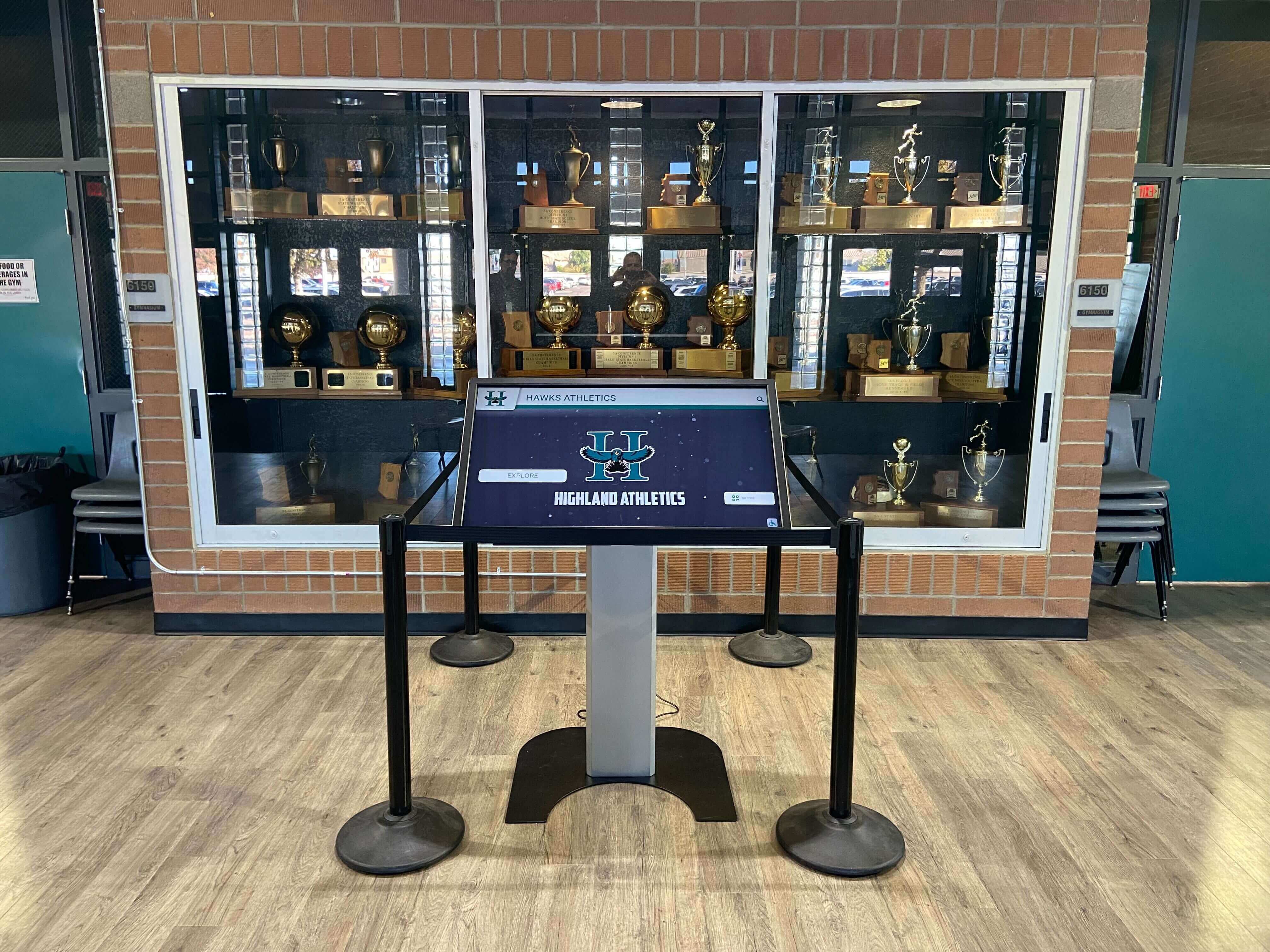
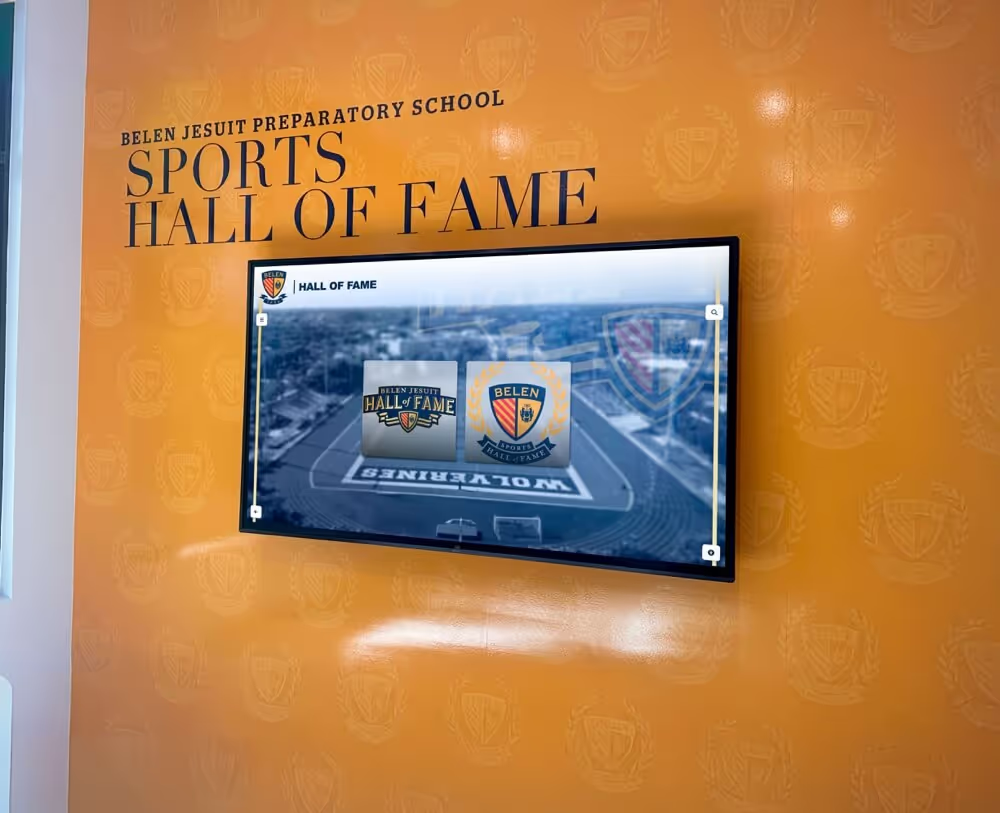
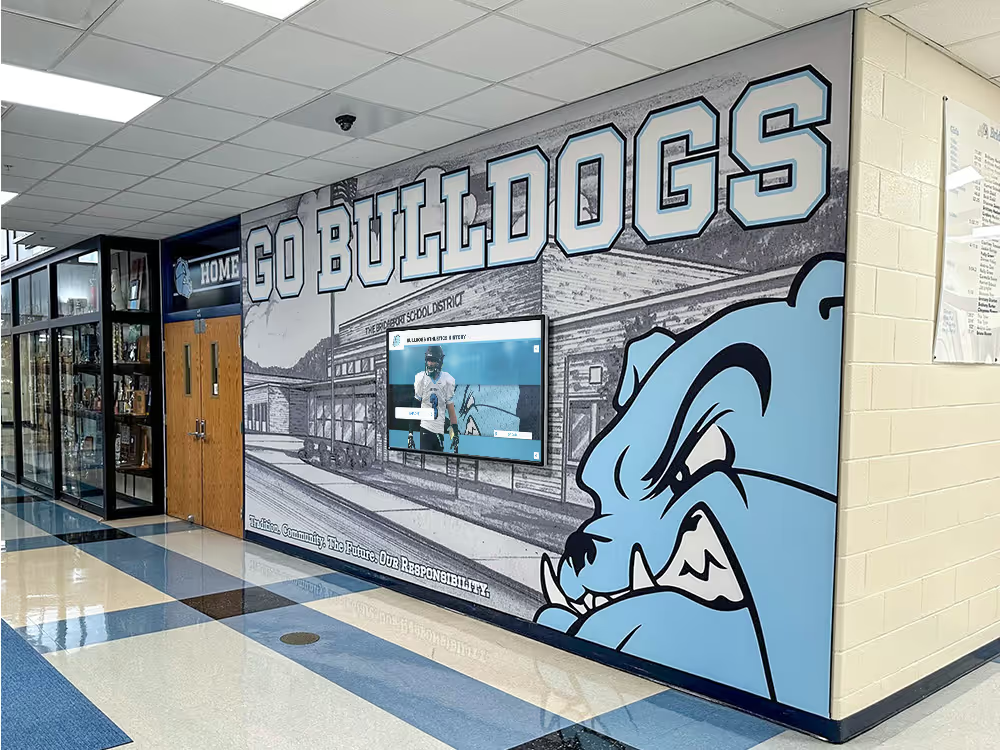
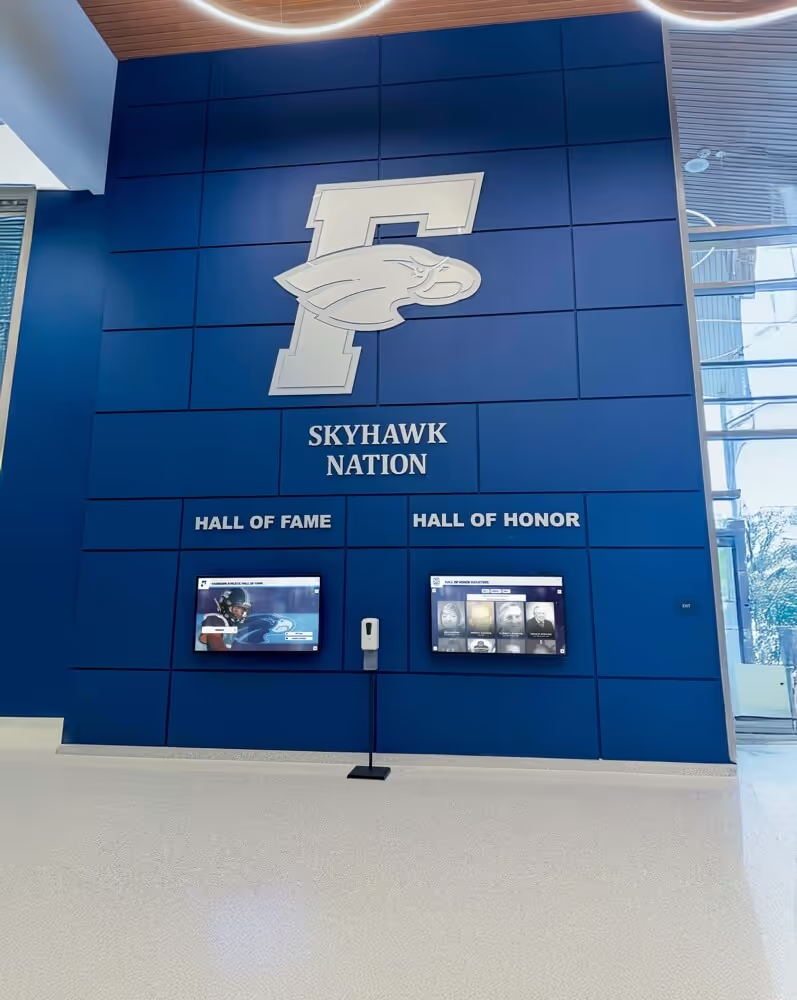
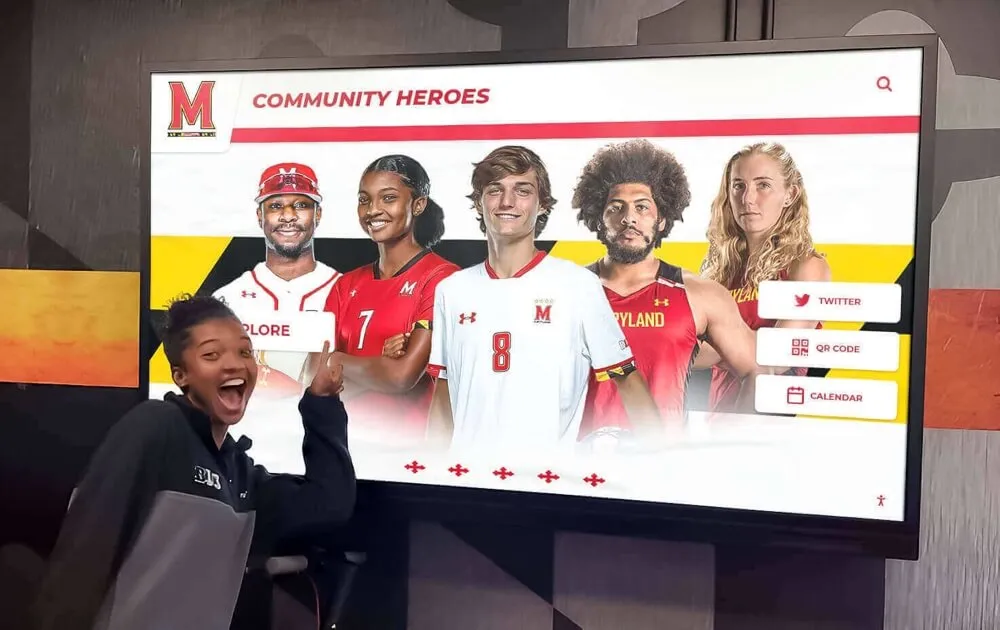
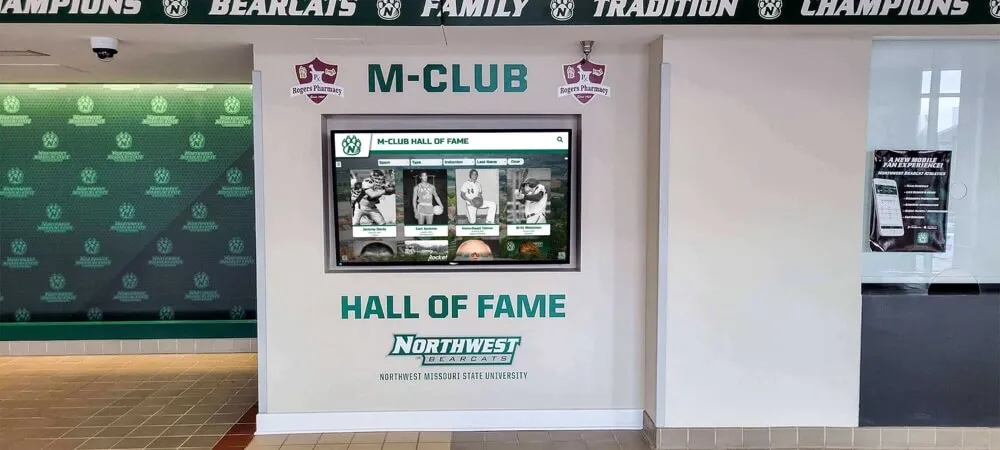
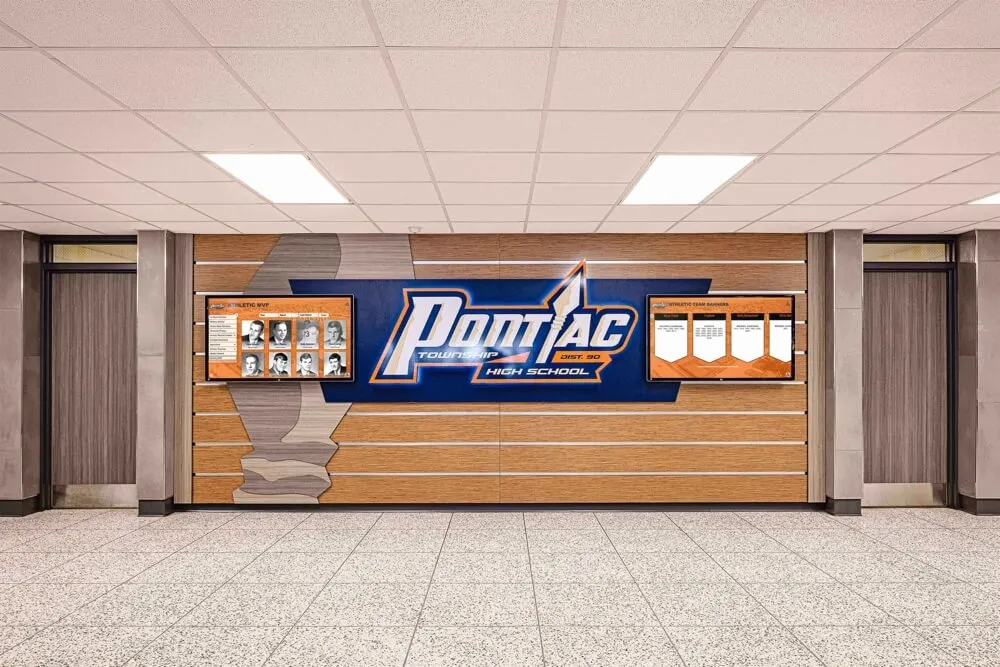
Strategic kiosk placement in athletic facilities ensures winter sport recognition remains visible throughout basketball seasons and beyond
Winter Recognition Timing Considerations
Winter season recognition faces unique timing challenges:
- Basketball seasons extend into March creating delayed recognition timing
- Winter sport athletes may begin spring sports immediately after winter season concludes
- Schedule winter athletic awards ceremonies in late March or early April
- Update recognition displays between winter and spring seasons
- Capture basketball playoff performances before spring activities dominate attention
- Coordinate senior recognition before athletes graduate and lose daily school connection
Spring High School Sports: March Through June
Spring season brings outdoor competition returning as weather improves, featuring diverse sports capitalizing on moderate temperatures before summer heat.
Traditional Spring Sports
Spring athletics showcases classic outdoor competitions:
Baseball
Baseball represents quintessential American spring sport:
- Boys programs dominate though girls baseball exists in some districts
- Seasons typically begin in late March with games extending into May or early June
- Regular season game totals vary from 20-30 games depending on weather and scheduling
- Conference tournaments followed by state playoff brackets determine champions
- Individual statistical leaders in batting average, home runs, pitching wins, and ERAs
- Career achievement milestones and single-season records provide recognition opportunities
Baseball statistics create rich recognition content through comprehensive performance tracking. Resources on baseball awards ideas demonstrate effective approaches for celebrating diamond sport excellence.
Softball
Girls softball parallels baseball with distinct identity:
- Fast-pitch softball dominates high school competition
- Season timing and structure mirrors baseball with spring competition
- Tournament-heavy schedules common in many regions with weekend invitational events
- Pitching dominance often defines successful programs given softball’s pitching-centric nature
- Batting leaders, pitching statistics, and defensive excellence provide recognition categories
- State tournament advancement and championship success represent ultimate program goals
Track and Field
Outdoor track and field accommodates the largest athlete participation of spring sports:
- Combined boys and girls programs competing in separate events
- Meet structures include dual meets, invitationals, conference meets, and state qualifying events
- Diverse event categories from sprints to distance, jumps, throws, and relays
- State championship meets determine individual event winners and team champions
- School records in individual events and relay teams deserve prominent recognition
- All-state honors for top performers and state qualifiers warrant acknowledgment
Track and field’s event diversity requires comprehensive recognition approaches acknowledging excellence across multiple competition categories rather than single-sport metrics.
Soccer (Spring Season States)
Some states schedule boys soccer during spring rather than fall:
- Spring scheduling accommodates weather patterns or facility conflicts in various regions
- Season structure parallels fall soccer with regular season and playoff formats
- Championship timing extends into May or early June depending on tournament structures
- Recognition opportunities identical to fall soccer programs for scoring, defense, and championships
Tennis (Spring Season States)
Tennis programs operate in spring season where fall sports dominate facility access:
- Individual and team competition structures mirror fall tennis formats
- Spring scheduling enables focus when fewer competing sports vie for recognition attention
- Conference and state tournaments determine individual and team champions
- Career records and championship accumulation document sustained excellence
Growing Spring Sports
Spring seasons increasingly feature diverse athletic opportunities:
Lacrosse
Lacrosse continues rapid expansion beyond traditional northeastern strongholds:
- Boys and girls programs both experiencing substantial growth
- Spring season timing capitalizes on moderate weather and field availability
- Fast-paced scoring creates exciting competitive environments
- Conference structures and state tournaments determine champions
- Scoring leaders, goalies, and team success provide recognition opportunities
- Program building in emerging regions deserves special acknowledgment
Rugby
Rugby programs growing in schools where interest and coaching expertise align:
- Primarily club structures though some schools offer formal team programs
- Spring season accommodates rugby union formats and tournament schedules
- Regional and national championship competitions for competitive programs
- Physical nature and unique skill sets distinguish rugby participants
- Team-focused sport emphasizes collective achievement
Volleyball (Spring Season States)
Some states schedule volleyball during spring rather than fall:
- Timing accommodates facility availability and regional preferences
- Competition structures identical to fall volleyball programs
- Spring scheduling creates opportunities for year-round volleyball skill development
Ultimate Frisbee
Emerging sport gaining recognition as formal athletic program:
- Club structures evolving toward formal school-sponsored programs
- Spring season aligns with outdoor competition timing
- Tournament-based competition culminating in regional and national championships
- Co-ed formats common though single-gender divisions emerging
- Spirit of the game philosophy emphasizes sportsmanship alongside competitive excellence
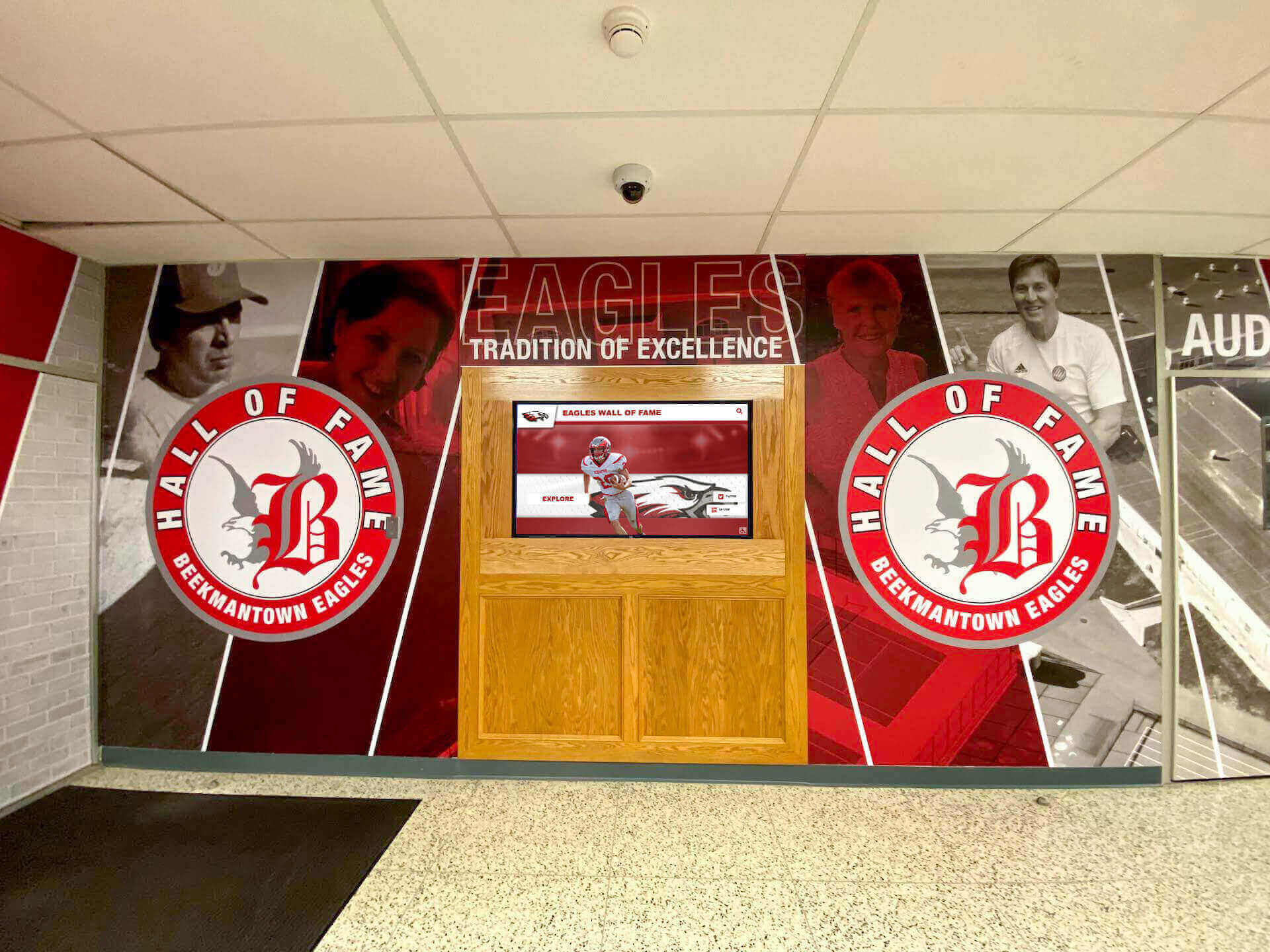
Prominent lobby recognition ensures spring sport achievements receive equal visibility despite competing for attention as school year concludes
Spring Recognition Planning
End-of-year timing creates unique recognition considerations:
- Coordinate spring athletic awards with end-of-year academic ceremonies
- Update displays immediately following spring championships while athletes remain in school
- Capture senior athlete content before graduation activities dominate schedules
- Schedule senior night celebrations during final home competitions
- Document complete year recognition across all three traditional seasons
- Plan summer content updates during relative calm before fall athletics resume
Summer High School Athletics: June Through August
Summer athletics fills gaps between traditional school-year sports while providing development opportunities for serious athletes.
Summer Sport Structures
Summer athletics operates differently than traditional seasonal competition:
7-on-7 Football
Summer football focuses on passing game development:
- Seven-player teams compete in non-contact formats emphasizing skill development
- Tournament structures throughout summer providing competitive opportunities
- College exposure opportunities as recruiters attend prominent tournaments
- Team success and individual standout performances deserve recognition
- Bridges spring practice and fall season maintaining competitive readiness
Summer Basketball Leagues and Tournaments
Basketball development continues through organized summer competition:
- AAU, travel, and recreational leagues provide playing opportunities
- Showcase tournaments attracting college recruiters
- Skill development camps and team-building activities
- Individual performance documentation supporting recruitment and development
Volleyball Club Seasons
Competitive volleyball continues year-round through club structures:
- Club teams compete in tournaments nationwide during winter and summer
- High-level competition elevating skills beyond school-season capabilities
- College recruitment opportunities through exposure at major tournaments
- Individual and team success in club contexts deserves acknowledgment
Conditioning and Strength Programs
Summer athletic development extends beyond sport-specific competition:
- Organized strength and conditioning programs maintaining fitness
- Speed and agility training for skill development
- Weight room achievements and fitness improvement milestones
- Team-building activities and leadership development
Summer Olympic Development
Sports like swimming, track and field, and wrestling continue through summer:
- Club team participation and national championship qualifying
- Junior Olympic competitions in various sports
- Specialized training camps for elite development
- Achievement documentation supporting recognition of sustained year-round commitment
Understanding approaches to youth sports recognition demonstrates how to acknowledge summer athletic participation appropriately within school recognition systems.
Summer Recognition Strategies
Summer athletics recognition requires different approaches than traditional seasons:
- Document summer achievement through fall season recognition updates
- Acknowledge club sport success and national tournament participation
- Recognize off-season development commitment and improvement
- Update displays during summer administrative periods before fall rush begins
- Incorporate summer achievement into comprehensive athlete profiles
- Balance school-sponsored programs with club/travel team accomplishments
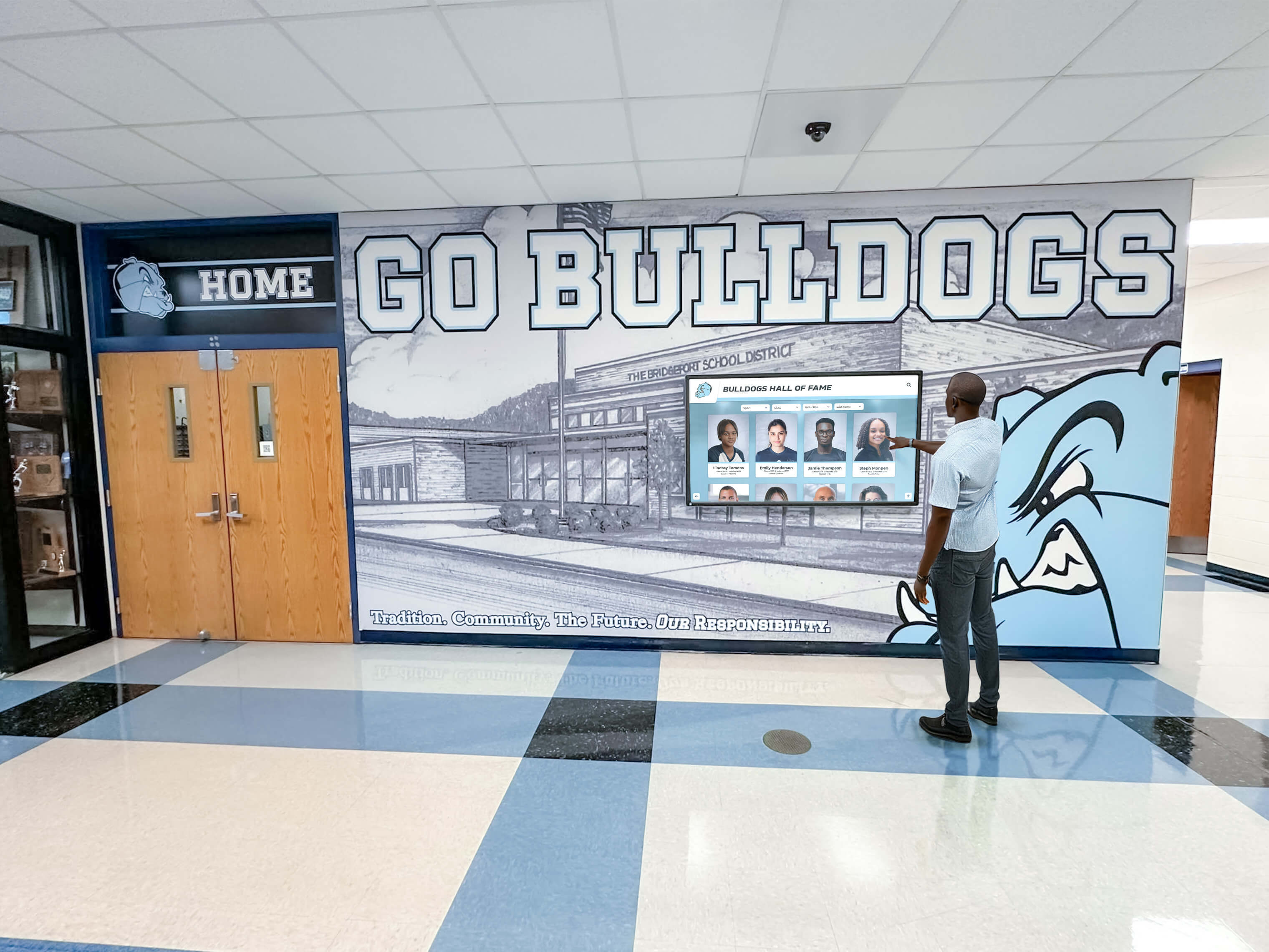
Year-round accessible displays enable recognition updates accommodating athletic achievements across all seasonal periods including summer
State-by-State Season Variations
Understanding regional differences prevents recognition timing errors and ensures appropriate seasonal acknowledgment.
Regional Season Assignment Differences
Sports assigned to different seasons based on geography:
Northern States
Cold weather regions typically structure seasons around climate:
- Football, soccer, and cross country dominate fall when weather permits outdoor competition
- Winter sports including basketball, hockey, wrestling, and swimming fill cold months
- Spring brings baseball, softball, track and field when weather improves
- Soccer scheduling varies with some states splitting boys/girls between fall and spring
Southern States
Warmer climates enable year-round outdoor competition affecting scheduling:
- Football remains fall sport though earlier start dates common
- Spring sports may begin earlier capitalizing on warm weather advantages
- Baseball and softball seasons potentially extended with favorable playing conditions
- Indoor sports scheduling accommodates fewer weather restrictions
Coastal and Moderate Climate Regions
Year-round temperate conditions create flexible scheduling:
- Less weather-driven season assignment enables competitive preference determination
- Tennis and golf operate in either fall or spring depending on tradition and facility access
- Soccer scheduling varies significantly across moderate climate states
- Extended competitive seasons possible without winter weather interruptions
State Association Scheduling Decisions
State athletic associations make sport-specific season assignments:
- Volleyball scheduled in fall by most states though spring volleyball exists in several
- Boys soccer primarily fall sport with spring scheduling in some states
- Girls soccer split between fall and spring depending on state
- Tennis and golf scheduled flexibly based on state preference and tradition
- Wrestling universally winter sport though season length and tournament timing varies
- Swimming scheduled based on facility access and regional competition structures
Athletic directors should reference state association calendars when planning recognition timing, awards ceremonies, and display updates rather than assuming universal seasonal assignments.
Creating Year-Round Athletic Recognition Systems
Comprehensive recognition accommodates seasonal variety while providing consistent celebration visibility.
Digital Recognition Advantages for Seasonal Sports
Modern technology addresses challenges traditional recognition creates:
Unlimited Capacity Across All Sports
Digital displays eliminate space constraints limiting traditional plaque systems:
- Accommodate recognition for all sports regardless of participation size or seasonal timing
- Provide equivalent profile depth for fall football and spring ultimate frisbee
- Enable complete team roster inclusion rather than selecting limited honorees
- Support historical recognition spanning decades without physical expansion requirements
Solutions like Rocket Alumni Solutions provide platforms specifically designed for comprehensive athletic recognition across unlimited sports, athletes, and seasons without space limitations constraining celebration scope.
Immediate Seasonal Updates
Cloud-based content management enables instant recognition following seasonal achievements:
- Update displays within hours of championship games or season conclusions
- Add new athlete profiles as seasons progress rather than waiting for annual plaque orders
- Modify statistics and achievements in real-time as records fall
- Maintain perpetually current recognition rather than displays showing outdated information
Real-time capability ensures recognition remains relevant and timely rather than appearing as historical acknowledgment months after achievement occurred.
Multimedia Seasonal Documentation
Rich content formats bring seasonal sports to life:
- Video highlights from playoff games and championship performances
- Photo galleries documenting season progression from early practices through finals
- Statistical breakdowns showing individual and team performance across season
- Audio interviews with athletes reflecting on season experiences
- Timeline presentations connecting current seasons to program historical context
Multimedia richness creates engaging experiences far exceeding static plaque text, particularly valuable for less visible sports deserving compelling storytelling bringing achievements to broader community awareness.
Equitable Multi-Sport Recognition
Digital platforms eliminate implicit hierarchies traditional recognition creates:
- Provide equivalent space and content depth for all sports regardless of spectator appeal
- Present alphabetically or chronologically rather than prominence-based physical placement
- Enable filtered searching allowing visitors to explore specific sports of interest
- Support comprehensive athlete profiles documenting multi-sport participation
- Ensure spring and summer sports receive equivalent treatment to fall and winter programs
Equitable recognition demonstrates institutional commitment to celebrating excellence across comprehensive athletic programs rather than focusing disproportionately on high-visibility revenue sports.
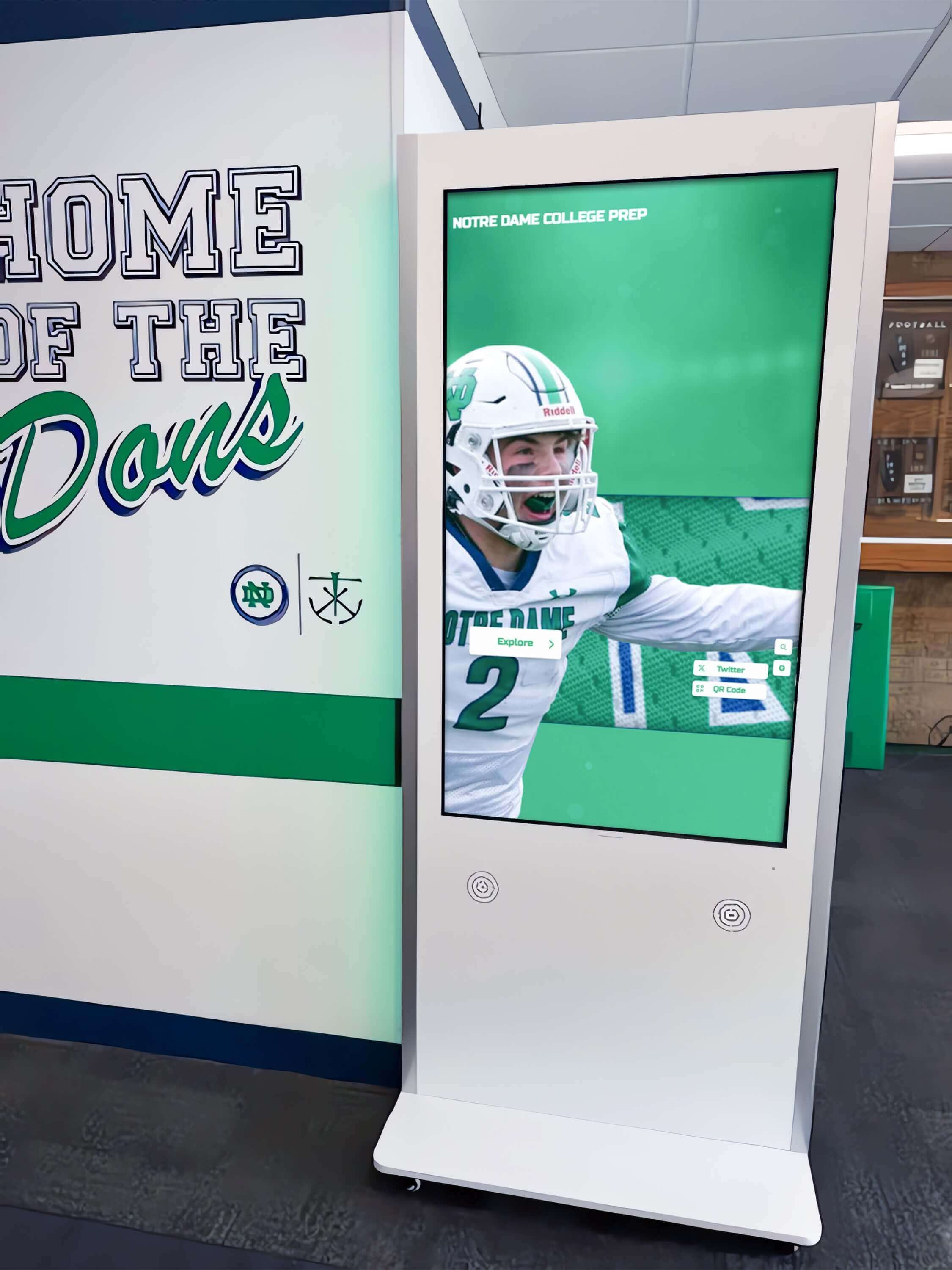
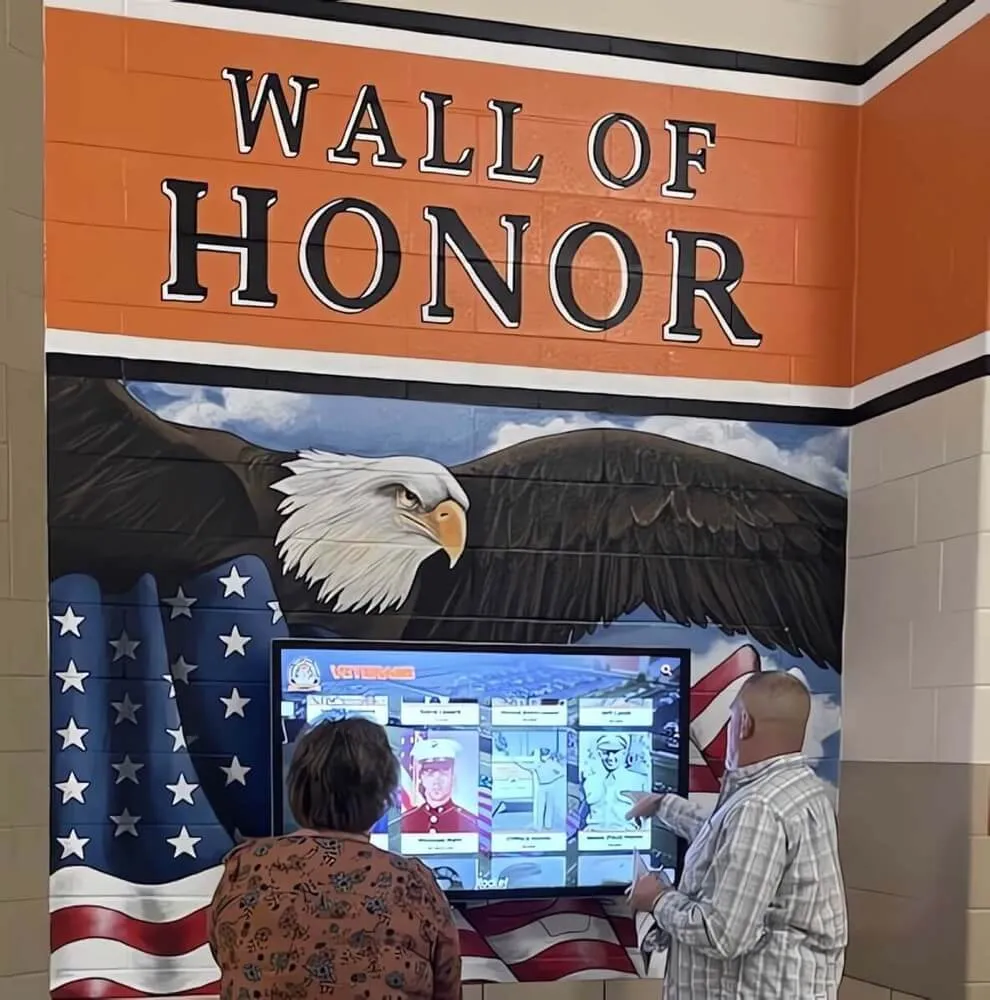
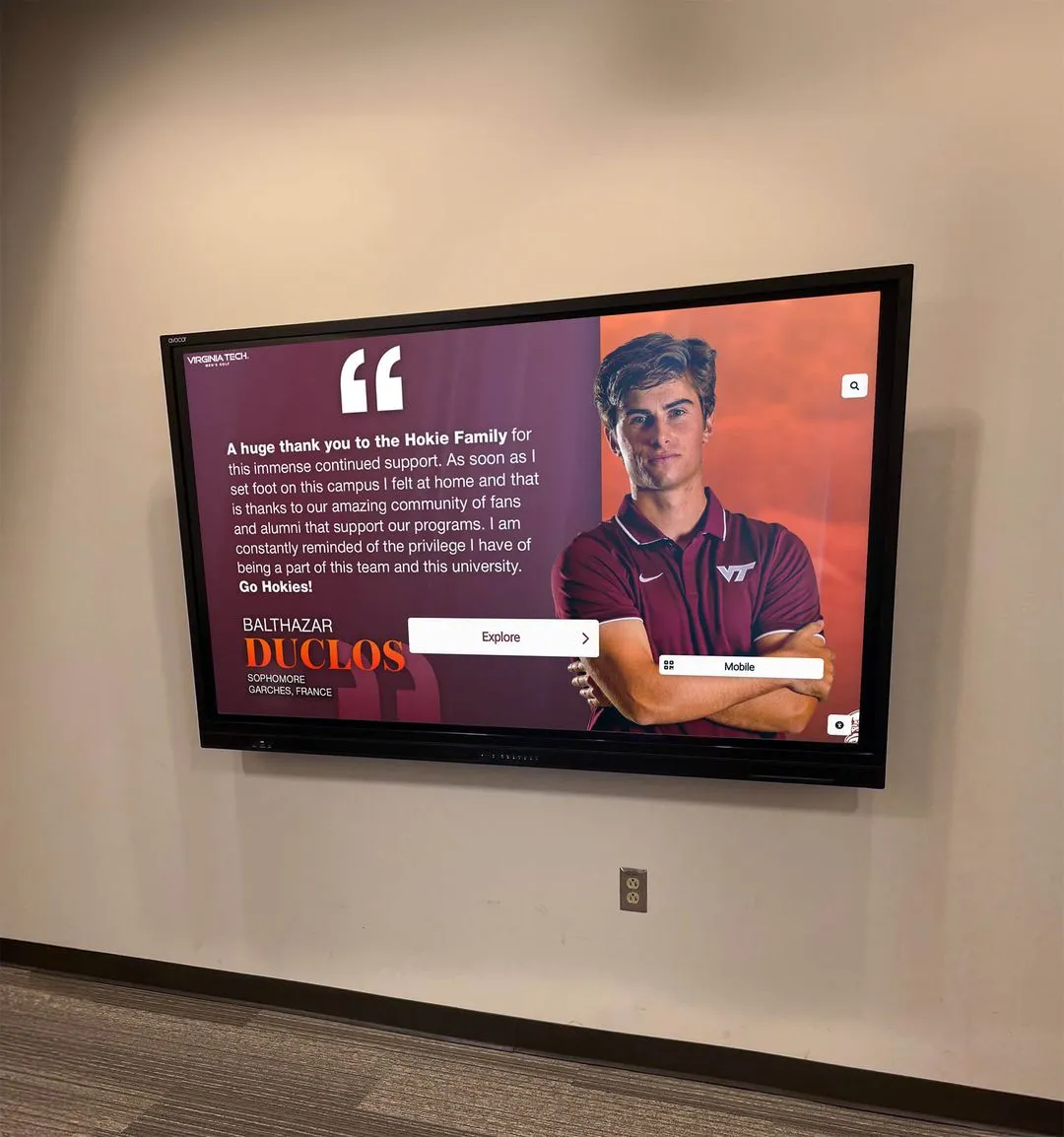
Flexible kiosk placement enables recognition visibility in multiple locations accommodating different seasonal sport facility usage patterns
Content Planning for Year-Round Recognition
Systematic approaches ensure consistent celebration across seasonal variations:
Seasonal Update Schedules
Establish regular content refresh timing aligned with competitive calendars:
- Late November/early December: Fall sport season wrap-up and achievement documentation
- March/early April: Winter sport championship recognition and award winners
- June/early July: Spring sport season conclusion and senior athlete final profiles
- August: Summer achievement documentation and fall season preview content
Scheduled updates prevent recognition from falling behind current accomplishments while spreading content development workload across the year rather than creating overwhelming single-period demands.
Multi-Sport Athlete Profiles
Many students participate across multiple seasons deserving comprehensive recognition:
- Create unified athlete profiles documenting complete high school athletic careers
- Connect seasonal accomplishments within individual narratives rather than isolated sport entries
- Acknowledge participation breadth alongside single-sport achievement depth
- Highlight multi-sport excellence demonstrating versatile athletic ability
- Document complete senior athlete stories before graduation
Integrated profiles eliminate redundant content entry while providing complete athlete celebration honoring comprehensive high school athletic experiences.
Team Season Documentation
Beyond individual recognition, preserve complete seasonal team stories:
- Season records and competition results for all team sports
- Championship achievements and playoff advancement milestones
- Roster documentation with team photos preserving complete team membership
- Coach recognition acknowledging leadership across all seasonal programs
- Historical context connecting current seasons to program tradition
Comprehensive team documentation prevents recognition bias toward high-visibility sports while ensuring complete institutional athletic history preservation.
Recognition Event Timing
Ceremonial recognition complements digital displays through formal acknowledgment:
Season-Specific Award Ceremonies
Some programs prefer separated seasonal celebrations:
- Fall athletic awards in late November or December
- Winter athletic awards in March or April
- Spring athletic awards in late May or June
- Focused ceremonies enabling detailed sport-specific recognition
Comprehensive Annual Awards
Alternative approaches combine all sports in unified celebration:
- Single end-of-year ceremony acknowledging all athletes across all seasons
- Comprehensive programming celebrating entire athletic program
- Logistical efficiency through single event planning and execution
- Potential length challenges requiring careful program design
Hybrid Recognition Approaches
Many programs combine approaches for optimal results:
- Seasonal award recognition during sport-specific team gatherings
- Comprehensive ceremony highlighting overall athletic excellence and major awards
- Digital displays providing detailed ongoing recognition complementing ceremonial events
- Senior night celebrations during final home competitions for individual sport farewell acknowledgment
Emerging Sports and Future Seasonal Additions
High school athletic programs continue evolving with new sports gaining recognition:
Recently Added Sports
Sports increasingly offered as formal high school programs:
Esports and Competitive Gaming
Digital competition gaining athletic program status:
- Year-round competition schedules not tied to traditional seasons
- League structures and championship tournaments determining champions
- Individual player and team recognition opportunities
- Debate surrounding athletic classification though participation growing rapidly
Resources on esports recognition approaches demonstrate how schools acknowledge emerging competitive activities within athletic recognition frameworks.
Unified Sports Programs
Inclusive athletics pairing students with and without disabilities:
- Various sports adapted for unified competition
- Seasonal timing typically mirroring traditional sport schedules
- Team participation and individual contribution deserving recognition
- Demonstrates comprehensive athletic program values extending beyond elite competition
Emerging Individual Sports
Sports gaining high school program adoption:
- Rock climbing and bouldering competitions
- Cycling and mountain biking teams
- Triathlon and multi-sport competitions
- Archery programs and competitive shooting sports
- Fencing programs in some regions
Planning for Athletic Program Evolution
Recognition systems should accommodate future expansion:
- Select platforms enabling unlimited sport addition without capacity constraints
- Design content structures flexible enough to accommodate new sport types
- Establish recognition philosophies celebrating diverse athletic participation
- Create equitable frameworks ensuring new sports receive equivalent acknowledgment
- Monitor state association sport addition discussions anticipating future program offerings
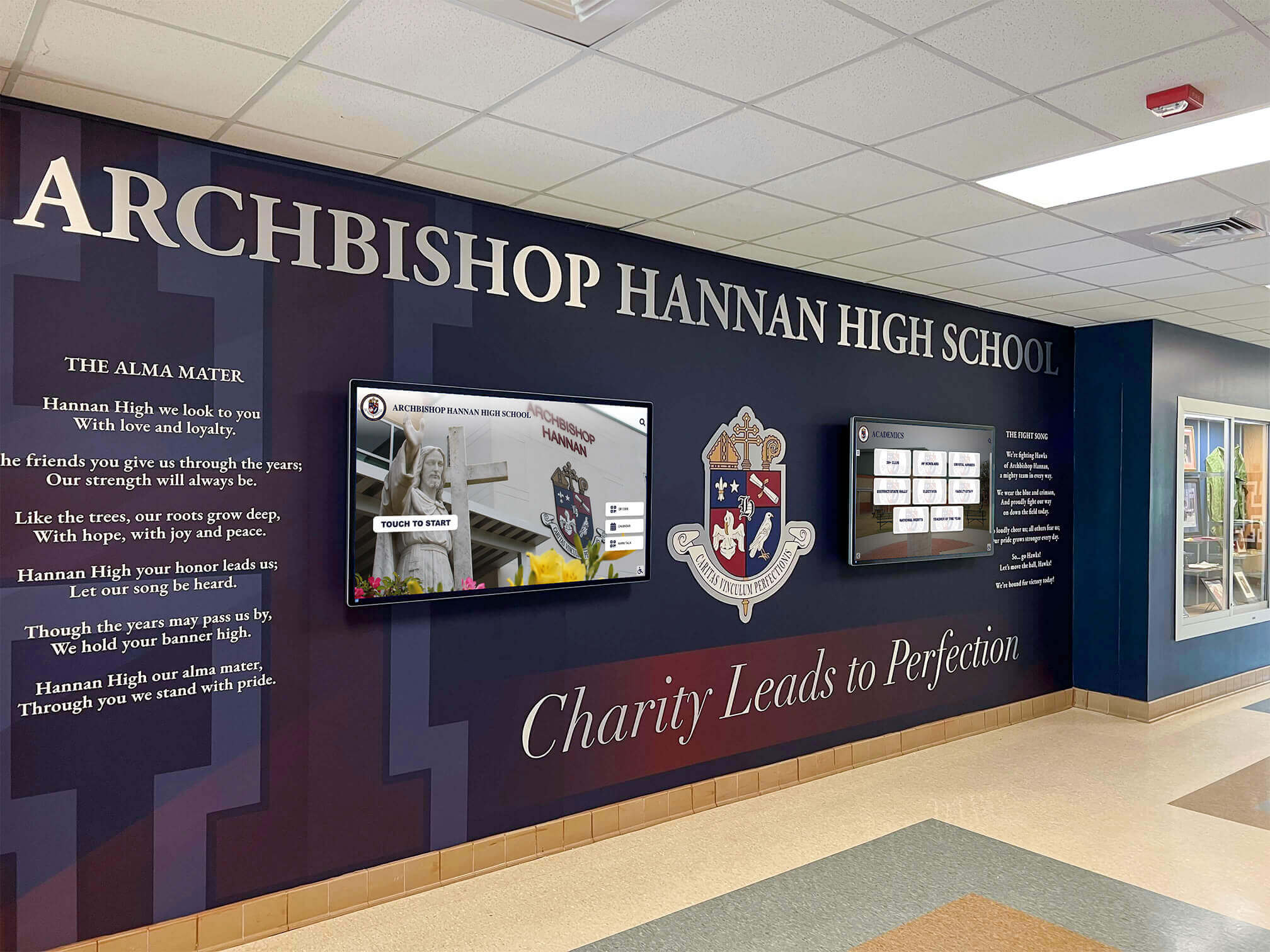
Scalable recognition systems accommodate athletic program growth and emerging sport additions without physical expansion requirements
Implementing Seasonal Recognition Display Strategies
Practical execution transforms recognition concepts into visible celebration:
Display Location Considerations
Strategic placement ensures visibility across seasonal variety:
Athletic Facility Positioning
Primary recognition in athletic spaces reaches core audiences:
- Gymnasium lobbies serving basketball, wrestling, volleyball, and multi-purpose events
- Locker room corridors where athletes spend time across all seasons
- Training facility areas where year-round athletic participation occurs
- Press box or field house locations serving outdoor sports
- Swimming facility lobbies for aquatic programs
School-Wide Placement
Recognition extends beyond athletic facilities reaching broader communities:
- Main entrance lobbies ensuring whole-school and visitor visibility
- Cafeteria spaces where extended viewing occurs during meals
- Library and media center locations supporting detailed exploration
- Academic building corridors integrating athletic recognition into comprehensive school culture
Multiple display locations prevent single-sport bias by ensuring recognition appears where diverse audiences naturally congregate across seasonal variations and participation patterns. Understanding school lobby design approaches demonstrates effective recognition integration into comprehensive school environment design.
Content Organization Structures
Interface design impacts accessibility and exploration:
Seasonal Navigation
Enable intuitive browsing by competitive period:
- Fall sports section providing quick access to autumn athletics
- Winter sports grouping for cold-weather programs
- Spring sports category for season-appropriate recognition
- Summer athletics section acknowledging off-season participation
- Historical archives organizing by past seasons and decades
Sport-Specific Access
Support direct navigation to individual programs:
- Alphabetical sport listing for quick access
- Sport category grouping (team sports, individual sports, emerging programs)
- Participation level filtering (varsity, JV, freshman, club)
- Quick search functionality finding specific athletes, teams, or achievements
Achievement-Based Discovery
Enable recognition exploration by accomplishment type:
- State champions across all sports and seasons
- All-state athletes regardless of sport or seasonal timing
- Record holders in various athletic categories
- Hall of fame inductees from comprehensive athletic history
- Multi-sport athletes demonstrating breadth of participation
Accessibility and Inclusive Design
Ensure recognition serves all audiences equitably:
- Touch interface accommodating users with varied mobility
- Text sizing options for visitors with visual differences
- Color contrast meeting accessibility standards
- Audio descriptions supporting screen reader compatibility
- Height positioning enabling wheelchair access
- Language options in multilingual school communities
Accessible design demonstrates institutional commitment to inclusive recognition serving comprehensive school populations rather than limited constituencies.
Measuring Recognition Program Effectiveness
Data-driven assessment validates recognition investment while identifying improvement opportunities:
Engagement Analytics
Digital platforms provide objective utilization measurement:
- Total interaction sessions showing usage frequency
- Average session duration indicating content engagement depth
- Most-viewed sports revealing audience interests and potential bias
- Seasonal usage patterns correlating with competitive timing
- Search terms showing what visitors seek within recognition content
Low engagement in particular sports suggests content quality issues, poor sport positioning within navigation, or insufficient athlete profile depth warranting enhanced development resources.
Community Feedback
Qualitative assessment complements quantitative metrics:
- Student athlete satisfaction with recognition received
- Family perspectives on recognition completeness and timeliness
- Alumni engagement with historical content and program legacy
- Coach feedback about recognition influence on program culture and recruiting
- Administrative assessment of recognition alignment with institutional values
Program Impact Indicators
Broader outcomes demonstrate recognition value:
- Athletic participation trends across all sports and seasons
- Alumni engagement in athletic program support and fundraising
- Prospective family facility tour feedback and recruitment appeal
- Media coverage mentioning recognition systems and athlete achievements
- Community awareness of comprehensive athletic program excellence
Impact measurement justifies recognition investment while demonstrating value extending beyond simple athlete acknowledgment to substantive program and community benefits supporting institutional mission and priorities.

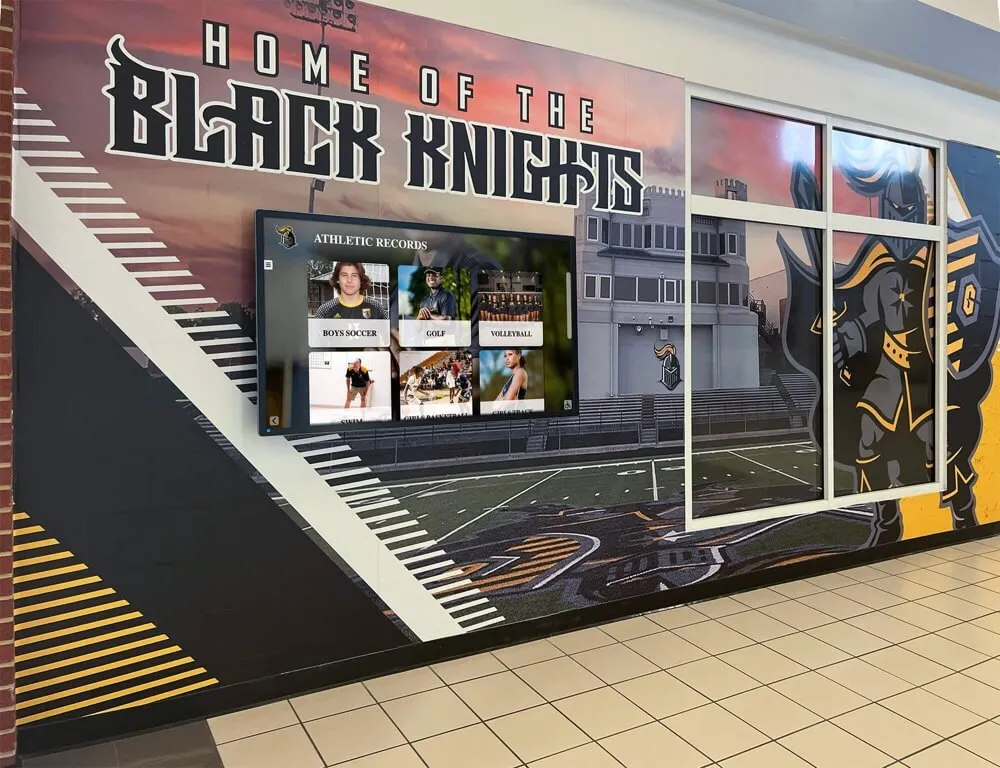
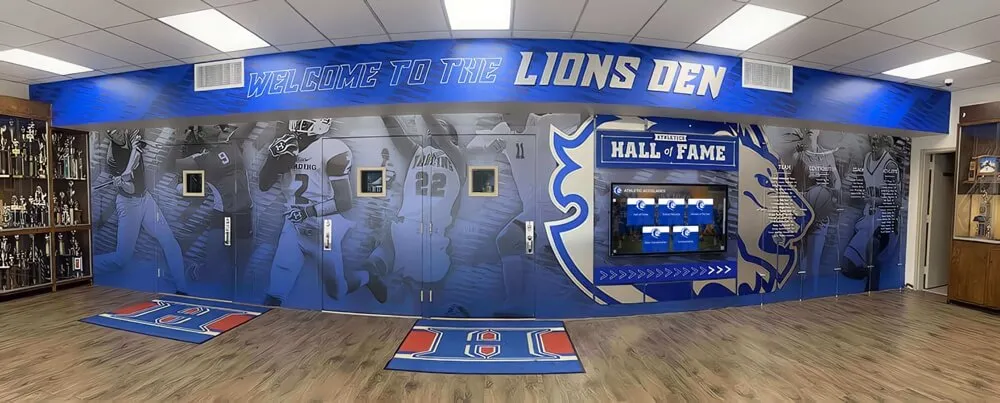
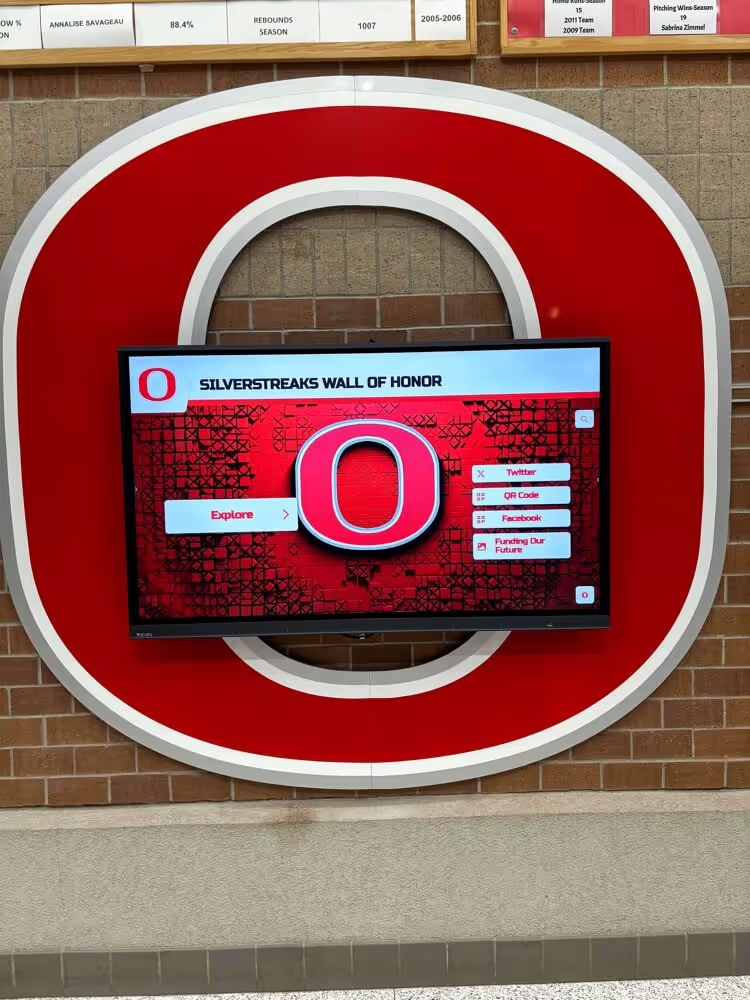
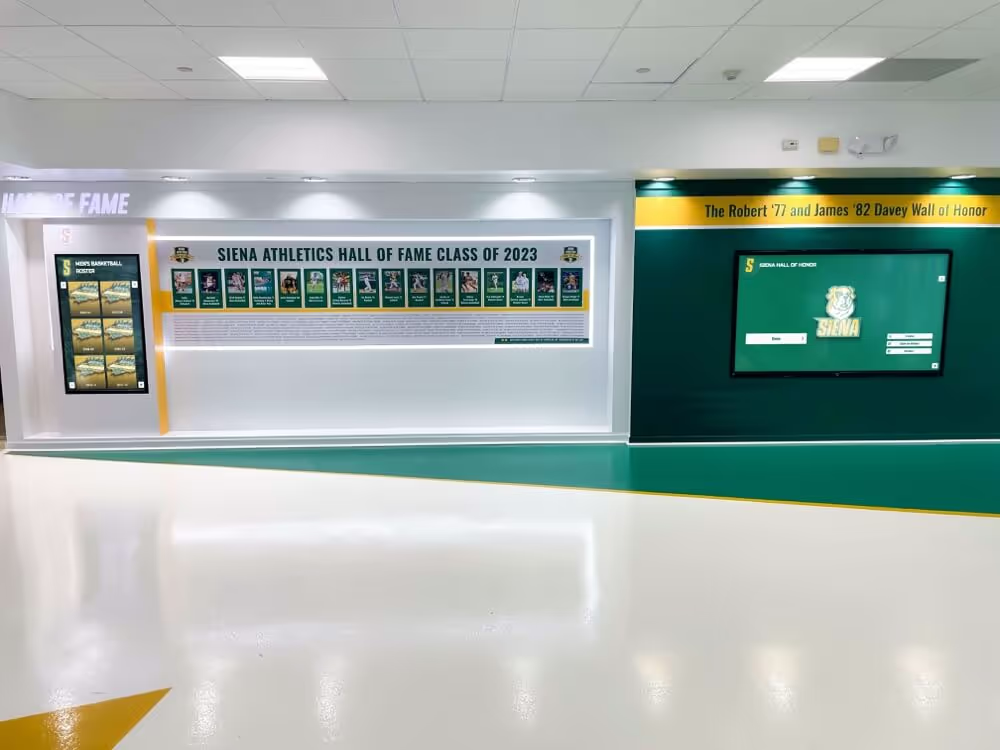
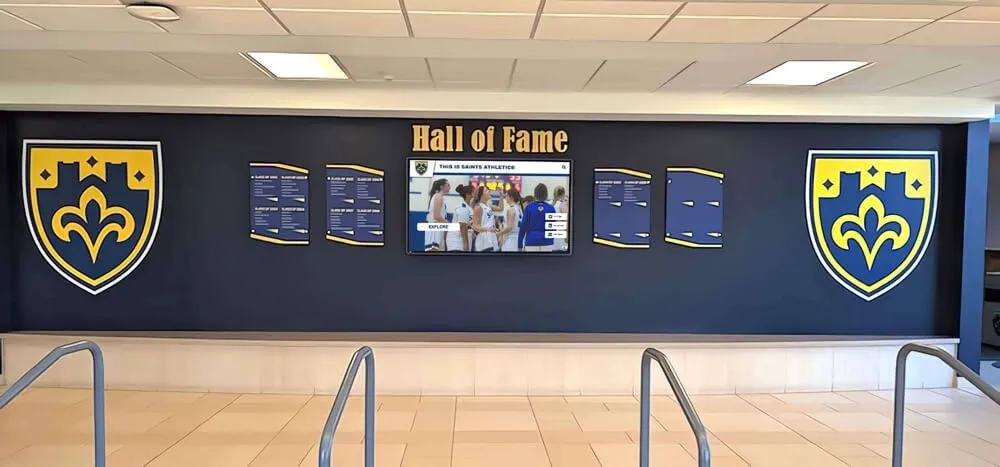
Professional recognition installations create destination environments celebrating athletic excellence across comprehensive seasonal programs
Conclusion: Celebrating Year-Round Athletic Excellence
High school athletics spans four distinct seasons featuring diverse sports, varied participation pathways, and unique achievement opportunities deserving systematic recognition. Understanding which sports compete during fall, winter, spring, and summer periods enables strategic planning ensuring timely acknowledgment, equitable celebration, and comprehensive documentation of athletic excellence across complete competitive calendars.
Traditional recognition approaches constrained by physical space limitations, static content, and manual update requirements create inherent challenges celebrating seasonal sport variety. Limited plaque space forces difficult prioritization decisions implicitly valuing high-visibility sports over equally meritorious programs competing during less prominent seasons. Static displays remain frozen at installation without accommodating ongoing seasonal achievements deserving timely celebration. Manual update requirements create administrative burdens delaying recognition until convenient rather than opportune moments.
Modern digital recognition solutions eliminate these constraints through unlimited capacity accommodating all sports regardless of seasonal timing or participation levels, immediate content updates enabling real-time recognition following seasonal achievements, rich multimedia formats bringing athletic accomplishments to life through engaging storytelling, cloud-based management requiring minimal technical expertise enabling sustainable long-term operation, and accessible web extensions reaching audiences beyond physical facility visitors.
Transform Your Year-Round Athletic Recognition
Discover how modern recognition platforms enable comprehensive celebration of athletic excellence across all seasons, sports, and achievement levels without space constraints or update delays limiting traditional approaches.
Explore Recognition SolutionsWhether launching new athletic recognition programs, enhancing existing display systems outgrown by program growth, or modernizing outdated approaches failing to celebrate comprehensive seasonal athletics appropriately, digital recognition platforms provide capabilities transforming how schools honor student athletes, coaches, and programs across complete competitive calendars. Solutions like Rocket Alumni Solutions offer purpose-built systems specifically designed for educational athletic recognition, combining intuitive content management accessible to non-technical staff, commercial-grade hardware ensuring reliable multi-year operation, professional implementation support, and ongoing technical assistance ensuring recognition programs succeed from launch through sustained long-term operation.
By implementing comprehensive seasonal recognition strategies, schools demonstrate genuine commitment to celebrating athletic excellence equitably across diverse programs. Recognition systems validate student dedication regardless of sport popularity or seasonal timing, inspire current athletes through visible celebration of program traditions and achievement standards, engage families whose support enables student athletic participation, build community awareness generating program support and institutional reputation enhancement, facilitate alumni connections strengthening lifelong networks, and preserve athletic legacies honoring those who built excellence across generations.
Your athletic programs—whether fall football traditions, winter basketball excellence, spring baseball heritage, or emerging summer development opportunities—deserve recognition matching their contributions to student development and school culture. Through strategic planning, comprehensive content development, modern technology implementation, and sustained operational commitment, you can create recognition infrastructure celebrating athletic achievement across complete seasonal calendars, ensuring every sport, every season, and every athlete receives acknowledgment their dedication deserves.
Ready to elevate your athletic recognition program? Explore athletic hall of fame planning approaches applicable across seasonal sports, discover pep rally ideas celebrating achievements across competitive seasons, learn about National Student Athlete Day recognition honoring comprehensive athletic participation, understand coach appreciation strategies acknowledging leadership across seasonal programs, and discover how purpose-built recognition technology enables year-round celebration of athletic excellence across comprehensive high school sports programs competing throughout all competitive seasons.