



Intent: Demonstrate how high schools can design and implement compelling wall of fame displays that honor achievement, inspire current students, and strengthen community connections through strategic recognition combining traditional elements with modern interactive technology.
A high school wall of fame serves as the physical manifestation of institutional values—celebrating excellence, honoring achievement, and creating tangible connection between current students and the generations who came before them. Yet many schools struggle with wall of fame implementation, facing challenges from limited space and growing recognition needs to outdated displays that fail to engage modern audiences expecting interactive, dynamic experiences matching the digital sophistication they encounter everywhere else.
The difference between perfunctory recognition displays and truly inspiring walls of fame lies in strategic design choices addressing both functional requirements and emotional impact. Effective walls of fame don’t simply list names—they tell stories, create connections, showcase achievement comprehensively, and inspire current students by demonstrating that excellence receives lasting recognition worth pursuing.
This comprehensive guide explores high school wall of fame design, implementation, and optimization—covering everything from recognition categories and selection criteria through layout strategies, technology integration, content development, and ongoing maintenance ensuring recognition remains current and engaging year after year. Whether planning your first wall of fame or enhancing existing recognition programs, you’ll discover actionable frameworks for creating displays that genuinely strengthen school culture while honoring achievement appropriately.
High schools implementing well-designed walls of fame report measurable improvements in school pride, alumni engagement, and student motivation—with recognition displays becoming natural gathering points during campus tours, athletic events, and community celebrations where visitors explore achievement heritage while building emotional connections with institutional tradition.

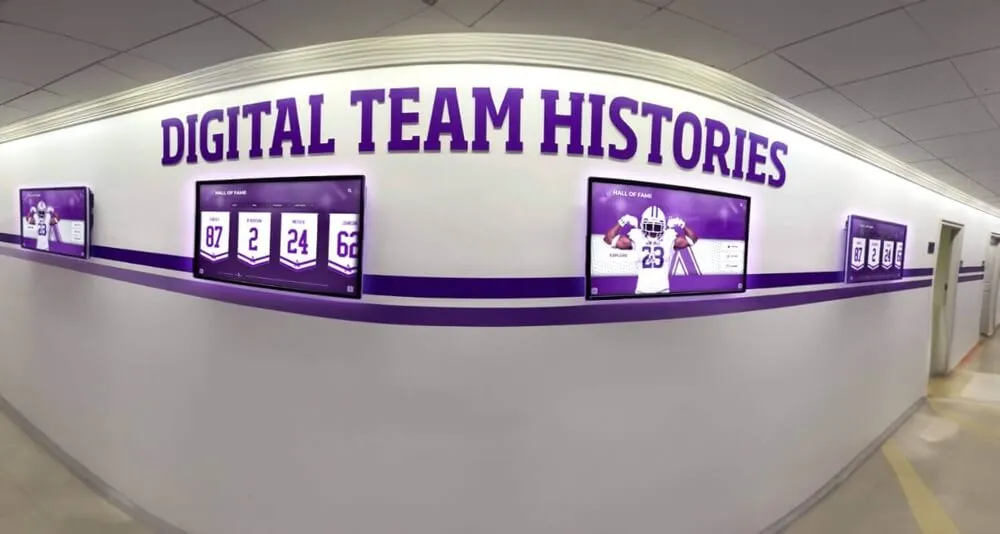
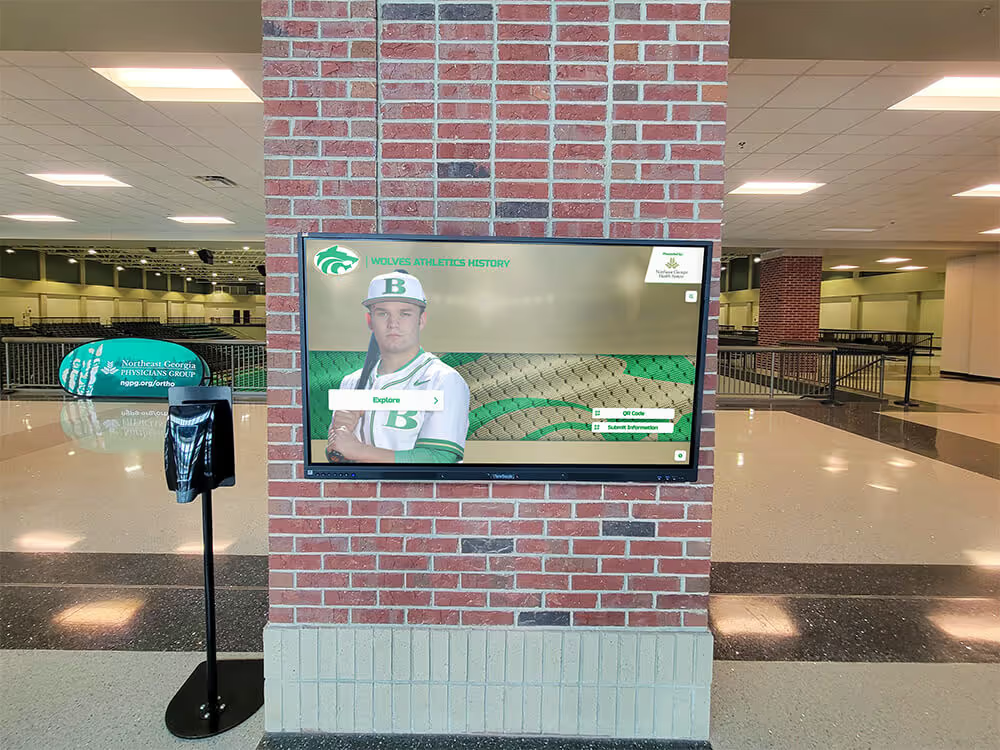
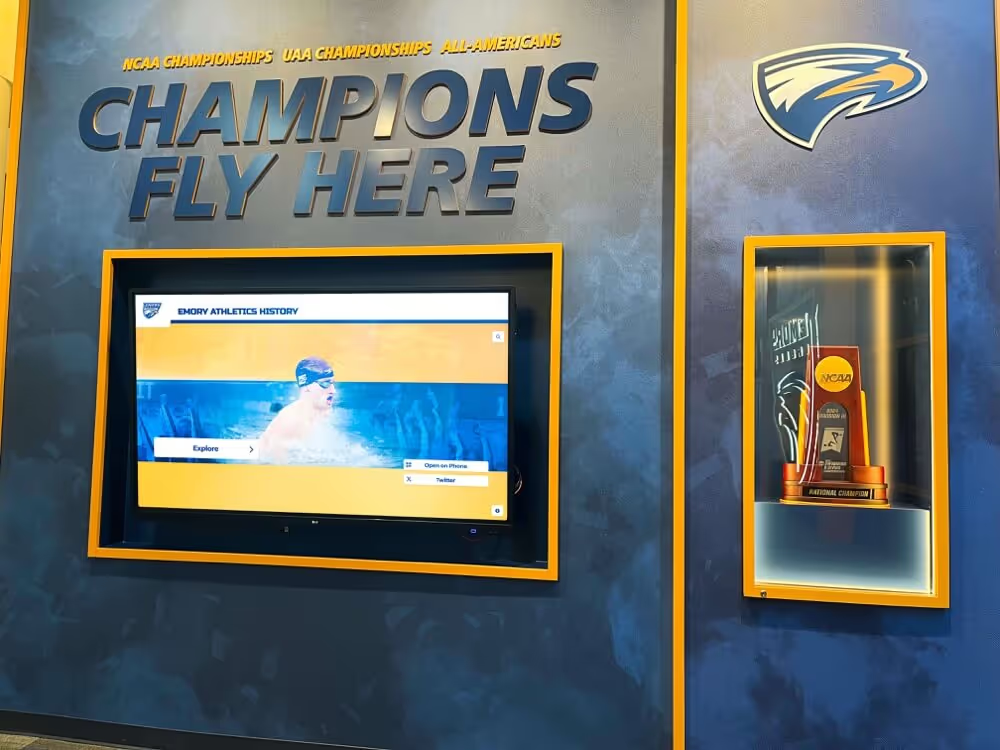
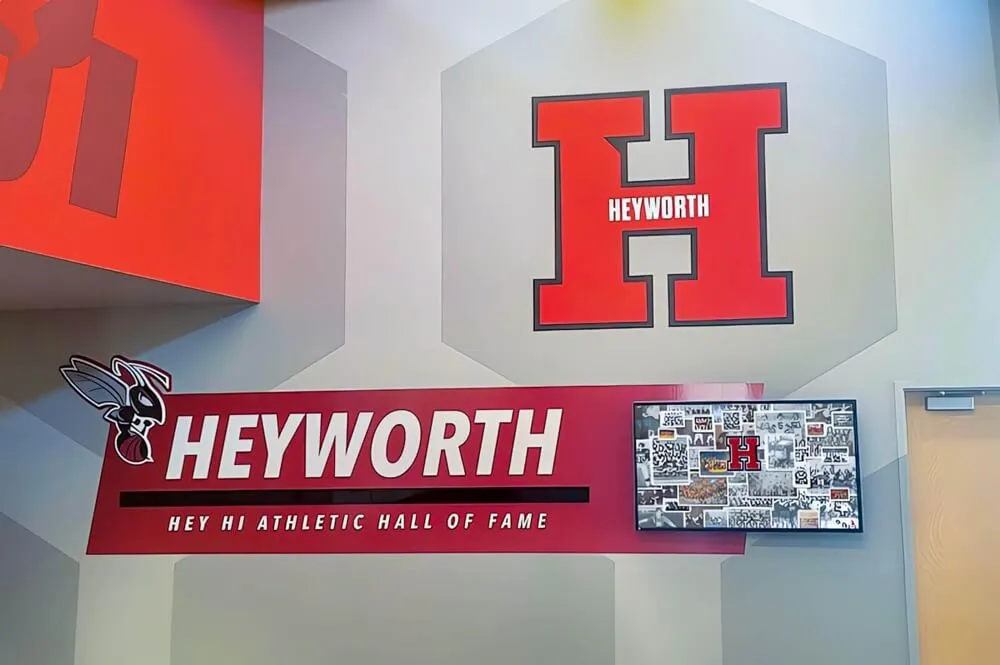
Modern high school walls of fame blend traditional design elements with contemporary technology creating recognition displays that honor heritage while embracing innovation
Understanding High School Wall of Fame Purpose and Impact
Before designing specific recognition displays, understanding what high school walls of fame accomplish and why they matter provides essential context for making strategic implementation decisions.
Core Functions of Effective Recognition Displays
High school walls of fame serve multiple interconnected purposes strengthening institutions across cultural, motivational, and community dimensions.
Honoring Achievement and Preserving Legacy
The most immediate purpose involves providing permanent recognition for individuals whose achievements merit lasting acknowledgment. Athletic excellence, academic distinction, artistic accomplishment, community service leadership, and alumni achievement all represent categories worthy of formal recognition demonstrating that schools value diverse excellence rather than limiting celebration to single domains.
This permanent recognition matters significantly to honorees, families, and communities. Many students work toward specific goals throughout high school careers—state championships, perfect test scores, scholarship opportunities—and formal recognition validates effort while creating lasting documentation of accomplishment. For families, seeing children’s achievements formally honored creates pride and strengthens school relationships extending decades beyond graduation.
Inspiring Current Students Through Role Models
Recognition displays create powerful motivation when current students see recent graduates and historical figures who walked the same hallways, sat in the same classrooms, and competed on the same fields achieving remarkable success. These tangible examples demonstrate that excellence remains achievable rather than theoretical—previous students accomplished great things, suggesting current students can follow similar paths.
Schools implementing comprehensive academic recognition programs report that visible celebration of intellectual achievement motivates students toward academic excellence similarly to how athletic recognition inspires sports participation and competitive success.
Building Community Pride and School Identity
Walls of fame strengthen collective identity by showcasing institutional heritage and tradition. When schools systematically recognize excellence across decades, displays communicate clear values about what matters and who deserves celebration. This consistent recognition creates shared pride among students, staff, families, and community members who identify with institutional success.
For many schools, walls of fame become defining features referenced during recruitment conversations, highlighted during campus tours, and featured in marketing communications. These recognition displays physically manifest school pride in ways that abstract statements about excellence cannot match.
Recognition Categories Worth Celebrating
Comprehensive high school walls of fame extend beyond single recognition areas to celebrate diverse achievement reflecting complete institutional missions.
Athletic Excellence and Championship Recognition
Athletic walls of fame represent the most common high school recognition category, celebrating state championships, conference titles, individual athletic honors, hall of fame inductees, and record-setting performances. Many schools maintain sport-specific recognition for major programs alongside all-sport championship walls documenting complete athletic success.
Digital platforms enable comprehensive athletic recognition impossible with traditional trophy cases by accommodating unlimited achievements through searchable databases, incorporating multimedia content showing championship moments, and updating instantly as new records fall and teams win titles. Resources on implementing digital hall of fame displays provide frameworks for athletic recognition serving both celebration and motivation functions.

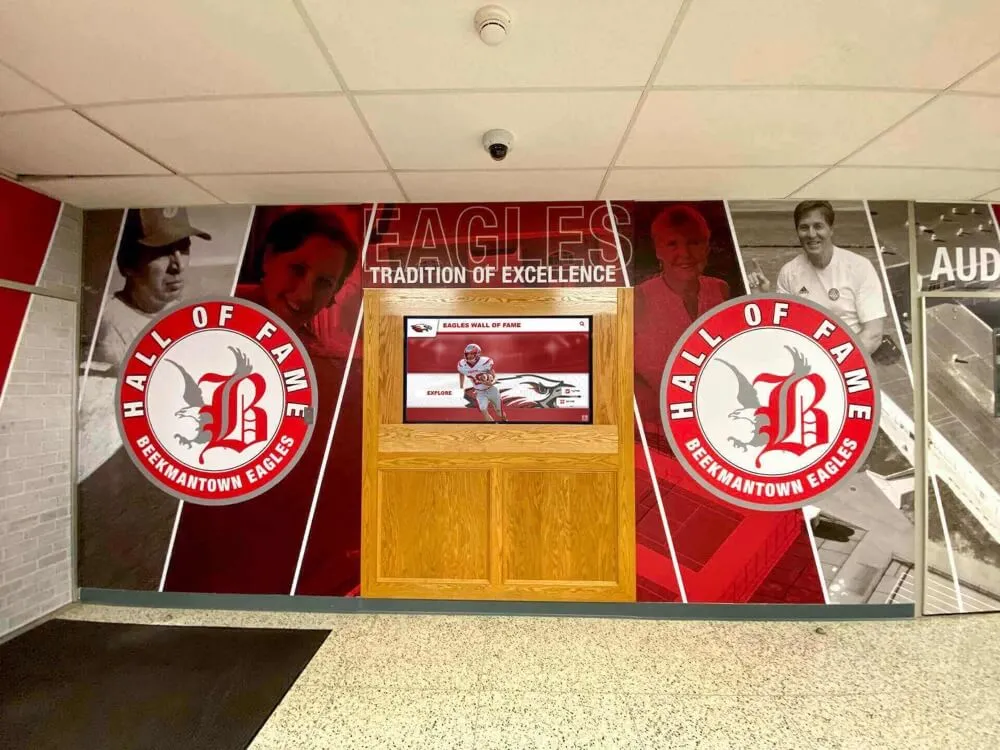
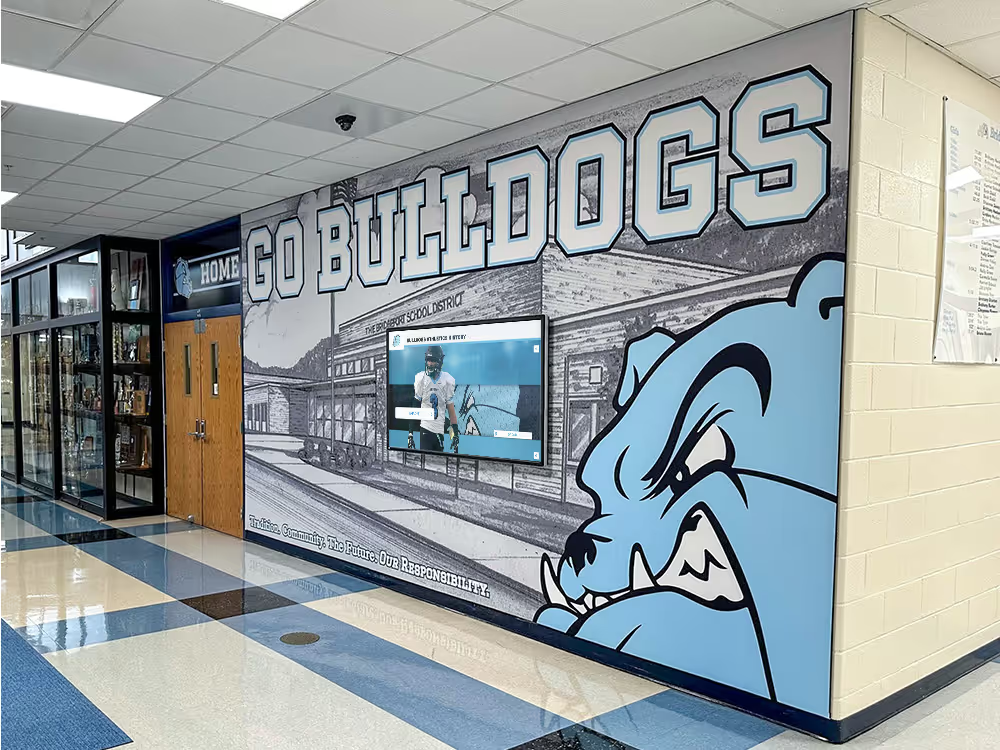
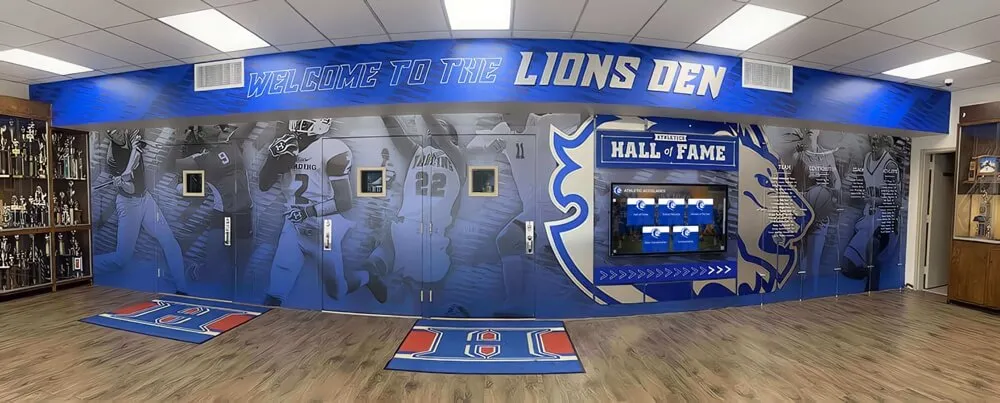
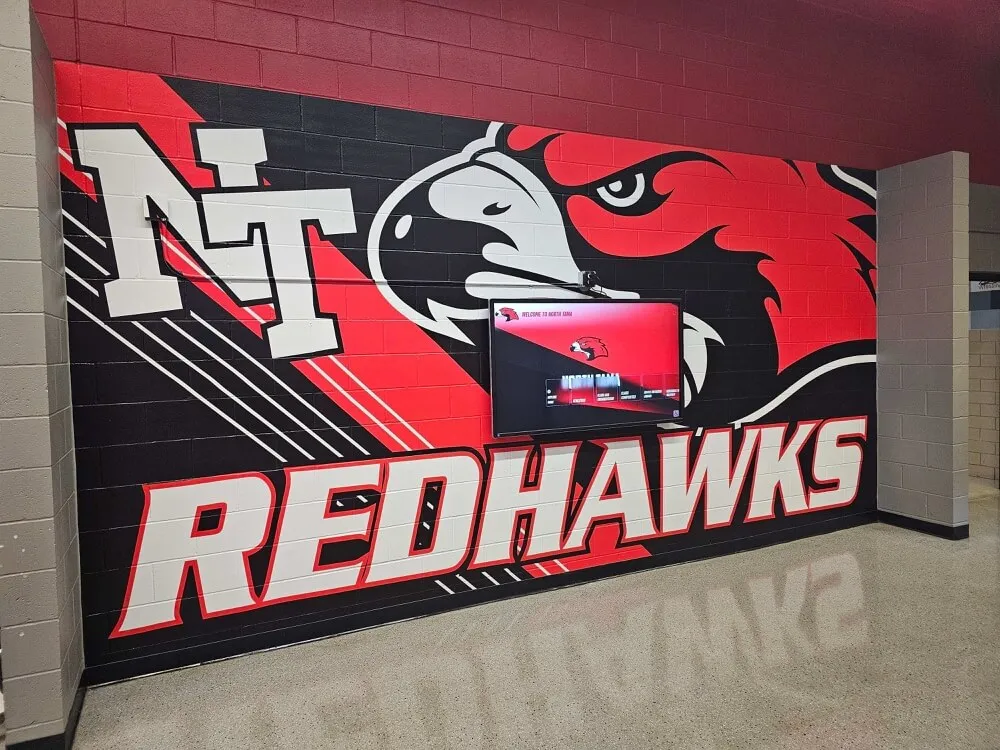
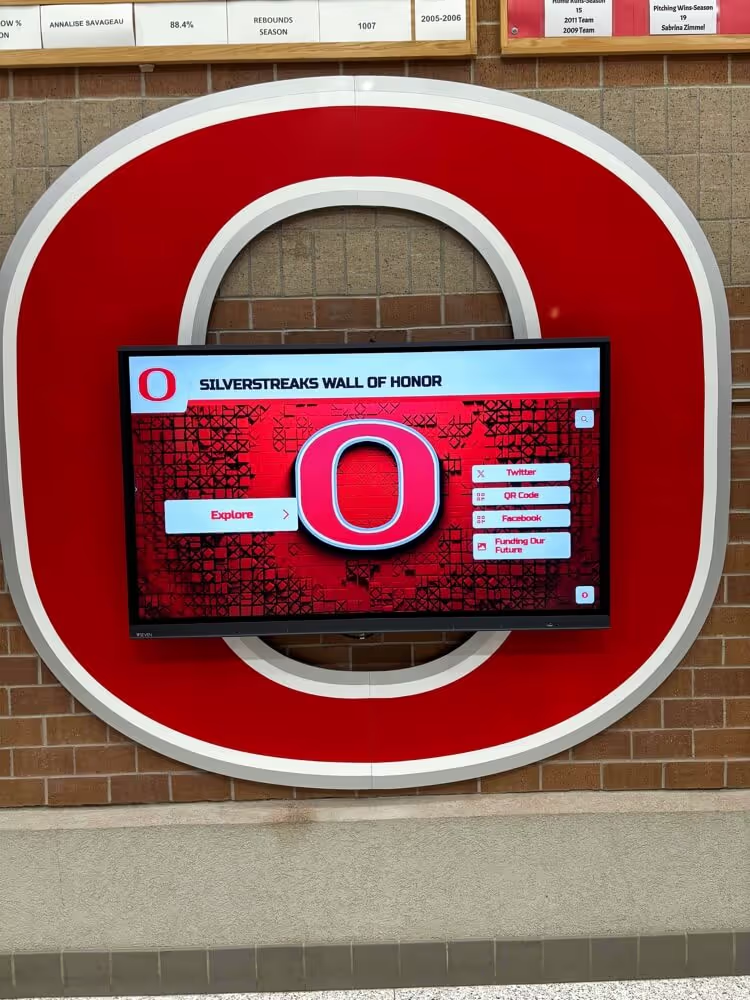
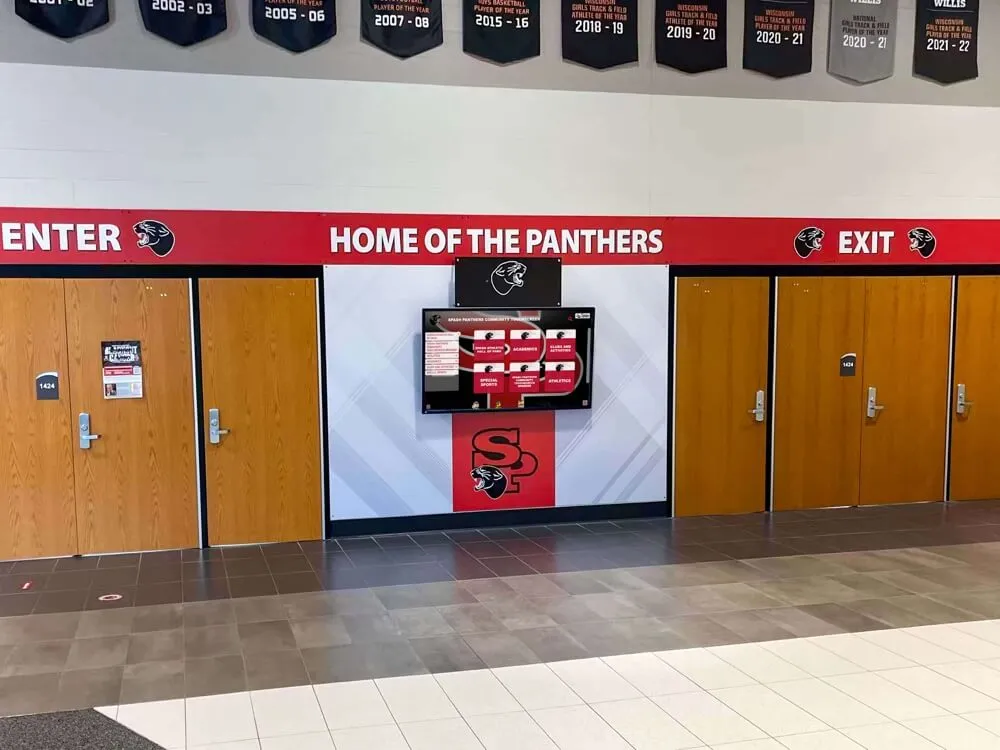
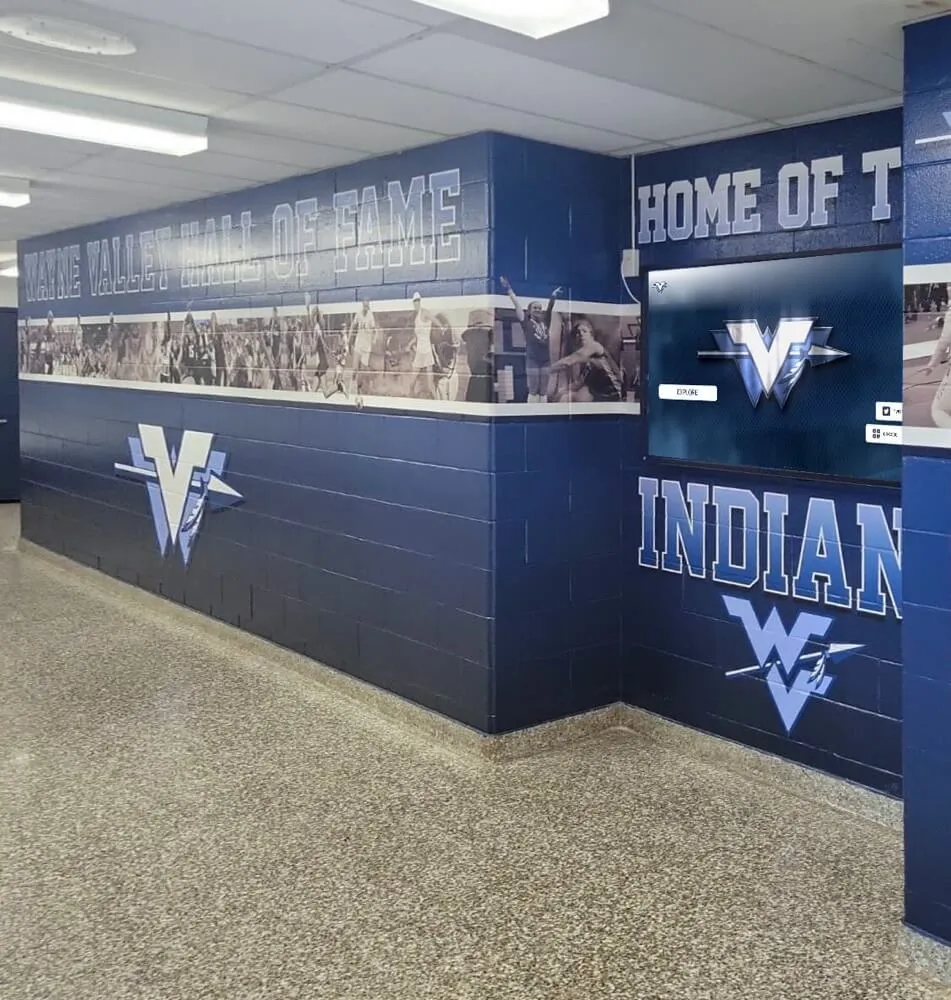
Athletic halls of fame combine traditional mural artwork celebrating school identity with modern digital displays documenting championship history and record achievements
Academic Achievement and Scholar Recognition
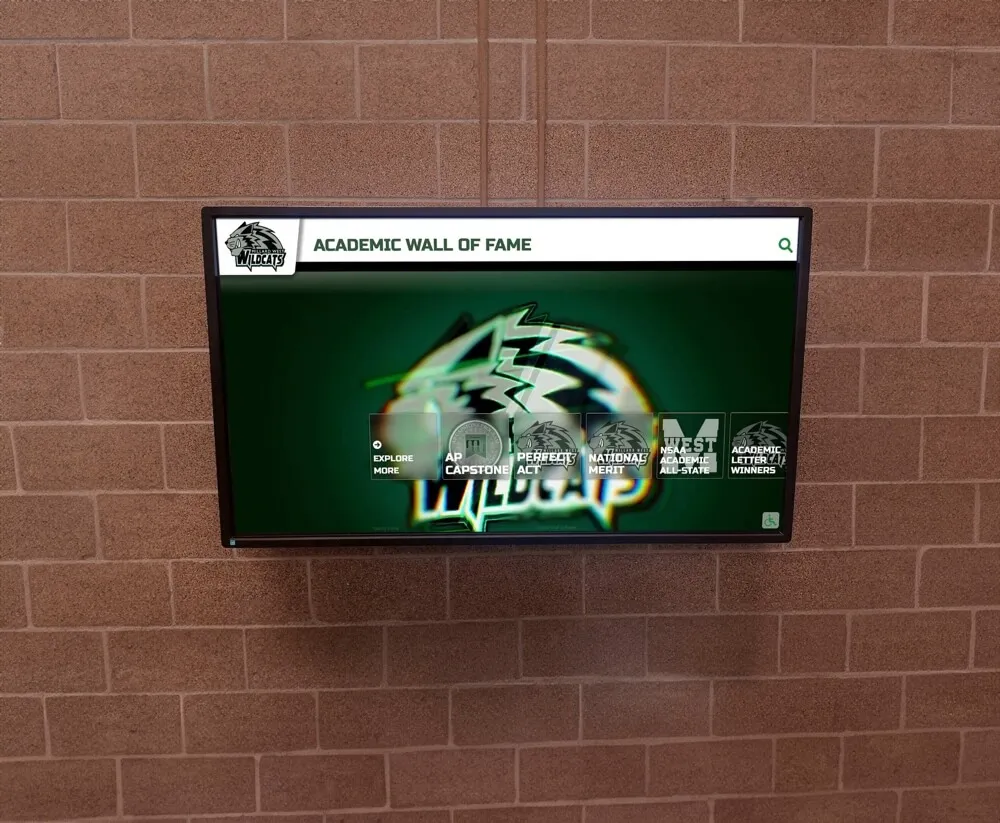
Academic walls of fame celebrate intellectual excellence often receiving less visibility than athletic success despite equal importance. Valedictorians and salutatorians across graduating classes, National Merit Scholars and academic competition winners, perfect standardized test scores, scholarship recipients, and academic honor society members all merit recognition demonstrating that schools value scholarship alongside athletics.
Many schools implement separate academic recognition areas in libraries, academic buildings, or main entrances ensuring intellectual achievement receives appropriate visibility. Others integrate academic and athletic recognition in unified walls of fame celebrating all achievement dimensions equally. The key involves ensuring academic excellence receives systematic recognition rather than relegation to secondary status.
Detailed strategies for showcasing high academic achievement demonstrate how schools effectively celebrate intellectual accomplishment creating motivation similar to athletic recognition while attracting college-focused students and families who prioritize academic culture.
Arts, Activities, and Extracurricular Excellence
Beyond athletics and academics, high schools should recognize excellence in performing arts, visual arts, music competitions, speech and debate, student leadership, community service, and other extracurricular domains demonstrating institutional commitment to comprehensive student development.
These recognition categories communicate that schools value diverse talents and contributions rather than limiting celebration to narrow definitions of achievement. Students excelling in theater, art, music, or service organizations deserve recognition equal to athletes and scholars—walls of fame should reflect this inclusive philosophy through systematic acknowledgment across all program areas.
Distinguished Alumni and Graduate Achievement
Alumni walls of fame honor graduates who achieved significant success after leaving high school—professional accomplishment, community leadership, creative achievement, entrepreneurial success, or continued academic distinction. This recognition creates powerful connections between current students and potential futures while demonstrating that school experiences contribute to lifetime success rather than ending at graduation.
Comprehensive approaches to highlighting famous alumni provide frameworks for identifying, celebrating, and engaging distinguished graduates while strengthening alumni relationships through formal recognition programs extending beyond high school years.
Strategic Design Approaches for Wall of Fame Displays
Effective wall of fame design requires systematic approaches balancing aesthetic appeal, functional usability, space efficiency, and scalability accommodating future growth without major renovations.
Layout Blueprint and Space Planning
Wall of fame effectiveness depends significantly on strategic layout decisions maximizing visibility, accessibility, and impact within available space constraints.
High-Traffic Location Selection
Recognition displays should occupy prominent positions where students, staff, visitors, and families naturally encounter them throughout daily activities rather than hiding in remote hallways requiring special trips. Main entrance lobbies provide immediate visibility welcoming everyone entering buildings. Athletic facility entrances surround athletes with tradition and expectation. Cafeterias and commons areas reach students daily during informal gathering. And administrative hallways serve visitors during tours, meetings, and special events.
Location selection should prioritize natural traffic flow over available wall space—prominent eight-foot display in main entrance delivers greater impact than extensive thirty-foot recognition hidden in distant hallway few people pass regularly.
Zone Architecture and Content Organization
Well-designed walls of fame organize content into clear zones serving specific purposes rather than presenting undifferentiated information walls requiring careful study. Common zone structures include hero areas showcasing featured inductees or recent champions, categorical sections grouping recognition by type (athletics, academics, arts, service), chronological organization displaying achievement progression over time, search and exploration areas for digital displays enabling visitor-directed content discovery, and interactive elements inviting engagement beyond passive viewing.
This zoned approach creates clear visual hierarchy guiding visitors naturally through recognition content while enabling different usage patterns—casual observers can appreciate featured content at glance while interested visitors explore comprehensive details through deeper engagement.
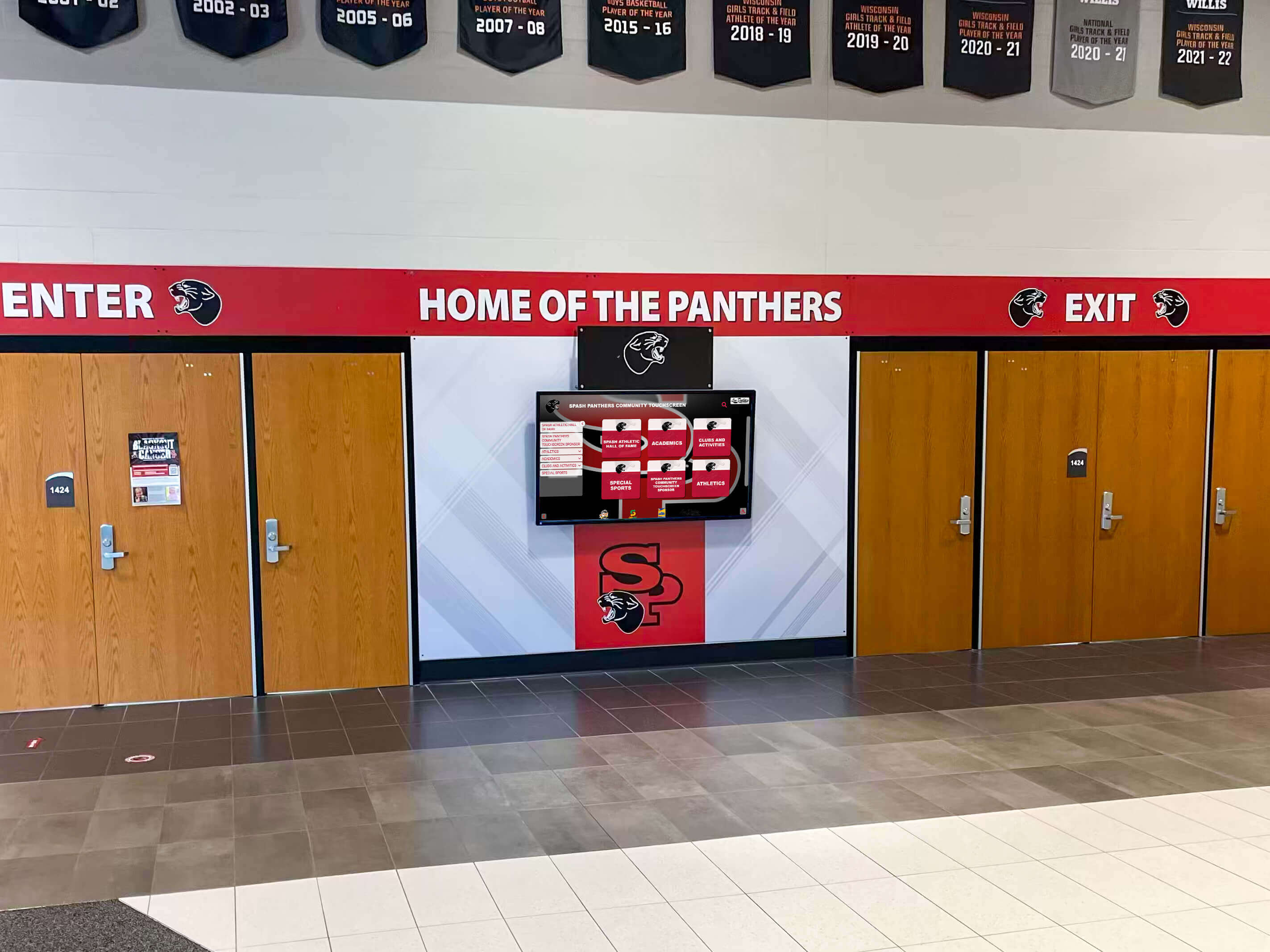
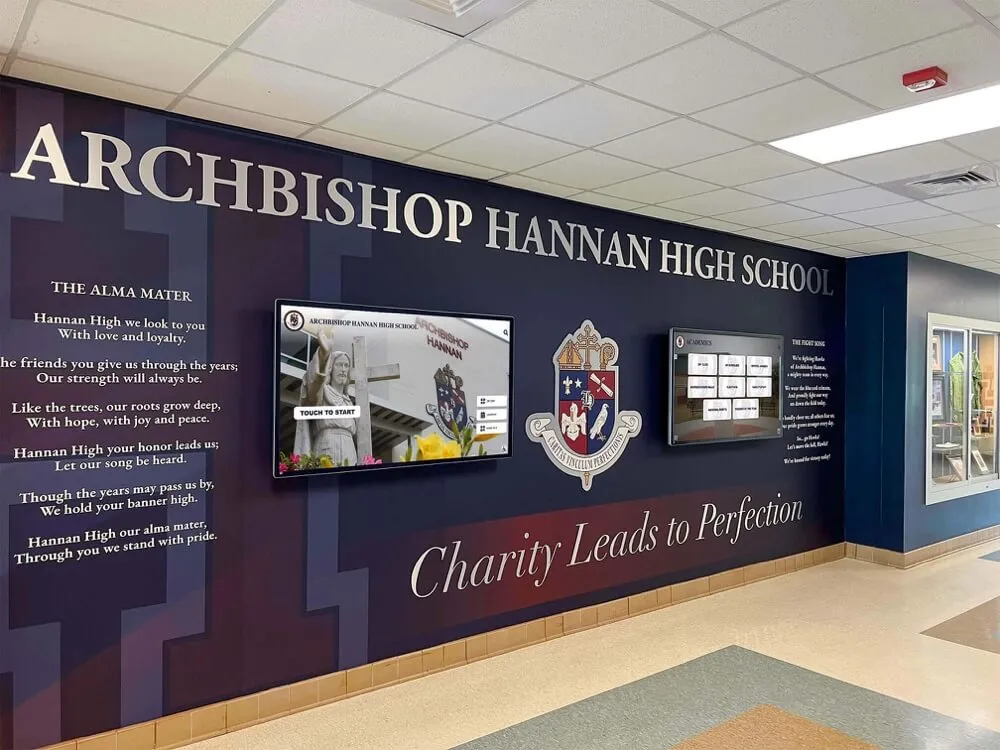
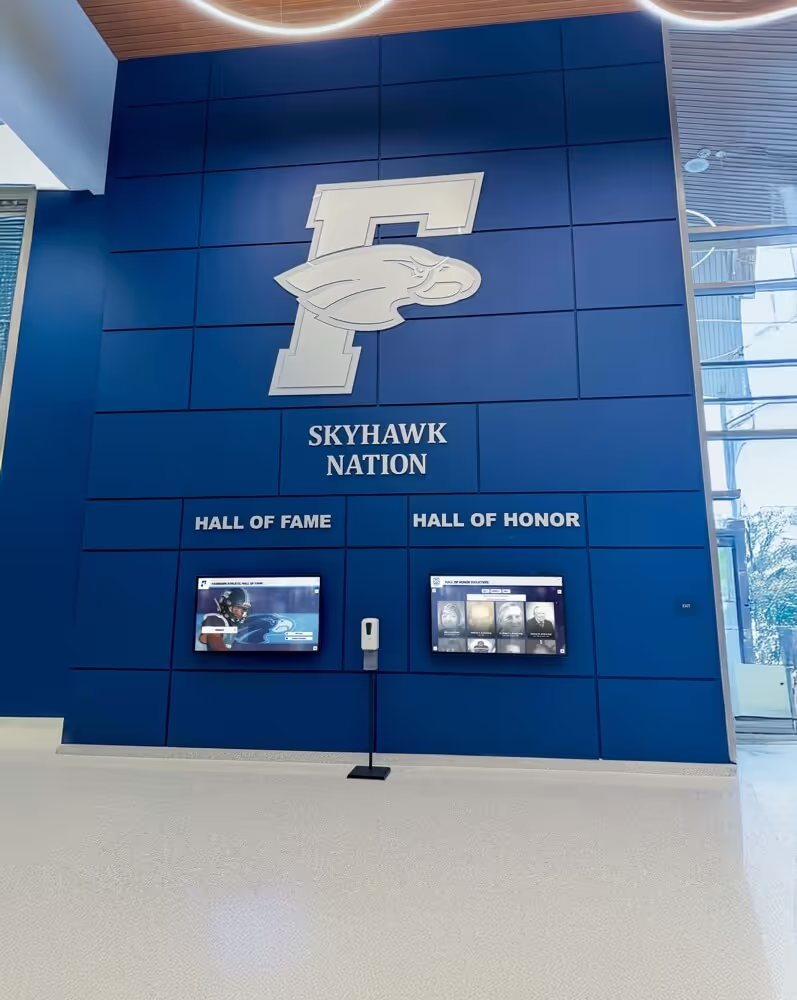
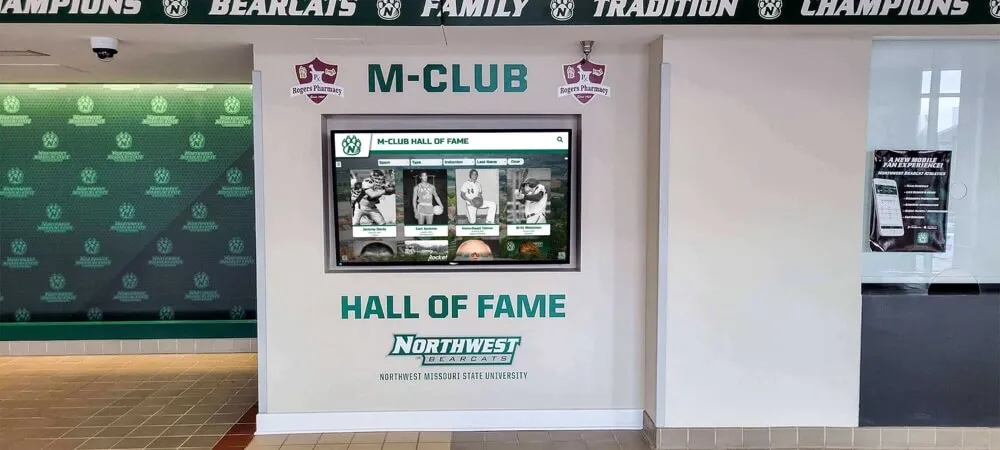
Strategic entrance positioning ensures walls of fame receive maximum visibility as focal points welcoming visitors while reinforcing school identity through branded design
Vertical Space Utilization
Many schools underutilize vertical space when designing recognition displays, limiting installation to standard eye-level areas while leaving upper wall space empty. Effective designs extend recognition vertically through tiered plaque arrangements, banner displays hanging from ceiling areas, digital screens mounted at various heights, and architectural elements like columns or pillars creating dimensional interest.
This vertical expansion dramatically increases recognition capacity within limited floor space while creating visual impact impossible with horizontal-only approaches. However, designs must maintain readability—text-heavy content positioned above 7-8 feet becomes difficult to read, though names, photos, and graphic elements remain effective at greater heights.
Traditional vs. Digital vs. Hybrid Approaches
High schools face fundamental decisions about wall of fame technology and format, with each approach offering distinct advantages and limitations.
Traditional Physical Recognition Systems
Traditional walls of fame feature engraved plaques, printed nameplates, photo composites, trophy cases, and banner displays representing time-tested recognition approaches many schools and communities value deeply. These physical installations provide tangible presence and ceremonial weight, require no technology infrastructure or ongoing technical support, maintain permanent visibility without power requirements, and honor traditions appreciated by older alumni and donors.
However, traditional systems face inherent constraints including space limitations restricting recognition to predetermined capacity, update delays requiring manufacturing and installation taking weeks or months, minimal storytelling capacity beyond basic engraved information, and accessibility restricted to physical building visitors during facility hours.
Digital Interactive Recognition Platforms
Digital walls of fame utilize touchscreen displays running specialized recognition software enabling interactive exploration where visitors search, browse, and discover achievement content through intuitive interfaces. Solutions like Rocket Alumni Solutions provide comprehensive platforms designed specifically for educational recognition delivering capabilities traditional systems cannot match.
Digital advantages include unlimited recognition capacity accommodating comprehensive achievement documentation, instant updates adding new honorees within minutes, rich multimedia storytelling through photos, videos, and detailed narratives, powerful search and filtering enabling quick content discovery, universal accessibility through web-based extensions reaching worldwide audiences, and analytics tracking engagement demonstrating recognition program value.
These digital capabilities solve fundamental challenges facing growing recognition programs while creating engaging experiences appealing to modern students expecting interactive technology matching smartphone sophistication.
Hybrid Recognition Systems Combining Both Approaches
Many schools implement hybrid walls of fame preserving traditional physical recognition for most prestigious honors while using digital platforms to provide comprehensive coverage impossible with plaques alone. This balanced approach satisfies stakeholders valuing traditional recognition while leveraging digital technology to solve capacity and engagement challenges.
Common hybrid patterns include physical plaques for hall of fame inductees with digital displays providing complete career details, traditional trophy cases for championships with digital systems documenting full team rosters and season stories, printed composite photos for graduating classes with digital archives enabling searchable exploration, and engraved honor rolls for annual recognition with digital platforms maintaining permanent historical records.
Resources on implementing digital archives for schools demonstrate how institutions systematically preserve comprehensive recognition history while maintaining selective physical displays for highest honors and most prestigious recognition.
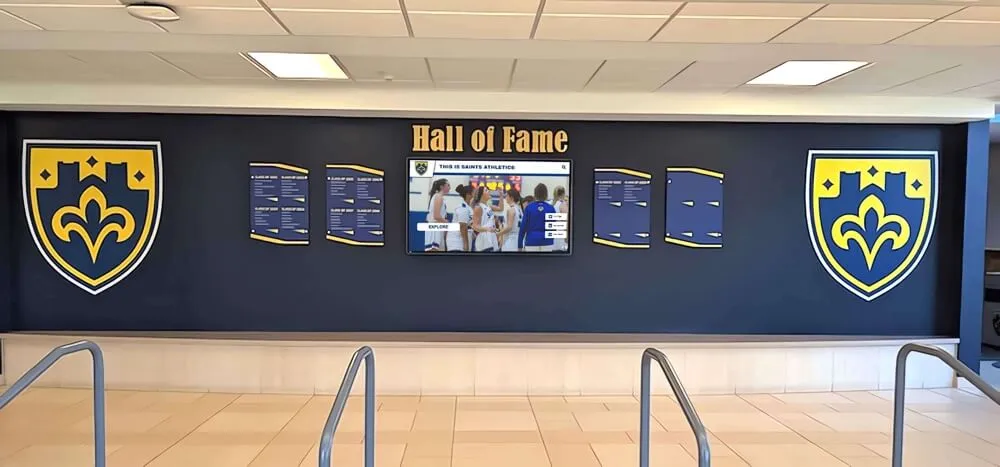
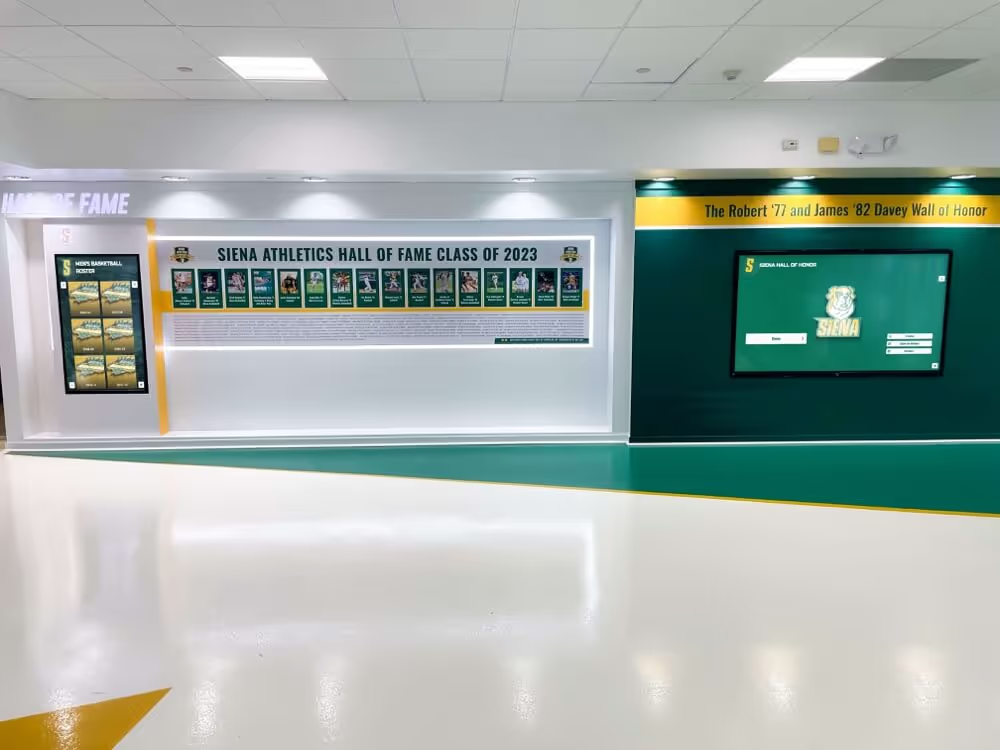
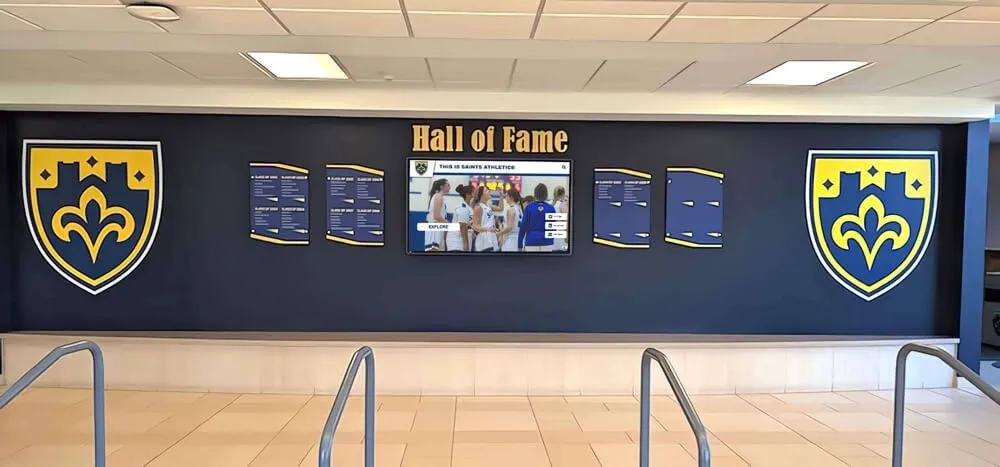
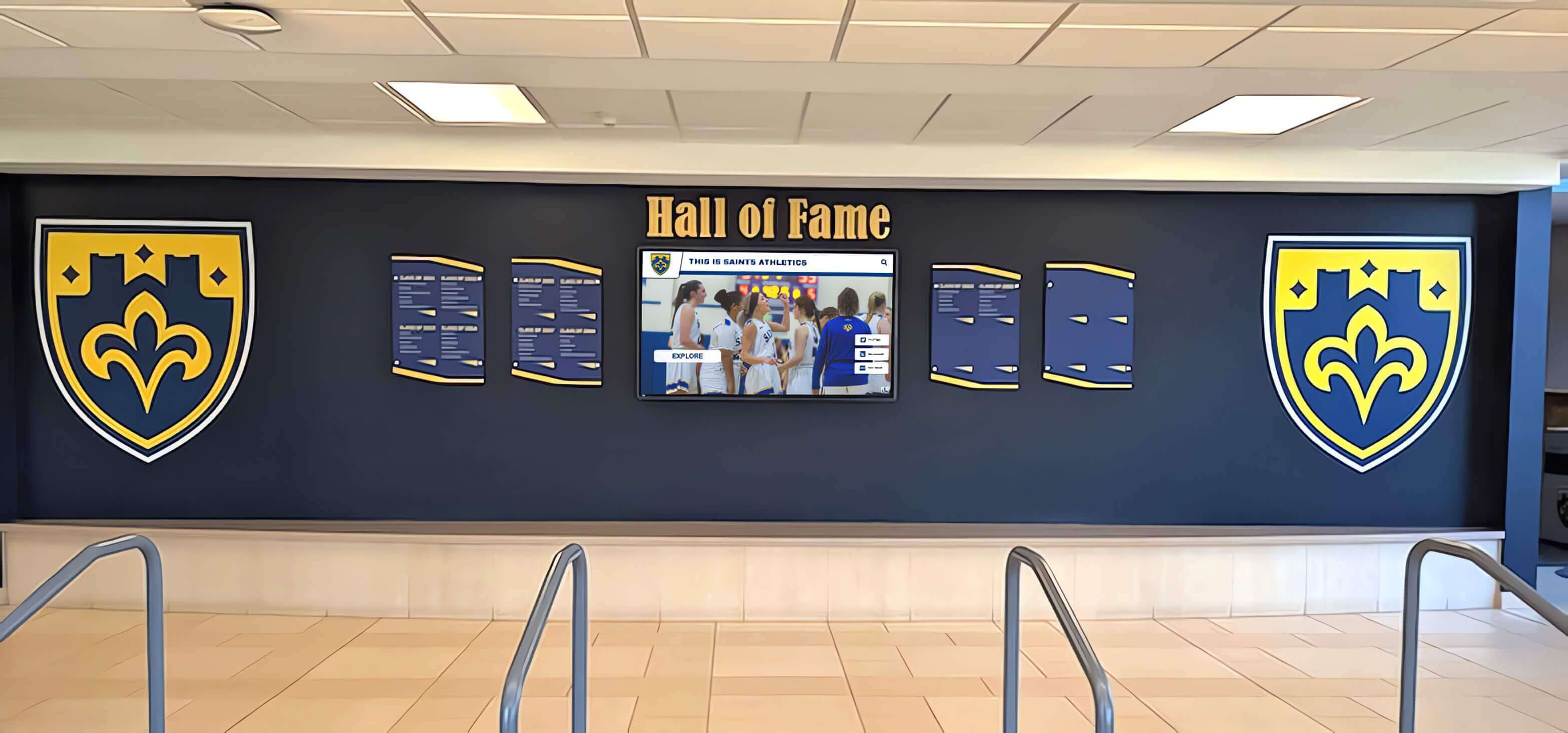
Hybrid installations honor tradition through continued physical recognition while embracing digital technology providing unlimited capacity and interactive engagement
Content Development and Recognition Criteria
Wall of fame value depends entirely on thoughtful content celebrating deserving individuals through well-defined selection processes maintaining credibility and perceived fairness.
Establishing Clear Selection Criteria
Transparent recognition criteria prevent perceptions of favoritism or arbitrary selection undermining wall of fame credibility and community support.
Athletic Recognition Standards
Athletic walls of fame typically recognize state championship participants, conference championship teams, individual all-state and all-conference selections, school record holders, athlete hall of fame inductees, and coaching milestones demonstrating sustained excellence. Clear quantitative thresholds—minimum performance standards, achievement levels, or tenure requirements—create objective criteria preventing debate about selection decisions.
Many schools establish formal athletic hall of fame committees including coaches, administrators, and community members who evaluate candidates against published criteria ensuring systematic recognition rather than informal processes lacking structure and accountability.
Academic Achievement Thresholds
Academic recognition criteria might include class valedictorians and salutatorians, National Merit Scholars and commended students, perfect standardized test scores, specific GPA thresholds, academic competition state finalists, and prestigious scholarship recipients. Like athletic standards, these criteria benefit from clear quantitative definitions establishing exactly what achievement levels warrant recognition.
Some schools implement tiered academic recognition celebrating different achievement levels—platinum for perfect test scores, gold for near-perfect achievement, silver for high distinction—enabling broader recognition while maintaining meaningful differentiation among accomplishment levels.
Nomination and Selection Processes
Formal nomination processes strengthen wall of fame credibility by providing structured paths for community members to propose recognition candidates. Nomination systems typically include public announcement of nomination periods and criteria, standardized nomination forms gathering consistent information, review committees evaluating submissions against established standards, and formal announcement and induction ceremonies celebrating new honorees.
This structured approach ensures comprehensive consideration of deserving candidates while maintaining transparent decision-making building community confidence in recognition fairness.
Gathering Recognition Content and Documentation
Quality recognition requires systematic content development telling complete stories rather than presenting minimal information creating shallow acknowledgment.
Information Collection Frameworks
Comprehensive honoree profiles include biographical information providing context about individuals, specific achievements and accomplishments with supporting details, performance statistics and records when applicable, historical context explaining significance within institutional tradition, multimedia assets including photos, videos, and artifacts, and personal reflections or testimonials adding authentic voice when available.
Schools should develop standardized content templates ensuring consistency across recognition while gathering comparable information for all honorees regardless of achievement category or era.
Source Identification and Research Methods
Content development draws from diverse institutional sources including yearbooks providing photos and historical documentation, school newspapers and media coverage capturing contemporaneous accounts, athletic record books documenting performance statistics, academic transcripts and honor roll records, personal collections from families and honorees, and oral history interviews gathering first-person perspectives.
Systematic source compilation ensures comprehensive accurate recognition while building institutional archives preserving heritage for future generations. Approaches to academic history archiving provide frameworks for organizing and preserving recognition content supporting current walls of fame while documenting institutional memory permanently.
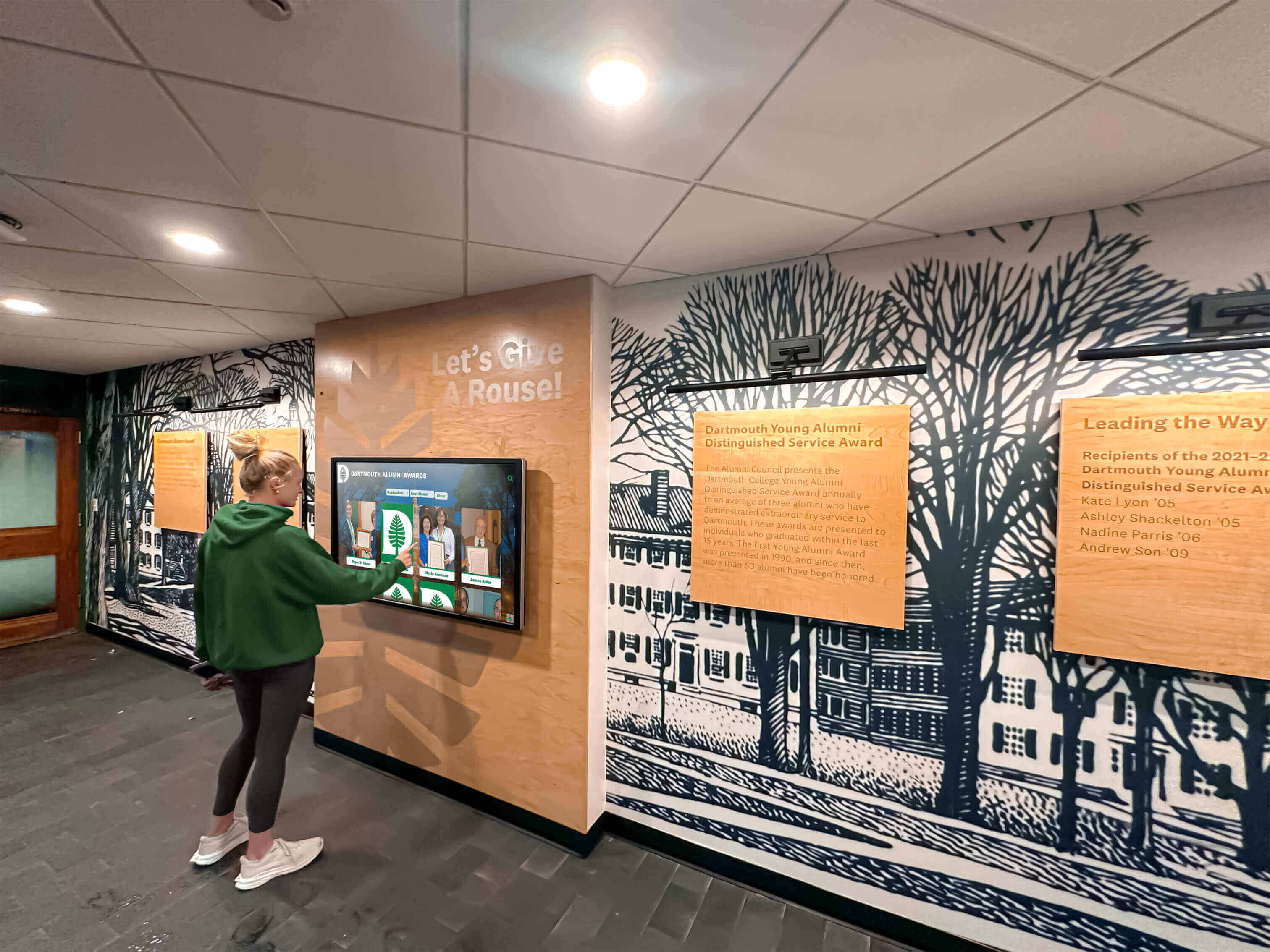
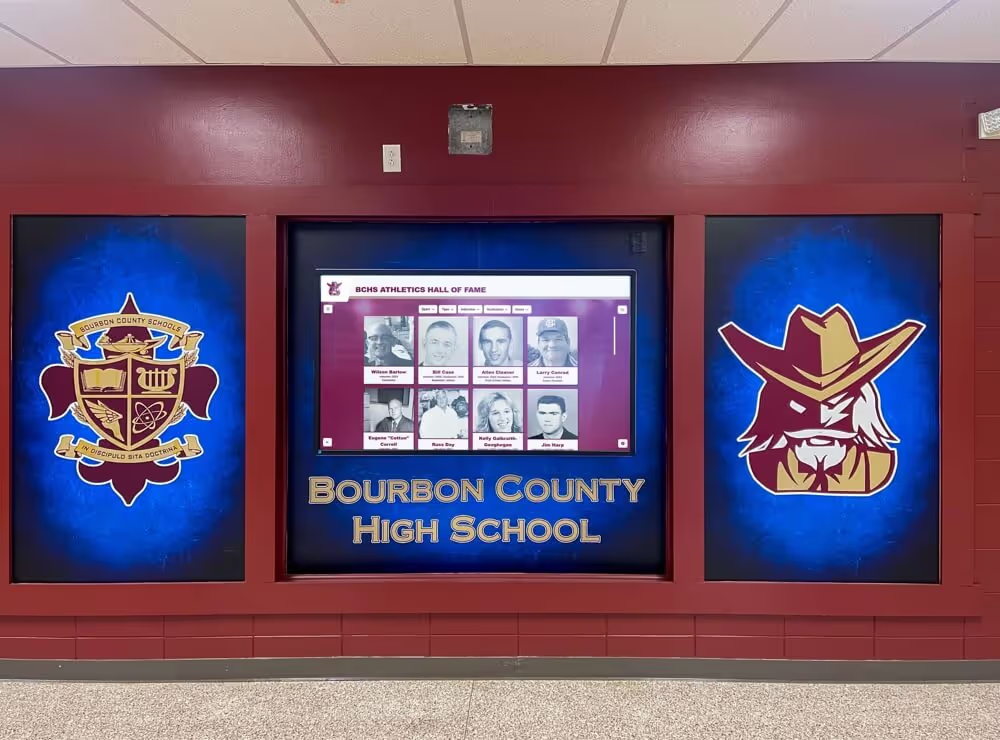
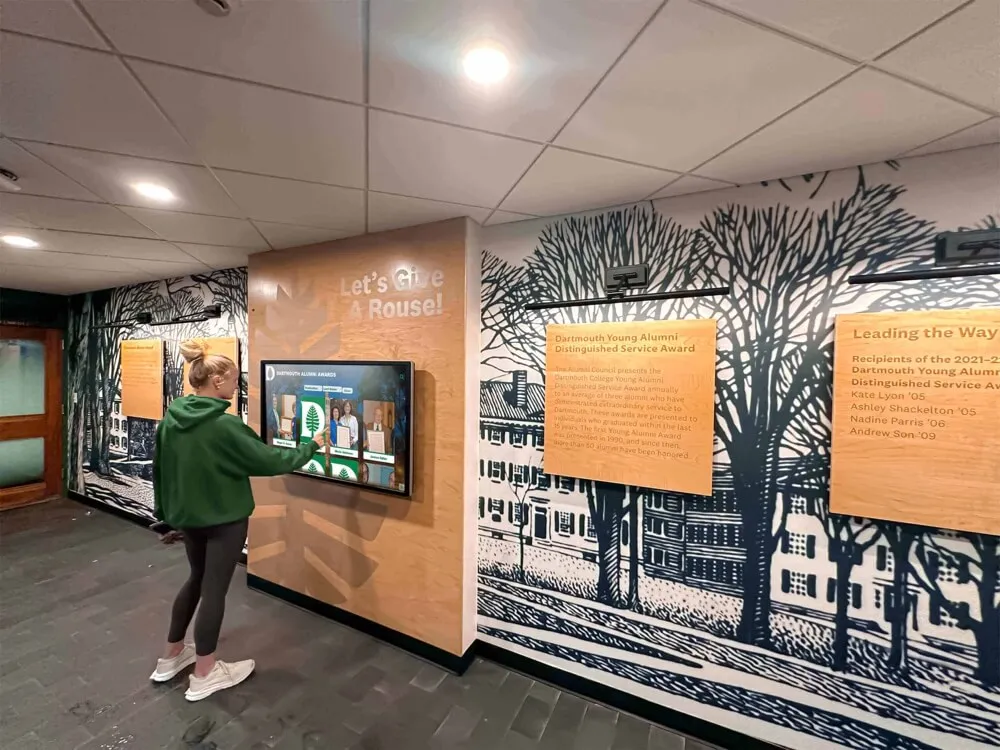
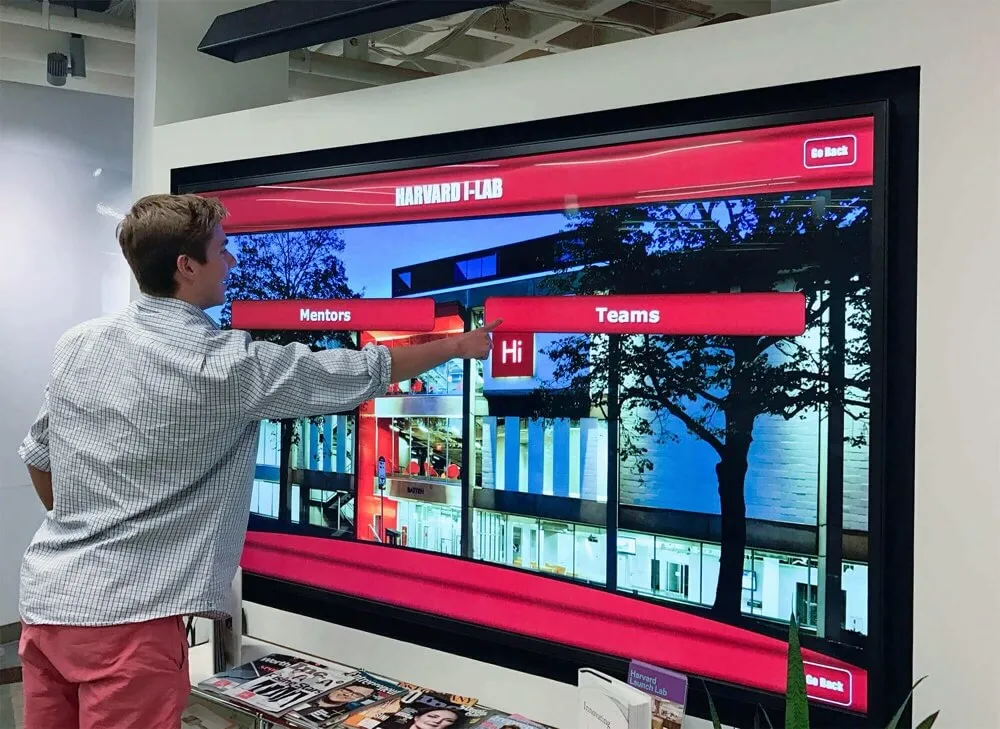
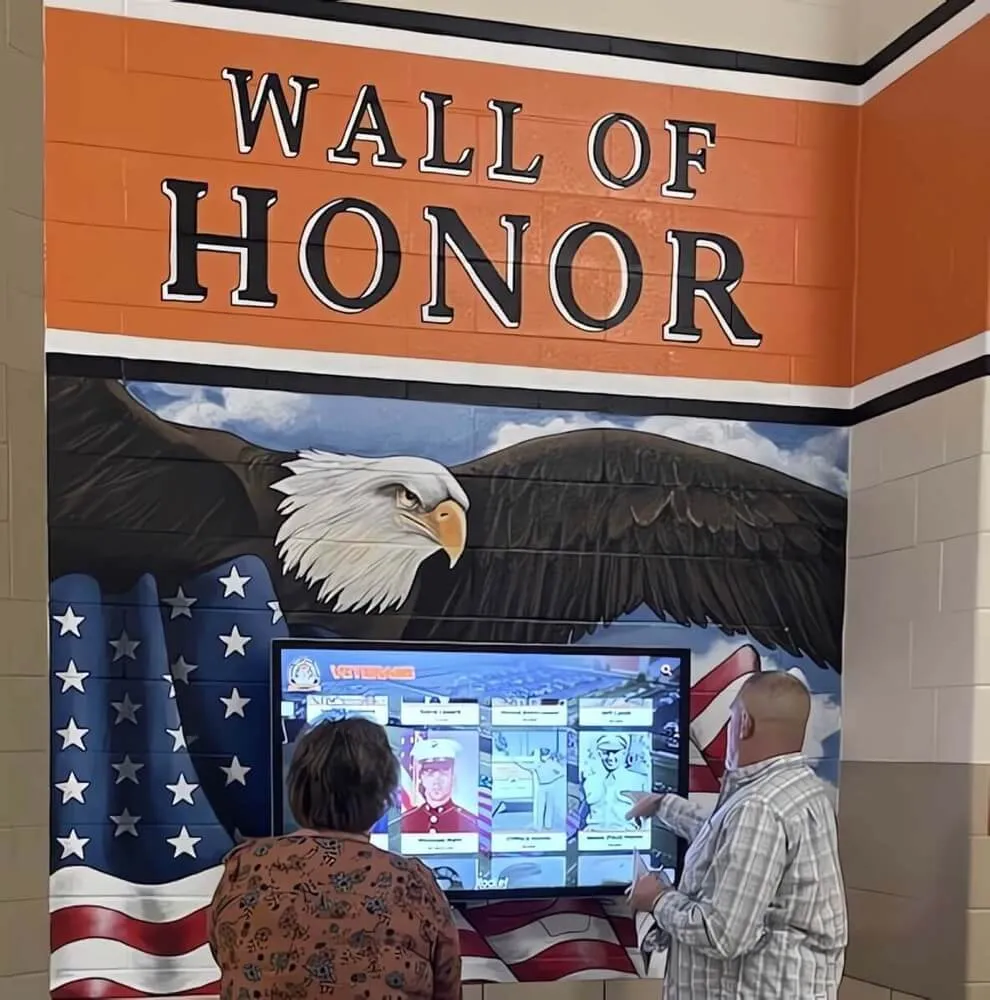
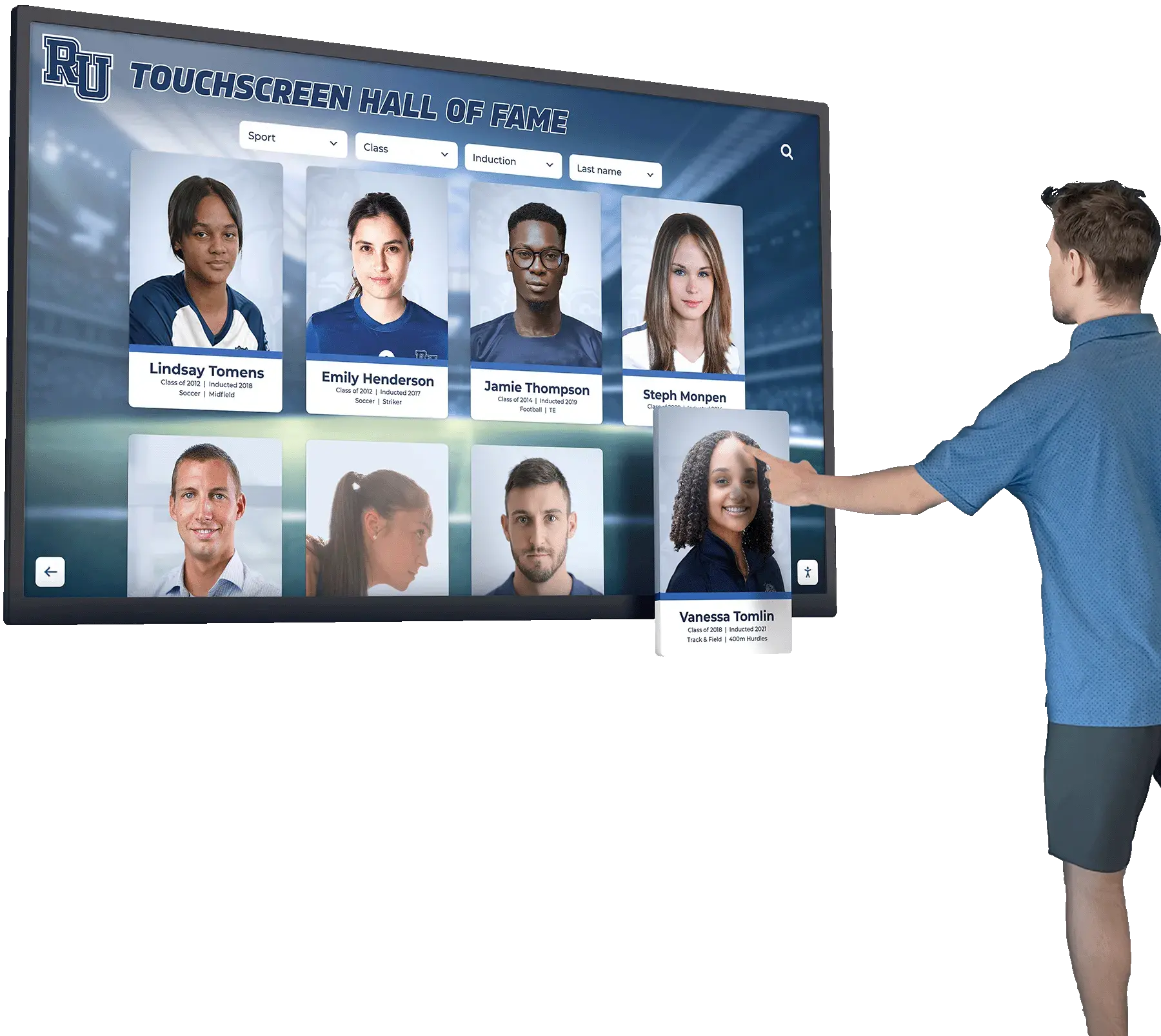
Interactive digital displays transform passive recognition viewing into active exploration where students discover inspiring role models while connecting with school heritage
Writing Compelling Recognition Narratives
Text content should balance comprehensive information with accessible storytelling avoiding dry recitation of facts. Effective recognition narratives include opening hooks capturing defining achievements or memorable moments, contextual background establishing honoree journeys to excellence, specific achievement details with statistics and documentation, impact and legacy explaining significance beyond raw accomplishments, and current status providing honoree updates when available.
Rather than stating “Member of 2015 state championship team,” compelling narratives might read: “Led team to program’s first state championship with championship game performance including 23 points and 12 rebounds, establishing foundation for sustained excellence that produced three additional state titles over following decade.”
This storytelling approach creates engagement helping current students connect emotionally with achievements while building appreciation for institutional heritage that bare facts cannot inspire.
Brand Integration and Design Aesthetics
Walls of fame should reflect school identity through consistent visual design strengthening institutional branding while creating professional polished presentations worthy of accomplishments being celebrated.
Visual Identity Implementation
School Color Systems and Design Language
Apply school colors systematically throughout recognition displays through primary colors for main design elements and headers, secondary colors for backgrounds and supporting elements, accent colors highlighting featured content and interactive elements, and neutral colors for text and information ensuring readability.
Consistent color application creates cohesive installations clearly associated with schools while avoiding generic recognition appearing disconnected from institutional identity.
Logo, Mascot, and Symbolic Integration
Incorporate school marks appropriately throughout recognition including primary logos in prominent positions establishing clear institutional identity, mascot imagery reinforcing spirit and tradition, athletic or academic program marks connecting recognition to specific departments, and symbolic elements like school mottos, seals, or architectural details creating visual richness.
This symbolic integration ensures walls of fame feel authentically connected to schools rather than generic recognition platforms that could serve any institution.
Typography and Visual Hierarchy
Establish clear type systems supporting both branding and information communication through headline fonts reflecting school character for titles and featured text, body fonts optimizing legibility for biographical content and descriptions, size scales creating clear hierarchy from titles through supporting details, and weight variations emphasizing key information without excessive styling.
Professional typography dramatically improves recognition quality—poorly executed type choices create amateurish appearances undermining recognition credibility regardless of content quality.

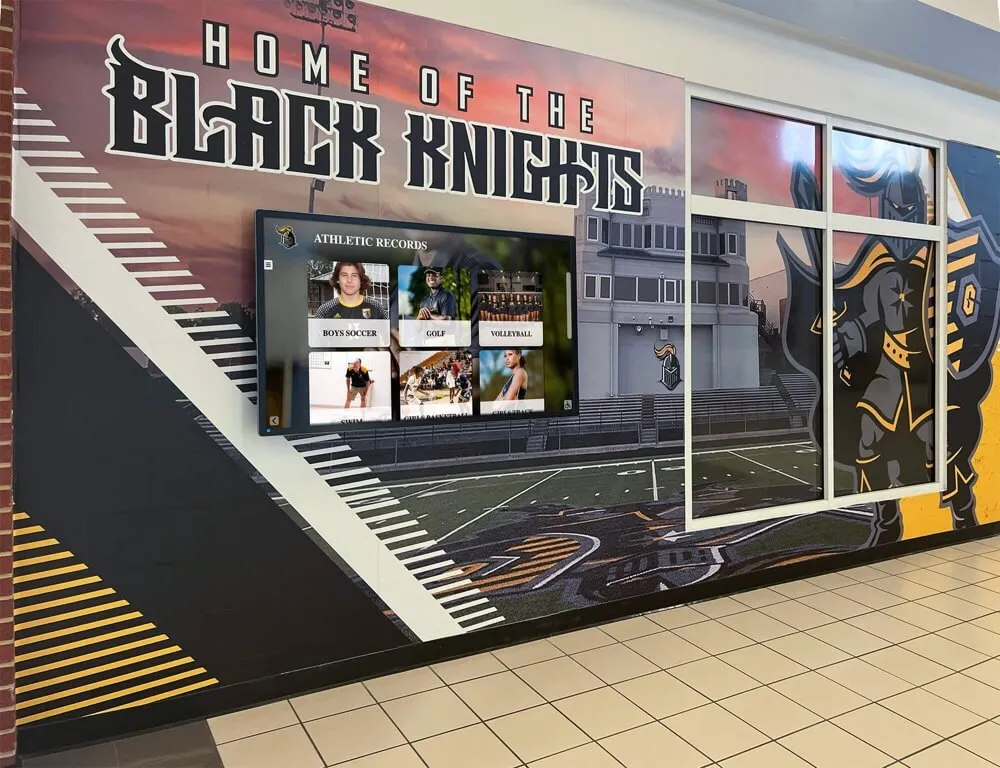
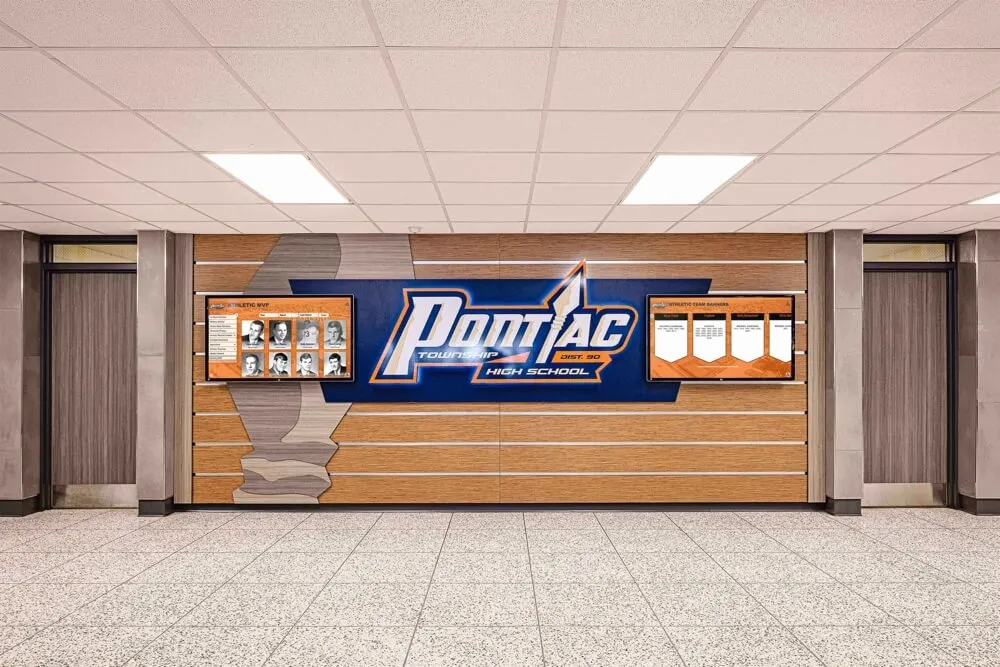
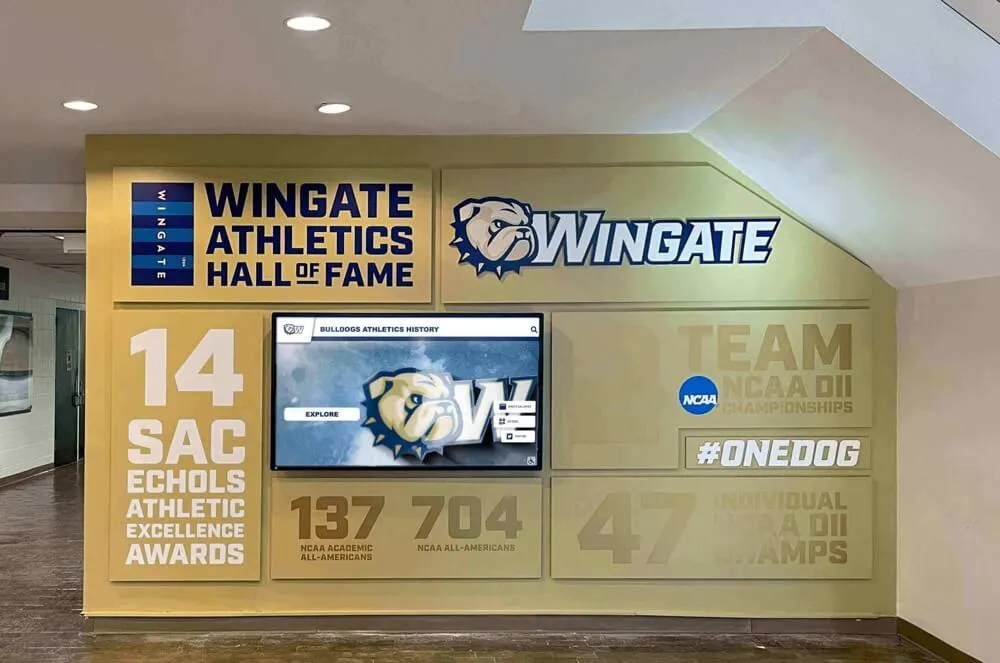
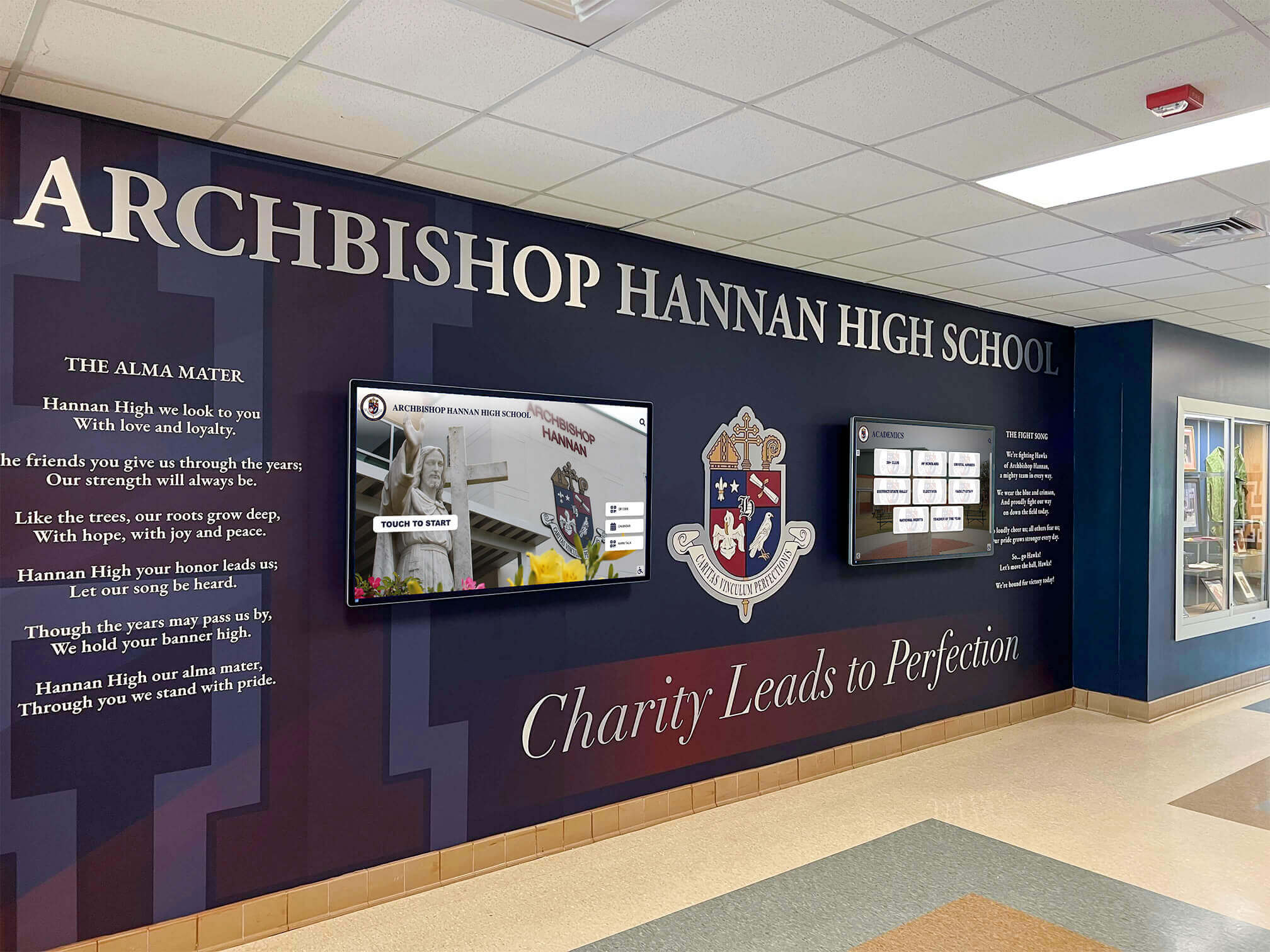
Branded design integration ensures recognition displays reinforce school identity through consistent visual language connecting walls of fame with broader institutional aesthetics
Custom Backgrounds and Environmental Design
Mural Artwork and Graphic Treatments
Many schools commission custom mural artwork creating dramatic backdrops for recognition displays. Effective murals include school mascots and symbolic imagery, athletic and academic iconography representing program diversity, historical imagery connecting past and present, and abstract graphic treatments supporting content without competing for attention.
Professional mural design transforms generic hallways into inspiring recognition environments where walls themselves communicate school pride and tradition before visitors even engage with specific honoree content.
Architectural Elements and Dimensional Design
Beyond flat wall applications, dimensional design creates physical presence impossible with simple mounted displays. Three-dimensional elements include custom-fabricated frames and surrounds, column wraps and pillar treatments, ceiling-mounted banners and hanging elements, lighting design spotlighting featured content, and protective glass or acrylic creating shadow-box effects.
This dimensional approach creates destination recognition areas rather than simple wall-mounted displays, drawing attention while communicating that achievement celebration matters enough to warrant significant design investment.
Technology Selection and Digital Implementation
Schools implementing digital wall of fame components must carefully evaluate technology platforms, hardware options, and implementation approaches ensuring long-term success rather than short-term solutions creating ongoing challenges.
Platform Evaluation Criteria
Purpose-Built Recognition Software vs. Generic Digital Signage
Digital wall of fame effectiveness depends critically on software designed specifically for recognition rather than generic signage platforms adapted for achievement celebration. Purpose-built recognition platforms provide intuitive interfaces requiring no instructions for visitor interaction, content management systems enabling non-technical staff to maintain displays, unlimited recognition capacity accommodating comprehensive achievement documentation, powerful search and filtering helping visitors find specific content, and web-based extensions providing universal access beyond physical displays.
Generic digital signage platforms designed for rotating announcements and advertising lack sophisticated content organization, user-directed exploration capabilities, and recognition-specific workflows matching educational institution needs. When choosing digital hall of fame software, evaluation criteria should prioritize recognition-specific functionality over general-purpose signage capabilities.
Cloud-Based Management and Multi-User Access
Modern digital recognition platforms operate through cloud-based systems enabling authorized users to manage content from any internet-connected device without requiring on-site access or IT department intervention. This cloud architecture provides distributed content management where multiple staff members contribute recognition within their domains, remote updates enabling content changes without physical display access, automatic synchronization ensuring all displays reflect current content, and secure backup protecting recognition content from hardware failures.
Cloud-based approaches dramatically reduce administrative burden compared to systems requiring local installation and on-site management for every content change.
Hardware Considerations and Installation
Display Size and Positioning
Choose screen sizes appropriate for viewing distances and space constraints. Smaller 43-49 inch displays work well in hallways and intimate spaces where viewers stand close. Medium 55-65 inch screens suit lobbies and commons areas with moderate viewing distances. Large 75+ inch displays serve gymnasiums, auditoriums, and large gathering spaces where viewers may be 10-15 feet distant.
Installation height should position screen centers at 48-60 inches for standing adult viewing while maintaining ADA compliance ensuring interactive elements fall within 15-48 inch reach ranges accommodating wheelchair users.
Commercial-Grade Hardware Requirements
Consumer televisions designed for residential use typically fail in demanding institutional environments. Commercial-grade displays engineered for continuous operation include components rated for 50,000-70,000 hour lifespans, thermal management preventing overheating during 16-24 hour daily operation, tempered glass surfaces resisting damage from repeated touching, and commercial warranties covering institutional usage.
While commercial displays cost more initially, their reliability and longevity justify investment for permanent recognition installations compared to consumer screens requiring replacement within 1-2 years.
Mounting and Physical Integration
Professional mounting ensures safety, accessibility, and aesthetic quality through appropriate wall structure supporting display weight safely, concealed cable management hiding power and network connections, security measures preventing theft or vandalism, and architectural integration creating cohesive installations rather than obviously added technology.
Many schools work with experienced installers ensuring recognition displays integrate seamlessly into existing environments while meeting all safety and accessibility requirements.
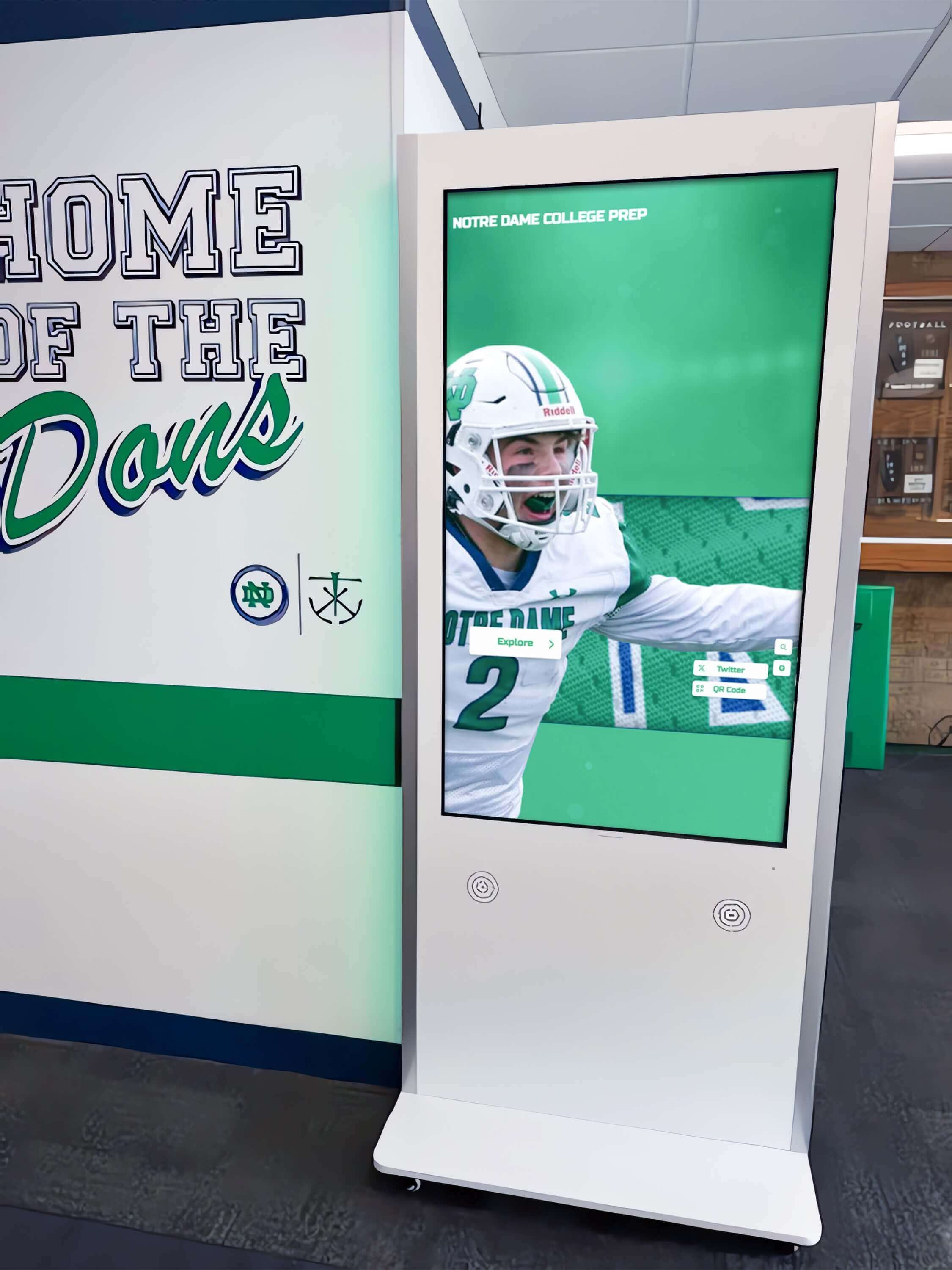
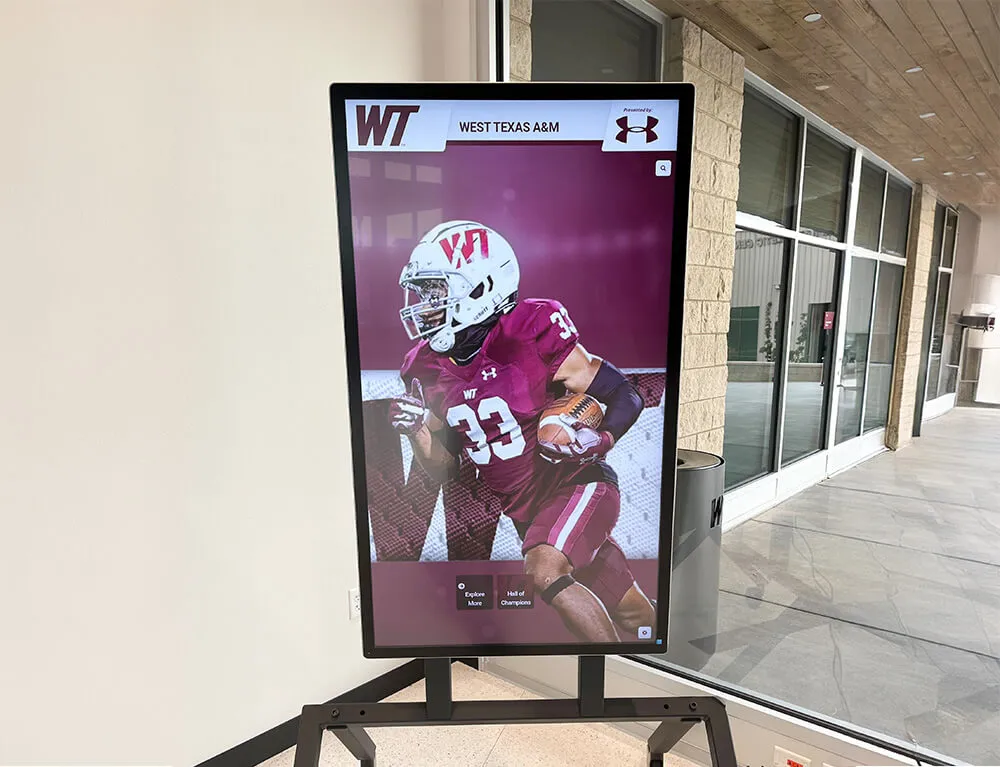
Freestanding kiosk installations provide portable flexibility while delivering professional appearance suitable for high-visibility recognition applications
Implementation Process and Timeline Planning
Successful wall of fame projects require systematic planning ensuring completion on schedule while maintaining quality standards and stakeholder satisfaction.
Project Phases and Milestone Planning
Discovery and Requirements Definition
Initial project phases establish foundation for successful implementation through stakeholder consultation identifying priorities and preferences, space assessment evaluating available locations and constraints, content inventory cataloging existing recognition and historical materials, budget development estimating costs across all project components, and timeline creation establishing realistic completion schedules.
Thorough discovery prevents mid-project surprises derailing budgets or schedules while ensuring final installations meet actual needs rather than assumed requirements.
Design Development and Approval
Design phases translate requirements into specific visual and functional specifications including conceptual designs exploring different aesthetic approaches, detailed layouts specifying exact dimensions and component placement, content organization frameworks structuring recognition information, technology specifications defining hardware and software requirements, and stakeholder review cycles ensuring approval before fabrication begins.
Many schools develop multiple design concepts enabling selection among alternatives rather than forcing acceptance of single predetermined approach.
Fabrication, Installation, and Content Development
Implementation phases bring designs to reality through custom fabrication of physical elements, professional installation ensuring quality and safety, technology deployment and configuration, content development gathering and creating recognition profiles, and testing verification confirming all systems operate properly.
Project management coordinates these parallel workstreams ensuring timely completion while maintaining quality standards across all components.
Budget Planning and Funding Strategies
Cost Components and Investment Ranges
High school wall of fame budgets vary dramatically based on scope, technology, and design complexity. Physical recognition systems range from $5,000-25,000 for traditional plaque installations to $50,000+ for extensive custom fabrication. Digital display systems typically require $8,000-15,000 per screen including commercial hardware, recognition software, and installation. Hybrid approaches combining both range from $15,000-75,000 depending on scale and customization.
Schools should develop comprehensive budgets accounting for design and planning costs, all hardware and materials, professional fabrication and installation, software licensing and support, content development effort, and contingency reserves for unexpected challenges.
Alternative Funding Approaches
Many schools fund recognition programs through sources beyond operating budgets including capital campaigns incorporating wall of fame projects, booster club support particularly for athletic recognition, alumni donations from graduates passionate about heritage preservation, memorial giving where donors fund displays honoring deceased community members, and corporate sponsorships from local businesses receiving acknowledgment.
Some schools implement recognition in phases spreading investment over multiple years while demonstrating value justifying ongoing funding for expansion.
Ongoing Maintenance and Content Updates
Wall of fame value depends on sustained maintenance ensuring recognition remains current, accurate, and engaging rather than deteriorating into outdated displays undermining credibility.
Content Update Workflows and Schedules
Regular Recognition Cycles
Establish systematic update schedules maintaining current recognition including annual induction adding new honorees, quarterly reviews verifying accuracy and updating evolving information, special event features highlighting relevant content during homecoming or reunions, and multi-year archive expansion systematically adding historical recognition.
Clear workflows defining responsibility, approval processes, and publication schedules prevent recognition from becoming outdated as new achievements occur and attention shifts to other priorities.
Content Governance and Quality Standards
Assign clear ownership for different recognition categories preventing gaps where no one maintains specific content areas. Document content standards ensuring consistency as different people contribute recognition over time. Implement approval processes verifying accuracy before publication. And train multiple staff members on content management preventing single-person dependencies causing problems during absences or transitions.
These governance structures ensure sustainable recognition programs maintaining quality indefinitely rather than depending on specific individuals whose departure creates collapse.
Technical Maintenance and System Support
Hardware Monitoring and Preventive Maintenance
Digital displays require ongoing attention including screen cleaning maintaining visibility and professional appearance, software updates maintaining security and functionality, hardware monitoring detecting developing issues before failures, network connectivity verification ensuring reliable operation, and warranty and support contract management coordinating vendor assistance when problems occur.
Many schools establish quarterly maintenance schedules ensuring proactive attention rather than waiting for failures requiring emergency response.
Vendor Relationships and Support Access
Select technology vendors providing comprehensive support including technical assistance via phone, email, or remote access, timely response commitments ensuring quick problem resolution, training resources enabling staff independence, and regular check-ins maintaining ongoing relationships.
Quality vendors understand schools need reliable low-maintenance solutions rather than complex systems requiring constant technical intervention—vendor selection should prioritize support quality alongside product capabilities.
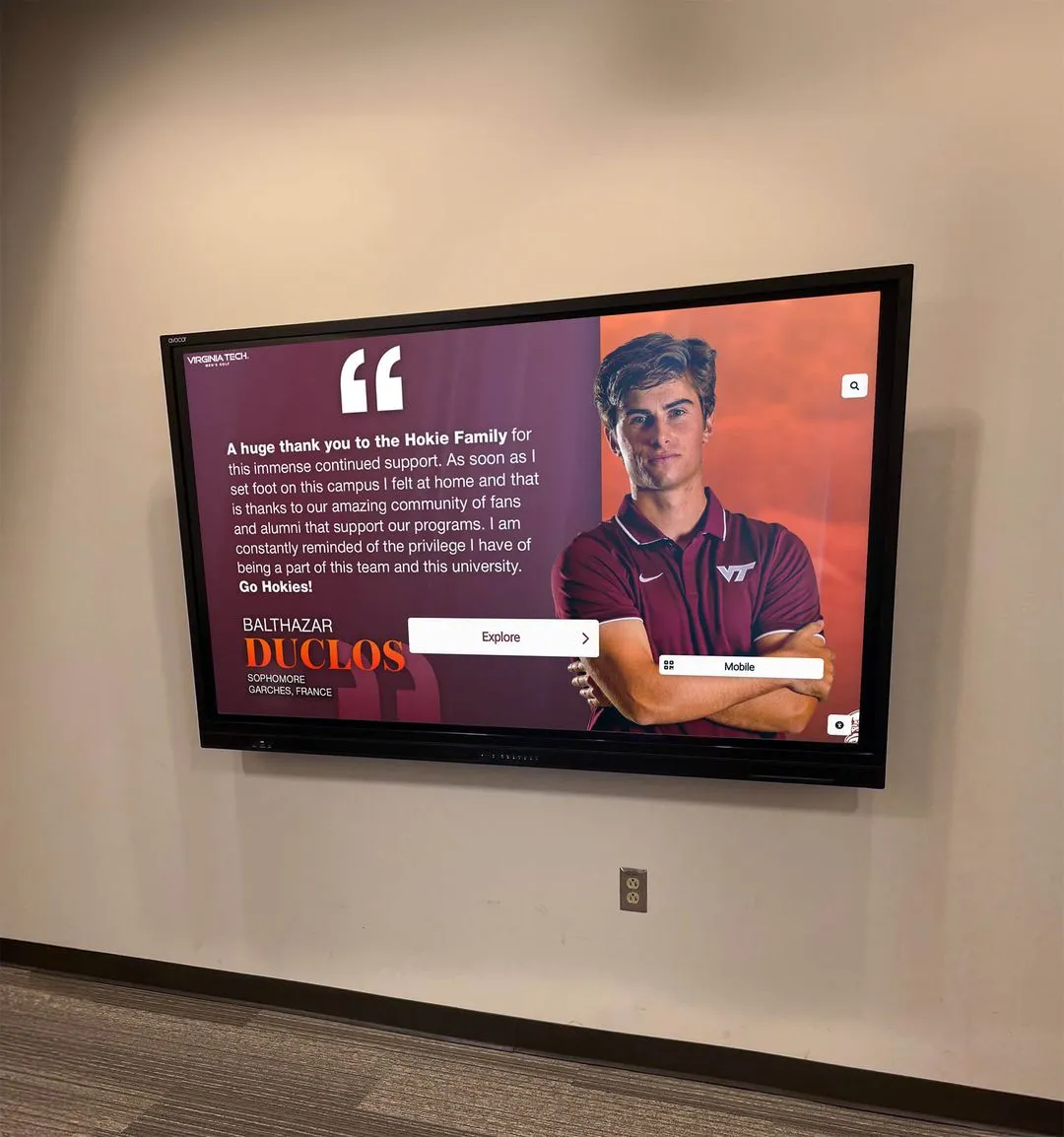
Professional maintenance ensures recognition displays maintain appearance and functionality delivering lasting value rather than deteriorating into neglected installations
Measuring Success and Demonstrating Impact
Understanding wall of fame effectiveness enables continuous improvement while providing evidence justifying recognition investments to budget authorities and stakeholders.
Engagement Metrics and Analytics
Quantitative Usage Tracking
Digital recognition platforms provide detailed analytics revealing actual usage patterns including total interaction sessions showing display usage frequency, average session duration indicating engagement depth, most-viewed profiles revealing popular content, search terms demonstrating what visitors seek, and peak usage times informing content strategy.
These metrics demonstrate recognition value through concrete usage data while identifying improvement opportunities based on observed visitor behavior.
Qualitative Feedback and Community Response
Beyond quantitative data, gather qualitative feedback through visitor surveys assessing recognition awareness and satisfaction, stakeholder interviews exploring detailed perspectives, social media monitoring capturing organic community response, and observational research noting how people interact with displays during events and daily activities.
This qualitative feedback often reveals impact that metrics cannot capture—understanding what truly resonates emotionally and what improvements would enhance recognition effectiveness.
Cultural Impact Assessment
Observable Community Changes
Successful walls of fame generate measurable cultural impact including increased student identification with school community and tradition, enhanced alumni engagement and connection with alma mater, improved recruitment effectiveness with prospective students and families, and strengthened achievement culture across academic and athletic programs.
While these outcomes take time to develop and involve many factors beyond recognition alone, schools consistently implementing comprehensive systematic recognition report these benefits emerging over 2-3 year periods as displays become embedded in institutional culture.
Conclusion: Creating Recognition That Truly Inspires
High school walls of fame represent more than decorative displays acknowledging past achievement—they serve as powerful tools strengthening school culture, inspiring current students, engaging alumni communities, and demonstrating institutional values through systematic celebration of diverse excellence. The difference between perfunctory recognition and truly inspiring walls of fame lies in strategic design addressing both functional requirements and emotional impact through thoughtful planning, quality execution, and sustained maintenance.
Get Your Custom Wall of Fame Design
Transform your high school recognition program with purpose-built solutions combining compelling design with interactive technology. Rocket Alumni Solutions specializes in educational recognition displays that honor achievement while inspiring school communities.
Schedule Your Design ConsultationWhether implementing athletic recognition inspiring current competitors, academic displays celebrating intellectual achievement, comprehensive halls of fame documenting complete institutional heritage, or hybrid systems preserving traditional elements while embracing digital innovation, high school walls of fame strengthen communities by ensuring achievement receives the permanent recognition it deserves.
Organizations investing in well-designed recognition demonstrate commitment to celebrating excellence comprehensively rather than limiting acknowledgment to arbitrary constraints. This comprehensive approach communicates institutional values while building cultures where achievement across all dimensions receives systematic celebration creating motivation, pride, and lasting connection between students, alumni, and their schools.
Ready to explore high school wall of fame options for your institution? Discover strategies for building school pride through recognition, explore alumni wall design ideas, learn about school achievement recognition approaches, and understand comprehensive frameworks for honoring school history through recognition displays that celebrate excellence while inspiring future generations to pursue achievement worthy of similar lasting acknowledgment.