Homecoming parades represent one of the most cherished traditions in school communities—vibrant celebrations that unite students, alumni, families, and local residents in collective expressions of school pride and community spirit. When planned thoughtfully, homecoming parades create lasting memories, strengthen institutional connections, and demonstrate the values that define school culture while showcasing the creativity, dedication, and enthusiasm of everyone involved.
Yet organizing successful homecoming parades presents significant challenges. Coordinators struggle with logistics including route planning, participant coordination, safety management, budget constraints, and weather contingencies. Many schools repeat the same basic parade formula year after year, resulting in declining enthusiasm and participation as the event loses novelty and excitement. Others overwhelm themselves with overly ambitious plans that stretch resources and volunteer capacity beyond sustainable limits.
This comprehensive guide explores creative homecoming parade ideas, practical planning strategies, and innovative approaches for producing celebrations that genuinely resonate with your school community. From classic parade elements through modern innovations, organization frameworks, and recognition opportunities, you’ll discover actionable inspiration for creating homecoming parades that participants and spectators will remember and celebrate for years to come.
Schools that invest intentional effort into homecoming parade planning report dramatically higher community participation, stronger school spirit throughout the year, increased alumni engagement, and enhanced public perception of their institutions as vibrant, connected communities worth supporting and celebrating.

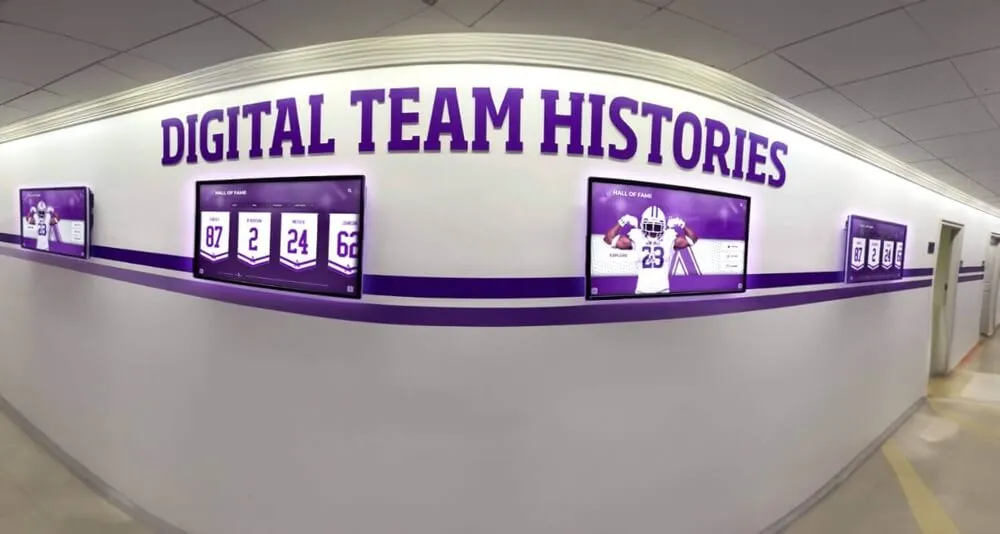
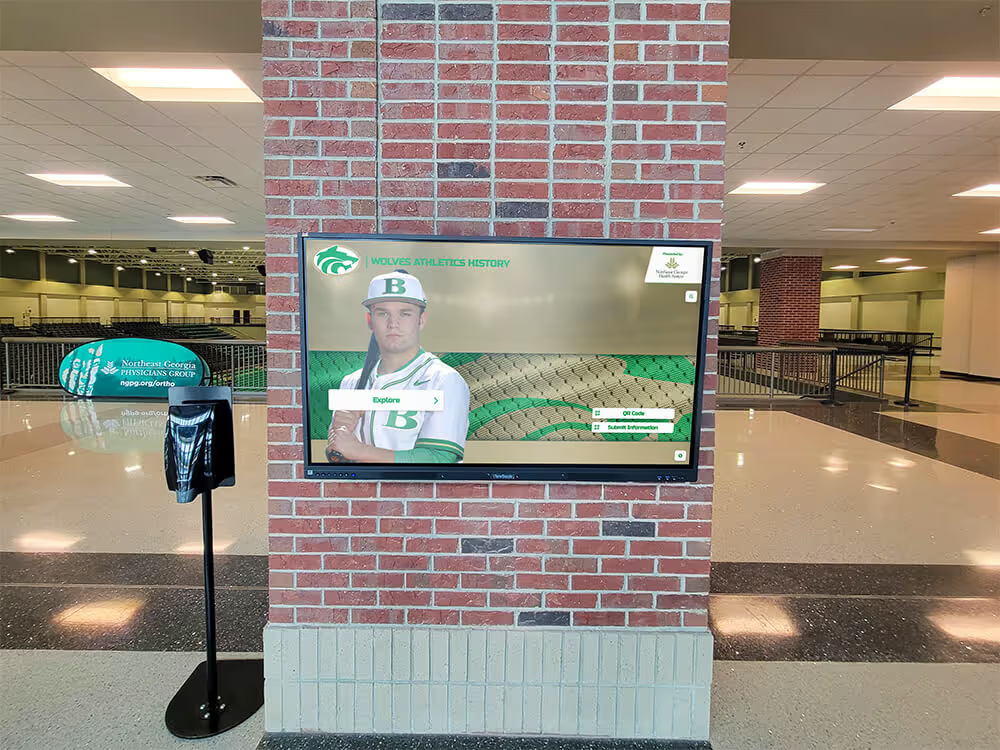
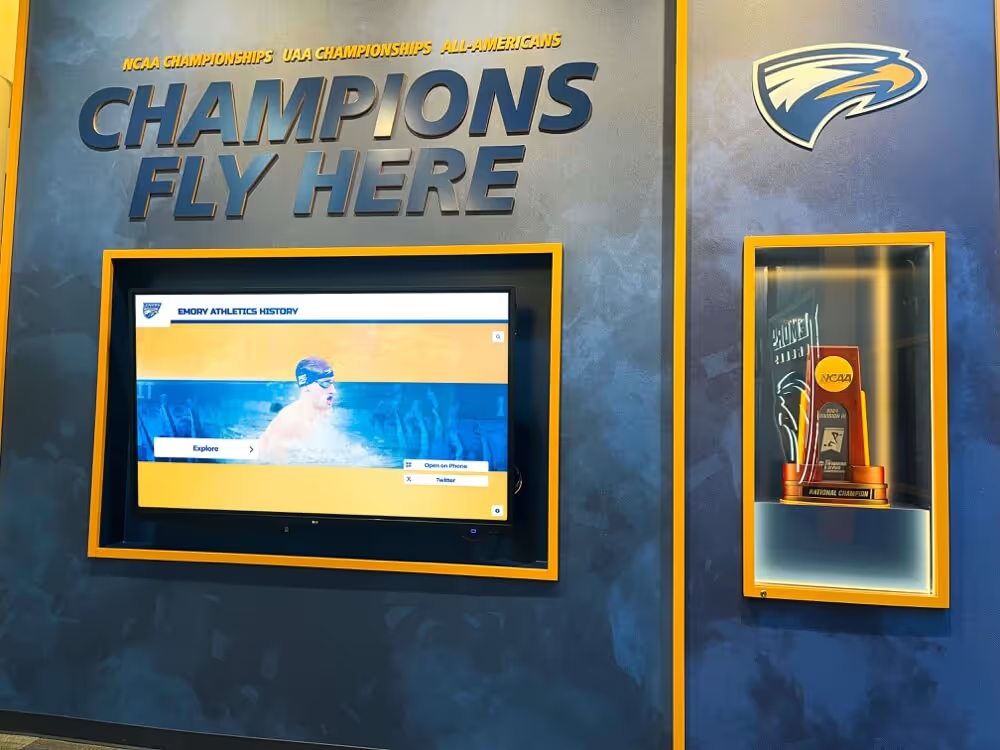
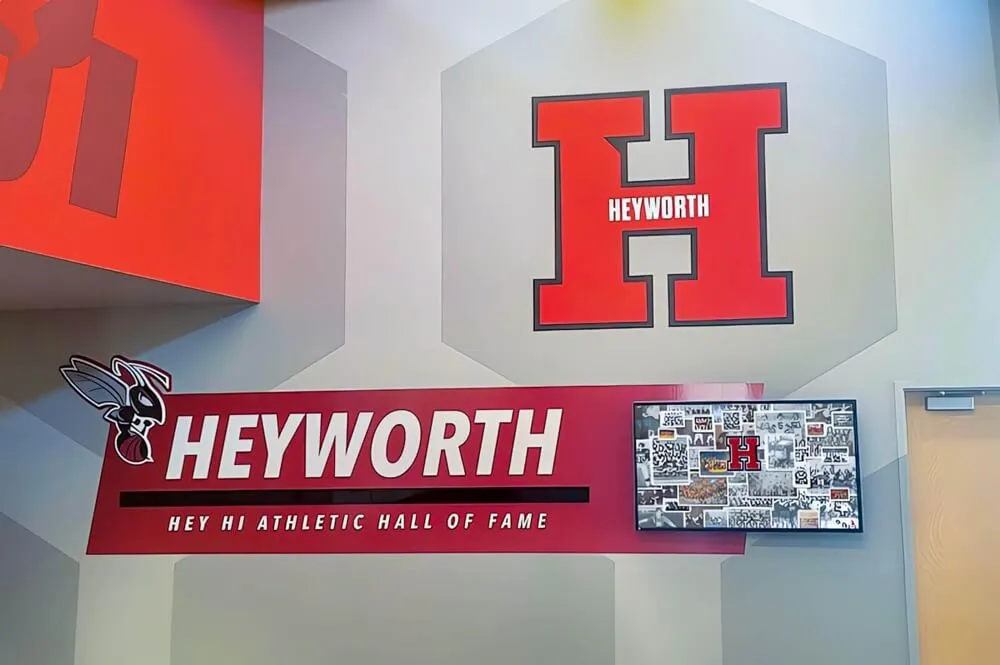
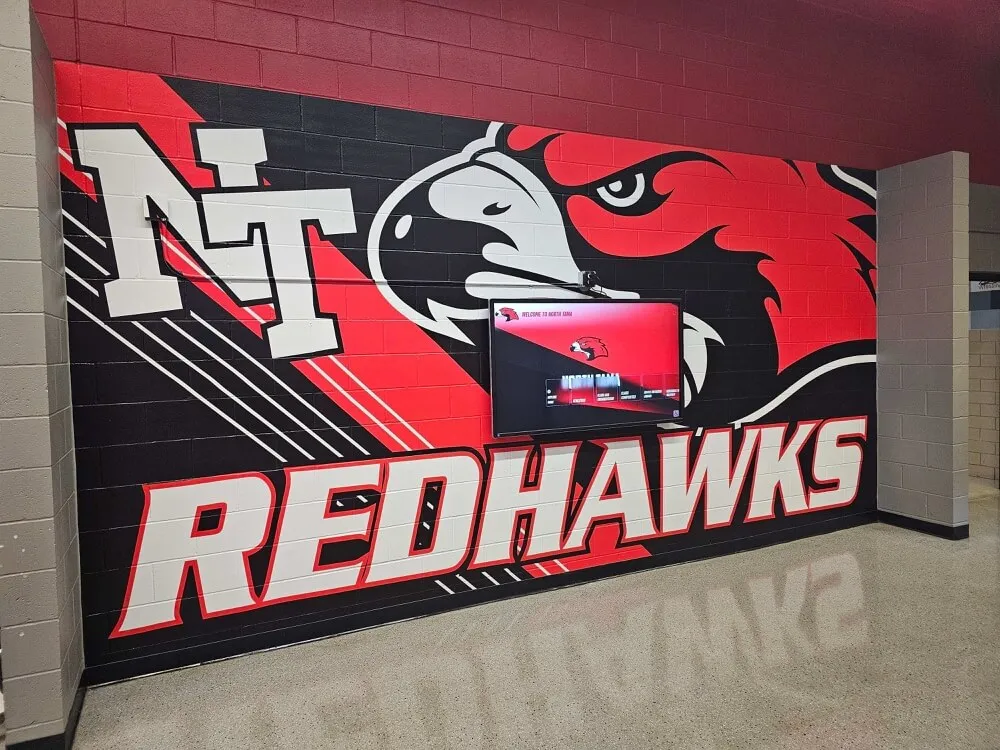
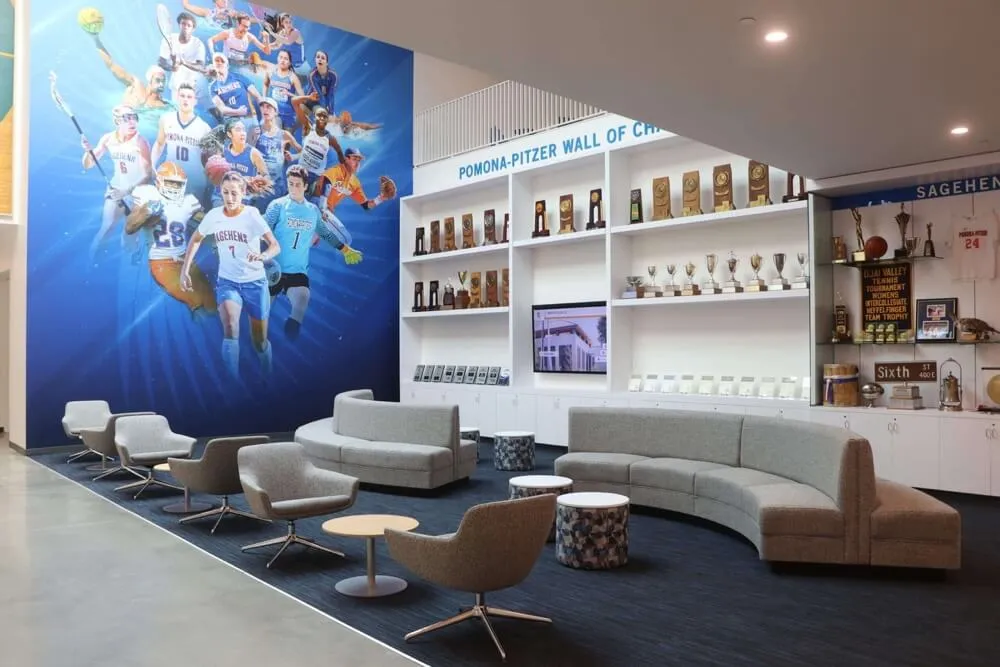
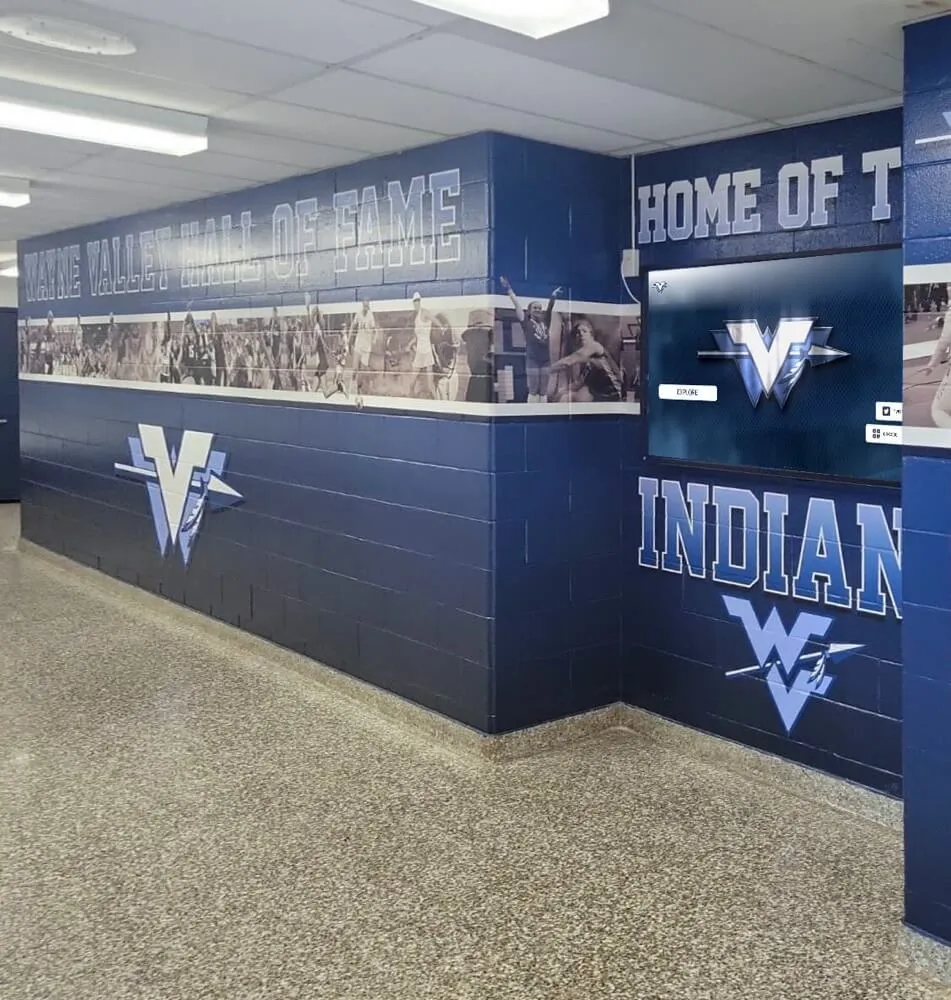
Homecoming parades celebrate community heroes and school traditions, creating visual spectacles that honor both past achievements and current pride
Understanding What Makes Homecoming Parades Successful
Before diving into specific parade ideas, understanding the fundamental principles that drive successful homecoming celebrations helps ensure your planning efforts create genuinely meaningful community experiences.
Clear Purpose and Community Connection
The most successful homecoming parades articulate clear purposes beyond simply “having a parade.” Effective celebrations might honor specific themes—milestone anniversaries, championship seasons, community resilience, or cultural celebrations. They might showcase particular values like inclusivity, academic excellence, or service. Or they might commemorate significant institutional moments like facility dedications, retiring leaders, or program milestones.
Honoring Alumni and Tradition
Homecoming fundamentally celebrates the connection between past and present—welcoming alumni home while introducing current students to institutional traditions. Effective parades create opportunities for alumni participation through reunion class floats, distinguished alumni grand marshals, or historical displays connecting current students with school heritage.
Celebrating Current Achievement
While honoring tradition, homecoming also showcases current excellence through student accomplishments, team championships, academic recognition, artistic achievements, and community service impact. Balancing historical celebration with present-day achievement creates inclusive experiences that engage multiple generations simultaneously.
Building Community Pride and Unity
Beyond the school itself, homecoming parades strengthen broader community connections by involving local businesses, civic organizations, youth groups, and community leaders. This inclusive approach positions schools as community anchors worth celebrating and supporting rather than isolated institutions disconnected from surrounding neighborhoods.
Understanding spirit week themes that often precede homecoming parades helps create cohesive week-long celebrations where multiple events build momentum toward culminating parade and game-day festivities.
Strategic Planning and Organization
Even the most creative parade concepts fail without solid organizational foundations ensuring smooth execution.
Timeline and Committee Structure
Successful parades require months of advance planning. Establish planning committees at least 3-4 months before parade dates, with clear leadership roles including parade marshal, route coordinator, float supervisor, safety coordinator, communications lead, and volunteer manager. Regular committee meetings with documented decisions and action items keep planning on track while distributing workload across multiple capable volunteers.
Budget Planning and Resource Allocation
Early budget development prevents mid-planning surprises while enabling realistic scope decisions. Major budget categories typically include parade route infrastructure (barricades, signage, traffic control), safety resources (security, medical support, insurance), promotional materials (posters, programs, social media advertising), participation supplies (entry numbers, judging materials), and recognition elements (trophies, certificates, prizes).
Many schools find that booster club organizations provide essential financial and volunteer support for homecoming parades, leveraging parent and community networks to fund and staff these significant events.
Permits, Insurance, and Safety Protocols
Legal and safety requirements vary significantly by location but typically include parade permits from local municipalities, liability insurance covering event risks, police or security presence for traffic control and public safety, medical support availability, and emergency response plans addressing various contingencies.
Begin permit applications and insurance arrangements immediately upon setting parade dates—these processes often require significant lead time and can delay or derail events if handled last-minute.
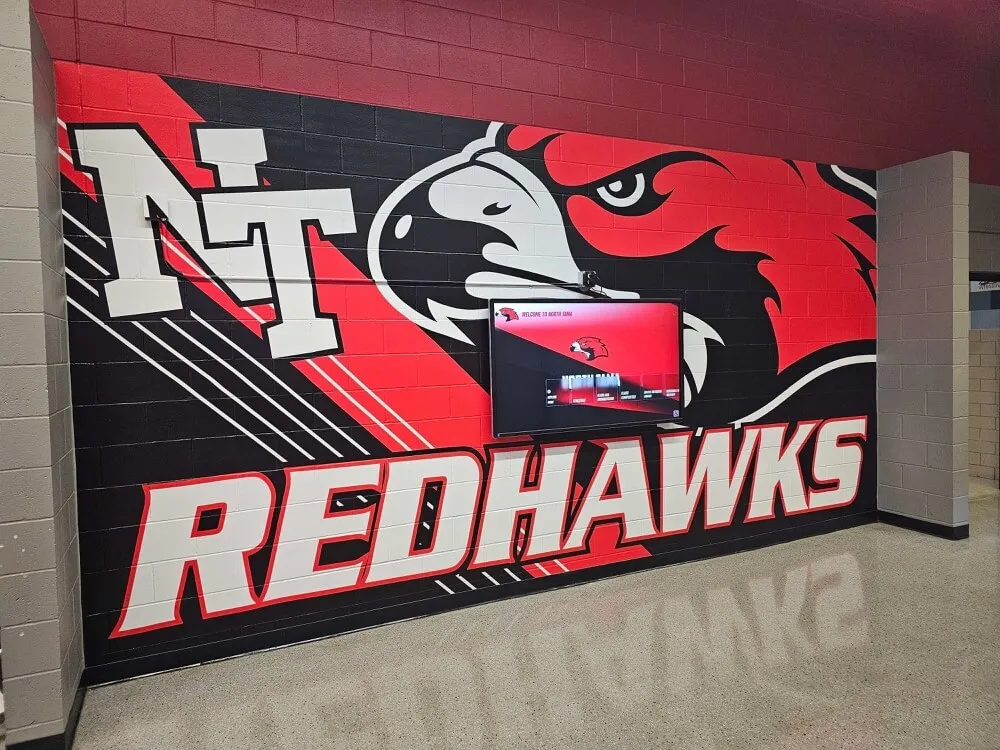
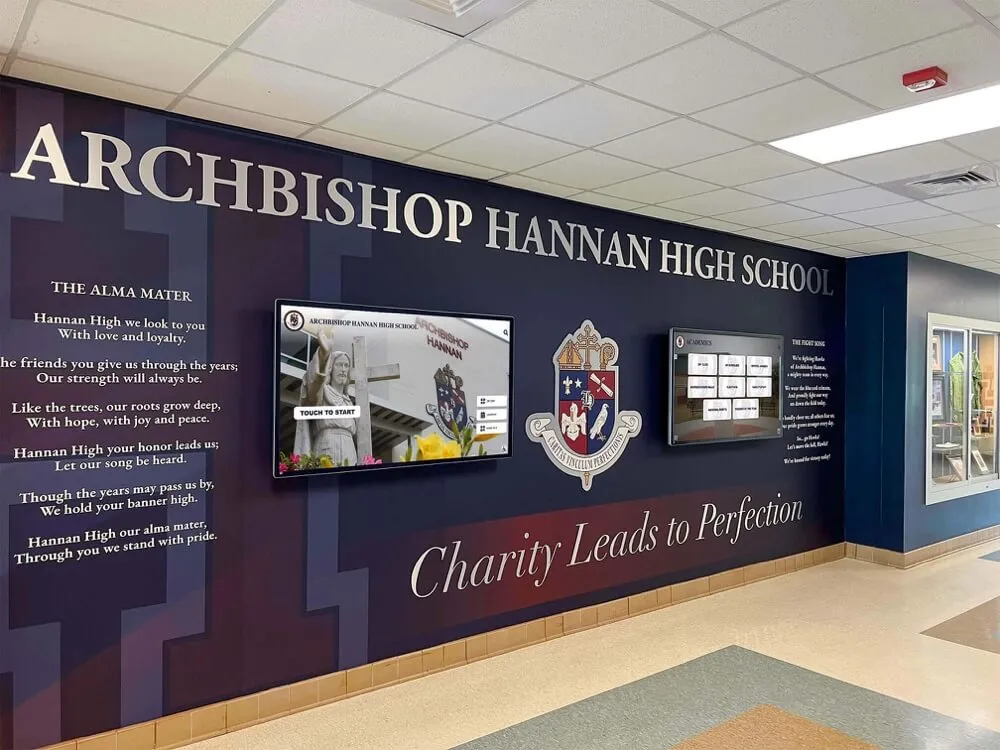
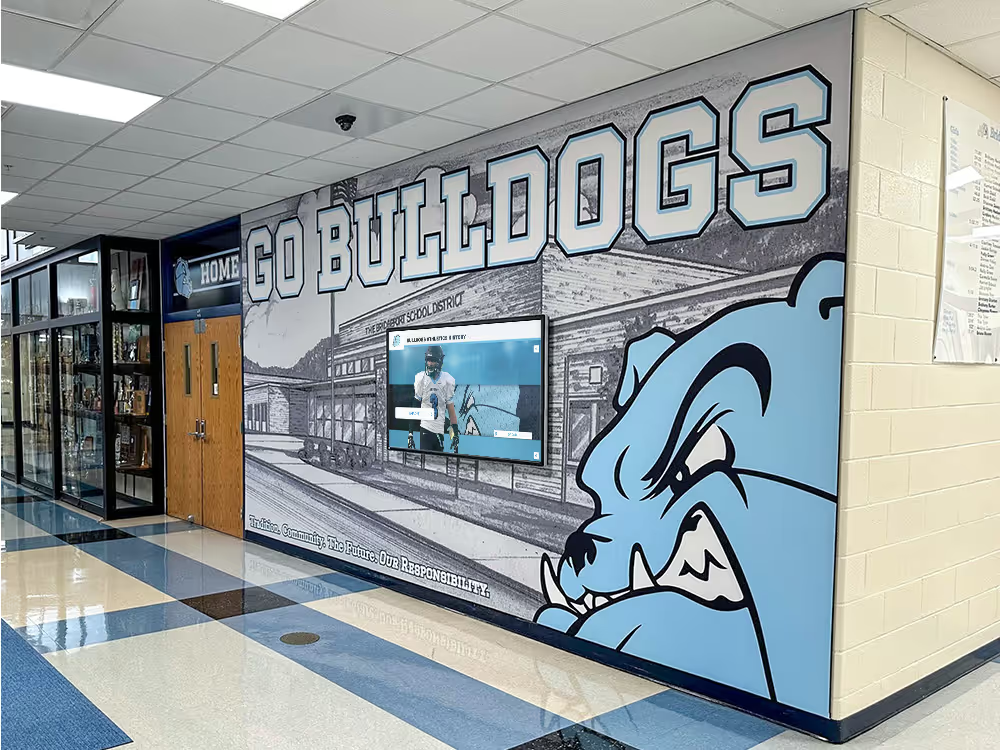
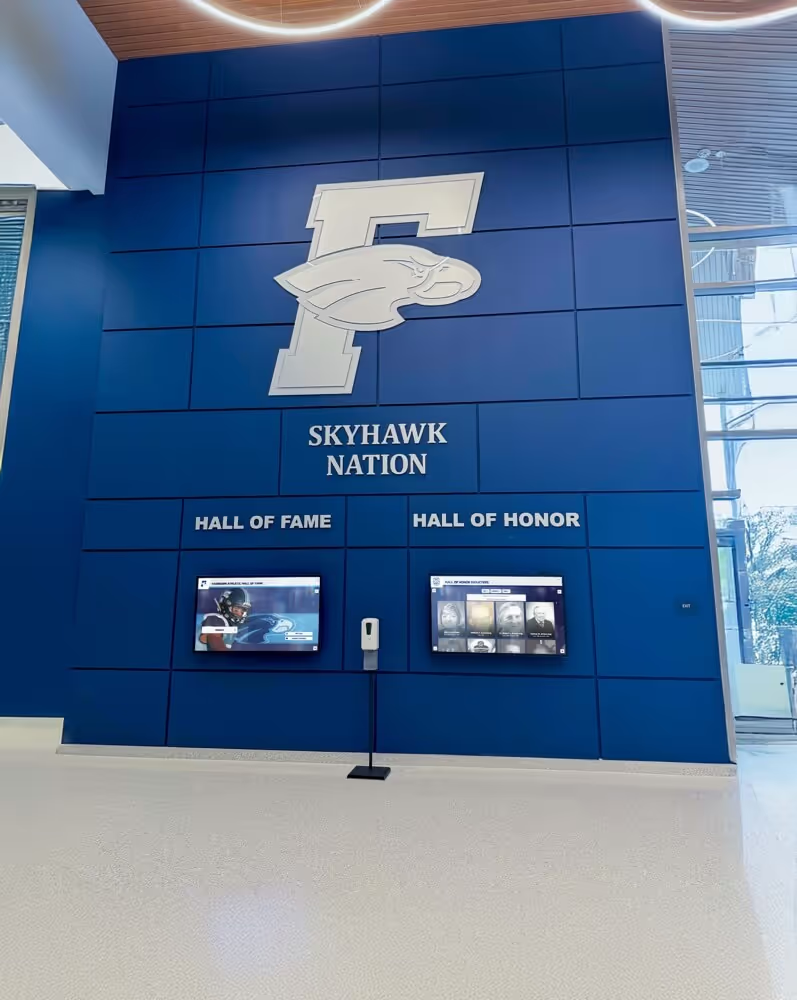
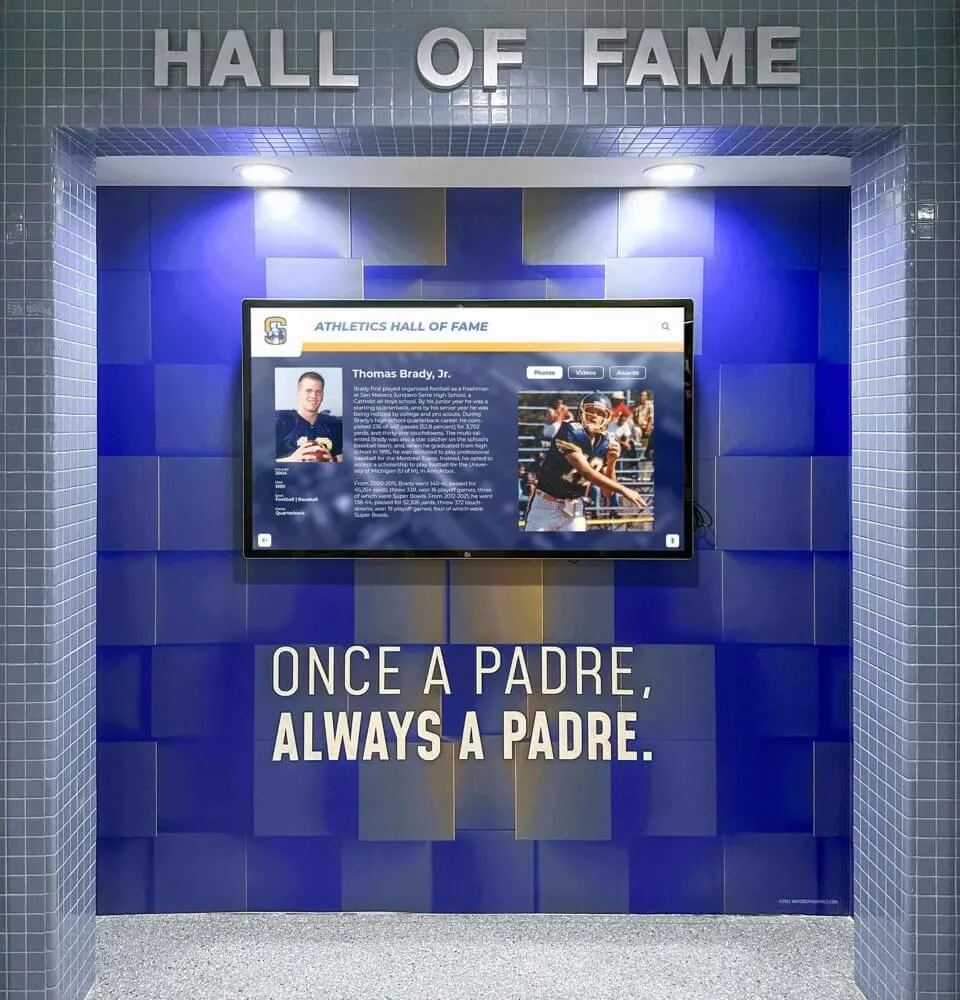
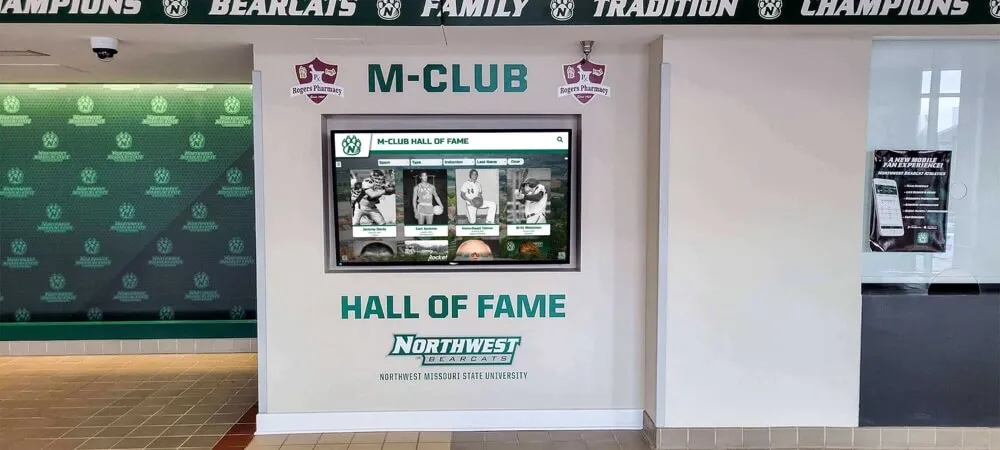
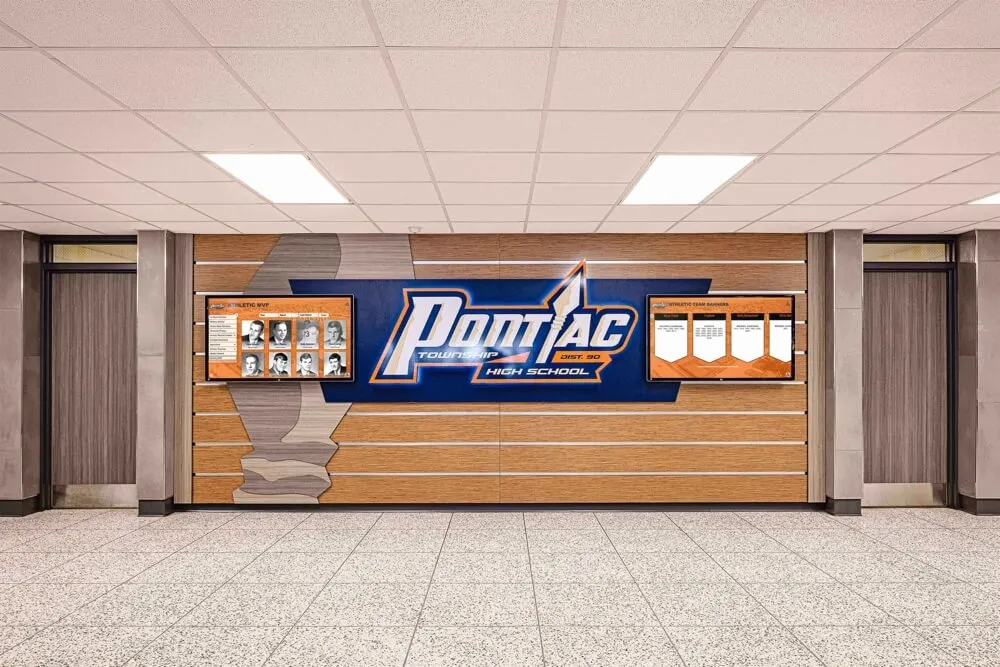
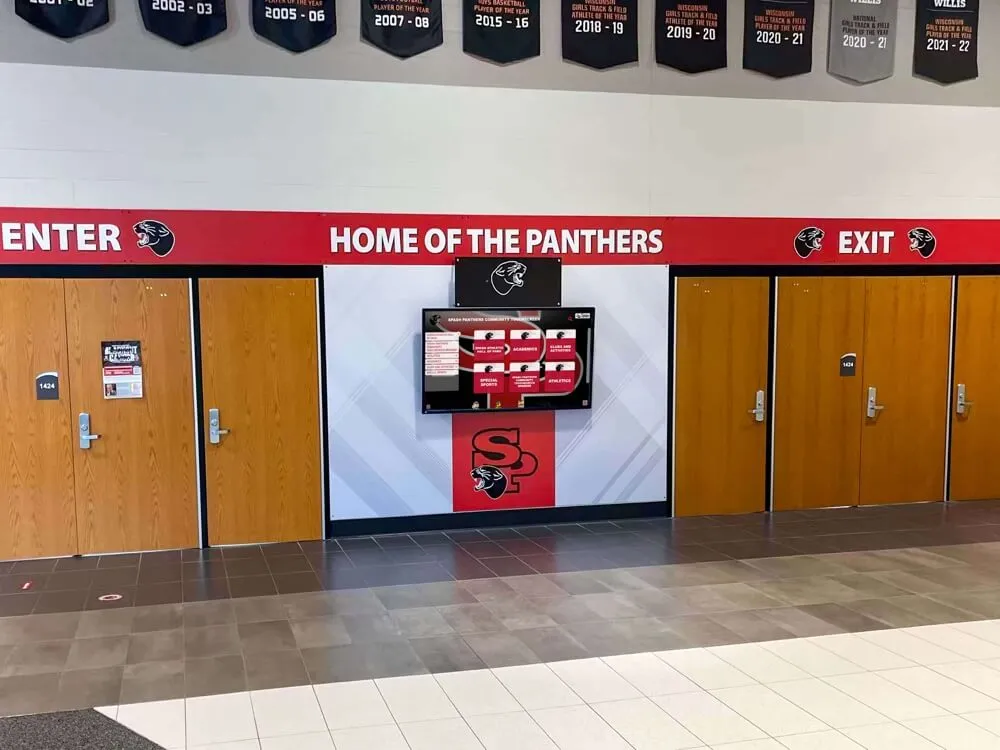
Digital recognition displays in school hallways preserve homecoming memories year-round, extending celebration beyond single parade days to ongoing school pride
Communication and Promotion Strategy
Successful parades require robust promotion reaching multiple audiences—current students, families, alumni, and broader community members. Multi-channel communication typically includes school communication systems (announcements, emails, newsletters), social media campaigns with visual content and participation calls, local media outreach (newspapers, radio, community calendars), physical signage around school and community, and direct outreach to potential participants like clubs, businesses, and civic groups.
Begin promotional communication 6-8 weeks before parades with regular updates building excitement and providing participation details. Create visual assets—graphics, photos from previous years, promotional videos—that communicate parade energy and encourage attendance.
Creative Float and Entry Ideas
Parade floats and entries create the visual spectacle and creative expression that define memorable homecoming celebrations.
Student Organization and Class Floats
Student-created floats showcase creativity, school spirit, and collaborative effort while giving students ownership of homecoming celebrations.
Grade Level Competition Floats
Organizing float competitions by grade level creates healthy rivalry while ensuring representation across the student body. Each grade designs and builds floats representing class identity, school themes, or homecoming concepts. Judging categories might include most creative, best spirit, most humorous, or best representation of school values.
Provide clear guidelines regarding float size, construction materials, safety requirements, and budget limits to ensure fair competition and manageable scope. Many schools allocate modest budgets to each class while encouraging creative problem-solving rather than expensive professional construction.
Club and Activity Group Displays
Showcase the breadth of school programming by inviting all clubs and activities to participate with floats, walking groups, or performance elements. Athletic teams, performing arts groups, academic clubs, service organizations, and special interest groups each contribute unique perspectives on school community while demonstrating the diverse opportunities available to students.
Club participation also broadens the number of students involved in homecoming, creating more inclusive celebrations rather than limiting participation to specific groups like student government or cheerleaders.
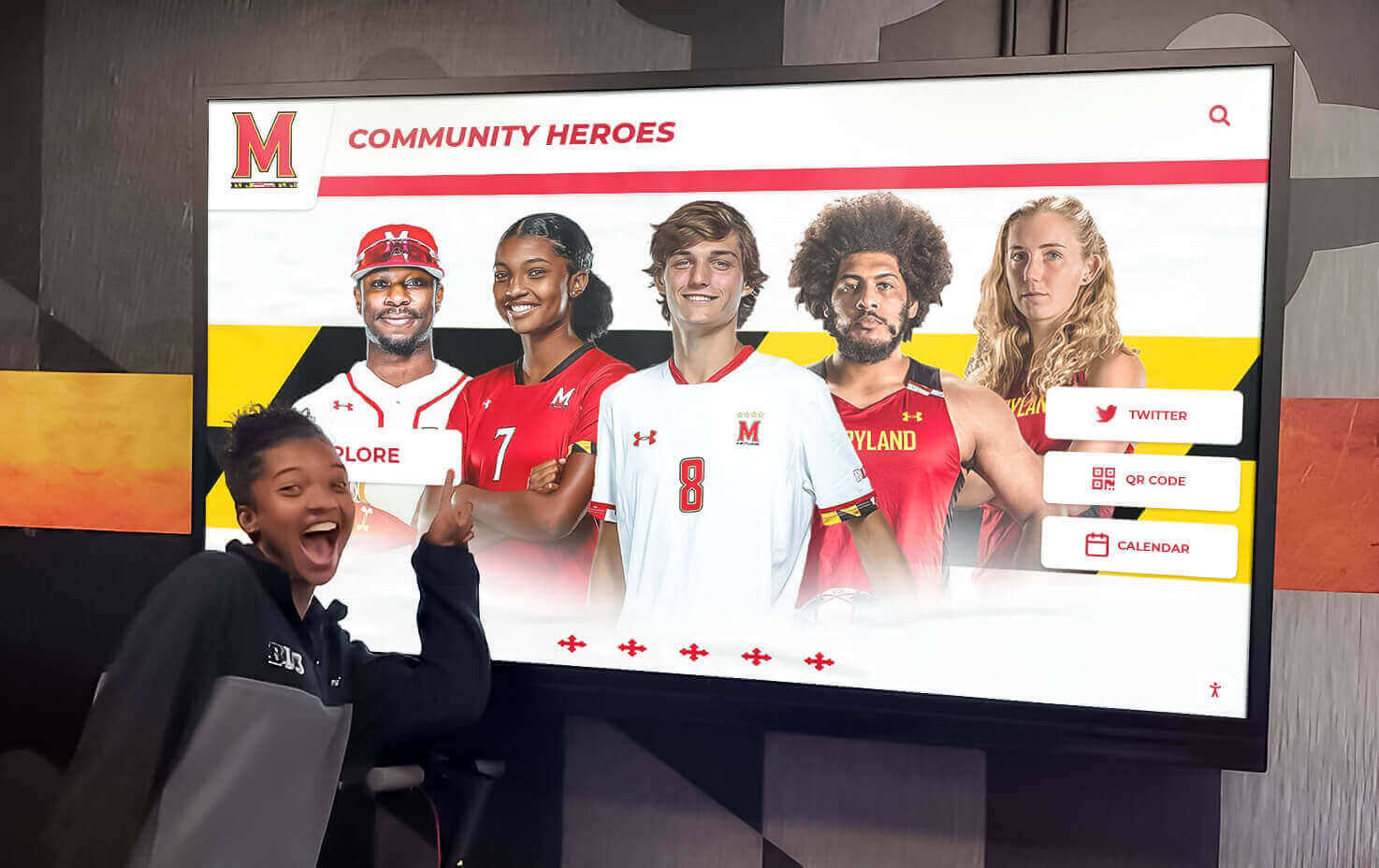
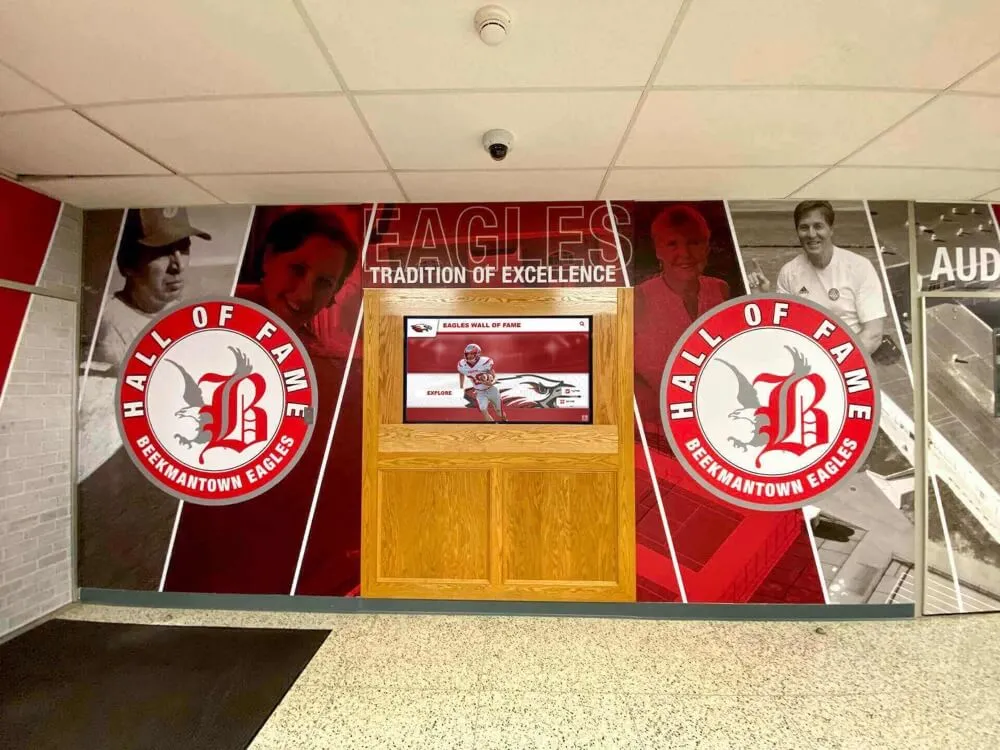
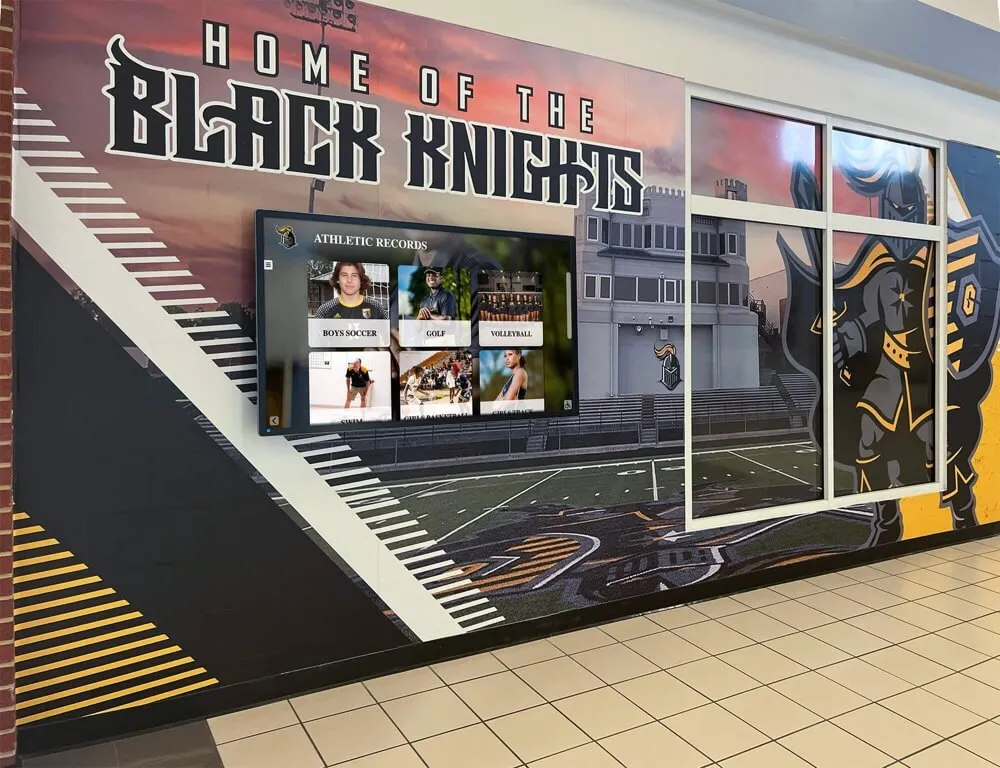
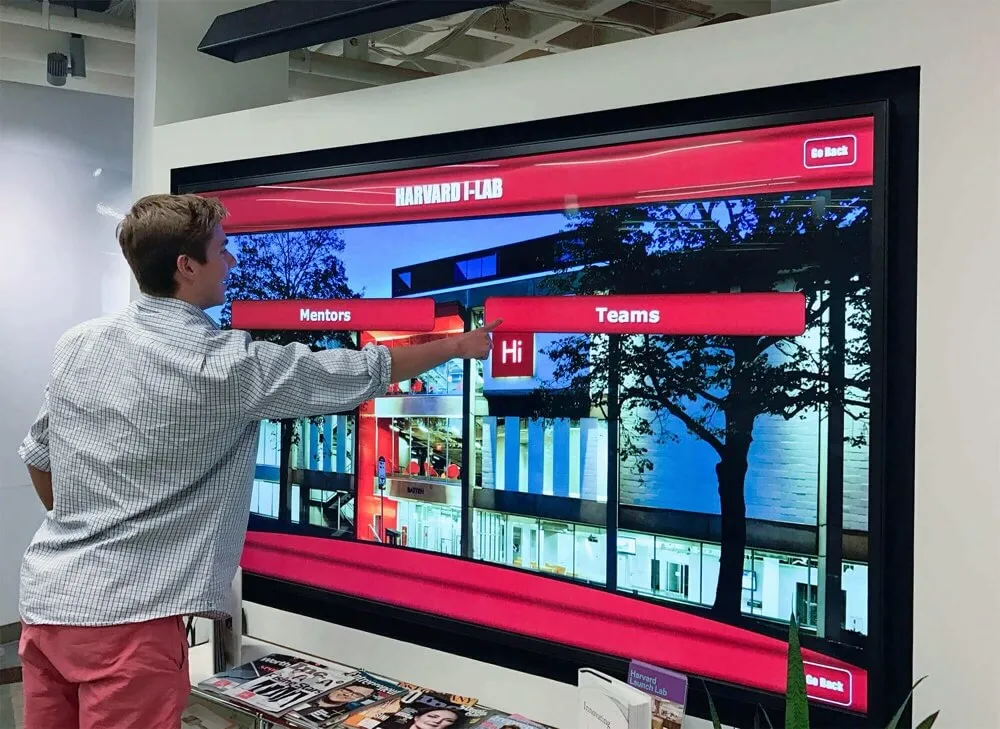
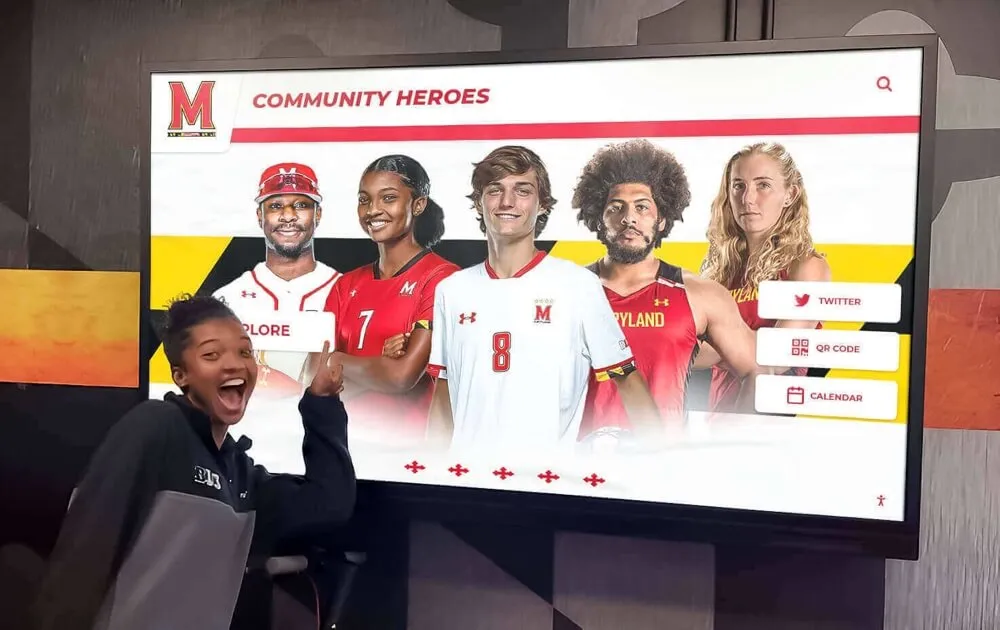
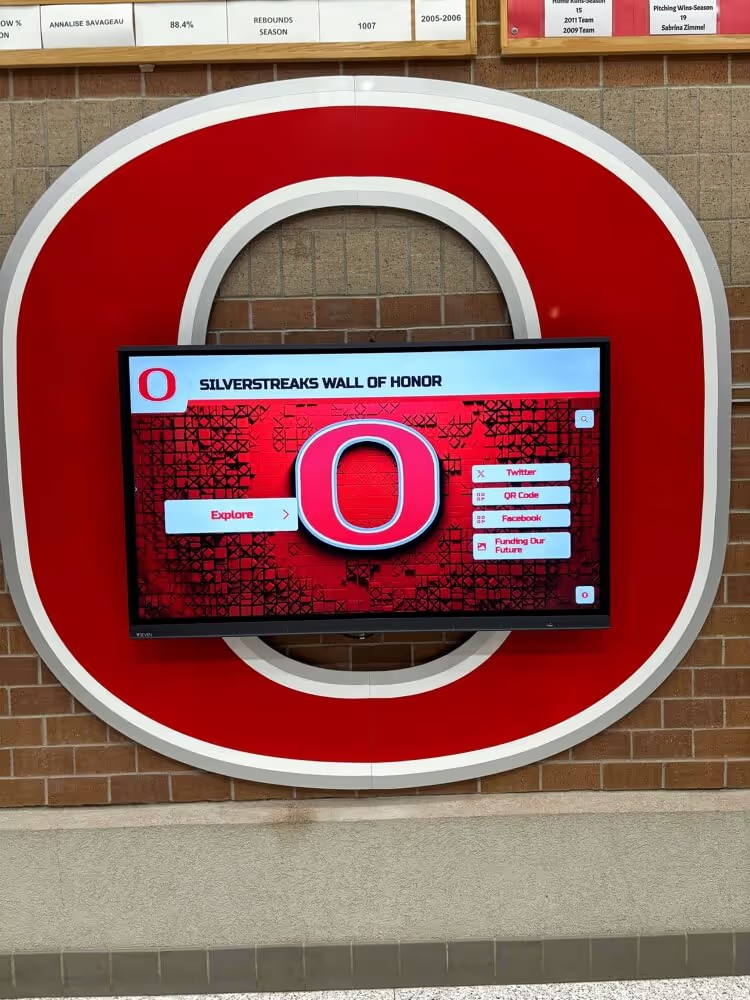
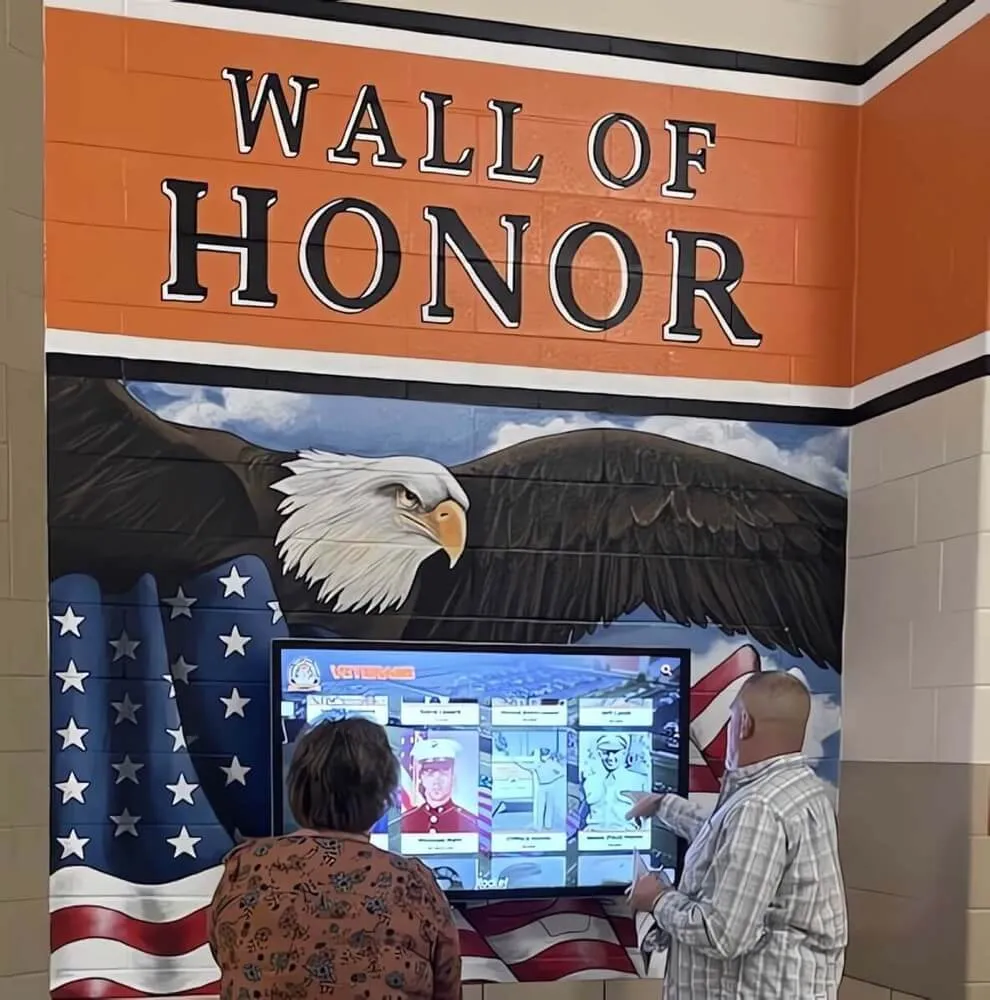
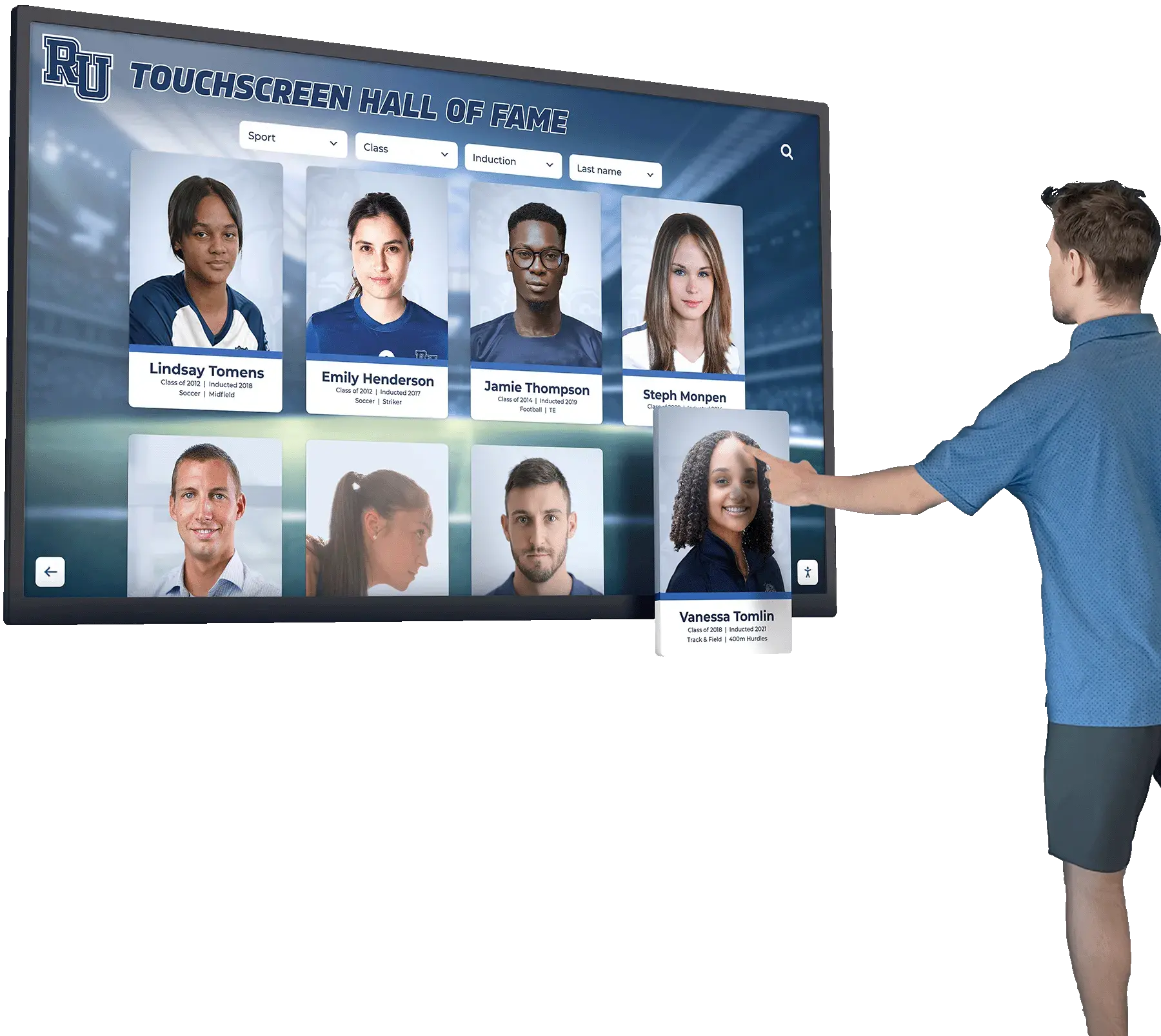
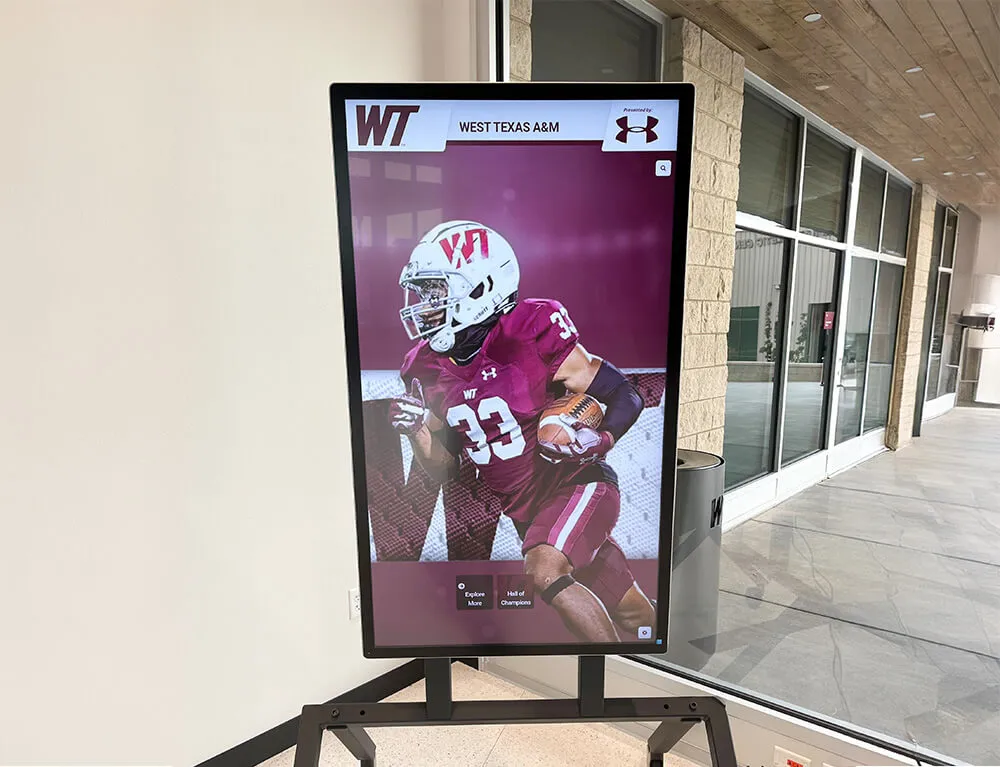
Interactive displays allow students to explore homecoming histories and celebrate past parade participants, connecting current celebrations with institutional traditions
Themed Float Categories
Provide creative direction by establishing themed categories encouraging specific creative expressions. Popular themes include decades (50s, 60s, 70s, 80s, 90s, 2000s), school history milestones, literary or film references, future visions, or current event connections. Themes provide creative frameworks while allowing diverse interpretations.
Balance giving creative direction with allowing sufficient flexibility for authentic student expression. The goal is inspiration and cohesion, not restrictive mandates that stifle creativity or exclude participants who don’t fit predetermined categories.
Alumni and Community Participation
Extending participation beyond current students creates intergenerational connections while honoring the broader community surrounding schools.
Reunion Class Floats and Groups
Coordinate with alumni relations to invite reunion classes celebrating milestone anniversaries (5th, 10th, 25th, 50th reunions) to participate with floats or walking groups. Alumni floats might showcase historical photos, represent era-specific trends or styles, or demonstrate how school traditions have evolved across decades.
Alumni participation creates powerful intergenerational moments when current students interact with graduates spanning multiple decades, reinforcing that school communities extend far beyond current enrollment. Planning high school reunion activities around homecoming weekends provides natural opportunities for reunion class parade participation.
Local Business and Organization Entries
Invite local businesses, civic organizations, youth groups, and community partners to participate with floats or displays. Business participation might include sponsored floats showcasing company support for schools, employee walking groups, or promotional vehicles. Community groups like Scouts, 4-H, recreational sports leagues, or service clubs demonstrate community breadth while exposing students to local opportunities.
Business and community participation also generates potential sponsorship relationships that can offset parade costs while strengthening school-community partnerships that extend beyond single events.
Distinguished Alumni and Community Leader Recognition
Designate distinguished alumni or respected community leaders as parade grand marshals, providing honorary positions that recognize exceptional contributions while adding prestige to celebrations. Grand marshals might ride in special vehicles, deliver brief remarks, or serve as parade judges, giving visible recognition that honors achievement while inspiring current students.
Consider creating categories like “Alumnus/Alumna of the Year,” “Distinguished Educator,” “Community Champion,” or “Outstanding Volunteer” that rotate across different contribution types, ensuring recognition reaches diverse community members over time.
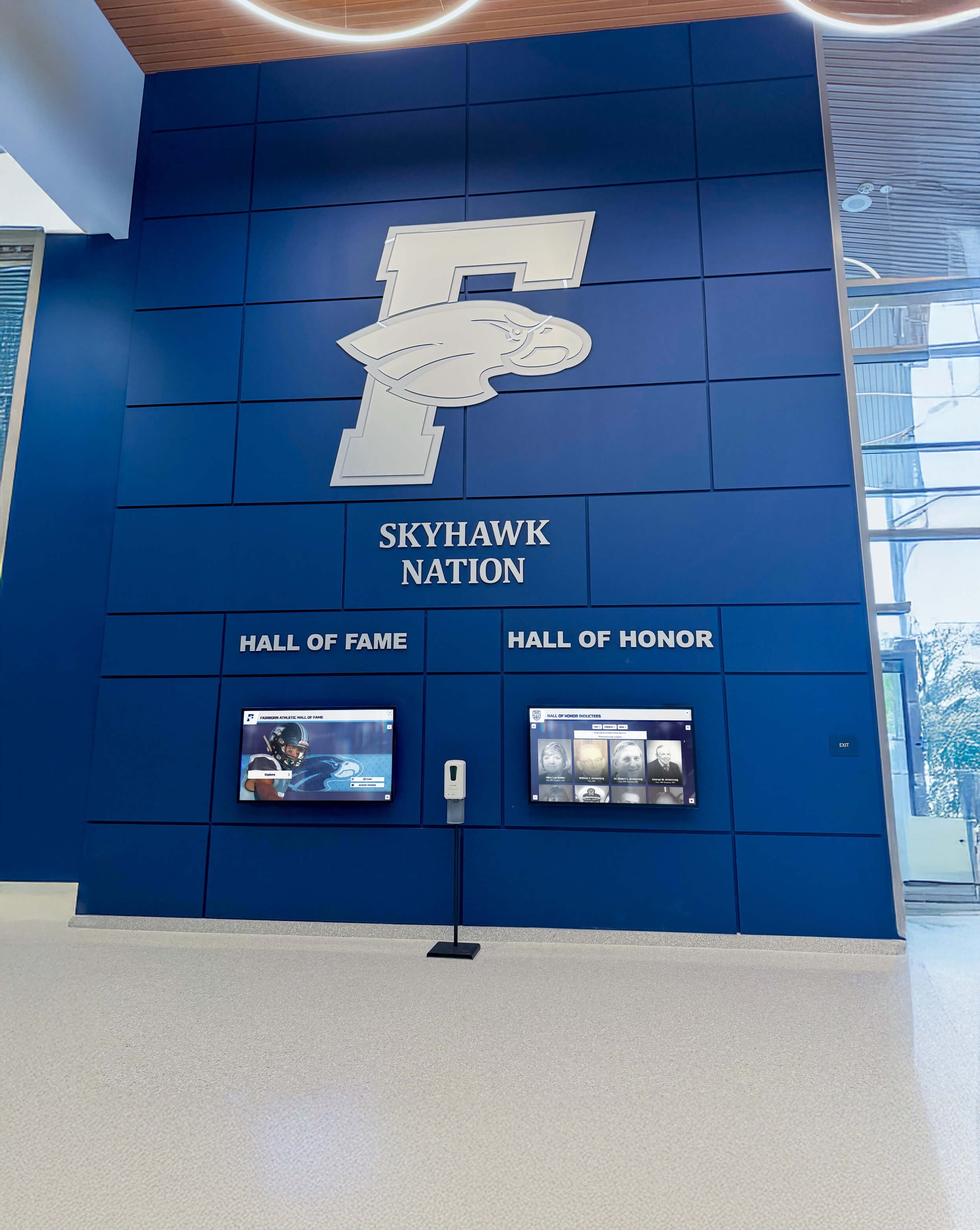
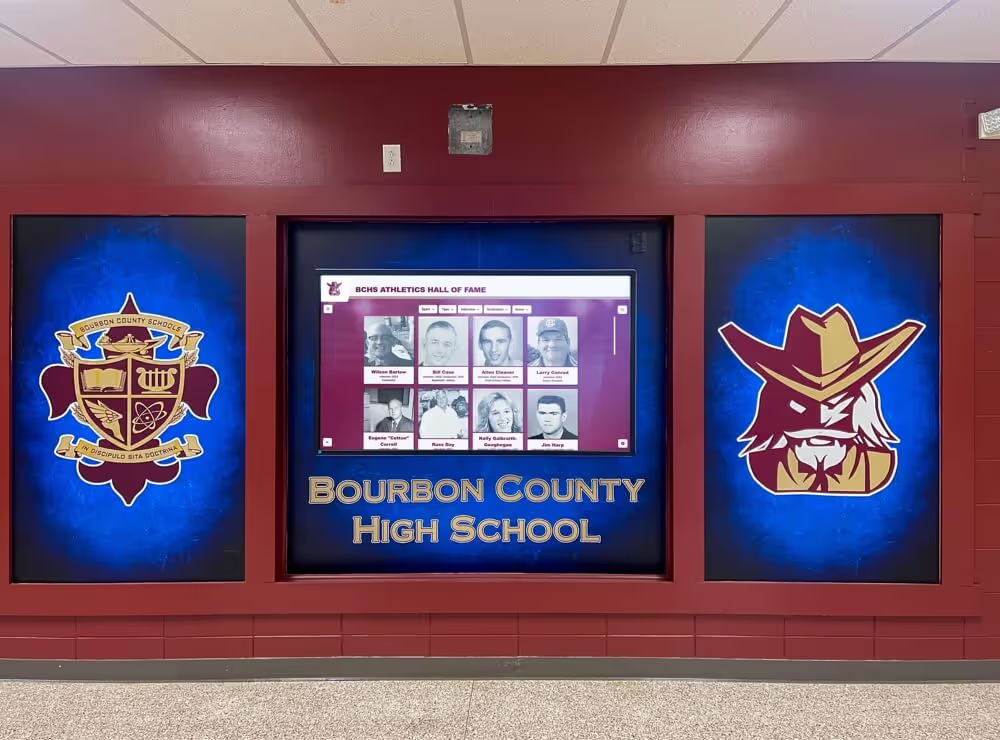
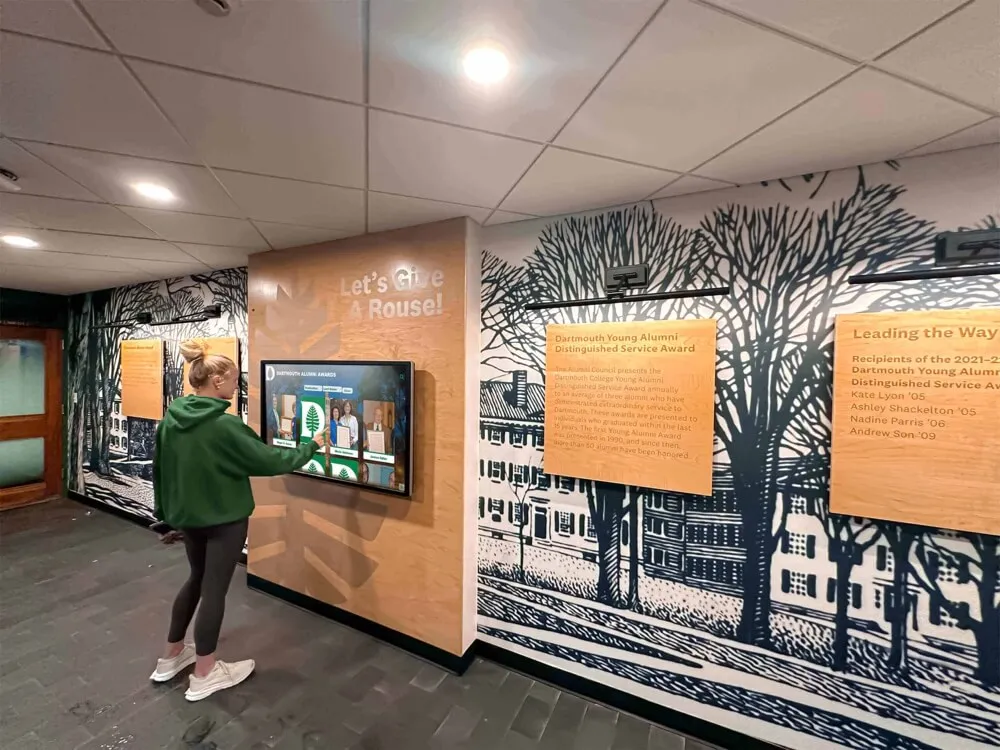
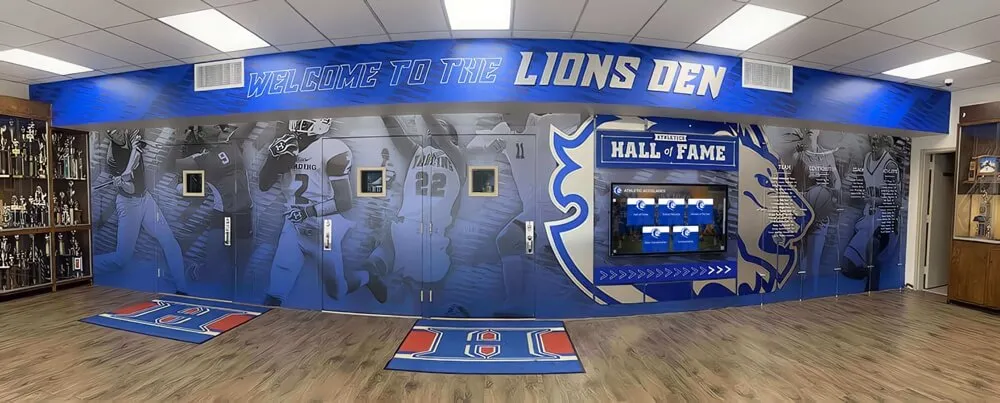
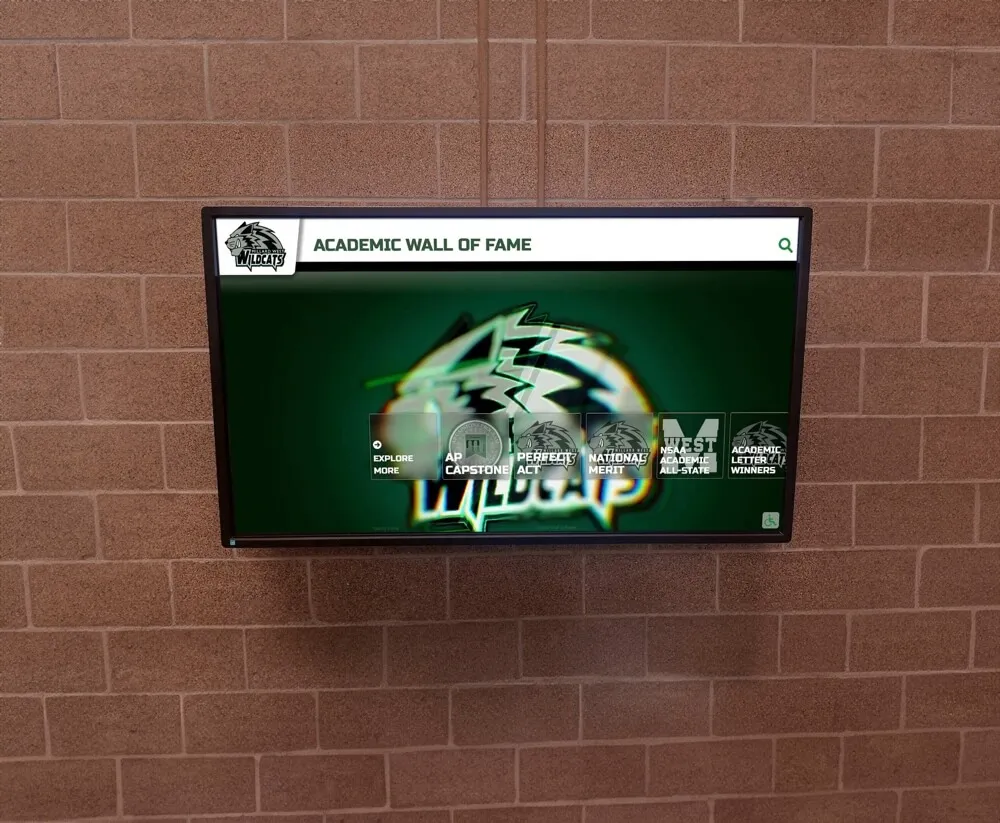
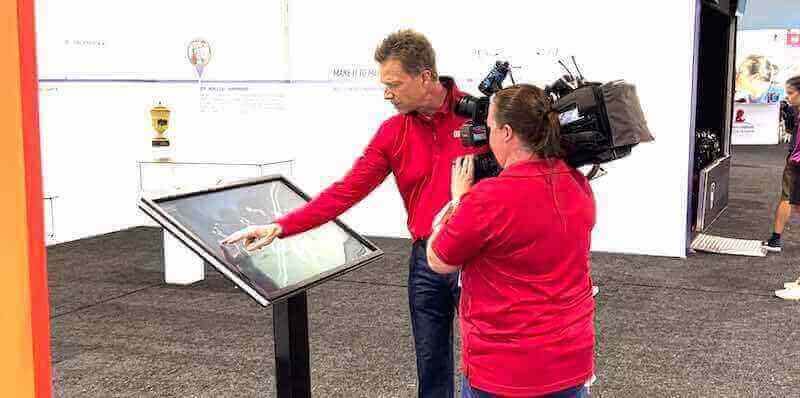
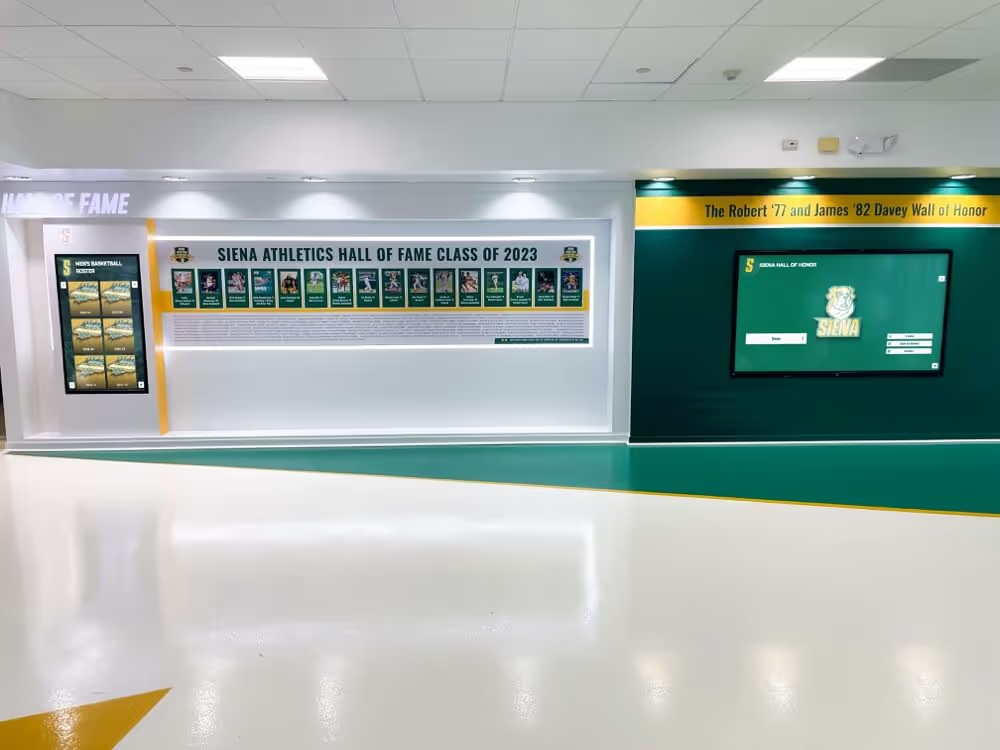
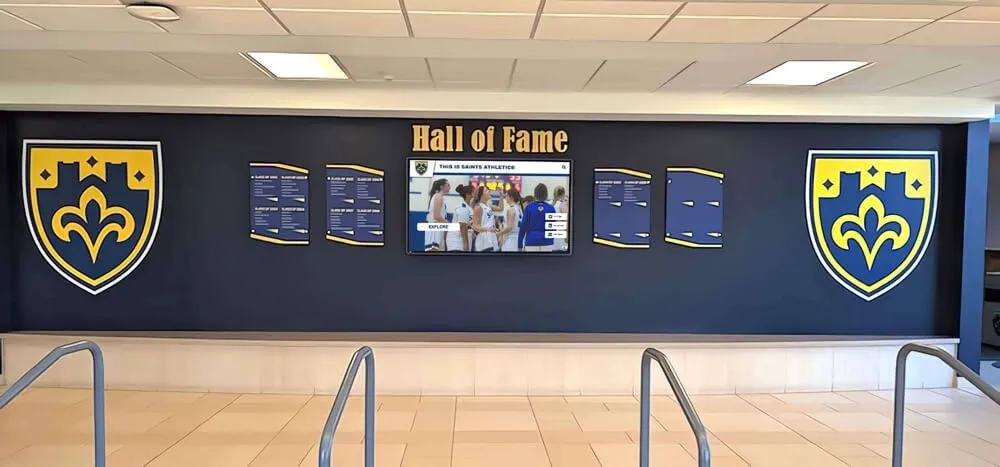
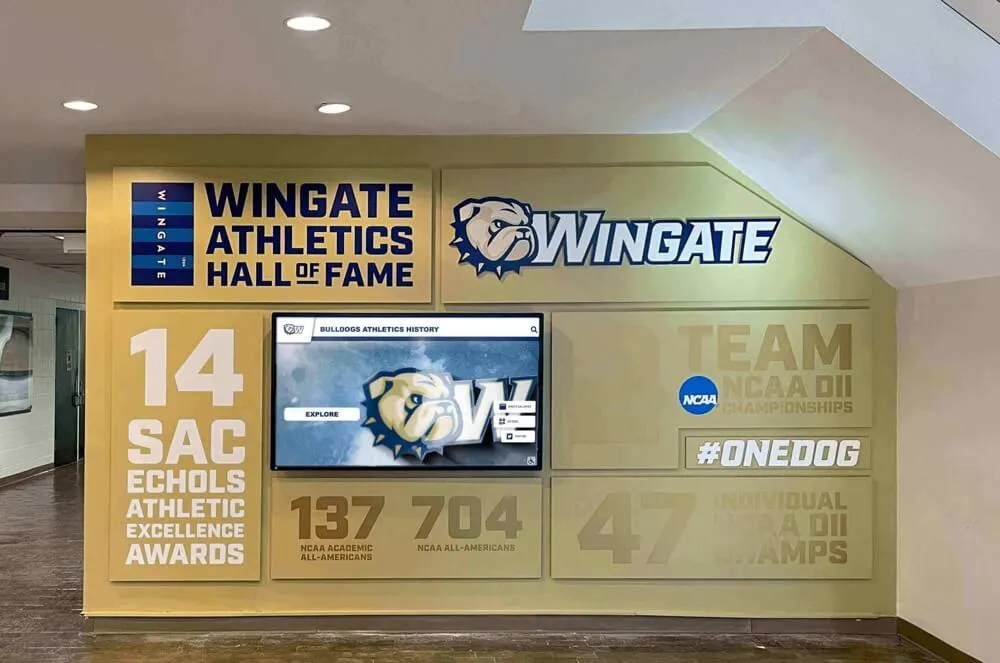
Permanent recognition spaces honor homecoming traditions and celebrate the school spirit that parade events showcase annually
Performance and Entertainment Elements
Adding dynamic performance components transforms static parades into engaging entertainment experiences.
Marching Band and Musical Performances
School marching bands provide essential parade atmosphere through spirited musical performances while showcasing student talent. Position bands strategically throughout parade lineups to maintain consistent energy levels—placing bands at the beginning, middle, and end prevents long gaps without musical accompaniment.
Invite feeder school bands, alumni band members, or community music groups to expand musical variety while building connection across educational levels and generations.
Dance Team and Cheerleading Exhibitions
School dance teams, cheerleaders, and spirit squads create visual energy through choreographed routines performed at intervals throughout parades or stationed at specific viewing areas. These performances generate crowd interaction and excitement while celebrating students’ athletic and artistic training.
Consider positioning performance groups at key spectator concentrations where stationary routines can engage large audience sections rather than requiring performers to maintain continuous movement throughout entire parade routes.
Mascot and Character Appearances
School mascots serve as beloved focal points generating excitement, particularly among younger spectators. Enhance mascot presence by including multiple costumed versions, historical mascot variations, or creative mascot interpretations that allow humorous or artistic expression.
Invite local sports team mascots, children’s entertainment characters, or community organization mascots to expand appeal across age groups while strengthening community partnership visibility.
Understanding how schools celebrate fall high school sports achievements through homecoming provides context for why football and other fall athletics often feature prominently in parade planning and scheduling.
Innovative Parade Concepts and Modern Approaches
Contemporary parade planning increasingly incorporates creative innovations that enhance traditional celebrations with fresh perspectives and modern expectations.
Interactive and Participatory Elements
Moving beyond passive viewing experiences, interactive parades engage spectators as active participants rather than mere audiences.
Crowd Participation Opportunities
Design parade elements specifically encouraging spectator involvement: floats distributing promotional items or candy to crowds, call-and-response chants led by participants that spectators join, designated interaction zones where spectators can temporarily join parades, or social media challenges encouraging spectators to post photos with specific hashtags or filters.
Interactive elements transform parades from performances to shared experiences, increasing emotional connection and memory formation while generating substantial social media content that extends parade reach beyond physical attendees.
Technology Integration
Leverage technology to enhance parade experiences and accessibility. Live streaming enables remote viewing for alumni, distant family members, or community members unable to attend physically. Real-time social media feeds displayed on screens or collected through event hashtags create digital participation layers. QR codes on floats can link to additional content, videos, or recognition pages. Drone photography captures unique aerial perspectives while creating promotional content for future events.
Solutions like Rocket Alumni Solutions enable schools to create digital archives where homecoming parade photos, videos, and participant information live permanently in searchable, accessible formats rather than losing precious memories to fading printed photos or outdated social media platforms.
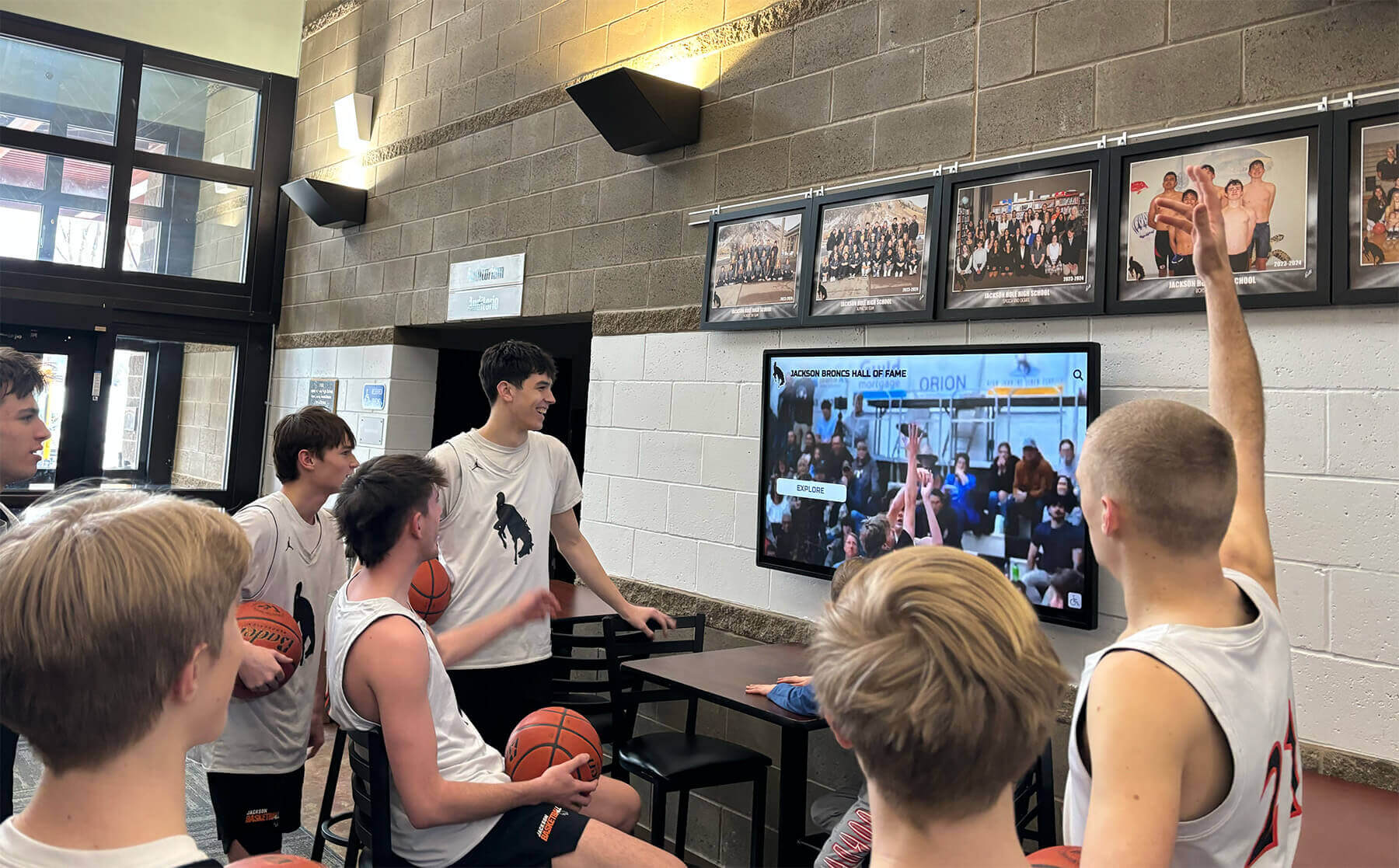
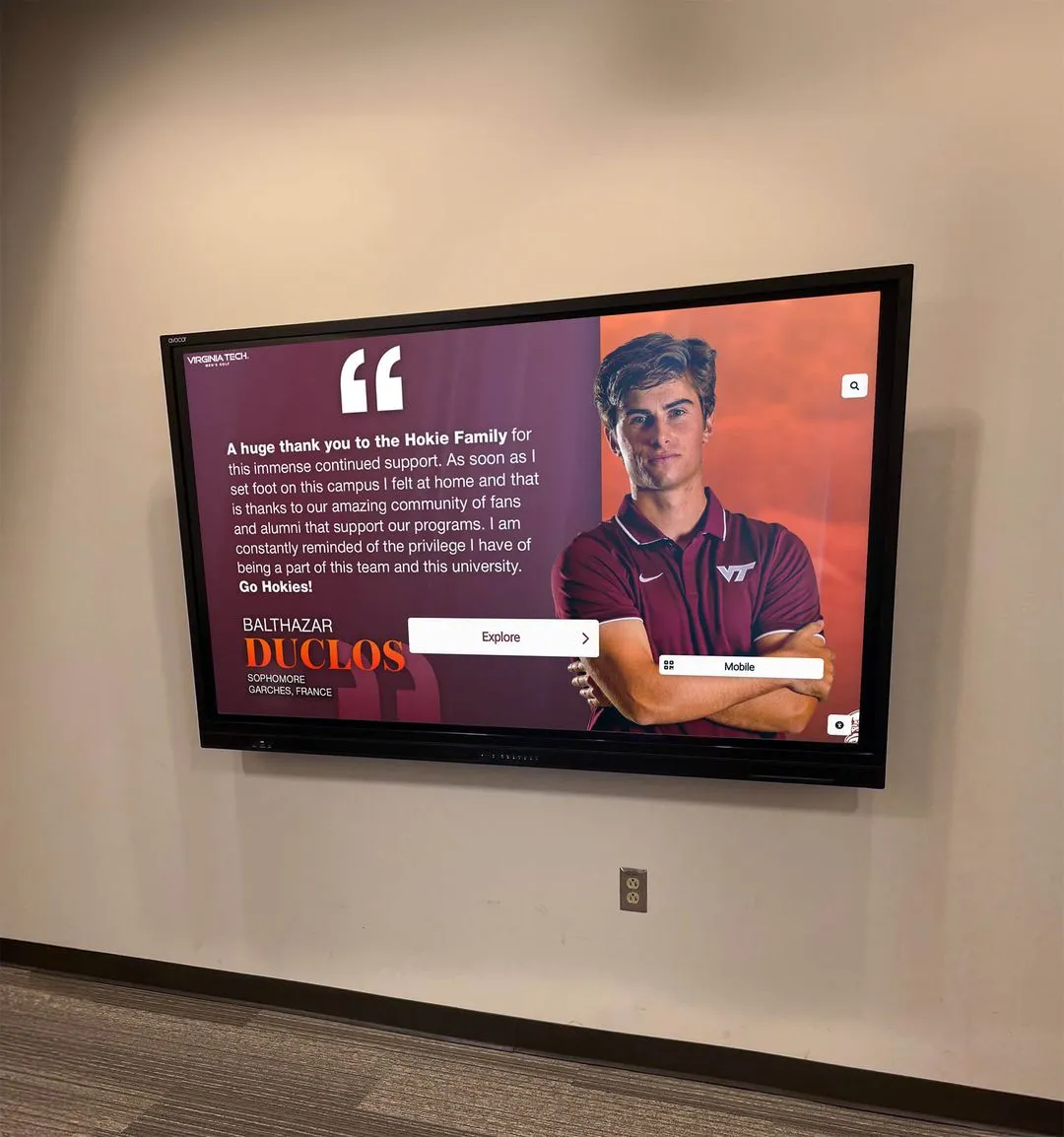
Digital displays enable schools to showcase homecoming parade highlights and past celebrations, creating year-round connection to traditions and school spirit
Sustainability and Environmental Consciousness
Modern parades increasingly reflect environmental values through sustainable practices that resonate with environmentally conscious students and families. Sustainable approaches include requiring recycled or biodegradable float materials, eliminating single-use plastics and non-recyclable items, using eco-friendly paints and adhesives, incorporating live plants that can be replanted post-parade, and coordinating post-parade cleanup with recycling and composting programs.
Establishing sustainability requirements demonstrates institutional values while teaching students environmental responsibility through practical application in events they care about deeply.
Inclusive and Accessible Design
Ensuring homecoming parades welcome and include all community members regardless of physical ability, age, or background creates truly celebratory experiences.
Physical Accessibility Considerations
Design parade routes and viewing areas accommodating individuals with mobility limitations, visual or hearing impairments, or other accessibility needs. Practical accommodations include designated accessible viewing areas with clear sightlines and seating, accessible restroom facilities along routes, sign language interpreters for announced content, audio descriptions for visually impaired spectators, and sensory-friendly zones with reduced noise for individuals with sensory sensitivities.
Early accessibility planning prevents last-minute scrambling while demonstrating that all community members deserve consideration and inclusion in celebratory events.
Cultural Representation and Inclusion
Ensure parade content reflects the full diversity of school communities through intentional inclusion of cultural performances, international student representations, multilingual announcements and signage, recognition of diverse traditions and celebrations, and leadership opportunities for students from all backgrounds.
Inclusive parades create belonging and celebration for everyone rather than narrowly representing dominant cultural groups while excluding others. Solicit input from diverse student populations, cultural clubs, and families when planning to ensure multiple perspectives inform decisions.
Multi-Generational Appeal
Design parade experiences engaging attendees across all ages—young children, teenagers, adults, and seniors—rather than focusing exclusively on narrow demographic segments. Multi-generational strategies include elements specifically appealing to young children (characters, candy distribution, colorful visuals), teen-focused performances and music, adult nostalgia and recognition elements, and senior-friendly pacing with ample seating and rest facilities.
Successful intergenerational parades recognize that homecoming celebrates entire communities spanning multiple life stages, each deserving consideration and engagement.
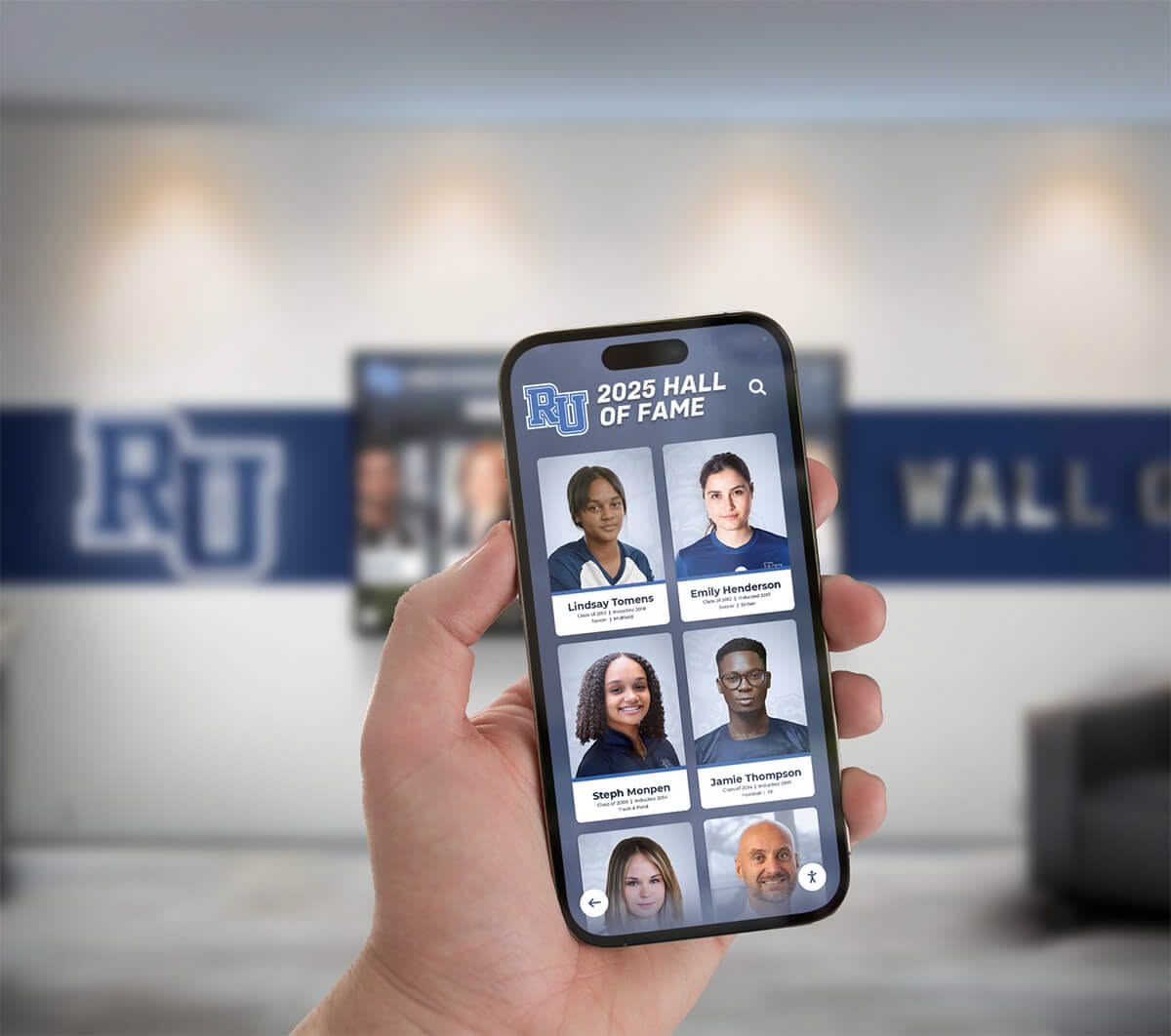
Mobile-accessible recognition platforms allow alumni to explore homecoming histories and share their own parade memories from anywhere, creating lasting digital community connections
Parade Route Planning and Logistics
Even the most creative parade concepts require solid logistical execution ensuring safe, smooth experiences for participants and spectators.
Route Selection and Design
Thoughtful route planning balances practical considerations with experiential goals, creating parade experiences that work efficiently while feeling celebratory and special.
Distance and Duration Considerations
Optimal parade lengths typically range from 0.5 to 1.5 miles, requiring 30-60 minutes for completion depending on participant numbers and density. Shorter routes suit younger participants, hot weather conditions, or limited volunteer availability. Longer routes accommodate larger participant groups while providing more spectator viewing opportunities.
Consider participant capabilities when setting distances—younger elementary students, older alumni, or individuals with physical limitations may struggle with longer routes requiring extended standing or walking. Provide transportation options like vehicles or wagons for those unable to walk entire distances.
Spectator Viewing Optimization
Design routes maximizing safe spectator accommodation while creating celebratory atmospheres. Ideal routes include sections with wide sidewalks or grass areas allowing spectator spreading, ending points at fields or parking areas enabling festival atmospheres after parades conclude, prominent locations showcasing parades to broader communities rather than hiding them on back streets, and minimal traffic disruption reducing community frustration while simplifying safety management.
Walk proposed routes during planning phases, imagining how parades will flow while identifying potential challenges like insufficient spectator space, sight-line obstructions, or safety concerns requiring mitigation.
Start and End Point Logistics
Parade start points require sufficient space for participant assembly, organization, and line-up coordination before parades begin. End points need capacity for participant dispersal without creating crowded chaos. Many schools start parades at or near campuses where participants can assemble in parking lots or fields, then route through communities, ending at athletic facilities where homecoming games or festivals occur.
Clear signage, volunteer guides, and communication systems help participants find assembly locations and understand lineup order, timing, and movement expectations.
Safety Management and Risk Mitigation
Comprehensive safety planning prevents accidents and emergencies while creating reassuring environments where families feel comfortable attending.
Traffic Control and Route Security
Work closely with local law enforcement and public safety officials to establish appropriate traffic control ensuring pedestrian safety while minimizing vehicle-pedestrian conflicts. Safety measures typically include barricades or cones defining parade routes and separating participants from spectators, traffic control at route intersection points, security personnel monitoring crowds for safety concerns, and medical support availability for injuries or emergencies.
Document safety plans in writing, distribute them to all volunteers and participants, and conduct pre-parade briefings ensuring everyone understands safety protocols and emergency procedures.
Participant Safety Guidelines
Establish clear safety rules for parade participants preventing common accidents and injuries. Safety guidelines typically address float construction requirements (secure structures, protected sharp edges, stable platforms), vehicle operation standards (slow speeds, trained drivers, spotter requirements), prop and decoration restrictions (no projectiles, controlled candy distribution), and appropriate behavior expectations (no horseplay, substance prohibition, adult supervision requirements).
Communicate safety requirements clearly during registration, include them in participation agreements, and enforce them consistently to prevent accidents that could harm participants or spectators.
Weather Contingency Planning
Develop plans addressing various weather scenarios that might impact parades. Consider advance cancellation triggers for severe weather like lightning storms or dangerous heat, delay protocols if short weather events might pass quickly, abbreviated route options for rain or uncomfortable conditions, and alternative date planning if cancellations become necessary.
Communicate weather decisions as early as possible through multiple channels ensuring broad notification reach. Indecision or last-minute changes create frustration, wasted effort, and participant reluctance to commit to future events.
Many schools coordinate homecoming parades with sports banquet celebrations and other athletic recognition events during fall seasons, creating cohesive celebration periods that honor student achievement across multiple formats.
Judging, Awards, and Recognition
Recognition programs create friendly competition while honoring exceptional effort, creativity, and school spirit demonstrated through parade participation.
Award Categories and Criteria
Thoughtfully designed award categories celebrate diverse excellence types rather than creating single “winner takes all” competitions that discourage most participants.
Traditional Award Categories
Standard parade awards typically include best overall float, most creative/original design, best school spirit, best use of theme, and people’s choice (spectator voting). These broad categories allow recognition of various excellence dimensions—technical execution, artistic creativity, thematic alignment, and popular appeal.
Specialized Recognition Categories
Expand recognition through specialized categories like best student-built float (entirely student-created), most sustainable/eco-friendly design, best alumni participation, best community partnership, most humorous/entertaining, and best performance group. Specialized categories enable recognition of more participants while highlighting specific values like sustainability, community connection, or student ownership.
Participation Recognition
Beyond competitive awards, recognize all participants with certificates, digital badges, social media features, or inclusion in recognition displays acknowledging contribution and effort. Universal participation recognition creates inclusive celebration rather than distinguishing only top performers while others feel overlooked.
Digital recognition platforms enable schools to honor all parade participants in searchable databases where students, families, and alumni can discover their inclusion years or decades later. Solutions like Rocket Alumni Solutions provide touchscreen displays in school lobbies and online platforms where homecoming parade participants, photos, and achievements remain permanently accessible rather than forgotten after single events conclude.
Judging Process and Panel Selection
Fair, transparent judging creates trust in recognition outcomes while ensuring credible evaluation of parade entries.
Judge Selection and Training
Select judges with appropriate expertise, community respect, and impartiality. Ideal judge panels typically include combination of community leaders with event experience, alumni representing different generations, local business representatives familiar with creative work, and educators or administrators not directly involved in participant groups (preventing bias).
Provide judges with clear evaluation criteria, scoring rubrics, and standardized procedures ensuring consistent evaluation across all entries. Pre-parade judge training reviews categories, criteria, and processes while addressing questions.

Permanent recognition displays in school hallways honor homecoming traditions alongside other achievements, creating pride-building environments celebrating community excellence
Transparent Evaluation Criteria
Communicate evaluation criteria clearly to participants before parades, enabling them to understand what judges value and make informed creative decisions. Typical criteria might include creativity and originality (25%), technical execution and craftsmanship (25%), thematic alignment and school spirit (25%), and overall impact and entertainment value (25%).
Weighted criteria prevent single dimensions from dominating while ensuring balanced evaluation considering multiple excellence aspects. Adjust criteria weights based on institutional priorities and values you want to encourage.
Timely Results Communication
Announce awards promptly after parades conclude—ideally during or immediately after homecoming games or festival events when most participants remain present. Timely recognition maintains excitement and celebration momentum while ensuring award winners receive deserved acknowledgment when crowds remain present to celebrate with them.
Share recognition broadly through social media, school communications, local media, and recognition displays ensuring participants and families who left early still discover outcomes and honors.
Post-Parade Activities and Extended Celebrations
Homecoming parades often anchor broader celebration days including additional activities that extend community engagement beyond parade hours.
Festival and Celebration Activities
Many schools organize post-parade festivals creating extended celebration atmospheres with diverse activities engaging multiple age groups and interests.
Food and Refreshments
Coordinate food vendors, food trucks, or concession operations providing convenient meals and snacks for families attending multi-hour celebrations. Food sales can generate revenue supporting school programs while providing convenient dining options that keep families on-site rather than dispersing for meals elsewhere.
Consider partnering with booster clubs or parent organizations to operate food service as fundraising opportunities benefiting athletic programs, arts organizations, or other student activities.
Student Activities and Entertainment
Provide age-appropriate activities like inflatable games, face painting, carnival games, craft stations, or performance stages with student talent showcases. Activity areas keep younger children engaged while parents socialize, creating family-friendly environments that encourage longer stays and deeper community connection.
Free or low-cost activities maximize accessibility, ensuring families of all economic circumstances can participate fully without financial barriers limiting engagement.
Campus Tours and Facility Showcases
Leverage homecoming as opportunity to showcase campus improvements, new facilities, or program achievements through guided tours or open house formats. Alumni particularly appreciate seeing how campuses have evolved while current students and prospective families gain appreciation for institutional investments and program excellence.
Tours might highlight new academic buildings, renovated athletic facilities, technology investments, or recognition displays celebrating institutional achievement. These showcases subtly reinforce value propositions supporting continued alumni engagement and family investment in school communities.
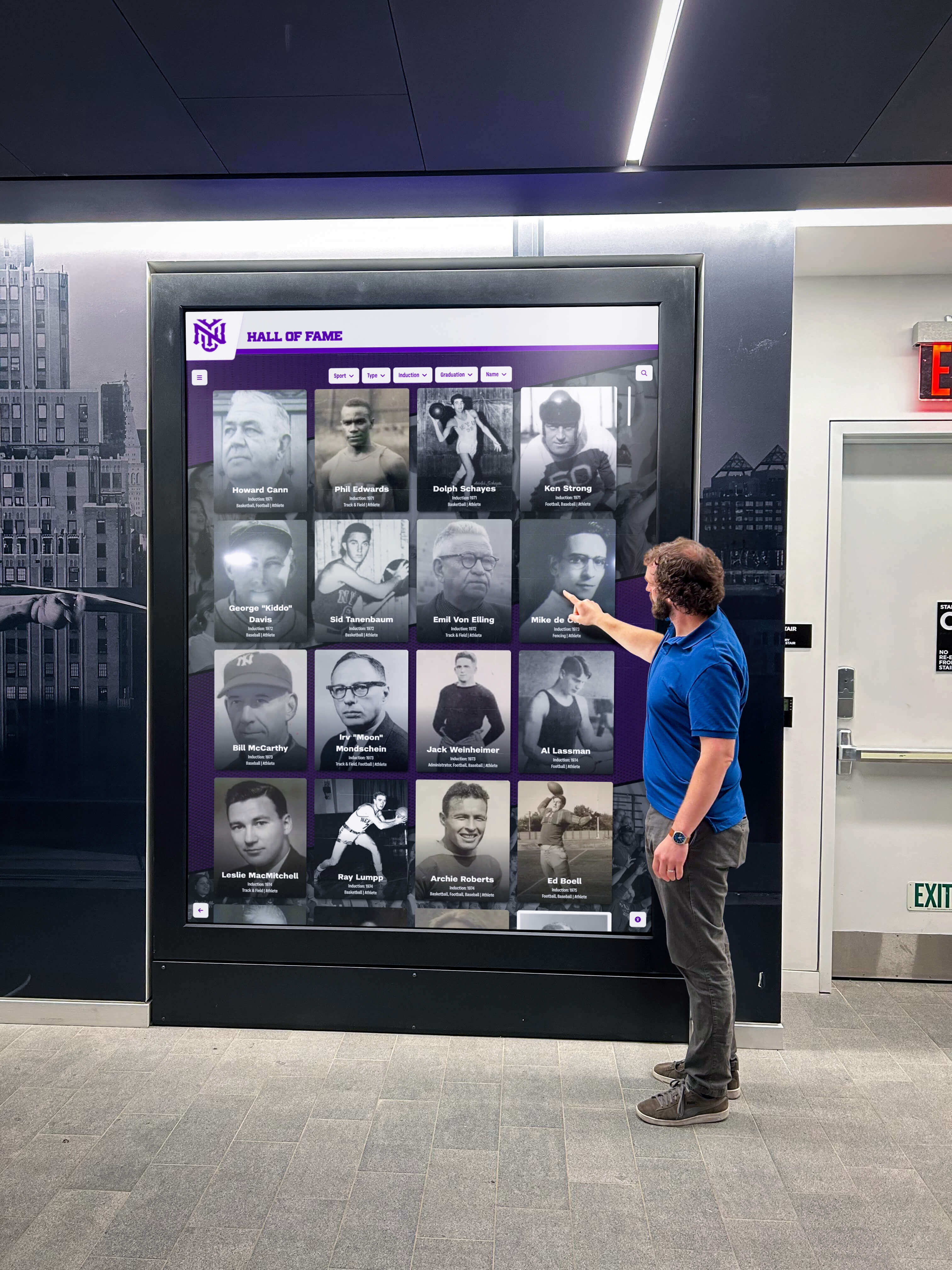
Interactive touchscreen displays allow homecoming visitors to explore school history, find their names and photos in digital archives, and share memories with younger generations
Homecoming Game and Halftime Celebrations
Football games or other athletic competitions typically follow homecoming parades, creating natural transitions from community celebrations to competitive athletics.
Halftime Recognition Ceremonies
Utilize halftime as platform for significant recognition moments including homecoming court presentations, distinguished alumni introductions, championship team acknowledgments, or community partner appreciation. These ceremonies honor achievement while engaging entire stadium crowds in celebration beyond athletics alone.
Coordinate ceremony timing, participant preparation, and logistical details well in advance, preventing awkward delays or rushed presentations that diminish recognition impact.
Coordinated Spirit and Entertainment
Align marching band halftime shows, dance team performances, and spirit activities with broader homecoming themes creating cohesive celebration experiences where multiple events feel intentionally connected rather than randomly scheduled. Thematic coordination enhances overall impact while demonstrating organizational thoughtfulness.
Memory Preservation and Digital Archiving
Homecoming parades generate tremendous photos, videos, and memories that deserve preservation beyond temporary social media posts that quickly disappear into digital oblivion.
Photography and Videography Coordination
Designate official photographers and videographers capturing comprehensive parade documentation including overall parade atmosphere, individual float and group coverage, spectator reactions, and award presentations. Professional or high-quality documentation enables creating archives, promotional materials, and recognition displays celebrating parade excellence.
Consider recruiting photography students, parent volunteers, or local professionals willing to contribute services in exchange for recognition or small honorariums.
Digital Recognition and Archive Platforms
Create permanent digital homes where homecoming parade photos, videos, participant rosters, and award histories remain accessible for years and decades. Traditional approaches like printed programs or social media posts disappear quickly, losing precious memories that families and alumni want to revisit.
Digital recognition platforms like Rocket Alumni Solutions enable schools to create searchable databases where students, alumni, and families can discover their homecoming participation decades later. Touchscreen displays in school lobbies showcase parade histories, while online platforms provide 24/7 access from anywhere in the world. These permanent digital archives demonstrate that homecoming memories matter and deserve preservation just like championship trophies or academic honors.
Social Media and Community Sharing
Encourage parade photo and video sharing through dedicated event hashtags creating crowd-sourced documentation capturing diverse perspectives beyond official photography. Feature compelling user-generated content on school social channels, recognizing contributors while amplifying reach and engagement.
Create photo galleries on school websites where participants can upload their own images, building community archives preserving memories through collective contribution. Recognize prolific contributors through featured photographer acknowledgments or similar appreciation.
Budget-Friendly Parade Ideas and Cost Management
Memorable homecoming parades don’t require massive budgets—creativity and community engagement often prove more impactful than expensive production values.
Cost-Effective Float Construction
Help participants create impressive floats within modest budgets through smart material strategies and creative approaches.
Recycled and Repurposed Materials
Encourage float builders to use recycled cardboard, repurposed fabrics, borrowed decorations, natural materials like hay bales or pumpkins, and donated supplies from local businesses. Recycled material approaches save money while teaching sustainability and creative problem-solving.
Create material donation drives where community members contribute usable items like cardboard, fabric scraps, craft supplies, or decorations, pooling resources that reduce per-participant costs while building community investment.
Simplified Float Platforms
Expensive custom-built trailers aren’t necessary—wagons, decorated vehicles, rolling carts, or even walking groups carrying banners create effective parade presentations without construction costs. Focus creative energy on decorations, costumes, and performances rather than elaborate mechanical platforms.
Provide simple platform options that participants can borrow or rent affordably, reducing barriers to participation for groups lacking construction expertise or resources.
Volunteer Coordination and In-Kind Support
Leverage community volunteerism and donated services reducing cash expenditures while building broader community ownership.
Parent and Community Volunteer Recruitment
Recruit volunteer support for tasks like route setup and takedown, traffic control assistance, float judging, spectator management, and event photography. Clear volunteer role descriptions, manageable time commitments, and appreciation recognition encourage participation while distributing workload across many contributors rather than overwhelming small core teams.
Business Sponsorships and In-Kind Donations
Solicit local business support through sponsorships covering specific parade costs in exchange for recognition. Sponsorship packages might fund awards and trophies, promotional materials and printing, sound systems and equipment rental, or post-parade festival activities.
In-kind donations of supplies, services, or equipment reduce cash needs—businesses might donate materials for float building, provide vehicles for transportation, or contribute food and beverages for participants and volunteers.
Building relationships with community donors who support school events creates lasting partnerships that extend beyond homecoming parades to benefit multiple programs and initiatives throughout the year.
Measuring Success and Continuous Improvement
Evaluate homecoming parade outcomes to understand what works, identify improvement opportunities, and demonstrate value justifying continued investment.
Participation Metrics and Engagement Data
Track quantitative measures providing objective assessment of parade scale and reach.
Participant Counts and Diversity
Document how many students, alumni, community groups, and businesses participated across different categories. Track participation trends over years—growing numbers suggest increasing engagement while declining participation might signal needed changes.
Evaluate participant diversity ensuring celebrations include representation across grade levels, activities, demographics, and community segments rather than dominated by narrow groups.
Spectator Attendance and Reach
Estimate spectator attendance through observation and counting techniques, though precise numbers prove challenging for street events. Track digital reach through livestream viewers, social media impressions, website traffic, and media coverage quantifying awareness beyond physical attendees.
Growing attendance and reach indicate successful community engagement while stagnant or declining numbers warrant programming reassessment.
Qualitative Feedback and Satisfaction
Supplement metrics with feedback providing nuanced understanding of parade experiences and perceived value.
Post-Event Surveys and Feedback
Distribute brief surveys to participants, volunteers, and spectators gathering input on satisfaction, favorite elements, improvement suggestions, and likelihood of future participation. Digital surveys via email or online forms maximize response rates while minimizing data collection burden.
Ask open-ended questions enabling detailed feedback beyond numerical ratings—“What was your favorite parade element?” and “What would make next year’s parade better?” often yield actionable insights.
Debrief Meetings and Planning Reflections
Conduct planning committee debriefs shortly after events while memories remain fresh, discussing what worked well, challenges encountered, and specific improvements for future planning. Document insights in writing, creating institutional knowledge that prevents repeated mistakes while preserving successful strategies across leadership transitions.
Continuous improvement cultures treat each parade as learning opportunity informing increasingly successful future celebrations rather than repeating identical approaches regardless of outcomes.
Creating Year-Round School Spirit and Pride
While homecoming parades happen annually, the spirit and community pride they generate can extend throughout the year through strategic recognition and engagement approaches.
Permanent Recognition Displays
Transform temporary parade excitement into lasting pride through permanent displays celebrating homecoming traditions and participants.
Physical and Digital Recognition Installations
Install hallway displays featuring homecoming parade photos, award winners, and participation histories. Digital recognition platforms enable showcasing entire parade archives in searchable, interactive formats where students and visitors can explore decades of homecoming celebrations, finding their own participation or discovering institutional traditions.
Modern solutions like Rocket Alumni Solutions provide touchscreen walls displaying homecoming histories alongside other school achievements—athletic records, academic honors, and alumni accomplishments. These integrated displays position homecoming as part of broader excellence traditions rather than isolated annual events.
Online Archives and Virtual Museums
Create website sections dedicated to homecoming history where alumni and families can browse past parades, find their names and photos, and share memories. Searchable digital archives extend accessibility beyond physical school visitors to global alumni communities seeking connection to their school experiences.
Virtual formats particularly engage alumni unable to visit campuses frequently but eager to maintain emotional connections to institutional traditions and communities that shaped their formative years.
Connecting Homecoming to Broader School Culture
Position homecoming parades as expressions of year-round values and spirit rather than isolated annual events disconnected from daily school life.
Integration with Spirit and Recognition Programs
Connect homecoming preparation to spirit week activities, pep rally programming, and ongoing recognition initiatives celebrating student achievement across academics, athletics, arts, and service. This integration creates cohesive school culture where homecoming feels like natural culmination of continuous celebration rather than disconnected spectacle.
Building Traditions and Institutional Identity
Establish signature parade elements that become anticipated traditions—specific float competitions, recurring performance features, traditional routes or locations, or unique recognition ceremonies. Consistent traditions create institutional identity and nostalgic connections as alumni return to experience elements they remember from their own student years.
Balance tradition with innovation—preserving beloved elements while refreshing approaches preventing stagnation and maintaining relevance for current students who deserve creating their own memories rather than simply repeating past generations’ experiences.
Conclusion: Creating Homecoming Parades That Build Lasting Community
Successful homecoming parades achieve something remarkable—they unite diverse community members across ages, backgrounds, and connections to schools in shared celebrations of pride, tradition, and belonging. The planning effort required is substantial, but the community value generated extends far beyond single parade days.
The most memorable homecoming parades share common characteristics: clear purpose connecting celebrations to institutional values and traditions, inclusive participation opportunities ensuring broad community representation, creative expression showcasing student and community talent, solid organizational foundations enabling smooth execution, and meaningful recognition honoring contributions and achievements.
Perhaps most importantly, successful homecoming parades connect temporary celebrations to permanent institutional pride through recognition systems that preserve memories, honor participants, and inspire future generations. When schools invest in preserving homecoming histories through permanent displays and accessible archives, they demonstrate that these traditions matter and deserve celebration not just during annual events but throughout the year and across decades.
As you plan your school’s homecoming parade, focus on creating authentic experiences reflecting your unique community rather than copying generic templates. Engage diverse voices in planning, celebrate broad participation, manage logistics thoughtfully, and preserve memories permanently. Your homecoming parade can become the community celebration that students, alumni, and families remember and cherish for lifetimes.
Preserve Your Homecoming Traditions with Digital Recognition
Transform temporary parade excitement into lasting school pride with digital recognition solutions that showcase homecoming histories, honor participants, and celebrate traditions year-round. Rocket Alumni Solutions provides touchscreen displays and online platforms creating permanent, searchable archives where students, alumni, and families can discover homecoming memories decades later. Schedule a custom design consultation to see how digital recognition can honor your school’s unique homecoming traditions.