



Walking across the graduation stage represents one of life’s most significant milestones—years of dedication, late-night study sessions, and academic perseverance culminating in a single transformative moment. Among the sea of caps and gowns, honor cords stand out as vibrant symbols of distinction, each color telling a unique story about the achievements, academic excellence, and specialized accomplishments graduates earned throughout their educational journey.
Yet for many students, families, and even educators, the honor cords color meaning remains mysterious. Why does one graduate wear gold cords while another displays silver? What distinguishes a single cord from double cords or braided combinations? How do schools determine which students earn these prestigious symbols, and what do specific colors signify across different institutions and honor societies?
This comprehensive guide demystifies graduation cord colors, exploring the rich symbolism behind each hue, the academic achievements they represent, and how modern institutions extend recognition beyond graduation day to celebrate excellence year-round through permanent digital displays that honor student accomplishments long after ceremonies conclude.
Honor cords serve essential purposes beyond decorative graduation accessories—they provide public acknowledgment of academic achievement, create visible recognition distinguishing exceptional students during ceremonies, symbolize specific organizational memberships or subject-area excellence, motivate younger students by showcasing attainable achievement goals, and preserve institutional traditions connecting generations of scholars through consistent recognition systems.

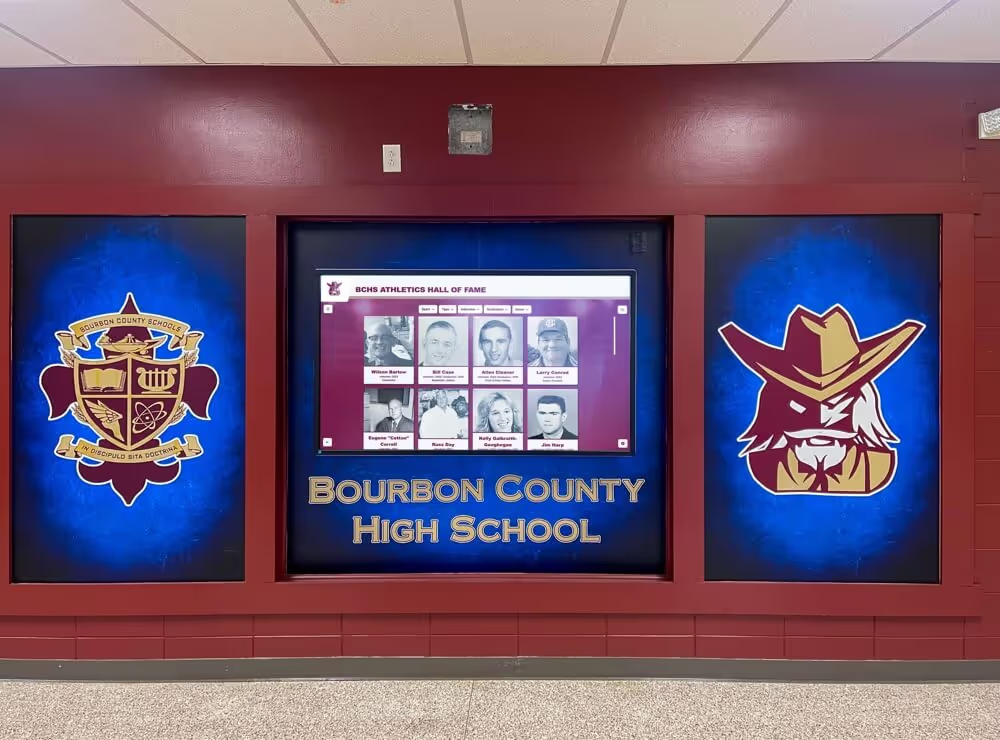
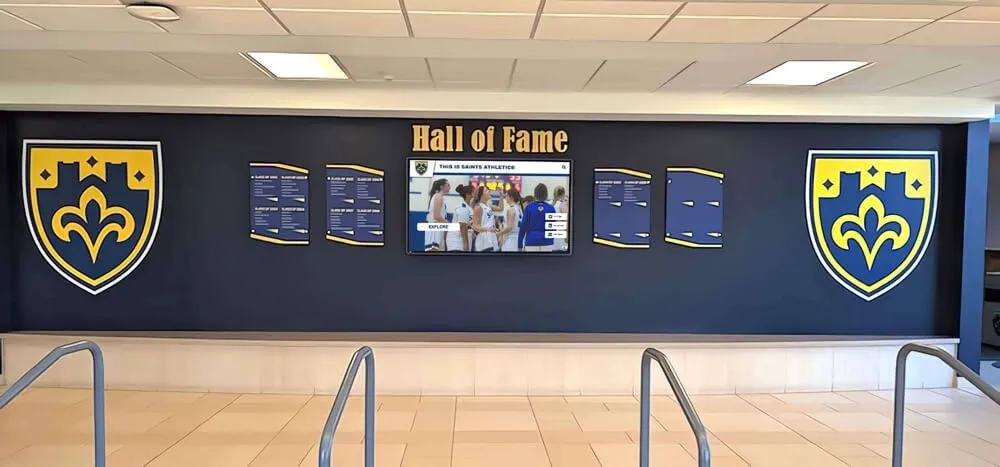
Modern academic recognition extends beyond graduation ceremonies through permanent displays celebrating student excellence and achievement milestones
Understanding Honor Cords: History and Significance
Before exploring specific color meanings, understanding the tradition’s origins and purpose provides essential context for appreciating these academic symbols.
The Origins of Graduation Honor Cords
Academic regalia traditions trace back to medieval European universities where scholars wore distinctive dress signifying their educational status and institutional affiliation. Honor cords emerged as American adaptations of European academic traditions, first appearing prominently in early 20th-century ceremonies as honor societies sought visible symbols distinguishing members during graduation.
The practice gained widespread adoption as educational institutions formalized recognition systems, creating standardized approaches to celebrating academic excellence. Today, honor cords represent one of the most recognized graduation traditions, with colors and combinations carrying specific meanings understood across educational communities.
Why Honor Cord Colors Matter
Color symbolism in honor cords serves multiple important functions:
Creating Visual Recognition Systems
Specific colors enable instant identification of particular achievements or organizational memberships. Faculty, fellow graduates, and ceremony attendees immediately recognize gold cords signifying high academic achievement or specialty colors indicating discipline-specific excellence. This visual system communicates accomplishment efficiently without requiring verbal explanation.
Motivating Academic Excellence
Visible recognition inspires younger students by demonstrating that dedication and achievement receive public acknowledgment. When eighth graders see high school seniors wearing honor cords, they understand that academic excellence leads to tangible recognition, creating aspirational goals motivating sustained effort throughout educational careers.
Preserving Institutional Traditions
Consistent color meanings across years create institutional memory connecting graduates across generations. Alumni returning for reunions see current students wearing the same gold cords they earned decades earlier, reinforcing continuity and shared educational values spanning years of institutional history.
Comprehensive approaches to academic recognition programs demonstrate how systematic celebration of student achievement creates cultures of excellence extending beyond single graduation ceremonies.

Digital platforms enable detailed documentation of student accomplishments including honor cord eligibility and specific achievements represented by graduation regalia
Complete Honor Cords Color Meaning Guide
Different colors and combinations represent specific achievements, organizational memberships, and areas of academic distinction. While some variations exist between institutions, these meanings represent widely recognized standards.
Gold Honor Cords
Primary Meaning: Academic Excellence and High Achievement
Gold represents the most universally recognized honor cord color, typically signifying:
- General Academic Excellence: Cumulative GPA thresholds (commonly 3.5-4.0)
- Summa Cum Laude Recognition: Highest academic distinction
- National Honor Society Membership: Excellence in scholarship, leadership, service, and character
- Valedictorian and Salutatorian Honors: Top academic performers in graduating class
Many institutions reserve gold specifically for their highest academic achievers, making it the most prestigious single-color cord. Some schools use different gold shades distinguishing various honor levels—bright metallic gold for summa cum laude versus antique gold for magna cum laude, for example.
Silver Honor Cords
Primary Meaning: High Academic Achievement and Eloquence
Silver cords frequently represent:
- Magna Cum Laude Recognition: High academic distinction (typically 3.7-3.9 GPA)
- National Honor Society: Some chapters use silver rather than gold
- Speech and Debate Excellence: Communication and rhetoric achievement
- Second-tier Academic Honors: Distinguished achievement below highest recognition
Silver’s association with eloquence and communication makes it particularly appropriate for students demonstrating exceptional verbal or written expression abilities alongside strong academic performance.
White Honor Cords
Primary Meaning: Liberal Arts, Humanities, and Literature
White symbolizes:
- English and Literature Excellence: Achievement in language arts
- Humanities Distinction: Success in history, philosophy, or cultural studies
- Arts and Letters Programs: Creative and analytical humanities work
- Purity of Scholarship: Intellectual pursuit and academic integrity
Students graduating with humanities majors or earning departmental honors in literature, writing, languages, or related fields commonly wear white cords celebrating their specialized academic focus.
Royal Blue Honor Cords
Primary Meaning: Philosophy, Leadership, and Excellence
Royal blue represents:
- Philosophy and Ethical Studies: Achievement in philosophical disciplines
- Educational Leadership: Student government and school leadership roles
- Cum Laude Recognition: Academic honor at some institutions
- School Spirit and Service: Distinguished institutional contribution
The deep, rich tone of royal blue symbolizes wisdom, trust, and intellectual depth, making it appropriate for students demonstrating thoughtful leadership alongside academic achievement.
Light Blue (Sky Blue) Honor Cords
Primary Meaning: Education and Teaching
Light blue signifies:
- Education Majors: Students pursuing teaching careers
- Future Educators Honor Society: Specialized recognition for education students
- Mentorship and Tutoring Excellence: Peer education contribution
- Child Development Programs: Early childhood and elementary education focus
Students committed to educational careers wear light blue cords honoring their dedication to teaching and learning facilitation.

Interactive recognition systems allow students to explore honor cord meanings and achievement requirements inspiring academic goal-setting
Red Honor Cords
Primary Meaning: Journalism, Communication, and Courage
Red represents:
- Journalism Excellence: Achievement in news media and reporting
- Communication Studies: Distinction in media, public relations, or broadcasting
- Theater and Performing Arts: Dramatic achievement recognition
- Courage and Determination: Overcoming significant obstacles
The bold, attention-grabbing nature of red makes it fitting for students whose work involves public communication, creative expression, or demonstrated resilience.
Purple Honor Cords
Primary Meaning: Law, Royalty, and Distinction
Purple signifies:
- Pre-Law Programs: Students preparing for legal careers
- Political Science Excellence: Achievement in government and politics studies
- Honor Societies: Various organizations use purple for membership
- Music and Fine Arts: Creative excellence in some institutions
Purple’s historical association with royalty and prestige makes it appropriate for students achieving distinction in competitive or prestigious programs.
Green Honor Cords
Primary Meaning: Medicine, Science, and Growth
Green represents:
- Pre-Medicine Programs: Students pursuing medical careers
- Environmental Science: Ecology, sustainability, and earth sciences
- Agricultural Studies: Achievement in farming, horticulture, or related fields
- Growth and Renewal: Academic development and improvement
Students in STEM fields related to life sciences, health, or environmental studies commonly wear green cords celebrating their specialized academic preparation.
Orange Honor Cords
Primary Meaning: Engineering and Technical Achievement
Orange signifies:
- Engineering Excellence: Achievement across engineering disciplines
- Technical and Vocational Programs: Career and technical education distinction
- Computer Science: Technology and programming achievement at some schools
- Energy and Enthusiasm: Passionate academic engagement
The vibrant, energetic quality of orange reflects the innovative, problem-solving nature of engineering and technical fields.
Pink Honor Cords
Primary Meaning: Music and Fine Arts
Pink represents:
- Music Programs: Vocal and instrumental excellence
- Performing Arts: Dance, theater, and creative performance
- Fine Arts Achievement: Visual arts and creative expression
- Cultural Arts: Arts appreciation and participation
Students demonstrating exceptional talent and dedication in artistic disciplines wear pink cords honoring their creative accomplishments.
Brown Honor Cords
Primary Meaning: Business and Economics
Brown signifies:
- Business Administration: Achievement in commerce and management studies
- Economics Excellence: Distinction in economic theory and practice
- Finance Programs: Success in accounting, finance, or related fields
- Practical Application: Real-world business skills and knowledge
The earthy, grounded nature of brown reflects the practical, applied focus of business education.
Black Honor Cords
Primary Meaning: Business, Accounting, and Achievement
Black represents:
- Accounting Excellence: Distinction in financial accounting
- Business Honor Societies: Organizational membership recognition
- Academic Persistence: Overcoming challenges to achieve graduation
- Professional Preparation: Career-ready business skills
Black’s association with professionalism and formality makes it appropriate for business-focused recognition.

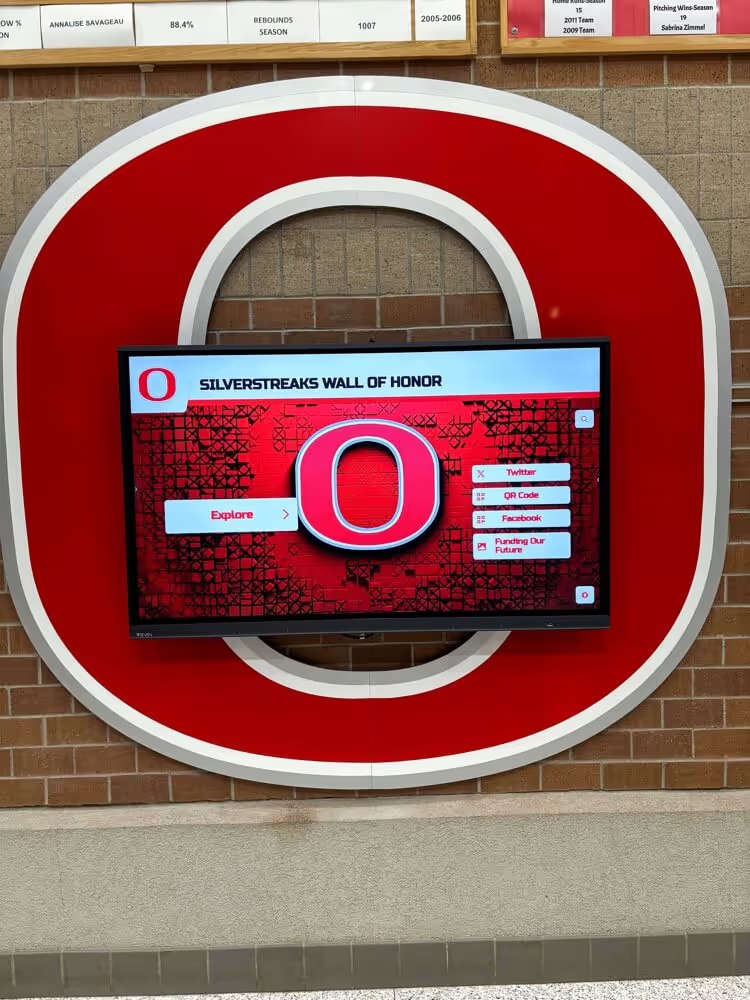
Recognition systems preserve honor cord achievement alongside comprehensive student accomplishment profiles creating lasting institutional memory
Teal and Turquoise Honor Cords
Primary Meaning: Science and Mathematics
Teal/turquoise represents:
- Mathematics Excellence: Achievement in mathematical studies
- General Science: Distinction across scientific disciplines
- Technology Programs: Computer science and information technology
- Analytical Achievement: Data analysis and quantitative reasoning
These cool, precise colors reflect the logical, analytical nature of mathematical and scientific disciplines.
Maroon and Burgundy Honor Cords
Primary Meaning: Counseling, Guidance, and Service
Maroon/burgundy signifies:
- Counseling Programs: Training for guidance and support roles
- Social Work: Service to communities and individuals
- Health Sciences: Various health-related professional programs
- Dedicated Service: Exceptional community contribution
The deep, rich tones reflect the serious, committed nature of service-oriented professions.
Special Honor Cord Combinations and Variations
Beyond single-color cords, institutions use various combinations and styles representing specific achievements or organizational memberships.
Double Cords and Braided Combinations
Multiple cords or color combinations often signify:
Dual Achievements: Students qualifying for multiple honor categories wear combinations representing each accomplishment—gold and white for academic excellence plus humanities distinction, for example.
Specific Organizations: Honor societies like Phi Theta Kappa use distinctive gold and blue double cords identifying members specifically.
Institutional Uniqueness: Schools create custom combinations distinguishing their particular honor programs from generic recognition.
Highest Honors: Some institutions reserve double or triple cord combinations for their most exceptional graduates.
Metallic and Specialty Cords
Beyond standard colors, special finishes carry meaning:
Metallic Gold: Often reserved exclusively for valedictorians or summa cum laude graduates Metallic Silver: Salutatorians or magna cum laude distinction Braided Metallic: Highest institutional honors Two-Tone Cords: Departmental honors combining discipline color with achievement level
Strategies for showcasing student accomplishments through various recognition methods demonstrate comprehensive approaches honoring achievement beyond graduation day.

Modern touchscreen displays enable students to discover honor cord meanings and explore achievement pathways inspiring academic goal-setting
Honor Society Specific Cord Colors
Many honor societies use distinctive colors or combinations identifying members during graduation:
National Honor Society (NHS)
Colors: Gold or blue and gold combination Requirements: Excellence in scholarship, service, leadership, and character Significance: Most prestigious high school honor society recognition
National Junior Honor Society (NJHS)
Colors: Blue and gold Requirements: Middle school achievement across scholarship, service, leadership, character, and citizenship Significance: Foundation for high school academic excellence
Phi Theta Kappa (Community College)
Colors: Gold and blue double cords Requirements: Community college academic excellence (typically 3.5+ GPA) Significance: International recognition of two-year college achievement
Beta Club
Colors: Blue and gold Requirements: Academic achievement, leadership, and character Significance: National organization promoting academic excellence
National English Honor Society
Colors: White or silver Requirements: Excellence in English language arts Significance: Specialized recognition for literacy and literary achievement
Mu Alpha Theta (Mathematics)
Colors: Pink and white or teal Requirements: Mathematical excellence and competition participation Significance: Distinguished mathematics achievement recognition
Understanding these specific organizational colors helps ceremony attendees identify particular honor society memberships beyond general academic achievement levels.
How Honor Cords Are Earned: Academic Requirements
While specific requirements vary by institution, common standards help students understand achievement thresholds:
GPA-Based Honor Cords
Most schools establish cumulative grade point average requirements:
Summa Cum Laude (Gold/Metallic Gold)
- High School: 3.9-4.0 GPA (or top 5% of class)
- College: 3.9-4.0 GPA
- Represents highest academic distinction
Magna Cum Laude (Silver or Gold)
- High School: 3.7-3.89 GPA (or top 10% of class)
- College: 3.7-3.89 GPA
- Represents high academic achievement
Cum Laude (Silver, Royal Blue, or White)
- High School: 3.5-3.69 GPA (or top 15-20% of class)
- College: 3.5-3.69 GPA
- Represents academic honor distinction
Departmental and Subject-Specific Cords
Beyond overall GPA, departments award cords for discipline-specific excellence:
Subject Excellence Requirements
- Minimum GPA in major coursework (typically 3.7-4.0)
- Completion of advanced or honors courses
- Departmental project or thesis excellence
- Faculty nomination or recommendation
- Sustained achievement across multiple years
Specialized Program Cords
- Career and technical education certification completion
- Advanced Placement or International Baccalaureate achievement
- Dual enrollment college credit accumulation
- Industry credential attainment
- Competition and contest success
Comprehensive scholarship recognition programs demonstrate how institutions celebrate multiple achievement dimensions beyond GPA thresholds.
How to Wear Honor Cords at Graduation
Proper honor cord placement ensures recognition appears dignified and follows ceremony protocol:
Standard Wearing Guidelines
Placement: Drape cords around neck with equal lengths hanging down both sides of the front of your gown
Position: Center the cord join-point at the back of your neck so tassels hang evenly
Length: Cords should hang approximately to mid-chest or waist level depending on your height
Multiple Cords: Layer multiple cords together or slightly offset so all colors remain visible
Over Stoles: Honor cords are typically worn over honor society stoles or sashes, not underneath
Adjustment: Ensure cords lie flat without twisting for clean, professional appearance
What Not to Do
Avoid these common mistakes:
- Don’t wear cords under your gown where they won’t be visible
- Don’t tie or knot cords creating bunched appearance
- Don’t remove cords during ceremony (wait until official conclusion)
- Don’t wear cords you didn’t earn (serious academic integrity violation)
- Don’t obscure institutional regalia or required ceremony elements
Proper wearing demonstrates respect for academic traditions and recognition significance.
Beyond Graduation Day: Preserving and Displaying Academic Honors
While honor cords shine during graduation ceremonies, thoughtful preservation extends recognition beyond single-day celebrations:
Physical Preservation Methods
Protect honor cords through proper storage and display:
Shadow Box Framing Create comprehensive graduation displays combining:
- Honor cords arranged attractively
- Graduation tassel
- Diploma or certificate copies
- Ceremony program and photographs
- Name plate identifying graduate and achievement
Keepsake Storage When not displaying:
- Store in acid-free tissue paper preventing discoloration
- Keep in cool, dry location away from direct sunlight
- Place in protective boxes or containers
- Document cord colors and meanings for future reference
Yearbook and Scrapbook Integration Preserve graduation memories through:
- Ceremony photographs showing cords clearly
- Written descriptions of achievement and cord meaning
- Honor society membership documentation
- Academic transcript copies showing qualifying achievements
Approaches to graduation program documentation help preserve comprehensive graduation memories including honor recognition context.
Modern Digital Recognition Extensions
Technology enables lasting achievement celebration beyond physical keepsakes:
Interactive Recognition Displays
Solutions like Rocket Alumni Solutions transform how institutions celebrate academic excellence through permanent touchscreen installations positioned in school lobbies, libraries, or common areas. These systems enable:
- Comprehensive Honor Documentation: Digital profiles explaining specific honors earned including honor cord colors and achievement requirements
- Photo Integration: Graduation ceremony images showing students wearing honor cords
- Achievement Context: Detailed narratives describing the work and dedication behind recognition
- Searchable Databases: Alumni, families, and visitors can explore honor recipients across multiple years
- Unlimited Capacity: Space constraints never force removal of historical achievements
Unlike physical trophy cases with limited space, digital platforms accommodate every honor recipient across institutional history while providing rich context physical displays cannot match.
Web-Based Recognition Portals
Extend celebration beyond physical campuses through:
- Alumni directories documenting graduation honors and achievements
- Social media recognition celebrating current graduates
- School websites featuring honor roll and distinction recipients
- Mobile-accessible platforms enabling remote exploration
- Integrated systems connecting graduation honors with comprehensive student achievement profiles
These modern approaches ensure honor cord achievements receive ongoing visibility inspiring current students while celebrating past excellence.
Resources on displaying high school graduates demonstrate comprehensive approaches to graduate recognition extending beyond ceremony day.

Touch-enabled recognition platforms make exploring student achievements engaging and intuitive for students, families, and visitors
Institutional Variations and Custom Honor Cord Programs
While standard color meanings provide general guidance, individual institutions often customize programs reflecting unique priorities and traditions:
School-Specific Honor Programs
Many schools develop distinctive recognition systems:
Custom Color Combinations: Unique two-tone or multi-color cords specific to institution Achievement Level Differentiation: Multiple cord colors distinguishing various honor tiers Special Recognition Categories: Cords for school-specific awards or accomplishments Legacy Programs: Traditional colors maintained across decades creating institutional continuity Community Service Distinction: Special cords recognizing volunteer hours or service projects
Verifying Your Institution’s Cord Meanings
Because variations exist, students should:
Consult Academic Handbooks: Review official school publications defining honor requirements Contact Guidance Counselors: Verify specific achievement thresholds and cord eligibility Review Honor Society Requirements: Understand organizational membership criteria Attend Information Sessions: Participate in graduation planning meetings explaining regalia Check Official Communications: Read ceremony materials detailing honor cord meanings
Understanding institution-specific policies prevents confusion while ensuring appropriate recognition.
Creating Equitable Honor Recognition
Schools should design honor cord programs ensuring:
Multiple Achievement Pathways: Recognition opportunities beyond pure GPA Growth Recognition: Cords acknowledging improvement and progress Specialized Excellence: Subject-specific honors celebrating diverse talents Inclusive Requirements: Accessible standards serving students from various backgrounds Transparent Criteria: Clear, published requirements enabling goal-setting
Thoughtful program design creates meaningful recognition motivating all students rather than privileging narrow achievement definitions.
Frameworks for honor roll recognition demonstrate systematic approaches celebrating academic achievement across multiple dimensions.
Honor Cords and College Admissions
While honor cords themselves don’t appear on college applications, the achievements they represent significantly strengthen student profiles:
Documenting Honor Cord Achievements
Translate graduation recognition into compelling application elements:
Academic Honors Section: List GPA-based distinctions (summa cum laude, etc.) Honor Society Memberships: Detail organizational participation and leadership Subject Excellence: Highlight departmental awards and specialized recognition Achievement Context: Explain selection processes and requirements Leadership Roles: Describe positions held within honor organizations
Recommendation Letter Enhancement: Achievement context helps counselors write compelling letters
Interview Discussion Points: Honor cord accomplishments provide concrete achievement examples
Scholarship Applications
Many scholarships specifically recognize students earning academic honors:
Merit-Based Scholarships: GPA thresholds often align with honor cord requirements Organization-Specific Awards: Honor society membership creates scholarship eligibility Institutional Scholarships: Colleges offer automatic awards for distinction levels Private Scholarships: Community organizations value demonstrated excellence
Understanding how graduation honors connect to post-secondary opportunities helps students appreciate recognition significance beyond ceremony symbolism.
Strategies for awards ceremony planning demonstrate comprehensive approaches to recognition events celebrating honor cord achievement and other distinctions.
Common Questions About Honor Cords Color Meanings
Can students wear multiple honor cords?
Yes! Students qualifying for multiple honors often wear several cords simultaneously—for example, gold for academic excellence, white for English department honors, and blue/gold for National Honor Society membership. Wear all earned cords together during ceremonies.
Do all schools use the same color meanings?
While many standards exist, individual institutions may customize meanings. Always verify specific color definitions with your school’s academic handbook or graduation coordinator to ensure accurate understanding.
Can parents purchase honor cords for their students?
No. Honor cords must be earned through meeting specific academic requirements and are typically distributed by schools or honor societies. Purchasing and wearing unearned cords violates academic integrity and diminishes legitimate achievement recognition.
What’s the difference between honor cords and stoles?
Honor cords are thin, rope-like decorations worn around the neck, while stoles are long, scarf-like sashes draped over shoulders. Both represent achievements, but stoles typically indicate honor society membership or cultural organization affiliation, whereas cords often signify GPA-based or departmental excellence.
How long should honor cords be?
Standard honor cords measure approximately 60-70 inches total length, creating appropriate mid-chest to waist draping when worn. Custom lengths may accommodate different heights or institutional preferences.
Can honor cords be altered or customized?
Students should wear cords exactly as provided by institutions or honor societies without alteration. Modifying official regalia undermines recognition standardization and may violate ceremony protocols.
Do graduate students wear honor cords?
Yes! Master’s and doctoral graduates earning academic distinction receive honor cords following similar color conventions, though specific programs may use distinctive colors or styles differentiating graduate from undergraduate recognition.
Celebrate Academic Achievement Beyond Graduation Day
Discover how modern digital recognition platforms extend honor cord celebrations through permanent touchscreen installations showcasing comprehensive student achievement profiles. Rocket Alumni Solutions helps schools create engaging recognition displays ensuring graduates receive ongoing acknowledgment inspiring current students while honoring past excellence.
Explore Recognition SolutionsCelebrating Excellence Through Meaningful Recognition
Honor cords represent far more than colorful graduation accessories—they symbolize years of dedication, intellectual curiosity, academic perseverance, and achievement excellence. Understanding honor cords color meaning enables graduates, families, and communities to fully appreciate the specific accomplishments each hue represents, from gold’s universal academic excellence to specialized colors celebrating discipline-specific distinction.
Whether students earn single cords recognizing general academic achievement or wear multiple cords representing diverse accomplishments across subjects, leadership, and service, these visible symbols provide meaningful public acknowledgment during graduation ceremonies while creating lasting memories graduates treasure throughout their lives.
Modern institutions enhance traditional honor cord recognition through complementary digital systems ensuring achievements receive ongoing celebration beyond single-day ceremonies. Interactive touchscreen displays, comprehensive web platforms, and integrated recognition systems transform temporary graduation moments into permanent institutional memory inspiring current students while honoring past excellence.
Your academic achievements—represented through honor cords during graduation and celebrated through comprehensive recognition programs—deserve acknowledgment matching the dedication you invested earning them. From understanding specific color meanings to preserving graduation memories and exploring how institutions extend recognition beyond ceremonies, the frameworks explored throughout this guide provide comprehensive resources celebrating academic excellence in all its vibrant, colorful forms.
Ready to learn more? Explore approaches to perfect attendance recognition, discover strategies for comprehensive student achievement displays, and learn how digital recognition platforms transform academic celebration creating lasting visibility honoring student excellence across all achievement dimensions.