



So you’ve received a save-the-date in the mail—or a Facebook message from someone you haven’t thought about in a decade—and now you’re wondering: how do high school reunions work, exactly? Who organizes these things? Who pays for them? What actually happens when you walk through the door? Whether you’re a first-time attendee who graduated a few years ago or a volunteer who just got nominated to plan your class’s 20-year milestone gathering, you’re not alone in wanting a clear map of how reunions actually operate.
High school reunions are milestone events that bring together classmates separated by years, careers, families, and geography to celebrate shared history and reconnect around a common bond—the years they spent together in the same hallways, cafeterias, and classrooms. They’re part social event, part memory museum, and part impromptu career networking mixer, depending on the crowd and how the evening is organized.
This guide walks through every stage: from the first committee meeting to the last slow dance, including the increasingly popular touchscreen display experiences that let alumni explore photo archives, athletic achievements, award histories, and memory timelines interactively throughout the night.
High school reunions work because of a fundamental human impulse—the desire to reconnect with the people who knew you before you became who you are today. They work logistically because a small group of dedicated volunteers, or increasingly professional event planners, channel months of coordination into a single evening or weekend that feels effortless to attendees. Understanding both dimensions makes you a better guest and, if you’re planning, a far more effective organizer.

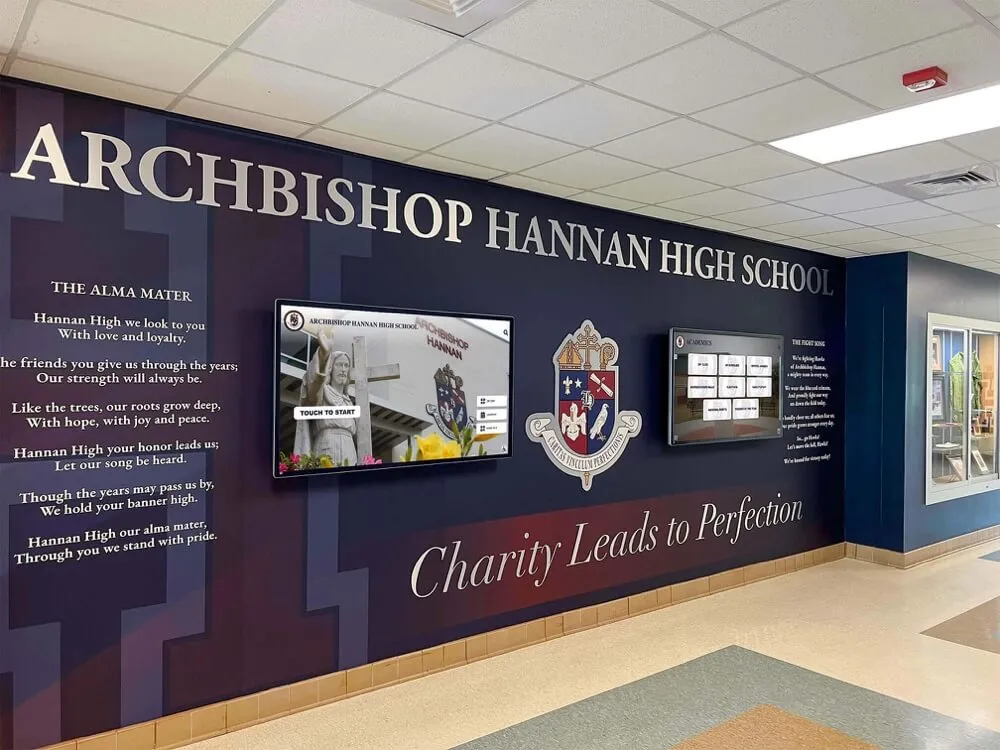
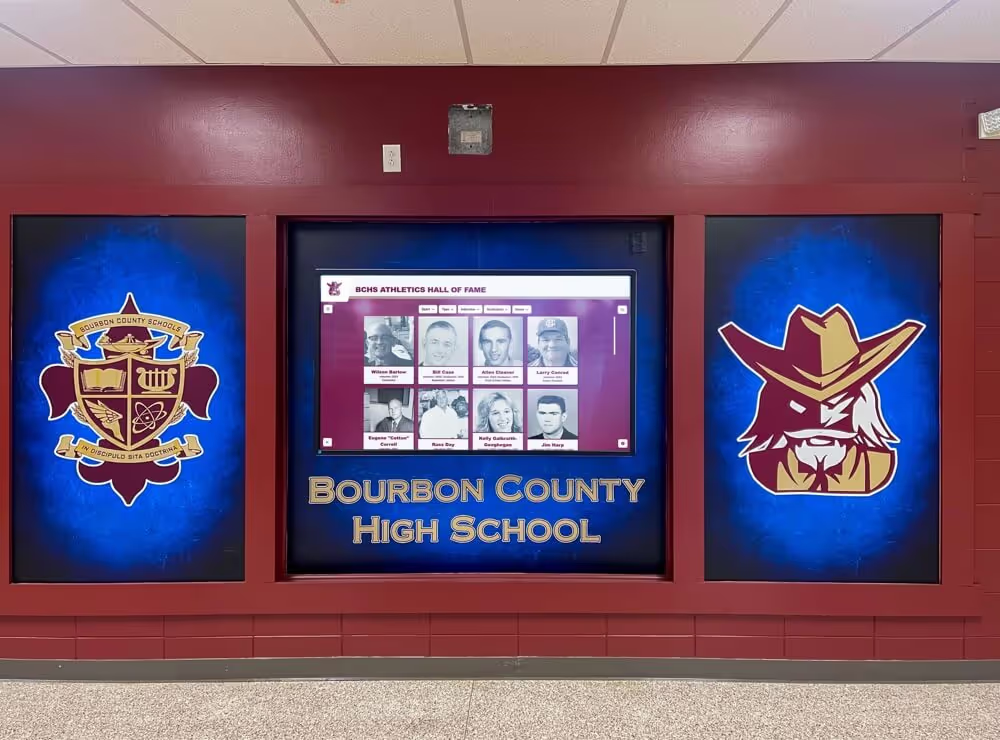
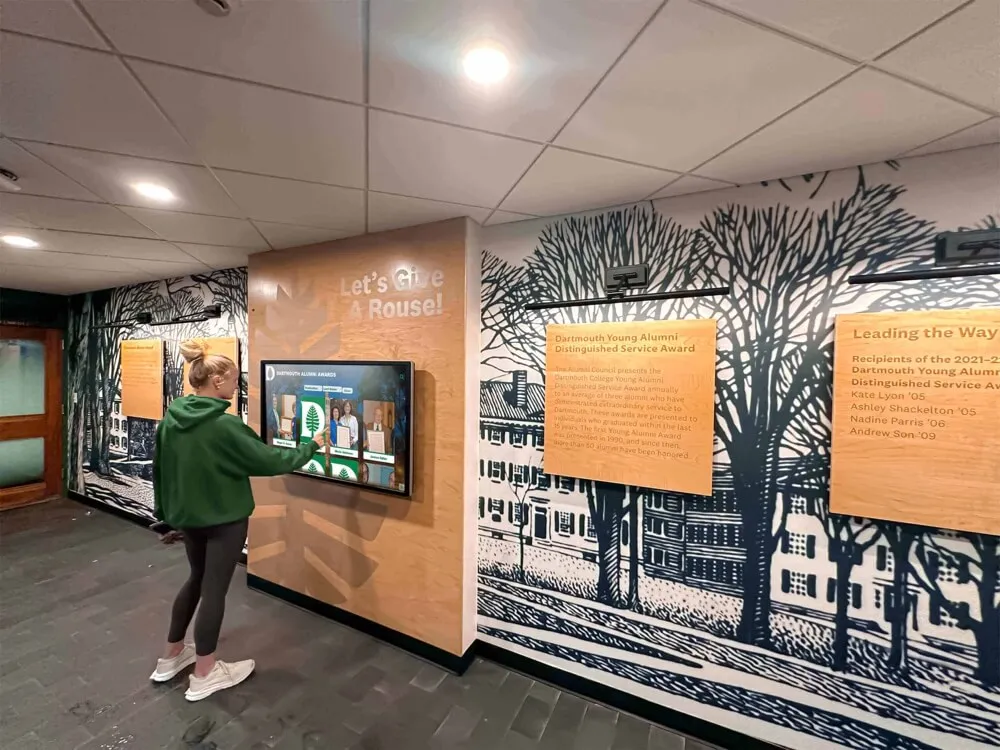
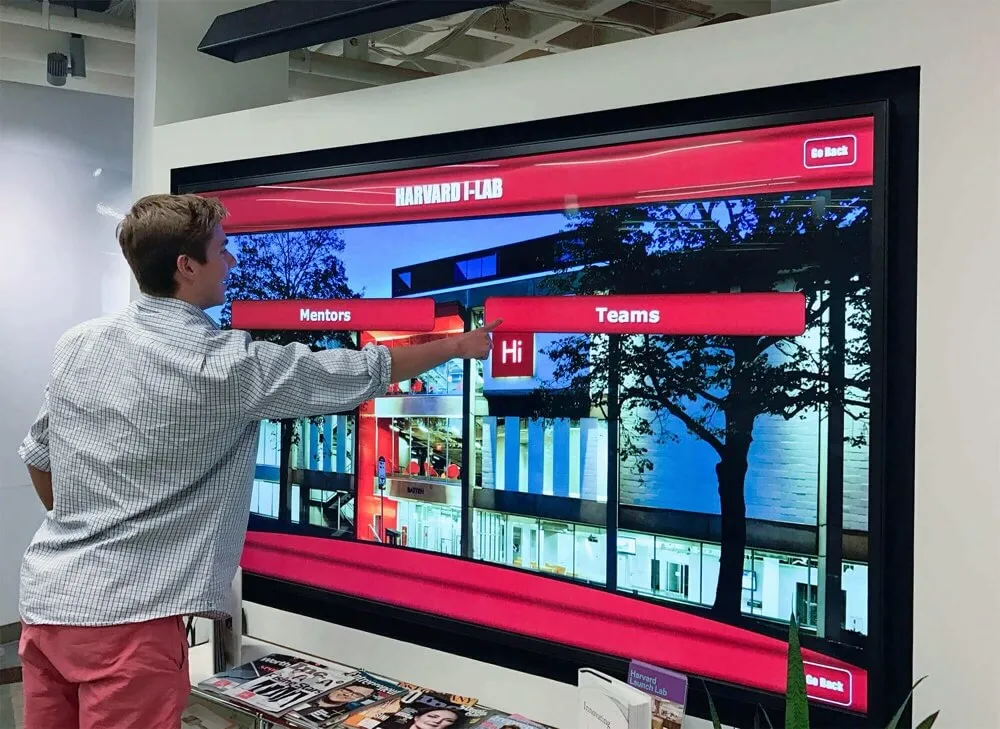
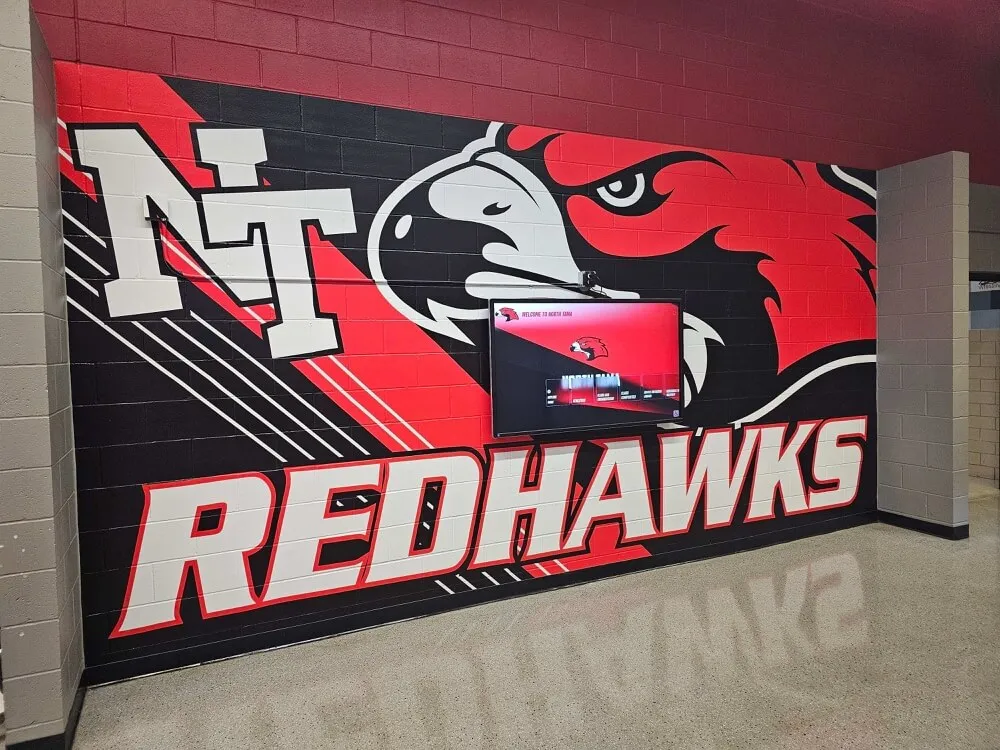
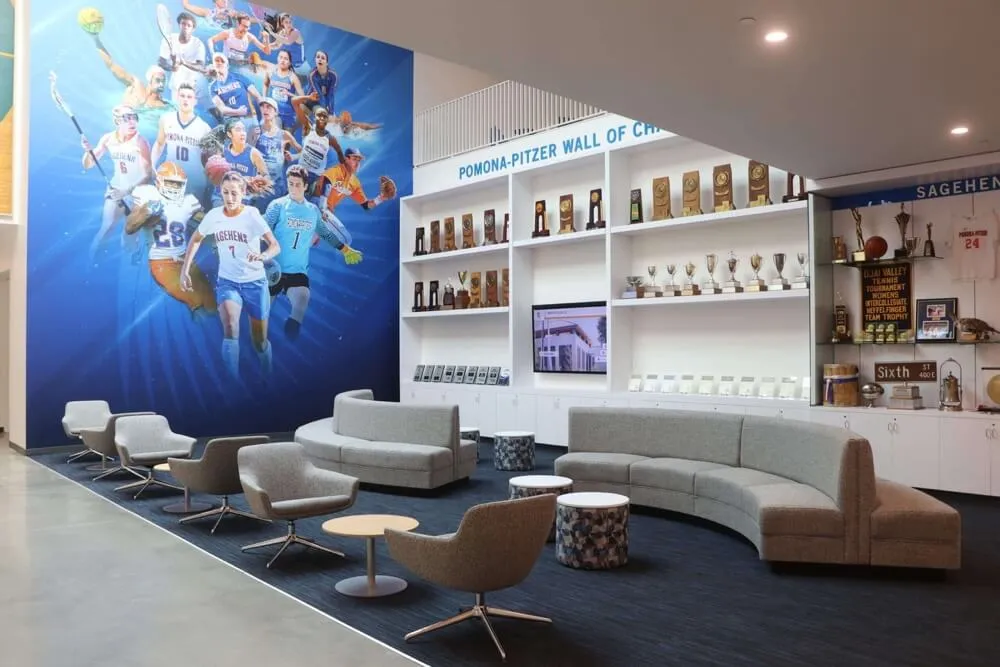
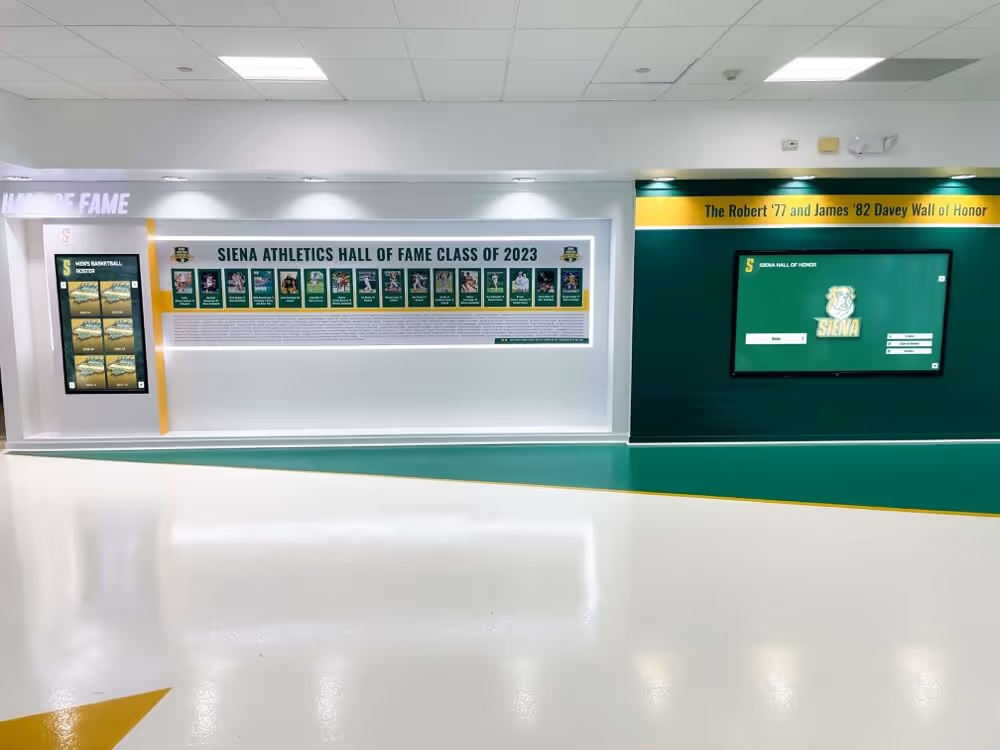
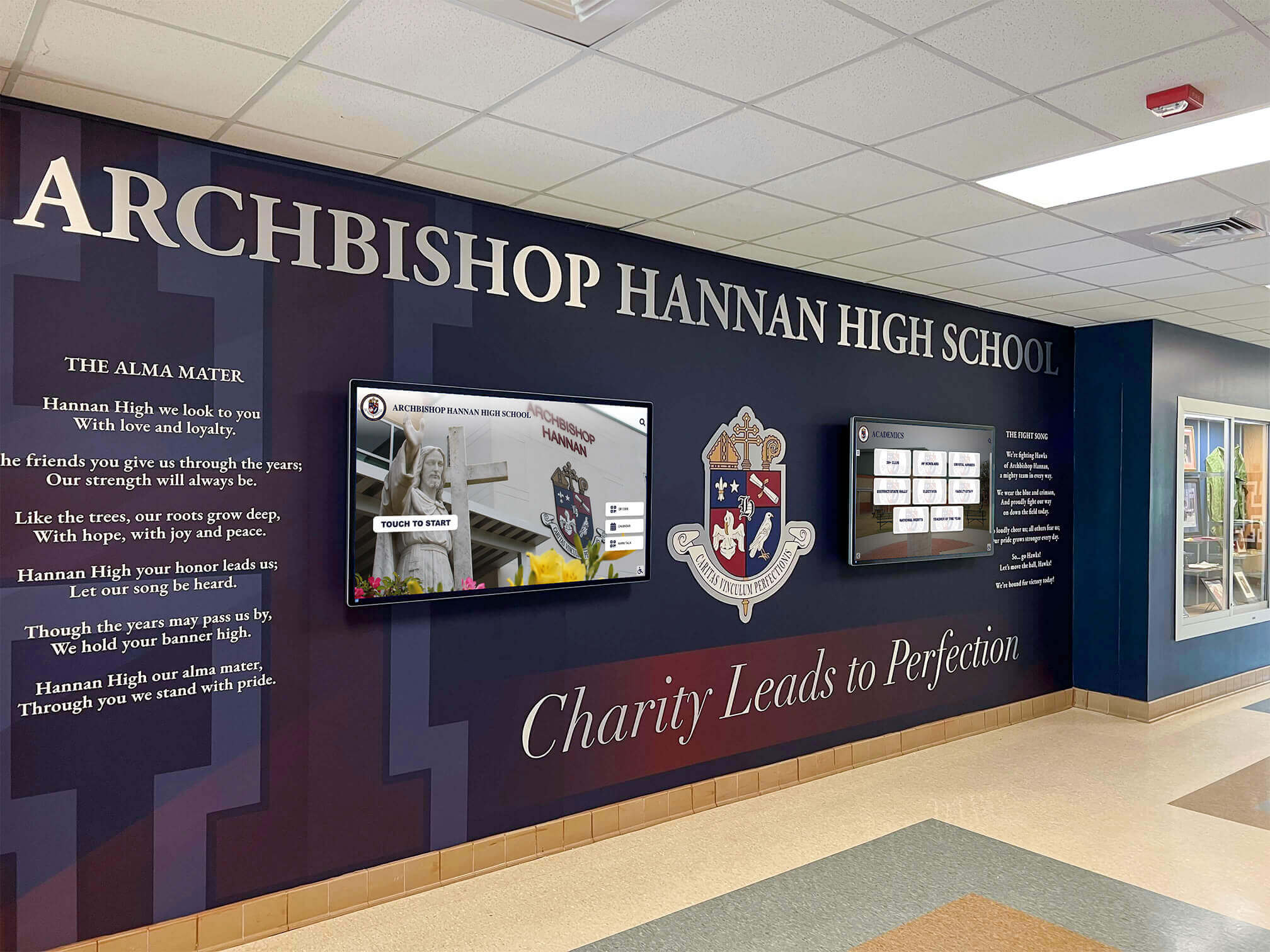
School lobbies with integrated digital displays create natural gathering points during reunions—alumni stop, explore, and reconnect around shared institutional pride
What Is a High School Reunion and Who Organizes It?
A high school reunion is a gathering of graduates from a specific class, typically held at milestone anniversary intervals after graduation. Most commonly these happen at 5, 10, 20, 25, 30, and 50-year marks, though any class can organize a gathering whenever the timing feels right.
Who Organizes High School Reunions?
The organizational model varies widely depending on class size, school type, and available resources:
Class Volunteer Committees
The most traditional approach involves a self-selected group of alumni who step up—or get volunteered by others—to coordinate the event. These committees typically include a lead organizer, a venue coordinator, a communications manager, and a treasurer. Volunteer committees bring deep personal investment but face challenges around time, professional planning skills, and the familiar reality that the same three to five people end up doing most of the work.
Professional Reunion Planning Companies
A small industry exists specifically to help classes organize reunions. These companies handle venue booking, catering, registration, name badge production, and sometimes photography and AV. They earn revenue through registration fees or service charges added to ticket prices. For large classes or milestone reunions where expectations run high, professional planners meaningfully reduce volunteer burnout.
School Alumni Associations
Some schools maintain active alumni associations that take ownership of reunion events, particularly for significant milestone years. Alumni associations may maintain class contact databases, provide event infrastructure, and help fund programming. Their involvement ensures institutional continuity even when individual class volunteers change from one reunion cycle to the next.
Hybrid Approaches
Many reunions blend models—a volunteer committee provides personal context and classmate relationships while professional vendors manage catering, AV equipment, photography, and venue logistics.
When Do High School Reunions Typically Happen?
Most high school reunions follow a predictable milestone calendar:
- 5-year reunions: Often informal—restaurant buyouts, bar events, or casual gatherings near the school. Recent graduates are still establishing careers and may not have scattered far geographically.
- 10-year reunions: The first major milestone. Most classmates have completed their education, started careers, and settled into adult lives. Interest and curiosity about where everyone landed tend to be high.
- 20-year and 25-year reunions: Frequently considered the sweet spot. Enough time has passed for genuinely interesting life divergence, but most classmates are still active, healthy, and able to travel. These often draw the strongest attendance.
- 30-year and 40-year reunions: Participation varies by class culture. Some classes skip these intervals; others maintain strong traditions with consistent committee energy.
- 50-year reunions: Emotionally significant milestone events. Attendance often spikes among those who can travel, and the tone becomes more reflective—more about legacy and memory than career comparison.
Reunions most commonly land in summer months (June through August) when travel is easier and school facilities may be accessible, or around Labor Day weekend when travel from distant cities becomes more practical.
How the Planning Process Works
For anyone asking how high school reunions work from an organizational standpoint, here is how a typical planning timeline unfolds:
12–18 Months Before the Event
Serious milestone reunion planning begins well in advance of the gathering itself:
- Form the committee: Reach out through class Facebook groups, through the school’s alumni office, or through direct personal connections. Even four to six committed volunteers can manage a reunion effectively with clear role assignments.
- Set a date and secure a venue: Popular venues book quickly. Options range from the school’s gymnasium or cafeteria (nostalgic but requiring facility coordination) to hotel ballrooms, event centers, restaurants with private rooms, country clubs, or outdoor venues.
- Establish a budget: Registration fees typically cover the majority of costs. Early budget planning determines whether the event is a casual cocktail reception or a full dinner with entertainment and interactive displays.
6–12 Months Before
With venue secured, planning shifts to logistics and outreach:
- Build the contact database: Tracking down classmates is often the most labor-intensive part of reunion planning. Social media has made this significantly easier than pre-Facebook years, but a meaningful percentage of any class remains genuinely hard to locate.
- Create a registration system: Online platforms allow classmates to register, pay, and submit updates from anywhere. Many include optional profile questionnaires collecting career information, current location, family updates, and photos.
- Plan the program: What will actually happen when guests arrive? Typical elements include a cocktail reception, dinner or heavy appetizers, DJ or live music, slideshow presentations, and recognition moments for notable milestones.
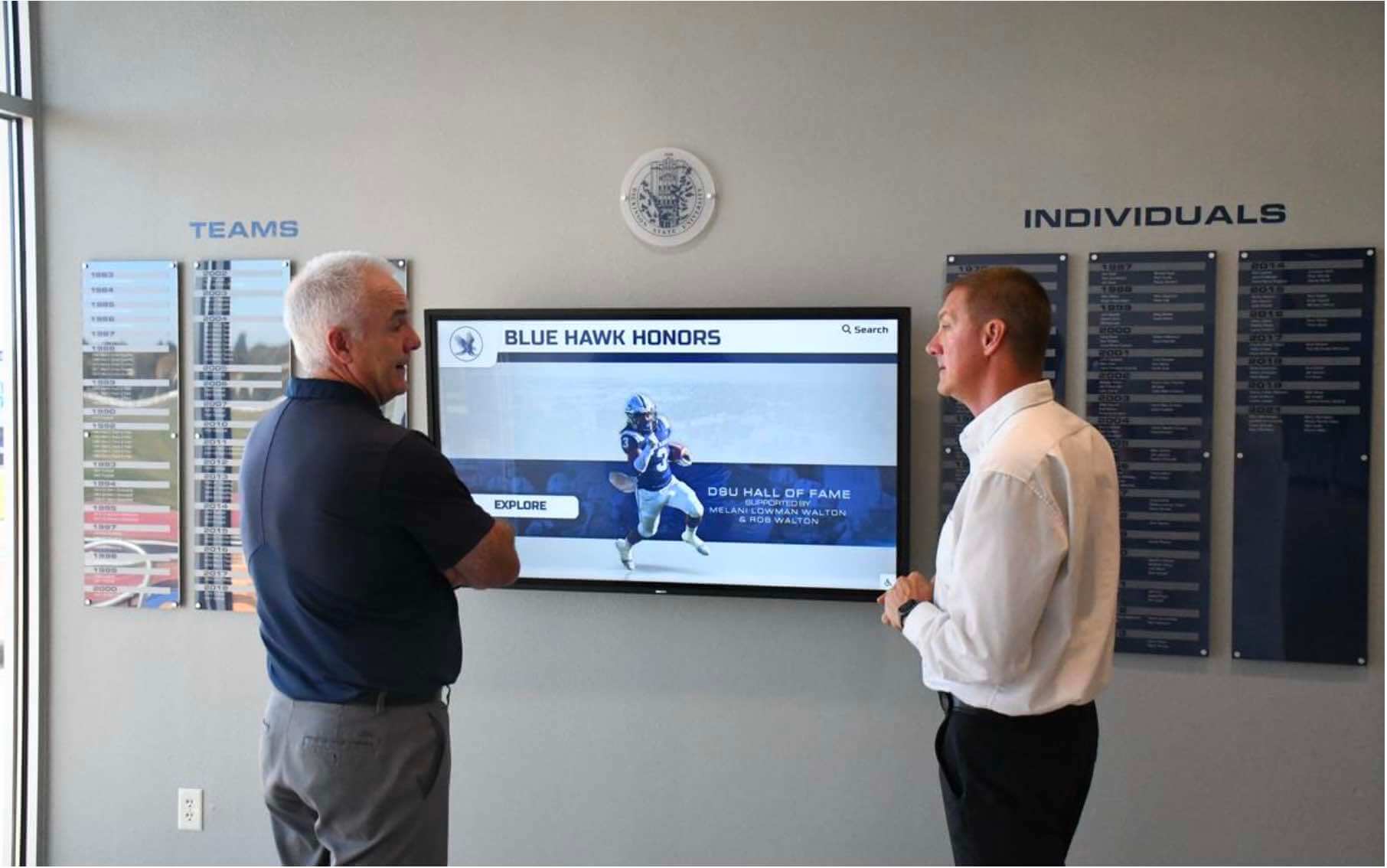
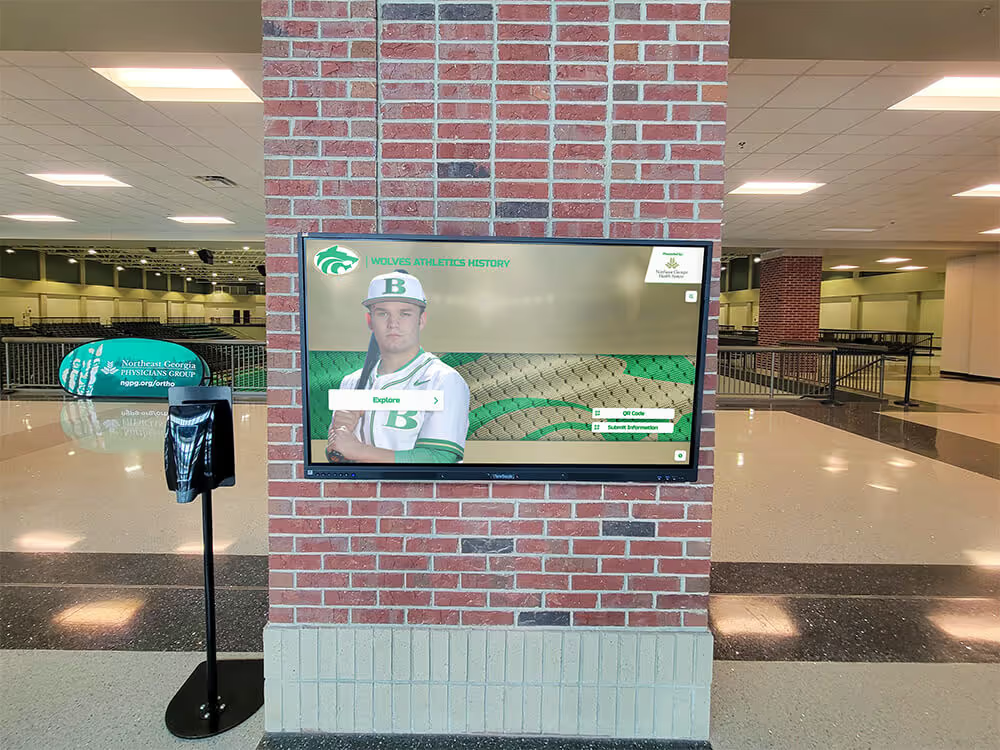
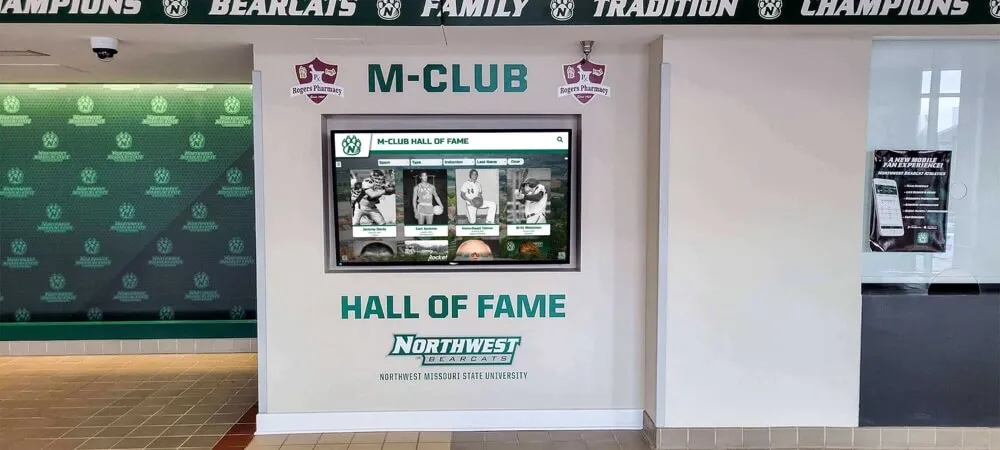
Interactive recognition displays give reunion attendees something meaningful to explore during cocktail hours—sparking conversations and reconnections around shared memories
2–4 Months Before
- Launch registration and send formal invitations: Physical mailers remain effective for milestone reunions, supplemented by email campaigns and social media outreach through class groups.
- Arrange vendors: Catering, photography, videography, DJ or band, AV equipment, and decorative elements all require advance booking.
- Finalize touchscreen or display experiences if planned: Memory walls, photo slideshow content, and interactive alumni databases require significant lead time to curate and organize properly—weeks, not days.
- Coordinate with the school: If using school facilities or including staff, confirm arrangements and access protocols well in advance.
1–2 Months Before
- Close registration and finalize headcount: This drives catering quantities, seating arrangements, and final budget adjustments.
- Produce name badges: Most reunions include graduation year and current name, often with maiden names noted for classmates whose names have changed.
- Build the slideshow or digital display content: Gathering and organizing photos from yearbooks, social media, and alumni submissions takes considerably more time than organizers typically anticipate.
Week of the Event
- Final venue walk-through with committee leads
- AV and display system testing
- Confirm vendor delivery and setup times
- Volunteer briefings and role assignments
What Happens at a High School Reunion?
Once guests arrive, reunions typically follow a recognizable flow regardless of class size or venue type:
Arrival and Check-In
Guests check in at a registration table, receive name badges, and enter the main event space. The check-in moment sets the tone for the entire evening. Well-organized check-in feels welcoming and professional; disorganized check-in creates frustration before the evening has had a chance to find its rhythm.
Cocktail Hour or Social Mixer
Most reunions begin with an unstructured social period—cocktails, appetizers, and the awkward-but-wonderful process of recognizing people you haven’t seen in years. This period typically runs 60 to 90 minutes and is where most genuine reconnection happens. Many organizers place interactive displays or memory stations in this space, giving people something to engage with rather than standing uncomfortably at the edges.
Formal Program
Depending on venue and class culture, a more structured portion of the evening often includes:
- Welcome remarks from an organizing committee member or class representative
- In memoriam moment honoring classmates who have passed away since graduation—handled with care and dignity
- Slideshow presentation featuring yearbook photos, candid shots from school events, and sometimes current photos submitted by attendees
- Recognition and awards for categories like “traveled farthest to attend,” “most children,” “first grandparent,” or more meaningful categories celebrating life achievements
- Brief guest remarks from a beloved teacher or administrator who shaped the class
For insight into how recognition moments within events can be designed to feel meaningful rather than perfunctory, homecoming king and queen recognition display approaches offer frameworks directly applicable to reunion award reveals and honoree presentations.
Dinner or Food Service
Full plated dinners, buffets, and heavy appetizer stations all work depending on budget and venue. Food timing interacts with programming flow—sit-down dinners create more structured timelines while buffet formats offer flexibility for different conversation rhythms and allow people to move around more freely.
Entertainment and Dancing
Many milestone reunions include a DJ or live band playing music from the class’s high school years. Music creates powerful emotional time-travel, transporting attendees back to hallways, dances, and Friday nights in a way nothing else quite manages. The era-specific playlist is typically one of the most eagerly anticipated elements of any reunion.
Informal After-Party
Many reunion attendees—particularly those who traveled from a distance—continue the evening informally at a nearby restaurant, bar, or hotel lobby. Organizers sometimes coordinate these unofficial gatherings, which often generate the most honest and memorable conversations of the entire event.
How Reunions Are Funded
Registration fees are the primary funding mechanism. A typical reunion ticket might range from $50 to $150 or more per person depending on venue, catering quality, entertainment, and event length. Larger milestone reunions with hotel ballrooms and full dinner service naturally cost more than informal gatherings at local restaurants.
Some classes build small reunion funds over time, carrying a portion of each event’s surplus forward to fund the next. Sponsorships from local businesses owned by class members occasionally supplement registration revenue. For smaller or informal reunions, venue minimums at restaurants reduce or eliminate individual registration fees entirely.
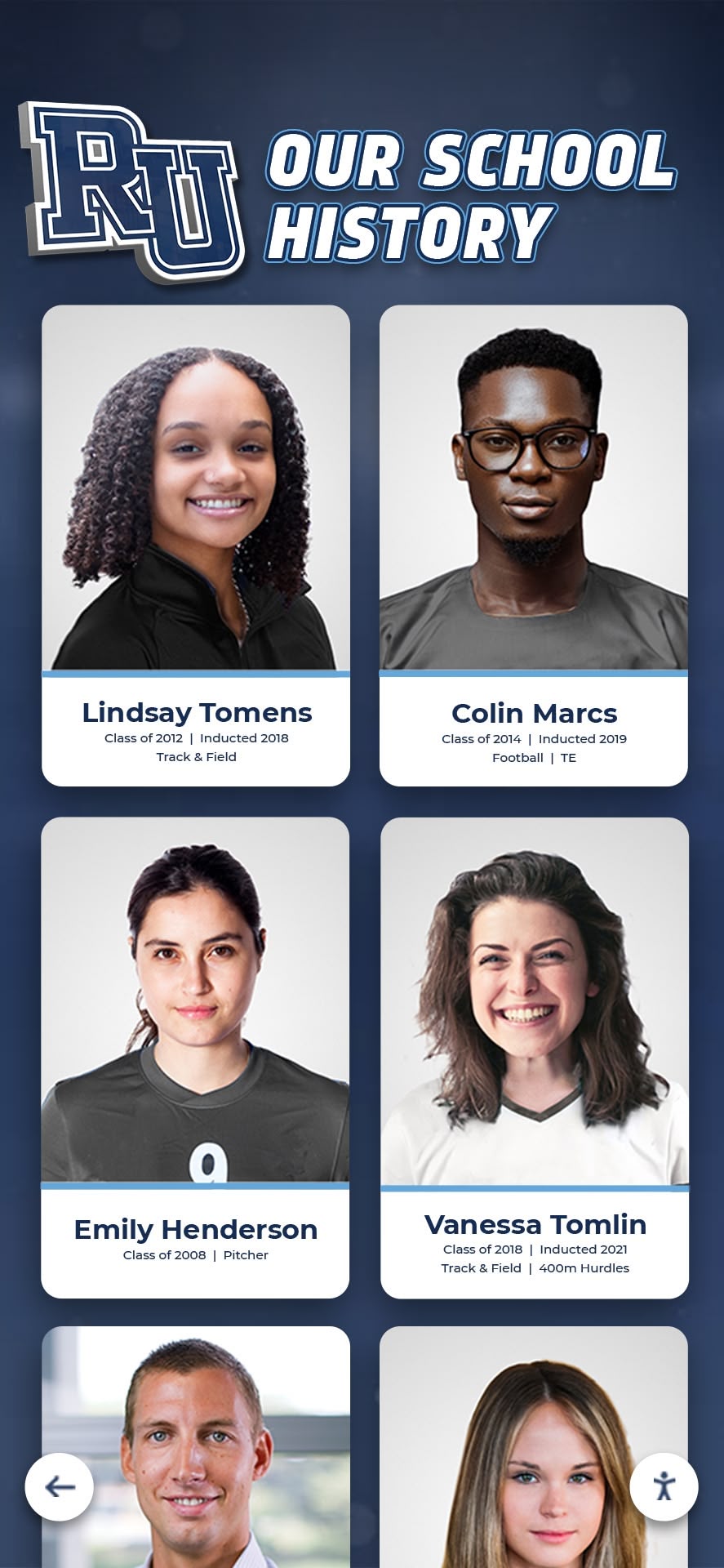
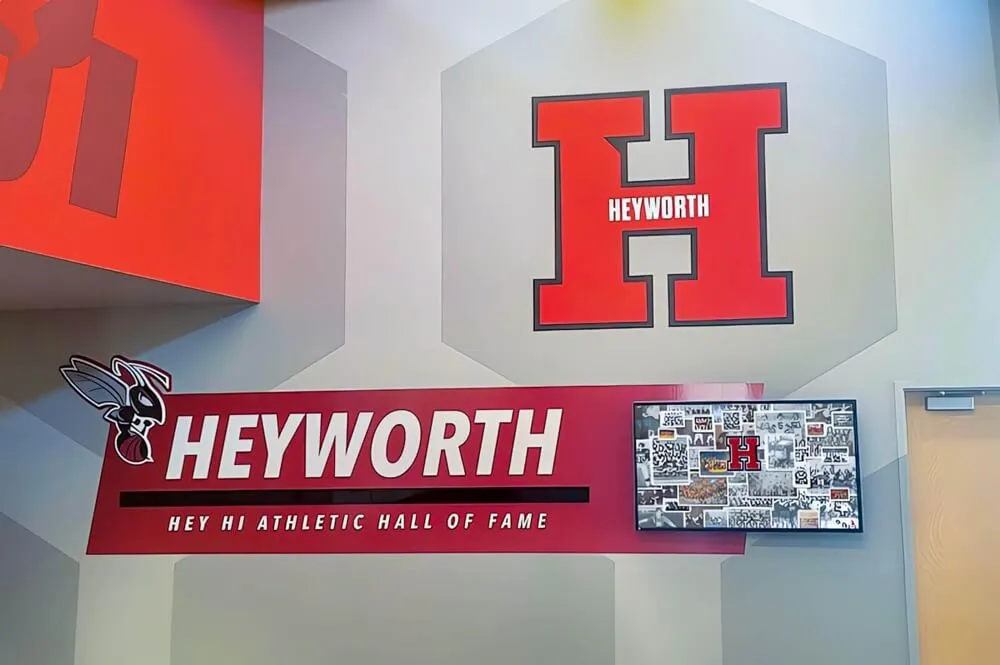
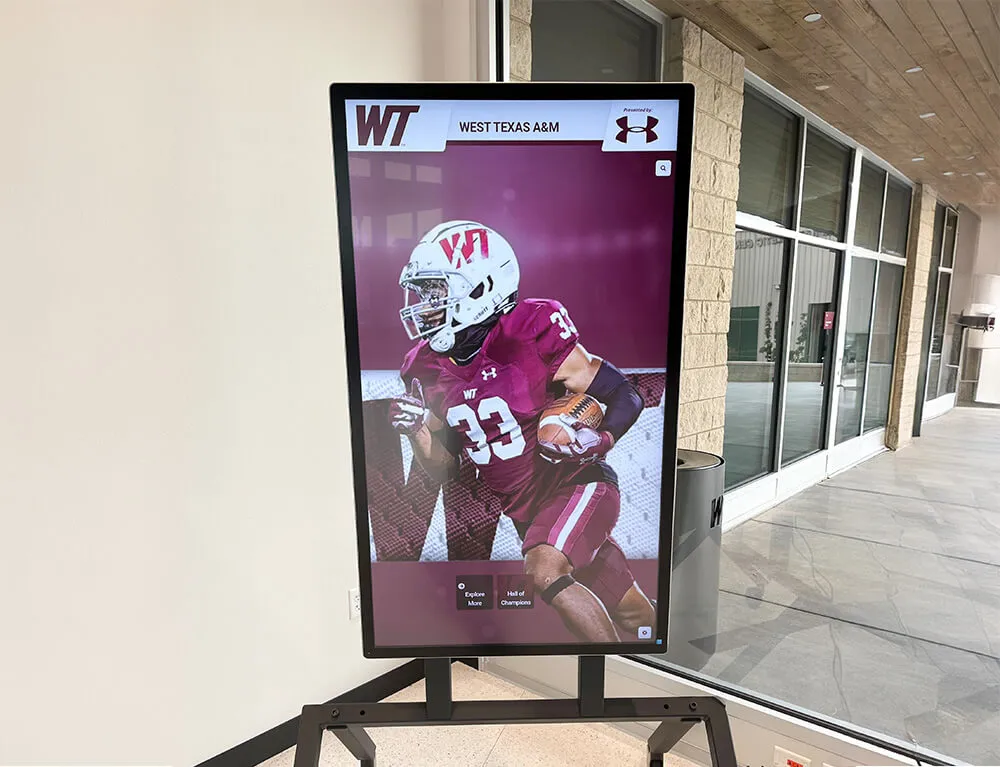
Preserving and displaying historical photos and achievement records gives reunion attendees tangible connections to their shared past—and creates content for interactive displays
Touchscreen Display Ideas That Transform Reunion Experiences
One of the most powerful evolutions in high school reunion design is the integration of interactive digital displays. Rather than a static photo table or a looping slideshow projected on a screen, modern touchscreen experiences let attendees actively explore their shared history at their own pace and according to their own interests.
Memory Lane Photo Walls
Interactive photo walls allow attendees to browse digitized yearbook pages, candid photos from school events, and images submitted by classmates before the reunion. Unlike static displays, touchscreens enable filtering by year, activity, sport, or event type—letting someone who was on the swim team immediately find photos of their era, or a theater alum browse every production from their four years.
Digital asset management systems for schools provide frameworks for organizing and preserving the decades of photos, records, and documents that power compelling memory lane experiences—an infrastructure investment that benefits reunions and ongoing alumni engagement alike.
Athletic Achievement Displays
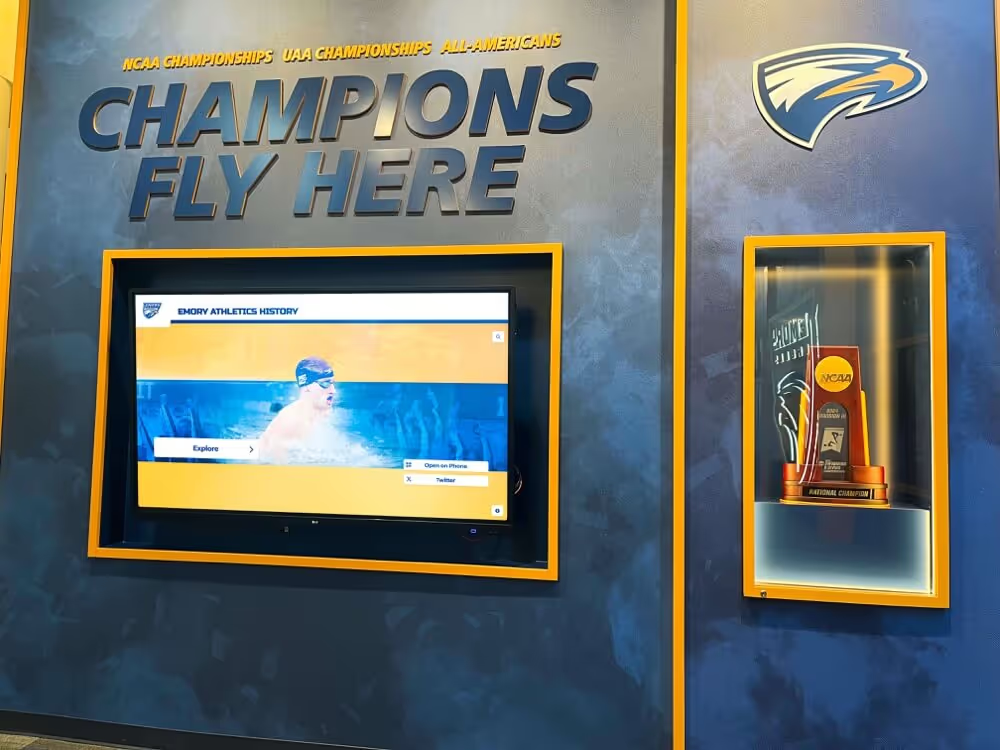
Sports memories occupy a significant portion of most reunion nostalgia. Interactive athletic achievement displays let attendees explore championship seasons, record-breaking performances, and memorable rivalries. Displays featuring individual athlete profiles—with photos, graduation years, and career highlights—create natural conversation starters between classmates who competed or cheered together decades ago.
Athletic alumni recognition wall strategies showcase how former players can be celebrated in ways that resonate both at reunion events and as permanent school installations—creating lasting recognition infrastructure with reunion deployment as one compelling use case.
Interactive Class Timeline
A chronological timeline display walks attendees through major events from their graduation year forward: world events, cultural touchstones, technological changes, and school milestones. These timelines contextualize shared memories within larger historical narratives—creating “I remember exactly where I was when that happened” moments that generate conversation across the entire event space.
Alumni Achievement Recognition
Some classes use reunions as opportunities to formally celebrate notable accomplishments—classmates who achieved significant professional success, community impact, or creative distinction. An interactive display featuring these profiles lets every attendee explore at their own pace rather than sitting through a lengthy awards presentation.
Hall of Innovators recognition frameworks provide models for recognizing alumni who built something new—a meaningful category for reunion recognition that celebrates entrepreneurship and creative contribution rather than traditional career metrics alone.
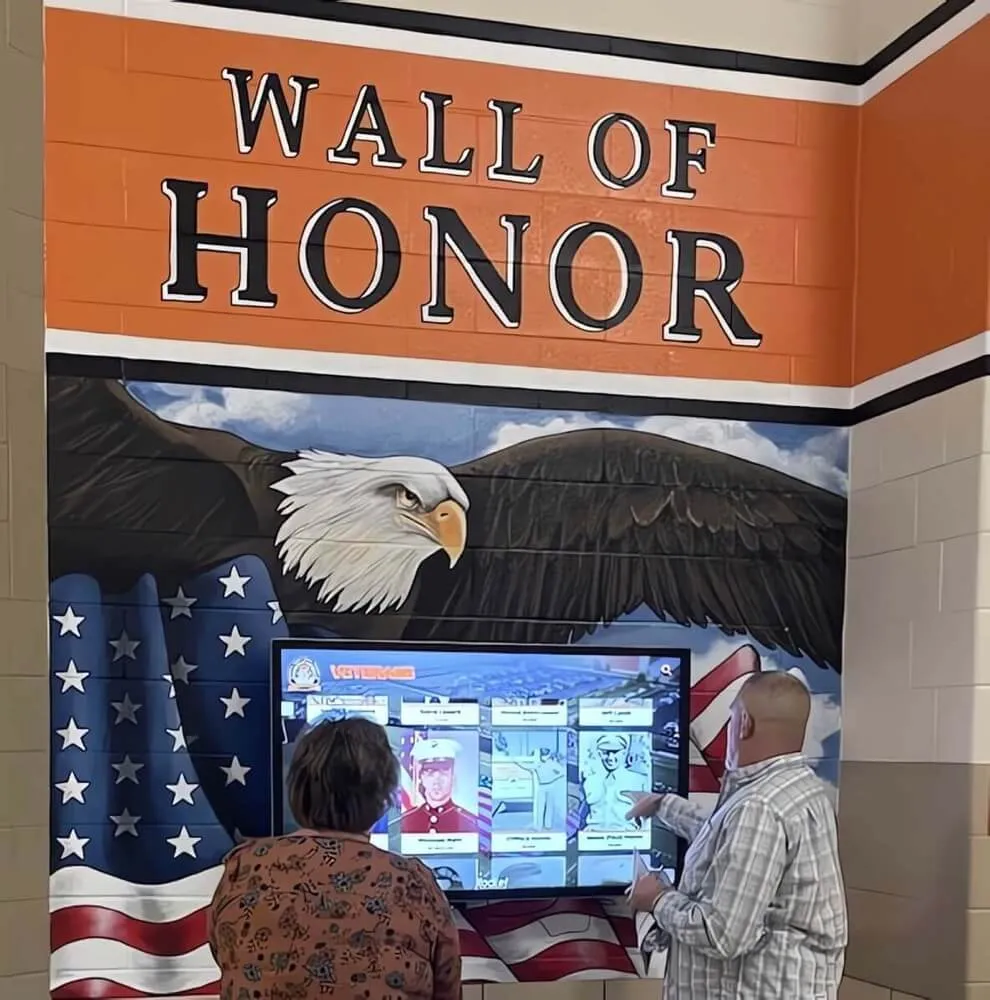
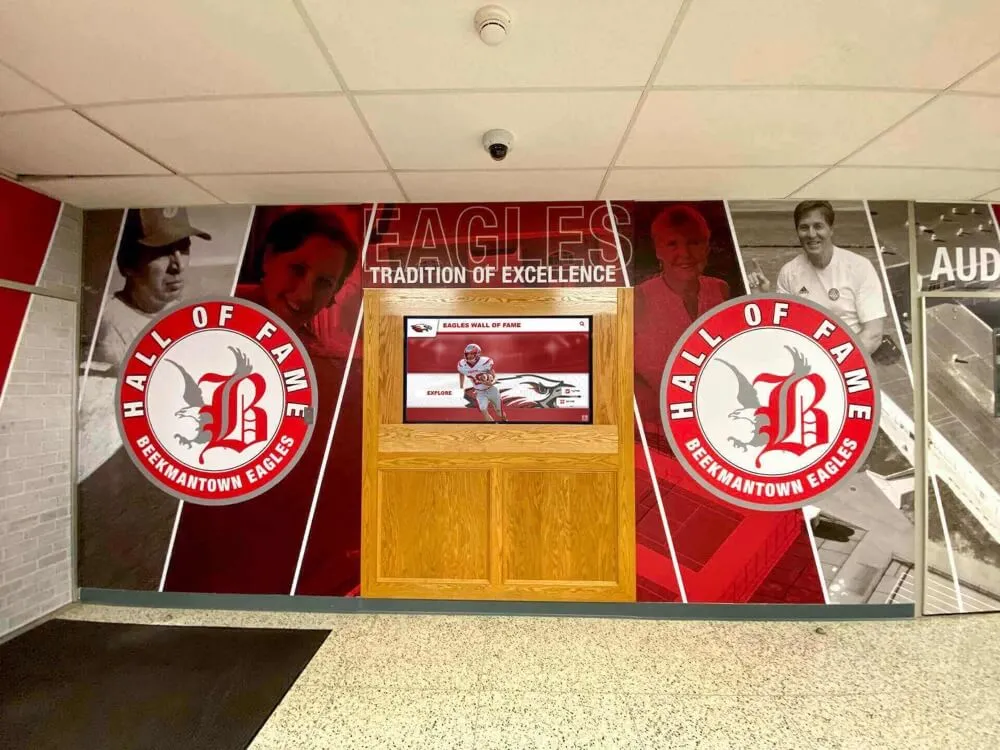
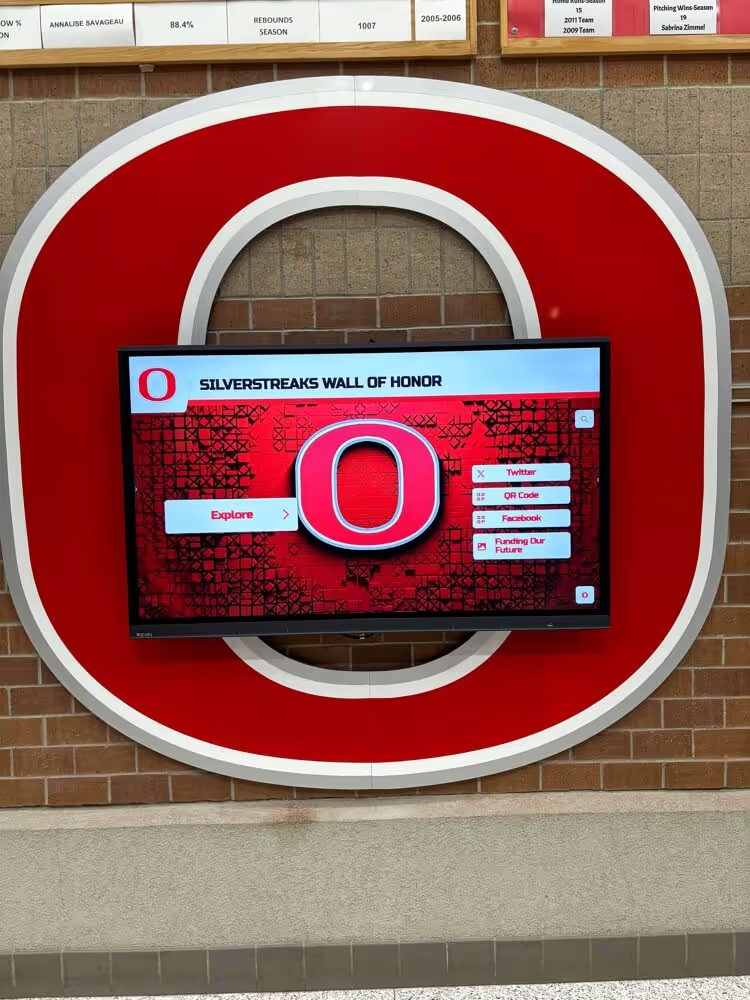
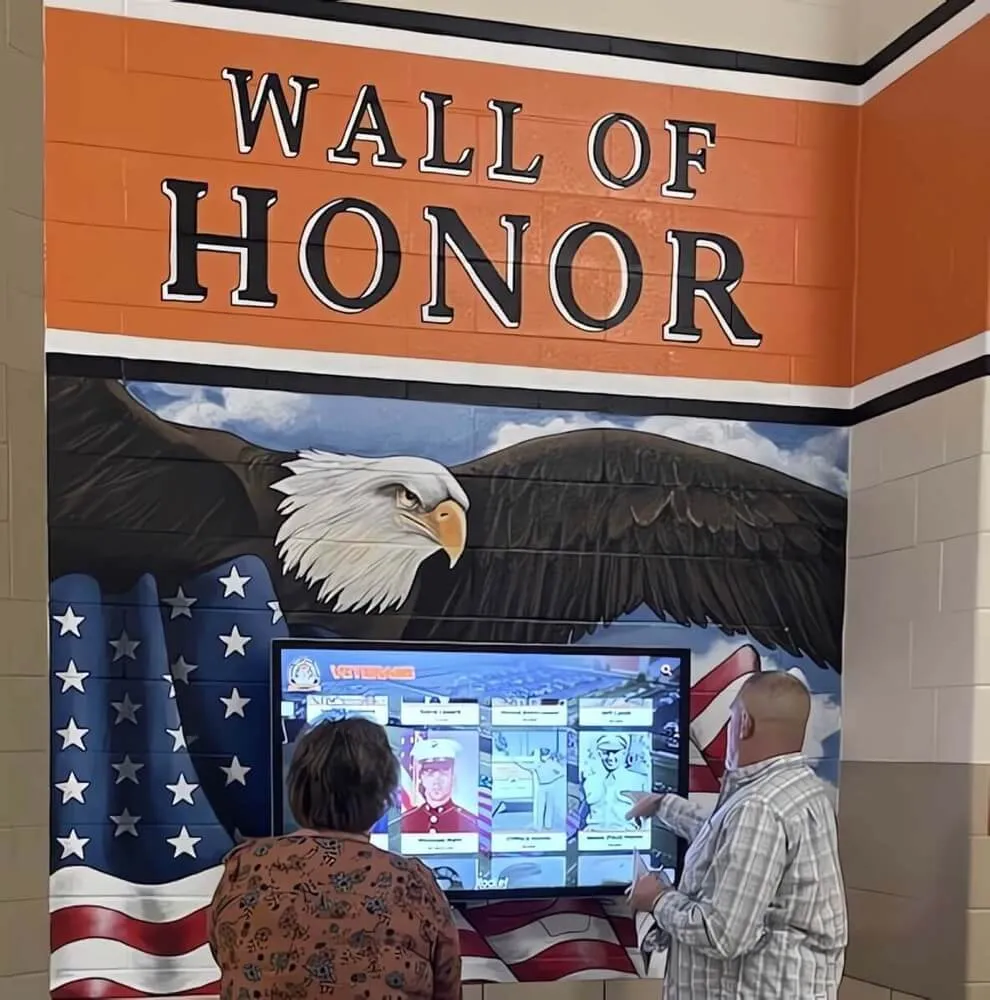
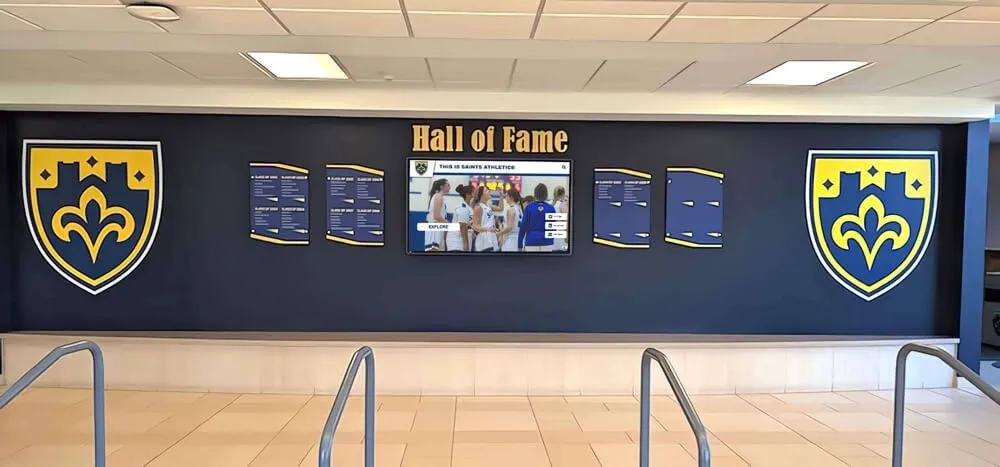
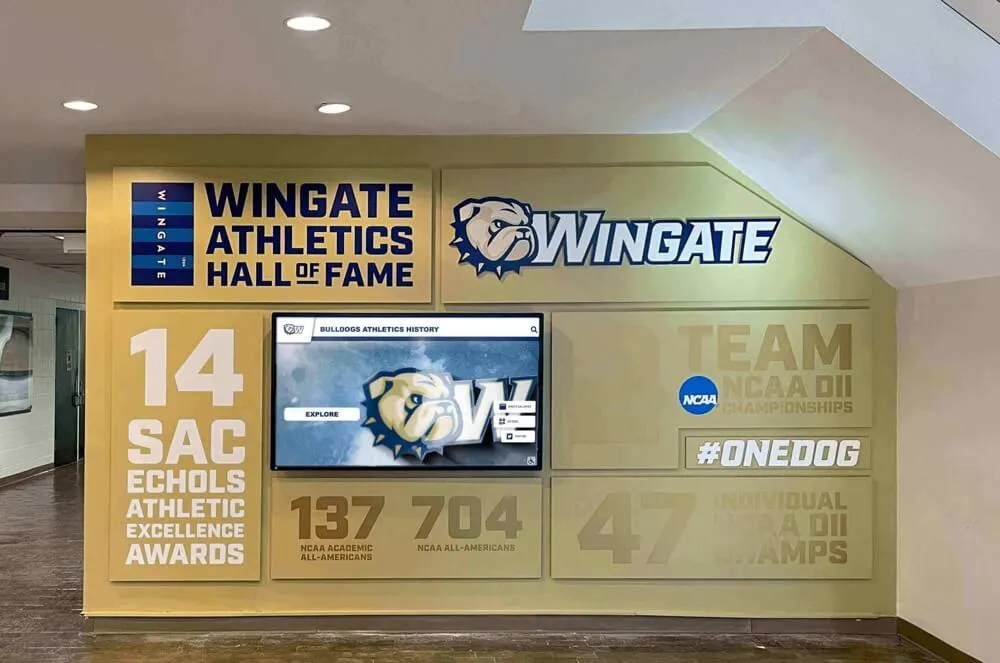
Wall of honor installations with interactive features become natural gathering points where reunion attendees explore shared history and celebrate classmates' achievements throughout the evening
Honoring Classmates Who Served
Military veterans among a graduating class deserve meaningful acknowledgment at reunions. An interactive display dedicated to classmates who served—featuring service branches, deployment history, and awards received—creates a respectful experience that moves well beyond a brief mention in a welcome speech. Recognizing military veterans through digital versus traditional approaches explores display formats that honor service with the dignity it deserves.
Planning the Physical and Visual Environment
The physical environment of a reunion—how the space looks, feels, and communicates—shapes the experience powerfully before a word is spoken or a song is played.
Venue Decoration and Signage
Class colors, yearbook cover imagery, school mascot graphics, and milestone year branding all contribute to visual coherence. Temporary signage that transforms a generic hotel ballroom into a recognizable celebration of a specific class identity makes an immediate emotional impact at arrival. Pairing physical signage with digital display content creates layered environmental storytelling that immerses attendees from first entry.
Photo Tables and Memory Stations
Traditional photo table setups—with yearbooks open to relevant pages, printed class composite photos, and mementos from school events—remain popular because they work reliably. They create natural gathering points, trigger specific memories, and generate conversations that might not happen in open mingling space. Digital versions of these stations extend the concept by making content searchable, shareable, and interactive.
Technology Placement and Logistics
If integrating touchscreen displays into a reunion, several practical considerations apply:
- Network requirements: Interactive displays typically require stable internet connections for content delivery and real-time updates
- Screen placement: Position displays in cocktail hour areas and high-traffic transition spaces, not in dining areas where sitting is expected
- Content preparation lead time: Curating photos, building alumni databases, and loading content requires weeks, not hours
- Testing: Arrive on event day early enough to confirm all displays are functioning correctly before guests arrive

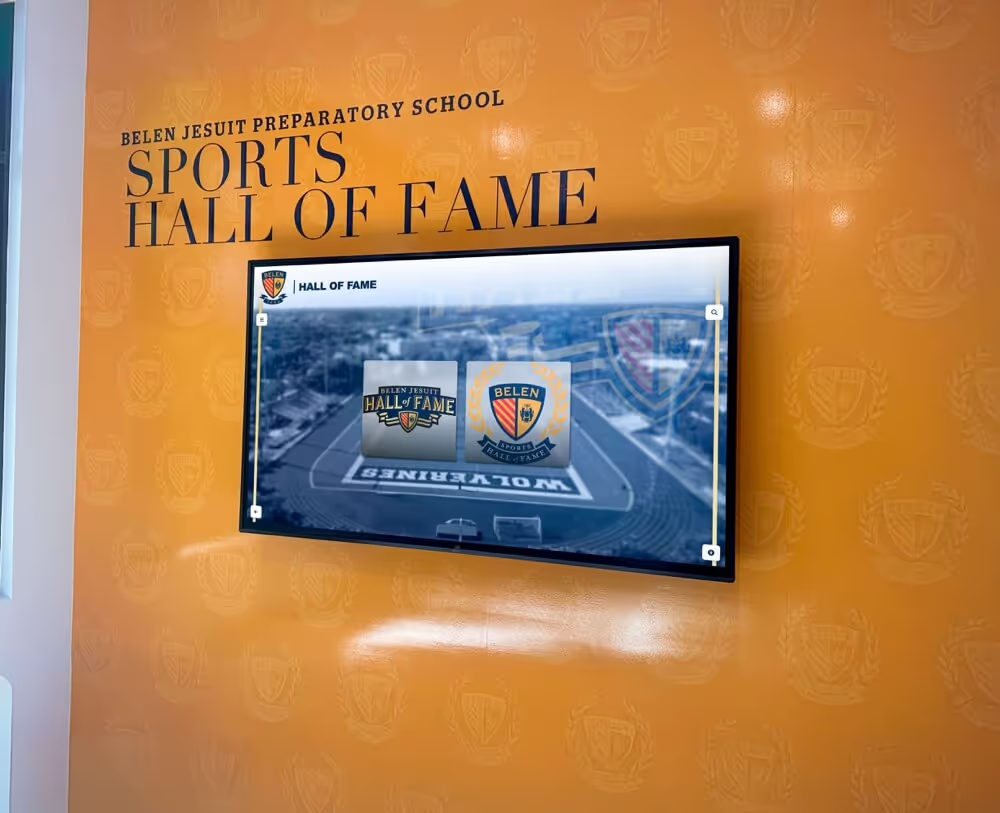
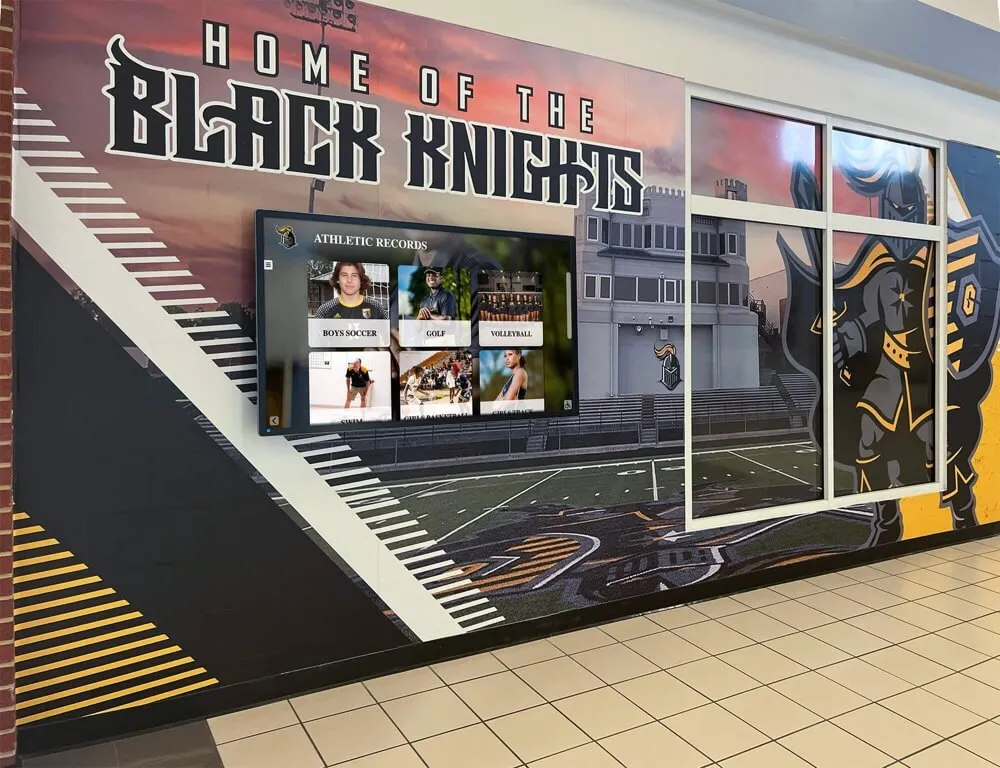
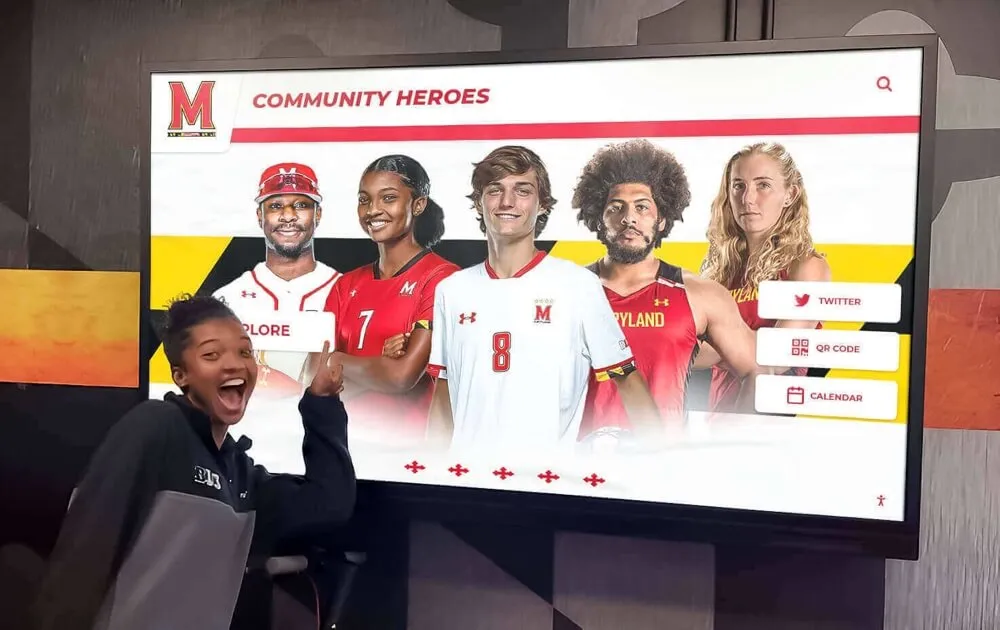
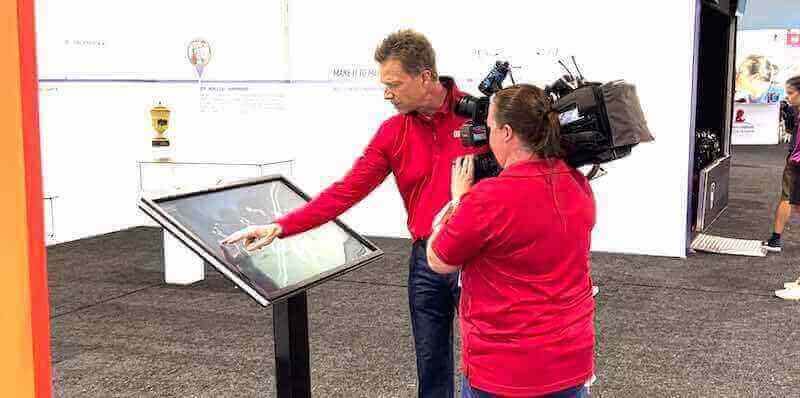
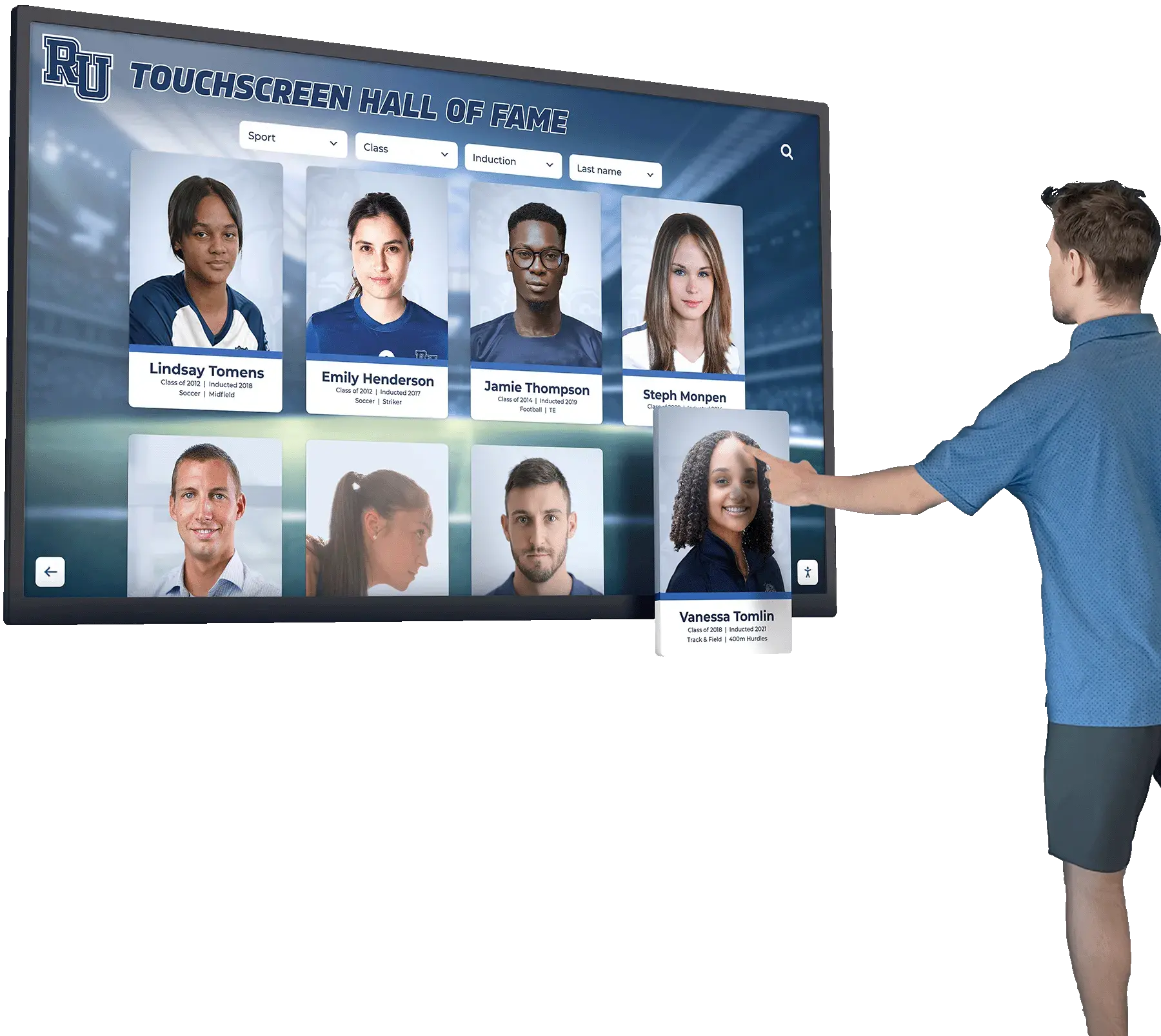
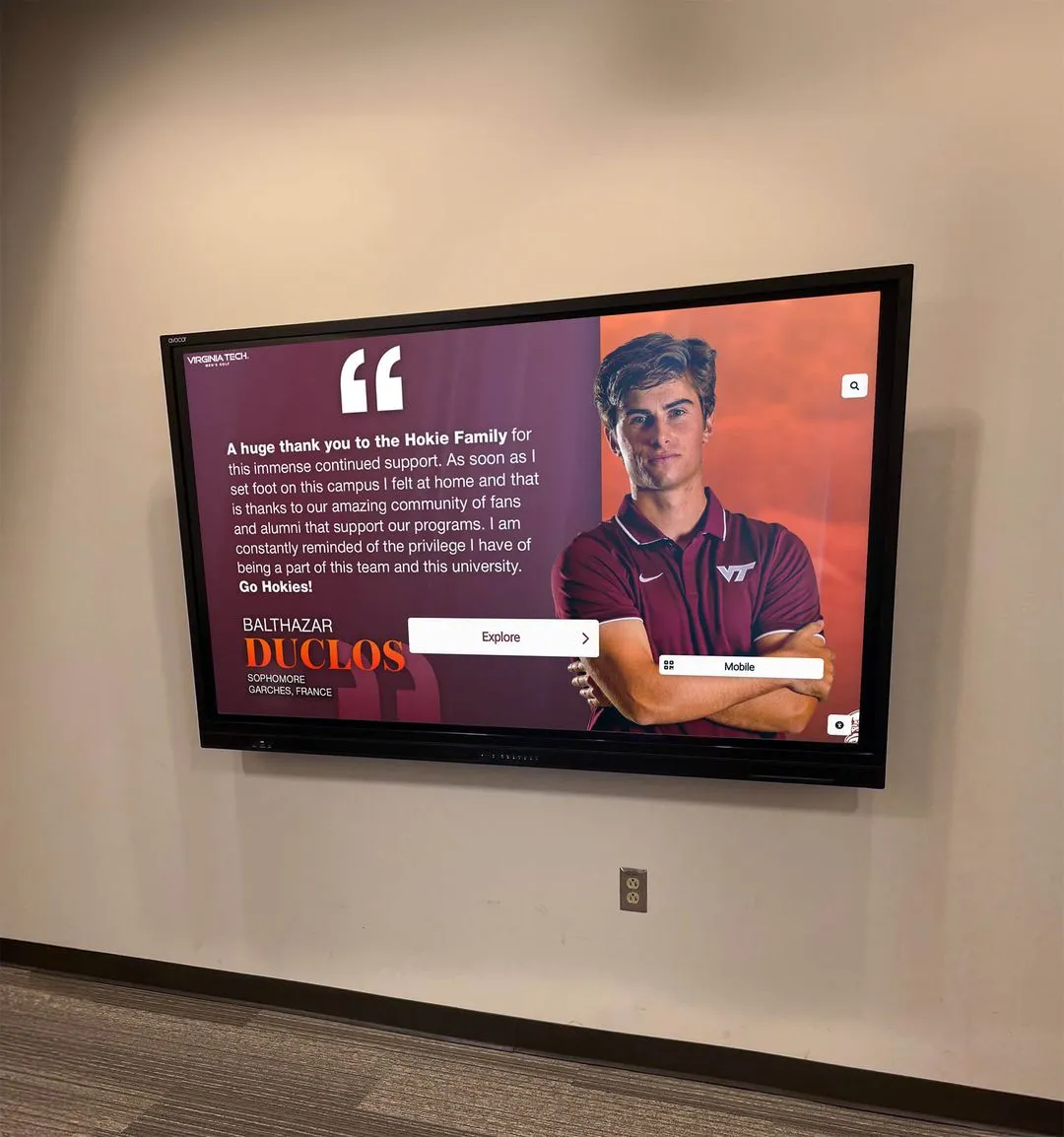
Touchscreen interfaces that allow individual profile selection give reunion attendees agency in exploring class history—every interaction becomes personal and discovery-driven
Choosing the Right Touchscreen Technology for Your Reunion
Not all interactive display solutions are equal, and the stakes are higher when a display represents a centerpiece of a once-every-decade event.
What to Look for in Reunion Display Technology
- Ease of content management: Can non-technical committee members upload and organize photos and profiles without programming knowledge?
- Reliability: What happens if the network connection drops mid-event? Does the display fail completely or operate from locally cached content?
- Aesthetic quality: Does the interface feel modern and polished, or dated and frustrating to navigate?
- Scalability: Can the system handle hundreds of profiles and thousands of photos without performance issues during peak use?
Platforms Designed for Alumni Recognition
Rocket Alumni Solutions builds interactive touchscreen experiences specifically for educational alumni recognition. Their systems include comprehensive alumni databases that can be populated before a reunion event and explored interactively throughout the gathering—enabling attendees to search for classmates by name, sport, graduation year, or activity. Beyond reunion use, these displays can live permanently in school lobbies and hallways, creating ongoing recognition value that extends far beyond a single event weekend.
The technology has been deployed in venues ranging from school entrance lobbies to major sports facilities. Fenway Park’s touchscreen recognition display demonstrates how interactive recognition scales to large venue installations—the same principles that make these experiences compelling in iconic sports venues translate powerfully to reunion settings of any size.
Common Reunion Challenges and Solutions
Even well-planned reunions face predictable obstacles. Understanding them in advance reduces their impact significantly.
Low Response Rates
Many classes struggle to locate 50% or more of their graduating class. Solutions include early and persistent outreach through multiple channels (email, social media, physical mail, personal phone calls), leveraging existing class Facebook groups with high membership, and working with the school’s alumni database if one exists and the school is willing to share contact information.
Attendance Drops Below Registration
Registration is not the same as attendance. Build conservative catering estimates based on roughly 80–85% of registered attendees actually appearing. This avoids paying for unclaimed plates while preventing genuine shortfalls.
Committee Burnout
Three or four people cannot effectively plan a 200-person event while maintaining full-time jobs and family obligations. Recruit more volunteers early, delegate specific tasks with clear accountability and deadlines, and use professional vendors for high-stakes elements like catering and AV where the cost of failure is high.

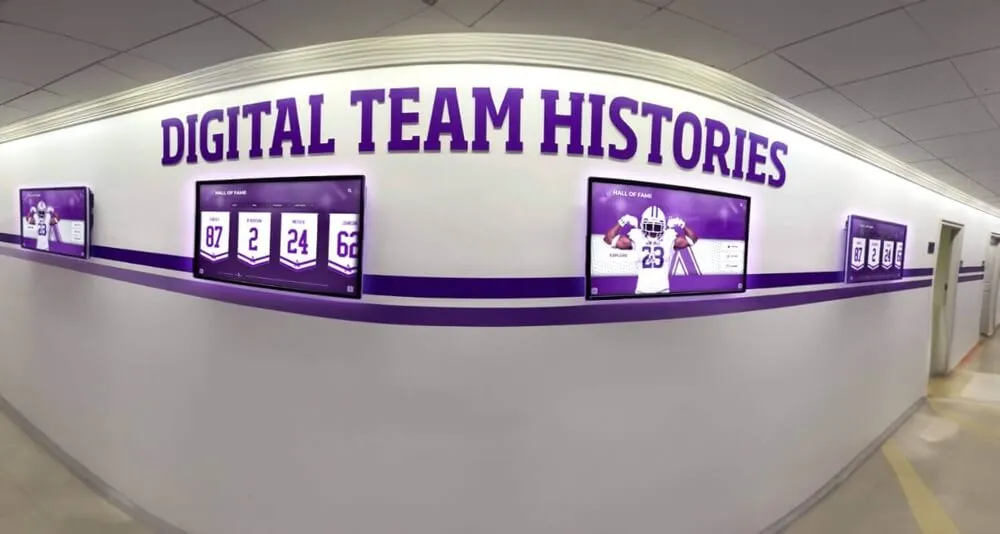
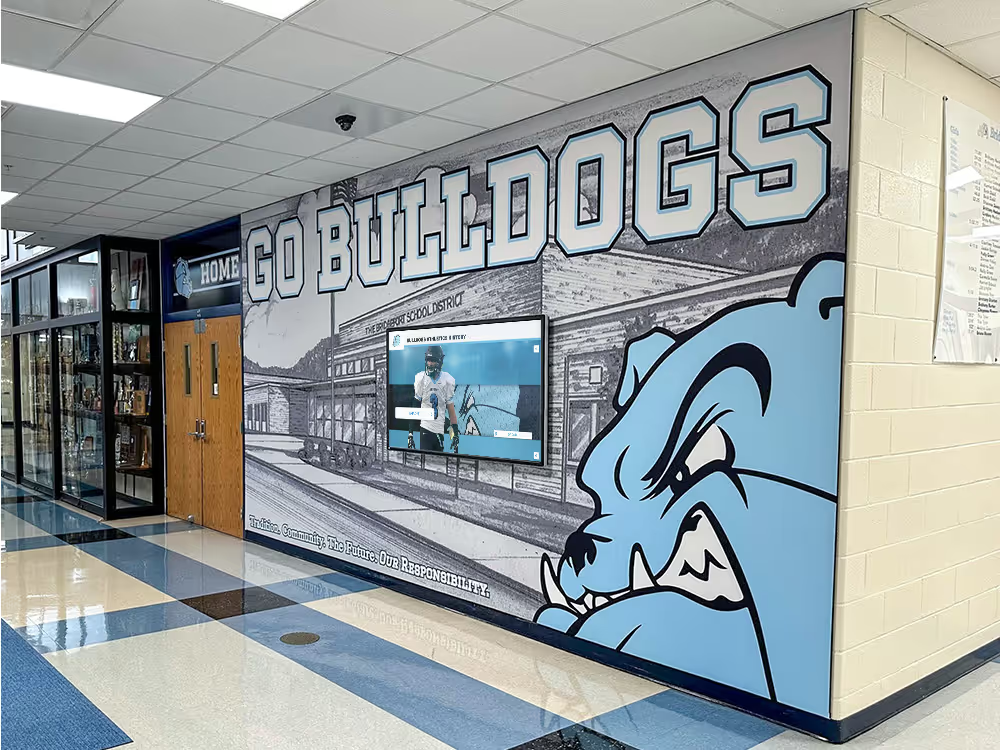
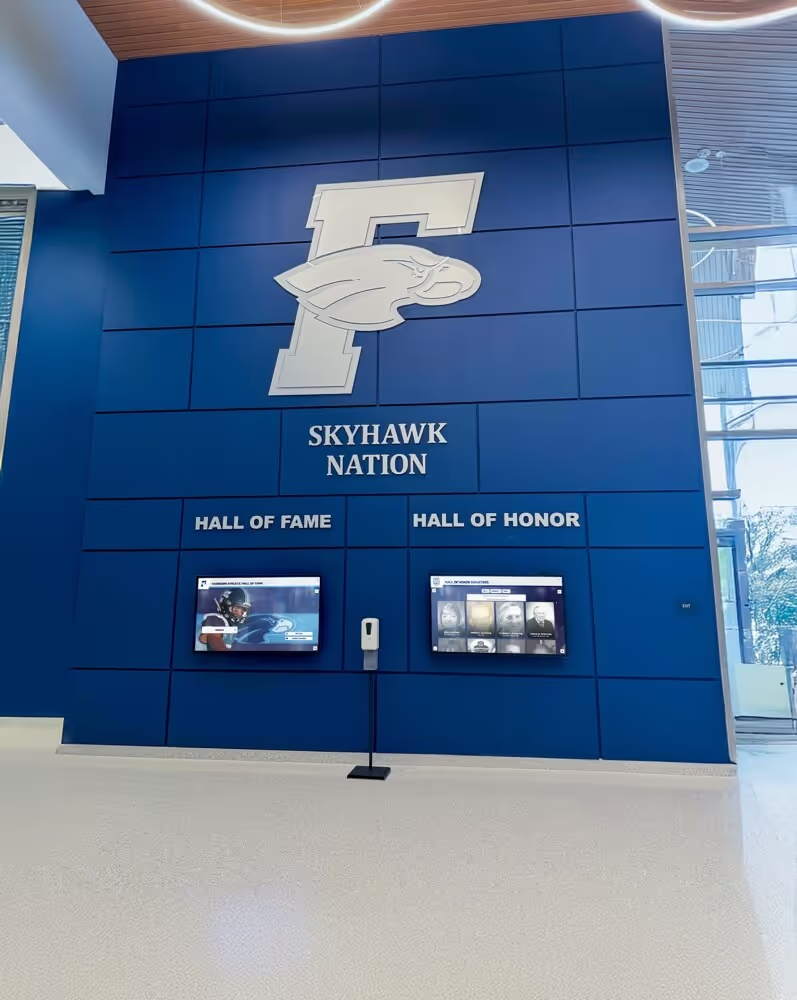
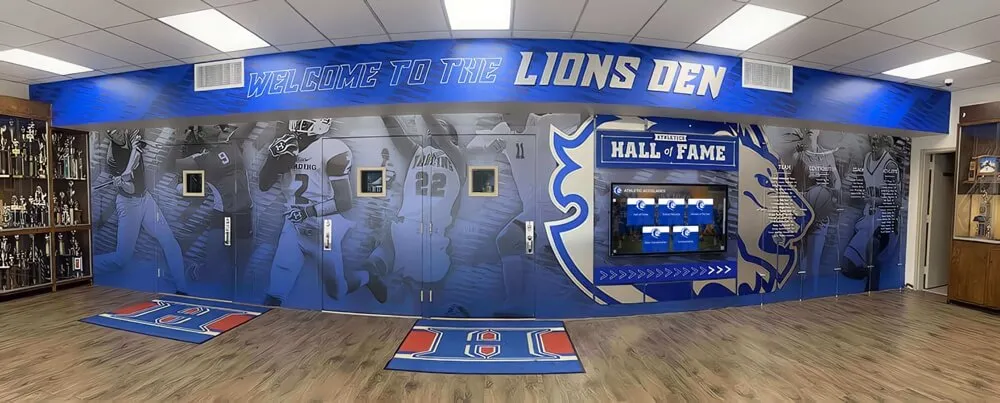
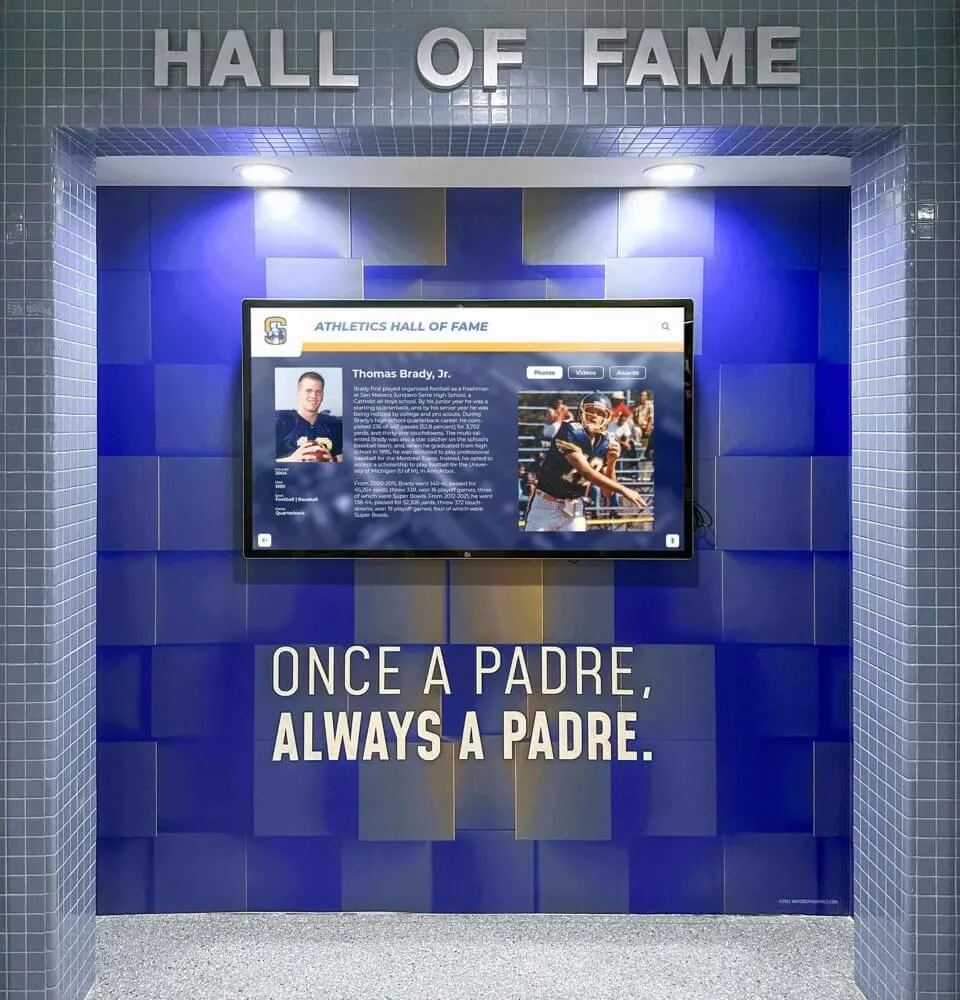
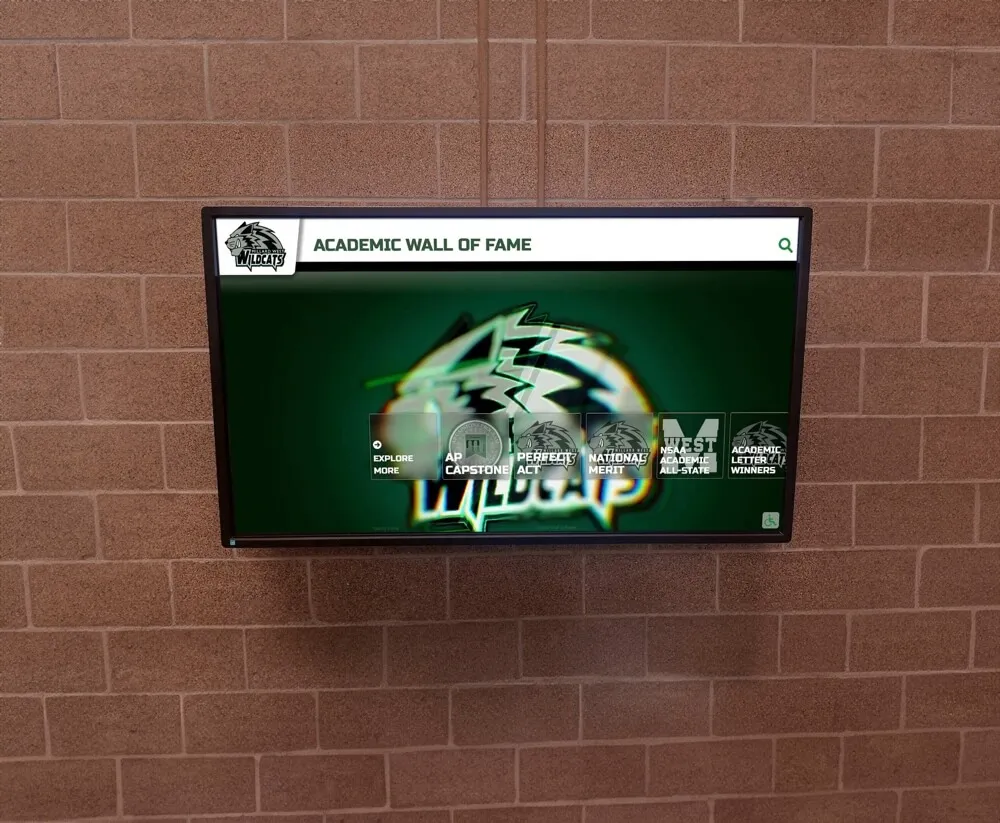
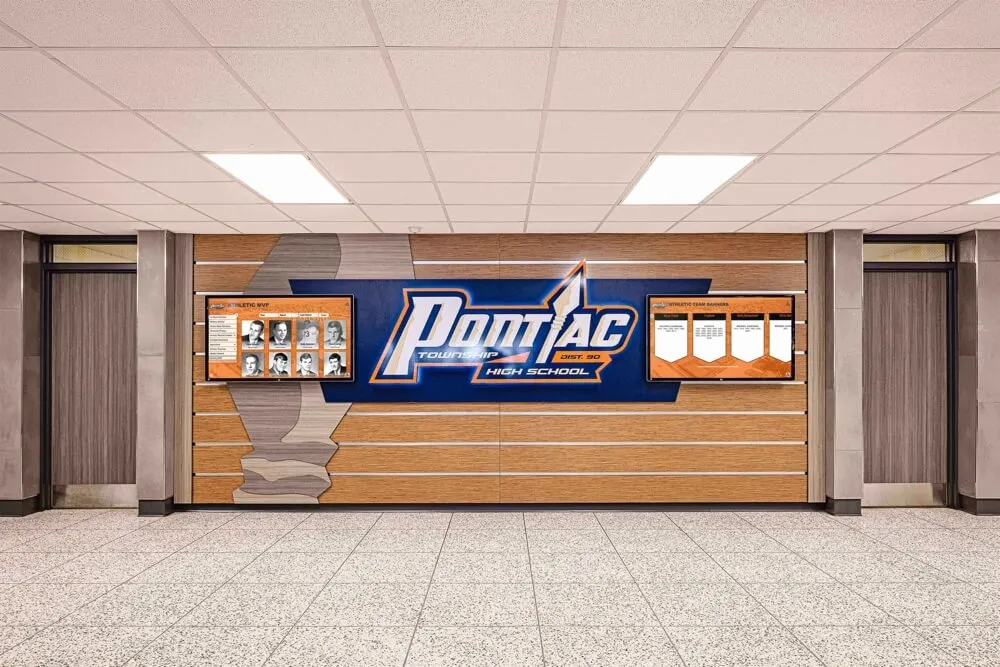
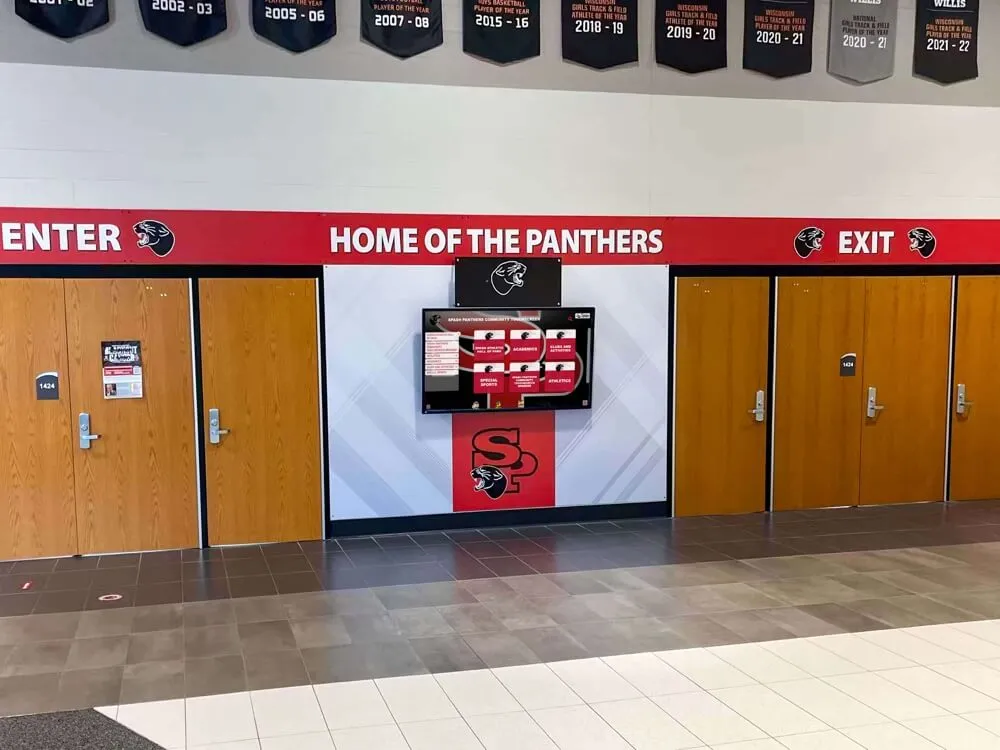
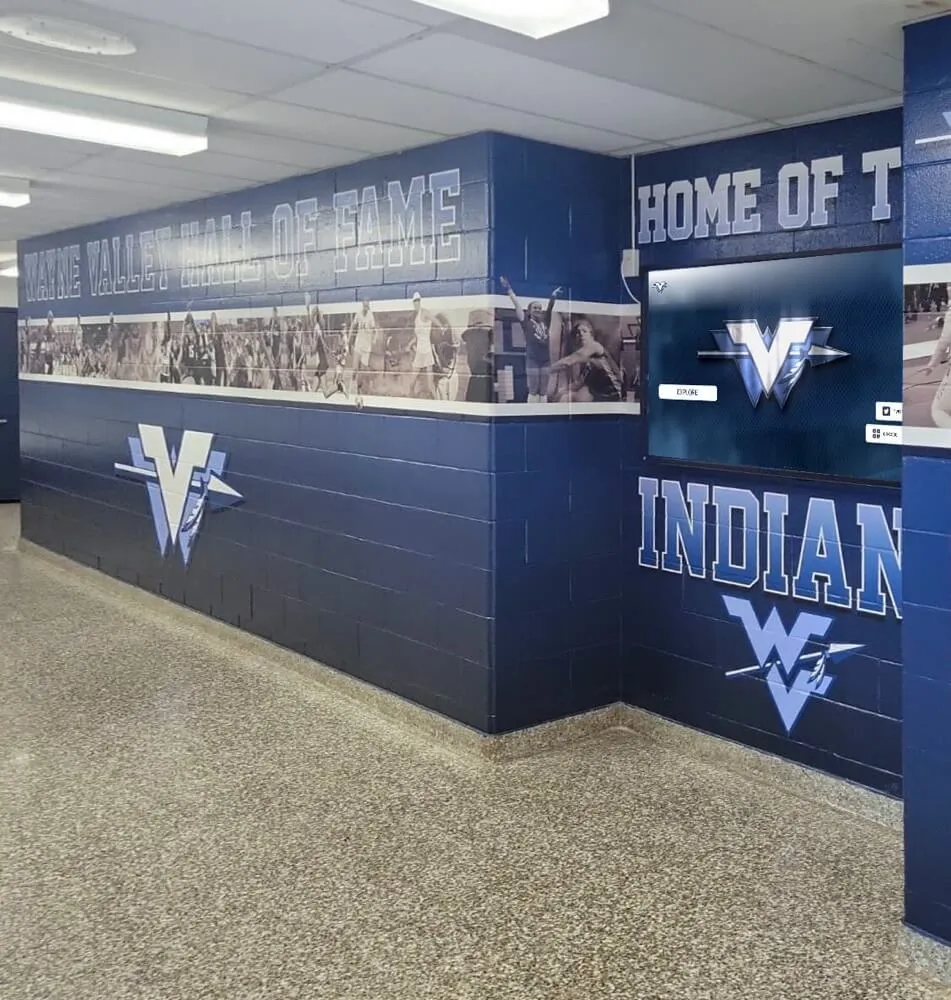
Permanent digital wall of fame installations in school hallways provide lasting alumni recognition that amplifies reunion themes throughout the year—not just on event night
The Comparison Trap
Some attendees dread reunions because of anxiety about how their lives compare to classmates who appear more successful on paper. Reunion organizers can address this through programming that celebrates diverse definitions of achievement—not just career titles—and by creating a tone of genuine celebration rather than competition. The choice of award categories signals values: recognizing “most dedicated volunteer,” “most creative career path,” or “most generous community member” alongside traditional achievement markers makes the room feel safer for everyone.
In Memoriam Moments Done Poorly
The in memoriam recognition is one of the most emotionally significant moments of any reunion. It requires thoughtful preparation: a complete and accurate list of deceased classmates, tasteful visual presentation with photos, names, and graduation year, and appropriate time for quiet acknowledgment. Rushed or incomplete in memoriam moments leave attendees feeling that important losses weren’t properly honored—an impression that lingers long after the evening ends.
Building a Reunion That Lasts Beyond One Night
The most meaningful reunions create artifacts and memories that outlast the event itself:
Professional Photography
A dedicated photographer produces images capturing the evening for attendees who want documentation of reconnections. These photos also support outreach and marketing for the next reunion cycle.
Event Video
Highlight video creates shareable content that reaches classmates who couldn’t attend and builds anticipation for the next gathering. Short social media clips distributed in the weeks following the event extend the reunion’s emotional reach significantly.
Digital Archive
When a touchscreen display captures attendee profiles, photos, and submissions before and during a reunion, the resulting database becomes a permanent record of where the class stood at this moment in time—invaluable context for future reunions and for the school’s broader alumni recognition efforts.
Continued Online Community
The email addresses, social profiles, and contact information gathered through reunion registration provide the foundation for ongoing class communication between milestone events—turning a once-a-decade gathering into a continuous, if lower-key, community.
Conclusion: How High School Reunions Work Best
High school reunions work when they’re planned with both logistical competence and emotional intelligence—when committee members handle venue contracts and catering deposits with professionalism while also understanding that the real purpose of the event is to create space for human beings to reconnect across the years.
They work best when technology serves that human purpose rather than replacing it. A touchscreen display that helps someone find their old swim team photo doesn’t compete with the conversation that photo triggers between two people who haven’t spoken in thirty years. It enables it.
Whether you’re planning your first milestone reunion or attending one as a curious first-timer, the mechanics are genuinely straightforward. The magic is harder to engineer—but it reliably appears when a room full of people who share the specific, irreplaceable bond of having grown up together in the same building at the same time gets the chance to remember that together.
Add an Interactive Memory Experience to Your Reunion
Touchscreen displays from Rocket Alumni Solutions transform reunion gatherings with searchable photo archives, alumni achievement databases, and interactive memory walls that keep attendees engaged all evening—and give your school a lasting recognition installation for years to come.
Explore Reunion Display Solutions