



Starting a high school esports program represents one of the most significant opportunities athletic directors have to expand participation, engage students who’ve never competed in traditional sports, and establish your school at the forefront of the fastest-growing competitive activity in education. With the National Federation of State High School Associations (NFHS) sanctioning esports, PlayVS providing turnkey league infrastructure, and over 8,000 high schools already competing, esports has evolved from experimental club activity to legitimate varsity program worthy of the same institutional support as football, basketball, and soccer.
Yet many athletic directors face legitimate questions and concerns when considering esports program launch: How much does it actually cost to start? What equipment do you need? Where do you find qualified coaches? How do you convince skeptical administrators that competitive gaming deserves athletic department resources? Which league platform provides the best competitive experience? How do you recruit students and build teams? And most importantly—how do you create sustainable programs that thrive beyond the initial novelty phase?
This comprehensive guide provides athletic directors with a practical roadmap for launching successful high school esports programs—from building the business case and securing funding to selecting leagues, hiring coaches, establishing competitive teams, and creating recognition systems that celebrate esports achievements alongside traditional athletic excellence.
The most successful high school esports programs balance competitive excellence with inclusive participation, treat esports athletes with the same respect and support provided to traditional sports, and create visible recognition that elevates gaming achievements to the same status as football championships and basketball records throughout school facilities.

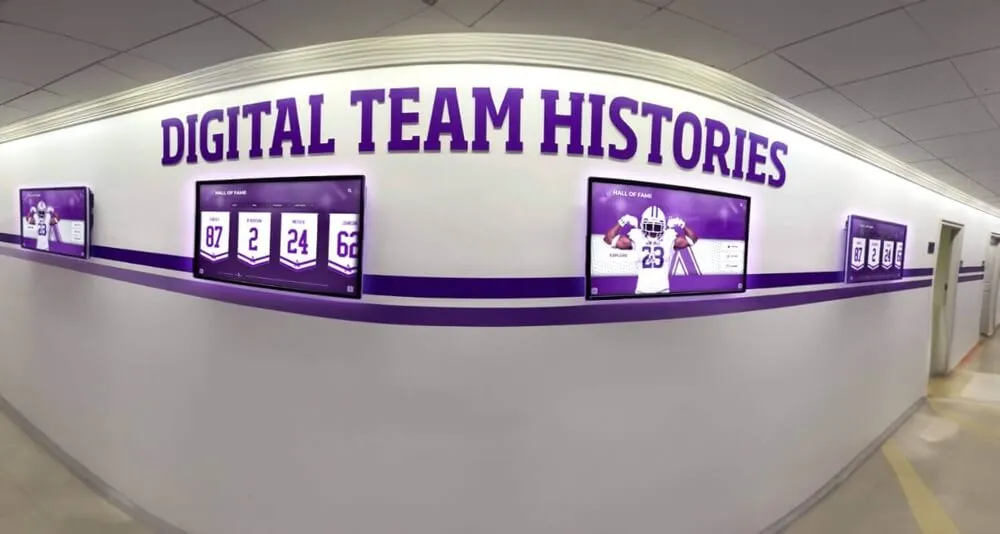
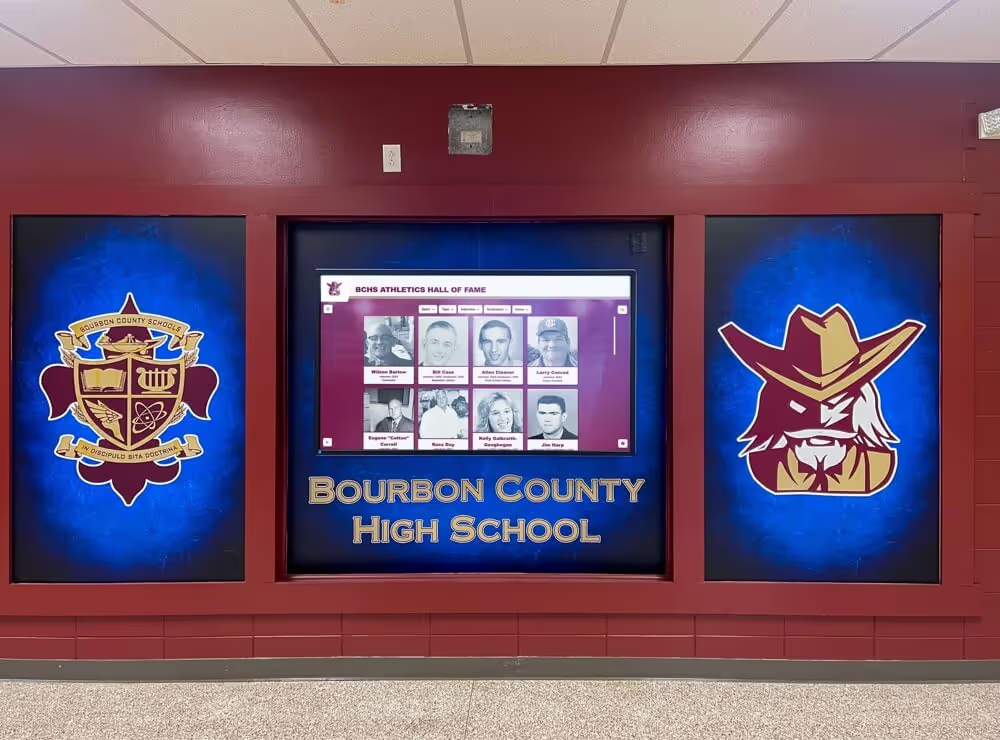
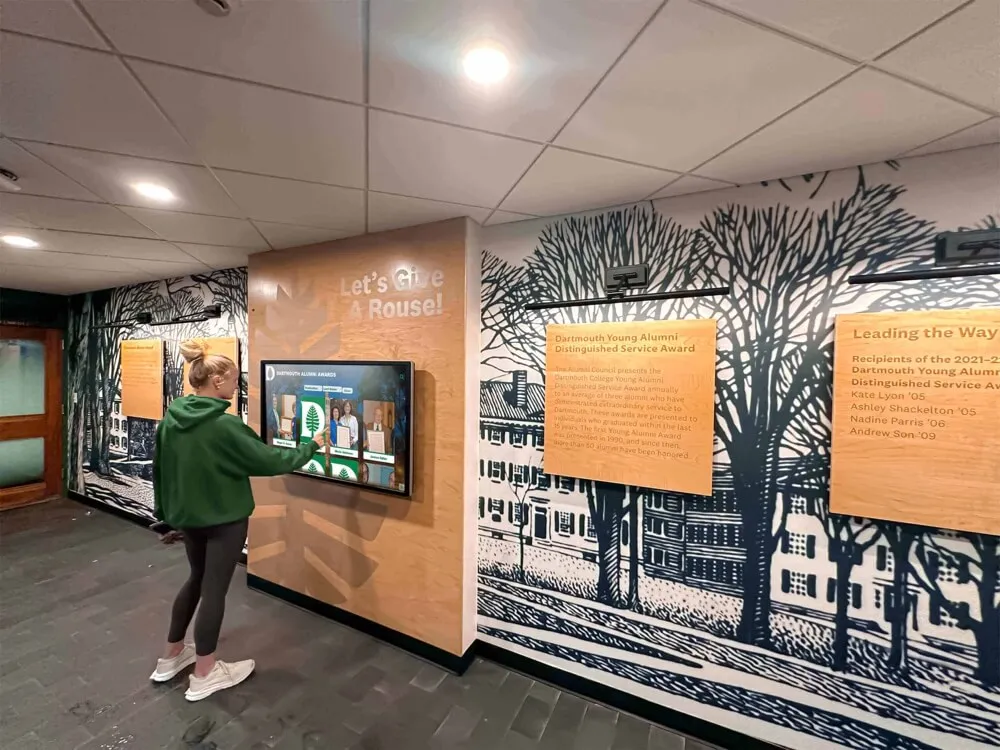
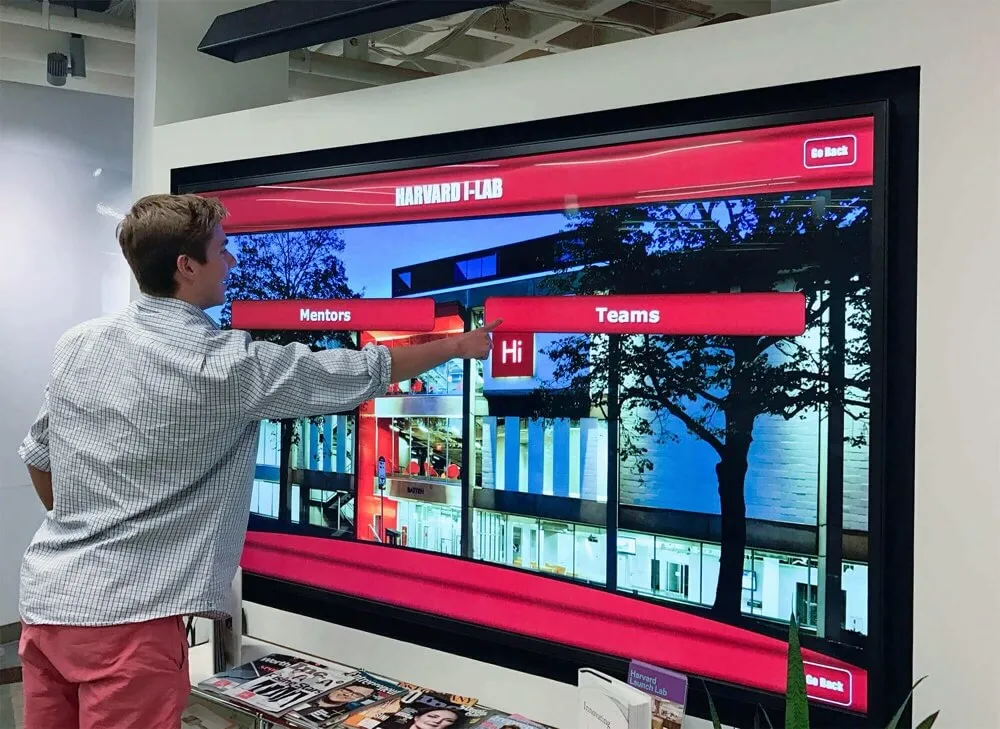
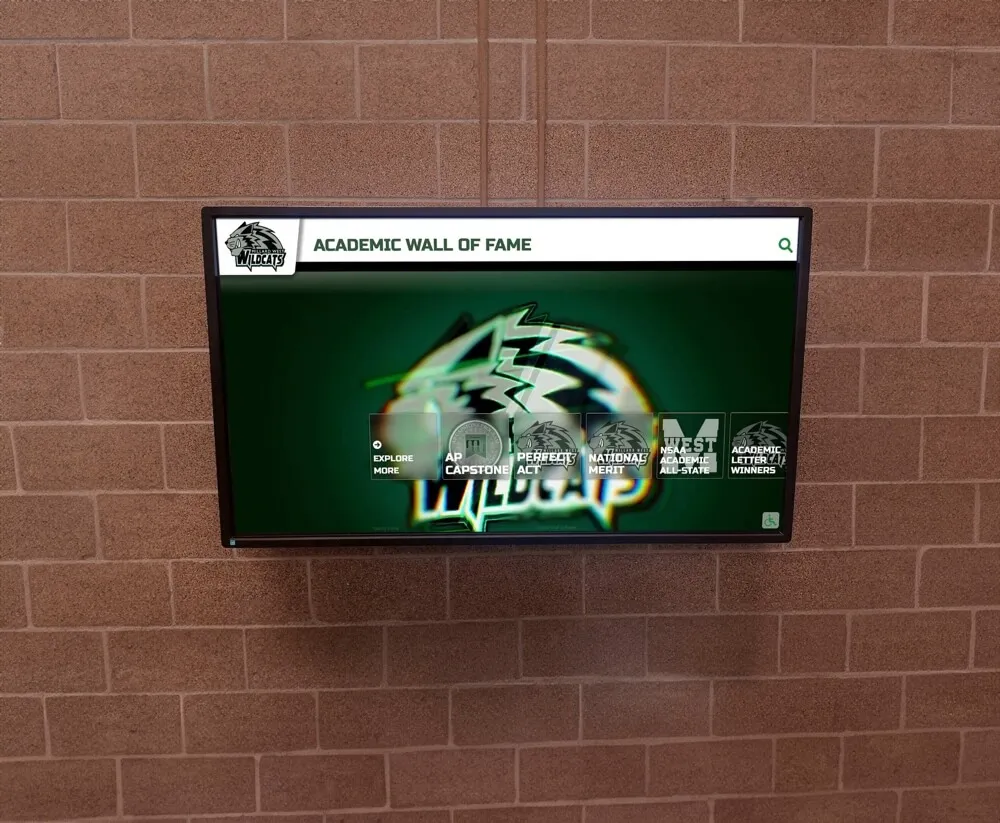
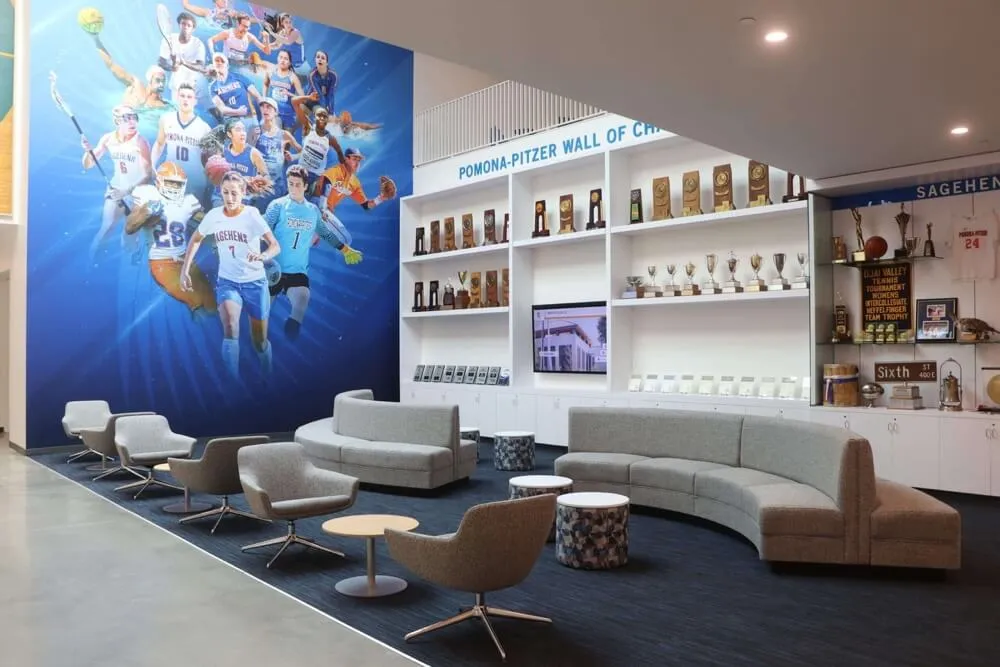
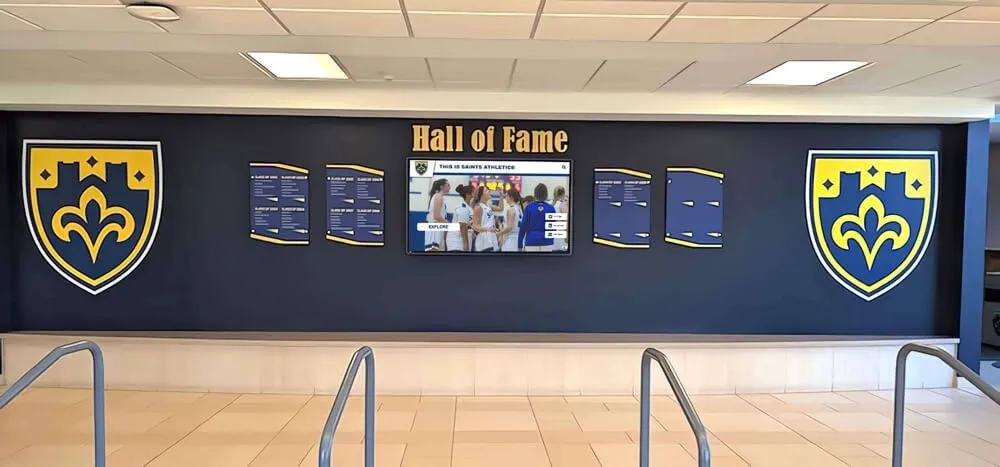
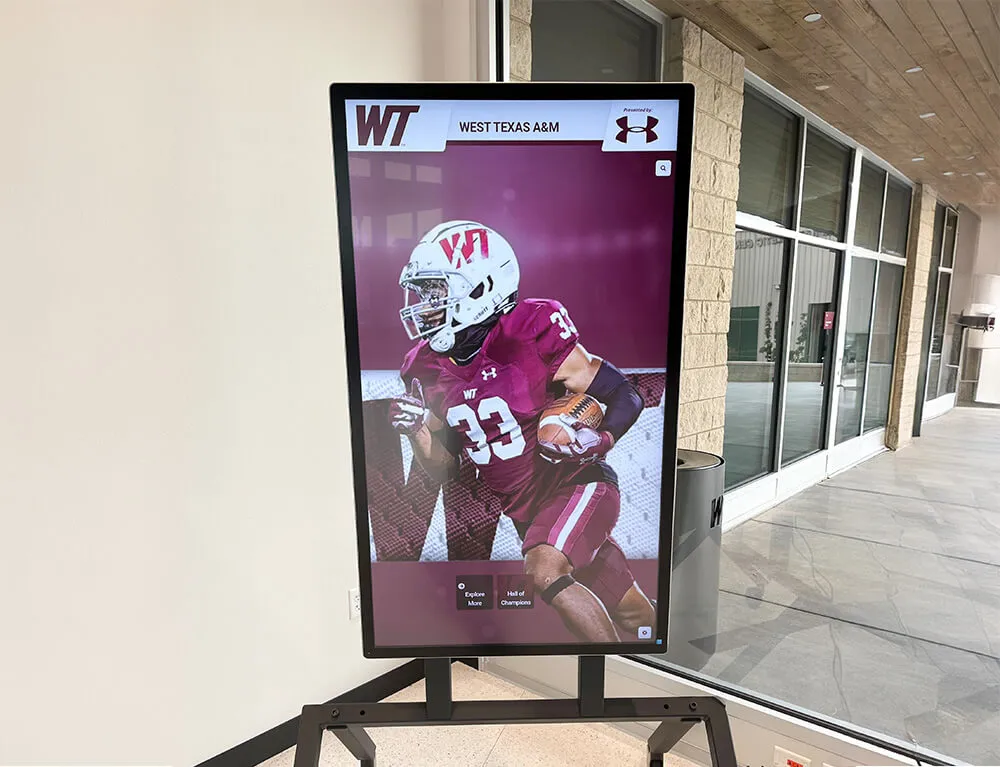
Modern schools are creating recognition systems that celebrate esports champions alongside traditional athletic achievements
Understanding the High School Esports Landscape
Before launching your program, understanding the current esports ecosystem helps athletic directors make informed decisions about league affiliation, competition structure, and program positioning.
The Growth and Legitimacy of Scholastic Esports
High school esports has experienced explosive growth fueled by organizational infrastructure that mirrors traditional athletics:
National Federation of State High School Associations (NFHS) Sanctioning
In 2018, the NFHS officially sanctioned esports, bringing the same governance body overseeing football, basketball, and all traditional high school sports to competitive gaming. This sanctioning provided unprecedented legitimacy—establishing esports as an authentic competitive activity rather than casual recreation, creating pathways for state athletic association adoption and oversight, enabling schools to offer varsity letters and athletic recognition, and opening possibilities for championship events and state tournament structures.
According to NFHS data, over 8,000 high schools across North America now field competitive esports teams, with participation growing 30-40% annually. Several state athletic associations including Georgia, Alabama, Connecticut, and Massachusetts have fully integrated esports into their competitive offerings alongside traditional sports.
PlayVS: The Infrastructure Provider
PlayVS serves as the official esports platform for high school competition, providing the technological infrastructure and league management that would be prohibitively complex for individual schools to coordinate. Founded in 2018 and backed by partnerships with the NFHS, state athletic associations, and major game publishers, PlayVS creates turnkey solutions including automated matchmaking and scheduling across state and national competition, integrated league management handling rosters, eligibility verification, and standings, communication platforms connecting coaches and coordinating match times, statistical tracking and performance analytics, and championship tournament organization at state and national levels.
The platform currently supports over 20 competitive game titles across multiple genres, allowing schools to field teams in League of Legends, Rocket League, Super Smash Bros. Ultimate, VALORANT, NBA 2K, and many others. This variety ensures programs can accommodate diverse student interests while maintaining structured competition.
Competitive Structure and Seasons
High school esports follows structured seasonal formats similar to traditional athletics:
Season Structure
PlayVS organizes competition into fall and spring seasons, each running approximately 8-10 weeks with regular season matches scheduled weekly during designated competition windows, playoff tournaments determining state champions in each game title, and national championship events featuring top programs from across the country. This structured approach creates the same rhythm and competitive arc familiar from traditional sports—regular season preparation, mid-season adjustments, playoff intensity, and championship aspirations.
Multiple Game Titles = Multiple Teams
Unlike traditional sports where schools typically field one varsity team per sport, esports programs often field multiple teams across different game titles. A typical program might include teams competing in League of Legends (5 players per team), Rocket League (3 players per team), Super Smash Bros. Ultimate (individual competition), VALORANT (5 players per team), and NBA 2K (individual or team competition). This structure dramatically increases participation opportunities—a single esports program can engage 30-50+ students where a football program might include 40 players total.
The multi-title approach also accommodates diverse skill sets and interests. Students who excel at strategic team-based games gravitate toward League of Legends or VALORANT, while those preferring fast-paced mechanical skill compete in Rocket League or fighting games. This diversity ensures broad appeal beyond students interested in a single game genre.
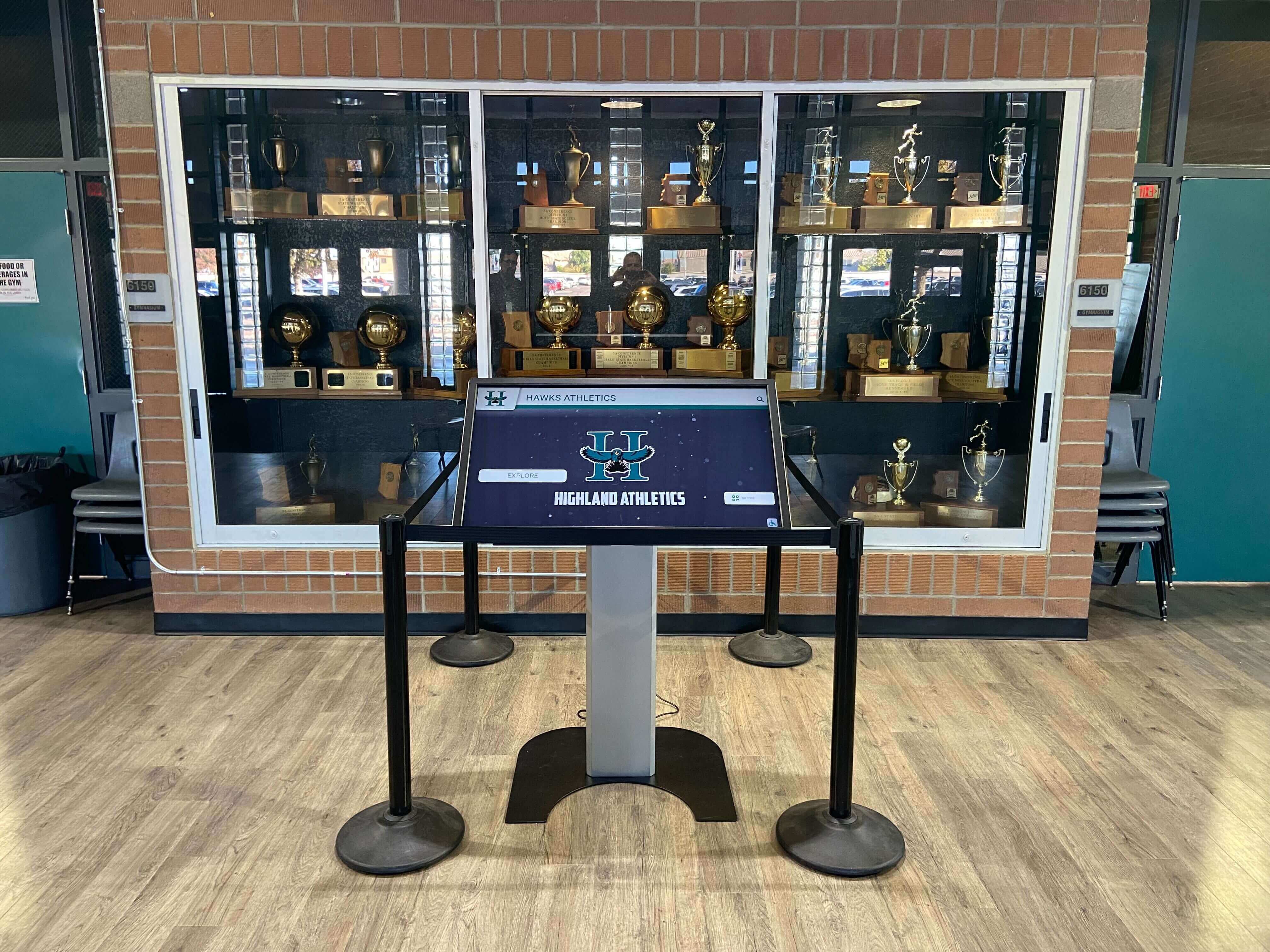
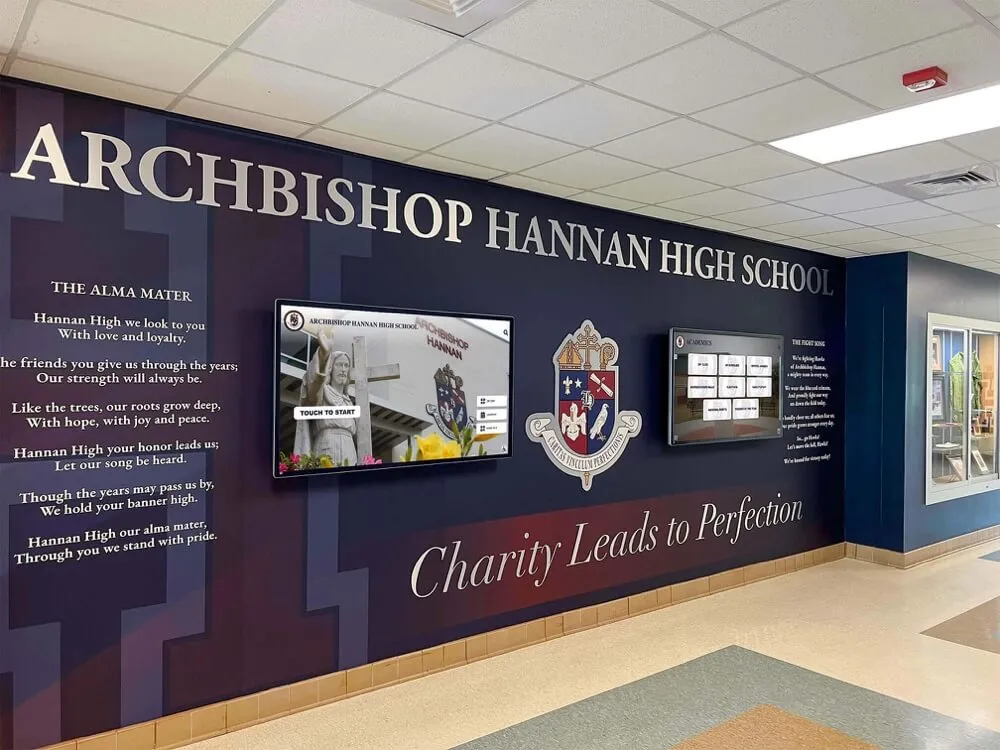
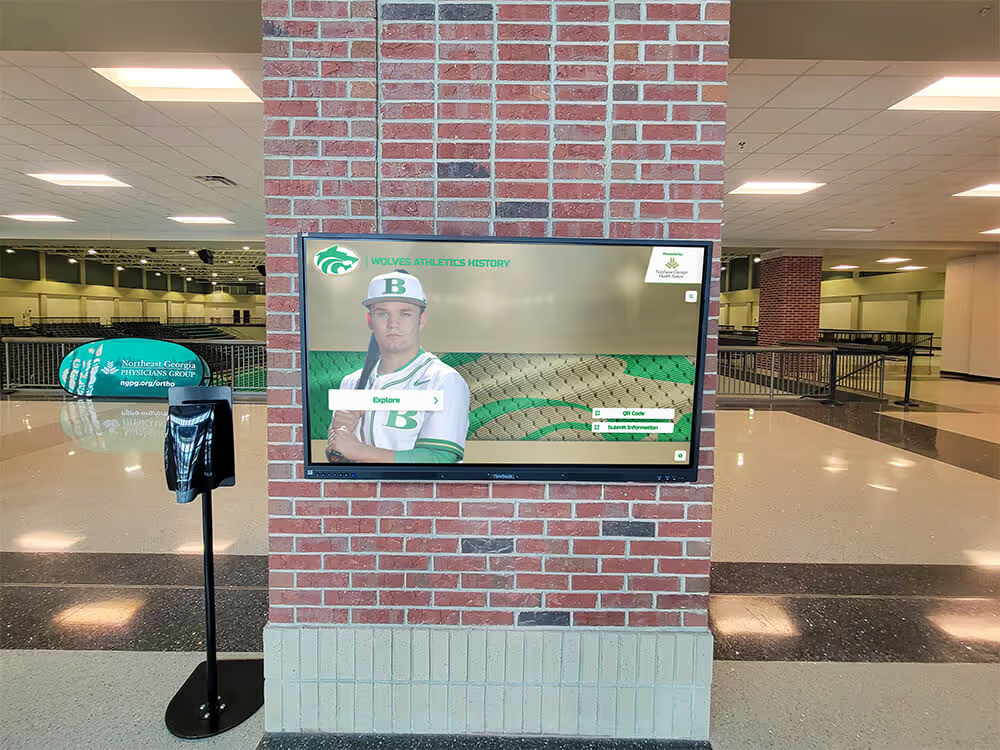
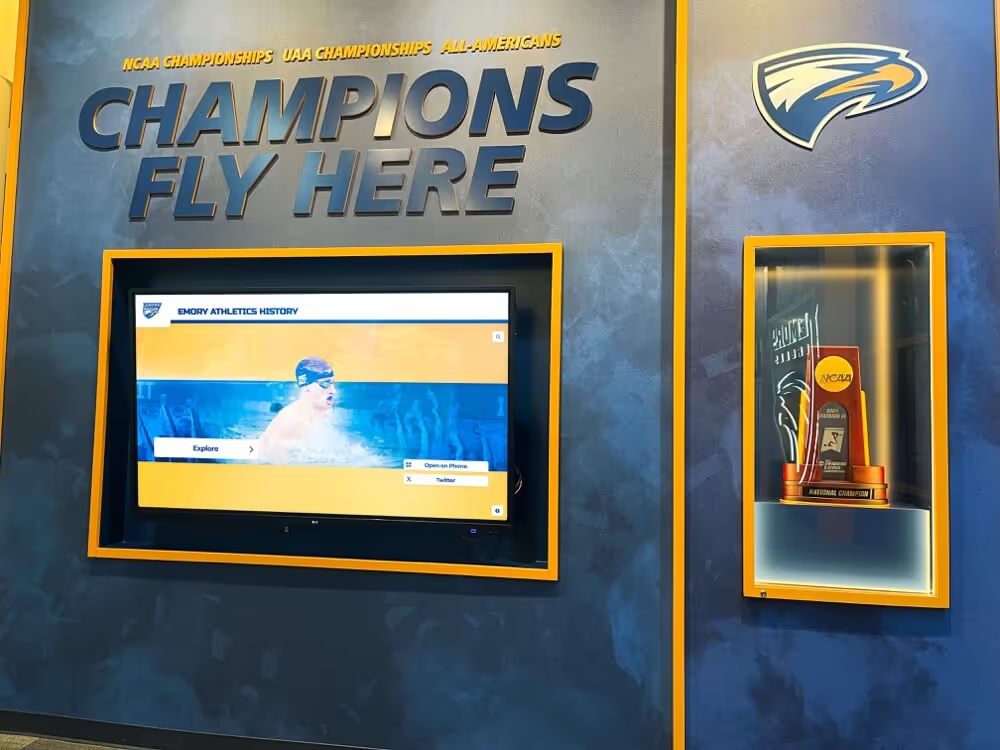
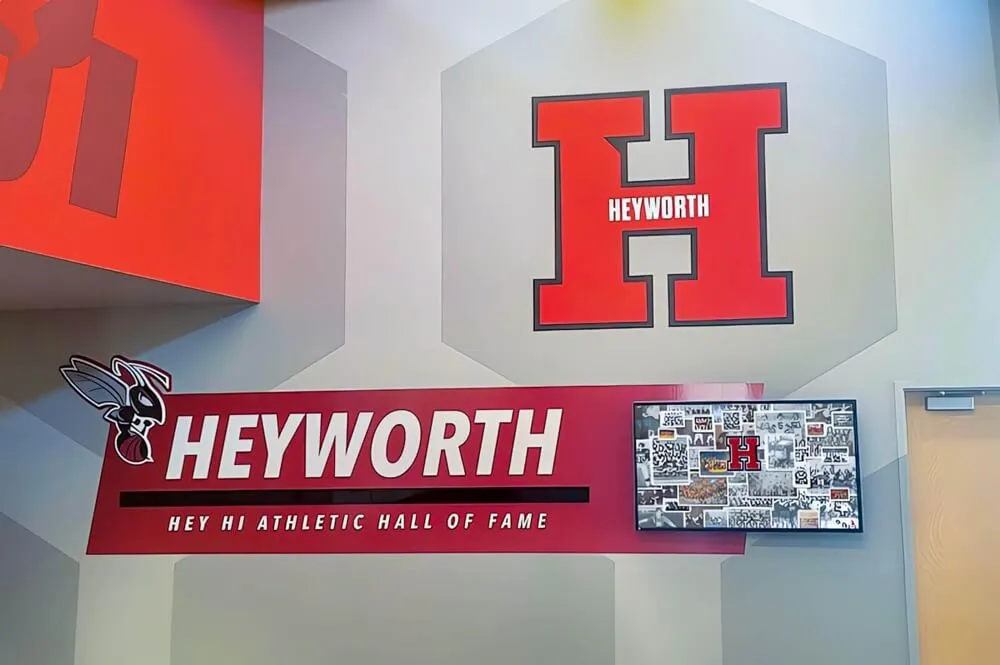
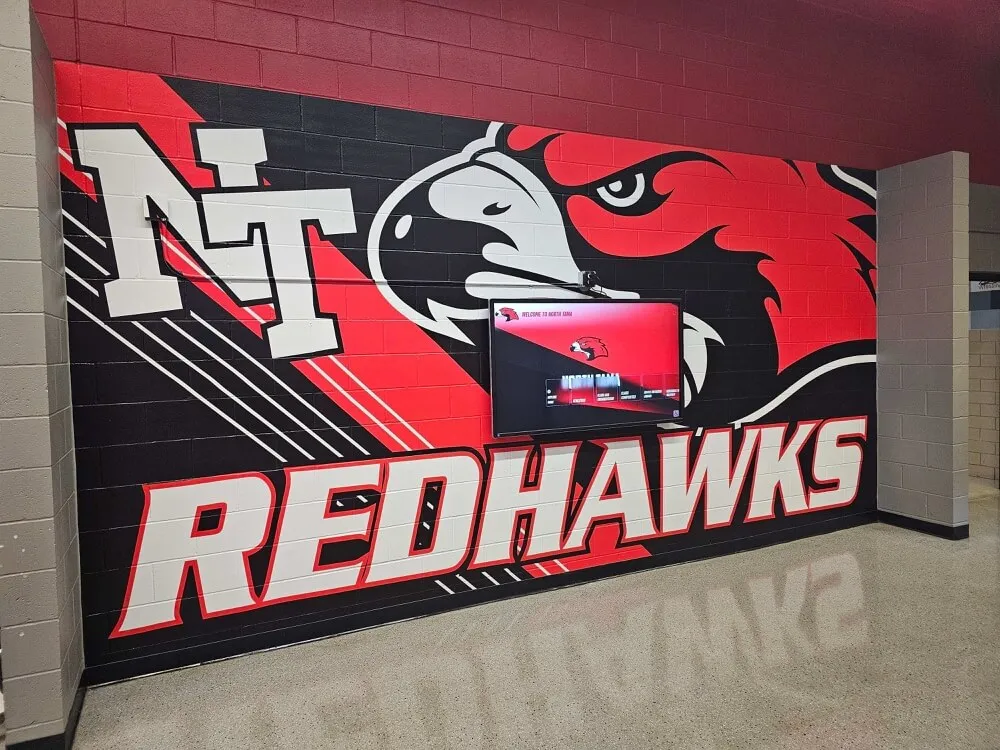
Forward-thinking schools are integrating esports achievements into existing trophy cases with modern digital displays
Building the Business Case for Esports
Securing administrative approval and budget allocation requires demonstrating clear value proposition beyond “students like video games.”
Participation and Inclusion Benefits
Esports uniquely expands athletic participation in ways traditional sports cannot:
Engaging Previously Unreached Students
Research consistently shows that 60-70% of esports participants have never competed in traditional high school athletics. The National Association of Collegiate Esports (NACE) reports that esports provides competitive opportunities for students who face barriers in conventional sports including physical disabilities or limitations that preclude traditional athletic participation, social anxiety or team dynamics challenges in locker room environments, schedule conflicts with existing commitments like part-time work or family responsibilities, lack of interest in physical sports despite competitive drive and strategic thinking abilities, and body type or physical development differences that create disadvantages in size-dependent sports.
By launching esports, athletic directors dramatically expand the percentage of the student body experiencing competitive athletics, team membership, coach mentorship, and the documented academic and social benefits associated with athletic participation. Schools report that esports often becomes their largest participation program within 2-3 years of launch.
Equity and Accessibility
Unlike many traditional sports that require significant prior experience or specialized physical development, esports offers relatively equitable entry points. Students can develop competitive-level skills in months rather than years, programs can accommodate skill ranges through JV and varsity team structures, and co-ed competition is standard rather than exceptional—girls and boys compete together on equal terms in most titles. Physical facilities present no barriers to students with mobility challenges, and equipment costs per participant are significantly lower than football, hockey, or many other traditional sports.
Schools implementing comprehensive academic recognition programs alongside athletic achievements find that esports participants often excel academically, challenging stereotypes about gaming culture while demonstrating the cognitive demands of high-level competitive play.
Strategic and Educational Value
Beyond participation numbers, esports develops valuable skills and creates unique educational opportunities:
21st Century Skill Development
Competitive esports requires and develops capabilities directly transferable to college and career success:
- Strategic thinking and decision-making under pressure and incomplete information
- Team communication and coordination in fast-paced dynamic environments
- Data analysis and performance optimization through statistical review and improvement
- Emotional regulation and resilience when facing setbacks and high-stakes competition
- Time management and commitment balancing practice, competition, and academic responsibilities
These cognitive and interpersonal skills align perfectly with educational objectives while creating experiences students find intrinsically motivating rather than externally mandated.
College Recruitment and Scholarship Opportunities
Over 200 colleges and universities now offer varsity esports programs, many providing substantial scholarship opportunities for competitive players. According to NACE, collegiate esports programs distributed over $16 million in scholarships and aid during the 2023-24 academic year. High school programs create pathways for college recruitment similar to traditional sports—students build competitive resumes, coaches facilitate college connections, and tournaments provide showcases for talent identification.
This college connection strengthens the business case significantly. When administrators understand that esports creates scholarship pathways comparable to volleyball or soccer, the program gains legitimacy as genuine athletic preparation rather than recreational activity. Schools successfully creating collegiate experiences for high school athletes find that esports naturally integrates into these broader development initiatives.
Budget and Cost Considerations
Understanding realistic costs helps athletic directors develop accurate proposals and identify funding sources.
Initial Startup Costs
Launching a basic esports program typically requires:
- Gaming PCs or consoles: $800-1,500 per station (10-15 stations typical)
- Monitors: $150-300 per monitor
- Peripherals: $100-200 per setup (gaming mouse, keyboard, headset)
- Networking infrastructure: $1,000-3,000 for upgraded internet and local networking
- Furniture and space setup: $2,000-5,000 for gaming chairs, desks, cable management
- PlayVS league fees: $64 per student per season (discounts for multiple seasons)
- Initial total: $15,000-$30,000 for a 12-15 station setup
This investment serves 30-50+ students across multiple teams—substantially lower per-participant cost than football programs requiring $20,000-40,000 in equipment serving similar numbers.
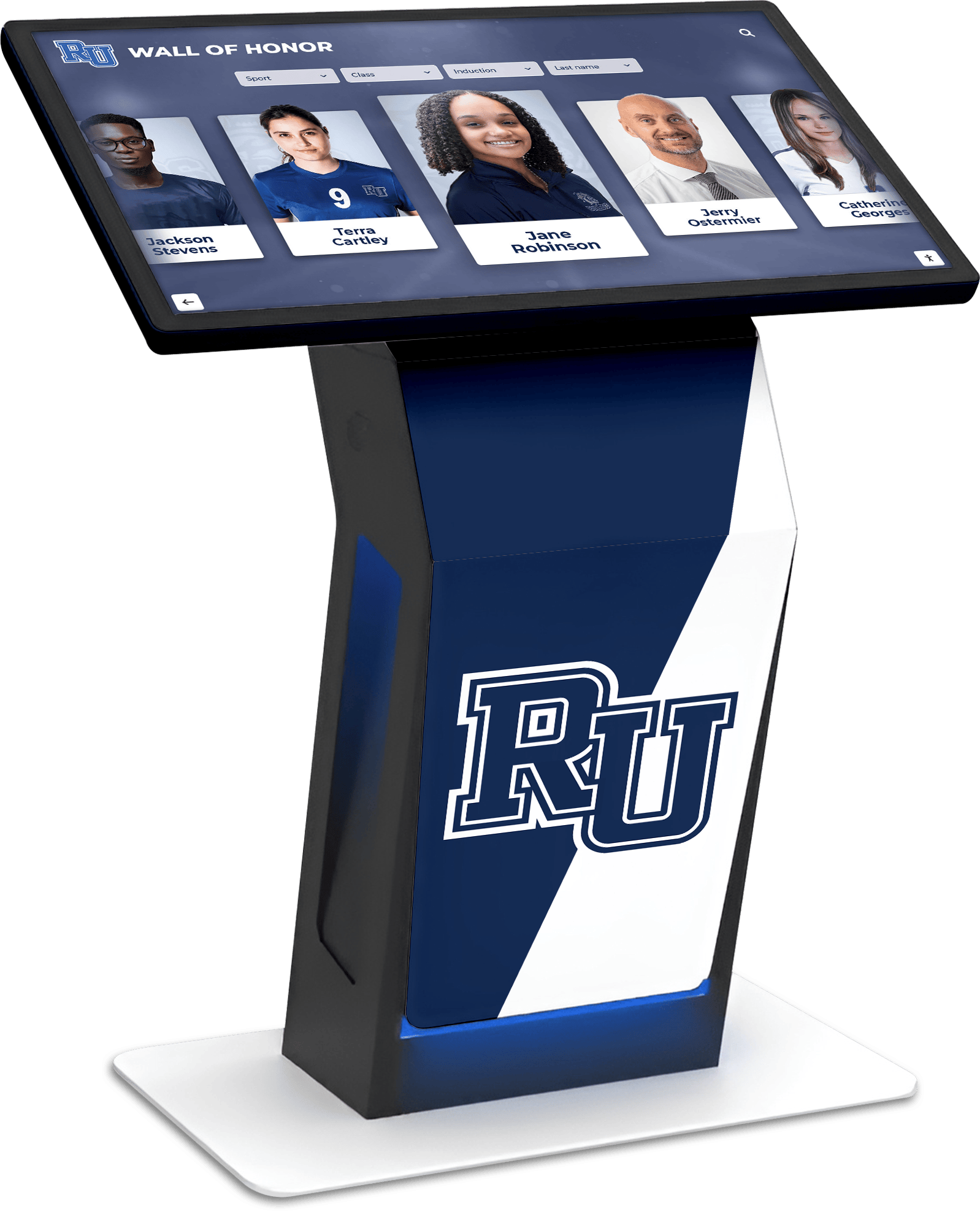
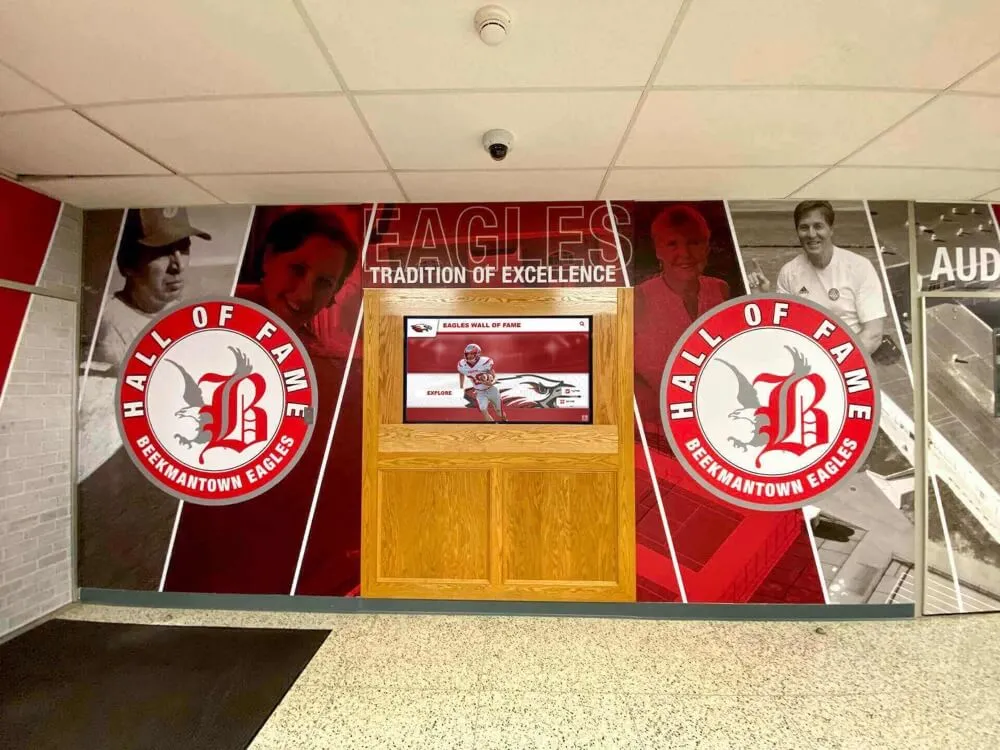
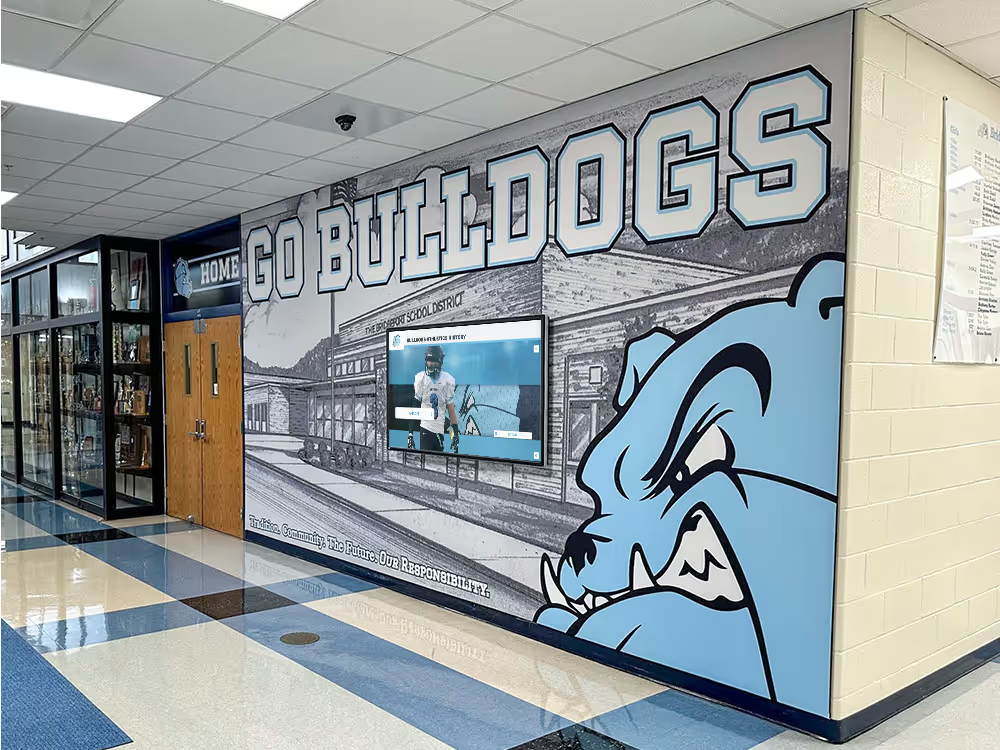
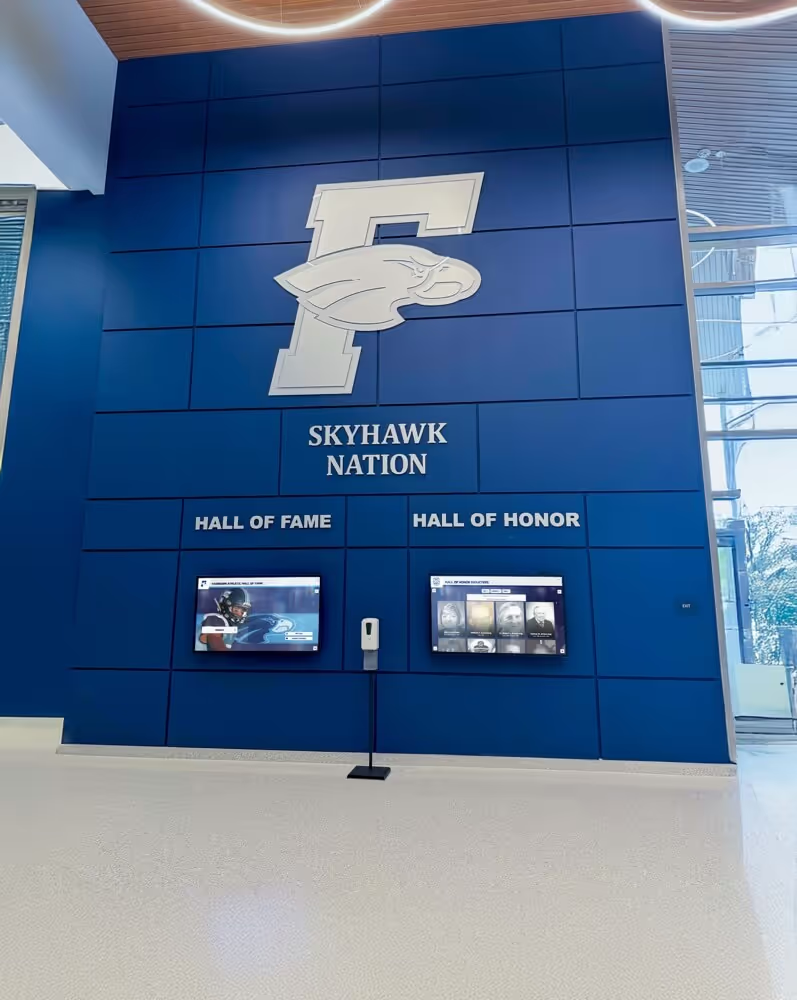
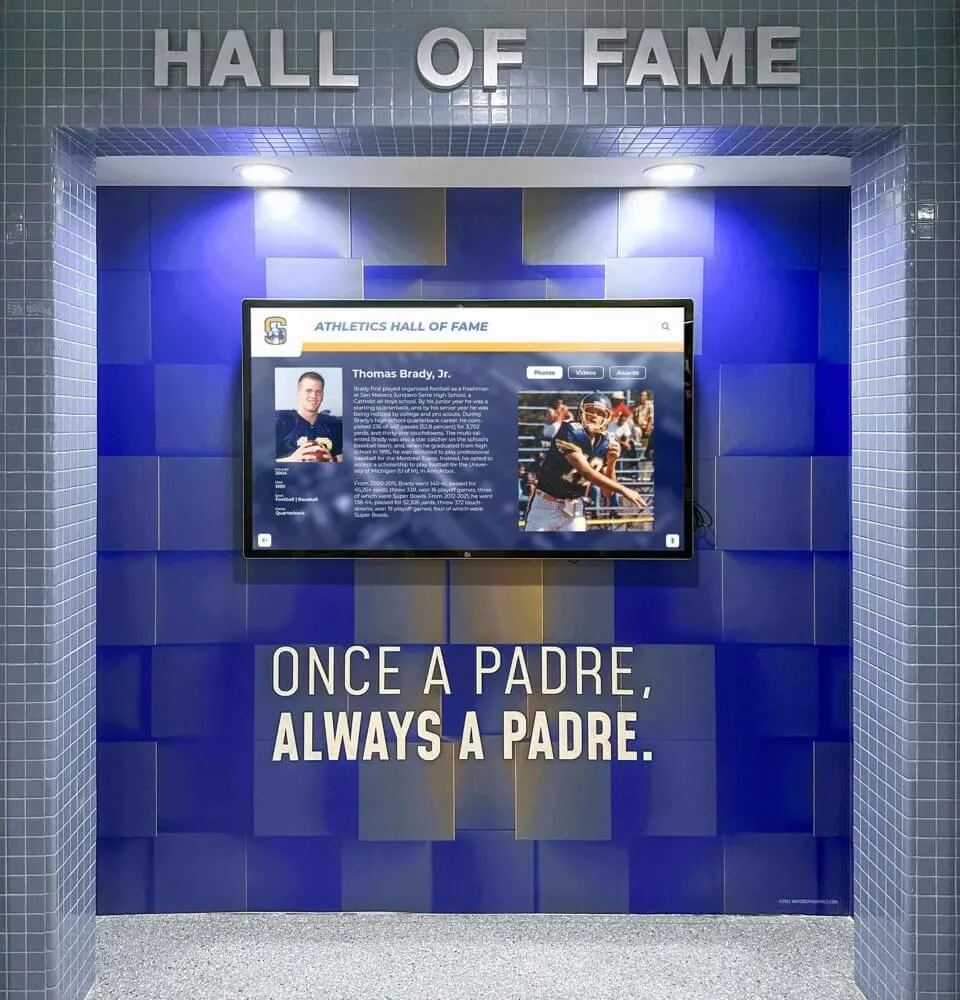
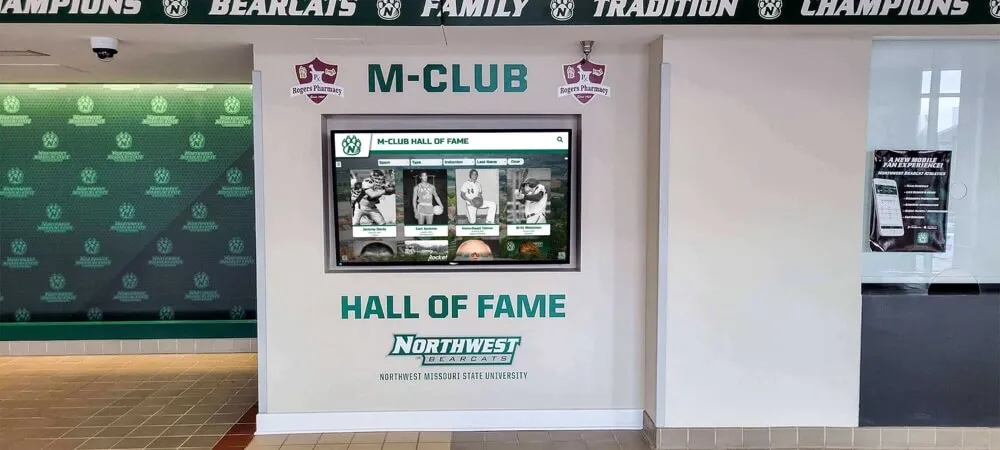
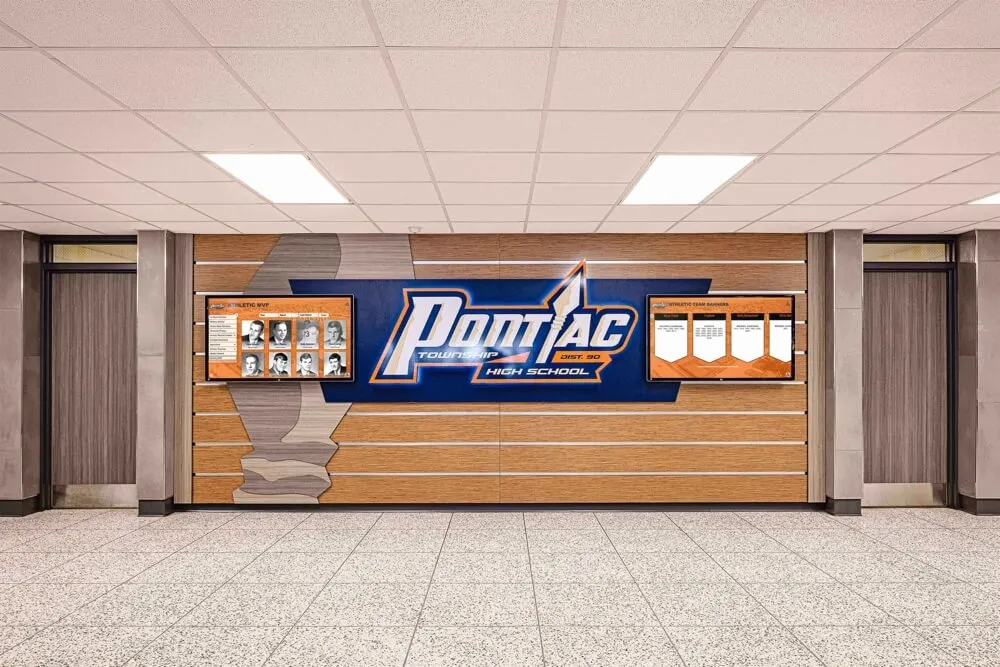
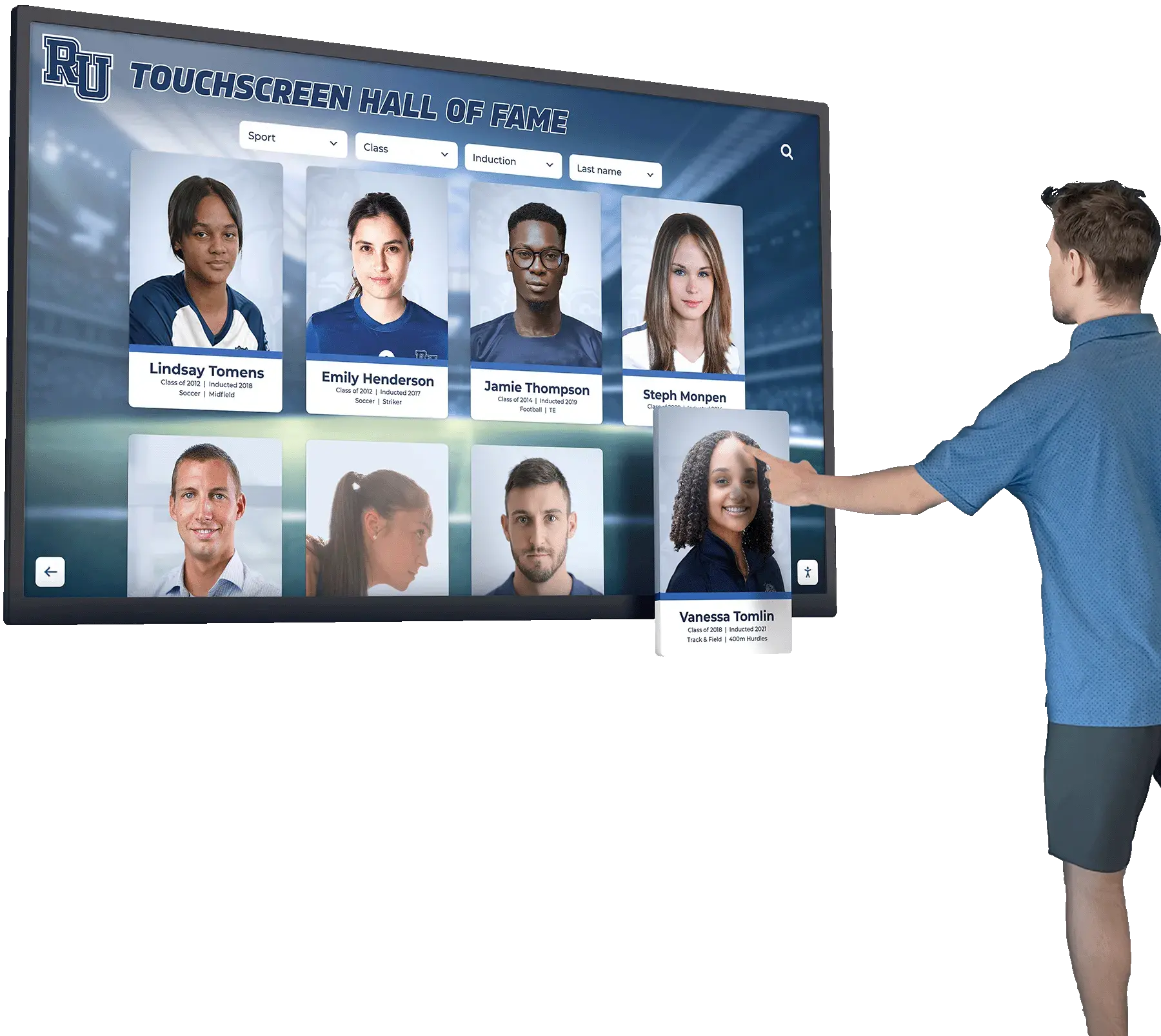
Recognition displays create visible celebration of esports achievements throughout school facilities
Ongoing Operational Costs
Annual operational expenses include PlayVS league fees for participating students, equipment maintenance and periodic hardware upgrades, coaching stipends comparable to other supplemental activities, travel costs for in-person playoff and championship events, and internet bandwidth sufficient for simultaneous competitive matches. Most programs report annual operating costs of $5,000-$12,000 depending on team numbers and travel schedules—comparable to many traditional sports with similar participation levels.
Funding Strategies
Successful programs leverage diverse funding sources:
- Athletic department budget allocation treating esports as equivalent to other sports
- Technology budget sharing recognizing that equipment serves educational purposes beyond athletics
- Booster club support from parents and community members excited about inclusive participation
- Corporate sponsorships from technology companies and gaming industry partners
- Fundraising activities including streaming events, tournament hosting, and merchandise sales
Many schools find that esports generates more community enthusiasm and funding support than expected, as parents of previously non-athletic students engage with competitive programming for the first time.
Establishing Program Infrastructure
Converting budget into functional program requires thoughtful decisions about space, equipment, and staffing.
Facility and Space Requirements
Unlike traditional sports requiring fields, courts, or specialized venues, esports facilities can fit into relatively modest spaces:
Space Options
Successful programs operate from diverse locations:
- Dedicated esports rooms: converted classrooms or unused spaces providing permanent setup
- Computer lab dual-use: existing computer labs serving instructional needs and after-school competition
- Library or media center sections: collaborative use of existing technology spaces
- Portable setups: equipment stored and deployed in multipurpose spaces for practices and matches
The minimum viable space requires room for 10-15 gaming stations, adequate electrical capacity and cooling for heat-generating equipment, strong WiFi or hardwired ethernet connections, reasonable noise isolation for team communication, and coach oversight positioning for supervision and instruction.
Many schools start with basic setups in existing computer labs before investing in dedicated facilities as programs grow. The key is consistent, scheduled access rather than premium spaces—teams need regular practice time more than specialized venues.
Equipment Selection and Setup
Choosing appropriate equipment balances performance requirements, budget constraints, and long-term sustainability:
PC vs. Console Decisions
Programs must decide between PC-focused or console-based approaches:
PC Gaming Advantages: Supports the widest range of competitive titles including League of Legends, VALORANT, Counter-Strike, and most esports games. Offers performance customization and upgrade pathways. Aligns with educational technology investments. Requires higher initial investment but provides longer useful life. Most college esports programs use PC platforms, creating better preparation pathways.
Console Gaming Advantages: Lower per-unit costs for PlayStation, Xbox, or Nintendo Switch systems. Simpler setup and maintenance with less technical troubleshooting. Strong title support for sports simulations (NBA 2K, Madden), fighting games (Super Smash Bros.), and some shooters. Familiar to students and requires less technical expertise.
Most competitive high school programs choose PC platforms for 70-80% of equipment while maintaining some console capacity for titles like Super Smash Bros. Ultimate or fighting games exclusive to console platforms. This hybrid approach maximizes title participation while controlling costs.
Specification Recommendations
For PC gaming, mid-range gaming systems provide adequate performance for scholastic competition without premium costs:
- Processor: Intel i5 or AMD Ryzen 5 (current generation)
- Graphics card: NVIDIA GTX 1660 or RTX 3060 tier
- RAM: 16GB minimum
- Storage: 512GB SSD minimum
- Monitor: 144Hz refresh rate, 24-inch display
- Peripherals: Mechanical gaming keyboard, gaming mouse with 6+ buttons, comfortable headset with noise cancellation
These specifications support all major esports titles at competitive performance levels while keeping per-station costs in the $900-1,200 range. Avoid the temptation to buy premium $2,000+ systems—competitive esports depends far more on player skill than marginal hardware advantages.
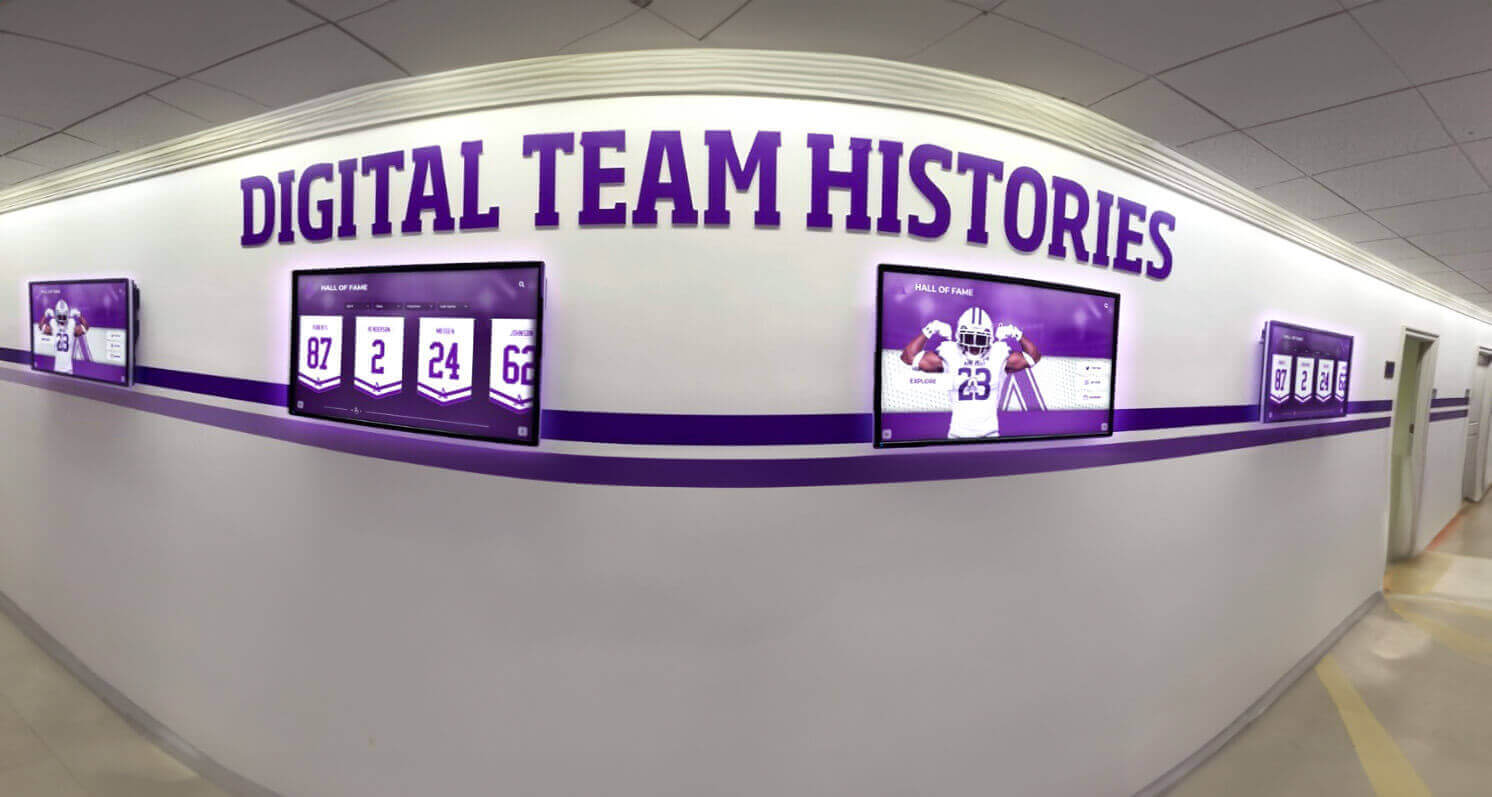
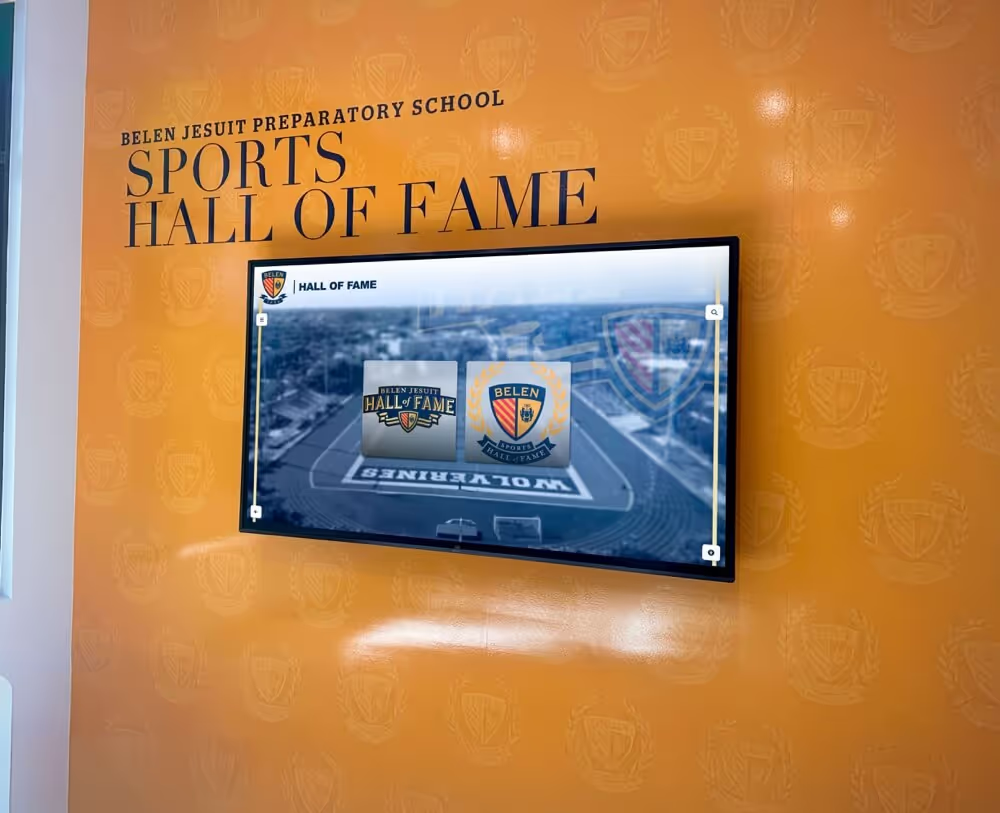
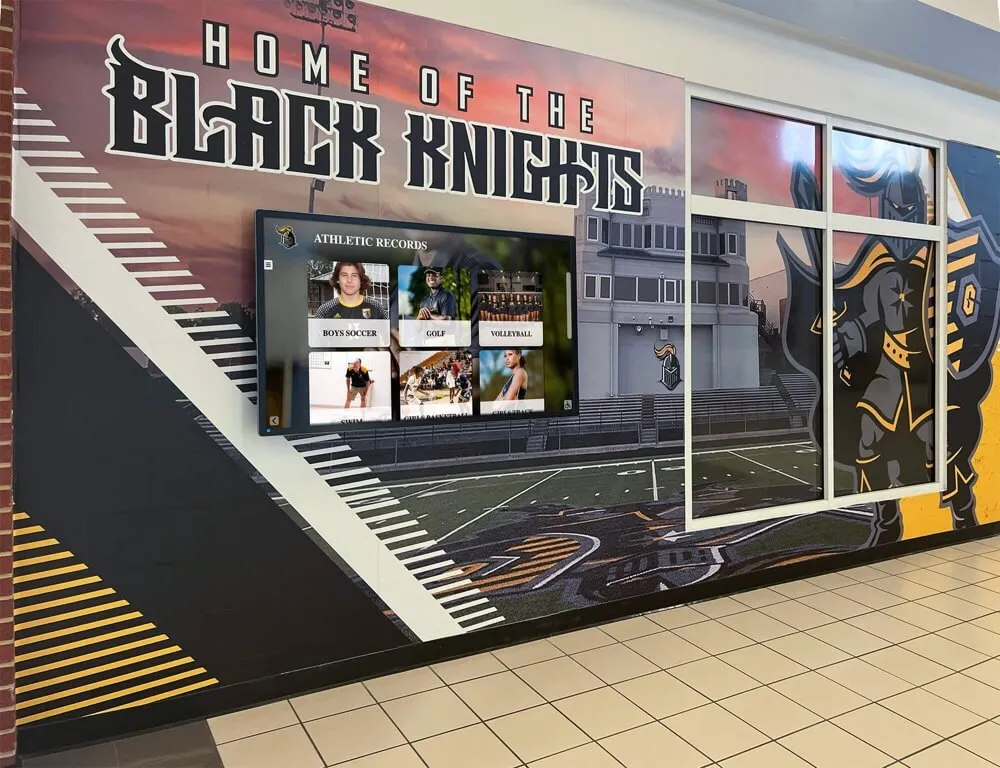
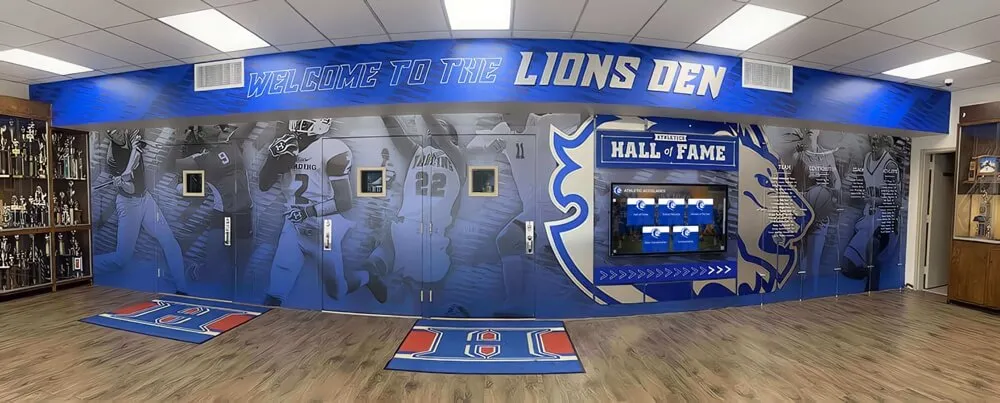
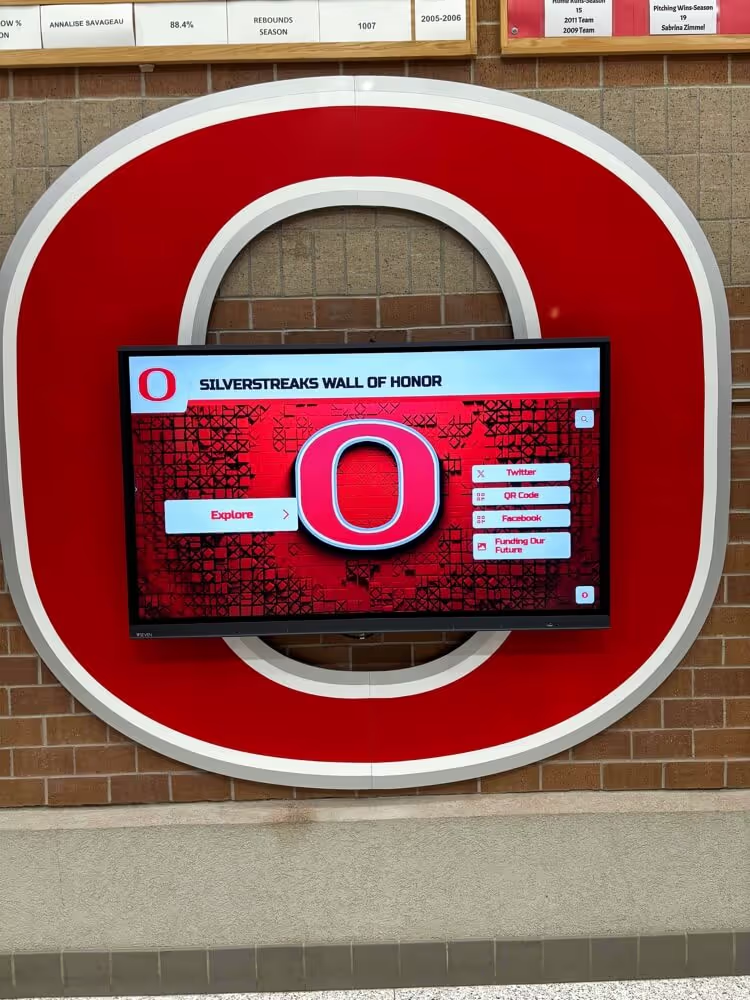
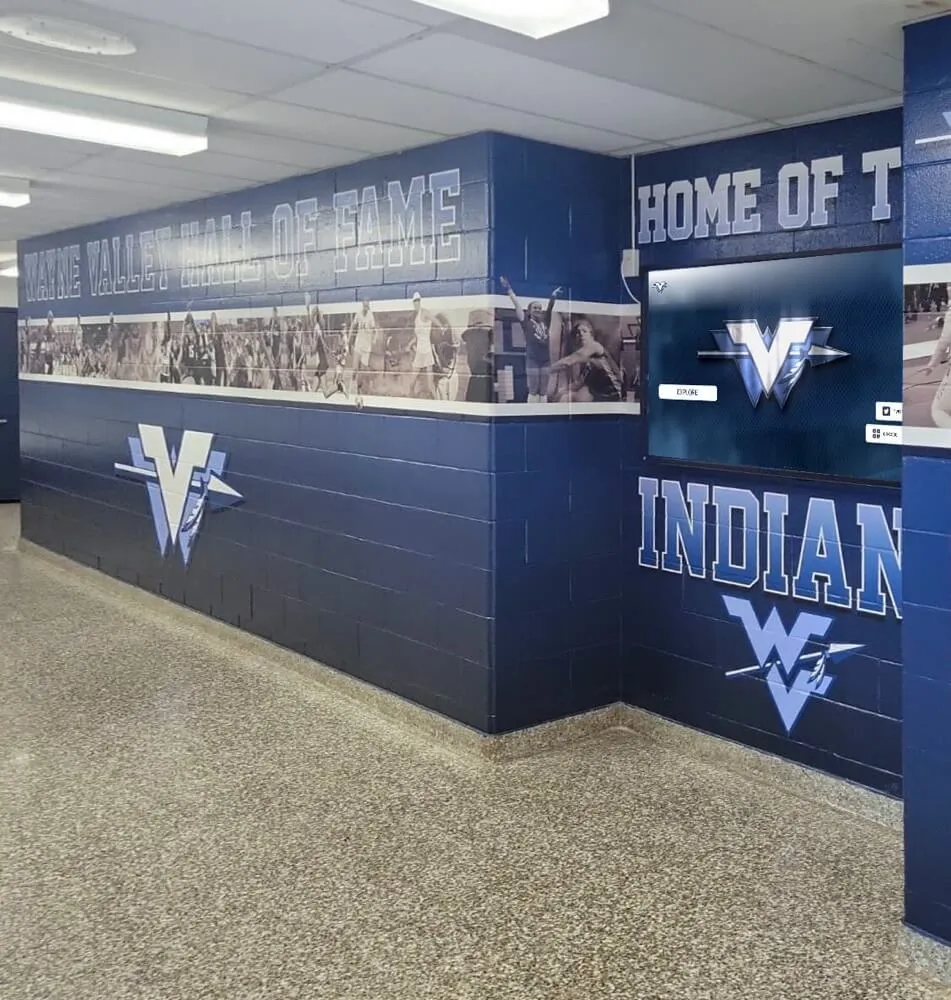
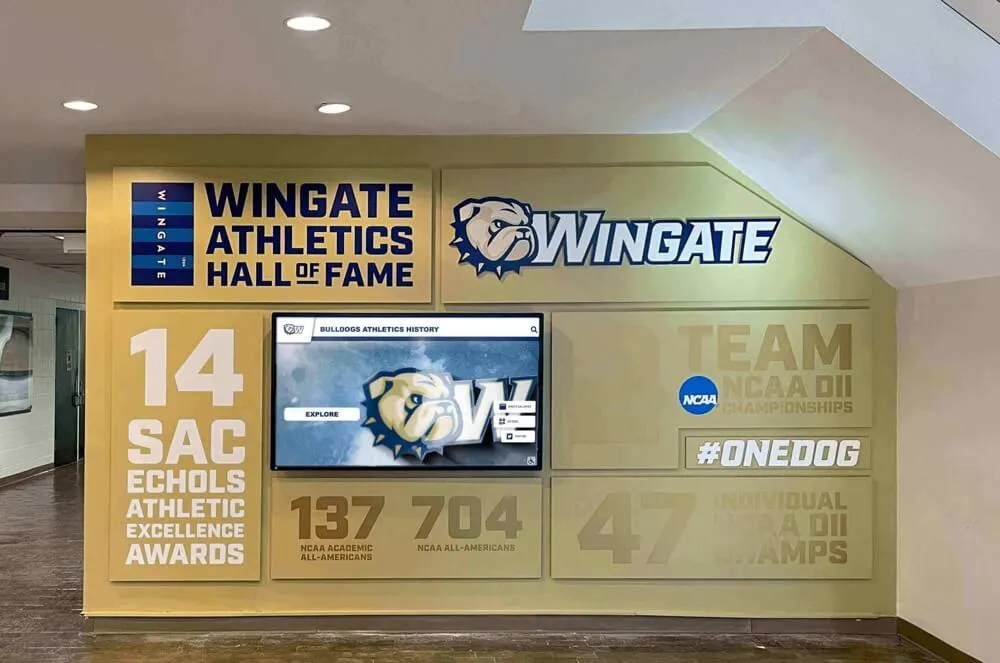
Hallway recognition displays document esports team achievements and championships alongside traditional athletic programs
Coaching and Staff Positions
Quality coaching makes the difference between sustainable programs and failed experiments:
Finding Qualified Coaches
Unlike traditional sports where coaching expertise is relatively abundant, esports coaching presents unique staffing challenges. Successful programs recruit from diverse sources:
- Existing faculty with gaming knowledge: teachers who understand competitive gaming and student development
- Recent graduates or college students: young adults with competitive gaming experience willing to coach part-time
- Parent volunteers: parents with gaming backgrounds who can contribute without formal employment
- Student teacher-coaches: in some programs, senior students mentor newer players with faculty supervision
The ideal esports coach combines competitive gaming knowledge with student development skills, basic technical troubleshooting ability, and commitment to educational values over pure competitive outcomes. A social studies teacher who plays League of Legends recreationally often makes a better coach than a high-level player with no teaching experience.
Coaching Responsibilities and Time Commitment
Esports coaching parallels traditional athletic coaching with modified seasonal demands:
- Practice supervision: 2-4 practices weekly, typically after school for 90-minute sessions
- Match coordination: scheduling and supervising weekly competitive matches during season
- Team management: roster decisions, player development, strategy preparation
- Communication: coordinating with PlayVS, opposing coaches, parents, and administration
- Student support: monitoring academic eligibility, addressing team conflicts, providing mentorship
Coaching stipends should reflect this time commitment—typically equivalent to assistant coaching positions in traditional sports ($2,000-$4,000 per season depending on district pay scales).
Some programs successfully use head coach plus assistant coach structures, allowing experienced students or parent volunteers to work alongside faculty coordinators. This approach builds coaching depth while reducing costs.
Selecting League Platforms and Competition Structure
Choosing the right competitive structure affects program success, student experience, and administrative complexity.
PlayVS: The NFHS Official Platform
For most high school programs, PlayVS provides the most straightforward entry into organized competition:
PlayVS Advantages
- Official NFHS partnership providing legitimacy and alignment with state athletic associations
- Turnkey league management eliminating scheduling, matchmaking, and coordination complexity
- State championship pathways creating compelling competitive arc and clear goals
- Integrated eligibility verification ensuring academic and behavioral standards compliance
- Support infrastructure providing technical assistance, rule enforcement, and dispute resolution
- Multiple game title options accommodating diverse student interests within single platform
PlayVS essentially serves as the MaxPreps or scheduling coordinator of esports—handling the operational complexity that would otherwise require dedicated administrative staff. For athletic directors adding esports to existing responsibilities, this operational simplification proves invaluable.
PlayVS Cost Structure
PlayVS charges per-student, per-season fees currently at $64 per student per season. A school fielding 30 students across fall and spring seasons pays approximately $3,840 in annual league fees—comparable to tournament entry fees and league assessments in many traditional sports. Volume discounts and package pricing reduce per-student costs for larger programs.
Alternative and Supplemental Platforms
Beyond PlayVS, programs can explore additional competitive opportunities:
- NASEF (North America Scholastic Esports Federation): free participation platform emphasizing STEM education integration
- HSEL (High School Esports League): independent league offering some free competition tiers
- Local and regional tournaments: community-organized events providing additional competitive opportunities
- Friendly scrimmages: informal competition with nearby schools for practice and relationship building
Some programs use PlayVS for primary structured competition while supplementing with NASEF participation or local tournaments to increase competitive opportunities without proportional cost increases.
Game Title Selection
Deciding which games to offer affects recruitment, competitive success, and program culture:
Considerations for Game Selection
- Student interest and demand: survey potential participants about preferred titles
- Competitive viability: choose games with active scholastic competition and established player bases
- Content appropriateness: consider violence levels, rating systems, and community standards
- Learning curve: balance accessible titles allowing quick competency with depth supporting long-term skill development
- Equipment requirements: ensure selected games run adequately on available hardware
Most programs start with 3-5 game titles and expand based on student interest and coaching capacity. Popular starter packages include League of Legends (strategic team-based), Rocket League (accessible sports-game hybrid), Super Smash Bros. Ultimate (fighting game with broad appeal), and one additional title based on local interest (VALORANT, NBA 2K, or Fortnite).
Managing Mature Content Concerns
Many competitive esports titles carry T (Teen) or M (Mature) ratings, creating potential concerns from parents and administrators. Successful programs address this through clear communication about rating systems versus actual content (many M-rated games include stylized fantasy violence less graphic than PG-13 movies), parental permission processes allowing families to make informed decisions, coach supervision and monitoring of player behavior and communication, and emphasis on games with appropriate content and positive competitive communities when possible.
Most districts conclude that games like League of Legends or Rocket League present no more content concern than Call of Duty games many students play at home, while providing structured, supervised competitive environments far healthier than unsupervised recreational gaming.
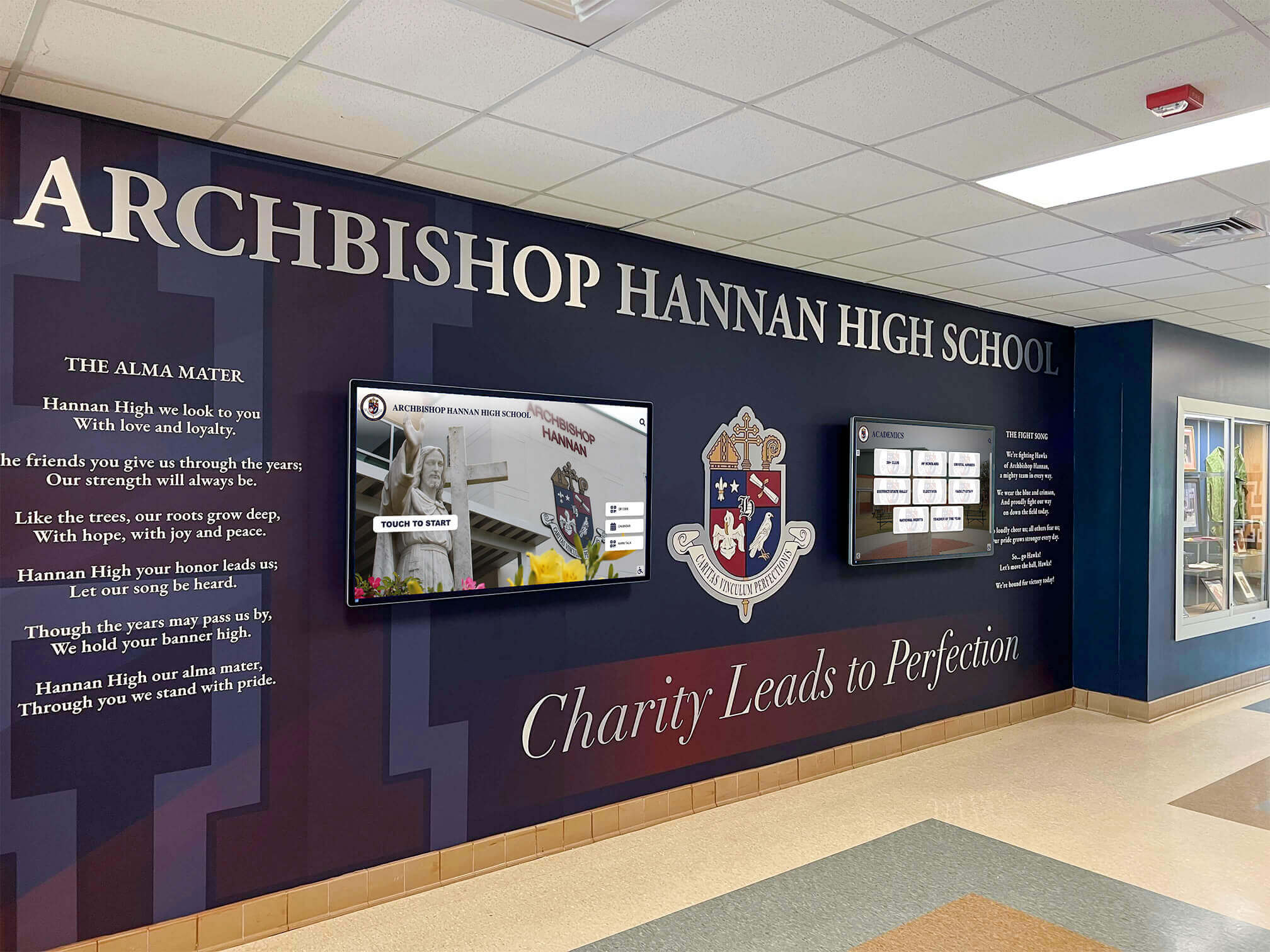
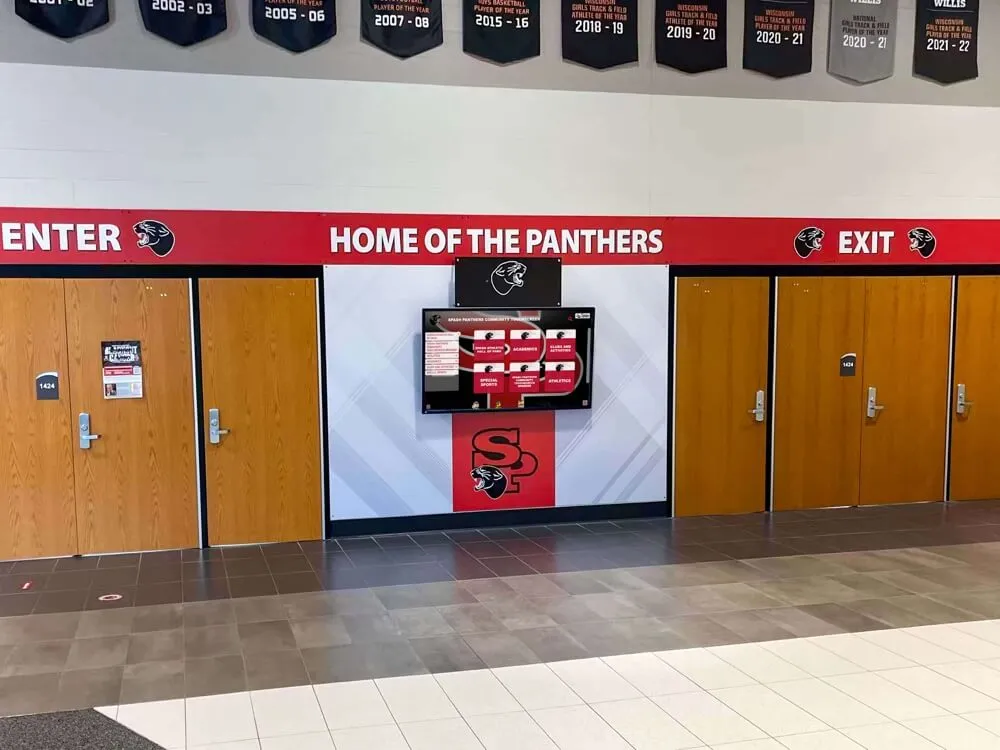
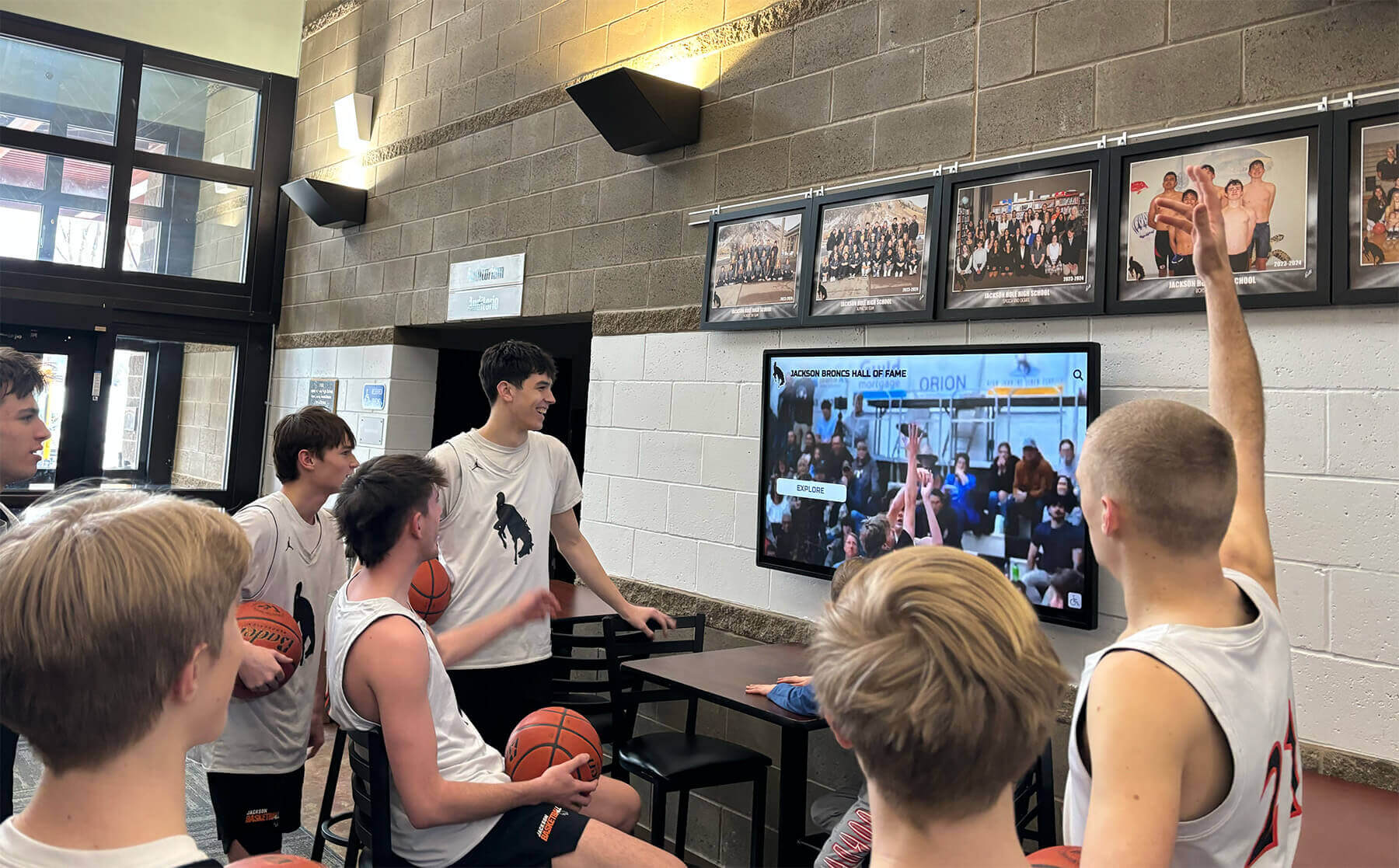
Prominent lobby displays signal institutional commitment to esports alongside traditional programs
Student Recruitment and Team Building
Creating competitive teams requires thoughtful recruitment, tryout processes, and roster management.
Marketing and Student Outreach
Unlike traditional sports with established visibility, esports programs need proactive marketing to reach potential participants:
Effective Recruitment Strategies
- Lunchtime information sessions: presentations during lunch periods reaching students in casual settings
- Morning announcements and video campaigns: regular promotional messaging through school communication channels
- Social media outreach: Instagram, TikTok, and Discord promotion where gaming-interested students engage
- Interest surveys: Google Forms or Canvas surveys gauging game preferences and competitive interest
- Cross-promotion with related clubs: coordination with computer science clubs, gaming clubs, or technology programs
- Existing player recruitment: current students inviting friends and classmates who play games casually
Successful programs emphasize that competitive esports welcomes all skill levels, no prior experience is required for participation, opportunities exist across multiple game titles and skill tiers, and the program provides pathways to college scholarships and competitive advancement.
Tryouts and Team Selection
Balancing competitive roster construction with inclusive participation requires thoughtful approaches:
Tryout Structures
Programs typically use combination approaches:
- Open informational meetings: introducing program expectations, time commitments, and competitive structure
- Skill assessments: evaluating players through in-game tryouts in relevant titles
- Scrimmage evaluations: observing teamwork, communication, and coachability in game situations
- Game knowledge testing: assessing strategic understanding and learning potential
- Attitude and commitment screening: identifying students willing to practice, accept coaching, and maintain eligibility
For programs with limited roster restrictions, inclusive approaches placing most interested students on JV or developmental teams while maintaining competitive varsity rosters work well. Unlike traditional sports with physical roster limits (one basketball court, one playing field), esports can accommodate larger programs through multiple team tiers and game title variety.
Roster Management and Playing Time
Team sizes vary by game:
- League of Legends or VALORANT: 5 starters plus 2-5 substitutes per team
- Rocket League: 3 starters plus 1-2 substitutes per team
- Super Smash Bros. Ultimate: individual competition with team scoring
Programs can field multiple teams (Gold, Blue, White) within the same game title, allowing A-team, B-team structures that maximize participation while maintaining competitive focus. This approach ensures students cut from varsity rosters still receive competitive opportunities, practice participation, and team membership benefits.
Managing playing time follows traditional athletic principles—starters earn positions through performance and commitment while maintaining team chemistry, substitutes receive opportunities during appropriate competitive situations, and developmental players receive coaching, practice participation, and limited competitive opportunities. Clear communication about playing time expectations prevents conflicts and manages student and parent expectations appropriately.
Creating Recognition and Program Visibility
Esports programs gain legitimacy and sustainability when achievements receive visible celebration throughout school facilities:
Integrating Esports into Existing Recognition Systems
Schools successfully launching esports programs treat competitive gaming achievements with equal respect to traditional athletic accomplishments:
Hall of Fame and Trophy Case Integration
Forward-thinking schools include esports teams in existing hall of fame programs by establishing clear criteria for athletic recognition that accommodate competitive gaming alongside traditional sports. State championship esports teams receive the same trophy case placement as basketball or football champions. Individual esports athletes earning college scholarships appear in athletic recognition displays. Conference championship teams receive permanent documentation in school records and visible displays.
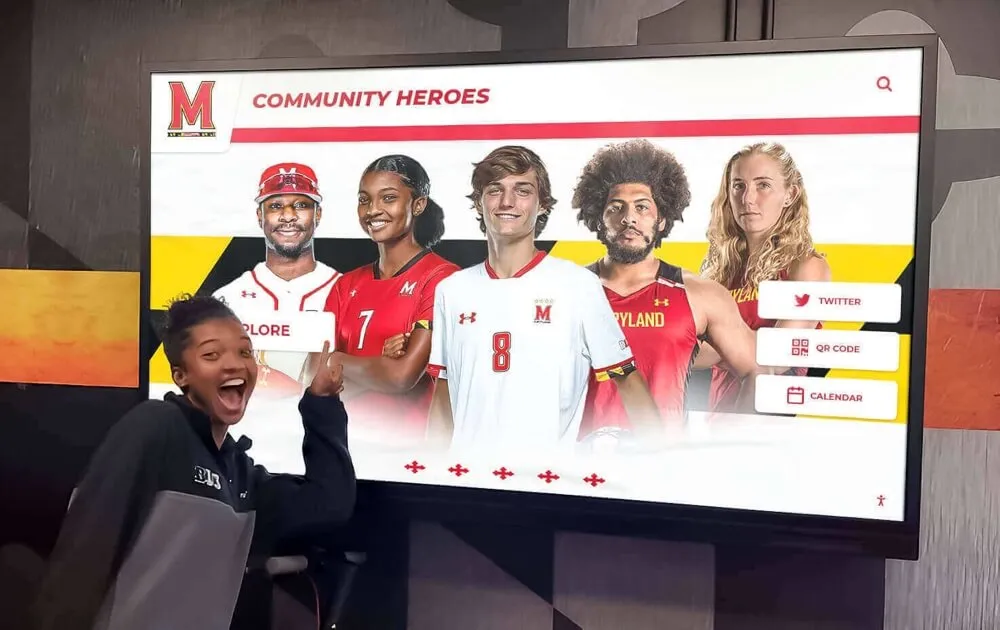
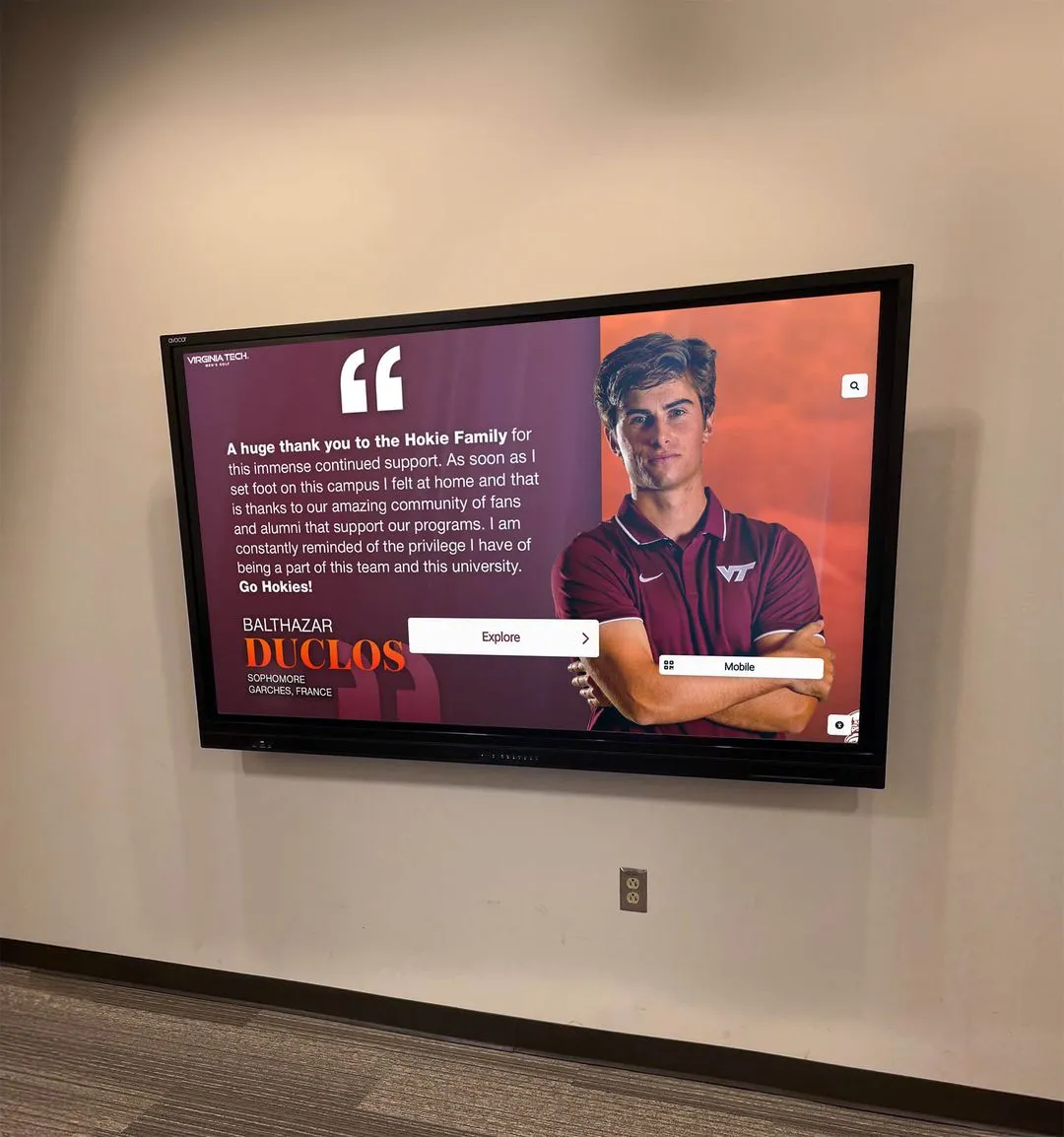
Many schools are discovering that digital trophy cases and interactive displays provide ideal platforms for esports recognition. Unlike traditional trophy cases limited to physical objects, digital displays can showcase match highlights, player statistics, championship brackets, team photos, and game-specific achievements in engaging formats that resonate with esports culture while maintaining institutional dignity.
Championship and Achievement Celebration
Successful programs create visible celebration systems including championship banners hanging in gymnasiums or common areas alongside traditional sports, regular feature articles in school newspapers and social media celebrating team achievements, inclusion in awards ceremonies and athletic banquets recognizing esports achievements, varsity letters and athletic recognition equal to traditional sports participants, and showcase systems for championship teams documenting competitive accomplishments.
This visible recognition serves multiple purposes—it validates esports participants by demonstrating institutional respect for their competitive commitment, attracts new participants by showcasing competitive opportunities and achievements, builds community awareness among parents and stakeholders often unaware of program success, and creates program history and traditions that sustain beyond individual student generations.
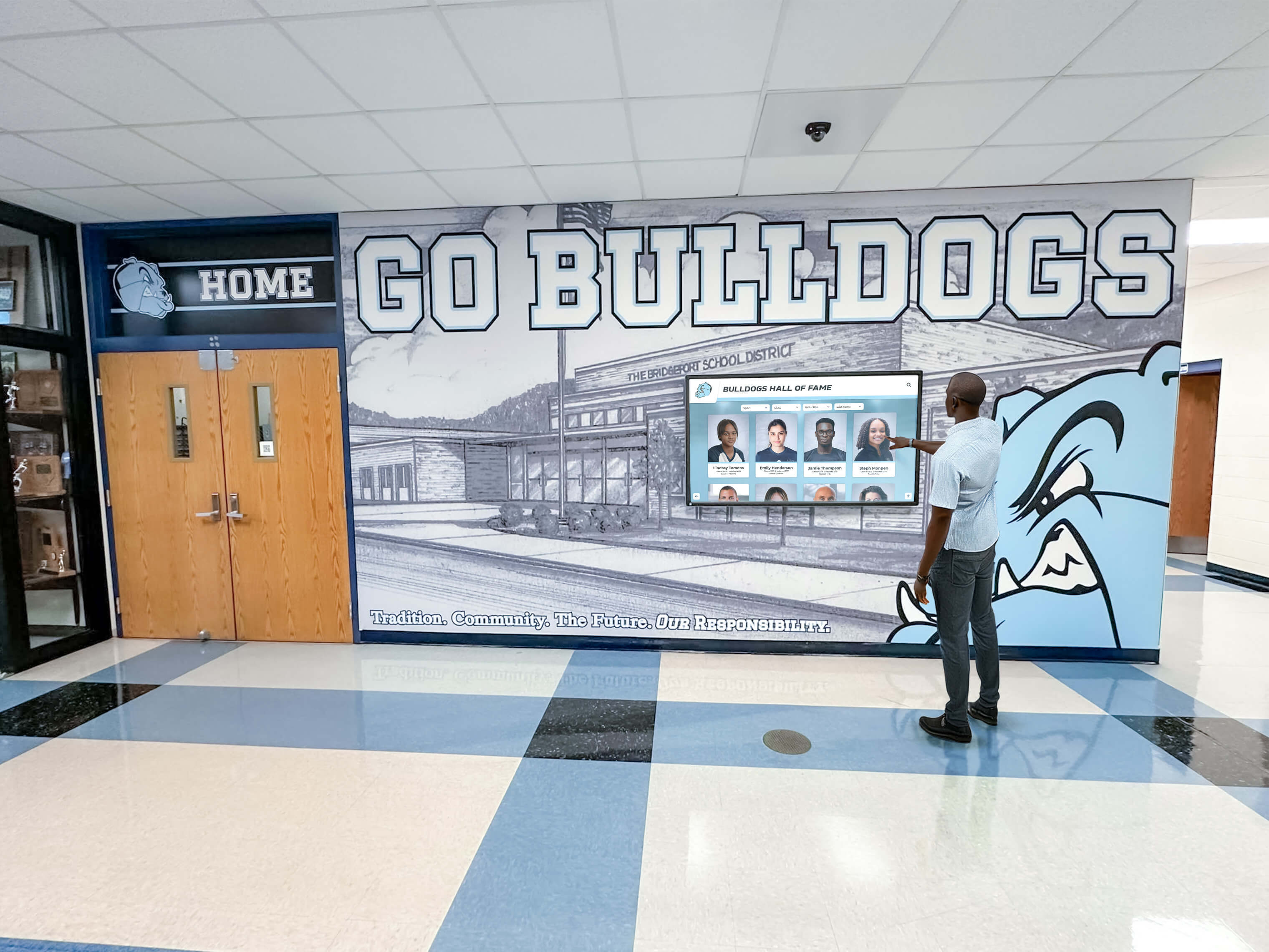
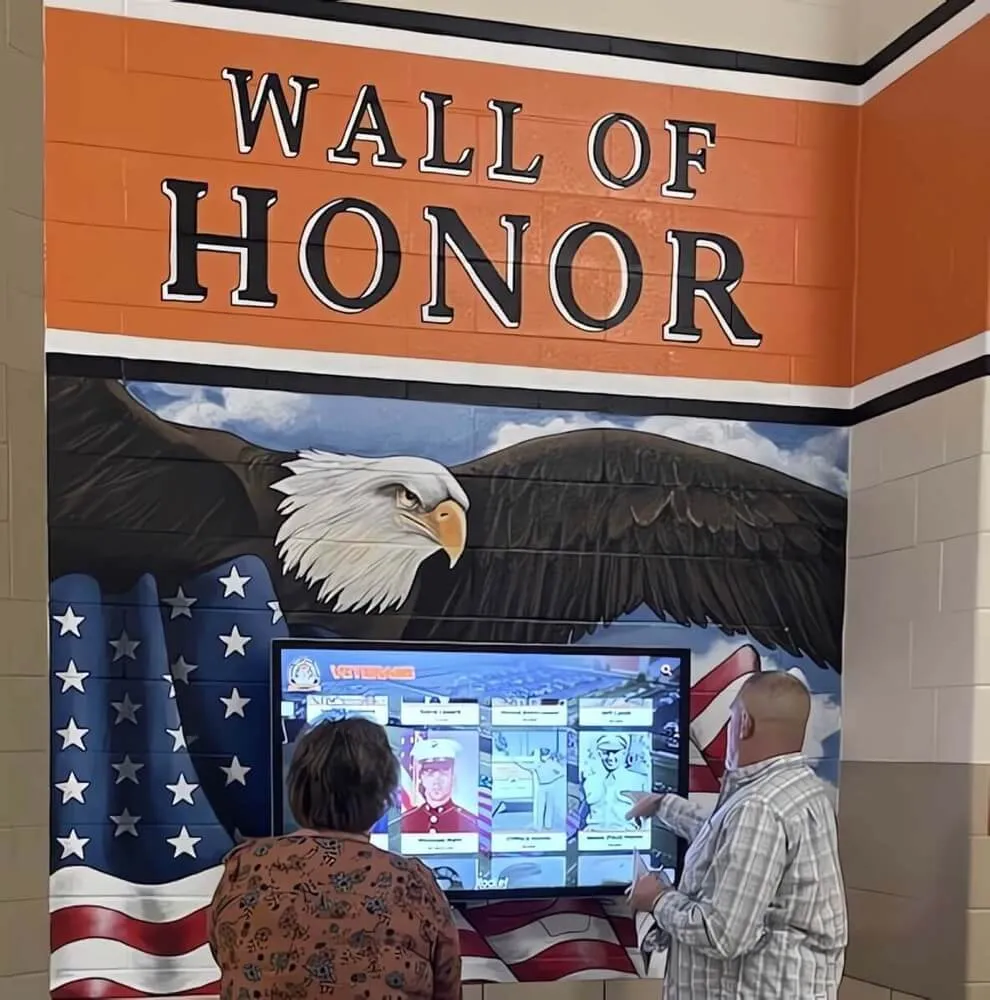
Interactive displays allow schools to showcase esports highlights, statistics, and championships in engaging digital formats
Digital Recognition Displays for Esports Achievement
Modern recognition technology provides unique opportunities for celebrating esports accomplishments in formats that match the digital nature of competitive gaming:
Dynamic Content Capabilities
Digital displays offer recognition features particularly suited to esports:
- Match highlight videos: embedded clips of championship moments and exceptional plays
- Live tournament brackets: real-time updates during playoff and championship competition
- Statistical leaderboards: individual and team performance metrics across seasons
- Player profiles: biographical information, achievements, and college commitment announcements
- Seasonal updates: refreshed content reflecting current rosters and recent accomplishments
Unlike static trophy cases that remain unchanged for years, digital systems keep esports recognition current and engaging—documenting this season’s state championship alongside historical program achievements in formats appealing to both students and visitors.
Multi-Program Integration
Schools implementing comprehensive digital recognition systems discover powerful synergies across programs. The same displays celebrating football championships can seamlessly feature esports state champions, National Honor Society inductees, and performing arts achievements within unified recognition platforms. This integration demonstrates that esports receives equal institutional respect while eliminating segregated “gaming corner” approaches that inadvertently minimize program importance.
Many athletic directors find that adding esports recognition justifies investing in modern display technology that benefits all programs—the esports initiative becomes the catalyst for upgrading outdated recognition systems across the entire athletic department.
Sustaining Long-Term Program Success
Moving beyond successful launch to sustainable program requires attention to ongoing challenges and growth opportunities:
Academic Eligibility and Student Support
Maintaining academic standards while supporting esports participants:
Eligibility Requirements
Treat esports like any athletic program with clear academic expectations—minimum GPA requirements aligned with district athletic eligibility standards, semester grade checks determining continued participation, behavioral and attendance expectations, and suspension from competition for academic or disciplinary issues.
Some programs implement proactive academic support including required study halls for struggling students, progress monitoring systems tracking grades before eligibility issues emerge, coach communication with classroom teachers identifying concerns early, and recognition programs celebrating academic excellence alongside competitive success. Schools successfully implementing player recognition programs find that highlighting students excelling both competitively and academically reinforces appropriate priorities.
Building Competitive Success
Developing programs that compete effectively while maintaining educational values:
Practice Structure and Skill Development
Effective esports practice balances individual skill development, team strategy work, scrimmage competition, and coach feedback cycles. Unlike traditional sports where physical conditioning occupies significant practice time, esports practice focuses heavily on strategic preparation, communication system development, opponent analysis, and deliberate skill training targeting specific mechanical deficiencies.
The best programs avoid simply letting students play games unsupervised—structured practice with clear objectives, coach-led strategy sessions, individual skill drills, and deliberate improvement focus distinguishes competitive programs from casual gaming clubs.
Building Program Culture and Traditions
Sustainable programs create cultural elements that persist across student generations—pre-match traditions and team rituals, program values emphasizing sportsmanship and personal development, alumni connections with former players mentoring current teams, documentation systems preserving program history and major achievements, and visible recognition creating sense of program prestige and tradition.
When esports develops the same cultural weight as long-established traditional sports programs, sustainability increases dramatically as students compete to join respected programs rather than programs competing to recruit reluctant participants.
Expansion and Growth Opportunities
Successful programs often expand beyond initial scope:
Facility Improvements
As programs prove their value, schools invest in upgraded facilities including dedicated esports spaces with program branding and team identity, improved equipment with higher-performance systems and peripherals, streaming capabilities for broadcasting matches and building audiences, spectator areas allowing friends and family to watch competitions, and professional lighting and acoustics creating legitimate competitive environments.
Competitive Advancement
Strong programs pursue additional competitive opportunities beyond initial PlayVS participation—hosting invitational tournaments bringing visiting teams to campus, attending major esports events and college showcases, pursuing national rankings and championship qualification, and developing relationships with college programs for recruitment pathways.
Community Engagement
Mature programs engage broader communities through spectator events and match viewing opportunities, alumni engagement with former players supporting current programs, corporate partnerships with technology companies and gaming organizations, summer camps and clinics generating revenue and building pipelines, and community education programs demonstrating esports value to skeptical stakeholders.
Making the Launch Decision
Athletic directors evaluating esports program launch should consider timing, resources, and strategic fit:
When to Launch
Ideal launch timing includes strong student interest demonstrated through surveys or informal assessment, administrative support or at least open-mindedness about esports value, baseline funding securing minimum viable equipment and league fees, faculty or staff willing to coach with appropriate compensation, and available facility space for equipment setup and regular practice access.
Schools don’t need perfect conditions to launch—many successful programs started with repurposed computer labs, volunteer coaching, and minimal budgets before proving value and securing expanded resources. The key is genuine commitment to treating esports as legitimate athletic programming rather than experimental side project vulnerable to elimination at first challenge.
Expected Timeline to Viability
Most programs require 1-2 years to establish legitimacy and sustainability:
- Year 1: Equipment acquisition, initial recruitment, coach training, first season participation
- Year 2: Expanded rosters, improved competitive results, initial recognition systems, increased community awareness
- Year 3+: Established program traditions, alumni connections, facility improvements, competitive success, and cultural integration alongside traditional sports
Athletic directors should plan for multi-year commitment rather than single-season experiments. Esports programs gain momentum gradually as word spreads, younger students see pathways to participation, and competitive success builds program prestige.
Conclusion: The Future of High School Athletics
Launching a high school esports program represents more than adding another competitive activity to existing offerings—it signals institutional recognition that athletics encompasses diverse competitive expressions, creates pathways for students never previously engaged in school-sponsored competition, and positions your school at the forefront of the fastest-growing competitive activity in education.
The athletic directors who successfully launch esports programs share common characteristics: they recognize that competitive excellence manifests in strategic thinking and team coordination as validly as physical performance, they commit to treating esports athletes with the same respect and support provided to traditional sports participants, they create visible recognition systems that celebrate gaming achievements alongside football championships and basketball records, and they build sustainable programs through thoughtful infrastructure, qualified coaching, and integration into existing athletic department frameworks.
High school esports is no longer experimental—it’s established reality with organizational infrastructure, competitive pathways, college recruitment systems, and participation numbers rivaling many traditional sports. The question for athletic directors isn’t whether esports represents legitimate athletics, but whether your school will lead or follow in providing competitive opportunities to students already passionate about strategic gaming.
The schools launching programs today are creating the traditions, competitive cultures, and recognition systems that will define high school esports for the next generation. By starting now, you position your institution at the forefront of this explosive growth while providing meaningful competitive experiences to students who’ve been waiting for this opportunity.
Ready to bring modern recognition to your athletic programs—including your new esports teams? Rocket Alumni Solutions provides interactive touchscreen displays that celebrate achievements across all athletic programs, from traditional sports to competitive gaming. Our digital recognition systems allow you to showcase esports championships, player highlights, and team achievements alongside football records and basketball honors—creating unified recognition that signals equal institutional respect for all competitive excellence. Explore how modern display technology can transform how your school celebrates athletic achievement across every program.