



Walk into almost any school building and you’ll encounter a bulletin board of some kind—a cork-covered panel displaying honor roll lists, athletic schedules, college pennants, or community announcements. For decades this format was simply how schools communicated with students, families, and staff. Today, a growing number of institutions are asking a harder question: does a static push-pin board still serve modern students and communities as well as it once did, or is it time to rethink the entire concept?
The term interactive bulletin board now spans a wide spectrum—from traditional corkboards with rotating paper notices to fully digital touchscreen displays that let visitors search alumni records, browse athletic histories, or explore campus announcements in real time. Both extremes have their advocates, and most schools occupy some position in between. Navigating that decision thoughtfully means understanding what each approach actually delivers, where each falls short, and which scenarios make one clearly superior to the other.
This guide examines traditional and digital interactive bulletin boards across every dimension that matters for school decision-makers: engagement quality, content flexibility, maintenance burden, cost over time, accessibility, and long-term institutional value.
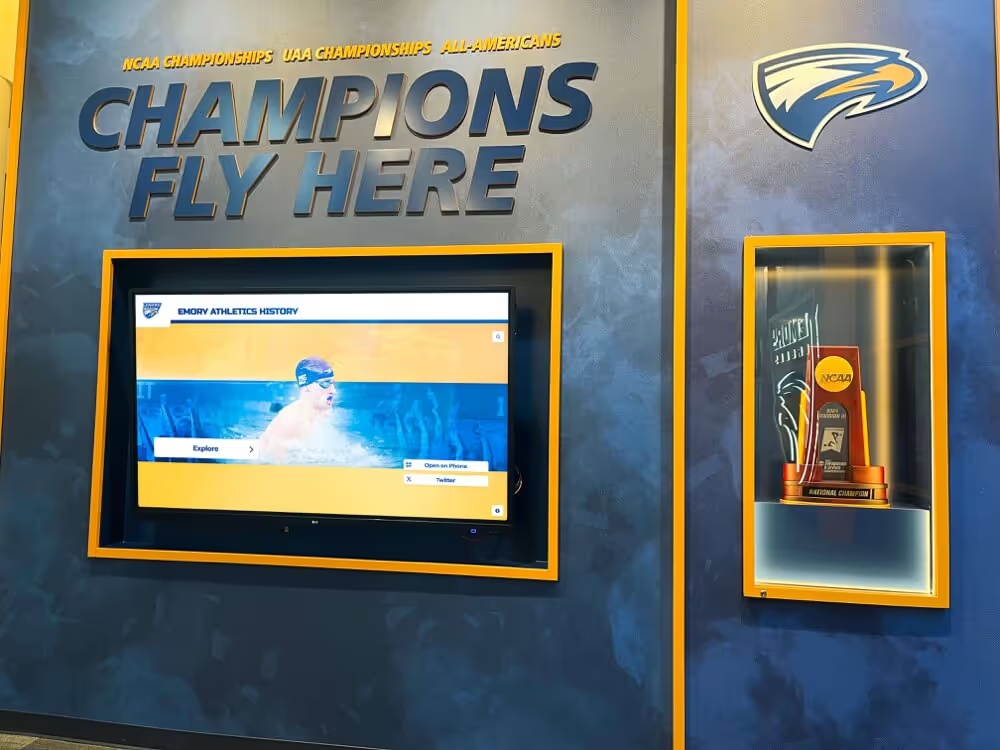
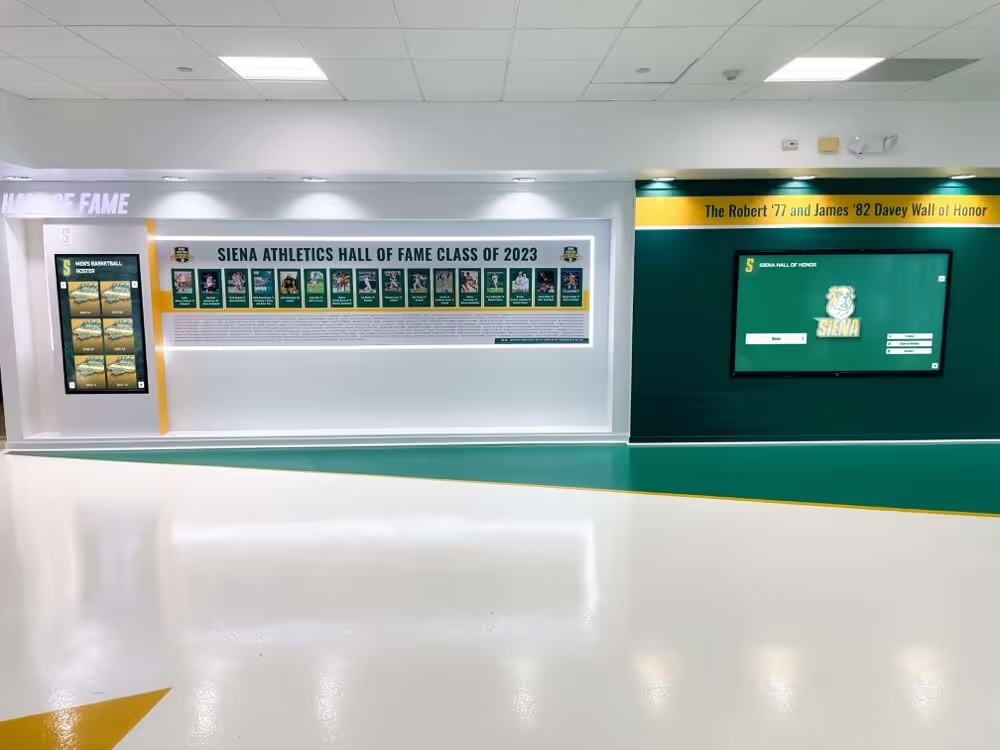
Schools that have transitioned from static displays to digital interactive boards consistently describe the same shift—from passive viewers who glance and walk on, to engaged community members who stop, explore, and share what they discover. That qualitative difference shapes everything from school culture to alumni relationships to the impressions formed by visiting prospective families.

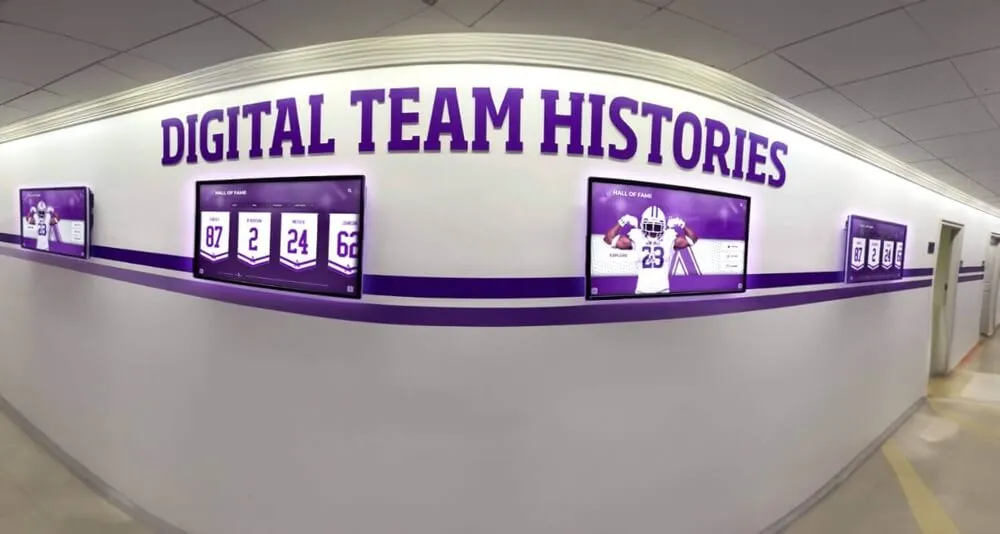
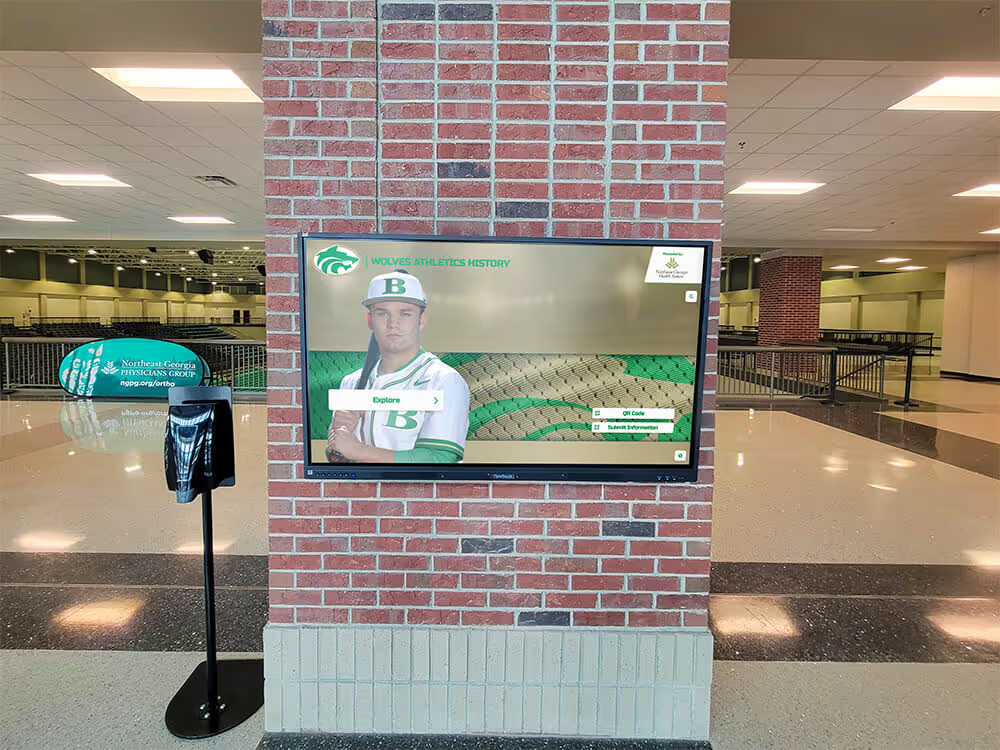
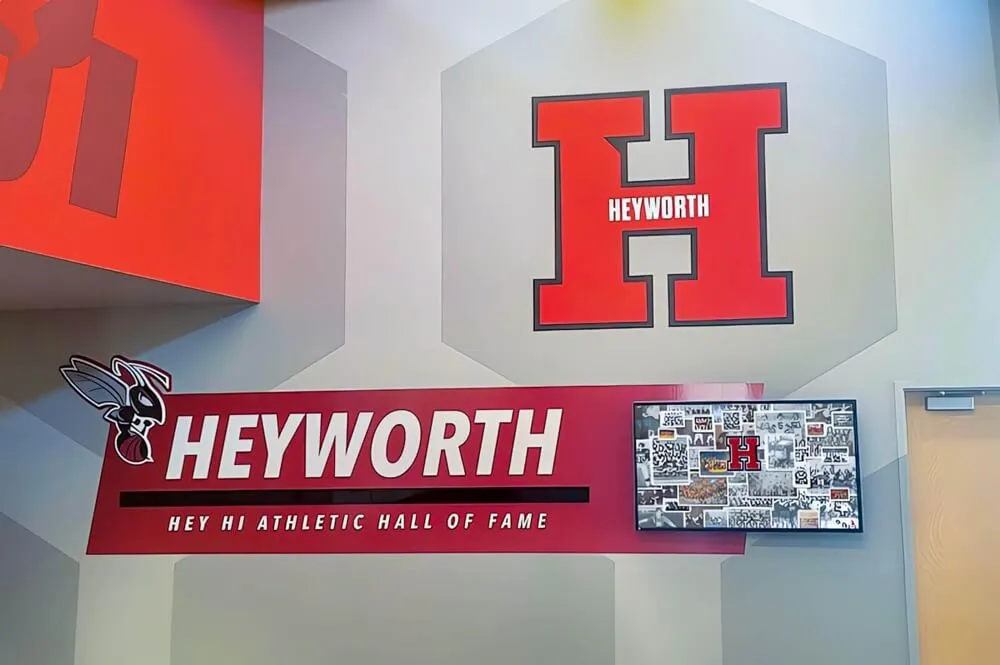
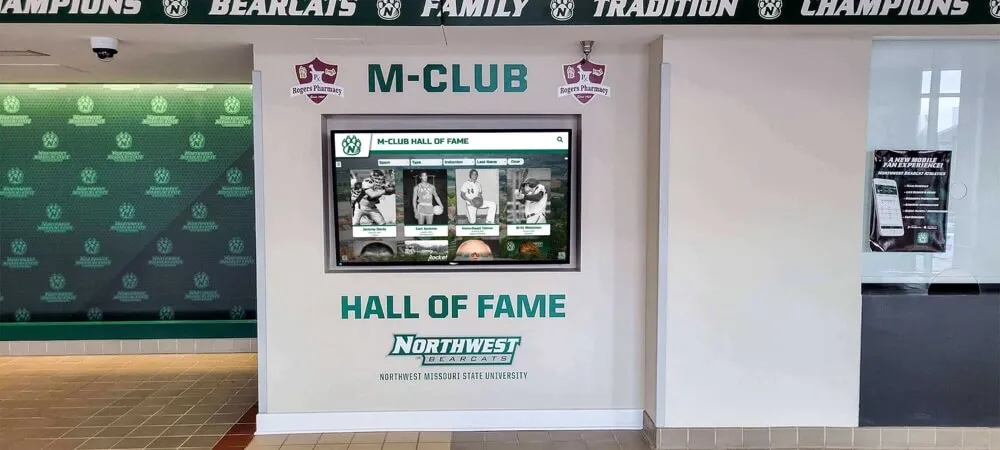
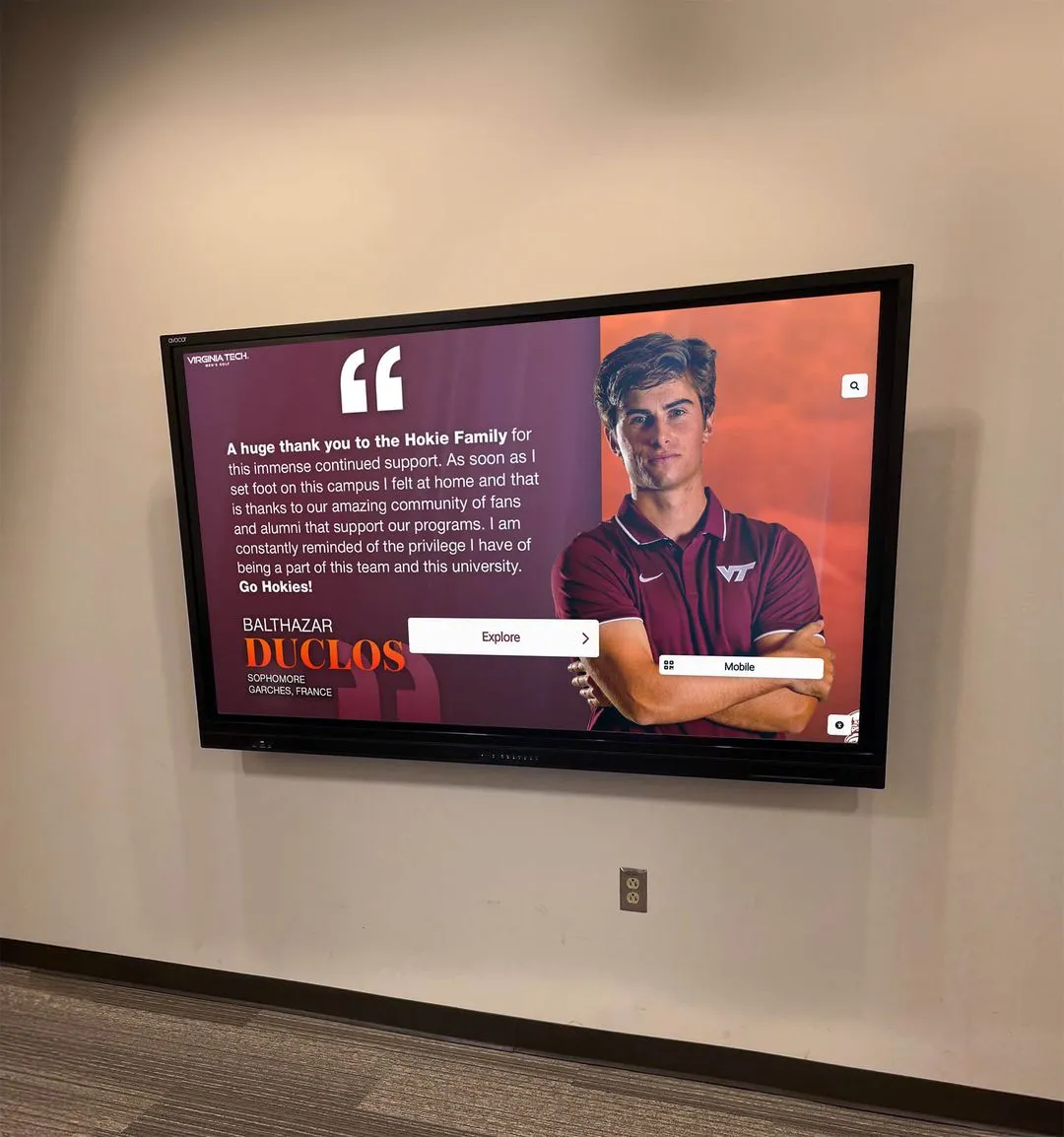
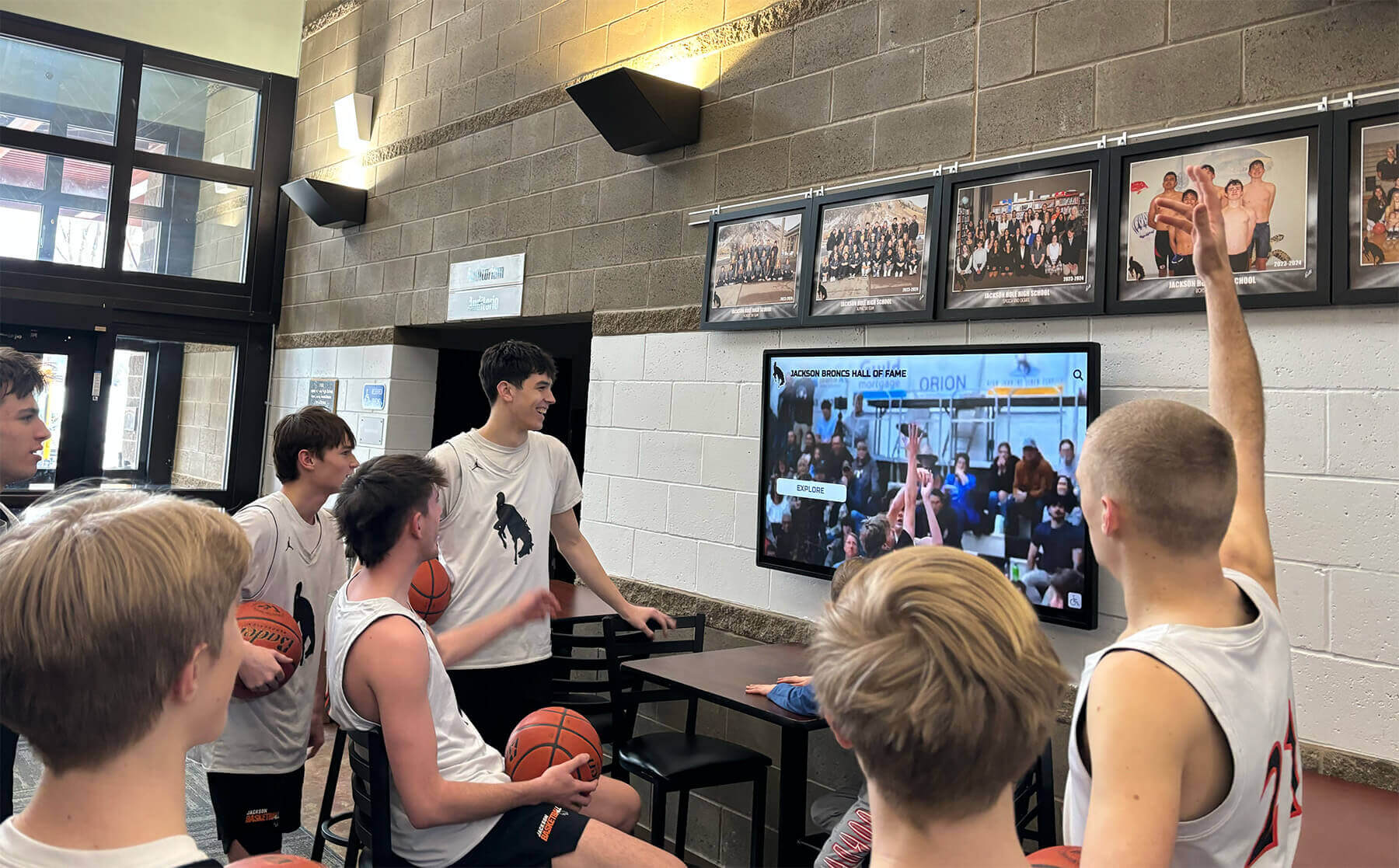
Digital displays in school lobbies create natural gathering points where students, families, and visitors stop to engage rather than simply pass by
What Is an Interactive Bulletin Board?
Before comparing approaches, it helps to be clear about terminology. The phrase “interactive bulletin board” carries different meanings depending on context and generation.
The Traditional Definition
In its original sense, a bulletin board is a physical surface—typically a cork panel, tackboard, or magnetic whiteboard—where paper notices, photos, schedules, and announcements are pinned or attached. “Interactive” in this context meant that teachers or staff could update the display regularly, and community members could read and occasionally contribute items. The interaction was entirely human-to-paper, low-tech, and sequential: you read what was posted and moved on.
Traditional bulletin boards remain ubiquitous in schools because they are inexpensive, require no technology expertise to operate, and have decades of established use patterns that both staff and students understand instinctively.
The Digital Definition
Modern usage increasingly applies “interactive bulletin board” to digital touchscreen displays that accept direct user input. When a student touches a profile card on a hallway screen to read an athlete’s full career statistics, or a parent taps an honor roll category to find their child’s name, or an alumnus uses a search field to locate classmates from their graduation year—that is an interactive bulletin board in its contemporary form.
These digital systems transform the bulletin board concept from a staff-curated, static-content medium into a community-facing, explorable archive. The interaction shifts from staff pinning notices to visitors actively navigating content chosen based on their individual interests. This distinction carries enormous practical consequences for how well each type actually serves its intended audience.
The Hybrid Middle Ground
Many schools operate a hybrid model: physical bulletin boards for short-term operational content (today’s lunch menu, this week’s game schedule, temporary club announcements) alongside digital displays for persistent recognition content (hall of fame inductees, all-time athletic records, donor walls, academic achievement archives). This intentional division by content type often represents the most practical approach, particularly during transition periods or within tight budgets.
Traditional Bulletin Boards: Strengths and Limitations
Understanding what traditional bulletin boards do well—and where they reliably fail—provides essential context before evaluating digital alternatives.
Where Traditional Bulletin Boards Excel
Immediate, low-cost deployment. A cork panel, a staple gun, and printed paper represent minimal investment. Schools can put up a bulletin board in any location without electrical infrastructure, network connectivity, or technical configuration. For temporary announcements or spaces receiving occasional traffic, this simplicity remains genuinely valuable.
No technology dependency. Traditional boards function without electricity, software licenses, internet connections, or vendor relationships. They never crash, require updates, or become incompatible with changing operating systems. In environments with unreliable infrastructure or limited IT support, this independence has real merit.
Intuitive familiarity. Every teacher, student, parent, and visitor understands how a bulletin board works. There is no learning curve, no accessibility concern about technology comfort, and no risk of a confusing interface preventing engagement. The medium itself is universally understood.
Physical community feel. A well-curated traditional bulletin board, covered with team photos, hand-written notes, newspaper clippings, and student artwork, carries a warmth that purely digital systems sometimes struggle to replicate. The physical accumulation of real artifacts communicates authentic community history in ways that designed digital presentations do not always match.
Where Traditional Bulletin Boards Fall Short
Content capacity is severely limited. A physical bulletin board can only display what physically fits on its surface. An athletic program with 50 years of history might have thousands of deserving individuals, but the board can recognize only dozens. Academic honor rolls from previous years get taken down to make room for current ones. Historical content disappears simply because there is nowhere to keep it visible.
Updates require physical labor every time. Changing content on a traditional bulletin board means printing new materials, traveling to the physical location, removing old items, and pinning new ones. For schools managing dozens of boards across large campuses, this maintenance burden is substantial—and content frequently becomes outdated because the effort to update it isn’t prioritized.
Static content cannot respond to visitor interest. A bulletin board showing this season’s roster cannot simultaneously show last decade’s all-time scoring leaders. A display featuring current honor roll students has no capacity to let a visiting grandparent search whether their grandchild made the list. The medium inherently delivers one predetermined view to every viewer regardless of what they actually want to know.
Fragility and wear. Paper fades, tears, and becomes visually degraded over time. Photos yellow. Pushed pins leave holes. Boards in high-traffic areas develop cluttered, damaged appearances that undermine the professional impression schools want to project to visiting families and prospective students.
Recognition capacity creates painful choices. When physical space determines who gets recognized, institutions face uncomfortable decisions about whose achievements warrant inclusion. Athletes who made tremendous contributions but didn’t reach a certain threshold may be left off. Academic achievers receive brief visibility and are replaced by the next cohort. The physical constraint forces schools to under-recognize their communities.
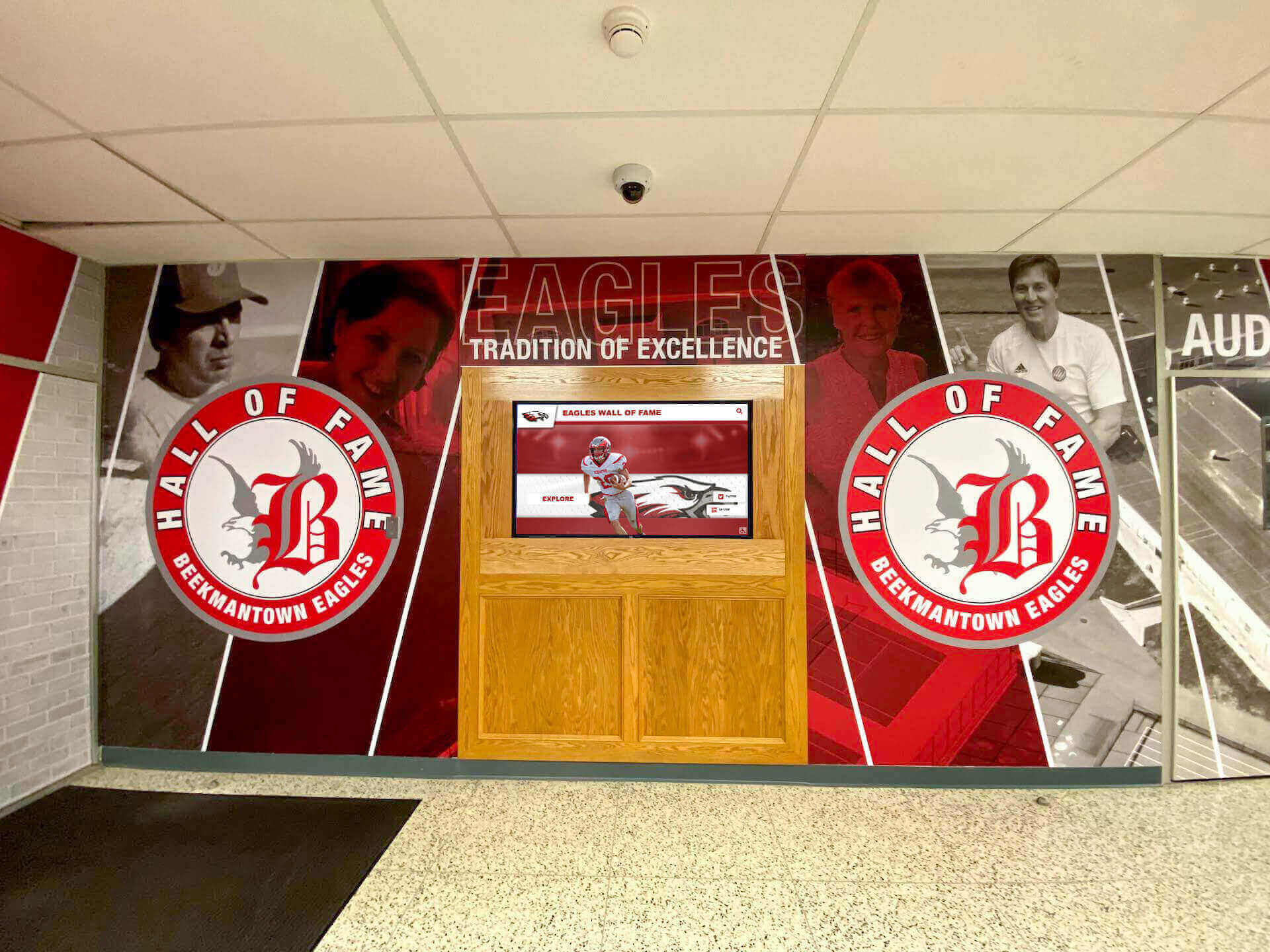
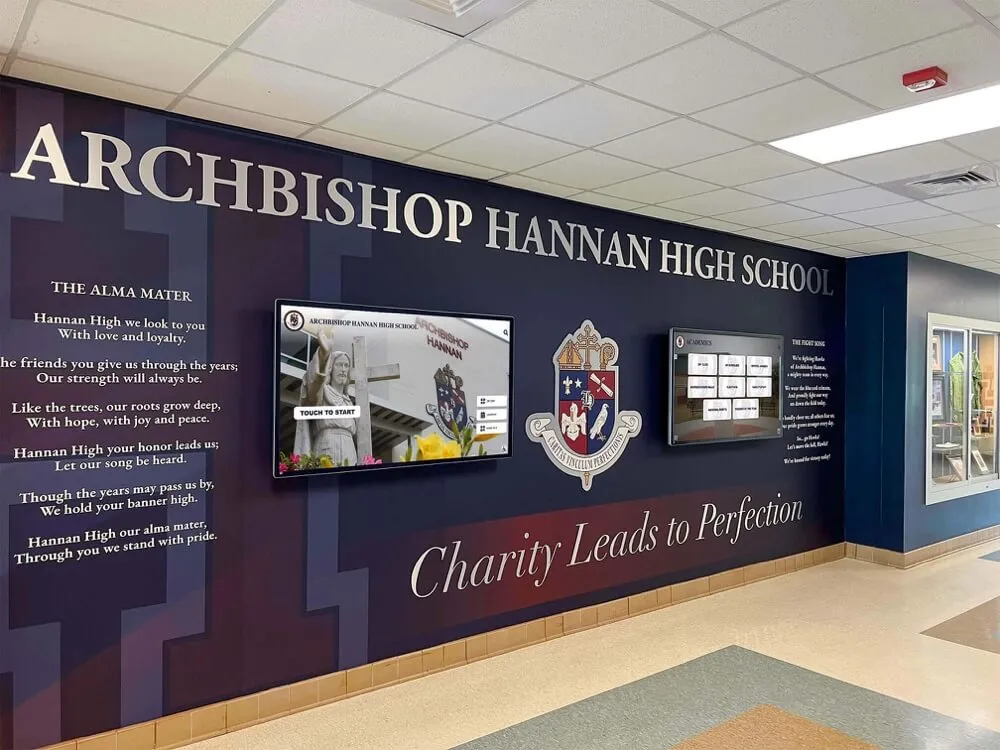
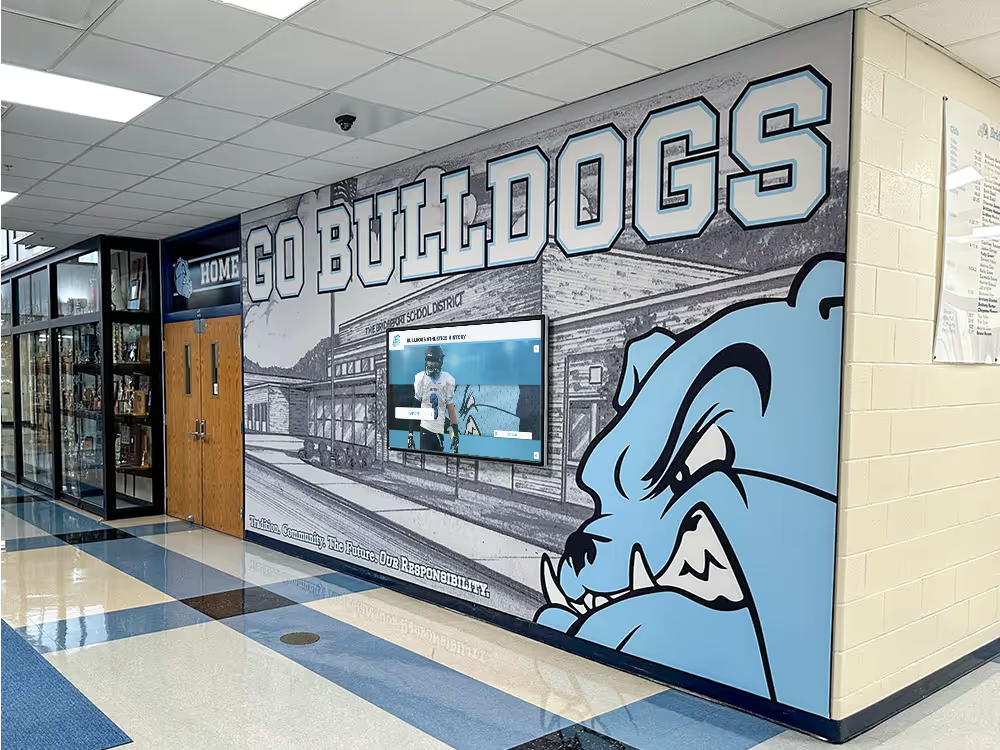
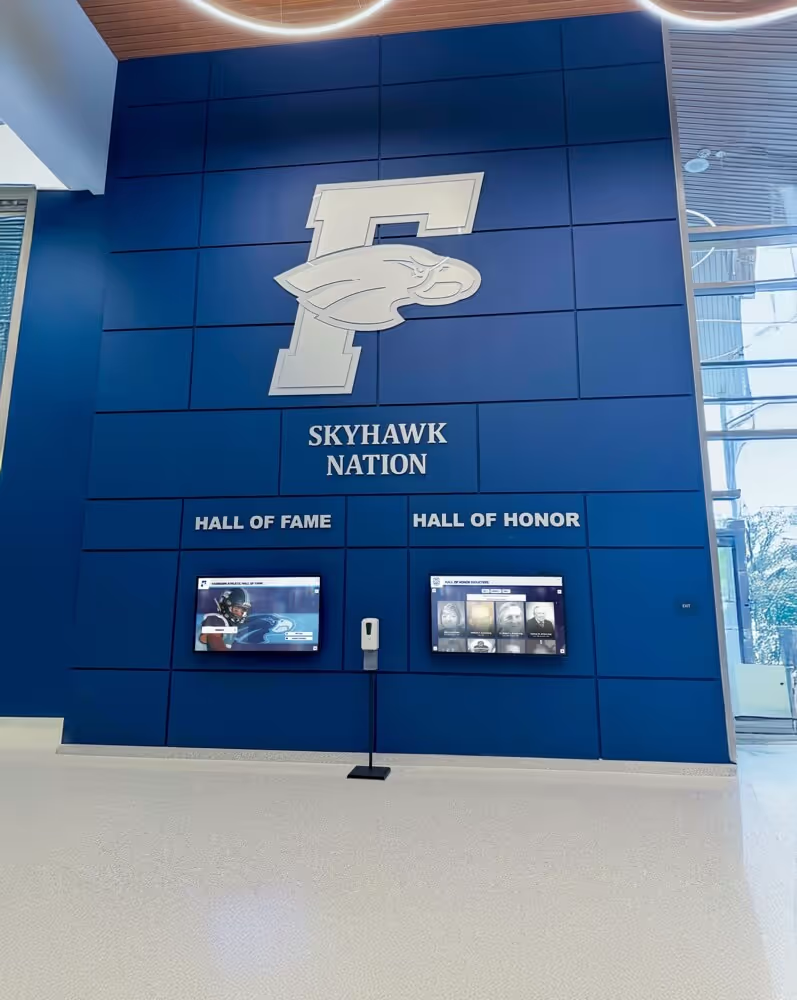
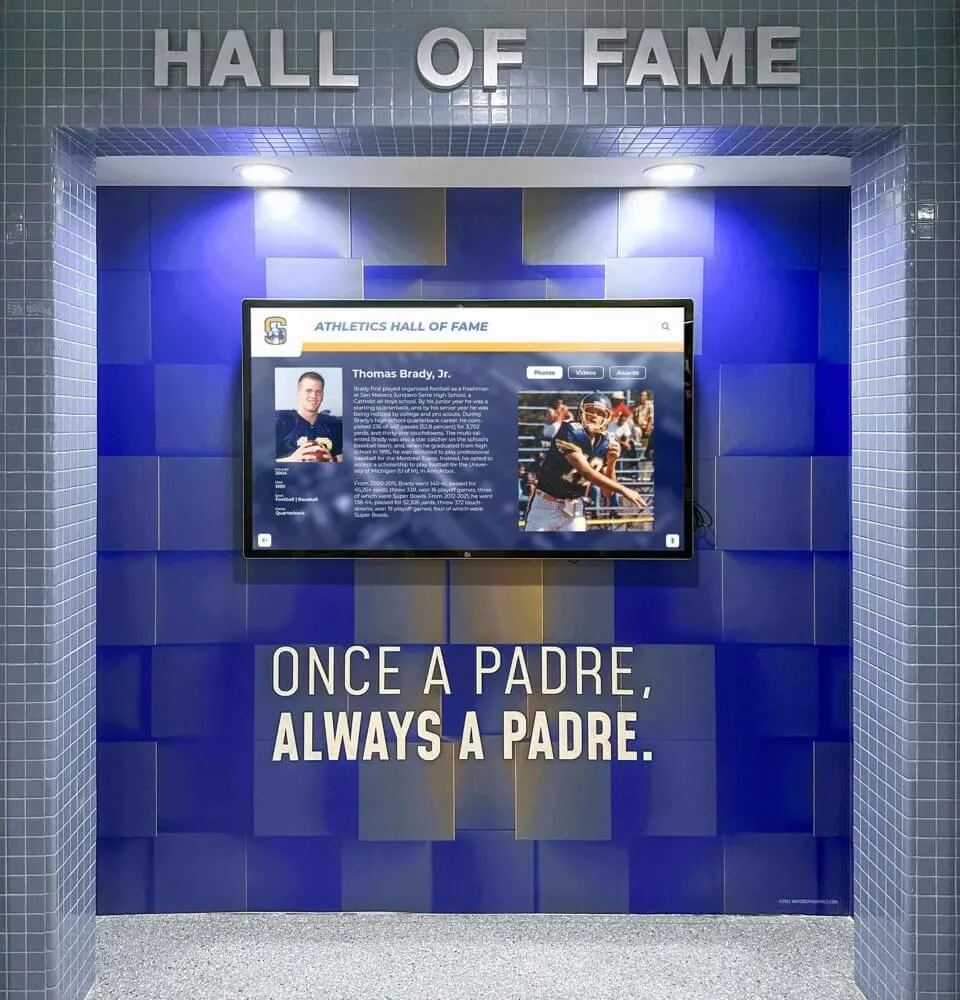
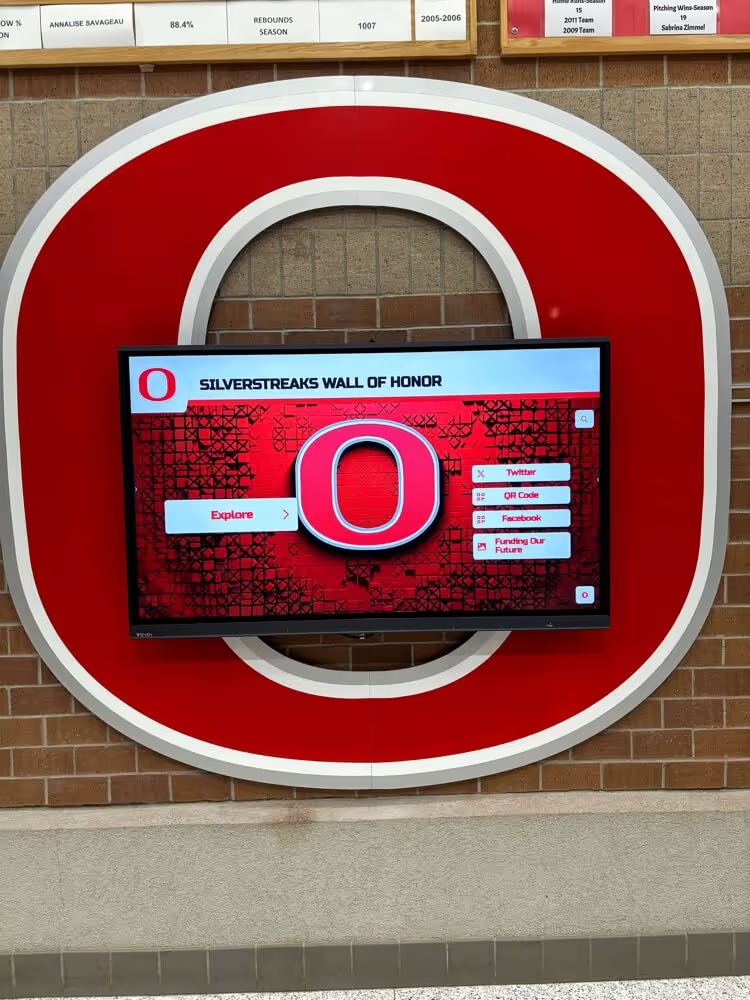
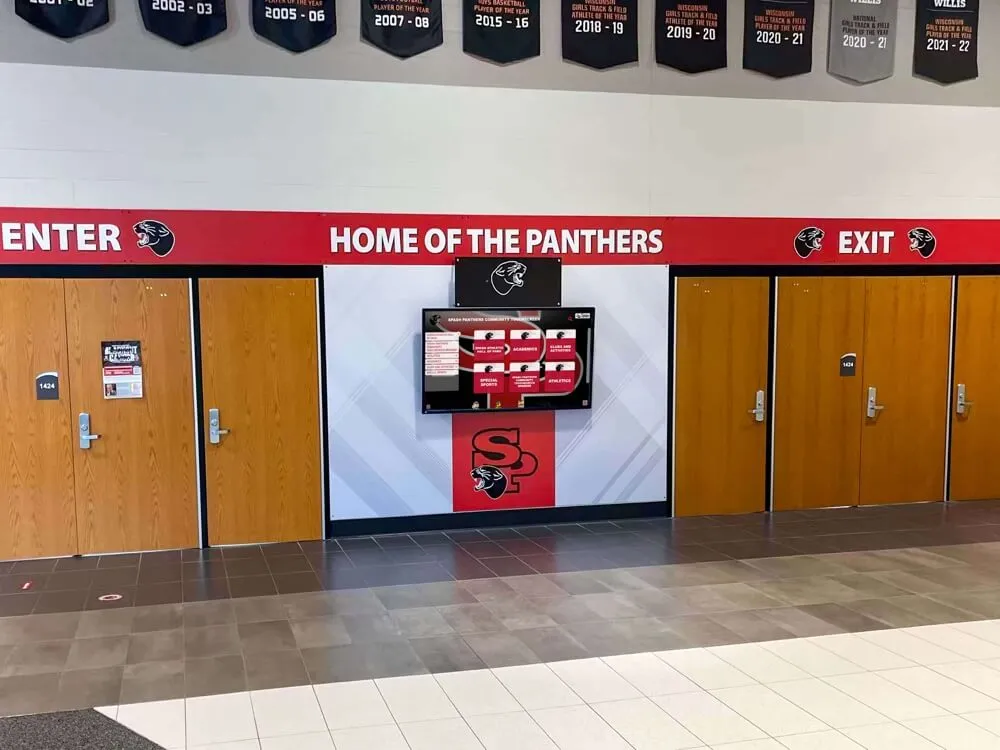
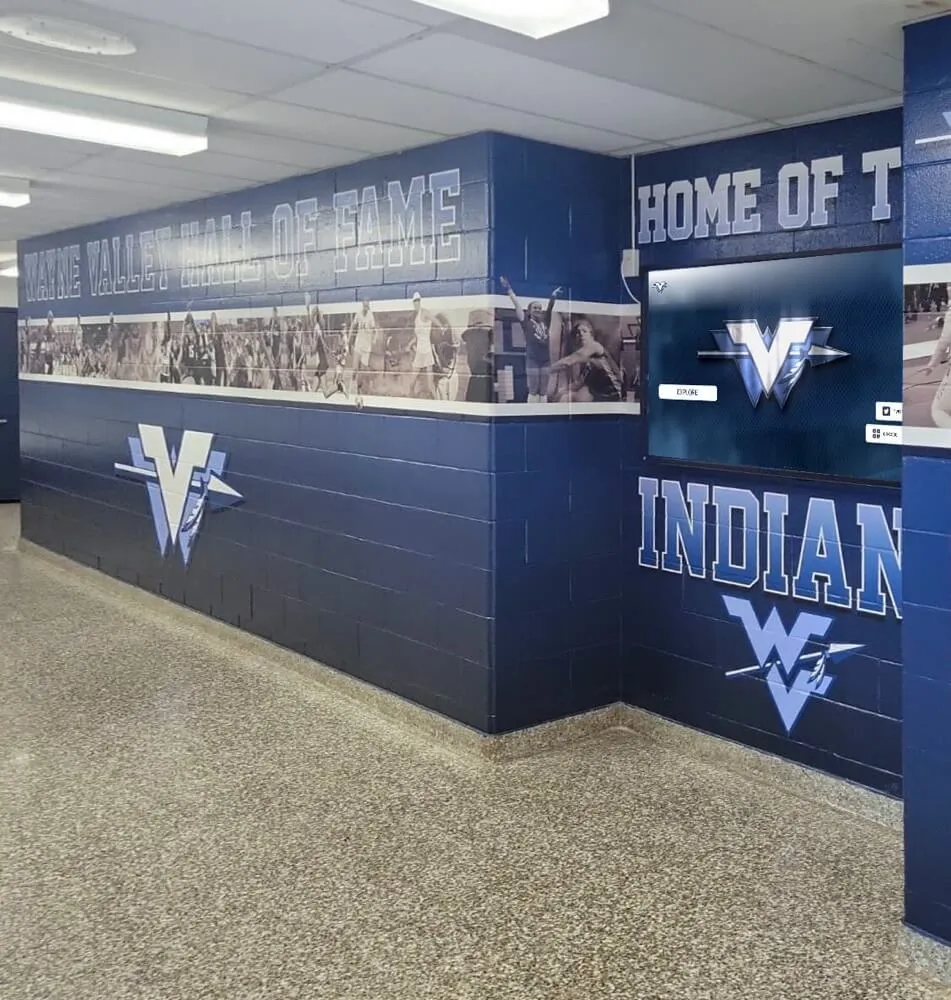
Permanent digital installations create branded recognition environments that physical bulletin boards cannot match for depth, polish, or institutional impact
Digital Interactive Bulletin Boards: Capabilities and Advantages
Digital interactive bulletin boards represent a fundamentally different approach to school communication and recognition—one built around what visitors need to find rather than what staff had room to post.
Core Features of Digital Interactive Displays
Touchscreen interaction. Modern commercial touchscreen displays use capacitive technology—the same found in smartphones—to register light, precise touch input. Visitors tap, swipe, and search naturally using interaction patterns they already know from daily device use. This familiar interface eliminates learning curves and encourages exploration across all age groups.
Unlimited content capacity. A single digital display can store and present thousands of individual profiles, decades of historical records, complete photo galleries, video archives, and comprehensive statistical data. The constraint shifts from “how much can we fit on the wall” to “how much content have we actually organized”—a fundamentally more empowering limitation to work with.
Real-time search and filtering. Visitors find exactly what interests them immediately. An alumnus can search their graduation year. A parent can look up their student’s name. A prospective athlete can browse records by sport and position. This personalization transforms passive signage into a tool people actively seek out rather than occasionally notice.
Dynamic content updates. Authorized staff update digital displays remotely through cloud-based content management systems, without visiting the physical installation. A coach can add this season’s award winners from their office computer. An athletic director can update records minutes after they are broken. Content stays current with a fraction of the labor traditional boards require.
Media richness. Unlike paper, digital displays naturally incorporate photos, video highlights, audio clips, and animated graphics. Recognizing a championship team with a video reel from the state tournament communicates something profoundly different than a printed schedule and a newspaper clipping pinned to cork.
Analytics and engagement tracking. Many digital platforms provide usage data showing which content receives the most interaction, how long visitors engage, and which features attract repeat visits. This information helps schools refine their recognition programs based on actual community interest rather than assumptions.
Recognition Applications in Schools
The most impactful applications of digital interactive bulletin boards in educational settings cluster around recognition—celebrating the achievements that define institutional identity and inspire current students.
Athletic hall of fame displays allow schools to recognize every athlete who contributed to program history, not just the handful who fit on a physical plaque wall. Searchable archives preserve rosters, statistics, records, and biographical information across decades. Visiting alumni find their own profiles and those of teammates. Current athletes see the tradition they are inheriting. Prospective students understand the depth of the program they are considering joining.
For schools with rich athletic traditions, digital archives enable the kind of comprehensive musician recognition and performer documentation alongside athletic achievement—creating multi-dimensional portraits of student excellence across all competitive disciplines.
Academic recognition boards present honor roll lists, scholarship recipients, academic competition winners, and departmental achievements in searchable formats that let families find their students quickly. Schools can maintain multi-year academic honor archives instead of cycling paper lists through bulletin boards that display only current information.
Alumni engagement displays transform gathering spaces during homecoming, reunion, and community events. Digital interactive boards enable the self-guided discovery that drives engagement—alumni exploring their own graduation years, connecting with classmates, and discovering how the school has evolved since their time. Guidance on alumni of the month programs demonstrates how ongoing alumni recognition programs can anchor digital bulletin board content throughout the year.
Community communications including event calendars, campus news, and emergency information can run alongside recognition content, serving operational needs simultaneously with archival functions.
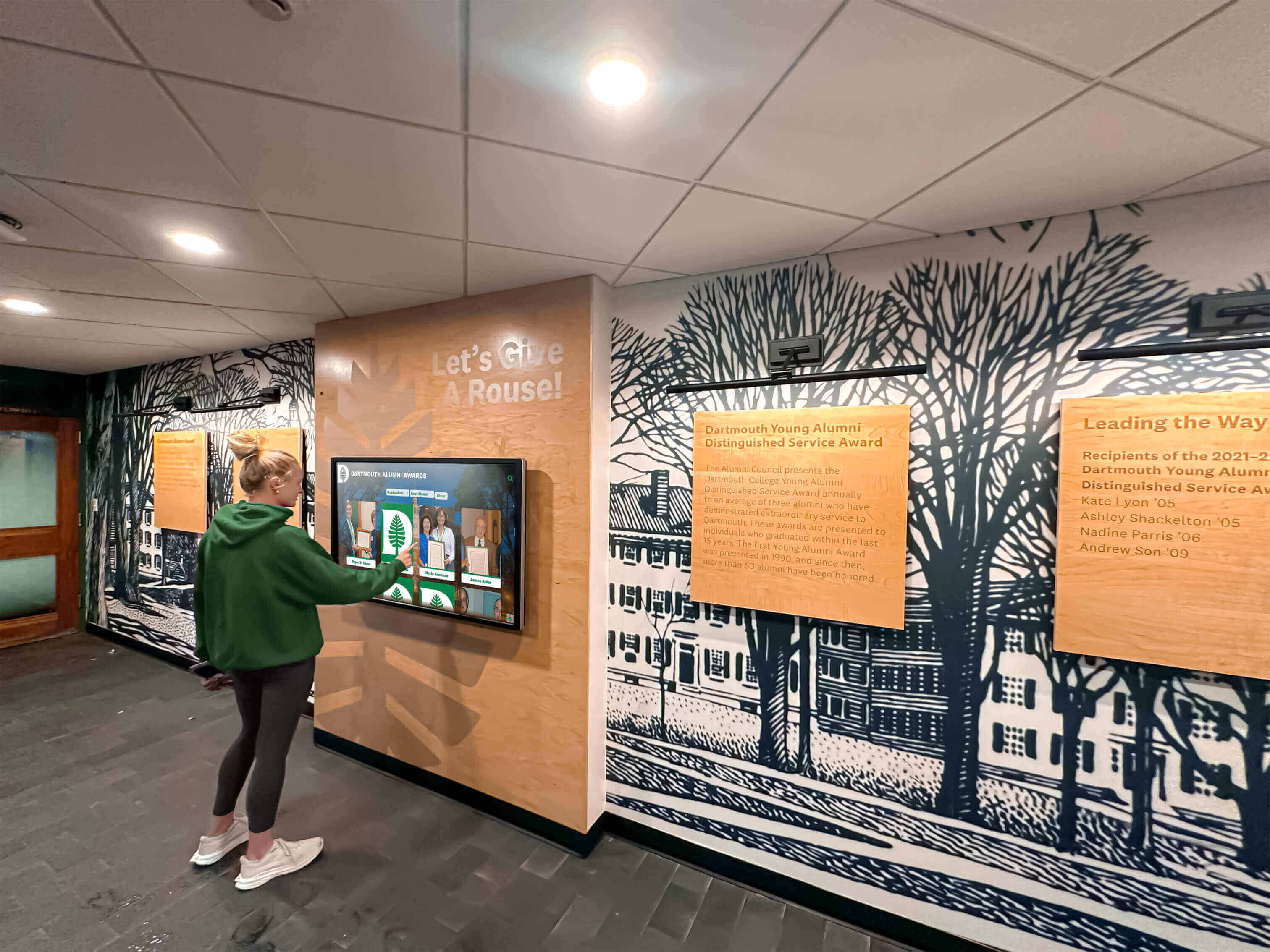
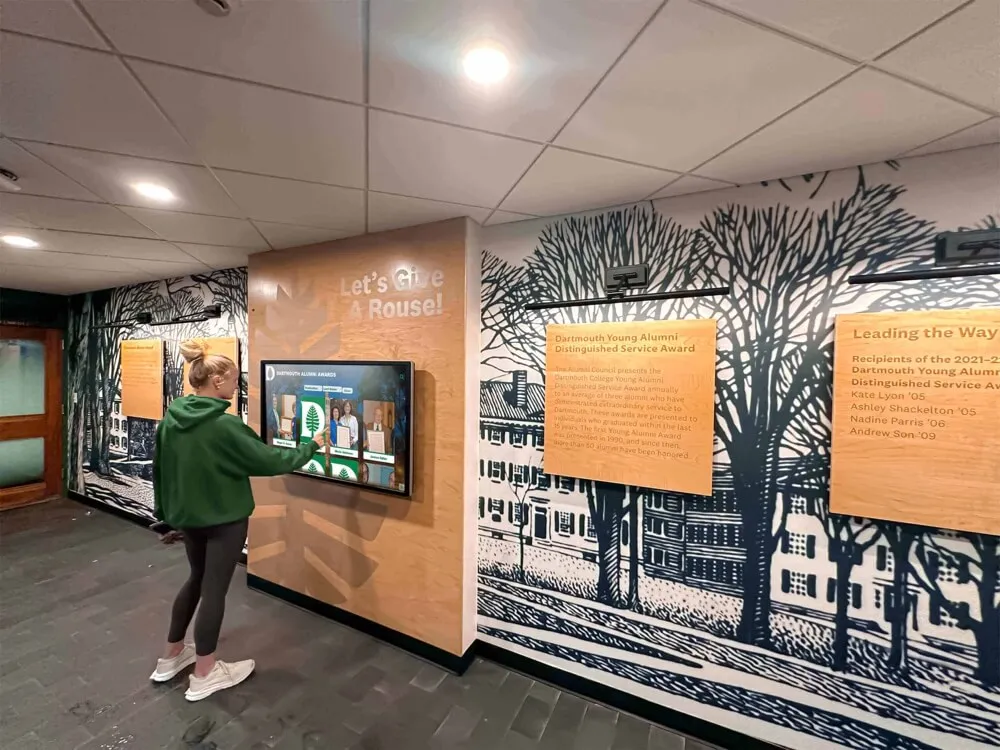
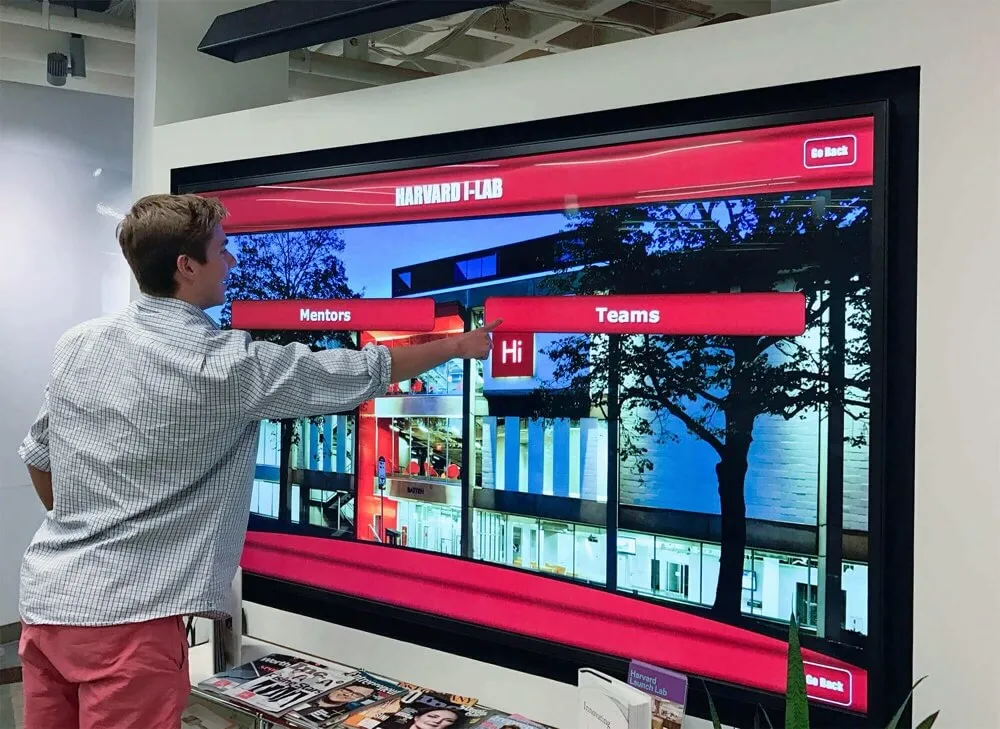
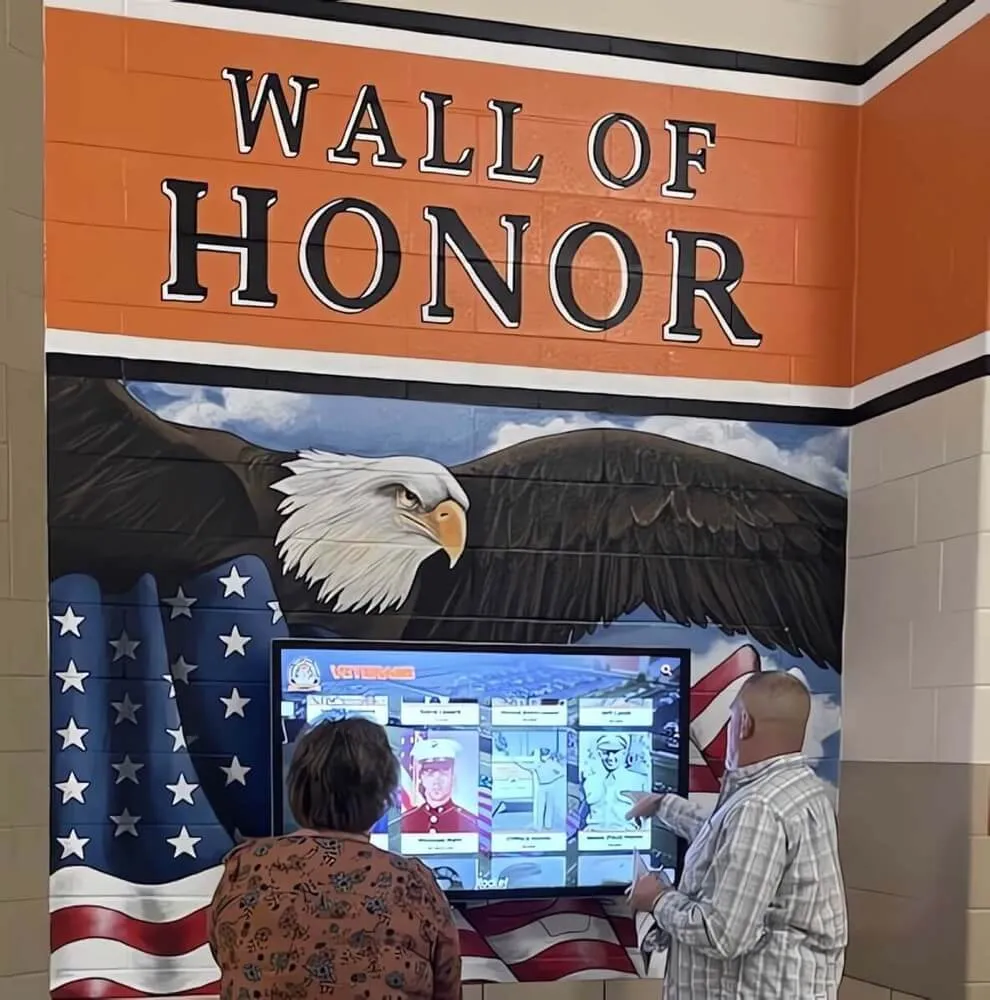
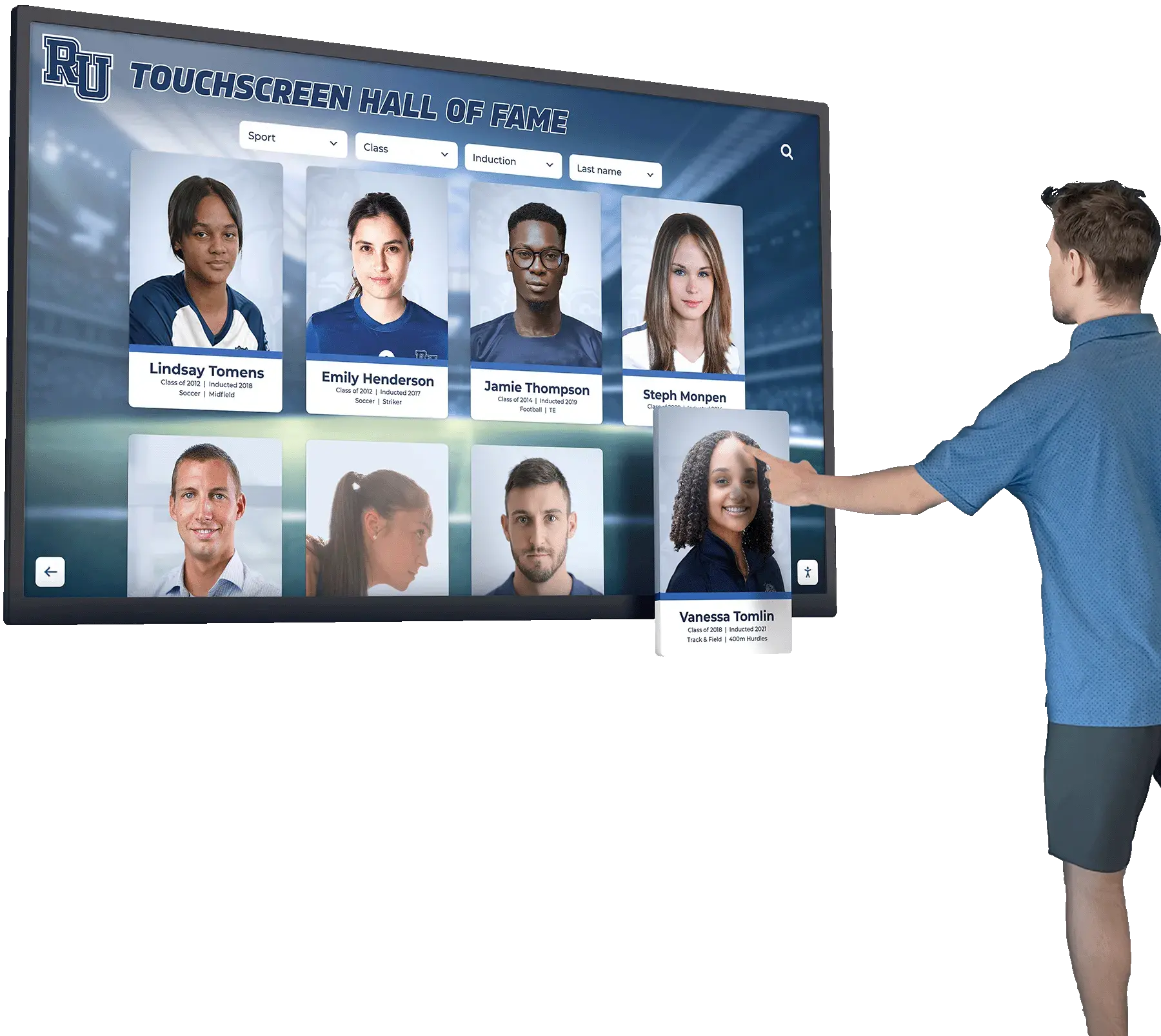
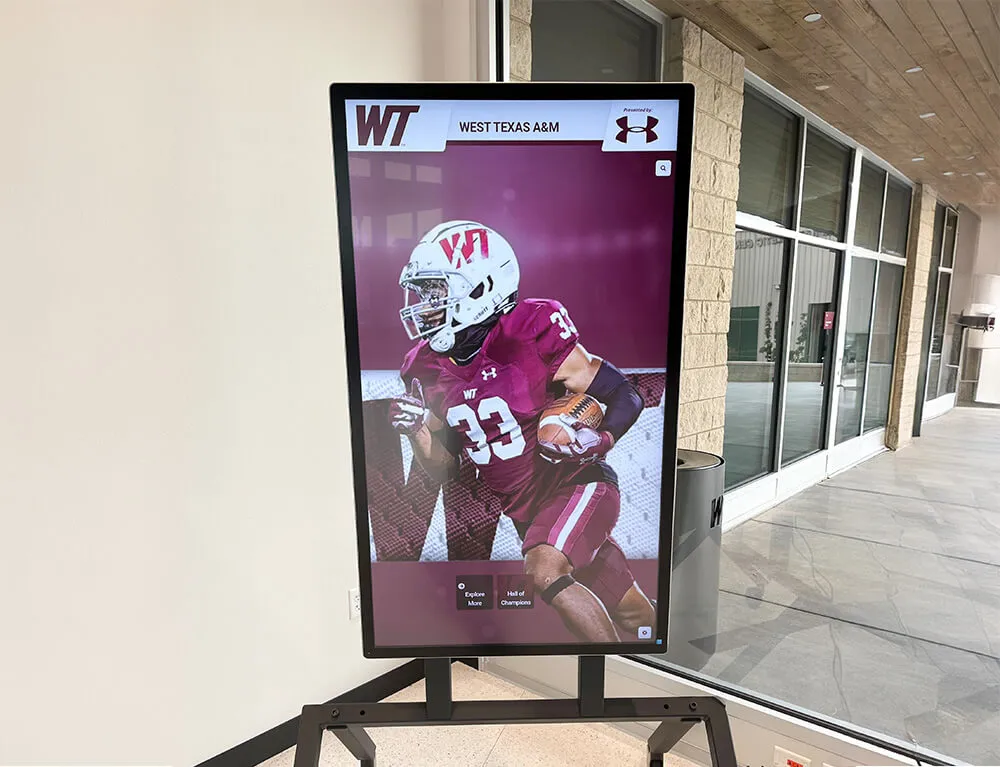
Current students engaging with recognition archives discover their school's history firsthand—building pride and connection to institutional tradition
Head-to-Head Comparison
The practical differences between traditional and digital interactive bulletin boards become clearest when examined across specific decision-making dimensions.
| Dimension | Traditional Bulletin Board | Digital Interactive Display |
|---|---|---|
| Initial cost | Very low ($50–$500) | Moderate to high ($3,000–$15,000+) |
| Ongoing cost | Low (printing, staff time) | Subscription/support fees; lower labor |
| Content capacity | Severely limited by physical space | Effectively unlimited |
| Update process | Physical, in-person only | Remote, real-time from any computer |
| Visitor interaction | Passive reading only | Active search, browse, explore |
| Media types | Paper, photos, printed text | Video, photos, audio, animation |
| Recognition depth | Surface-level, current only | Historical archives spanning decades |
| Personalization | None—same view for every visitor | Fully personalized to each visitor’s search |
| Analytics | None | Detailed engagement and usage data |
| Maintenance burden | High (regular physical updates) | Low (remote cloud management) |
| Technology dependency | None | Internet, power, software platform |
| Lifespan of content | Days to weeks | Years to decades |
| Visual quality | Degrades with age and wear | Consistent digital quality |
| ADA accessibility | Limited | Configurable height, screen reader options |
This comparison makes the trade-offs clear: traditional bulletin boards win on initial cost and simplicity; digital interactive displays win on nearly every dimension related to engagement quality, content depth, and long-term institutional value.
When Traditional Boards Still Make Sense
Despite the capabilities of digital systems, traditional bulletin boards remain appropriate in specific contexts.
Short-term operational content like today’s schedule changes, a reminder about picture day, or a flyer for next week’s club meeting serves its purpose well on physical boards that staff update daily. This type of content is temporary by nature, doesn’t require visitor interaction, and disappears cleanly once its moment has passed.
Classroom instructional displays used by teachers to support active lessons—vocabulary words, procedural steps, student work samples—benefit from physical accessibility and ease of real-time modification during instruction. Teachers often value the tactile, improvisational quality of physical boards in active learning environments.
Low-traffic spaces without electrical infrastructure or network access represent practical contexts where the setup costs of digital displays may not be justified. A storage closet hallway or a rarely-visited back corridor doesn’t warrant significant digital investment regardless of capabilities.
Budget-constrained initial phases where schools are beginning to modernize. A thoughtful hybrid approach—digital in high-priority locations like main lobbies and athletic entrances, traditional elsewhere—allows phased investment while delivering impact where it matters most.
When Digital Interactive Boards Clearly Win
The calculus shifts decisively toward digital when schools are trying to accomplish the recognition and engagement goals that define modern educational community-building.
Lobby and main entrance areas visited by prospective families, community members, and visiting officials represent the highest-stakes first impressions. These spaces communicate institutional quality and ambition. A polished digital interactive display in a main lobby signals organizational sophistication that a cluttered cork board fundamentally cannot.
Athletic facilities and gymnasiums where decades of achievement deserve permanent, accessible documentation. Programs with generations of state championships, All-Americans, and hall of fame inductees owe those contributors something more lasting than paper that yellows and tears. Digital archives preserve that legacy indefinitely. Schools with deep athletic histories find that documenting high school athletic history and legendary program traditions through permanent digital archives creates lasting community assets.
Alumni gathering areas designed to reconnect graduates with their school. When alumni return for homecoming or reunion events, they are not looking for this week’s schedule—they want to find their own contributions in the school’s story. Digital interactive boards serve this need in ways traditional formats simply cannot. Thoughtful alumni gathering area design centered on digital discovery creates the engagement experiences that strengthen long-term alumni relationships.
Multi-purpose spaces that need to serve different audiences on different days. A digital display can showcase academic achievers during college fair events, feature athletic recognition during sporting events, highlight performing arts during concert seasons, and provide campus wayfinding during large public gatherings—all from the same physical installation managed through a single content platform.
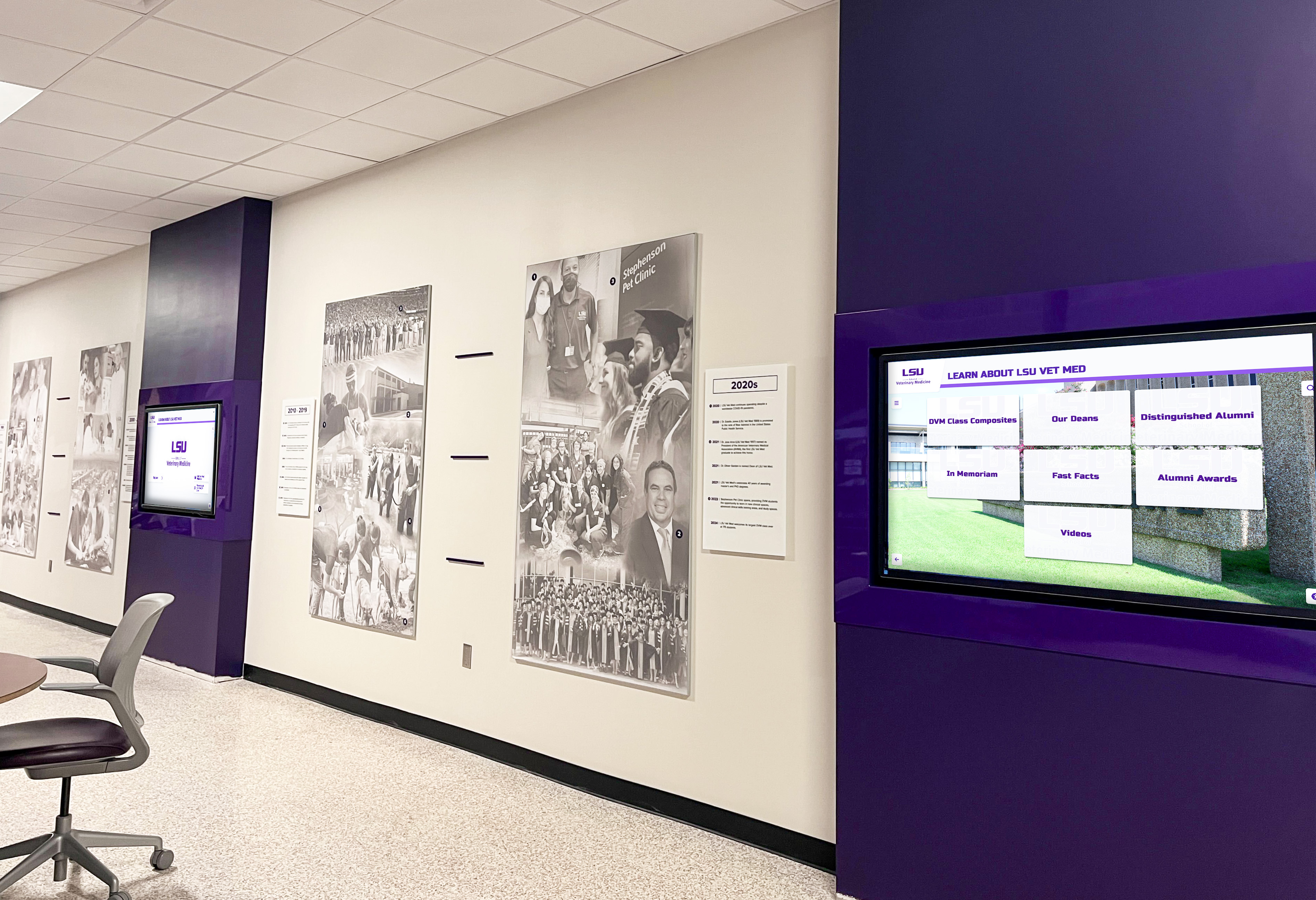
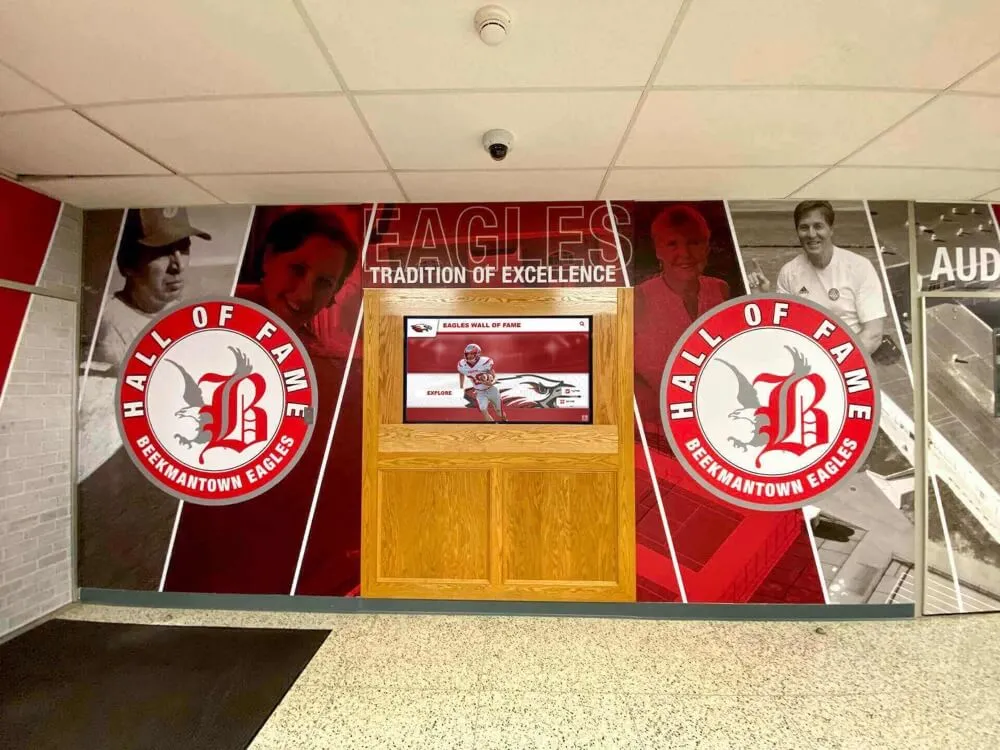
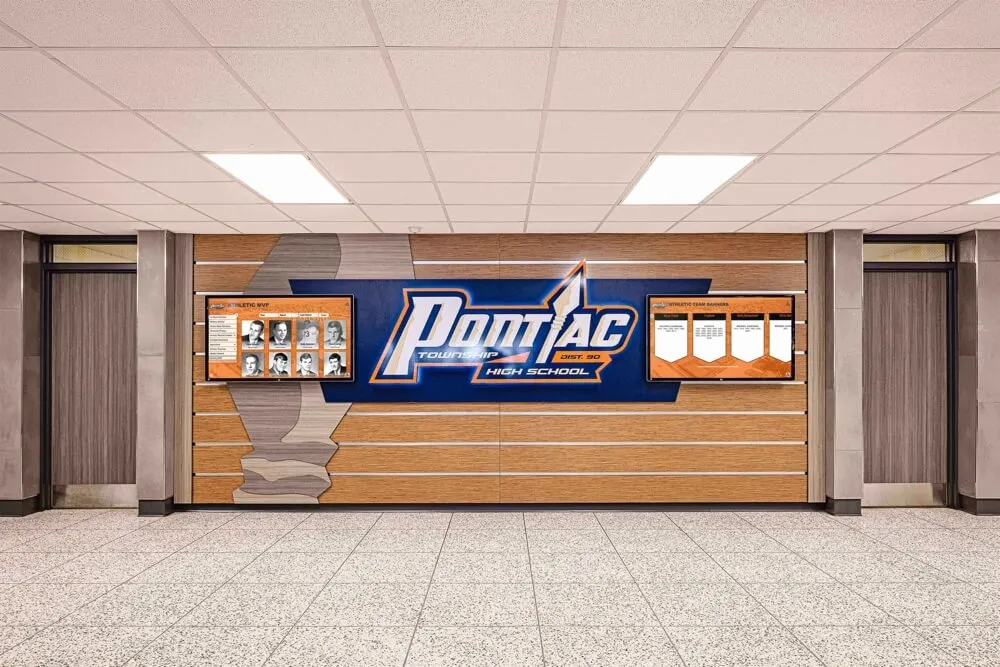
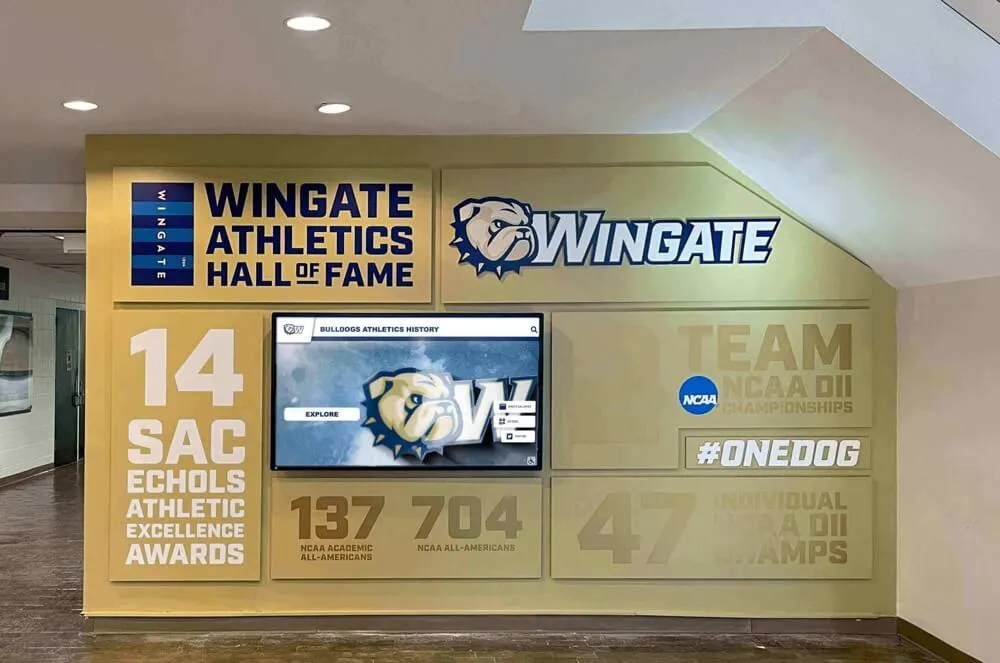
Educational institutions at every level use coordinated digital display systems to create cohesive recognition environments throughout hallways and common areas
The Rocket Alumni Solutions Approach
Among the platforms serving educational institutions with digital interactive bulletin board and recognition systems, Rocket Alumni Solutions is purpose-built specifically for schools—a distinction that matters when evaluating options.
Generic digital signage platforms are designed primarily for broadcast communication: scheduling announcements, rotating promotional content, and pushing information at passive viewers. They can display content but provide limited frameworks for the kind of organized, searchable, community-facing recognition that schools actually need.
Rocket Alumni Solutions builds specifically around school recognition use cases, providing structured athlete and alumni profiles, searchable databases spanning multiple decades, built-in hall of fame management, donor recognition capabilities, and content management tools designed for non-technical staff. The platform understands that a school’s recognition needs are fundamentally different from a retail store’s digital signage needs—and the product reflects that understanding.
This specialization matters for several practical reasons:
Content organization designed around recognition categories schools actually use: graduation years, sport and position, academic achievement tiers, induction classes, and giving levels. Generic platforms require forcing these structures into templates designed for entirely different purposes.
Update workflows that athletic directors, school administrators, and development staff can manage without technical expertise. Recognition content requires regular updates—annual inductee classes, seasonal roster changes, record books updated throughout competitive seasons. If the content management system requires an IT professional to navigate, updates don’t happen and displays become outdated.
Brand integration creating custom visual designs that incorporate school colors, mascots, typography, and institutional identity rather than generic templates that could belong to any organization. Recognition environments should feel unmistakably like the school they represent.
Schools considering digital interactive displays for alumni engagement programs benefit from understanding alumni association software approaches that coordinate digital recognition with broader engagement strategies. Similarly, schools running formal alumni recognition programs find that digital bulletin board platforms complement alumni newsletter strategies that maintain community connection beyond in-person visits.
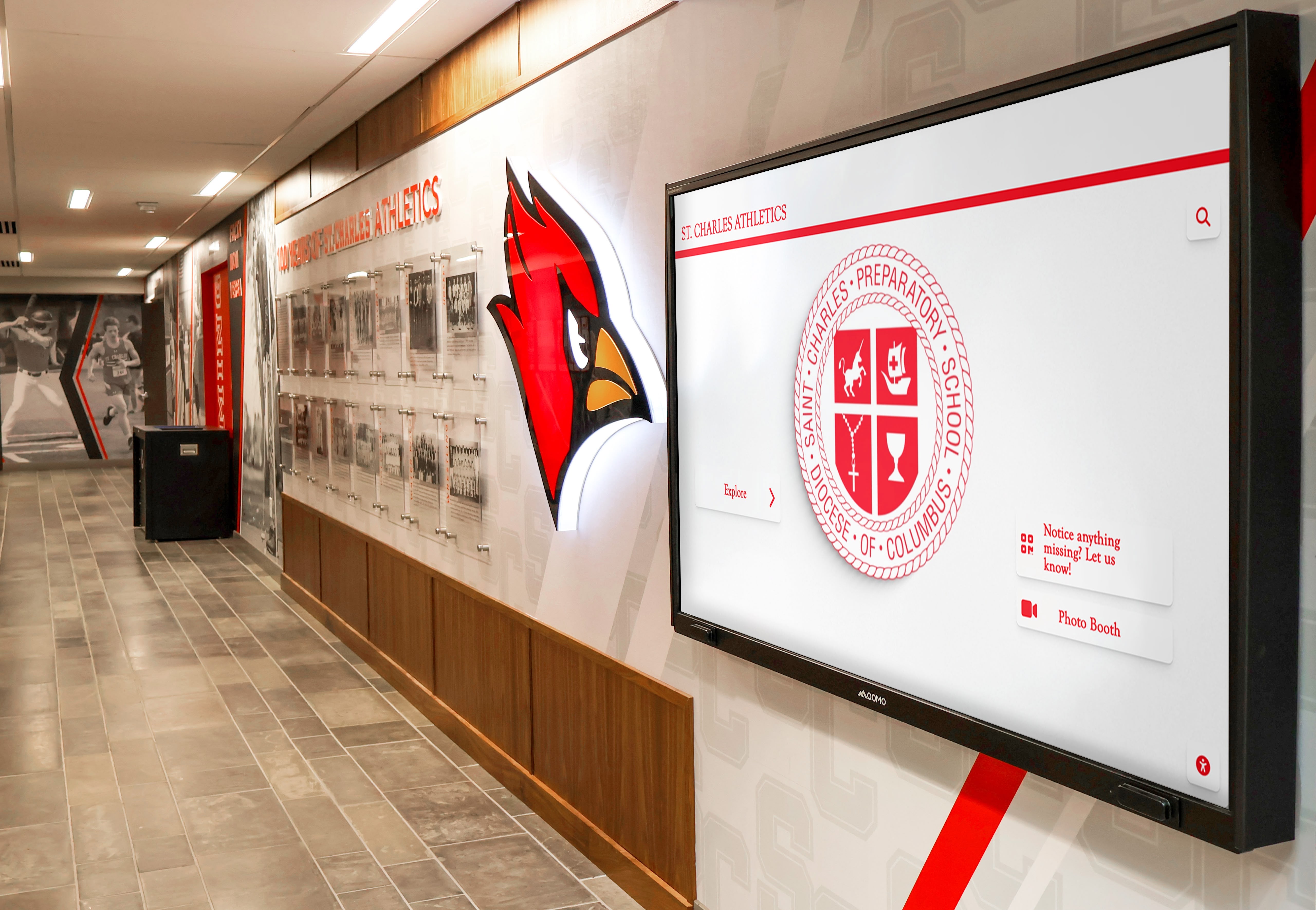
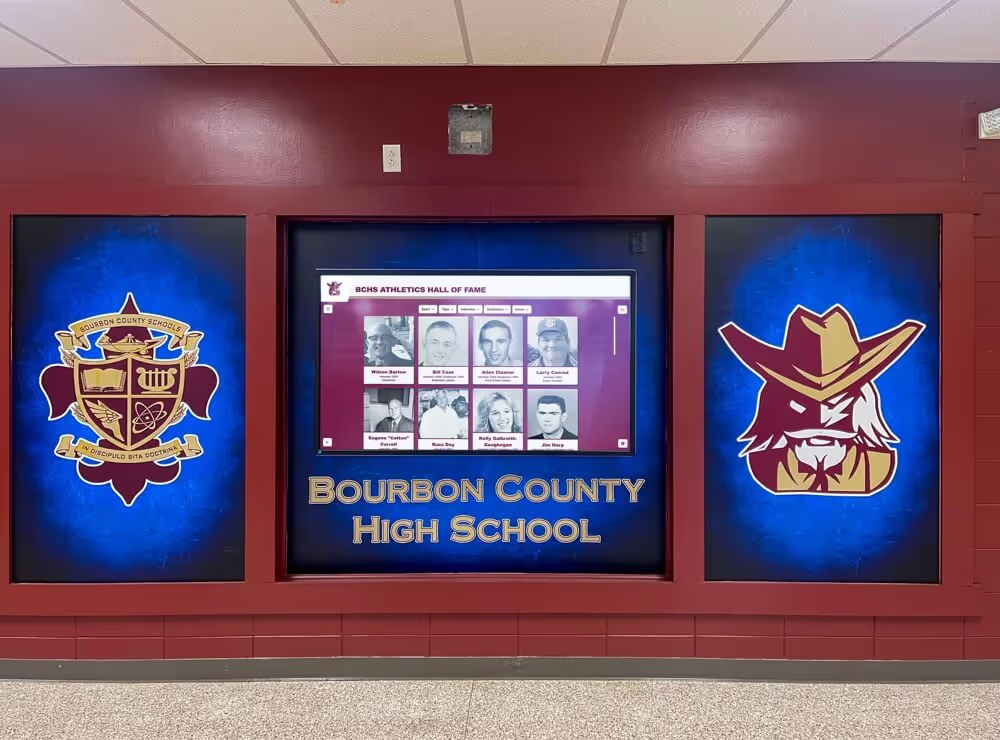
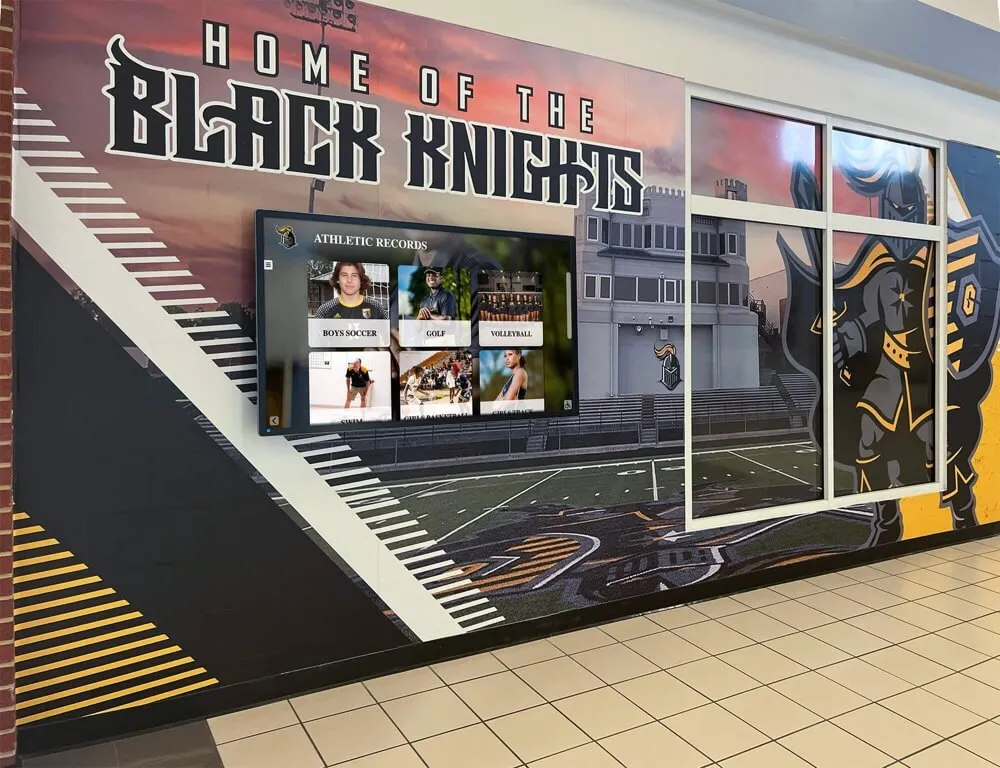
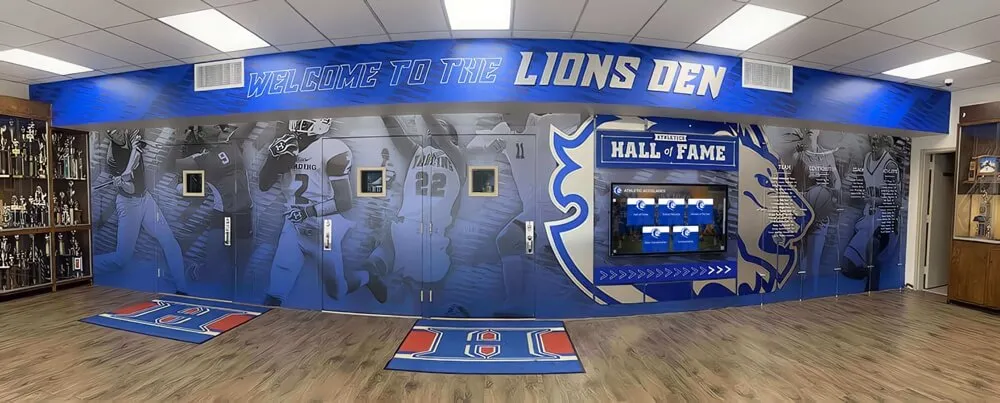
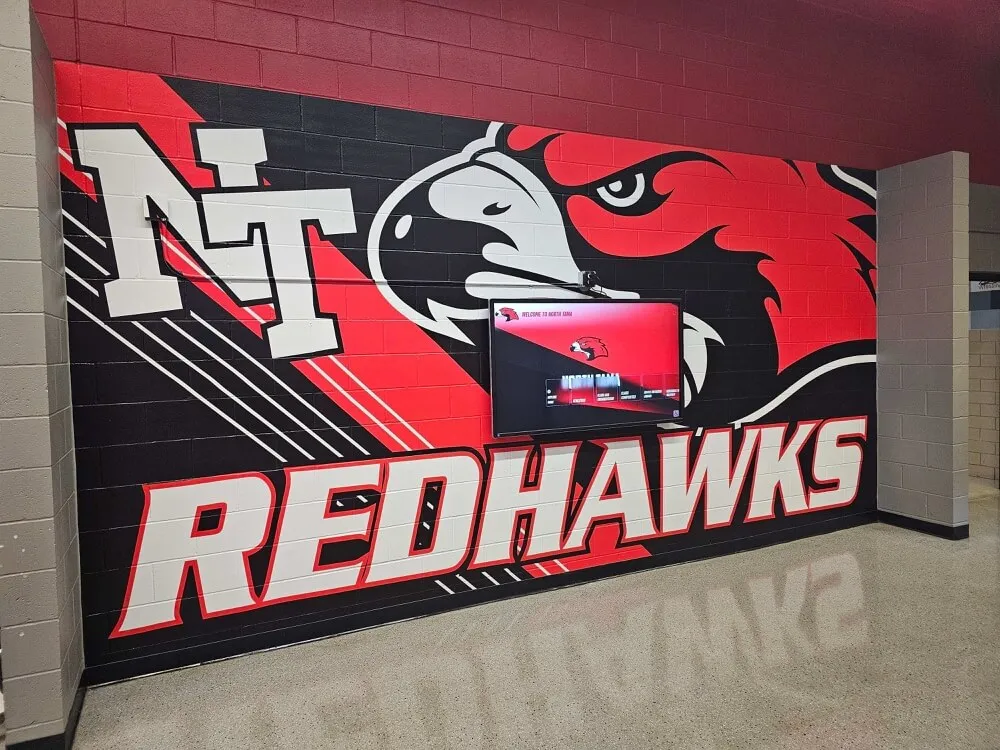
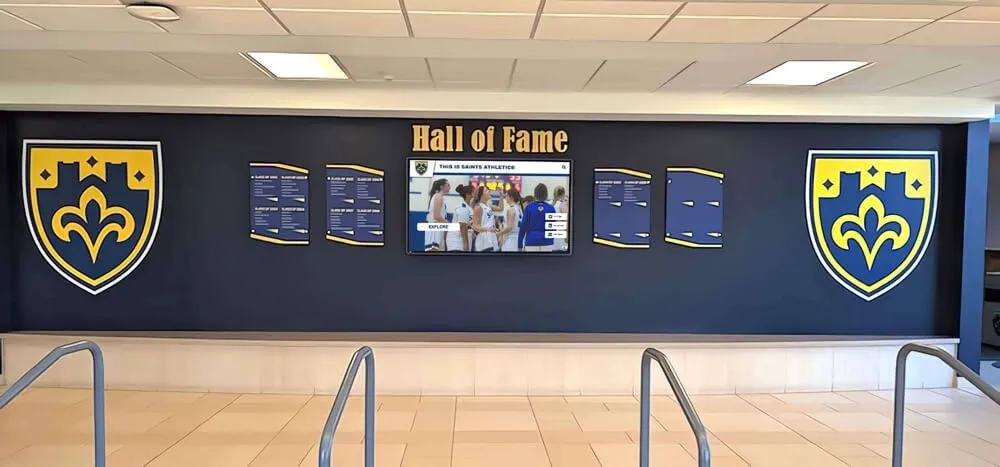
Purpose-built recognition platforms incorporate school mascots, colors, and identity into digital displays—creating experiences that feel distinctly institutional rather than generic
Cost Comparison: What Schools Actually Spend
Honest cost analysis requires looking beyond hardware price tags to total cost of ownership across multiple years.
Traditional Bulletin Board Costs
Initial installation costs are minimal—cork panels run $50–$300 each depending on size and quality, plus basic mounting hardware. The ongoing costs are less obvious but cumulatively significant:
- Staff labor for regular content updates (printing, trimming, traveling to boards, mounting, removing old content)
- Printing costs for paper content that must be refreshed regularly
- Replacement costs for boards that wear out, develop visible damage, or need repositioning
- Opportunity costs when outdated content creates poor impressions during high-stakes visits
For a school maintaining 20–30 bulletin boards across its campus, the combined staff time for regular updates across a year can reach several hundred hours—labor that carries real budget implications even when not directly attributed to the bulletin board program.
Digital Interactive Display Costs
Hardware investment for quality commercial touchscreen displays ranges from $2,000–$6,000 per unit depending on size, with professional installation and mounting adding $500–$2,000. Software platform subscriptions typically run $1,500–$5,000 per year depending on features and number of displays.
The total investment for a flagship lobby installation with a 65-inch commercial touchscreen, professional mounting, content platform subscription, and initial content development commonly falls in the $8,000–$15,000 range. Multi-display implementations serving athletic facilities, alumni areas, and campus gathering spaces involve higher investments but amortize software costs across more installations.
The Total Cost of Ownership Calculation
When comparing five-year costs, digital displays frequently outperform traditional boards in schools where recognition and community engagement are priorities:
- Traditional boards require persistent staff labor with no end date and content that never accumulates lasting value
- Digital displays front-load hardware costs but build an archive that grows more valuable over time—content added in year one is still accessible and searchable in year ten
Schools planning alumni events find that digital recognition archives created for interactive bulletin boards serve double duty as programming infrastructure for homecoming, reunion, and engagement events—reducing the effective cost-per-use considerably.
Military and JROTC programs, which maintain particularly detailed records of cadet advancement and program history, find that digital interactive boards eliminate the accumulation of paper records that traditional approaches require. JROTC program recognition through digital displays preserves insignia, achievement records, and program history accessibly for current cadets, instructors, and visiting families.
Similarly, schools tracking digital recognition displays for musicians and performing arts achievers find that a single digital platform replaces dozens of individual bulletin boards, trophy cases, and print displays across performing arts spaces—consolidating recognition costs while dramatically improving content depth.
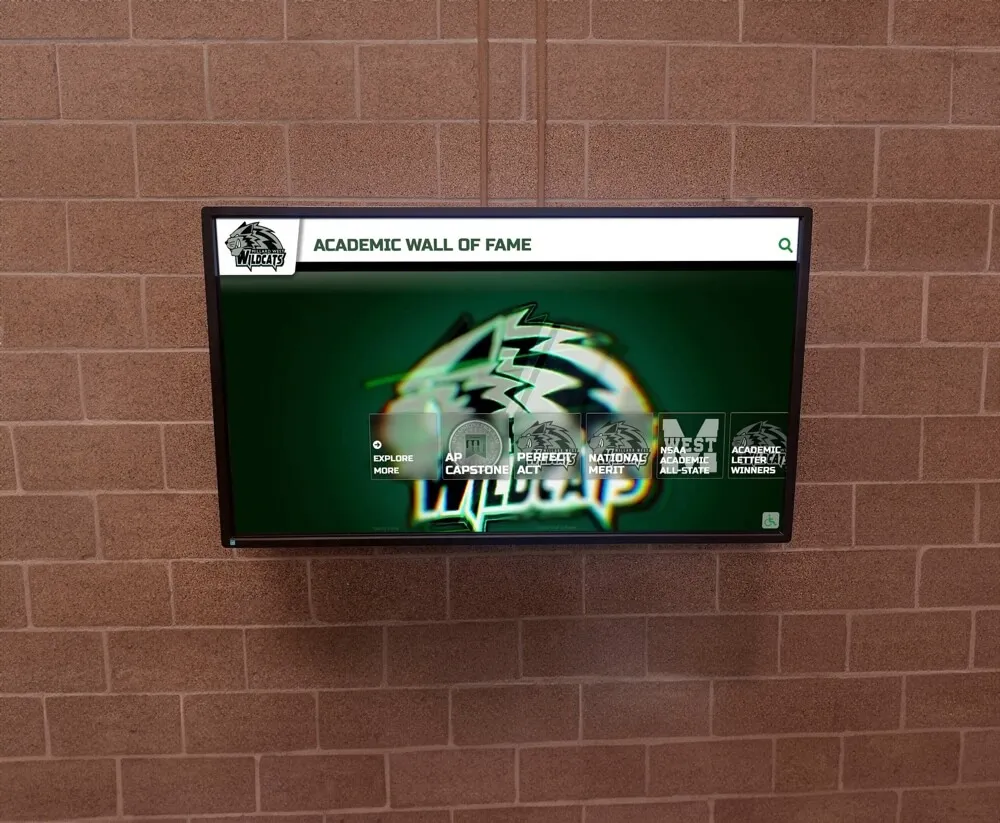
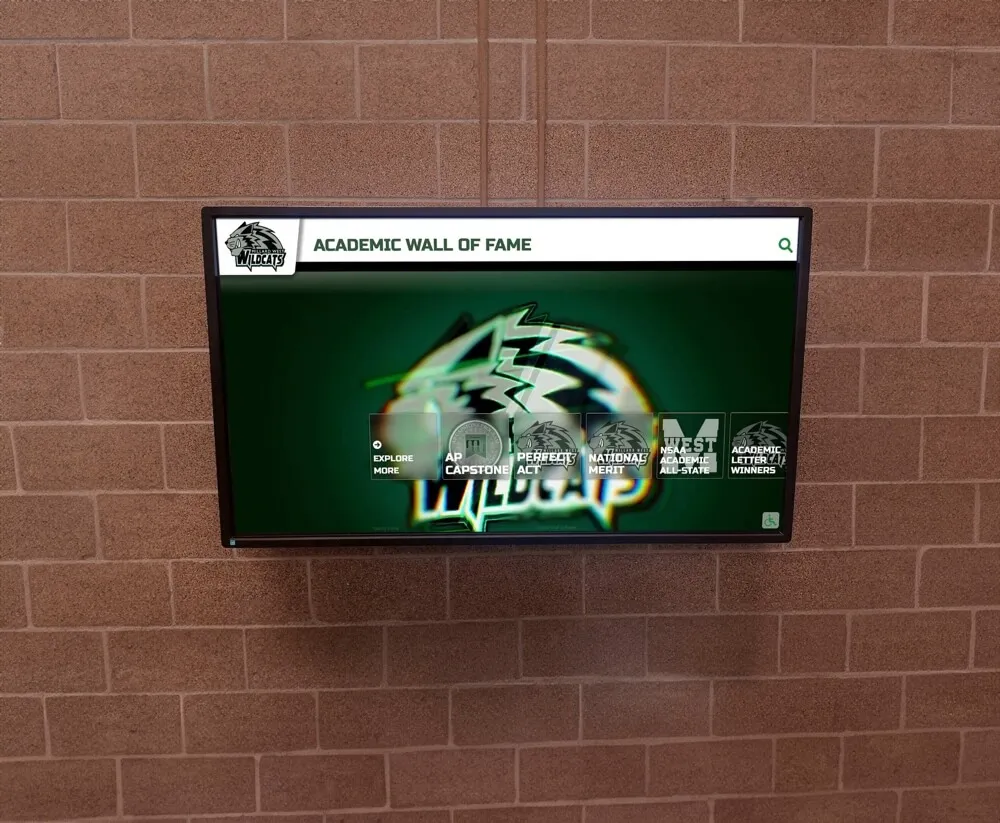
Academic recognition through digital displays elevates intellectual achievement to the same visual prominence traditionally reserved for athletics—creating balanced celebration of all forms of student excellence
Implementation Guidance for Schools
Schools transitioning toward digital interactive bulletin boards benefit from a few practical frameworks that prevent common mistakes.
Start with High-Impact Locations
The first digital installation should occupy the location where it will receive the most traffic and create the strongest impression. Main lobby entrances and athletic facility entrances consistently deliver the best return on initial investment. A single well-designed installation in the right location creates more community impact than multiple screens in secondary locations.
Define Content Scope Before Hardware Procurement
The most common implementation mistake involves purchasing hardware before organizing content. Digital displays with empty or sparse content communicate neglect, not investment. Before finalizing hardware decisions, confirm which content categories will be populated at launch: Which athletic sports? Which graduation years? How many years of academic recognition? What about performing arts and community service?
Realistic content scoping ensures launches happen with enough depth to demonstrate the platform’s value rather than highlighting gaps.
Assign Clear Content Ownership
Sustainable digital interactive bulletin boards require clear staff responsibility. Who updates athletic records after each season? Who adds new academic honor roll recipients? Who manages hall of fame nominations and approvals? Without explicit ownership, content drifts outdated as competing priorities crowd out bulletin board maintenance.
The best implementations distribute content responsibility across roles—coaches managing athletic content, academic departments managing academic recognition, development staff managing alumni and donor content—rather than concentrating everything in a single overwhelmed administrator.
Plan for Complementary Physical Elements
The most effective school recognition environments combine digital interactivity with thoughtful physical design: murals representing school identity, trophy cases preserving physical artifacts of championship significance, and digital displays providing depth and searchability that physical elements cannot offer alone.
This integration creates recognition environments where the physical celebrates tradition and the digital enables exploration—each format doing what it does best rather than competing for the same function.
Assess Connectivity and Infrastructure Early
Digital interactive bulletin boards require reliable electrical power and internet connectivity at their installation locations. Schools with older facilities or unusual building layouts sometimes discover that their ideal installation location lacks appropriate infrastructure. Early assessment of power availability, network access, and mounting surface suitability prevents costly surprises during implementation.
Choosing Your Path Forward
The decision between traditional and digital interactive bulletin boards does not require an all-or-nothing commitment. Most schools benefit from a deliberate strategy that deploys each format where it genuinely excels.
Retain traditional boards for short-term operational content in classrooms, staff areas, and secondary hallways where digital investment isn’t justified by traffic volume or recognition goals.
Invest in digital interactive displays for lobby entrances, athletic facilities, alumni gathering areas, and any location where recognition, history, and community engagement are primary goals. These are the spaces where the limitations of traditional boards cause the most institutional cost—missed impressions on prospective families, under-recognized alumni, and students who never discover the tradition they’ve inherited.
Prioritize content quality over hardware specifications. The most sophisticated touchscreen technology cannot overcome sparse, poorly organized, or outdated content. Invest in content development alongside hardware and software—and establish realistic ongoing maintenance commitments before committing to digital implementation.
Choose purpose-built recognition platforms over generic digital signage tools. The workflows, content structures, and interaction patterns required for school recognition are fundamentally different from those required for retail signage or corporate communications. Specialized platforms reduce implementation complexity while delivering better end-user experiences.
Conclusion
The evolution from traditional cork-and-paper bulletin boards to digital interactive displays represents more than a technology upgrade—it reflects a fundamental shift in how schools can communicate their identity, celebrate their communities, and engage the alumni and families who care most about institutional excellence.
Traditional bulletin boards served schools well for generations within their inherent constraints. Those constraints—limited capacity, static content, passive viewing, physical maintenance burden—increasingly conflict with what modern school communities need from their recognition and communication environments.
Digital interactive bulletin boards remove those constraints, transforming one-size-fits-all displays into personalized exploration experiences that serve every visitor’s individual interests. They preserve institutional history that paper cannot hold, recognize the full breadth of community achievement that physical space cannot accommodate, and create engagement experiences that static displays cannot approach.
The right path forward depends on your institution’s specific priorities, budget realities, and community needs. But for schools serious about recognition, alumni engagement, and the community culture that sustains institutional excellence across generations, digital interactive bulletin boards have become essential infrastructure rather than optional upgrades.
See What a Digital Interactive Bulletin Board Looks Like for Your School
Rocket Alumni Solutions designs purpose-built interactive recognition displays for schools—combining beautiful custom branding with searchable archives that honor every athlete, academic achiever, and alumnus your community has produced. Request a custom design mock-up and see your school's recognition potential brought to life.
Get Your Custom Design Mock-Up