



Intent: Demonstrate how interactive storytelling transforms traditional campus tours into immersive experiences that strengthen emotional connections, showcase institutional excellence, and measurably improve admissions conversion through purposeful touchscreen experience design.
Prospective students and their families make enrollment decisions based far more on emotional connection and perceived fit than objective program rankings or facility quality. Traditional campus tours—guided walks highlighting buildings and statistics—fail to create the deep engagement that transforms campus visitors into committed enrollees. When admissions teams incorporate interactive storytelling on campus tours, they unlock powerful narrative experiences that help prospects envision their future at your institution while differentiating your campus from the dozens of other schools families visit during college search processes.
The challenge facing modern admissions operations involves limited tour guide capacity serving growing prospect volumes, inconsistent messaging quality across multiple tour leaders, difficulty showcasing comprehensive institutional excellence during brief campus visits, and prospective families arriving during off-hours when guided tours aren’t available. Meanwhile, Generation Z prospects—digital natives expecting smartphone-like experiences everywhere—find traditional static campus signage and verbal-only tour narratives increasingly underwhelming compared to interactive experiences they encounter in museums, retail environments, and entertainment venues.
This guide explores strategic frameworks for integrating interactive storytelling touchscreen experiences throughout campus environments, creating self-service narrative discovery that complements guided tours while extending storytelling reach to visitors exploring independently. From entrance lobby installations to academic building displays and athletic facility showcases, you’ll discover actionable approaches for designing touchscreen experiences that capture institutional heritage, celebrate student achievement, and create the emotional resonance that converts prospects into enrolled students.
Institutions implementing strategic interactive storytelling networks report dramatic improvements in tour engagement, with families spending 40-60% longer on campus exploring content independently, post-visit survey scores increasing 15-25 points, and—most critically—tour-to-enrollment conversion rates improving 8-12% as prospects develop stronger institutional connections and clearer visions of their potential student experience.

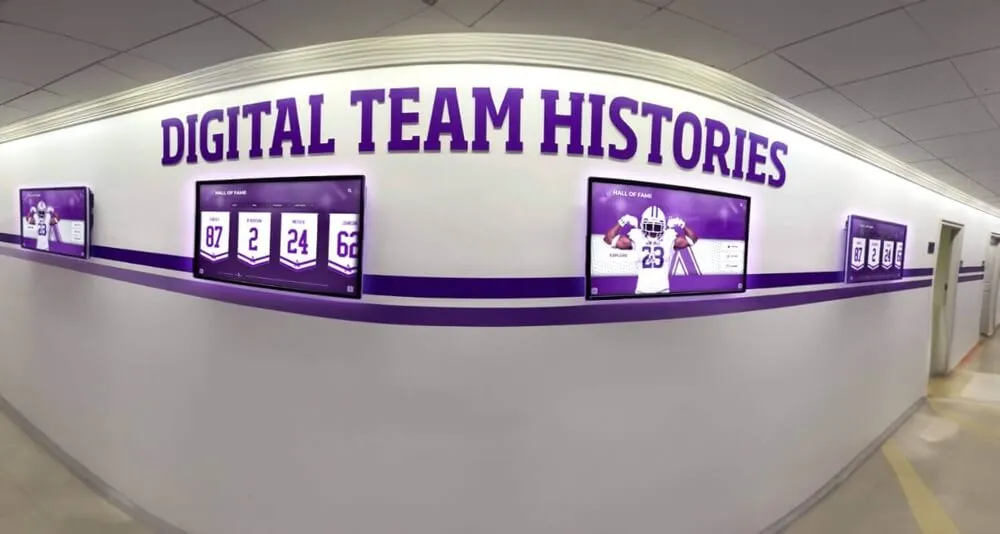
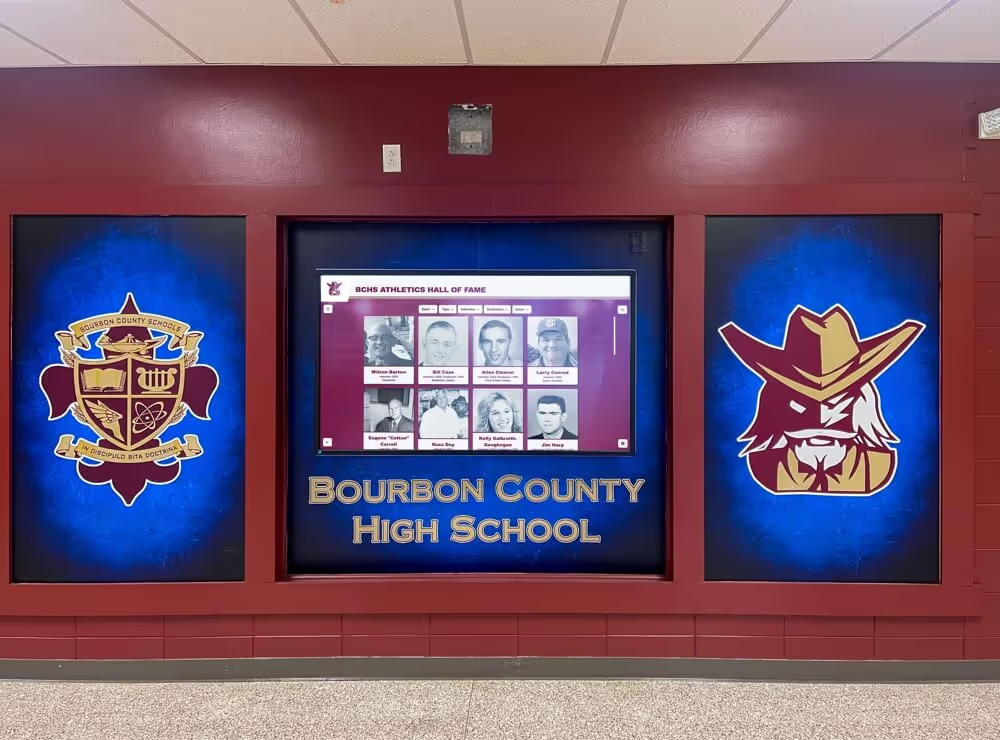
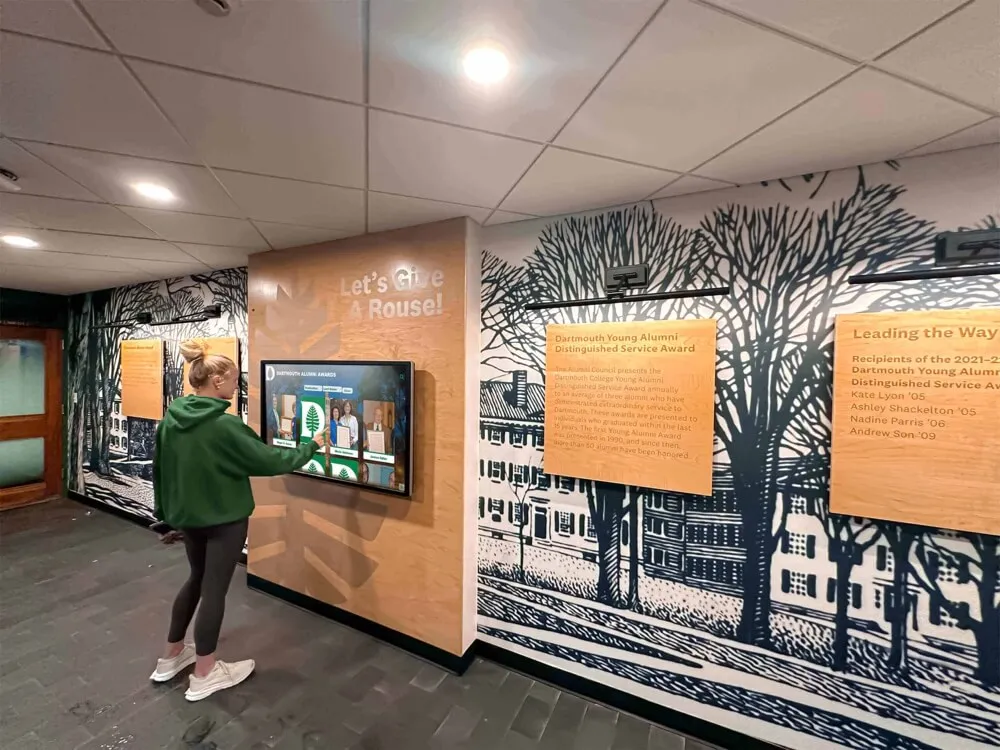
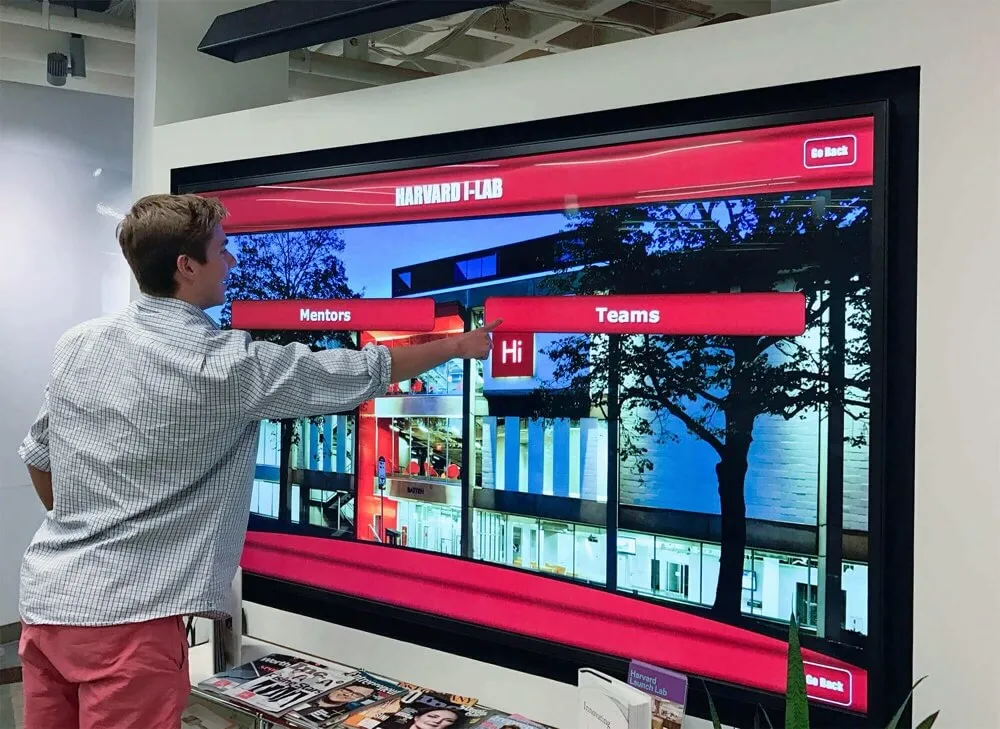
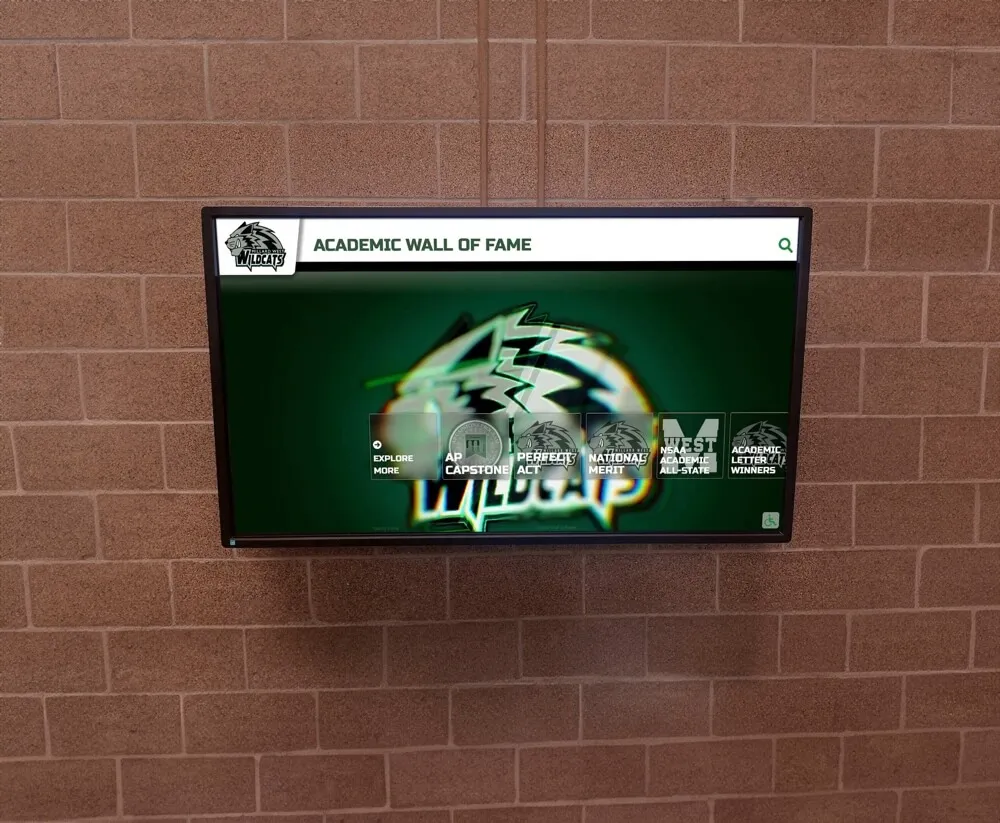
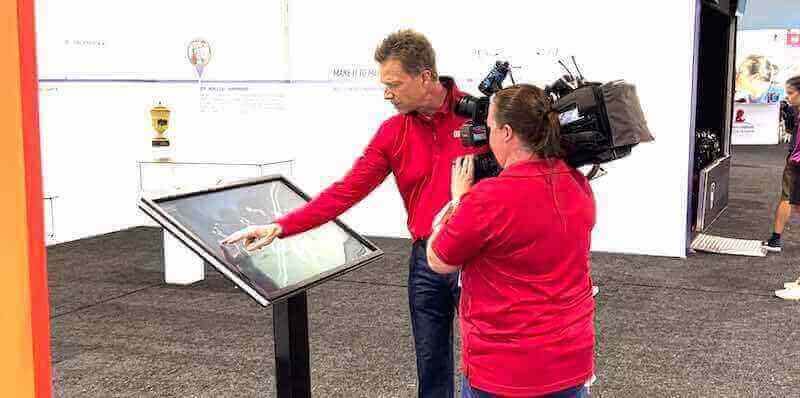
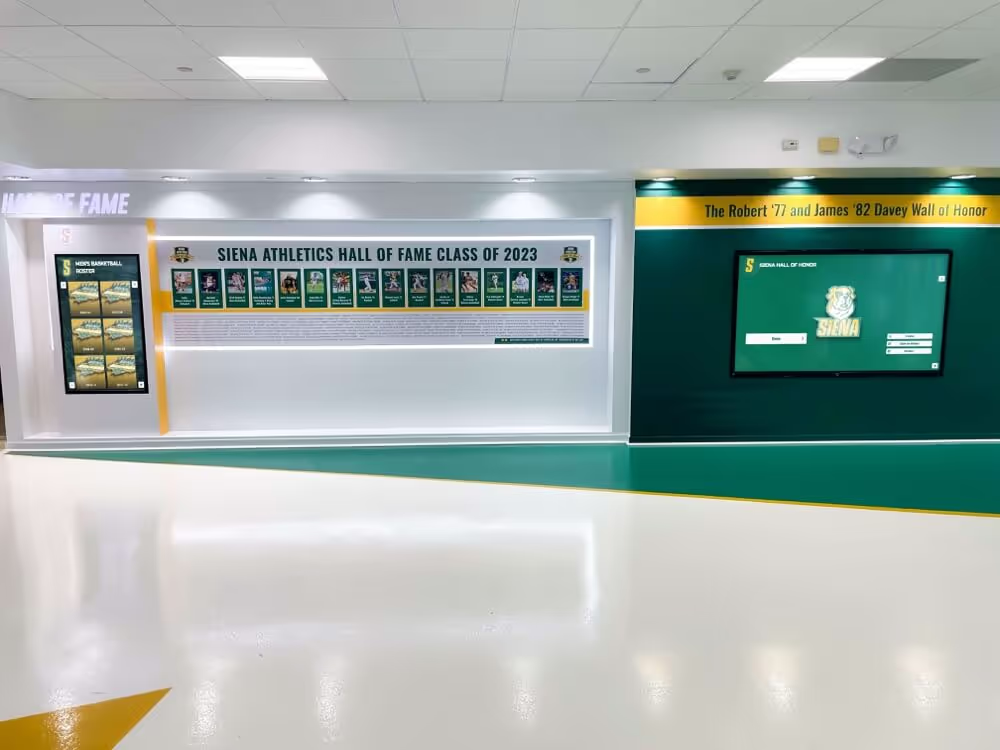
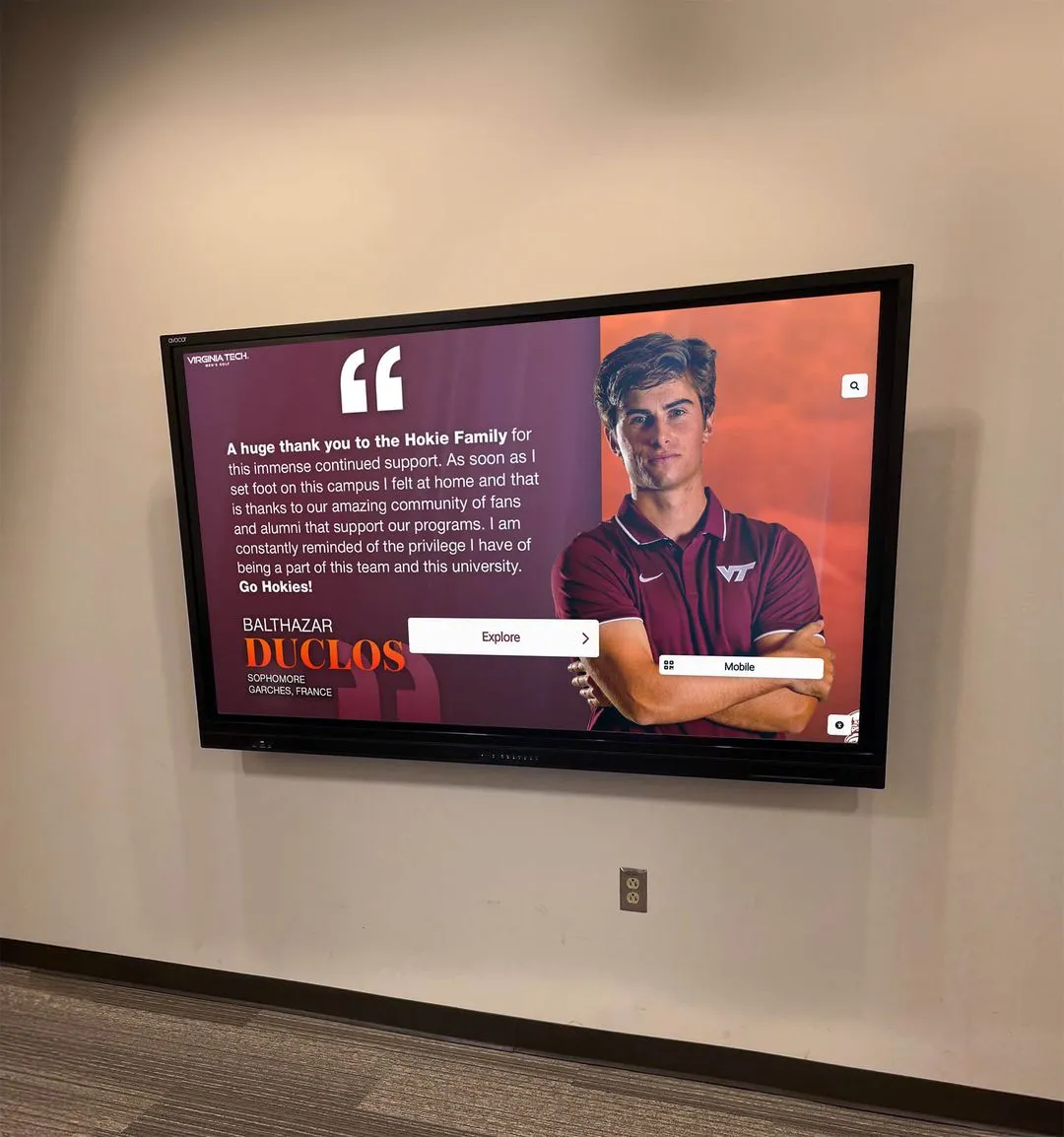
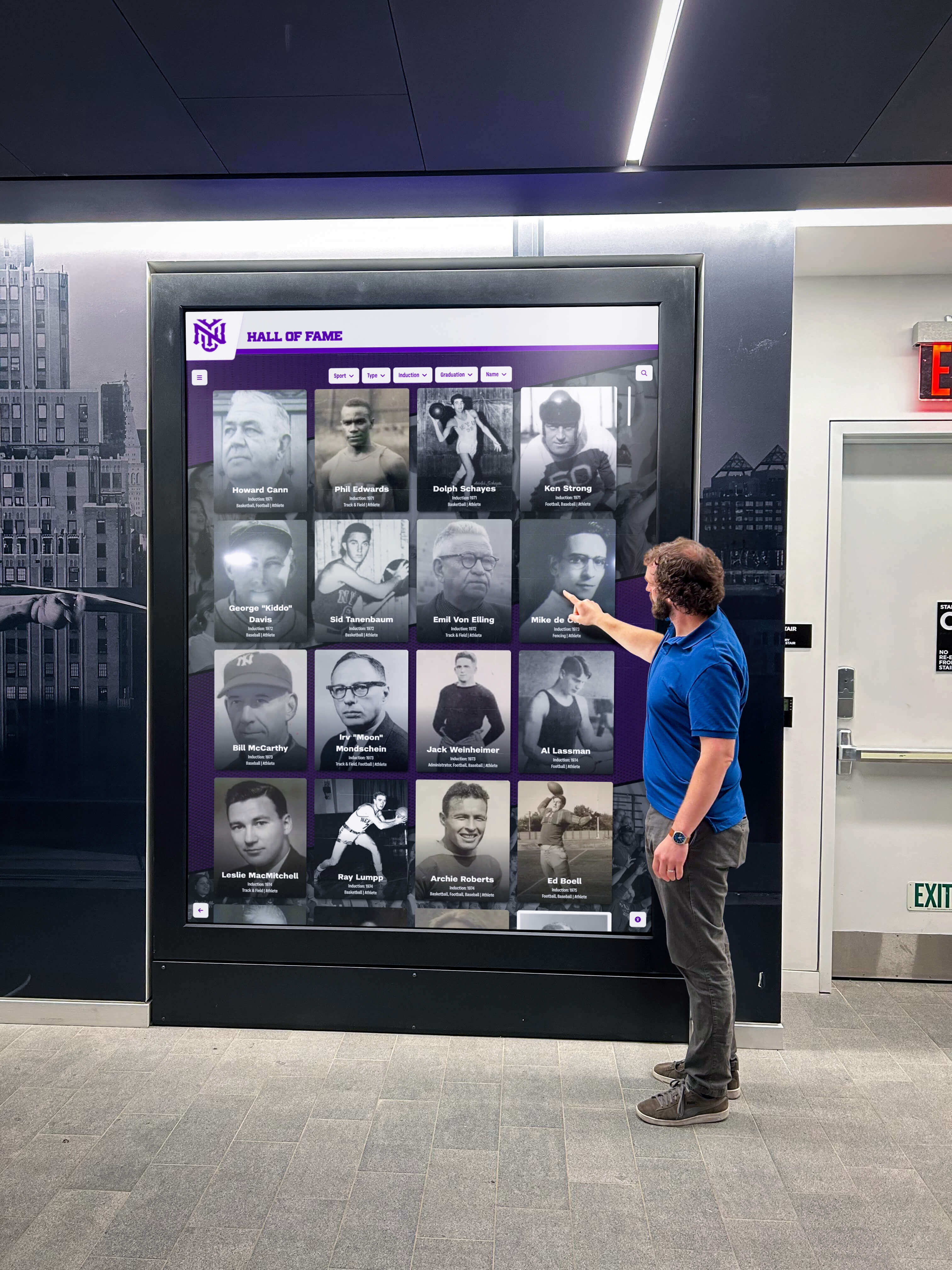
Strategic entrance lobby installations create immediate engagement opportunities while establishing storytelling expectations for campus exploration
Understanding Interactive Storytelling for Campus Tours
Before designing specific touchscreen experiences, understanding what makes interactive storytelling effective for admissions contexts provides essential strategic foundation.
The Power of Story in Enrollment Decisions
Research on college selection consistently demonstrates that emotional factors—feeling welcomed, envisioning belonging, connecting with campus culture—drive final enrollment decisions more powerfully than objective program rankings, tuition differences, or facility quality. Prospective students choose institutions where they can imagine themselves succeeding academically while developing personally and socially within supportive communities.
Traditional campus tours struggle to create these emotional connections because they focus primarily on information delivery—building locations, program requirements, admission statistics—rather than narrative experiences that help prospects emotionally connect with institutional values, student experiences, and community culture. When admissions teams shift from information-focused tours to story-centered experiences, they address the actual decision drivers that determine where qualified applicants ultimately enroll.
What Makes Storytelling Interactive
Interactive storytelling differs fundamentally from passive content consumption through visitor control and choice. Rather than presenting linear narratives everyone experiences identically, interactive experiences enable prospects to:
- Explore content areas matching their specific interests and values
- Control pacing and depth based on engagement level and available time
- Discover unexpected connections through non-linear navigation
- Share compelling content with family members influencing decisions
- Return to engaging material repeatedly throughout extended campus visits
This interactivity creates agency and discovery—prospects feel they’re uncovering your institution’s excellence rather than receiving marketing messages, building authentic connection that passive presentations cannot achieve.
Core Storytelling Themes for Admissions Impact
Effective campus storytelling experiences organize content around several interconnected narrative themes that together create comprehensive institutional portraits:
Heritage and Tradition
Showcase institutional history demonstrating longevity, stability, and enduring values through founding stories and mission evolution, notable historical figures and institutional leadership, architectural heritage and campus development timelines, and traditions connecting current students with alumni spanning generations.
Solutions like Rocket Alumni Solutions provide purpose-built platforms for organizing historical content through digital archives for schools and universities that transform scattered materials into cohesive heritage narratives.
Student Achievement and Success
Celebrate alumni accomplishments demonstrating preparation quality through academic honors and research achievements, career success across diverse professional fields, community leadership and social impact, creative accomplishment in arts and athletics, and graduate education placement at prestigious institutions.
When prospects see evidence of student success across dimensions they value—not just athletic championships or research publications but diverse achievement—they develop confidence in institutional preparation quality and outcome potential.
Campus Life and Community Culture
Bring campus culture to life through authentic student voice and experience including residential community experiences and traditions, student organization involvement and leadership opportunities, campus events and celebration traditions, diversity perspectives and inclusive community building, and service learning and community engagement programs.
This cultural storytelling helps prospects assess fit—whether your institution’s values, social environment, and community expectations align with their personal preferences and goals.

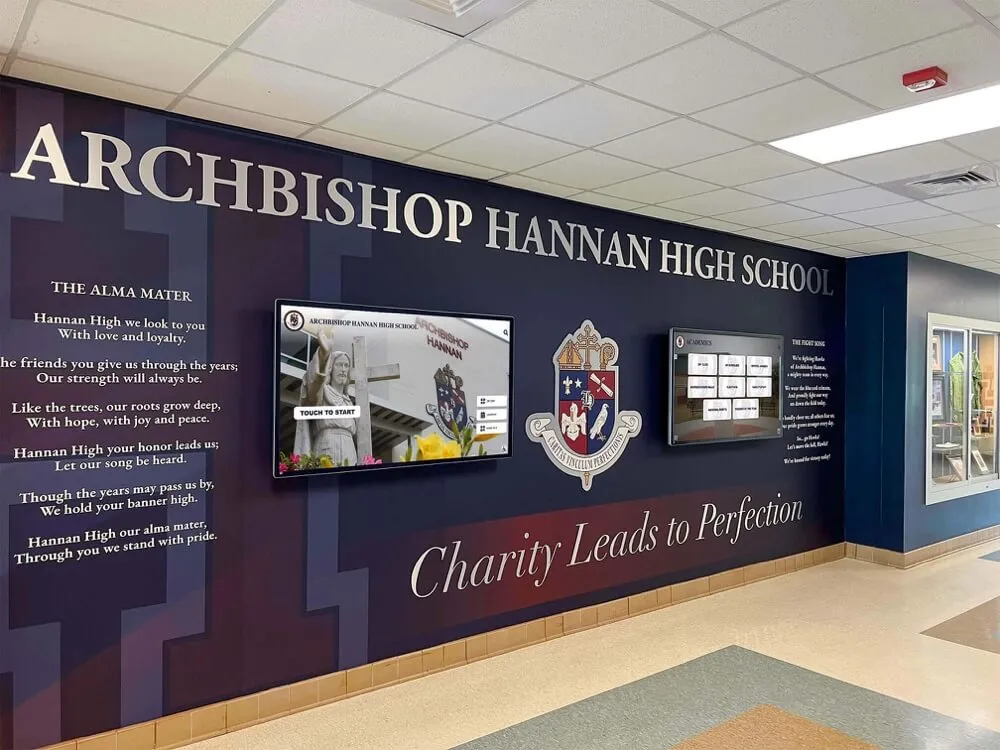
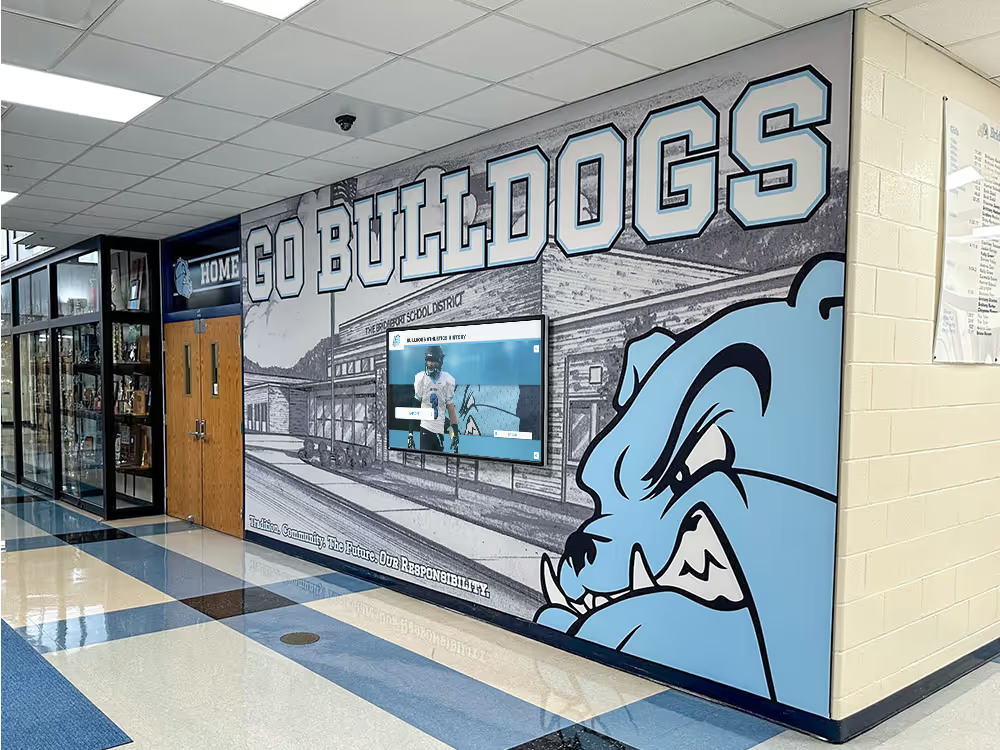
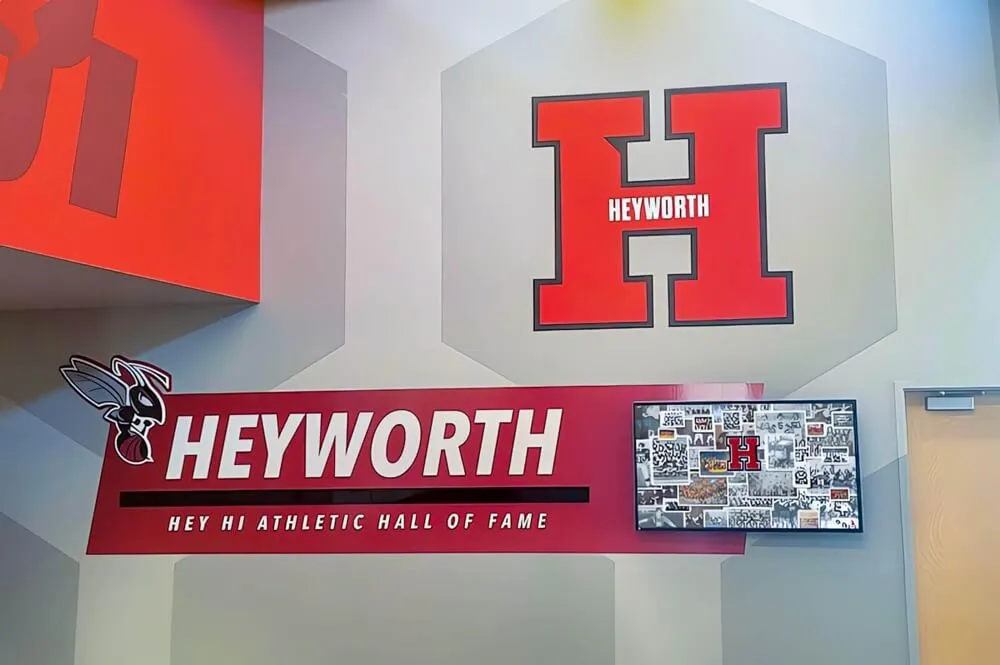
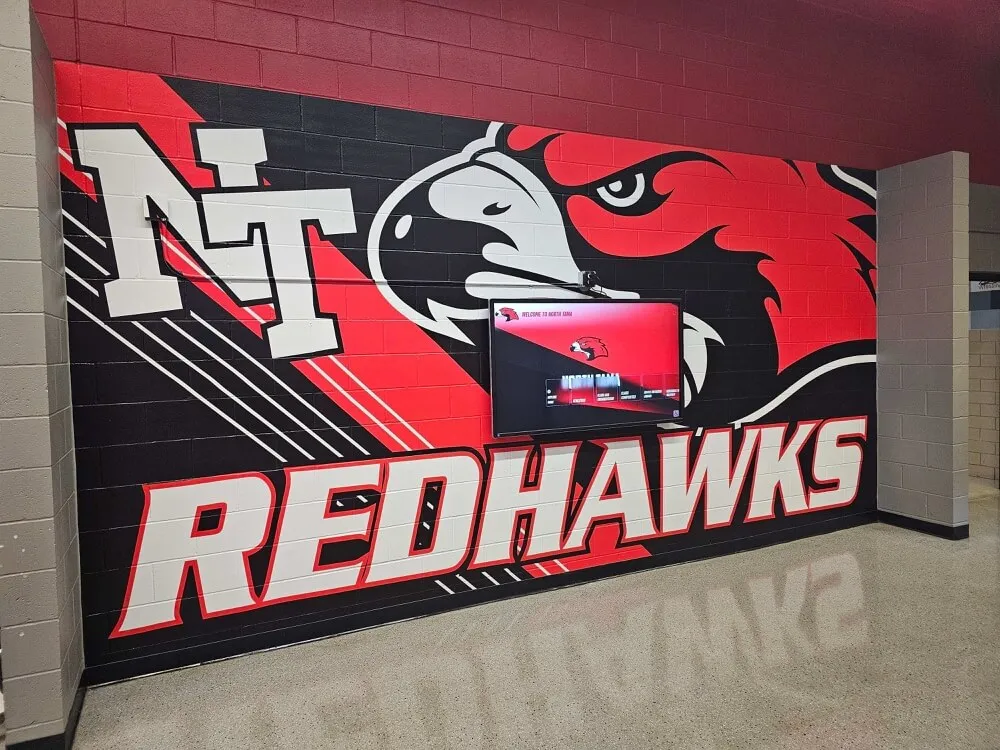
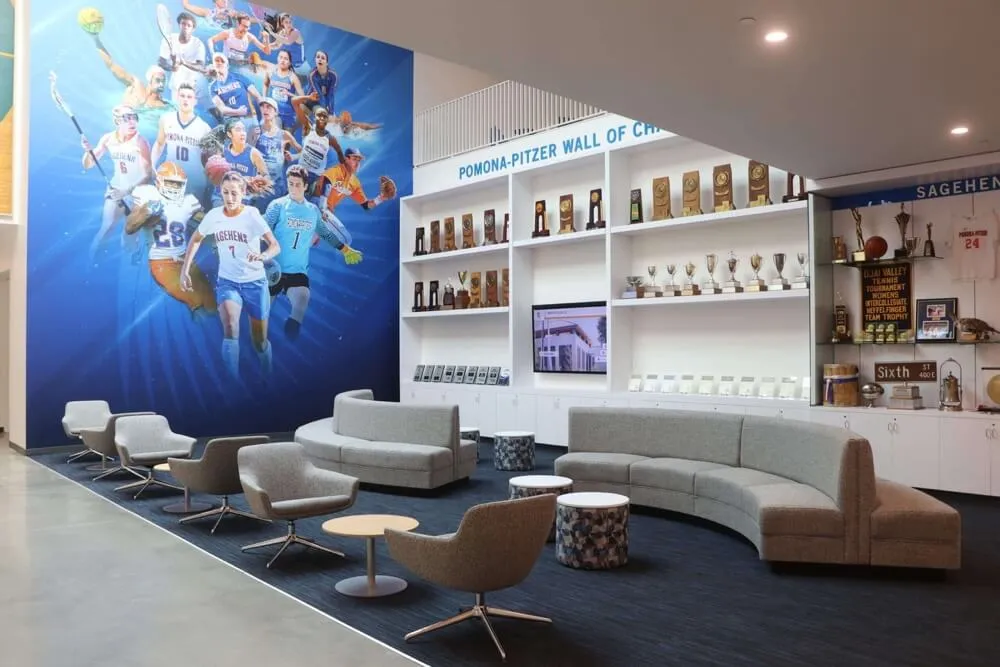
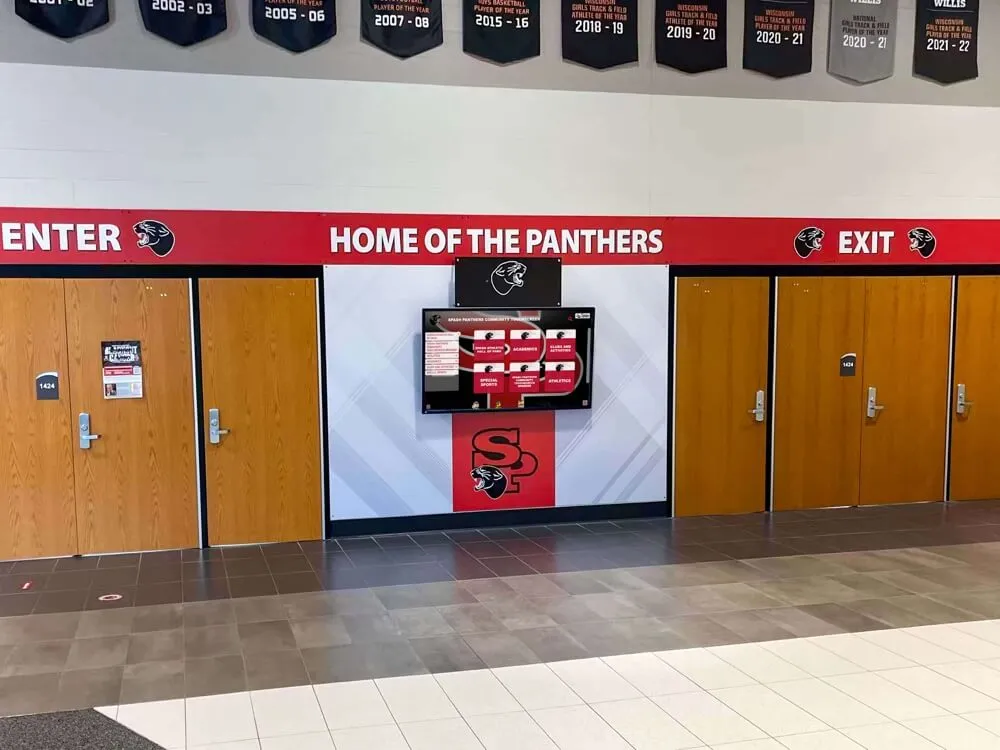
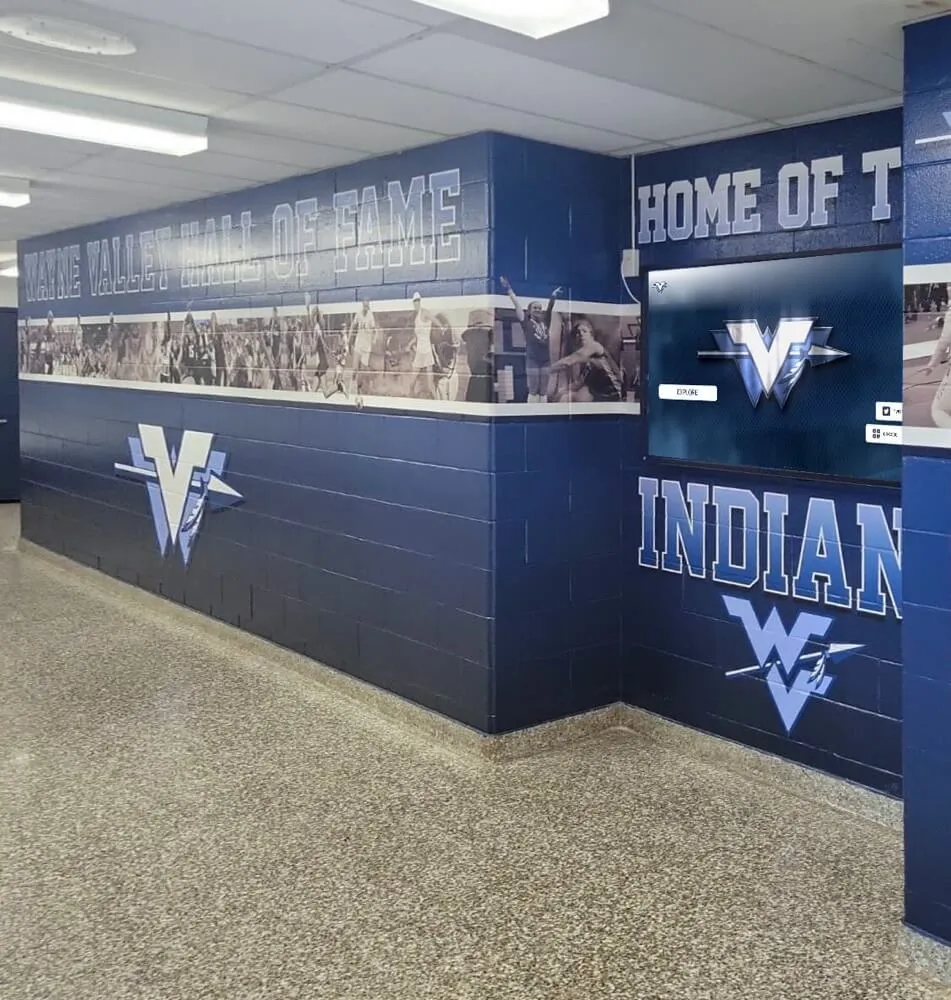
Architectural integration positions storytelling displays as permanent campus features rather than temporary technology additions
Experience Layout: Designing Interactive Story Interfaces
Effective storytelling touchscreen experiences require systematic design approaches balancing aesthetic appeal with intuitive usability across diverse prospect audiences.
Layout Blueprint for Admissions Storytelling Displays
Well-designed storytelling interfaces organize screen real estate into functional zones serving specific narrative and engagement purposes:
Zone 1: Hero/Attraction Area (Top 20-25%)
Create immediate visual impact establishing narrative tone and brand identity. Essential hero elements include institutional branding with colors, logos, and marks, compelling imagery showcasing campus life or notable moments, dynamic headline establishing the story theme, and optional video loop providing ambient movement drawing attention.
The hero zone should communicate “there’s something worth discovering here” within 2-3 seconds of prospect awareness, triggering natural curiosity that prompts interaction rather than passing by displays without engagement.
Zone 2: Navigation Framework (15-20%)
Enable intuitive story discovery through clear category organization. Effective navigation patterns include thematic browsing by story type (heritage, achievement, campus life), chronological exploration by era or year, featured content spotlights highlighting compelling material, and searchable discovery enabling direct name or topic access.
Navigation design should mirror smartphone conventions—large touch-friendly buttons, familiar gesture patterns, clear visual hierarchy—ensuring immediate usability without instruction or prior system familiarity.
Zone 3: Story Content Display (50-55%)
Present narrative material through layouts optimized for different content types. Effective approaches include profile cards showing individual stories with photos and summaries, gallery views presenting collections through visual browsing, video players featuring interviews and documentary content, and timeline visualizations connecting stories across eras.
Content layouts should balance information density with readability—comprehensive storytelling requires substantial text, but overwhelming walls of copy discourage engagement, particularly among mobile-generation prospects with limited attention spans.
Zone 4: Engagement Actions (Bottom 10-15%)
Provide secondary functionality supporting deeper engagement including social sharing enabling content distribution, QR codes linking mobile access for continued exploration, wayfinding connections directing prospects to relevant campus locations, and admissions CTAs encouraging application submission or visit scheduling.
This action zone transforms passive consumption into active engagement—prospects don’t just experience stories, they share compelling content, visit related campus areas, and take concrete steps toward enrollment.
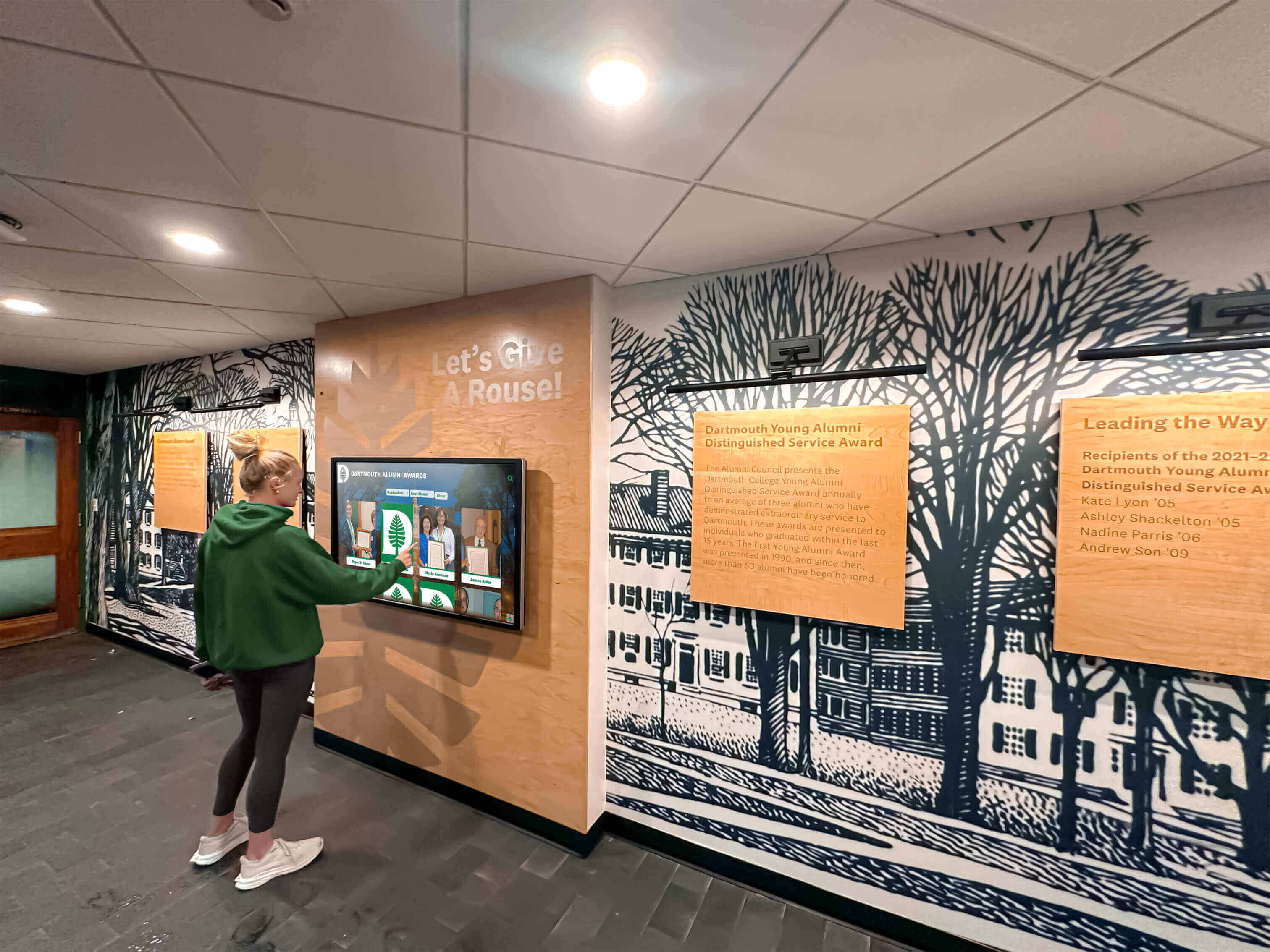
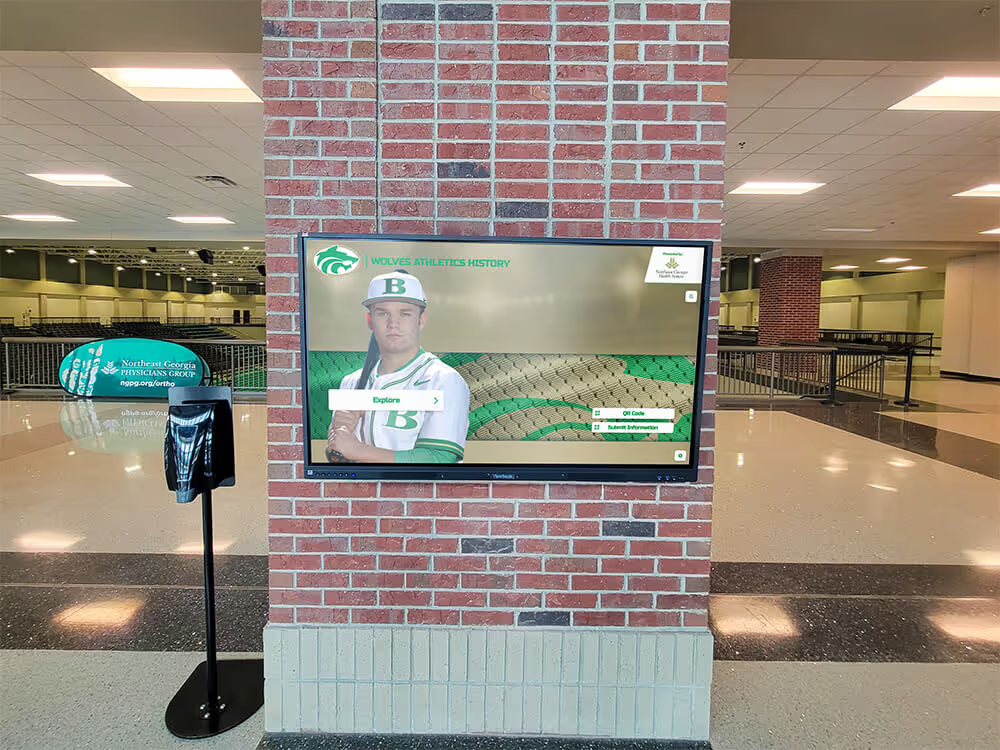
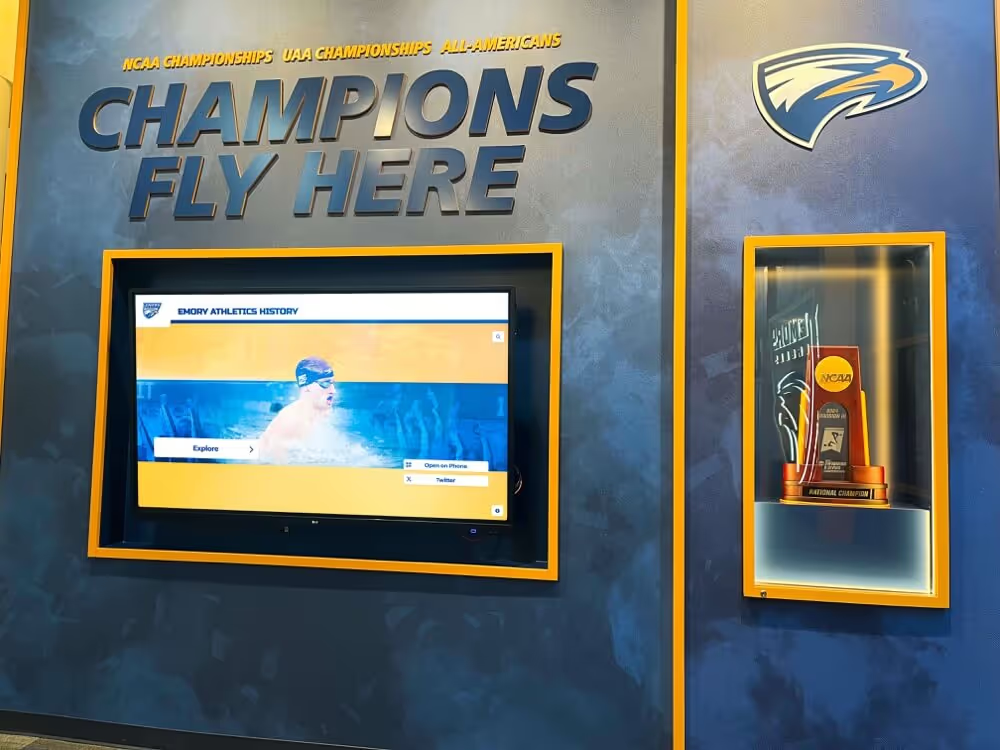
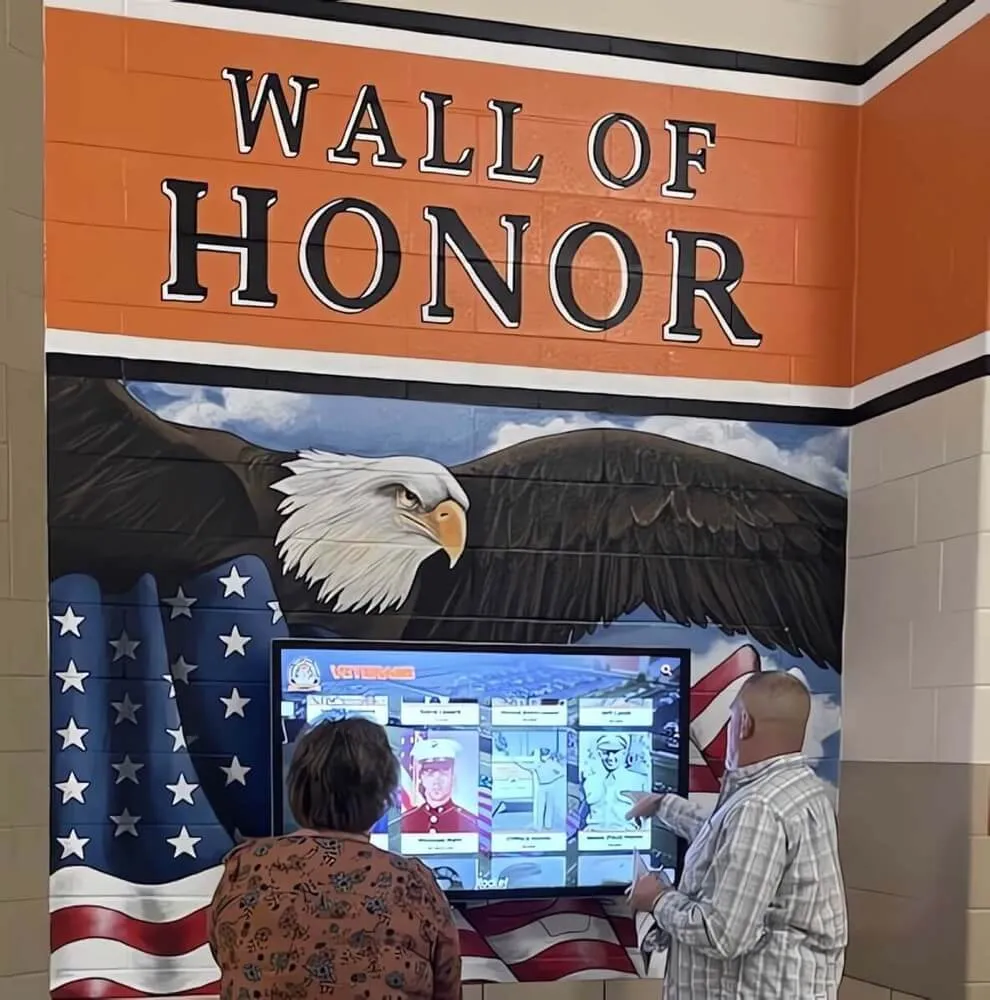
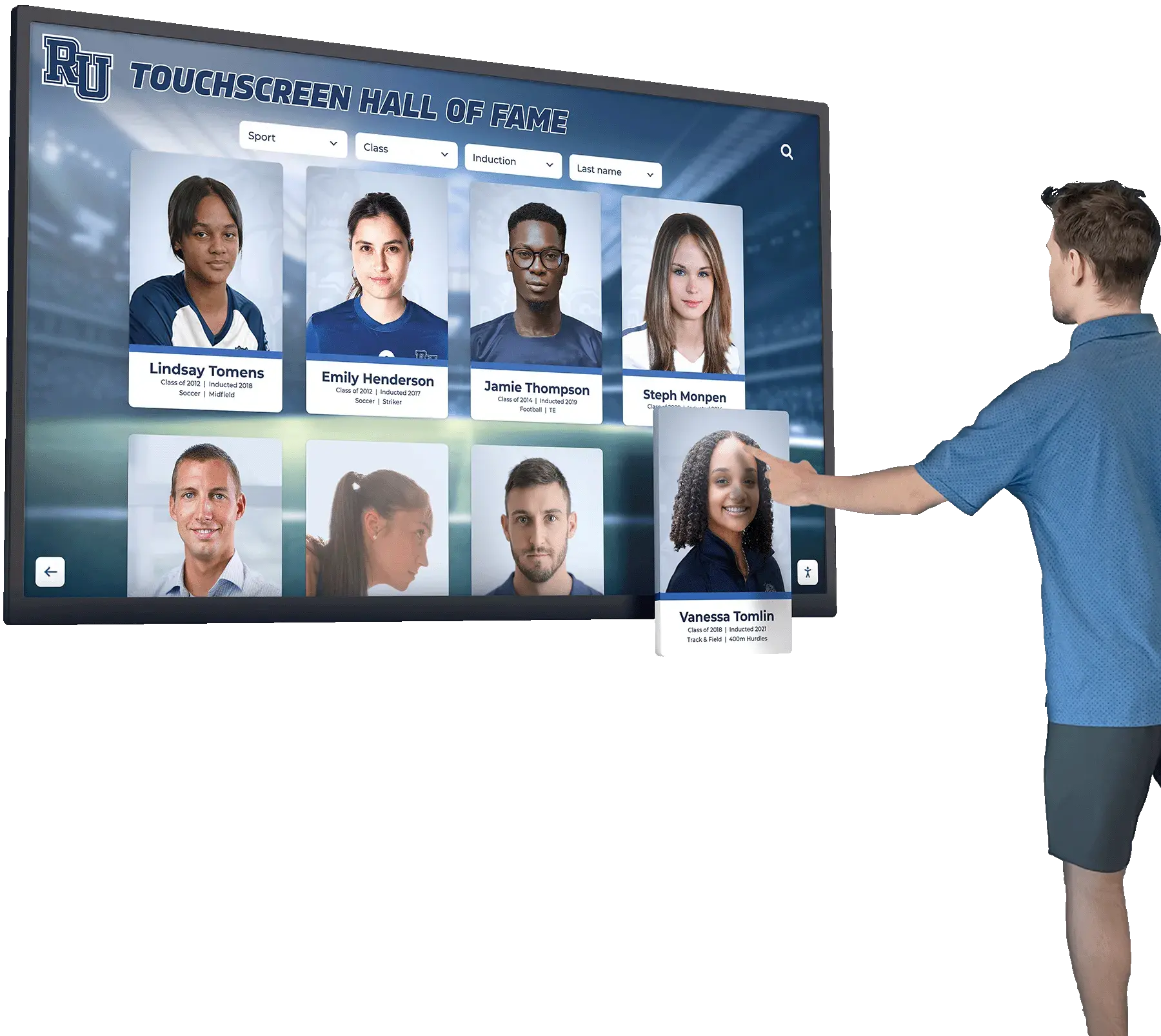
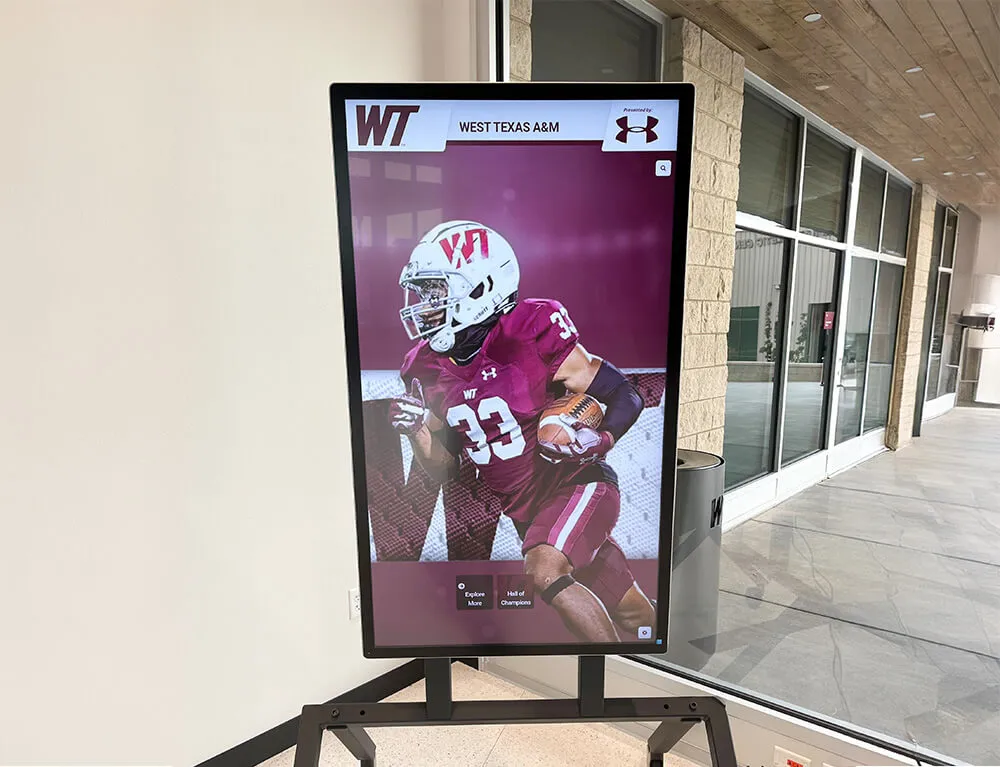
Intuitive card-based interfaces enable natural exploration without instruction across all age groups and technical comfort levels
Content Blocks and Narrative Motion
Beyond static layout, animation and motion design enhance storytelling impact and guide prospect attention:
Attraction Loop Design
When displays aren’t actively used, run compelling attraction content drawing prospect attention and demonstrating interactivity. Effective attraction loops include highlight reels showing compelling story moments, featured profiles spotlighting notable students or achievements, achievement statistics demonstrating institutional excellence, and clear touch prompts inviting exploration with phrases like “Tap to Explore Our Stories.”
Attraction loops should balance visual interest with appropriate restraint—enough movement to capture attention without becoming distracting screensavers that undermine professional institutional image.
Transition Animation Strategies
Smooth animations between content screens enhance perceived quality while providing navigational orientation. Use fade transitions for content updates within consistent layouts, slide animations indicating directional relationships between categories, zoom transitions when moving from summary cards to detailed story views, and scroll animations for longer narrative content requiring vertical navigation.
Quality animation creates polish that subconsciously communicates institutional sophistication and attention to detail—factors influencing prospect perceptions of overall program quality despite no logical connection between interface animation and academic excellence.
Progressive Story Revelation
Manage information density through progressive disclosure showing appropriate detail at each engagement level. Summary cards reveal essential information enabling interest assessment, initial taps expand to show additional context and detail, and full profile views present comprehensive storytelling with photos, videos, and rich narrative content.
This layered approach respects prospect time—those conducting quick campus exploration can efficiently assess content relevance, while deeply engaged visitors discover rich storytelling rewarding extended exploration.
Accessibility and Experience Quality Checklist
Creating inclusive storytelling experiences requires deliberate accessibility consideration ensuring all prospects can engage regardless of abilities:
ADA WCAG 2.1 AA Compliance
- Text contrast ratios minimum 4.5:1 for body text, 3:1 for headlines
- Touch targets minimum 44x44 pixels with adequate spacing preventing accidental activation
- Font sizes minimum 16-18pt for body copy, larger for headlines
- Alternative text descriptions for images when screen reader modes enabled
- Video captions and transcripts supporting deaf and hard-of-hearing visitors
Physical Accessibility Considerations
- Display mounting placing primary controls 15-48 inches above floor for wheelchair access
- Kiosk approaches providing knee and toe clearance for close wheelchair approach
- Volume controls for audio content respecting quiet campus environments
- Brightness levels ensuring visibility without glare in varied lighting
- Multiple installations at different heights serving diverse physical needs
Cognitive Accessibility Principles
- Clear, simple language avoiding excessive jargon and institutional terminology
- Consistent navigation patterns throughout experience preventing confusion
- Obvious home/back navigation enabling recovery from errors
- Minimal required steps accomplishing common tasks
- Optional high-contrast modes supporting visual impairment
Institutions should verify accessibility through diverse user testing including wheelchair users, older adult family members, and visitors with visual or hearing impairments before finalizing designs. Resources on digital tools that bring history to life provide accessibility frameworks applicable to storytelling implementations.
Brand Integration and Design Consistency
Interactive storytelling displays should feel like natural extensions of campus identity rather than generic technology installations.
Visual Identity Implementation
Institutional Color Systems
Apply campus colors systematically throughout interfaces creating immediate brand recognition:
- Primary institutional colors for hero areas, navigation elements, and key UI components
- Secondary palette colors for backgrounds, content cards, and supporting elements
- Accent colors for interactive elements, highlights, and calls-to-action
- Neutral colors for text and content backgrounds ensuring readability
Color systems create instant visual association—prospects immediately recognize “this is our institution” rather than encountering generic digital signage that could exist on any campus.
Typography Hierarchy and Brand Fonts
Establish clear typographic systems supporting both brand identity and content readability:
- Headline fonts reflecting institutional personality for titles and featured text
- Body fonts optimizing legibility for biographical narratives and descriptions
- Size scales creating clear information hierarchy from headlines through captions
- Weight variations emphasizing key information without excessive styling
Typography communicates tone—prestigious institutions might use classic serif fonts suggesting tradition and academic seriousness, while innovative universities might employ contemporary sans-serif typefaces communicating forward-thinking energy.
Logo and Institutional Mark Integration
Incorporate institutional branding appropriately without overwhelming content:
- Primary institutional logos in hero areas maintaining required clear space
- Academic unit or department marks when content focuses on specific schools
- Mascot integration for athletic storytelling and school spirit content
- Donor recognition when displays acknowledge philanthropic funding
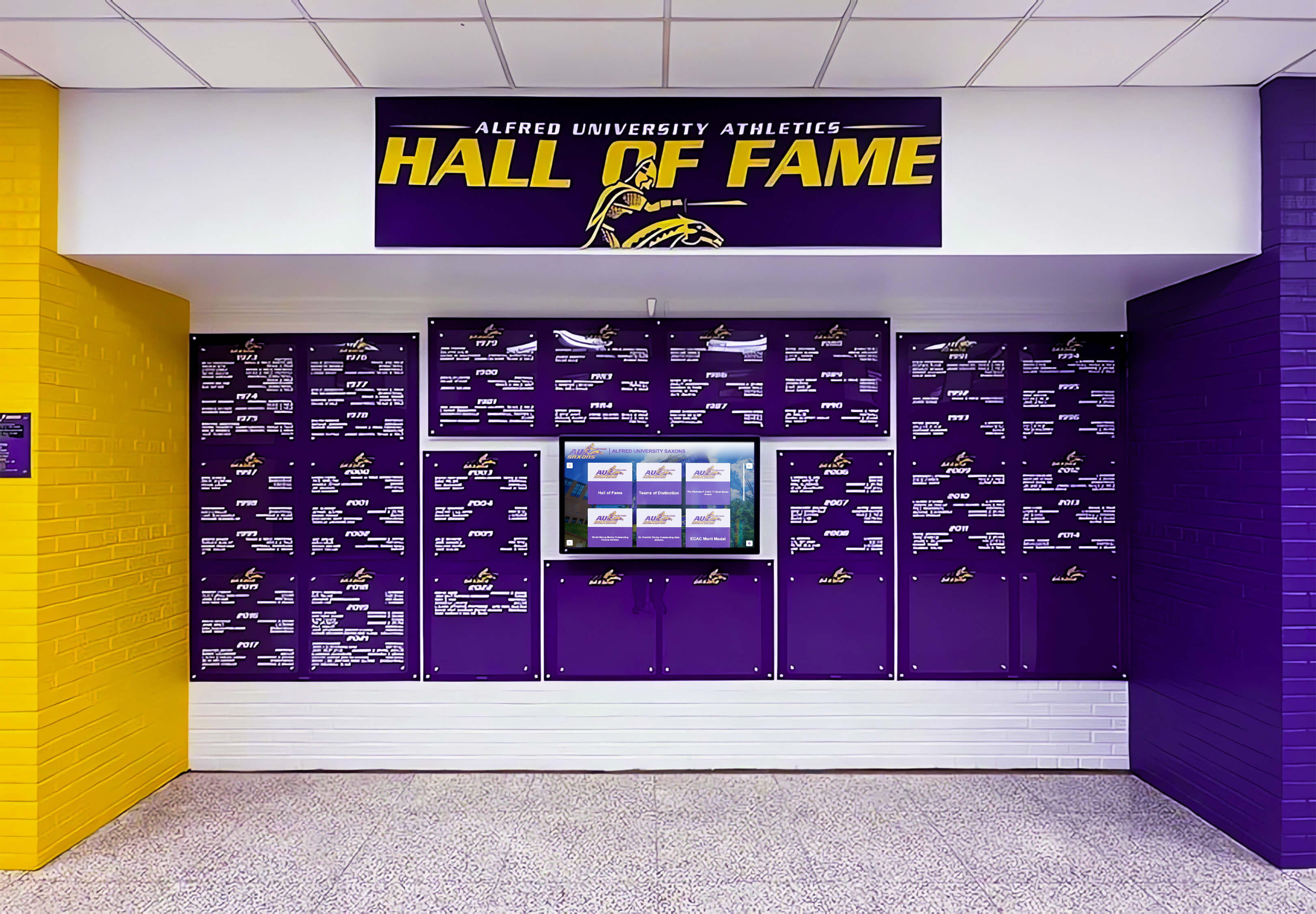
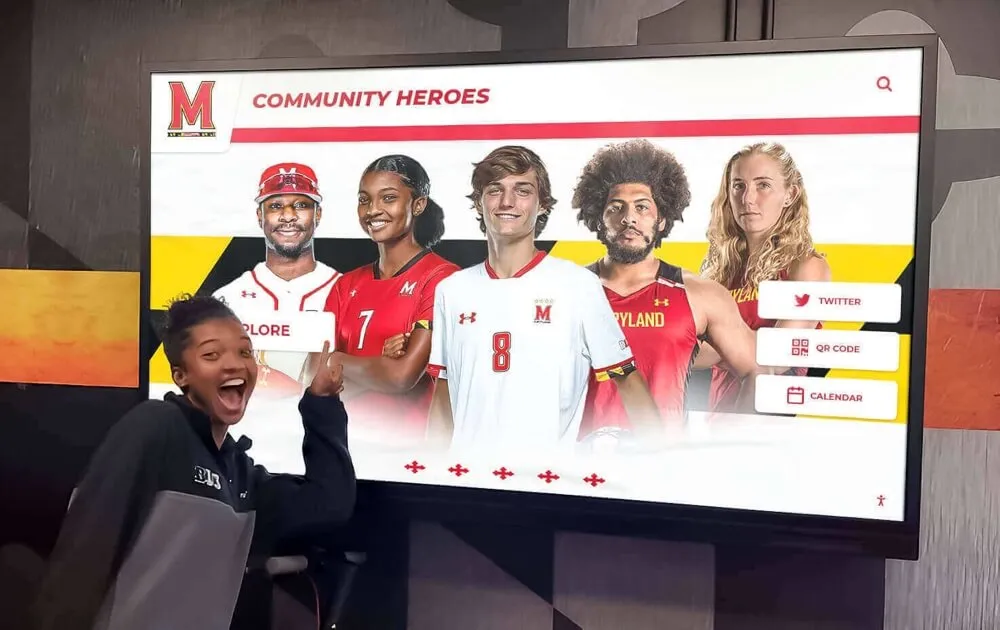
Consistent brand color application creates visual cohesion while enabling recognition from distance before prospects read content
Custom Backgrounds and Environmental Photography
Campus Location-Specific Imagery
Incorporate photography connecting displays to physical campus environments:
- Exterior building and campus views establishing location context
- Interior architectural details from surrounding facilities providing familiarity
- Landscape and seasonal photography celebrating campus natural beauty
- Aerial campus views helping prospects understand spatial relationships
Location-specific imagery creates connection between digital content and physical place—prospects exploring displays inside academic buildings see that building featured in background imagery, reinforcing spatial orientation while celebrating architectural investment.
Pattern Libraries and Texture Systems
Subtle background treatments add visual interest without competing with content:
- Geometric patterns derived from architectural elements or institutional logos
- Texture overlays suggesting campus materials—brick, stone, wood—connecting to physical environment
- Gradient treatments creating depth and visual interest
- Abstract motion graphics providing subtle movement without distraction
Background treatments should remain clearly in the background—supporting content visibility and readability rather than competing for attention or reducing contrast to problematic levels.
Video Background Integration
Looping video backgrounds create dynamic experiences when implemented thoughtfully:
- Campus life footage showing students in classes, activities, and social settings
- Seasonal campus beauty highlighting grounds and natural environment changes
- Time-lapse sequences demonstrating campus energy and activity
- Abstract motion graphics supporting brand without distraction
Video backgrounds prove particularly effective in hero zones during attraction loops, but should typically fade to static backgrounds during active content exploration preventing movement distraction from narrative material.
Understanding design principles for touchscreen experiences provides comprehensive frameworks for balancing brand expression with usability requirements.
Strategic Content Development for Story Impact
Storytelling effectiveness depends entirely on compelling narrative content that engages prospects emotionally while communicating institutional excellence.
Gathering and Organizing Story Material
Source Identification and Content Mining
Compile storytelling content from diverse institutional sources:
- Alumni office records and achievement databases
- Athletic department records and championship documentation
- Student affairs archives of campus traditions and events
- University communications photo and video libraries
- Historical archives including yearbooks and campus publications
- Personal collections from alumni, families, and faculty
Most institutions possess rich storytelling material scattered across departments and databases. Implementation success depends on systematically identifying and consolidating these dispersed sources rather than attempting to create comprehensive content from scratch.
Story Selection and Prioritization
Not every potential story deserves equal prominence. Prioritize content based on:
- Relevance to prospect priorities: Academic programs, campus life aspects, and achievements that matter to target enrollment audiences
- Diversity and representation: Stories reflecting the full institutional community across backgrounds, disciplines, and experience types
- Emotional resonance: Narratives containing compelling moments, challenges overcome, and meaningful impact
- Evidence of excellence: Achievements demonstrating program quality and preparation effectiveness
- Connection to present: Stories showing continuity between institutional heritage and current community
Quality storytelling requires editorial judgment—selecting the 50-100 most compelling stories rather than attempting to showcase every possible narrative element equally.
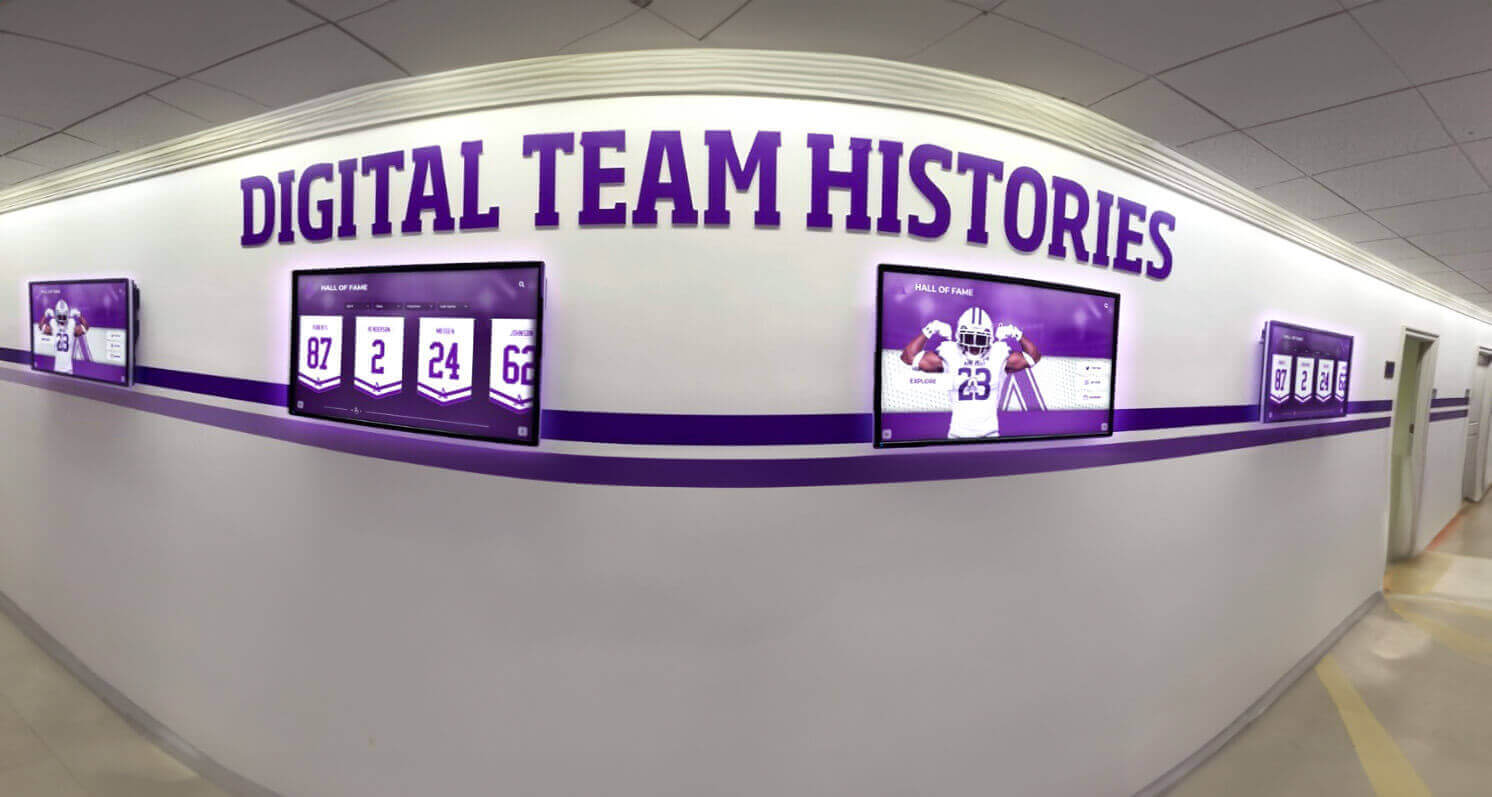
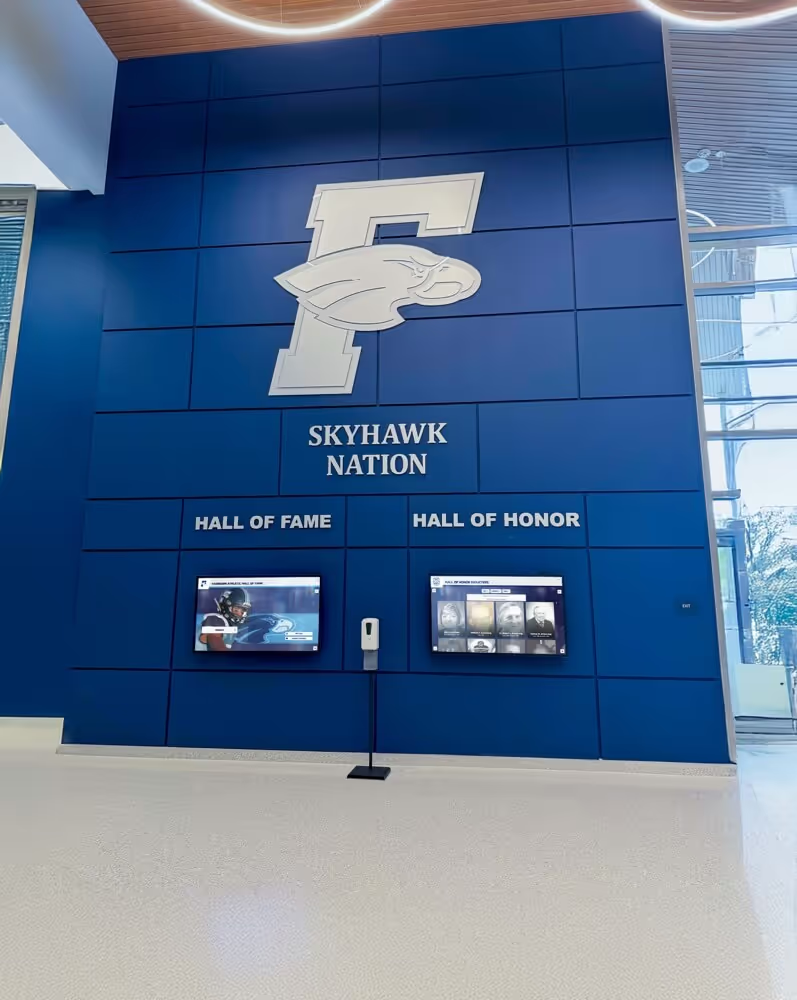
Distributed storytelling networks enable category-specific content organization while maintaining consistent brand presentation
Writing Compelling Narrative Profiles
Story Structure Framework
Structure narratives following engaging patterns that hook attention while delivering substance:
- Opening hook: Capture attention with surprising fact, memorable quote, or compelling moment
- Background context: Establish the individual’s journey and circumstances
- Challenge or turning point: Highlight obstacles overcome or pivotal experiences
- Achievement and impact: Detail accomplishments with specific evidence and outcomes
- Meaning and reflection: Connect individual experience to larger institutional values and community impact
- Current status: Provide updates on post-graduation trajectory when available
This structure transforms basic biographical information into compelling narratives that prospects remember and discuss with family members after tours conclude.
Storytelling Techniques for Engagement
Elevate writing quality through specific narrative techniques:
- Specific details over generic descriptions: Replace “achieved academic success” with “published undergraduate research in the Journal of Chemical Physics”
- Active voice and dynamic verbs: Use “led,” “discovered,” “transformed,” “pioneered” rather than passive constructions
- Quotes and authentic voice: Include direct quotes from subjects providing personality and perspective
- Emotional context: Help readers understand what achievements meant personally and to communities
- Accessible language: Avoid excessive jargon while maintaining appropriate sophistication
Rather than stating “Member of 2022 national championship team,” write “Scored the decisive goal in double overtime of the 2022 NCAA championship match, capping the program’s first undefeated season and cementing status as school legend.” This approach creates engagement and memorability that basic facts cannot achieve.
Frameworks for alumni spotlight programs provide detailed narrative development guidance applicable to admissions storytelling contexts.
Multimedia Content Production and Integration
Photography Curation Standards
- Select action and candid imagery over static portraits creating dynamic visual interest
- Create photo galleries showing individuals throughout their institutional involvement
- Digitize and restore historical photos maintaining consistent quality standards
- Crop and optimize for display dimensions ensuring detail visibility
- Apply consistent color correction creating visual cohesion across varied source material
Video Content Development
- Produce short interview videos capturing authentic student and alumni perspectives (2-4 minutes maximum respecting attention spans)
- Compile highlight reels from event footage and documentary material
- Create narrative video profiles combining photos, video clips, and voice narration
- Add captions supporting accessibility and sound-off viewing in public spaces
- Optimize file formats and compression for smooth playback without buffering
Audio and Document Integration
- Record audio interviews preserving oral histories from notable alumni and faculty
- Scan historical documents, newspaper clippings, and program materials
- Digitize awards certificates and achievement documentation
- Create audio descriptions for visual content supporting accessibility
High-quality multimedia content transforms storytelling from informational to immersive—prospects don’t just read about institutional excellence, they see, hear, and emotionally experience the community they’re considering joining.
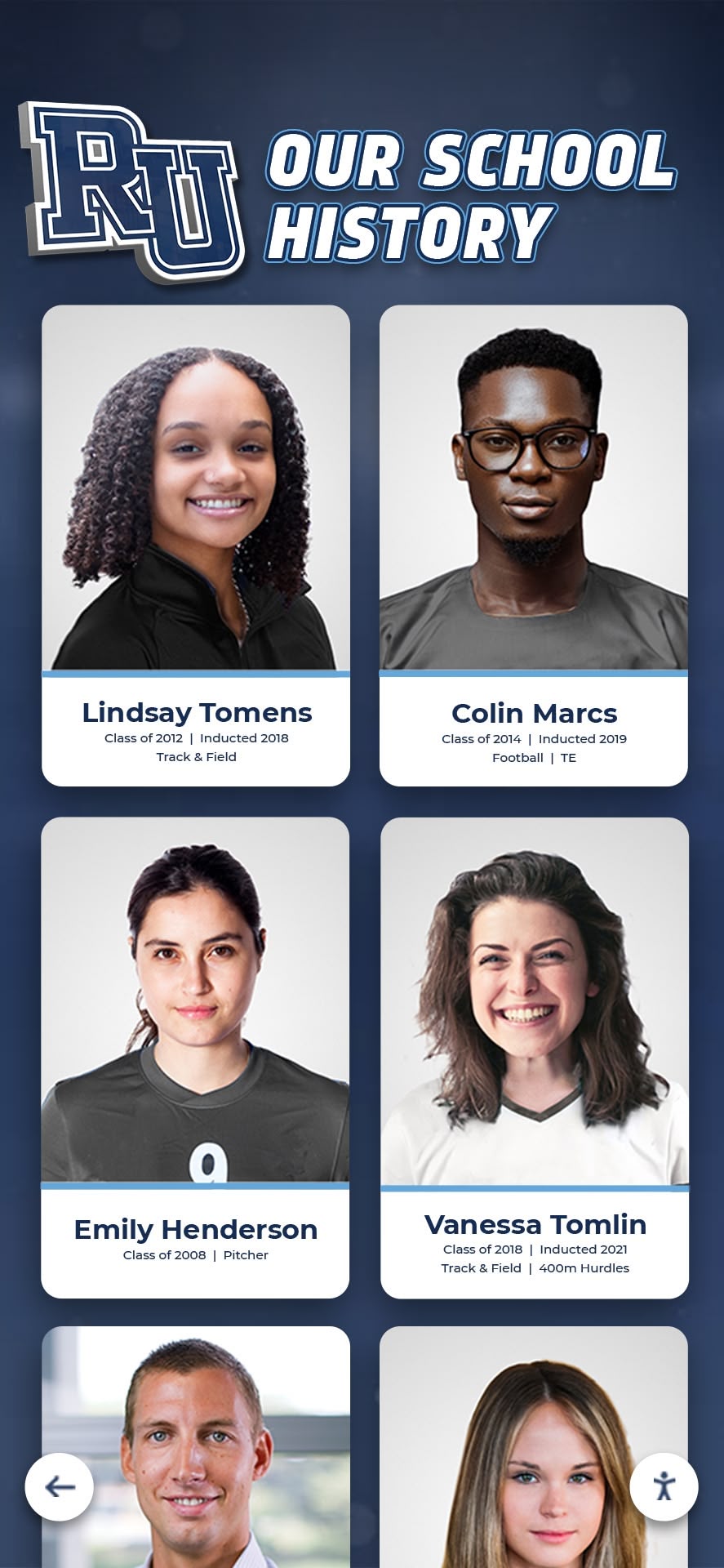
Card-based layouts enable efficient visual browsing of multiple stories while providing clear selection targets for detailed exploration
Strategic Placement for Maximum Tour Impact
Display location fundamentally determines storytelling effectiveness—even exceptional content delivers minimal impact if positioned where prospects rarely encounter it.
Primary Touchpoint Installations
Admissions Office and Welcome Center
The most critical storytelling location is the admissions building lobby where tour groups gather and families wait for scheduled sessions. Installations here should:
- Showcase broad institutional excellence across multiple story categories
- Provide comprehensive navigation enabling exploration of all content areas
- Feature dynamic attraction loops capturing attention during wait times
- Include tour-specific content reinforcing verbal presentation themes
- Offer wayfinding capabilities supporting independent campus exploration
Strategic implementation ensures every tour participant encounters storytelling while waiting, establishing the interactive discovery pattern that continues throughout campus exploration.
Campus Entrance and Gateway Locations
Major campus entry points serve visitors arriving independently outside scheduled tour times. Gateway installations should:
- Provide welcoming first impressions establishing institutional quality immediately
- Offer comprehensive wayfinding capabilities helping visitors navigate independently
- Feature self-guided tour suggestions enabling productive exploration without guides
- Highlight featured stories creating immediate engagement and interest
- Display emergency information and campus safety resources
These installations dramatically expand effective tour capacity by supporting the 30-40% of visitors who arrive outside scheduled tour windows yet still need comprehensive campus orientation and storytelling access.
Academic Building Lobbies
Strategic installations in academic buildings enable program-specific storytelling:
- Feature discipline-specific achievement stories relevant to building occupants
- Highlight faculty research and teaching excellence in related fields
- Showcase student success from relevant academic programs
- Provide program information including curriculum and career outcomes
- Direct visitors to faculty offices, advising centers, and relevant campus resources
Academic building installations prove particularly valuable during individualized campus visits when prospects want to explore specific departments matching their interests beyond general tour coverage.
Approaches to college tour directory systems provide comprehensive placement frameworks applicable to storytelling installations serving both narrative and wayfinding functions.
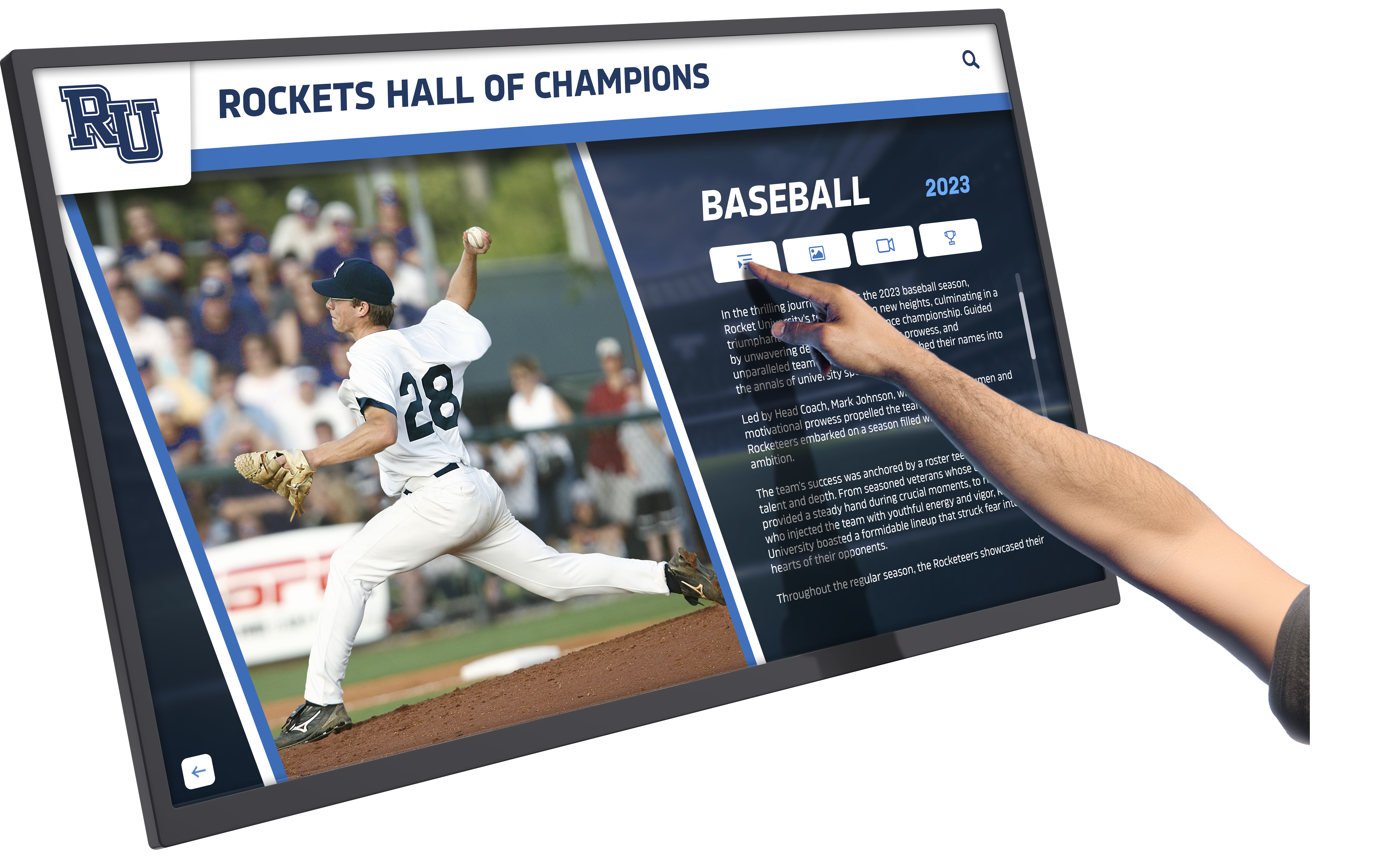
Responsive touch interfaces provide immediate feedback confirming selections and encouraging continued exploration
Distributed Campus Storytelling Networks
Athletic Facility Installations
Athletic buildings serve recruits and sports-focused prospects requiring specialized storytelling:
- Championship team histories with complete rosters and season narratives
- Individual athletic achievement and record holder recognition
- Professional athlete alumni demonstrating pathway to elite competition
- Academic achievement among athletes countering stereotypes
- Coach profiles and program development narratives
Frameworks for athletic recognition programs translate effectively to admissions storytelling contexts with appropriate emphasis on student-athlete experience and development rather than purely competitive achievement.
Residential and Student Life Areas
Student union, dining facilities, and residential hall lobbies enable campus culture storytelling:
- Student organization histories and leadership development stories
- Campus tradition narratives explaining annual events and celebrations
- Diversity and inclusion initiatives demonstrating community values
- Service learning and community engagement highlighting civic responsibility
- Social programming and campus life showcasing vibrant student experience
These installations help prospects envision their daily life beyond academics—the friendships, activities, and community experiences that create belonging and satisfaction determining retention and graduation beyond initial enrollment decisions.
Specialized Program Facilities
Unique institutional facilities—performing arts centers, research buildings, athletic stadiums, innovation spaces—deserve storytelling installations showcasing their specific excellence:
- Facility-specific achievements and notable events
- Faculty and student research or creative accomplishment
- Partnership stories connecting facilities to external organizations
- Historical narratives explaining facility development and significance
- Visitor information and program participation opportunities
Specialized installations demonstrate comprehensive excellence across institutional dimensions rather than suggesting narrow focus or limited opportunities outside particular areas of prominence.
Measuring Storytelling Impact and Demonstrating Value
Data-driven assessment ensures storytelling investments deliver measurable returns while identifying optimization opportunities.
Direct Engagement Analytics
Quality interactive platforms provide comprehensive usage tracking demonstrating content value:
Quantitative Metrics
- Total interaction sessions showing display usage frequency
- Average session duration indicating depth of content engagement
- Most-viewed stories revealing prospect interests and priorities
- Navigation patterns showing content discovery approaches
- Peak usage times informing content launch strategies
- Social sharing frequency demonstrating viral potential
Analysis of this data reveals which story categories resonate most powerfully, what additional content prospects seek but cannot currently find, how engagement patterns vary across campus locations and times, and how display effectiveness changes over time requiring content refreshment or interface optimization.
Behavioral Pattern Analysis
Beyond basic metrics, analyze usage patterns revealing prospect interests:
- Search query analysis showing what visitors seek by name or topic
- Category browsing patterns revealing interest hierarchies
- Drop-off points identifying confusing navigation or uninteresting content
- Return visitor rates showing sustained engagement across campus exploration
- Time-per-story metrics identifying most compelling narratives
Research on effective digital recognition implementation demonstrates analytic frameworks applicable to storytelling contexts beyond pure recognition applications.
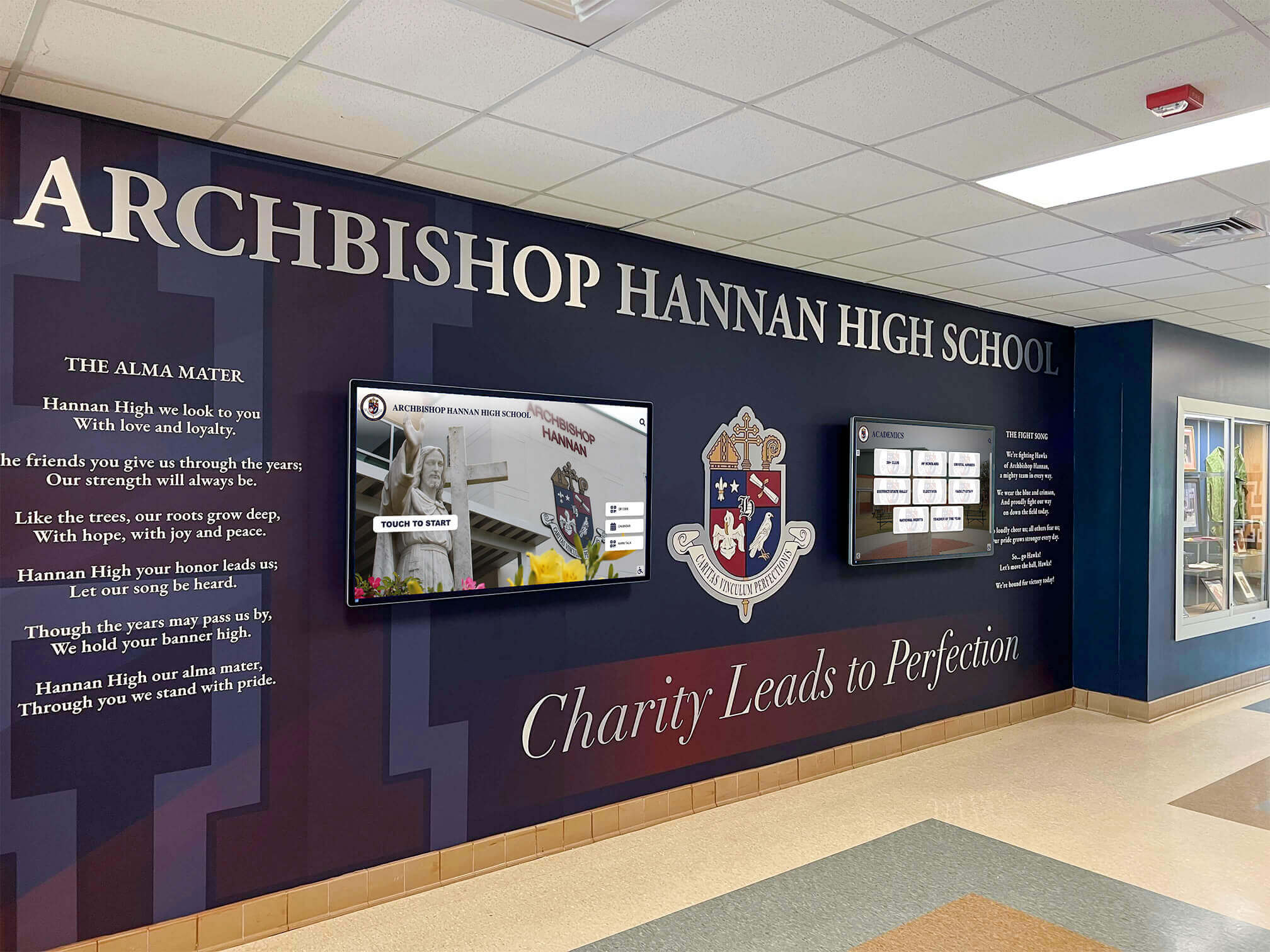
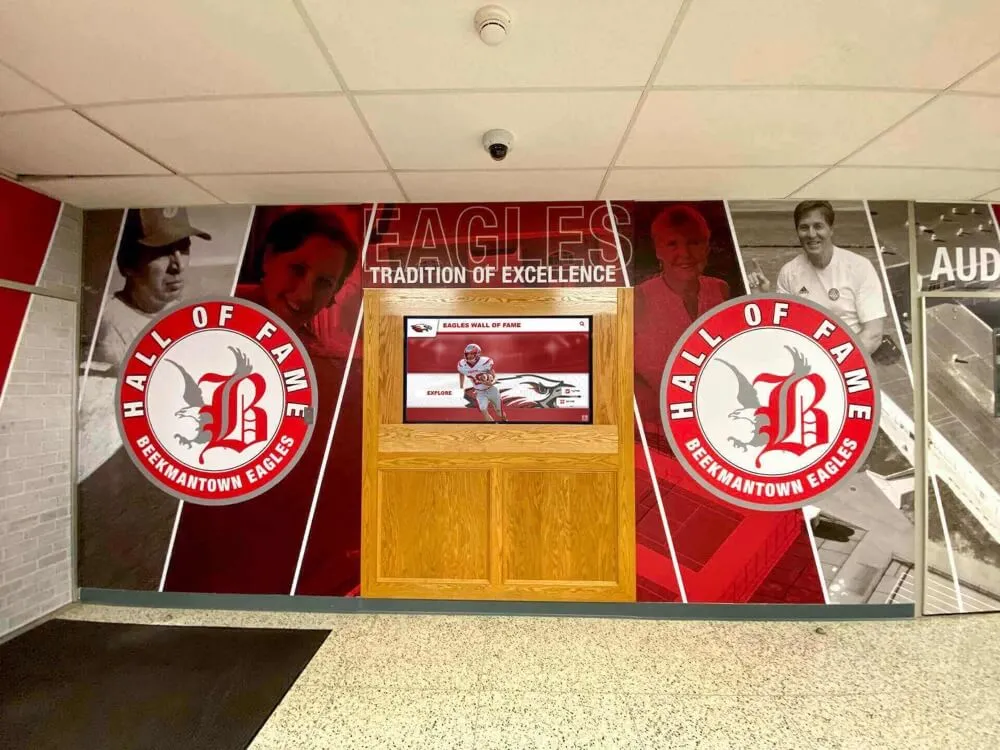
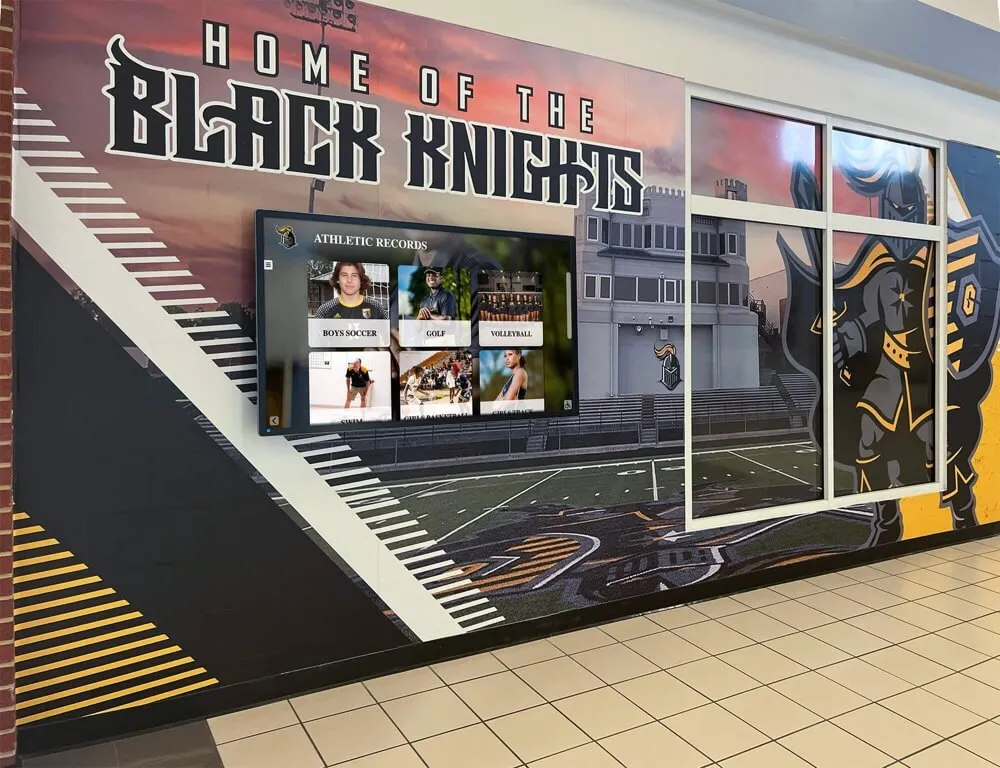
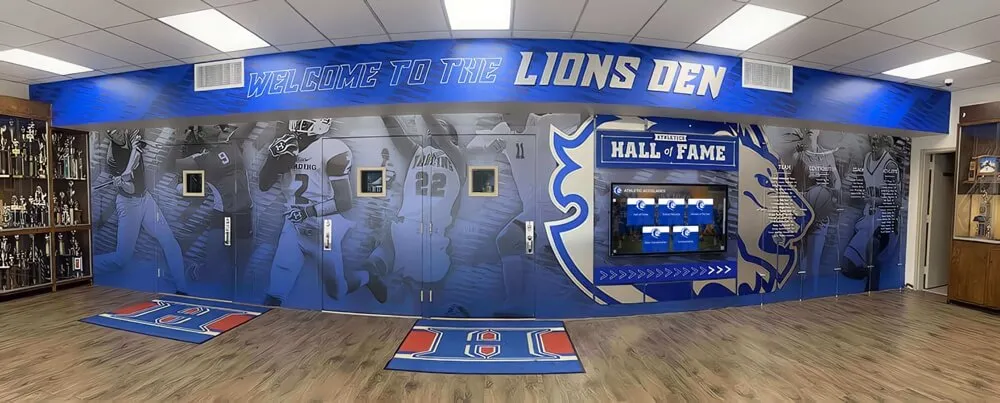
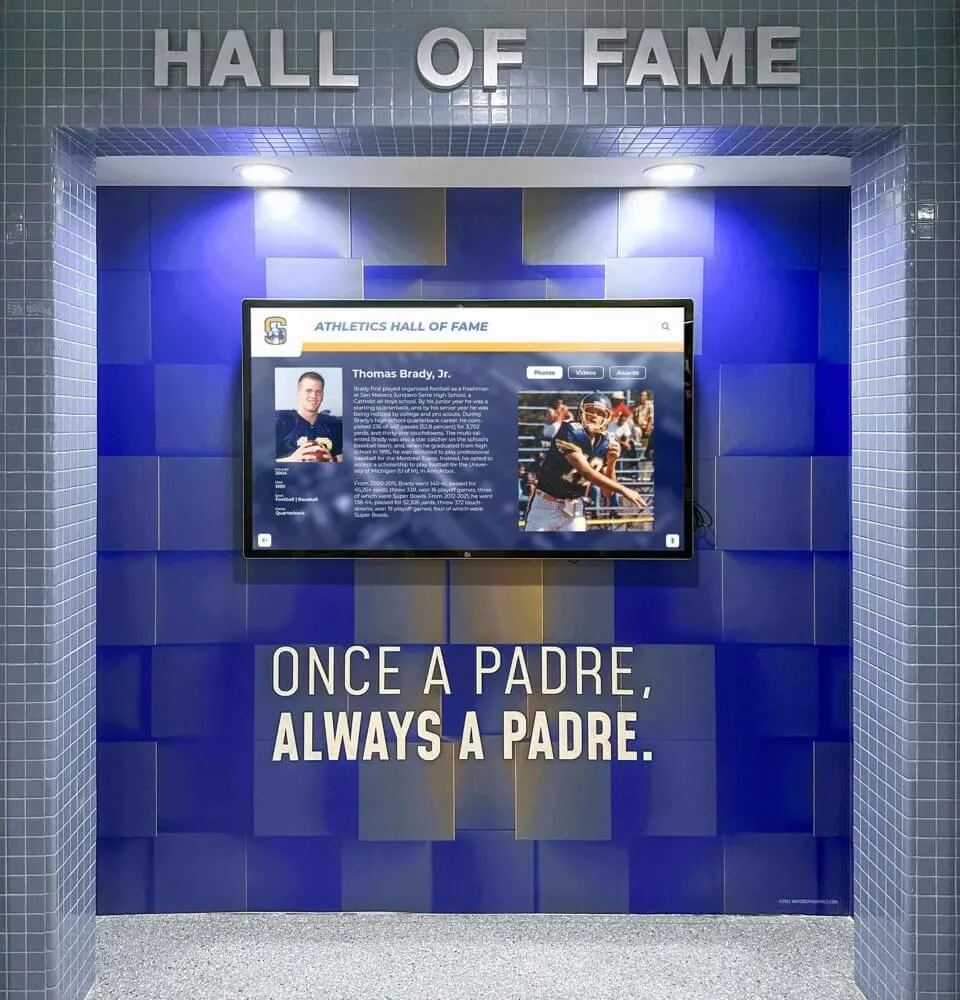
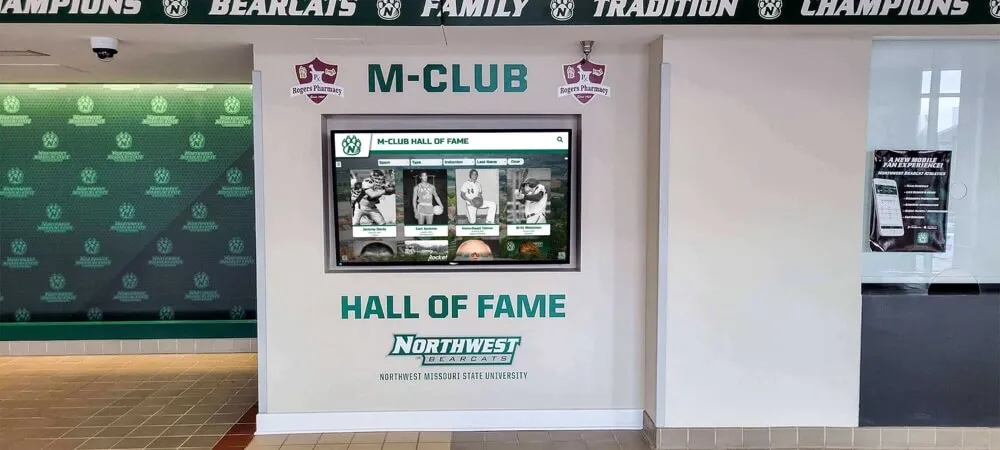
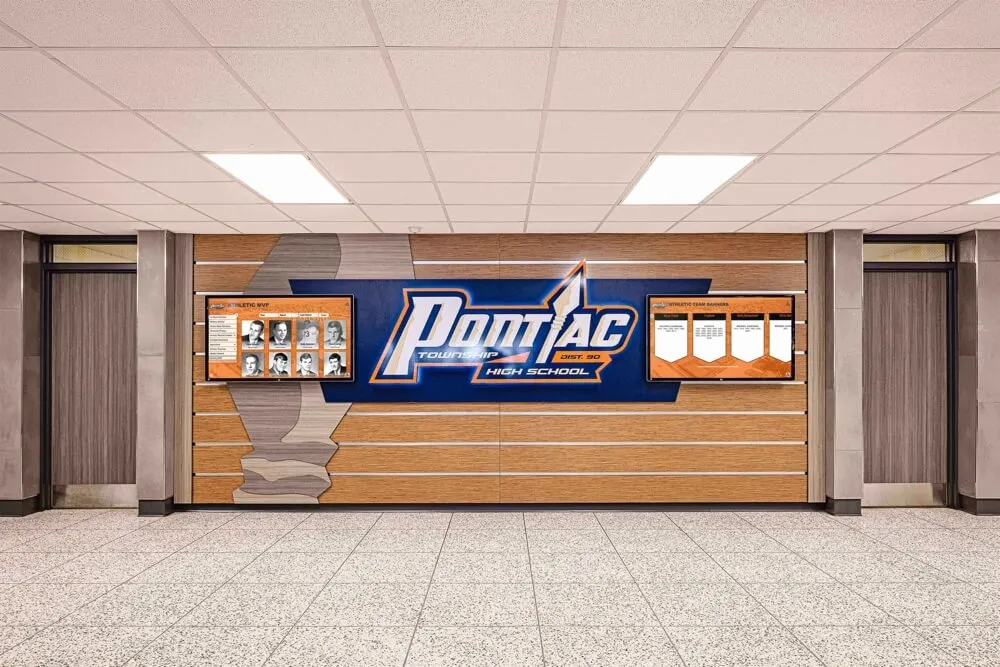
Professional installations integrate storytelling displays with architectural design creating cohesive environments reinforcing brand identity
Admissions Outcome Correlation
While direct causation proves difficult to establish definitively, several indicators suggest storytelling impact on enrollment outcomes:
Post-Visit Satisfaction Improvements
Survey data comparing periods before and after storytelling implementation typically shows:
- Campus visit satisfaction scores improving 15-25 percentage points
- Net Promoter Scores (likelihood to recommend) increasing 10-20 points
- Perceptions of campus innovation and student experience quality rising significantly
- Ratings of tour informativeness and engagement improving substantially
These satisfaction improvements correlate strongly with enrollment conversion—prospects who rate visits highly commit to enrollment at much higher rates than those reporting disappointing campus experiences.
Tour-to-Enrollment Conversion Rates
The ultimate metric involves conversion rate changes comparing periods before and after storytelling network implementation. Institutions deploying comprehensive interactive storytelling consistently report conversion rate improvements of 8-12 percentage points—substantial gains translating to significant enrollment increases without expanding prospect pool size or marketing investment.
Conservative estimates suggest storytelling contributing to enrollment of just 15-25 additional students annually generates $600,000-1.2 million in incremental four-year tuition revenue—providing compelling returns on storytelling technology investments typically ranging from $75,000-200,000 for comprehensive campus networks.
Application Quality and Institutional Fit
Beyond conversion rates, storytelling impacts applicant pool quality:
- Applicants demonstrate deeper institutional knowledge in essays and interviews
- Yield rates increase among admitted students who toured versus those who didn’t
- First-year retention improves as enrolled students match their pre-arrival expectations
- Alumni engagement begins earlier as new students already know institutional heritage
These quality factors often matter more than pure enrollment numbers—institutions want students who understand and embrace their specific culture and mission, ensuring satisfaction and success rather than merely filling classes with warm bodies who ultimately transfer or disengage.
Activation Plan and Sustainable Implementation
Successful storytelling launch requires strategic planning across technology selection, content development, staff training, and ongoing maintenance.
Technology Platform Evaluation
Purpose-Built Recognition vs. Generic Digital Signage
Most institutions quickly discover that generic digital signage platforms designed for advertising or announcements poorly serve storytelling requirements. Purpose-built recognition and storytelling platforms provide:
- Content management systems organized around individual profiles and narratives
- Search and filtering capabilities enabling story discovery by multiple attributes
- Social sharing integration supporting viral content distribution
- Mobile web access extending storytelling beyond physical displays
- Analytics tracking demonstrating engagement and value
Solutions like Rocket Alumni Solutions provide platforms specifically designed for educational storytelling rather than requiring institutions to adapt corporate signage tools to fundamentally different applications. Understanding touchscreen software options helps institutions evaluate platform capabilities against storytelling requirements.
Hardware Considerations
- Display size selection: 43-55 inch displays for close viewing in lobbies and hallways, 65-75 inch displays for viewing at distance in large spaces
- Touch technology: Capacitive touch for responsive consumer-like experience, infrared touch for larger display sizes
- Commercial-grade specifications: Displays rated for continuous operation rather than consumer TVs failing in public use
- Mounting approaches: Wall-mount installations in space-constrained areas, freestanding kiosks in open lobbies and public spaces
- Network connectivity: Hardwired Ethernet connections ensuring reliable content delivery
Vendor Selection Criteria
- Demonstrated experience with higher education storytelling applications
- Quality reference installations viewable before commitment
- Comprehensive training and support resources
- Reasonable total cost of ownership including hardware, software, and ongoing support
- Accessibility compliance documentation and capabilities
Institutions should request demonstrations with actual storytelling content, speak with reference clients about implementation experiences and ongoing support quality, and verify accessibility standards compliance before making platform commitments.
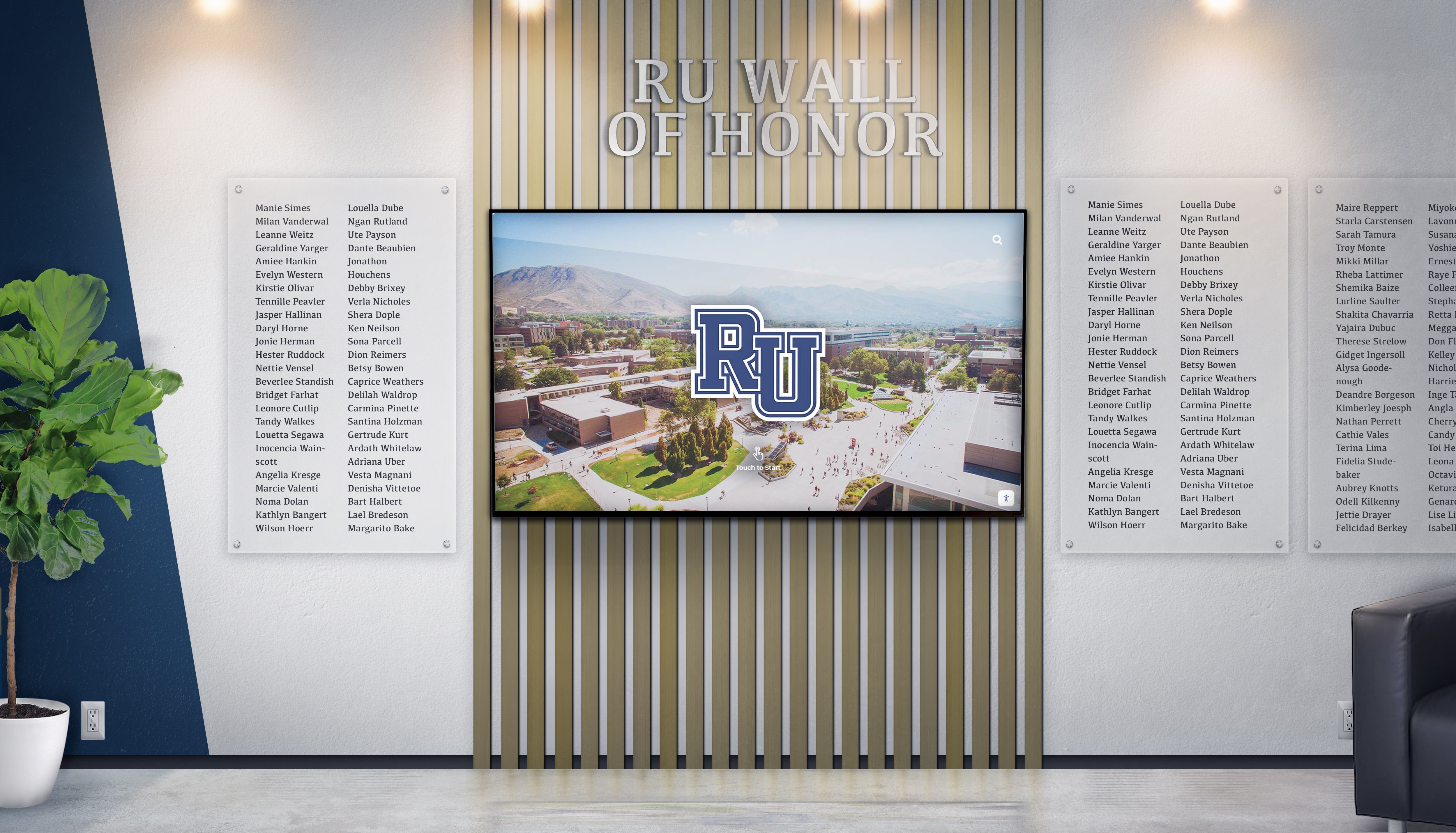
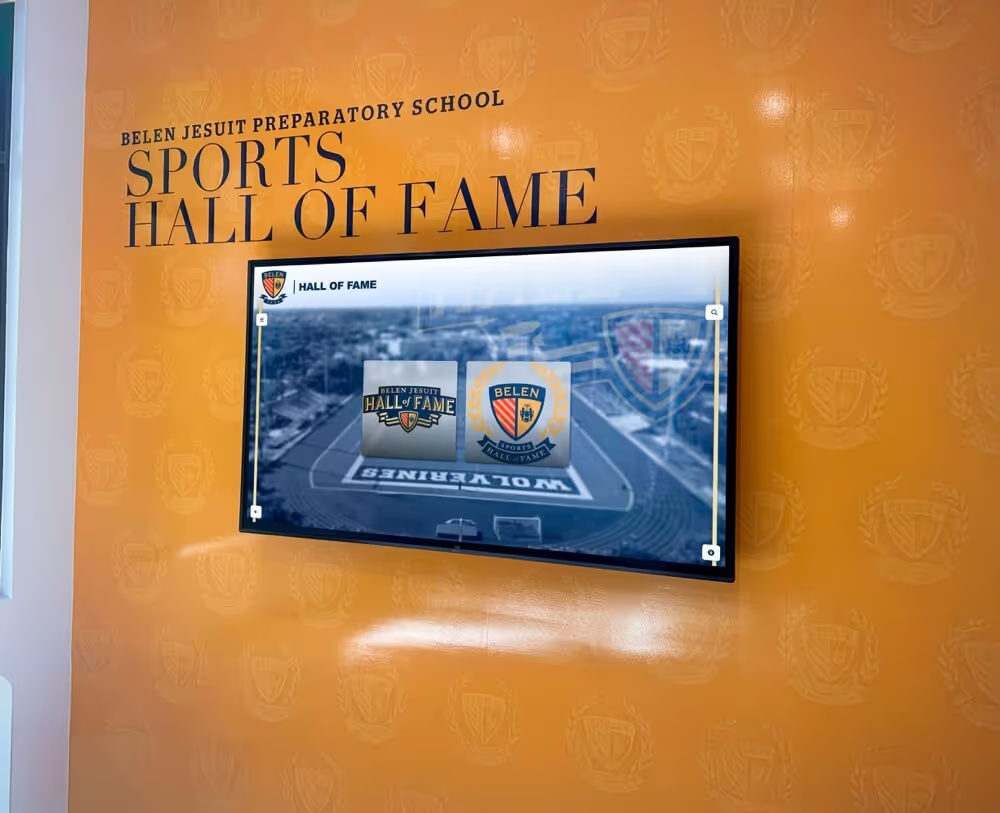
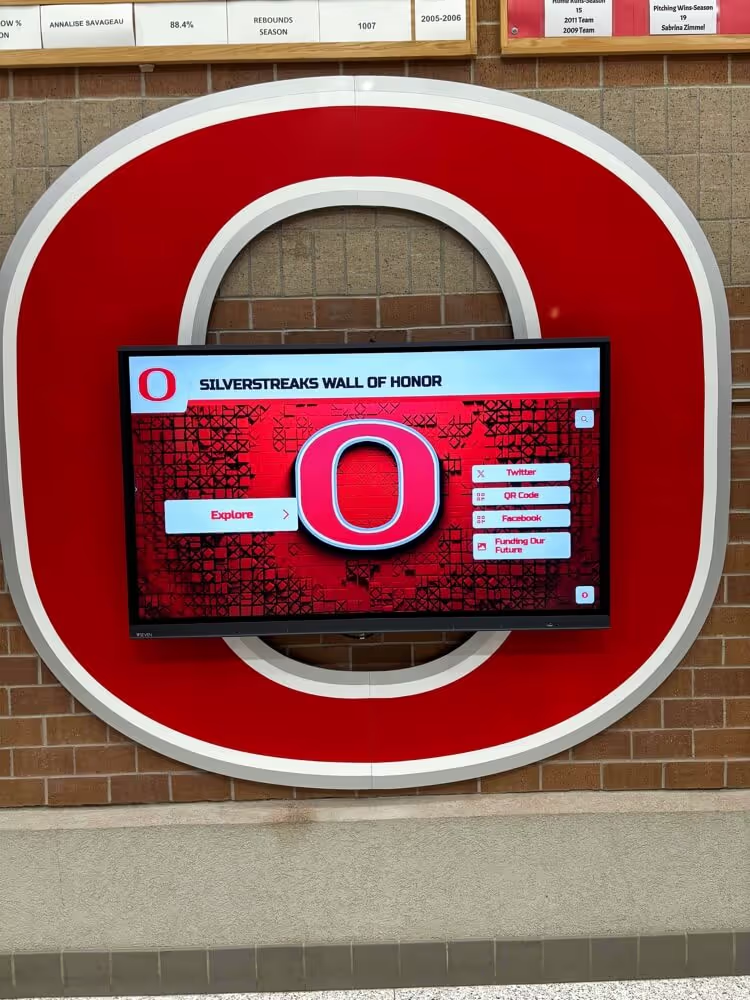
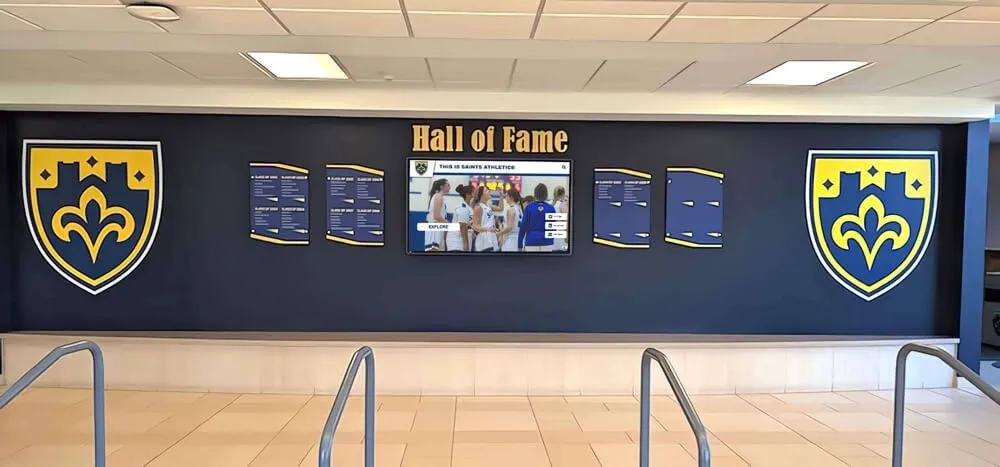
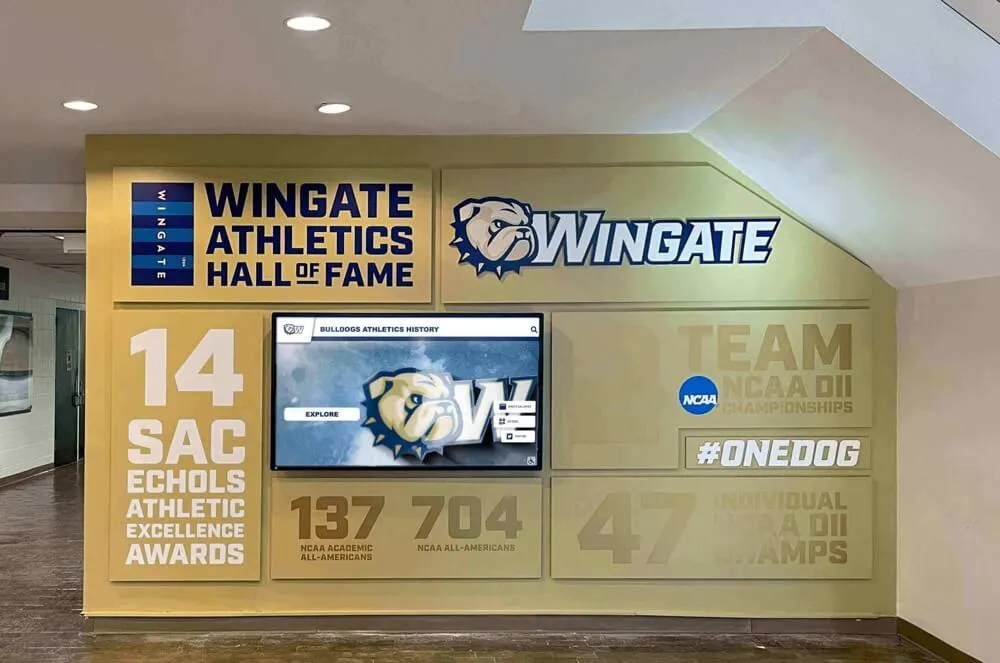
Integrated systems combine digital storytelling with traditional recognition elements creating comprehensive campus communication environments
Phased Rollout and Expansion Strategy
Most institutions implement storytelling in strategic phases rather than attempting comprehensive campus coverage immediately:
Phase 1: Flagship Installation (Months 1-4)
Launch with single highest-impact installation in admissions office lobby:
- Proves concept and demonstrates value to institutional stakeholders
- Enables content development process refinement before scaling
- Allows tour guide integration and feedback gathering
- Provides usage analytics justifying expansion investment
- Builds organizational confidence and support
Phase 2: Strategic Expansion (Months 5-12)
Add 3-5 installations at key campus touchpoints:
- Campus gateway or visitor center location
- Primary academic building or library
- Athletic facility serving recruit visitors
- Student union or residential life area
This distributed network demonstrates comprehensive storytelling capabilities while reaching diverse prospect audiences with category-specific content aligned to different campus areas.
Phase 3: Comprehensive Coverage (Year 2+)
Expand to complete campus storytelling network:
- Additional academic buildings enabling discipline-specific storytelling
- Specialized facilities showcasing unique program excellence
- Secondary residential and student life locations
- Alumni center and advancement office installations
Phased expansion enables budget spreading across multiple fiscal years while demonstrating ongoing value justifying continued investment through enrollment impact evidence rather than requiring large upfront commitments based on projected rather than proven returns.
Content Maintenance and Refresh Strategy
Ongoing Content Development
Establish sustainable workflows ensuring storytelling remains current and engaging:
- Annual content additions: Add 20-30 new stories annually maintaining freshness and demonstrating ongoing excellence
- Quarterly feature rotations: Update featured content spotlights encouraging repeat visitor engagement
- Event-based updates: Add stories connected to major campus events, achievements, or milestones
- Community submissions: Invite alumni, faculty, and students to submit story suggestions and materials
- Student engagement: Create internship or work-study positions supporting content research and development
Quality Control Processes
Maintain storytelling standards through systematic review:
- Designated content managers with clear responsibilities and authority
- Approval workflows ensuring accuracy before publication
- Regular content audits identifying outdated or problematic material
- Photography and writing style guidelines maintaining quality consistency
- Accessibility verification for all new content additions
Technical Maintenance
Ensure reliable system operation through proactive monitoring:
- Remote display management monitoring operation status
- Regular software updates maintaining security and functionality
- Hardware cleaning and inspection preventing premature failure
- Network connectivity verification ensuring content synchronization
- Vendor relationship management coordinating support needs
Sustainable storytelling programs integrate content development into existing admissions and communications workflows rather than treating it as separate additional burden requiring dedicated resources. When admissions teams celebrate notable students, communications offices highlight achievements, and alumni relations discovers interesting graduates, these existing activities automatically feed storytelling platforms through simple submission processes.
Understanding effective implementation of digital recognition provides operational frameworks ensuring long-term program sustainability beyond initial launch enthusiasm.
Conclusion: Story-Driven Enrollment Success
Interactive campus storytelling represents strategic investment in admissions excellence that delivers measurable enrollment returns far exceeding technology costs. When institutions systematically design touchscreen experiences that celebrate achievement, showcase campus culture, and connect prospects emotionally with institutional heritage and values, they transform campus tours from informational building walks into immersive narrative experiences that differentiate their institution while helping prospects envision belonging and success.
The frameworks explored throughout this guide provide actionable approaches for designing storytelling interfaces that engage prospects intuitively, developing compelling narrative content that resonates emotionally, and deploying strategic campus networks that reach visitors throughout exploration. From hero zone designs that capture attention immediately to progressive disclosure patterns that reward extended engagement to distributed placement strategies ensuring comprehensive campus coverage, purpose-built storytelling experiences create the emotional connections and institutional understanding that convert campus visitors into committed enrollees.
Get Your Touchscreen Mock-Up
Discover how custom-designed interactive storytelling experiences can transform admissions outcomes for your institution. Rocket Alumni Solutions creates touchscreen displays that showcase excellence while creating the emotional connections that drive enrollment decisions.
Book a DemoImplementation success requires moving beyond assumptions that guided tours alone adequately serve modern admissions needs. Today’s prospects—digital natives expecting interactive experiences everywhere—deserve engaging storytelling technology that respects their exploration preferences while demonstrating institutional innovation and investment in their success. Organizations that embrace interactive storytelling demonstrate commitment to comprehensive enrollment excellence rather than treating campus visits as logistical necessities requiring minimal investment beyond tour guide wages.
Start with flagship installations in highest-traffic admissions areas proving concept and value, then systematically expand to create comprehensive networks that transform your entire campus into an immersive storytelling environment. Every prospect wandering campus without engagement, every family completing tours without emotional connection, every qualified applicant choosing competitor institutions—these represent missed enrollment opportunities that strategic storytelling prevents while creating the welcoming, engaging experiences where campus visits become the beginning of lifelong institutional relationships.
Your institution’s heritage, achievement, and community excellence deserve visibility that helps prospects recognize the quality and culture you’ve built. With purposeful design, compelling content, and strategic implementation, you can create storytelling experiences that guide every visitor emotionally while showcasing the distinctive excellence that makes your institution the right choice for students who will thrive within your unique community—building the authentic connections where admissions success becomes inevitable rather than uncertain.
Ready to transform your campus tours through interactive storytelling? Explore campus directory systems that combine wayfinding with storytelling, discover digital recognition wall strategies for showcasing donor support, learn about preserving fraternity and sorority history through interactive displays, and understand building comprehensive campus information networks that serve multiple institutional priorities simultaneously—then connect with Rocket Alumni Solutions for platforms purpose-built for educational storytelling excellence.