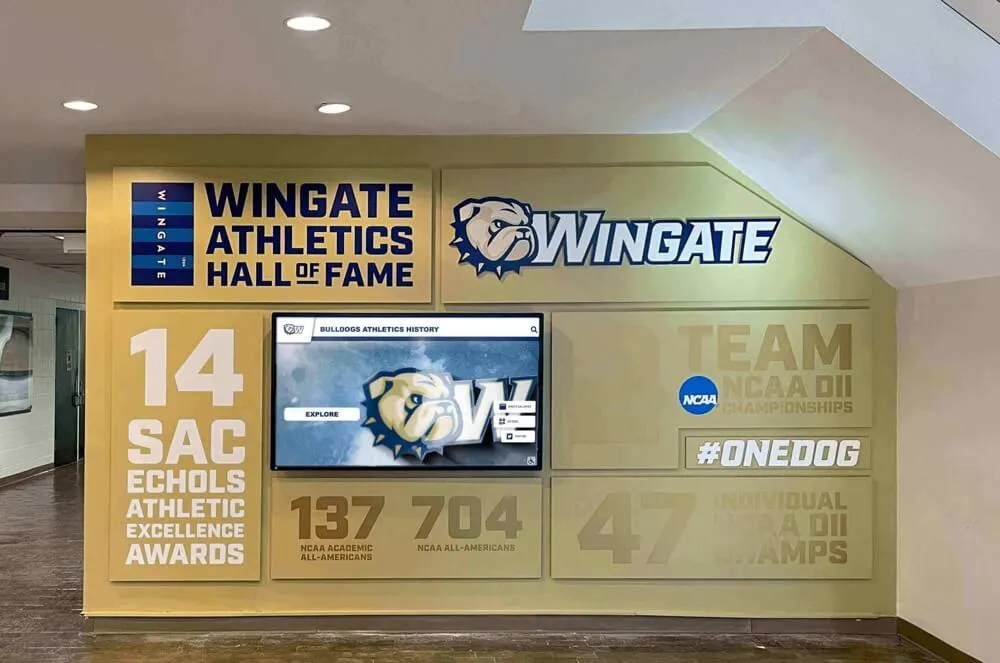




Schools face increasingly complex decisions when selecting interactive school display software for recognition programs, athletic achievements, donor walls, and halls of fame. Unlike passive digital signage that merely displays rotating content, genuine interactive platforms enable visitors to explore comprehensive databases, search for specific individuals, and engage with rich biographical content through intuitive touchscreen interfaces—creating fundamentally different experiences that determine whether expensive technology investments deliver lasting value or become expensive disappointments.
The stakes extend beyond initial purchase prices. Administrators must evaluate platforms that will serve their communities for 7-10 years, accommodate thousands of profiles, enable non-technical staff to manage content independently, and create engagement compelling enough to justify significant budget allocations. Wrong decisions lead to costly buyer’s remorse, orphaned technology showing stale content, and wasted resources that could have funded programs directly benefiting students.
This comprehensive guide explores the proven decision frameworks successful schools use when evaluating interactive school display software, the critical questions separating marketing claims from genuine capabilities, the feature priorities that determine long-term satisfaction, and the vendor evaluation strategies that help administrators select platforms genuinely designed for recognition applications rather than generic digital signage repurposed for uses they fundamentally cannot serve effectively.
Schools that approach platform selection methodically using structured evaluation criteria consistently report higher satisfaction, better technology adoption, stronger community engagement, and significantly lower total cost of ownership compared to institutions rushing decisions based primarily on compelling sales presentations or impressive demonstrations that mask fundamental limitations.

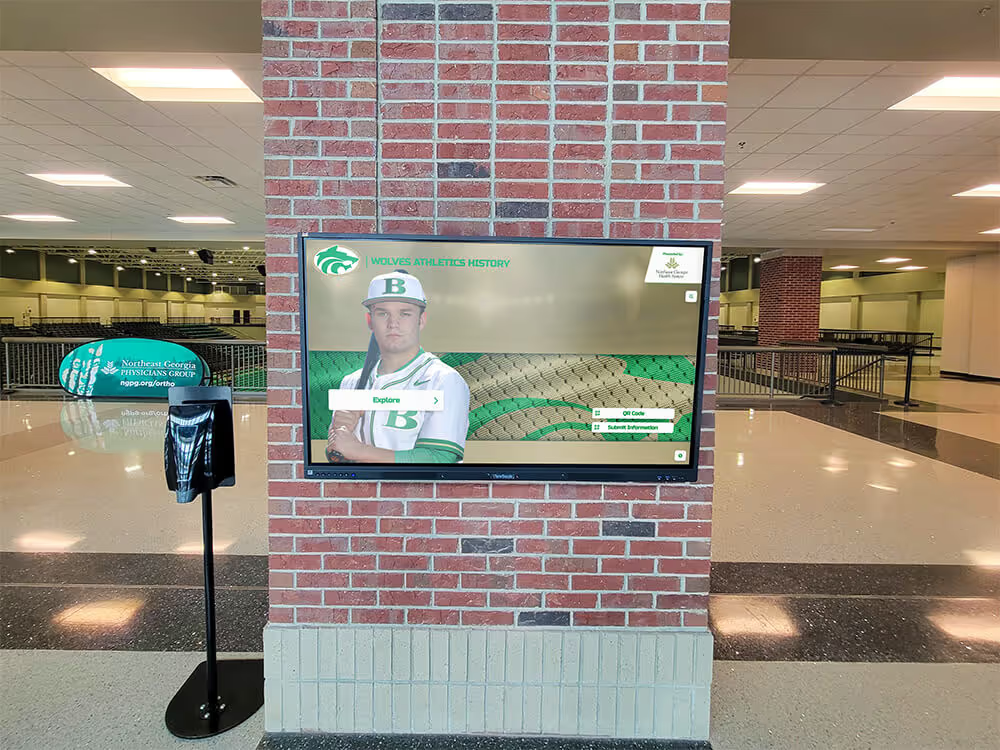
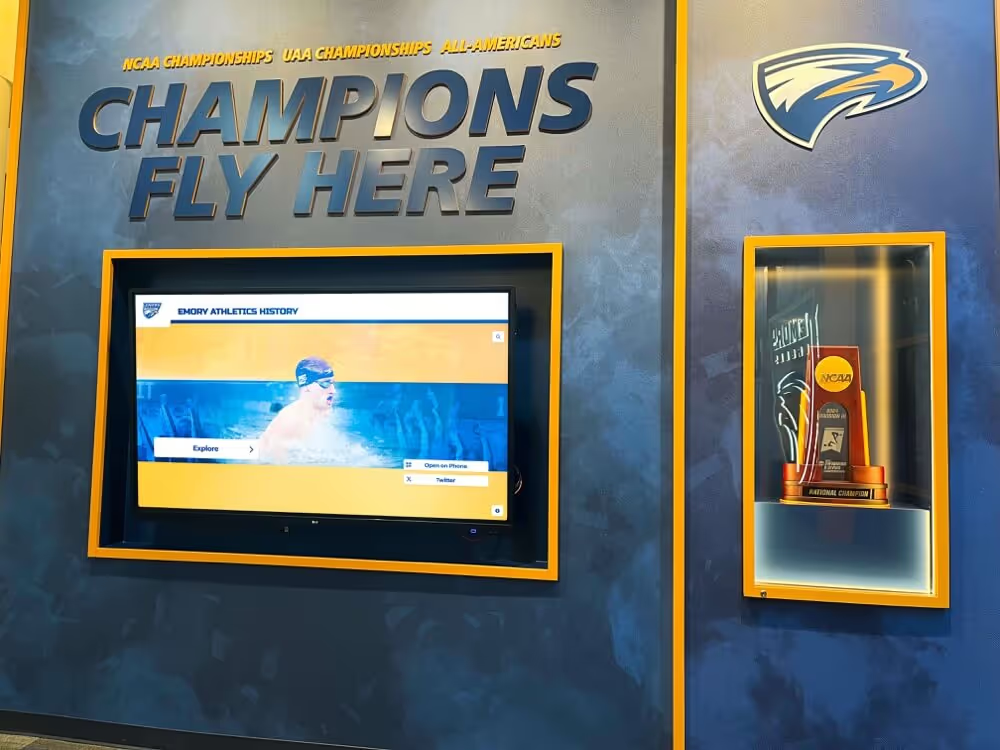
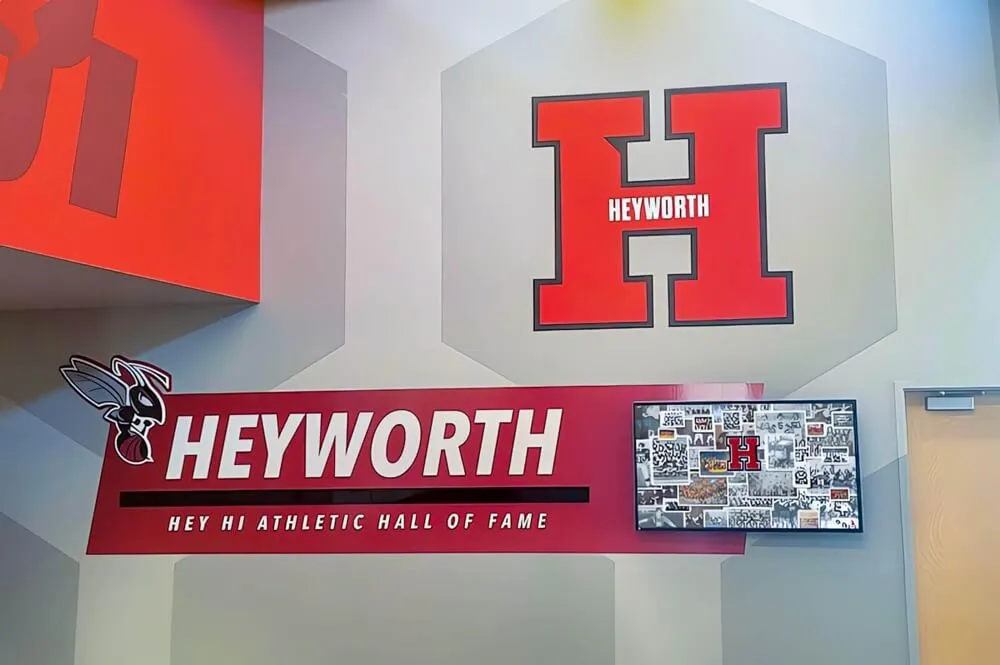
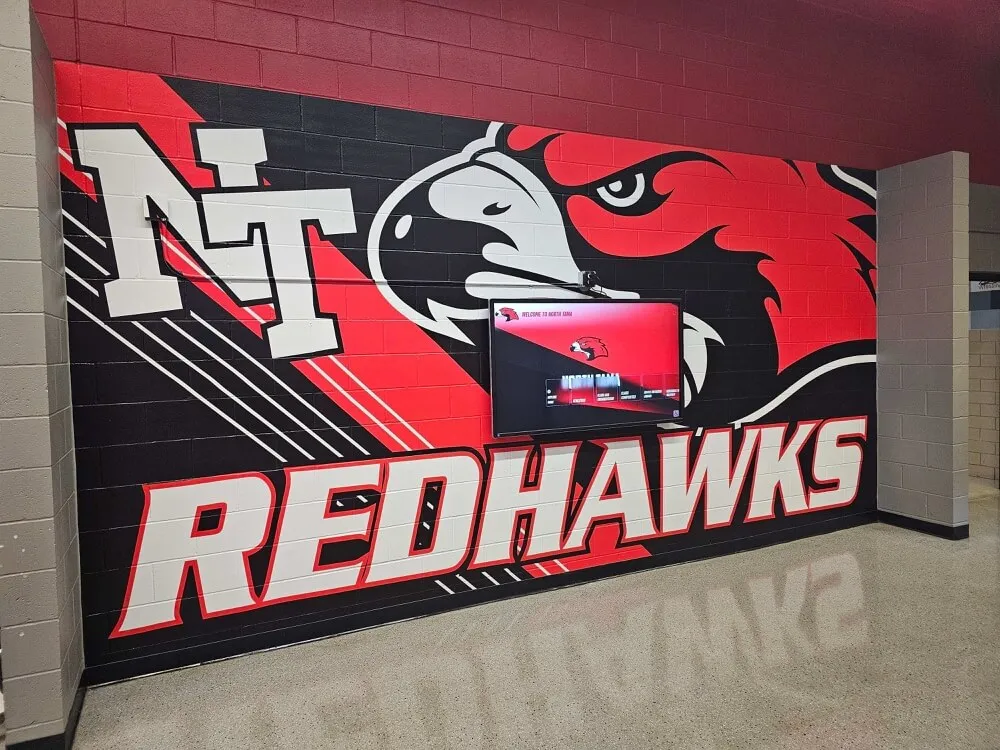
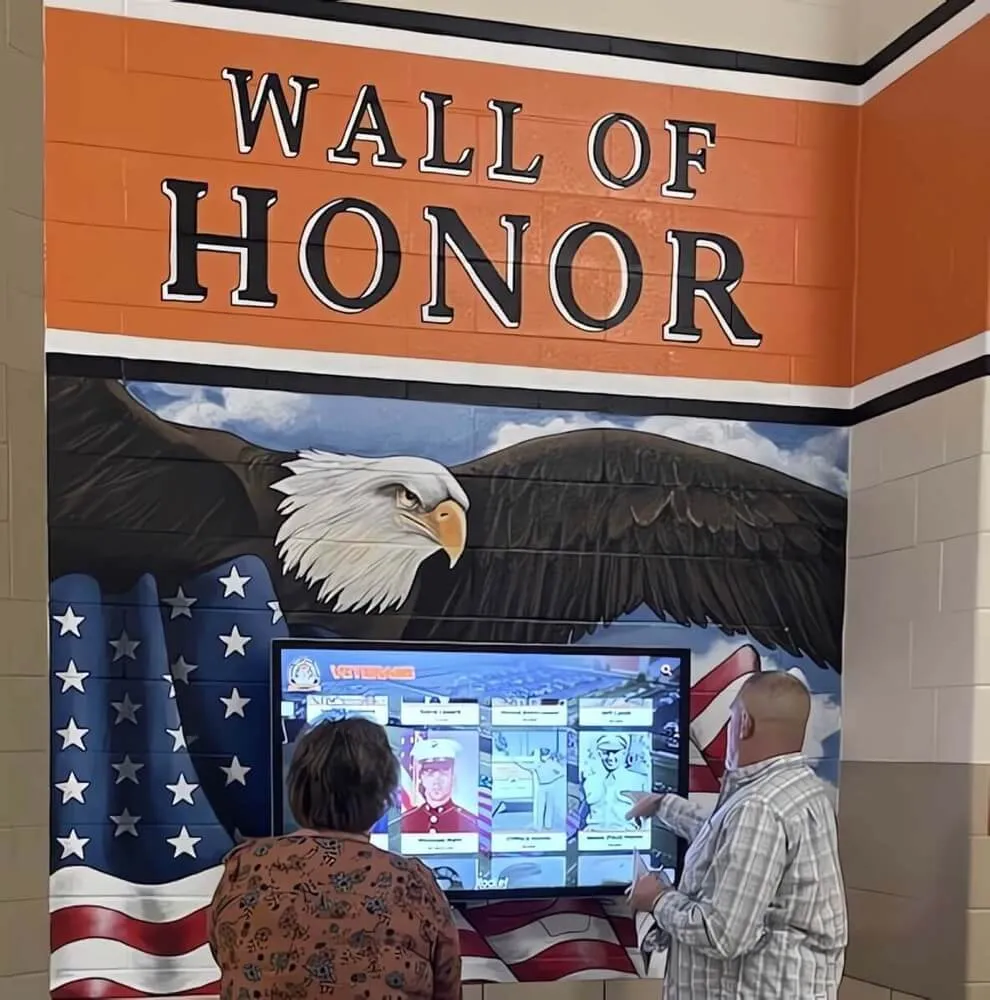
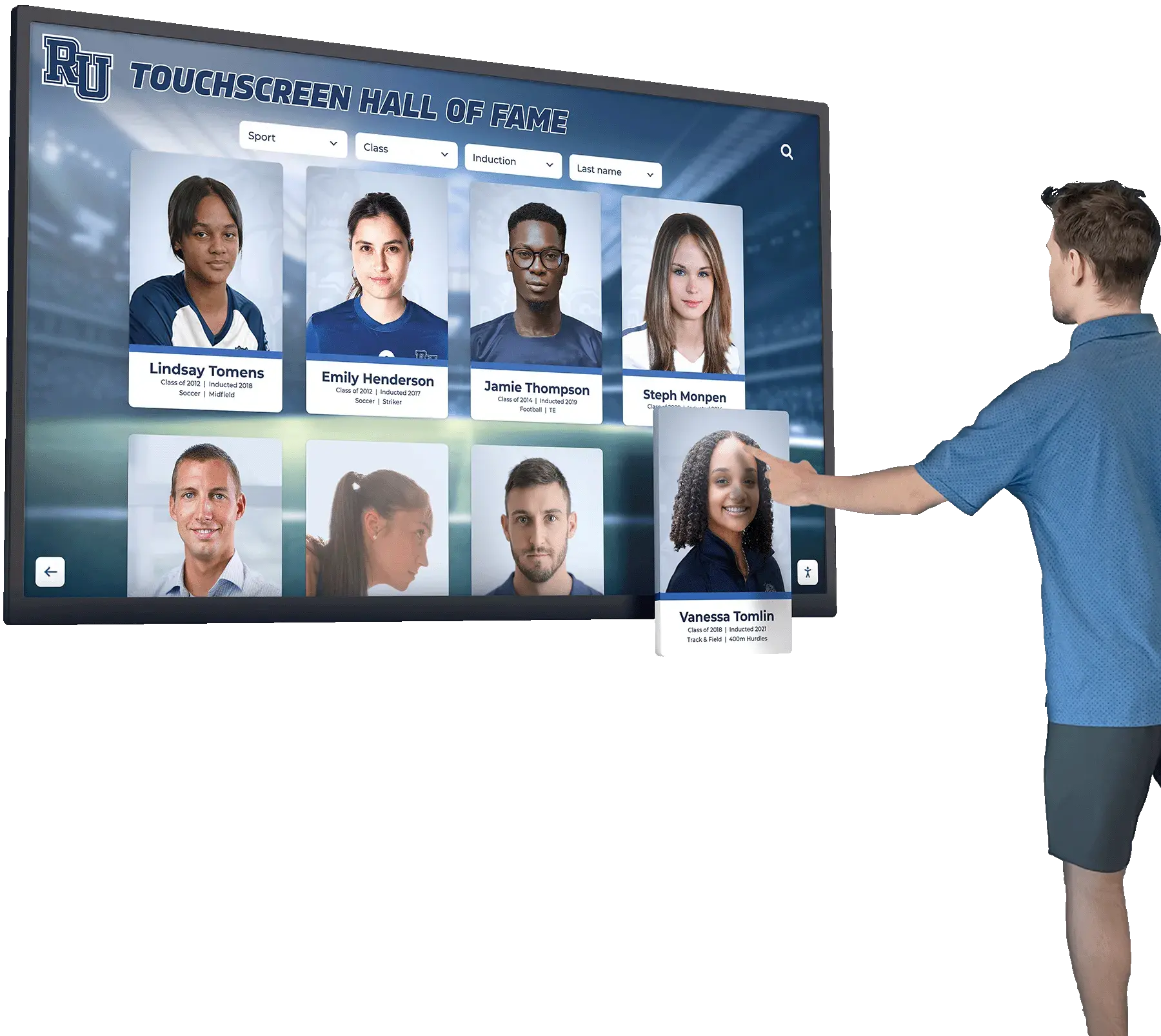
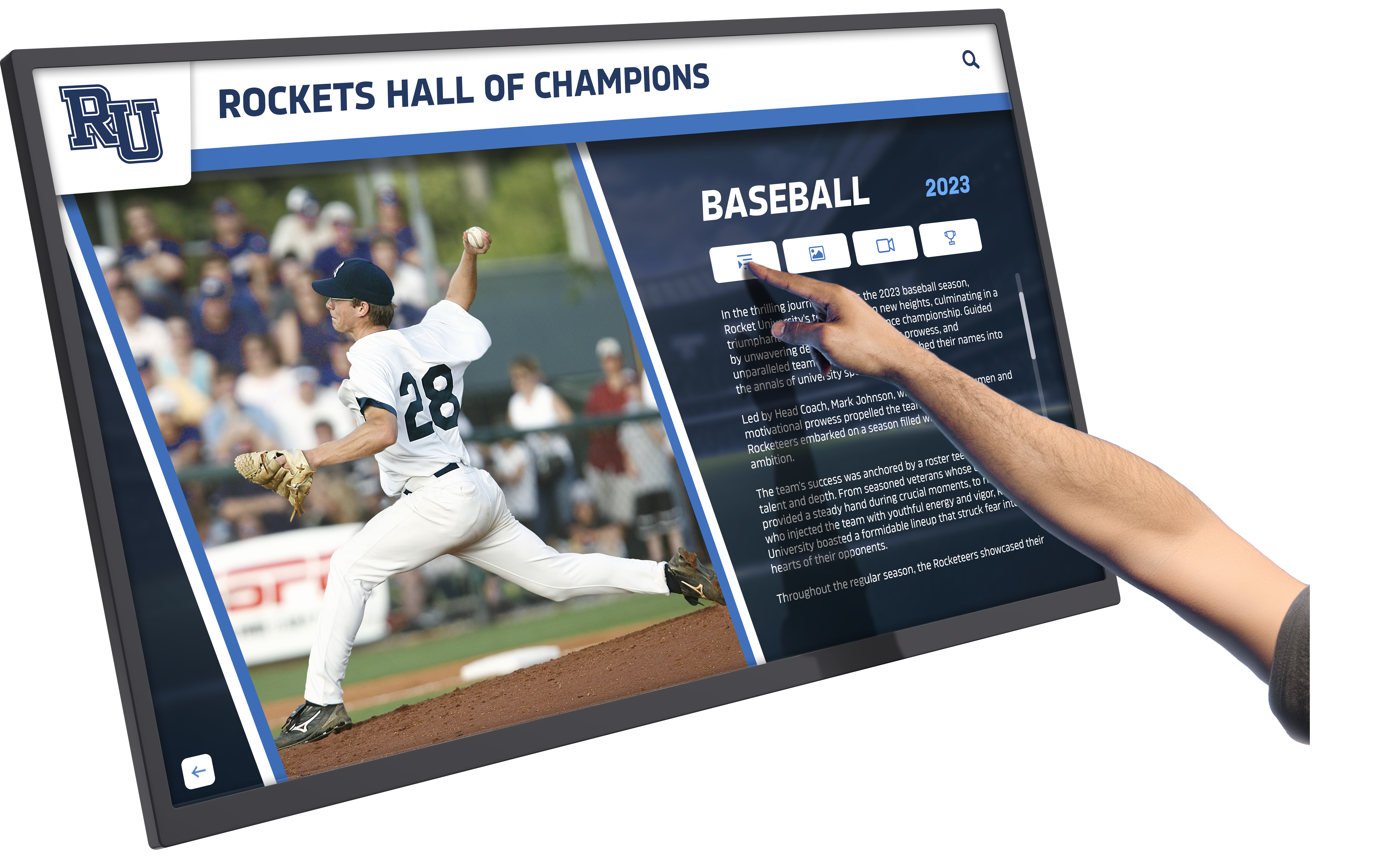
Purpose-built interactive recognition platforms enable deep profile exploration with comprehensive biographical information, achievement details, photos, and multimedia content
Understanding the Interactive School Display Software Landscape
Before evaluating specific platforms, schools benefit from understanding the broader technology categories vendors market as recognition solutions—categories with profoundly different capabilities despite superficial similarities.
Digital Signage vs. Interactive Recognition Platforms
The single most critical distinction administrators must understand separates digital signage systems from purpose-built interactive recognition platforms.
Digital Signage Systems
Generic digital signage excels at displaying scheduled content rotation—announcements, menus, calendars, and informational slides across multiple screens. These platforms prioritize:
- Content scheduling and rotation management
- Multi-screen deployment and remote publishing
- Template-based slide creation tools
- Display compatibility across various hardware
- Network management for distributed installations
Schools successfully use digital signage for cafeteria menus, daily announcements, event calendars, and general information displays throughout facilities. However, these systems fundamentally cannot deliver the interactive database exploration that makes recognition displays valuable.
Interactive Recognition Platforms
Purpose-built recognition platforms like those used for digital hall of fame displays serve entirely different purposes through fundamentally different architecture:
- Comprehensive profile databases storing biographical information, achievements, photos, videos, and historical records for hundreds or thousands of honorees
- Advanced search and filtering enabling visitors to find specific individuals, explore by year, filter by achievement type, or browse categories
- Interactive exploration interfaces allowing users to control their experience and dive deep into profiles rather than passively watching predetermined content
- Unlimited recognition capacity accommodating entire organizational histories without physical space constraints
- Multimedia storytelling capabilities incorporating photo galleries, video tributes, achievement timelines, and rich narratives impossible with static displays
The architectural difference matters profoundly. Schools purchasing signage platforms for recognition applications discover they’ve bought expensive slideshow systems—nothing approaching the comprehensive profile exploration visitors expect from modern interactive technology.
Content Management System Architecture
The second critical distinction involves content management approaches that dramatically affect long-term sustainability and total cost of ownership.
Server-Based Systems Requiring IT Expertise
Traditional recognition platforms require on-premise servers, dedicated IT infrastructure, and technical expertise for routine maintenance. Schools implementing these systems report:
- Ongoing IT dependency for content updates and system maintenance
- Vulnerability to hardware failures requiring specialized repairs
- Security challenges and patch management responsibilities
- Difficulty accessing systems remotely for updates
- Knowledge loss when IT staff transition to other positions
Cloud-Based Platforms Enabling Independent Management
Modern cloud-based systems like Rocket Alumni Solutions eliminate IT dependencies through genuinely intuitive content management enabling non-technical staff to maintain displays independently:
- Browser-based administration accessible from any device
- Automatic updates and security patches managed by vendors
- Built-in redundancy eliminating single points of failure
- Remote management enabling work from anywhere
- Intuitive interfaces requiring minimal training
Schools prioritizing cloud-based platforms report 70-80% lower long-term administrative burden and dramatically reduced total cost of ownership through eliminated IT overhead.
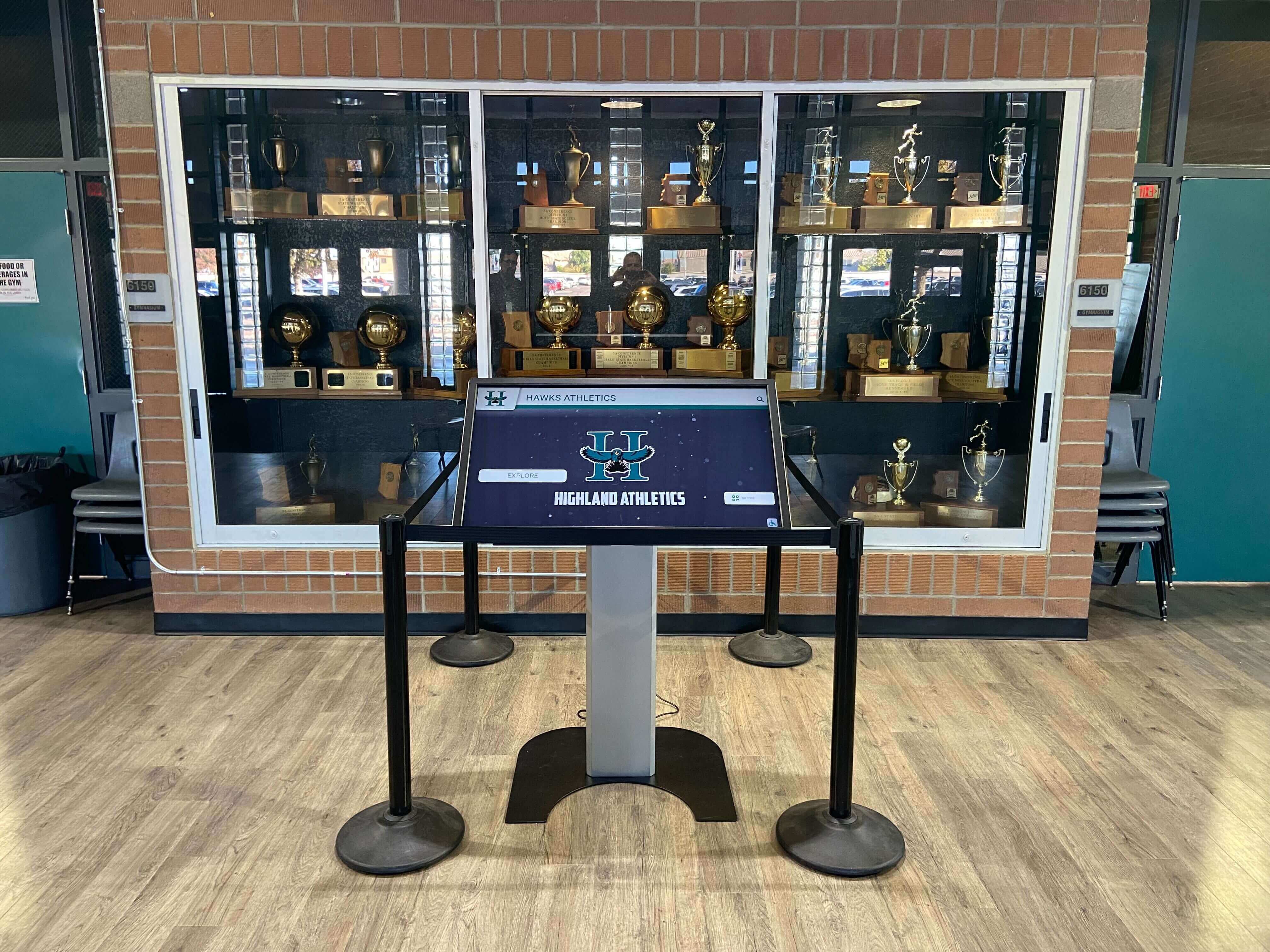
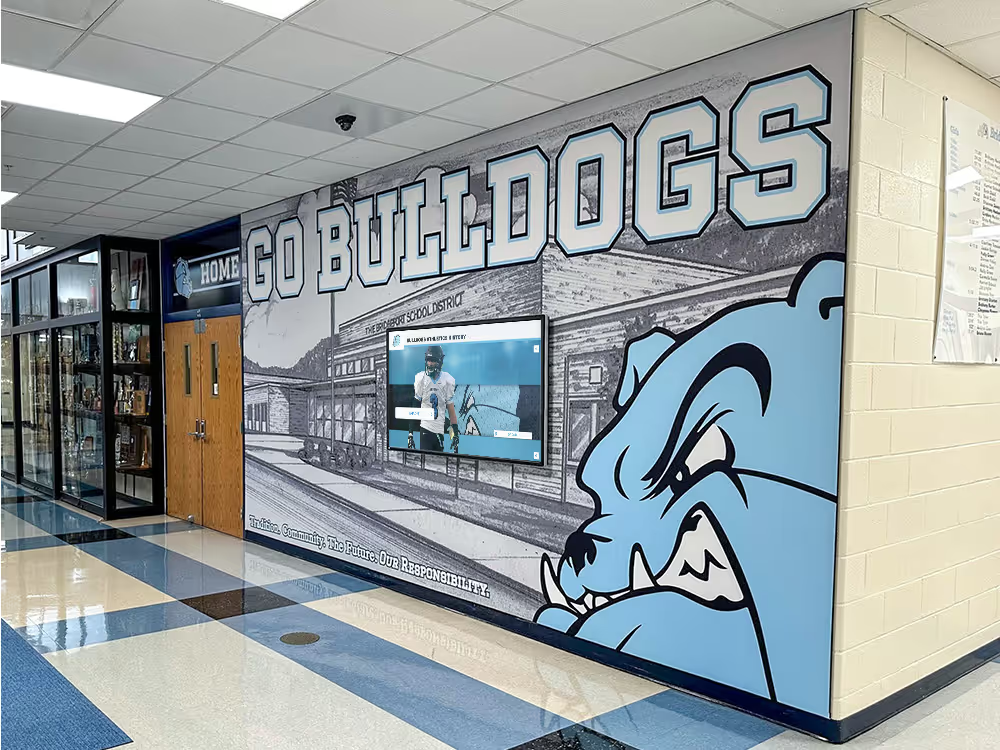
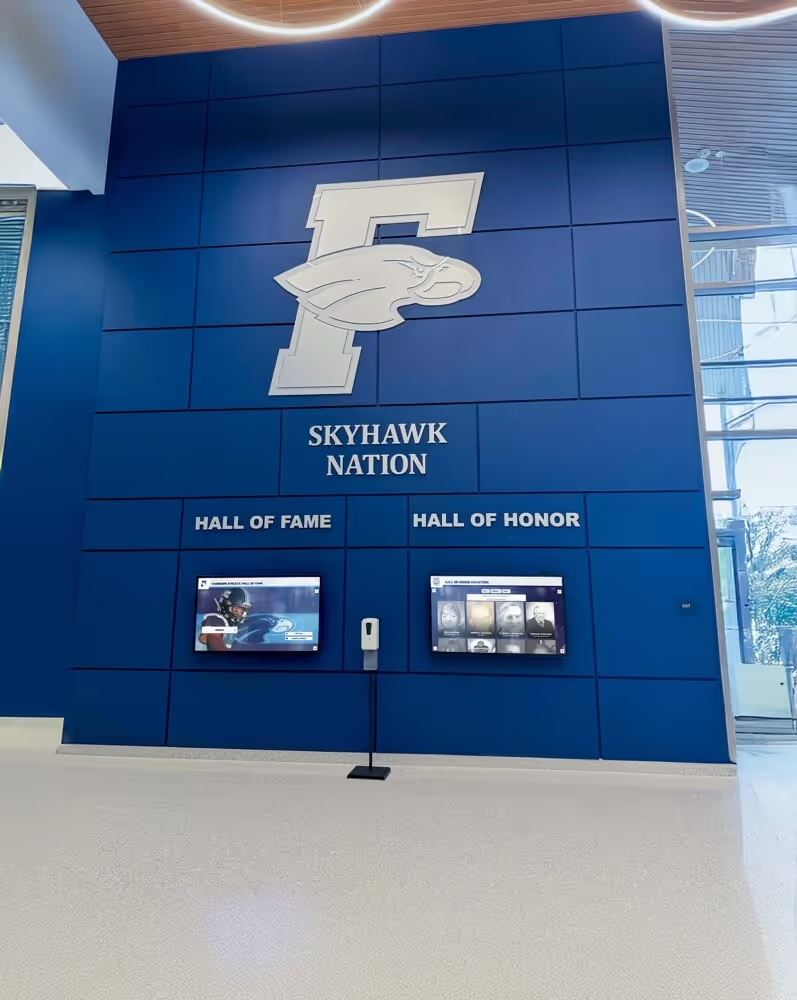
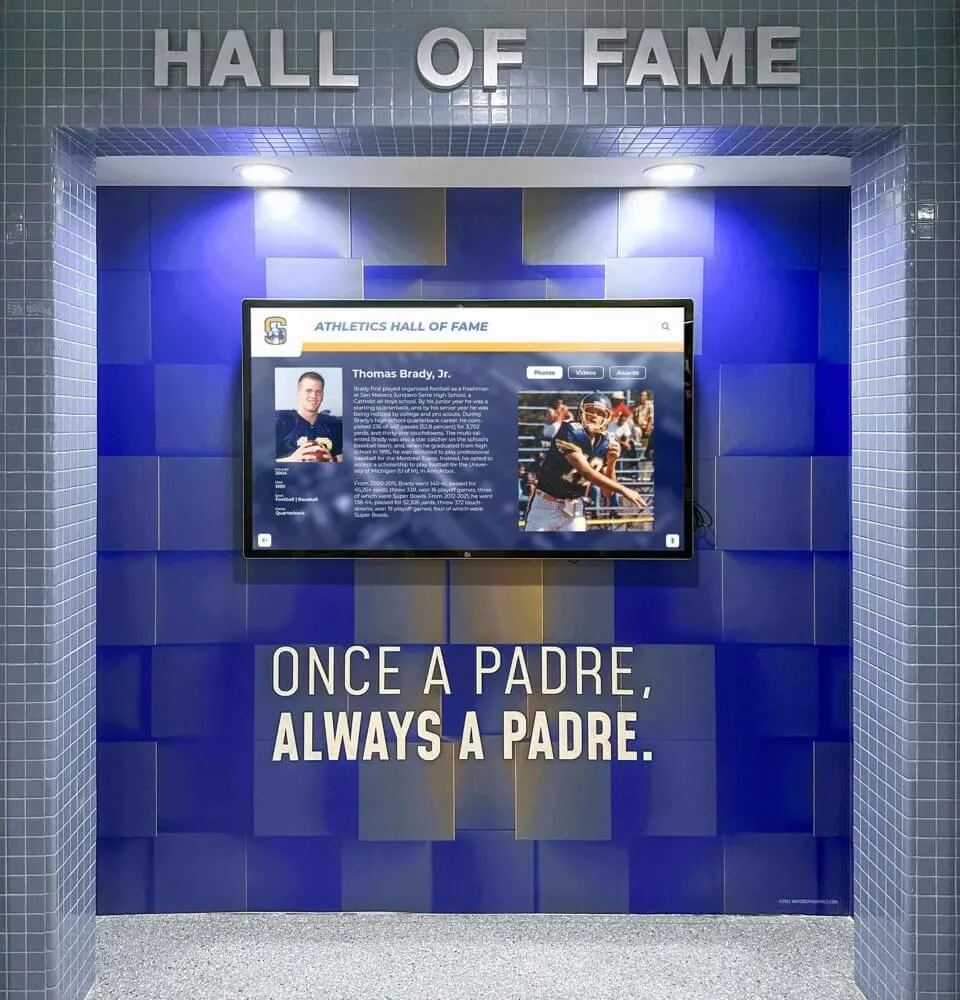
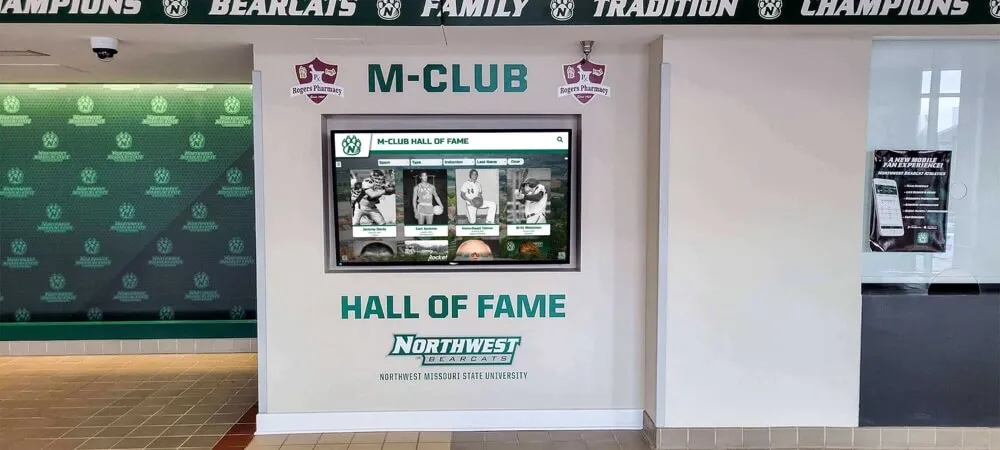
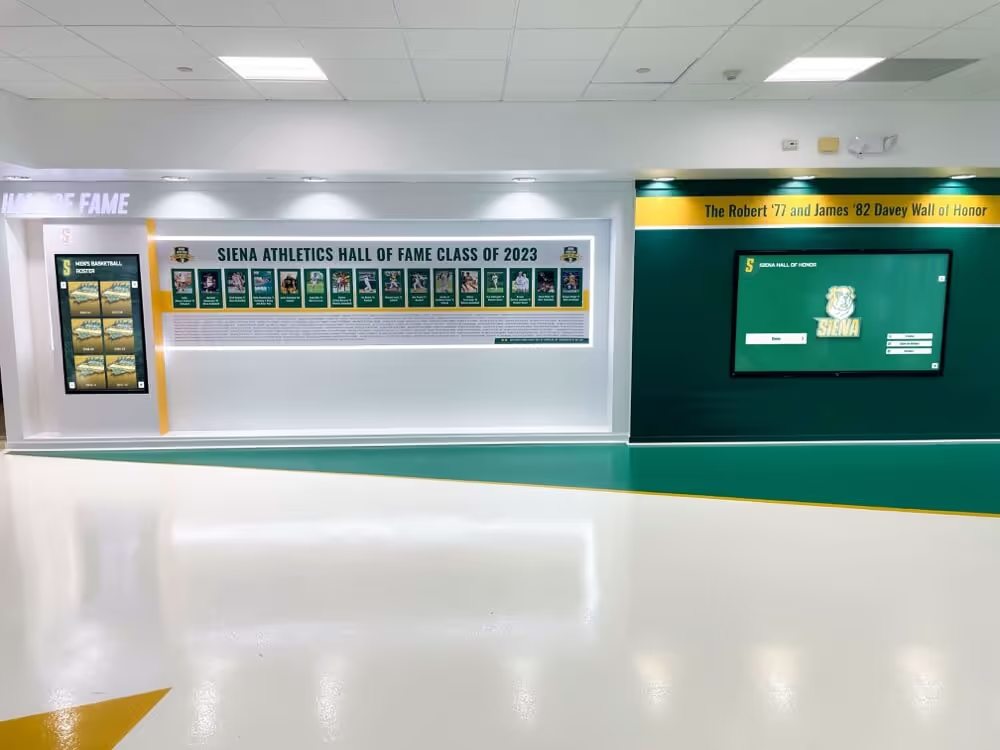
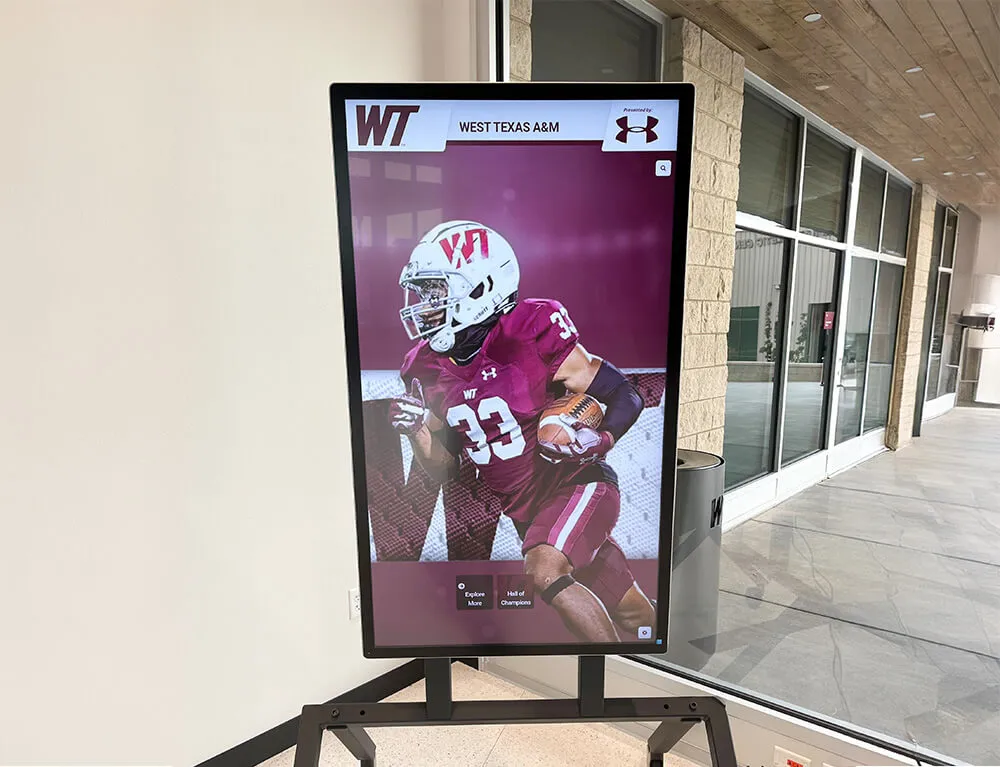
Strategic placement in high-traffic areas like trophy cases maximizes visibility and engagement with interactive recognition content
The School Decision-Making Process: Who Evaluates What
Successful platform selection involves multiple stakeholders with different priorities and expertise contributing to comprehensive evaluation.
Building Your Evaluation Committee
Effective evaluation committees balance technical expertise with practical operational understanding and community perspective.
Core Committee Members
Most successful evaluation processes include representatives from:
Technology Leadership (IT Director or Technology Coordinator)
- Evaluates technical architecture and infrastructure requirements
- Assesses security, data management, and integration capabilities
- Determines compatibility with existing systems and networks
- Projects long-term technical support requirements
Administrative Leadership (Principal or Assistant Principal)
- Ensures alignment with institutional goals and priorities
- Evaluates budget implications and total cost of ownership
- Considers community impact and recognition program objectives
- Makes final platform selection decisions
Athletic Director or Activities Coordinator
- Identifies specific recognition needs for sports and activities
- Evaluates content management workflows and update processes
- Determines feature requirements for athlete and student profiles
- Tests usability for ongoing content maintenance
Advancement or Development Officer (if applicable)
- Assesses donor recognition capabilities and stewardship features
- Evaluates integration with fundraising systems and databases
- Considers long-term donor engagement and reporting needs
- Determines recognition tier management requirements
Faculty or Staff Representative
- Provides operational perspective on daily management reality
- Tests administrative interfaces for practical usability
- Identifies potential workflow challenges or administrative burdens
- Ensures selected platform serves actual working conditions
Schools with well-balanced committees representing these perspectives make more informed decisions considering technical, financial, operational, and community dimensions rather than focusing exclusively on any single factor.
Defining Your Recognition Program Requirements
Before evaluating specific platforms, successful schools clearly define their recognition program scope and objectives.
Recognition Categories and Profile Volume
Determine comprehensive content requirements:
- Athletic recognition: How many sports? Historical depth required? Records tracking needs?
- Academic achievements: Honor roll displays? Scholarship recipients? Academic competitions?
- Alumni recognition: Hall of fame inductees? Distinguished alumni profiles? Historical archives?
- Donor recognition: Giving levels? Campaign tracking? Tribute opportunities?
- Staff and faculty: Years of service? Teaching awards? Retirement celebrations?
Understanding total profile volume helps evaluate whether platforms genuinely scale to accommodate your complete recognition program or impose limitations forcing difficult content choices.
Content Management Workflow Requirements
Consider realistic operational scenarios:
- Who will perform routine content updates? What technical expertise do they possess?
- How frequently will content change? Weekly? Monthly? Annually?
- Will multiple people need administrative access? What approval workflows are required?
- Do you need remote access or only on-premise content management?
- What happens when current administrators transition to other roles?
Platforms appearing simple during sales demonstrations often prove difficult in practice when real staff members with actual time constraints attempt routine updates without ongoing vendor or IT support.
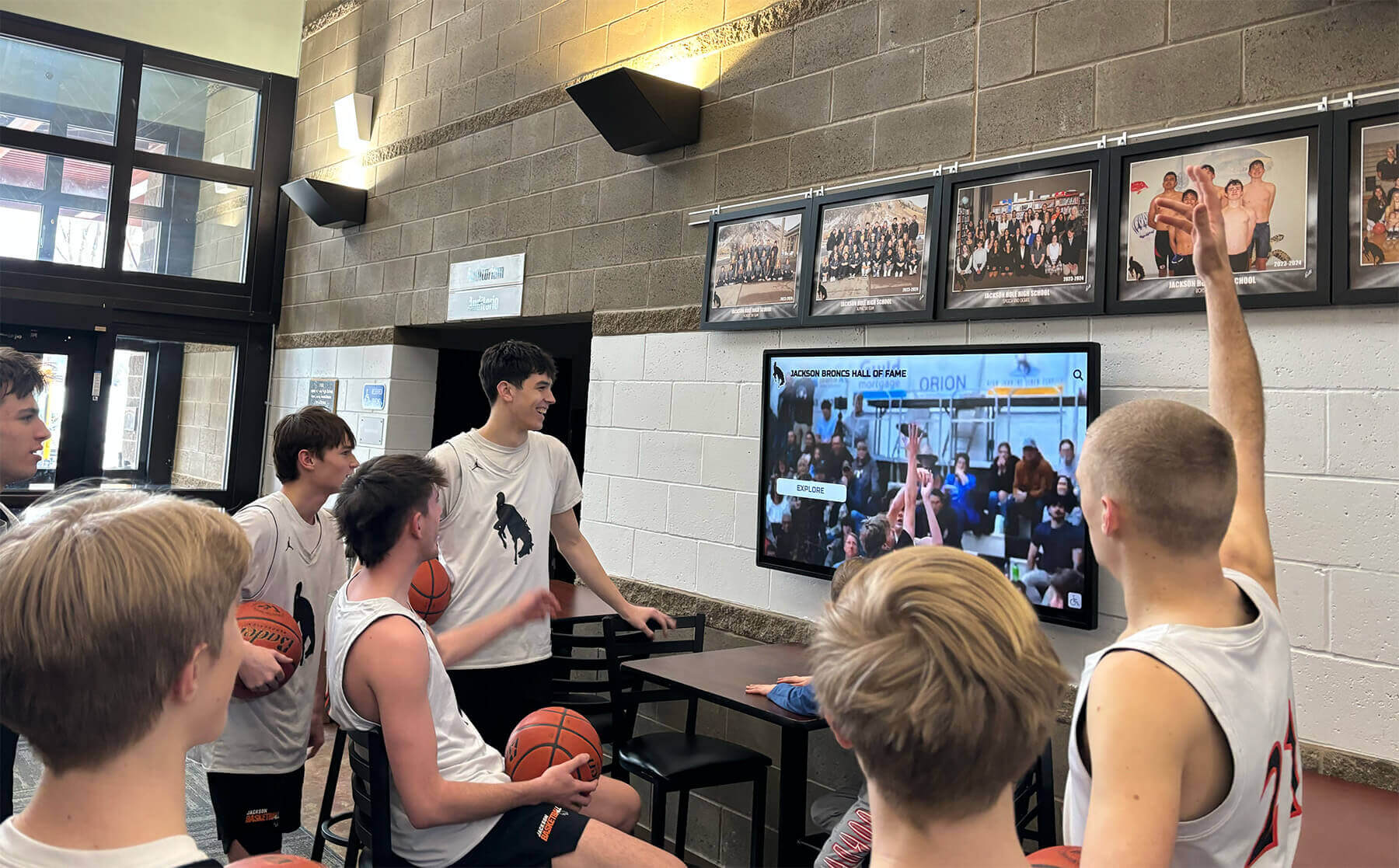
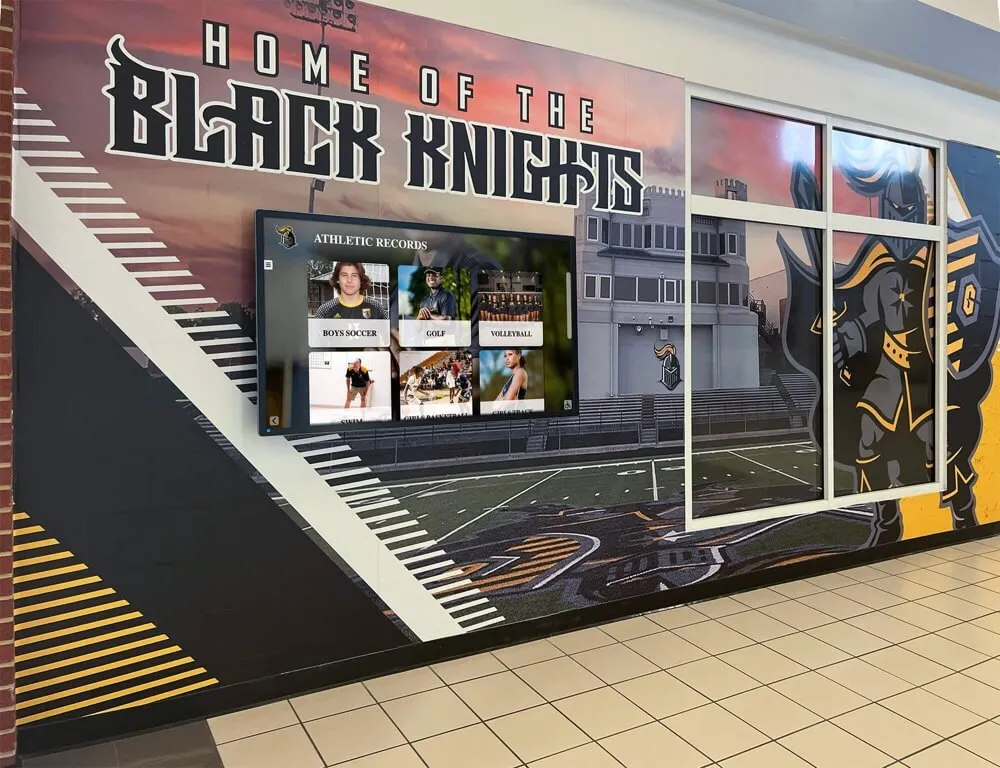
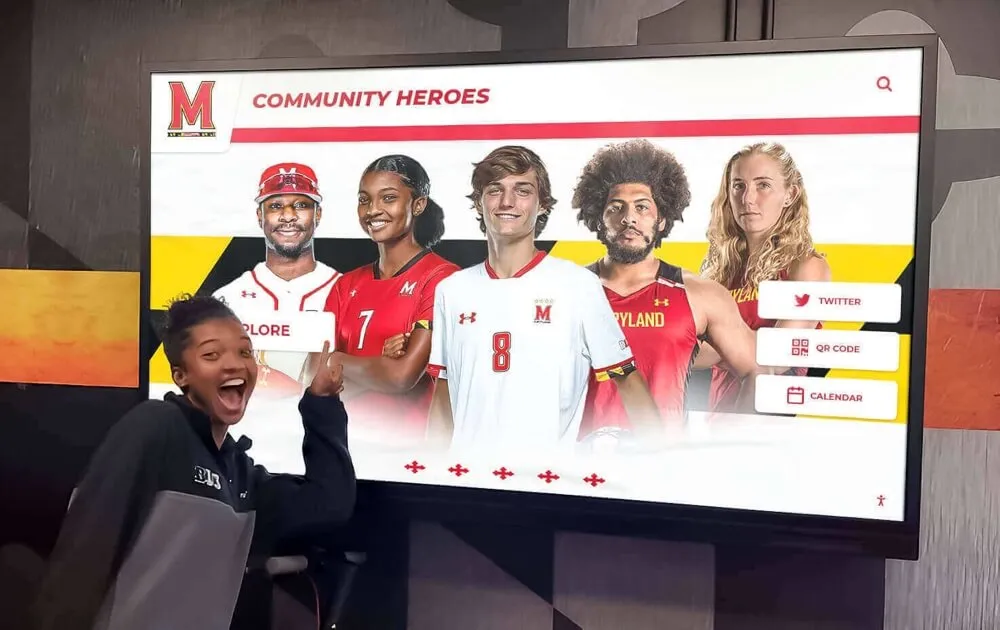
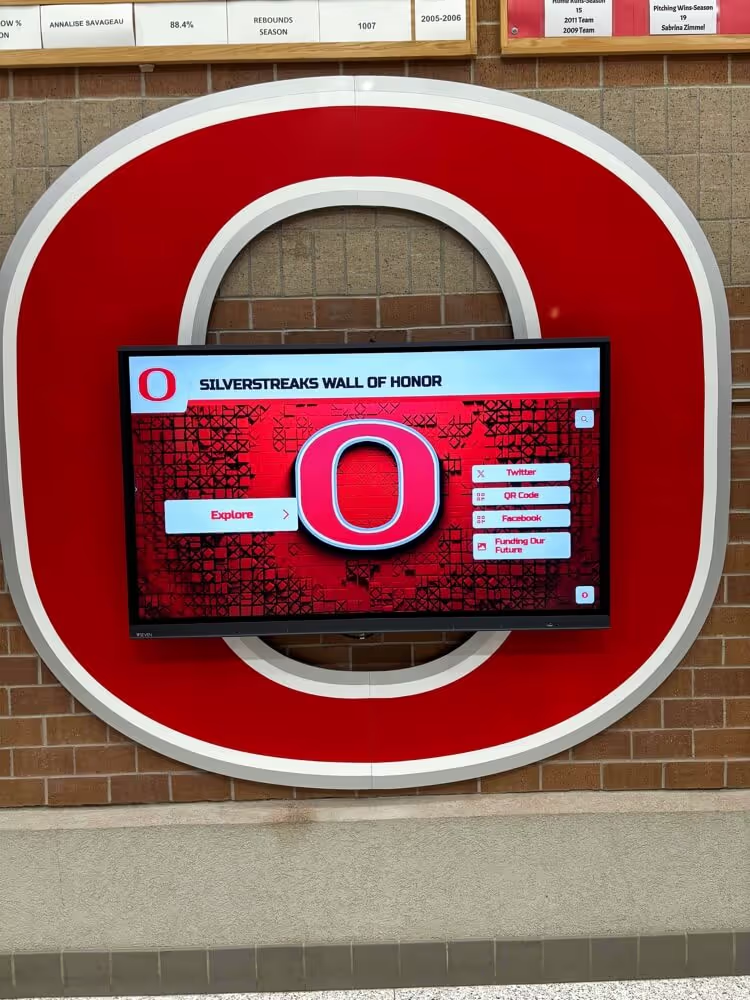
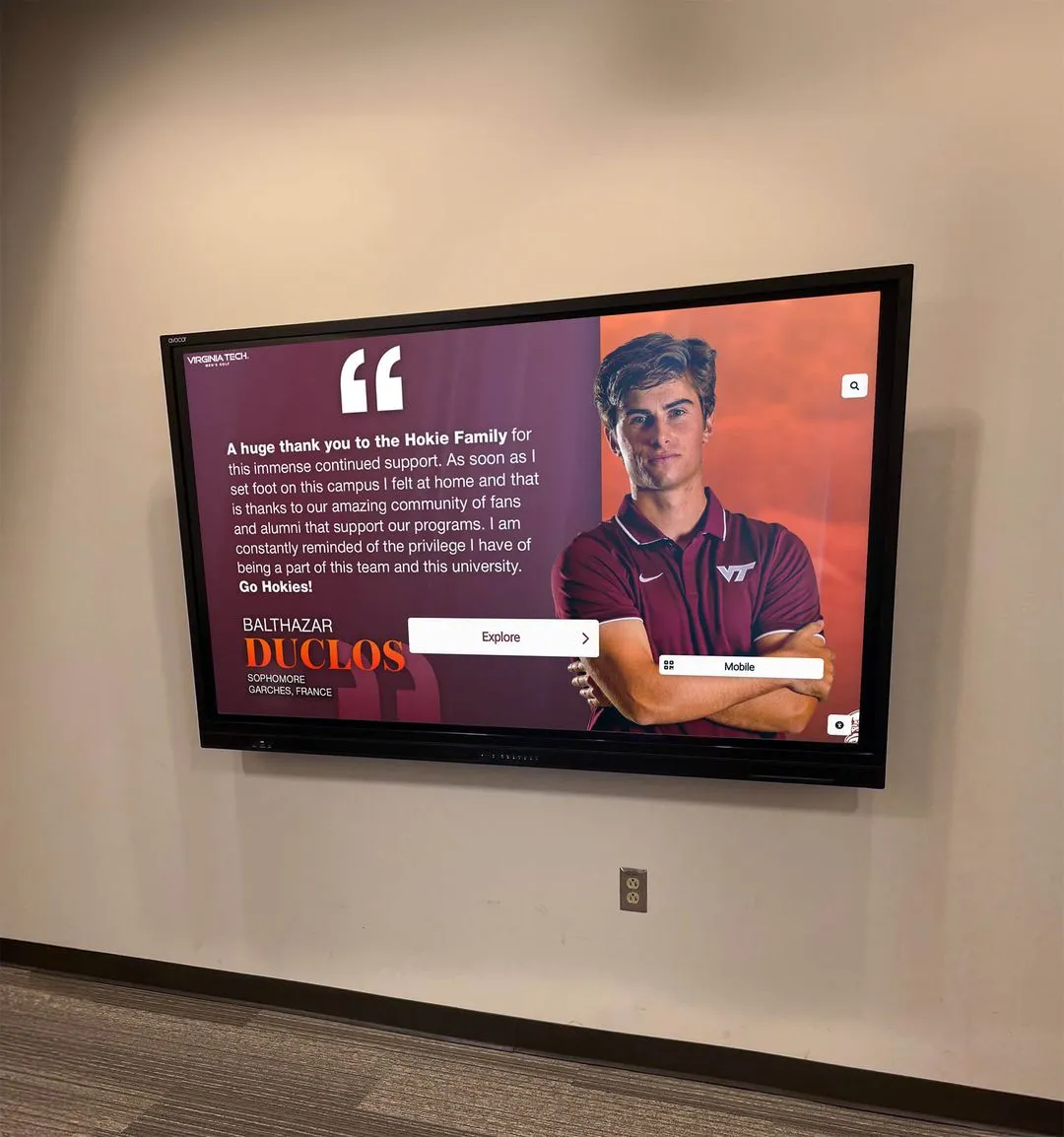
Interactive displays placed in student gathering areas create spontaneous engagement opportunities and reinforce recognition program visibility
Critical Evaluation Criteria for Platform Selection
Systematic evaluation using consistent criteria enables meaningful comparison across vendors with dramatically different approaches and capabilities.
Feature Completeness and Recognition-Specific Functionality
Generic technology platforms often lack recognition-specific features that seem obvious but prove absent upon implementation.
Essential Interactive Recognition Features
Comprehensive platforms should include:
Profile Management Capabilities
- Unlimited profiles without arbitrary caps or pricing tiers
- Rich biographical content fields (achievements, quotes, career highlights, honors)
- Multiple photo support per profile with gallery capabilities
- Video integration for tribute content and interviews
- Custom fields for organization-specific information
- Profile categorization and tagging for organization
Search and Discovery Features
- Full-text search across all profile content
- Filtering by year, achievement type, sport, or category
- Alphabetical browsing with quick-jump capabilities
- Featured content highlighting recent inductees or anniversaries
- Random profile exploration encouraging discovery
- Related content suggestions based on viewing patterns
Multimedia and Storytelling Tools
- Photo galleries with captions and dates
- Video hosting and playback optimization
- Achievement timelines showing career progressions
- Historical context integration for eras and teams
- Document attachments for programs, articles, or awards
- Social sharing capabilities for families and communities
Administrative Efficiency Features
- Batch upload and bulk editing capabilities
- Template-based profile creation for consistency
- Draft mode enabling work-in-progress before publishing
- Version history and rollback capabilities
- Scheduled publishing for announcement coordination
- User permissions and approval workflows
Platforms lacking these purpose-built recognition features force awkward workarounds creating ongoing frustration and limiting effective program operation.
Content Management Usability and Administrative Burden
Platform demonstrations showcase ideal scenarios with perfect photos and complete information. Real-world operations involve imperfect data, time-pressured staff, and evolving requirements.
Testing Real-World Administrative Scenarios
During vendor evaluations, test platforms using realistic challenges:
Content Update Speed Ask vendors to demonstrate creating a new profile from scratch, including uploading photos, entering biographical information, and publishing—using your actual content requirements rather than pre-loaded examples. Time how long this takes and whether processes feel intuitive or convoluted.
Correction and Modification Workflows Request demonstrations showing how you’d correct errors in published profiles, update achievements for existing honorees, or reorganize content into different categories. These routine maintenance tasks reveal platform usability far better than initial profile creation.
Bulk Operations and Scaling Ask how platforms handle adding 50+ profiles at once (common when digitizing historical records or adding entire graduating classes). Platforms requiring manual entry for each profile create administrative burdens that seem manageable for small initial implementations but become overwhelming at scale.
Mobile Administration Test whether content management works effectively on tablets and smartphones or requires desktop computers. Staff maintaining displays often work from various locations and devices—platforms requiring specific hardware or operating systems create operational constraints.
Schools implementing platforms without rigorous usability testing frequently discover content management requiring 3-5 times longer than vendors suggested during sales presentations—time overhead that transforms displays from valuable recognition tools into administrative burdens.
Integration Capabilities and Data Management
Recognition platforms rarely operate in isolation. Integration with existing systems dramatically affects operational efficiency and program effectiveness.
Database and Information System Integration
Schools with existing data systems benefit from platforms offering:
- Student information system (SIS) integration enabling automatic athlete roster imports rather than manual data entry
- Alumni database connectivity allowing profile synchronization with advancement systems
- Donor management system links connecting giving records with recognition displays
- Athletic records integration automatically highlighting record-breakers when marks fall
Integration eliminates duplicate data entry while ensuring recognition displays reflect current information from authoritative sources rather than becoming isolated systems requiring separate maintenance.
Export and Reporting Capabilities
Even cloud-based platforms should enable data portability through:
- Profile export in standard formats (CSV, JSON) for record-keeping
- Photo and media asset downloads maintaining institutional control
- Usage analytics and engagement reporting showing which content attracts attention
- Search term analysis revealing what visitors seek
Schools selecting platforms locking data exclusively within vendor systems risk long-term dependency limiting future flexibility when needs evolve or better platforms emerge.
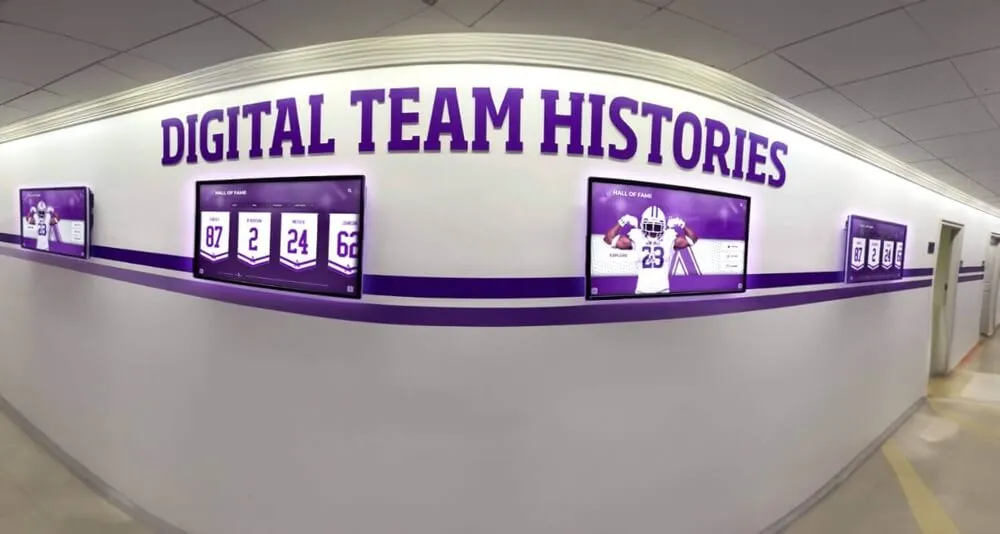
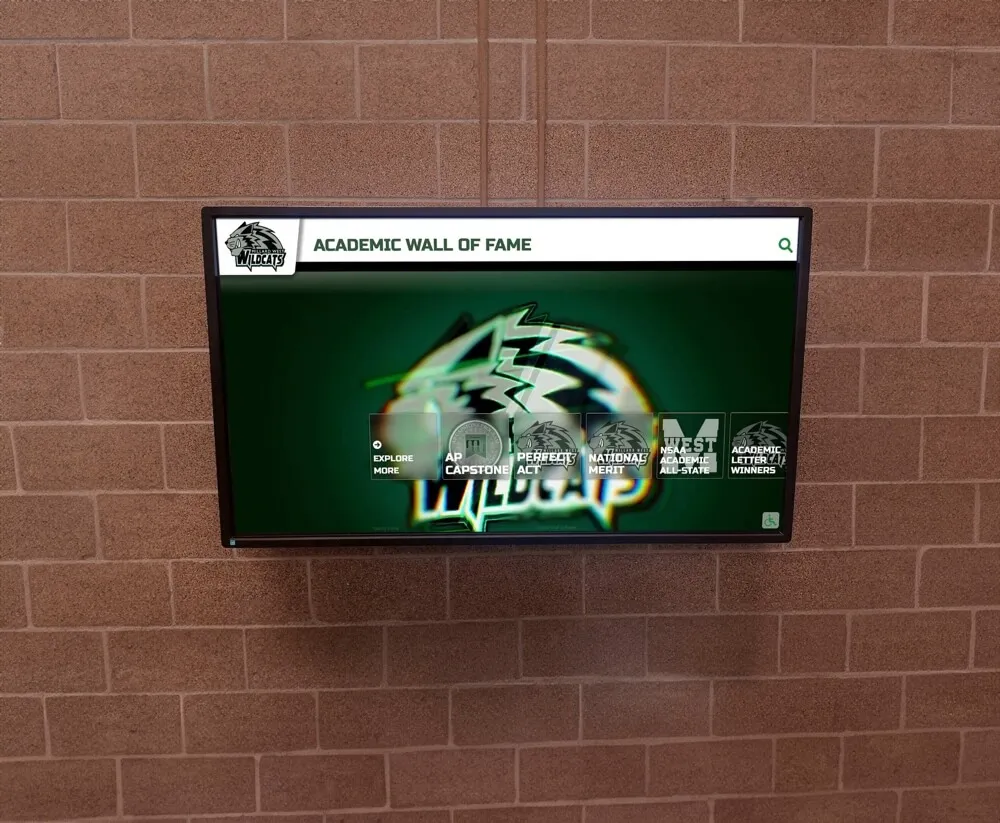
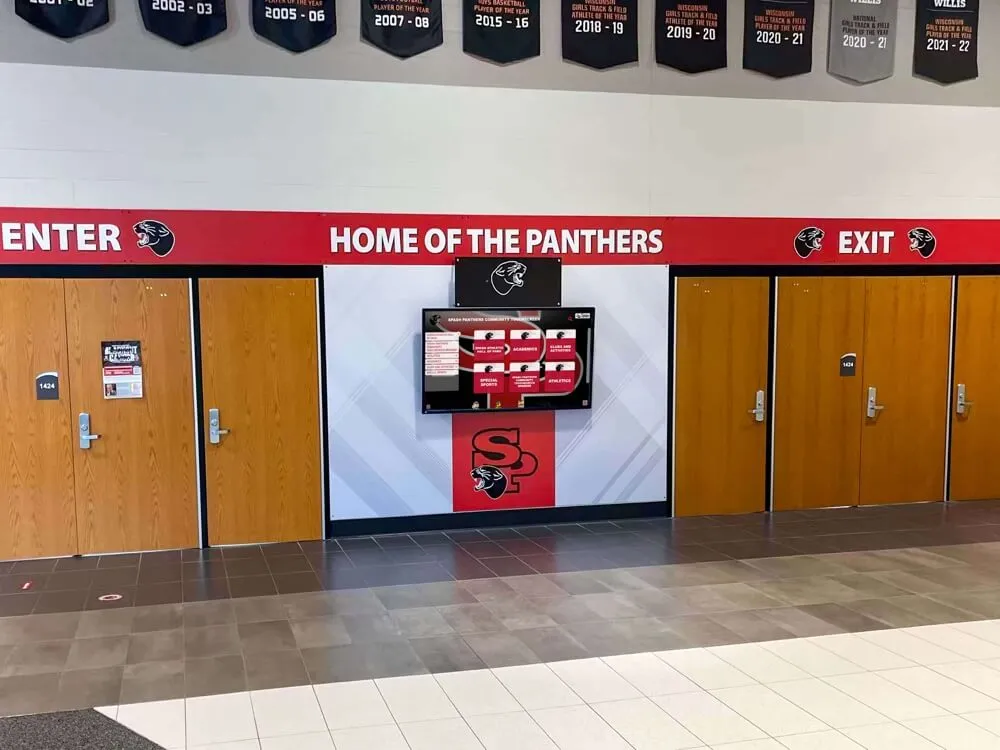
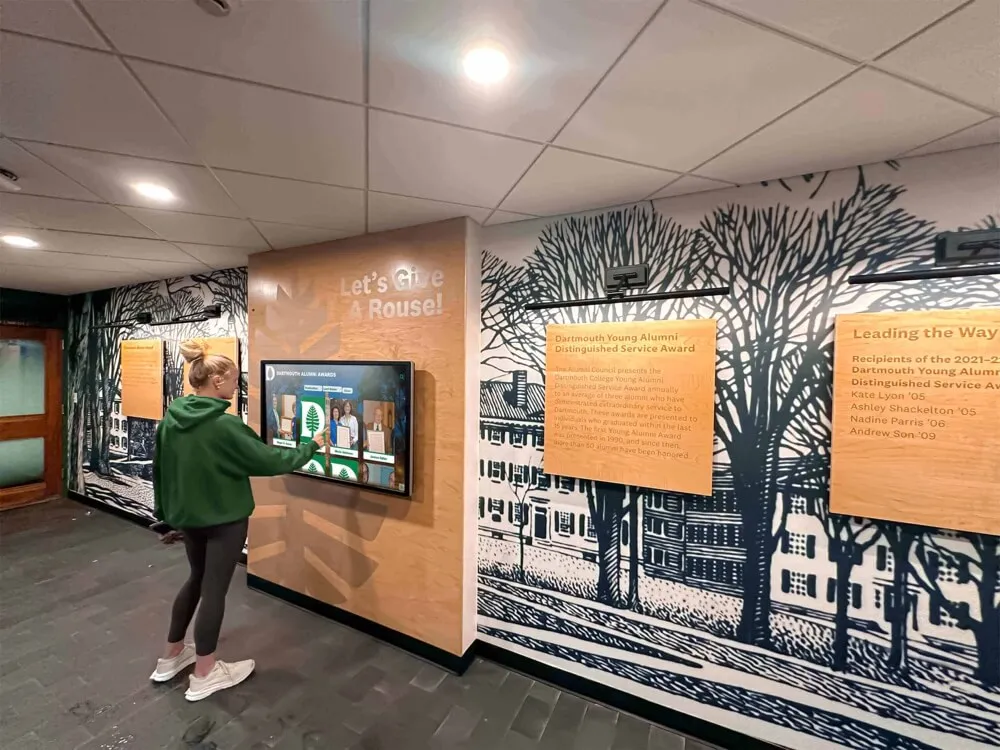
Hallway installations create natural stopping points where students, families, and visitors explore recognition content during daily activities
Hardware Considerations and Display Technology
Platform software decisions intertwine with hardware selection affecting total costs, reliability, and user experience.
Commercial vs. Consumer Display Hardware
Hardware quality dramatically affects long-term satisfaction and total cost of ownership.
Why Consumer TVs Fail in Recognition Applications
Schools attempting cost savings through consumer televisions consistently encounter problems:
- Limited operational lifespan: Consumer displays designed for residential use (4-8 hours daily) fail rapidly under continuous commercial operation (12-18 hours daily)
- Warranty exclusions: Consumer display warranties specifically exclude commercial applications, leaving schools liable for replacement costs
- Touchscreen limitations: Consumer touchscreens (if available) lack durability for public interaction, with screens failing after months rather than years
- Support challenges: Consumer manufacturers provide minimal commercial support, requiring schools to manage replacements and repairs independently
Commercial-Grade Display Requirements
Purpose-built commercial displays designed for recognition applications provide:
- Extended operational ratings: 16-24 hours daily operation without overheating or component stress
- Commercial warranties: Coverage specifically including public interactive applications
- Durable touchscreen technology: Industrial-grade capacitive or infrared touch systems withstanding millions of interactions
- Professional support: Rapid replacement services minimizing downtime when issues occur
Commercial displays cost 40-60% more than comparable consumer models but deliver 3-5 times longer operational lifespans with dramatically lower failure rates—making them more economical over typical 7-10 year deployment cycles.
Mounting, Placement, and Environmental Factors
Hardware placement decisions significantly impact engagement and technical reliability.
Strategic Placement for Maximum Engagement
Recognition displays achieve highest interaction rates when positioned in:
- High-traffic gathering areas: Main lobbies, cafeteria entrances, gymnasium corridors
- Natural stopping points: Near trophy cases, outside athletic offices, at hallway intersections
- Student and family zones: Areas where parents wait during activities or pickup
- Alumni visiting locations: Near administrative offices or designated alumni spaces
Schools often mistake visibility for engagement, placing displays in prominent locations that people pass quickly rather than areas where natural stopping and lingering occurs. Observing actual traffic patterns before installation prevents expensive repositioning later.
Technical Infrastructure Requirements
Successful installations account for:
- Electrical access: Dedicated circuits preventing display shutdowns during events or maintenance
- Network connectivity: Hardwired Ethernet preferred over WiFi for reliability and security
- Mounting structure: Wall studs, concrete anchors, or floor mounting designed for display weight
- Ventilation and cooling: Adequate airflow preventing overheating in enclosed spaces
- Accessibility compliance: Height and positioning accommodating wheelchair users and various visitor abilities
Working with professional installation teams experienced in commercial interactive displays prevents technical problems while ensuring installations meet safety codes and accessibility requirements.
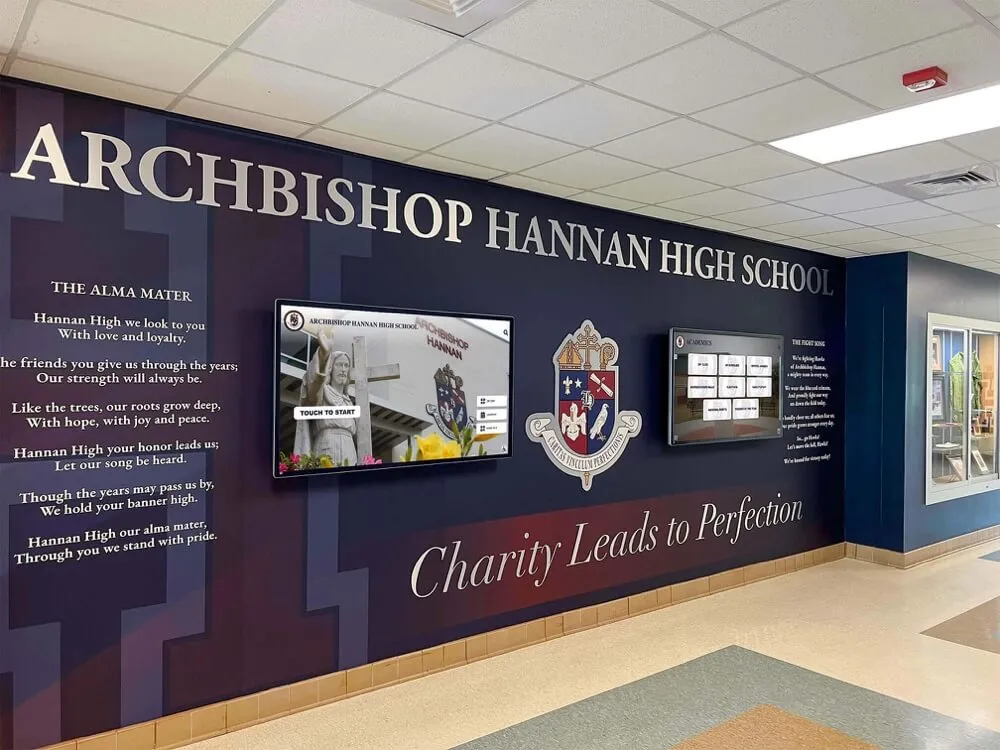
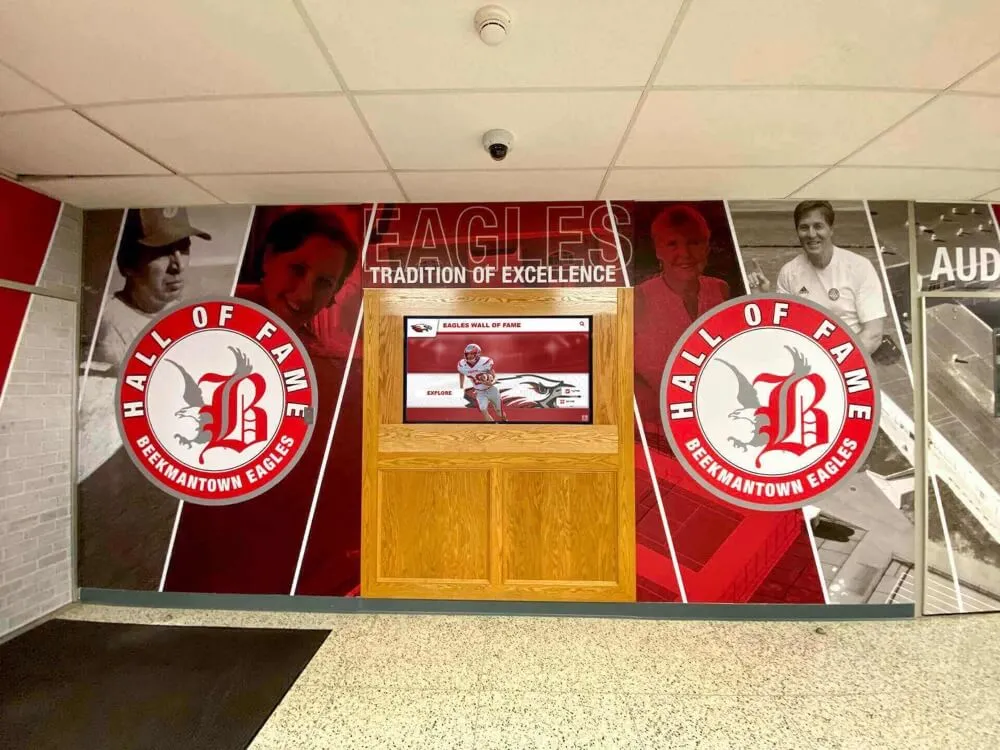
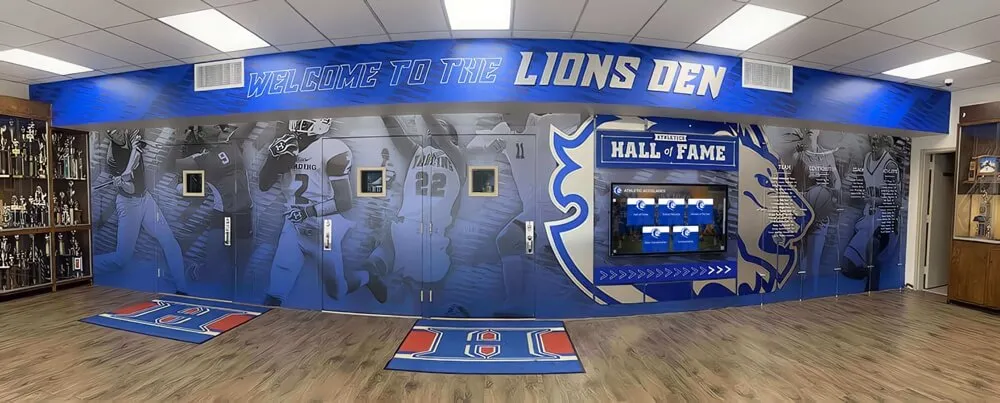
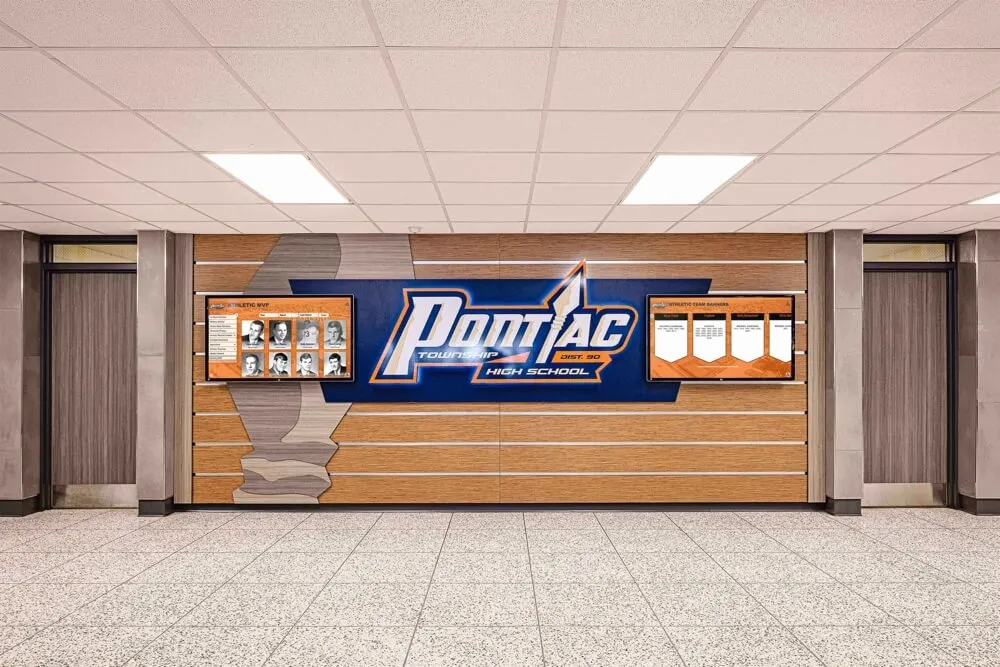
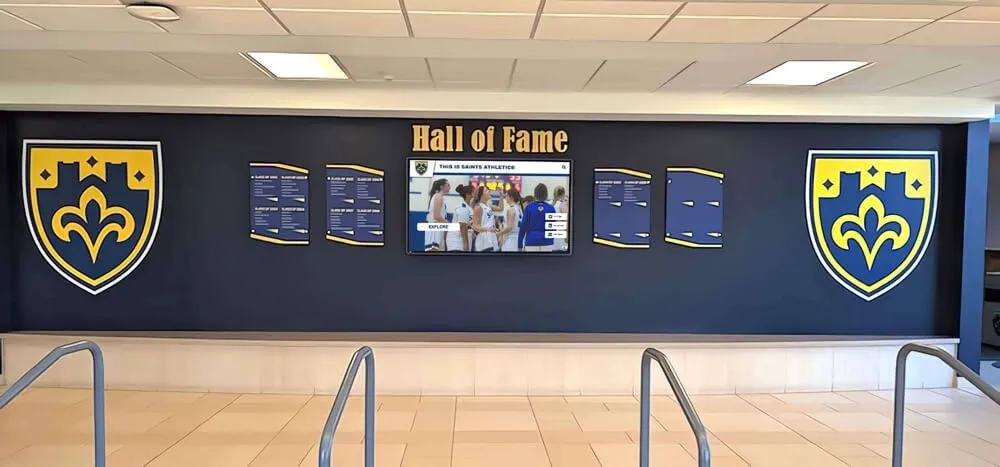
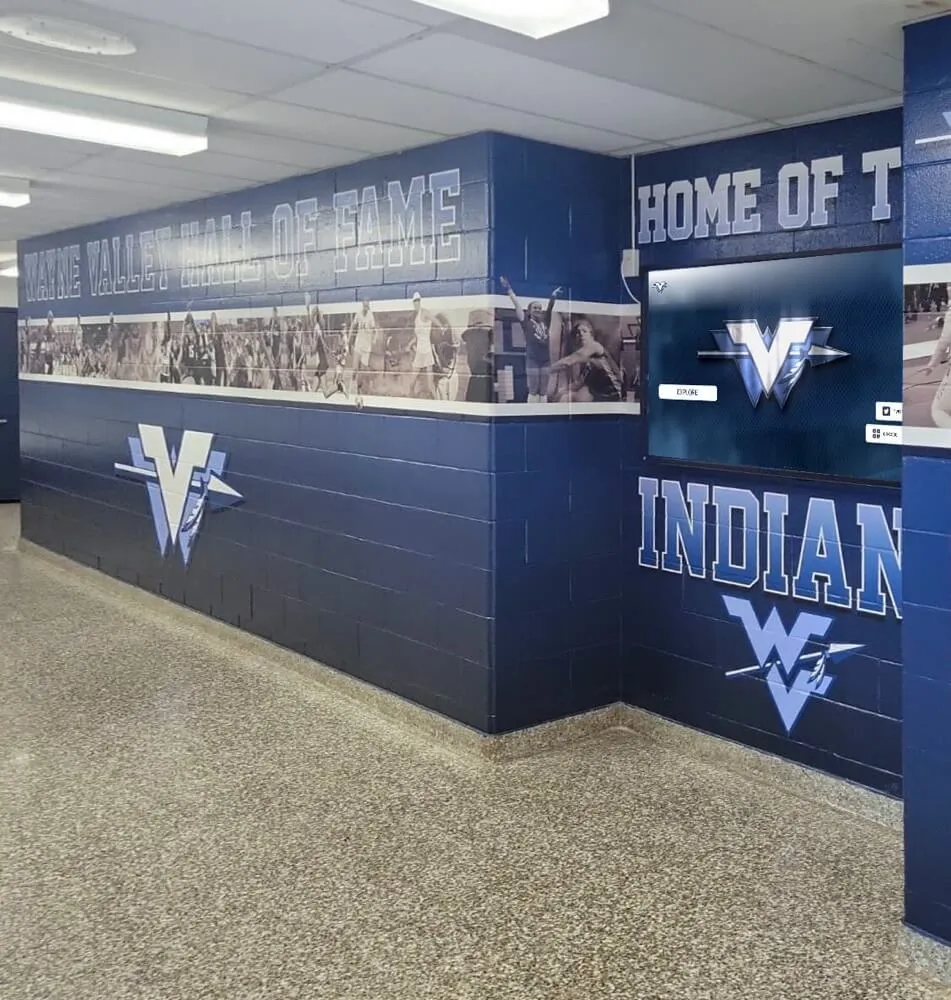
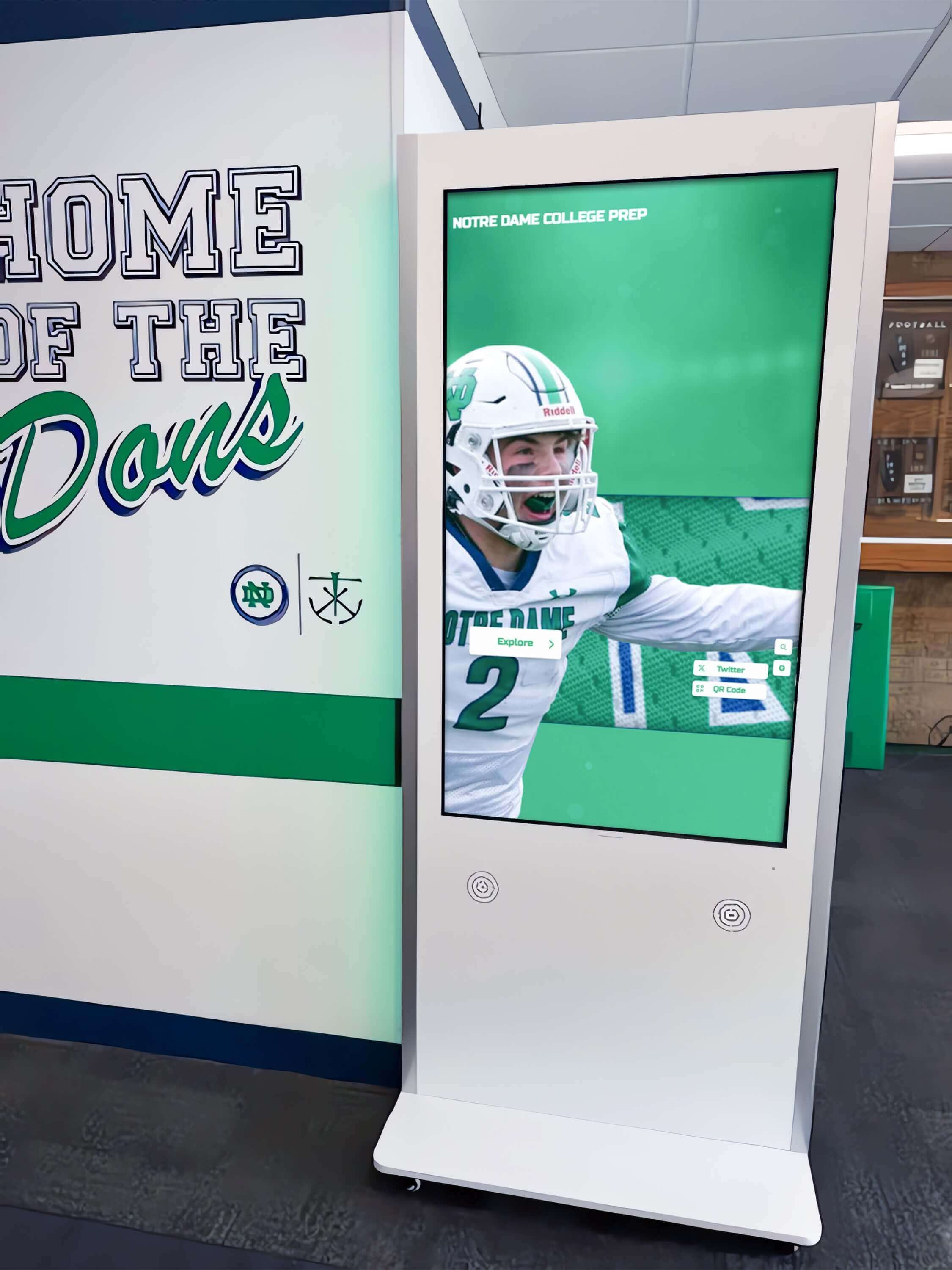
Thoughtful integration with existing environmental branding creates cohesive installations feeling like permanent institutional features rather than added technology
Financial Evaluation and Total Cost of Ownership
Comprehensive financial analysis extends far beyond initial platform and hardware purchases to include multi-year operational costs.
Understanding Vendor Pricing Models
Recognition platform vendors structure pricing dramatically differently, making comparison challenging without understanding underlying models.
Common Pricing Structures
One-Time Purchase Models Some vendors offer single upfront payments including perpetual software licenses, though these typically exclude:
- Hosting and cloud infrastructure (requiring separate annual fees)
- Software updates and new features (charged separately or via maintenance contracts)
- Technical support after initial implementation periods
- Content management assistance or training refreshers
Schools choosing perpetual licenses must carefully evaluate total costs including separately-charged components that vendors minimize during sales discussions.
Annual Subscription Models Cloud-based platforms typically charge annual subscriptions including:
- Software licensing and feature access
- Cloud hosting and infrastructure
- Automatic updates and new feature releases
- Ongoing technical support and assistance
- Content management tools and training resources
Subscription models provide predictable budgeting while ensuring schools always access latest platform capabilities without separate upgrade charges.
Per-Display vs. Per-Organization Pricing Some vendors charge per installation (limiting cost-effectiveness for multiple displays), while others price per organization (enabling unlimited displays under single licensing). Schools planning multiple installations must clarify pricing structures before commitments.
Calculating Comprehensive Total Cost of Ownership
Realistic budgeting requires projecting costs across expected 7-10 year technology lifecycles.
Initial Implementation Costs
- Display hardware: $4,000-$12,000 per installation for commercial-grade touchscreens
- Computing hardware: $800-$2,500 for media players with adequate specifications
- Mounting and installation: $1,500-$4,000 for professional installation including electrical
- Platform software: $0-$8,000 for initial licensing and setup depending on vendor
- Content development: $2,000-$8,000 for historical content digitization and profile creation
- Staff training: $300-$1,500 for comprehensive administrative instruction
- Network infrastructure: $500-$2,500 if dedicated wiring or improvements required
Annual Ongoing Expenses
- Platform licensing/hosting: $1,200-$4,500 annually depending on model
- Technical support: $0-$2,000 annually for platforms not including support
- Content management: $1,500-$6,000 annually for staff time or outsourced services
- Hardware maintenance: $200-$600 annually for cleaning, repairs, component replacement
- Electrical costs: $75-$150 annually for continuous operation
- Insurance and warranty: $100-$300 annually if purchased separately
Over 7-10 year lifecycles, schools spend $20,000-$55,000+ per display installation. Budget discussions focusing exclusively on initial $10,000-$18,000 purchases create unrealistic expectations and funding shortfalls undermining program sustainability.
Budget Sources and Funding Strategies
Schools successfully implementing recognition displays utilize diverse funding approaches.
Traditional Operating Budgets Some schools fund displays through normal technology or facilities budgets, treating interactive recognition as standard institutional infrastructure similar to digital signage screens or lobby displays.
Capital Campaign Integration Many institutions incorporate recognition displays within capital campaigns, with display costs either covered by campaign budgets or offered as naming opportunities for major donors supporting broader facility renovations.
Booster Club and Athletic Foundation Funding Athletic recognition displays frequently receive booster club support, particularly when displays celebrate sports achievements and provide ongoing engagement strengthening booster membership and participation.
Alumni Association Sponsorship Alumni organizations often fund recognition displays serving their constituencies, viewing displays as member services enhancing connection between alumni and institutions while supporting broader engagement strategies.
Donor-Funded Recognition Opportunities Some schools offer recognition display sponsorships as naming opportunities, with donors funding installations in exchange for acknowledgment, memorial dedications, or tribute designations.
Diversified funding approaches reduce pressure on any single budget source while building stakeholder investment in recognition program success.
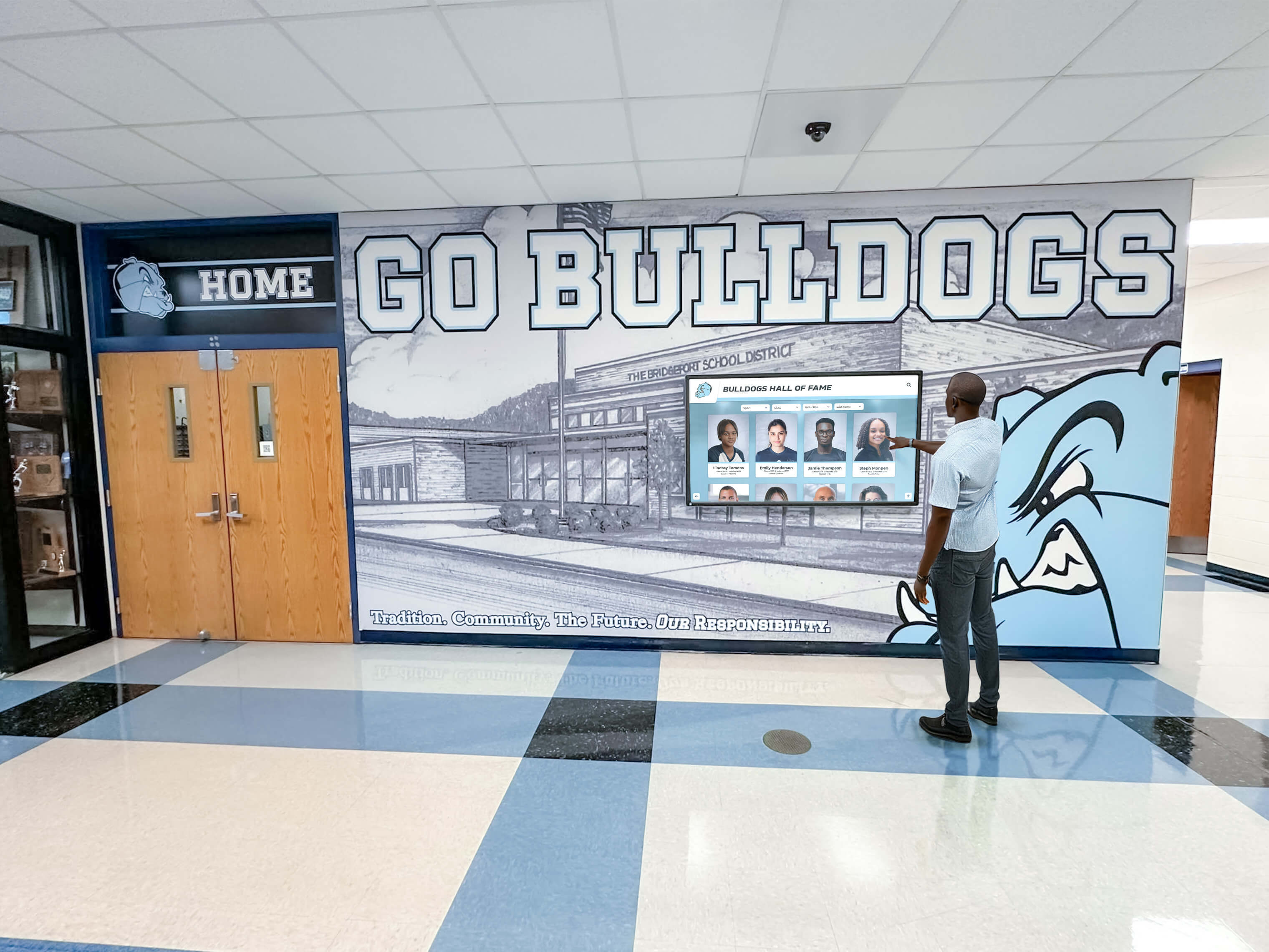
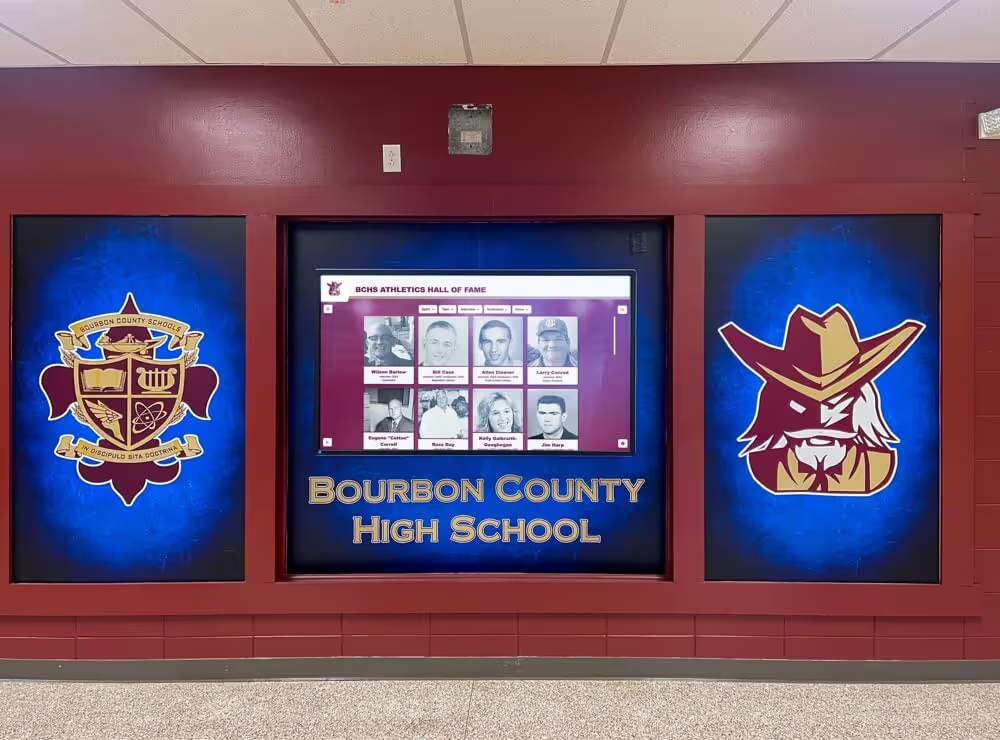
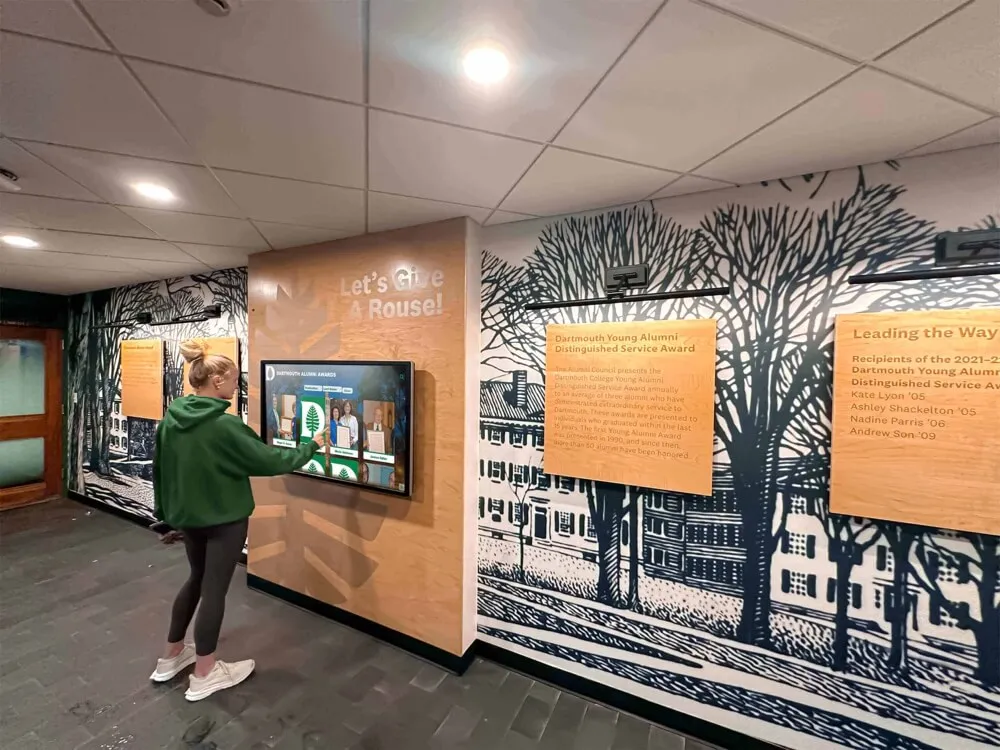
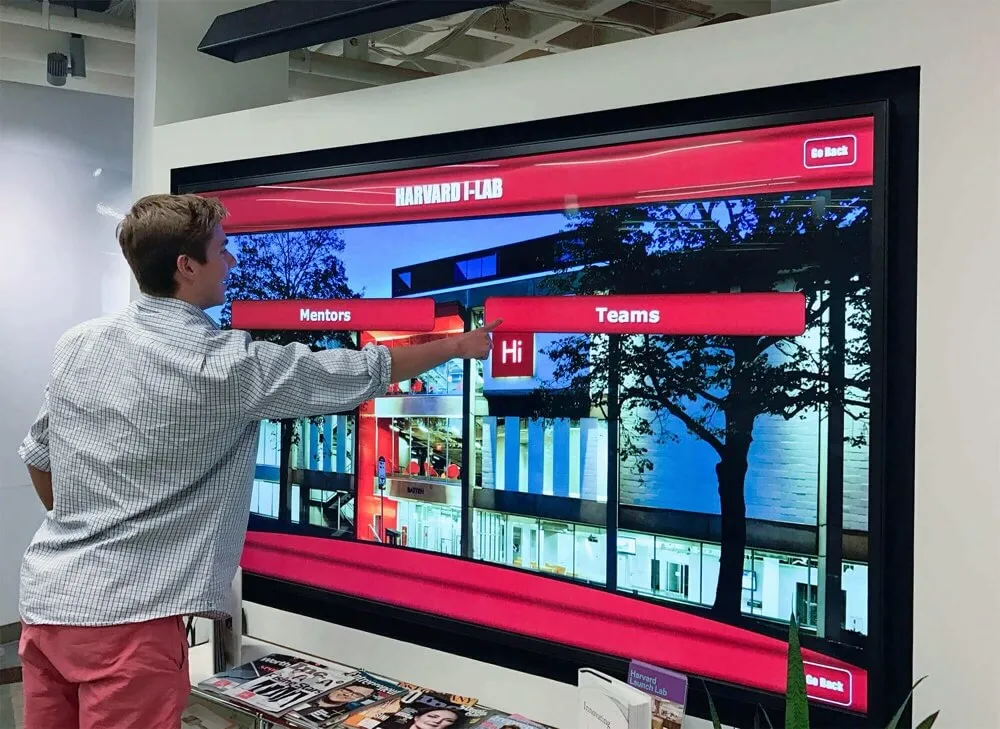
User-friendly interfaces enable visitors of all ages and technical backgrounds to explore recognition content independently without staff assistance
Vendor Evaluation and Selection Process
Methodical vendor evaluation using consistent criteria enables objective comparison despite persuasive sales presentations and marketing materials.
Essential Questions to Ask Every Vendor
Platform Capabilities and Limitations
- Is this a purpose-built recognition platform or digital signage adapted for recognition use?
- What’s the maximum number of profiles supported? Are there pricing tiers or caps?
- Can profiles include unlimited photos and videos, or are there quantity restrictions?
- What search and filtering capabilities do visitors have?
- Can you demonstrate content management using our actual requirements rather than prepared examples?
Technical Architecture and Infrastructure
- Is this cloud-based or server-based? What are infrastructure requirements?
- What happens if internet connectivity fails? Does the display continue operating?
- How are software updates deployed? Do they require IT involvement?
- What data security and privacy measures protect profile information?
- Can we export our content and data if we change vendors in the future?
Content Management and Administration
- Who can realistically manage content updates? What technical skills are required?
- Can multiple administrators access the system? Are there approval workflows?
- How long does creating a typical profile take from start to publication?
- Can content be managed remotely or only from specific devices?
- What happens when staff members who manage content leave our organization?
Costs and Financial Terms
- What exactly is included in quoted prices? What costs are additional?
- What are total costs over a 7-year period including all hosting, support, and updates?
- Are there per-display charges if we add installations later?
- What payment terms are available? Are there multi-year discounts?
- What happens if we need to cancel? Are there termination fees or data migration assistance?
Support and Training
- What training is included? Is ongoing training available as staff change?
- What technical support is provided? What are response time commitments?
- Are there user communities or resources for administrator assistance?
- Can you provide references from similar organizations we can contact?
- What happens when hardware fails? What are replacement processes and timelines?
Reference Checking and Implementation Research
References provided by vendors represent their most satisfied customers—still valuable but requiring strategic questioning.
Questions for Vendor References
When contacting schools currently using platforms you’re evaluating:
- How long have you had your display? How has your experience evolved over time?
- What surprised you (positively or negatively) after implementation?
- How much time do you actually spend on content management monthly?
- Have you needed technical support? How responsive and helpful has it been?
- Knowing what you know now, would you make the same platform choice?
- What advice would you give schools currently evaluating similar systems?
Independent Research Beyond Vendor References
Supplement vendor-provided references with independent research:
- Search for schools in your region or conference with similar displays—contact them directly
- Join education technology forums or state association groups asking about member experiences
- Review vendor social media, particularly looking for customer complaints or support issues
- Check Better Business Bureau ratings and complaint patterns
- Request actual customer satisfaction survey results rather than selected testimonials
Independent validation provides perspective beyond carefully curated vendor presentations and references.
Implementation Planning and Launch Strategy
Platform selection represents only the beginning—successful implementation requires careful planning and realistic timelines.
Pre-Implementation Content Development
Content preparation significantly impacts launch success and perceived display value.
Historical Content Digitization
Most recognition programs begin with existing honorees requiring profile creation:
- Identify existing physical displays, plaques, or records documenting current honorees
- Gather biographical information from alumni databases, yearbooks, or institutional archives
- Source quality photos from historical files, family submissions, or professional digitization
- Verify accuracy through coaches, administrators, or honorees themselves when possible
- Standardize content formatting ensuring consistency across profile collection
Schools underestimate digitization time required, particularly for large historical collections. Realistic planning allocates 2-4 hours per profile for comprehensive biographical research and content development—meaning 100 historical profiles require 200-400 total hours.
Launch Content Priorities
Rather than delaying launches until every historical profile is complete, successful schools prioritize:
- Recent honorees (last 5-10 years) with comprehensive biographical content
- Notable historical figures representing institutional heritage and tradition
- Complete coverage for specific high-profile categories (state champions, hall of fame inductees)
- Representative sampling across eras showing display scope and historical depth
Launching with 30-50 comprehensive profiles proves more effective than 200 sparse entries containing only names and years. Initial launches establish quality expectations while demonstrating display capabilities, with additional profiles added steadily post-launch maintaining ongoing interest and encouraging return visits.
Staff Training and Transition Planning
Technology platforms succeed or fail based on human factors more than technical capabilities.
Comprehensive Administrator Training
Initial training should include:
- Multiple hands-on sessions creating actual profiles for your organization
- Practice with correction workflows and common administrative scenarios
- Troubleshooting common issues before they occur during independent operation
- Documentation and quick-reference guides for periodic tasks
- Recorded training sessions staff can review when questions arise later
Succession Planning for Administrative Continuity
Administrative transitions create vulnerabilities for technology programs when knowledge resides exclusively with individuals:
- Document all administrative processes and workflows in writing
- Identify backup administrators receiving training alongside primary content managers
- Establish regular refresher training addressing questions and emerging needs
- Build time into staff transitions for knowledge transfer between outgoing and incoming administrators
- Maintain vendor contact for technical assistance supplementing internal expertise
Schools treating implementation as one-time training events consistently struggle when trained staff members transition to other roles—sustainable programs build systematic knowledge sharing and succession planning into administrative structures.
Community Launch and Engagement Strategies
Recognition displays succeed when communities know they exist and understand how to engage with them.
Launch Event Planning
Formal launch events create awareness and enthusiasm:
- Coordinate unveilings with major events—homecoming, award ceremonies, or alumni weekends
- Invite honorees and families to experience recognition displays firsthand
- Provide guided demonstrations helping visitors understand exploration capabilities
- Capture launch coverage for newsletters, social media, and alumni communications
- Generate publicity through local media highlighting school investment in recognition
Ongoing Engagement and Promotion
Initial launches represent beginnings rather than endpoints for recognition program development:
- Feature different profiles monthly in newsletters or social media
- Encourage families to visit displays during school events and activities
- Integrate displays into tours for prospective students and families
- Reference displays during announcements celebrating new achievements
- Solicit content submissions from alumni expanding biographical information
Recognition displays function as living institutional resources growing richer over time—not static installations completed upon launch but evolving programs deepening institutional memory and community connection through sustained engagement.
Common Pitfalls and How to Avoid Them
Learning from widespread mistakes helps schools navigate selection and implementation more successfully.
Prioritizing Price Over Total Value
The lowest initial price rarely represents the best overall investment when comprehensive value factors are considered.
Hidden Costs of Budget Platforms
Inexpensive platforms often create expensive ongoing costs through:
- Difficult interfaces requiring IT support for routine updates
- Limited features forcing workarounds consuming excessive administrative time
- Poor reliability creating repeated technical support needs
- Lack of included training requiring expensive external assistance
- Arbitrary profile limits requiring upgrades or content deletion
- Vendor instability risking platform abandonment and data loss
Schools selecting platforms primarily on low initial pricing frequently spend far more over multi-year periods through excessive administrative burden, technical overhead, and eventual replacement costs when platforms prove inadequate.
Evaluating Comprehensive Value
More meaningful value comparisons consider:
- Administrative efficiency: How much staff time does platform operation require annually?
- Feature completeness: Does the platform include everything needed or require expensive additions?
- Vendor stability: Will this company likely support the platform 7-10 years from now?
- Scalability: Can the platform grow with expanding recognition programs without pricing penalties?
- Support quality: Does vendor support actually resolve issues or simply acknowledge tickets?
Platforms costing 40-60% more initially but requiring 70% less administrative overhead deliver superior value over typical technology lifecycles—savings that dwarf initial price differences.
Failing to Test with Actual Content and Users
Vendor demonstrations showcase ideal scenarios with perfect content and prepared workflows—reality proves messier.
Real-World Testing Requirements
Before commitments, test platforms using:
- Actual content: Your photos (not professional stock images), your biographical information (with inconsistencies and gaps realistic to your sources)
- Real administrators: The actual staff who will manage content, not just technology directors comfortable with complex interfaces
- Typical scenarios: Routine tasks like correcting errors, adding photos, or reorganizing profiles—not just creating perfect profiles from scratch
- Time measurement: How long do realistic administrative tasks actually take versus vendor claims?
Schools conducting realistic hands-on testing discover platform usability differences invisible during polished sales demonstrations, preventing expensive mistakes before contracts are signed.
Underestimating Content Management Requirements
Every school underestimates ongoing content management time and complexity during initial evaluations—successful schools plan accordingly despite optimistic vendor claims.
Realistic Content Management Expectations
Sustainable recognition programs require:
- Designated responsibility: Specific administrators with explicit content management duties and appropriate time allocation
- Realistic time budgets: 2-5 hours monthly for routine maintenance plus 20-40 hours annually for major updates
- Quality standards: Content guidelines ensuring consistent biographical information, photo quality, and professional presentation
- Feedback mechanisms: Processes enabling corrections from families, honorees, and community members
- Growth planning: How will content management scale as profile collections expand over years?
Recognition displays succeed when institutions commit resources ensuring content remains current, accurate, and comprehensive—not when displays are treated as one-time technology purchases requiring minimal ongoing attention.
Making Your Final Decision
After thorough evaluation, successful schools make platform selections using structured decision frameworks balancing multiple factors.
Scoring and Comparison Frameworks
Objective comparison requires consistent evaluation criteria across all considered platforms.
Sample Evaluation Scorecard
Create weighted scoring across critical dimensions:
Platform Capabilities (30% weight)
- Recognition-specific features and functionality
- Search and discovery capabilities
- Multimedia and storytelling tools
- Profile capacity and scalability
- Mobile and accessibility features
Usability and Administration (25% weight)
- Content management interface intuitiveness
- Time required for routine administrative tasks
- Training requirements and learning curve
- Administrative access and workflow flexibility
- Documentation and self-service resources
Technical Architecture (15% weight)
- Cloud vs. server infrastructure
- Security and data privacy measures
- Integration capabilities with existing systems
- Reliability and uptime track record
- Offline operation capabilities
Financial Considerations (15% weight)
- Total cost of ownership over 7-10 years
- Pricing model transparency and fairness
- Payment flexibility and terms
- Hidden costs and fee structures
- Return on investment value
Vendor Factors (15% weight)
- Company stability and longevity
- Customer references and satisfaction
- Support quality and responsiveness
- Implementation assistance and training
- Roadmap and product development commitment
Weighted scoring prevents overemphasis on any single factor while enabling objective comparison across platforms with different strengths and weaknesses.
Building Consensus Among Stakeholders
Committee members with different priorities must align on final selections.
Facilitating Productive Decision Conversations
- Share individual scorecards before group discussions, identifying alignment and disagreement
- Discuss disagreements productively, understanding different priority perspectives
- Revisit institutional objectives ensuring platform selection supports actual goals
- Consider piloting finalists if budgets and timelines permit reducing decision risk
- Build implementation support by including dissenting perspectives in final planning
Schools making platform selections through transparent, inclusive processes report higher implementation success as stakeholders feel invested in chosen directions even when personal preferences differed.
Conclusion: Investing in Recognition Technology That Serves Your Community
Selecting interactive school display software represents significant institutional investment warranting methodical evaluation, structured decision processes, and realistic implementation planning. Schools approaching platform selection strategically using the frameworks and criteria explored throughout this guide consistently achieve better outcomes—higher satisfaction, stronger engagement, more sustainable operations, and superior return on recognition technology investments serving communities effectively for many years.
The difference between successful implementations and expensive regrets rarely involves dramatic technology differences—most commercial platforms offer adequate basic capabilities. Success instead depends on matching platform characteristics to actual institutional needs, administrative capabilities, and community priorities while planning realistic implementations accounting for content development time, training requirements, and ongoing operational sustainability.
Purpose-built recognition platforms like Rocket Alumni Solutions specifically address the challenges schools encounter with generic digital signage repurposed for recognition applications—offering genuinely intuitive content management, unlimited profile capacity, comprehensive search and discovery features, and cloud-based administration enabling non-technical staff to maintain displays independently without ongoing IT dependency. These purpose-built capabilities, combined with transparent pricing and dedicated support specifically understanding school recognition program needs, help institutions avoid the common pitfalls and implementation challenges that create buyer’s remorse with platforms fundamentally designed for different applications.
Your recognition program deserves technology genuinely designed to celebrate achievements, preserve institutional memory, and engage your community through compelling interactive experiences. Investing time in thorough platform evaluation ensures your school selects solutions delivering lasting value worthy of significant budget commitments—technology that honors the people and achievements that define your institution’s character and legacy.