



Schools have traditionally managed recognition, yearbook content, and trophy displays as three separate systems requiring distinct workflows, different vendors, and duplicated efforts across multiple departments. Athletic directors maintain trophy cases with outdated plaques. Yearbook advisors collect student profiles and achievement data through separate processes. Administrators coordinate recognition ceremonies using disconnected presentation systems. Each program requires its own content creation, updates, and maintenance—multiplying workload while fragmenting the student achievement story across disconnected platforms.
This fragmentation creates real problems: students honored in one system remain invisible in others, content teams duplicate data entry across multiple platforms, updating information requires separate processes for each display type, historical achievements become siloed in specific departments rather than accessible schoolwide, and coordinating comprehensive recognition requires massive effort coordinating between disconnected systems. Meanwhile, schools invest in multiple software licenses, hardware platforms, and vendor relationships to accomplish what could function as a unified experience.
This comprehensive guide explores how consolidated interactive school software transforms this fragmented approach into streamlined platforms where one touchscreen system powers recognition displays, digital yearbook experiences, and modern trophy case presentations simultaneously—reducing administrative burden while creating richer, more accessible celebrations of student achievement.
The shift toward unified interactive school platforms represents more than technological convenience—it fundamentally changes how schools celebrate achievement, preserve history, and create engaging experiences for students, families, and visitors exploring decades of institutional excellence through intuitive touchscreen interfaces.

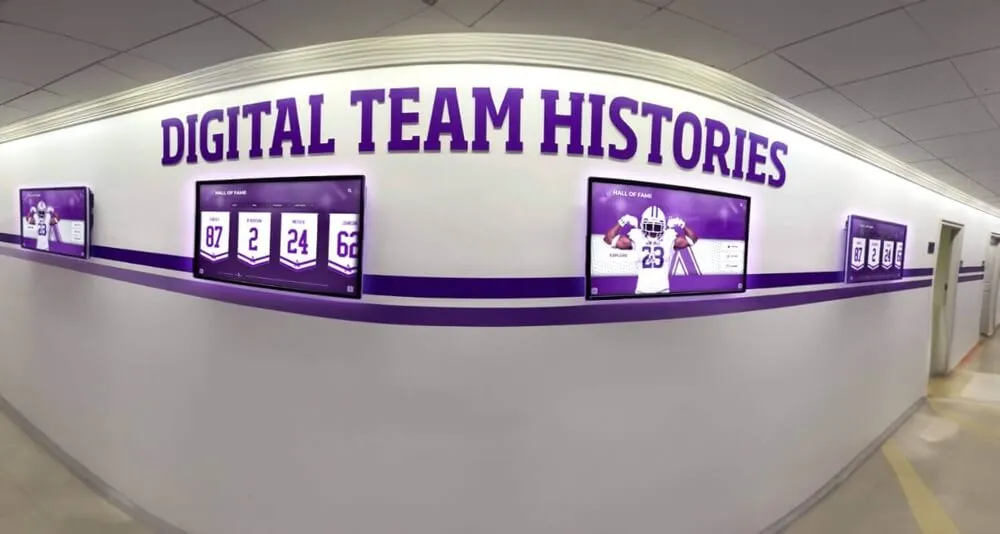
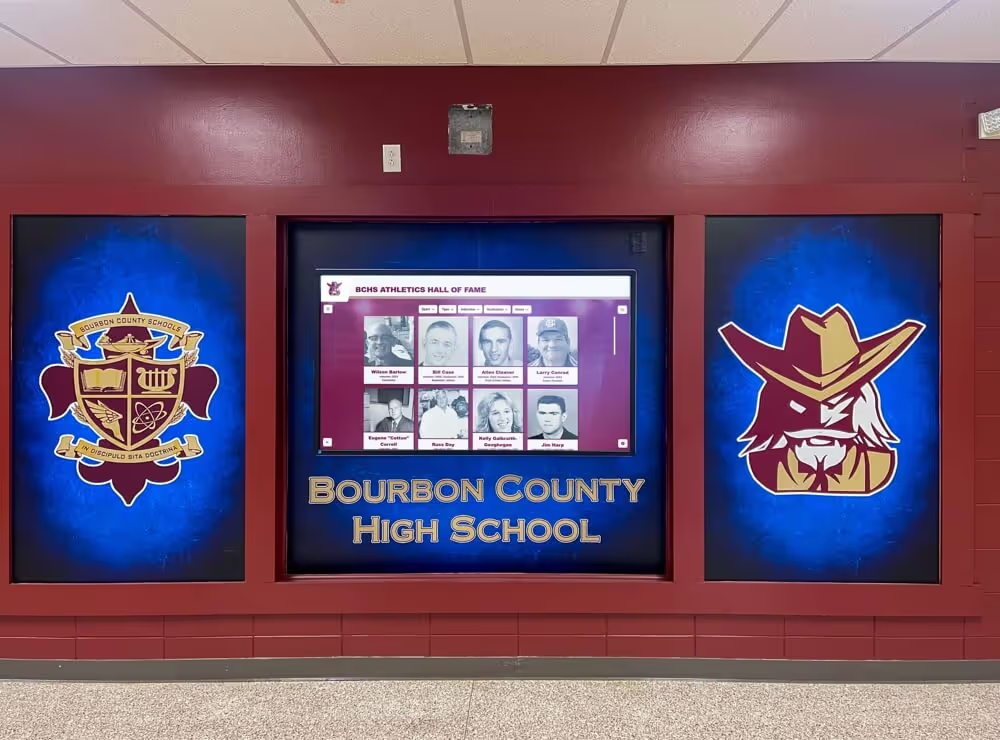
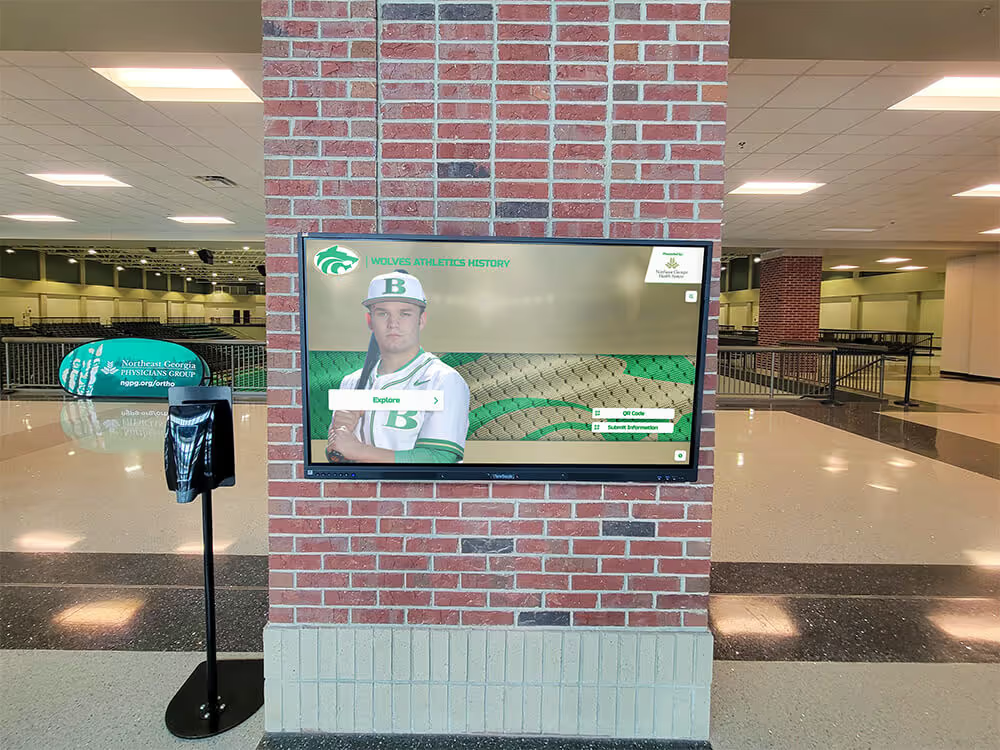
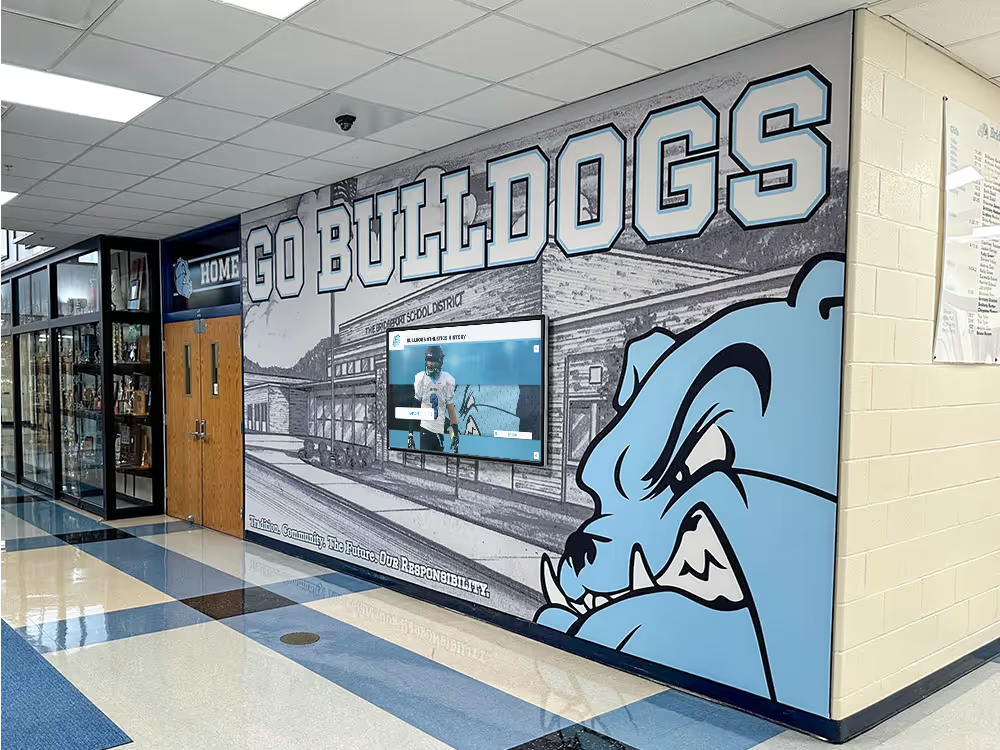
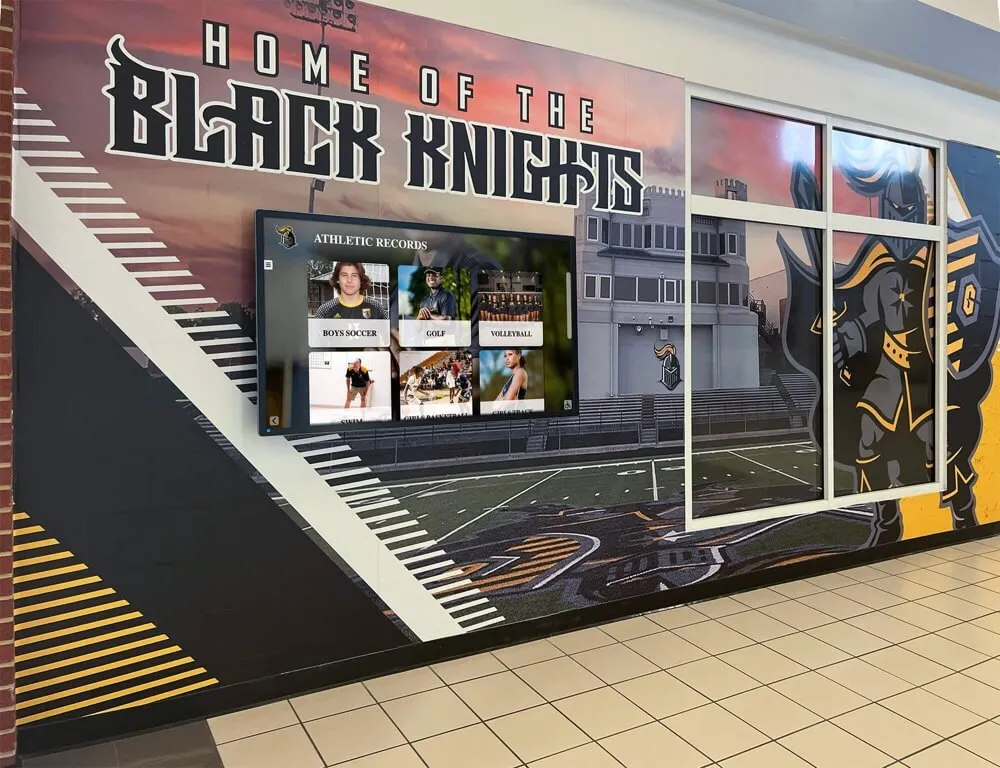
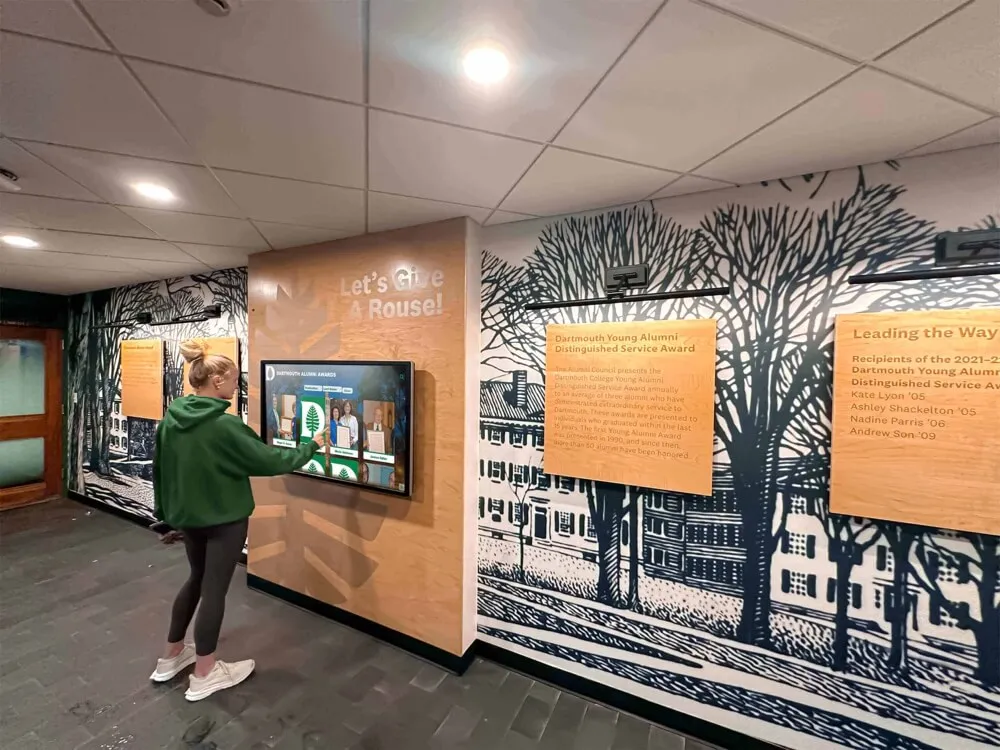
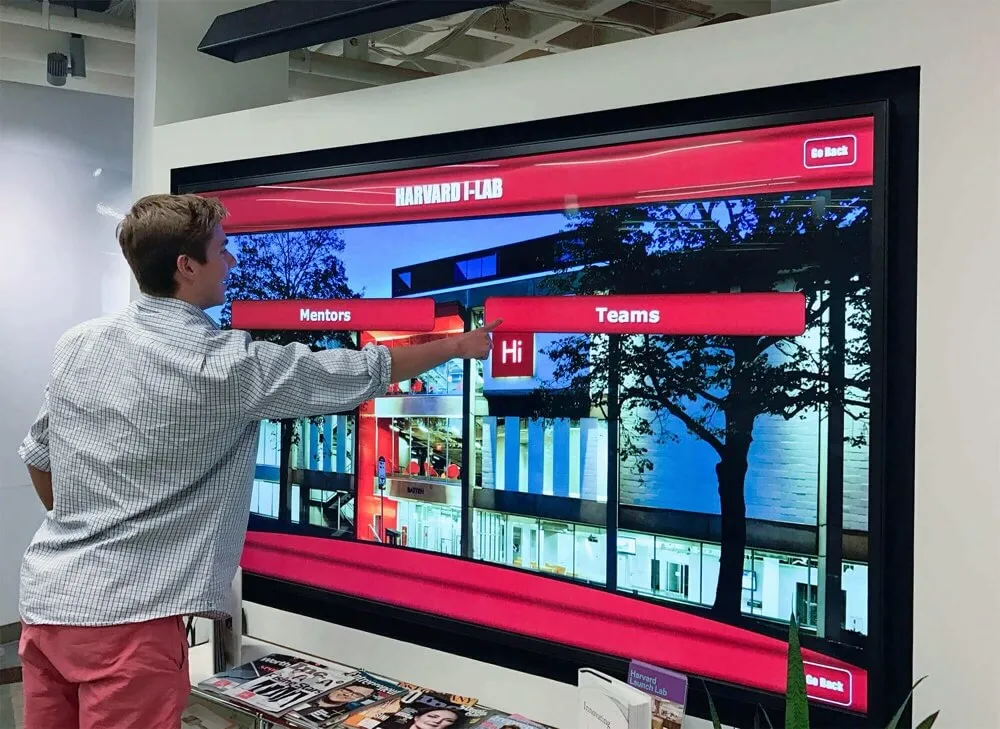
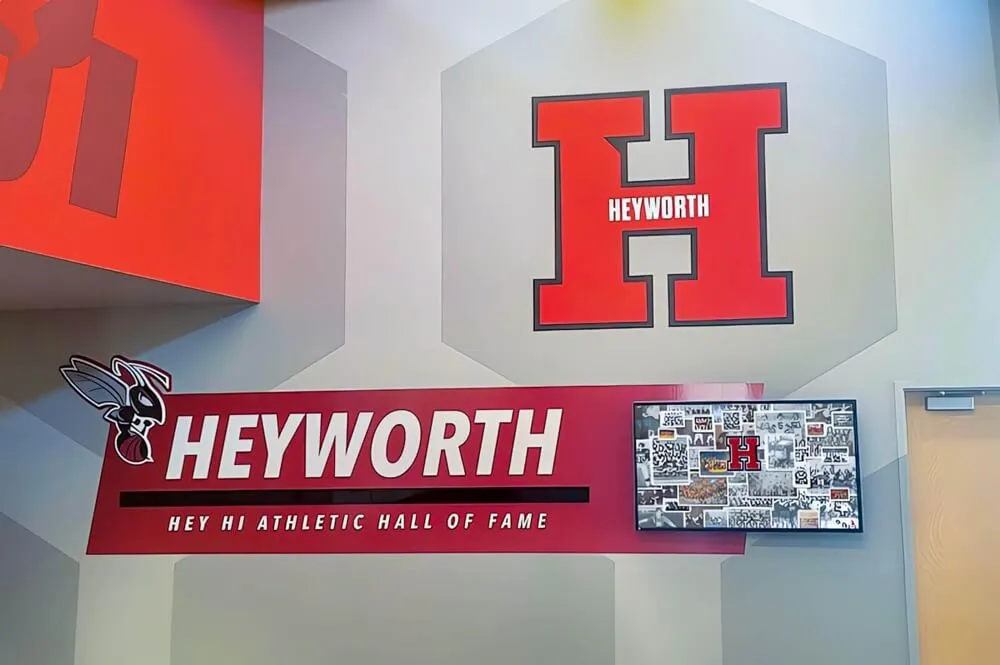
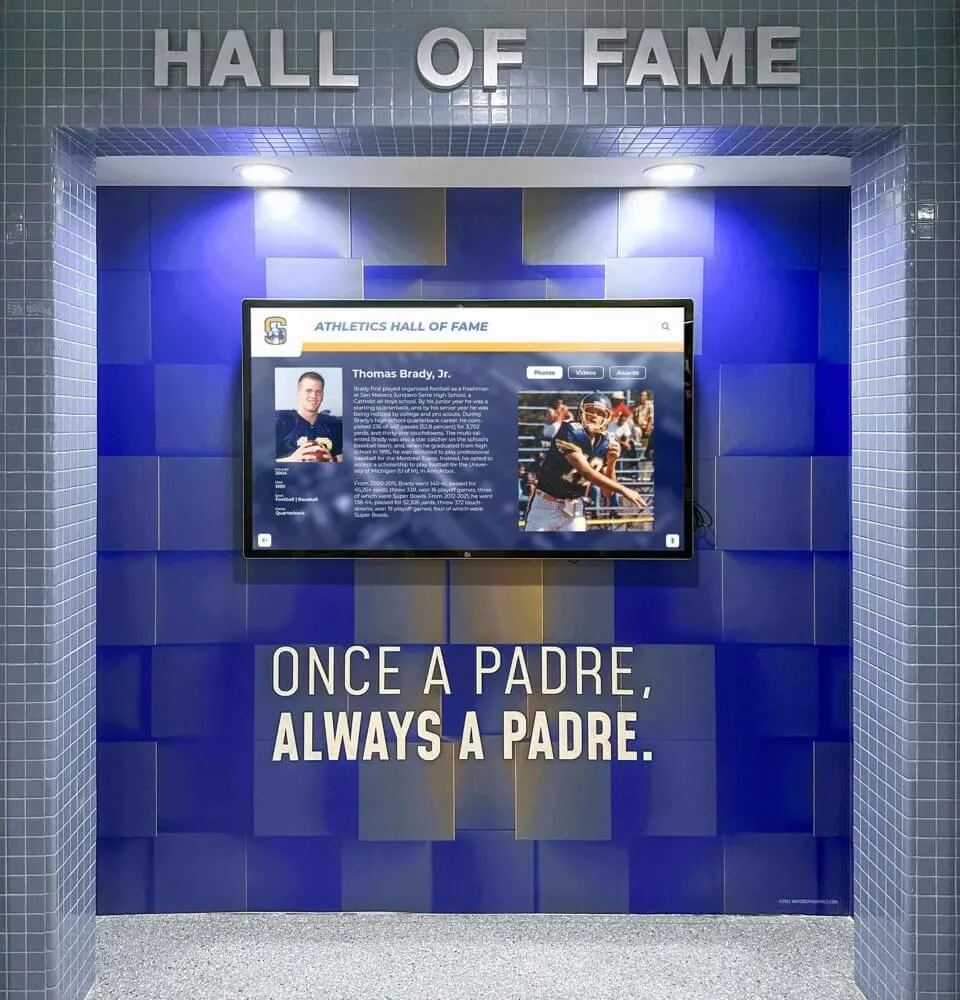
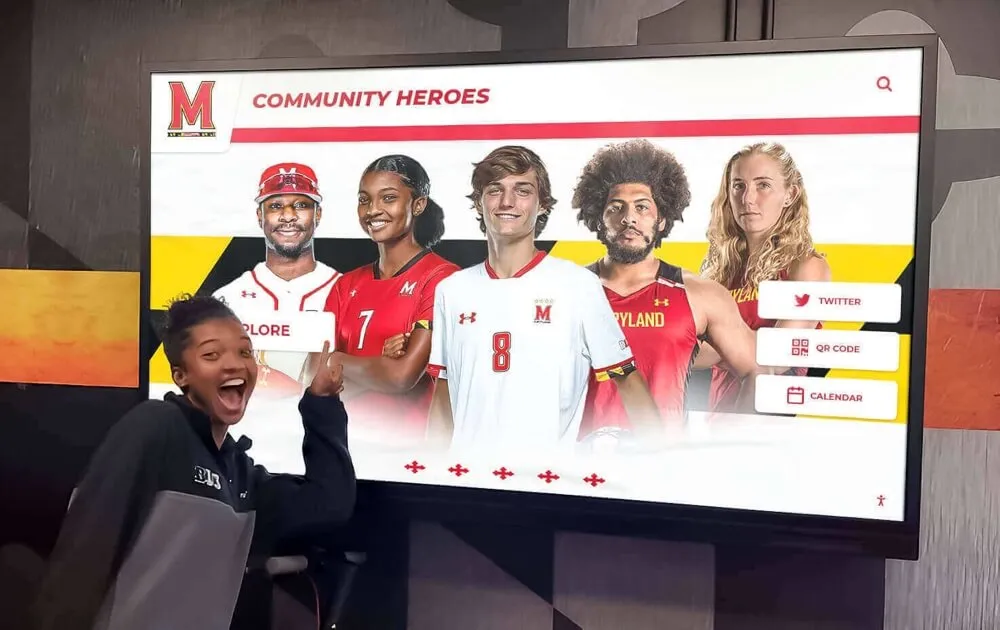
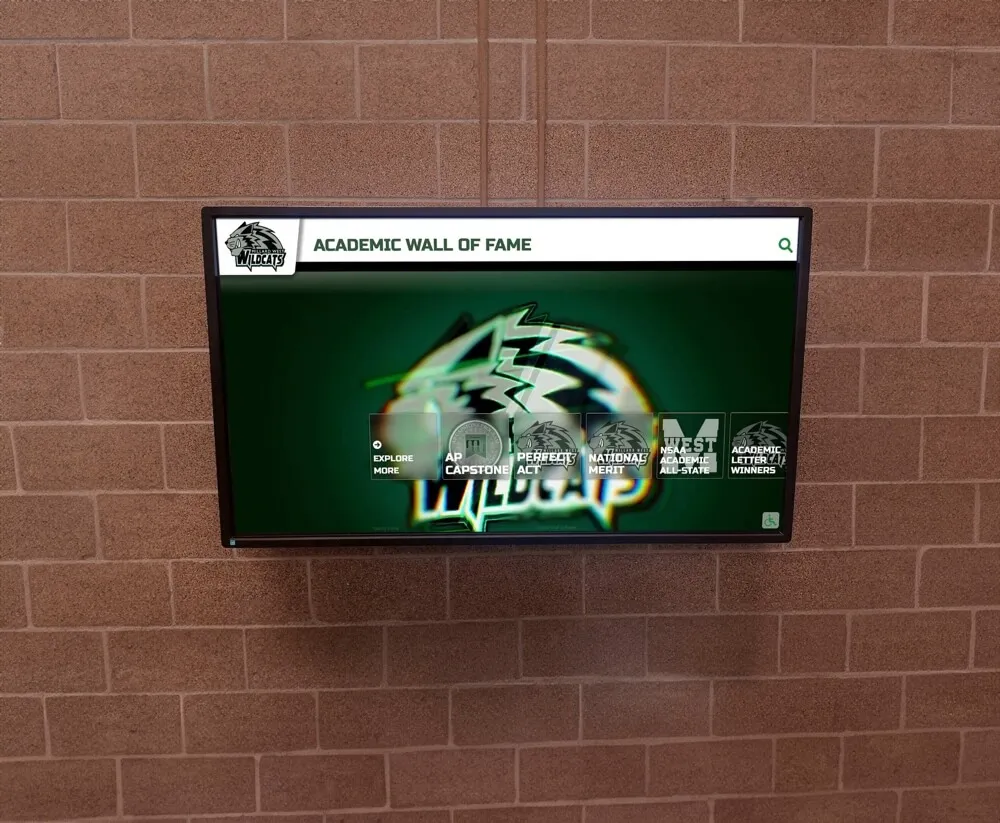
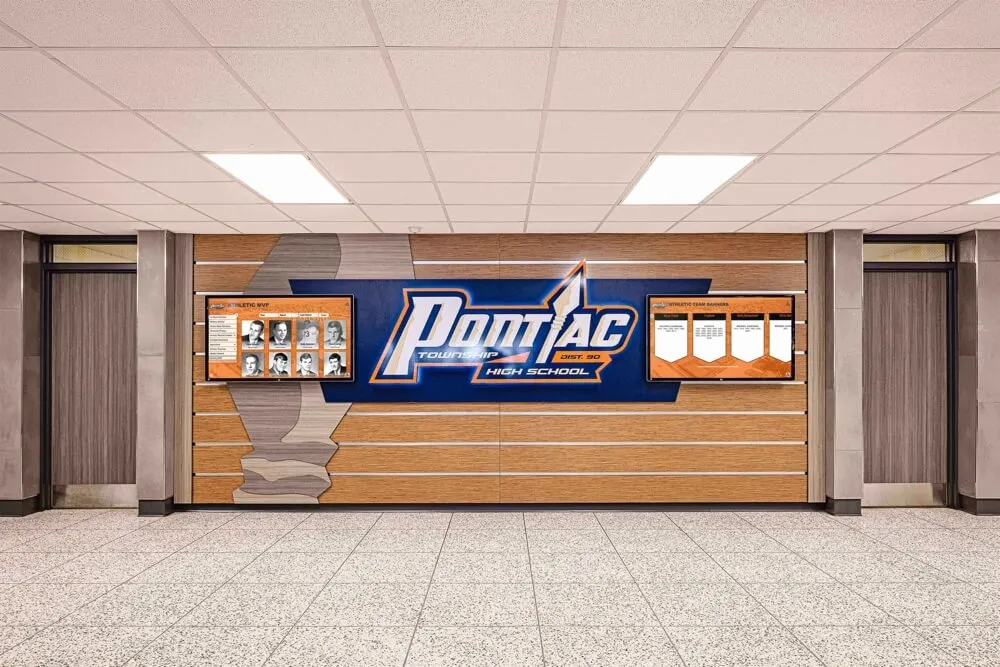
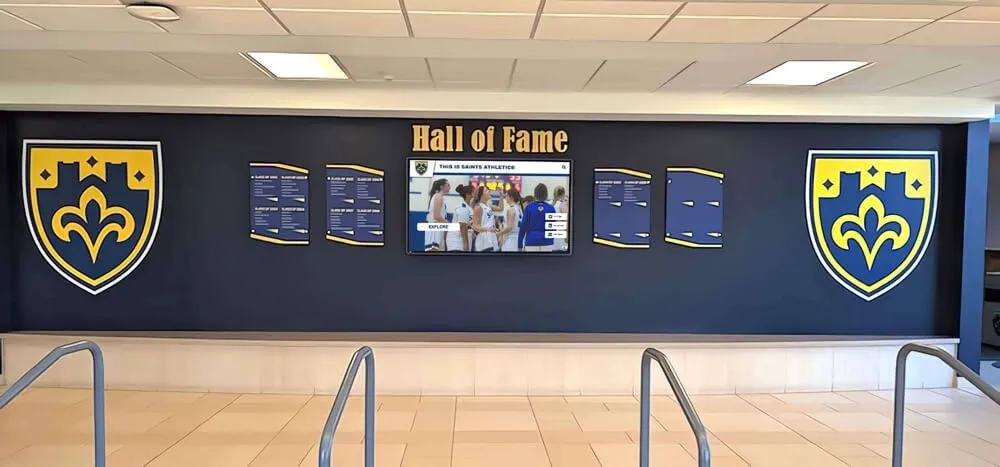
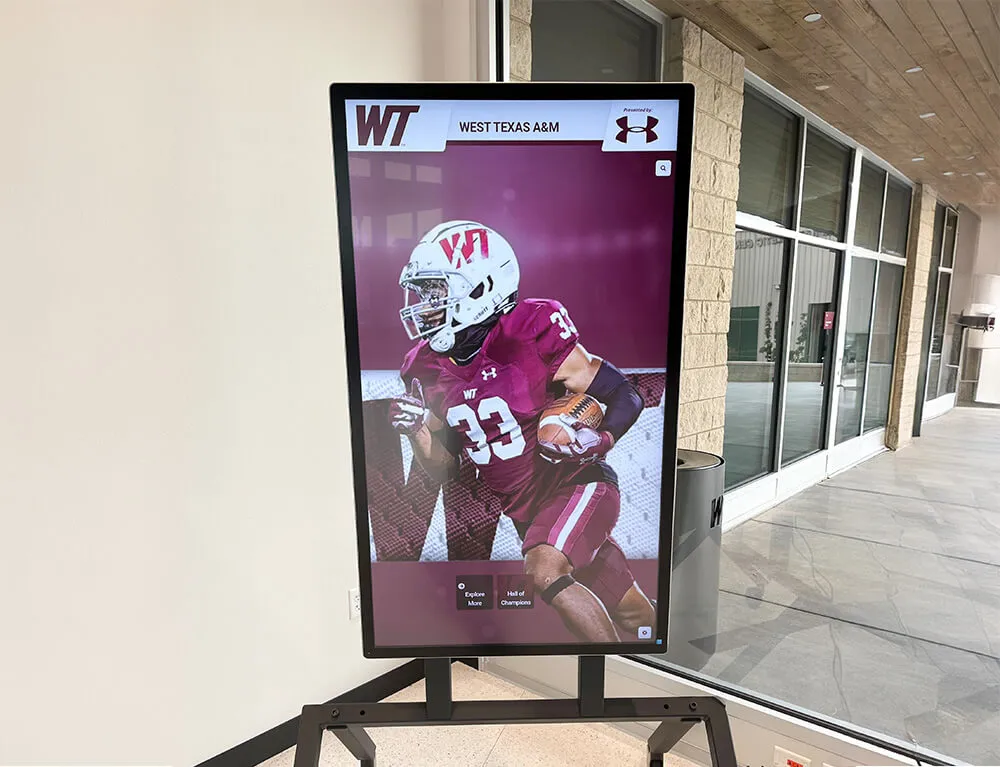
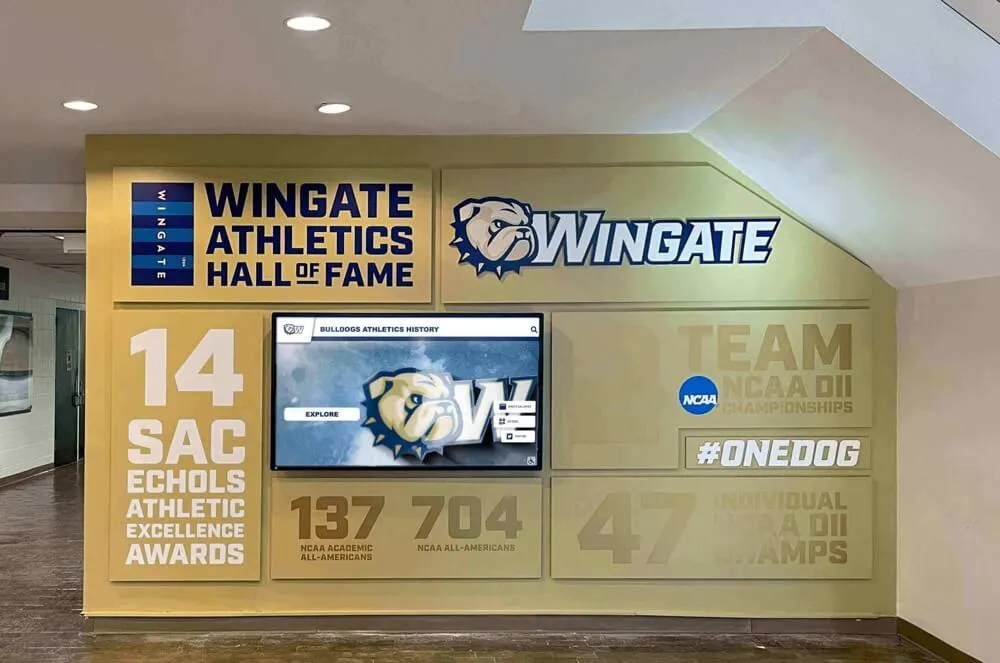
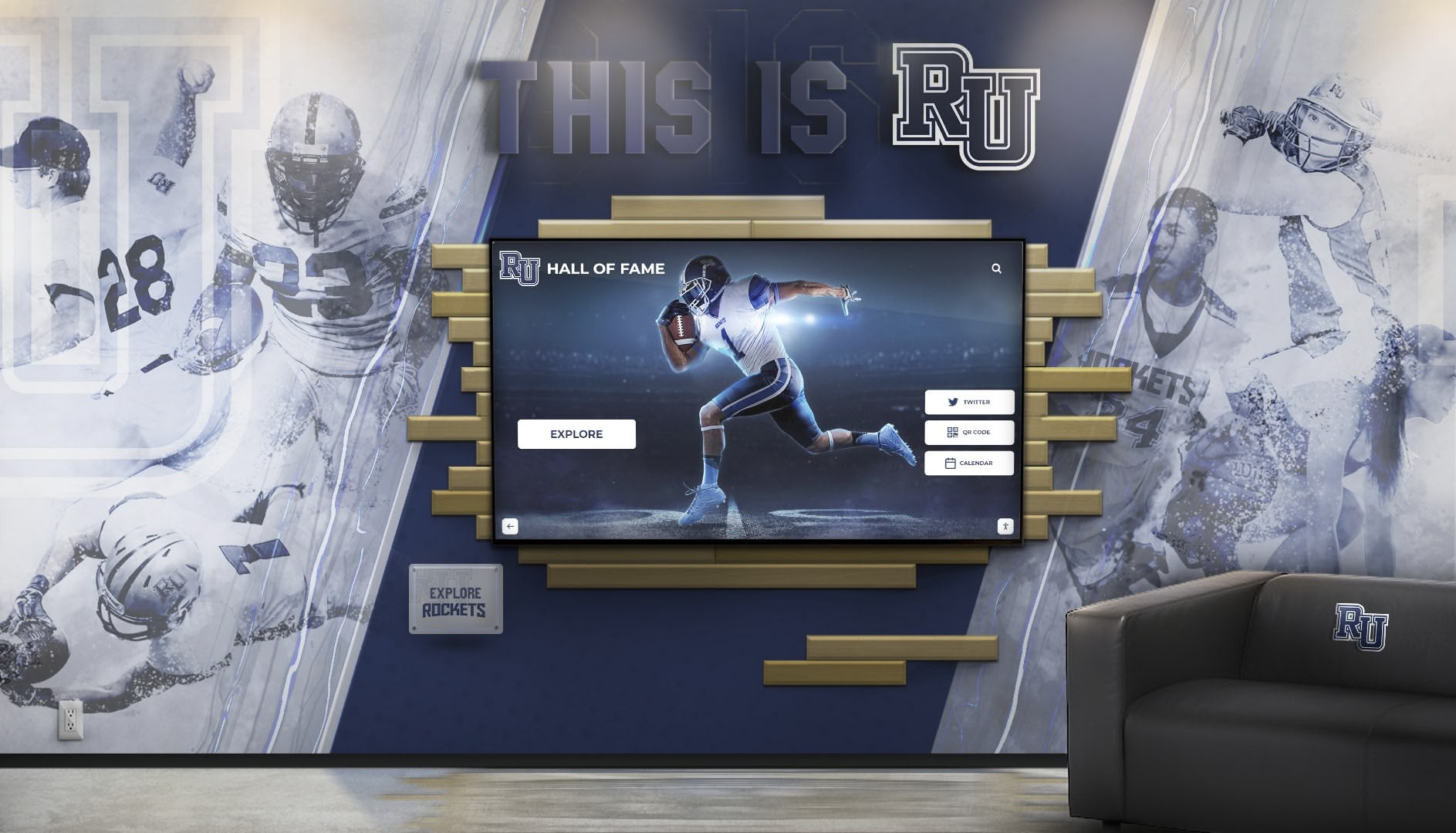
Modern interactive school platforms consolidate multiple recognition experiences into unified touchscreen systems that transform how communities engage with student achievement
Understanding the Fragmentation Problem in Traditional School Recognition Systems
Before exploring unified solutions, examining why traditional approaches create unnecessary complexity reveals why schools increasingly adopt consolidated interactive platforms.
The Multi-Vendor Technology Stack Challenge
Most schools unknowingly assemble complex technology ecosystems requiring coordination across multiple independent systems that don’t communicate with each other.
Common Fragmented Technology Configurations:
- Athletic trophy management: Static display cases or separate digital signage software showing only sports achievements
- Yearbook production: Standalone design platforms (TreeRing, Jostens, Herff Jones) focused exclusively on print publication
- Recognition ceremonies: Generic presentation software (PowerPoint, Google Slides) created from scratch for each event
- Digital signage: Basic announcement systems showing lunch menus and event calendars but lacking achievement content
- Hall of fame displays: Separate vendors or custom-built solutions disconnected from other recognition programs
Each system requires its own data input, design work, hardware compatibility checks, staff training, vendor relationship management, and renewal negotiations. Schools spend thousands managing multiple platforms that collectively accomplish less than unified systems deliver through single interfaces.
The Content Duplication and Data Entry Burden
When achievement recognition lives in disconnected systems, content teams face exhausting duplication requirements that waste time and introduce errors.
Typical Redundant Workflows:
Athletic staff manually enter athlete profiles and statistics into trophy case systems, then yearbook advisors re-enter identical information into yearbook software, then administrators recreate the same content in presentation slides for recognition ceremonies, then website managers duplicate achievements again on school websites, and finally social media coordinators recreate highlights for digital channels—five separate manual entry processes for identical achievement data.
This redundancy doesn’t just waste time—it creates inconsistencies where student names appear differently across platforms, achievements show conflicting statistics, photos vary between systems, and some accomplishments appear in certain places while remaining invisible in others.
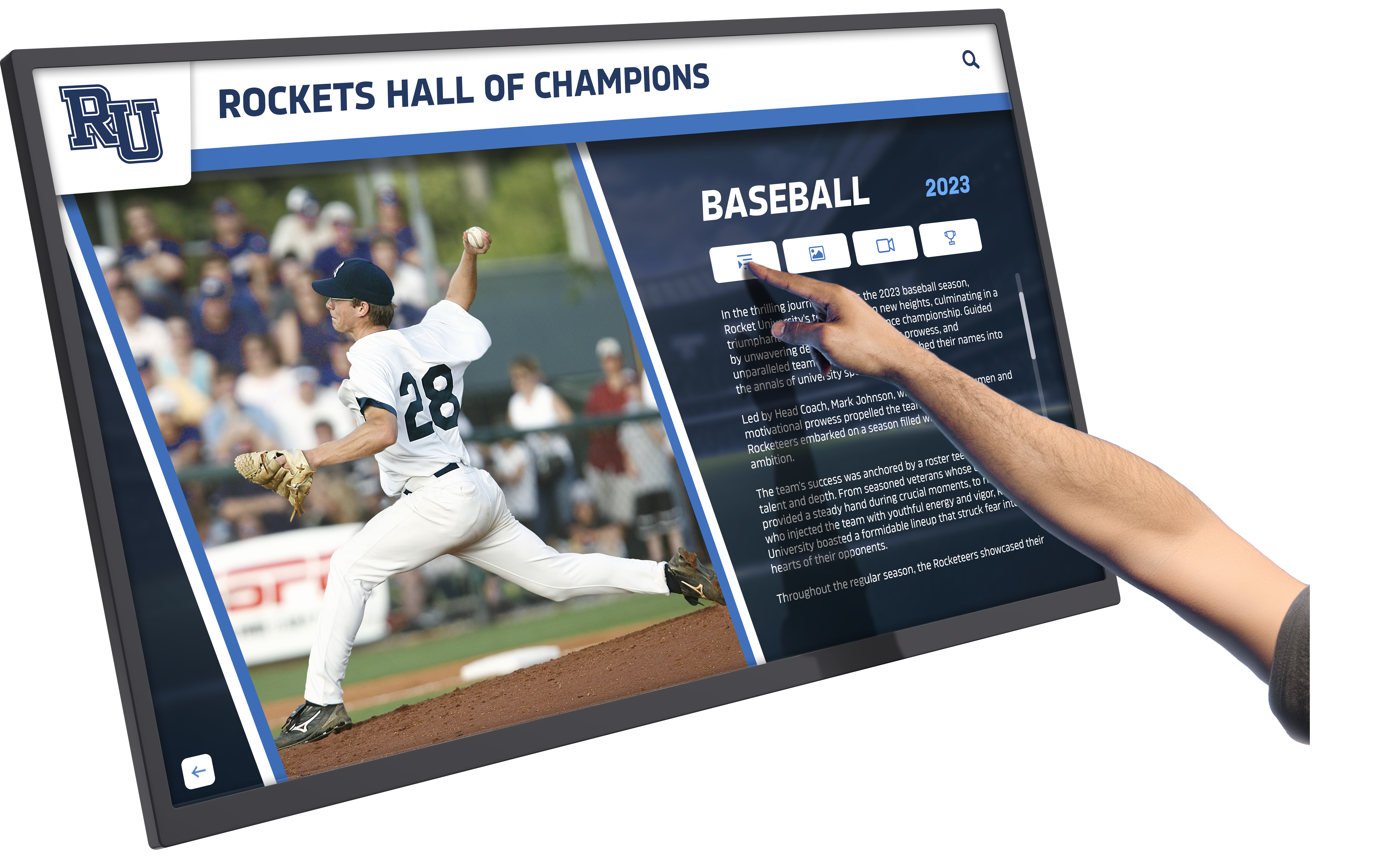
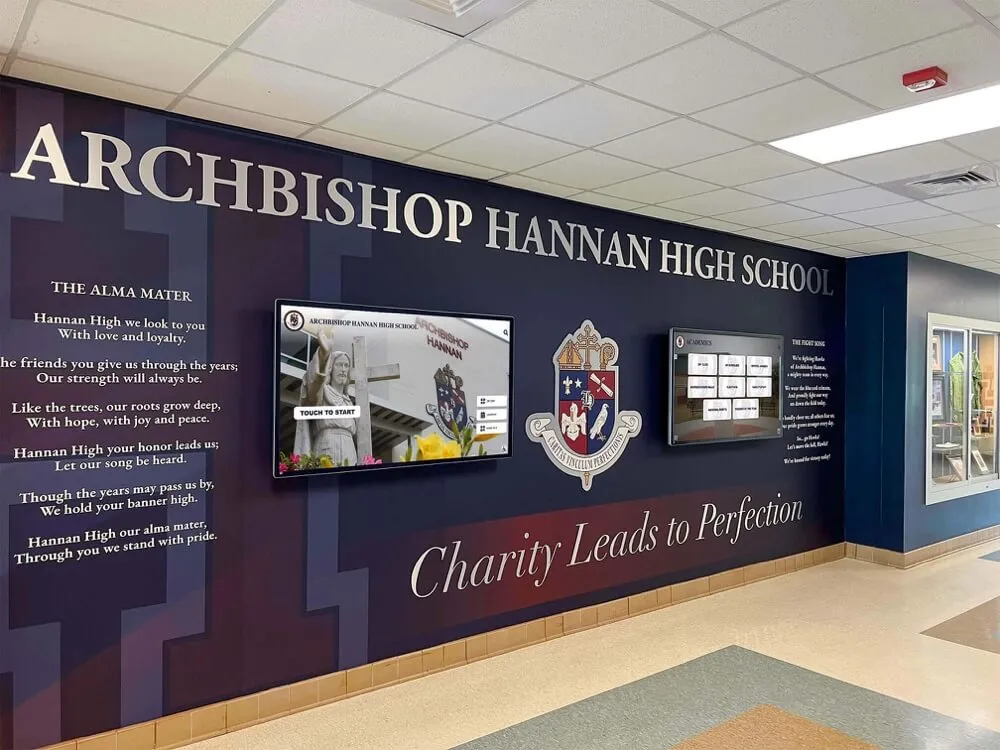
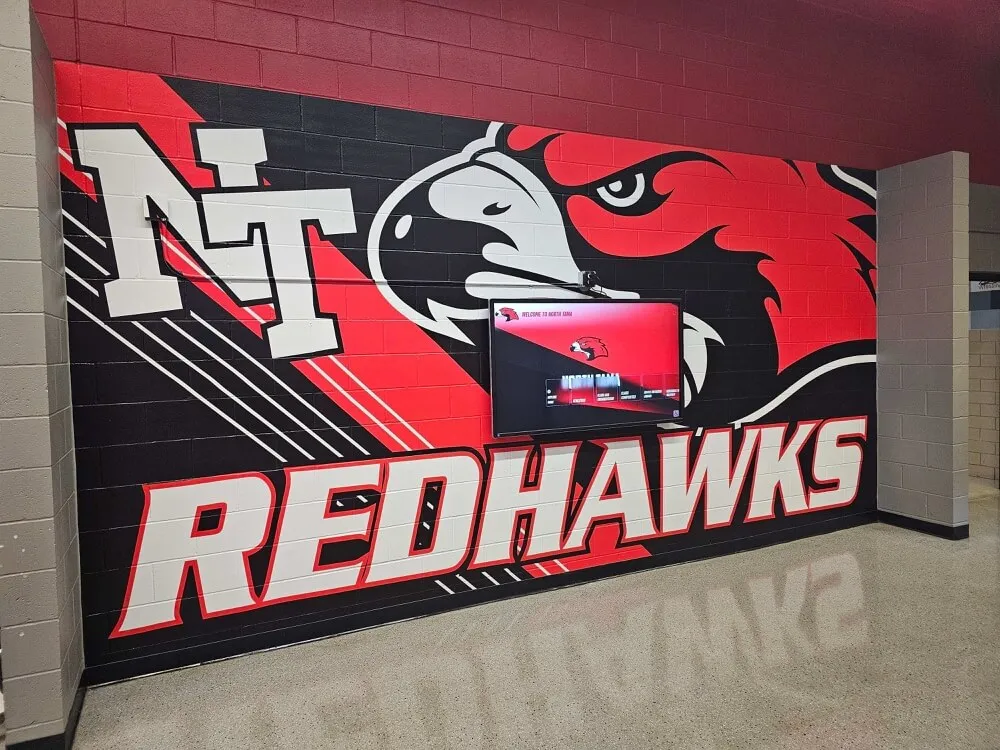
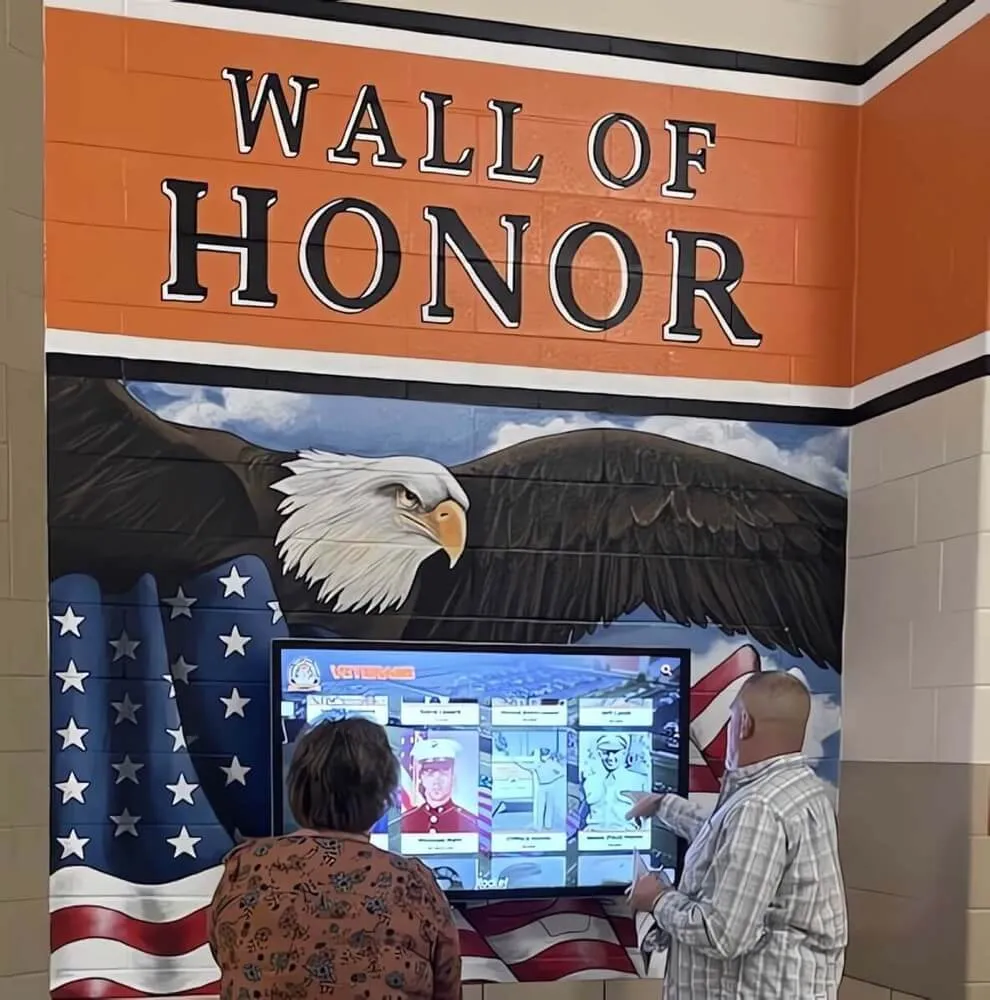
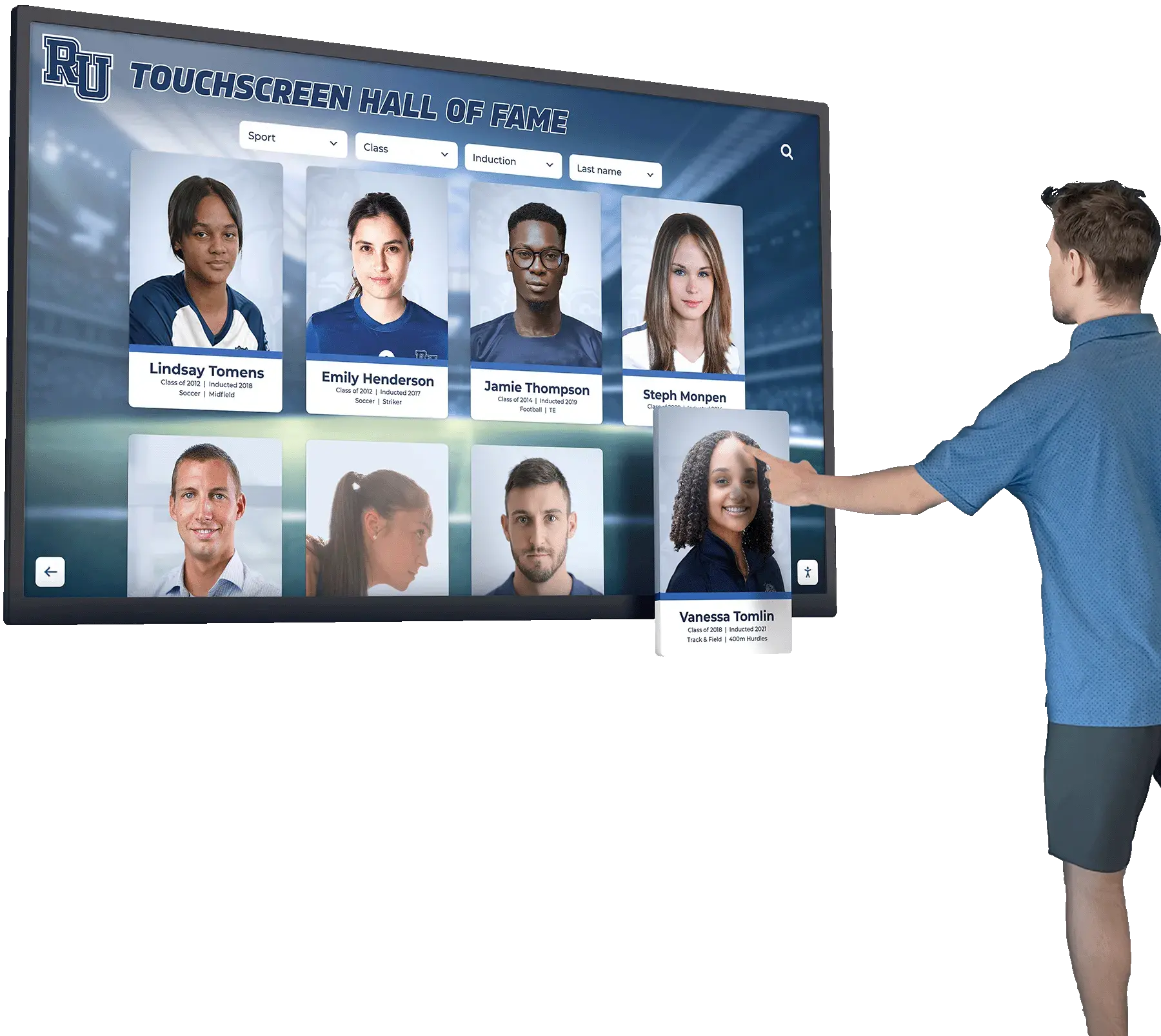
Unified platforms enable students to explore their achievements across recognition, yearbook, and historical contexts through single interactive experiences
The Update and Maintenance Problem
Fragmented systems create ongoing maintenance nightmares when information needs updating across multiple disconnected platforms.
When a student’s achievement requires correction—a misspelled name, updated statistic, or additional honor—staff must identify every location that information appears, access multiple different systems with separate login credentials, navigate different content management interfaces, and verify updates applied correctly across all platforms. Simple corrections become time-consuming projects involving multiple staff members and departments.
Schools using traditional digital record boards often discover that updating athletic achievements requires entirely separate processes from maintaining yearbook archives or recognition ceremony content, multiplying the effort required for basic maintenance.
How Unified Interactive School Software Consolidates Multiple Experiences
Modern integrated platforms eliminate fragmentation by powering recognition displays, yearbook content, and trophy showcases through single unified systems where content created once flows automatically to all relevant experiences.
Single Content Management System for Multiple Output Formats
The core advantage of consolidated platforms involves creating content one time that simultaneously populates every relevant display format and experience type.
Universal Content Architecture:
When staff enter student profile information—name, photo, achievements, statistics, quotes, and contextual details—that content becomes immediately available across all connected experiences. The athletic director adding a championship team roster creates content that simultaneously appears in the digital trophy case display, becomes searchable in the interactive yearbook archive, populates recognition ceremony presentations, and feeds relevant website and social media channels.
This “create once, publish everywhere” model transforms workflows from repetitive manual processes into efficient content creation that automatically reaches every appropriate touchpoint.
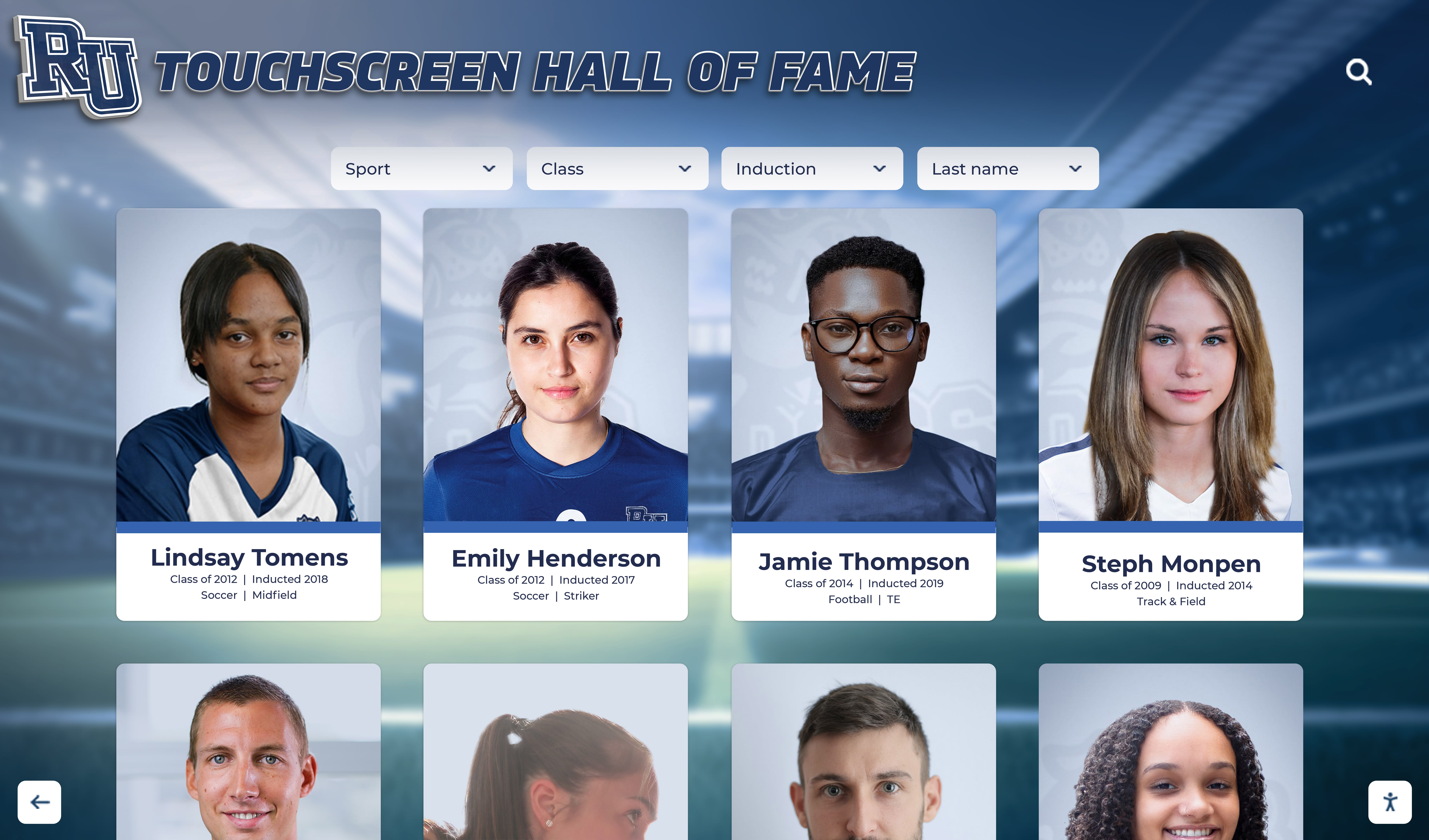
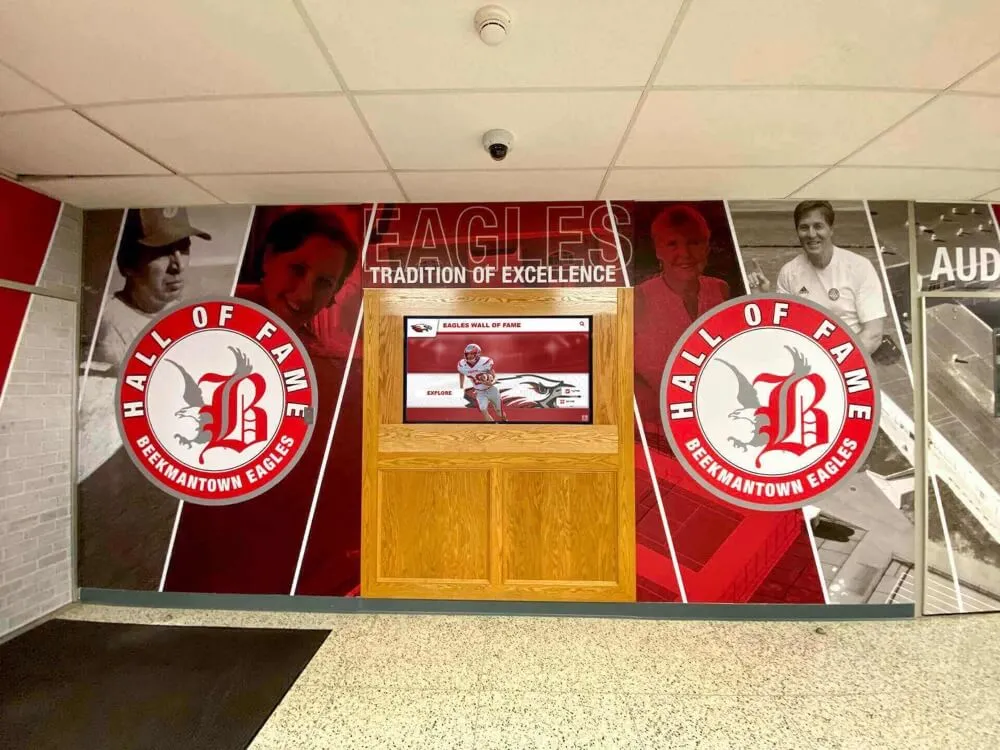
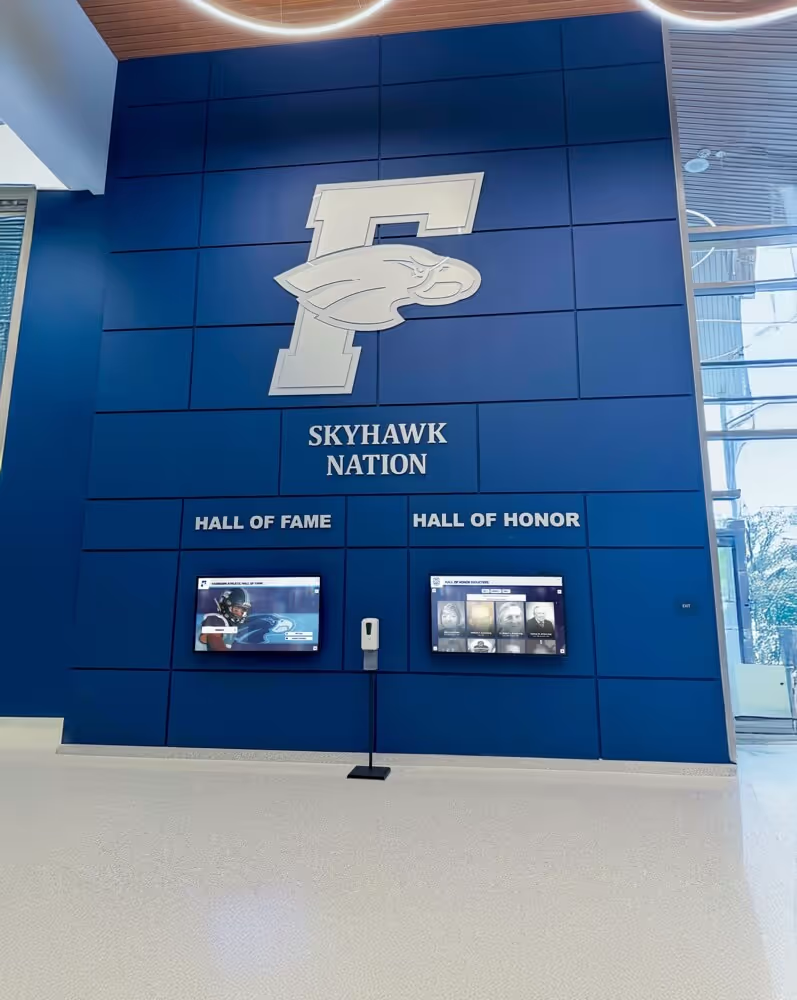
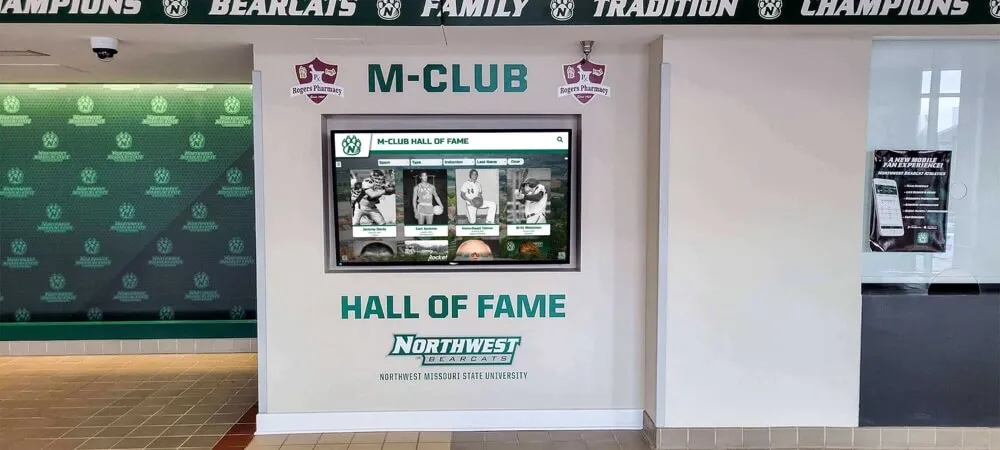
Unified content systems enable rich student profiles accessible through trophy displays, yearbook archives, and recognition presentations simultaneously
Intelligent Content Routing and Display Logic:
Advanced platforms don’t simply duplicate content everywhere—they intelligently route information to appropriate experiences based on context, dates, and relevance filters. A graduating senior’s profile appears prominently in current recognition displays throughout their final year, transitions to historical yearbook archives after graduation, and remains searchable in permanent digital trophy case records while automatically updating their connection status as they become alumni.
This contextual intelligence ensures that the right content appears in the right places at the right times without requiring manual sorting or repeated data entry across separate systems.
Recognition Display Experiences Within Comprehensive Platforms
Modern interactive school software transforms traditional static trophy cases into dynamic recognition displays that celebrate current achievements while preserving historical context.
Dynamic Achievement Showcases:
Rather than physical trophy cases limited by fixed space and requiring manual updates when accolades change, digital recognition displays powered by unified platforms automatically feature current accomplishments prominently while maintaining searchable access to decades of historical achievements. Championship teams from this season appear in featured rotations, while visitors can explore notable accomplishments from any previous year through intuitive search and navigation.
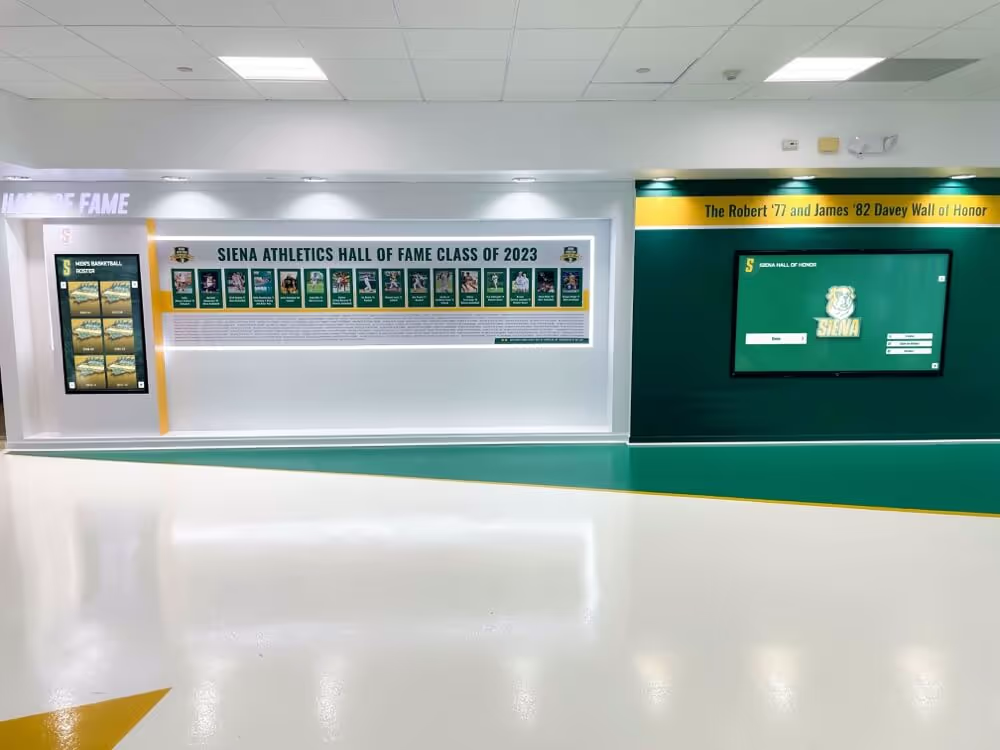
Schools implementing comprehensive athletic hall of fame displays within unified platforms report dramatically increased engagement compared to static alternatives, as students and visitors actively explore profiles rather than passively viewing limited trophy selections.
Multi-Sport and Multi-Department Recognition:
Unified platforms eliminate the physical constraints that forced traditional trophy cases to prioritize certain sports or achievements over others due to limited display space. Digital systems showcase athletics, academics, arts, service, leadership, and specialized accomplishments with equal prominence—allowing students to filter content by department, category, or interest area rather than accepting whatever few trophies fit in physical cases.
This democratization of recognition ensures that diverse achievement types receive appropriate celebration rather than creating implicit hierarchies where limited display space artificially elevates certain accomplishments above equally significant alternatives.
Digital Yearbook Archives as Living Historical Records
Traditional printed yearbooks become archived memory books that students browse occasionally but rarely revisit after graduation. Unified interactive platforms transform yearbook content into living digital archives that remain perpetually accessible and continuously valuable.
Searchable Multi-Year Archives:
Rather than requiring users to locate and page through specific printed yearbook volumes, digital archives enable instant searching across years, decades, or entire institutional histories. Alumni seeking former classmates, parents exploring family connections to schools, or researchers investigating institutional histories can search by name, year, sport, activity, or achievement category—immediately locating relevant profiles regardless of publication year.
This searchability transforms yearbook content from temporally-bound annual publications into cumulative historical knowledge bases where decades of student achievement remain discoverable and relevant.
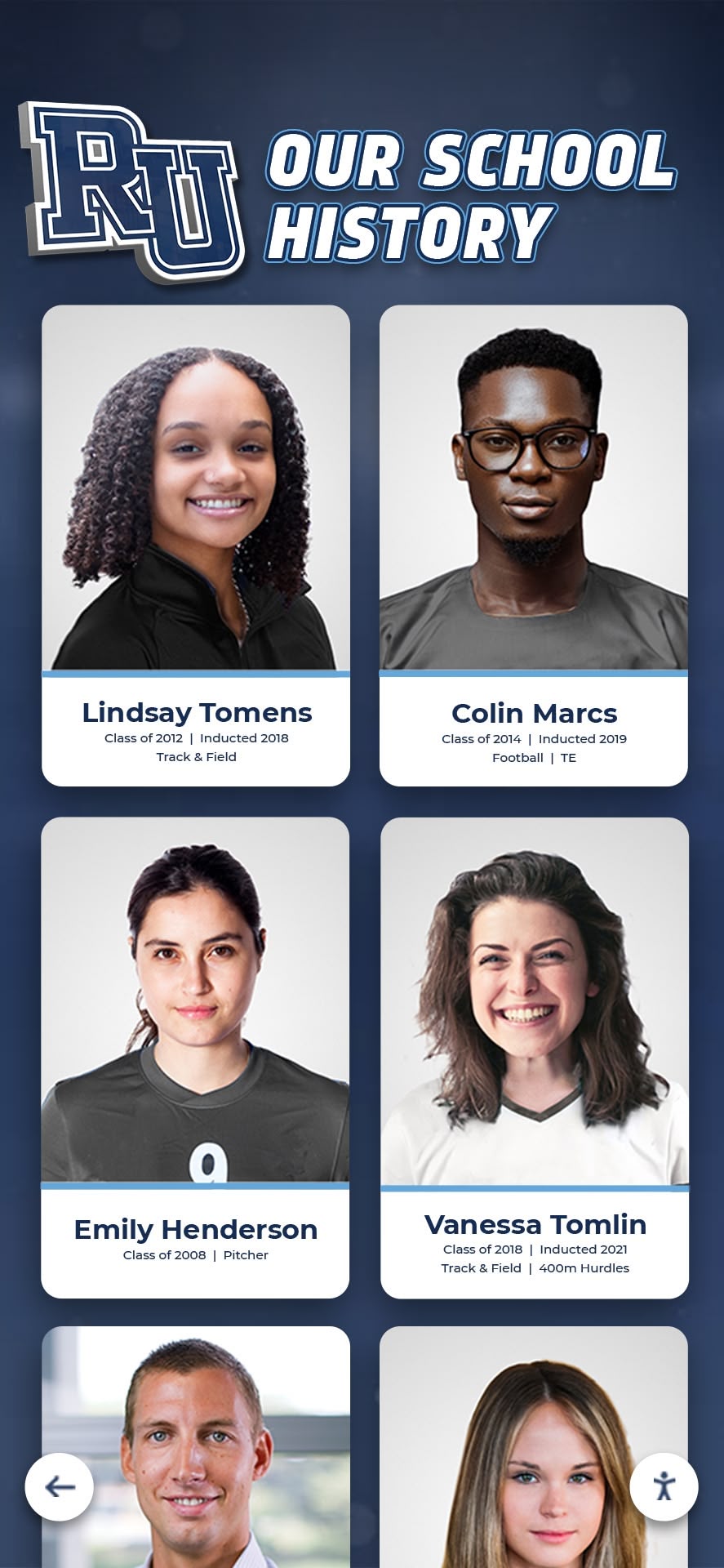
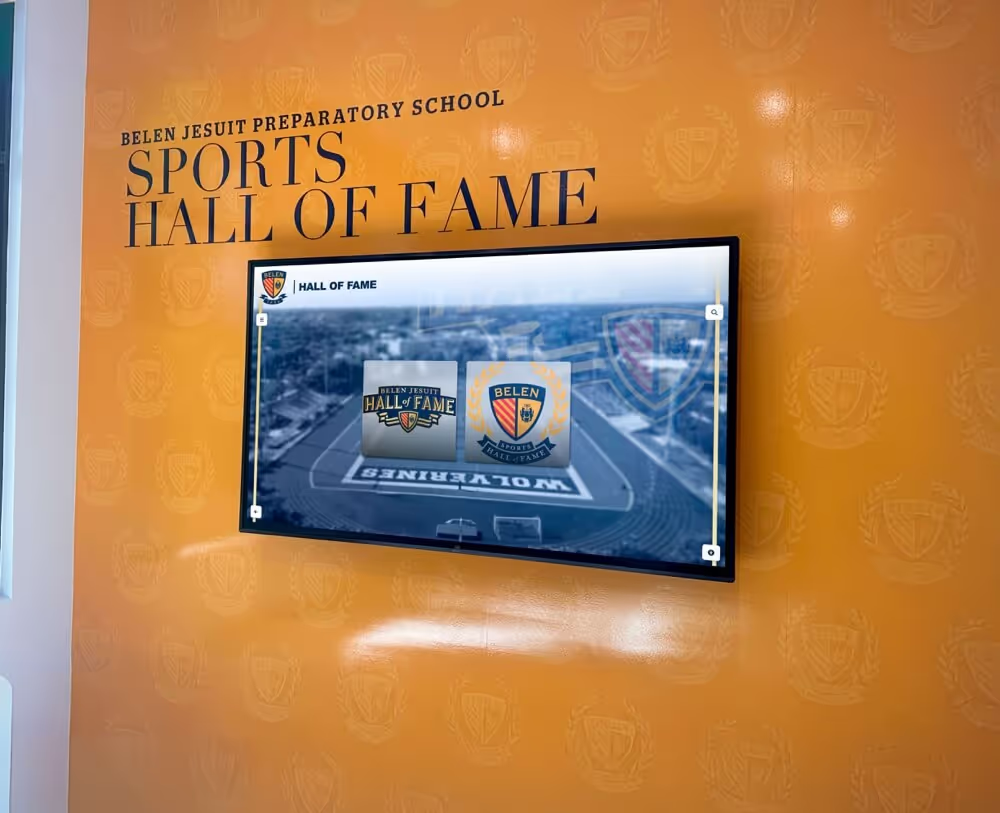
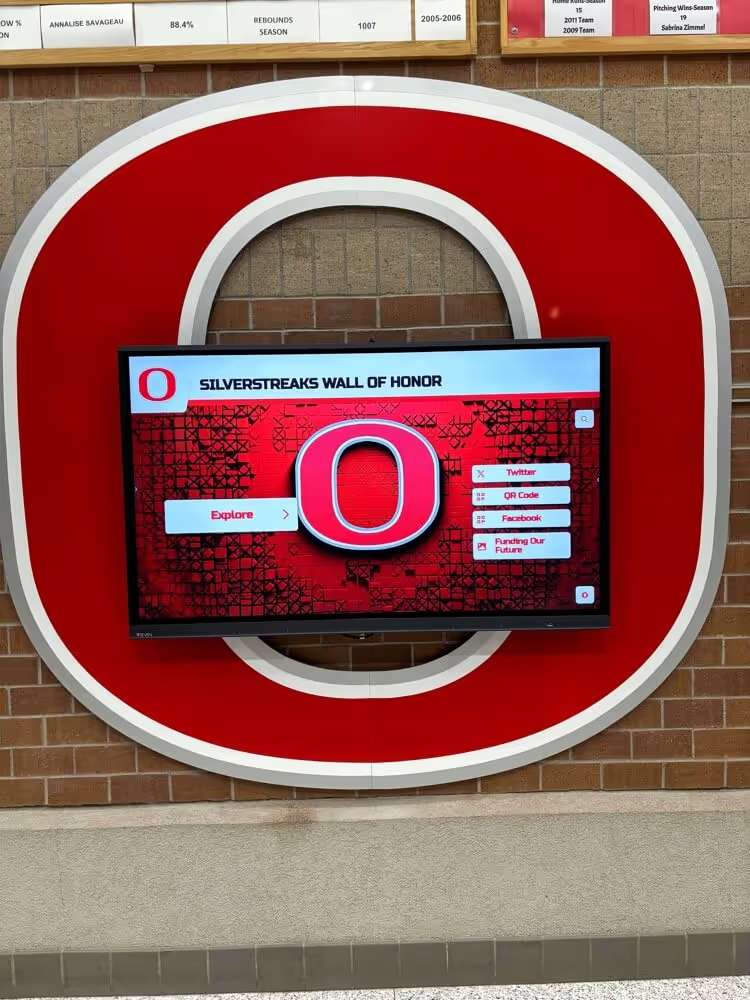
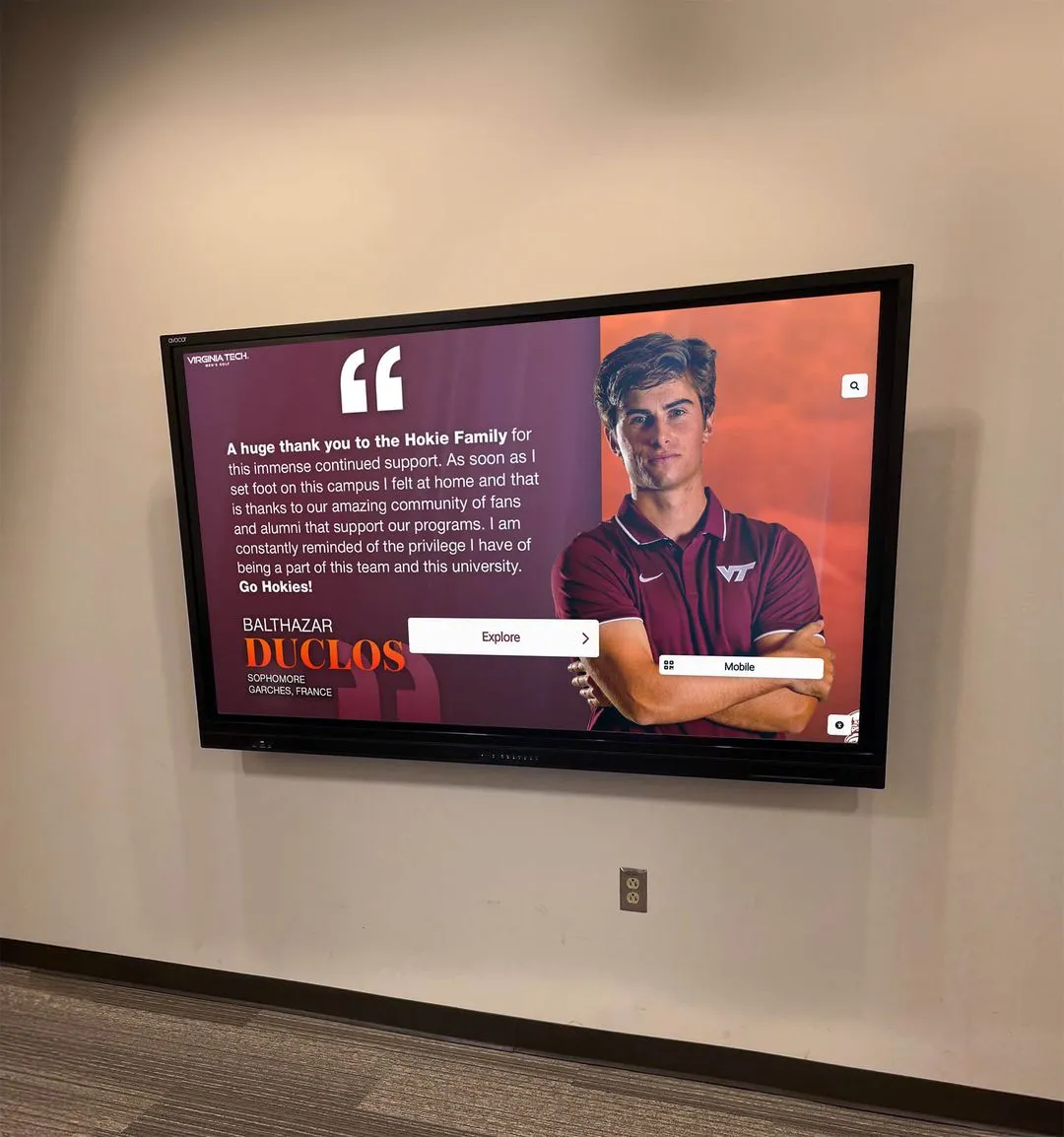
Digital yearbook archives within unified platforms transform annual publications into searchable multi-year historical records accessible through touchscreens or mobile devices
Multimedia Enhancement Beyond Print Limitations:
Print yearbooks inherently limit content to static photos and text constrained by page counts and production costs. Digital yearbook experiences within interactive platforms incorporate video highlights, audio interviews, photo galleries, interactive timelines, and embedded social media content that print publications cannot accommodate.
Schools can preserve championship game highlights, musical performance recordings, speech excerpts, and video testimonials alongside traditional yearbook profiles—creating richer, more comprehensive memory preservation than physical books allow while maintaining the curated storytelling that distinguishes yearbooks from unorganized photo collections.
Institutions maintaining alumni recognition programs discover that digital archives enable graduated students to remain connected to institutional communities through ongoing access to their achievement records and classmate connections years after graduation.
Interactive Trophy Case Presentations That Celebrate Context
Physical trophy cases display hardware—cups, plaques, medals—without providing context explaining what achievements they represent, which students earned them, or what those accomplishments meant to school communities. Interactive digital trophy cases powered by unified platforms transform hardware displays into contextualized storytelling experiences.
Achievement Context and Background Stories:
When visitors explore digital trophy presentations, they access complete stories behind each accomplishment—championship game recaps, season statistics, roster details with individual player profiles, coaching insights, historical significance contextualizing achievements within program traditions, and multimedia content including photos, videos, and news coverage documenting notable moments.
This contextual depth transforms trophy cases from simple hardware displays that only specialists understand into accessible narratives that engage diverse audiences regardless of their familiarity with specific sports, activities, or time periods.
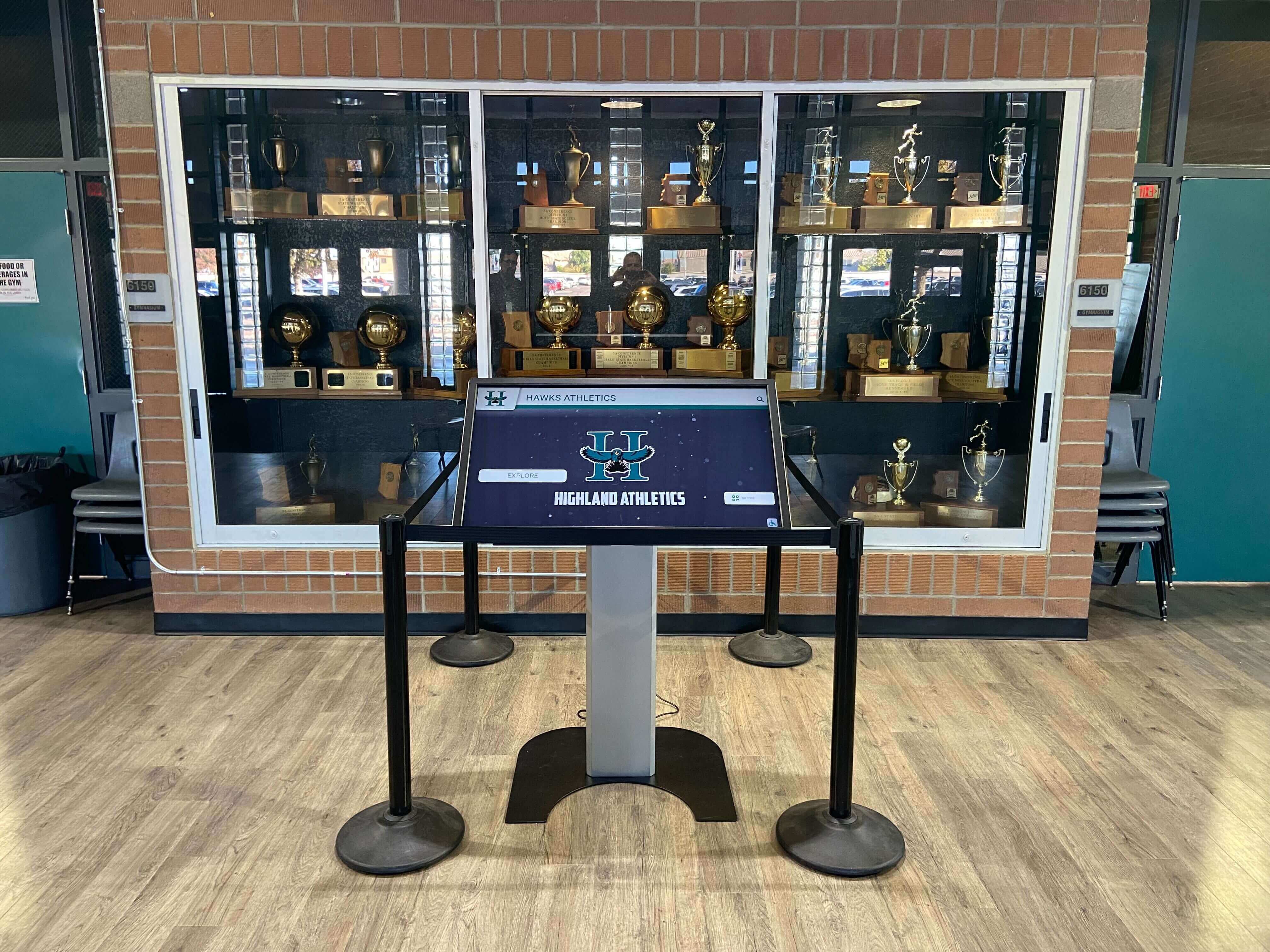
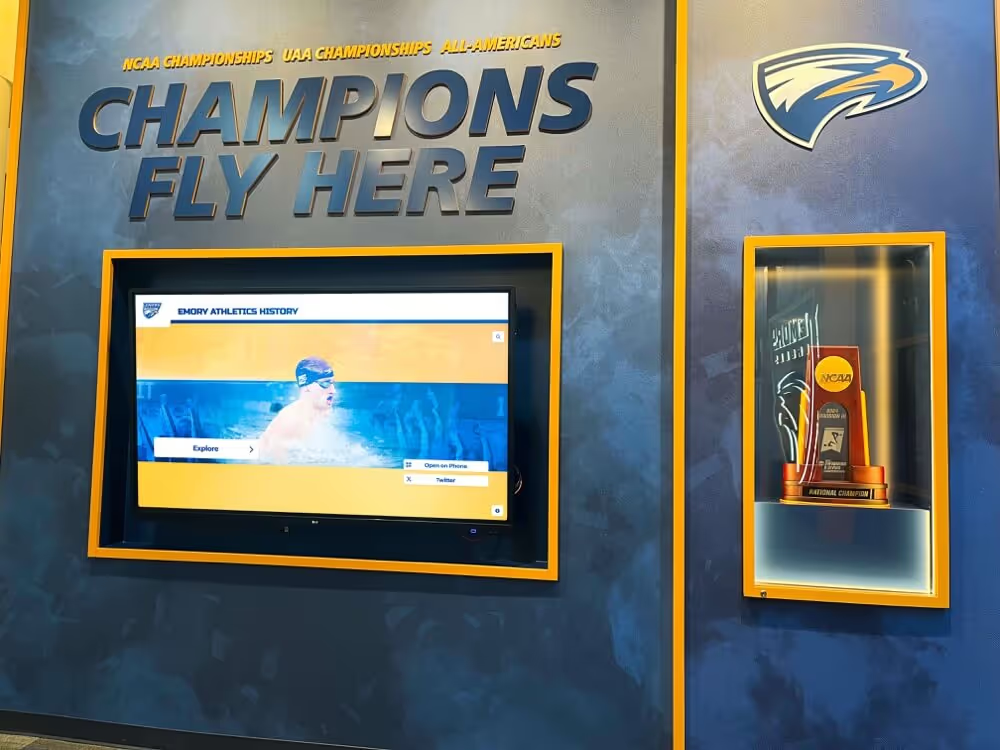
Modern trophy presentations combine physical awards with interactive touchscreens providing rich context and complete achievement stories
Individual Athlete and Participant Recognition:
Traditional trophy cases celebrate team accomplishments but rarely recognize individual contributors comprehensively. Unified interactive platforms connect team achievements with individual participant profiles, enabling visitors to explore how specific students contributed to collective success while recognizing personal accomplishments that may not have resulted in physical trophies.
A championship team trophy becomes an entry point to explore every roster member’s profile, statistics, highlights, and additional achievements—ensuring that collective celebration extends to appropriate individual recognition rather than reducing dozens of contributors to single team entries.
Schools implementing dedicated systems for recognizing achievements like 1000-point scorer basketball recognition within unified platforms can simultaneously display those individual milestones prominently while connecting them to broader team successes and historical program contexts.
Experience Design for Multi-Function Interactive School Platforms
Creating effective unified platforms requires thoughtful experience design ensuring that consolidated systems remain intuitive and accessible rather than overwhelming users with excessive options or confusing navigation.
Navigation Architecture for Diverse Content Types
The challenge with comprehensive platforms involves organizing recognition displays, yearbook archives, trophy presentations, and additional content types into coherent navigation structures that help users find desired information without creating cluttered, confusing interfaces.
Clear Entry Point Differentiation:
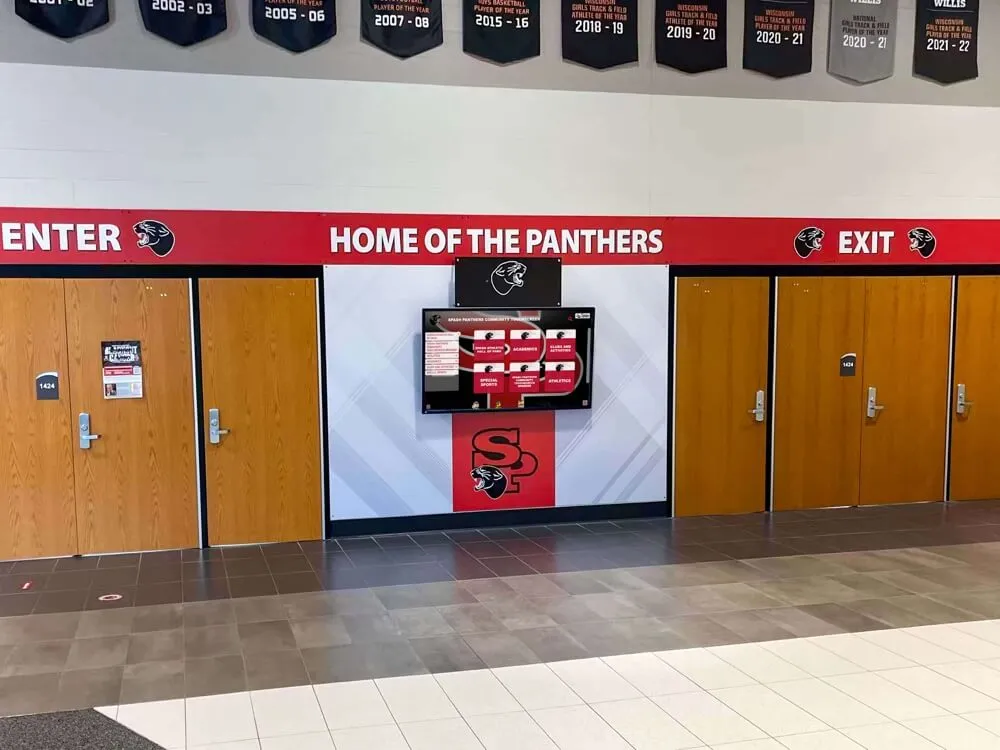
Effective platforms establish distinct but connected entry points for major experience types—recognition spotlight, yearbook archives, trophy case, hall of fame, and additional categories—allowing visitors to immediately orient toward their primary interest while maintaining obvious pathways to explore related content areas.
Visual differentiation through color coding, iconography, and spatial layout helps users understand organizational structures at a glance rather than requiring extensive orientation or instruction.
Contextual Cross-Linking Between Related Content:
While maintaining clear category distinctions, sophisticated platforms create intelligent connections between related content across different experience types. A student profile within yearbook archives links to their athletic achievements in trophy case presentations. Championship team entries in the trophy section connect to individual player profiles in recognition displays. Hall of fame inductees link to their yearbook profiles from relevant years.
These contextual connections enable organic exploration where users seamlessly move between content types following their interests rather than encountering artificial boundaries that disrupt discovery.
Institutions implementing digital donor walls within comprehensive platforms benefit from similar cross-linking approaches that connect philanthropic recognition with alumni achievement archives and institutional history presentations.
Visual Design Consistency Across Experience Types
Unified platforms maintain design coherence across diverse content types while allowing appropriate visual differentiation that helps users understand context changes as they navigate between experiences.
Consistent Core Interface Elements:
Typography systems, color palettes, button styles, navigation patterns, and interaction behaviors remain consistent across all platform sections—creating familiar, predictable experiences where users apply learned navigation skills across different content areas without relearning interface patterns for each section.
This consistency reduces cognitive load and interaction friction, enabling users to focus on content exploration rather than interface interpretation.
Contextual Visual Themes for Content Categories:
Within consistent design frameworks, subtle visual variations signal content type changes—perhaps trophy case sections incorporate metallic accent colors suggesting awards hardware, yearbook sections use book-like page transition animations, and recognition displays emphasize vibrant school colors. These contextual cues help users maintain orientation without disrupting overall design coherence.
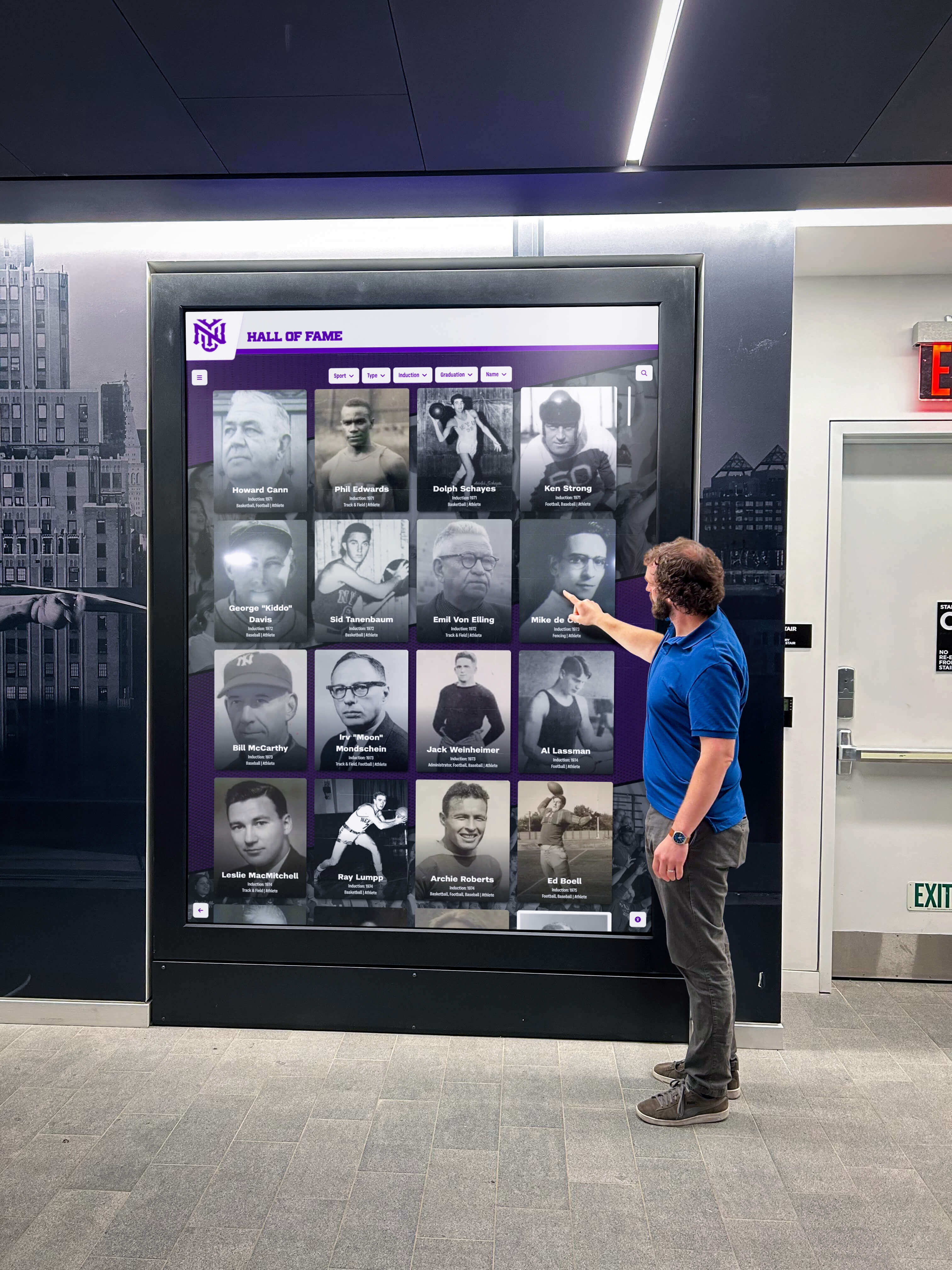
Intuitive interface design enables diverse audiences to explore recognition, yearbook, and trophy content through unified touchscreen experiences
Mobile and Remote Access Extending Physical Touchscreen Experiences
While physical touchscreen installations create prominent lobby and hallway experiences, comprehensive platforms extend identical content to mobile devices and web browsers—enabling students, families, and alumni to explore achievement archives from anywhere rather than limiting access to specific physical locations.
Responsive Design Across Device Types:
Content and navigation systems adapt appropriately to smartphone screens, tablets, desktop browsers, and large touchscreen kiosks—maintaining consistent experiences while optimizing layouts and interaction patterns for specific device capabilities and typical usage contexts.
Mobile users exploring content on personal devices access identical information available at physical installations, ensuring equitable access regardless of when visitors can physically tour facilities.
QR Code Integration for Physical-to-Digital Transitions:
Strategic QR code placement throughout physical spaces enables seamless transitions from real-world contexts to digital exploration. A QR code near trophy cases invites visitors to explore complete digital archives on personal devices. Printed materials distributed during campus tours, recognition ceremonies, or reunion events include QR access to relevant digital content, extending engagement beyond specific moments or locations.
This physical-digital integration creates continuous experiences where exploration can begin at touchscreen kiosks and continue on personal devices, or vice versa, without disrupting navigation flow or requiring users to relocate desired content across different platforms.
Schools developing comprehensive alumni event ideas discover that mobile-accessible achievement archives create valuable engagement opportunities during reunions where alumni explore their own records and reconnect with classmates through shared digital exploration.
Administrative Efficiency Benefits of Consolidated Interactive School Platforms
Beyond improved user experiences, unified systems deliver substantial administrative efficiencies that reduce workload, eliminate redundancies, and enable smaller teams to accomplish more with limited resources.
Single Content Input Workflows Eliminating Duplication
The most immediate efficiency gain involves eliminating redundant data entry across multiple disconnected systems.
Streamlined Content Creation Processes:
Athletic directors create championship team rosters once—entering names, positions, photos, and statistics into the unified platform. That single content creation effort automatically populates the digital trophy case display, generates yearbook section content, provides recognition ceremony presentation materials, updates hall of fame records for eligible participants, and feeds relevant website and social media channels.
What previously required separate manual processes across five or six different systems now happens through single efficient workflows. The time savings compound across every piece of content created throughout academic years.
Centralized Update Management and Content Maintenance
When information requires updates or corrections, unified platforms enable changes in single locations that cascade automatically to all relevant displays and experiences.
Efficient Error Correction and Information Updates:
Correcting a misspelled student name requires editing one profile entry rather than tracking down that error across yearbook software, trophy case systems, recognition presentations, websites, and additional disconnected platforms. Updated photos replace outdated images everywhere they appear. Revised statistics automatically update in all relevant contexts.
This centralized update capability reduces maintenance burden while ensuring consistency—eliminating scenarios where corrections appear in some places but persist as errors elsewhere because staff couldn’t locate every system displaying that information.
Schools managing complex recognition programs like Academic All-Americans awards appreciate unified platforms where extensive criteria information, eligibility requirements, and honoree profiles remain synchronized across all relevant displays without requiring separate updates in multiple locations.
Reduced Vendor Management and Technology Stack Complexity
Consolidating multiple functions into unified platforms dramatically simplifies vendor relationships and technology stack management.
Simplified Procurement and Contract Administration:
Rather than negotiating separate agreements with yearbook companies, trophy case vendors, digital signage providers, website platforms, and additional disconnected services—each with different renewal dates, pricing structures, and contract terms—schools establish single vendor relationships for comprehensive platforms.
This consolidation reduces procurement workload, simplifies budget planning, streamlines vendor communication, and often reduces total costs compared to maintaining multiple specialized systems that collectively accomplish less than unified platforms deliver.
Coordinated Technical Support and Training:
Multiple independent systems require staff to maintain expertise across different interfaces, learn separate content management approaches, troubleshoot distinct technical problems, and coordinate support across multiple vendor help desks when issues span systems.
Unified platforms consolidate training requirements, provide single support contacts addressing all questions, and eliminate finger-pointing between vendors when problems involve multiple systems. Staff develop deeper expertise in single comprehensive platforms rather than surface-level familiarity across many disconnected tools.
Analytics and Insights Across Combined Experiences
Unified platforms enable comprehensive analytics tracking engagement across recognition displays, yearbook exploration, trophy case interactions, and additional content types—providing insights impossible when data remains siloed in disconnected systems.
Holistic Engagement Measurement:
Schools discover which student achievements attract the most exploration, which historical periods generate greatest interest, how visitors navigate between different content types, which recognition programs create strongest engagement, and how mobile usage compares to physical touchscreen interactions. These insights inform content strategy, guide recognition program development, and help justify continued investment in digital platforms through documented engagement metrics.
Fragmented systems provide partial analytics for specific functions but cannot reveal holistic patterns showing how audiences interact with comprehensive achievement archives across all experience types.
Implementation Considerations for Multi-Function Interactive School Software
Schools evaluating unified interactive platforms should consider specific factors influencing successful implementation and long-term value realization.
Content Migration from Legacy Systems
Transitioning from fragmented existing systems to consolidated platforms requires planning for comprehensive content migration.
Historical Archive Digitization:
Schools with extensive printed yearbook collections, physical trophy case documentation, and archived recognition materials face decisions about how much historical content to digitize during platform implementation. Complete historical digitization creates comprehensive archives but requires significant effort. Selective digitization focuses on recent years or notable historical highlights while leaving older content in original formats.
Many institutions adopt phased approaches—immediately digitizing recent content while gradually working backward through historical archives over time as resources permit, building increasingly comprehensive digital collections without overwhelming initial implementation efforts.
Data Standardization Across Inconsistent Sources:
Legacy systems often maintained information in inconsistent formats—athletic records using different naming conventions than yearbook entries, varied photo formats and resolutions across sources, and incomplete profile information missing fields expected in comprehensive unified platforms.
Implementation planning should account for data standardization work required to transform inconsistent legacy content into unified formats, potentially including dedicated effort to complete missing information, standardize naming conventions, and optimize media assets for digital display.
Organizations developing strategies around alumni recognition benefit from comprehensive approaches that ensure historical achievement data remains accessible and searchable alongside current recognition programs within unified digital environments.
Hardware and Installation Planning for Physical Touchscreens
While unified software platforms provide flexibility across device types, optimal experiences often include prominent physical touchscreen installations in high-traffic areas.
Strategic Placement for Maximum Visibility and Usage:
Effective touchscreen locations include main entrance lobbies where all visitors pass during campus access, athletic facility entrances where sports audiences gather before events, cafeteria or student center common areas with sustained student traffic, and administrative reception areas where prospective families wait during campus tours.
Multiple installation locations may make sense for larger campuses, with unified platforms enabling consistent experiences across distributed touchscreens rather than requiring different systems in different buildings.

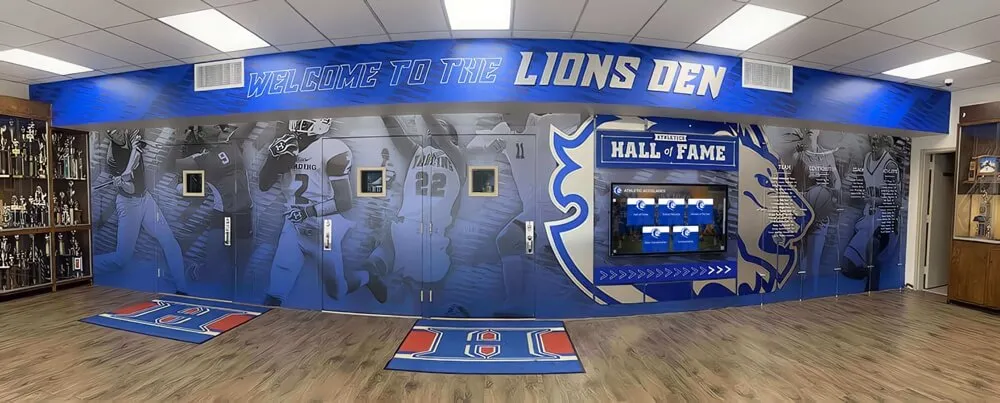
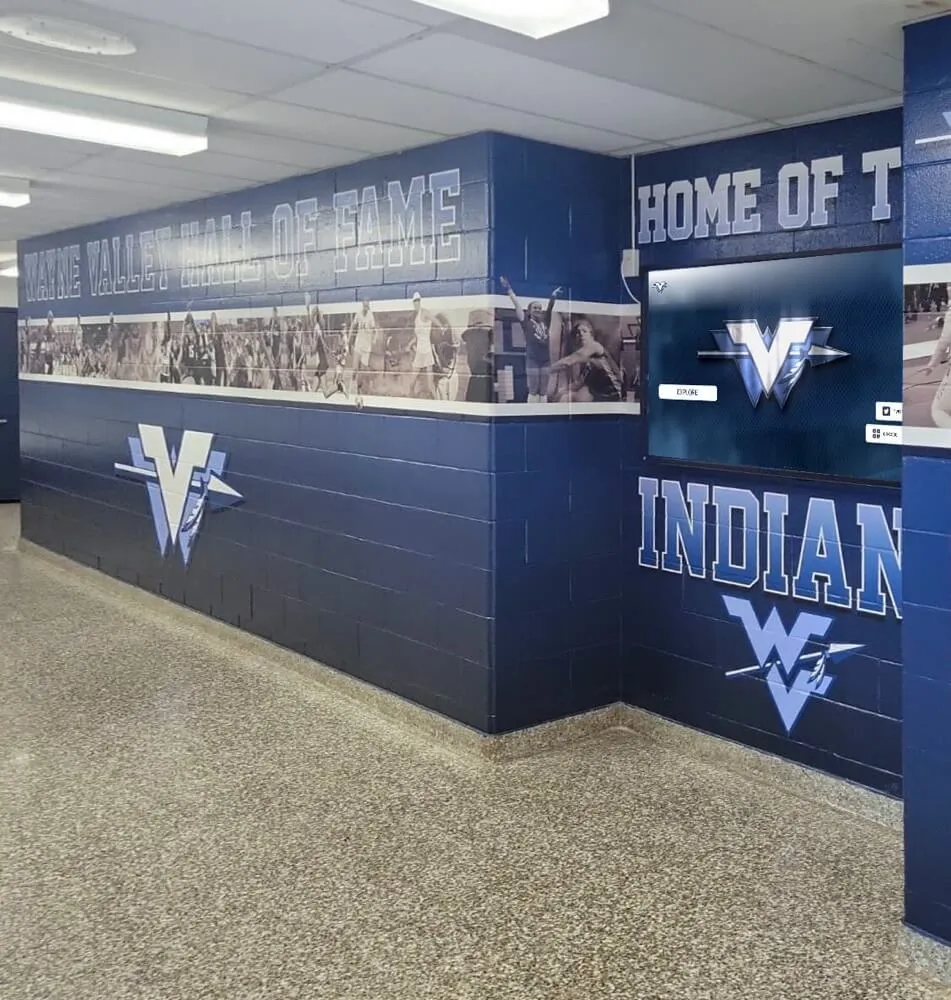
Strategic placement integrates interactive displays within existing school environments, complementing architectural features and wayfinding systems
Durability and Maintenance for High-Use Educational Environments:
School environments present demanding conditions for technology—high user volumes, diverse age ranges with varying care levels, and budget constraints limiting frequent replacement. Hardware selection should prioritize commercial-grade components designed for continuous operation, vandal-resistant construction withstanding environmental stresses, and serviceability enabling straightforward repairs rather than complete replacement when components fail.
Planning should also address routine maintenance including screen cleaning protocols, software update procedures, and preventive inspections catching problems before they disrupt user experiences.
Accessibility and Inclusive Design Requirements
Educational institutions face heightened responsibility to ensure digital platforms remain accessible to all community members regardless of physical abilities or disabilities.
ADA Compliance and Universal Design Principles:
Interactive school platforms should incorporate accessible design including touchscreen mounting heights accommodating wheelchair users, text sizing controls enabling vision-impaired users to adjust content for readability, high-contrast display options supporting users with visual limitations, screen reader compatibility for blind users accessing content through assistive technology, and alternative input methods beyond touch for users with limited manual dexterity.
These accessibility considerations should guide both physical installation planning and software interface design, ensuring that comprehensive achievement celebration remains inclusive rather than inadvertently excluding community members with disabilities.
Effective digital recognition solutions prioritize universal design ensuring that recognition experiences remain accessible to all community members while meeting institutional accessibility obligations.
Long-Term Value and Strategic Considerations
Beyond immediate functional benefits, unified interactive school platforms deliver sustained value through continuous improvement, scalable capacity, and strategic flexibility.
Content Longevity and Perpetual Value Accumulation
Unlike physical trophy cases with fixed space that eventually becomes completely full, digital platforms accumulate unlimited content over time—with comprehensive achievement archives becoming increasingly valuable as historical depth grows.
Compounding Historical Value:
A platform five years after implementation contains five years of achievement archives. After ten years, a decade of searchable history. After twenty years, comprehensive institutional memory spanning entire student educational careers from kindergarten through graduation. This accumulated historical depth creates unique institutional assets—searchable knowledge bases documenting decades of achievement that physical systems cannot replicate.
The longer unified platforms remain active, the more valuable they become through sustained content accumulation rather than depreciating like physical systems that deteriorate and become dated.
Scalability for Growing Programs and Expanding Needs
Unified platforms adapt to institutional growth and changing priorities without requiring replacement or major overhauls.
Flexible Capacity for Program Expansion:
Schools adding new athletic programs, expanding arts offerings, or introducing additional recognition categories accommodate growth within existing platforms rather than procuring separate new systems. Unified architectures scale gracefully—adding new content types, expanding user volumes, and incorporating additional features through software updates rather than hardware replacement.
This scalability protects long-term investment, ensuring that platforms remain relevant and functional despite inevitable institutional changes over time.
Integration Opportunities with Broader School Technology Ecosystems
Forward-thinking institutions recognize that interactive school platforms represent components within larger technology ecosystems rather than isolated standalone systems.
Strategic System Integration Potential:
Unified platforms can potentially integrate with student information systems pulling achievement data automatically, connect with learning management systems incorporating academic recognitions, interface with facility management systems coordinating content with building events, and link with fundraising databases highlighting donor impact through achievement celebration.
These integration possibilities create opportunities for increasingly automated, comprehensive platforms that reduce manual workload while providing richer, more contextualized experiences than isolated systems enable.
Schools exploring comprehensive technology approaches including digital history archives benefit from platforms designed with integration capabilities that enable seamless connection with institutional memory preservation initiatives and archival collections.
Conclusion: The Future of School Achievement Celebration Through Unified Interactive Platforms
The convergence of recognition displays, digital yearbooks, and interactive trophy cases into unified touchscreen platforms represents a fundamental evolution in how educational institutions celebrate achievement, preserve institutional history, and create engaging experiences for students, families, and communities.
This consolidation delivers immediate practical benefits—reduced administrative burden, eliminated content duplication, streamlined vendor management, and cost efficiencies—while simultaneously enabling richer, more comprehensive experiences impossible with fragmented traditional approaches. Students discover their achievements celebrated across multiple contexts through unified systems rather than siloed in disconnected departmental displays. Alumni maintain perpetual access to institutional connections through searchable digital archives. Visitors engage deeply with institutional excellence through intuitive exploration rather than passive observation of limited physical displays.
As schools increasingly recognize the limitations of fragmented legacy approaches, adoption of unified interactive school platforms will accelerate—driven both by administrative efficiency requirements amid budget pressures and by rising expectations from digitally-native students and families who expect seamless, mobile-accessible experiences rather than disconnected analog systems.
Educational institutions implementing comprehensive interactive platforms today position themselves ahead of inevitable industry shifts while immediately realizing operational efficiencies and enhanced engagement that justify investment through measurable impact on recognition program effectiveness, community connection, and institutional pride.
Ready to explore how unified interactive school software can transform your institution’s approach to recognition, yearbook experiences, and achievement celebration? Schedule a consultation with Rocket Alumni Solutions to discover customized platform solutions designed specifically for your school’s unique needs, existing content, and strategic priorities. Our comprehensive touchscreen systems consolidate multiple recognition functions into intuitive experiences that celebrate student achievement while reducing administrative complexity—creating lasting value for your entire educational community.