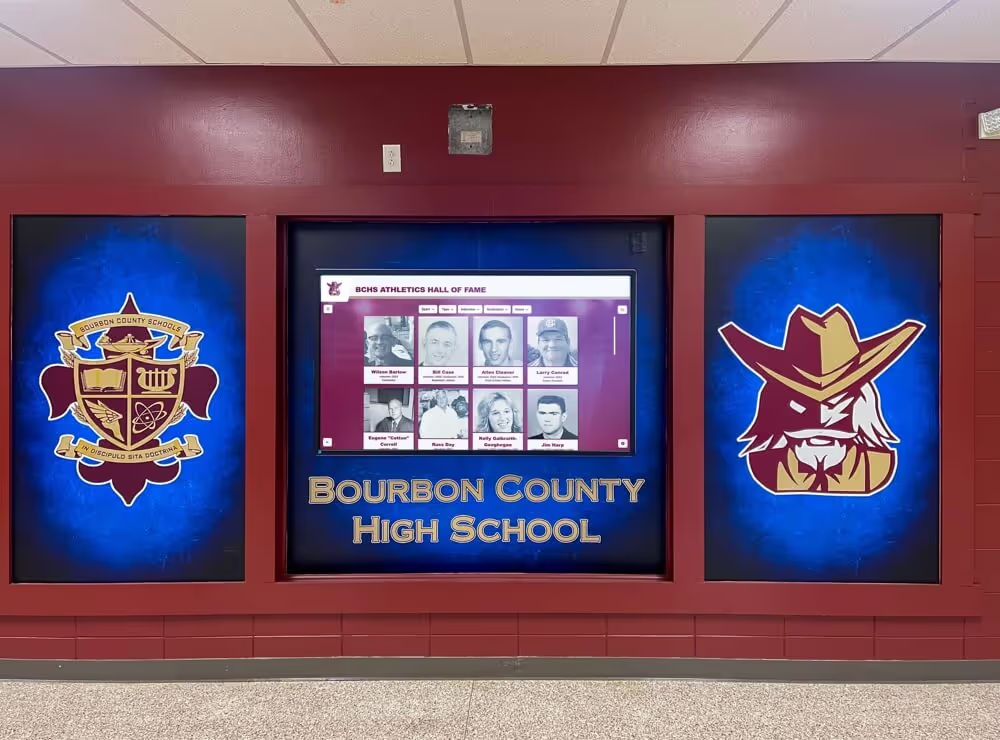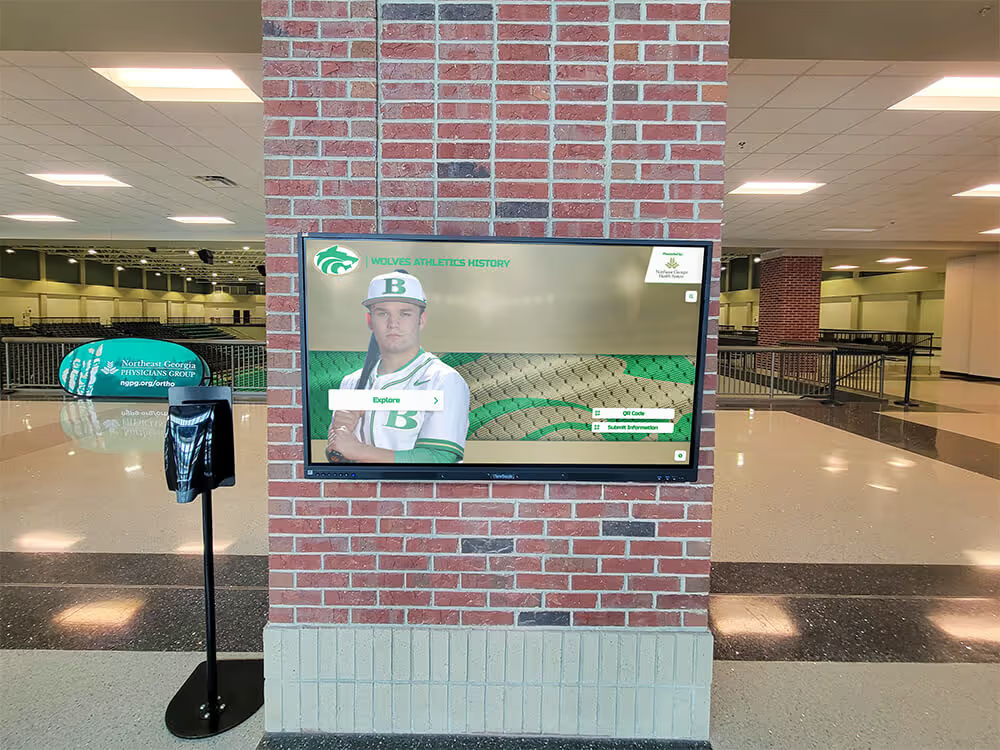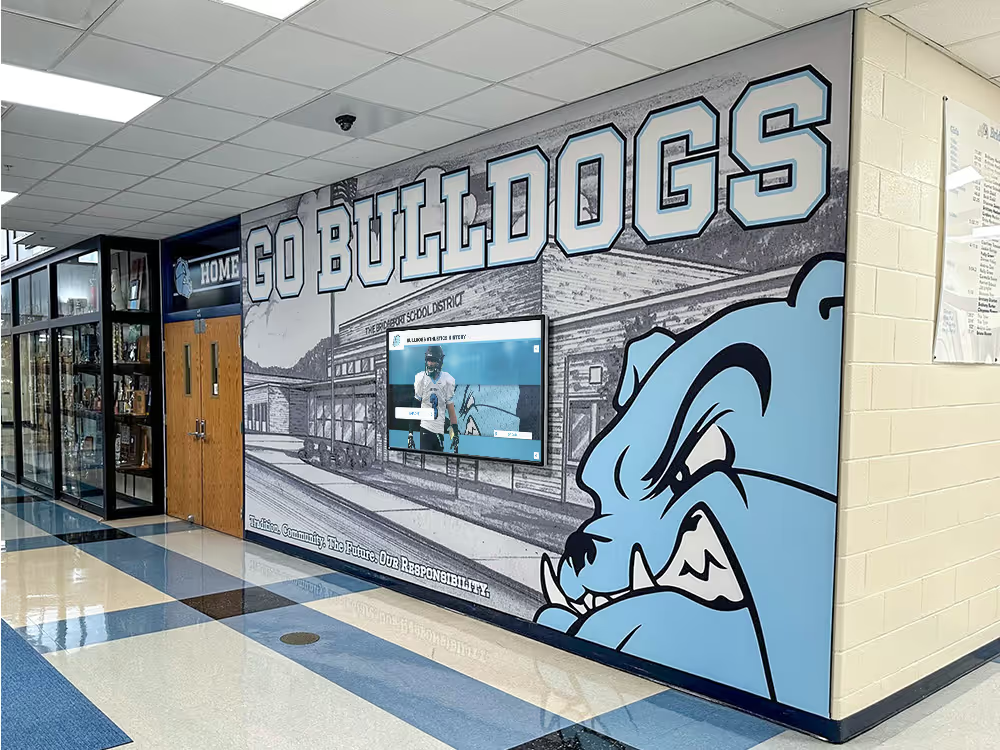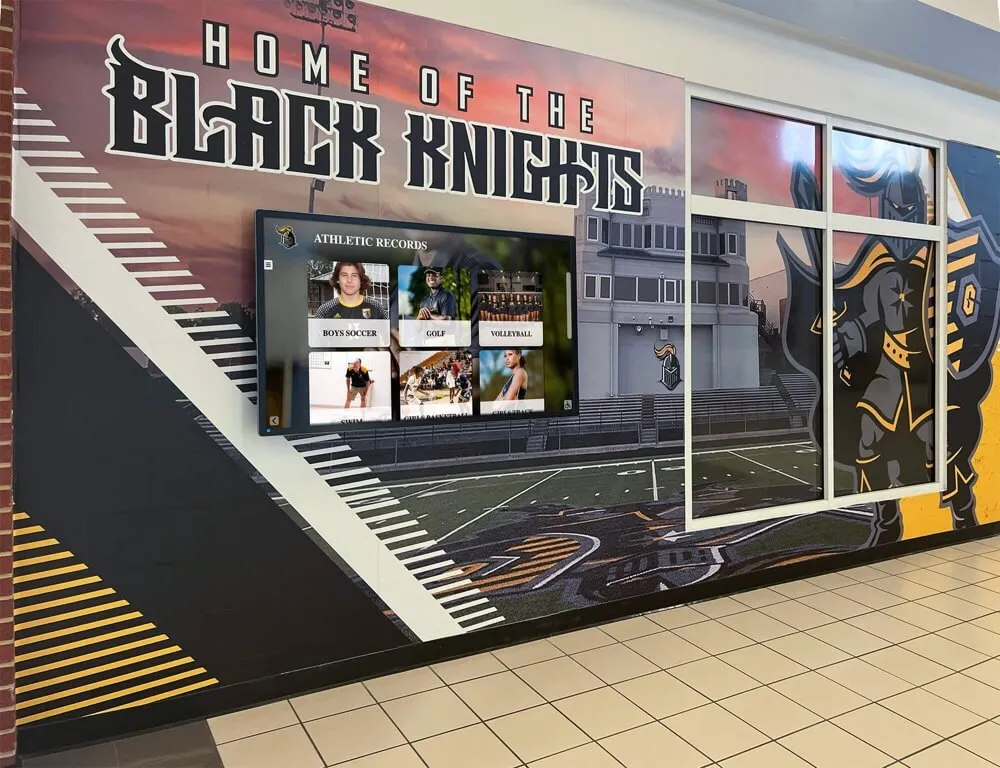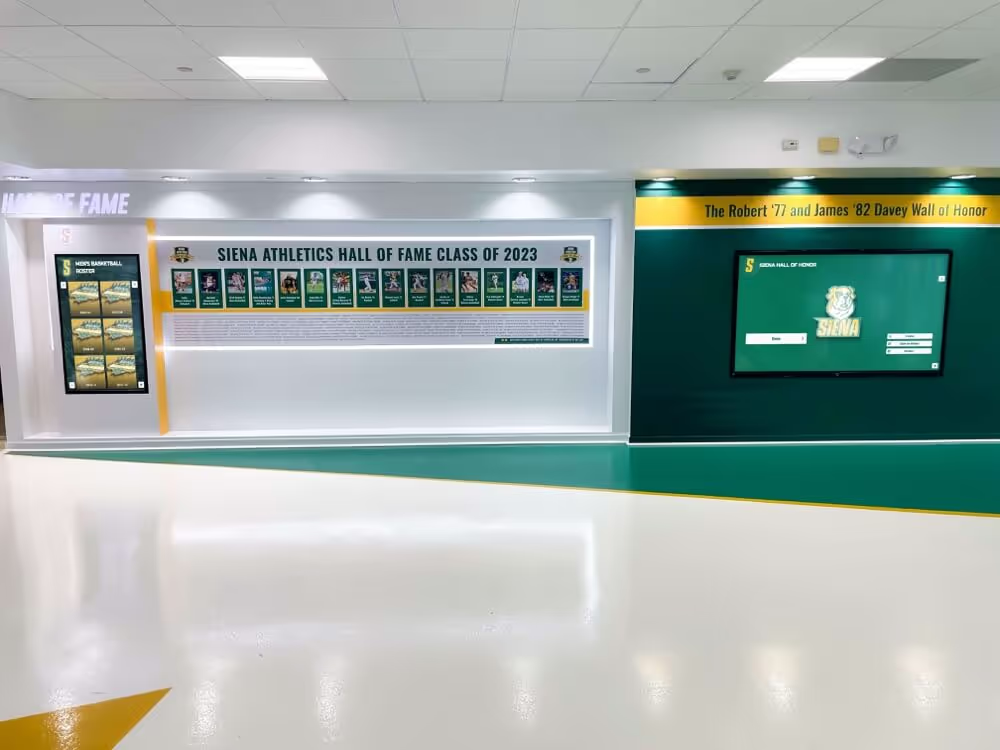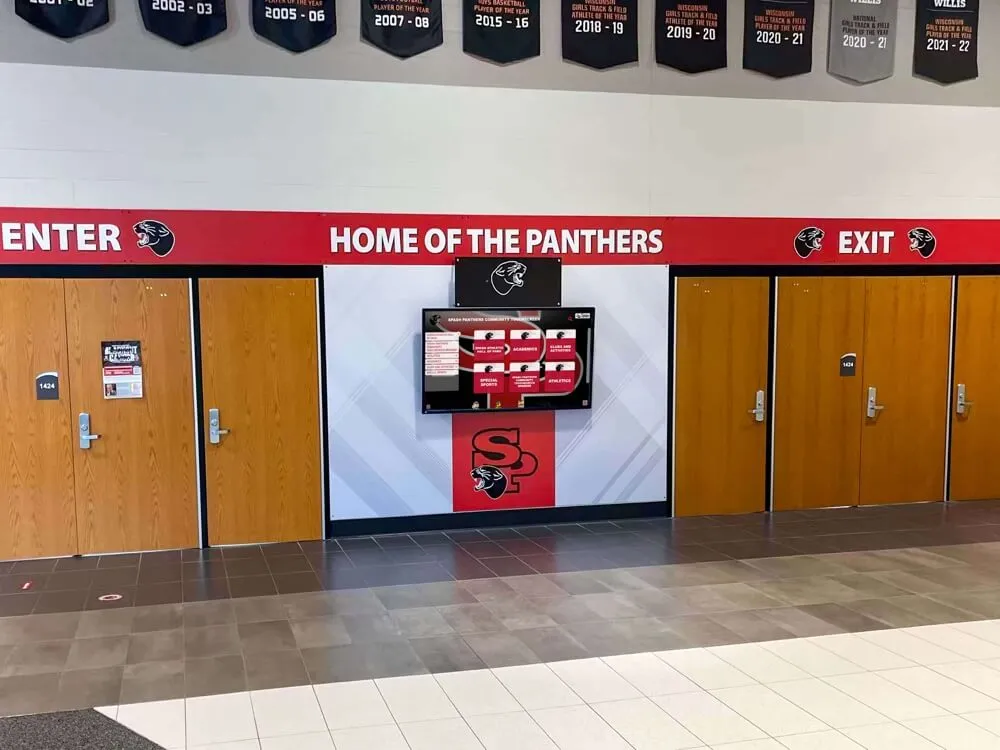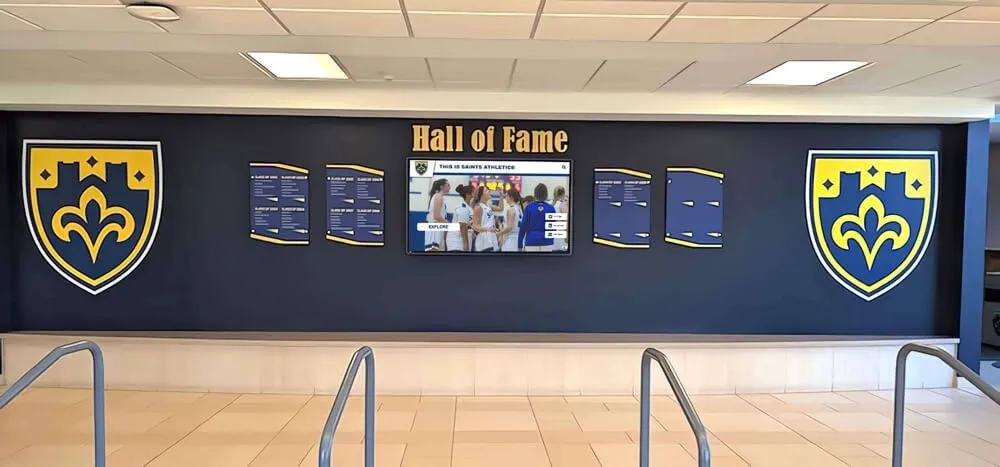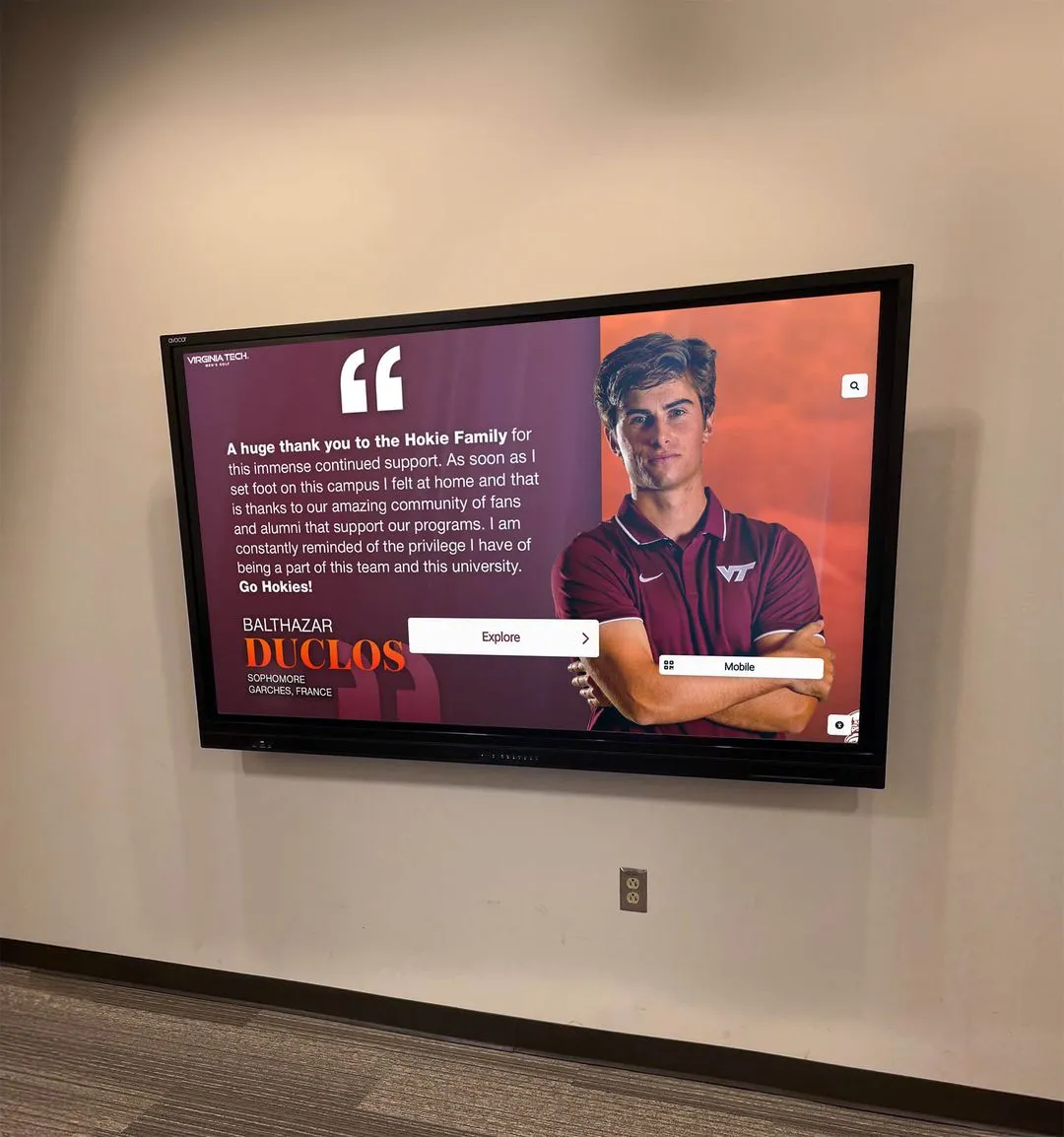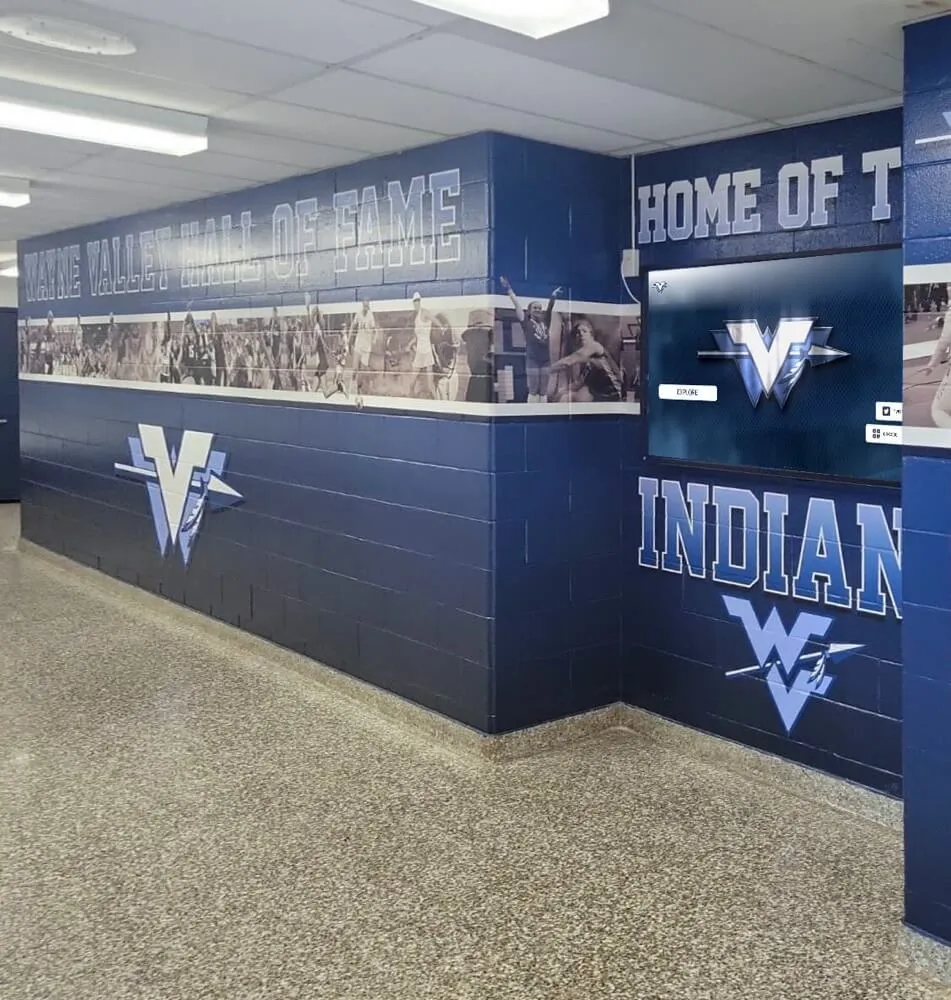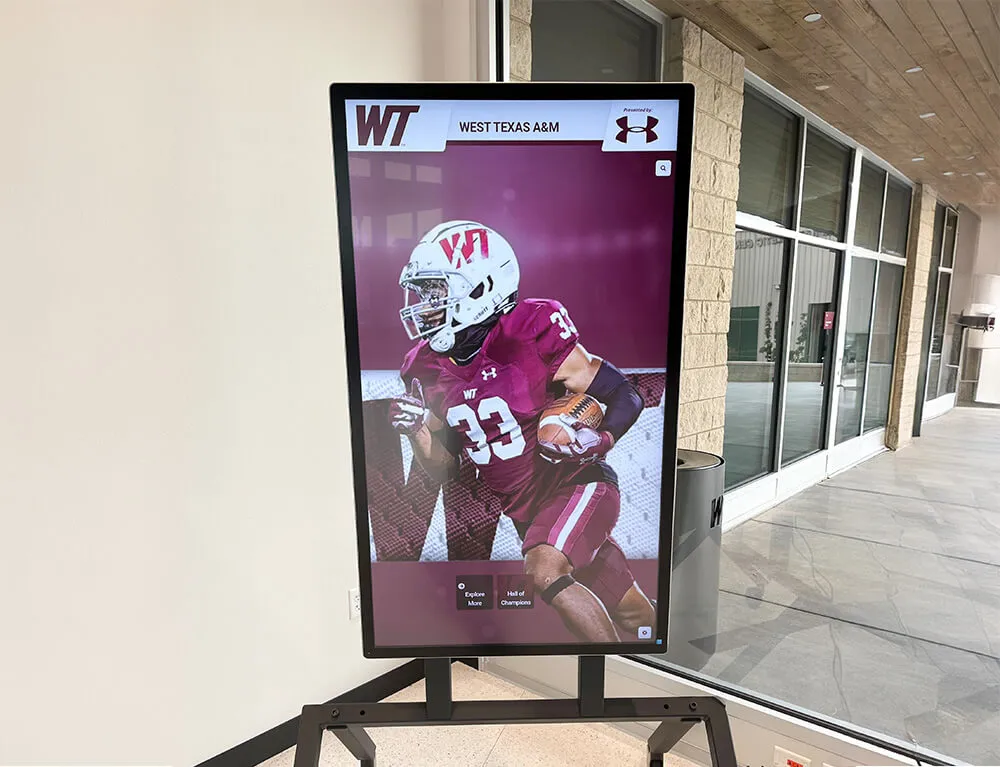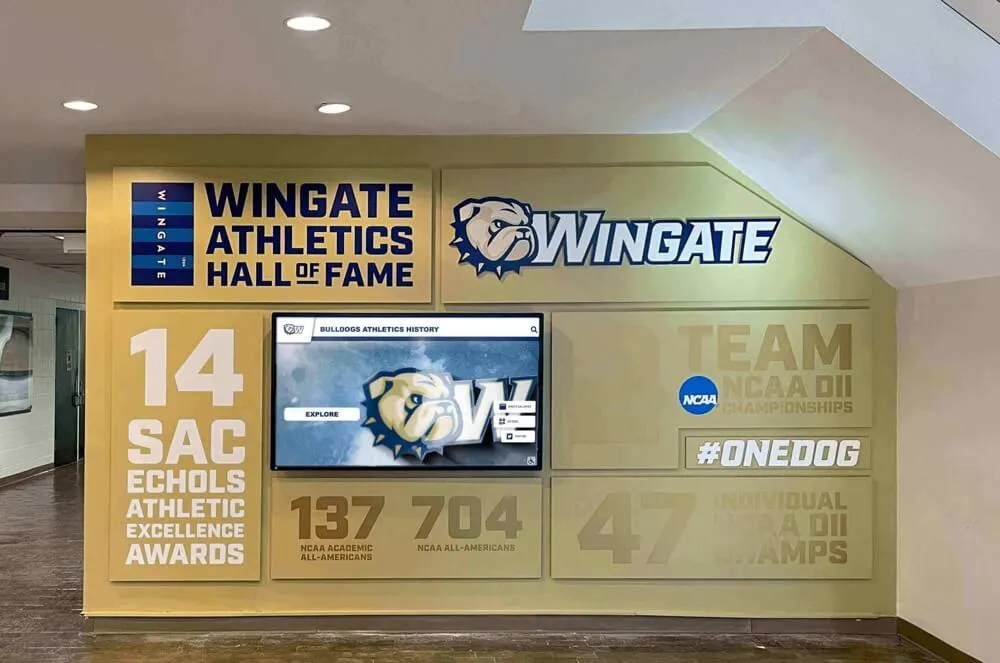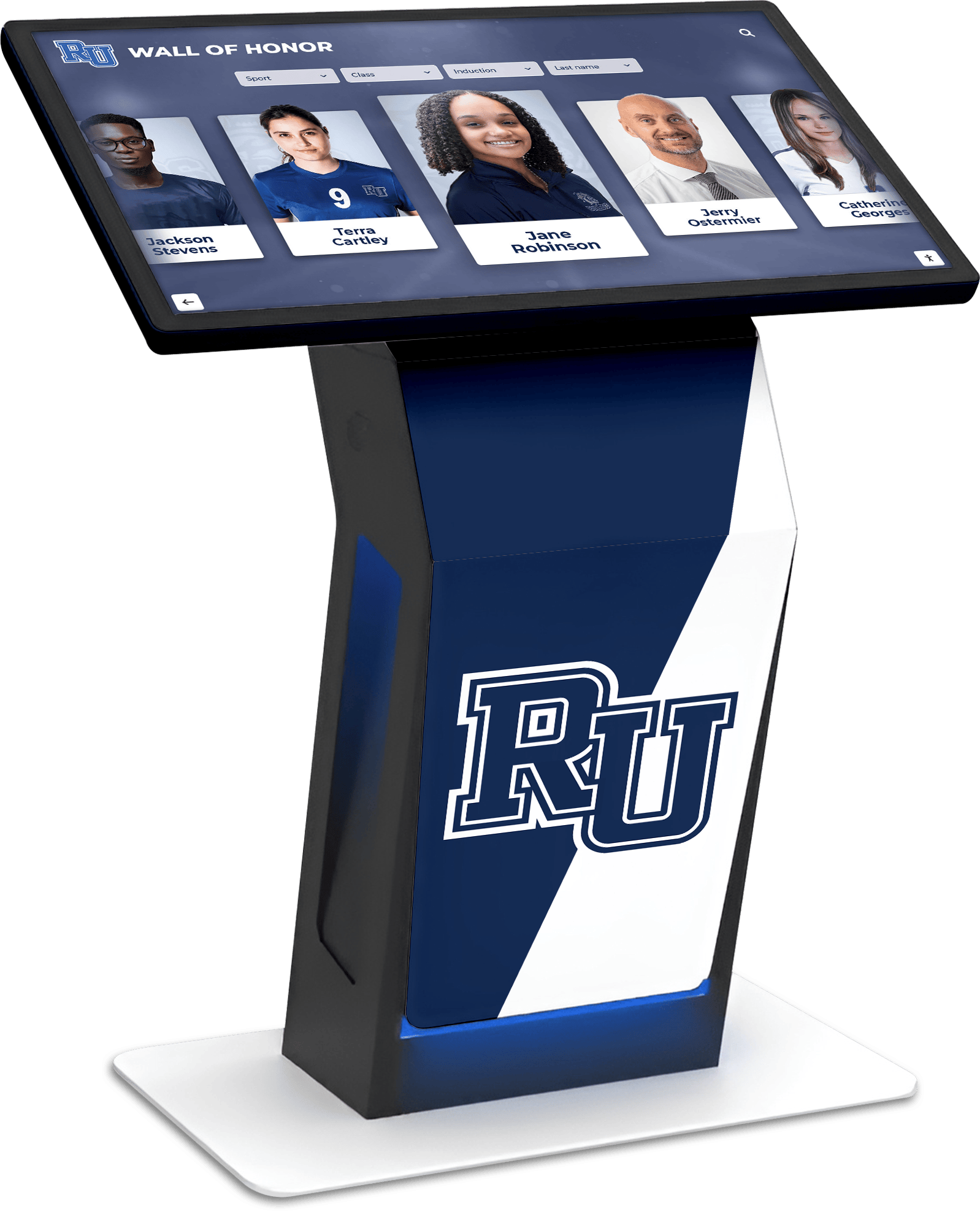




Intent: Demonstrate optimal touchscreen kiosk hardware selection and creative deployment for educational recognition displays.
MWE-QIXZOCV touchscreen kiosk interactive displays represent commercial-grade hardware solutions designed specifically for high-traffic public environments where reliability, durability, and engaging user experiences determine installation success. Understanding hardware specifications, design considerations, software compatibility requirements, and strategic deployment approaches enables organizations to create interactive recognition experiences that captivate audiences while operating reliably across multi-year service lifespans.
The challenge facing educational institutions and organizations implementing interactive recognition systems involves selecting appropriate hardware that balances performance capabilities, aesthetic appeal, operational durability, and budget constraints. Consumer-grade displays prove inadequate for continuous public operation, frequently failing within months. Generic digital signage hardware lacks interactive optimization. And poorly specified installations create frustrating user experiences that undermine recognition program objectives regardless of content quality.
This comprehensive guide explores MWE-QIXZOCV touchscreen kiosk technology through design-focused lenses relevant to schools, universities, and organizations implementing recognition displays, information systems, and interactive exhibits. You’ll discover hardware specifications critical for public installations, design frameworks for creating engaging touchscreen experiences, compatibility considerations for recognition software including Rocket Alumni Solutions, placement strategies maximizing visibility and engagement, and best practices ensuring reliable long-term operation.
Organizations that systematically evaluate hardware specifications, design implications, and software compatibility before deployment report satisfaction rates exceeding 90 percent with their interactive kiosk installations, compared to under 50 percent among those selecting hardware based primarily on price without understanding operational requirements. The difference lies in recognizing that commercial-grade interactive kiosks represent long-term investments requiring specifications matching actual usage demands rather than initial cost minimization alone.

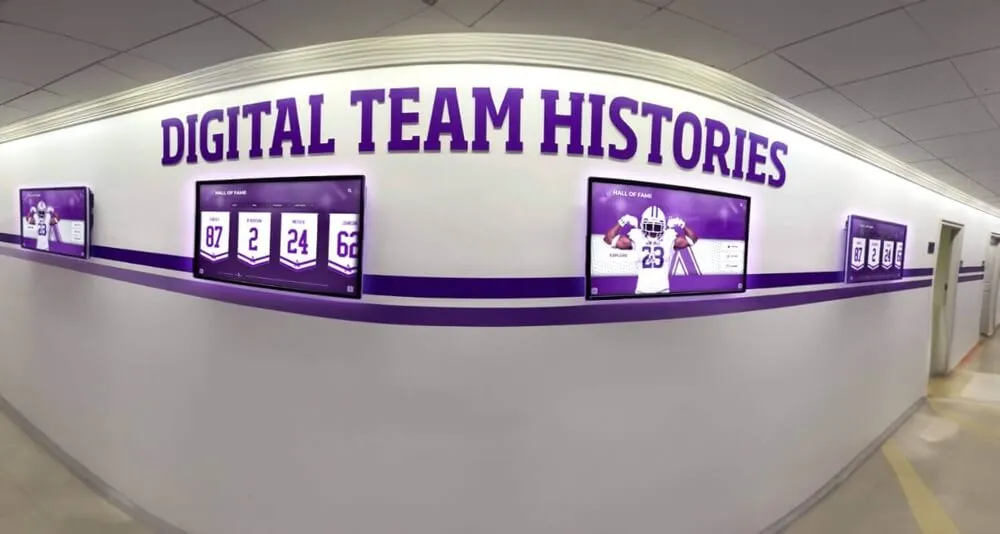
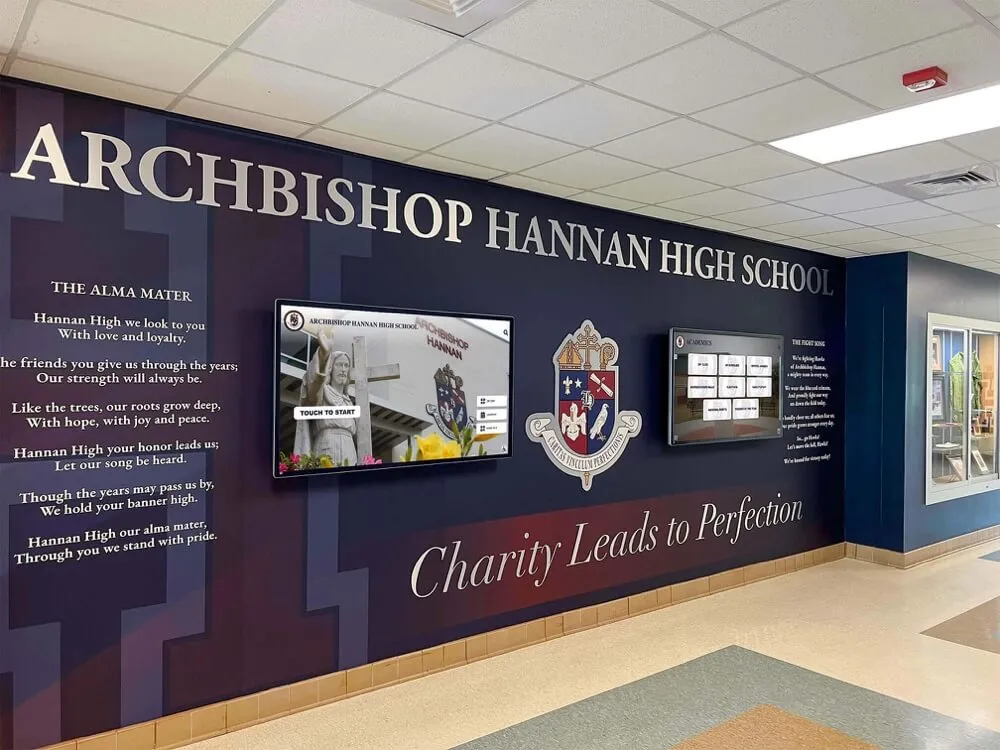
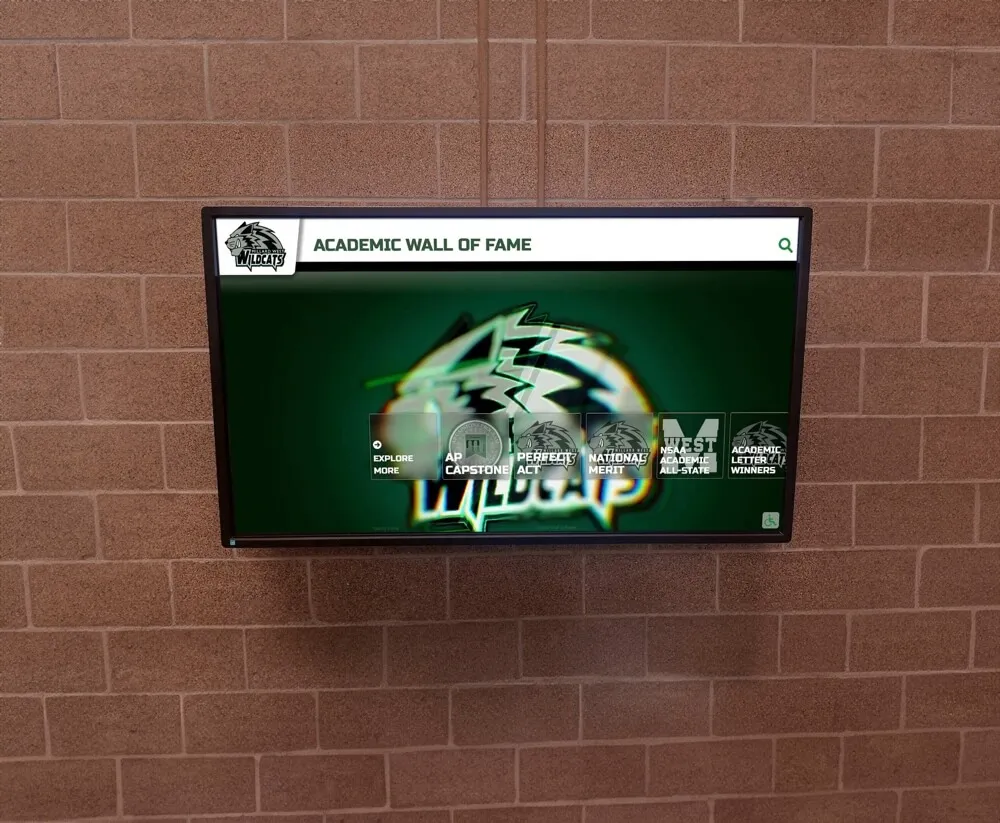
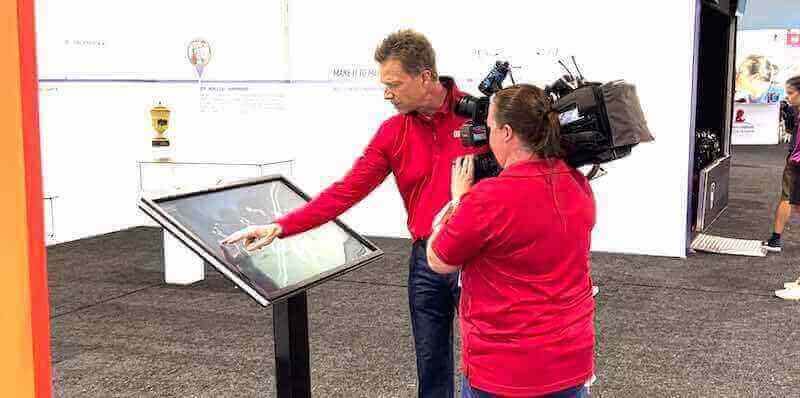
Commercial-grade touchscreen kiosks combine durability specifications, aesthetic design, and performance capabilities optimized for continuous public operation in educational environments
Understanding MWE-QIXZOCV Touchscreen Kiosk Specifications
Before exploring design implications and software compatibility, understanding core hardware specifications and how they impact user experience provides essential context for informed kiosk selection decisions.
Commercial-Grade Hardware Requirements
MWE-QIXZOCV series touchscreen kiosks meet commercial-grade specifications distinguishing professional installations from consumer devices inadequate for public environments. Commercial displays rated for continuous operation provide critical durability including touch cycle ratings exceeding 60 million touches versus consumer touchscreens rated for only thousands of interactions, thermal management systems enabling 16-24 hour daily operation without overheating, industrial-grade components resistant to environmental factors including temperature fluctuations and humidity, tempered glass or acrylic overlays protecting display surfaces from impact damage, and typically three-year manufacturer warranties versus one-year consumer standards.
These durability specifications prove essential for public installations where displays face constant interaction from hundreds or thousands of daily touches. Schools implementing touchscreen kiosk software for interactive displays require hardware matching software capabilities through reliable performance under continuous use.
Display Panel Technology and Touch Responsiveness
MWE-QIXZOCV kiosks commonly feature capacitive touchscreen technology delivering smartphone-quality responsiveness that modern users expect from interactive displays. Capacitive touch panels register touches through electrical field disruption rather than physical pressure, enabling multi-touch gestures, superior touch accuracy with single-point precision under 2mm, faster response times typically under 10 milliseconds, and scratch-resistant glass surfaces maintaining clarity across years of operation.
Display panel specifications significantly impact visual quality and user engagement. High brightness ratings of 400-500 nits ensure visibility in well-lit educational corridors and lobbies where ambient light would wash out consumer displays. Full HD 1920x1080 resolution provides sharp text legibility critical for biography-heavy recognition content. And wide 178-degree viewing angles ensure content remains visible whether viewers stand directly in front of displays or approach from angles common in hallway installations.
Form Factor Options and Physical Design
Touchscreen kiosks deploy in various physical configurations matching different spatial contexts and aesthetic preferences organizations encounter across diverse facility environments.
Freestanding Floor Kiosks
Freestanding floor kiosks provide maximum flexibility for placement in lobbies, gathering spaces, and common areas where wall mounting proves impractical or aesthetically undesirable. These self-contained units typically feature weighted bases ensuring stability against accidental contact, integrated cable management concealing power and network connections, optional castors enabling repositioning for events or cleaning, and professional enclosures available in multiple finish options matching institutional aesthetics.
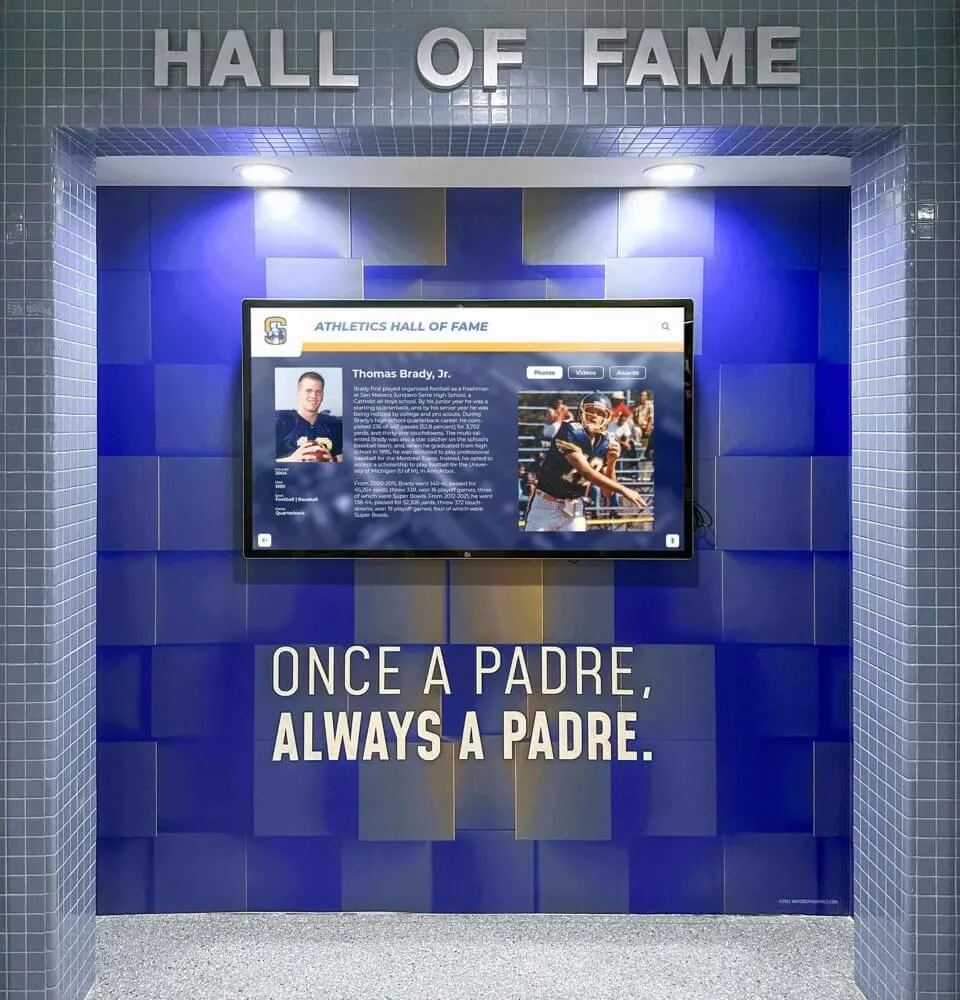
Floor kiosks commonly range from 43 to 55 inches diagonal for optimal viewing height when mounted on floor stands positioning screens at comfortable interaction heights between 40-55 inches from floor level. Organizations implementing digital hall of fame touchscreen systems frequently select freestanding configurations for main lobbies where displays serve as focal points during tours, events, and daily activities.
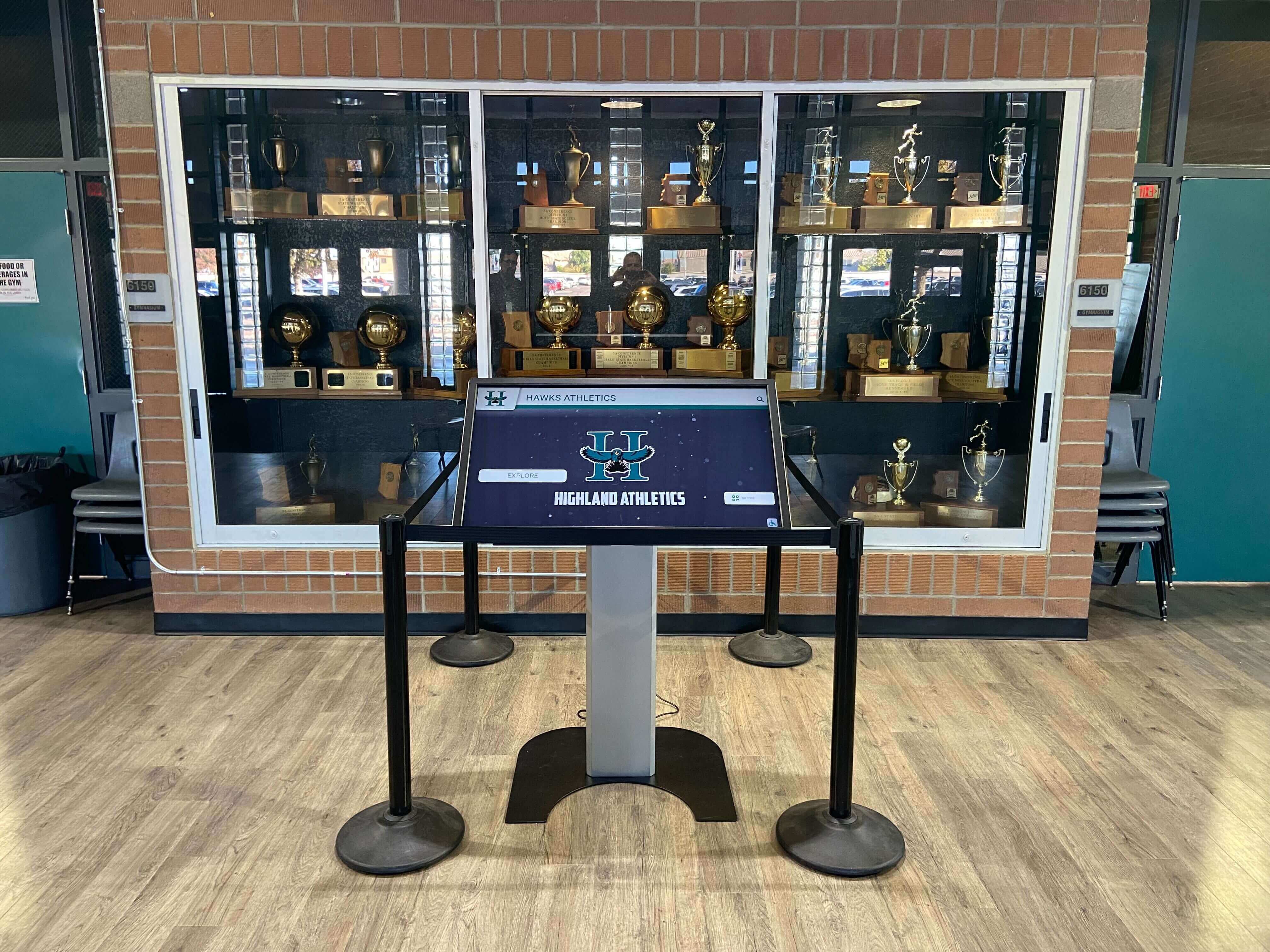
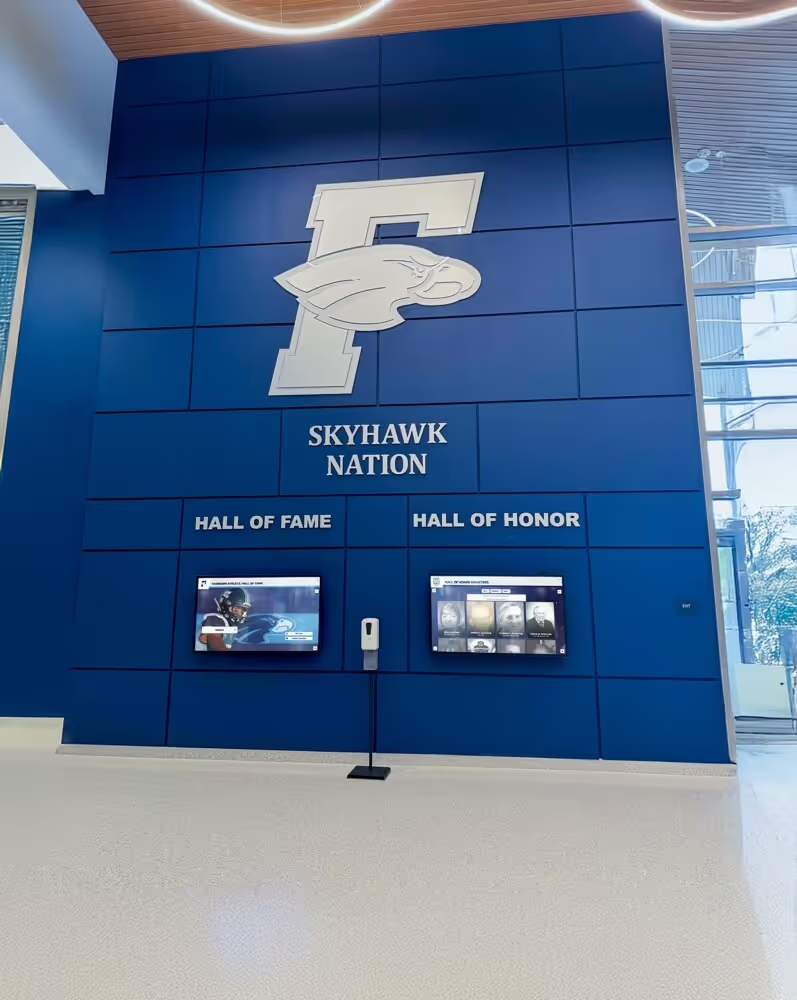
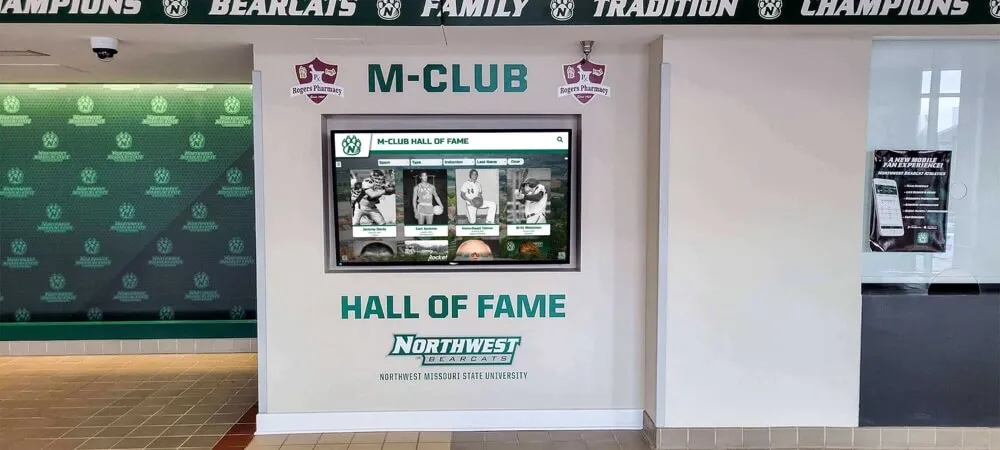
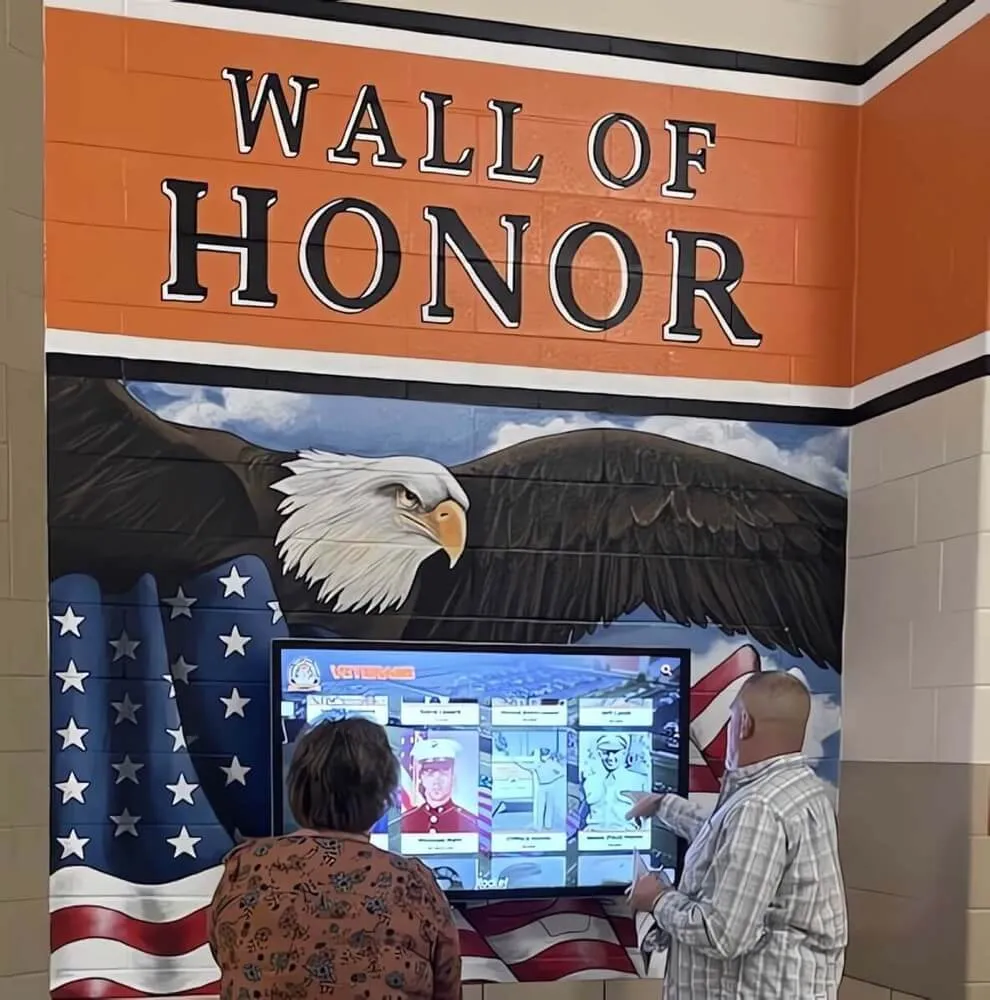
Freestanding kiosk configurations offer flexible placement in lobbies and gathering spaces while maintaining professional appearance and operational stability
Wall-Mounted Displays
Wall-mounted configurations maximize space efficiency in corridors and hallways where floor space limitations preclude freestanding installations. Commercial mounting systems provide secure attachment supporting 75-150 pound display weights, tilt adjustment enabling optimal viewing angle positioning, integrated cable routing maintaining clean professional appearances, and ADA-compliant mounting heights ensuring accessibility compliance.
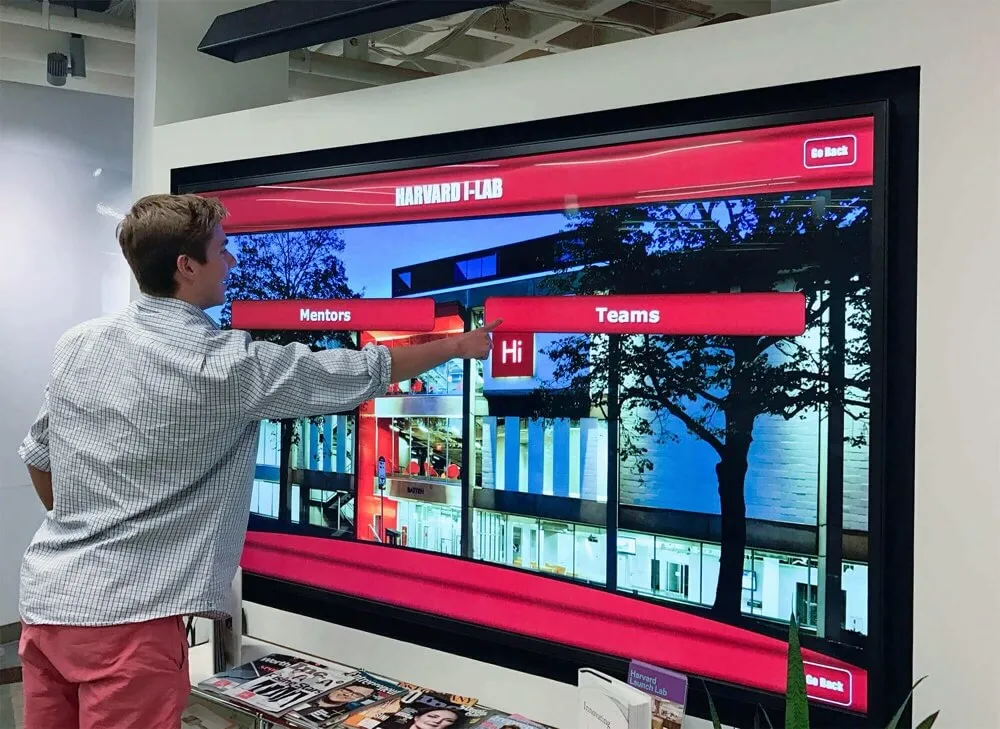
Wall-mounted displays typically deploy in 43 to 65 inch sizes depending on viewing distances and available wall space. Larger formats suit expansive lobbies where viewing distances exceed 10 feet, while 43-50 inch displays work effectively in standard corridor widths where viewers interact from 3-6 feet away.
Enclosure Design and Aesthetic Integration
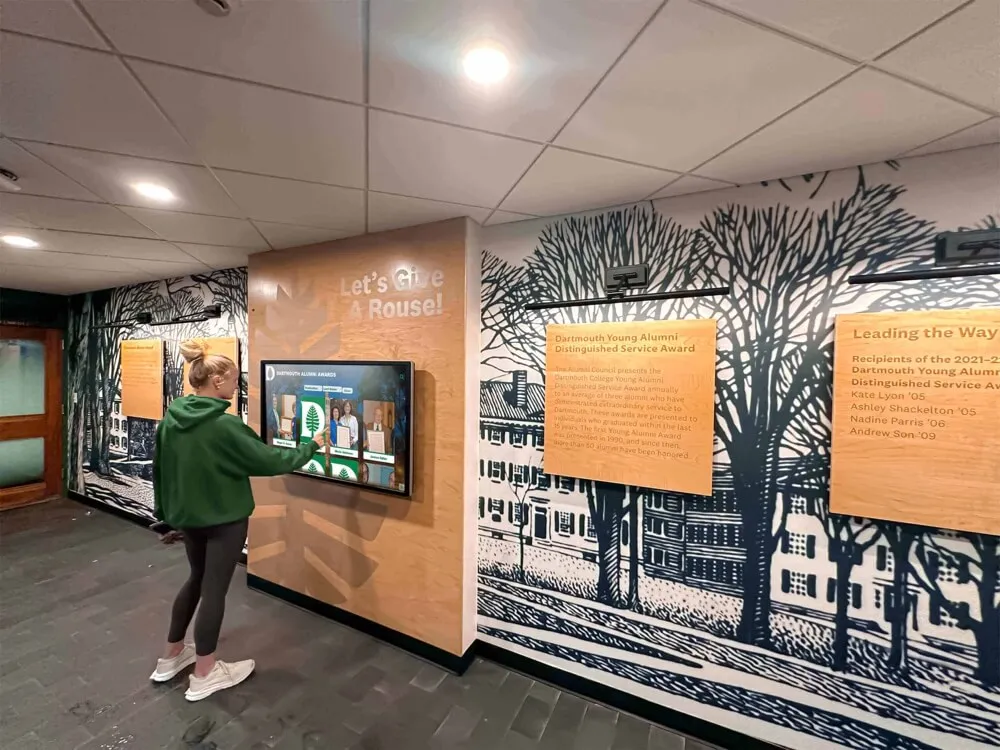
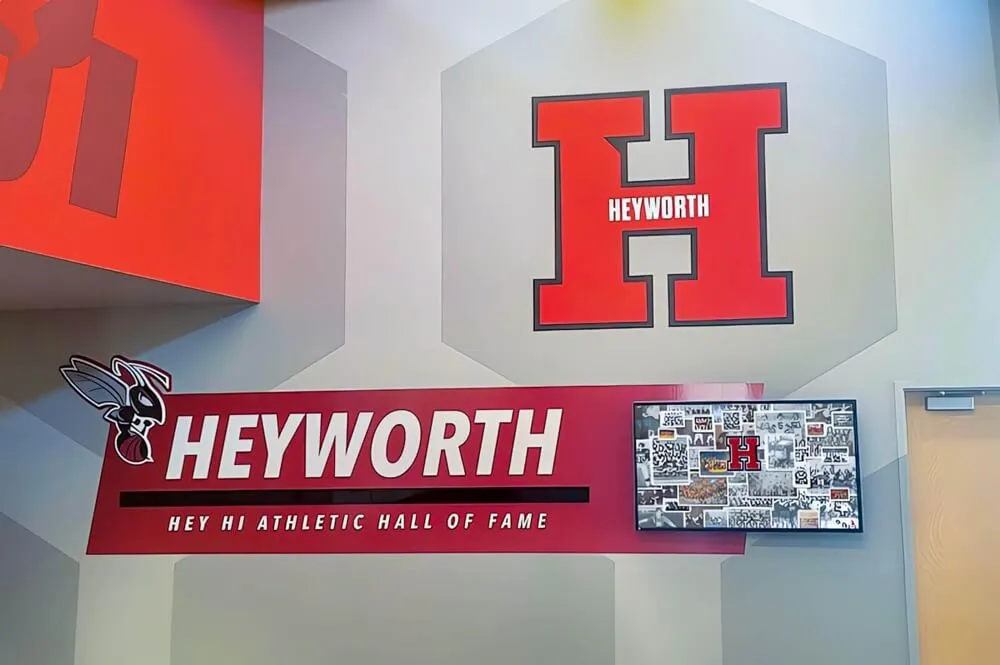
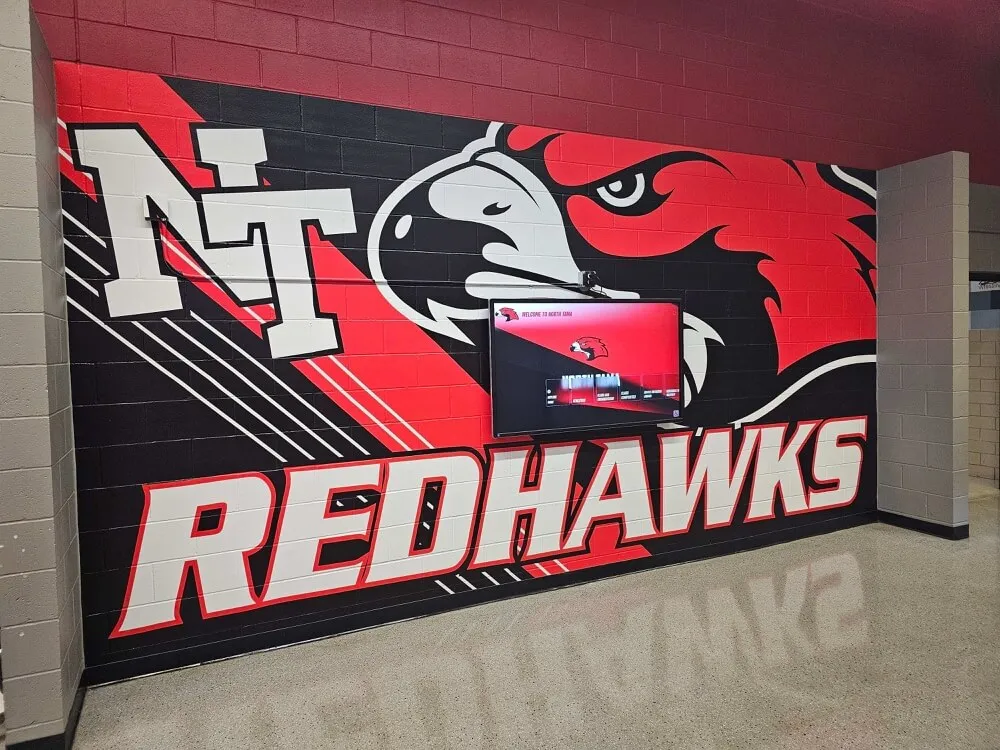
Physical enclosure design significantly impacts how interactive kiosks integrate with institutional aesthetics and brand identity. MWE-QIXZOCV kiosks commonly offer multiple finish options including powder-coated steel in custom colors matching school or organizational palettes, brushed aluminum providing contemporary professional aesthetics, wood veneer options for traditional architectural environments, and custom branded enclosures incorporating logos and identity elements.
Thoughtful enclosure design ensures interactive displays enhance rather than detract from carefully designed facility environments. Solutions like Rocket Alumni Solutions provide unlimited layout customization enabling recognition displays to incorporate institutional branding, custom color schemes, background imagery reflecting campus architecture, and design elements reinforcing organizational identity throughout interactive experiences.
Experience Layout: Designing Engaging Interactive Recognition
Creating effective interactive recognition experiences requires systematic layout design organizing content zones, navigation elements, and content presentation in ways that feel intuitive while encouraging exploration and engagement.
Hero Zone and Primary Content Presentation
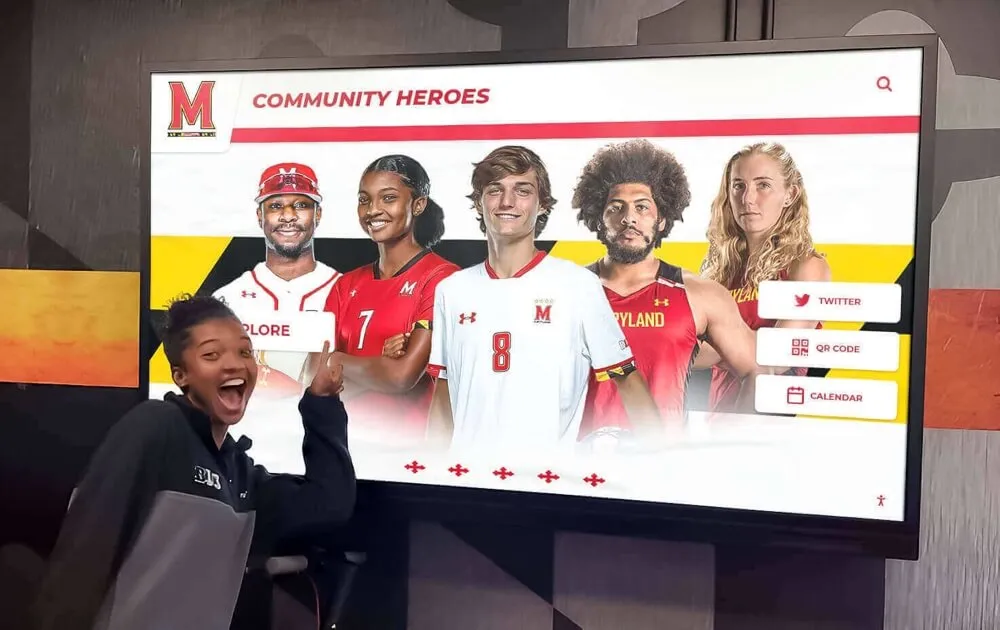
The hero zone represents the primary visual area occupying the upper two-thirds of touchscreen displays where featured content captures attention and communicates recognition program purpose immediately upon approach. Effective hero zone design commonly includes rotating featured inductee spotlights highlighting recent or notable honorees with prominent imagery, institutional branding and recognition program identity establishing context, category navigation providing clear paths to different achievement types, and search functionality enabling visitors to immediately find specific individuals without browsing.
Content Card Design and Visual Hierarchy
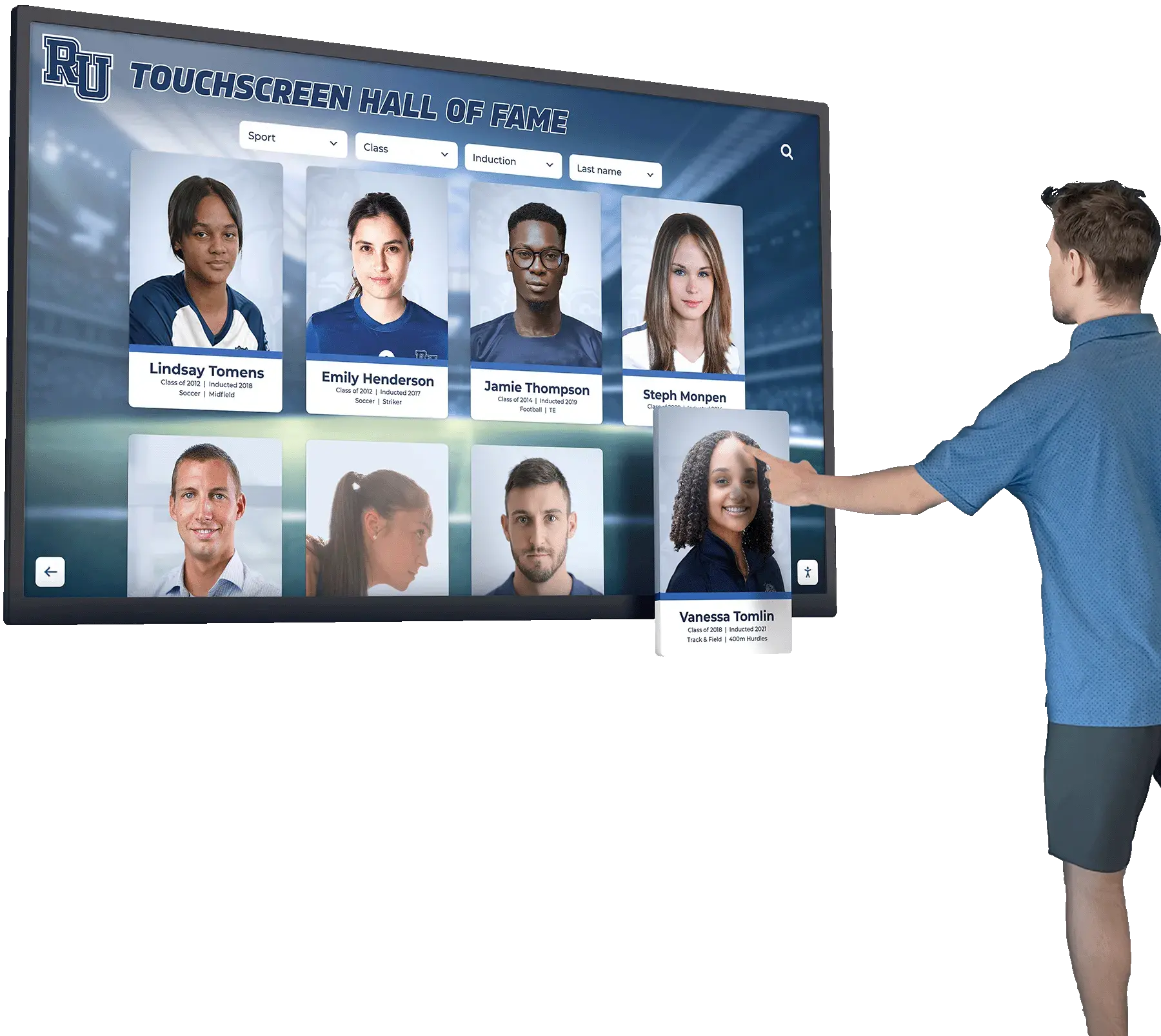
Individual honoree presentation requires careful visual design balancing multiple information elements within confined screen real estate. Effective content card layouts typically feature high-quality portrait photography as visual anchors drawing attention, clear hierarchical typography distinguishing names from achievement details, induction year or achievement date providing temporal context, concise biographical summaries of 40-60 words introducing achievements, and clear tap-to-explore affordances indicating that cards lead to detailed profiles.
Grid-based card arrangements enable visitors to view 6-12 honorees simultaneously—sufficient variety to encourage discovery while avoiding overwhelming visual clutter. Touch-optimized spacing with minimum 44x44 pixel touch targets prevents accidental selections while accommodating users with varying dexterity levels including elderly alumni and young children exploring recognition with families.
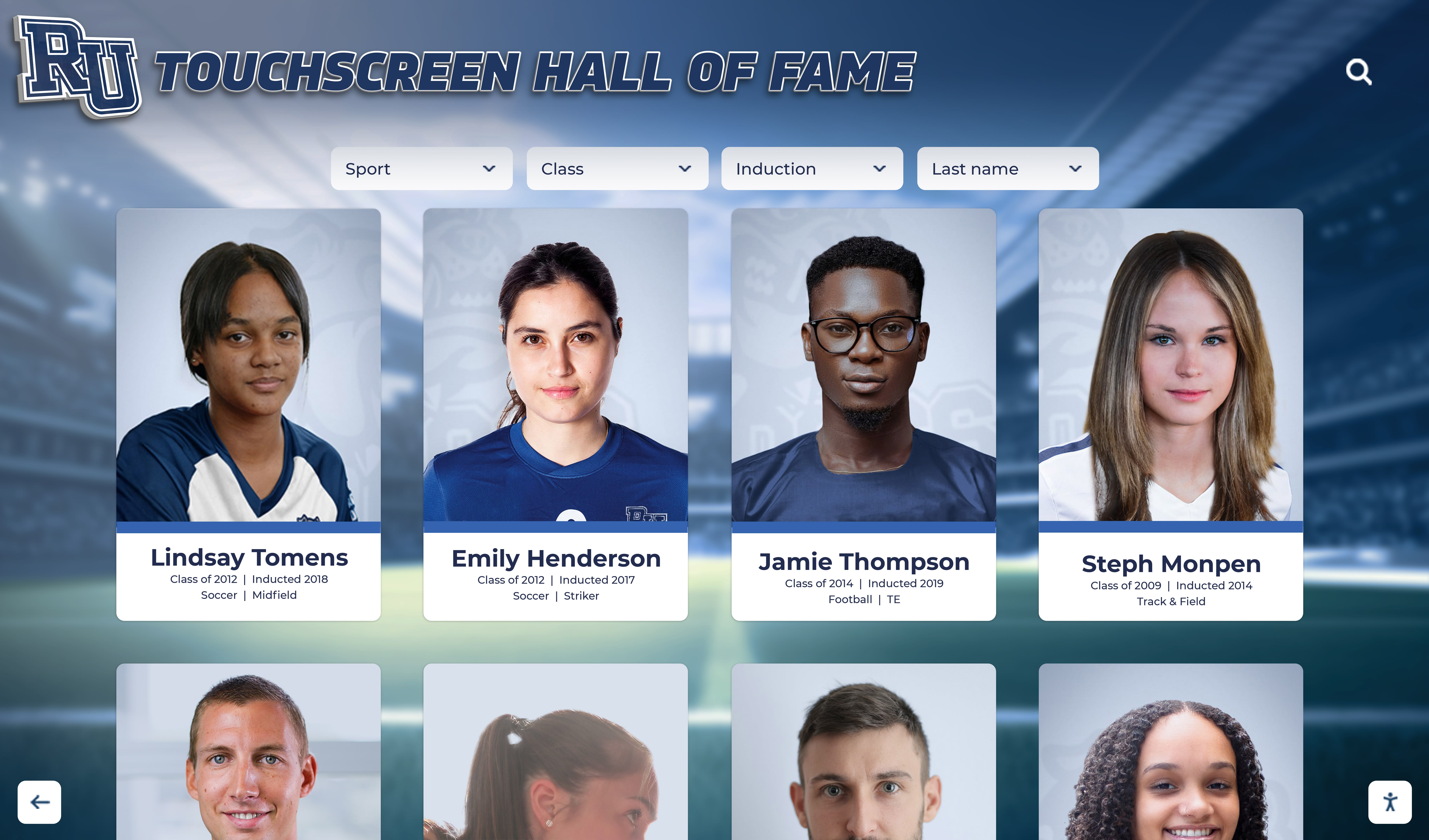
Grid-based card layouts enable efficient browsing while providing sufficient visual information to guide exploration decisions
Navigation Architecture and Content Discovery
Intuitive navigation determines whether visitors successfully explore recognition content or abandon displays in frustration. Effective navigation architectures provide multiple discovery paths accommodating different user intentions and search patterns.
Multi-Path Navigation Design
Recognition systems should support three primary navigation approaches serving different user needs. Name search with auto-complete enables users seeking specific individuals to bypass browsing entirely—particularly valuable for alumni finding themselves or family members. Category filtering by achievement type, year, sport, or academic discipline serves users interested in specific recognition segments without knowing individual names. And chronological browsing organized by induction year or achievement date accommodates users wanting to explore recognition eras systematically.
Persistent navigation elements occupying screen edges or corners remain accessible throughout exploration preventing disorientation. Clear home buttons enable immediate return to starting points from deep content exploration. And breadcrumb navigation showing current location within content hierarchies helps users understand where they are within recognition structures.
Detailed Profile Experience and Storytelling
Individual honoree profiles represent opportunities for rich storytelling that transforms recognition from simple documentation into compelling narratives inspiring current community members while honoring past excellence appropriately.
Profile Layout Blueprint
Detailed profile layouts commonly feature full-screen presentations maximizing space for comprehensive content including large hero imagery showing honorees during their prime involvement, biographical narratives of 150-300 words explaining achievements and impact, photo galleries with 4-10 additional images capturing memorable moments, achievement lists detailing specific honors, records, or accomplishments, video content when available capturing personal reflections or performance highlights, and related content links connecting honorees to teammates, classmates, or contemporary inductees.
Vertical scrolling interfaces work effectively for profile pages accommodating varying content lengths without requiring complex pagination. Visitors naturally expect scroll behaviors matching smartphone experiences, making vertical navigation intuitive without instruction. Organizations implementing comprehensive academic recognition programs leverage detailed profile layouts to celebrate diverse achievement types from athletics through academics, arts, and service.
Software Compatibility: Rocket Alumni Solutions Integration
Hardware specifications prove meaningful only when paired with software delivering engaging recognition experiences through intuitive interfaces, comprehensive content management, and reliable performance under continuous public operation.
Purpose-Built Recognition Platform Advantages
Generic digital signage software repurposed for recognition applications lacks features essential for celebrating people and achievements effectively. Purpose-built recognition platforms like Rocket Alumni Solutions provide specialized capabilities optimized for educational institutions and organizations including unlimited honoree capacity accommodating comprehensive recognition without space constraints, powerful search and filtering enabling efficient content discovery across hundreds or thousands of profiles, multimedia support for photos, videos, and rich biographical content, responsive design delivering consistent experiences across physical touchscreens and personal devices, cloud-based content management enabling non-technical administrators to update displays from anywhere, and analytics tracking engagement demonstrating recognition program value.
This specialized functionality enables recognition experiences impossible with generic signage platforms treating honoree profiles as simple slideshows without interactivity, search, or personalized exploration.
Web-Based Architecture and Cross-Platform Accessibility
Rocket Alumni Solutions leverages web-based architecture delivering significant operational advantages for multi-display deployments and universal accessibility. Web platforms enable instant content updates appearing immediately across all displays worldwide without individual device management, centralized administration from any internet-connected device eliminating IT department dependencies, automatic security updates and feature improvements without organizational intervention, and seamless extension to web portals enabling worldwide access beyond physical installations.
This architecture proves particularly valuable for recognition applications where alumni living globally should access their recognition anytime rather than limiting visibility to those physically visiting campus during facility hours. Resources on best touchscreen software comparing web-based and native approaches demonstrate why web architectures excel for recognition applications prioritizing accessibility and administrative simplicity.
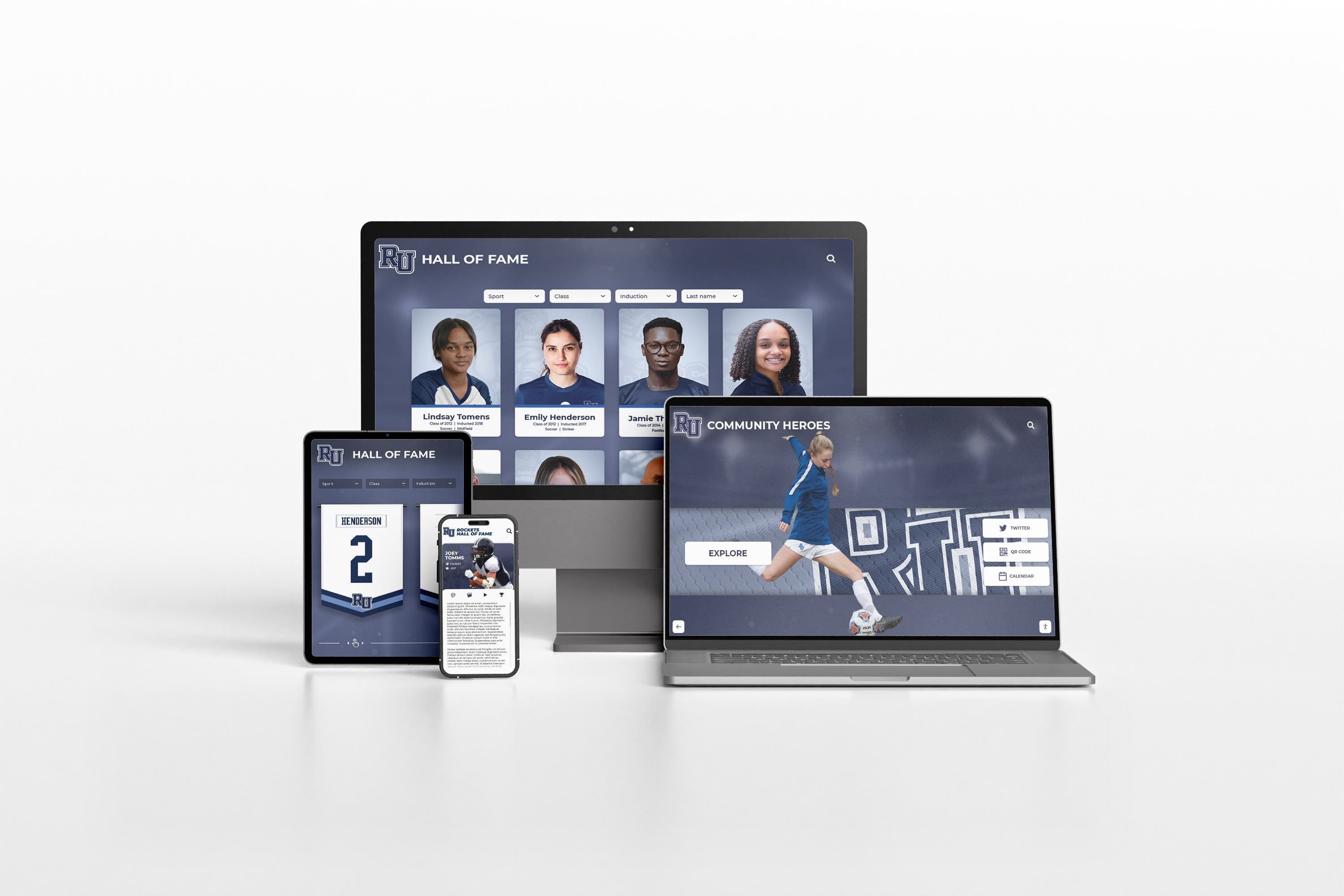
Web-based recognition platforms deliver consistent experiences across physical touchscreen kiosks and personal devices without requiring separate native applications
Content Management Systems and Administrative Workflows
Recognition program success depends on sustainable content management enabling non-technical staff to maintain current displays without IT expertise or vendor dependencies.
Intuitive Administration Interfaces
Cloud-based content management systems provide web interfaces where authorized administrators perform all necessary recognition maintenance through simple forms and uploads including adding new inductees with biographical information and photos, updating existing profiles when additional content becomes available, organizing honorees into categories, years, or achievement types, scheduling content publication for specific ceremony dates, and managing entire recognition programs without programming knowledge or technical assistance.
This administrative simplicity proves essential for educational institutions and organizations where communications staff, alumni coordinators, or athletic directors maintain recognition displays as one component of broader responsibilities. Solutions requiring developer intervention for routine updates prove unsustainable, with recognition becoming outdated as content maintenance proves too complex or time-consuming for available staff resources.
Workflow Integration and Content Approval
Sophisticated content management platforms support multi-user workflows with role-based permissions enabling content contributors to draft honoree profiles, editors to review submissions for accuracy and completeness, approvers to authorize publication ensuring standards compliance, and administrators to manage users and system configuration. These workflow capabilities prove valuable for larger organizations where recognition spans multiple departments or committees contributing content requiring coordination and approval before publication.
Integration capabilities enabling content import from existing databases, yearbook systems, or student information platforms reduce manual data entry while ensuring accuracy when institutional records provide authoritative achievement information.
Accessibility & UX Checklist for Recognition Kiosks
Creating inclusive recognition experiences requires systematic accessibility implementation ensuring displays serve diverse visitor populations including those using assistive technologies or facing physical, visual, or cognitive disabilities.
ADA Compliance and Physical Accessibility
Federal accessibility requirements including Americans with Disabilities Act (ADA) compliance and Web Content Accessibility Guidelines (WCAG) 2.1 AA standards mandate accessible interactive displays in educational institutions and public facilities.
Physical Installation Requirements
Touchscreen positioning must accommodate wheelchair users and individuals of varying heights through installation heights placing primary touch zones between 15-48 inches from floor level, clear floor space providing minimum 30x48 inch approach area free from obstructions, forward or side approach configurations depending on installation context, and protruding object compliance ensuring displays don’t create hazards for users with visual impairments navigating with canes or guide dogs.
Freestanding kiosks commonly provide better accessibility than wall-mounted installations by enabling adjustable positioning and ensuring adequate clear floor space naturally. However, properly specified wall-mounted installations achieve full compliance through careful height selection and obstruction management.
Touch Target Sizing and Motor Accessibility
Interactive elements must accommodate users with limited dexterity or motor control challenges through touch targets minimum 44x44 pixels supporting imprecise touches, adequate spacing between interactive elements preventing accidental selections, gesture alternatives enabling functionality without requiring complex multi-finger gestures, and extended time-out periods preventing session termination before users complete intended interactions.
Commercial touchscreen displays with palm rejection technology prevent unintended touches from users resting hands against screens while exploring content—particularly important for users with balance challenges or mobility devices who may lean against displays for stability during interaction.
Visual Design and Contrast Ratios
Visual accessibility ensures users with low vision or color blindness can perceive content effectively through sufficient contrast and thoughtful color selection.
WCAG Contrast Requirements
Text and interactive elements require minimum contrast ratios ensuring legibility including 4.5:1 contrast ratio for normal text against backgrounds, 3:1 contrast ratio for large text exceeding 18pt regular or 14pt bold, and 3:1 contrast ratio for interactive element boundaries distinguishing buttons and touch targets from surrounding content.
Rocket Alumni Solutions platforms implement contrast-compliant color schemes by default while enabling institutions to customize branding colors with automated contrast checking preventing accessibility violations during theme customization. Organizations implementing digital hall of fame displays should verify chosen color palettes meet accessibility standards before deployment.
Typography and Legibility
Font selection and sizing significantly impact readability across viewing distances and visual abilities. Effective typography specifications include minimum 16pt font size for body text supporting comfortable reading from 18-24 inch typical interaction distances, clear sans-serif typefaces optimized for screen display like Helvetica, Open Sans, or Roboto, sufficient line spacing typically 1.5x font size preventing visual crowding, and sentence case or title case avoiding all-caps text that reduces reading comprehension.
Dynamic text sizing enabling visitors to adjust font sizes accommodates personal preferences and visual capabilities variations across diverse user populations. While less common in touchscreen implementations than personal device applications, text sizing controls add valuable accessibility for users requiring larger text.
Cognitive Accessibility and Navigation Clarity
Accessible design extends beyond physical and visual considerations to cognitive accessibility ensuring users with learning disabilities, cognitive differences, or simply unfamiliarity with technology can navigate recognition content successfully.
Consistent Navigation Patterns
Predictable navigation reduces cognitive load through consistent button positioning across all screens, familiar icon conventions matching established patterns like home, back, and search symbols, clear labeling using plain language avoiding jargon or technical terminology, and logical information architecture grouping related content intuitively.
Persistent navigation elements remaining in consistent positions throughout experiences prevent disorientation while exploring deep content. Users should never feel lost within recognition systems or uncertain how to return to previous screens or starting points.
Error Prevention and Recovery
Forgiving interfaces prevent frustration through confirmation dialogs before destructive actions, though recognition browsing rarely involves such actions, clear error messages when problems occur using plain language explanations, automatic recovery from timeout or connection interruptions without losing exploration progress, and undo capabilities where appropriate enabling correction of unintended actions.
Recognition systems should never penalize exploration—users should feel comfortable touching any element knowing they can always navigate back or restart if desired paths don’t match expectations.
Brand Integration Checklist for Recognition Displays
Effective recognition displays reinforce institutional identity through consistent branding while creating distinctive visual experiences that feel custom-designed rather than generic off-the-shelf implementations.
Unlimited Layout Customization
Purpose-built recognition platforms provide comprehensive layout customization enabling displays matching institutional aesthetics precisely rather than forcing organizations into predetermined templates.
Custom Color Schemes and Typography
Institutional branding requires recognition displays utilizing official color palettes including primary and secondary brand colors for interface elements, complementary accent colors drawing attention to interactive elements and calls-to-action, and background colors creating appropriate contrast without overwhelming content or causing visual fatigue.
Typography customization enables institutions using official typefaces throughout recognition interfaces ensuring consistency with other institutional communications and printed materials. Custom font loading supports distinctive institutional typefaces beyond standard web fonts, creating cohesive brand experiences spanning physical and digital touchpoints.
Background Imagery and Visual Identity
Custom background imagery transforms generic interfaces into distinctively institutional experiences through campus photography featuring recognizable architecture and grounds, aerial imagery showcasing facilities and athletic fields, historical photography connecting contemporary recognition to institutional heritage, and abstract designs incorporating institutional symbols, crests, or visual motifs.
Rocket Alumni Solutions enables unlimited background customization including static imagery, subtle animation, and even video loops showing campus life, athletic performances, or institutional activities. These visual layers create immersive branded experiences rather than sterile database interfaces that fail to capture institutional character and pride.
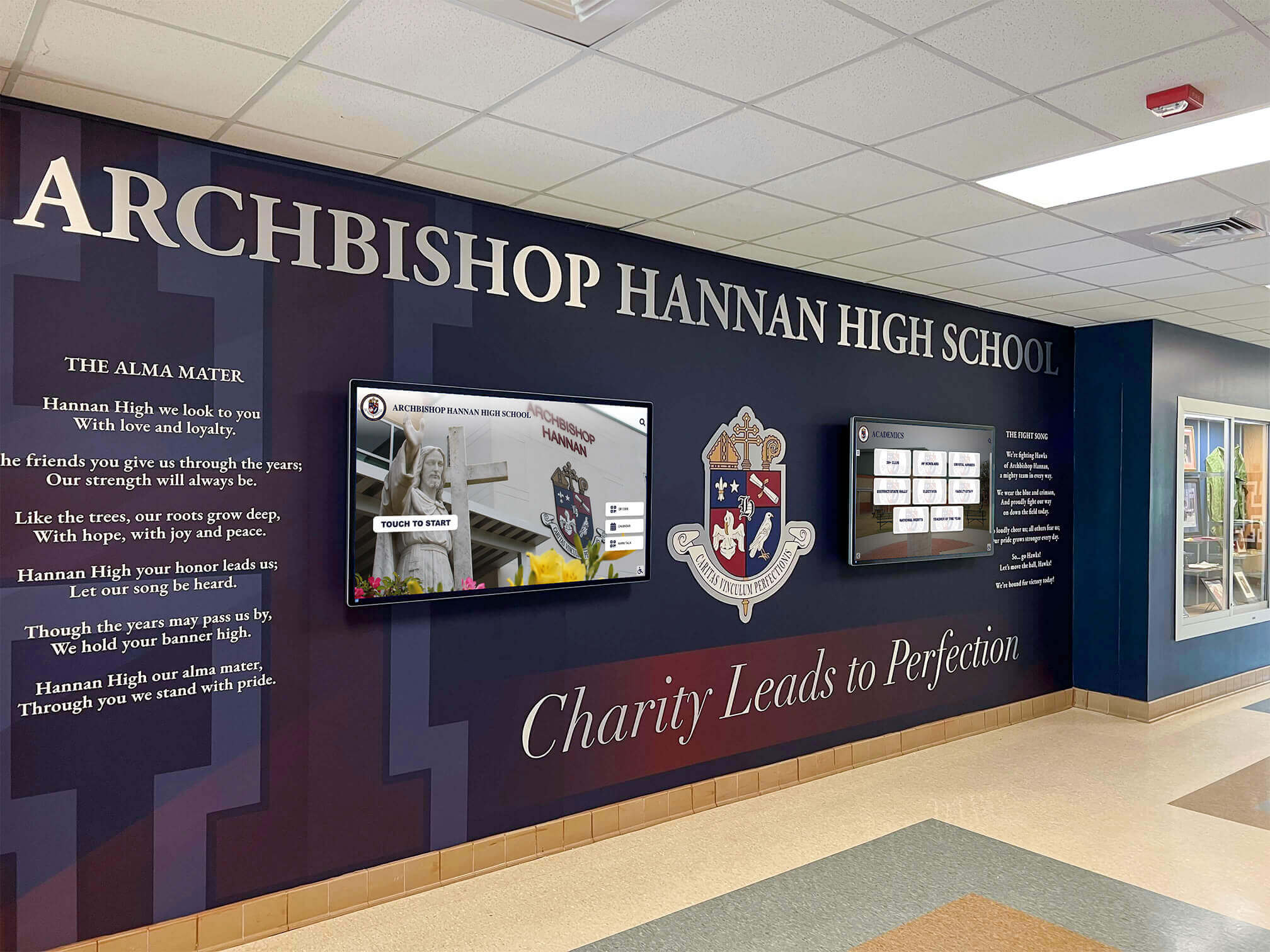
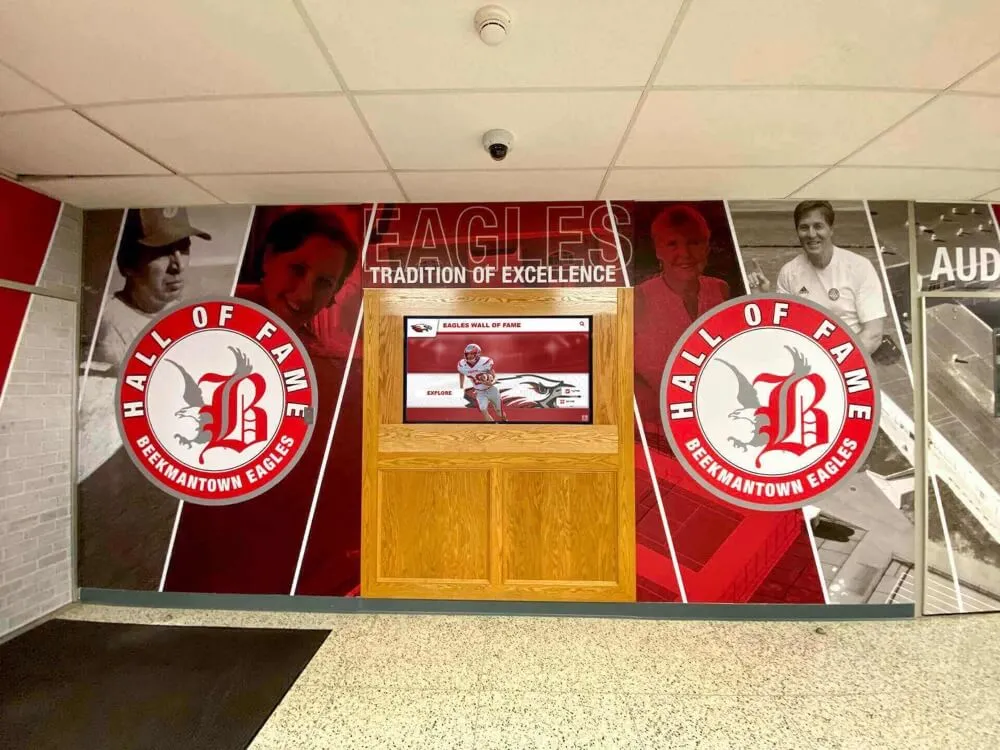
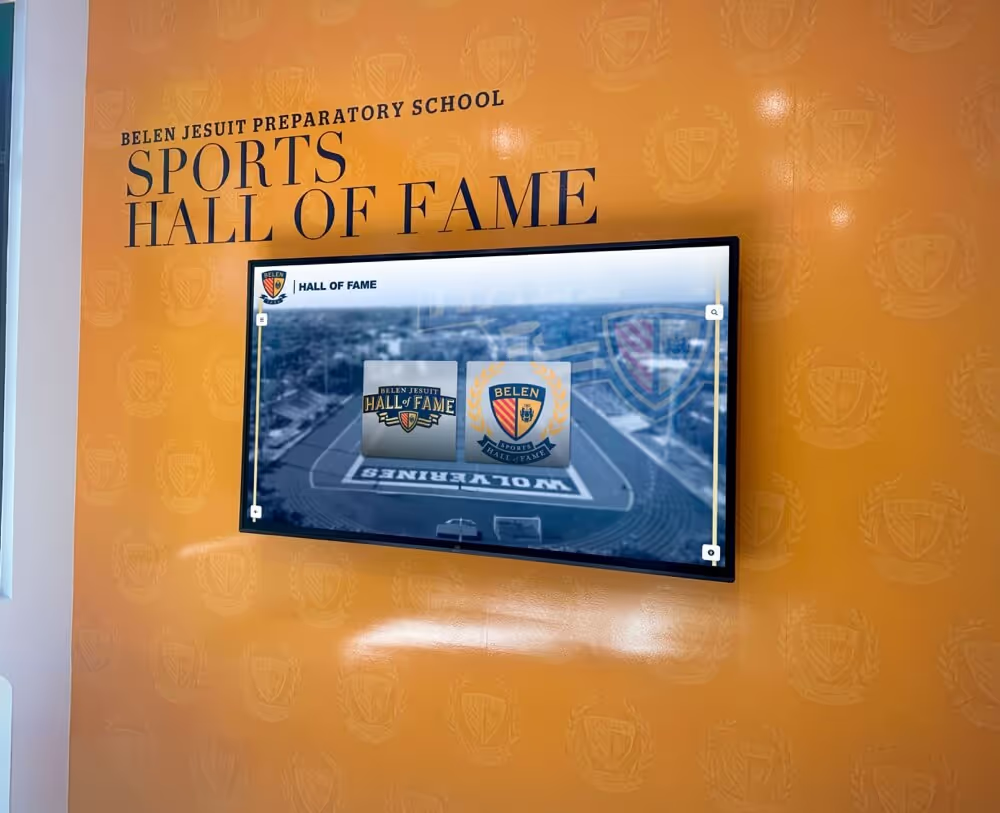
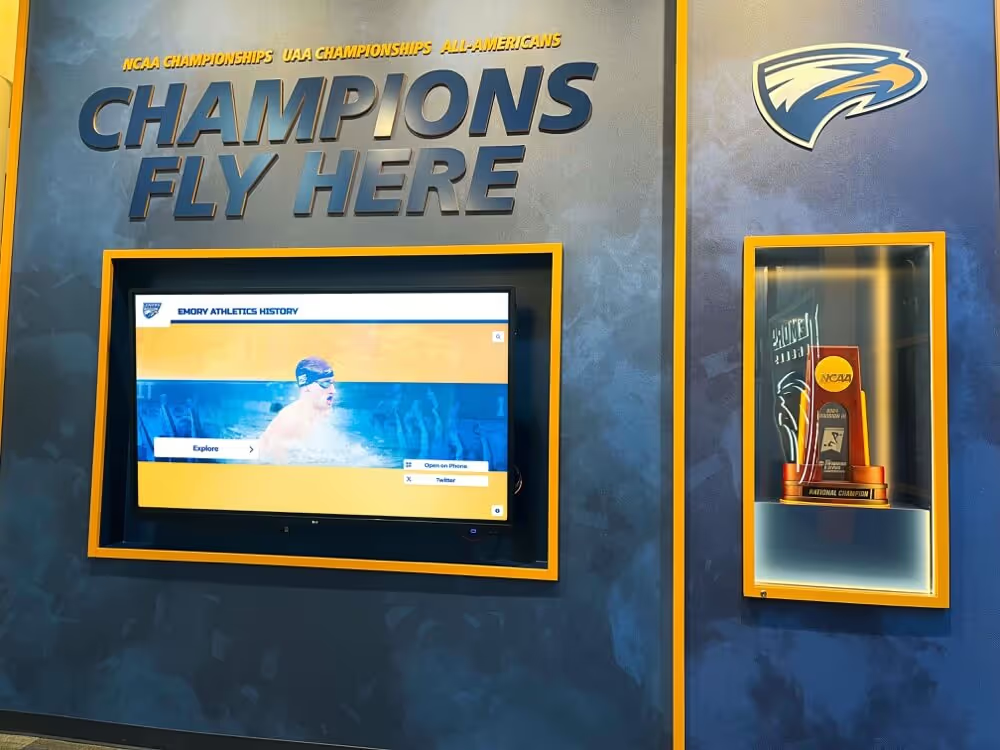
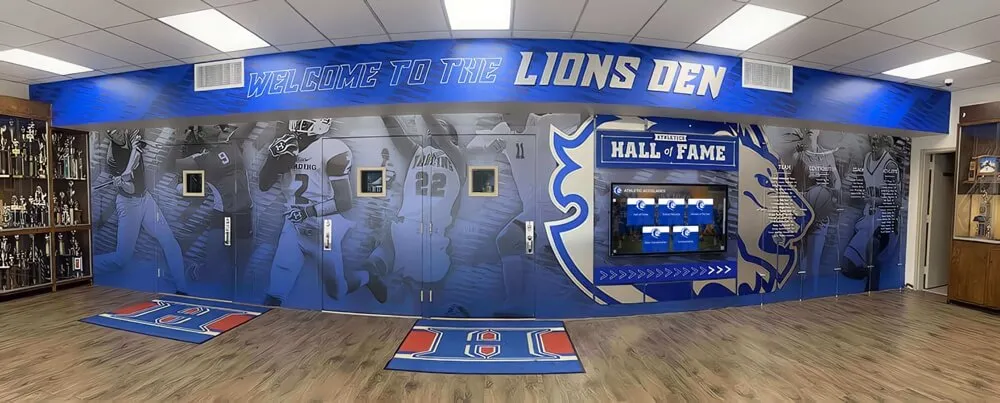
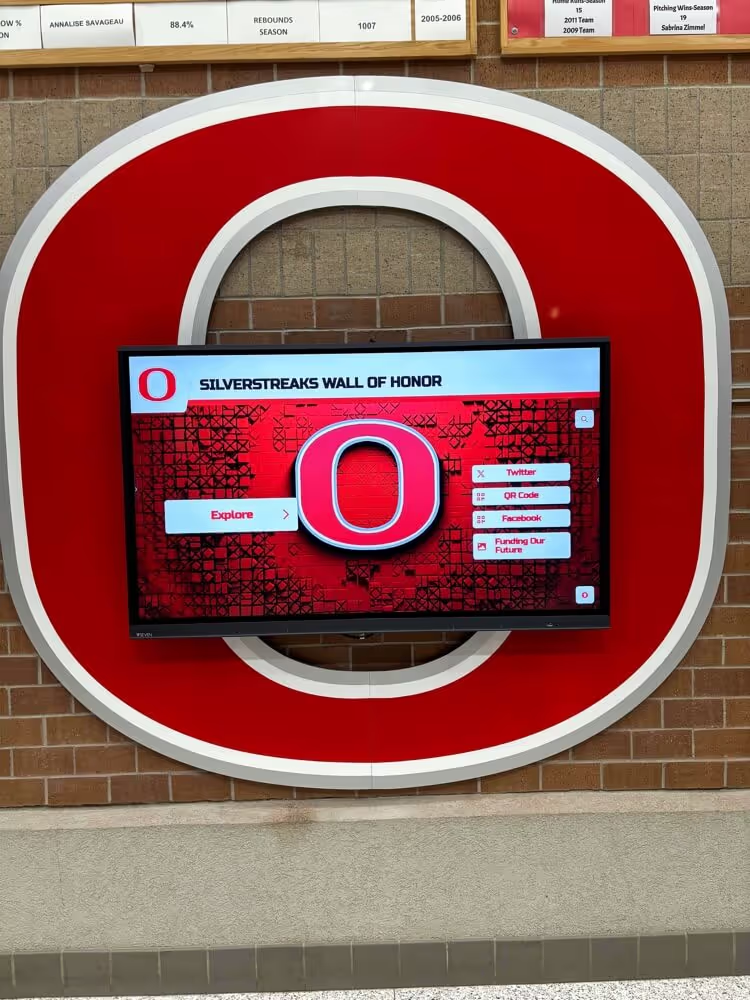
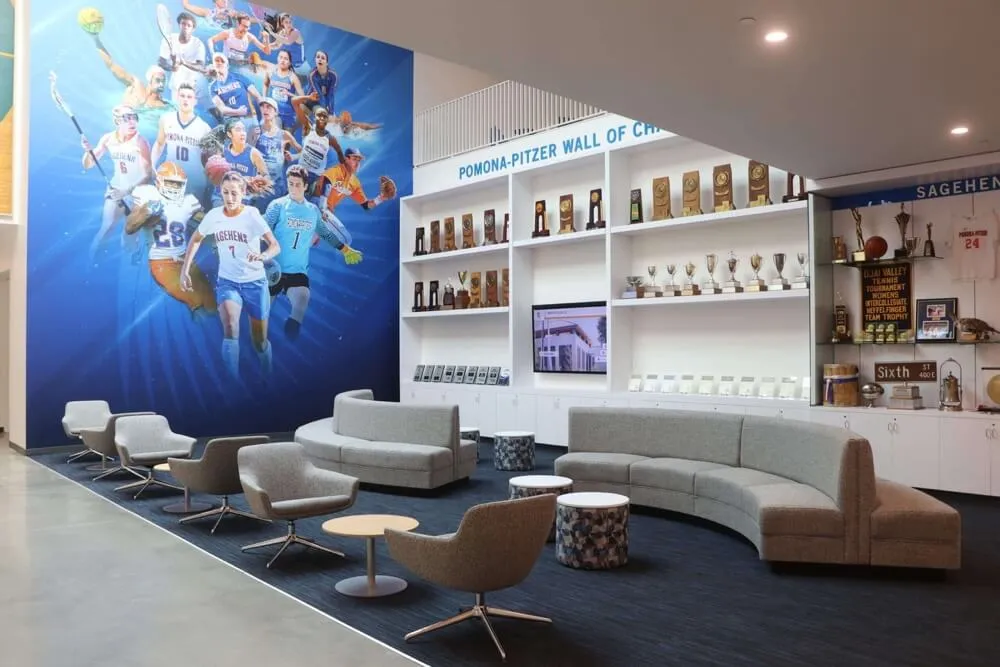
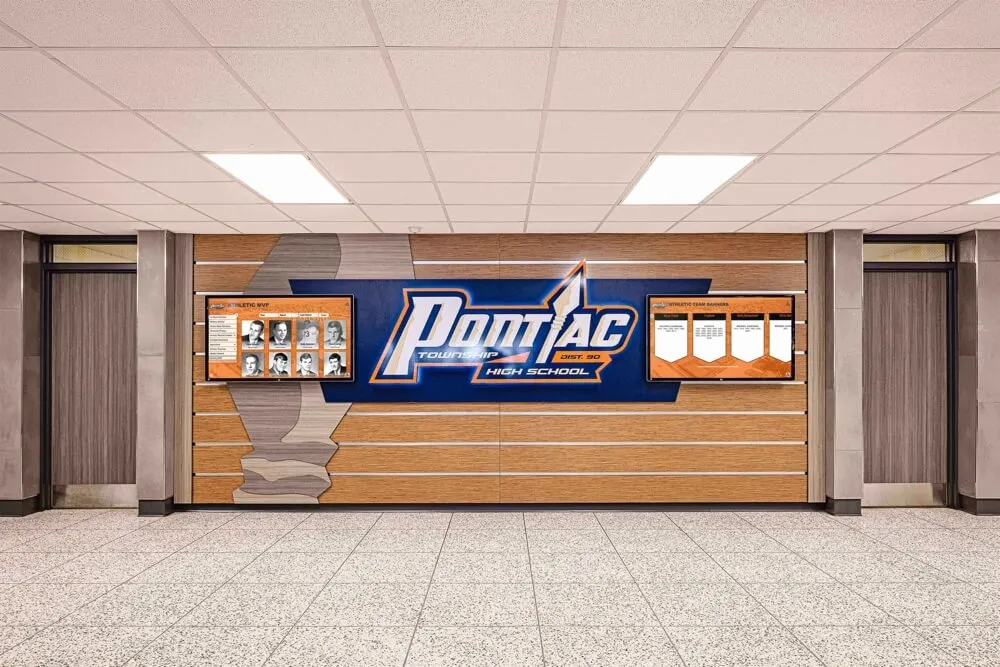
Cohesive brand integration ensures digital recognition displays enhance rather than compete with architectural design and institutional identity elements
Sponsorship Zone Implementation
Athletic recognition displays frequently incorporate sponsorship opportunities enabling corporate supporters to gain visibility while offsetting recognition program costs through revenue generation.
Strategic Sponsor Placement
Sponsorship zones require careful positioning balancing visibility with user experience preservation through footer positioning providing consistent sponsor presence without overwhelming content, rotation schedules ensuring multiple sponsors receive equivalent visibility when space limits simultaneous display, tasteful sizing preventing sponsors from dominating recognition content they’re intended to support, and category alignment matching sponsor businesses with relevant achievement types like sports medicine practices sponsoring athletic recognition.
Digital sponsorship proves more valuable than traditional banner signage by enabling impression tracking, sponsor content rotation preventing stale presentations, and flexible term agreements adjusting sponsor portfolios as business relationships evolve. Schools implementing touchscreen software for digital recognition can generate ongoing revenue supporting program operation while providing meaningful sponsor benefits.
Digital Signage Mode and Dual-Purpose Display
Touchscreen displays often operate in dual modes maximizing investment value through serving recognition interaction during peak traffic while functioning as passive digital signage during periods of lower engagement.
Intelligent Mode Switching
Digital signage mode activates during specified schedules or following periods of interaction inactivity, automatically displaying rotating content including featured inductee spotlights cycling through recognition highlights, upcoming events and ceremony announcements promoting engagement opportunities, recruitment messaging for current students exploring achievement possibilities, and sponsor content when sponsorship agreements include signage rotation.
Motion detection enables automatic transition from signage mode to interactive mode when visitors approach displays—welcoming them with “Touch to Explore” prompts and immediately enabling interaction without requiring button presses or delay. This intelligent switching maximizes display utility while conserving touch cycles and energy during periods when interaction proves unlikely.
Strategic Placement and Installation Best Practices
Even perfectly specified hardware and thoughtfully designed software deliver limited value when installed in locations where target audiences rarely encounter displays or viewing conditions prove suboptimal.
Optimal Location Selection for Maximum Engagement
Display placement dramatically impacts usage patterns and recognition program effectiveness through determining who encounters recognition, how frequently they engage, and what conditions affect interaction quality.
High-Traffic Congregation Spaces
Main entrance lobbies represent optimal touchscreen placement by welcoming all visitors immediately upon facility entry, creating natural pausing points before people proceed to destinations, enabling group exploration during tours, events, and ceremonies, and positioning recognition as primary institutional statement about values and priorities.
Lobbies commonly feature longer dwell times than corridors where people move purposefully between destinations. Visitors waiting for appointments, students gathering before classes, and families meeting before events provide natural interaction opportunities where recognition displays generate engagement rather than competing unsuccessfully for attention from people rushing between commitments.
Schools implementing digital recognition display systems should prioritize lobby installations before expanding to secondary locations ensuring flagship installations receive maximum visibility and engagement.
Athletic Facilities and Specialized Recognition Zones
Athletic recognition displays serve current athletes particularly effectively when positioned within training and competition facilities where athletes encounter displays daily rather than occasionally during lobby visits. Placement considerations include weight room installations surrounding athletes with program history during training, locker room approaches reaching athletes during pre-practice and pre-game routines, gymnasium and arena lobbies capturing families and fans attending competitions, and dedicated hall of fame corridors or galleries providing comprehensive recognition space.
Athletic facility placement creates powerful cultural reinforcement by immersing current participants in program tradition and achievement standards throughout daily activities. Athletes see themselves joining recognition lineages rather than simply learning about disconnected historical figures. Resources on basketball hall of fame recognition approaches demonstrate specialized athletic recognition strategies.
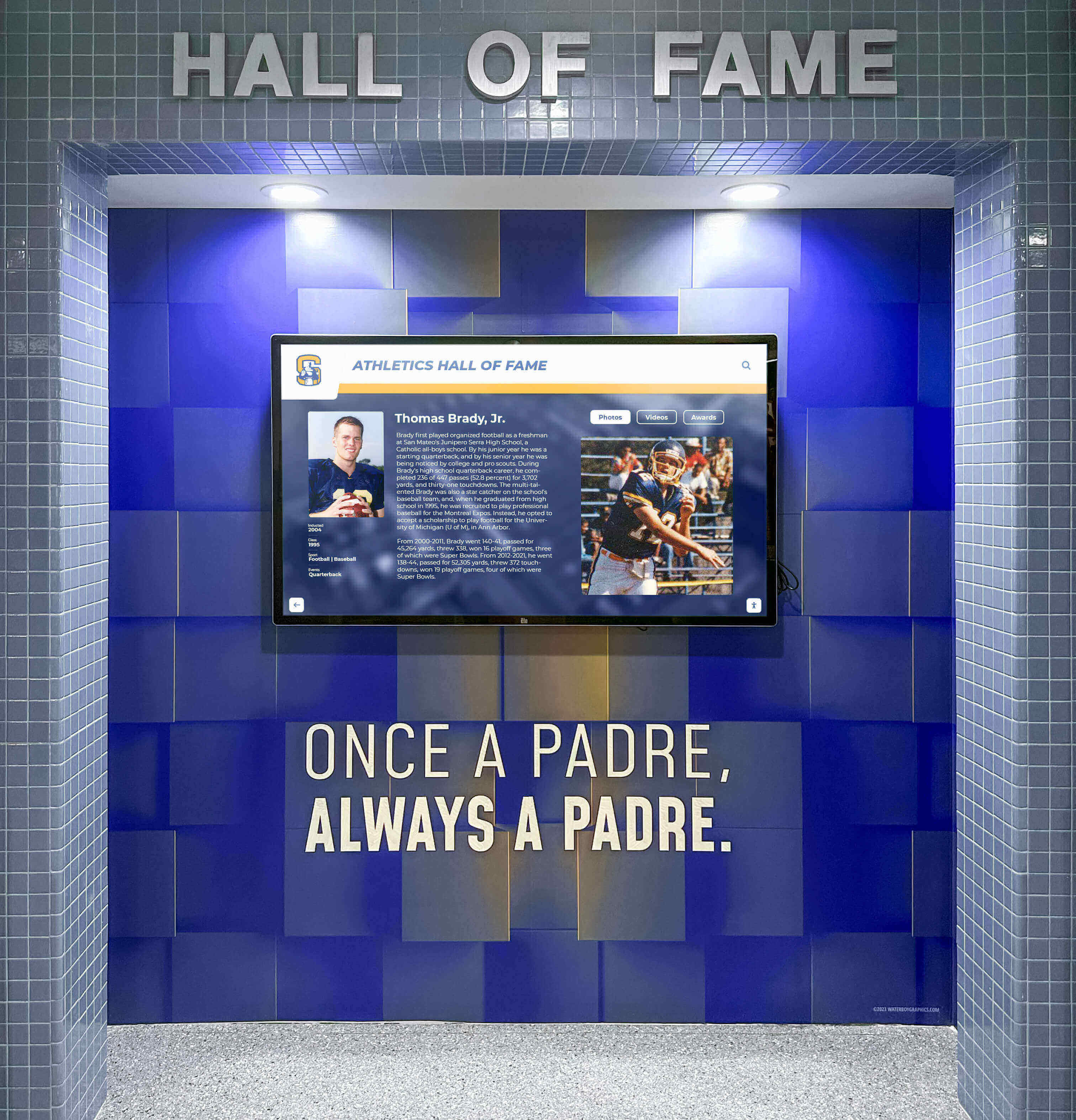
Athletic facility placement surrounds current athletes with program tradition during daily training and competition preparation
Administrative Areas and Recruitment Contexts
Recognition displays positioned in administrative areas including admissions offices, main office waiting areas, and guidance counselor spaces reach prospective students and families during decision processes where achievement recognition influences enrollment choices.
These strategic placements demonstrate institutional commitment to celebrating excellence while providing concrete evidence of achievement cultures prospective families seek when evaluating educational options. The recognition content itself becomes recruitment collateral showcasing what students can achieve and how institutions honor excellence.
Environmental Considerations and Installation Specifications
Physical installation must address environmental factors affecting display performance, longevity, and viewing quality through careful specification and professional execution.
Lighting Management and Glare Prevention
Natural light creates significant challenges for display visibility through direct sunlight washing out screens making content illegible, window reflections creating mirror effects obscuring content with environmental reflections, and dramatic lighting variations throughout daily cycles affecting viewing quality inconsistently.
Installation specifications addressing lighting challenges include positioning displays perpendicular to window walls avoiding direct sunlight exposure, anti-glare screen treatments reducing reflection severity, display brightness ratings of 400-500 nits providing sufficient output to compete with ambient light, and supplemental lighting design ensuring consistent illumination supporting comfortable viewing.
When high-glare locations prove unavoidable, optical bonding technology fusing touchscreen layers directly to display panels eliminates internal reflections while improving impact resistance—though at premium cost over standard displays.
Power and Network Infrastructure
Reliable operation requires proper electrical and network infrastructure supporting touchscreen hardware and software connectivity needs including dedicated electrical circuits preventing display interference from other equipment, surge protection safeguarding expensive hardware from power fluctuations, wired Ethernet connections providing stable network connectivity superior to wireless alternatives for permanent installations, and adequate bandwidth supporting video content streaming when recognition incorporates multimedia elements.
Professional installation includes integrated cable management concealing power and network connections within walls, floor channels, or kiosk enclosures preventing tripping hazards while maintaining clean professional appearances. Exposed cables undermine the professional presentation that institutions expect from recognition systems.
Maintenance and Long-Term Operational Sustainability
Successful installations require ongoing maintenance plans ensuring displays operate reliably, content remains current and accurate, and hardware continues delivering optimal performance across multi-year service lifespans.
Hardware Maintenance Protocols
Commercial-grade touchscreen displays prove reliable under proper operation but benefit from systematic maintenance preventing preventable failures while identifying emerging issues before they disrupt recognition availability.
Screen Cleaning and Surface Care
Display surfaces accumulate fingerprints, dust, and environmental contaminants requiring regular cleaning maintaining visual quality and touch responsiveness through daily or weekly cleaning schedules depending on interaction frequency and environmental conditions, microfiber cloths and display-safe cleaning solutions avoiding harsh chemicals, and gentle pressure preventing display damage while removing stubborn marks.
Cleaning protocols should avoid spray application directly onto screens—spray cleaning solutions onto cloths instead preventing moisture infiltration into display bezels that can damage internal components. Organizations should establish clear cleaning schedules and responsibilities preventing neglect that allows visible dirt accumulation degrading perceived professionalism.
Component Monitoring and Preventive Replacement
Display components experience gradual degradation across years of continuous operation requiring monitoring and replacement before complete failure through brightness degradation tracking ensuring displays maintain specified output levels, touch responsiveness testing verifying touch accuracy remains within specifications, thermal monitoring confirming cooling systems function properly preventing overheating, and system health checks verifying software operation and network connectivity.
Quality commercial displays commonly include remote monitoring capabilities enabling proactive maintenance identifying issues before they impact visitor experiences. IT departments or facility managers should establish monitoring protocols appropriate to institutional technical capabilities and installation criticality.
Content Governance and Quality Assurance
Recognition program value depends entirely on content quality and accuracy requiring ongoing governance ensuring displays remain current, accurate, and consistent with recognition standards.
Content Review Cycles
Regular content reviews prevent gradual quality degradation through scheduled audits verifying biographical accuracy and completeness, photo quality assessments identifying images requiring replacement or enhancement, broken link checking ensuring external references remain valid, consistency verification maintaining uniform biographical styles and formatting across all profiles, and gap identification revealing honorees lacking complete recognition profiles.
Annual review cycles prove sufficient for most recognition applications though more frequent reviews benefit rapidly growing recognition programs or those incorporating time-sensitive content like current student achievement requiring regular updates.
Content Standards Documentation
Explicit content standards prevent quality inconsistency as staff turnover or multiple contributors create recognition content over time. Documentation should specify biographical narrative length guidelines, required metadata for searchability and filtering, photography specifications including resolution, composition, and formatting, approval workflows clarifying who reviews content before publication, and style guides maintaining consistent voice and formatting conventions.
These standards enable different contributors to create recognition content meeting consistent quality bars rather than producing inconsistent experiences varying by author or timeframe. Organizations implementing elementary school recognition programs through college athletics hall of fame systems benefit from explicit standards documentation ensuring quality regardless of scale or scope.
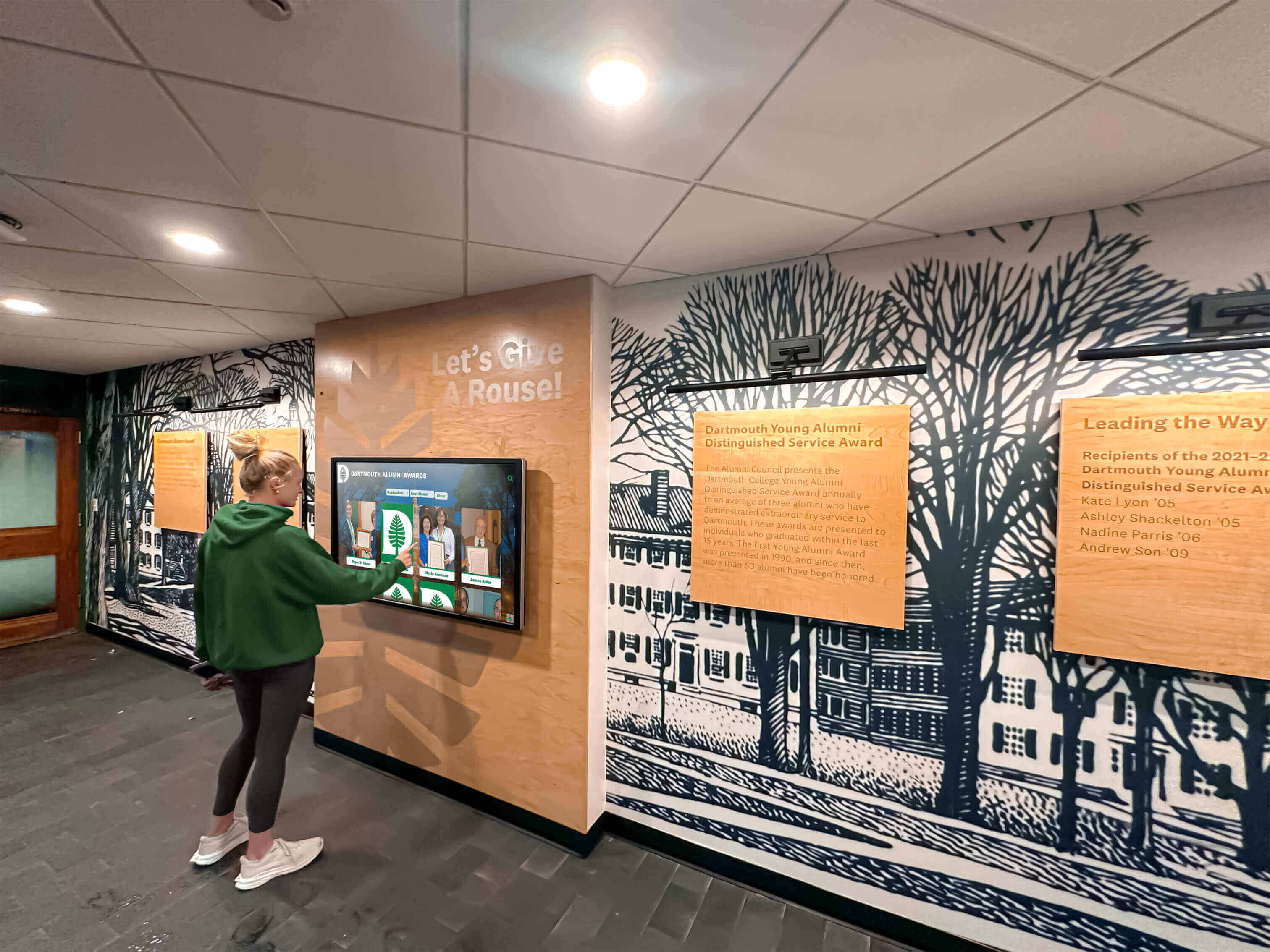
Regular content updates and quality maintenance ensure recognition displays remain engaging and relevant to current community members
Measuring Success and Demonstrating Recognition Value
Understanding how visitors engage with interactive recognition helps organizations demonstrate value, optimize content strategies, and justify continued investment in recognition program enhancement.
Engagement Analytics and Usage Patterns
Quality recognition platforms provide comprehensive analytics revealing actual usage patterns and engagement levels supporting data-driven recognition program management.
Quantitative Engagement Metrics
Analytics dashboards should track total interaction sessions showing how frequently visitors engage displays, average session duration indicating content engagement depth, most-viewed profiles revealing which honorees generate greatest interest, search query analysis demonstrating what visitors seek within recognition content, peak usage times informing content launch strategies and event planning, and return visitor rates when technically trackable indicating sustained community interest.
These metrics enable recognition program optimization by identifying which achievement categories generate most engagement, revealing content gaps where visitor searches fail to find expected honorees, determining optimal timing for new content promotion maximizing visibility, and demonstrating program value to administrators and budget authorities through quantifiable engagement evidence.
Qualitative Assessment and Community Impact
Beyond quantitative metrics, qualitative feedback reveals recognition program impact that analytics cannot fully capture through surveys assessing recognition awareness and satisfaction, observational research documenting interaction patterns and community conversations, stakeholder interviews gathering perspectives from honorees, families, and administrators, and social media monitoring tracking organic recognition sharing and discussion.
Qualitative feedback commonly reveals powerful stories including alumni expressing emotion when discovering their recognition online, prospective students impressed by achievement celebration influencing enrollment decisions, current students inspired by specific honoree stories pursuing similar achievement paths, and families appreciating permanent recognition honoring relatives’ contributions.
Organizations implementing community showcase recognition programs should systematically collect both quantitative analytics and qualitative feedback building comprehensive understanding of recognition program value across multiple dimensions.
Return on Investment Demonstration
Administrators justifying recognition technology investments or seeking budget support for program expansion must demonstrate value beyond anecdotal impressions through quantifiable impacts.
ROI Calculation Frameworks
Recognition program value manifests across multiple dimensions including administrative time savings compared to traditional plaque management, eliminated recurring costs for physical recognition production and installation, increased alumni engagement measured through event attendance and donation participation, enhanced recruitment effectiveness demonstrated through enrollment yield improvements, improved community pride reflected in satisfaction surveys and school choice research, and social media reach extending institutional visibility beyond traditional audiences.
Comprehensive ROI analysis compares total recognition program costs including initial hardware investment, ongoing software licensing, content development labor, and maintenance expenses against quantified benefits demonstrating net value. Many institutions find that increased alumni engagement alone justifies recognition investment through enhanced fundraising outcomes, volunteer participation, and institutional advocacy that properly celebrated alumni provide.
Conclusion: Creating Recognition Experiences That Inspire
MWE-QIXZOCV touchscreen kiosk interactive displays represent sophisticated hardware solutions enabling educational institutions and organizations to create engaging recognition experiences that honor achievement comprehensively while inspiring current community members through compelling storytelling impossible with traditional static approaches. By understanding commercial-grade hardware specifications ensuring reliable operation, implementing thoughtful experience design creating intuitive exploration, leveraging purpose-built recognition software like Rocket Alumni Solutions optimized for celebrating people and achievements, ensuring accessibility and brand integration serving diverse audiences, and establishing sustainable maintenance and content governance practices, organizations create recognition systems delivering exceptional value throughout multi-year operational lifespans.
Get Your Touchscreen Mock-Up
Transform your recognition vision into reality with custom touchscreen design previews showcasing your institutional branding, content, and recognition categories. Discover how purpose-built platforms deliver superior experiences optimized for your specific community and achievement celebration priorities.
Schedule Your Design ConsultationThe most successful touchscreen recognition implementations begin with clear understanding of recognition goals and community needs rather than technology selection in isolation. They specify commercial-grade hardware matching actual usage demands including interaction frequency, environmental conditions, and operational duration requirements. They implement thoughtful experience design balancing visual appeal with functional navigation and content discovery. And they leverage purpose-built recognition platforms providing specialized capabilities that generic digital signage cannot deliver effectively.
Whether implementing athletic hall of fame displays celebrating sports tradition, academic recognition systems honoring intellectual achievement, comprehensive alumni programs showcasing graduate success, or multi-category recognition covering achievement across all organizational dimensions, proper hardware selection and software integration determine whether touchscreen investments deliver transformative engagement or become expensive disappointments failing to justify their costs.
Organizations investing in MWE-QIXZOCV touchscreen kiosks demonstrate commitment to professional recognition presentation matching contemporary expectations while providing infrastructure supporting recognition program growth across decades of future achievement celebration. These installations communicate that recognition matters enough to merit significant investment rather than relegating honorees to storage closets or restricting celebration to those who fit within arbitrary space constraints.
Ready to explore touchscreen kiosk options for your educational institution or organization? Learn more about touchscreen kiosk applications for locked-down browser experiences, discover interactive touchscreen software implementation approaches, explore comprehensive school history software solutions, and understand digital trophy wall concepts that leverage commercial-grade touchscreen hardware creating lasting recognition experiences celebrating achievement and preserving institutional heritage through modern interactive technology specifically optimized for honoring deserving individuals appropriately.