



National College Signing Day represents the culmination of years of dedication for student-athletes committing to compete at collegiate levels—a momentary celebration that traditionally fades within days as decorated signing tables disappear and announcements give way to daily school operations. Yet these achievements deserve lasting recognition that honors not just this year’s signees but builds comprehensive institutional tradition showcasing your school’s college placement legacy across multiple graduating classes.
With digital recognition solutions like Rocket Alumni Solutions, schools transform ephemeral signing day ceremonies into permanent showcases that display current year signings prominently while archiving every prior year’s commitments accessible through intuitive navigation. This comprehensive approach demonstrates the true legacy of your athletic programs—not just celebrating individual moments but building visual narratives showing consistent pathways from your programs to collegiate competition.
The flexibility modern platforms provide proves equally crucial. Bringing signing day content to the forefront requires zero physical reconstruction—cloud-based systems enable instant content prioritization through simple administrative updates. Real-time edits ensure displays adapt throughout the school year as commitments occur during early signing periods, regular decision cycles, and late commitments. And multiple template and layout options provide design flexibility for home pages and deeper content organization without requiring technical expertise.
This comprehensive design guide explores how schools create dynamic National College Signing Day showcases that celebrate current achievements while preserving institutional tradition through accessible multi-year archives, all managed through intuitive systems enabling non-technical staff to maintain recognition as athletic programs evolve throughout seasons and across graduating classes.

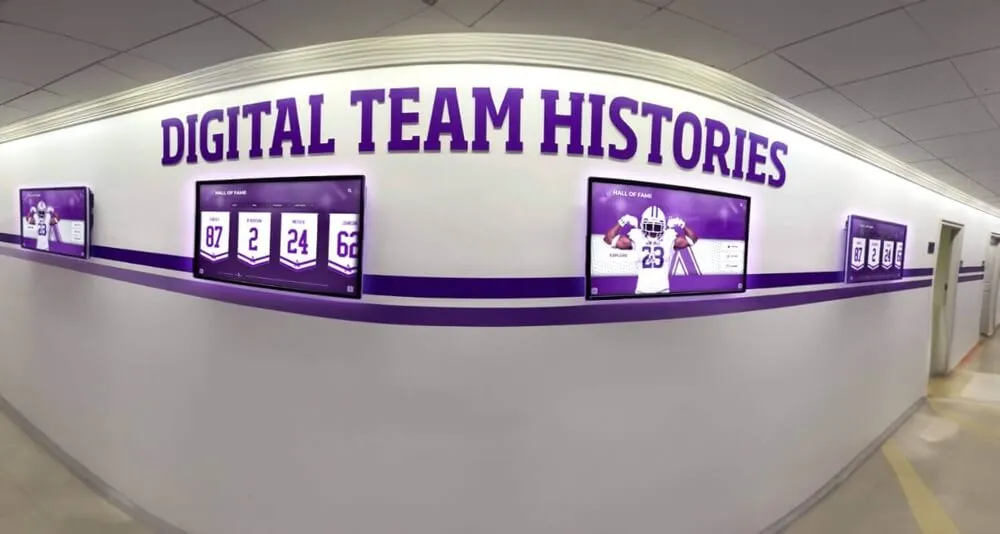
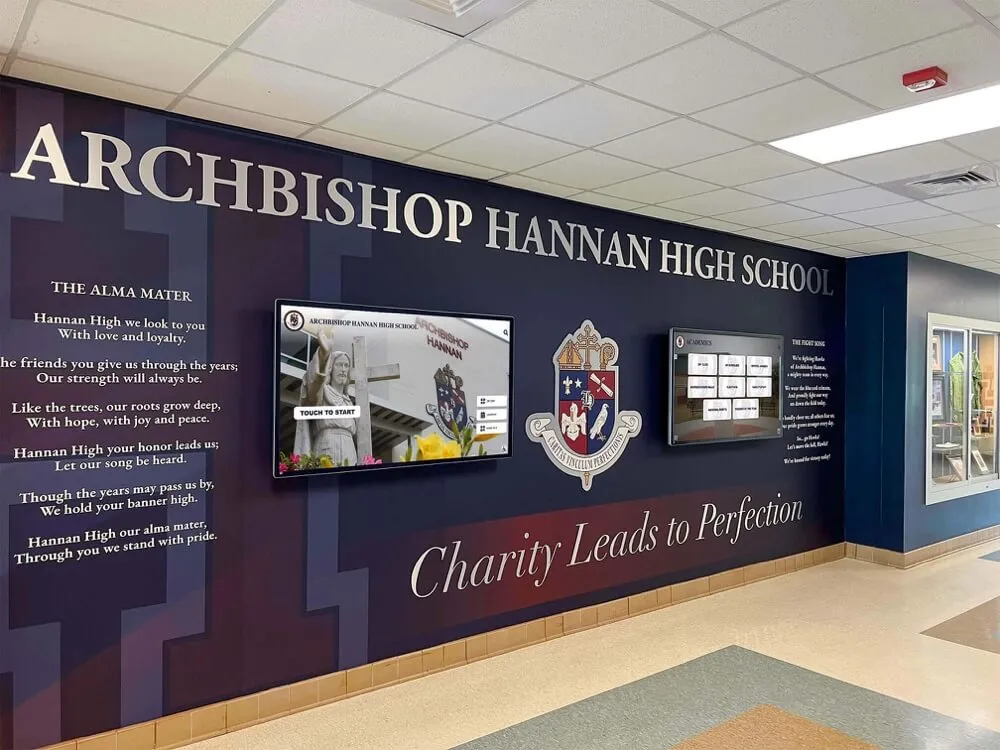
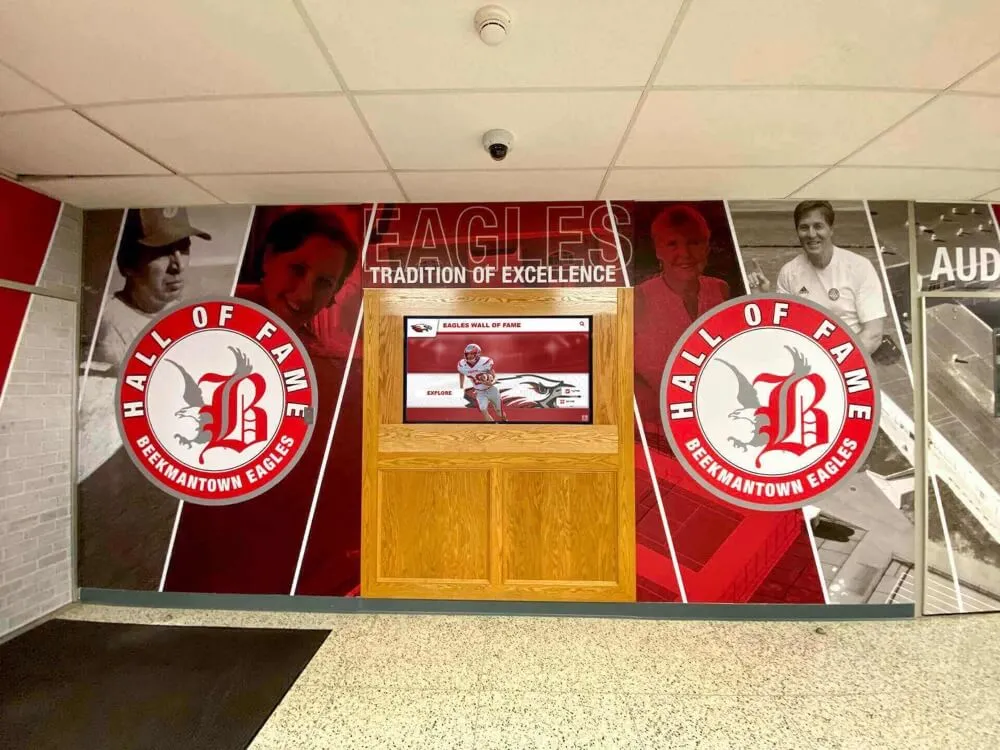
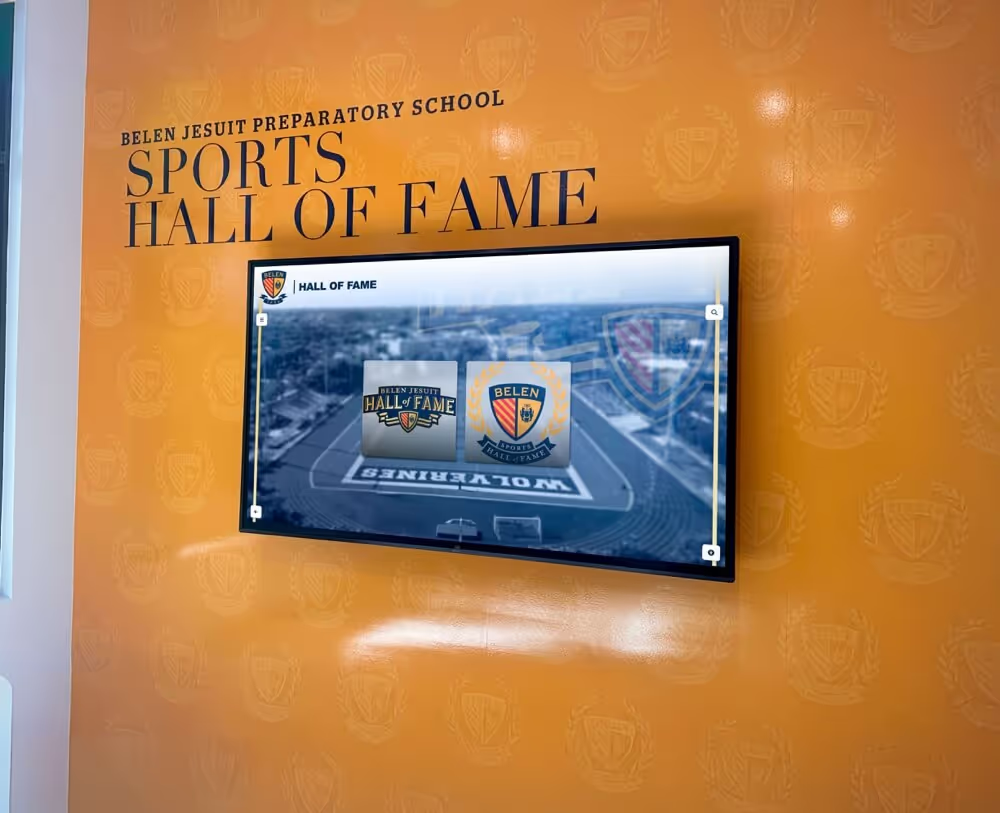
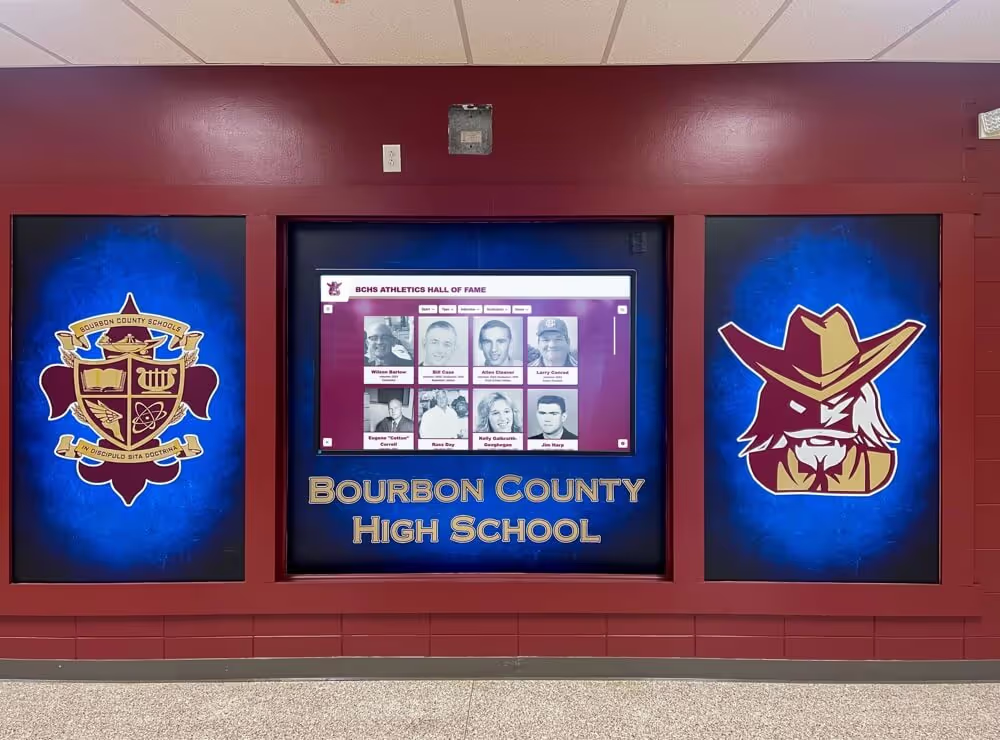
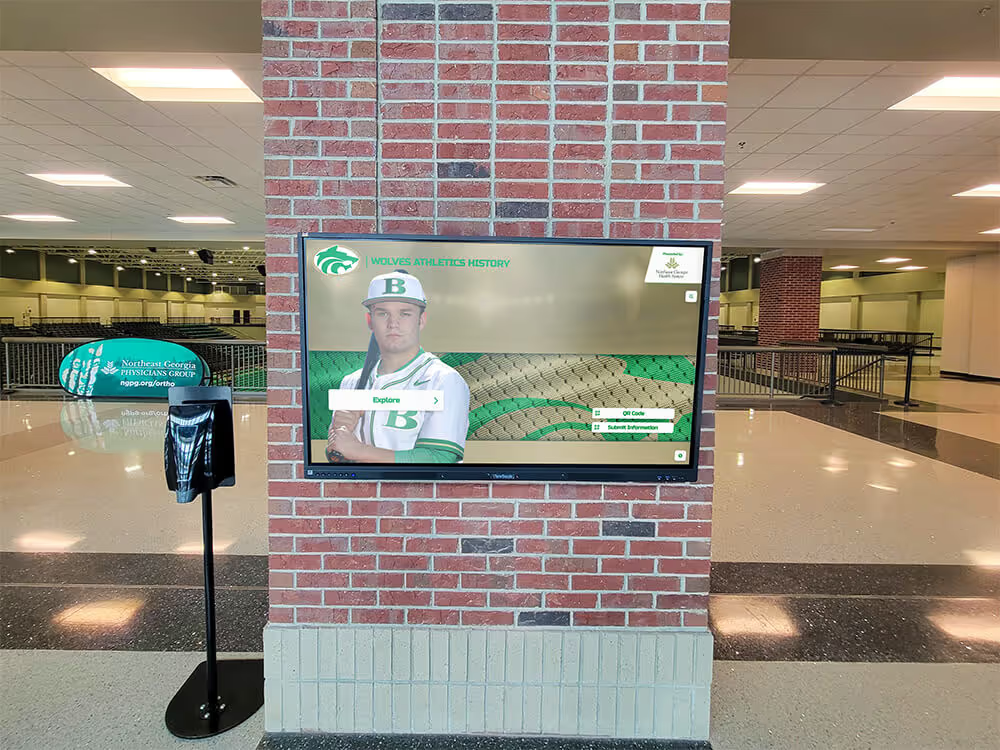
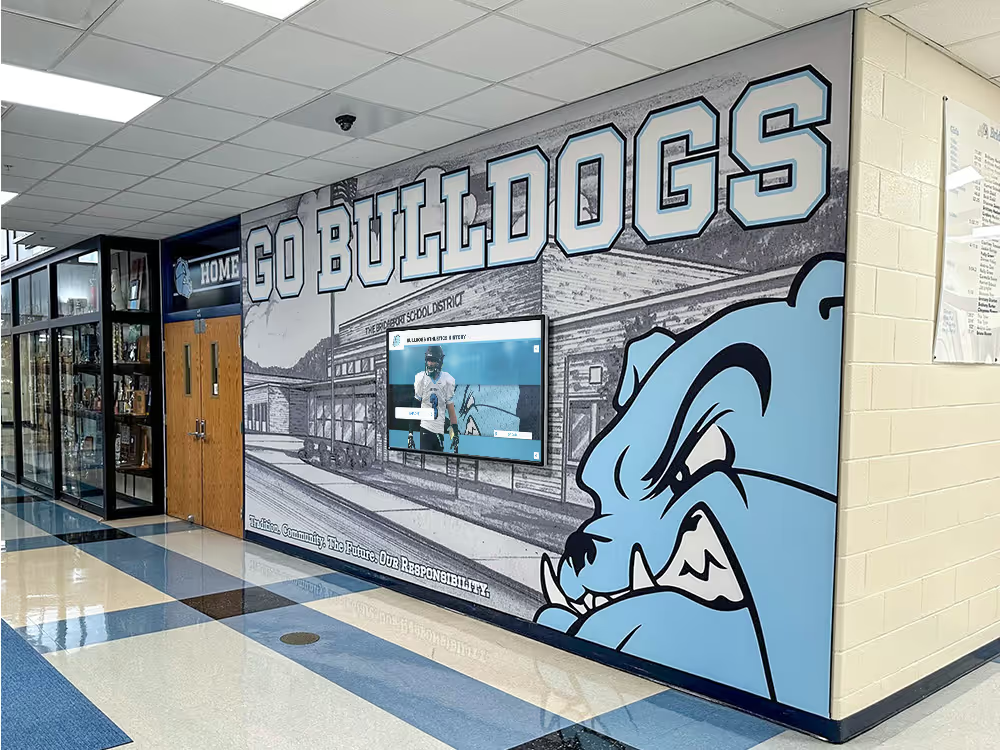
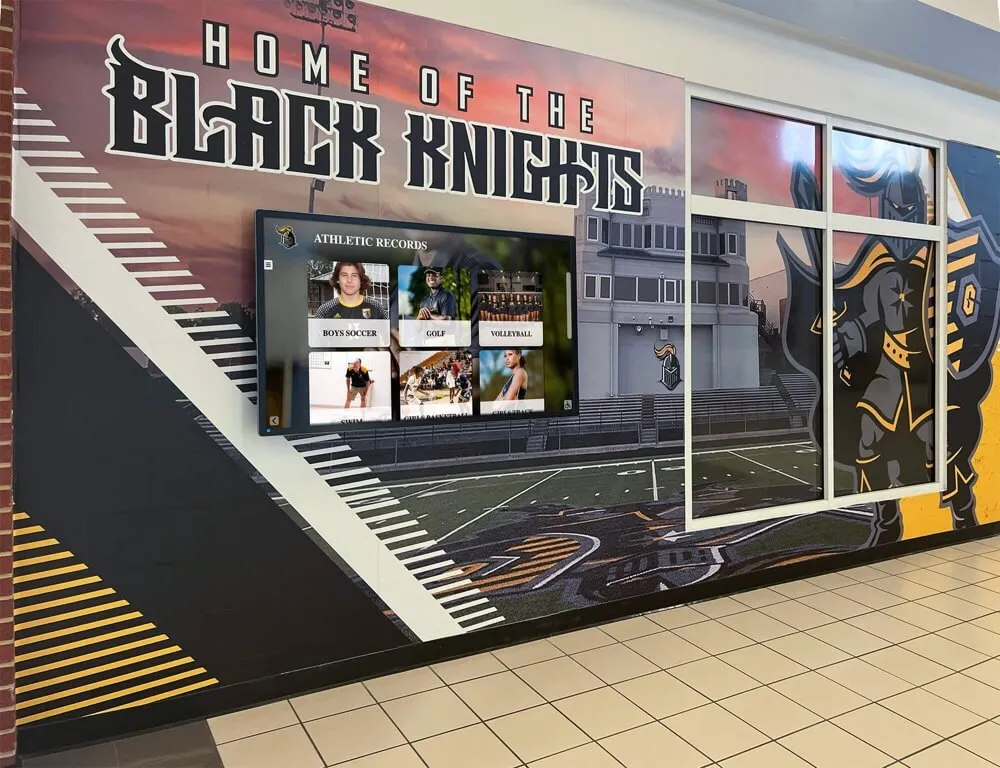
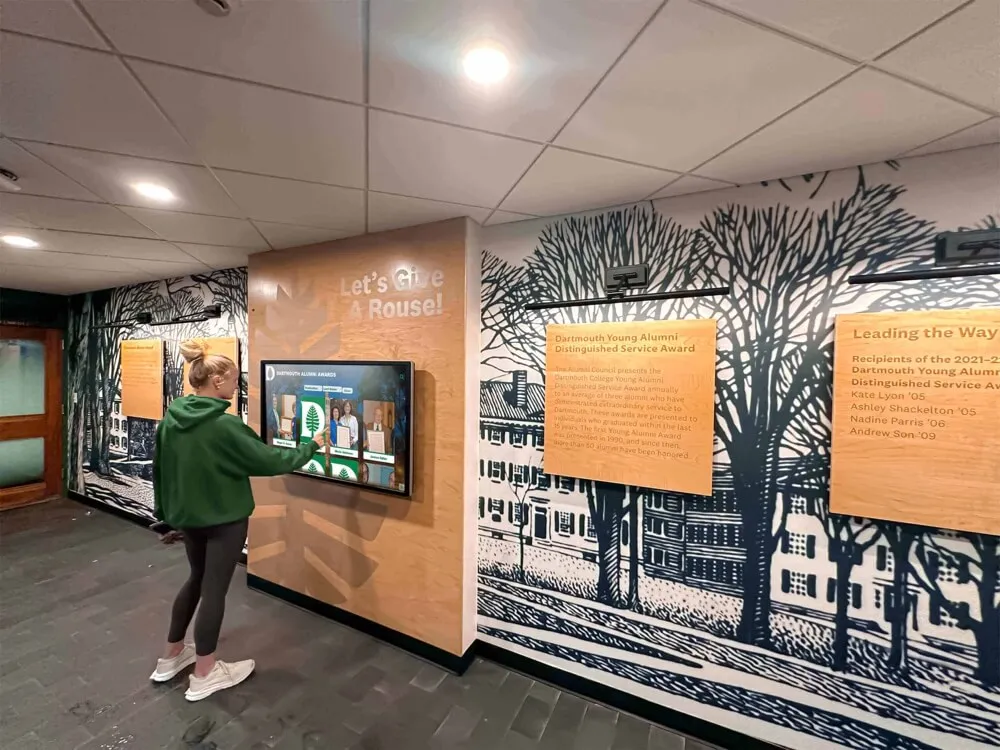
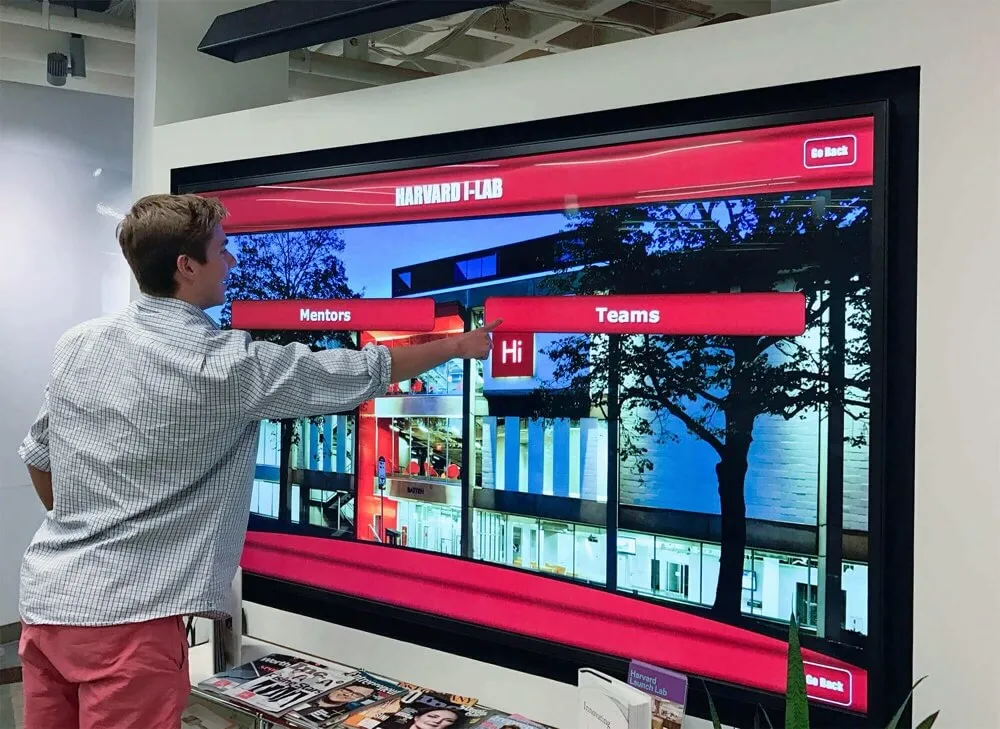
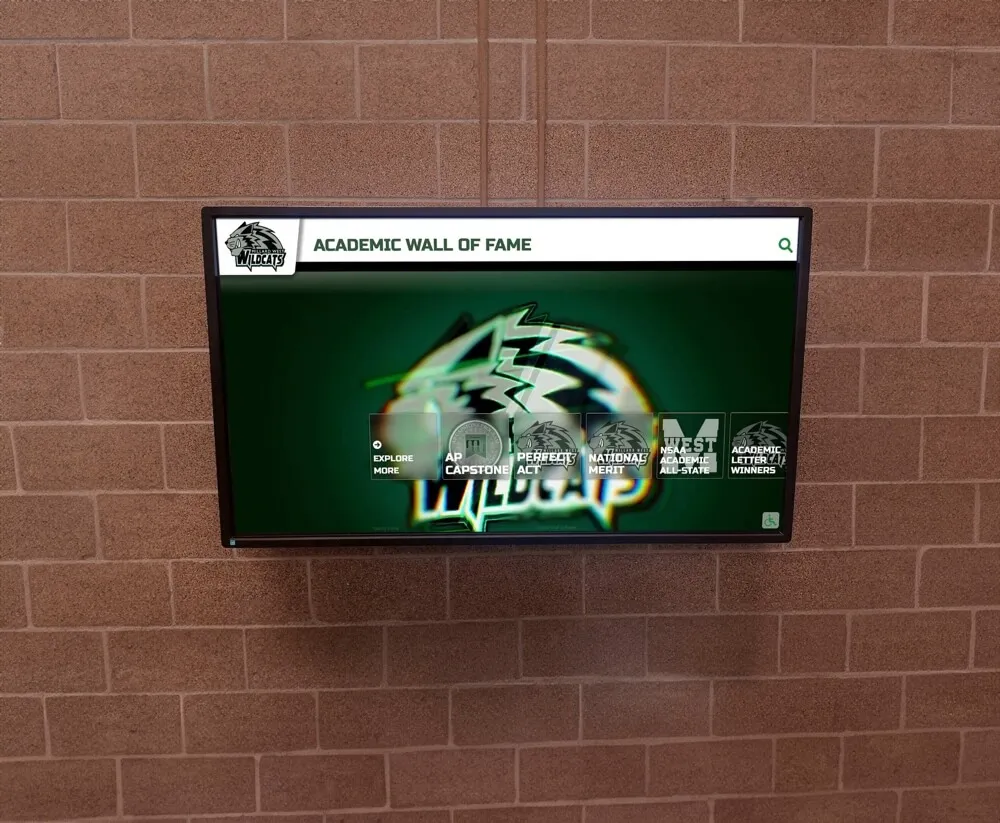
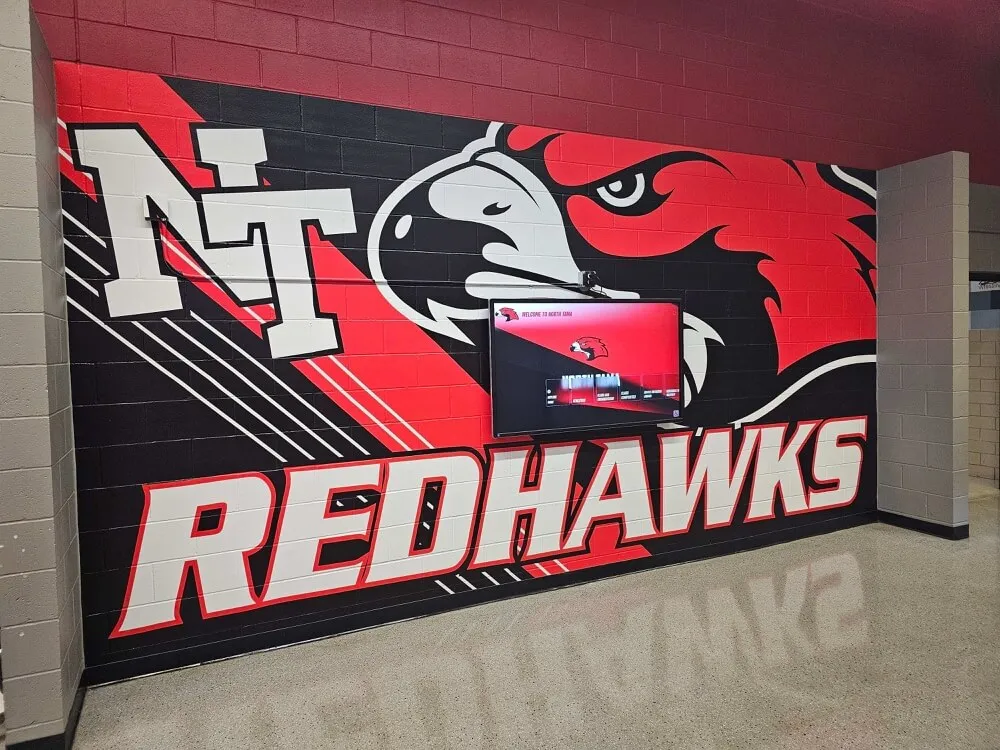
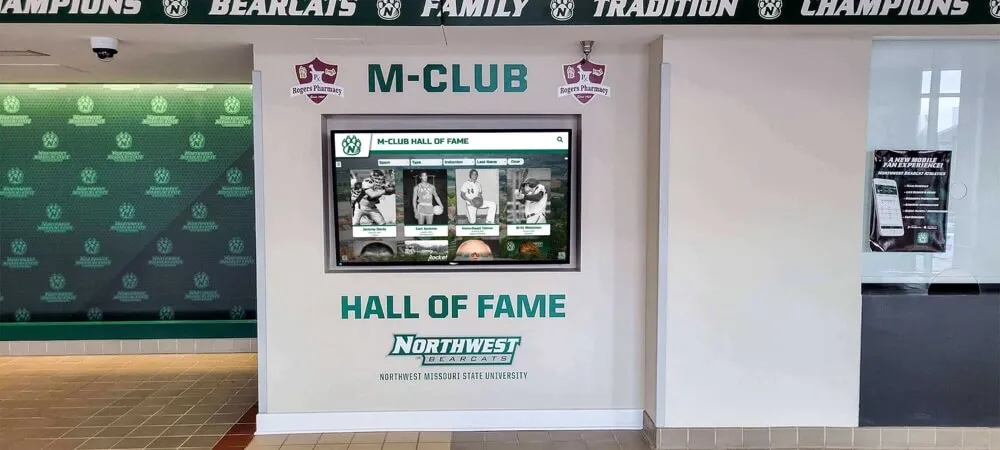
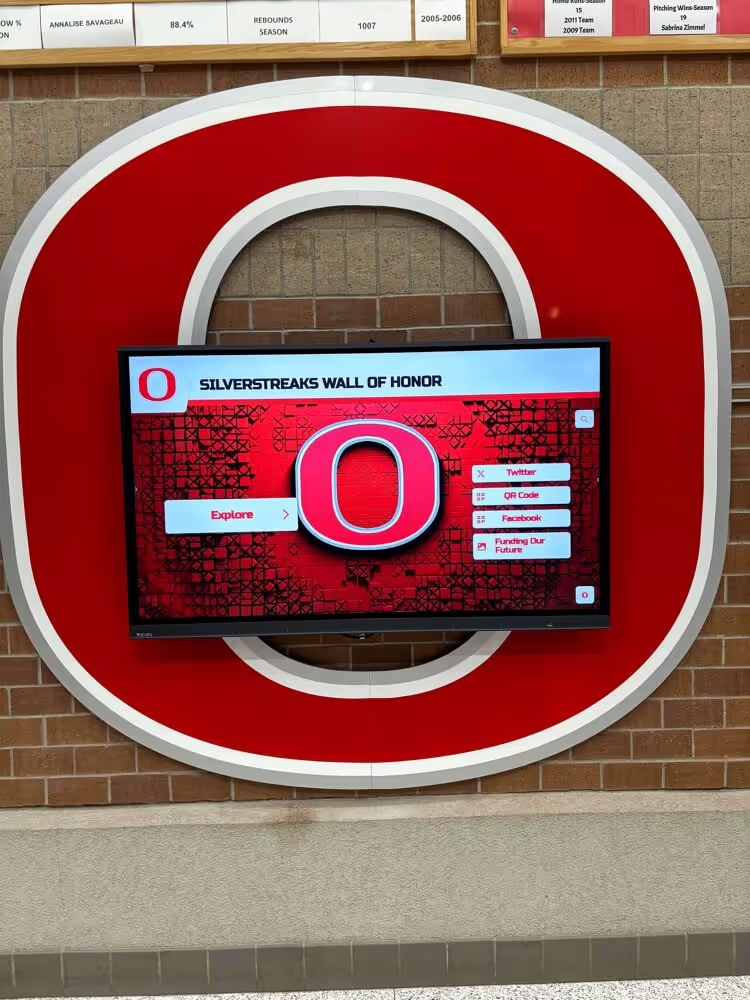
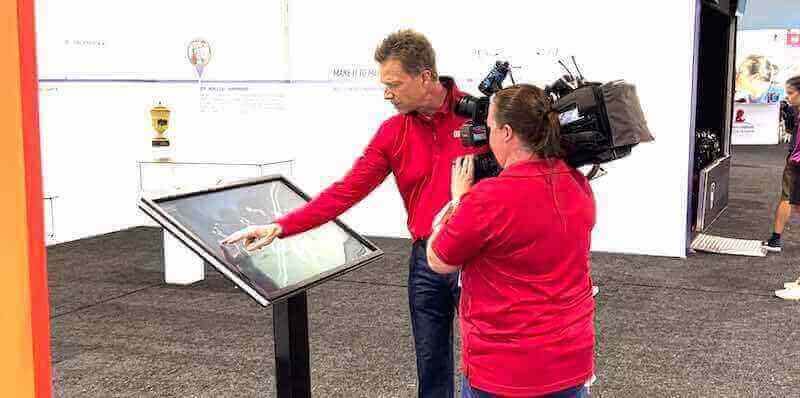
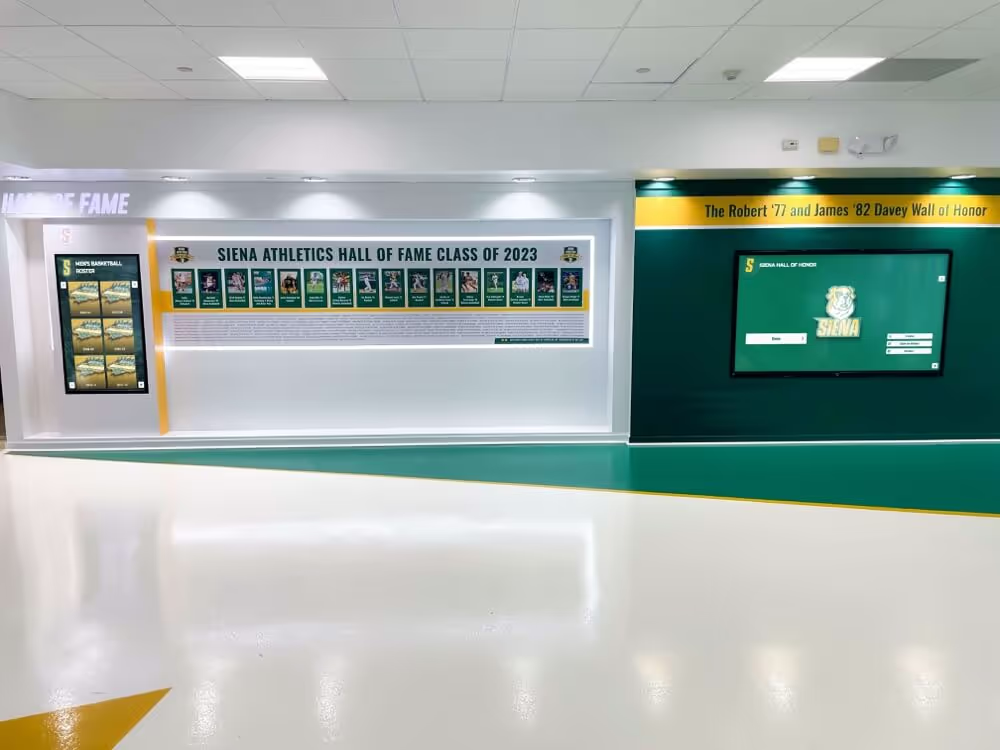
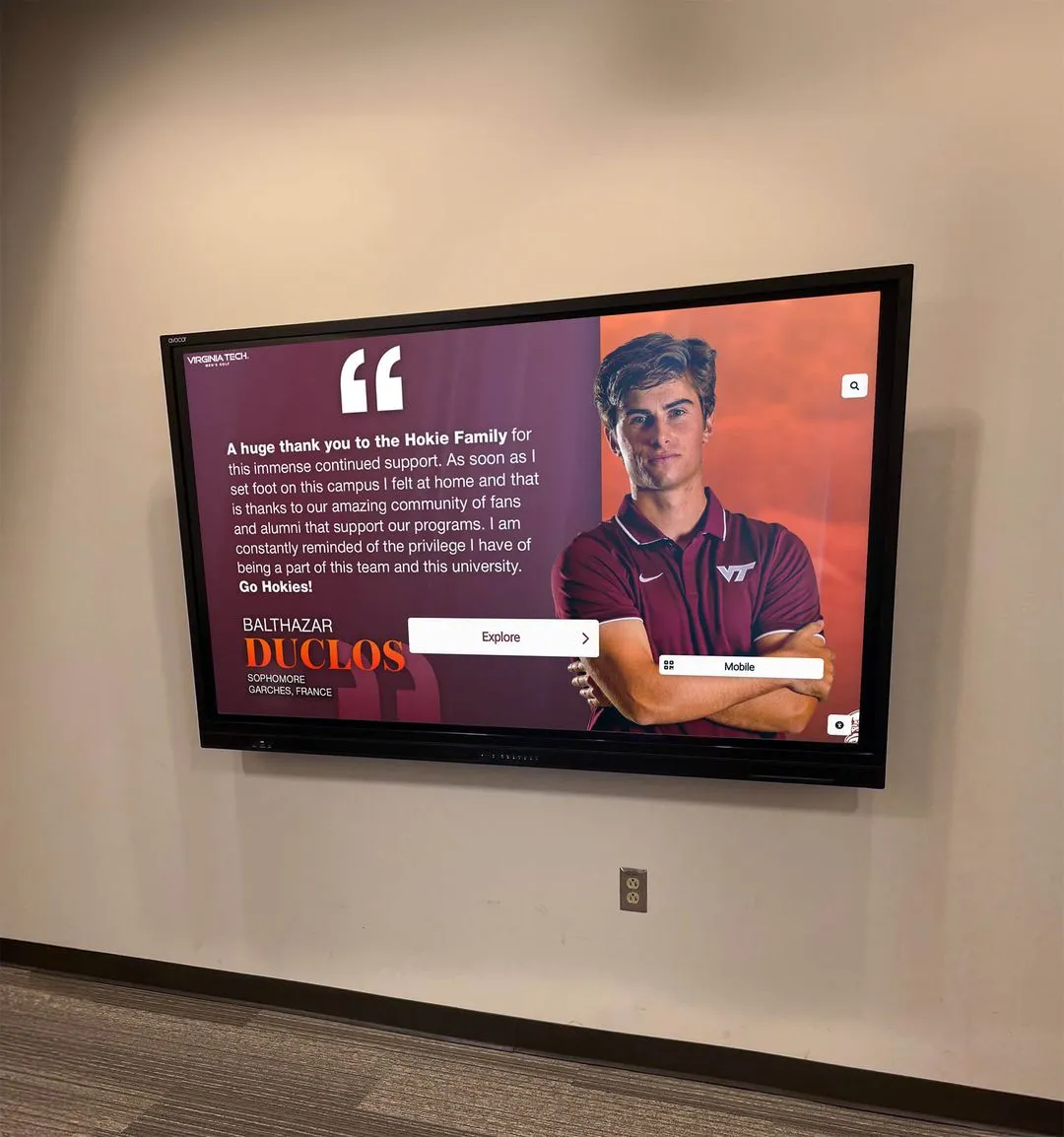
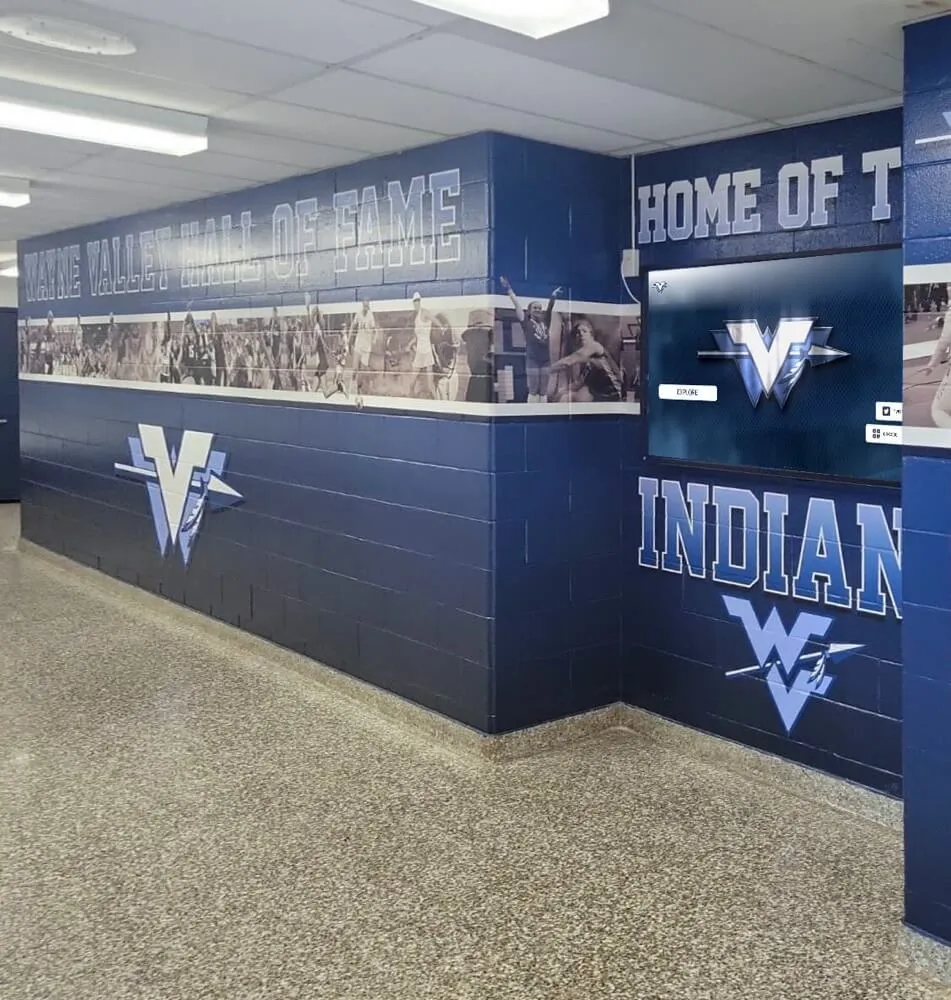
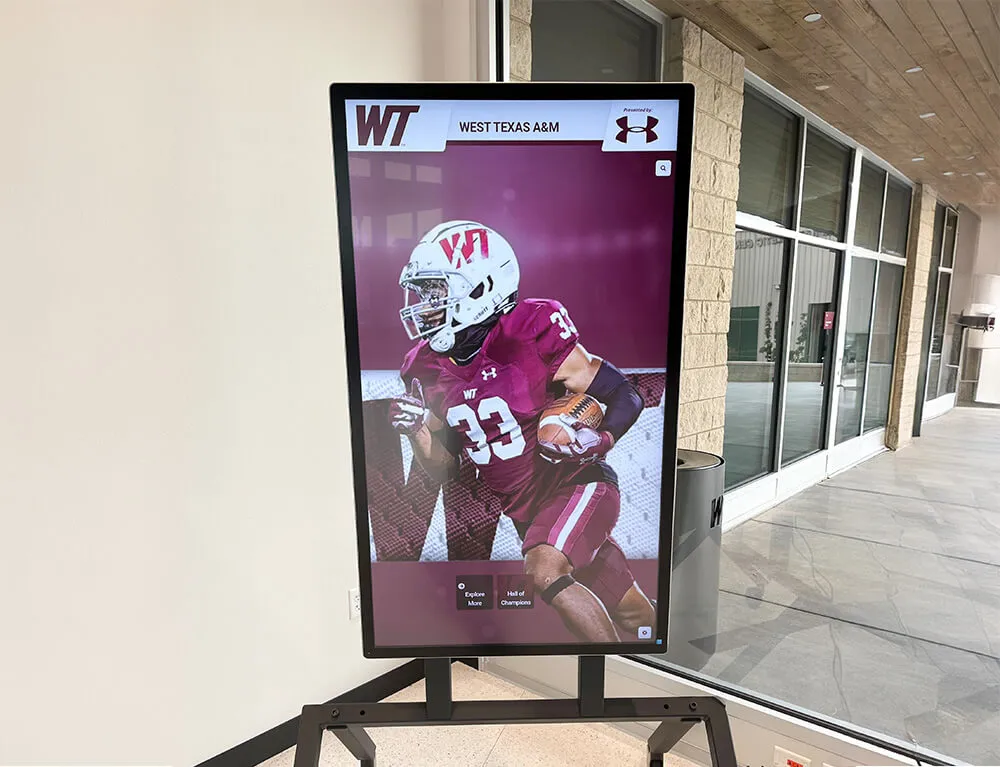
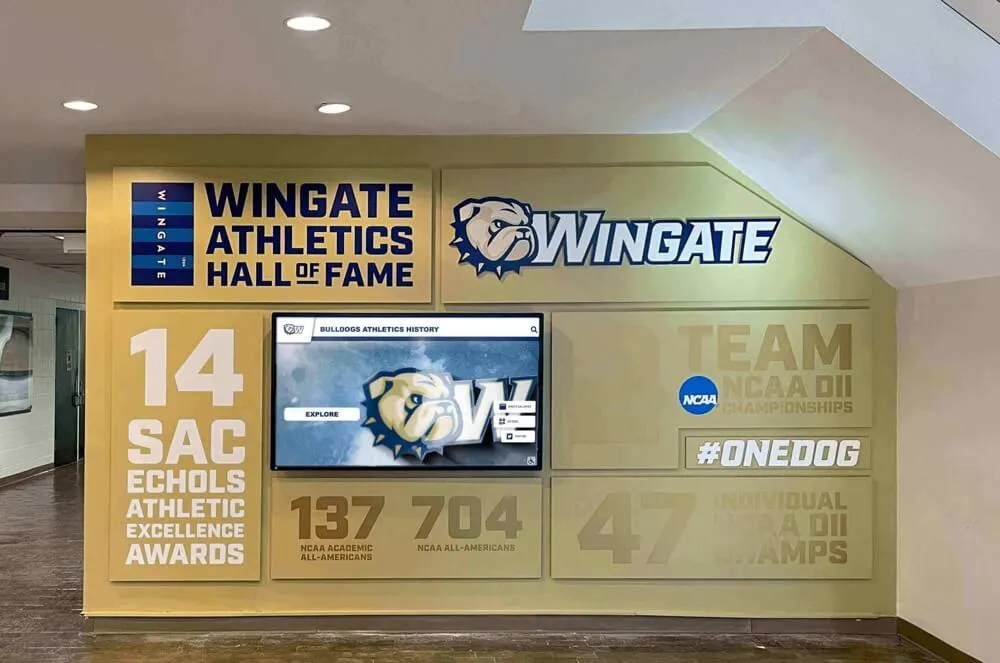
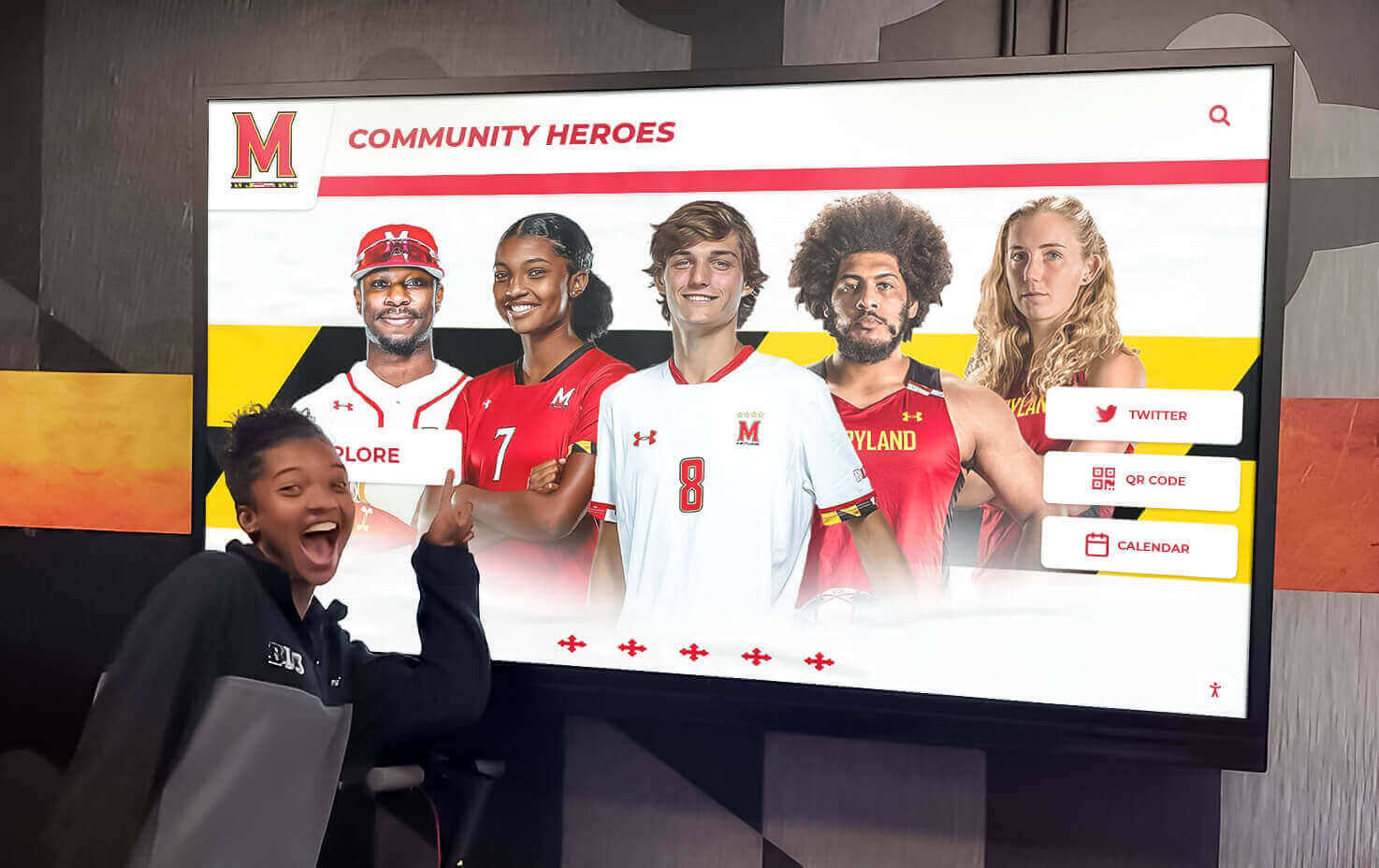
Modern digital displays transform momentary signing ceremonies into year-round recognition showcasing both current signings and comprehensive institutional history
Understanding the National College Signing Day Challenge
Before implementing specific design solutions, understanding why traditional signing day recognition falls short establishes the foundation for creating genuinely effective celebration systems.
The Ephemeral Nature of Traditional Celebrations
Traditional National Signing Day ceremonies create memorable family moments—decorated tables displaying team jerseys, photos capturing students with families, school administrators celebrating achievements, and social media posts generating immediate excitement. Yet these celebrations remain fundamentally temporary experiences.
Recognition That Disappears Within Days
Within a week of signing ceremonies, physical elements vanish. Decorated tables get dismantled and stored. Announcement boards feature next week’s events. Photo displays migrate to athletic department offices where only coaches see them regularly. The significant achievement of earning collegiate athletic opportunities receives recognition measured in hours rather than sustained visibility matching accomplishment importance.
This ephemeral nature means most students never encounter signing day recognition unless they attend actual ceremonies. The inspirational value—showing younger athletes clear pathways to college competition—disappears rapidly as temporary displays give way to daily priorities. Students who could benefit most from seeing successful college commitment examples miss opportunities to connect achievement patterns with their own aspirations.
Space Limitations Constraining Comprehensive Recognition
Schools with strong college placement traditions may send dozens of student-athletes to collegiate programs annually. Showcasing these commitments comprehensively through traditional physical displays becomes impossible as wall space fills quickly. Athletic directors face difficult decisions about whose commitments receive permanent recognition, how long displays remain current, or whether to limit recognition to Division I signings—creating hierarchies that may undervalue Division II, Division III, NAIA, or junior college commitments representing equally significant achievement.
According to NCAA research, student-athletes compete across all divisions and institutional types, yet traditional recognition systems often emphasize highest-profile commitments while minimizing others equally worthy of celebration.

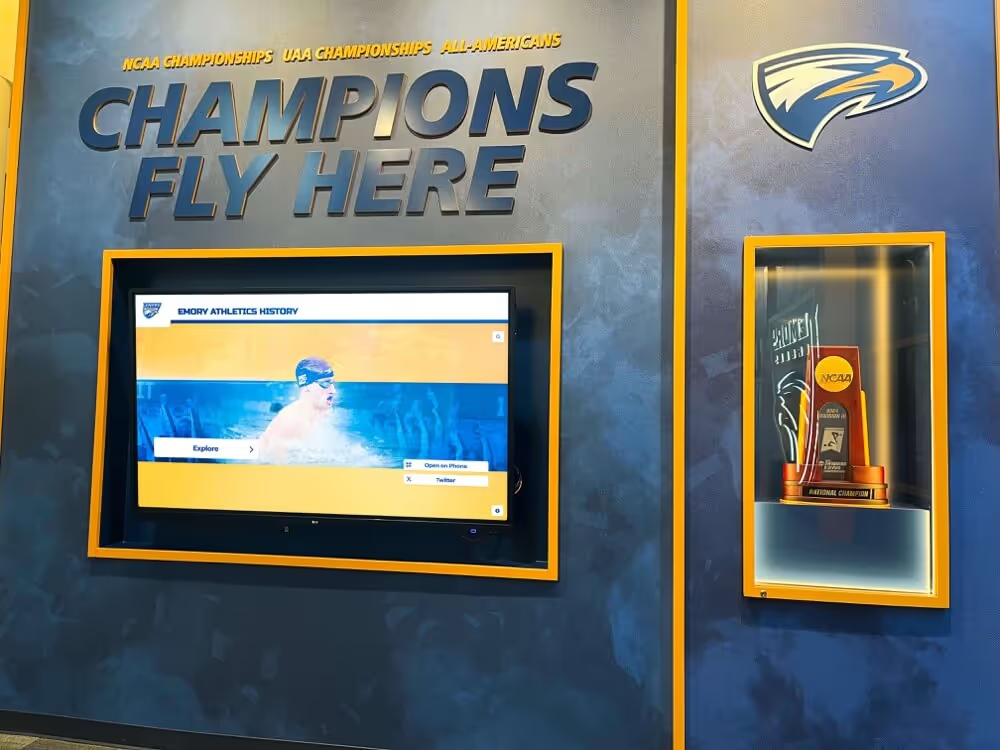
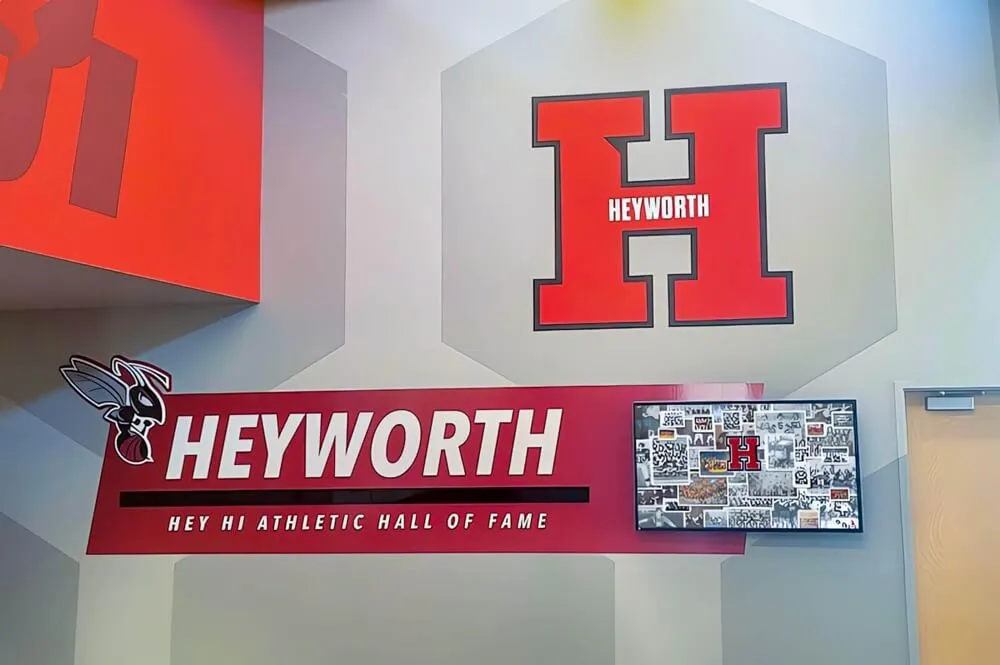
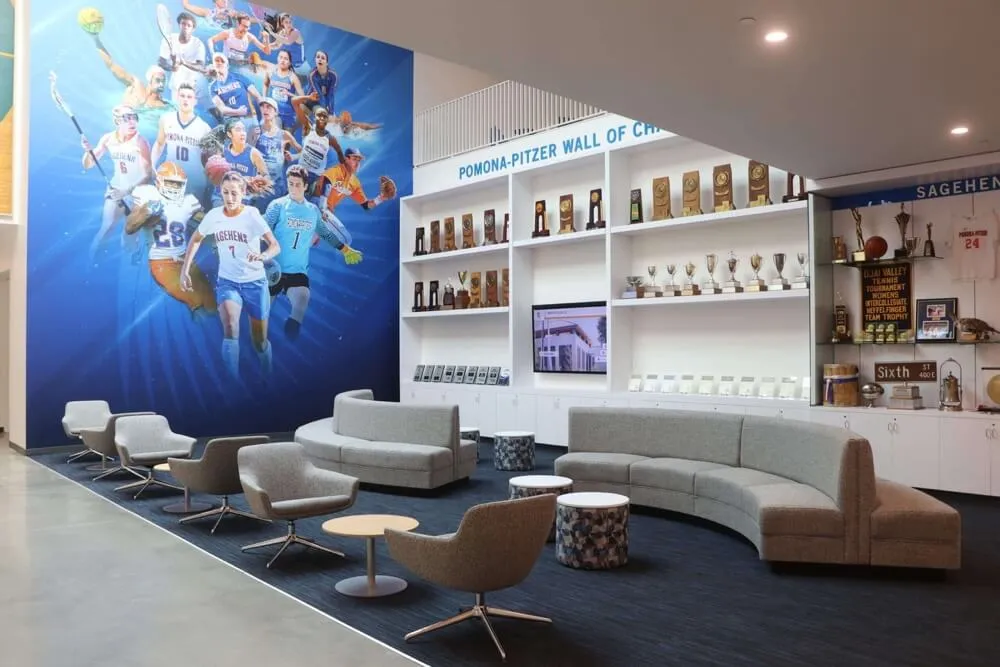
Combining traditional design elements with digital capabilities creates the best recognition environments—honoring heritage while enabling unlimited celebration capacity
Limited Historical Context and Tradition Building
Even when schools create current-year commitment displays, they rarely maintain accessible archives of previous signing classes. This absence of historical context prevents schools from demonstrating consistent college placement patterns, building visible traditions showing program paths to specific colleges or conferences, enabling current students to discover which institutions regularly recruit from their programs, or creating perspective on program evolution as coaching and facilities improve.
Without multi-year visibility, each signing day exists in isolation rather than contributing to cumulative institutional narratives demonstrating sustained athletic excellence and college placement success.
Why Multi-Year Archives Transform Recognition Value
Comprehensive signing day showcases that include historical archives deliver exponentially greater value than current-year-only displays through multiple interconnected benefits.
Building Visible Institutional Tradition
Multi-year archives transform individual commitments into visible traditions. Students scrolling through five or ten years of signing day classes discover patterns—recognizing specific colleges that consistently recruit from their programs, identifying coaches who successfully place athletes, seeing how signing class sizes grow as programs strengthen, and understanding which sports generate most college opportunities.
This historical perspective helps current athletes understand their programs’ college placement contexts while providing tangible evidence of institutional commitment to post-secondary athletic opportunities. Parents evaluating programs see concrete documentation of college placement success rather than relying on verbal claims about “strong college connections.”
Enabling Younger Athletes to Discover Pathway Examples
The most valuable recognition reaches students years before they commit to colleges—eighth or ninth graders beginning to consider whether collegiate athletics represents realistic goals for them. Multi-year archives enable these younger athletes to explore commitments from graduates who played similar positions, competed in similar conferences, or attended similar colleges they’re considering.
This self-directed discovery proves more impactful than abstract encouragement. When freshman basketball players see five consecutive years of graduates earning college opportunities—including players who weren’t elite recruits but developed through program participation—they internalize that college competition represents achievable destinations through dedication rather than exclusive opportunities for only exceptional athletes.
Resources on college commitment day digital boards demonstrate systematic approaches to comprehensive recognition that digital platforms enable through their unlimited capacity and historical archiving capabilities.
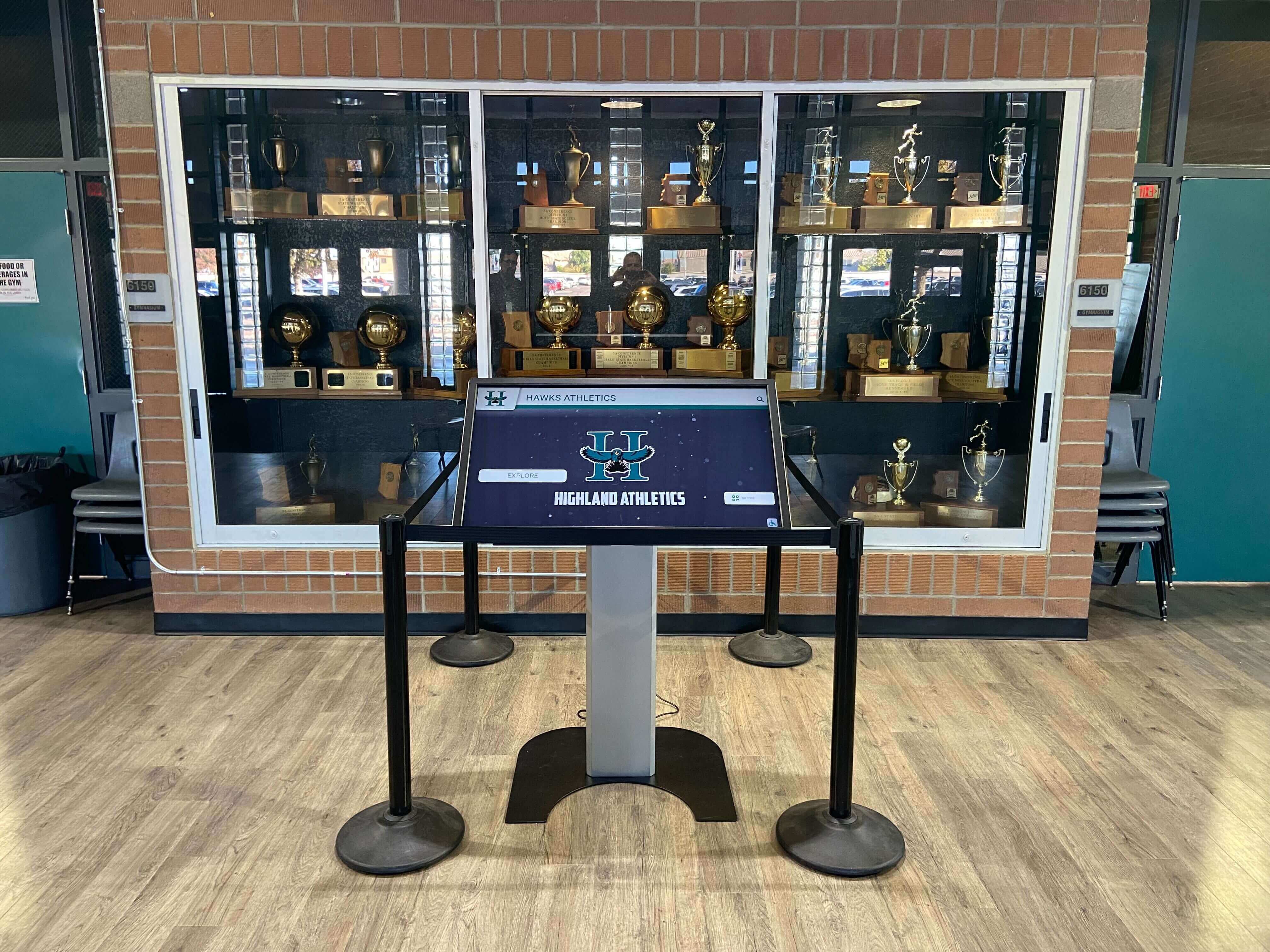
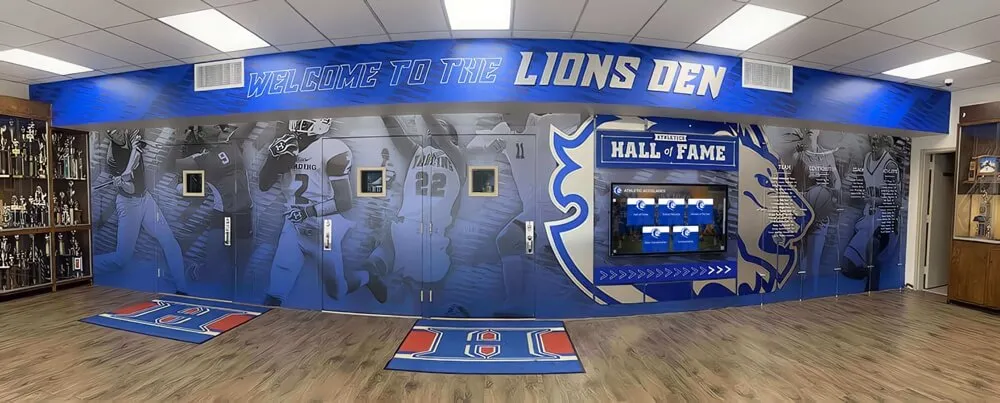
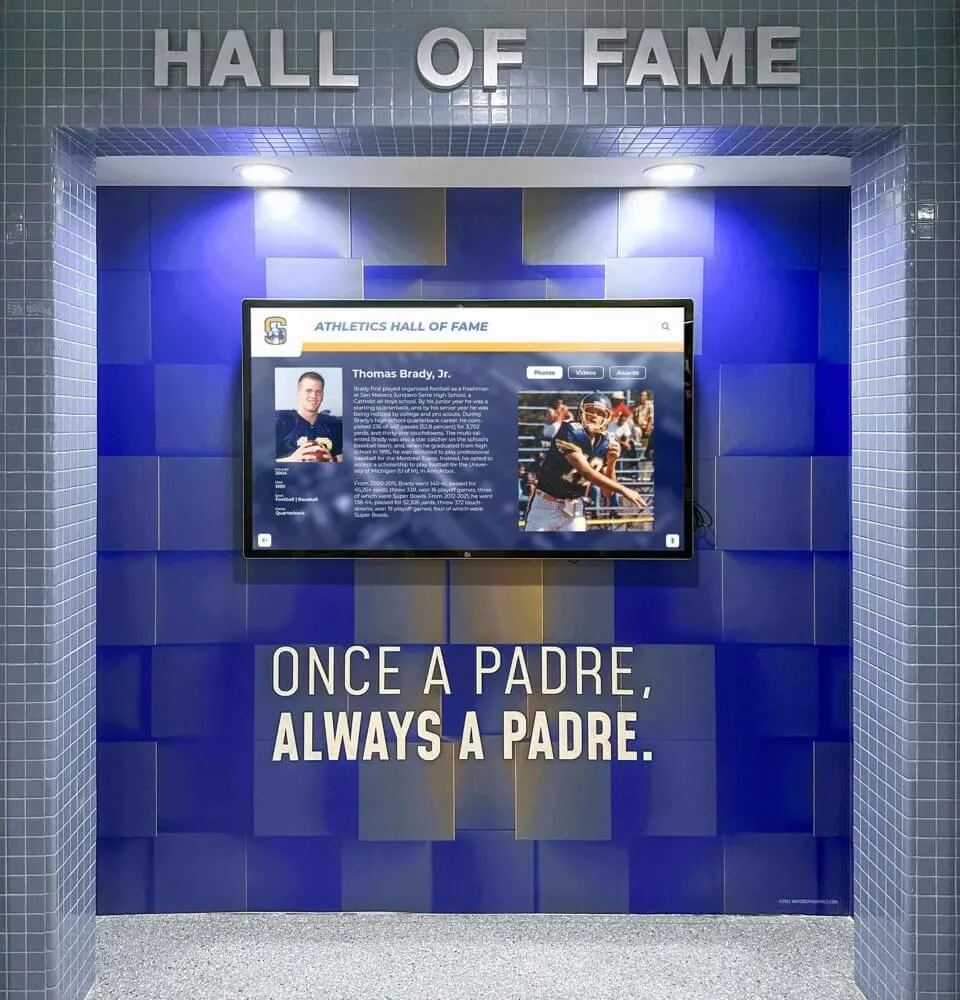
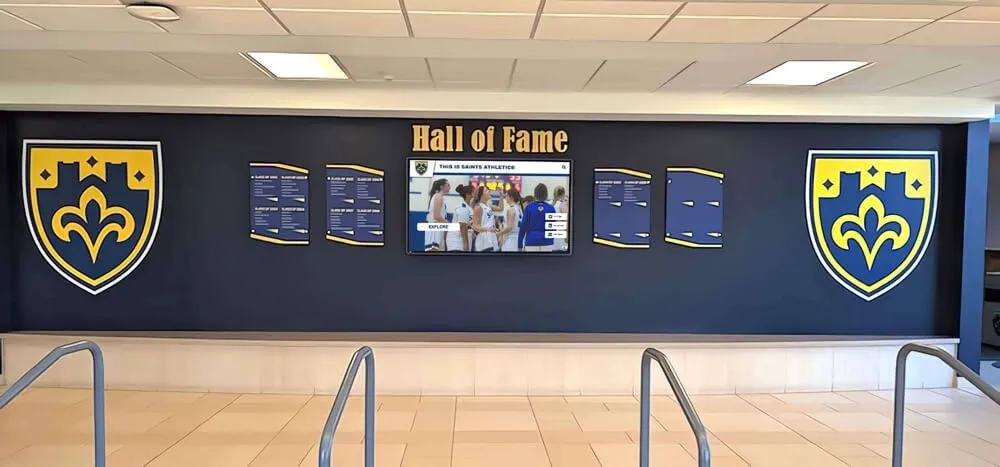
Strategic integration within existing trophy cases provides traditional context while digital capabilities enable unlimited recognition capacity
Supporting Recruitment and Program Promotion
College coaches recruiting from your programs benefit from comprehensive signing day archives demonstrating consistent athlete development and college placement. During campus visits or recruiting conversations, coaches can reference displays showing sustained pipelines to specific institutions or conferences—building confidence that your programs adequately prepare athletes for college-level competition.
Similarly, prospective families touring facilities see immediate evidence of college placement success rather than hearing verbal claims about program quality. Digital displays showcasing five years of Division I commitments, twenty NAIA signings, or thirty total college athletes provide concrete documentation supporting recruitment messaging about your programs’ college preparation effectiveness.
Experience Layout: Designing the Signing Day Showcase
Effective signing day showcases require thoughtful layout design balancing prominence for current signings with accessible historical archives and intuitive navigation enabling discovery across multiple graduating classes.
Home Screen: Foregrounding Current Year Commitments
The display home screen should prioritize the current academic year’s college commitments while maintaining clear pathways to historical content for interested visitors.
Hero Section: Featured Current Signings
The top portion of home screens should showcase 2025-26 academic year commitments through:
- Large hero carousel rotating through individual commitment profiles with high-quality action photos
- Signing class counter displaying total current-year commitments prominently: “Class of 2026: 23 College Commitments”
- Sport-by-sport breakdown showing commitment distributions: “Football: 8, Basketball: 4, Soccer: 6…”
- Recent additions highlight featuring newest commitments added as they occur throughout recruitment cycles
- Interactive call-to-action prompting visitors to “Explore Full Class Profiles” through touch interaction
This hero-focused design ensures current achievements receive deserved prominence while communicating that displays maintain current, relevant content rather than becoming static historical archives that neglect present accomplishments.
Quick Access to Historical Archives
Below hero sections, provide clear navigation to previous signing classes:
- Year selector strip displaying buttons for each archived year: “2025 | 2024 | 2023 | 2022 | 2021…”
- Timeline visualization showing commitment trends across multiple years through simple bar graphs
- “All-Time Commitments” summary statistics: “Total College Athletes Since 2020: 147”
- Search functionality enabling visitors to find specific athletes, colleges, or sports across all years
This balanced approach gives current signings appropriate spotlight while making historical exploration effortless for visitors interested in deeper program tradition investigation.
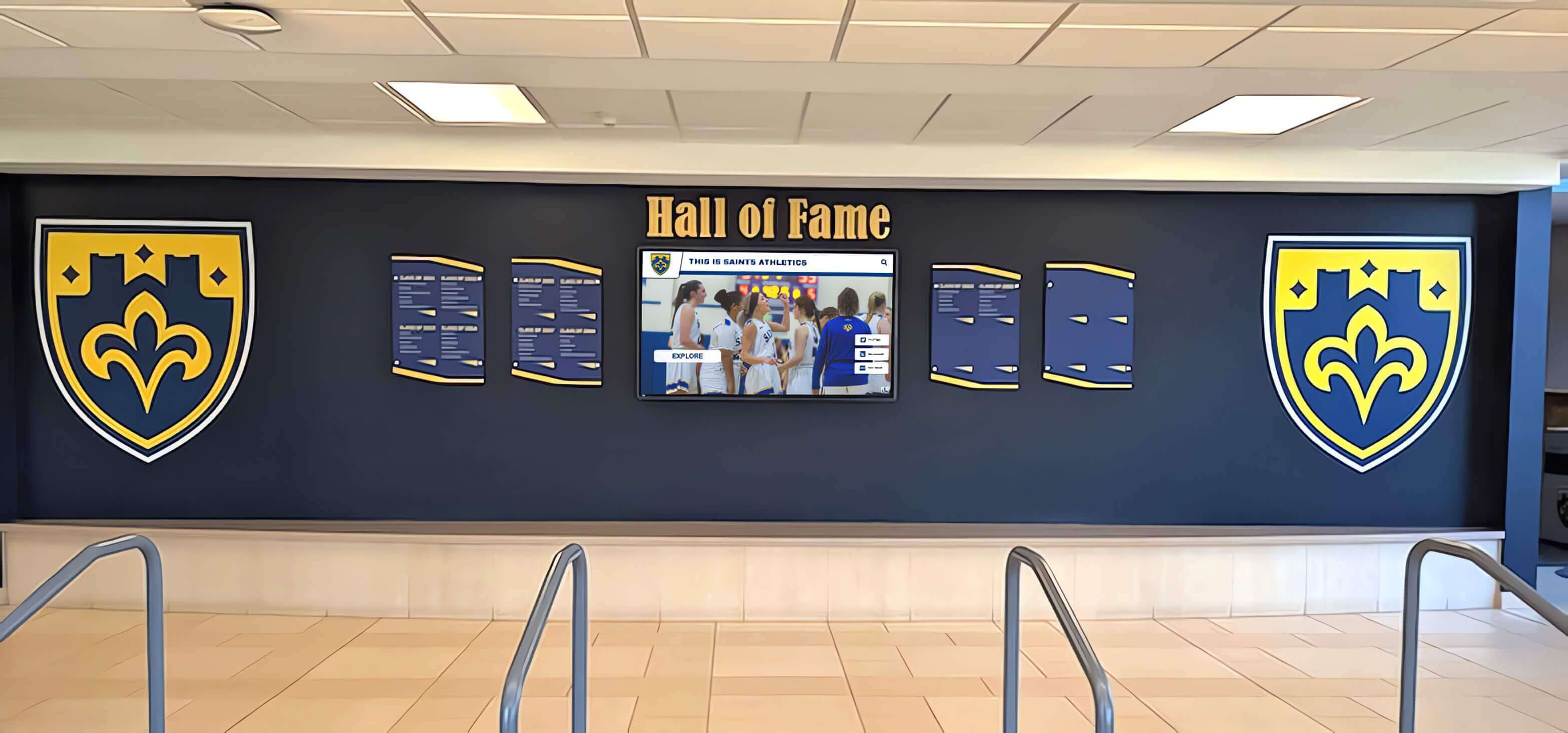
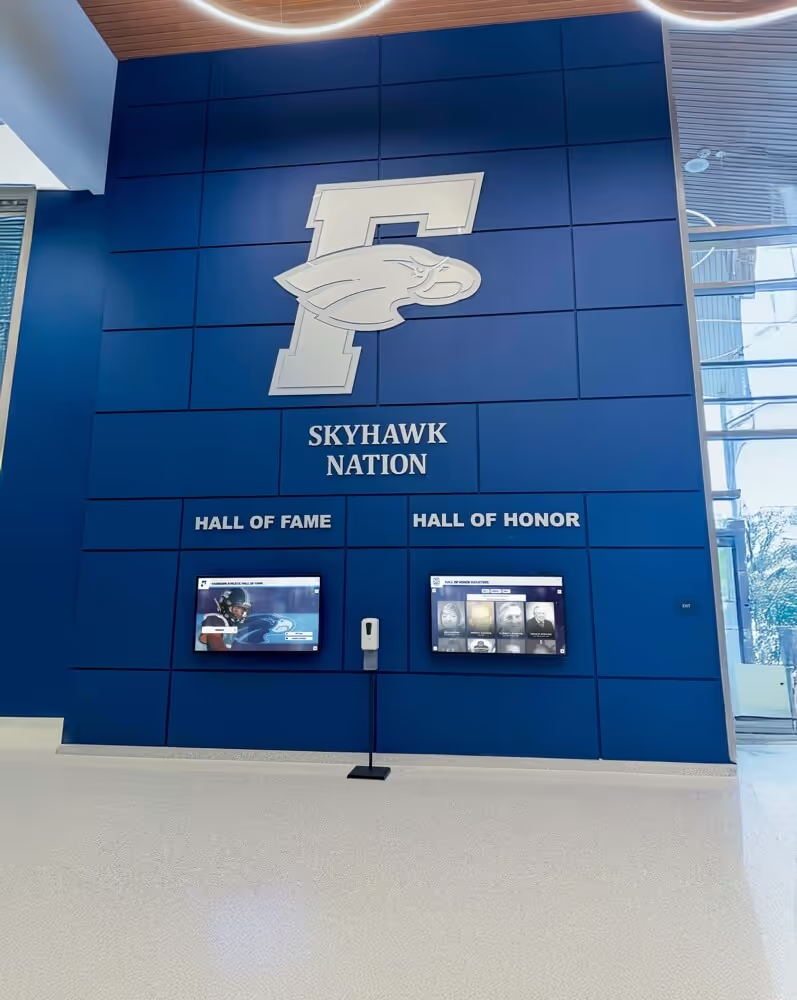
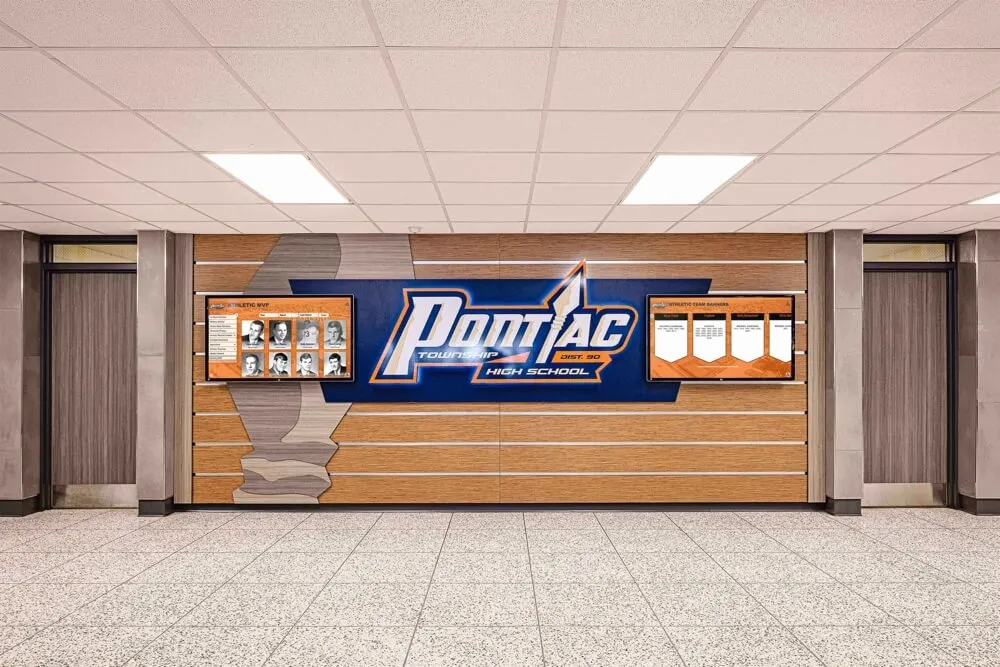
Entrance lobby installations ensure signing day recognition reaches all visitors while reinforcing school culture for students during daily activities
Individual Profile Layouts: Comprehensive Commitment Details
When visitors select specific athletes from home screens or search results, detailed profile layouts should provide comprehensive commitment information celebrating individual achievements.
Essential Profile Components
Quality commitment profiles include standard elements:
- Athlete name and photo: Professional or action shots capturing competitive moments
- Destination institution: Full college name with logo (when licensing permits)
- Sport and position: Specific role: “Outside Linebacker,” “Point Guard,” “Goalkeeper”
- College division and conference: “NCAA Division II - PSAC East Conference”
- Commitment type: “Full athletic scholarship,” “Partial scholarship,” “Walk-on opportunity”
- Academic major: Intended field of study demonstrating academic preparation
- High school achievements: Statistics, honors, team captain roles, all-conference selections
Enhanced Storytelling Elements
More sophisticated profiles add depth through:
- Personal statements: Brief reflections on college choice factors or high school experiences
- Video highlights: Embedded clips showing athletic excellence during high school competitions
- Coach quotes: Brief testimonials from high school or college coaches
- College selection factors: Why students chose particular institutions over alternatives
- Advice for younger athletes: Retrospective wisdom about preparing for college recruitment
- Academic statistics: GPA, SAT/ACT scores, academic honors (when students consent to sharing)
This comprehensive approach transforms displays from simple directories into valuable resources younger athletes use when conducting their own college research and planning.
Archive Organization: Making History Accessible
Multi-year archives require clear organizational structures preventing overwhelming visitors while enabling efficient discovery across extensive content libraries.
Chronological Organization by Signing Class
Primary navigation should group commitments by graduating class year, with each year’s landing page featuring:
- Class summary statistics: Total commitments, division breakdown, sports represented
- Alphabetical athlete directory: Scrollable list enabling quick name-based searches
- Sport-specific filtering: Viewing only basketball, football, or soccer commitments
- College grouping: Showing all athletes who attended specific institutions
- Visual grid layouts: Thumbnail photos enabling rapid browsing
Alternative Discovery Pathways
Provide multiple exploration approaches accommodating different visitor interests:
- By college: All athletes who attended specific institutions across multiple years
- By sport: Complete history of football, basketball, or volleyball commitments
- By conference: Athletes competing in specific athletic conferences
- By division: All Division I, II, III, NAIA, or JUCO commitments
- By decade: Long-term historical perspective for programs with extensive archives
This flexible navigation ensures visitors with varying interests—current athletes researching specific colleges, alumni discovering classmates’ collegiate careers, or community members understanding program strength—all find relevant content efficiently.
Strategic approaches to senior college decision displays provide additional frameworks for organizing comprehensive commitment information across diverse student populations.
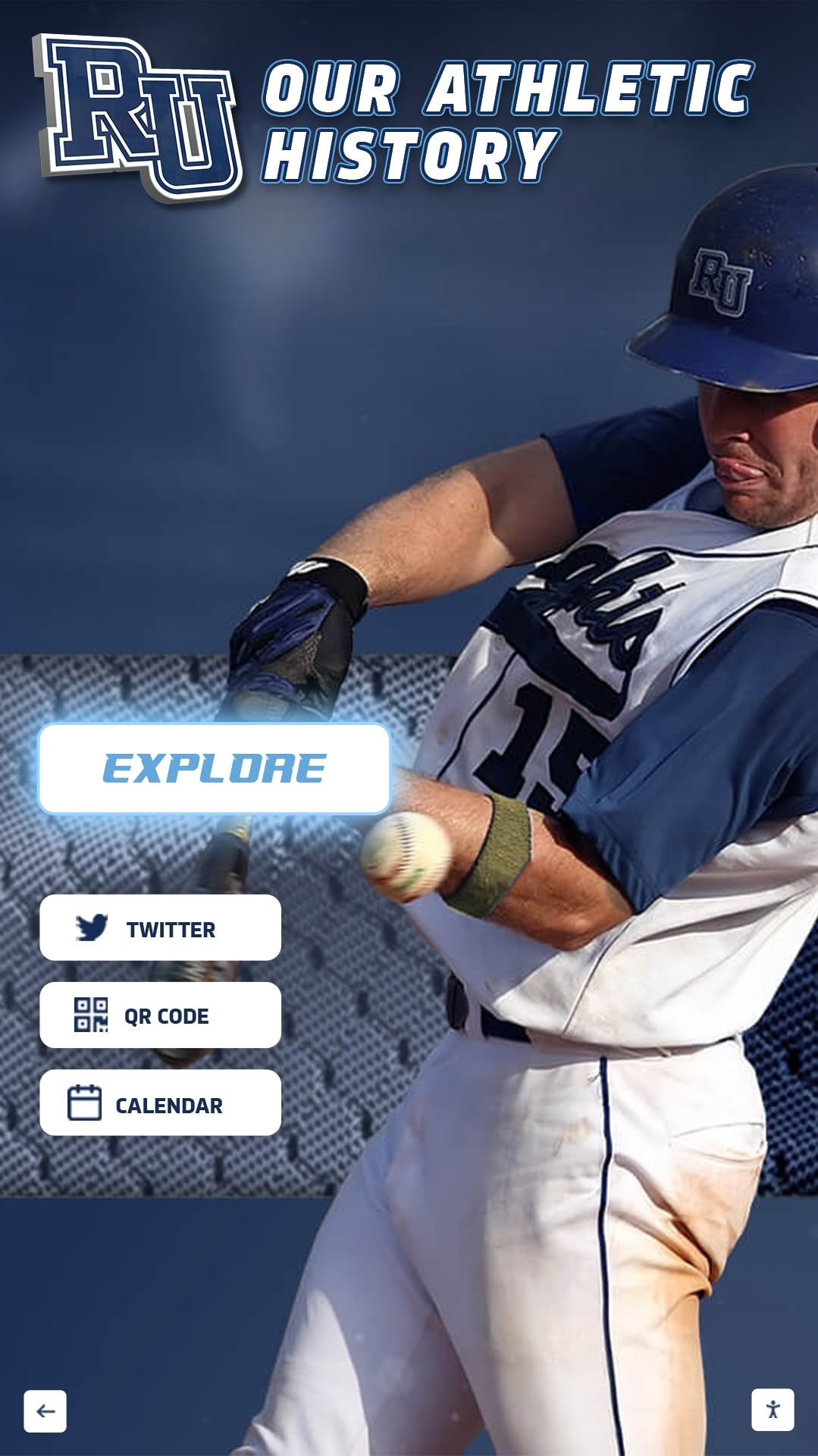
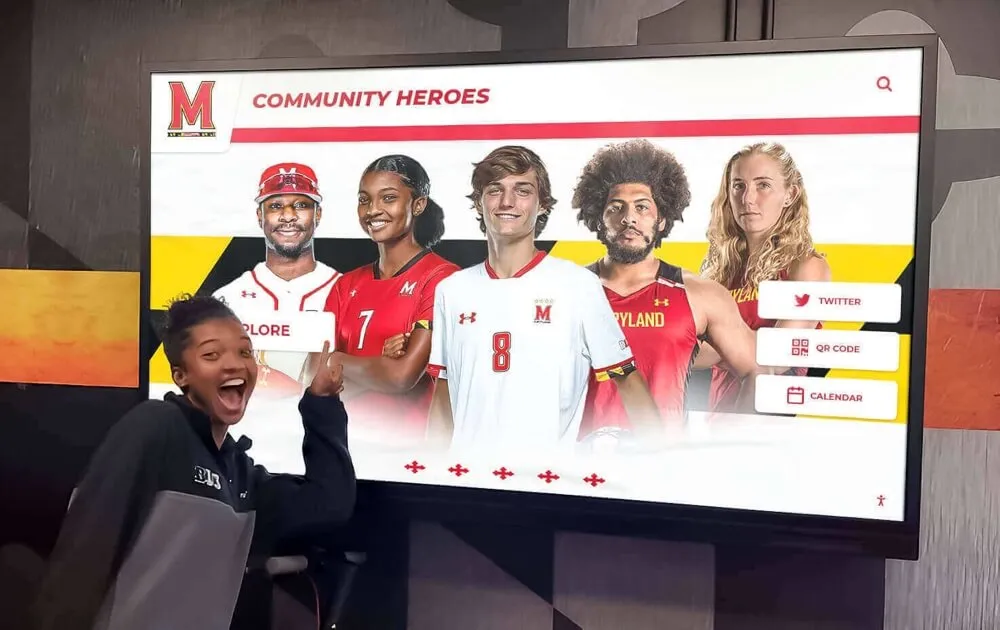
Dynamic action photography creates engaging recognition that celebrates athletic excellence while inspiring younger student-athletes
Content Blocks & Motion: Dynamic Recognition Elements
Static displays quickly become visual wallpaper that visitors ignore. Dynamic content elements maintain engagement while enabling real-time updates as commitments occur throughout extended recruitment cycles.
Real-Time Content Updates Throughout the Season
One of digital recognition’s most significant advantages involves eliminating the lag between commitment announcements and visible celebration. Cloud-based content management systems enable instant updates as commitments occur.
Immediate Profile Publishing
When student-athletes make official commitments—whether during November’s early signing period, February’s National Signing Day, or throughout regular decision cycles—authorized administrators publish recognition profiles within minutes through:
- Mobile-responsive management interfaces enabling updates from smartphones during actual signing ceremonies
- Pre-built profile templates requiring only photo uploads and information entry
- Automated social media integration simultaneously posting recognition to Instagram, Twitter, or Facebook
- Push notifications alerting app users when new commitments get added
- Celebration countdown timers building anticipation: “Next signing announcement in 2 days”
This real-time recognition provides psychological benefits—students see themselves honored promptly after making significant life decisions, creating positive associations between achievement and institutional celebration rather than waiting weeks for physical plaque production and installation.
Seasonal Content Prioritization
Digital displays should adapt emphasis as academic years progress:
- Early Signing Period (November-December): Featuring early commitments prominently as they occur
- National Signing Day (February): Major showcase of winter sport signings with ceremony coverage
- Regular Decision Season (March-April): Highlighting spring commitments as decisions finalize
- Summer Additions: Including late-deciding athletes and transfer commitments
- Academic Year Transitions: Archiving graduated classes while elevating incoming signing classes
This dynamic content scheduling ensures displays remain relevant and current rather than displaying outdated information that suggests neglected maintenance.
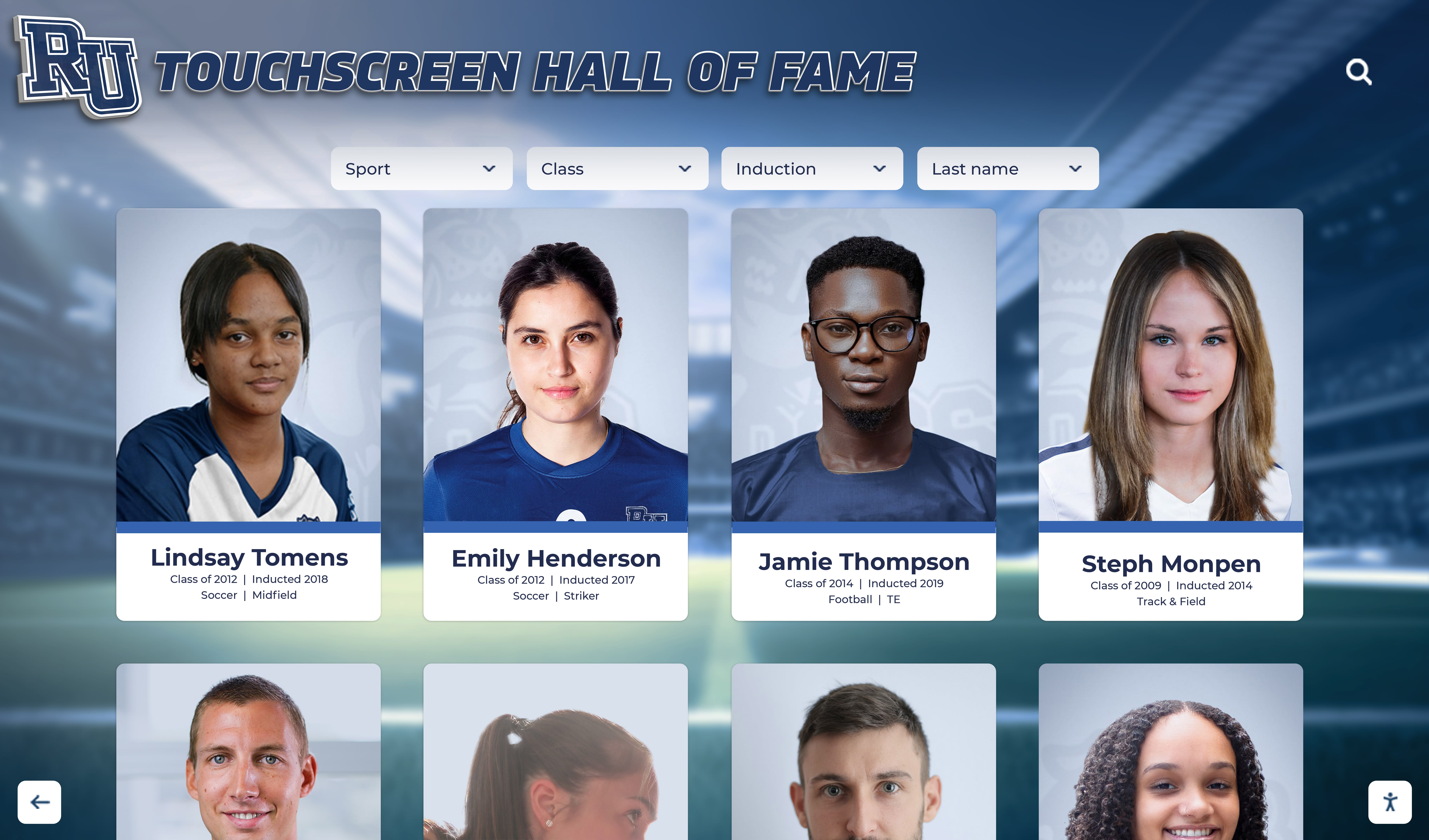
Grid-based navigation enables efficient exploration of large athlete populations while showcasing diverse achievements simultaneously
Motion Graphics and Visual Engagement
Static text and photos fail to capture attention in environments where students encounter displays hundreds of times throughout school years. Strategic motion elements maintain engagement without creating visual chaos.
Subtle Animation Techniques
Effective motion includes:
- Parallax scrolling effects: Creating depth as visitors navigate through profile content
- Fade transitions: Smooth content changes between athlete profiles in rotation
- Statistics counters: Animated numbers showing commitment totals incrementing
- Highlight reel integration: Brief video clips playing automatically when profiles display
- Photo galleries: Slideshow presentations showing multiple images from athletic careers
- Timeline animations: Visual progression showing recruitment process from verbal commitment to signing
These motion elements should enhance content presentation without overwhelming core information or creating distracting visual noise that interferes with actually reading profile details.
Attention-Getting Techniques for High-Traffic Areas
In hallway intersections or cafeterias where students pass quickly, displays benefit from more prominent attention-getting elements:
- Large typography: Oversized headlines announcing: “CONGRATULATIONS 2026 COLLEGE COMMITS”
- Color transitions: Background colors cycling through school colors
- Featured profile rotations: Full-screen athlete showcases changing every 10-15 seconds
- Achievement callouts: Highlighting notable commitments: “Division I Scholar-Athlete”
- Comparison statistics: Year-over-year growth: “15% increase in college commitments vs. 2025”
Strategic use of digital storytelling for athletic programs demonstrates how motion elements enhance engagement while maintaining professional presentation standards appropriate for educational environments.
Interactive Exploration Features
While passive displays rotating through content work well in some contexts, interactive touchscreens enable deeper engagement for visitors with time and interest to explore comprehensively.
Search and Discovery Tools
Interactive displays should provide:
- Keyword search: Finding athletes by name instantly across all archived years
- Filter combinations: Selecting specific sports AND divisions AND years simultaneously
- College research: Discovering all athletes who attended institutions students are considering
- Coach filtering: Finding commitments under specific high school coaches
- Timeline sliders: Scrubbing through years visually rather than clicking individual year buttons
Comparative Analysis Features
More sophisticated implementations enable visitors to:
- Compare signing classes: Viewing statistics across multiple years side-by-side
- Track college pipeline trends: Seeing which institutions consistently recruit from your programs
- Analyze sport-by-sport patterns: Understanding which programs generate most college opportunities
- Geographic distribution: Mapping where athletes attend college geographically
- Division distribution: Pie charts showing D-I vs. D-II vs. D-III vs. NAIA vs. JUCO percentages
These analytical features serve multiple audiences—current athletes understanding realistic college prospects, parents evaluating program quality during school selection, and administrators demonstrating college placement effectiveness to stakeholders.
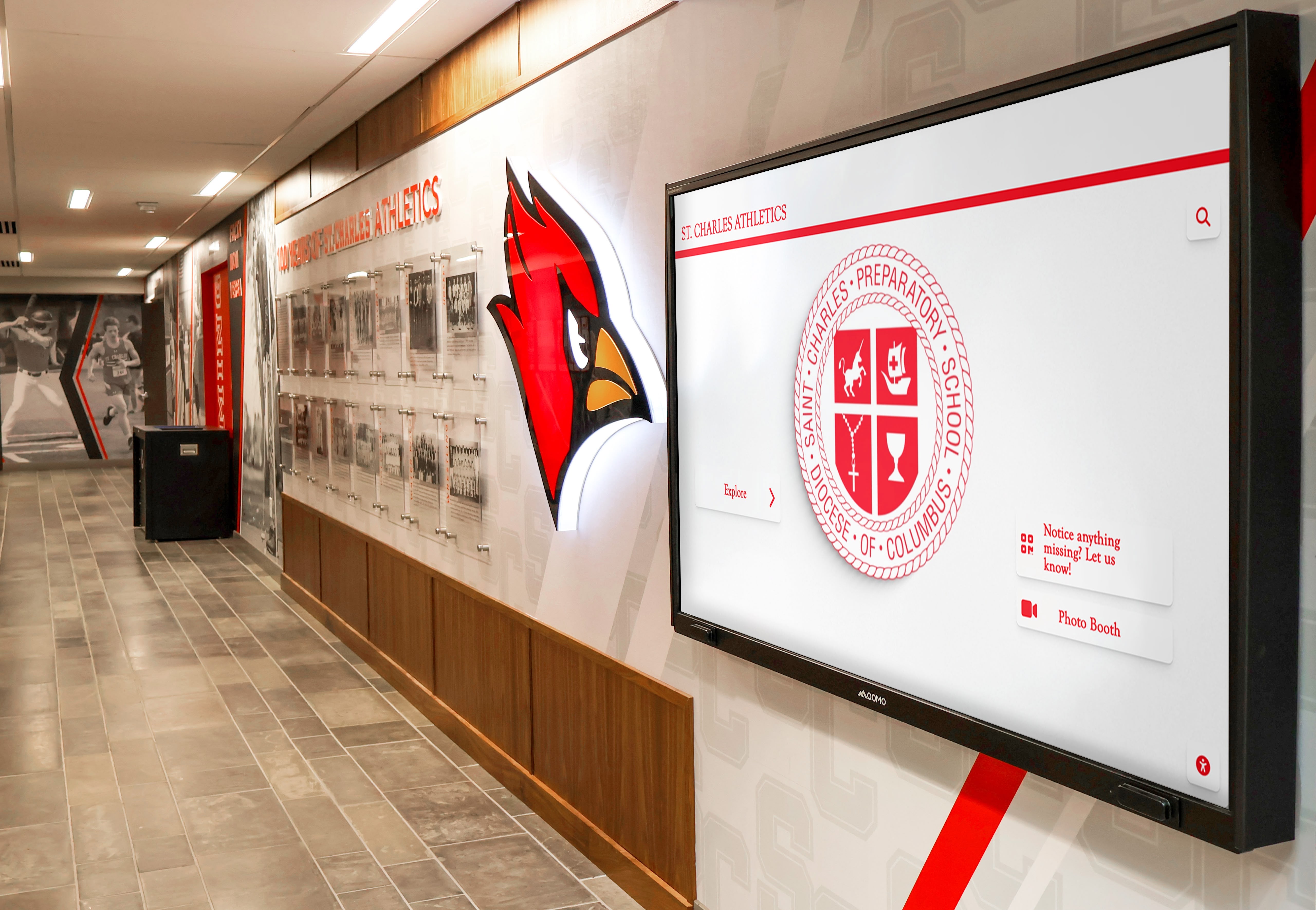
Athletic corridor installations reach student-athletes during daily training while reinforcing tradition and college competition pathways
Accessibility & UX Checklist: Inclusive Design Standards
Effective signing day showcases must serve all community members regardless of physical abilities, ensuring recognition remains universally accessible.
ADA Compliance and Physical Accessibility
Digital recognition displays serving schools must meet Americans with Disabilities Act standards ensuring equal access.
Display Mounting and Height Considerations
Physical installation should accommodate:
- Optimal viewing height: Screens centered 48-54 inches from floor for standing adults
- Wheelchair accessibility: Bottom of interactive touchscreens no higher than 48 inches
- Clear floor space: Minimum 30x48 inch clear area in front of displays
- Reach depth: Interactive elements within 20 inches of front edge for forward reach
- Protruding objects: Wall-mounted displays not extending more than 4 inches into circulation paths
Visual Accessibility Features
Content design should include:
- High contrast ratios: Minimum 4.5:1 for normal text, 3:1 for large text (WCAG 2.1 AA standard)
- Scalable text sizes: Ability to increase font sizes without breaking layouts
- Colorblind-safe palettes: Not relying solely on color to convey information
- Clear typography: Sans-serif fonts in 18pt minimum for body text, 24pt+ for headers
- Proper heading hierarchy: Semantic structure enabling screen reader navigation
Resources on campus directory touchscreen displays provide complementary guidance on accessibility requirements applicable across educational digital installations.
Navigation Clarity and Intuitive Interaction
User experience design determines whether displays actually get used or become ignored visual elements that communities walk past without engaging.
Clear Navigation Hierarchies
Effective interfaces provide:
- Consistent navigation patterns: Same menu locations and interaction behaviors across all screens
- Breadcrumb trails: Showing current location: “Home > Class of 2025 > Football > John Smith”
- Obvious back buttons: Large, clearly labeled navigation enabling return to previous screens
- Home button persistence: Always-visible return to main menu
- Visual hierarchy: Size and positioning indicating importance and relationships
Immediate Feedback and Responsiveness
Quality interactive displays should:
- Respond within 100 milliseconds: Touch targets registering immediately upon contact
- Provide visual feedback: Buttons changing appearance when touched
- Show loading indicators: Progress spinners when content loads
- Prevent accidental touches: Requiring deliberate interaction rather than responding to brushes
- Timeout to home screen: Returning to main menu after 60-90 seconds of inactivity
These UX fundamentals determine whether displays function as valuable community resources or frustrating technology that people avoid using.
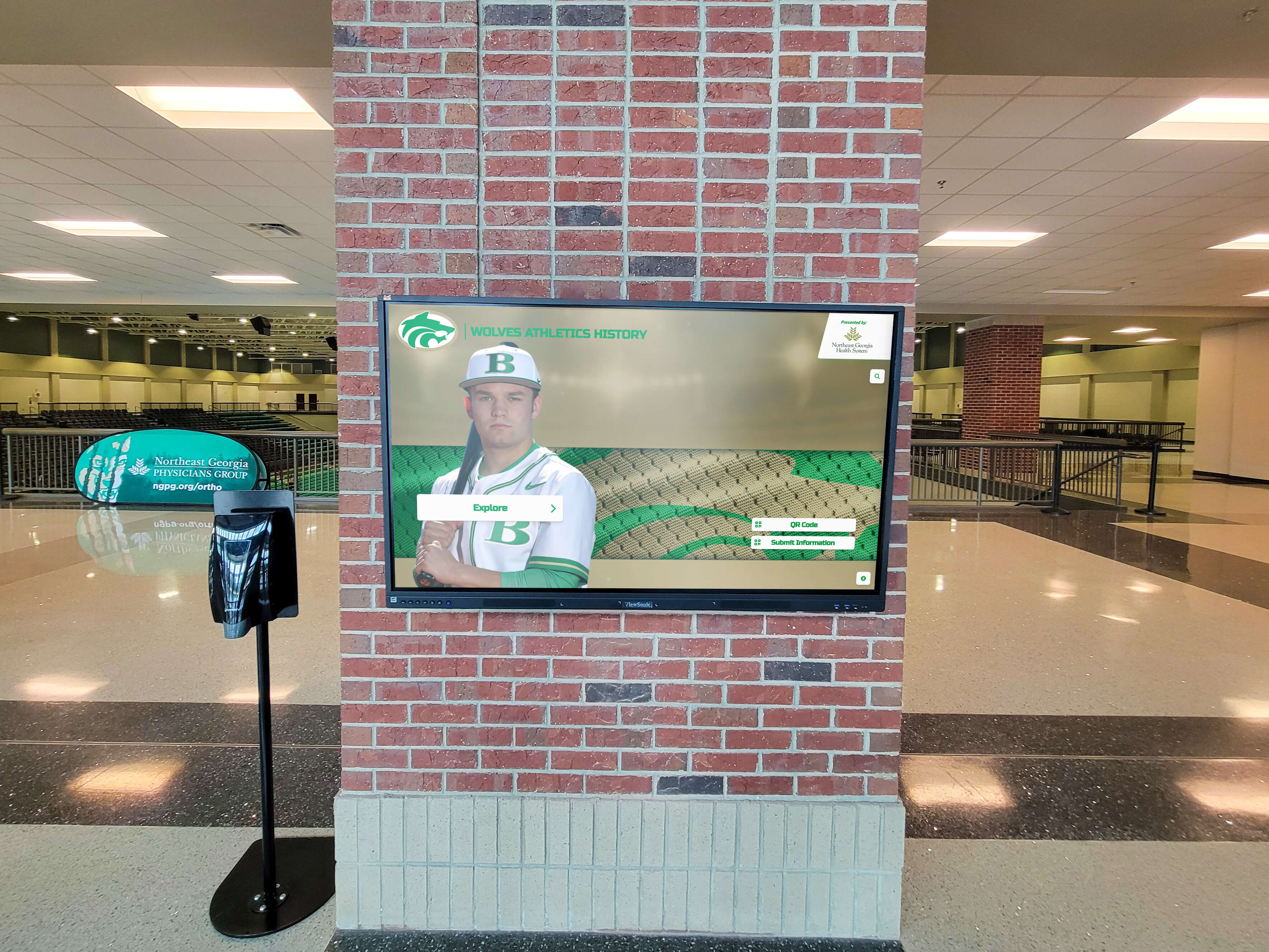
Architectural integration creates dramatic presentation elevating recognition importance while maintaining professional appearance
QR Code Extensions and Mobile Access
Physical displays reach only people physically present in facilities. QR code integration extends recognition to mobile devices enabling universal access.
QR Codes for Extended Exploration
Displays should feature prominently placed QR codes enabling visitors to:
- Access web versions: Viewing complete signing day showcases on smartphones
- Share individual profiles: Sending athlete commitment details to family members
- View extended video content: Watching full highlight reels too long for display loops
- Download media: Saving professional photos from signing ceremonies
- Subscribe to updates: Receiving notifications when new commitments get added
Mobile-Optimized Web Platforms
Web extensions should provide:
- Responsive design: Adapting layouts for various screen sizes
- Touch-friendly interfaces: Large buttons and intuitive gestures
- Fast loading speeds: Optimized media ensuring performance on cellular connections
- Offline functionality: Caching enabling access even without internet connectivity
- Share features: One-tap posting to social media platforms
This mobile extension ensures recognition reaches family members unable to attend ceremonies, alumni maintaining connections from distant locations, and prospective families researching programs before campus visits.
Activation Plan: Implementation and Maintenance Strategy
Successful signing day showcases require systematic implementation approaches ensuring displays launch effectively and remain current throughout their operational lives.
Initial Content Development and Historical Data Collection
Launching comprehensive multi-year showcases requires collecting historical information about previous signing classes—a process that seems daunting but becomes manageable through systematic approaches.
Phased Archive Development
Rather than attempting complete historical archives before launch, implement displays in phases:
- Phase 1: Current Year Only: Launch with 2025-26 commitments providing immediate value
- Phase 2: Recent History: Add previous 2-3 years as time permits
- Phase 3: Extended Archives: Gradually expand to 5-10 years as resources allow
- Phase 4: Legacy Documentation: Eventually include historic signings from program inception
This phased approach provides immediate recognition value while spreading historical content development across manageable timeframes.
Collaborative Information Gathering
Collecting historical commitment information benefits from multiple sources:
- Athletic department records: Official documentation of previous signings
- Yearbook archives: Photos and basic commitment information
- Coaching staff knowledge: Current coaches may remember recent commitments
- Alumni outreach: Surveying graduates about their college experiences
- Social media research: Mining Facebook, Instagram, and Twitter for announcement posts
- Local newspaper archives: Historical coverage of signing day ceremonies
Strategic approaches to academic history archiving for schools provide systematic frameworks applicable to athletic commitment documentation.
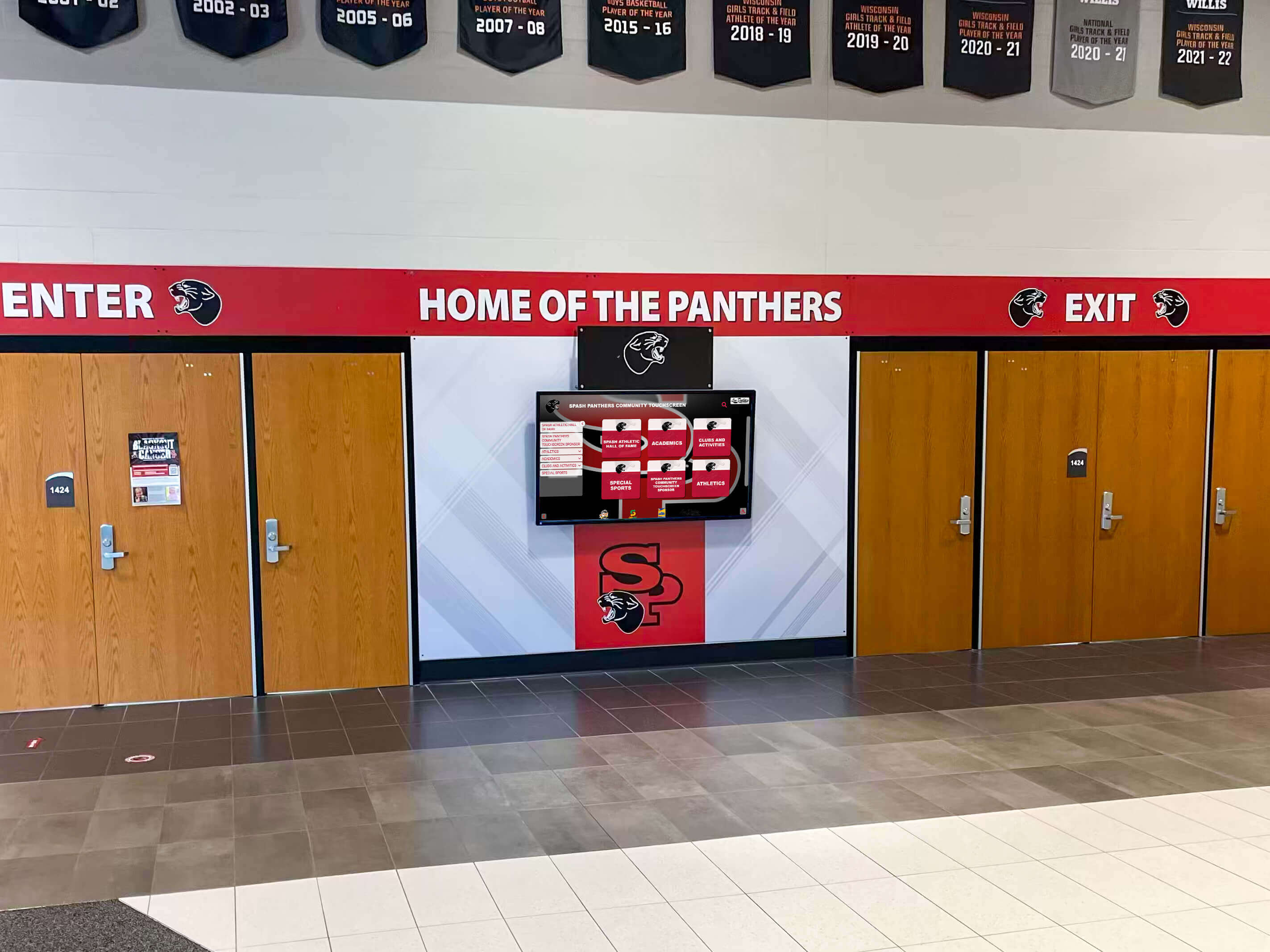
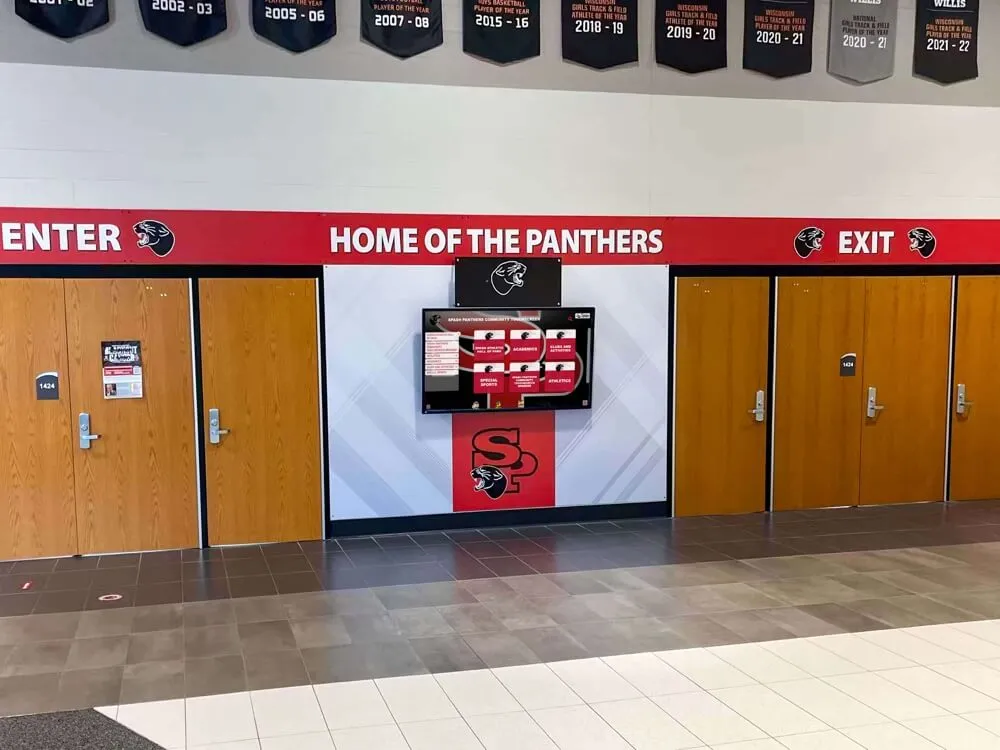
Strategic placement near entrance and exit points ensures recognition reaches maximum audiences during daily school operations
Content Refresh Cadence and Seasonal Updates
Displays delivering sustained value require regular content refreshes preventing them from becoming stale visual backgrounds that communities stop noticing.
Critical Update Points Throughout the Year
Establish clear update schedules:
- Early Signing Period (November-December): Add commitments within 24 hours of signing
- National Signing Day (February): Major content push featuring comprehensive winter signings
- Regular Decision Season (March-April): Weekly updates as spring commitments finalize
- Class Transition (May-June): Archive graduating class, elevate incoming class to featured status
- Summer Maintenance (July-August): Content audits, quality improvements, historical additions
Responsibility Assignment and Workflow
Sustainable displays require clear ownership:
- Primary administrators: Athletic directors or assistants managing day-to-day updates
- Content contributors: Coaches submitting athlete photos and statistics
- Technical support: IT staff providing platform access and troubleshooting
- Student assistants: Journalism or marketing students potentially managing content
- Approval workflows: Administrators reviewing content before publication
This distributed responsibility with clear processes ensures content updates remain manageable rather than becoming overwhelming burdens preventing sustainable maintenance.
Training and Knowledge Transfer
Technology investments only deliver value if authorized staff understand how to manage systems effectively.
Initial Platform Training
Quality vendors provide comprehensive onboarding:
- Administrator training sessions: 1-2 hour webinars or in-person workshops
- Written documentation: Step-by-step guides for common tasks
- Video tutorials: Recorded demonstrations for reference
- Practice environments: Sandbox accounts enabling experimentation without affecting live displays
- Ongoing support: Phone, email, or chat assistance when questions arise
Succession Planning for Staff Changes
Educational institutions experience regular staff turnover requiring knowledge transfer:
- Multiple trained administrators: Preventing single-person dependencies
- Internal documentation: School-specific procedures supplementing vendor materials
- New hire onboarding: Including display management in position training
- Annual refresher training: Periodic re-certification ensuring skills remain current
Platforms like Rocket Alumni Solutions specialize in intuitive educational interfaces enabling non-technical staff to maintain recognition without IT expertise—reducing training requirements while ensuring sustainable long-term management.
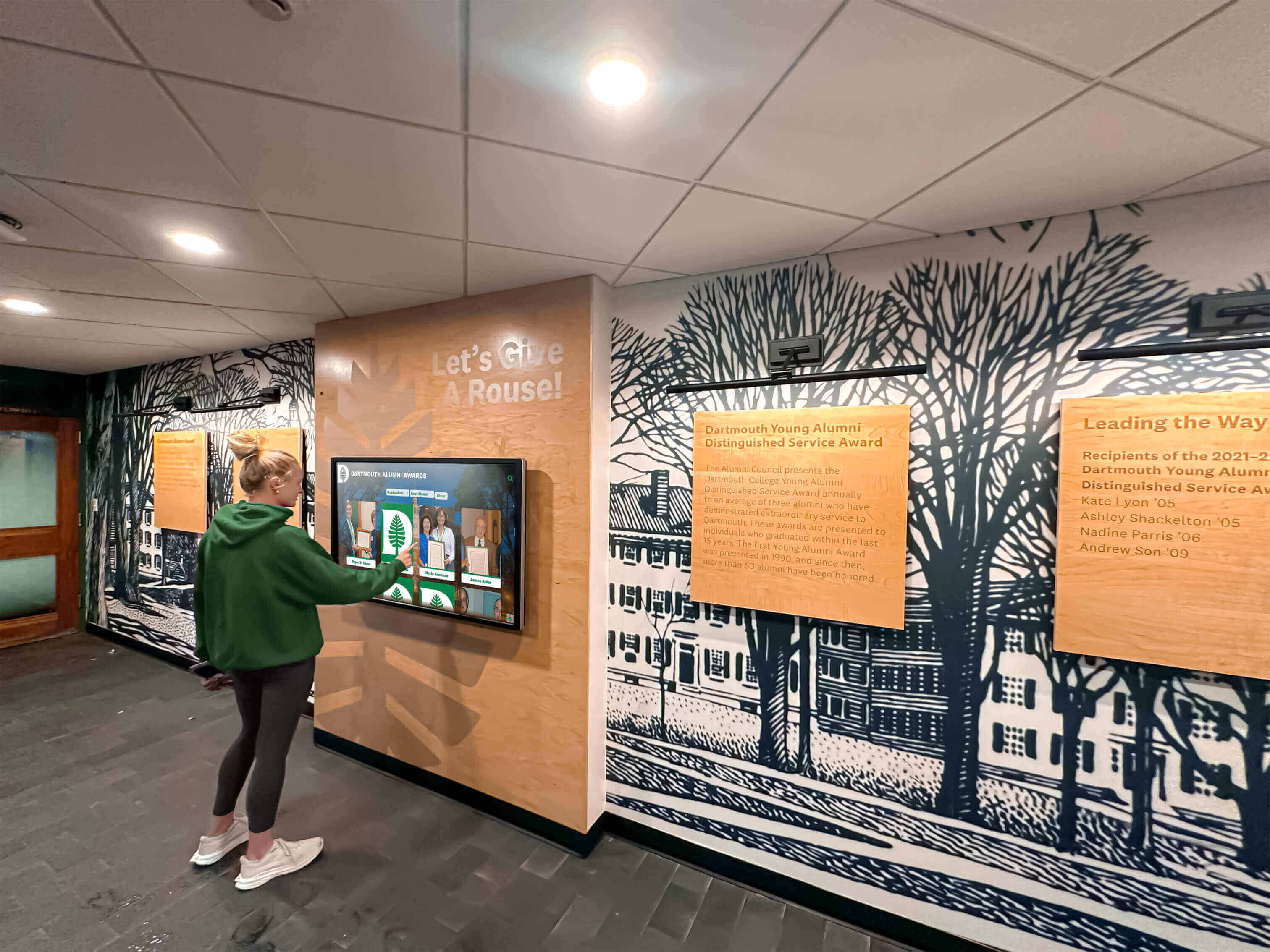
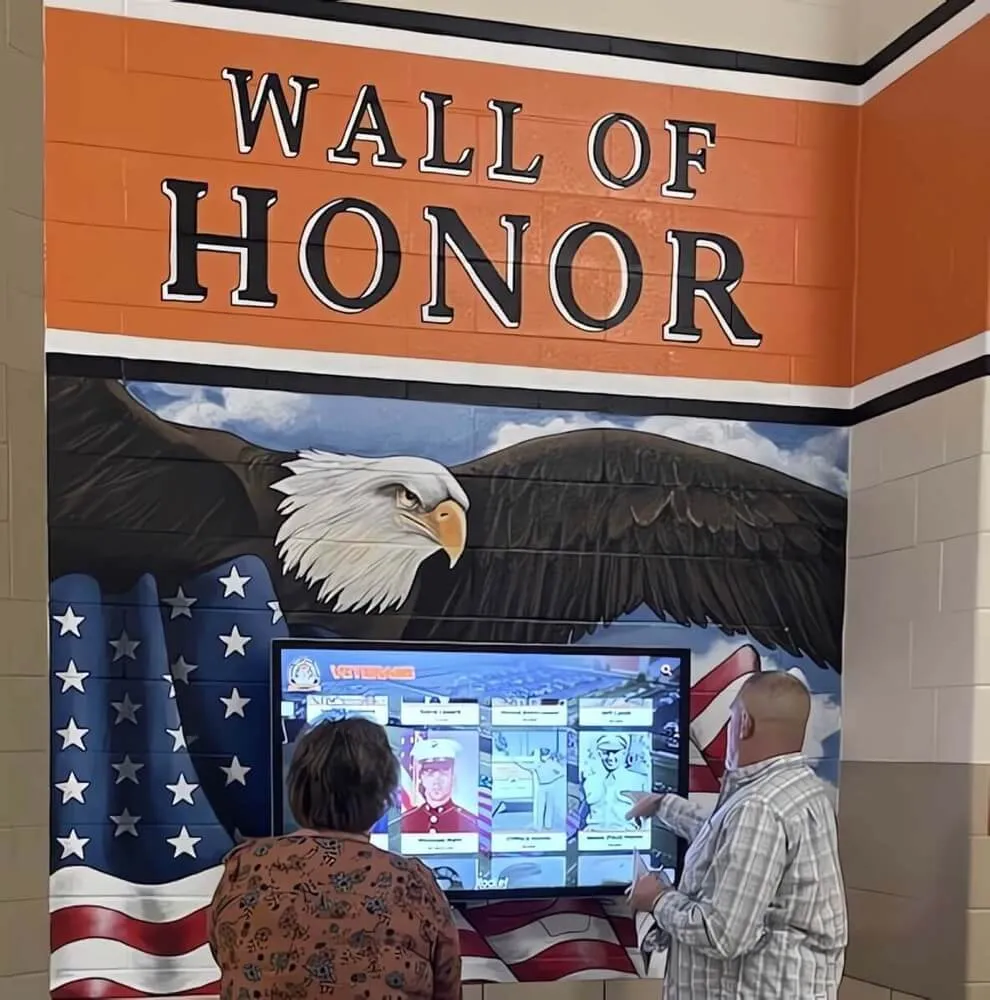
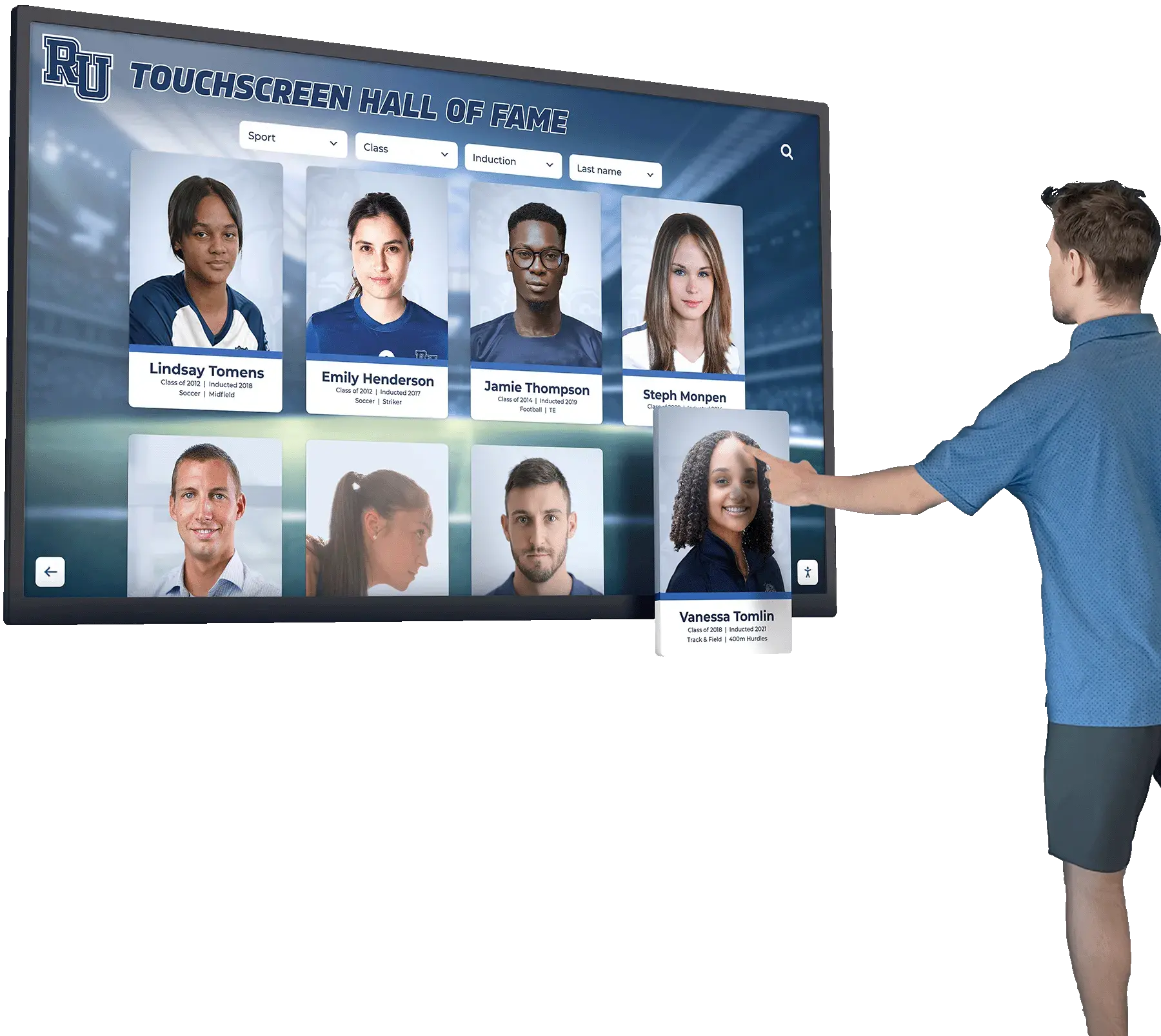
Intuitive interfaces enable self-directed exploration helping students discover college pathways and connections with program alumni
Analytics and Continuous Improvement
Data-driven approaches ensure displays evolve meeting actual community needs rather than assumptions about what audiences want.
Key Engagement Metrics
Quality platforms provide analytics revealing:
- Total interactions: How frequently community members engage with displays
- Average session duration: Depth of engagement with content
- Most-viewed profiles: Popular athletes or sports attracting greatest attention
- Search patterns: What information visitors seek most frequently
- Peak usage times: When displays receive highest traffic
- Navigation pathways: How visitors move through content architecture
Content Performance Analysis
Understanding which content resonates informs future development:
- Profile completeness correlation: Do comprehensive profiles receive more engagement than minimal ones?
- Media type performance: Do video highlights attract more attention than photos?
- Year-over-year comparisons: Is historical archive usage growing as content expands?
- Sport popularity: Which programs generate most interest?
- Feature utilization: Do visitors use search, filtering, or primarily browse?
These insights drive strategic decisions about where to invest content development resources, which features deserve enhancement, what historical content to prioritize, and how to improve navigation based on actual usage patterns.
Resources on high school wall of fame design demonstrate comprehensive measurement frameworks applicable across various recognition implementations serving athletic and academic populations.
Brand Integration Checklist: Creating Cohesive Recognition Experiences
Effective signing day showcases should reflect school identity through consistent branding reinforcing institutional pride while maintaining professional presentation quality.
Visual Identity and School Branding
Recognition displays function as institutional communications requiring alignment with broader school branding standards.
Color System Integration
Displays should prominently feature:
- Primary school colors: Backgrounds, headers, and accent elements using official color palettes
- Contrast considerations: Ensuring readability while maintaining brand consistency
- Sport-specific variations: Optional color customization for individual team identities
- Seasonal theming: Special color treatments for championship celebrations or rivalry weeks
Logo and Mascot Incorporation
Branding elements should include:
- School logos: Prominently displayed in headers or corners throughout navigation
- Mascot imagery: Integrated into backgrounds or transitional elements
- Athletic department marks: Sport-specific logos when applicable
- Conference or state association badges: Recognizing organizational affiliations
Typography and Design Language
Visual consistency requires:
- Official typefaces: Using school-approved fonts for all text elements
- Heading hierarchies: Consistent sizing and styling across all screens
- Layout grids: Structured designs reflecting institutional design standards
- Graphic elements: Borders, dividers, and decorative features matching school aesthetics
This comprehensive brand integration ensures displays feel authentically part of school identity rather than generic technology installations that could exist at any institution.

Comprehensive installations combining physical artifacts with digital recognition create destination experiences celebrating program excellence
Social Galleries and Digital Signage Mode
Modern displays should connect physical installations with broader digital ecosystems enabling comprehensive recognition strategies.
Social Media Feed Integration
Displays can incorporate live social content:
- Instagram galleries: Showing recent posts tagged with school handles or hashtags
- Twitter feeds: Displaying real-time announcements and celebration posts
- Facebook events: Promoting upcoming signing ceremonies or recruitment showcases
- TikTok highlights: Featuring viral content celebrating athletic achievements
- Hashtag aggregation: Collecting posts from athletes, families, and fans
This social integration keeps displays current with minimal administrative effort while celebrating authentic community content.
Digital Signage Capabilities
Beyond commitment recognition, displays can serve broader communications:
- Game schedule displays: Showing upcoming competitions when not actively featuring signing content
- Announcement rotations: Sharing athletic department news and updates
- Sponsor recognition: Acknowledging booster support through rotating sponsor slides
- Emergency messaging: Enabling urgent school-wide communications through connected systems
- Event promotion: Marketing signing day ceremonies, booster meetings, or athletic banquets
This multi-purpose functionality maximizes display value beyond single-use signing day recognition, justifying investment through comprehensive athletic communications support.
Sponsorship Zones and Booster Recognition
Athletic programs often depend on booster support. Recognition displays can acknowledge sponsor contributions while maintaining focus on student achievement.
Tasteful Sponsor Integration
Sponsor recognition should remain secondary to athlete celebration:
- Footer sponsor strips: Discrete logo placements at screen bottoms
- “Presented by” acknowledgments: Brief sponsor mentions in profile headers
- Sponsor rotation screens: Periodic full-screen sponsor recognition between athlete profiles
- QR code sponsor links: Enabling display viewers to learn about sponsors without dominating content
- Sponsor-funded features: “Player of the Week sponsored by…” callouts
Tiered Sponsorship Packages
Programs can offer varied support levels:
- Title sponsorship: Primary recognition throughout signing day showcase
- Class sponsorships: Specific graduating class recognition
- Sport-specific sponsorships: Funding recognition for individual teams
- Profile sponsorships: Sponsor acknowledgment within athlete profiles
- Archive sponsorships: Supporting historical content development
This sponsorship structure generates revenue supporting display investments while ensuring athlete recognition remains primary focus rather than becoming advertising platforms.
Understanding corporate sponsorship recognition for schools provides frameworks for balancing sponsor acknowledgment with student celebration across various recognition contexts.
: $2,000-4,000 including custom branding
- Audio systems (if incorporating sound): $300-800 for speakers and amplification
Total hardware investment for primary signing day showcase displays typically ranges from $5,000-12,000 depending on size, interactivity, and installation complexity—comparable to traditional trophy case renovations or permanent plaque installations.
Software Platform and Content Management Costs
Ongoing software investments enable content management, updates, and feature enhancements throughout display operational lives.
Purpose-Built Recognition Platform Licensing
Specialized signing day and athletic recognition software typically involves:
- Annual licensing: $1,200-3,000 per year depending on features, display quantity, and school size
- Cloud hosting and storage: Typically included in annual licensing fees
- Technical support and updates: Usually bundled with subscriptions
- Initial setup and training: Often included or $500-1,500 one-time fee
- Mobile app access: Sometimes included, sometimes additional $300-600 annually
Purpose-built platforms deliver superior value for commitment recognition despite higher costs through intuitive educational interfaces, specialized signing day features, comprehensive multi-year archive capabilities, and dedicated support understanding school needs.
Generic Digital Signage Software
Generic signage platforms cost less but lack specialized features:
- Annual subscriptions: $300-1,000 per year for basic plans
- Limited recognition-specific features: May require custom development
- Generic templates: Not optimized for athletic commitment showcases
- Less intuitive for non-technical users: Steeper learning curves
Platforms like Rocket Alumni Solutions specialize in educational recognition providing purpose-built signing day features, unlimited layout flexibility, comprehensive archive management, and intuitive interfaces enabling athletic directors without technical expertise to maintain displays independently.
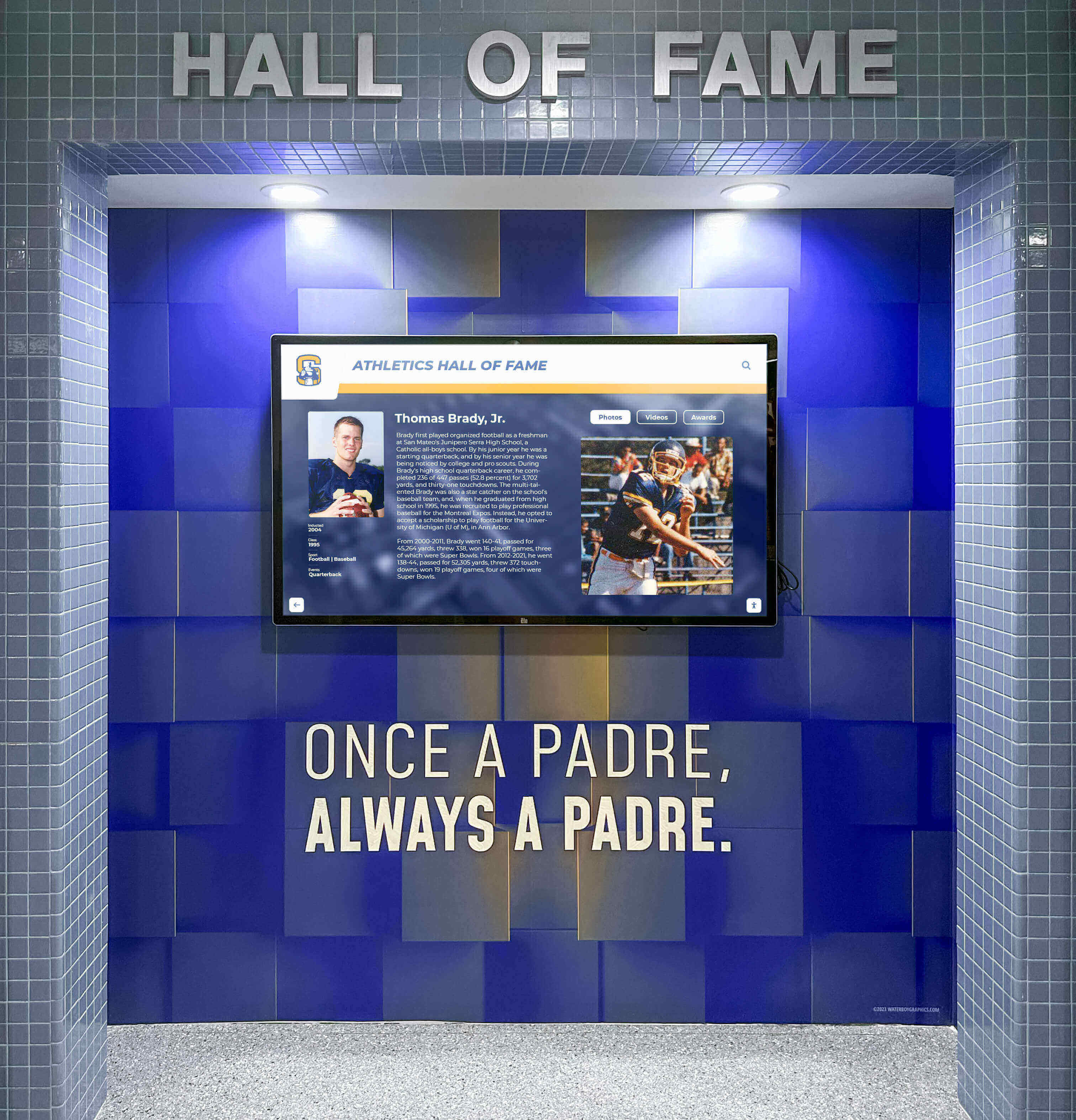
Commercial-grade installations ensure reliable performance while maintaining professional appearance appropriate for educational environments
Content Development and Historical Archive Creation
Initial content creation requires time and resources, though phased approaches spread costs across manageable timeframes.
Photography and Visual Content
Professional visual content enhances recognition quality:
- Professional photography sessions: $500-1,500 for comprehensive athlete photography
- Action photography (if not already available): Using existing game photos reduces costs
- Video production: $1,000-3,000 for highlight reels or testimonial interviews
- Graphic design: $300-800 for custom templates and branded elements
Many schools leverage existing photography from yearbooks, athletic media guides, or booster photography volunteers—reducing professional photography costs while still maintaining quality standards.
Profile Content Development
Writing comprehensive commitment profiles requires time:
- Current year profiles: 15-30 minutes per athlete for information gathering and entry
- Historical profiles: 30-60 minutes per athlete when researching historical records
- Professional writing services: $20-50 per profile if contracting biographical content
- Initial database population: $500-2,000 for bulk historical content if hiring external support
Most schools phase historical content development—launching with current year, then adding previous 2-3 years as time permits, eventually expanding to comprehensive archives as resources allow.
Total Investment and Return on Value
Comprehensive First-Year Implementation Costs
Complete signing day showcase implementations typically require:
- Display hardware and installation: $5,000-12,000 depending on size and quantity
- First-year software and setup: $1,500-4,000 including licensing and training
- Initial content development: $500-3,000 depending on historical scope and professional services
Total first-year investment: $7,000-19,000 depending on display scale, platform sophistication, and content development approach.
Ongoing Annual Operating Costs
After initial implementation, annual expenses include:
- Software licensing renewals: $1,200-3,000 annually
- Content updates: Primarily internal staff time or $300-1,000 contracted services
- Basic maintenance: Minimal screen cleaning and occasional technical support
Annual operating costs typically range from $1,500-4,000—modest investments for permanent infrastructure serving core athletic program missions.
Value Return Considerations
When evaluating costs, schools should consider:
- Comparison to traditional expenses: Physical plaques, printing, and annual ceremony decorations accumulate costs
- Recruitment and retention benefits: Enhanced visibility strengthening program positioning
- Multi-purpose value: Displays serving signing day, recruitment, daily recognition, and general communications
- Longevity: Displays delivering value for 8-12+ years, amortizing investment across extended operational lives
- Comprehensive capacity: Celebrating unlimited commitments vs. space-constrained traditional approaches
Many schools find reallocating portions of existing trophy case, plaque, or event decoration budgets toward digital displays delivers superior recognition value while reducing total costs through efficiency and multi-purpose functionality.
Understanding division II athletics digital recognition systems provides context for comprehensive platform investments delivering value across multiple recognition applications beyond single-purpose signing day displays.
Alternative Funding Strategies and Budget Solutions
Initial investment requirements exceed many athletic department discretionary budgets, necessitating creative funding approaches making comprehensive showcases achievable.
Booster Organization and Parent Support
Athletic booster clubs often prioritize visible infrastructure celebrating program excellence—making signing day showcases natural funding targets.
Booster Campaign Development
Effective booster funding approaches include:
- Dedicated capital campaigns: Multi-year initiatives funding comprehensive recognition infrastructure
- Annual giving programs: Allocating portions of general booster funds to display investments
- Memorial giving opportunities: Enabling donors to fund displays honoring deceased community members
- Challenge match campaigns: Major donors matching community contributions dollar-for-dollar
- Legacy naming opportunities: Offering recognition naming rights for significant contributions
Parent Organization Grants
Parent-teacher organizations or athletic parent councils may fund recognition supporting student achievement celebration and school culture enhancement—missions aligning directly with signing day showcase objectives.
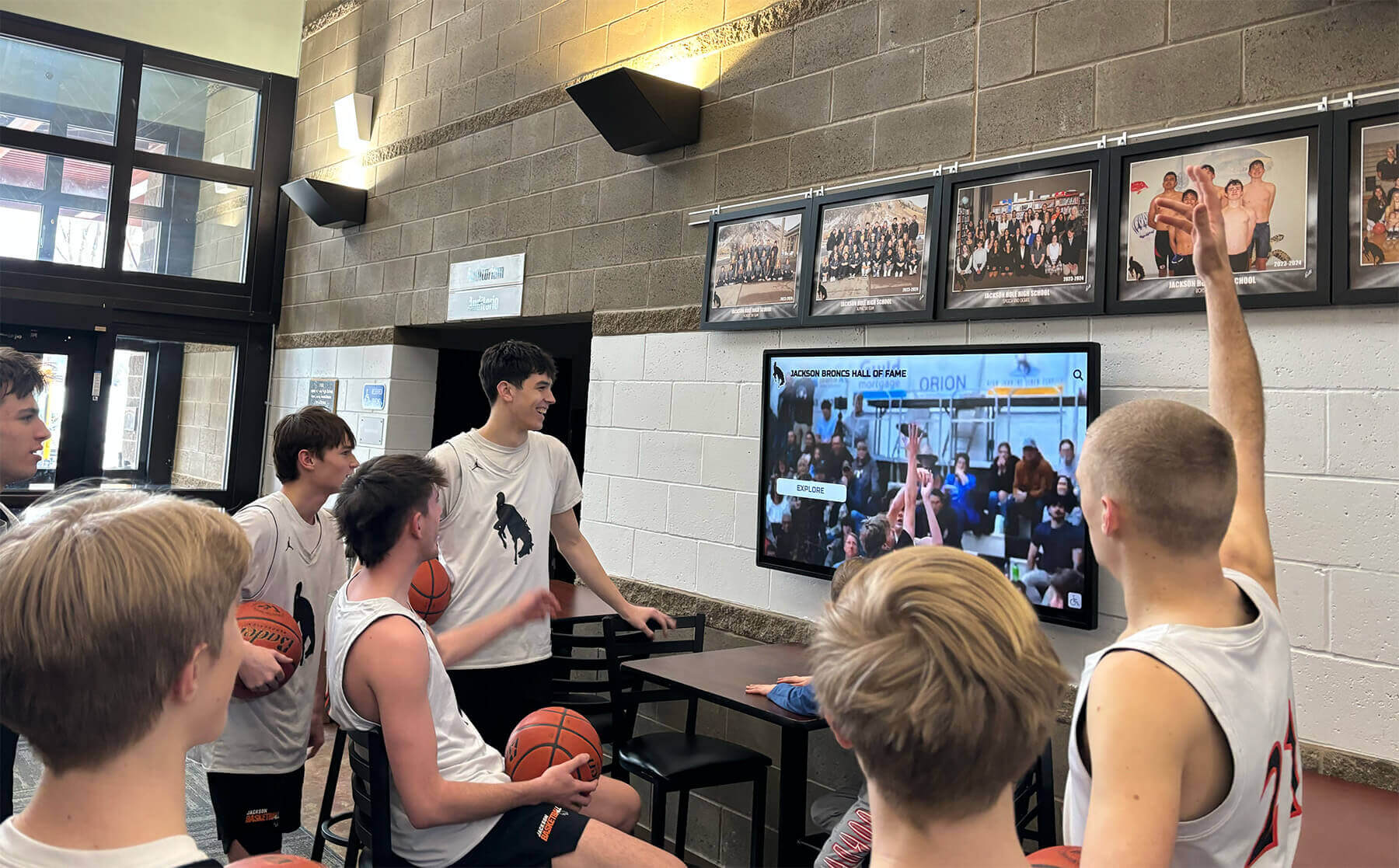
Displays create gathering points where athletes connect with program tradition while celebrating current and historical achievements
Corporate Sponsorships and Community Partnerships
Local businesses supporting school athletics may fund recognition infrastructure in exchange for appropriate sponsor acknowledgment.
Sponsor Package Development
Create tiered opportunities accommodating various budget levels:
- Title sponsorship ($10,000-15,000): Primary recognition throughout signing day platform
- Major sponsors ($5,000-10,000): Prominent logo placement and dedicated recognition screens
- Supporting sponsors ($2,000-5,000): Rotating sponsor acknowledgment and event support
- Contributing sponsors ($500-2,000): Listed recognition in sponsor sections
In-Kind Contributions
Some businesses provide services rather than cash donations:
- Technology vendors: Discounted hardware or installation services
- Marketing agencies: Professional photography or video production
- Contractors: Installation labor and electrical work
- Software companies: Reduced licensing rates or extended trial periods
These in-kind contributions reduce cash requirements while building community partnerships supporting athletic programs comprehensively.
Phased Implementation and Budget Spreading
Schools can deploy recognition incrementally spreading costs across multiple budget cycles:
Year 1: Foundation Phase
- Single primary display: Main entrance or gymnasium lobby location ($7,000-12,000)
- Current year only: Focusing content on immediate signing class
- Basic features: Standard templates without advanced customization
Year 2: Expansion Phase
- Second display location: Athletic director’s office or guidance center ($5,000-8,000)
- Historical archives: Adding previous 2-3 years of commitments
- Enhanced features: Custom branding and advanced layouts
Year 3: Comprehensive Phase
- Additional displays: Locker rooms, weight rooms, or secondary entrances ($5,000-10,000)
- Complete archives: Expanding to 5-10 years historical content
- Premium features: Video integration, social feeds, mobile apps
This phased approach provides immediate recognition value while managing budget constraints and building stakeholder confidence through demonstrated success before requesting additional investment.
Resources on athletic recognition program implementation provide additional frameworks for strategic phasing and budget management across comprehensive recognition initiatives.
Conclusion: Creating Living Legacies Through Dynamic Recognition
National College Signing Day represents far more than momentary celebrations of individual achievements—these commitments embody years of dedication, program development, and institutional commitment to preparing student-athletes for post-secondary athletic opportunities. Yet traditional recognition approaches fail to honor these achievements appropriately, limiting celebration to ephemeral ceremonies that disappear within days while providing no mechanisms for building visible institutional traditions demonstrating consistent college placement excellence.
Digital recognition platforms like Rocket Alumni Solutions transform signing day celebrations from temporary events into permanent, living showcases that display current commitments prominently while preserving comprehensive multi-year archives demonstrating institutional legacy. The flexibility modern systems provide—enabling real-time content updates as commitments occur throughout extended recruitment cycles, offering unlimited layout options adapting to unique school identities, supporting intuitive content management accessible to non-technical athletic staff, and providing mobile extensions reaching families and alumni beyond physical campus visitors—creates recognition infrastructure serving athletic programs comprehensively rather than addressing isolated single-day ceremonies.
Transform Your Signing Day Recognition
Discover how purpose-built digital platforms create comprehensive signing day showcases celebrating current achievements while archiving every prior year’s commitments. Rocket Alumni Solutions provides flexible recognition systems designed specifically for athletic programs committed to building college-going traditions that inspire current athletes while demonstrating sustained excellence.
Implementation success requires moving beyond viewing displays as simple technology purchases toward understanding them as cultural infrastructure deserving thoughtful design, quality content development, and ongoing commitment. The student-athletes dedicating years to preparing for college competition deserve recognition matching achievement significance—comprehensive digital showcases make that lasting celebration achievable while building institutional traditions inspiring future generations.
Schools implementing effective signing day showcases share common characteristics: they prioritize current content prominently while maintaining accessible historical archives, develop comprehensive profiles celebrating achievements beyond basic statistics, maintain regular content updates ensuring displays remain current and relevant, integrate recognition with existing facilities and school branding cohesively, and measure engagement systematically, adapting approaches based on actual community usage patterns rather than assumptions about what works.
Whether launching first digital recognition initiatives or enhancing existing static displays, the opportunity lies in creating systems that celebrate every commitment comprehensively while building visible traditions demonstrating your programs’ consistent college placement success. Your student-athletes’ achievements deserve visibility inspiring every younger athlete encountering recognition—digital signing day showcases make that comprehensive celebration reality while strengthening the college-going culture driving athletic program excellence across generations.
Ready to explore how comprehensive signing day showcases can transform athletic recognition at your institution? Learn about top digital showcase platforms, discover highlighting famous alumni strategies applicable to college commitment displays, explore digital athletic building team records demonstrating comprehensive recognition approaches, and understand showcasing college commitments through purpose-built platforms. When you’re ready to discuss your specific program’s signing day recognition vision, book a demo exploring how specialized platforms celebrate athletic achievement while building the lasting institutional traditions where college competition represents expected destinations for dedicated student-athletes.