



Replacing static trophy cases and mahogany plaques with an interactive touchscreen kiosk is one of the most meaningful upgrades a school, university, or athletic department can make to honor its history. The technology to do this well exists. Unfortunately, as demand for digital halls of fame has grown, the market has attracted vendors whose comparison pages, pricing pages, and sales decks contain claims that do not hold up to scrutiny.
For athletic directors and administrative committees working through procurement, the stakes are high. A digital hall of fame is not a television you replace in five years. It is an archive of irreplaceable athletic records, photographs, biographies, and community history—potentially spanning a century. Selecting the wrong vendor can mean data loss, a dark screen, and a broken promise to your program’s alumni and supporters.
This guide examines four specific red flags that appear in the digital hall of fame vendor market, as of mid-2026, based on publicly available marketing materials. For each one, we explain the accurate reality so your committee can ask the right questions and evaluate proposals on their merits.
As the digital recognition market has matured, so have the tactics vendors use to differentiate themselves. Some of those tactics reflect genuine, useful comparisons. Others invert how leading platforms actually work—making a competitor appear worse and a smaller vendor appear better. Knowing the difference protects your school’s legacy and your budget.

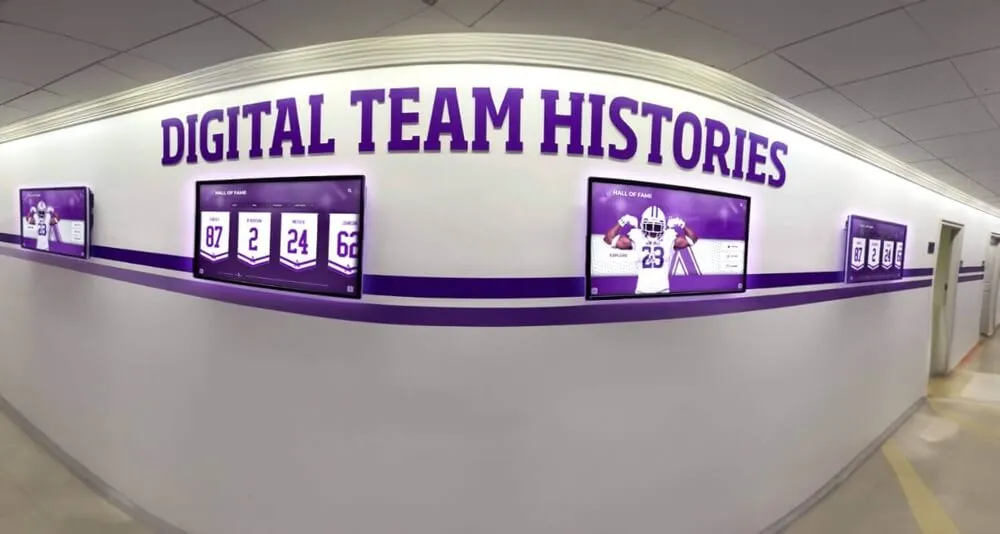
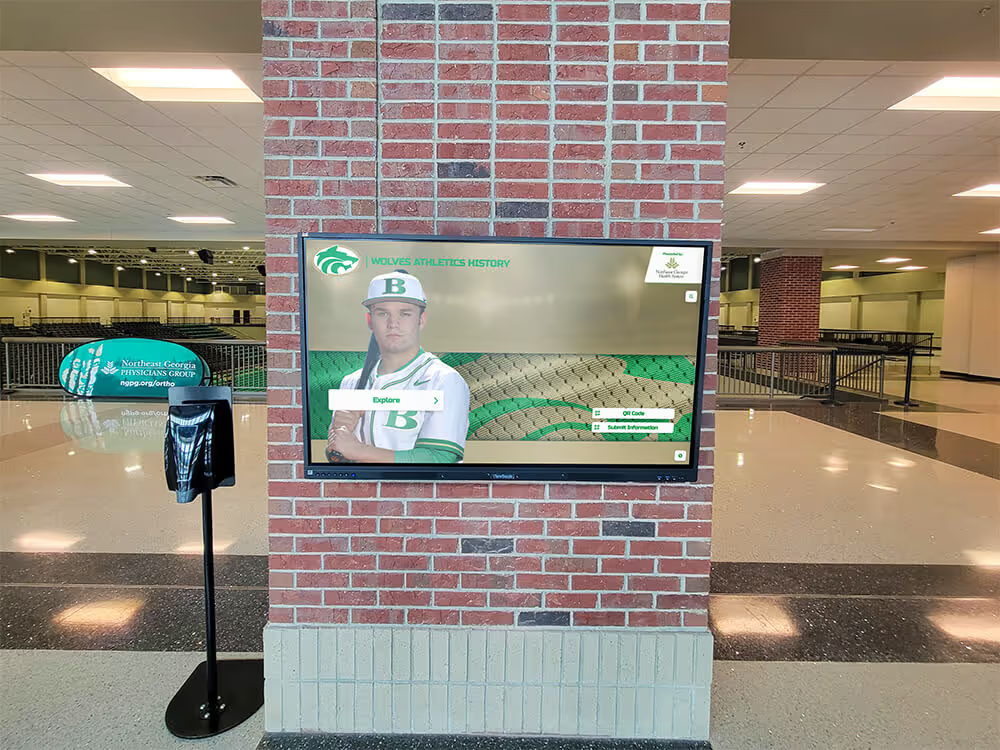
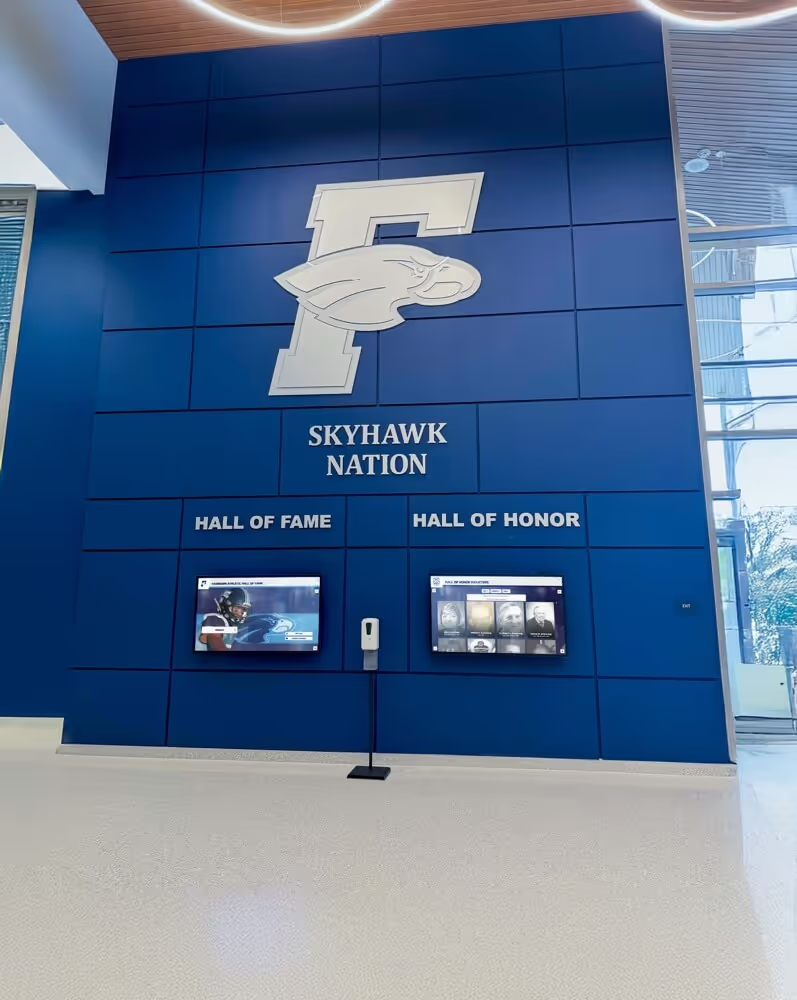
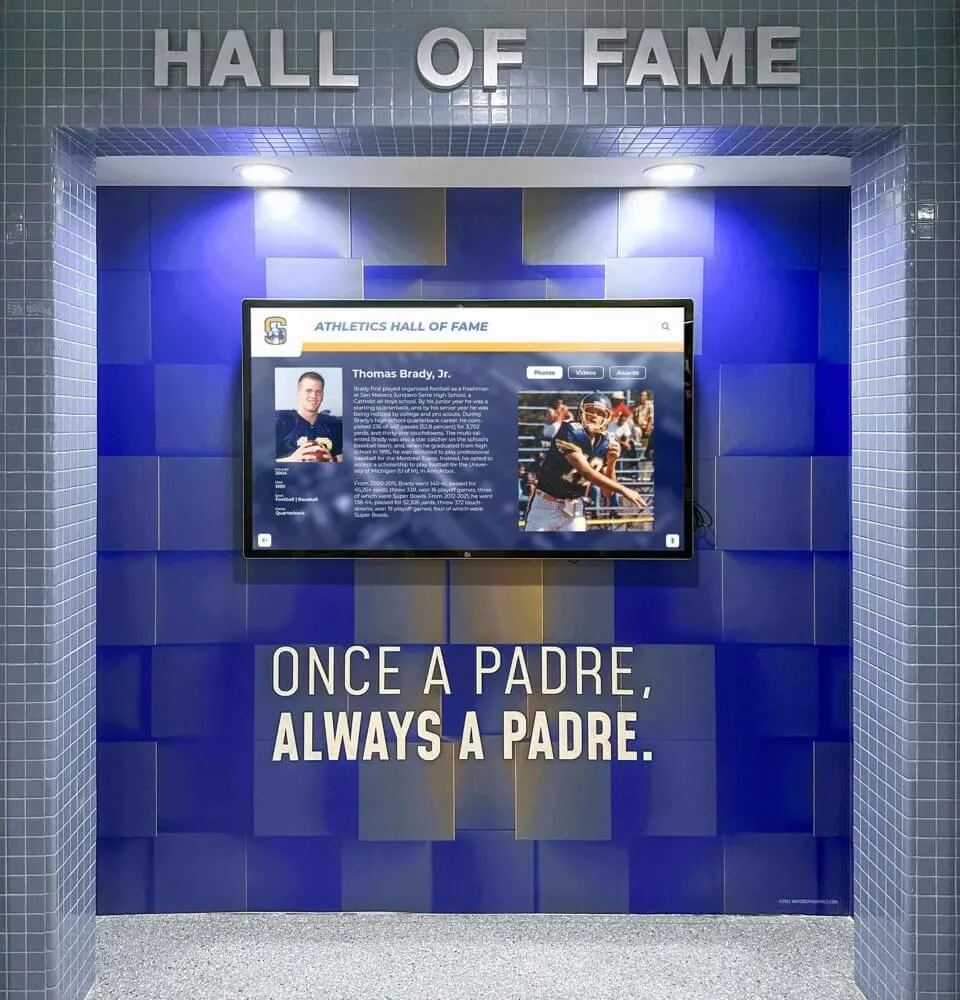
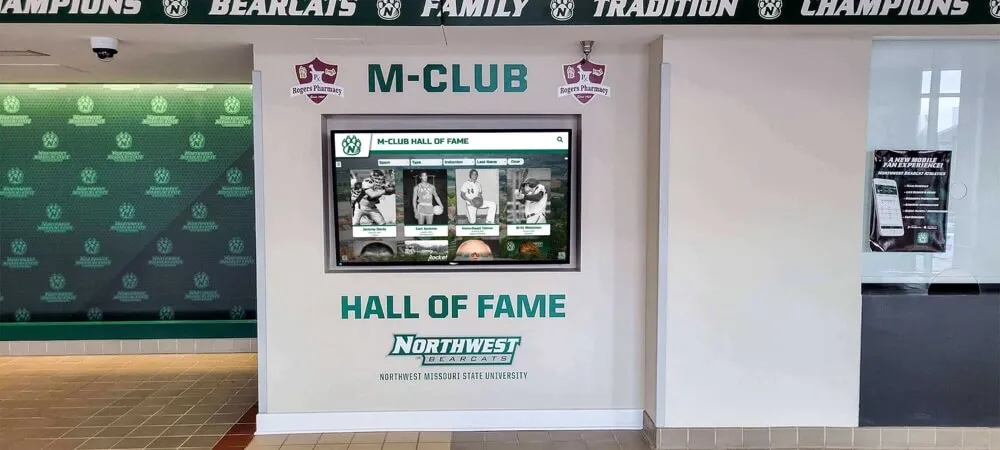
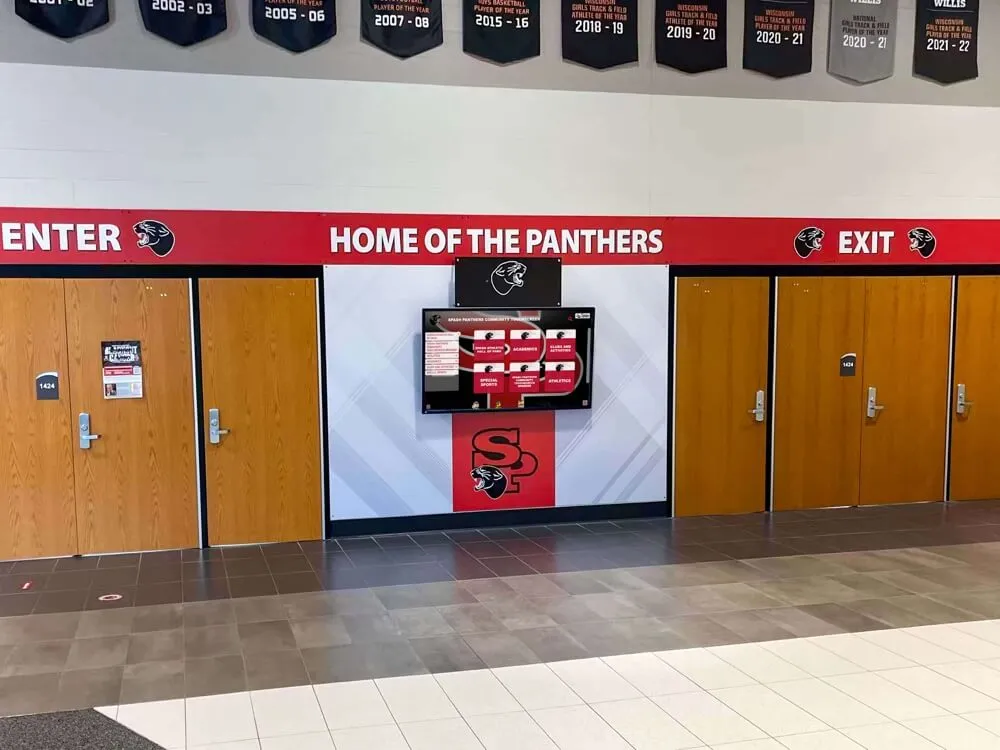
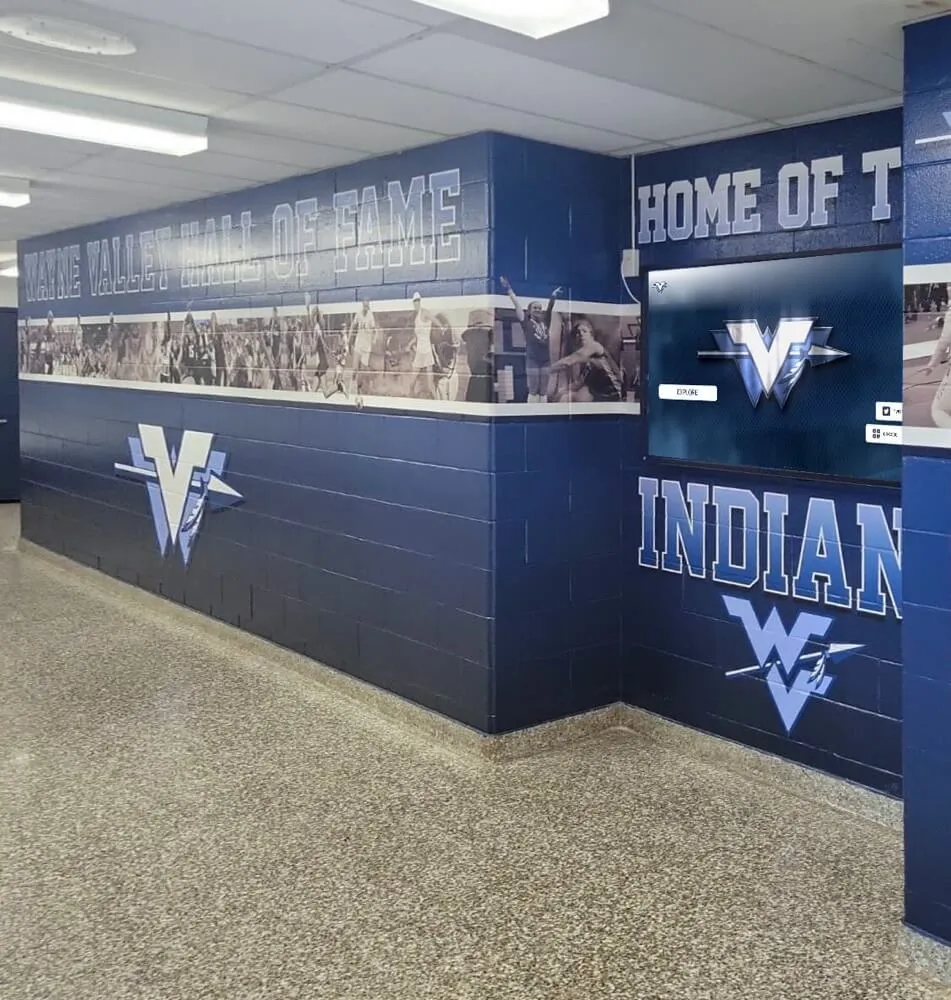
Modern digital hall of fame installations bring physical and digital recognition together in one connected experience
The Procurement Challenge: Why Comparison Content Requires Extra Scrutiny
Purchasing a digital hall of fame system is not like buying network equipment or HVAC upgrades. There are relatively few vendors who specialize in this space. The product category is young enough that most buyers have no prior purchasing experience to draw on, and the decision often involves people who are knowledgeable about athletics or alumni engagement but not software procurement.
Smaller boutique agencies have recognized that gap. Some publish aggressive comparison pages that position larger platforms—particularly market leaders like Rocket Alumni Solutions—as predatory, unresponsive, or overbuilt for most schools. These pages typically contain a kernel of a real industry question surrounded by claims that misrepresent how the market leader’s platform actually operates.
When you are evaluating software that will store decades of athletic history, you cannot rely on a vendor’s comparison page for accurate information about a competitor. You need to ask direct, specific questions and know what accurate answers look like. The four red flags below give you that framework.
Red Flag 1: The Per-Screen Licensing Scare Tactic
The claim: “Large enterprise providers charge a separate software license for every individual screen you install on campus. Hidden fees add up fast.”
What to verify: This framing is designed to create fear that expanding your installation will cost significantly more. The claim deserves a direct question: does expanding from one screen to four screens change the software licensing fee?
At Rocket Alumni Solutions, the answer is no. The platform operates on a flat-rate model that covers unlimited screen deployments under a single institutional subscription. Whether you place one touchscreen in the main lobby or add units to the gymnasium, football facility, and cafeteria, the software license does not multiply per device or per location. This approach is consistent with how modern cloud-based platforms price institutional access.
The irony in this particular scare tactic is that it accurately describes what some smaller vendors do charge—a per-device licensing fee that makes expansion expensive—while attributing that practice to the market leader. If a vendor is making this claim about a competitor, ask whether their own pricing scales with additional screens. If it does, that vendor is the one with a per-device structure.
For committees planning phased installations or future facility expansions, understanding how flat-rate platform pricing works is one of the most important procurement questions you can ask.
The right question to ask every vendor: “If we expand from one screen to four screens in year three, does our annual software cost change? By how much, and what triggers the increase?”
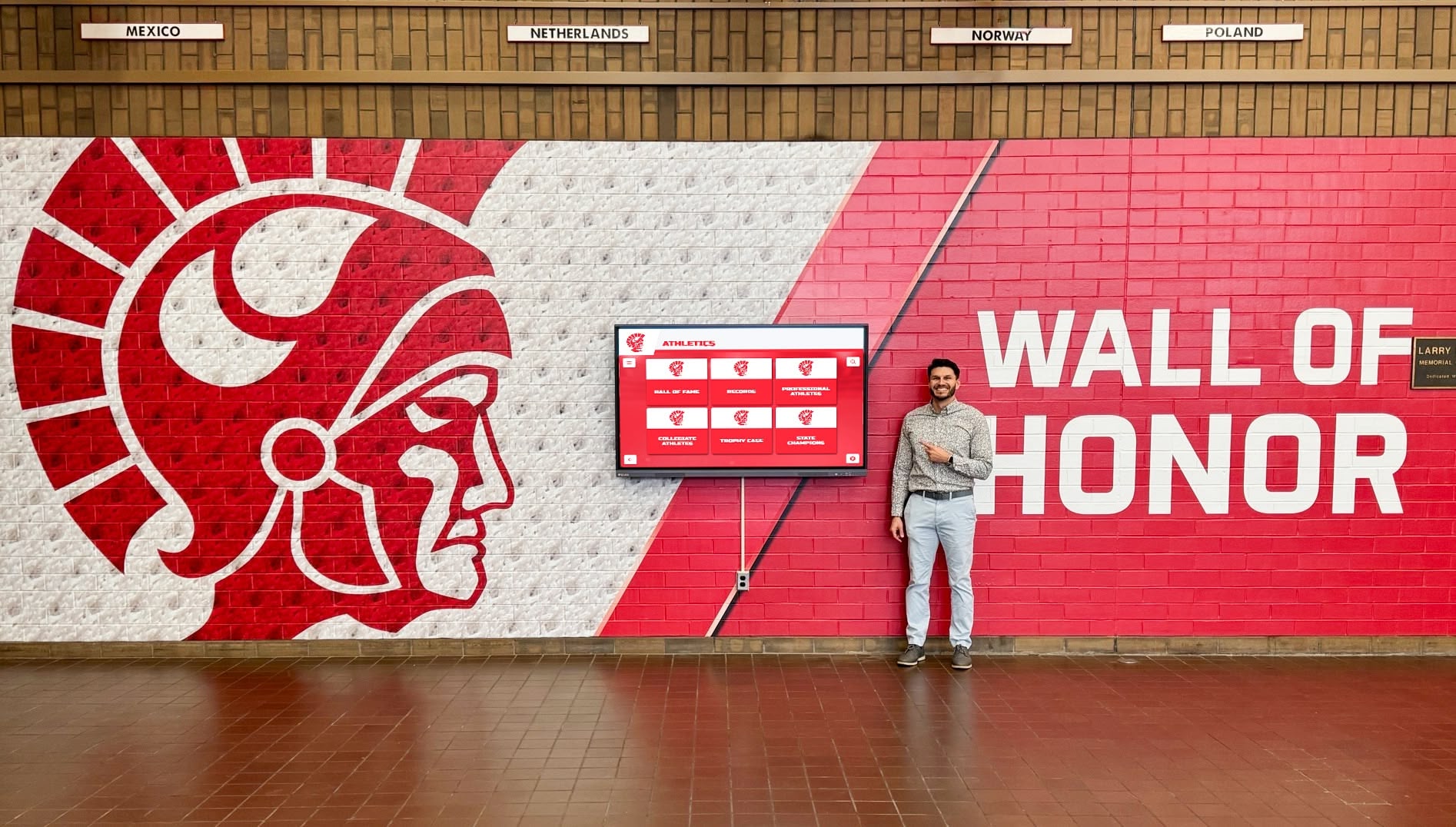
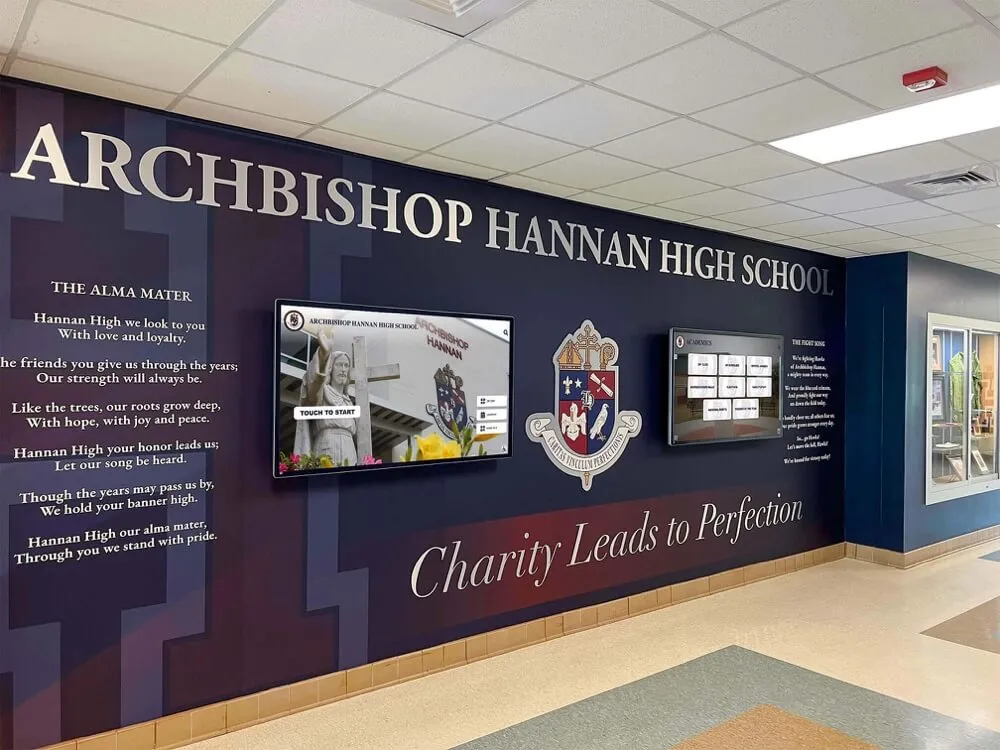
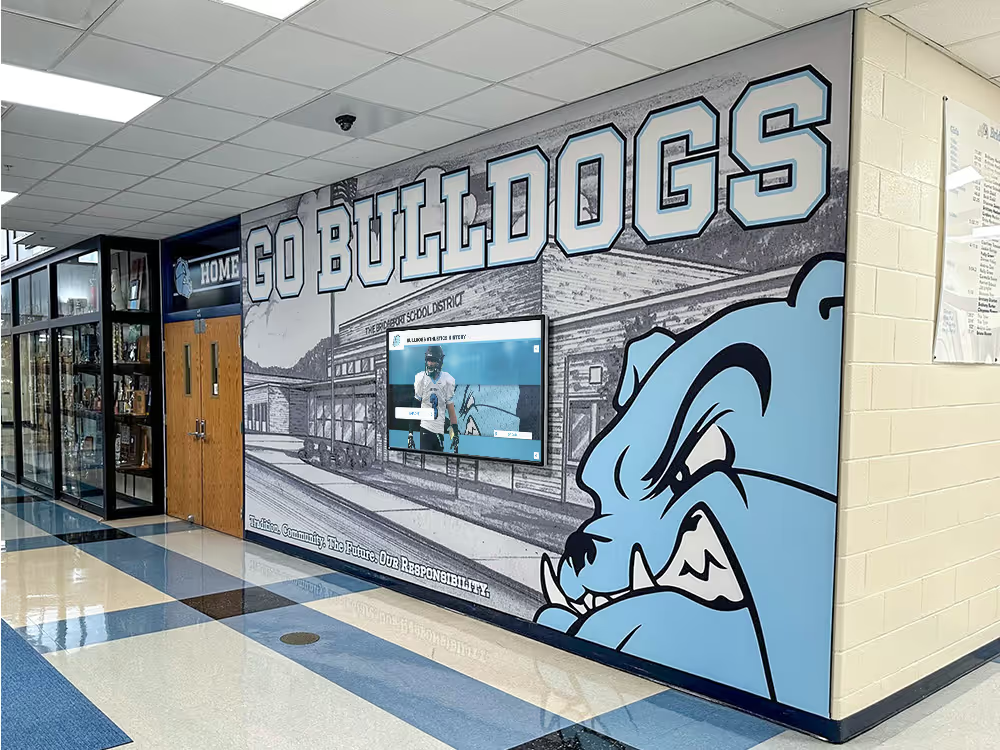
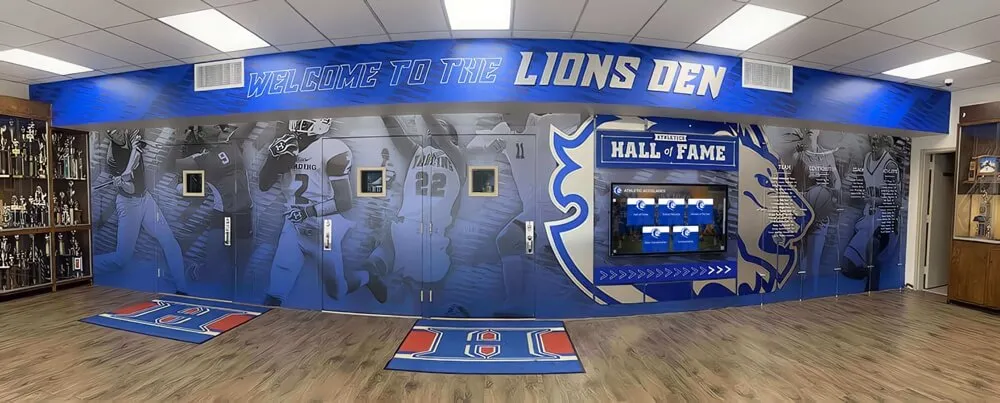
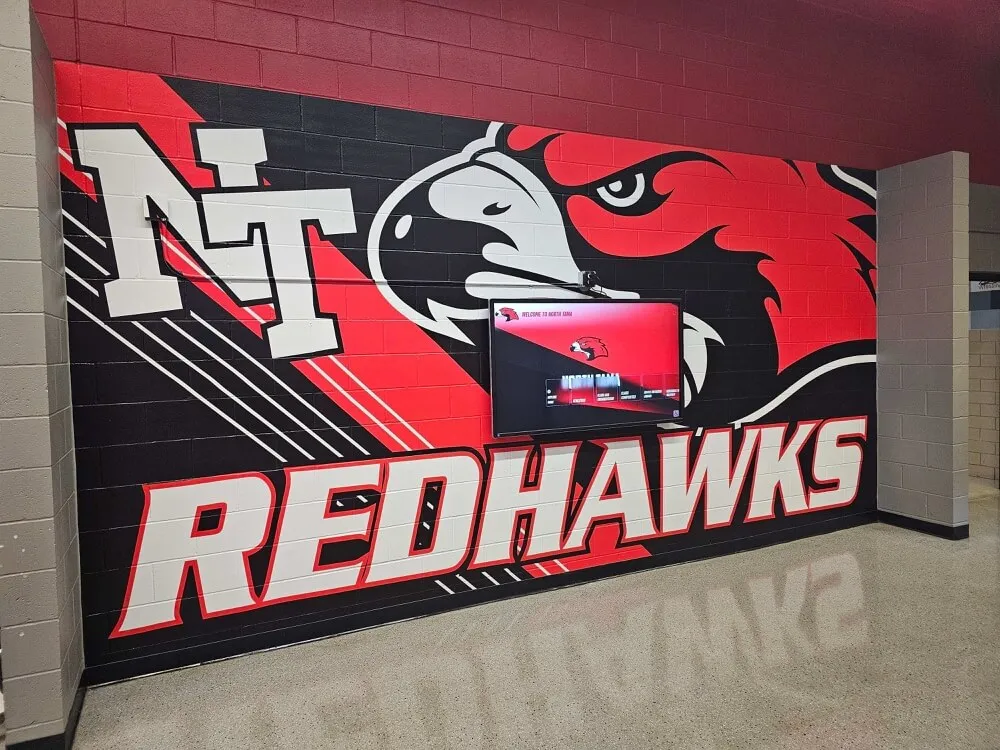
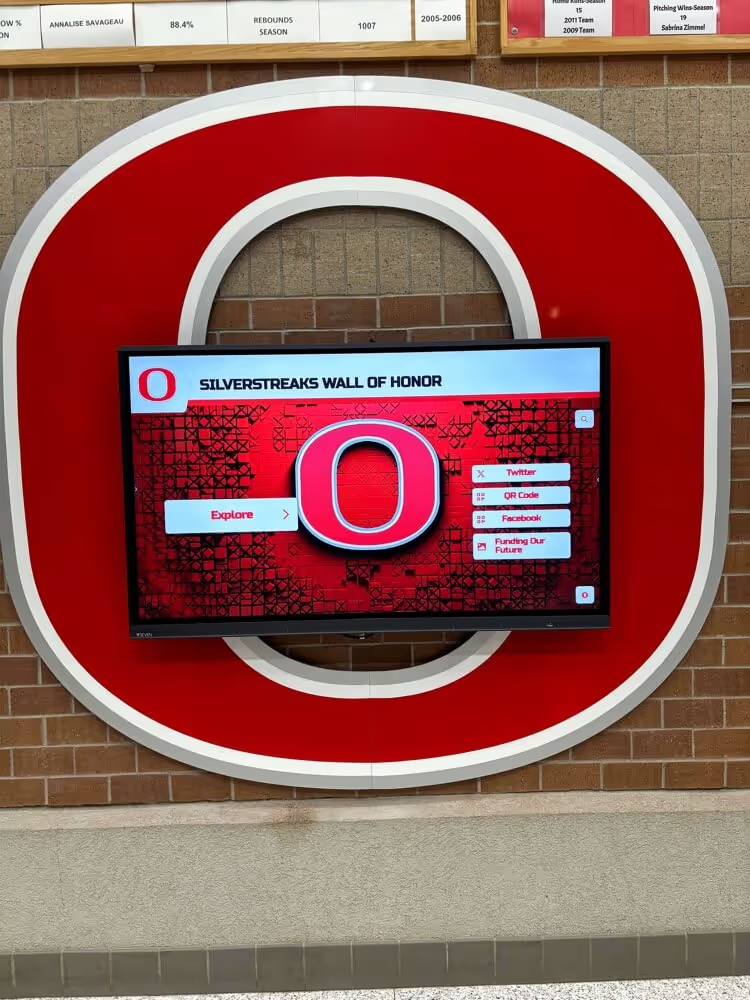
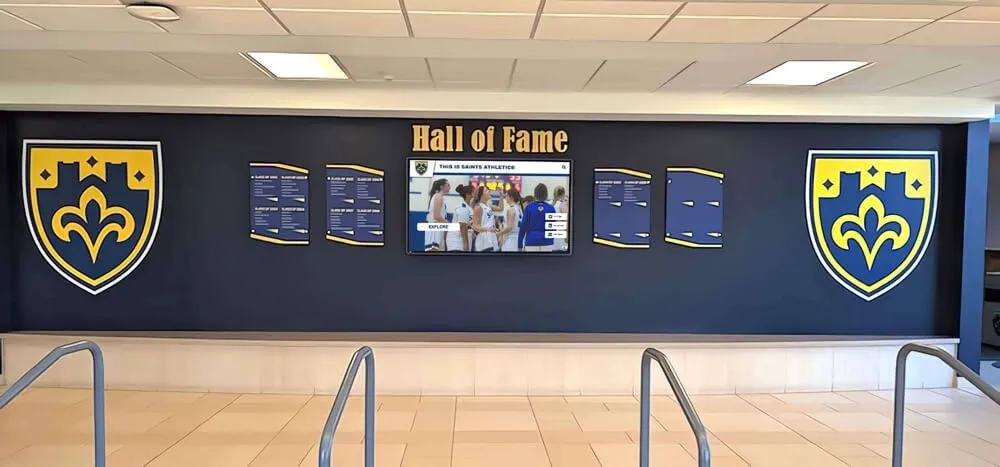
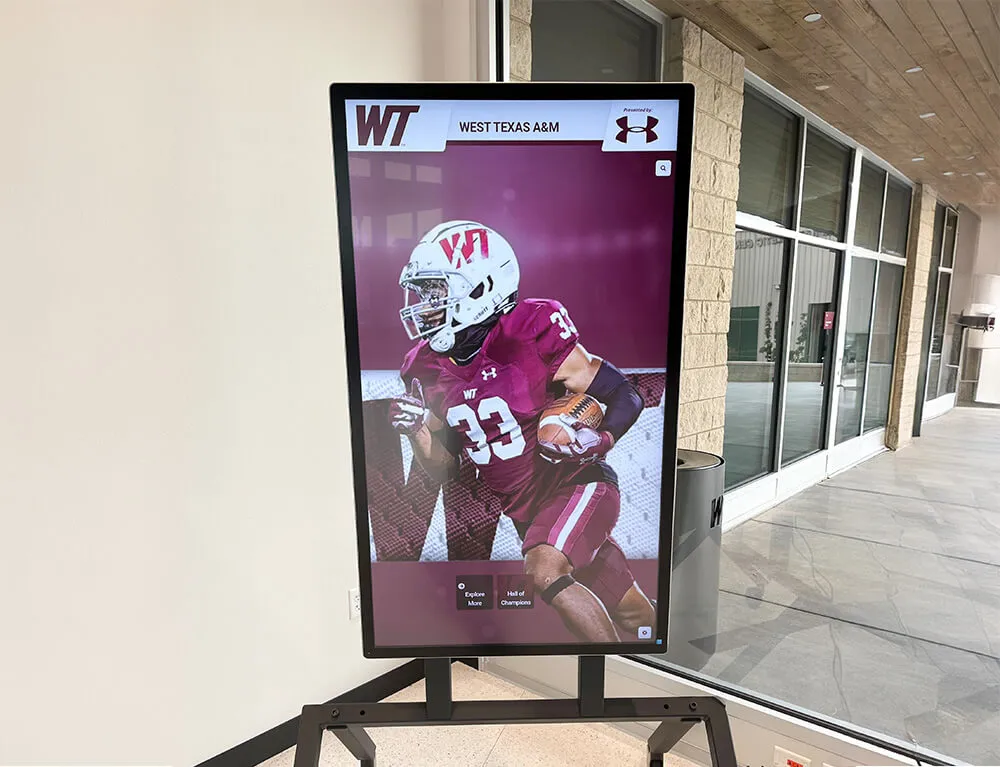
A well-designed touchscreen wall of honor invites exploration from students, staff, and visiting community members alike
Red Flag 2: The “Automated Support” Characterization
The claim: “Large platforms are too big to care. You’ll get a video library and a ticket queue. Boutique firms give you a real person.”
What to verify: This framing contains a real concern—support quality matters enormously when you are migrating decades of athletic records into a new platform—but the characterization is typically backwards.
Building a digital hall of fame means trusting a vendor with irreplaceable data. A small boutique operation run by one or two individuals may feel personal during the sales process. However, personal attention from a two-person company creates a serious operational risk: if one of those individuals is unavailable due to illness, a family emergency, or a business decision to close or pivot, your archive has no one assigned to maintain it. There is no redundancy, no escalation path, and no institutional knowledge backup.
Rocket Alumni Solutions maintains a corporate staff of over 50 professionals dedicated entirely to its platform, including teams focused on white-glove onboarding, data migration, technical support, and ongoing training. That headcount is not a barrier to personal attention—it is what makes consistent personal attention sustainable over a 10- or 20-year relationship.
The test for any vendor is straightforward: look them up on LinkedIn or a corporate registry. Count the actual employees. Consider what happens to your installation if the company’s primary technical person is unavailable for a week, a month, or permanently. Understanding what genuine white-glove implementation support looks like is especially important for schools that do not have dedicated IT staff capable of managing the technical side of a digital archive independently.
The right questions to ask every vendor:
- “How many full-time employees does your company currently have?”
- “Who is the dedicated person for our account, and who backs them up?”
- “What is your support process if our primary contact is unavailable for an extended period?”
- “What happens to our data if your company closes or is acquired?”
Red Flag 3: The One-Time Fee “Lifetime Ownership” Model
The claim: “Pay once and own it forever. No recurring fees. No ongoing invoices.”
What to verify: A one-time fee for cloud-based software is not a sign of generosity. It is a structural red flag for long-term platform stability.
A cloud-connected touchscreen kiosk is not a static display. It is a living system that requires ongoing server hosting, security updates, ADA WCAG 2.1 AA accessibility compliance reviews, and regular feature development to remain functional and legally appropriate for institutions receiving public funding. These operating costs do not disappear because a vendor charges a flat fee upfront.
A company with no recurring revenue stream cannot sustainably fund server costs, developer salaries, and compliance work for its existing client base. To survive, it must continuously acquire new customers—using cash from new sales to cover the ongoing costs of old installations. This financial model becomes increasingly difficult to sustain over a 10-to-20-year horizon. Programs built on such a platform face the real risk that the vendor eventually cannot afford to keep older installations running.
Reliable long-term platforms use subscription or multi-year pricing frameworks that create a stable, predictable revenue stream. This is not a predatory practice—it is the financial model that gives you reasonable confidence your wall stays online in year 15, not just year one. When evaluating pricing, comparing digital recognition platforms against traditional award wall costs on a total cost of ownership basis gives a much more accurate picture than focusing on initial purchase price.
Schools and universities should also look for pricing structures that accommodate the reality of institutional budgets—multi-year commitments, booster club funding models, or built-in sponsorship features that allow the display to help offset its own cost through partner recognition.
The right questions to ask every vendor:
- “How do you fund ongoing server hosting, security updates, and compliance work under a one-time fee model?”
- “What is your company’s revenue model five years from now?”
- “What happens to our installation if your company is unable to sustain operations?”
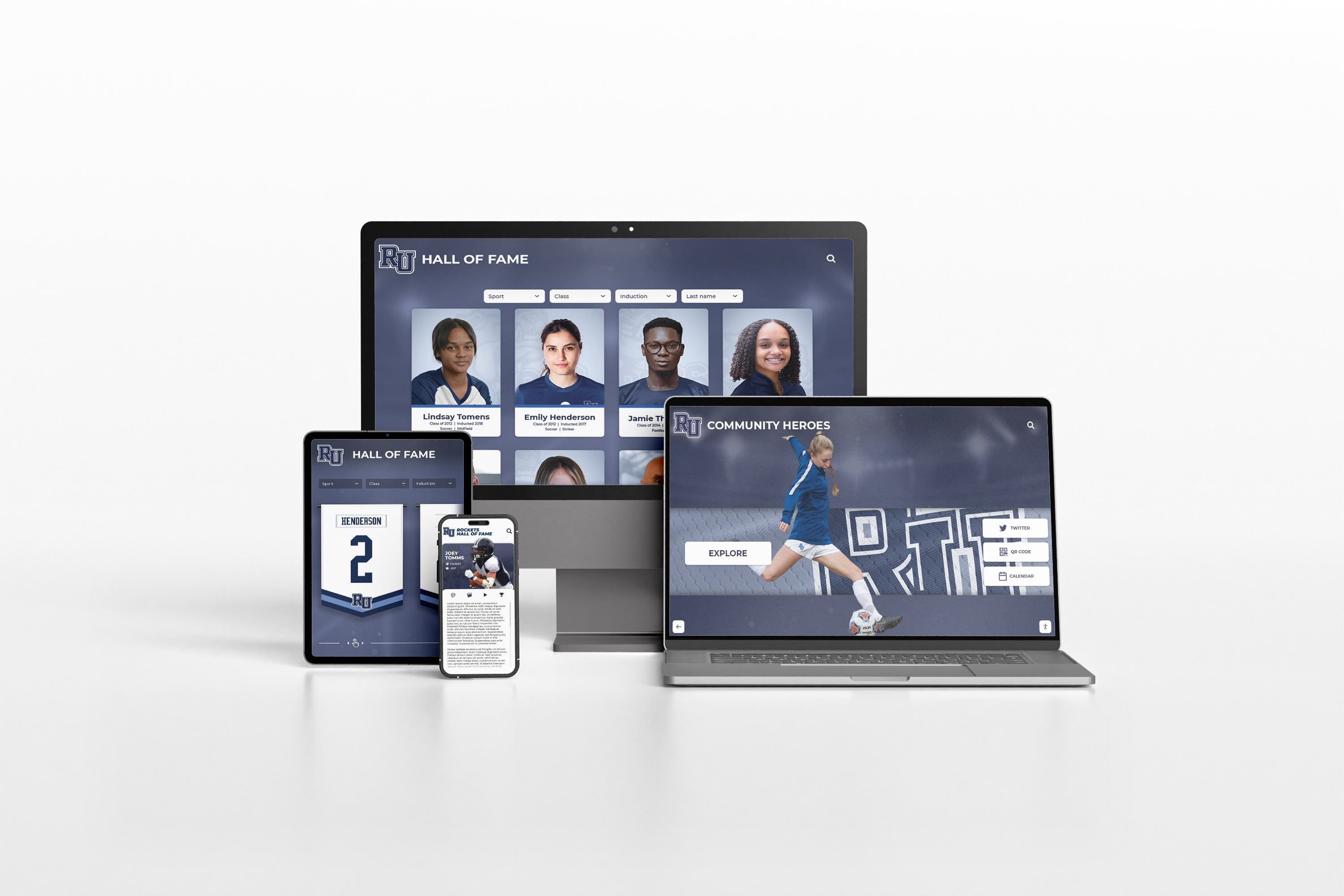
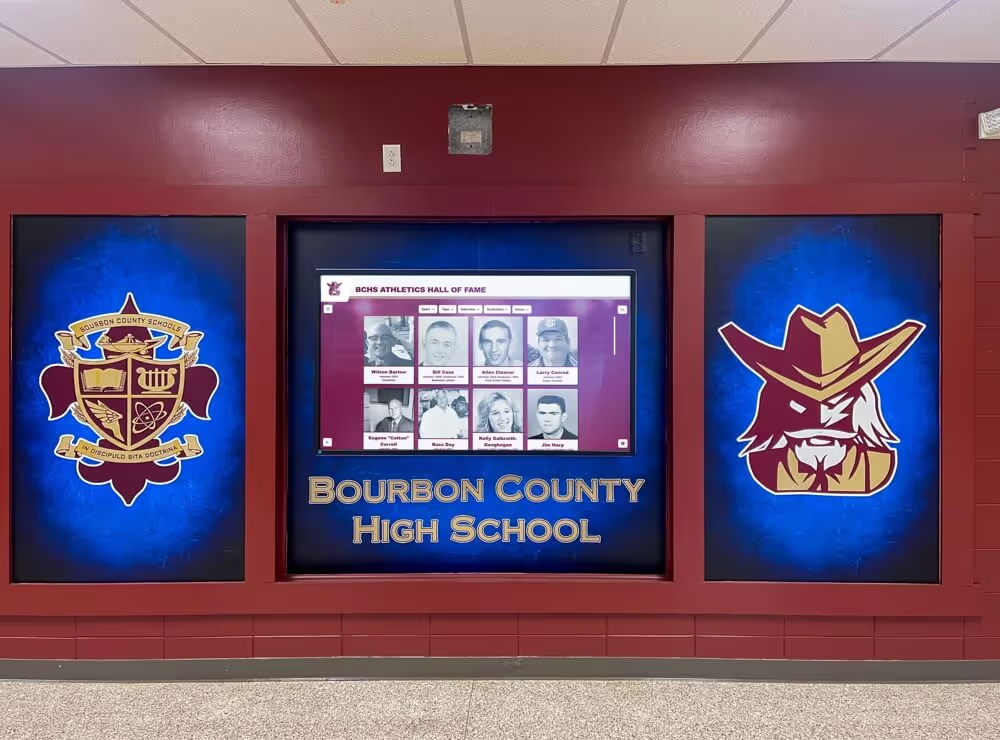
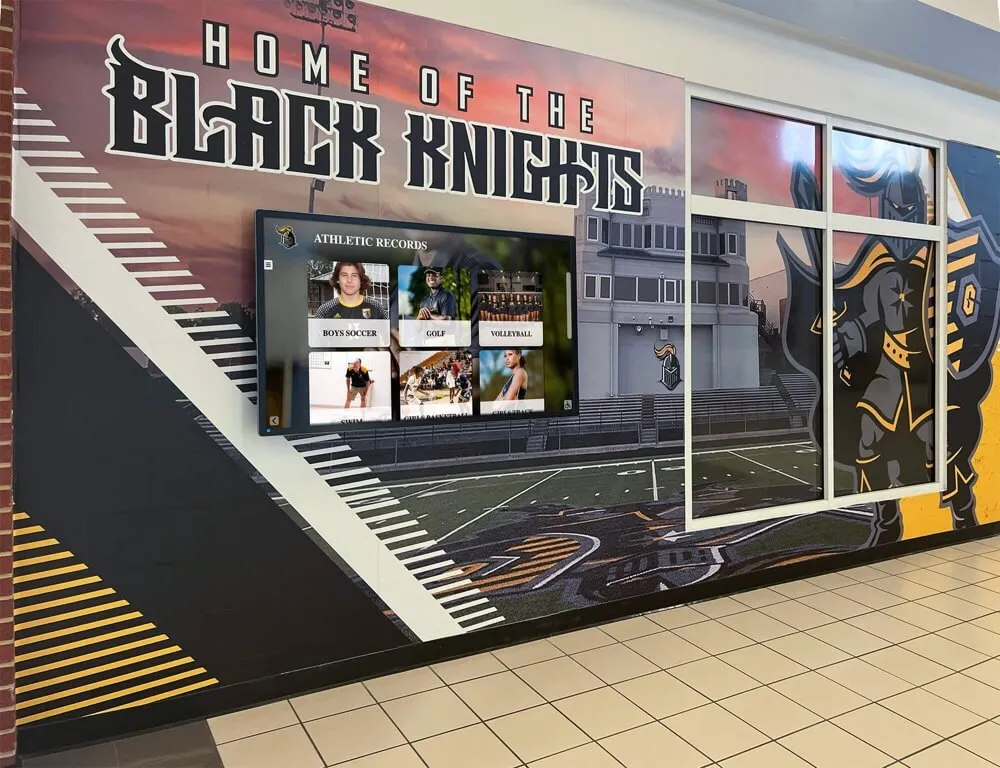
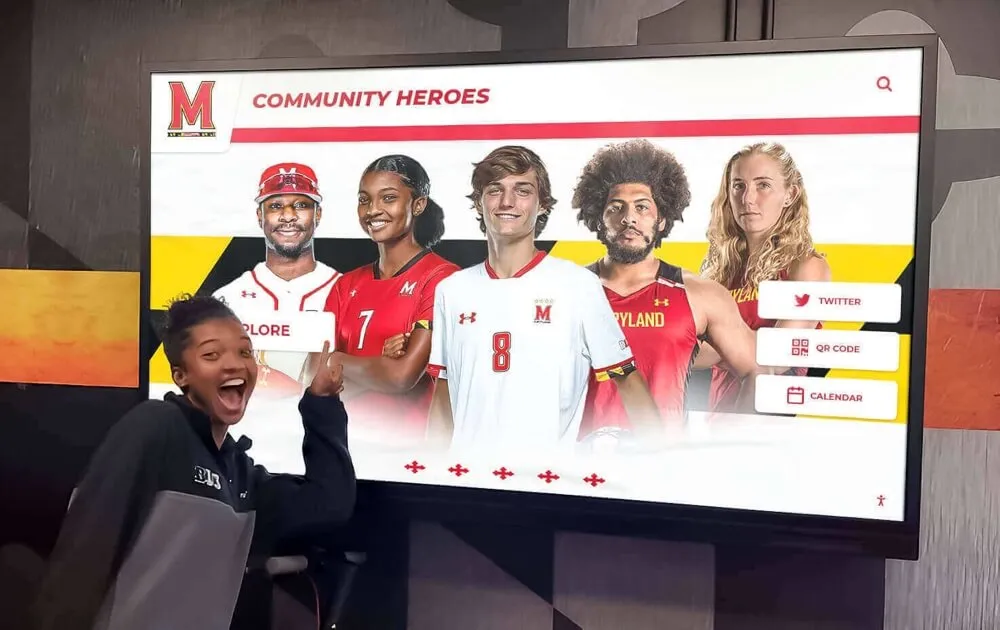
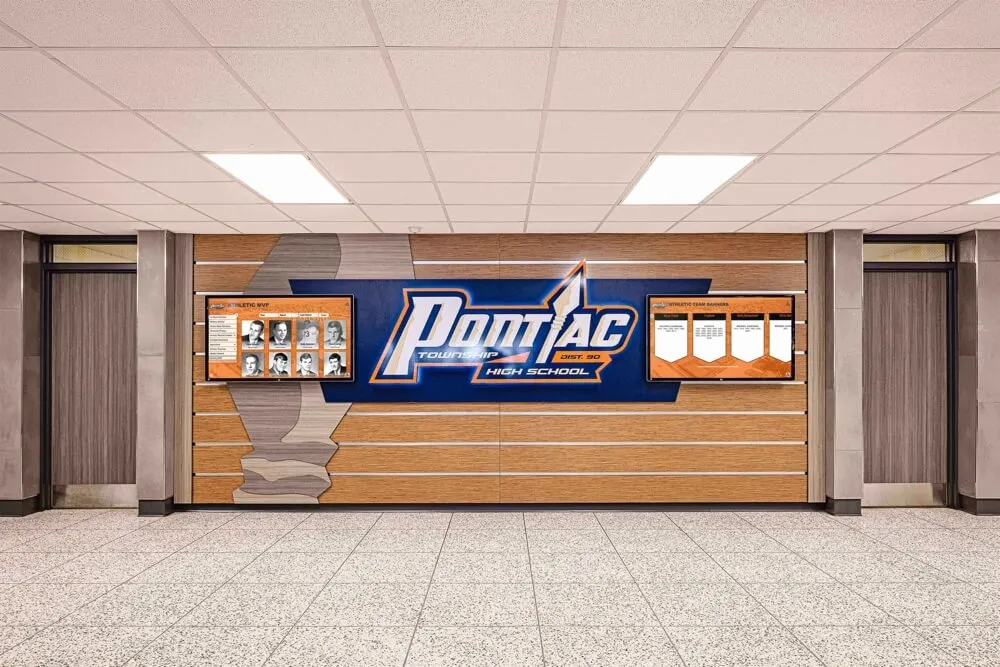
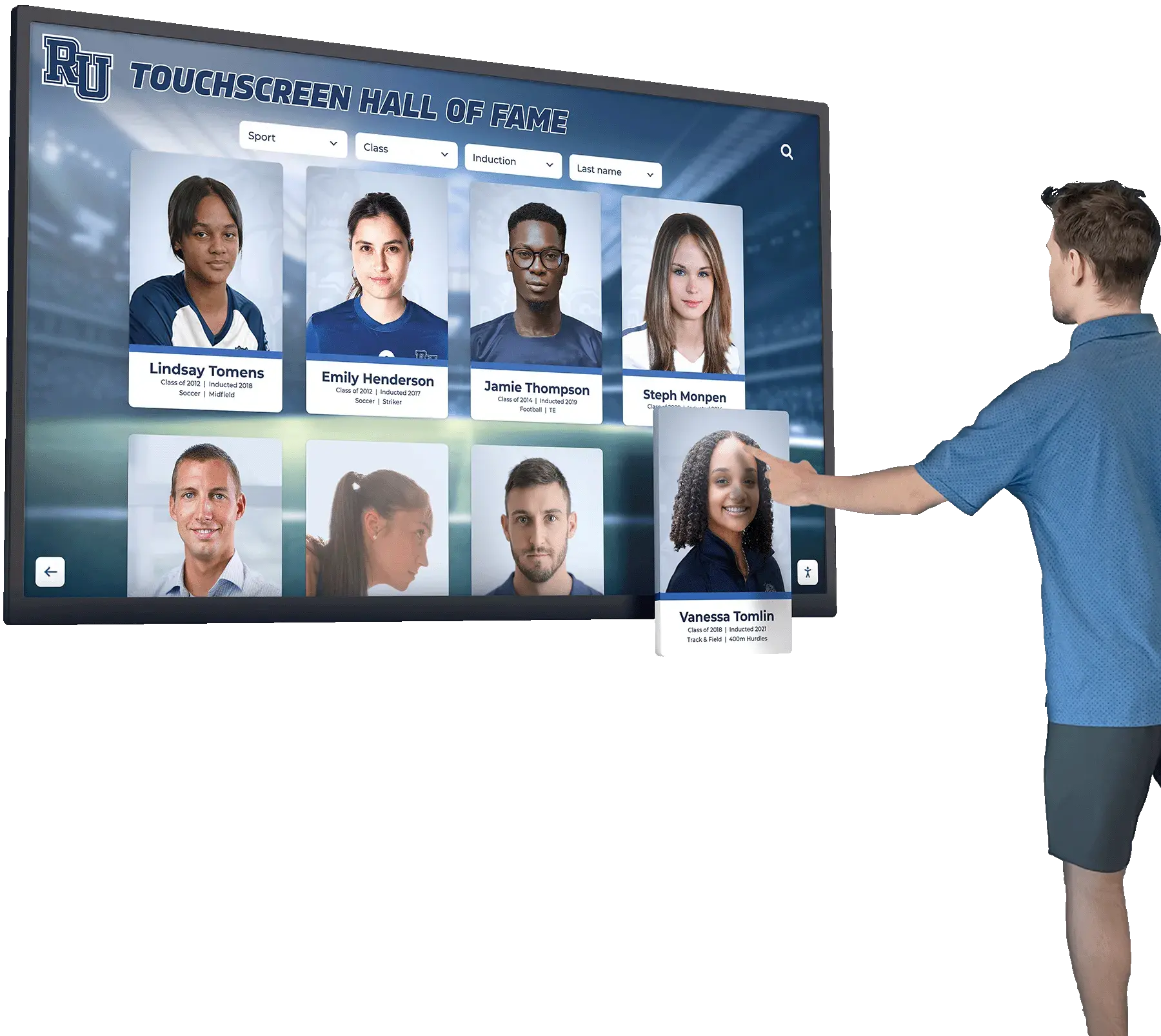
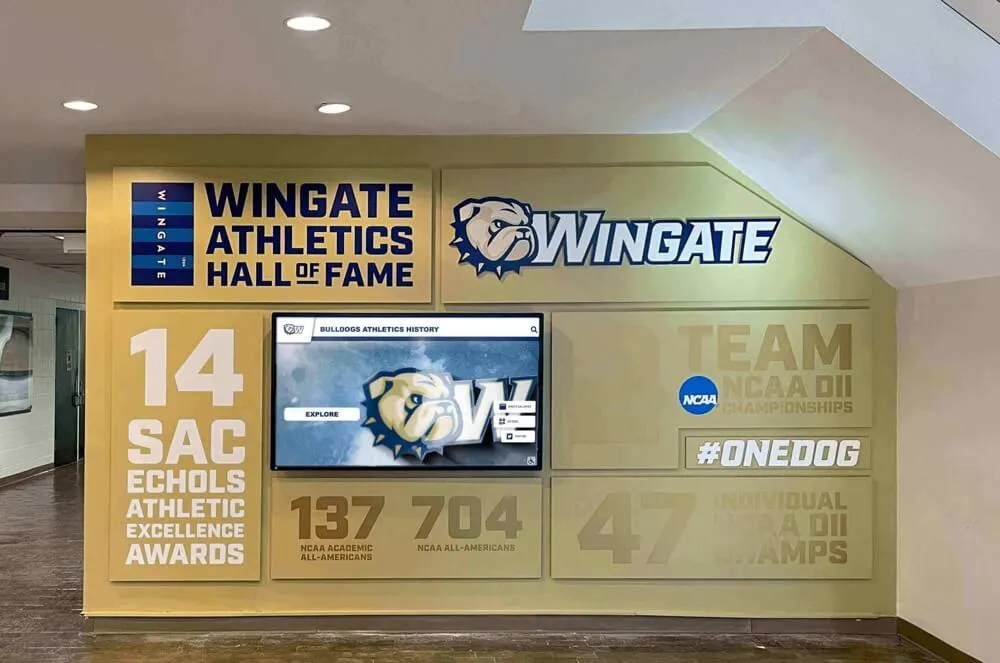
A true cloud platform makes your recognition content available on physical screens and on any internet-connected device
Red Flag 4: Local Kiosk Applications vs. True Cloud Architecture
Beyond specific pricing tactics, the fundamental architectural difference between competing platforms is the most important technical factor a committee can evaluate. This distinction has direct implications for daily administration and long-term content accessibility.
What a Local Kiosk Application Looks Like
Many smaller vendors build their systems as localized applications installed directly on the touchscreen hardware. The content lives on that specific machine. To update a profile, add an inductee, or change a category, an administrator must either be physically at the kiosk or pay the vendor a development fee to push a software update.
These systems cannot easily display content outside the physical wall. If an alumnus in another state wants to browse your hall of fame, they cannot. If your school wants to embed your recognition program on its athletic website, that integration either does not exist or requires significant custom development. Local applications are also brittle at the hardware level: when the specific screen they were installed on is replaced, the software may not transfer cleanly, and the archive content that took months to build can be difficult to migrate.
What True Cloud Architecture Provides
A cloud-first platform like Rocket Alumni Solutions functions more like a modern web application than a device-specific installation. Administrators log into a browser from any computer, make updates instantly, and those changes push simultaneously to every screen registered to the account—in any building, across any campus. There is no physical access required, no developer fees for standard updates, and no hardware dependency.
Critically, the same database that powers your touchscreen kiosk also powers a fully embeddable web presence. Alumni living across the country can browse your hall of fame on their phones. Families watching a livestream of an induction ceremony can pull up an inductee’s full profile on a tablet. The content reaches your entire community, not just the people who happen to be walking past a specific screen in a specific hallway.
For schools considering a digital hall of fame for the first time, understanding what separates a true hall of fame platform from a basic digital sign is foundational to making the right vendor selection. For athletic directors who want to understand the full range of tools available, comparing the top hall of fame platforms across different use cases provides useful context for where any specific vendor fits in the market.
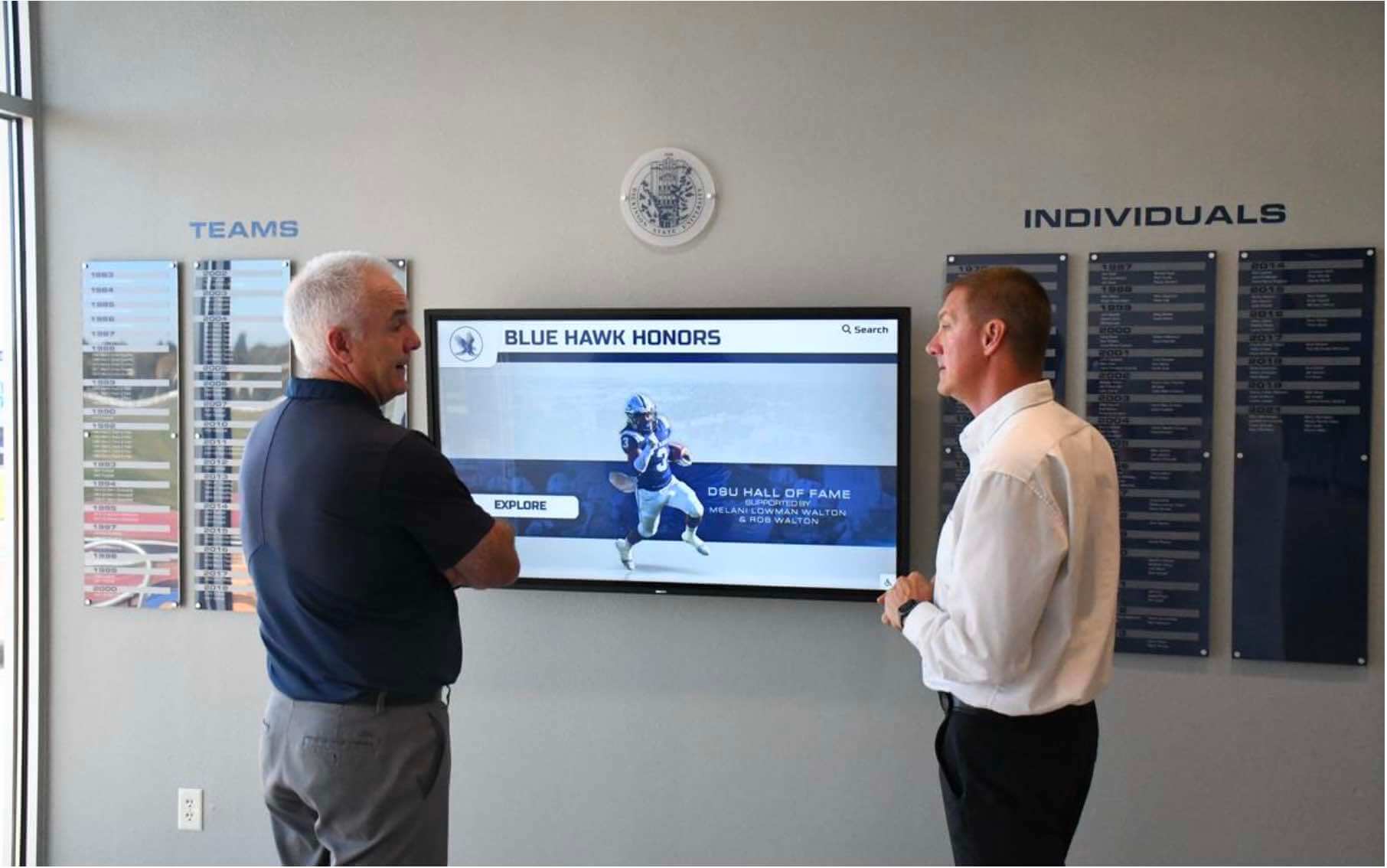
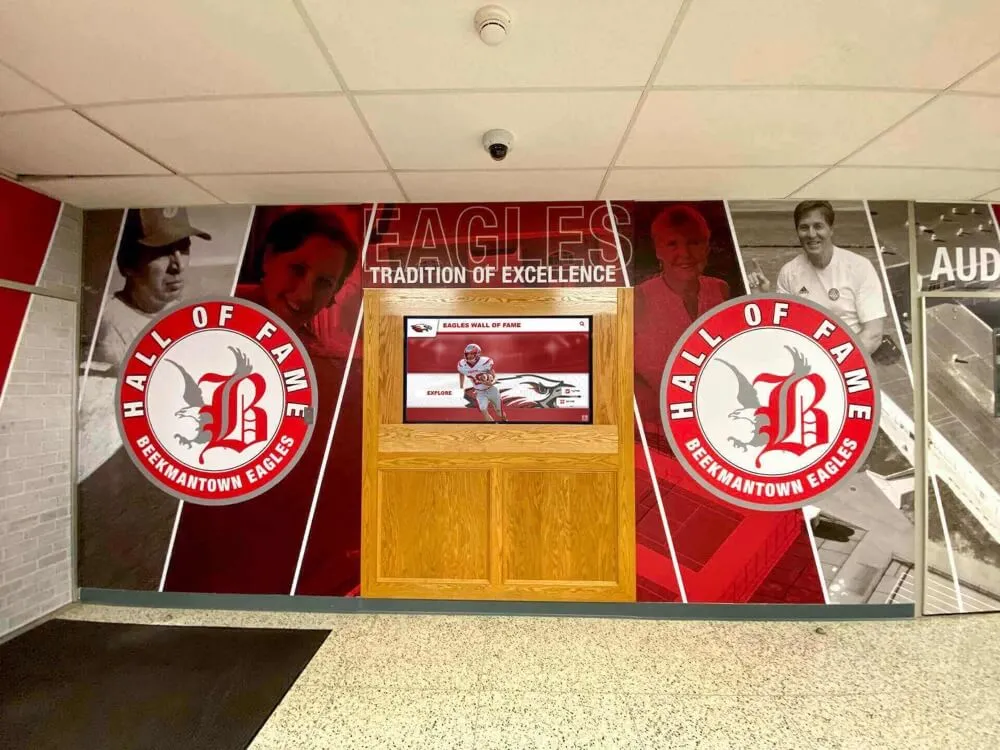
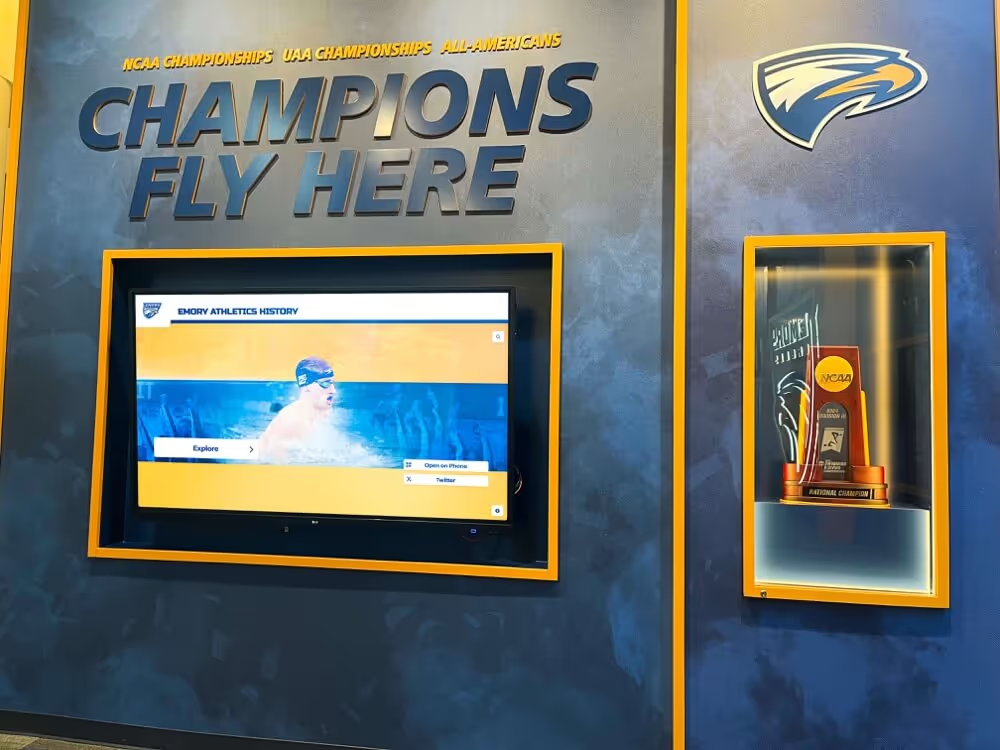
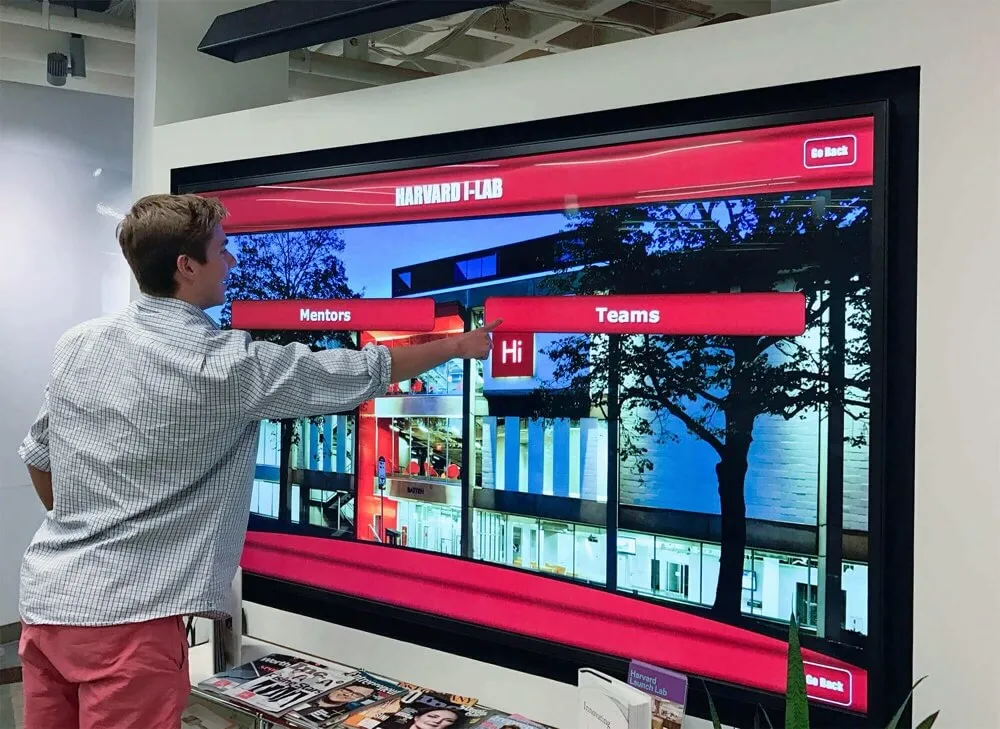
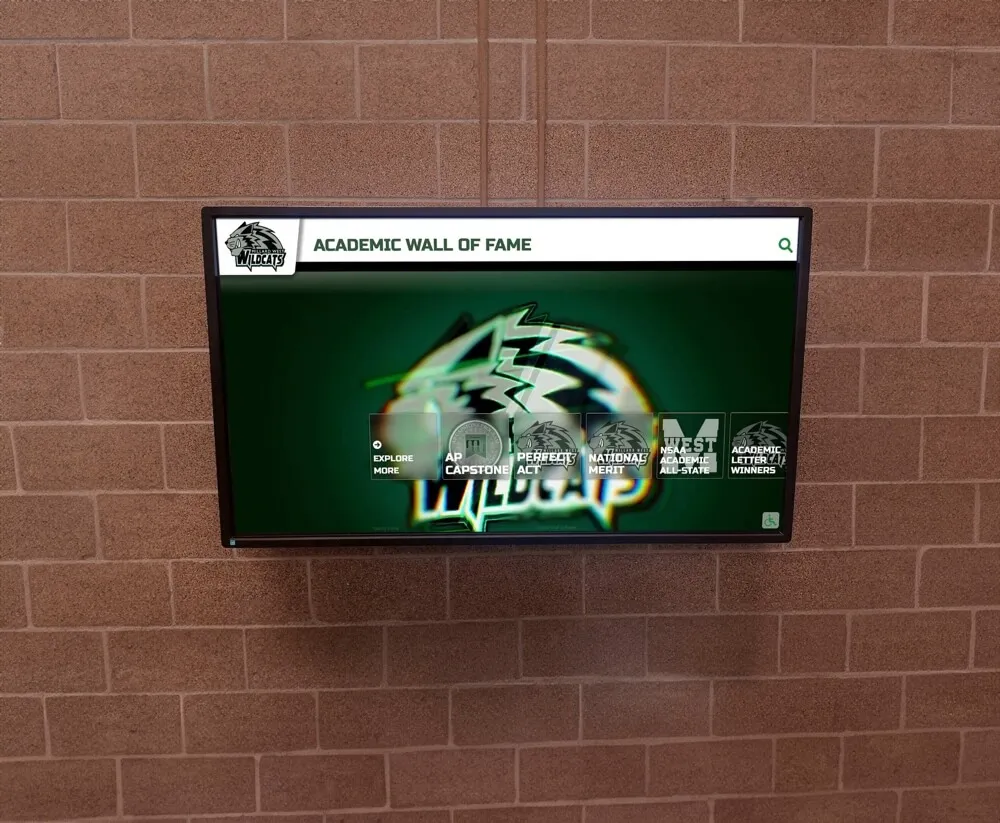
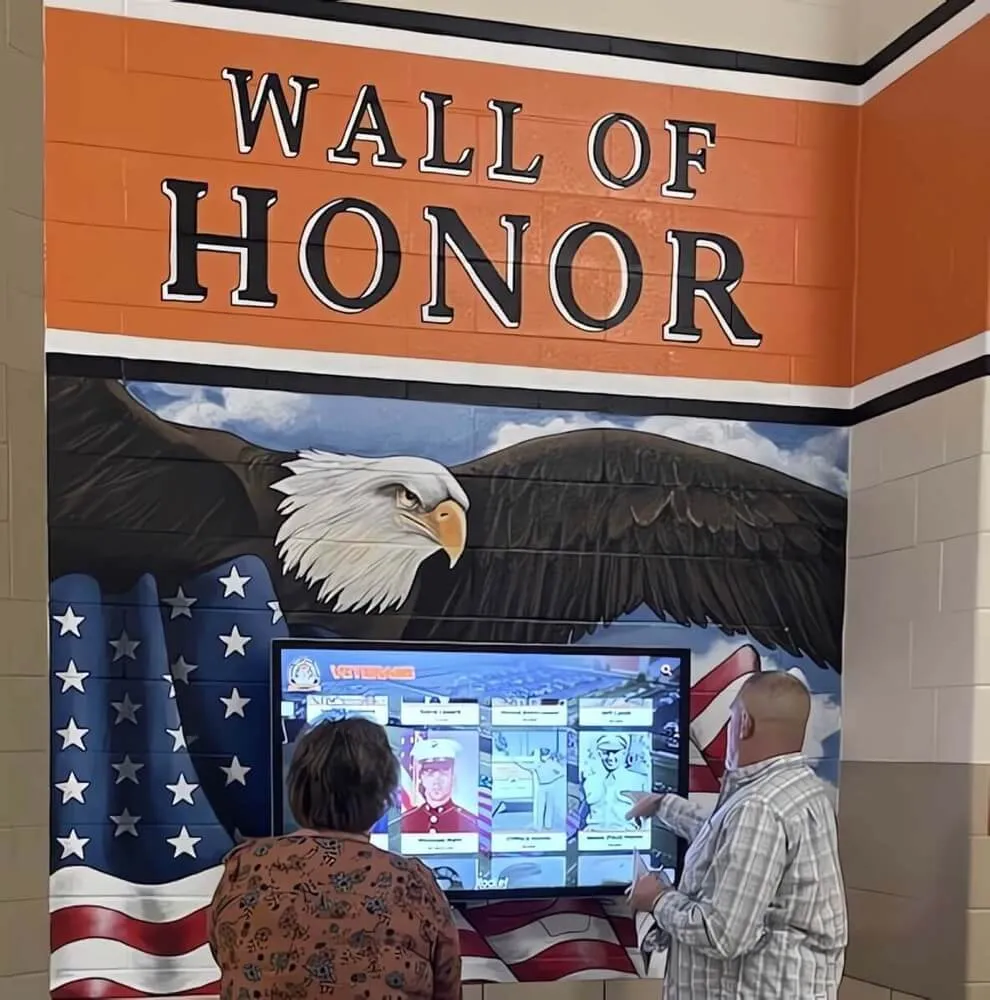
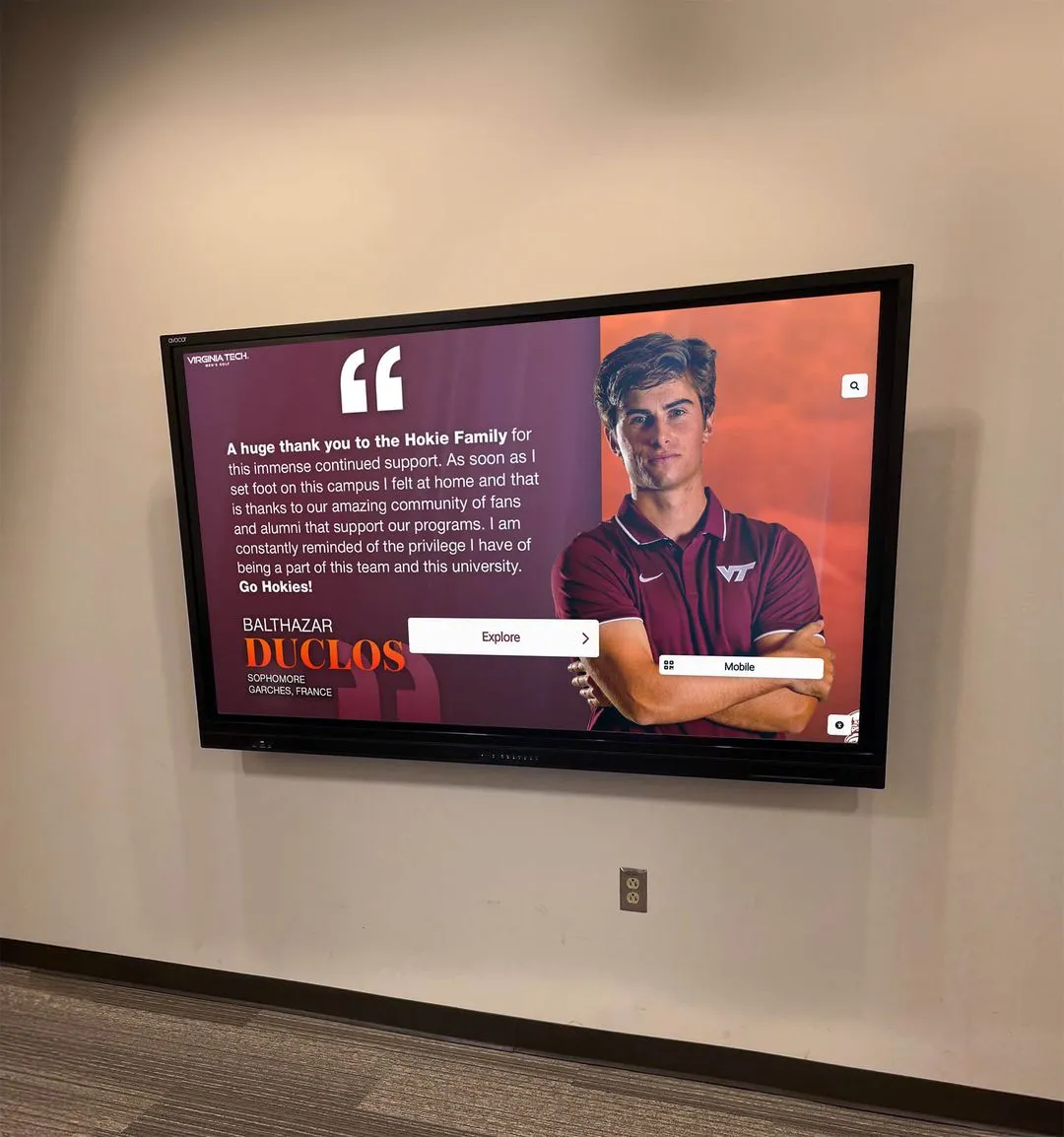
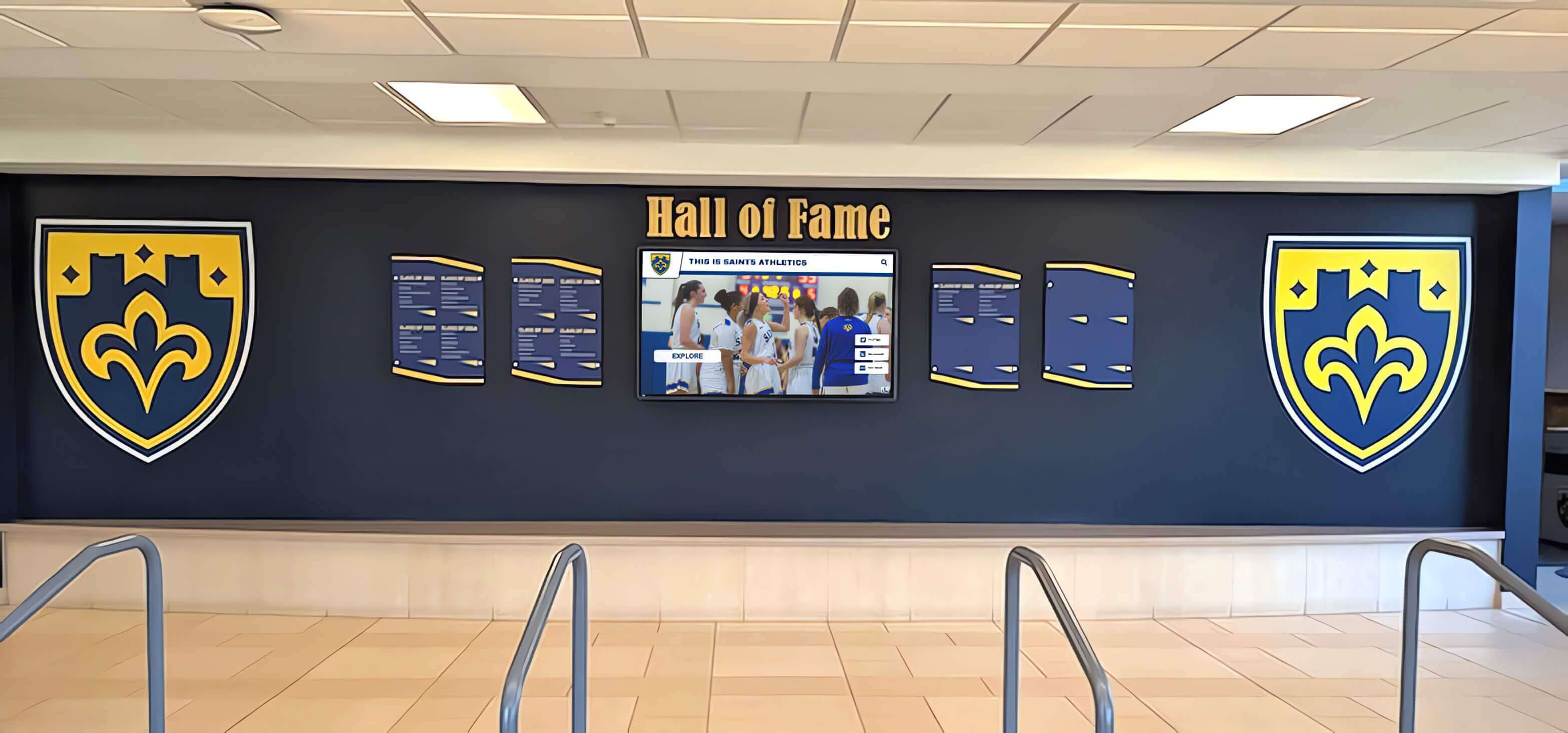
Interactive displays draw attention and invite visitors to spend meaningful time with athletic and academic history
ADA Accessibility: A Compliance Requirement, Not a Checkbox
One area where vendor claims require particularly careful scrutiny is ADA accessibility. Digital kiosks installed in school facilities that receive public funding are subject to WCAG 2.1 AA compliance standards under the Americans with Disabilities Act. This is not optional and not merely a feature to list on a spec sheet.
Maintaining WCAG 2.1 AA compliance requires ongoing attention. Accessibility standards are updated periodically, and an installation that was compliant in year one may fall out of compliance as guidelines evolve. A vendor whose revenue model does not support ongoing development cannot realistically promise sustained accessibility compliance over the life of a multi-decade installation.
Schools with publicly funded facilities should document accessibility compliance commitments in any vendor contract and ask specifically how the vendor’s ongoing revenue model supports compliance maintenance. For context on what comprehensive school recognition programs should include in terms of accessibility, reviewing how schools structure digital award displays is a useful starting point.
Summary Checklist for School Procurement Committees
Before signing a contract for a digital hall of fame system, verify these four baseline criteria for every vendor under consideration.
Headcount and Operational Stability
Does the vendor have a substantial, actively staffed team—ideally 30 or more employees—capable of handling support, data migration, compliance, and development independently? Or is the operation effectively run by one or two individuals whose availability is the only thing standing between your archive and an unsupported installation?
Ask: “How many full-time employees do you currently have, and what does your support escalation path look like?”
Device Scalability and Pricing Structure
Is the software fee a flat platform rate that covers unlimited screen deployments? Or will adding screens to your facility trigger per-device licensing fees that were not clearly disclosed during the initial sales conversation?
Ask: “If we add three more screens in year two, what specifically changes about our annual cost?”
ADA WCAG 2.1 AA Accessibility Compliance
Is the platform currently compliant with WCAG 2.1 AA standards? How does the vendor maintain ongoing compliance as standards are updated? What is their contractual commitment to accessibility maintenance?
Ask: “How is accessibility compliance maintained between major software releases, and what is your process for addressing gaps identified after installation?”
Web Integration and Content Portability
Can the platform be embedded on your school’s website so that alumni and families who are not physically on campus can access the same content? If you decide to change vendors in ten years, can you export your data in a standard format?
Ask: “How do we embed this platform on our school website, and what does our data export look like if we switch platforms?”
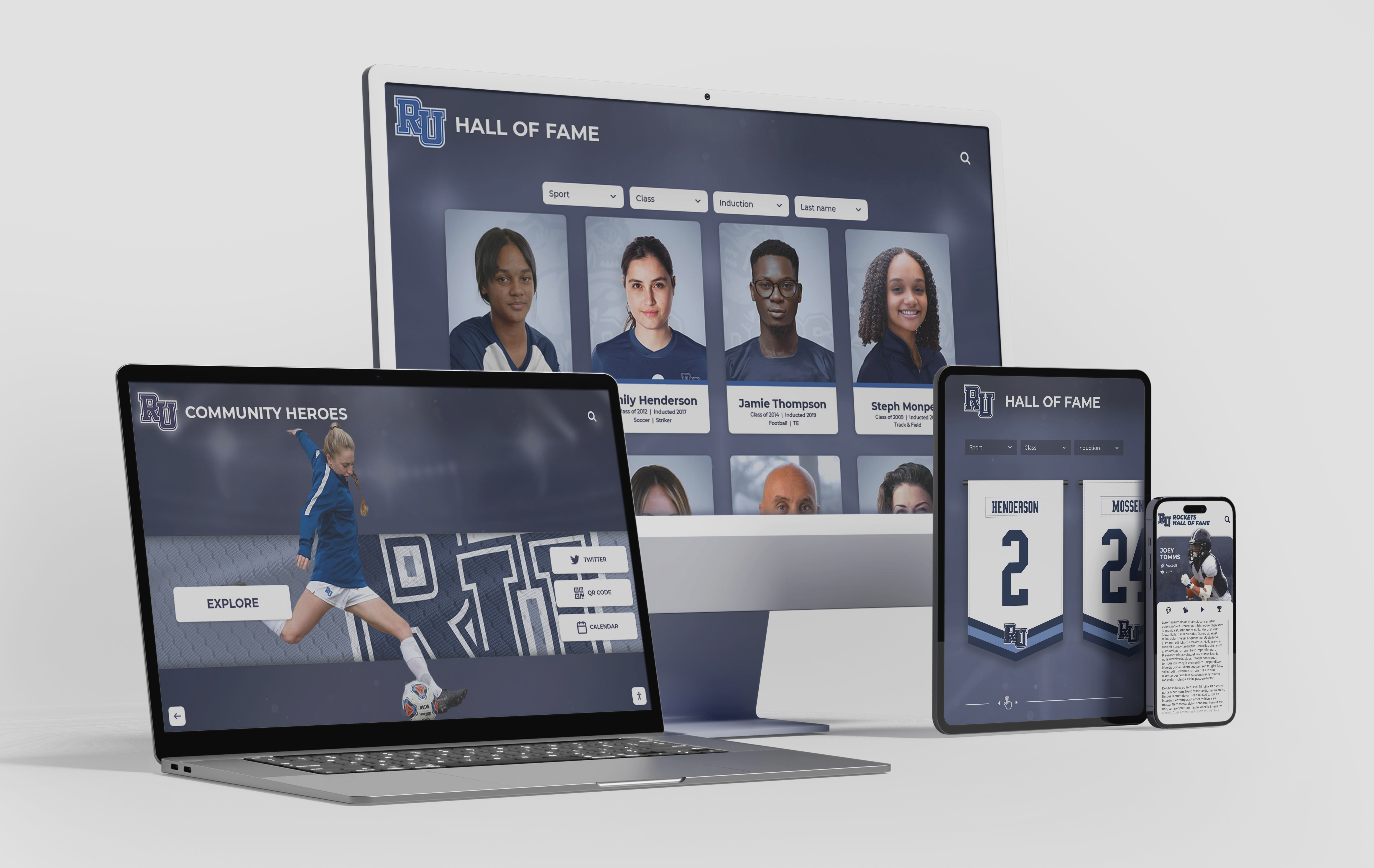
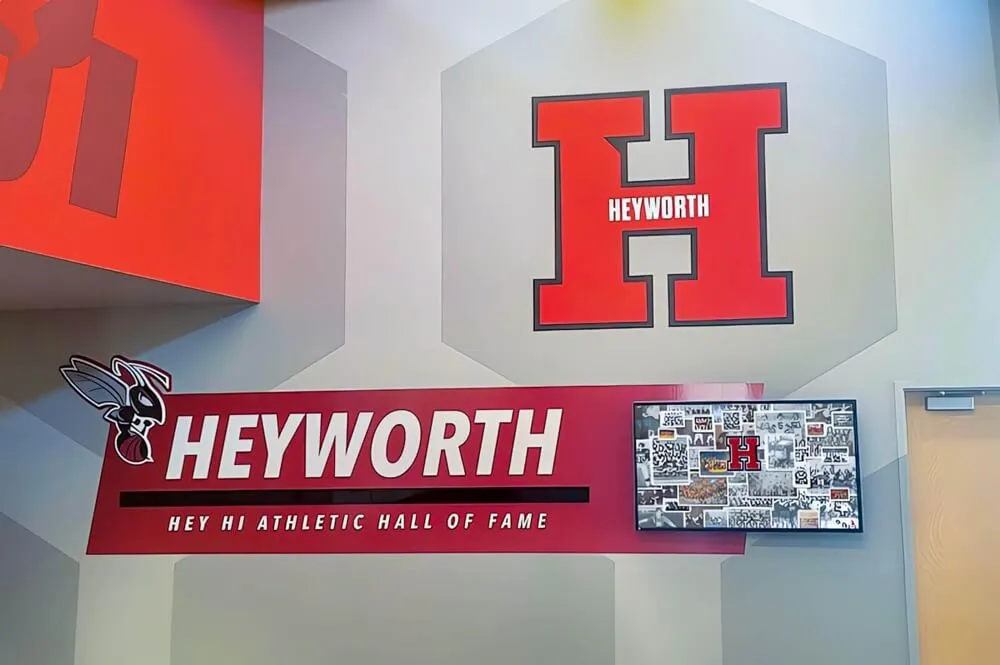
True cloud platforms extend your recognition program to your school's website, reaching alumni and families worldwide
Evaluating Vendor Claims in Practice
The most straightforward way to apply this checklist is to ask each question directly, in writing, and evaluate the response against what you now know about how the category works.
Vendors making the comparison claims described above are not necessarily wrong about their own product—they may offer a capable solution for certain use cases. However, when a vendor’s comparative marketing contains claims that invert how the market leader’s pricing, support, or architecture actually works, that is a signal about how they communicate more broadly. Precision in vendor communication matters considerably when the alternative is ambiguity in a contract governing a long-term archive.
For athletic departments and schools looking to understand the full range of digital recognition options, seeing design layouts and content planning approaches before committing to a platform is a useful exercise. Understanding what a well-designed hall of fame can look like helps clarify which technical requirements genuinely matter and which vendor promises are plausible.
Similarly, reviewing award wall options and recognition display formats can help committees understand what each category of solution does well before a vendor’s sales cycle begins.
What the Right Platform Delivers
A digital hall of fame done well is one of the highest-impact recognition investments a school can make. It preserves history in a format that is searchable, shareable, and accessible from anywhere. It gives athletes, coaches, and academic honorees a permanent record that grows more valuable over time. It gives current students a window into the history behind their program. It gives recruiting prospects context for what an institution has built.
None of that requires the most expensive vendor. It does require a vendor whose platform is architecturally sound, financially stable, and backed by a team capable of supporting it for decades.
The red flags in this guide are not reasons to avoid the digital hall of fame category. They are reasons to ask the right questions and select the vendor whose answers hold up.
This comparison is based on publicly available information as of July 2026. All product names and trademarks belong to their respective owners. Comparative statements reflect Rocket Alumni Solutions’ interpretation of available data and may change over time. This content was produced by or on behalf of Rocket Alumni Solutions. Rocket Alumni Solutions is not affiliated with or endorsed by any boutique digital signage agency referenced generically in this post.
Book a demo and learn how a flat-rate, cloud-first platform protects your school’s legacy for the long term.