



Planning an NHS induction ceremony represents one of the most rewarding responsibilities for school advisors—the opportunity to celebrate students who embody scholarship, service, leadership, and character through a meaningful ceremony that honors their achievements and inspires continued excellence. When executed thoughtfully, these ceremonies create lasting memories for inductees, families, and school communities while reinforcing the values that define National Honor Society membership.
However, the pressure to create a ceremony worthy of this significant milestone can feel overwhelming. Advisors must coordinate venue logistics, design engaging programs, manage invitations and communications, arrange appropriate recognition elements, and ensure the event reflects both NHS traditions and unique school culture—all while juggling regular teaching responsibilities and managing chapter activities throughout the year.
This comprehensive guide walks you through every aspect of NHS induction ceremony planning, from initial timeline development and venue selection through program design, recognition strategies, and post-ceremony follow-up. Whether you’re organizing your first induction or refining an established tradition, you’ll find practical frameworks, detailed checklists, and proven approaches that transform ceremony planning from stressful obligation into manageable, meaningful process.
The National Honor Society induction ceremony serves as the formal acknowledgment of students’ academic excellence, demonstrated leadership, committed service, and exemplary character. Understanding the ceremony’s purpose and significance helps advisors design events that honor NHS traditions while creating authentic, memorable experiences.

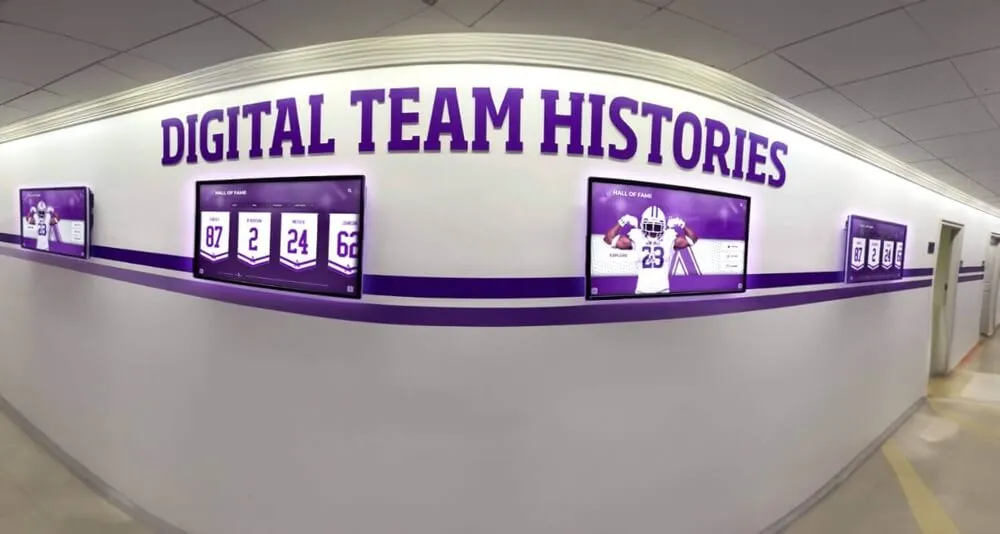
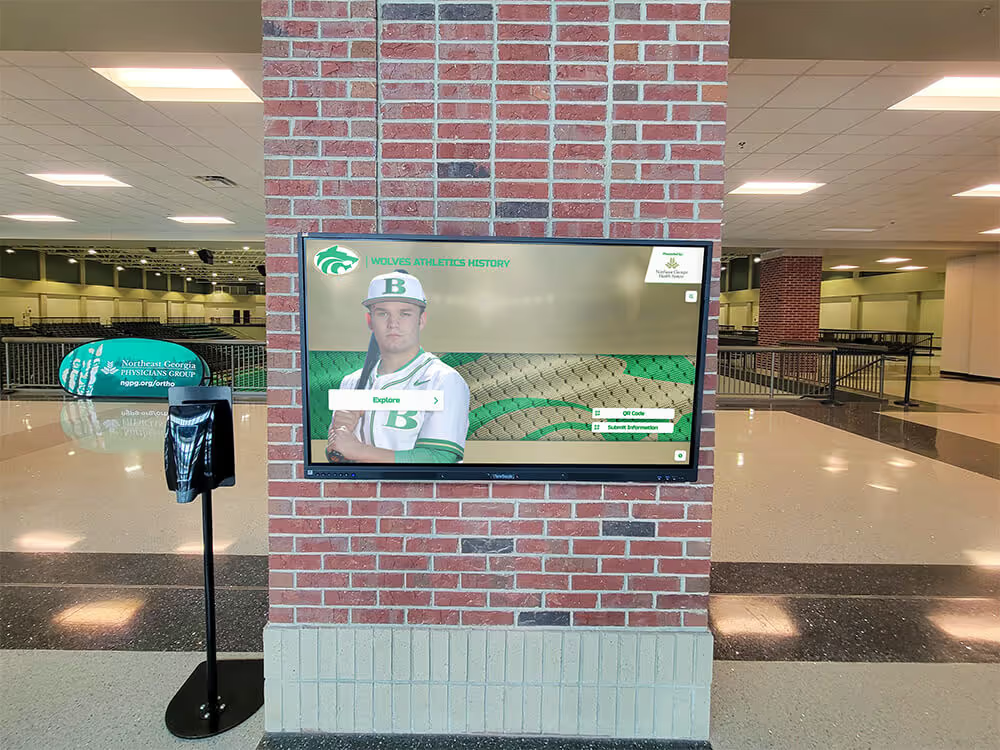
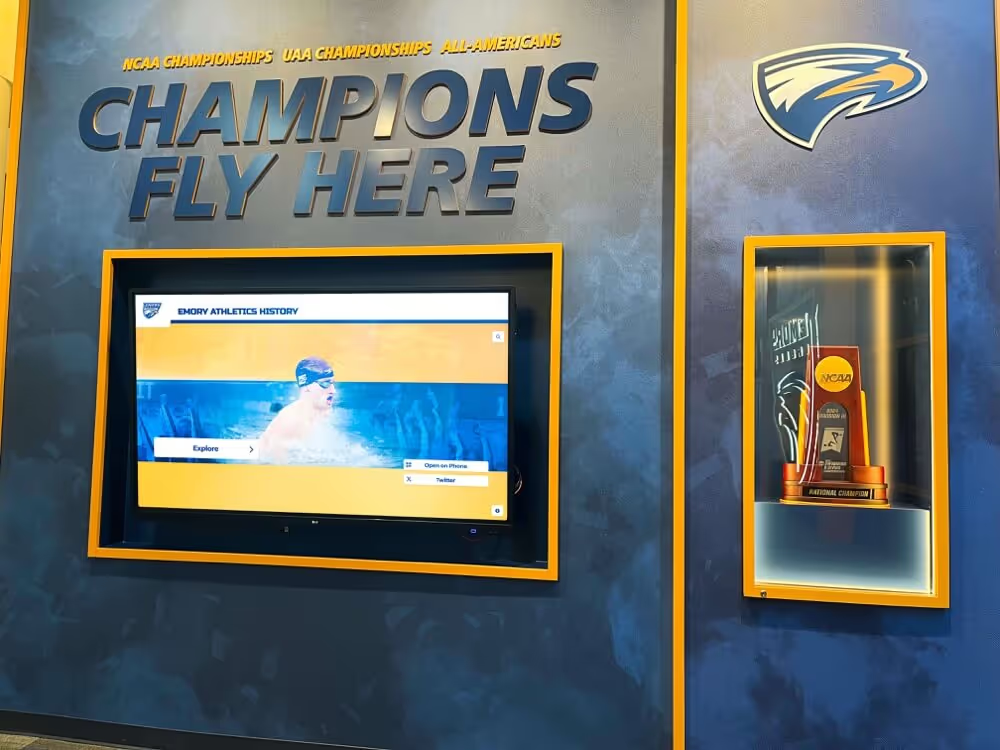
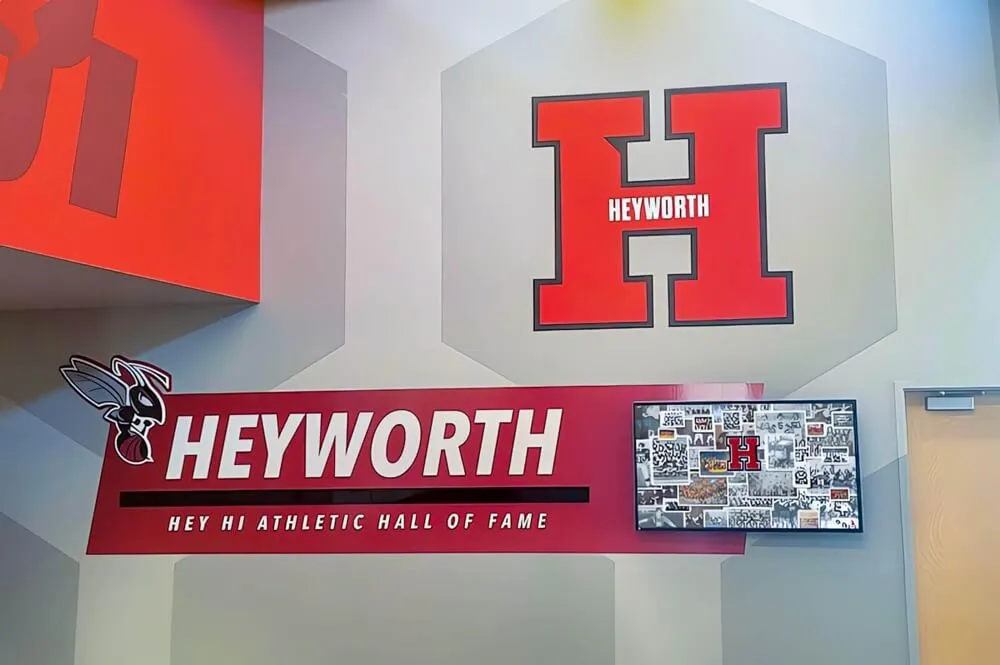
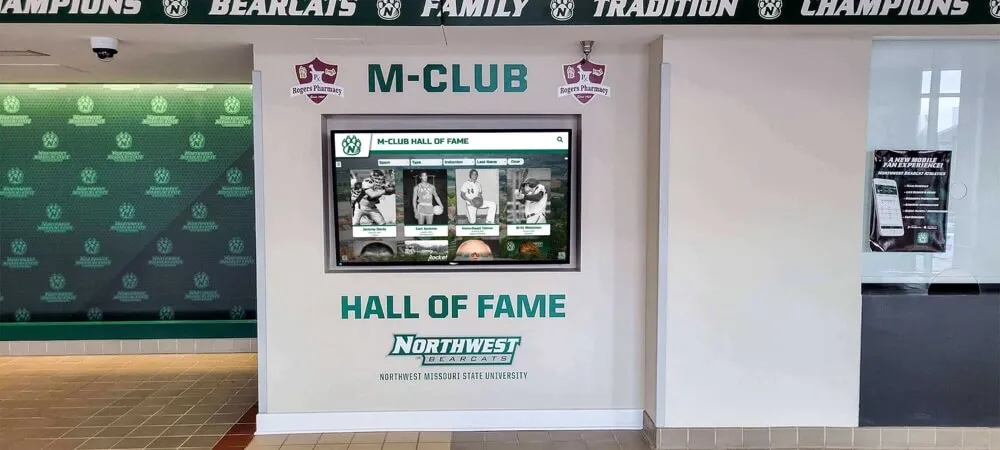
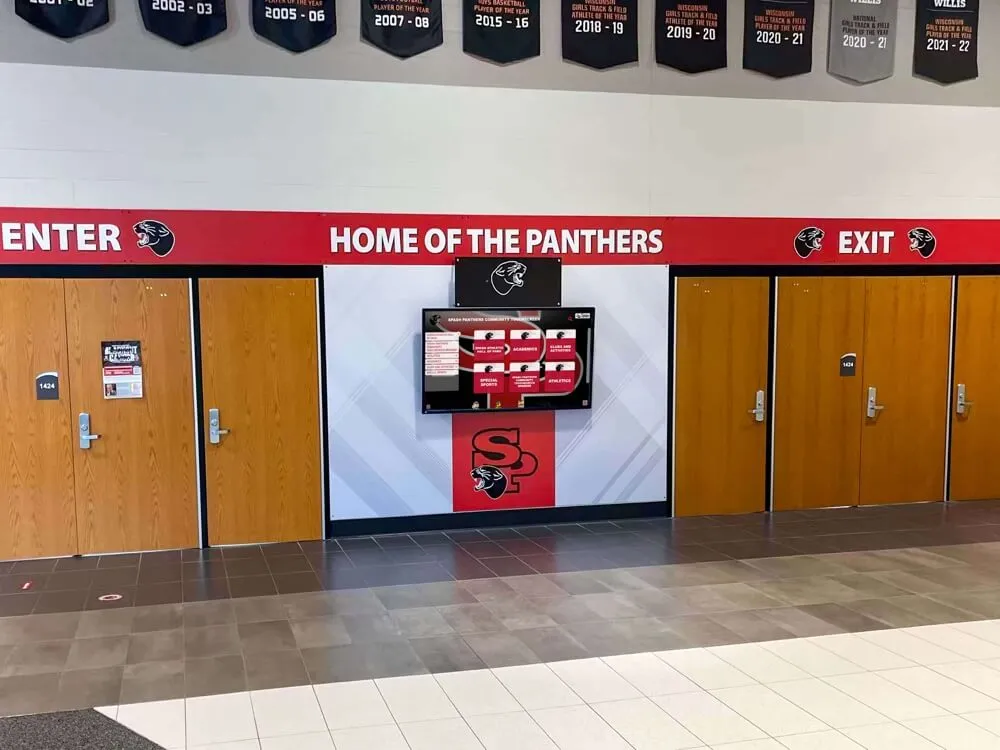
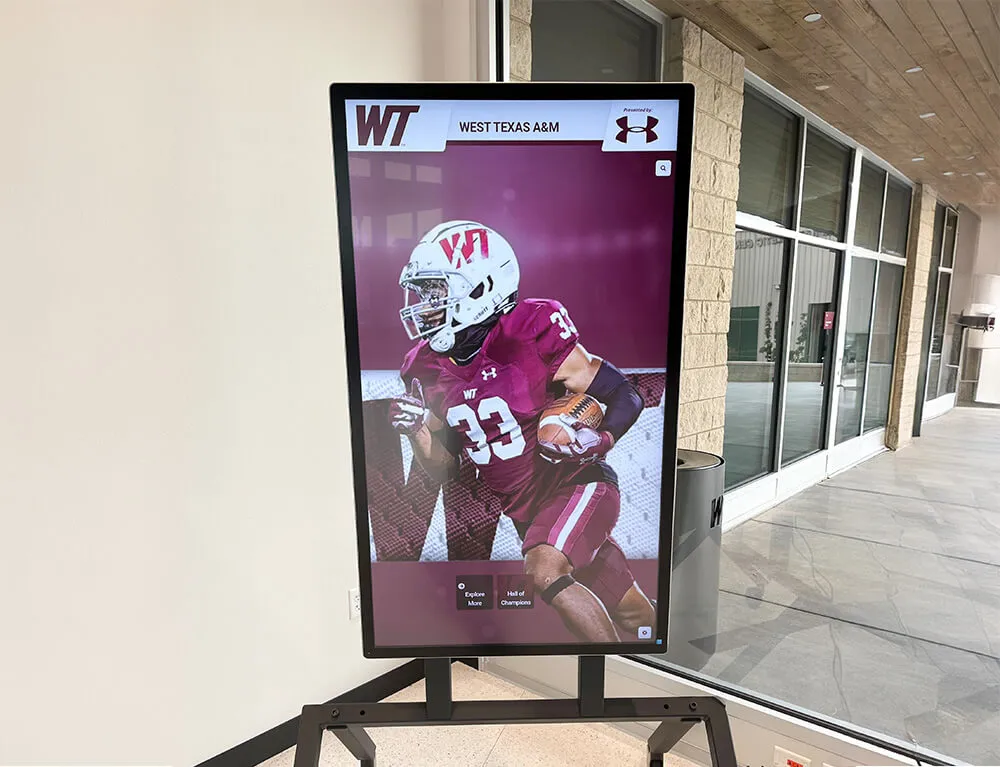
Modern recognition displays celebrate NHS inductees through professional portraits and achievement highlights that create lasting visibility
Understanding NHS Induction Ceremony Requirements and Traditions
National Honor Society chapters operate under guidelines established by the National Association of Secondary School Principals (NASSP), which provides framework principles while allowing local chapters flexibility in ceremony execution. Successful advisors balance these national expectations with local traditions and practical constraints.
National Guidelines and Chapter Flexibility
NHS national guidelines emphasize several core ceremony elements that chapters should incorporate while adapting to local contexts:
Required ceremony components include formal recognition of each inductee by name, explicit acknowledgment of the four pillars (scholarship, service, leadership, character), administration of the NHS pledge, and presentation of membership certificates or cards. National expectations also call for appropriate formality befitting the significance of NHS membership—distinguishing induction from routine school assemblies.
Flexible implementation elements allow chapters to determine ceremony length, venue selection, time of day, whether to include student performances or speeches, family attendance policies, reception formats, and recognition display approaches. This flexibility enables advisors to create ceremonies that reflect school culture and community expectations while honoring NHS traditions.
According to NHS advisor surveys, successful chapters typically develop ceremony traditions that persist across years with incremental refinements rather than complete redesigns each cycle. Students value predictable elements that connect them to previous inductee cohorts while allowing modest innovations that make each ceremony distinctive.
The Four Pillars as Ceremony Foundation
Effective NHS induction ceremonies explicitly highlight the four pillars that define membership criteria, helping inductees and audiences understand what NHS membership represents beyond academic achievement alone.
Scholarship represents the most visible pillar—the GPA requirements that establish initial eligibility. Strong ceremonies move beyond simply stating GPA thresholds to acknowledging the sustained effort, time management, intellectual curiosity, and academic resilience that consistent high performance requires throughout high school.
Service encompasses contributions to school and community without expectation of compensation or recognition. Ceremonies should highlight how inductees have demonstrated commitment to causes beyond self-interest, whether through tutoring programs, community organizations, school initiatives, or volunteer activities that address genuine needs.
Leadership in NHS context extends beyond holding titled positions to include influence through example, initiative in identifying and addressing challenges, willingness to advocate for positive change, and ability to inspire peers toward shared goals. Recognition should acknowledge both formal leadership roles and less visible leadership contributions.
Character represents perhaps the most challenging pillar to assess and articulate—encompassing integrity, respect, responsibility, and ethical decision-making that define how students conduct themselves when nobody’s watching. Ceremonies can reference faculty recommendations, peer observations, and demonstrated values alignment that qualified students for consideration.
Successful advisors structure ceremonies to feature each pillar through speeches, symbolic elements, or inductee reflections that deepen understanding of what NHS membership represents and expects going forward.
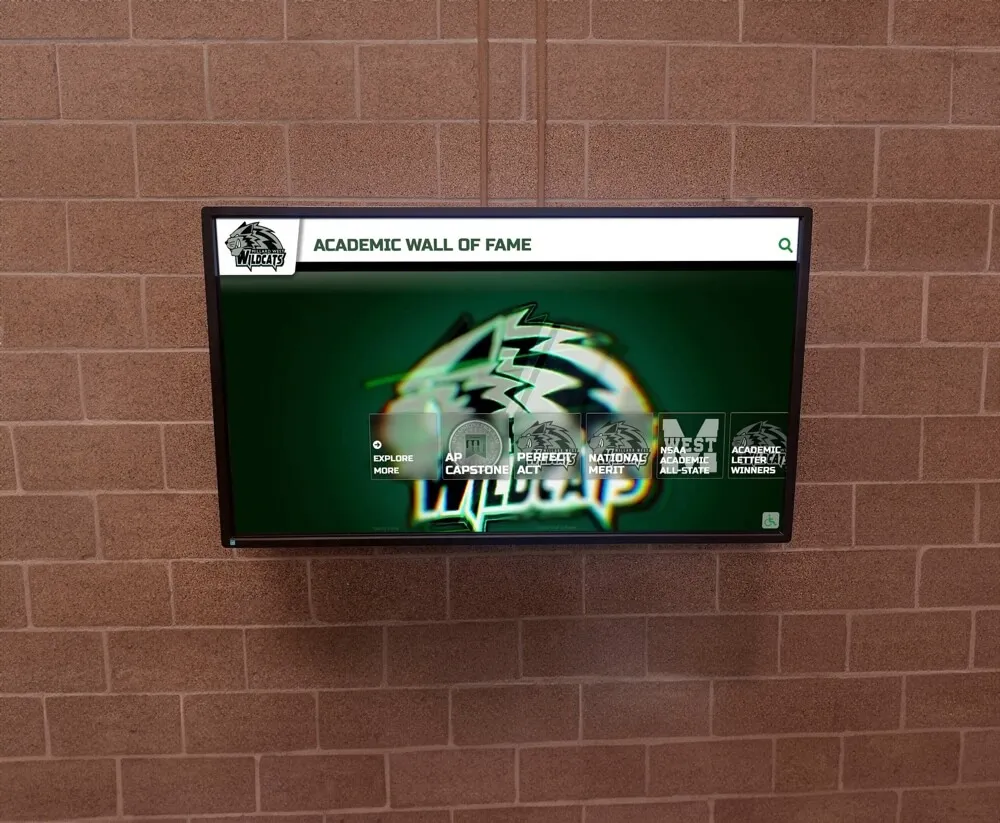
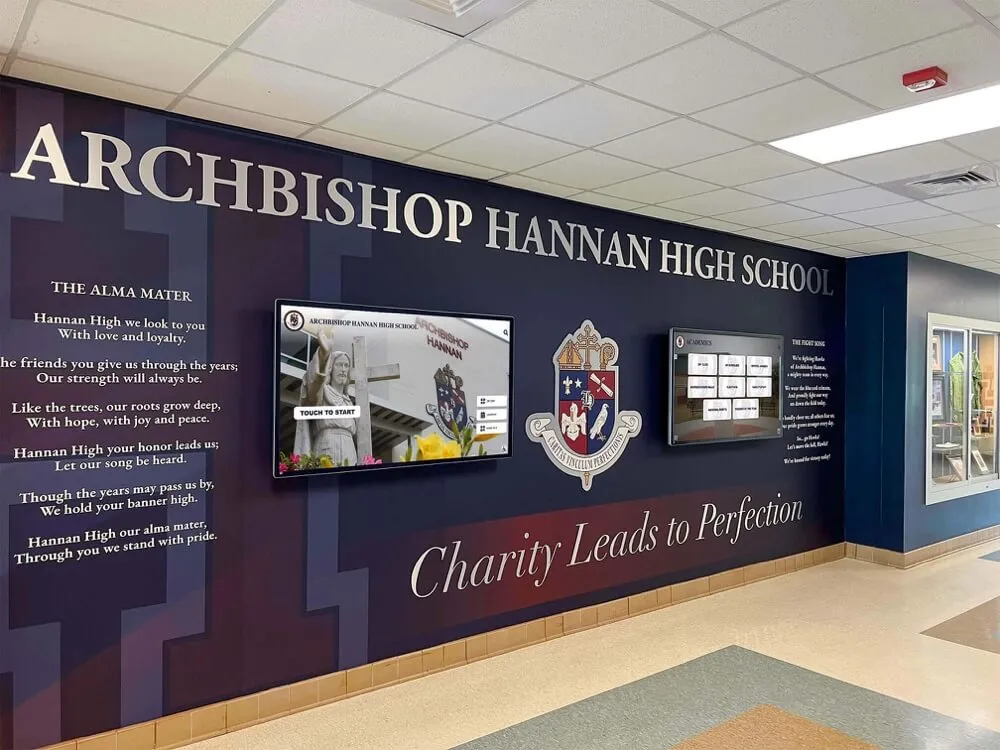
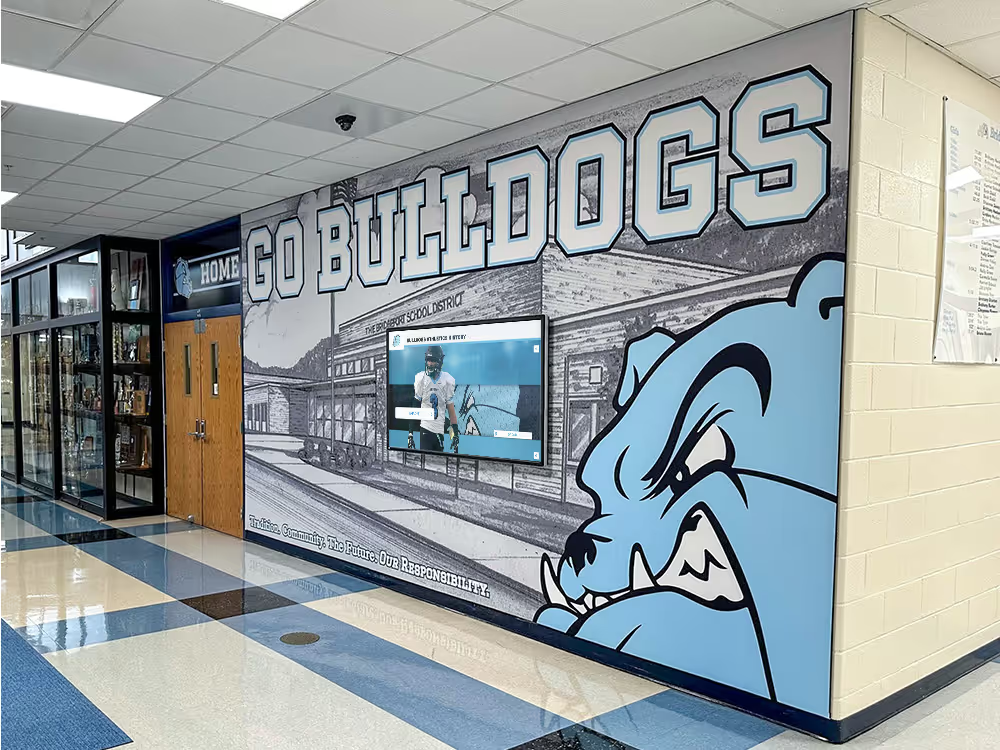
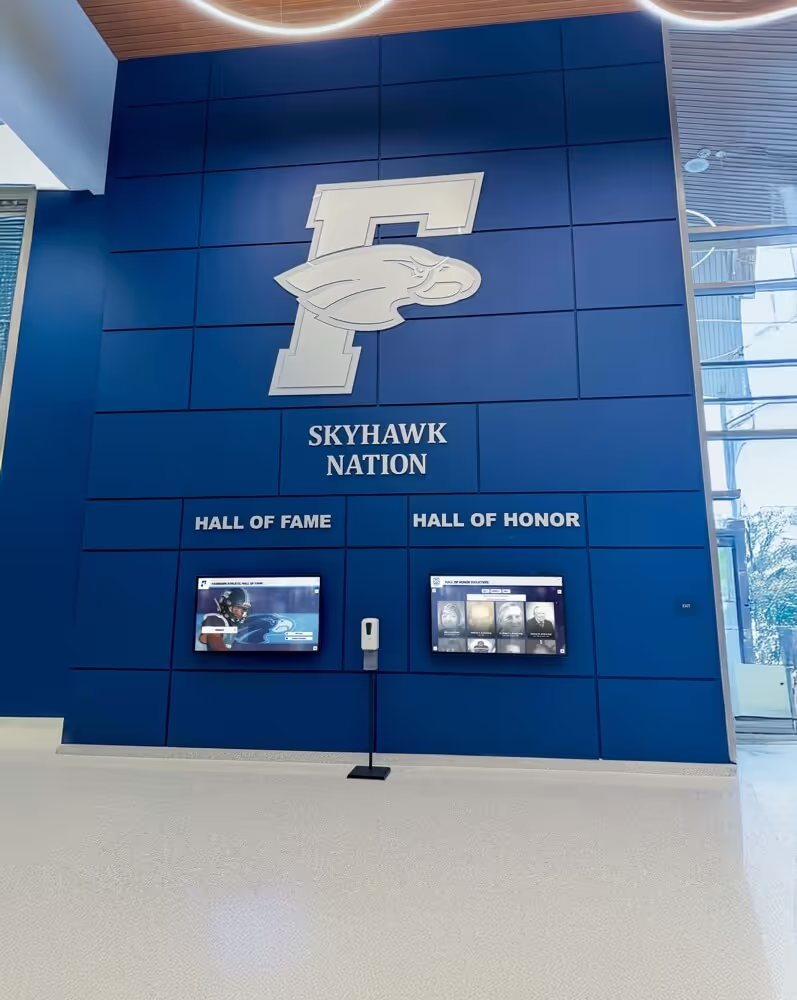
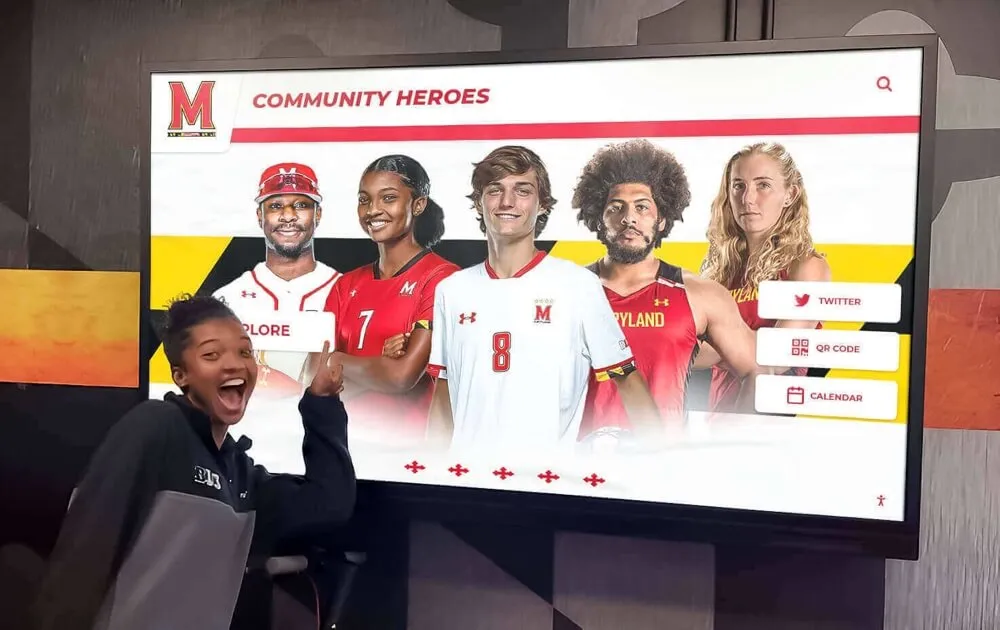
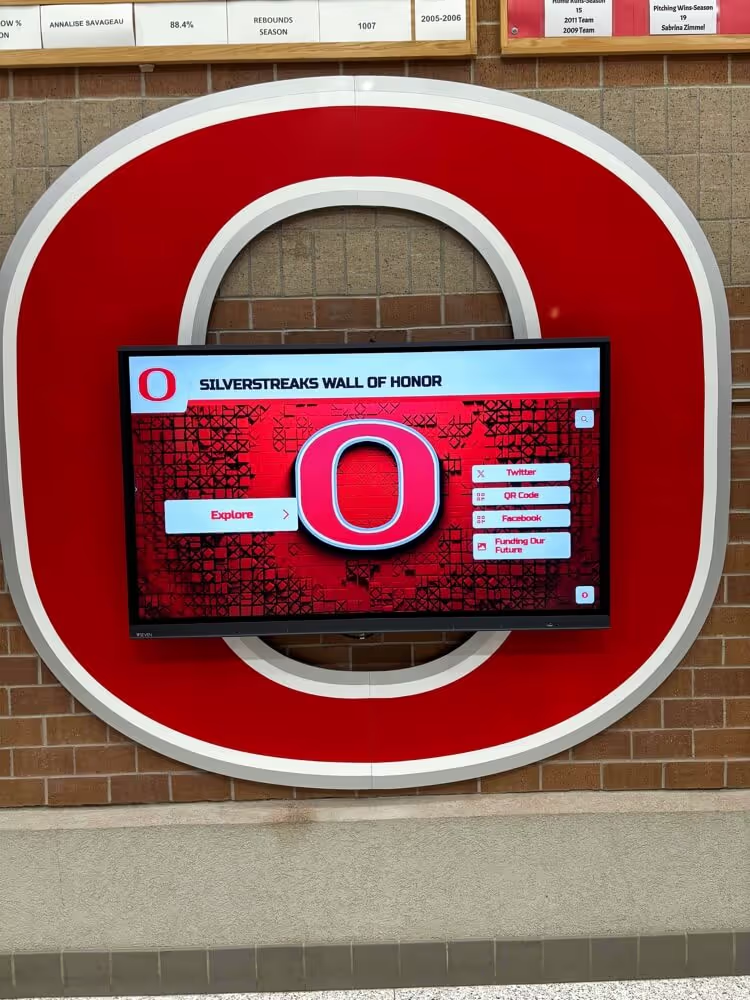
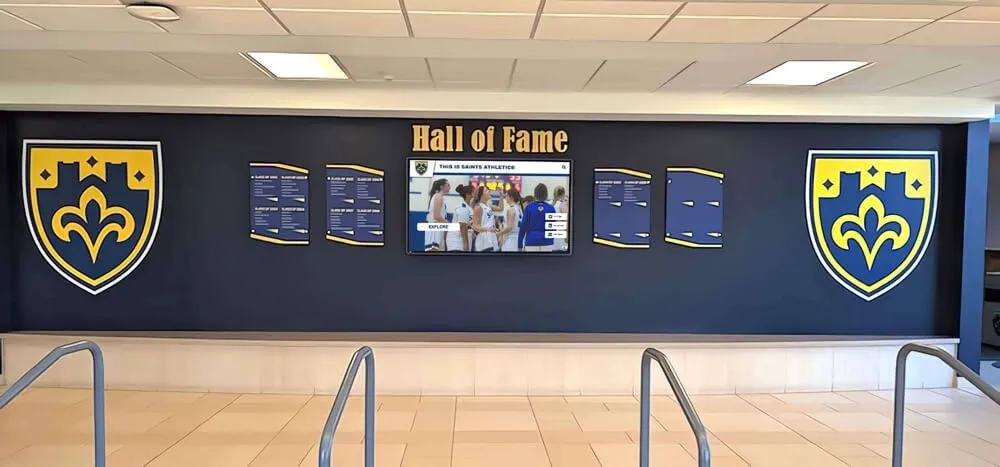
Permanent recognition displays in school common areas extend ceremony impact by providing year-round visibility for NHS members and academic achievers
Creating Your NHS Induction Ceremony Timeline
Successful ceremony execution requires planning that begins months before the actual event, with clearly defined milestones ensuring all elements receive adequate attention without last-minute scrambling.
12-Week Planning Timeline
Most experienced advisors recommend beginning formal ceremony planning approximately 12 weeks before the target induction date, allowing sufficient time for venue coordination, communications, and program development without excessive advance commitment that creates uncertainty.
Weeks 12-10: Foundation Planning
Begin with fundamental decisions that shape all subsequent planning: confirm induction date and time, secure venue reservation, establish ceremony format (evening vs. daytime, auditorium vs. alternative space), determine family attendance policy, and identify ceremony budget parameters.
This initial phase should include recruiting ceremony committee members if your chapter involves student leadership in planning, and establishing communication channels for the planning team. Review previous ceremony evaluations and feedback to identify strengths to maintain and improvements to implement.
Weeks 9-7: Program Development
Develop the detailed ceremony program including speaker selection, script drafting, symbolic elements or traditions, music selections, and technology requirements. This phase requires balancing ceremony length (optimal 45-60 minutes based on advisor feedback) with adequate recognition of individual inductees and meaningful content.
Key decisions during this period include: Who will deliver welcoming remarks? Will you feature a keynote speaker or student reflections? How will you individually recognize each inductee? What symbolic elements (candle lighting, pledge administration, certificate presentation) will you incorporate? Will student NHS members participate in ceremony roles?
Weeks 6-4: Communications and Logistics
Launch communications to inductees and families including formal invitation letters, ceremony details, guest policies, attire expectations, and photography permissions. Simultaneously coordinate logistical elements: sound system testing, lighting arrangements, seating configuration, podium setup, display materials, reception planning if applicable, and volunteer coordination for ceremony support roles.
This phase should include creating or updating digital recognition displays if your school uses solutions like interactive touchscreens for school lobbies to provide year-round visibility for NHS members alongside other student achievements.
Weeks 3-1: Finalization and Rehearsal
Complete program printing, finalize music cues, confirm all speaker participation, order or prepare certificates and materials, arrange flowers or decorative elements if used, and conduct technical rehearsals to address sound, lighting, and presentation logistics. Schedule inductee rehearsal if your format includes student participation beyond name recognition.
Send reminder communications to families with arrival time, parking information, seating details, and any last-minute updates. Prepare contingency plans for common disruptions like technology failures, speaker cancellations, or unexpected schedule conflicts.
Day-of-Ceremony Execution Timeline
Create detailed minute-by-minute timeline for ceremony day including setup, sound checks, pre-ceremony inductee gathering, processional if used, and post-ceremony reception or cleanup. Assign specific responsibilities to committee members, volunteers, or student leaders to ensure smooth execution without advisor attempting to manage all elements simultaneously.
Experienced advisors recommend arriving 90-120 minutes before ceremony start time to address inevitable last-minute issues while maintaining calm demeanor that sets positive tone for participants and families.
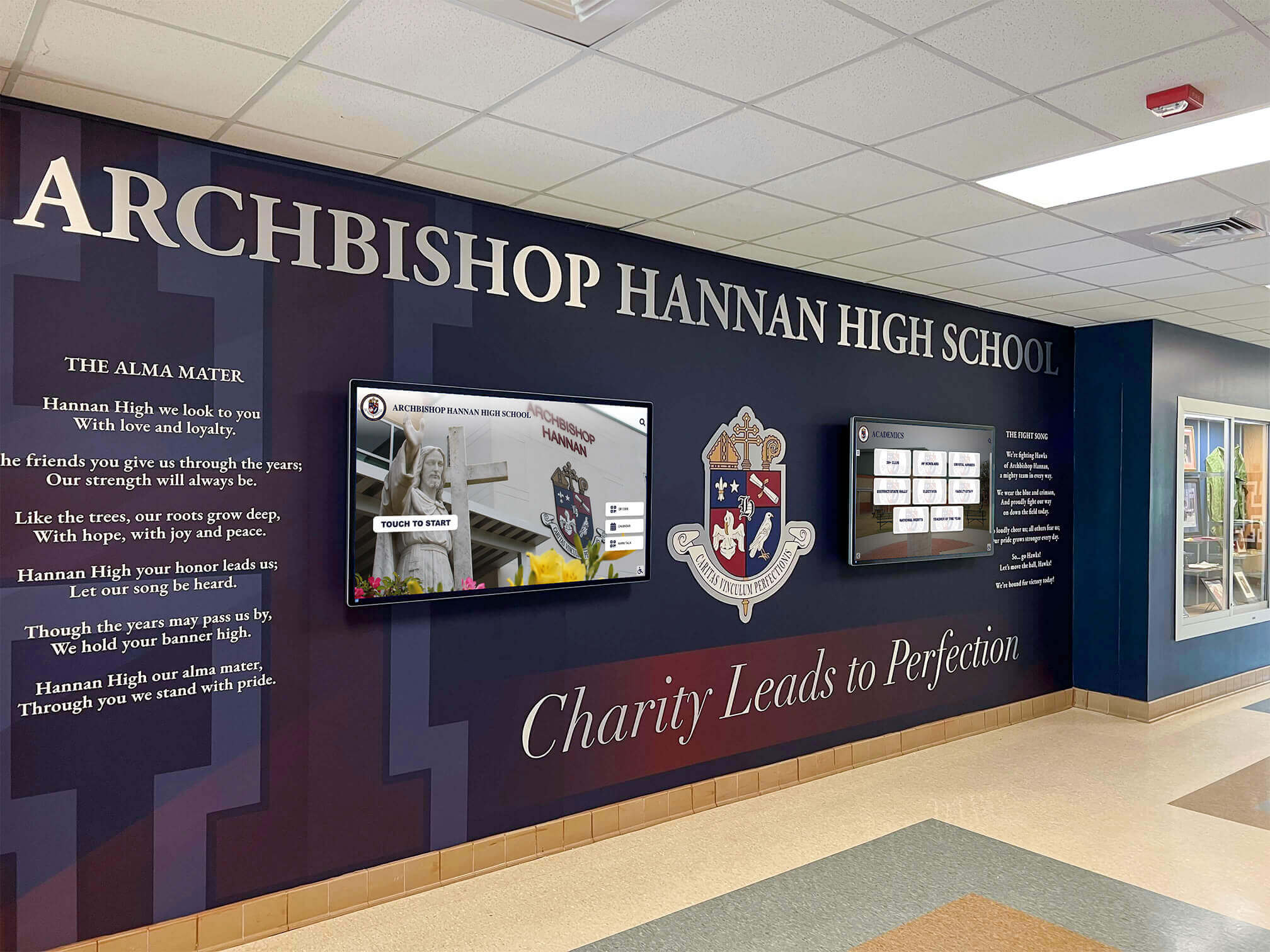
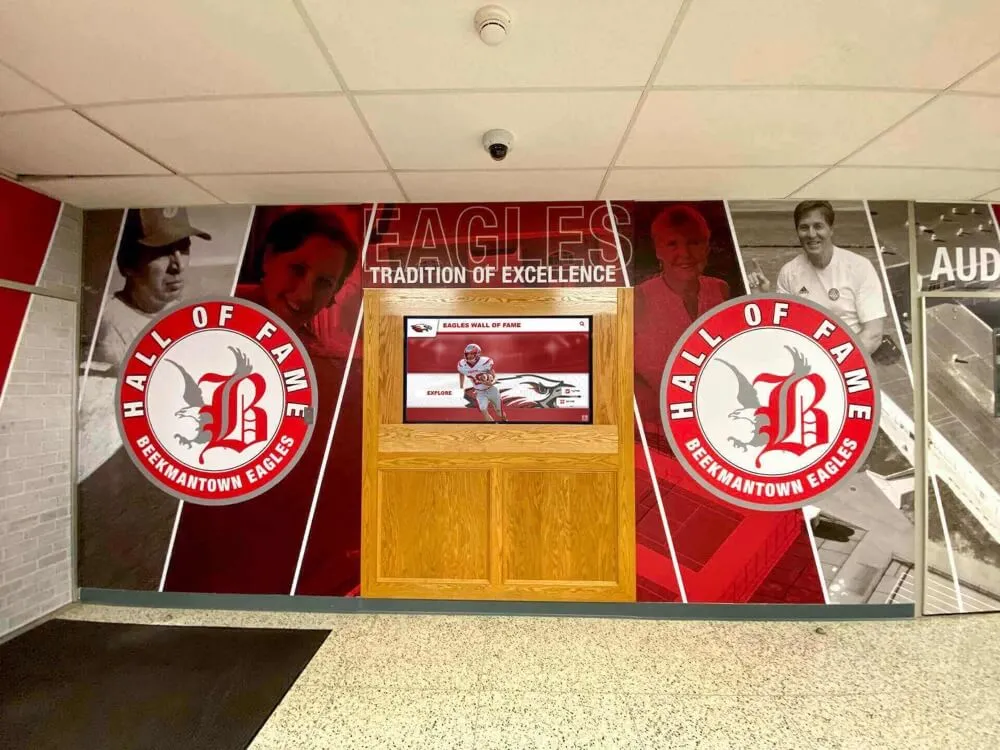
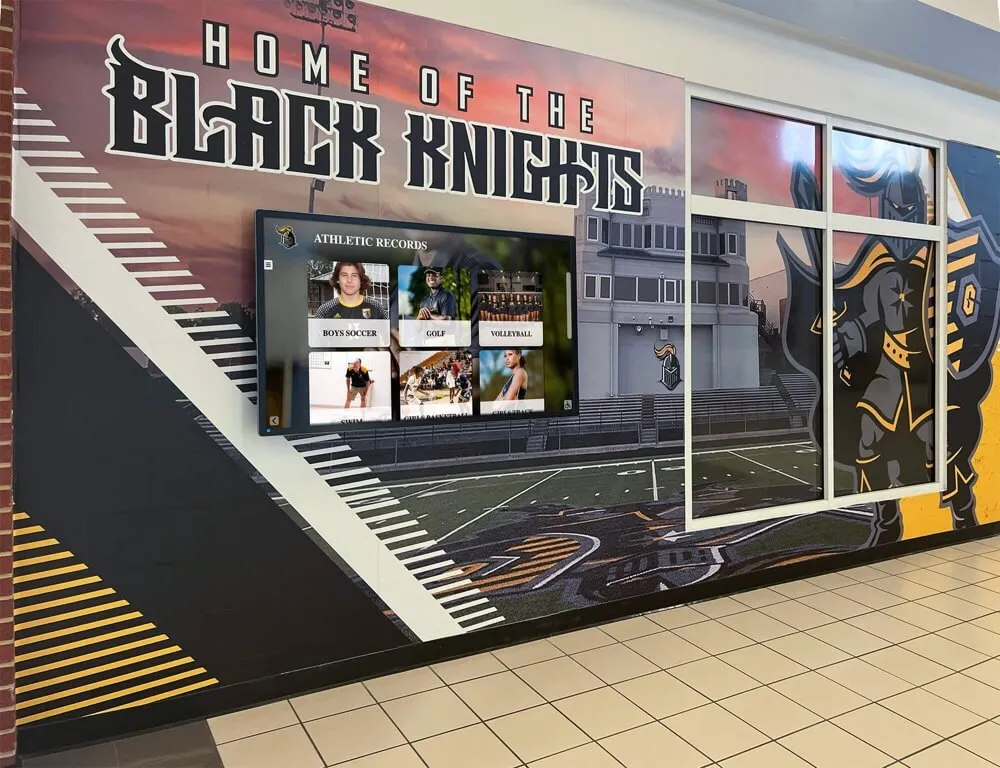
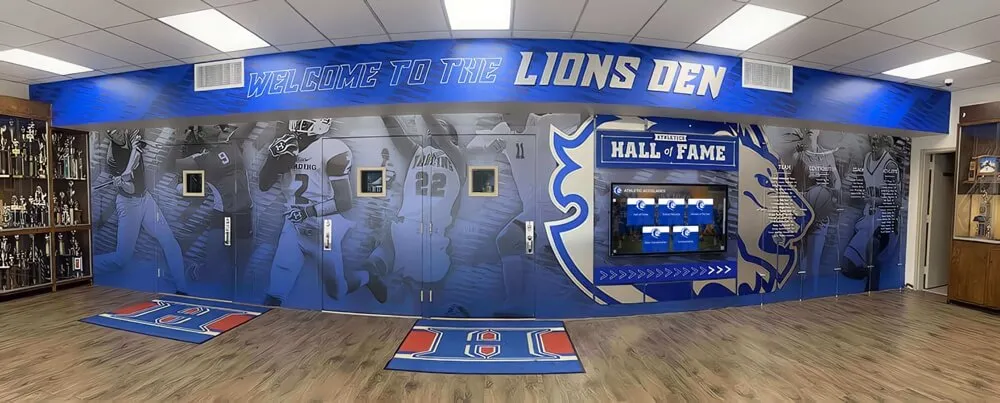
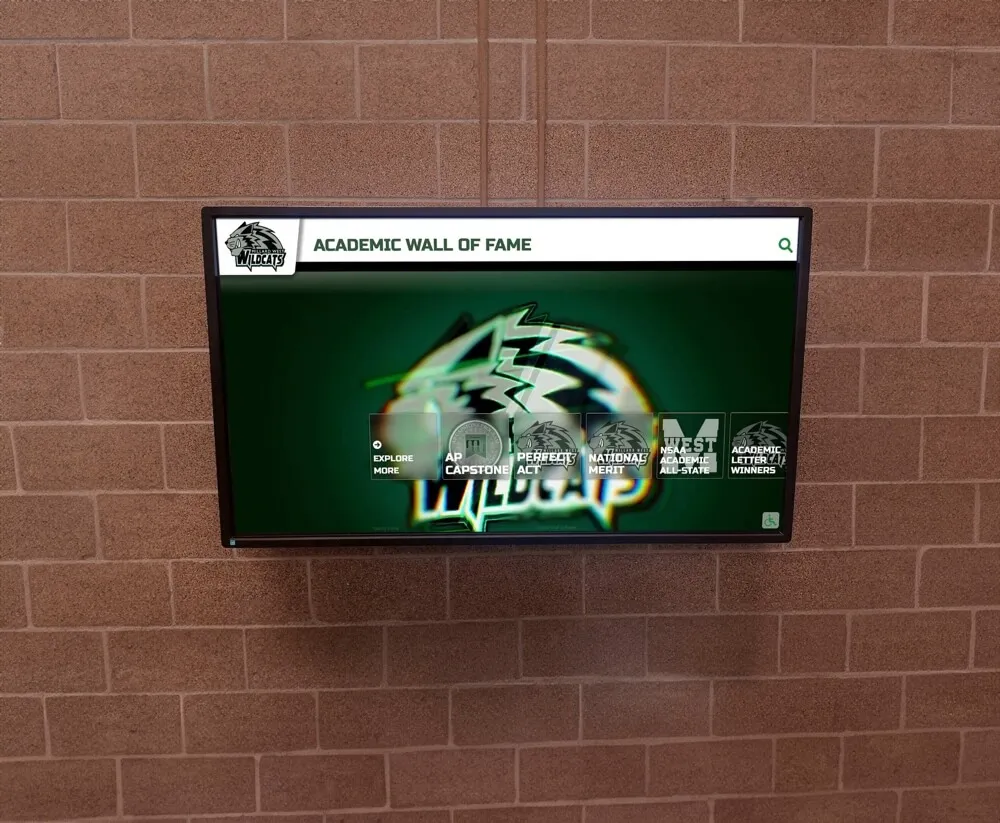
School entrance areas provide ideal settings for NHS ceremonies while permanent recognition displays celebrate inductees year-round
Selecting and Preparing Your Ceremony Venue
Venue selection significantly impacts ceremony atmosphere, logistical complexity, and family experience. While most chapters default to school auditoriums, thoughtful advisors consider alternatives that might better serve ceremony goals and community expectations.
Auditorium vs. Alternative Venue Considerations
Traditional auditorium ceremonies offer familiar settings with established sound systems, appropriate seating capacity, and clear performance spaces that support formal programs. Auditoriums signal ceremony importance through association with significant school events like graduations or award ceremonies while providing professional environment that families expect for milestone events.
However, auditoriums can feel impersonal for smaller induction cohorts, create acoustical challenges that make speeches difficult to hear clearly, offer limited flexibility for reception or social elements, and sometimes feel overly theatrical rather than celebratory for recognition events focused on individual students rather than performances.
Alternative venue options include school libraries (intimate, academically-appropriate settings), cafeterias or multipurpose rooms (flexibility for reception integration), outdoor courtyards or amphitheaters (weather-dependent but memorable), gymnasiums with appropriate decoration (larger capacity with reception space), or off-campus venues like community centers or partner organization facilities (special occasion feeling but additional coordination complexity).
When evaluating venues, consider: Does capacity comfortably accommodate inductees plus family guests? Is sound amplification available and effective? Does the space feel appropriately formal and special? Can you configure seating to ensure good sightlines? Is the location accessible to families and guests with mobility considerations? Does timing allow adequate setup and breakdown within building use policies?
Creating Appropriate Ceremony Atmosphere
Physical environment shapes ceremony experience regardless of venue selection. Strategic attention to atmosphere elements transforms standard spaces into settings worthy of NHS significance.
Lighting considerations dramatically affect ceremony feel. Where possible, use focused spotlighting on speakers and inductees while slightly dimming house lights to direct attention and create more formal atmosphere. Natural lighting through windows can enhance daytime ceremonies but may create glare on screens or displays requiring curtain control.
Decorative elements should reflect NHS identity and school colors while maintaining appropriate formality. Consider: NHS banners or signage, school flags or emblems, floral arrangements, backdrop banners with NHS seal, table runners in school colors, and professional staging that creates focal points without overwhelming the space.
Sound system quality represents non-negotiable requirement. Test microphones thoroughly before ceremonies, ensure backup microphones are available, brief all speakers on microphone techniques, and position speakers where families can clearly see them while maintaining excellent audio throughout the space.
Many schools now incorporate digital displays in ceremony spaces to show inductee photos, achievements, or inspirational content during pre-ceremony and transitions, creating professional atmosphere while celebrating individual students visually.
Designing Engaging NHS Induction Ceremony Programs
Ceremony program design requires balancing multiple objectives: honoring each inductee individually, maintaining audience engagement, conveying NHS values and expectations, creating memorable moments, and completing within reasonable timeframe that respects attendees’ schedules.
Essential Program Components
Successful NHS induction ceremonies typically incorporate these core elements in various sequences depending on local traditions and preferences:
Opening elements establish ceremony tone and purpose. Consider: processional music as inductees enter, welcoming remarks from advisor or administrator, explanation of NHS history and significance, acknowledgment of families and guests, and introduction of ceremony program flow.
Pillar presentations can take multiple forms: four brief speeches (by students, faculty, or community members) addressing scholarship, service, leadership, and character individually; single address incorporating all four pillars with symbolic representations; or video presentations featuring inductees reflecting on each pillar’s meaning in their experiences.
Individual inductee recognition represents the ceremony heart—the moment each student receives formal acknowledgment. Approaches include: calling each name with brief bio highlighting achievements (typically 20-30 seconds per student), having inductees approach stage to receive certificates and NHS pins or cards, lighting candles representing joining the NHS community, or incorporating photos displayed on screens as names are called.
For larger induction classes (30+ students), advisors must balance desire for individual recognition with ceremony length concerns. Consider grouping inductees by grade level, having them rise as group while still calling individual names, or featuring select inductee reflections representing the entire class.
Keynote or student reflections provide substance and inspiration. Options include: distinguished alumni keynote about how NHS membership influenced life trajectory, community leader addressing service and leadership, faculty member sharing observations about character and scholarship, or current NHS member delivering reflection on membership meaning and upcoming responsibilities.
Pledge administration formally welcomes inductees into NHS community. Have inductees stand, recite NHS pledge together (projecting words on screen for easy reading), and acknowledge their commitment to upholding NHS standards throughout their membership.
Certificate and membership card presentation formalizes induction through tangible recognition elements. Coordinate smooth flow that allows photo opportunities without excessive ceremony length—perhaps calling students by family groups or grade levels to receive materials from advisor, principal, or NHS officers.
Closing elements provide ceremony completion and transition. Consider: charge to inductees from advisor outlining expectations and opportunities, acknowledgments of ceremony participants and committee members, invitation to reception if applicable, and recessional music as families exit.
Maintaining Engagement Throughout
Ceremony pacing significantly impacts audience experience. Strategies for maintaining engagement include:
Vary presentation formats rather than endless speeches—alternate between single speakers and group activities, incorporate visual elements through slideshows or displays, include brief musical interludes or performances, and feature authentic student voices through reflections or readings.
Respect time constraints by establishing target ceremony length (45-60 minutes optimal for most audiences), practicing transitions to eliminate dead time, preparing all speakers with clear time limits, and having advisor serve as gracious but firm timekeeper.
Create emotional moments that transcend procedural requirements—incorporate surprise elements like teacher recognition of educators who influenced inductees, feature video messages from alumni NHS members, share impactful service project stories, or create visual tributes showing inductees’ school contributions throughout their academic careers.
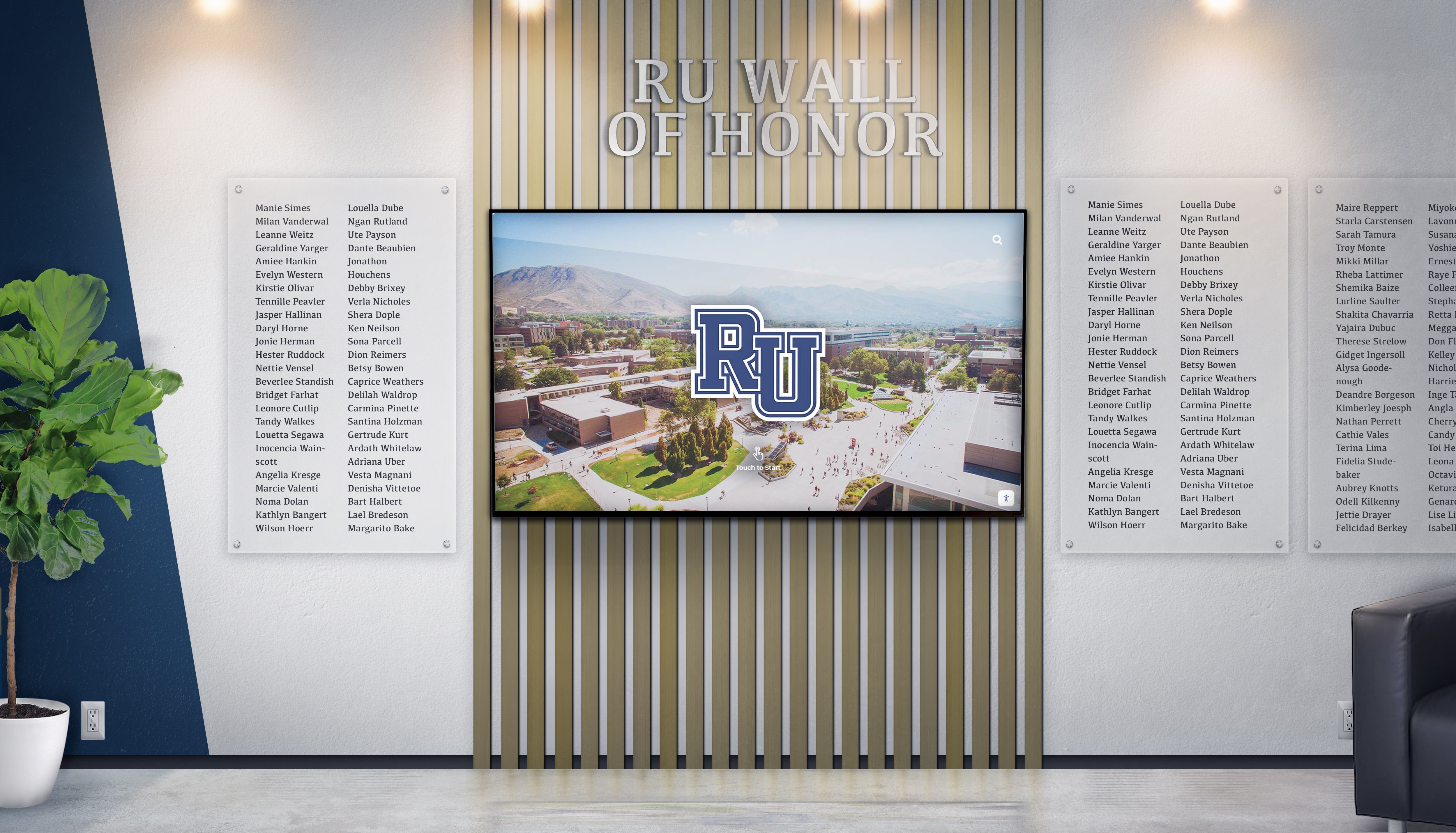
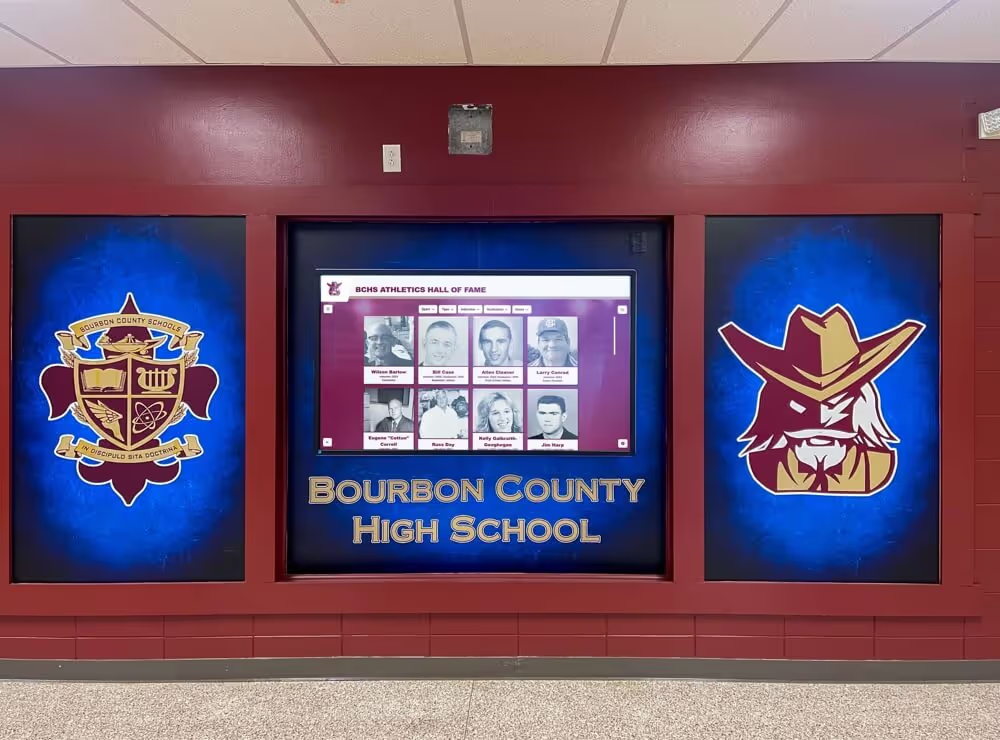
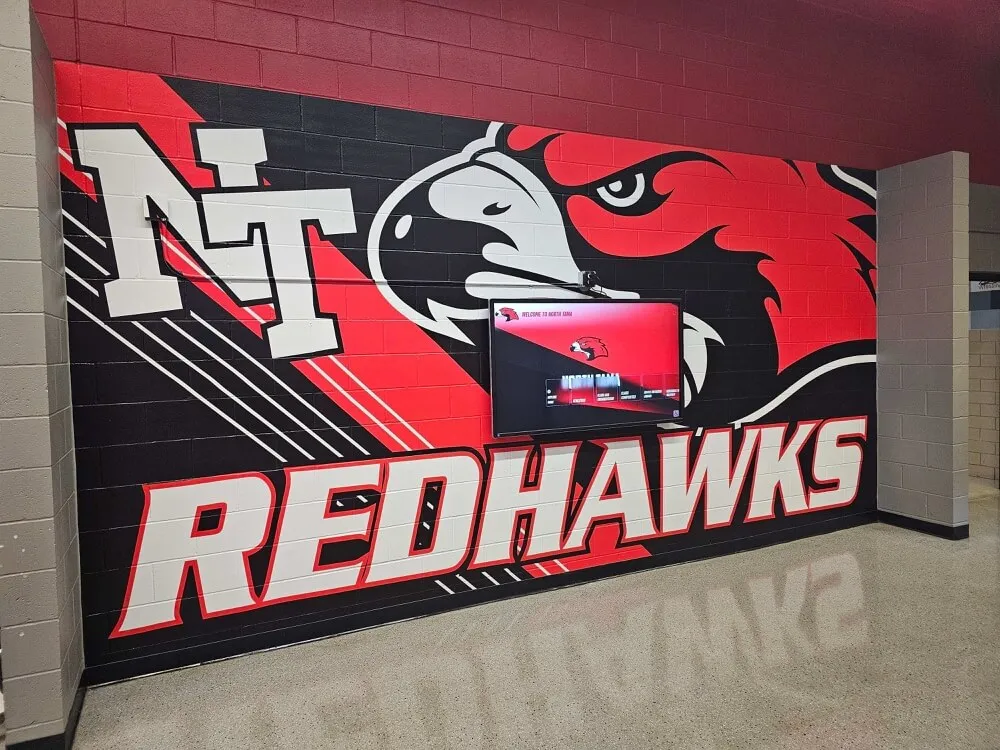
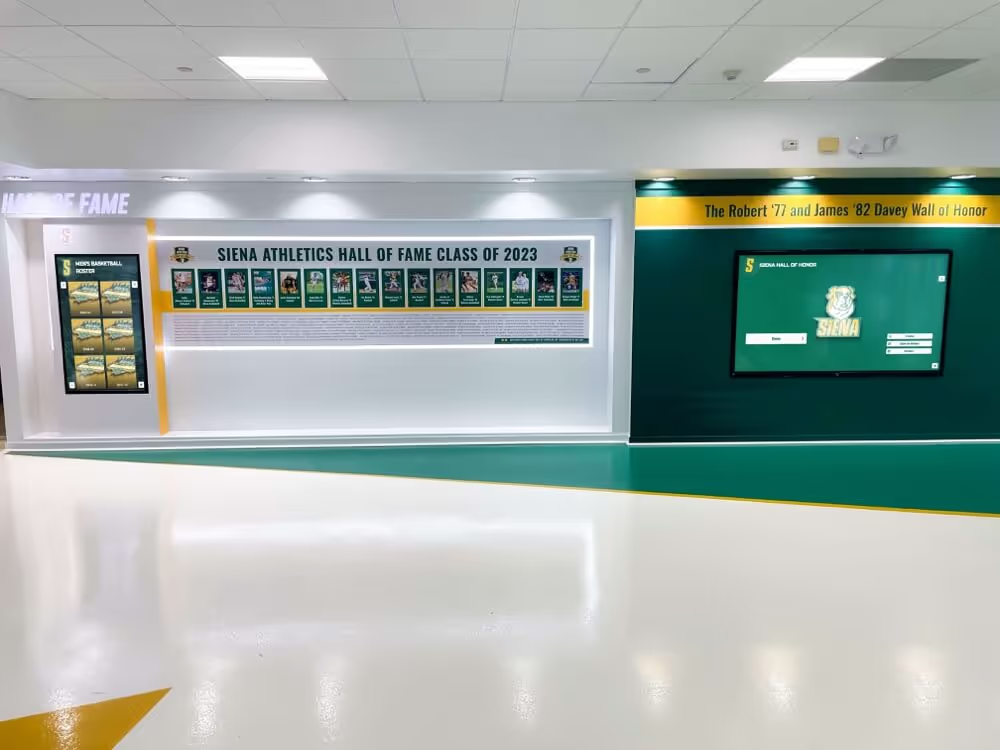
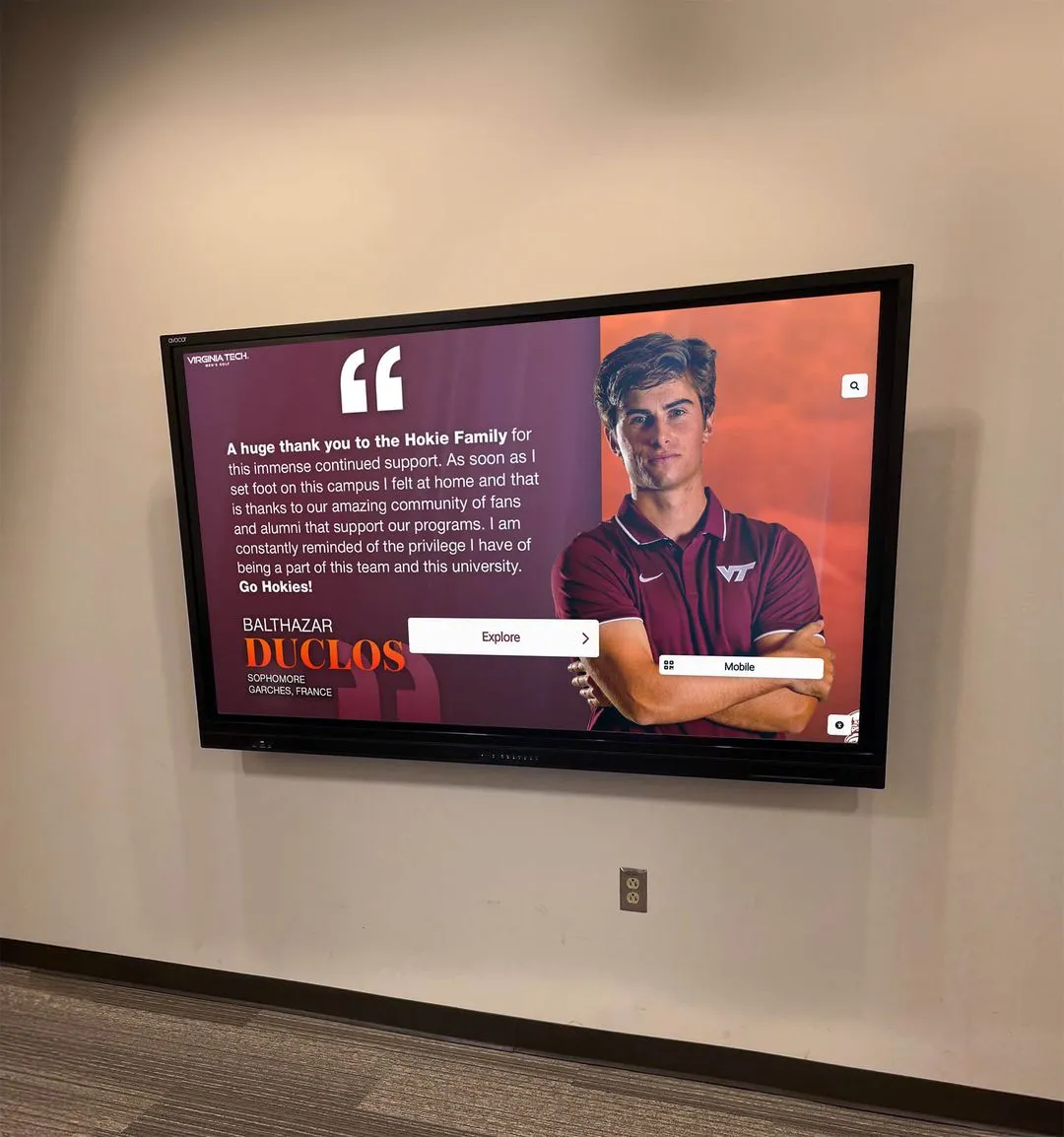
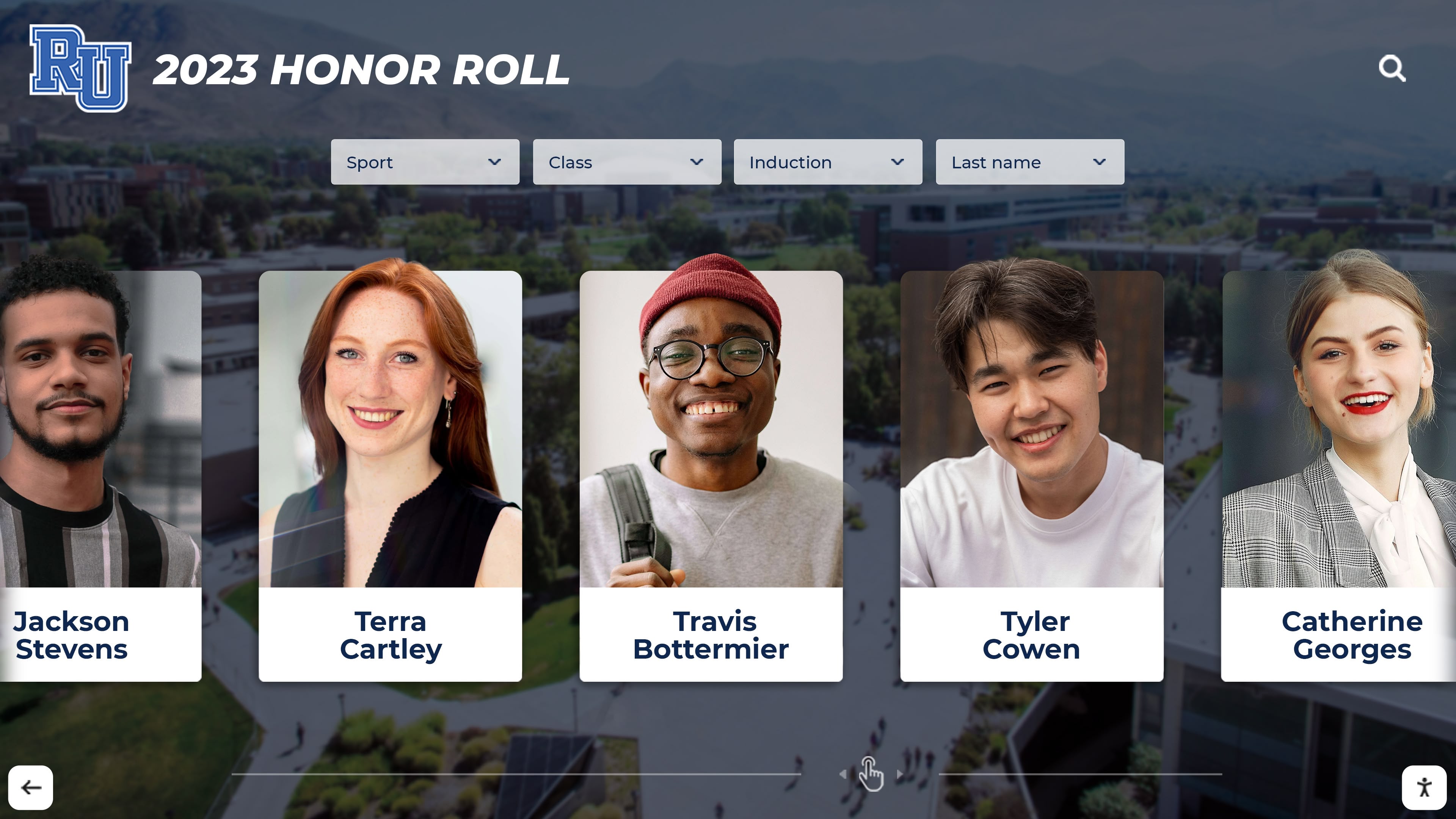
Recognition displays combining student portraits with campus imagery create connection between individual achievement and school community identity
Recognition Displays and Lasting Visibility
While ceremony day provides immediate recognition, thoughtful advisors extend NHS member visibility through permanent or semi-permanent displays that celebrate achievements year-round and inspire younger students toward academic excellence and service.
Traditional vs. Digital Recognition Approaches
Schools have historically recognized NHS members through hallway plaques, trophy case displays, or dedicated bulletin boards listing member names by year. These traditional approaches provide tangible, permanent recognition that connects current members with NHS history spanning decades.
However, traditional displays face significant limitations: physical space constraints that force choices about which years or members receive visibility, inability to include photos or detailed achievements, static nature that prevents updates when members graduate or new inductees join mid-year, and limited engagement potential beyond simple name reading.
Modern digital recognition solutions address these limitations while providing enhanced capabilities that align with contemporary student and family expectations. Interactive touchscreen displays allow schools to showcase unlimited NHS members across decades with professional photos, achievement highlights, service project descriptions, leadership roles, post-graduation paths, and personal reflections on NHS membership meaning.
Digital platforms offer several specific advantages for NHS recognition:
Unlimited capacity eliminates painful decisions about which members receive visibility—showcase every NHS inductee from your school’s history with equal prominence rather than featuring only recent years due to physical space limitations.
Rich multimedia content enables comprehensive recognition beyond names—include portraits, achievement timelines, service hour totals, leadership positions, scholarship recipients, college destinations, career paths for alumni, and video reflections recorded during induction ceremonies.
Instant updates allow recognition to evolve in real-time as members accumulate additional achievements, take on new leadership roles, complete significant service projects, or return as alumni to share career journeys—maintaining current, accurate information without physical reinstallation.
Interactive exploration engages viewers through search capabilities, filtering by graduation year or achievement type, related content connections linking NHS members who participated in common activities, and QR code access enabling family members to explore recognition from personal devices.
Ceremony integration provides natural connection between induction events and permanent recognition. Many schools position digital recognition displays near ceremony venues, allowing families to explore immediately after events while inductee portraits remain fresh in memory.
Strategic Display Placement and Content
Effective NHS recognition extends beyond technology selection to thoughtful decisions about placement and content that maximize visibility and impact.
High-traffic locations ensure maximum exposure for NHS member recognition. Ideal placements include main entrance lobbies where all visitors encounter displays, cafeteria areas where students gather daily, main hallways connecting academic wings, and near guidance offices where prospective inductees and families naturally congregate.
Content depth and authenticity determine whether recognition feels meaningful or perfunctory. Beyond basic biographical information, consider featuring: specific service project descriptions with photos and impact details, leadership role responsibilities and contributions, scholarship or award recognition, post-graduation updates showing college attendance and career paths, and inductee reflections about experiences that shaped their NHS qualification.
Regular content refreshes maintain display relevance and engagement. Update displays to feature inductees from milestone graduation years during reunion planning, highlight current member service initiatives during volunteer appreciation periods, showcase scholarship recipients as application seasons approach, and rotate featured profiles to ensure diverse representation across graduation years and achievement types.
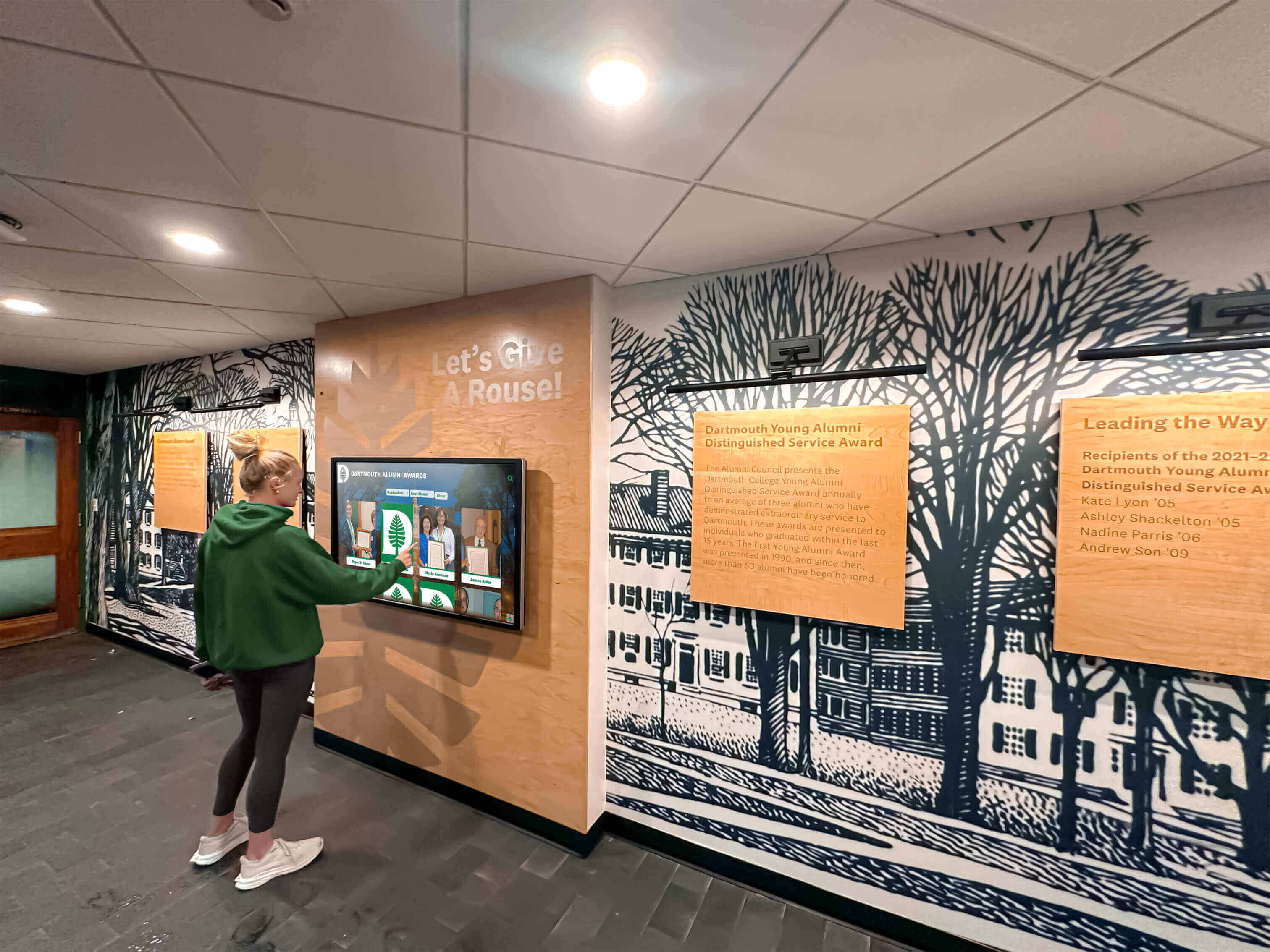
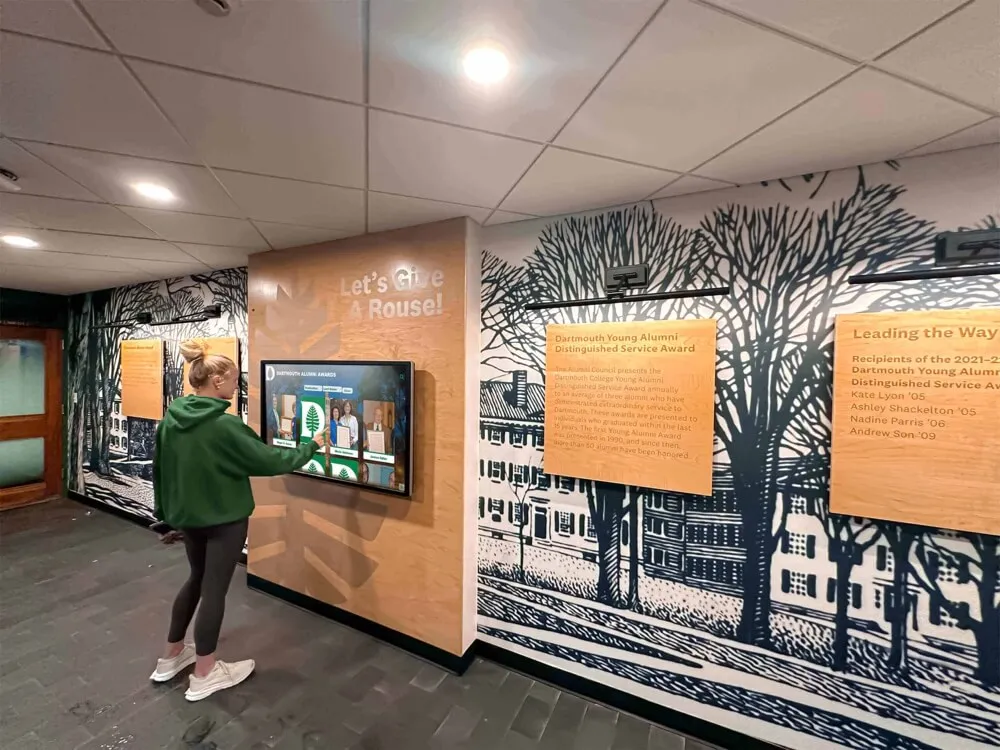
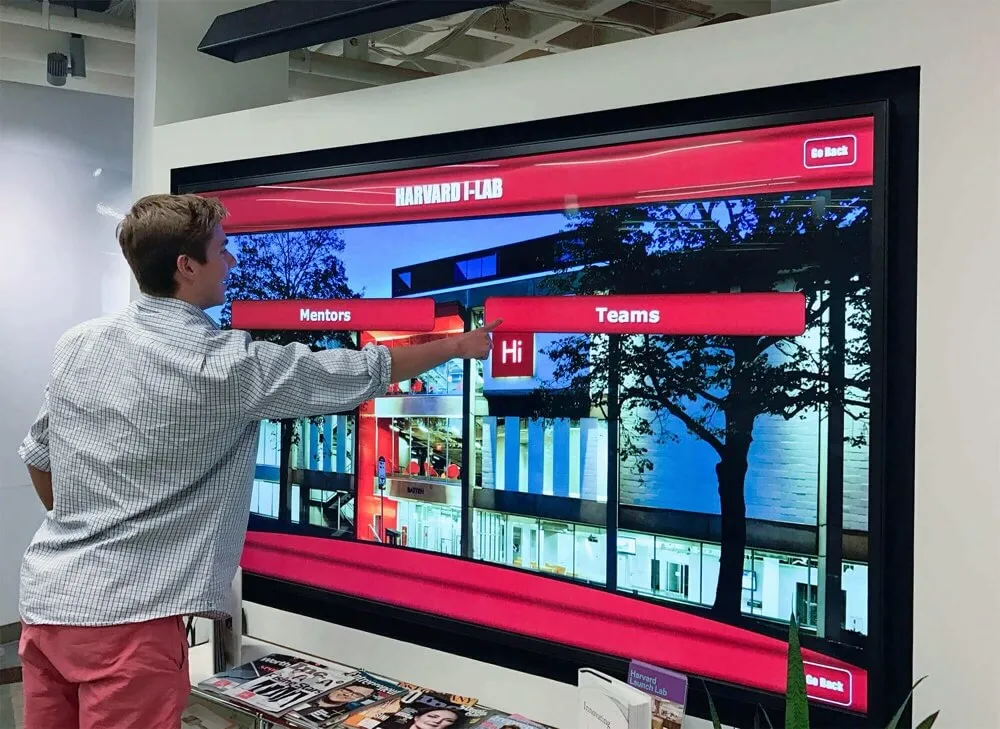
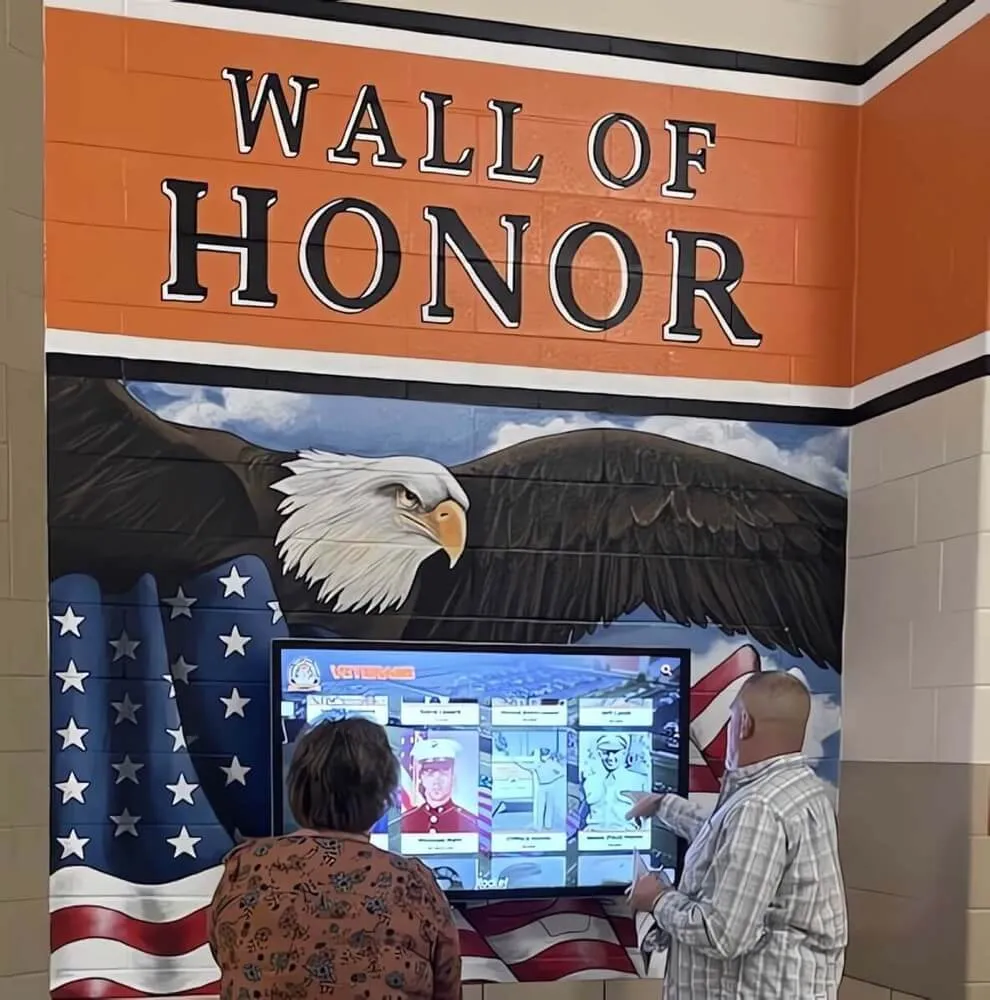
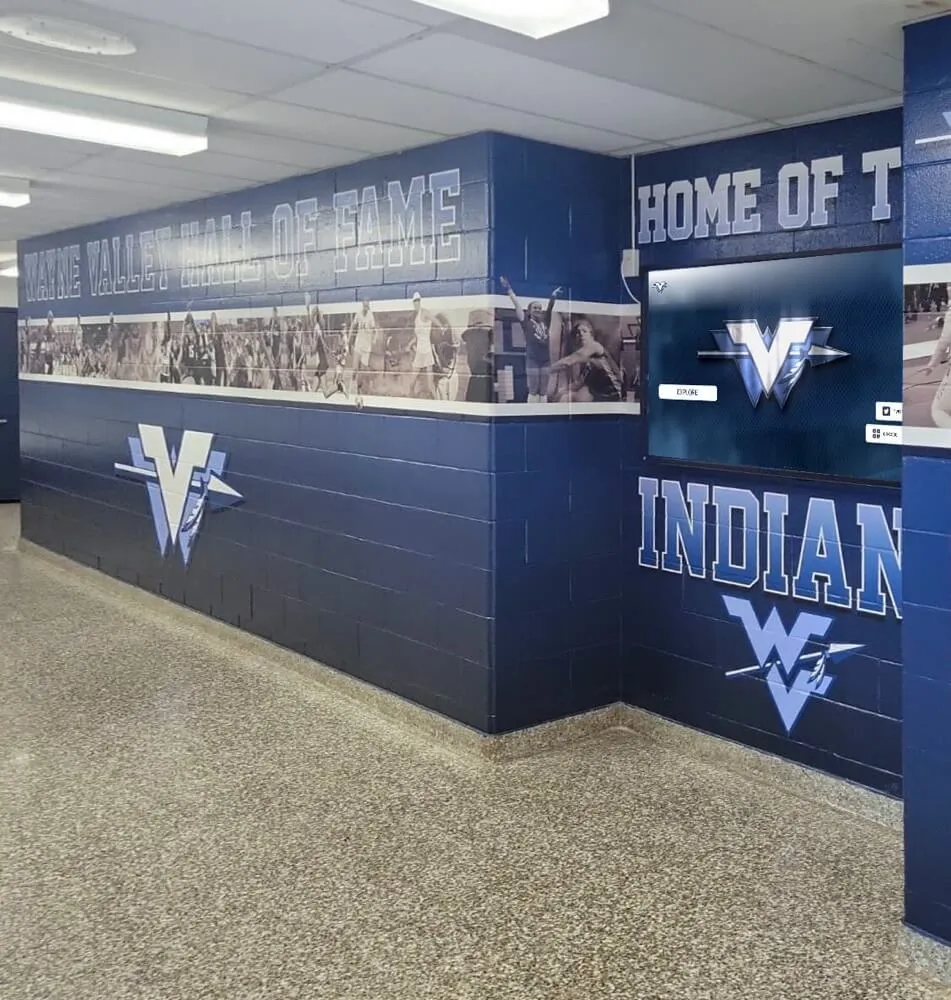
Interactive displays engage students with NHS member achievements and create aspirational examples of scholarship, service, leadership, and character
Post-Ceremony Follow-Through and Ongoing Member Engagement
Successful NHS advisors recognize that induction ceremonies represent beginnings rather than culminations—the start of active membership requiring ongoing engagement, meaningful activities, and continued recognition throughout students’ remaining high school years.
Immediate Post-Ceremony Communications
Within 48-72 hours following induction, send communications that sustain momentum and clarify expectations:
Thank you messages to families acknowledging their support and attendance, to ceremony speakers or participants expressing appreciation for contributions, to facilities staff or volunteers who enabled smooth execution, and to administrators who demonstrated support through presence or resources.
Member welcome packets providing comprehensive information about membership expectations, upcoming meeting schedules, service opportunity calendars, leadership roles and application processes, chapter social media or communication channels, and advisor contact information for questions.
Photo sharing through school communication channels, social media posts (with appropriate permissions), yearbook submissions, local media releases highlighting inductees and ceremony, and school event documentation that captures ceremony atmosphere and inductee recognition moments.
Sustaining Member Engagement Throughout Membership
Active, engaged NHS chapters require intentional strategies that maintain member involvement beyond induction ceremony momentum:
Meaningful service projects that address genuine community needs rather than token volunteer activities provide purpose and connection. Successful chapters involve members in project selection, leadership roles, and impact assessment—creating ownership rather than simple participation requirements.
Leadership development opportunities through officer elections, committee roles, mentorship programs pairing senior and junior members, and skill-building workshops addressing public speaking, project management, or advocacy strategies prepare members for college and career leadership.
Regular gatherings beyond business meetings—social events, recognition ceremonies for milestone achievements, year-end celebrations, or informal gatherings build community and relationships that transform NHS from résumé line to meaningful affiliation.
Ongoing recognition throughout membership years rather than only at induction. Celebrate members who demonstrate exceptional service, leadership growth, or character through spotlight features on school announcements, digital display updates highlighting specific achievements, recommendation letters for college applications, and formal recognition at school-wide events.
Addressing Common NHS Induction Ceremony Challenges
Even experienced advisors encounter recurring challenges in ceremony planning and execution. Proactive strategies address these common issues before they create significant problems.
Managing Large Induction Classes
Schools with large NHS chapters (50+ inductees) face particular challenges in creating ceremonies that honor each individual without extending to unsustainable lengths.
Strategies include: Grouping approaches where inductees are recognized in clusters by grade level, alphabetical sections, or feeder middle schools while still calling individual names; Streamlined recognition where each inductee receives 10-15 seconds rather than detailed biographical readings; Pre-ceremony receptions where families enjoy social time before formal program, making longer ceremonies more tolerable; Split ceremonies inducting juniors and seniors in separate events to reduce individual ceremony size.
Critically, resist pressure to eliminate individual name recognition entirely—students and families expect personal acknowledgment that generic group induction cannot provide. Find efficiency in program elements surrounding individual recognition rather than cutting recognition itself.
Balancing Formality with Authenticity
NHS ceremonies require appropriate gravitas befitting academic achievement and organizational prestige, while avoiding stiff, tedious formality that feels disconnected from student experiences and contemporary communication styles.
Successful balance comes through: Student voice integration featuring authentic inductee reflections rather than only adult speeches, Contemporary music selections alongside traditional processional options, Visual storytelling through photos and videos showing real service work and leadership rather than abstract speeches about these concepts, and Genuine emotion acknowledging the hard work, growth, and challenges behind achievements rather than simply listing credentials.
Accommodating Diverse Family Situations
NHS advisors must thoughtfully navigate family circumstances including divorced or separated parents with conflicting attendance, students whose families cannot attend due to work schedules or distance, economic disparities affecting reception participation or attire expectations, and varying cultural traditions around achievement recognition.
Approaches include: Clear, consistent guest policies established early and applied uniformly, Video recording and streaming enabling absent families to experience ceremony remotely, Flexible attire guidelines setting appropriate standards while avoiding economic barriers, Culturally responsive planning consulting with diverse student families about ceremony elements that welcome all traditions, and Sensitivity to individual circumstances offering private recognition alternatives when public ceremony participation creates genuine hardship.
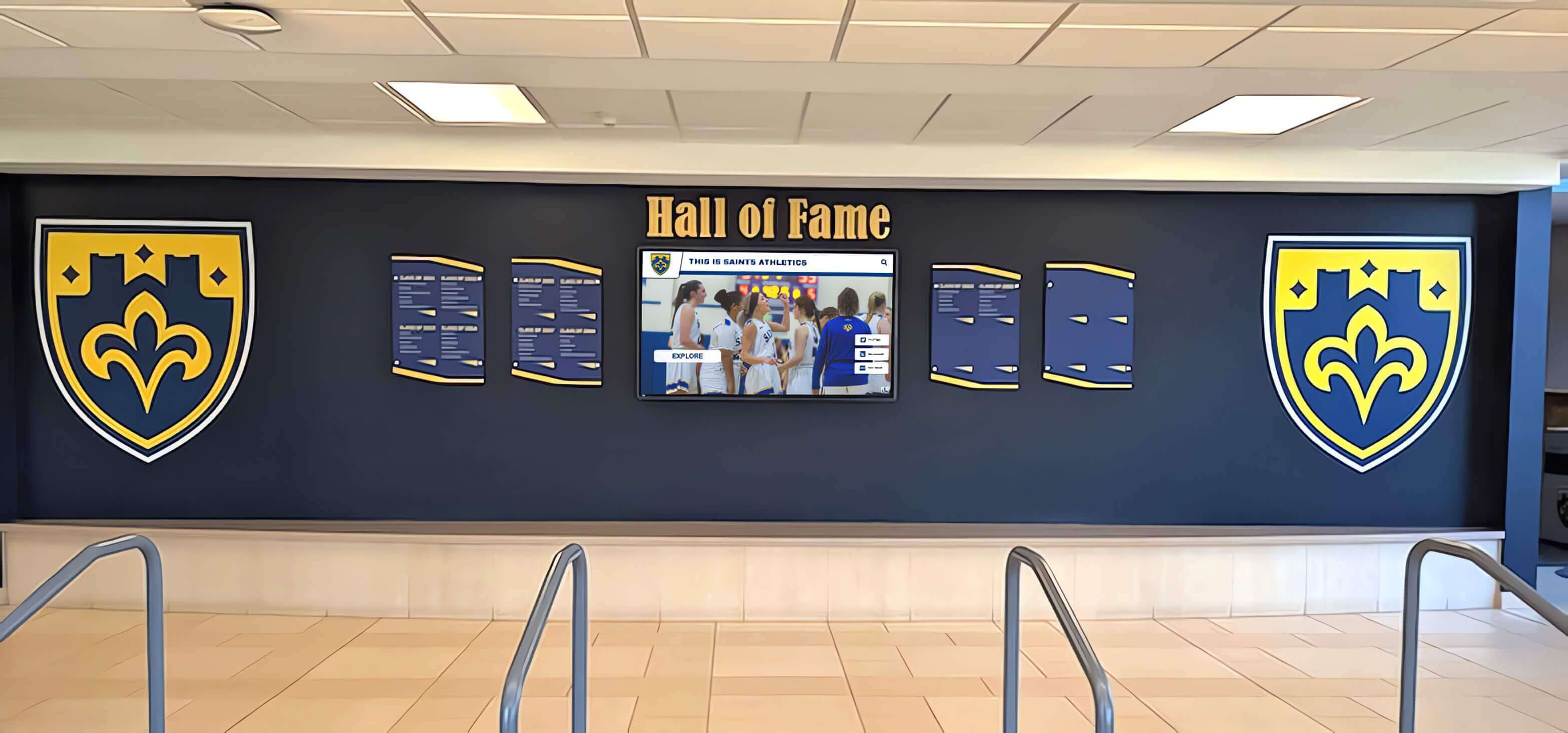
Combining traditional recognition elements with modern technology creates ceremonies and displays that honor both NHS heritage and contemporary expectations
Measuring Ceremony Success and Continuous Improvement
Thoughtful advisors evaluate ceremony effectiveness and systematically improve planning and execution across induction cycles rather than repeating the same approach indefinitely regardless of results.
Post-Ceremony Evaluation Methods
Gather feedback through multiple channels to understand ceremony strengths and improvement opportunities:
Family surveys sent 1-2 weeks after ceremony asking about overall satisfaction, program length appropriateness, venue suitability, communication clarity, and specific memorable elements. Keep surveys brief (5-7 questions maximum) to maximize response rates while gathering actionable insights.
Inductee reflections captured through brief written responses or small group discussions about ceremony experience, what felt most meaningful, what felt unnecessary or uncomfortable, and how ceremony compared to expectations. Student perspective often differs significantly from adult assumptions.
Committee debriefs involving all ceremony planning participants to discuss logistics that worked well, challenges encountered, timeline adequacy, and process improvements for future cycles. Capture insights immediately while details remain fresh rather than waiting until next induction planning begins.
Comparison to prior years examining attendance levels, budget actuals versus projections, timeline adherence, and qualitative feedback patterns to identify trends, persistent issues requiring structural changes, and successful innovations worth maintaining.
Building Ceremony Traditions
Sustainable NHS programs balance consistency that creates meaningful traditions with evolution that prevents stagnation and responds to changing contexts.
Identify signature elements that define your chapter’s ceremony identity—perhaps candlelighting rituals, specific music selections, keynote traditions, symbolic objects passed between induction classes, or recognition formats that families anticipate and value. Protect these core traditions while remaining open to evolution in surrounding elements.
Involve student leadership in ceremony planning and evaluation to ensure programs reflect member perspectives and preferences rather than only adult assumptions about meaningful recognition. NHS members preparing for induction can offer valuable insights about ceremonyelements that feel authentic versus performative.
Document institutional knowledge through detailed ceremony planning guides, timeline templates, vendor contacts, program archives, and evaluation summaries that enable advisor transitions, inform new committee members, and preserve successful approaches across leadership changes.
Conclusion: Creating NHS Induction Ceremonies That Honor Excellence
National Honor Society induction ceremonies represent pivotal moments in students’ academic journeys—formal recognition that achievement, character, service, and leadership matter in school communities and beyond. When planned with care, executed with attention to detail, and extended through lasting recognition, these ceremonies create memories that sustain members throughout remaining high school years and into college, careers, and adult civic engagement.
The most successful ceremonies balance NHS traditions with authentic connection to local school culture, honor individual inductees while celebrating collective achievement, maintain appropriate formality while feeling accessible and genuine, and serve as starting points for active, engaged membership rather than culminating recognition events.
As you plan your chapter’s next induction ceremony, remember that perfection matters less than thoughtfulness—ceremonies that demonstrate genuine care for students, respect for families, and commitment to NHS values create meaningful experiences regardless of budget constraints, venue limitations, or planning challenges.
Modern recognition solutions that extend beyond ceremony day provide lasting visibility and engagement. Interactive digital displays ensure that NHS member achievements receive year-round celebration rather than single-evening acknowledgment, inspire younger students toward academic excellence and service, and connect current members with decades of chapter history and tradition.
Ready to enhance your school’s NHS recognition beyond ceremony day? Explore how touchscreen recognition displays provide unlimited capacity for showcasing inductees with professional photos, achievement highlights, and interactive content that engages students, families, and visitors year-round. Request a custom design consultation to discover recognition solutions that honor your chapter’s unique traditions and values.