Intent: Demonstrate how digital touchscreen displays provide cost-effective, flexible alternatives to expensive traditional gym banners while offering superior recognition capacity, dynamic content, and engaging visual experiences.
Traditional gym banners have celebrated athletic achievement for generations—vinyl championship banners hanging from rafters, retired jersey displays honoring legendary players, and achievement recognition stretched across gymnasium walls. Yet these physical banners carry significant costs beyond initial production: limited space forcing difficult choices about what achievements receive visibility, expensive replacement when updating information or correcting errors, fading and damage requiring periodic reproduction, and static presentations that communicate minimal information beyond names and dates.
Athletic programs face mounting pressure to recognize more achievements across expanding sports offerings while working within constrained budgets and limited physical space. A school celebrating 50 years of athletics might have 100+ championship teams, 500+ all-conference athletes, and countless record-holders deserving recognition—yet gymnasium ceiling space accommodates perhaps 30-40 banners before visual clutter overwhelms the environment. Traditional banner programs force artificial scarcity, requiring selection committees to determine which achievements “deserve” permanent recognition while relegating others to storage boxes or forgotten archives.
This comprehensive guide explores how interactive digital displays transform athletic recognition by eliminating space constraints, reducing long-term costs, enabling rich multimedia storytelling, and creating engaging experiences that inspire current athletes while honoring past excellence through modern design frameworks purpose-built for celebration.
Athletic directors implementing digital recognition alternatives consistently report that while initial investment exceeds single banner costs, the unlimited capacity, instant updates, comprehensive storytelling, and engaging interactivity deliver value impossible to achieve with traditional physical banners—transforming recognition from space-constrained documentation into inspiring digital experiences celebrating every deserving achievement.

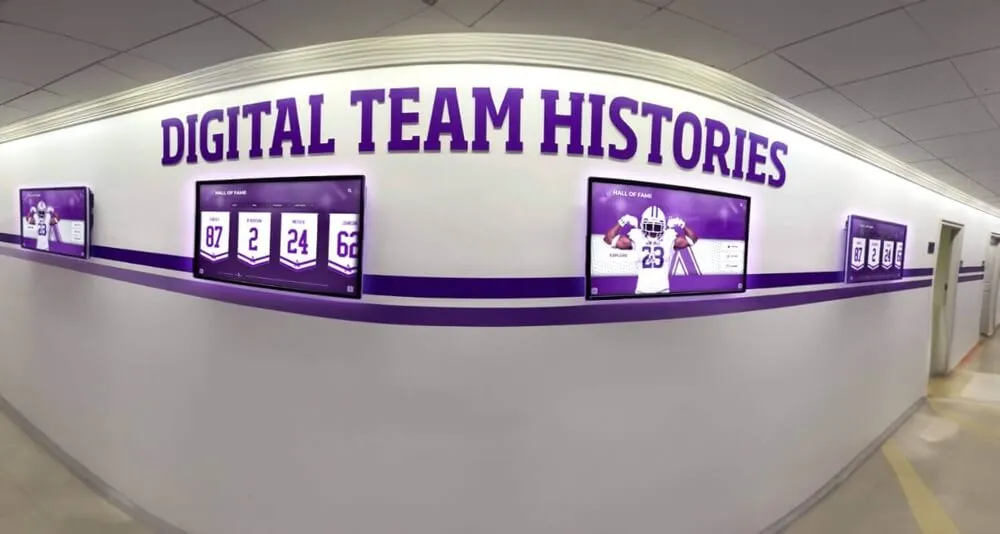
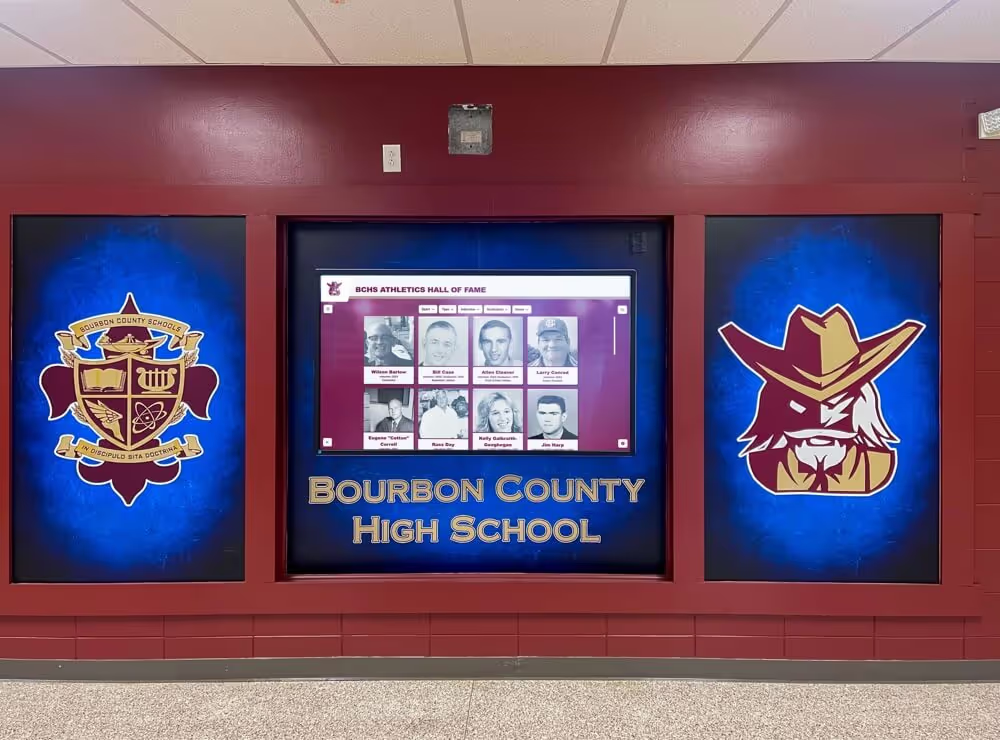
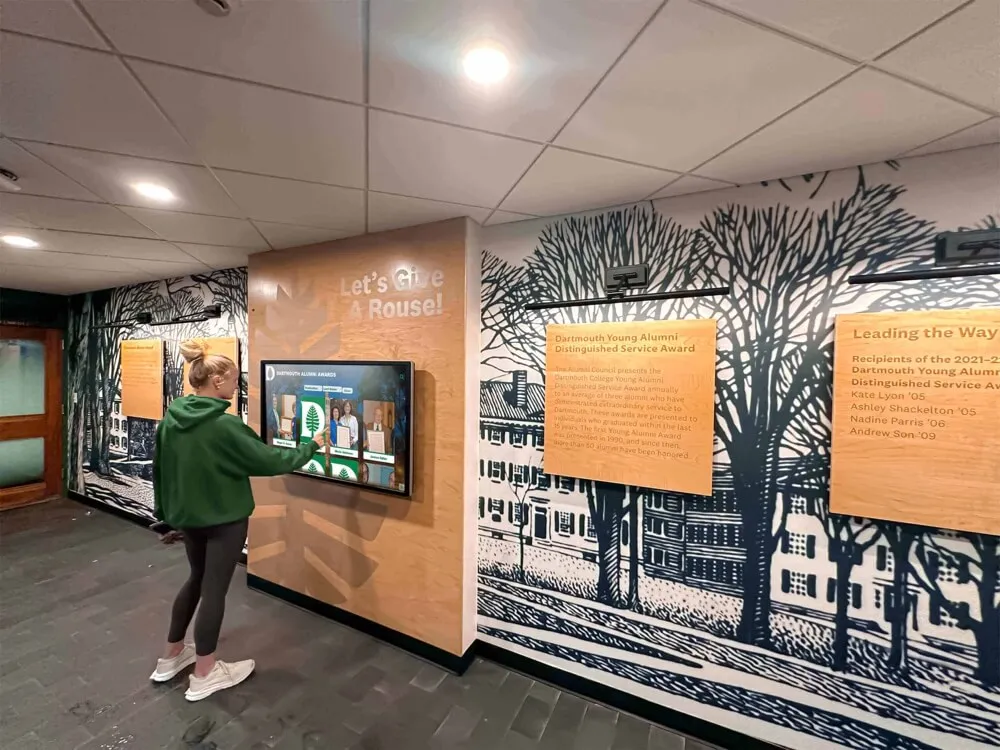
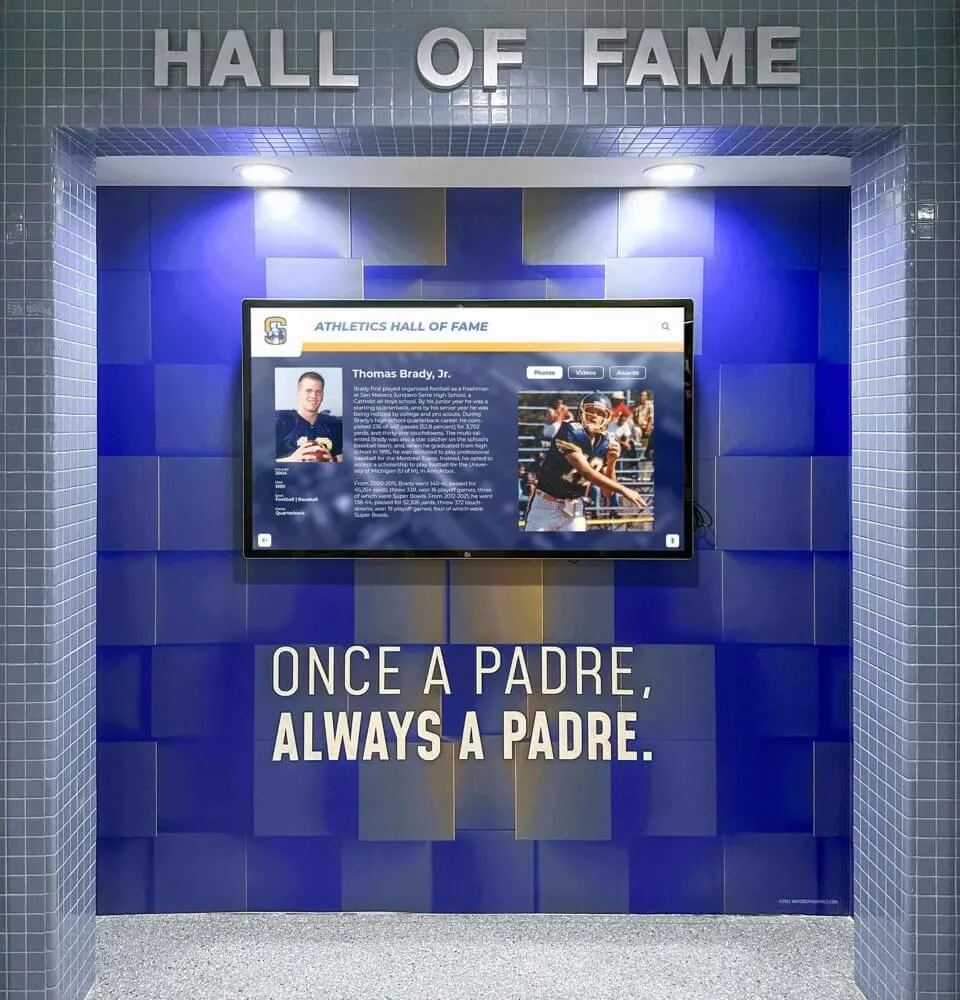
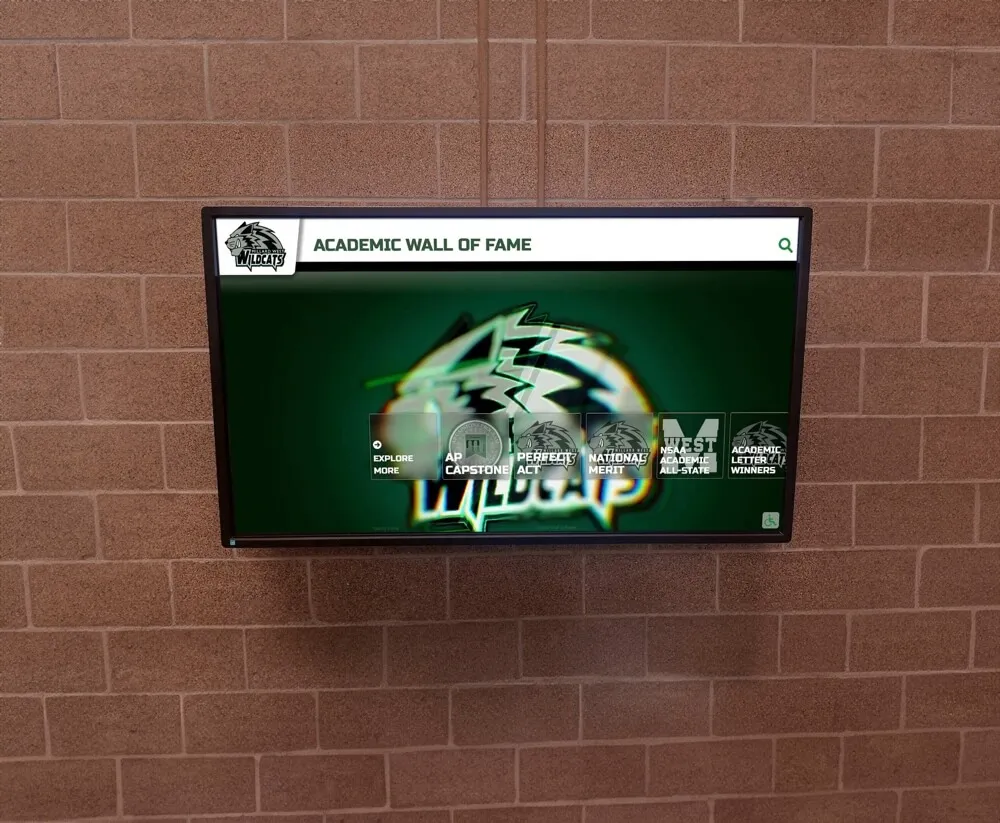
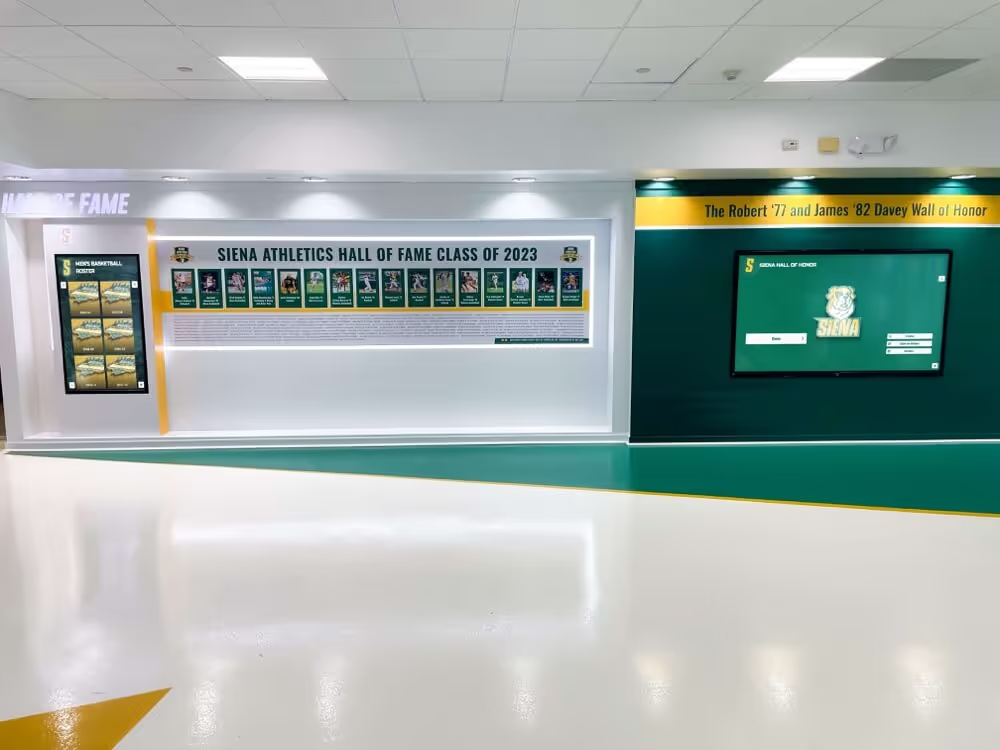
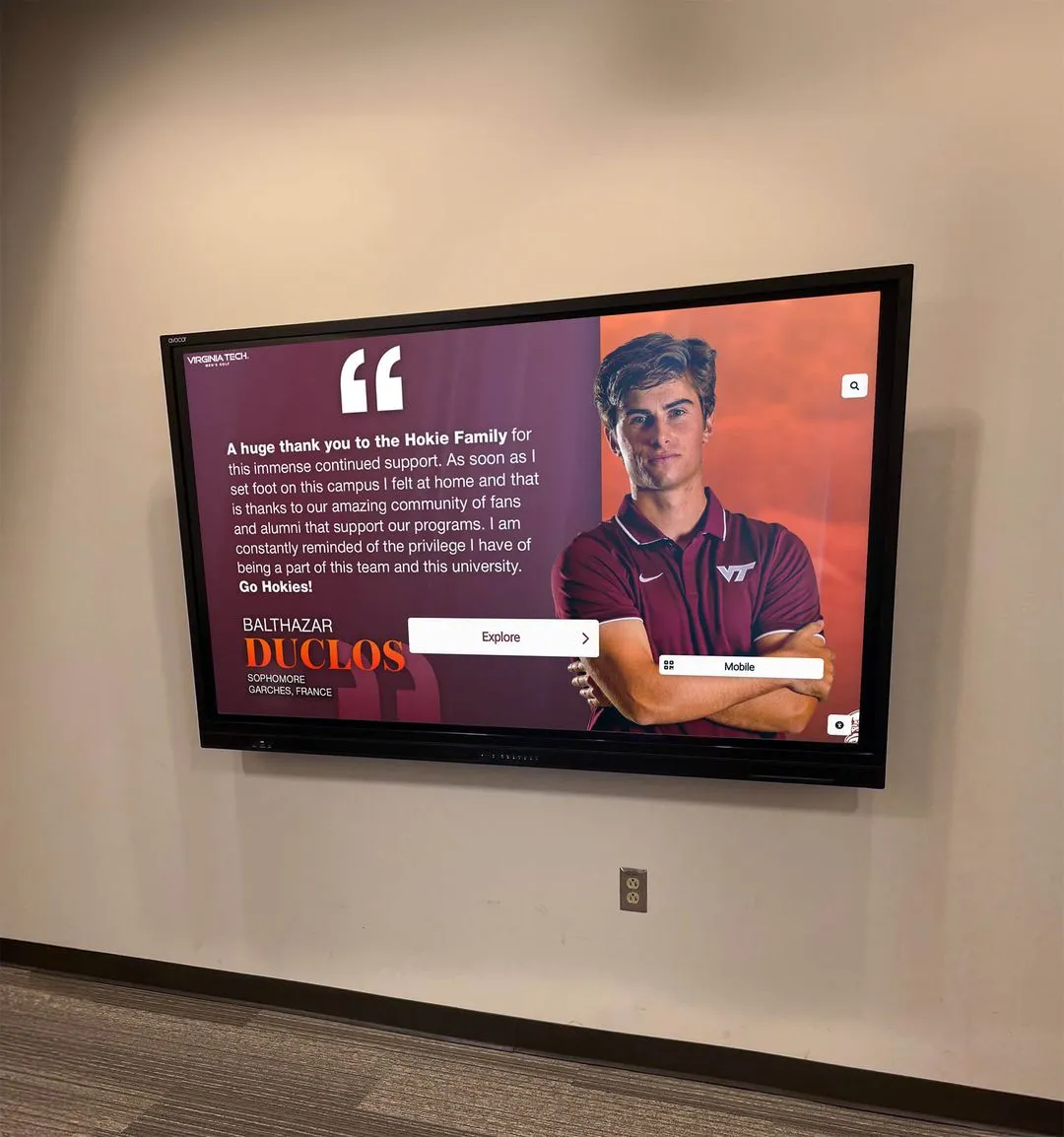
Modern athletic facilities blend traditional banner aesthetics with digital displays providing unlimited recognition capacity
Understanding the True Cost of Traditional Gym Banners
Before exploring alternatives, understanding the complete economic and practical implications of traditional banner programs provides essential context for evaluating modern solutions.
Initial Production Costs and Budget Impact
Standard vinyl gym banners celebrating championships or retiring jerseys typically cost $150-400 each depending on size, print quality, materials, and graphic complexity. A modestly successful athletic program adding 3-5 new championship banners annually faces $600-2,000 in recurring banner production costs. Over a 10-year period, this accumulates to $6,000-20,000 in banner expenses alone—before accounting for installation labor, storage of outdated banners, or replacement of damaged displays.
Premium banner options incorporating sewn appliqué letters, reinforced grommets, UV-resistant materials, and professional graphics can easily exceed $500-800 per banner. Programs valuing high-quality visual presentation find traditional banner programs consuming substantial portions of limited athletic recognition budgets.
Beyond direct production costs, banner programs incur hidden expenses including graphic design fees for creating print-ready artwork, shipping charges for banner delivery, installation hardware like cables, anchors, and mounting systems, and periodic replacement addressing fading, tearing, or outdated information. These supplementary costs frequently add 30-50% to nominal banner prices.
Space Limitations and Recognition Bottlenecks
Physical gymnasium ceiling space represents the ultimate constraint limiting traditional banner programs. A standard high school gym measuring 84 feet by 50 feet might accommodate 30-40 ceiling-mounted banners before visual overcrowding diminishes individual banner impact. Larger programs celebrating decades of excellence quickly exhaust available space, forcing difficult decisions about which achievements receive permanent recognition.
This artificial scarcity creates uncomfortable situations where recent championships receive prominent display while older achievements get removed to storage, where less prominent sports struggle for representation alongside high-profile programs, and where individual achievement recognition (all-state athletes, record-holders, hall of fame inductees) becomes impossible due to space prioritization for team championships.
Many athletic directors report that space constraints, not achievement quality, dictate banner program inclusion—a frustrating reality undermining comprehensive recognition goals.
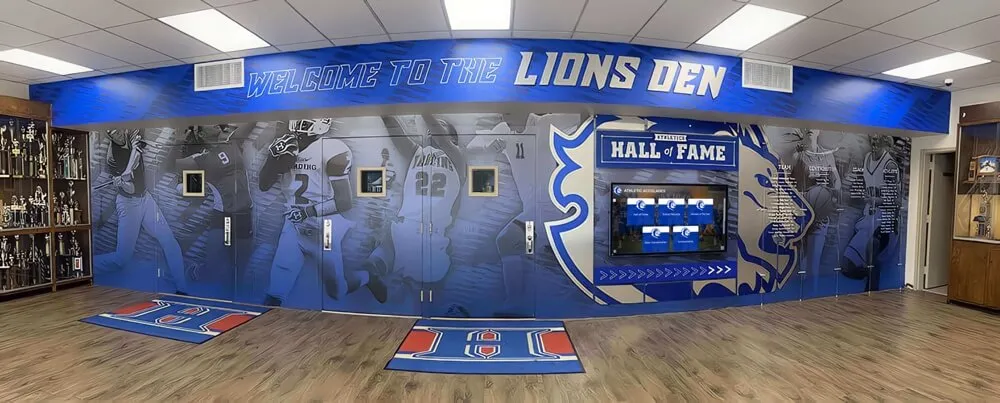
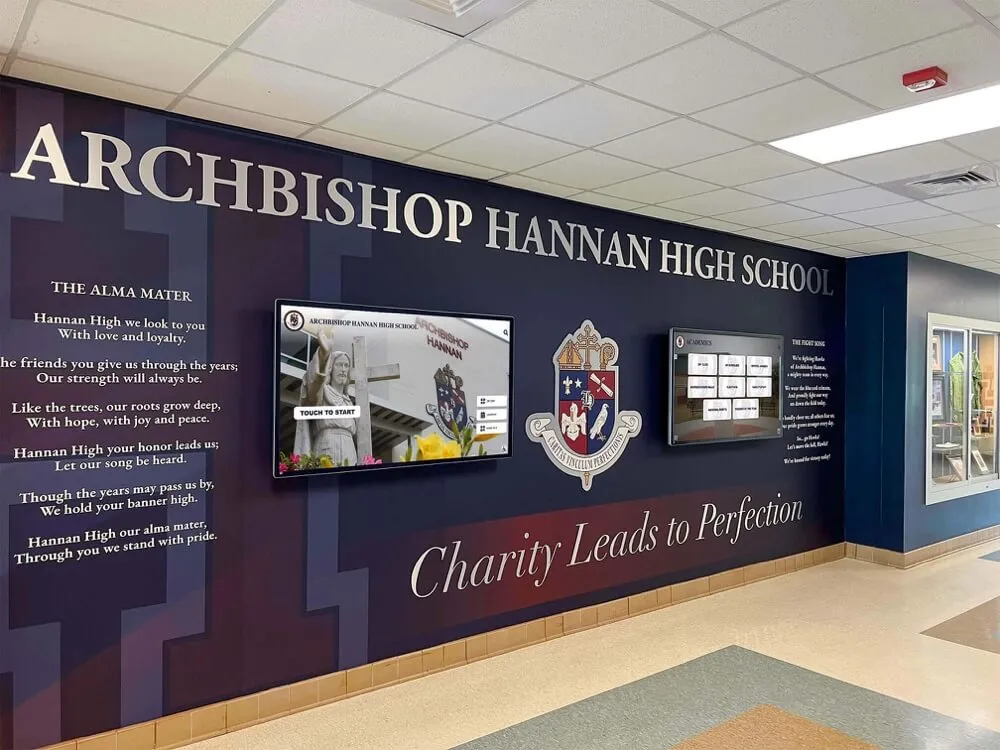
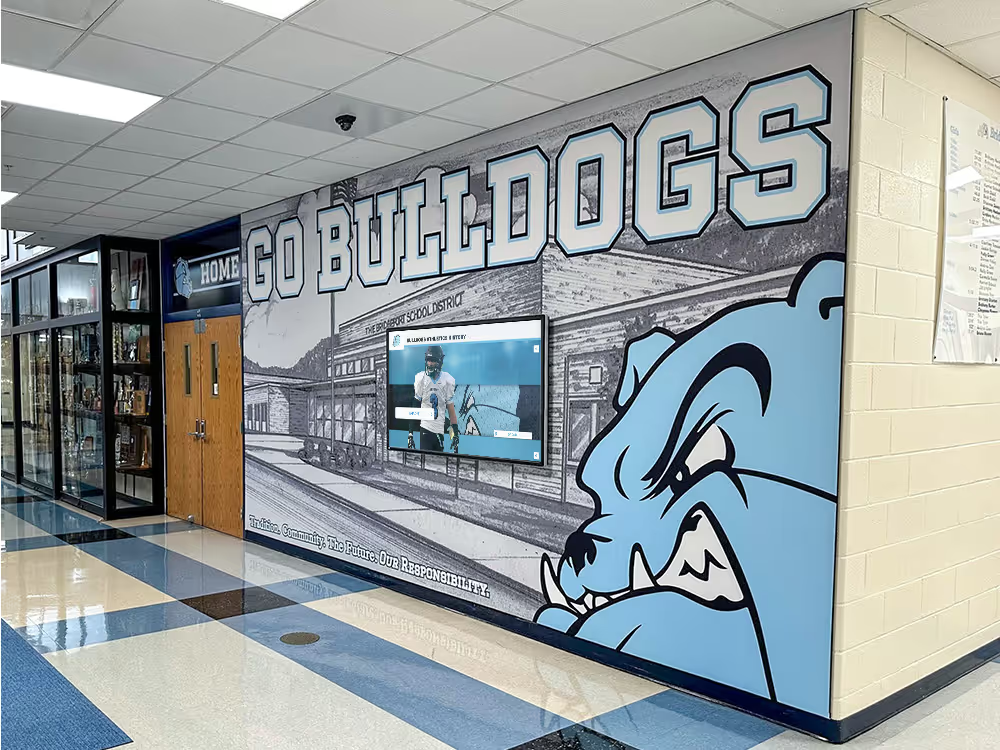
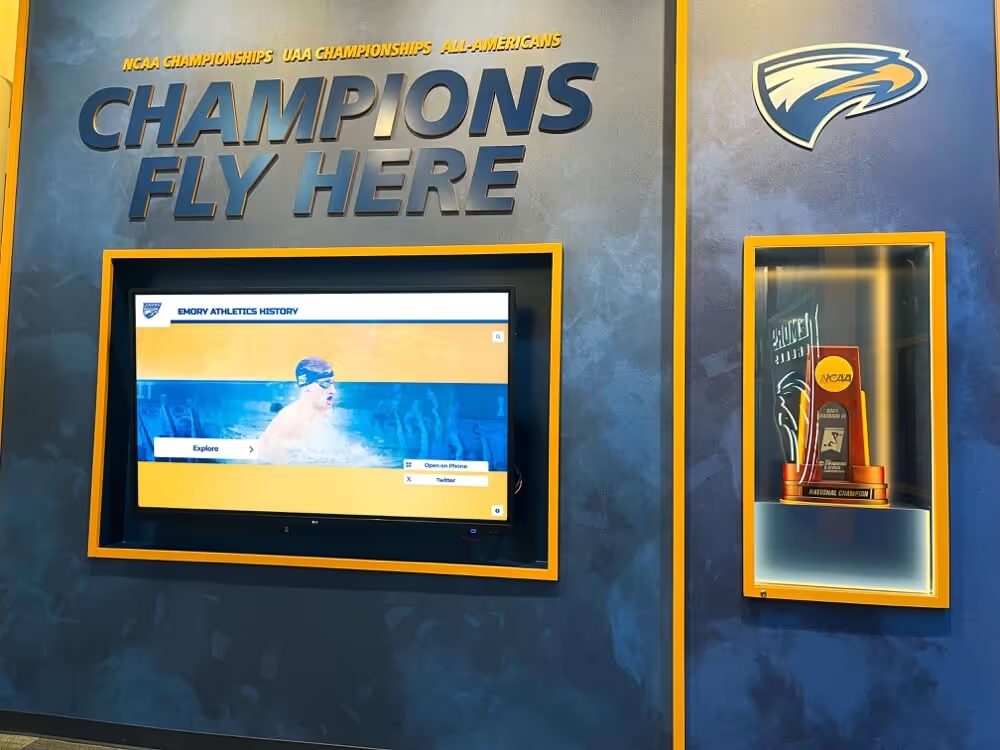
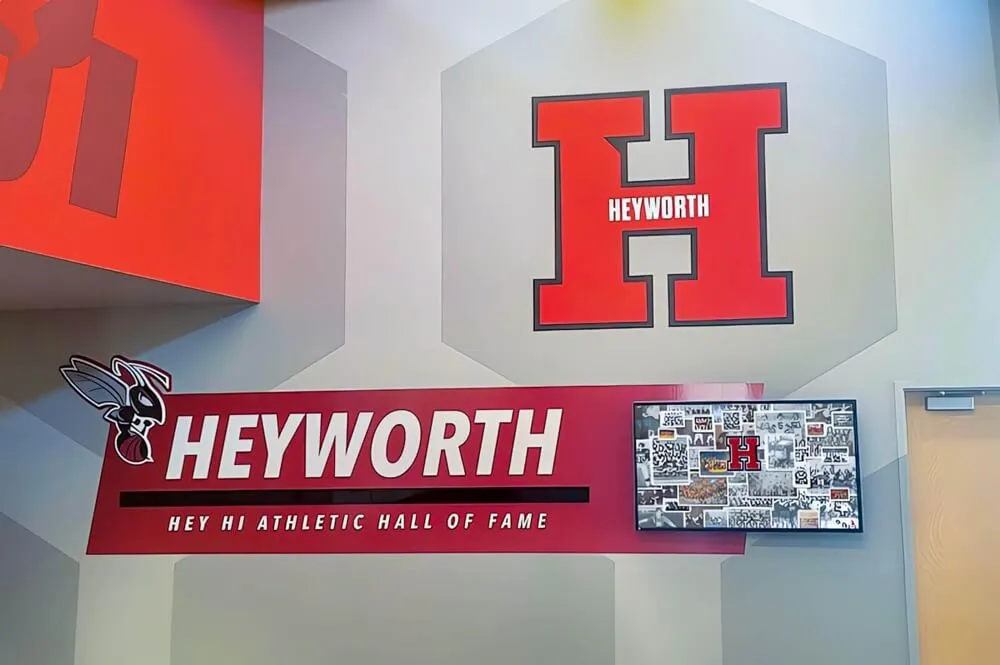
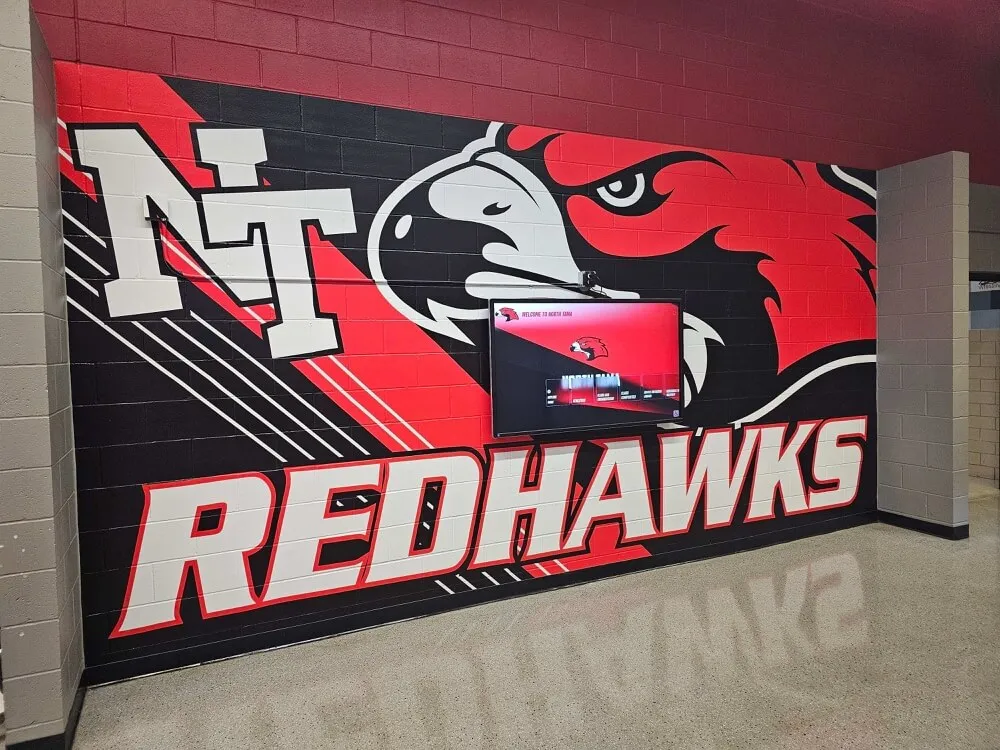
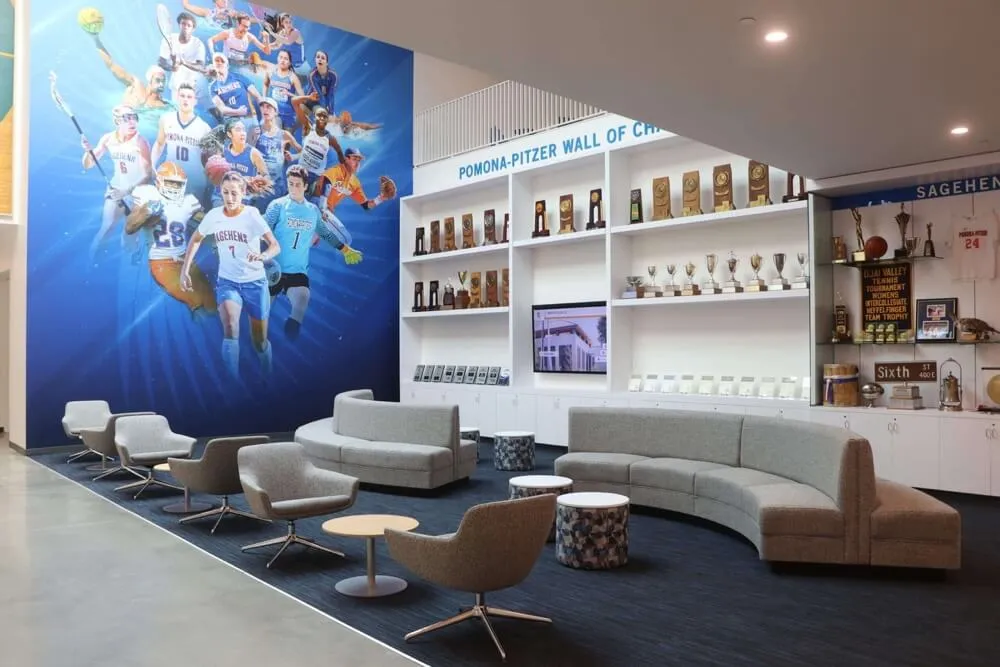
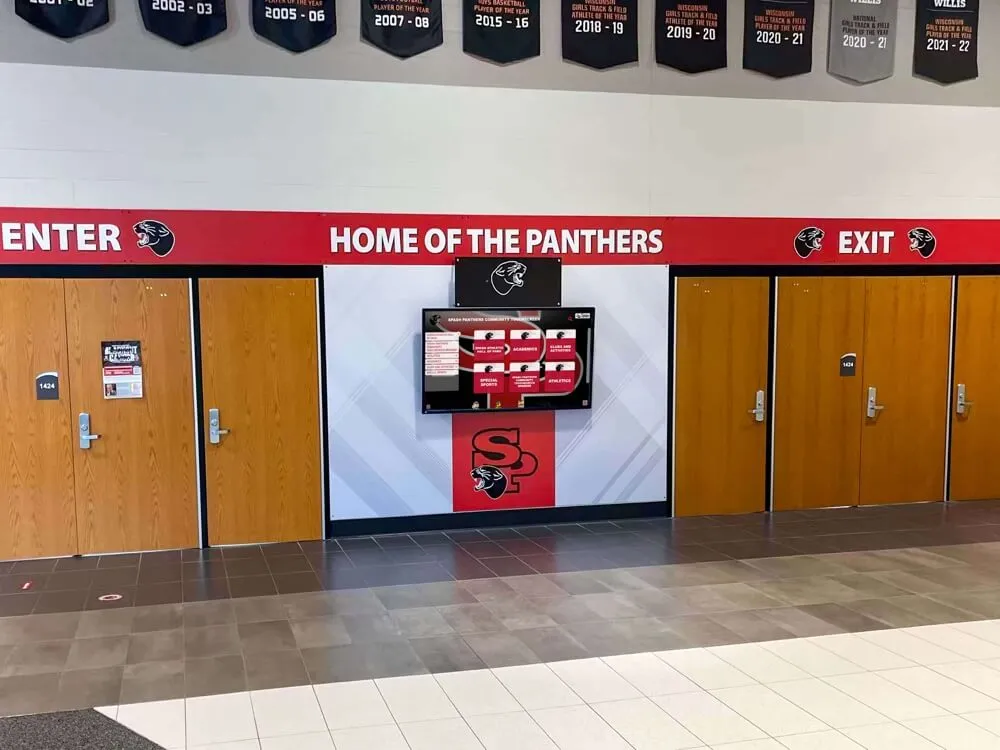
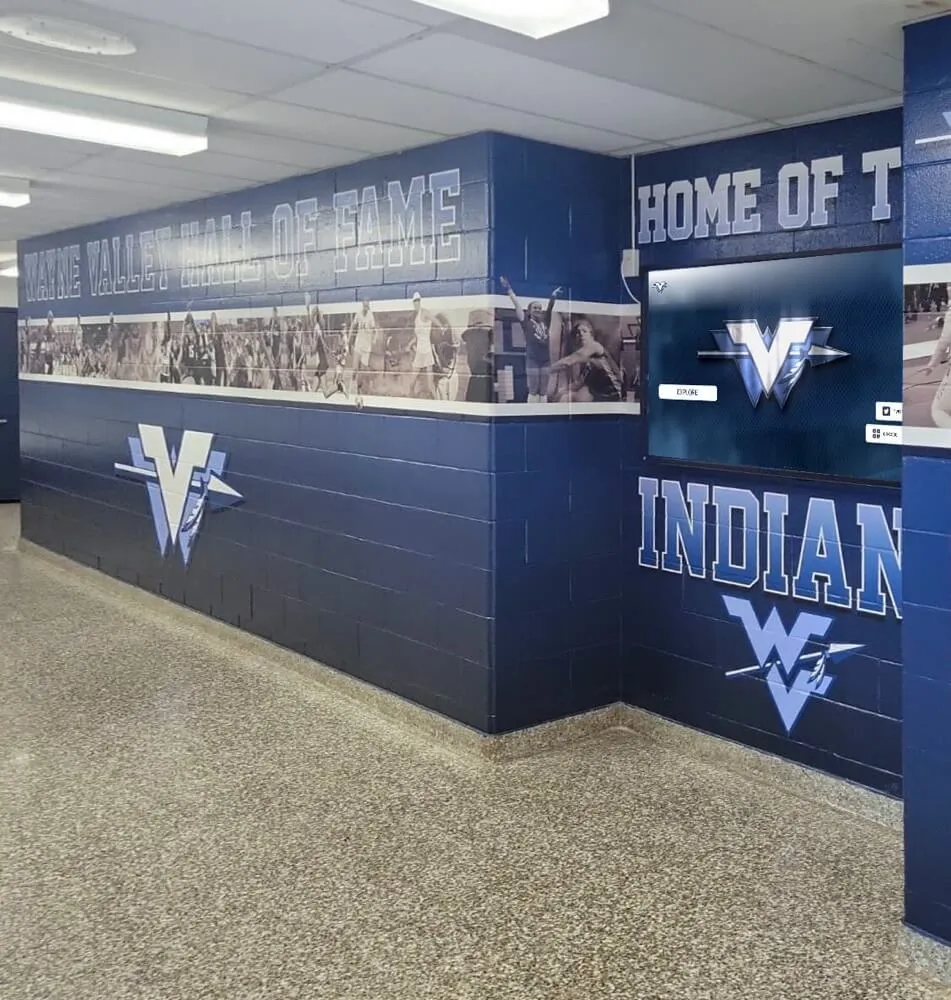
Athletic facilities combine murals, trophy cases, and digital displays creating comprehensive recognition environments
Maintenance and Long-Term Sustainability Challenges
Gym banners face ongoing maintenance requirements often underestimated during initial implementation planning. Vinyl materials fade when exposed to sunlight streaming through windows, particularly in facilities with significant natural lighting. Color degradation typically becomes noticeable within 5-7 years, requiring banner replacement to maintain professional appearance.
Physical damage from basketballs, equipment, or facility activities periodically necessitates banner repairs or replacement. Torn grommets, detached mounting hardware, or accumulated dust and grime degrade visual presentation over time.
More significantly, information updates or corrections create expensive complications. If a banner mistakenly lists incorrect player names, statistics, or dates, correcting the error requires complete banner reproduction—an $200-400 expense to fix simple mistakes that digital platforms correct instantly at zero cost.
Programs evolving visual branding face additional challenges. When schools update logos, colors, or mascot representations, existing banner collections immediately appear dated. Wholesale banner replacement achieving visual consistency across complete collections can cost $5,000-15,000 or more for established programs.
Experience Layout: Designing Digital Banner Alternatives
Effective digital recognition displays replace traditional banners through thoughtful design approaches balancing visual impact with functional information delivery.
Creating Visual Impact Through Motion and Scale
Traditional banners derive impact from physical scale—large vinyl displays commanding attention through sheer size. Digital alternatives achieve comparable visual prominence through different mechanisms: large-format displays (55-75 inches) positioned strategically at eye level or in high-traffic areas, animated content featuring dynamic transitions, motion graphics, and video that static banners cannot match, high-brightness commercial displays (400-700 nits) ensuring visibility even in brightly lit gymnasiums, and full-color imagery with photographic quality exceeding vinyl print resolution.
The psychological impact of motion draws attention more effectively than static displays. A digital screen cycling through championship teams with action photography, game highlights, and celebration moments creates engagement impossible with fixed vinyl banners.
Scale and Proportion Considerations
Digital displays don’t replicate banner placement hanging from gymnasium ceilings—they occupy different zones within athletic facilities. Most effective installations position displays in entrance lobbies welcoming all visitors, hallways connecting gymnasiums to locker rooms, weight room and training facility areas where athletes gather daily, cafeterias and common spaces reaching students throughout school days, and administrative areas impressing visitors during recruitment tours and campus visits.
This distributed placement strategy ensures recognition reaches broader audiences than ceiling-mounted banners visible only to gymnasium occupants.
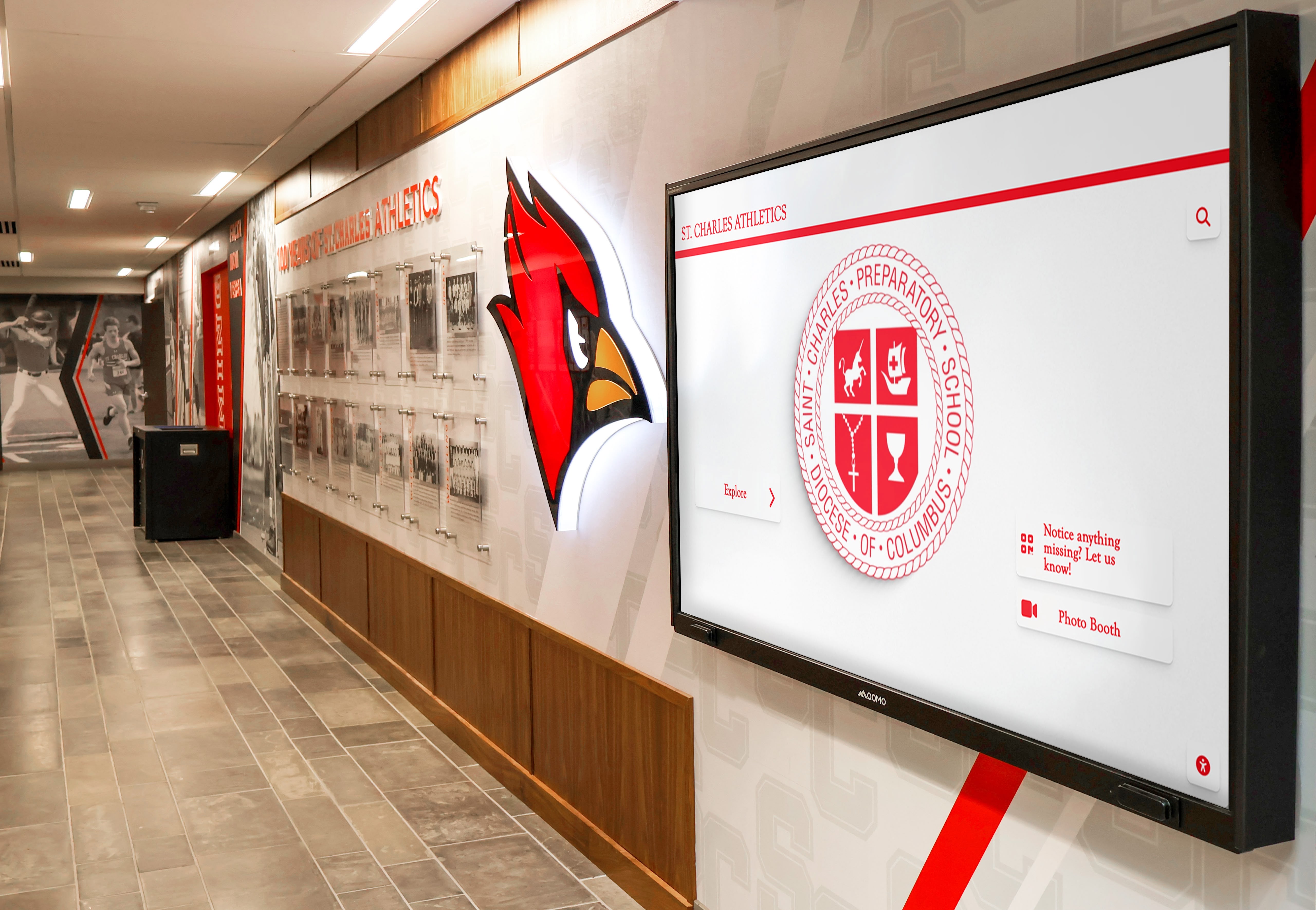
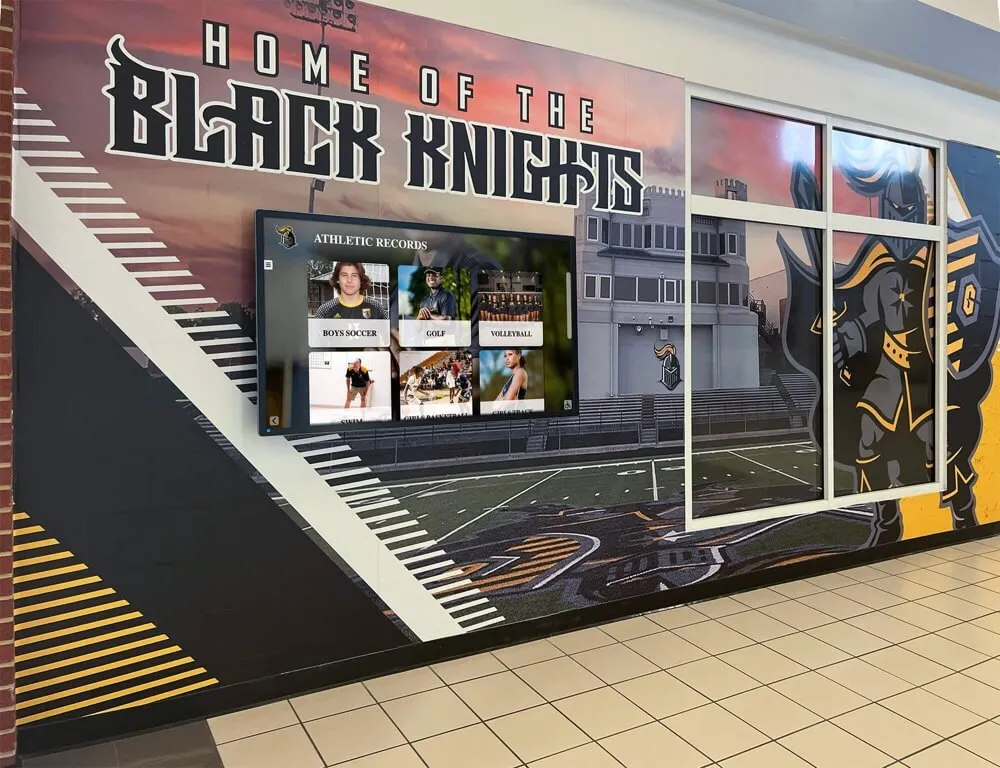
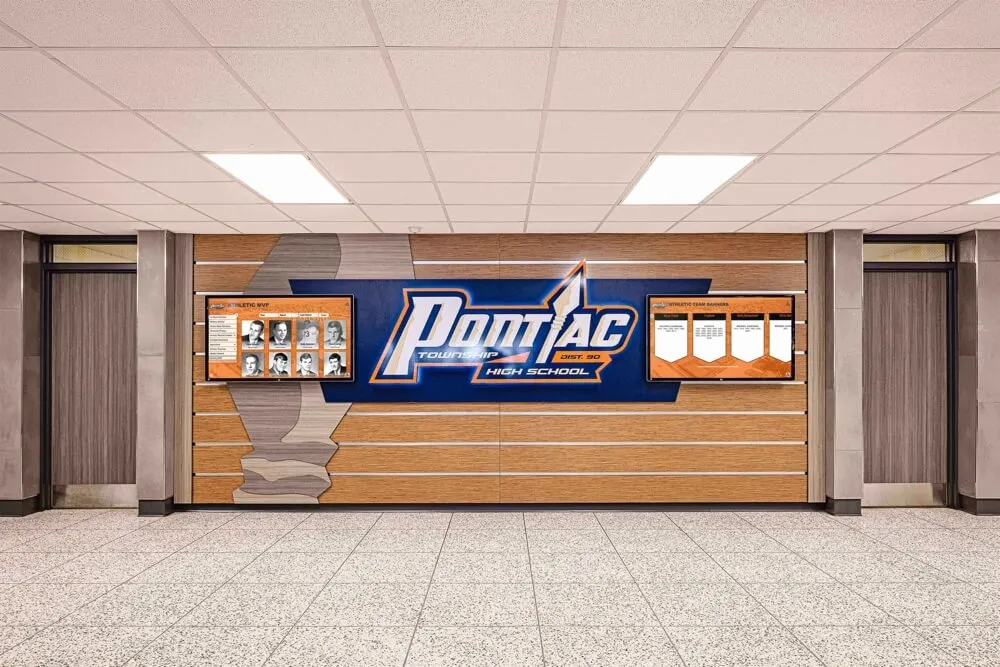
Strategic hallway placement ensures athletic recognition reaches students, athletes, and visitors throughout daily activities
Content Zones and Information Architecture
Well-designed digital recognition experiences organize screen real estate into functional zones replicating and expanding upon information traditional banners communicate:
Hero Zone: Championship Celebration (Top 20%)
The hero area mirrors traditional banner headlines through bold graphics announcing championships, seasons, and achievements. Digital advantages include animated entrance effects drawing immediate attention, rotating featured championships preventing single-achievement dominance, incorporation of team photos impossible on traditional banners, and background video showing actual game action or championship celebrations.
Where traditional banners simply state “2024 State Champions - Basketball,” digital hero zones display the same information enhanced with team photo, game highlight video, final score graphic, and roster overlay—delivering comprehensive celebration in the same visual space.
Recognition Grid: Team and Individual Honors (Center 50-60%)
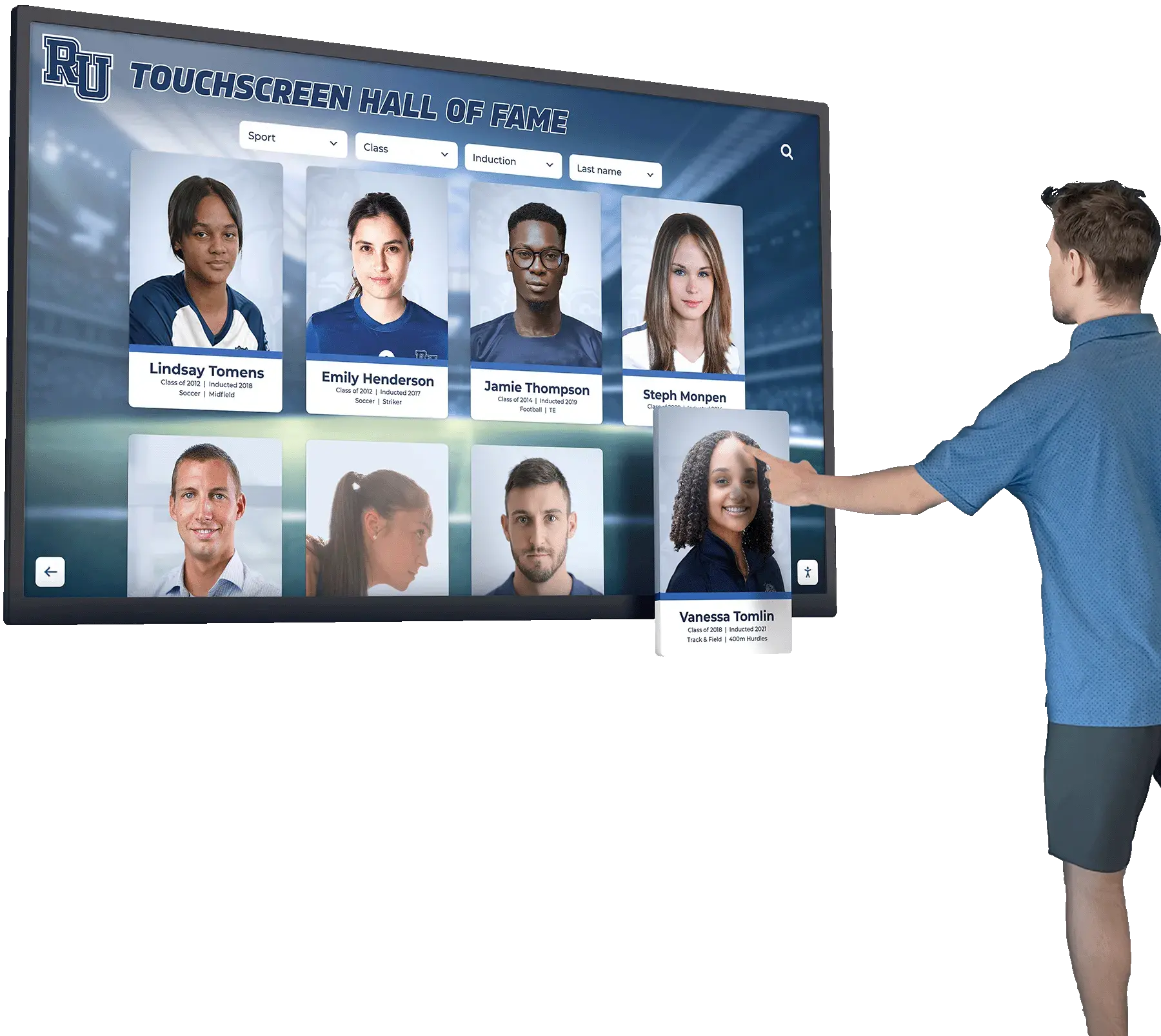
The main content zone presents detailed information about achievements, teams, and individuals. Effective layouts include grid-based card systems showing multiple athletes or teams simultaneously with photos and key statistics, scrolling lists organizing achievements chronologically or by sport, detail views expanding individual profiles on touch interaction, and statistical comparisons showing achievement context within program history.
This zone transforms simple banner text listing names into rich multimedia profiles celebrating individuals comprehensively through biographical information, career statistics, photos from their competitive years, and video highlights preserving memorable performances.
Navigation and Filtering (Side or Bottom 20-30%)
Digital recognition enables discovery and exploration impossible with static banners. Navigation systems incorporate filtering by sport, year, or achievement type, search functionality locating specific athletes instantly, championship timelines showing program evolution across decades, and comparative displays analyzing achievement trends over time.
These interactive features mean a parent visiting can immediately locate their student-athlete among hundreds of honorees, alumni can find their own achievements from decades past, and current athletes can explore complete program histories understanding traditions they’re inheriting.
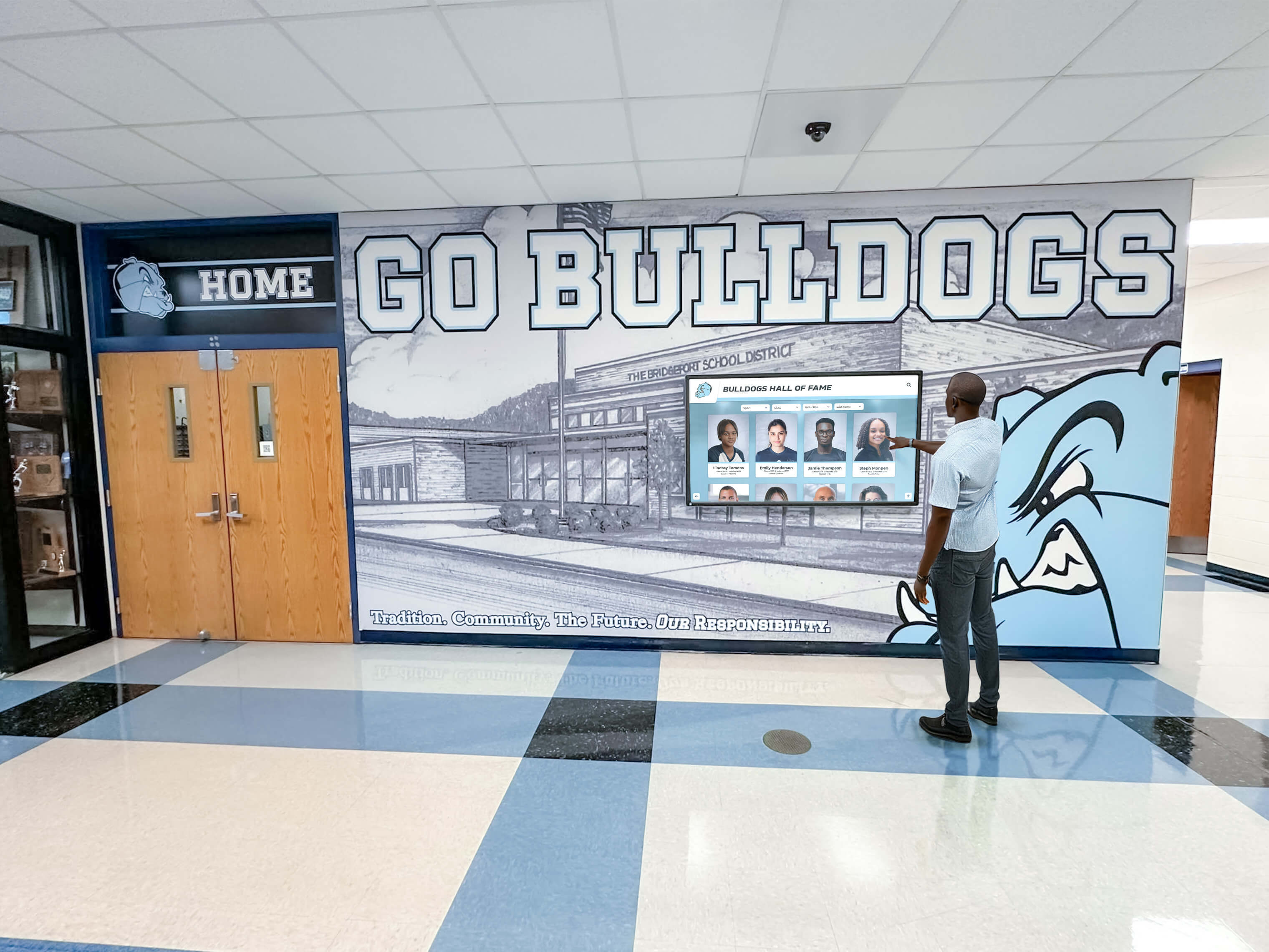
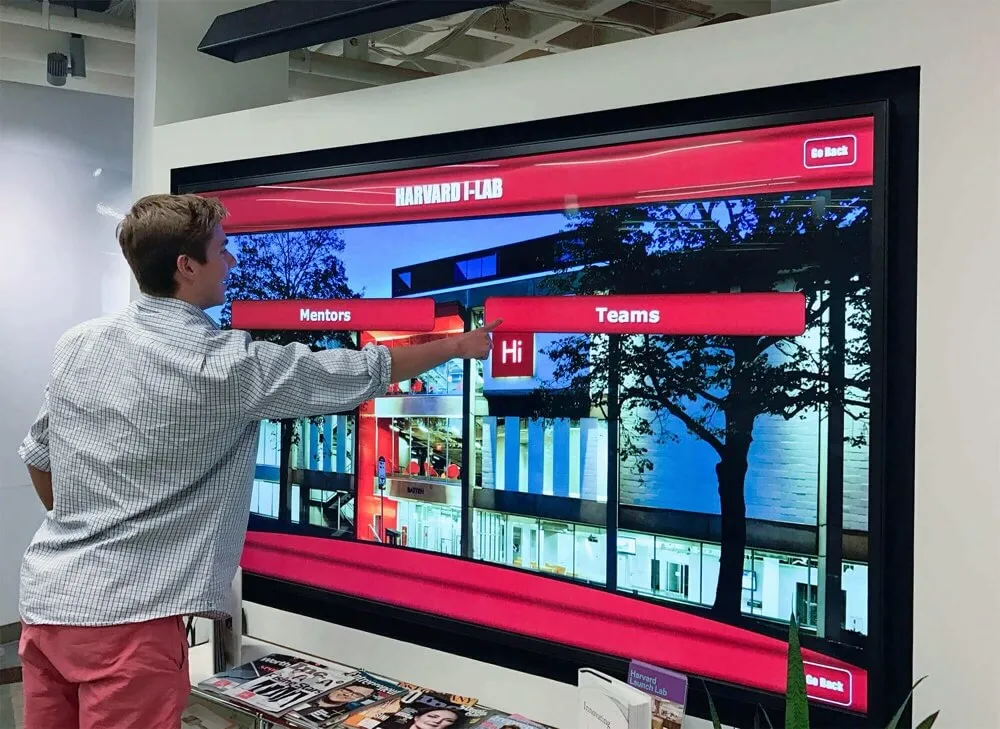
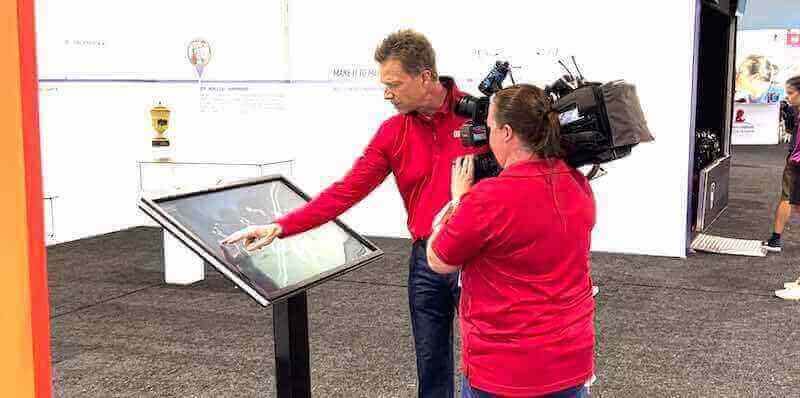
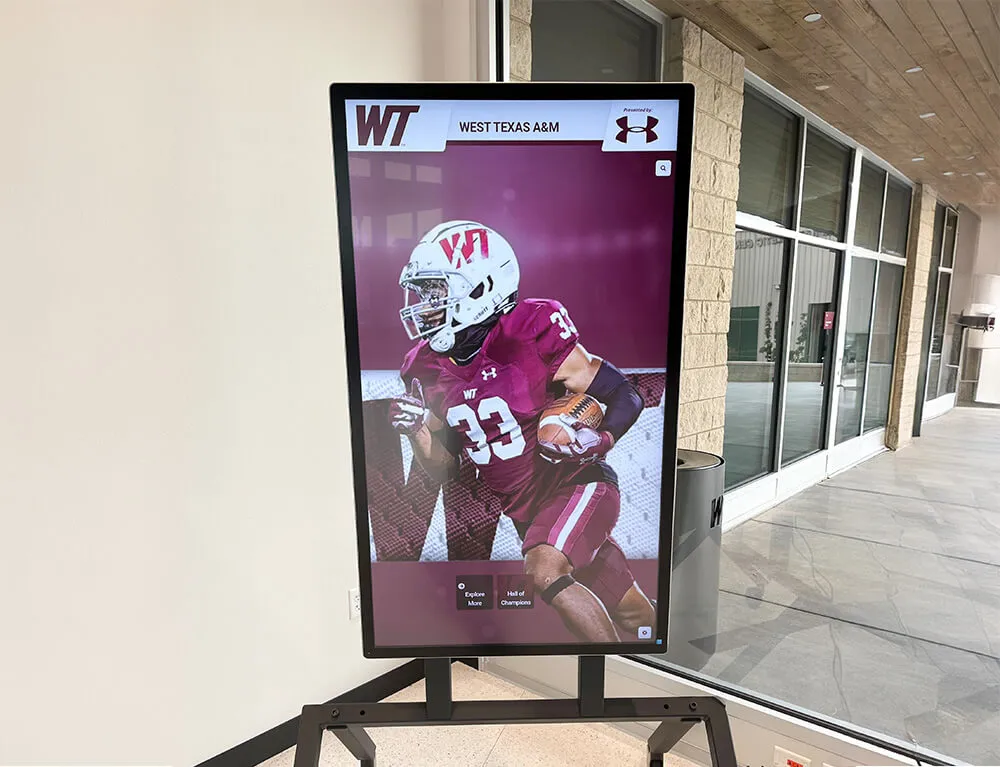
Touch navigation enables visitors to explore comprehensive achievement archives impossible to accommodate with physical banners
Content Blocks and Motion: Bringing Recognition to Life
Beyond static layout, animation, motion, and multimedia transform recognition from documentation to inspiration.
Attraction Loops: Drawing Attention to Recognition
When not actively used, digital displays run attraction loops drawing attention and demonstrating interactivity. Effective attraction content for athletic recognition includes championship highlight reels compiling memorable moments from title-winning seasons, achievement statistics displaying impressive program totals (championships won, athletes recognized, records set), featured athlete spotlights rotating through recent inductees or record-breakers, and historical retrospectives celebrating program milestones and anniversaries.
These attraction loops serve functions traditional banners cannot: they educate visitors about athletic excellence, they inspire current athletes by showcasing program tradition, they engage casual observers who might never read static text, and they demonstrate the interactive nature inviting exploration.
Where static banners remain perpetually identical, attraction loops refresh daily, seasonally, or as new achievements occur—maintaining novelty and interest impossible with fixed displays.
Transition Animations and Visual Flow
Smooth transitions between content screens enhance perceived quality and guide user attention. Design frameworks incorporate fade transitions for content swaps within consistent layouts, slide animations indicating directional navigation through categories or time periods, zoom effects when moving from overview grids to detailed individual profiles, and card flip animations revealing additional information on reverse sides.
These motion design elements borrowed from high-quality app interfaces create experiences feeling modern and professional—reinforcing that athletic recognition deserves sophisticated presentation equal to the excellence being celebrated.
Multimedia Integration: Video Highlights and Action Photography
Traditional banners communicate through text and basic graphics. Digital displays incorporate rich multimedia creating emotional connections impossible with vinyl and ink. Championship recognition enhanced with embedded video highlights showing title-winning plays, athlete profiles incorporating action photography from competitive moments, team celebrations captured through video and audio preserving excitement, and historical footage digitized from archives bringing past decades to life.
A traditional banner might state “Sarah Johnson - State Champion - 100m Dash - 11.5 seconds.” The digital equivalent shows Sarah’s photo, her race video, interview clips reflecting on victory, season statistics demonstrating dominance, and connection to program sprint legacy—transforming data points into compelling narratives celebrating human achievement.
Solutions like Rocket Alumni Solutions provide platforms purpose-built for this multimedia integration, understanding that athletic recognition requires video support, photo galleries, and statistical displays generic digital signage systems cannot accommodate effectively.
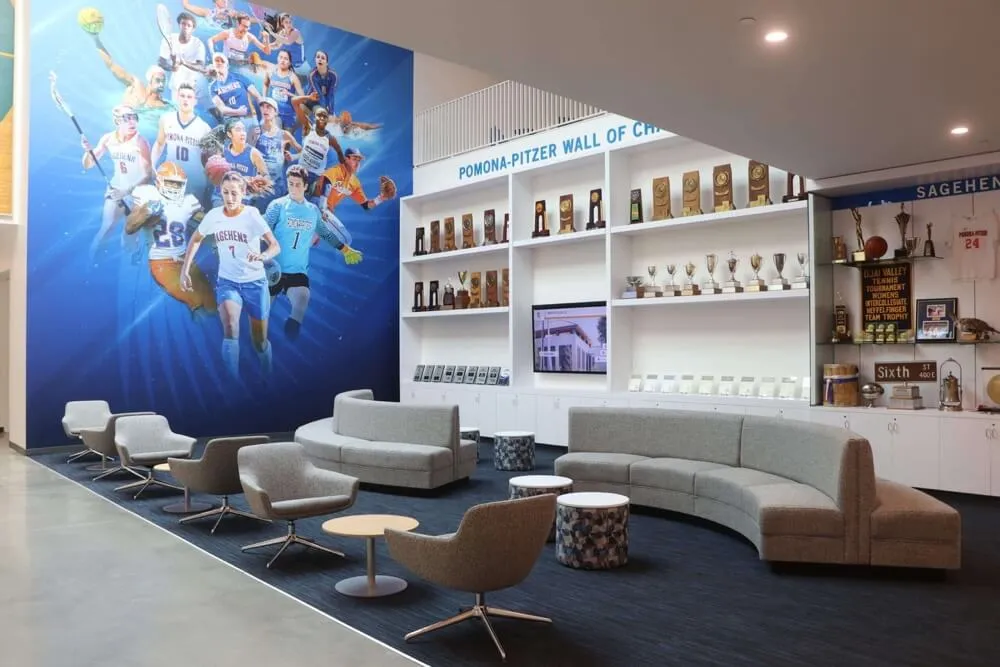
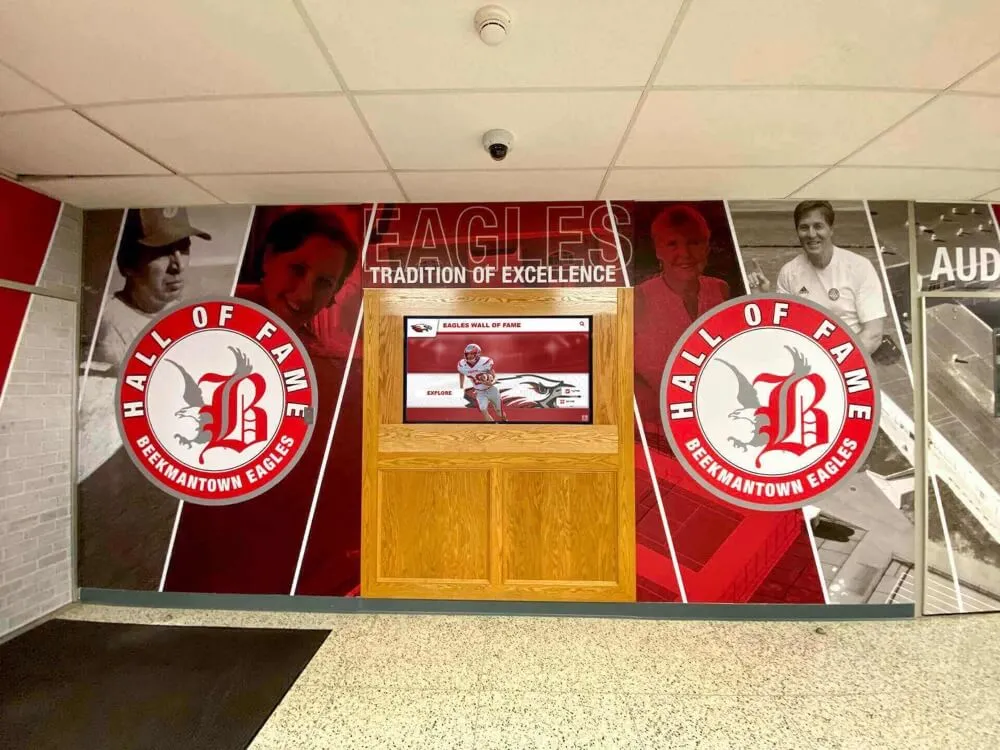
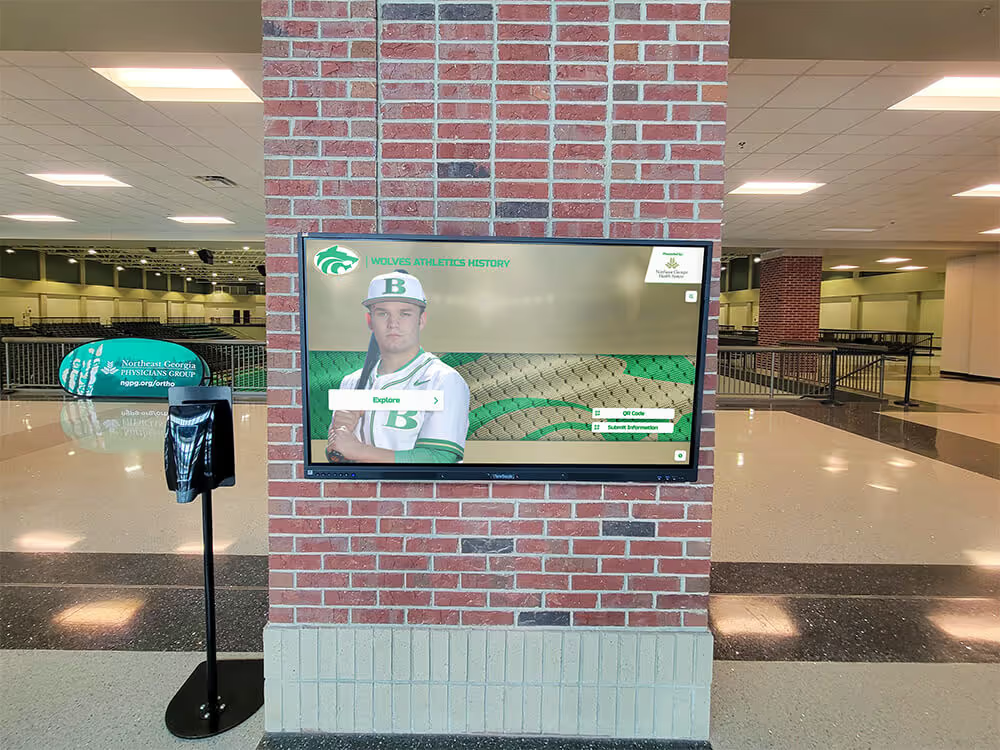
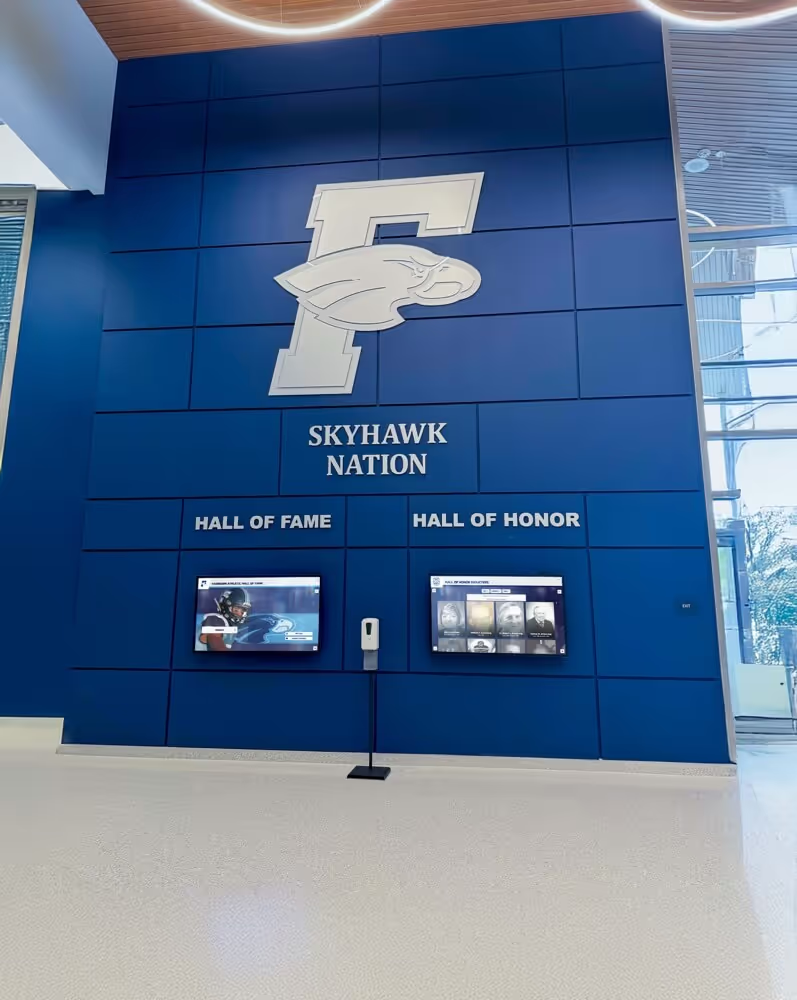
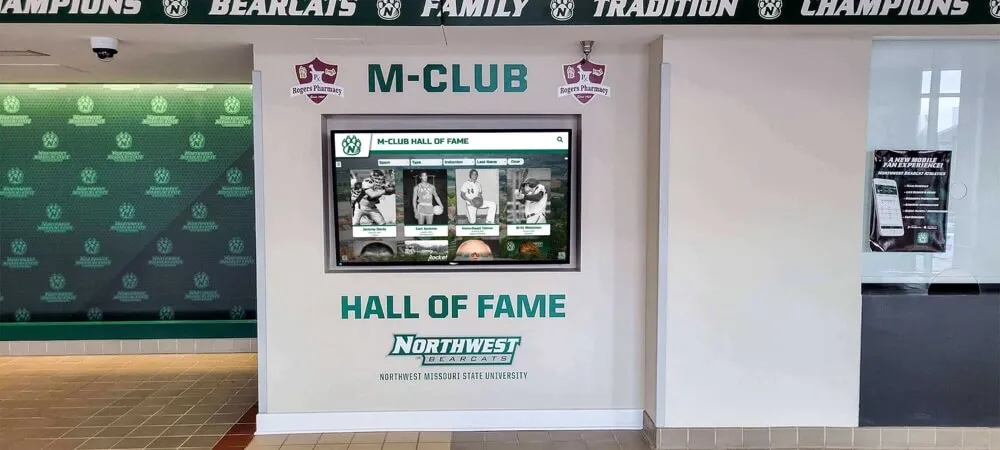
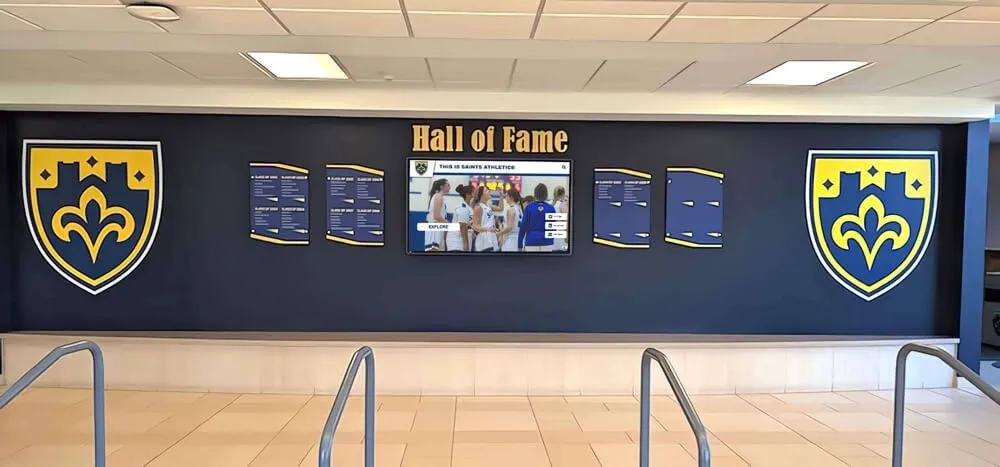
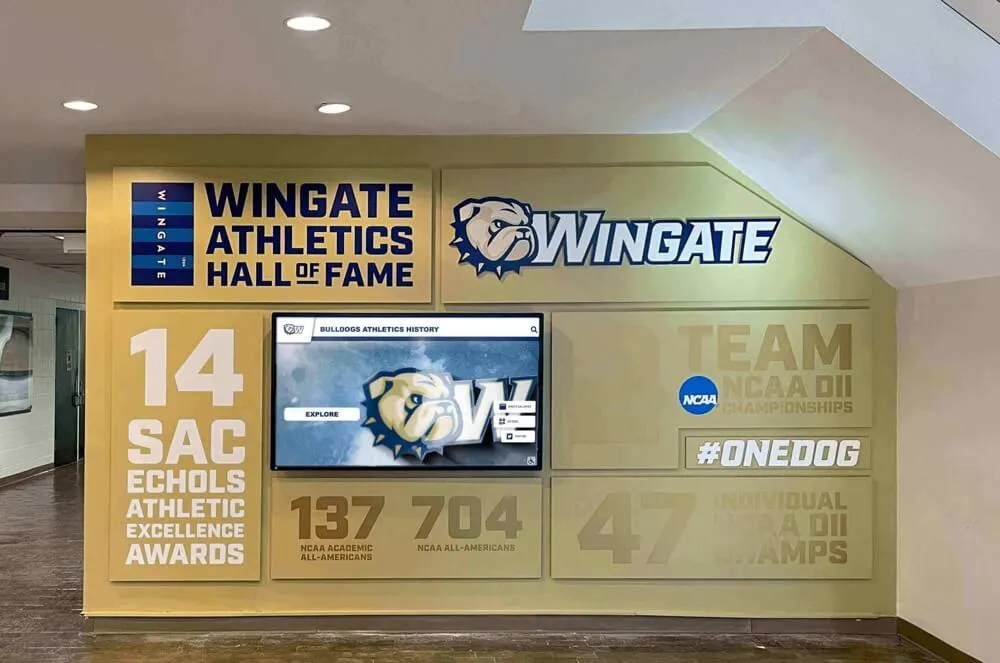
Modern athletic facilities integrate digital displays with traditional elements creating layered recognition experiences
Brand Integration and Visual Identity
Digital banner alternatives should strengthen rather than compromise institutional athletic branding.
Color Systems and School Identity
Traditional banners reinforce school colors through material selection and print colors. Digital displays achieve equivalent visual identity through systematic color application: primary school colors dominating hero areas, backgrounds, and navigation elements, secondary colors supporting information hierarchy and content organization, accent colors highlighting interactive elements and calls-to-action, and sport-specific color coding helping visitors navigate multi-sport content.
For schools with navy and gold identities, digital displays feature navy backgrounds with gold text and accents throughout interfaces. Athletic department logos, mascot imagery, and visual motifs appear consistently across all content screens maintaining cohesive branded experiences.
Dynamic Backgrounds and Environmental Integration
Digital displays enable background customization impossible with vinyl banners. Effective approaches include facility photography showing gymnasiums, fields, and stadiums connecting recognition to place, action photography capturing athletes in competition reinforcing athletic excellence, abstract patterns derived from logos or architectural elements, and video backgrounds featuring campus scenes or crowd celebrations.
These dynamic backgrounds can rotate seasonally, highlight current sports seasons, or change based on featured content—flexibility completely unavailable with physical banners requiring fixed printing decisions.
Typography and Readability Optimization
Traditional banners balance size constraints against text legibility. Digital displays optimize typography across viewing distances through responsive text scaling adjusting to content density, high-contrast combinations ensuring readability in various lighting conditions, bold headline fonts capturing attention from distance, and clear body fonts maintaining legibility in detailed content screens.
Proper typography implementation means displays remain readable from 15-20 feet away during passive viewing while providing sufficient detail during close interactive exploration—serving multiple viewing contexts simultaneously.
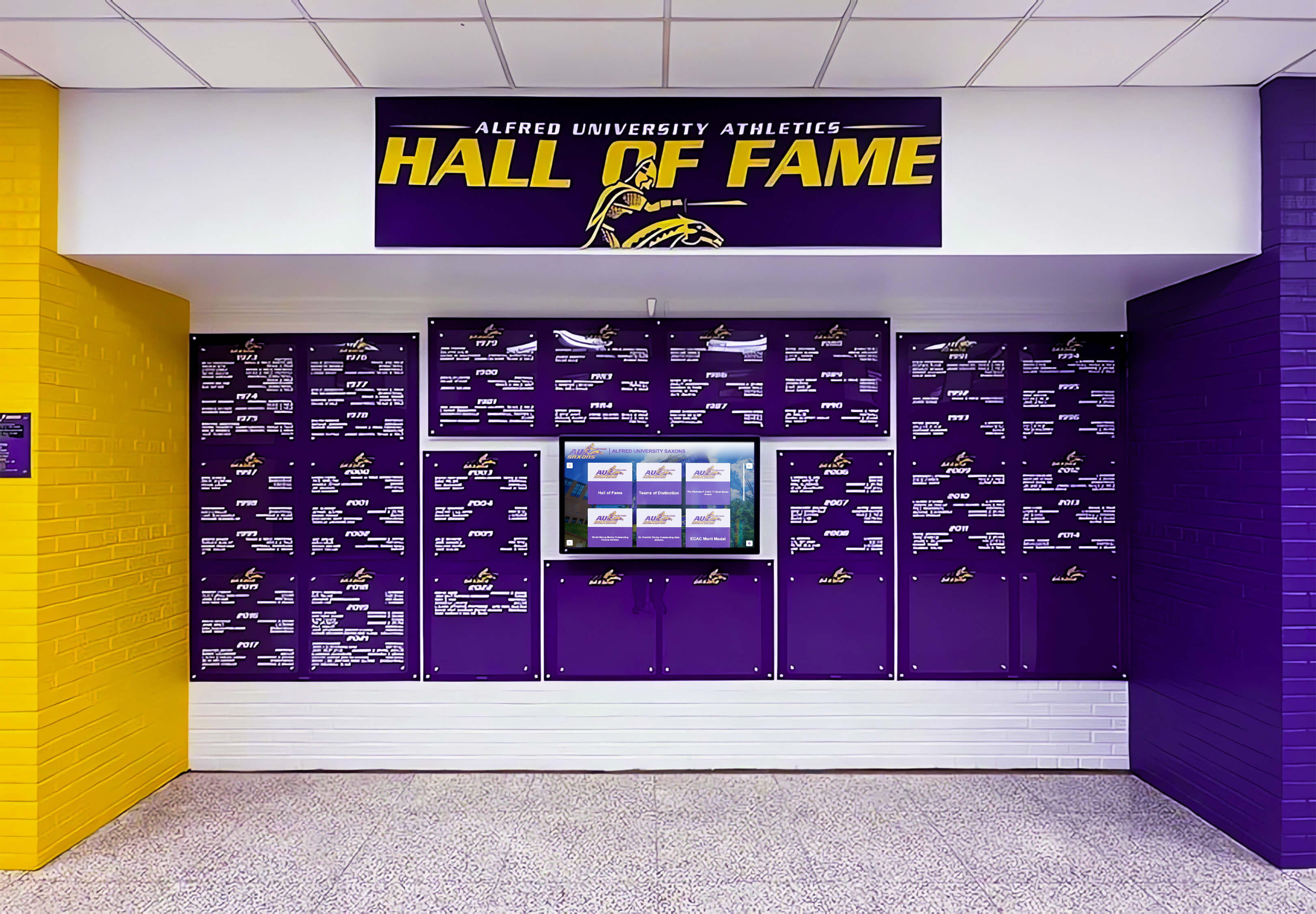
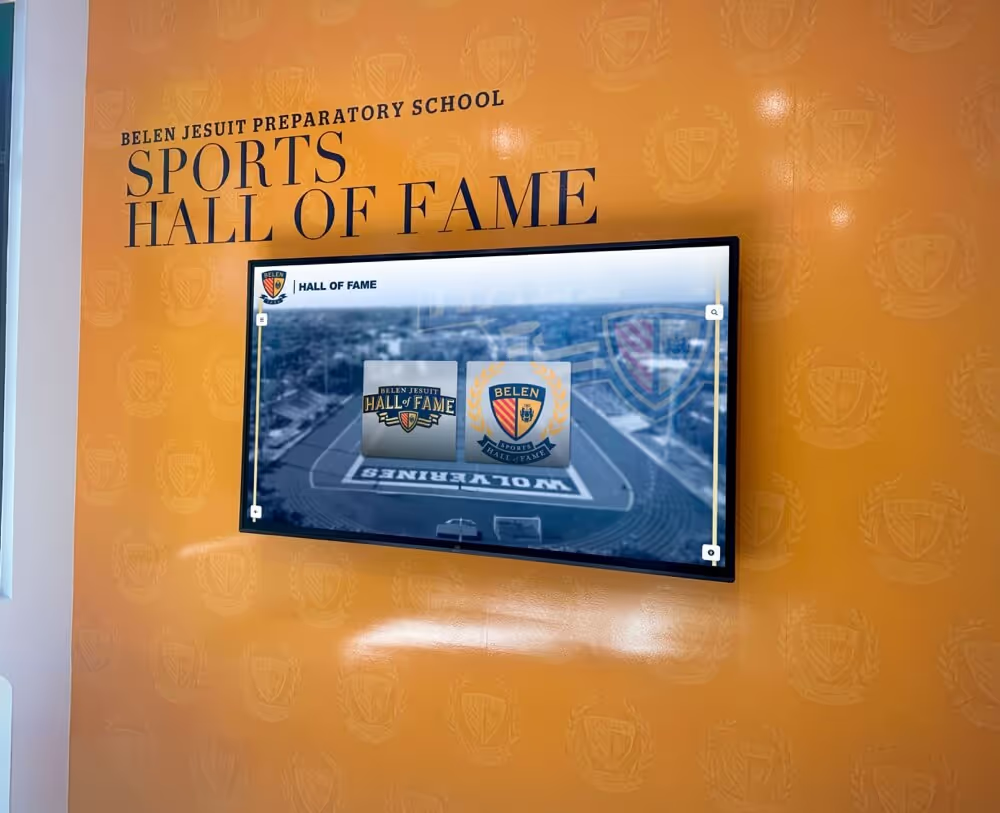
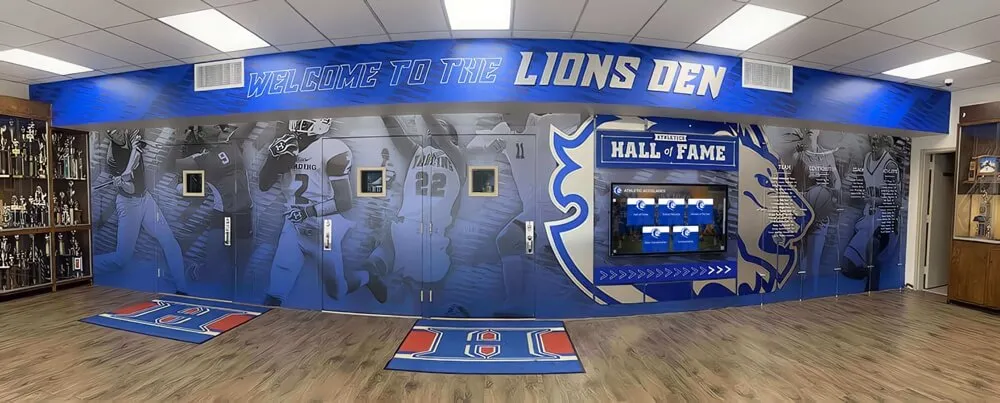
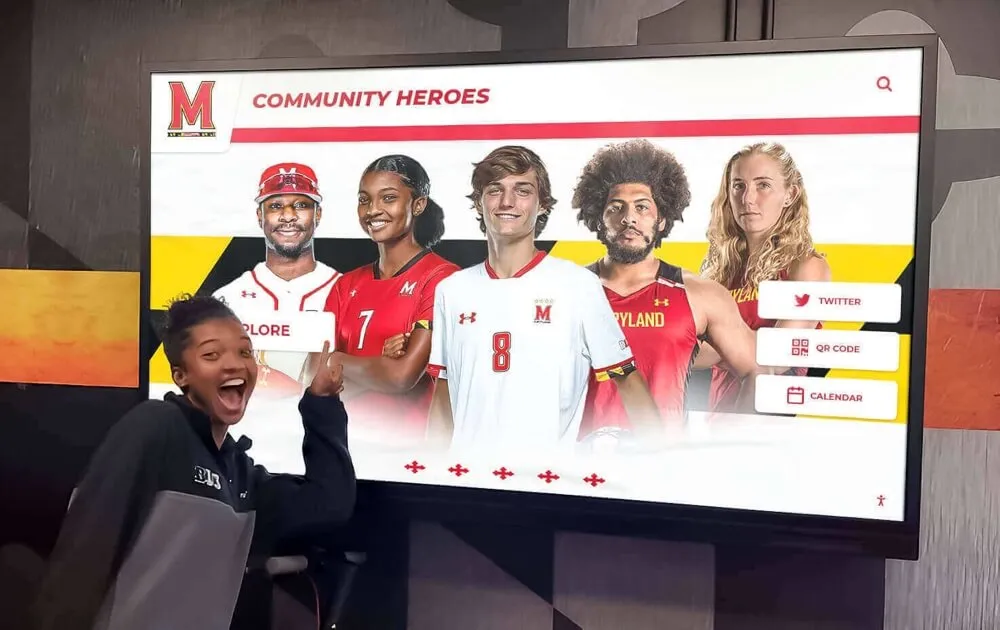
Color-coordinated displays reflect institutional branding while providing professional athletic recognition
Cost Analysis: Digital vs. Traditional Banner Programs
Understanding complete lifecycle costs enables accurate comparison between traditional and digital approaches.
Initial Investment Comparison
Traditional banner programs appear cost-effective initially:
- 20 championship banners @ $300 each = $6,000
- Design fees and installation = $1,500
- Total initial investment = $7,500
Digital recognition alternative:
- 55" commercial touchscreen display = $3,500-5,000
- Professional mounting and installation = $1,000-1,500
- Recognition software platform (year 1) = $2,000-3,000
- Initial content development = $2,000-4,000
- Total initial investment = $8,500-13,500
Digital alternatives typically cost $1,000-6,000 more initially than establishing traditional banner programs of comparable scope. However, this simple comparison ignores critical factors affecting long-term value.
Long-Term Cost of Ownership (5-Year Analysis)
Over five years, cost dynamics shift dramatically:
Traditional Banner Program (5 Years):
- Initial 20 banners: $7,500
- New banners (4 per year × 5 years × $300): $6,000
- Banner replacements (20% fading/damage): $1,800
- Updated information corrections (3 banners): $900
- Storage and organization materials: $500
- Total 5-year cost: $16,700
Digital Recognition Program (5 Years):
- Initial hardware and installation: $4,500-6,500
- Software subscription (5 years @ $1,500/year): $7,500
- Content updates (included in software): $0
- Electricity costs (~$50/year × 5): $250
- Minimal maintenance: $500
- Total 5-year cost: $12,750-14,750
The digital alternative delivers 15-25% cost savings over five years while providing unlimited recognition capacity compared to the 40 total achievements (initial 20 + 20 new banners) traditional approaches accommodate. Per-achievement costs drop dramatically as digital programs scale—celebrating 100 athletes costs the same as recognizing 10, while traditional banners incur linear per-banner costs regardless of scale.
Hidden Value: What Digital Platforms Enable
Beyond direct cost comparisons, digital platforms provide capabilities with significant but difficult-to-quantify value including instant content updates addressing errors, roster changes, or information corrections at zero marginal cost, comprehensive recognition reaching hundreds or thousands of athletes without space constraints, multimedia storytelling through video and rich media impossible with vinyl banners, analytics revealing engagement patterns and popular content informing program decisions, and extended accessibility through web portals enabling recognition access beyond physical facility visitors.
These functional advantages deliver value traditional banners cannot match regardless of cost—transforming recognition from constrained physical displays to comprehensive digital archives celebrating complete athletic excellence.
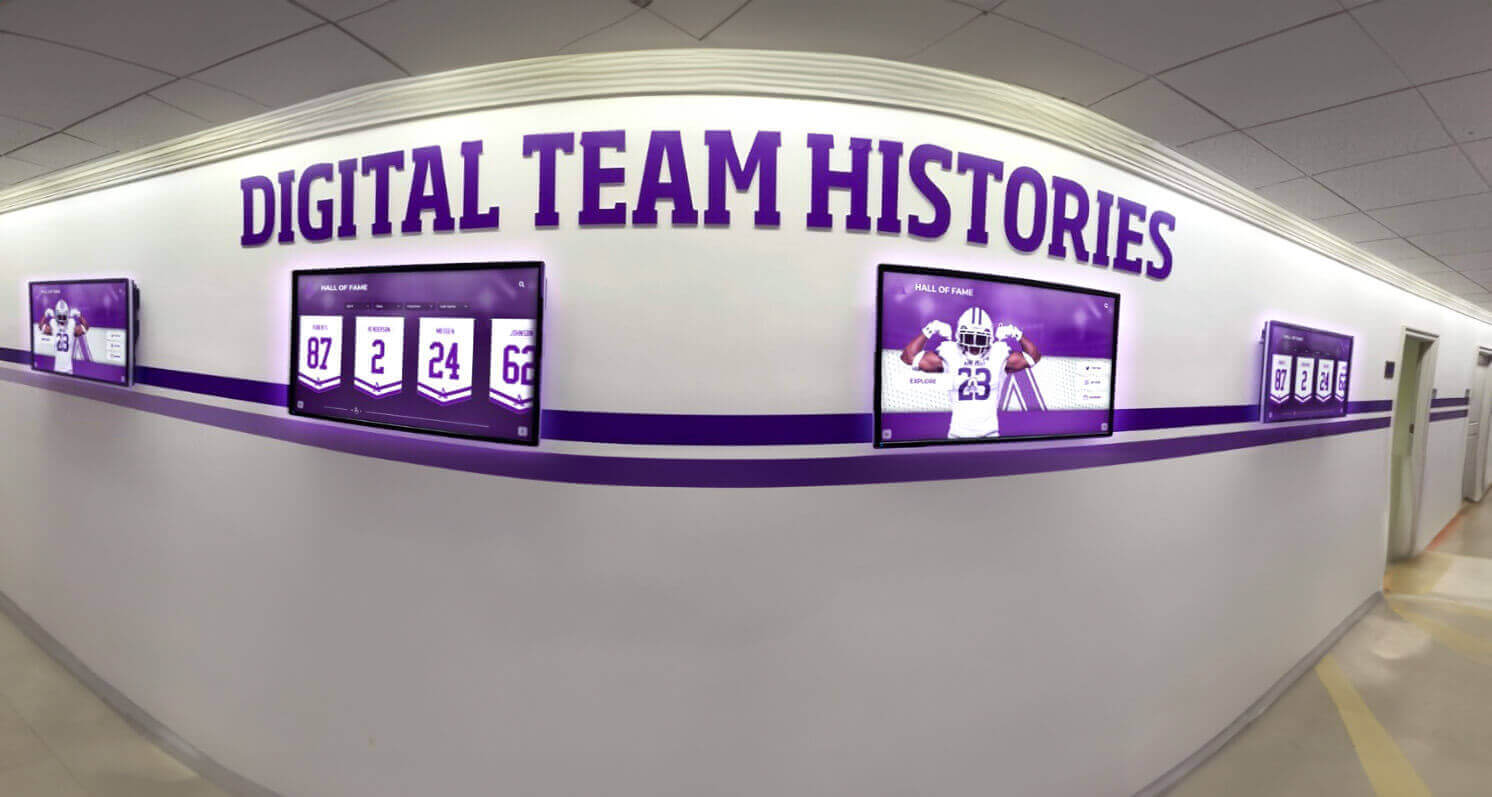
Large programs deploy multiple coordinated displays managed through centralized platforms eliminating per-banner production costs
Implementation Strategy: Transitioning from Traditional to Digital
Athletic programs replacing banner-based recognition benefit from systematic implementation approaches.
Phase 1: Strategic Planning and Stakeholder Engagement
Successful transitions begin with clear planning addressing current banner program scope and coverage, recognition gaps where deserving achievements lack visibility, stakeholder priorities from coaches, athletes, alumni, and administration, budget availability and funding sources, and physical placement optimizing visibility and accessibility.
Engage coaches and athletic staff early understanding their recognition priorities and securing buy-in. Some traditionalists initially resist digital alternatives—addressing concerns about technology reliability, visual impact compared to physical banners, and preservation of program traditions builds support essential for successful implementation.
Many programs maintain existing championship banners during transition, positioning digital displays as complementary enhancement rather than replacement. This hybrid approach respects tradition while expanding recognition capacity addressing previous limitations.
Phase 2: Technology Selection and Content Development
Choose platforms specifically designed for athletic recognition rather than generic digital signage. Evaluation criteria include purpose-built recognition software understanding athletic data structures, content management systems accessible to non-technical staff, professional display quality impressing athletes and visitors, cloud-based architecture enabling updates from any device, and comprehensive support including training and implementation assistance.
Develop content systematically starting with recent achievements before expanding historical coverage. Many programs begin with current varsity rosters, recent championships (last 5-10 years), and active record holders before progressively adding historical content as capacity allows.
Resources on creating comprehensive athletic recognition programs provide detailed frameworks applicable regardless of program size or competitive level.
Phase 3: Installation and Launch
Strategic display placement maximizes visibility and impact. Priority locations include main gymnasium entrances greeting all visitors immediately, athletic hallways connecting facilities to broader school buildings, weight training facilities where athletes gather daily, cafeterias reaching student populations during meals, and administrative areas impressing prospective students during recruitment visits.
Professional installation ensures proper mounting supporting display weight, appropriate viewing height accommodating various user heights, adequate lighting avoiding glare and washout, reliable network connectivity enabling content updates, and cable management maintaining clean professional appearance.
Launch with ceremony celebrating new recognition capability. Many programs coordinate digital display unveiling with athletic banquets, homecoming events, or hall of fame induction ceremonies—creating positive associations and demonstrating athletic department innovation.
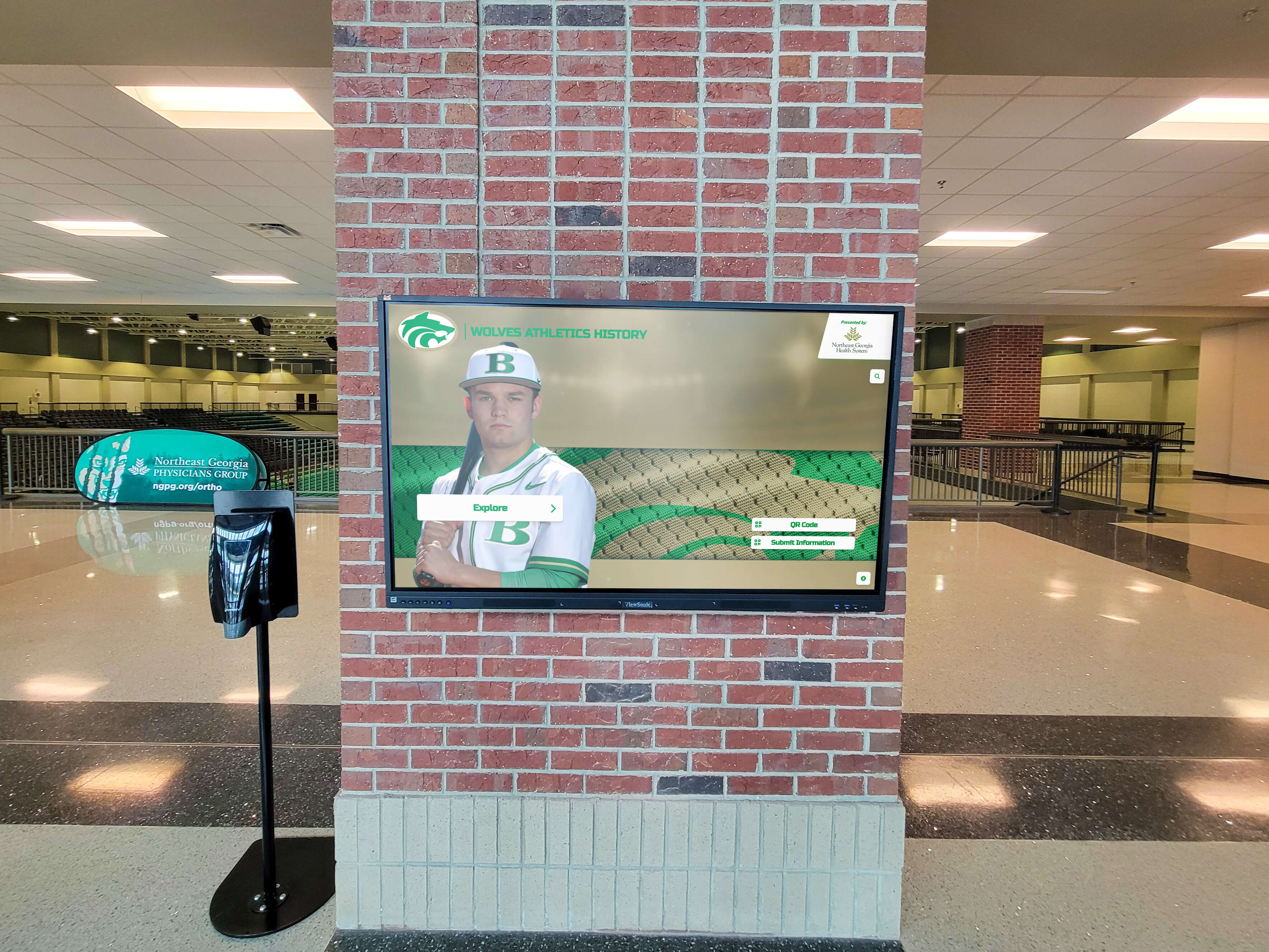
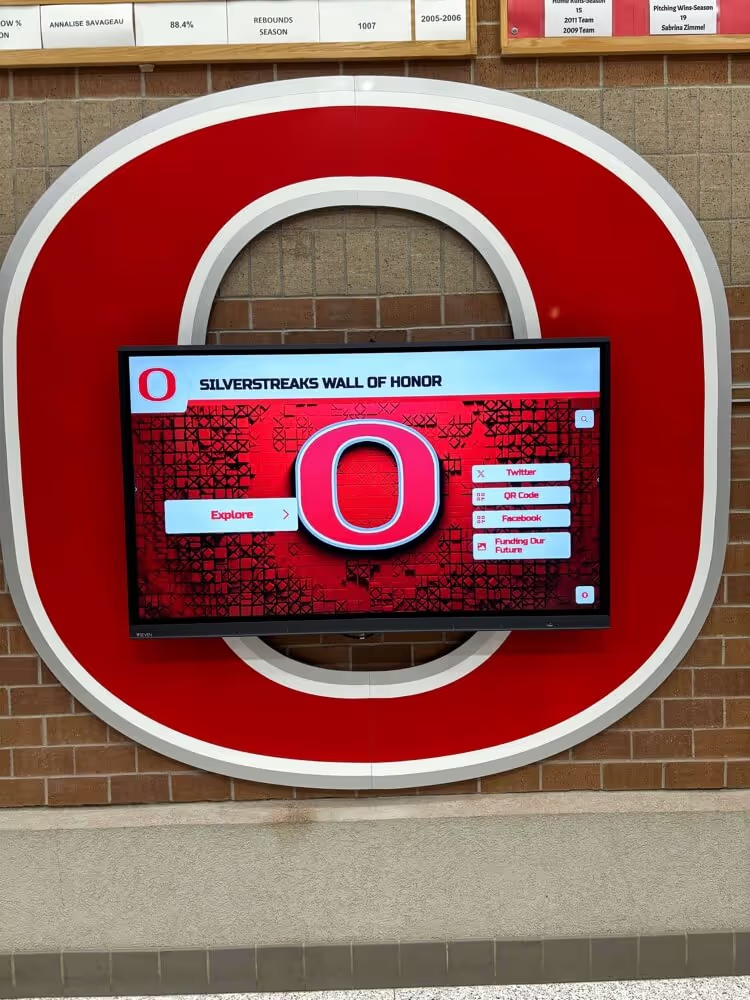
Architectural integration positions displays as permanent recognition infrastructure complementing facility design
Phase 4: Content Maintenance and Program Evolution
Establish sustainable update workflows preventing digital platforms from becoming outdated. Effective maintenance strategies include assigning clear content management responsibility to specific staff members, creating update schedules tied to athletic calendars and competitive seasons, documenting content standards ensuring consistency across sports and years, training multiple staff members preventing single-person dependencies, and gathering stakeholder feedback continuously improving content and presentation.
Digital platforms require ongoing attention maintaining current, accurate content. However, this maintenance involves simple content management system updates rather than coordinating vendor design, production, shipping, and installation—reducing update friction dramatically compared to traditional banner programs.
Accessibility and Inclusive Design Considerations
Modern recognition platforms serve diverse audiences requiring deliberate accessibility attention.
Physical Accessibility Standards
Digital displays must comply with ADA accessibility guidelines including mounting height placing primary interactive controls 15-48 inches above floor for wheelchair access, forward reach depth not exceeding 25 inches for reach range compliance, clear floor space providing wheelchair approach areas, and volume controls for audio content respecting quiet environments.
These physical accessibility requirements shape installation planning—freestanding kiosk configurations often provide superior accessibility compared to wall-mounted displays positioned at fixed heights.
Cognitive and Visual Accessibility
Interface design should accommodate diverse abilities through clear, simple language avoiding excessive jargon, consistent navigation patterns throughout experiences, high-contrast mode options for visual impairments, text scaling supporting enlargement without horizontal scrolling, and obvious home/back buttons enabling navigation recovery.
Organizations should verify accessibility through diverse user testing including wheelchair users, older adults, and people with visual impairments before finalizing designs. Resources on technical considerations for digital displays provide detailed accessibility implementation guidance.
Extended Access Through Web Portals
While physical banners limit recognition to gymnasium visitors, comprehensive digital platforms extend access through web portals enabling anyone, anywhere, anytime to explore athletic achievements. This extended accessibility serves alumni living distant from campus, families sharing recognition with extended networks, prospective students researching programs remotely, and community members maintaining connections regardless of physical visit capacity.
Web accessibility ensures recognition transcends physical space constraints inherent in traditional banner programs—enabling truly inclusive celebration reaching every stakeholder regardless of location or circumstance.
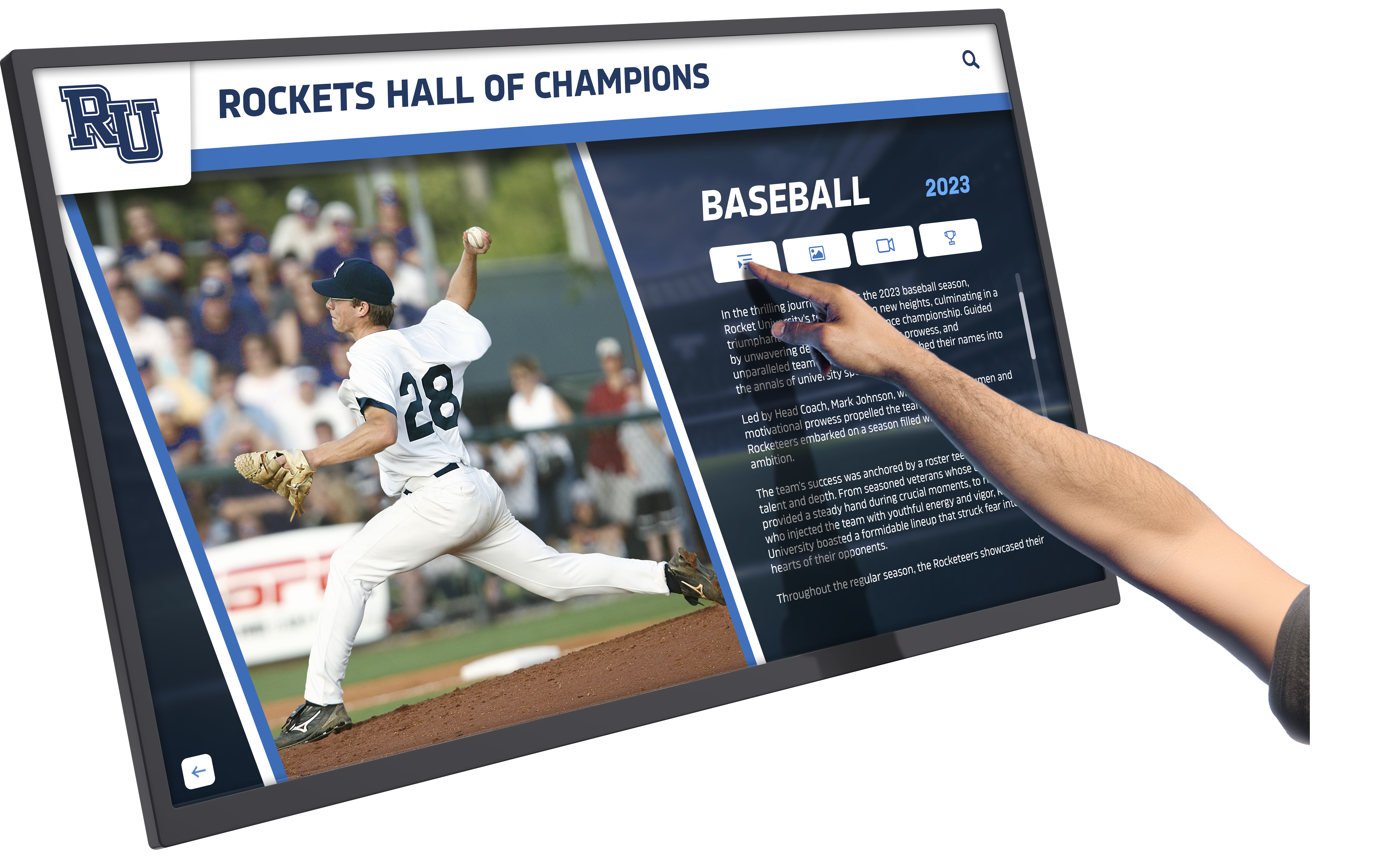
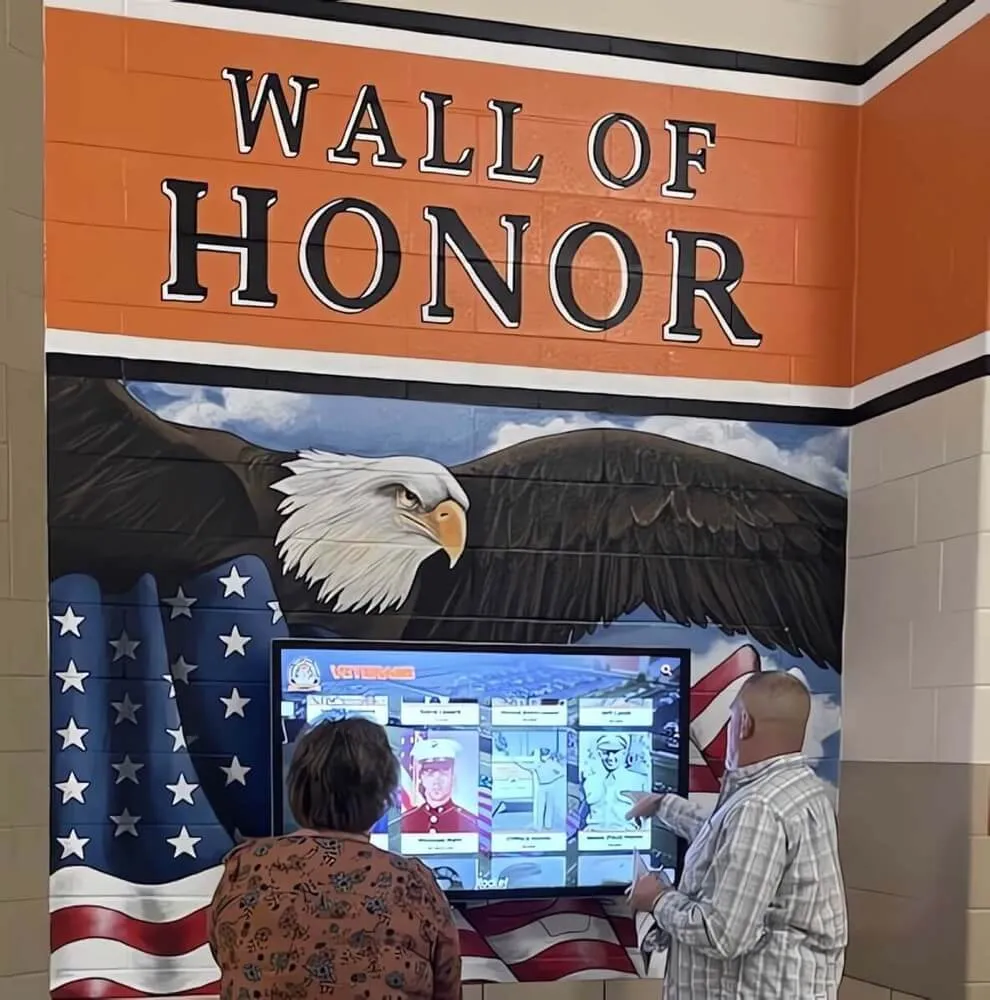
Intuitive touch interfaces enable natural exploration with clear targets and immediate feedback
Common Implementation Challenges and Solutions
Understanding typical obstacles helps programs proactively address challenges during digital transition.
Budget Constraints and Funding Strategies
Initial digital display investment exceeds single-banner costs, creating budget challenges for constrained programs. Alternative funding approaches include capital campaigns incorporating recognition technology as infrastructure investment, memorial giving programs funding displays honoring deceased community members, booster club support from parent and alumni organizations, corporate sponsorships particularly for athletic facilities, athletic department reallocations redirecting traditional banner budgets toward digital alternatives, and phased implementation starting with single pilot display before expanding.
Some programs incorporate recognition displays into facility renovation projects, treating displays as permanent infrastructure deserving capital funding rather than limiting consideration to operating budgets. This funding approach parallels how programs finance scoreboards, video boards, and other athletic facility technology.
Traditionalist Resistance and Change Management
Some stakeholders initially resist digital alternatives, preferring traditional banners’ familiar aesthetics. Addressing resistance requires demonstrating capacity advantages celebrating more athletes comprehensively, engaging visual impact through motion and multimedia, instant update capability addressing errors and adding achievements, extended accessibility reaching broader audiences, and long-term cost efficiency freeing budget for other athletic priorities.
Successful programs involve skeptics in planning processes, allowing hands-on exploration of proposed systems before implementation. Direct experience with intuitive interfaces, compelling content, and comprehensive recognition typically converts initial skepticism to enthusiastic support.
Maintaining some traditional elements during transition—preserving select historic banners, incorporating banner-style graphics in digital content, using similar color schemes and typography—eases transition by respecting tradition while embracing innovation.
Technical Support and Long-Term Maintenance
Programs without dedicated IT staff worry about technical complexity. Effective support strategies include selecting platforms with comprehensive vendor support and minimal local technical requirements, prioritizing cloud-based systems requiring minimal on-site maintenance, choosing commercial-grade hardware with extended warranties, establishing clear vendor relationships with guaranteed response times, and training multiple staff members preventing single-person dependencies.
Quality vendors understand that schools and athletic programs need reliable, low-maintenance solutions rather than complex systems requiring constant technical intervention. Platform selection should prioritize simplicity and reliability over feature excess.
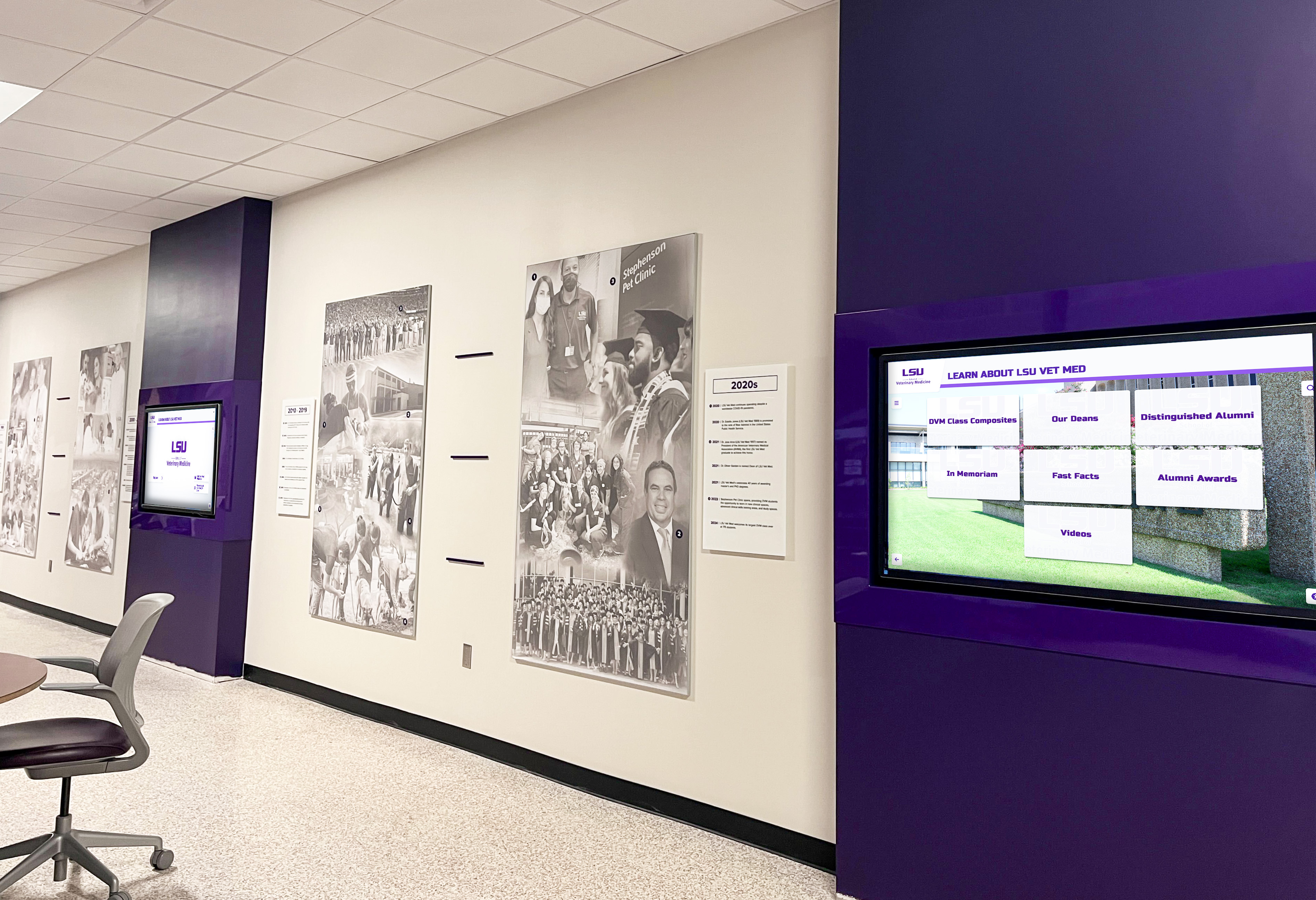
Large programs benefit from coordinated display networks managed centrally while serving distributed facility areas
Special Considerations for Different Athletic Program Sizes
Digital banner alternatives scale across program sizes from small schools to large universities.
Small School Programs (1-10 Sports)
Small athletic programs face unique recognition challenges—limited budgets constrain banner production, small gyms provide minimal ceiling space, and compressed timelines limit staff capacity for elaborate recognition programs. Digital alternatives particularly benefit small schools through affordable entry points with single-display implementations, unlimited capacity celebrating every athlete regardless of space constraints, simple content management accessible to non-technical staff, and comprehensive recognition previously impossible under traditional banner constraints.
A small school fielding six sports might produce 2-3 new championship banners annually. Digital platforms enable simultaneous recognition of championships, all-conference athletes, record-holders, academic honors, and individual achievement—celebrating hundreds of deserving students previously overlooked due to physical banner limitations.
Medium Programs (10-20 Sports)
Medium-sized programs typically operate established banner programs but face accelerating space constraints as achievement accumulates. Digital alternatives address these challenges through multi-display networks serving different facility areas and content categories, capacity handling decades of accumulated achievement without additional space, systematic recognition across all sports preventing prominence disparities, and integration with digital championship recognition systems providing comprehensive celebration frameworks.
Medium programs commonly deploy 2-4 coordinated displays strategically positioned throughout athletic facilities—perhaps one display focused on championships, another celebrating individual excellence, and additional displays highlighting current season information and upcoming events.
Large Programs (20+ Sports, Multiple Facilities)
Large university athletic departments operate comprehensive recognition ecosystems spanning multiple venues. Digital platforms provide scalable solutions through centralized content management updating dozens of displays simultaneously, sport-specific displays in dedicated facilities (basketball arena, football stadium, Olympic sport venues), coordinated brand identity across distributed installations, and advanced features including social media integration, video highlight distribution, and comprehensive athletic storytelling frameworks.
Large programs benefit from economy of scale where marginal costs per display decline as implementation expands—creating compelling business cases for comprehensive digital recognition networks replacing traditional banner approaches completely.
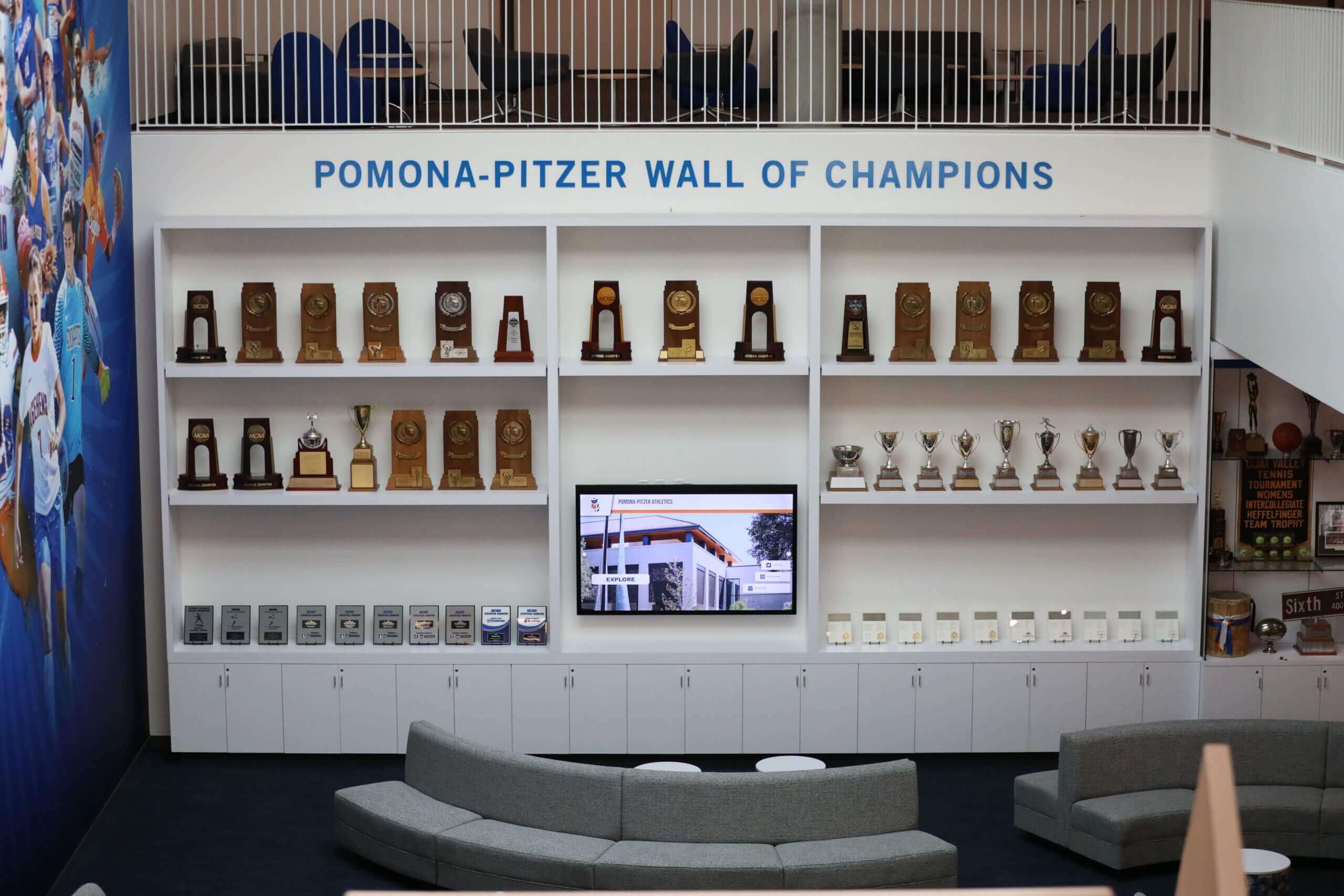
Comfortable viewing environments with seating encourage extended engagement and group exploration of achievements
Integration with Broader Recognition Strategies
Digital banner alternatives function most effectively within comprehensive athletic recognition ecosystems.
Connecting Physical and Digital Recognition
Effective programs blend traditional and digital elements creating layered experiences: maintaining select historic championship banners celebrating watershed program moments, complementing trophy cases with digital displays providing context and storytelling, incorporating QR codes near physical displays linking to comprehensive digital content, and coordinating visual design ensuring cohesive appearance across recognition modalities.
This integrated approach respects athletic tradition while embracing modern technology—honoring past recognition investments while addressing future needs through digital expansion.
Ceremonial Recognition and Digital Archives
Digital platforms enhance rather than replace ceremonial recognition traditions. Championship celebrations, jersey retirement ceremonies, and hall of fame inductions remain important events creating lasting memories. Digital platforms amplify ceremonial impact by preserving ceremony video in permanent archives, broadcasting ceremony highlights on displays throughout facilities, enabling virtual attendance for distant alumni and community members, and creating comprehensive documentation ensuring ceremony moments endure beyond event attendees’ memories.
Combining ceremonial tradition with digital preservation delivers recognition experiences satisfying emotional needs while providing practical accessibility traditional approaches cannot match.
Alumni Engagement and Community Connection
Recognition programs serve multiple constituencies beyond current athletes and students. Alumni maintain emotional bonds through athletic achievement recognition—finding their own championships and accomplishments preserved and accessible decades later. Digital platforms enable alumni engagement through searchable databases locating specific individuals instantly, sharing features allowing proud graduates to distribute recognition digitally, comment systems enabling alumni to contribute memories and stories, and reunion features highlighting specific graduation years or championship teams.
These engagement capabilities transform recognition from one-directional celebration to participatory experiences building community connections strengthening institutional relationships over lifetimes. Resources on alumni recognition best practices provide detailed frameworks applicable to athletic contexts.
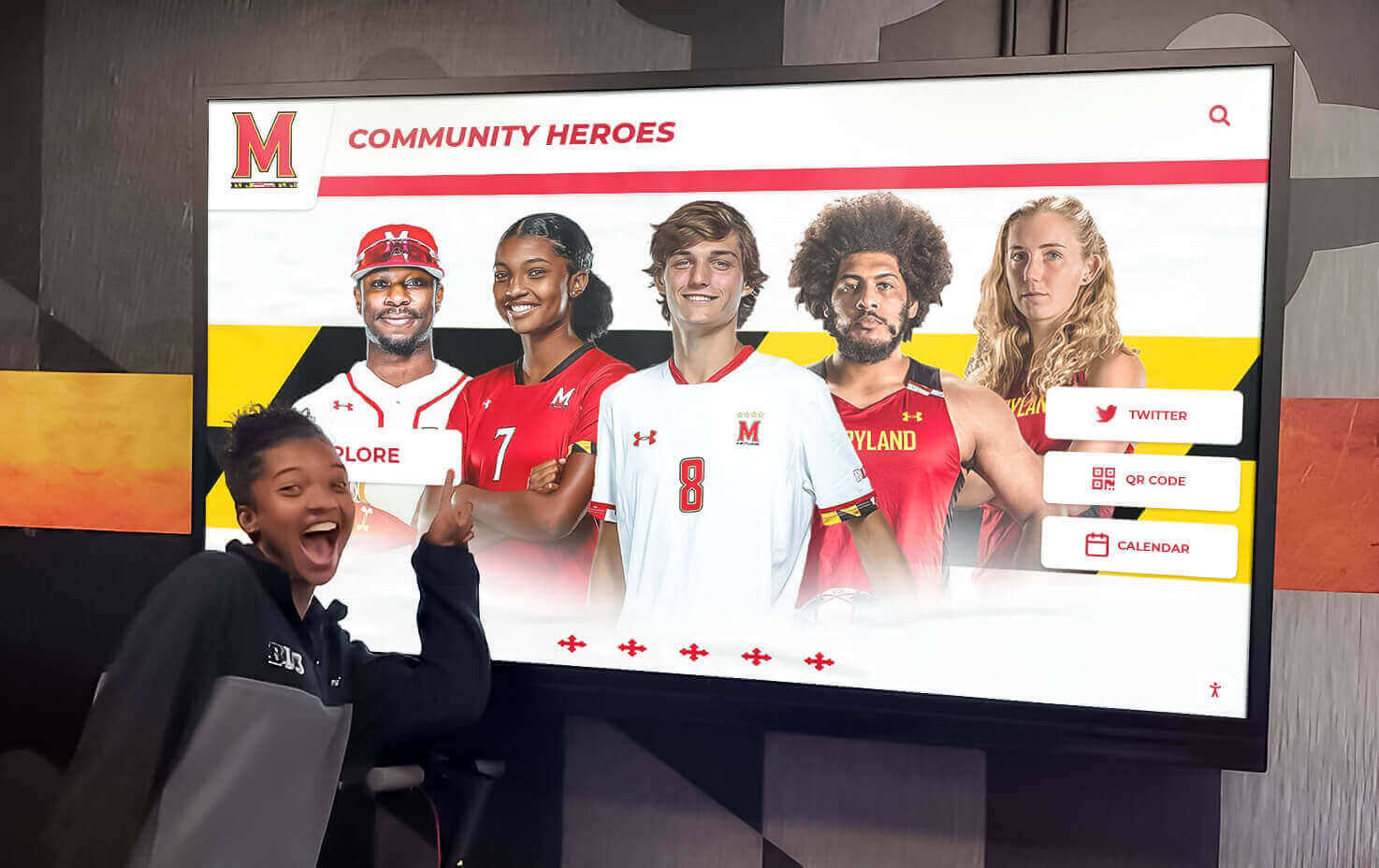
Next-generation athletes draw inspiration from comprehensive recognition celebrating program excellence across decades
Future Trends in Digital Athletic Recognition
Technology evolution continues creating new recognition opportunities beyond current implementations.
Enhanced Multimedia and Social Integration
Emerging capabilities will enable richer storytelling through athlete-contributed content including first-person reflections and current life updates, social media integration pulling posts, photos, and updates from recognized athletes, live event integration displaying real-time statistics and highlights during competitions, and augmented reality features enabling mobile device users to unlock additional content when viewing displays.
These enhancements deepen engagement transforming recognition from static archives to living, evolving celebrations connecting past excellence with present community.
Artificial Intelligence and Automation
AI capabilities promise operational efficiencies including automated content generation creating initial athlete profiles from statistical databases, intelligent highlight selection identifying compelling moments from game video automatically, natural language search enabling conversational queries about achievements and records, and predictive analytics suggesting featured content based on engagement patterns and community interests.
These automation tools reduce manual content development effort while improving quality and personalization—enabling smaller programs to deliver recognition experiences previously requiring dedicated staffing.
Personalized Recognition Experiences
Future platforms will increasingly personalize content delivery showing relevant achievements based on user identity, time-based content highlighting achievements from specific graduation years or eras, sport-specific filtering enabling focused exploration of particular athletic programs, and achievement comparison features enabling users to contextualize performances against program history.
This personalization increases relevance and engagement—ensuring every visitor finds recognition content personally meaningful rather than encountering generic displays lacking individual connection.
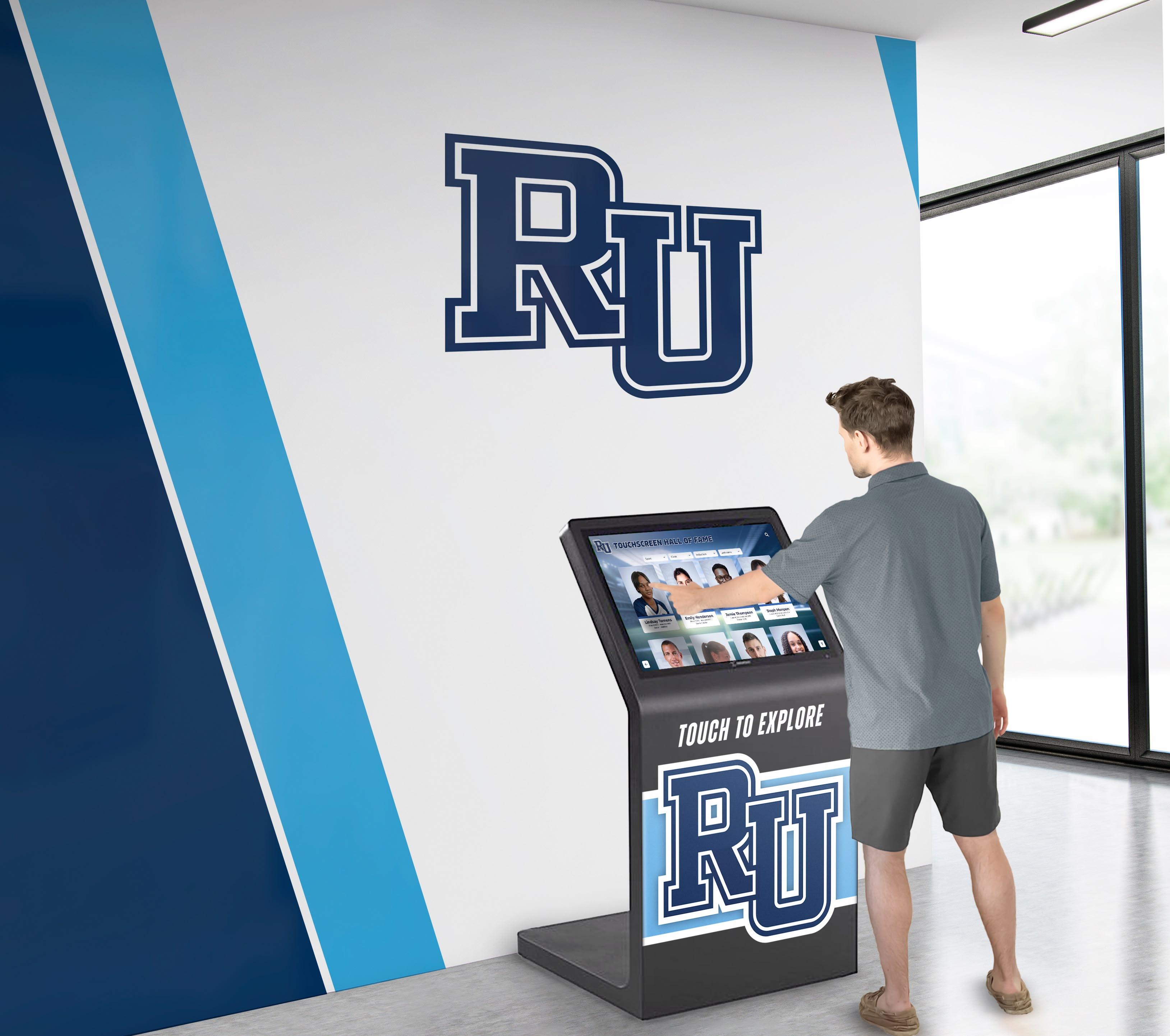
Next-generation platforms combine current season content with comprehensive historical archives accessible to all stakeholders
Conclusion: Transforming Athletic Recognition for the Digital Age
Traditional gym banners have served athletic programs admirably for generations, providing visible celebration of championship excellence and legendary athletes. However, their inherent limitations—constrained physical space forcing artificial scarcity, substantial recurring costs for production and maintenance, static presentation communicating minimal information, and inflexibility preventing updates or corrections—increasingly frustrate programs seeking comprehensive recognition serving expanding athletic offerings and growing historical archives.
Get Your Touchscreen Mock-Up
Discover how custom-designed digital recognition displays can replace expensive gym banners while providing unlimited capacity, engaging multimedia, and cost-effective long-term operation. Rocket Alumni Solutions creates athletic recognition experiences that honor every achievement through purposeful interactive design.
Schedule Your Design ConsultationDigital interactive displays provide compelling alternatives addressing traditional banner limitations while delivering capabilities physical displays cannot match: unlimited recognition capacity celebrating every deserving athlete without space constraints, long-term cost efficiency through elimination of per-achievement production expenses, rich multimedia storytelling incorporating video, photos, and comprehensive narratives, instant content updates addressing errors and adding achievements immediately, and extended accessibility through web portals reaching stakeholders regardless of location.
The most successful implementations start with clear recognition goals identifying what achievements deserve celebration and who represents primary audiences, select purpose-built platforms designed specifically for athletic recognition rather than generic digital signage, develop systematic content strategies ensuring comprehensive rather than sporadic coverage, and position displays strategically where athletes, students, and visitors naturally encounter recognition throughout daily activities.
Whether implementing first digital recognition installations, expanding existing programs, or completely transitioning from traditional banner approaches, modern touchscreen technology provides proven solutions celebrating athletic excellence comprehensively while respecting program traditions and working within realistic budget constraints. The athletes who dedicate themselves to excellence, the coaches who develop them, and the programs that support them deserve recognition infrastructure matching the quality of achievement being celebrated—comprehensive, accessible, engaging, and permanent.
Organizations investing in well-designed digital recognition demonstrate commitment to celebrating achievement comprehensively rather than limiting acknowledgment to arbitrary space constraints. This comprehensive approach communicates institutional values while building athletic cultures where excellence receives systematic celebration creating motivation, pride, and lasting connection across generations.
Ready to explore digital alternatives to expensive gym banners? Learn more about comprehensive digital recognition approaches, discover athletic facility display strategies, explore championship recognition frameworks, and understand digital trophy wall implementation that honor athletic achievement through modern interactive technology purpose-built for celebrating excellence and preserving program heritage for generations.