



TD Garden, Boston’s premier sports and entertainment venue and home to the legendary Boston Celtics and Boston Bruins, represents more than simply a professional sports arena—it embodies over 30 years of championship tradition, iconic moments, and athletic excellence that has defined generations of passionate New England sports fans. Since opening in 1995, TD Garden has hosted countless memorable games including multiple NBA and Stanley Cup championship celebrations, historic individual performances, and defining moments that have become woven into Boston’s rich sports heritage.
Yet even venues as celebrated as TD Garden face challenges common to all professional sports organizations: how to comprehensively honor decades of championship history when physical space remains limited, how to engage modern fans expecting interactive digital experiences similar to what they encounter daily through smartphones and tablets, and how to preserve complete institutional memory as legendary players retire and historic moments fade further into the past. Traditional banner displays and static recognition approaches, while timeless in their ceremonial significance, cannot accommodate the depth of storytelling necessary to fully celebrate the extraordinary legacies of iconic franchises like the Celtics and Bruins.
This comprehensive guide explores how interactive touchscreen recognition technology—exemplified by platforms like Rocket Alumni Solutions—can revolutionize how professional sports venues celebrate athletic legacy, engage diverse fan populations, and preserve championship heritage through unlimited digital capacity, rich multimedia storytelling, and engaging interactive experiences impossible with traditional static recognition methods alone. While examining TD Garden’s current recognition approaches and the broader landscape of professional sports venue technology, we’ll explore how digital recognition systems address the unique challenges facing multi-team venues with extraordinary championship traditions.
Professional sports arenas represent unique recognition opportunities where championship excellence, devoted fan communities, and institutional tradition converge across multiple franchises and decades of competition. Interactive digital displays transform how venues honor legendary athletes while creating engaging experiences that deepen fan connections with team history and inspire appreciation for the iconic players and moments that built championship traditions on hallowed arena floors and ice surfaces.

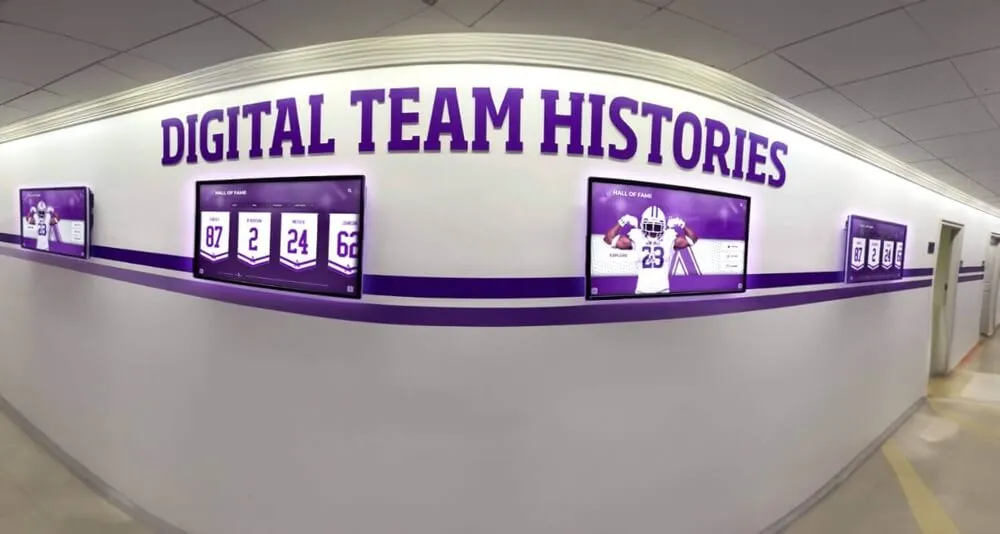
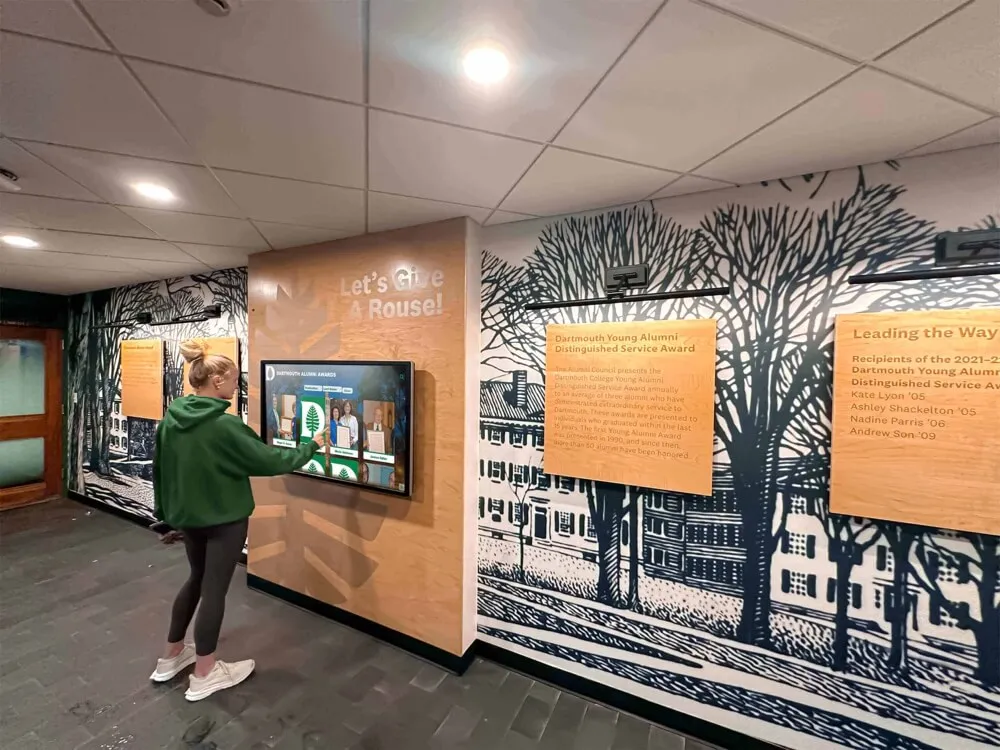
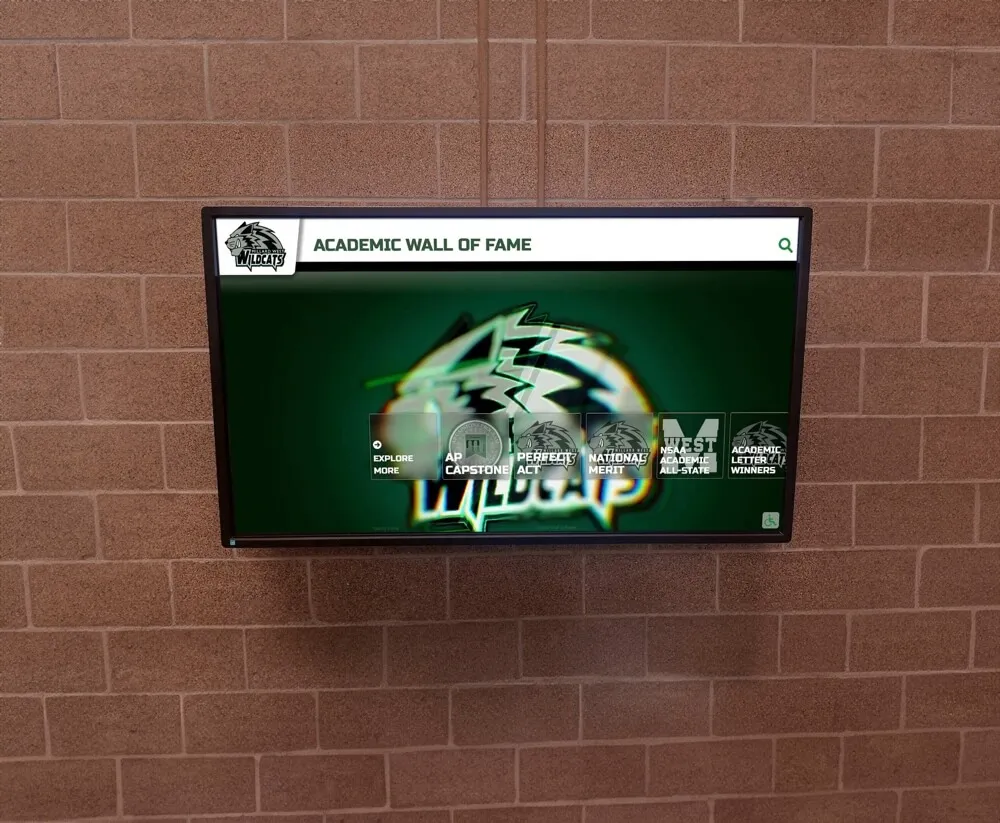
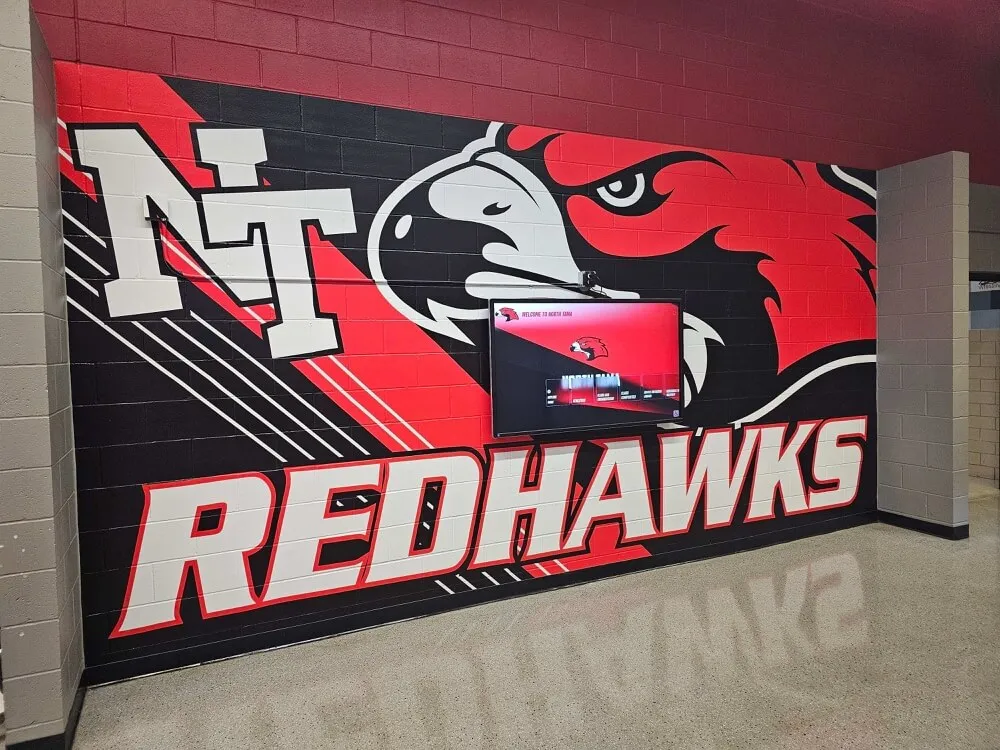
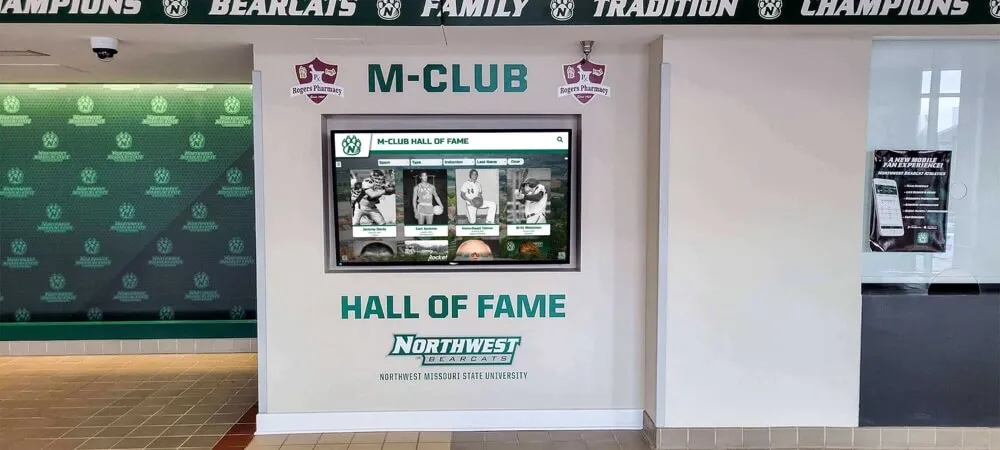
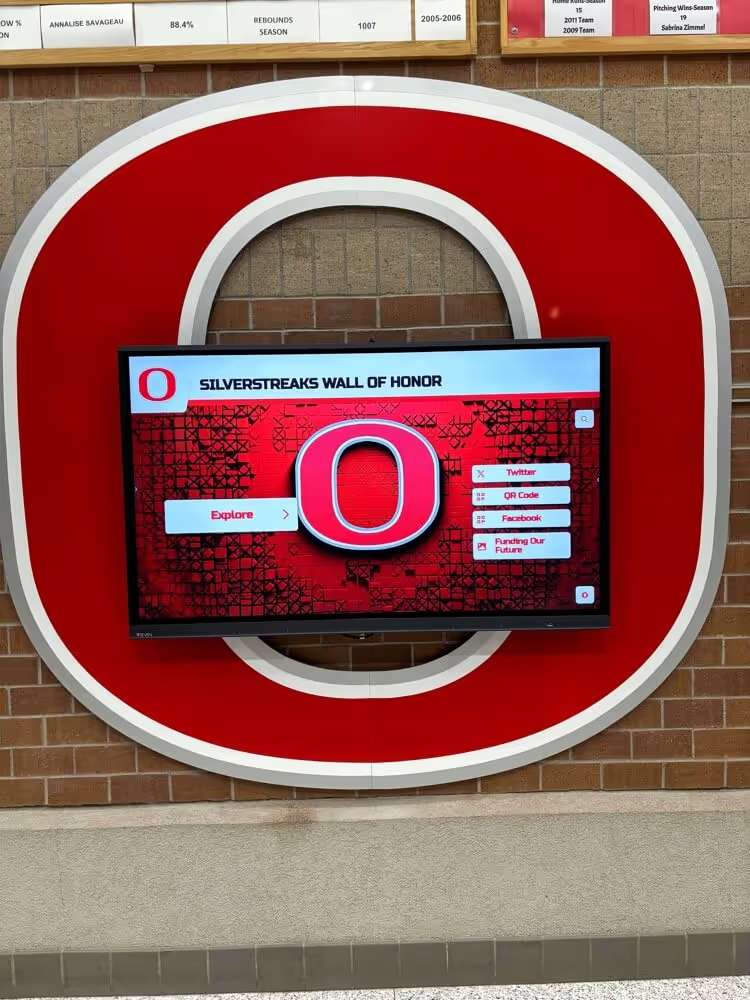
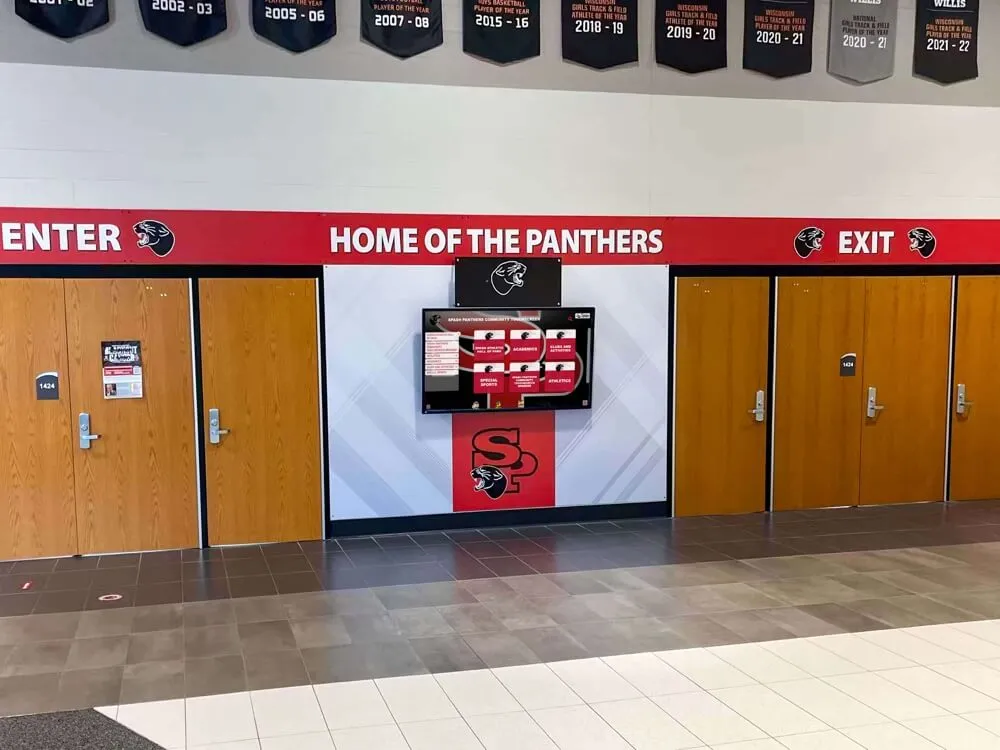
Strategic display placement in high-traffic areas ensures recognition reaches diverse fan populations throughout game-day experiences
TD Garden: Three Decades of Boston Sports Excellence
Understanding TD Garden’s unique position in professional sports helps appreciate why comprehensive recognition systems deliver particular value for venues hosting multiple championship franchises with extraordinary histories.
The Venue: From Boston Garden to Modern TD Garden
TD Garden opened on September 30, 1995, replacing the beloved but aging Boston Garden that had served as home to the Celtics and Bruins since 1928. While the original Boston Garden held irreplaceable memories and historic significance, the modern facility provided expanded capacity, improved amenities, and contemporary infrastructure necessary for 21st-century professional sports operations.
The transition from Boston Garden to TD Garden represented more than simply moving to a new building—it required thoughtfully preserving tradition and championship legacy while embracing modern capabilities. This balance between honoring heritage and embracing innovation remains central to effective recognition approaches for historic sports franchises operating in contemporary venues.
According to recent coverage celebrating TD Garden’s 30-year anniversary, the venue has hosted over 1,000 sporting events and concerts annually, welcoming millions of visitors who experience Boston’s championship tradition firsthand through various recognition elements integrated throughout the facility.
Facility Specifications and Recognition Spaces
TD Garden encompasses 755,000 square feet across multiple levels, accommodating 19,156 fans for basketball and 17,850 for hockey. The venue features dedicated recognition spaces including the Sports Museum occupying portions of Levels 5 and 6, Boston Bruins Heritage Hall on Level 2 celebrating the franchise’s centennial history, championship banners displayed prominently from the arena rafters, retired number recognition honoring legendary players from both franchises, and concourse displays throughout the venue providing historical context and celebration.
These recognition elements create multiple touchpoints where fans encounter organizational history, though opportunities exist to enhance storytelling depth, accessibility, and engagement through modern interactive technology.
Boston Celtics: Unparalleled Championship Tradition
The Boston Celtics represent arguably the most successful franchise in NBA history, with a championship legacy deserving comprehensive recognition celebrating every era of excellence.
Championship Excellence and Historic Achievements
The Celtics’ 17 NBA championships span from the Bill Russell dynasty of the 1950s and 1960s through the modern era, including the 1957 championship marking the franchise’s first title, the unprecedented eight consecutive championships from 1959-1966, the Larry Bird era championships in 1981, 1984, and 1986, the 2008 championship featuring the “Big Three” of Kevin Garnett, Paul Pierce, and Ray Allen, and the 2024 championship led by Jayson Tatum and Jaylen Brown that captured Banner 18.
This extraordinary championship tradition generates rich recognition content spanning multiple generations, with each era featuring distinctive stars, memorable moments, and defining characteristics that collectively tell the complete Celtics story.
Approaches to professional sports digital recognition demonstrate how comprehensive systems can celebrate multi-generational excellence while remaining accessible and engaging for contemporary fans.
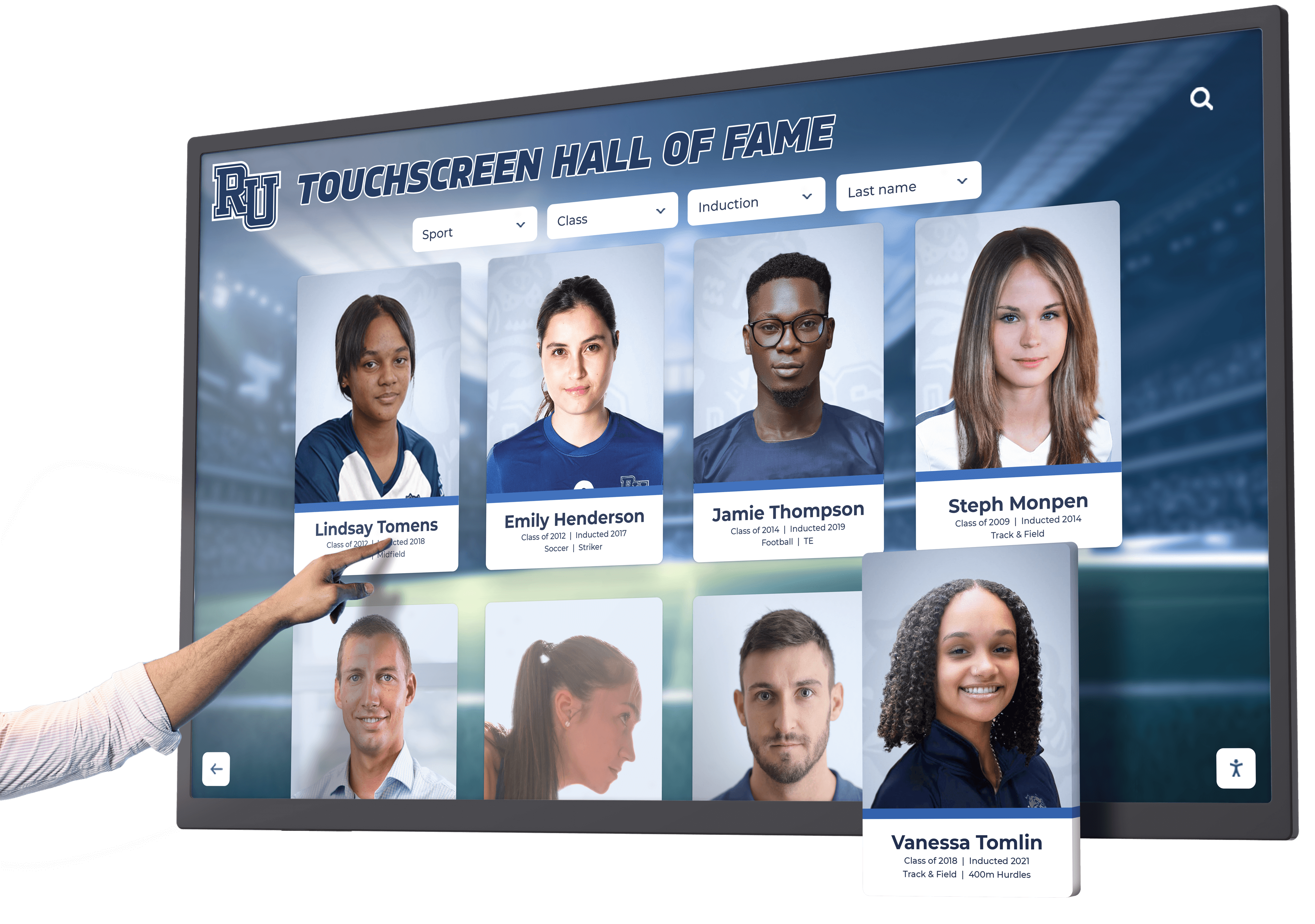
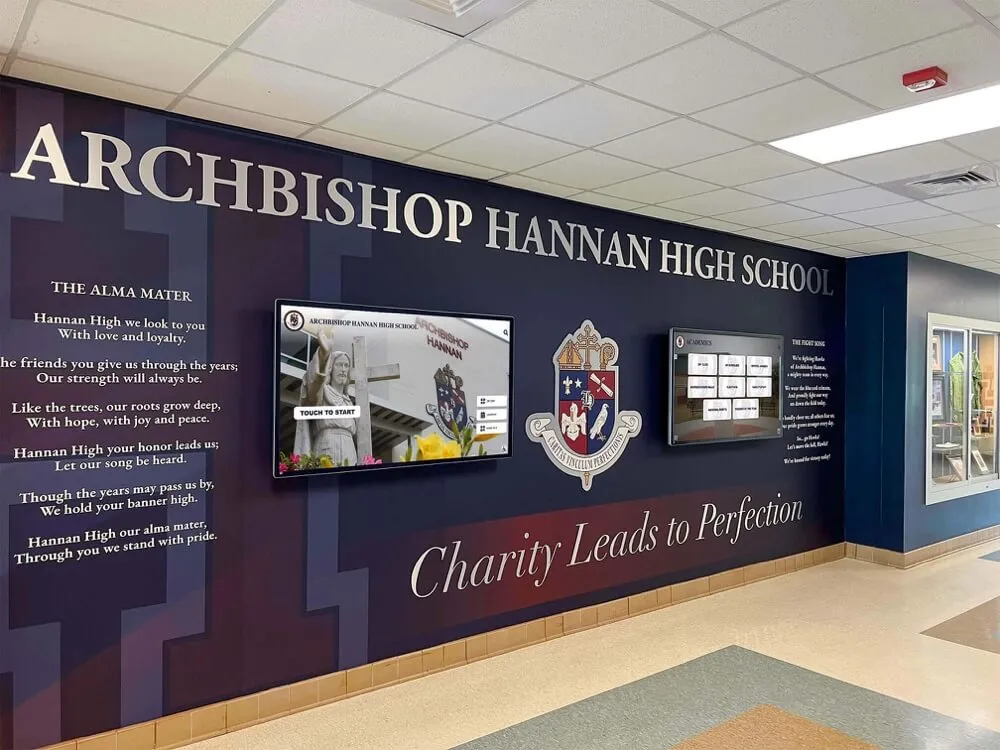
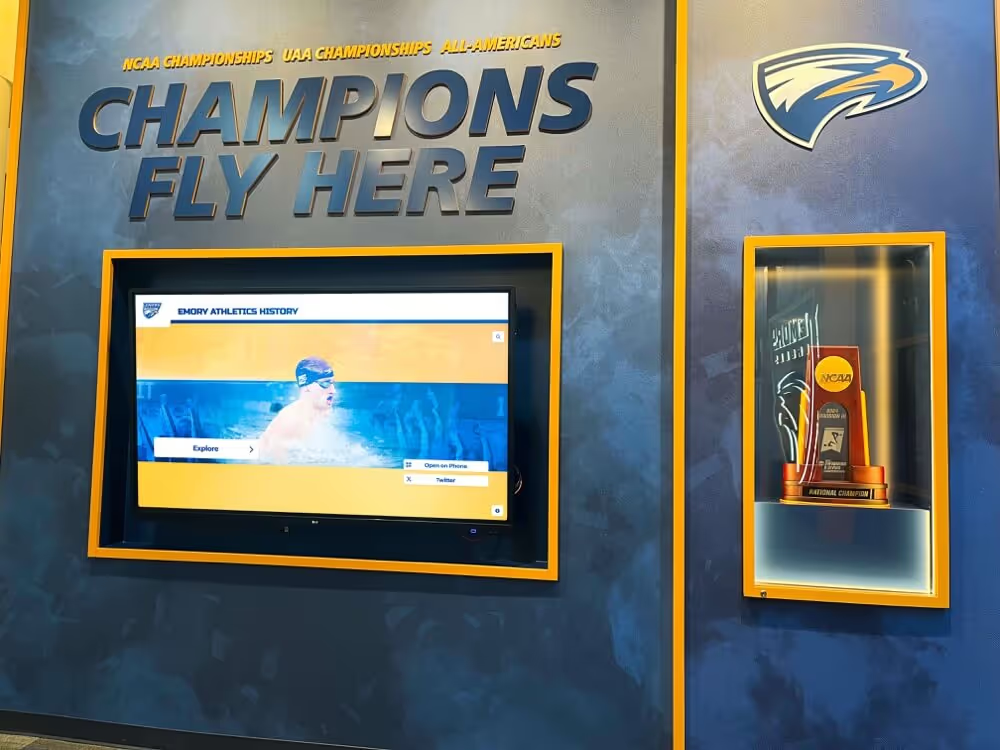
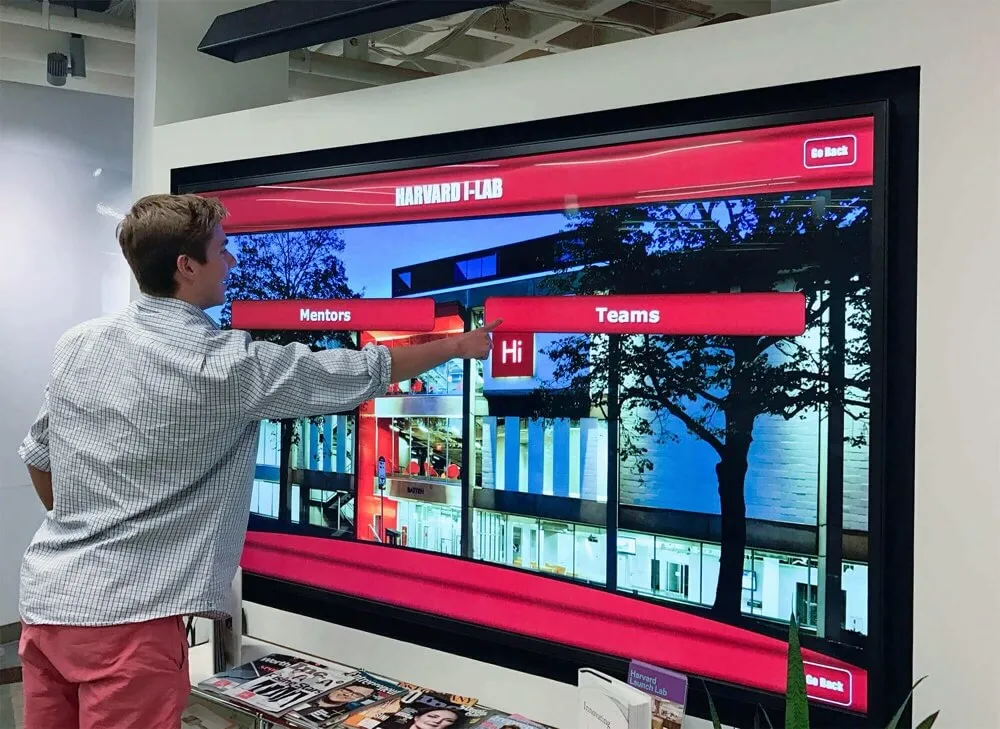
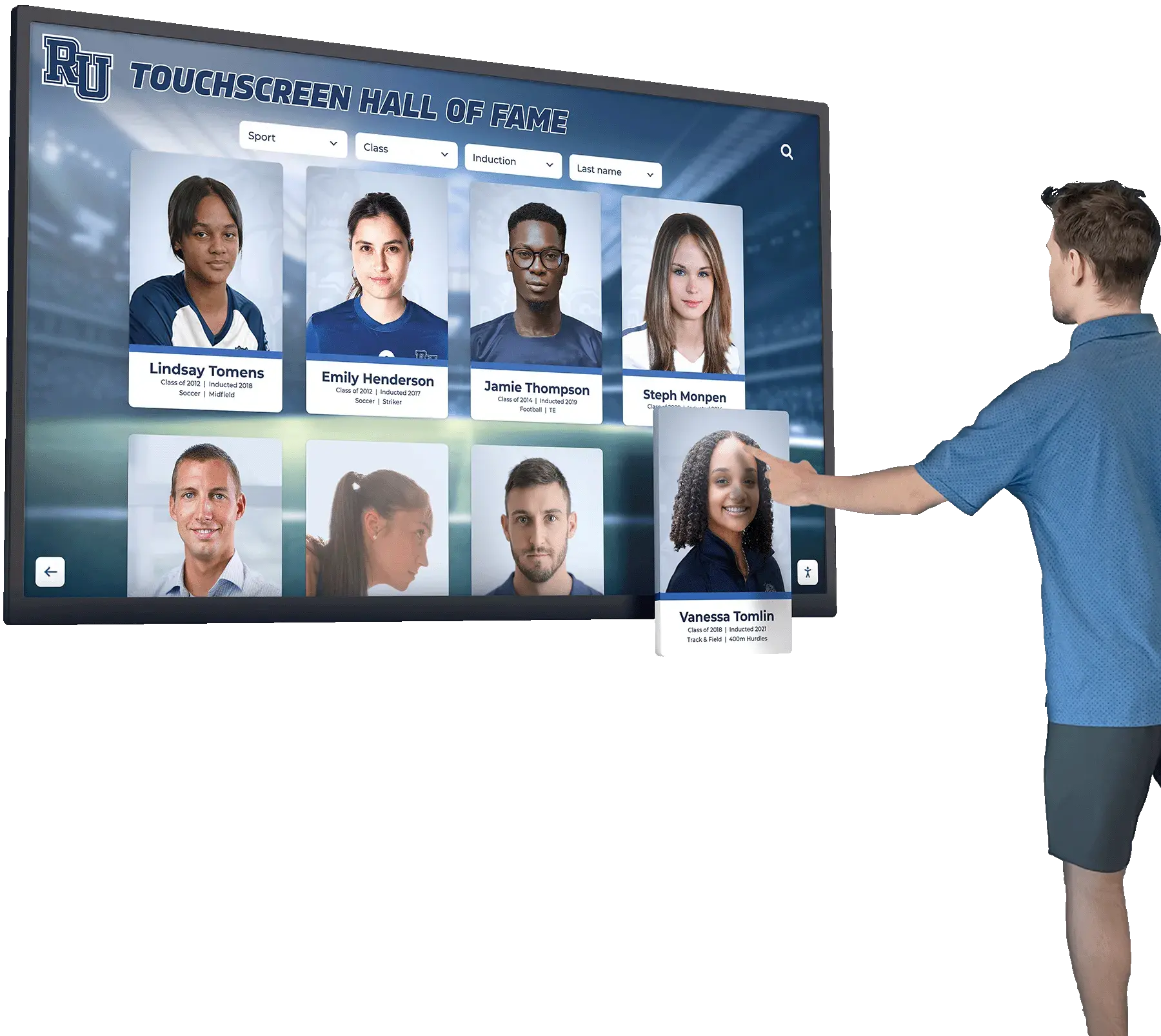
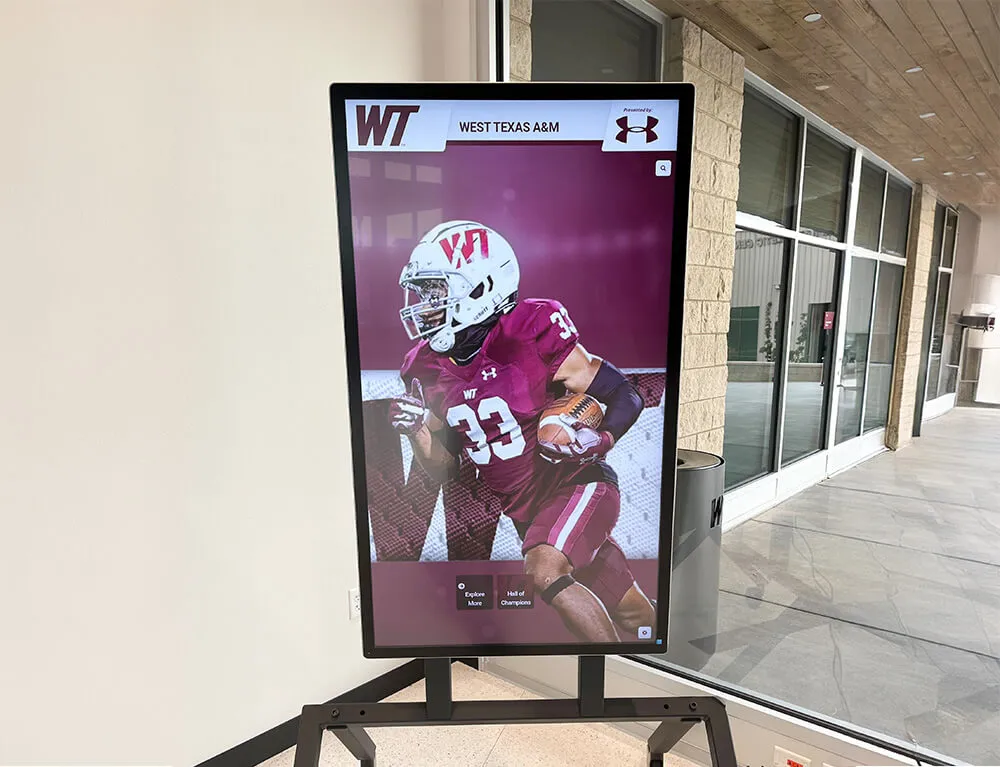
Touchscreen interfaces enable fans to explore championship histories at their own pace, discovering players and moments matching their interests
Legendary Players and Iconic Moments
Beyond team championships, the Celtics boast extraordinary individual excellence including Bill Russell’s 11 championships as a player and revolutionary defensive impact, Larry Bird’s three consecutive MVP awards and intense rivalry with Magic Johnson, Paul Pierce’s championship leadership and franchise scoring records, and countless All-Stars, Hall of Famers, and defining performers across seven decades.
Individual recognition celebrating these legendary contributors requires depth impossible through physical plaques alone—comprehensive career statistics, video highlights showcasing signature performances, historical context explaining significance within franchise and league history, and multimedia storytelling connecting emotional resonance with factual achievements.
Boston Bruins: Century of Hockey Excellence
The Boston Bruins, an Original Six NHL franchise founded in 1924, bring a century of hockey tradition to TD Garden deserving recognition systems celebrating complete franchise history.
Stanley Cup Championships and Historic Success
The Bruins’ six Stanley Cup championships include victories in 1929 (the first American NHL team to win the Cup), 1939 and 1941 championships during the early franchise era, 1970 and 1972 championships featuring Bobby Orr and Phil Esposito, and the 2011 championship that ended a 39-year drought and unified Boston following challenging circumstances.
Each championship era reflects different hockey styles, memorable personalities, and defining moments that collectively represent the complete Bruins story spanning a century of NHL competition.
Iconic Players and Franchise Legends
Bruins history features some of hockey’s greatest talents including Bobby Orr, arguably hockey’s most revolutionary player whose skating and offensive ability transformed defenseman expectations, Ray Bourque, the franchise’s all-time scoring leader who exemplified consistency and excellence across 21 seasons, Phil Esposito, Cam Neely, and numerous other stars who built and maintained championship tradition through multiple eras.
The Boston Bruins Heritage Hall opened to celebrate the franchise’s centennial season, featuring exhibits, artifacts, and technological activations honoring 100 years of Bruins hockey. This dedicated recognition space demonstrates the organization’s commitment to celebrating heritage, while also illustrating the ongoing challenge of comprehensively documenting and displaying a century of franchise history within physical space constraints.
Recognition systems addressing athletic hall of fame development provide frameworks for celebrating extensive organizational histories across multiple championship eras and generations of legendary contributors.
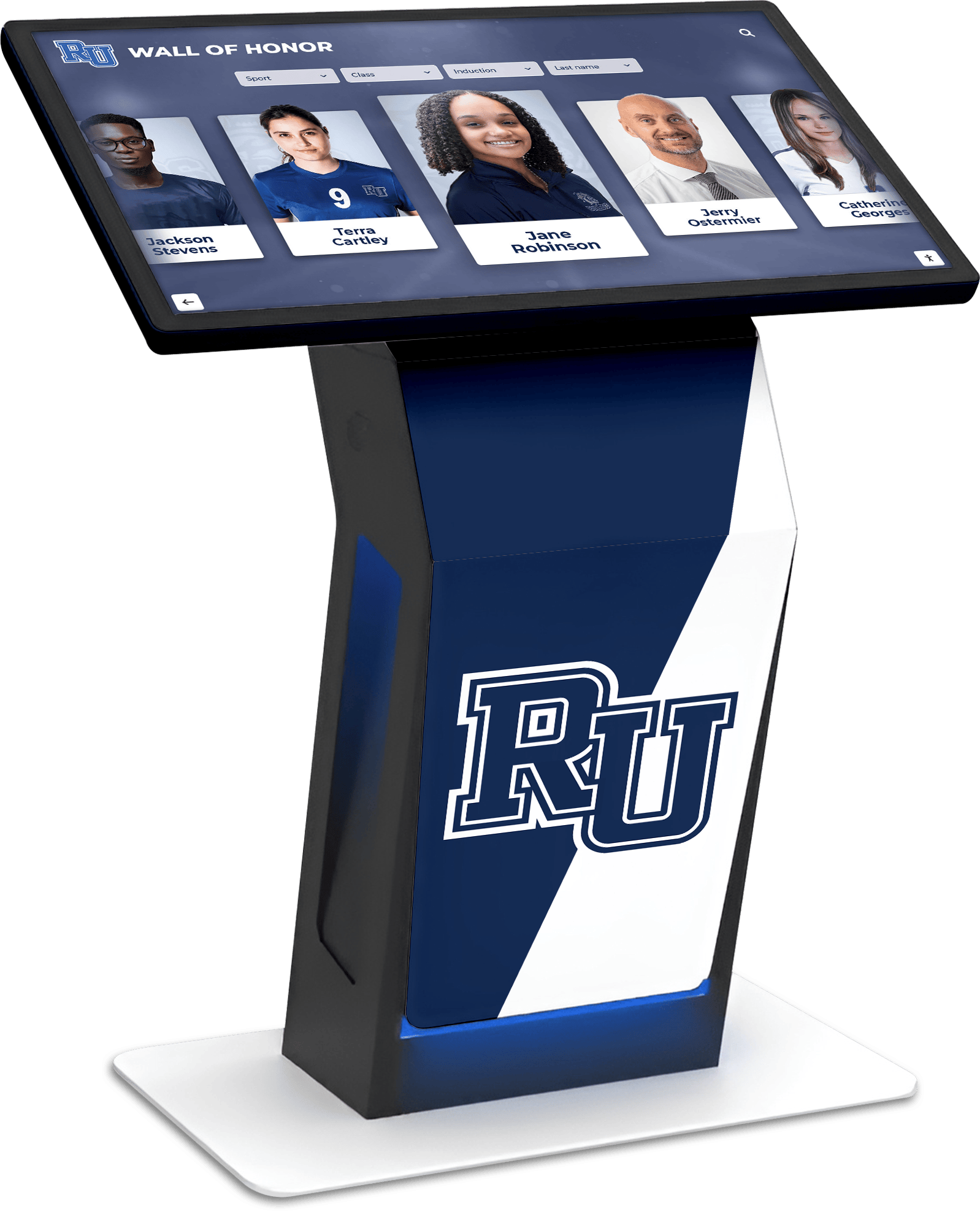
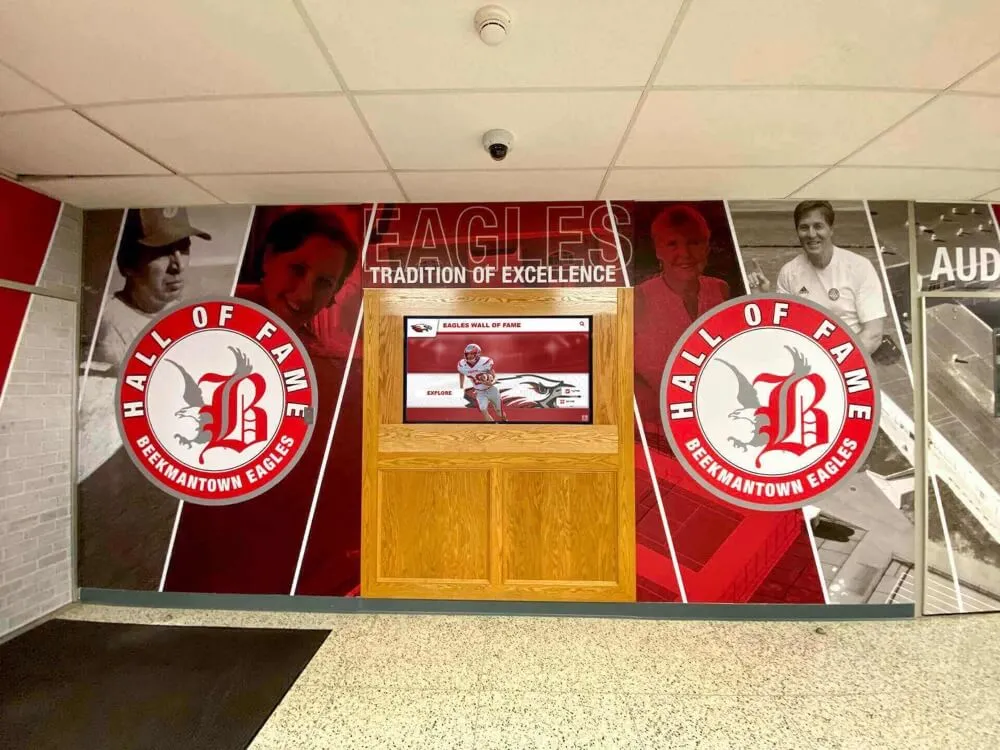
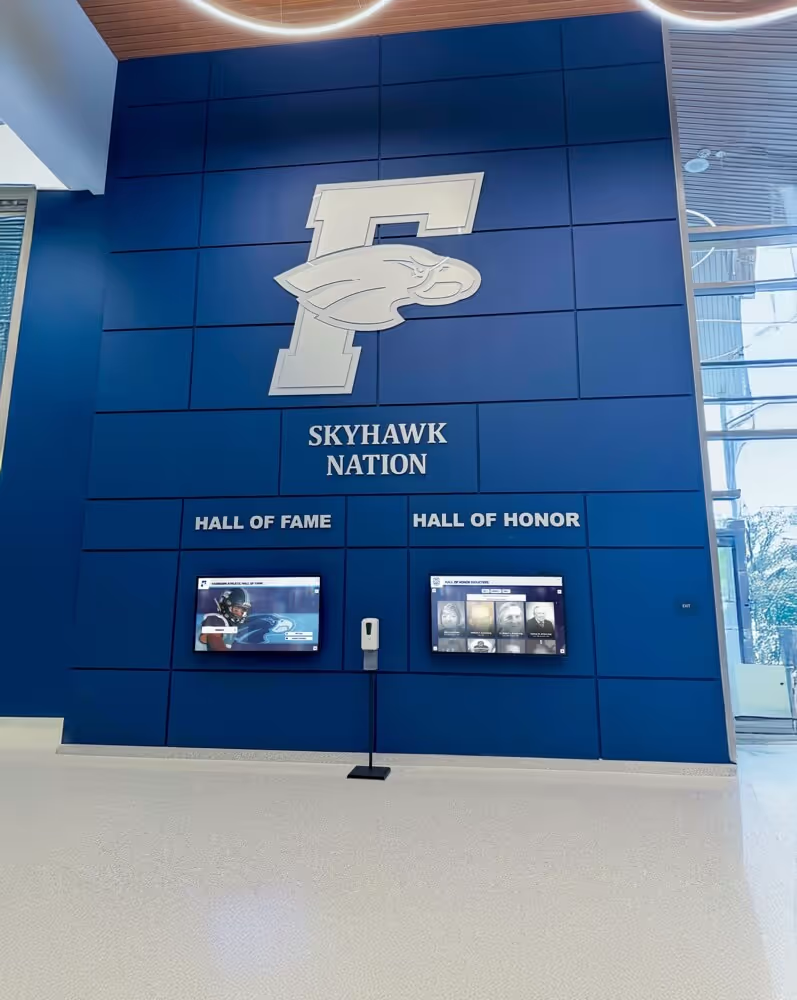
Purpose-built recognition kiosks integrate hardware and software into cohesive systems requiring minimal technical expertise for content management
The Sports Museum at TD Garden: Preserving Boston Sports Heritage
The Sports Museum, established in 1977 and relocated to TD Garden, serves as Boston’s premier repository of sports history and memorabilia, offering comprehensive recognition extending beyond the Celtics and Bruins to encompass broader New England sports tradition.
Museum Scope and Recognition Approach
The Sports Museum occupies approximately half a mile of exhibit space throughout TD Garden’s premium levels, featuring exhibits primarily focused on Boston Celtics and Bruins history but also incorporating New England Patriots, Red Sox, college athletics, and other regional sports heritage elements.
Museum exhibits showcase authentic memorabilia including game-worn jerseys and equipment, championship trophies and rings, photographic collections documenting historic moments, video presentations featuring game footage and interviews, and interactive elements engaging visitors with Boston sports tradition.
This comprehensive approach demonstrates the recognition challenge facing venues with multiple franchises and extensive histories—the volume of significant content vastly exceeds physical display capacity, forcing difficult decisions about what receives prominence and what remains in storage or receives minimal recognition.
Museum Access and Visitor Experience
The Sports Museum operates as a separate paid admission experience distinct from standard game attendance, providing guided tours and self-guided exploration of exhibits during designated hours. This model creates dedicated space for comprehensive recognition while maintaining separation from standard arena operations.
However, this separation also means that many game attendees never experience the museum’s comprehensive historical content, potentially missing opportunities to deepen connections with franchise tradition during natural game-day touchpoints when emotional engagement peaks.
Strategies for fan experience center development explore how venues can integrate recognition throughout facilities, ensuring all visitors encounter heritage celebration regardless of whether they specifically seek dedicated museum experiences.
Current Digital Technology at TD Garden
TD Garden has invested significantly in digital display technology, providing valuable context for understanding how interactive recognition systems could further enhance the venue’s championship celebration capabilities.
Hub Vision: State-of-the-Art Center-Hung Scoreboard
TD Garden unveiled the “Hub Vision” center-hung scoreboard featuring more than 4K resolution and 2.5-millimeter pixel spacing, representing the highest resolution in both the NBA and NHL according to official announcements. The massive Daktronics display provides spectacular video presentations, real-time statistics, and engaging content throughout games and events.
While Hub Vision primarily serves in-game entertainment and information functions, it demonstrates the organization’s commitment to providing exceptional visual experiences and staying at the technological forefront of professional sports venue operations.
LED Display Network Throughout Venue
Beyond the central scoreboard, TD Garden features comprehensive LED display networks throughout concourses and public spaces, including Nanolumens LED displays installed during comprehensive arena-wide renovations. These displays provide wayfinding information, promotional content, real-time game updates for fans in concourse areas, and flexible digital signage supporting various venue functions.
This extensive digital infrastructure creates foundation and precedent for expanding interactive recognition applications—the technical capabilities and organizational experience with digital content management already exist, enabling expansion into more sophisticated interactive recognition without fundamental infrastructure development.
Interactive Wayfinding and Fan Experience Technology
TD Garden features interactive touchscreen kiosks providing navigation assistance strategically placed throughout the arena. These accessible displays help visitors locate seats, amenities, concessions, and other venue features through intuitive interfaces designed for diverse user populations including those with mobility or visual limitations.
These existing touchscreen systems demonstrate fan comfort with interactive technology and organizational capability managing touchscreen hardware and software—valuable precedents when considering expanded interactive recognition applications.
According to coverage of TD Garden’s technological innovations, the venue also leverages augmented reality technology, mobile app integration, and digital engagement tools that enhance overall fan experiences while providing valuable data about visitor preferences and behaviors.
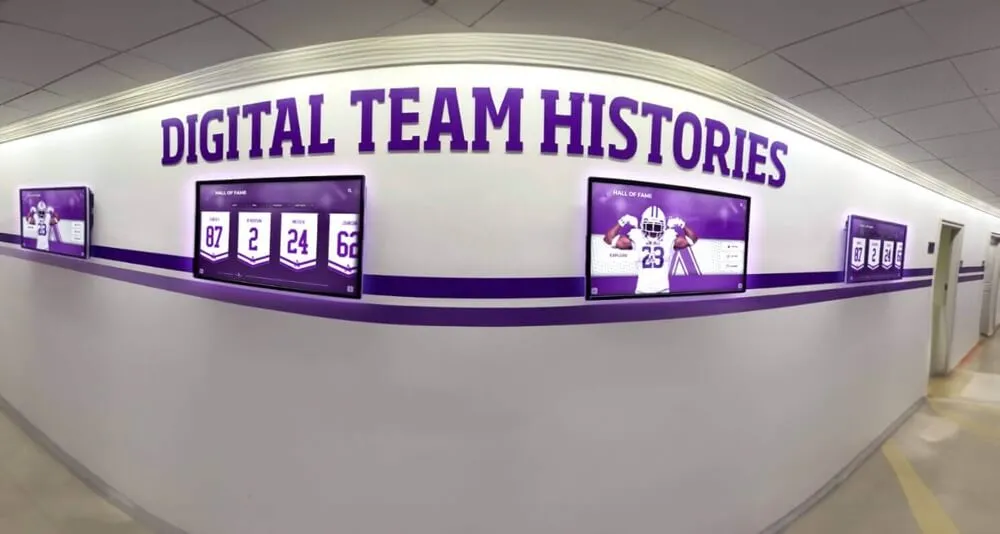
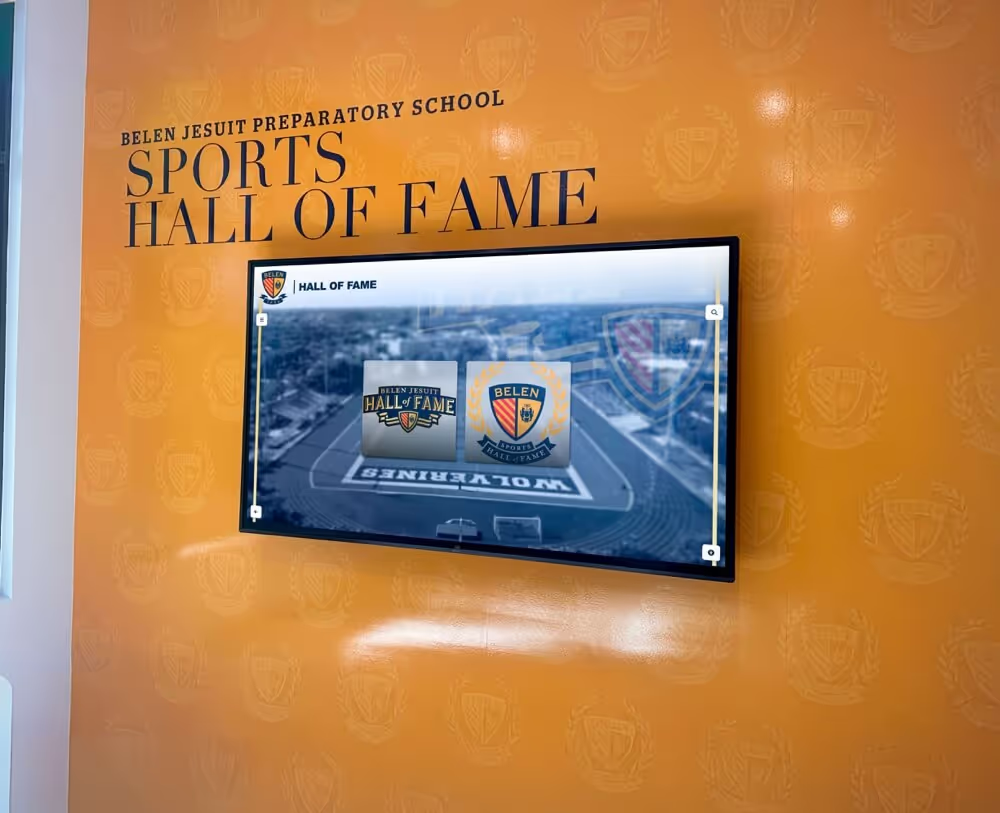
Networked display systems throughout venues ensure recognition reaches fans at multiple touchpoints during their arena experiences
How Interactive Recognition Technology Enhances Professional Sports Venues
While TD Garden incorporates various recognition elements and digital display technology, interactive touchscreen recognition systems like those provided by Rocket Alumni Solutions offer specific capabilities addressing the unique challenges facing multi-franchise venues with extraordinary championship histories.
Unlimited Recognition Capacity Without Physical Constraints
Perhaps the most significant advantage of digital recognition involves eliminating space limitations that constrain traditional approaches, enabling comprehensive celebration of every significant contributor across decades of franchise history.
Complete Roster Recognition Across Eras
Physical halls of fame typically showcase only the most celebrated individuals—Hall of Famers, championship team members, or those meeting specific achievement thresholds. This selectivity means hundreds of significant contributors who played important roles in franchise history receive minimal or no recognition.
Digital platforms accommodate unlimited profiles, enabling organizations to recognize every player who appeared in games, every coach who led teams, every significant contributor to organizational success, complete statistical records for all recognized individuals, and historical context explaining career significance within franchise development.
This comprehensive approach ensures no significant contributor is forgotten while maintaining appropriate prominence for the most celebrated legends through featured content, navigation hierarchies, and content presentation strategies.
Multi-Franchise Coordination and Cross-Referencing
Venues hosting multiple franchises face additional complexity coordinating recognition across organizations with distinct histories, traditions, and priorities. Digital systems address this through unified platforms serving both franchises while maintaining distinct content sections, cross-referencing capabilities highlighting connections between organizations, coordinated visual presentation reflecting venue branding alongside franchise identities, and centralized content management enabling efficient administration across multiple recognition programs.
This coordination proves particularly valuable for venues like TD Garden where Celtics and Bruins recognition should feel cohesive and complementary rather than competing for attention or creating fragmented experiences.
Understanding digital donor recognition strategies demonstrates similar principles for coordinating multiple recognition priorities within unified systems serving diverse stakeholder needs.
Rich Multimedia Storytelling Capabilities
Static displays limited to photographs and brief text cannot capture the emotional resonance of championship moments or convey the complete stories behind legendary careers—capabilities that multimedia digital systems provide inherently.
Video Integration and Highlight Archives
Video content transforms simple achievement acknowledgment into emotionally engaging storytelling through championship game highlights showcasing defining moments, individual career retrospectives documenting player development and peak performances, player interviews providing personal perspectives and reflections, historical footage showing players in their competitive primes, and comparative analysis examining achievements within historical context.
For franchises like the Celtics and Bruins with extensive broadcast archives, digitized video content represents invaluable recognition assets that remain largely inaccessible through traditional static display approaches but become readily available through interactive digital systems.
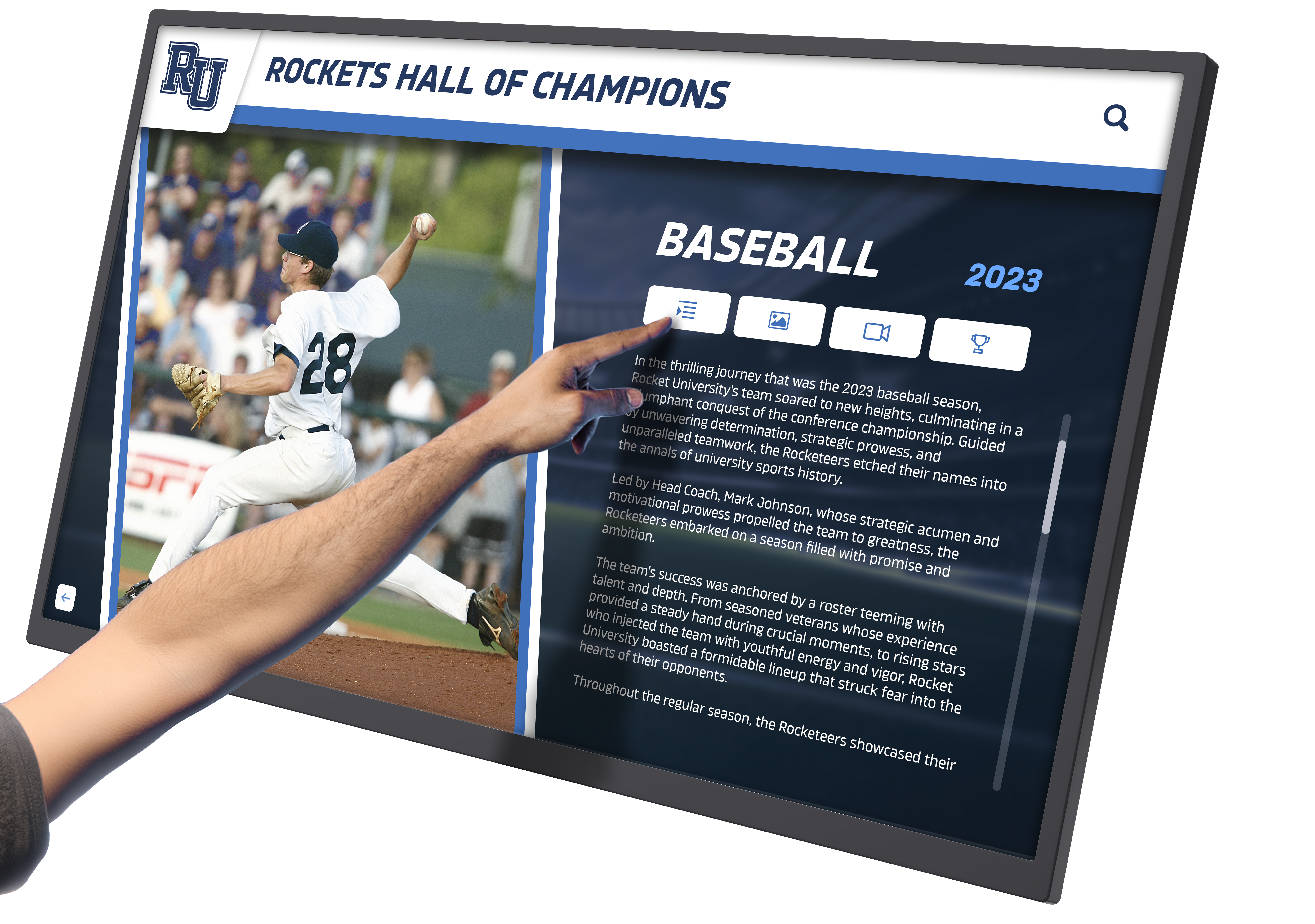
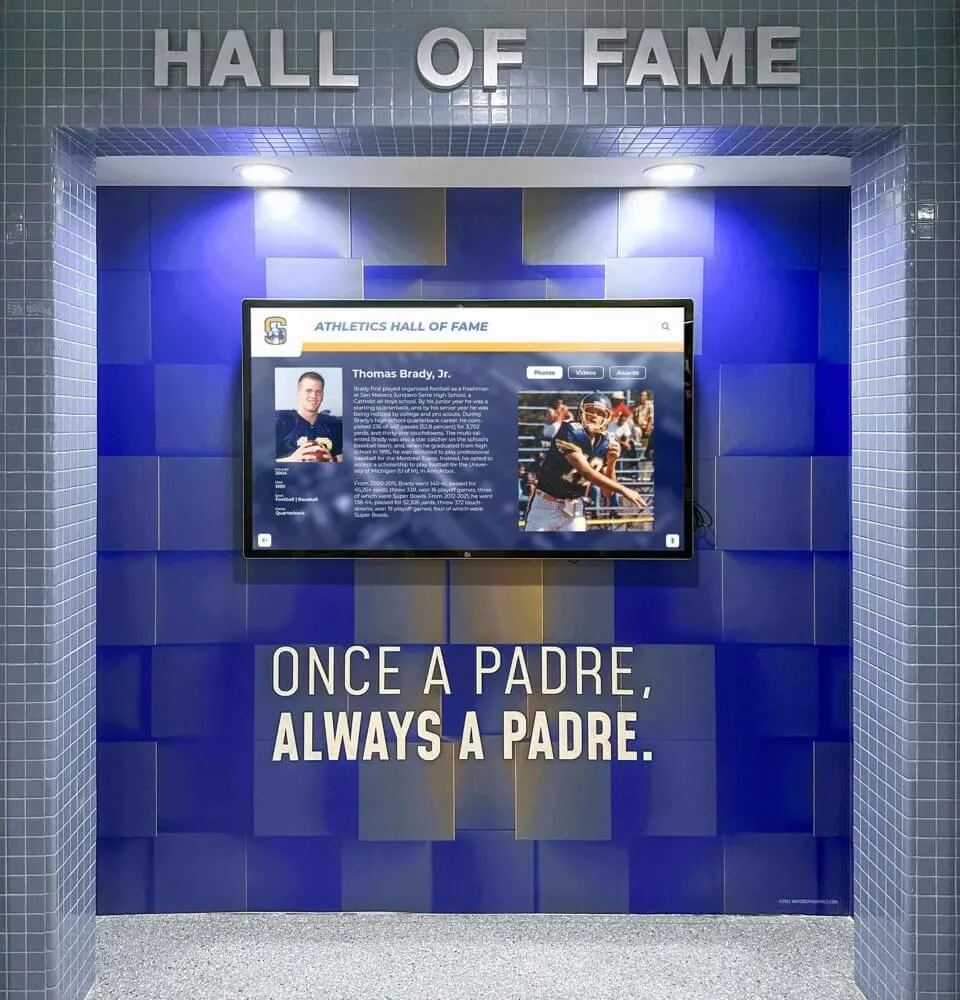
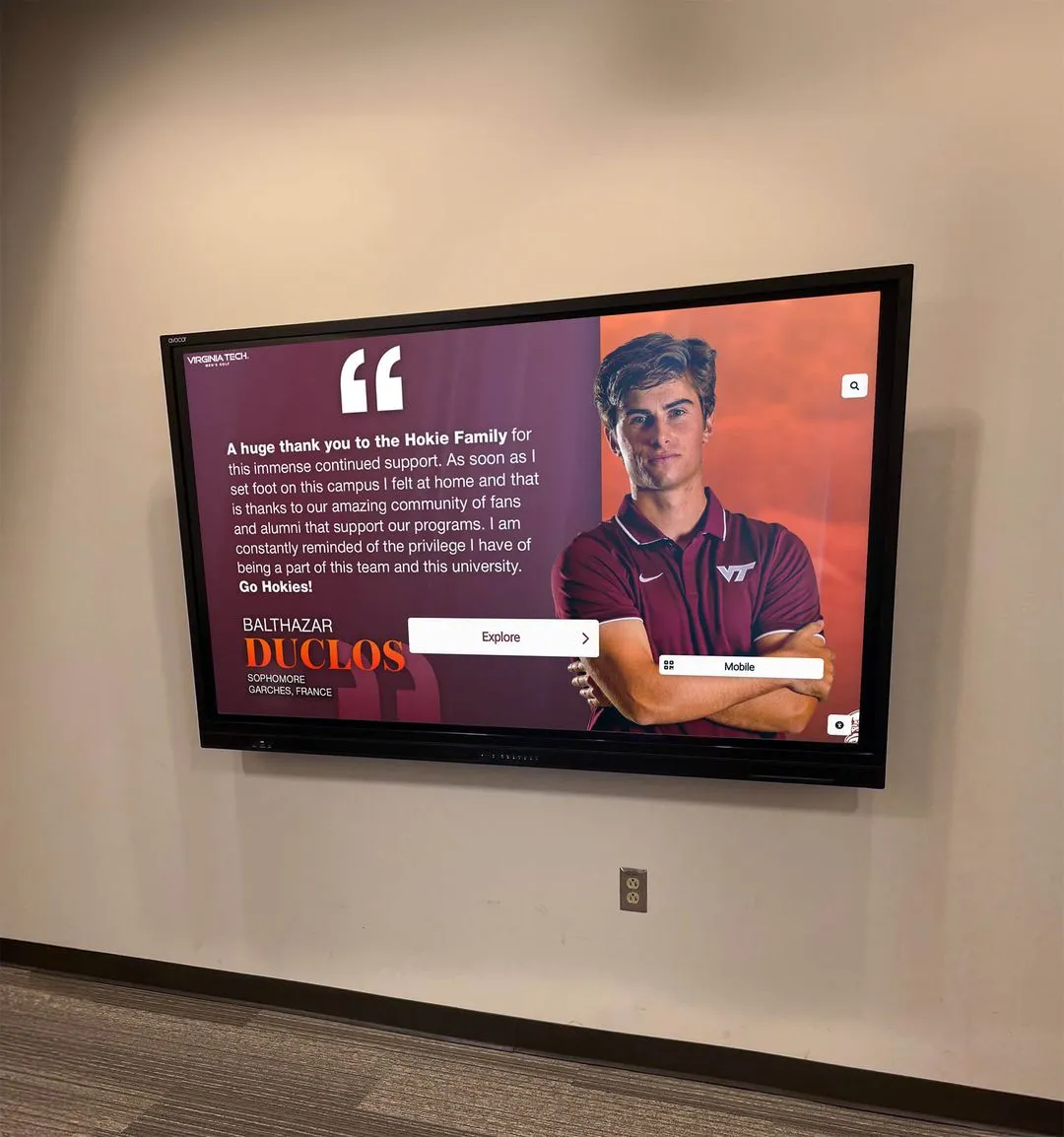
Comprehensive player profiles incorporate statistics, photographs, video highlights, and narrative content creating memorable recognition experiences
Statistical Depth and Interactive Data Visualization
Sports recognition inherently involves statistics and achievement metrics that benefit from interactive presentation enabling fans to explore data matching their interests:
Complete career statistics for all recognized players, season-by-season performance tracking showing career progression, franchise record books identifying all-time leaders across categories, comparative visualizations showing how individuals rank among franchise legends, and searchable databases enabling fans to query specific achievements or statistical thresholds.
These interactive capabilities transform passive viewing into active exploration, dramatically increasing engagement time while accommodating both casual fans seeking basic information and devoted enthusiasts desiring comprehensive statistical depth.
Approaches to digital storytelling for athletic programs provide frameworks for creating compelling narratives that balance factual information with emotional engagement.
Real-Time Updates and Dynamic Content Management
Championship traditions continue evolving as current players build their legacies and new moments join the historical narrative—requiring recognition systems that accommodate ongoing additions without physical construction delays or fabrication costs.
Instant Recognition of Current Achievements
Digital content management systems enable immediate recognition updates when players earn significant milestones during seasons, teams win championships requiring updated banner displays, new inductees join franchise halls of fame, retired numbers receive official ceremony recognition, and records fall to new generation performers.
Cloud-based platforms allow content administrators to publish updates instantly from any location, with changes appearing immediately across all displays throughout the venue—responsiveness impossible through traditional physical approaches requiring design, fabrication, and installation processes consuming weeks or months.
Seasonal Content Adaptation and Featured Presentations
Beyond permanent recognition content, digital systems accommodate seasonal programming highlighting current rosters and upcoming games, anniversary commemorations celebrating historic moments on significant dates, playoff and championship content during postseason competition, alumni events and recognition ceremonies, and special promotions coordinating recognition with marketing initiatives.
This flexibility enables recognition systems to feel perpetually relevant and current rather than becoming static historical exhibits disconnected from ongoing franchise operations.
Resources on implementing digital hall of fame systems provide guidance for organizations developing flexible recognition platforms accommodating both permanent historical content and dynamic seasonal programming.
Advanced Search and Personalized Discovery
Large recognition databases containing decades of franchise history across multiple sports require sophisticated navigation enabling diverse visitors to efficiently discover content matching their specific interests.
Intuitive Search and Filtering Capabilities
Interactive systems should provide multiple discovery methods including text search finding specific individuals by name, year-based browsing exploring particular eras or seasons, position and role filtering for fans interested in specific player types, achievement-based queries identifying record holders and award winners, and championship team exploration accessing complete rosters and season documentation.
These varied approaches accommodate different user preferences and discovery styles—some visitors know exactly whom they seek while others prefer exploratory browsing discovering players and moments they hadn’t previously encountered.
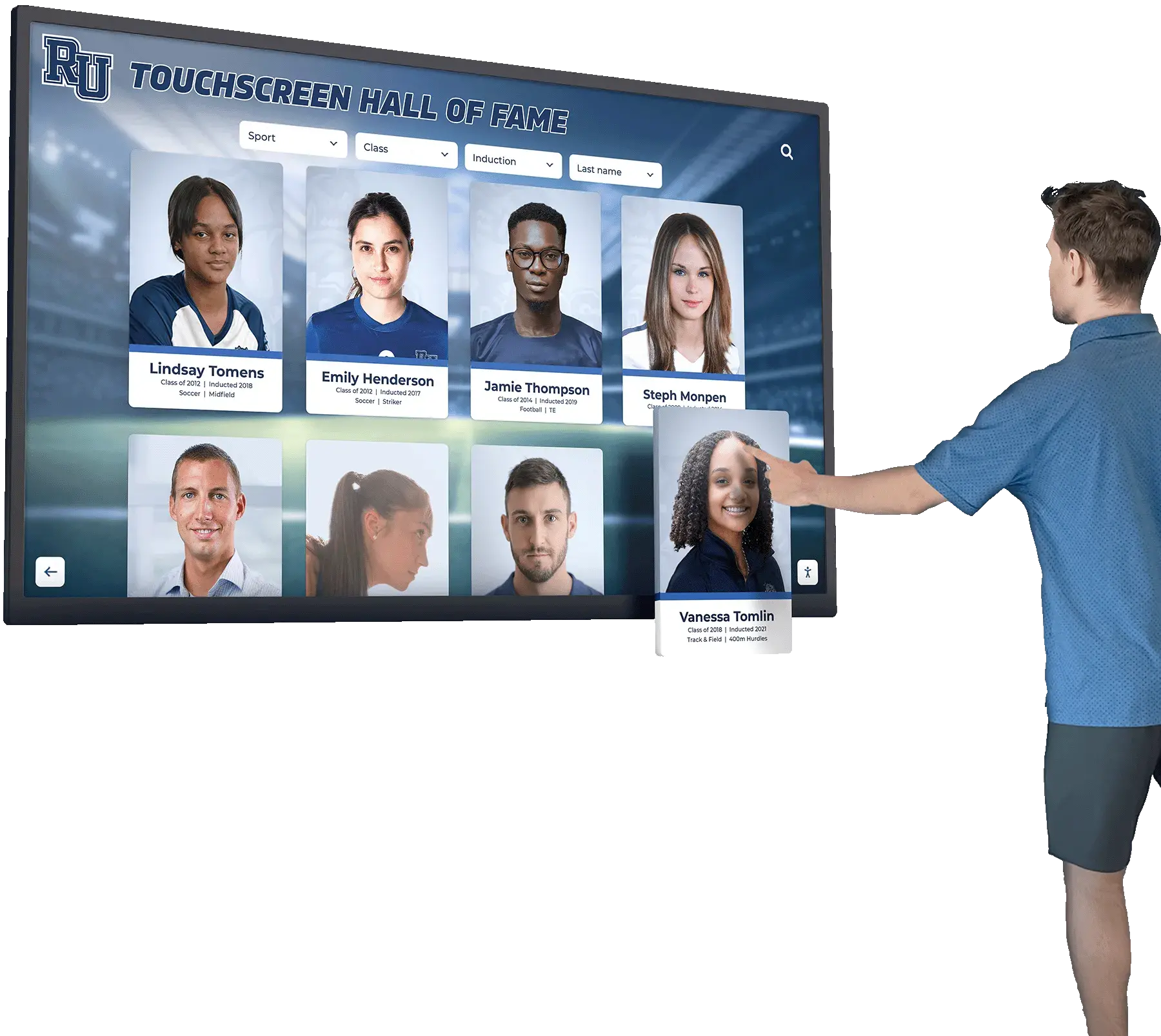
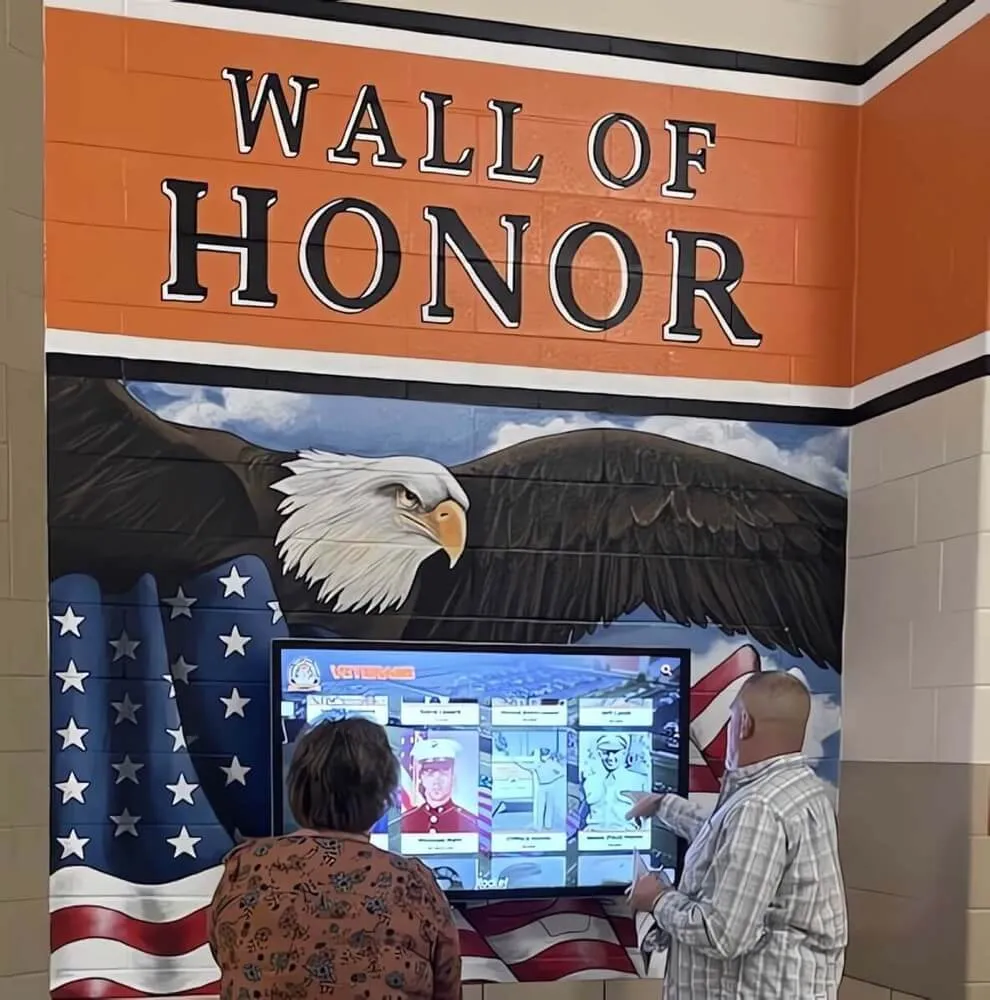
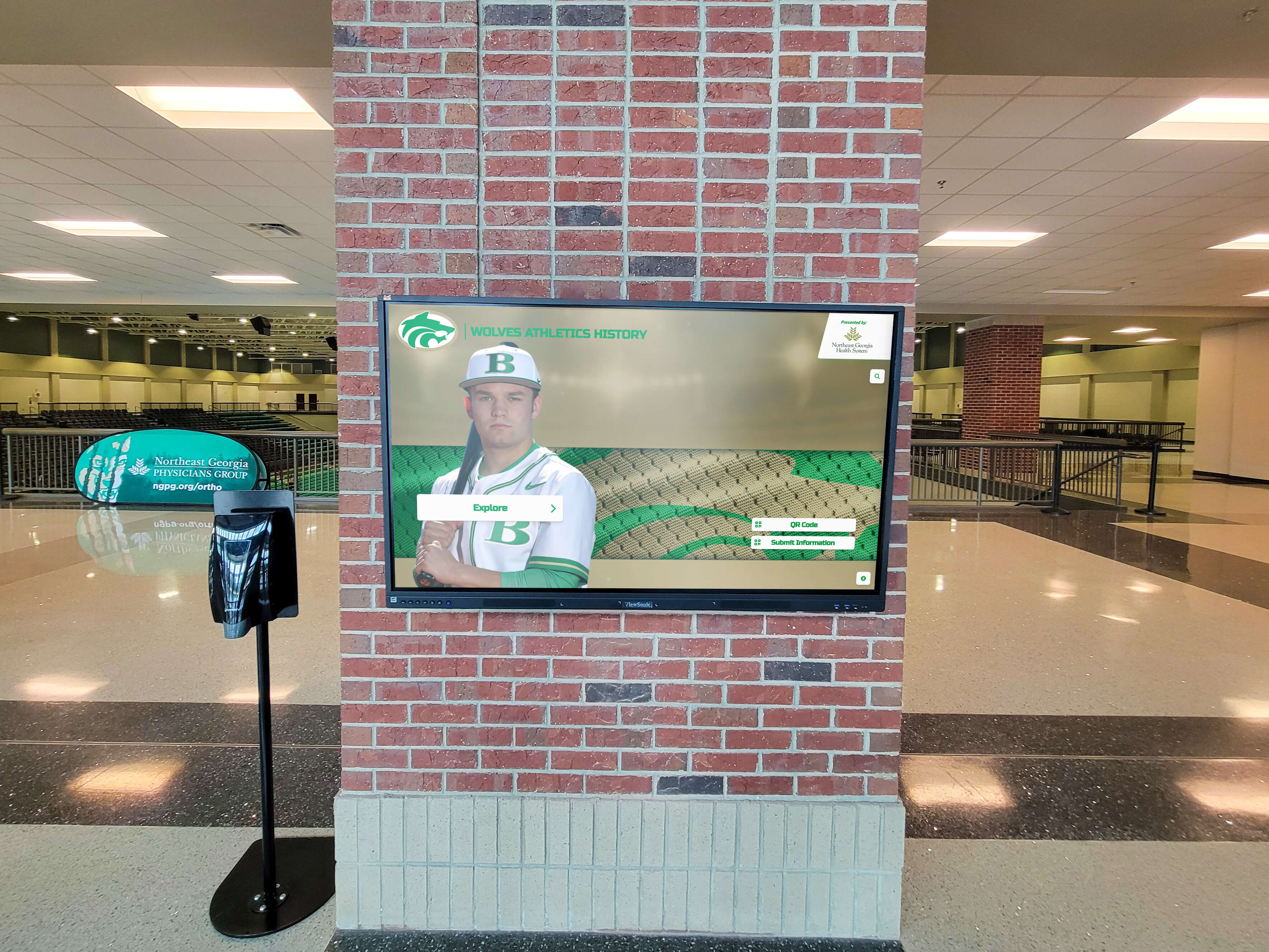
Intuitive interfaces enable visitors of all ages and technical abilities to explore recognition content independently
Personalized Recommendations and Related Content
Sophisticated platforms can suggest related content based on user interactions including teammates and contemporaries of viewed players, similar performers from different eras enabling historical comparisons, coaches and personnel connected to specific players or teams, opponents and rivals providing broader competitive context, and championship connections linking individuals through shared success.
This intelligent content discovery transforms potentially overwhelming historical databases into curated exploration experiences that guide visitors toward content they’ll find most interesting and engaging.
Implementation Considerations for Professional Sports Venues
Organizations considering interactive recognition technology should address several practical dimensions ensuring successful implementations delivering lasting value.
Content Development and Historical Research
Comprehensive recognition requires systematic content development addressing decades of franchise history across multiple eras, styles, and significant contributors.
Archival Research and Documentation
Professional franchises typically maintain extensive archives including media guides documenting rosters and statistics across decades, photographic collections from team photographers and media partners, video archives from broadcast partners and team productions, statistical databases tracking comprehensive performance metrics, and organizational records documenting franchise history.
However, accessing and organizing these dispersed resources into cohesive recognition content requires dedicated effort including archive reviews identifying available materials, digitization converting analog photographs and video to digital formats, metadata creation enabling efficient content organization and retrieval, rights clearance ensuring appropriate usage permissions, and quality control verifying accuracy of all published information.
This systematic content development often represents the most time-intensive aspect of recognition system implementation, yet the resulting comprehensive historical documentation provides value extending far beyond initial recognition displays.
Methodologies for finding and digitizing historical records demonstrate research approaches applicable to professional sports contexts despite originating in educational environments.
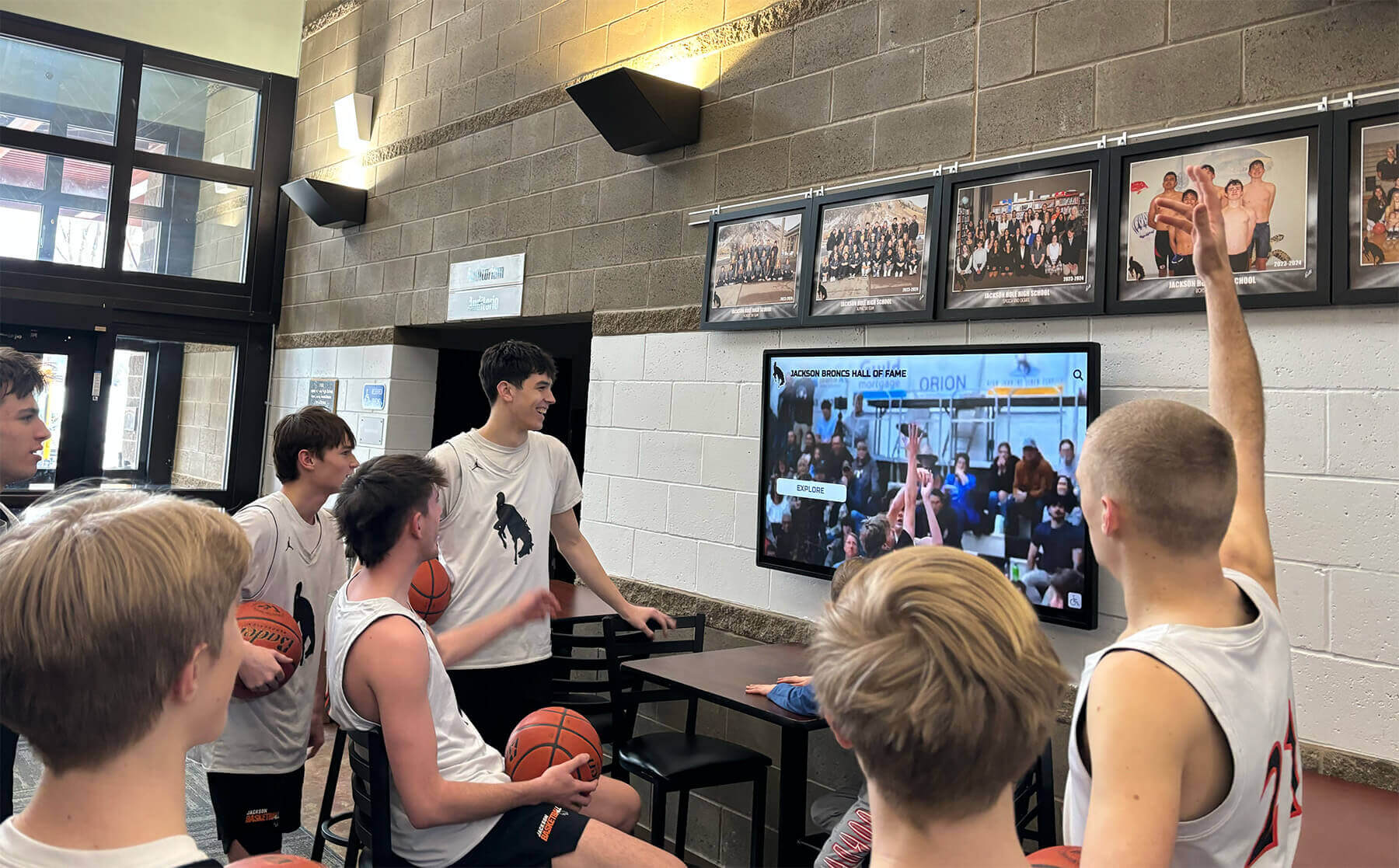
Group viewing experiences create shared appreciation for athletic excellence and organizational tradition
Multimedia Asset Creation and Curation
Beyond basic biographical information and statistics, engaging recognition requires diverse content formats including professional photography showcasing players throughout careers, video highlight compilations edited for appropriate length and context, audio interviews recorded specifically for recognition purposes, historical footage digitized and edited from game broadcasts, infographic visualizations making complex statistics accessible, and interactive timeline presentations showing career and franchise progression.
Quality multimedia development demands appropriate resources but dramatically increases recognition impact compared to text-only approaches generating minimal emotional engagement.
Hardware Selection and Installation Planning
Professional venue installations require robust hardware specifications addressing demanding environmental conditions and usage patterns.
Commercial-Grade Display Requirements
Arena installations demand specifications including continuous operation ratings supporting 12-16 hours daily during seasons, enhanced brightness (500+ nits minimum) ensuring visibility in varied concourse lighting, reinforced touchscreen surfaces withstanding heavy public interaction, commercial thermal management preventing overheating during extended operation, and professional-grade components ensuring reliability appropriate for revenue-generating venues.
Display sizes typically range from 55 inches for individual kiosks through 75-86 inches for primary installations where viewing distances and crowd sizes necessitate larger formats.
Organizations should specify true commercial displays designed for public venue applications rather than consumer television products lacking appropriate durability and operational specifications.
Strategic Placement and User Experience Design
Effective recognition requires thoughtful placement including high-traffic concourse locations where fans naturally congregate, main entrance areas creating positive first impressions, dedicated recognition spaces for extended exploration, proximity to related content connecting digital and physical elements, and accessible mounting heights accommodating diverse visitor abilities.
User experience design should consider viewing angles and screen positioning, ambient lighting and display brightness specifications, interaction ergonomics and comfortable reach zones, acoustic considerations for audio-enabled content, and queue management for popular displays during peak traffic.
Professional installation planning typically involves architects, exhibit designers, and AV consultants ensuring technical specifications align with architectural integration and user experience objectives.
Guidance on touchscreen kiosk implementation addresses technical considerations for public venue installations requiring robust specifications.
Software Platform Selection and Integration
Recognition system effectiveness depends heavily on software capabilities enabling intuitive content management, sophisticated navigation, and reliable operation.
Platform Evaluation Criteria
When assessing recognition software, organizations should consider content management ease for non-technical administrators, recognition-specific functionality versus generic digital signage, multimedia support quality and format compatibility, search and navigation sophistication, mobile integration and multi-channel delivery, real-time content integration capabilities, analytics and usage reporting depth, customization flexibility for organizational branding, accessibility compliance and inclusive design, customer support quality and responsiveness, implementation timeline and onboarding process, total cost of ownership including ongoing fees, and vendor stability and long-term viability.
Purpose-built recognition platforms like Rocket Alumni Solutions provide functionality specifically designed for sports applications, offering advantages over adapting generic digital signage systems to recognition purposes.
Integration with Existing Systems
Comprehensive implementations often integrate with existing organizational systems including official team websites and content management, statistical databases and record systems, ticketing platforms and CRM systems, social media accounts and content streams, mobile app platforms for extended engagement, and facility management systems for operational coordination.
Understanding integration requirements and evaluating vendor capabilities prevents implementation challenges while ensuring comprehensive solutions rather than isolated point systems.
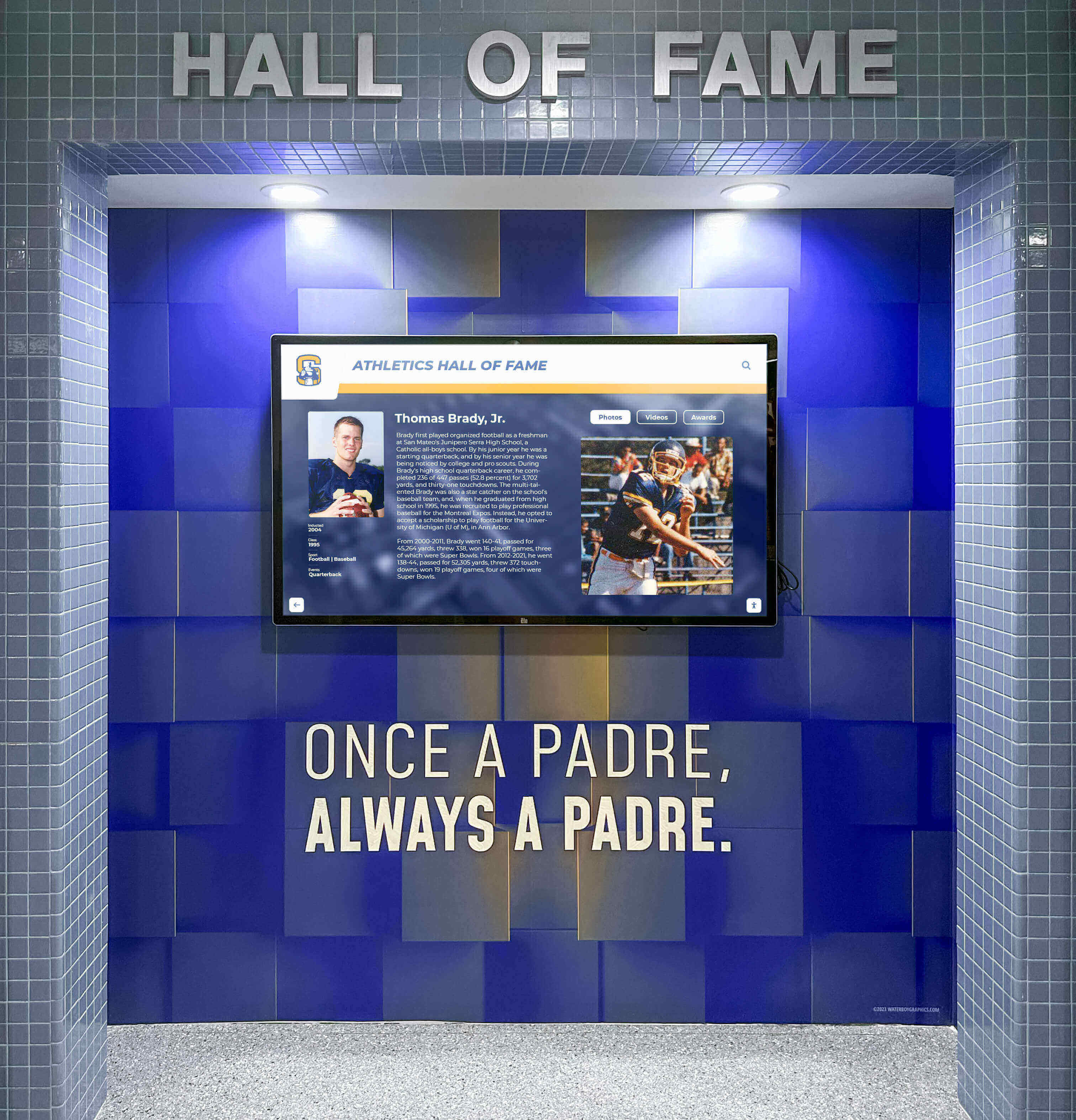
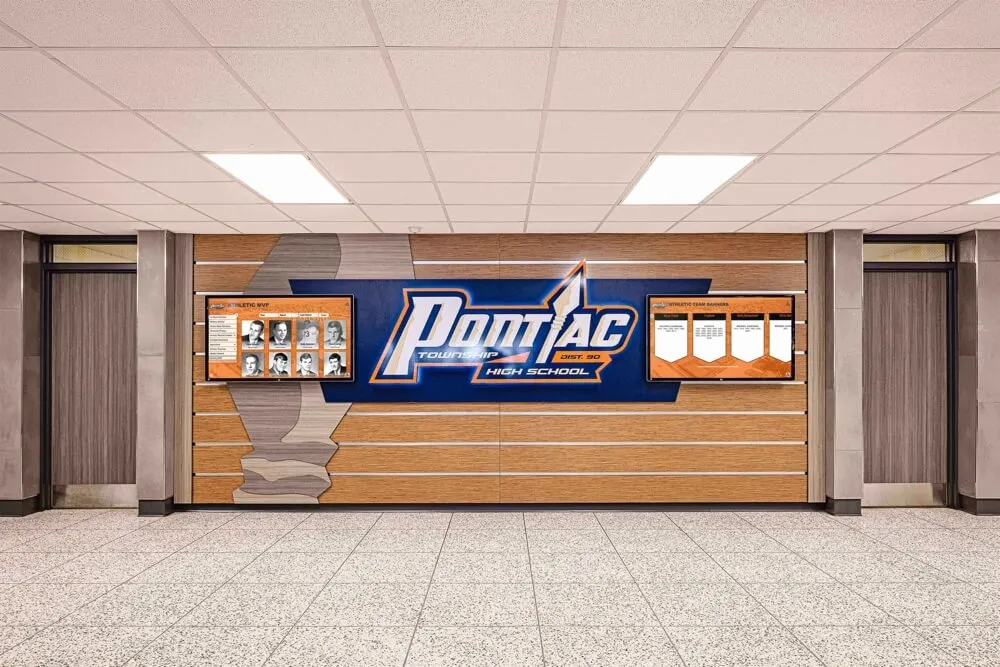
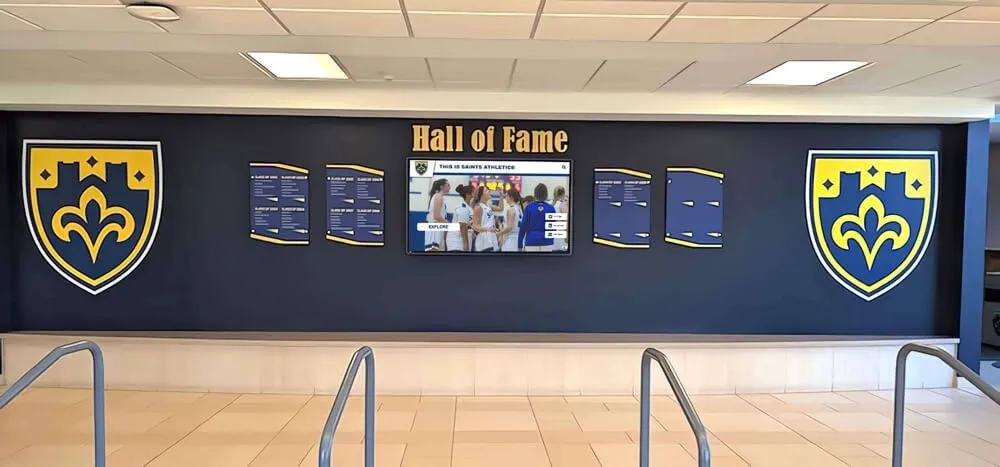
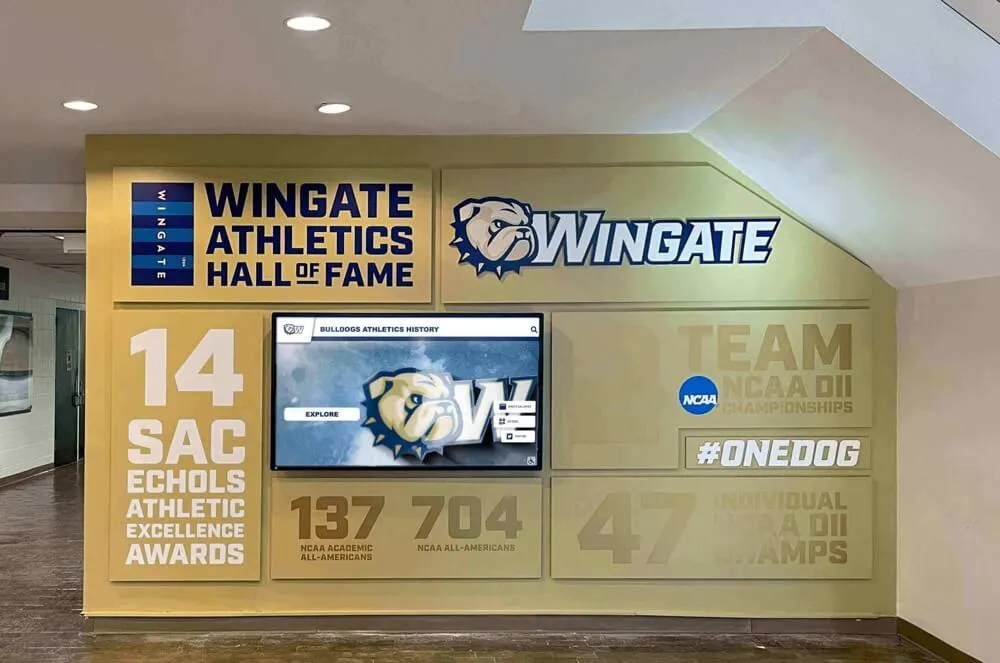
Architectural integration ensures recognition displays complement venue aesthetics while maintaining visual prominence
Benefits Beyond Recognition: Strategic Value for Professional Sports Organizations
Interactive recognition systems deliver value extending beyond simply honoring past achievement, supporting multiple organizational objectives simultaneously.
Enhanced Fan Engagement and Game-Day Experience
Recognition displays contribute to overall arena atmosphere and visitor satisfaction beyond their primary historical documentation purpose.
Pre-Game and Intermission Entertainment
Interactive recognition provides engaging activities during natural venue downtime including early arrivals before game start when fans seek entertainment, between-period or halftime breaks offering exploration during intermissions, weather delays or postponements requiring extended entertainment, and post-game lingering as crowds disperse gradually.
This entertainment value enhances overall fan satisfaction while creating positive associations with organizational history and tradition—deepening emotional connections beyond individual game outcomes or seasonal performance.
Strategies for state championship recognition demonstrate how celebration displays serve entertainment functions while honoring achievement.
Educational Opportunities for New and Younger Fans
Recognition serves pedagogical purposes for fans less familiar with franchise history including introducing legendary players to children and new fans, explaining historical context for championship banners and retired numbers, demonstrating statistical excellence through comparison with current rosters, and preserving oral history through video interviews inaccessible through traditional media.
This educational dimension helps younger generations develop appreciation for tradition and legacy strengthening long-term fan loyalty transcending individual player careers or coaching tenures.
Alumni Relations and Player Engagement
Professional organizations benefit from maintaining positive relationships with former players who served as faces of franchises during their competitive careers.
Comprehensive Player Recognition and Appreciation
Digital recognition demonstrates organizational commitment to honoring all who contributed to franchise tradition including detailed career documentation preserving player legacies permanently, regular content updates maintaining profile relevance, anniversary acknowledgments of career milestones and significant dates, and permanent visibility ensuring players never fade from institutional memory.
This visible appreciation strengthens alumni relationships creating goodwill that supports various organizational initiatives from alumni events through coaching and mentorship opportunities with current rosters.
Revenue and Development Opportunities
Recognition programs create natural advancement opportunities including sponsorship packages connecting corporate partners with legendary players, naming rights for display installations or content sections, memorial giving programs where families sponsor recognition honoring deceased players, and exclusive content access as donor benefits.
These revenue streams can partially or fully offset recognition technology investments while strengthening relationships with key supporter constituencies.
Insights from donor recognition approaches translate effectively to professional sports fundraising contexts despite originating in educational and nonprofit environments.
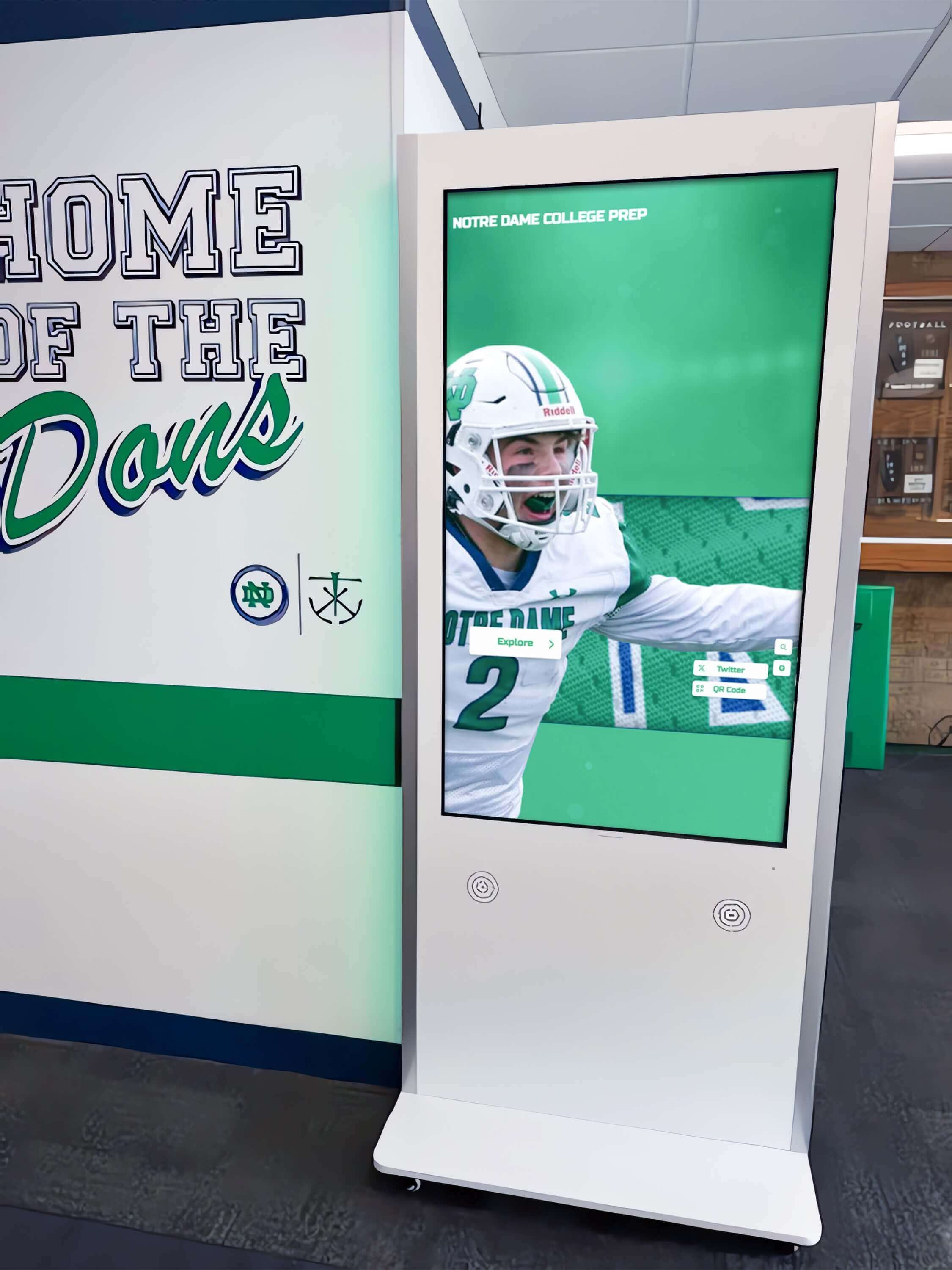
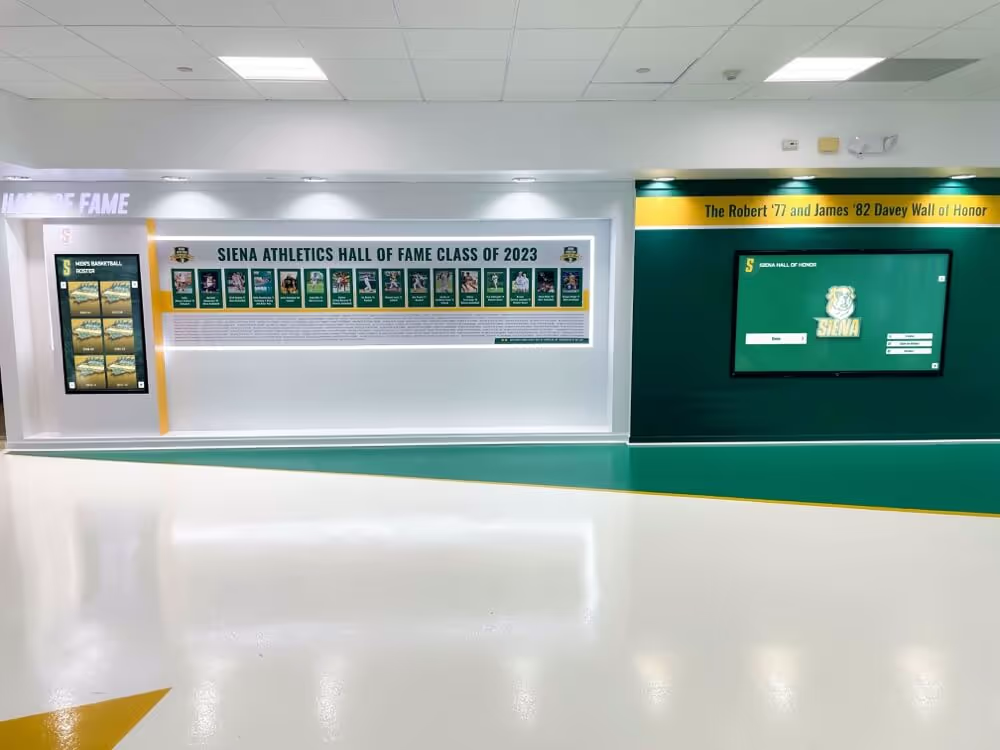
Educational institutions adopt professional venue recognition approaches celebrating athletic excellence and program tradition
Marketing and Social Media Content Generation
Digital recognition platforms support broader marketing and engagement strategies extending value beyond physical venue installations.
Shareable Content for Digital Channels
Recognition displays generate social media-friendly content including player profile graphics optimized for Instagram and Twitter, video highlight clips perfect for TikTok and Reels, statistics and trivia for text-based platforms, and visual timelines showing career or organizational progression.
Fans naturally share recognition discoveries with their social networks, generating organic marketing reach extending far beyond those physically visiting arena locations.
Nostalgic Content for Veteran Fans and Alumni
Recognition serves fan retention by maintaining engagement with long-time supporters including career retrospectives for players from fans’ formative years, anniversary acknowledgments of historic seasons and moments, “where are they now” updates about retired players, and connections between historical and current rosters showing organizational continuity.
This nostalgic content maintains emotional investment from veteran fans while introducing history to newer supporters—creating shared tradition connecting generations of fans through common appreciation for franchise heritage.
Beyond TD Garden: Recognition Technology Across Professional Sports
While this exploration focuses on TD Garden and Boston’s championship franchises, interactive recognition technology applications extend throughout professional and collegiate athletics.
Other Professional Sports Venues
Every professional sports venue with significant history could benefit from comprehensive interactive recognition including Madison Square Garden celebrating Knicks and Rangers traditions in New York, United Center honoring Bulls and Blackhawks excellence in Chicago, Staples Center (now Crypto.com Arena) recognizing Lakers and Kings championships, and countless other venues where generations of players and fans created memorable sports moments deserving permanent celebration.
Each venue presents unique recognition opportunities shaped by franchise histories, competitive traditions, and local fan cultures—yet core recognition principles remain consistent across contexts.
Similar approaches applied at Madison Square Garden demonstrate how interactive technology enhances recognition at historic professional sports venues.
College Athletic Facilities
Universities with prominent athletic programs represent particularly compelling recognition applications given their dual educational and competitive missions.
College venues benefit from recognition systems showcasing student-athlete academic achievement alongside athletic excellence, connecting athletics with broader institutional traditions and values, engaging alumni maintaining lifelong university connections, and inspiring current students to pursue their own excellence.
Recognition approaches for Division I athletics demonstrate frameworks for celebrating collegiate athletic excellence within educational institutional contexts.
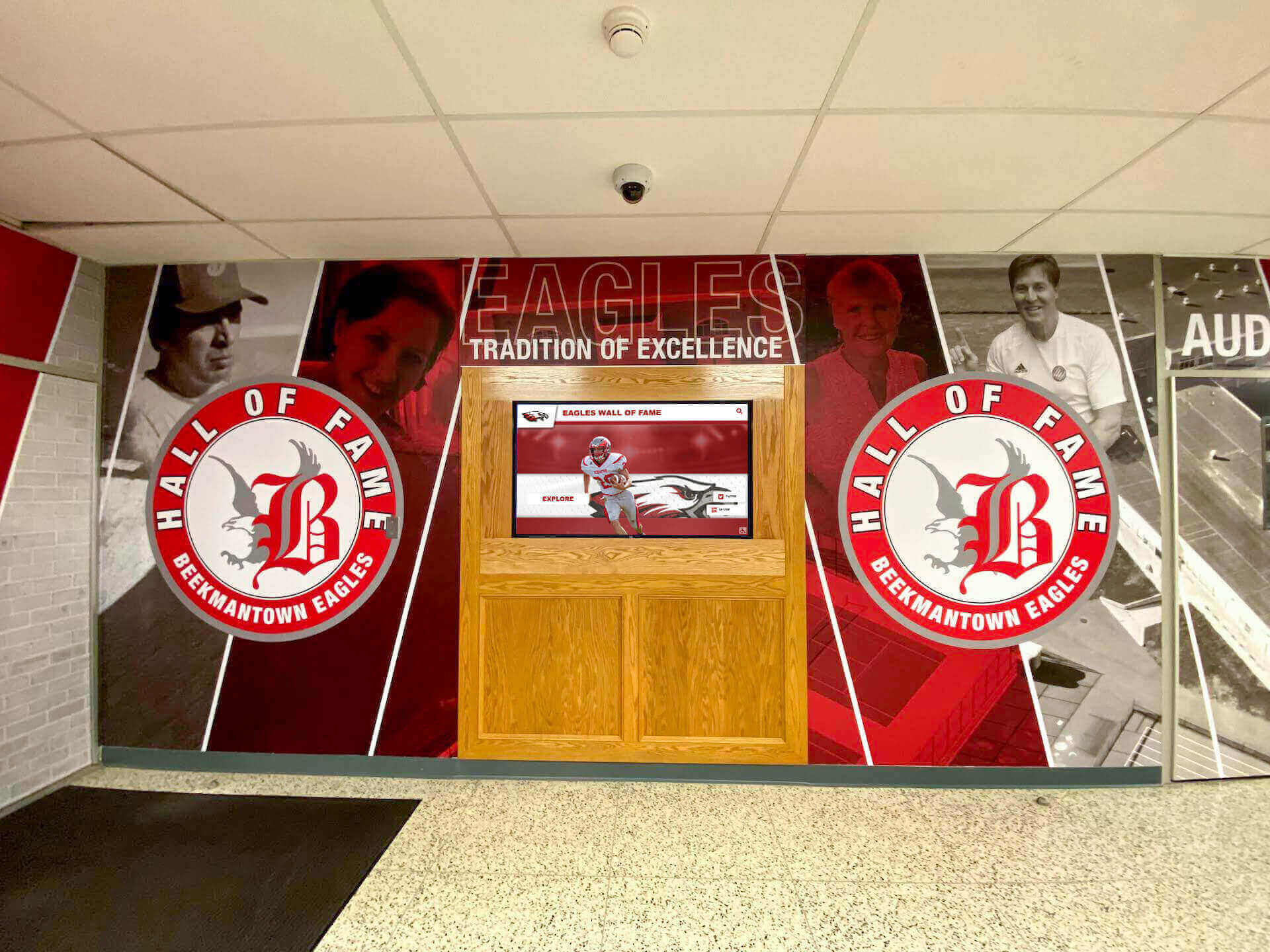
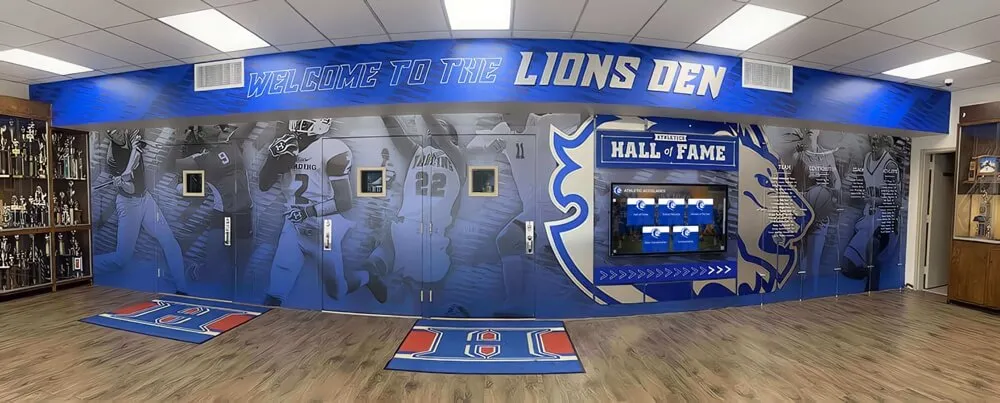
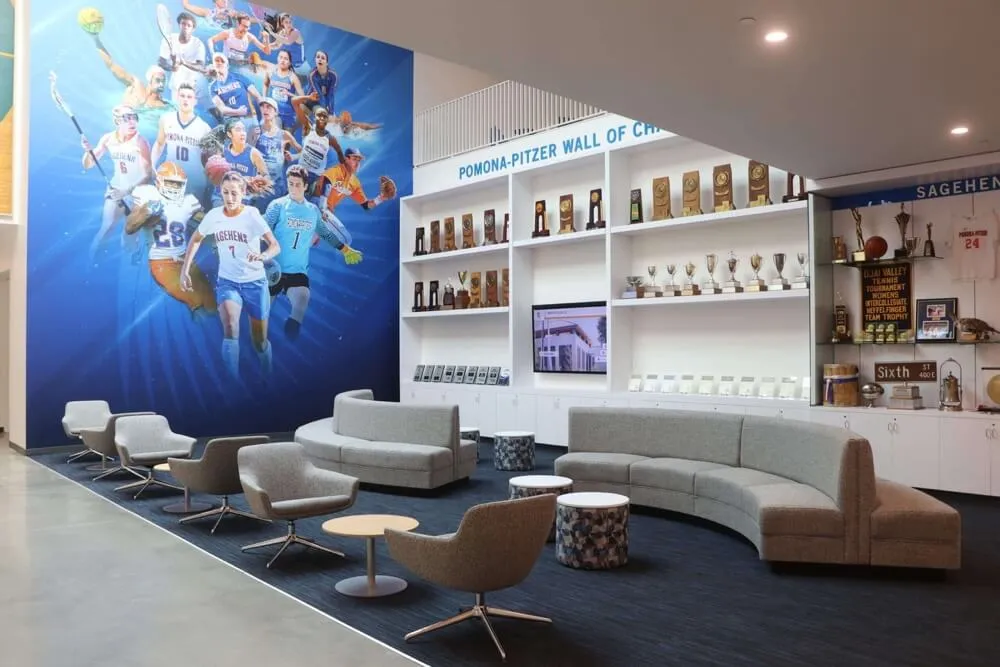
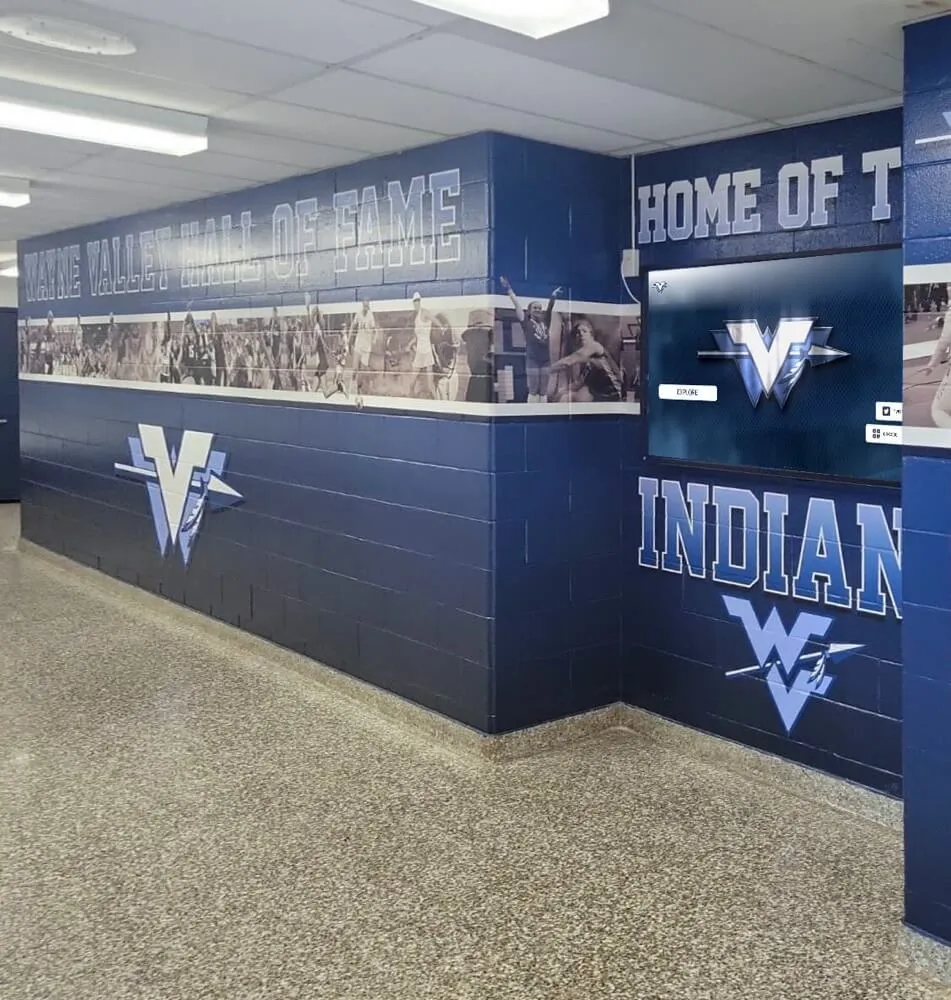
Comprehensive installations combine traditional design elements with modern digital technology creating visually striking recognition environments
High School and Youth Sports Facilities
Recognition technology increasingly extends to high school and youth sports contexts where budget constraints previously limited comprehensive recognition options.
Digital systems enable schools and clubs to celebrate athletic achievement without physical space limitations, recognize broader achievement categories including academic success alongside athletics, maintain affordable recognition through software subscriptions versus ongoing fabrication costs, and update content easily as new graduates and achievements occur annually.
This accessibility democratizes comprehensive recognition previously available only to well-funded professional and major college programs.
Resources on high school athletic recognition provide frameworks for secondary school athletic programs developing digital recognition systems.
Future Trends in Sports Recognition Technology
Recognition technology continues evolving with emerging capabilities that will enhance programs in coming years.
Artificial Intelligence and Personalization
AI capabilities promise increasingly sophisticated recognition experiences including natural language interfaces understanding conversational queries, intelligent content recommendations based on user interests and behaviors, automated highlight compilation from archived game footage, predictive analytics identifying future recognition candidates, and conversational interfaces enabling natural language interaction.
These enhancements will make recognition systems more intuitive while reducing administrative burden for ongoing content management.
Augmented and Virtual Reality Applications
Immersive technologies create new recognition possibilities including AR overlays showing historical content in physical arena spaces, VR recreations allowing fans to experience historic games from various perspectives, 360-degree video placing viewers court-side or ice-level during significant moments, and spatial computing interfaces transcending flat touchscreen limitations.
These emerging technologies will make historical content more visceral and engaging for digitally native younger audiences expecting immersive interactive experiences.
Enhanced Mobile Integration
The boundary between physical displays and mobile devices will continue blurring through content that begins on large shared displays and seamlessly transfers to personal devices, coordinated experiences where mobile devices serve as controllers for shared displays, location-aware mobile content adapting based on visitor positions within venues, and social features enabling shared exploration among groups.
This integration recognizes that optimal fan experiences leverage strengths of both large shared displays and personal mobile devices rather than treating them as competing alternatives.

Media coverage of innovative recognition installations generates publicity extending benefits beyond visitors who experience them directly
Conclusion: Transforming Professional Sports Recognition Through Interactive Technology
Professional sports venues like TD Garden represent more than physical facilities where games occur—they embody generations of athletic excellence, championship tradition, and devoted fan communities creating cultural significance transcending sports entertainment alone. These extraordinary venues deserve recognition technology matching their historic importance, celebrating complete legacy rather than highlighting only those achievements fitting within limited physical display space.
Interactive touchscreen platforms like Rocket Alumni Solutions provide comprehensive solutions addressing recognition challenges facing sports organizations of all types and sizes. By eliminating space constraints, enabling rich multimedia storytelling, providing instant updates, supporting sophisticated navigation, and creating engaging interactive experiences, digital recognition transforms how venues honor achievement while deepening fan connections with organizational tradition.
Transform Your Venue's Recognition Program
Discover how interactive touchscreen technology can help your professional, collegiate, or high school venue celebrate every achievement, engage fans with compelling stories, and preserve complete organizational legacy for generations to come.
Explore Recognition SolutionsFrom historic professional arenas through modern college facilities, from multi-franchise venues through single-team facilities, comprehensive recognition represents essential investment delivering returns across multiple dimensions including enhanced fan experience through engaging content and entertainment, strengthened emotional connections with organizational tradition and values, improved alumni and retired player relations maintaining positive relationships, marketing and social media content generation extending venue reach, educational opportunities for younger fans and new supporters, and preservation of institutional memory ensuring heritage accessibility for future generations.
The technology enabling these benefits exists today—proven through hundreds of implementations across educational athletics and increasingly within professional sports contexts. Organizations need only commitment to comprehensive recognition as strategic priority worthy of appropriate resource investment.
Whether serving venues with championship traditions as extraordinary as TD Garden’s Celtics and Bruins legacies or establishing recognition programs for organizations building new traditions, interactive digital platforms provide transformational capabilities impossible through traditional physical approaches alone. Every legendary player deserves recognition matching their contributions. Every championship team deserves comprehensive celebration beyond simple banner display. And every fan deserves opportunities to explore and appreciate the rich athletic heritage making their favorite venues special places connecting past excellence with present experience and future aspiration.
Ready to explore how interactive recognition could transform your venue? Learn about comprehensive athletic recognition approaches, discover professional sports recognition strategies, and understand how digital platforms preserve sports heritage while creating engaging experiences that honor the past, celebrate the present, and inspire the future of athletic excellence at venues throughout professional, collegiate, and scholastic sports.