



Saratoga Race Course, nestled in upstate New York’s historic Saratoga Springs, stands as America’s oldest major sporting venue still in operation—a testament to thoroughbred racing’s enduring place in American sports culture. Since opening in 1863, just one month after the Battle of Gettysburg, this hallowed track has witnessed 162 years of racing excellence, legendary upsets, and unforgettable moments that have defined generations of thoroughbred competition. From Man o’ War’s shocking 1919 defeat to American Pharoah’s unexpected loss in 2015, Saratoga has earned its legendary nickname: “The Graveyard of Champions.”
Yet even venues as prestigious as Saratoga face challenges common to all historic sports organizations: how to comprehensively celebrate racing heritage spanning multiple centuries when physical space remains limited, how to engage modern fans expecting interactive digital experiences, and how to preserve complete institutional memory as decades pass and personal recollections fade. Traditional plaques, trophy displays, and static exhibits, while honoring racing’s timeless appeal, cannot showcase the depth of content necessary to tell complete stories about legendary horses, famous jockeys, historic races, and defining moments that have made Saratoga an essential pilgrimage destination for racing enthusiasts worldwide.
This comprehensive guide explores how interactive touchscreen recognition technology—exemplified by platforms like Rocket Alumni Solutions—could revolutionize how historic racing venues celebrate their legacy, engage fans, and preserve thoroughbred heritage through unlimited digital capacity, rich multimedia storytelling, and engaging interactive experiences impossible with traditional static recognition approaches alone.
Historic racing venues represent unique recognition opportunities where athletic excellence, sporting tradition, and cultural significance converge. Interactive digital displays transform how tracks honor legendary champions while creating engaging experiences that deepen fan connections with racing history and inspire appreciation for the horses, jockeys, trainers, and owners who built championship traditions on these storied grounds.

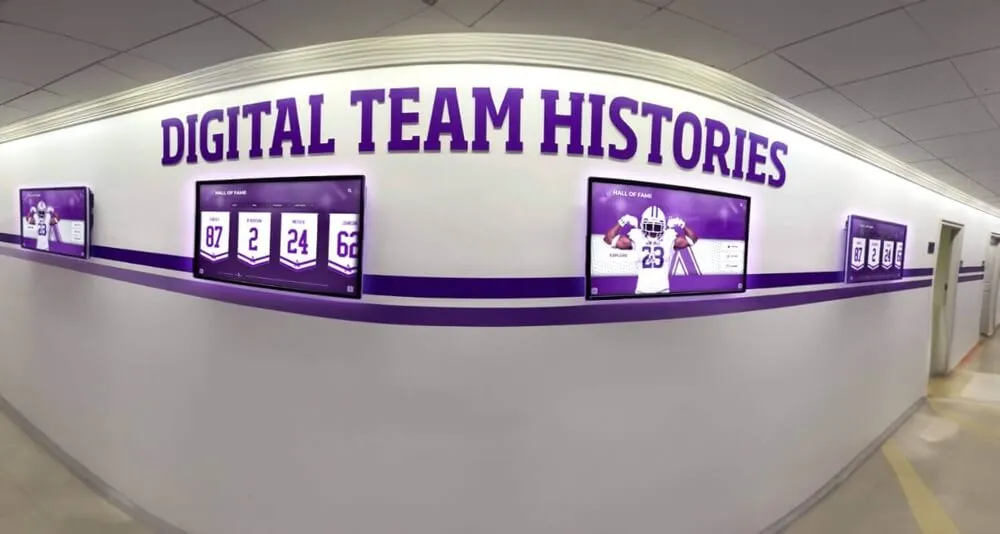
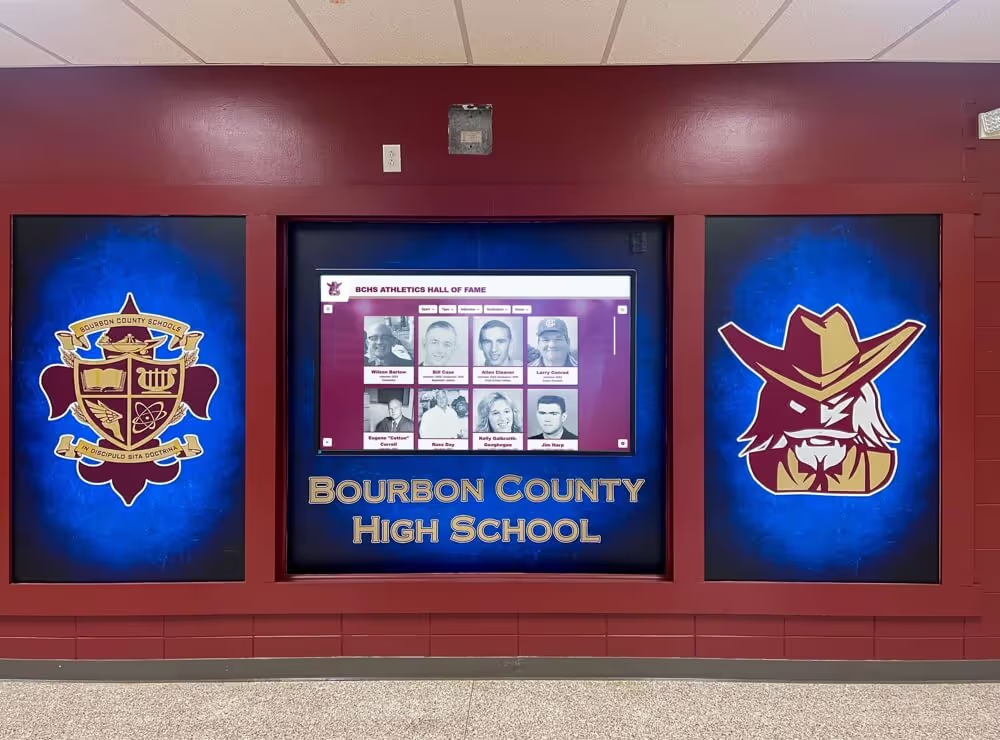
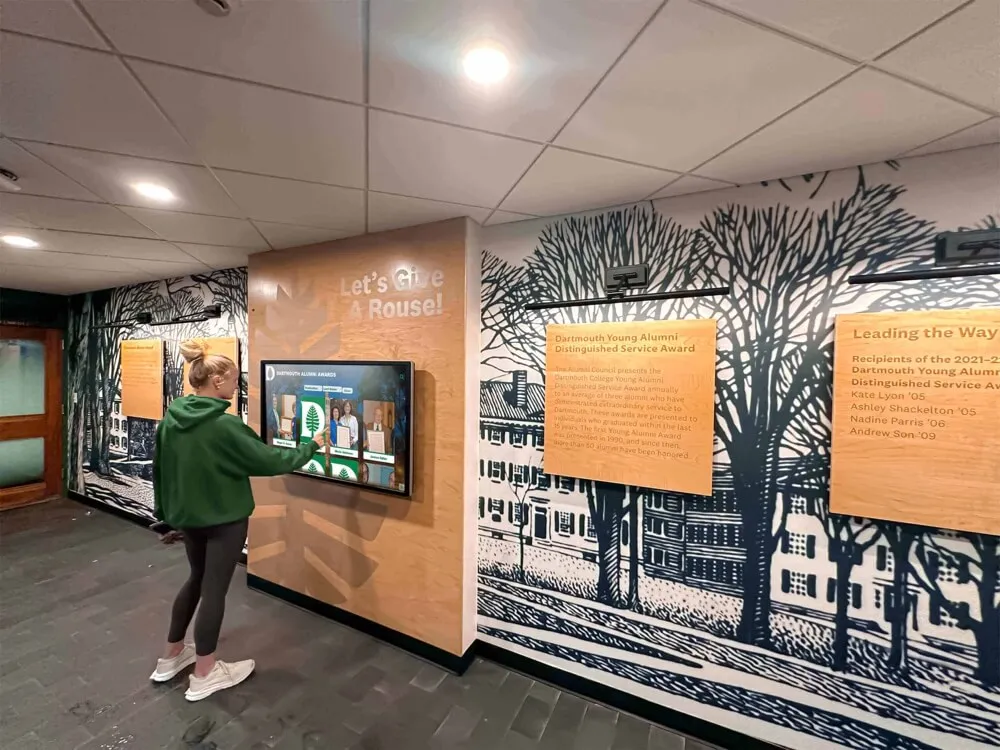
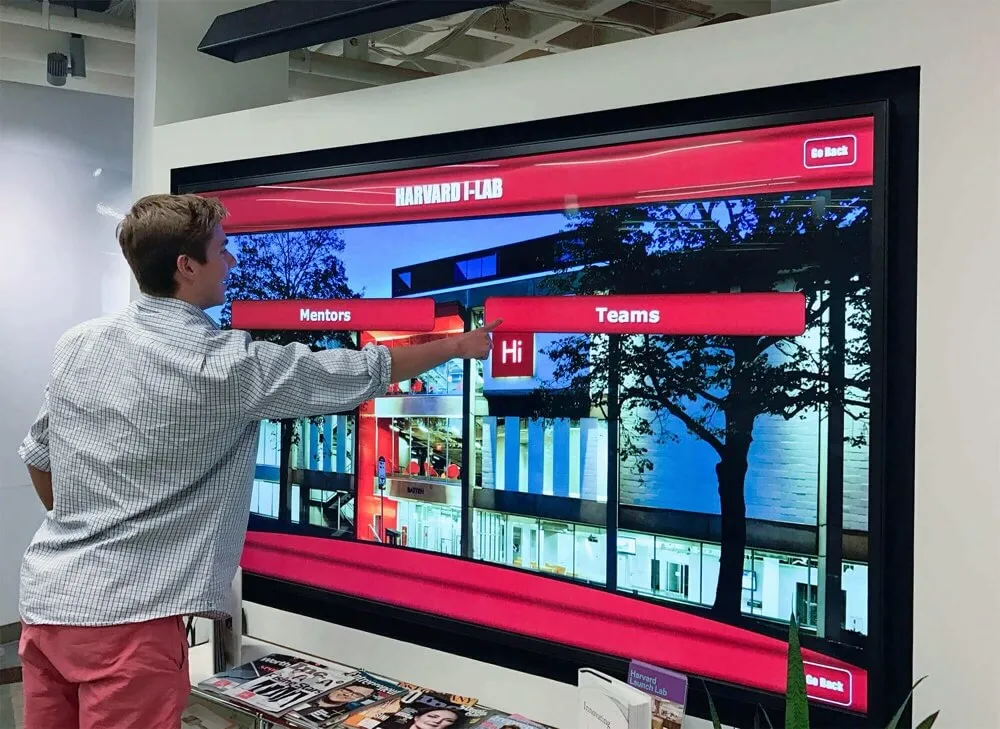
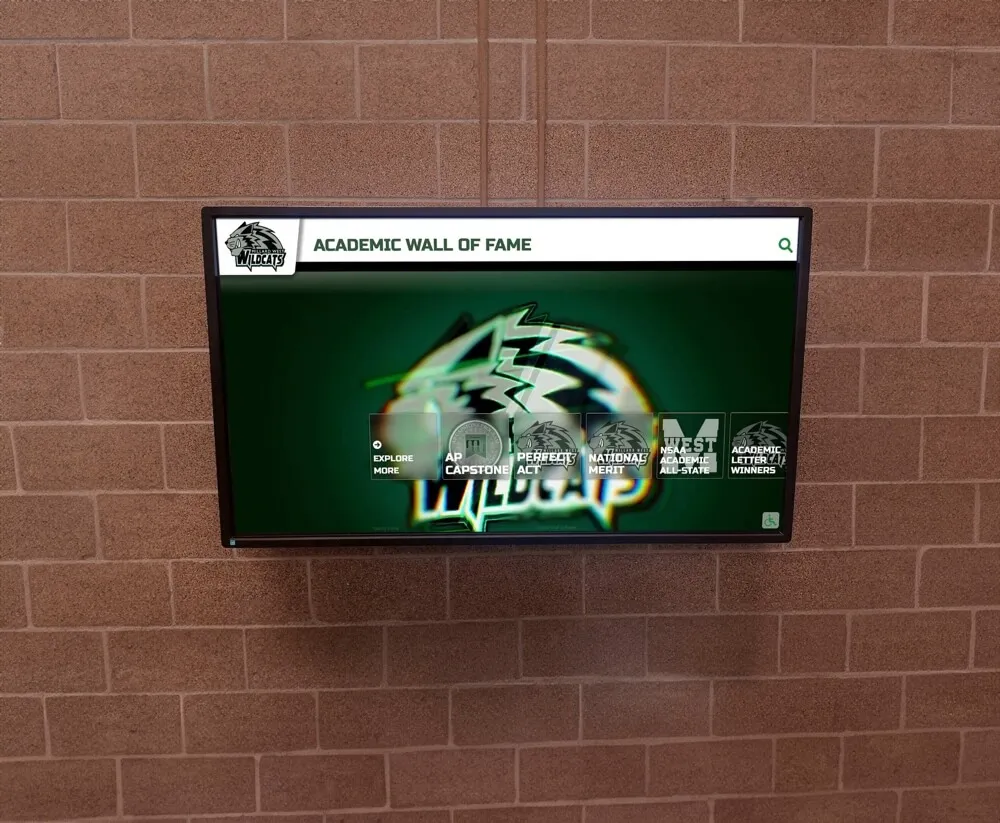
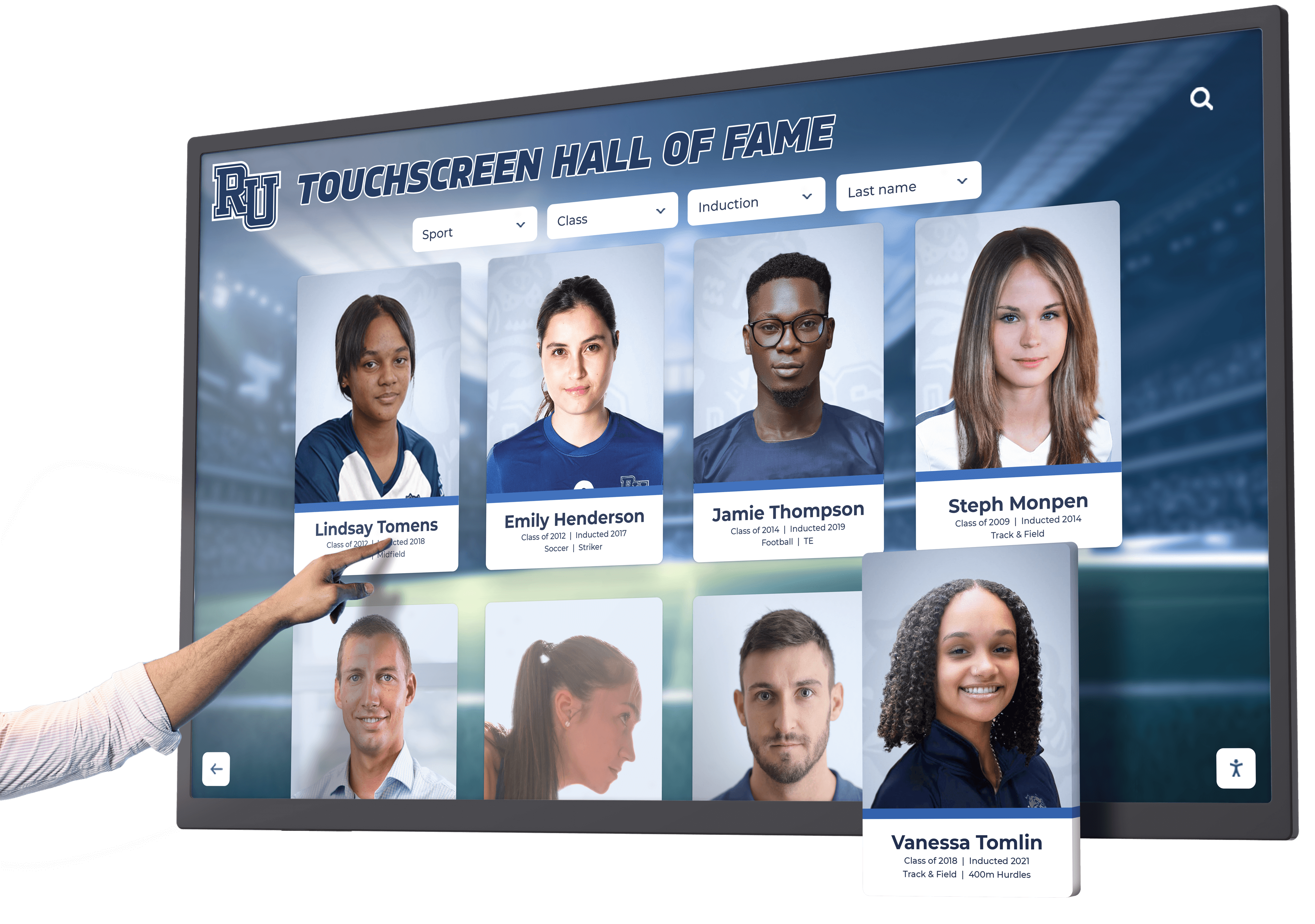
Modern interactive displays enable fans to explore racing legacy through touchscreen interfaces celebrating historic achievements
The Rich History and Legendary Competition of Saratoga Race Course
Understanding Saratoga’s remarkable heritage helps appreciate why modern digital technology represents such a transformational opportunity for racing venues with extensive championship histories.
America’s Oldest Major Sporting Venue
Saratoga Race Course opened on August 3, 1863, when gambler, casino owner, former boxing champion, and future congressman John Morrissey organized Saratoga’s first thoroughbred meet. After this successful inaugural meet, Morrissey purchased 125 acres of land across from the old standardbred track, built a new grandstand, and established what would become one of America’s most revered sporting institutions.
The course has operated almost continuously since 1864, closing only during brief periods including 1896 due to increasing competition among thoroughbred tracks, and during 1911-1912 when anti-gambling legislation passed in New York resulted in cessation of all thoroughbred racing statewide. After a period of decline in the late 19th century, prominent investor William C. Whitney led a group that purchased the course in 1901, securing its future as a premier racing venue.
In 1999, Sports Illustrated recognized this enduring legacy by rating Saratoga Race Course as the #10 sports venue of the 20th century—remarkable recognition for a facility dedicated entirely to a six-week summer racing meet each year.
The Travers Stakes: America’s Oldest Major Thoroughbred Race
Since 1864, Saratoga has hosted the Travers Stakes, the oldest major thoroughbred horse race in the United States. Named for William R. Travers, one of the track’s founding fathers and the winner of the inaugural running with his horse Kentucky, this “Midsummer Derby” has crowned champions for over 160 years.
The Travers Stakes draws the finest three-year-old thoroughbreds each August, creating dramatic racing moments that become instant racing history. The 2025 running, held on August 23, witnessed Sovereignty’s historic victory—becoming the first horse ever to win the Kentucky Derby, Belmont Stakes, Jim Dandy Stakes, and Travers Stakes in the same year, a remarkable achievement demonstrating sustained excellence across racing’s most prestigious stages.
This rich competitive tradition creates extensive recognition opportunities documenting every Travers winner, memorable races, record-breaking performances, and the connections between champions across different racing eras—content depth impossible to showcase adequately through traditional static displays alone.
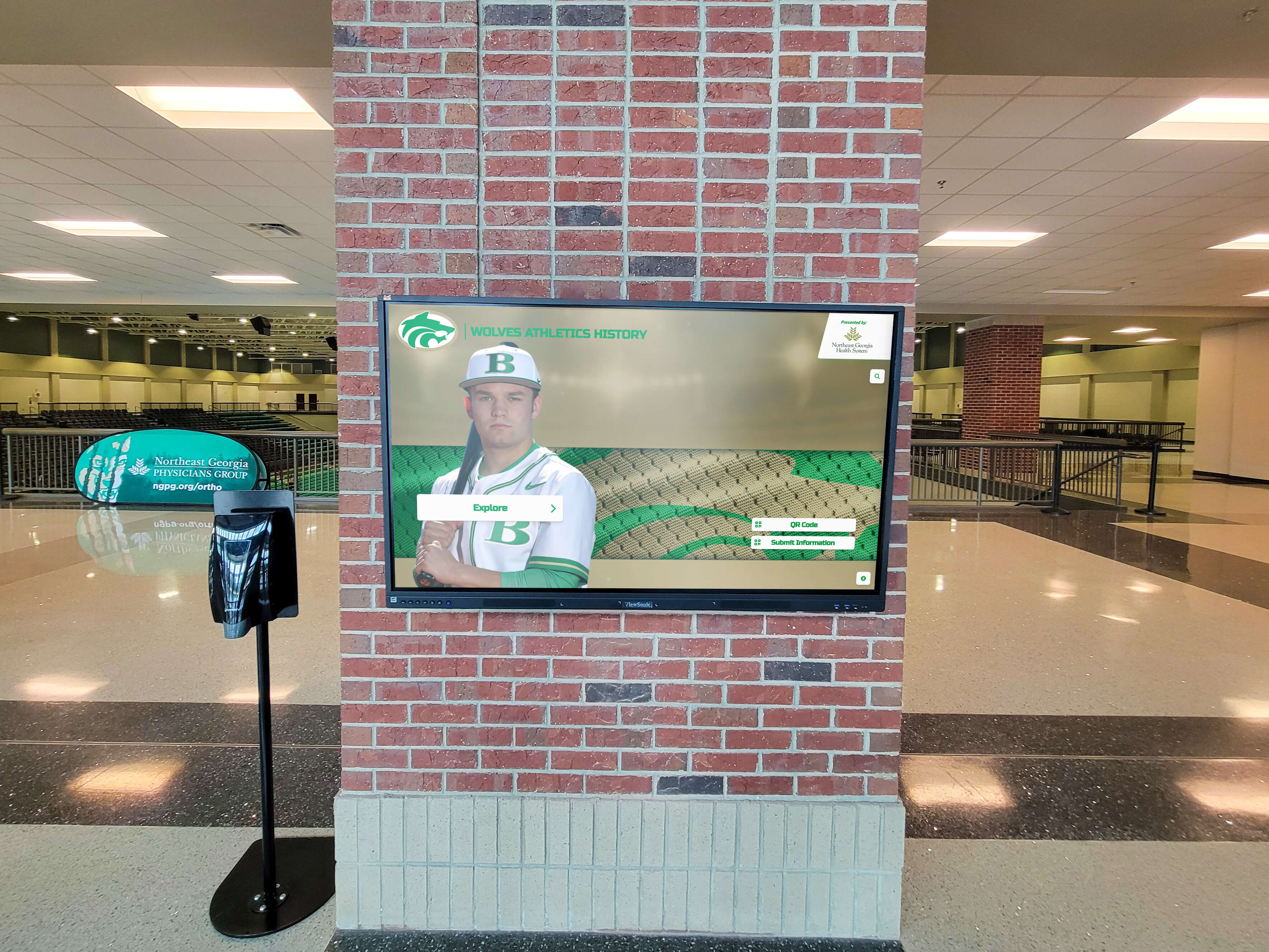
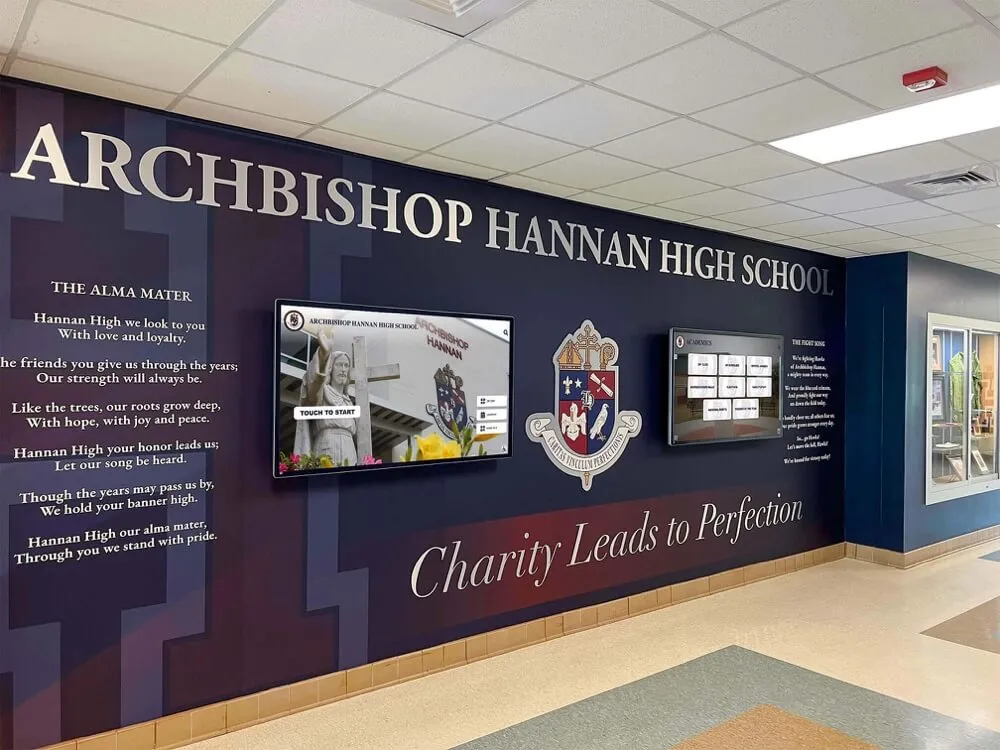
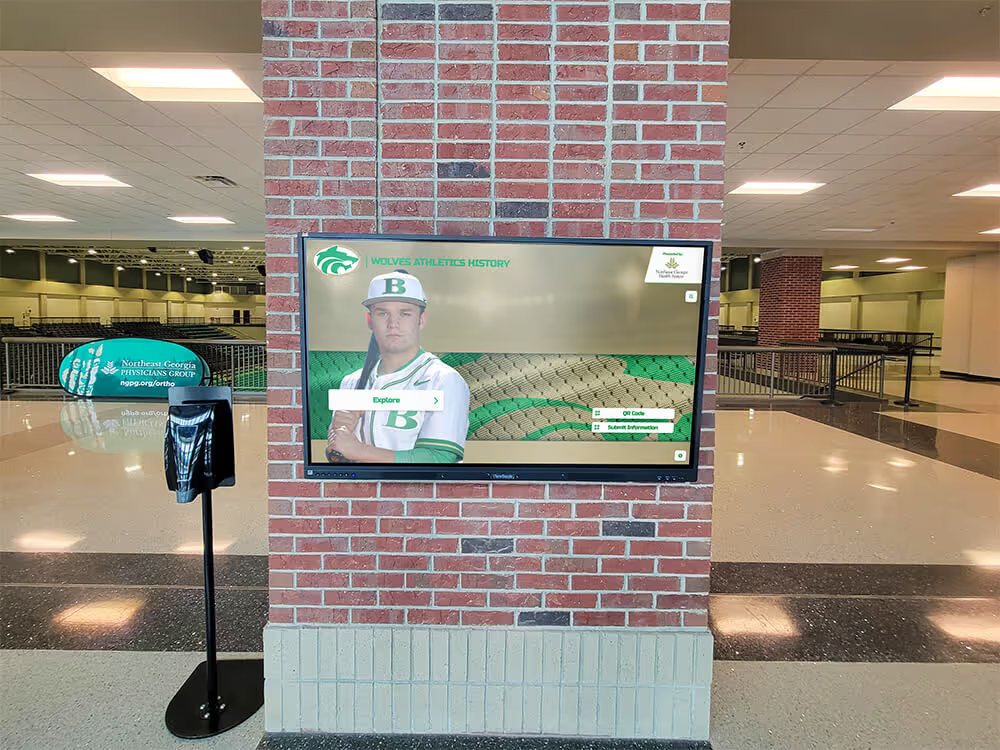
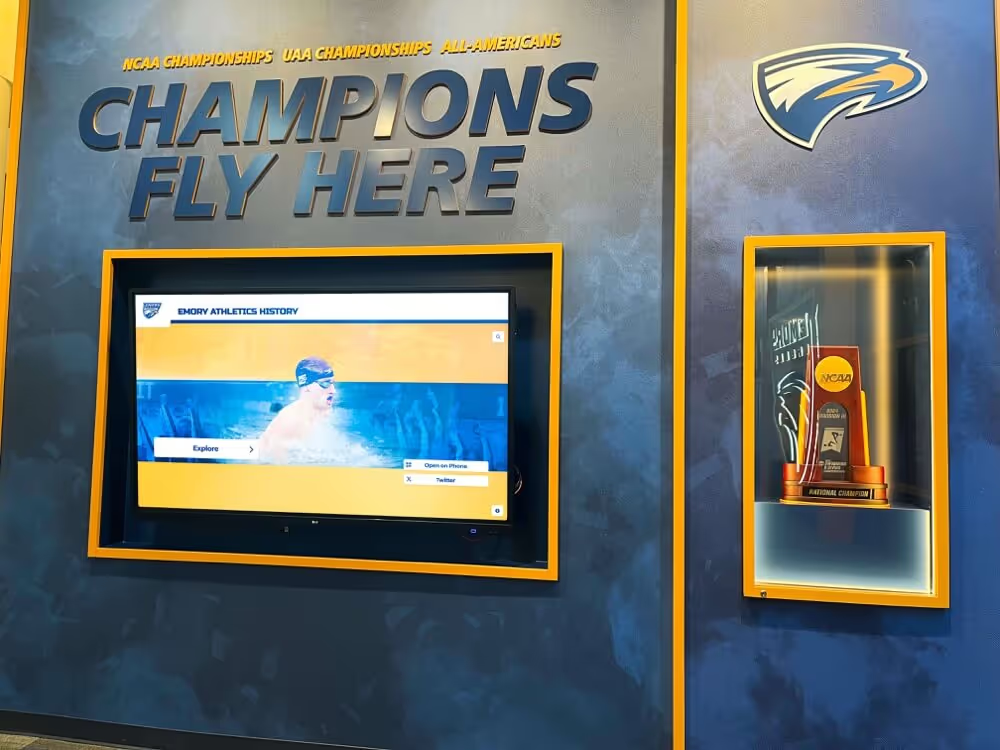
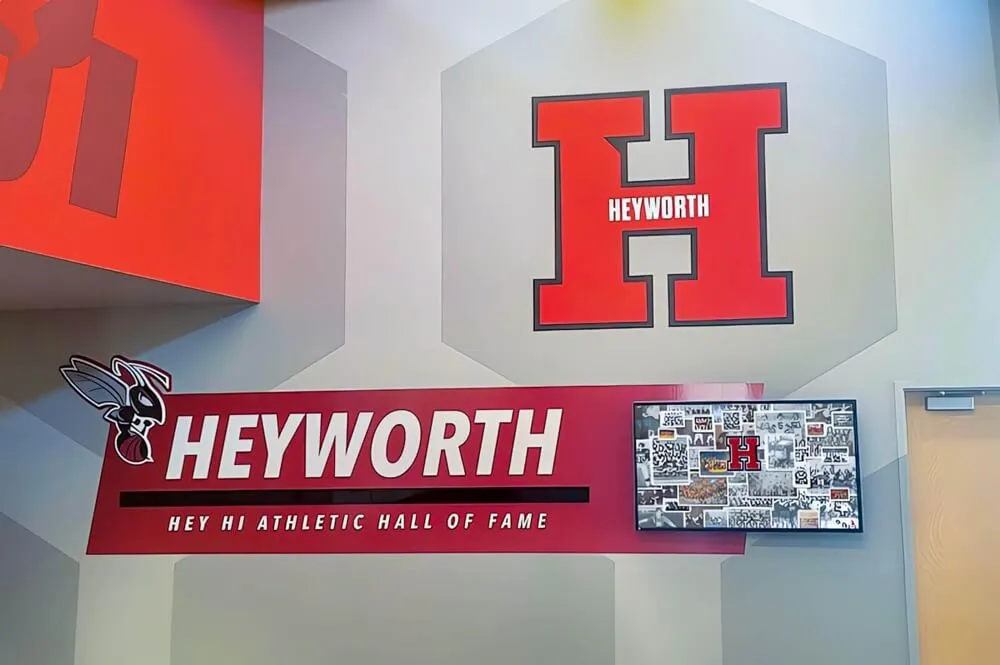
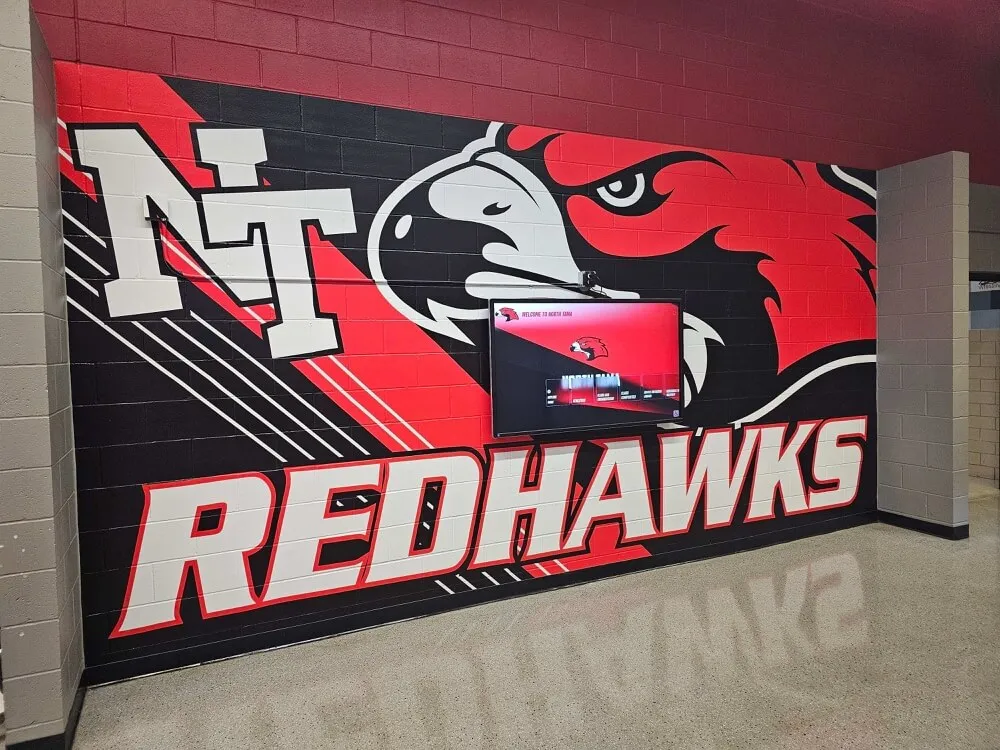
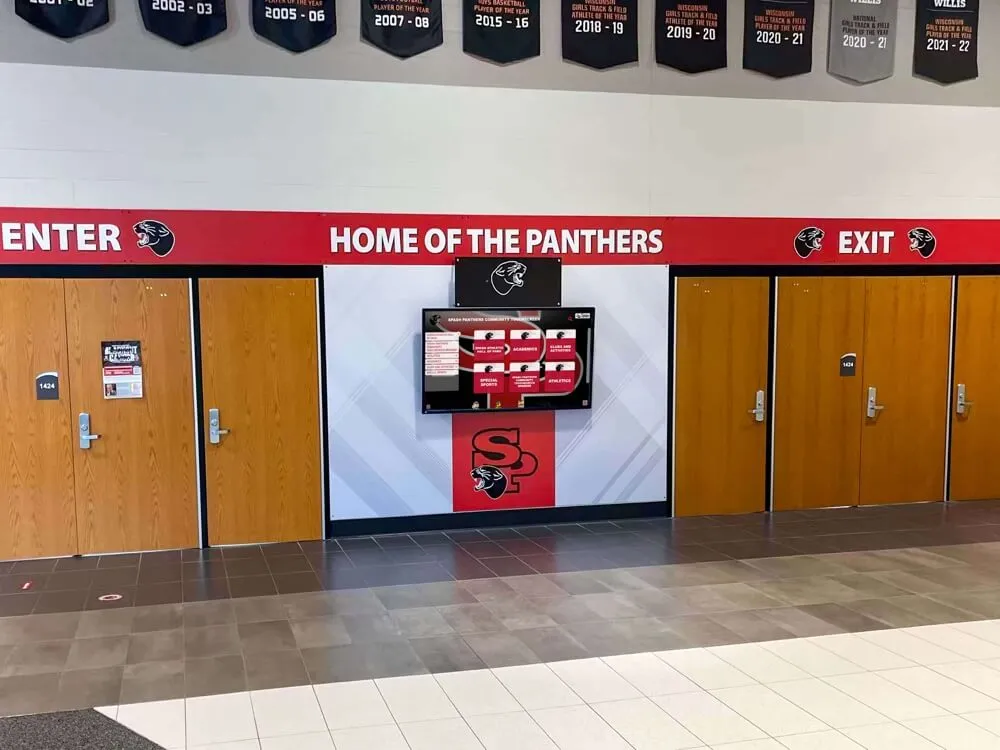
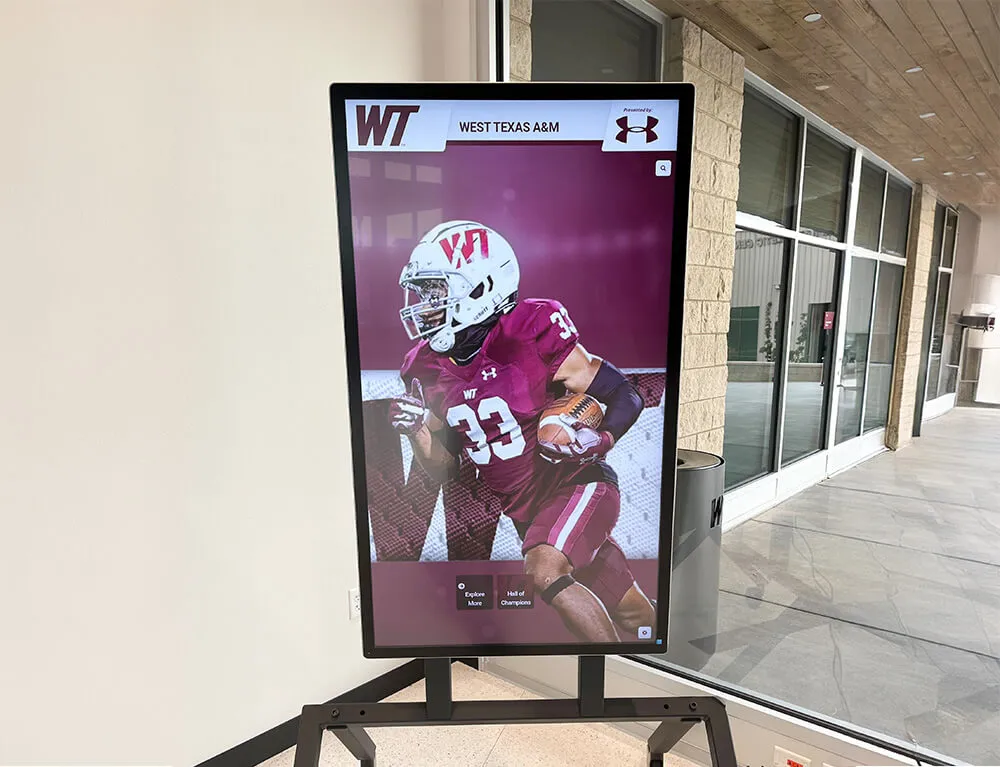
Strategic placement throughout sporting venues ensures recognition reaches diverse audiences during events and facility tours
“The Graveyard of Champions”: Saratoga’s Legendary Upset Tradition
Saratoga has earned its nickname “The Graveyard of Champions” through decades of shocking upsets where heavily favored horses suffered unexpected defeats, creating some of racing’s most memorable moments:
Man o’ War’s Only Defeat (1919)
The legendary Man o’ War, considered one of history’s greatest racehorses, suffered his only loss in twenty-one career starts at Saratoga when defeated by a horse aptly named “Upset” in the 1919 Sanford Stakes. This shocking result coined the term that would define Saratoga’s reputation for unpredictability.
Jim Dandy Over Gallant Fox (1930)
Perhaps racing’s most famous upset occurred in the 1930 Travers Stakes when 100-1 longshot Jim Dandy defeated that year’s Triple Crown winner Gallant Fox. This astonishing result remains the gold standard for unexpected racing outcomes and gave the Jim Dandy Stakes—now a key Travers prep race—its name.
Secretariat’s Defeat (1973)
Even Secretariat, the 1973 Triple Crown winner and arguably the most famous racehorse in American history, fell victim to Saratoga’s upset tradition when defeated by Onion in the 1973 Whitney Handicap. This rare blemish on Secretariat’s otherwise dominant season demonstrated that no champion, regardless of ability, was safe at “The Spa.”
American Pharoah’s Travers Loss (2015)
In 2015, American Pharoah arrived at Saratoga as racing’s first Triple Crown winner in 37 years and a prohibitive 1-5 favorite in the Travers Stakes. Yet Keen Ice upset the champion in his second career loss, maintaining Saratoga’s reputation as the track where favorites fall and longshots achieve racing immortality.
Arrogate’s Surprising Emergence (2016)
The 2016 Travers witnessed a different type of upset when relatively unknown gray colt Arrogate emerged from obscurity to win at odds of 11-1, setting a new Saratoga track record for 1¼ miles with a time of 1:59.36. This performance launched Arrogate to Horse of the Year honors and demonstrated Saratoga’s role as the stage where new stars announce their arrival.
These historic upsets—and dozens more across Saratoga’s 162-year history—deserve comprehensive recognition celebrating not only the victorious underdogs but also the defeated champions whose losses became part of racing lore. Interactive digital displays could preserve complete stories through video race footage, contemporary newspaper coverage, interviews with connections, and statistical context explaining why these upsets shocked the racing world.
Approaches to Olympic athlete digital recognition demonstrate frameworks for celebrating individual excellence and memorable moments applicable to racing contexts where horses, jockeys, trainers, and owners all contribute to competitive achievement.
The Evolution of Recognition at Historic Racing Venues
Understanding how racing recognition has developed helps appreciate why modern digital technology represents such a transformational opportunity for tracks with extensive histories.
Traditional Recognition Approaches at Racing Venues
Historic racing facilities have relied on established methods for celebrating excellence and preserving heritage:
Trophy and Artifact Displays
Racing venues typically maintain trophy cases displaying winning owners’ and trainers’ hardware, historic racing silks worn by champion jockeys, photographs of legendary horses and memorable finishes, and artifacts documenting significant moments in track history.
These physical displays honor excellence through tangible objects carrying ceremonial significance. However, display cases accommodate limited artifacts, forcing difficult decisions about which items remain visible versus stored in archival vaults. Brief identifying plaques provide minimal context about significance, offering casual fans little understanding of why particular items merit prominent display.
Wall of Fame Recognition
Many tracks maintain walls listing Travers Stakes winners, hall of fame inductees, leading jockeys and trainers by wins, and track record holders across various distances.
These permanent lists honor achievement through public recognition. Yet traditional walls accommodate limited information beyond names and basic statistics, providing no context about racing careers, memorable performances, or personal stories that would help contemporary fans understand significance beyond simple name acknowledgment.
Museum Spaces and Historical Exhibits
The National Museum of Racing and Hall of Fame, located adjacent to Saratoga Race Course, maintains extensive collections documenting thoroughbred racing history. The facility has embraced interactive technology including 3-D harness racing simulators, Triple Crown gallery touchscreens teaching visitors about all 13 Triple Crown winners, and various multimedia displays engaging younger generations accustomed to obtaining information through smart devices.
However, museum spaces require dedicated real estate and staffing resources, creating accessibility challenges when facilities operate independently from daily racing operations. Fans focused primarily on watching live races may not visit separate museum buildings, limiting recognition’s reach to only devoted enthusiasts rather than casual attendees.
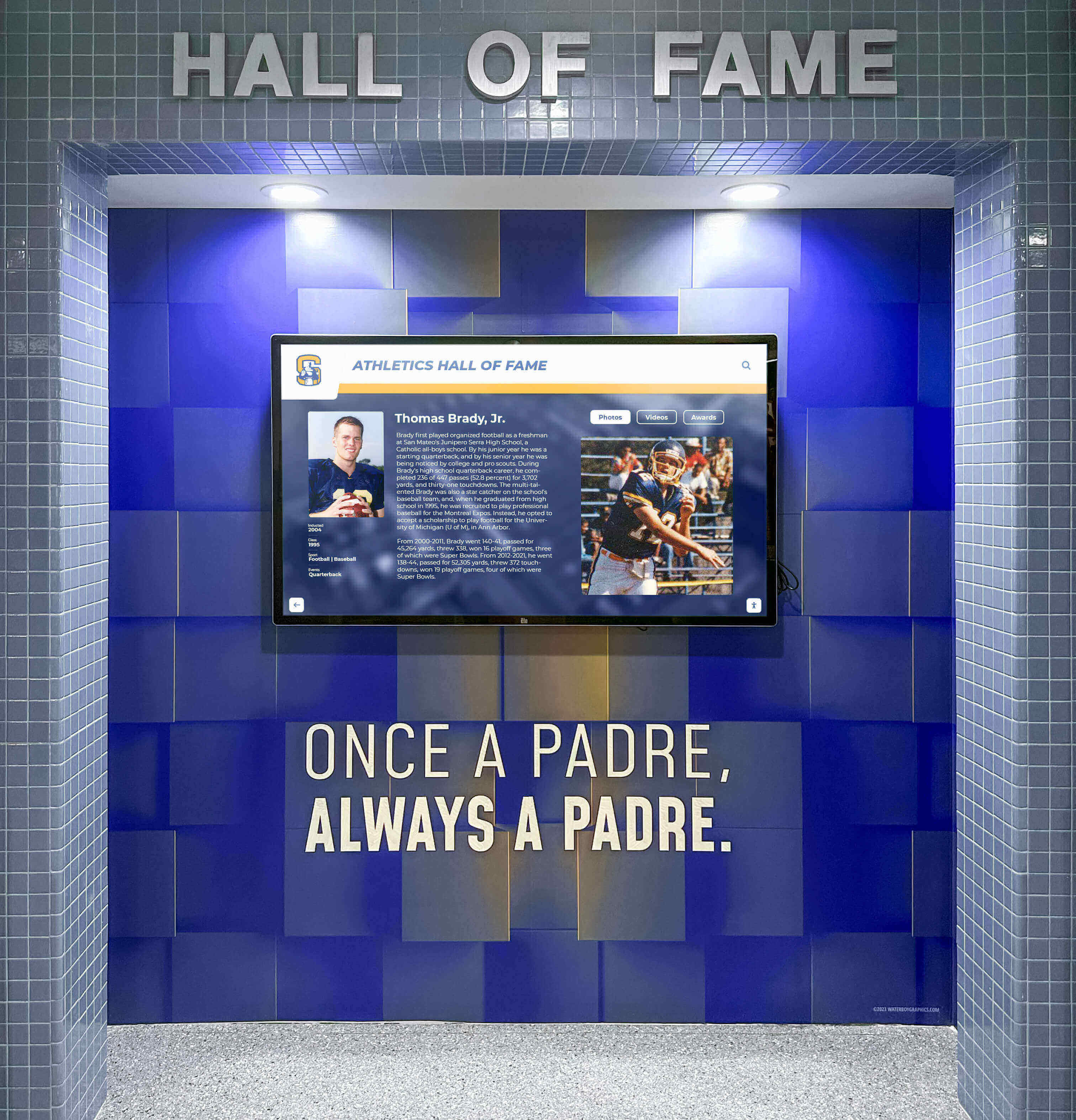
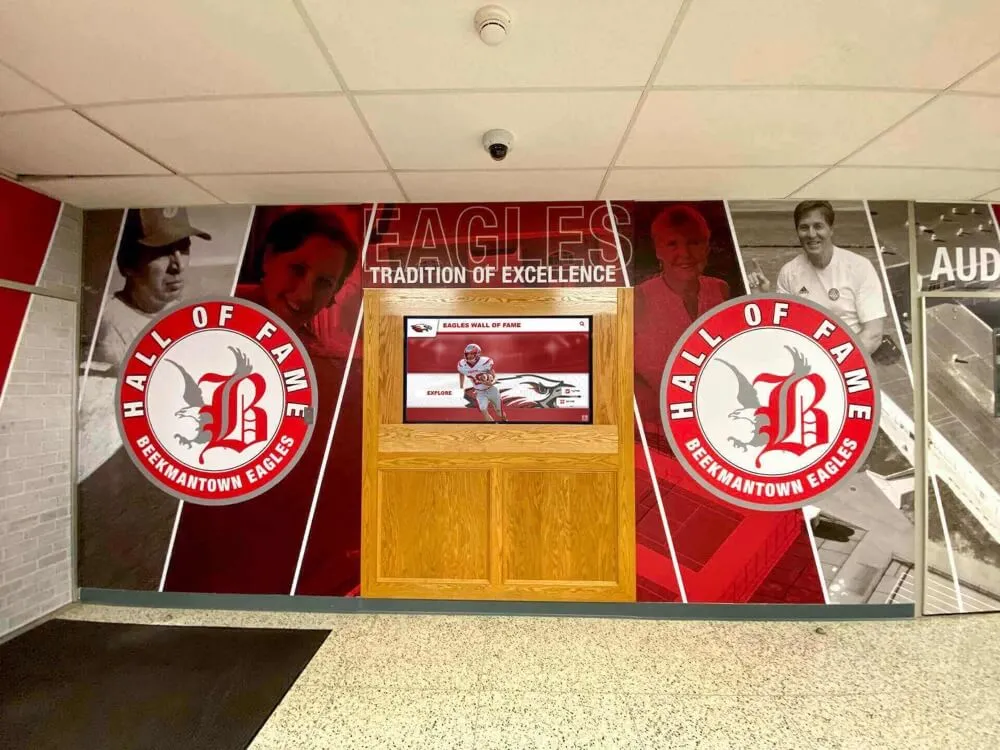
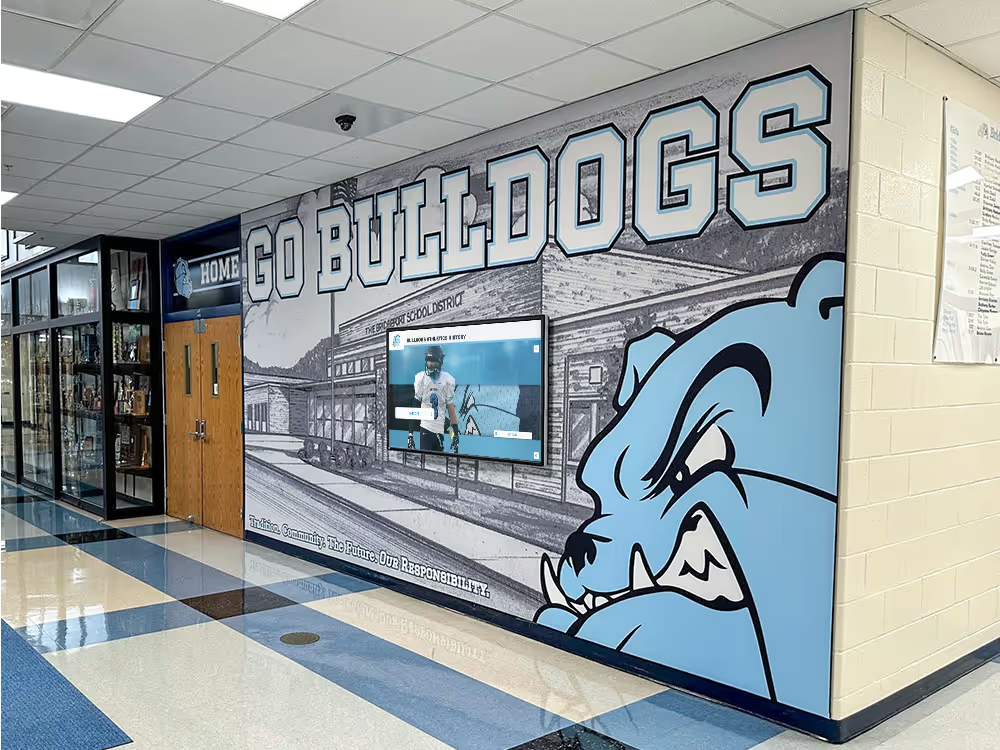
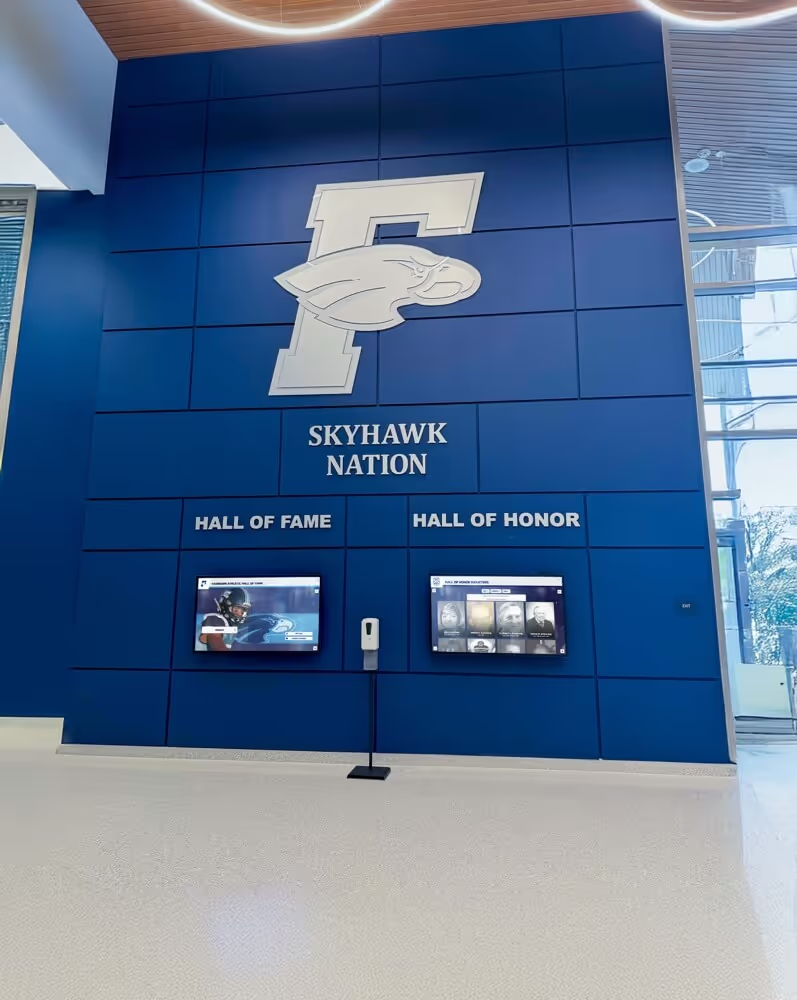
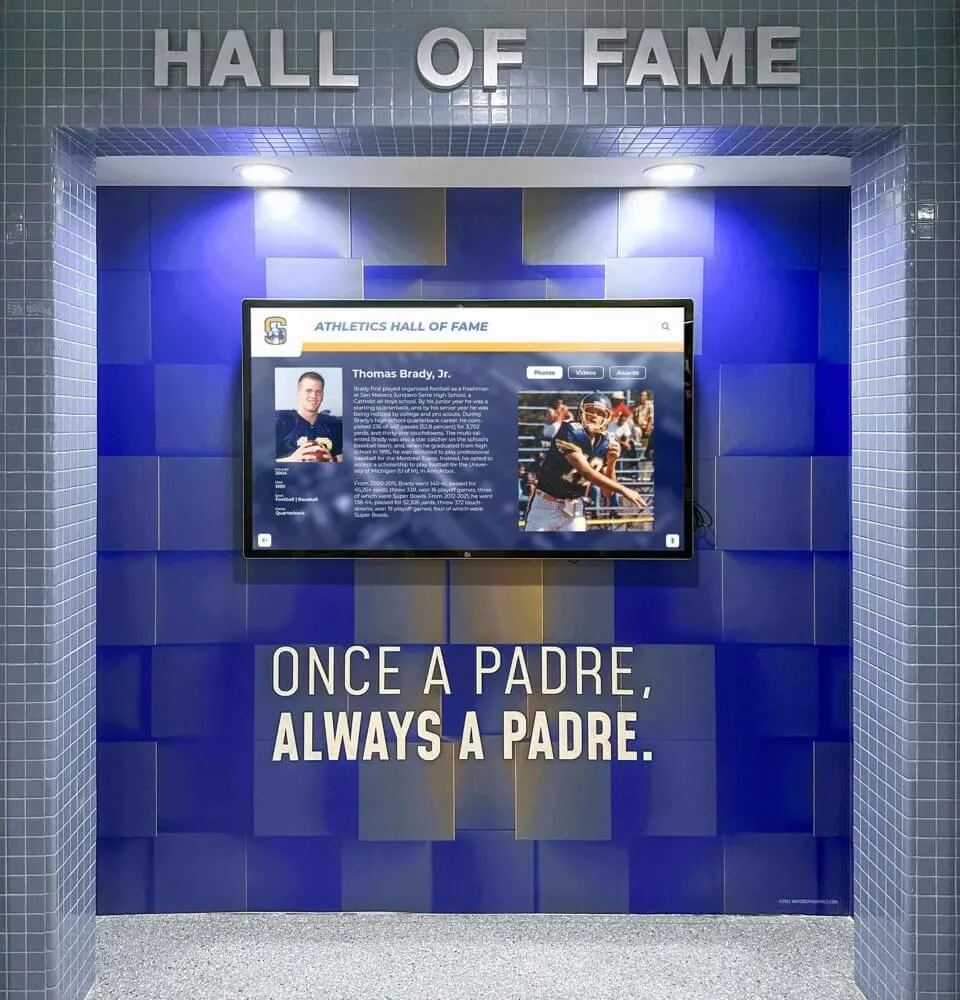
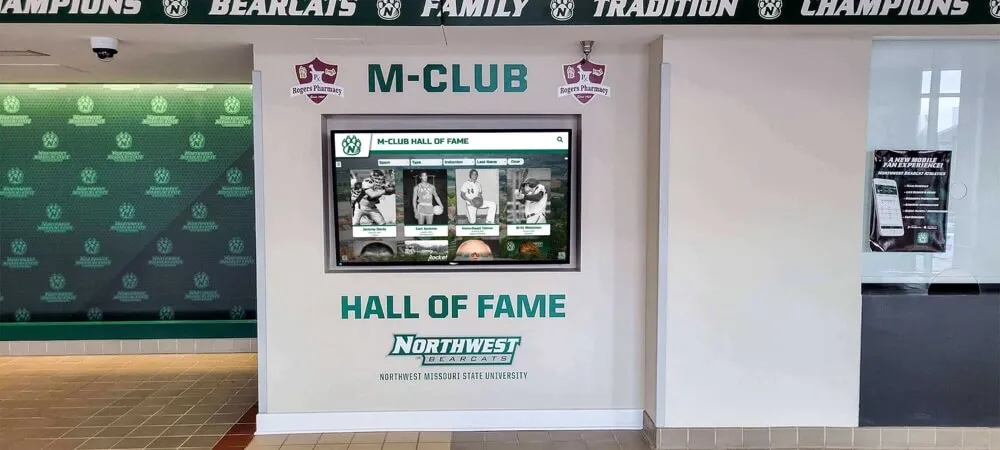
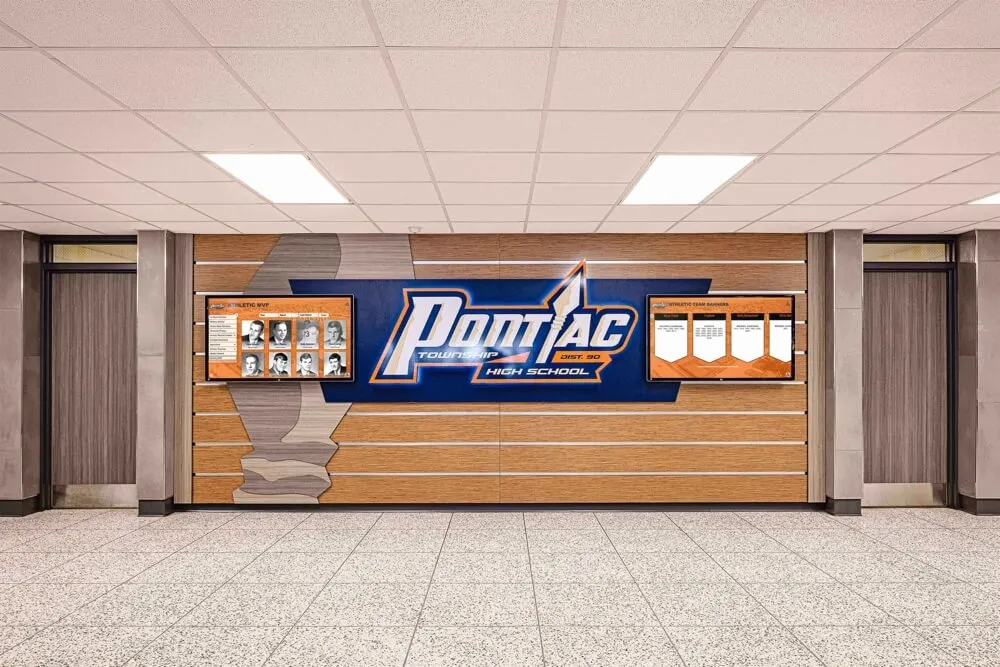
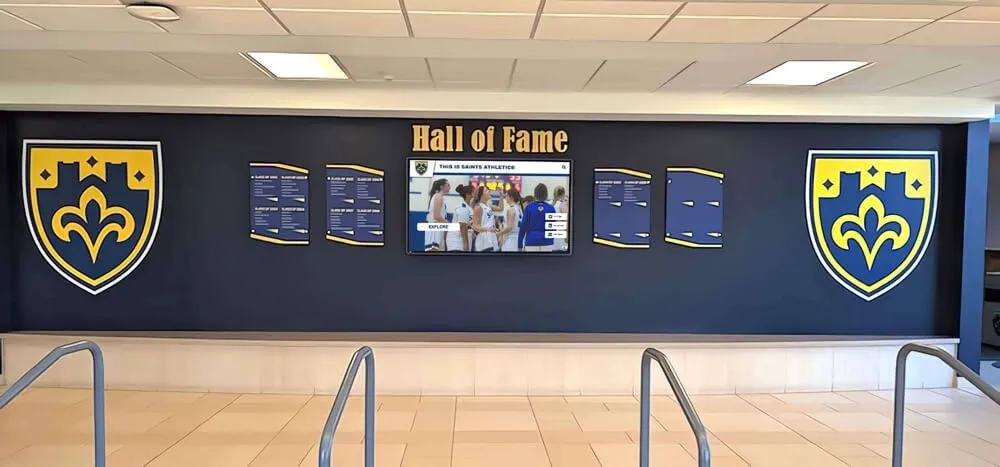
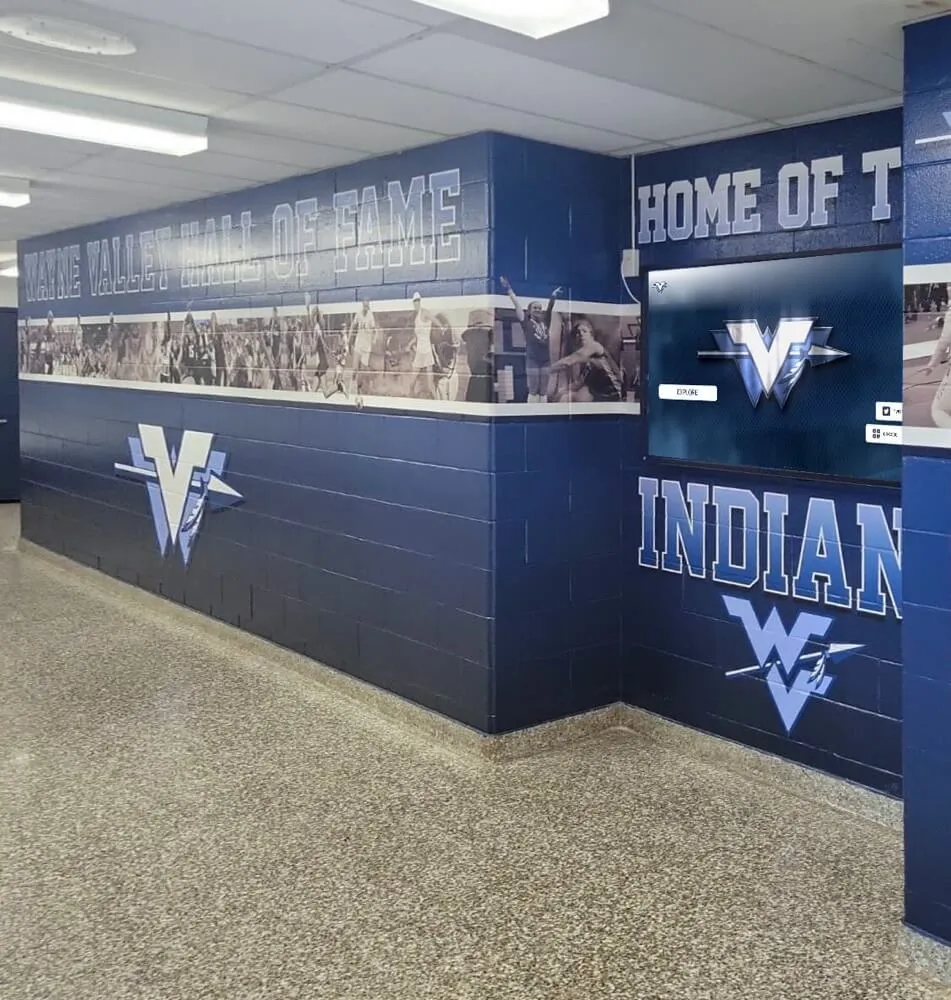
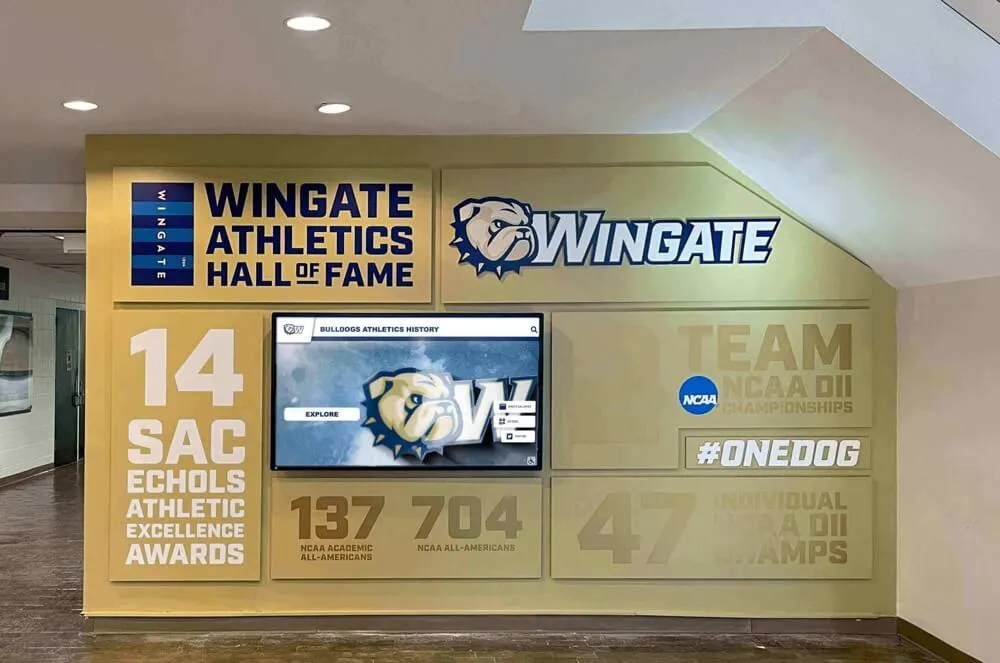
Wall-mounted displays integrate seamlessly with venue architecture while providing comprehensive recognition capacity
The Digital Recognition Revolution in Thoroughbred Racing
Modern interactive technology addresses traditional limitations while introducing unprecedented capabilities for comprehensive heritage celebration:
Unlimited Recognition Capacity Without Physical Constraints
Digital platforms showcase unlimited horses, jockeys, trainers, owners, races, and achievements across all eras without space limitations constraining traditional displays. A single touchscreen can present detailed profiles for every Travers Stakes winner since 1864, every leading rider across Saratoga’s 162-year history, and complete documentation of historic upsets—content impossible to achieve through physical plaques or trophy cases alone.
This unlimited capacity proves particularly valuable for racing venues with extensive histories spanning multiple centuries and thousands of horses, jockeys, trainers, and owners deserving appropriate recognition beyond simple name listings without detailed context or compelling storytelling.
Rich Multimedia Storytelling Capabilities
Unlike static displays limited to brief text and perhaps single photographs, digital recognition incorporates high-resolution images showing horses throughout their careers from maiden victories through championship performances, video race footage showcasing signature moments and memorable finishes, recorded interviews providing personal perspectives from jockeys, trainers, and owners, complete statistical databases tracking career performance across multiple tracks and seasons, historical context explaining significance within racing evolution and cultural impact, and social media integration enabling fans to share discoveries about favorite champions.
This multimedia depth transforms simple name acknowledgment into comprehensive storytelling that creates emotional connections between fans and racing legacy, dramatically increasing engagement time and recognition impact compared to traditional approaches offering minimal information.
Instant Updates Reflecting Current Racing Action
Content management systems enable immediate recognition updates without construction or fabrication delays. As new champions emerge during current meets, administrators update digital displays instantly through cloud platforms—changes appearing immediately rather than requiring months-long physical modification processes typical of traditional recognition approaches.
This real-time capability ensures recognition remains perpetually current while dramatically reducing ongoing costs associated with traditional physical display maintenance and expansion requiring engraving, fabrication, installation, and facility modifications after each racing season.
Understanding state championship trophy display strategies provides insights applicable to racing venue recognition despite different competitive contexts, demonstrating how digital solutions address space constraints facing all sports organizations.
Saratoga Recognition Opportunities: Celebrating Thoroughbred Excellence
While Saratoga maintains traditional recognition elements through the adjacent National Museum of Racing, interactive digital technology could significantly enhance how the track celebrates its remarkable 162-year history.
Legendary Horses and Historic Performances
Saratoga has hosted thoroughbred racing’s greatest champions across multiple generations:
Hall of Fame Thoroughbreds at Saratoga
The world’s most accomplished thoroughbreds have raced at Saratoga including Secretariat, Seattle Slew, Affirmed, Gallant Fox, Man o’ War, American Pharoah, Rachel Alexandra, Curlin, and countless other champions who spent time in the track’s historic backstretch and competed on its hallowed racing surfaces.
Interactive displays could showcase complete racing records for all significant horses across Saratoga history, highlight video compilations of signature races and memorable performances, present pedigree information showing breeding connections across generations, document training regimens and preparation approaches, include ownership and breeding farm histories, and provide career statistics comparing Saratoga performances with achievements at other major tracks.
This comprehensive horse documentation would enable fans to explore thoroughbred excellence thoroughly rather than encountering only names on winner lists without detailed context about achievements and racing significance.
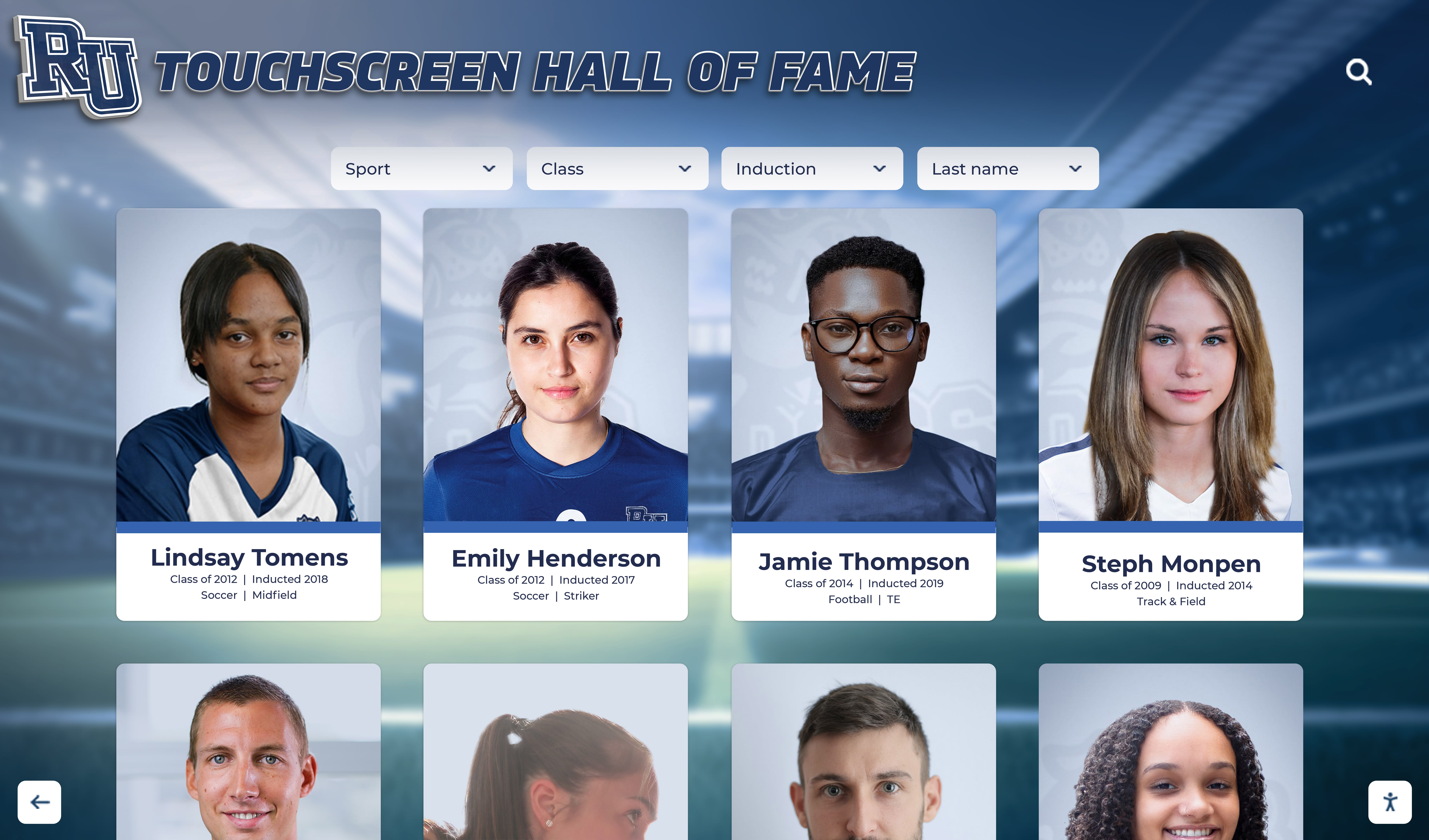
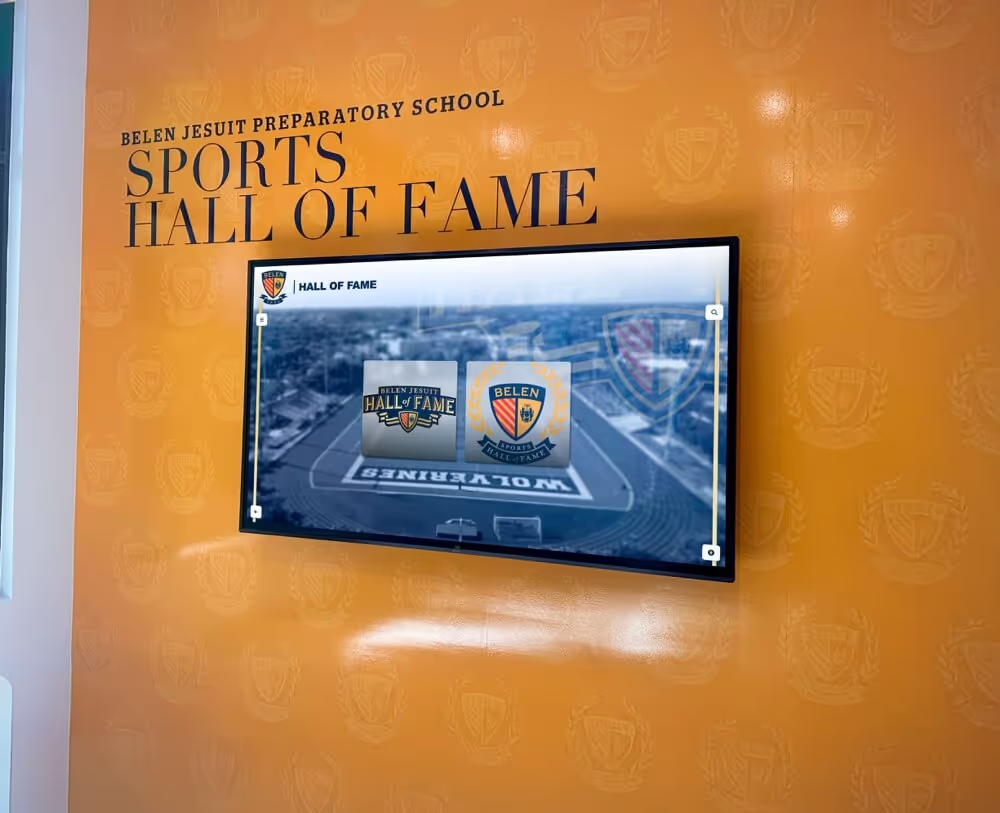
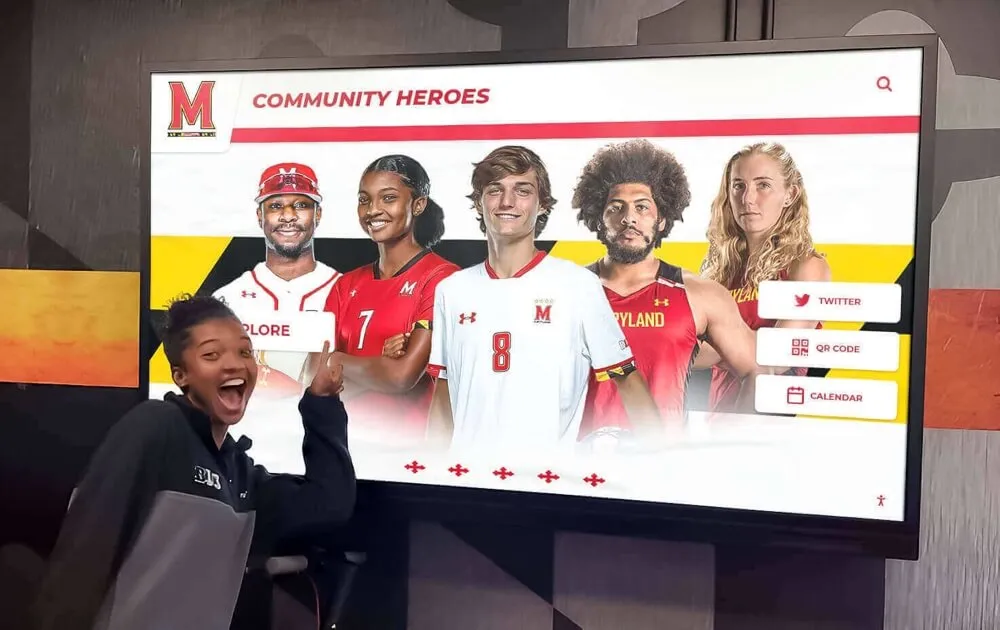
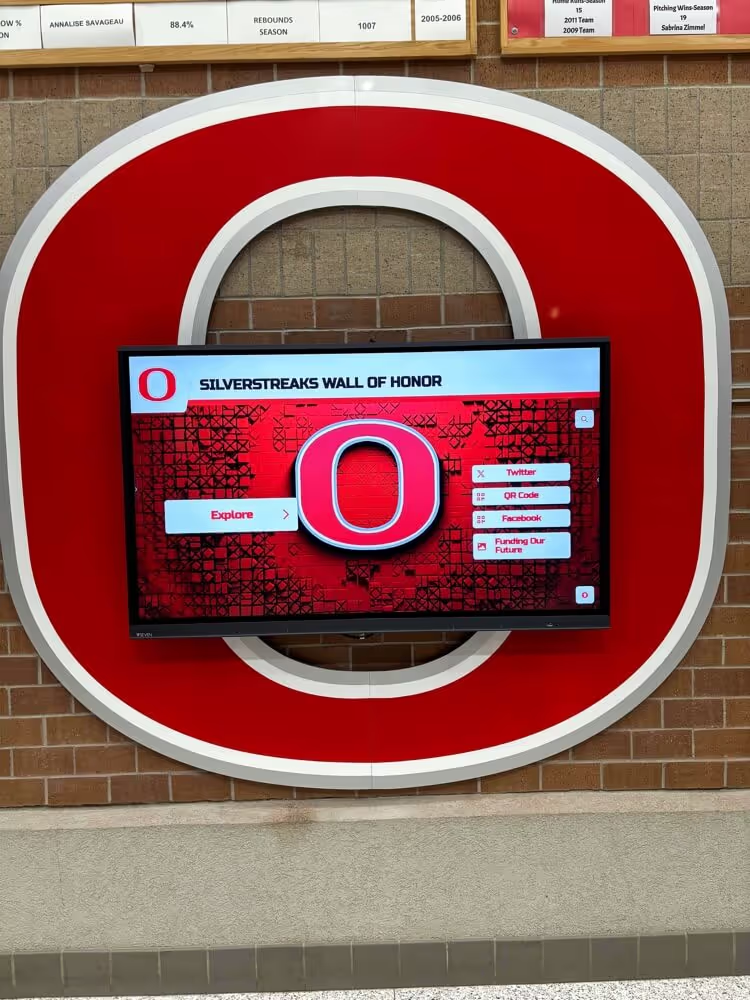
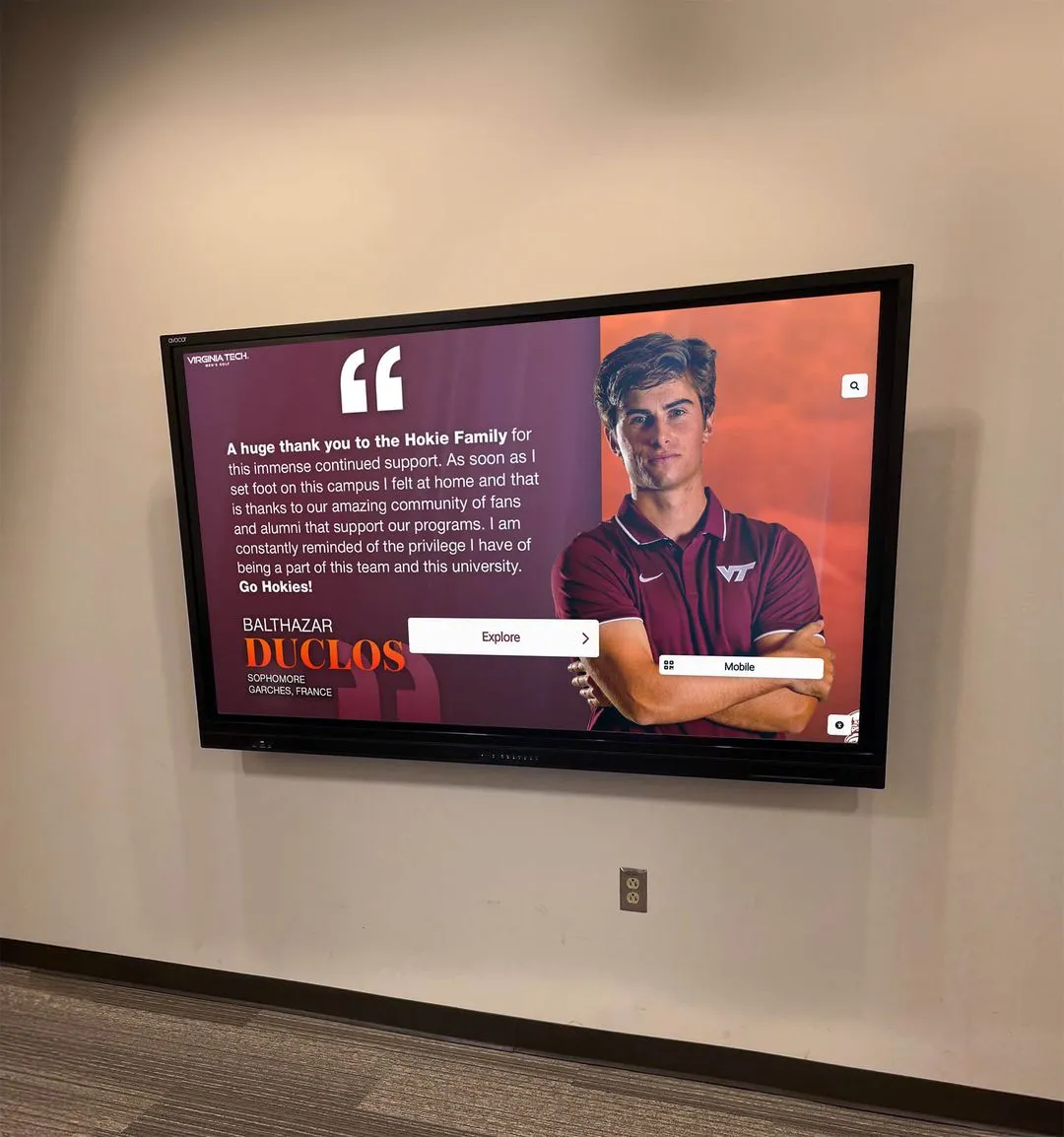
Detailed profiles celebrate individual excellence through comprehensive statistics, photos, and achievement narratives
Jockey Excellence and Riding Achievements
The world’s finest jockeys have competed at Saratoga throughout its history:
Leading Riders Across Eras
Saratoga’s jockey colony has included legends such as John Velazquez, who holds the all-time record for Saratoga victories, Javier Castellano, Angel Cordero Jr., Jorge Velasquez, and numerous other Hall of Fame riders who demonstrated exceptional skill navigating Saratoga’s unique racing surfaces and competitive fields.
Digital recognition could document complete riding records for all significant jockeys, highlight memorable rides and tactical masterpieces, present career statistics showing Saratoga success rates and stake wins, include video interviews discussing racing strategy and memorable moments, document major stake victories including multiple Travers Stakes triumphs, and show connections between different jockey generations and riding styles.
This rider-focused recognition would celebrate the human athletes whose skill, courage, and tactical acumen determine racing outcomes, providing fans deeper appreciation for jockey excellence beyond simple win totals.
Comprehensive approaches to athletic recognition programs demonstrate frameworks applicable to racing contexts where multiple contributor categories—horses, jockeys, trainers, owners—all deserve appropriate celebration.
Trainer Excellence and Conditioning Mastery
Saratoga has been home to legendary trainers who mastered the art of bringing horses to peak performance during the prestigious summer meet:
Conditioning Champions
Hall of Fame trainers including D. Wayne Lukas, Todd Pletcher, Bill Mott, and numerous others have demonstrated exceptional skill preparing horses for Saratoga’s competitive atmosphere, pressure-packed stakes races, and demanding schedule concentrated into just six weeks each summer.
Interactive displays could celebrate trainer achievements through career statistics at Saratoga, documentation of training methodologies and stable management approaches, interviews discussing race preparation and strategic decisions, and connections between different training eras and evolving techniques.

Recognition celebrates excellence across different roles and contributions to competitive achievement
This trainer recognition would honor the behind-the-scenes professionals whose expertise and dedication enable horses to achieve championship performances, helping fans understand that racing success requires extensive teamwork beyond the visible horse-and-jockey combination competing in races.
Owner Legacy and Breeding Excellence
Prominent owners and breeding operations have shaped Saratoga’s competitive landscape:
Distinguished Owner Achievements
Legendary owners and breeding farms including Calumet Farm, Claiborne Farm, Whitney family operations, and numerous other prominent stables have campaigned champions at Saratoga across multiple generations, demonstrating sustained excellence in thoroughbred breeding, acquisition, and campaign management.
Recognition could document ownership achievements through stable histories and breeding philosophies, documentation of significant purchases and breeding decisions, statistics showing Saratoga success across different eras, and connections between ownership strategies and championship results.
This ownership recognition would celebrate the vision and investment enabling thoroughbred excellence, helping fans appreciate the extensive commitment required to maintain championship-caliber racing stables.
Resources on donor recognition approaches provide frameworks applicable to racing contexts where owner contributions enable competitive excellence, despite originating in nonprofit fundraising contexts with different purposes.
Interactive Recognition Technology Implementation for Racing Venues
Translating conceptual recognition benefits into practical implementation requires addressing specific technical, content, and operational considerations unique to racing environments.
Hardware Requirements for Race Track Installations
Racing venues present unique environmental and usage demands requiring appropriate technology specifications:
Commercial-Grade Touchscreen Displays
Track installations demand robust hardware including continuous operation ratings supporting extended hours during racing meets when facilities operate from early morning through evening, enhanced brightness (500+ nits) ensuring visibility under varied lighting conditions from outdoor plaza areas to indoor clubhouses, reinforced touchscreen surfaces withstanding heavy fan interaction during peak attendance days when tens of thousands of fans pass through facilities, and weatherproofing for installations in semi-outdoor locations within race track complexes.
Display sizes typically range from 55 inches for individual kiosk installations through 75-86 inches for primary entrance installations where viewing distances and crowd sizes necessitate larger formats ensuring visibility.
Strategic Placement Throughout Track Complex
Effective recognition requires multiple touchpoints distributed across the venue including main gate entrances where all fans pass during entry creating universal touchpoint opportunities, paddock and walking ring areas where fans gather before races to view horses, clubhouse and grandstand locations with natural congregation spaces during race intervals, museum spaces and historical exhibits integrating with existing recognition programs, and stable areas during morning training hours when racing enthusiasts observe workout sessions.
This distributed approach ensures recognition reaches diverse fan populations rather than limiting displays to single locations only certain visitors encounter during track attendance.
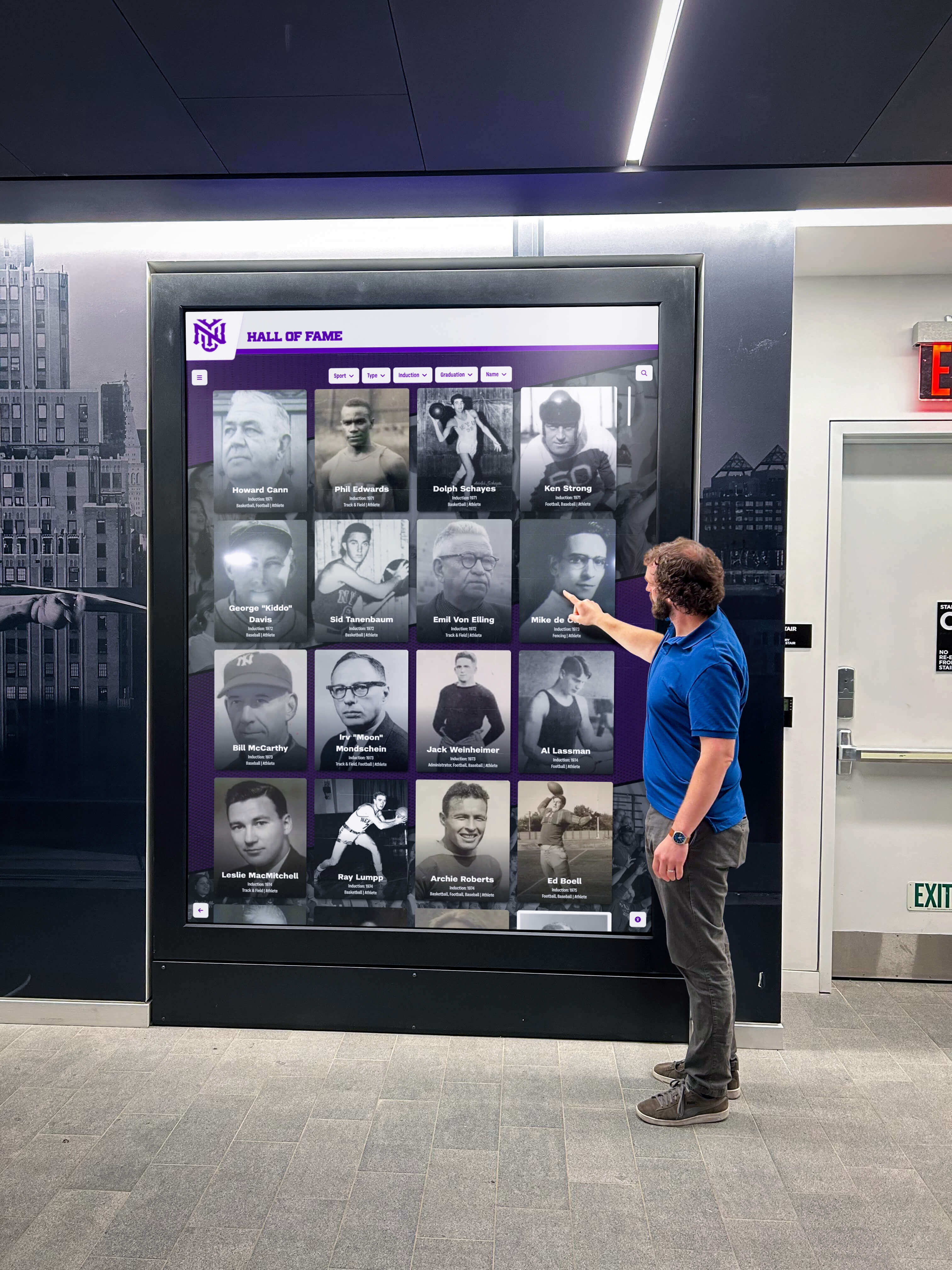
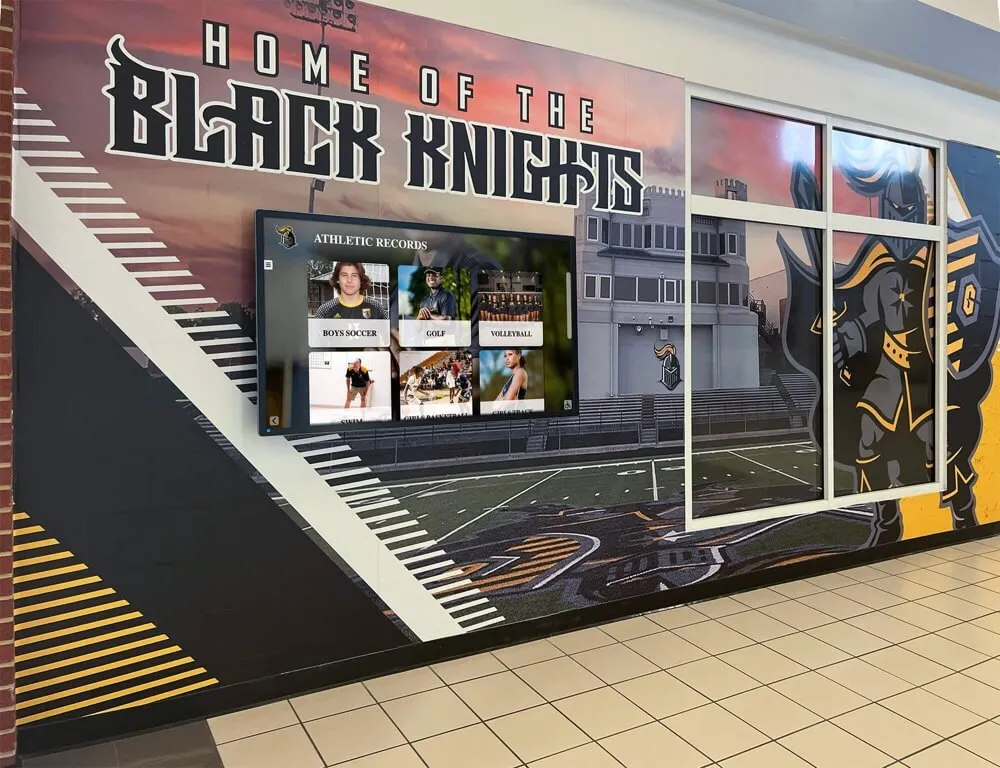
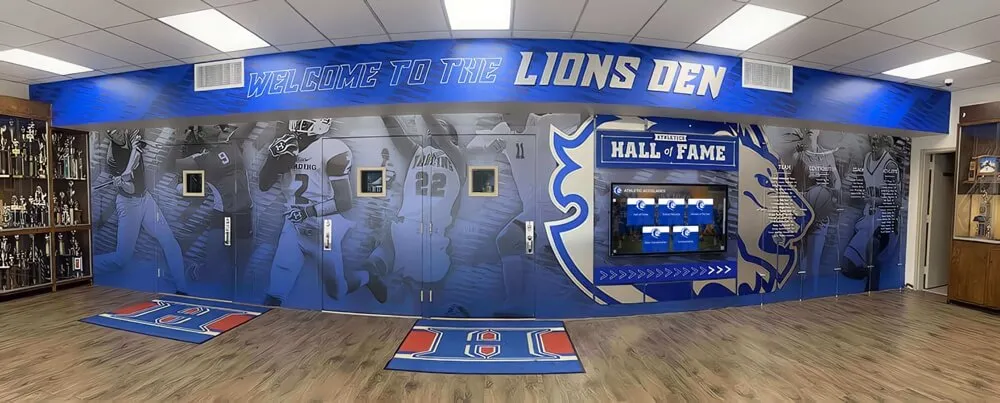
Strategic lobby placement ensures maximum visibility during peak fan traffic flows throughout racing days
Network Infrastructure and Content Delivery
Cloud-based content management requires reliable connectivity supporting real-time content updates enabling daily racing result integration, remote management capabilities allowing updates from administrative offices without requiring on-site technical staff, robust bandwidth accommodating video streaming during peak usage when thousands of fans simultaneously access various digital amenities, and secure networks preventing unauthorized access protecting sensitive organizational content.
Professional IT integration ensures displays function reliably during high-traffic racing days while maintaining security appropriate for major sporting venues with media attention and commercial importance.
Content Development for Thoroughbred Racing Recognition
Comprehensive venue recognition requires systematic content creation addressing multiple historical eras and achievement categories:
Historical Research and Documentation
Organizations with extensive histories benefit from thorough archival research including racing program reviews documenting entries, results, and statistics across decades, newspaper archive searches uncovering period coverage providing contemporary perspectives on historic races, racing organization archives containing photographs and memorabilia preserving visual heritage, interviews with retired jockeys, trainers, and owners capturing first-person memories unavailable through official documentation, and statistical databases providing complete performance records across all racing surfaces and distances.
This research often reveals stories and achievements lost to institutional memory, enabling more comprehensive recognition than relying solely on current organizational knowledge would permit.
Resources on finding school sports records demonstrate research methodologies applicable to racing contexts despite different organizational structures and record-keeping systems.
Multimedia Asset Creation and Curation
Engaging recognition requires diverse content formats including professional photography showcasing horses throughout careers from maiden races through championship performances, video race footage edited for appropriate length showing signature moments and memorable finishes, audio interviews recorded specifically for recognition purposes providing personal perspectives, historical footage digitized from analog formats preserving earliest televised racing coverage, statistical visualizations making complex data accessible showing performance trends across racing eras, and interactive timelines showing career progressions and racing evolution.
Quality multimedia development requires dedicated resources but dramatically increases recognition impact compared to text-only approaches generating minimal fan engagement.

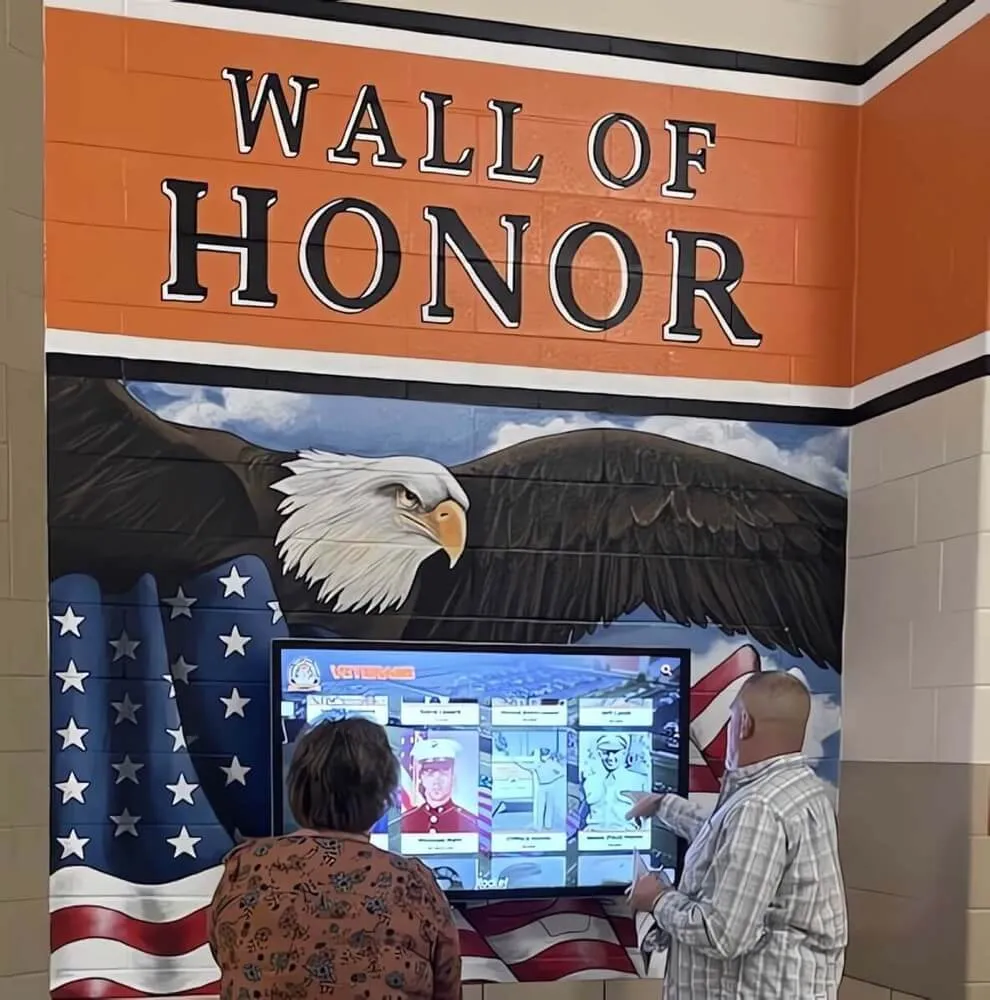
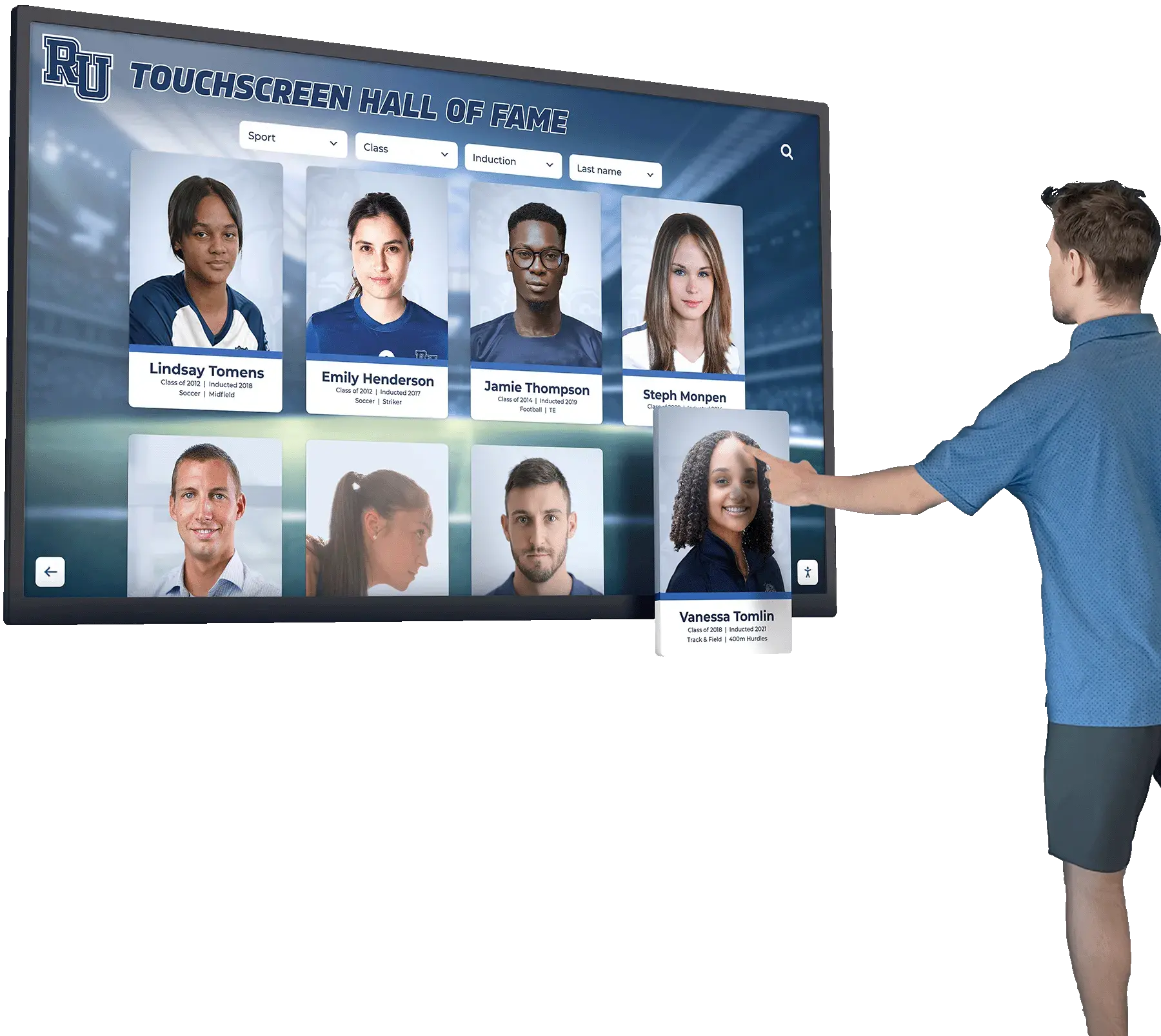
Intuitive touchscreen interfaces enable fans to explore detailed information through familiar smartphone-like navigation
Content Organization and Navigation Design
Large recognition databases require intuitive navigation enabling fans to discover content efficiently including search by horse name, jockey, trainer, or owner allowing direct access to specific profiles, filtering by year, race type, or achievement level narrowing comprehensive databases, chronological browsing through track history from earliest races through modern era, thematic collections highlighting upset victories, record-breaking performances, or championship campaigns, and featured content rotation showcasing current anniversaries or connecting historical achievements with present racing action.
Sophisticated navigation transforms potentially overwhelming content volumes into accessible exploration experiences encouraging extended fan engagement rather than brief cursory viewing.
Fan Engagement Benefits of Interactive Racing Recognition
Beyond honoring racing achievement, modern recognition technology delivers tangible benefits supporting broader track objectives and fan experience enhancement.
Enhanced Track Experience and Fan Satisfaction
Interactive displays contribute to overall venue atmosphere and visitor experience quality:
Pre-Race and Between-Race Entertainment
Recognition displays provide engaging activities during natural downtime including early arrivals before first post when fans seek entertainment while securing preferred seating, intervals between races providing brief exploration opportunities during the typical 30-minute windows separating competitive events, weather delay entertainment when thunderstorms temporarily suspend racing creating extended idle periods, and post-racing lingering as crowds disperse allowing fans to extend track experiences.
This entertainment value enhances overall fan satisfaction while creating positive associations with track history and tradition—deepening emotional connections beyond individual race outcomes.
Comprehensive digital storytelling for athletic programs demonstrates engagement principles applicable to racing contexts where memorable performances deserve permanent celebration.
Educational Opportunities for Casual Racing Fans
Interactive recognition serves pedagogical purposes for fans less familiar with racing history including introducing legendary horses to younger generations discovering racing heritage, explaining historical context for significant achievements and upset traditions, demonstrating racing excellence through statistical comparisons across eras, and preserving oral history through video interviews inaccessible through traditional media.
This educational dimension helps newer fans develop appreciation for tradition and legacy that strengthens long-term racing interest transcending individual favorite horses whose careers eventually end.
Social Media Integration and Digital Marketing
Modern recognition platforms support broader marketing and engagement strategies:
Shareable Content Generation
Digital displays create social media-friendly content including horse profile graphics optimized for Instagram and Twitter sharing, video race clips perfect for TikTok and Reels short-form video platforms, interesting statistics and trivia for text-based platforms encouraging discussion, and visual timelines showing racing evolution that tell compelling stories.
Fans naturally share discoveries from recognition displays with their social networks, generating organic marketing reach extending far beyond those physically attending racing meets.
Nostalgic Content for Veteran Racing Enthusiasts
Recognition serves fan retention by maintaining engagement with long-time racing supporters including career retrospectives for horses and jockeys from fans’ formative years, anniversary acknowledgments of historic races and memorable moments, “where are they now” updates about retired horses maintaining connections, and connections between historical and current champions showing sport evolution.
This nostalgic content maintains emotional investment from veteran fans while introducing history to newer supporters—creating shared tradition connecting generations of racing enthusiasts.
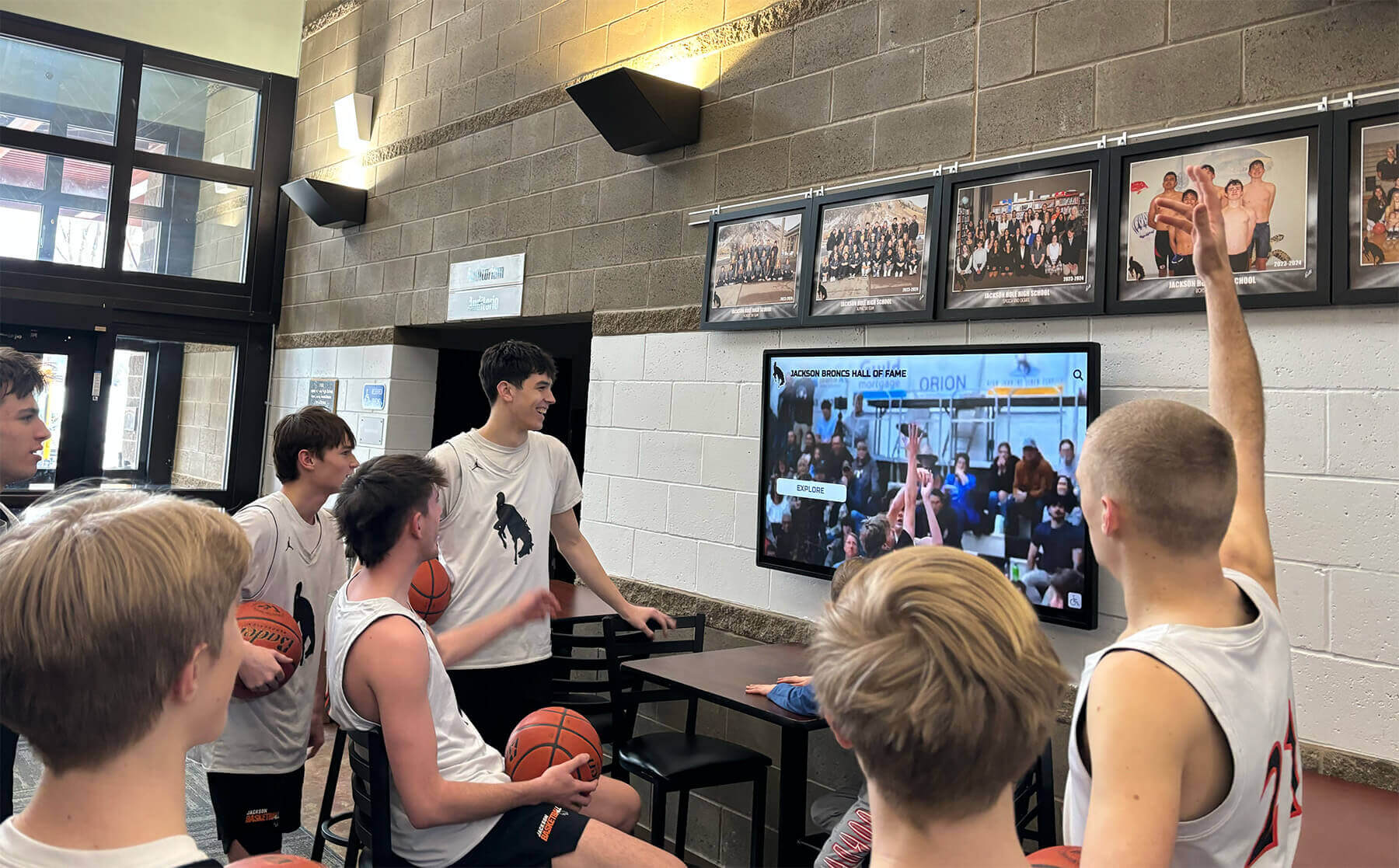
Shared viewing experiences create collective appreciation for racing excellence and track tradition
Track Heritage Preservation
Racing organizations benefit from systematic championship documentation:
Institutional Memory Protection
Comprehensive digital recognition ensures track history remains accessible including detailed racing records preventing information loss as years pass, first-person accounts from participants preserving personal perspectives before memories fade, visual documentation showing track and racing evolution across eras, and statistical databases enabling historical research and comparative analysis.
This systematic preservation protects against knowledge loss that occurs naturally as decades pass and personal recollections of older racing seasons fade from living memory.
Insights from student mentorship and alumni discovery boards translate effectively to racing contexts where connecting generations of enthusiasts strengthens community bonds.
Beyond Saratoga: Interactive Recognition Across Thoroughbred Racing
While this exploration focuses on Saratoga applications, recognition technology benefits extend throughout racing at multiple competitive levels.
Other Historic American Racetracks
Every major racing venue with significant history could benefit from comprehensive interactive recognition:
Historic East Coast Tracks
Belmont Park celebrating the Test of the Champion and Triple Crown history, Churchill Downs honoring Kentucky Derby tradition dating to 1875, Pimlico Race Course documenting Preakness Stakes heritage, and Keeneland maintaining recognition of Kentucky racing culture and breeding excellence.
Major Regional Racing Centers
Santa Anita Park celebrating California racing tradition, Del Mar honoring West Coast summer racing, Gulfstream Park documenting Florida racing excellence, and numerous other venues where regional racing traditions deserve comprehensive celebration.
Each racing context presents unique recognition opportunities shaped by competitive structures, historical developments, and fan engagement patterns—yet core recognition principles remain consistent across thoroughbred racing applications.
International Racing Recognition
Recognition technology applications extend beyond American racing:
European Racing Heritage
Royal Ascot celebrating British racing tradition, Arc de Triomphe venue Longchamp honoring French racing excellence, and Irish racing venues documenting Celtic racing culture.
Asian and Australian Racing
Dubai World Cup facilities celebrating international competition, Melbourne Cup recognizing Australian racing traditions, and Hong Kong racing venues documenting Asian thoroughbred racing growth.
These international contexts demonstrate how racing recognition principles translate across different racing cultures and competitive structures.

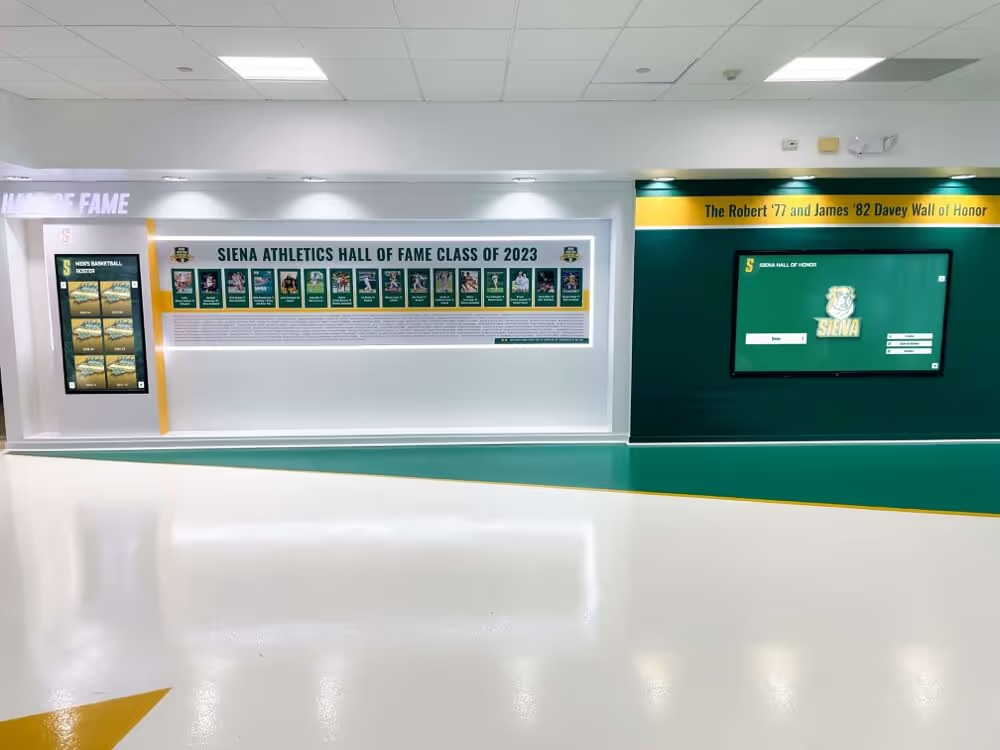
Recognition principles adapt effectively across sport contexts from professional racing through educational athletics
Implementation Considerations and Best Practices
Organizations considering interactive recognition technology should address several practical implementation dimensions:
Content Governance and Editorial Standards
Recognition credibility depends on accurate, appropriate content maintained through clear governance:
Editorial Review Processes
Establish systematic content review ensuring all recognition profiles receive appropriate vetting before publication including statistical accuracy through multiple verification sources, appropriate language avoiding controversial content, consistency across different eras maintaining professional standards, and regular audits identifying needed updates as new information emerges.
These processes prevent embarrassing errors while maintaining recognition prestige essential for fan trust and organizational credibility.
Historical Accuracy and Dispute Resolution
Long racing histories sometimes involve disputed facts requiring clear resolution processes including source documentation requirements substantiating claims, multiple verification when sources conflict, transparent acknowledgment of uncertainties when definitive information unavailable, and correction procedures when errors discovered after publication.
Honest uncertainty acknowledgment maintains credibility better than publishing questionable information later requiring correction.
Accessibility and Inclusive Design
Recognition systems should serve all fans regardless of physical abilities:
Universal Design Principles
Implement accessibility features including touchscreen mounting heights accommodating wheelchair users, audio descriptions for visually impaired fans when feasible, adjustable text sizing for varying vision capabilities, alternative input methods beyond touchscreen interaction, and compliance with ADA requirements and accessibility standards.
Universal design benefits all users while ensuring legal compliance and demonstrating organizational commitment to inclusive experiences.
Multilingual Content Considerations
Racing venues attracting international audiences benefit from multilingual recognition including Spanish language content when appropriate, and visual storytelling reducing text dependence making content more universally accessible.
Language accessibility expands recognition impact while welcoming diverse international fan communities attending major racing meets.
Integration with Existing Recognition Programs
Digital platforms should complement rather than replace traditional recognition elements:
Hybrid Recognition Strategies
Optimal approaches combine selective physical recognition maintaining ceremonial presence for major champions with comprehensive digital recognition documenting complete track history without space constraints.
This hybrid model satisfies those valuing physical permanence while leveraging technology advantages addressing traditional limitations.
Understanding digital wall of honor approaches helps organizations integrate physical and digital recognition thoughtfully.
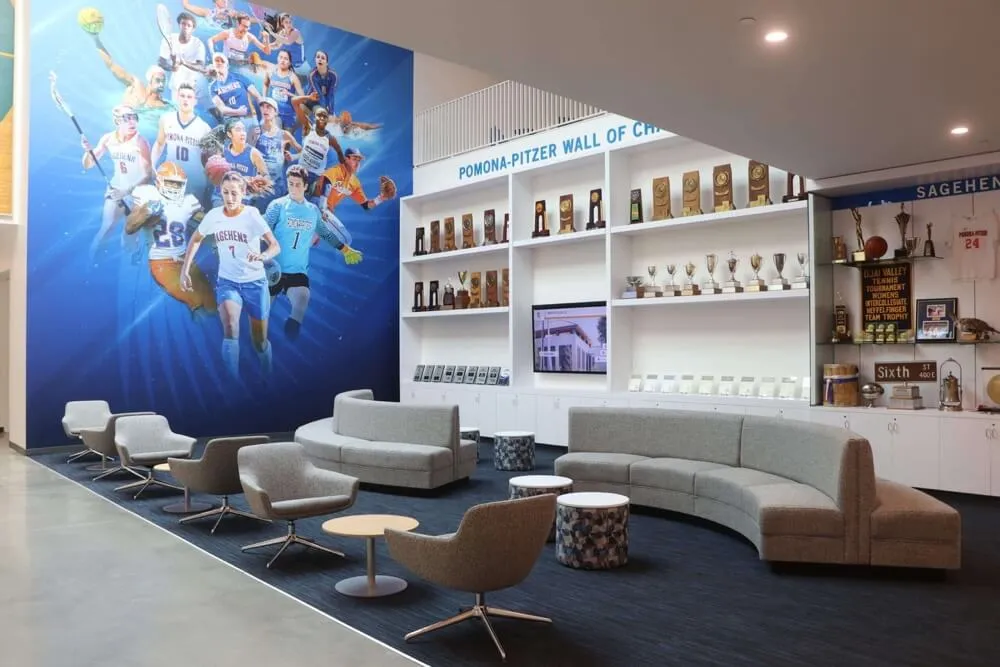
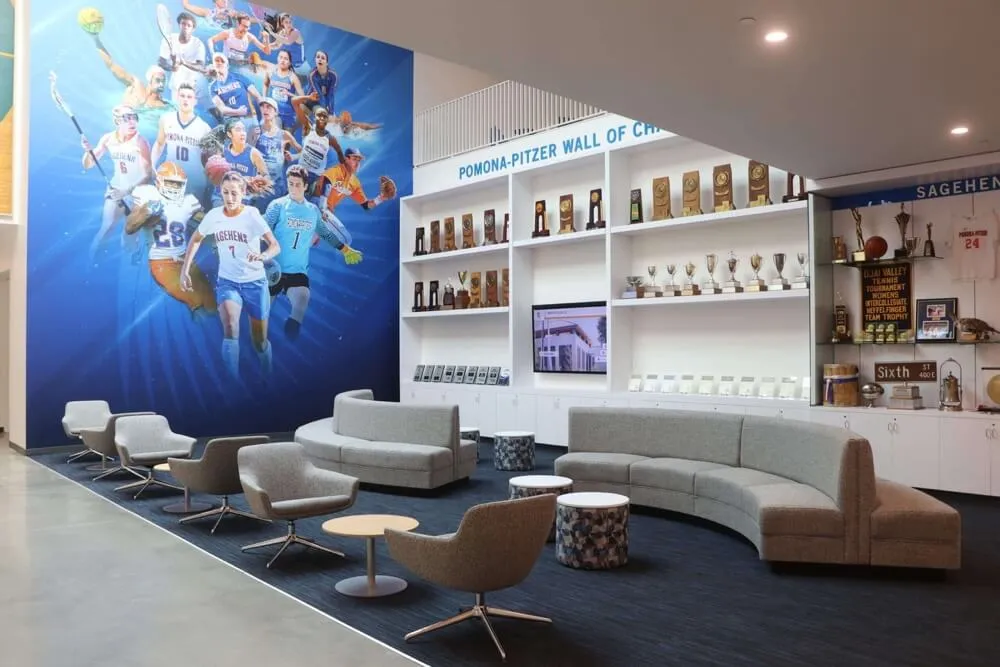
Comprehensive recognition spaces integrate multiple elements creating immersive celebration environments
Cross-Platform Content Strategy
Recognition content should extend beyond physical displays including responsive web platforms enabling remote access worldwide, mobile applications providing portable exploration during facility tours, social media integration facilitating content sharing across platforms, and email marketing featuring recognition content in fan communications.
This multi-platform approach maximizes content value and fan reach far beyond those physically present at track venues.
The Future of Racing Recognition Technology
Recognition technology continues evolving with emerging capabilities enhancing future programs:
Augmented and Virtual Reality Applications
Next-generation technologies enable immersive experiences including AR overlays showing historical content in physical venue spaces, VR recreations allowing fans to experience historic races from jockey perspectives, 360-degree video placing viewers within championship moments, and spatial computing interfaces transcending flat touchscreen limitations.
These emerging technologies will make historical content more visceral and engaging for digitally native younger audiences expecting immersive experiences.
Artificial Intelligence and Personalization
AI capabilities enhance recognition through intelligent search understanding natural language queries, personalized recommendations based on user interests, automated highlight compilation from archived race footage, and conversational interfaces enabling natural language interaction.
These enhancements make recognition systems more intuitive while reducing administrative burden for ongoing content management.
Enhanced Fan Experience Integration
Future implementations may feature gamification elements encouraging exploration, real-time integration with current racing action connecting historical context with present competition, and predictive analytics showing how current champions compare statistically with legendary predecessors.
Conclusion: Transforming Racing Legacy Celebration Through Interactive Recognition
Historic racing venues like Saratoga Race Course represent more than entertainment destinations—they embody generations of excellence, memorable moments, and cultural significance transcending sports entertainment alone. These extraordinary tracks deserve recognition technology matching their historic importance, celebrating complete legacy rather than highlighting only achievements fitting within limited physical display space.
Interactive touchscreen platforms like Rocket Alumni Solutions provide comprehensive solutions addressing recognition challenges facing racing organizations at all competitive levels. By eliminating space constraints, enabling rich multimedia storytelling, providing instant updates, supporting sophisticated navigation, and creating engaging interactive experiences, digital recognition transforms how tracks honor achievement while deepening fan connections with racing tradition.
Transform Your Sports Recognition Program
Discover how interactive touchscreen technology can help you celebrate every racing achievement, engage fans with compelling stories, and preserve complete track legacy for generations to come.
Explore Recognition SolutionsFrom historic racing venues through modern facilities, from thoroughbred racing through harness and quarter horse competitions, comprehensive recognition represents essential investment delivering returns across multiple dimensions including enhanced fan experience through engaging content, strengthened emotional connections with racing tradition, improved heritage documentation and institutional memory preservation, marketing and social media content generation, educational opportunities for younger fans and racing newcomers, and comprehensive celebration ensuring every champion receives recognition matching their achievements.
The technology enabling these benefits exists today—proven through hundreds of implementations across educational athletics and increasingly within professional sports contexts. Organizations need only commitment to comprehensive recognition as strategic priority worthy of appropriate resource investment.
Whether reimagining recognition at historic venues like Saratoga or establishing programs at newer racing facilities, interactive digital platforms provide transformational capabilities impossible through traditional physical approaches alone. Every champion horse deserves recognition matching their achievements. Every historic race deserves comprehensive celebration. And every fan deserves opportunities to explore and appreciate the rich racing heritage making major tracks special destinations connecting past excellence with present experience and future aspiration.
Ready to explore how interactive recognition could transform your racing venue? Learn about professional sports venue recognition, discover comprehensive museum approaches, and understand how digital platforms preserve sports heritage while creating engaging experiences that honor the past, celebrate the present, and inspire the future of athletic excellence across all competitive levels and championship contexts.