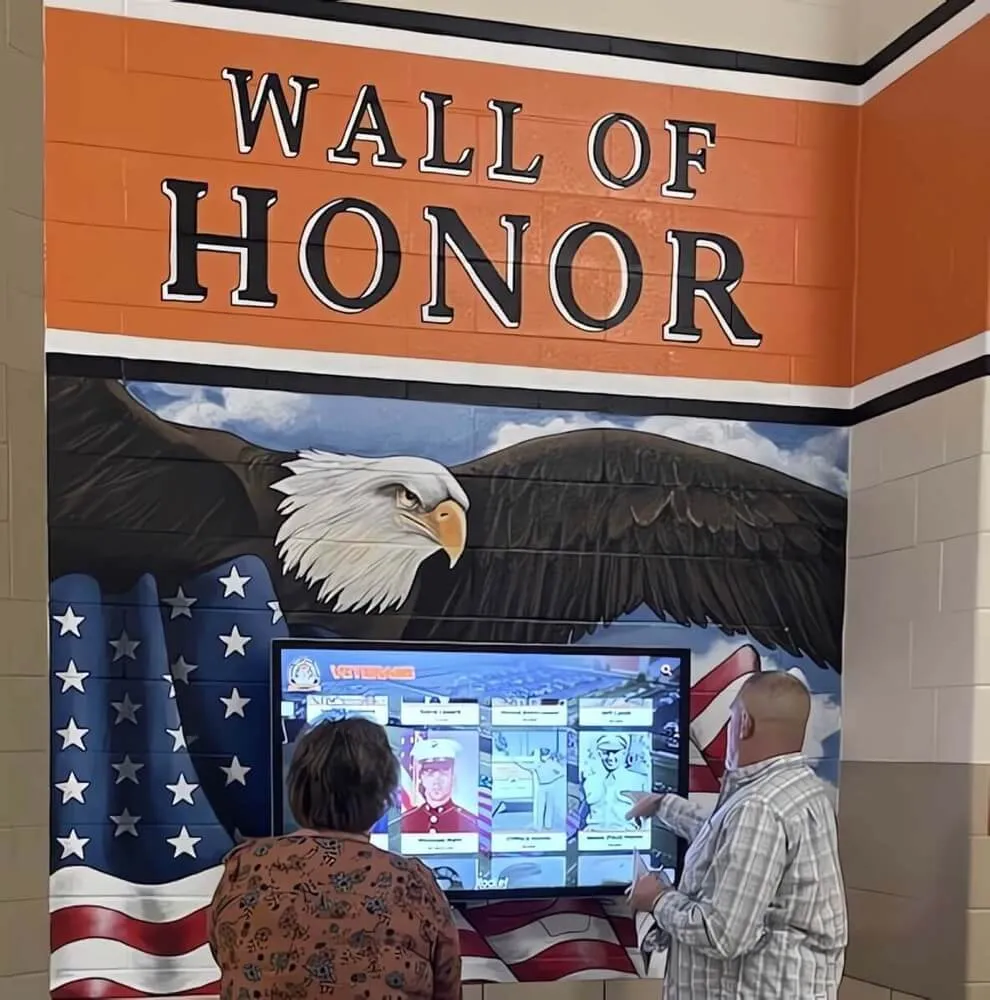
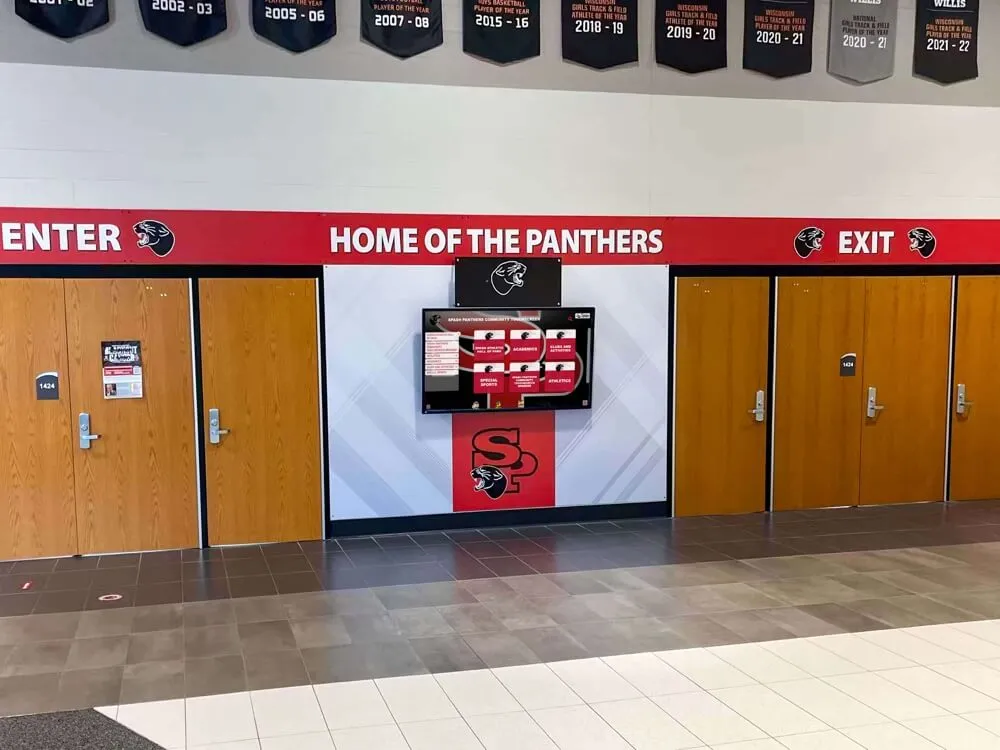
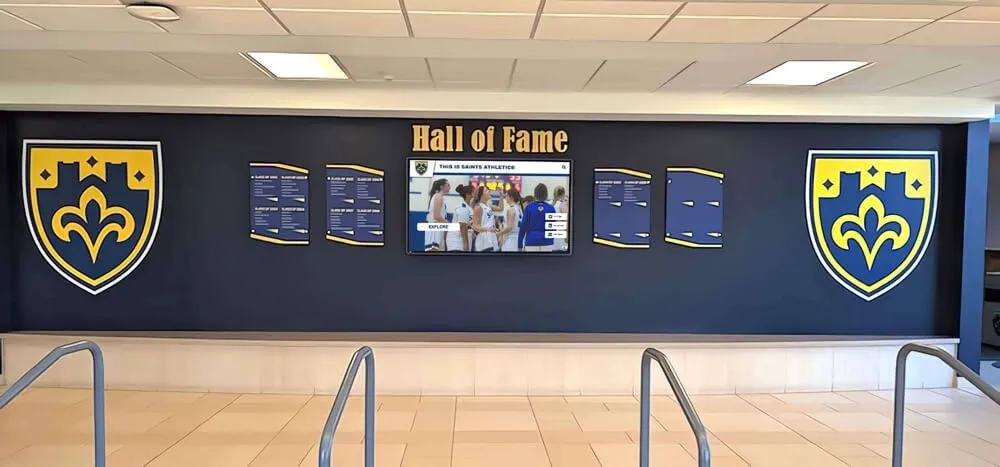
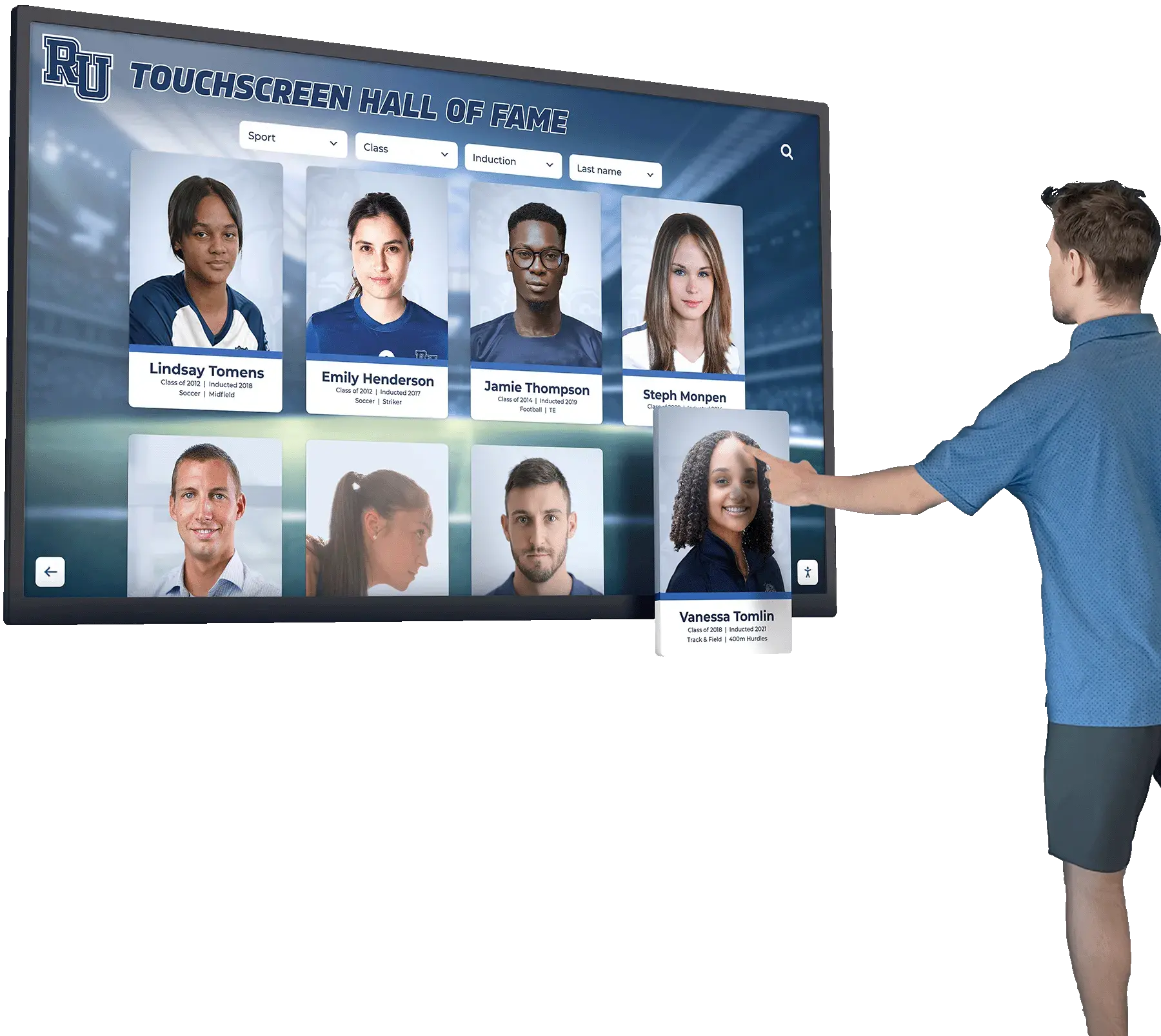
A well-planned school alumni website should include six core sections: an alumni directory with searchable profiles, a class pages hub, an events calendar, a giving portal with donor recognition, a digital archive of historical records and photos, and a privacy-controlled submission system that lets graduates update their own information. When those sections share a consistent data structure, the same recognition content can power both the website and on-campus touchscreen displays—eliminating duplicate entry and keeping honors current across every channel.
This guide walks school administrators, advancement teams, and communications staff through every section a complete alumni site needs, explains the content that belongs in each, and provides a section-by-section sitemap table for planning or redesigning your platform.
Building an alumni website is one of the highest-leverage investments a school advancement office can make. A well-structured site gives graduates a reason to stay connected, gives donors a place to see their impact, and gives staff a single source of truth for recognition data that flows to printed programs, digital displays, and social channels alike.

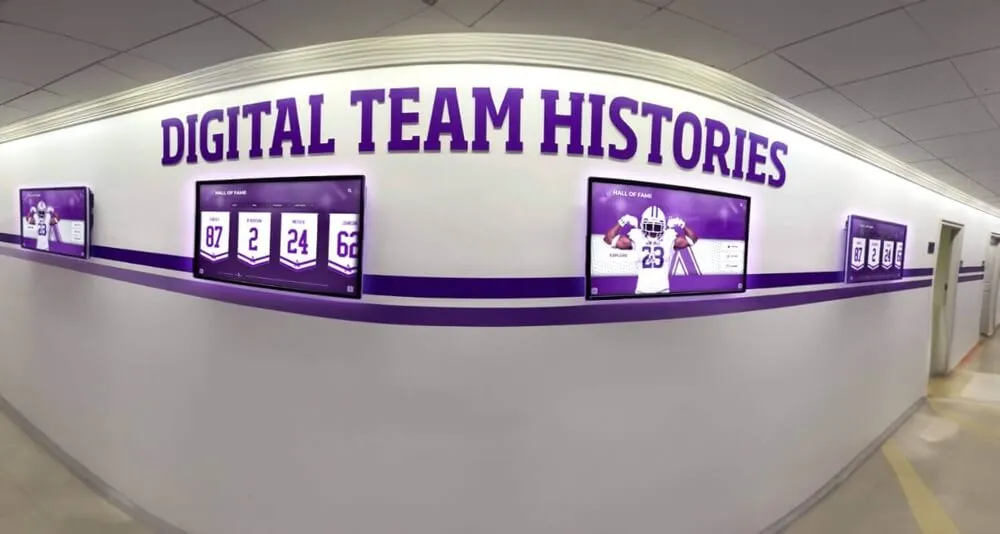
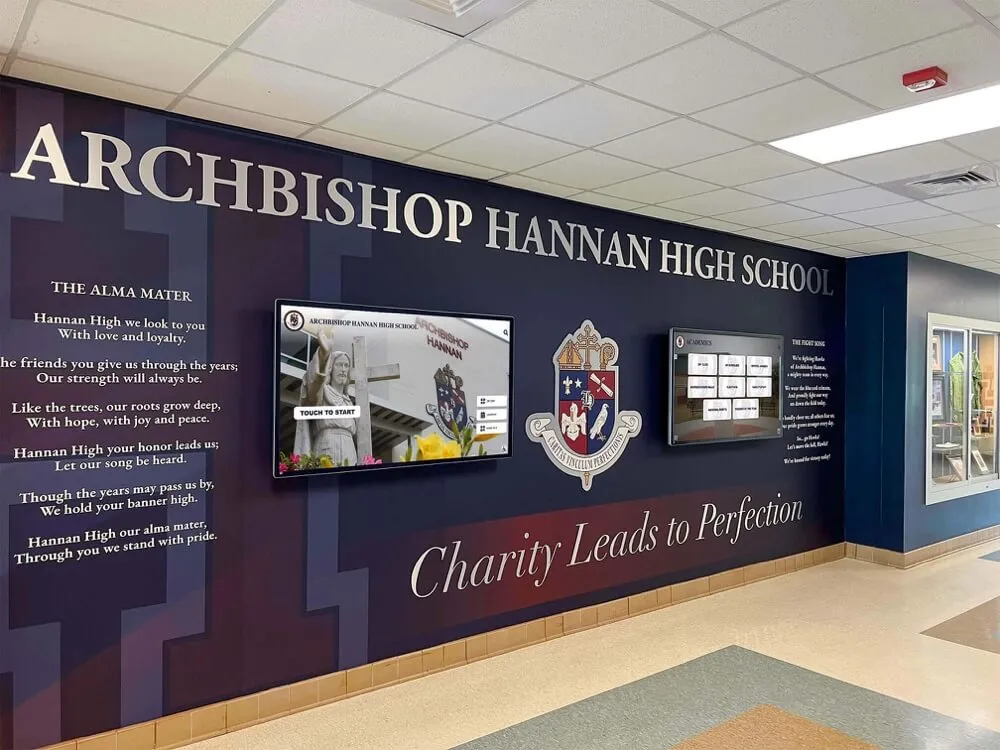
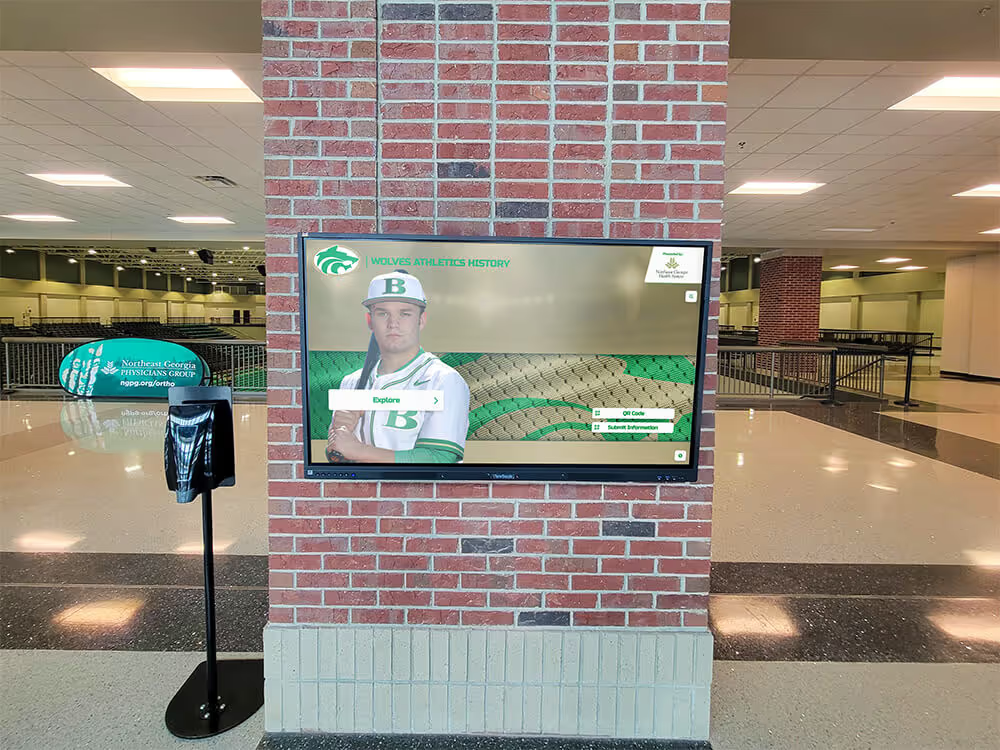
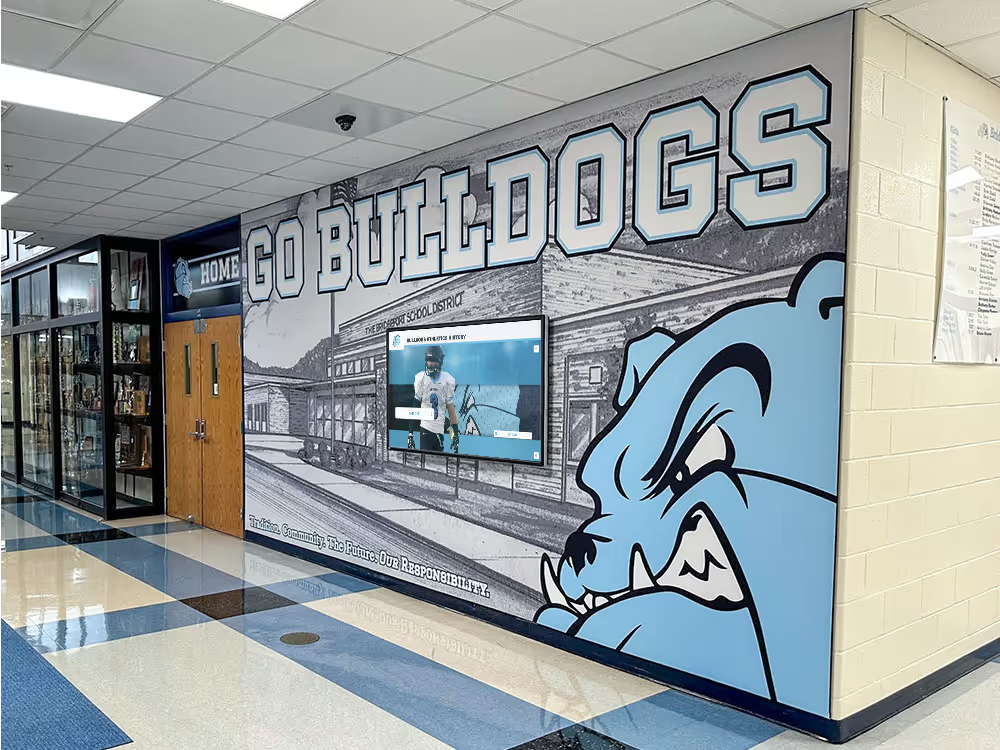
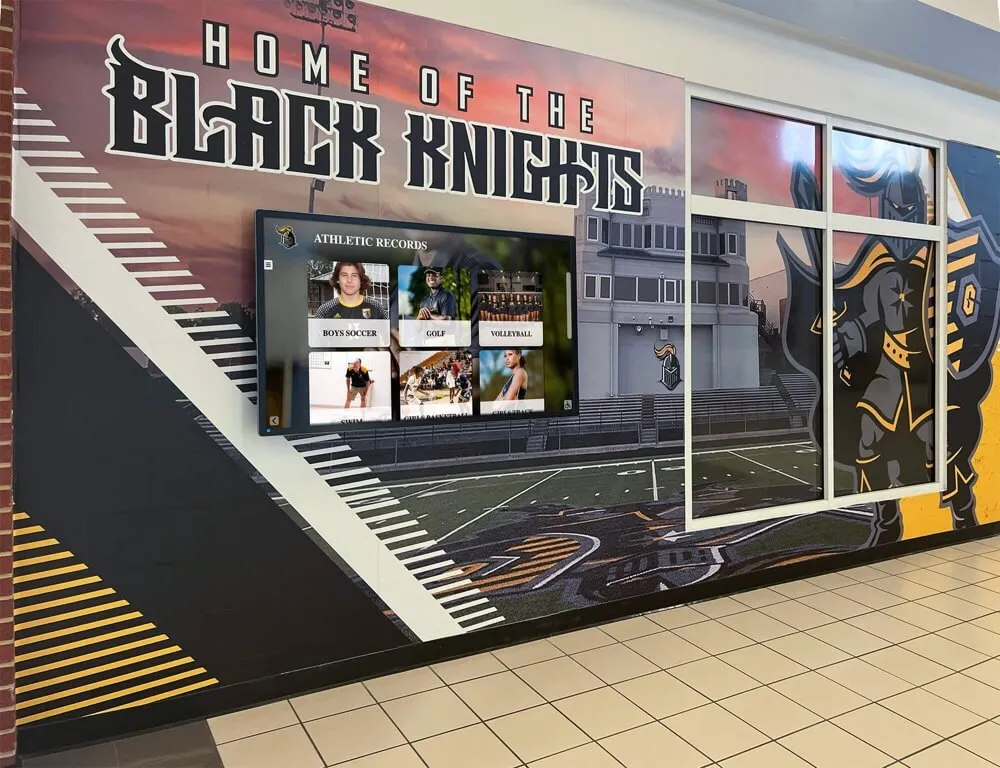
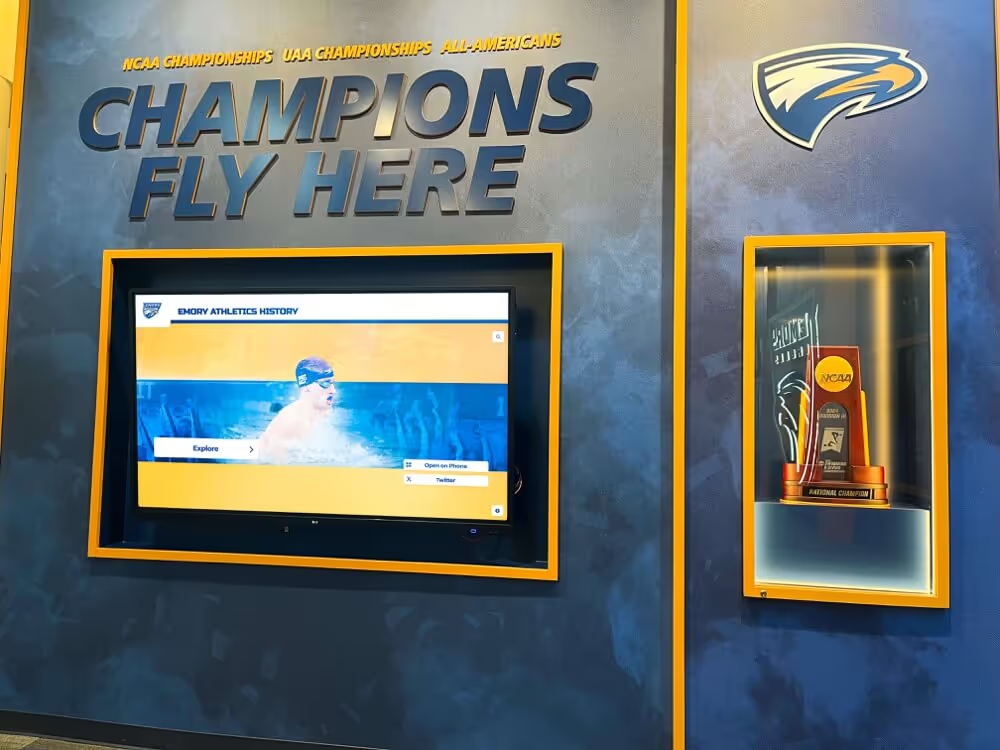
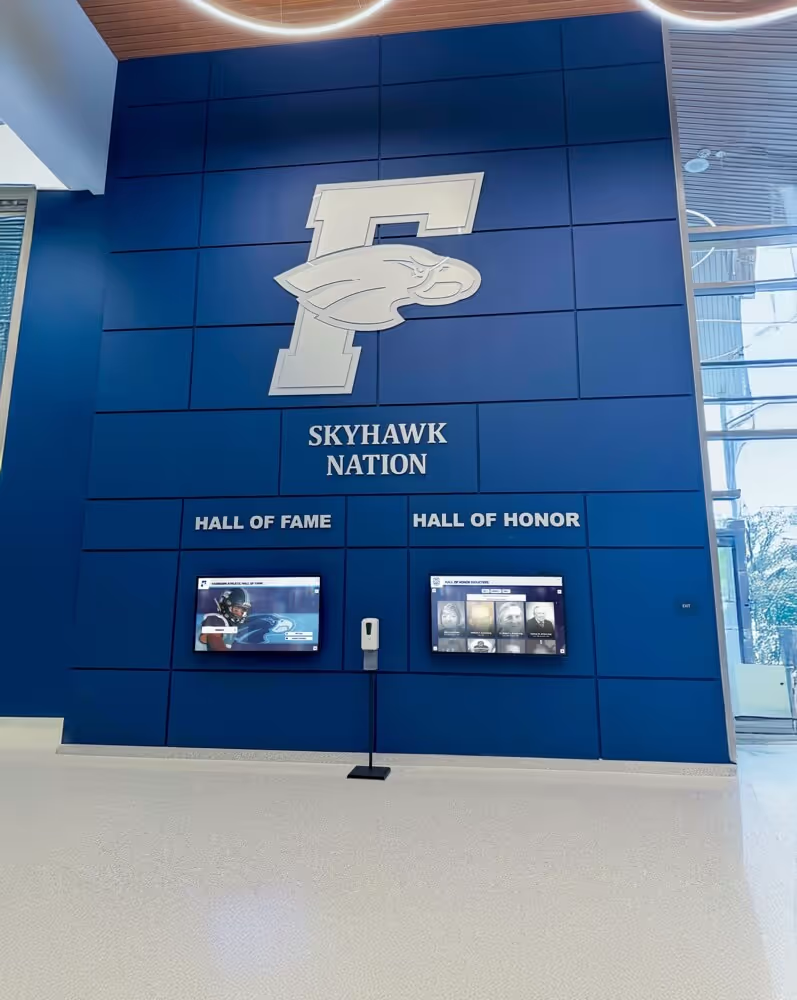
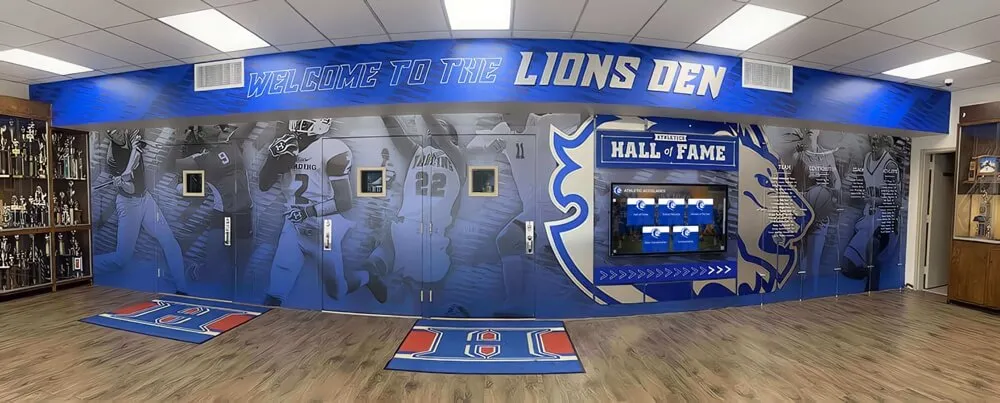
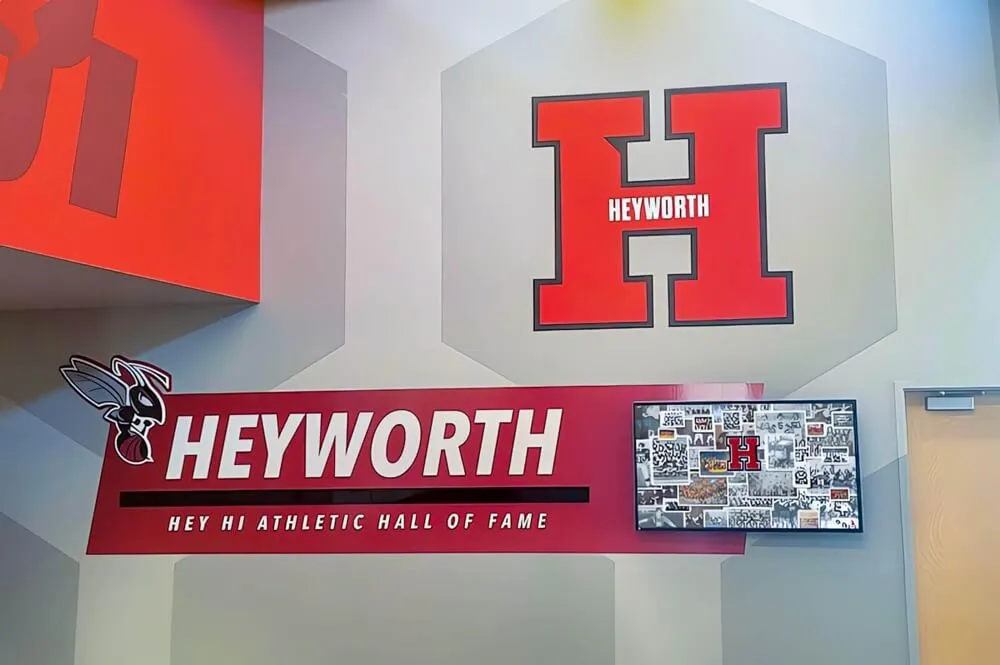
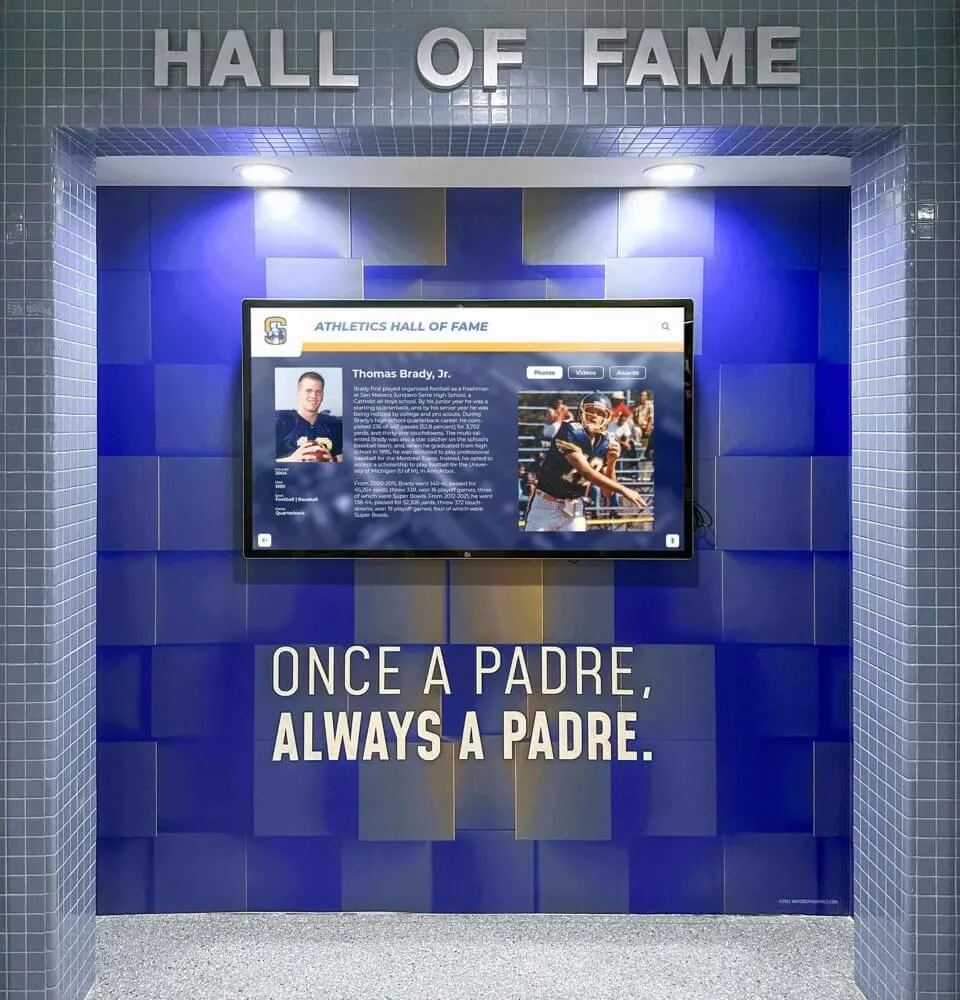
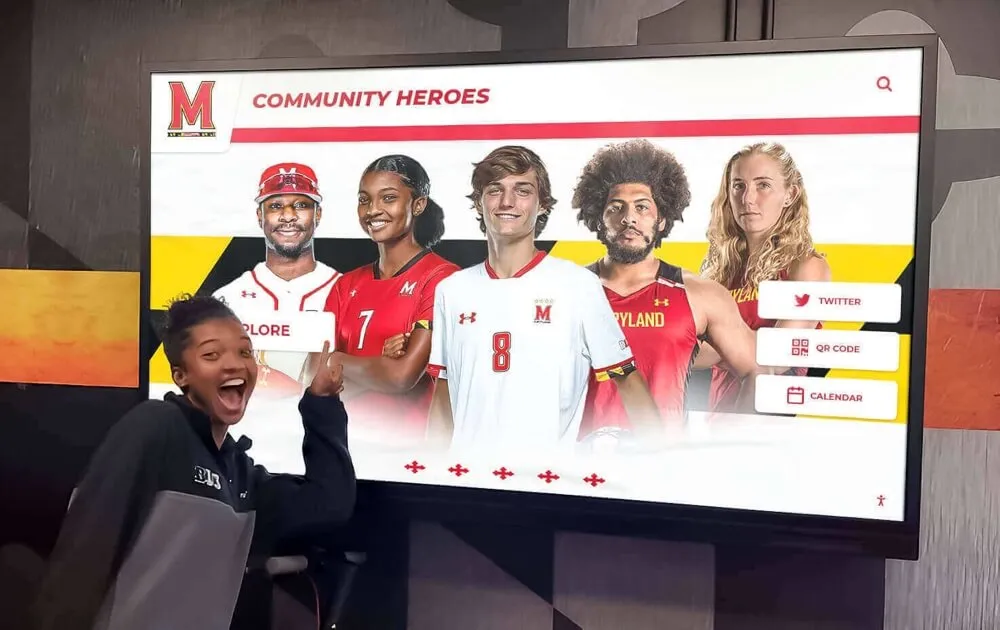
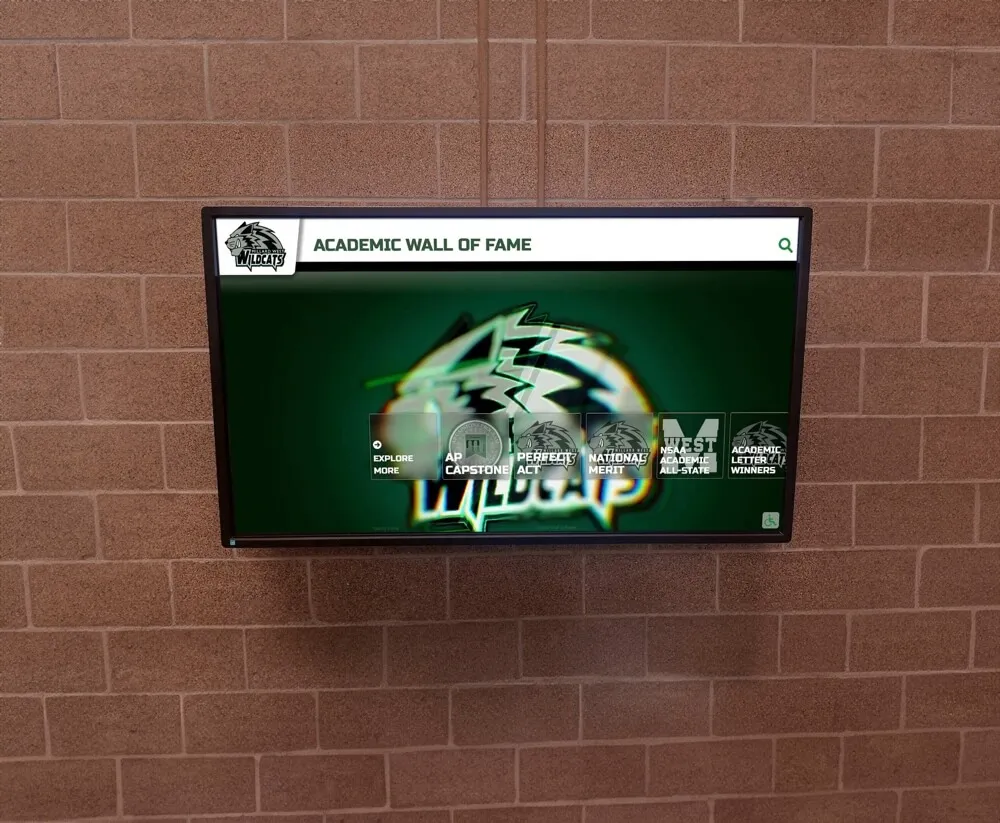
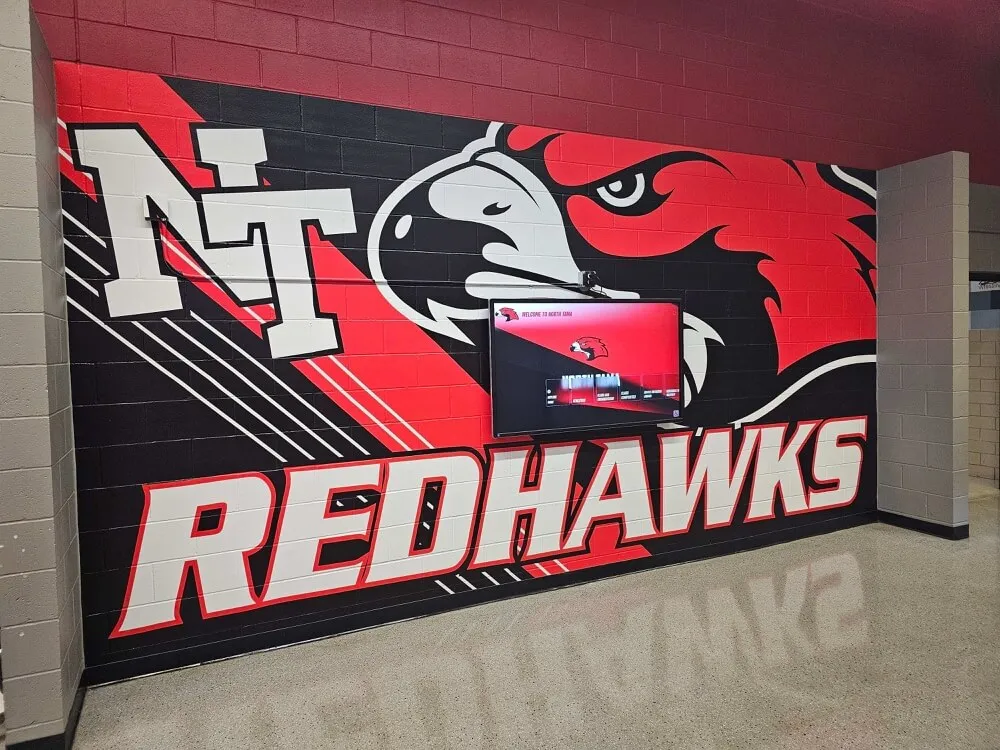
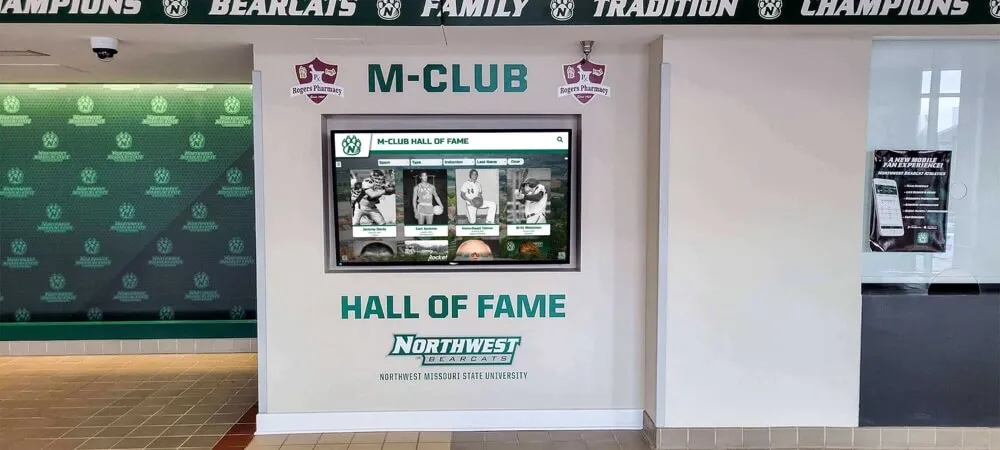
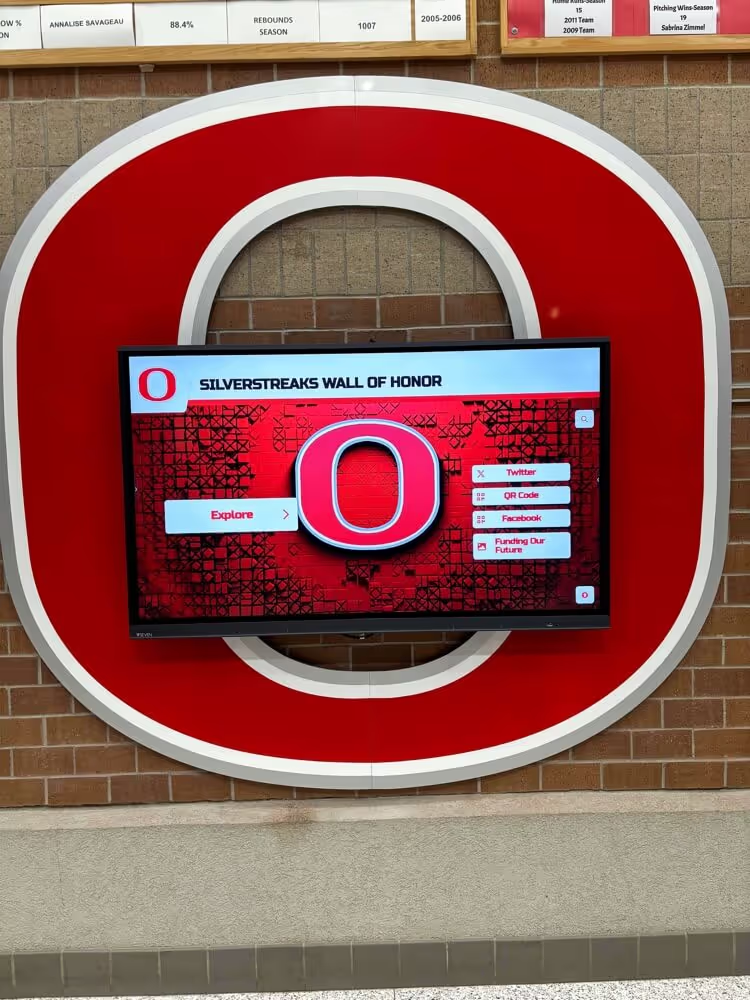
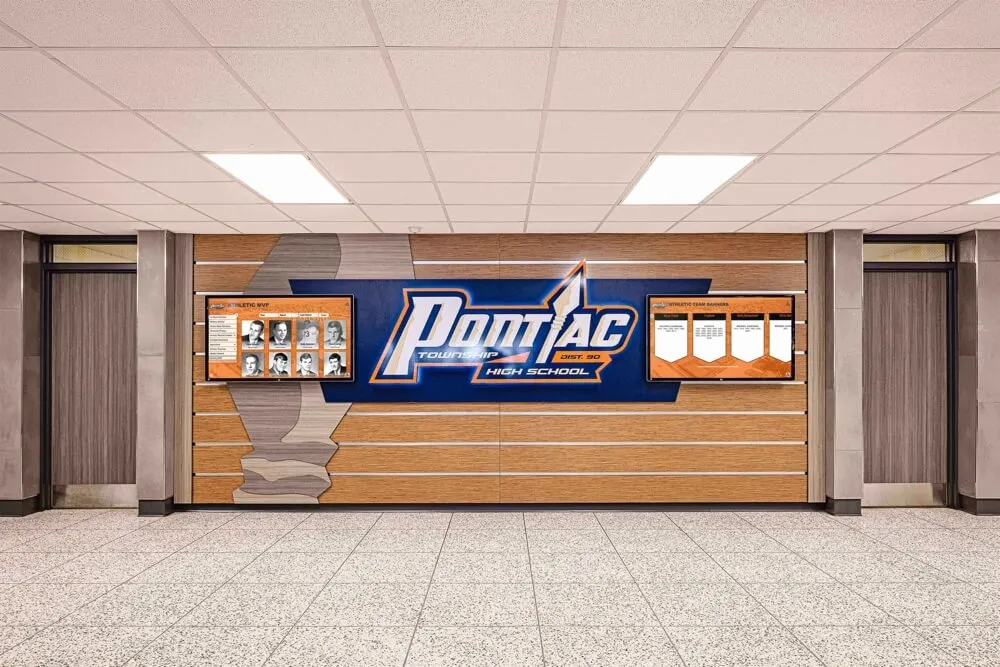
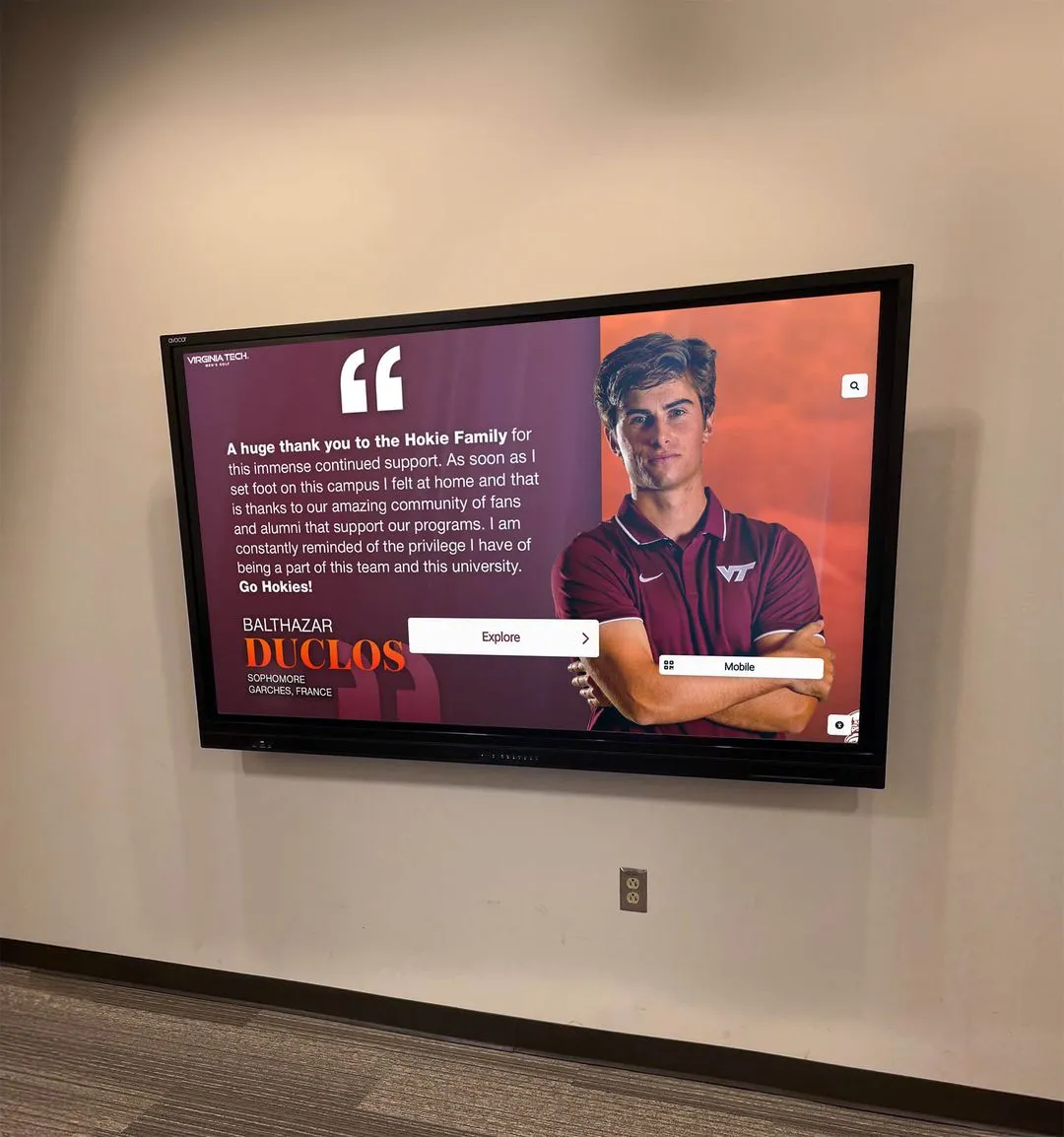
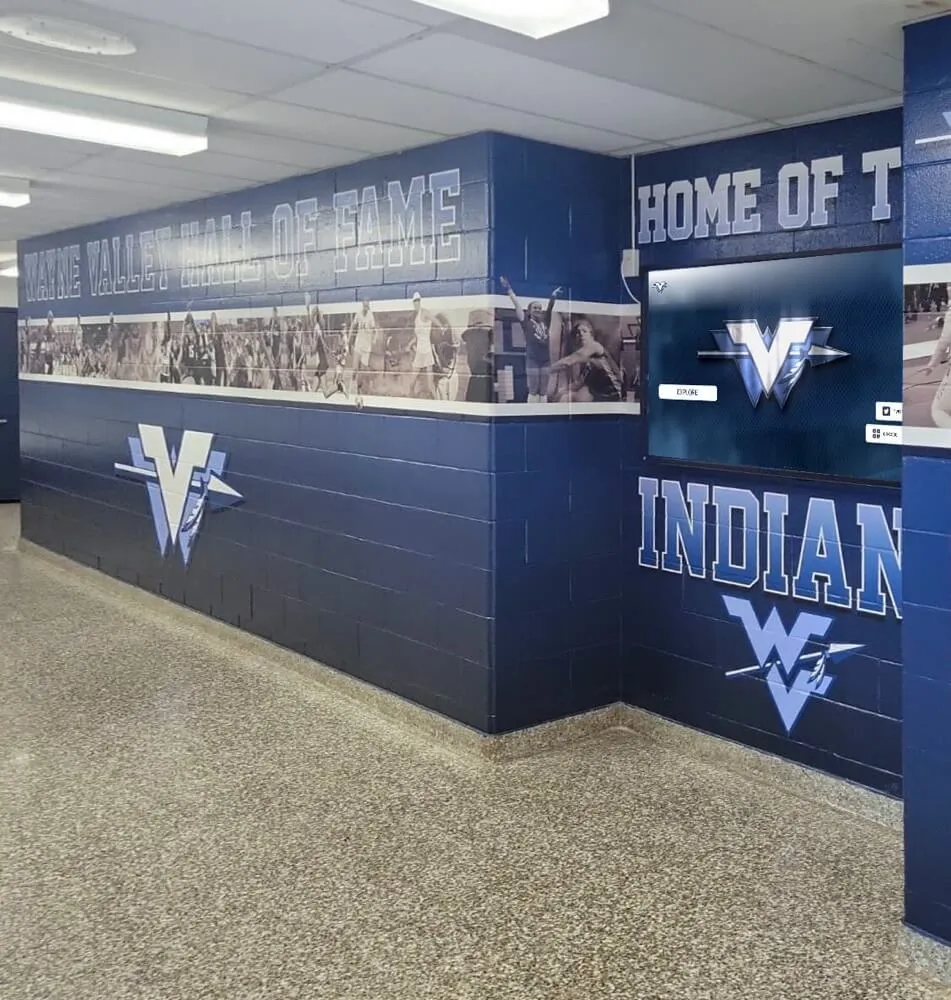
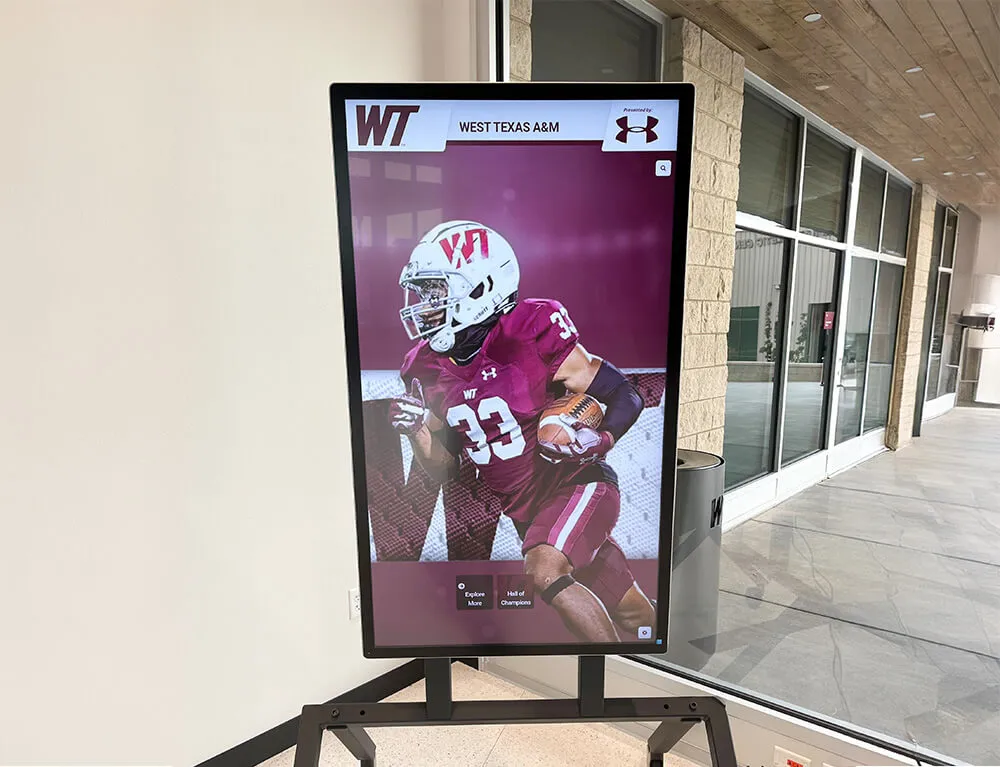
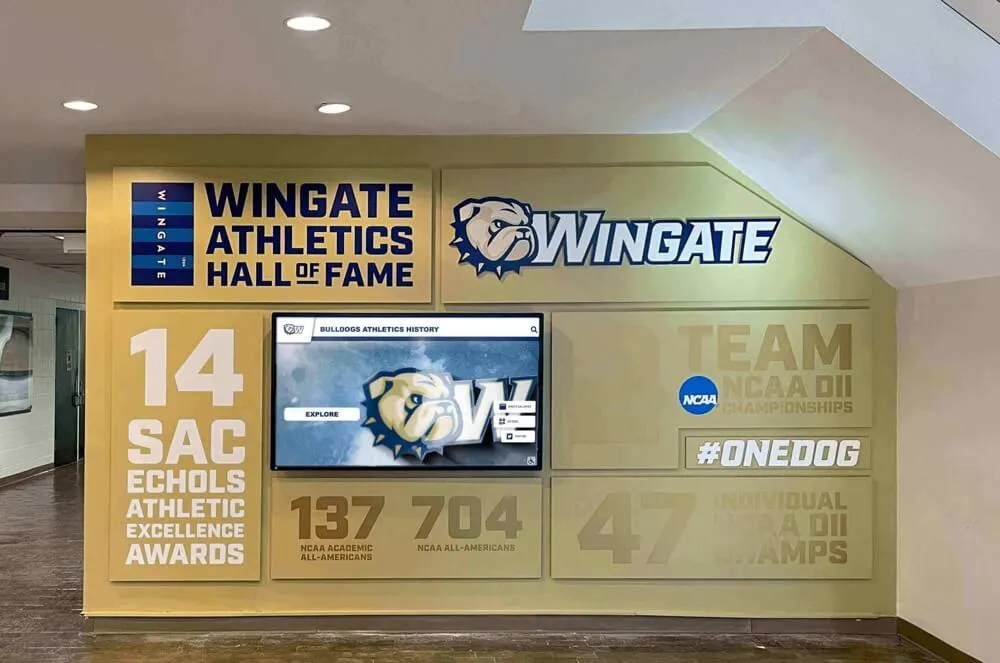
A school alumni website and on-campus recognition displays work best when they share the same structured data, keeping honors accurate across every touchpoint.
Why Structure Matters Before You Build
Before choosing a CMS or hiring a developer, map out what content belongs where. Schools that skip this step end up with overlapping pages, broken search experiences, and alumni profiles that nobody maintains.
The goal is a site architecture where every piece of alumni content has exactly one home, one editor responsible for it, and one export path to other channels—whether that channel is an email newsletter, a printed reunion booklet, or a lobby touchscreen kiosk.
If your school is also evaluating platforms to manage the underlying data, the companion guide on alumni CRM software for schools covers how to choose a K-12 platform that integrates cleanly with a public-facing website.
Section-by-Section Sitemap: What Belongs on a School Alumni Website
The table below provides a planning blueprint. Use it to audit an existing site or map a new one from scratch.
| Section | Primary Purpose | Key Content Elements | Typical Page Count |
|---|---|---|---|
| Alumni Directory | Searchable graduate profiles | Name, class year, photo, career, contact opt-in | 1 search page + individual profiles |
| Class Pages | Year-specific reunion hub | Class officers, reunion details, milestone giving goal, class photo gallery | 1 per graduating class |
| Events Calendar | Drive registration and attendance | Event name, date, RSVP/ticket link, location, past event recaps | 1 calendar + individual event pages |
| Giving Portal | Facilitate and acknowledge donations | Fund descriptions, giving form, impact stories, donor honor roll | 3–6 pages |
| Hall of Fame / Distinguished Alumni | Formal recognition of honorees | Bio, photo, induction year, career highlights, nomination form | 1 hub + individual honoree profiles |
| Digital Archives | Preserve and surface school history | Yearbooks, photos, newspapers, athletic records, oral histories | 1 archive index + browseable collections |
| News & Updates | Keep alumni informed | School news, alumni achievements, faculty updates | Blog-style feed |
| Submit / Update Info | Maintain data accuracy | Address update form, career update, photo upload, privacy controls | 1–2 forms |
| Volunteer & Mentorship | Connect alumni to current students | Volunteer signup, mentorship matching, career panel interest form | 2–3 pages |
1. Alumni Directory and Profiles
The alumni directory is the most-visited section of most school alumni websites and the hardest to maintain. Get the data model right and everything else becomes easier.
What to Include in Each Profile
A complete alumni profile should capture:
- Full name and any name changes (maiden name, professional name)
- Graduation year and degree or program
- Current location (city and state—full addresses should stay private by default)
- Career information: employer, industry, job title
- Headshot or portrait (optional, alumni-uploaded)
- Notable achievements: awards, publications, community leadership
- Contact preference: public email, LinkedIn link, or “contact via school only”
- Class affiliation for reunion and milestone giving segmentation
Search and Filter Design
Alumni directories fail when search is limited to name only. Build filters for graduation year, geographic region, industry, and—if your school has athletic traditions—sport or team. A former soccer player searching for teammates from the class of 2002 should reach those profiles in two clicks.
Privacy Controls Matter
Most graduates are happy to appear in a directory; they object to having personal contact details scraped. Give alumni three visibility levels: public (name, class year, career field visible to anyone), alumni-only (full profile visible to logged-in graduates), and private (name only, no contact info). Default new profiles to alumni-only until the graduate opts up.
2. Class Pages and Reunion Hubs
Class pages convert the abstract concept of “your graduating class” into a concrete community with a home on the web.
Content for Each Class Page
- Class officers or reunion committee contact
- Upcoming reunion details (date, venue, registration link)
- Milestone giving campaign and progress meter
- Class photo gallery (current year and historical)
- Class news feed: births, promotions, retirements, losses
- Links to individual alumni profiles from that year
Reunion Planning Integration
Embed your event registration directly on the class page rather than routing graduates through a generic events calendar. Fewer clicks between “I found my class page” and “I registered for the reunion” means higher attendance rates.
For schools managing multiple reunion cycles simultaneously, a reunion planning checklist published on each class page helps committee volunteers stay coordinated without needing staff hand-holding at every step.
3. Events Calendar
An alumni events calendar does double duty: it drives registration for upcoming gatherings and serves as an archive of what the school has hosted.
What Each Event Page Needs
- Event name and brief description
- Date, time, and location (with map embed)
- RSVP or ticket purchase link
- Sponsorship opportunities (for major events)
- Photo gallery or recap video (added after the event)
- Related alumni profiles or honorees being recognized at the event
Syncing With Campus Displays
Schools that host frequent events benefit from connecting the alumni website event calendar to lobby or hallway digital displays. When an upcoming Hall of Fame induction ceremony is populated once in the website CMS, that same event data can automatically populate a lobby screen, eliminating the need for a separate content update. Platforms like Rocket Alumni Solutions are designed around this kind of data-sharing workflow, so recognition entered once on the website surfaces automatically on touchscreen displays.
4. Giving Portal and Donor Recognition
The giving section is where alumni engagement converts to institutional support. Content quality here directly affects donation rates.
Pages to Include
- Why give: Impact stories, program descriptions, fund options
- Giving form: Secure, mobile-friendly, with recurring gift option
- Donor honor roll: Cumulative and annual recognition by giving level
- Named opportunities: Endowments, scholarships, facility naming gifts
- Legacy giving: Planned giving information and contact
Donor Recognition on the Website
Publish a donor honor roll that updates at least annually. Group donors by giving level (e.g., Founder, Benefactor, Supporter) and include graduation year next to each name so the alumni community can see that their peers are investing in the school. This social proof is one of the most effective low-cost drivers of first-time gifts.
For major donors, individual recognition pages with a photo, quote, and fund description give them a permanent digital acknowledgment that complements physical plaques or on-campus donor walls.
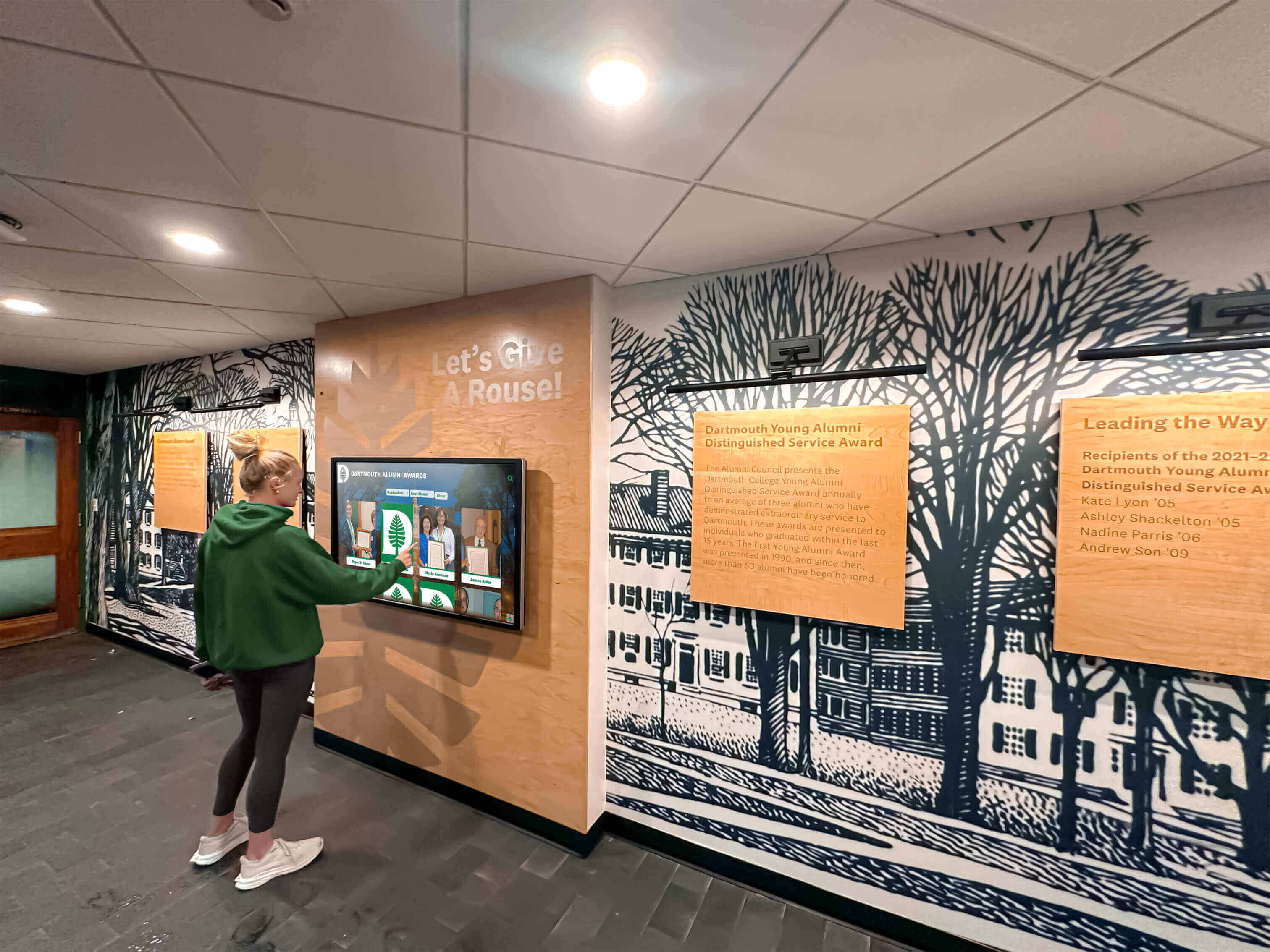
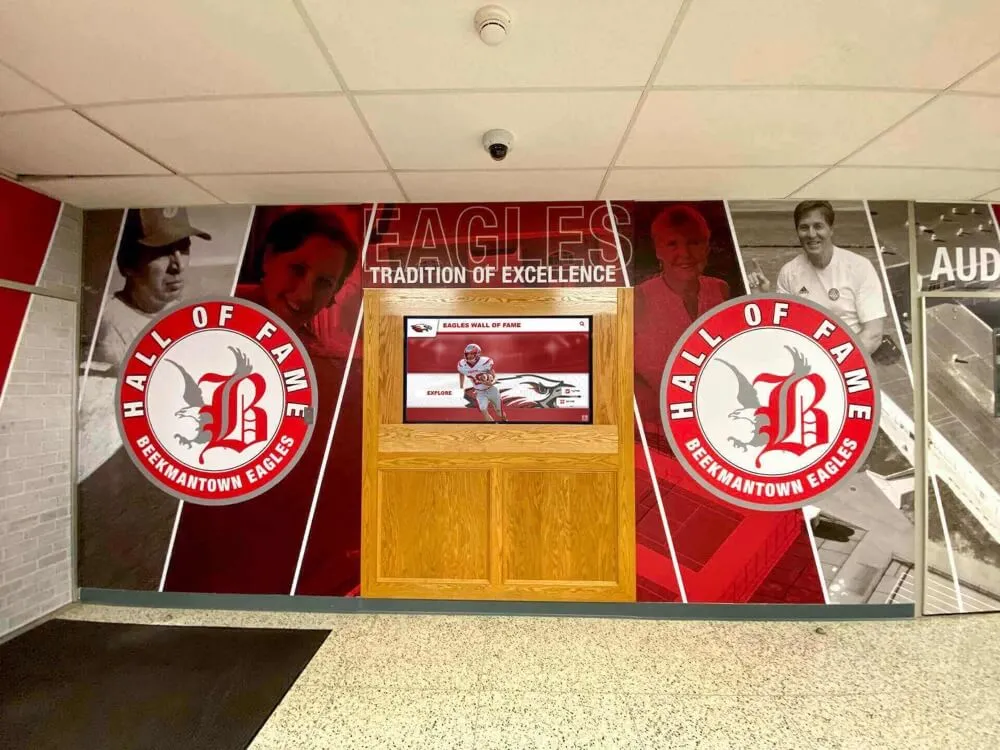
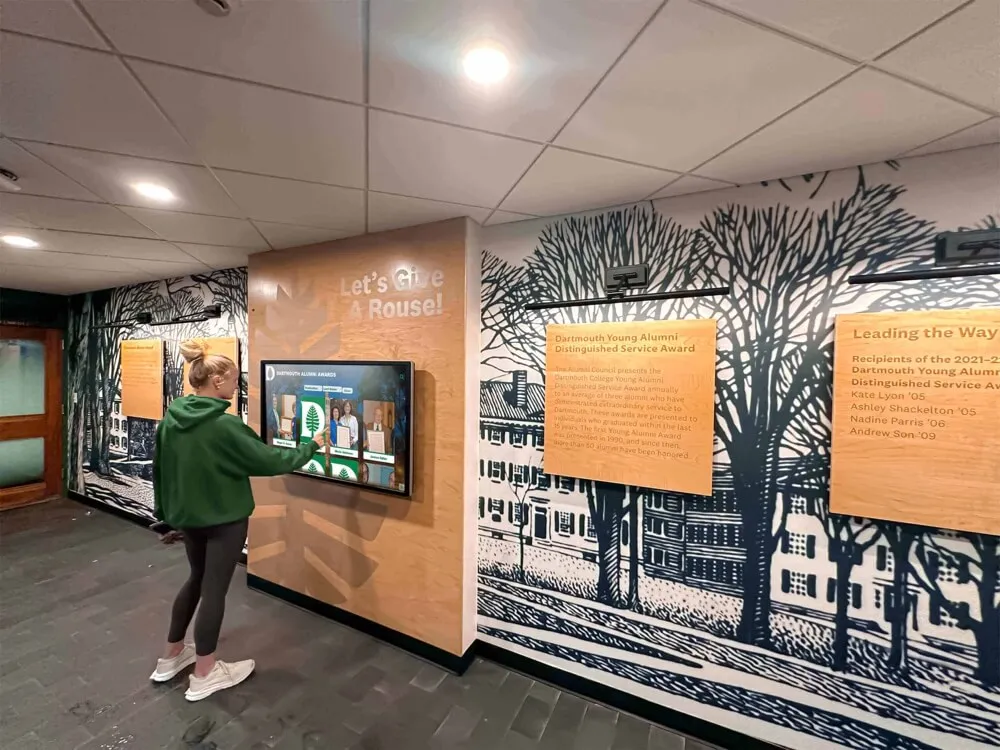
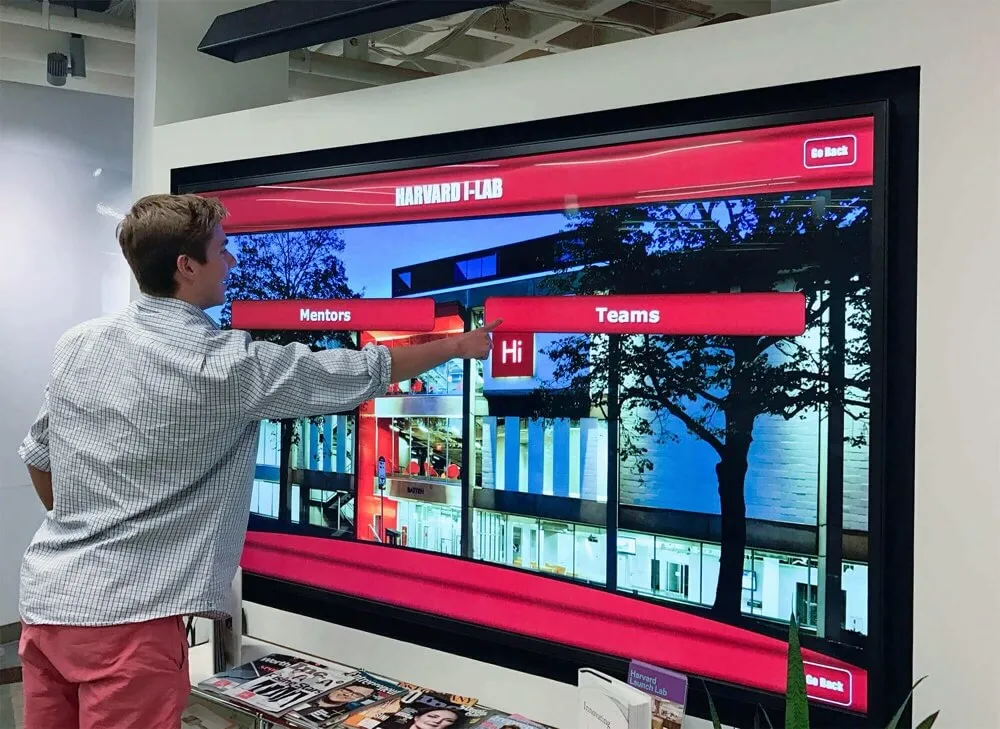
When giving data is structured consistently, donor recognition can appear simultaneously on the alumni website and on touchscreen displays throughout campus.
5. Hall of Fame and Distinguished Alumni Recognition
Formal recognition programs are anchor content for school alumni websites—they attract return visits, generate social sharing, and give the advancement office a natural annual news cycle.
What to Include for Each Honoree
- Full biography (300–500 words minimum)
- Professional headshot
- Graduation year and original program or sport
- Career and community highlights
- Induction year and ceremony details
- Quote from the honoree (optional but highly engaging)
- Link to related class page
Nomination Process
Publish a clear nomination form with eligibility criteria, deadline, and selection process description. Transparent processes build trust and increase submission volume. The alumni of the month recognition programs guide covers how to structure ongoing recognition programs that feed content to both your website and physical displays.
Connecting to On-Campus Displays
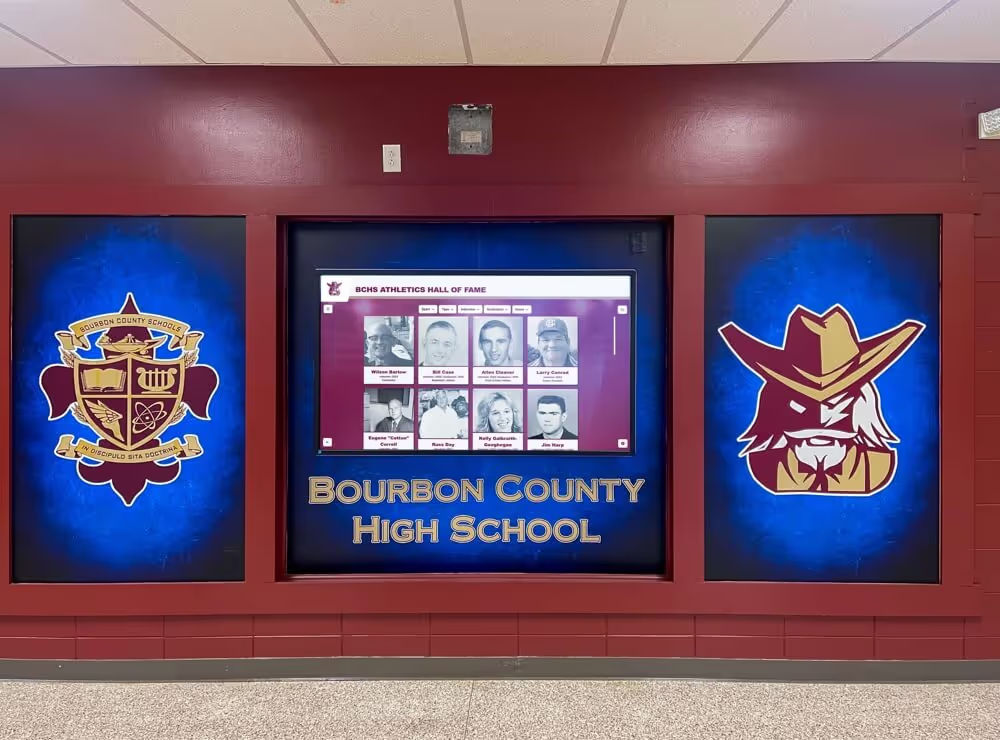
Hall of Fame profiles maintained on the website are natural candidates for touchscreen display content. A profile entered once—with photo, bio, and induction year—can populate a lobby kiosk, a hallway display near the athletic wing, or a digital donor wall without additional data entry. This is the core value proposition of treating your alumni website as the authoritative data source for all recognition content.
6. Digital Archives
A searchable digital archive is often the most underestimated section of a school alumni website. Done well, it becomes the reason alumni return to the site year after year.
What to Archive
- Yearbooks: Scanned and searchable by year, with individual page browsing
- Historical photographs: Organized by decade, event type, and team
- School newspapers and literary magazines: Full-issue PDFs with text search
- Athletic records: Season results, championship history, individual records; see the athletic record book digital tools guide for how to digitize and structure these records
- Oral histories and video interviews: Retired faculty, long-tenured staff, older alumni
- Building and campus history: Architectural records, campus maps, renovation timelines
Archive Search Design
Surface archives through at least two navigation paths: a dedicated archive section and a global site search that returns archive results alongside alumni profiles and news. Many alumni arrive on your site looking for a specific yearbook or a photo from a specific event—they should find it without needing to understand your information architecture.
Contribution System
Allow alumni to submit historical photos and documents with a simple form. Include fields for year, event or subject, and names of people pictured. Staff review submissions before publishing. Over time, crowdsourced contributions fill gaps that no institutional digitization budget could cover.
7. News, Updates, and Alumni Spotlights
A news section gives the website a heartbeat—evidence that the school is active and the alumni community is worth checking back on.
Content Types That Work
- Alumni spotlights: Career milestone, community award, or personal achievement feature
- School news: Campus expansions, program launches, faculty appointments
- Class notes: Aggregated brief updates submitted by alumni (marriages, promotions, retirements)
- Event recaps: Photos and summaries from recent gatherings
Aim for two to four new pieces of content per month. Consistency matters more than volume—an alumni site that publishes nothing for three months sends a signal that the advancement office is not invested in the relationship.
8. Information Update and Submission Forms
Alumni data decays at roughly 15–20 percent per year as people move, change jobs, and switch email providers. A prominent, easy-to-find update form is essential for data hygiene.
What the Form Should Capture
- Name and any name changes
- Current mailing address and email
- Employer, title, and industry
- Recent achievements to feature in spotlights
- Photo upload
- Privacy preference update
- Interest in volunteering or mentoring
Place a link to this form in every alumni email footer, on the directory page, and in the navigation. The more friction you remove from self-service updates, the better your data quality becomes over time.
Technical Checklist for Launch
Before going live, verify these elements are in place:
- Mobile-responsive design — the majority of alumni will visit on phones
- Secure login for alumni-only content (single sign-on preferred if you have a student portal)
- ADA/WCAG 2.1 compliance — alt text on images, keyboard navigation, sufficient color contrast
- SSL certificate and secure giving form
- Search engine indexing configured — public pages indexed, alumni-only content behind a login wall
- Email notification system — alert alumni when their class page is updated or a new honoree from their era is inducted
- Analytics — track which sections get the most traffic, which forms are abandoned, and where alumni drop off
- CMS editorial workflow — defined roles for who can edit profiles, publish news, and update giving data
Connecting the Website to Campus Touchscreen Displays
The most effective school alumni programs treat the website and on-campus displays as two outputs from a single content source. When a new Hall of Fame inductee is added to the website, the same profile should populate the lobby touchscreen. When an alumni event is posted on the calendar, it should appear on hallway displays near the main entrance.
This approach requires three things: a consistent data structure across both channels, a CMS or platform that supports multi-channel publishing, and a deliberate workflow that assigns one person responsibility for the canonical record.
Schools that establish this workflow eliminate the scenario where the website shows a 2024 Hall of Fame class but the lobby display still shows 2022—a gap that erodes confidence in both channels.
Ready to Build a Recognition System That Works Across Every Channel?
Rocket Alumni Solutions helps schools structure recognition data so it flows seamlessly from the alumni website to touchscreen displays throughout campus—one update, every channel current.
Schedule a DemoFAQ: School Alumni Website Planning
What is the most important section to build first on a school alumni website?
Start with the alumni directory and profile system. Every other section—events, giving, archives, recognition—benefits from having accurate, searchable alumni records as a foundation. Launching a giving portal before you have a functional directory means donors have no way to find peers, no class community to feel part of, and no social proof from fellow graduates.
How do you keep alumni profiles accurate over time?
Three mechanisms work in combination: an annual email campaign inviting alumni to review and update their profiles, a permanent self-service update form linked from every email footer and the directory page, and staff-led audits of a graduating class each year in the lead-up to their reunion. No single method is sufficient on its own.
Should alumni content be publicly visible or behind a login?
Use a tiered approach. Basic information—graduation year, career field, general location—can be public, which helps with search engine visibility and encourages alumni who find the site through Google to create accounts. Full contact details, personal photos, and detailed bios should require a logged-in alumni account to view, protecting graduate privacy and adding value to membership.
How do you connect the alumni website to physical recognition displays on campus?
The cleanest approach is a platform or CMS that supports multi-channel publishing—data entered once populates both the website and connected displays. If your current tools don’t support this, establish a documented workflow: whoever publishes a new Hall of Fame profile on the website is also responsible for updating the display content within 48 hours. Consistency in the process compensates for gaps in technology integration.
How often should a school update its alumni website content?
Aim for at least two to four content updates per month across news, spotlights, and event listings. Annual updates are the minimum for the giving honor roll, Hall of Fame, and archive collections. Alumni profiles should be treated as living records—set up automated reminders to graduates and make updating as frictionless as possible so data quality improves continuously rather than degrading between major refresh cycles.
Conclusion
A school alumni website that includes a searchable directory, class pages, events calendar, giving portal, Hall of Fame, digital archives, and a contribution system gives graduates every reason to stay connected and gives advancement staff a single platform to manage the full alumni relationship lifecycle.
The most durable sites are built around clean data structures that make the same recognition content available on the website, in emails, in print materials, and on campus displays—without requiring staff to update each channel separately. Build for that workflow from the start, and the alumni website becomes an asset that compounds in value every year rather than a maintenance burden that never quite feels current.
For more on managing the underlying data that powers an alumni site, see the guide to alumni tracking platforms for schools.