



Your school lobby serves as the critical first impression for prospective families, visiting dignitaries, community partners, and guests attending performances or athletic events. Within seconds of entering, visitors form lasting judgments about your institution’s values, priorities, culture, and investment in excellence. Yet many school lobbies feel dated, cluttered with static bulletin boards, or simply fail to communicate the dynamic energy and achievement happening daily within their walls.
Modern digital signage transforms school lobbies from passive waiting areas into engaging welcome experiences that actively communicate institutional pride, celebrate student achievement, showcase campus life, and create memorable first impressions that strengthen enrollment appeal, donor engagement, and community connections. The difference between lobbies that feel forgettable and entrance experiences that genuinely impress lies in strategic design thinking combined with appropriate technology deployment.
This comprehensive guide explores proven school lobby display ideas using digital signage, covering everything from strategic planning through specific implementation approaches, content strategies, design considerations, and best practices for creating lobby experiences that genuinely reflect your school’s excellence while serving practical communication needs administrators face daily.
Schools redesigning lobbies with thoughtful digital display integration report significantly improved visitor feedback, increased parent engagement during campus visits, stronger prospective family impressions that positively impact enrollment decisions, and more effective communication of school culture and achievement to all stakeholders.

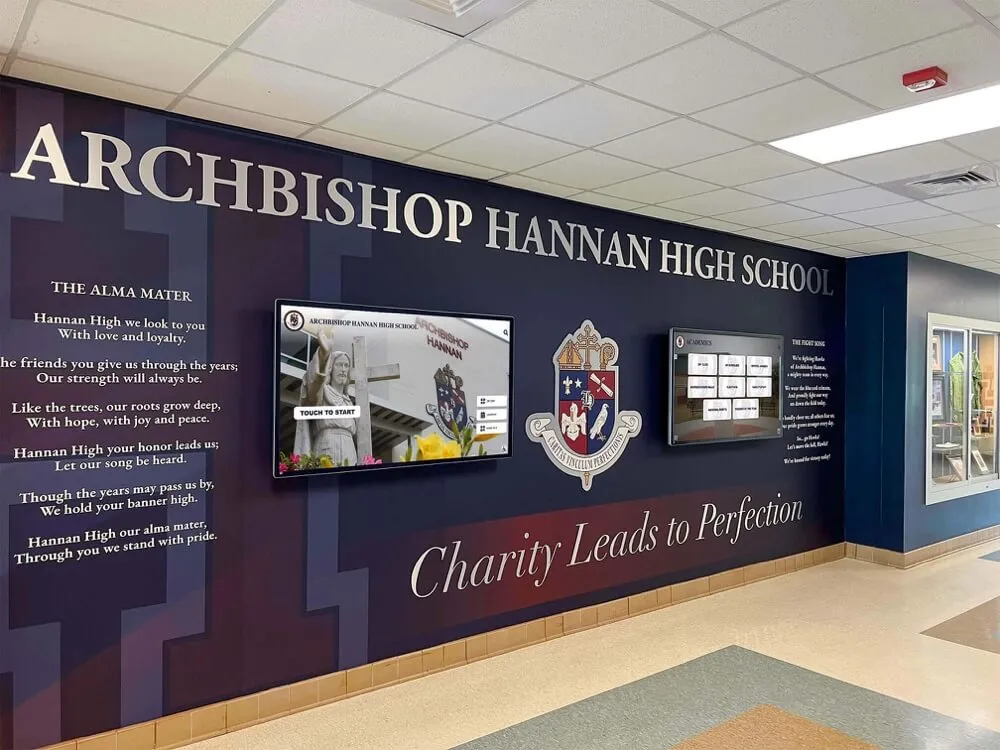
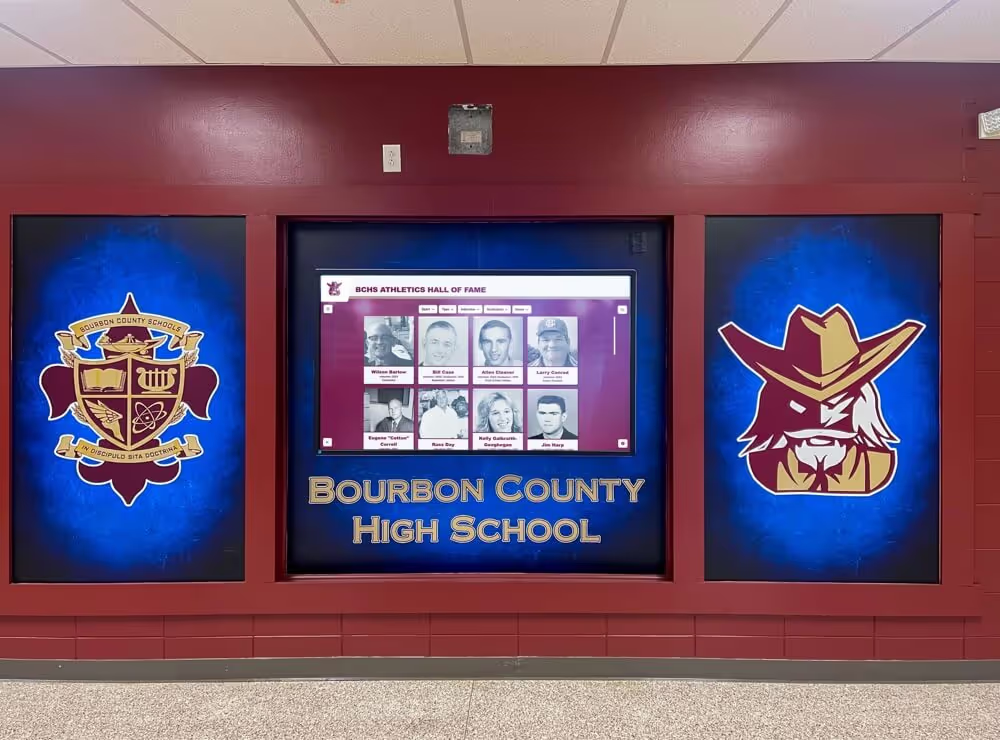
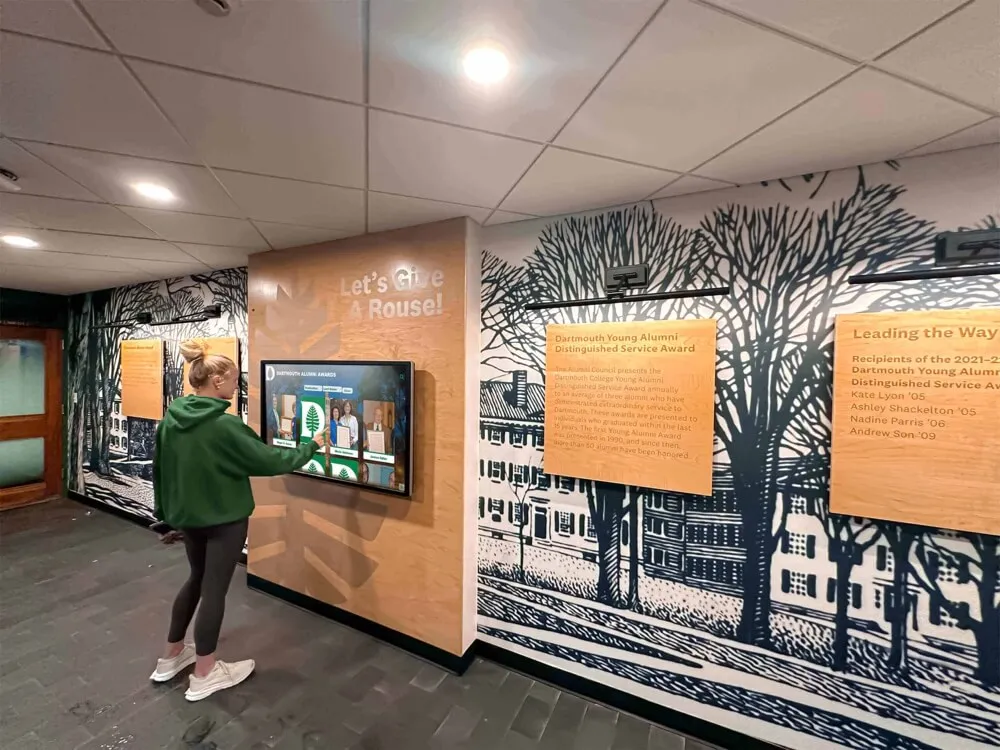
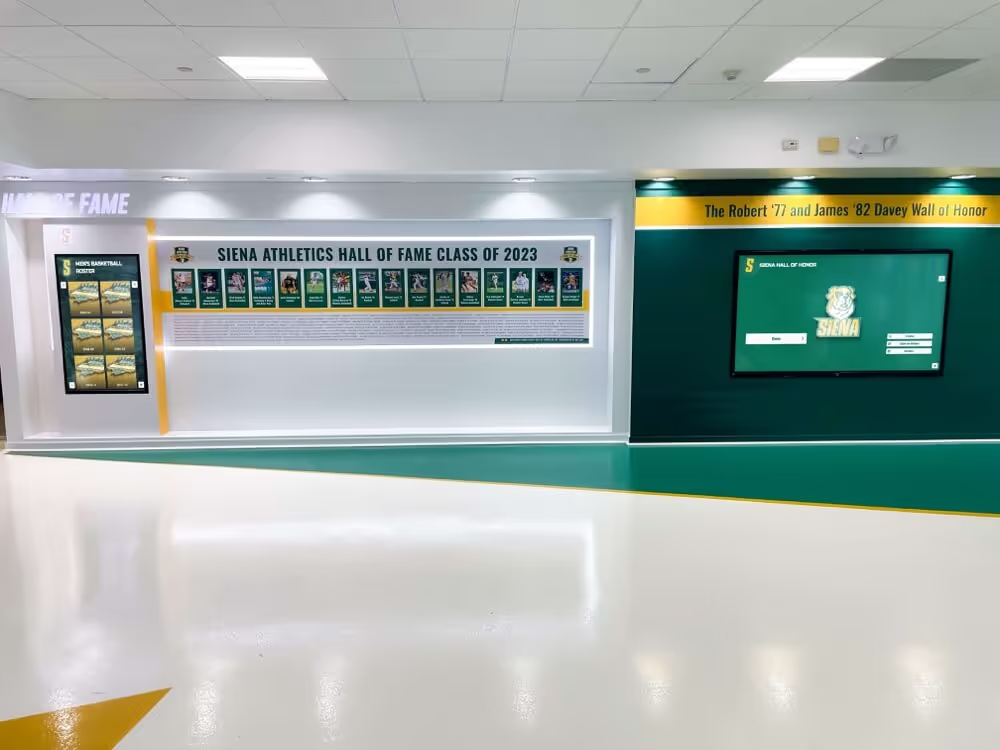
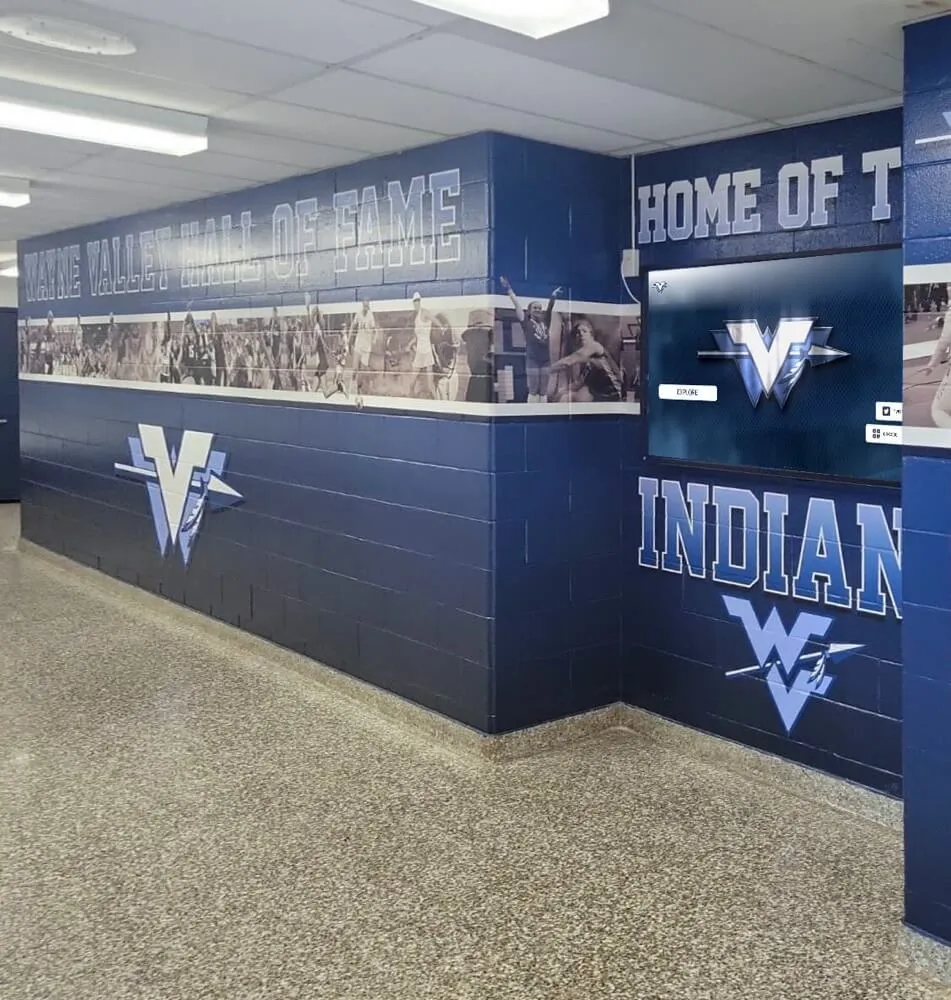
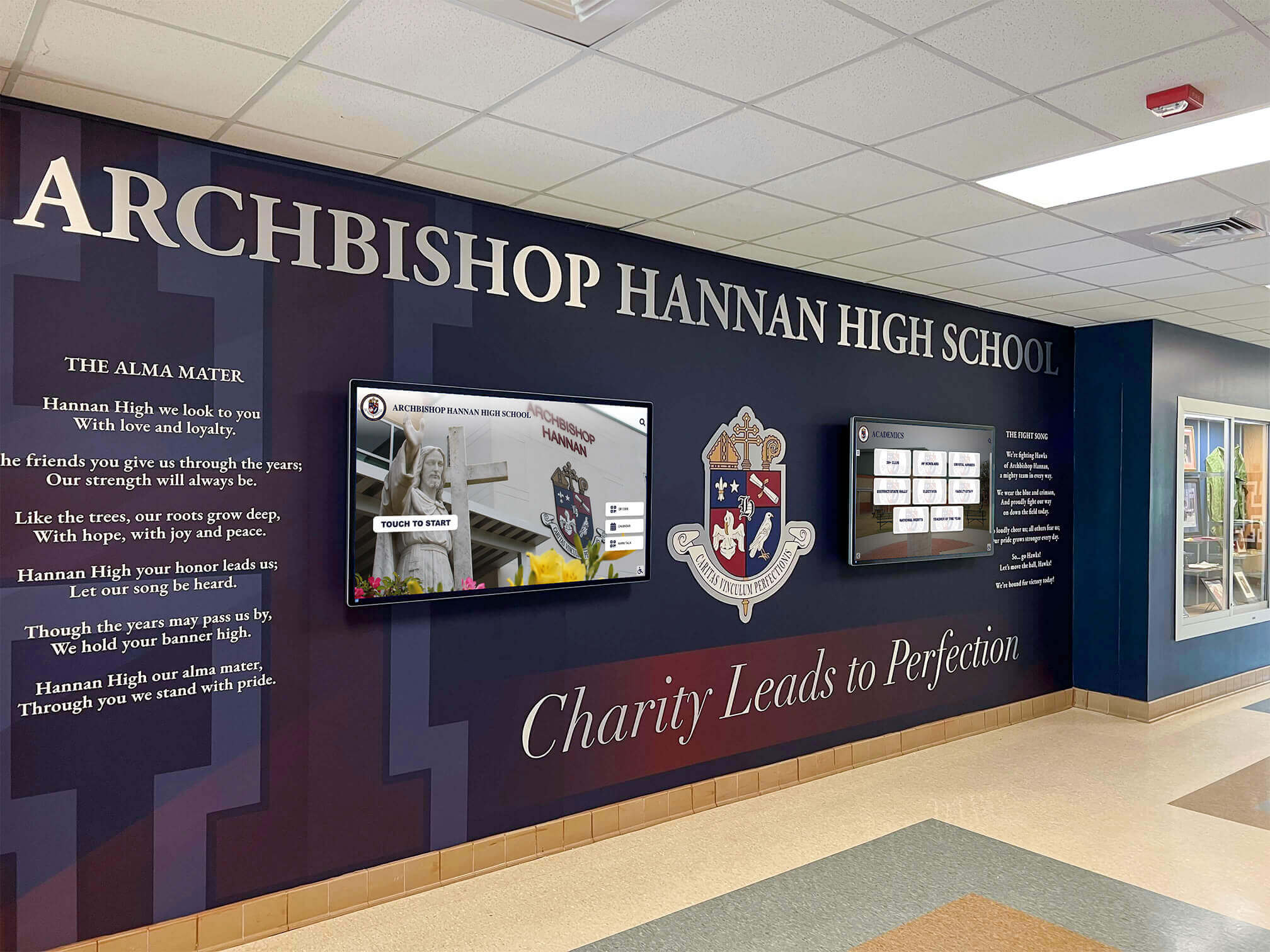
Effective lobby displays blend digital technology with traditional design elements, creating cohesive environments that honor school heritage while embracing innovation
Understanding the Strategic Purpose of Lobby Displays
Before selecting specific technologies or content approaches, understanding the multiple purposes lobby displays serve helps guide effective design decisions.
First Impressions and Institutional Brand
School lobbies function as physical representations of institutional brand—the tangible embodiment of mission statements, values, and educational philosophy that prospective families evaluate when choosing schools.
Immediate Visual Communication
Within 3-7 seconds of entering lobbies, visitors form initial impressions based primarily on visual information. Digital displays showing dynamic content—student achievements, campus life, academic excellence, arts performances, athletic victories—communicate vibrancy and accomplishment far more effectively than static bulletin boards or empty walls. This immediate visual storytelling establishes perceptions that color entire campus visit experiences.
Professional Environment Standards
Modern families evaluating schools expect facilities reflecting contemporary professional standards. Dated lobbies with aging bulletin boards, yellowed newspaper clippings, or static trophy cases suggest institutions falling behind current educational trends. Digital signage solutions demonstrate forward-thinking investment in technology, communication, and student experience—signals prospective families actively seek when making enrollment decisions.
Differentiation in Competitive Markets
Schools competing for enrollment increasingly recognize that facilities influence family decisions significantly. Impressive lobby experiences create memorable differentiation, with families specifically recalling which schools “felt modern” or “showcased students beautifully” when comparing options weeks after campus visits conclude.
Multi-Audience Communication Hub
Lobbies serve diverse audiences simultaneously—prospective families touring campus, current parents attending events, community members visiting for performances, and students passing through daily.
Prospective Family Engagement
During campus tours, lobbies often serve as gathering points where tour groups assemble or wait briefly. Digital displays showing compelling student life content, achievement highlights, and campus culture during these moments significantly influence enrollment decisions by answering unspoken questions families have about educational quality, student experience, and community culture.
Current Family Connection
Parents arriving for conferences, performances, or athletic events spend lobby time waiting for events to begin. Content celebrating their children’s accomplishments, sharing upcoming opportunities, or highlighting recent campus successes strengthens parent engagement and pride in school community membership.
Community Ambassador Function
Community members visiting schools for board meetings, rental events, or civic functions form impressions influencing public support, referendum votes, and general community advocacy. Lobby displays communicating educational excellence, responsible resource stewardship, and student success build public confidence supporting schools politically and financially.
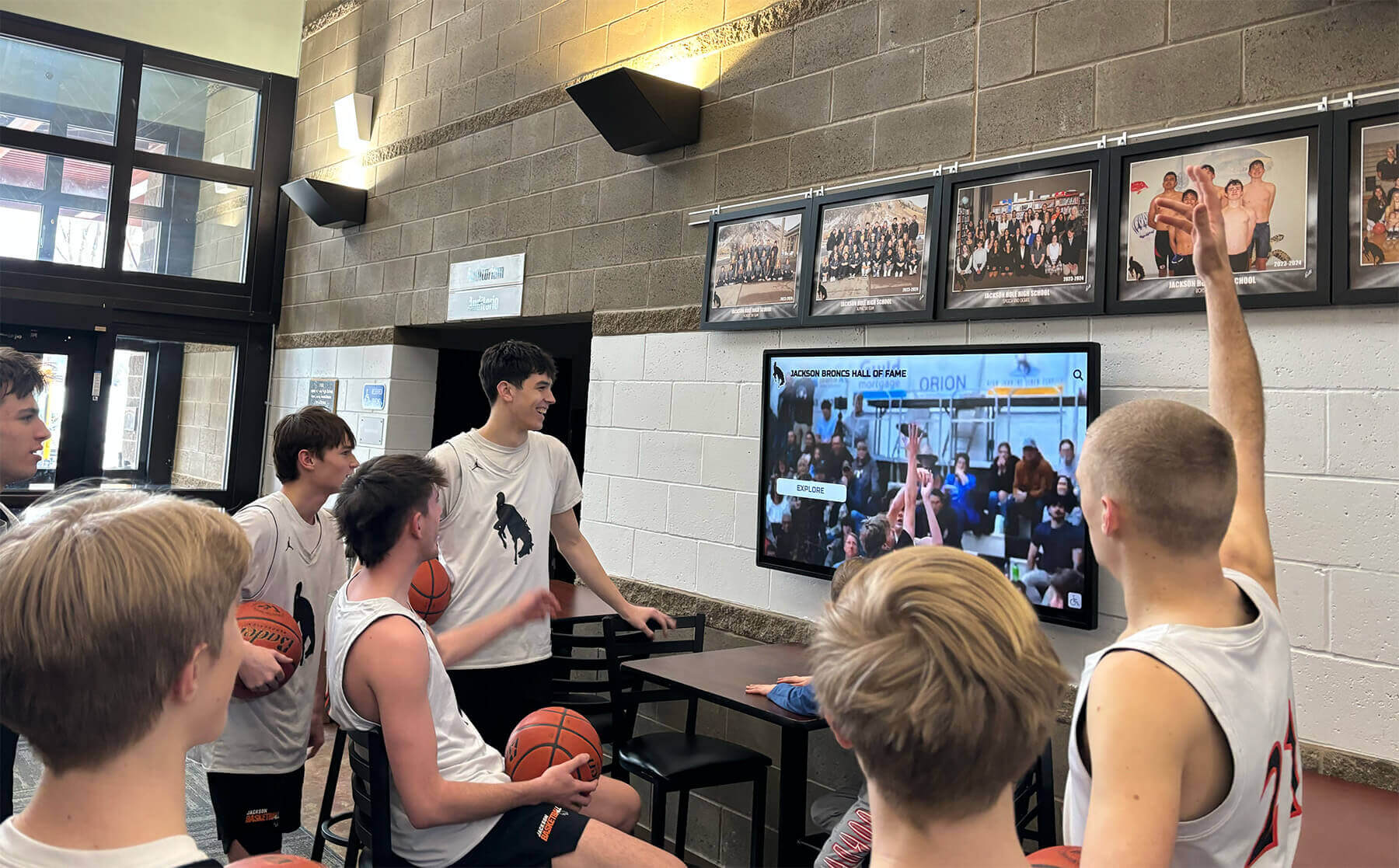
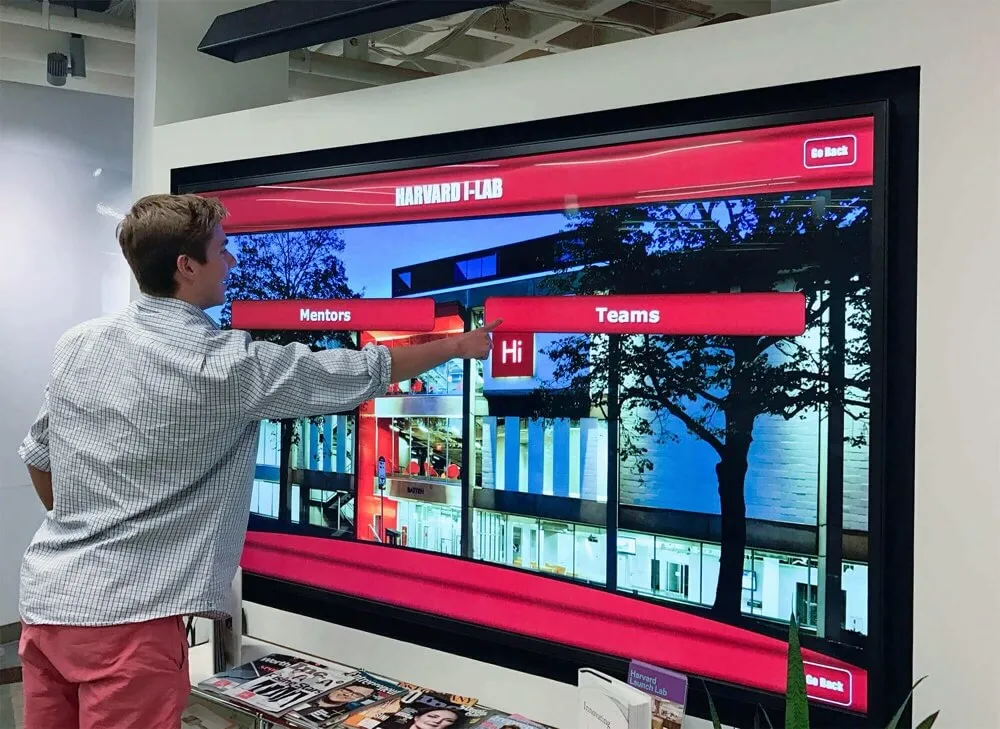
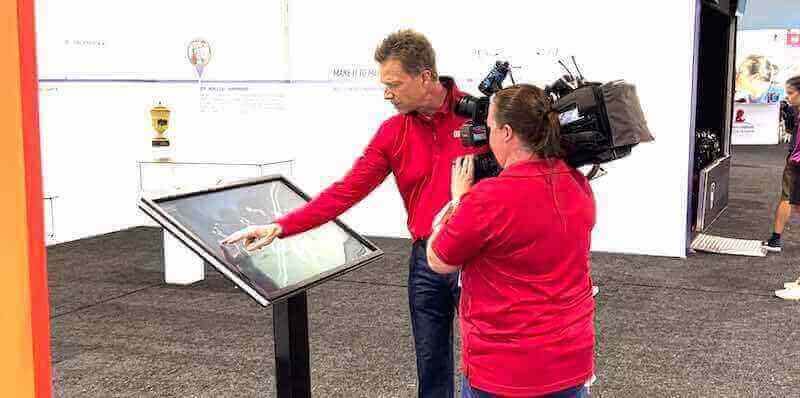
Interactive lobby displays naturally attract student attention, creating opportunities for peer recognition and school culture reinforcement throughout school days
Essential Types of School Lobby Display Content
Successful lobby displays typically combine several content categories, each serving distinct communication purposes while contributing to overall visitor experience.
Student Achievement Recognition
Celebrating student accomplishments serves as the most powerful lobby content category, demonstrating educational outcomes while building school pride.
Academic Excellence Highlights
Showcasing academic achievement communicates educational quality to prospective families while recognizing student effort. Effective academic content includes honor roll celebrations with student photos and names, scholarship recipient recognition highlighting college destinations, academic competition results from science olympiads or debate tournaments, National Honor Society achievements and leadership positions, and standardized testing accomplishments celebrating students reaching significant milestones.
Academic recognition displays work particularly effectively when showing multiple achievement categories, demonstrating that excellence manifests across diverse academic pursuits rather than singular narrow focus areas.
Athletic Achievement Celebrations
Athletic accomplishments resonate broadly with students, families, and communities. Lobby athletic content includes championship celebrations with team photos and tournament results, individual athlete recognitions for records or special achievements, season highlight reels showing game action and team spirit, recruitment celebrations when athletes commit to collegiate programs, and conference honors recognizing all-conference selections.
Athletic content particularly appeals during campus tours as families evaluate school culture and extracurricular opportunities available to their children.
Arts and Performance Showcases
Celebrating arts achievements demonstrates comprehensive educational programs beyond academics and athletics. Effective arts content includes performance photos from theater productions and concerts, student artwork galleries rotating monthly, recognition of theater programs and productions, music competition results and festival honors, and student creative work showcases highlighting exceptional projects.
Arts content particularly strengthens lobbies in schools emphasizing creative education, helping prospective families understand program depth and quality.
Service Learning and Leadership Recognition
Highlighting student service and leadership demonstrates character education and citizenship development. Leadership content includes student government officers and initiatives, community service project impacts and participation, leadership program graduates and experiences, peer mentoring recognition, and civic engagement activities connecting students with broader communities.
Service recognition communicates institutional values beyond academic metrics, appealing to families seeking holistic educational experiences emphasizing character development alongside academic achievement.
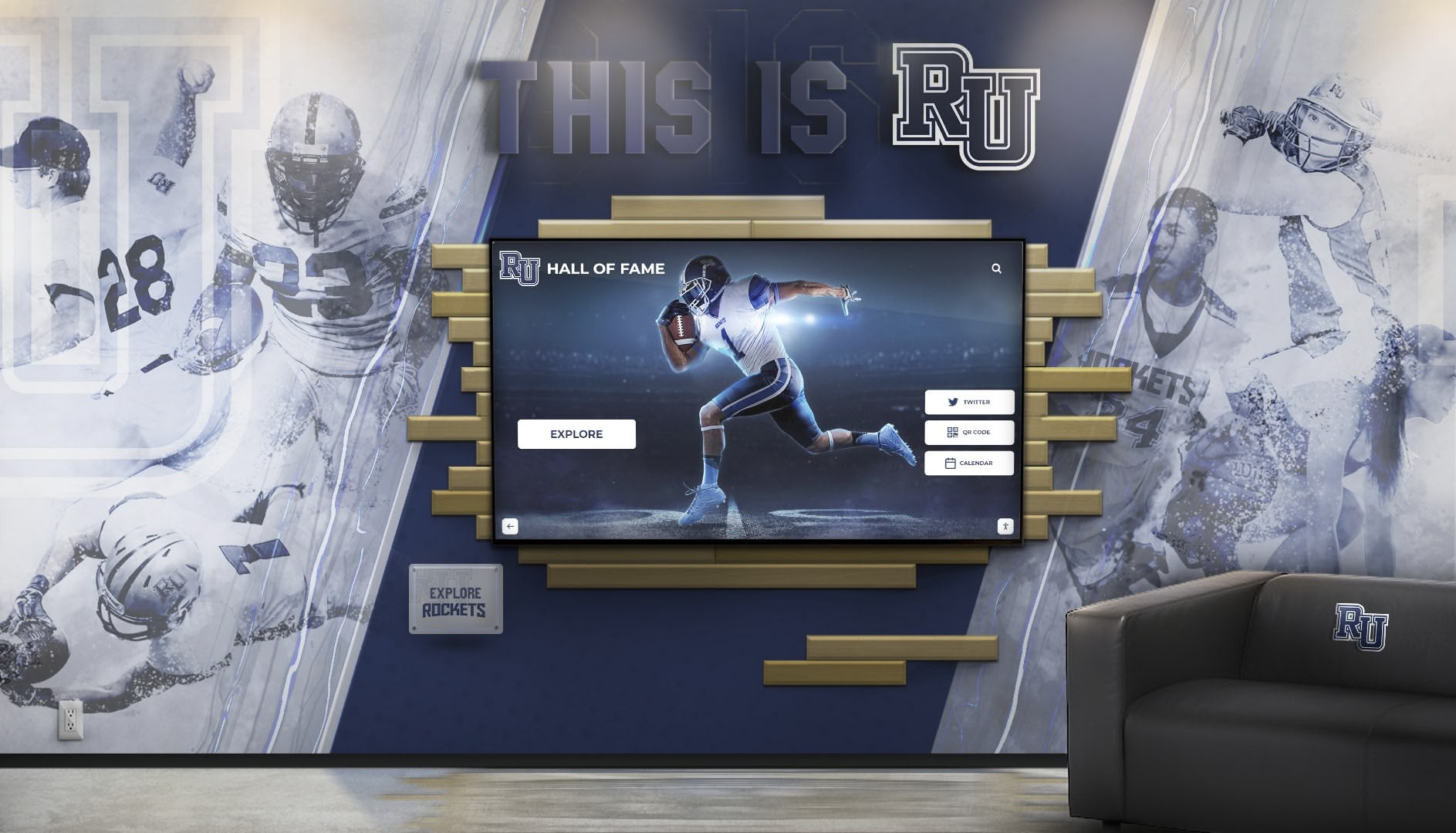
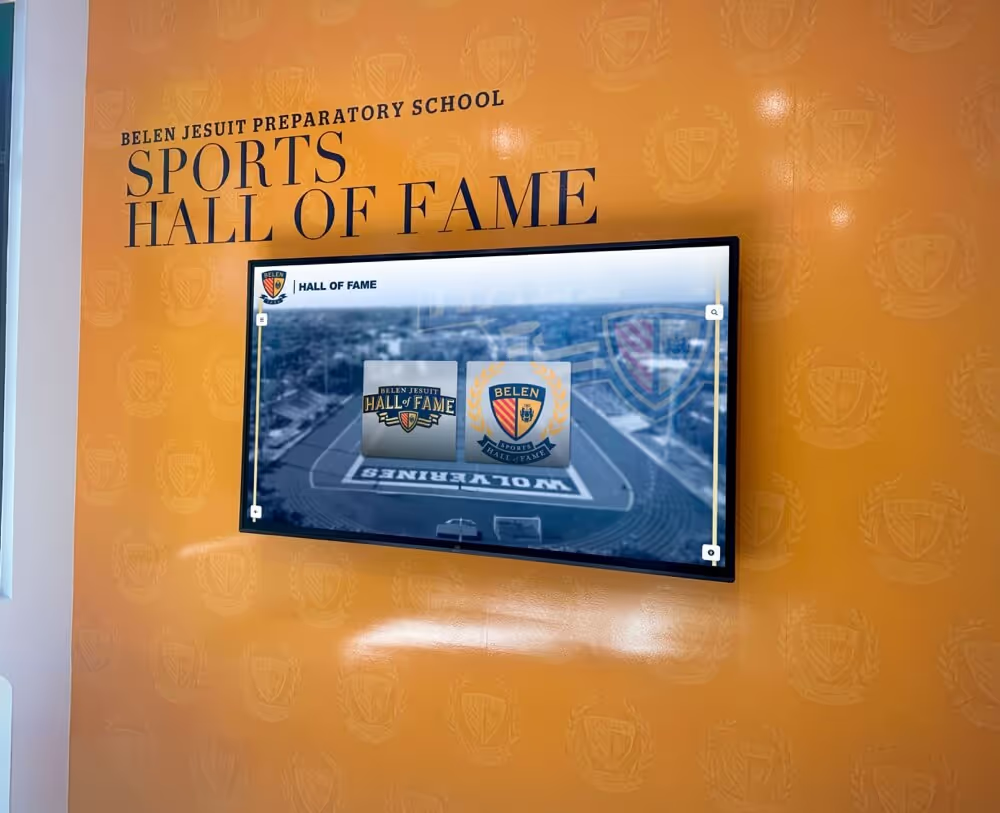
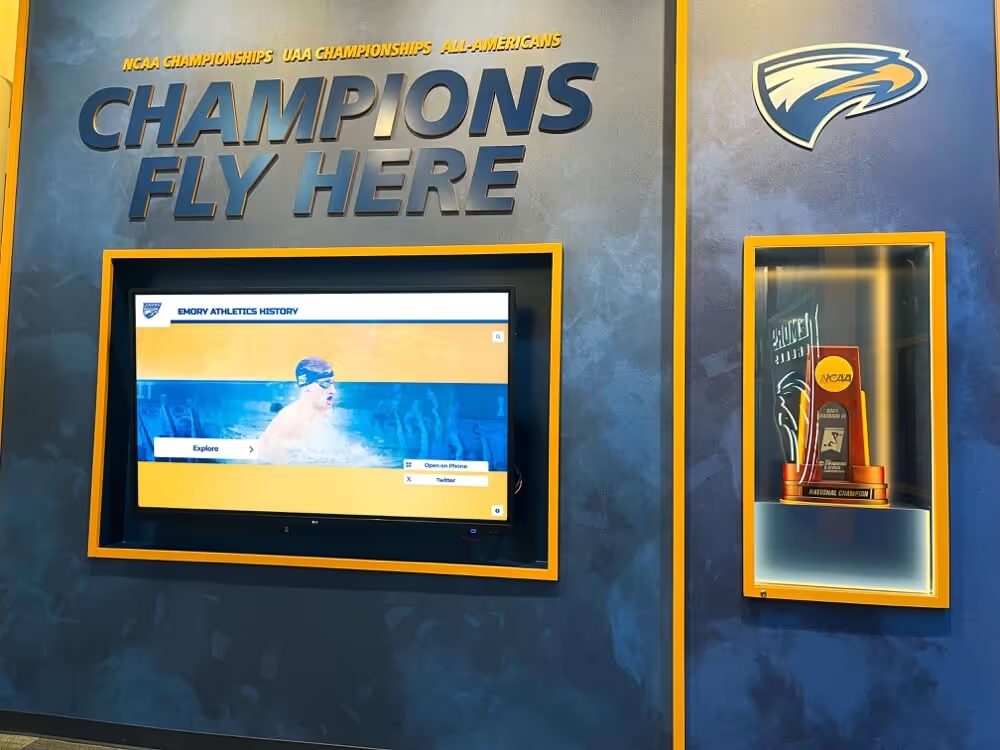
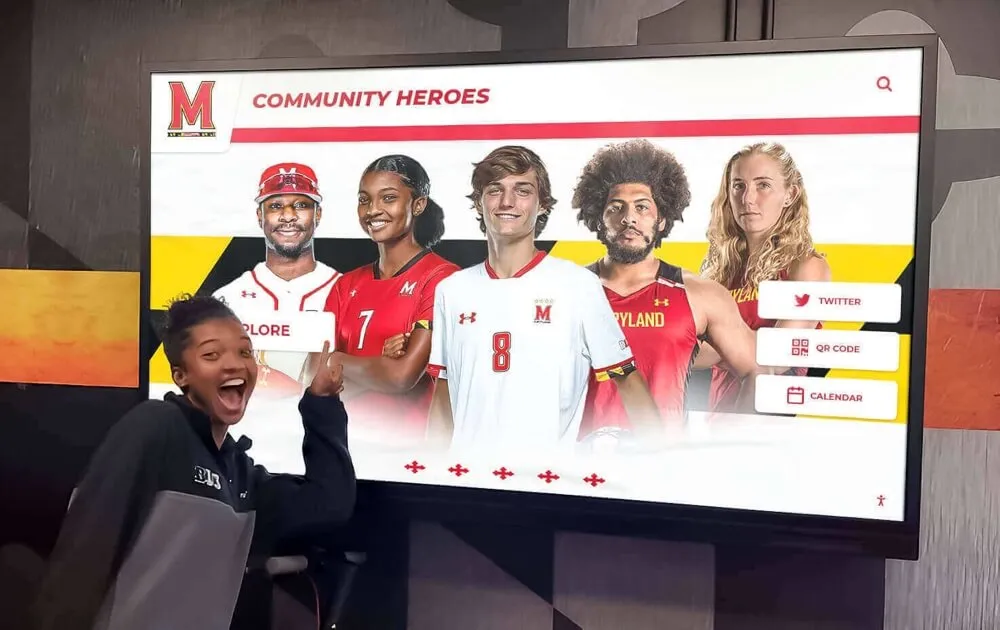
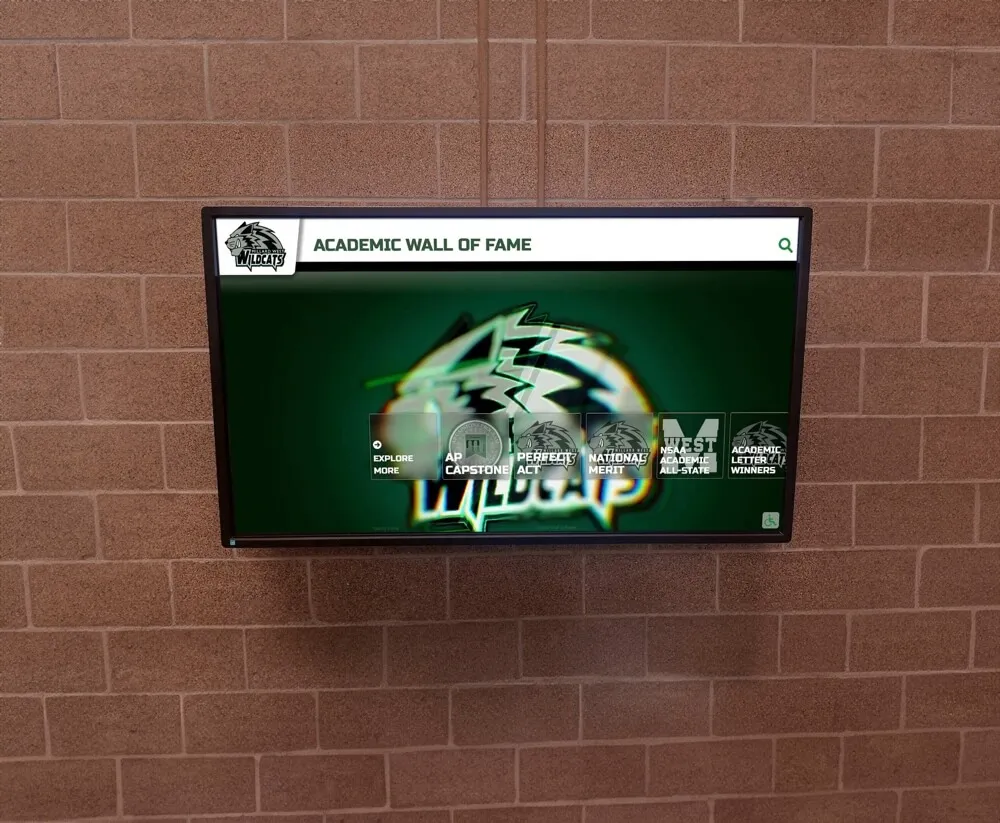
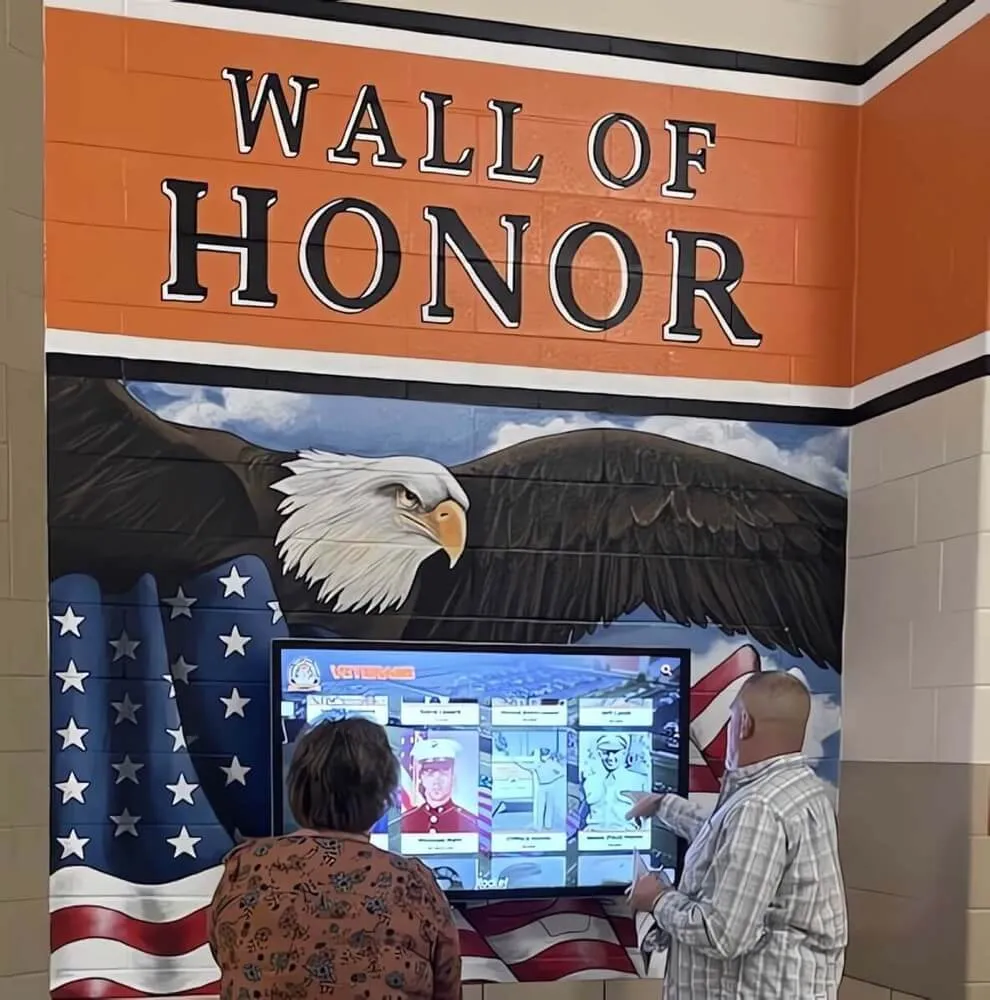
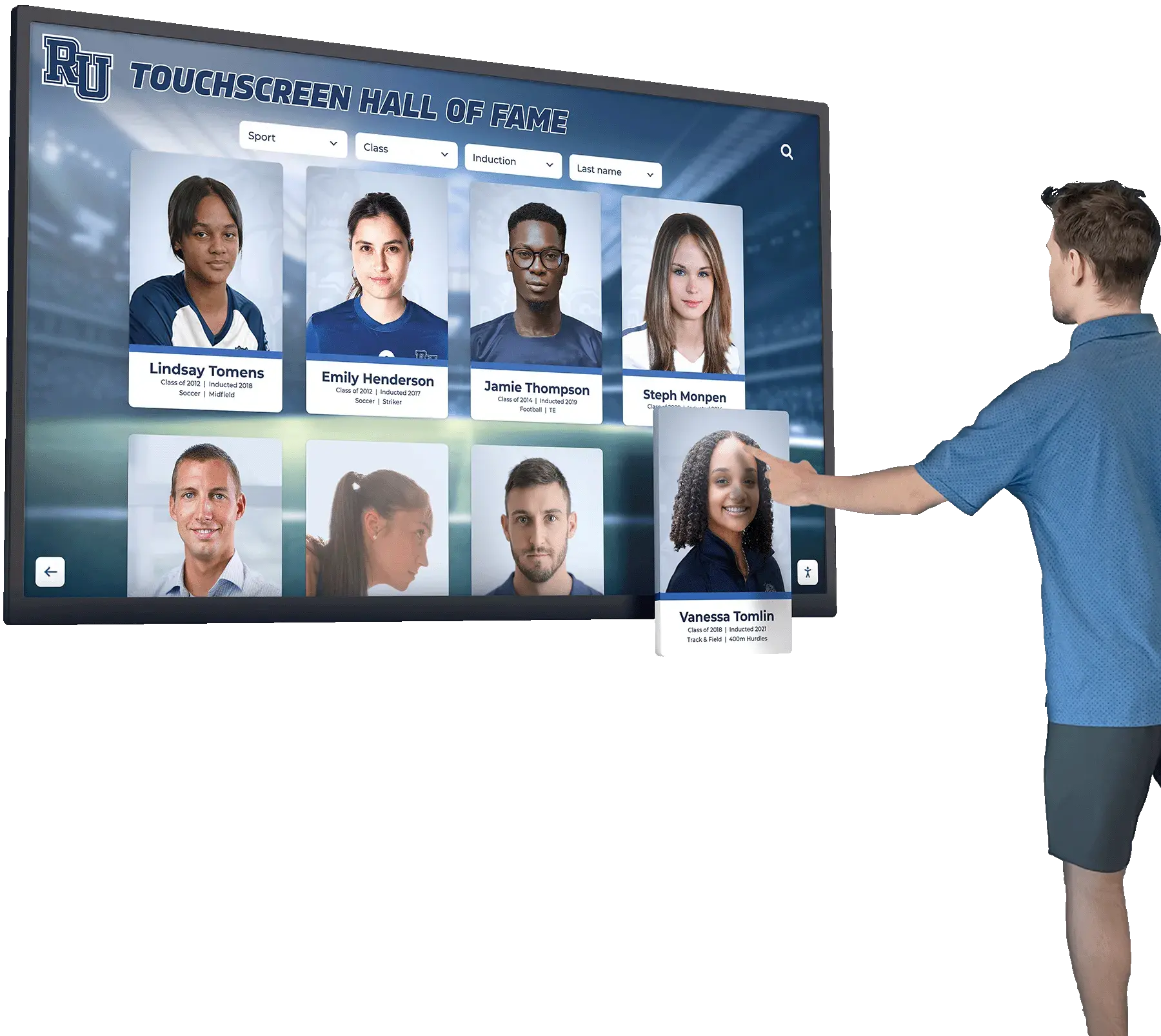
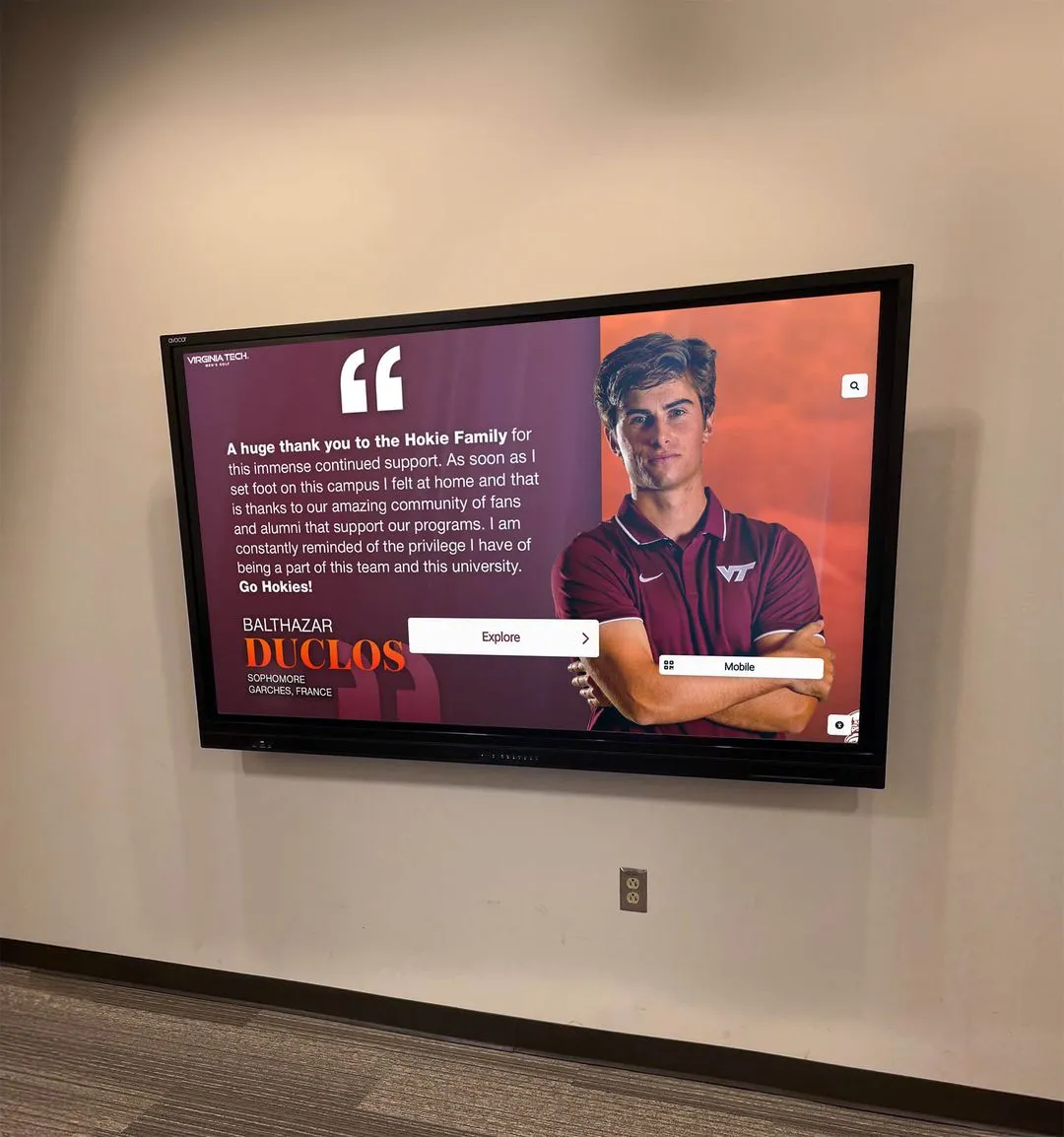
Interactive recognition platforms enable comprehensive achievement celebration, allowing visitors to explore detailed honoree profiles rather than viewing limited static displays
Campus Life and Culture Documentation
Beyond achievement recognition, documenting daily campus life helps visitors understand school culture and student experience authentically.
Daily Student Life Photography
Candid photos capturing authentic student experiences communicate school culture powerfully. Effective daily life content includes classroom engagement showing collaborative learning and hands-on activities, lunch and social time highlighting community atmosphere, club activities demonstrating extracurricular variety, special events like homecoming celebrations and spirit weeks, and facility showcases touring campus spaces families might not see during brief visits.
Authentic student life photography helps prospective families visualize their children’s potential experiences, making abstract educational philosophies tangible through visual evidence.
Faculty and Staff Spotlights
Introducing educators and support staff personalizes school communities while highlighting faculty expertise. Faculty content includes teacher spotlights with backgrounds and teaching philosophies, staff appreciation recognizing support personnel contributions, new faculty welcomes introducing recent hires, and professional development achievements celebrating continuing education.
Faculty spotlights particularly appeal to prospective families evaluating teaching quality and institutional stability during enrollment decisions.
Tradition and Heritage Storytelling
Schools with rich histories benefit from sharing traditions connecting current students with generations of alumni. Heritage content includes historical photos showing campus evolution, tradition explanations describing unique school customs, alumni success stories highlighting notable graduates, anniversary celebrations marking institutional milestones, and architectural heritage explaining building history and significance.
Heritage content strengthens alumni engagement during return visits while building prospective family confidence in institutional longevity and stability.
Practical Information and Wayfinding
While celebration and culture communication remain primary, lobby displays also serve practical communication functions.
Event Calendars and Schedules
Current information keeps families engaged with campus activities. Practical scheduling content includes upcoming performances and competitions, parent-teacher conference schedules, athletic event calendars with times and locations, important deadline reminders, and facility rental information for community users.
Event information positioned prominently ensures parents and community members stay informed about opportunities for campus engagement.
Campus Navigation and Directories
Larger campuses benefit from digital wayfinding solutions helping visitors locate destinations. Navigation content includes interactive building maps, department directories with room locations, parking and entrance guidance, accessibility information, and emergency procedures.
Wayfinding content particularly assists first-time visitors during peak traffic periods like open houses, performance evenings, or athletic tournaments when many unfamiliar guests navigate campus simultaneously.
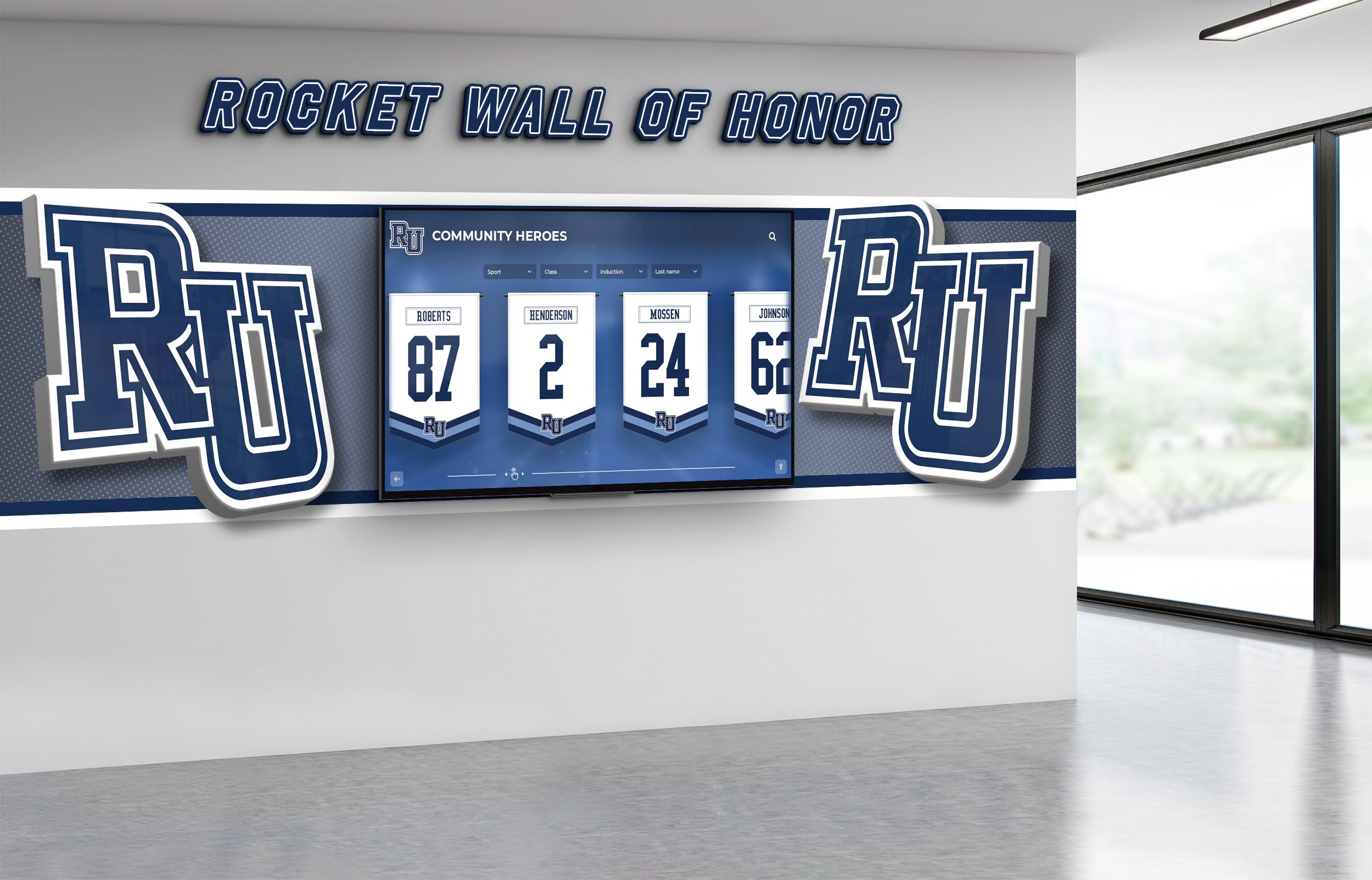
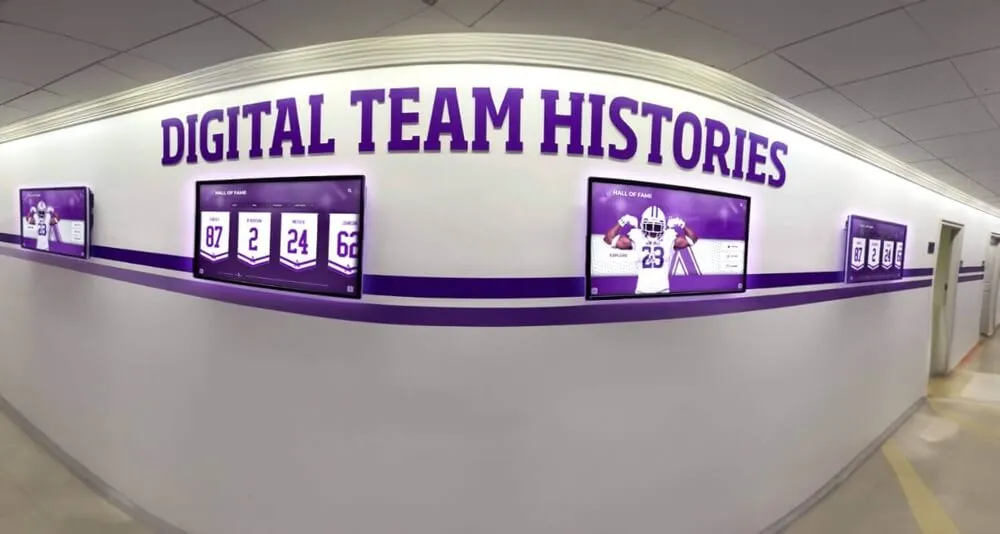
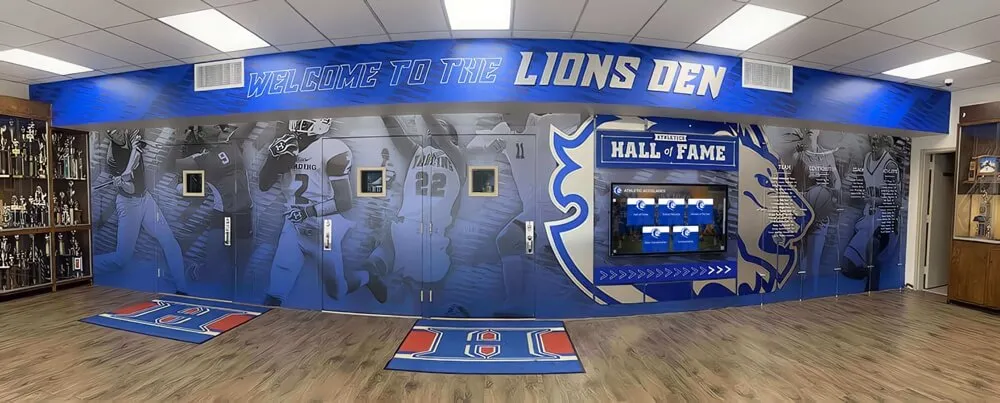
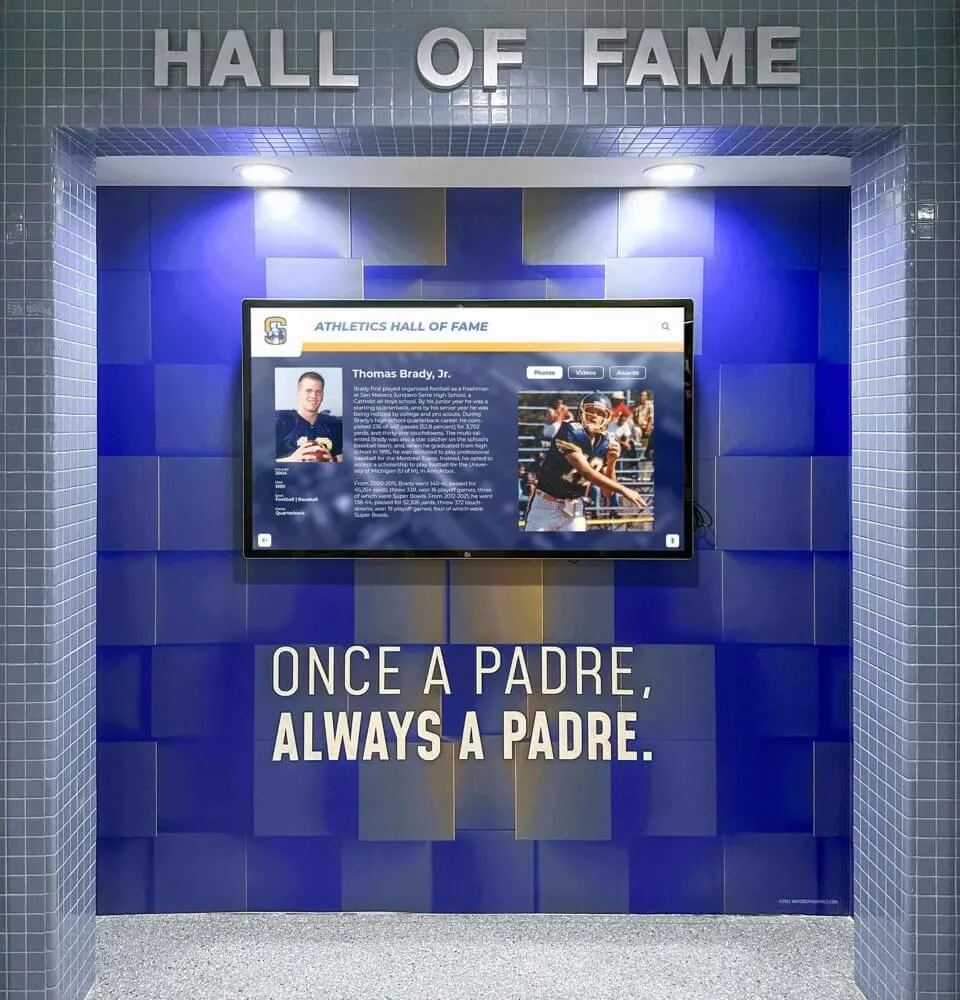
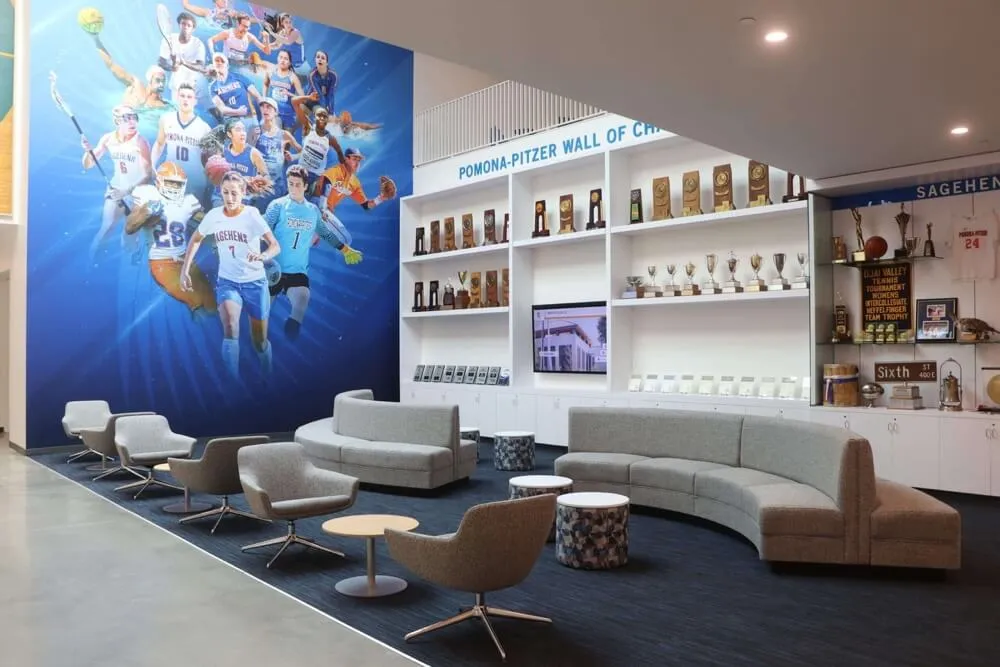
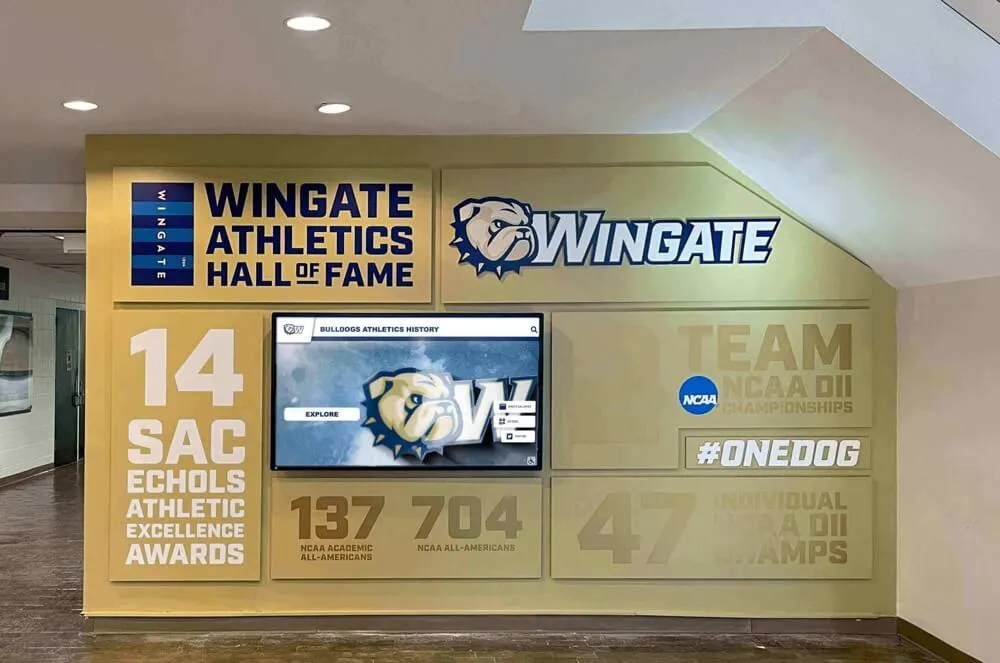
Purpose-built recognition displays combine traditional aesthetic elements like jersey presentations with modern digital capabilities for comprehensive honoree information
Design Approaches for Effective Lobby Displays
Beyond content selection, physical design decisions significantly impact lobby display effectiveness and visitor experience.
Integration with Architectural Environment
Successful lobby displays complement rather than compete with existing architectural elements, creating cohesive environments rather than technology additions feeling awkwardly retrofitted.
Complementary Design Language
Display installations should honor existing architectural character. Traditional school buildings with classical architecture benefit from framing digital displays with substantial surrounds echoing existing architectural details—crown molding, substantial wood or stone surrounds, or traditional color palettes. Contemporary facilities accommodate cleaner, minimalist installations with slim bezels and floating mounting emphasizing screen content.
Scale and Proportion Considerations
Display sizing should relate proportionally to architectural scale. Larger lobbies with high ceilings accommodate substantial displays or multiple screen arrays without overwhelming spaces, while smaller entrance areas require more modest installations maintaining comfortable human scale. Undersized displays in grand spaces feel insignificant and get overlooked, while oversized screens in intimate lobbies feel oppressive.
Lighting Design Coordination
Effective display installations account for ambient lighting conditions. Position screens perpendicular to windows and entrance doors rather than opposite them, preventing glare and washout. Consider adjustable brightness capabilities allowing displays to remain visible during bright daylight hours while avoiding excessive brightness in darker conditions. Dedicated display lighting calling attention to screens as architectural focal points enhances visibility and perceived importance.
Combining Digital and Traditional Elements
The most successful lobby designs thoughtfully blend digital capabilities with traditional design elements, creating richer experiences than either approach delivers independently.
Digital Displays with Physical Recognition Elements
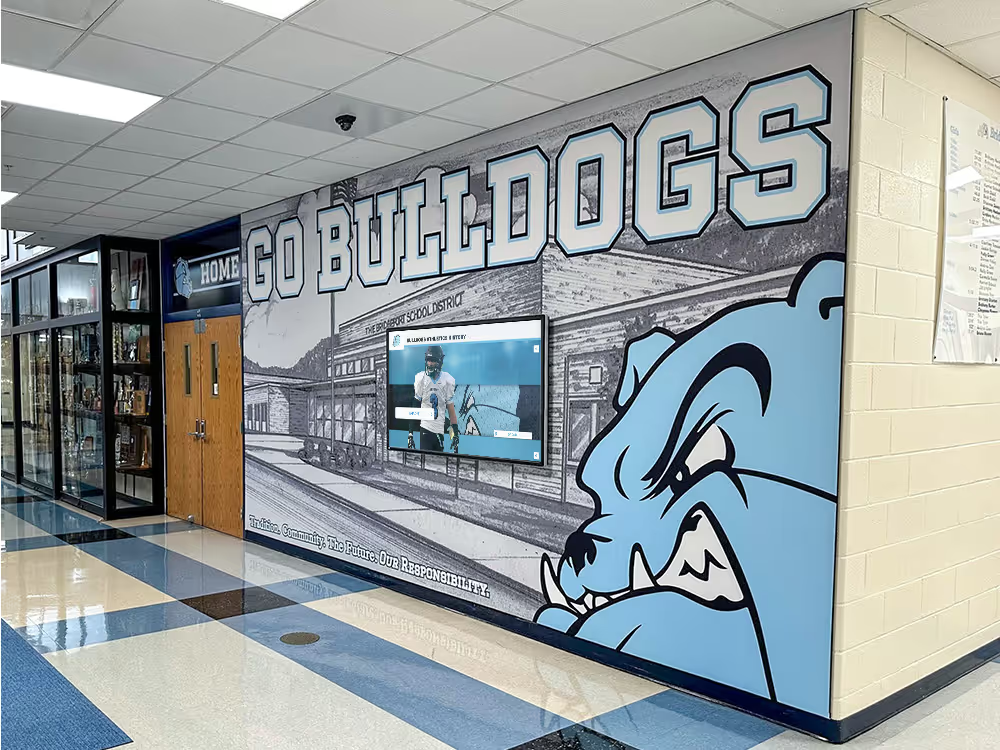
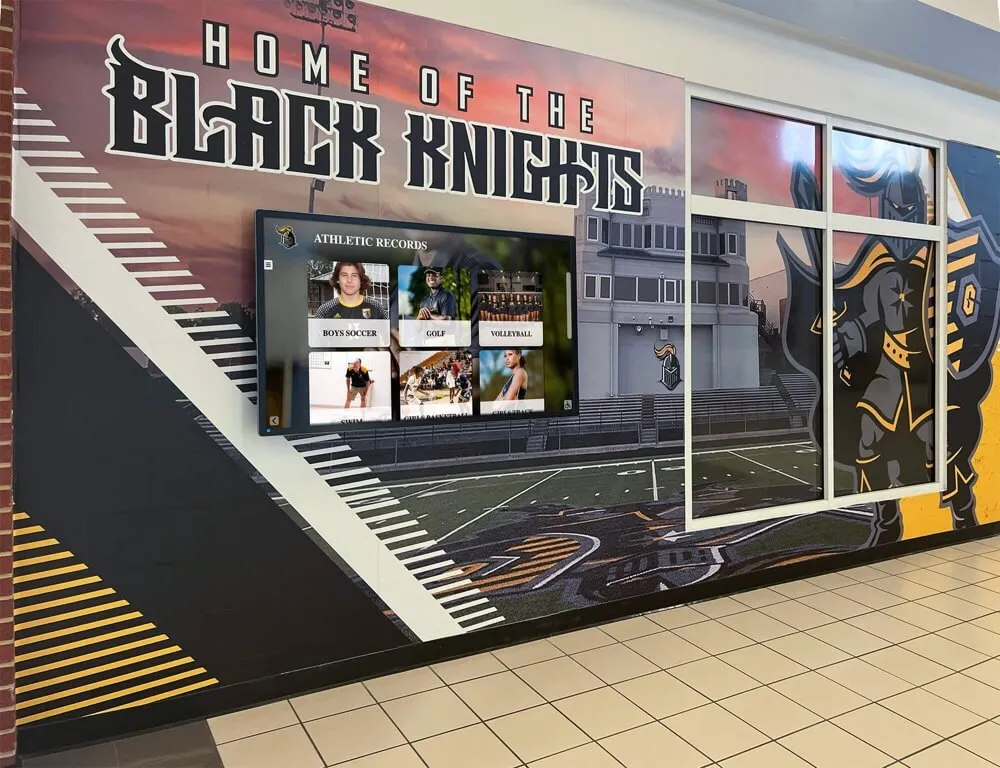
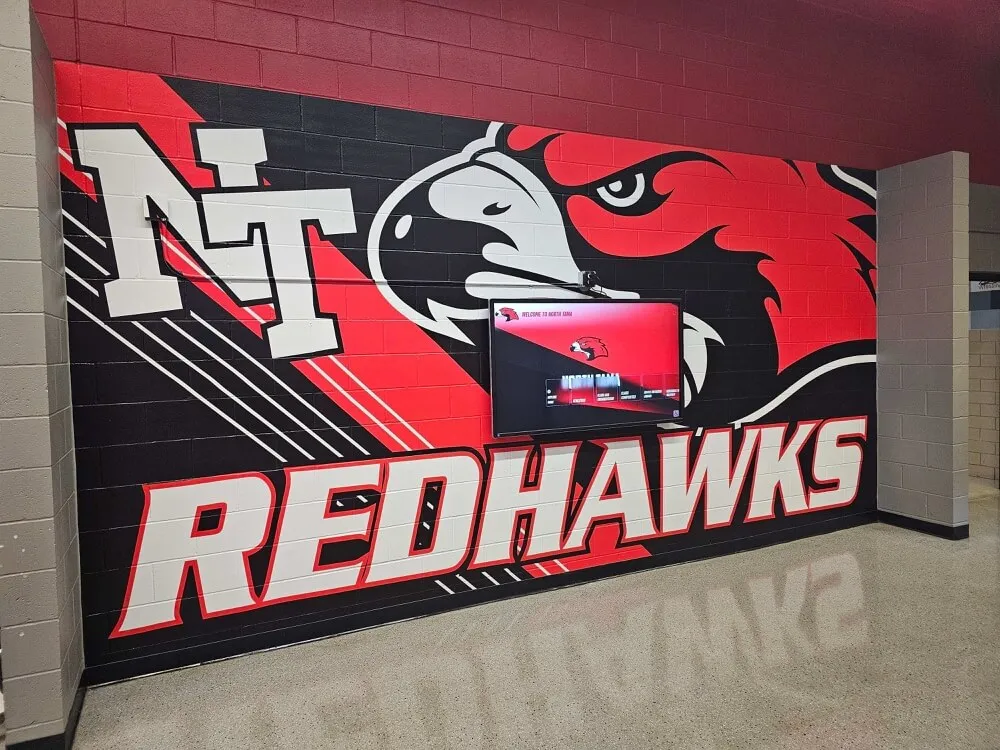
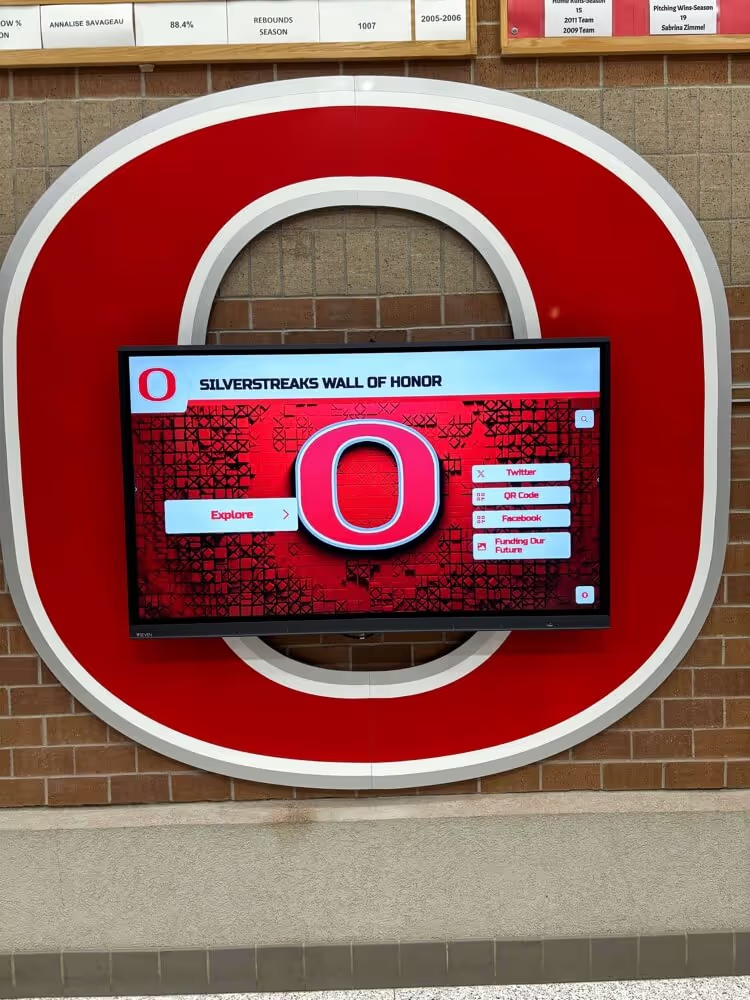
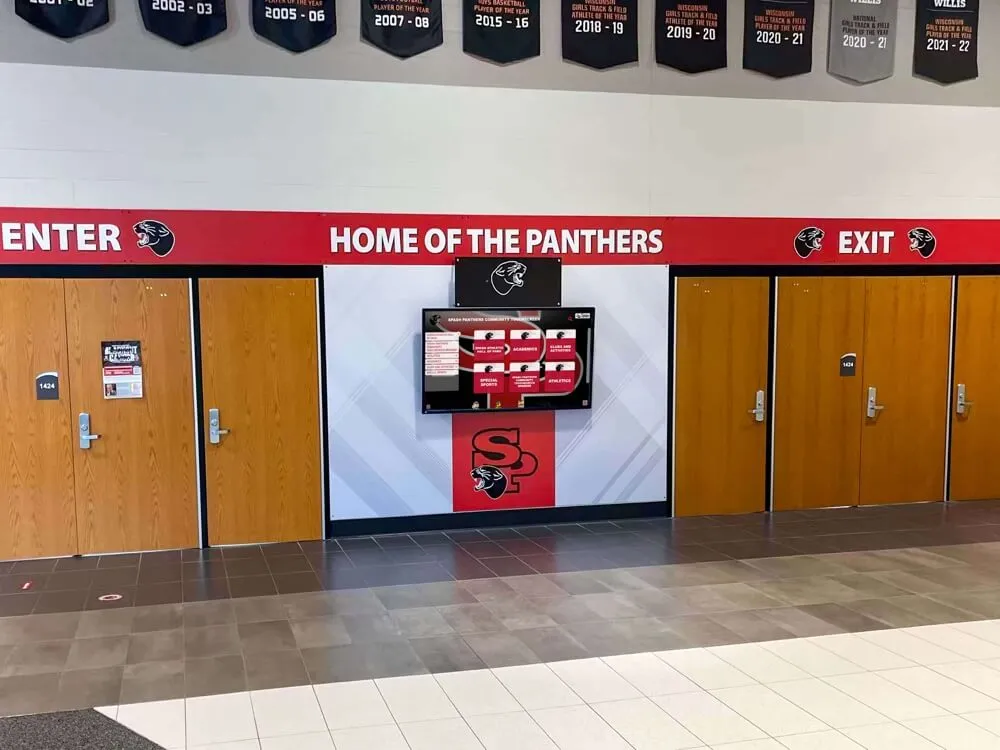
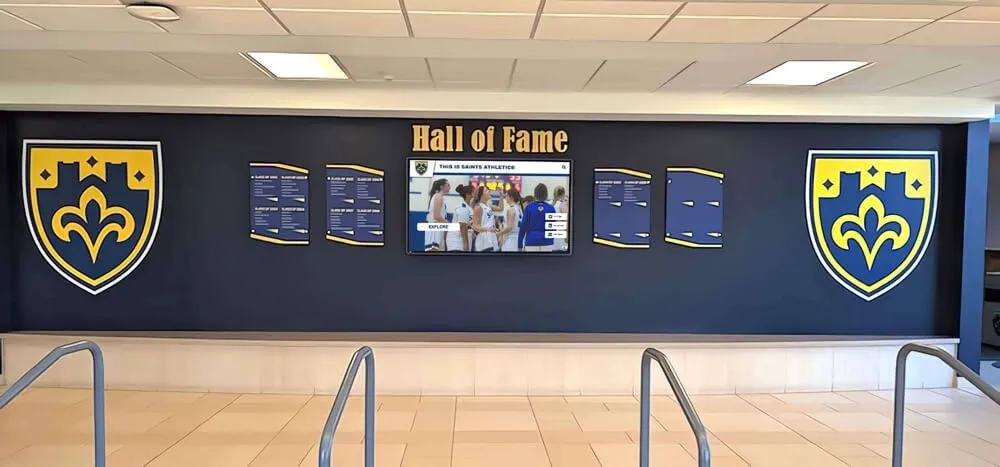
Pairing digital screens with physical elements creates dimensional interest while honoring traditional recognition approaches. Effective combinations include digital displays surrounded by engraved donor plaques acknowledging major gifts, traditional trophy cases adjacent to digital displays showing game action and expanded athlete profiles, physical athletic banners celebrating championships complemented by digital highlights and statistics, and architectural murals or school crests anchoring digital display installations within broader design compositions.
These hybrid approaches appeal to traditional stakeholders valuing physical permanence while demonstrating technology adoption satisfying families expecting contemporary facilities.
Maintaining Visual Cohesion Across Mixed Media
When combining traditional and digital elements, maintaining visual cohesion prevents fragmented, inconsistent appearances. Unifying strategies include consistent color palettes connecting digital content with surrounding physical design, complementary materials in display surrounds and adjacent physical elements, aligned design grids ensuring architectural elements and screens relate compositionally, and typography consistency between physical engraving and digital content.
Cohesive design requires intentional coordination between facilities staff managing physical installation, graphic designers creating digital content, and technology vendors supplying display systems.
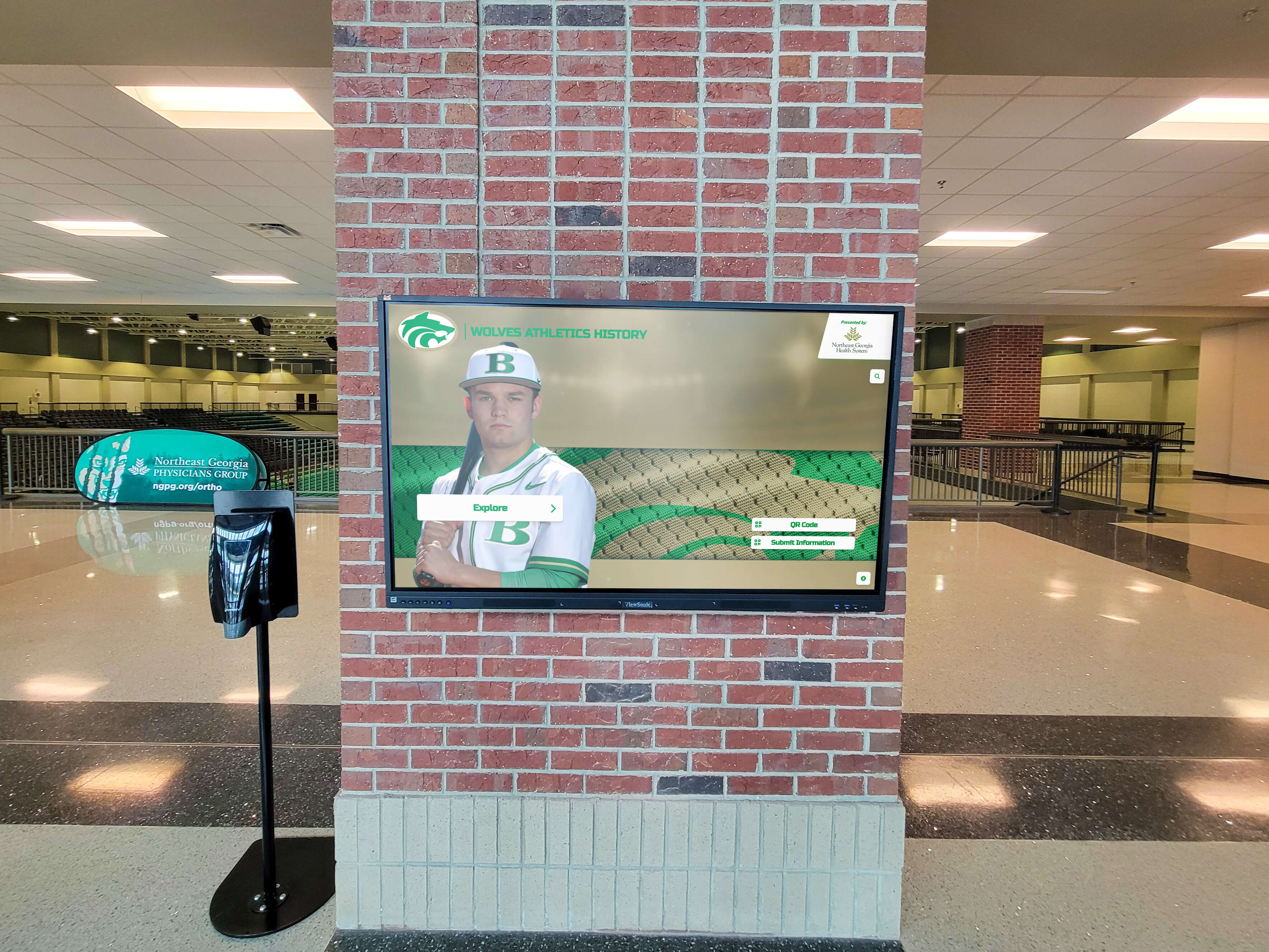
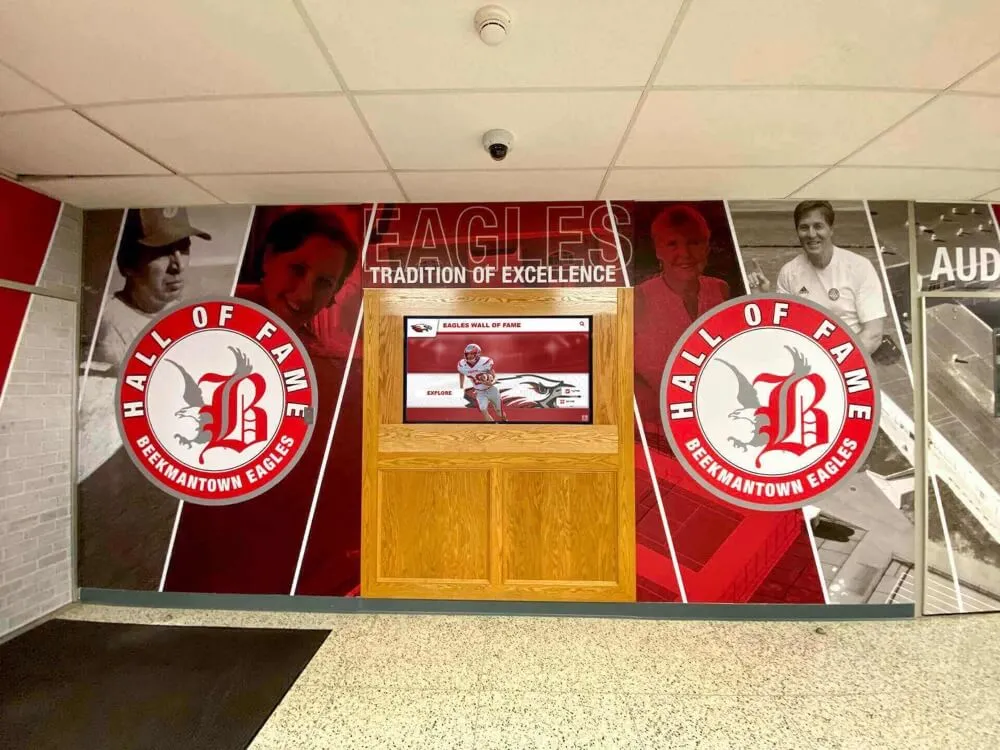
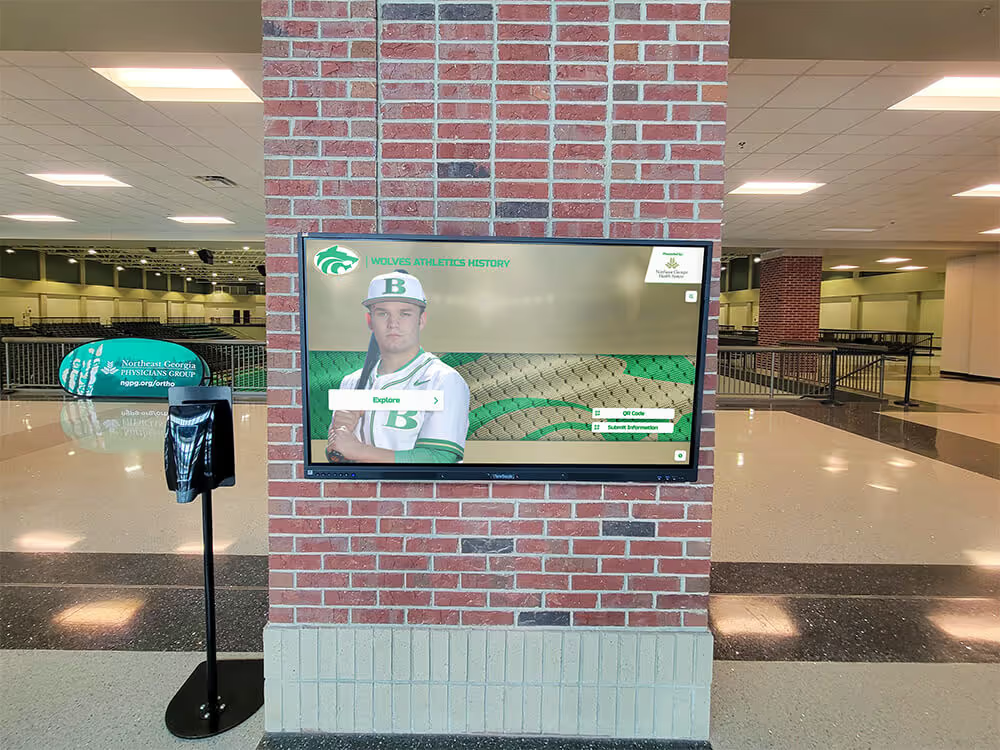
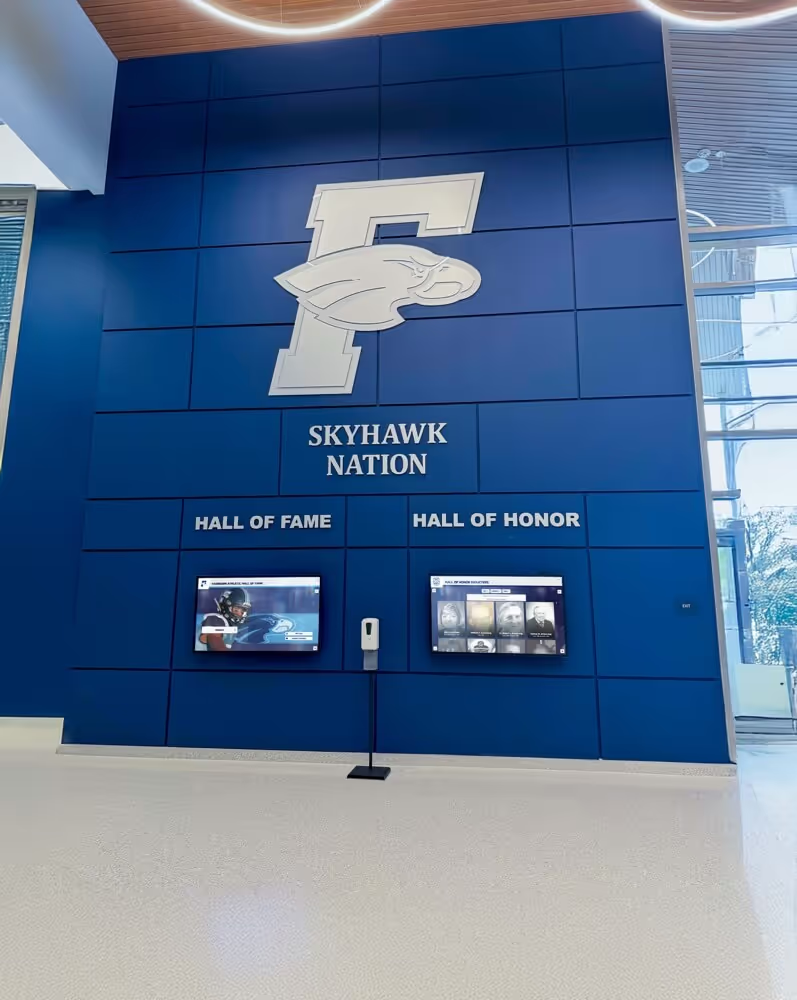
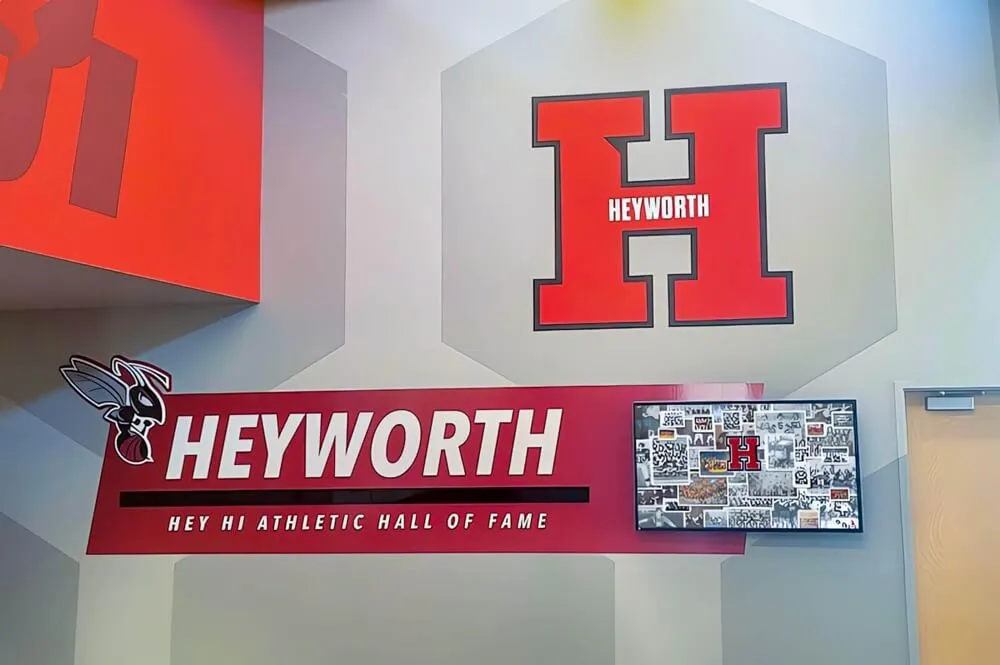
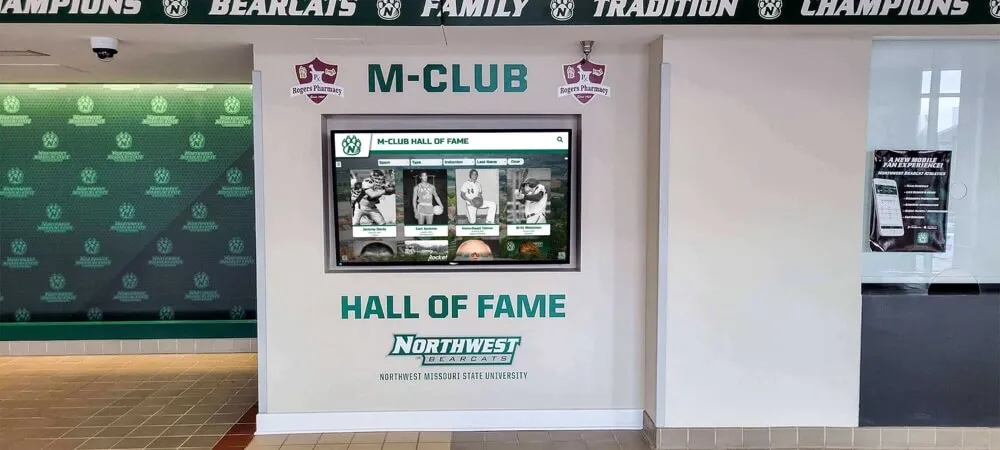
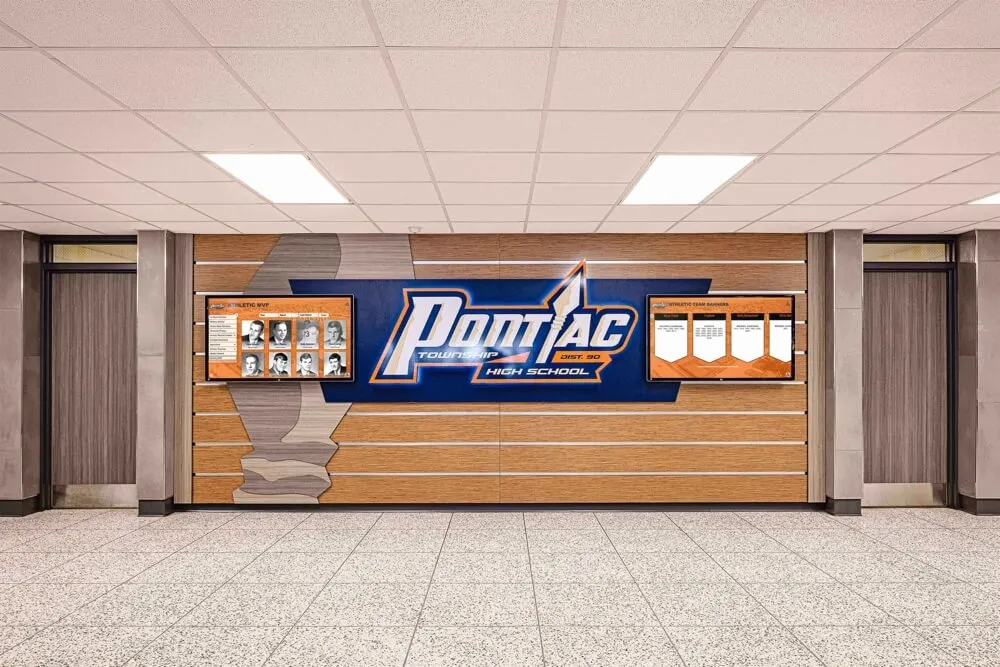
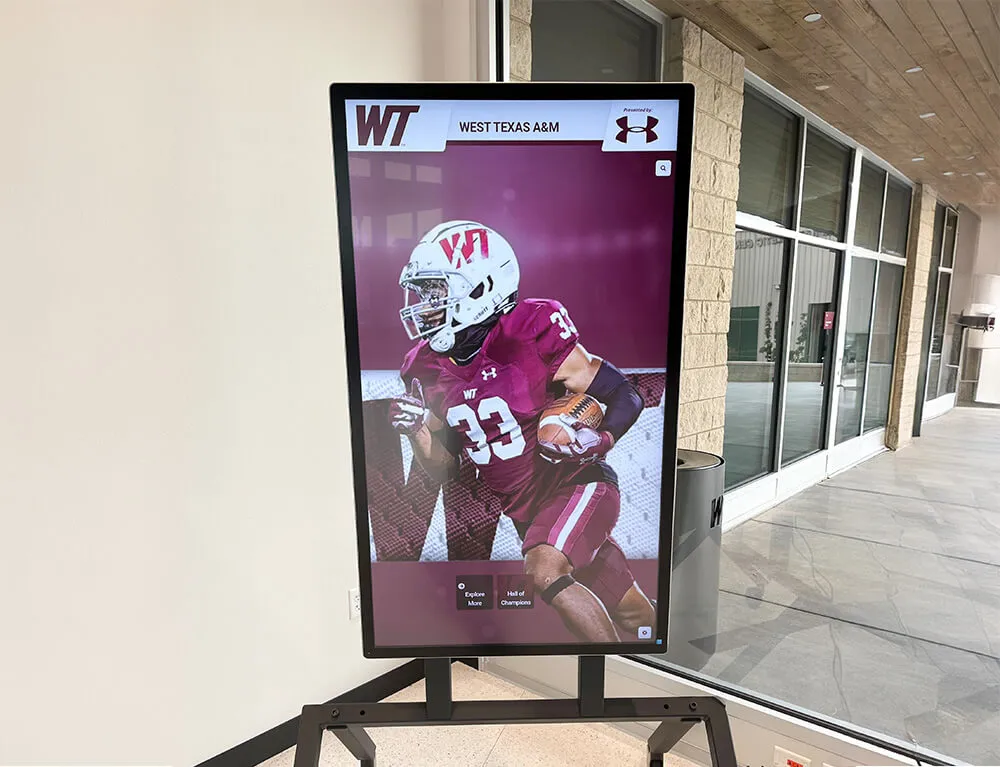
Athletic facilities particularly benefit from lobby displays celebrating current athletes and historical excellence, strengthening recruiting impressions and community pride
Interactive vs. Passive Display Decisions
Choosing between interactive touchscreen capabilities and passive display-only installations significantly impacts visitor experience and content possibilities.
When Interactive Touchscreens Add Value
Interactive capabilities justify investment when supporting specific use cases. Interactive displays excel for comprehensive recognition databases allowing visitors to search hundreds of honorees alphabetically or by graduation year, detailed profile exploration enabling visitors to view extensive biographical information beyond surface-level highlights, self-guided campus information allowing visitors to explore facilities, programs, and opportunities at their own pace, and alumni engagement applications where returning graduates search classmates and relive shared experiences.
Interactive displays particularly strengthen lobbies where visitors frequently wait with available exploration time—before performances begin, during athletic events, or while attending evening programs.
When Passive Displays Suffice
Passive rotating content serves many lobby needs without interactive complexity. Passive displays work effectively for high-traffic flow areas where visitors pass through quickly without stopping, content celebration requiring no user input like achievement highlights and campus life photography, welcome messages and event announcements, and situations where maintenance simplicity outweighs interactive sophistication.
Passive displays typically cost less, require simpler content management, and avoid touchscreen maintenance concerns in high-traffic environments where screen hygiene presents challenges.
Hybrid Approaches Combining Both
Some installations strategically combine interactive and passive capabilities. Hybrid approaches include interactive kiosks for detailed recognition or campus information paired with large passive displays showing rotating highlight content, passive displays with occasional interactive moments triggered by motion sensors or scheduled times, and primary passive functionality with optional QR codes allowing visitors to explore content more deeply on personal devices.
Hybrid approaches maximize flexibility while managing costs and maintenance complexity appropriately.
Technology Selection and Implementation Considerations
Choosing appropriate technology platforms and managing implementation logistics significantly impact long-term success and satisfaction with lobby display investments.
Platform Selection: Purpose-Built vs. Generic Solutions
Understanding fundamental technology differences helps schools avoid costly mistakes when selecting display platforms.
Purpose-Built Recognition Platforms
Specialized platforms designed specifically for recognition applications deliver fundamentally different capabilities than generic digital signage. Purpose-built solutions like those from Rocket Alumni Solutions provide comprehensive profile databases storing detailed biographical information for unlimited honorees, intuitive search and filtering enabling visitors to explore recognition by name, year, achievement type, or other criteria, multimedia storytelling capabilities incorporating photos, videos, and rich biographical narratives, and administrative interfaces designed for non-technical staff to manage content without IT department dependency.
Recognition platforms transform lobbies into dynamic celebration environments where visitors actively explore accomplishments rather than passively viewing limited rotating content.
Generic Digital Signage Limitations
General-purpose digital signage excels at announcements, calendars, and information display but fundamentally cannot deliver interactive recognition experiences. Signage platforms show predetermined rotating content slides without supporting visitor-controlled exploration, accommodate limited text per slide constraining biographical depth, lack database architecture for storing comprehensive honoree information, and require creating individual slides for each recognition piece rather than managing unified databases.
Schools attempting to repurpose digital signage for recognition discover fundamental architectural limitations preventing genuine interactive experiences visitors expect from modern technology.
Matching Technology to Intended Use Cases
Platform selection should align with primary lobby display purposes. Schools prioritizing comprehensive recognition celebrating hundreds or thousands of honorees require purpose-built recognition platforms supporting extensive profile databases. Institutions primarily seeking announcement displays, event calendars, and campus life photo rotation work effectively with quality digital signage platforms. Schools wanting both capabilities benefit from combining specialized solutions—recognition platforms for interactive kiosks paired with signage systems for passive informational displays.
Understanding platform capabilities prevents costly mismatches between technology purchased and actual lobby needs.
Content Management and Long-Term Sustainability
Technology selection must account for realistic content management requirements extending years beyond initial installation excitement.
Administrative Interface Usability
Lobby displays only remain current when content updates prove manageable for available staff. Effective platforms feature intuitive administrative interfaces enabling non-technical staff to upload photos, add honorees, update event calendars, and modify content without IT department involvement, mobile-friendly management allowing updates from phones or tablets rather than requiring specific desktop computers, bulk upload capabilities enabling efficient content migration and annual honoree additions, and comprehensive permissions systems allowing delegation to appropriate staff while maintaining security.
Platforms requiring technical expertise for routine updates consistently become “orphaned technology” showing increasingly stale content as updating grows too burdensome for available staff.
Ongoing Content Refresh Strategies
Successful lobby displays require sustainable content refresh approaches. Effective strategies include annual update calendars scheduling specific content refresh timing, distributed responsibility models assigning content ownership to department heads or activity sponsors rather than centralizing all updates with single overburdened administrator, automated content elements like social media feeds or automated recognition programs reducing manual update requirements, and student involvement models engaging journalism classes or technology clubs in content creation while teaching valuable skills.
Displays showing current content require institutional commitment extending beyond initial installation enthusiasm to sustainable long-term content governance.
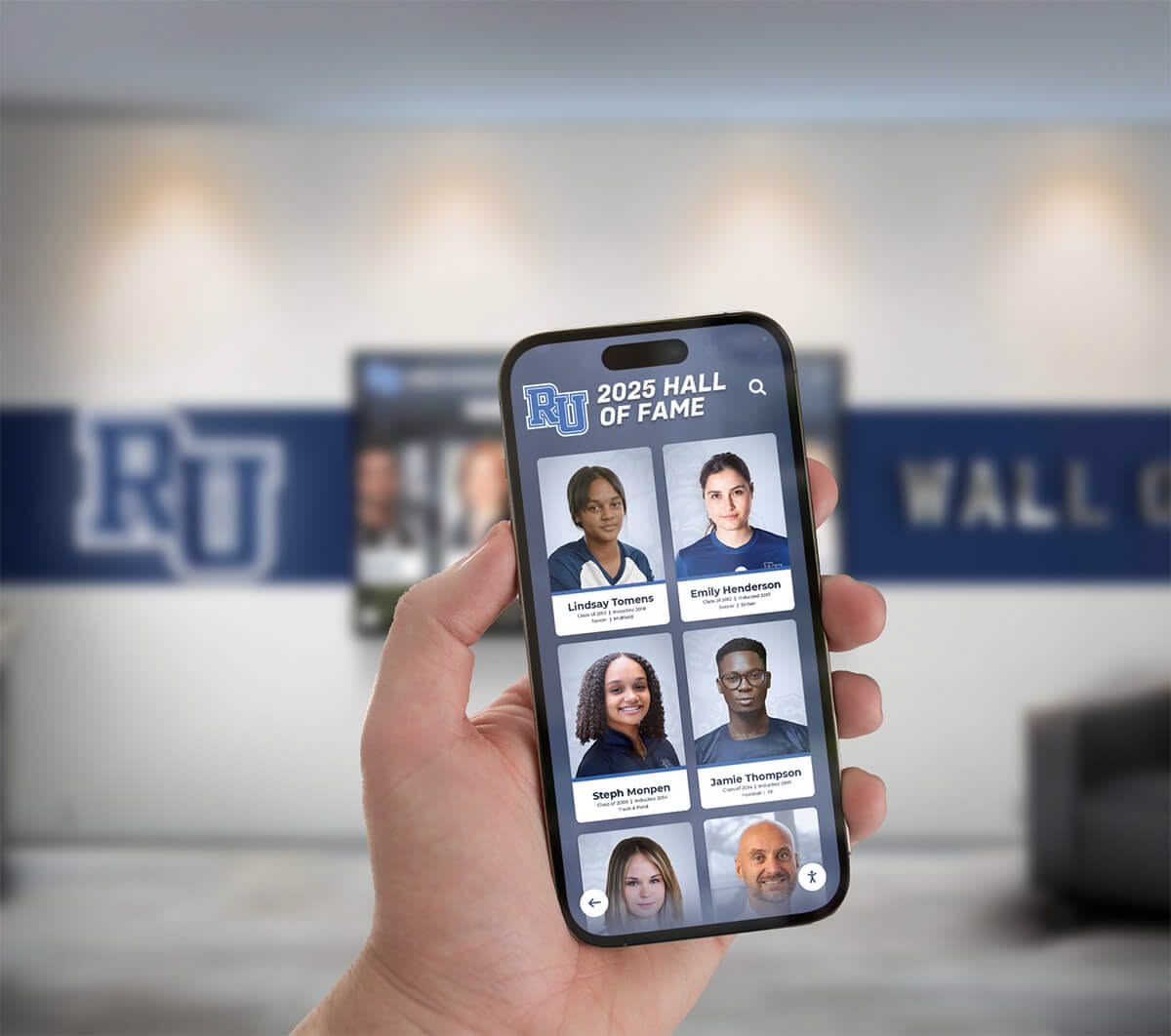
Modern recognition platforms extend beyond physical displays through mobile-responsive web access, allowing visitors to explore honoree profiles on personal devices before, during, or after campus visits
Specific Lobby Display Ideas by School Type and Focus
Different educational institutions benefit from lobby display approaches reflecting their specific missions, student populations, and stakeholder priorities.
High School Main Entry Lobbies
High school entrance lobbies serve prospective families evaluating enrollment options, current students and staff moving through buildings daily, and community members attending evening events.
Comprehensive Achievement Celebration
High schools benefit from displays celebrating diverse achievement categories reflecting varied student talents. Effective content rotation includes weekly recognition highlighting recent accomplishments across academics, athletics, arts, and service, seasonal content emphasizing activities currently in season—fall sports, winter performances, spring competitions, graduation countdowns showing senior class highlights and college destinations, and special recognition programs celebrating milestone achievements like academic letters or service hour thresholds.
Comprehensive content demonstrates that schools recognize excellence across multiple dimensions rather than privileging singular achievement types.
College and Career Readiness Emphasis
College-bound communities particularly value content demonstrating preparation quality. College-focused displays include scholarship recipient recognition with award amounts and institutions, college commitment celebrations showing athlete signings and academic acceptances, standardized testing achievements highlighting students reaching benchmark scores, career and technical program successes celebrating industry certification completions, and alumni updates showing graduate career paths and higher education outcomes.
This content directly addresses prospective family questions about college preparation quality and post-graduation success rates.
Athletic Facility Lobbies
Lobbies in field houses, gymnasiums, and athletic complexes serve different purposes than main academic building entrances, warranting specialized content approaches.
Historical Excellence Storytelling
Athletic lobbies benefit from content connecting current teams with historical achievement traditions. Effective historical content includes championship timeline displays showing all conference and state titles chronologically, record progression displays showing how school records evolved across decades, coaching legacy recognition celebrating longtime coaches and their accomplishments, athletic hall of fame profiles featuring individual athlete stories and achievements, and facility naming recognition explaining donor contributions that funded improvements.
Historical content strengthens recruiting impressions by demonstrating program legacy and excellence traditions prospects aspire to join.
Current Season Engagement
Real-time season content keeps communities connected with ongoing competitions. Current season displays include game schedules with locations, times, and ticketing information, recent game highlights showing key plays and performances, season statistics dashboards tracking team and individual performance metrics, playoff bracket displays during championship runs, and senior athlete recognition celebrating graduating classes.
Current content drives attendance at events while building community excitement around ongoing seasons.
Performing Arts Center Lobbies
Lobbies in auditoriums and performing arts facilities serve theater patrons, concert attendees, and prospective students evaluating arts programs.
Production Documentation and Archives
Performing arts lobbies benefit from rich production archives celebrating program history. Effective production content includes past show galleries with production photos and cast lists, performance highlight videos showing memorable musical numbers or dramatic scenes, technical achievement showcases highlighting set design, lighting, and student production roles, alumni performer profiles celebrating graduates pursuing performing arts professionally, and upcoming production previews building audience anticipation for future shows.
Production archives demonstrate program quality and tradition while honoring student artistic achievement.
Student Artist Portfolios
Individual artist recognition personalizes program excellence. Artist-focused content includes senior showcase portfolios highlighting graduating student work across four-year careers, technical theater student recognition celebrating behind-the-scenes contributions, music ensemble member profiles showing participation and leadership, visual arts galleries rotating monthly to showcase current student work, and creative program highlights demonstrating breadth across theater, music, visual arts, and other creative disciplines.
Individual recognition demonstrates that programs develop talent across entire student populations rather than showcasing singular star performers.
Elementary School Main Entrances
Elementary lobbies serve younger students, security-conscious parents, and prospective families often choosing schools based heavily on welcoming environment impressions.
Age-Appropriate Visual Design
Elementary displays benefit from colorful, engaging visual treatments appealing to younger audiences. Effective elementary design approaches include bright, saturated color palettes creating energetic cheerful atmospheres, larger text and simpler layouts accommodating developing reading skills, animated elements and motion graphics capturing attention without overwhelming, character or mascot integration making displays feel approachable and school-specific, and celebration of classroom achievements recognizing grade-level projects and learning milestones.
Age-appropriate design helps younger students engage with lobby content while creating warm welcoming impressions for security-conscious parents evaluating school environments.
Family and Community Connection
Elementary families often maintain closer school connections than secondary parents. Family-focused content includes classroom photo galleries allowing parents to see daily learning experiences, student artwork showcases displaying creative work from all grades, family event promotion highlighting upcoming opportunities for parent involvement, special programs and traditions explaining school customs and annual events, and staff introduction galleries helping families know educators and support personnel.
Family connection content strengthens parent engagement while demonstrating transparent communication valued by families choosing elementary schools.
Content Creation and Maintenance Best Practices
Beyond platform selection and design decisions, sustainable content strategies determine whether lobby displays remain engaging assets or become outdated embarrassments.
Photography Standards and Practices
Visual quality significantly impacts perceived professionalism and display effectiveness.
Consistent Quality Standards
Establishing minimum photography standards prevents substandard images diminishing professional impressions. Effective quality guidelines include resolution requirements ensuring sharp display rendering at intended sizes, composition standards avoiding cluttered backgrounds or awkward cropping, lighting criteria ensuring proper exposure and clarity, and photo release protocols securing necessary permissions before public display.
Quality standards prevent well-intentioned staff from uploading smartphone snapshots that look amateurish on large high-resolution displays.
Diverse Representation Priorities
Recognition content should reflect entire student populations rather than repeatedly featuring the same individuals or groups. Representative photography practices include conscious rotation ensuring all grades, genders, and demographics receive equal celebration, activity diversity showing breadth across academics, athletics, arts, and service, candid authenticity preferring genuine moments over staged poses, and accessibility considerations ensuring content represents students with diverse abilities and backgrounds.
Representative content demonstrates genuine celebration of entire school communities rather than narrow segments, strengthening culture while avoiding perception of favoritism.
Update Frequency and Refresh Cycles
Content freshness directly impacts visitor engagement and perceived relevance.
Strategic Rotation Schedules
Different content categories warrant different update frequencies. Effective refresh cycles include daily rotation for event announcements and calendars, weekly updates for recent achievement highlights and current season content, monthly refreshes for student life photography and arts showcases, seasonal changes for major recognition categories and tradition celebrations, and annual updates for historical recognition and graduating senior tributes.
Scheduled rotation prevents content from feeling stale while managing realistic administrative workload.
Monitoring Engagement and Effectiveness
Data-informed content decisions improve engagement over time. Monitoring approaches include visitor observation noting which content attracts attention and engagement, stakeholder feedback through surveys or informal conversations, administrative analytics tracking content management burden and sustainability, and periodic content audits ensuring accuracy, diversity, and relevance.
Continuous improvement based on actual use patterns ensures lobby displays evolve toward maximum effectiveness rather than remaining static after initial installation.
Budget Considerations and Investment Justification
Lobby display investments typically require significant capital funding, warranting careful financial planning and compelling justification for stakeholders.
Total Cost of Ownership Components
Understanding complete financial commitments prevents budget surprises undermining project success.
Initial Capital Investment
Upfront costs include display hardware like commercial-grade screens, media players, and interactive touchscreen components, mounting systems including professional installation, architectural integration elements and surrounds, software licensing for content management platforms, initial content creation including photography, design, and profile database population, and professional design services ensuring architectural cohesion and appropriate scale.
Initial investments typically range from $5,000 for basic single-display installations through $50,000+ for sophisticated multi-screen interactive systems with extensive architectural integration and comprehensive content development.
Ongoing Operational Costs
Annual expenses include software licensing or subscription fees, content management labor for updates and maintenance, electricity costs for display operation, occasional hardware maintenance or component replacement, and periodic content refresh projects updating design aesthetics.
Planning for operational costs prevents situations where schools successfully fund initial installation but lack resources for sustainable content management, resulting in displays showing increasingly outdated information.
Compelling Return on Investment Arguments
Justifying significant lobby display investments requires demonstrating tangible benefits beyond aesthetic improvement.
Enrollment Impact and Competitive Positioning
Schools competing for enrollment increasingly recognize facilities influence family decisions. ROI arguments include improved campus tour impressions differentiating schools in competitive markets, increased enrollment conversion rates from touring families to enrolled students, premium tuition positioning enabled by contemporary facility perceptions, and reduced marketing costs as impressive lobbies create organic word-of-mouth promotion.
Administrators report that impressive lobby displays frequently appear in prospective family decision-making conversations, with parents specifically mentioning these installations when explaining school choice rationale.
Donor Engagement and Development Impact
Development offices benefit from lobby displays facilitating donor recognition and engagement. Development ROI includes enhanced donor recognition capabilities celebrating major gift impacts prominently, increased giving participation through visible recognition programs, larger gift sizes motivated by meaningful public acknowledgment opportunities, alumni engagement strengthening through heritage storytelling and tradition celebration, and capital campaign momentum as displays demonstrate institutional forward-thinking investment.
Development directors consistently report that visible recognition displays increase both donor participation rates and average gift sizes by creating aspirational recognition goals while demonstrating institutional commitment to honoring philanthropic support appropriately.
Community Relations and Public Support
Schools relying on community support for referendums and levy votes benefit from lobbies communicating educational quality. Community relations benefits include increased public confidence in institutional stewardship and forward-thinking leadership, stronger referendum support from communities seeing responsible facility investment, improved community perception of educational quality and student outcomes, and enhanced relationship with local media covering student achievements prominently displayed, and elevated civic pride in local educational institutions serving communities well.
Implementation Planning and Project Management
Successful lobby display projects require careful planning addressing technical, creative, and operational considerations coordinately.
Stakeholder Involvement and Decision-Making
Inclusive planning processes produce better outcomes while building broad support essential for long-term success.
Cross-Functional Planning Teams
Effective project teams include representation from diverse school functions. Essential participants include administrative leadership providing strategic vision and budget authority, facilities and technology staff addressing technical feasibility and operational requirements, communications or marketing staff contributing content strategy and brand guidance, development representatives ensuring donor recognition needs receive appropriate consideration, and representative faculty and student voices bringing frontline perspectives on content priorities.
Cross-functional teams prevent siloed decision-making that overlooks important considerations, resulting in better solutions serving broader institutional needs.
Community Input Opportunities
Stakeholder engagement builds support while gathering valuable perspectives. Input approaches include parent surveys assessing priorities for lobby content and design preferences, student focus groups especially for schools emphasizing student voice in decisions, alumni consultation particularly regarding heritage storytelling and tradition celebration, community forums for projects funded through public referendums, and donor involvement when recognition displays acknowledge philanthropic support.
Community engagement creates ownership in outcomes while preventing isolated administrative decisions feeling disconnected from stakeholder needs and values.
Vendor Selection and Partnership Quality
Platform provider selection significantly impacts long-term satisfaction beyond initial installation quality.
Evaluation Criteria Beyond Price
Selecting quality partners requires assessing multiple factors. Critical evaluation criteria include platform capabilities genuinely matching intended use cases rather than vendor claims, administrative interface usability ensuring non-technical staff can manage content successfully, customer support responsiveness and expertise for inevitable questions and challenges, training comprehensiveness helping teams become proficient efficiently, reference customer experiences from similar institutions facing comparable challenges, and contractual flexibility accommodating evolving needs without punitive restrictions.
Schools prioritizing lowest initial price without evaluating these factors frequently experience buyer’s remorse as hidden costs, administrative frustration, and limited capabilities undermine successful outcomes.
Long-Term Partnership Considerations
Recognition displays represent multi-year commitments warranting vendor evaluation beyond initial transactions. Partnership factors include software update commitments ensuring platforms remain current with technology evolution, feature development transparency showing continuous improvement rather than stagnant platforms, customer community engagement enabling peer learning and best practice sharing, financial stability ensuring vendor longevity rather than abandonment risk, and migration flexibility allowing reasonable exit pathways if partnerships prove unsuccessful.
Viewing vendors as long-term partners rather than one-time transactions leads to selection criteria emphasizing relationship quality, responsiveness, and shared success orientation.
Conclusion: Creating Lobby Displays That Truly Impress
School lobbies represent critical opportunities to communicate institutional excellence, celebrate student achievement, strengthen community connections, and create memorable first impressions influencing enrollment decisions, donor engagement, and public support. Modern digital signage transforms these entrance experiences from passive waiting areas into dynamic storytelling environments that actively engage visitors while strengthening school culture and pride.
Successful lobby display projects require thoughtful strategic planning addressing multiple considerations—clear purpose definition aligned with institutional priorities, appropriate technology selection matching platforms to intended use cases, sustainable content management approaches ensuring long-term currency and relevance, professional design integration creating architectural cohesion rather than awkward technology additions, and inclusive stakeholder processes building broad support essential for lasting success.
Schools approaching lobby displays thoughtfully—with realistic assessment of institutional needs, appropriate technology investments, sustainable administrative capacity, and genuine commitment to ongoing content excellence—create entrance experiences that genuinely impress visitors while delivering meaningful return on investment through strengthened enrollment appeal, enhanced donor engagement, improved community relations, and elevated institutional pride.
The difference between lobbies that feel forgettable and entrance experiences that create lasting positive impressions lies not in technology spending alone, but in strategic thinking, appropriate platform selection, design quality, content excellence, and institutional commitment to sustained excellence. Schools investing this comprehensive effort create lobbies that truly reflect the educational excellence happening daily within their walls while strengthening connections with all stakeholders essential to institutional success.
Ready to transform your school lobby into an impressive welcome experience that strengthens enrollment appeal while celebrating student achievement? Explore how Rocket Alumni Solutions creates purpose-built interactive recognition displays designed specifically for schools, combining intuitive content management with beautiful design that genuinely impresses visitors and serves your community for years to come.