



A school recognition display, athletic hall-of-fame kiosk, or lobby honor wall depends on a continuous network path to its content platform. That path runs through a default gateway, and in schools using redundant network infrastructure — paired core switches with HSRP or VRRP, or a virtual server IP that migrates between hosts — the gateway’s or content server’s IP address may remain the same while the underlying MAC address changes. When that change happens, every device on the affected broadcast segment, including the recognition display, must update its ARP cache to learn the new MAC for the existing IP. The mechanism designed to make that update happen automatically is the gratuitous ARP (GARP): an unsolicited ARP packet that the newly active device broadcasts to announce its IP-to-MAC binding to all neighbors.
When gratuitous ARP works correctly, recognition displays transition through a gateway failover in seconds — the ARP cache updates, outbound packets resume routing through the new gateway MAC, and athlete profiles, award records, and induction histories continue loading without visible interruption. When gratuitous ARP is blocked, rate-limited, or filtered — by Dynamic ARP Inspection policy, by a switch ACL, or by a software firewall on the display host — the display’s ARP cache retains the old, unreachable MAC address. The display sends recognition content requests to a MAC that no longer responds, the content platform stops delivering updates, and the screen either freezes on cached content or shows an error state at exactly the moment families, recruits, and visitors are in the building.
This guide explains how gratuitous ARP works, why recognition displays are susceptible to GARP-related failover failures, and gives IT teams a complete troubleshooting procedure — from identifying a stale ARP cache to verifying that content resumes after the cache is cleared.
Quick answer: Restoring a school recognition display after a gateway or server IP failover caused by a stale ARP cache requires eight steps. (1) Confirm that a gateway or server failover occurred and identify which IP address changed its underlying MAC. (2) Connect to the display host and run arp -a to list current ARP cache entries — locate the gateway or content server IP and note the MAC address cached. (3) Compare the cached MAC to the currently active device’s MAC (from the switch’s MAC address table or the new gateway’s interface configuration) to confirm the cache is stale. (4) Flush the display host’s ARP cache using arp -d * on Windows or ip neigh flush all on Linux, forcing the host to issue a fresh ARP request for the next outbound packet. (5) Verify the switch is forwarding GARP packets from the new gateway MAC — check DAI policy if Dynamic ARP Inspection is enabled, since a new gateway MAC may not yet match a trusted binding entry on the untrusted-port side. (6) Confirm that the display host’s ARP cache now shows the new MAC address for the gateway IP after flush. (7) Test connectivity to the recognition platform’s management endpoint by running ping and curl or a browser request from the display host. (8) Observe the recognition platform dashboard to confirm the display is reporting a live connection and content is updating.

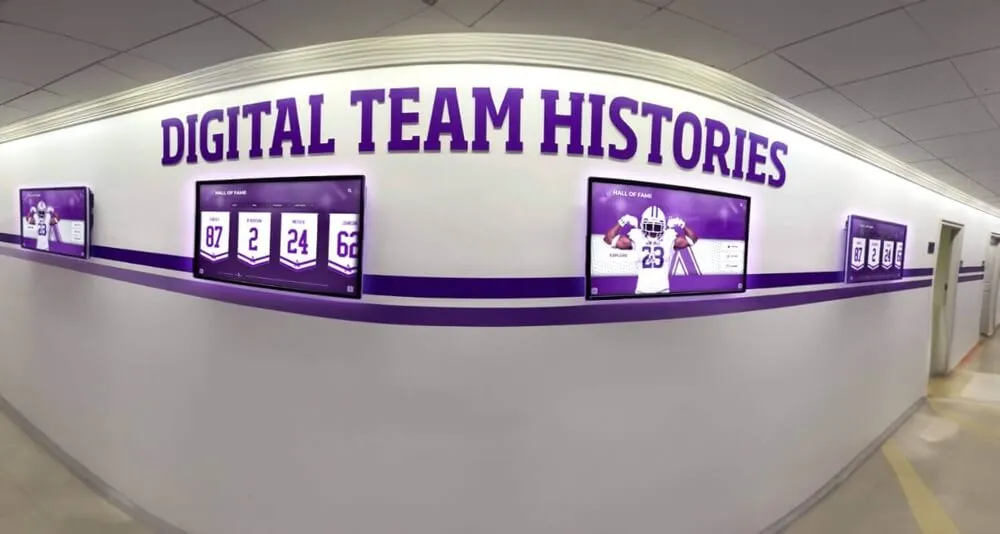
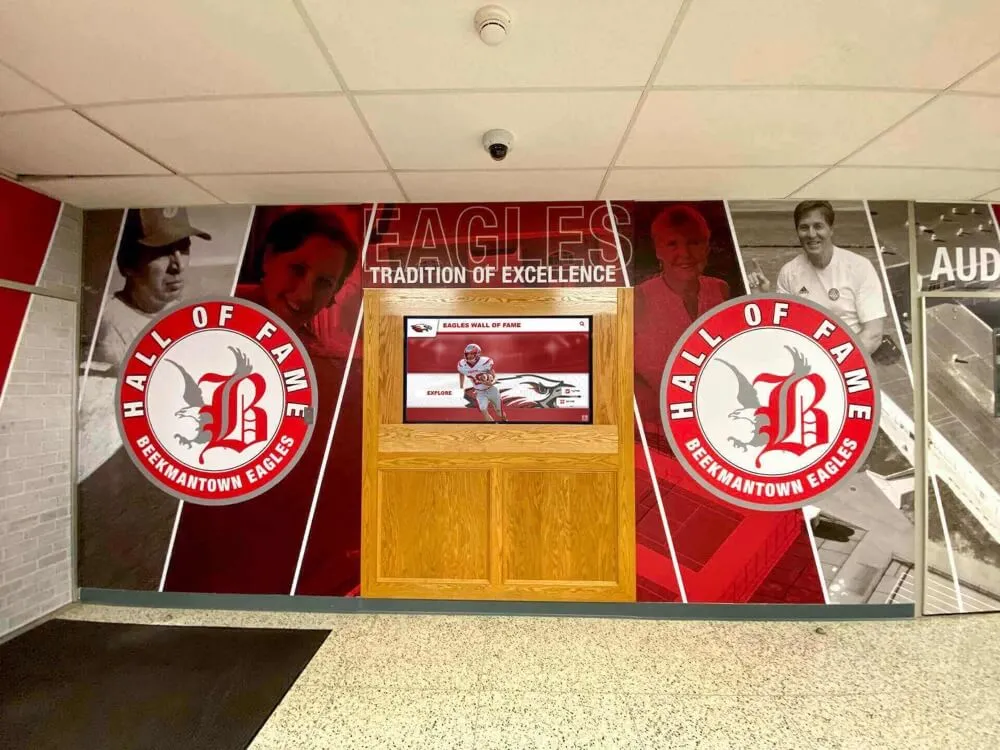
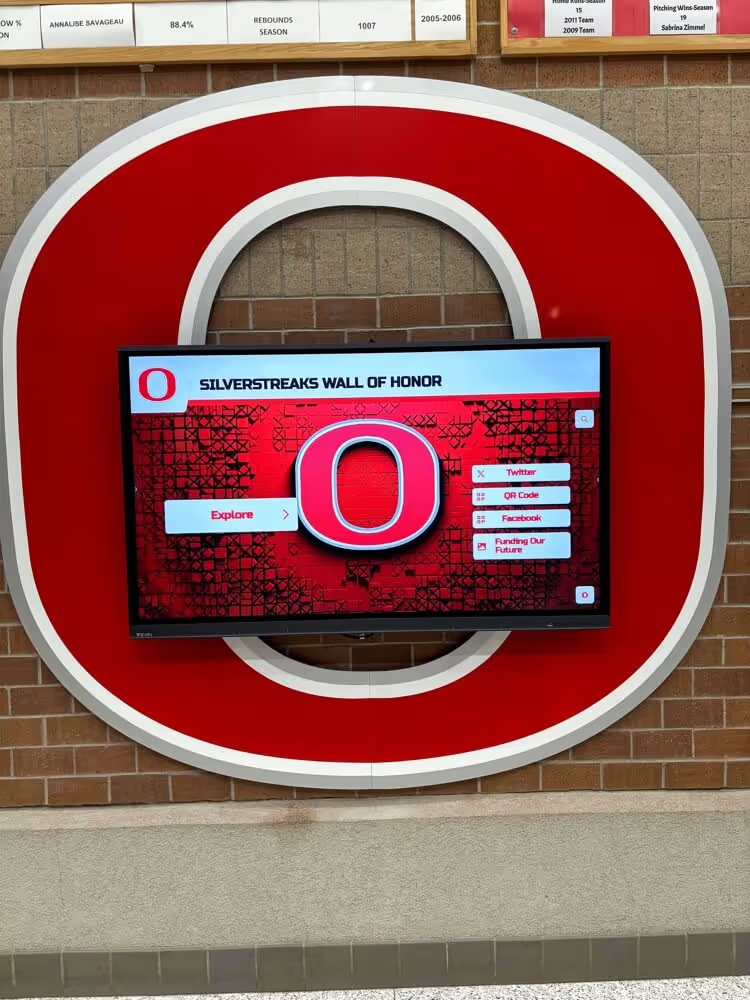
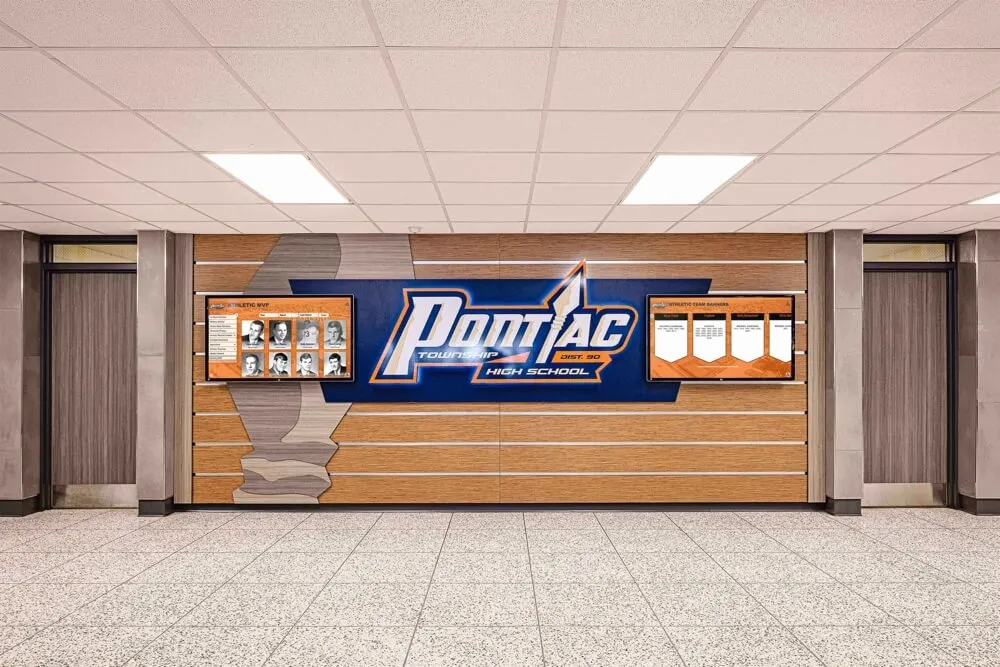
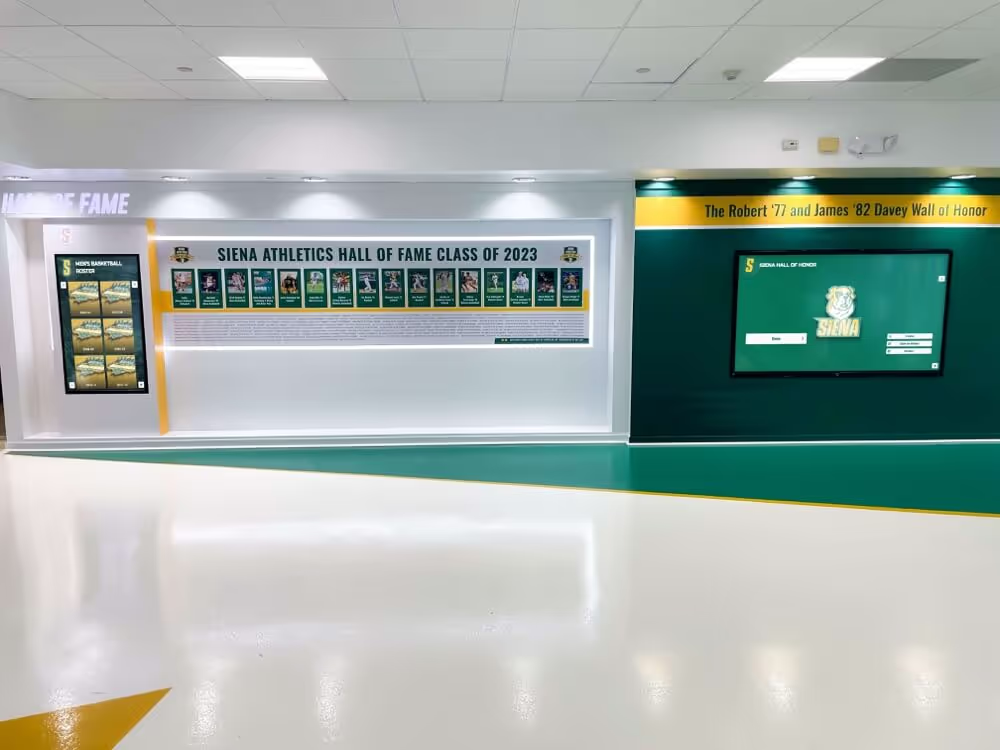
School recognition displays in athletic hallways and trophy corridors are managed networked devices — their ARP cache must reflect the current gateway MAC address for content to flow uninterrupted through gateway failover events
What Gratuitous ARP Is and Why School Recognition Displays Depend on It
The Address Resolution Protocol (ARP) is the mechanism by which IP-layer devices discover the MAC address that corresponds to a known IP address on the same broadcast segment. When the display host needs to send a packet to its default gateway at, say, 10.10.20.1, it looks up that IP in its ARP cache. If the cache contains the entry, the host uses the stored MAC address as the Ethernet frame’s destination. If the cache does not contain the entry — because the entry expired or was flushed — the host broadcasts an ARP Request asking which device owns 10.10.20.1, and the gateway responds with an ARP Reply that maps the IP to its MAC.
A gratuitous ARP packet is an ARP Reply sent by a device without having received a prior ARP Request. The sending device announces its own IP-to-MAC mapping to the broadcast domain with the sender protocol address and target protocol address both set to the device’s own IP address. Every device on the segment that receives the GARP can update its ARP cache with the new MAC for that IP, whether or not the receiving device had an existing cache entry.
In school networks with redundant gateway infrastructure, GARP is the mechanism that enables seamless failover. When HSRP (Cisco’s Hot Standby Router Protocol) or VRRP (Virtual Router Redundancy Protocol) promotes a standby router to active status, the newly active router sends gratuitous ARPs to announce that the virtual IP address is now reachable through its physical MAC address. Without those GARPs, every host on the segment — including the recognition display — continues sending packets to the old active router’s MAC until each host’s ARP cache entry for that IP expires. On Windows hosts (the most common recognition display platform), the default ARP cache lifetime is approximately four minutes for dynamic entries. That four-minute window is enough time for a lobby kiosk to fall into an error state, fail its content-sync heartbeat, and trigger a stale-content notification in the management platform.
The same dynamic applies when a server hosting recognition content or a virtual IP that fronts the content delivery infrastructure migrates between physical hosts. The IP address of the server or load-balancer VIP remains constant, but the MAC address answering for that IP changes. A GARP from the new host updates client ARP caches immediately. If the GARP is blocked — a common occurrence when security features like Dynamic ARP Inspection (DAI) are misconfigured — recognition displays are among the devices most likely to be affected, because they sit on isolated display VLANs where IT staff are less likely to investigate immediately.
How Gateway and Server IP Failover Affects Recognition Display Content Access
A school’s recognition display contacts its content platform through several network layers. The display host resolves the platform’s hostname through DNS, establishes a TCP connection to the resolved IP, and sends authenticated HTTPS requests that return content updates — athlete profiles, inductee names, achievement records, championship banners, and media assets. The DNS resolution and TCP path both depend on the display host reaching its default gateway to forward packets to the content platform, which is hosted outside the local broadcast segment.
When the gateway fails over:
- The virtual gateway IP (10.10.20.1 in the HSRP/VRRP group) does not change — but the MAC address that answers for it does.
- The previously active router’s MAC is now unreachable.
- The display host’s ARP cache still maps 10.10.20.1 → old-MAC.
- Outbound packets from the display are addressed to old-MAC at the Ethernet layer and are dropped at the switch because no port leads to that MAC.
- All TCP connections through the gateway drop. The content platform shows the display as disconnected.
- The display shows cached content or an error screen, depending on its fallback configuration.
If the newly active gateway sends a GARP successfully and the display’s ARP cache updates, the display re-establishes its TCP connections within one to two TCP timeout cycles — typically 30 to 90 seconds for a content platform configured with aggressive reconnection logic. If GARP is blocked, the display remains offline for the full duration of the ARP cache entry lifetime (up to four minutes on Windows by default, longer if the OS delays expiration of recently used entries).
For athletic directors, the practical consequence is a display that goes dark or shows stale content during exactly the events when visitors are present — recognition ceremonies, open houses, recruiting visits, alumni weekends. Understanding the GARP mechanism allows IT teams to diagnose and resolve this failure class within minutes rather than spending time investigating DNS, firewall rules, or platform connectivity at the application layer when the real problem is a single stale ARP cache entry.
Pre-Failover Preparation Checklist
School IT teams that manage recognition display infrastructure alongside redundant gateway equipment can take steps before any failover occurs that reduce post-failover troubleshooting time significantly.
| Preparation Item | Purpose | Where to Configure |
|---|---|---|
| Document the virtual gateway IP and active/standby MAC addresses | Provides the expected post-failover MAC for immediate ARP cache comparison | HSRP/VRRP group config on core switches |
| Enable GARP forwarding on the recognition display VLAN | Ensures gratuitous ARP packets propagate to the display segment | Switch VLAN or inter-VLAN routing configuration |
| Verify DAI trust state on gateway uplink ports | Prevents DAI from dropping GARP packets from the new active gateway MAC | Switch port configuration; uplink ports toward gateway should be DAI trusted |
| Record display host MAC address and VLAN assignment | Necessary for post-failover switch MAC table verification | Device Manager or ipconfig /all on display host |
| Set ARP cache timeout on display host (optional) | Shortens recovery window if GARP is delayed | Windows registry: HKLM\SYSTEM\CurrentControlSet\Services\Tcpip\Parameters — ArpCacheLife value in seconds |
| Enable logging on core switches for HSRP/VRRP transitions | Produces timestamped failover record for correlation with display outage reports | Switch syslog configuration |
| Test GARP propagation in a scheduled maintenance window | Confirms end-to-end GARP path before a real failover is needed | Manually trigger HSRP preemption and observe display ARP cache update |
The recognition display RADIUS failover test checklist for school IT teams covers authentication-layer failover verification that complements the GARP-layer tests in this guide — both should be part of a complete school recognition display failover test plan.
Gratuitous ARP Troubleshooting: Step-by-Step Procedure
This procedure applies when a school recognition display has lost content platform connectivity after a gateway failover or server IP migration, and the ARP cache is suspected as the cause. Run steps in order. Each step either confirms the diagnosis or redirects to the correct fix.
Step 1: Confirm That a Failover Event Occurred
Before investigating the display, confirm that a network-level change actually happened. Check the following sources:
- Core switch syslog for HSRP or VRRP state-change messages (Cisco IOS:
show standby briefor review syslog for%HSRP-5-STATECHANGEmessages) - Network monitoring system alerts for gateway reachability changes
- Virtualization platform logs if the content server or virtual IP migrated between hosts
- IT ticketing system for concurrent reports of other devices losing connectivity to the same gateway IP
If no failover event is recorded, the display connectivity failure may have a different cause — application-layer authentication expiry, DNS failure, or content platform outage — and this ARP troubleshooting procedure is not the correct starting point.
Step 2: Identify the Current Active Gateway MAC Address
On the core switch or router, confirm the MAC address currently associated with the virtual gateway IP:
On a Cisco switch (HSRP):
show standby brief
show arp | include <gateway-IP>
show mac address-table | include <gateway-MAC>
Record the currently active MAC address. This is the MAC the display’s ARP cache should contain after a successful GARP update. If the display’s cached MAC matches this value, ARP is not the problem — investigate at the application or transport layer instead.
Step 3: Inspect the Display Host ARP Cache
Connect to the recognition display host. On Windows:
arp -a
Locate the gateway IP address in the ARP cache output. The output format is:
Interface: 10.10.20.50 --- 0x5
  Internet Address      Physical Address      Type
  10.10.20.1            00-50-56-aa-bb-cc     dynamic
Compare the Physical Address shown for the gateway IP to the currently active gateway MAC from Step 2. If they differ, the ARP cache is stale and is the confirmed source of the connectivity failure.
Step 4: Check Whether GARP Was Received
Before flushing the cache, determine whether the GARP from the new active gateway reached the display segment. This determines whether flushing alone resolves the issue or whether a GARP propagation problem must also be addressed.
On the switch, check GARP-related counters and the MAC address table:
show mac address-table dynamic vlan <recognition-display-vlan>
show interfaces <uplink-interface> counters
If the new active gateway MAC is not visible in the MAC address table for the display VLAN, GARP packets are not reaching the display segment. Investigate switch VLAN configuration, trunk port status, and DAI policy (Step 5) before flushing the display host ARP cache — flushing without fixing GARP propagation will only delay the next failure by one ARP cache lifetime.
Step 5: Check Dynamic ARP Inspection Policy for GARP Impact
If Dynamic ARP Inspection is enabled on the recognition display VLAN, GARP packets from the gateway are subject to the same IP-MAC binding validation as all other ARP traffic. After a failover, the new active gateway’s MAC address may not yet have an established trust path to the display segment.
For gateway-side GARP (from the core router or layer-3 switch), the relevant ports are typically DAI-trusted infrastructure ports — the inter-VLAN routing interface or the routed uplink toward the core. GARP from these interfaces should pass DAI validation without a binding table entry, because trusted ports bypass DAI inspection entirely.
Confirm the trust state of the gateway-facing port:
show ip arp inspection interfaces
The output lists each interface, its trust state (trusted or untrusted), and the GARP validation method applied. If the gateway-facing interface or the inter-VLAN routing interface is listed as untrusted, GARP packets from a new gateway MAC will be dropped if no matching DHCP snooping binding exists for the virtual IP.
Correct the configuration:
interface <gateway-uplink-port>
 ip arp inspection trust
Reload the GARP from the gateway (trigger a gratuitous ARP by reloading the active HSRP/VRRP state, or manually using arp -s on the gateway and then removing it to trigger a new GARP) and confirm that DAI drop counters do not increment for the gateway IP:
show ip arp inspection statistics vlan <recognition-display-vlan>
Step 6: Flush the ARP Cache on the Display Host
Once the GARP propagation path is confirmed clear, flush the stale ARP cache on the display host.
Windows (run as Administrator):
arp -d *
This deletes all dynamic ARP cache entries. The next outbound packet from the display host to the gateway IP triggers a fresh ARP Request, the active gateway responds with the correct MAC, and the cache is repopulated with the current binding.
Linux (for Linux-based kiosk platforms):
ip neigh flush all
After flushing, immediately run arp -a again to confirm the gateway IP now maps to the new active MAC. If the correct MAC appears within a few seconds of flushing, the ARP path is functioning correctly.
Step 7: Verify Recognition Platform Connectivity
With the ARP cache updated, verify that the recognition platform is reachable from the display host at the transport and application layers:
ping <recognition-platform-hostname-or-IP>
curl -I https://<recognition-platform-hostname>/health
A successful ping confirms ICMP reachability through the updated gateway. A successful HTTPS response (HTTP 200 or 301) confirms that the full network path — ARP, routing, DNS, TLS — is operational. If ping succeeds but HTTPS fails, the problem has shifted to the application layer — check TLS certificate validity, session authentication, or platform-side firewall rules.
Step 8: Confirm Content Resumes on the Display
Log in to the recognition platform management dashboard and confirm the display is reporting a live connection. Check:
- Last-seen timestamp for the display — it should update to within the last few minutes
- Content sync status — pending updates should begin delivery
- Display health indicators — no connectivity error flags
The display screen itself should resume showing current athlete profiles, inductee records, award categories, and championship histories within one to two content-refresh cycles after connectivity is restored. If the platform reports the display online but the screen still shows stale content, the display’s local content cache may require a manual refresh from the platform’s management console.
Gratuitous ARP Verification Table
After completing the troubleshooting steps, use this table to record and confirm each verification checkpoint before closing the incident.
| Checkpoint | Command or Method | Expected Result | Pass / Fail |
|---|---|---|---|
| Gateway failover confirmed | Syslog / show standby brief | HSRP/VRRP state change logged with timestamp | |
| Active gateway MAC identified | show arp on core switch | MAC address recorded for gateway IP | |
| Display ARP cache inspected | arp -a on display host | Stale MAC identified for gateway IP | |
| GARP propagation path clear | show ip arp inspection interfaces | Gateway uplink port shows DAI trusted | |
| DAI drop counters checked | show ip arp inspection statistics | Zero drops for gateway IP on display VLAN | |
| ARP cache flushed | arp -d * on display host | Command completes without error | |
| ARP cache repopulated | arp -a on display host | Gateway IP maps to new active MAC | |
| Gateway ping successful | ping <gateway-IP> on display host | Replies received with no packet loss | |
| Platform HTTPS reachable | curl -I https://<platform-host> | HTTP 200 or 301 response received | |
| Platform dashboard shows display online | Management console | Last-seen timestamp within 2 minutes | |
| Content sync confirmed | Management console | Pending updates delivered to display |
Need a recognition display platform built for school network environments? Rocket Alumni Solutions provides IT-friendly deployment documentation, managed network compatibility support, and content platforms that keep hall-of-fame inductees, athletic achievements, and award records current through network changes.
Common Gratuitous ARP Failures After School Network Failover
GARP Blocked by Dynamic ARP Inspection on Display VLAN
The most frequent cause of GARP propagation failure in schools running enterprise-grade switches is DAI misconfiguration on the inter-VLAN routing interface or gateway uplink. If the port facing the core routing infrastructure is configured as a DAI untrusted port, GARP packets from a newly active gateway MAC — especially a MAC that changed during failover — are dropped before reaching display hosts on the VLAN. The fix is to configure the uplink port as DAI trusted (see Step 5 above). This is the same configuration that should be applied to any infrastructure port carrying DHCP server, router, or management traffic — a full discussion of DAI trust states for recognition display VLANs is covered in the recognition display dynamic ARP inspection compatibility test guide.
GARP Rate Limiting Drops Burst at Failover
Some switch configurations apply ARP rate limits to all ports, including uplink ports, to protect the control plane during ARP broadcast storms. During an HSRP or VRRP failover, the newly active gateway sends multiple GARP packets in rapid succession — the HSRP specification recommends three GARPs spaced one second apart. If the switch ARP rate limit is set aggressively low (below three packets per second for the affected port or VLAN), the second or third GARP may be dropped before reaching display hosts.
Verify the ARP rate limit configuration:
show ip arp inspection vlan <vlan-id>
show ip arp inspection interfaces | include <port>
Increase the rate limit on infrastructure-facing ports if GARP bursts are being rate-limited. Cisco IOS default rate limits vary by platform; a typical infrastructure-facing port should allow at least 100 ARP packets per second.
Display Host OS Holds Stale ARP Entry Beyond Default Timeout
Windows caches ARP entries for dynamic hosts for approximately two minutes in the reachable state, with a 30-second extension each time the entry is used by active traffic. On a recognition display that is continuously polling its content platform, the gateway ARP entry is used constantly and may be extended well beyond the base lifetime. After a failover, the extended entry remains in cache — valid from the OS’s perspective, because the entry was recently confirmed used — for up to ten minutes in some configurations before the host generates a new ARP Request.
The arp -d * flush command resolves this immediately without waiting for the OS to expire the entry naturally. For IT teams that want to reduce the automatic recovery time without manual intervention, the Windows ARP cache lifetime can be shortened through the registry:
- Key:
HKEY_LOCAL_MACHINE\SYSTEM\CurrentControlSet\Services\Tcpip\Parameters - Value:
ArpCacheLife(REG_DWORD) — sets the maximum lifetime of dynamic ARP entries in seconds - Default: Not present (OS uses built-in defaults); set to 60–120 seconds to shorten recovery from failover events
Apply this setting through Group Policy for domain-joined display hosts rather than manual registry edits.
GARP Not Sent by Newly Active Gateway
Not all failover mechanisms send gratuitous ARP automatically. Some older software-based high-availability configurations — particularly application-layer virtual IP failover solutions or custom scripts that reassign a floating IP between servers — move the IP address without sending a GARP. In these cases, every host on the segment must wait for its ARP cache entry to expire naturally before the new server’s MAC is discovered.
Confirm whether the failover mechanism is GARP-aware by checking the server or application failover configuration. For Keepalived (Linux-based VRRP), GARP is sent by default on state change. For Pacemaker or Corosync cluster resource agents managing a virtual IP, the iface resource agent includes GARP by default but may require the send_arp parameter to be explicitly enabled on some platforms. For custom failover scripts, a GARP can be sent manually using arping:
arping -A -I <interface> -c 3 <virtual-IP>
Run this on the newly active host immediately after the IP is claimed to propagate the new MAC to all ARP caches on the segment.
ARP Cache Flush Fails Due to Administrator Privilege
On Windows, arp -d * requires administrator (elevated) privileges. If the recognition display host is running a locked-down kiosk account without administrator rights, the flush command will silently fail or return an access denied error. Configure a scheduled task or Group Policy preference to run the ARP flush script as SYSTEM in response to a network link change event, or coordinate the flush with the IT team using remote administration tools (PowerShell remoting, remote desktop) that provide the required privilege level.
Long-Term Monitoring and Maintenance
ARP Cache Monitoring for Recognition Display Hosts
Incorporating ARP cache state checks into the recognition display’s regular health monitoring prevents GARP-related failures from going undetected between visits. A simple monitoring script running on the display host can log the ARP cache entry for the gateway IP at five-minute intervals and alert the management platform if the cached MAC does not match a known-good gateway MAC list. For IT teams using remote monitoring and management (RMM) tools, this script can be deployed as a managed check with alert forwarding to the help desk.
Post-Failover Verification as a Standard Runbook Step
Every gateway failover or server IP migration runbook should include recognition display verification as a standard post-failover step. After confirming that routers, servers, and workstations have resumed normal operation, IT teams should verify the recognition display ARP cache and content platform dashboard as part of the runbook’s completion criteria. This prevents the display from being overlooked until an athletic director or facilities manager reports a stale screen hours after the network event.
The recognition display network troubleshooting approach for Nagle algorithm and TCP buffering issues covers TCP-layer connectivity failures that can produce similar “content not updating” symptoms — distinguishing a GARP-related ARP failure from a TCP buffering issue early in the diagnostic process saves significant troubleshooting time.
Switch Infrastructure Changes and GARP Path Integrity
Any change to the school’s switch infrastructure that affects the recognition display VLAN — adding a new distribution switch, moving a display to a different access port, reconfiguring VLAN trunks, or enabling DAI on a previously unprotected VLAN — should trigger a GARP propagation test before the change is closed. The test requires triggering a GARP from the gateway (by manually preempting the HSRP/VRRP active router in a maintenance window) and confirming that the display host’s ARP cache updates within the expected window. A failed GARP test after an infrastructure change indicates a misconfiguration that should be resolved before the next unplanned failover requires the GARP path to work under pressure.
Frequently Asked Questions
What is a gratuitous ARP and why does a recognition display care about it?
A gratuitous ARP (GARP) is an ARP packet a device sends to announce its IP-to-MAC address mapping to all devices on the same network segment without having received an ARP request. Recognition displays care about GARP because the display depends on a correct ARP cache entry for its default gateway to route outbound content requests. When a gateway or server failover changes the MAC address behind a given IP, a GARP from the new device updates the display’s ARP cache automatically. Without the GARP — or if it is blocked — the display continues sending Ethernet frames to the old MAC, which is no longer active, and content delivery stops.
How long will a recognition display stay offline after a gateway failover if GARP is blocked?
On a Windows-based recognition display with default ARP cache settings, a stale ARP entry for an actively used address may persist for four to ten minutes before the operating system issues a new ARP Request. Once the host issues a new request and receives the correct reply, connectivity resumes within the next TCP reconnection attempt. Flushing the ARP cache manually with arp -d * shortens the outage to seconds. If GARP is blocked at the switch, even a cache flush does not resolve the issue until the propagation problem is fixed — the display issues a fresh ARP Request, receives no reply (because the GARP that should have announced the new MAC was also dropped), and the ARP cache entry goes unresolved.
Can Dynamic ARP Inspection block gratuitous ARP from the gateway after failover?
Yes. DAI applies the same validation to GARP packets as to standard ARP. If the gateway-facing port is configured as a DAI untrusted port, a GARP from the new active gateway MAC must match a DHCP snooping binding entry or a configured ARP ACL. Because the new gateway MAC is a router or layer-3 switch interface (not a DHCP client), it typically does not have a DHCP snooping binding. The correct configuration is to mark the gateway-facing infrastructure port as DAI trusted, which exempts it from binding table validation. Infrastructure ports (uplinks, router interfaces, DHCP server ports) should always be DAI trusted; only access ports serving end devices should be DAI untrusted.
What is the difference between a gratuitous ARP and a standard ARP reply?
A standard ARP reply is sent in direct response to an ARP Request from another device. It is a unicast response addressed to the requesting device’s MAC. A gratuitous ARP is an unsolicited broadcast ARP packet in which the sender’s protocol address (the IP) and the target protocol address are both set to the sender’s own IP. Every device on the broadcast segment receives it and may update its ARP cache. GARPs are used for network announcements (device boot, failover, IP migration) rather than for responding to a specific query.
Should the recognition display VLAN be configured to forward broadcast traffic for GARP to work?
GARP packets are standard broadcast ARP frames and travel within a single broadcast domain (VLAN). A recognition display on VLAN 50 receives GARP only from devices that are also on VLAN 50 in the same broadcast domain. Gateway GARP reaches display hosts when the gateway (or the inter-VLAN routing interface for VLAN 50) is part of that same broadcast domain — which it is if the gateway is a switched virtual interface (SVI) on the same switch. Private VLAN (PVLAN) configurations or proxy ARP setups can affect GARP propagation; if the display VLAN uses PVLAN secondary VLANs, GARP forwarding should be verified explicitly.
Does reducing the ARP cache lifetime on the display host help with failover recovery?
Yes, within limits. Shortening the Windows ARP cache lifetime (via the ArpCacheLife registry value) reduces the maximum time a stale entry persists without a manual flush. Setting it to 60 seconds means the display will issue a new ARP Request for the gateway IP within a minute of the gateway failover, even without a received GARP. The tradeoff is slightly increased ARP broadcast traffic from the display during normal operation. For most recognition display deployments, a value of 60 to 120 seconds is a reasonable balance between fast failover recovery and ARP overhead. This setting should be deployed through Group Policy for domain-joined display hosts rather than as a per-device manual registry change.
How is a GARP failure different from a DNS failure after failover?
A GARP failure affects the ARP layer (Layer 2) and prevents the display host from reaching any IP address on the gateway’s segment, including the DNS resolver. A DNS failure affects name resolution only — the display can still route traffic but cannot resolve new hostnames. Distinguishing them is straightforward: if ping <gateway-IP> fails after a failover, the problem is at the ARP layer (check arp -a for a stale MAC). If ping <gateway-IP> succeeds but ping <content-platform-hostname> fails, the problem is at the DNS or routing layer, not ARP.
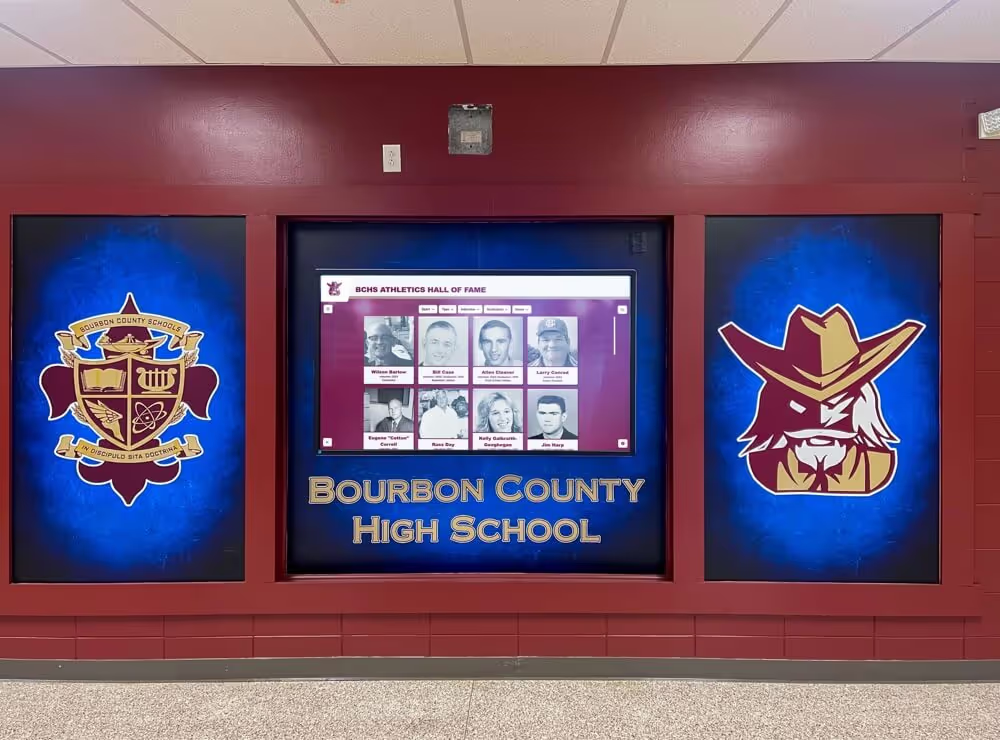
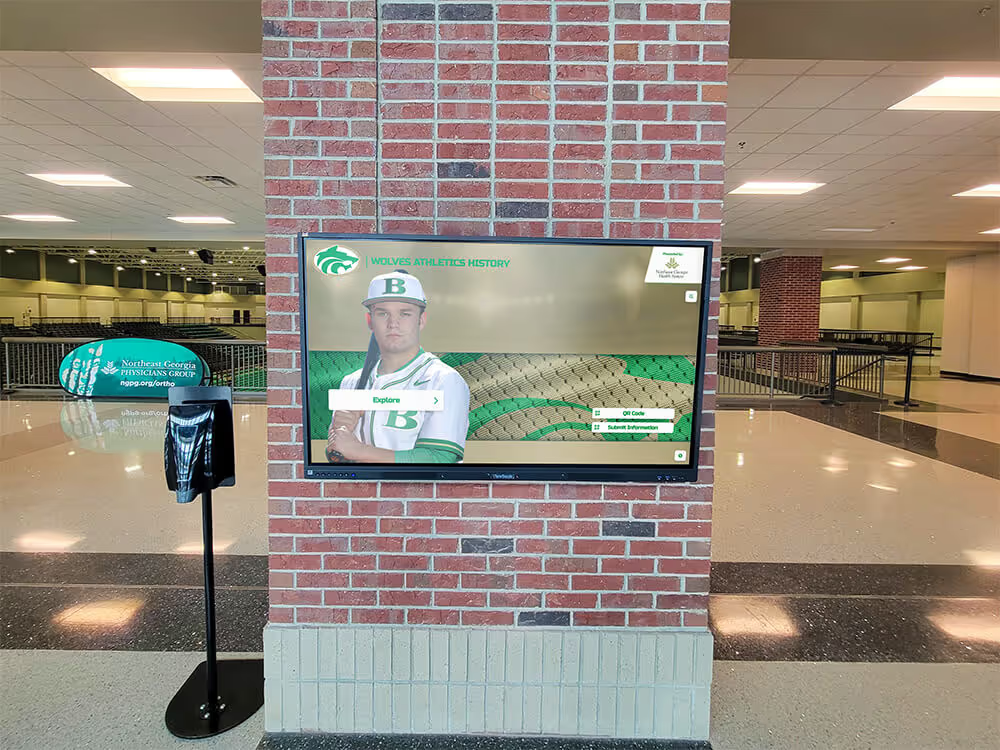
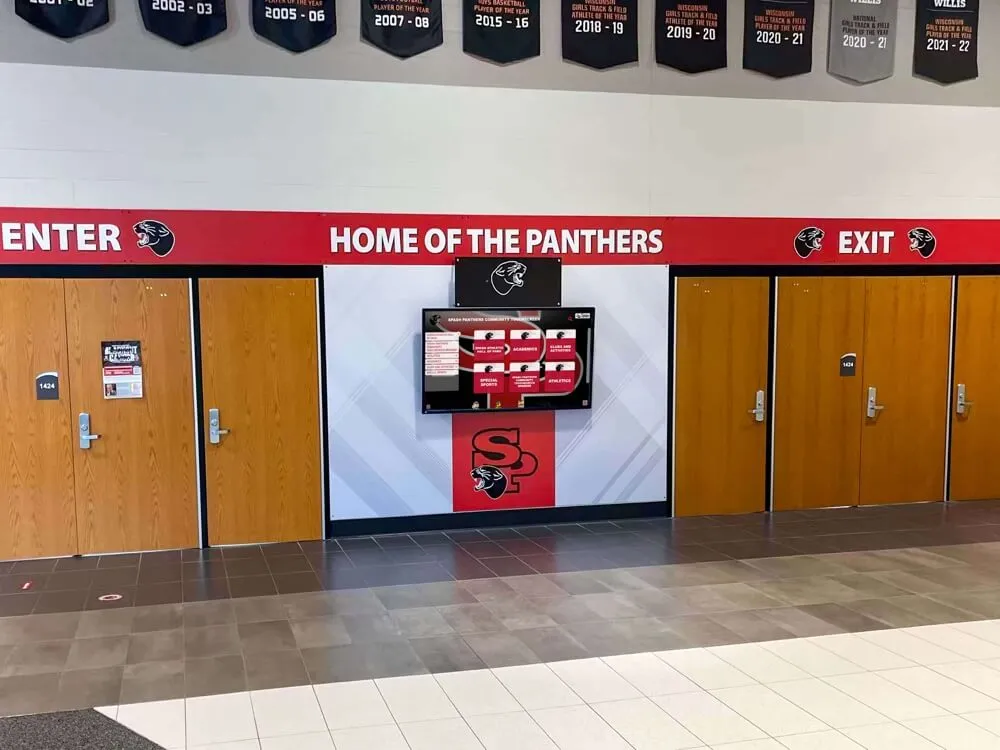
A school hallway recognition display preserves the achievements of student-athletes, scholars, and community honorees — keeping it online through network failover events requires the ARP cache update chain that gratuitous ARP is designed to provide
School recognition displays are among the most visible devices in a campus network — they greet families at athletic events, introduce recruits to institutional legacy, and give community members access to decades of achievement history in the lobby and hallway moments that matter most. They are also among the devices least likely to receive immediate IT attention when a network event occurs, because a frozen or stale-content screen looks superficially functional. Gratuitous ARP failures are silent: no error is logged on the display, no alert fires in the content platform, and the ARP cache sits quietly wrong until either the entry expires or an IT team member connects and runs arp -a. Building the eight-step verification procedure in this guide into the school’s standard failover runbook — and confirming GARP propagation through the recognition display VLAN during planned maintenance windows — ensures that the next gateway failover is a non-event for the recognition program rather than an explanation owed to the principal and the athletic director the following morning.
Rocket Alumni Solutions builds school recognition displays designed to coexist with enterprise network security configurations — with IT-friendly deployment documentation and content platforms that keep athletic hall-of-fame records, award histories, and inductee profiles current through network changes.