



When a school’s digital hall of fame display drops its connection every few minutes—content freezes mid-scroll, the management platform dashboard alternates between online and offline, and rebooting the kiosk offers only a brief reprieve before the cycle repeats—the problem often lies not in the display hardware but in a network switching fault called MAC address flapping. MAC flapping occurs when a managed switch detects the same MAC address arriving on two or more of its ports within a short time window. Because a MAC address is supposed to be anchored to a single physical port at any moment, the switch has no reliable path to forward frames to that device, and the recognition display suffers intermittent outages as a result. The fault is invisible to anyone watching the screen from the hallway but shows up clearly in switch logs once you know where to look.
School recognition displays—whether a lobby touchscreen honoring athletic hall of fame inductees, a digital trophy case outside the gymnasium, or an awards kiosk near the main office—are always-on network devices that connect to cloud content platforms for athlete profile updates, new records, and event-driven content changes. Intermittent connectivity caused by MAC flapping appears to staff and administrators as display malfunction, prompting hardware replacement calls that replace the wrong component. A structured school recognition display MAC address flapping diagnosis traces the fault to the correct layer—the switching infrastructure—and resolves it without touching the display hardware at all.
Quick answer: On a Cisco IOS switch, run show logging | include MAC or show mac address-table notification changes and look for entries repeating the same MAC address on two different ports within seconds of each other. Note the two competing ports. Physically inspect both Ethernet runs for an accidental loop, misconfigured port-channel, or unauthorized media converter. If no physical loop exists, check Spanning Tree with show spanning-tree vlan <id> for recent topology changes. Eliminate the redundant path or correct the STP configuration and the flapping stops.

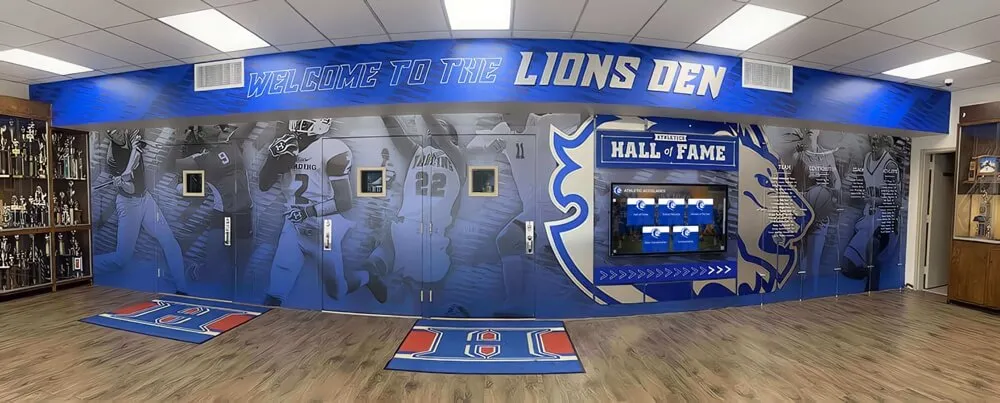
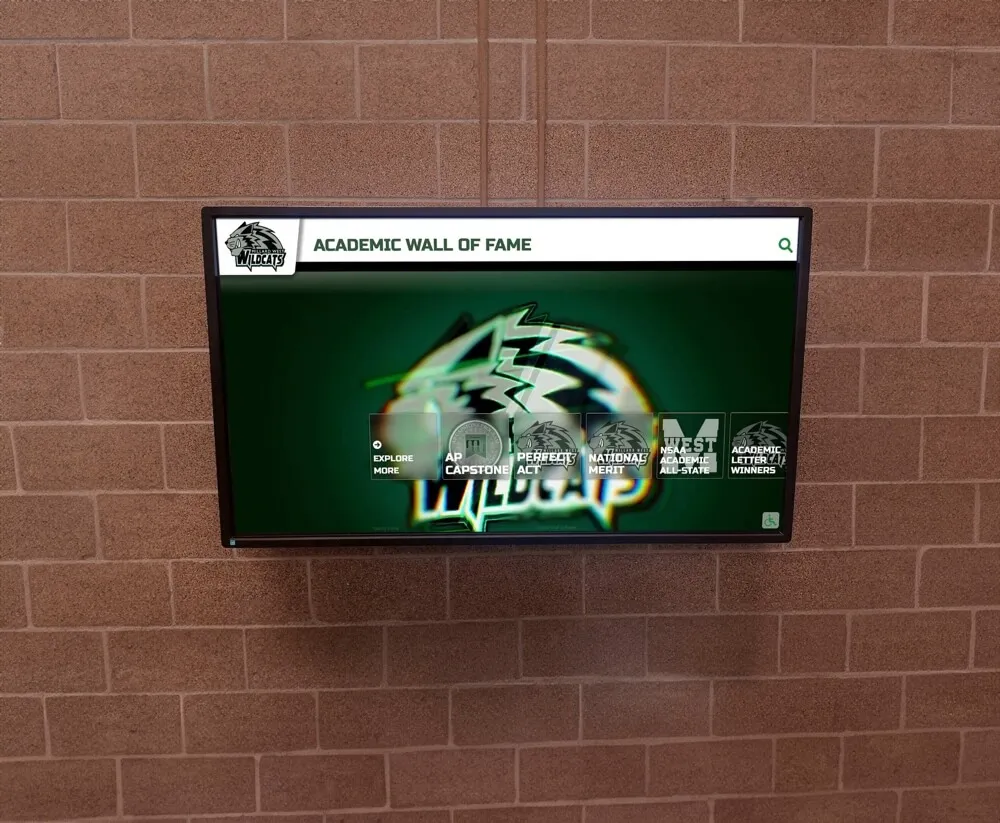
A recognition display with intermittent connectivity and frozen content is a common symptom of MAC address flapping — the fault sits in the network switching infrastructure, not the display itself
What MAC Address Flapping Is and Why School Switches Log It
Every Ethernet network interface has a MAC address — a 48-bit hardware identifier assigned to the network adapter. Managed switches maintain a MAC address table (also called the CAM table or forwarding table) that maps each known MAC address to the switch port on which it was last seen. When a frame arrives on a port, the switch reads the source MAC, records it against that port, and forwards the frame toward the destination MAC using the table. This learning process happens continuously and passively — the switch updates its table every time a frame arrives.
MAC address flapping occurs when the switch sees the same source MAC address arrive on a different port than where it was previously recorded, and this movement happens rapidly and repeatedly — not once as in a legitimate device migration, but dozens or hundreds of times per minute. The switch updates the table on each new arrival, then must relearn the location when the next frame arrives from the competing port. The MAC table entry bounces back and forth between two (or more) ports, producing log entries that label the event as a flap, move, or MAC notification depending on the switch vendor.
Common causes in school network environments include:
- Physical cable loops — a patch cable accidentally connecting two ports on the same switch, or two network drops in a hallway patched together in the closet
- Spanning Tree topology changes — a STP reconvergence event that briefly makes the same device reachable via two paths before STP blocks one
- Media converters or wireless bridges — a device inserted between the switch and the recognition display that bridges two network segments and creates an unintended loop
- Misconfigured port-channels or LAG — two physical links between switches not bundled into the same LACP group, causing both to forward traffic independently
- Duplicate MAC addresses — rare but possible when a recognition display OS image was cloned from another device without resetting the network interface identifier
For school IT teams managing both the network infrastructure and the recognition technology stack, MAC flapping is worth diagnosing promptly. Beyond disrupting the display, a high flap rate can elevate switch CPU utilization, generate excessive log volume, and in severe cases trigger STP topology change notifications that temporarily disrupt other devices on the same VLAN.
How MAC Flapping Disrupts Recognition Display Content Updates
Recognition displays connect to cloud management platforms to receive updated athlete profiles, championship records, award rosters, and scheduled content changes. That connection depends on consistent Layer 3 routing, which in turn depends on stable Layer 2 forwarding — the switch must know which port to use to reach the display’s MAC address at any given moment.
When the MAC address flaps between two ports, the switch’s forwarding table for that MAC is in constant flux. Frames destined for the display may be sent to the wrong port — the port where the MAC was seen most recently, which may not be the port where the display currently has a stable connection. The result at the display level looks like:
- Frozen content — the kiosk shows the last successfully fetched update and does not reflect new inductions, record changes, or scheduled announcements
- Intermittent management platform disconnects — the platform dashboard marks the display offline when its periodic heartbeat fails, then online again when a brief stable window allows the heartbeat through
- Failed software updates — automatic firmware or application updates that require a sustained TCP connection fail mid-download, leaving the display on an older software version
- Unpredictable reboot behavior — rebooting the display may temporarily resolve symptoms (a fresh DHCP lease and ARP exchange can briefly stabilize the MAC table entry) before flapping resumes
School administrators and athletic directors who manage recognition content for hall of fame inductees, all-state selections, and presidential academic fitness award honorees encounter these symptoms as a content management problem — the display doesn’t show the right information — when the root cause is a network switching fault. IT teams who understand this connection can reach the correct diagnosis faster.
Pre-Diagnosis Checklist
Collect the following information before running diagnostic commands. Incomplete preparation leads to inconclusive results or wasted time tracing the wrong network path.
| Item | Why It Matters | How to Collect |
|---|---|---|
| Recognition display MAC address | Needed to search switch logs and MAC tables | Check device network settings, or run ip link show (Linux) / ipconfig /all (Windows) on the display host |
| Switch hostname and management IP | You need CLI access to the switch serving the display’s port | Network diagram or LLDP neighbor output from adjacent switches |
| Display’s switch port identifier | Confirms which port the display is physically connected to | show mac address-table address <display-MAC> on the switch |
| VLAN ID for the recognition display segment | Narrows STP and log searches to the relevant VLAN | Port configuration via show interface <port> switchport |
| Switch vendor and OS version | CLI commands differ across Cisco IOS, Cisco NX-OS, HP/Aruba AOS, Juniper EX, and others | show version on the switch |
| Whether the display uses DHCP or a static IP | Static IP displays produce gratuitous ARPs that help identify the MAC in logs | Display network configuration |
| Recent network changes (new cabling, VLAN changes, closet work) | Most flapping events follow a physical or configuration change | Facilities/IT change log |
| Whether symptoms are constant or periodic | Constant flapping suggests a physical loop; periodic suggests STP topology changes | Correlation of symptom timestamps with switch log timestamps |
The last two items are particularly valuable before touching the switch CLI. If a hallway cable was extended or a new patch was made in the network closet in the days before symptoms appeared, that physical change is almost certainly the cause. If symptoms correlate with specific times of day — morning arrival when many devices connect simultaneously, or after evening cleaning when someone may have disturbed a cable — that pattern narrows the search.

Recognition displays in school hallways depend on stable Layer 2 forwarding — diagnosing MAC flapping at the switch layer prevents unnecessary display hardware replacement
Step-by-Step School Recognition Display MAC Address Flapping Diagnosis
Step 1: Access the Switch and Check for MAC Flapping Log Entries
Connect to the switch CLI via SSH or the management console. Run the appropriate log search command for your switch platform.
Cisco IOS / IOS-XE:
show logging | include MAC_MOVE
show logging | include MAC-FLAP
show logging | include MACFLAP
A positive result looks like:
%SW_MATM-4-MACFLAP_NOTIF: Host 00:1a:2b:3c:4d:5e in vlan 20 is flapping between port Gi0/1 and port Gi0/3
Cisco NX-OS:
show logging last 200 | grep -i "mac"
show mac address-table notification changes
HP/Aruba AOS-S (ProCurve/Provision):
show log | include MAC
show arp
Juniper EX:
show log messages | match "mac|flap|move"
If flapping entries appear with the display’s MAC address, note both port identifiers — for example, Gi0/1 and Gi0/3 in the Cisco example above. These are the two ports competing for the same MAC. If the display’s exact MAC does not appear in logs but symptoms match, proceed to Step 2 using the display’s assigned switch port as the starting point.
Step 2: Check the MAC Address Table for the Display
Confirm which port or ports the switch currently associates with the display’s MAC address.
Cisco IOS / IOS-XE:
show mac address-table address 00:1a:2b:3c:4d:5e
A stable, non-flapping entry shows one port. A flapping entry may show the most recently learned port, which changes each time you run the command if flapping is active. Run the command twice, thirty seconds apart — if the port changes between runs, active flapping is confirmed.
Check the total entry count for the display’s port:
show mac address-table interface GigabitEthernet0/1 | count
An access port connected only to a recognition display should have one or two MAC entries (the display itself, plus possibly an IP phone if the port has a voice VLAN). If the count is unusually high — dozens or hundreds of MACs on an access port — that port may be connected to an unmanaged switch or hub that multiplies the MAC address population and increases flapping risk.
Step 3: Physically Inspect Both Competing Ports
With the two competing port identifiers in hand, physically trace where each port’s cable terminates.
- In the network closet, locate the patch panel ports corresponding to the two switch ports. Read the patch panel labels carefully — mislabeled ports are common in school facilities.
- Trace each patch panel port to its wall jack or in-room termination.
- Look for any cable that connects these two wall jacks together — either directly (a patch cable plugging one jack into the other) or through an intermediate device.
- Check whether a media converter, wireless bridge, or unmanaged switch is connected anywhere in the path between the switch and the recognition display. These devices bridge two Ethernet segments and can create loops the managed switch cannot see.
- Look for duplicate cable runs — two Ethernet cables running from the same recognition display to two different wall jacks, both of which are patched to the switch.
Physical loops are the most common cause of MAC flapping in school environments. A maintenance worker running a new cable for a camera, phone, or additional display may inadvertently create a loop if they connect both ends of a run without removing the original connection. Hallway closets that have grown organically over years frequently contain unrecorded patch cables connecting ports that should be independent.
Step 4: Examine Spanning Tree for Recent Topology Changes
If no physical loop is visible, check Spanning Tree Protocol (STP) for evidence that a topology change is causing temporary path ambiguity.
Cisco IOS / IOS-XE:
show spanning-tree vlan 20 detail | include topology
show spanning-tree vlan 20 detail | include "changes\|Topology"
Look for a high Number of topology changes counter or a recent Last topology change timestamp that correlates with the onset of display symptoms. A STP topology change occurs when a port transitions between forwarding and blocking states — during reconvergence, frames may briefly reach the switch via two paths before STP stabilizes, which produces MAC flapping.
Check which port is the root port and which are designated/blocked for the display’s VLAN:
show spanning-tree vlan 20
If STP is not configured for the display’s VLAN, or if all ports are designated (no ports are blocking), STP is not preventing loops on that segment. In a flat network with a single switch, this is normal. On a multi-switch topology, all ports designated on a VLAN with redundant physical paths indicates a loop that STP has failed to detect or block.
For school networks that manage athletic archive content workflows and recognition platform connectivity across multiple switches, STP configuration on the recognition display VLAN should be verified whenever new switches or inter-switch links are added.
Step 5: Check for Unmanaged Switches, Media Converters, and Wireless Bridges
Even without a visible physical loop, intermediate Layer 2 devices between the managed switch and the recognition display can cause MAC flapping if they connect two managed switch ports in an uncontrolled way.
Common intermediate devices found in school environments:
| Device Type | Why It Causes Flapping | How to Identify |
|---|---|---|
| Unmanaged switch (mini hub) | Allows multiple devices to share one switch port; if that mini-switch also connects to a second managed switch port, frames loop | Check for a multi-port device plugged into the wall jack that the display connects to |
| Fiber-to-copper media converter | Bridges a fiber uplink to an Ethernet port; if both the fiber and Ethernet ends connect to the managed switch, a loop forms | Check for converter boxes inline between the display and the wall jack |
| Wireless bridge (point-to-point) | Bridges two physical locations wirelessly; if the bridge’s Ethernet port also connects to the managed network on the same VLAN, a loop can form | Check for wireless bridge devices at either end of the display’s cable run |
| IP phone with built-in switch | IP phones with a pass-through Ethernet port can create loops if both the PC port and the uplink port are on the same VLAN | Check for an IP phone between the managed switch port and the display |
If any of these devices are present, trace both Ethernet connections on the device to their switch port destinations. If both ports terminate at managed switch ports, a loop exists through the intermediate device unless STP is correctly blocking one path.
Step 6: Test for Duplicate MAC Addresses
If no physical loop or STP issue explains the flapping, check whether another device on the network shares the recognition display’s MAC address. Duplicate MACs are rare on physical hardware but occur when:
- A recognition display OS image was cloned from another display without resetting the network interface (common in rapid multi-site deployments)
- A virtual machine or container running on a server uses a manually assigned MAC that matches the display’s hardware MAC
- A network interface card was replaced with a used unit that retains a previously recorded MAC
Check for duplicate MAC addresses across the switch:
show mac address-table | include 001a.2b3c.4d5e
If the same MAC appears on two ports simultaneously, check the second port’s connected device. On Linux-based recognition displays, the MAC can be verified or reset via:
ip link show eth0
On Windows-based displays, the MAC appears in Device Manager under the network adapter properties. A locally administered MAC (second bit of the first octet set to 1) indicates the MAC was manually assigned and may be a duplicate.
For IT teams managing academic honors diploma display systems across multiple buildings, tracking MAC addresses in a device inventory spreadsheet prevents duplicate assignments during rapid deployments. A simple duplicate detection checklist applied at device provisioning time catches this before the display goes live.
Step 7: Implement the Fix and Verify Resolution
After identifying the root cause, implement the appropriate resolution from the table in the next section. After making the change, verify that flapping has stopped:
- Clear the MAC address table on the affected VLAN:
clear mac address-table dynamic vlan 20
- Wait two minutes, then check whether the display’s MAC now appears stably on a single port:
show mac address-table address 001a.2b3c.4d5e
- Monitor the switch log for new MAC flapping entries for the display’s MAC:
show logging | include 001a.2b3c.4d5e
Confirm from the recognition platform’s management dashboard that the display shows a stable, sustained online status without the periodic disconnects that characterized the flapping condition.
Confirm from the display itself that content is updating correctly — new athlete profiles, record changes, and scheduled announcements are appearing as expected.
Deploying recognition displays across multiple school buildings and want network compatibility documentation before installation? Rocket Alumni Solutions works with school IT teams on switch configuration requirements, VLAN planning, and display network prerequisites.
Common Causes and Fixes Quick Reference
| Root Cause | Log Evidence | Fix |
|---|---|---|
| Physical cable loop in closet | MAC flapping between two access ports; cable runs to same wall area | Remove the looping patch cable; verify patch panel labels |
| Unmanaged switch creating a loop | High MAC count on access port; flapping between access port and uplink | Remove unmanaged switch or connect it to only one managed port |
| Media converter with two managed connections | Flapping between fiber port and copper access port | Verify only one end of the converter chain connects to a managed switch port |
| STP topology change | topology changes counter incrementing; recent Last topology change timestamp | Identify the unstable port triggering STP reconvergence; enable PortFast on access ports serving end devices |
| Wireless bridge loop | Flapping on display VLAN with nearby wireless device | Place bridge on isolated VLAN or verify STP blocks one path |
| Duplicate MAC address | Same MAC on two ports in show mac address-table | Re-provision duplicate device with unique MAC; update device inventory |
| Misconfigured port-channel | Flapping on inter-switch links | Verify LACP group membership; confirm both links are in same channel-group |
When MAC Flapping Returns After a Fix
If MAC flapping resumes after a physical loop is removed or a STP configuration change is applied, check for secondary causes:
- Intermittent cabling fault — a damaged cable that makes contact only when physically disturbed can create an intermittent loop. Replace suspect cables even if continuity tests pass; intermittent shorts do not always show as continuity failures.
- STP PortFast misconfiguration — enabling PortFast on a port that connects to another switch (not an end device) disables STP on that port, allowing loops to form. Verify that PortFast is only applied to ports serving end devices like recognition displays, IP cameras, and workstations.
- Periodic device reboots — a display that reboots on a schedule (nightly restart policy) sends gratuitous ARPs on startup. If a stale ARP entry for the display exists at another network device, the switch may see the display’s MAC from two directions briefly. This typically resolves within seconds and does not produce sustained flapping — if the flapping lasts longer than 30 seconds after a reboot, a physical issue is present.
- VLAN reassignment — if the display’s port was moved to a different VLAN but an old binding remains in the MAC address table of another switch in the path, frames for the old VLAN may briefly route incorrectly. Clear the MAC address table after any VLAN configuration change.
Preventing MAC Flapping on Recognition Display Network Segments
School IT teams can reduce the risk of future MAC flapping on recognition display segments through several switch configuration practices:
Enable PortFast on all recognition display access ports. PortFast causes the port to skip the STP listening and learning states and immediately enter forwarding when a device connects. This eliminates the 15–30 second STP convergence delay on display boot, and it removes the brief forwarding ambiguity that STP convergence creates.
interface GigabitEthernet0/1
 spanning-tree portfast
Enable BPDU Guard alongside PortFast. BPDU Guard shuts down a PortFast-enabled port if it receives a STP Bridge Protocol Data Unit — which would only arrive if another switch (not an end device) connected to the port. This prevents someone from plugging an unmanaged switch into a display port and accidentally creating a loop.
interface GigabitEthernet0/1
 spanning-tree portfast
 spanning-tree bpduguard enable
Enable port security with a MAC address limit. Setting a maximum of one MAC address on the recognition display’s access port prevents unmanaged switches from multiplying MAC entries on that port and provides an early warning if someone inserts an unauthorized device.
interface GigabitEthernet0/1
 switchport port-security maximum 1
 switchport port-security violation restrict
 switchport port-security
Document display MAC addresses in a central inventory. Recording each recognition display’s MAC address, switch port, VLAN, and IP assignment in a maintained inventory — whether a spreadsheet, network management platform, or digital signage MDM system — enables fast identification during future troubleshooting and prevents duplicate MAC assignments during new deployments.
Use dedicated VLANs for recognition displays. Placing recognition displays on a dedicated VLAN separate from student devices, IP phones, and other equipment limits the blast radius of any MAC flapping event and simplifies log searches by reducing the number of MAC entries on the display’s segment.
These practices align with the broader network hardening approaches that school IT teams apply to managed devices in publicly accessible areas — including the hallways, lobbies, and athletic corridors where recognition displays honor inductees, academic achievers, and championship teams.
Frequently Asked Questions
Q: Does MAC address flapping always indicate a physical loop?
A: No. While a physical loop is the most common cause, MAC flapping also occurs during STP topology changes (temporary path ambiguity during reconvergence), from duplicate MAC addresses across two devices, from misconfigured port-channel groups, and from intermediate Layer 2 devices like media converters connected incorrectly. The diagnosis steps above distinguish these causes based on log patterns and port inspection.
Q: Can I fix MAC flapping by rebooting the recognition display?
A: Rebooting the display typically provides a brief improvement — the fresh ARP exchange and DHCP renewal temporarily stabilize the MAC table entry — but flapping resumes as soon as the underlying cause (a physical loop or STP event) reasserts itself. Rebooting the display does not fix the switching-layer fault. The fix must be applied at the switch or the physical cabling.
Q: How many MAC flapping events per minute indicate a serious problem?
A: Any sustained flapping — more than a handful of events per minute for the same MAC address — represents a condition that degrades the display’s connectivity. Cisco IOS suppresses repeated MAC flapping notifications to reduce log volume (logging the flap once per 5-second window by default), so log entries undercount the actual event rate. Even a small number of log entries per minute can represent dozens of actual MAC table updates. Resolve flapping regardless of the per-minute count.
Q: Will MAC flapping damage the switch hardware?
A: No. MAC flapping is a software-layer event — the switch CPU processes MAC table updates, which increases CPU utilization during severe flapping, but no physical damage occurs. On older or lower-specification switches, sustained high-rate flapping from a loop can consume enough CPU to affect other switch functions. This is an additional reason to resolve it promptly, but hardware replacement is not required.
Q: Should I replace the recognition display if MAC flapping is the diagnosis?
A: No. MAC flapping is a network infrastructure fault, not a display hardware fault. The display’s network interface is functioning correctly — it sends and receives frames on its assigned MAC address as designed. The problem is that the switching layer cannot determine which port to use to reach that MAC address. Fix the network fault and the display operates normally without any hardware changes. Schools managing recognition programs for hall of fame inductees and athletic archives should document this diagnosis for future reference so similar symptoms are escalated to the network team rather than the display vendor.
Recognition displays carry years of athletic history, academic achievement records, and institutional memory — frozen content caused by a network switching fault undermines the investment schools have made in honoring their students and alumni. A structured school recognition display MAC address flapping diagnosis process traces the fault to the correct layer in under an hour, restores content updates without hardware replacement, and prevents recurrence through straightforward switch configuration changes.
For schools building or expanding recognition programs — from digital athletic hall of fame installations to interactive lobby kiosks honoring decades of achievement — Rocket Alumni Solutions provides content platforms designed for the real-world network environments that school IT teams manage.