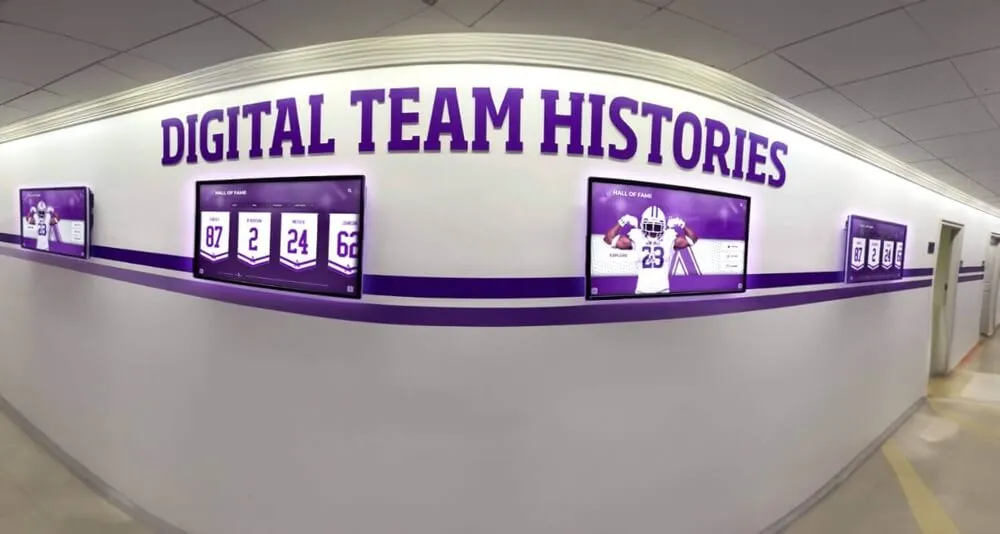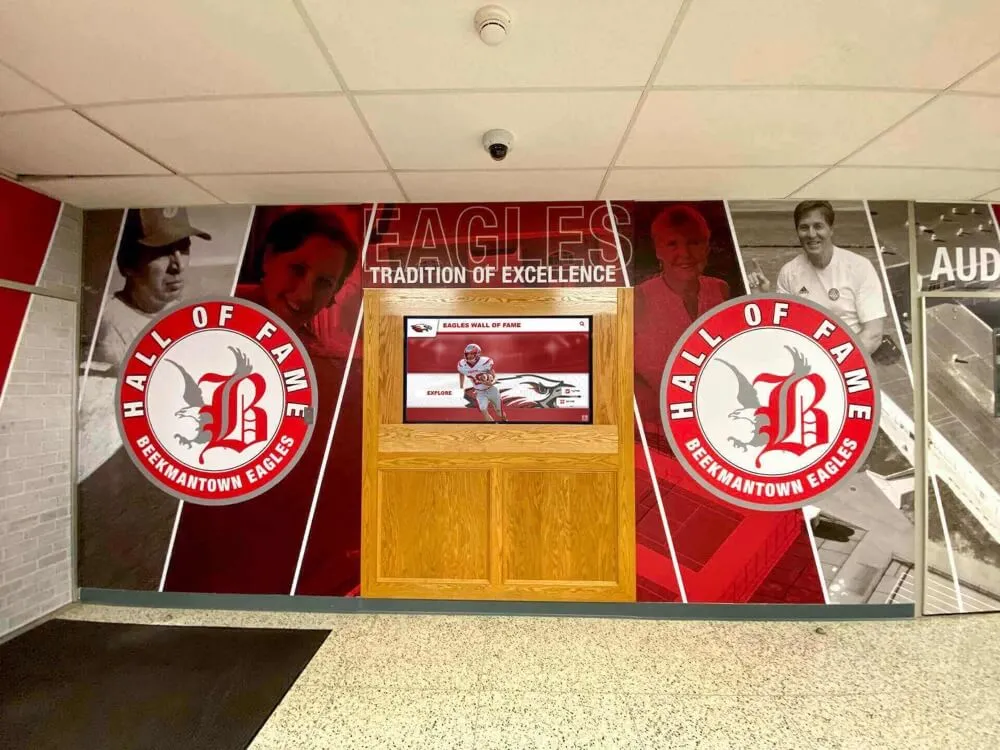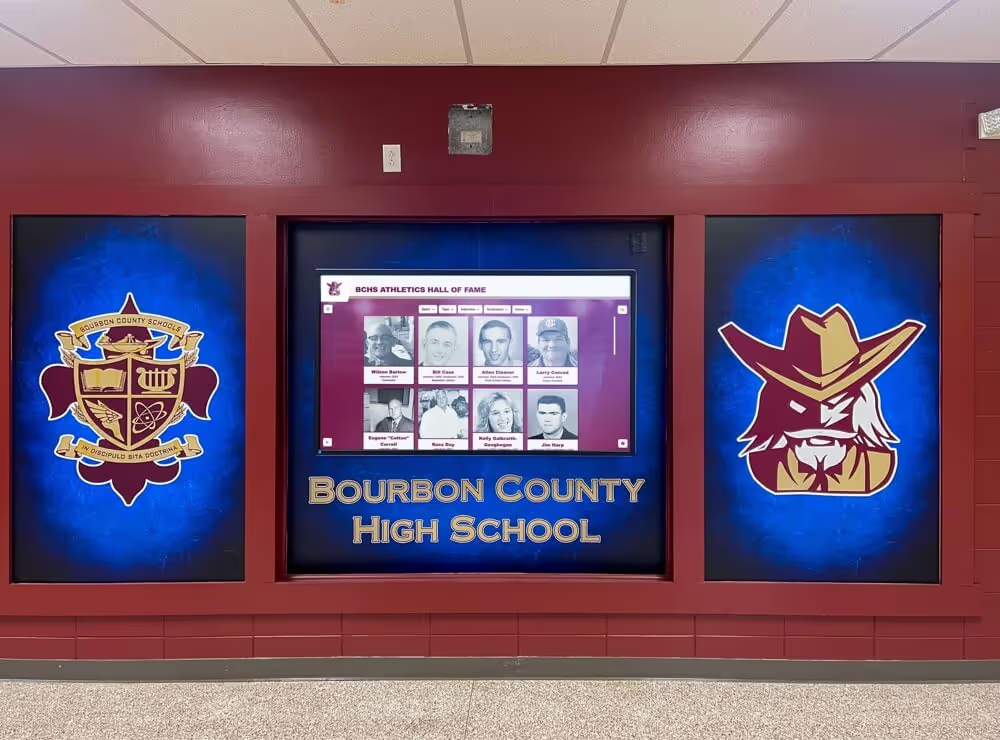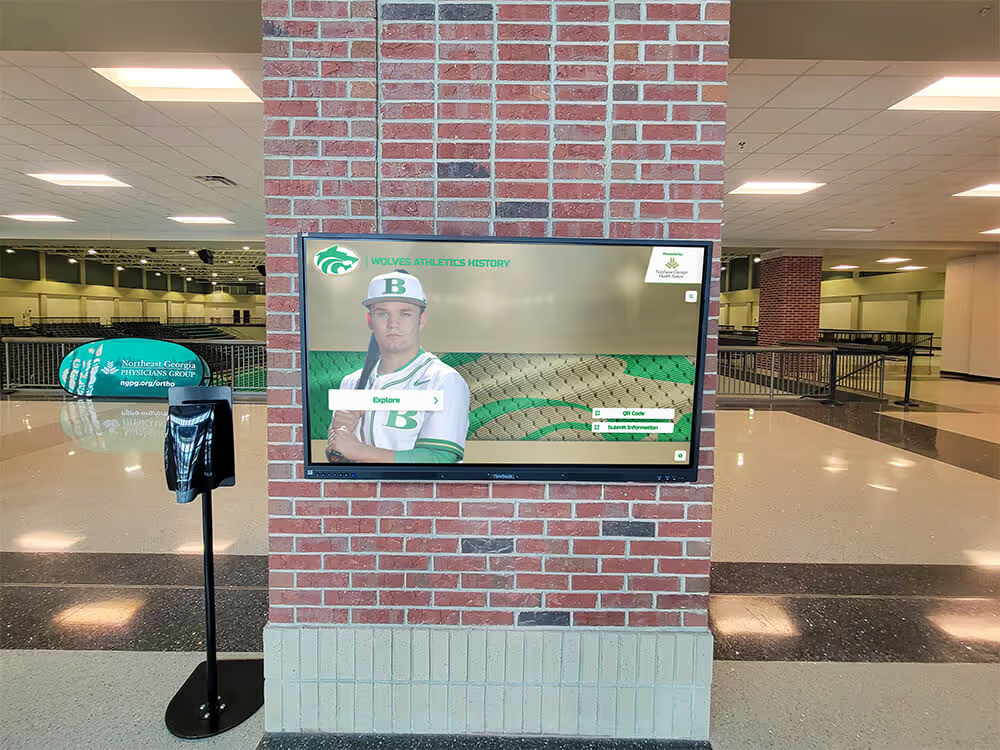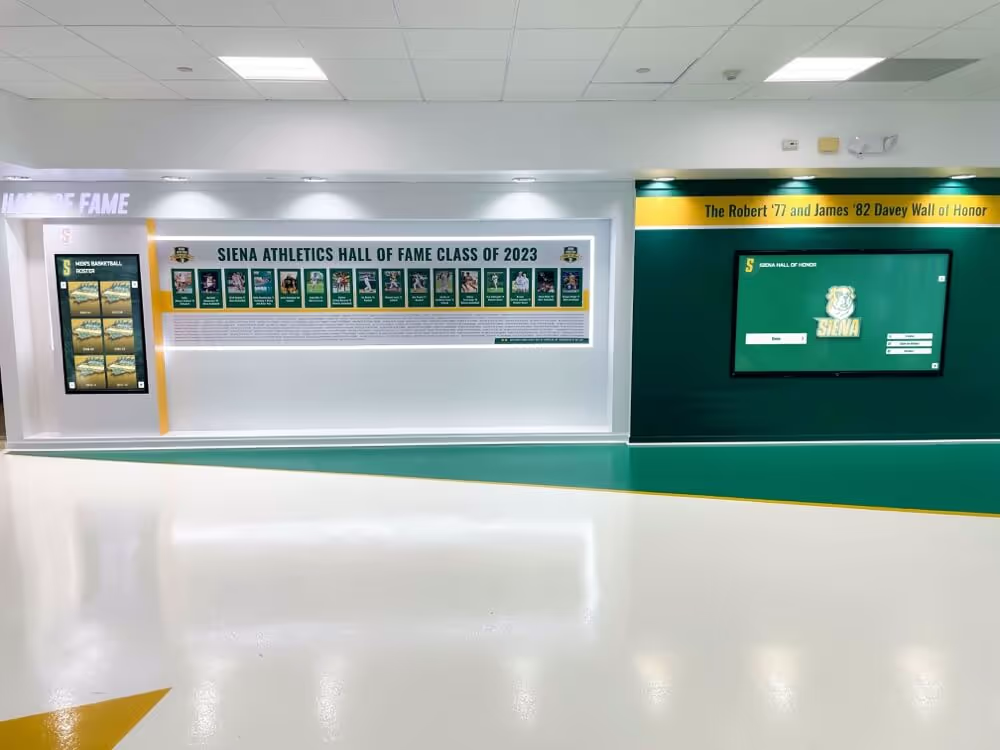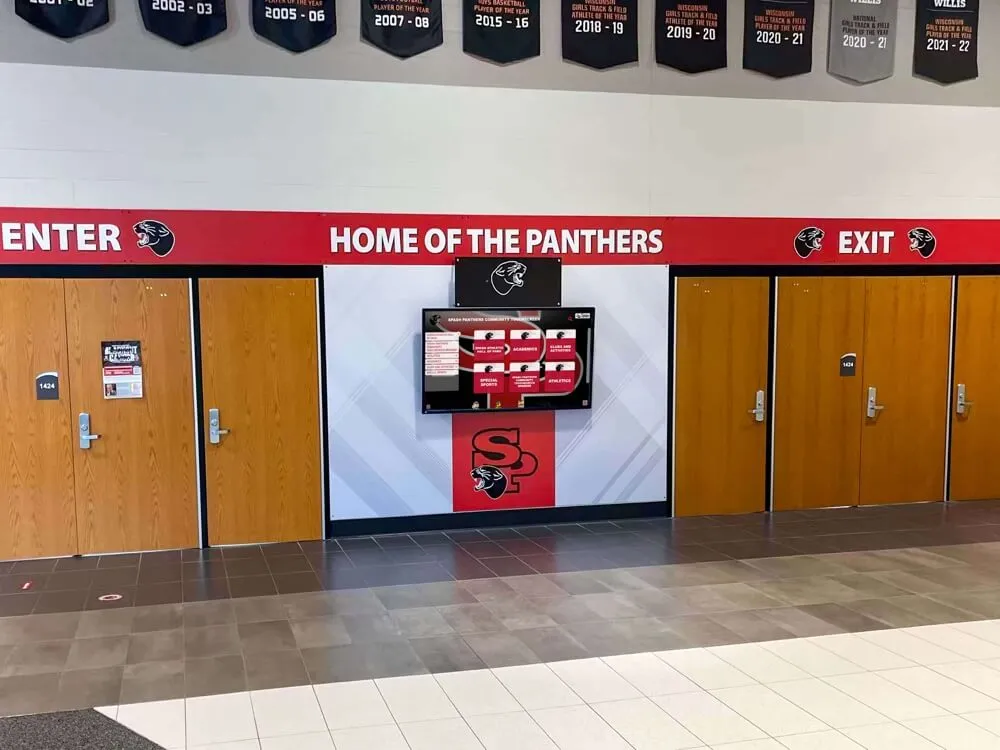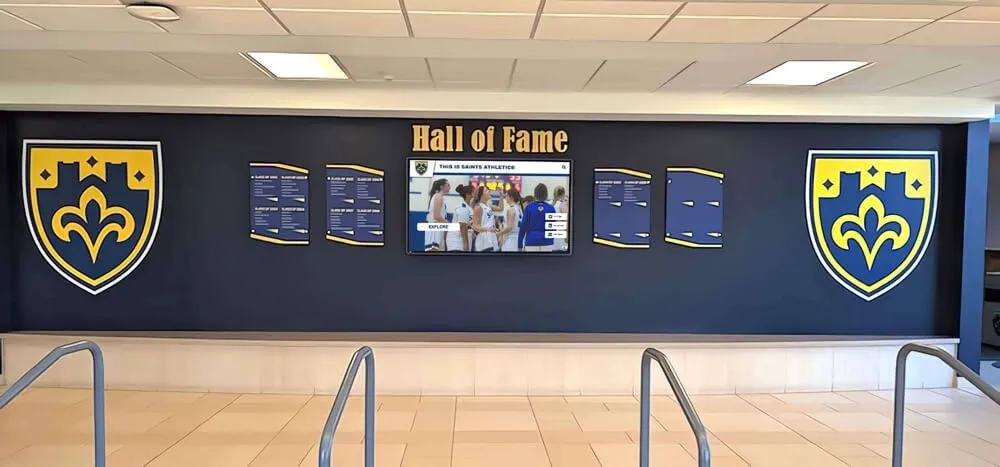




A well-designed school record board does more than display numbers—it transforms athletic achievement into visible institutional legacy, creating powerful motivation for current student-athletes while honoring the performances that define program excellence. When athletes walk past their school’s record board daily, seeing the top performances in their sport establishes tangible benchmarks, making abstract concepts of excellence concrete and attainable.
Yet many schools struggle with record board implementation. Traditional plaques become outdated the moment new records are set, requiring expensive engraving and physical replacement. Static boards lack the space to showcase comprehensive achievement across multiple sports, seasons, and record categories. Maintenance falls behind as updating physical displays demands resources that busy athletic departments simply cannot prioritize consistently.
This comprehensive guide walks athletic directors, coaches, and school administrators through every aspect of school record board planning—from determining which records to track and display formats to choose, through designing layouts that maximize space and implementing maintenance systems that keep recognition current. Whether installing your first record board, modernizing an outdated system, or exploring how digital displays expand recognition capacity beyond physical limitations, you’ll discover proven frameworks for creating record boards that authentically celebrate athletic excellence.
Effective school record boards serve multiple critical functions simultaneously. They establish achievement benchmarks that motivate current athletes toward measurable goals, preserve institutional athletic history across generations, create recruiting advantages by demonstrating program tradition and competitive standards, and provide focal points for senior day celebrations and alumni engagement during homecoming events.

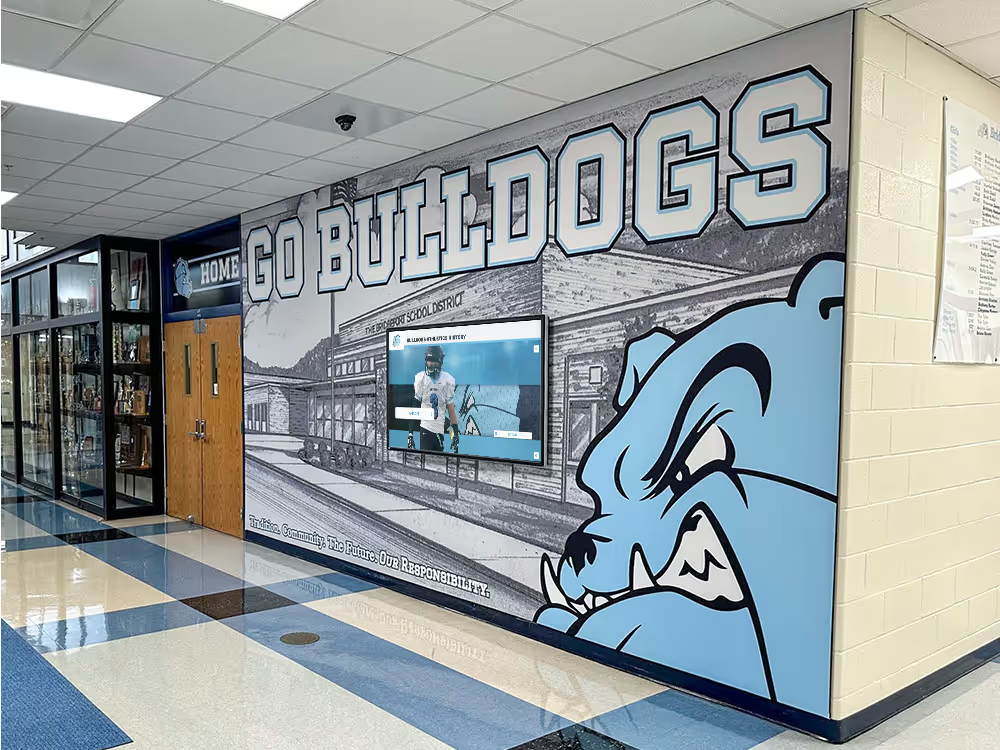
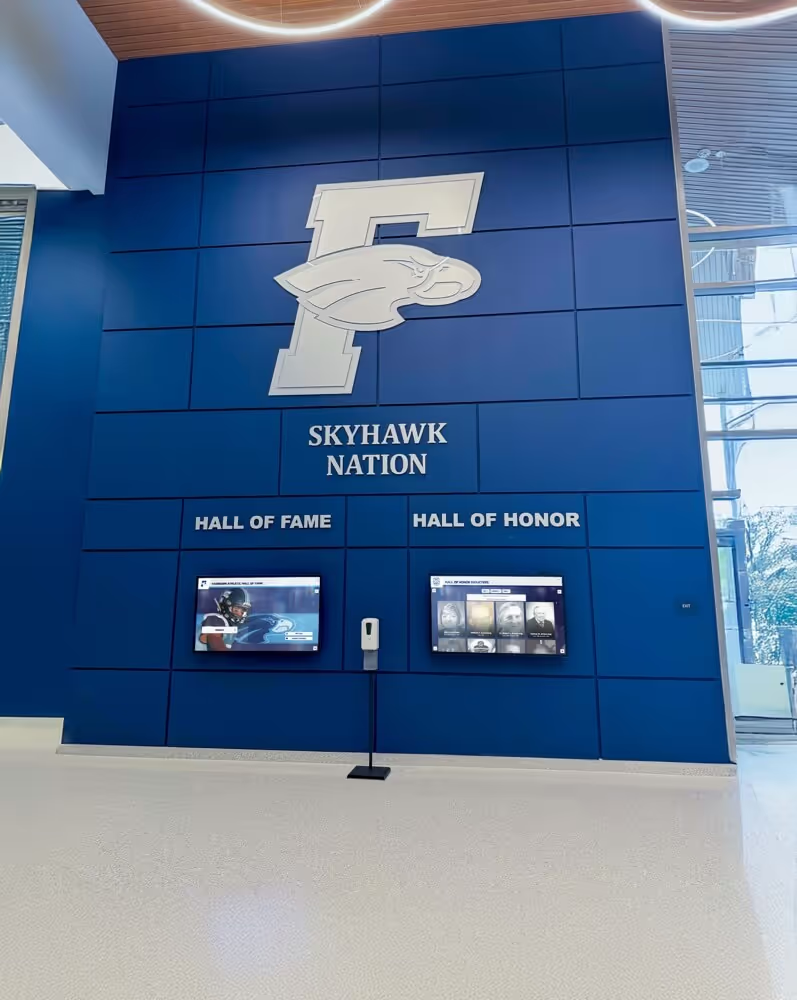
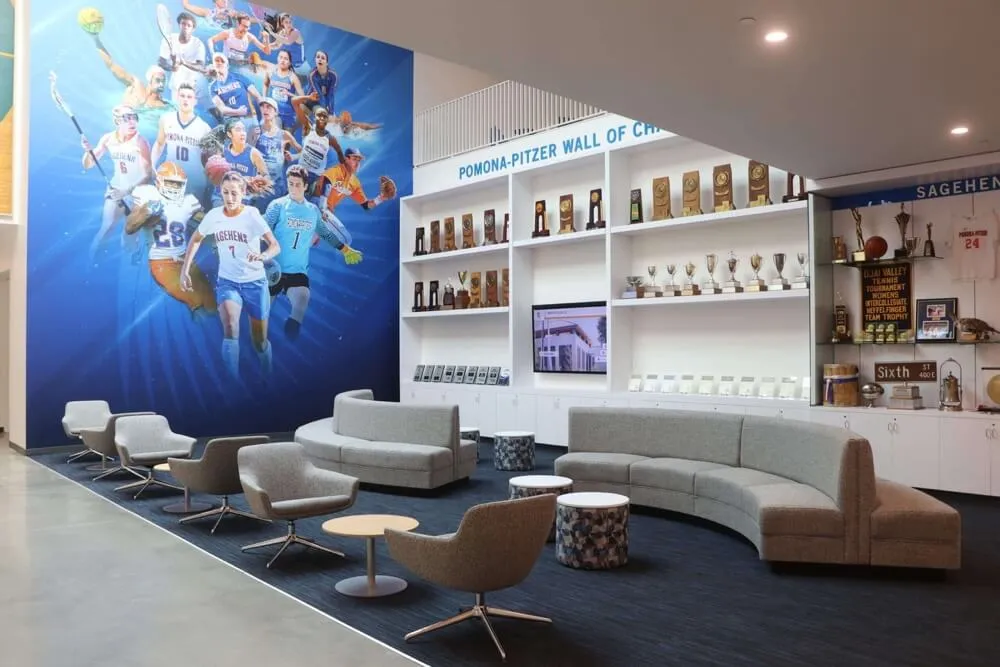
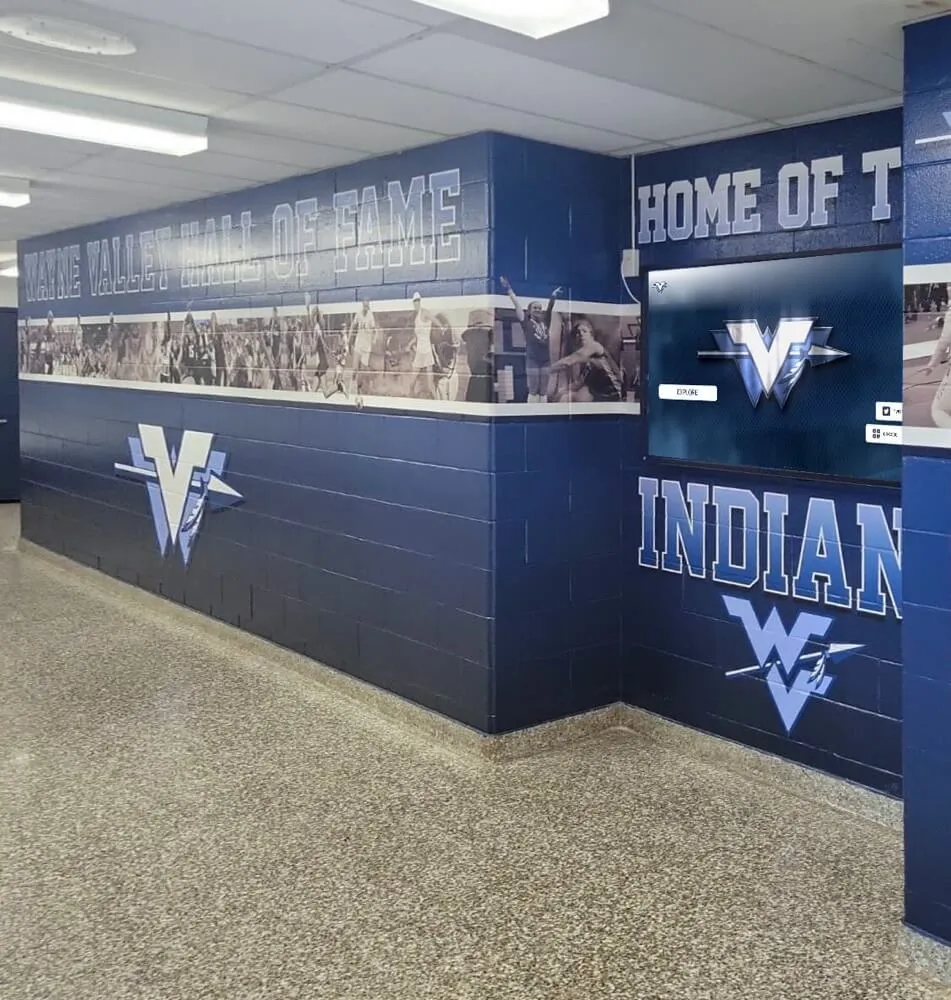
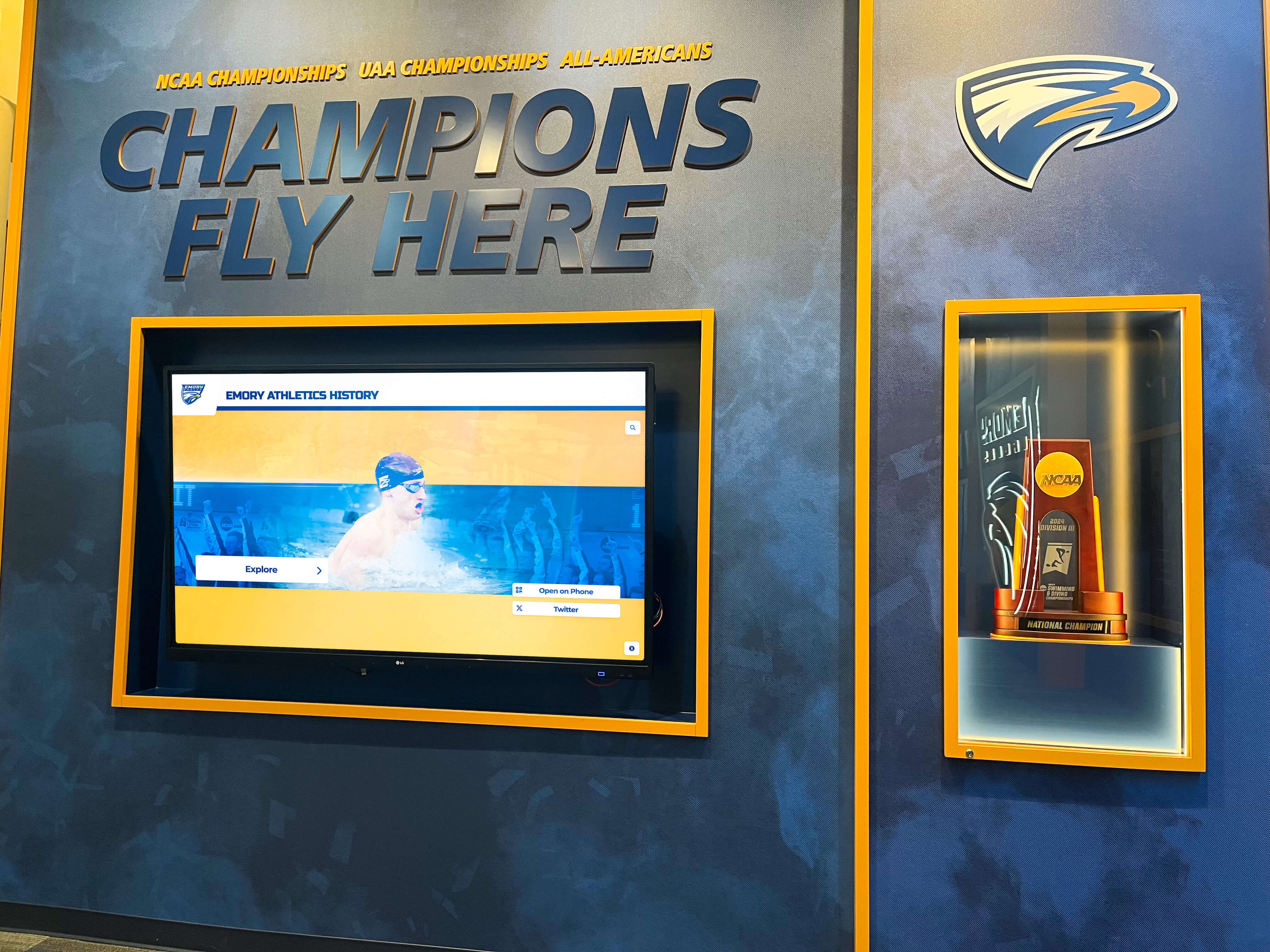
Championship recognition walls combine record displays with trophies and team achievements, creating comprehensive celebration spaces
Determining Which Athletic Records to Track and Display
The first critical decision in building effective school record boards involves selecting which records merit permanent display and which remain archived in statistical databases without prominent physical recognition.
Essential Record Categories for Comprehensive Recognition
Most successful school record boards organize achievement into clearly defined categories enabling systematic tracking across sports:
Individual Season Records
Single-season achievements capture peak performance during a student-athlete’s best year. These records typically include sport-specific statistical leaders: points scored in basketball, goals in soccer, rushing yards in football, strikeouts for baseball pitchers, or times/distances for track and field events. Season records change more frequently than career marks, creating ongoing excitement as current athletes challenge recent benchmarks.
Schools should establish clear seasonal definitions—particularly important for sports like track and field where indoor and outdoor seasons may warrant separate record categories, or swimming programs that maintain dual meet versus championship meet records reflecting different competitive contexts.
Career Achievement Records
Multi-year totals recognize sustained excellence across complete high school athletic careers. Career records honor athletes who demonstrated not just peak performance but remarkable consistency and longevity. These marks typically include career scoring totals, career wins for wrestlers, career saves for baseball, total goals across soccer careers, or lifetime best performances athletes achieved during any point in their high school competition.
Athletic directors should determine waiting periods before career records become official—typically requiring graduation or athletic eligibility conclusion ensuring records represent complete careers rather than in-progress totals subject to change.
Team Season Records
Beyond individual achievement, many programs track exceptional team performances during remarkable seasons. Team records might include highest team scoring average, most wins in a season, longest winning streaks, fewest points allowed defensively, best team batting average, or championship qualification achievements representing program milestones.
Team records contextualize individual achievements within collective success, demonstrating that exceptional athletes compete within strong programs rather than as isolated performers.
Championship and Tournament Records
Post-season performances often warrant separate recognition categories acknowledging that championship competition represents elevated pressure and competition quality. Records might track individual tournament scoring records, championship game performances, state tournament achievements, or conference championship statistical leaders.
Tournament-specific records celebrate athletes who elevated performance during the most consequential competitions, demonstrating mental toughness and competitive excellence beyond regular season play.
Comprehensive approaches to athletic recognition programs help schools develop balanced recognition systems honoring diverse achievement types across athletic programs.
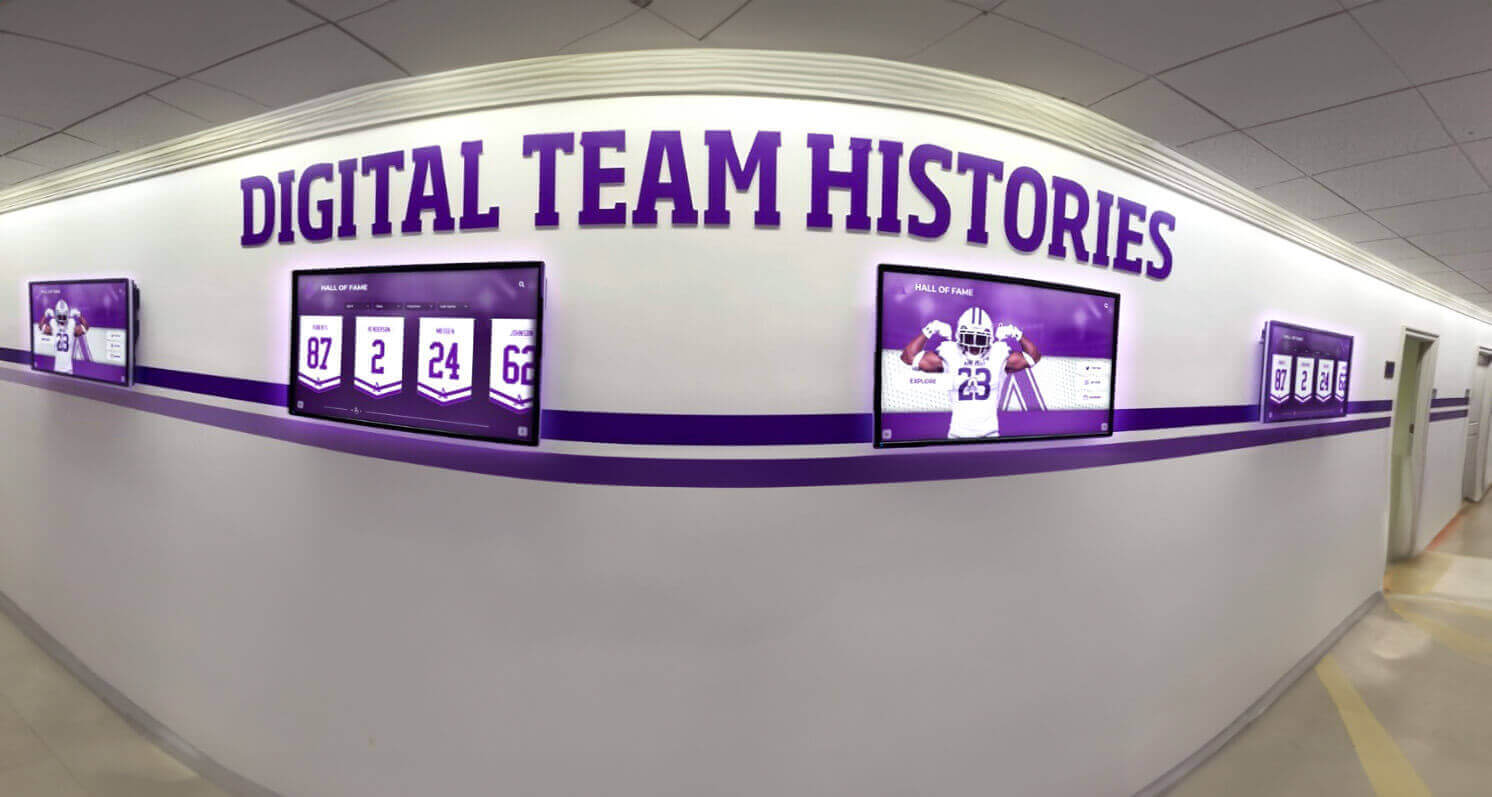
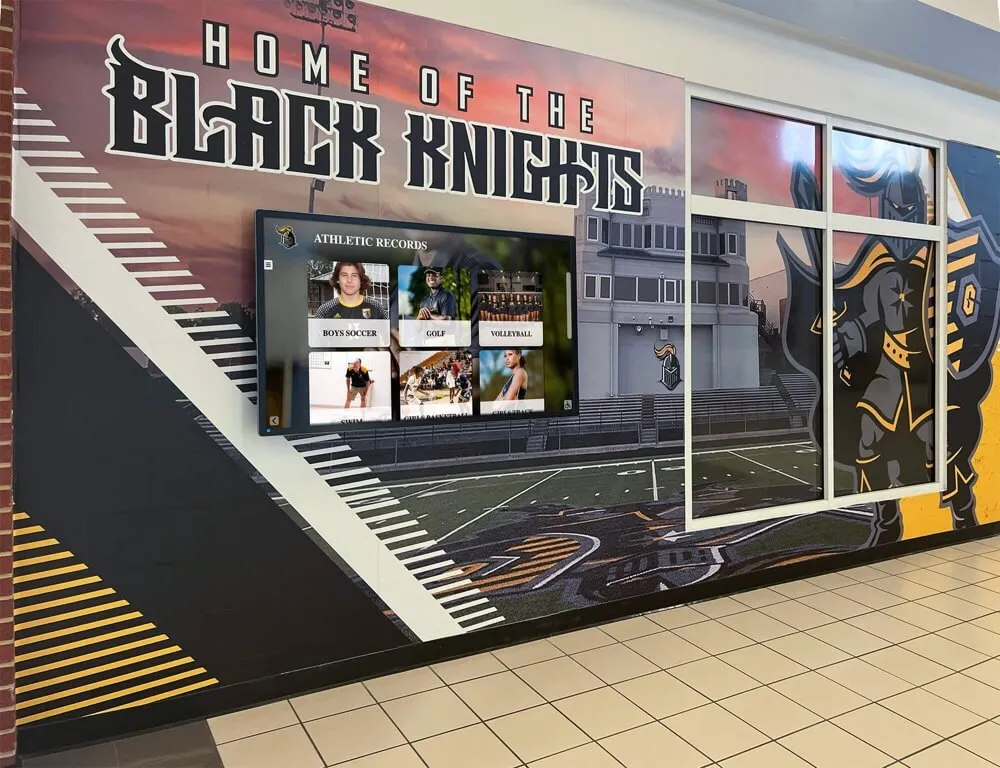
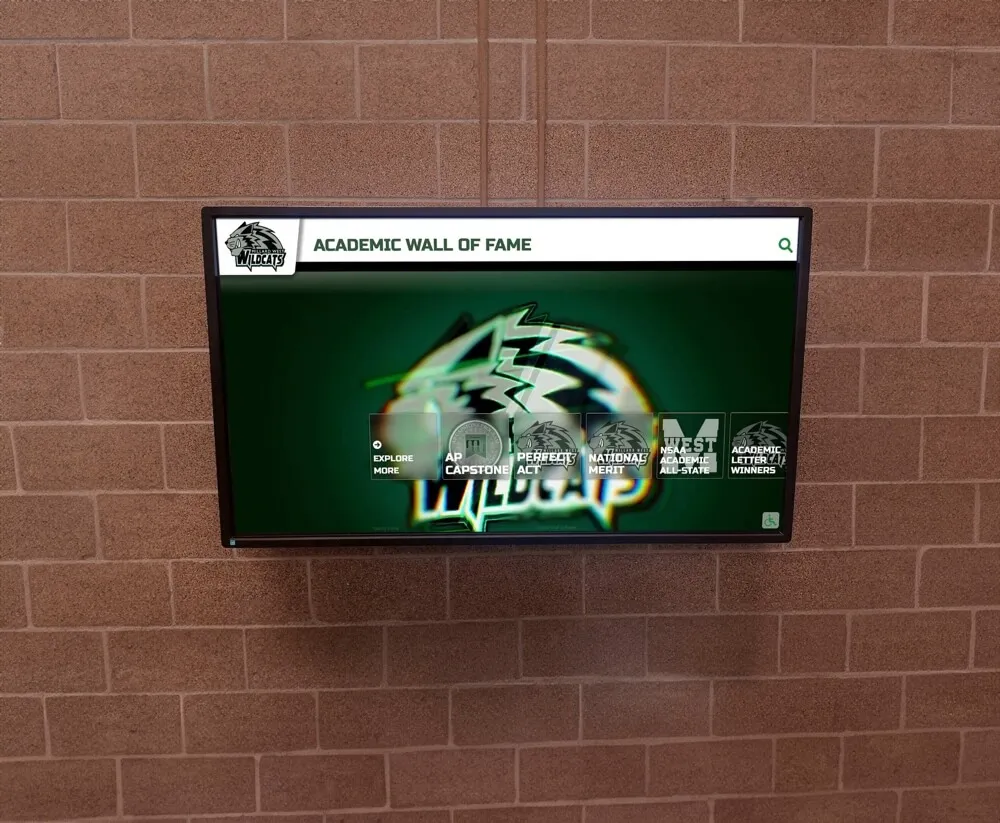
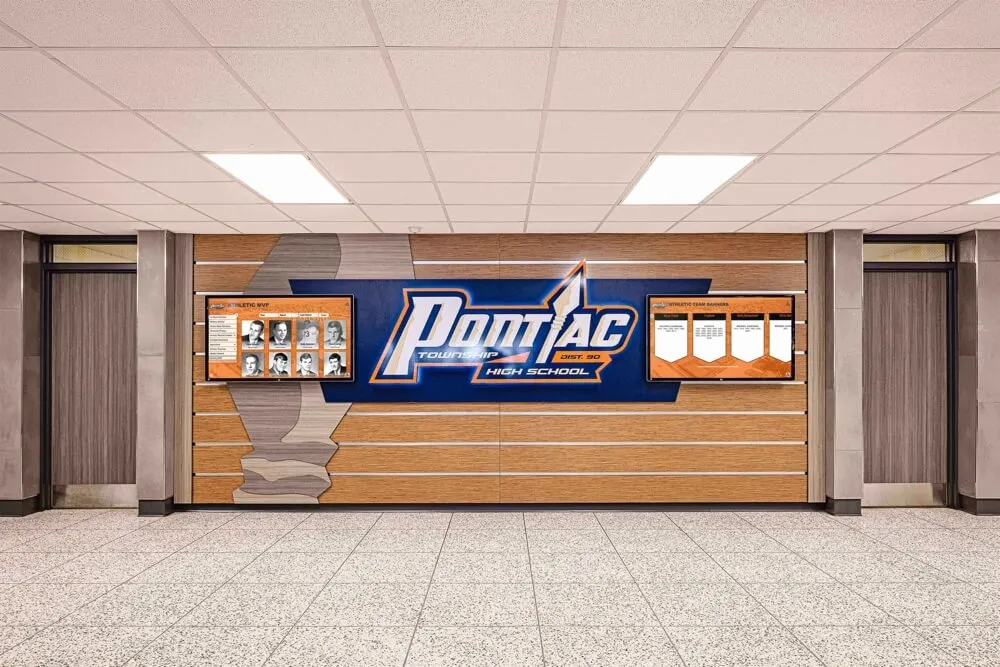
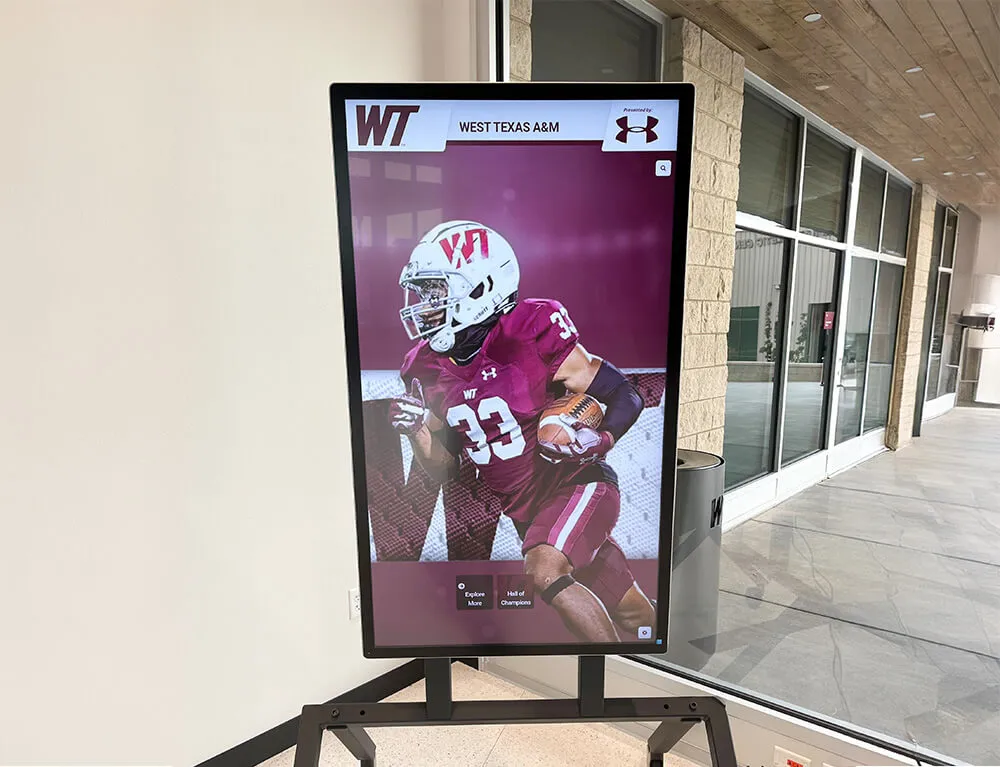
Multiple coordinated displays enable comprehensive record presentation across different sports and record categories
Sport-Specific Record Selection Strategies
Different sports require customized approaches to record tracking reflecting their unique competitive structures and statistical traditions:
Team Sports Record Considerations
For basketball, football, soccer, volleyball, and similar sports, record boards typically emphasize scoring achievement while balancing recognition for other position-specific excellence. Basketball boards track points, rebounds, assists, steals, and blocks. Football recognition includes rushing yards, passing yards, touchdowns, tackles, and sacks. Soccer celebrates goals, assists, saves for goalkeepers, and shutouts.
Athletic directors should ensure position diversity in displayed records preventing boards from becoming exclusively scorer-focused while ignoring defensive specialists, setters, goalkeepers, and role players whose contributions enable team success despite less visible statistical profiles.
Individual Sports Record Frameworks
Track and field, swimming, wrestling, golf, and tennis require event-specific record organization. Track boards display best times or distances for each event—100m, 200m, hurdles, relays, field events. Swimming recognition includes times for each stroke and distance combination. Wrestling celebrates records by weight class. Golf honors lowest tournament scores and rounds.
Individual sport records often include qualifying standards—times or performances that qualified athletes for state championships or regional competitions, celebrating achievement beyond simple program-best performances by recognizing competitive success within broader contexts.
Emerging Sports and Non-Traditional Athletics
Modern athletic programs increasingly include competitive cheerleading, dance teams, esports, ultimate frisbee, and other activities warranting systematic record tracking despite lacking the established statistical frameworks of traditional sports. Schools should develop appropriate metrics: competition placements for cheerleading, tournament wins for esports, seasonal win-loss records for ultimate frisbee.
Creating recognition structures for emerging sports demonstrates institutional commitment to all competitive activities while preventing perceptions that only traditional sports merit official record tracking and permanent display.
Choosing Display Format: Traditional vs. Digital Record Boards
Format decisions fundamentally impact record board functionality, maintenance requirements, and long-term value delivery.
Traditional Physical Record Board Options
Physical record boards remain popular for their permanence, visual impact, and freedom from technology dependencies:
Engraved Plaque Systems
Metal or wood plaques with engraved text create formal, prestigious recognition. Individual plaques mount to walls or display boards, with new records requiring additional plaque creation and installation. Engraved systems work well for career achievement records that change infrequently, hall of fame recognition, and permanent milestone celebrations.
However, engraving costs ($30-$100+ per plaque) and space limitations create challenges for comprehensive record systems tracking dozens or hundreds of records across multiple sports. Schools planning engraved systems should carefully select which records merit this expensive, permanent format.
Vinyl Lettering and Graphics
Custom vinyl applications on walls, boards, or windows offer flexibility with professional appearance. Updated records can be replaced relatively easily by removing old vinyl and applying new lettering. Vinyl systems accommodate larger record collections than individual plaques while maintaining clean, branded aesthetics matching school colors and logos.
Vinyl requires periodic replacement as adhesive degrades and edges peel, typically necessitating complete refresh every 5-7 years. Schools should budget for ongoing maintenance ensuring displays remain sharp rather than becoming worn and unprofessional.
Dry-Erase and Changeable Letter Boards
Administrative efficiency sometimes outweighs aesthetic formality. Dry-erase boards or systems with changeable letters enable frequent updates without special materials or equipment. These practical solutions work well for record boards in coaches’ offices, locker rooms, or practice facilities where functional recognition matters more than polished presentation.
Athletic directors should reserve formal, permanent displays for public-facing locations while using practical, easily-updated systems for internal motivation and athlete awareness in competitive spaces.
Trophy Cases with Integrated Record Displays
Many schools incorporate record boards into comprehensive trophy case installations combining championship trophies, team photos, memorabilia, and record listings. Integrated approaches create cohesive recognition zones celebrating all achievement aspects rather than separating records from the championship context where many were established.
Custom trophy cases with designated record display sections ($2,000-$10,000+) require significant investment but deliver impressive visual impact suitable for main lobbies, gymnasium entrances, and other high-visibility institutional spaces.
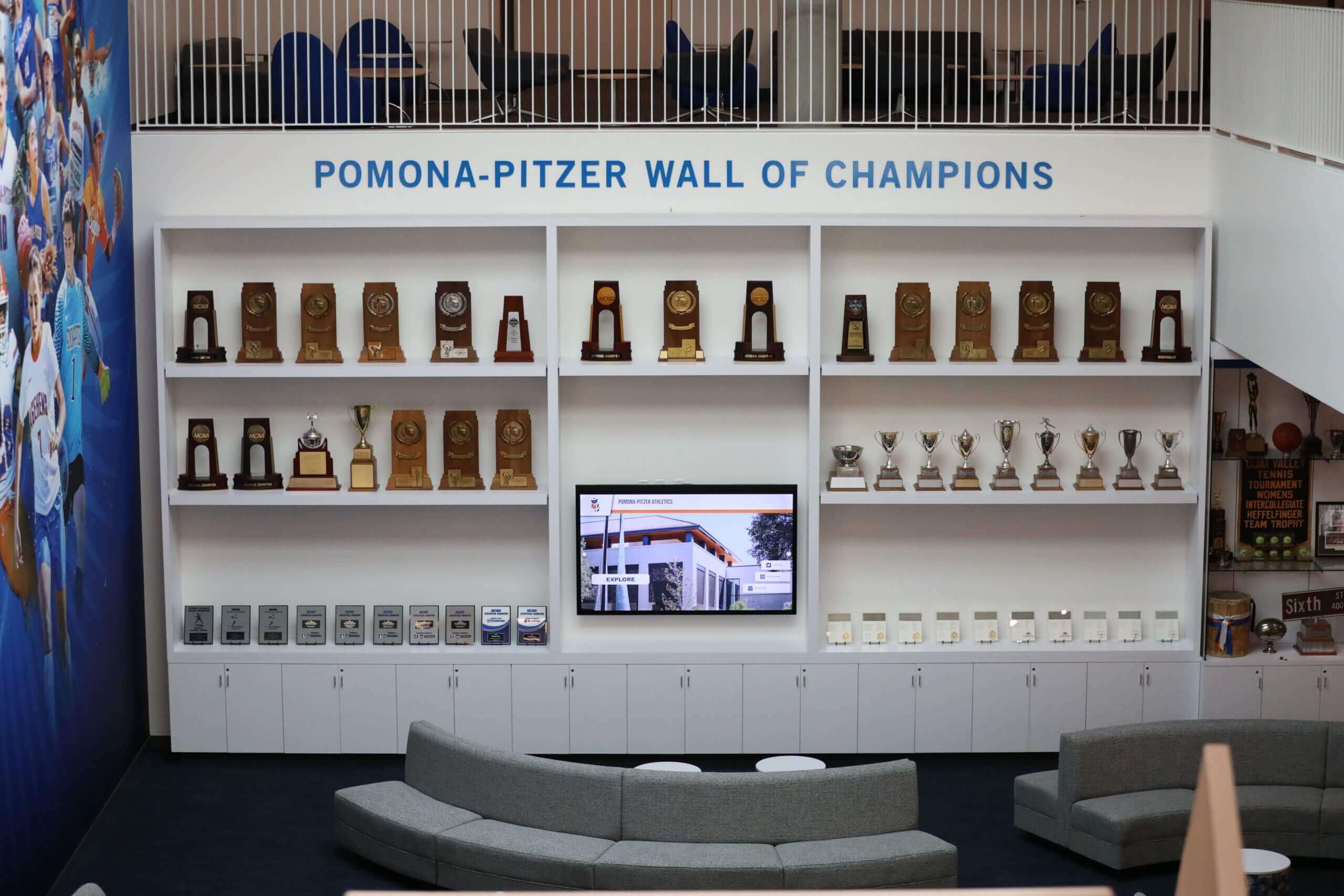
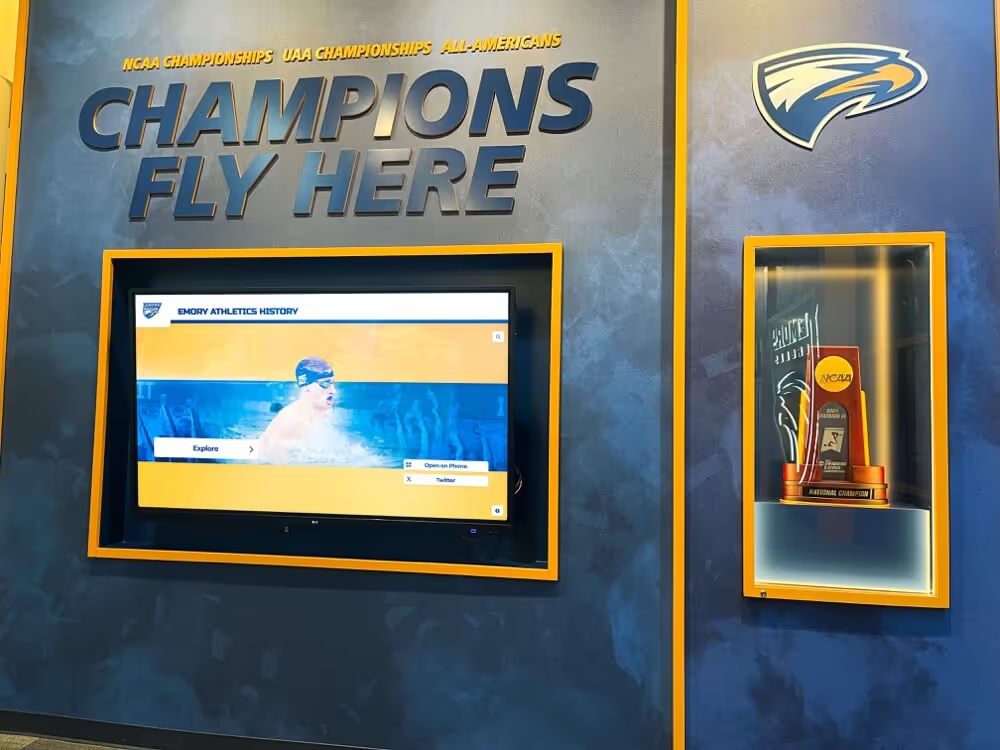
Comprehensive recognition zones combine record displays with trophies and team celebrations, creating immersive athletic history experiences
Digital Record Board Advantages and Implementation
Technology-based displays increasingly replace traditional physical boards, offering compelling advantages for comprehensive record recognition:
Unlimited Content Capacity
Digital screens eliminate space constraints that limit physical boards. Rather than selecting 20-30 top records for display due to space limitations, digital systems showcase complete record books across all sports, categories, and historical eras. Athletes can browse comprehensive achievement databases rather than seeing only the most prominent records athletic directors selected for limited physical space.
This completeness matters significantly for athlete motivation. When only the top five all-time scorers appear on physical boards, the 15th-ranked athlete has no visible recognition. Digital systems celebrate depth, honoring dozens of record holders and creating achievable benchmarks for more athletes.
Instant Updates and Real-Time Accuracy
The moment an athlete breaks a record during competition, digital displays can reflect the new achievement. Coaches and administrators update records through web-based content management systems, with changes appearing immediately on all connected displays. This real-time capability ensures recognition remains current rather than waiting weeks or months for physical updates.
Immediate updates create memorable recognition moments. When teams return from competitions where records fell, athletes can immediately see their achievements displayed alongside program legends—powerful validation that physical boards requiring fabrication delays simply cannot match.
Enhanced Visual Presentation
Digital displays incorporate athlete photos, school branding, dynamic graphics, and visual hierarchy impossible with static physical boards. Record presentations include athlete headshots connecting names to faces, action photography from record-breaking performances, school colors and logos creating branded recognition experiences, and visual organization helping viewers quickly navigate large record collections.
Modern digital record board design incorporates motion graphics, statistics visualization, and professional layouts elevating record presentation from simple text lists to engaging visual experiences.
Multi-Purpose Display Flexibility
Digital screens serve multiple functions beyond static record display. The same displays rotate between record boards, championship celebrations, upcoming event calendars, team schedules, fundraising recognition, and daily announcements. This versatility justifies investment costs that might seem excessive for record-only displays.
Athletic facilities with limited wall space benefit particularly from multi-purpose screens. Rather than choosing between record boards, donor recognition, or directional signage, digital systems cycle through all content types throughout the day.
Interactive Exploration Capabilities
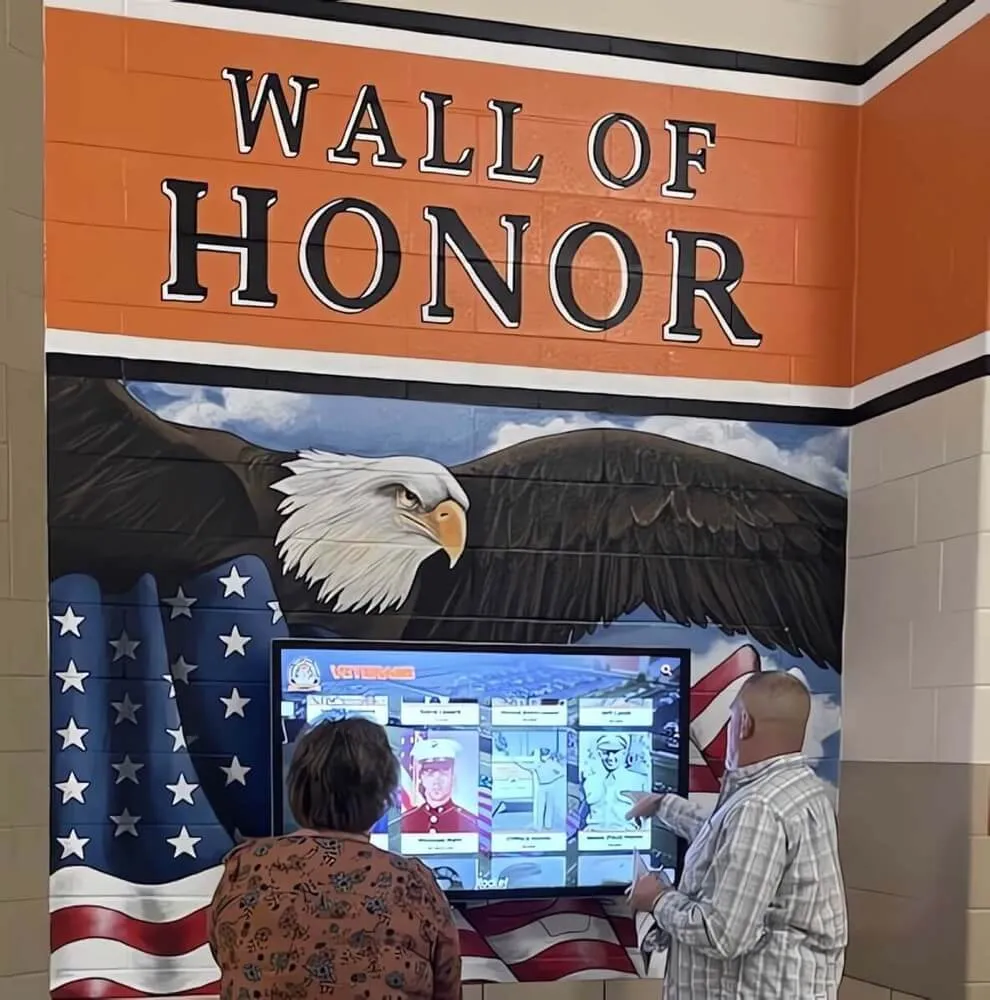
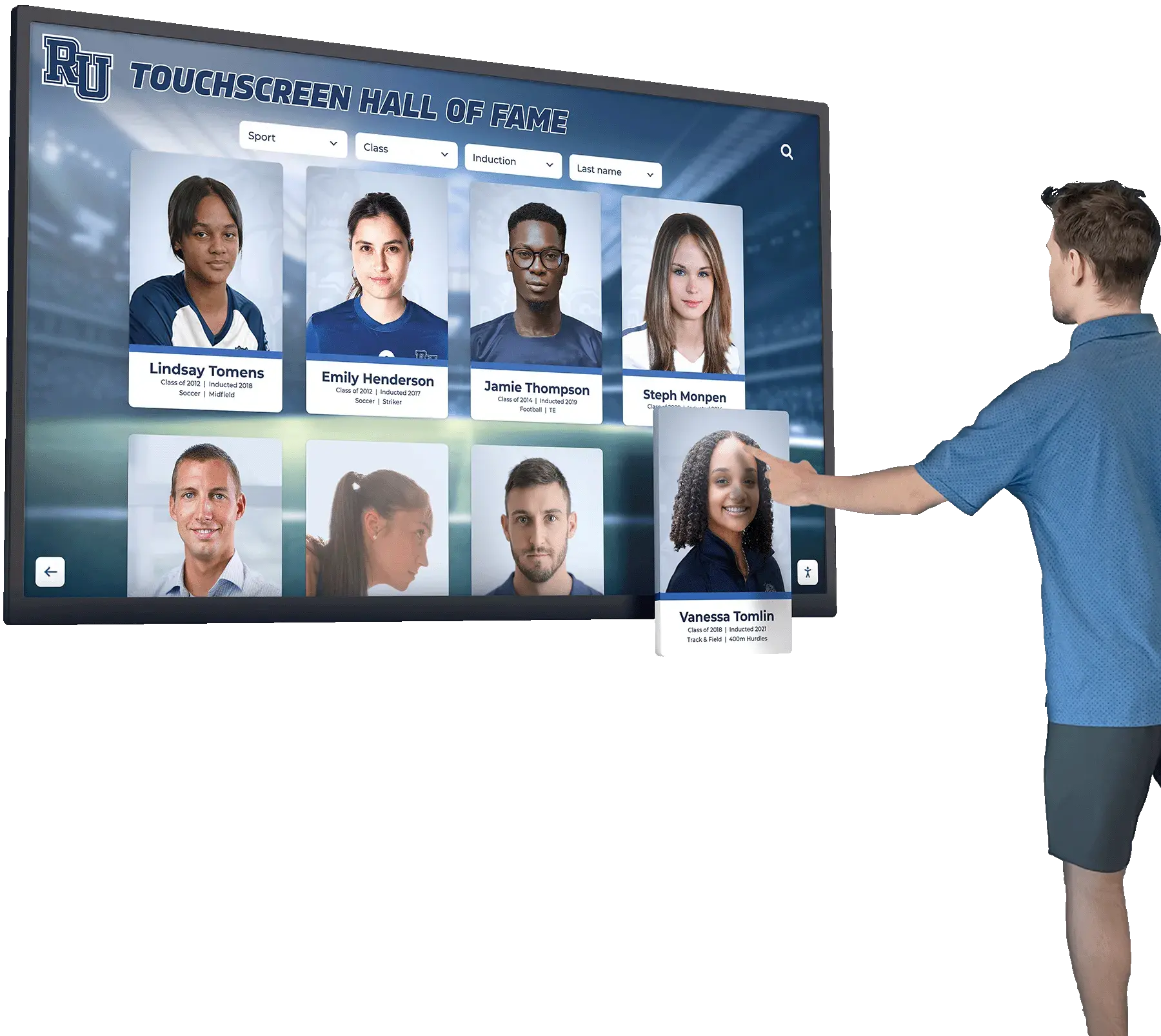
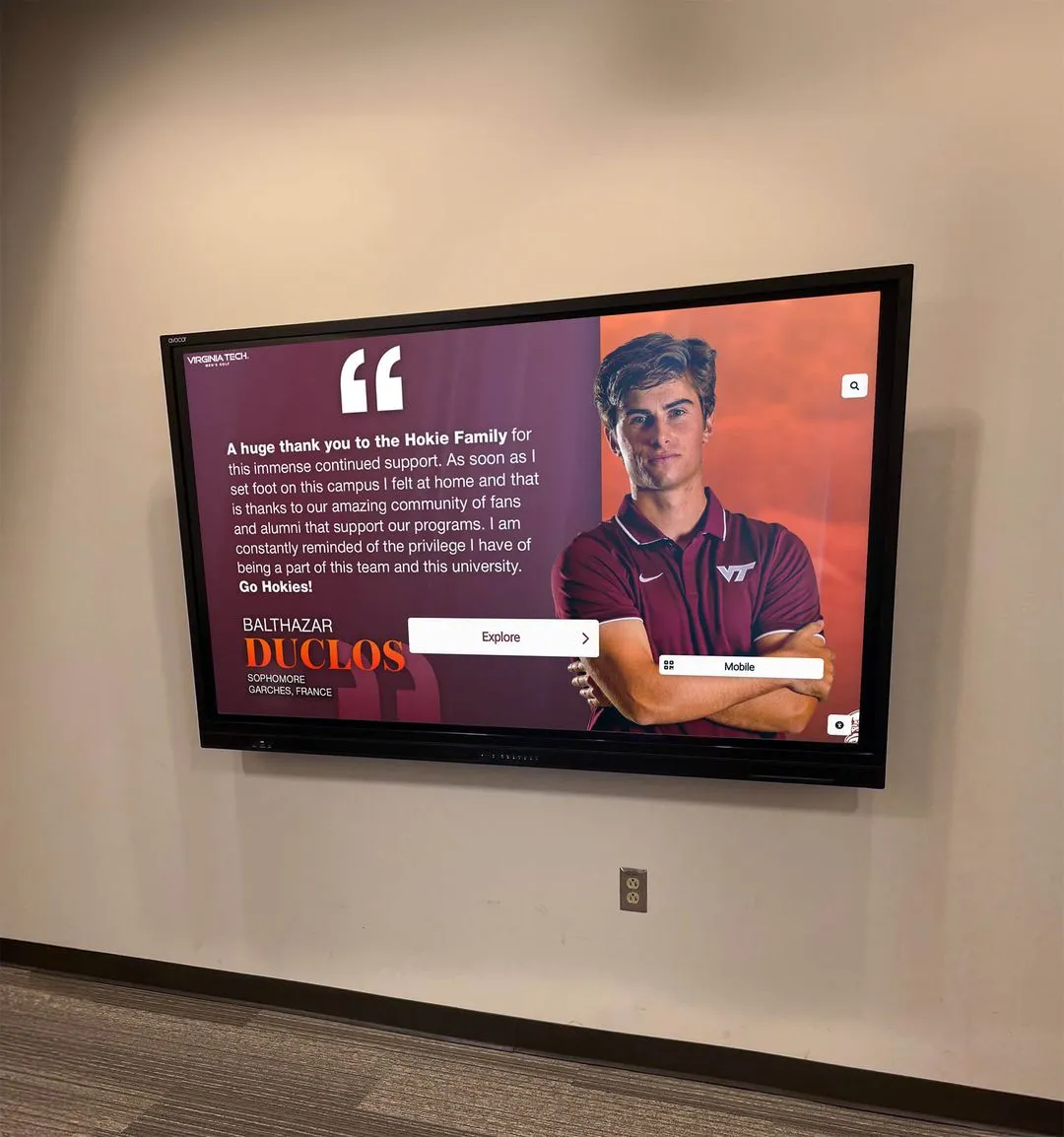
Touchscreen displays enable viewers to explore records interactively rather than passively viewing static information. Students can filter records by sport, search for specific athletes, browse historical eras, or view detailed achievement profiles with career statistics, biographical information, and photo galleries.
Interactive systems transform record boards from occasional glance points into engaging research experiences. Students spend minutes exploring athletic history through intuitive interfaces, deepening connections to institutional tradition and individual record holders.

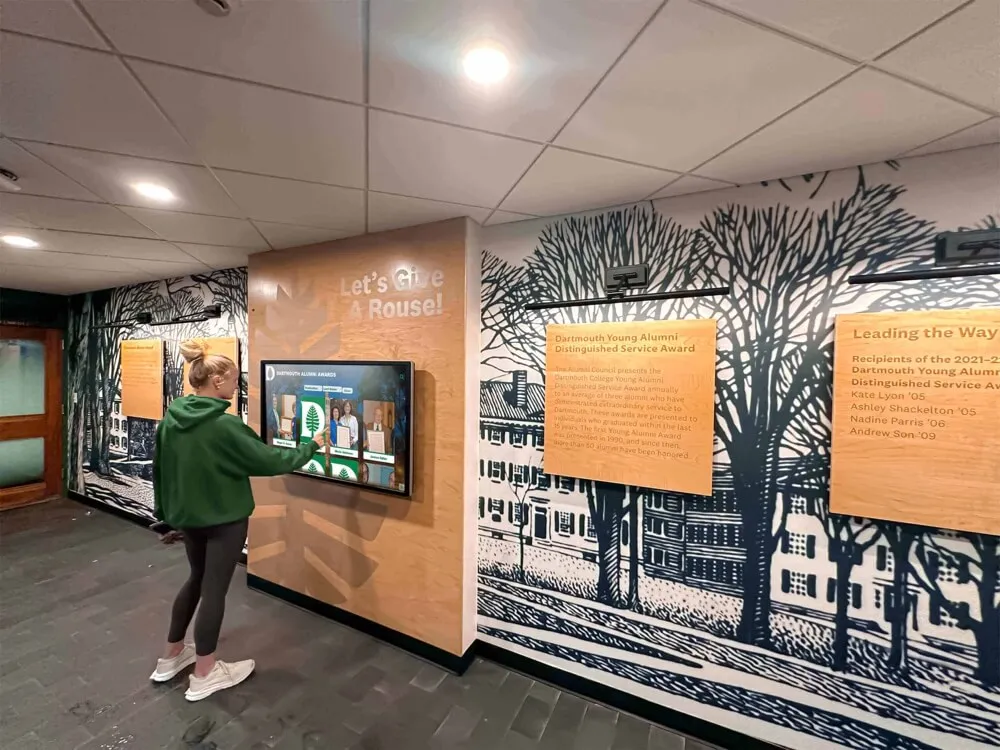
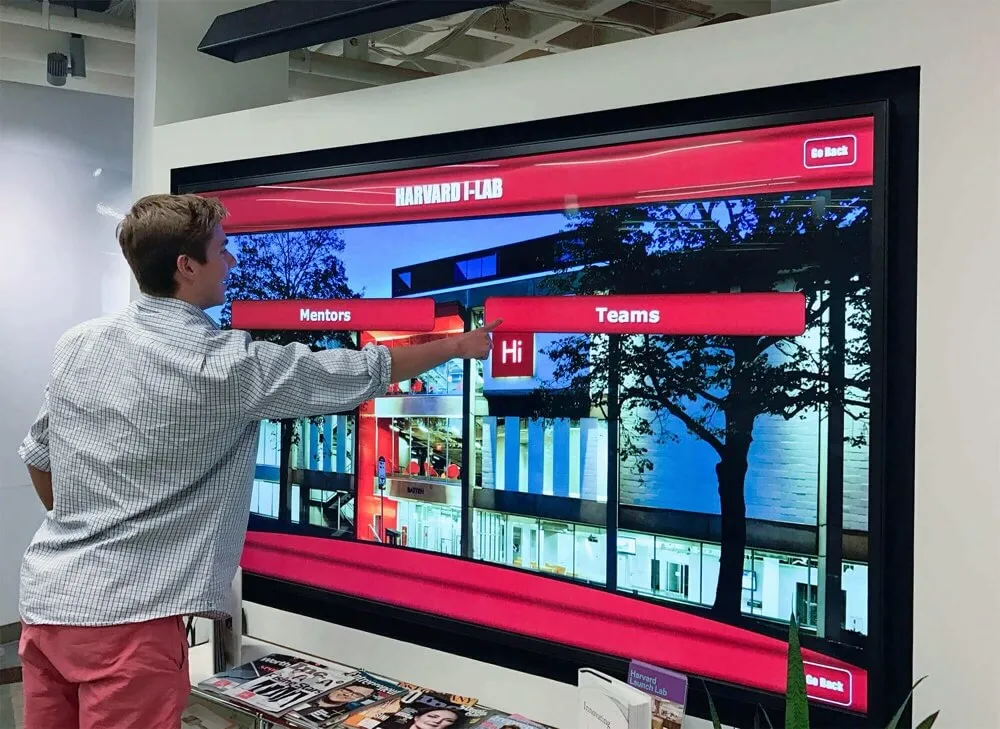
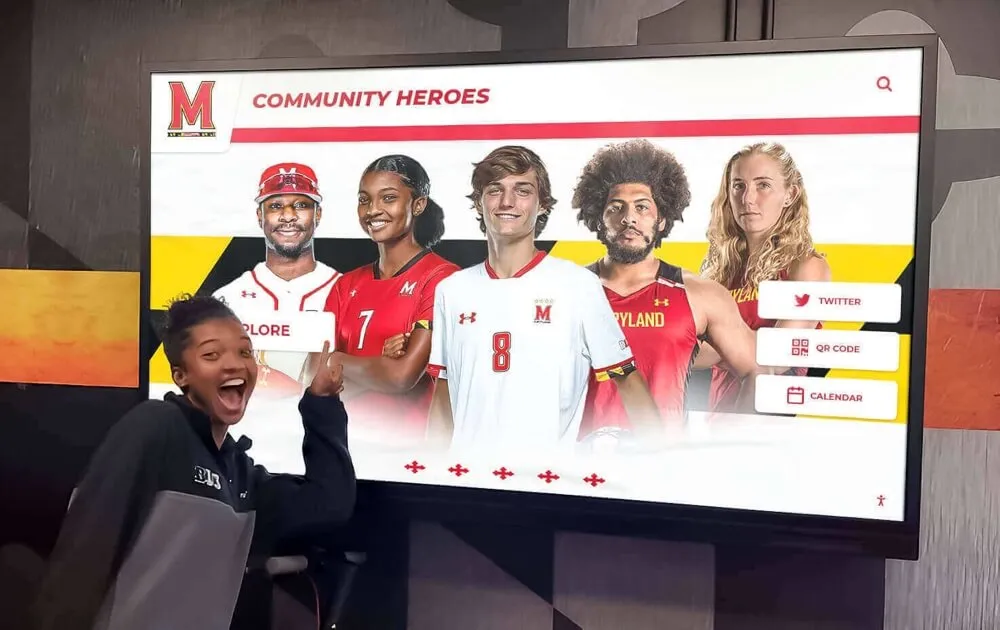
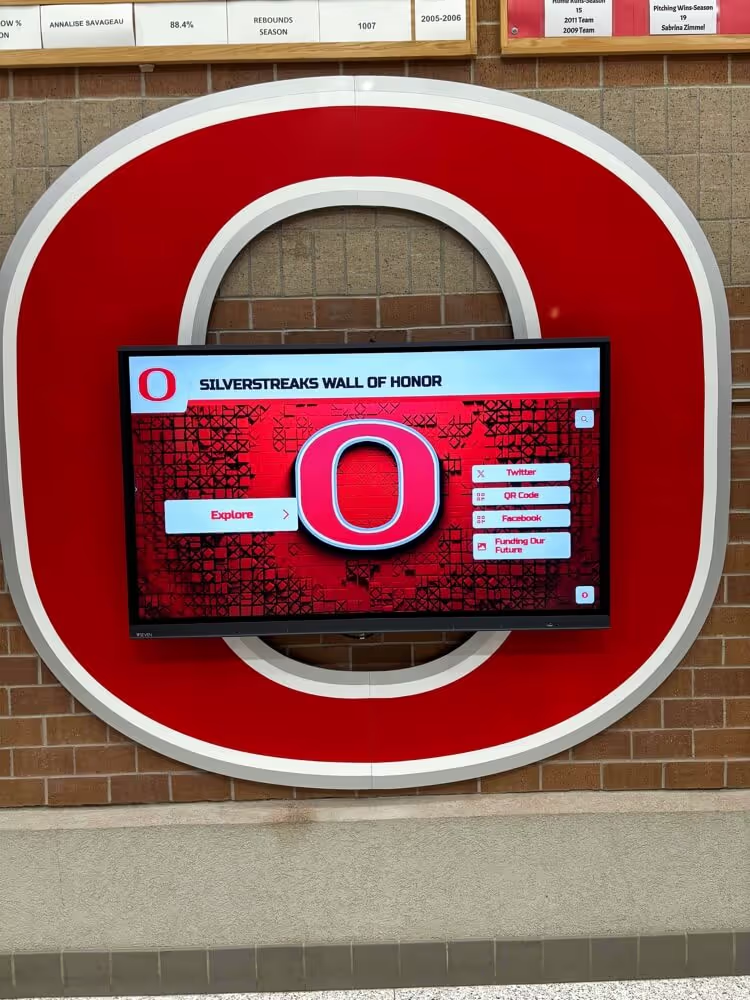
Digital displays can showcase detailed athlete profiles, career statistics, and rich biographical content impossible to include on traditional physical boards
Designing Effective Record Board Layouts
Thoughtful design ensures record boards communicate clearly, maintain visual appeal, and function effectively across their intended lifespan.
Information Hierarchy and Organization Principles
Well-organized record boards enable quick comprehension without overwhelming viewers:
Clear Sport Identification
Multi-sport record boards must immediately indicate which records belong to which programs. Design approaches include distinct color coding associating each sport with specific colors, prominent sport names and icons heading each section, physical or visual separation creating discrete zones, and consistent organizational patterns helping viewers quickly locate specific sports.
Confusion about sport attribution undermines record board effectiveness. Viewers encountering ambiguous displays simply move on rather than puzzling through unclear organization to find relevant records.
Record Category Grouping
Within sport sections, logical grouping organizes related achievements together. Common patterns include seasonal records grouped separately from career totals, offensive and defensive statistics in distinct subsections, individual records separated from team achievements, and chronological organization presenting records by era or decade.
Category clarity helps athletes identify personally relevant benchmarks. A point guard seeking assist records finds them quickly when organized logically rather than intermixed randomly with unrelated statistics.
Prominence and Emphasis
Not all records carry equal significance or interest. Visual hierarchy emphasizes high-profile achievements while including comprehensive records without overwhelming displays. Techniques include larger text for top records, feature positioning for marquee achievements, bold or highlighted styling for recently broken records, and secondary styling for specialty records with narrow interest.
Hierarchy creates scannable displays accommodating both quick glances and detailed study, serving casual viewers and dedicated historians simultaneously.
Space Planning and Growth Accommodation
Record boards should function effectively today while accommodating decades of future achievement:
Initial Capacity Decisions
Athletic directors must determine how many records warrant display inclusion initially. Comprehensive approaches showing 50+ records per major sport create impressive achievement collections but require substantial space. Selective boards highlighting 15-20 top records per sport emphasize elite achievement while limiting space requirements.
This decision profoundly impacts format selection. Comprehensive recognition often necessitates digital displays with unlimited capacity, while selective boards can utilize traditional physical formats more successfully.
Future Growth Planning
Records inevitably change, requiring updated displays. Physical boards should include blank plaque positions or expansion space accommodating future records without complete reinstallation. Schools installing engraved boards without growth accommodation find themselves with nowhere to add new records, forcing awkward secondary displays or premature replacement.
Digital systems eliminate physical growth concerns through software expansion, but athletic directors should plan content organization accommodating new sports additions, emerging record categories, or expanded recognition scope as programs evolve.
Temporary vs. Permanent Record Display
Some achievement categories experience frequent turnover while others remain stable for years or decades. Boards might separate frequently-changing seasonal records displayed through easily-updated methods from stable career records warranting permanent installation. Hybrid approaches match update methods to change frequency, optimizing maintenance efficiency.
Visual Design and Branding Integration
Record boards should feel cohesive with broader institutional identity and athletic branding:
School Colors and Logo Usage
Effective displays incorporate institutional colors throughout layouts, feature school logos prominently, match athletic department design standards, and create branded recognition experiences reinforcing institutional identity. Record boards representing schools should look distinctly affiliated rather than generic displays that could belong to any institution.
Typography and Readability
Text must remain legible from typical viewing distances. Physical boards in hallways require letter sizes visible from 10-15 feet. Digital displays accommodate smaller text through viewer proximity but must maintain readability. Font selections should prioritize clarity over decorative styling that compromises legibility.
Photography and Visual Interest
Text-only record boards lack engagement compared to displays incorporating athlete photography. Including photos requires additional space but dramatically increases visual appeal and viewer interest. Digital boards easily integrate extensive photography while physical displays must balance image inclusion against space constraints.
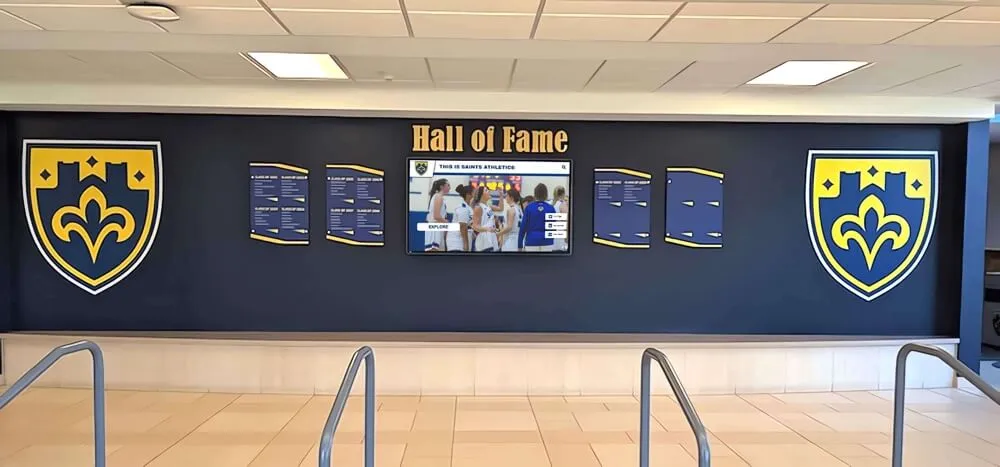
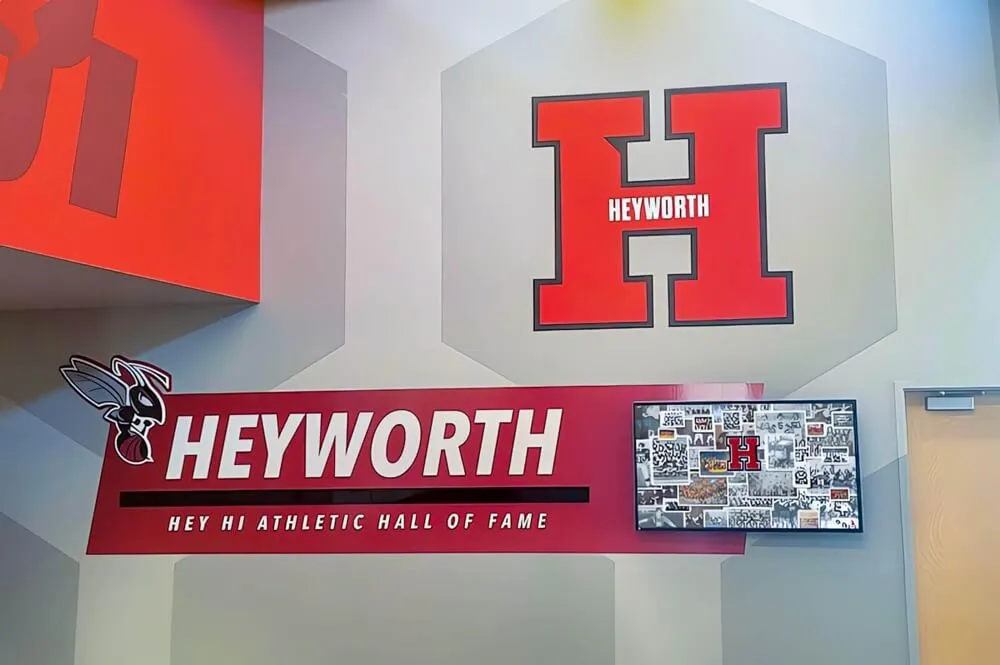
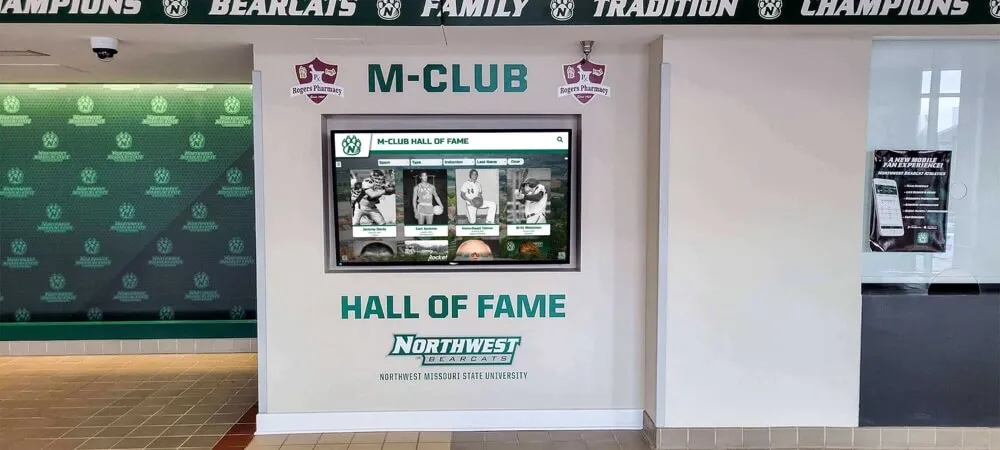
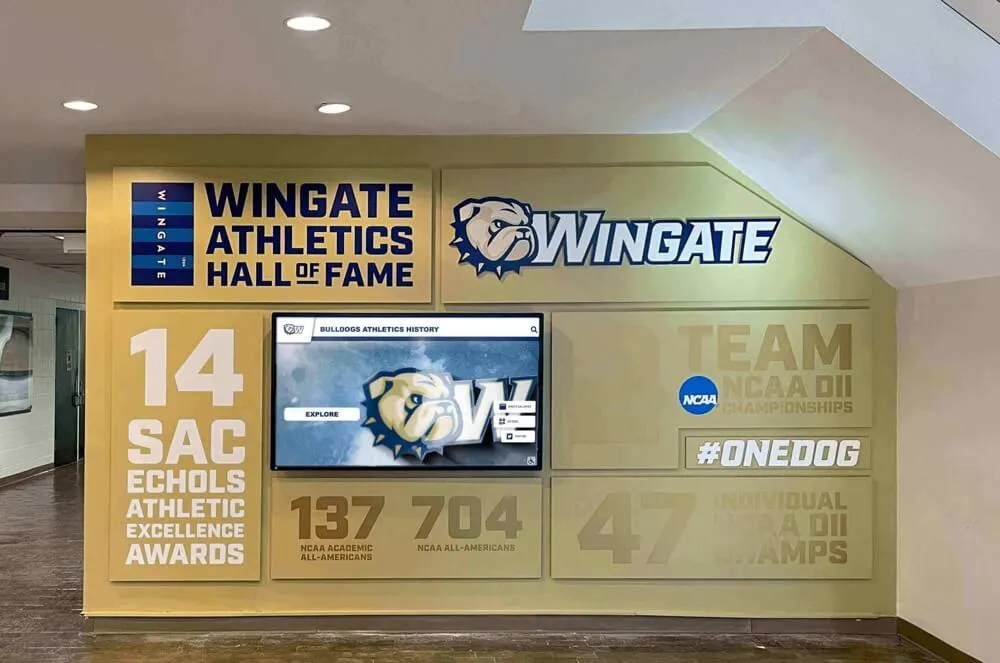
Hybrid displays combine traditional physical elements with digital screens, merging classic recognition aesthetic with modern update convenience
Building and Installing Your School Record Board
Implementation transforms planning into functioning recognition systems that athletes and communities experience daily.
Physical Board Construction and Materials
Traditional record board construction requires appropriate materials and craftsmanship:
Material Selection for Durability
High-traffic institutional environments demand durable materials withstanding years of daily exposure. Wood boards require sealed finishes preventing moisture damage. Metal plaques need rust-resistant alloys or protective coatings. Acrylic panels resist scratching better than basic plastics. Glass provides premium appearance but requires safety considerations.
Athletic directors should budget for institutional-grade materials rather than residential-quality alternatives that deteriorate rapidly in school environments with temperature fluctuations, humidity, and constant use.
Professional Fabrication vs. DIY Approaches
Schools weighing professional fabrication ($2,000-$15,000+) against volunteer-built alternatives must consider quality expectations, timeline constraints, and long-term durability. Professional trophy shops, sign companies, and recognition specialists deliver polished results with warranties but require substantial budgets. DIY projects reduce costs but demand skilled volunteers, extended timelines, and realistic expectations about finished appearance.
Well-executed volunteer projects work beautifully for schools with parent craftspeople or community partners offering professional skills. Poorly planned DIY attempts create embarrassing results schools regret displaying prominently.
Mounting and Installation Requirements
Record boards require proper wall mounting that safely secures potentially heavy displays while accommodating building codes and facility restrictions. Mounting considerations include stud locations for secure anchoring, weight distribution across mounting points, accessibility for future updates, and protection from damage during normal facility use.
Schools should involve facility directors early in planning, ensuring proposed locations have appropriate wall structures, electrical access for digital displays, and compatibility with building use patterns avoiding vulnerable locations where displays risk damage.
Digital Display Installation and Setup
Technology-based systems require additional technical planning:
Hardware Selection and Specifications
Digital record boards typically use commercial-grade displays designed for continuous operation rather than consumer televisions lacking durability for 24/7 institutional use. Specifications include screen size appropriate for viewing distances and content density (32"-65" typical for record boards), brightness levels ensuring visibility in daylit spaces (400+ nit commercial displays), portrait or landscape orientation matching content design, and touchscreen capabilities if interactive exploration is desired.
Schools should partner with AV integrators or digital signage specialists helping specify appropriate hardware rather than purchasing inadequate consumer displays that fail quickly or perform poorly.
Content Management System Requirements
Digital displays require software platforms enabling content updates, design management, and display control. Record board software should provide web-based administrative access allowing authorized staff to update records remotely, template-based design ensuring consistent professional appearance across updates, multi-user permissions letting coaches manage sport-specific records independently, and scheduled content rotation supporting multi-purpose display usage.
Modern systems like those offered by Rocket Alumni Solutions provide purpose-built platforms for athletic record displays with intuitive interfaces designed specifically for school administrators rather than generic digital signage requiring extensive technical expertise.
Network Connectivity and Power Infrastructure
Digital displays require reliable network connections for content updates and electrical service for operation. Installation planning should address ethernet or WiFi connectivity ensuring stable data access, electrical outlet access or hardwired power connections, cable management hiding unsightly wiring, and backup power considerations for buildings with electrical reliability concerns.
Schools must budget for potential electrical and network infrastructure additions beyond display hardware costs, particularly when installing displays in locations lacking nearby power or data connectivity.
Record Verification and Data Accuracy
Record boards only deliver value when information remains accurate and verifiable:
Historical Record Research Process
Many schools lack comprehensive historical records, requiring research to establish accurate all-time achievement lists. Research approaches include reviewing archived yearbooks and programs, interviewing longtime coaches and athletic staff, examining newspaper archives for game coverage, consulting state athletic associations maintaining records, and reaching out to alumni networks for missing information.
This research often reveals that long-displayed records contain errors—missing record holders, inaccurate statistics, or incorrectly attributed achievements. Thorough verification prevents perpetuating historical errors on new displays.
Ongoing Verification Systems
As new records are claimed, systematic verification ensures accuracy before official recognition. Verification procedures should include reviewing official scorebooks and statistics, confirming achievements through game film when available, checking calculations for career totals, comparing against previous record holders, and documenting verification sources for future reference.
Establishing clear verification responsibility—typically head coaches or athletic directors for their respective sports—prevents confusion about who confirms records before display updates.
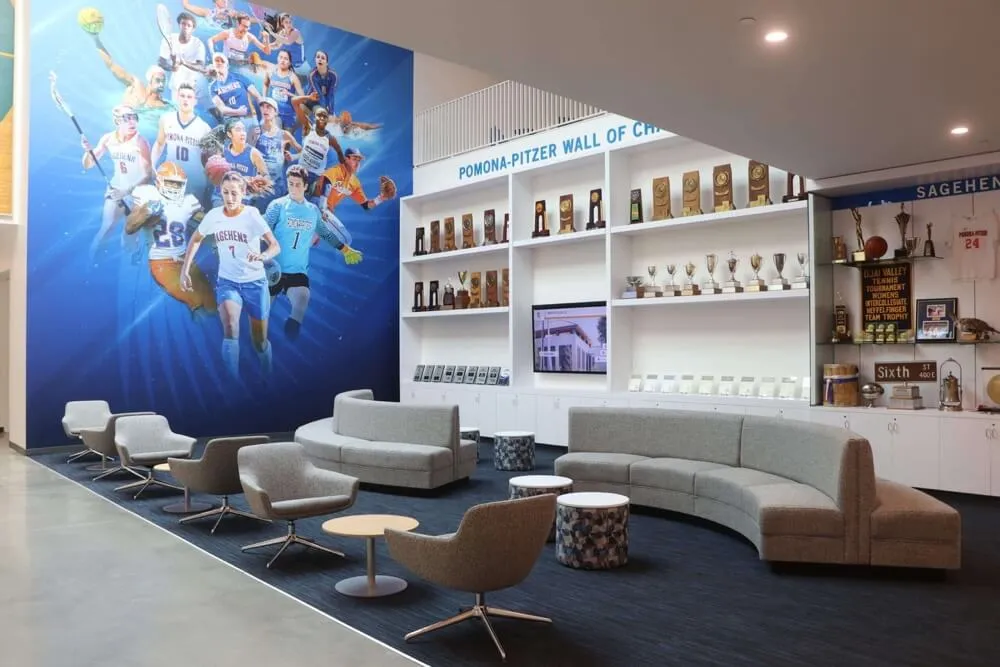
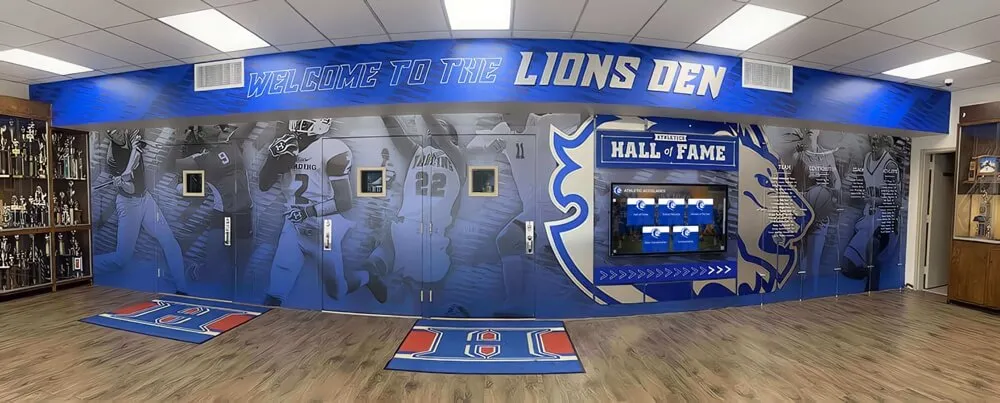
Trophy walls integrated into team spaces create immersive recognition environments celebrating comprehensive achievement including records and championships
Maintaining and Updating Record Displays
Systematic maintenance ensures record boards remain current, accurate, and professionally presented across their operational lifespan.
Establishing Update Protocols and Responsibility
Clear processes prevent record boards from becoming outdated:
Designated Record Keepers by Sport
Each sport should have identified staff responsible for tracking records and submitting updates. Typically head coaches maintain season and career records for their programs, submitting verified achievements to athletic directors or designated record board coordinators who implement display updates. Clear responsibility prevents records falling through cracks when no one owns verification and submission.
Seasonal Review Schedules
Regular review cycles ensure new records appear promptly rather than waiting for ad hoc updates. Common schedules include post-season updates immediately following sport season conclusion, annual comprehensive reviews during summer when athletics staff have capacity, and real-time updates for major record-breaking performances generating immediate community interest.
Scheduled reviews also catch errors, verify existing records remain accurate, and identify forgotten achievements that should appear on displays.
Update Approval Workflows
Larger athletic programs benefit from formal approval processes ensuring updates meet verification standards before public display. Workflows might require head coach submission with supporting documentation, athletic director approval confirming proper verification, and final display coordinator implementation ensuring correct information presentation. Formal workflows prevent errors while documenting decision processes supporting record accuracy.
Physical Board Maintenance Requirements
Traditional displays need ongoing care maintaining professional appearance:
Cleaning and Damage Prevention
High-traffic locations expose displays to fingerprints, dust, and accidental impacts. Regular cleaning schedules maintain appearance. Protective measures include plexiglass covers protecting plaques and vinyl from direct contact, strategic positioning avoiding collision-prone locations, and periodic inspection identifying damage requiring repair before minor issues become major problems.
Plaque and Material Replacement
Even quality materials deteriorate eventually. Schools should budget for periodic replacement of faded plaques, degraded vinyl, scratched protective covers, and worn mounting hardware. Planning for replacement costs prevents boards from becoming shabby as components age without maintenance budgets.
Display Redesign and Refresh Cycles
Record boards should be completely reevaluated every 10-15 years, considering comprehensive redesign incorporating evolved design standards, updated branding, modified record categories, and potentially different display technologies. Refresh cycles prevent displays from appearing dated while allowing incorporation of lessons learned from operational experience.
Digital Display Content and Technical Maintenance
Technology systems require different maintenance approaches:
Software Updates and Content Revision
Digital content needs regular refreshing beyond just record updates. Schools should periodically review templates and designs ensuring modern appearance, rotate photography incorporating recent images, update branding matching current athletic identities, and revise content organization improving navigation and clarity.
Platform software requires periodic updates maintaining security, adding features, and ensuring compatibility with evolving web standards and browser technologies.
Hardware Maintenance and Replacement Planning
Commercial displays typically function reliably for 5-7 years before requiring replacement. Schools should budget for eventual hardware replacement as components reach end-of-life. Maintenance considerations include cleaning screens maintaining visibility, monitoring for failing components like backlight sections, ensuring proper ventilation preventing overheating, and protecting against power surge damage through appropriate electrical protection.
Technical Support and Troubleshooting
Digital systems occasionally experience issues requiring technical support. Schools should establish relationships with vendors or integrators providing support services, train internal staff on basic troubleshooting, document system configuration for reference during issues, and maintain contact information for specialized assistance when internal knowledge proves insufficient.
Enhancing Record Boards with Additional Context
Comprehensive displays go beyond raw statistics, providing context that enriches appreciation for recorded achievements.
Including Athlete Profiles and Biographical Information
Records become more meaningful when viewers understand the people behind the performances:
Biographical Details
Enhanced displays include athlete names, graduation years, positions played, and notable career highlights beyond single statistics. This context transforms numbers into personal achievements connected to real people. Digital systems easily accommodate extensive biographical information while physical boards must balance detail against space constraints.
Career Context and Achievement Stories
The circumstances surrounding record performances often matter as much as the statistics themselves. Contextual information might include championship implications of record performances, comeback stories from injuries, dramatic game situations, or historical competitive contexts making achievements particularly remarkable.
Story elements create emotional connections beyond statistical appreciation, helping viewers understand why records represent extraordinary achievement rather than just large numbers.
Post-Athletic Achievements
Many record holders continue excellence beyond high school athletics through college sports, professional careers, military service, academic achievement, or community leadership. Including post-athletic accomplishments demonstrates that competitive excellence often predicts future success while creating alumni engagement opportunities connecting current students with accomplished graduates.
Celebrating Record-Breaking Moments
Beyond static record listings, effective displays commemorate the moments when records fell:
Game Details and Context
Documenting when and where records were established adds historical depth: opponent faced, final score, game date, tournament round or championship context, and facility where achievement occurred. These details help viewers mentally reconstruct historic performances.
Contemporary Media and Coverage
Many significant records generated news coverage, photography, or video documentation at the time. Including historical newspaper clippings, action photography from record games, or video highlights creates multimedia presentations that bring historic achievements to life.
Digital displays excel at multimedia integration, while physical boards can incorporate printed photographs or QR codes linking to digital media libraries.
Anniversary Commemorations
Milestone anniversaries of historic records merit special recognition. Record board designs might highlight records celebrating 25th, 50th, or 75th anniversaries, creating cyclical recognition opportunities that maintain community connection to athletic heritage across generations.
Connecting Records to Current Athletes
Forward-looking record boards inspire future achievement while honoring past excellence:
Active Record Pursuits
Displaying current athletes approaching records creates excitement and motivation. “Record Watch” features might track seniors within reach of career records, monitor season leaders potentially breaking single-season marks, or highlight athletes on record-setting pace through early-season performances. This forward-looking approach makes record boards living, dynamic recognition rather than static historical documentation.
Historical Comparison Context
Showing where current season leaders rank historically provides perspective on contemporary performances. Displays might indicate that the current scoring leader ranks 4th all-time at this point in the season, creating tangible awareness of historical achievement levels while motivating athletes toward moving up all-time rankings.
Training and Achievement Insights
Some enhanced displays include information about training approaches, physical development, or skill progression that enabled record-level performance. While avoiding overly technical content, basic insights about work ethic, practice habits, or development pathways can inspire current athletes seeing that records result from sustained commitment rather than talent alone.
Comprehensive approaches to athletic recognition help schools build complete systems honoring diverse achievement while maintaining focus on measurable performance standards.

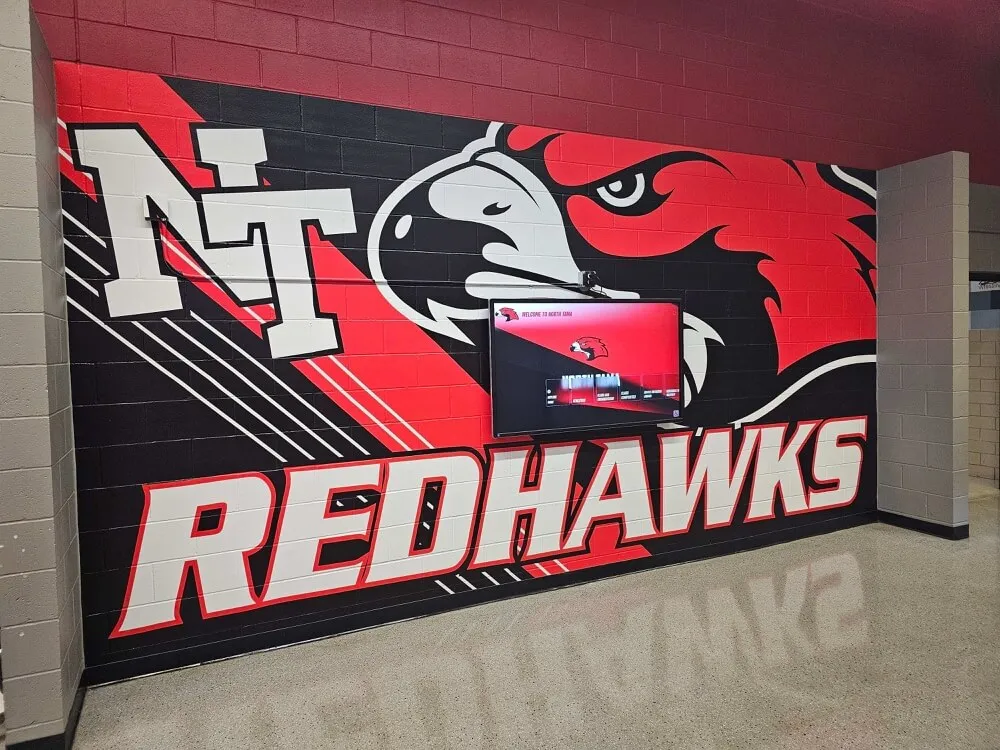
Modern digital displays deliver professional, branded recognition with unlimited content capacity and instant update capabilities that traditional boards cannot match
Budgeting for School Record Board Implementation
Realistic financial planning ensures projects deliver intended value without unexpected cost overruns.
Traditional Physical Board Cost Factors
Physical displays involve several cost categories:
Materials and Fabrication
Basic costs include backing boards or panels ($200-$2,000 depending on size and materials), individual plaques or name plates ($30-$150 each), mounting hardware and installation supplies ($100-$500), protective covers or cases ($300-$3,000), and professional fabrication labor ($500-$5,000 for complex custom designs).
Simple boards recognizing 20-30 records typically cost $1,500-$5,000 total. Elaborate custom trophy case installations with integrated record displays can reach $10,000-$25,000+.
Installation and Labor
Professional installation ensures proper mounting and finished appearance. Costs vary by complexity: simple wall-mounted boards ($200-$500), built-in casework installations ($1,000-$3,000), and complex renovations incorporating lighting, structural modifications, or electrical work ($2,000-$8,000+).
Ongoing Update Costs
Physical boards require ongoing expenditures for new plaques ($30-$100 each), vinyl replacement ($200-$800 for complete refresh), periodic refinishing or refurbishment ($500-$2,000), and eventual comprehensive replacement ($3,000-$15,000 every 15-20 years).
Schools should budget $300-$1,000 annually for physical board maintenance ensuring displays remain current and professional-looking.
Digital Display Investment Considerations
Technology systems involve different cost structures:
Hardware Investment
Initial hardware costs include commercial-grade displays ($1,500-$5,000 per screen depending on size), touchscreen capability if desired ($500-$2,000 additional), mounting equipment and installation hardware ($200-$800), media players or display controllers if needed ($300-$1,500), and professional installation and configuration ($500-$2,000).
Complete single-display systems typically cost $4,000-$12,000 initially.
Software Platform Costs
Digital displays require content management platforms. Pricing models include annual subscription services ($500-$3,000/year depending on features), one-time software licenses ($2,000-$8,000 upfront), or bundled hardware/software packages combining costs. Ongoing subscriptions include software updates, technical support, and platform hosting.
Long-Term Total Cost of Ownership
Financial comparison between traditional and digital systems should consider complete lifecycle costs across 10-15 years rather than just initial investment. Total costs include initial installation, ongoing updates and maintenance, eventual major refurbishment or replacement, and staff time managing displays.
While digital systems require higher upfront investment, lower ongoing update costs and multi-purpose utility often deliver better long-term value for schools maintaining comprehensive, frequently-updated record recognition.
Modern Digital Solutions: The Future of Athletic Record Display
Technology advancements continue expanding possibilities for school record board excellence.
Cloud-Based Management Platforms
Contemporary digital record boards operate through web-based platforms enabling remote management from any device:
Administrative Efficiency
Authorized staff update records through simple web forms, upload athlete photos, modify designs using template systems, and publish changes instantly to displays—all without technical expertise or on-site access. This convenience dramatically reduces the staff time required for display maintenance compared to physical systems demanding on-site work for every update.
Multi-Display Coordination
Schools operating multiple displays across campuses coordinate content through centralized platforms ensuring consistent information across locations. Changes publish simultaneously to all screens, preventing scenarios where some displays show current records while others remain outdated.
Access Control and User Permissions
Sophisticated platforms enable head coaches to update records for their specific sports while athletic directors maintain oversight approving changes before publication. Layered permissions balance administrative control with distributed responsibility, improving efficiency while maintaining accuracy standards.
Interactive Features and Viewer Engagement
Touchscreen capability transforms passive record boards into engaging exploratory experiences:
Self-Guided Browsing
Viewers navigate through sports, filter by record categories, search for specific athletes, browse by graduation decade, or explore related achievements. This interactivity keeps visitors engaged for extended periods compared to static displays warranting only brief glances.
Detailed Athlete Profiles
Touching record holder names reveals comprehensive profiles with complete career statistics, biographical information, photo galleries, and achievement timelines. This depth creates authentic connection to record holders impossible with space-limited physical displays.
Social Sharing and Digital Access
Modern platforms enable visitors to share favorite records through social media, email achievement profiles to themselves, or access complete record books through companion mobile apps or websites. This digital extension amplifies record board reach beyond physical display locations.
Integration with Broader Recognition Ecosystems
Record boards increasingly function as components within comprehensive recognition systems:
Connection to Hall of Fame Programs
Record boards often feed into hall of fame selection processes, with record holders becoming leading candidates for subsequent induction. Integrated systems show relationships between records and hall of fame membership, demonstrating achievement progression from individual records through comprehensive recognition.
Alumni Engagement Platforms
Record displays connect to broader alumni databases enabling record holders to claim profiles, update biographical information, share career reflections, or contribute to oral history projects preserving institutional athletic memory. These connections transform one-way recognition into interactive community platforms.
Historical Archive Integration
Some schools integrate record boards with comprehensive digital archives including historical photographs, yearbook pages, newspaper clippings, game programs, and statistical databases. This integration creates rich historical research resources serving students, journalists, researchers, and history enthusiasts exploring athletic heritage.
Multi-Sport Recognition Coordination
Rather than isolated record boards, digital systems create coordinated recognition across athletic achievements, academic honors, leadership recognition, and community service awards. Comprehensive platforms demonstrate that schools value diverse excellence rather than privileging athletics exclusively.
Making Your School Record Board Decision
This comprehensive exploration of school record board planning, design, implementation, and maintenance reveals that effective recognition requires balancing multiple considerations:
Format decisions between traditional and digital displays should reflect institutional priorities, budget realities, maintenance capacities, and long-term vision for recognition scope and sophistication.
Content strategies determining which records warrant display must balance comprehensive recognition celebrating depth against focused approaches emphasizing elite achievement.
Design approaches should prioritize clarity, professional appearance, institutional branding, and longevity while accommodating inevitable future growth and evolution.
Implementation quality determines whether record boards deliver lasting value or become sources of ongoing frustration requiring premature replacement.
Maintenance commitments ensure displays remain current, accurate, and professionally presented rather than gradually degrading into outdated embarrassments schools hesitate to show prospective students and recruits.
Schools investing in record board excellence discover that systematic athletic recognition delivers returns far exceeding display costs through strengthened program culture, enhanced recruitment, increased fundraising from engaged alumni, and measurable improvements in athlete motivation toward achievement benchmarks made tangibly visible.
The athletic directors and school leaders who prioritize record board quality create institutional infrastructure that serves athletic programs for decades, preserving legacy while inspiring future excellence through recognition systems that authentically honor the performances defining program tradition.
Ready to explore how modern digital displays can transform your school record board from static historical documentation into dynamic, comprehensive recognition inspiring athletic excellence across your programs?
Discover touchscreen record board solutions designed specifically for schools seeking professional, easily-managed systems that deliver unlimited recognition capacity with instant updates, engaging visual presentation, and long-term value that traditional displays simply cannot match.