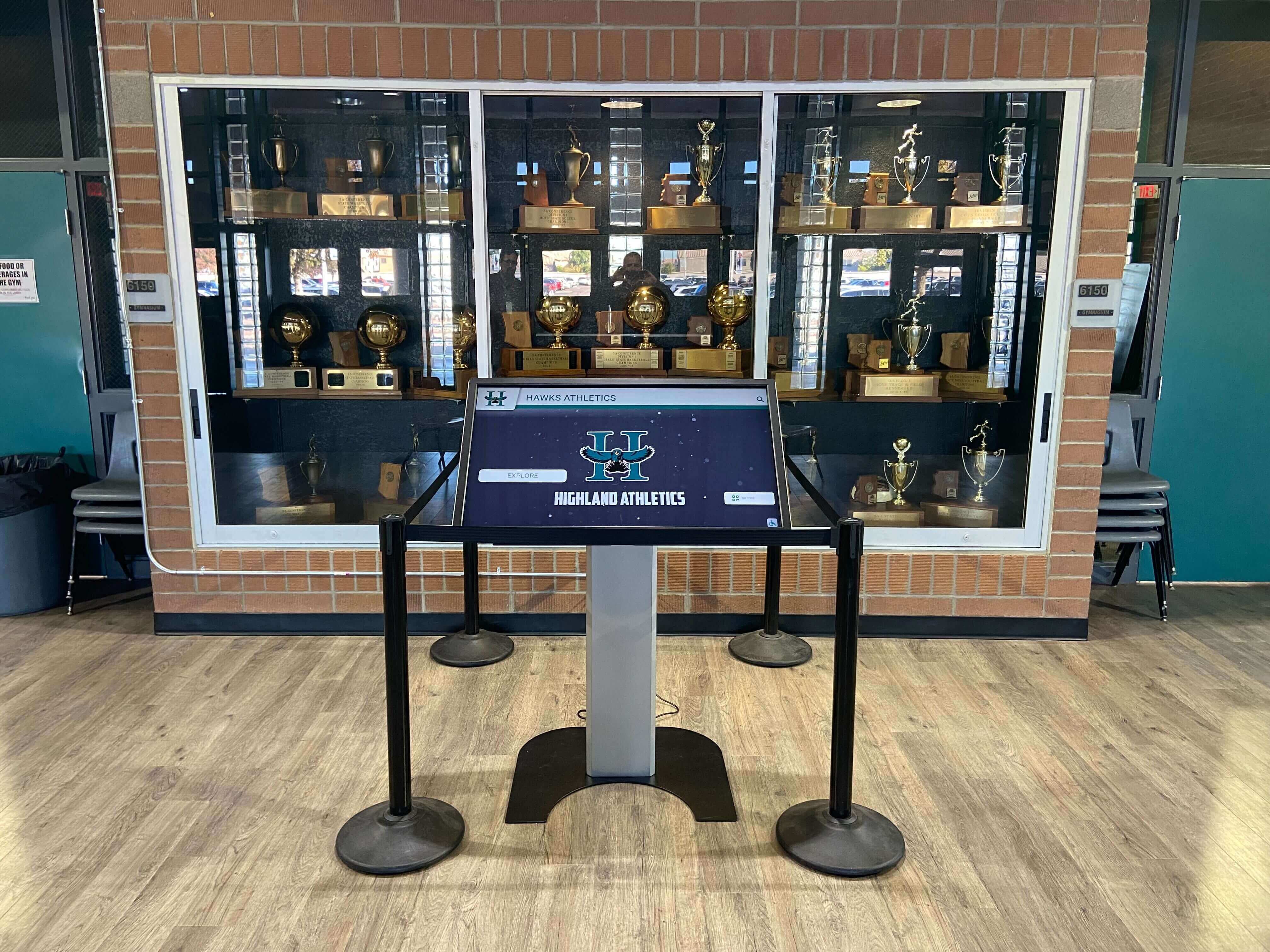




Every school accumulates trophies, plaques, and awards that represent years of student achievement, athletic excellence, and academic distinction. Yet most administrators face a familiar challenge: trophy cases overflow with decades of recognition, leaving little room for new accomplishments while older awards fade into obscurity behind crowded shelves. How do you honor past achievements without exhausting display space for future success?
A well-designed school trophy case does more than store awards—it tells your institution’s story, inspires current students toward excellence, and connects community members to proud traditions. Strategic trophy case design balances visibility, organization, and growth capacity while creating displays that visitors actually stop to examine rather than walk past unnoticed.
This comprehensive guide explores creative school trophy case ideas covering layout strategies, organization systems, lighting techniques, and modern alternatives that expand recognition capacity beyond traditional glass cases. Whether you’re redesigning existing displays or planning new recognition spaces, these proven approaches help you showcase achievements effectively while preserving room for decades of future honors.
Schools implementing strategic trophy case design report increased student engagement with recognition displays, stronger connections between current students and institutional history, and more efficient use of limited hallway and lobby space.

Contemporary trophy case designs combine traditional awards with interactive displays for comprehensive recognition experiences
Understanding Your Trophy Case Needs
Before selecting specific design approaches, assess your school’s recognition priorities, spatial constraints, and growth trajectory to ensure your trophy case serves both current and future needs.
Inventory Your Awards and Recognition Items
Most schools underestimate their total recognition inventory until conducting comprehensive audits.
Categorize by Recognition Type
Different award categories require different display approaches:
- Large championship trophies (15-30 inches tall): Require substantial vertical clearance and deep shelving to prevent top-heavy instability
- Plaques and framed certificates (8x10 to 12x16 inches): Work well on vertical surfaces or angled display panels where text remains readable
- Smaller awards and medals (3-6 inches): Need grouped display strategies to prevent visual clutter while maintaining individual visibility
- Team photos and composites (11x14 to 16x20 inches): Demand dedicated wall space separate from trophy shelving
- Banners and pennants (3-8 feet): Require hanging systems or dedicated banner displays distinct from traditional cases
Knowing the quantity and dimensions of each category helps you allocate appropriate case space and select suitable shelving configurations before making design decisions.
Assess Current vs. Future Growth
Calculate annual award accumulation rates to project space needs:
- Athletic programs typically add 8-15 significant awards annually across all sports
- Academic recognition generates 5-10 major honors per year (honor society plaques, competition trophies, scholarship acknowledgments)
- Fine arts departments contribute 3-7 awards from competitions, performances, and festivals
- Special recognition (community service, leadership, clubs) adds 4-8 miscellaneous items
A high school generating 25-30 new awards annually exhausts a 6-foot trophy case in approximately 3-4 years—creating perpetual space shortages unless rotation strategies or expansion capacity are built into initial designs.
Define Display Priorities and Hierarchy
Not all achievements warrant equal visibility. Establish clear hierarchies that guide placement decisions.
Create Recognition Tiers
Most schools benefit from three-tier systems:
Tier 1: Premier Achievements (Top shelf, eye-level prominence, dedicated lighting)
- State championships and regional titles
- National competition victories
- Historic milestone achievements
- Hall of fame inductees
Tier 2: Significant Recognition (Primary display areas, good visibility)
- Conference championships
- District and sectional titles
- Academic distinction awards
- Student leadership honors
Tier 3: Participation and Seasonal Awards (Rotation displays, archive consideration)
- Individual season recognition
- Team participation awards
- Invitational tournament plaques
- Annual program acknowledgments
Defining these tiers before design prevents the common mistake of giving all awards equal space—resulting in chaotic displays where championship trophies compete visually with routine participation certificates.
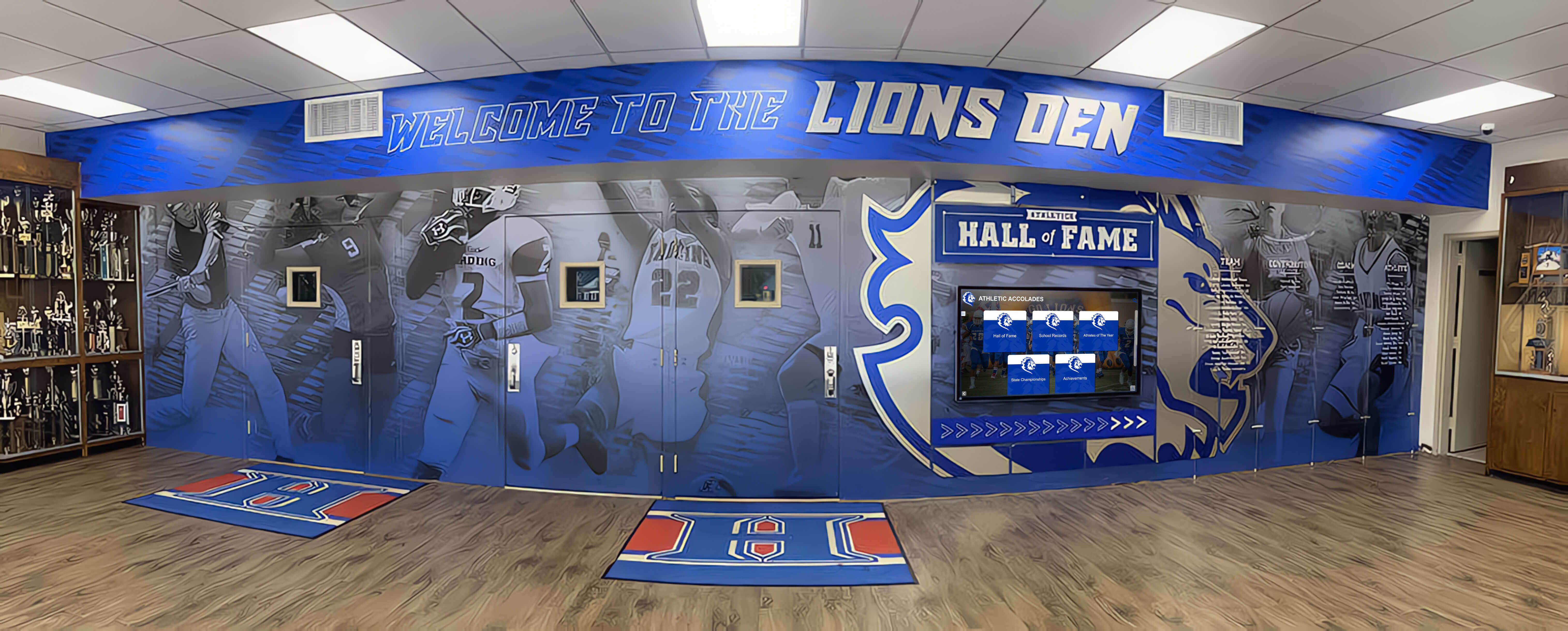
Traditional glass trophy cases frame entrance displays while providing secure storage for awards and memorabilia
Traditional Trophy Case Design Ideas
Physical trophy cases remain the most common recognition approach in schools. These proven design strategies maximize impact while working within standard case dimensions.
Strategic Layout and Organization Systems
Effective organization transforms cluttered trophy collections into compelling visual narratives.
Chronological vs. Categorical Arrangement
Two primary organization philosophies each offer distinct advantages:
Chronological Organization arranges awards by year or decade, creating historical timelines that show program evolution. This approach works particularly well when:
- Documenting program growth from early years to current excellence
- Celebrating milestone anniversaries or institutional history
- Displaying awards in multi-case installations where each case represents a different era
Categorical Organization groups similar achievements together regardless of timeframe—all basketball championships in one section, academic honors in another, individual athlete recognition in a third. This strategy proves more effective when:
- Highlighting department-specific excellence (athletics, academics, arts)
- Managing limited space where chronological displays would fragment categories
- Creating focused narratives around specific programs or achievement types
Many schools combine approaches, using categorical organization as the primary structure with chronological sub-organization within each category (all basketball trophies arranged chronologically within the basketball section).
Color-Coded Backing and Shelving
Visual cues help visitors quickly identify different recognition categories:
- Blue backing for athletic achievements
- Gold backing for academic excellence
- Green backing for fine arts recognition
- Purple backing for community service and leadership
Color-coded systems prove especially valuable in large installations spanning multiple cases where visitors might otherwise struggle to locate specific award types.
Riser Platforms and Elevation Strategies
Flat shelving creates monotonous displays where items in back rows become invisible. Strategic elevation improves visibility:
- Use 2-4 inch risers to create tiered depth (front row, middle row, back row)
- Angle shelving 10-15 degrees backward so vertical awards lean toward viewers
- Install stepped platforms for trophies of varying heights
- Consider rotating lazy-susan style displays for items viewable from multiple angles
Lighting Techniques That Highlight Achievements
Professional lighting transforms trophy cases from storage units into featured installations.
LED Strip Lighting Installation
Modern LED strips provide energy-efficient illumination without the heat output of traditional bulbs:
- Install strips along top interior edges pointing downward for even overhead lighting
- Add strips behind shelving risers to create dramatic uplighting on premiere awards
- Use adjustable color temperature LEDs (3000-4000K) that complement both gold and silver trophy finishes
- Include dimmer controls for different ambient lighting conditions
Spotlight Accent Lighting
Small puck lights or mini spotlights draw attention to featured items:
- Reserve spotlights exclusively for Tier 1 championship trophies and major accomplishments
- Angle lights at 30-45 degrees to minimize glare on glass cases
- Use narrow beam angles (15-25 degrees) for focused emphasis rather than general illumination
Schools often make the mistake of over-lighting cases, creating harsh glare that obscures rather than enhances visibility. Balanced lighting combines general illumination (LED strips) with selective accent lighting (spotlights on premier items only).
Signage and Contextual Information
Awards alone tell incomplete stories. Strategic signage provides essential context.
Award Description Cards
Small printed cards (2x3 or 3x5 inches) placed near awards explain:
- Achievement specifics (State Championship - Boys Basketball 2024)
- Historical context (First state title in program history)
- Notable team members or coaches
- Final scores or competition details
Section Headers and Category Labels
Large header signs divide cases into logical sections:
- Mounted across tops of shelving units
- Printed on rigid materials (acrylic, metal, wood) matching school branding
- Sized 12-18 inches wide with bold, readable fonts visible from 10-15 feet away
QR Code Integration for Extended Stories
Small QR codes placed near championship awards link to:
- Complete team rosters and statistics
- Game highlights and video footage
- Digital archives with photo galleries
- Detailed narrative accounts of championship seasons
This hybrid approach allows traditional cases to reference extended content without cluttering physical displays with excessive text.
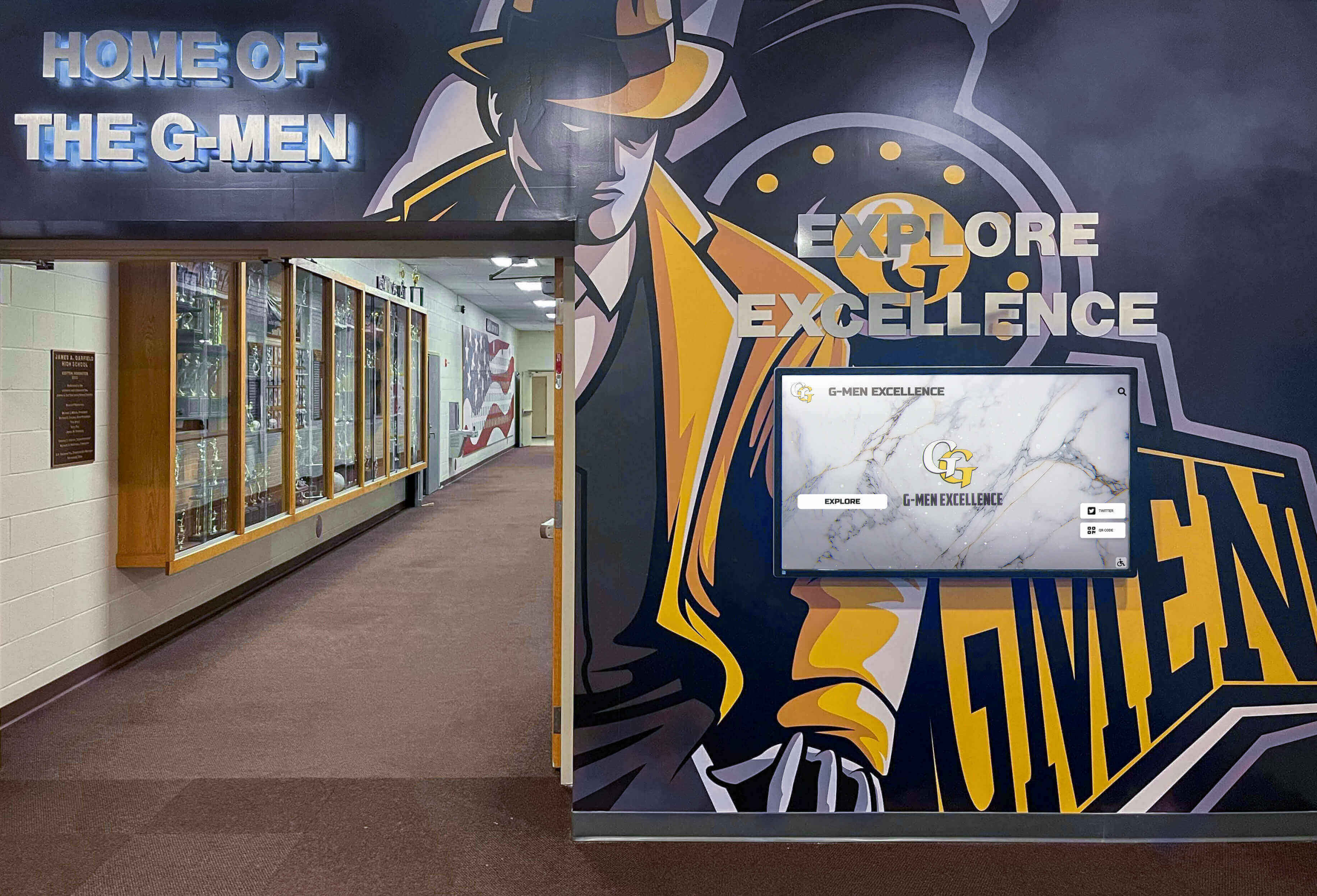
Modern schools combine traditional trophy cases with digital recognition displays for expanded storytelling capacity
Advanced Trophy Case Strategies
Beyond basic layouts, these sophisticated approaches address common trophy case challenges while creating more engaging displays.
Rotating Display Systems for Space Management
When award accumulation exceeds display capacity, rotation systems maintain fresh content while preserving historical recognition.
Seasonal Trophy Rotation
Align displayed awards with current seasons:
Fall Display (August-November)
- Football, volleyball, cross country, soccer achievements
- Fall academic competitions and honors
- Previous year’s fall season highlights
Winter Display (December-March)
- Basketball, wrestling, swimming, gymnastics awards
- Winter performing arts recognition
- Academic excellence from first semester
Spring Display (April-July)
- Baseball, softball, track and field, lacrosse trophies
- Spring music festivals and theater productions
- Year-end academic achievements and graduation honors
Seasonal rotation keeps displays current while giving each sport and activity appropriate visibility during their active seasons. Rotated awards move to secure storage rather than permanent removal, ensuring all achievements receive periodic display time.
Anniversary and Milestone Highlighting
Dedicate temporary space to featured achievements on their anniversaries:
- 10th, 25th, 50th anniversary of championship seasons
- Coach or administrator retirement years featuring their program’s major awards
- School founding anniversaries showcasing historical achievements
Featured displays typically occupy 20-30% of case space for 3-6 month periods before rotating to the next milestone.
Multi-Case Installation Design
Schools with sufficient space and budget often install multiple coordinated cases. Strategic planning prevents disconnected, fragmented displays.
Symmetrical Entrance Framing
Install matching cases on both sides of main entrances or key hallways:
- Left case: Athletic recognition
- Right case: Academic and fine arts achievement
Symmetrical installations create formal, balanced aesthetics appropriate for main lobbies and central corridors while doubling display capacity.
Progressive Timeline Installations
Series of 4-6 cases arranged sequentially along hallways, each representing a different decade:
- Case 1: Founding era through 1970s
- Case 2: 1980s achievements
- Case 3: 1990s recognition
- Case 4: 2000s accomplishments
- Case 5: 2010s awards
- Case 6: Current decade (ongoing)
Timeline installations work exceptionally well in schools with established athletic traditions and lengthy histories, transforming hallways into museum-like experiences showcasing institutional evolution.
Departmental Dedicated Cases
Large schools with extensive achievement across multiple domains benefit from department-specific installations:
- Athletic Department Case (near gym/fieldhouse): Sports trophies and team photos
- Academic Case (near main office): Honors, scholarships, competition awards
- Fine Arts Case (near auditorium): Music, theater, visual arts recognition
- Special Programs Case (near library/common areas): Service, leadership, clubs
Distributed installations increase overall recognition capacity while placing awards in contextually relevant locations where stakeholders naturally congregate.
Incorporating Artifacts and Memorabilia
Championship trophies tell richer stories when displayed alongside related artifacts.
Game-Worn Jerseys and Equipment
Framed jerseys, signed balls, and historic equipment add personal dimension:
- Mount championship game-worn jerseys near corresponding trophies
- Display signed balls from perfect games, championship victories, or milestone achievements
- Include historic equipment showing program evolution (vintage uniforms, old-style gear)
Championship Brackets and Schedules
Printed brackets documenting tournament paths toward championships:
- Final Four brackets showing game-by-game progression
- Season schedules with final records highlighted
- Playoff results and scoring summaries
These paper artifacts occupy minimal space while significantly enhancing narrative context around trophy achievements.
Coach and Athlete Recognition
Photos and plaques honoring individuals behind team success:
- Hall of fame inductee profiles
- Retired jersey numbers
- Coach milestone achievements (500 wins, 25 years service)
- Individual athlete state or national recognition
Balancing team and individual recognition creates comprehensive displays acknowledging both collective achievement and standout excellence.
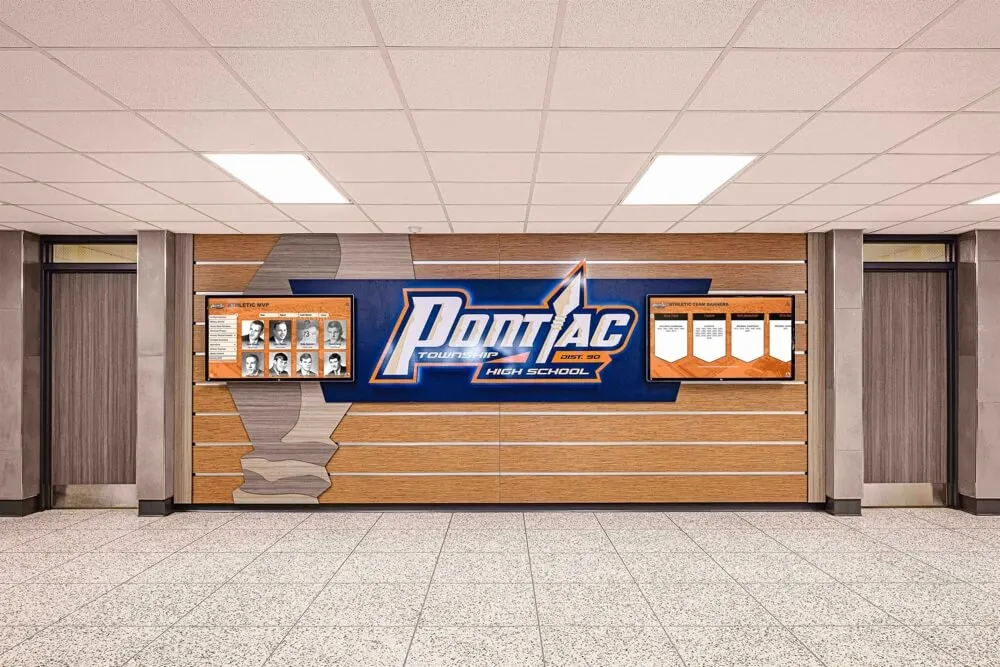
Contemporary recognition walls expand beyond traditional trophy cases to include coordinated visual branding and technology integration
Modern Alternatives to Traditional Trophy Cases
While physical trophy cases remain common, many schools face limitations that traditional glass cases cannot address: perpetual space exhaustion, minimal storytelling capacity, maintenance requirements, and accessibility challenges for viewers unable to physically visit campus locations.
The Space Constraint Challenge
Even the most thoughtfully designed traditional trophy case systems eventually reach capacity limits. Schools generating 25-30 new awards annually fill a standard 6-foot case every 3-4 years. Multi-case installations provide temporary relief but merely delay inevitable space exhaustion while consuming valuable hallway and lobby real estate needed for other purposes.
Storage rotation helps manage space but creates frustrating scenarios where significant achievements spend years invisible in storage, defeating recognition’s fundamental purpose. Championship teams from a decade ago deserve ongoing visibility, yet traditional cases force impossible choices between honoring past excellence and creating space for current achievements.
Digital Recognition Display Solutions
Interactive digital displays transform recognition from space-constrained storage into unlimited platforms where schools can honor decades of achievement without physical limitations.
How Digital Displays Work
Modern digital hall of fame displays feature touchscreen interfaces installed in hallways, lobbies, or athletic facilities where visitors browse comprehensive achievement databases:
- Individual Achievement Profiles: Detailed pages for each championship, athlete, team, or award featuring photos, videos, statistics, rosters, and narrative descriptions—storytelling depth impossible in physical cases
- Search and Filter Functions: Visitors locate specific teams, years, sports, or individuals through intuitive navigation rather than scanning crowded shelves
- Unlimited Recognition Capacity: Add unlimited achievements without exhausting display space or requiring physical case expansion
- Automatic Updates: Staff upload new awards through simple content management systems without rearranging physical displays or hiring installers
Space and Cost Advantages
A single wall-mounted touchscreen measuring 55-75 inches occupies 15-20 square feet while providing recognition capacity equivalent to 20-30 traditional trophy cases. This dramatic space efficiency proves especially valuable in:
- Schools with limited hallway space unable to accommodate large case installations
- Facilities where glass cases create sight line obstructions or code compliance issues
- Renovated buildings where original designs didn’t anticipate extensive recognition needs
Enhanced Accessibility and Reach
Digital recognition extends beyond physical locations:
- Mobile Access: The same content appears on smartphones, tablets, and computers, allowing alumni, parents, and community members to explore achievements remotely
- Social Integration: Honorees share their profiles on social media, extending recognition reach far beyond on-campus visitors
- ADA Compliance: Touchscreen interfaces offer built-in accessibility features including text scaling, voice navigation, and mobile access—addressing legal requirements traditional cases struggle to meet
Preserving Physical Trophies
Schools implementing digital displays often maintain smaller curated collections of premier physical trophies (state championships, historic milestones) in compact cases or lobby displays, while comprehensive recognition moves to digital platforms. This hybrid approach honors tradition while solving space limitations and expanding storytelling capacity.
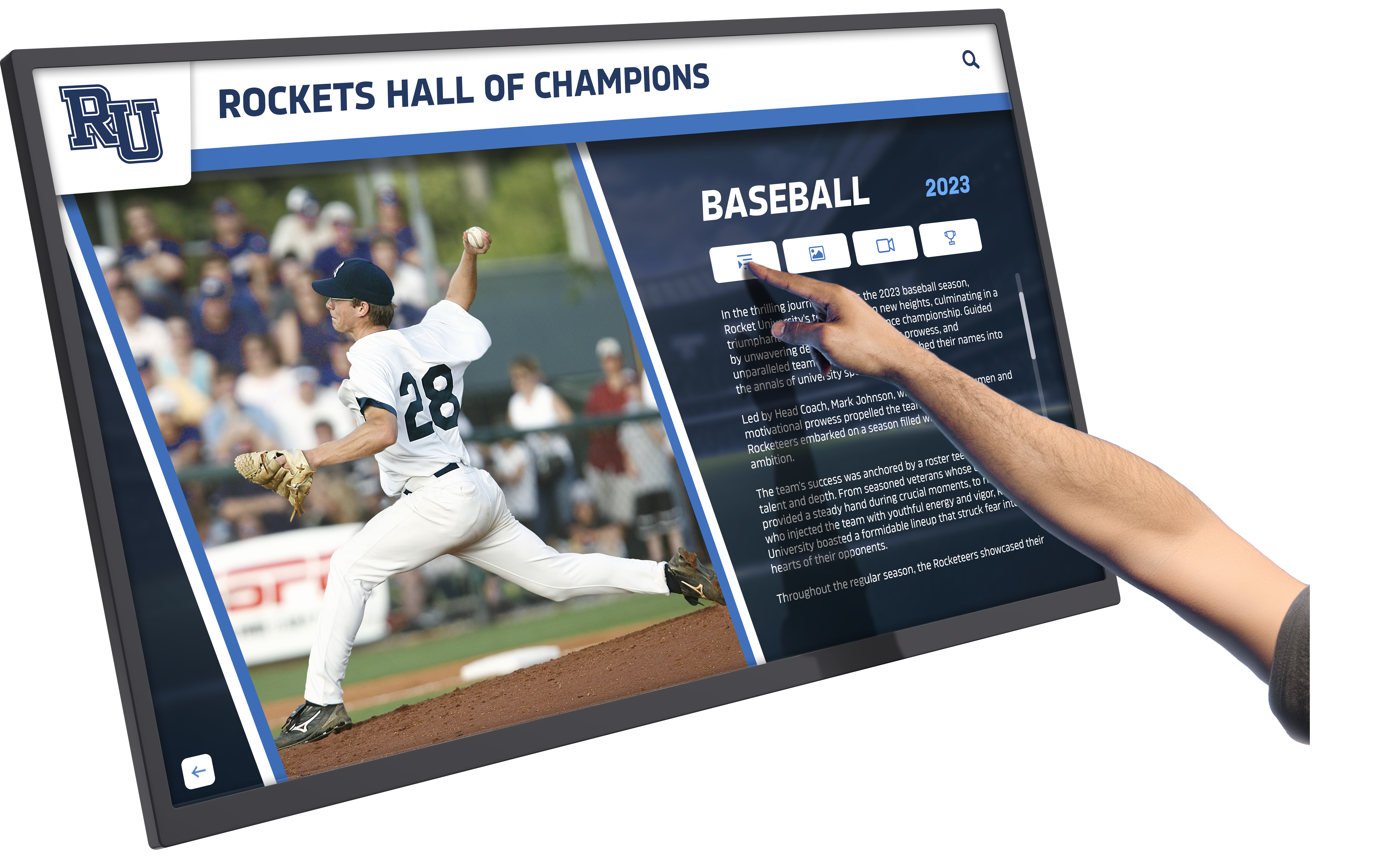
Touchscreen interfaces enable visitors to explore detailed athlete profiles, team statistics, and achievement histories impossible to convey in traditional trophy cases
Combining Traditional and Digital Approaches
Many schools discover optimal recognition strategies blend physical and digital elements, leveraging advantages of each approach.
Physical Trophy Displays for Premier Awards
Reserve traditional cases exclusively for:
- State championships and national titles
- Historic milestone achievements (first championship, longest winning streak)
- Recent season highlights (current year awards maintaining fresh relevance)
Limiting physical displays to truly exceptional achievements creates higher-impact presentations where featured items receive appropriate prominence rather than competing with dozens of routine awards.
Digital Platforms for Comprehensive Archives
Move comprehensive recognition to digital systems:
- Complete team rosters and season statistics
- Individual athlete achievements and career highlights
- Academic recognition programs with student profiles
- Historical achievements from decades past
- Coach career records and milestone accomplishments
Integration Through QR Codes
Bridge physical and digital recognition by placing QR codes on traditional trophy case signage, directing visitors from prominent physical awards to extended digital content featuring complete stories, photo galleries, video highlights, and comprehensive statistics.
Implementation Considerations
Schools evaluating digital recognition should understand key implementation factors:
Content Development Requirements
Effective digital displays require comprehensive content:
- Photograph each existing trophy and award for digital documentation
- Collect or create achievement descriptions, team rosters, and contextual information
- Organize historical records, statistics, and supporting materials
- Establish ongoing processes for adding new achievements as they occur
Initial content development typically requires 15-30 hours depending on recognition inventory size, though most schools spread this work across several weeks using student volunteers, alumni, or booster club members to assist with historical research.
Technology Infrastructure
Digital displays require basic facility infrastructure:
- Electrical outlets for display power
- Wireless or wired network connectivity for content updates
- Wall mounting locations in high-traffic areas with good visibility
- Climate-controlled indoor environments (avoid exterior walls subject to extreme temperatures)
Most schools find their existing infrastructure sufficient without specialized requirements or facility modifications.
Ongoing Management
Unlike traditional cases requiring periodic physical rearrangement, digital displays need regular content updates:
- Upload new achievements after competitions and award ceremonies
- Update seasonal features and highlighted content
- Monitor system performance and address any technical issues
- Respond to user feedback and content improvement opportunities
Schools typically assign these responsibilities to athletic directors, activities coordinators, or technology staff as part of normal duties rather than creating dedicated positions.
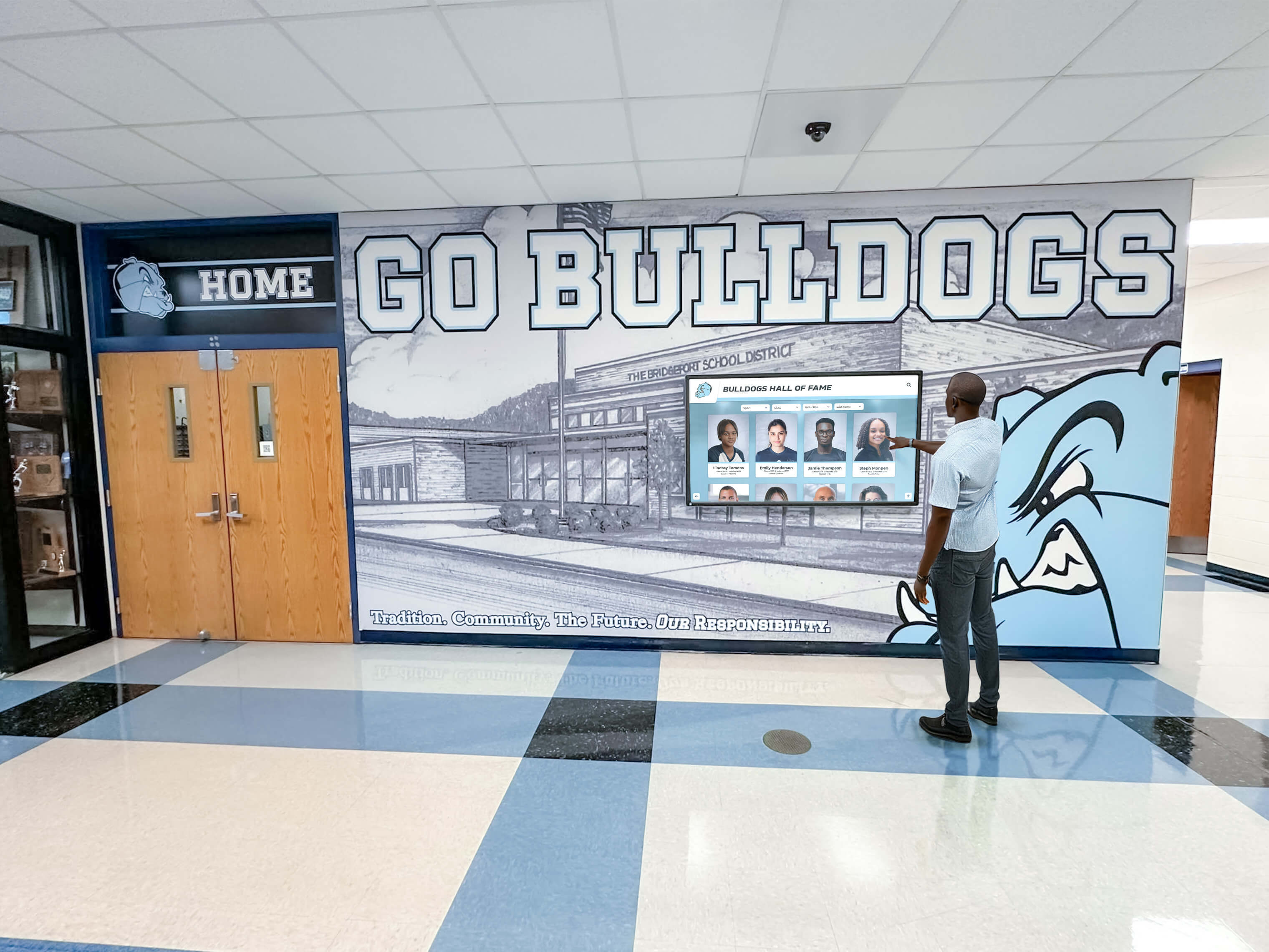
Digital recognition displays become gathering points where students, parents, and visitors actively engage with achievement stories rather than passively viewing crowded trophy cases
Making the Right Recognition Choice for Your School
Effective recognition strategies align with your institution’s specific needs, priorities, and resources rather than following one-size-fits-all approaches.
Evaluating Your Recognition Needs
Ask these questions to clarify priorities:
Space and Growth Trajectory
- How much physical space can you dedicate to recognition long-term?
- What’s your annual award accumulation rate?
- Will traditional cases accommodate 5-10 years of future growth?
Storytelling Depth
- Do you need to share detailed athlete profiles, statistics, and team histories?
- Are championship seasons documented with sufficient photos, videos, and narrative accounts?
- Would extended storytelling enhance the recognition experience significantly?
Accessibility and Reach
- Is on-campus physical access sufficient, or do you want alumni and community members accessing recognition remotely?
- Do ADA compliance requirements impact display design choices?
- Would social sharing and digital engagement add value to your recognition program?
Budget and Resources
- What’s your total available budget including installation, content development, and ongoing maintenance?
- Do you have staff capacity for physical case curation or digital content management?
- Are there donor funding opportunities specifically for recognition projects?
Budget Comparison: Traditional vs. Digital
Understanding total costs helps inform strategic decisions:
Traditional Trophy Case System
- Quality commercial cases: $2,500-$8,000 per unit depending on size and features
- Installation (mounting, lighting, electrical): $500-$1,500 per case
- Ongoing maintenance (cleaning, light replacement, lock repairs): $200-$400 annually per case
- Content updates (rearranging displays, new signage): Staff time or $150-$300 per update
- Total 5-year cost for 3-case installation: $12,000-$30,000+ excluding staff time
Digital Recognition Display
- Commercial-grade touchscreen display (55-75"): $3,000-$8,000
- Content management platform: $1,500-$3,500 annually
- Installation (mounting, connectivity): $1,500-$3,000
- Initial content development: Staff/volunteer time or $2,000-$4,000 professional services
- Ongoing updates: Minimal staff time through simple content management interface
- Total 5-year cost for single installation: $13,000-$28,000 including all software, updates, and support
While initial costs appear comparable, digital solutions provide exponentially greater recognition capacity (equivalent to 20-30 traditional cases), significantly expanded storytelling capabilities, and remote accessibility—creating superior value for similar investments.
Ready to Transform Your School Recognition?
Whether you’re redesigning existing trophy cases or exploring modern digital alternatives, strategic recognition displays honor achievement while inspiring current students toward excellence.
Schools implementing thoughtful recognition strategies—whether traditional, digital, or hybrid approaches—create environments where achievements feel valued, institutional history remains alive, and students understand their connection to proud traditions of excellence.
Solutions like Rocket Alumni Solutions provide comprehensive digital recognition platforms specifically designed for schools, combining unlimited achievement capacity with user-friendly content management, ADA-compliant interfaces, and mobile accessibility—transforming how institutions honor student excellence while eliminating the space constraints that plague traditional trophy cases.
Consider what recognition approach best serves your school’s unique needs, and create displays that don’t just store awards, but tell compelling stories of achievement that inspire the next generation of student excellence.































