



Walk into any high school gymnasium during senior night and you’ll see them—colorful vinyl banners suspended from railings, taped to walls, or carried onto the court by proud parents. These senior night banners have become as essential to the celebration as the pre-game ceremony itself, capturing photos, achievements, and messages honoring graduating athletes for their years of dedication.
Yet while traditional vinyl and poster board banners serve an important ceremonial purpose on game night, they represent just one moment in time. Within hours, these banners come down, get rolled up, and disappear into closets or garages—their visibility limited to a single evening and the families who created them. Meanwhile, the achievements they celebrate deserve recognition extending far beyond one ceremony, reaching entire school communities and preserving athletic excellence for future generations to discover.
This comprehensive guide explores the complete evolution of senior night recognition—from traditional vinyl banners and poster boards to modern digital displays that transform one-night celebrations into permanent, dynamic recognition systems. Whether you’re planning your first senior night or seeking to enhance existing traditions, you’ll discover design strategies, technology options, and implementation frameworks creating meaningful athlete recognition that honors excellence appropriately.
Schools implementing comprehensive senior night recognition—combining ceremonial traditions with permanent digital celebration—report stronger athletic culture, improved family engagement, and enhanced program pride as athletes see that their contributions receive lasting honor rather than temporary acknowledgment disappearing after a single game.

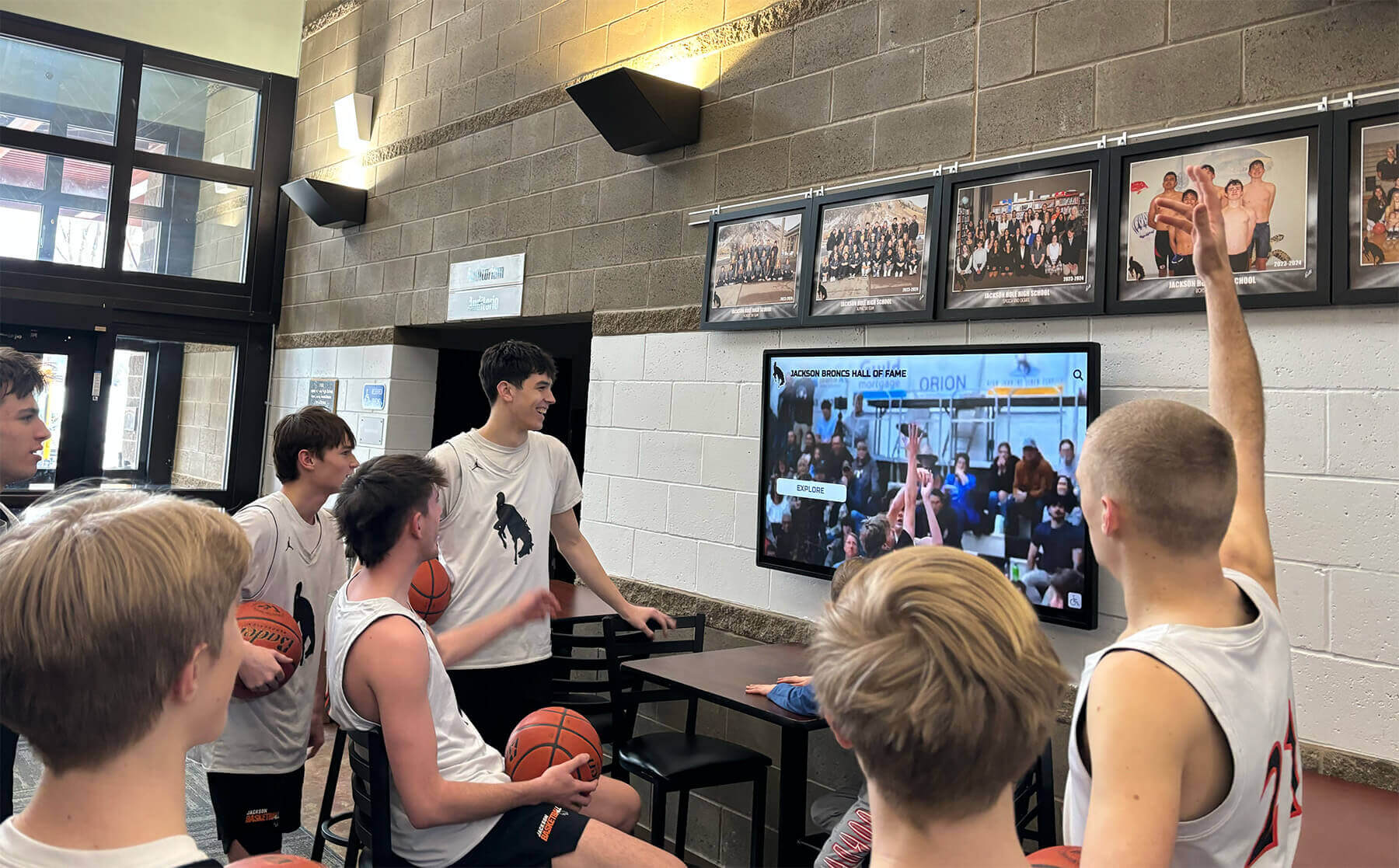
Modern recognition displays enable athletes to explore their achievements and program history through engaging interactive experiences
Understanding Senior Night Banner Traditions
Before exploring modern recognition alternatives, understanding the role traditional banners play in senior night celebrations provides essential context for designing comprehensive systems that honor both ceremony and lasting recognition.
The Cultural Significance of Senior Night Banners
Senior night banners represent far more than simple decorations—they embody families’ love, athletes’ journeys, and communities’ appreciation for dedication spanning years:
Emotional Connection and Family Investment
Creating senior night banners has become a beloved tradition where families invest hours selecting photos, designing layouts, printing materials, and crafting presentations celebrating their athletes. This process provides meaningful opportunities for parents to reflect on their children’s growth from youth leagues through final high school seasons while creating tangible symbols of pride displayed during emotional senior night ceremonies.
The banner creation journey itself—gathering favorite photos, writing heartfelt messages, choosing color schemes matching school spirit—gives families active participation in recognition rather than passive observation of ceremonies planned entirely by others.
Visual Celebration and Ceremony Enhancement
Traditional senior night banners create visual impact transforming ordinary gymnasiums into celebration spaces. When dozens of colorful banners line railings or hang from walls, the physical environment communicates that something special is happening—that tonight focuses on honoring individuals who dedicated years to program excellence.
During recognition ceremonies, these banners provide props anchoring family processionals across courts or fields. Parents carrying banners featuring their athletes creates powerful visual symbolism as families literally carry forward the accomplishments and memories these displays celebrate.
Photography and Memory Preservation
Senior night photos featuring athletes with their banners have become treasured keepsakes families preserve for decades. These images capture not just final games but comprehensive celebrations of athletic journeys—visual documentation that athletes were truly honored and appreciated for their contributions.
The banners themselves become physical artifacts families keep indefinitely, storing them in closets, displaying them in recreation rooms, or bringing them to graduation parties and future milestone events as reminders of athletic accomplishments.
Traditional Banner Formats and Materials
Senior night banner creation has evolved its own aesthetic traditions and material preferences:
Vinyl Banners
Professional vinyl banners printed by sign shops represent the most polished traditional option. These durable banners feature high-quality photo reproduction, weather resistance enabling outdoor display, professional finishing with grommets or pole pockets, and sizes typically ranging from 2x4 feet to 3x6 feet depending on budget.
Vinyl banners typically cost $30-100 depending on size and printing quality, with most families ordering through local print shops, online banner services, or booster club group orders coordinating printing for entire senior classes simultaneously.
Poster Board Displays
Homemade poster boards represent more budget-friendly, personalized alternatives. Families purchase large poster boards or foam core from craft stores, print photos at home or through photo services, hand-letter messages or print text on home computers, and decorate with stickers, team colors, or creative embellishments.
While less durable than vinyl, poster boards enable creative freedom and personal touches reflecting individual families’ styles while maintaining affordability for families with multiple children or limited resources.
Photo Collage Banners
Many families create collage-style banners featuring multiple photos documenting complete athletic journeys from youth sports through senior seasons. These timeline-style displays visually communicate growth and development while triggering nostalgia and emotional responses from audiences witnessing how young children evolved into accomplished high school athletes.
Digital Print Materials
Some programs have begun incorporating digital printing on fabric, canvas, or other specialty materials creating banner alternatives with unique textures or visual effects. These materials often enable larger formats or interesting display approaches while maintaining photo quality comparable to traditional vinyl printing.
Understanding senior night ideas for comprehensive athlete recognition provides frameworks for ceremonies honoring graduating athletes while building program traditions.

Integrated recognition systems combine traditional athletic branding with modern digital display capabilities
The Limitations of Traditional Banner Recognition
While vinyl banners and poster boards serve important ceremonial purposes, they face inherent constraints limiting their effectiveness as comprehensive recognition solutions:
Temporary Visibility and Limited Audience
Single-Event Recognition
Traditional banners appear for just one evening—the senior night game itself. After ceremonies conclude and games finish, banners come down and disappear. This temporal limitation means recognition reaches only audiences present that specific night: families attending the game, classmates in student sections, and community members who happened to attend.
Athletes whose families cannot afford professional banners, whose games fall on weekdays with limited attendance, or whose sports receive less community interest experience recognition with minimal visibility beyond immediate families despite equivalent dedication and achievement.
No Ongoing Recognition
Once senior night concludes, no systematic recognition remains celebrating these athletes’ contributions. Unlike championship banners that hang permanently in gymnasiums, senior night banners disappear immediately—sending implicit messages that individual athletes matter less than team championships despite personal dedication enabling those team successes.
This absence proves particularly problematic for athletes in sports without championship success, those who contributed consistently without starring roles, and seniors whose personal achievements deserve celebration regardless of team performance during their tenure.
Storage and Preservation Challenges
Physical Degradation
Banners stored in homes face inevitable deterioration. Vinyl banners fold and crease, colors fade if exposed to light, moisture creates mold or water damage, and physical damage from moving, storage, or handling diminishes quality over time. Within a few years, many banners become too damaged for meaningful display even if families wish to showcase them during future milestone events.
Space Constraints
Large banners consume significant storage space in homes, leading many families to eventually discard them despite emotional attachment. This creates difficult decisions where families must choose between preserving memories and reclaiming closet space—ultimately resulting in most senior night banners ending up in landfills within 5-10 years despite initial intention to keep them indefinitely.
Inaccessibility
Banners stored in homes remain invisible to broader communities. Younger athletes never see recognition celebrating program predecessors, alumni cannot revisit their own recognition, and institutional memory fades as physical artifacts disappear from visibility. This represents tragic loss of program history that could inspire current athletes and strengthen cultural traditions.
Equity and Standardization Concerns
Economic Disparities
Professional vinyl banner costs create recognition disparities where affluent families purchase large, high-quality displays while families with limited resources create modest poster boards or no banners at all. These visible differences in recognition quality can embarrass students, create family stress, and communicate unintended messages about whose achievement matters more based on economic rather than athletic excellence.
Design Inconsistency
Without standardized guidelines, banner quality varies dramatically across aesthetics, readability, appropriateness of content, and overall presentation quality. Some banners feature professional design and printing while others appear rushed or poorly executed—creating visual inconsistency detracting from unified celebration atmospheres.
Logistical Complications
Managing dozens of unique banners creates coordination challenges: determining where and how to display varied sizes and formats, coordinating which families bring banners versus program providing them, establishing display timing and removal protocols, and disposing of or returning banners after events conclude.
These logistical burdens often fall on already-overwhelmed coaches, athletic directors, or volunteer coordinators managing numerous other senior night responsibilities simultaneously.
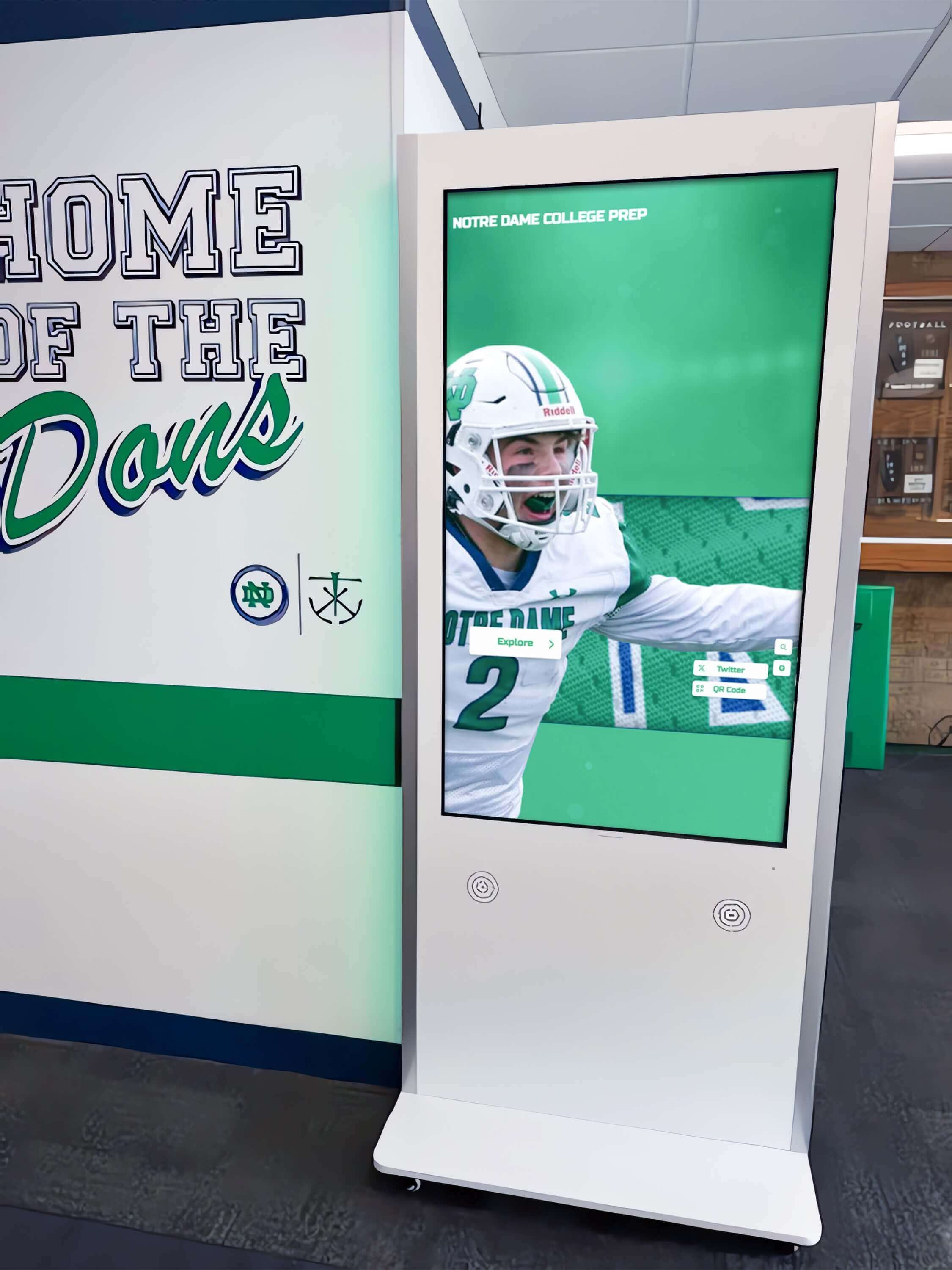
Freestanding digital kiosks provide professional recognition solutions specifically designed for celebrating athletic achievement
Modern Digital Recognition: The Evolution Beyond Vinyl
Technology has created compelling alternatives that preserve senior night ceremony while extending recognition far beyond single events:
Understanding Digital Recognition Displays
Digital recognition platforms consist of large-format touchscreen displays—typically 43 to 75 inches—running specialized software enabling interactive exploration where students, families, and community members can discover comprehensive athlete profiles, career statistics, photos, videos, and achievement documentation.
Unlike generic digital signage cycling through rotating announcements, purpose-built recognition systems organize content around individual athlete profiles providing deep engagement impossible with traditional banners:
Unlimited Recognition Capacity
Digital platforms eliminate space constraints, accommodating every senior athlete across all sports and participation levels without physical limitations. This ensures comprehensive recognition regardless of team size, enabling schools to honor 20 seniors one year and 60 the next without facility modification or recognition reduction.
Rich Multimedia Storytelling
Digital profiles incorporate multiple photos spanning athletic careers, video highlight clips preserving memorable performances, complete career statistics documenting achievement, biographical narratives explaining personal journeys, quotes from coaches and teammates, and achievement timelines showing progression from freshman through senior years.
This multimedia depth creates emotional connections impossible with vinyl banners limited to printed photos and brief text—transforming recognition from simple acknowledgment into compelling stories celebrating complete athletic experiences.
Permanent, Accessible Recognition
Digital displays provide year-round visibility in high-traffic locations rather than appearing for single evenings. Athletes see their recognition throughout senior years, underclassmen discover program history inspiring future excellence, alumni return to explore their own profiles years later, and families worldwide access recognition through web portals extending visibility beyond physical campuses.
Immediate Updates and Additions
Adding new senior classes happens instantly through content management systems rather than waiting weeks for physical banner production. This enables recognition appearing immediately after senior nights, season-ending banquets, or athletic ceremonies—maintaining current, relevant celebration.
Solutions like Rocket Alumni Solutions provide purpose-built platforms understanding unique athletic recognition requirements including privacy controls, sport-specific organization, and content workflows that generic digital signage cannot accommodate effectively.
How Digital Displays Complement Traditional Ceremonies
The most effective approaches combine digital recognition with preserved ceremony traditions rather than replacing beloved senior night customs:
Ceremony-Day Banner Integration
Schools maintain traditional banner ceremonies where families carry displays during senior night processionals, creating photo opportunities with athletes holding banners, and incorporating banners into gym decoration for visual impact during games. This preserves the ceremonial significance and family participation traditions while acknowledging the emotional importance of these customs.
Permanent Recognition Extension
After ceremonies conclude, schools photograph all senior night banners and incorporate these images into permanent digital profiles alongside additional content. This ensures the family-created banners receive ongoing visibility through digital platforms while physical banners can be taken home as keepsakes without losing recognition continuity.
Some programs create “virtual banner galleries” on digital displays specifically showcasing all senior night banners from current and previous years—transforming single-event decorations into permanent collections celebrating ongoing program traditions.
Enhanced Content and Context
Digital profiles add layers of recognition impossible during brief ceremonies: complete four-year statistics and achievements, video highlights from memorable games and seasons, teammate and coach testimonials, future plans including college commitments, and connections to program records and team championships.
This comprehensive content honors athletes more thoroughly than any physical banner could while respecting that ceremonies themselves remain important symbolic moments deserving continued emphasis.
Understanding senior night poster ideas and modern alternatives demonstrates how schools balance tradition with innovation in athlete recognition.
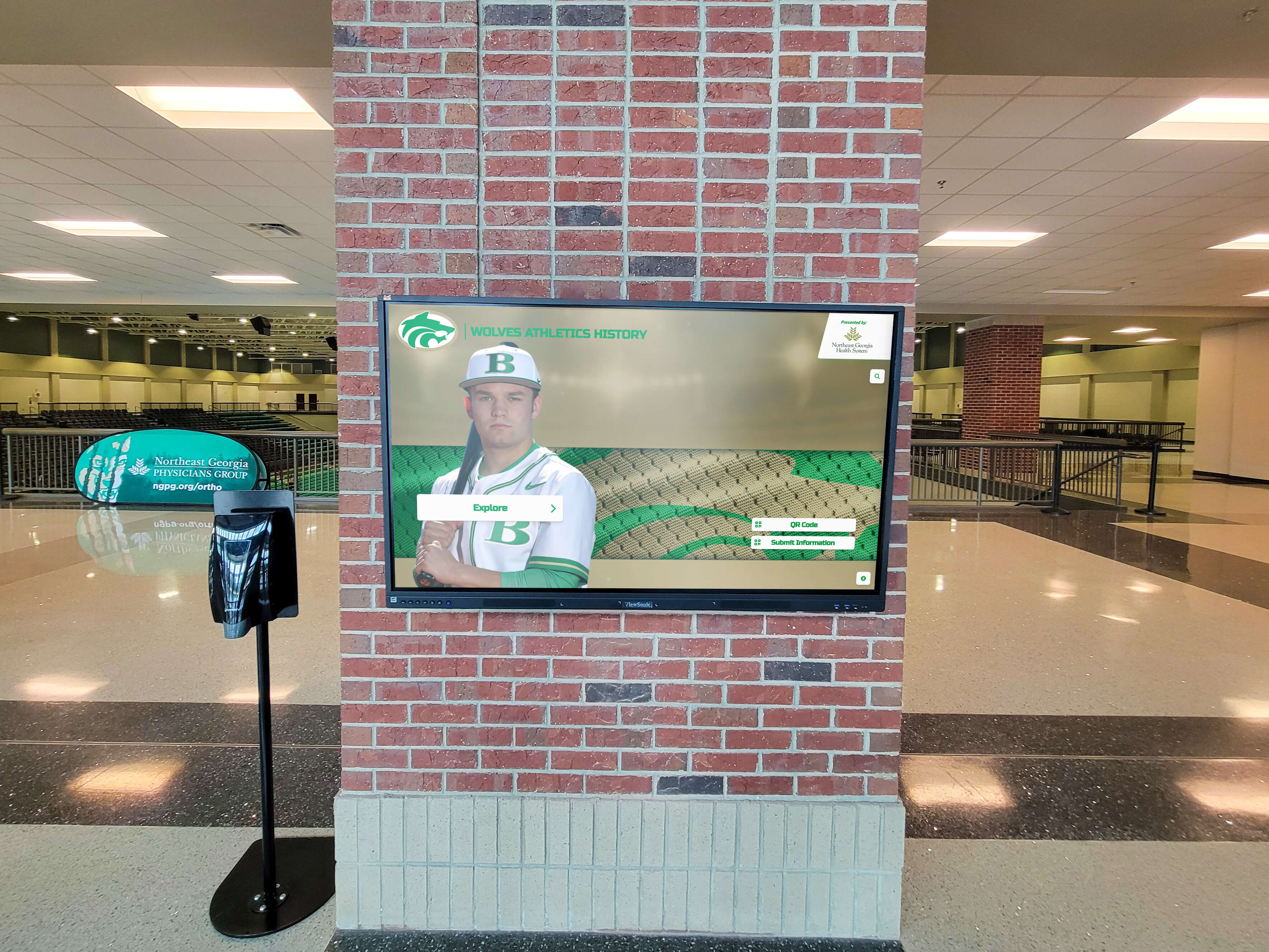
Architectural integration positions displays as permanent recognition features within athletic facilities
Designing Effective Digital Senior Recognition Experiences
Creating engaging digital recognition requires systematic design approaches balancing aesthetic appeal with functional usability:
Layout and Experience Design Principles
Zone-Based Interface Architecture
Effective recognition displays organize screen space into functional zones:
- Hero Area (Top 15-20%): School branding, athletic program identity, and featured senior highlights drawing immediate attention
- Navigation Zone (10-15%): Browse by sport, search by name, view by graduation year, or explore achievements and records
- Content Display (50-60%): Senior athlete profiles, photo galleries, statistics, videos, and biographical information
- Action Footer (10-15%): Social sharing, QR codes linking to mobile access, and home/back navigation
Card-Based Discovery
Grid layouts displaying multiple seniors simultaneously enable quick browsing with thumbnail photos, names, sports, and years. Touch-friendly cards provide intuitive interaction patterns familiar from smartphone experiences, making exploration natural even for first-time users.
Progressive Information Disclosure
Summary views show essential information at-a-glance, touch interactions reveal expanded details, and dedicated profile pages display comprehensive content including full photo galleries, complete statistics, video highlights, and biographical narratives.
Content Strategy for Senior Athlete Profiles
Comprehensive digital recognition requires systematic documentation capturing complete stories:
Essential Profile Information
- Full athlete name with preferred formatting
- Graduation year and sport participation
- Position or event specialization
- Years of program participation
- Jersey number(s) when applicable
- Height, weight, and physical stats (sport-dependent)
- Team captaincy or leadership positions held
Career Achievement Documentation
- Varsity letters earned across all sports
- Conference, league, or division honors and awards
- All-conference, all-state, or national recognition
- School records held or approached
- Championship team participation
- Statistical leaders and performance milestones
- Academic honors including honor roll, athletic scholars, or GPA recognition
Personal Journey Narratives
- Beginning participation including youth league background
- Significant growth moments and breakthrough performances
- Memorable games, seasons, or competitive experiences
- Challenges overcome demonstrating perseverance
- Favorite athletic memories or defining program moments
- Coach and teammate relationships and influences
- Impact on program culture and younger athletes
Future Plans and Continued Involvement
- College attendance and major declarations
- Plans for collegiate athletic participation
- Athletic scholarship awards and institutional recognition
- Career aspirations whether sports-related or other fields
- Messages to current athletes about program value
- Contact preferences for maintaining alumni connections
Resources about athletic recognition programs and display strategies provide frameworks for systematic athlete celebration.
Multimedia Content Production
Photography Standards
Collect diverse images showing athletes in action during competitions, team photos from all participation years, individual portraits for identification, candid shots from practices and team activities, senior night ceremony photos including banner displays, and celebration images from championships or milestone achievements.
Maintain photo quality standards with minimum 1920x1080 resolution for primary images, proper exposure and color correction, appropriate cropping emphasizing athletes, and consistent editing styles creating visual cohesion across profiles.
Video Integration
Produce 30-90 second highlight reels featuring best plays and performances, record senior reflections sharing favorite memories, capture coach testimonials about athlete contributions, document senior night ceremony moments, and compile season retrospectives celebrating complete campaigns.
Statistical Documentation
Compile complete career statistics from all seasons, calculate career totals and averages across participation years, identify school records approached or broken, document team success during athlete tenure, and provide context comparing performance to historical program standards.
This comprehensive approach transforms senior recognition from simple acknowledgment into rich archives preserving athletic excellence for program posterity.
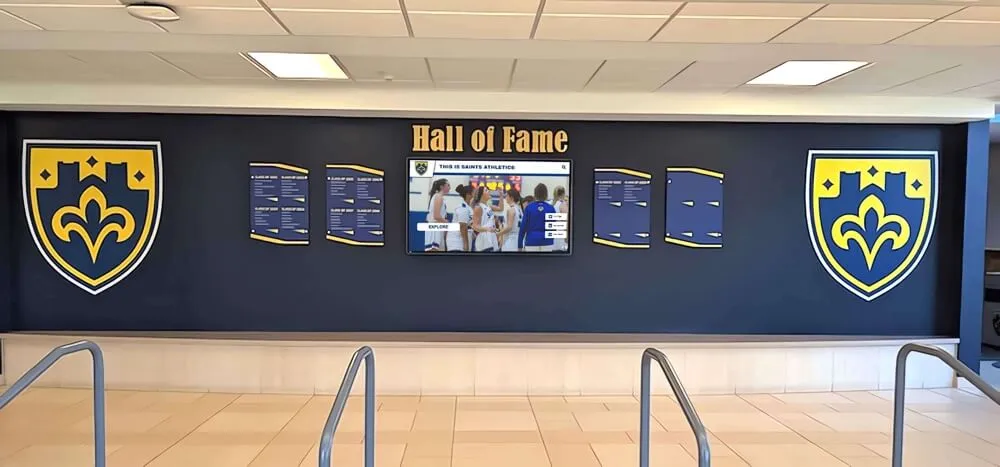
Comprehensive recognition systems integrate traditional design elements with modern digital capabilities
Implementation: Launching Digital Senior Recognition Programs
Successfully implementing digital recognition requires strategic planning across technology selection, content development, placement, and program promotion:
Technology Selection and Platform Evaluation
Hardware Considerations
Select commercial-grade touchscreen displays rated for continuous operation rather than consumer televisions designed for limited residential use. Key specifications include screen sizes (43-55 inches for close viewing, 65-75 inches for distance viewing), capacitive touch technology providing responsive smartphone-like interaction, brightness levels (300+ nits) ensuring visibility in various lighting, and portrait or landscape orientation matching content and space requirements.
Choose between wall-mounted installations saving floor space, freestanding kiosks creating destination recognition areas, or custom integrated installations matching facility architecture.
Software Platform Requirements
Prioritize purpose-built recognition software specifically designed for celebrating athletes rather than generic digital signage platforms lacking athletic-specific features. Essential capabilities include athlete profile management with sport-specific fields, photo and video galleries with unlimited capacity, statistics integration and display, search and filtering by sport, year, or achievement, web portal extension enabling worldwide access, and content management systems allowing easy updates.
Vendor Evaluation Criteria
Assess vendors based on demonstrated athletic recognition experience, quality of reference installations and client testimonials, technical support availability and response commitments, training resources and onboarding assistance, accessibility compliance (ADA WCAG 2.1 AA), and total cost of ownership including hardware, software, support, and potential expansion.
Organizations should request live demonstrations with actual athletic content, speak with reference schools about implementation experiences, and verify accessibility compliance before committing to platforms.
Comprehensive digital recognition buyer guides provide detailed vendor evaluation frameworks.
Strategic Placement and Installation
Optimal Installation Locations
Position displays where athletes, families, and communities naturally encounter recognition:
- Gymnasium lobbies: Welcome visitors immediately upon entering athletic facilities
- Main athletic hallways: Connect between gyms, locker rooms, and spectator areas
- School entrance lobbies: Ensure entire school community encounters athletic recognition
- Cafeterias and commons: Reach students during daily routines regardless of athletic participation
- Weight rooms and training facilities: Surround current athletes with program tradition during workouts
- Administrative areas: Impress visiting families during recruitment and campus tours
Installation Best Practices
Ensure professional mounting supporting display weight and security, position viewing height with screen centers at 48-60 inches for standing adults, provide adequate lighting avoiding glare and washout, conceal power and network cables for clean professional appearance, and implement physical security measures preventing theft or vandalism when displays occupy unsupervised spaces.
Content Development Workflows
Systematic Content Collection
Establish annual workflows for gathering senior content:
- Early season (September-October): Distribute family information forms requesting photos, statistics, achievements, biographical details, and future plans
- Mid-season (November-January): Compile submitted content, fill information gaps, and photograph formal senior portraits
- Late season (February-March): Create video content, finalize statistics, and complete profile development
- Post-season (April-May): Add senior night banner photos, update with championship results, and incorporate end-of-season awards
Quality Control and Approval
Implement review processes ensuring content accuracy before publication, verify proper name spelling and factual information, confirm appropriate image selection and quality, validate statistics against official records, obtain athlete and family approval when possible, and maintain privacy guidelines respecting sensitive information.
Sustainable Administration Models
Assign clear staff responsibility to athletic directors or assistant ADs for overall program oversight, designate sport coaches for athlete-specific content, engage athletic office staff for data entry and coordination, recruit parent volunteers for photo digitization when appropriate, and train multiple staff members preventing single-person dependencies.
Resources on implementing athletic recognition systems provide operational frameworks ensuring long-term program sustainability.
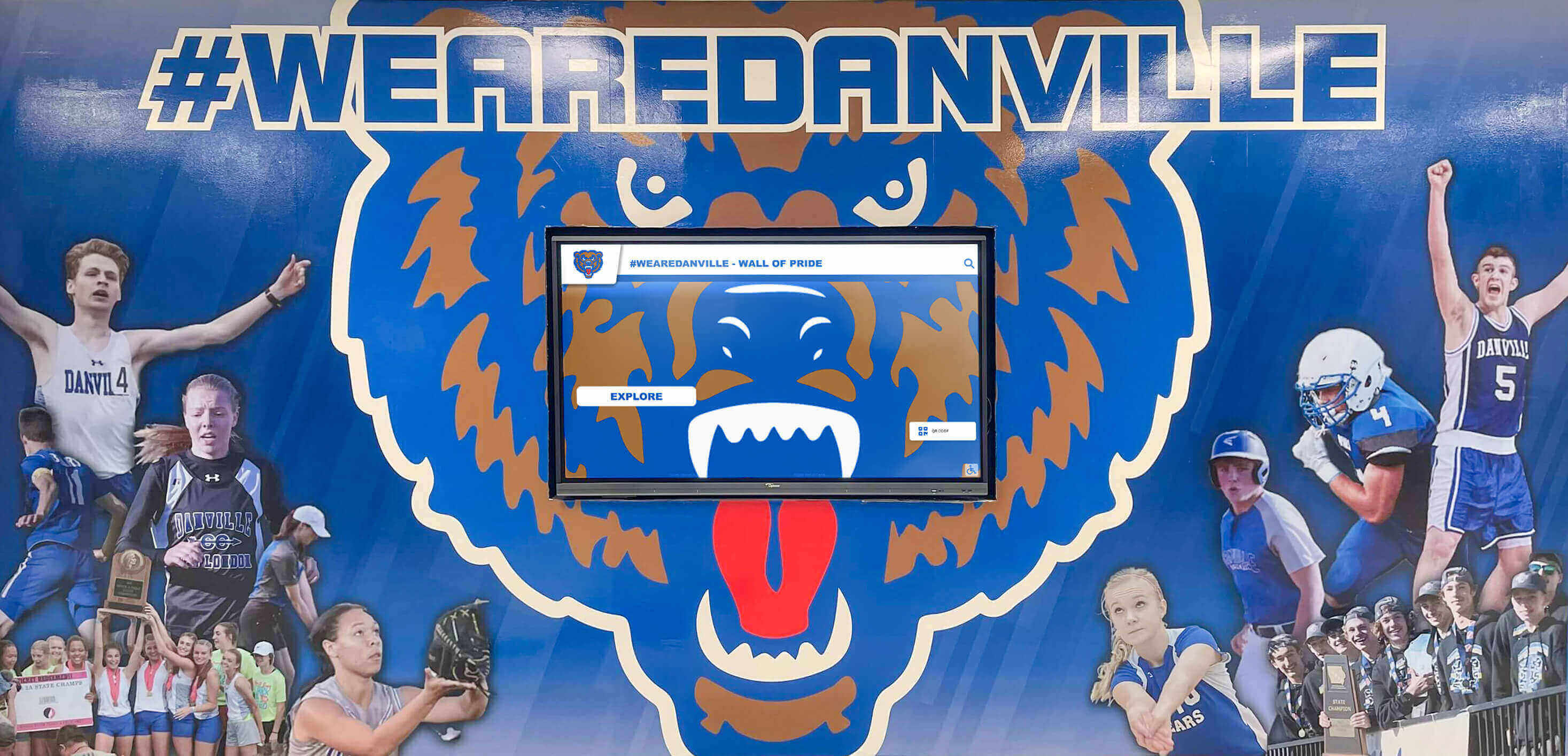
Coordinated design integrates digital displays with existing athletic branding and facility aesthetics
Hybrid Approaches: Combining Traditional and Digital Recognition
The most successful programs preserve ceremonial traditions while extending recognition through permanent digital systems:
Maintaining Senior Night Banner Ceremonies
Preserve Family Participation and Traditions
Continue encouraging families to create traditional banners for senior night ceremonies, maintain processional traditions where families carry banners during athlete introductions, create photo opportunities with athletes holding their banners, and incorporate banners into gymnasium decoration for visual impact during games.
This preserves the emotional significance of family-created recognition while acknowledging that these traditions matter to participants regardless of permanent recognition alternatives.
Document Banner Designs
Photograph all senior night banners in high resolution, capture both overview shots showing complete designs and detail shots preserving text and images, record families with their banners during ceremonies, photograph athletes with banners on courts or fields, and document banner displays throughout gymnasiums.
These photos become valuable content for permanent digital profiles while enabling virtual banner galleries preserving designs after physical banners leave facilities.
Digital Enhancement of Traditional Recognition
Virtual Banner Galleries
Create dedicated digital galleries showcasing all senior night banners from current and previous years. This transforms temporary decorations into permanent collections celebrating program traditions, enables alumni to revisit their own banners decades later, demonstrates evolution of banner design trends over time, and preserves family creativity and personal touches permanently.
Extended Content Beyond Banners
Use digital platforms to provide recognition depth impossible on physical banners: complete four-year statistical summaries, video highlights from memorable games and seasons, teammate and coach quotes and testimonials, photo galleries spanning complete athletic careers, connections to team championships and program records, and alumni updates tracking continued success after graduation.
Social Media Integration
Enable sharing of both traditional banner photos and digital profiles through social platforms, create ceremony hashtags collecting community recognition messages, live-stream senior night ceremonies for distant relatives and friends, and generate QR codes linking physical banner displays to expanded digital content.
This integration honors tradition while leveraging technology to extend recognition reach beyond single events and physical locations.
Understanding flexible recognition pricing and multi-year planning enables schools to implement comprehensive recognition within budget constraints.
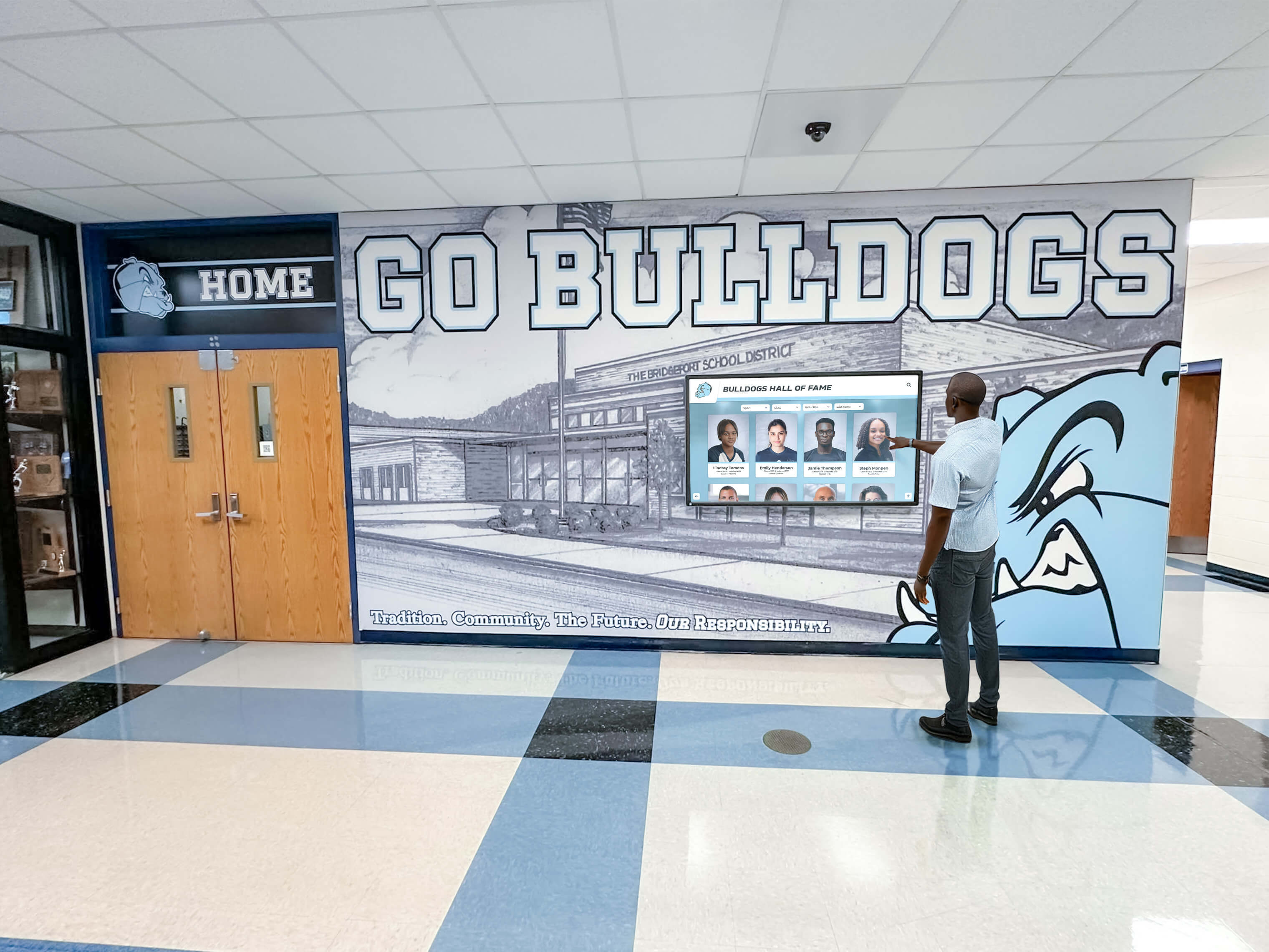
Interactive systems create engaging exploration experiences encouraging extended discovery of athletic achievements
Addressing Common Implementation Concerns
Schools considering digital recognition often raise predictable questions and concerns:
Budget and Funding Strategies
Understanding Investment Levels
Complete digital recognition installations typically cost $8,000-15,000 per display including commercial-grade touchscreen hardware ($4,000-8,000), recognition software and licensing (varies by solution), professional installation and integration ($1,000-2,000), initial content development support, training and onboarding assistance, and first-year support and maintenance.
While this represents significant investment, consider cost context: it equals approximately 100-200 professional vinyl senior night banners, provides permanent infrastructure serving programs for 10+ years, eliminates ongoing banner production expenses, and delivers recognition value impossible through physical alternatives.
Alternative Funding Approaches
Explore diverse funding sources: capital campaigns incorporating recognition technology, memorial giving programs funding displays honoring deceased community members, corporate sponsorships from businesses supporting athletics, booster club allocations from parent organizations, athletic department budget prioritization, grant opportunities through educational technology foundations, and phased implementation starting with single displays before expanding.
Some schools discover that eliminating annual costs for vinyl banners, trophy purchases, and physical plaque production creates available budget for digital recognition within 3-5 years through accumulated savings.
Technology Concerns and Technical Support
Addressing “We’re Not Tech People” Worries
Modern recognition platforms prioritize user-friendliness specifically because schools lack extensive technical expertise. Quality solutions provide cloud-based content management requiring no servers or IT infrastructure, browser-based interfaces operable from any computer or tablet, intuitive editors enabling content updates without technical skills, automatic software updates maintaining current capabilities, and comprehensive vendor support handling technical issues.
Schools should select vendors specifically experienced with educational institutions understanding that support must be accessible, responsive, and patient with non-technical administrators.
Reliability and Maintenance Requirements
Commercial-grade displays run continuously for years with minimal maintenance beyond occasional screen cleaning. Software platforms hosted in cloud environments require no local maintenance, updates happen automatically without administrator intervention, and remote monitoring identifies issues proactively before users notice problems.
Most schools report that digital recognition requires less ongoing maintenance than traditional trophy cases, plaque walls, or physical banner storage and preservation.
Equity and Access Considerations
Ensuring Comprehensive Recognition
Digital platforms inherently promote equity by providing identical recognition regardless of family economic circumstances, eliminating visible quality differences between affluent and modest families, ensuring all athletes receive professional-quality profiles, standardizing content while allowing personalization, and reaching broader audiences than physical banners regardless of ceremony attendance.
This represents significant improvement over traditional approaches where recognition quality correlates with family resources rather than athletic achievement.
Privacy and Consent
Implement clear policies governing what information appears publicly, obtain athlete and family consent for recognition content, provide opt-out options respecting privacy preferences, control access to sensitive information like contact details, and establish content removal procedures for athletes requesting profile deletion.
Quality recognition platforms include privacy controls and permissions enabling appropriate content governance.
Resources about design consistency and creative freedom in recognition systems demonstrate how schools maintain brand standards while personalizing athlete recognition.
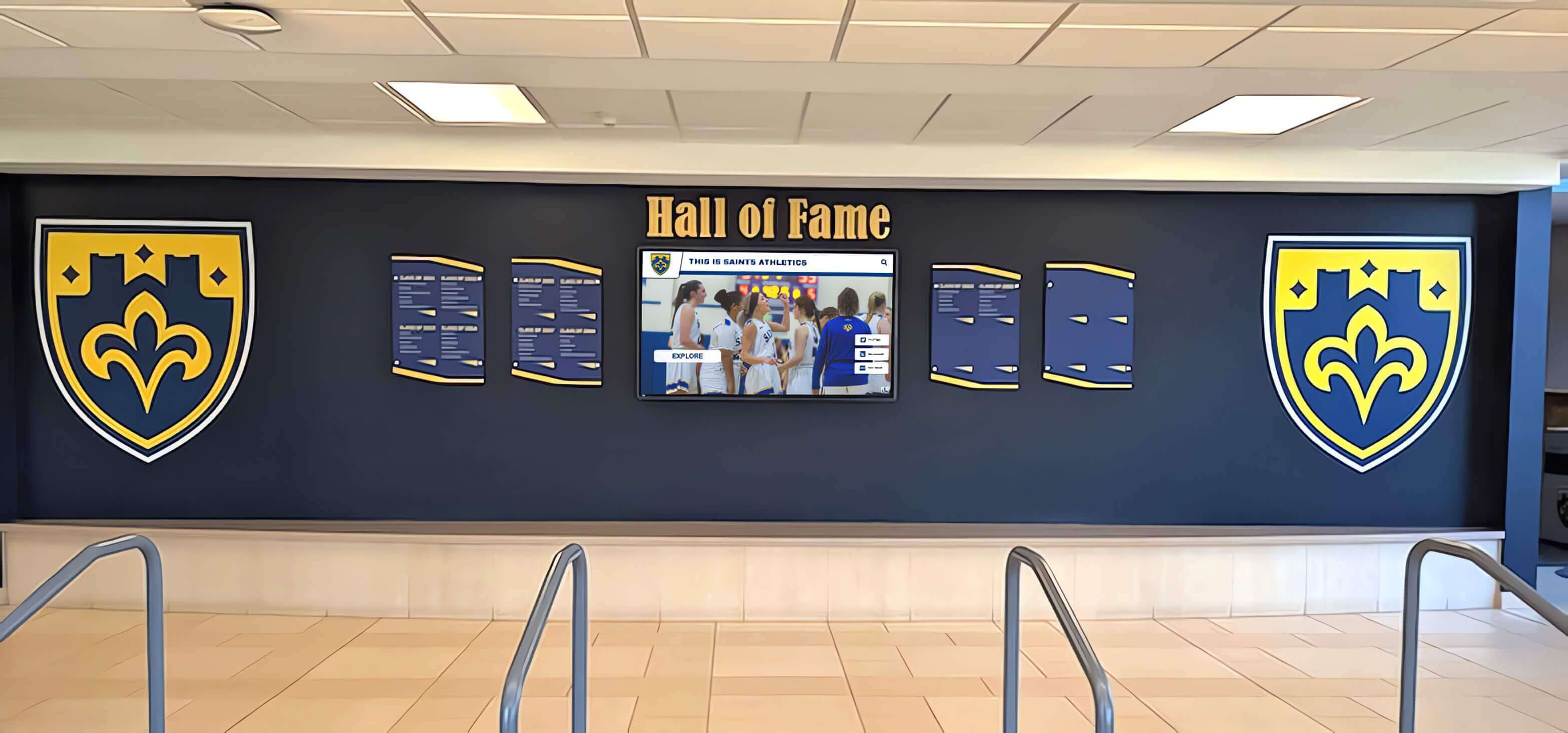
Comprehensive recognition systems combine traditional championship shields with modern digital athlete profiles
Measuring Success and Demonstrating Value
Assess recognition program effectiveness through both quantitative metrics and qualitative outcomes:
Engagement Analytics and Usage Metrics
Quality digital recognition platforms provide comprehensive data demonstrating value:
Quantitative Engagement Metrics
- Total interaction sessions showing display usage frequency
- Average session duration indicating depth of content engagement
- Most-viewed athlete profiles revealing community interests
- Search patterns demonstrating what visitors seek
- Peak usage times informing optimal content updates
- Social sharing statistics measuring digital reach
- Web portal visits from alumni, families, and communities
Behavioral Analysis
Track navigation paths revealing how users explore content, identify drop-off points indicating confusing interfaces, document search failures highlighting missing information, assess category popularity guiding content priorities, and analyze time-of-day patterns informing attraction loop design.
This data enables continuous improvement ensuring recognition systems serve users effectively while demonstrating clear value justifying continued investment.
Qualitative Impact Assessment
Stakeholder Satisfaction Surveys
Gather feedback from senior athletes about recognition meaningfulness, assess family satisfaction with how programs honor graduates, measure underclassmen awareness of recognition opportunities, evaluate coach perspectives on cultural impact, and survey alumni about connection to programs through recognition.
Observable Cultural Changes
Monitor improvements in athletic program culture, track retention rates showing continued participation through senior years, assess booster organization engagement and volunteer participation, document prospective athlete reactions during recruitment, and observe community pride expressions around athletic excellence.
Comparative Performance
Compare metrics before and after digital recognition implementation, benchmark against schools with traditional recognition only, track annual growth trends over multiple years, and document anecdotal evidence from administrators, coaches, and families.
Return on Investment Considerations
Beyond direct costs, consider recognition program value through multiple lenses:
Recruitment and Retention Benefits
Comprehensive recognition demonstrates to prospective athletes that programs celebrate individual excellence, shows families that schools value athletic participation appropriately, communicates institutional commitment to honoring achievement, and differentiates programs from competitors lacking similar recognition.
Alumni Engagement and Development
Permanent recognition maintains athlete connections to programs after graduation, provides development offices with engagement tools contacting athletic alumni, creates giving motivation as alumni see programs honoring their contributions, and builds lifelong relationships strengthening institutional support across decades.
Community Pride and Institutional Visibility
Public recognition communicates athletic excellence to entire communities, builds school pride extending beyond athletes to all students, creates positive institutional narratives in communities, and generates social media content amplifying school visibility and reputation.
These indirect benefits often exceed direct recognition costs while building stronger programs, communities, and institutional cultures celebrating excellence systematically.
Understanding touchscreen kiosk solutions for schools provides frameworks for evaluating recognition technology investments.
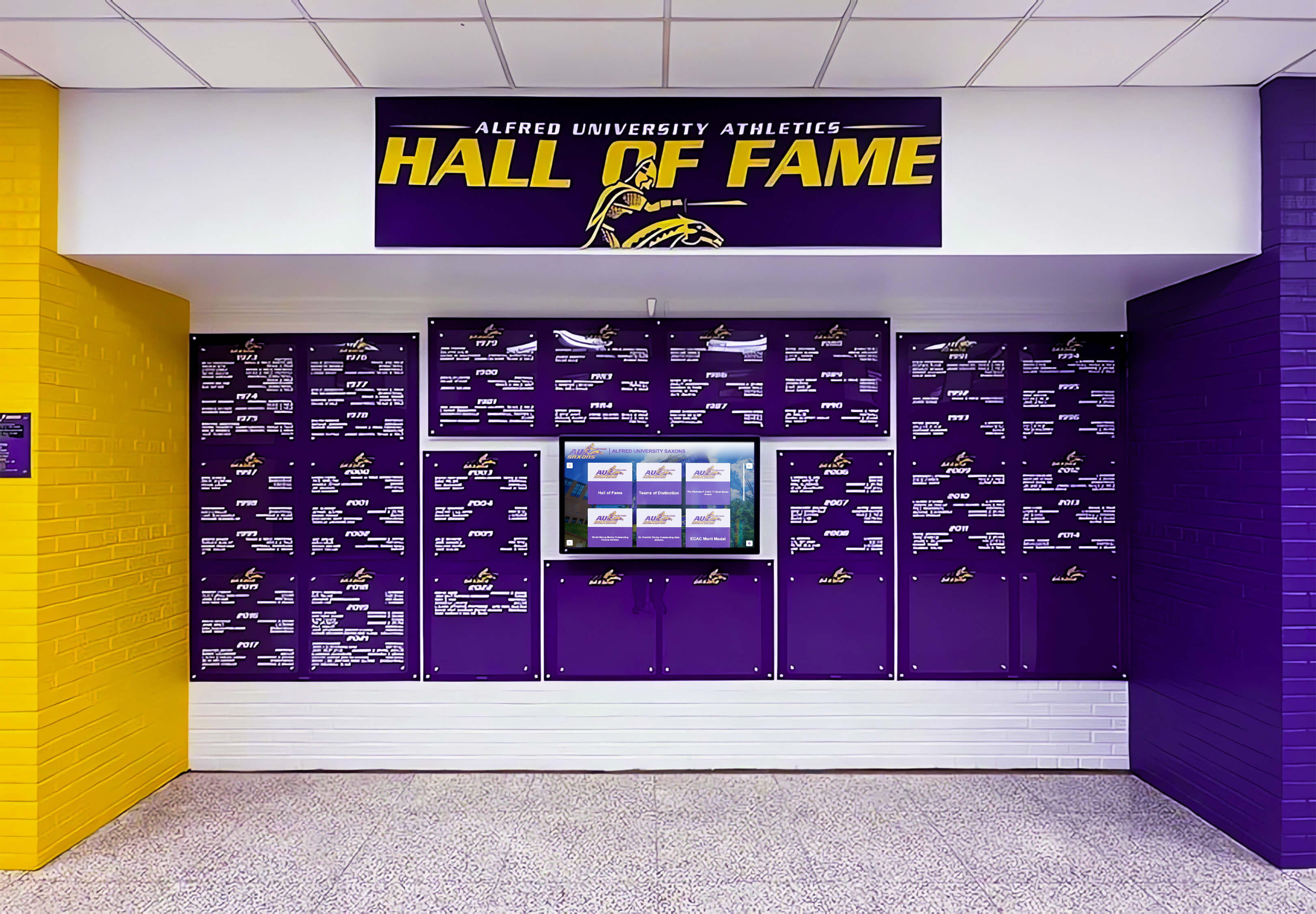
Brand-integrated displays incorporate institutional colors and design elements creating cohesive recognition experiences
Best Practices from Successful Recognition Programs
Learn from schools that have successfully evolved senior night recognition beyond temporary banners:
Start with Clear Goals and Stakeholder Input
Successful programs begin by defining specific outcomes: enhancing athlete recognition beyond single events, preserving program history comprehensively, improving family engagement and satisfaction, strengthening athletic culture and traditions, supporting recruitment and program growth, or demonstrating institutional commitment to celebrating achievement.
Engage stakeholders including athletic directors, head coaches, booster organization leaders, facilities managers, technology staff, and senior athlete representatives in planning ensuring recognition systems serve diverse needs while building implementation support.
Implement Incrementally and Demonstrate Value
Consider phased approaches: launch with single flagship display in highest-visibility location, demonstrate value through initial implementation, gather feedback and refine content approaches, expand to additional locations building on success, and grow program systematically as resources allow.
This reduces initial investment risk while building organizational capacity and stakeholder confidence before committing to comprehensive implementation.
Prioritize Content Quality Over Quantity
Better to recognize recent senior classes comprehensively than attempt immediate complete historical coverage compromising quality. Establish quality standards and build content systematically rather than pursuing immediate comprehensive coverage sacrificing storytelling depth.
Focus on multimedia-rich profiles for current and recent seniors, then expand historical coverage progressively through summer projects, volunteer efforts, or alumni contributions over multiple years.
Integrate Recognition with Broader Athletic Programs
Connect digital recognition with senior night ceremonies as documented content, use recognition content in recruitment materials and facility tours, leverage profiles for social media content throughout seasons, coordinate updates with banquets and award ceremonies, and integrate with booster communication and fundraising.
This integration maximizes recognition value while distributing content development effort across multiple stakeholders rather than burdening single individuals.
Plan for Long-Term Sustainability
Treat recognition as permanent institutional commitment rather than temporary project by budgeting ongoing software licensing and support, assigning permanent staff responsibility with backup coverage, establishing annual content development workflows, documenting procedures supporting continuity during transitions, and scheduling regular program reviews ensuring continued effectiveness.
Programs treated as projects often deteriorate within 2-3 years as initial enthusiasm fades, while those built with sustainability frameworks continue strengthening indefinitely.
Resources about maintaining school recognition systems provide operational frameworks ensuring long-term success.
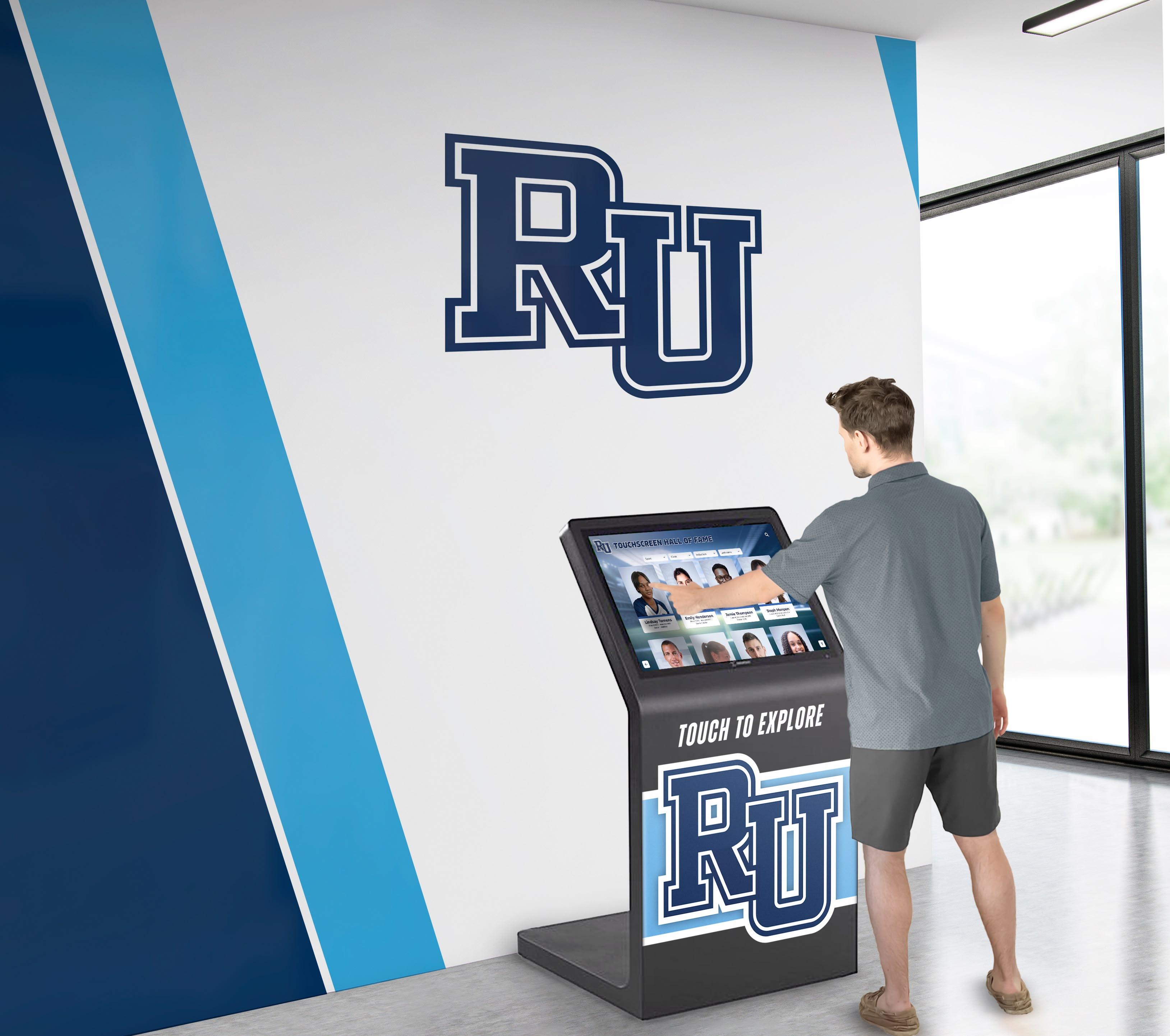
Accessible placement in high-traffic lobbies ensures recognition reaches entire school communities
Creative Applications Beyond Traditional Senior Night
Digital recognition platforms enable innovative approaches extending beyond conventional senior night celebrations:
Season-Long Senior Recognition
Rather than limiting recognition to single events, create progressive celebration throughout seasons:
- Opening season: Introduce seniors through featured profiles as seasons begin
- Mid-season spotlights: Highlight individual seniors weekly throughout campaigns
- Pre-senior night: Build anticipation through comprehensive profile releases
- Post-graduation: Update profiles with final statistics and continued success
This extended recognition creates ongoing celebration rather than compressing athlete acknowledgment into brief ceremonies.
Multi-Sport Athlete Recognition
Celebrate students participating in multiple sports through unified profiles showing complete athletic contributions rather than isolated sport-specific recognition. This honors well-rounded athletes demonstrating year-round commitment while creating comprehensive documentation of complete high school athletic experiences.
Athletic Scholar and Academic Achievement Integration
Combine athletic recognition with academic honors celebrating student-athletes excelling in both arenas. Include GPA recognition, honor roll acknowledgment, academic all-conference selections, and National Honor Society membership alongside athletic achievements demonstrating commitment to comprehensive excellence.
Guidelines for academic recognition displays demonstrate systematic academic celebration complementing athletic recognition.
Alumni Updates and Continued Connection
Enable alumni to submit updates about collegiate athletics, professional careers, graduate education, family milestones, and community service—creating living profiles evolving beyond high school achievements. This maintains connections between alumni and programs while demonstrating to current athletes that recognition continues well beyond graduation.
Historical Senior Recognition
Systematically add historical senior classes expanding program archives over time. Engage alumni through reunions or social media in contributing photos and information, create decade retrospectives celebrating eras systematically, and build comprehensive program histories preserving institutional memory.
This historical documentation strengthens program traditions while honoring athletes from all eras equally regardless of when they graduated.
Conclusion: Transforming Senior Night Recognition for Modern Programs
Senior night banners—whether vinyl signs carried proudly by parents or poster boards crafted lovingly at kitchen tables—will always hold ceremonial significance in athletic traditions. The visual impact, family participation, and emotional connections these traditional approaches create deserve preservation as meaningful expressions of appreciation and celebration.
Yet limiting recognition to temporary displays appearing for single evenings fails to honor athletic dedication appropriately. Athletes investing thousands of hours across multiple years, representing schools at competitions, building program excellence, and demonstrating commitment deserving systematic celebration receive acknowledgment measured in minutes rather than permanent recognition reflecting their true contributions.
Transform Your Senior Night Recognition
Discover how modern digital recognition solutions honor senior athletes comprehensively while preserving beloved ceremony traditions. Create engaging, permanent celebration systems that inspire current athletes and strengthen program culture for generations.
Explore Recognition SolutionsThe evolution from vinyl banners to digital displays doesn’t require abandoning tradition—it means enhancing ceremony with permanent recognition that extends senior night celebration from single events into year-round, community-wide acknowledgment. By implementing comprehensive systems combining ceremonial traditions with modern technology, athletic programs create recognition experiences truly honoring the excellence, dedication, and achievement these athletes demonstrate throughout their careers.
Schools implementing this hybrid approach consistently report remarkable outcomes: stronger athletic culture as current athletes see clear recognition pathways, improved family engagement as permanent systems honor graduates appropriately, enhanced community pride as athletic excellence receives systematic celebration, better athlete retention through senior years as recognition becomes program tradition, and deeper alumni connections maintaining lifelong relationships strengthening programs across generations.
The most successful athletic programs view senior night not as isolated annual obligation but as culminating celebration within comprehensive recognition systems honoring athletic achievement systematically. By combining thoughtful ceremony planning, preserved family participation traditions, permanent digital recognition through platforms like Rocket Alumni Solutions, and sustained institutional commitment to celebrating athletic excellence, programs create senior night experiences that participants genuinely value—experiences acknowledging not just what athletes accomplished but how participation transformed their lives while contributing to something larger than themselves.
Your senior night traditions matter. The vinyl banners, poster boards, and family-created displays represent love, dedication, and appreciation deserving honor. Modern recognition technology doesn’t replace these traditions—it ensures they receive the permanent, comprehensive celebration they deserve while extending senior night recognition from fleeting moments into lasting legacies inspiring excellence for generations to come.































