



Understanding soccer formations explained represents the difference between tactical chaos and organized success for coaches building competitive programs at every level from youth recreational leagues to high school state championship contenders. While individual skill matters tremendously, the strategic framework determining how eleven players organize themselves on the field—the formation—dictates defensive solidity, attacking creativity, possession patterns, and ultimately competitive outcomes that separate championship teams from also-rans.
Yet formations confuse many developing coaches and players. What do the numbers actually mean? Why do professional teams shift between 4-4-2 and 4-3-3 systems? How should youth coaches adapt professional formations for younger players with limited tactical understanding? When does rigid positional structure help versus hinder player development? Meanwhile, programs seeking sustainable excellence recognize that tactical literacy—understanding formations, systems, and strategic principles—creates competitive advantages beyond pure athletic talent.
This comprehensive guide explains essential soccer formations including classic systems like 4-4-2 and modern approaches like 4-3-3, breaks down the tactical principles underlying successful formations, and provides practical frameworks for implementing formations across different age groups and competitive levels. Whether you’re a volunteer parent coach seeking basic tactical structure or an experienced athletic director building championship-caliber programs, you’ll discover how formations transform individual talent into collective success.
The most successful soccer programs combine tactical sophistication with age-appropriate instruction, using formations as teaching frameworks rather than rigid constraints while documenting tactical evolution and championship achievements through comprehensive recognition displays that celebrate program-building excellence.

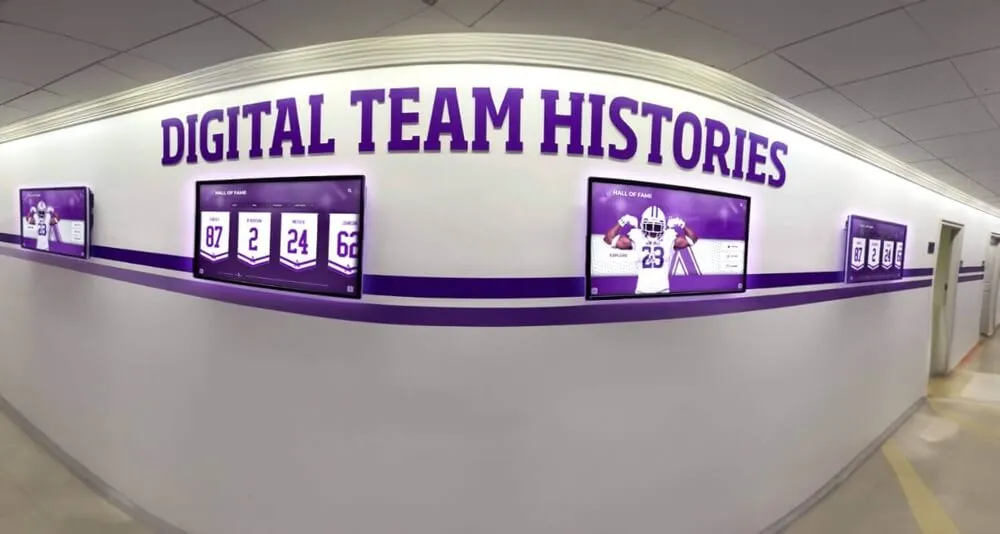
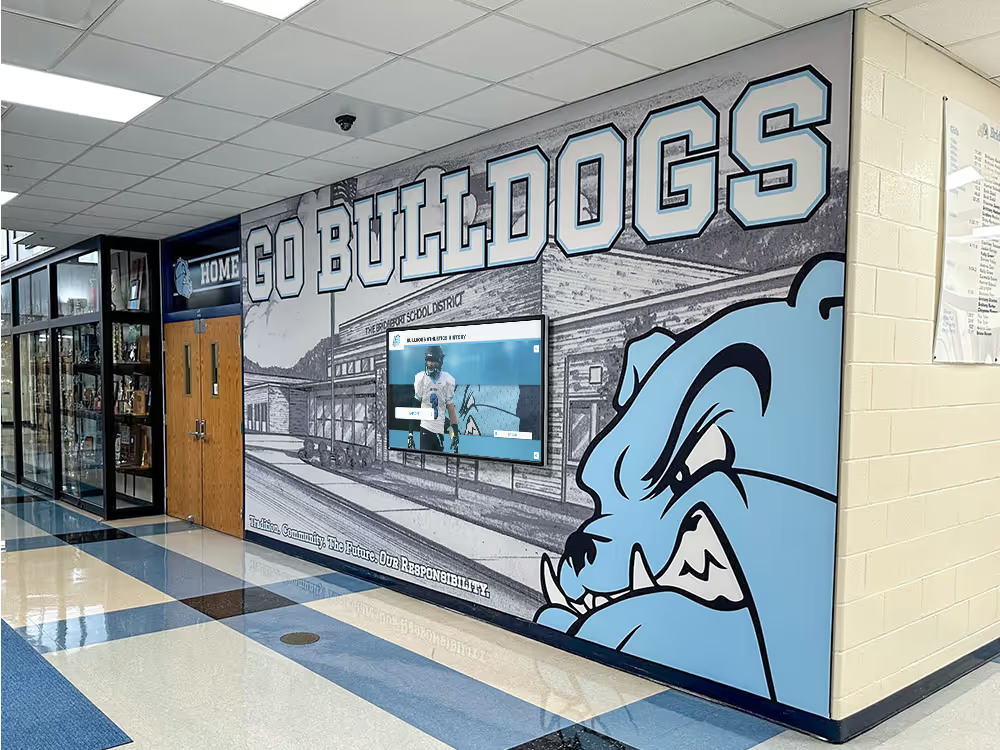
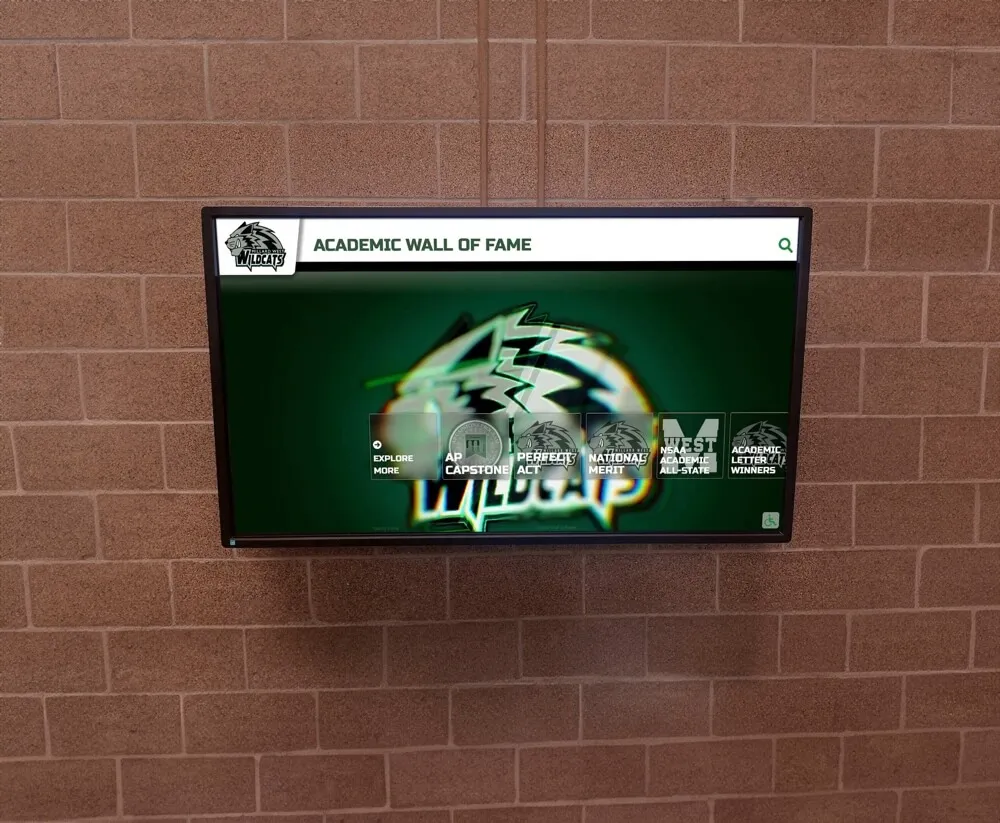
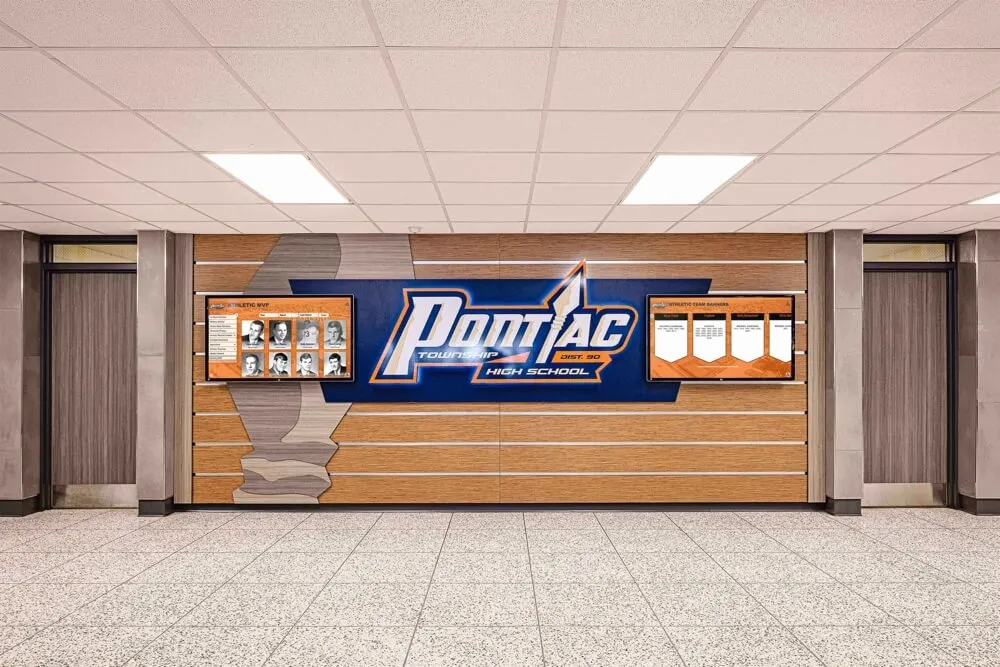
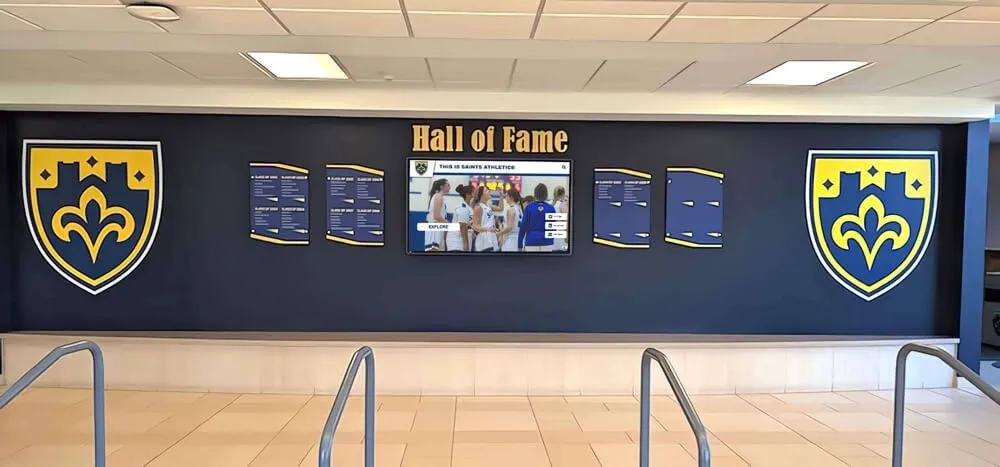
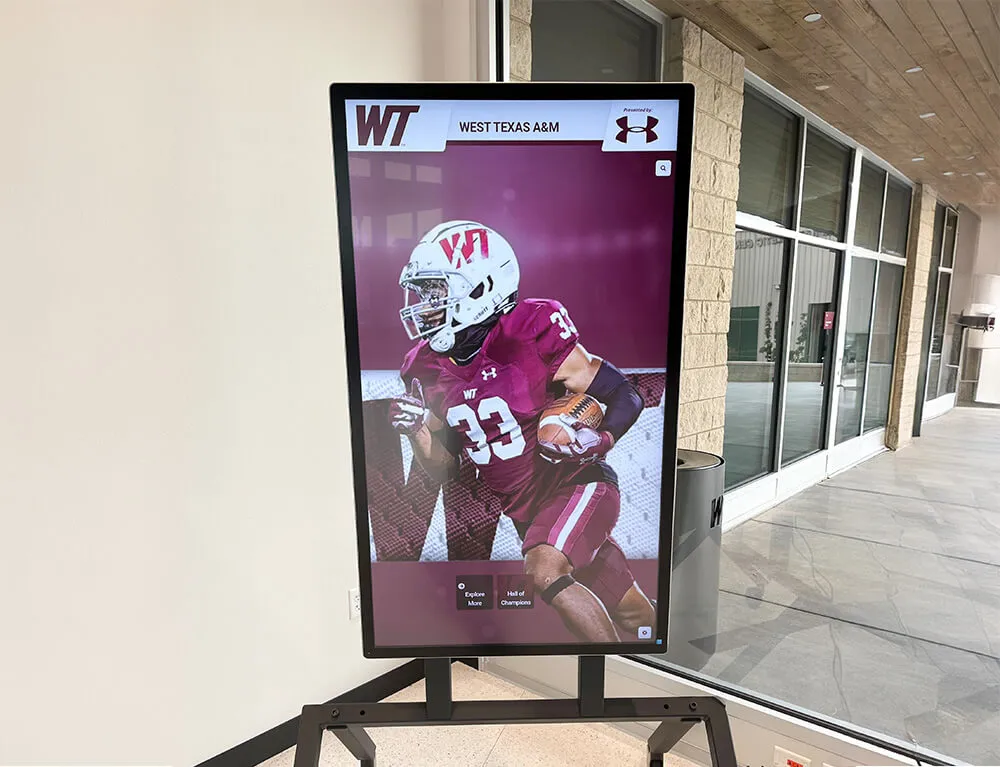
Modern interactive displays showcase athletic achievements and program history, allowing visitors to explore championship moments and tactical evolution
Understanding Soccer Formation Basics
Before exploring specific systems, understanding fundamental formation concepts provides essential context for tactical decision-making.
What Soccer Formation Numbers Mean
Soccer formations use numerical notation describing how players position themselves in lines from defense to attack, always excluding the goalkeeper and reading from back to front.
Standard Notation Format
The three or four numbers in formations indicate player distribution across defensive, midfield, and attacking lines. For example, 4-4-2 means four defenders, four midfielders, and two forwards. More complex notations like 4-2-3-1 break down midfield structures further: four defenders, two defensive midfielders, three attacking midfielders, and one striker.
This numerical system provides universal language allowing coaches worldwide to instantly visualize team organization. When someone mentions “parking the bus with a 5-4-1,” every coach understands the ultra-defensive structure with five defenders, four midfielders, and a lone forward.
Positional Lines and Zones
Formations organize the field into horizontal zones:
Defensive Line - Typically composed of fullbacks (outside defenders) and center backs (central defenders). Most modern formations employ four defenders, though three-back and five-back systems exist. Defensive line responsibilities include preventing opponent attacks, initiating possession from the back, and providing width for buildup play.
Midfield Line(s) - The game’s engine room controlling possession, transitioning between attack and defense, and dictating tempo. Formations may feature single midfield lines (flat four in 4-4-2) or multiple staggered lines (double pivot plus attacking midfielders in 4-2-3-1). Midfield organization fundamentally determines team identity—possession-oriented versus counter-attacking, wide versus central focus, defensive solidity versus attacking ambition.
Forward Line - Attackers responsible for scoring goals and applying defensive pressure on opponent buildup. Can range from lone strikers to three-forward systems. Forward positioning and movement creates space for midfield runners and stretches defensive lines.
Understanding these zones helps coaches teach positioning principles while maintaining flexibility for in-game adjustments responding to opponent tactics and match situations.
Formation Fluidity and Modern Tactical Concepts
While formations provide organizational structure, modern soccer emphasizes fluidity where players constantly interchange positions responding to game situations rather than rigidly maintaining fixed spots.
Attacking vs. Defensive Shapes
Top teams employ different formations when attacking versus defending. A team might defend in compact 4-4-2 shape but attack in 3-2-5 configuration as fullbacks push forward and midfielders advance. This fluidity maximizes players during possession while maintaining defensive solidity when opponents control the ball.
Positional Rotation and Interchange
Modern formations encourage positional rotation where forwards drop into midfield, midfielders make forward runs into attacking positions, and fullbacks advance into wide attacking areas. This constant movement creates numerical advantages in various zones while making teams harder to defend through unpredictable positioning.
Schools building comprehensive soccer programs can document tactical evolution and championship achievements through digital athletic recognition displays that showcase how formations and strategies contributed to championship success across program history.
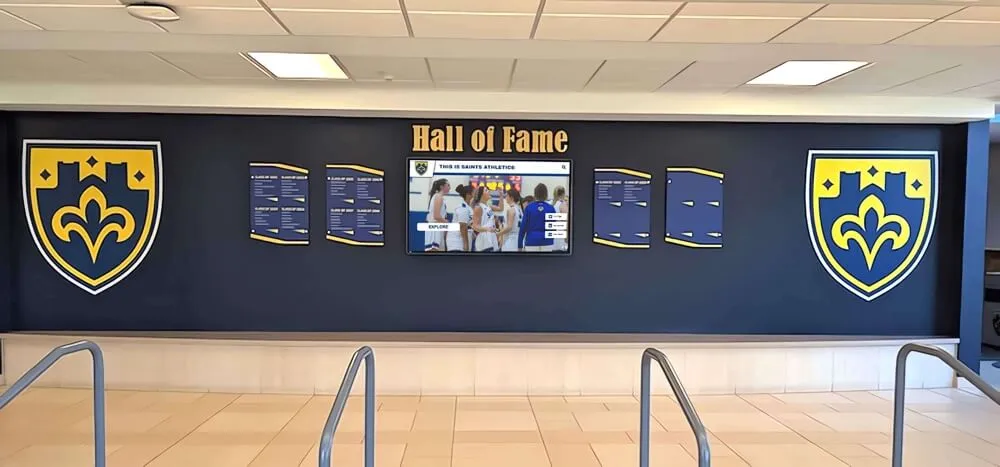
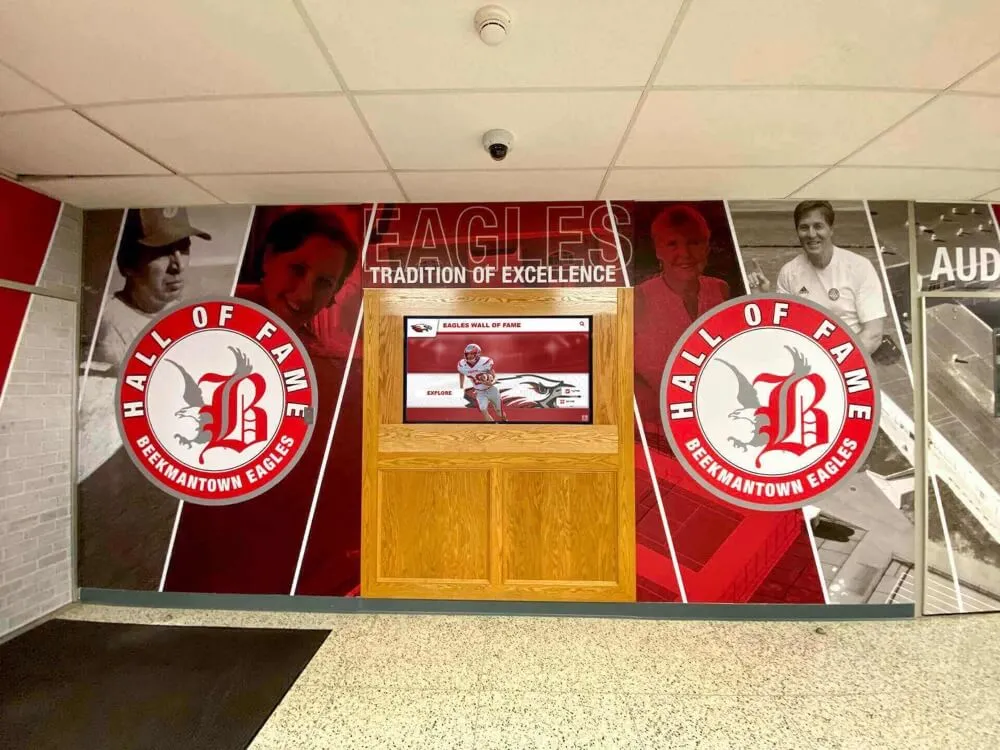
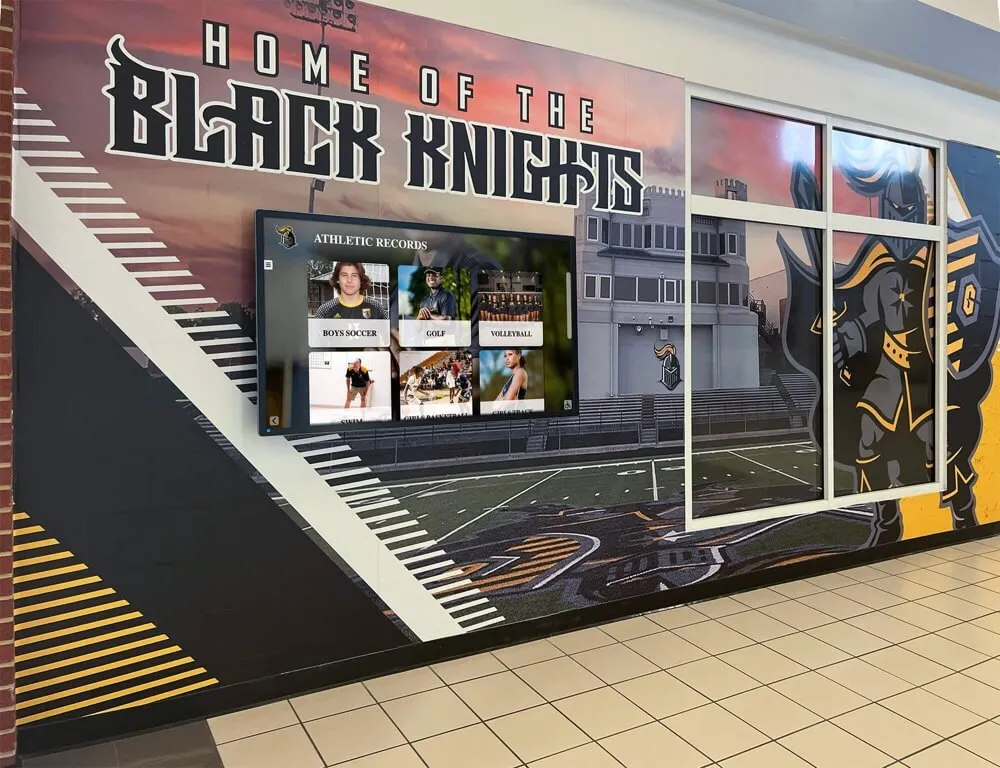
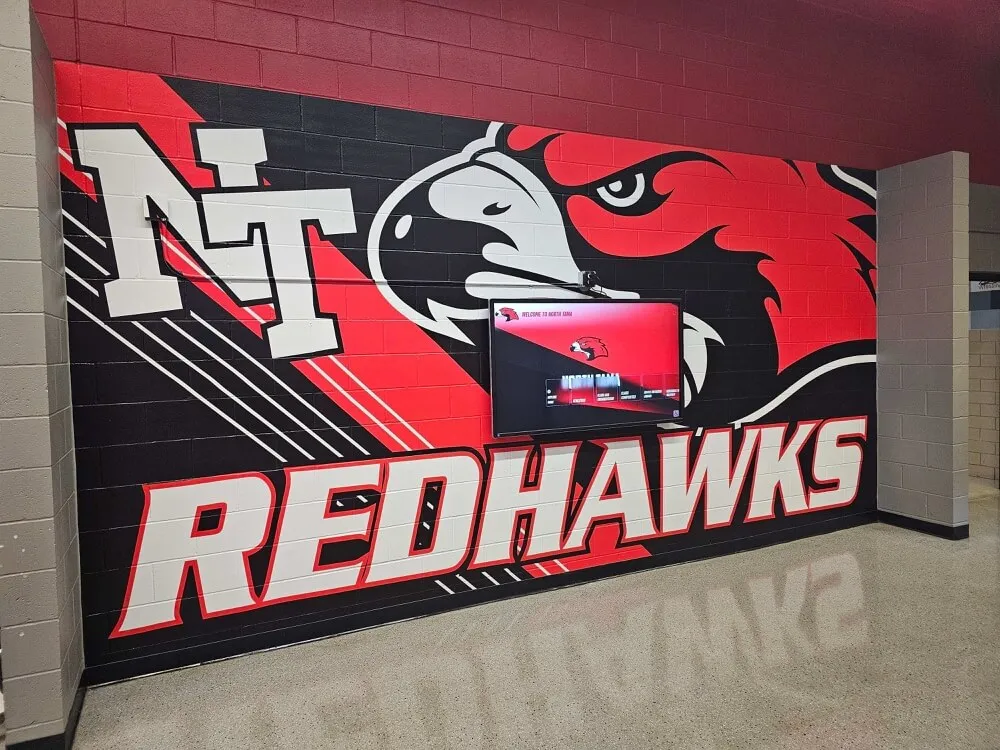
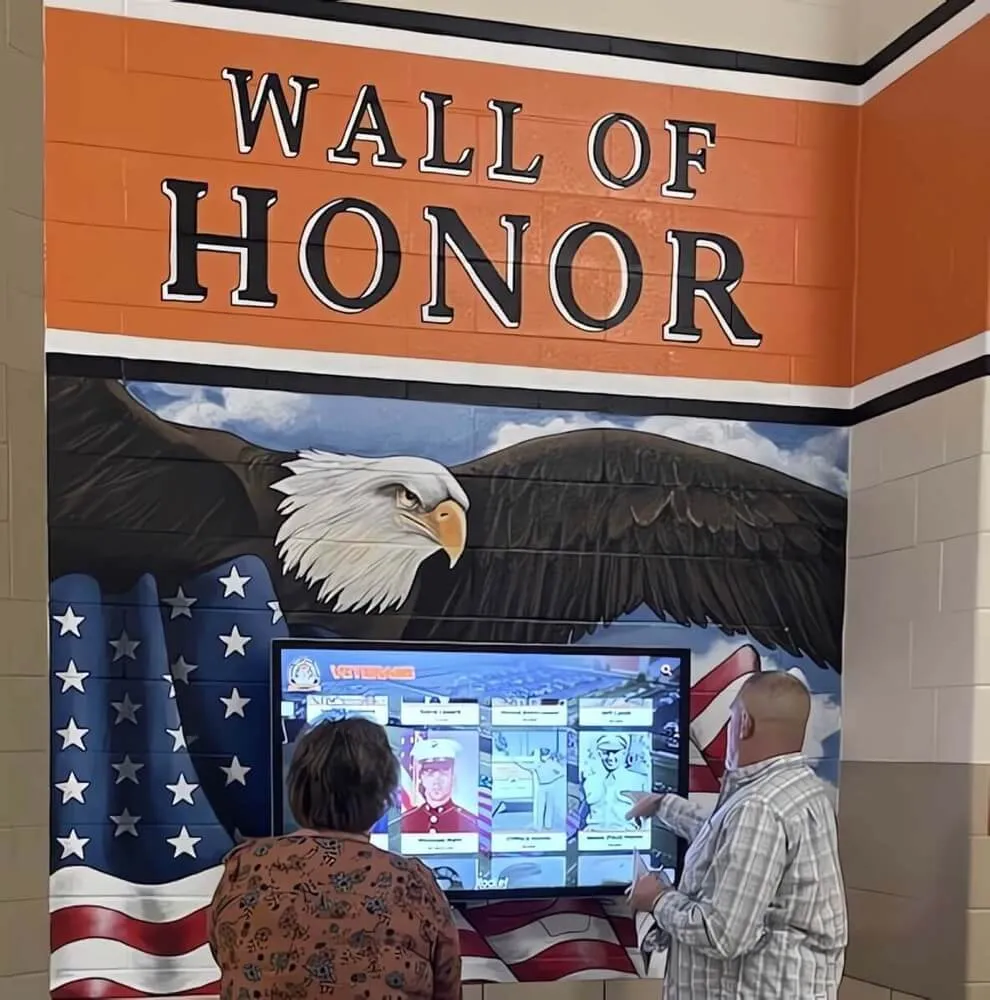
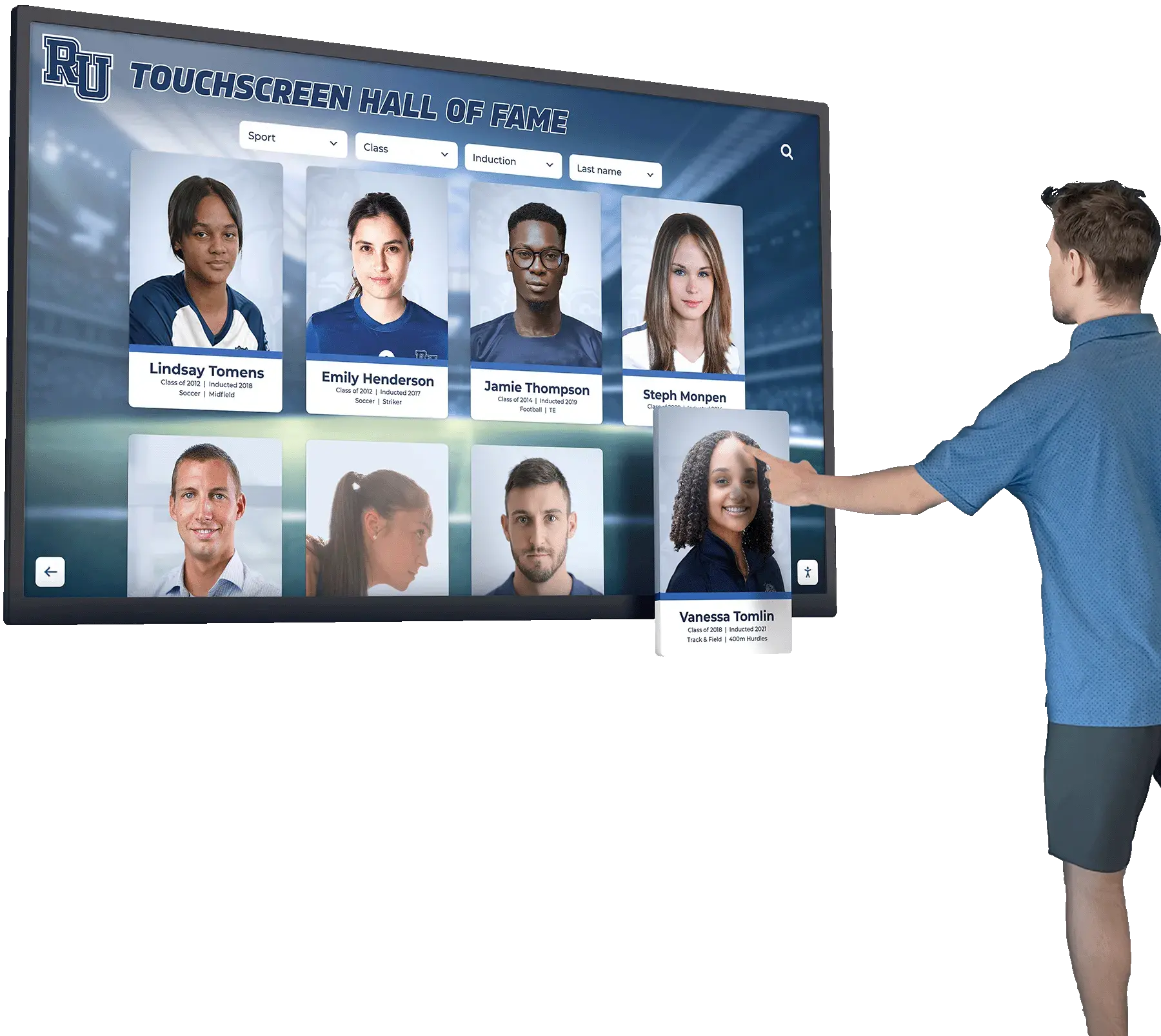
Traditional athletic recognition walls celebrate championship teams and the tactical excellence that produces sustained program success
Classic Soccer Formations Explained
Several time-tested formations have proven successful across competitive levels and playing styles, providing reliable frameworks for program development.
The 4-4-2 Formation: Balance and Simplicity
The 4-4-2 formation represents soccer’s most enduring tactical system, offering balanced structure easily understood by players at all development levels.
Structure and Player Responsibilities
Four defenders arrange in flat line with two center backs providing central protection and two fullbacks offering wide defensive coverage. Four midfielders typically organize in flat line across the pitch, though variations include diamond shapes with defensive midfielder, two central midfielders, and attacking midfielder. Two forwards partner up top, combining hold-up play, running channels, and finishing.
Tactical Strengths
The 4-4-2 excels in several key areas. It provides excellent defensive coverage through compact shape with clear responsibilities—defenders mark forwards, midfielders track opposing midfielders, creating minimal gaps for opponents to exploit. The formation offers natural width through fullbacks and wide midfielders stretching play horizontally. Central areas remain congested with center backs, central midfielders, and forwards all operating in central zones, making the system effective for teams emphasizing physicality and direct play. Partnership dynamics between two strikers create natural understanding as forwards develop complementary movement patterns.
When to Use 4-4-2
This formation works particularly well for youth teams learning positional concepts, as clear lines and balanced structure make roles easily understandable. Programs emphasizing defensive solidity and counter-attacking benefit from compact defensive shape and natural transition to attack through striker partnerships. Teams with two quality forwards can maximize talent through partnership dynamics rather than isolating lone strikers.
However, 4-4-2 can struggle against three-midfielder systems that create numerical disadvantages in central areas, and requires disciplined wide midfielders willing to track back extensively to support fullbacks against attacking wide players.
The 4-3-3 Formation: Attacking Width and Control
The 4-3-3 formation has become modern soccer’s dominant system, employed by top clubs worldwide emphasizing possession and attacking football.
Structure and Player Responsibilities
Four defenders maintain similar positioning to 4-4-2, though fullbacks in 4-3-3 often push higher providing attacking width. Three midfielders typically arrange with one defensive midfielder (holding midfielder) protecting the defense and two more advanced central midfielders (sometimes called “number eights”) providing box-to-box coverage. Three forwards spread across the attacking line with central striker and two wingers providing natural width.
Tactical Strengths
The 4-3-3 offers distinct advantages for possession-oriented teams. Three midfielders create numerical superiority in central areas against two-midfielder systems, facilitating possession and controlling game tempo. Natural width from wingers stretches defenses horizontally, creating space for central penetration and isolating defenders in one-on-one situations favoring attackers. The defensive midfielder provides security allowing fullbacks to advance without exposing central areas, enabling aggressive attacking football while maintaining defensive balance. High pressing becomes effective as three forwards can pressure opponent defenders while midfield triangle cuts off passing lanes.
When to Use 4-3-3
This formation suits programs with technically skilled players comfortable maintaining possession under pressure. Teams with quick, skillful wingers capable of beating defenders one-on-one and creating chances maximize the system’s width emphasis. Programs implementing high-pressing styles benefit from forward positioning enabling aggressive pressure, while possession-focused approaches leverage midfield numerical advantages.
Challenges include requiring technically excellent defenders comfortable playing out from back under pressure, demanding high work rates from wingers who must defend as well as attack, and potentially isolating central strikers if wingers cut inside rather than providing width.
Athletic programs can celebrate tactical sophistication and championship success achieved through formations like 4-3-3 via interactive touchscreen recognition systems that document tactical evolution alongside individual achievements.
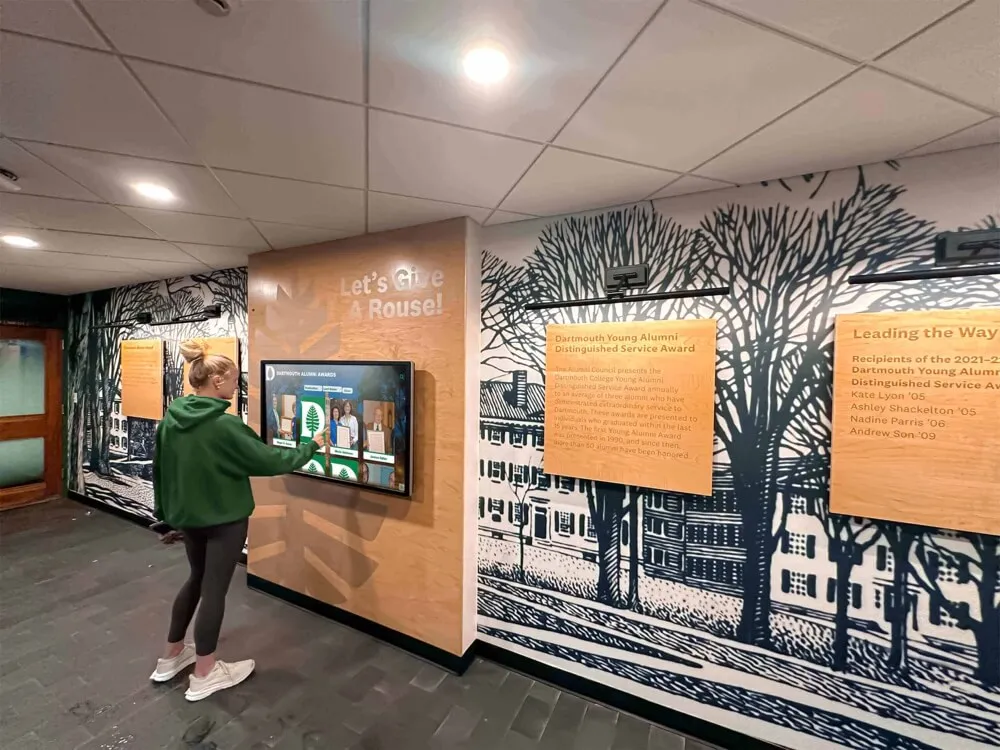
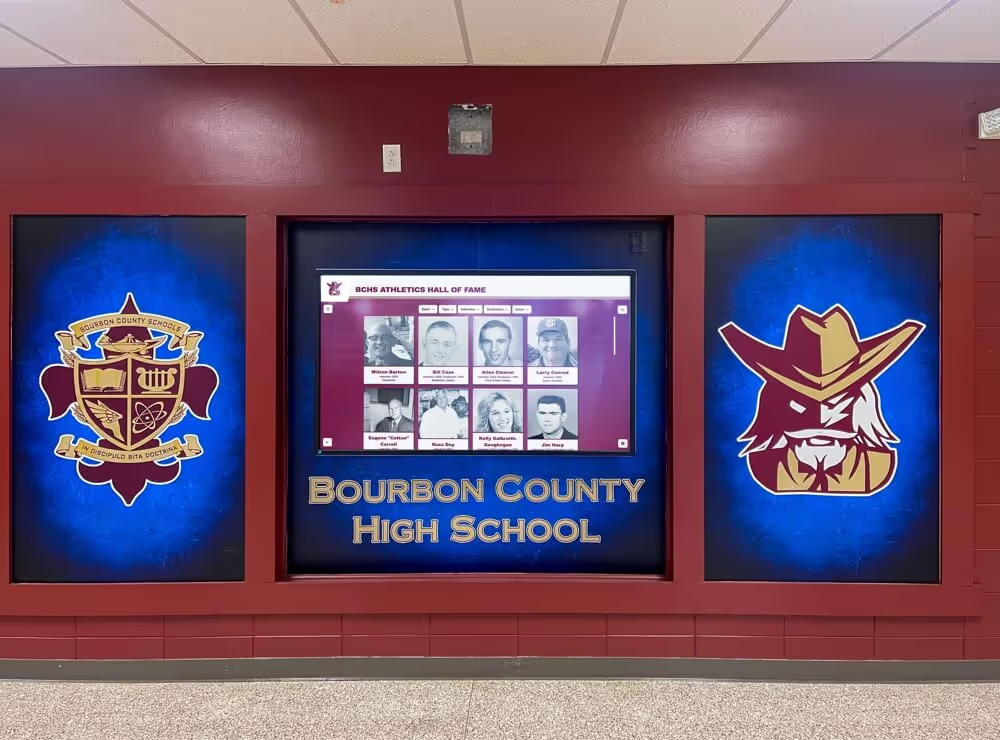
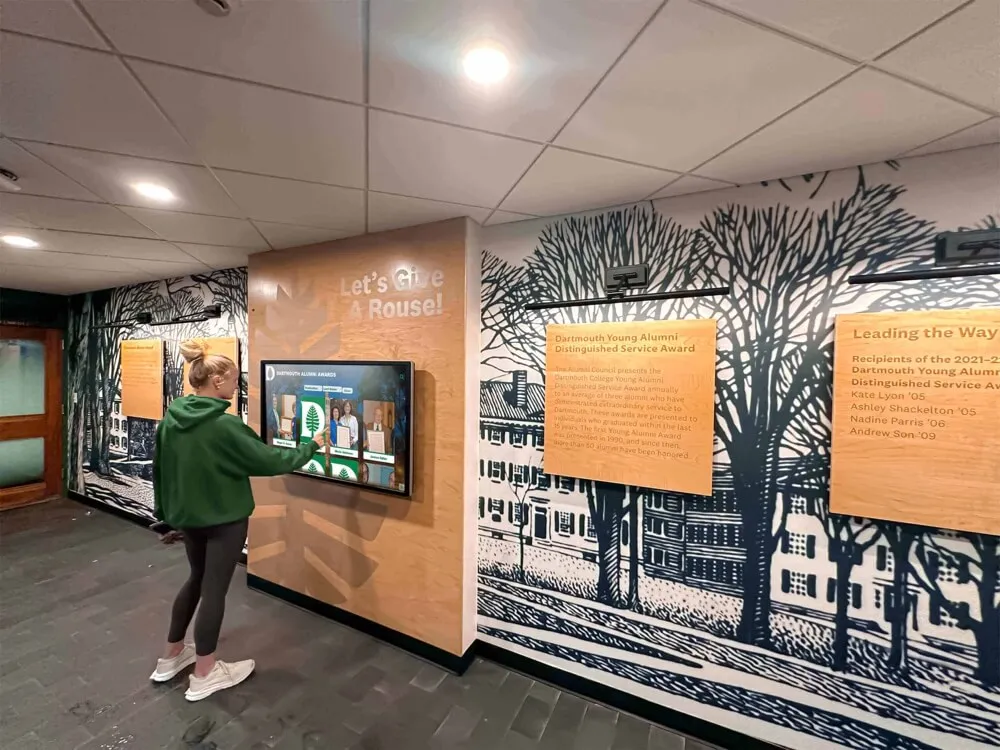
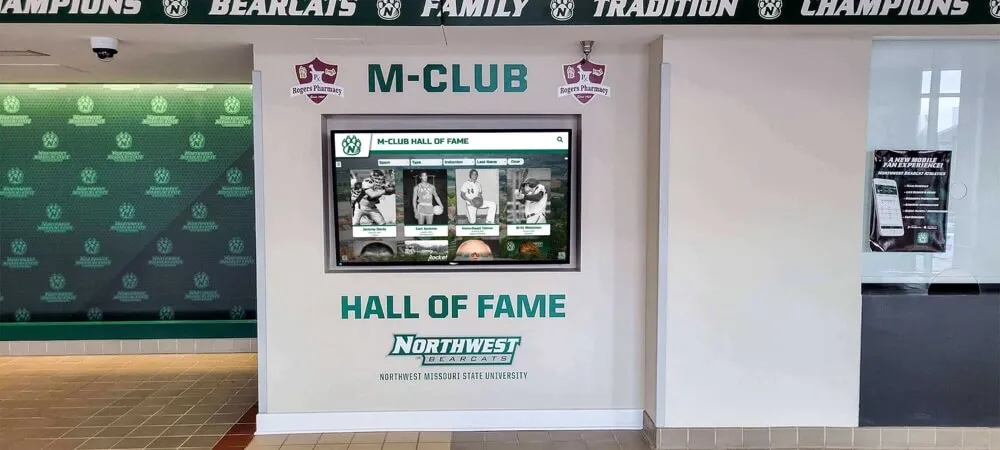
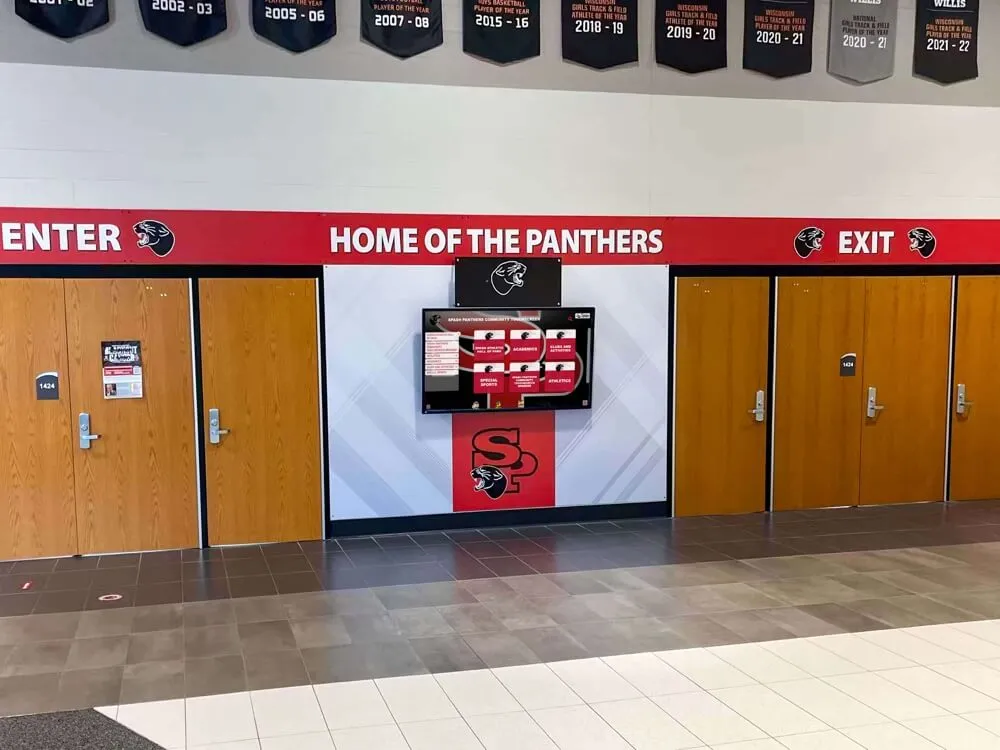
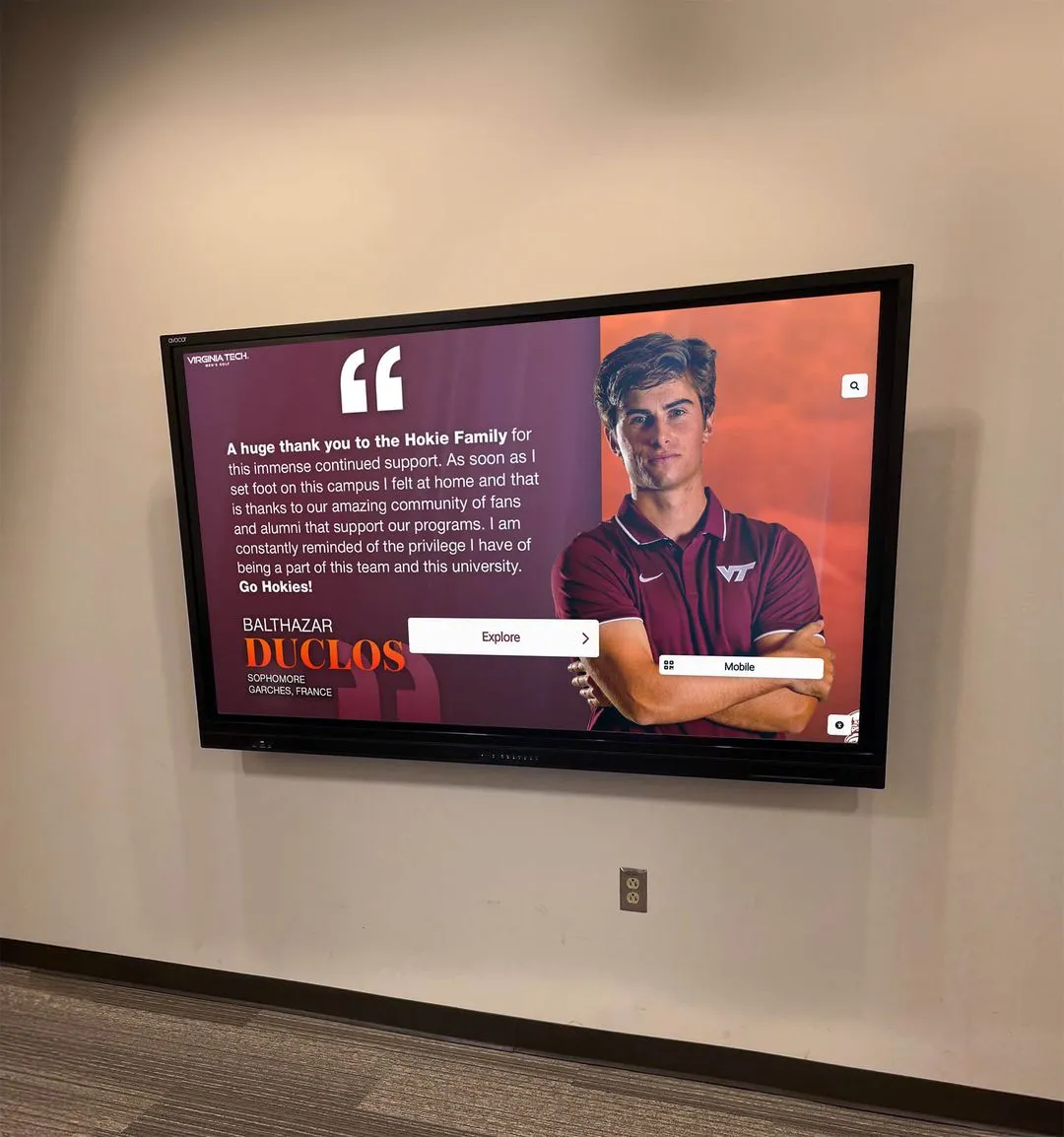
Interactive athletic displays in campus hallways create engaging experiences where users explore program history, championship teams, and tactical development
The 4-2-3-1 Formation: Modern Flexibility
The 4-2-3-1 formation represents evolution from traditional 4-4-2, adding tactical sophistication through midfield layering while maintaining structural balance.
Structure and Player Responsibilities
Four defenders provide familiar back line stability. Two defensive midfielders (double pivot) offer defensive protection and possession circulation from deep positions. Three attacking midfielders arrange with central attacking midfielder (number ten) and two wider players who may operate as traditional wingers or inside forwards cutting centrally. Lone striker leads the line, often requiring complete forward capable of hold-up play, runs in behind, and finishing.
Tactical Strengths
The 4-2-3-1 creates multiple tactical advantages. Double pivot provides excellent defensive coverage protecting the back four while ensuring at least one defensive midfielder always available for possession recycling. Three attacking midfielders offer creativity and flexibility with wide players drifting inside creating overloads, central playmaker finding pockets of space, and fluid interchange making the system difficult to defend. The formation transitions effectively between defensive solidity (six defensive players dropping back) and attacking threat (four attacking players plus advancing fullbacks).
When to Use 4-2-3-1
This system works well for programs with creative playmaker (number ten) who can operate between lines finding space and creating chances. Teams facing stronger opponents can employ this formation defensively with double pivot providing extra protection, then transition quickly through attacking midfielder and forwards. Programs with versatile attacking midfielders comfortable playing wide or central maximize the fluidity this formation enables.
Challenges include potentially isolating lone strikers without adequate support from attacking midfielders, requiring disciplined defensive midfielders with positional awareness and passing range, and demanding high technical quality from attacking midfielders who must create against organized defenses.
Additional Formation Options and Variations
Beyond classic systems, several alternative formations offer solutions for specific tactical challenges or player profiles.
The 3-5-2 Formation: Midfield Dominance
The 3-5-2 formation employs three center backs, five midfielders (including wing-backs), and two forwards, creating numerical midfield superiority while requiring specific player types.
When 3-5-2 Works
This formation excels when programs possess three quality center backs comfortable in possession and covering wide areas, athletic wing-backs with endurance for constant running between defensive and attacking duties, and midfield capable of controlling games through numerical advantages. The system creates overloads in central areas making it effective against 4-4-2 systems, while wing-backs provide width without sacrificing defensive coverage through three center backs.
Potential Vulnerabilities
Three-back systems face challenges against quick wide attackers who exploit spaces between center backs and wing-backs. The formation requires exceptional fitness as wing-backs cover enormous ground, and losing possession leaves teams vulnerable during transitions before wing-backs recover defensive positions.
The 5-3-2 / 5-4-1 Formation: Defensive Solidity
Five-back systems prioritize defensive organization over attacking ambition, suitable for specific tactical situations.
Appropriate Use Cases
Teams protecting leads late in important games can adopt five-back shapes creating defensive numbers making breakdown difficult. Underdogs facing superior opponents may use ultra-defensive formations absorbing pressure and seeking counter-attacking opportunities. Programs with defensive talent but limited attacking weapons can maximize defensive strengths while minimizing offensive limitations.
Understanding when defensive formations serve strategic purposes versus when they stifle development helps coaches make age-appropriate tactical decisions balancing competitive results with long-term player growth.
Schools implementing comprehensive soccer programs can showcase tactical diversity and championship achievements through modern digital recognition walls that document how formations evolved across championship eras.

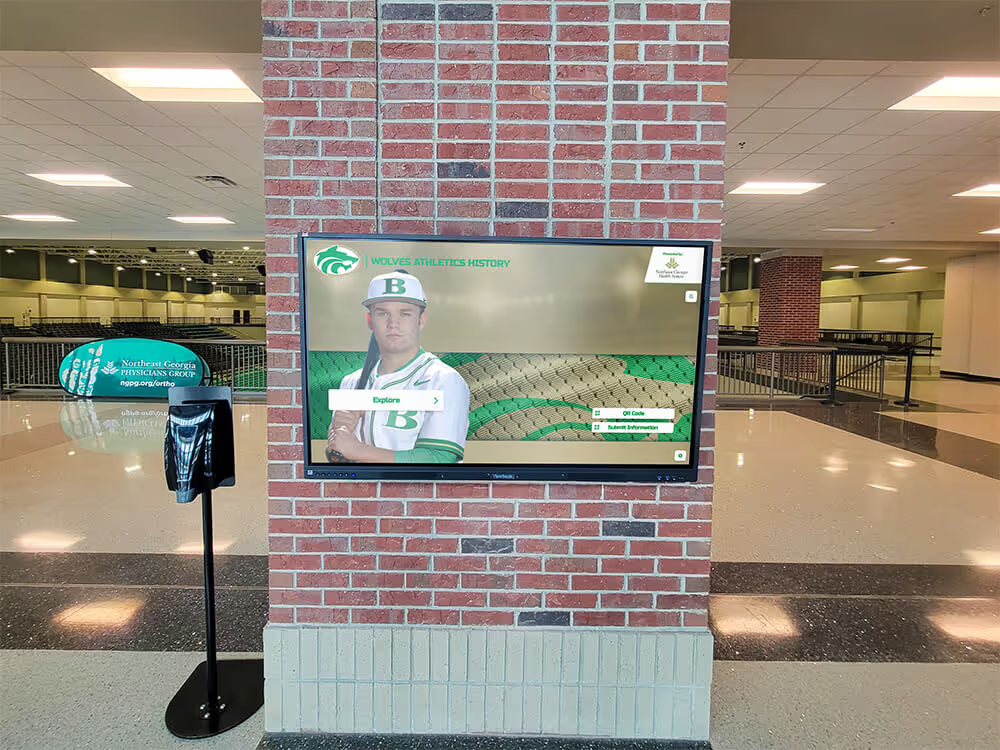
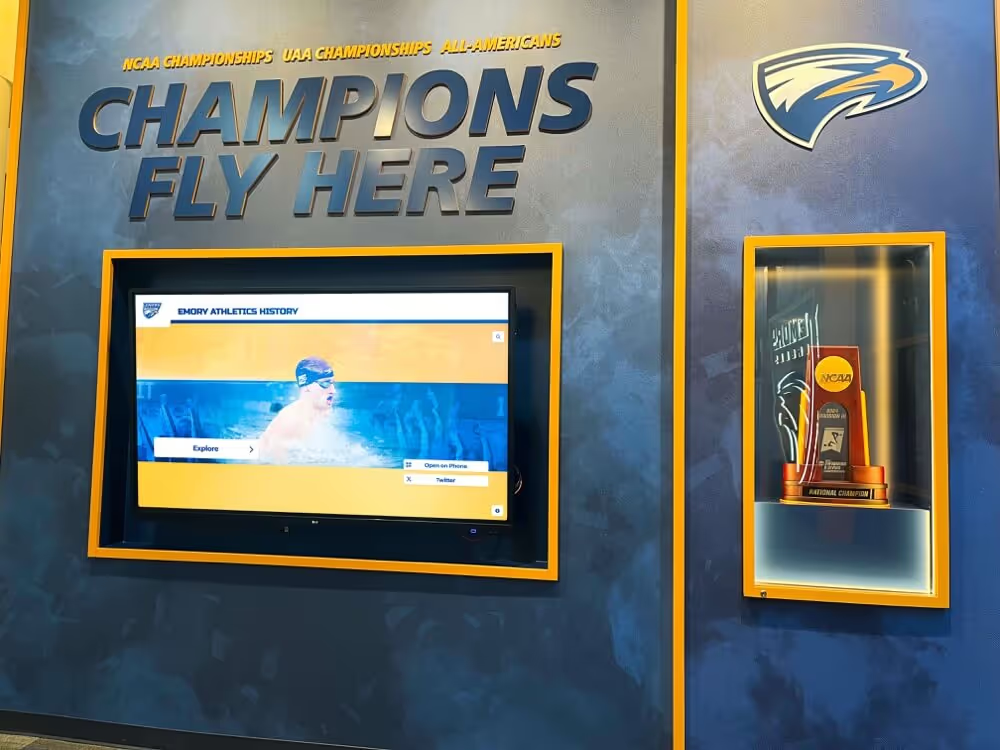
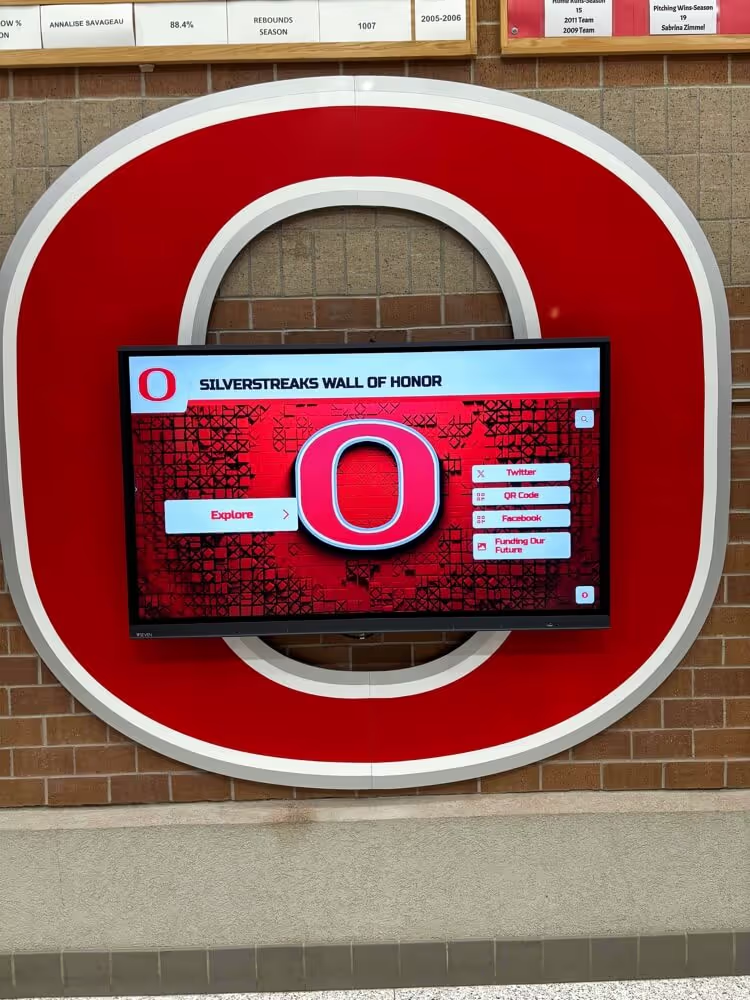
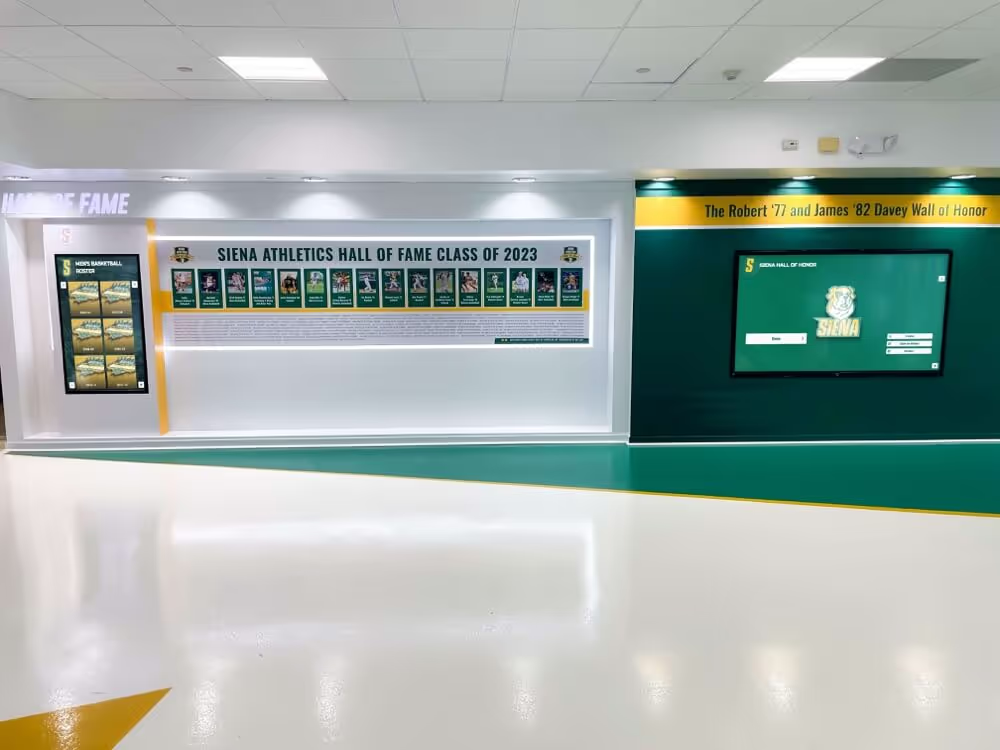
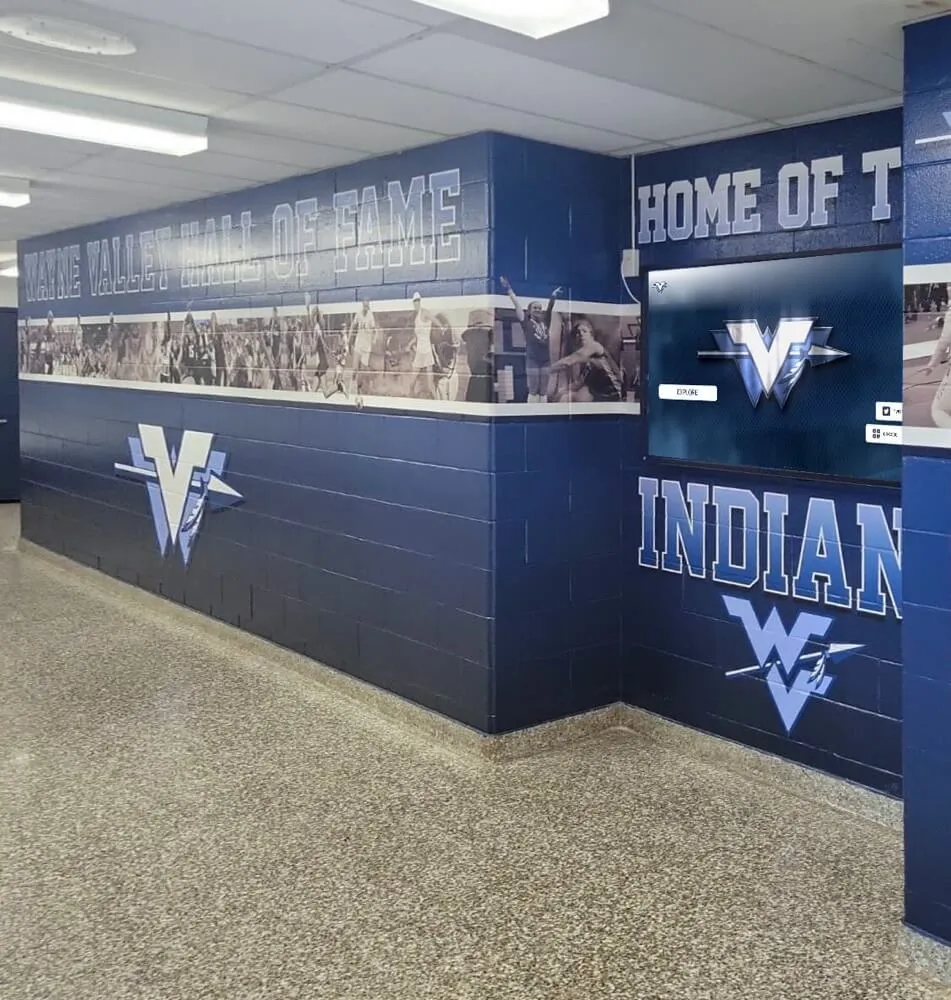
Sleek digital displays in athletic facilities provide dynamic platforms for celebrating championship achievements and program traditions
Implementing Formations Across Age Groups
Effective coaches adapt formation complexity to match player development stages, avoiding tactical sophistication beyond cognitive capabilities.
Youth Soccer Formations (Ages 5-8)
Young players lack cognitive development for genuine tactical understanding, making formal formations counterproductive.
Small-Sided Games Over Formations
Youth programs should prioritize small-sided formats (3v3, 4v4) maximizing touches and engagement over positional structure. Teach basic concepts like staying spread out, some players staying back, others going forward, without rigid position assignments. Introduce ball skills, decision-making, and soccer enjoyment rather than tactical sophistication.
Avoid assigning specific positions or criticizing positional errors. At these ages, player development requires freedom to explore the game rather than tactical restrictions limiting creativity and ball contacts.
Pre-Teen Formations (Ages 9-12)
Players develop sufficient cognitive ability for basic tactical concepts while maintaining emphasis on skill development.
Appropriate Formation Introduction
Introduce simple formations like 4-3-3 or 3-3-2 (for 9v9) teaching basic positional awareness without rigid constraints. Emphasize principles over positions—teaching defensive shape, providing width, and supporting teammates rather than demanding players never leave assigned zones. Rotate positions allowing all players to experience different roles developing tactical versatility.
Balance tactical instruction with continued skill development ensuring formations enhance rather than replace technical training. Many youth coaches over-emphasize tactics at the expense of individual skill development, creating tactically aware but technically limited players.
High School Formations (Ages 13-18)
High school players possess cognitive and physical development for sophisticated tactical instruction approaching adult level.
Advanced Tactical Implementation
High school programs can implement complex systems including position-specific training, tactical variations for different opponents, and in-game adjustments based on score and situation. Teach players to recognize opponent formations and adjust accordingly, understand when to maintain shape versus when fluidity serves tactical purposes, and execute set pieces with detailed organization.
However, maintain development focus even at competitive high school level. Tactical sophistication should enhance individual skill rather than compensate for technical deficiencies. Programs building championship traditions balance tactical organization with continued emphasis on technical excellence and positional versatility.
Comprehensive athletic programs can recognize both team success achieved through tactical excellence and individual development across positions through digital displays showcasing achievements at season-ending celebrations and permanently in athletic facilities.
Choosing the Right Formation for Your Team
Formation selection should reflect player strengths, program philosophy, and competitive context rather than copying professional teams or following trends.
Assessing Team Strengths and Weaknesses
Effective formation choices begin with honest evaluation of available talent.
Player Profile Analysis
Inventory technical capabilities, physical attributes, and tactical understanding across roster. Do you have creative playmakers who excel between lines (suggesting 4-2-3-1), quick wingers who thrive in space (favoring 4-3-3), or strong striker partnerships (supporting 4-4-2)? Is your team technically skilled and possession-oriented or more athletic and direct? Do players have tactical sophistication for complex systems or need simpler structure?
Defensive vs. Offensive Priorities
Formation choices reflect philosophical priorities. Teams emphasizing defensive organization might prefer 4-4-2 or even 5-3-2 creating compact shapes. Possession-focused programs often employ 4-3-3 for midfield control. Counter-attacking systems might use 4-5-1 defending deep before transitioning quickly.
Understanding program identity helps select formations aligning with core values rather than chasing tactical trends unsuited to personnel or philosophy.
Adapting Formations Based on Opponents
Sophisticated programs adjust formations based on opponent strengths and tactical approaches.
In-Game Adjustments
Teams may start matches in one formation then shift based on game state. Leading teams might adopt more defensive shapes protecting advantages. Trailing teams often commit additional numbers forward seeking equalizers. Facing possession-oriented opponents, teams might cede midfield numbers and counter-attack. Against defensive opponents, adding attacking players breaks down compact defenses.
Teaching players multiple formations develops tactical intelligence while providing strategic flexibility unavailable to rigidly organized teams. However, youth programs should avoid excessive tactical complexity that confuses players and undermines basic understanding.
Schools building traditions of tactical excellence and championship success can document formation evolution and strategic achievements through comprehensive recognition programs celebrating both team accomplishments and individual player development across systems.
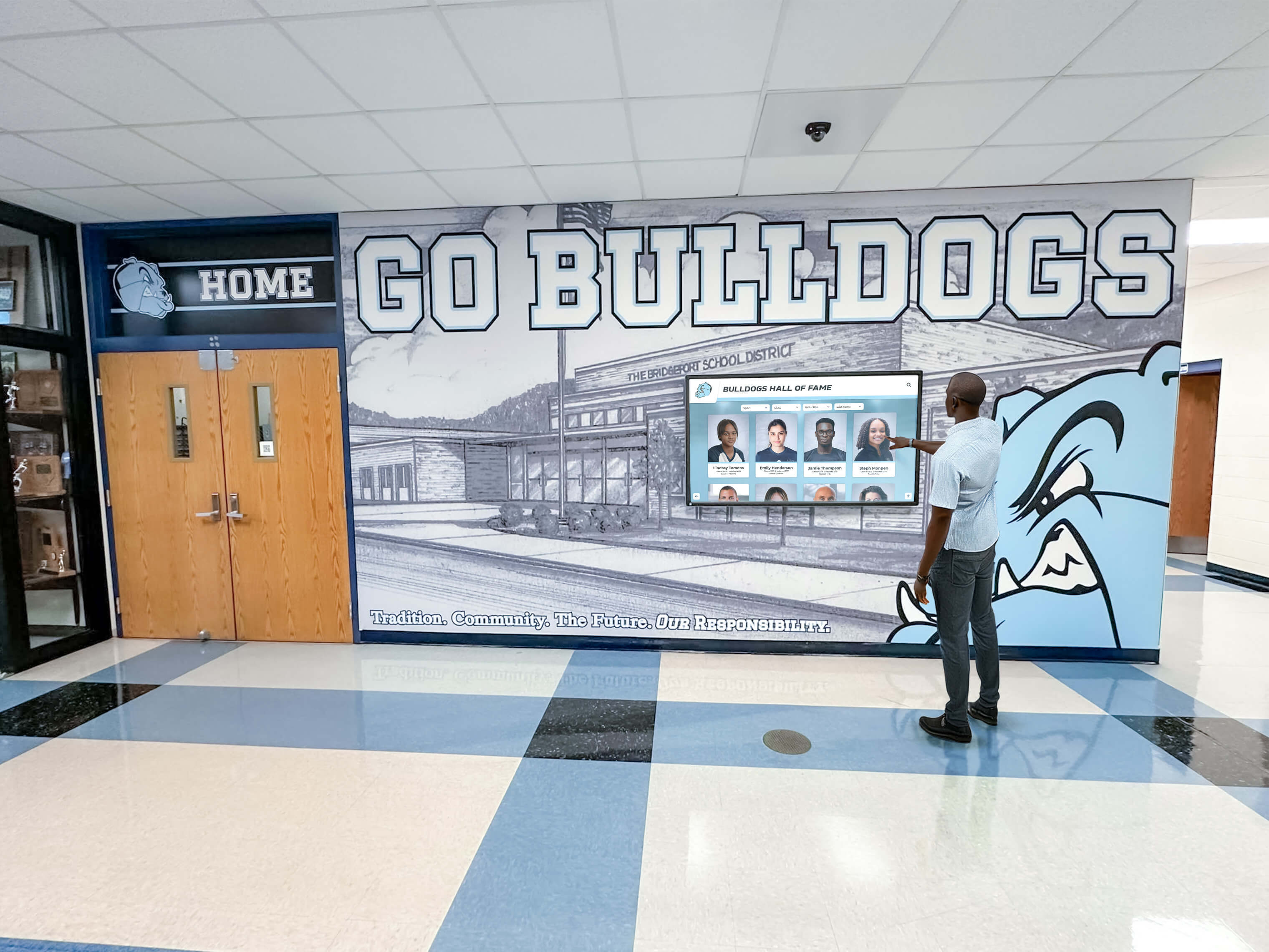
Interactive displays in school hallways bring athletic history to life, allowing exploration of championship teams, formations, and program evolution
Common Formation Mistakes and How to Avoid Them
Even experienced coaches make tactical errors that undermine formation effectiveness.
Over-Complicating Youth Formations
The most frequent mistake involves imposing tactical sophistication beyond players’ developmental capabilities.
Age-Inappropriate Complexity
Youth coaches often implement professional formations without recognizing that young players lack cognitive development for positional discipline and tactical understanding required. This creates confused players uncertain about roles, reduces touches as players stand in positions rather than engaging with play, and undermines skill development as tactical positioning replaces technical training emphasis.
Solution: Match formation complexity to developmental stage. Young players need freedom to play and learn through trial and error rather than rigid tactical constraints. Introduce formations gradually as cognitive abilities develop, always prioritizing skill development and soccer enjoyment over tactical sophistication.
Ignoring Player Strengths in Formation Selection
Some coaches select formations based on coaching preferences or professional trends rather than available personnel.
Forcing Square Pegs into Round Holes
Implementing 4-3-3 without quality wingers, playing three-back systems without center backs comfortable in possession, or using lone striker formations without complete forwards capable of hold-up play creates tactical dysfunction. Players struggle in unsuitable roles, team performance suffers despite quality personnel, and athlete confidence diminishes when consistently asked to perform against their strengths.
Solution: Let roster talent dictate formation rather than imposing systems unsuited to personnel. Identify player strengths and select formations maximizing those capabilities. If your best players are creative midfielders, employ formations featuring multiple central creators. If you lack technical defenders, avoid systems requiring defenders to play out from back under pressure.
Rigid Positional Structure Limiting Fluidity
While formations provide organizational frameworks, excessively rigid interpretation stifles creativity and tactical flexibility.
Preventing Natural Player Movement
Coaches who demand players never leave assigned zones, criticize positional rotations creating numerical advantages, or emphasize formation over function create predictable, easily defended teams. Talented attacking players become constrained by defensive responsibilities, natural interplay gets coached out in favor of positional discipline, and teams struggle against organized opponents who easily defend predictable structure.
Solution: Teach formations as starting points rather than rigid constraints. Encourage intelligent movement creating overloads and exploiting space while maintaining defensive balance. Help players understand when to maintain shape versus when to break structure creating advantages. Develop tactical intelligence allowing players to recognize situations warranting positional flexibility.
Programs seeking to recognize both tactical achievement and individual excellence can implement comprehensive digital recognition solutions celebrating how formations and player development combined to create championship success.
Teaching Formations Effectively
Understanding formations differs from successfully teaching tactical concepts to players with varying comprehension levels.
Visual Demonstration and Walk-Throughs
Players learn formations through seeing and experiencing rather than verbal explanations alone.
Effective Teaching Methods
Use visual aids including diagrams, videos of professional teams employing target formations, and formation boards demonstrating positioning and movement patterns. Conduct walk-through sessions where players slowly move through formation structure without opponents, then at walking pace against passive opposition before full-speed implementation. Break down formations into component parts teaching defensive line organization separately from midfield positioning and forward movement, then integrate components into cohesive system.
Film team performance and review footage identifying strong positional execution and areas requiring adjustment. Video review makes tactical concepts concrete as players see their actual positioning versus intended structure.
Progressive Tactical Training
Formations develop through systematic progression from simple concepts to sophisticated execution.
Building Tactical Understanding
Begin with fundamental principles applicable across formations—maintaining defensive shape, providing passing options, creating width and depth. Introduce basic formations appropriate to age and development level, teaching clear roles and responsibilities. Progress to formation variations and adaptations for different game situations. Develop tactical intelligence where players recognize when to maintain structure versus when to exploit space through movement.
Avoid tactical overload where excessive complexity exceeds player capacity to absorb and execute. Better to execute simple formations well than struggle with sophisticated systems beyond team capabilities.
Position-Specific Training Within Formations
While formations provide overall structure, position groups require specialized instruction.
Targeted Positional Development
Defensive line training emphasizes collective organization including stepping up and dropping together, covering for teammates, and communication ensuring coordinated movement. Midfield sessions focus on transition play, controlling possession, supporting attacks while maintaining defensive balance, and finding space between opponent lines. Forward training develops movement patterns creating separation from defenders, combination play, and finishing while providing defensive pressure on opponent buildup.
Position-specific instruction within formation context helps players understand both individual responsibilities and how their roles connect to overall tactical structure.
Schools building comprehensive soccer programs can recognize position-specific excellence alongside team achievements through digital athletic displays celebrating individual development within winning systems.
Formations and Long-Term Program Development
Sustainable program excellence requires tactical philosophy extending beyond individual seasons, creating systems that transcend roster changes.
Establishing Consistent Tactical Identity
Championship programs develop recognizable playing styles maintained across graduating classes and coaching transitions.
Building Tactical Traditions
Successful programs establish formations and playing philosophies aligned with institutional identity and available talent pipelines. Youth programs feed into high school systems using consistent formations and tactical principles. Players develop within coherent tactical frameworks rather than relearning completely different systems each season. Incoming players understand program expectations and tactical approaches before arrival.
This consistency creates competitive advantages as players possess deeper tactical understanding from years within same system versus opponents learning new formations annually. However, tactical identity shouldn’t become rigid constraint preventing adjustments for exceptional talent or evolving competitive contexts.
Documenting Tactical Evolution and Championship Success
Programs building championship traditions benefit from documenting how formations and tactical approaches contributed to sustained excellence.
Preserving Program History
Championship teams deserve recognition extending beyond season-ending banquets to permanent displays celebrating tactical achievement. Document formation evolution showing how tactical sophistication developed across program history. Recognize coaches whose tactical expertise built winning traditions and players whose understanding of systems enabled championship success. Create accessible displays where current players study championship teams’ tactical organization, inspiring continued excellence.
Modern digital recognition platforms enable comprehensive documentation impossible with static trophy cases, providing interactive experiences where users explore championship team formations, tactical achievements, and strategic evolution that built program traditions.
Celebrating Tactical Excellence Through Modern Recognition
Rocket Alumni Solutions provides interactive touchscreen displays specifically designed for schools and athletic programs seeking to celebrate championship achievements, tactical development, and the formations that built winning traditions.
Comprehensive Program Documentation
Digital displays showcase championship team formations through interactive tactical diagrams, highlight position-specific excellence across different systems, document coaching philosophies and tactical evolution across program eras, and feature video highlights demonstrating formations in action during championship moments. These platforms create engaging experiences where current players explore how tactical sophistication contributed to program success, alumni revisit championship seasons and the formations that won titles, and prospective families see comprehensive program traditions extending beyond simple win-loss records.
Accessible and Updated Recognition
Unlike static trophy cases limited by physical space and difficult updating, touchscreen displays allow unlimited content capacity ensuring every championship team and tactical achievement receives appropriate recognition. Easy content updates accommodate new championships and evolving tactical approaches. Interactive navigation lets users explore specific eras, formations, or players rather than passive observation of fixed displays.
Schools implementing modern recognition solutions create inspirational environments celebrating the tactical intelligence, formation excellence, and championship achievements that define program traditions while inspiring current and future athletes to add their own chapters to winning legacies.
Conclusion: Formations as Frameworks for Success
Understanding soccer formations explained provides coaches and programs with tactical frameworks transforming individual talent into collective achievement. From balanced 4-4-2 systems teaching positional fundamentals to sophisticated 4-3-3 approaches enabling possession football, formations create organizational structures within which players express creativity, teams execute strategies, and programs build championship traditions.
The most successful implementation balances tactical sophistication with age-appropriate instruction, selecting formations suiting available talent rather than forcing players into unsuitable systems, and maintaining fluidity allowing intelligent movement within organizational frameworks. Youth programs introduce formations gradually as developmental stages permit genuine understanding, while high school teams employ sophisticated systems approaching professional complexity when talent and comprehension support tactical ambition.
Ultimately, formations serve team success rather than existing as ends themselves. The best formation is the one that maximizes your players’ strengths, aligns with program philosophy, and creates competitive advantages translating talent into championships. Programs building sustainable excellence establish tactical identities transcending individual seasons while documenting formation evolution and championship achievements through comprehensive recognition displays that celebrate how tactical intelligence built winning traditions.
By mastering formation principles, implementing systems matching team capabilities, and teaching tactical concepts effectively, coaches transform understanding of soccer formations explained into championship banners, developed players, and program traditions inspiring excellence across generations—achievements worthy of permanent celebration through modern recognition platforms honoring the formations and tactical wisdom that turned potential into reality.
Ready to celebrate your soccer program’s championship achievements and tactical traditions? Rocket Alumni Solutions creates custom interactive touchscreen displays that showcase your formations, honor your championship teams, and inspire future athletes to build upon your winning legacy. Discover how modern recognition technology can transform your program’s story into an engaging, permanent celebration of excellence.