




Every athletic season begins with a critical administrative checkpoint that determines whether student athletes can safely participate: the sports physical form. This seemingly simple paperwork represents far more than bureaucratic compliance—it’s the foundational medical clearance protecting athlete health, limiting institutional liability, and ensuring that only medically cleared students step onto competitive fields, courts, and tracks.
For athletic administrators, coaches, and school health personnel, managing sports physical forms creates persistent operational challenges. Forms arrive incomplete days before season starts, medical clearances expire mid-season requiring emergency appointments, documentation gets lost between healthcare providers and athletic offices, compliance tracking across hundreds of athletes spans multiple sports and seasons, and paper-based systems create administrative bottlenecks delaying athlete participation.
This comprehensive guide explores everything athletic administrators need to know about sports physical forms—from understanding medical requirements and legal mandates, to implementing efficient collection systems and leveraging digital solutions that streamline pre-season athlete onboarding while maintaining rigorous health and safety standards.
Effective sports physical form management transforms from frustrating administrative burden into systematic process protecting athlete health while enabling athletic departments to focus energy on competitive excellence rather than compliance chaos.

Modern athletic programs integrate comprehensive student management systems ensuring medical clearance and recognition work seamlessly together
Understanding Sports Physical Forms and Requirements
Before implementing collection systems, athletic administrators must understand exactly what sports physical forms are, why they matter, and what medical and legal standards they satisfy.
What Is a Sports Physical Form?
A sports physical form documents pre-participation physical examination (PPE) results determining whether student athletes can safely participate in competitive athletics:
Core Components of Standard Sports Physical Forms
Complete sports physical forms typically include multiple integrated sections covering athlete medical history provided by families documenting previous injuries, chronic conditions, hospitalizations, and family health patterns, physical examination results conducted by licensed healthcare providers assessing cardiovascular health, musculoskeletal condition, and overall fitness for athletic participation, medical clearance statements explicitly authorizing or restricting participation in specific sports or activities, emergency contact information enabling rapid response during medical incidents, insurance verification confirming coverage for athletic injuries, and signature requirements from parents/guardians, athletes, and examining physicians establishing legal acknowledgment of risks and clearances.
The form serves as centralized document capturing essential medical information athletic staff need immediately accessible during practices, competitions, and medical emergencies.
Differences Between Sports Physicals and Annual Well-Child Exams
Many families confuse sports-specific physical examinations with routine pediatric checkups, but they serve distinct purposes:
Sports physicals specifically assess fitness for athletic participation through targeted cardiovascular screening identifying conditions like hypertrophic cardiomyopathy that could cause sudden cardiac events during intense exertion, orthopedic evaluation detecting joint instability or structural issues risking injury during sports movements, neurological assessment examining concussion history and balance coordination critical for contact sports, and sport-specific clearance addressing unique risks associated with particular athletic activities like wrestling, football, or gymnastics.
While annual physicals provide comprehensive general health assessment, sports-specific examinations focus narrowly on athletic participation safety—making dedicated sports physicals essential even when athletes recently completed well-child checkups.
Legal and Liability Considerations
Sports physical forms create critical legal protections for schools and athletic programs:
Documented medical clearance demonstrates that schools verified athlete fitness before allowing participation—providing defense against negligence claims alleging inadequate health screening. Forms establish that families disclosed relevant medical conditions enabling appropriate accommodations or participation restrictions. Signed acknowledgments confirm that parents and athletes understand inherent athletic risks and voluntarily accept them as conditions of participation.
Without proper sports physical documentation, schools face substantially increased liability exposure if athletes suffer injuries potentially connected to unidentified pre-existing conditions that proper screening might have detected.
Information about comprehensive digital student management and recognition systems demonstrates how modern athletic departments integrate medical clearance with broader athlete tracking infrastructure.

Strategic placement of athletic information displays creates centralized hubs where students access clearance requirements alongside achievement recognition
State-Specific Requirements and Compliance Standards
Sports physical form requirements vary significantly across states, creating compliance complexity for athletic administrators:
State Athletic Association Mandates
Each state high school athletic association establishes specific requirements governing participation eligibility:
Most states require sports physicals within 12-13 months preceding participation, though some mandate examinations within 6 months of season start for certain high-risk sports. States specify acceptable examiner qualifications—typically physicians (MD or DO), nurse practitioners, or physician assistants, with some states allowing chiropractors or other providers for limited examination components. Form standardization varies, with some states providing mandatory uniform templates while others accept any documentation meeting minimum information requirements.
Athletic administrators must verify current requirements through their state athletic association rather than assuming neighboring states’ standards apply—regulations change periodically requiring ongoing compliance monitoring.
Additional Screening Requirements
Beyond basic physical examinations, many states mandate supplemental health screenings:
Cardiac screening questionnaires based on American Heart Association recommendations identify family history of heart disease, sudden cardiac death, or athlete cardiac symptoms suggesting underlying conditions. Concussion education requirements mandate that athletes and parents complete baseline concussion awareness training before participation eligibility. Heat illness prevention education ensures athletes understand hydration, heat acclimatization, and warning signs of heat-related conditions. Sudden cardiac arrest protocol acknowledgment confirms families understand emergency response procedures.
These additional requirements often necessitate separate documentation beyond core physical examination forms—creating tracking complexity as athletic departments verify completion of multiple distinct clearance components.
Insurance and Emergency Medical Information
Sports physical forms typically include insurance verification and emergency authorization:
Proof of health insurance coverage documents that athletes have medical benefits addressing potential athletic injuries, though many schools allow participation regardless of insurance status while requiring acknowledgment of financial responsibility. Emergency medical authorization provides explicit parental consent for schools to seek emergency medical treatment when parents cannot be immediately reached during critical situations. Emergency contact information ensures athletic staff can rapidly notify families during medical incidents.
This information proves critical during the chaotic moments following athletic injuries when seconds matter and staff need immediate access to accurate medical decision-making authority and contact details.
Resources on comprehensive athletic awards and recognition systems demonstrate how effective athletic departments manage multiple student athlete data streams including clearances, achievements, and participation records.
Medical Examination Components
Healthcare providers conducting sports physicals assess specific health dimensions critical for athletic participation:
Cardiovascular Screening
Sudden cardiac events represent the leading cause of death among young athletes during sports participation, making cardiac assessment the most critical physical examination component:
Providers review family history identifying relatives with early heart disease, sudden unexplained death before age 50, or genetic cardiac conditions. Physical examination includes heart auscultation detecting murmurs suggesting structural abnormalities, blood pressure measurement identifying hypertension, and pulse assessment revealing irregular rhythms. Symptom screening asks about chest pain during exertion, unexplained fainting, excessive shortness of breath beyond expected athletic conditioning, or heart racing episodes.
Athletes with concerning findings require additional cardiac evaluation through electrocardiograms (EKG) or echocardiograms before receiving clearance—a process potentially delaying participation if not initiated well before season starts.

Digital platforms enable comprehensive athlete profile management integrating medical clearances with performance data and recognition
Musculoskeletal Assessment
Orthopedic evaluation identifies structural issues or previous injuries affecting safe athletic participation:
Providers examine joint range of motion, stability, and strength across major joints including shoulders, elbows, wrists, hips, knees, and ankles. Prior injury review documents previous fractures, sprains, or surgeries that might require ongoing management or create reinjury risk. Flexibility and functional movement screening identifies biomechanical limitations potentially increasing injury susceptibility. Posture and alignment assessment detects scoliosis or other structural variations affecting athletic performance or injury risk.
Athletes with current musculoskeletal injuries or recent surgeries often receive conditional clearance requiring rehabilitation completion, follow-up evaluation, or activity restrictions until full healing occurs.
Neurological and Concussion Screening
Given growing awareness of concussion risks, sports physicals include neurological assessment:
Concussion history documentation catalogs previous diagnosed concussions including number, severity, symptom duration, and time since most recent injury. Baseline cognitive screening through tools like SCAT5 or ImPACT testing establishes pre-injury performance benchmarks enabling post-concussion comparison. Balance and coordination testing identifies existing deficits potentially indicating unresolved prior head trauma. Seizure disorder screening ensures athletes with epilepsy receive appropriate management and participation modifications.
Athletes with multiple recent concussions or unresolved symptoms may face participation restrictions until cleared by sports medicine specialists or neurologists.
General Health and Systems Review
Comprehensive sports physicals assess overall health status:
Vision and hearing screening ensures athletes can safely perceive competitive environments and coaching instructions. Respiratory evaluation identifies asthma, exercise-induced bronchospasm, or other breathing conditions requiring management. Abdominal examination detects enlarged organs potentially vulnerable to traumatic injury during contact sports. Skin assessment identifies contagious conditions like impetigo or herpes that could spread through athletic contact. Growth and development evaluation ensures athletes demonstrate appropriate maturation for competitive participation.
These general health components ensure athletic participation occurs within context of overall physical and developmental readiness rather than focusing solely on sport-specific fitness.
Guidance on team recognition and student achievement celebration demonstrates comprehensive approaches to student athlete management extending beyond medical clearance to holistic program development.
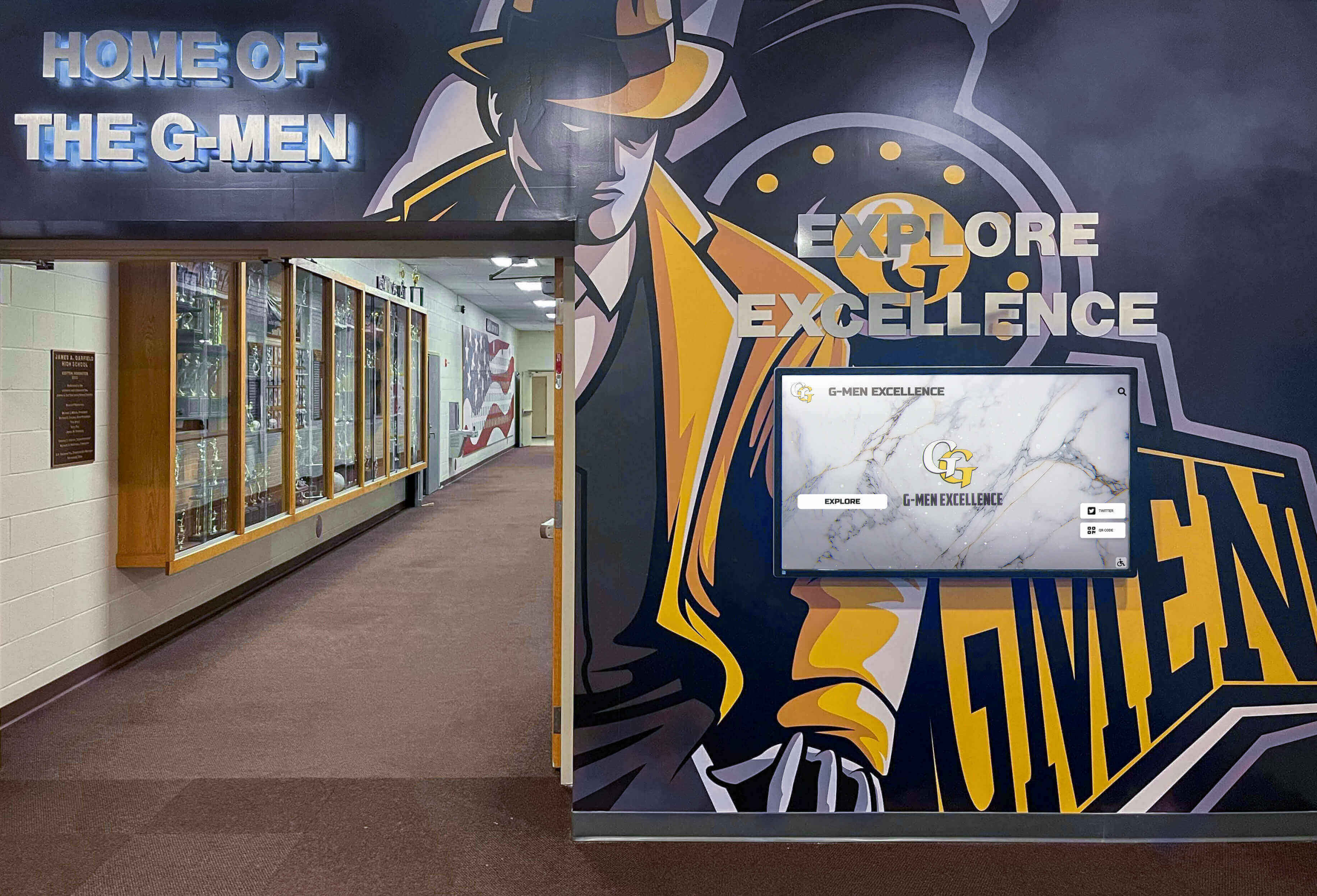
Modern athletic facilities integrate clearance information displays alongside traditional trophy cases creating comprehensive program information hubs
Implementing Efficient Sports Physical Form Collection Systems
Understanding requirements represents just the starting point—athletic departments must implement systematic processes ensuring timely, complete form collection across all athletes and sports.
Timeline Planning and Deadline Management
Effective sports physical programs begin months before actual season starts:
Establishing Realistic Collection Deadlines
Athletic departments should set internal form submission deadlines well before mandatory state or association dates:
Recommended timelines include setting internal deadlines 3-4 weeks before first practice dates allowing time to address incomplete or problematic forms, communicating initial requirements 6-8 weeks before deadlines giving families adequate time to schedule medical appointments, and sending progressive reminders at 6 weeks, 4 weeks, 2 weeks, and 1 week before deadlines maintaining awareness without becoming burdensome.
Earlier deadlines enable proactive problem-solving rather than last-minute crisis management when athletes arrive at first practice lacking proper clearance and must be turned away until documentation is complete.
Managing Multi-Season Athletes
Many students participate in multiple sports across school years, creating timeline complexity:
Single annual physical examinations often satisfy requirements across all sports if completed within state-mandated validity periods—typically 12-13 months. Athletic departments should coordinate deadline communication recognizing that fall sport athletes completing physicals in August 2025 remain cleared through all sports until August 2026. However, sports-specific clearances may require separate documentation even when underlying physical examination remains valid, such as when athletes require sport-specific restrictions or medical management plans.
Centralized tracking systems prevent duplicate physical examinations while ensuring proper clearance documentation exists for each sport.
Addressing Late-Arriving Athletes
Not all athletes commit to participation months before seasons start:
Athletic departments need clear policies for students joining teams after collection deadlines including minimum timelines for new participants (typically requiring forms submitted at least 3-5 days before practice participation to allow administrative review), conditional participation procedures potentially allowing practice attendance pending final form submission under certain circumstances, and no-exception policies prohibiting any practice or competition participation without complete clearance documentation.
Firm policies prevent situations where coaches allow “just this one practice” for uncleared athletes—creating liability exposure and undermining systematic compliance.
Communication Strategies for Athletes and Families
Clear, multi-channel communication ensures families understand requirements and deadlines:
Initial Season Registration and Information Distribution
Athletic departments should provide comprehensive physical form information during registration:
Registration packets should include current sports physical forms or links to official state association templates, detailed instruction sheets explaining examination requirements and submission procedures, deadline calendars clearly identifying sport-specific submission dates, FAQ documents addressing common questions about examiner qualifications, validity periods, and special circumstances, and emergency contact information enabling families to reach athletic office with questions or concerns.
Providing complete information upfront reduces confusion and prevents incomplete submissions requiring follow-up clarification and resubmission.
Multi-Channel Reminder Systems
Relying on single communication channel virtually guarantees some families miss critical information:
Effective reminder systems utilize email communication reaching primary family contacts with progressive deadline reminders, text message alerts through athletic communication platforms providing high-visibility short notifications, student athlete meetings where coaches review clearance requirements and deadlines directly, posted information on athletic department websites and social media channels, and physical signage in athletic facilities reminding students of approaching deadlines.
Redundant communication acknowledges reality that families manage busy schedules and information easily gets overlooked through any single channel.
Addressing Language and Access Barriers
Inclusive communication ensures all families understand requirements regardless of language or technology access:
Schools serving diverse populations should provide translated materials in languages spoken by significant family populations, simplified instructions using plain language and visual guides for families with limited health literacy, paper alternatives for families lacking reliable internet access or technology, and direct personal outreach to families facing specific barriers through bilingual staff, community liaisons, or home visits when necessary.
Equity in clearance processes ensures all athletes have equal opportunity to complete requirements rather than facing participation barriers based on family language, education, or technology access.
Resources about senior athlete recognition and student celebration programs provide context for comprehensive student athlete management extending beyond clearance to complete program lifecycle.

Intuitive digital interfaces enable athletic staff and students to quickly access athlete information including clearance status and achievement records
Form Review and Compliance Verification
Collecting forms represents only the first step—systematic review ensures completeness and accuracy:
Developing Standardized Review Procedures
Designated athletic office personnel should review all submissions using consistent checklists:
Review protocols should verify complete sections including all required medical history questions answered, physical examination results documented with specific findings, clearance statement explicitly authorizing participation or detailing restrictions, and all required signatures from examining provider, parent/guardian, and athlete present with dates.
Incomplete forms should be immediately returned to families with clear explanation of missing components and firm resubmission deadlines—preventing last-minute discovery of gaps when seasons begin.
Identifying and Addressing Medical Concerns
Review processes must flag forms indicating potential participation concerns:
Critical flags include cardiovascular warning signs like family history of sudden cardiac death, athlete symptoms during exertion, or abnormal physical examination findings, concussion histories particularly recent or multiple documented injuries, current injury or recovery status requiring follow-up evaluation before clearance, medical conditions requiring accommodation or management plans such as asthma, diabetes, or seizure disorders, and physician notes indicating restricted participation or need for specialist clearance.
Flagged forms require athletic trainer or school health personnel review determining whether athletes can safely participate, need activity modifications, or require additional medical evaluation before clearance.
Managing Conditional Clearances and Restrictions
Not all athletes receive unconditional clearance for full participation:
Common restrictions include temporary holds pending follow-up evaluation after concerning findings, activity limitations restricting certain movements or positions (e.g., no-contact designation for athletes with certain conditions), equipment requirements like braces, protective padding, or prescription eyewear, medication management protocols for conditions like asthma or diabetes requiring practice and competition accommodations, and ongoing monitoring requirements where athletes continue participation while under medical observation.
Athletic departments need clear systems ensuring coaches understand and implement restrictions rather than assuming all cleared athletes can participate identically.
Creating Centralized Tracking and Documentation Systems
Managing hundreds of forms across multiple sports and seasons demands robust organizational systems:
Physical vs. Digital Documentation Management
Traditional paper-based systems create significant administrative burden:
Paper systems require physical storage consuming substantial office space, manual filing and retrieval increasing staff time and error risk, difficulty tracking compliance status across multiple athletes and sports, vulnerability to loss or damage from mishandling or disasters, and challenges providing emergency access during away competitions or after-hours incidents.
Digital documentation systems address these limitations through cloud-based storage accessible from any location, automated compliance tracking flagging missing or expiring forms, rapid search and retrieval finding specific athlete information instantly, backup redundancy protecting against loss, and mobile access enabling staff to view medical information during away competitions or emergencies.
Recommended Digital Platform Features
Athletic departments implementing digital systems should prioritize specific capabilities:
Essential features include bulk upload functionality accepting scanned form batches rather than requiring individual entry, automated expiration alerts notifying staff and families before clearances expire, sport-specific organization enabling quick identification of all cleared athletes for particular teams, role-based access control allowing coaches to view their athletes while maintaining privacy across teams, integration capability connecting with student information systems or athletic scheduling platforms, and emergency quick-access providing immediate retrieval of critical medical information during incidents.
Purpose-built athletic administration platforms often provide superior functionality compared to generic document management systems lacking sport-specific workflow optimization.
Maintaining Confidentiality and FERPA Compliance
Sports physical forms contain protected health information requiring careful privacy management:
Compliance protocols include limited access ensuring only personnel with legitimate educational interest can view medical records, secure storage whether physical locks for paper files or encrypted digital platforms, parent access procedures allowing families to review but not modify official documentation, data retention policies specifying how long forms must be maintained after student graduation, and breach response procedures addressing unauthorized access or loss of medical information.
Privacy violations carry serious legal and regulatory consequences requiring athletic departments to implement systematic safeguards rather than casual handling of sensitive medical data.
Frameworks for comprehensive athletic program management and recognition demonstrate how effective departments integrate clearance tracking with broader student athlete information systems.

Cohesive athletic program environments connect clearance compliance with visible celebration of achievement creating comprehensive student athlete experience
Addressing Common Sports Physical Form Challenges
Even well-designed systems encounter predictable challenges requiring proactive solutions:
Managing Expired or Incomplete Forms
The most frequent compliance issue involves forms missing critical information or expiring mid-season:
Preventing Mid-Season Expirations
Athletic departments can minimize mid-season clearance expirations through strategic timing:
Encouraging families to schedule spring physicals (April-May) for students participating in fall, winter, and spring sports ensures 12-13 month validity extends through complete school year without gaps. Coordinating school-based physical examination clinics during late spring provides convenient mass screening before summer break when individual scheduling becomes difficult. Communicating expiration calendars showing exactly when each athlete’s clearance expires enables proactive renewal rather than reactive emergency appointments.
Systematic expiration tracking with automated alerts prevents surprise discoveries that athletes cannot practice or compete until securing emergency appointments and updated documentation.
Emergency Physical Options
Despite best planning, some athletes face urgent clearance needs:
Options for expedited clearance include urgent care centers often providing sports physicals without appointments though potentially higher cost than primary care visits, retail clinics in pharmacies offering convenient extended hours, school-based health centers when available providing free or reduced-cost examinations, and athletic trainer or school nurse review determining whether administrative extensions can be granted while permanent solutions are arranged.
Clear policies should specify when emergency alternatives are acceptable versus situations requiring full standard examination before participation resumes.
Handling Incomplete Submissions
Families frequently submit forms missing signatures, sections, or required information:
Efficient resolution requires immediate notification upon receipt explaining exactly what’s missing, providing marked-up forms clearly indicating incomplete sections, setting firm resubmission deadlines with consequences for non-compliance, and offering athletic office assistance helping families understand requirements.
Fast turnaround on incomplete form identification prevents situations where families believe requirements are satisfied until practice starts and staff discover gaps causing participation delays.
Supporting Athletes with Medical Conditions
Many student athletes manage chronic conditions requiring ongoing accommodation:
Asthma and Exercise-Induced Bronchospasm
Respiratory conditions represent the most common chronic issue among student athletes:
Management includes documenting condition severity and medication requirements in clearance forms, ensuring athletes have immediate medication access during practices and competitions, educating coaches about warning signs requiring intervention, creating action plans specifying response to breathing difficulties, and monitoring environmental triggers like pollen, cold air, or exercise intensity requiring activity modification.
Proper management enables athletes with well-controlled asthma to participate safely while preventing dangerous exacerbations during intense exertion.
Concussion Histories
Athletes with previous concussions require special consideration:
Protocols should document complete concussion history including dates, symptoms, and recovery timeline, ensure athletes with recent concussions receive specialist clearance before return to play, implement return-to-play progressions gradually increasing activity intensity while monitoring symptoms, educate athletes and families about increased reinjury risk with incomplete recovery, and maintain heightened monitoring during practices and competitions watching for symptoms.
Given long-term implications of repeated head trauma, conservative concussion management protects athletes even when they and families push for rapid return.
Diabetes and Blood Sugar Management
Athletes with diabetes need systematic glucose monitoring and emergency response preparation:
Accommodations include documenting specific management approach (insulin pump, injections, oral medication), ensuring rapid-acting sugar sources are immediately available during activities, educating athletic staff about hypoglycemia recognition and response, allowing breaks for blood sugar monitoring and snack consumption as needed, and creating emergency action plans addressing severe high or low blood sugar situations.
Proper preparation enables athletes with diabetes to safely participate in even high-intensity sports while managing condition effectively.
Food Allergies and Anaphylaxis Risk
Severe allergies require emergency response preparation:
Critical protocols include documenting specific allergens and reaction severity, ensuring epinephrine auto-injectors (EpiPens) are immediately accessible during all activities, training athletic staff in anaphylaxis recognition and auto-injector use, establishing emergency medical response procedures, and communicating allergen information to coaches preventing inadvertent exposure during team meals or celebrations.
Fatal allergic reactions can occur within minutes, making immediate epinephrine access and trained response absolutely critical.
Information about comprehensive student recognition and management approaches provides context for holistic student athlete support extending beyond medical clearance to complete educational experience.
Navigating Cost and Access Barriers
Sports physical requirements can create participation barriers for economically disadvantaged families:
Low-Cost and Free Physical Examination Options
Athletic departments should help families access affordable screening:
Resources include school-based health centers providing free or sliding-scale services to enrolled students, community health clinics offering reduced-cost examinations based on income, free sports physical events organized by local hospitals, medical societies, or community organizations during spring and summer, insurance coverage through Medicaid, CHIP, or family plans often covering preventive examinations at no cost, and athletic department scholarship or assistance funds subsidizing examination costs for families facing financial hardship.
Proactive communication about cost-free options prevents situations where athletes miss participation because families cannot afford required examinations.
Organizing School-Based Physical Events
Many athletic departments coordinate mass screening events:
Successful school-based physicals require partnering with local healthcare providers willing to volunteer or provide reduced-cost services, securing appropriate facilities with private examination spaces and waiting areas, scheduling events during late spring (April-May) enabling single examination covering entire following school year, promoting events widely ensuring families understand opportunity, and coordinating with medical providers to ensure examinations meet all state requirements and providers understand athletic-specific focus.
Well-executed events can screen 100+ athletes in a single day providing enormous family convenience while ensuring compliance.
Addressing Transportation and Scheduling Barriers
Even free examinations prove inaccessible when families lack transportation or flexible scheduling:
Solutions include coordinating evening or weekend examination times accommodating working parents, offering school-based options eliminating transportation requirements, providing extended submission deadlines for families demonstrating good-faith effort despite challenges, and connecting families with community resources including transportation assistance or mobile health services.
Flexible, family-centered approaches ensure medical requirements don’t become de facto economic barriers excluding motivated athletes from participation.

Professional athletic program environments demonstrate institutional commitment to excellence spanning clearance compliance through achievement celebration
Leveraging Technology for Streamlined Physical Form Management
Modern digital solutions dramatically improve efficiency while reducing administrative burden:
Digital Form Collection and Submission Platforms
Electronic systems transform clearance workflows:
Online Form Platforms
Digital collection tools enable families to complete and submit documentation remotely:
Advantages include 24/7 accessibility allowing families to complete forms on their schedule rather than during office hours, automated validation flagging incomplete or inconsistent responses before submission, digital signature capability eliminating printing and scanning requirements, immediate receipt confirmation assuring families their submission was received, and direct integration with athletic department databases eliminating manual data entry.
Modern families increasingly expect digital options matching convenience they experience in other contexts—paper-only requirements feel antiquated and unnecessarily burdensome.
Mobile-Optimized Access
Given smartphone ubiquity, mobile functionality proves essential:
Mobile platforms should provide responsive design ensuring forms display properly on phone screens, photo upload enabling families to submit provider-completed forms by simply photographing them, e-signature capability allowing parents to sign directly on phone screens, push notification reminders sent to phones ensuring high visibility, and SMS communication options for families preferring text over email.
Mobile optimization meets families where they already spend time rather than requiring separate computer access.
Integration with Student Information Systems
Standalone physical form platforms create data silos requiring duplicate information entry:
Integrated systems should auto-populate student demographic information from existing enrollment databases, sync medical information with school health records avoiding duplicate entry, connect clearance status with athletic eligibility in scheduling systems preventing uncleared athletes from being added to rosters, and provide unified dashboards showing complete student athlete status across academic, medical, and athletic dimensions.
Integration eliminates redundant work while ensuring consistency across all school systems tracking student information.
Automated Compliance Tracking and Reporting
Technology enables real-time visibility into clearance status across entire athletic departments:
Dashboard and Alert Systems
Athletic administrators need instant access to compliance status:
Effective dashboards display clearance percentages by sport showing exactly how many athletes remain uncleared before deadlines, individual athlete status indicating exactly which forms are missing or incomplete, upcoming expiration alerts identifying athletes whose clearances will expire during season, and historical trend data comparing current collection pace against previous years.
Visual dashboards enable proactive intervention rather than reactive crisis response when administrators discover compliance gaps too late to address smoothly.
Automated Family Reminders
Technology eliminates manual reminder tracking:
Automated systems should send scheduled reminder sequences at predetermined intervals before deadlines, targeted communications to specific families with outstanding requirements rather than mass messages to all, personalized content identifying exactly what each family needs to complete, and escalating urgency as deadlines approach shifting from gentle reminders to firm notifications.
Automation ensures consistent communication that would be impossible to maintain manually across hundreds of athletes and families.
Report Generation for Administrators and Coaches
Stakeholders need different views of clearance information:
Administrative reports should show department-wide compliance across all sports, identify athletes with medical restrictions requiring accommodation, track submission patterns identifying bottlenecks in collection process, and document compliance for state association or administrative audits.
Coach reports should display clearance status for their specific roster athletes, highlight athletes lacking clearance approaching practice start dates, and provide emergency medical information for cleared athletes they supervise.
Role-specific reporting provides relevant information without overwhelming stakeholders with unnecessary detail.
Streamline Your Athletic Department Operations
Modern digital platforms transform athletic administration by integrating medical clearance tracking with comprehensive student athlete recognition systems. Rocket Alumni Solutions provides purpose-built solutions enabling athletic departments to manage clearances, celebrate achievements, and engage communities through unified platforms that simplify administration while enhancing visibility.
Explore Athletic Management SolutionsEmergency Medical Information Access
Digital systems prove most valuable during actual emergencies:
Mobile Emergency Access
When athletic trainers or coaches face medical emergencies during practices or away competitions, they need instant information access:
Mobile emergency apps should provide one-tap access to critical medical information including pre-existing conditions, current medications, allergies, and emergency contacts, work without internet connectivity using locally cached data when cellular service is unavailable, require authentication protecting privacy while ensuring rapid authorized access, and integrate with emergency call functions enabling direct 911 contact from within app.
Seconds matter during medical emergencies—digital systems providing instant information access can literally save lives when staff need immediate guidance about athlete medical histories.
QR Code Solutions
Some programs implement QR codes on athlete identification:
Athletes carry cards or wear bands with QR codes that, when scanned, display emergency medical information to first responders or athletic staff. Systems should balance accessibility with privacy ensuring information displays only to authenticated users rather than anyone scanning codes, function offline supporting environments with poor connectivity, and provide critical information only rather than complete medical records maintaining appropriate privacy even during emergencies.
QR solutions enable rapid information access without requiring staff to navigate complex software during high-stress emergency situations.
Cloud-Based Backup Access
Redundant access methods ensure information availability when primary systems fail:
Athletic departments should maintain emergency information through multiple channels including printed emergency cards carried by coaches during away competitions as technology backup, cloud access through multiple platforms preventing single-point failure, shared access among multiple staff members ensuring someone can always retrieve information, and regular system testing confirming emergency access actually works under realistic conditions.
Emergency preparation means assuming primary systems may fail exactly when needed most—redundant access prevents information blackouts during critical moments.
Best Practices for Athletic Departments
Successful sports physical form programs implement systematic best practices:
Develop Comprehensive Written Policies
Clear written policies prevent confusion and ensure consistency:
Policy Elements to Document
Athletic department handbooks should include required forms specifying exactly which documents athletes must submit, submission deadlines by sport with clear date expectations, acceptable healthcare providers listing professional qualifications for examination validity, validity periods explaining how long physicals remain acceptable, restriction protocols describing how medical limitations are communicated and implemented, emergency update procedures for forms expiring mid-season, and consequences for non-compliance clearly stating that uncleared athletes cannot participate.
Written policies enable staff to enforce requirements consistently rather than making ad-hoc decisions creating perceived unfairness or preferential treatment.
Annual Policy Review and Updates
Athletic clearance requirements evolve with changing medical knowledge and state regulations:
Annual reviews should verify continued compliance with current state athletic association requirements, incorporate new medical screening recommendations from national organizations, address problems identified during previous season implementation, update based on staff feedback about policy gaps or ambiguities, and communicate changes to all stakeholders before implementation.
Stale policies create compliance risks when athletic departments operate under outdated assumptions about current requirements.
Cross-Functional Collaboration
Effective physical form management requires coordination across multiple departments:
Athletic Trainers and School Nurses
Medical professionals provide critical expertise:
Collaboration should include trainer review of all submitted forms identifying concerning medical findings, nurse assistance helping families understand medical information requirements, coordinated response to athletes with chronic conditions requiring accommodation, shared emergency action planning, and unified medical record-keeping preventing conflicting information across different school systems.
Medical staff expertise ensures health screening achieves actual safety objectives rather than becoming mere paperwork compliance exercise.
Athletic Directors and Coaches
Administrative leadership and team staff both play essential roles:
Effective coordination includes administrative enforcement of clearance requirements and no-exception policies, coach communication of deadlines and requirements directly to athletes, shared accountability where coaches cannot accept uncleared athletes at practice regardless of circumstances, and coordinated messaging ensuring families receive consistent information from all athletic staff.
When coaches undermine clearance policies by allowing uncleared participation “just this once,” systematic compliance collapses and liability exposure increases dramatically.
Front Office and Administrative Staff
Support personnel handle much of the day-to-day implementation:
Responsibilities typically include form receipt and initial review, family communication answering questions and addressing incomplete submissions, database management maintaining accurate clearance tracking, report generation providing compliance visibility to stakeholders, and document retention ensuring proper record storage.
Clear responsibility assignment prevents situations where everyone assumes someone else is handling critical tasks.
Continuous Improvement and Evaluation
Athletic departments should systematically assess physical form program effectiveness:
Metrics to Track
Quantitative measures reveal program performance:
Key metrics include compliance rates by sport comparing clearance percentages, submission timeline distributions showing when forms arrive relative to deadlines, incomplete submission rates identifying how often forms require resubmission, emergency clearance frequency revealing how many last-minute situations occur, and cost efficiency comparing staff time investment against alternatives like outsourced management.
Data-driven assessment identifies specific improvement opportunities rather than relying on anecdotal impressions about program performance.
Stakeholder Feedback
Athletic staff and families provide valuable qualitative insights:
Annual surveys should ask families about communication clarity, process convenience, and support adequacy, coaches about whether systems provide adequate information and timely clearance, athletic trainers about medical information quality and emergency access functionality, and administrative staff about system efficiency and problem areas.
Systematic feedback collection ensures programs evolve based on actual user experience rather than administrator assumptions about what works.
Benchmarking Against Peer Programs
Comparing approaches with similar athletic departments reveals innovative practices:
Networking through state athletic director associations, regional conferences, or professional organizations enables athletic departments to learn about digital platforms other schools successfully implement, timeline strategies improving compliance rates, communication approaches reducing incomplete submissions, and cost-saving initiatives like coordinated school-based physical events.
No athletic department must reinvent effective practices independently—learning from peer successes accelerates improvement while avoiding predictable mistakes.
Insights about athletic program development and student athlete recognition demonstrate how comprehensive athletic departments integrate clearance compliance with broader program excellence initiatives.
Conclusion: Building Systematic Health Clearance Programs
Sports physical forms represent far more than bureaucratic compliance requirements—they’re foundational health screening protecting student athlete safety while limiting institutional liability. The difference between chaotic last-minute clearance crises and smooth systematic onboarding lies in comprehensive program design addressing clear communication of requirements and deadlines, efficient collection systems meeting families where they are, systematic review processes ensuring completeness and identifying medical concerns, robust tracking infrastructure providing real-time compliance visibility, and proactive problem-solving addressing barriers before they prevent participation.
Athletic departments implementing effective sports physical form programs discover that initial investment in systematic processes pays ongoing dividends through reduced administrative burden, improved compliance rates, decreased emergency clearance situations, better medical information access during emergencies, and enhanced athlete safety through consistent screening. These benefits justify modernization efforts while demonstrating that health clearance serves essential educational mission protecting student wellbeing.
Whether implementing new clearance programs, enhancing existing collection systems, or exploring how modern digital platforms streamline administration while improving access and safety, the frameworks explored throughout this guide provide proven approaches creating sports physical form management that protects athlete health without creating unnecessary administrative burden or participation barriers.
Your student athletes deserve systematic health screening ensuring safe participation while enabling them to focus energy on competitive excellence and personal development. Modern digital solutions make comprehensive clearance management more achievable than ever—transforming what once required extensive manual tracking into streamlined automated systems providing better outcomes with less administrative effort.
Ready to modernize your athletic department operations? Explore comprehensive athletic recognition and management solutions that integrate medical clearance tracking with student athlete celebration, discover digital recognition platforms for athletic achievement, and learn about comprehensive student management approaches supporting all dimensions of student success in your athletic programs.































